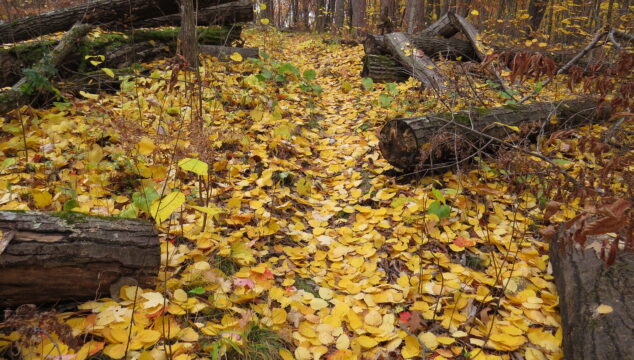
Come walk with me in the peak Autumn beauty of the Northwoods. To say that I love this time of year is an understatement. Most everyone can appreciate the colorful falling leaves---it reveals the 'true self' of a tree when its leaves are no longer producing chlorophyll. Their true colors are revealed, and there is something simple … [Read More...]
Snow Chasers and Bear Bias
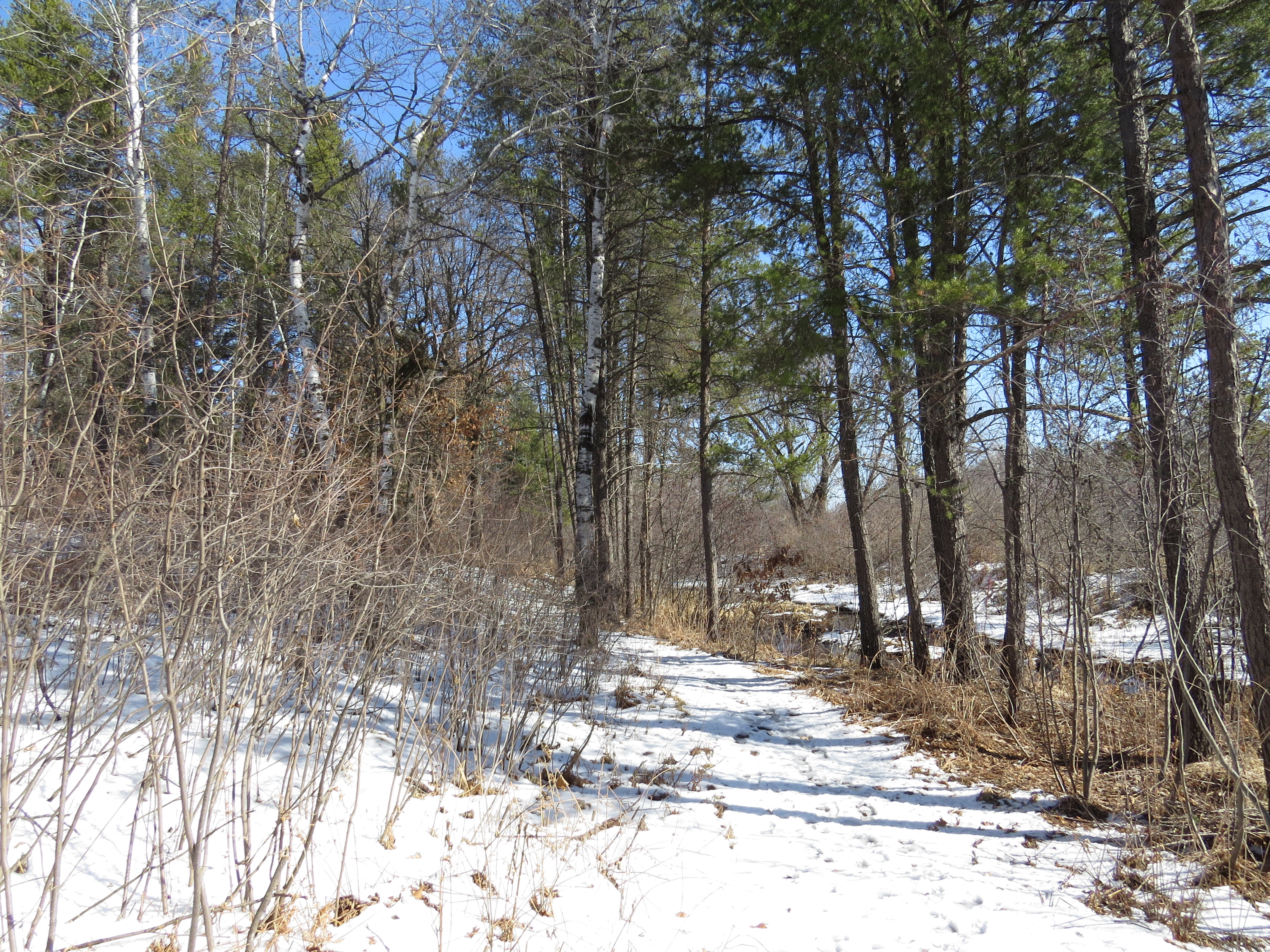
We left home last Saturday with a bare yard—bare of snow, that is, except for a withering pile on the north side of the trees. As Winter was slipping away, I was in search of snow. Earlier in the week we had an overnight dusting, but I saw the Brainerd area had gotten five or six inches. So we headed north, hoping the sun and temps hadn’t gotten to the snow before we did. About ten miles or so south of Brainerd we began to see snow on the ground. We saw large piles of packed wet snow that had been plowed from the roads. I was hopeful we could snowshoe once we got to Northland Arboretum. We slipped into our snowshoes and began our hike on a south-sloping hill. Hmmm.
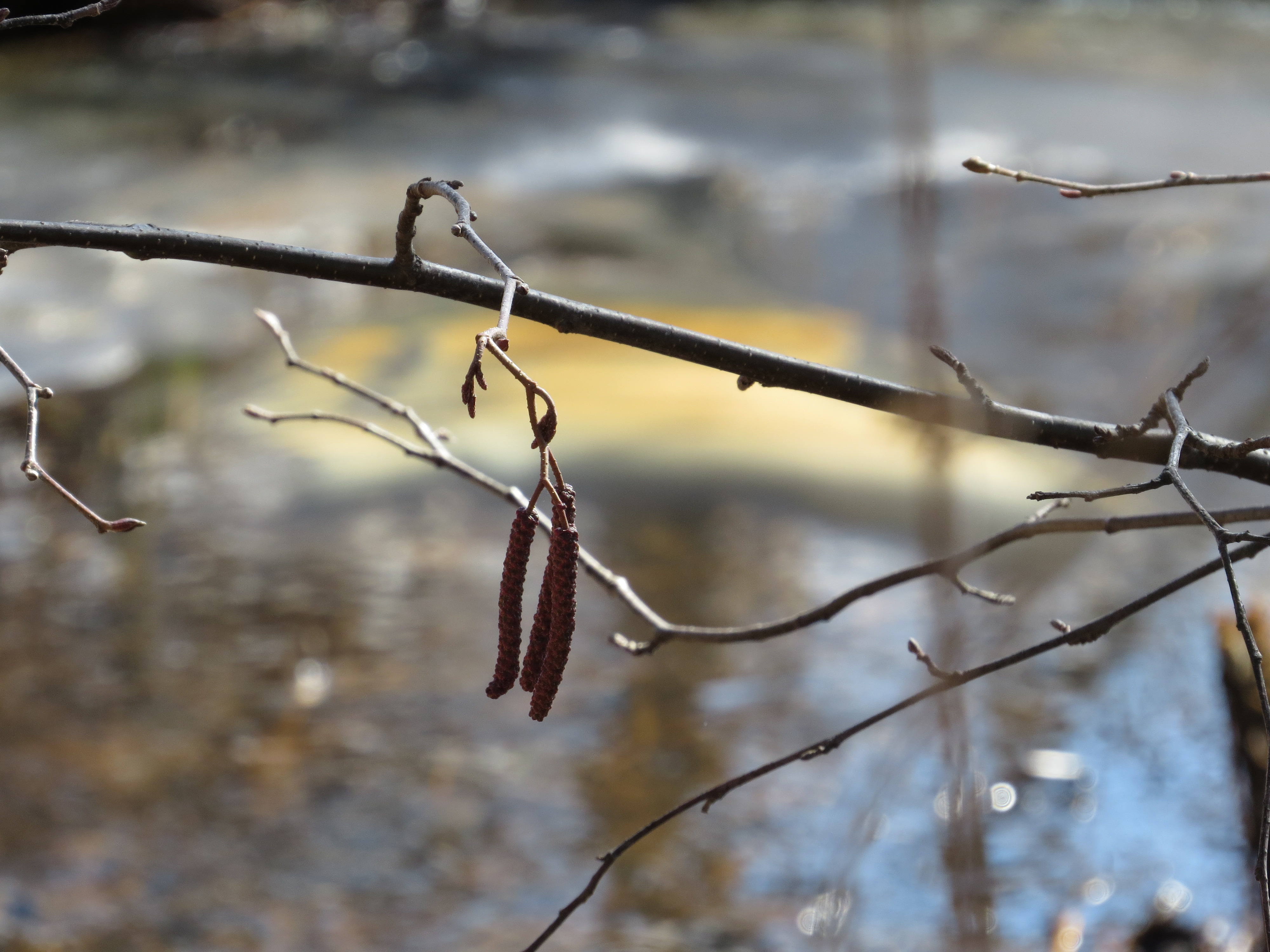
Birch tree catkins caught my eye, along with a golden patch of ice in the stream. Was it from pollen, a fungus, or sawdust?
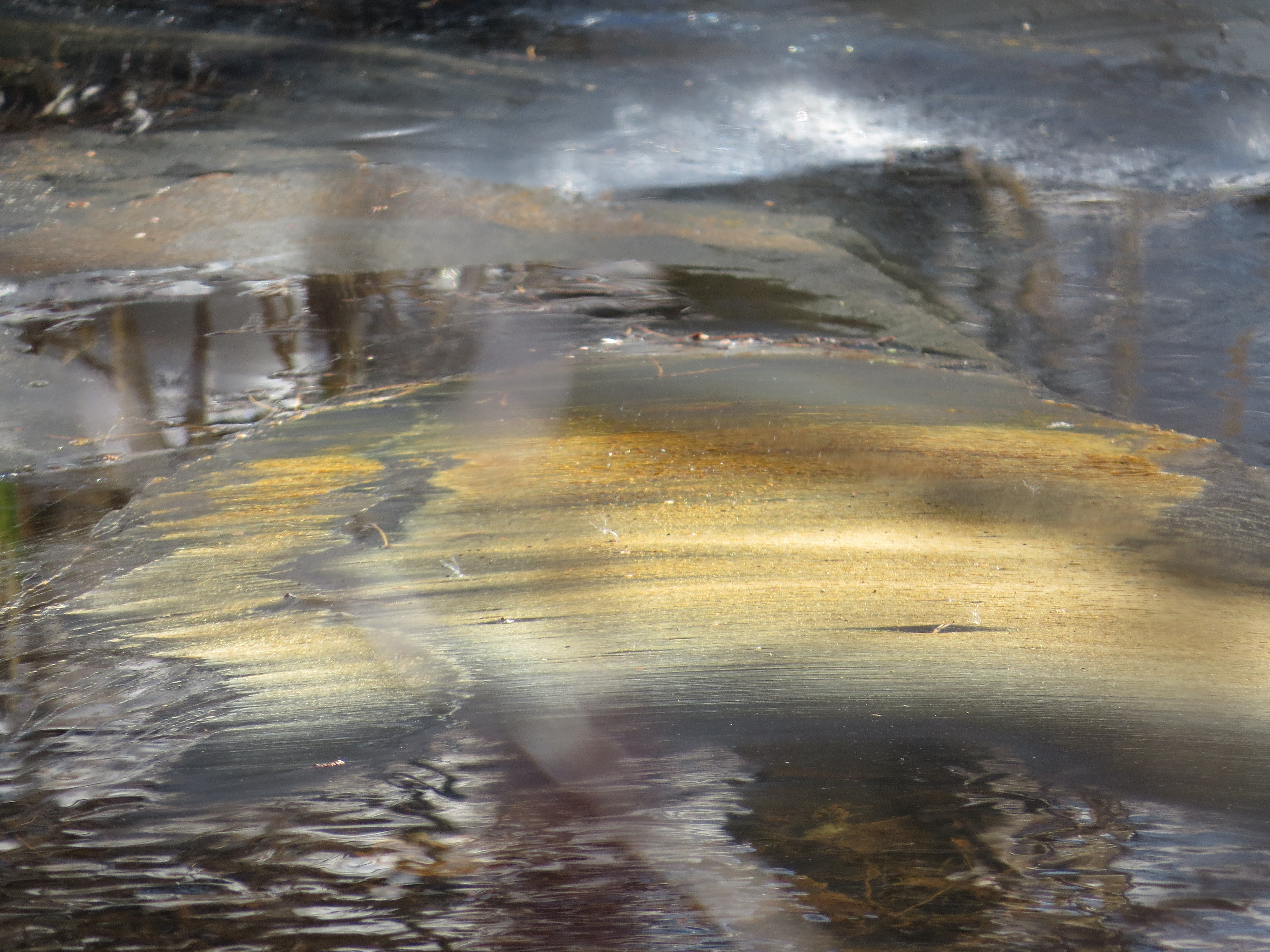
Whatever it was, it made for an interesting piece of ice art.
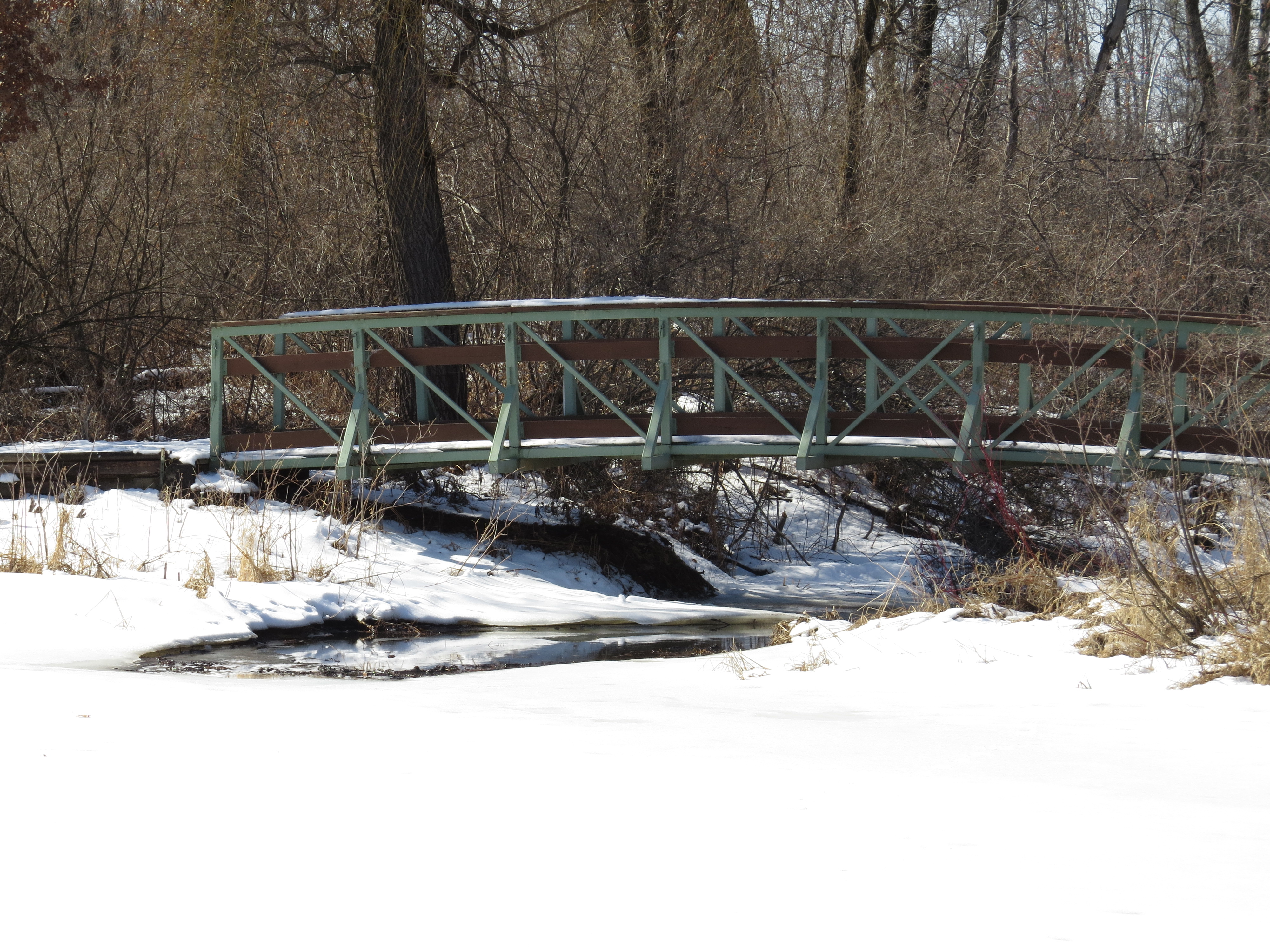
After a short stint on the snowshoes where we pecked our way around too many bare spots, we returned them to the car and resumed our hike on foot, or ‘boot’ rather. Monet’s pond and stream were just beginning to open up; the bridge was not quite as picturesque as when we saw it in the summer.
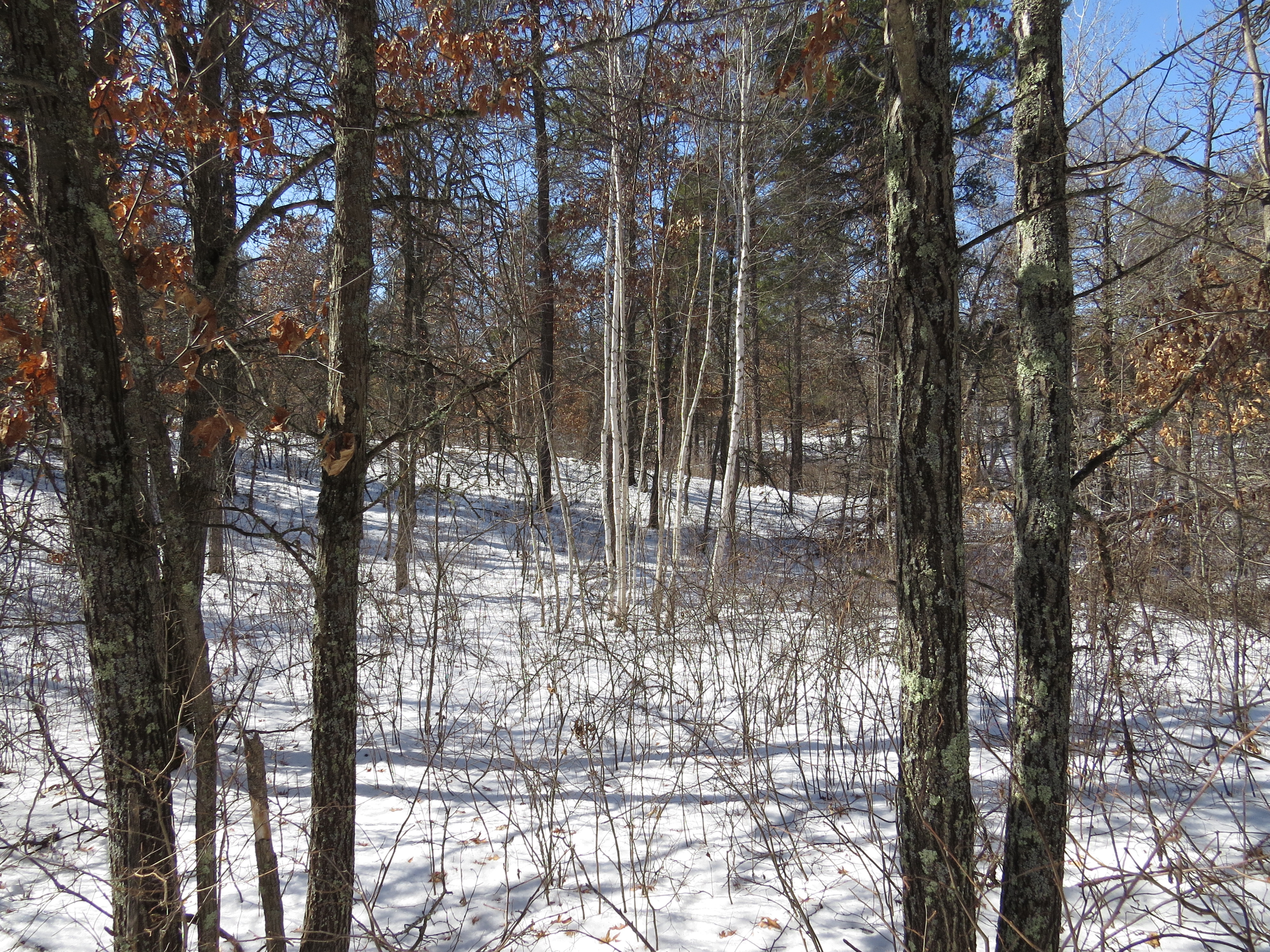
It was a beautiful blue-sky day! The pine–birch–oak woods held a beauty beyond the brilliant sky and snowy background. There was an ‘aliveness’ about them, like an anticipation of things to come.
A wandering deer was camouflaged in the brush, her slow meandering movements showed no concern for us noisy neighbors.
The Spring sun was working on the exposed places…
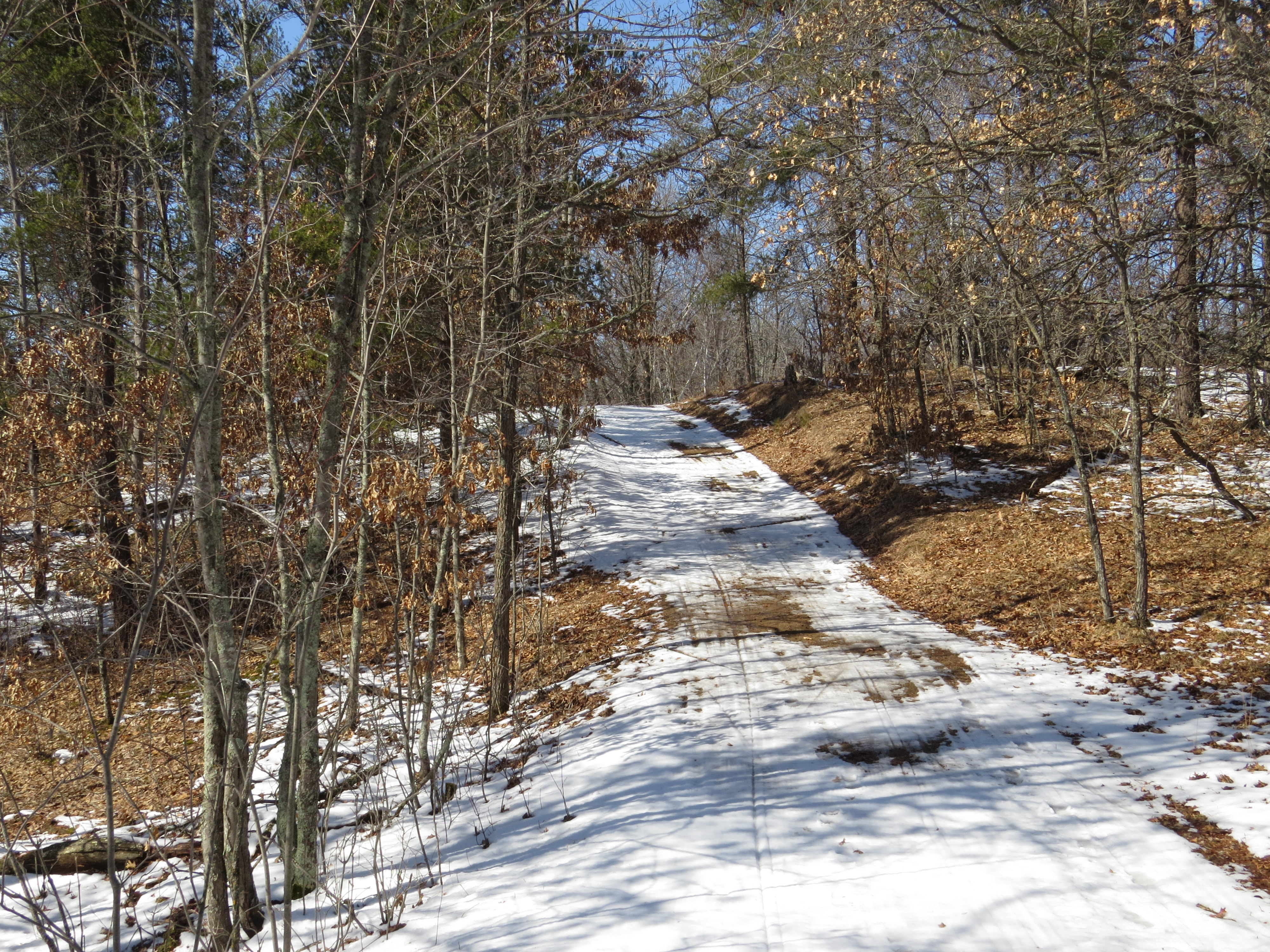
while other places in the shadows and in the hidden nooks still had inches of snow.
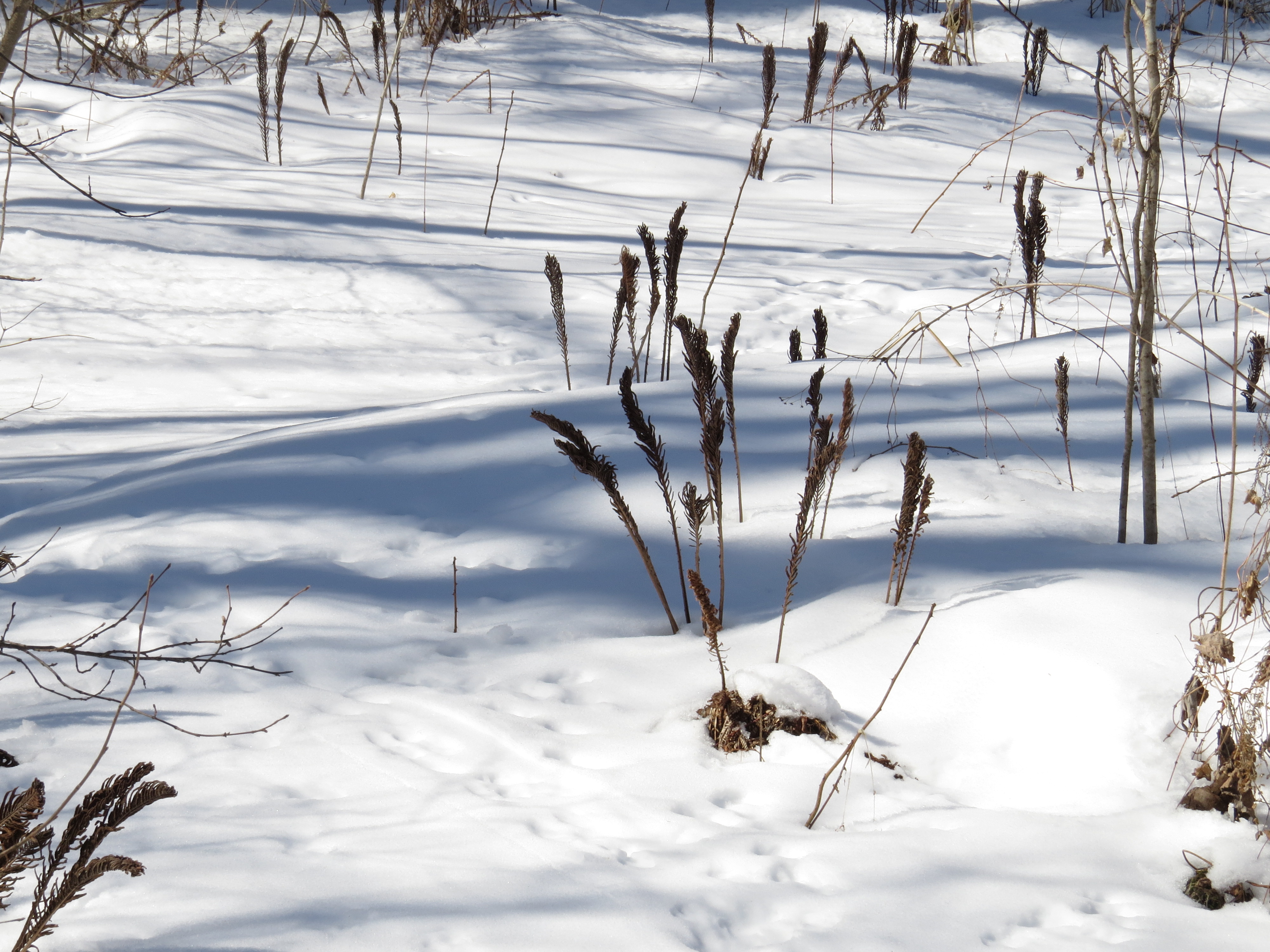
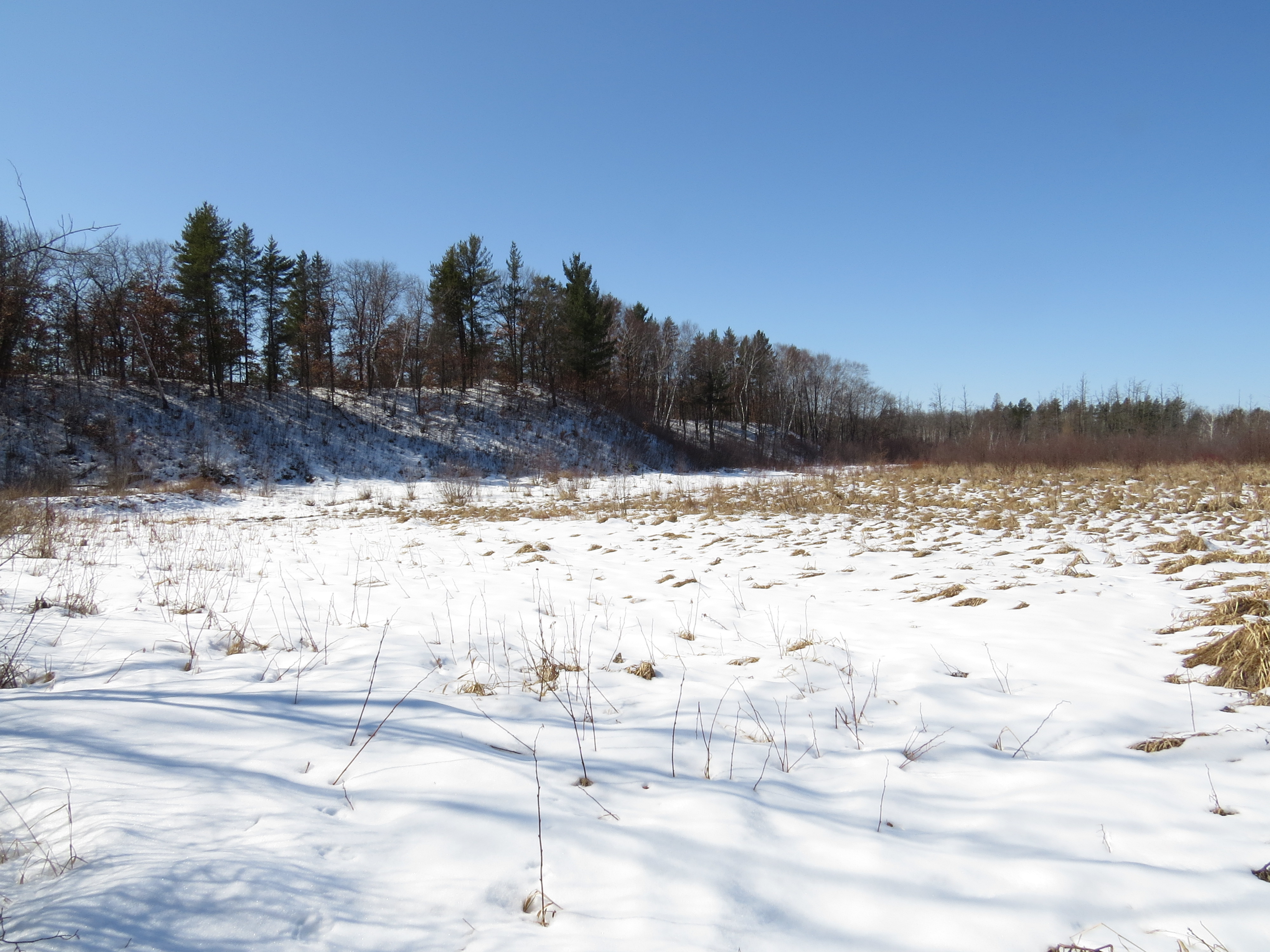
Our destination this time was to get to Beaver Pond—our last time here we were so inundated by mosquitoes when we got to this part of the trail that all we did was swat and squirm. In our misery, we turned around at the Pine Plantation. In the Winter landscape, we could see the source and homeplace of the hungry mosquitoes—a large shrub bog and wetland.
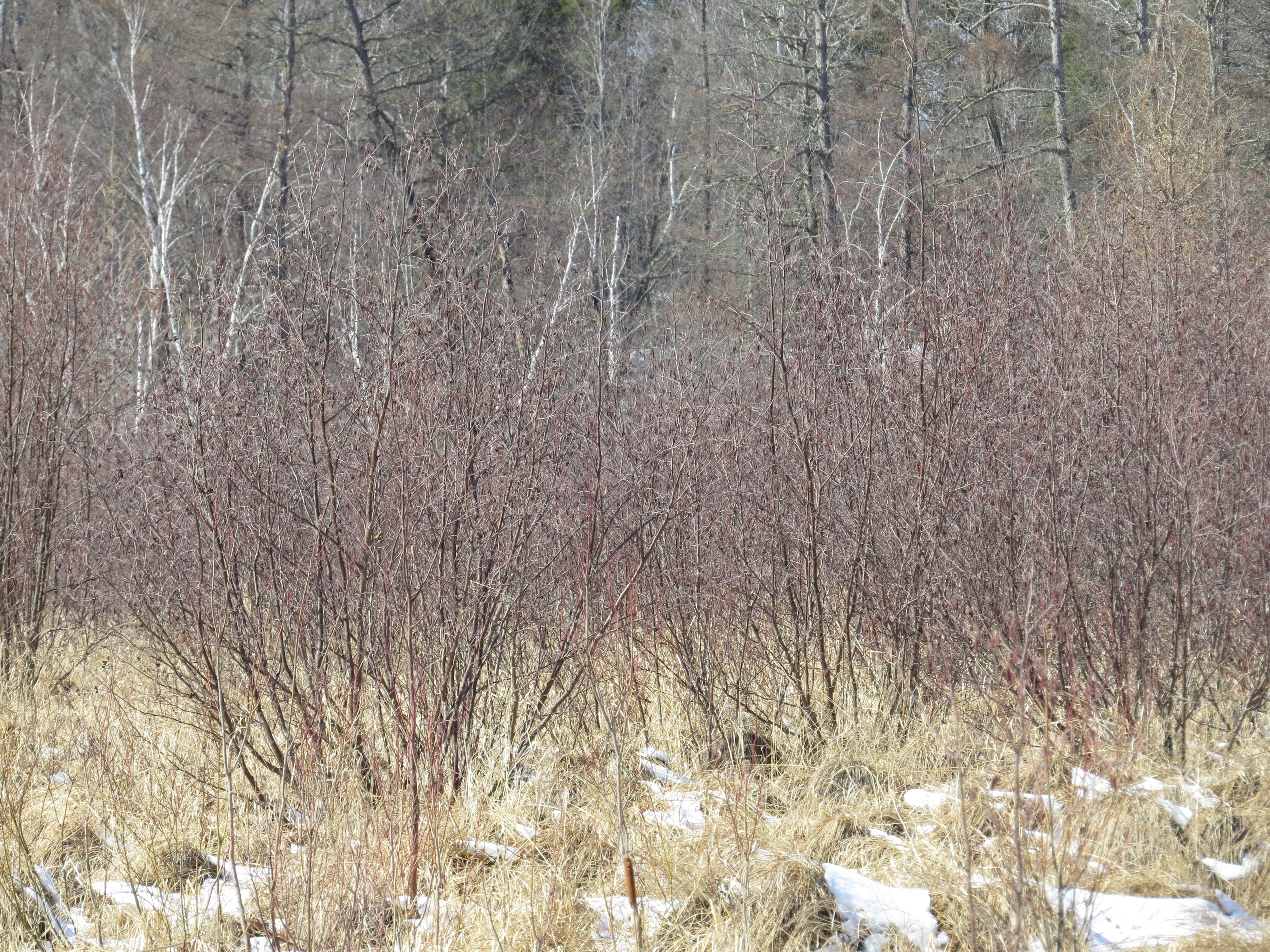
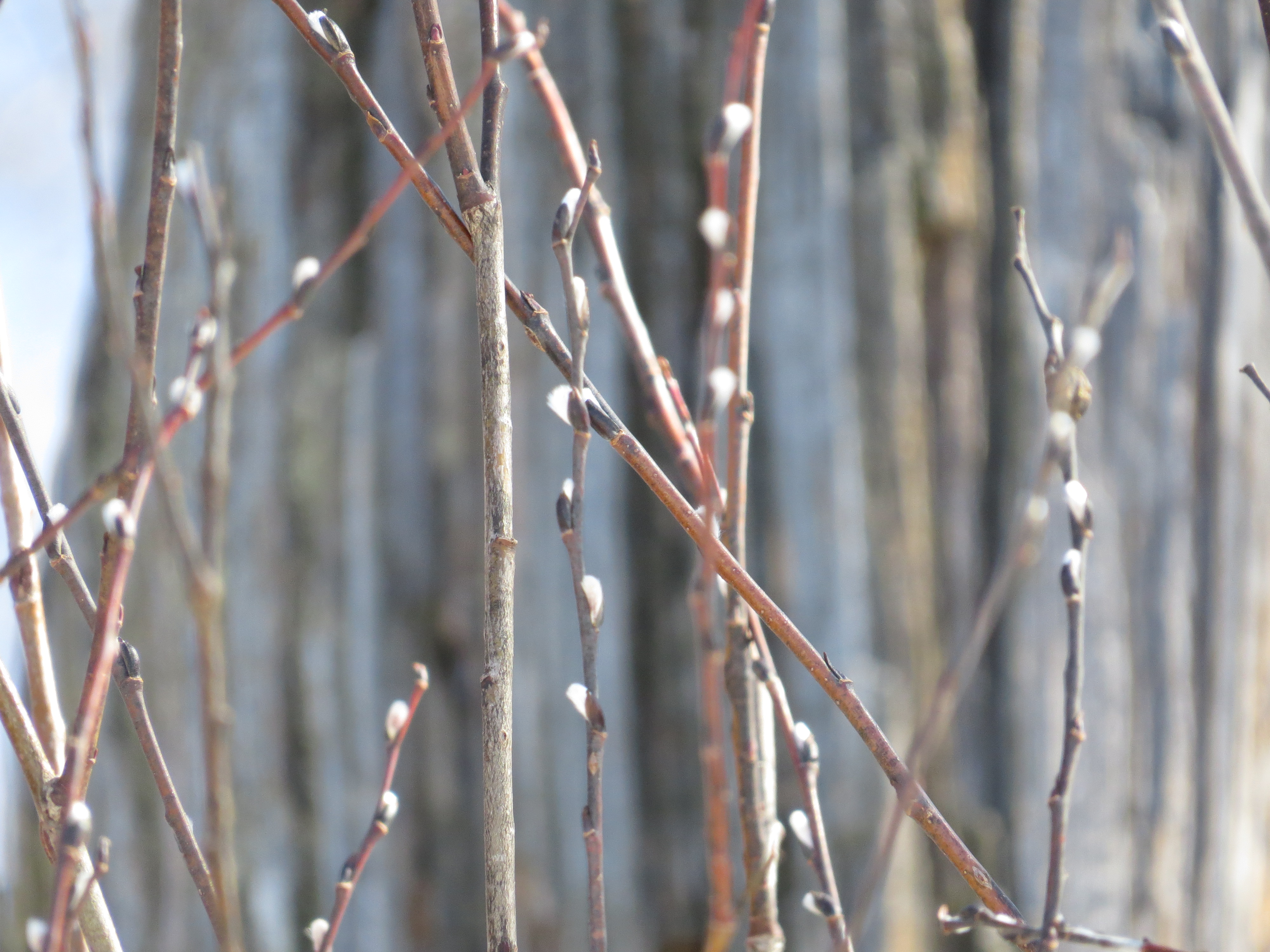
Pussy Willows were beginning to bloom in the wetland—Spring was here, ready or not.
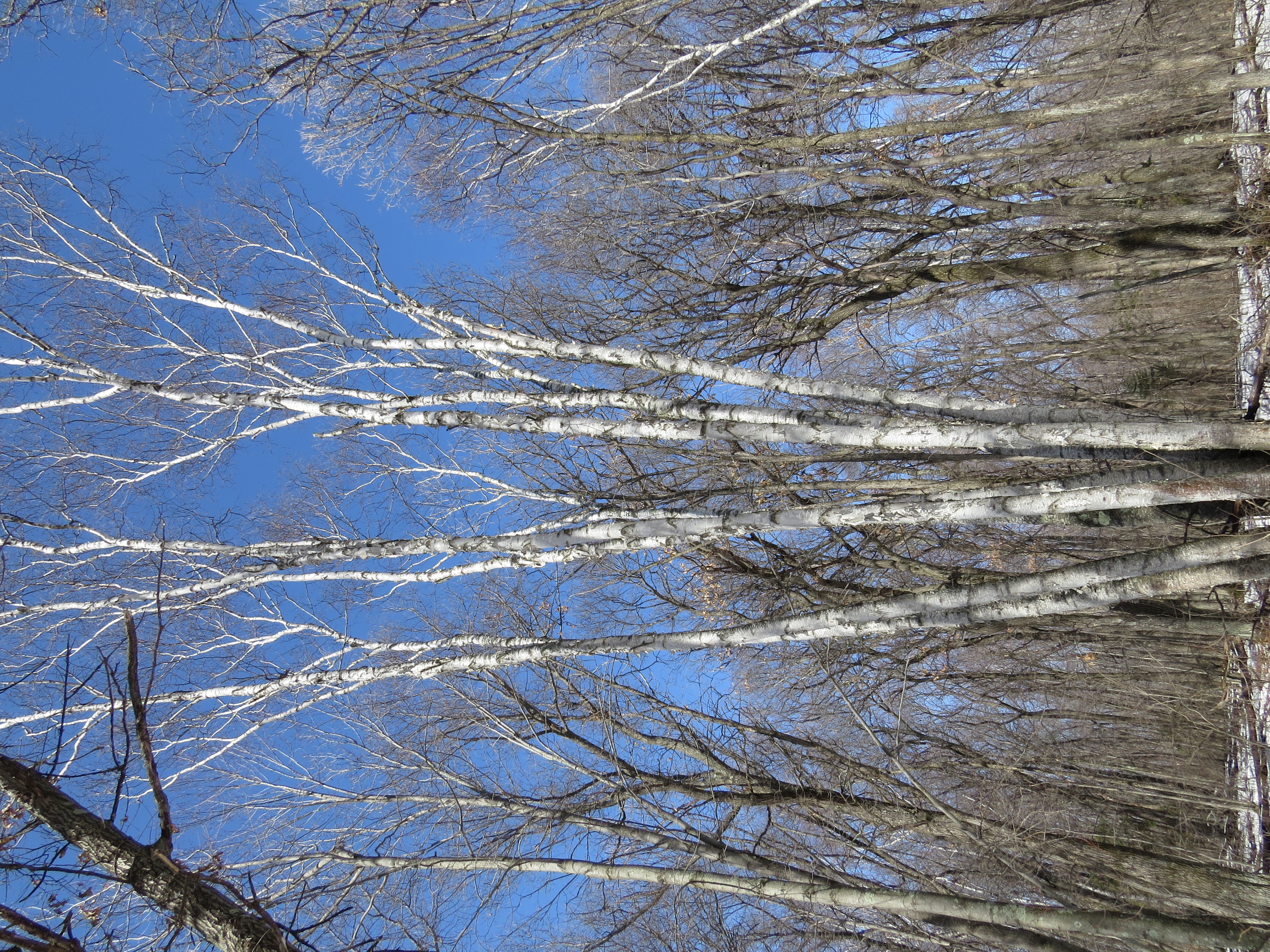
It was a day for appreciating the amazing clusters of white-bark Birches against the sapphire blue sky—something that gets lost when green foliage covers all the trees.
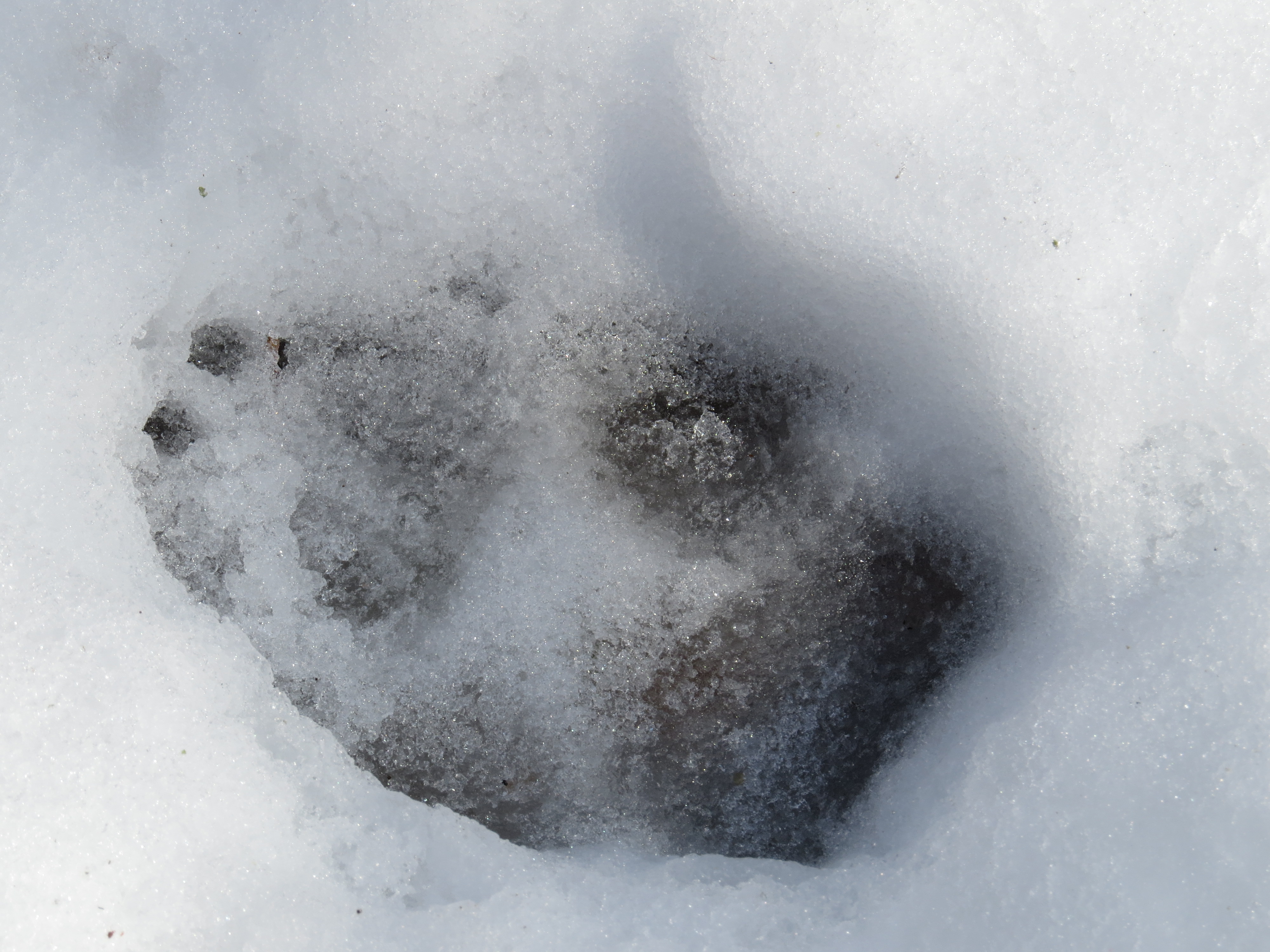
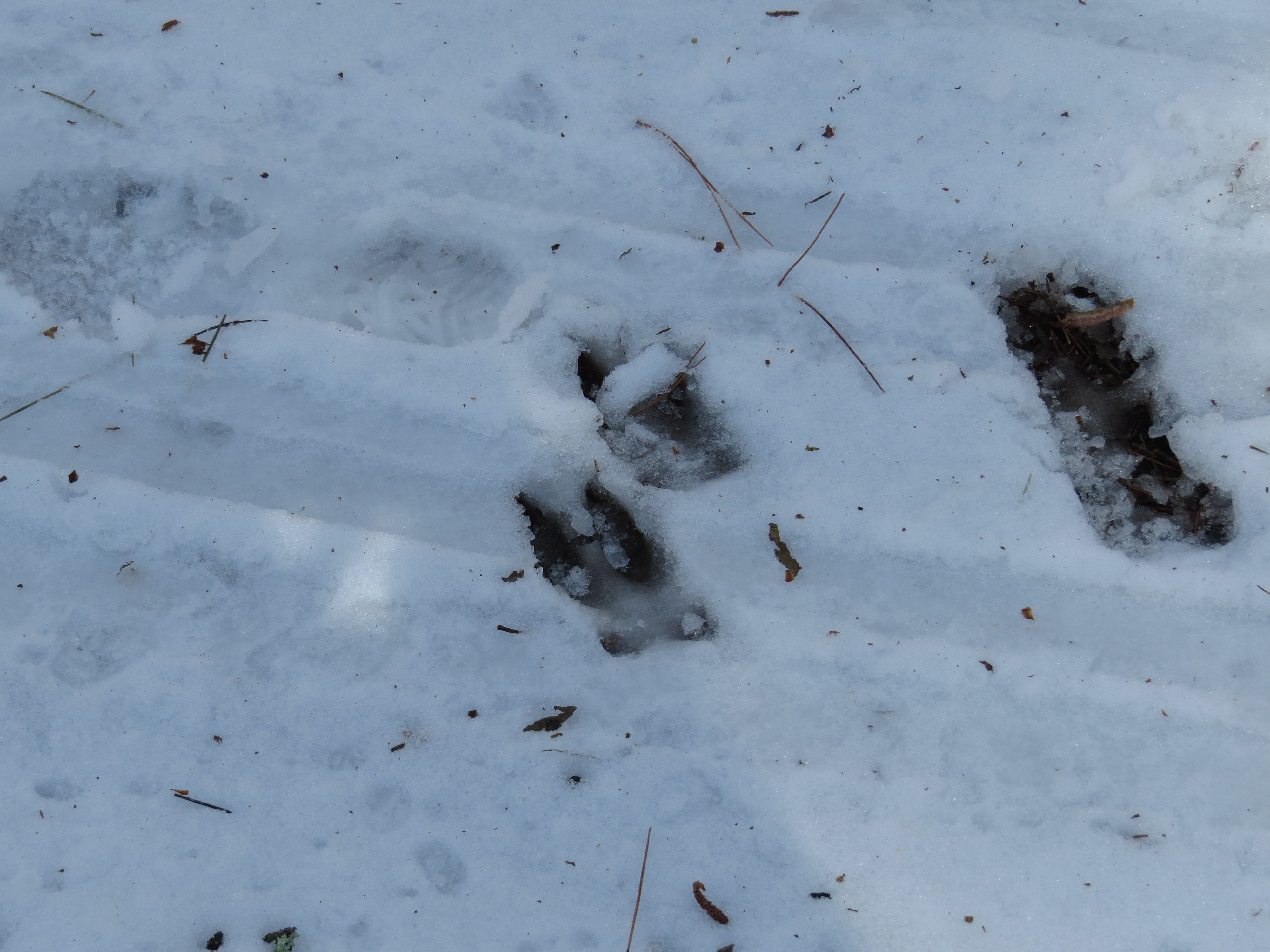
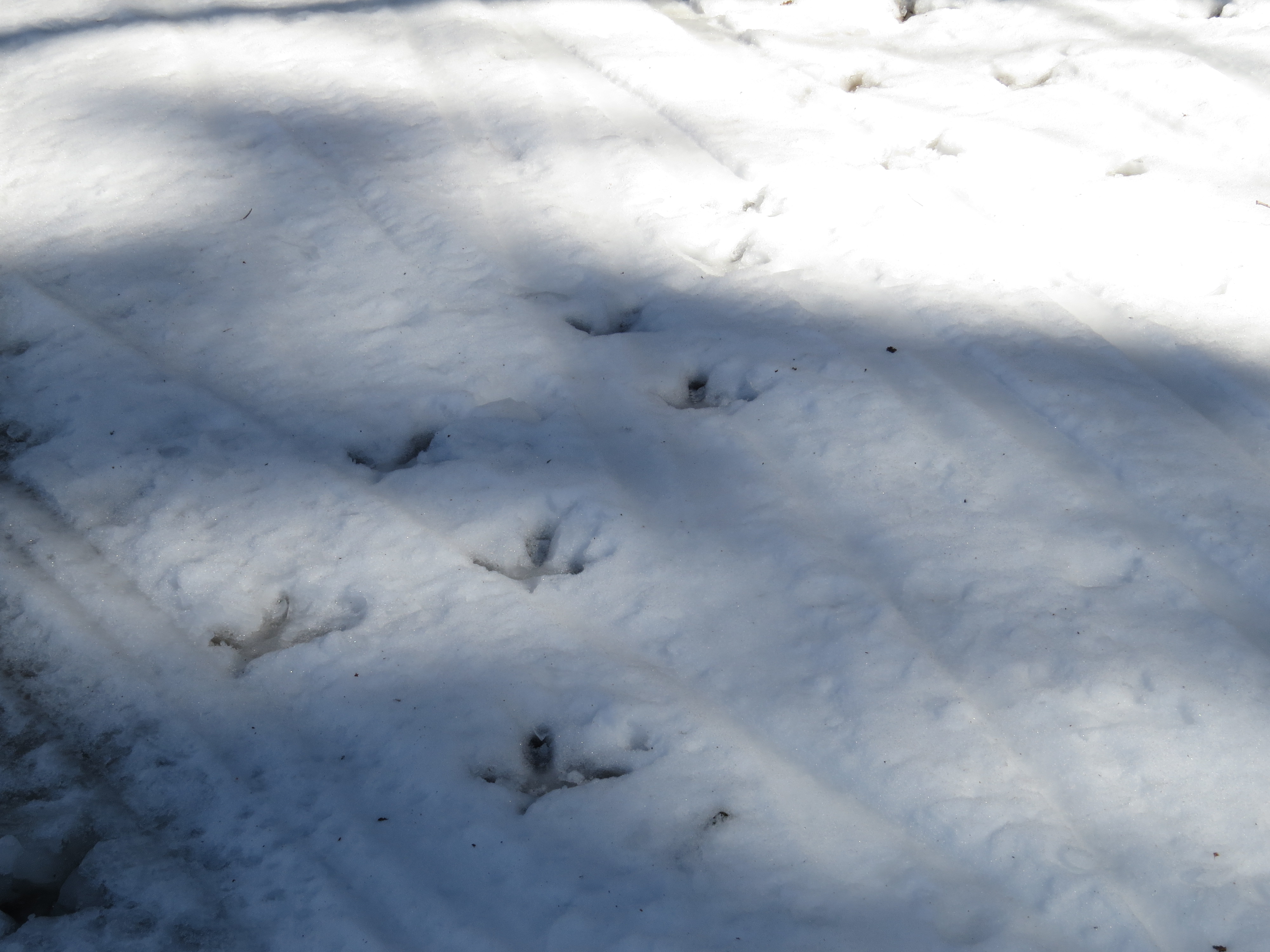
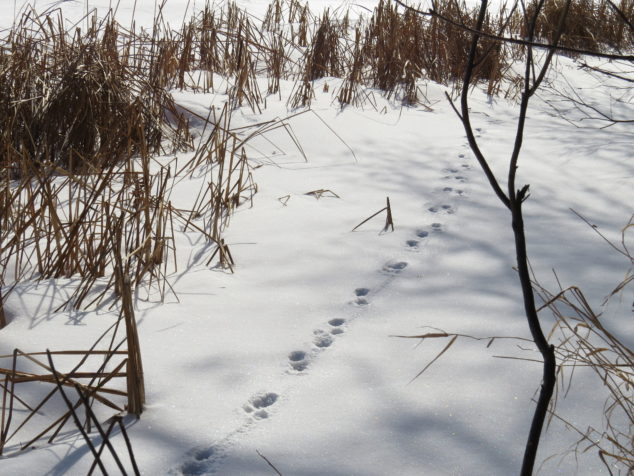
As we hiked farther north along the Johnson Plantation trail where the only human form of tracks were from cross-country skis, all of a sudden I noticed a trail of very large tracks. When we were at Northland in the summer, there had been a black bear sighting on the day we were there, and on this warm, almost-Spring day, perhaps a bear was coming out of hibernation! Bear tracks, I exclaimed! The palm of my hand fit neatly inside the tracks, a full six by four inches.
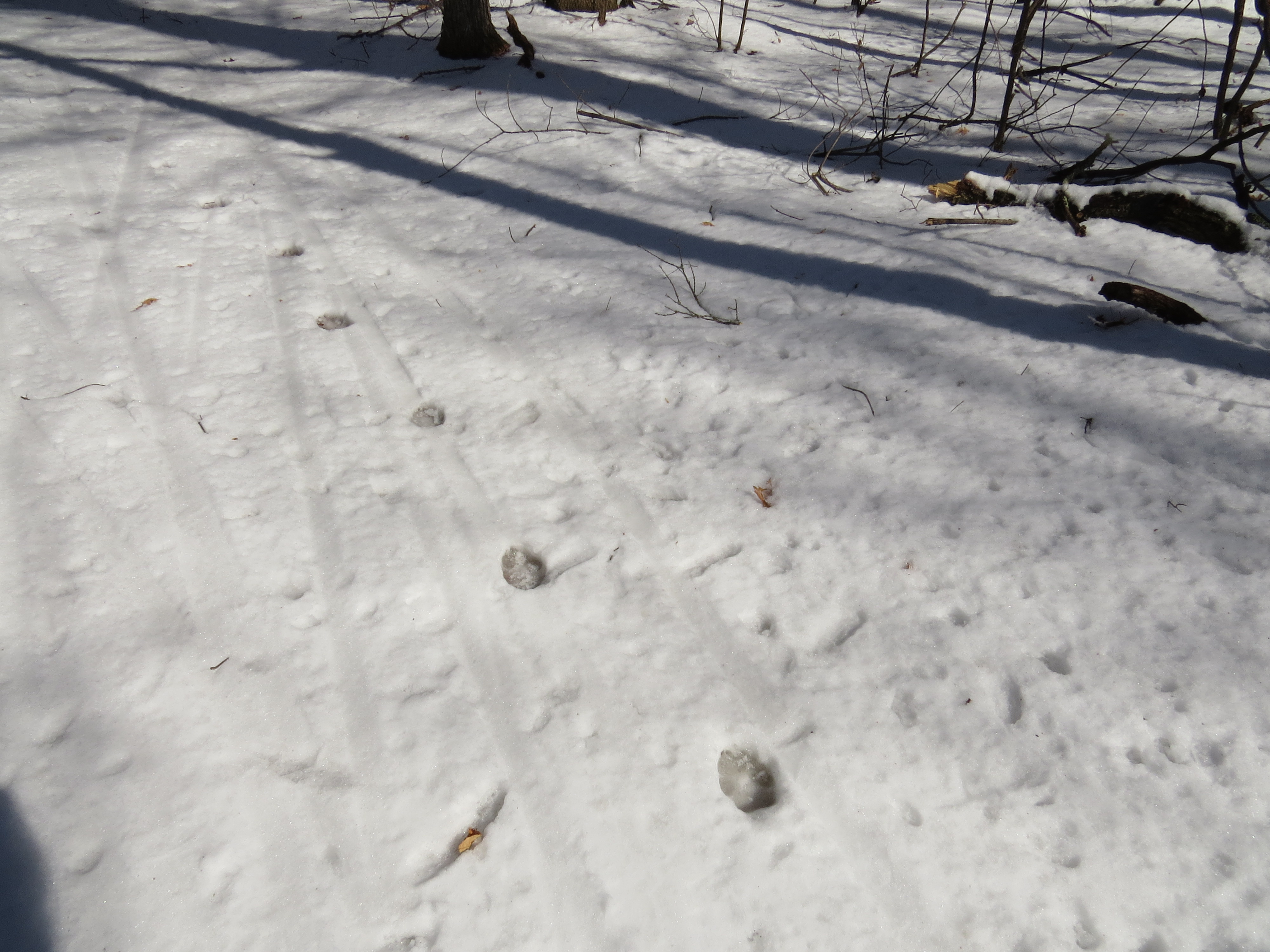
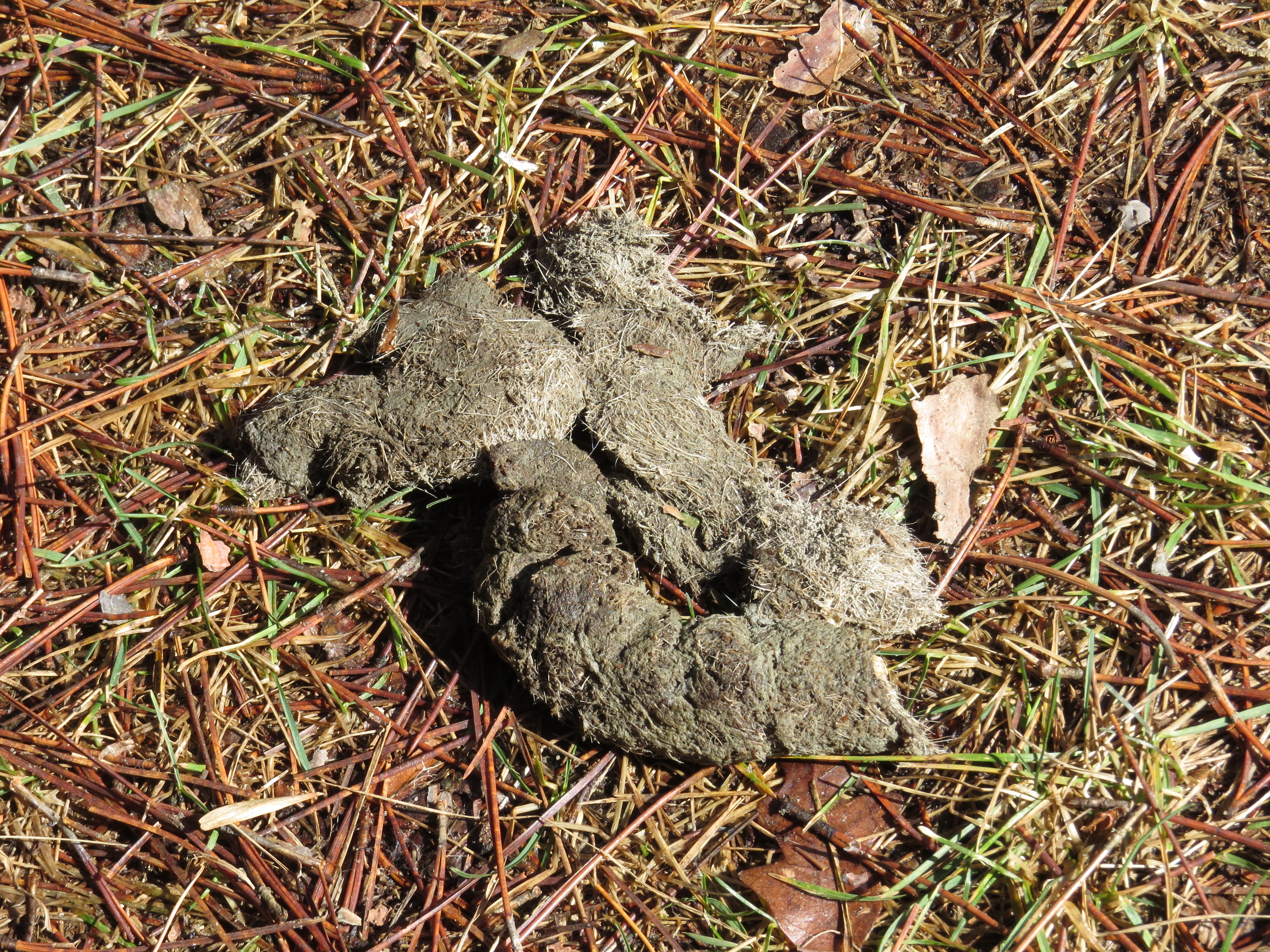
The tracks followed the trail; we followed the tracks. In one clearing where the sun had melted the snow, a large pile of fur-filled scat lay among the pine needles.
It was a perfect place for a bear to live—remote, wooded, plenty of food and shelter.
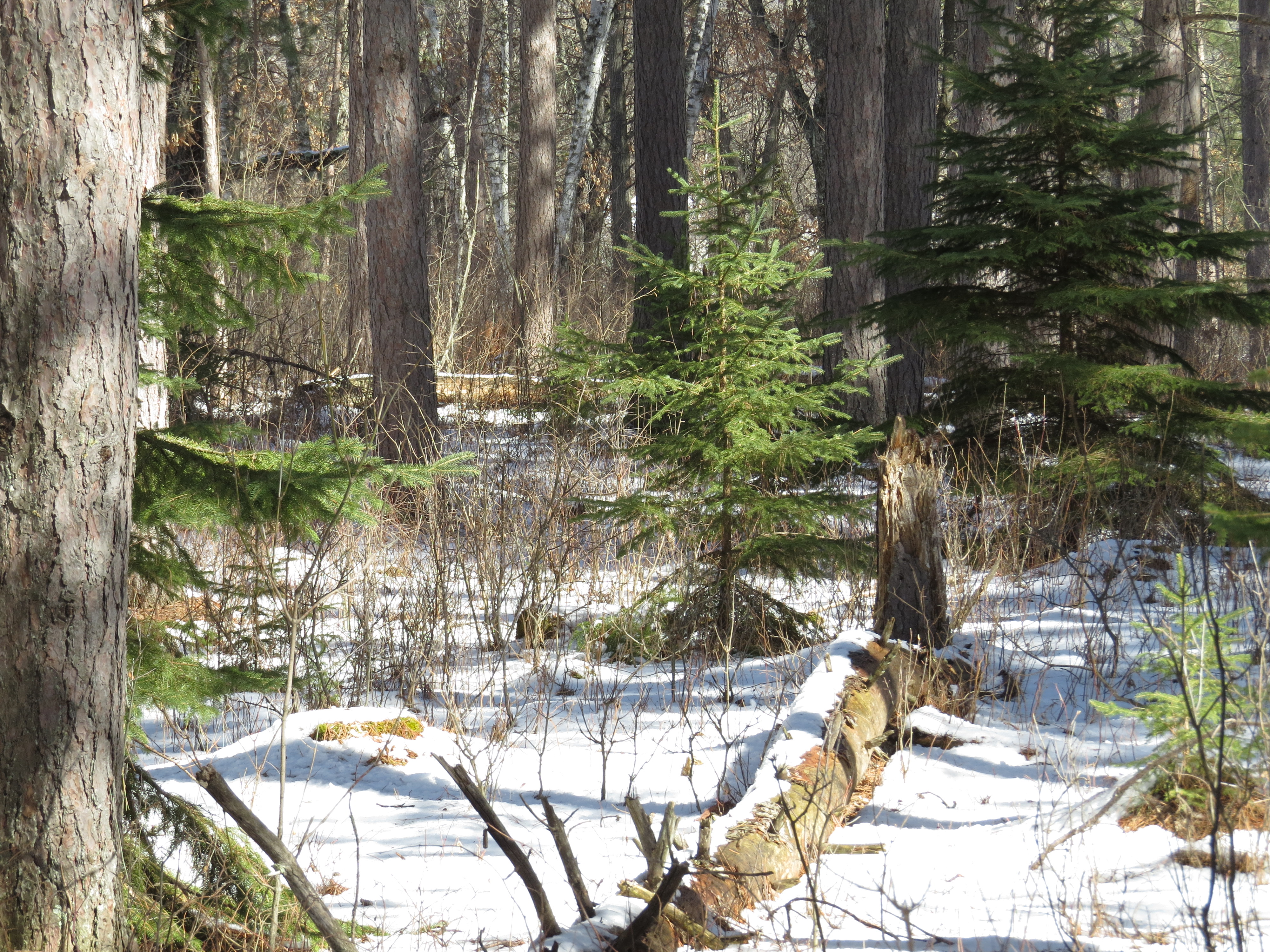
Even though the tracks looked a day old with the melting, refreezing, and melting again, we joked about giving a hungry bear the nut bars in my backpack.
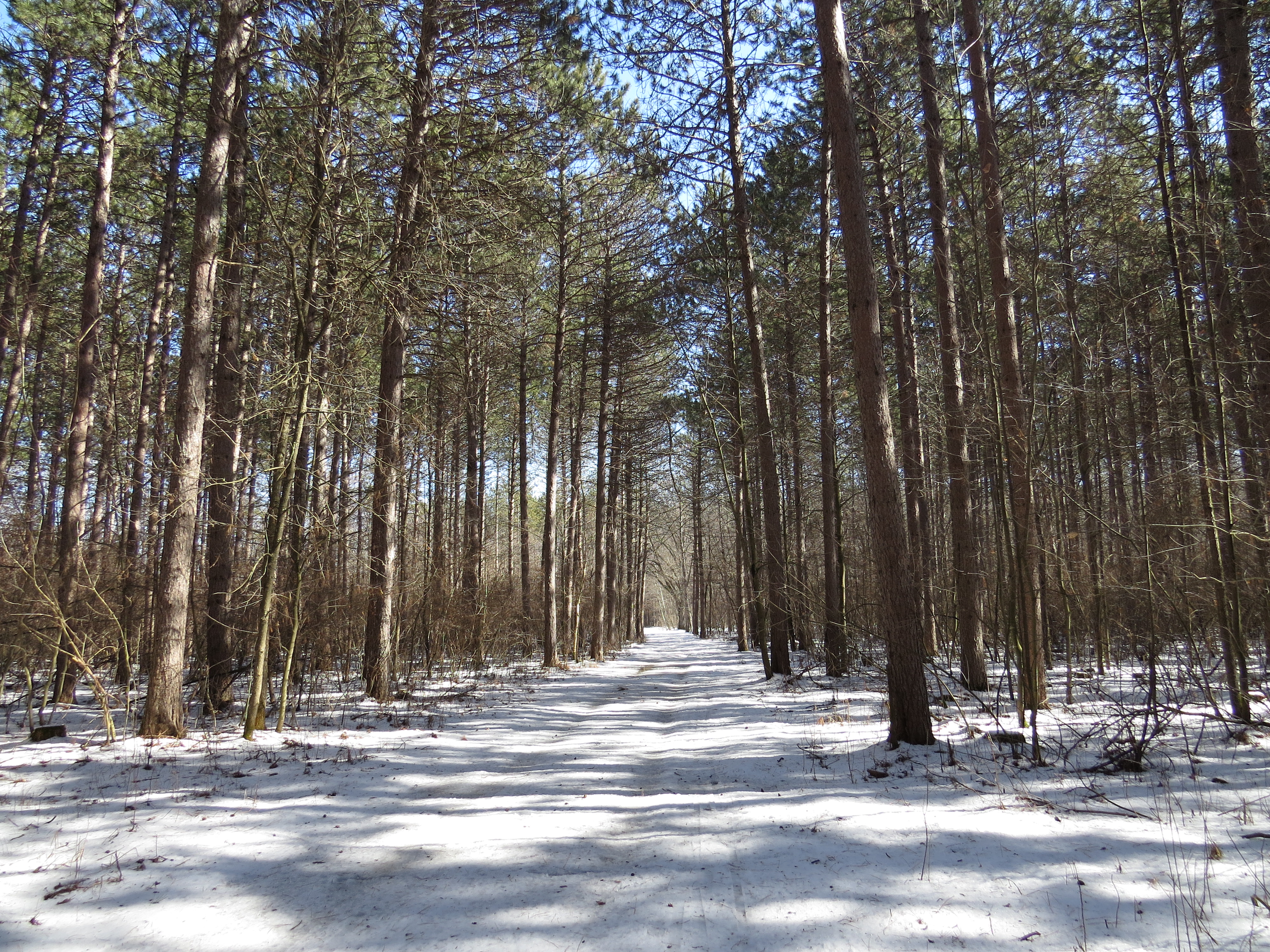
I wondered aloud what had caused these moon craters in yesterday’s slush, and it wasn’t until I was further along the trail that I knew—a plop of wet snow fell on my head from high in the trees. I needed a little personal evidence to figure out my question.
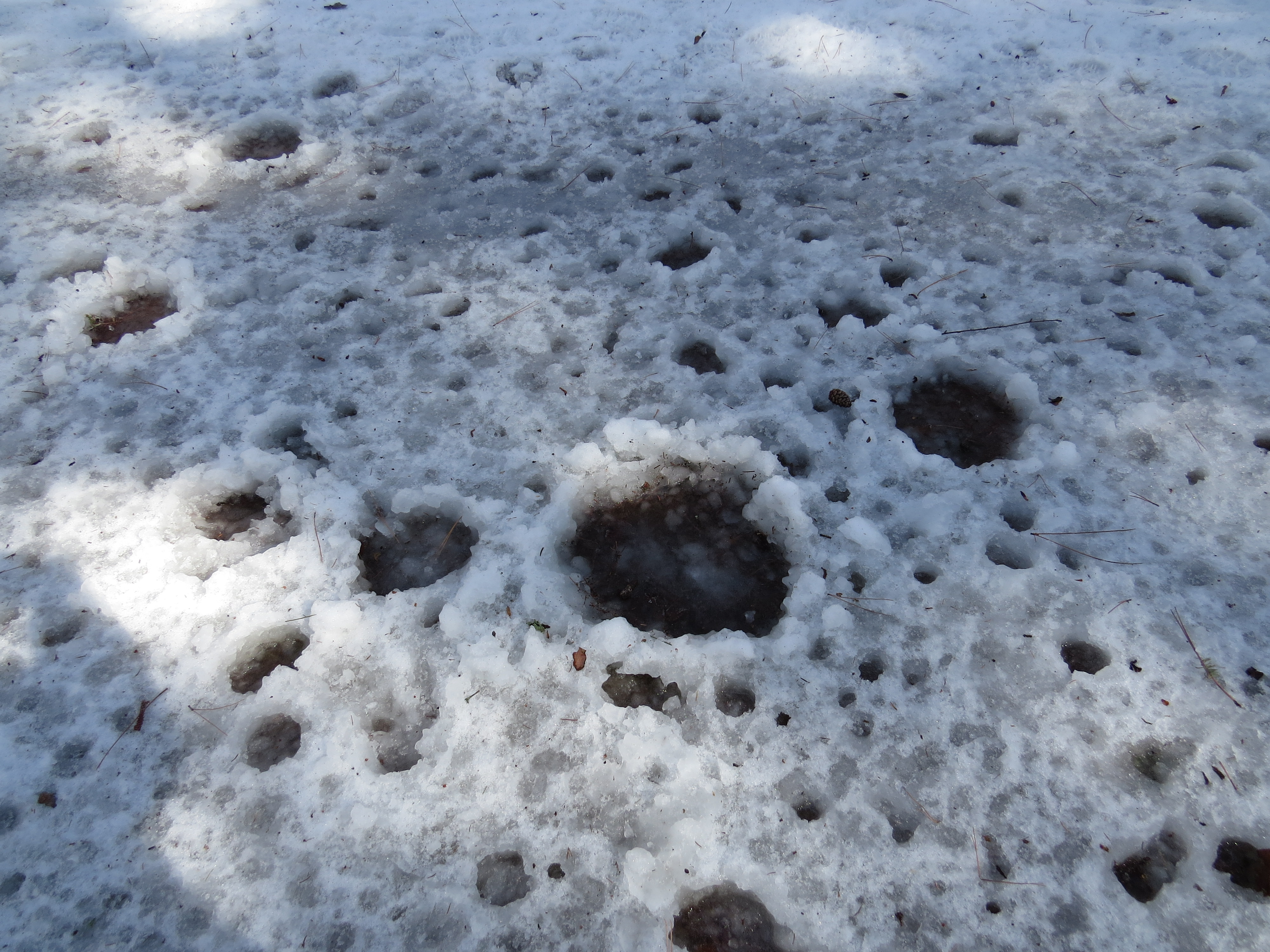
Deer and Wild Turkey tracks intersected the ski trails, and soon the bear tracks left the trail and disappeared into the woods.
We arrived at Beaver Pond where a large lodge poked up through the ice on the far side.
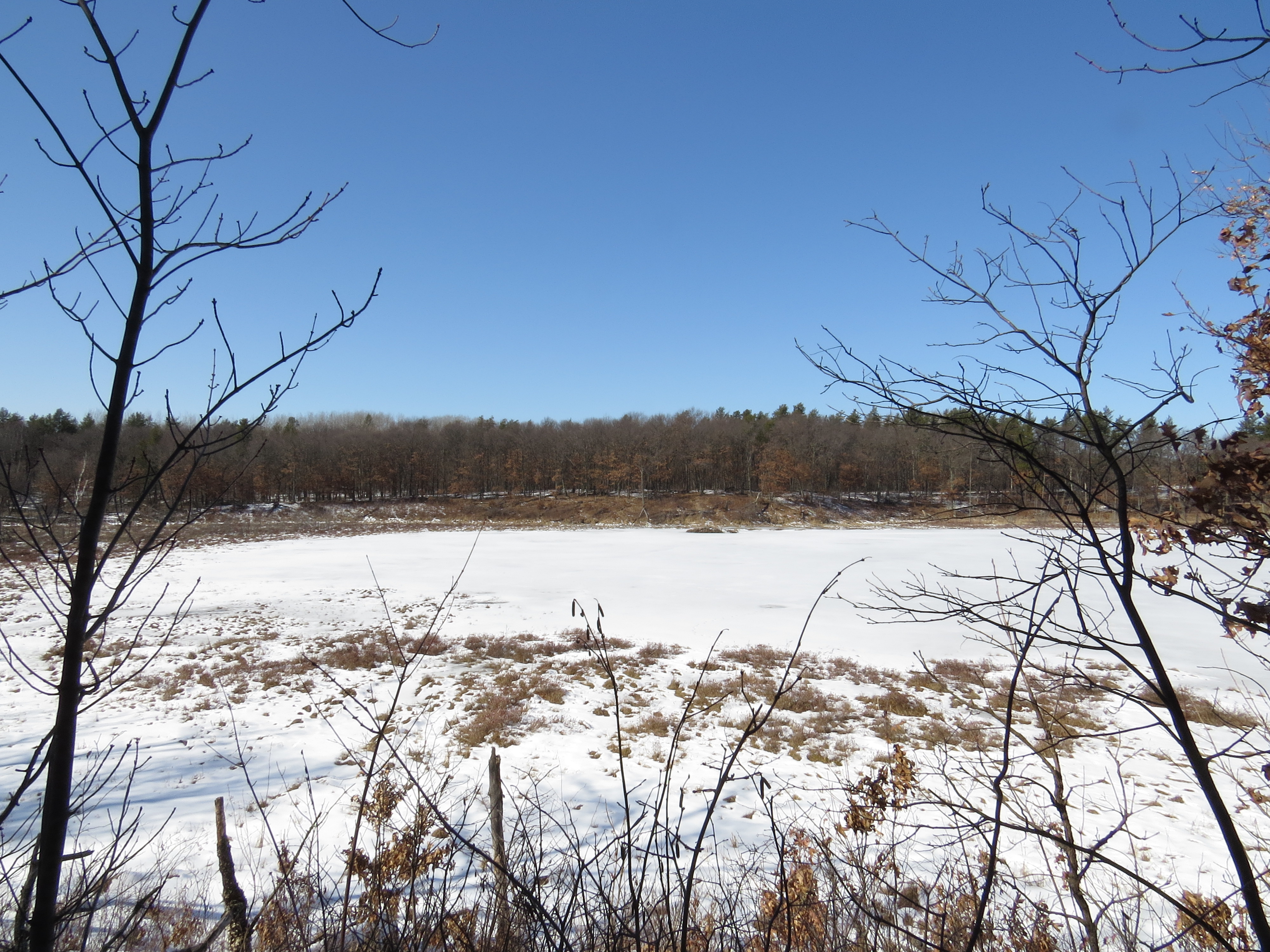
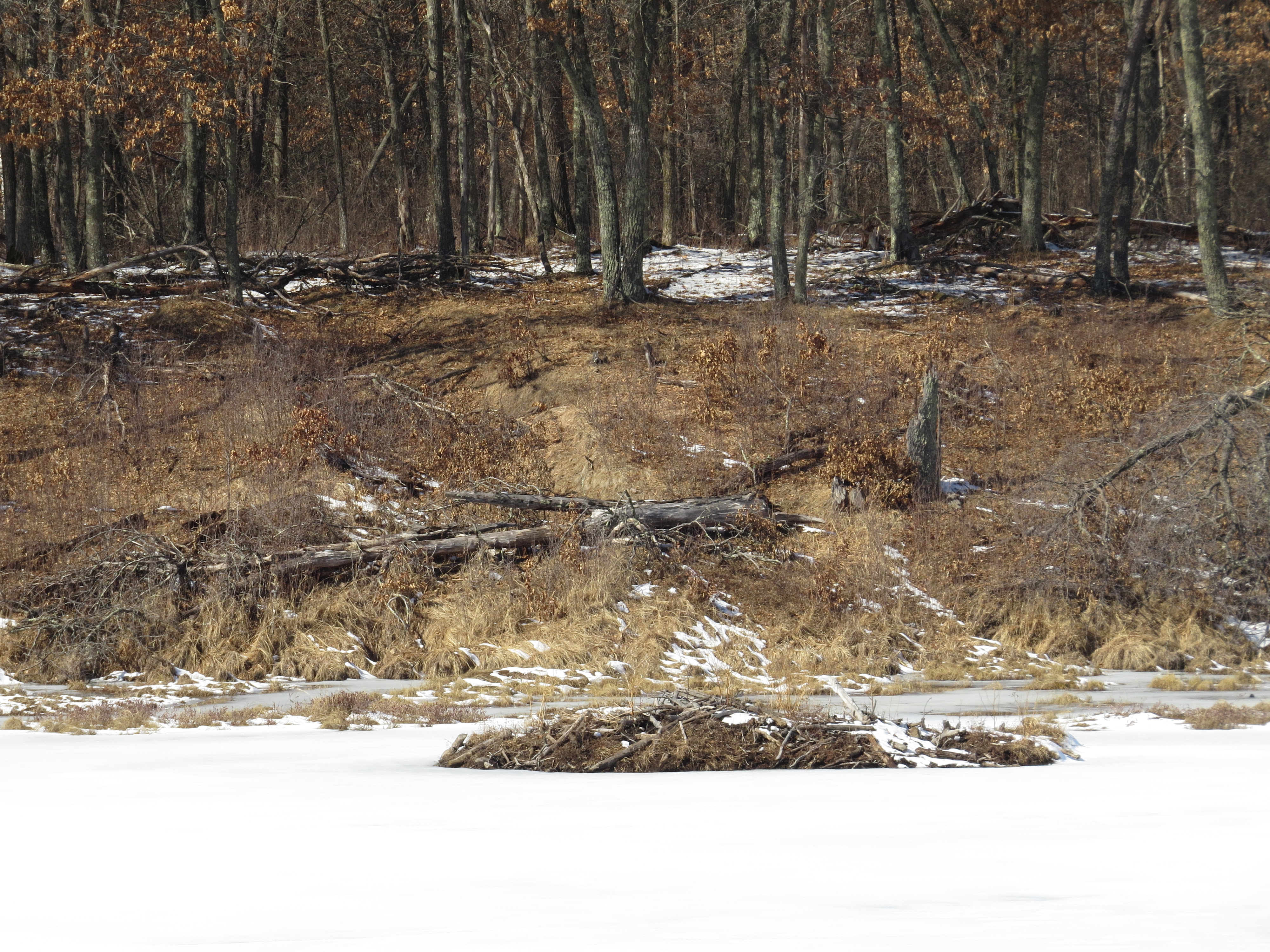
When we circled the pond, we saw an inlet the beaver used and kept free of reeds and rushes so he could swim to the shore and float fallen logs back to the lodge.
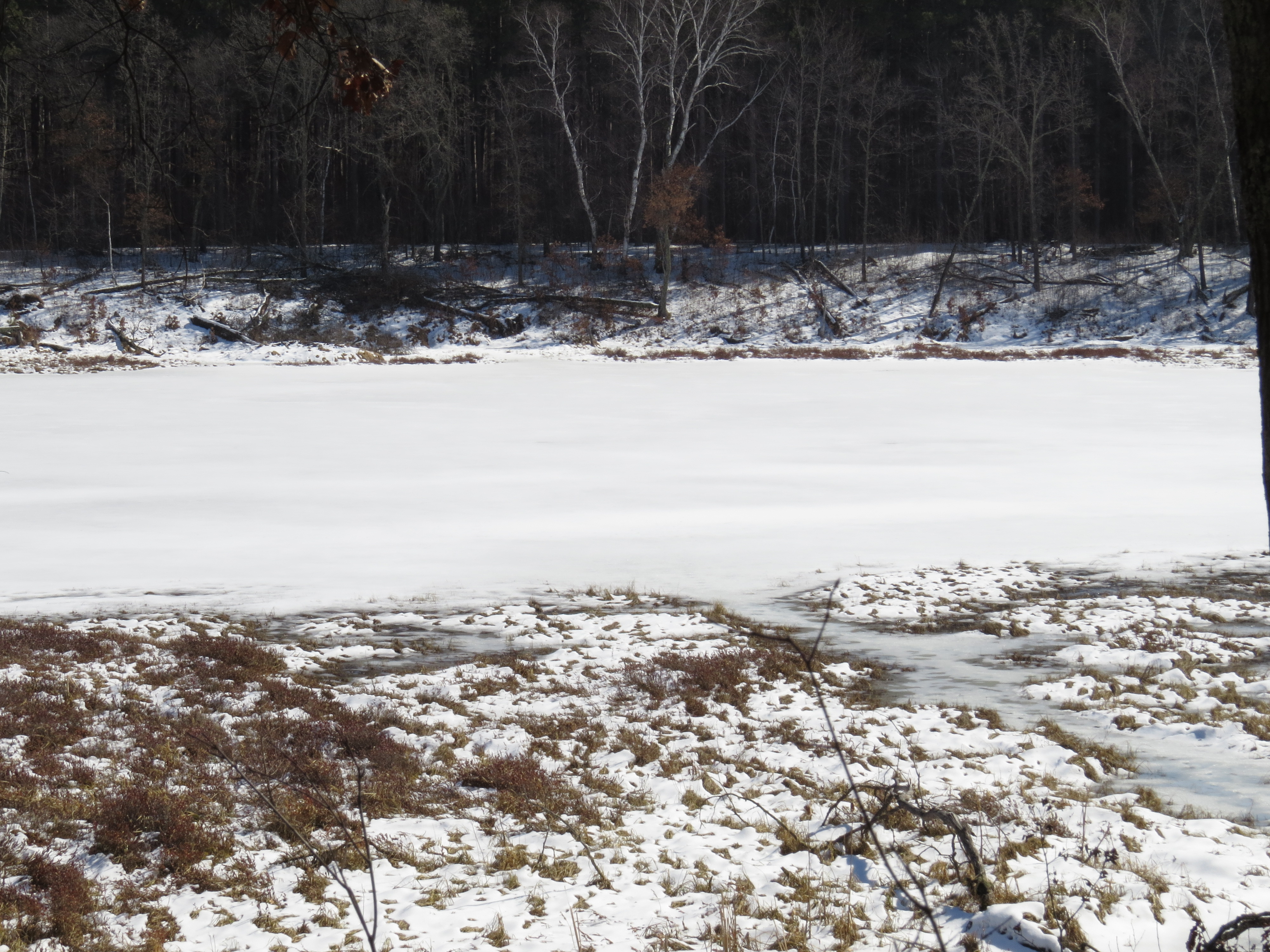
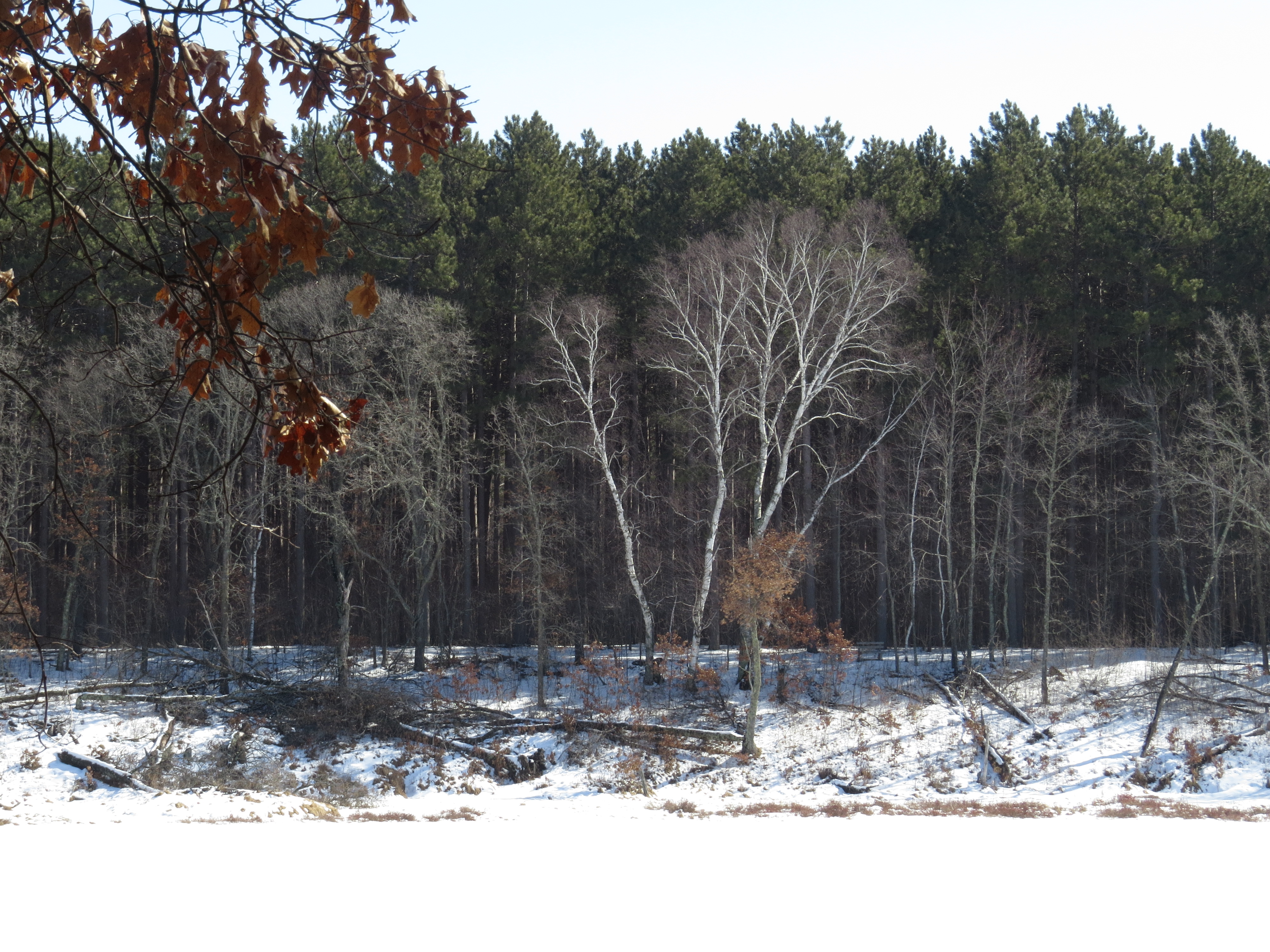
Looking back across the pond, we could see the Pine forest, not just the trees.
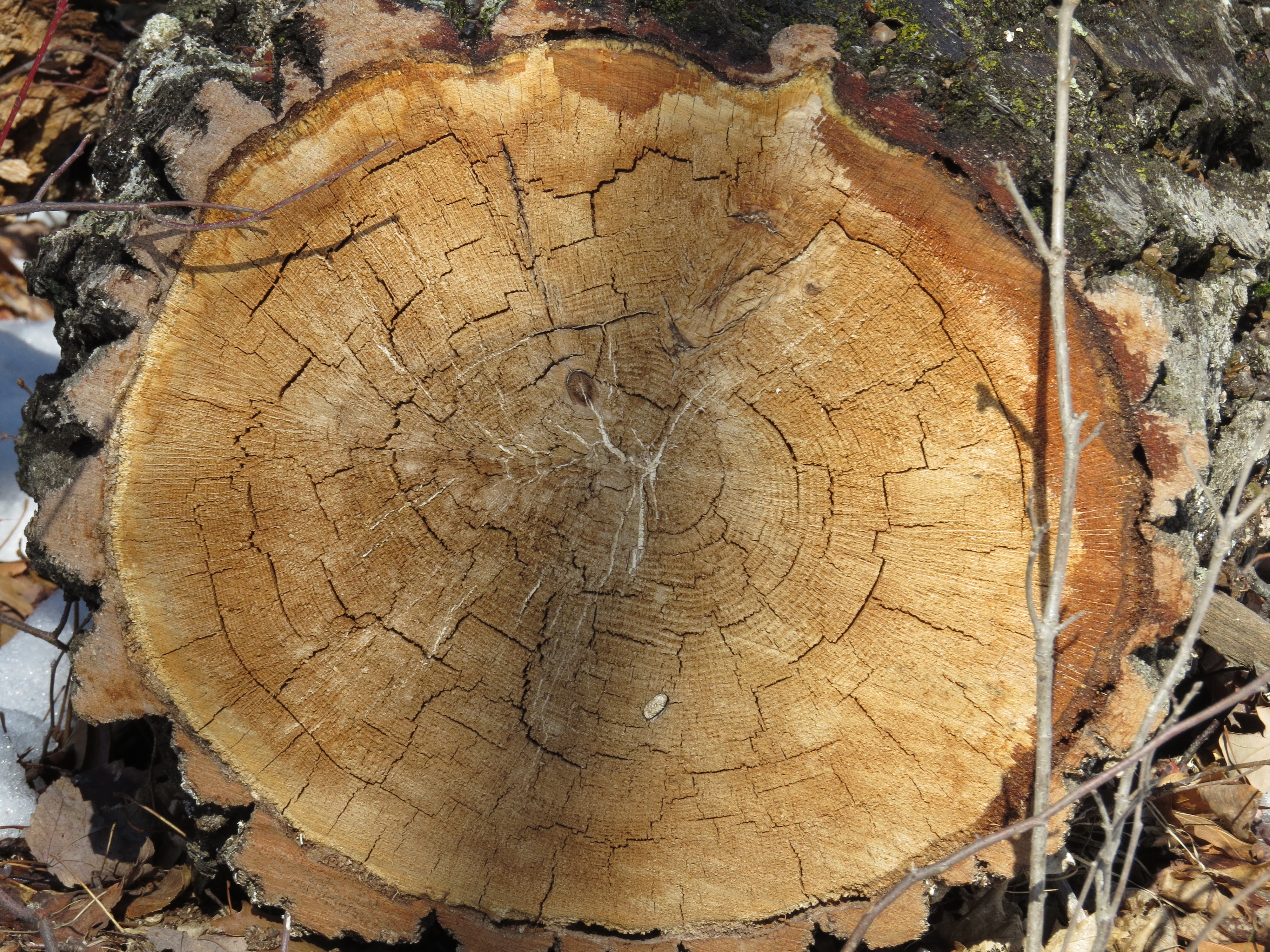
The ring details of a striking amber-hued cut Oak log revealed the slow-growing and evenly nourished life of the tree that was.
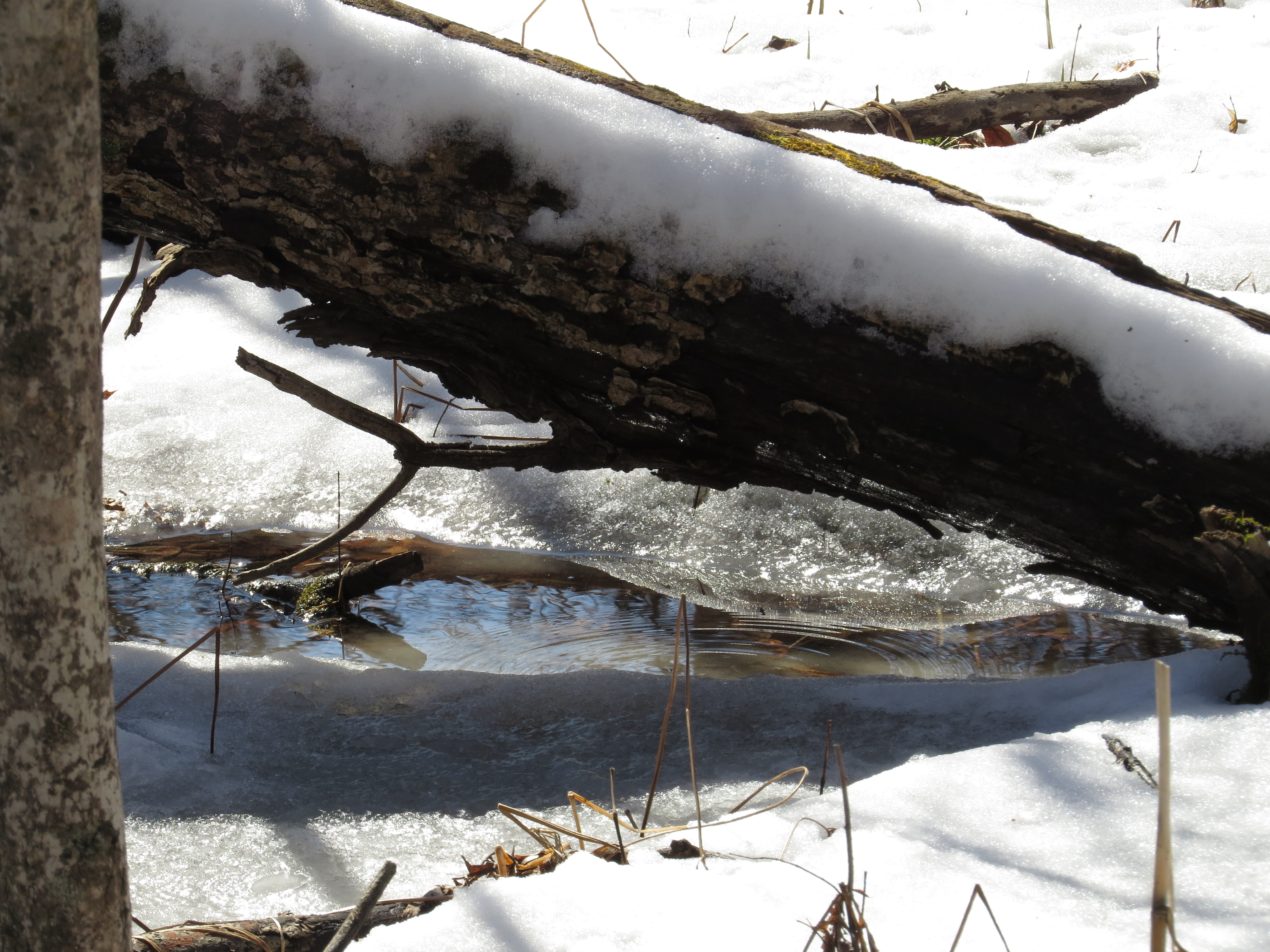
Spring was showing in small, subtle ways in the snow-ice-water where warmth had penetrated the frigid layers of Winter.
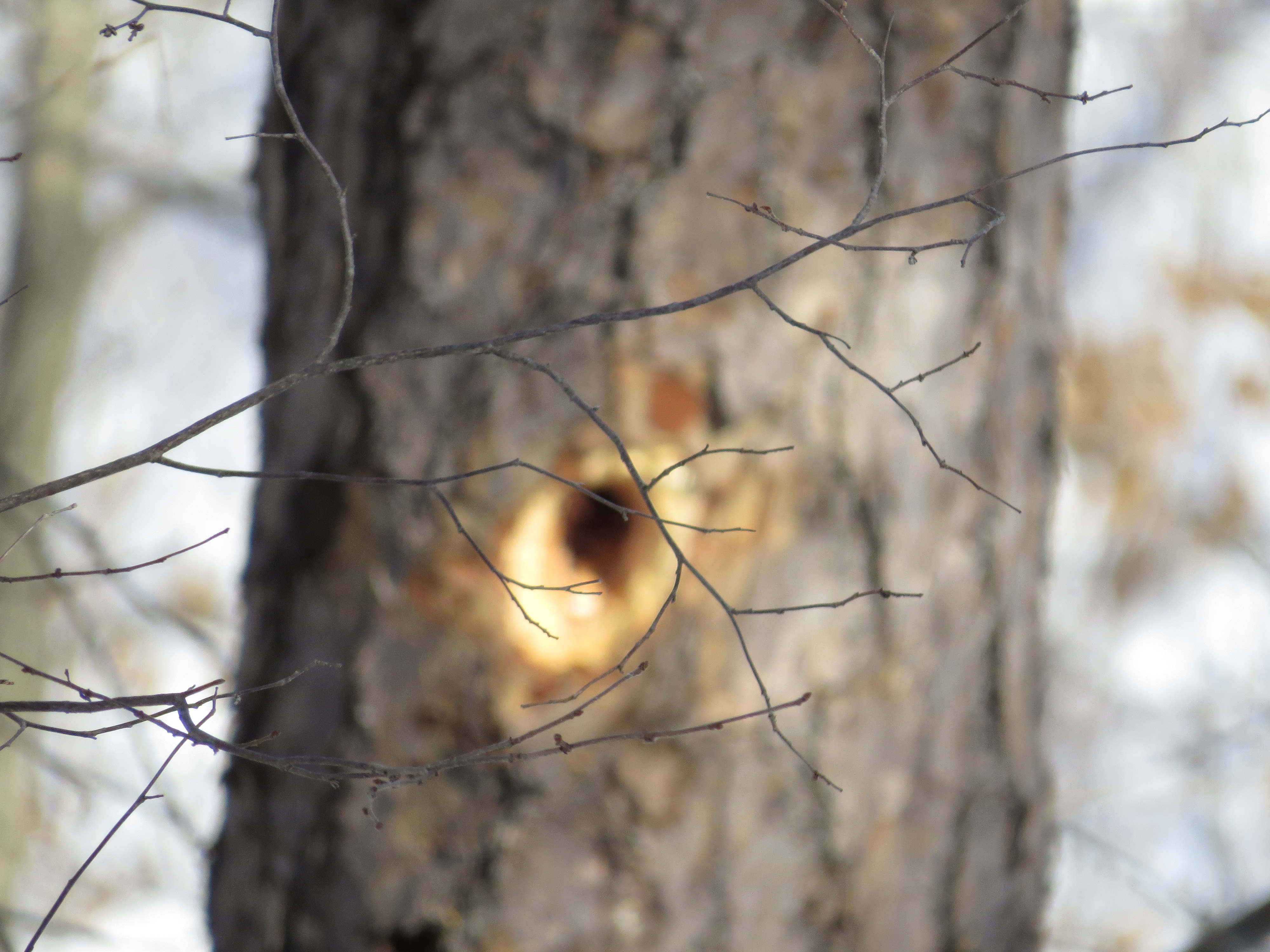
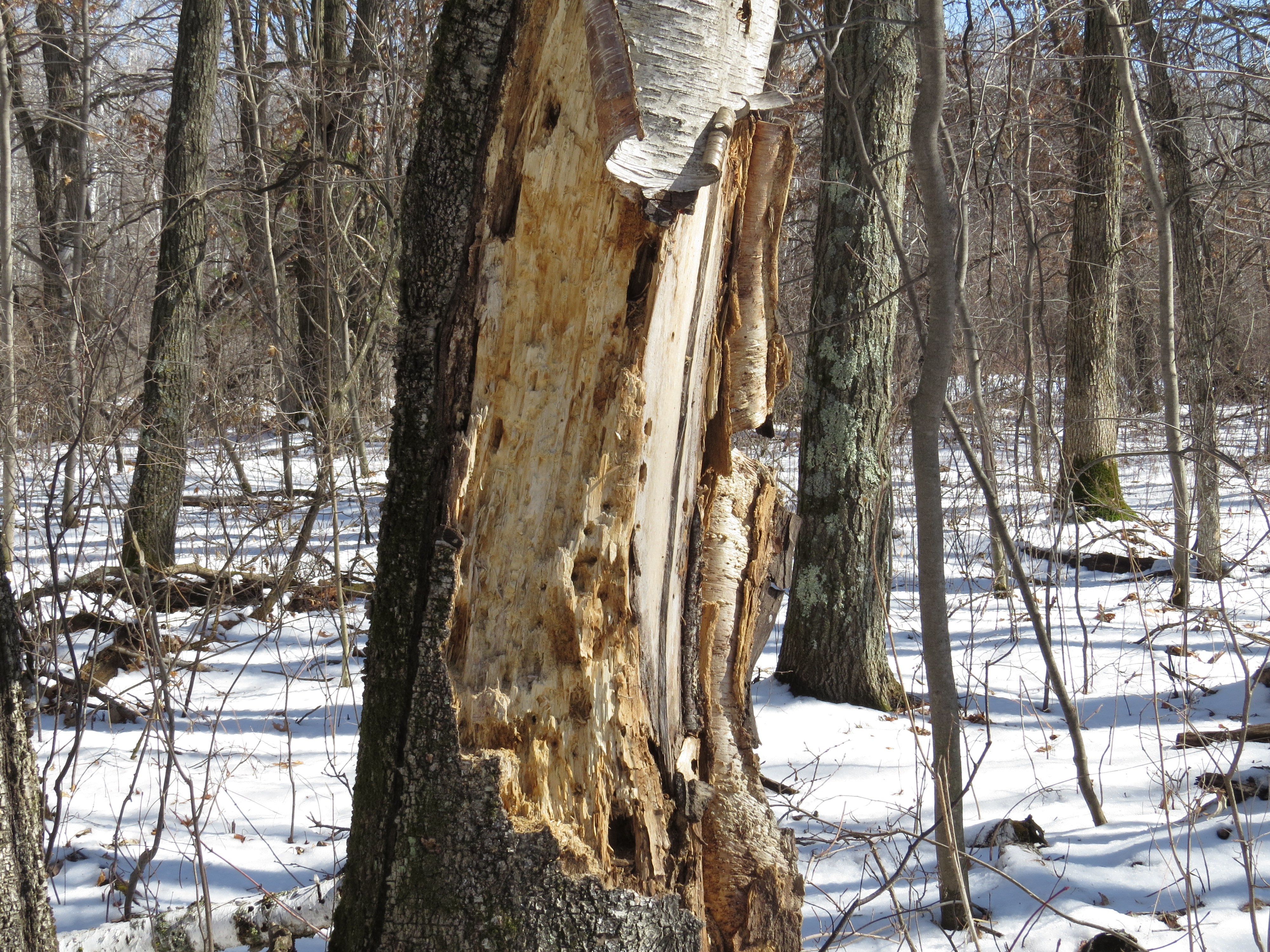
Had a bear ripped the rotting wood from a standing Birch to get at insects?
Snow was melting away from Wild Blueberry shrubs on the rocky hills—a delicious bear food for summer.
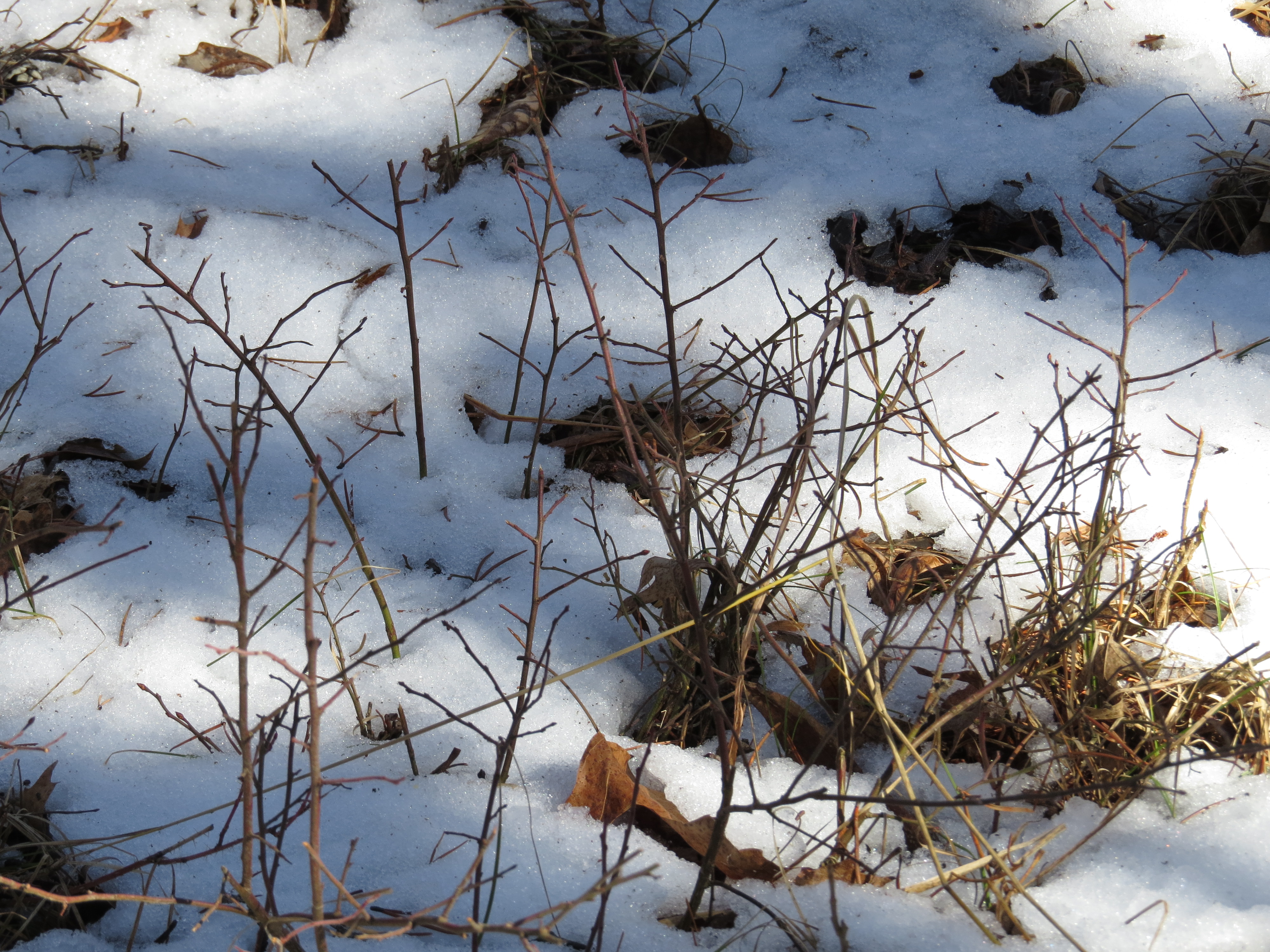
It had been a beautiful, warm, nearly-Spring day in the wilderness of Northland Arboretum. I was quite thrilled to see the large bear tracks, and had even wished for a glimpse of the critter at a distance. But…here’s the thing…
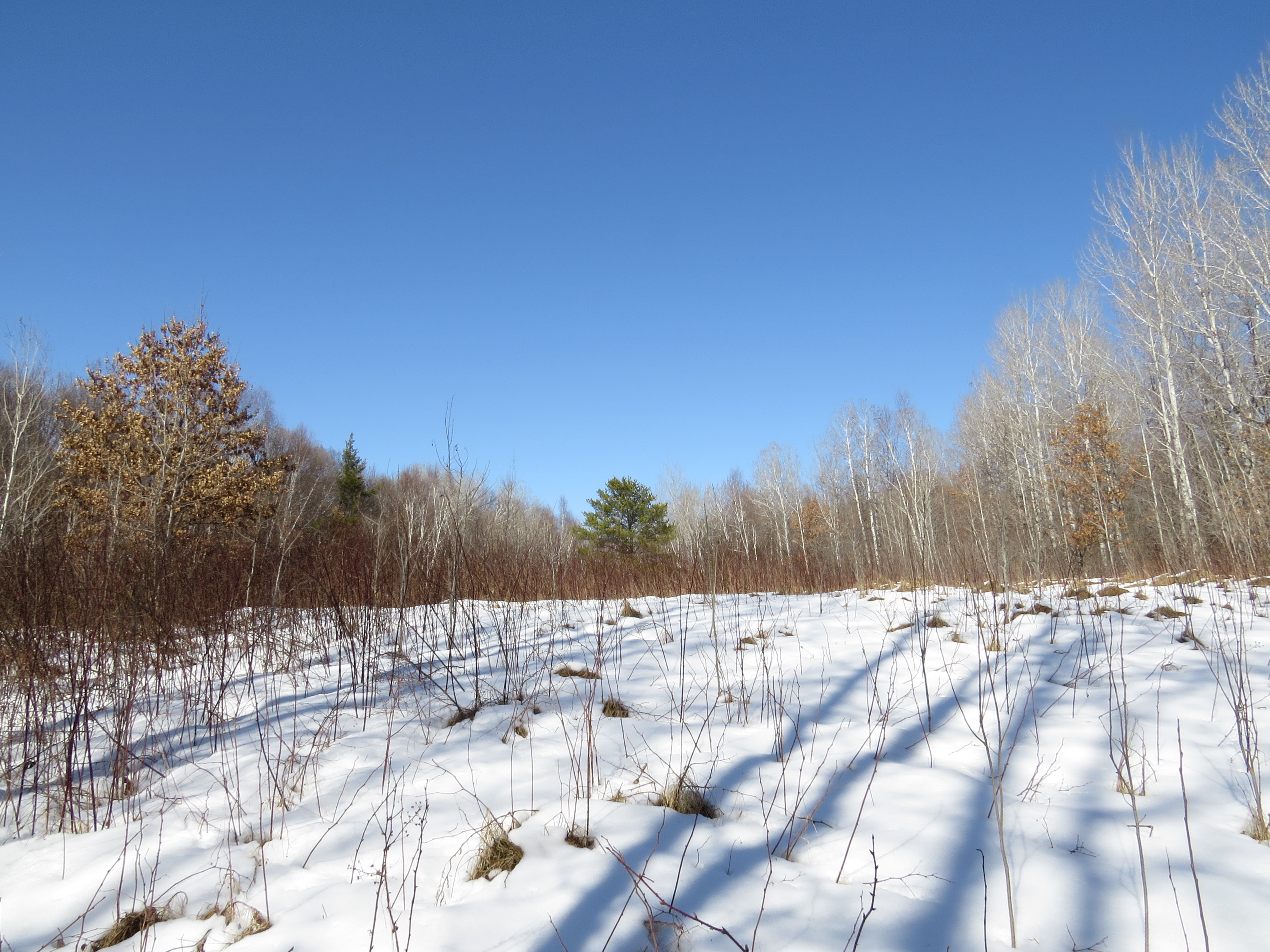
they weren’t bear tracks. When I uploaded my pictures to the computer a few days later, I looked at the tracks and thought “That’s not a bear!” I looked at pictures of bear tracks compared to mine and said “That’s not a bear.” I looked up animal tracks and animal trails and dimensions of tracks—it wasn’t a bear. My mind was so focused on the bear that was there last year, on signs of bear, on food for bears that when I saw those huge tracks, I ‘knew’ it was a bear. I was bear-biased, even when I should have known the tracks were a canine of some sort—a really large canine.
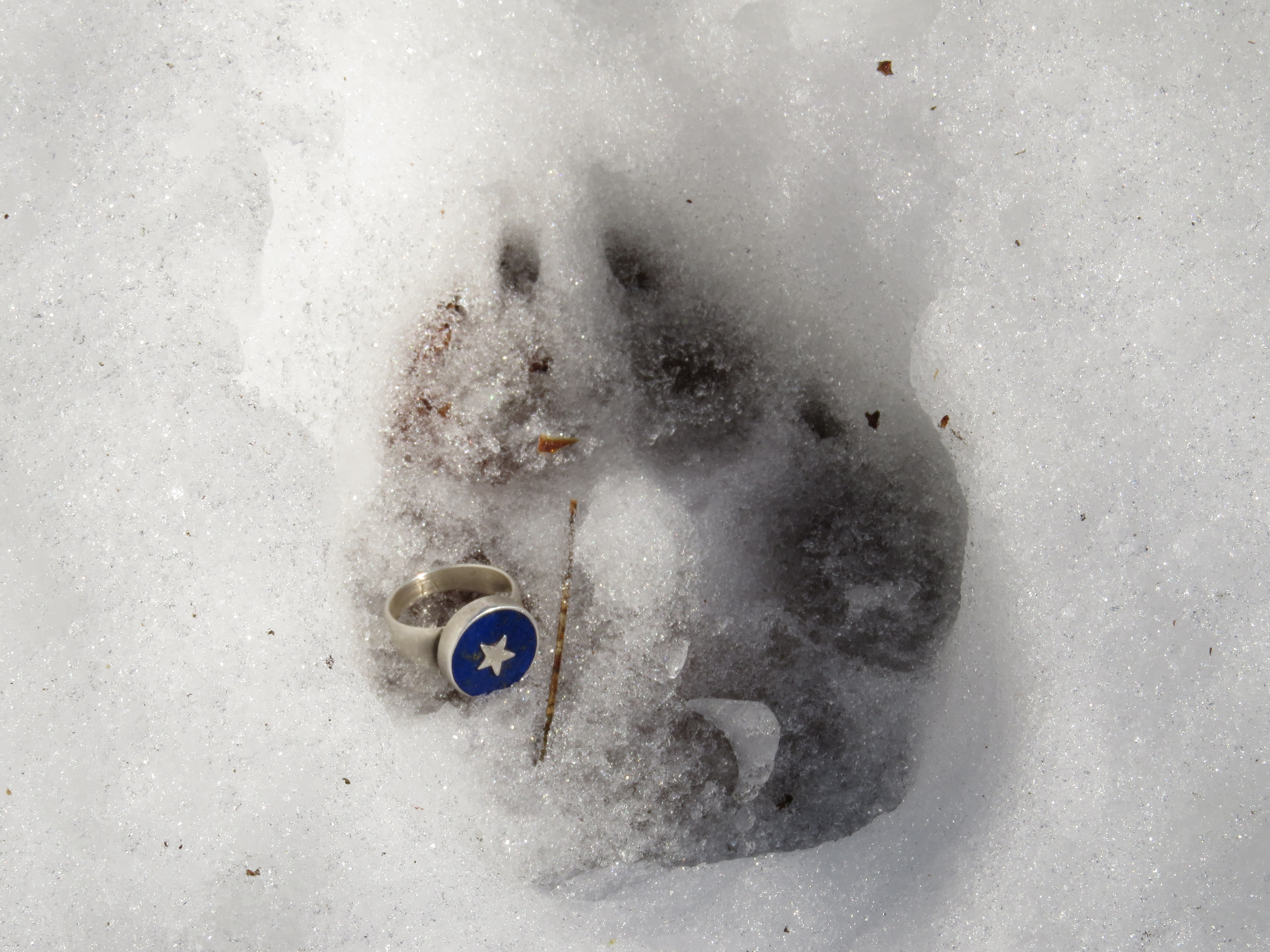
It never occurred to me that it was a wolf. I thought wolves were only in far northern Minnesota, but I looked at the DNR wolf map, and sure enough, they are in the Brainerd area. My bear was a wolf. A bias or prejudice is a strong inclination of the mind or a preconceived opinion about something. I had both—I wanted it to be a bear, and I had previous information about a bear living there. My mind even over-rode my eyes and the knowledge that I have about what a canine track looks like! And I was closed-minded about a wolf even living in this area of the state.
We have tricky minds. We see what we want to see. Even though I am a scientist and an observer, I fooled myself. The information we feed upon can make up our minds for us. The things we want to happen can obscure what is actually happening. It can make us see things that aren’t there and aren’t true. It can make us blame people who deserve no blame. It can make us hate people and things for crazy, petty, obscure reasons. So how do we not fall into the mind tricks? We slow down. We ask questions. We compare notes with others who may not think just like us. We gather information. We trust our guts, even if things on the surface look great. We look at the forest and the trees, and we watch out for what falls from the top. I asked Chris what he thought the tracks were, and in his skepticism of it being a wolf, he said “Yeti,” and he’s sticking with it.
Wrath of the Northwest Wind
We decided it was time for some Winter hiking. Beautiful blue skies accompanied the single digit high-for-the-day temperature. We drove to a small state park west of us that we had never been to, traveling by snow-covered fields and signs for rural Lutheran churches. The roads leading up to the entrance and throughout Monson Lake State Park weren’t plowed, so we guessed on the parking at the office building where I found an outside box with maps of the park. We were the only ones there. Next to the office building was an historic site sign, and as we read it, we both had a dark, sinking feeling, like watching horrid news on TV that you should turn off but you keep watching. On this site on August 20, 1862, thirteen Swedish settlers living on the edge of the frontier were killed by native Dakota Indians who had been displaced from their traditional homelands, placed on reservations, and who endured broken treaties and increasing hunger and hardships. The park was established in 1923 as a memorial to the Broberg and Lundborg families who lost their lives on that day. Usch då.
In the late 1930’s, two buildings were constructed in the new park by the Veterans’ Conservation Corps—a picnic pavilion and cooking area and a restroom—using local granite and white oak timbers.
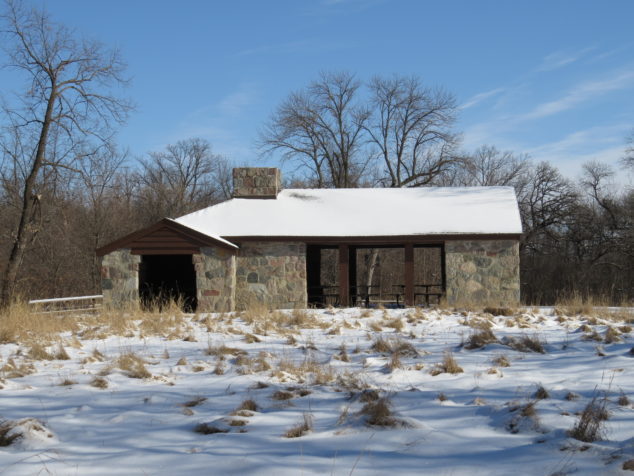
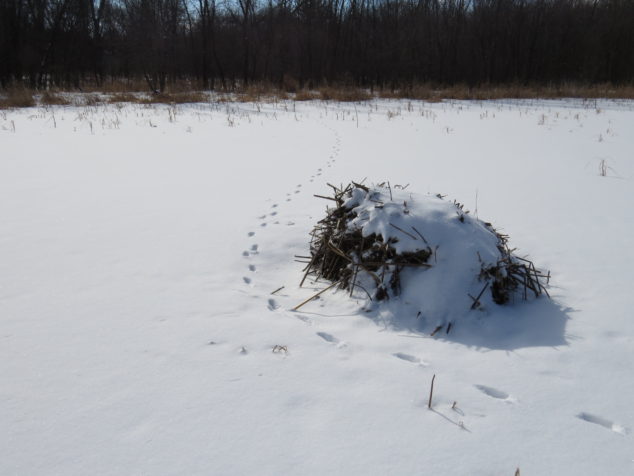
After a stop at the very cold outhouse, we walked the one-mile hiking trail. In the middle of a frozen slough we saw a muskrat house and followed the tracks that led to it. The new snow was fine and powdery and had blown into the prints, so it was hard to tell who made them.
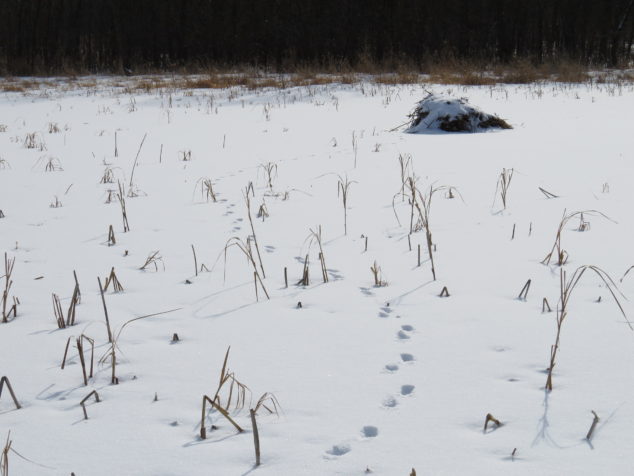
But as we got closer, we realized the trekking critter was also just checking out the house and moving on.
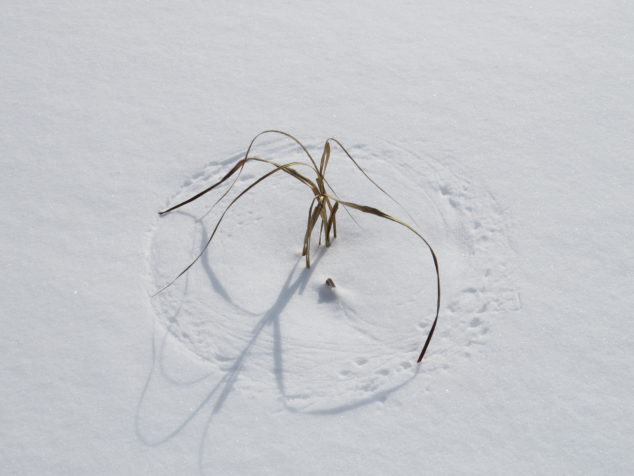
A wind-made sundial was etched into the snow beside the muskrat house, marking the Winter sun’s path to the Spring Equinox.
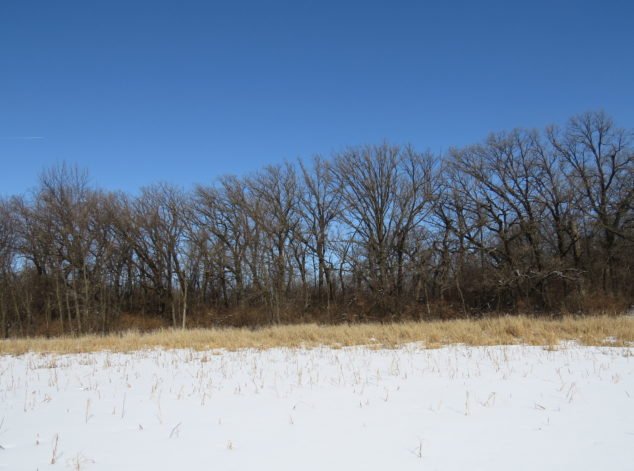
From the center of the ice- and snow-covered slough we looked back on the Oaks and Basswoods that lined the hiking trail.
We hiked along West Sunburg Lake where the wind had made stripes of snow and ice. The sun was warm on our faces.

We saw what looked like coyote tracks on a food-finding mission at the edge of the lake.
After making a hairpin turn in the trail on the narrow isthmus between two lakes, we faced Monson Lake and the wrath of a northwest wind.

The trail was covered in drifts, and Ironwood understory trees, with their rusty leaves, chattered in the wind. The frigid, relentless wind pulled tears from my eyes, hurt my cheeks, and froze my breath. It felt like we were at a different place on a different day.
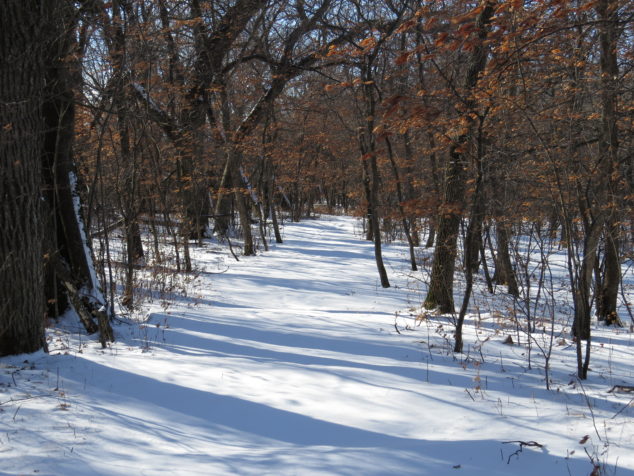
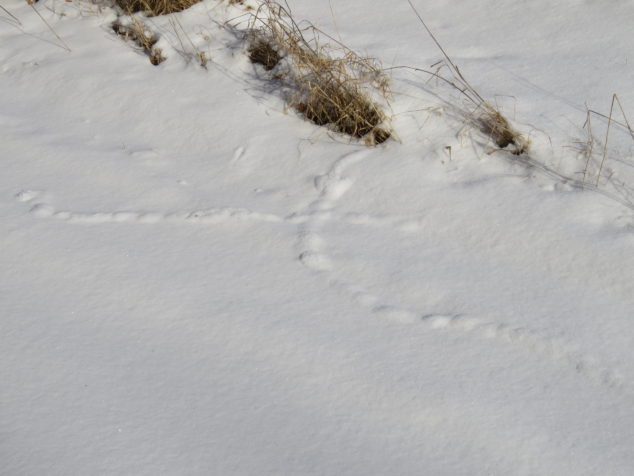
We hurried back to the picnic area that was sheltered from the wind and where once again, the sun warmed us. We saw little vole tracks under the snow…
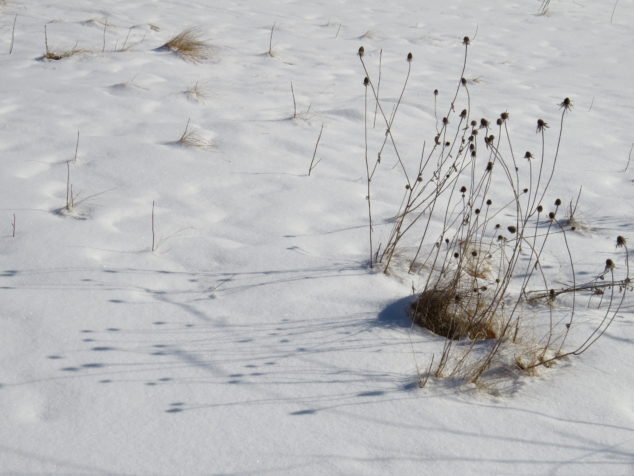
…and coneflower shadows stretching in the low-slung midday sun.
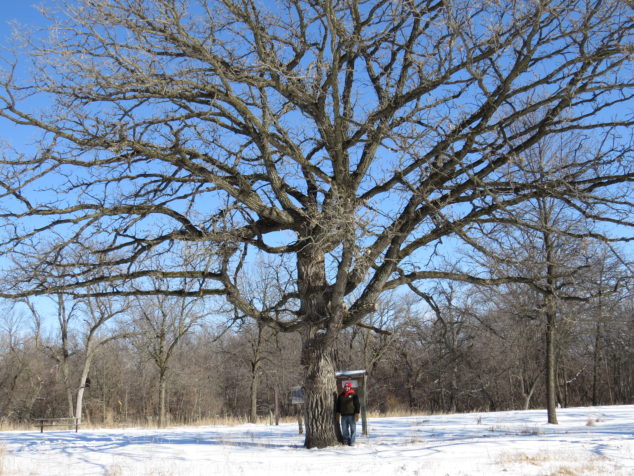
We celebrated the old beauty Bur Oak tree that spread across the blue sky.
As one of Minnesota’s smallest state parks, it is largely unchanged since its establishment. It is easy to see why it was a desirable location for the Dakota people for millennia and for the Swedish immigrants over 150 years ago. On the edge of the park in a small rectangle of land carved out from the park border is a little white Lutheran church and cemetery. Some of the graves date back to the late 1800’s, and the words are engraved in Swedish.
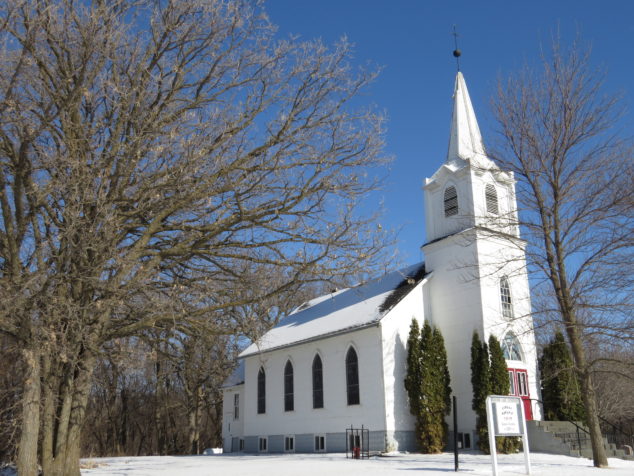
The wrath of the northwest wind coming off Monson Lake tells the story of pain and suffering of Native and Immigrant people. History is buried under the soil, under the water, and under the snow. I like that the little Lutheran church sits so close to the memorial park where the homes of the Dakotas and settlers once stood. I like how prayers are said every Sunday morning at 9:30 with coffee and fellowship following the service. I like how the Swedish words are etched in stone. I like how the cross and steeple track the Winter sun’s path year after year, decade after decade, stretching Grace and Spring’s Hope out to all who enter these gates. Life is hard. May you walk in Peace, may you celebrate Beauty, and may Love warm your face and heart. Gud välsigne dig.