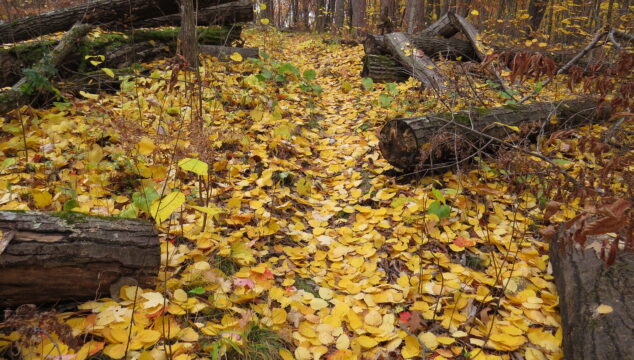
Come walk with me in the peak Autumn beauty of the Northwoods. To say that I love this time of year is an understatement. Most everyone can appreciate the colorful falling leaves---it reveals the 'true self' of a tree when its leaves are no longer producing chlorophyll. Their true colors are revealed, and there is something simple … [Read More...]
Flower of Fives
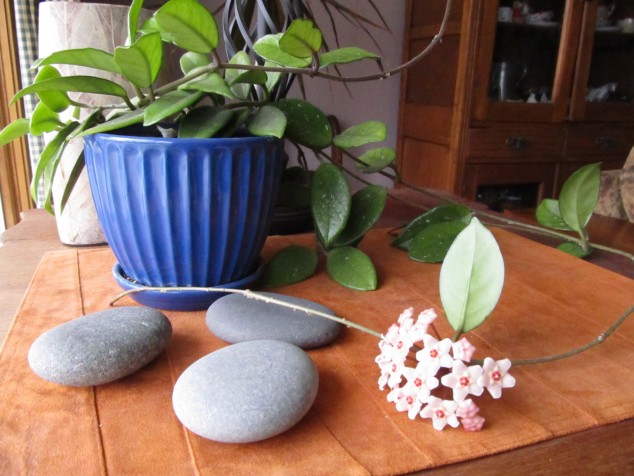
A cold rain has been falling steadily for two days now. An east wind is blowing much more strongly than the east wind usually does. The temperature just crept above 40 degrees. And rain is in the forecast for the next six days. April showers bring May flowers–and I am looking forward to that. But for today, I have an indoor flower for you to see!
This plant is a Hoya carnosa or Wax plant. It has thick, waxy, dark green leaves and sends out long, bare stems that then produce leaves. The newest stem likes to grow to the fluorescent light, even though it is in the southwest window. I pull it down to the other stems, then by the next day, it is back inside the lamp shade!
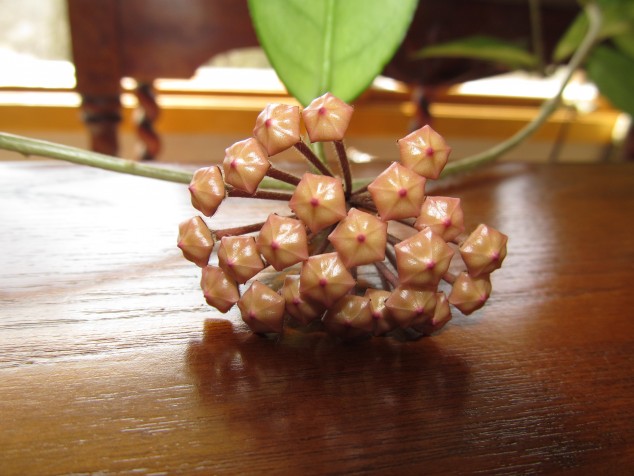
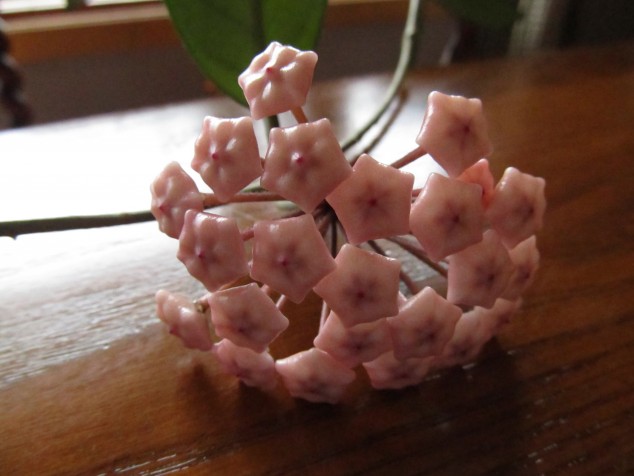
A couple weeks ago I noticed a flower bud starting to grow from a thick stalk that radiated numerous thin stems. At the end of each stem was a tiny tan envelope in a perfect pentagon shape with a faint pink star coming from a pink center. As the days went by, the little five-sided envelopes turned more pink with a darker pink pentagon star in the middle. And finally over the weekend, each envelope unfolded to a delicate blush-pink velvety star with a cream and red star at the core. It has a faintly spicy fragrance, and each center star has a tiny drop of nectar clinging to it.
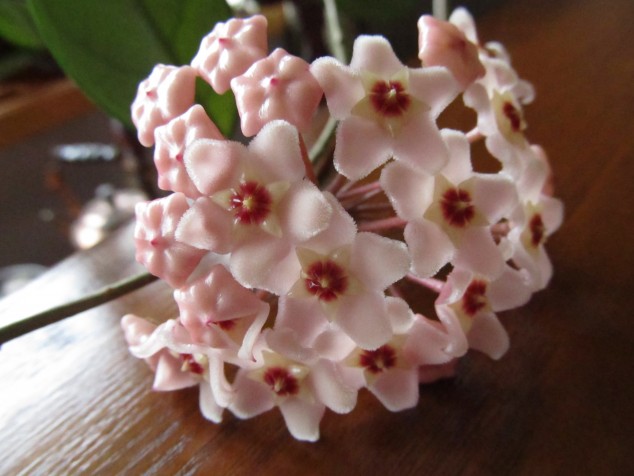
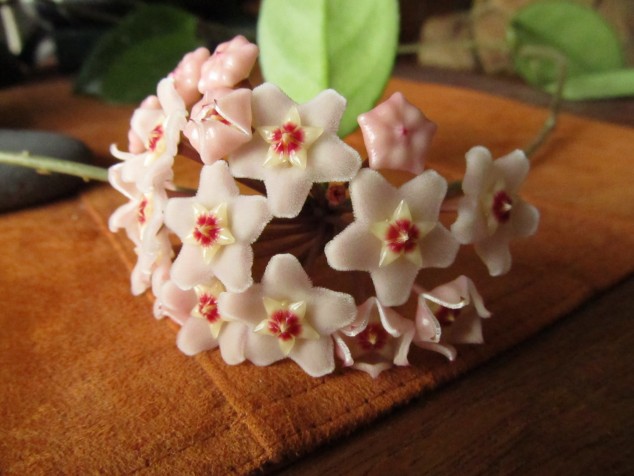
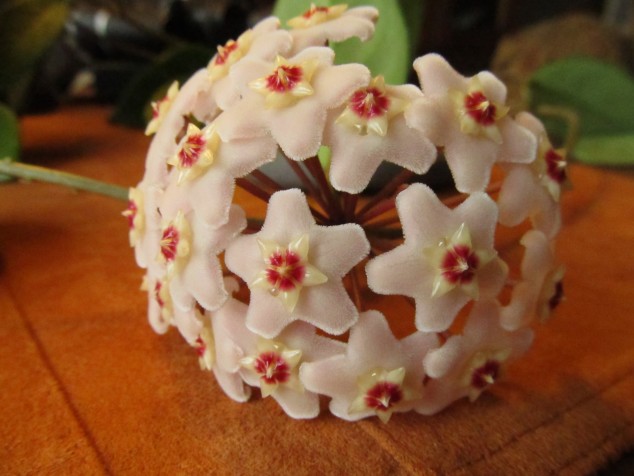
What an exquisite, perfect, geometric design of this flower of fives! It’s a bright star on a dreary day!
Spring Buds
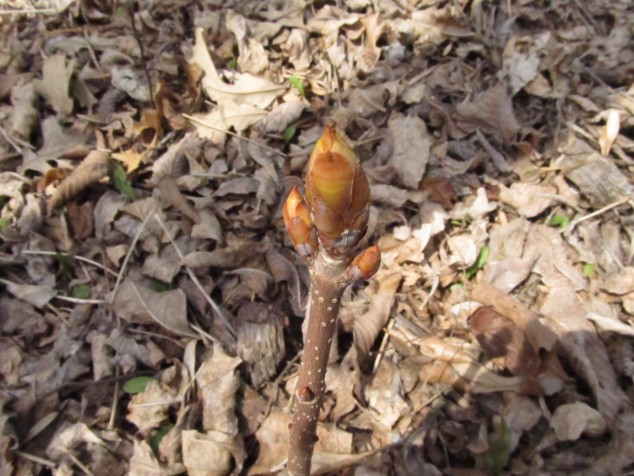
After a long winter, Spring is a very welcome sight! It eases its way in regardless of how impatient we are for the picture-perfect ideal. The yard is now a patchy green, thanks to the gentle rain that fell yesterday and this morning. But a closer look reveals the big game-changers–the buds. The sap that starts flowing and feeds the Yellow-bellied Sapsucker is the lifeblood of the trunks and branches that define the winter landscape. The buds grow and swell as the nourishment flows. What potential is held in the tiny bud! What flower or leaf will unveil itself over the days and weeks to follow? How in the world can such an intricate, colorful flower ‘be inside’ such a nondescript bud? How does that big maple leaf form from such a diminutive capsule?
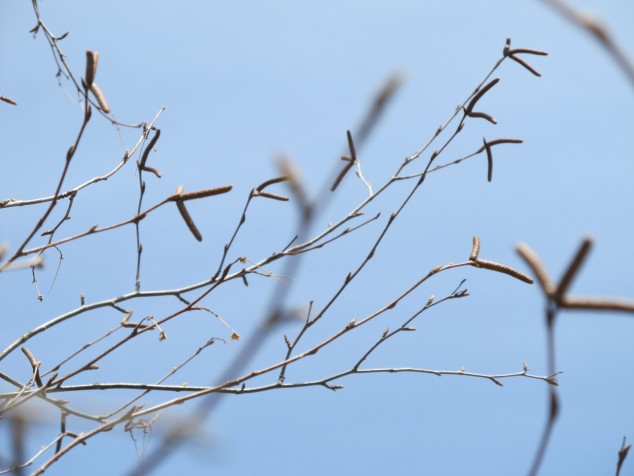
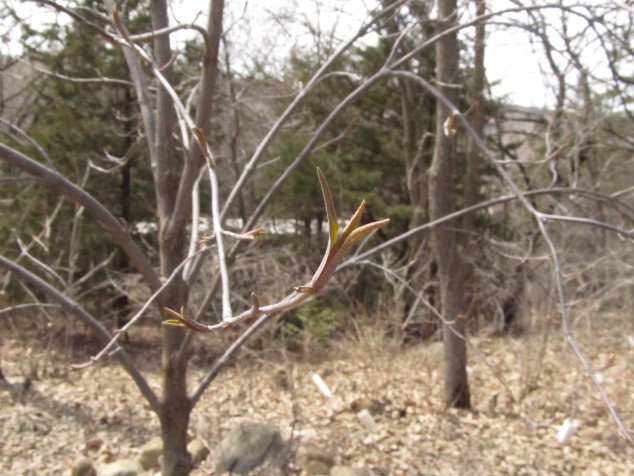
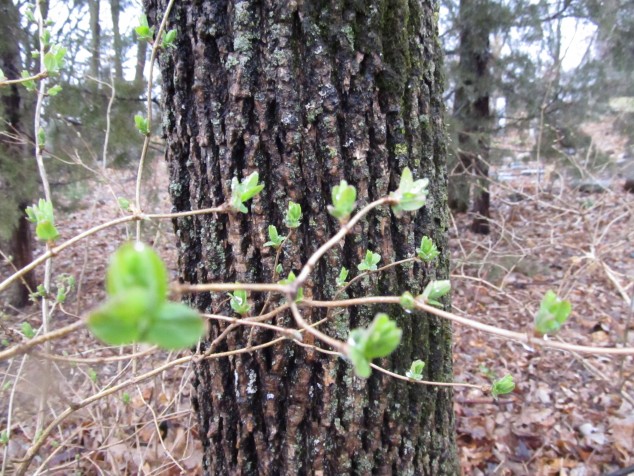
We often associate ‘budding’ with youth–a budding musician or artist or athlete–a child with great potential. Extrapolating from that, we also associate Spring with youth–and as we age, we progress through Summer and Fall to the old-age Winter of our lives. I propose we look at budding and the seasons with new eyes. Budding means being in an early stage of development, and while that certainly pertains to childhood and new buds on a tree, it can also apply to anything new that a person is learning! With less than a month since I started my blog, I am a budding blogger. With the borrowed Canon SX130 camara that has settings I know little about, I am also a budding photographer. And while a flower or leaf that develops from a bud is pretty close to perfect, I contend that the development of a new skill or the study of a new subject or the growth of a new practice need not be for the end product of perfection or even great accomplishment! The act of budding and growing and doing the work intrinsic to development IS the reason for embarking on such a task. It’s the journey, not the destination. So let’s recycle the seasons of our lives–just as Mother Nature does. What Spring thing do you have in your life right now? Gosh, I love Spring!
Earth Day
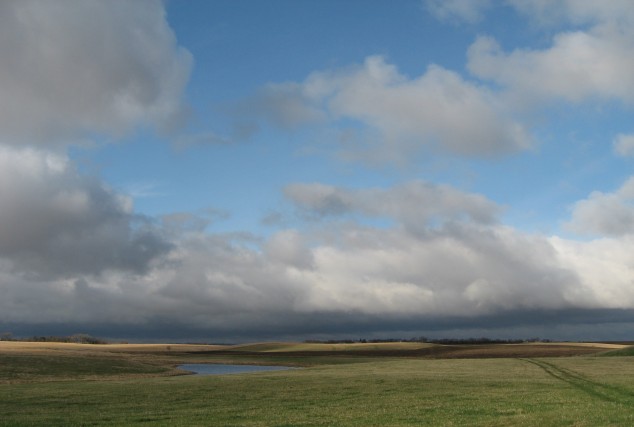
South Dakota Prairie by LAn
Earth Day officially began in 1970 when I was eleven years old, but my celebration of the Earth began when I was very young. My early growing-up years were on a farm in eastern South Dakota. Living on a farm tunes one into the land, the weather, growing things, seasons, and animals. I remember being outside–playing in the tractor tire sandbox, swinging on the tire swing, gathering eggs from the hen house and trying to stay out of the rooster’s way. I remember tromping through the pasture, ‘helping’ Dad milk the cows and feed the calves, riding the black mustang named Boots after my Dad got the willies out of him, and smelling the silage, the freshly-mown hay, and the wagons of ripened grain. So many experiences that tied me to the rhythms of the Earth.
A move to Pennsylvania when I was in first grade took us off the farm but not away from Nature. We lived in the foothills of the Blue Mountains and still had a menagerie of animals. My playground was the surrounding woods with its boulders, creeks, and tulip poplar trees. This was the time in my life that the glories of the Earth took on a spiritual meaning. The Great Outdoors became my church, and God became my constant companion. I didn’t know much about Him, but I knew He was there. When the 70’s rolled around, Earth Day was something worth celebrating to me! This was also the time when our stewardship of the Earth expanded beyond the acre plot of our land. My Mom and us four kids would go out along Mountain Road and pick up trash–mostly glass pop and beer bottles. We rode our horses along that road and didn’t want them to step on a bottle and cut their feet or fetlocks. I felt a satisfaction in cleaning up the ditch–it looked better and was safer for the horses.
This yearly ritual of picking up trash is one that I continue to do. It just so happens that Earth Day in Minnesota is the perfect time to clean up the ditches around our house–the snow is usually gone, but the grass hasn’t yet started to grow. Nowadays the trash is mostly plastic–plastic water and pop bottles, plastic wrappers, and lots of white plastic grocery bags. Much of the trash I pick up is littered by people walking or driving, but just as much along our stretch of road is trash that blows out of garbage bins as the automated arm dumps them into the big green garbage truck.
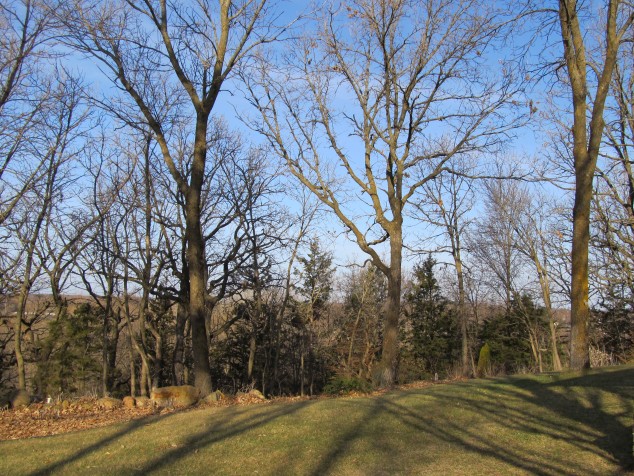
The Earth on the farm in South Dakota, the Earth in the low foothills of the old eastern mountains of Pennsylvania, the Earth in the rolling hills of western Missouri, and the Earth in the oak and pine-covered granite land of central Minnesota are all a part of me. I loved the Earth, and Mother Nature loved me back and nurtured me into the person I am today. And whether we feel it or not, we are all a part of this Earth. It constantly sustains and nourishes us with its water, its oxygen, its food and many other resources. Let’s all do our part to take care of the Earth. Let’s celebrate Earth Day!
Spring Snowstorm
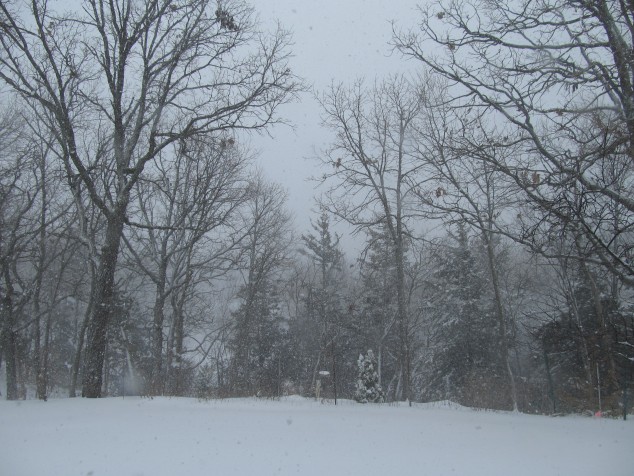
The shovels were put away in the garage after standing sentry at the front door for over four months. The snowblower was drained of gas and had a fresh oil change. The opaque plastic had been joyfully pulled off the screened-in porch. We had declared that Winter was over! Mother Nature had other plans.
It snowed all day yesterday, and the wind blew like crazy. Schools shut down early and evening events were cancelled. Mother Nature’s Spring snowstorm reminded us that we’re not in charge. Officially, we had 8.5 inches, bringing our winter season total to 75.5 inches and breaking a daily record.
Yesterday, I found the Yellow-bellied Sapsucker in the maple tree during the snowstorm. He was trying to stay out of the howling wind and snow.
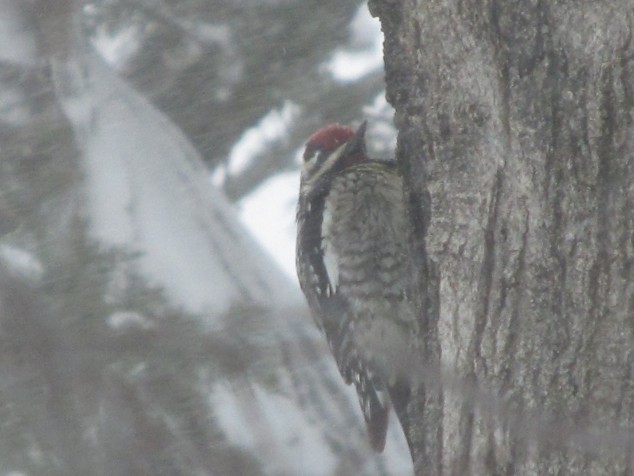
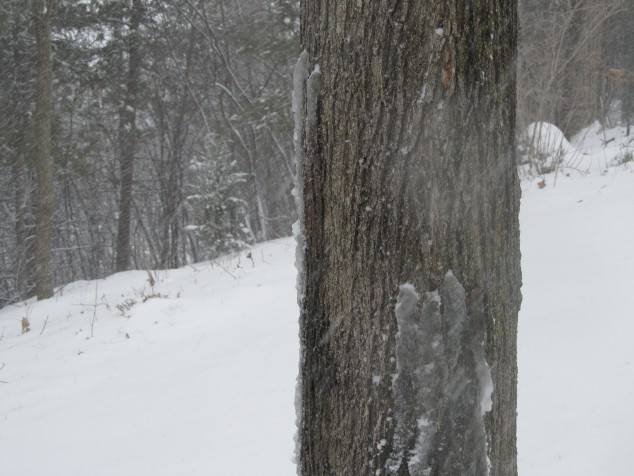
But every once in a while, he slipped down to the holes he had drilled over the weekend only to find that his sap supply had frozen!
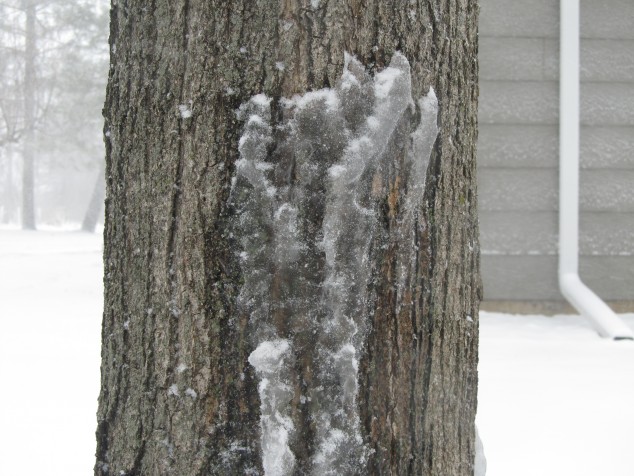
Today is sunny and close to 40 degrees, and the snow is already melting. The Yellow-bellied Sapsucker was busy once again in the maple tree.
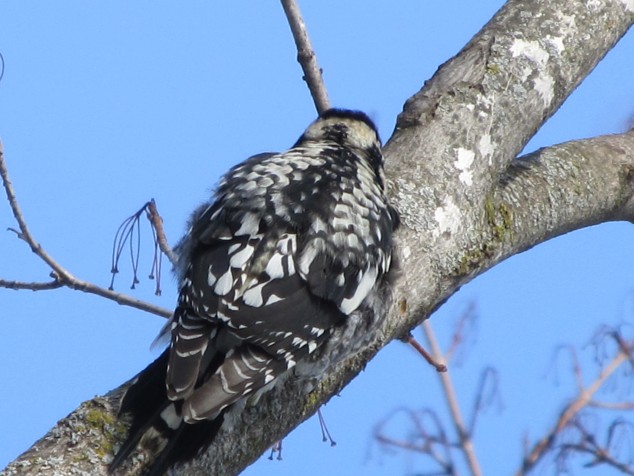
And you can see the maple tree is blooming! There was also another woodpecker flitting about with the Sapsucker–a little Downy.
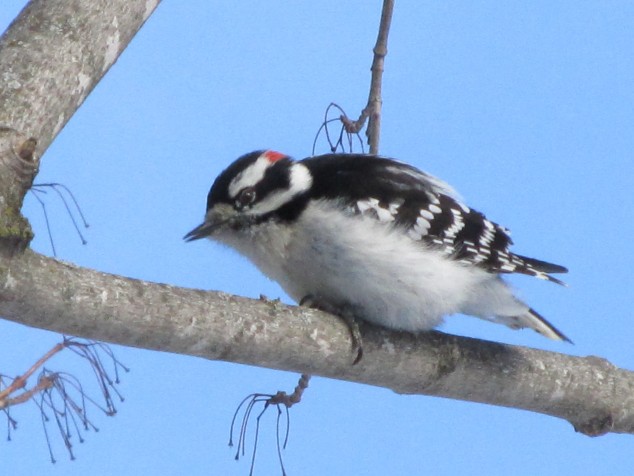
The Spring snowstorm changed plans, caused some accidents, froze the Sapsucker’s food supply, and was a big headache for my husband Chris who had to clear the snow from campus walkways. But it also reminded us to be humble and strong in the face of the Storm and hopeful in the Light of the blue-sky Spring morning.
Sustenance
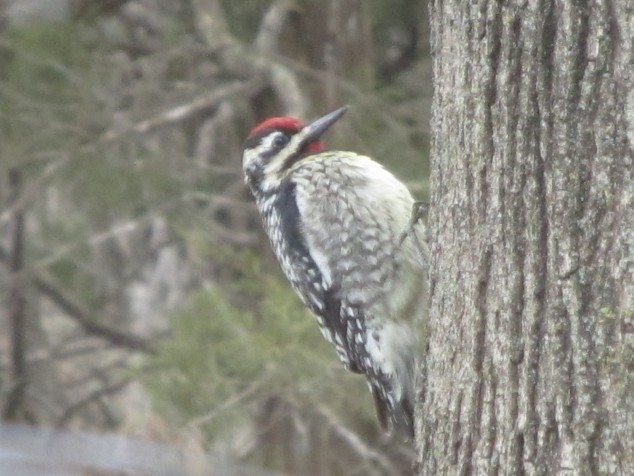
The day was gray in a good way–no shadows to distract or sun to blind. And it was chilly–only reaching into the 30’s after our week of 50’s and 60’s. The wind was blowing strong enough from the north to put a nasty windchill on those thirty degrees. From my living room window, I caught sight of a woodpecker on the side of a maple tree. He had already done his work of drilling holes in a horizontal line into the cambium layer, and the trunk of the tree was dark and wet with the flowing sap. The Yellow-bellied Sapsucker was a handsome male with a red crown and throat and a black and white streaked face. The ‘yellow belly’ was actually just a faint yellow stripe running down from his shoulders into his chest. The rest of his feathers were mottled black and white.
I pulled out the tattered green-bound Audubon Society Field Guide to North American Birds to find out more about him. Another good source for bird identification and information is The Cornell Lab of Ornithology. It has great pictures, audio of calls, and video of some species. I found out that sapsuckers have a specialized brush-like tongue to lap up the sap and will also eat insects that are attracted to the sap.
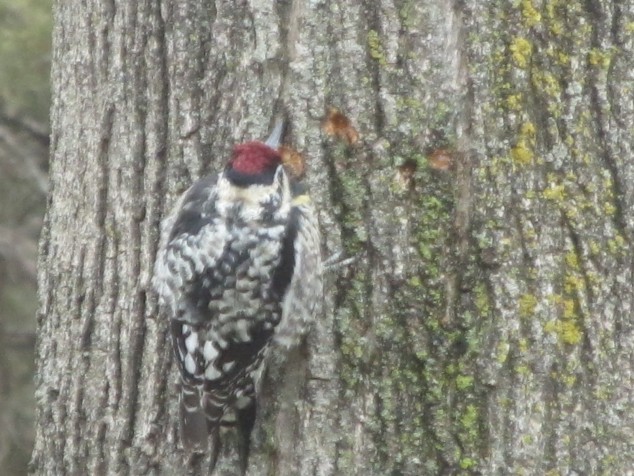
Our Yellow-bellied Sapsucker spent most of the afternoon hitching himself around the tree from one set of holes to another. He would dip his beak into one drilled hole then turn his head to the next one, drinking in the sweet sustenance. Occasionally a squirrel would come by, and he would shyly fly away. But he returned again and again to the maple tree and its nourishment. At times he would tranquilly hang on the bark with his head tipped back looking plump and content.
Sustenance–food, provisions, something that gives support, endurance or strength. We may not have names that describe where our sustenance comes from like the little Sapsucker, and we may not give it much thought beyond the grocery list and the daily rush of getting supper on the table. Perhaps we all need to quiet our movement, tip our heads back, breathe deeply, and contemplate what gives us strength when we are weak, what supports us when we need help, and what sustains us when we lose hope. So, at the end of the day, what gives you sustanance?
Fungi as Art
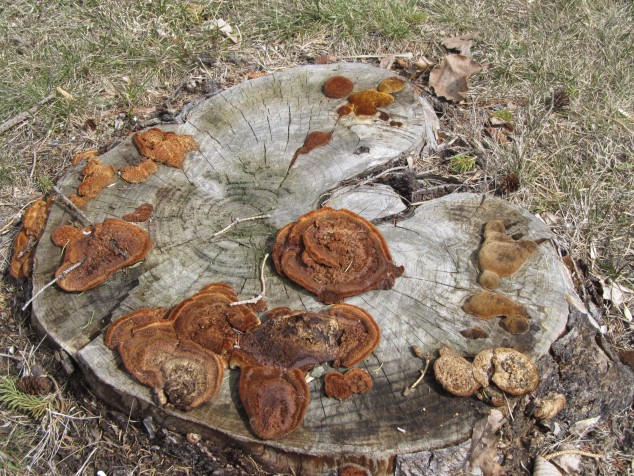
Chicken of the woods, Oak bracket, King Alfred’s cakes, Artist’s, and Candle-snuff–all are types of fungi found on trees and/or stumps when wood is in the decay process. It has been about three years since this spruce tree fell and was cut down. I haven’t identified the specific fungi growing on the stump–I just think they are interesting!
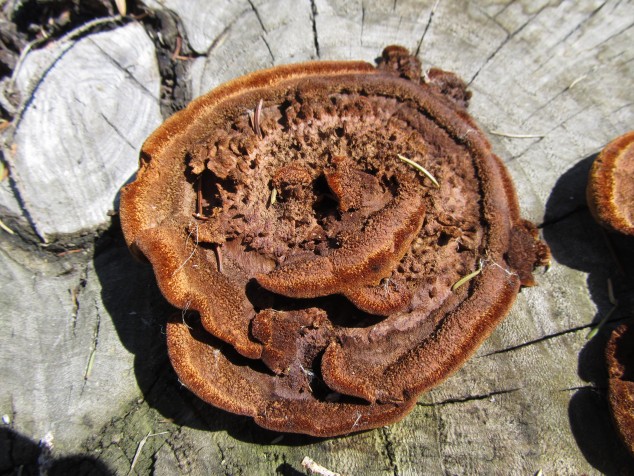
When I looked at the stump yesterday, it reminded me of an artist’s palette. Instead of different colors of paint, this palette holds different shapes and kinds of fungi. Each one is like a little work of art with its own color and form.
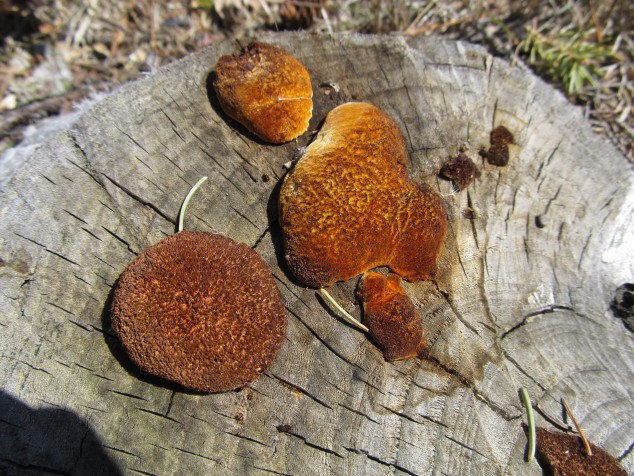
They are each doing what Nature intended for them–working as part of a process to break down the old decaying wood to make new soil for nourishing the plants yet to come. The past, the present, and the future.
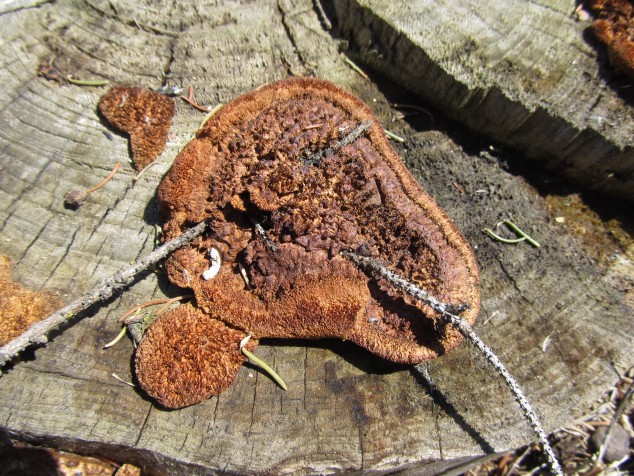 *Nature is the most thrifty thing in the world; she never wastes anything; she undergoes change, but there’s no annihilation–the essence remains.* –Thomas Binney
Pines and Spruces
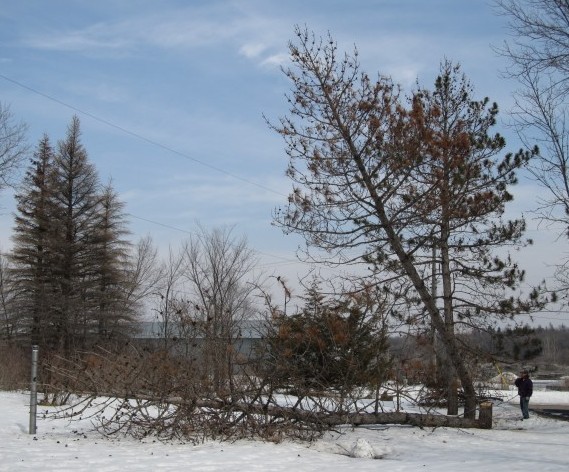
A week ago Sunday my husband the horticulturist had to do something he didn’t want to do–though he knew he had to. In fact, the results of his action were rather painful to us both. He had to cut down two large red pines in our front yard–that, after taking down three towering spruce trees that stood parallel to the pines on the eve of the first snow late last fall. Five fortysome-year-old evergreens–gone.
Their demise was at the hands of the drought in the summer of 2012. Plant life everywhere suffered that summer. We watered young trees, shrubs, and perennials nearly every day to keep them alive. The sandy soil gulped up our well water with relish, only to have the wilting plants begging for more in a day or so. But we neglected the large, older trees as we let the lawn go dormant and brown. Surely their roots are deep enough. Surely it will rain…soon.
Last spring the damage was evident. The spruces were in the worst condition with only a small area of green on the top of one and a few thrusts of new growth in a feeble attempt to save its life. But soon they were three brown towers of brittleness. I was more hopeful for the pines–each had places of damage but also had whole branches of green needles, and we had the rain that helped return the plant world to a more normal existence. As the summer wore on, the closest pine lost its greenness. Maybe the other two will make it. I held onto that until, well, until Chris got out the chainsaw last Sunday and started the cut on the middle tree. The remaining pine is sparse, battle-worn, and has a dead leader. But I am optimistic.
The loss of these majestic trees left a huge hole in our landscape. Whenever I am doing dishes at the sink, the new view shakes me a little; like, wait a minute–something’s wrong, something important is definitely missing. The mature evergreen trees were the reason we so loved our front yard, and we had great respect for all the winters and droughts they had endured.
The huge hole in the landscape is a mirror and reminder of the huge hole in the landscape of our family. For twenty-seven years we have loved the look of our life with one, then two, then three kids. We measured our time, not with rings of growth, but by inches on the door jamb, by books read, by art projects hanging on the walls, by hours of homework, by events and concerts and games and holidays and laughs and…. Then one, then two, and now the third, our son, has left for college. I still held onto the girls, through college and even after, as they came home for Christmas and sometimes for summer and still needed help with a few things–and then, out comes the chainsaw of real jobs with health insurance in states far away…..
We are doing something we didn’t want to do, though we know we have to do it. It is painful for both of us. The landscape we bought into and nurtured and loved has changed. I still see the huge hole, but I have fleetingly admitted that I can now see certain things that I didn’t see very well before. It opens up unexplored possibilities. What new things can we plant and nurture and grow? I am optimistic.
Hydrangea Beauty Indoors
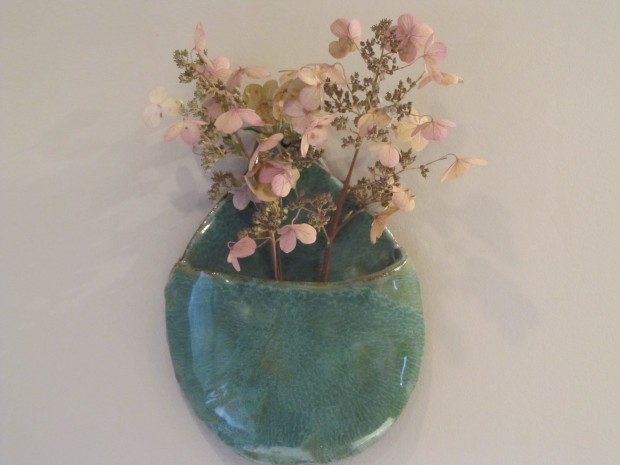 I love bringing nature indoors–it keeps me connected to the natural world, no matter what time of the year. These hydrangea flowers were picked in the fall after they had dried on the shrub and have graced the wall of the bathroom for the winter. They retain the pink color, and they don’t shed.
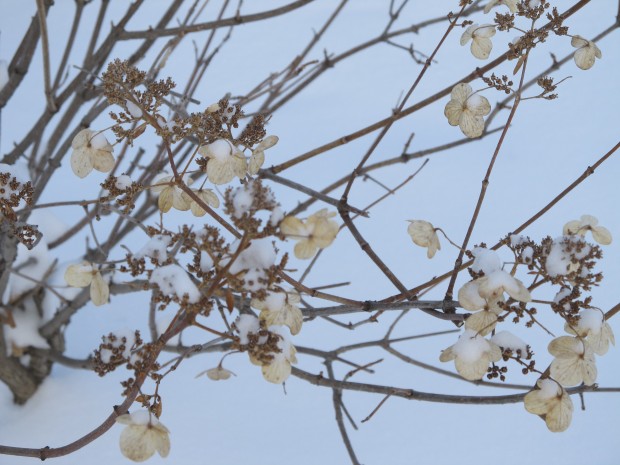
This hydrangea is my absolute favorite north-hardy shrub. It is Quick Fire Hardy Hydrangea, one of the Proven Winners ColorChoice shrubs. It blooms early to midsummer with pure white blossoms–I think it would be an exquisite, though uncoventional addition to a bridal bouquet. The white blossoms then gradually turn pink–ours doesn’t get as bright pink as the picture on the tag, but that may be because it is in partial sun under an oak tree.
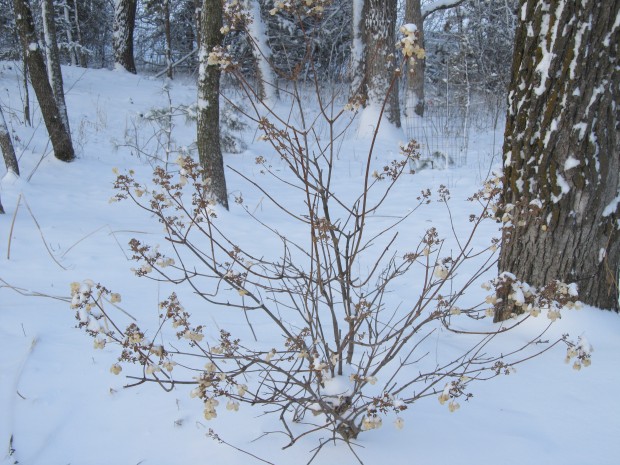 I will post pictures of Quick Fire during the rest of the year. It is such a wonderful hardy shrub with beauty and interest in each season.
No fooling–it’s Spring!
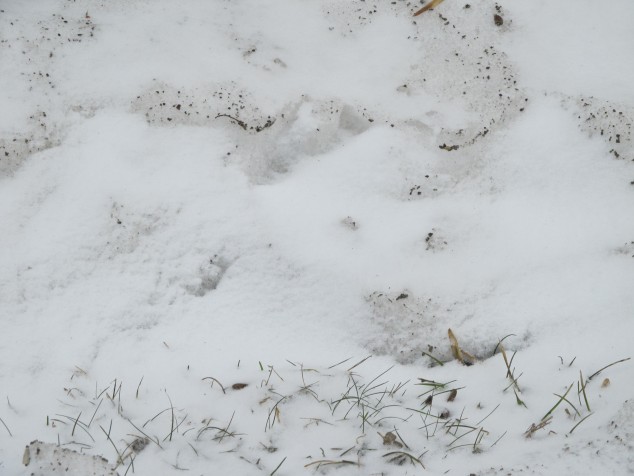
Nobody can begrudge us Minnesotans (or anyone else in the Upper Midwest or New England) some complaining about the weather. It has been one heck of a winter–much colder than average with much higher than average snowfall. We had 96 days of snow on the ground before it started melting. The drifts were thigh-high, making any trekking off the shoveled path fairly impossible without snowshoes. The ground froze so deeply that we were encouraged to let the water flow at a pencil-width stream at night to keep the service lines from freezing–and we’re still doing that.
Spring arrived twelve days ago. We are impatient for the Spring in our minds–the green grass, flowers blooming, leaf budding, birds singing, warm enough for no hats and mittens kind of Spring. But we had five inches of snow last week. We dodged the big snowfall last night that pounded the prairie north and west of here. It is cold and windy today. There’s snow in the forecast for Friday. Is this Mother Nature’s ultimate April Fool’s joke?
Spring, like so many things in our lives, is a process. We have to get to where we want to be–we can’t just arrive. Early Spring is dirty and messy. A winter’s worth of sand and salt and blowing debris is exposed as the snow melts. But the snow is melting! And the snow that does fall is so warm and full of moisture that it fairly splats on the sidewalk, and the sun is strong enough to start melting it even when below freezing. The days are long with light compared to January, so chores can be done outside in the evening before nightfall. We can see grass now. A few geese are winging their way north. I saw three huddled robins the other day. It really is Spring! Beautiful, messy, chilly, snowy Spring! No fooling!
Welcome to NorthStarNature
“Those who contemplate the beauty of the earth find reserves of strength that will endure as long as life lasts. There is something infinitely healing in the repeated refrains of nature–the assurance that dawn comes after night, and spring after winter.”
–Rachel Carson
Welcome to my new NorthStarNature blog! I will be sharing pictures of nature from around my home in Central Minnesota and from places I visit. I hope to show the beauty and wonder of nature and explore how we can learn about ourselves from Nature’s wisdom.
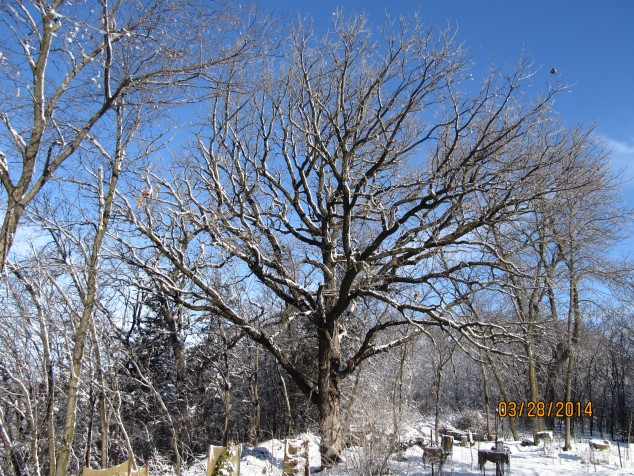
This old beauty of an Oak lives behind our house. Think of how many winters and springs it has seen! There are two levels of dilapidated boards from someone’s tree house nestled in its branches. I can’t even fathom the number of acorns it has produced in the course of its lifetime and how many squirrels, turkeys, and deer have been nourished there. One tree. Many years. Much fun. Abundant nourishment. Old Beauty.
- « Previous Page
- 1
- …
- 48
- 49
- 50