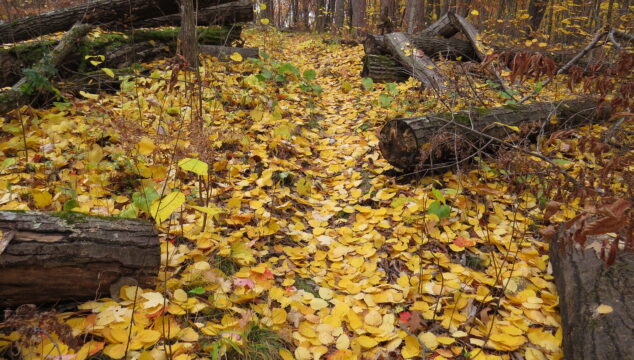
Come walk with me in the peak Autumn beauty of the Northwoods. To say that I love this time of year is an understatement. Most everyone can appreciate the colorful falling leaves---it reveals the 'true self' of a tree when its leaves are no longer producing chlorophyll. Their true colors are revealed, and there is something simple … [Read More...]
Land of the Free
Besides our bright, waving, stars and stripes flag, what best symbolizes America–the land of the free and the home of the brave? Yep, the Bald Eagle–our National Bird! Two evenings ago, we went to visit Eagle Park–the home of a pair of these great birds–not far from our house. It was our first outing there for the season. The nearby Sauk River was out of its banks with all the rain that had fallen in the month of June. The prairie surrounding the eagle tree was lush and blooming.
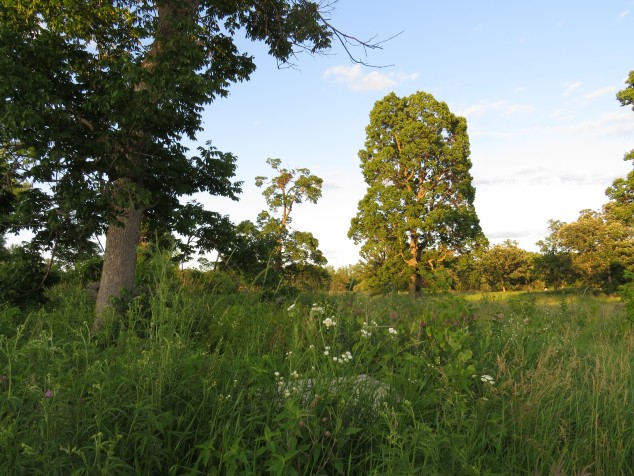 I had another borrowed camera with more powerful zoom (thank you, Aaron), a tripod, a gracious helper (thank you, Chris), and a beautiful evening. (We did, however, forget the mosquito repellant.) When I focused in on the nest, I was surprised to see the two fledglings, nearly as large as a mature eagle! And what a nest! Eagles usually return to the same nest each year, repairing and adding to it. Most are around five feet in diameter, while some get up to eight feet across and are estimated to weigh almost two tons.
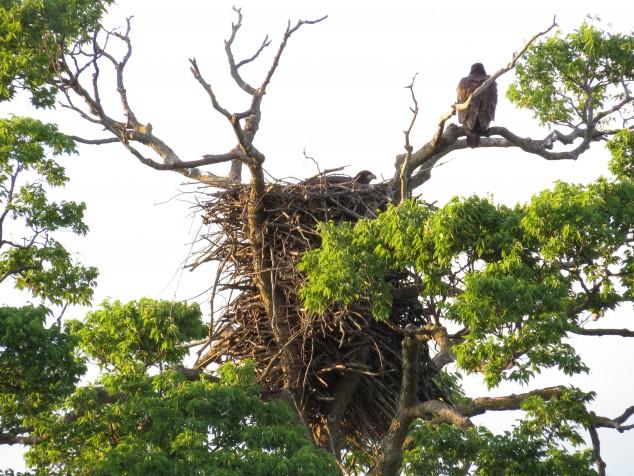
Now using the term fledgling would imply that the eaglets have ‘fledged’ or left the nest. I don’t think these two have done that yet, though they must be close to the 11-13 weeks when that normally occurs. One eaglet stayed in the nest while the other perched on a branch, flapped his wings, and hopped from one side of the nest to the other. He looks like he is ready to fly!
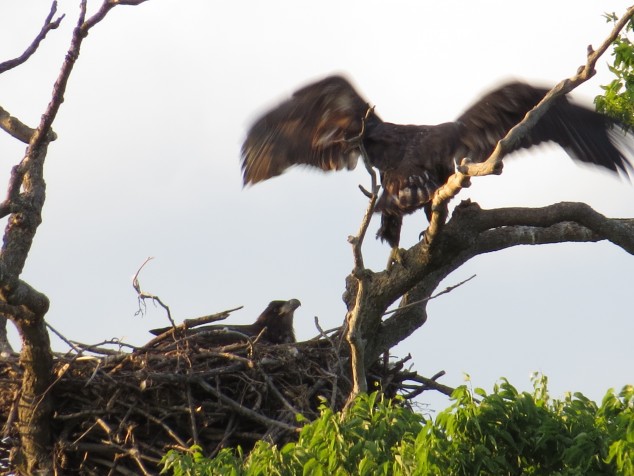
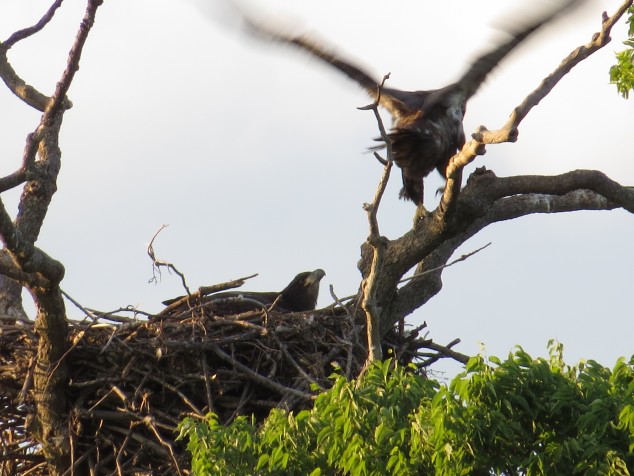
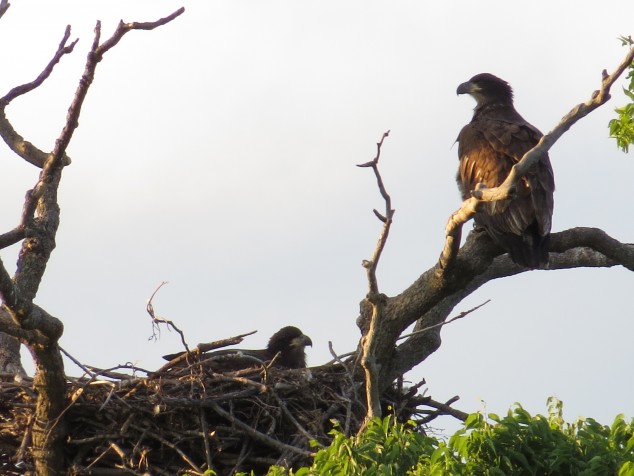
Eagle chicks grow very rapidly and are almost adult size by six weeks old. By eight weeks, their parents are hunting almost continuously to feed them. This fledgling looked like he was waiting for one of his parents to return with a meal.
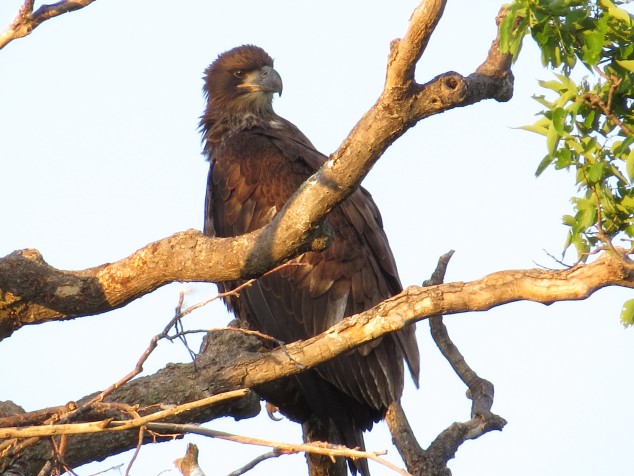
But look at how sharp his beak is! Once he has fledged from the nest, he will learn to hunt as the parents still provide food. It will take 4-5 years for the eaglets to mature. Gradually their head and tail feathers turn white while their eyes and beaks turn yellow. Eagles mate for life, and both parents can incubate the eggs, though most often the female stays on the nest, and the male hunts for food for her. After the chicks hatch, one parent stays on the nest or close by.
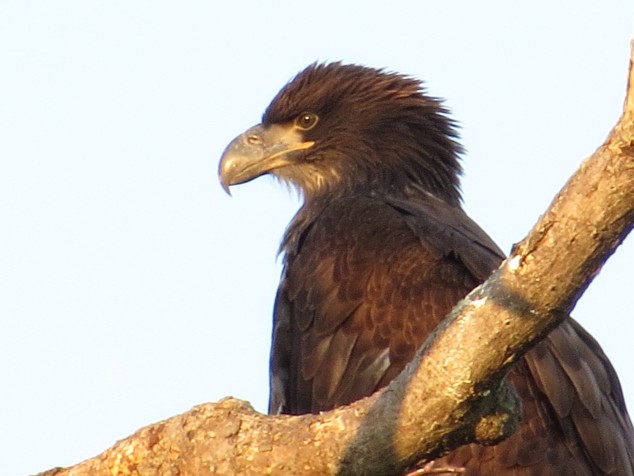
The sun was getting lower to the horizon but shone on the top of the tree where the young eagles were patiently waiting for the return of their parents.
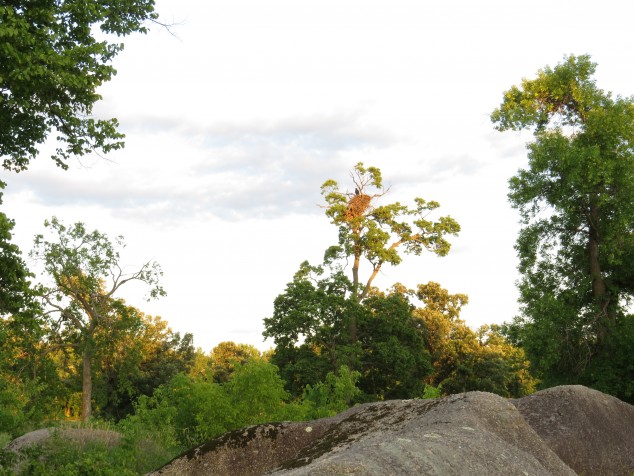
Then as we were walking back, we heard the fledglings start to vocalize–and there was mother eagle! She came back empty-clawed–no food from this round of hunting.
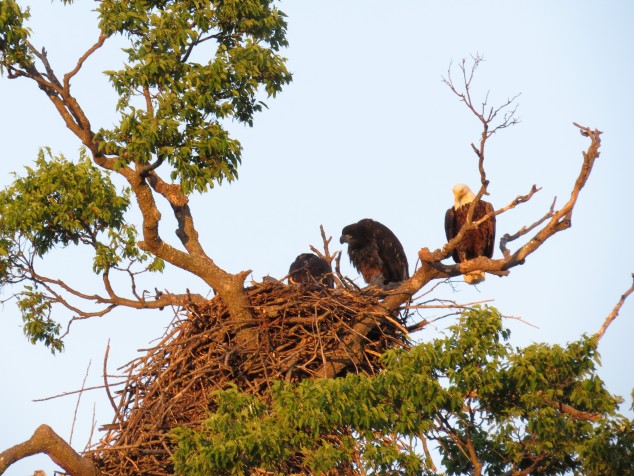
The eaglet that had been in the nest and quiet the whole time was very excited to see the mother eagle!
Even after that wonderful display, the mother eagle didn’t pay much attention to the young ones.
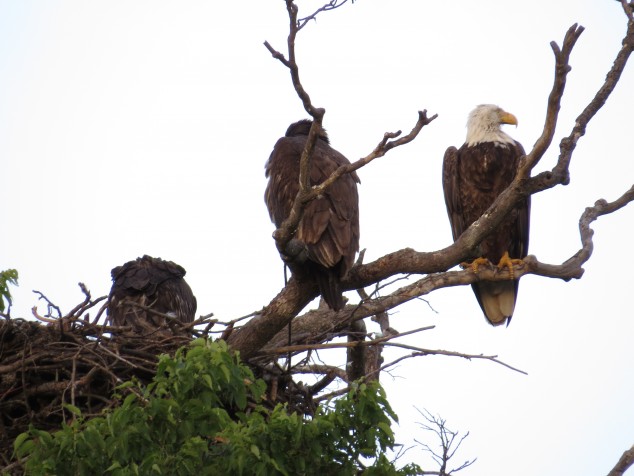
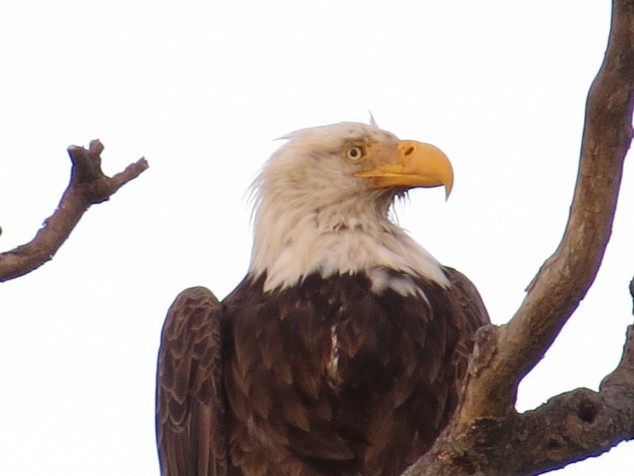
With the sun going down, we left the eagles and their extraordinary habitat. I was so happy I saw the three of them and was hoping the father eagle had better luck with his evening hunt.
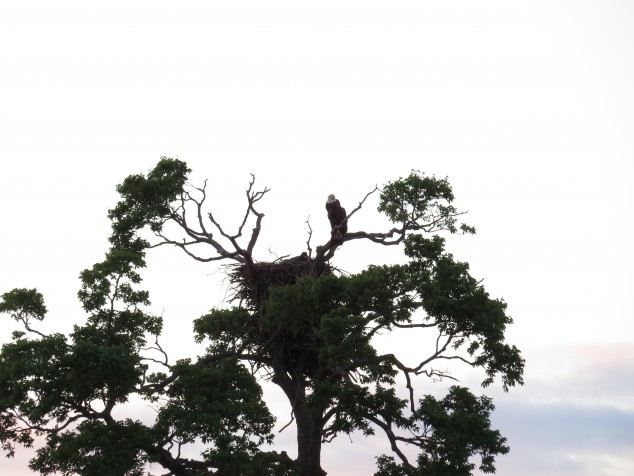
What a symbol of Freedom! We often look at freedom in the context of purely external forces on our lives, but I contend that a majority of the battles that individual Americans face actually come from within. Be proud and celebrate our country’s Independence today, but be brave and give some thought to what it is that is holding you back, what it would take to make your spirit soar!
Gleanings from June
One fall long ago, after the corn harvest, my Mom, Dad, siblings and I took the tractor and grain trailer out to the field to gather corn. We walked the rows looking for the bright yellow ears that were missed by the combine, so we could feed them to our four horses throughout the winter. Not all the ears were in plain sight, so I learned to watch for husks that weren’t pulled back and that were still full and round. I loved finding a long perfect ear of corn hiding in the stubble! We worked until my Dad thought we had enough for the winter, then climbed into the wagon on top of the corn and headed home with our gleanings.
I was reminded of this story when I was going through all the pictures I took in the month of June. I found some that didn’t fit in any particular blog post that I still wanted to share. So the monthly ‘gleanings’ will be miscellaneous photos that weren’t picked for a post but will still highlight nature’s treasures.
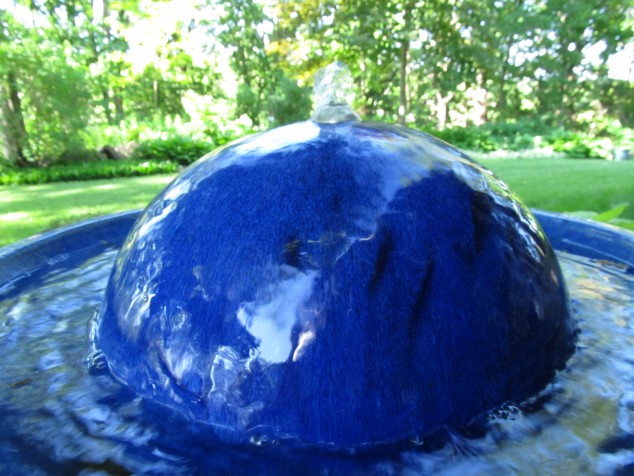
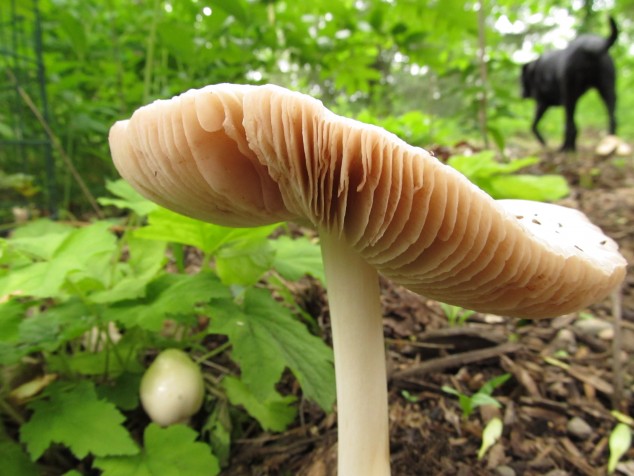
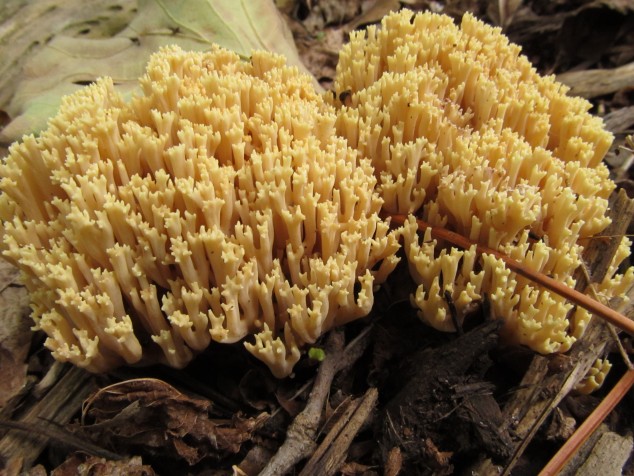
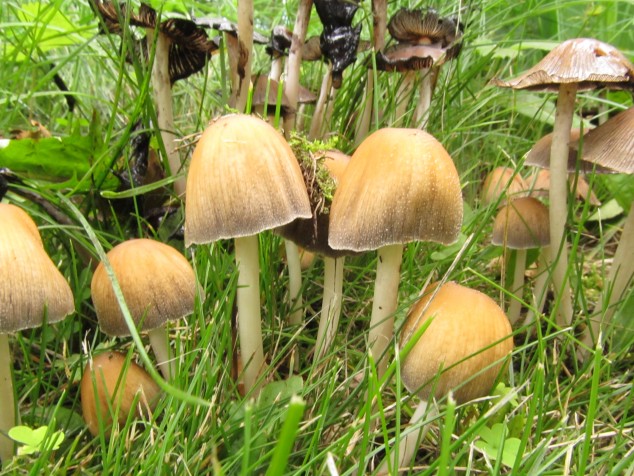
Water was in abundant supply in June with near record rainfalls that kept my birdbath full. It spurred the growth of many strange and wonderful toadstools.
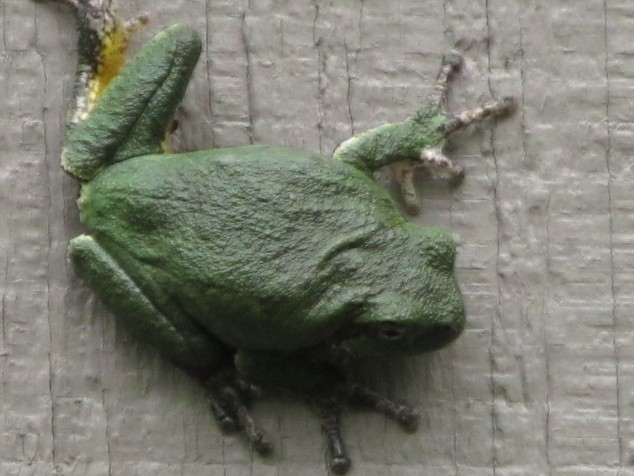
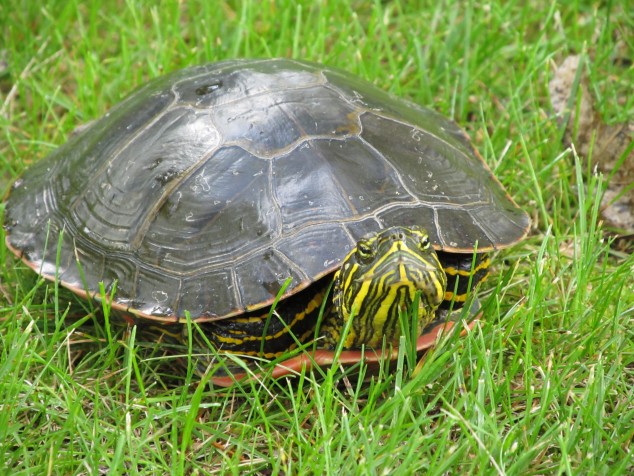
 We had a couple of visiting creatures–a tree frog and a turtle.
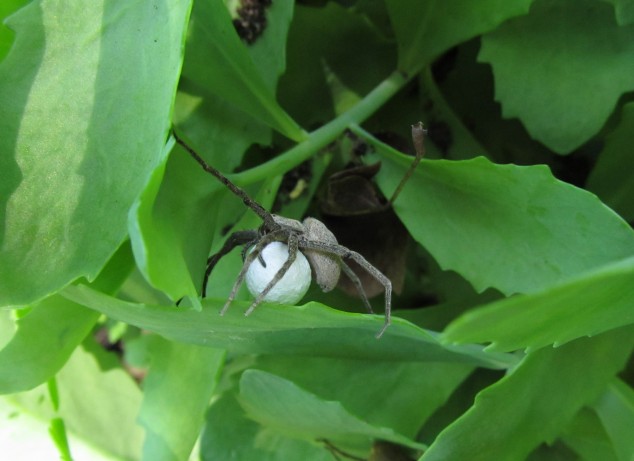
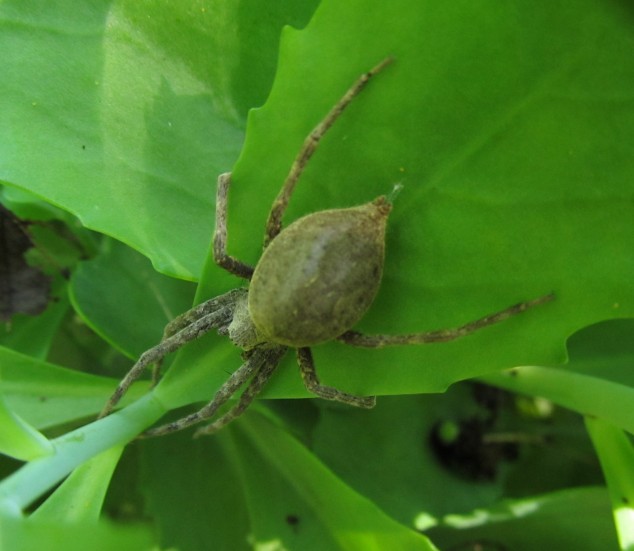
I found a spider with her egg sac on a sedum plant. When I got close with the camera, she scurried to the other side of the leaf carrying her egg sac. On the same plant, there was another spider about to lay her eggs and wrap them into a silky sac.
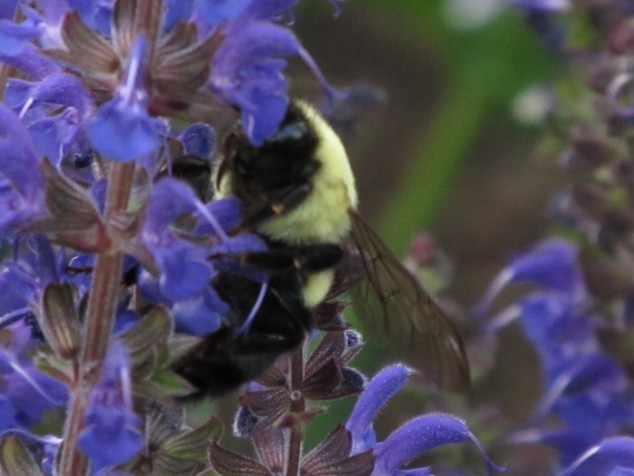
The bumblebees loved the perennial blue salvia.
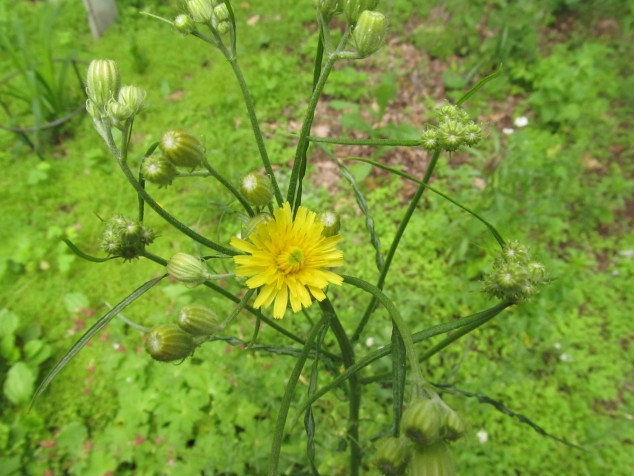
I think this is a type of Hawkweed, a member of the Sunflower Family. I like how the flower stalks look like tentacles and how the leaves twist, looking like green barbwire.
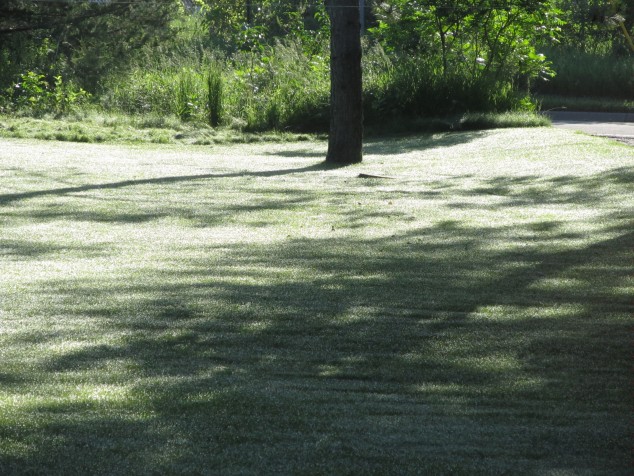
And this last picture of a dewy, sunshiny morning when the grass looked like it was frosted, reminded me how very nice it was to finally be in this place called Summer.
Take a look at NorthStarNature Facebook page for additional photos that aren’t posted on my blog!
Nest Quest
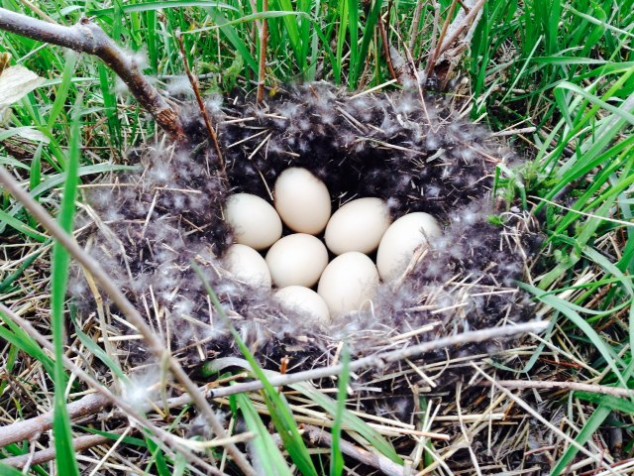
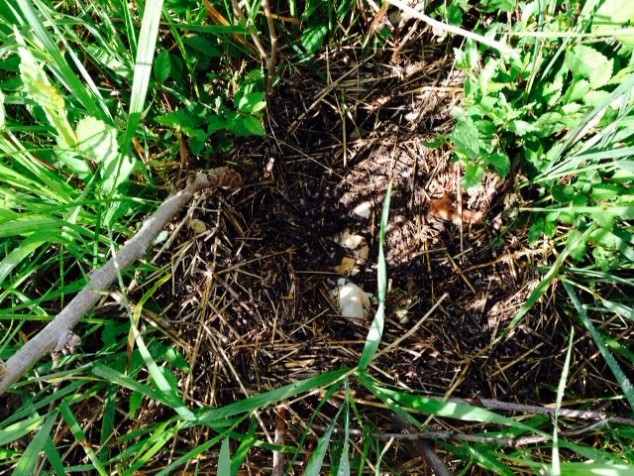
My sister found a duck nest in a willow thicket in the horse pasture. Constructed in the protection of branches with grasses growing all around for camouflage, it was a perfect place to build. The nest was lined with down that the mother duck pulled from her breast and used to cover the eggs when she left the nest to feed. Her clutch needed to stay safe from raccoons, skunks, and foxes for 23-29 days after all the eggs were laid. Baby ducks hatch alert and covered with down and are ready to follow their mama to water within 16 hours! And it appears like that’s what they did!
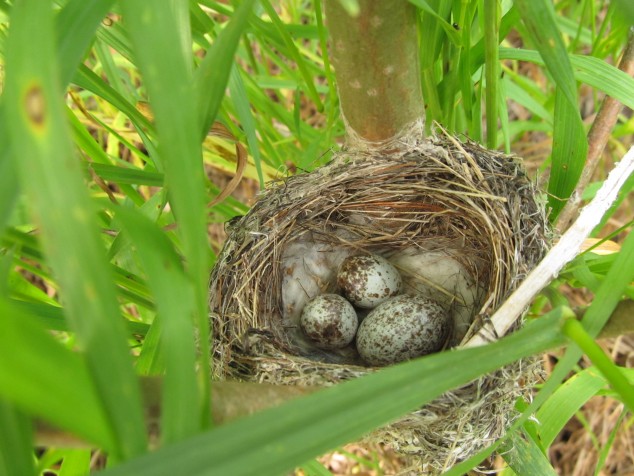
A Yellow Warbler’s nest and eggs didn’t fare as well. On my daily walk, I noticed the warbler flying from a young, four-foot high poplar whenever I got close. When I examined the tree, I found a small nest in the crook of the branches–probably only two feet off the ground. Inside the nest were three eggs, one noticeably larger than the other two.
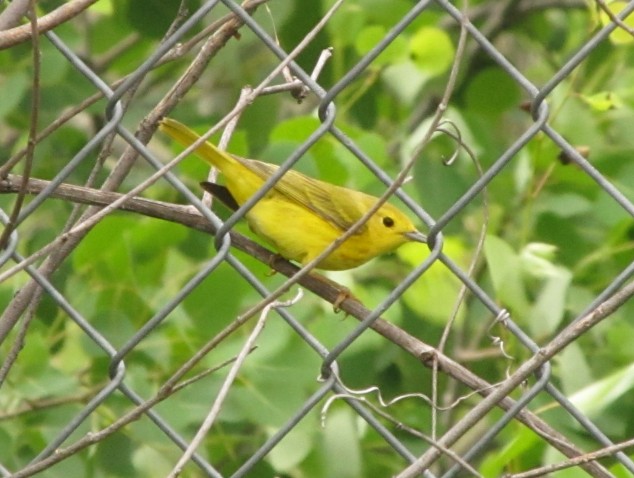
Mama warbler nervously flitted from place to place on the other side of the quarry fence but always kept me within her sight.
Two days after I found her nest, the ditch was mowed. The little tree was tipped slightly and most of the tall grass that had hidden the nest on one side was gone. I checked the nest a few days later–no mama bird and only one egg left in the nest. Abandoned. At first I thought it was because of the damage done by the tractor and mower–and that may have contributed to it. But with reading about Yellow Warblers, I found that Brown-headed Cowbirds often parasitize their nests, which would account for the one bigger egg. Often, then, the Warblers abandon those eggs and build another nest right on top of the old one, but since the site was compromised by the mower, she must have moved to a new place.
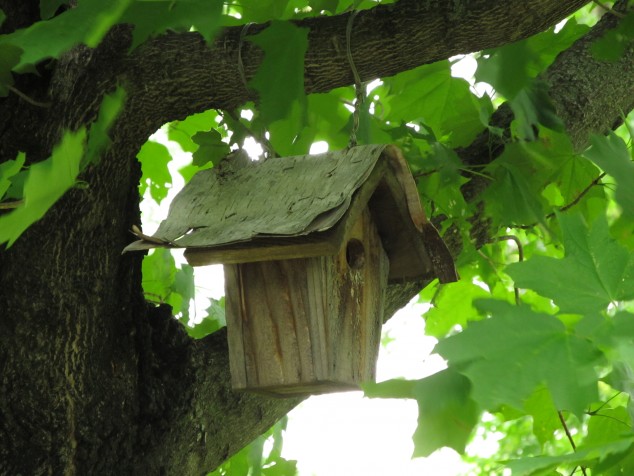
Every spring the House Wrens have occupied three cedar wood and birch bark houses we have hanging in the maple trees. But when Chris put up the new bluebird houses, these fierce little competitors took over the larger dwellings. The males build nests of twigs to entice their mates. The nests are then lined with feathers, grasses and other plant material to make it soft for the eggs and newborn chicks.
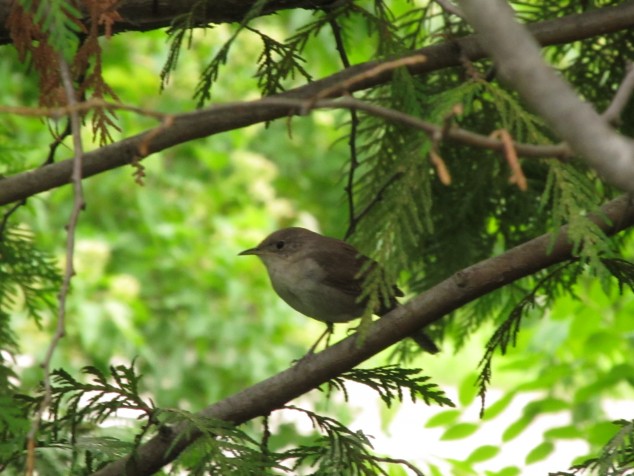
The mama wren was not happy with me looking at her nest–she flew from branch to branch and chattered loudly.
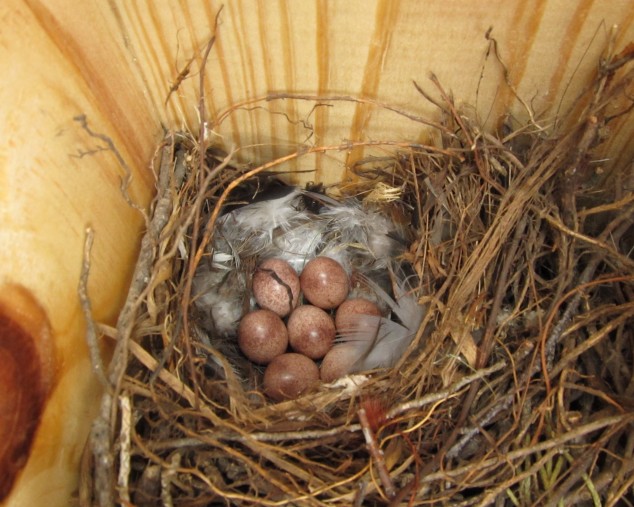
Her nest of seven eggs has hatched, and when I looked today, the chicks are almost fully feathered. They will soon be leaving the nest.
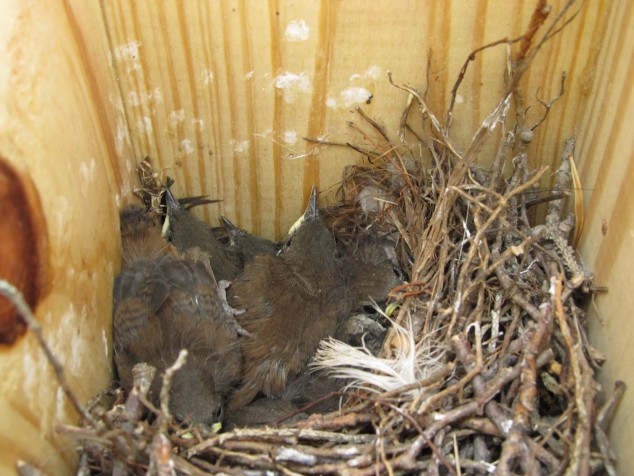
The search to find a mate and the perfect place to build a nest. The work it takes to build the home. The time needed to lay the eggs and incubate them. The energy it takes to feed the brood and keep them safe until they leave. Things that can derail the whole process. Mishaps and mistakes that change the course. Daily problems that need attention. This is the life of parents–whether warbler, wren or human.
Duck nest pictures by Dawn Gehrke
On the Wobegon Trail
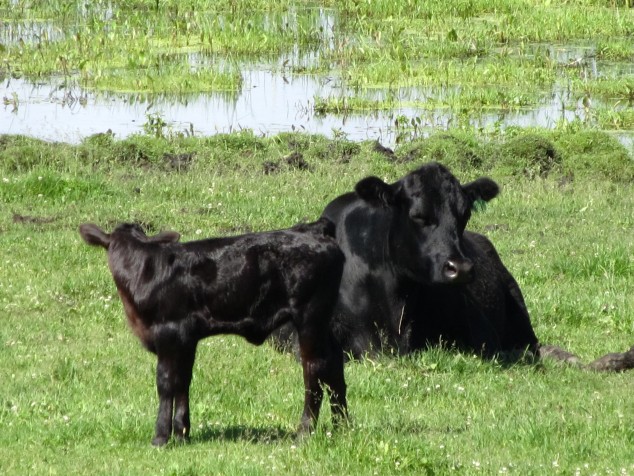
It was a beautiful day for biking–sunny with a light breeze, warm but not too hot or humid. We headed for the Lake Wobegon Regional Bike Trail, not far from our house. It is the Lake Wobegon of Garrison Keillor’s storytelling on A Prairie Home Companion radio show–where “all the women are strong, all the men are good-looking, and all the children are above average.” Even though we’re transplants, I like to think we fit in. Manned with sunscreen, water, homemade granola bars, and the camera, we set off on our journey.
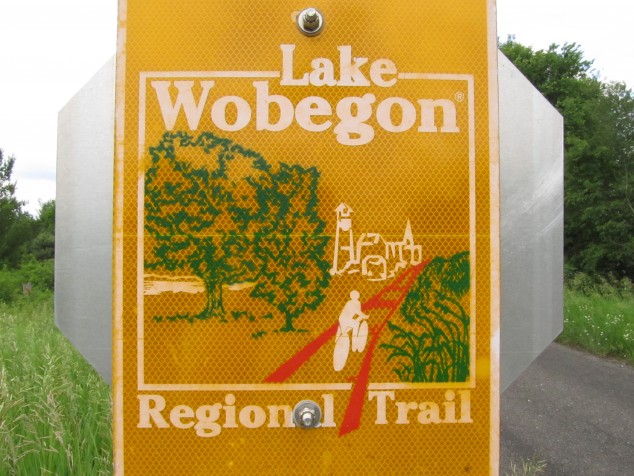
The Wobegon trail is 46 miles from St. Joseph to Osakis on an old railroad line. It winds through areas of prairie, rolling farm land, woods, small towns, and lakes. We saw sheep and cattle, including the little Black Angus calf and his mama. I tried to get him to turn my way, but he was probably looking at frogs or something much more interesting.
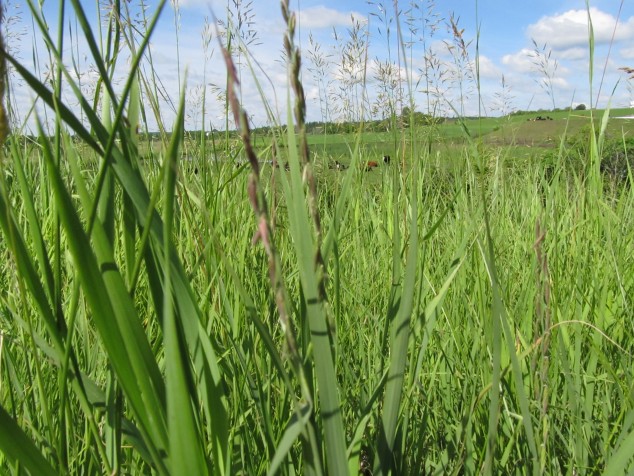
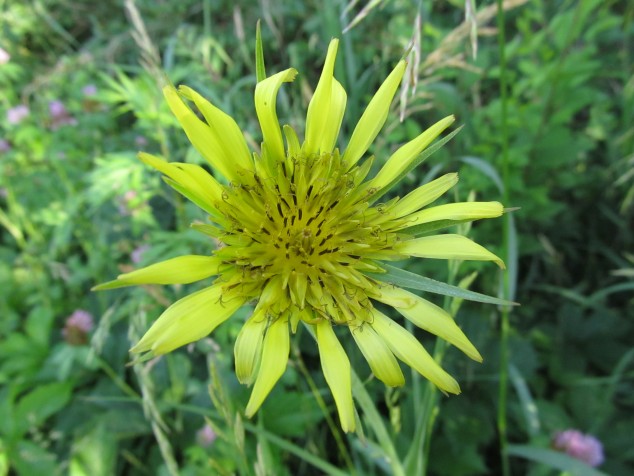
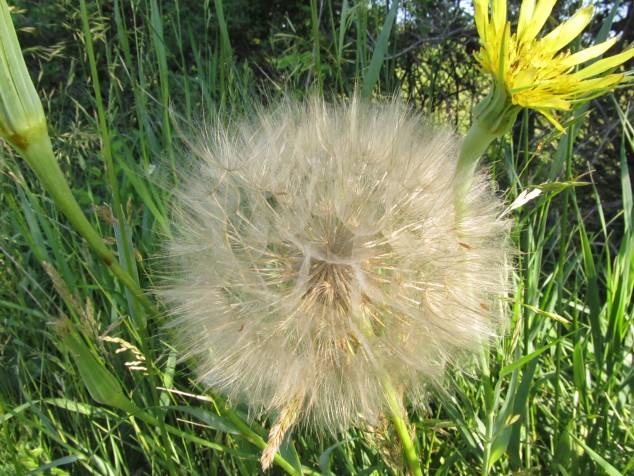
We saw prairie grasses and wildflowers including Wood Anemone, Yarrow, Wild Rose, and Prairie Phlox. Yellow Goatsbeard was abundant along the trail–some in their morning bloom of yellow, others in their dramatic dandelion-like seed heads.
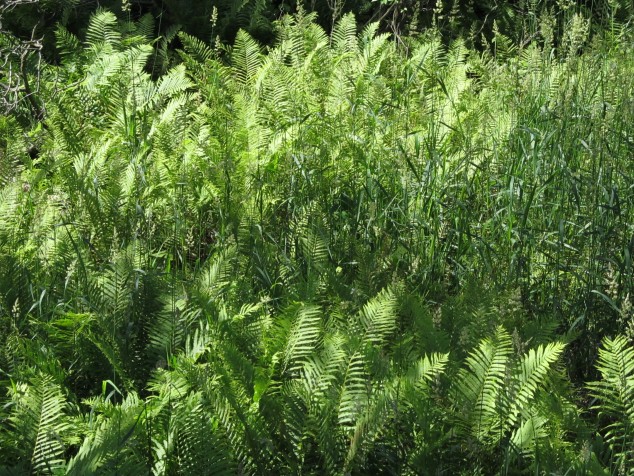
Shimmering stands of ferns carpeted the floor of a wet, wooded area.
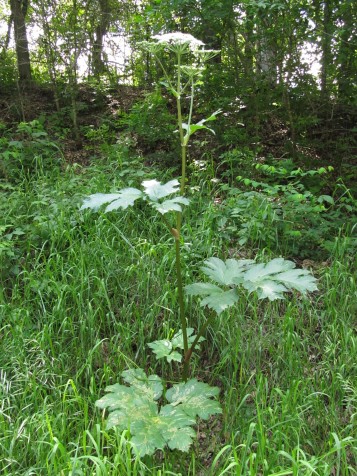
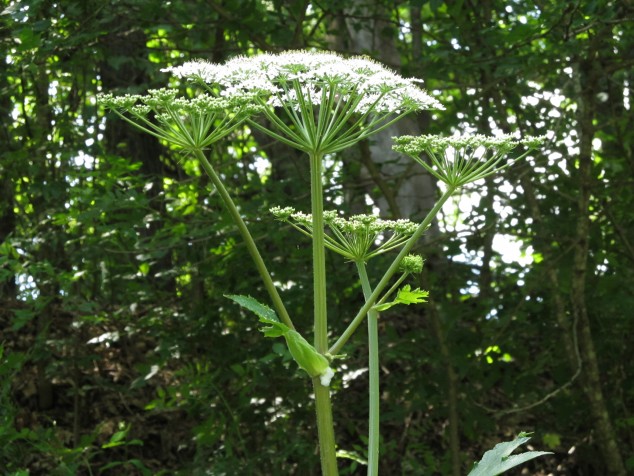
I saw a giant of a plant that stopped me in my tracks! It was six or seven feet tall with a dill-looking flower and huge leaves. I identified it as Cow Parsnip, a member of the Parsley Family.
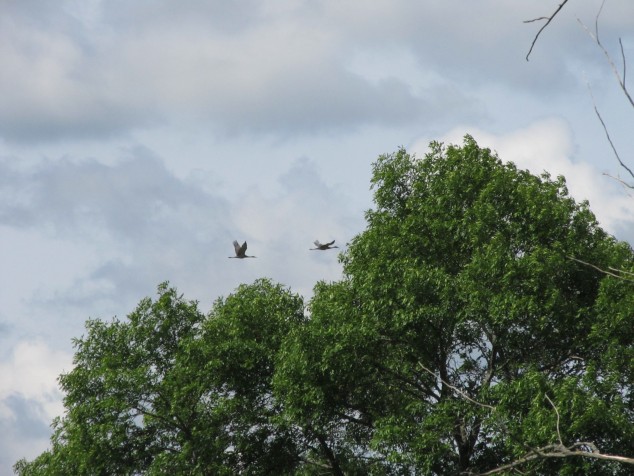
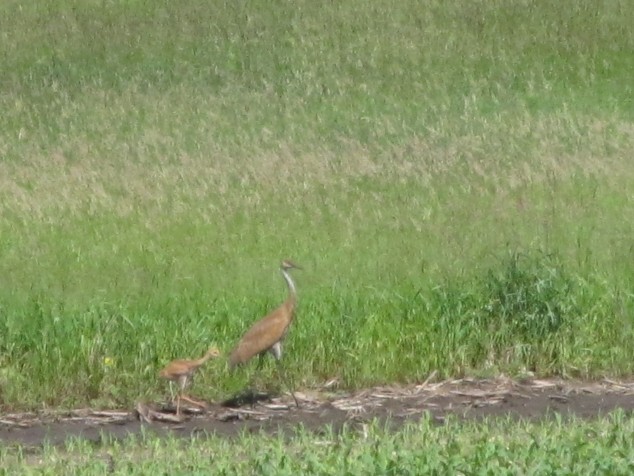
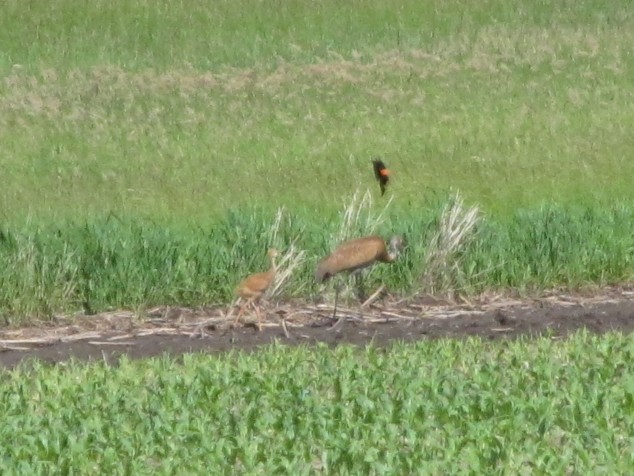
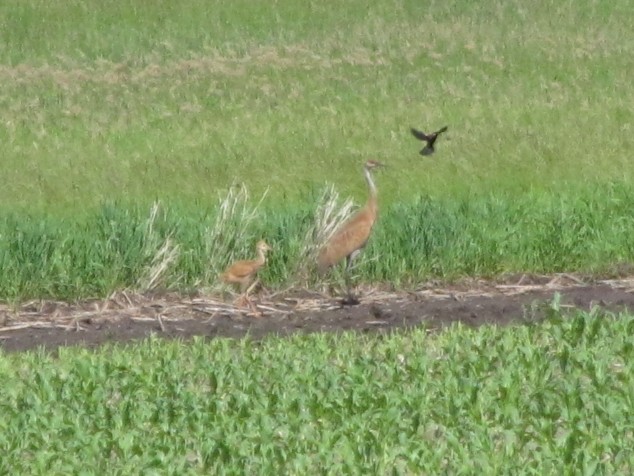
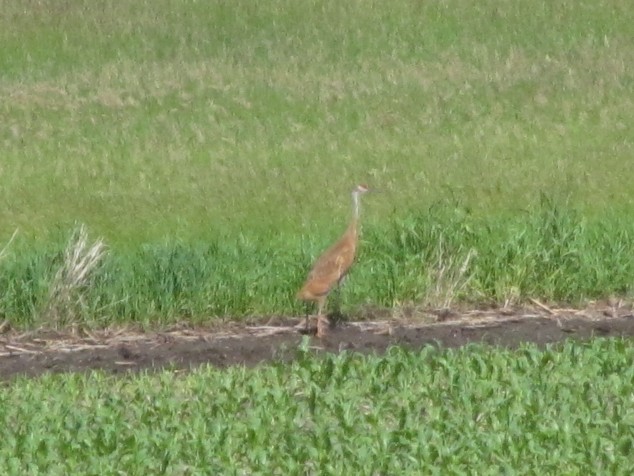
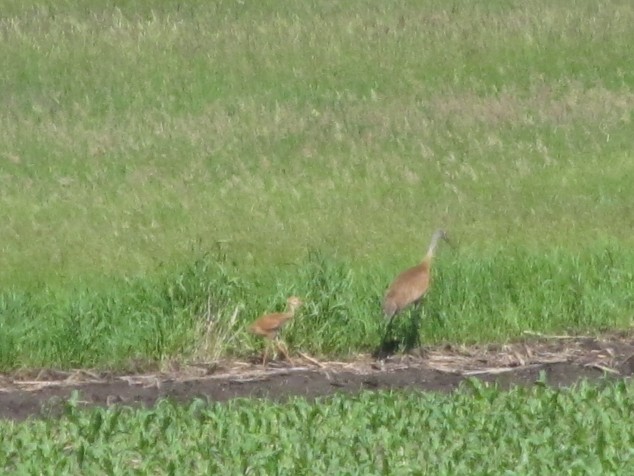
When we got to an open area again, Chris spotted the gray-brown shapes I was hoping we would see. Picking their way through a corn field was a Sandhill Crane and her chick. As I was getting pictures of these two, we heard the rolling, low bugle call of two others as they flew overhead. The mama and her chick walked between the field and a grassy area. All of a sudden they were dive-bombed by a red-winged blackbird. Mama crane ducked her head then waited for her chick to catch up to her as the blackbird flew away. Then they calmly resumed their walk.
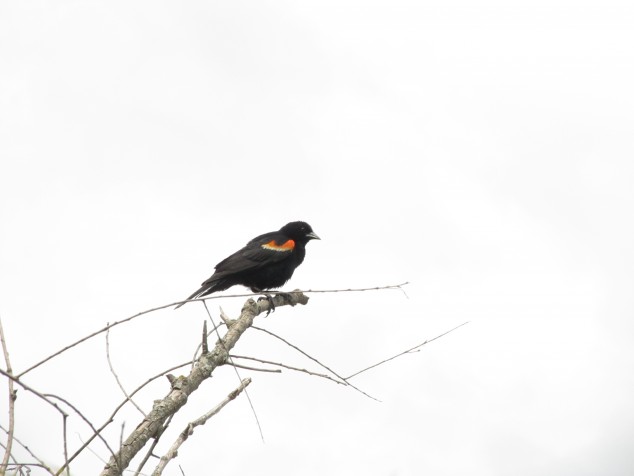
We passed a number of small lakes, streams, and wetlands, then rode between Middle and Lower Spunk lakes. Middle Spunk has a swimming beach and many homes surrounding it. Lower Spunk has a fishing dock, public water access, and more wild area. A red-winged blackbird greeted us from his perch when we walked out on the dock.
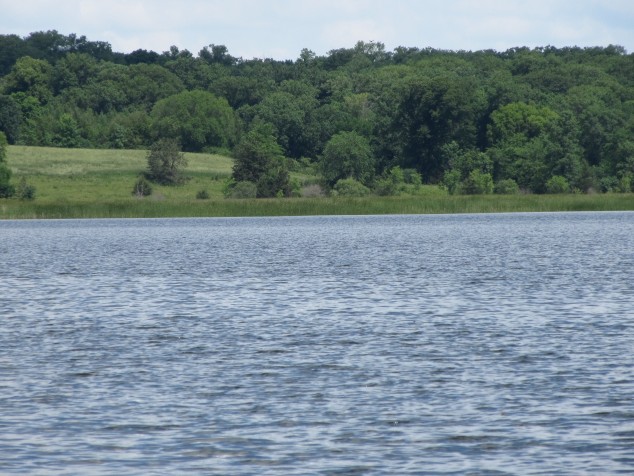
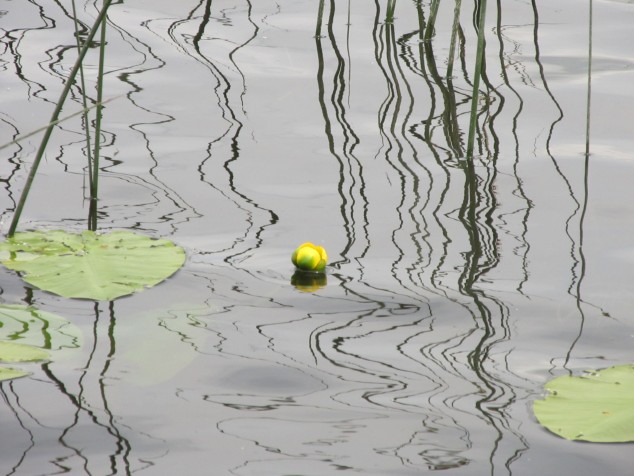
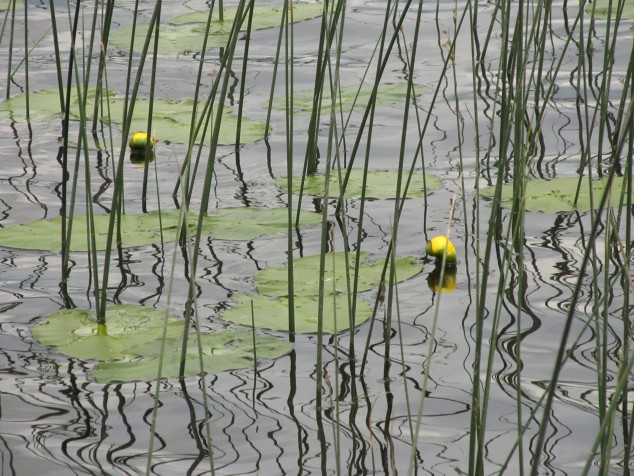
The Yellow Pond Lilies were beginning to bloom from their floating homes. The pencil-thin water weeds that grew around the lilies threw shadows that zigged and zagged darkly on the wavy water, looking like an abstract painting.
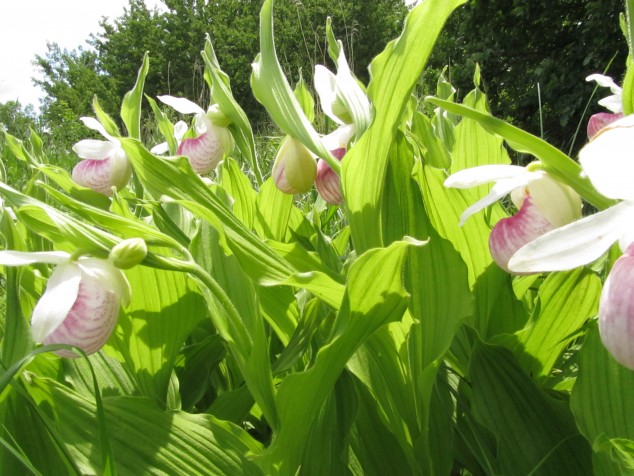
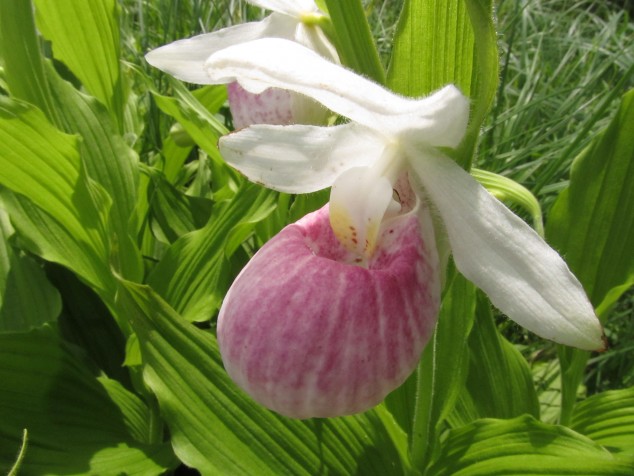
At about mile 12 or 13 of the Wobegon trail, we encountered one of the highlights of the trip–a Showy Lady’s Slipper–the State flower of Minnesota. It is a type of orchid that grows very slowly, taking up to 16 years until first flowering and is very long-lived–50 to 100 years. Lady’s Slippers have been protected in Minnesota since 1925, as they are a rare find.
After seeing the Lady’s Slipper, we turned around to head back. It was afternoon by then, and the sun was warm. The breeze of gliding along the path felt good. I don’t know if it was the weather or the air rushing through my nose, but I noticed so many scents. It was like, when biking you go through the scents, instead of the scent wafting to you. Maybe it smells stronger that way. I noticed the wild rose sweetness, the heady hay smell of alfalfa and sweet clover, the damp coolness of the woods, and a brief acrid smell of skunk. I smelled tobacco when a boy around the age of twelve?! rode by and fresh, clean soap when a tall man glided past us. The lake smelled fishy and weedy like a lake should, and the pasture like cows and manure.
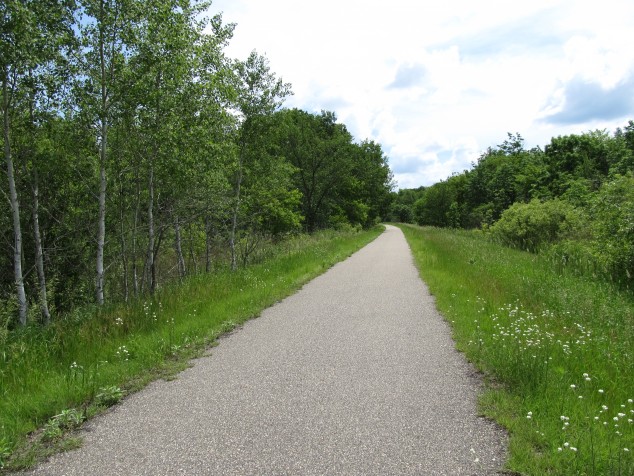
And the sounds seemed amplified and sweet. Many different bird songs serenaded us–the chatter of wrens and the stark call of the pileated woodpecker. At one point I realized how quiet it was except for the birds. Then we rolled by a grove of poplars, and they loudly cheered me onward with their quivering leaf ensemble. (My leg muscles needed a little encouragement by that time.)
So what piqued our senses? Nature herself? Was it my quest to find good nature pictures to share? Or was it the opportunity to be away from the normal daily drone of tv, radio, computers, and phones? Perhaps our senses are bombarded by our man-made surroundings–and it is not what our bodies and souls need. So we can take wisdom from the Sandhill Crane–duck our heads, stop and re-group with our loved ones (and Nature), and calmly walk on.
Wild Strawberries for Breakfast
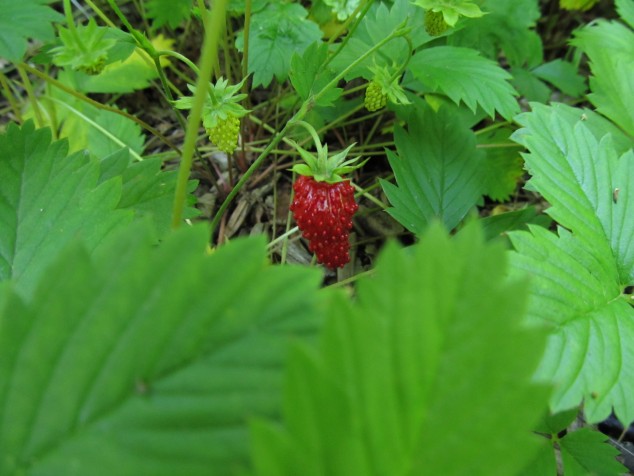
Wild strawberries are creeping their way along the edges of our woods. They make a good groundcover and are tasty tidbits for birds, turtles, chipmunks, or people.
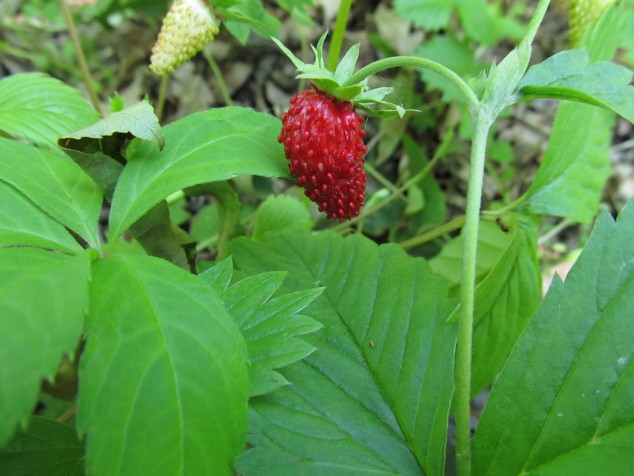
I picked a small bowl of the red little berries yesterday on the first day of summer.
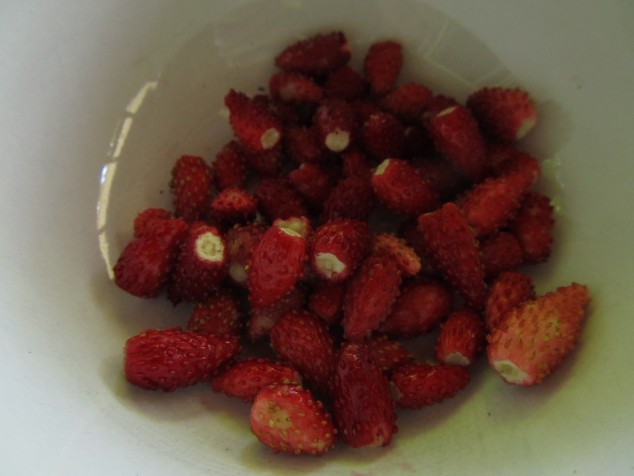
We had Sunday morning Wild Strawberry Muffins!

I felt like a true gatherer when picking the wild strawberries–I wandered around the perimeter of the woods, looking for the berry plants. One patch by our driveway had already been picked clean by some other creature. The other patches were dotted with the bright red berries. What looked like many on the vine didn’t fill my bowl very full! Even though the wild strawberries were not in abundance when compared to a grocery store display of very large red berries, I was able to flavor our Sunday morning muffins with the fruit that was growing in the woods right outside our door. And that’s a wonderful thing!
Happy Summer!
“And what is so rare as a day in June? Then, if ever, come perfect days…” –James Russell Lowell
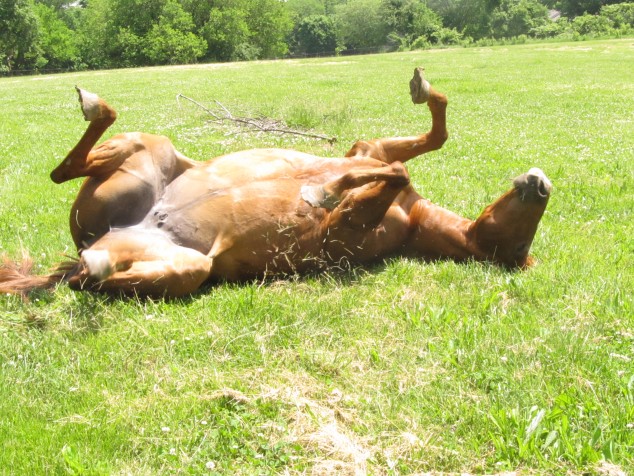
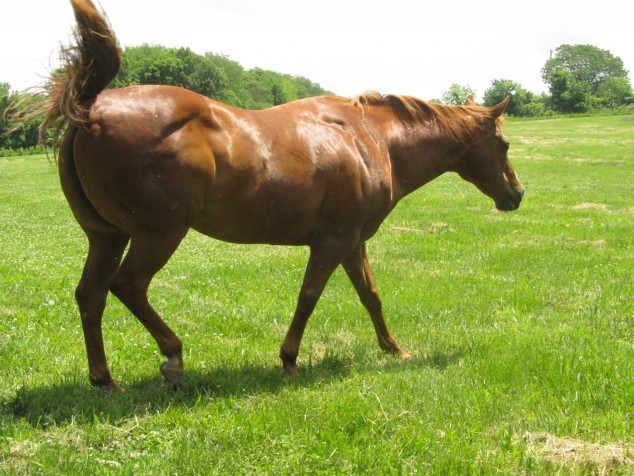
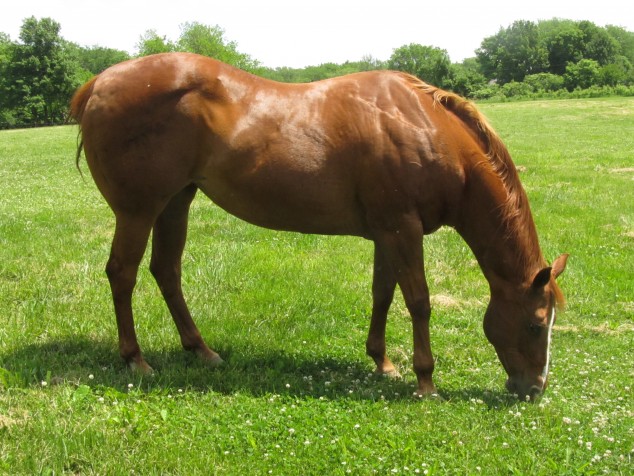
Summer’s here, and it feels so good! Roll in the grass! Take a walk! Smell the clover! Eat something out of your garden! Swim in a lake! Go fishing! Enjoy all the beauty and wisdom of Nature!
Shades of Blue
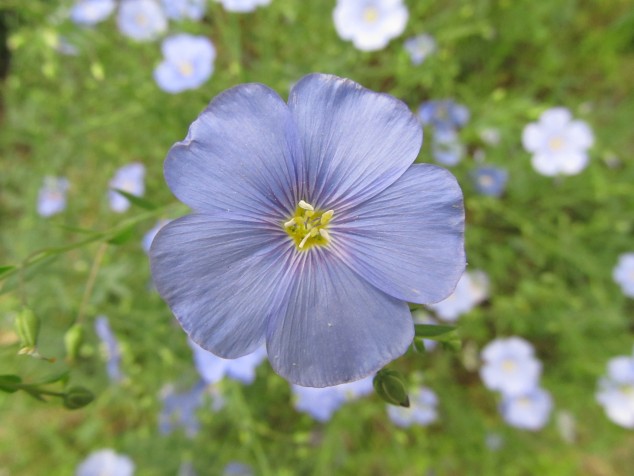
It’s a blooming time of year! Chris says I should write about something other than flowers, but I say you can never have too many flowers. (I guess Kanye and I have something in common.) They are all so unique and lovely though, and the intent of this blog is to share the Beauty of Nature. The other thing I love is the color blue–and I would also say you can never have too much blue. This statement is reflected in my closet, much to the chagrin of my daughters. So blue flowers are extra special for me. It is said that a true blue flower is hard to find in nature–that most are shades of purple or lavender. According to Wikipedia, the blue flower is a symbol for inspiration, desire, love, hope, and the beauty of things. No wonder I like them–and no wonder they are hard to find.
Cultivated varieties have expanded the selection of blue flowers, and my tour of our garden blues include some of those. I would have to say that my favorite blue flower is Perennial Blue Flax–Linum perenne. It was introduced to the US from Eurasia. A comparable native flax is Linum lewisii, named after Meriwether Lewis after he discovered and documented it on his travels. Perennial Blue Flax blooms early and for a number of weeks–each flower lasts only a day before the petals fall, creating a carpet of blue ‘snow’ around the plants. It reminds me of the fields of flax that were grown in eastern South Dakota–acres and acres of blue flowering plants that ripened to a rich brown with round-headed seed pods and shiny, dark brown seeds. The straw was harvested for producing the fibers to make linen, the seeds to produce flaxseed or linseed oil. This multi-purpose plant is a beautiful ornamental flower for the garden.
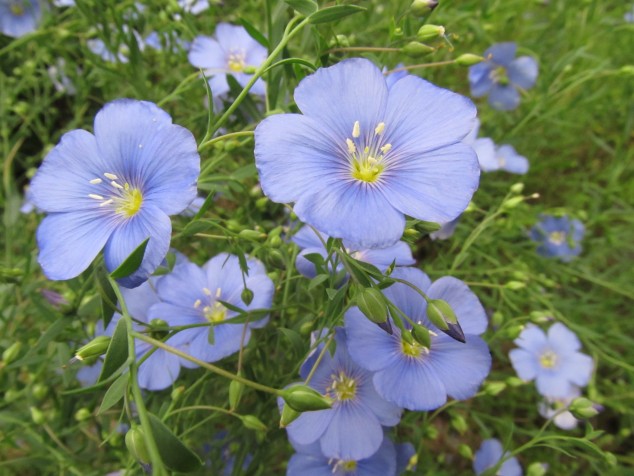
Perennial Blue Flax
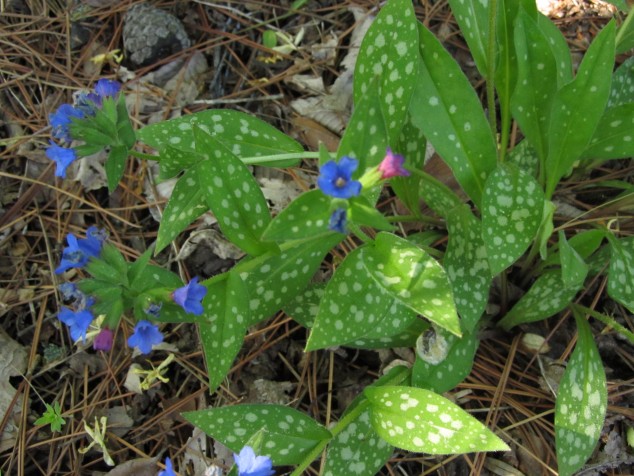
One of the earliest blue-blooming flowers in our garden is Lungwort (Pulmonaria species). It’s a shade lover and has interesting spotted leaves.
Lungwort
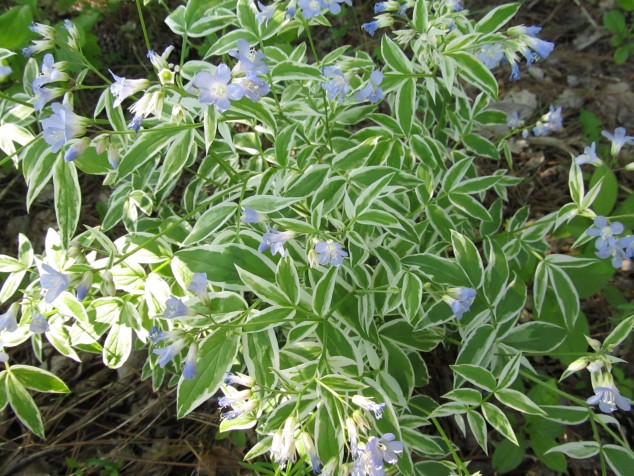
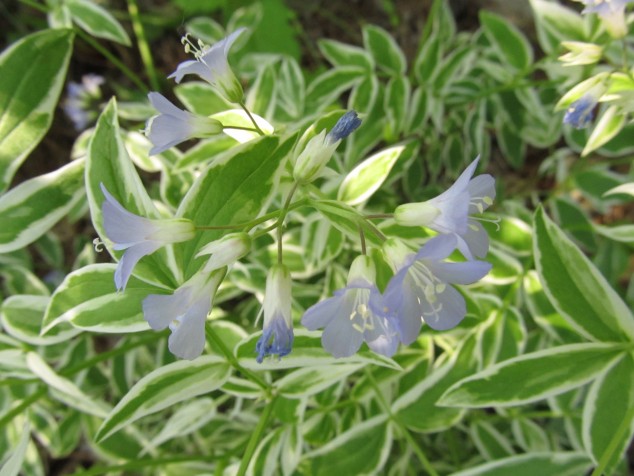
Jacob’s Ladder (Polemonium species) is another early blooming shade perennial. This variegated plant produces light blue/lavender flowers.
Variegated Jacob’s Ladder
Variegated Jacob’s Ladder
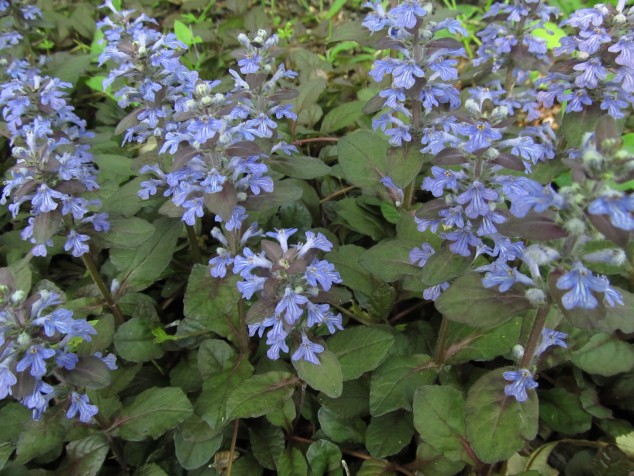
Ajuga or bugleweed is an attractive, colorful groundcover that does best in partial or light shade. But it is very adaptable, so tolerates full sun and full shade. The blue flowers are a sidenote to the foliage but very desirable to the bumblebees.
Ajuga
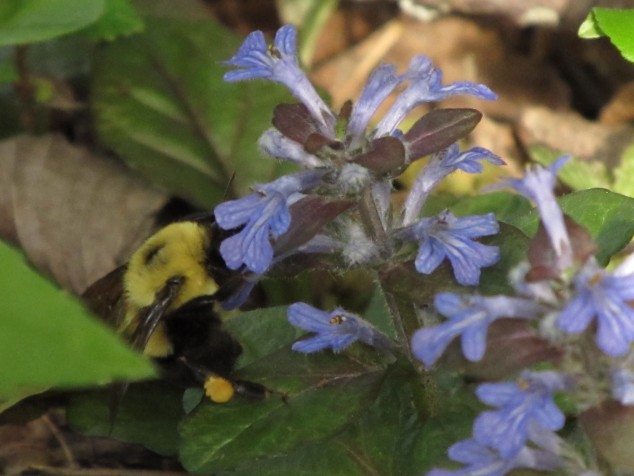
Ajuga
Brunnera or Bugloss is another shade-loving perennial. It has large heart-shaped leaves and tiny, delicate sprays of blue flowers.
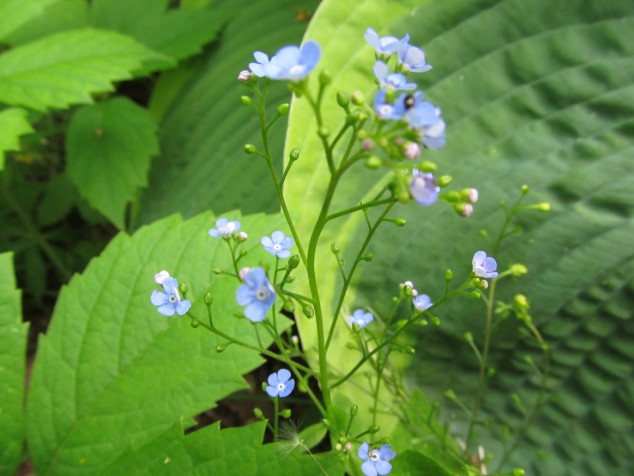
Brunnera
Lupines have showy spikes of color–the best known is probably the native blue species. Many hybrids can be found in most any color. Texas bluebonnet, the State flower of Texas, is a type of Lupine. This member of the pea family has palm-like foliage.
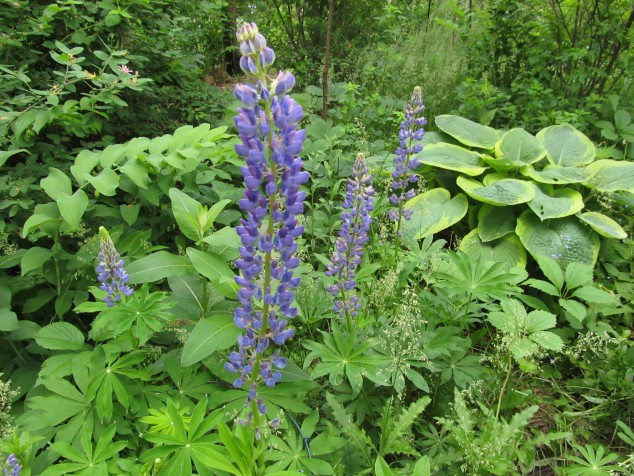
Lupines
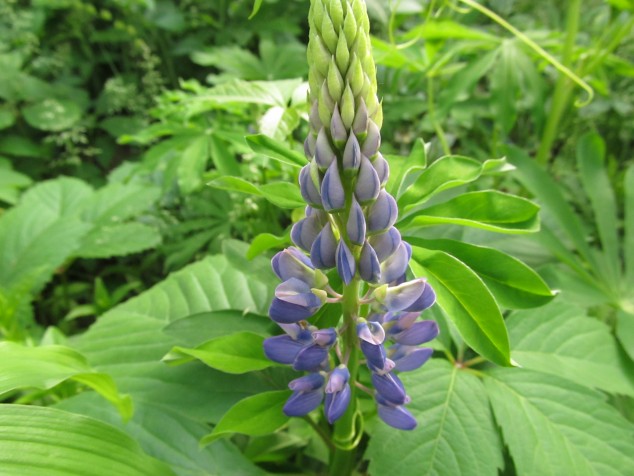
Lupine
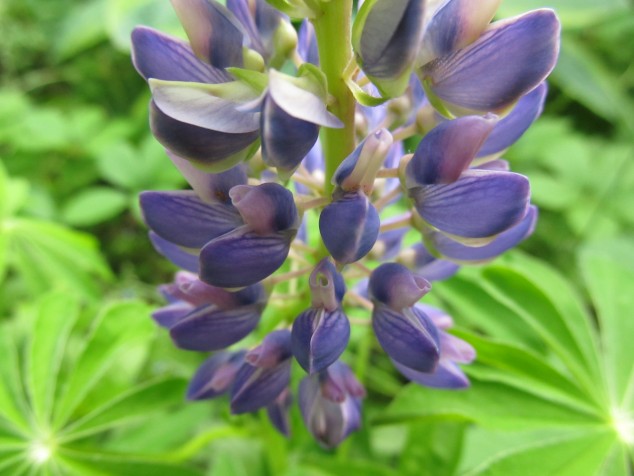
Lupine flower
Perennial Salvia, a sage that loves sunlight, is a long-blooming, hardy plant that will re-bloom after the first flowering is cut back. The purple-blue spike flowers look great with coreopsis, yellow iris, and yellow daylilies.

Perennial Blue Salvia
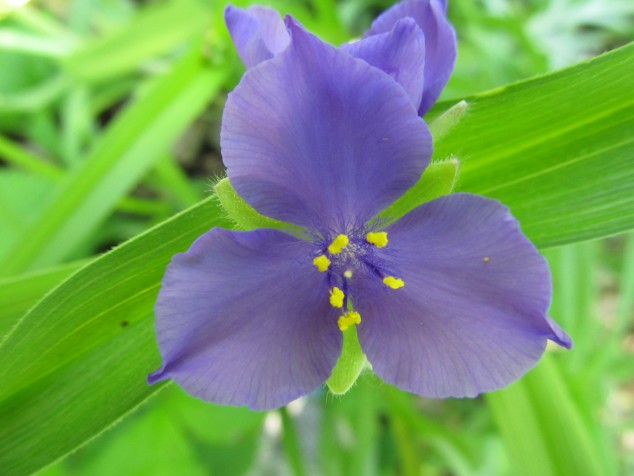
I have mentioned Spiderwort in my post about The Woods–how it has populated itself after we removed the buckthorn. It has grassy-looking leaves and flowers that only last a day before dropping off.
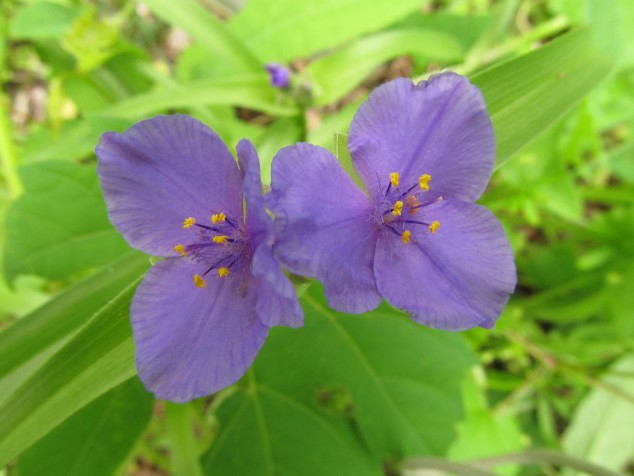
Spiderwort
Mountain bluet (Centaurea montana) is a perennial cornflower that is drought tolerant and likes full sun or partial shade. It has spidery flowers and lance-shaped leaves.
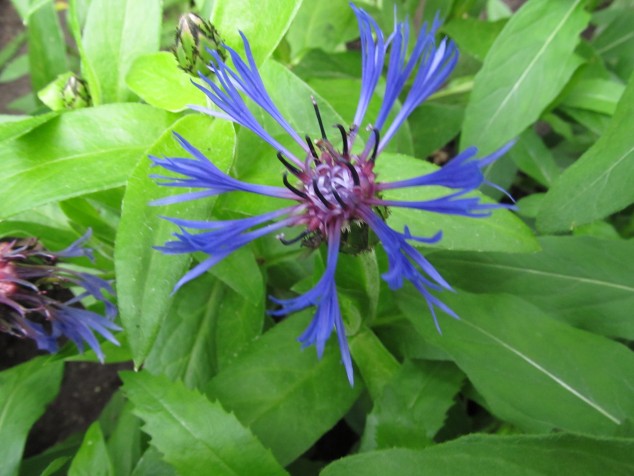
Mountain bluet
Amsonia or Bluestar is a compact, understated perennial with true blue clusters of tiny flowers. The foliage turns a bright yellow in fall.
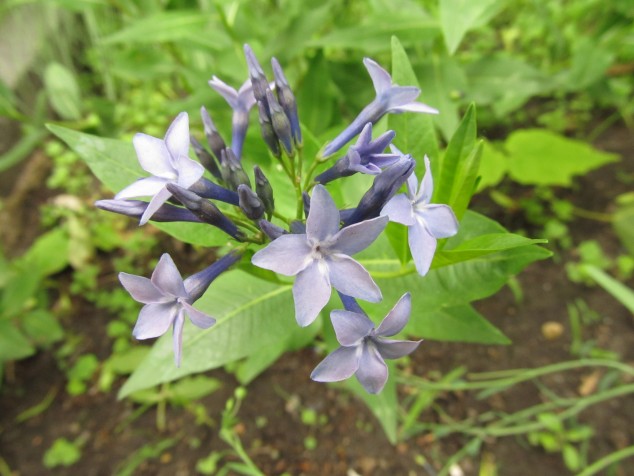
Amsonia or Bluestar
We all get the blues at times in our lives–even cowgirls get the blues sometimes. (I have more in common with Emmylou.) We can sing the blues, feel bad for a while, figure out why, then move on to the next thing. These blue flowers should inspire you towards love, beauty, and hope.
The Woods
A ‘wall of green’ was how my husband described our woods when we first moved to our Central Minnesota home six years ago. We could see the tops of impressive oak trees and spindly cedars, but the first 10-20 feet was a thick, impenetrable wall of green vegetation. It was armed with thorns that easily scratched our arms to bleeding if we tried to push through the denseness. The wall had blue-black berries in the fall that stained anything they touched.
I don’t think we found out until the next summer that our ‘wall of green’ was buckthorn–and from then on, it became a bad word in our household–a word said with scorn. And it became my husband’s new hobby. Common and glossy buckthorn are on the Minnesota DNR’s list of restricted noxious plants–it’s illegal to import, sell or transport it in Minnesota. And we had a whole woods full of it.
This shrub or small tree was imported from Europe in the mid-1800s and used as a fast-growing hedge until the 1930s when it was found to be so invasive. It’s an understory tree that takes over the floor of the woods. It has a relatively shallow root system that creates a mat that doesn’t allow native understory plants to grow–buckthorn hogs the sunlight, the nutrients, and the moisture. It’s also a prolific seeder and is spread around by birds eating the berries and excreting the seeds. Our woods had the old, mature oaks and cedars, a few hardy honeysuckles, and the buckthorn. The ground beneath them was eerie-looking and barren of other vegetation.
So Chris began the war on buckthorn. He purchased a handy-dandy buckthorn puller for the ones with 2″ or smaller diameter trunks. The larger ones were sawn down with a bow saw or chain saw, and the stumps or staubs, as Chris calls them, were painted with full strength Round-up. The tangly, pokey branches had to be hauled off to a composter–pick-up load after pick-up load. We are five years in, and the battles still rage. The seedlings have to be pulled for a number of years after cutting the mature buckthorn. They grow fast and thick. We still have large patches that we haven’t tackled yet–and that says nothing of all that is on neighboring properties.
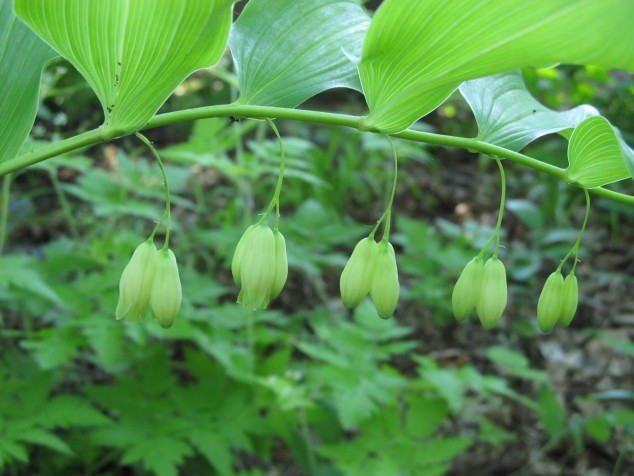
But there have been many victories. We have removed close to 80% of the mature buckthorn in our woods. We can see the dark, shapely trunks and branches of the Oak trees. Oak seedlings are popping up all over. Ferns are spreading their airy fronds along the understory. Solomon’s seal is populating great sweeps with their nodding flowers.
Gooseberry shrubs are growing. Spiderwort is a bright blue star shining in the green.
Wild strawberries carpet the ground, producing their tiny red fruit.
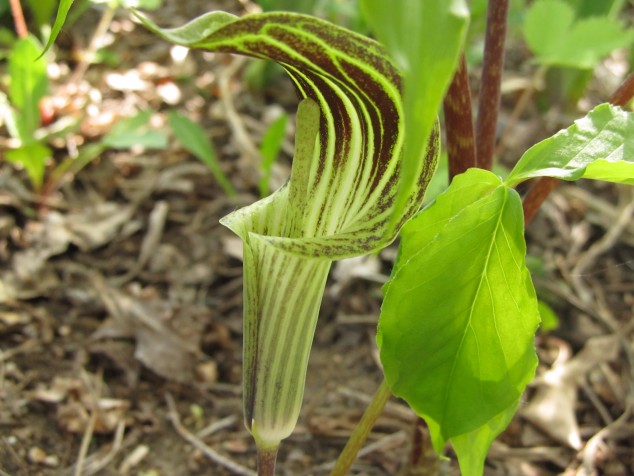
The greatest woodland treasure that has returned is the Jack in the Pulpit. As we cleared the buckthorn back, one appeared close to the yard under a honeysuckle shrub.
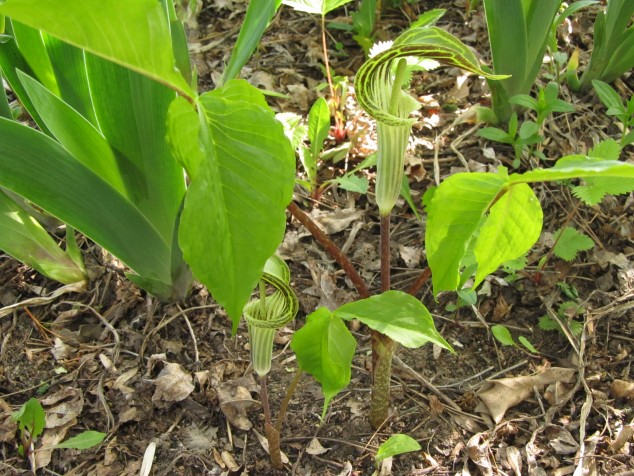
Last year, in a newly cleared area, a huge Jack in the Pulpit sprang up. It was like it had been waiting a long time to come back to the woods after being suffocated under the roots of the buckthorn–and it came back strong and robust! With hard work we cleared the buckthorn, and with hard work we continue to improve the woods by pulling the buckthorn seedlings and other undesirables that sprout up each year. The woods are coming alive again, and it is beautiful and inspiring!
We may all have a ‘buckthorn’ in our lives–something that looks good or works well to begin with, but slowly invades our life and starts choking out the good stuff of who we really are. It may be a way of thinking we developed in our childhood that no longer serves us well or an addiction that is running our life. We need to recognize what it is and work hard to tear down the wall, so the treasures of our life and soul can grow and flourish.
A Rainy Day
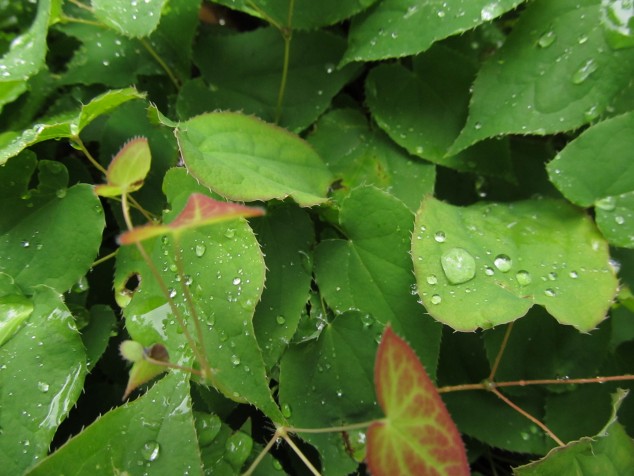 It’s a rainy day–with more in the forecast for the next six days. The river below our perch on the hill is already over its banks from downpours the last few weeks. Everything is growing and going kind of wild–including the mosquitoes! We haven’t tackled much of the weeding in our woodland gardens yet (mostly due to the mosquitoes), so the undesirables are making some headway. Yet I am amazed at how things have grown!
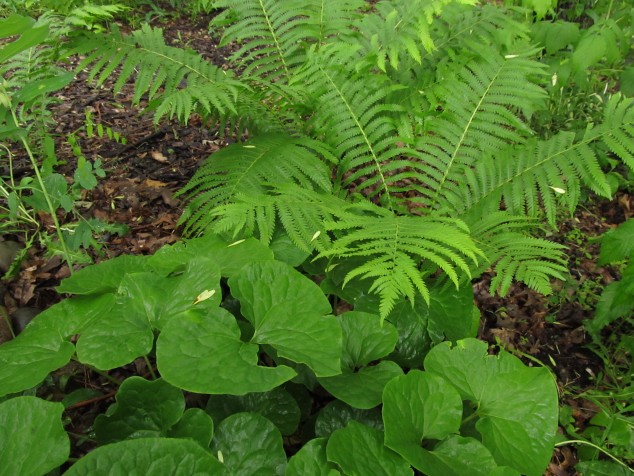
The hostas and ferns are larger than I have ever seen them.

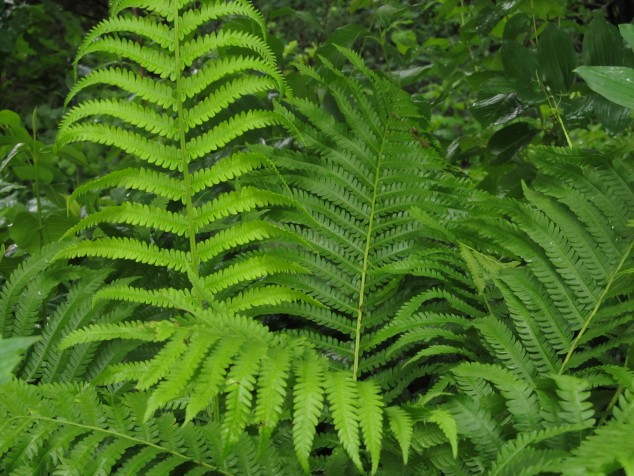
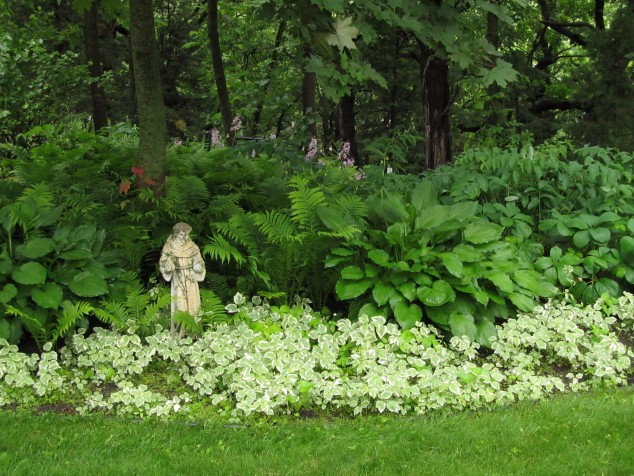 The wild ginger is robust compared to other years.
 The Solomon’s seal is waist-high and so plentiful that the deer seem to be leaving other things alone and just munching on it. So that’s a good thing!
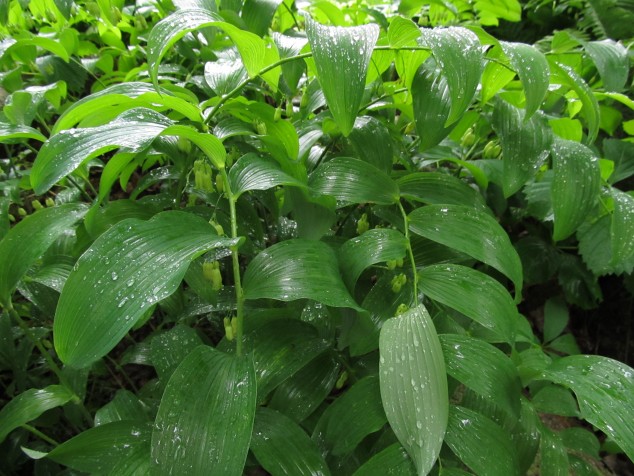
The effects of the drought of 2012 are still on our minds, so this abundance of rain and growth are welcome. If things get a little out of hand–like the weeds and mosquitoes, then so be it!
New Growth
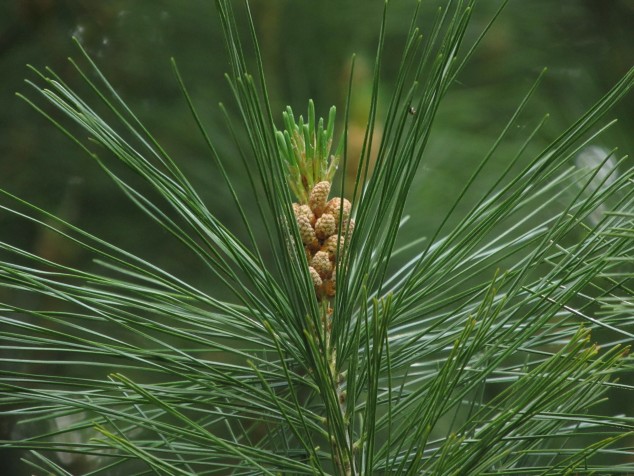 Deciduous trees are the attention-getters in spring, summer and fall. We know it is finally Spring when the new leaves have fully developed on the branches that have been bare all winter long. It is a dramatic change! The evergreens’ spring growth is no less amazing, however.
New growth blankets the young spruce and fir trees, covering the ‘old’ with a bright new coat. The growth is soft and tender and hardens off as summer progresses.
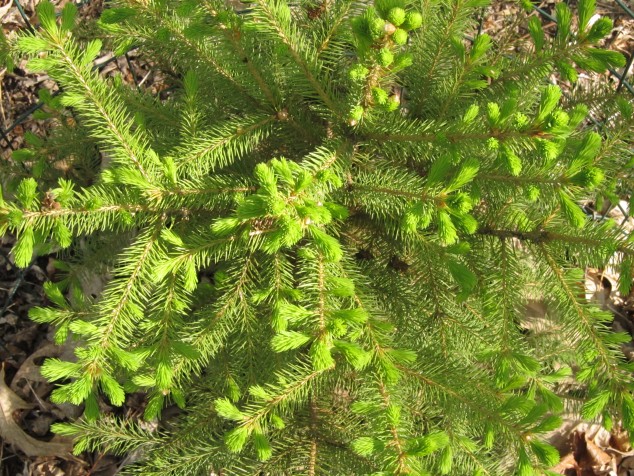
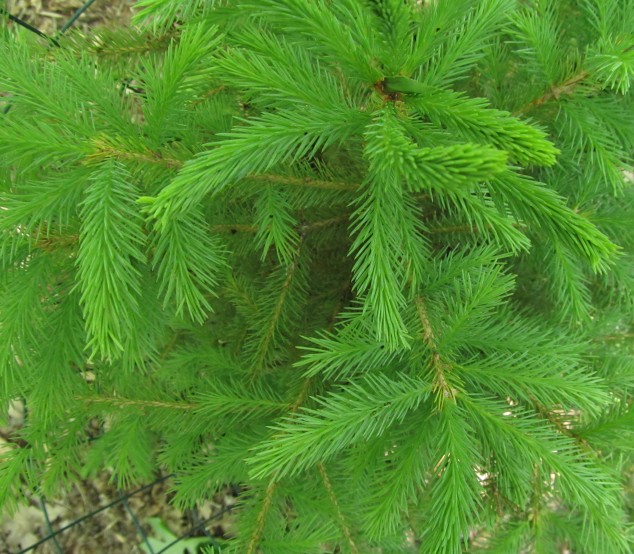
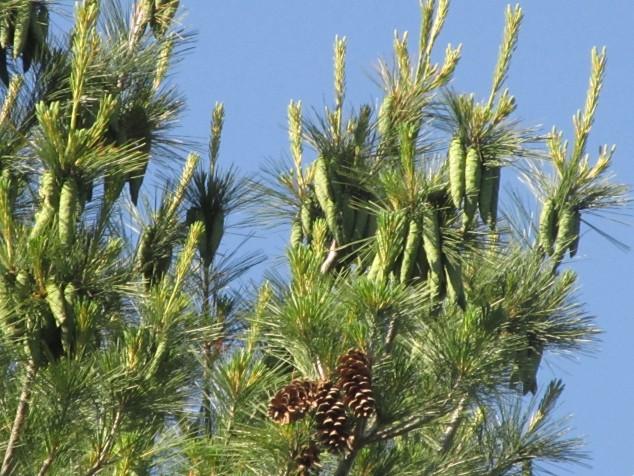
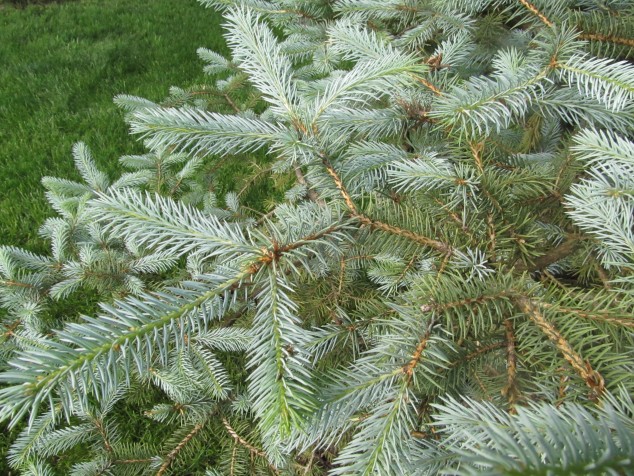 The new growth on pines, spruces, and firs is called candles–a new flexible stem and developing bundles of needles. The upright ‘candle’ look is epitomized on the pines as the new growth emerges upward from the old needles.
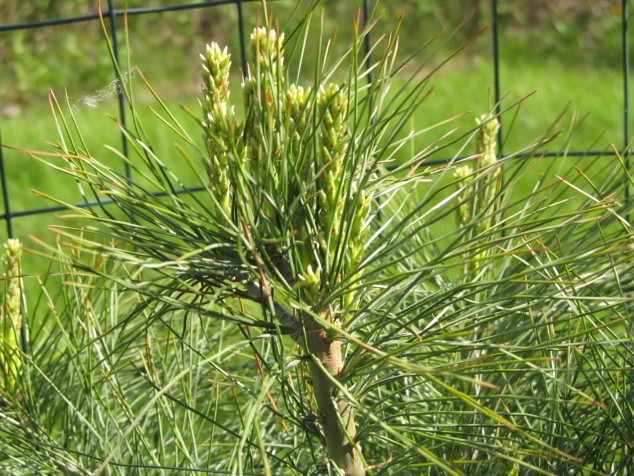
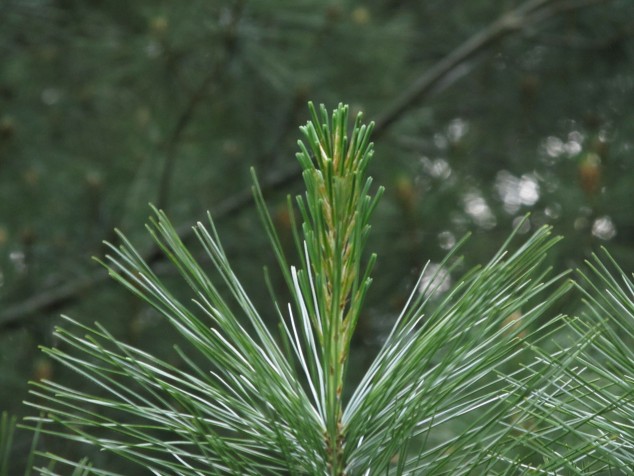 The young evergreens throw out their candles and grow with abandon, maturing a little more with each year’s growth. Sometimes it seems to go exceedingly slow as only inches are added with a whole 365 days of life. But the growth really encompasses more than the new candle of needles. After the new growth matures and hardens off in the summer, it will develop terminal buds that remain dormant until next year’s spring flush of growth. The trunk and branches will increase in size with another ring of growing cells. And the root system will continue to grow deeper and longer to provide nutrients to the developing tree. We see the candle growth, yet much of the important growth goes undetected.
And when the tree matures, cones develop that house the seeds and pollen. Some cones mature and release seeds the same year as formed; others, like the white pine, release seeds the second summer.
The young of a species grow their fresh new coats every year, becoming taller and more mature. Their work is growing! The older ones become more productive to the world around them, along with their new growth. And finally, the old, mature individuals work to populate a new generation, to provide a respite for others, and to make the living community a good place to dwell–and still, they send up new shoots of growth!
New growth looks good on all of us–what is your candle?