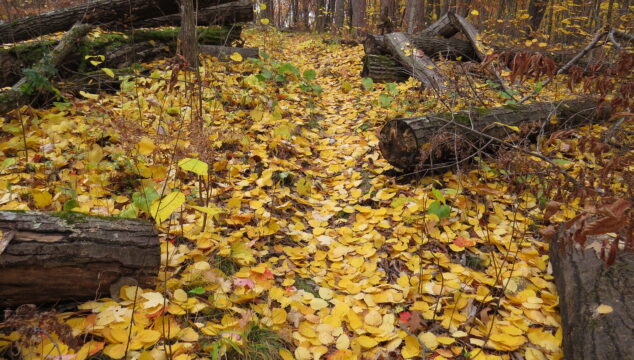
Come walk with me in the peak Autumn beauty of the Northwoods. To say that I love this time of year is an understatement. Most everyone can appreciate the colorful falling leaves---it reveals the 'true self' of a tree when its leaves are no longer producing chlorophyll. Their true colors are revealed, and there is something simple … [Read More...]
A Change in Perspective
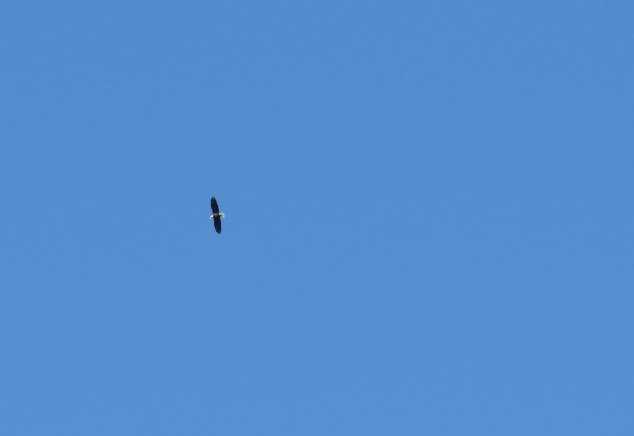
What if we saw our world from the perspective of a bald eagle soaring high above the land? We would definitely see the ‘bigger picture.’ We would also want the eagle’s excellent vision so everything wouldn’t be a blur. I saw a different perspective of our place on Sunday when I was on the roof painting the chimney. We live on a bluff of the Sauk River, though we usually can’t see the river because of the leaves and trees. But from the roof I could see the River widening into the Chain of Lakes and cloaked in Autumn finery.
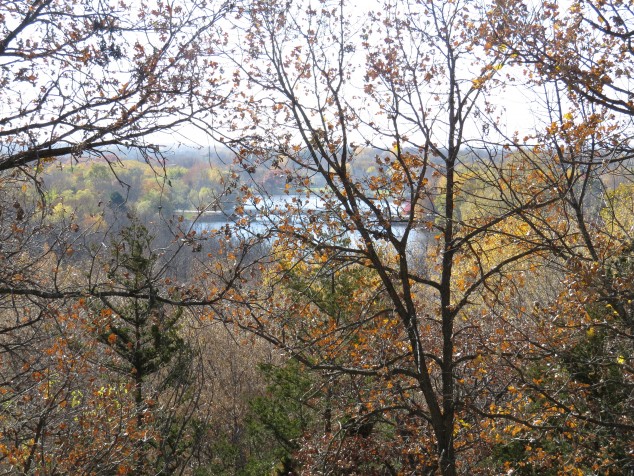
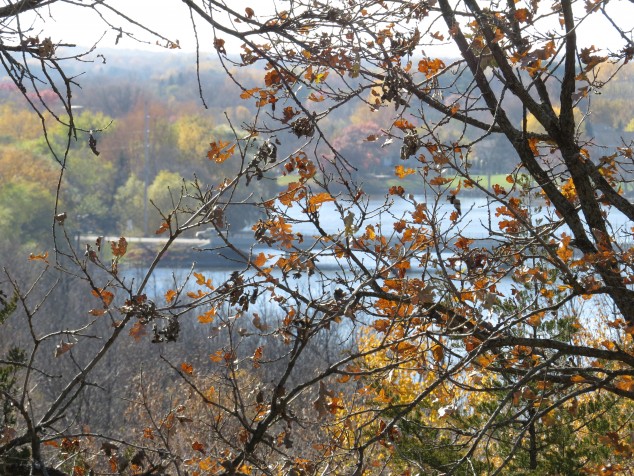
It was fun to see the woods from the one story roof of our house. The curtain of maple leaves had dropped from the nearest trees, and I could see some of the colorful, stand-out beauties that are usually lost in the forest of green. I’m glad they have a season to be seen and awed over.
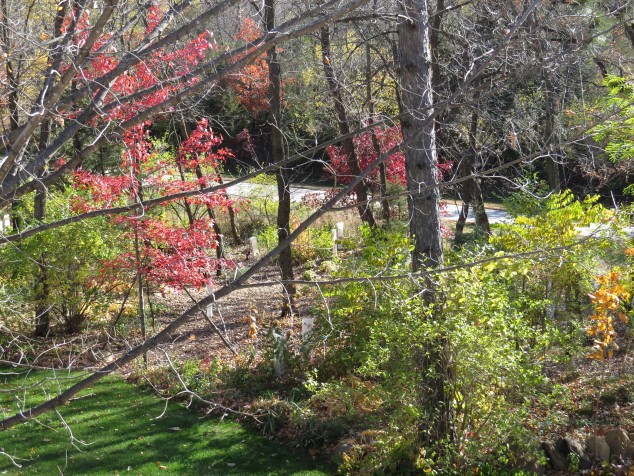
My rooftop view displayed the amazing amount of progress we have made in our war on buckthorn. What used to be a dense, homogeneous wall of green with mature oaks and cedars rising above it, is now a real woods with diverse plant life and paths to enjoy it.
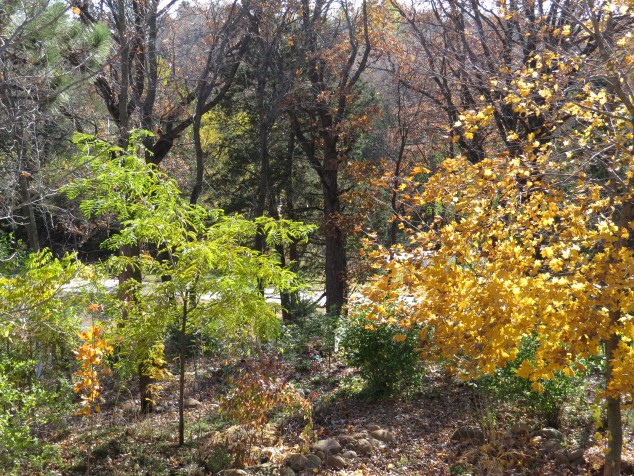
But through the boldly branched oaks, I could see a patch of bright green–an area of buckthorn seedlings that had grown to four feet tall–and I made a mental note about that being our next place to work.
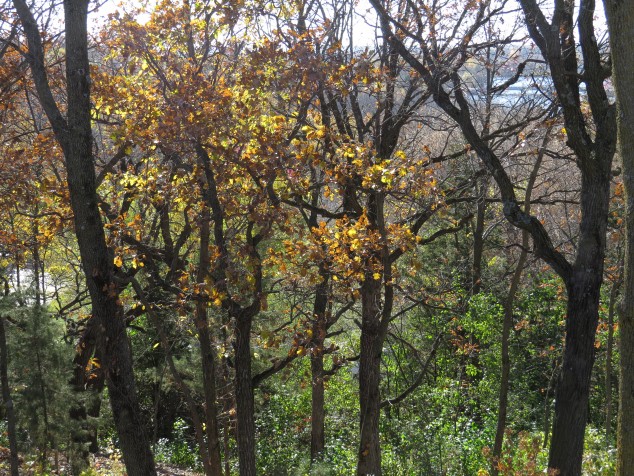
The eight foot tall Nannyberry Viburnum tree, splendid in orange and the focal point from the ground, looked small and insignificant from the rooftop. The magnificent oaks and the distant River captured my eye and attention.
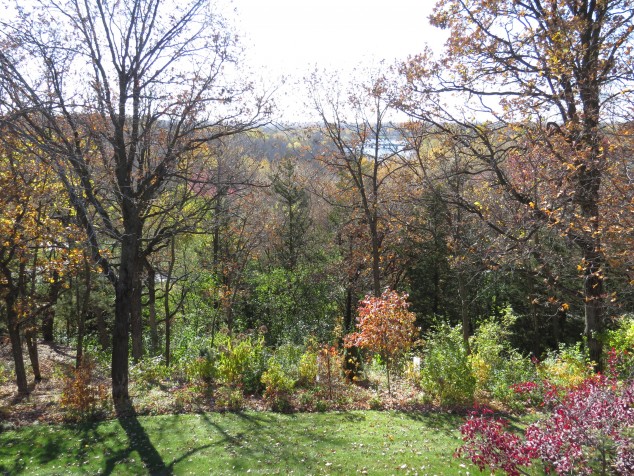
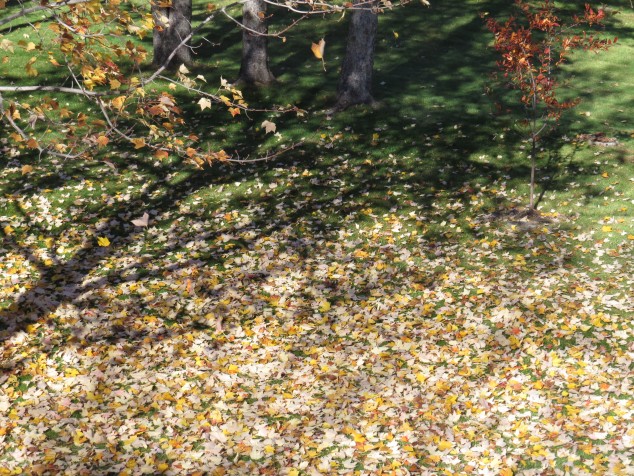
On the other side of the house, maple leaves were falling like rain. The day before, we had raked huge piles of yellow leaves and mowed and mulched to a carpet of green.
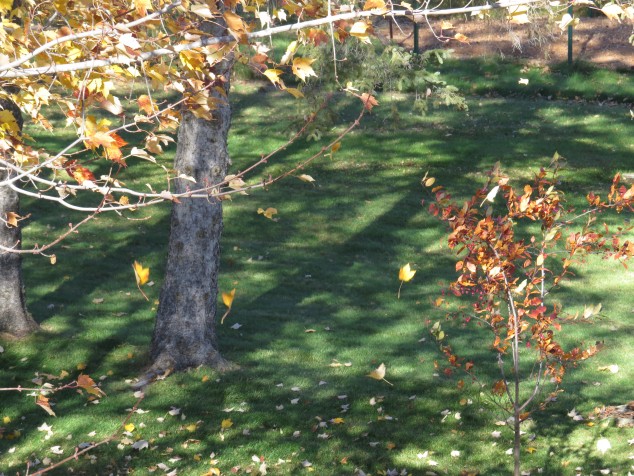
And when the last leaves drop, we will have another day of the same.
We tend to see our lives from one perspective–from our two feet on the ground, historical, corrected vision. It’s only natural. But what would it look like from an eagle’s eye? What would your life look like from the rooftop? Do you see the progress you’ve made? Do you make a note of where you need to do some work? Or are the leaves and the trees getting in the way of the beauty and potential that lies beyond sight? Is the daily, repetitive work clouding the vision of your future? You don’t have to get on the roof to see your life in a different way–just let Nature change your perspective!
Bobber or No Bobber
I’m not a fisherman. But the handful of times that I have tried fishing, I liked having a bobber on my line. It is a good Indicator of Success for one who does not have a ‘feel’ for having a fish biting on the bait. Bobber going under the water equals a fish on the line. Set the hook and you have a fish. It makes fishing so much easier! But with the exception of one long ago fishing experience at a Varner Brothers farm pond in the great state of Missouri, when the fish were literally jumping on the hooks, I don’t even remember catching a fish–bobber or no bobber. But I still like the idea of an indicator, a marker, a helper when it comes to fishing–or anything else, for that matter.
We stopped at Warner Lake County Park this past weekend on our way back from Lake Maria State Park. It was our first time there, and we wanted to explore a bit. We parked at the boat dock, and the first thing I saw when I walked down to the lake was this:
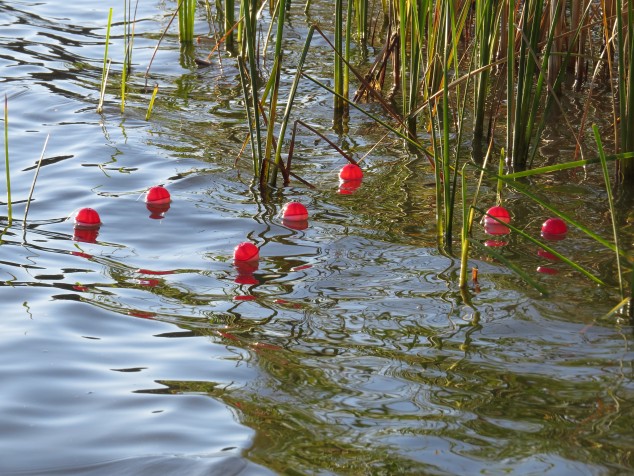
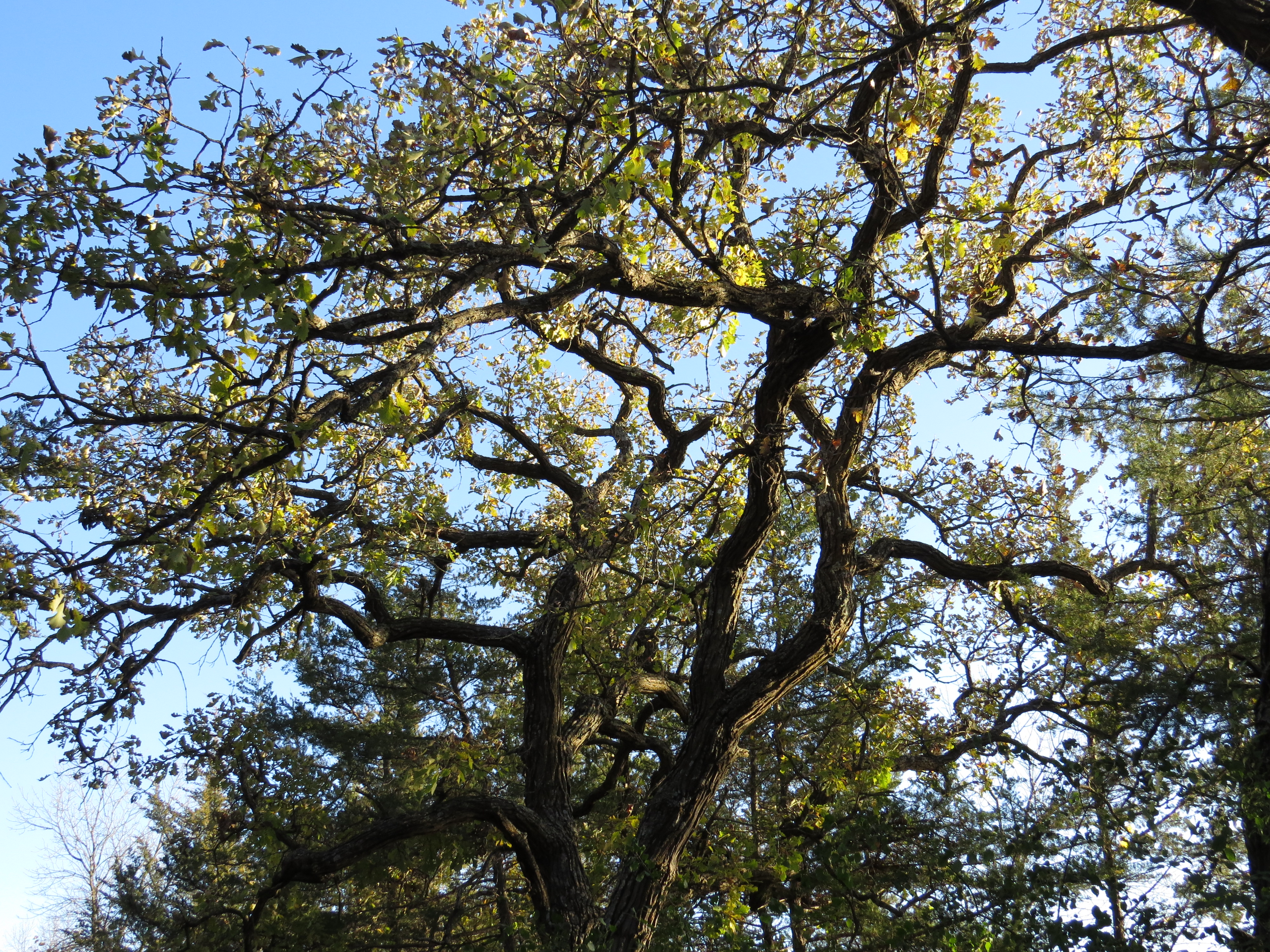
Bobbers floating in the cattails–an indicator of hooks stuck not in a fish, but in the sticks and weeds! How many foiled fishing experiences had happened here?! I left the two true fisherman in my family at the boat dock to catch a fish or lose a lure as I walked along a path in the woods to another part of the park. An interesting mix of large cedars and oaks grew between the trail and the lake shore.
At the other side of the park, there was a fishing dock, picnic pavilion, playground, and swimming beach. The clearing had room for volleyball and running games. Tracks in the dirt and paths in the grass indicated it was a popular place for bike riding. Hiking paths disappeared into the woods. It was a charming place. Two boys and their dad fished off the dock, and the younger, bespectacled boy had a fish story of catching a large northern pike that fought like crazy. Such was the tiring fight that the young fellow had given up on the fishing and was happy to tell his fish story to passersby.
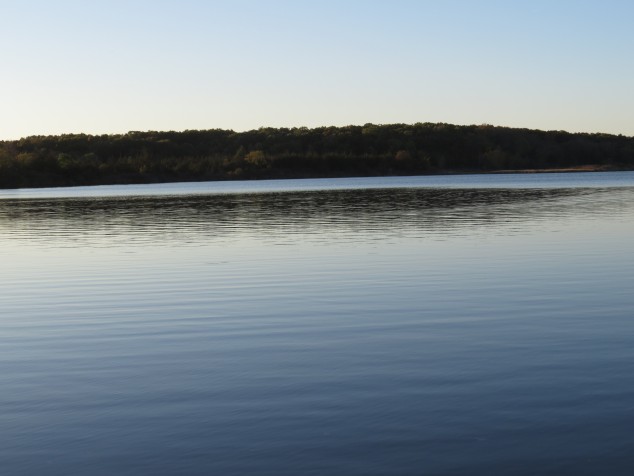
Evening announced its arrival with a chill in the air. The lake was calming down. We saw a lone kayaker out on the water practicing Eskimo rolls. Again and again he would roll over, going under the clear water and righting himself. Practicing. Being prepared.
The setting sun then lit up the far shoreline, igniting the autumn leaves in a blaze of color.
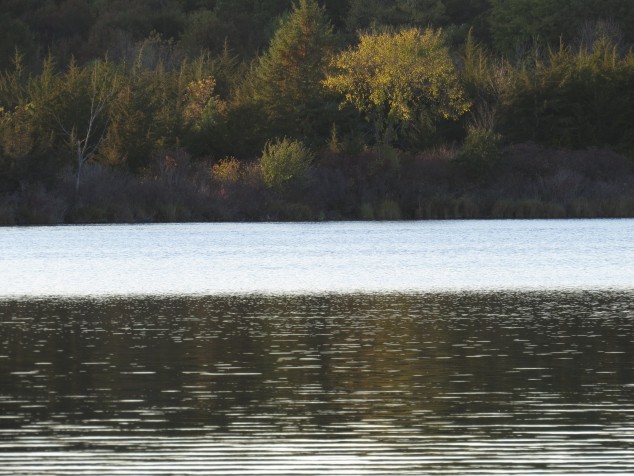
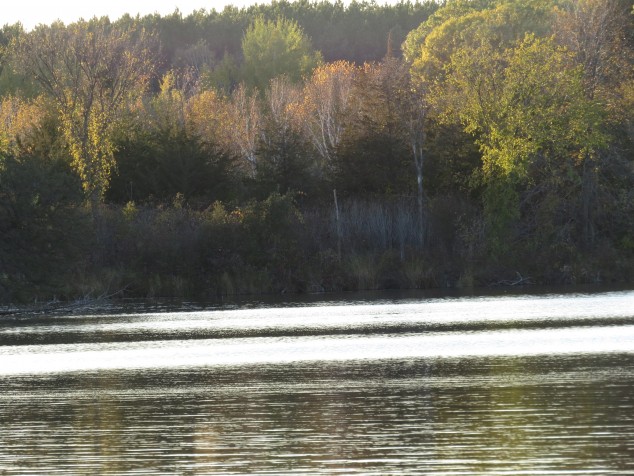
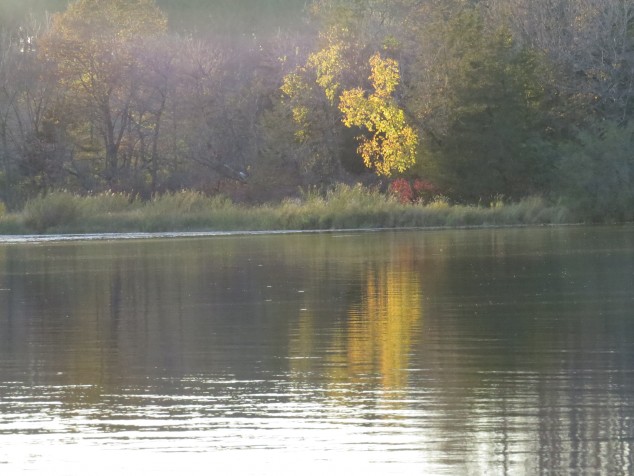
This small park just off the interstate highway was a jewel of Nature–a perfect spot for the interaction of people and the elements of Nature.
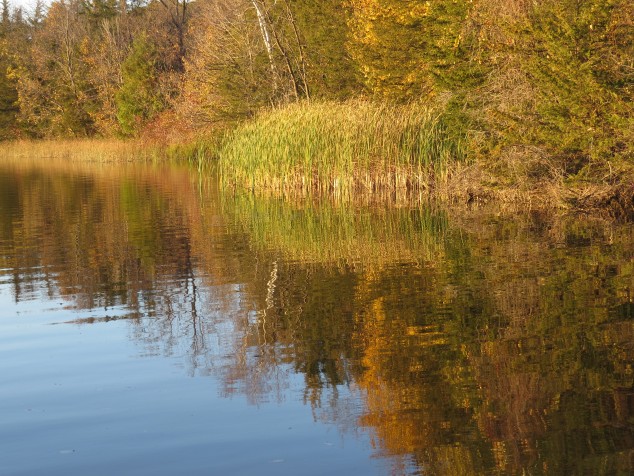
When we are surrounded by Nature and our senses are on high alert–in a good way–we are changed. Our eyes can scarcely take in all the beauty of the autumn trees, the smell of cedar trees and fallen leaves pheromonally entices us to stay and explore, the soft lapping of the water on the sand and the quaking leaves on the trees hone our hearing, and the touch of wind, water, or scaly fish makes us happy to be alive. It takes practice to let the rest of our busy worlds go for a while, but the practice is relatively simple–just go to Nature. And Nature takes it from there. Being in Nature gives us an opportunity to ponder what the Indicators are in our lives. It changes our very physiology–in a good way–just by merely coexisting. It gifts us with a fish, a good fish story, or patience. So whether your bobber indicates a great catch or a snag in the sticks and weeds, practice being in Nature–it will prepare your soul for the work of your life.
The Trees Were Glowing
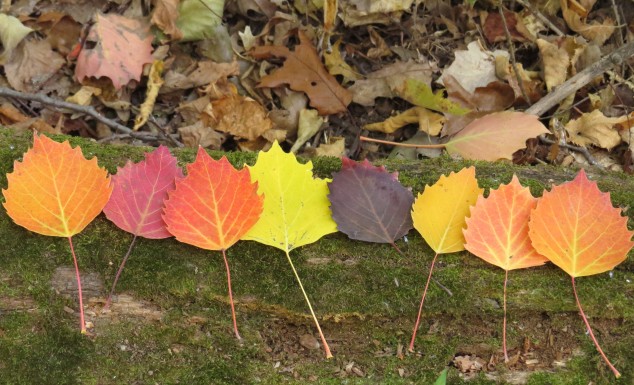
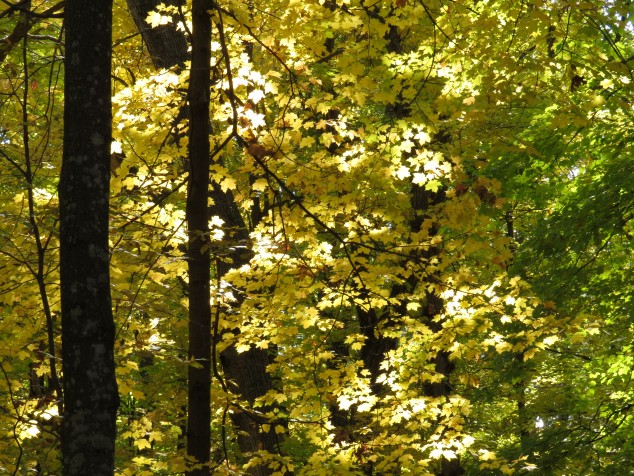
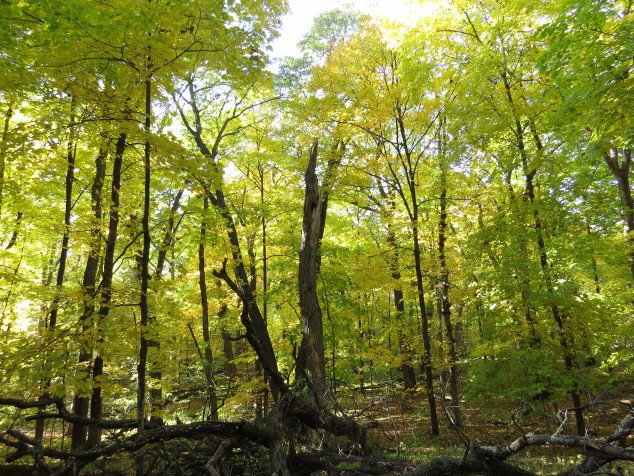
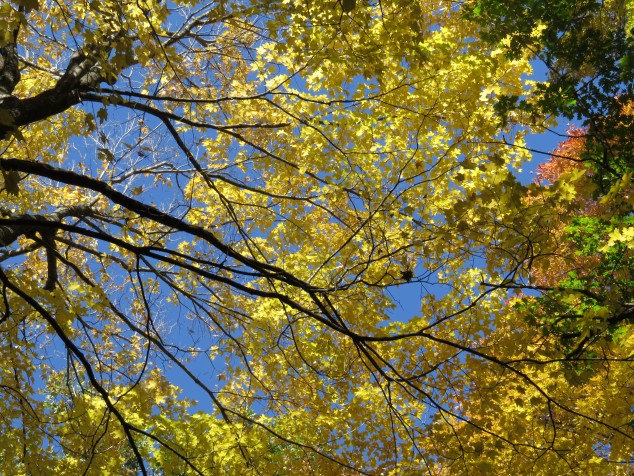
The trees were glowing on our recent hike through Lake Maria State Park, a 1500 acre park of rolling terrain, old-growth forests, small lakes, and woodland marshes. Chris gathered a beautiful array of Bigtooth aspen leaves that carpeted the trail near the sunlit edges of the forest. The huge, old maple trees that elevated this woods to forest status had turned a brilliant golden color and shimmered in the autumn sunlight, causing an ethereal glow of the shaded trail.
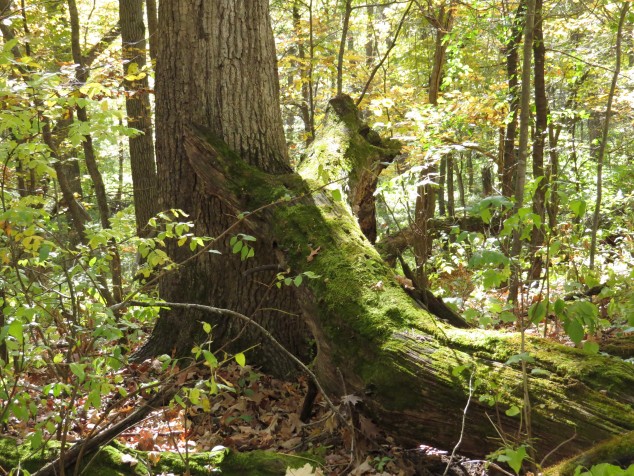
The immenseness of the trees was brought to ground and sight with those that had fallen. They must have made earthquake rumbles and sharp cracks of breaking wood as they fell to the forest floor, crushing the young trees that grew along the axis of their path. Some fallen giants still had leaves from this year’s growth; others were decayed and covered with moss.
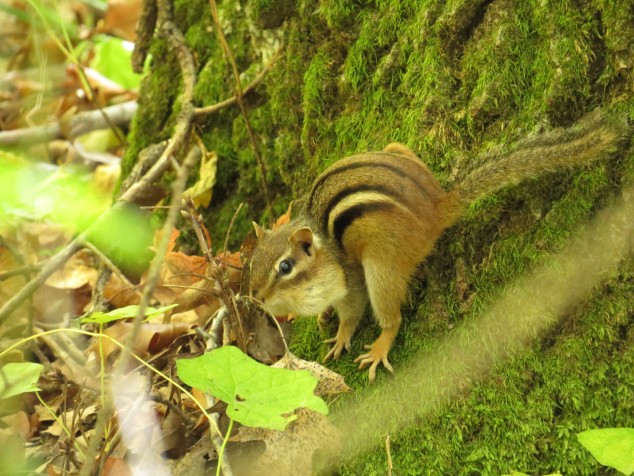
We spotted a little acorn bandit, cheeks full of plunder, backed into an awkward frozen position of potential fight or flight.
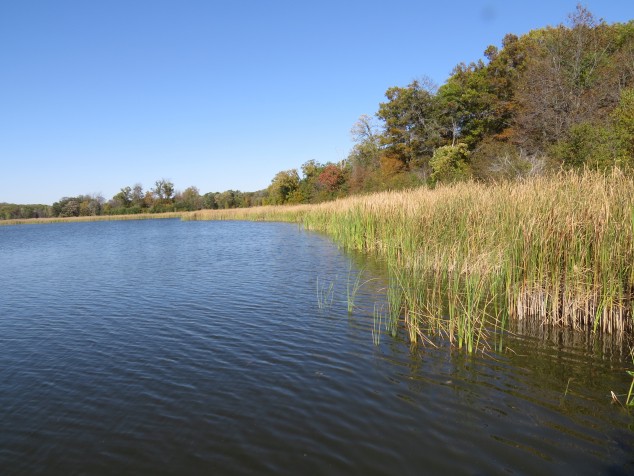
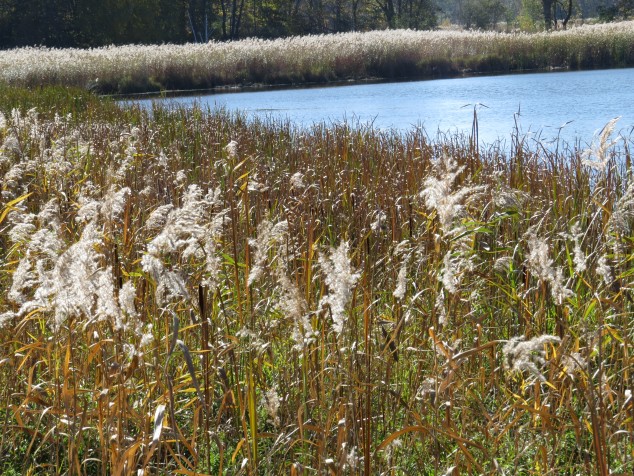
Bjorkland Lake reflected the blue of the sky and bore a circular wreath of cattails and common reed grass. It was quiet and empty of birds–perhaps they were hiding in the reed grass, but it seemed they were missing out on a glorious swimming day!
The quivering golden aspen leaves were singing the last refrains of their seasonal song, dropping note by note to the ground below.
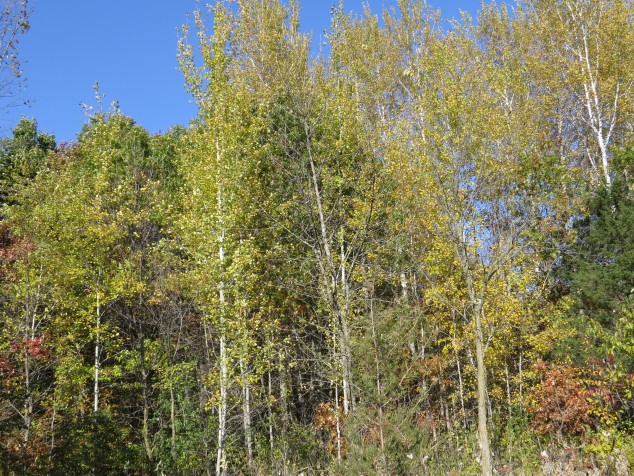
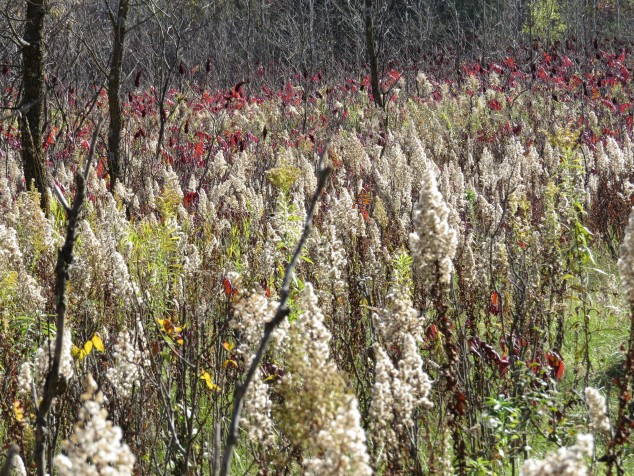
Their audience of sumac, goldenrod, and gone-to-seed asters swayed with the song of the breeze, and for some reason, it reminded me of Christmas.
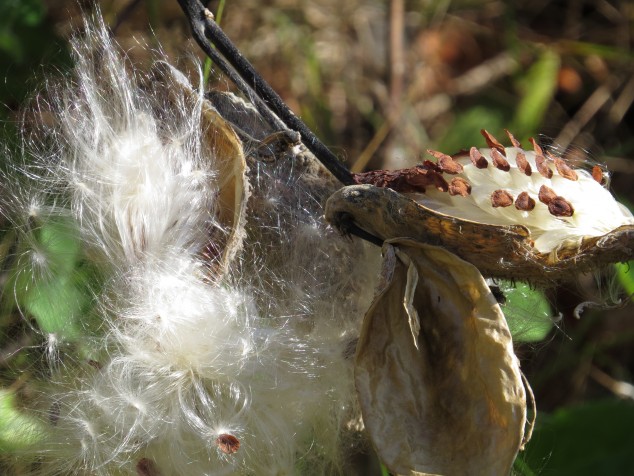
Neatly packed milkweed seeds lay exposed to the wind in a dried pod that had cracked open, while the fluffy stragglers from another pod clung to the rough casing.
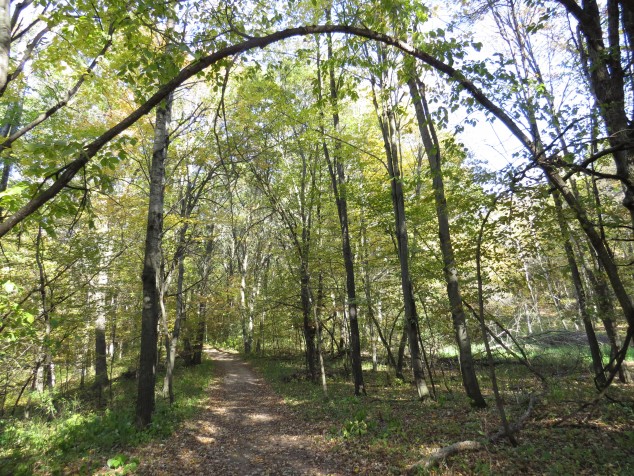
A living arch invited us into the chapel of gilded maples, and we hushed as we walked the hallowed ground beneath their glory.
We drove to another area of the park, passing through a low wetland area where a yellow sign warned of ‘Rare Turtle Crossing.’ The Park is home to Blanding’s turtles, a threatened species in Minnesota. I spotted a turtle on a log in the tree-reflected lake, but this sunbather was a common painted turtle.
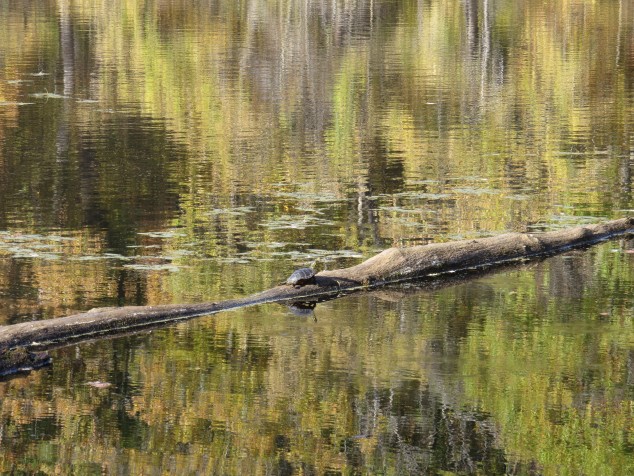
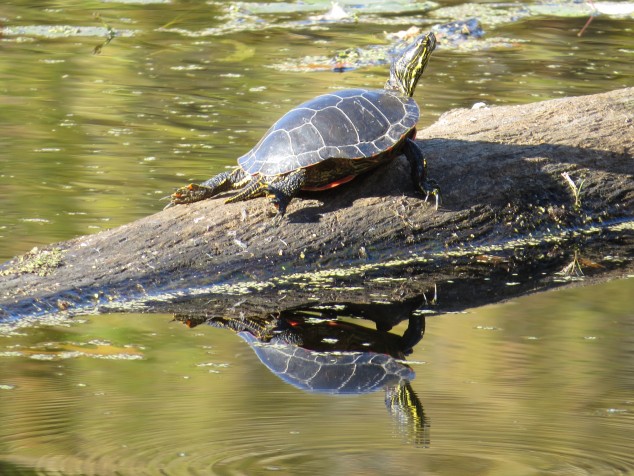
A common painted turtle living in an extraordinary autumn-painted world.
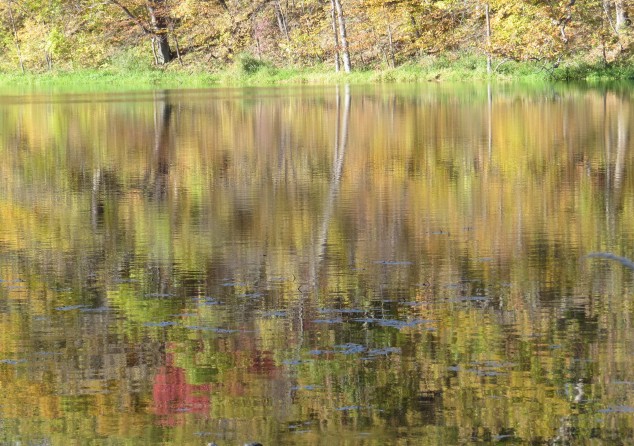
So often we take our world for granted, and yet, every single day we walk on holy ground. We want the hugeness and history of what came before us to stretch out in front of us for our children’s children. We are small, common creatures living in an extraordinary domain. In your tree of life, what song are you singing to the world?
Let Your Cares Fall Away
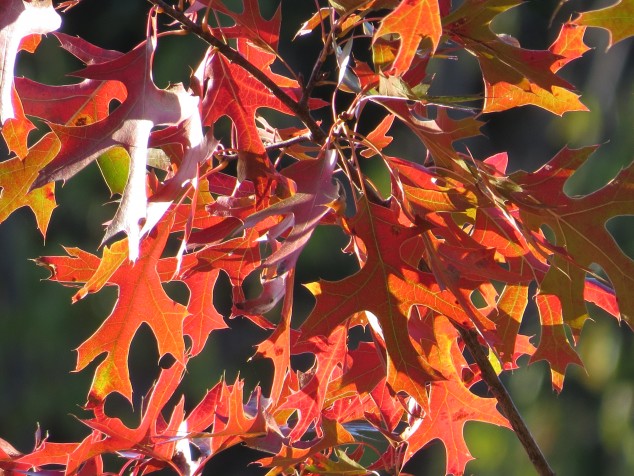
Climb the mountains and get their good tidings. Nature’s peace will flow into you as sunshine flows into the trees. The winds will blow their own freshness into you, and the storms their energy, while care will drop away from you like the leaves of Autumn. –John Muir
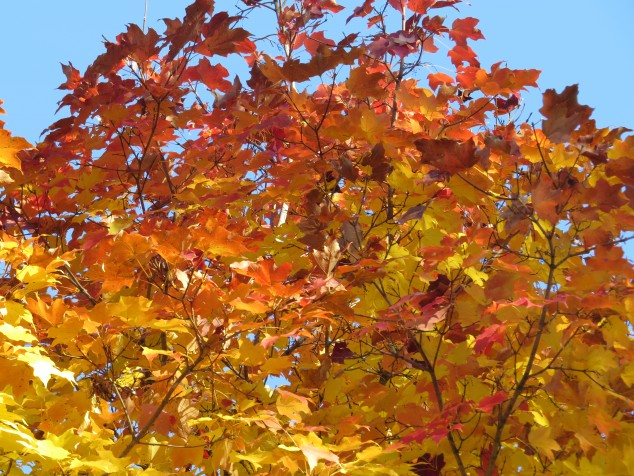
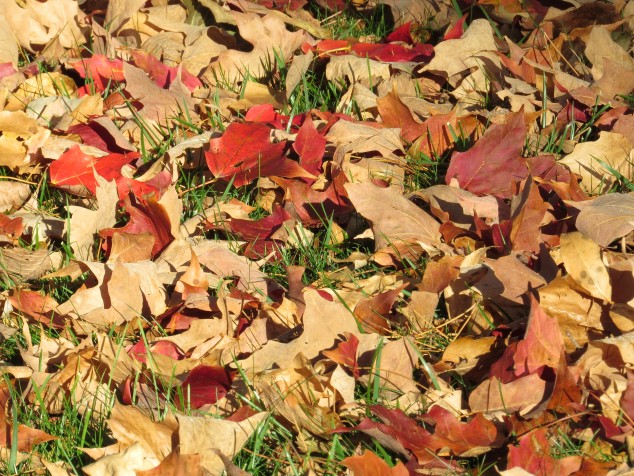
No matter where you are this weekend, take some time to spend outside, gather up the glories of Nature, and let your cares fall away!
Getting Rid of the Old
Autumn leaves are brilliant, colorful, showy, breathtaking, vacation-worthy, and postcard picture perfect….
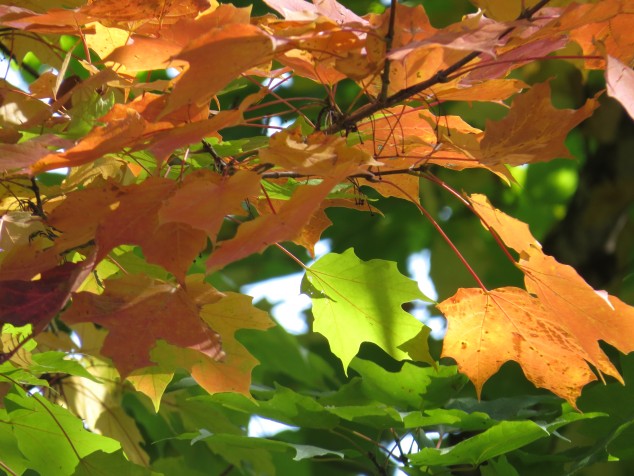
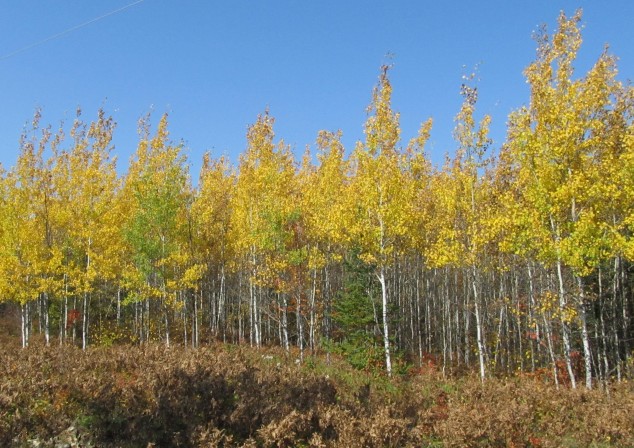
photo by Aaron Brake
until they fall off the tree. Then they become crinkly, earthy-smelling piles of fun, work, mulch, and compost!
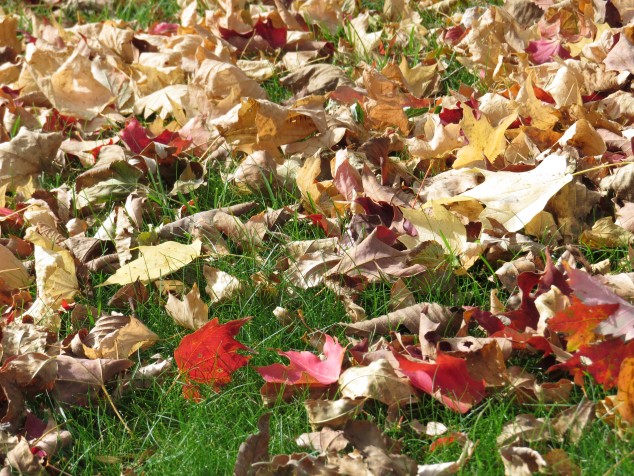
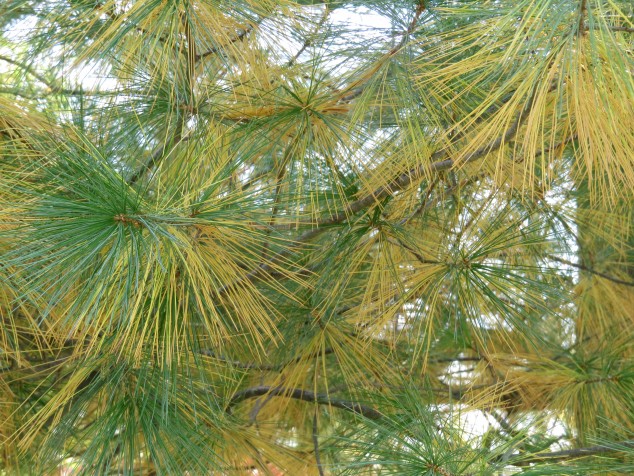
We all know that deciduous trees lose their leaves–the hallmark of fall. But did you know that evergreen conifers lose their leaves, too? Their leaves are generally called needles, and like deciduous trees, new growth occurs every spring. Unlike the deciduous trees who shed all their leaves each fall, the evergreens keep a number of years’ growth throughout the year. But they don’t keep them all. Evergreen foliage lives for one to seven years, depending on the species. As the new growth emerges, the older growth becomes shaded and produces less food for the tree. White pines keep three years’ growth in the summer, drop the inner needles in the fall, and keep two years’ growth in the winter. The inner needles turn bright yellow quite suddenly and remain attached for seven to ten days, depending on the weather.
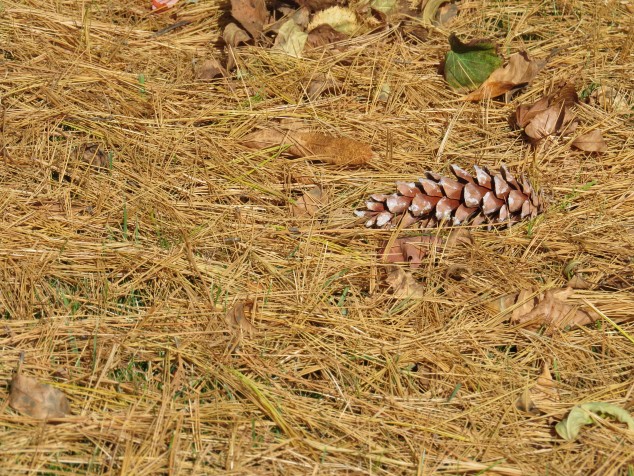
And then they fall to the ground, carpeting the grass with a sappy layer of pine needles decorated with an occasional cone.
The inner scale-like leaves of Arborvitae (White cedar) turn brown and remain on the tree longer than the white pine needles, but they too will eventually fall off to mulch the ground below.
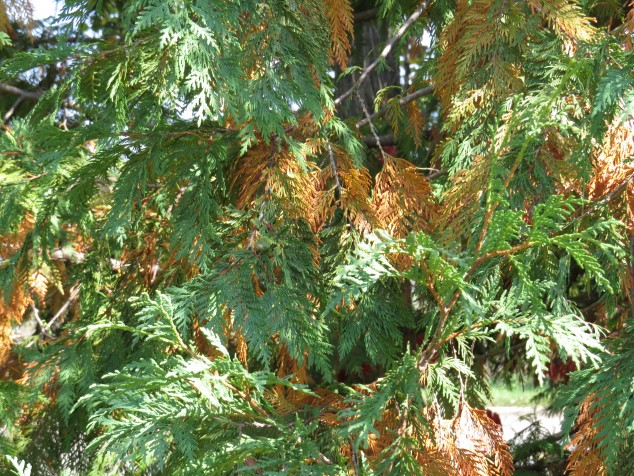
Red pines also exhibit seasonal needle drop, though not as noticeably as white pines or arborvitae.
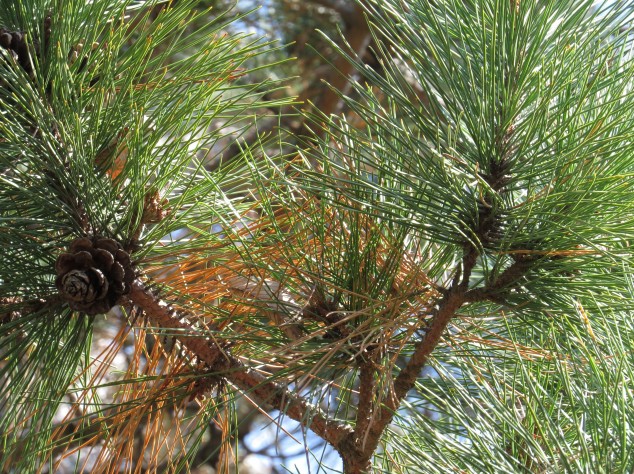
Needle drop on spruces and firs is even less noticeable, for they maintain the largest number of years’ growth. On the opposite end of the spectrum are deciduous conifers that drop their needles every year–larch, bald cypress, and dawn redwood.
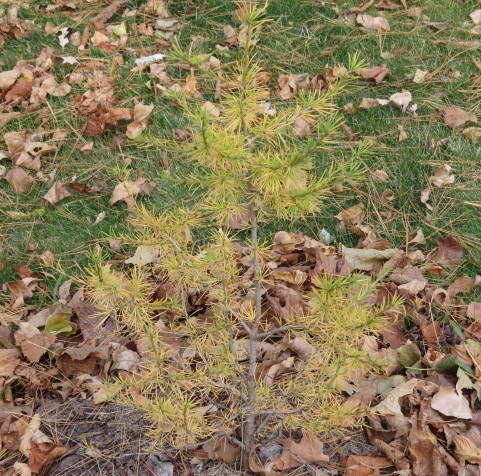
The larch
The death and deposition of the oldest, innermost needles of evergreen trees reflects the normal growth cycle of a healthy tree. The white pine in our yard looks lighter and healthier now that it has shed its yellow needles. It will be a beautiful beacon this winter in a landscape of white as it prepares itself for next year’s spring growth.
Like the evergreens’ inner needle drop, I think it’s important for humans to periodically get rid of ‘the old.’ Maybe getting ready for winter helps us do that–cleaning and tossing out junk that has accumulated from the carefree summer so that everything fits into the garage, shed, or closet. Making sure things are ready and fit for winter use. Cleaning up leaves and cutting back perennials so the trees and plants will be ready for new growth after their long winter hiatus. Perhaps we also shed some ‘old thoughts’ in the process that no longer feed us, making us lighter and healthier as we head into the winter and into our own preparation for a season of new growth.
Battle of the Buckthorn
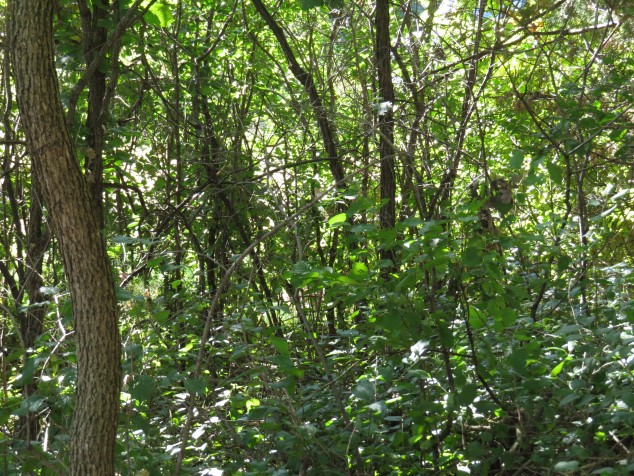
The War on Buckthorn at the Brake woods continued with a recent battle in the south corner. Just a warning–these are not pretty pictures! Armed with a chain saw, hand saw, loppers, Round-up, and gloves, Chris and I went to work. He’s the chainsaw man, I’m the Round-up stump painter, and we both load the pickup bed with the piles of brush that need to be hauled away. Of course, I was so excited about attacking this patch of undesirables that I forgot to take a ‘before’ picture!
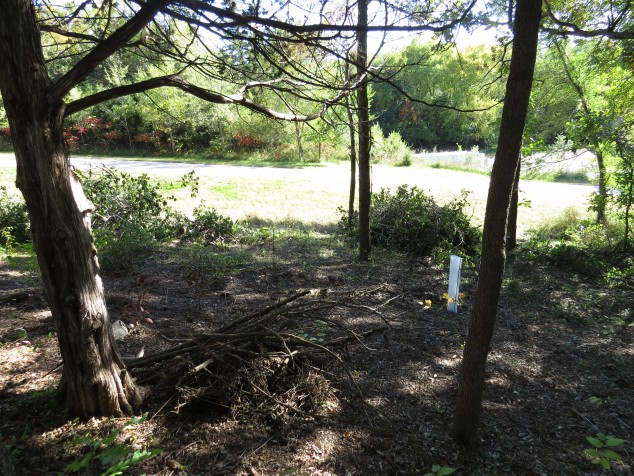 But this is what it looks like right next to the cleared area, which will give you an idea of what it looked like ‘before.’
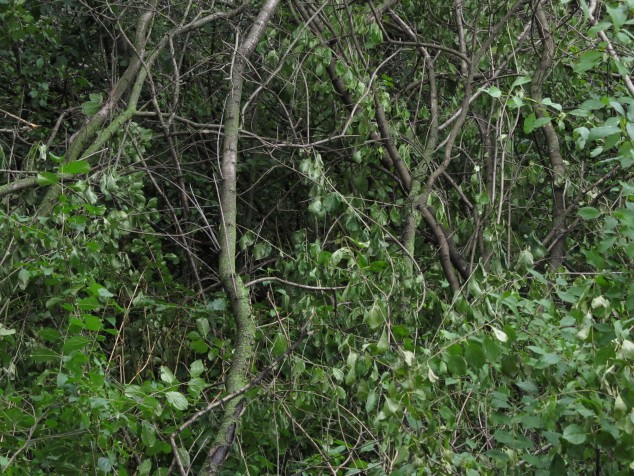
And this is another section of the woods where the buckthorn was cut down but not yet removed. It is dense, prickly, nasty, invasive stuff.
Every square foot of our woods looked like that when we moved to our little plot of land above the river. Five years of battles against the buckthorn, area by area, has made a huge difference in the way our woods look now. As the buckthorn came out, Chris planted new things. He mulched paths through the woods, planting trees, shrubs, ground covers and perennials along the way.
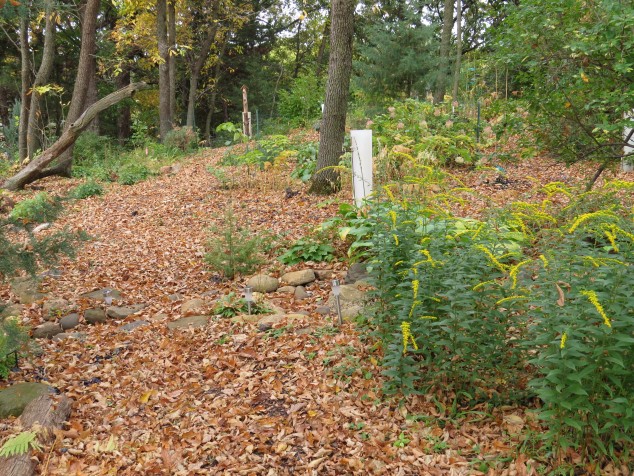
He built a winding dry stream bed of rocks that can be ‘turned on’ to be a babbling brook.
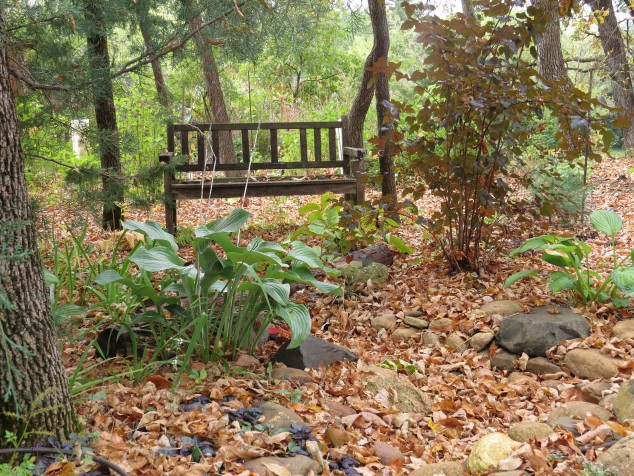
He planted a small grove of Hazelnut shrubs that he grew from seeds. American hazelnuts are native to this area as an understory shrub or small tree. The nuts are small with thick shells, are high in protein and vitamins, and are highly favored by squirrels, birds, and other wildlife. European hazelnuts–the kind you get at the store–are not hardy in this area.
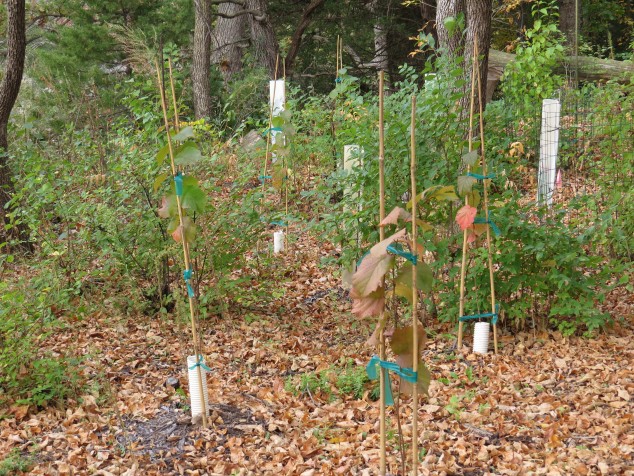
We left a fallen tree for interest and as a dividing line between the more cultivated area at the top of the hill and the ‘wilder’ planted hillside below. The white plastic cylinders protect oak seedlings from rabbits and deer.
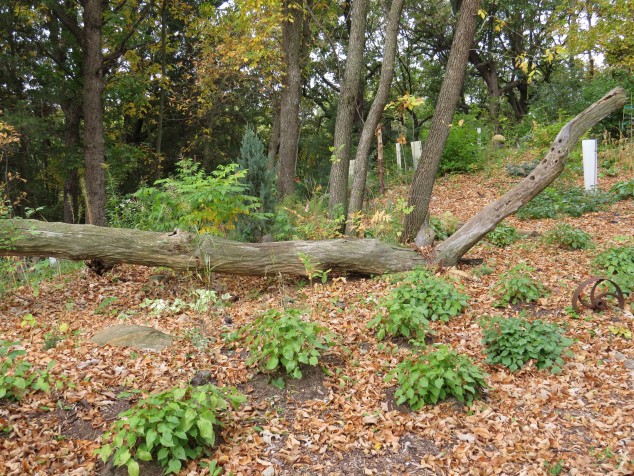
Low grow sumac helps prevent erosion on the sandy hillside. Cedars, oaks, and honeysuckle seed themselves and are free to grow without the suffocating buckthorn. Raspberries, gooseberries, and many woodland perennials, including Jack in the Pulpit, have reappeared in the cleared areas.
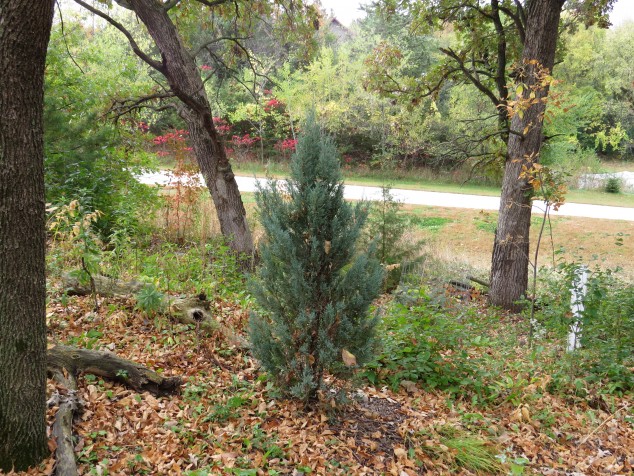 Tamba and I enjoy our daily strolls through the woods. Every day is different–new shoots, new flowers, areas of weeds to be tackled, or the first red leaf of fall. You can feel the vibrancy!
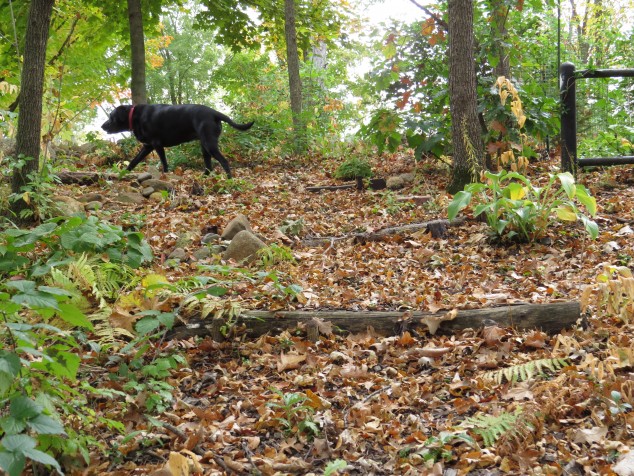 The restoration of our woods is an ongoing project. Getting rid of the mature buckthorn is just the beginning–pulling the seedlings that grow from the years of seed production is the part that really tries one’s patience. A cleared area can be covered with buckthorn shrubs four to five feet high in a year or two if diligence is not taken to pull the young seedlings. But it does get better after a number of years! Seeing the woods come alive again with native plants along with what Chris has planted, has been such a joy! We see the unfolding of life, the glory of flowers and fruit, and the colors and strengths of the seasons–not the snuffing out of life by the buckthorn.
This is a story of hard work, years of time, patience, and perseverance. It is a story of hope, new growth, restoration, and redemption. It is a story of enjoyment, peacefulness, beauty, and bounty. It is the story of love and life.
Gleanings from September
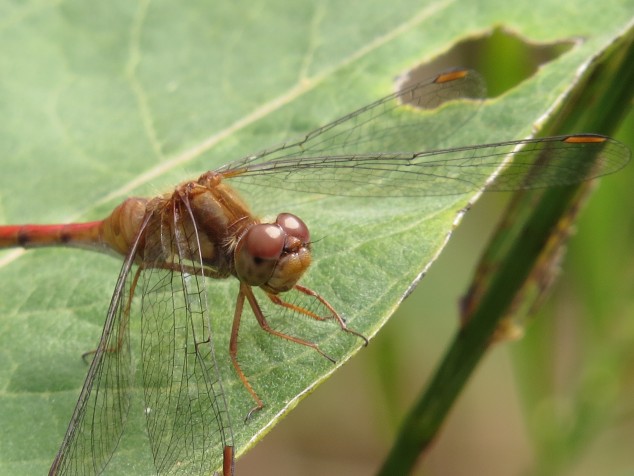
September has flown by it seems. These are the last weeks of summer and the introduction to fall. There is the scare of frost that pushes one to fling bed sheets over potted annuals and tender basil and tomato plants because we cannot bear to see their darkened, wilted leaves just yet. Later, we resign ourselves to its inevitability–but that is an October state of mind. We want to hang on to the warmth and jubilant growth and production of summer–even as we see the reverse process going on right before our eyes–the cooling, turning, falling, and wilting.
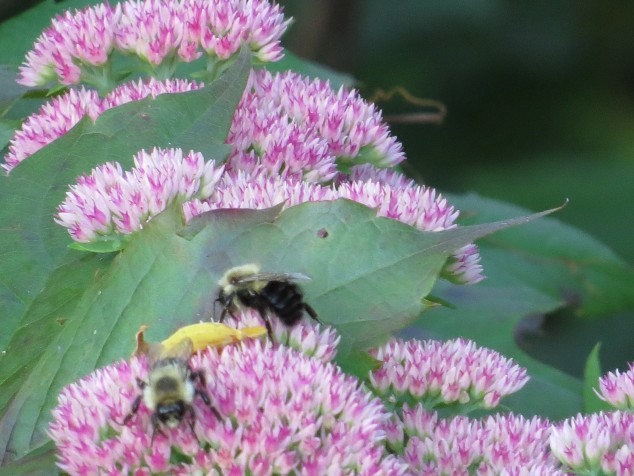
Bees still feed on sedum flowers, though not with the busy energy of playing children. They are placid and slow in the coolness.
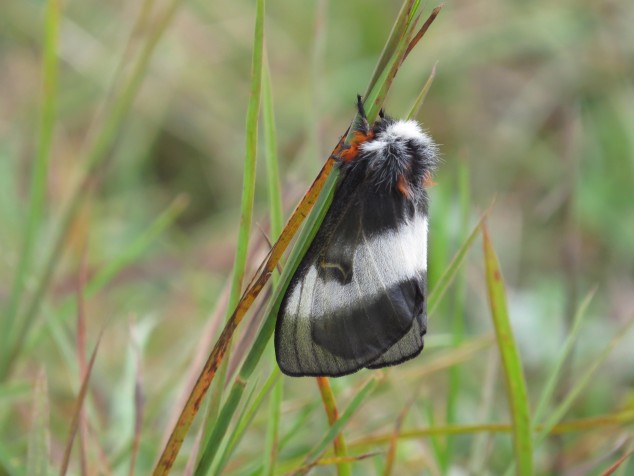
A Buck moth–so named because it emerges during the rutting season of whitetail bucks–clings to the prairie grass at St. John’s Arboretum. It looks as if it wears a warm fur coat to get it through its short, egg-laying Autumn life.
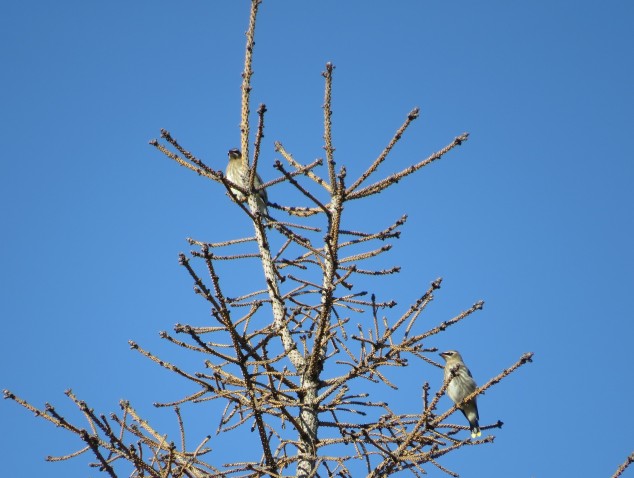
One afternoon as I walked out our driveway, I looked up at the top of a dead spruce tree. Birds perched like Christmas ornaments on its branches. Most of them flew away before I got a good look at them with the camera, but I discovered they were Cedar waxwings.
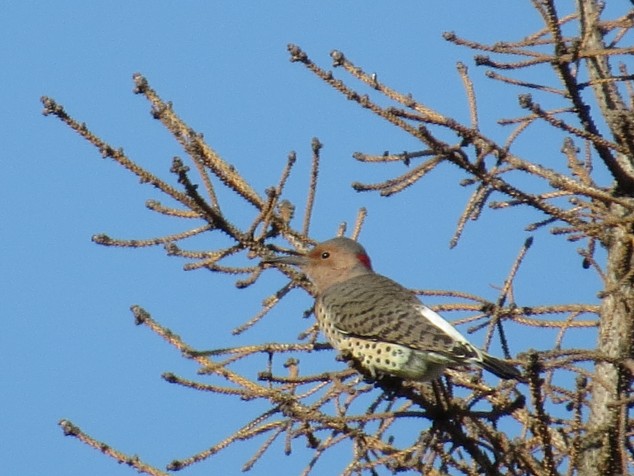
 Another visitor to the dead spruce was a Northern flicker, stout of body and bill with the red nape of its Woodpecker family. It’s one of the only woodpeckers to feed on the ground and to migrate from its northern areas.
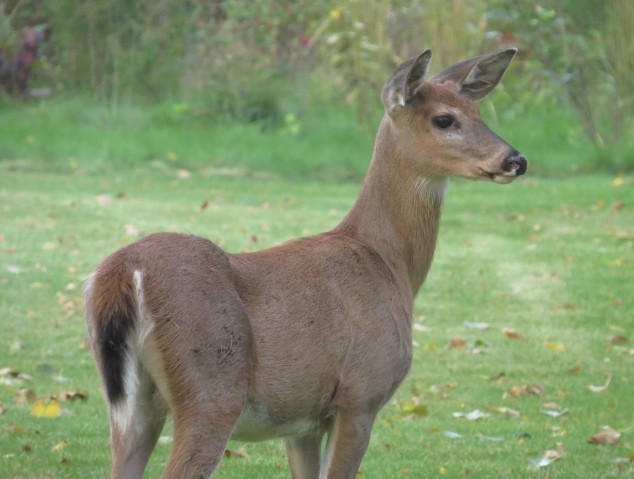
In September we saw some of our frequent yard visitors mature into young adulthood. The small, spotted, twin fawns now looked muscular with thick coats, and I had a feeling of sadness to think of them in the sight of a gun instead of my camera.
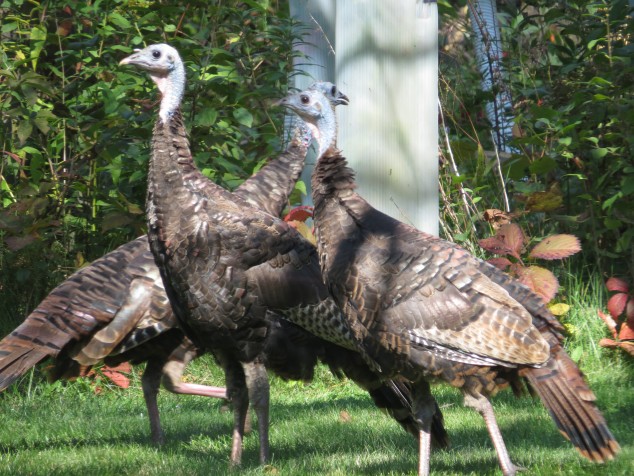
The young turkeys, once scurrying balls of feathers, were indistinguishable from the adult females who wrangled them around all summer. Their feathers shone in the sunlight with the diverse markings and rich copper, brown, and bronze colors of the adult bird.
I carried out an amphibian rescue from the deep egress window well on the northeast side of our house after our Black lab would run to it and peer over the edge at the critters who had inadvertently fallen into the abyss. Three Tiger salamanders, two Leopard frogs and a Partridge in a…..no, I mean a chubby, bumpy, brown toad.
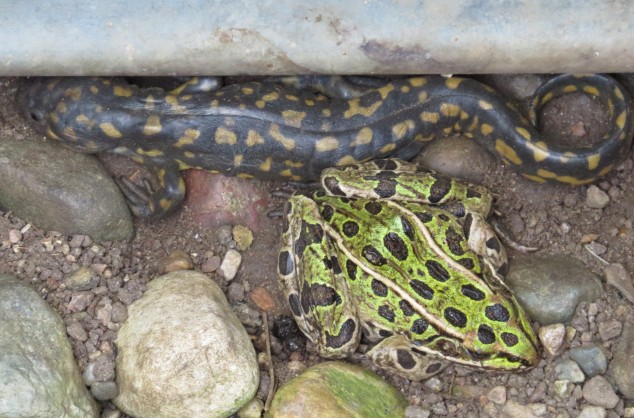
(This one is so shimmery and pretty!)
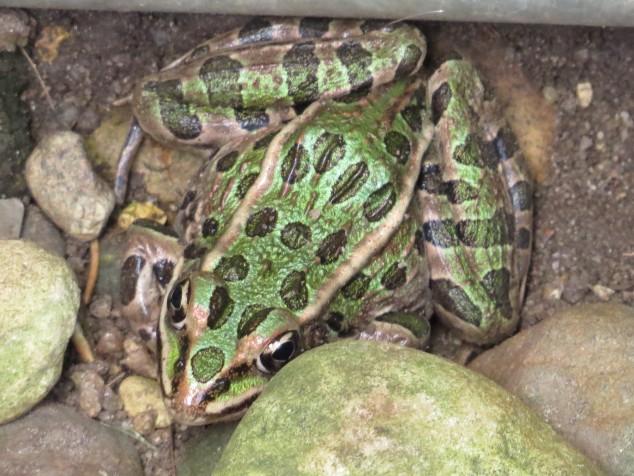
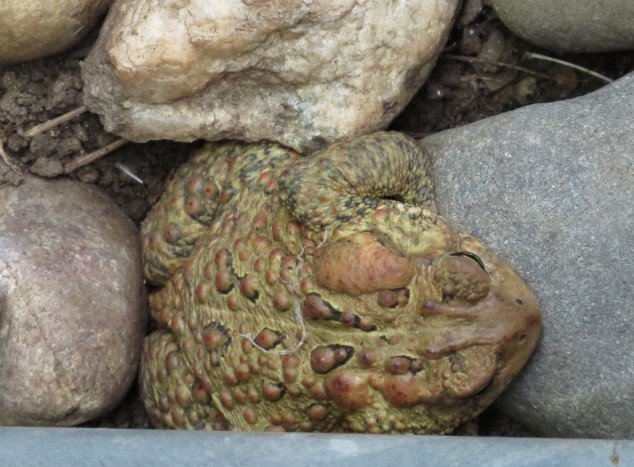
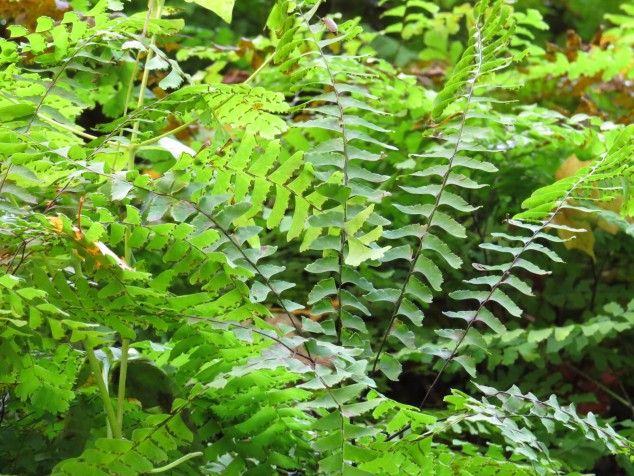
And finally, I wanted to show you my favorite fern–Northern Maidenhair–with a whorl of lighter green fronds floating on dark, wiry stems. They grow along the shady narrow road that climbs the bluff from the bank of the Mississippi River at Cassville, Wisconsin to the cemetery where Chris’ folks are buried. That’s the first place I remember seeing them. These grew where the woods and the wetlands merged at St. John’s Arboretum. My attempt to establish them at our place has met with disappointment, as our hilltop sandy soil drained away the moisture they require. But I’m not giving up yet–Chris has a project going that may be the solution to my problem….
It is human nature to not want to let go of the things in life we love or that give us pleasure. Summer is a pleasurable time in Minnesota, a time we do not take for granted. It is short and sweet, and we want to hold on to that sweetness. But the night temperatures fall into the thirties, the colorful, fallen leaves cover the green grass, the produce from the garden is mostly all harvested, and the denial of what’s coming is getting pried away by reality. We get out our warmer clothes that have been put aside, not even put away, and we start to make our mental list of things that need to be done before winter. We rescue what we can, and with loving appreciation we let go and give the other up to God. We move on to our October state of mind.
The Prairie and the Wetlands
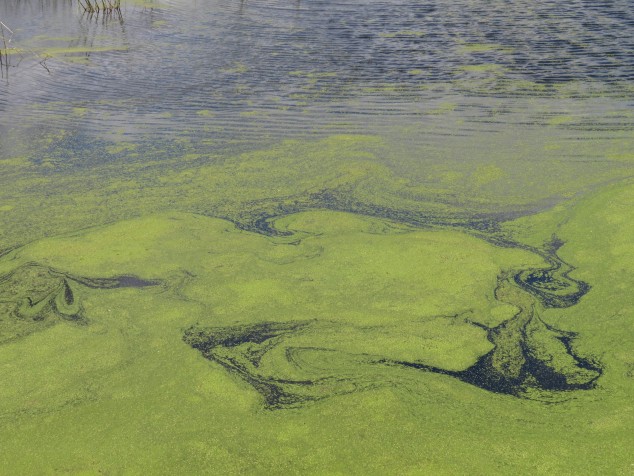
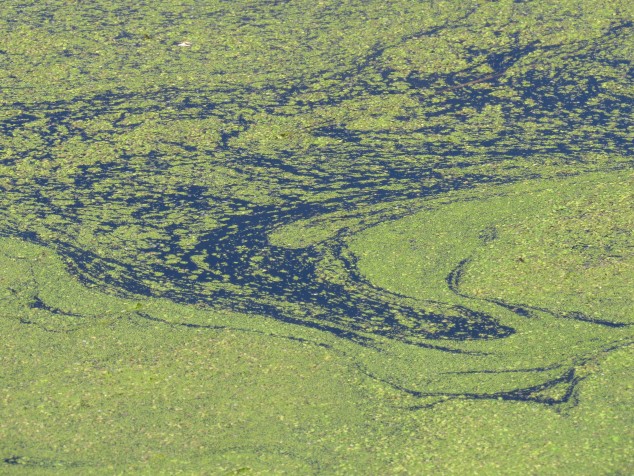
In a single short hike at St. John’s Arboretum, one encounters three distinct environments–the prairie, the wetlands, and the woodlands. My last post showcased the amazing fall colors of the woodland maple trees; this post will share a glimpse of the wetlands and prairie. The trail is called the Boardwalk Loop and has two stretches of floating boardwalks across the wetlands. I like the blues and greens of the Monet-looking artwork of duckweed medium by the artist Wind–probably with the assistance of Waterfowl!
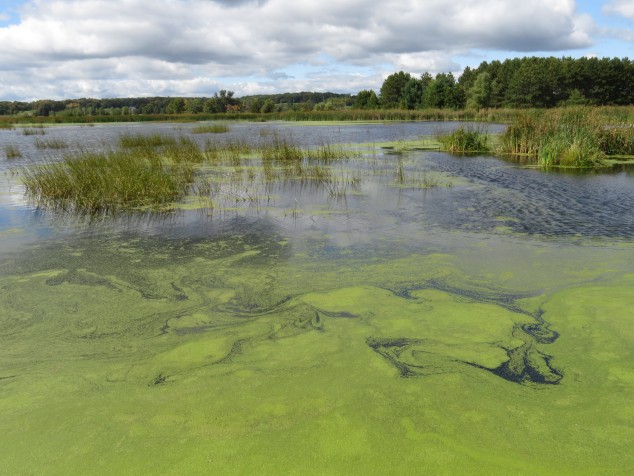
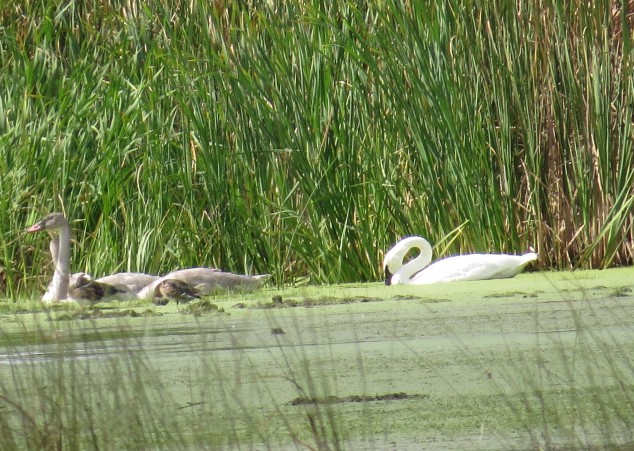
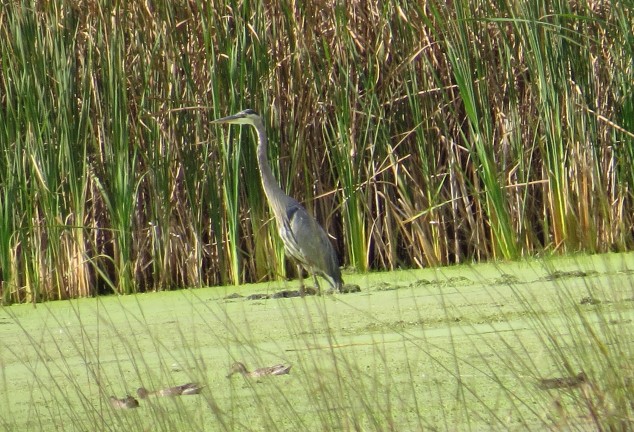
At the far edge of the open water, the bright white of a swan caught my attention. As I was trying to focus in on the swans, I also found a great blue heron standing amid the ducks and the duckweed.
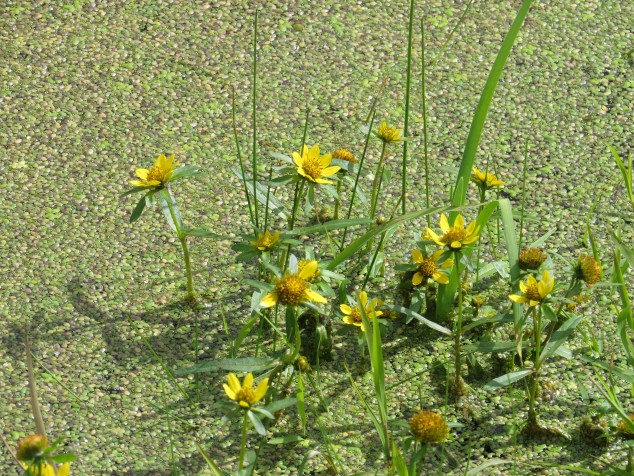
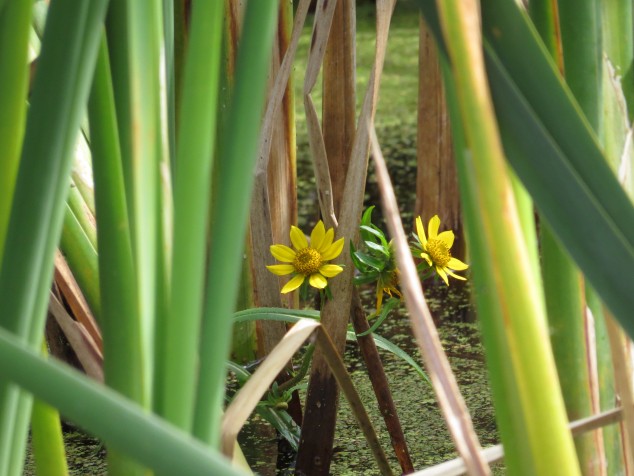
I was unable to identify this sunflower-looking swamp flower growing up through the duckweed and framed by cattails. What a picture of optimism! Sunshine yellow in a sea of green in the fall of the year and the center of attention among the overbearing cattails!
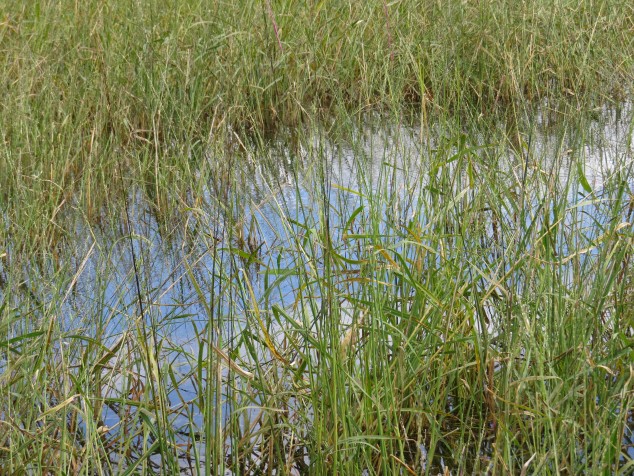
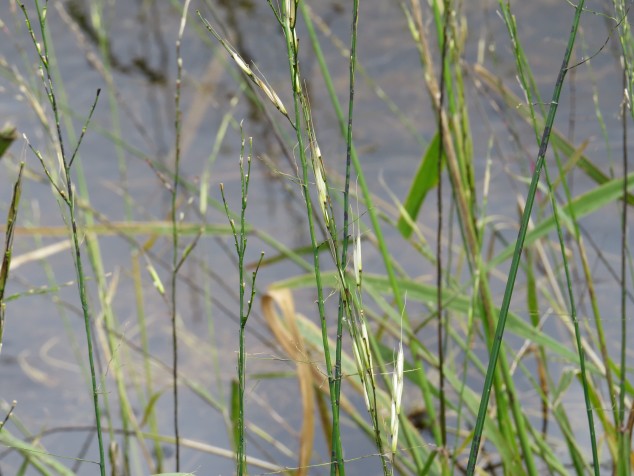
Farther up the boardwalk was a stand of wild rice. Wild rice is a tall aquatic grass that is a valuable food source for waterfowl and red-winged blackbirds, as well as for people. Minnesota is one of the largest producers of cultivated wild rice in the United States. Most of the ripened grains had already fallen or been eaten off the stalks, but the close-up photo shows a stalk with the grains still intact.
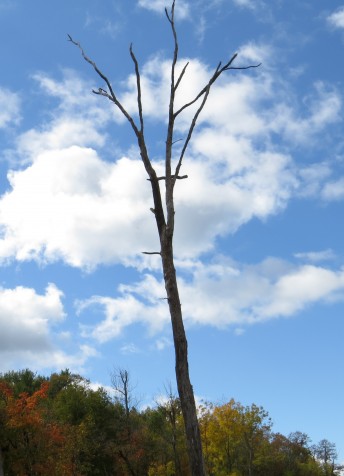
As we hiked from the wetlands to the prairie, this towering tree silhouetted against the blue sky and white clouds was one that succumbed to the wetlands. A number of trees along the border were unable to live with their roots in water.
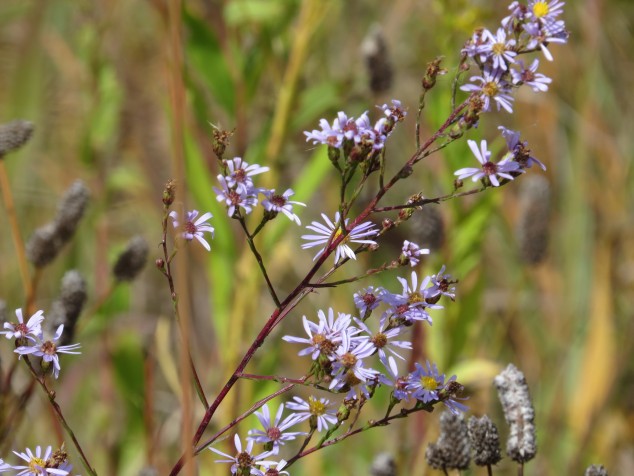
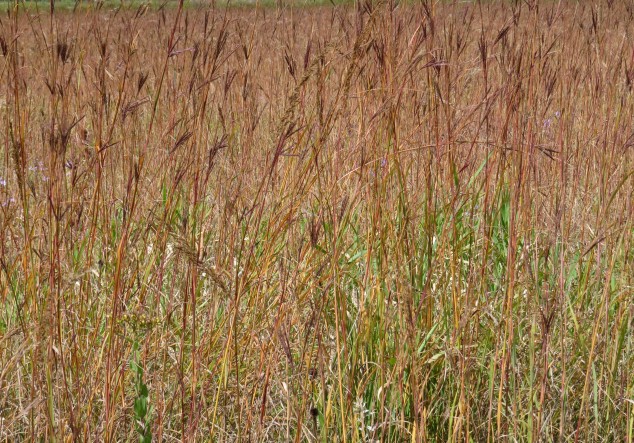
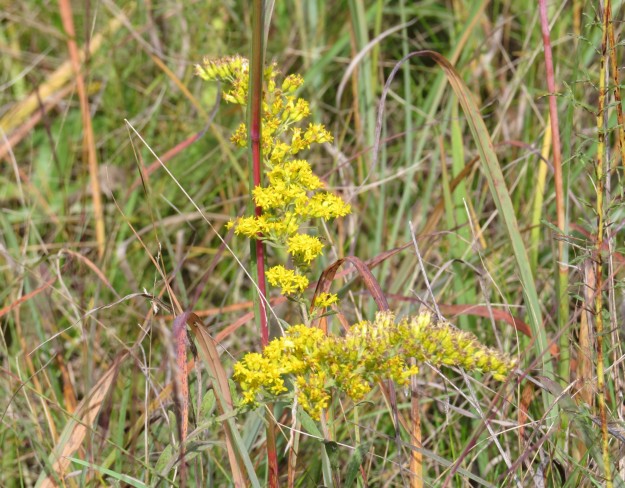
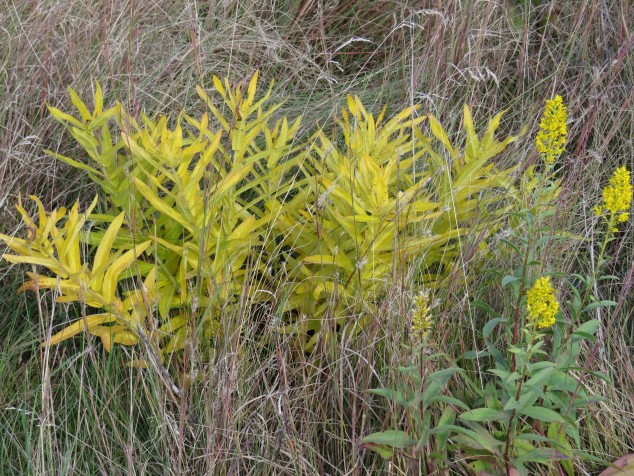
Autumn on the prairie! Asters and goldenrod bloom in bright colors among the stands of prairie grasses. Big bluestem, reaching over five feet tall, makes an impressive show and harkens back to the time when bison roamed the grasslands.
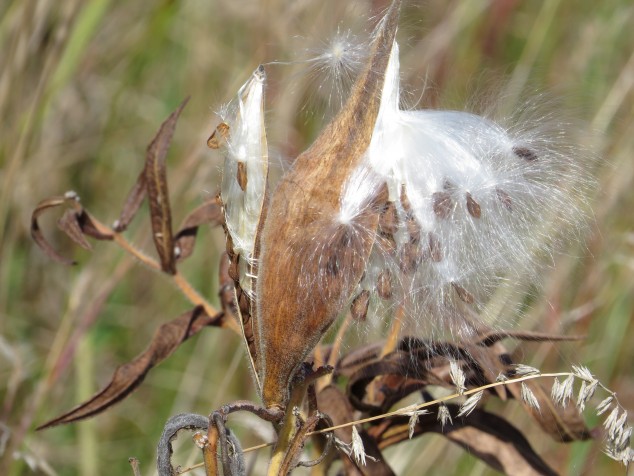
A dried, brown milkweed pod slowly opens to release its fluffy parachuted seeds to the winds. It’s the end of its reproductive cycle in this short Minnesota growing season–or perhaps it’s the beginning….
This tiny showing of Nature’s artwork is part of a priceless collection that we all have available to us to view, appreciate, and wisely and respectfully use. The flora, fauna, food, and beauty that Nature provides in glorious abundance is often taken for granted or dismissed as not important in the economic scheme of things. Every thing has a place and a purpose in this rich cycle of life that connects each living being. Like the tree lost to the wetland and the bison gone from the bluestem prairie, we must make sure that we are not lost to the wrong environment for our circle of life to continue.
Happy 1st Day of Fall
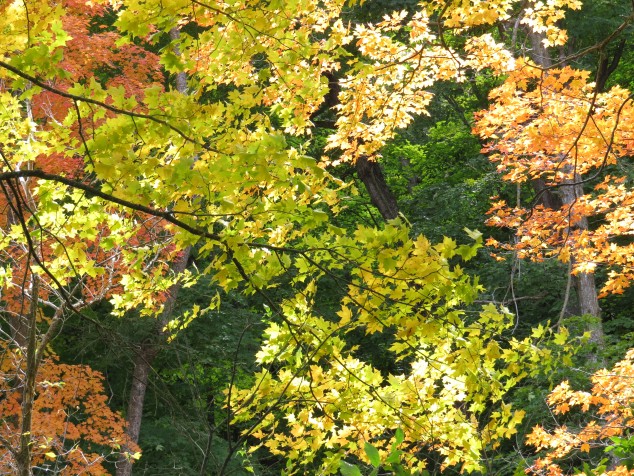
Happy 1st day of Fall to all of you! It is a beautiful autumn day–clear blue sky, bright sunshine, cool temperature, and a tapestry of orange, red, yellow and green leaves. It is the season for picking apples, making apple butter, drinking apple cider, choosing pumpkins, carving jack-o-lanterns, raking leaves, and running through a corn maze. It is harvest time for the farmers, closing time for the cabins and camps that have housed a summer of delightful fun, and hunting time for those who carry a bow or gun for sport or to put food on the table.
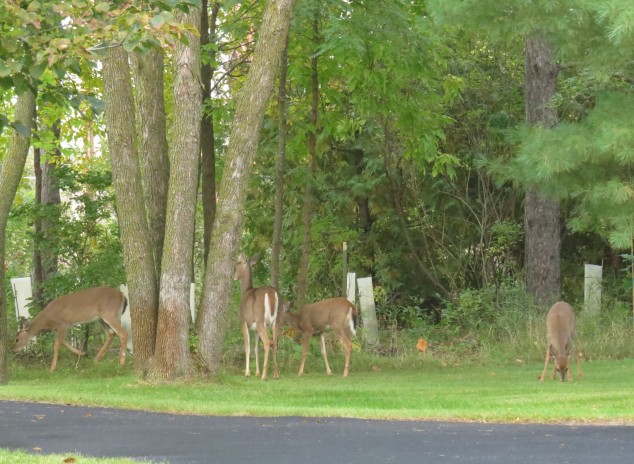
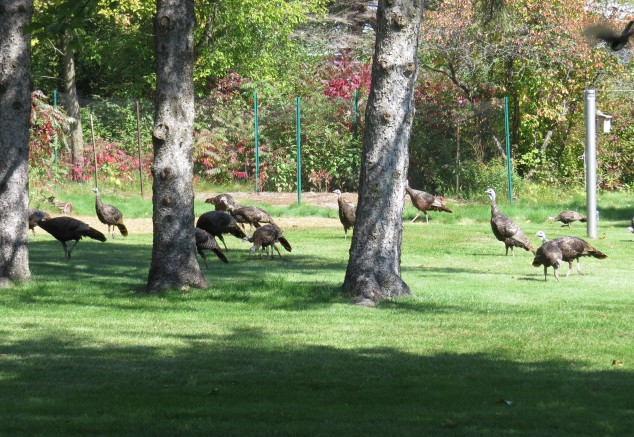
Over the weekend, our yard was a wildlife paradise of sorts, as the deer grazed through the delectable offerings one evening and the posse of almost fully grown turkeys swept through the yard at midday with flapping wings and watchful eyes.
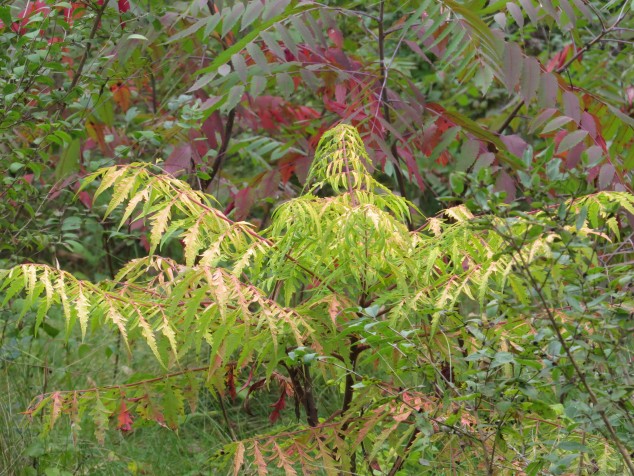
The sumac is in all its glory–the understory to yellow-leaved ash and poplars.
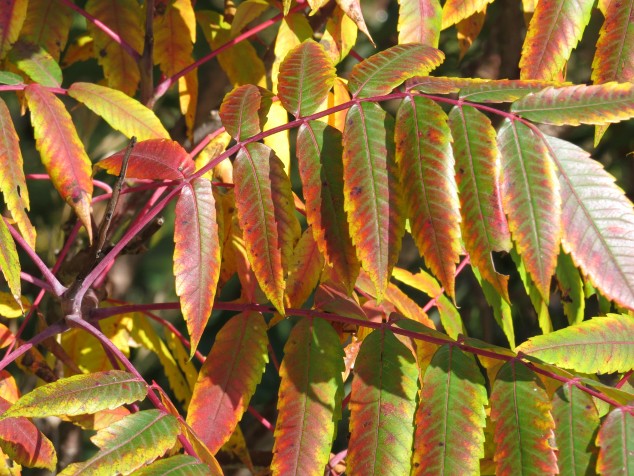
We met up with Aaron at St. John’s Arboretum yesterday for a spectacular walk through the woods. The maple leaves glowed against the dark trunks and branches on trees so lofty it took my breath away.
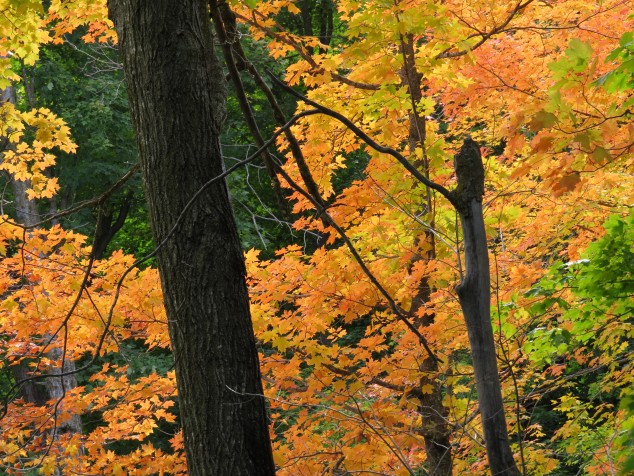
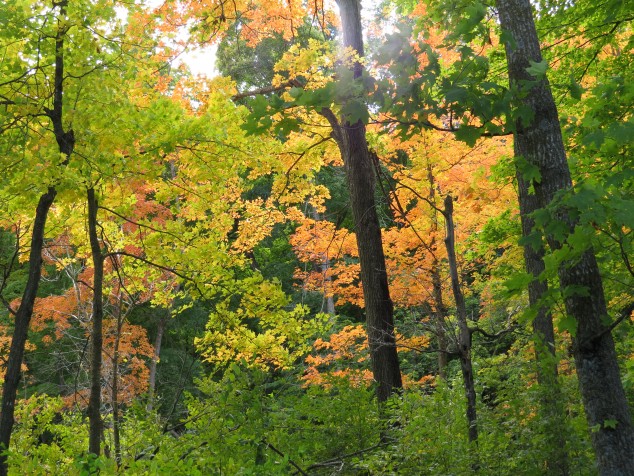
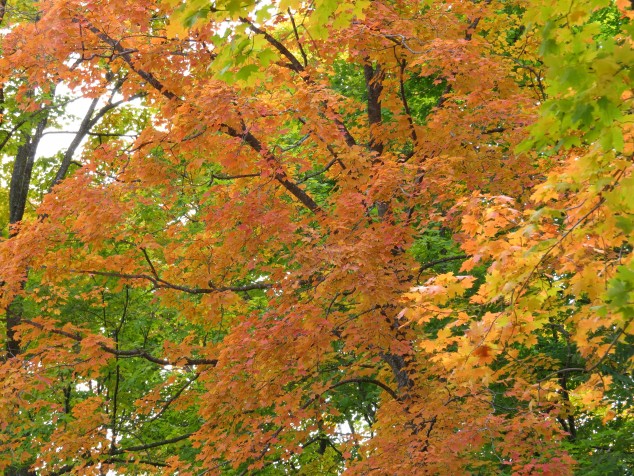
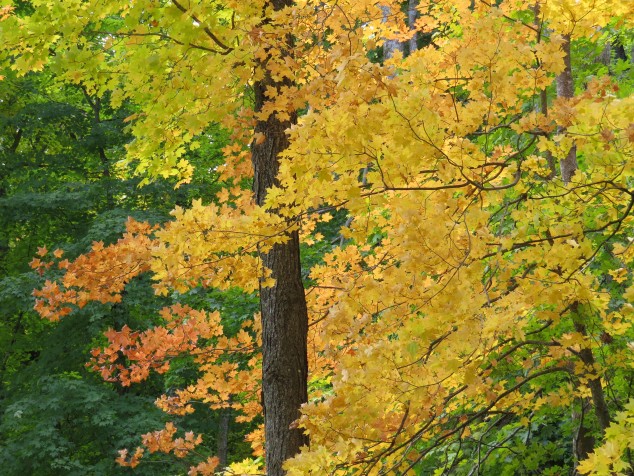
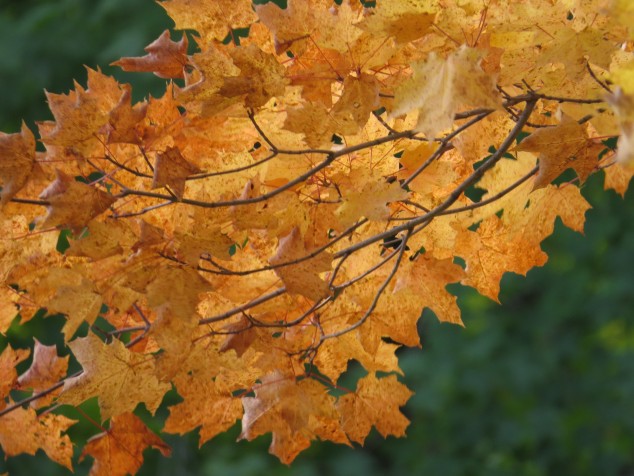
Fallen leaves lined the path through the woods and decorated the ferns and wood nettles with bright spots of color.
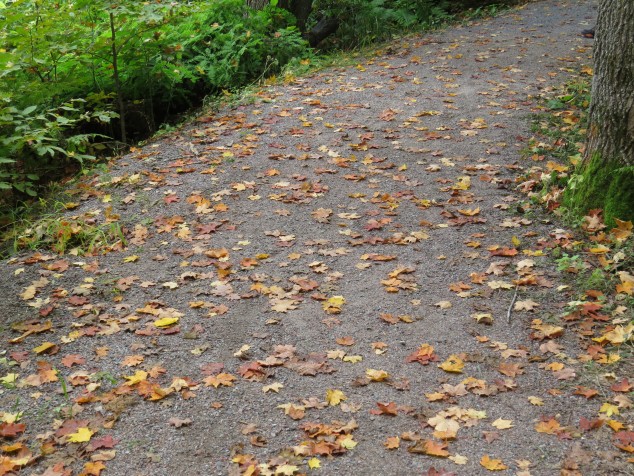
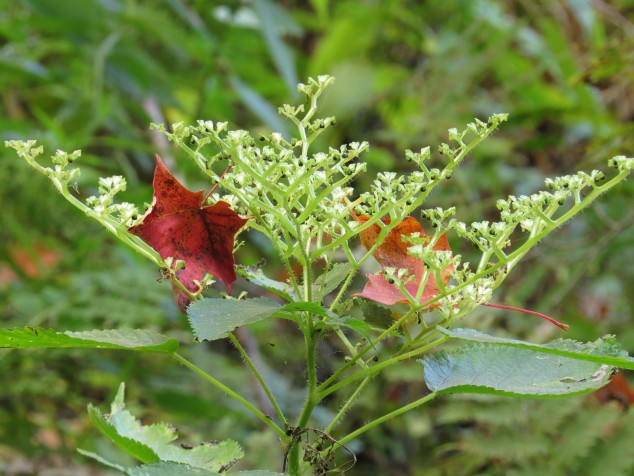
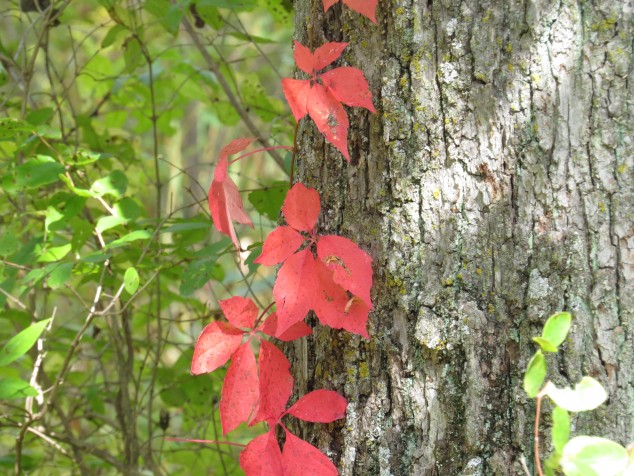
Fall is the between season. Most of us do not want to see the end of summer as we wonder how it could have slipped away so quickly. And we regret that things we wanted to do were left undone. Some of us are beginning the dread of winter–few in Minnesota complain that winter isn’t long enough! But in between those wishes to go back to the warmth and the not wanting to go forward to the bitter cold is this cool spot in the timeline. We may end the season of Fall in a blanket of snow, but the beginning is spectacular, and we have many weeks before us of warm days, cool nights, great color, and autumn treasures. Enjoy!
Caterpillars, Cocoons, and Butterflies
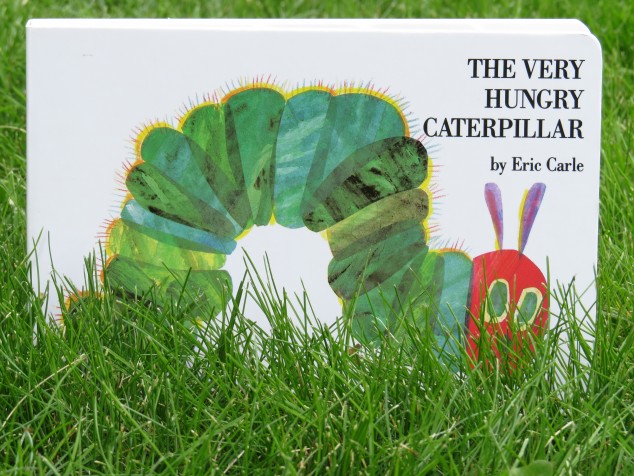
I love a good picture book! And Eric Carle is one of the best authors/illustrators for Nature picture books for young children. It is important to teach children about Nature, to introduce them to the natural world, and to instill in them an appreciation for all creation. If you teach children to love Nature, they will respect and care for our Earth.
The winners of Eric Carle’s The Very Hungry Caterpillar board books are:
Maggie and Lynda–two of the most beautiful butterflies I know! You both have so much to offer to all the people around you! Maggie, your energy, humor, and goodness reach out and touch people deeply. Lynda, what wisdom and love-in-action you model to those lucky enough to be in your presence. So glad I have spent many years in the company of both of you! I will get your books to you next week!
The other butterfly–Emily–who indeed has migrated far from home–you inspire me every day with your energy, your insight, your compassion, and your love. I still have our Very Hungry Caterpillar book in a box somewhere!
Amy, you are so right that this northern climate going into fall and winter makes one want to spin a cocoon! It’s a good place to be when it’s cold and dark outside. It can be a time of rest, reflection, and rejuvenation–you of all people know the benefit of such a time. And when you spread your wings and your talent and love, we are all blessed by knowing you.
And to my fellow caterpillars, my sisters Brenda and Sam, we all find ourselves in this empty nest struggle–the end of all the years of caring for our kids on a daily basis to the beginning of the years of relating with our adult children. How do we do this?!? No manual for that either. It makes me want to eat chocolate–when I know I should be eating green leaves! And so we work on our next transformation…. Love to you both!
Eric Carle is best known for his children’s books, but when our daughter Emily was in an old bookstore in Ely, MN, she found the book Nature Thoughts–A Selection that was illustrated by Eric Carle! The copyright was 1965 and the original cover price was $1.00!
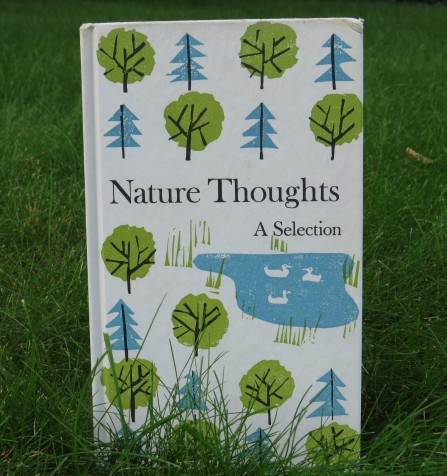
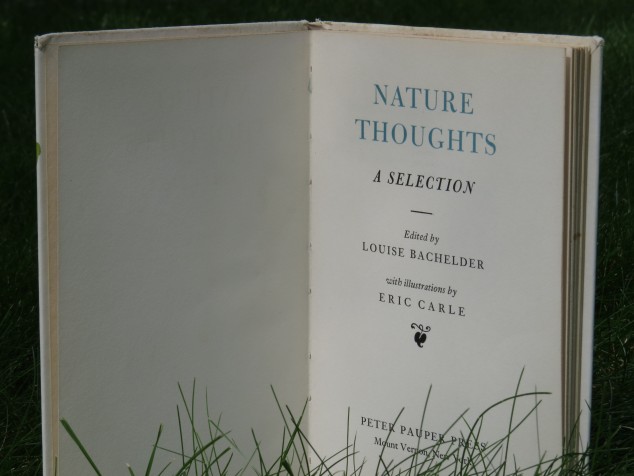
One of the quotes from this book talks about the changes in Nature–how we are given ‘some beauties’ in every season. My wish for you is to recognize the ‘beauties’ in your life, no matter the season, so you can cherish them, appreciate them, and take good care of them.
Nature gives to every time and season some beauties of its own; and from morning to night, as from the cradle to the grave, is but a succession of changes so gentle and easy that we can scarcely mark their progress.
Charles Dickens
- « Previous Page
- 1
- …
- 43
- 44
- 45
- 46
- 47
- …
- 50
- Next Page »