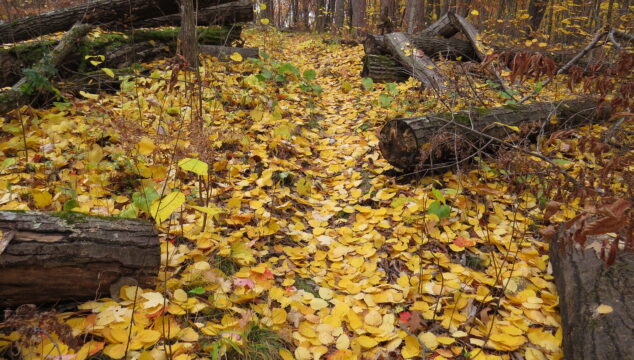
Come walk with me in the peak Autumn beauty of the Northwoods. To say that I love this time of year is an understatement. Most everyone can appreciate the colorful falling leaves---it reveals the 'true self' of a tree when its leaves are no longer producing chlorophyll. Their true colors are revealed, and there is something simple … [Read More...]
The Hard Way
It is a rough road that leads to the heights of greatness. –Lucius Annaeus Seneca
After our easy way of exploring the Saint Croix River on a paddlewheel boat, we picnicked beside the River to renew our energy for the afternoon. The paddleboat company, the town of Taylors Falls, and Interstate State Park seem to be intertwined. In fact, we started our hike by walking up one of the hilly side streets after crossing the one, busy main street through town. We passed an old railroad depot that I thought had been moved up there, but then I realized that we were hiking along the abandoned railroad way.
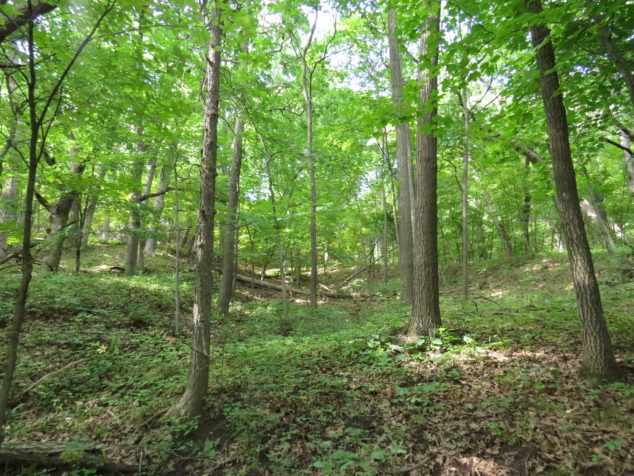
It soon became evident what a marvelous engineering feat it was to build a railroad through these bluffs!
We came to a place in the woods where the old railway had continued over a steep ravine on a bridge long gone except for some concrete pillars that now had colonies of wild ginger strewn at their feet.
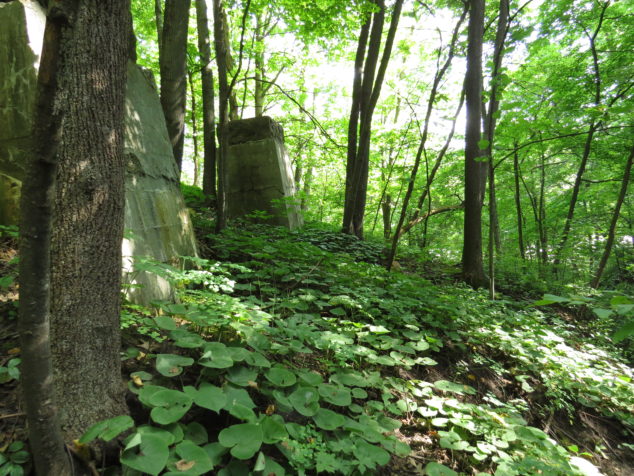
We descended the wooded ravine, and at the bottom, the trail diverged—and we chose the hard way, the scenic way according to our guide Aaron Brake who had hiked here before. And so we followed another ravine and began the winding ascent to the very top of the bluff.
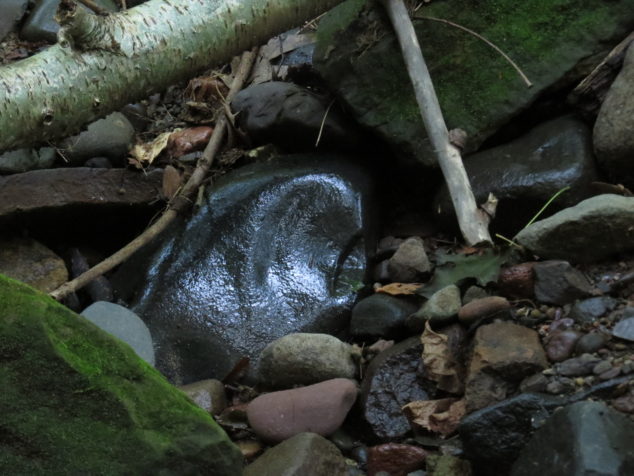
In the creek bed at the bottom of the ravine were shiny, glistening rocks of basalt.
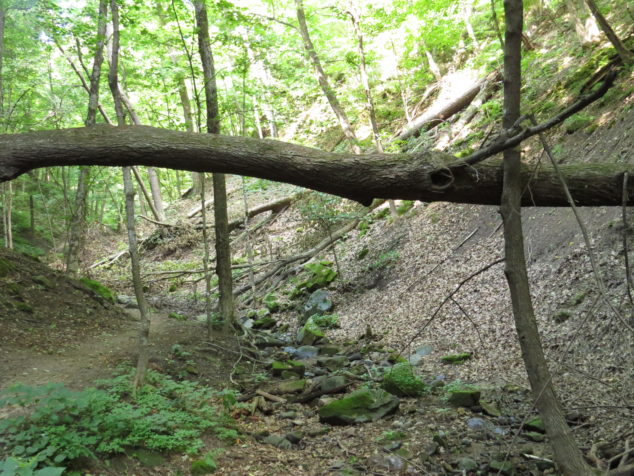
Fallen trees created bridges of varying size and structure.
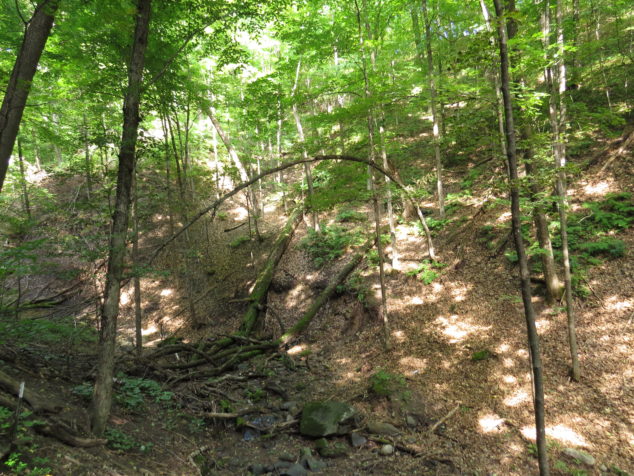
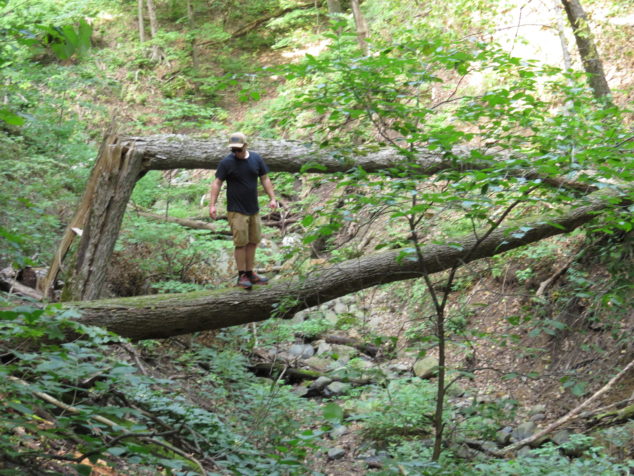
We climbed and climbed and though we were in the shady woods, the warm, humid day and exertion caused me to sweat like crazy. “I never sweat this much,” I exclaimed a number of times, and the only response I got from Emily was, “You need to up your workouts, Mom.” Finally we got to the top of the bluff and saw the River way down below.
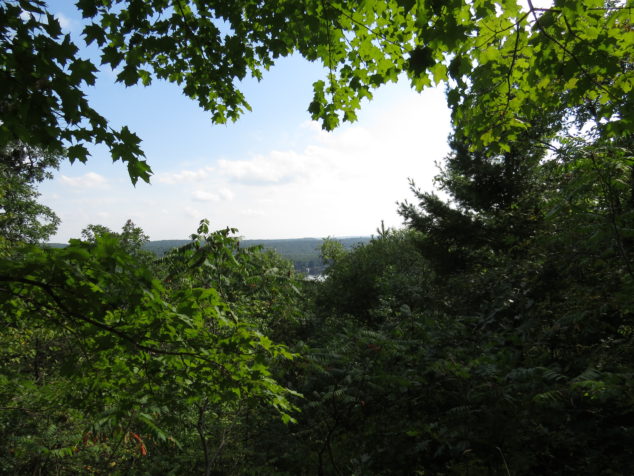
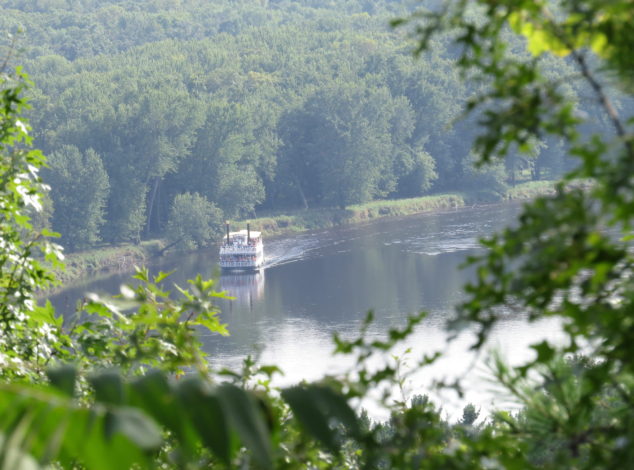
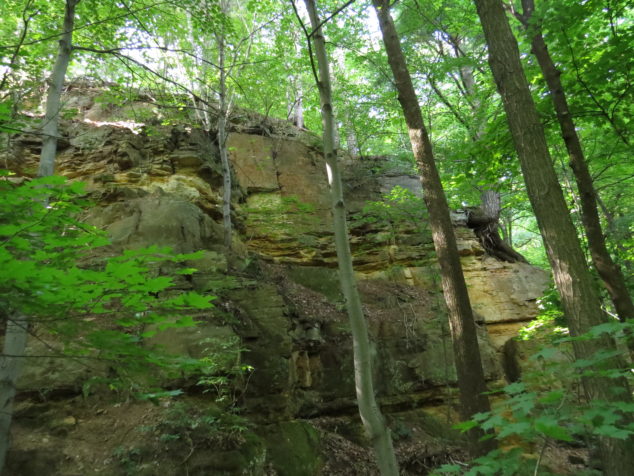
On the trail down we explored more of the sandstone bluffs. One place was called Curtain Falls that now only flows after heavy rains and snow-melt.
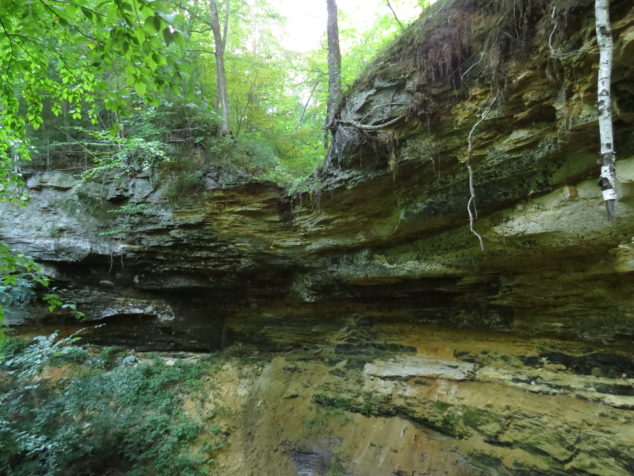
Living on a steep, rocky bluff is a hard way for a tree to survive. I was amazed at the survival strategies we saw from some of the plant life, like this tree root scaling the rocky cliff, clinging to any soil it could find.
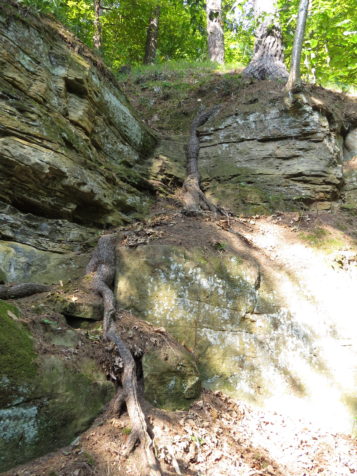
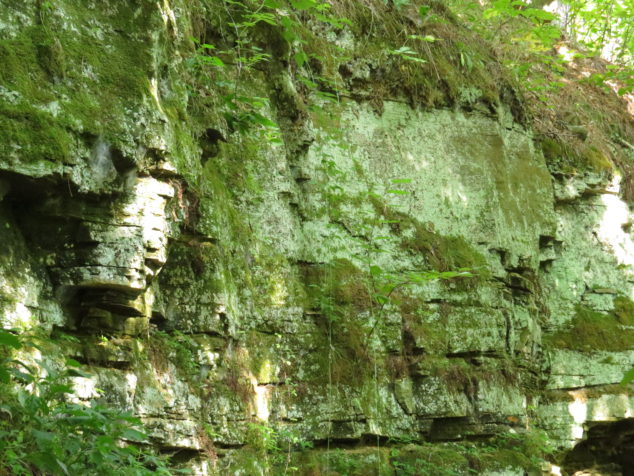
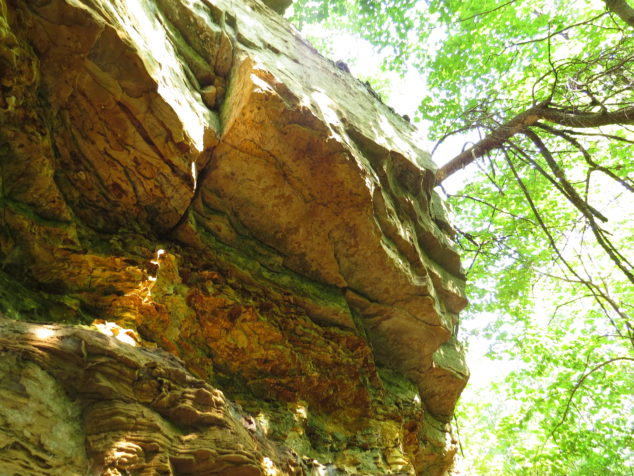
The way down was ‘easier’ than climbing to the top but was in no way easy. There were many places where wooden stairs helped us get down the steep rock faces.
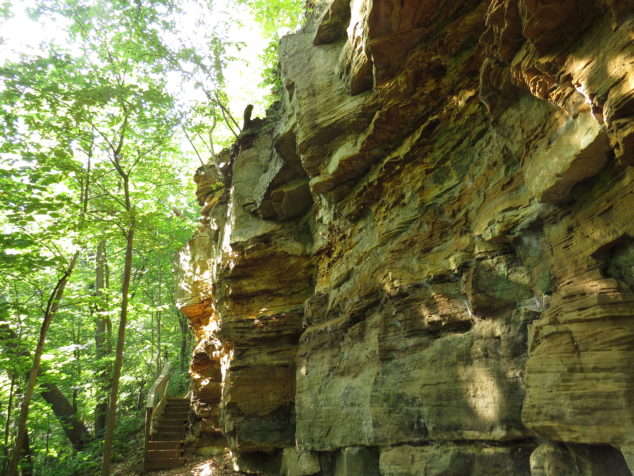
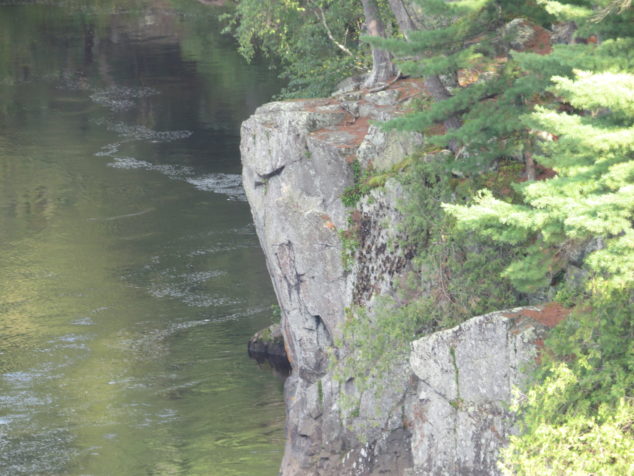
We arrived at the campground of Interstate State Park—the parking lot and camping spots were full on this Labor Day weekend. But our hike wasn’t over yet—the trail continued along the River, through trees and over rocks, back to the entrance of the park where we had boarded the boat earlier in the day. Now we could see the River from the top of the rock cliffs adjacent to the water.
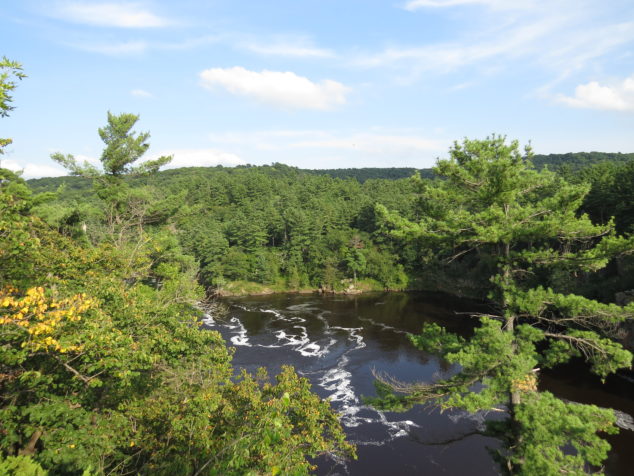
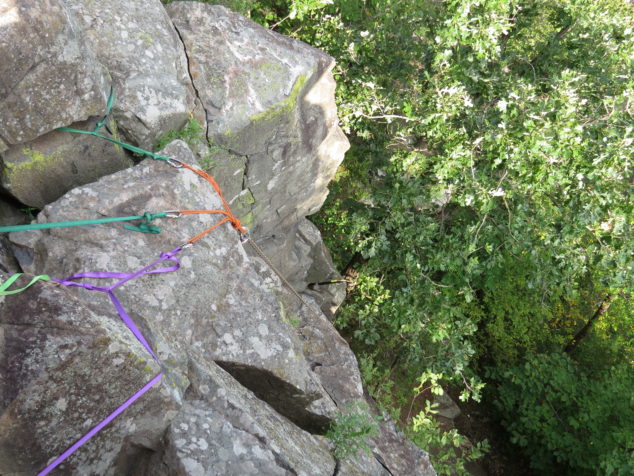
Rock climbers are welcome at the park, and we saw many ropes and climbers. That’s a hard way of getting up and down the cliffs!
It was beautiful hiking along the rocky cliffs among stately pines, wild blueberries, and various types of ferns. What a different perspective of the Saint Croix River we had from the edges of the huge rocks compared to floating down the middle of the River.
By the time we returned to the entrance of the park, my feet hurt, my legs were sore, and I wanted to sit down for a while. When I polled the young twenty and thirty-year-olds about the difficulty of the hike, they proclaimed it ‘moderate.’ I had the word ‘challenging’ in my mind, but chalked that up to our 30-year age difference and my need to ‘up my workouts.’ I’m glad we took the hard way, the rough road, the scenic way. It really was so beautiful, and it impelled me to exert and sweat and do ‘the work.’ It led us to the heights of that scenic River and the greatness of Nature. There are times in our lives when the hard way is presented to us, when we don’t have a choice, no matter how badly we want an easy option. Marie Curie said, “I was taught that the way of progress was neither swift nor easy.” So what do we do? We anchor our support ropes, take it slow and easy, use the steps and bridges to get us down the steep parts and over the ravines, and we do the work. We make progress, we do what is right, and in our own way, we are led to greatness.
After the easy way and the hard way, we ended our day with the ancient way…to be continued…
The Easy Way
A ship in the harbor is safe. But that’s not what ships are built for. –John A. Shedd
We got our tickets and were told the Taylors Falls Princess was docked in Interstate State Park, as the water was too rough and rushing over the rapids at the usual dock. Up the hill, turn left, past the park entrance, and down the hill. The Princess is a paddlewheel boat operated by Taylors Falls Scenic Boat Tours—a family owned and run business on the Saint Croix River since 1906. The upper deck was already filled with site-seers, so we took our seats at the front of the lower deck to get the best standing spots once the gate was closed. It was an easy way to explore the Saint Croix River, complete with a knowledgeable tour guide and seasoned captain.
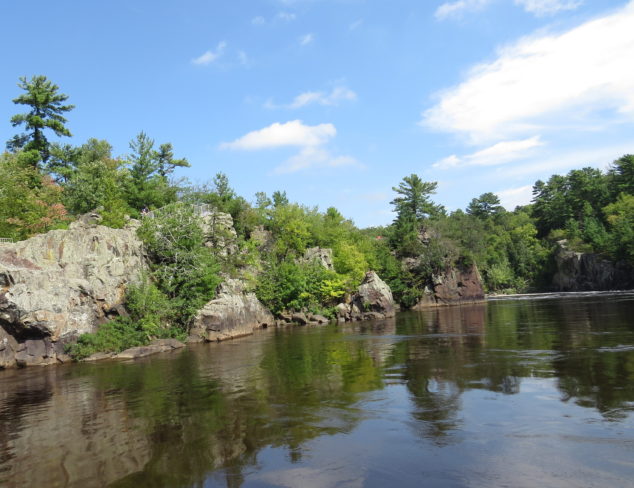
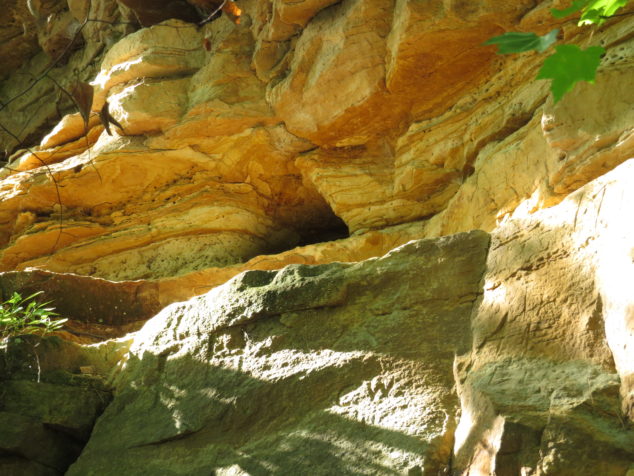
This area of the river cutting through huge rock formations is called ‘dalles,’ a French word for rapids of a river through a narrow gorge. The base rock is basalt, a dark, fine-grained volcanic rock that was later covered with a shallow sea that deposited sandstone above the basalt. When glaciers began to melt, the St. Croix River was formed. When the melting ice water intersected an old fracture in the basalt, it took the easy way, creating a sharp bend here at Angle Rock.
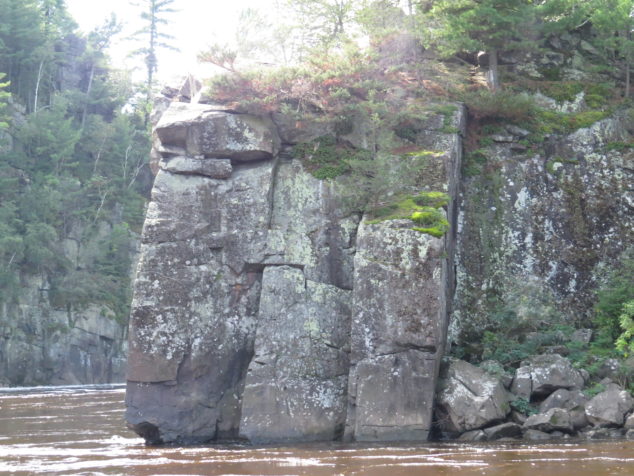
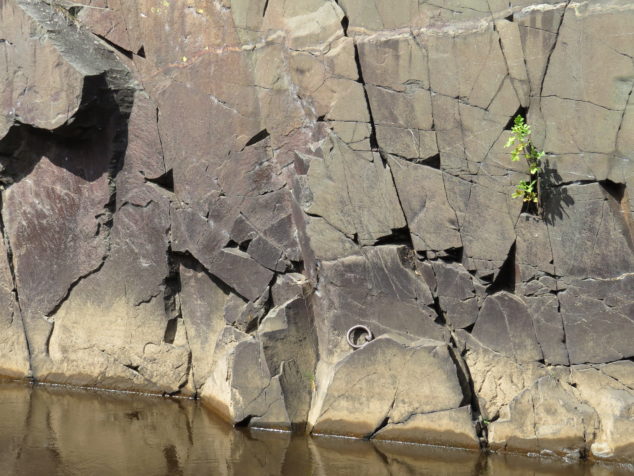
Our tour guide pointed out rock formations that looked like various things—Lion’s Head, Elephant’s Head, and the Old Man of the Dalles.
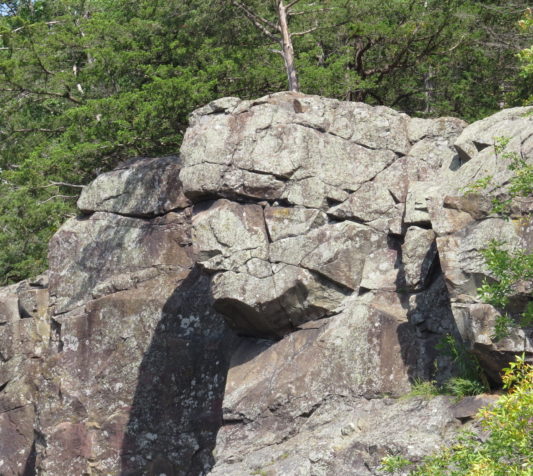
Supposedly, French fur traders of the 1600’s saw a cross in this rock face and named the river after the ‘Holy Cross,’ though the River was known by many different names before and after that time.
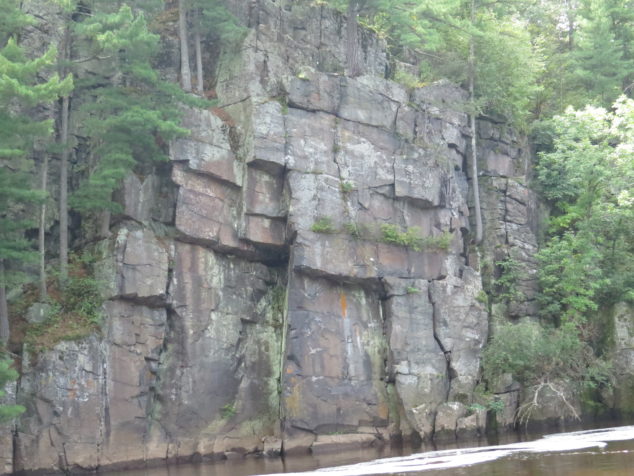
We paddled down the River on the Princess and saw many paddlers in colorful kayaks and Alumacraft canoes who weren’t taking it quite as easy as we were! The Saint Croix River is part of the National Wild and Scenic Riverways system established in 1968.
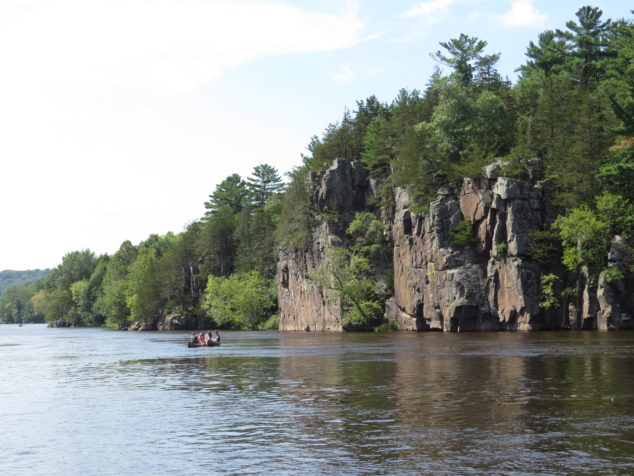
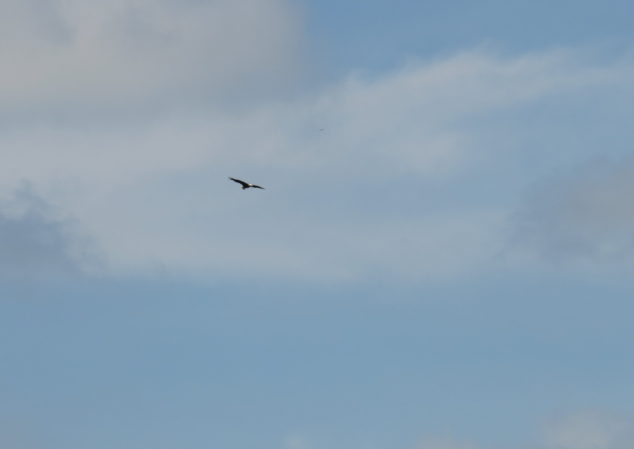
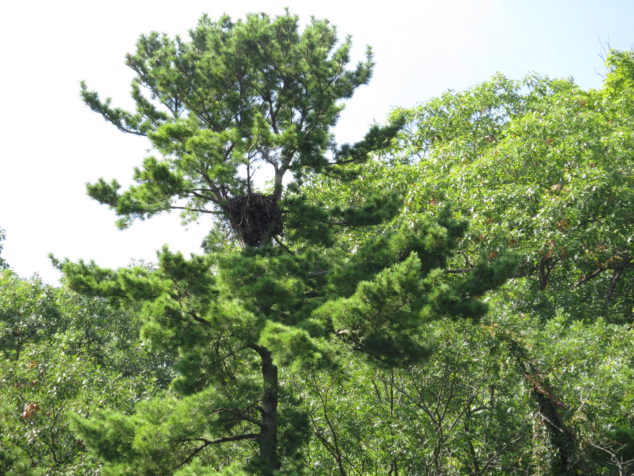
We saw an eagle and eagle’s nest…
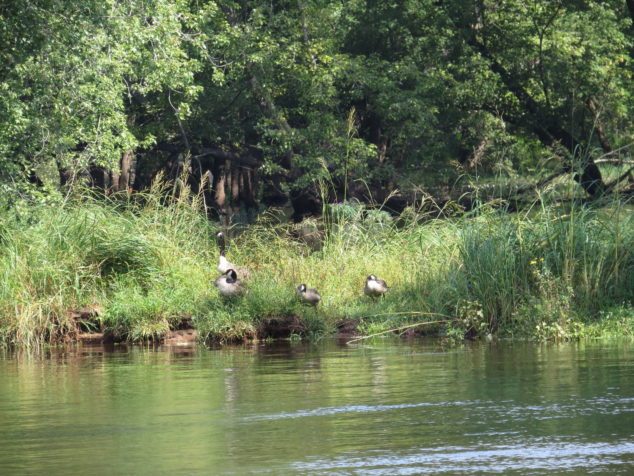
…and a gaggle of geese taking it easy on the shore.
My favorite story by the tour guide was about the island that wasn’t supposed to be there. When they were building the road on the Minnesota side of the River bluffs, the contractor told his assistant to order two tons of dynamite, and she mistakenly ordered twenty tons. He blew the bluff into the River! Is that an easy way to make an island or was the assistant an easy scapegoat to his big problem?
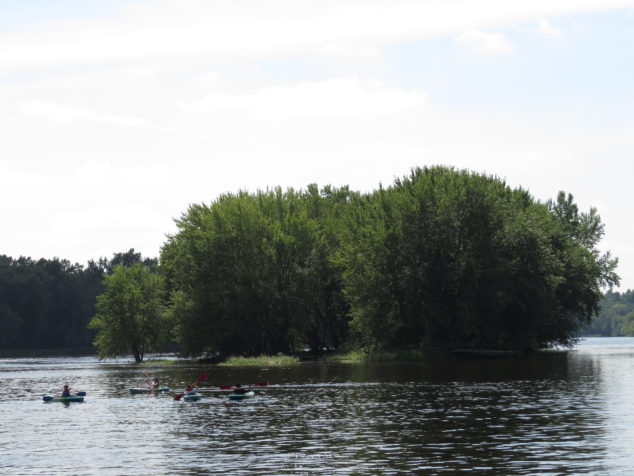
The Saint Croix River begins in Wisconsin about 20 miles south of Lake Superior, and the last 125 miles marks the border between Wisconsin and Minnesota where it then merges with the Mississippi. The Interstate State Park is on both the Wisconsin side and Minnesota side around the Dalles area.
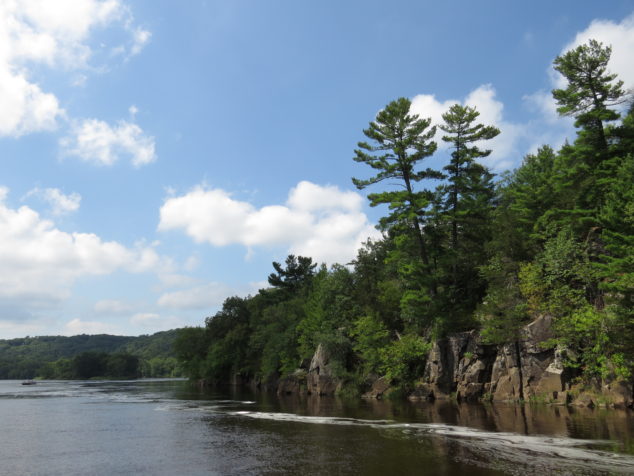
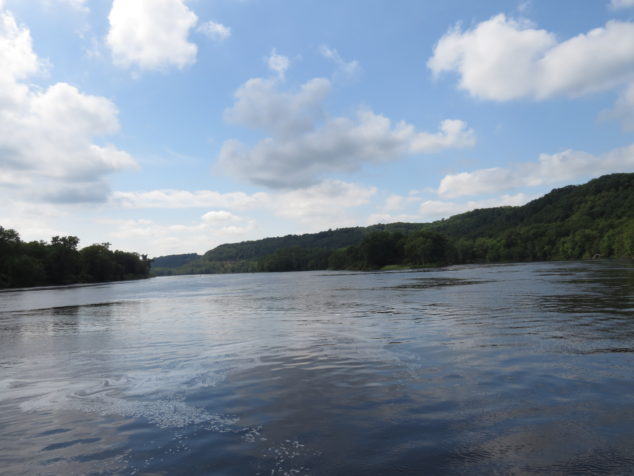
The Saint Croix has been one of the cleanest rivers in the Midwest, but like most lakes and streams in the state, it has a problem with nutrient (phosphorus) overload in the summer. The dark brownish-red color of the water is from tannins that come from decaying plant material that lines the shores of the River; tannins are not considered to be a pollutant, but we did wonder about the constant stream of white foam.
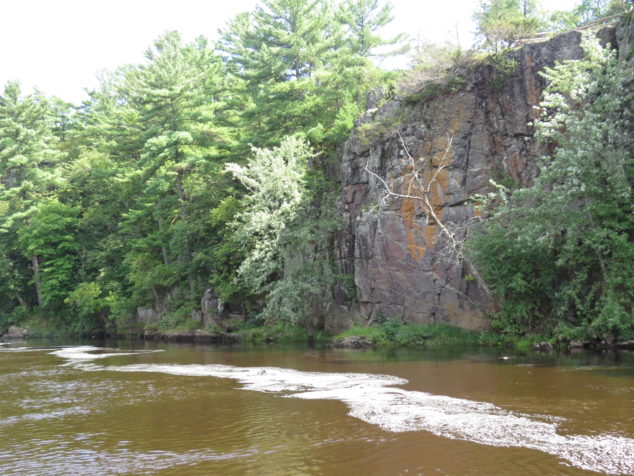
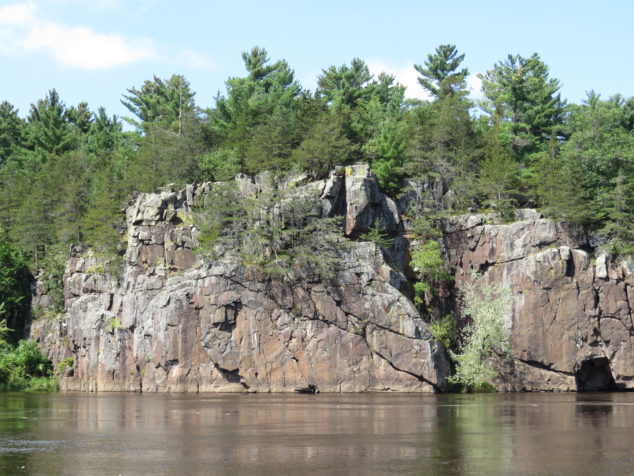
Our easy eighty-minute excursion on the paddlewheel boat seemed to go fast—the River and the rocks were beautiful. The history and stories by our tour guide were interesting and informative. Our easy way of exploring the River and bluffs cost us money in order for other people and machines to do ‘the work.’ We were safe within the rails of the boat (never in their long history have they ever had to use the life vests.) Franklin D. Roosevelt said, “A smooth sea never made a skillful sailor.” The easy way doesn’t challenge us—it may keep us safe, be the way we’ve always done things, and be the most comfortable for us. But is that what we’re built for? Is that what we’re born for? How do we build roads where once there were rocks and trees? How do we make an island? Our day at the Saint Croix River was just beginning. The easy way was over.
To be continued…
Meet Me at the Bend in the River
There are times in our lives when we are floating along—smoothly going in the direction we want to go, enjoying the scenery, life is good—when we come to a bend in the river. If we follow the flow of Life, we are swept along in a changing direction; if we resist, we flail about trying to stop or turn around and go back to where Life was easy. But it is no longer easy—we are going against the current.
Our oldest child left the 100-degree August heat of Austin, Texas to spend time with us in Minnesota. On one of those beautiful days, my Mom came over from South Dakota. We spent the afternoon at Bend in the River Regional Park north of Saint Cloud. The Park is located at an old farmstead high up on the bluffs of the Mississippi River—at the bend in the River. The old Red River Ox-cart Trail passed by a log cabin built on this site and later became the Point Douglas–Fort Ripley Military Road in 1851. In 1912, Edgar Graves bought the farm and built a barn, then a house, and subsequent other out-buildings. The house is formidable in structure, but closed to the public. I kept saying that I would live in that house!
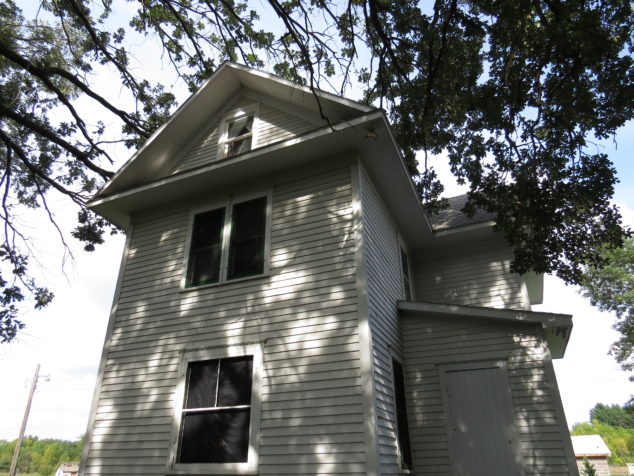
Around the house towered Bur Oak trees that were over 120 years old. While the floodplain below the bluff always had fire-protected forests, the bluff was more prairie with sparse numbers of Bur Oak that could survive drought and wildfires.
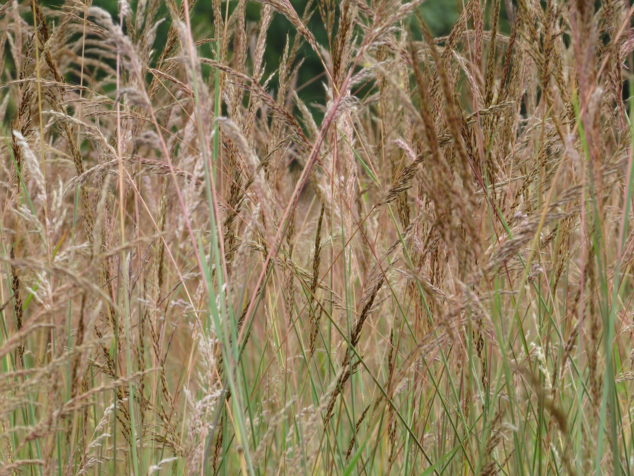
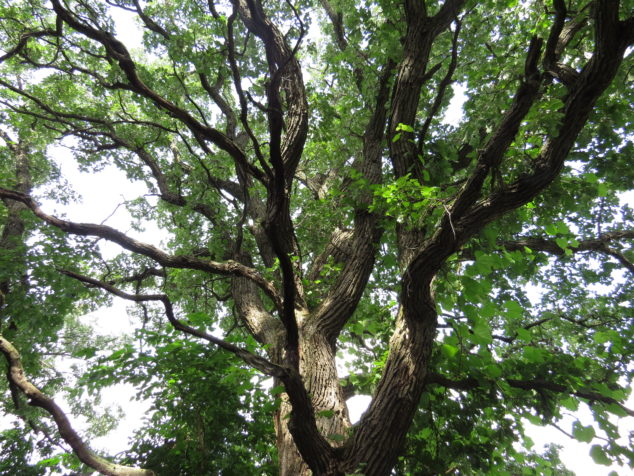
We walked the trail from the farmstead along the high bluff overlooking the River.
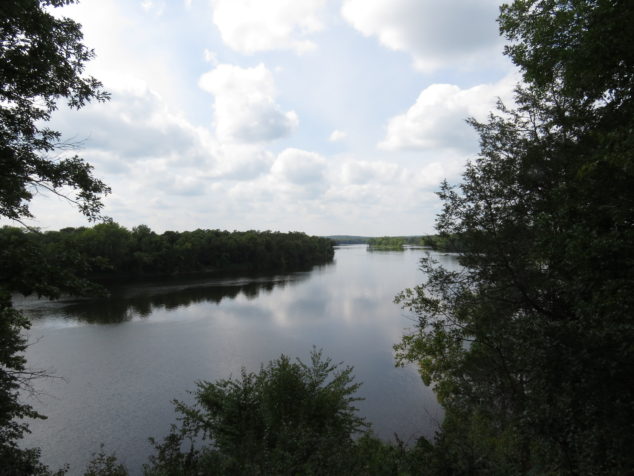
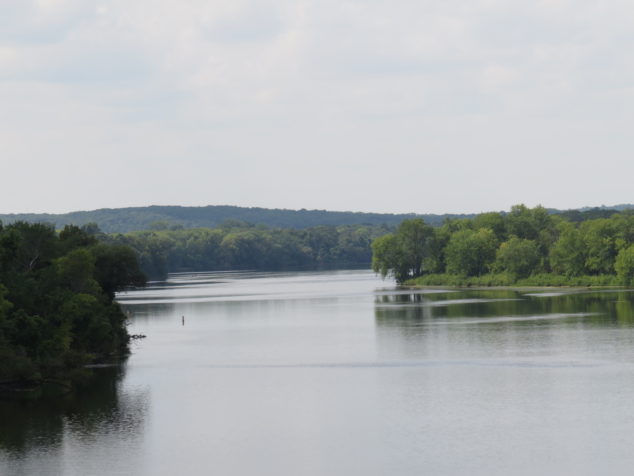
The native Ojibways called this expanse of water “Misi-ziibi” or “great river.” The French fur trappers in the 1600’s translated that to “Messipi,” which was later Anglo-cized to “Mississippi.” That great river flows on.
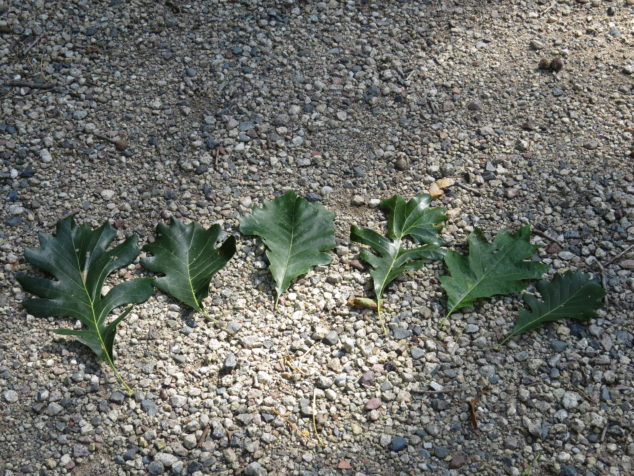
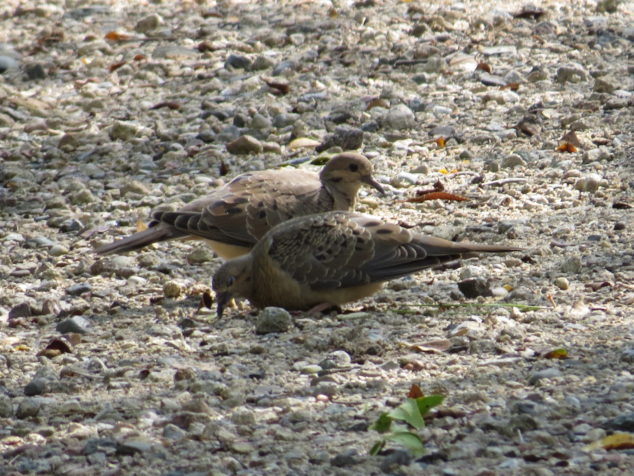
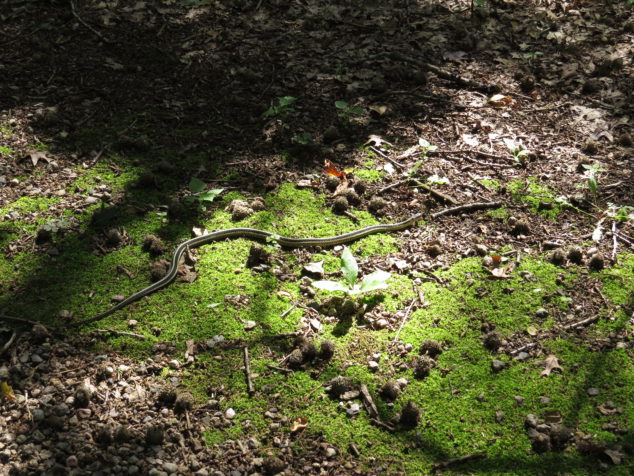
Acorns crunched under our feet—it was an abundant year for Oak seeds. A pair of Mourning Doves ignored us as they foraged the gravel trail for seeds. A Garter Snake lay sunning itself on the soft moss between acorns.
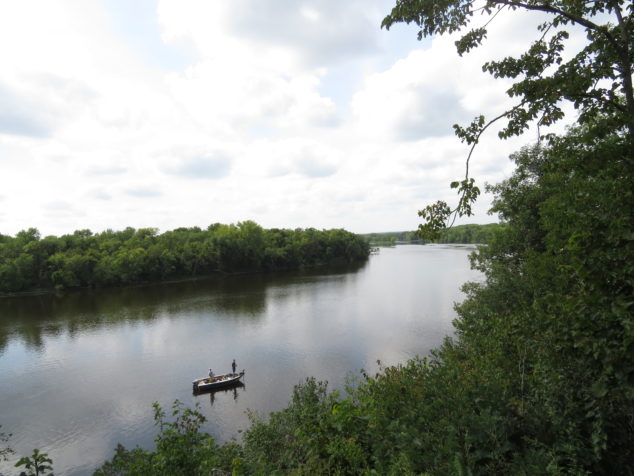
At one of the overlooks, we saw two young men fishing on the Great River. Meet me at the bend in the River—let’s catch some fish. Let’s spend some time together. Let’s slow the pace of our lives for a few hours.
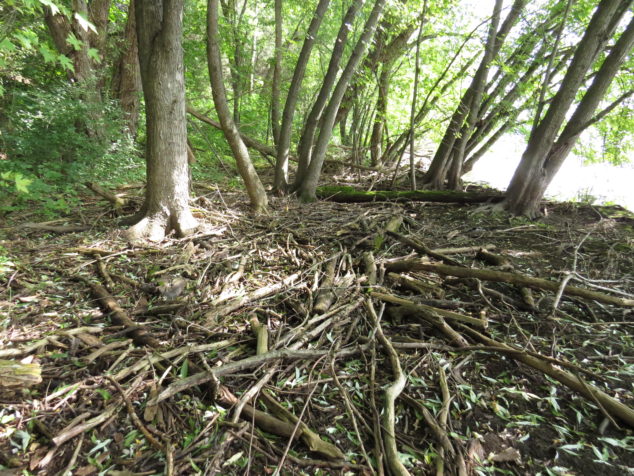
We walked down a side trail that descended the bluff to the floodplain area beside the water. The power of the water rushing around the bend in the River had pushed logs and debris up onto shore. There were rusty wheels and tires and hardened, lost shoes.
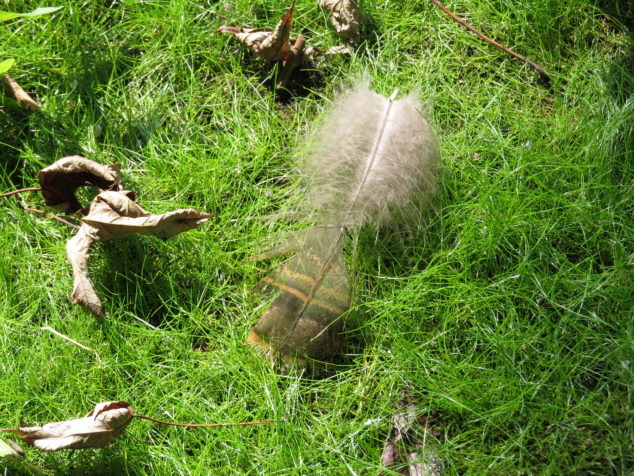
And right at the bank of the River, a fine mossy grass grew and on that lush greenness lay a turkey feather, like a dropped handkerchief—personal and universal all at the same time.
The water reflected the sky, assuredly giving the weather report for the ones gathered at the bend in the River.
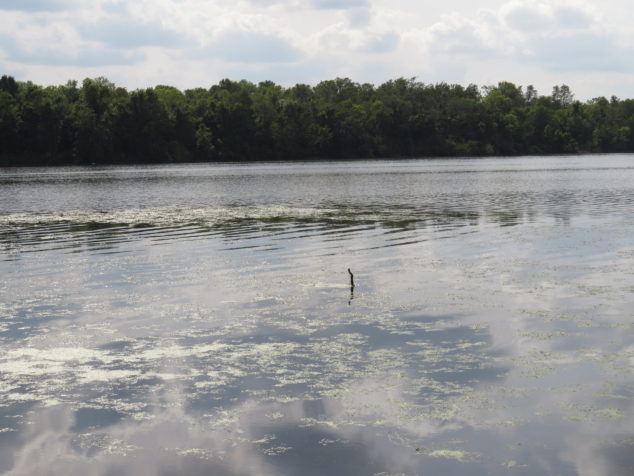
Three generations of our family met at the Bend in the River, slowing time as we walked and observed trees, animals, and the Mississippi. We learned about the history of this place, how it progressed with time from ox-cart trail to military road to potato farm. Why was I drawn to the old prairie farmhouse and the outbuildings for all the animals? Why was I thrilled that Carlton Graves ran a veterinary practice out of the basement of the house? Why was I so pleased that this place high above the bend in the River was turned into a Park for all to see and use? The flow of Life moves us forward, even as we ache for things to be as they were when we perceived that life was smooth and good. Life changes our direction for us—we need to be able to navigate the rough waters and the bends in the river. We don’t want to end up like logs and hardened souls all piled up under the trees as Life moves on. Let’s meet at the bend in the river. Let’s meet where things change direction. Let’s honor our history and slow down the pace of our lives for a few hours. Right there, on the soft, transitional terrain, let’s pick up the lost feather, the lost handkerchief. It is personal and universal, all at the same time.
Family Time
The family is one of nature’s greatest masterpieces. –George Santayana
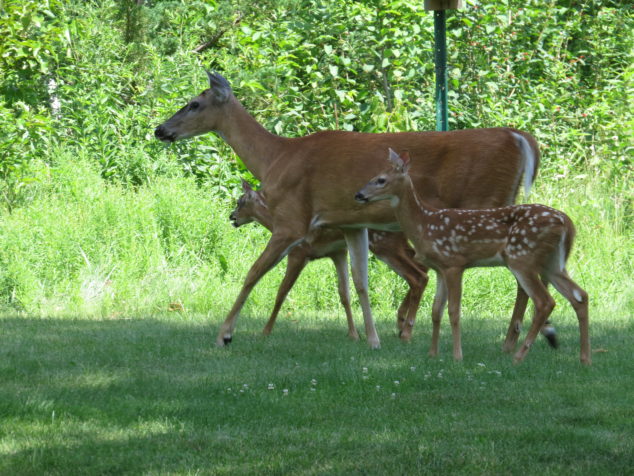
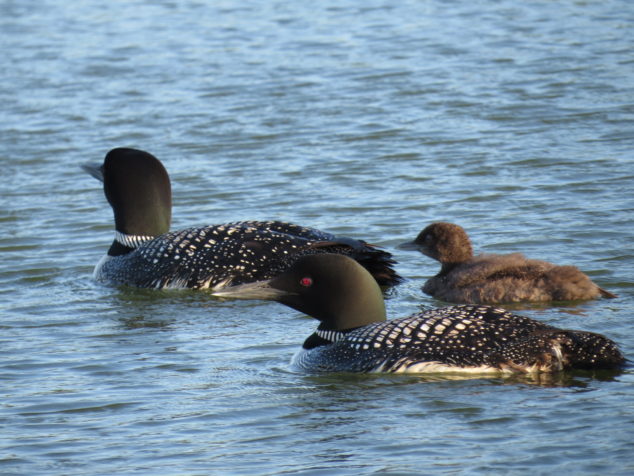
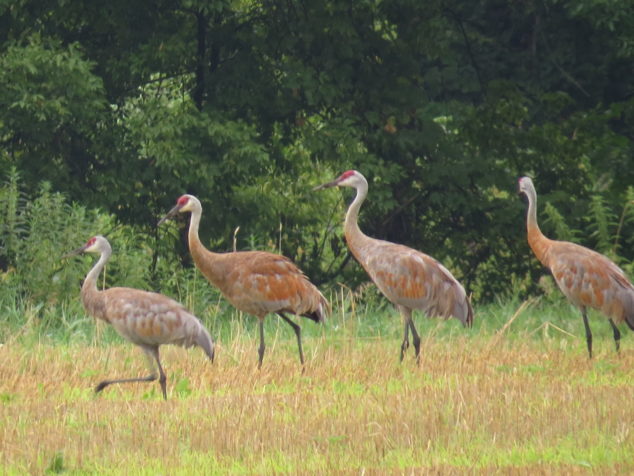
I’m happy to be spending time with family! I will be back in two weeks. Enjoy this end of summer warmth and sunshine!
Modern Day Hay Haulers
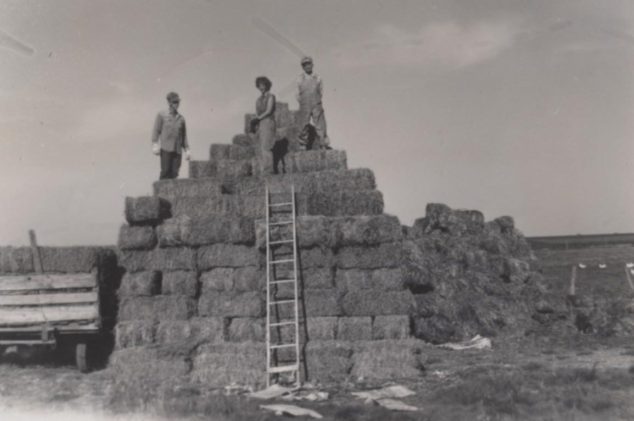
There is something to be said for hauling hay bales. Those of us who have done it may run the gamut of feelings about doing so—from ‘I hated having to haul bales’ to ‘gotta get it done’ to ‘I love being out there on the hay rack’—all are legitimate things to say. I fall towards the ‘love’ side. Some of that has to do with my love of the animals we were feeding the hay to—if you have horses, you have to put up hay, even if it’s stacking the bought hay in the hayloft. The same goes for straw bales for bedding in the stalls. It’s all part of caring for the animals we love. I also loved being outdoors—driving the tractor or bracing my legs on the hay rack as we bumped over the stubble or stacking high on the pile as we completed a load. It was usually hot, sometimes muggy, always sweaty and dirty. And it was awesome! The thing about putting up hay—small square bales and back in the day—was it was a team effort. (Not that my Dad never let the tractor run down the field by itself while he picked up and stacked by himself.) For efficiency and some peace of mind, family, friends, and young, strong helpers were recruited to help with the work that needed to be done. So we did it together.
This photo was taken in the early 60’s when I was too young yet to help with hay, but this is my Mom and Dad and Grandpa Andrew.
Most of the hay these days is rolled up into big round bales and hauled with tractors and trucks. But we did something this week that reminded me of the old hay-hauling days. We did some outreach in our ‘Battle of the Buckthorn.’ Most of the large buckthorn trees on our property have been removed thanks to the diligence and hard work of Chris, so we were glad to help some young friends of ours with their overgrown buckthorn problem. Armed with gloves, saws, pullers, and loppers, we went to work in the hot, slightly muggy afternoon. We sweated, got dirty, made big piles, and cleared the invasive trees from under the pines, oaks, and cedars.
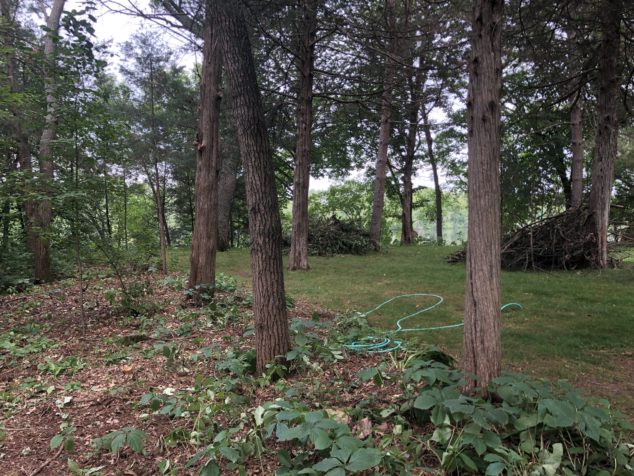
While working, we also kept an eye on the kids who ran a lemonade stand for the passersby in the neighborhood. When the afternoon’s work was done, we sat down together for ‘a little lunch’ as my Grandmas used to call it. With tired bodies and a distinct feeling of satisfaction for the work we just accomplished together, we ate a sweet treat with relish and appreciation. We were like modern day hay haulers—working together to do a big, physical job and feeling the satisfaction in our bodies and souls that we could do it together.
Down the Road With Me
“An early-morning walk is a blessing for the whole day.” –Henry David Thoreau
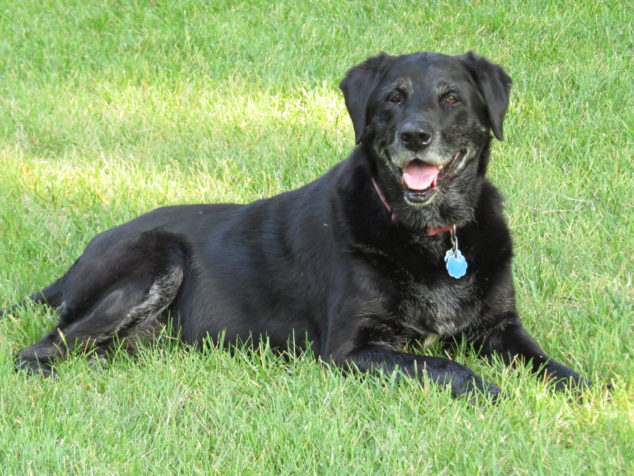
These past days have been the epitome of Summer—very warm, slightly humid, and sunny. But we are past full-on Summer; when we roll the calendar over to August, we see changes. The Ash trees have a tinge of yellow in places, Sumac and Poison Ivy leaves are turning red, Goldenrod is blooming gold, Crabgrass grows and goes to seed, and the noisy chatter of the House Wren no longer interrupts the sounds of the day. The mornings have been still—in movement and in sound. Into that stillness I walk with my pal Tamba—she limps now, groans when she lays down, has lumps and bumps, so I know that our twice-daily walks are numbered. Yet every morning she pulls herself up and eagerly heads down the road with me. I hear the low, melodic call of Mourning Doves, and instantly my mind transports me back to my Grandma and Grandpa’s farm. What amazing brains we have that we can time-travel when we hear or smell something! The stillness and humidity allow dew to form on everything during the cool night, and the morning sun freely transforms all into a treasure of shining gems.
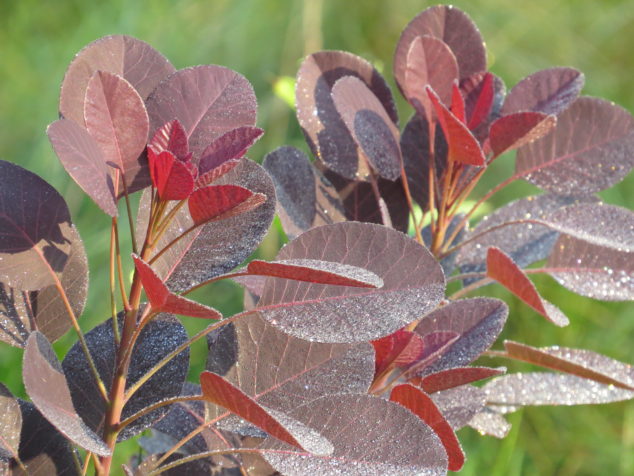
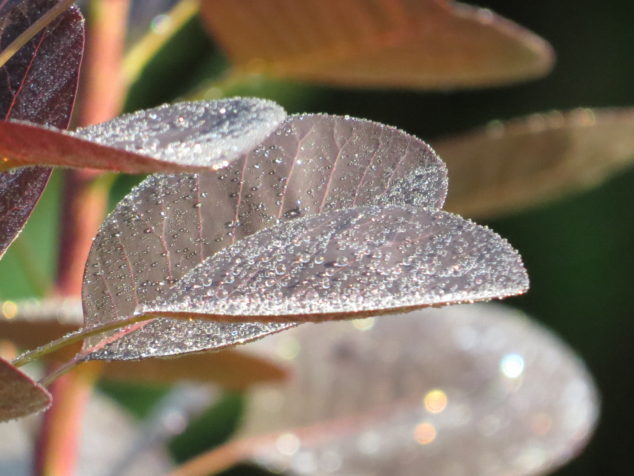
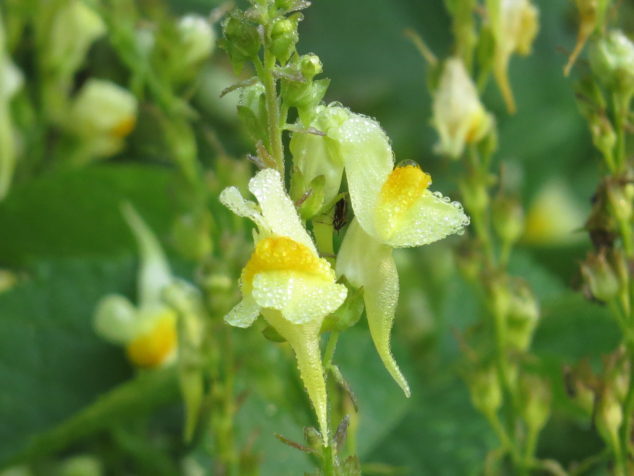
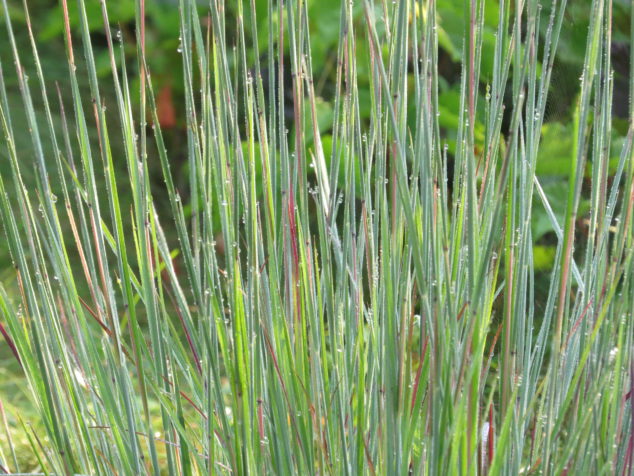
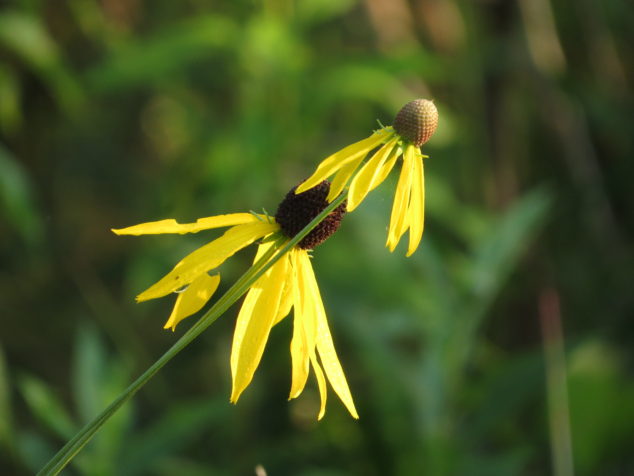
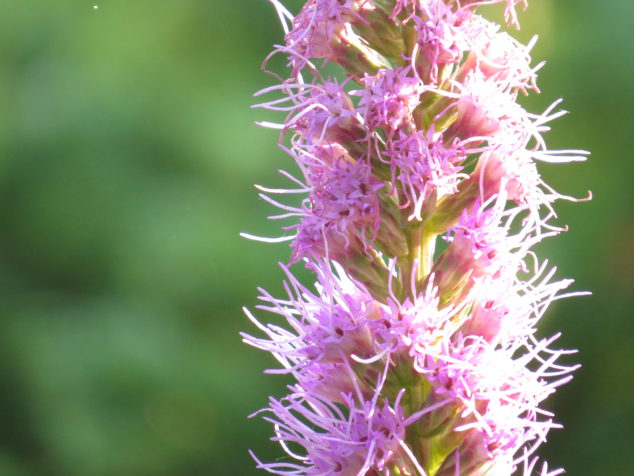
The intense sunlight soon dries the dew, but the late summer flowers—Gray-headed Coneflower, Liatris, Sunflower, Purple Coneflower, and Allium—shine on in all their glory.
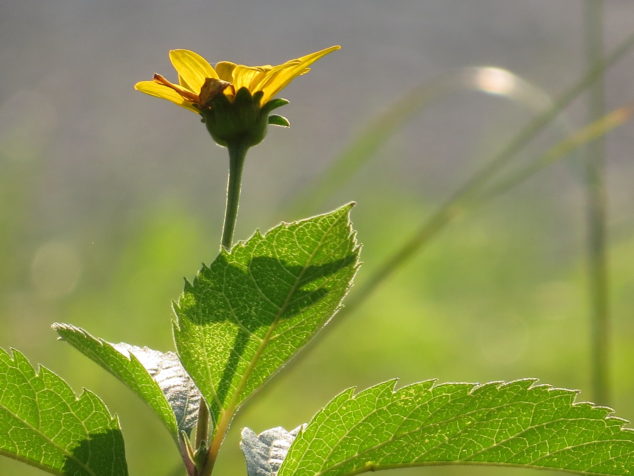
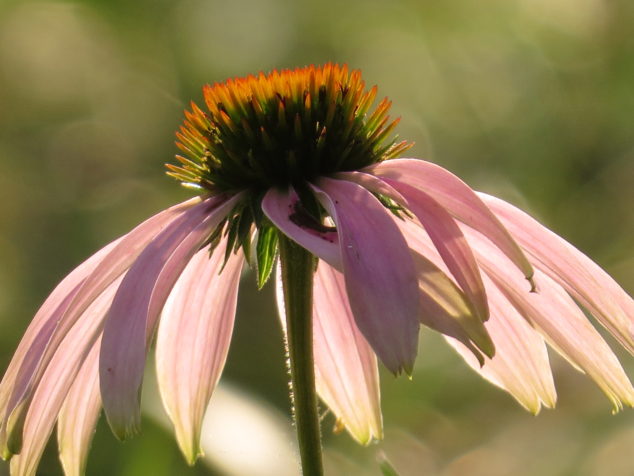
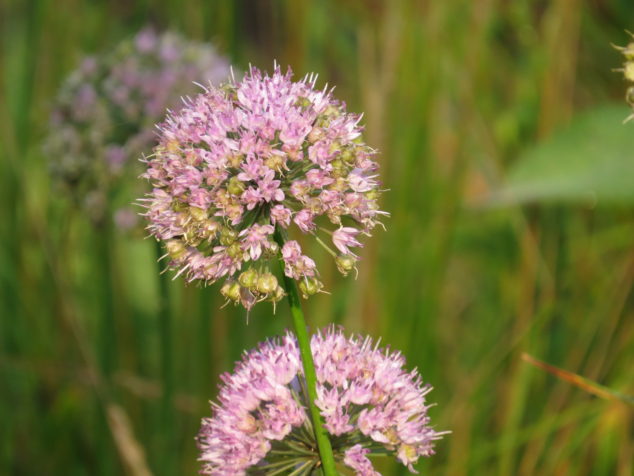
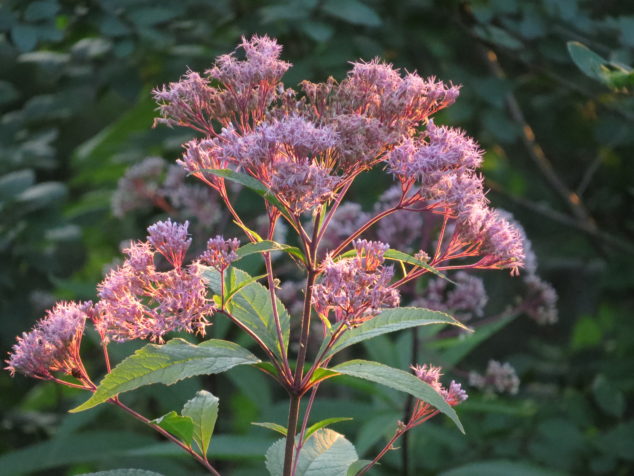
On the other end of the day, when dusk was settling around us, it was still quiet and calm. Tamba lay in the grass. We sat on the patio as the smokey sky turned the sun red. The setting sun streaked through the trees and shone on the rose-colored Joe Pye Weed and etched burning embers onto the live Oak trees.
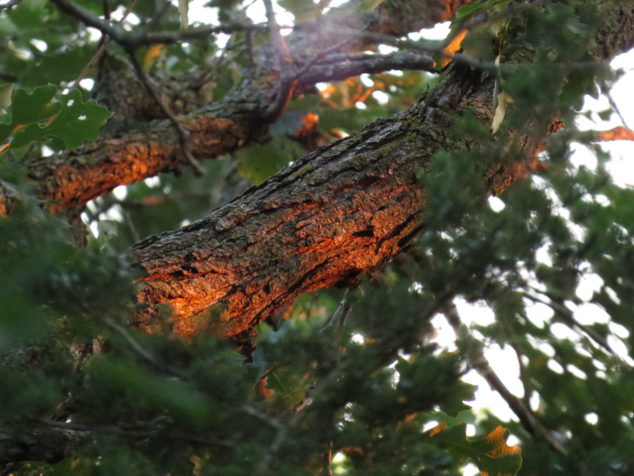
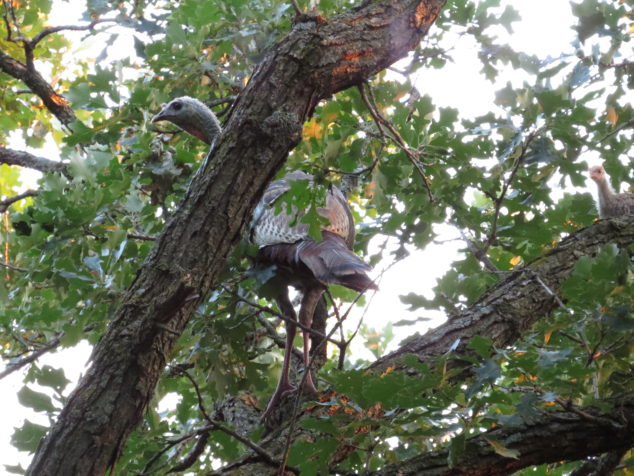
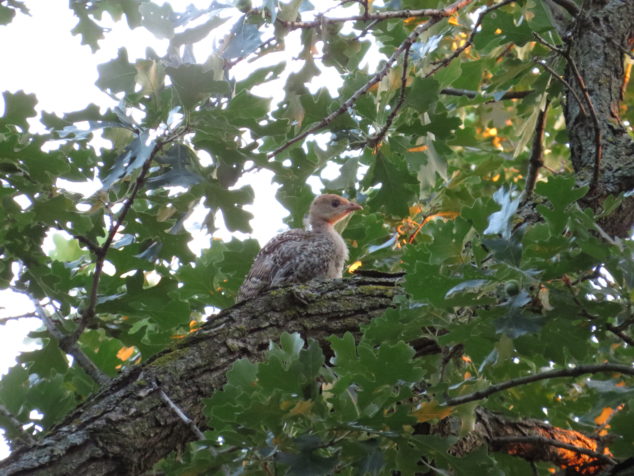
Soon we heard noises in the woods—a Blue Jay was tapping on a branch with an occasional squawk. Then bigger noises—was it squirrels? It seemed too loud for squirrels. Then I saw a big tail in an Oak tree—a big, feathered tail. It was a turkey! Two mama Wild Turkeys and their chicks were flying from tree to tree. Wild Turkeys love acorns, and we wondered if they were eating the acorns from the trees since few have fallen to the ground yet. Like chickens, Wild Turkeys have a crop for storage of food and a gizzard where grinding of nuts and seeds occurs. When the mama flew to another tree, she and the chicks would cluck and chirp to one another and soon the little ones followed. At dusk, Turkeys fly up into trees to roost for the night for protection from predators like coyotes, foxes, skunks, and raccoons. Soon the turkeys in our trees settled down for the night. At dawn, they will fly down to the ground again to begin another day.
The sounds and sights of August, despite the heat and humidity, allude to the waning Summer and the upcoming Autumn. Summer in the North is indeed short and sweet. But Nature prepares us always for the transition. We are gathered up in the progression of time, seasons, and lives whether we are aware of it or not. Just as an early morning walk can tune us in to the blessings of a day, silent stillness can hone us in on those things in our lives that matter, that are important, that are the shining gems in our treasure box. One of those gems for me is a big, Black Lab dog who has walked with me for ten years now. Her transition time, our transition time, is nigh. Dusk is settling around us. And each day I am so very grateful to walk down the road with her, as we are, where we are, in all our glory.
The Art of Being Stuck
I don’t know about you, but there have been a number of times in my life when I have been stuck. Not stuck in the mud or snow—though that has happened a couple of times, too—but stuck in my life. To be fair to myself, most of those times the stuckness was only in a certain area of my life while there was movement and growth in other areas—all at the same time. Like one boot sucked down into the mud so far that your foot comes out of it as the rest of your body propels forward, but you falter because you want to save your boot. And you don’t want to take the next step into the muck with only your sock on. Being stuck isn’t a good feeling, and I would venture to guess that no one chooses it. There is a convergence of thought, belief, and circumstances that stop us in our tracks—and keep us there for a while.
Chris and I, after wandering around St. Cloud trying to find the parking area, went hiking on the Beaver Island Trail that follows the Mississippi River south of the University. It is a biking and hiking trail that follows the old railroad path and the area of the River that contains the fifteen or more islands known as Beaver Islands, as named by Zebulon Pike in his expedition up the River in 1805.
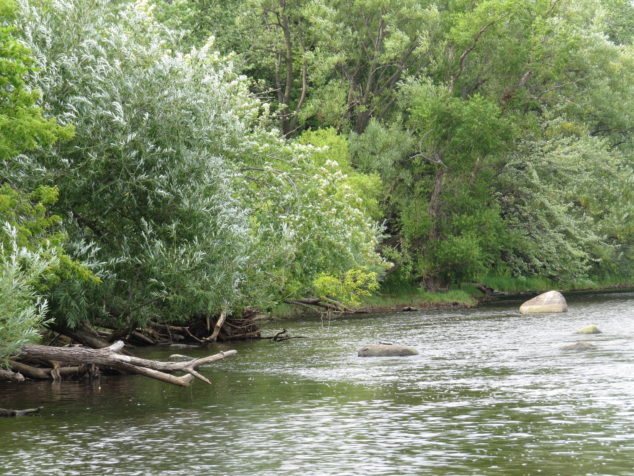
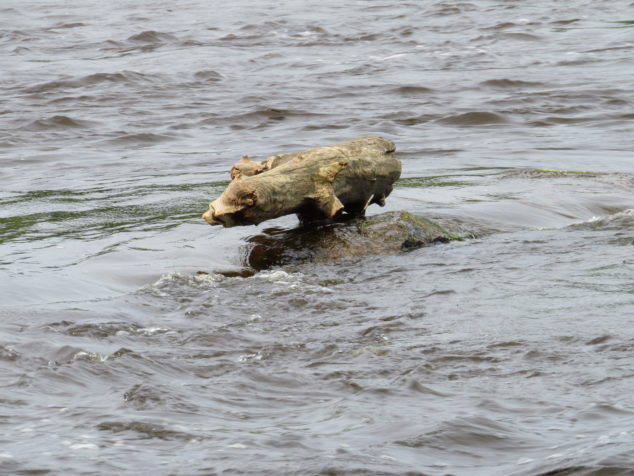
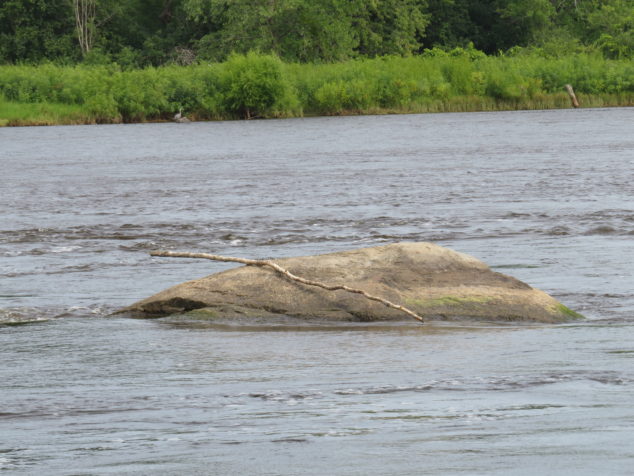
One of the first places where we were able to get close to the River, we saw a log stuck on a rock. The water was rushing around it, and we laughed about how it ended up there. It almost looked like a sculpture of some sort!
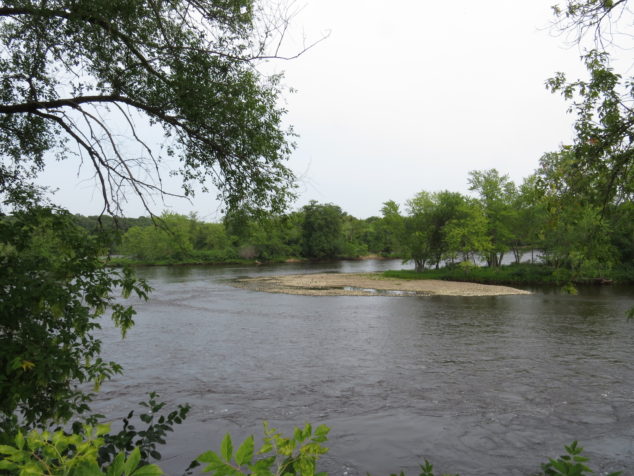
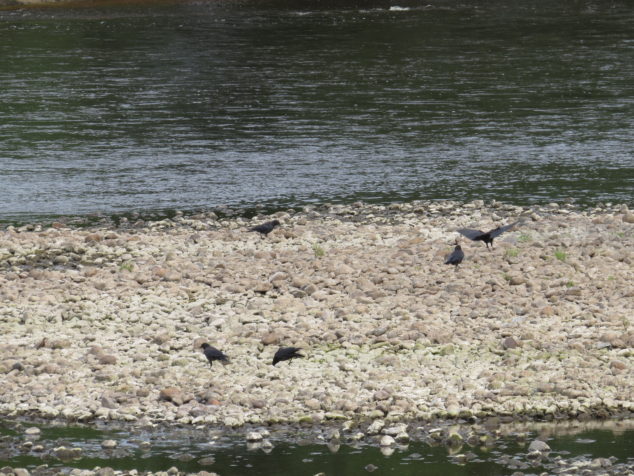
We walked farther to another island with a sandbar of rocks that was populated by crows, not beavers. They were noisy and chippy with one another.
As we walked on, we saw a ghostly dead tree among the varied greens of the other trees. We saw pretty, but noxious Purple Loosestrife swaying in the wind beside the water. And we saw another log stuck on a rock.
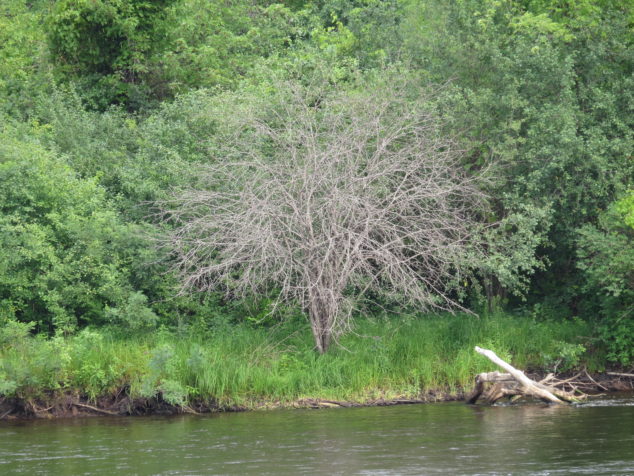
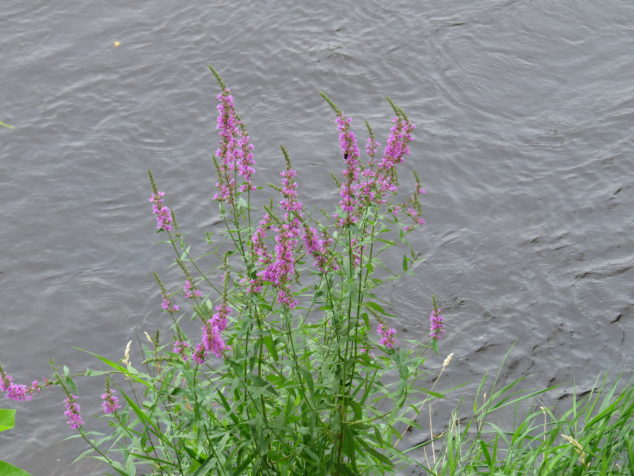
The paved bike path was getting farther away from the River, and with all the trees and horrible Buckthorn, we couldn’t see the water. We did see a historical marker that commemorated where the original St. John’s Benedictine Monastery was located in 1857 to provide for “the spiritual and educational needs of German immigrants.” Ten years later the monastery was relocated to its present location in Collegeville. We saw the belltower of the Catholic-run St. Cloud Children’s Home high on the hill above the tree tops.
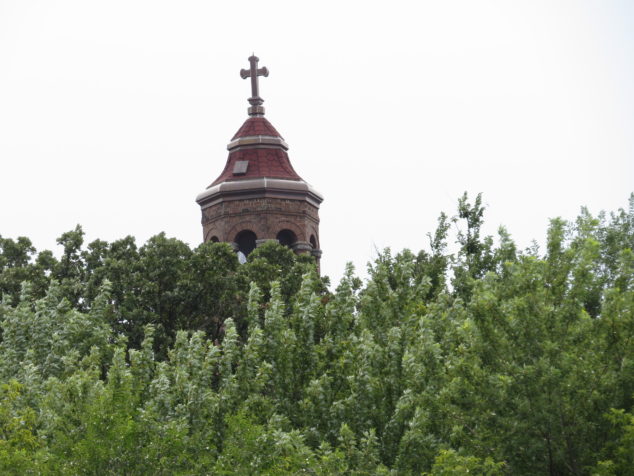
Flowering Sumac and robust Poison Ivy grew along the tree-lined bike path.
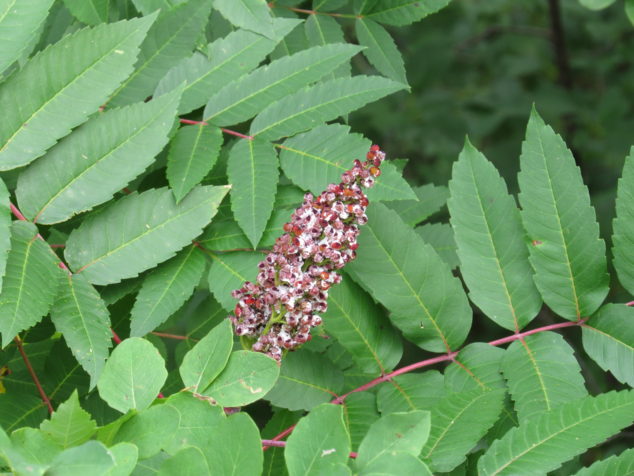
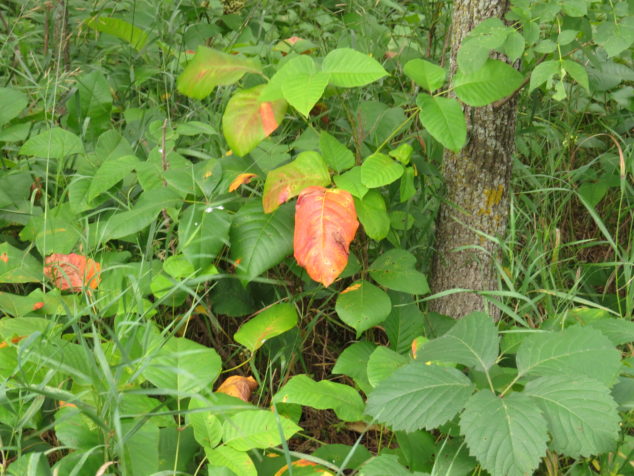
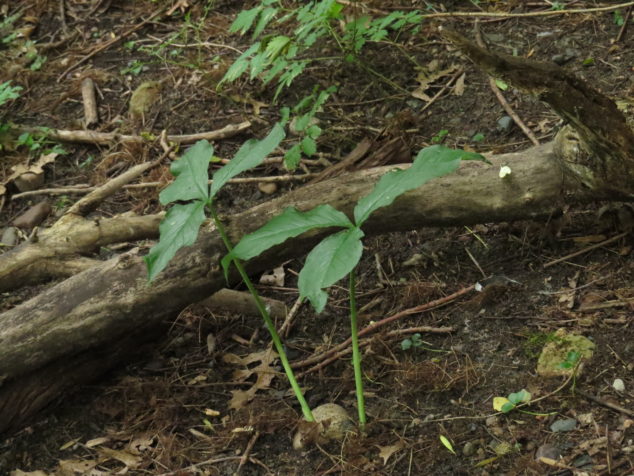
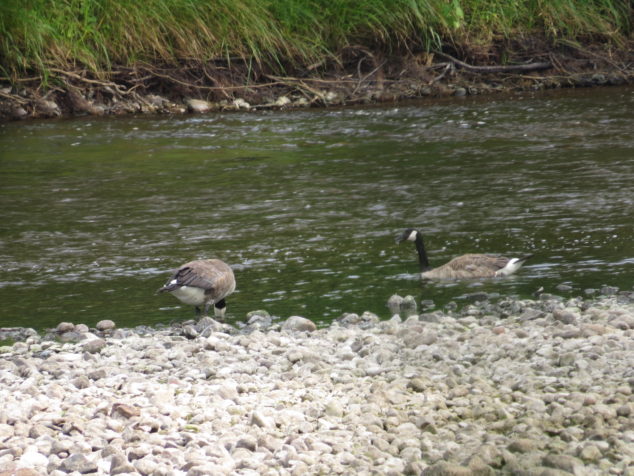
We took a narrow trail off the bike path to go down to the River, trying to skirt our bare calves around the poison ivy. There were large Jack-in-the-Pulpits under the huge, River-fed trees. The air was humid and warm, like a storm was brewing. Once down to the River, we saw Canadian Geese on one of the islands and a pair of granite boulders stuck in the sandbar of another.
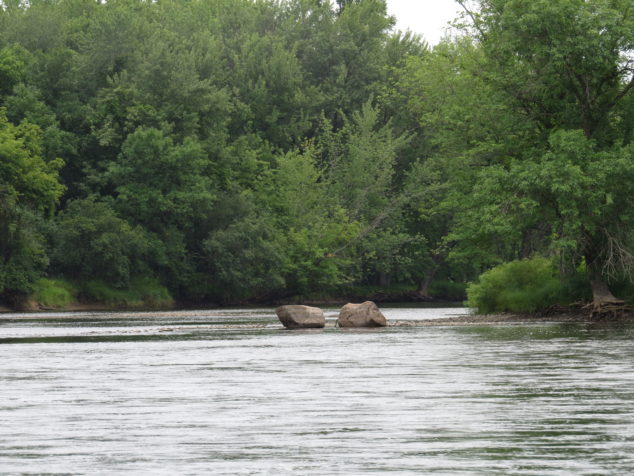
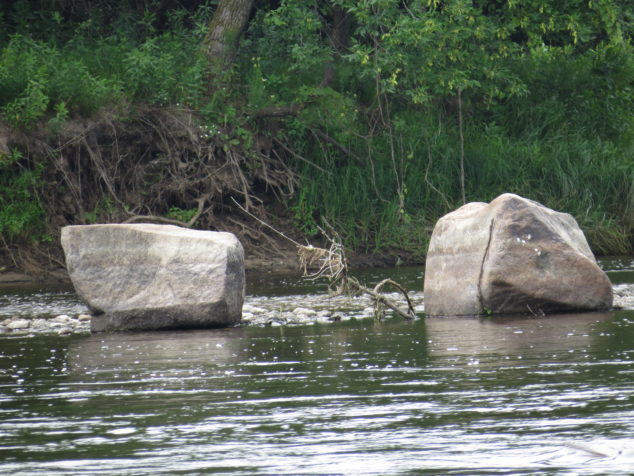
And another log stuck on a rock, perfectly balanced, in the middle of the mighty Mississippi.

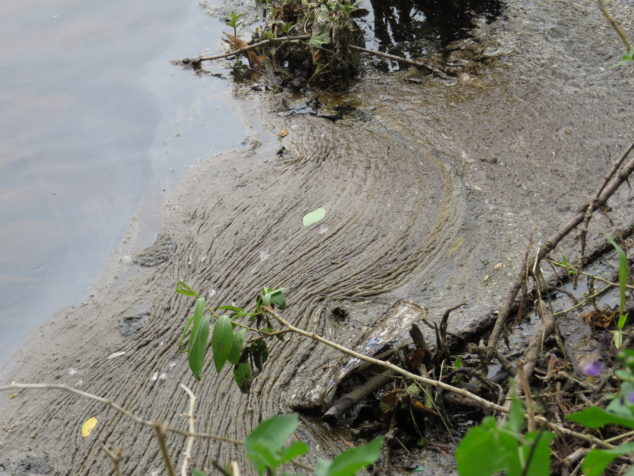
I walked on a huge tree that had fallen into the water and caused a log jam of debris. Scum folded into accordion pleats against the logs, stuck between the current and the unmoving dam of logs.
The River was wild and interesting in this Beaver Archipelago, and I had a strong desire to explore some of the islands, even as I wondered if I would have the courage to take on the current in a canoe.
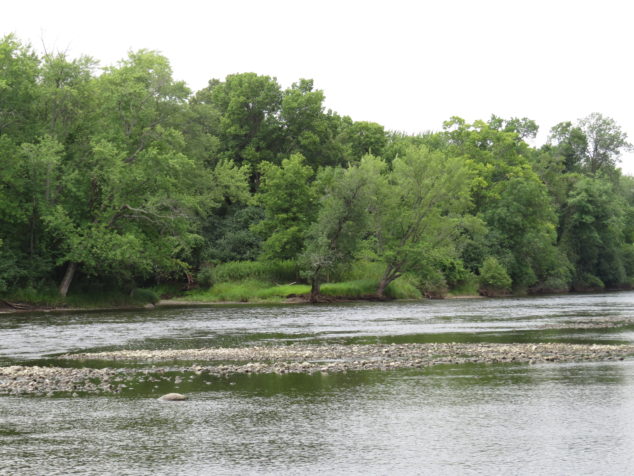
We headed back to the bike path, back to the car, back to the City and saw that there was indeed a storm brewing.
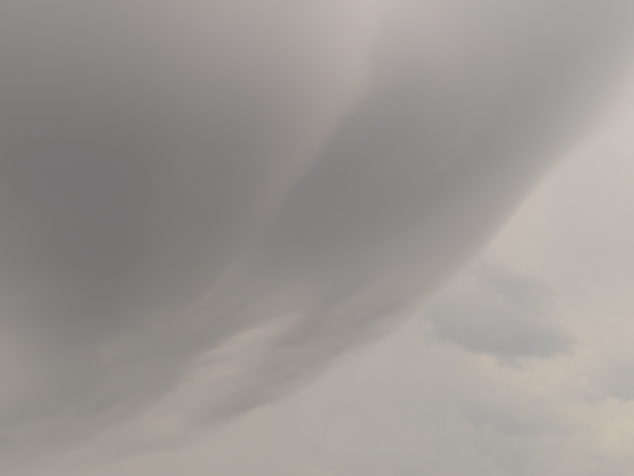
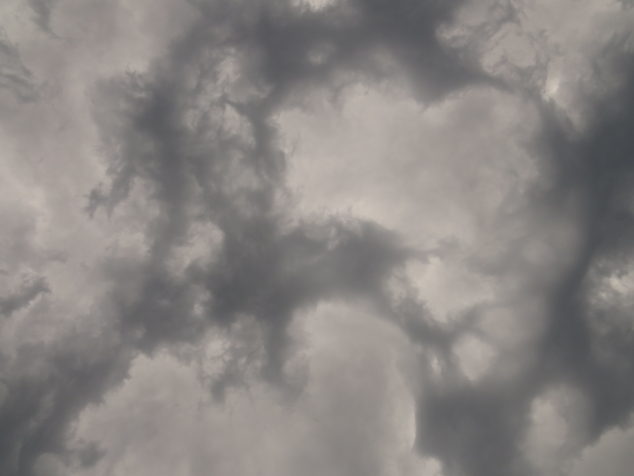
In our short Friday afternoon walk, Nature provided plenty of examples of the art of being stuck. The ever-flowing, ever-changing Mississippi River was the reason logs ended up in sculpture-like poses on rocks protruding from the water. It would also be the reason, with a torrential storm and rising waters, that the logs would become un-stuck. The boulders illustrate a different story. Perhaps it was a glacier that deposited them there—it is more of a mystery. Would the most powerful flooding waters move them? I’m not sure. The huge, fallen tree will hold back the current, the logs, the debris, for years, but will eventually rot away and succumb to the movement and power of the River. Life is our River, ever-flowing, ever-changing. It is the reason for our stuckness and the reason we move on. Sometimes the dead ghosts of our past stop us in our tracks, and we are afraid to step into the muck of our feelings. We stay stuck as Life flows past us. But the current of Life or an ominous, brewing storm can propel us from our rock, from our muck, from our hidden place behind an old log. Once again we enter the River and feel the exhilaration of that life-giving force that quietly supports us in our static pose of stuckness and steadies us in the joyous, tumbling current of Life.
Snapshots of July Stories
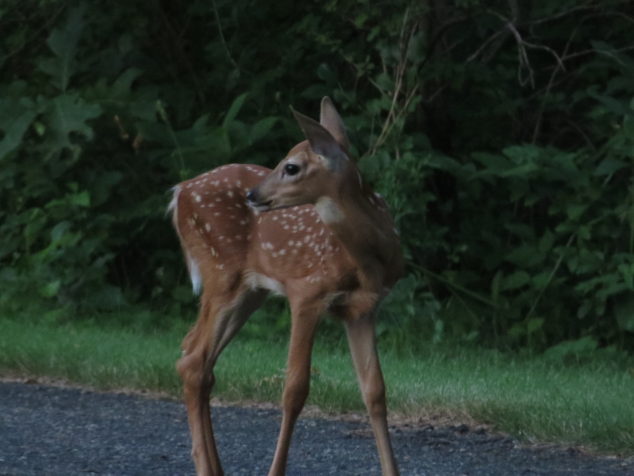
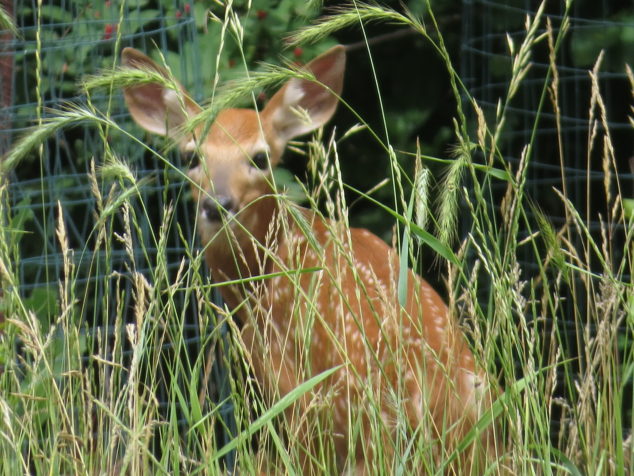
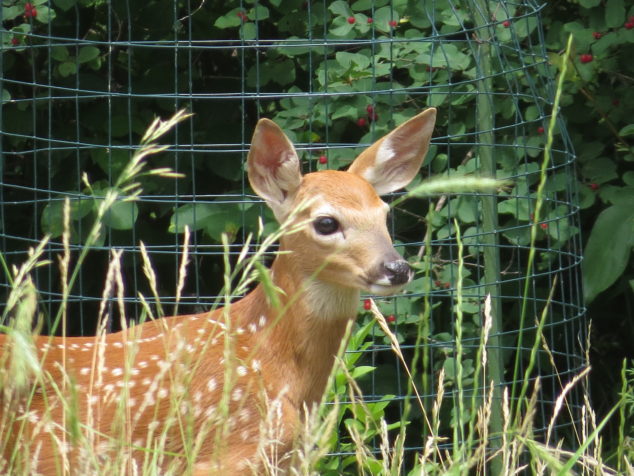
Here we are in the middle of the year, in the middle of summer—this month of July. I tend to wish away July when the temperatures rise, when the humidity causes so much discomfort, and when bugs are bugging humans animals, and plants. Oh, and also when the deer jump our garden fence and eat the beans, beets, and peppers. The first half of the month was hot and sticky—and I realize that relative to the rest of the country, we have it easy. Just as I was wondering how to navigate the humid days of summer, we got a blast of welcome relief from cooler Canadian air. The last two weeks have been glorious summer days—days I am not wishing away! Looking over my photographs of July, I realized that our month could be told in a series of little stories. There is the two-sided story of the deer—the nemesis of Chris and his ‘fight’ to save our hostas, trees, and other plants from being devoured by our cloven-hoofed friends as opposed to the beauty of spotted fawns with their mamas.
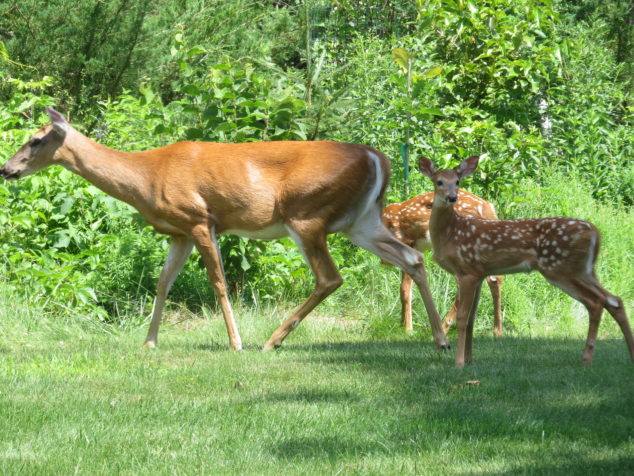
I saw one small fawn by itself one evening, just standing in the driveway, looking back and forth between the barking dog in the house and the sound of people walking down the street. No mama was in sight. Another day, a fawn hid behind the grass by the blueberries—again without its mama. It’s unusual to see such a young one without its mother close by, and I wondered if she had been killed somehow. Poor, cute baby.
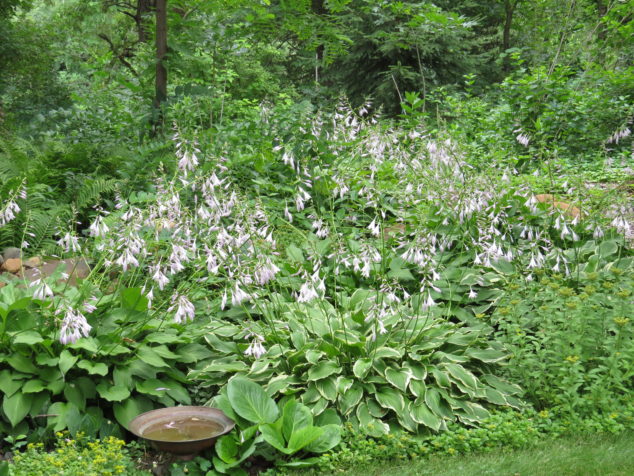
July holds the story of blooming things. The garden vegetables—peppers, tomatoes, green beans, and cucumbers—are flowering and beginning to grow their fruit. Hosta flowers are in wild abundance, much to the happiness and satiety of the hummingbirds.
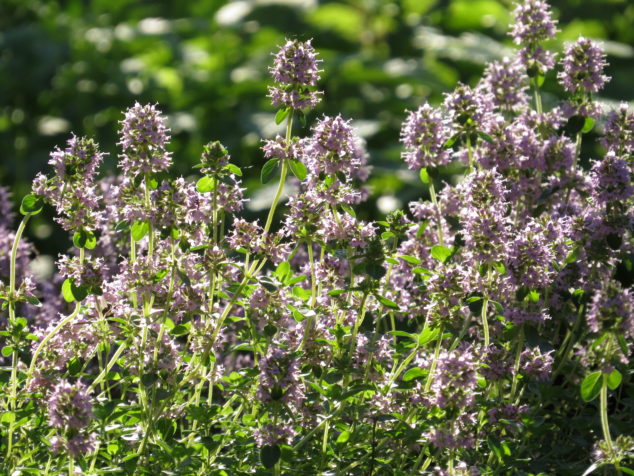
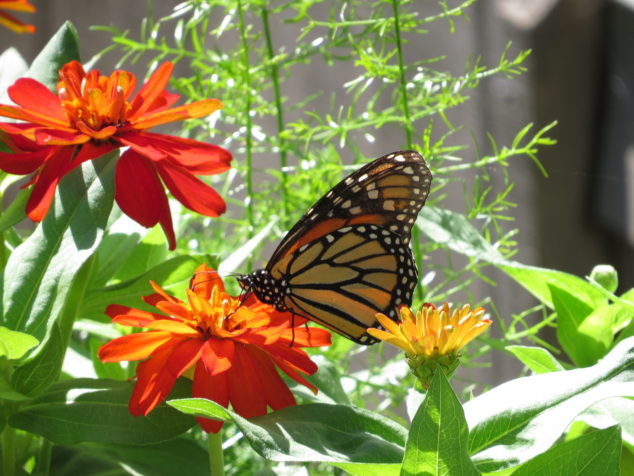
Carpets of thyme are covered with purple blooms, and annual zinnias are bright and inviting to the butterflies.
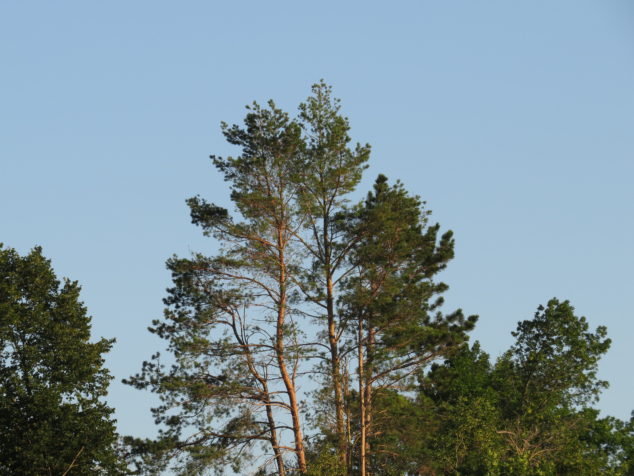
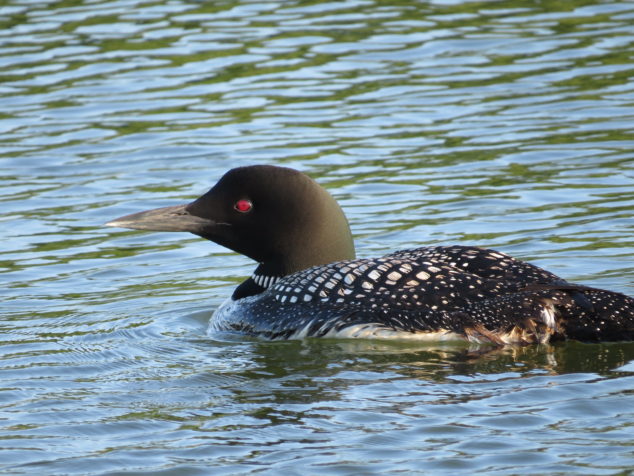
There is the story of time on the lake with friends—delicious in-the-moment time when the look and feel of the water and wind make every cell in your body feel alive. It is the story of Minnesota where pines and loons represent our state.
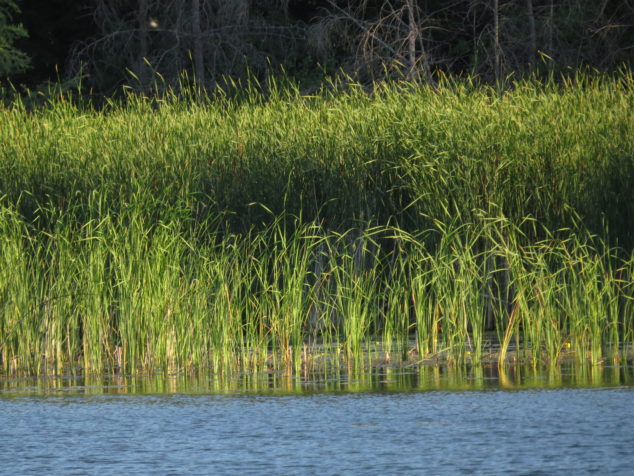
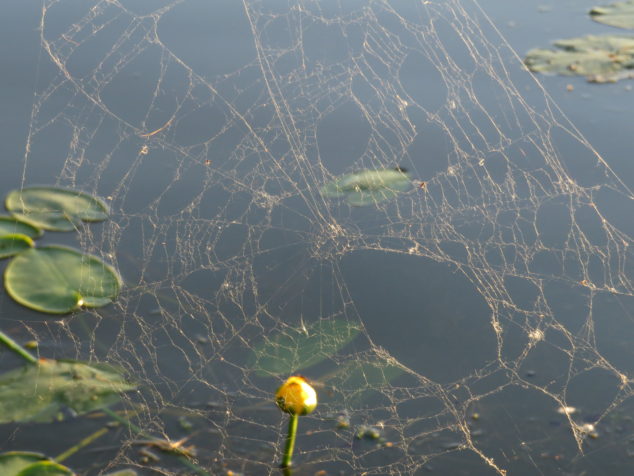
The story of the Lake is not complete without Cattails, Yellow Pond Lilies, and spiders who take advantage of a corner of a dock to capture a plethora of insects that hover around the water.
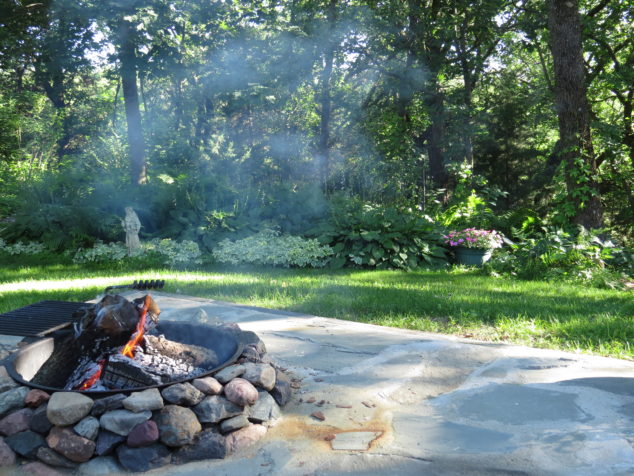
There are the summer stories of friends and relatives around a fire on the patio.
The stories of Sunlight and Moonlight fall on the moss of trees, the burbling creek water, and the tall oaks of the forest.
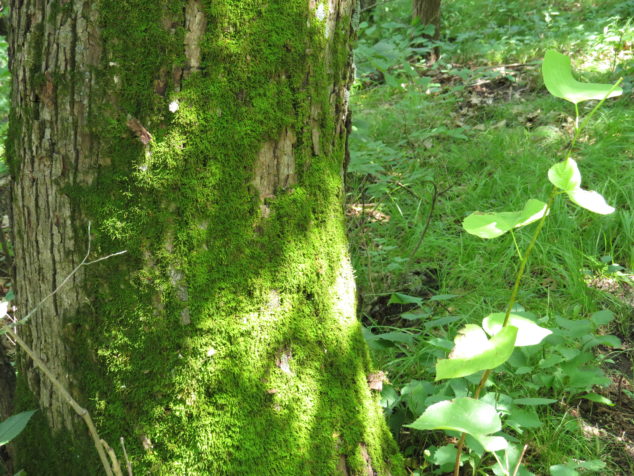
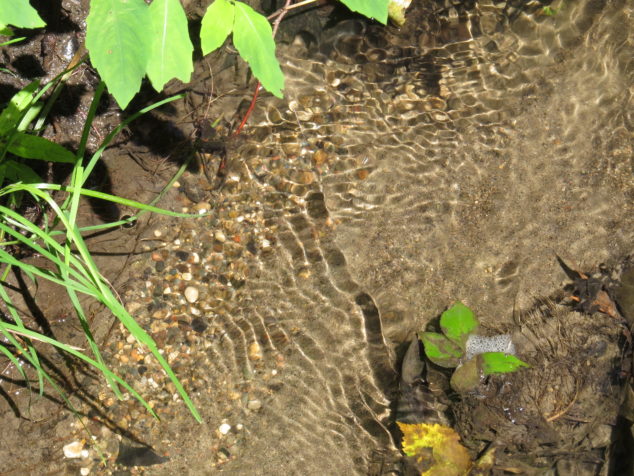
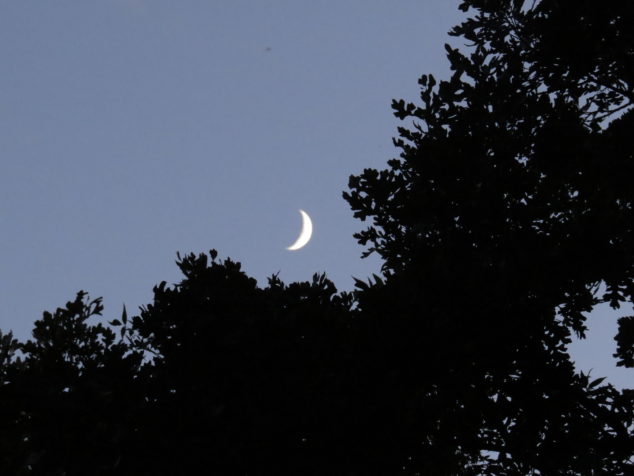
July stories told in snapshots are added to the album of Summer and then to the bigger albums of our year and life. I like how the photographs open those albums, how they illustrate a part of the story, and how they reveal elements that may not have been noticed before. So often—like the deer story—there is a little story within the bigger one. It also illustrates how there can be different feelings and thoughts about a situation, not only from different people, but even within one person. Our personal stories, seen through the snapshot of a photo or memory, are limited, however; we don’t see what’s happening off camera or have all the pertinent information. But a photo and story are also gifts to every one of us—they remind us of the beauty and goodness of life. They make us remember not to take people or things for granted. They instill in us the preciousness of time. What are your July stories? What delicious moments in time have you had this summer? And are you ready for a new story to unfold in each new day?
In the Web of Our Lives
My Mom was here for a visit this weekend. While looking at old pictures and reminiscing, she asked me whether I remembered the surprise birthday party we had thrown for her 35th birthday. I needed a few more prompts for those memories to come to the forefront of my brain, and as we talked about it, different strands of the story started weaving together into a clearer picture. She told it from her point of view, and I remembered it from my then fourteen-year-old self. She recalled all the chores us kids had been doing—painting the barn, mowing the lawn, cleaning the house—and how proud she was of us for being so industrious. We were trying to get things cleaned up and ready for the party! My aunt had asked her to come to Harrisburg to go shopping. We needed to get her out of the house! They planned on all coming back to our place for cake and ice cream. Everybody would be there by that time! I recalled the excitement I felt keeping the party a secret from my Mom. I remembered how satisfying it felt to get all those chores finished and to have the place looking good. I thought about the help we had from our Dad, our aunt and uncle, and our family friends to make the surprise and party a success. Then she told me that my older sister didn’t remember it at all! Somehow the strand of memory for that event was invisible or broken for her.
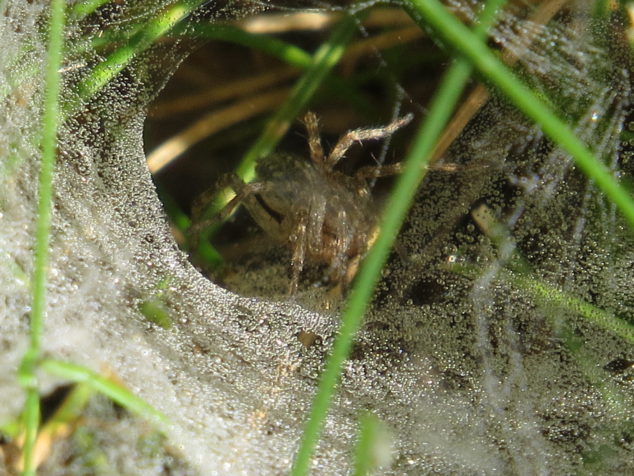
One morning last week I noticed the dewy webs of grass spiders. Normally one wouldn’t even notice the webs, but the dew clung to the strands like tiny white crystals.
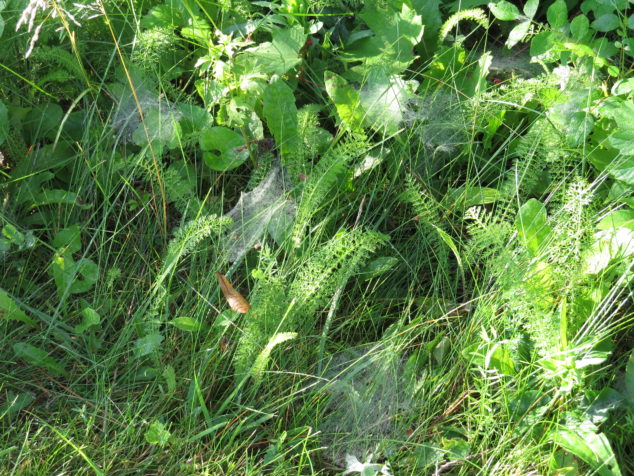
One web was shaped like a bowl, and at the bottom of the bowl was a funnel. In the funnel, ready to ‘catch’ whatever fell into her lair, was a grass spider.
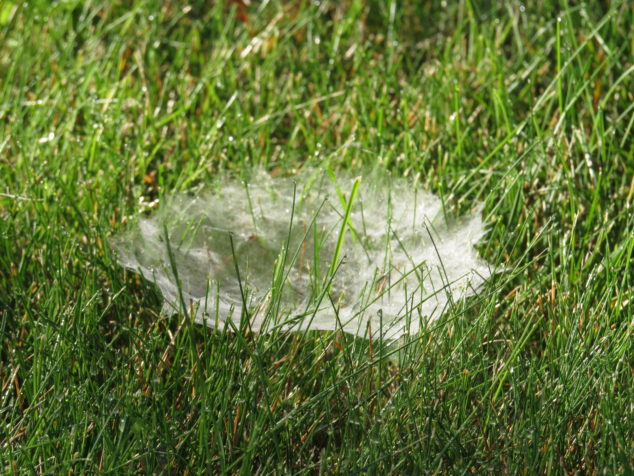
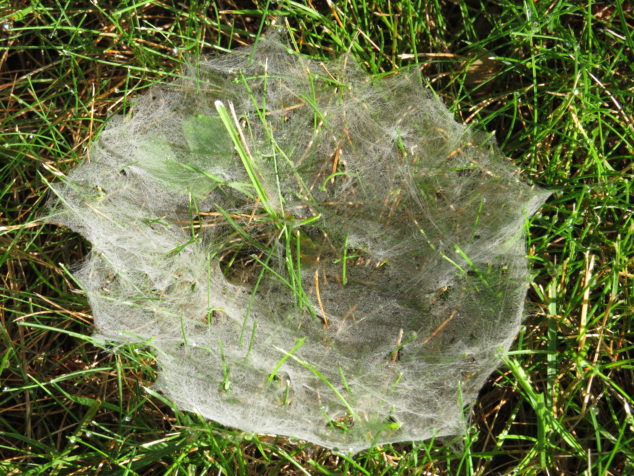
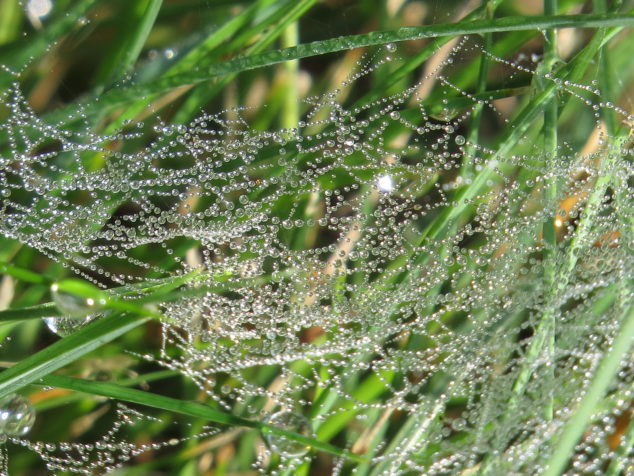
More webs dazzled in the sunshine as each drop of dew glistened like a diamond.
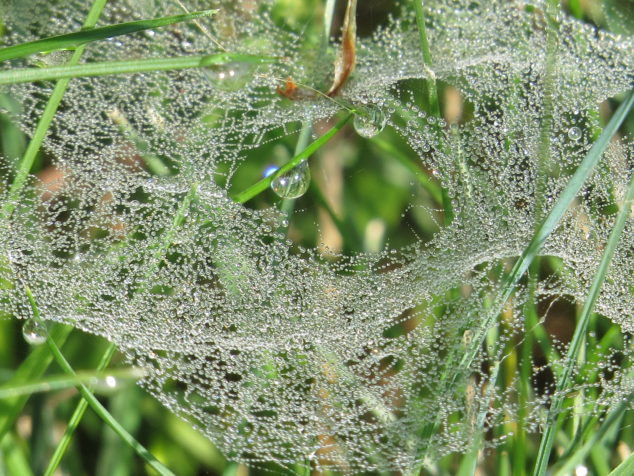
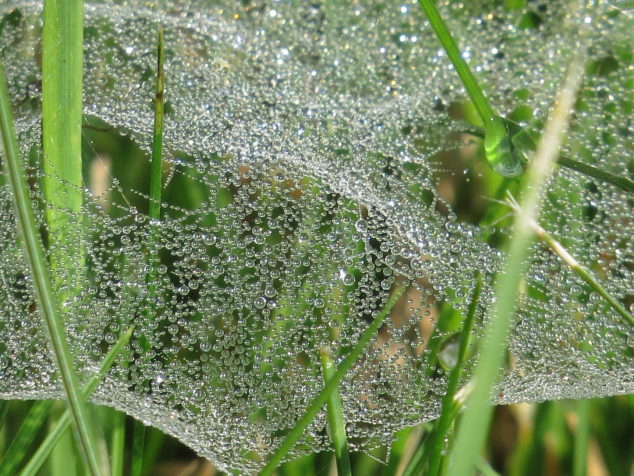
Today I found another web of webs in the Lily of the Valley. It was not as neat and even as the grass spider webs—it was much more complicated, convoluted, and chaotic. Or so it seemed. No crystal dewdrops hung from the web, but the sun still reflected off the gossamer strands.
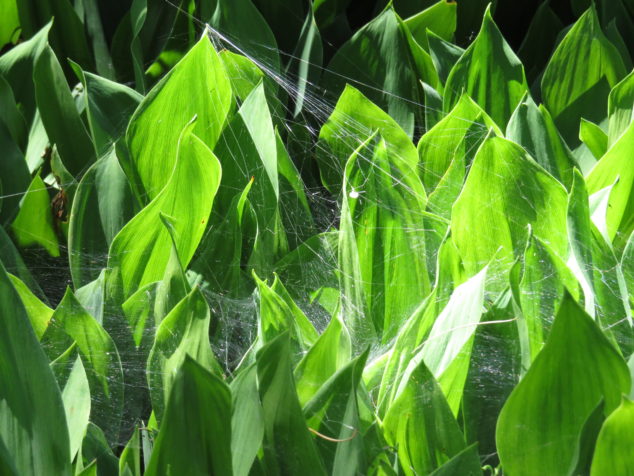
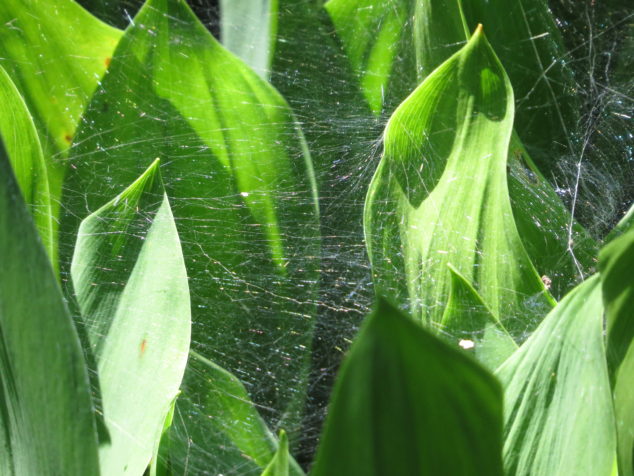
A web is a home for a spider, a place to catch food, and sometimes a nursery for the young. It is made from the strong, flexible, proteinaceous silk the spider ‘spins.’ It is often invisible but will catch the light rays to attract insects. The strands of our memories form the web of our lives. Our brains store these memories in a complex yet structured way that is most often connected to a heightened emotion, like the excitement I felt from planning the party for my Mom without her knowing about it. We all remember events differently, if we remember them at all. At times, we don’t remember things because there are too many mundane, not-important things that happen to us—we don’t need to remember them. Often we have memories that fade away with time and can be recalled with help. But sometimes things happen that interfere with the structured formation of memories—overwhelm and trauma can cause our memories to be stored in a convoluted and chaotic way. We cannot recall them—they are there but invisible to us. So how do we shine the light on the strands of our memories? When we allow ourselves to be in quiet and intentionally ask ourselves questions, often our minds will let us know the answer. We can talk with one another to piece together the individual strands of memories that formed the web of that life event. Looking at old pictures or visiting past places illuminates the dusty cobwebs of memory, often shaking things loose, so we get a clearer picture. We can illuminate the strong, flexible strands of our memories, so they shine like diamonds in the web of our lives.
The Light in the World
“Where there is darkness, light…” –from the Prayer of Saint Francis
There were two times in my life when I was in profound darkness. The first time was when I was very young—before many memories were etched into my brain, and when my brain, in all its wisdom, sequestered that darkness into a walled-off place so I could continue to smile and run and explore and be a child. The second time was forty-three years later when the walled-off place suddenly burst open, spewing all the feelings and emotions of that earlier time into my mind, my body, and my soul. I could no longer smile, I could barely move, and my soul felt like it was dying. There were other times in my life—between those two times—when I peered into the darkness of the abyss, when I stood precariously on the edge fearing any misstep that would plunge me into that place I did not want to go, could not yet go. During the second darkness, there were a few amazing beams of light that guided me through—my therapist, my pastor and friend. There was the warm, caring light of Chris who pulled double duty with the chores and work, even when it all felt confusing and overwhelming. And there was the brilliant light of my children—one who was already gone to college, one who was on the cusp of leaving for school, and one who still needed my day-to-day presence.
I am acutely aware of the toxic darkness that resides in our world—where children are intentionally separated from their parents, where violence permeates homes and lives, where people are going hungry and sleeping on the streets, where illnesses are unable to be treated, and a list too long goes on. But I am also joyously connected to the light in our world—the life-giving sunshine in our daily lives, the hope and comfort of spiritual belief and practice, and the day-to-day words and actions of good and kind people. The early morning and evening sunshine has been lighting up the landscape around our place, noticeable as we sit on the porch or walk through the yard. The coming or going of darkness is emblazoned by sunlight as it reaches from the horizon through trees and leaves.
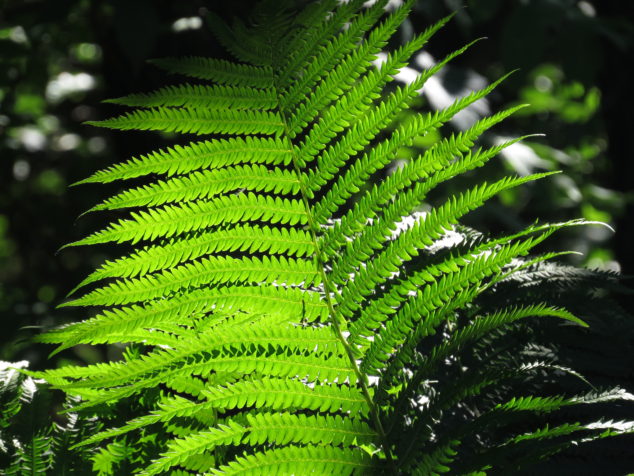
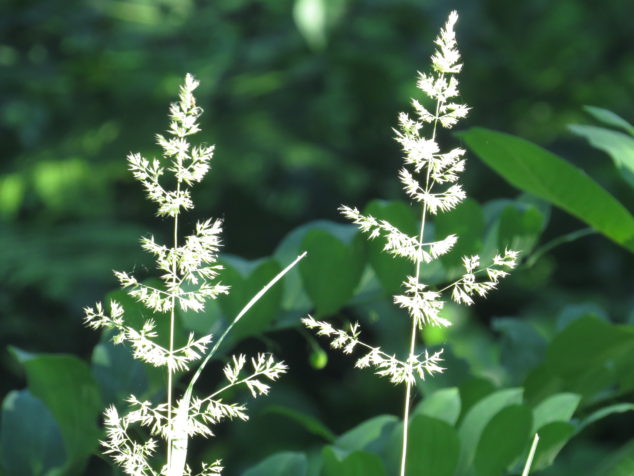
It illuminates the seedheads of grass, transforming the natural color to pure white light.
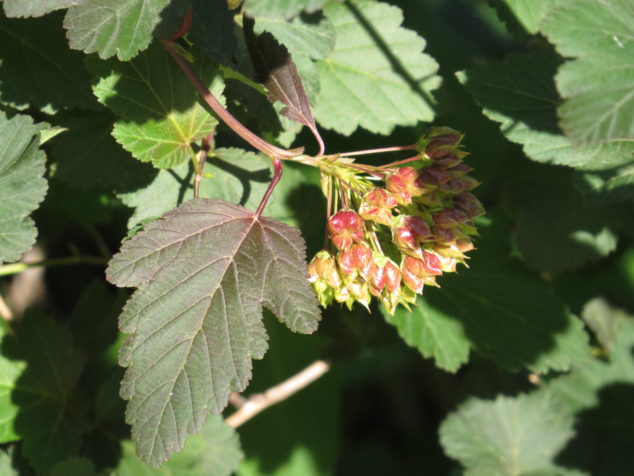
Ninebark shrubs flower and fruit in little clusters that often get lost among the leaves. The sunlight reveals some hidden fruits.
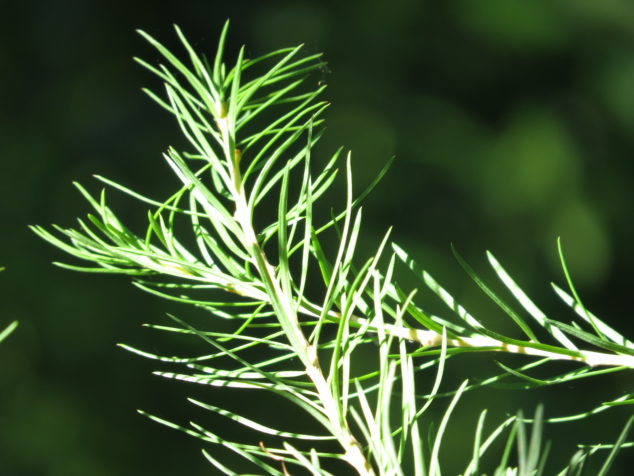
Wispy needles of a Larch tree dance green and white in the light, casting narrow shadows on themselves. We are all a combination of light and shadow.
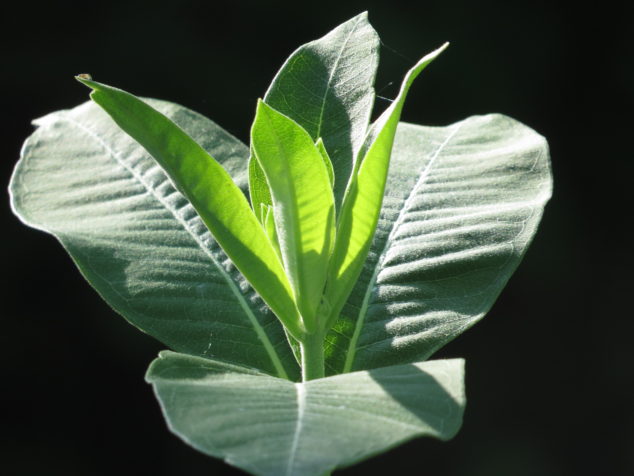
Life-giving food made from life-giving sunlight and soil is part of the process of transformation for a caterpillar eating Milkweed and becoming a Monarch butterfly.
How does sunlight impact a rock? It beams light energy into the hard, seemingly impervious surface—some gets reflected, making the rock look brighter, while other gets absorbed and transformed into heat.
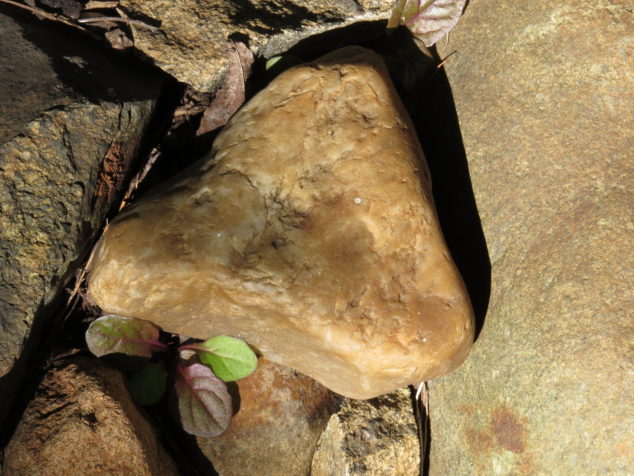
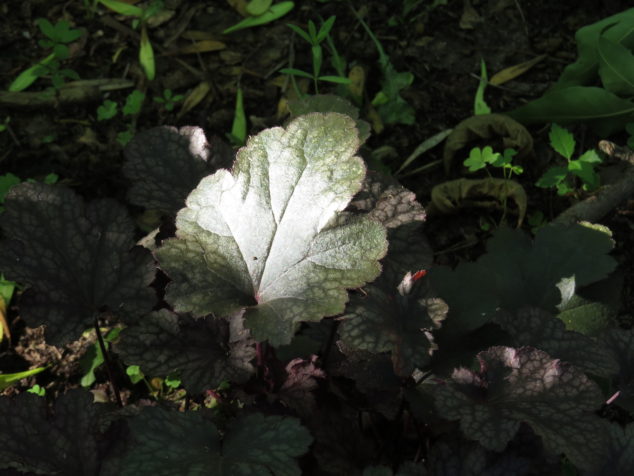
When a place looks dark, light can shine on unexpected places making the whole picture look different. Often our help, our light, comes from people and places we never expected.
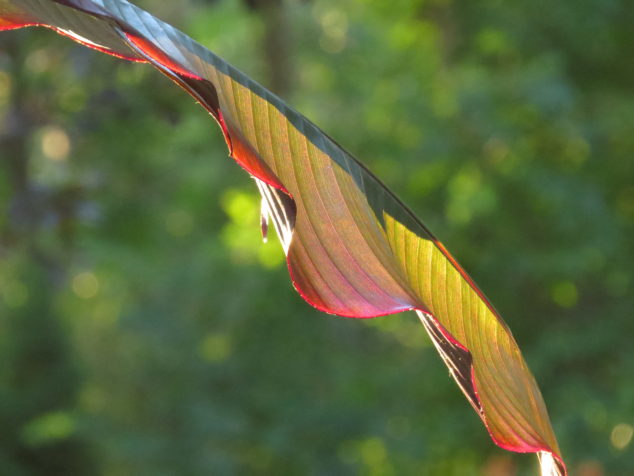
A constant source of pleasure for me is the ever-changing way the evening sunlight radiates through the leaves of a Banana tree on our patio. The red edges turn to fire, the veins are unveiled, shadows deepen the green color in areas, and drops of pure white light drip from and through this living, breathing organism.
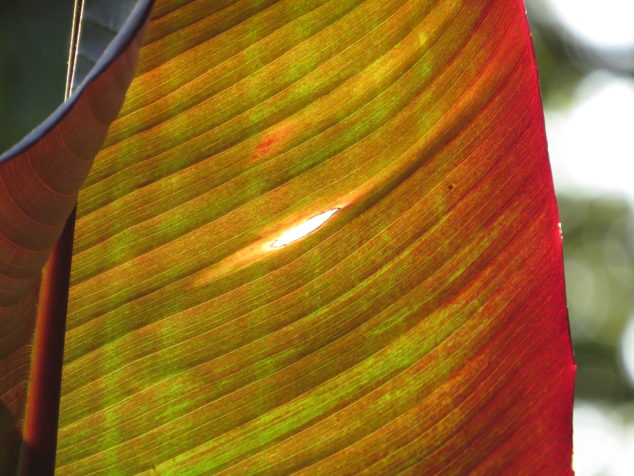
Sometimes the sun doesn’t shine on our face, but enlightens and enlivens our heart where we need it most, so that later our true beauty will be revealed for all the world to see.
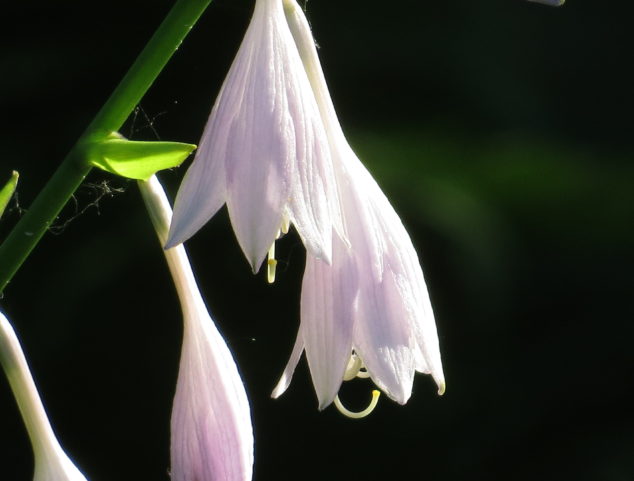
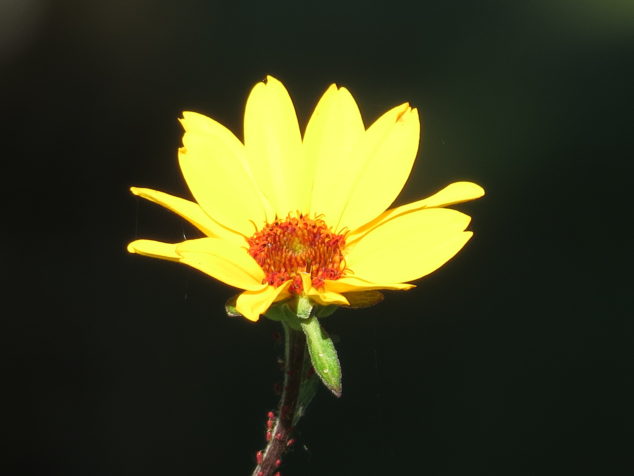
Light also exposes dangerous, harmful, or annoying things that go unseen in the shadows and darkness. Red aphids on a sunflower stem glowed in the sunlight, and vines and webs were clearly seen in the light of the sun and the lens of the camera. Sometimes one has to look closely with unflinching courage in order to eradicate the harmful things.
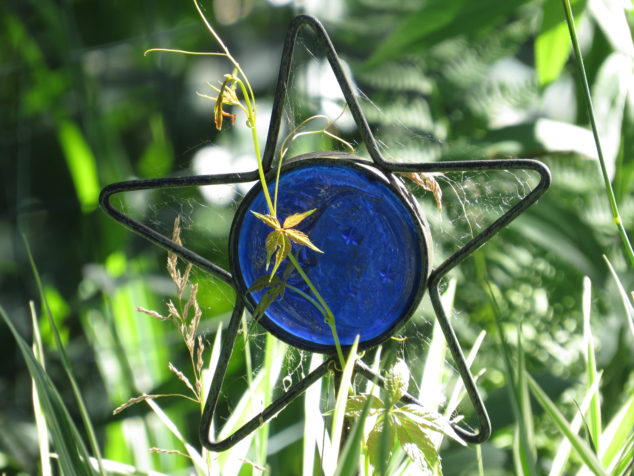
The result of being aware of the light and the darkness, of looking honestly and closely at our own heart and soul, of asking or allowing or finding the help we need, is the revelation of an inner and outer beauty that displays our true essence.
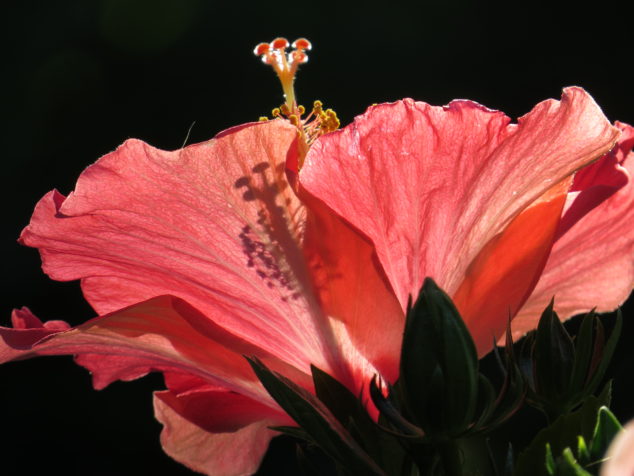
Our brains are amazing structures that protect us during overwhelming events by sequestering sensations and emotions to a walled-off place so we can continue to function at some level. But they never disappear, and time does not abate the intensity of our feelings. Sometimes the walled-off place is touched or triggered by a sensation or situation, and we react instantly, unconsciously, and we or someone around us wonder where those words or actions came from. That’s why the second darkness is so important—to slowly know and release the sensations and feelings that have been clouding our life, so we are no longer afraid of the dark abyss, because it is gone. We all need help at times with our shadows and darkness, and we are all called to be sowers of light. A Minnesota author Kent Nerburn wrote a book Make Me an Instrument of Your Peace—Living in the Spirit of the Prayer of Saint Francis. He wrote how Saint Francis went forth in the world to give his light to others, how at times it was an act of pure will, and how fervently he believed that every small gesture of light was needed. Nerburn wrote, “We must remind ourselves that, though our lives are small and our acts seem insignificant, we are generative elements of this universe, and we create meaning with each act that we perform or fail to perform.” He continues this compelling call to action with “All our actions on this earth have eternal life. It is up to us to determine whether our actions have a life that increases the light in the world or adds to the darkness.” May we know our shadows, may we light up the landscape of our world, and may we let the luminescence of our true essence shine on.
- « Previous Page
- 1
- …
- 21
- 22
- 23
- 24
- 25
- …
- 50
- Next Page »