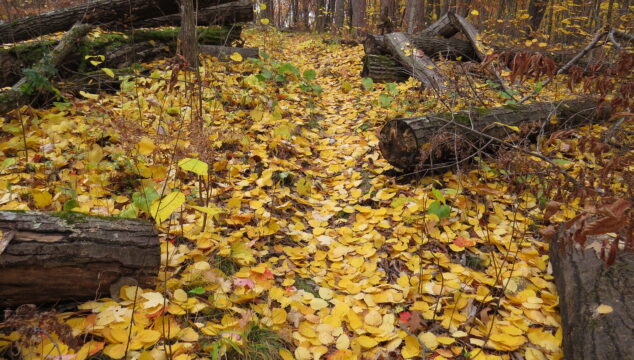
Come walk with me in the peak Autumn beauty of the Northwoods. To say that I love this time of year is an understatement. Most everyone can appreciate the colorful falling leaves---it reveals the 'true self' of a tree when its leaves are no longer producing chlorophyll. Their true colors are revealed, and there is something simple … [Read More...]
To Fly Above the Black Swamp
Experience, which destroys innocence, also leads one back to it. –James Arthur Baldwin
I called bogus on myself when I re-read last week’s post before publishing—the last line was bothering me. Not because it wasn’t true, but because it wasn’t complete. Time and maturity do contribute to our becoming sparklers of light, but when I asked a question in a Facebook meme of what makes you happy during a rough time, one particular answer struck me. My friend Sharon answered with a picture of her young grandchildren—three sparklers of light with little age and no maturity. What they did have was innocence, the perfection of newness, pure emotions, and a drive to experience their world.
Our day of the dragonfly at Mille Lacs Kathio increased exponentially when we drove the short distance from Kathio to Father Hennepin State Park, situated on a large peninsula on the southeastern side of Mille Lacs Lake. I am in awe of this lake. Its size alone—207 square miles—is enough for one to appreciate, but it also contains clear and beautiful water along with a brag-worthy population of walleye and other fish.
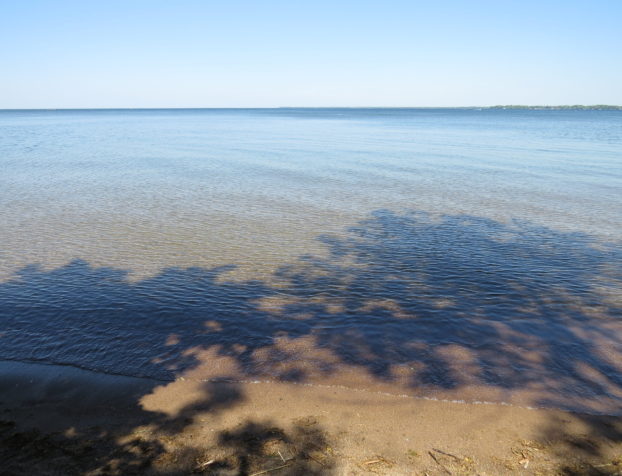
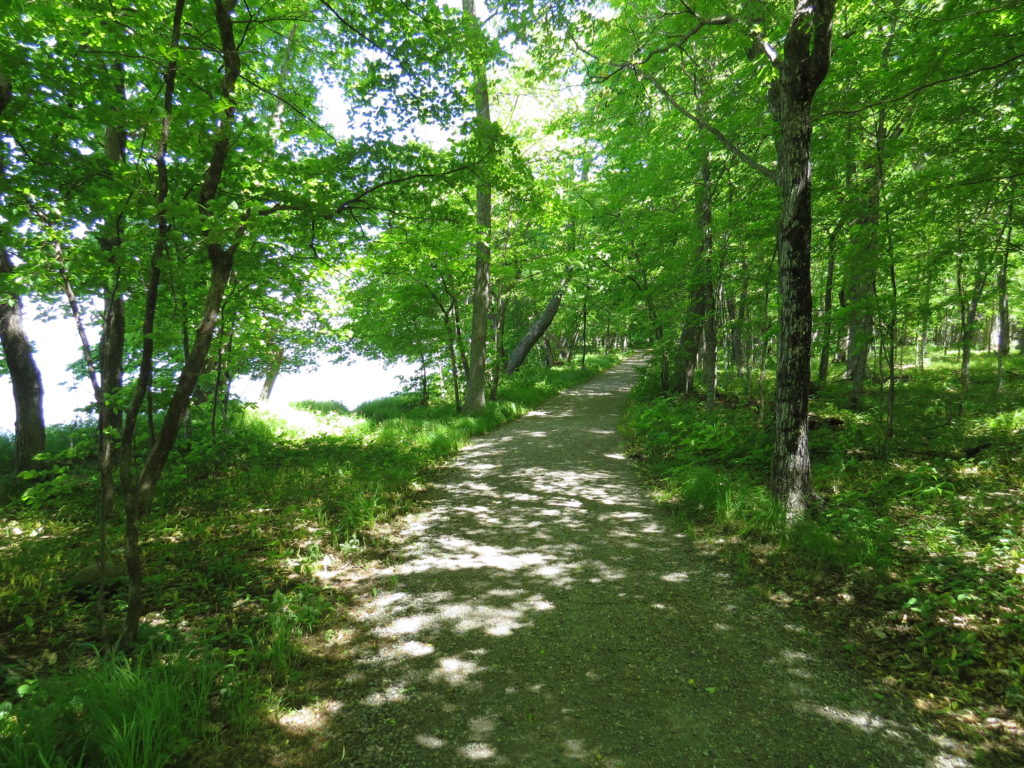
The park was named after Father Louis Hennepin, a French priest who explored the area in 1680. He wrote about the landscape around the Lake and the Mdewakanton Dakota people who lived there. Chris and I hiked the lake-hugging Pope’s Point Trail through a hardwood forest of Maples and Basswood that must be spectacular in Autumn.
We soon came to a black water swamp/lagoon that stretched along the inward side of the trail. It was a sharp contrast from the clear, blue water of the Lake. It made me think of the Bobby Bare song Marie Laveau—‘Down in Louisiana where the black trees grow, lives a voodoo lady named Marie Laveau…’
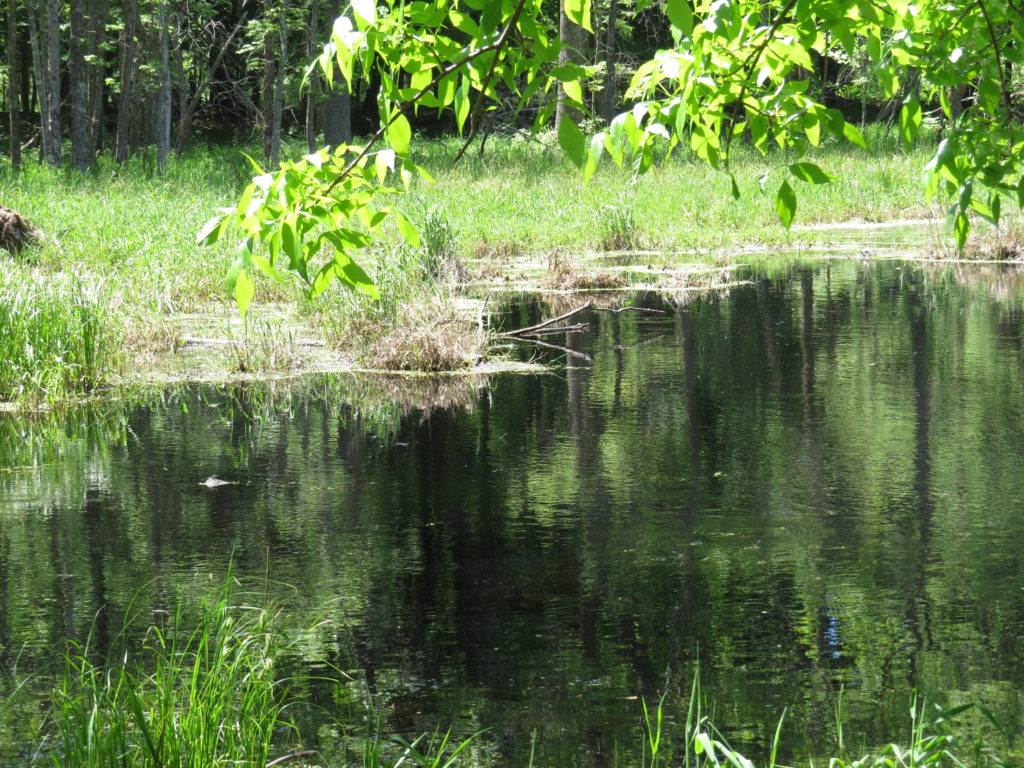
‘She lives in a swamp, in a hollow log…’ When I researched the history of the Park, I found that Father Hennepin called this area of Minnesota ‘Louisiana’ in honor of France’s King Louis XIV (and conveniently his own name), and later published a book Description of Louisiana from his extensive writings about the area.
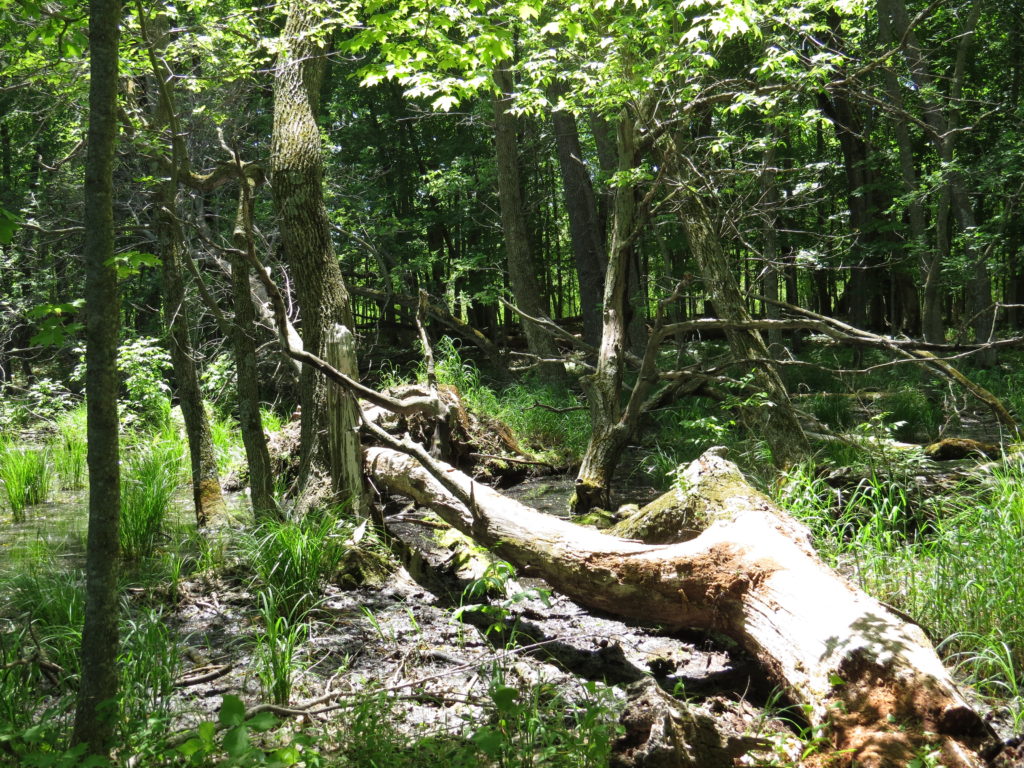
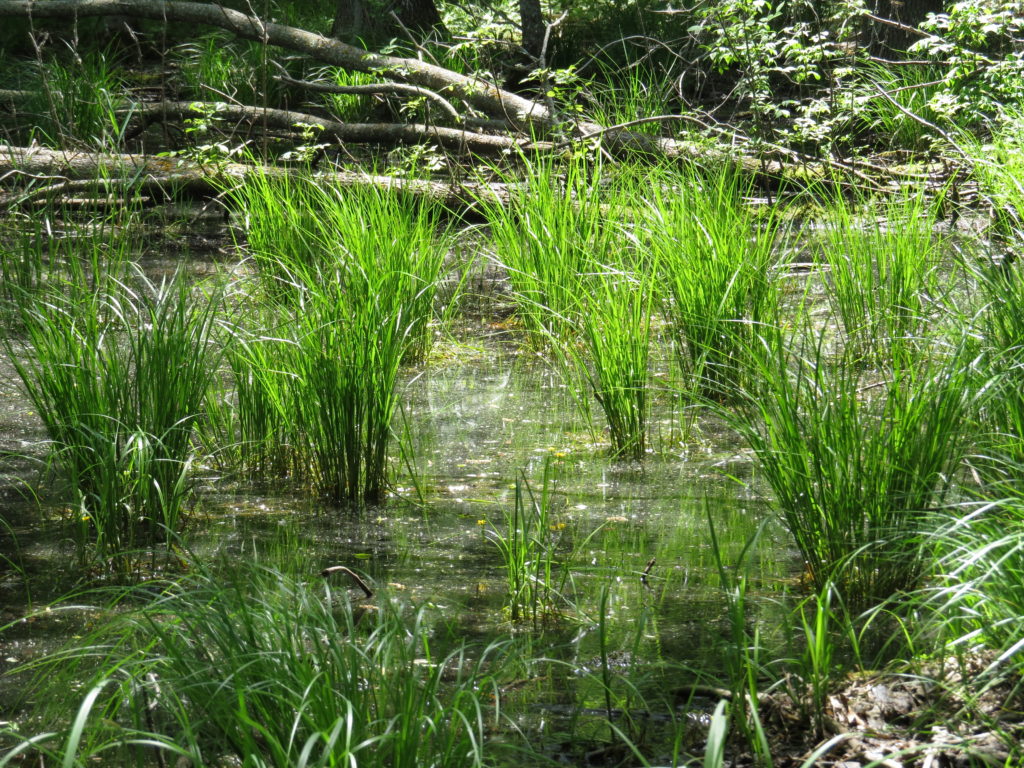
The black swamp was intriguing and messy compared to the simple, open water of the Lake. And while the swamp water itself and the muck surrounding it were so yucky looking, I marveled at the crisp green grasses growing up through it…
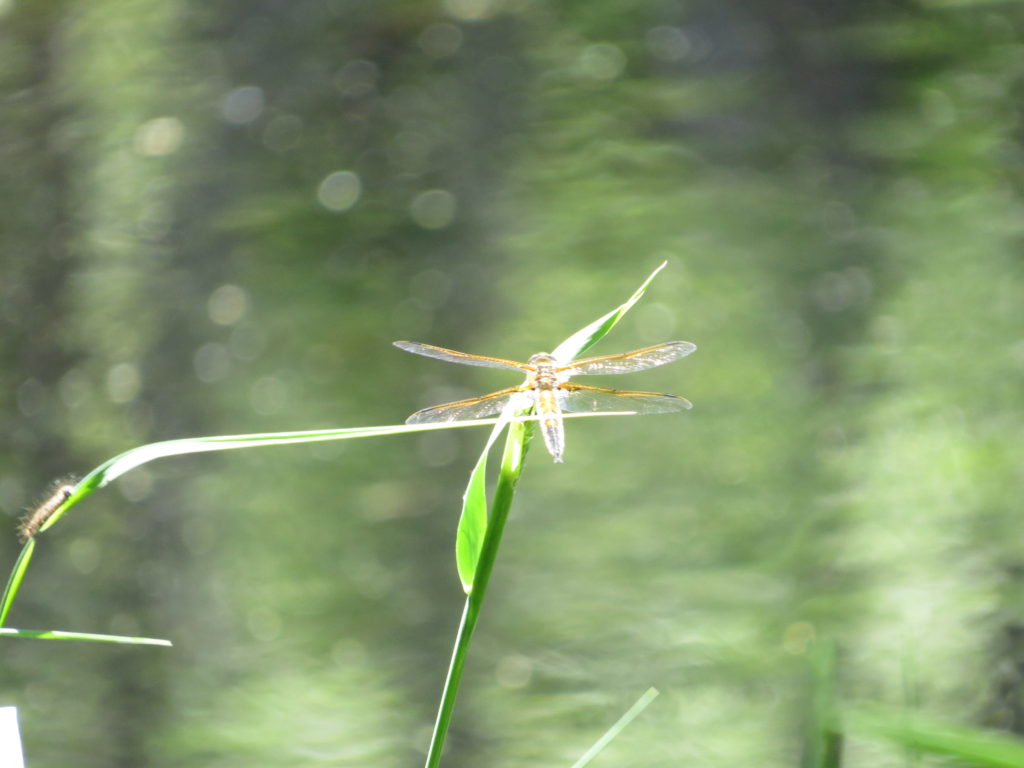
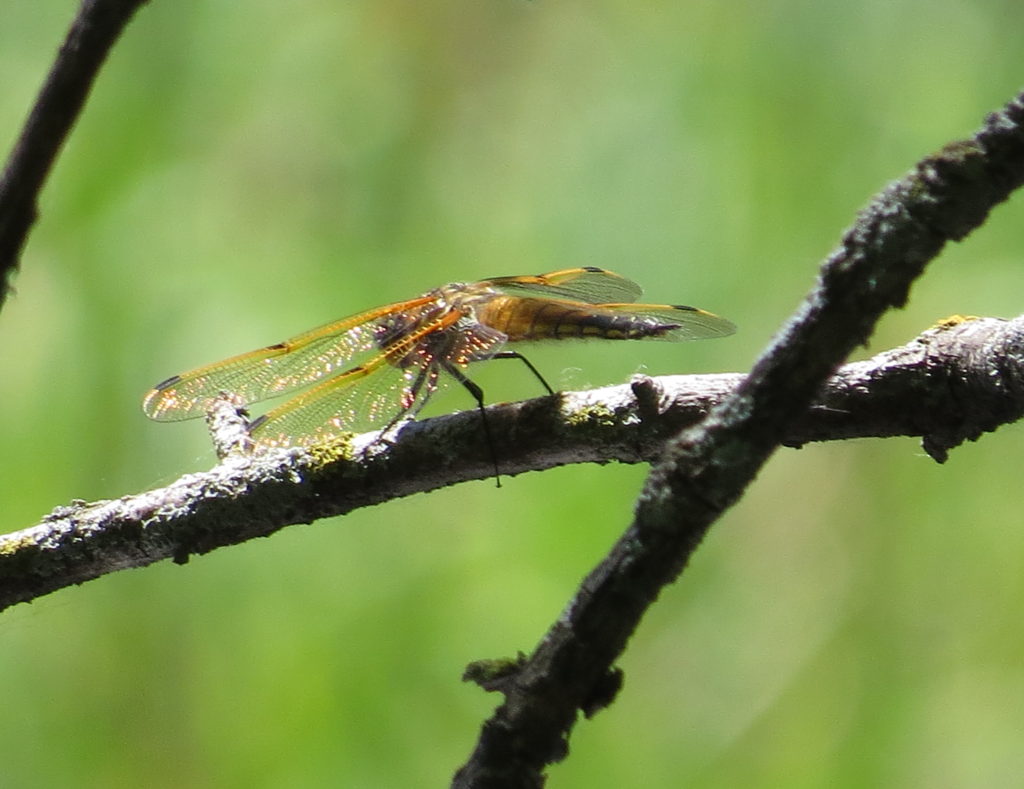
…and the many exquisite dragonflies flying and landing on grasses and branches.
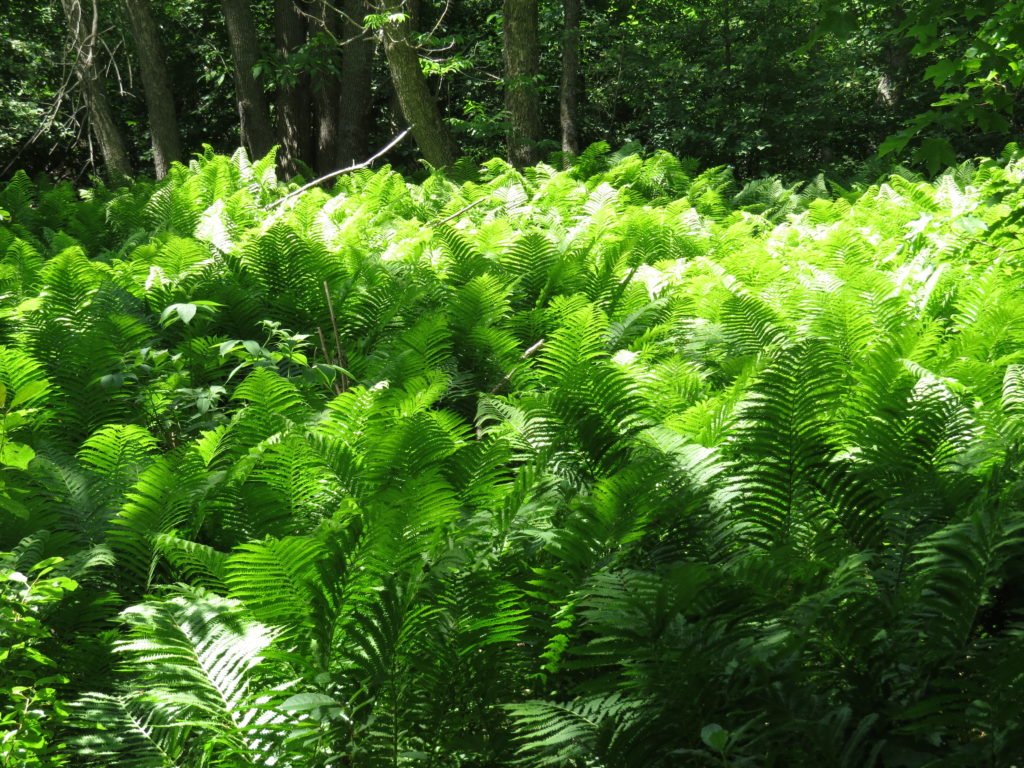
As the open swamp water ended, we came to a forest of ferns, five feet tall and glistening in the sunlight.
We reached Pope’s Point Overlook with water stretching before us on three sides. A mother Mallard duck with her ten babies all in a row swam close to shore.
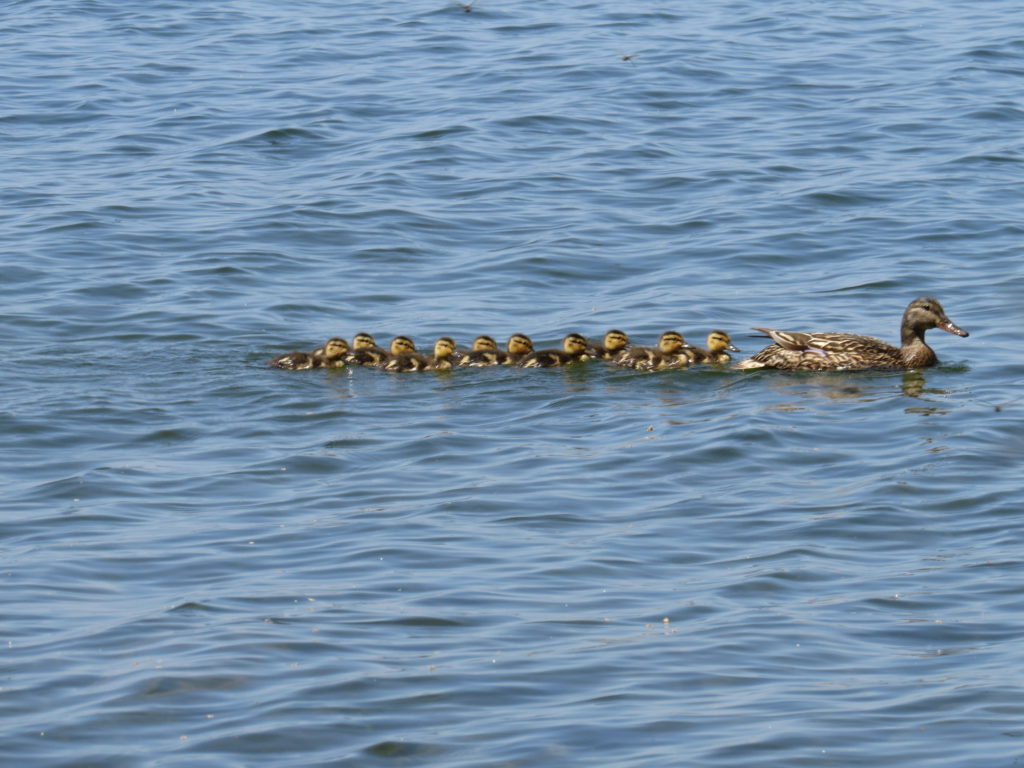
At ease, ducklings.
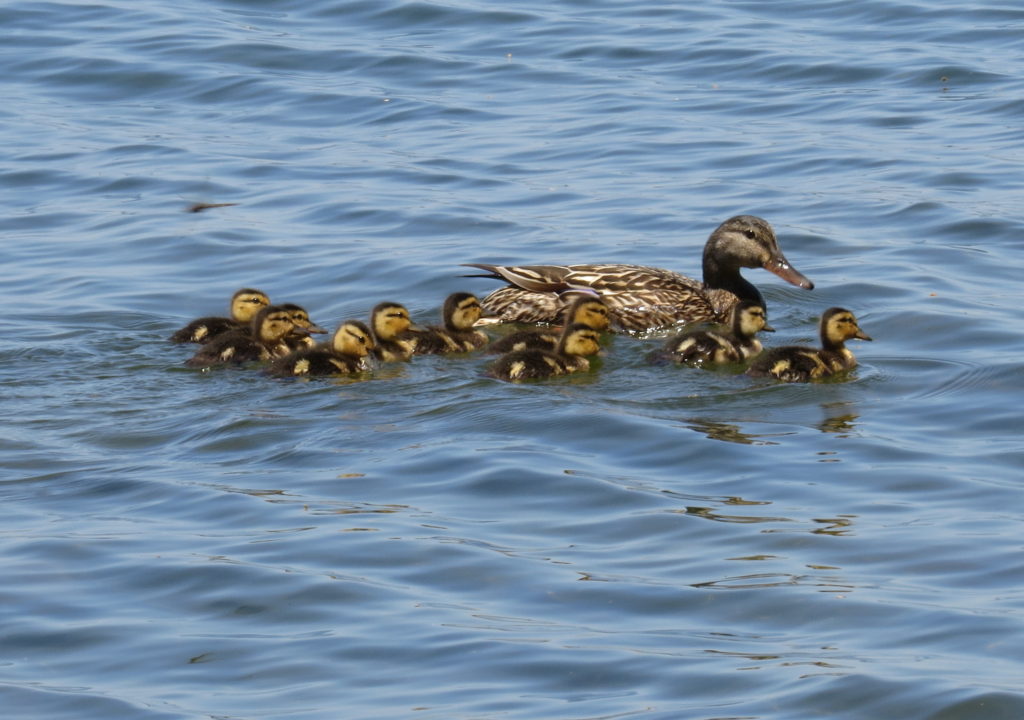
While we watched the ducklings, hundreds, if not thousands of dragonflies filled the air—dark, darting dots against the blue sky and water. Wow!
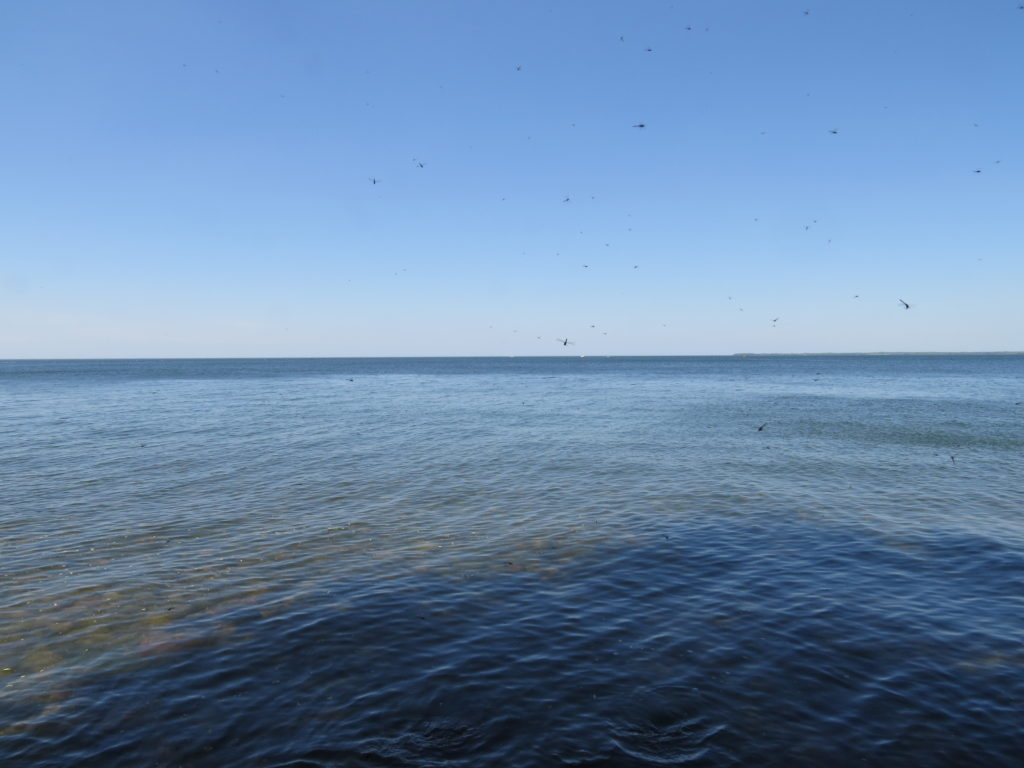
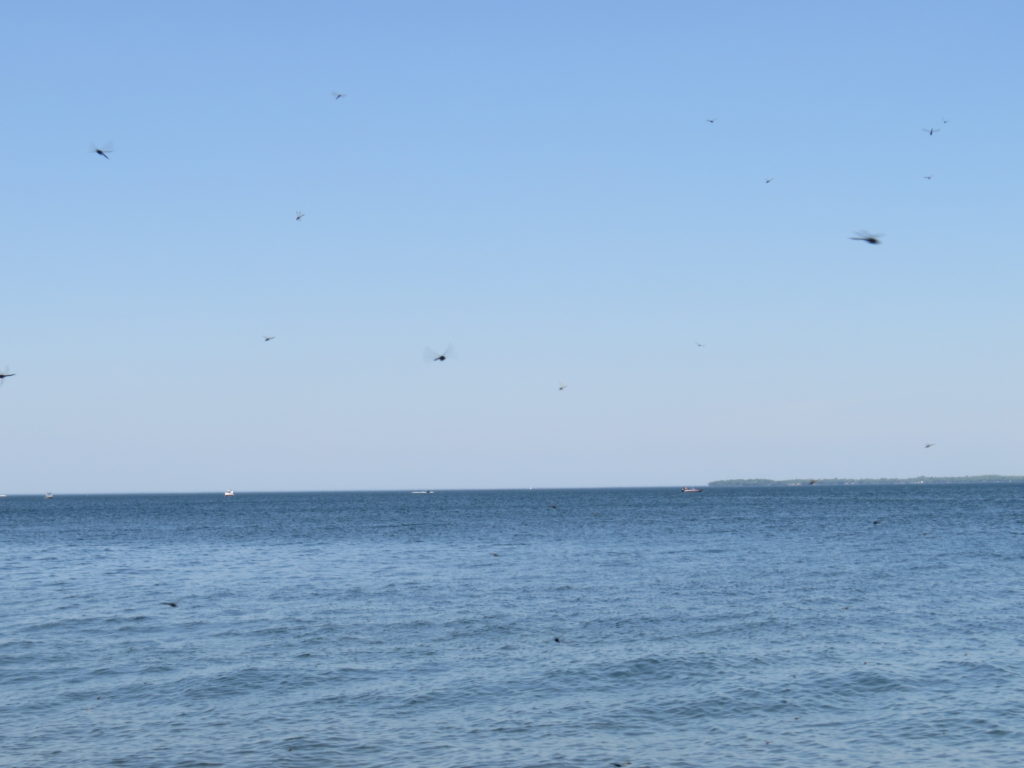
What I thought were two white boats far out on the lake were actually one white boat and one white rock island. Hennepin Island, one of two tiny islands that make up the smallest National Wildlife Refuge (less than one acre total), is home and nesting grounds for the Common Tern. Though its name implies otherwise, the Common Tern is listed as a Threatened Species due to loss of habitat. These tiny protected islands are one of the last remaining nesting areas in Minnesota for the terns.
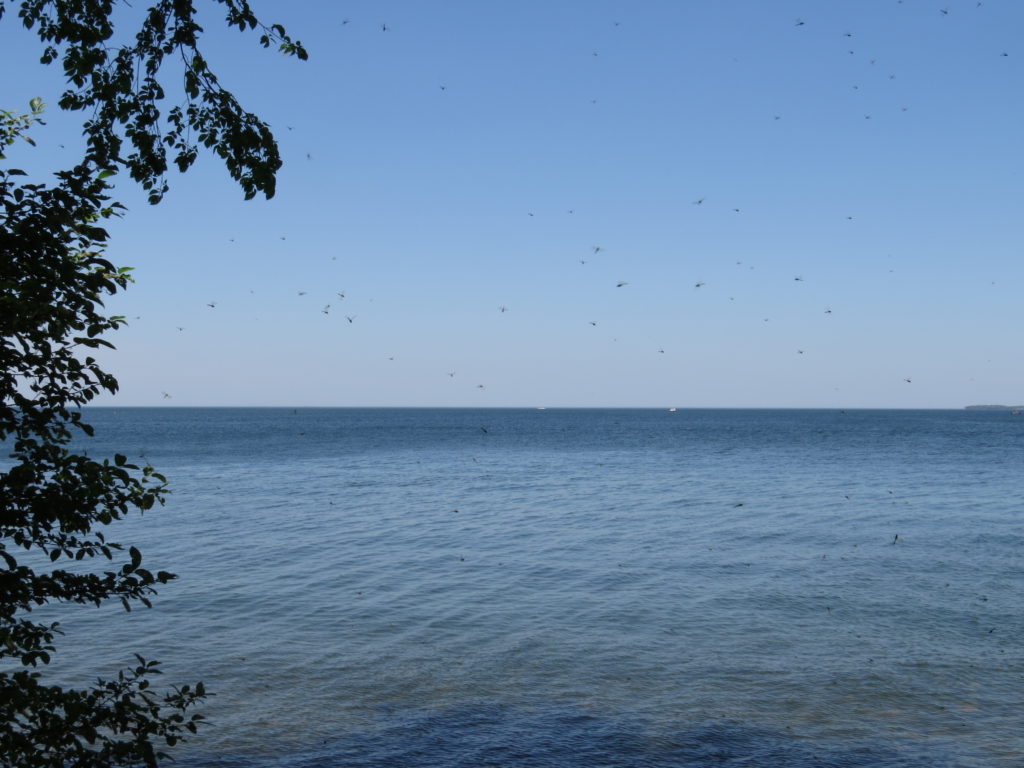
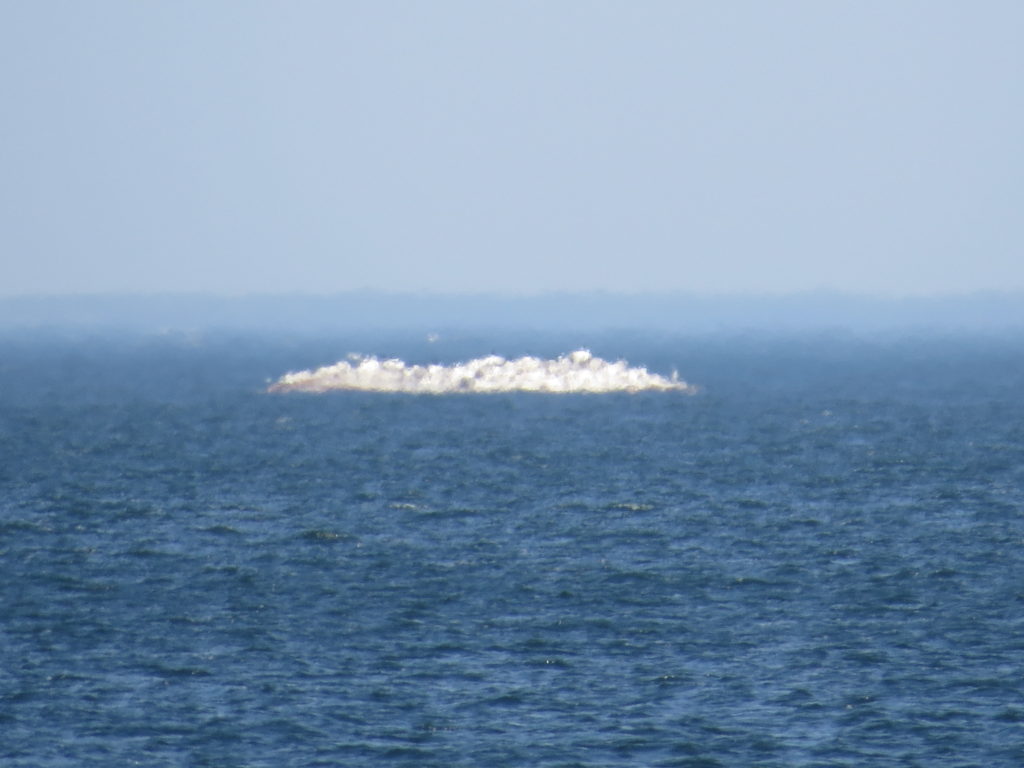
We walked back the forest trail to the sandy beach where dogs fetched sticks from the water, children played, and adults lounged.
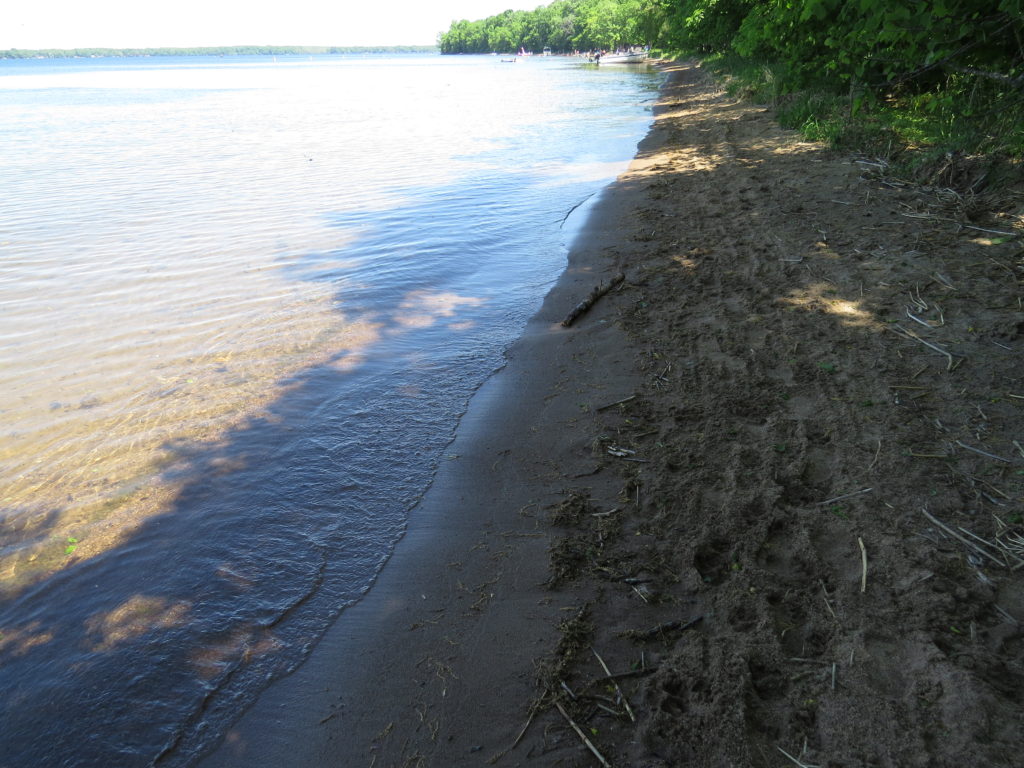
It is a beautiful, peaceful place, worthy of exploration, admiration, and reflection.
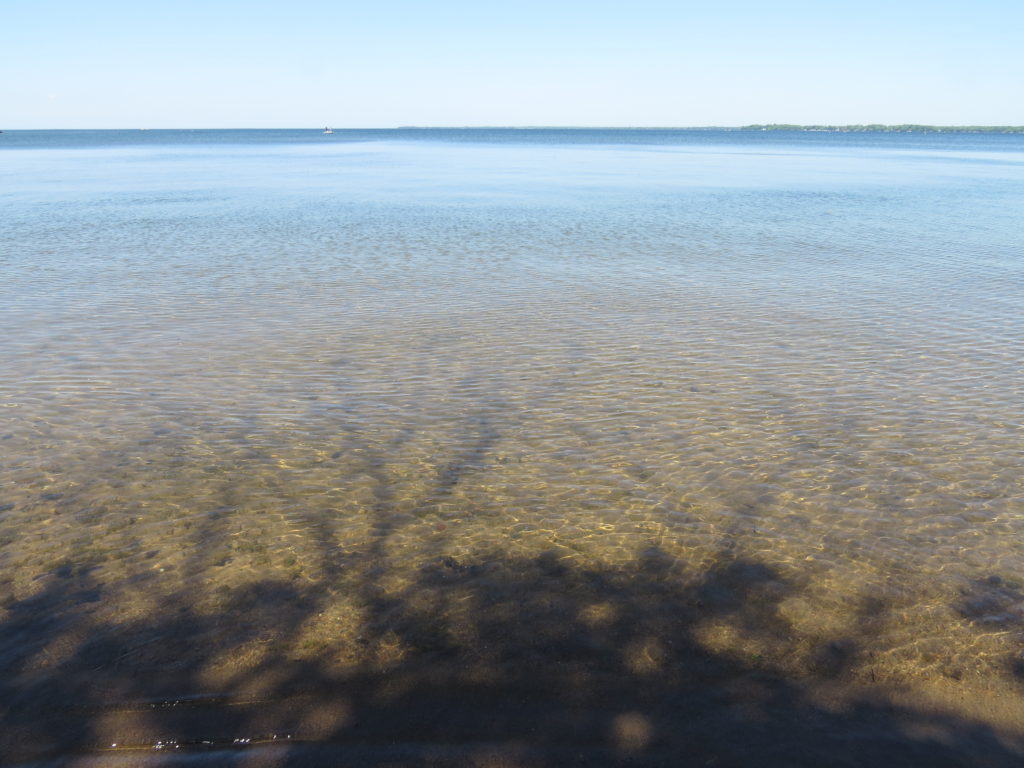
Many of my friends have experienced the newness and perfection embodied in the tiny being of a grandchild. They can experience again the innocence of childhood, the energy of pure emotions that aren’t labeled good or bad, and the innate drive we all have to learn and truly experience the world around us. Those tiny beings are sparklers of light. Somewhere in Life, we encounter the messy, yet intriguing muck of the black swamp. Where does it come from? Why is it there? How do we get from the perfect innocence of a new being to the messy muck? We can have all of our ducks in a row and try to stay clear of the black water, yet sometimes we find our feet stuck in the muck. That’s when we learn from the dragonfly, and if it takes thousands of them to lift us up, so be it. Any moment in time, any glimpse of someone’s life we see, any given situation we find ourselves in, is not the complete picture. It is true as the sky is blue at that moment, but we don’t see to the depths or know the influences. We no longer know or use the pure emotions to guide our behavior—we take refuge from them on the rocky islands of denial and ‘grown-up-ness.’ So in reality, I shouldn’t call bogus on anything. It’s just a snapshot picture of a bigger, more complete mural of the situation. Maybe our dragonfly message and moment is to use our time and maturity, our experiences in the muck, and the innate drive to learn and develop in order to be at ease, to return to our newness, and to fly above the black swamp.
Sparklers of Light
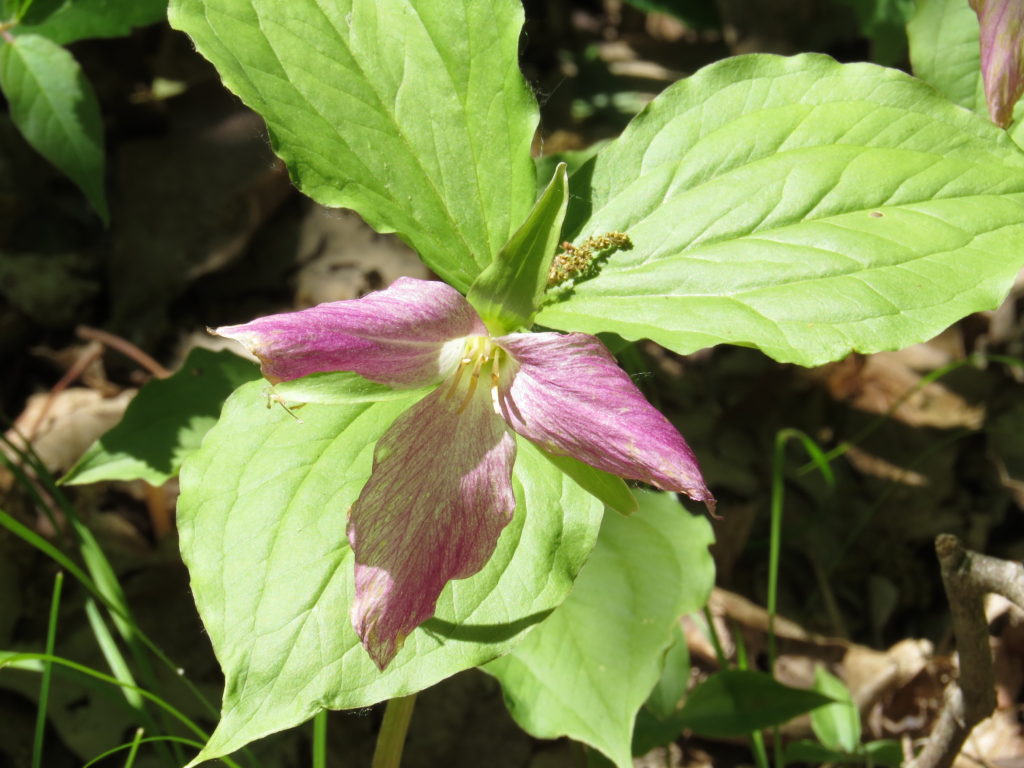
As I explained in last week’s post, I was making a bee-line for the bog when we hiked the ‘Touch the Earth’ trail at Mille Lacs Kathio State Park. It was what I was anticipating in my head and needing for my spirit. But with camera in hand, I was stopped almost immediately on the trail by the presence of a Large-flowered Trillium. Trillium literally means ‘three-parted lily’ as the three white flower petals rise from a whorl of three deeply-veined leaves. It is a spring ephemeral woodland flower that blooms while sunlight still reaches the woodland floor. It is an interesting flower, protected from picking in the state of Minnesota, but unfortunately not protected from herds of white-tailed deer that can kill a colony of the fragile plants by browsing. Ants are the major source of seed dispersal, taking the fruits to their underground homes for eating then leaving the seeds. It can be several years from seed germination to flowering for these long-lived, slow-maturing perennials.
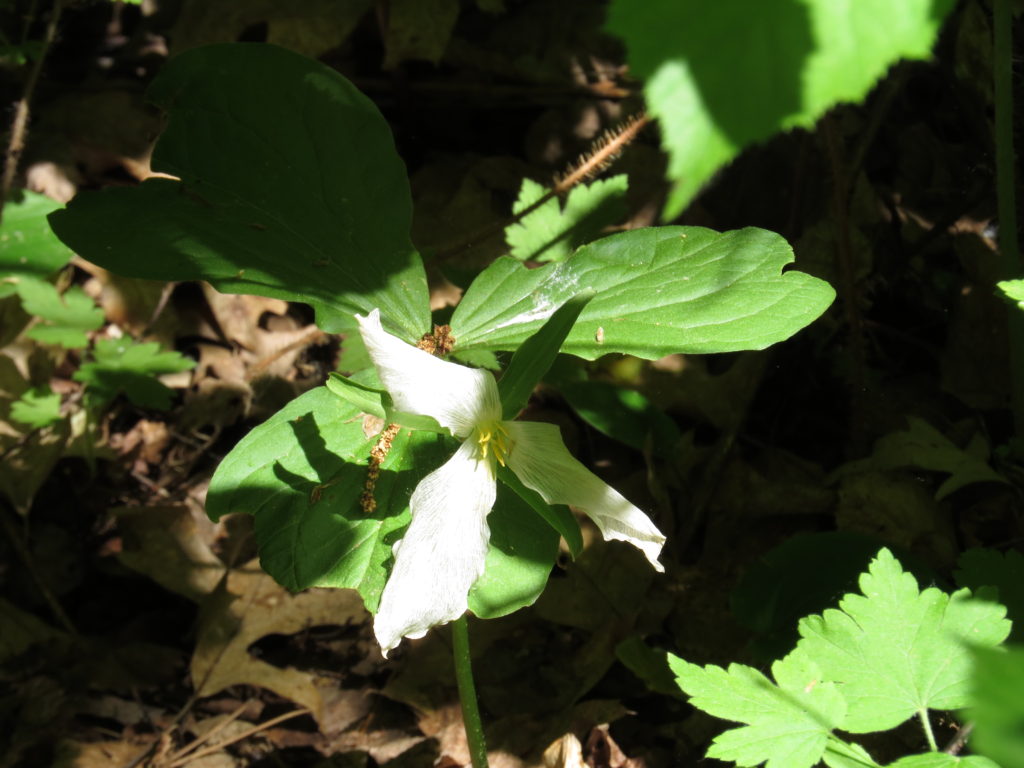
After pollination and as the flower ages, it turns a rosy pink color. Like many of the Spring Ephemerals, the foliage often dies back in the heat of summer.
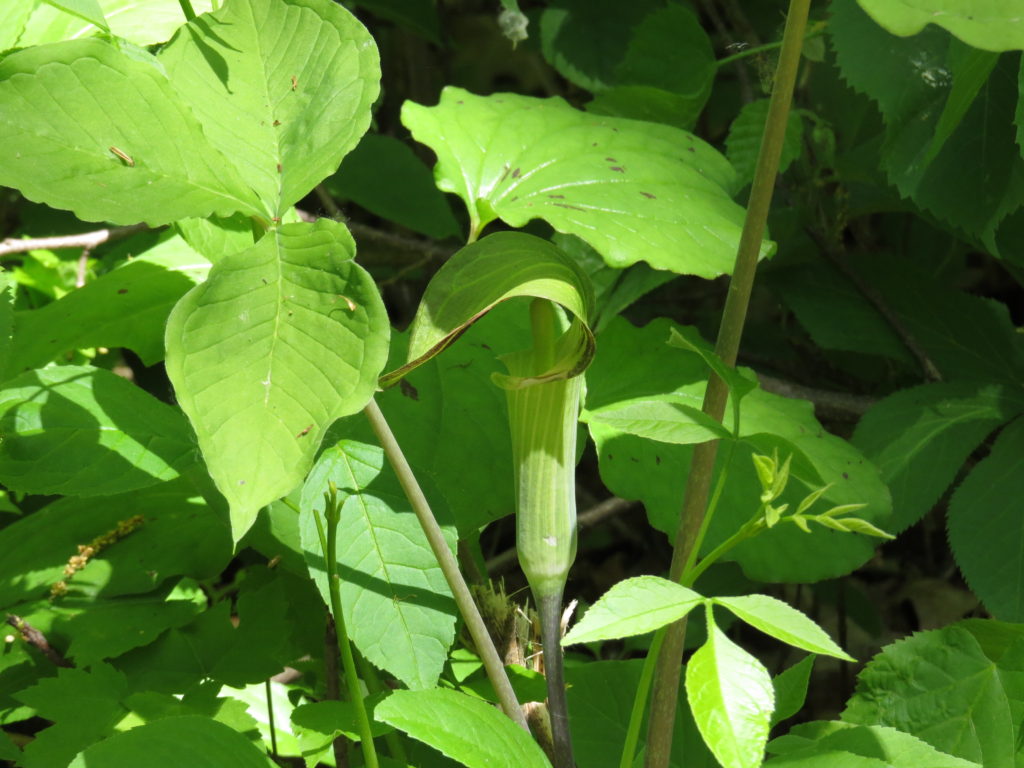
Another tri-leaved flowering plant blended in with the surrounding greenery—the unusually-flowered Jack-in-the-Pulpit.
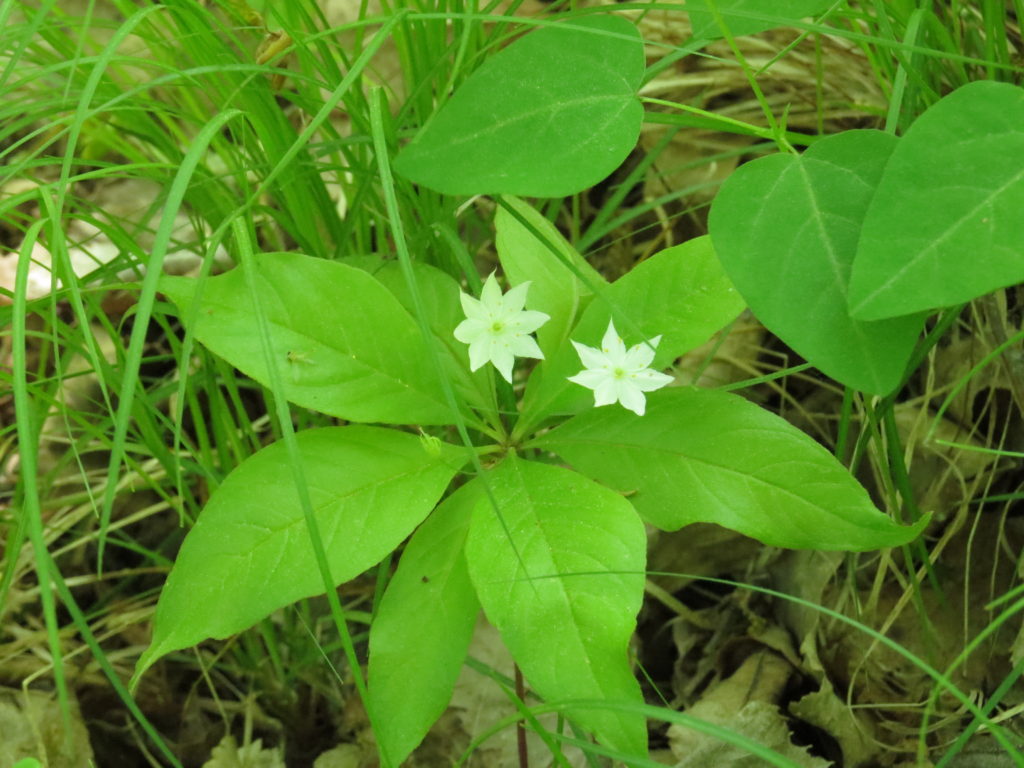
The Starflower plant has 6-8 petals and a whorl of 5-9 leaves, most commonly 7 for both.
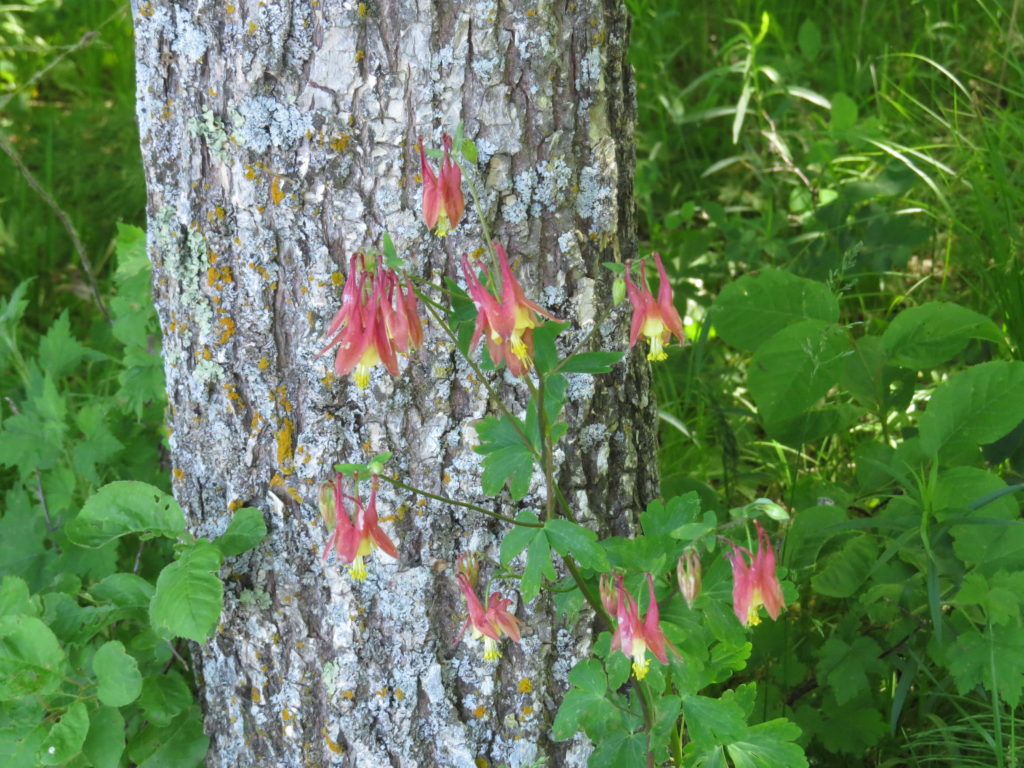
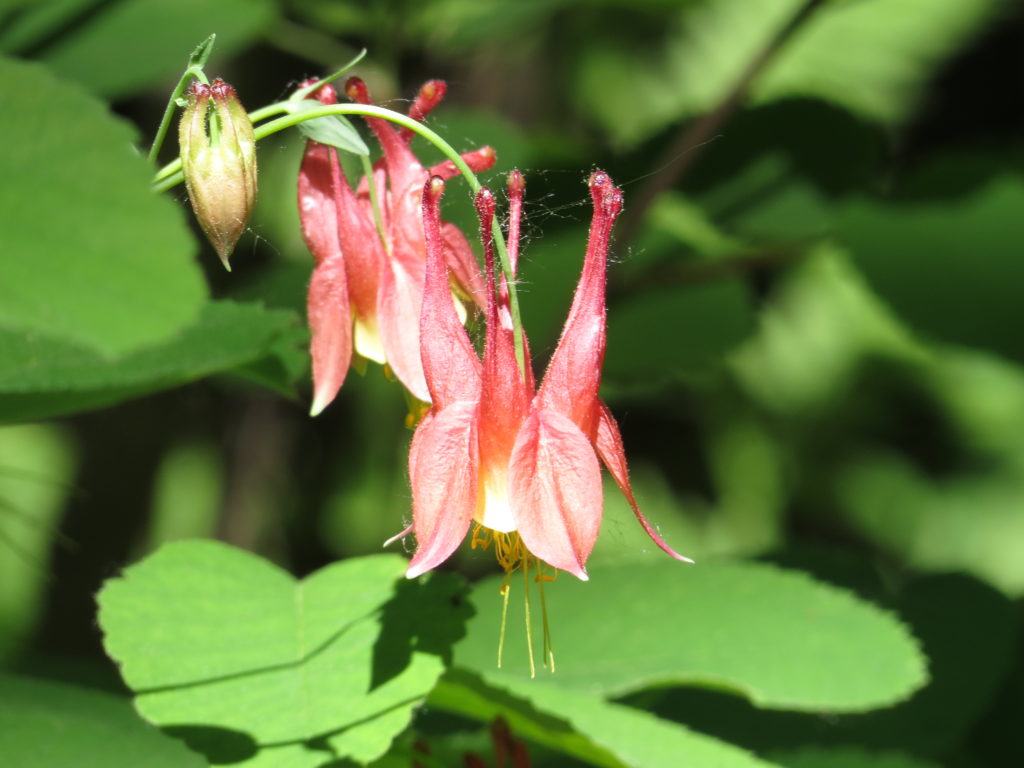
The adaptable Columbine seem extravagant and showy in color and form as the nodding flower heads brighten the trail.
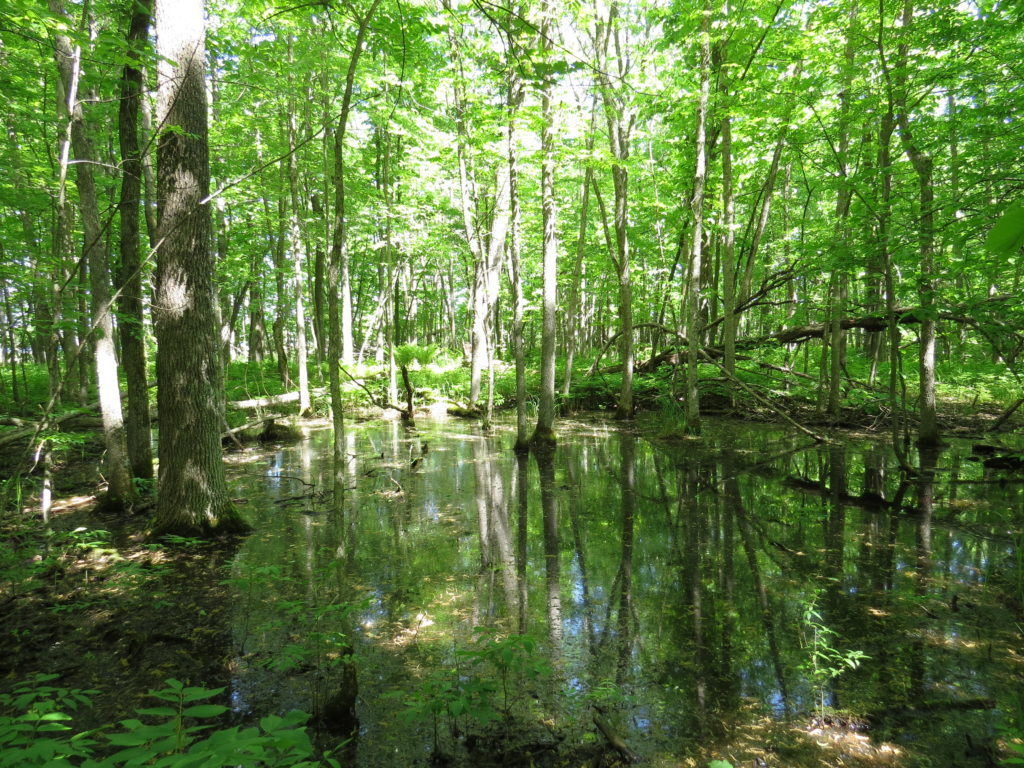
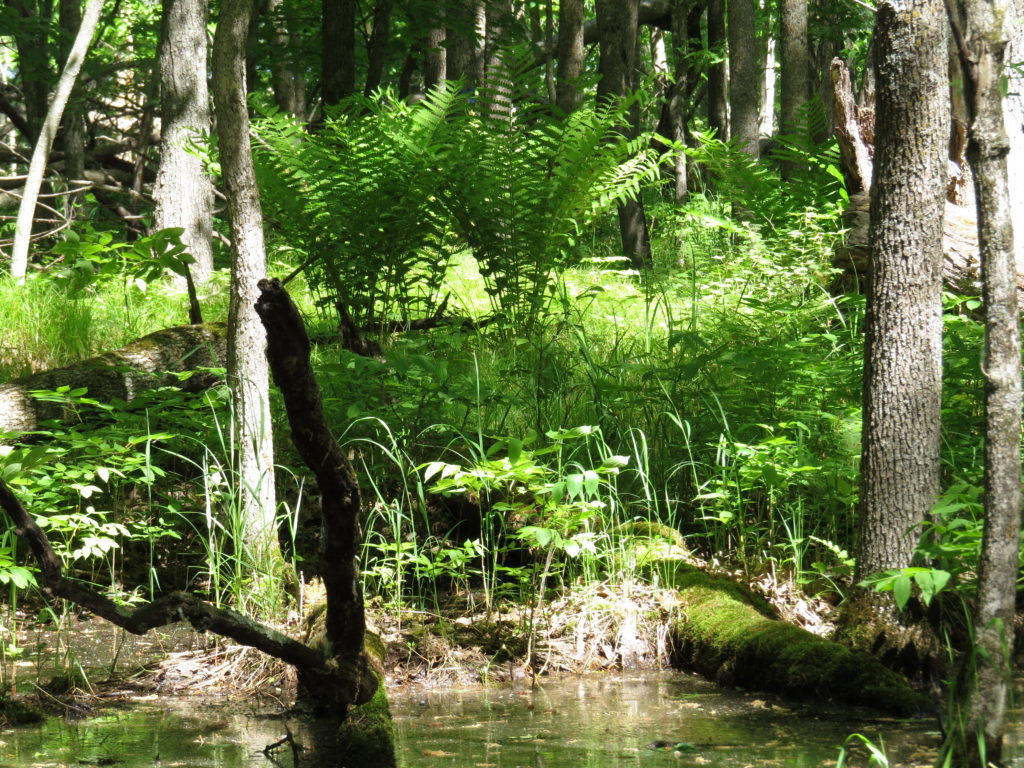
After such a rainy Spring, the bog wasn’t the only soggy place in the woods. Ferns and other plants who like wet feet were tall and vibrant with the abundant moisture.
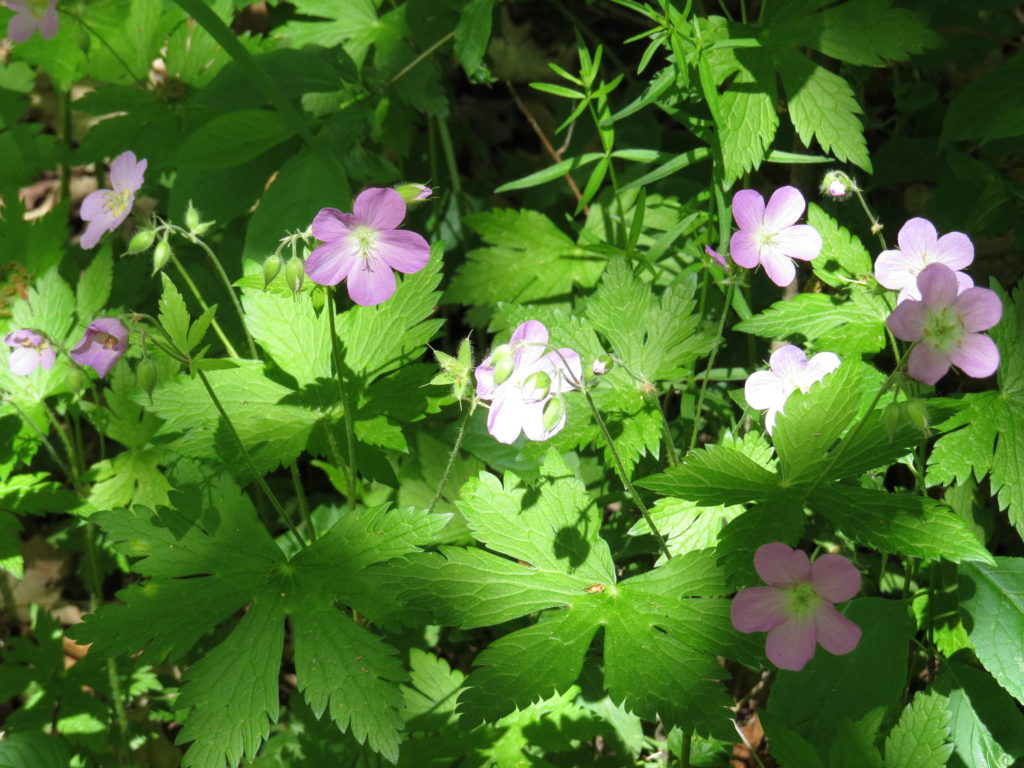
Lavender-pink Wild Geraniums spread little carpets of color along the trail and deep into the woods.
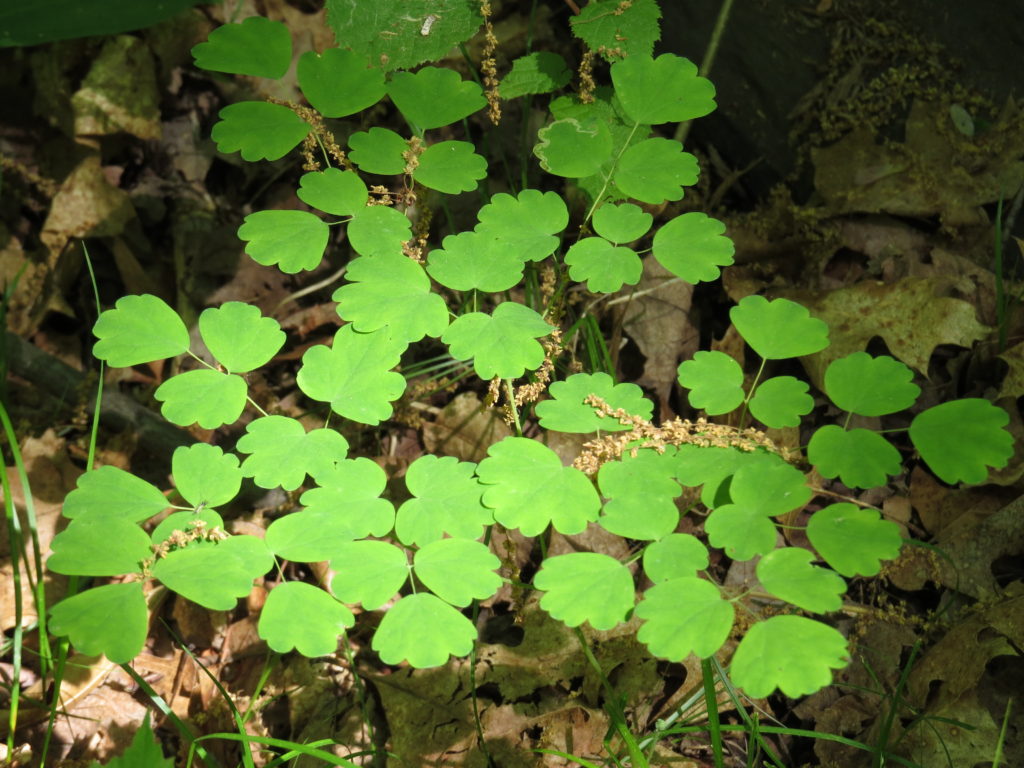
A young Meadow Rue plant caught my attention—no flowers, no bright colors or extravagant form, but a green, flat table-top of foliage in the dappled sunshine.
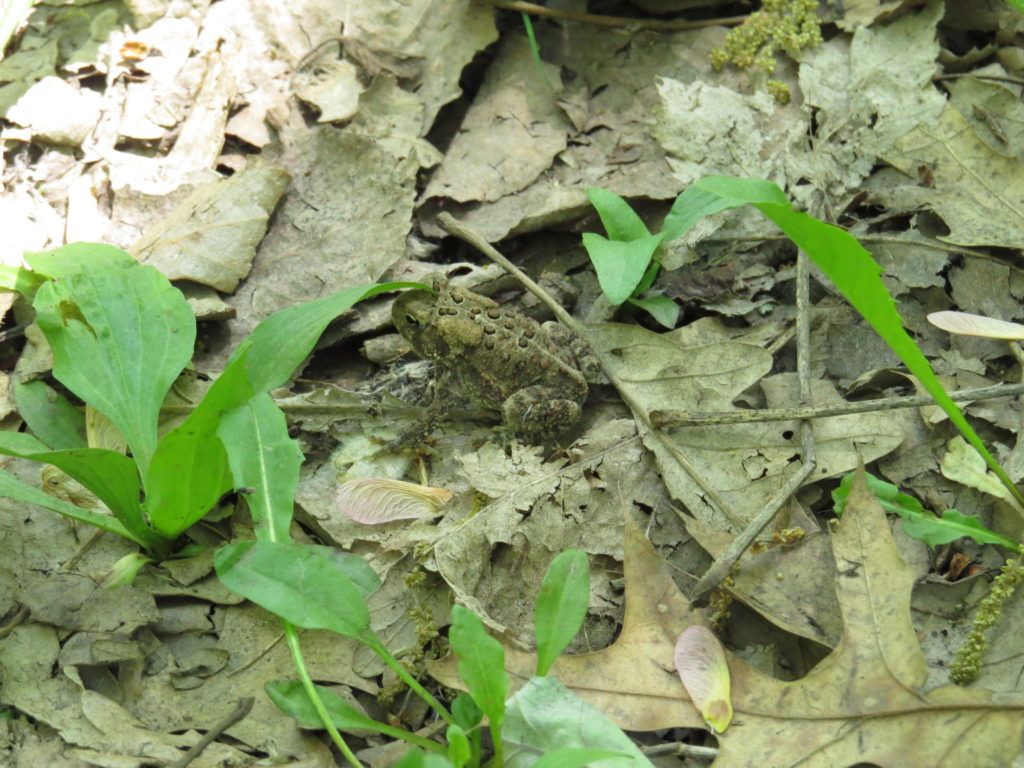
A toad, still using his camouflage coat to hide from sight, was one of the few critters we saw on our hike.
A bright, white line of light shone on a meadow of grass that had gone to seed.
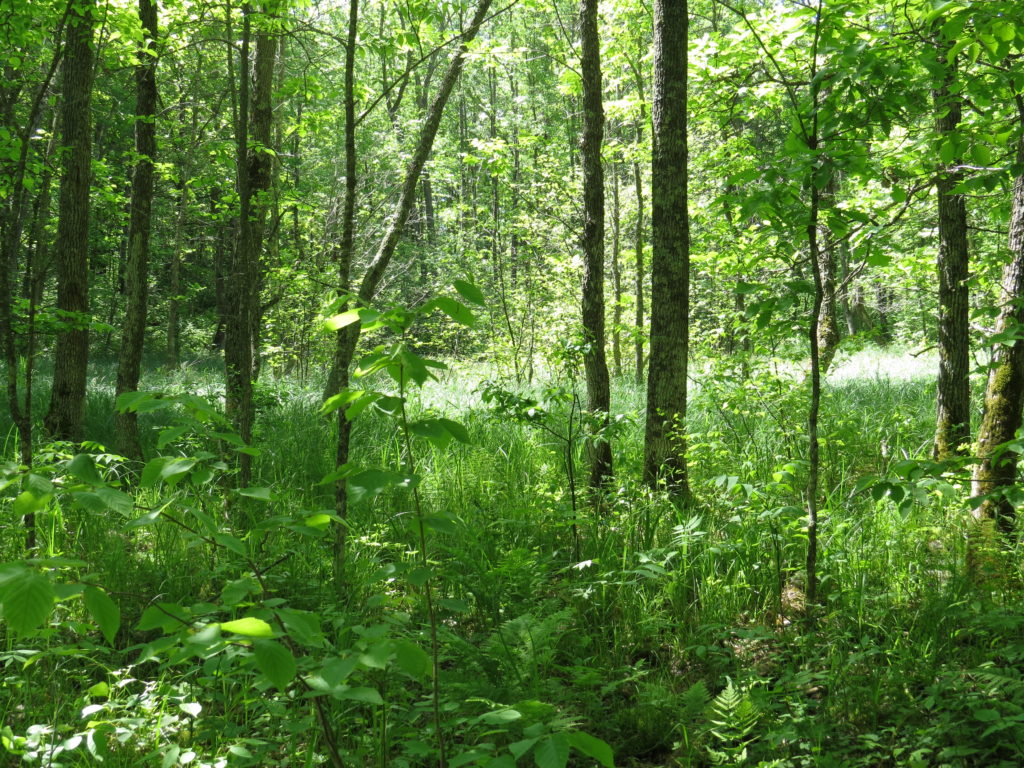
After our meander of the bog boardwalk and the treasures that presented themselves, I felt myself shift and settle down a bit. The landscape shifted some, too. One of the most interesting ferns was the Cinnamon Fern. The thick spikes of green fruit dots—the fertile fronds—will turn to a rich, cinnamon brown color as the sterile fronds surround them in a vase-like shape.
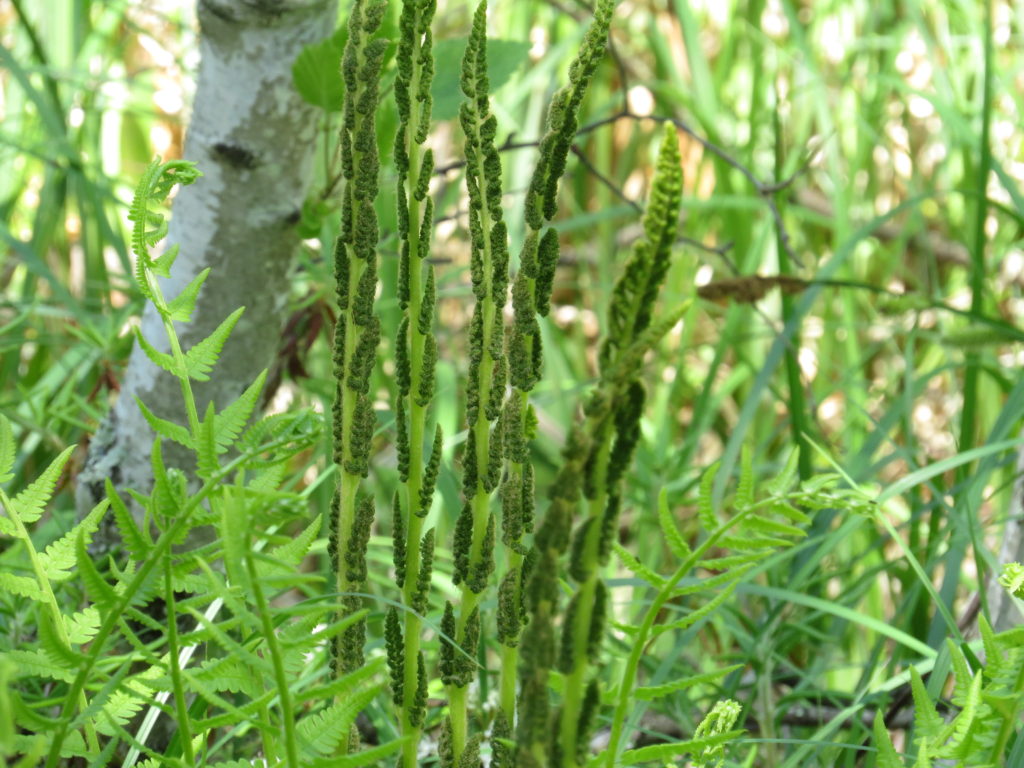
In a sunny area around the bog was a stand of Willows that had flowered and gone to seed. The cottony seedheads were like sparklers of light.
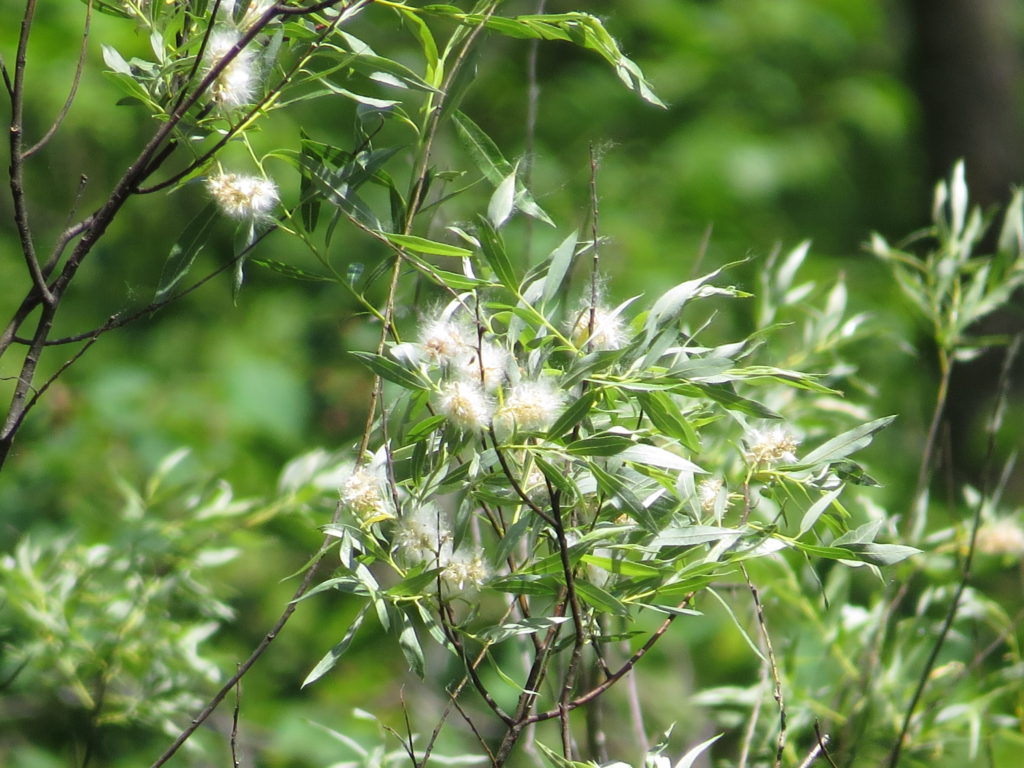
Gooseberry bushes were setting fruit—green striped berries that will ripen to reddish-purple.
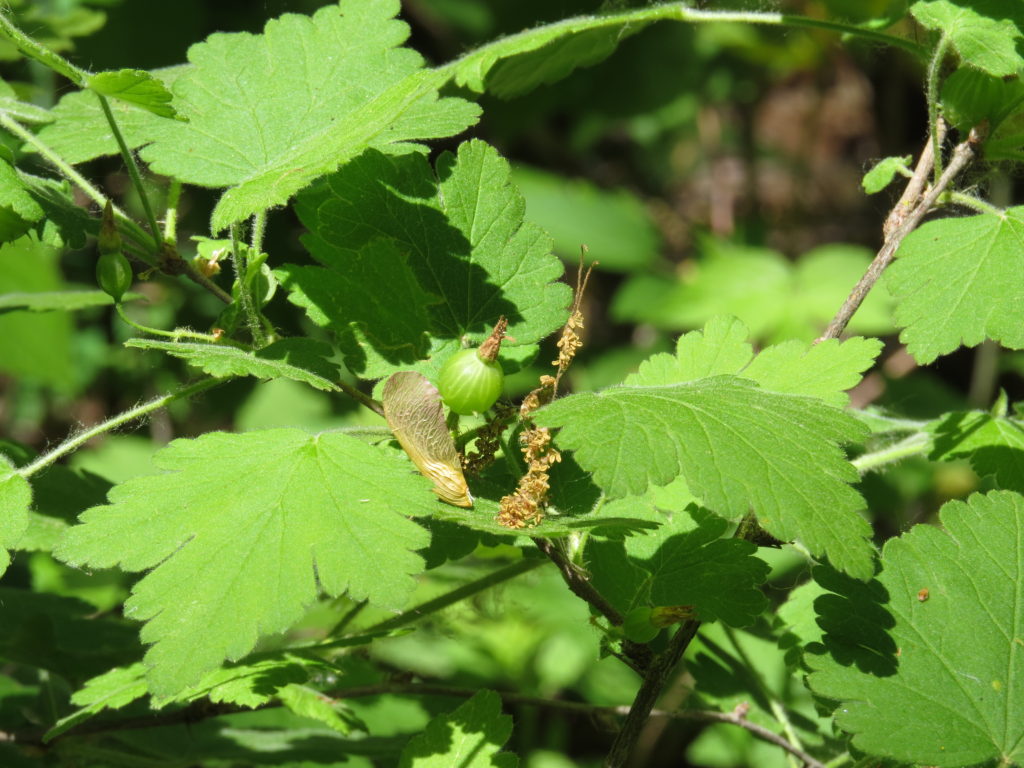
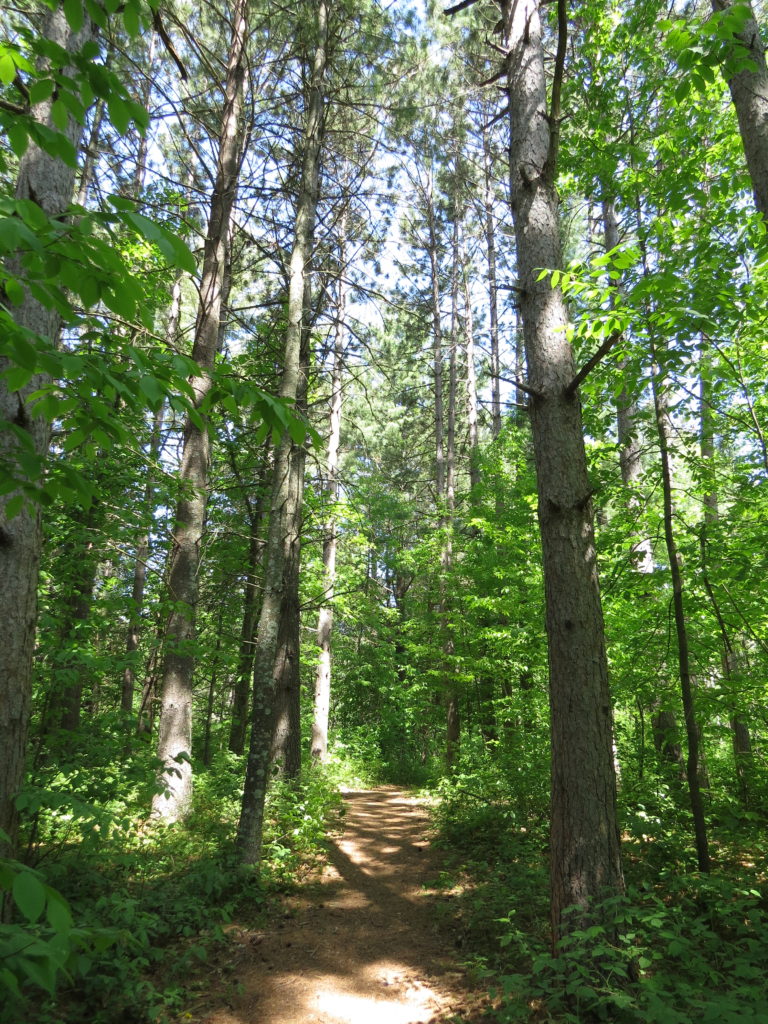
We walked through a section of soothing Pine forest where the path is covered in fragrant, brown needles. The ‘Touch the Earth’ trail offered a sampling of many types of ecosystems.
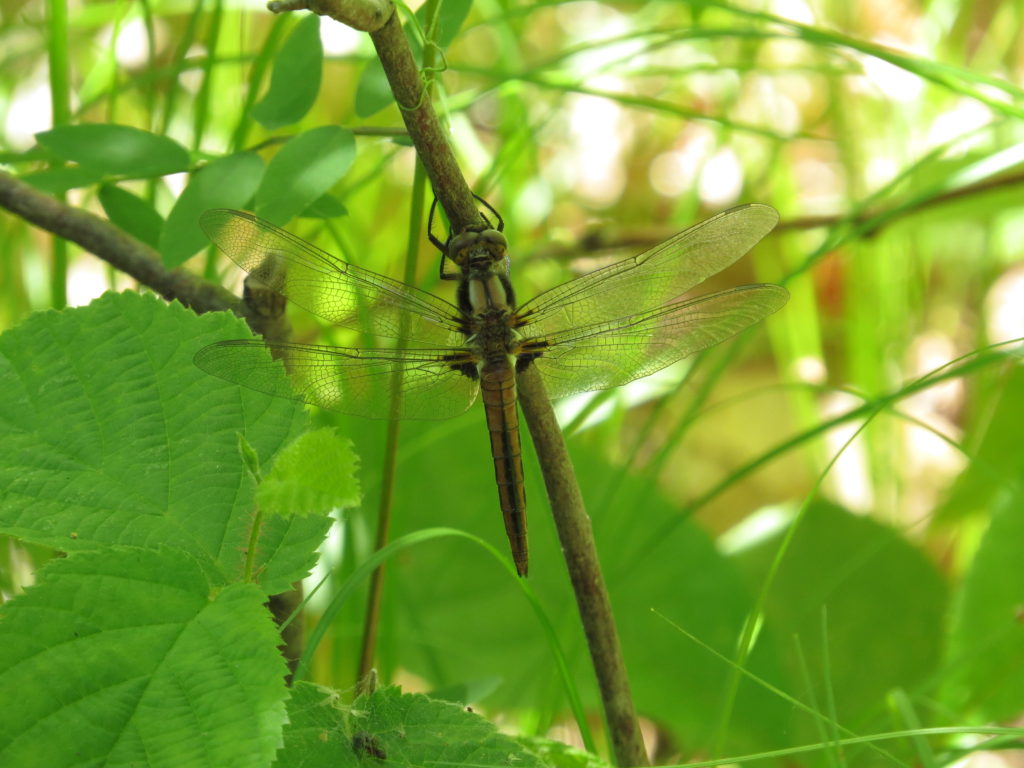
We saw many Dragonflies on the after-bog trail. They were gently, quietly flying from one branch or stem to the next. Their iridescent wings and large eyes make them look like little sprites flitting through the greenery.
There is something that happens when we have our eyes and hearts set on a certain destination, when we single-mindedly want what we want. We often are rewarded with ‘the good stuff’ that we have anticipated. But sometimes, we are not. We get to our ‘destination,’ and the thing we desire is not there for us or circumstances have changed in such a way that our original plan is now defunct. Now what?! Often we despair, get stuck, don’t know which way to go from there. One mistake we tend to make during that bee-line journey is not paying attention to the details on the pathway to our destination. We overlook plants, people, intuitions, time, warning signs, and/or experiences that potentially have meaning for us and that could have made a difference in the trajectory of our journey. We can learn from the Dragonfly.
The Dragonfly symbolizes change, adaptability, light (joy and lightness of being), transformation, and emotions. They can move in all six directions, changing their flight pattern in their search for food or rest. They spend most of their life cycle in the water, which symbolizes emotions and the unconscious. But they also transform and adapt to land and air. Their iridescent wings can display different colors depending on the angles and polarization of the light striking them. Their large eyes represent clear vision of reality, removal of self-created illusions, and wariness of deceit. All in all, they represent mental and emotional maturity—what we all need in order to make the changes to reach our full potential as human beings. In our three-parted lives of mind, body, and spirit, we have the opportunity to grow and learn to move along with the ease of a Dragonfly. It takes time and maturity, but we can become sparklers of Light!
A Blooming Bog During Rough Traveling
This post is dedicated to my brother-in-law Paul, who has met some rough and rocky travelin’ with humor, positivity, and tenacity. Much love and respect.
“It’s been rough and rocky travelin’ / But I’m finally standing upright on the ground / After taking several readings / I’m surprised to find my mind’s still fairly sound” Willie Nelson from his song Me & Paul
The last couple of months have been like the first line of Willie’s song. Not literal traveling like Willie referred to, but travelin’ through life. We all know times like that. The day of celebrating my birth was also a bust, with the exception of text and FB greetings–grateful for those. But I didn’t feel very well, didn’t go anywhere, or do anything.
In August two years ago, we discovered a trail at Mille Lacs Kathio State Park called ‘Touch the Earth.’ The name was taken from a quote by Luther Standing Bear speaking of the Dakota people and how they loved ‘all things of the earth.’ That trail led us to a beautiful and surprising ecosystem called a bog forest. Since we came in the heat of August, I vowed to return when the bog was in bloom, particularly the Labrador Tea, a type of Rhododendron. So on the day after my rough day, when I noticed that our cultivated azaelas were blooming, I rallied my energy and we headed back to the bog. The ‘Touch the Earth’ trail was lined with blooming wildflowers—which I will showcase next week. I was so excited to (hopefully) see the blooming bog azaelas, that I wanted to skip past those others and get to the good stuff! I was more excited than a person should be about a shrub…in a bog…in bloom, but really, it was quite spectacular!
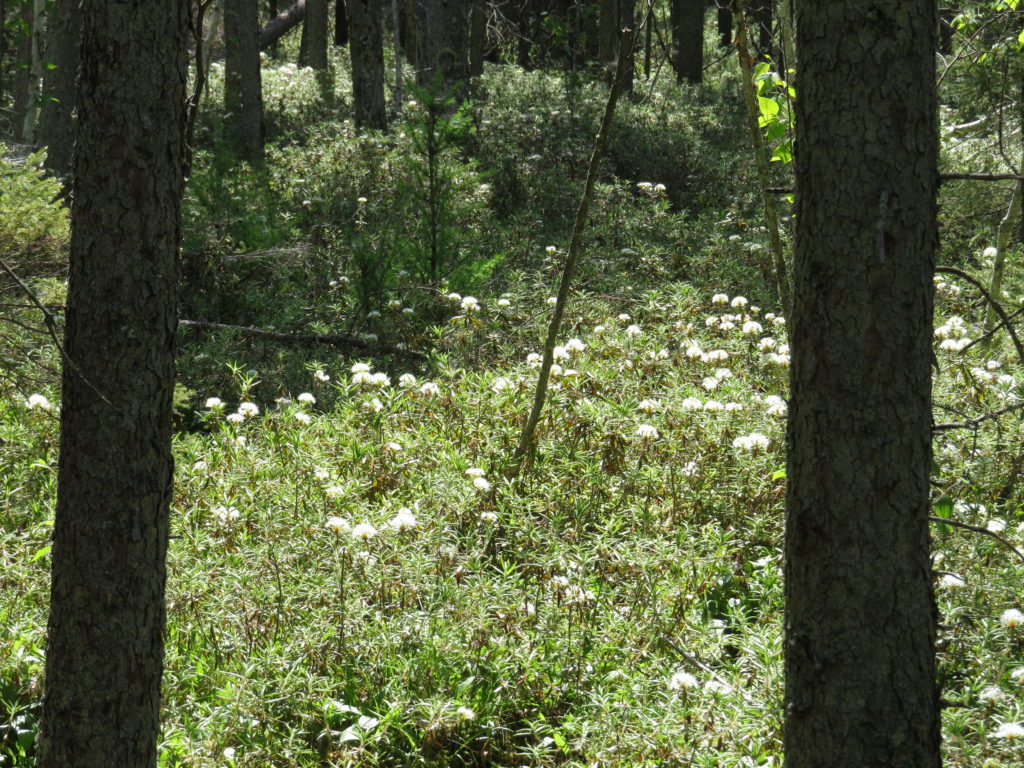
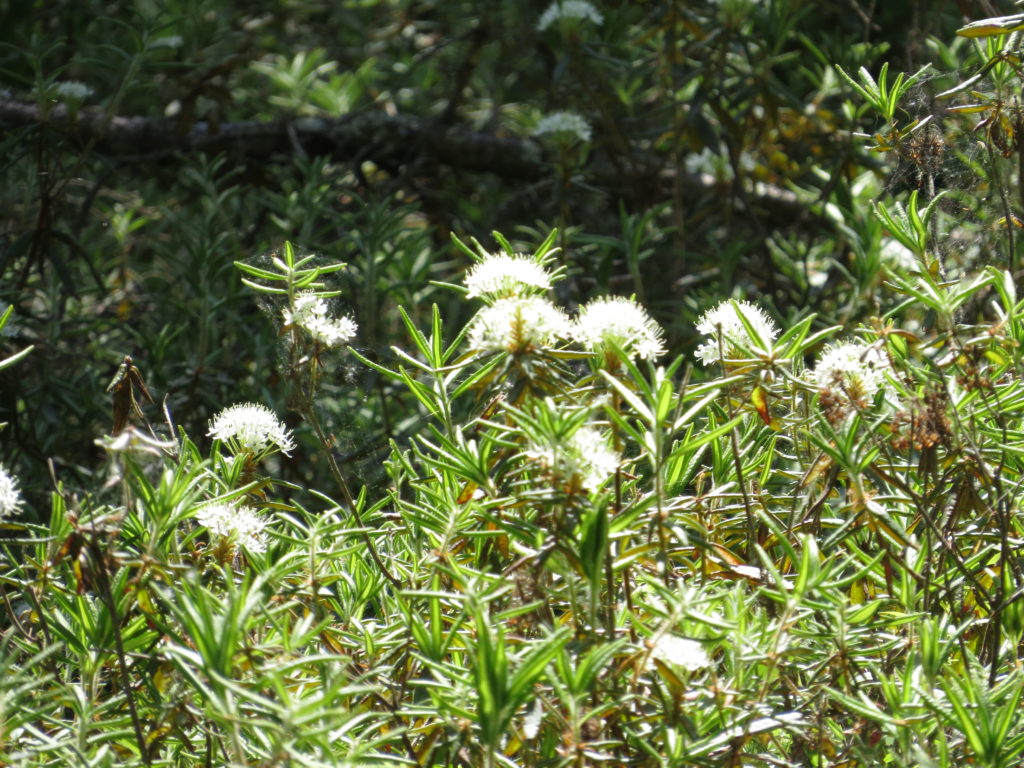
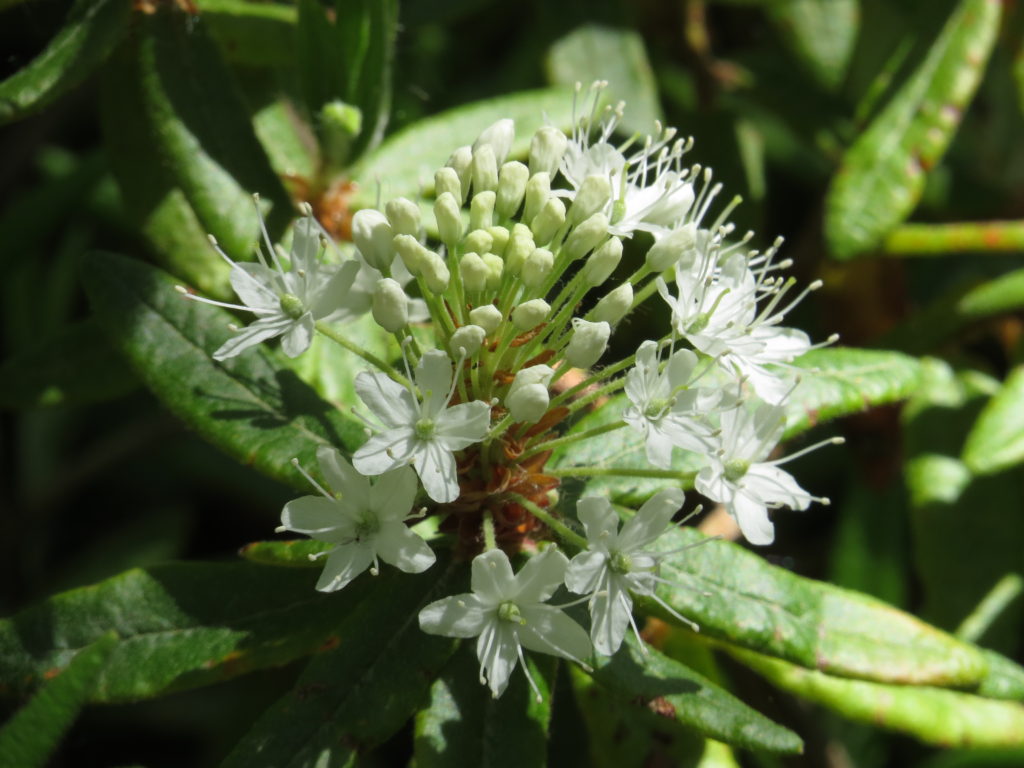
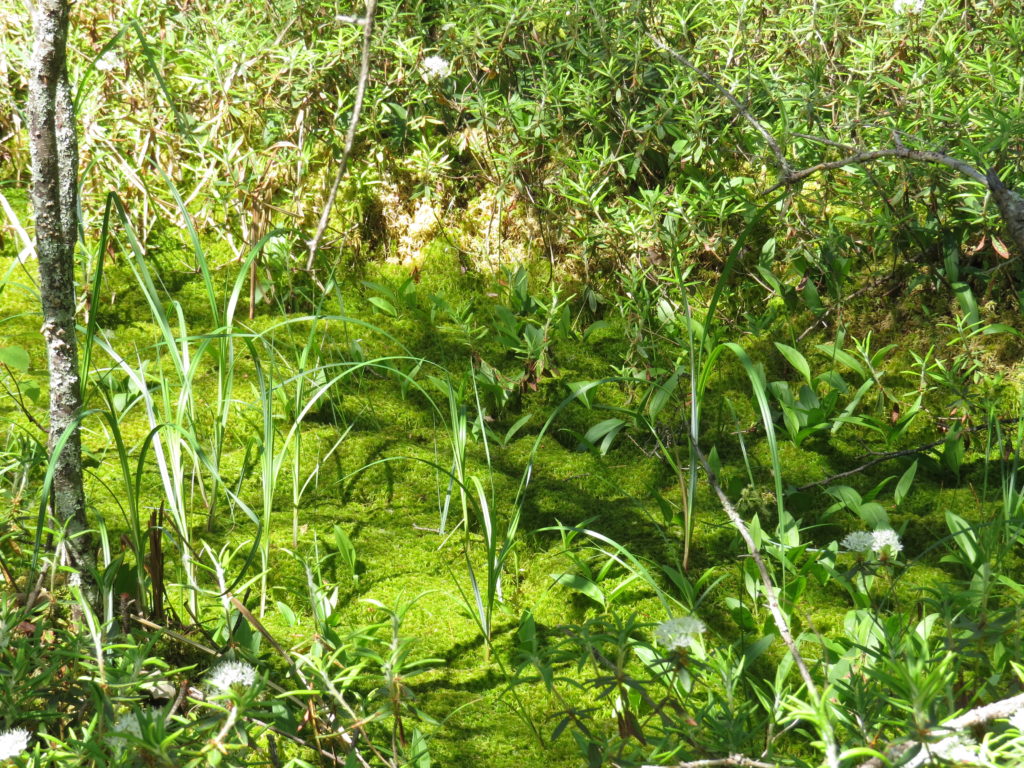
The bog has a layer of sphagnum moss over a wet area—it is a fragile environment and can even be dangerous to navigate, so there is a boardwalk that guides hikers through this beautiful and unusual ecosystem.
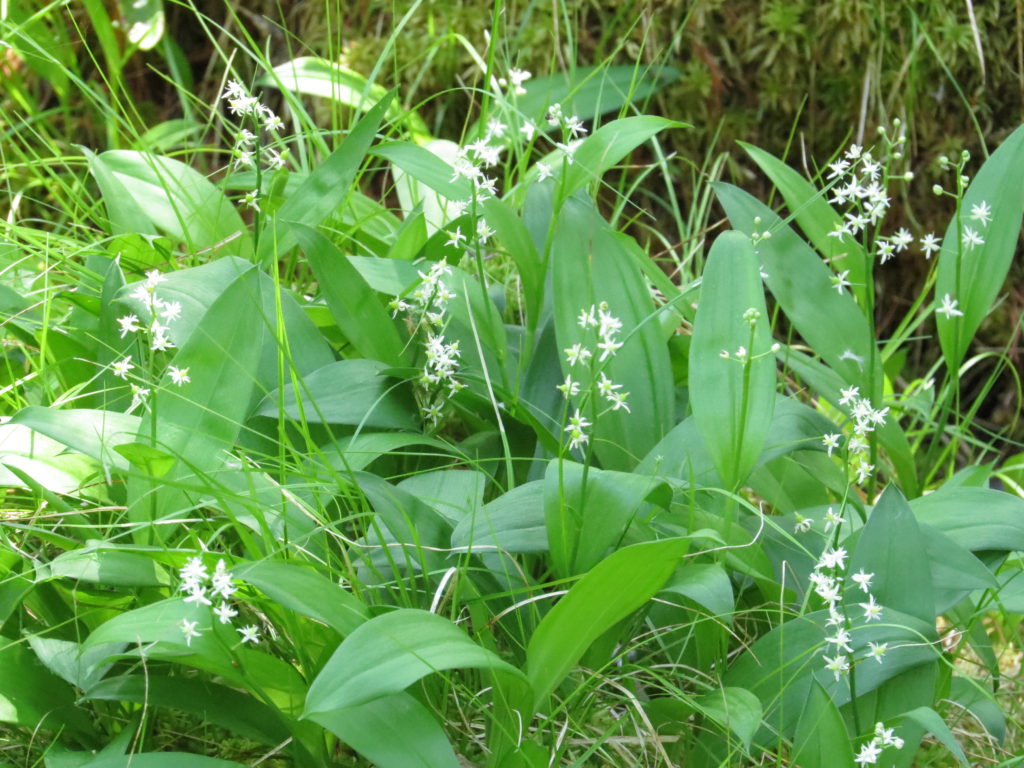
Along with the Labrador Tea, another abundant blooming plant was what I was describing as a ‘star lily.’ The stems of white star-bursts are actually called Three-leaf False Solomon’s Seal—a mouthful compared to my made-up name.
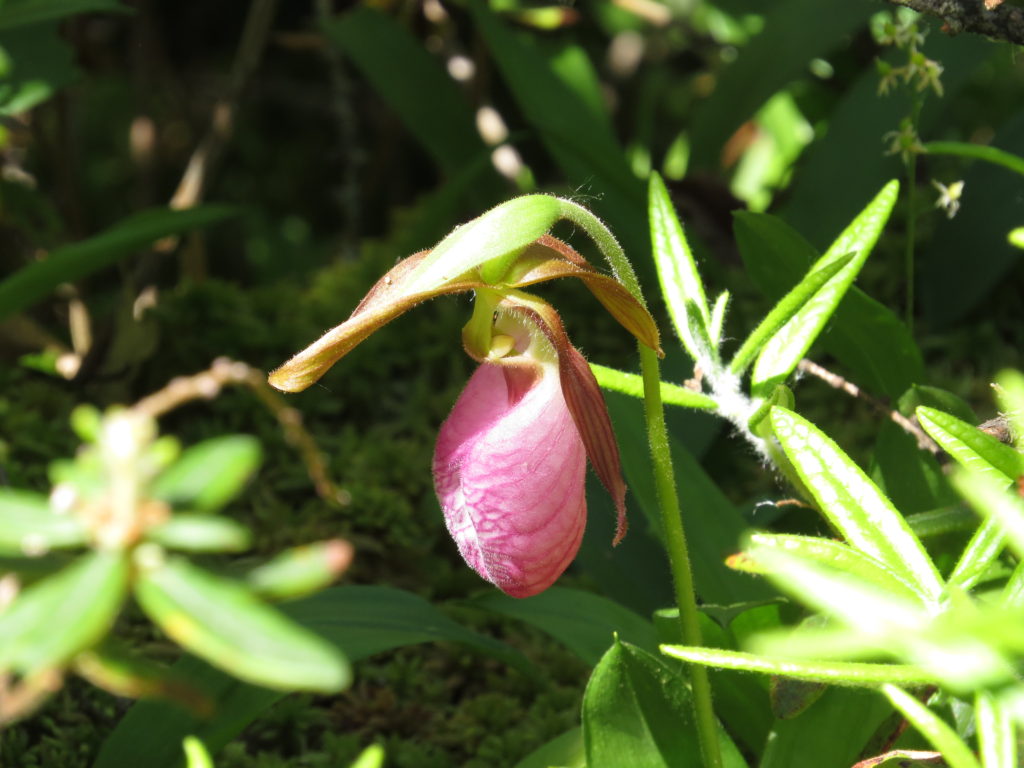
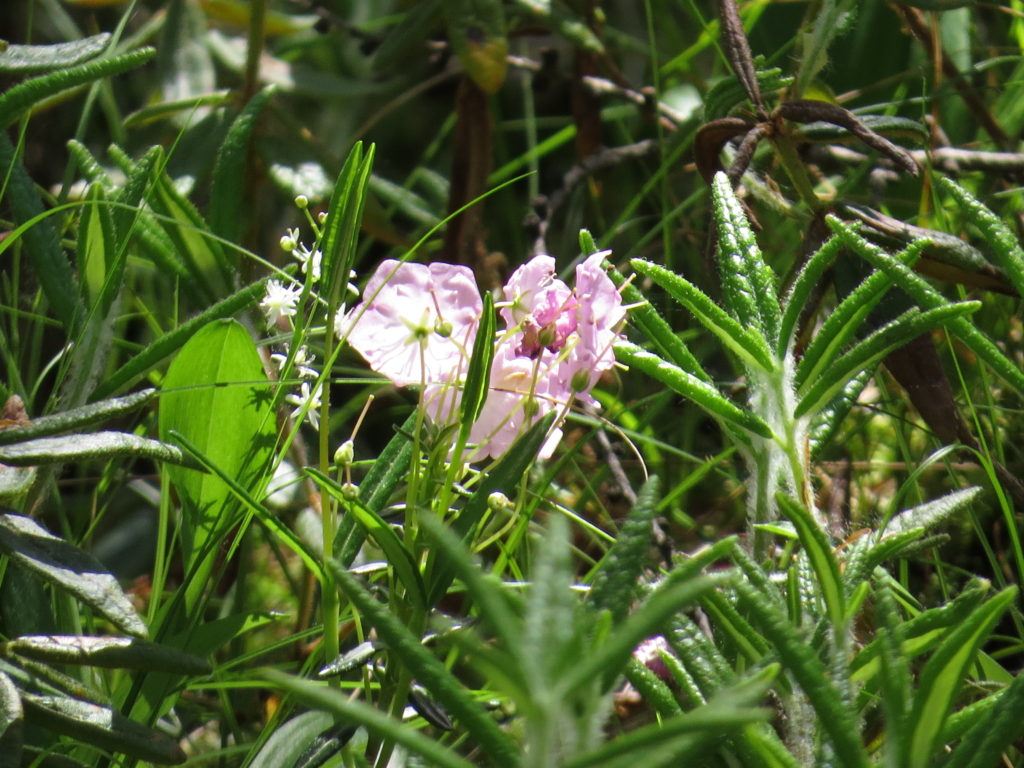
In the sea of green moss and white flowers, two pink blossoms stood out—Pink Lady’s-slipper and Bog Laurel, both delicate and scarce. I feel fortunate to see such creations.
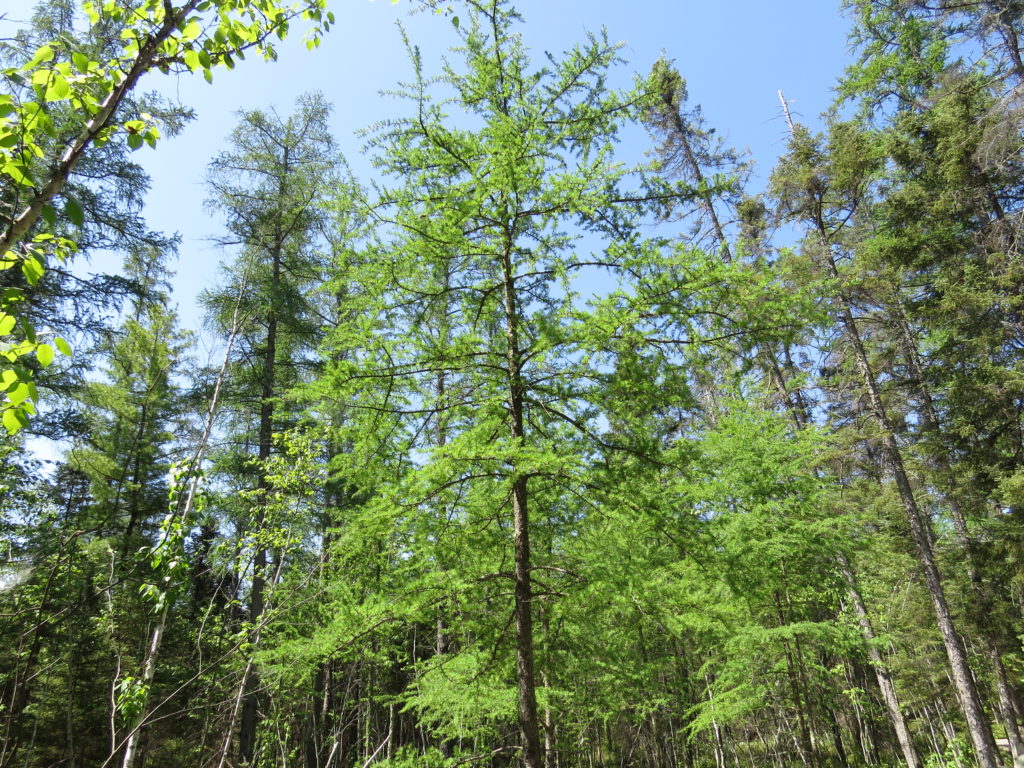
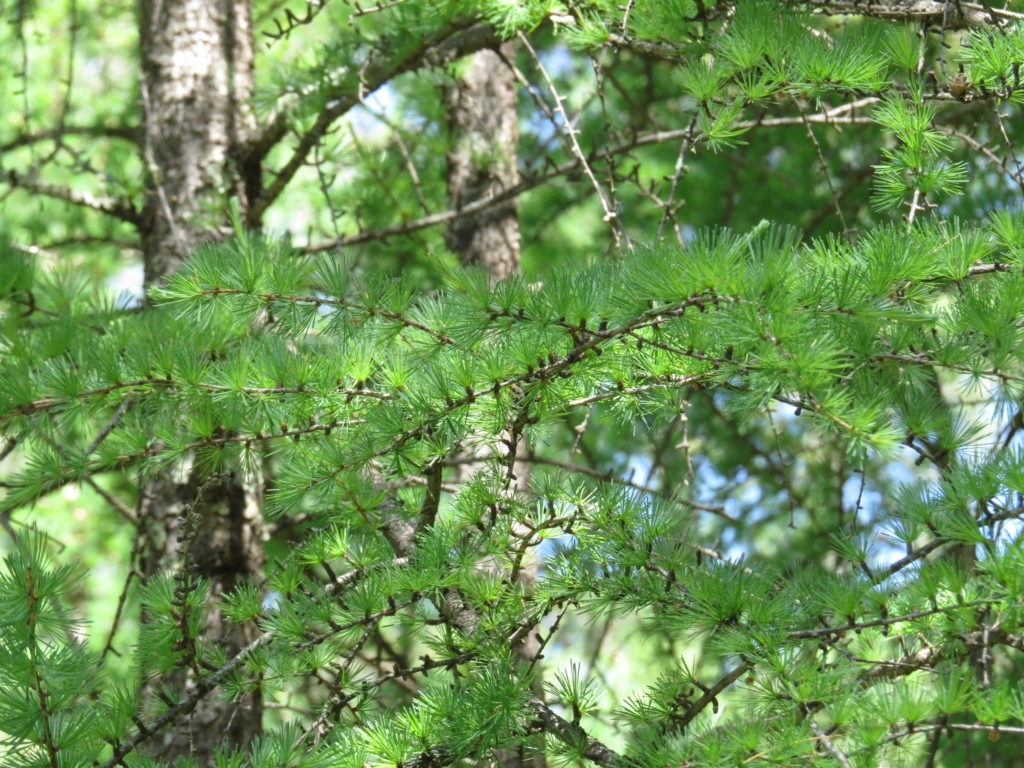
The forest part of the bog forest is made up of Tamarack (or Larch) and Black Spruce that thrive in the wet, acidic moss-soil. They have shallow, horizontal roots that keep them upright, while the Birch trees in the bog, with their vertical roots, only get to a certain size before they tip over.
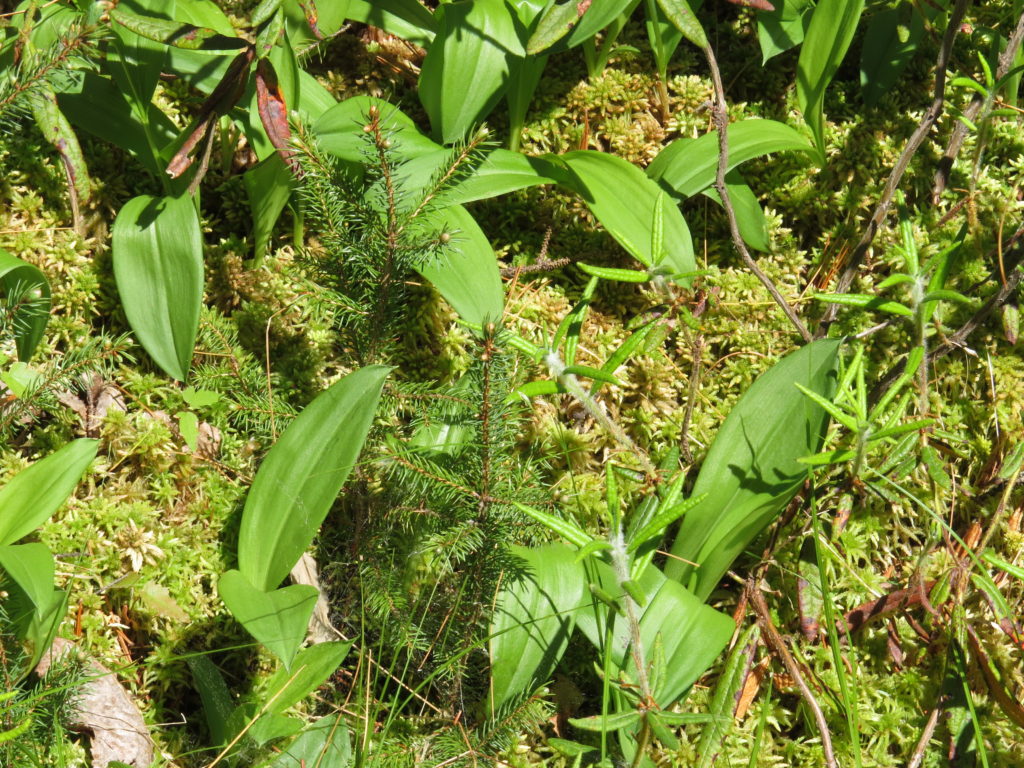

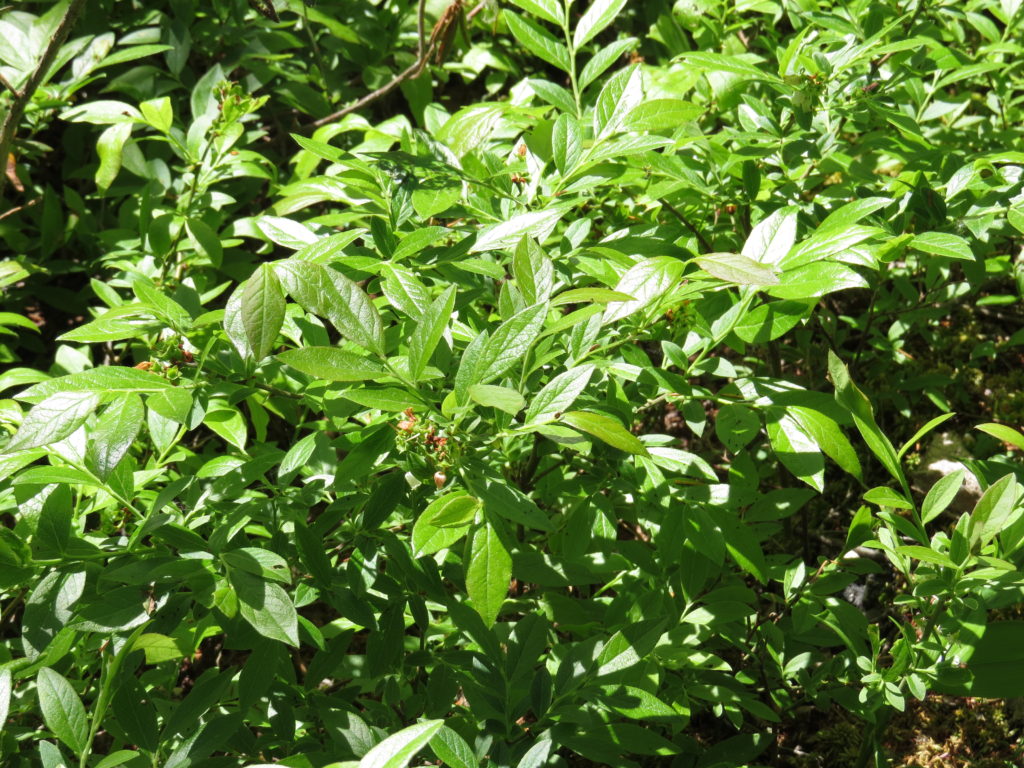
There were healthy shrubs of Wild Blueberries in certain places where sunlight was more prevalent, and the fruits were just starting to form from the spent blossoms.
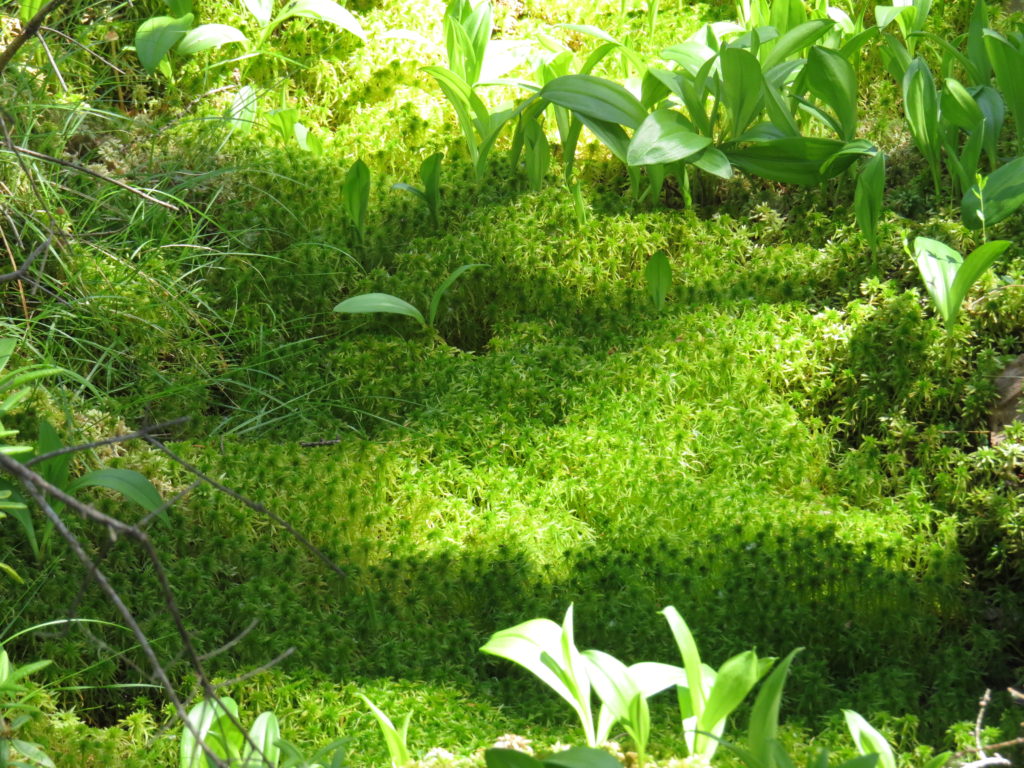
Parts of the bog reminded me of a fairy’s world with dancing shadows and sunlight on mossy dales and fallen-log caverns.

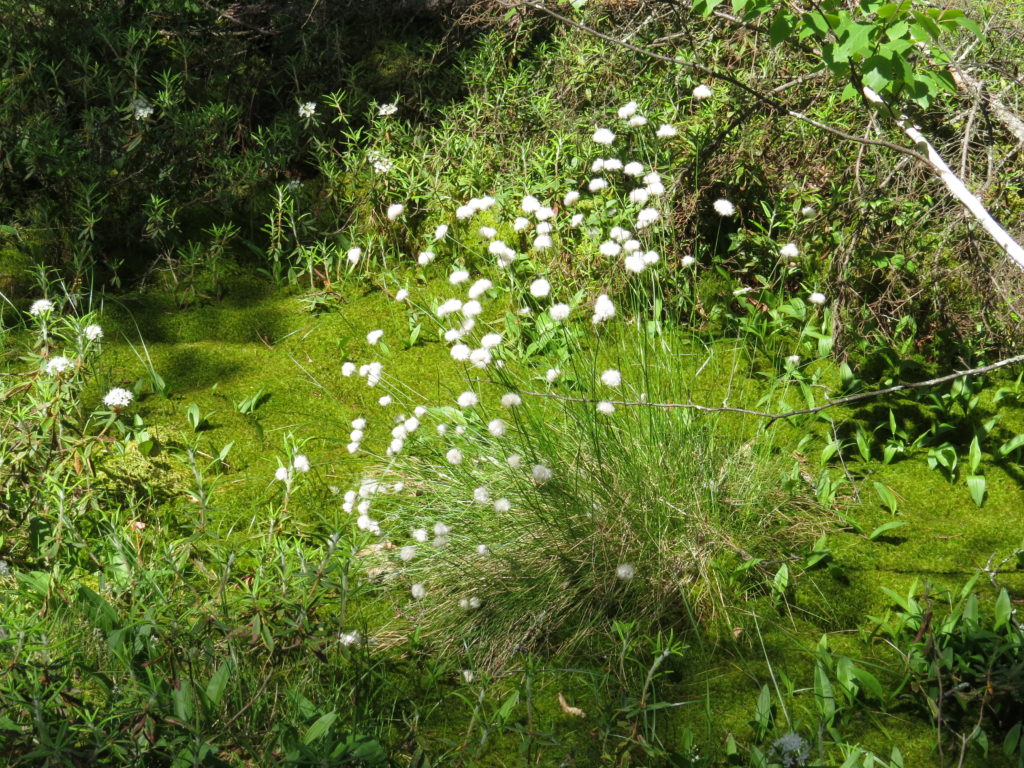
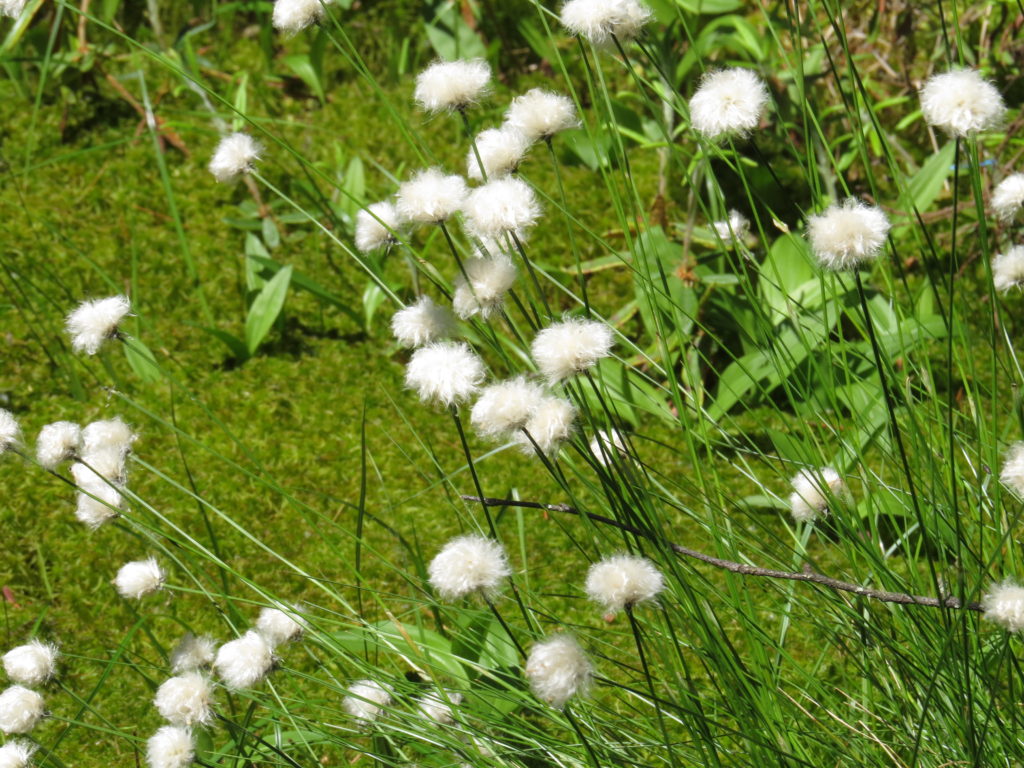
Just when I couldn’t be more pleased with the generous offerings of the June bog, Chris pointed out a spectacular plant in a bed of moss! It looked like chives with cotton blooms! It was standing upright three feet tall, and the bright white blossoms swayed in the breeze. The cotton chives are actually called Tussock Cottongrass, a sedge that grows in wet, northern areas. I had never seen anything like it—it was like a gift from the earth’s spirit keepers.
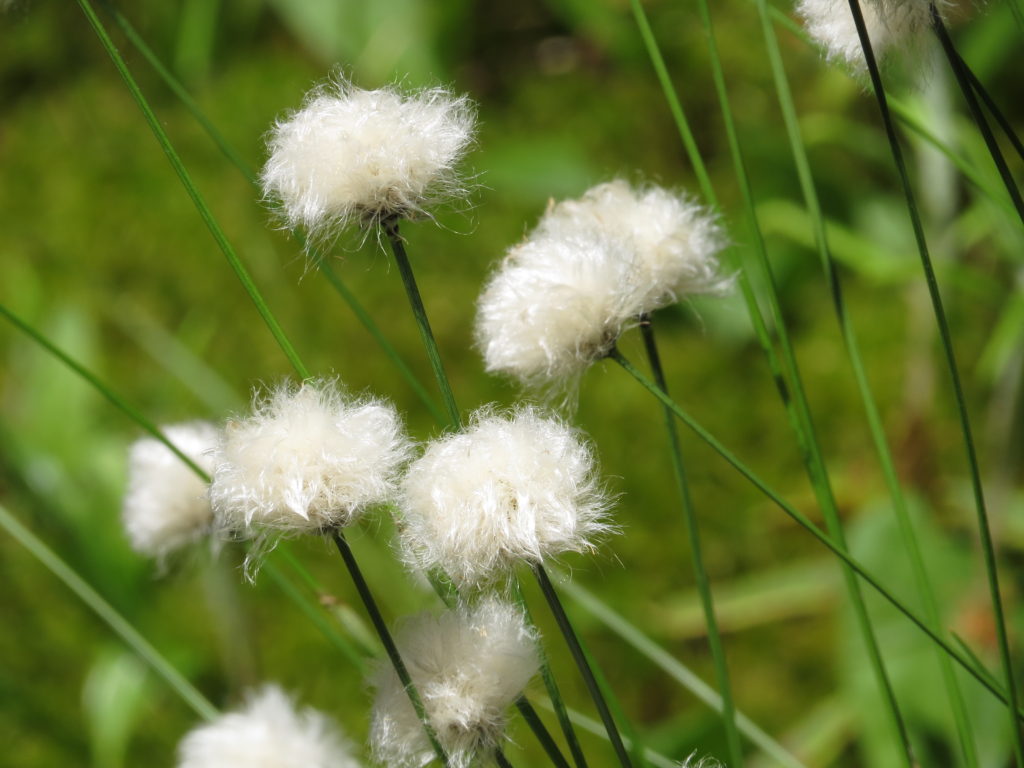
I had been anticipating a return to the bog for almost two years. Timing was an issue. My calls to the State Park to inquire about the bog azaelas were unanswered (make that robo-unanswered.) But on that day, after the rough day before, during that rocky time, I rather desperately needed to see the blooming bog—for reasons only known by my soul and my God. Once we got there, I made a bee-line for the bog, to the ‘good stuff’ I was anticipating in my head and needing for my spirit. I was so dang happy when I saw the masses of white Rhododendrons blooming, and I know it’s strange, but I’m kind of happy that a person can be so happy about a blooming bog. Nature and its beauties do that for me—it can be something different for each of us. Perhaps it’s having something to fix our gaze upon when things are not going the way we want them to, when we don’t feel like we’re standing upright on the ground, when we feel fragile. And when we see that dancing glimmer of hope in the dancing shadows of Life, we may be surprised by a spectacular specimen of Cottongrass and a mind that’s still fairly sound.
Risk and Reward
What would compel you to jump off a cliff? I mean literally jump off a cliff. Where on the risk scale are you, if 1 is ‘safety first and always’ and 10 is ‘extreme adventure is just a way of life?’ After leaving KoWaKan, Aaron asked if we wanted to stop at Thirteen Corners. That pulled me up short! I had heard the stories, even seen the take-your-breath-away video. My first thought was ‘no way do I want to see where my son and others I care for risked their lives,’ but I also knew it was a beautiful, intriguing place. So I said yes.
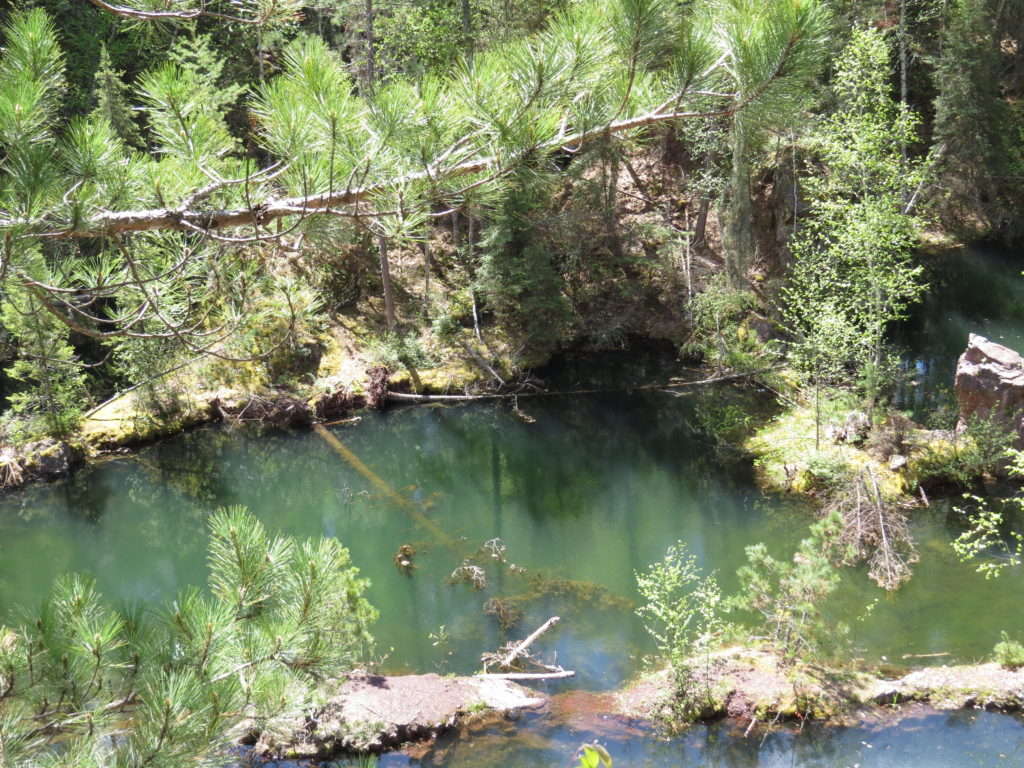
It is a beautiful place. Located within both Superior National Forest and Bear Island State Forest is Section 30. One hundred years ago this was a working mine for iron ore, employing 140 men. A community, also named Section 30, had been built up around the mine. There was a post office, a school with 120 children, boarding houses, private homes, a dance hall, hospital, silent movie theater, and Oppel’s General Store! All work halted in 1921 due to financial problems of the mining company after 15 years and the removal of almost 1.5 million tons of iron ore. Bust!
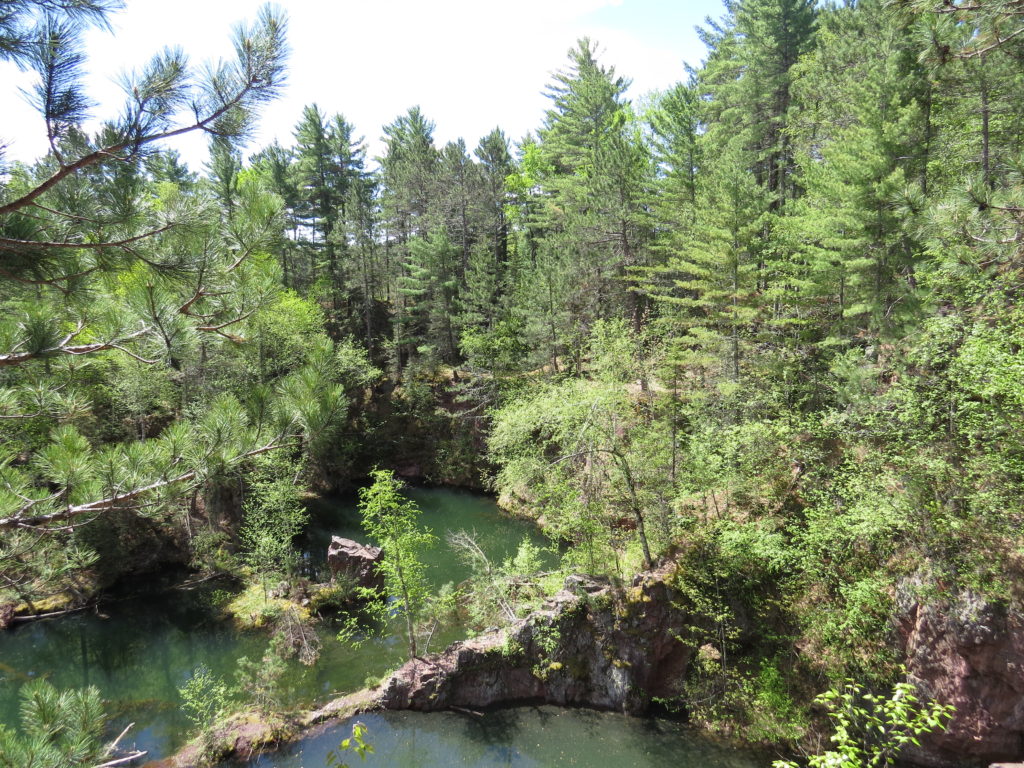
Section 30 has returned to the wilderness with a permanent scar of the water-filled open pit mine. Trees grow on the ‘spoils’ piles of unwanted rock from the mining, and we stood high on the hill and spoils above the water.
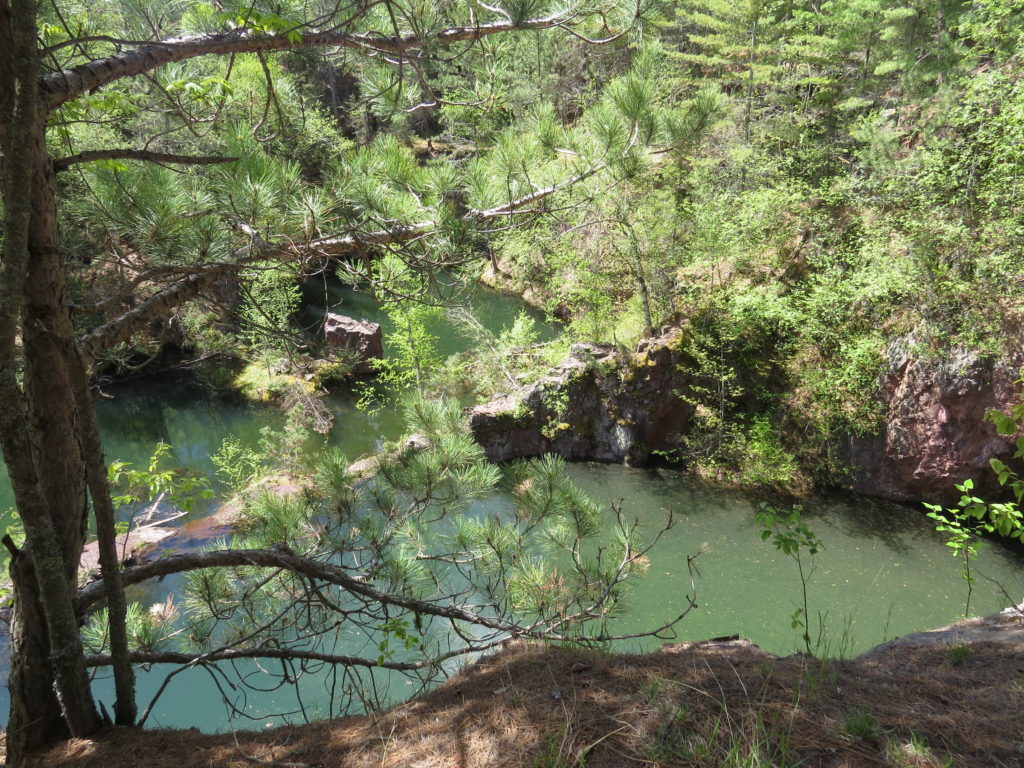
My knees were weak just watching Aaron walk to the ‘leaping point’—a jutting rock that overlay the green water sixty or seventy feet (or more?) below.
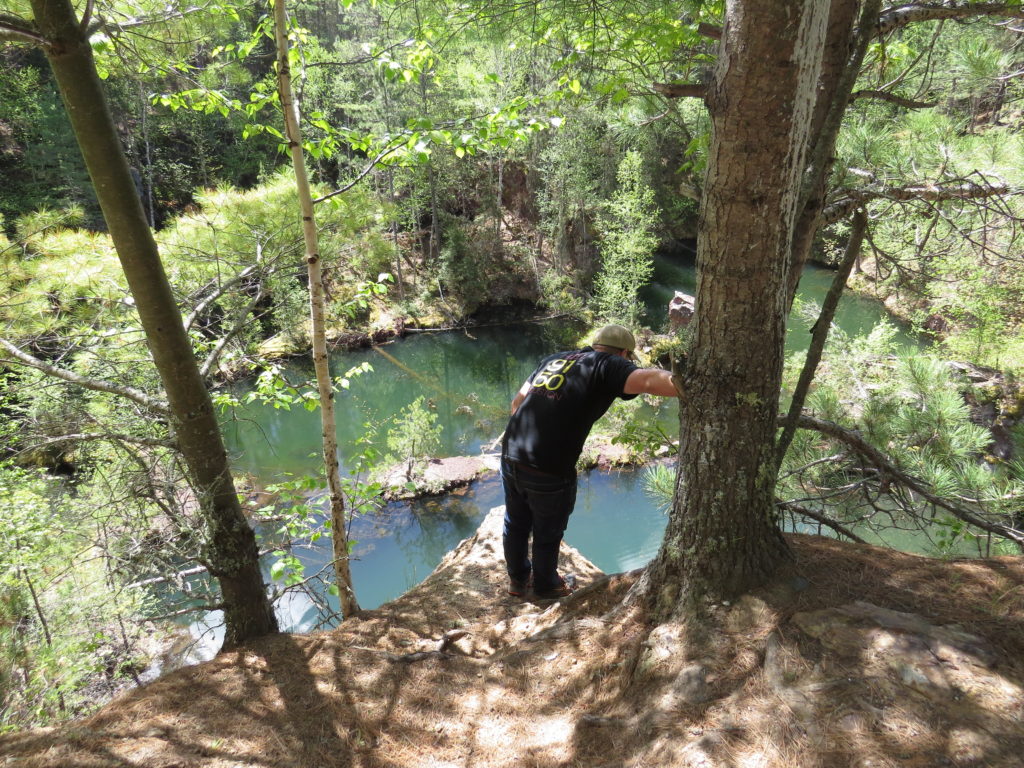
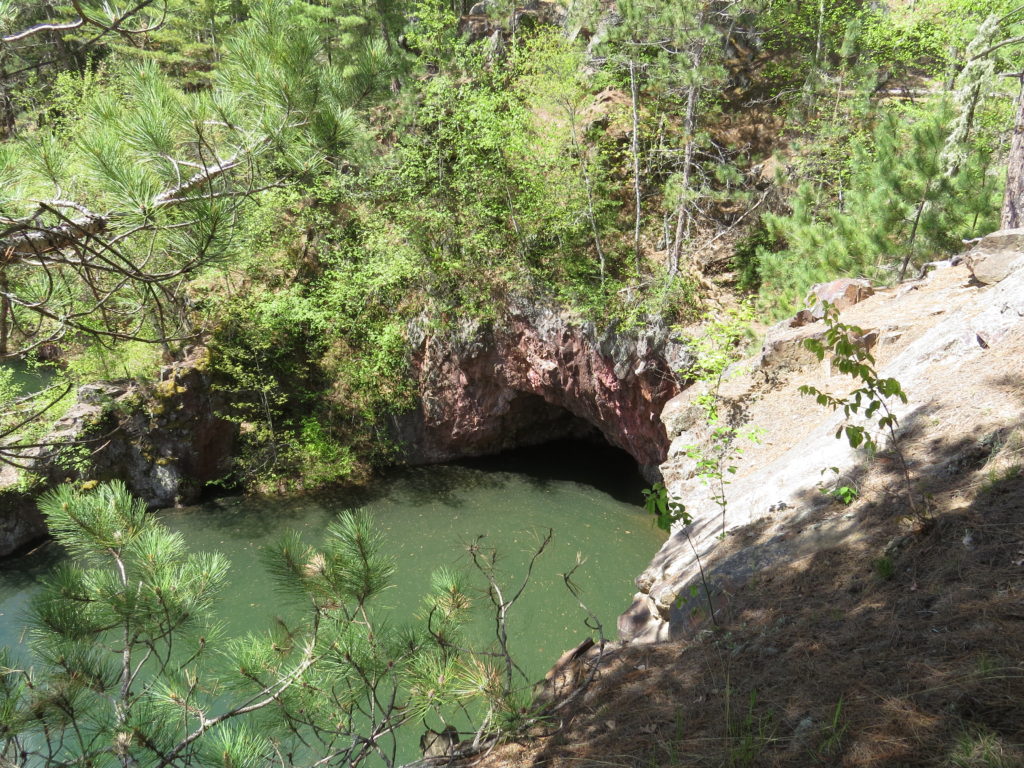
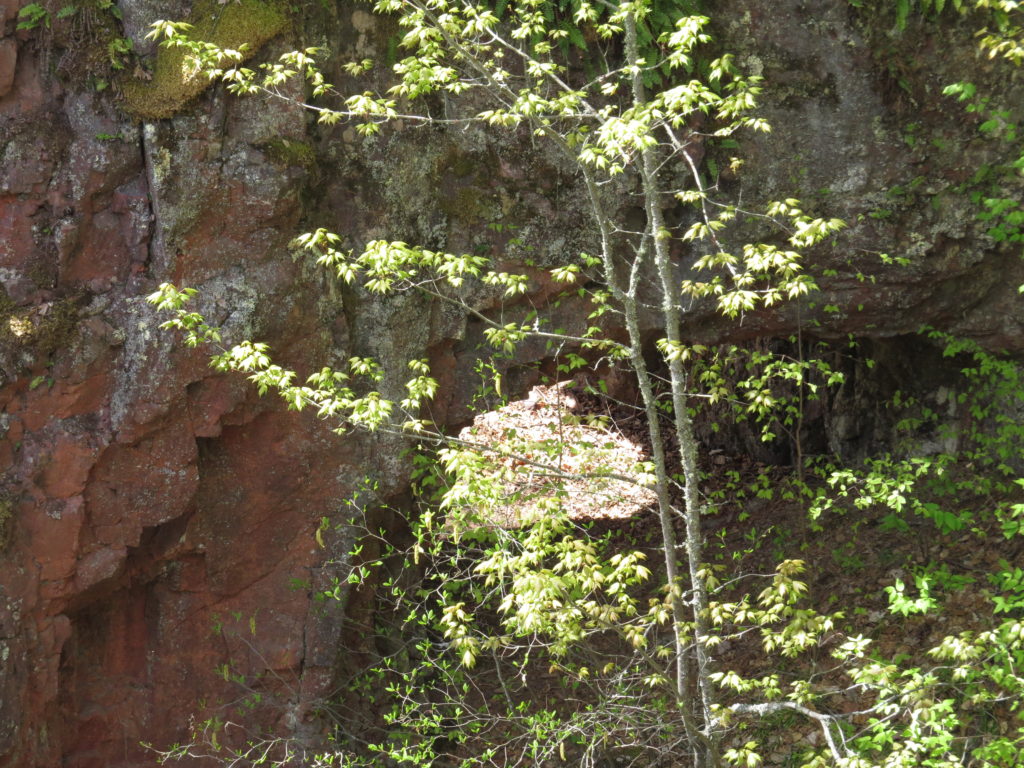
Trees have grown to the edge of the ragged rock cliffs, and Aaron pointed out the smaller cliffs on the other side—the ten or twenty footers where it was more just ‘fun’ to jump from. He told me of the tunnel under the inclined ledge—‘see that bright spot?’
It was like an optical illusion to me, that bright spot, until finally I could discern that it was sunlit ground from the other side of the tunnel.
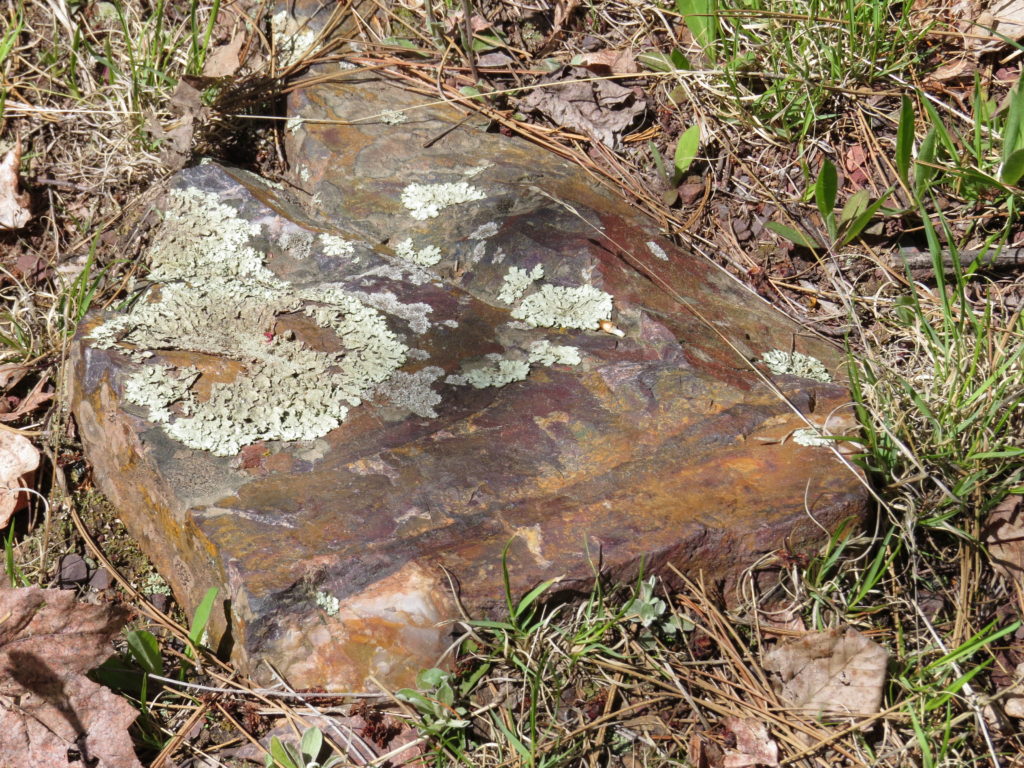
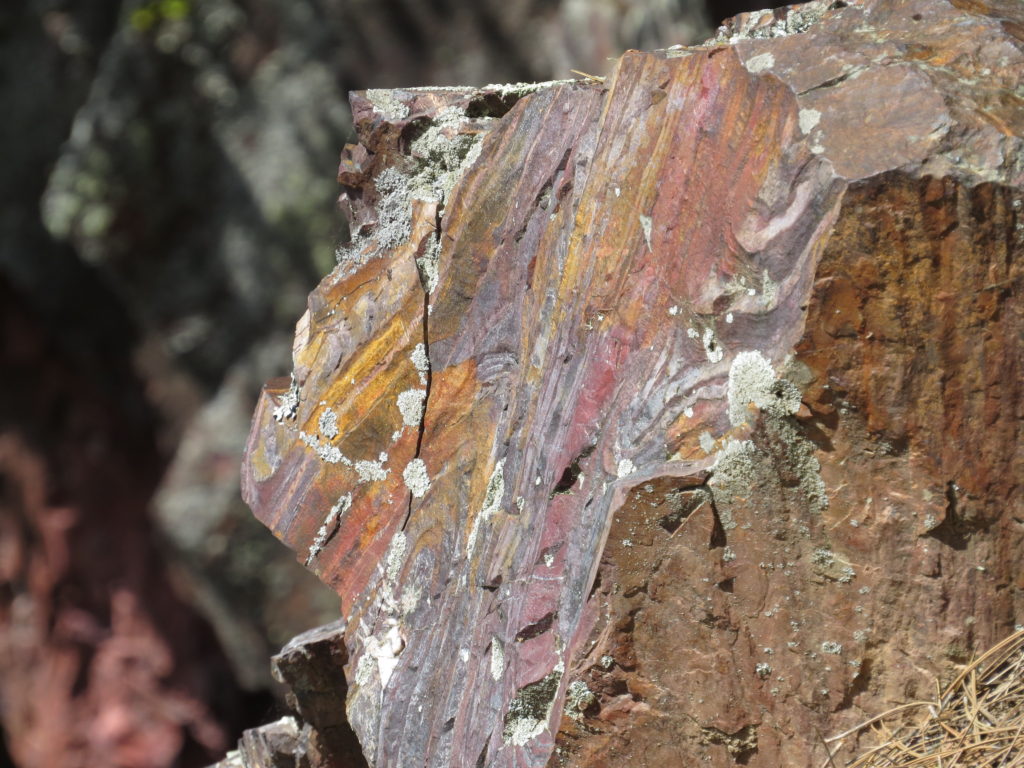
The rock is actually quite beautiful with its red, purple, orange, and rust colors. There are layers of iron ore and pockets of white quartz.
But back to jumping off a cliff—what does a person ‘need’ to take a risk like that? First, you would need some skills—swimming, how to control your body when jumping, holding your breath, etc. You wouldn’t jump off a 70 foot cliff without first jumping off smaller cliffs many times—so, practice. You would need confidence in your abilities. You would need support—many eyes and hands to help see the dangers, to navigate the correct path, and to give you encouragement or warnings. And finally, you would need courage. It would be a rare person who would be able to stand on the ‘leaping point’ with no fear or trepidation.
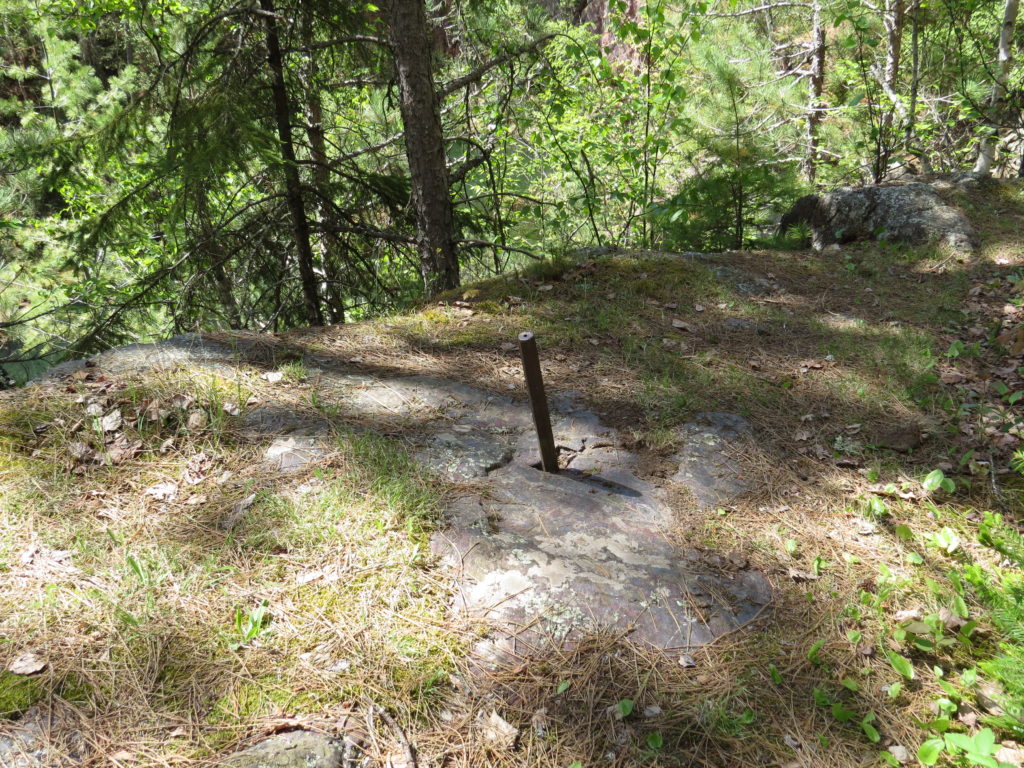
The only evidence I saw of the mine, besides the pit and the piles of overgrown spoils, was this iron spike drilled into a rock high above the water. It must have held cables that were used to hoist the rock from the bottom of the pit. It was used for support, safety, and protection for the miners. It was important. They relied on the strength and integrity of that support for their livelihood, their well-being, even their life. Safety matters, even in risky ventures.
As I looked down at the green water, the very best I could imagine myself doing was walking out on that ridge and sitting with my feet in the water. Maybe. Perhaps. I’m a one on the risk scale, if not a zero or a negative number.
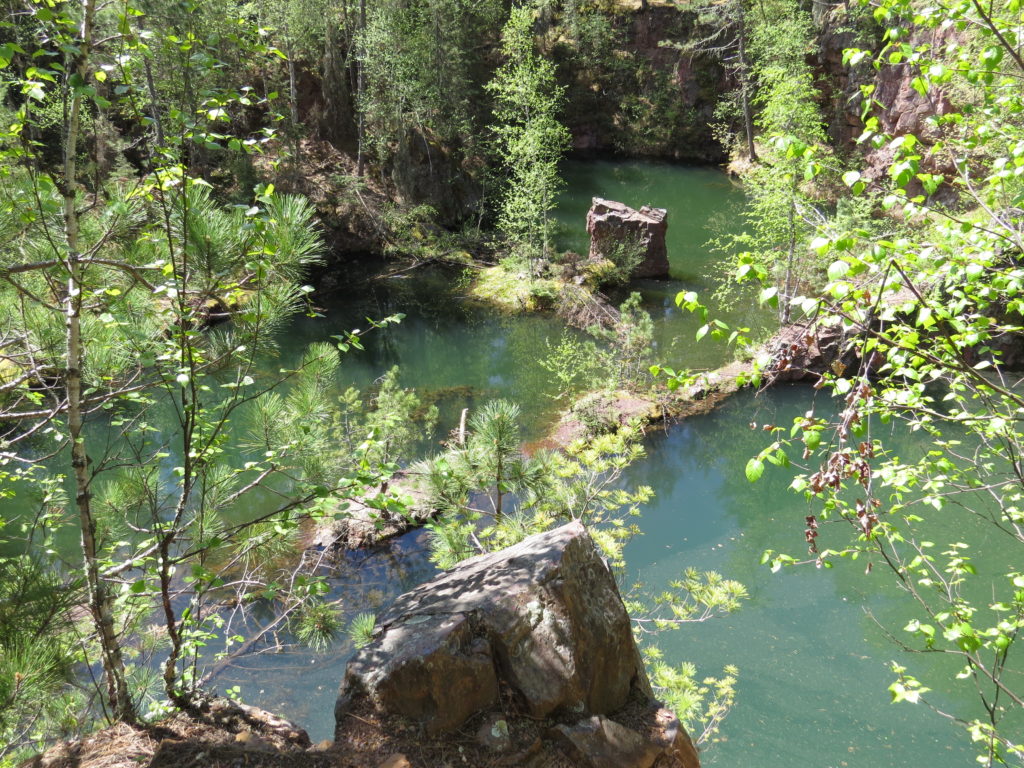
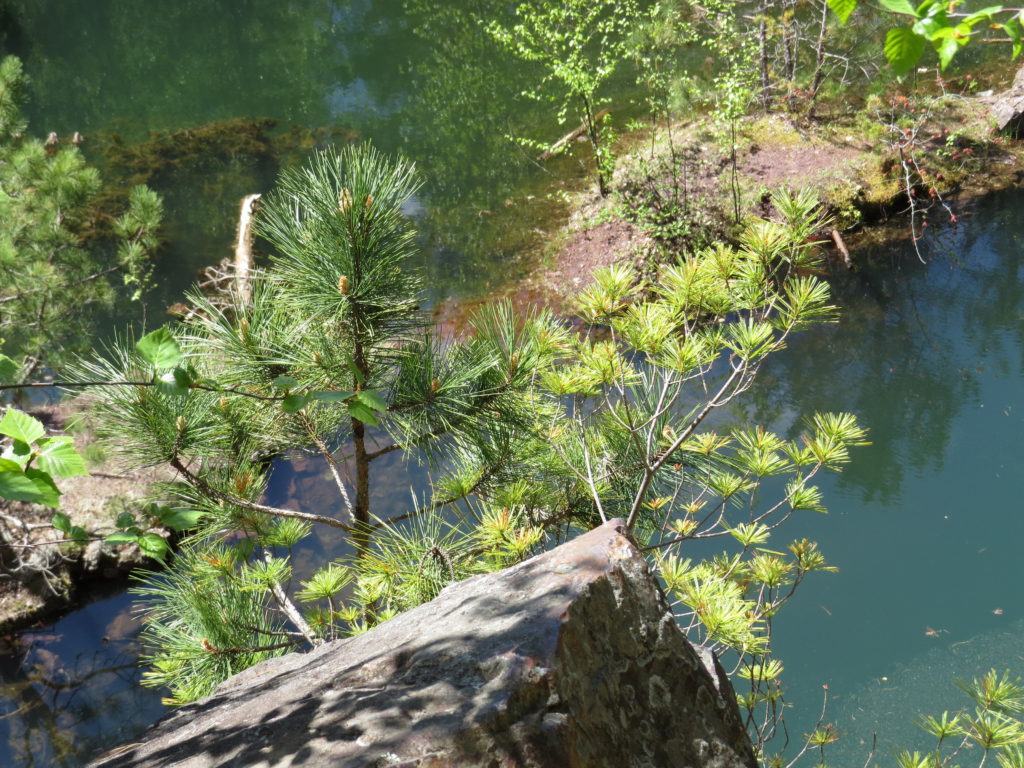
Walking through the trees, it was hard to imagine a bustling little mining town with children walking to school past the open pit where their fathers worked one hundred years ago. It was a risky job taken by Finnish immigrants in order to make a better life for their families. Those families moved on to other mining jobs and other places when Section 30 slowly dissolved after the abrupt closing of the mine. The mining company took a ‘calculated risk,’ defined as ‘a chance of failure, the probability of which is estimated before some action is undertaken.’ All businesses and all individuals at some time in their lives, take calculated risks after looking at the pros and cons, running the numbers, and having trusted people ‘weigh in’ on the issue. It is intentional; it is a choice. There are other risks people embark on from a position of vulnerability because of age, finances, health, or status—these ‘decisions’ are often a reaction of survival instead of a calculated choice. Then there is the purely physiological reality that the ‘executive function’ part of the brain, the prefrontal cortex, does not fully develop until the age of twenty-six or so. This is the rational part of the brain that is responsible for planning and impulse control. So our relationship to risk and safety changes as we mature and age.
Wherever we fall on the risk scale and for whatever reason we may or may not literally jump off a cliff or do any other kind of risky business, we can appreciate the siren call of adventure, freedom, re-birth, and fresh starts. We do, however, need to be wary of the bright spots that blind us of the risks; we need to practice discernment. We need to remember that the strength and integrity of safety matters. I thank God for the safety of the young people I know who have jumped off the cliffs—not all have fared so well, and I hope they have moved a little more towards the center of the risk scale. As for me, I need to move the needle away from my cocoon of protection and safety towards the middle ground where the unknown can bring connection, joy, and fun. Hello to Courage, and hello to “So I said yes!”
Connection Under an Azure Blue Sky
It all began with my prejudice against red pepper flakes. We were eating our breakfast at KoWaKan, sitting at picnic tables under the tarp-covered kitchen. One of the board members we met the night before sat beside me and sprinkled red pepper flakes on his scrambled eggs. My Scandinavian sensibilities instantly went into danger mode—ie. ‘how to ruin a perfectly good, calm, comforting morning meal.’ When I cautiously mentioned his usage, he assured me that it made everything taste better. In my righteous and myopic defense of Northern European culinary practices, I quipped something like “and you’re from Minnesota?!” He was not from Minnesota. He said he grew up in Kansas City. Well, that explains it, I thought, as I told him that that was where my husband Chris grew up, too, (who also flavors his eggs with red pepper). We continued to eat our eggs and chat. When Chris walked over from the fire where he had been warmly eating his breakfast, I told him that John was from Kansas City! Chris asked him what part of KC he was from, then asked if he had gone to Southwest. John said no, that he had gone to Rockhurst High School. Things kind of went slow motion in my head as I looked from one to the other, and then he added, ‘Class of ’76.’ Chris and John were classmates! What the heck?! They used to play basketball together every day in the ‘short-guy-lunch-hour basketball league!’ We were in the northern wilderness of Minnesota at a Methodist camp and two Kansas City Catholic boys meet again after 40-some years! It blew my mind—I could hardly stand the deliciousness of it!
We were all on the same work team that morning, and the conversation between them flowed from past memories to present day to how they got here. During the shoveling, bucketing, trimming, and digging, in the midst of the smudge smoke that kept the black flies from our eyes, there was a re-connection from a distant time and place. From all the stories that Chris had told me about Rockhurst, I knew that it, too, had a ‘Spirit of the Place‘ about it.
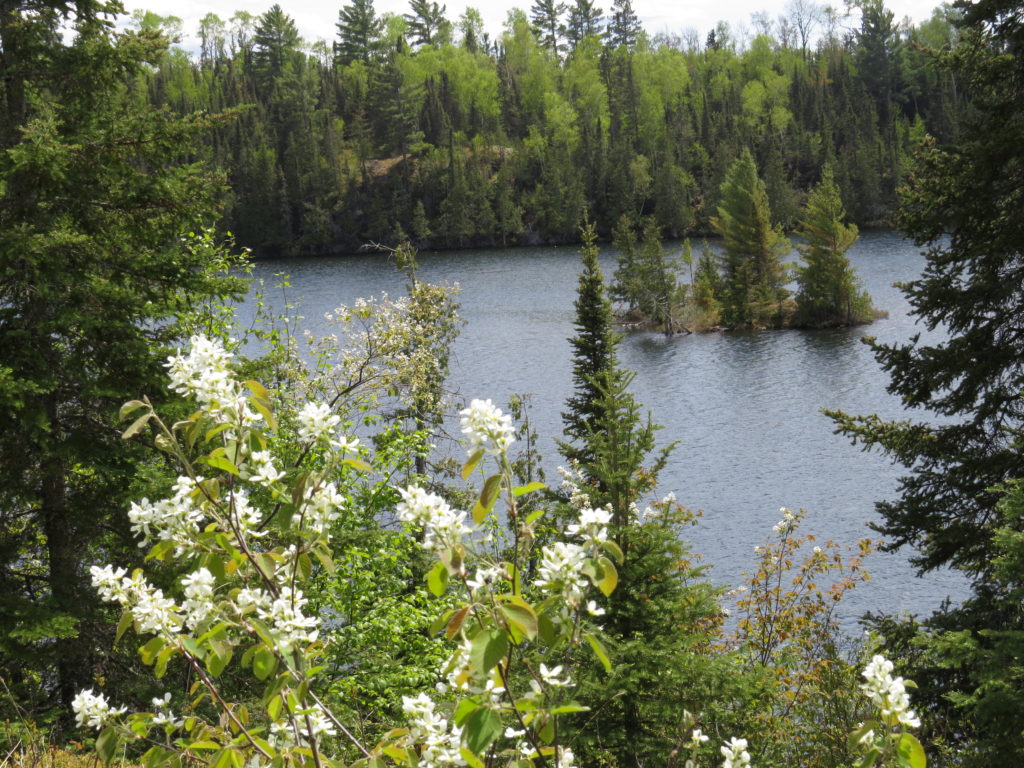
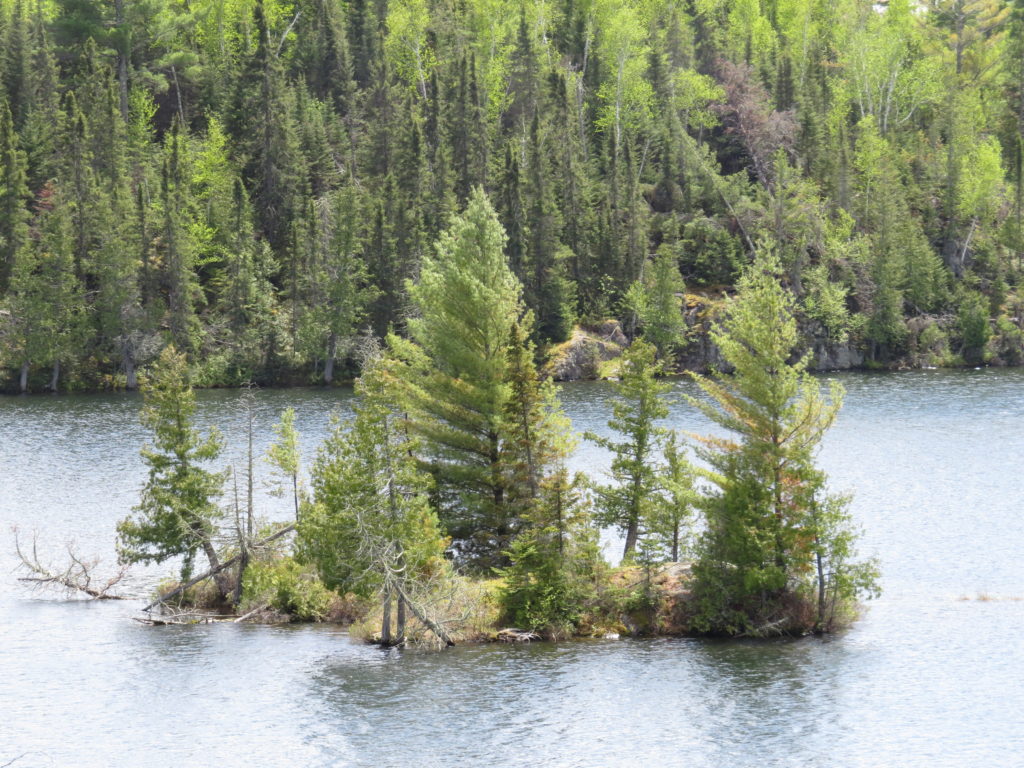
Later in the day, I walked the trail from the Meadows to Hilltop, capturing the details of a late Spring day in the forest. Spruce, Pine, Fir, Birch, and Aspen are the largest trees in the forest, including those on the three islands of Section 12. Star-white flowers of small Serviceberry trees will produce dark, edible berries later in the summer.
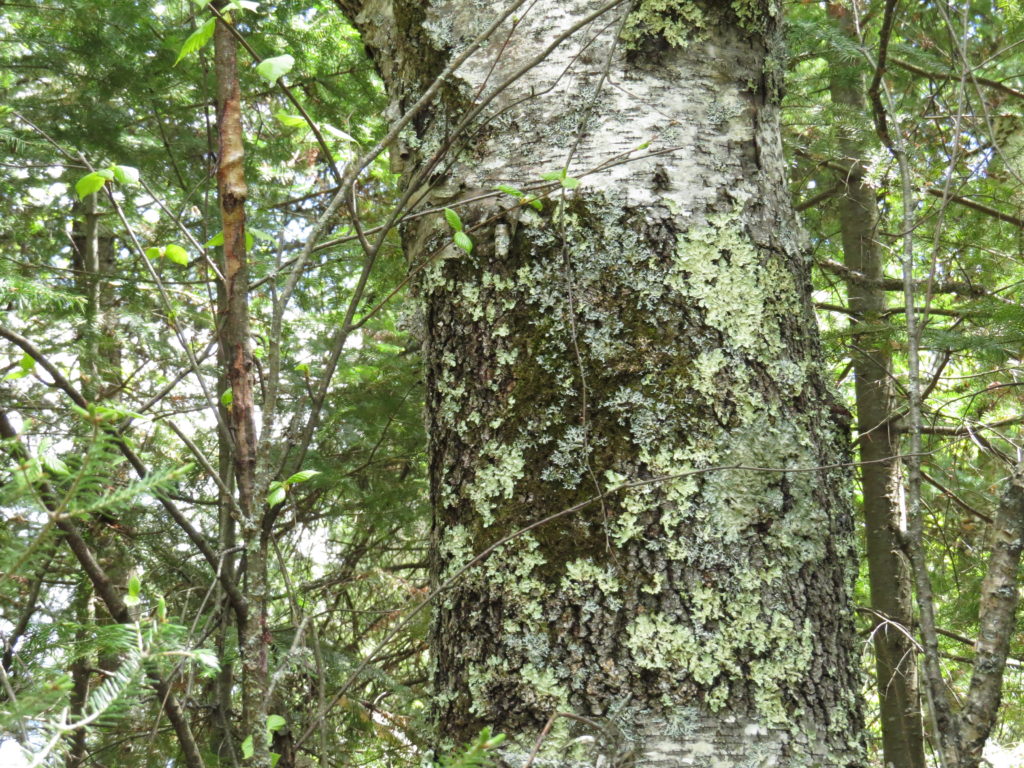
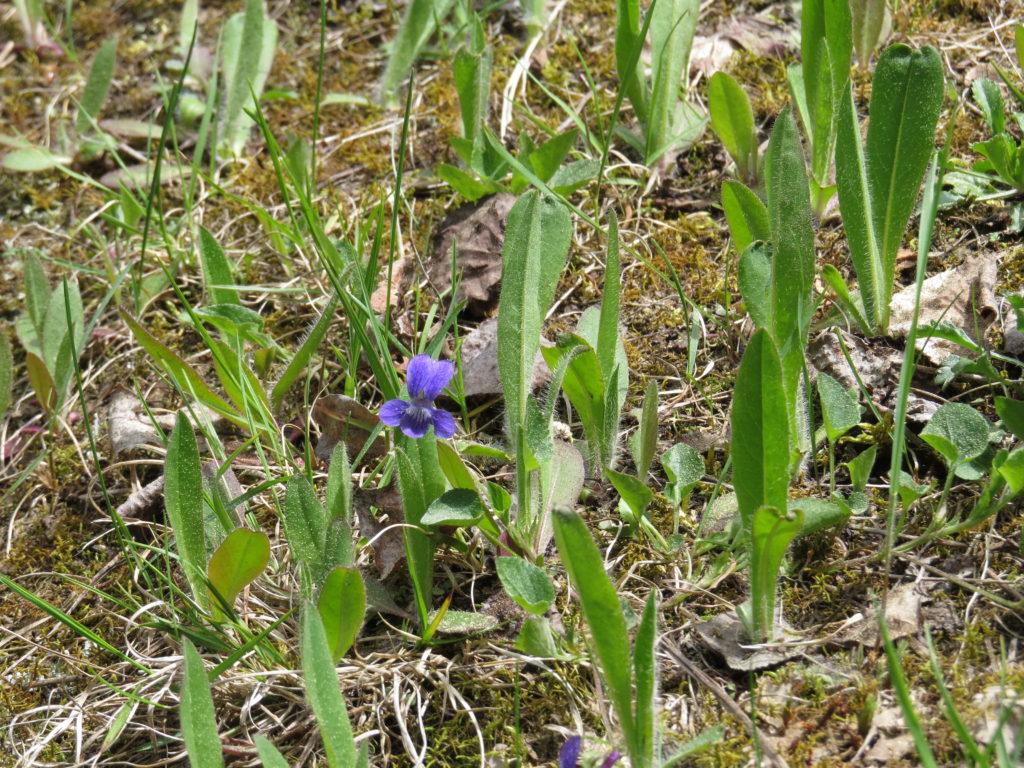
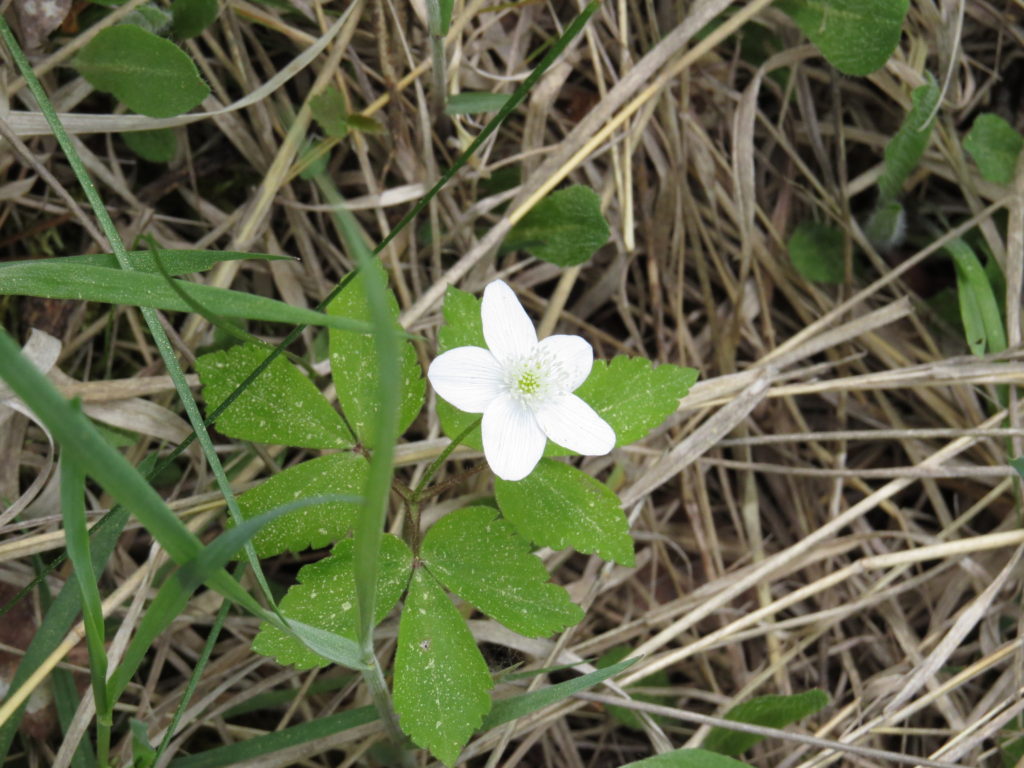
Moss and lichens grow on nearly everything. The moss-covered rocks and soil are interspersed with tiny Violets, Wood Anemones, and other plants for later blooming.
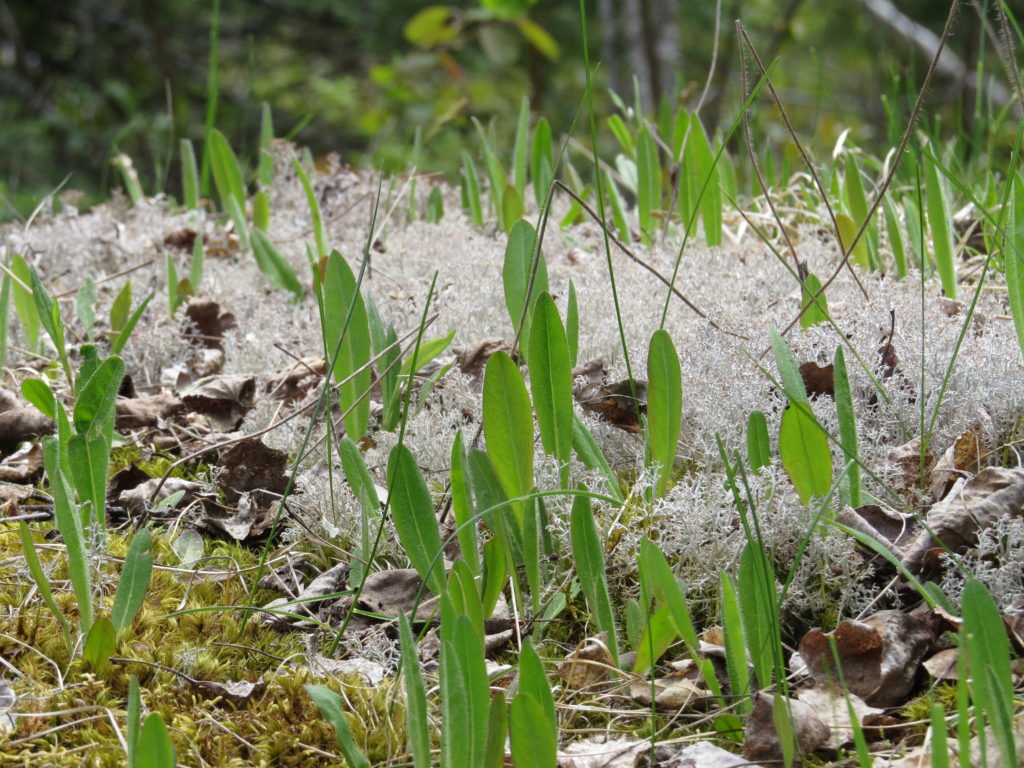
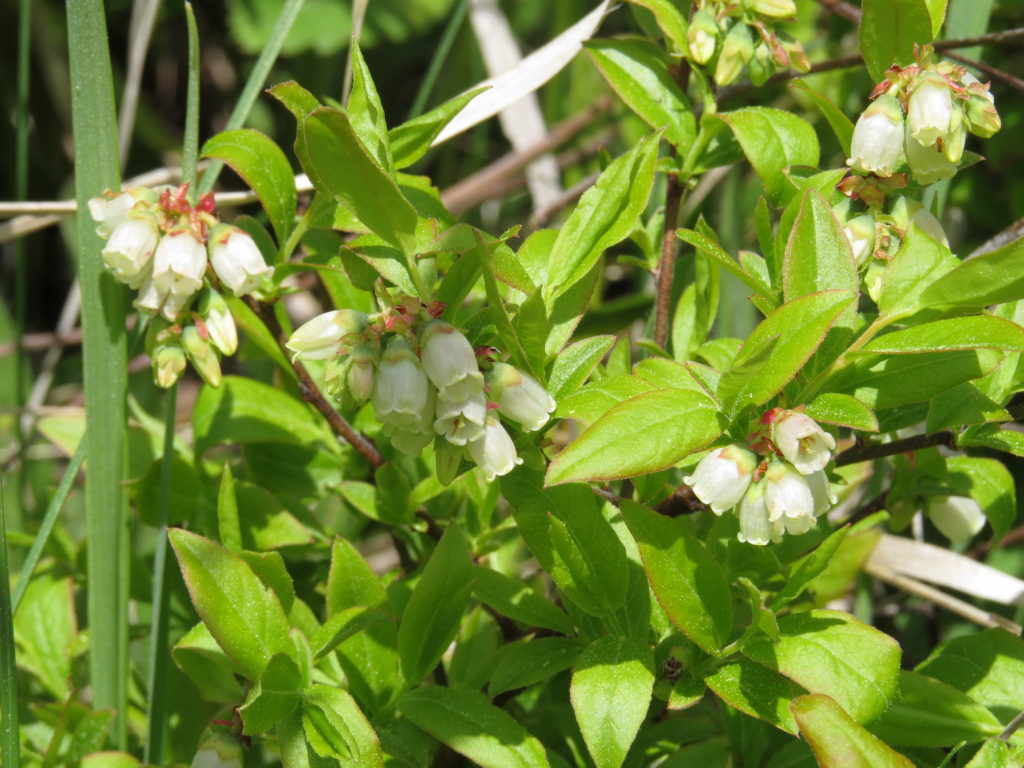
Wild Blueberries grow on a sunny, rocky hill facing the lake. The low-to-the-ground shrubs with their small, pale, bell-shaped blossoms can easily be overlooked.
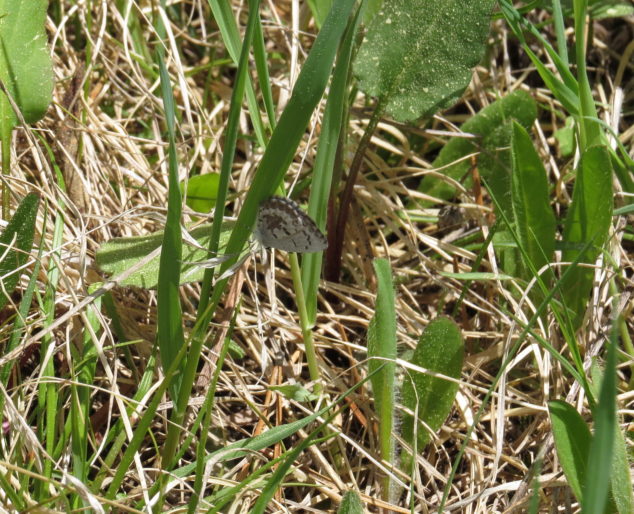
Wild Blueberries are the larval food for the Spring Azure Butterfly, who is almost camouflaged when its wings are folded, but who is a tiny piece of blue sky when flying.
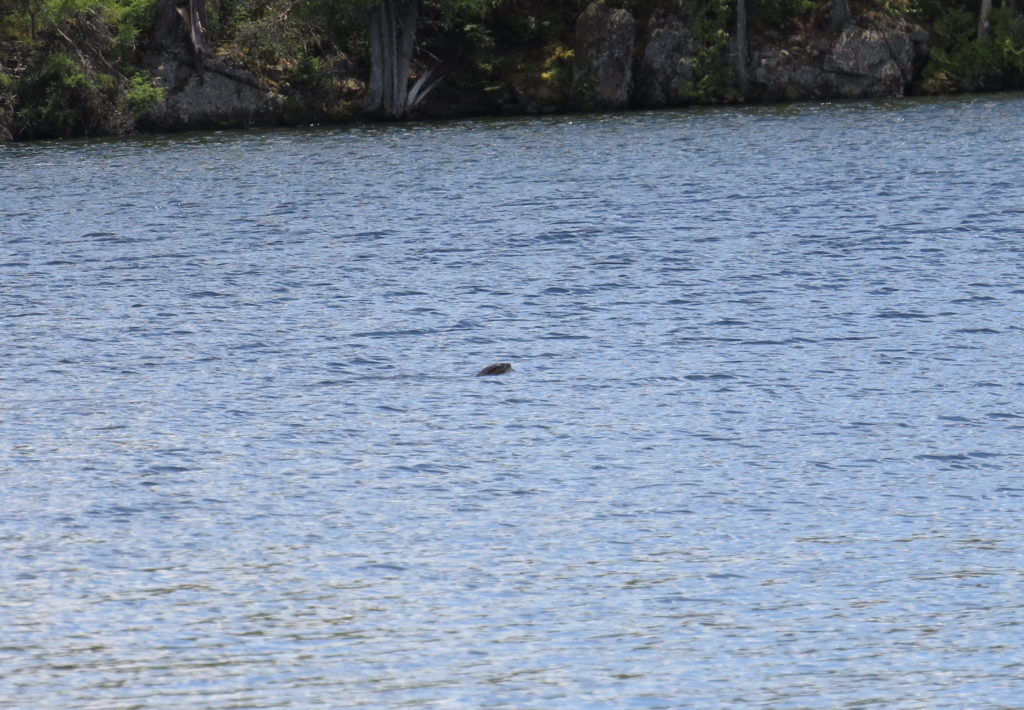
I saw a swimmer out in the lake, gracefully going under and up in a measured, undulating cadence. From a distance, I knew it wasn’t a Loon, and Aaron confirmed that he had seen River Otters here during his work summers.
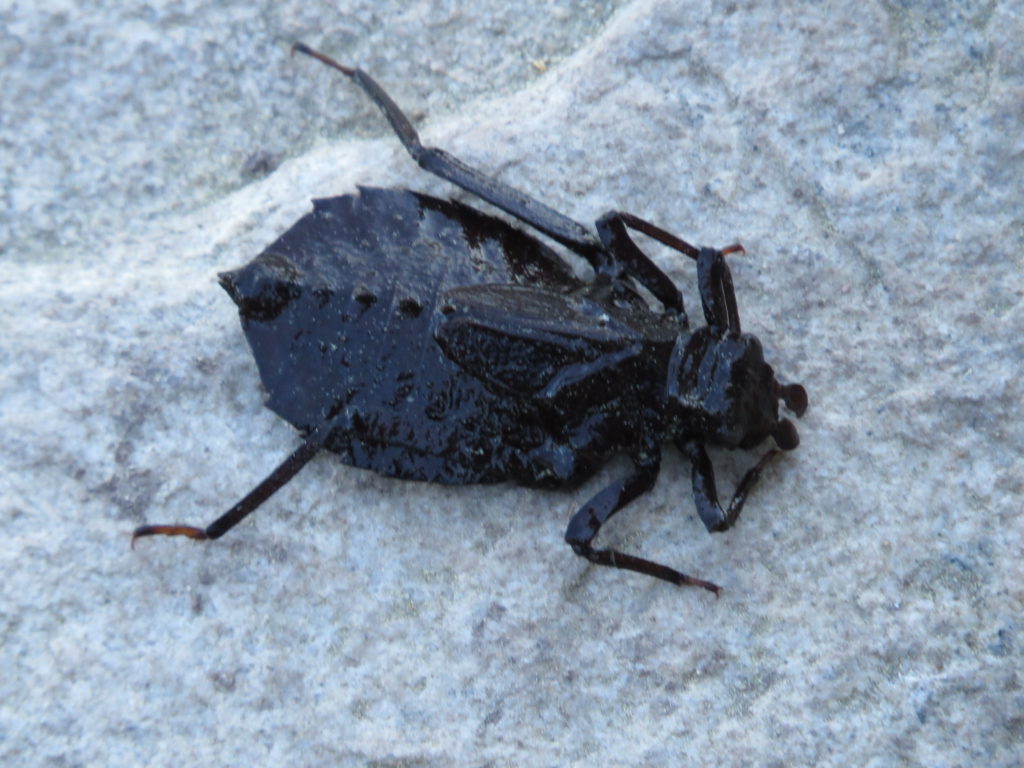
Another resident of the lake that Aaron retrieved for closer inspection was a dragonfly nymph. After the adult lays eggs on a plant in the water, the nymph grows and develops for up to four years before emerging from its shell and the water to become a flying dragonfly!
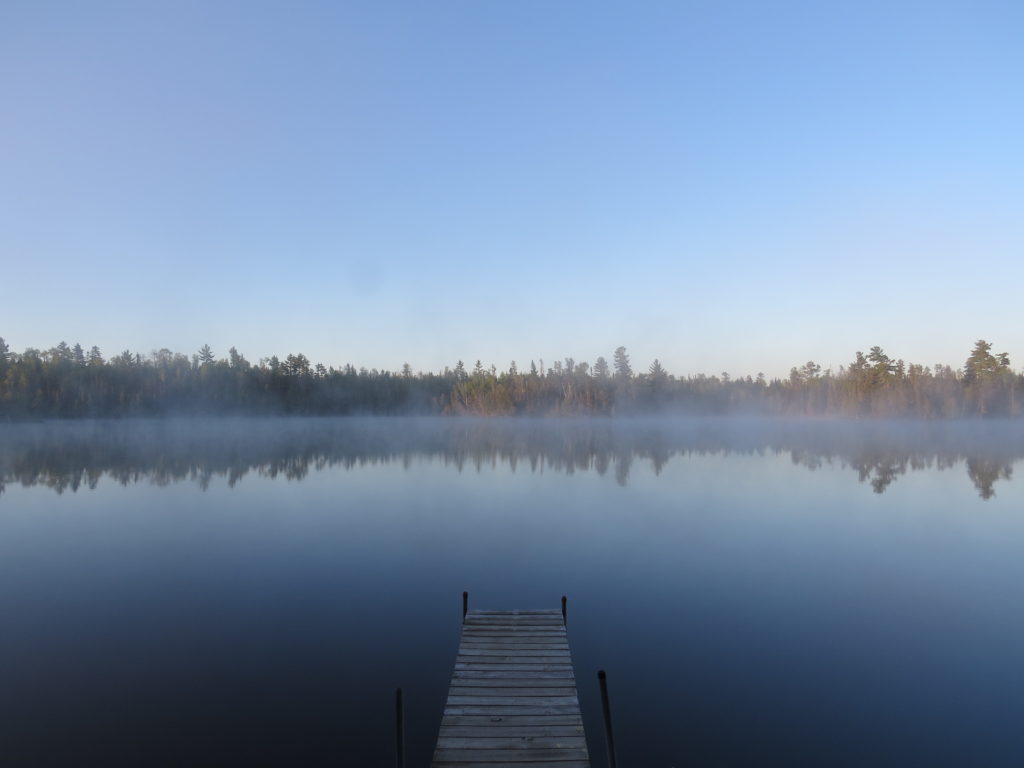
After my cold and restless second night in the tent, I was rewarded for getting up before the sunrise to see the mist rising from the still water.
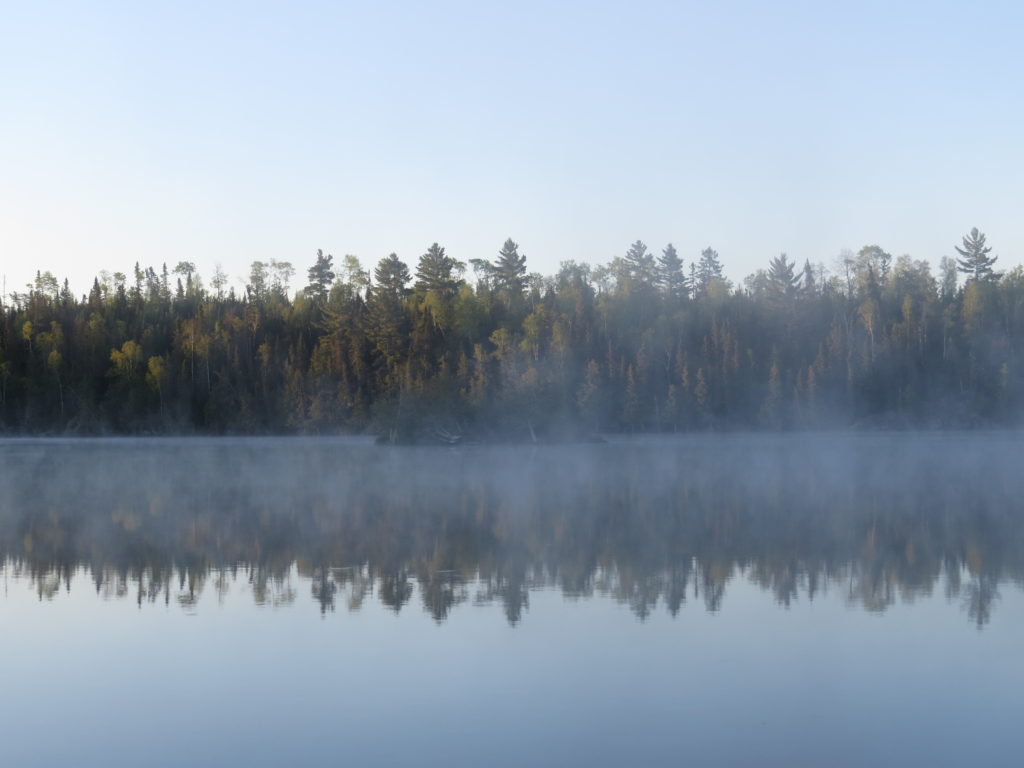
Even the island was obscured in the morning mist…
…but the Loons who had sung our evening lullabies were seen swimming in early morning reverie.
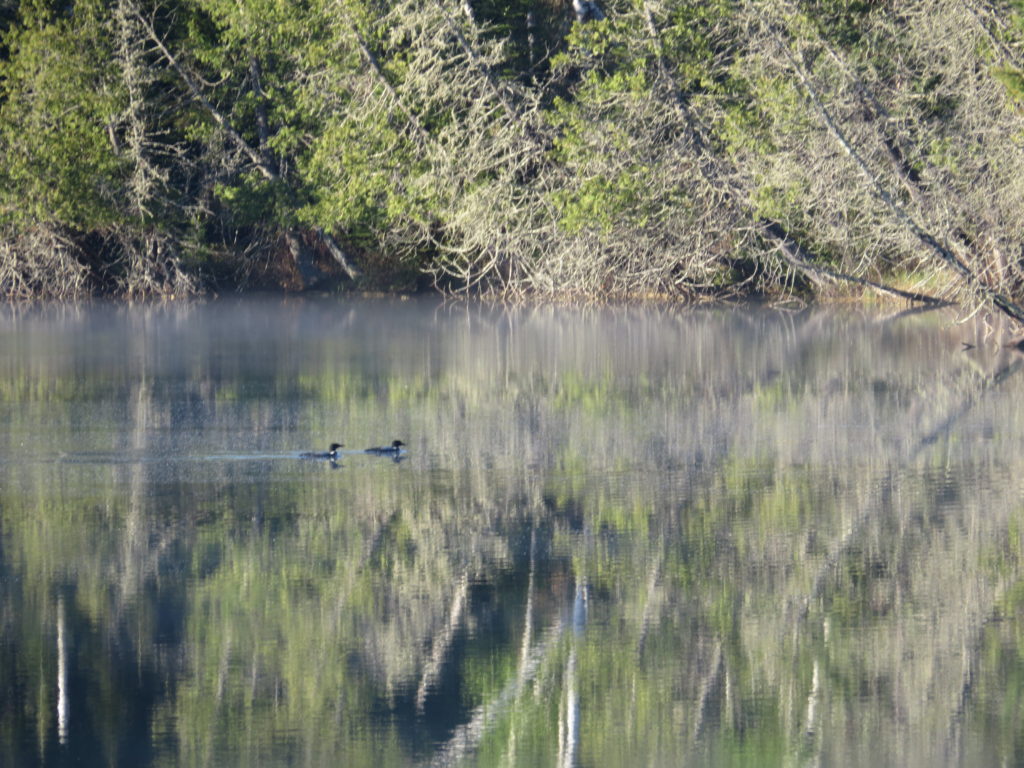
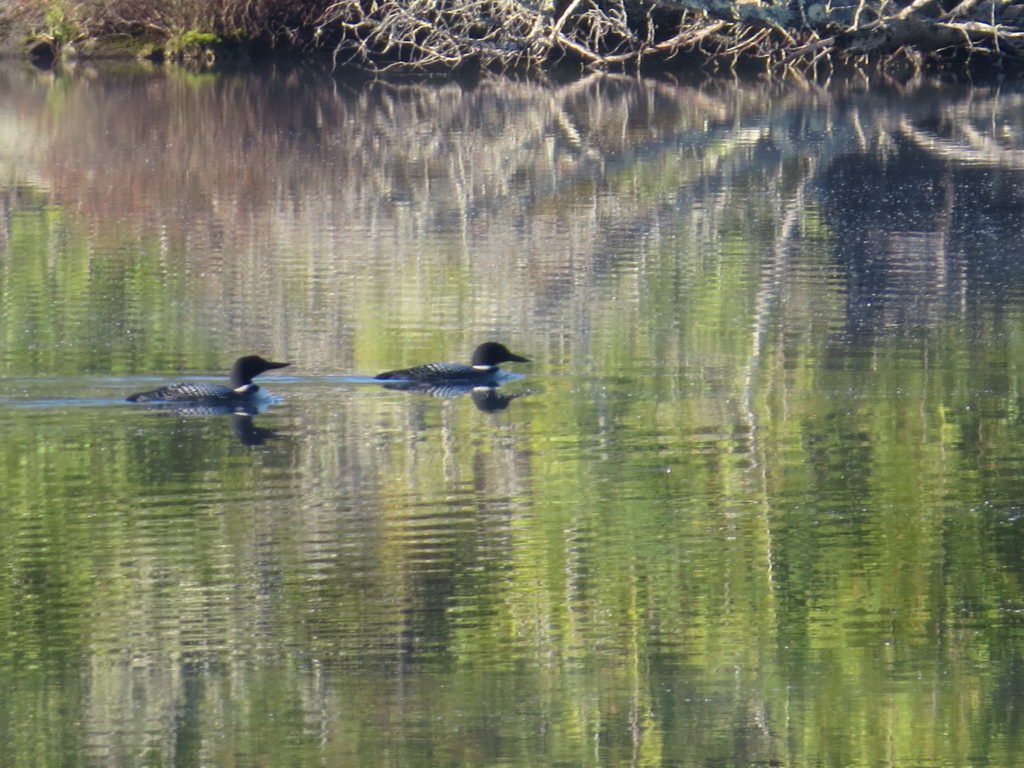
We are like islands in the sea, separate on the surface but connected in the deep. –William James
Our weekend of service and connection with Aaron and our friend Luke and in this special place would have been wonderful in and of itself, despite the chilly nights. But the meeting of the classmates after more than forty years?! That chance? meeting just gave me so much delight! Later in the weekend, we also found out that two other fellow KoWaKan helpers had lived and camped at a Lutheran church camp that I had worked at in South Dakota when I was in college!! Ah, the graceful cadence of our lives! That Grace, that Cadence, is often overlooked in our busy lives or obscured by the mist of work, children, responsibilities, or ‘more important’ things. How do we connect with those other islands around us? I think first is the acknowledgement that we are already connected ‘in the deep.’ Secondly, it takes communication—talking, listening, asking questions, telling stories, and being open and brave. And finally, it takes caring, dedication, belief, faith, service, and the all-encompassing sea of Love. All of those converged that weekend under that tiny piece of azure sky of KoWaKan.
The Spirit of the Place
There are those moments when you feel, when you know at a deep level, you are not in your usual place. There are places—different for each of us—that are special in a soul-satisfying way. There are reasons, usually experiential, sometimes beyond our knowing, why we connect with a certain place.
On the last evening of May, we stopped at Rookie Pond after hours of traveling—we were within miles of our destination, but it is a favorite ‘sunset’ place to take in the beauty of the Northwoods. Breathing in the North air, I felt a strange combination of relaxation and excitement at the same time. I was not in my usual place!
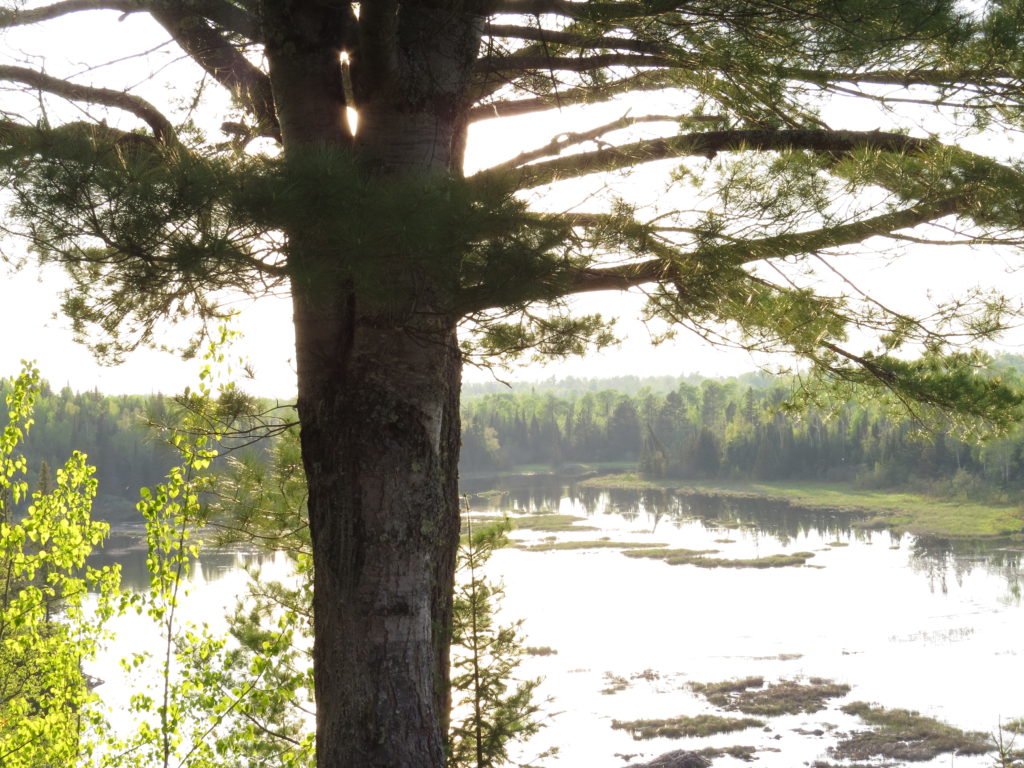
The wildness of the Northwoods (the ubiquitous term describing the northern woodlands of Minnesota, Wisconsin, Maine, and other northern states) is humbling. We are the guests in this land—it is proper for us to take cues from it and to show respect and appreciation to our host. This is home to wolves, moose, black bears, and other creatures—it is their place. (The next day we saw picture proof of a black bear crossing the highway not far from this lookout the day before we arrived.)
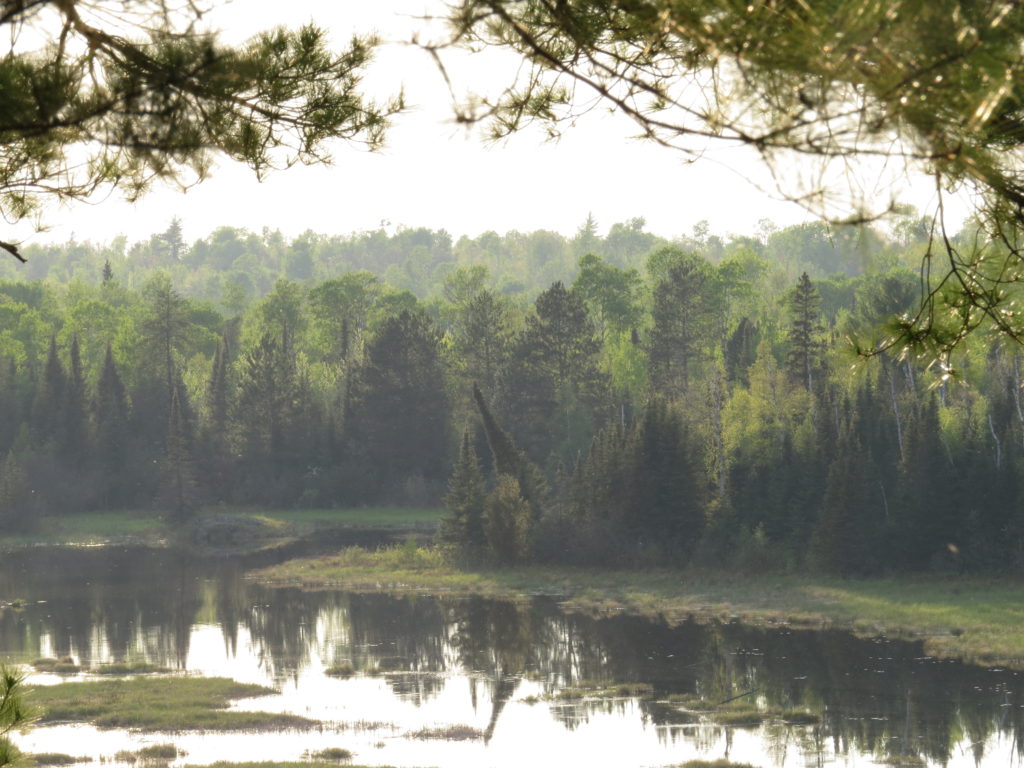
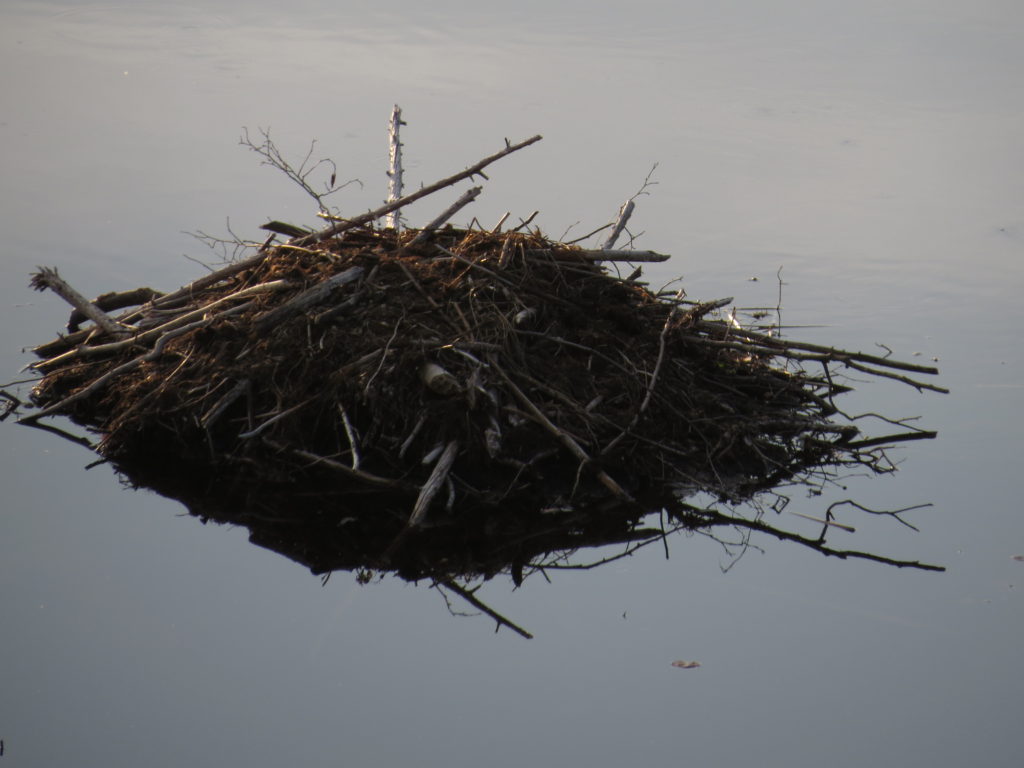
A beaver’s lodge was prominently placed in the lake—not for our eyes but for its purposes. Nature’s great architect and builder goes about the business of being a beaver.
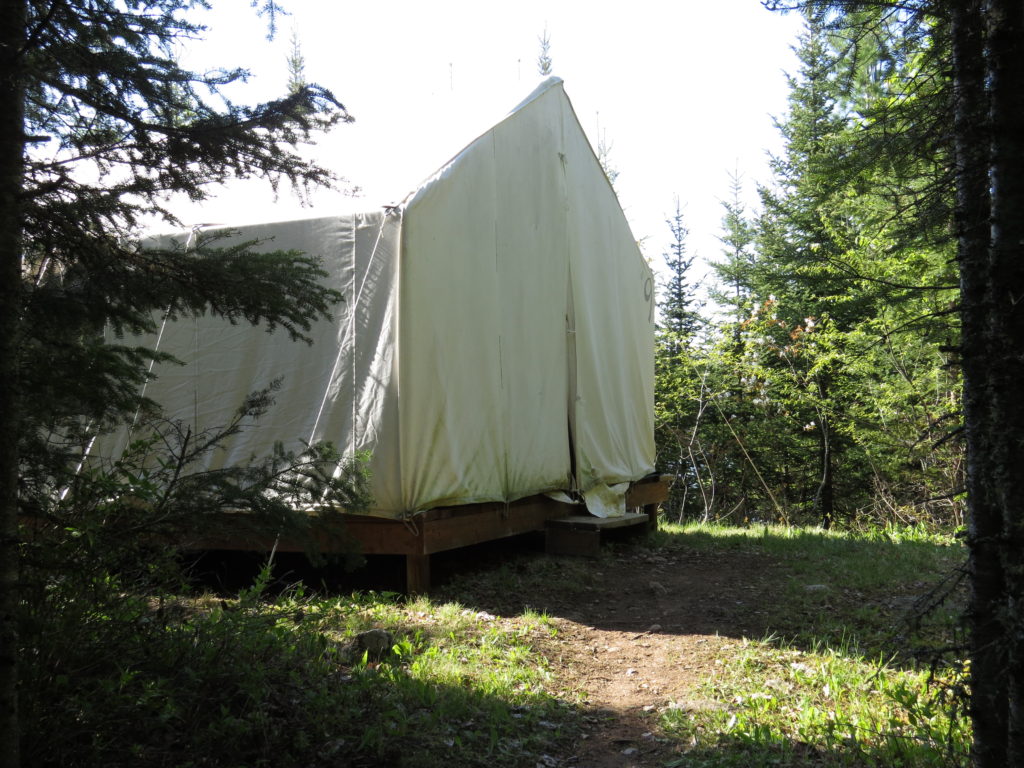
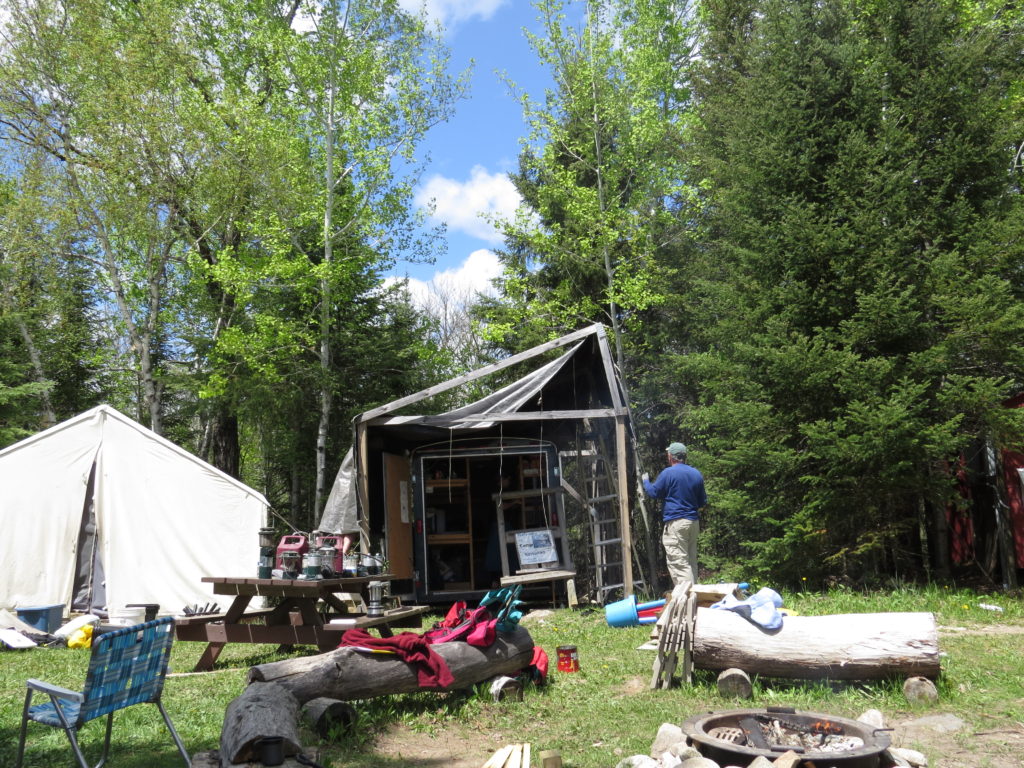
Our destination was KoWaKan, the Methodist camp that was the summer home for our daughter Emily and our son Aaron for a combination of eight or nine summers. Staff and campers live in large canvas tents on wood platforms, and most groups leave KWK to canoe and camp in the Boundary Waters Canoe Area (BWCA) Wilderness nearby. We arranged our sleeping bags and blankets on the cots, anticipating nighttime temperatures in the 40’s. Chris was sleeping before it was dark, and I crept into the tent with my lantern a bit later after leaving the campfire. I put on my layers of sleeping clothes—two pairs of socks, long-john pants, three layers of shirts/fleeces, and a wool stocking cap. I found myself smiling in the dark—I was so happy to be there. The frogs were singing, and the loons were calling on the lake right down the hill. But I couldn’t get to sleep. I kept getting colder. Drat! I would have to get up and put on more clothes. So I climbed out of bed, added gloves and another layer of leggings, rearranged my wool blanket to go under and over my sleeping bag, then climbed back in. The cold still crept into my toes, onto my nose, throughout my bones. I wasn’t sleeping, and I was no longer smiling. I brainstormed ways to get warmer with what we had left in the tent—all would mean getting out of my sleeping bag. Then the driving force to action struck me—the need to use the outhouse. Ugh. Boots, lantern, shivers, and I was out in the woods. But when I looked up at the sky in our tent clearing, I found the gift to my cold discomfort. The stars were a shining, masterpiece mural across the dark sky! The Milky Way swept its splendor of billions of stars in a high arch above my head. A shooting star fell before my eyes. Well then!
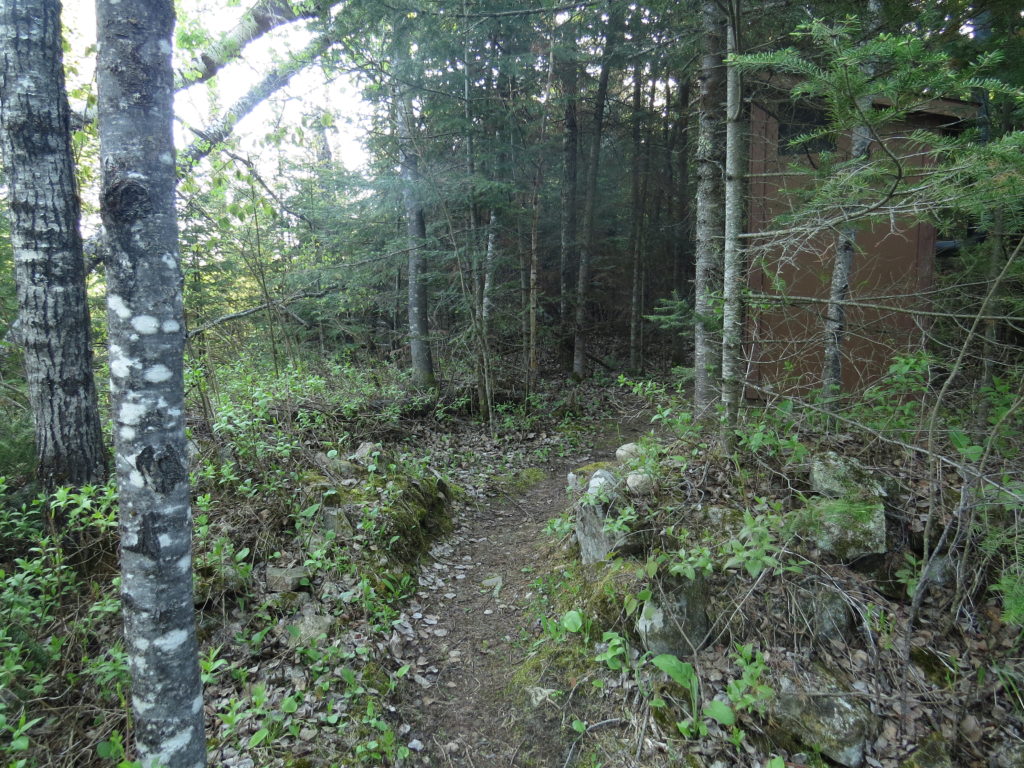
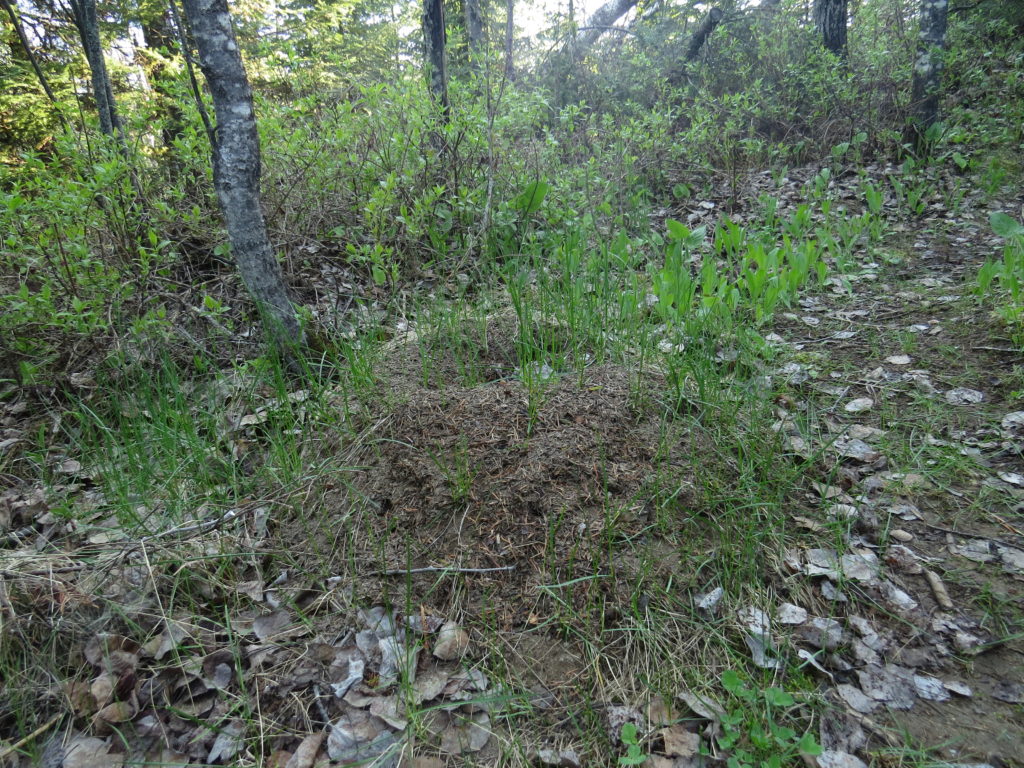
I slept fitfully the rest of the night until the early morning (34 degrees!) light lit the path to the outhouse. A huge anthill was piled up beside the path—home for the ants. (Did you know that bears will swipe off the top of an ant hill and eat the tiny, protein-packed ants?)
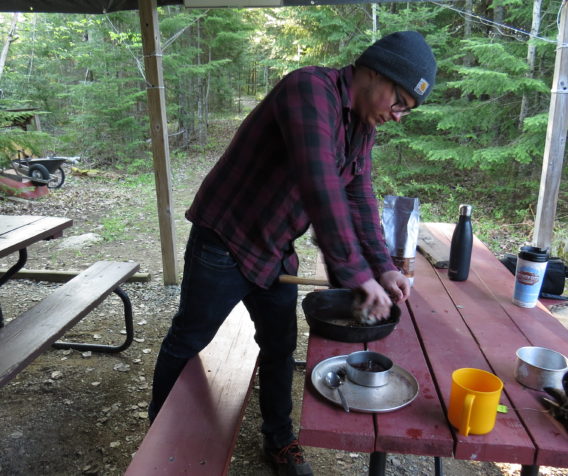
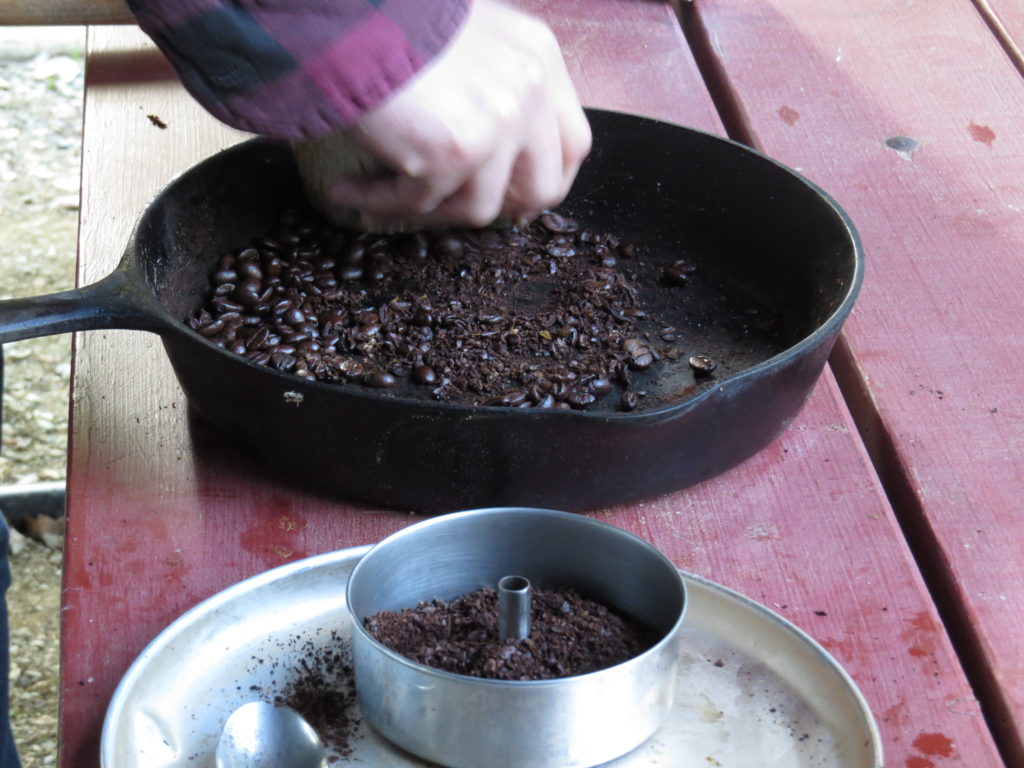
It was time to get to work! Opening camp for the season includes setting up tents, putting tarps over tents to prevent sun damage, cutting brush and firewood, raising the tarp roof over the kitchen and tent-drying areas, getting outhouses in shape, setting up cots and the kitchen, and many other things. The three staff members and other KWK helpers had started the process before we arrived, but there was plenty of work left to be done. But first, it was coffee time. What to do with coffee beans and no grinder? The flat axe head didn’t work that well, but our friend Luke’s idea of a large rock and some muscle power from Luke and Aaron soon had the coffee ground up and perking in the pot! A KWK mortar and pestle.
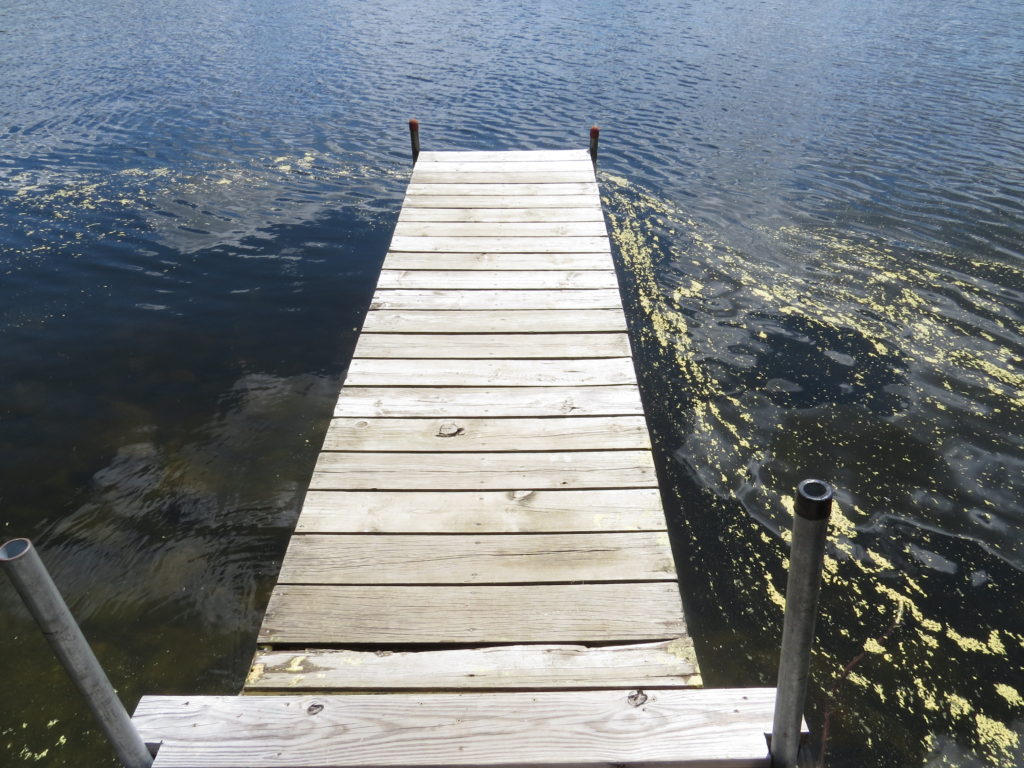
Section 12 is the source of beauty, of singing, of solitude, of sustenance, and of cleanliness for all who dwell in this place. One greets the lake upon rising, and the lake reciprocates. It is a prayer for one another—the greeter and the lake, and for all who eat, work, worship, and sleep on her shores.
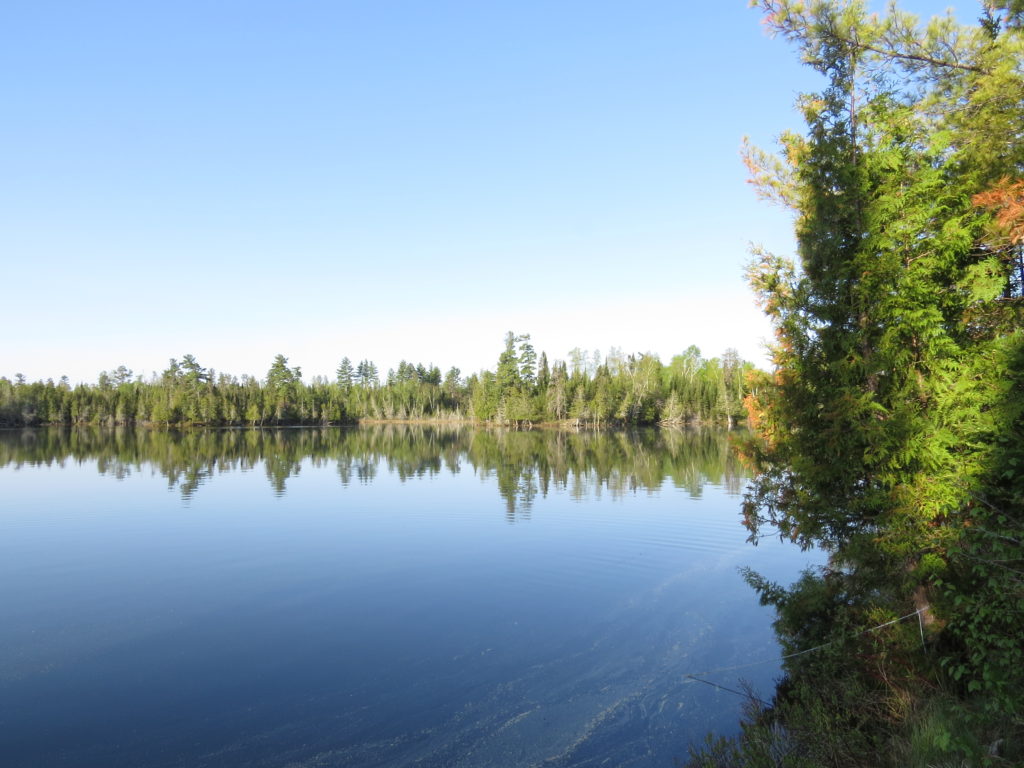
Water is gathered with a hand pump from the lake, boiled, and put into pans for washing and rinsing dishes and hands. It is a life of simplicity, of routine, and of physical work in service to oneself and others.
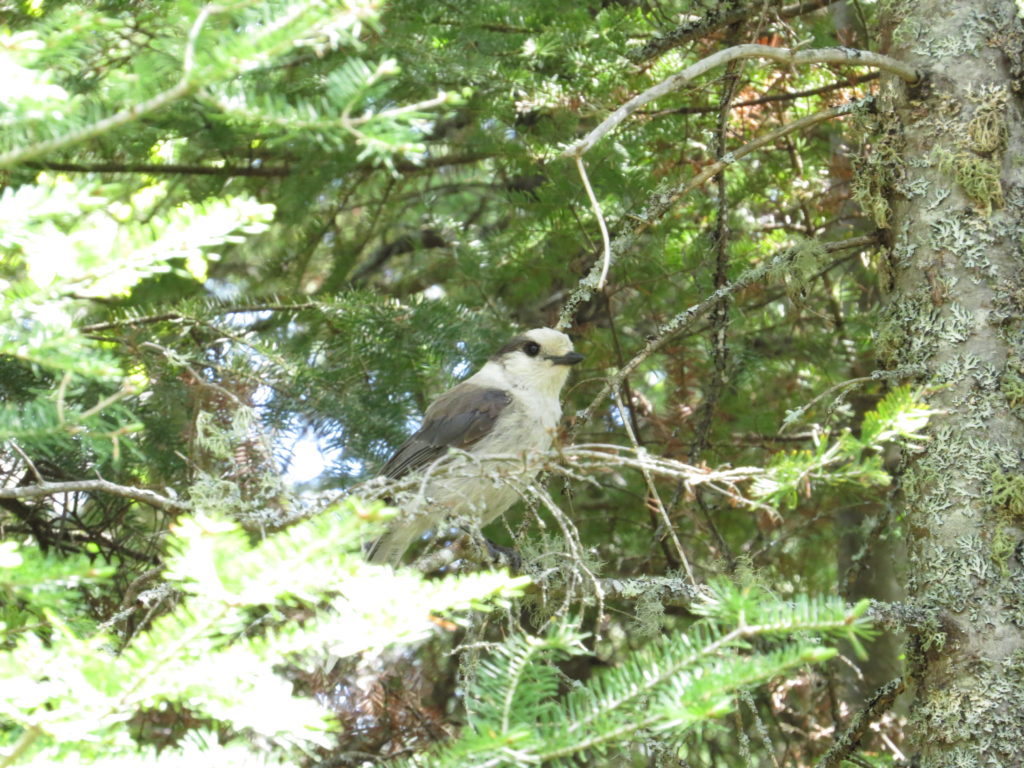
We had noisy neighbors called Gray Jays during our meals. They are known for their brashness in stealing human food from campsites. They were watching us and our plates!
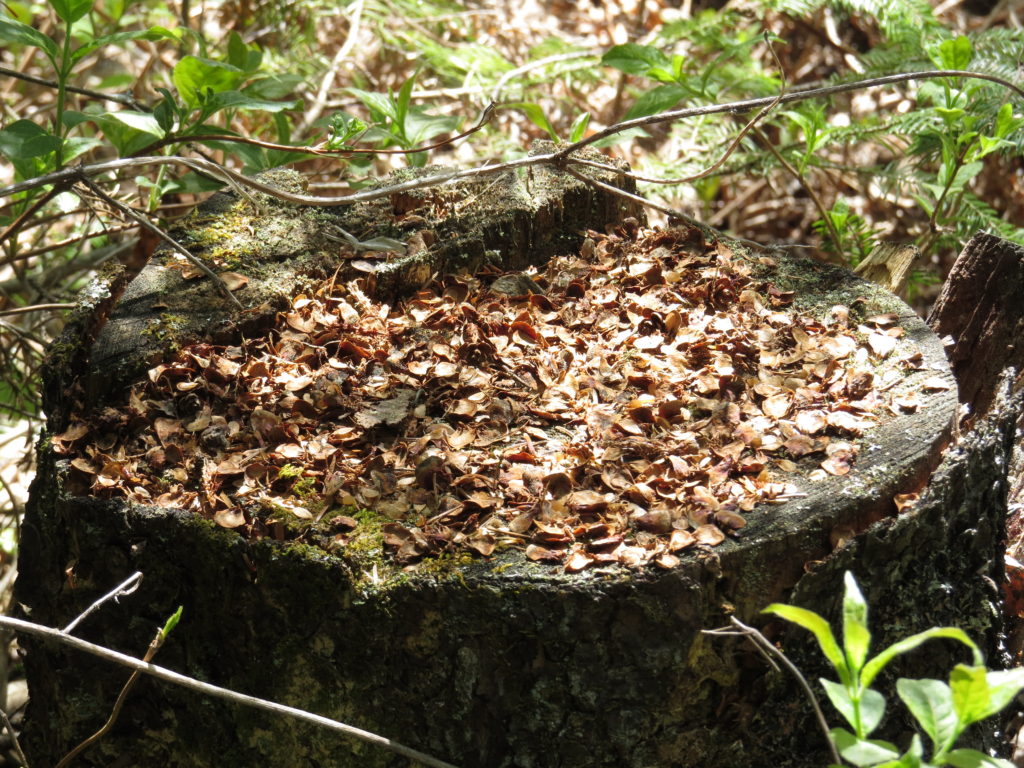
Another frequent visitor to the kitchen is chipmunks. They scour the ground under the picnic tables for bits of dropped food. I found an eating place of theirs along the trail where fir cone shells were left in a pile after the seeds were eaten.
Most of the year, KoWaKan belongs only to those who inhabit the woodlands and lakes—the bears, Jays, wolves, and chipmunks. It is their place. For three months of summer, we are guests of their land. It is a special place, not only for the memories our children and decades of campers have gathered, but also for the intrinsic spirit of the place. KoWaKan means ‘Place of the Almighty.’
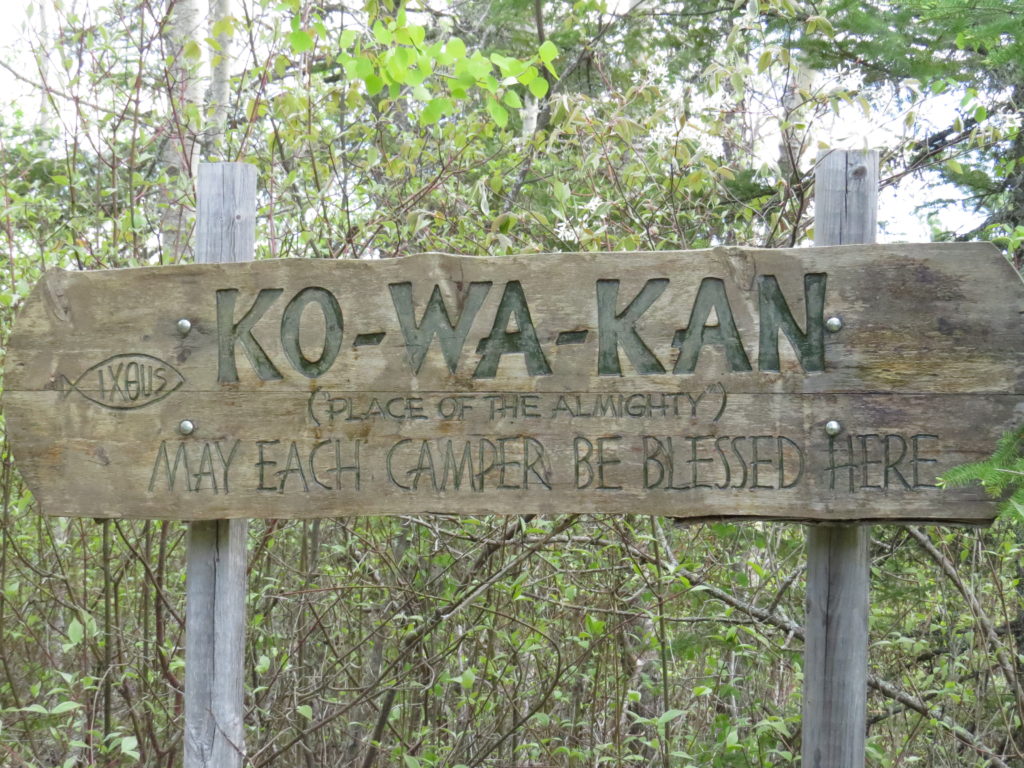
Where is the place that satisfies your soul? The place that floods you with memories and brings a smile to your face? Those places teach us the business of being ourselves, where life is simple and hard, all at the same time. Those places challenge us, yet give us unexpected gifts. We use our minds and bodies in work and problem-solving, serving ourselves and others. May you be blessed in your special place.
What Kind of Flower Are You?
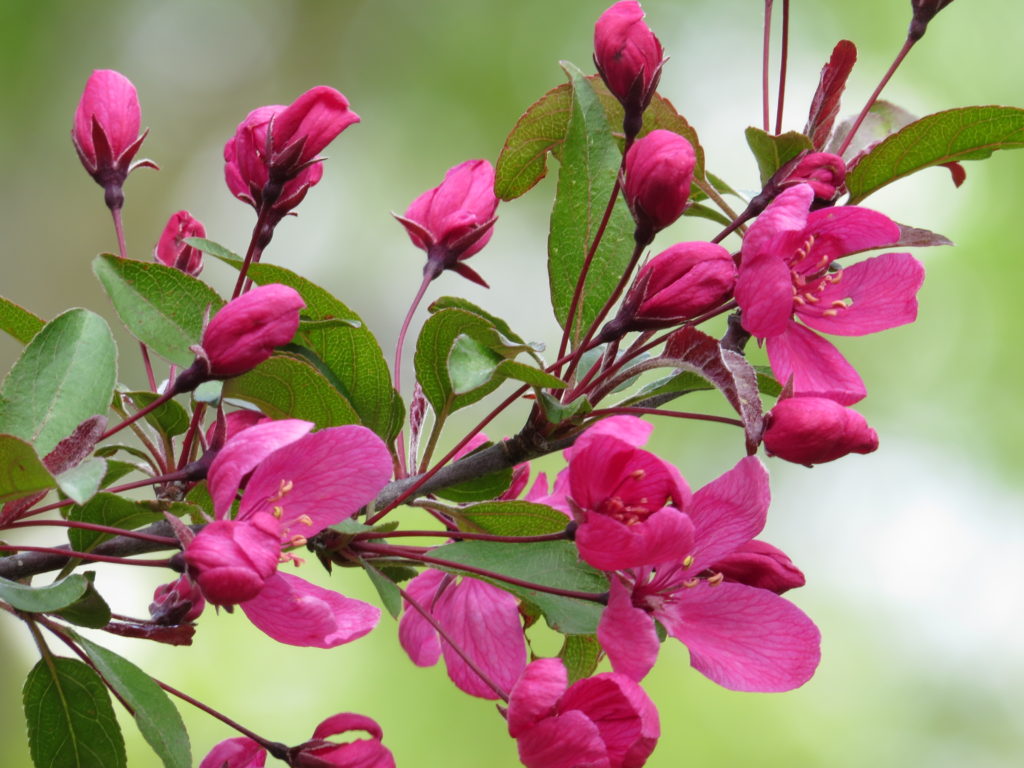
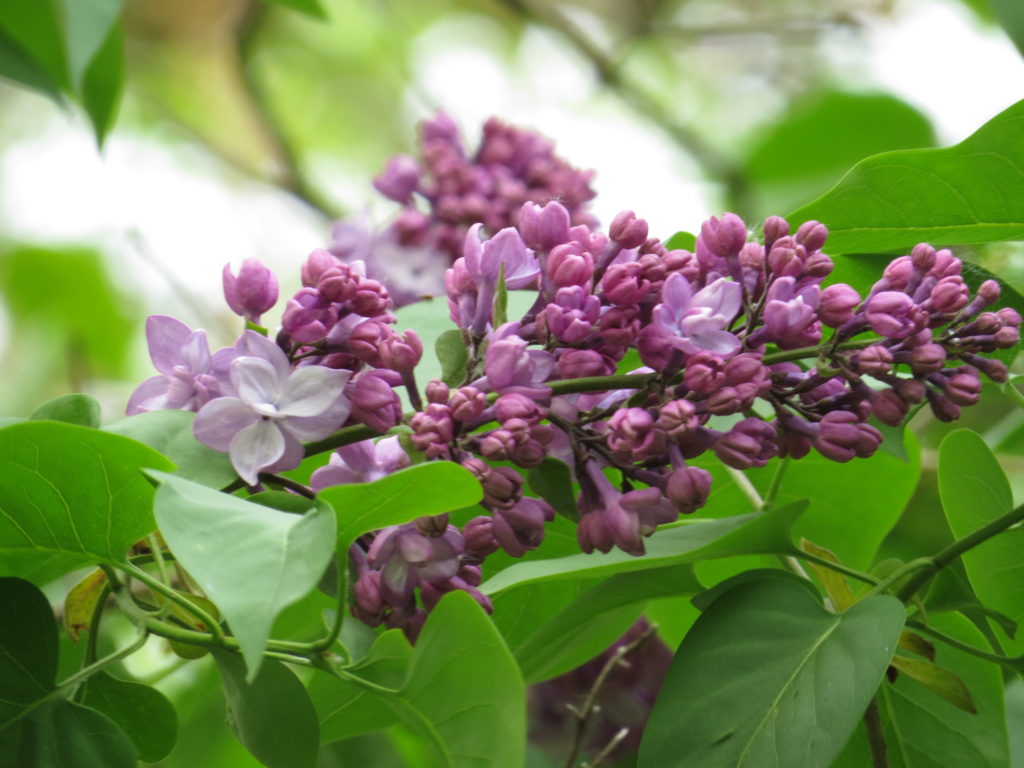
What if you were a flower? Which one would you be? After waiting so desperately for Spring flowers, we now have an explosion of sorts! The Crabapples and Lilacs are garnering star-status attention—eyes are drawn to their charisma and beauty. From a distance they are admired, and up close they are appreciated.
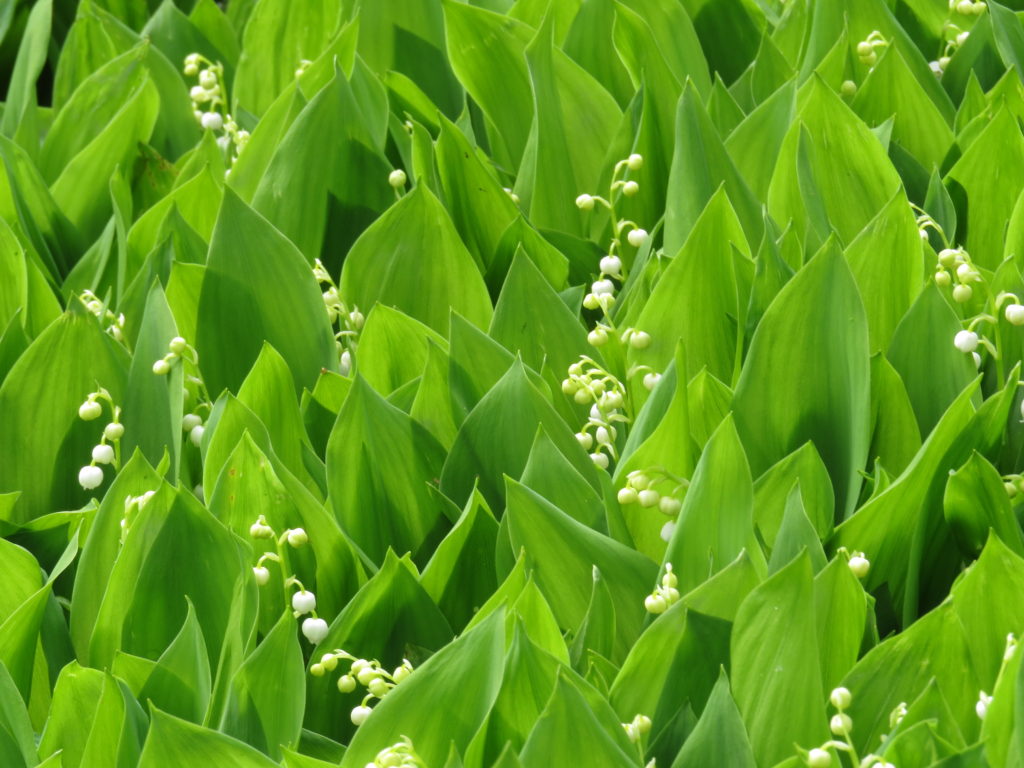
Lily of the Valley are hidden among the wide, pointed leaves—at first glance, green is all one sees. A closer look reveals pure, simple features with an exquisite fragrance.
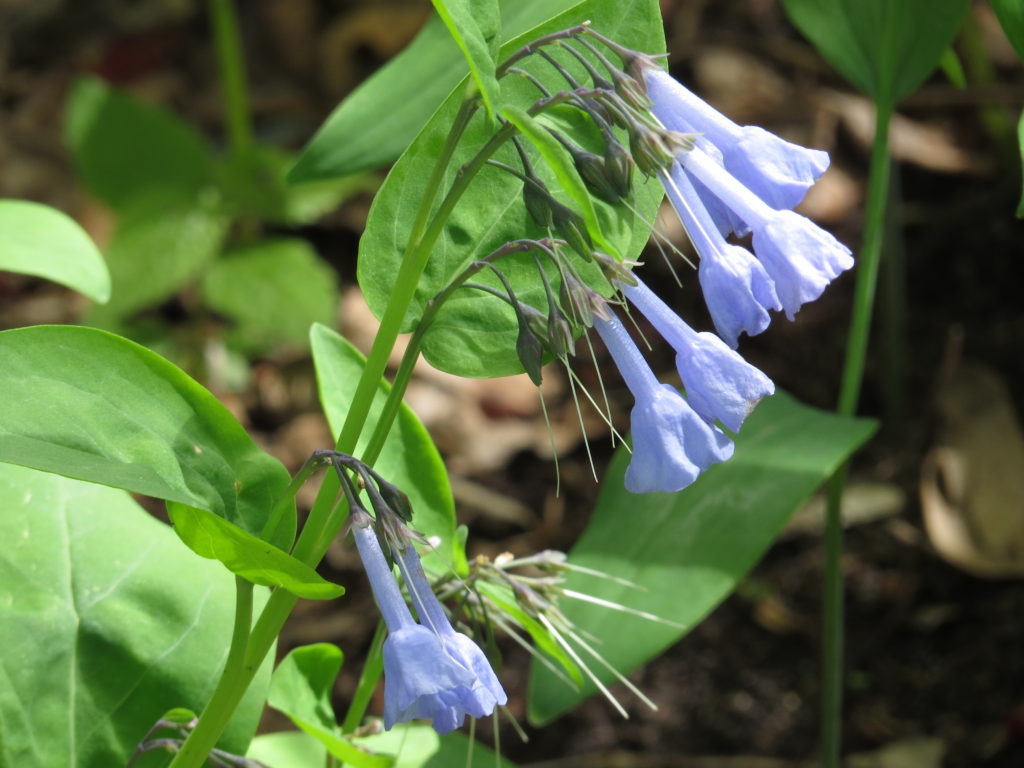
What’s not to like about Virginia Bluebells? Beautiful shape and color and one of the first flowers to bloom in the woodland before getting covered up by the vigorous summer plants.
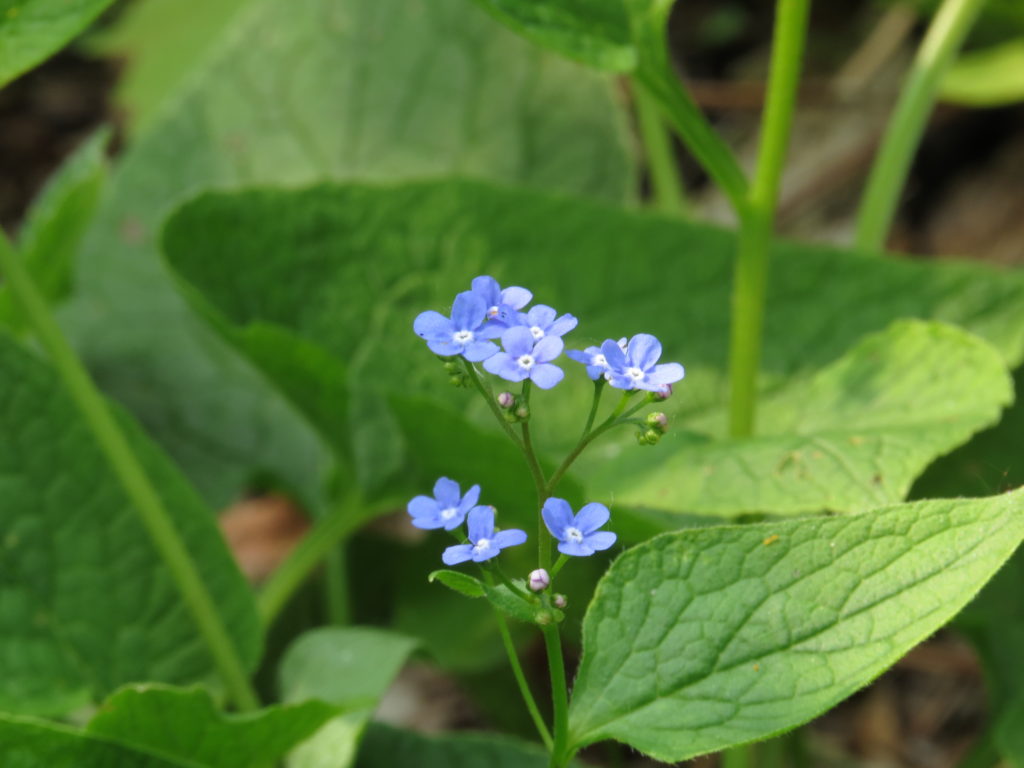
The tiny, delicate Brunnera is easily missed among the larger green leaves. The flowers can be mistaken for the better known Forget-me-nots.
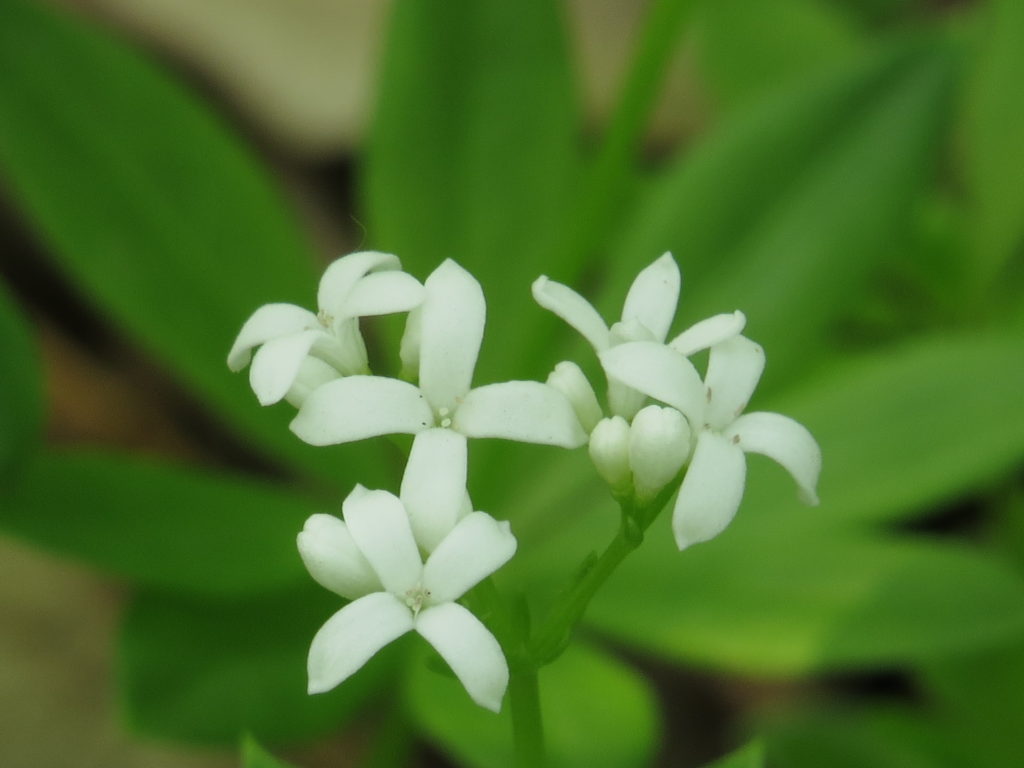
Sweet Woodruff, a shade-loving groundcover, has a diminutive, elegant flower reminiscent of the tropical Stephanotis.
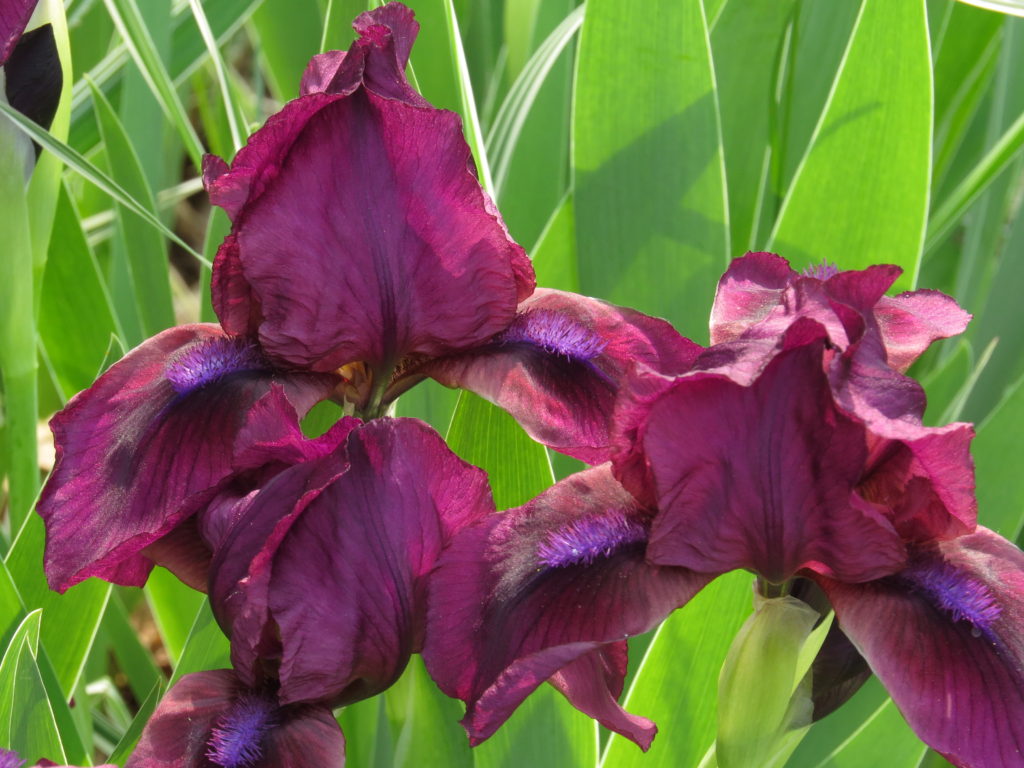
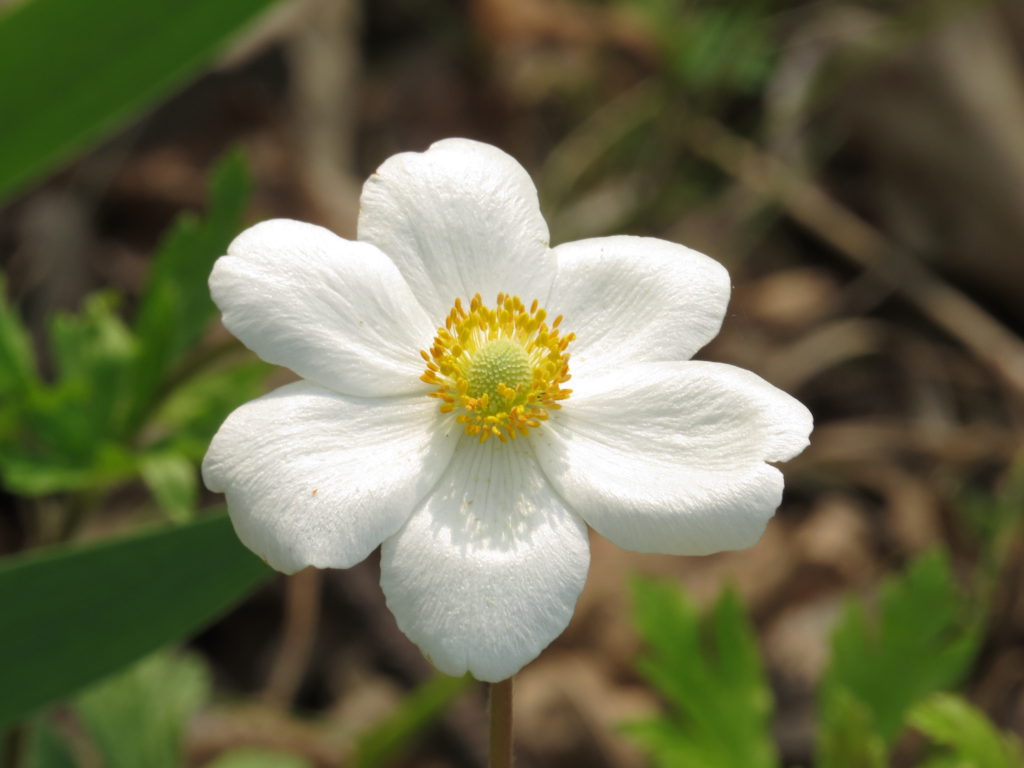
On their own, the Purple Flag Iris and the Anemone are brilliant and eye-catching, each with distinct, enchanting features. When paired together, they are a power couple!
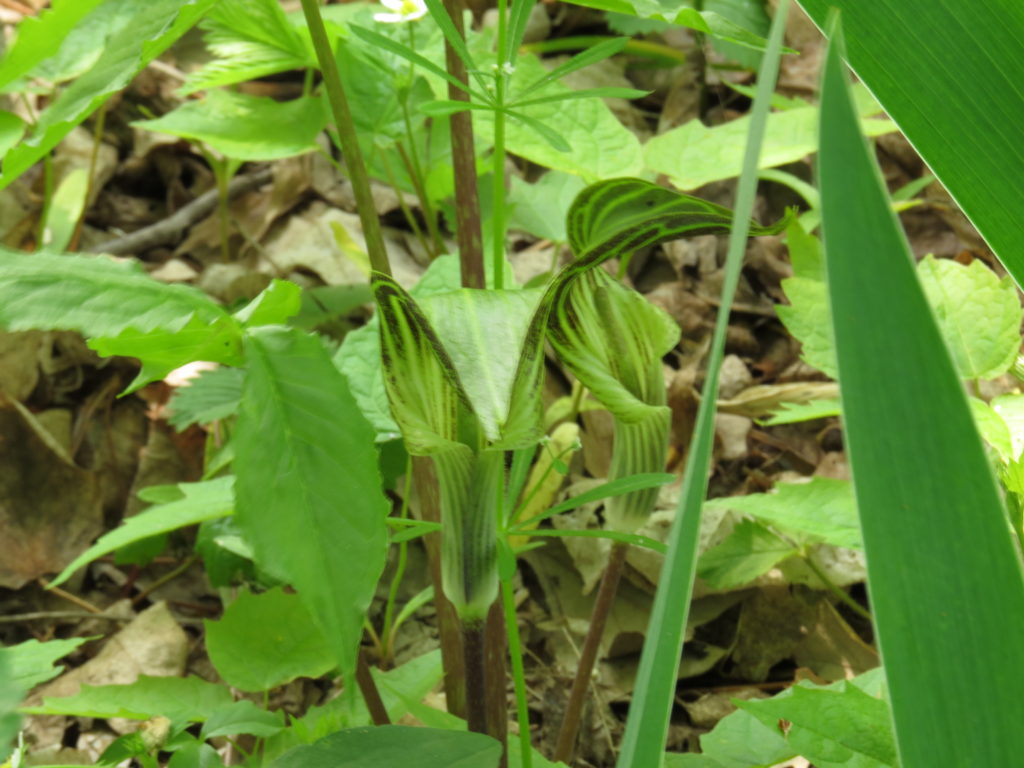
What flowers?! Jack-in-the-Pulpit flowers don’t look like flowers at all! They blend in with the triad leaves and the purplish stems.
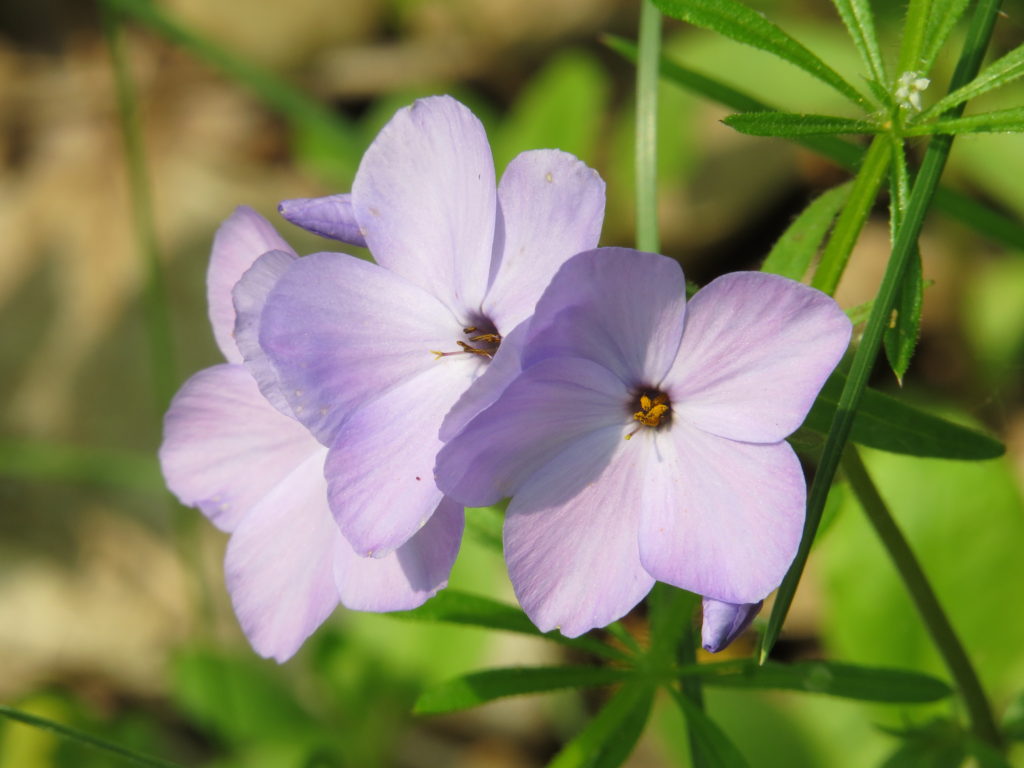
I always forget the name of these Spring flowers that pop up from low-growing vines. Chris reminds me they are Creeping Phlox that can be confused with the other Creeping Phlox. (The perils of a common name.)
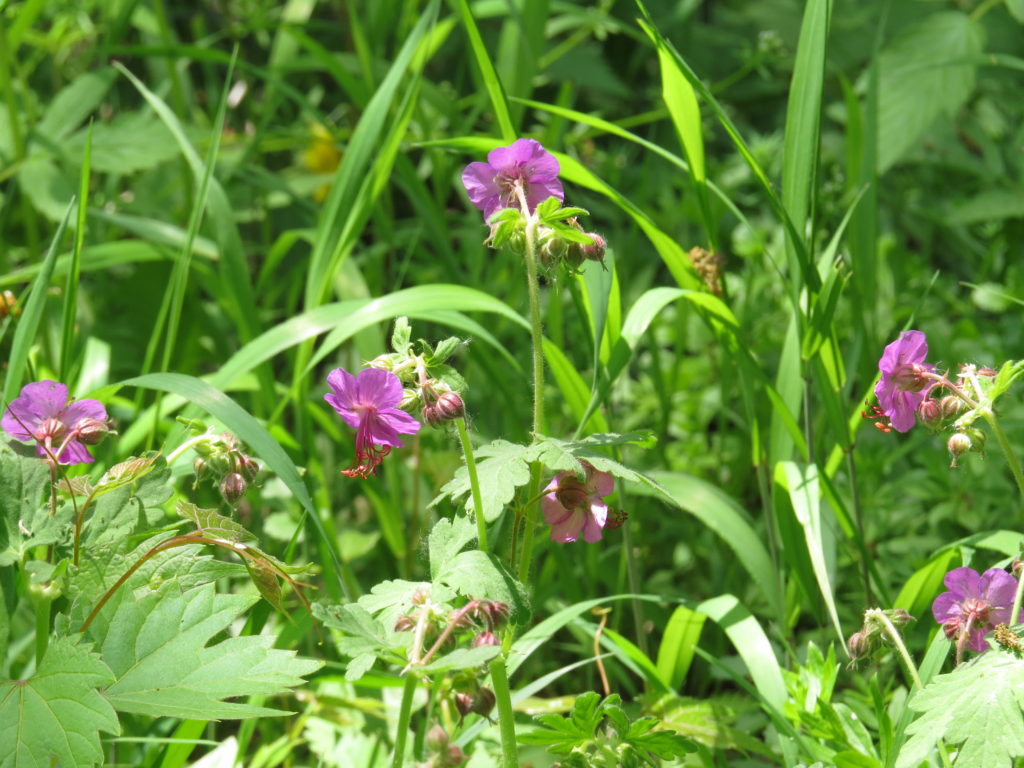
Wild Geraniums are showy in color with large stamens and striped flower buds, but the mound of cut-leafed foliage is the most distinct feature of the plant.
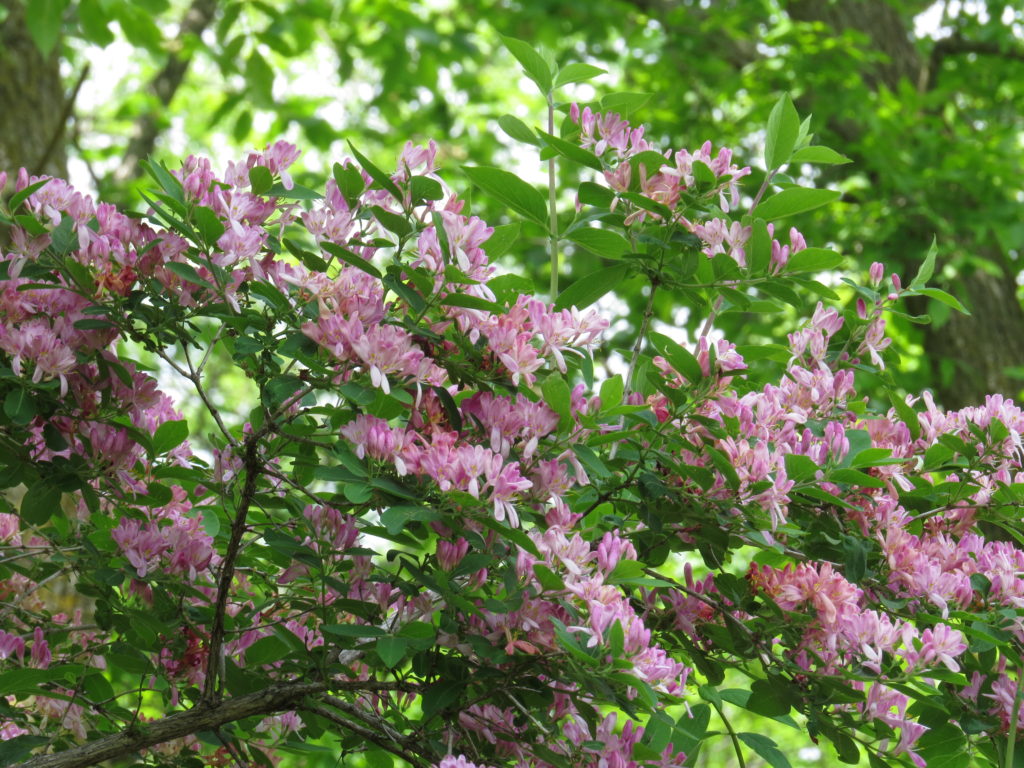
Dozens and dozens and dozens of Honeysuckle shrubs are blooming in our woods right now. Some are pink, others are yellow and white, and some are a darker rose color. They are sweet-smelling and abundant.
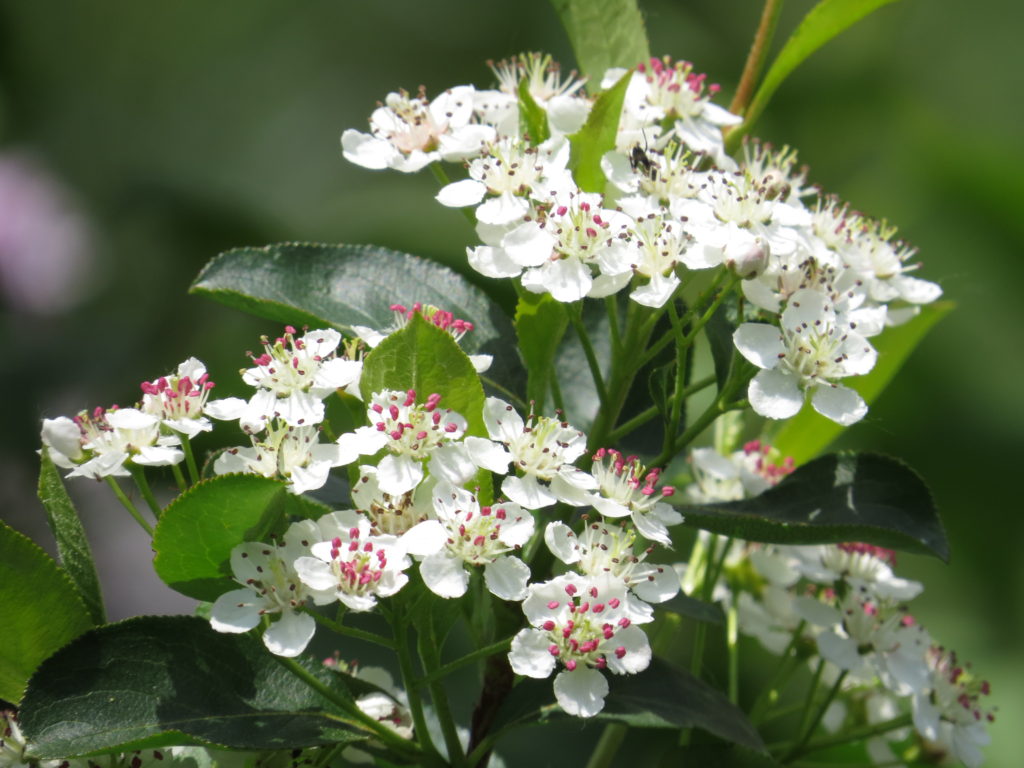
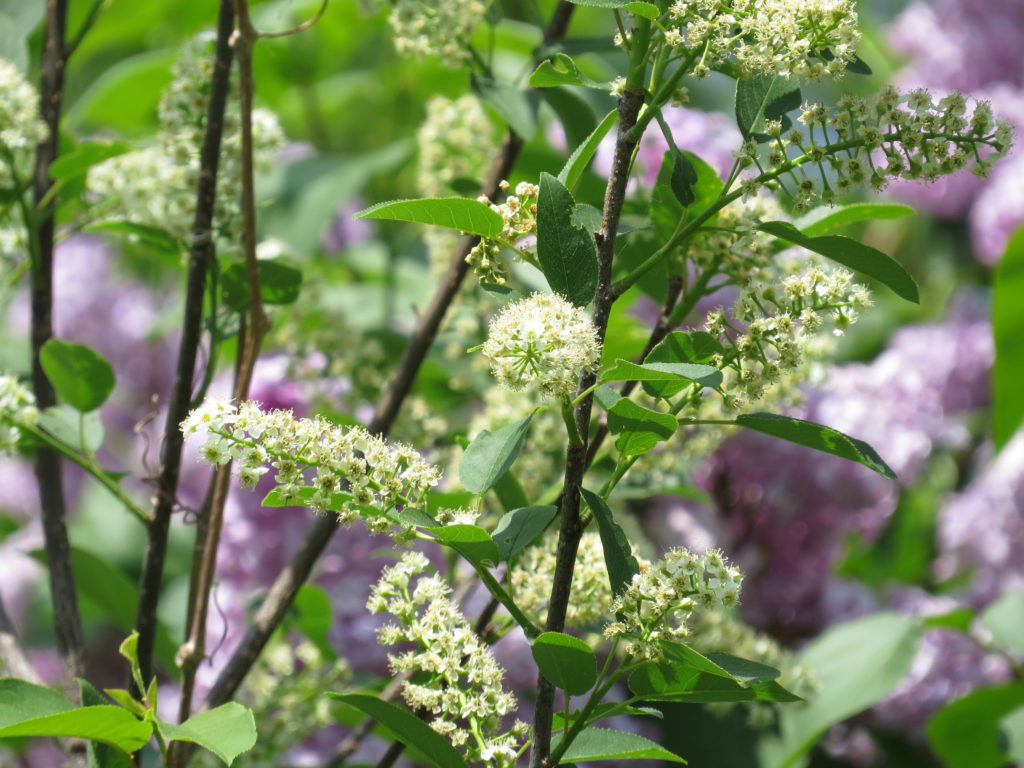
Serviceberry and Chokecherry are best know for the fruit they produce, but without the flower, there is no fruit!
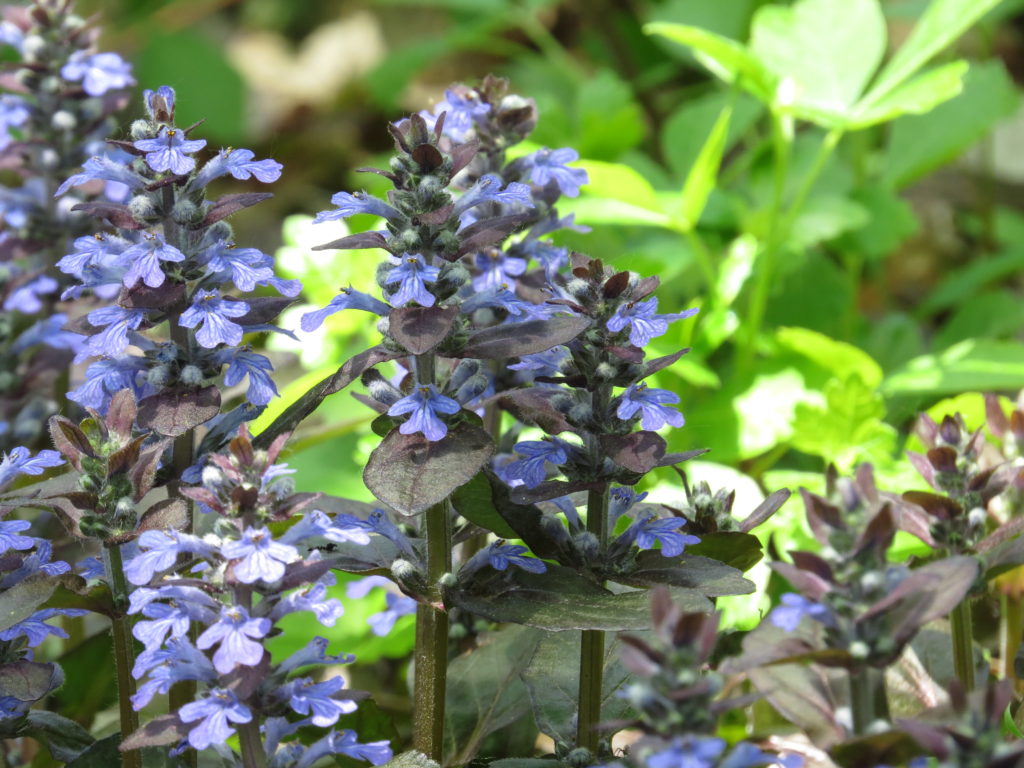
Ajuga, besides its great name, is a richly-colored ground cover that can get carried away. (In other words, it can spread into places you don’t want it.) The stalks of lobed blue flowers are impressive at this time of year.
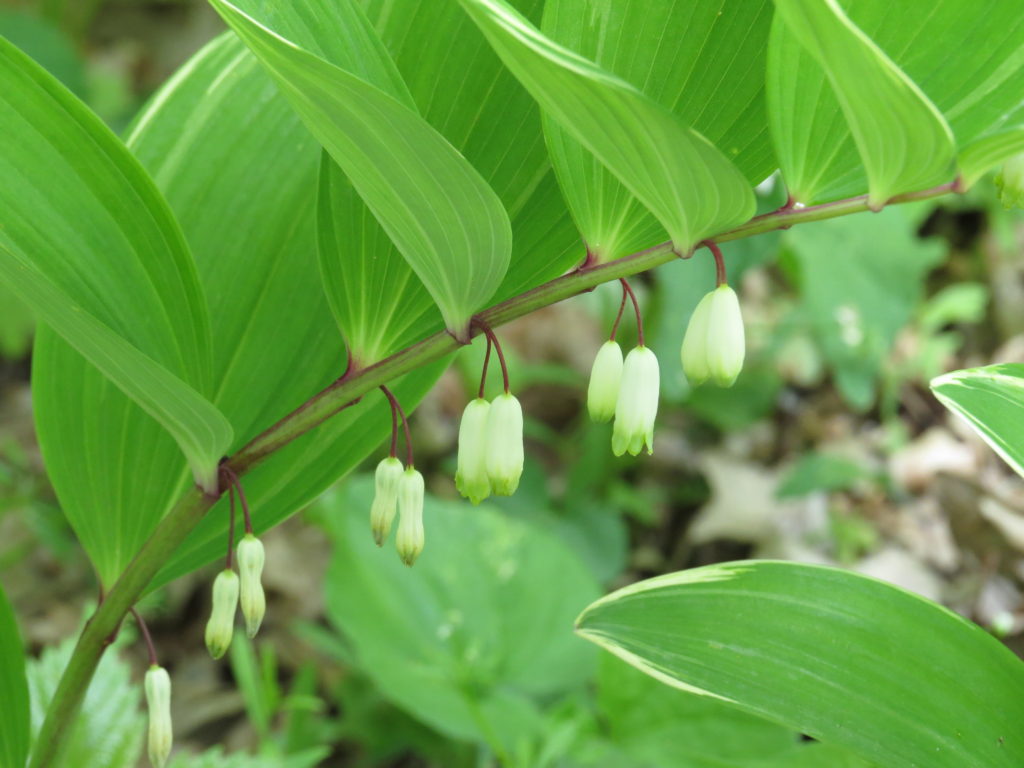
Variegated Solomon’s Seal is a work of art with arching stems, white-lined leaves, and pendulous pairs of white and green flowers.
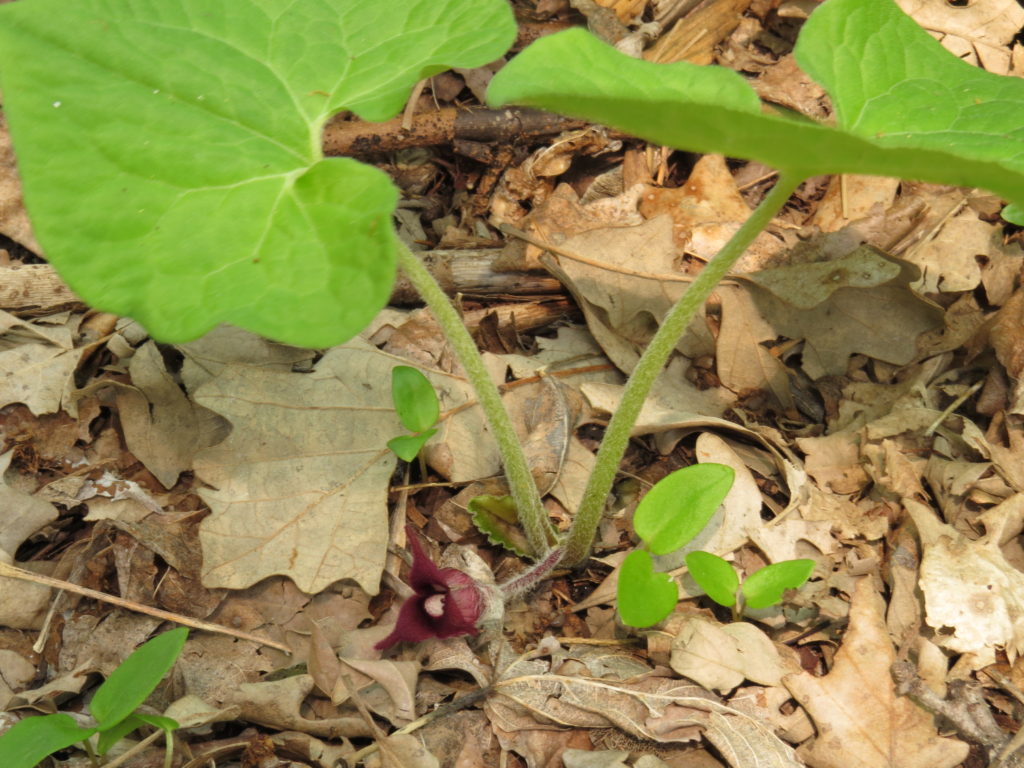
If you are not looking for this flower, you will miss it. The large heart-shaped leaves hide the ground-hugging purple-red flower. They are exquisite flowers when you look closely.
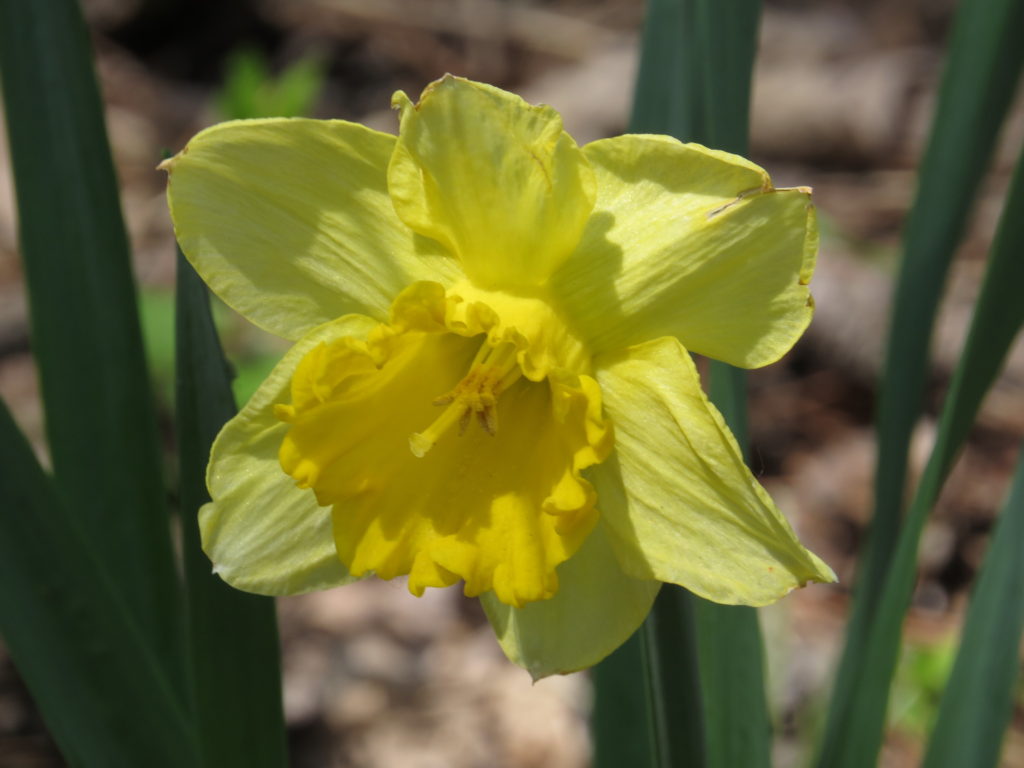
Spring/Winter was hard on the bulb flowers this year. The Crocuses that line the driveway grew their leaves, but did not produce one flower. The Daffodils were late to push up their lance-like leaves, and only two flowers showed their sunshine faces.
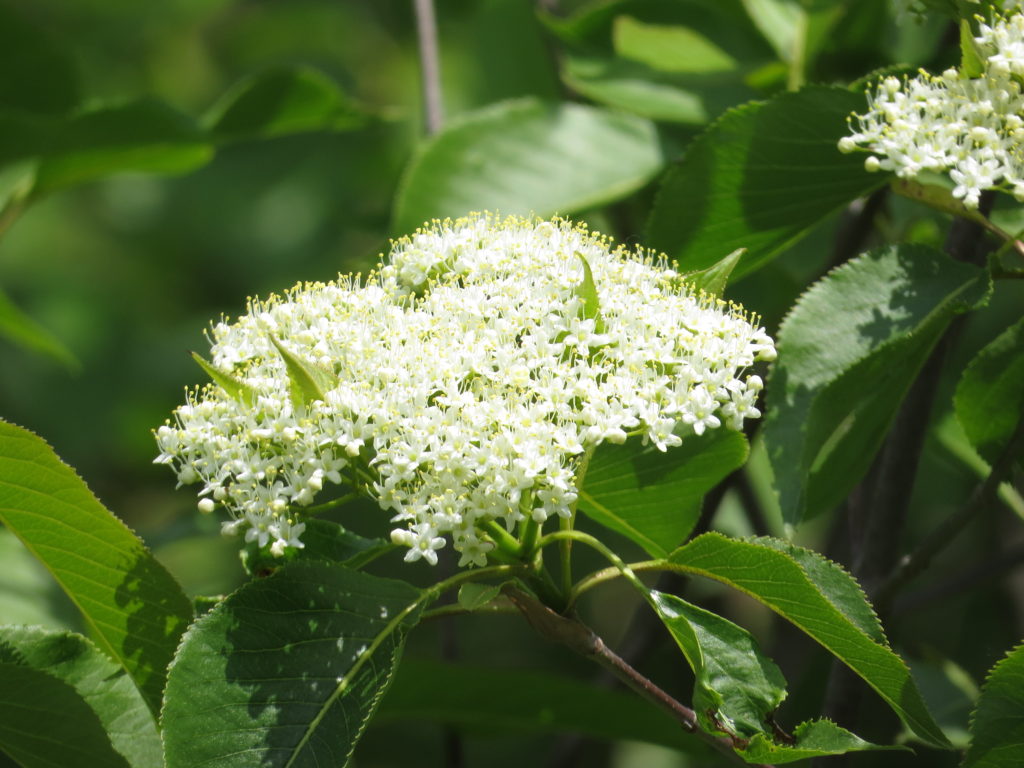
Flowers of the Nannyberry Viburnum are large clusters of many smaller flowers. Their strength and presence come from the compilation of lots of small, individual beauties.
I know some Crabapple people in my life—they are seen and heard from a distance and are admired and appreciated by many. Some people I know aren’t showy at all—their gifts are more subtle or hidden, and it takes time and effort to uncover them and get to know them. Others blend in, get covered up by more vigorous people, are confused with others, or are missed entirely. They are the ones that need intention, time, noticing, and listening from the rest of us. Their gifts and beauty are just as important to our communities and lives as are the abundant ones. Certain people are known only by the fruits of their labor, what they produce, the work they do, and the brilliance and perseverance of who they are as a person is lost in that translation. I know couples who are superb and talented individuals who are synergistic in their togetherness. And some people are having hard times and are just doing what needs to be done to survive—their sunshine faces are clouded over. We are all flowers, each in our own exquisite way. When you look closely, we are all works of art.
The Next 364 Days Through Shadow and Light
When we were young married kids, I remember the anticipation and excitement of an upcoming special day—Chris’ birthday or our anniversary or Christmas. I planned ahead making gifts and cards, cakes and surprises. Fast forward a dozen years to after we had three kids, and I remember, as I’m sure Chris does, that I was sick for his early January birthday for years in a row. I had planned gifts and cakes and cards for our three children’s December birthdays and Christmas and was just worn out by the time January arrived. Once everyone was in school, the same thing happened with our mid-May anniversary—the end-of-school busyness preempted the anticipation of our anniversary—wait, how many years has it been now? Luckily we followed the belief system of Ruth, Chris’ Mom, who declared that one special day meant nothing compared to every other day of the year. Mother’s Day? Treat your Mom with love and respect every day. Anniversaries? Show your love and respect to your partner daily. I know there were special days when we endured some disappointment, for whatever reason, but we had the next 364 days to show that person what they meant to us.
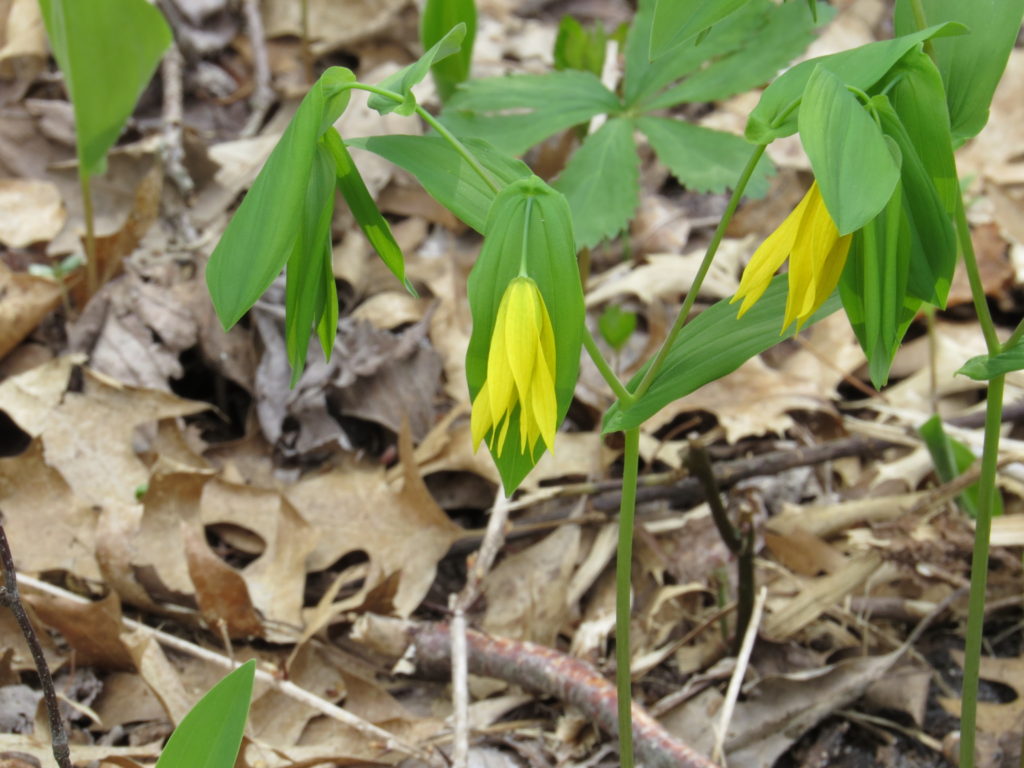
The week before last, we celebrated our thirty-seventh anniversary. No more end-of-school busyness with kids, but this time it was LIFE that took away the energy and excitement of a celebration. We were slogging through our days—too many things felt heavy and out of control. So we went to the woods, to the pine forest, to the place we’ve been before, where we knew the healing balm of Nature would give us respite for a little while. One of the first things we saw along the trail were bright yellow Bellworts with their hanging, nodding heads.
We walked through deciduous trees with their newly-emerging leaves, passed by Cedars and blooming Elderberry shrubs…
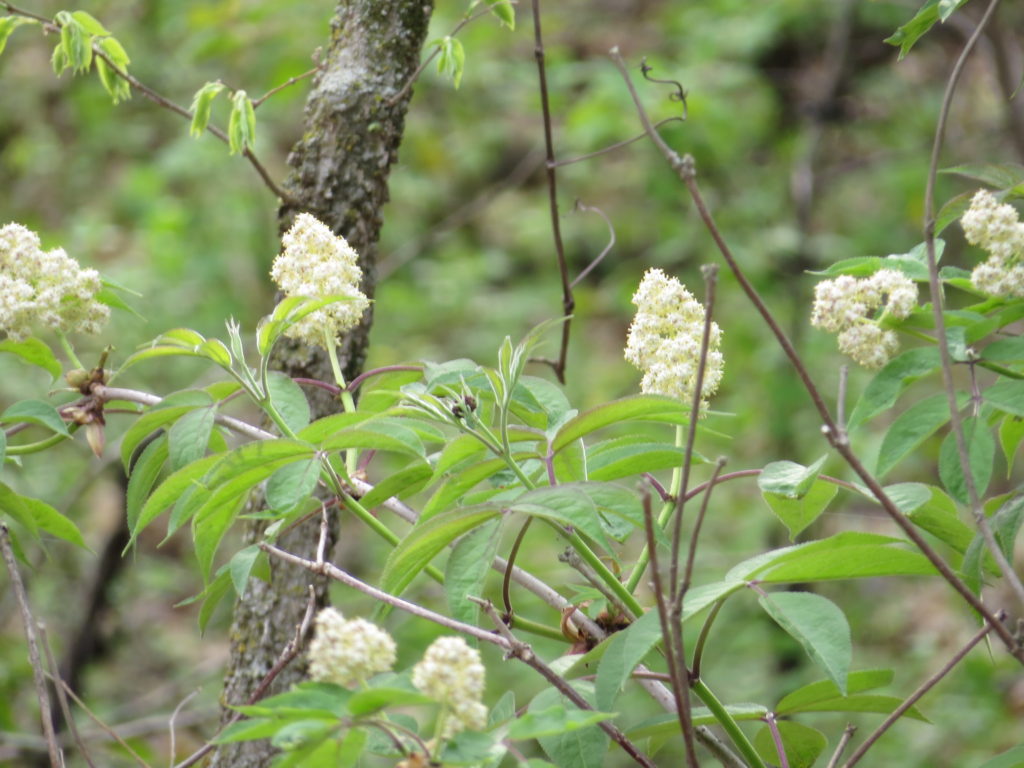
until we got to the Pine forest, in all its glory.
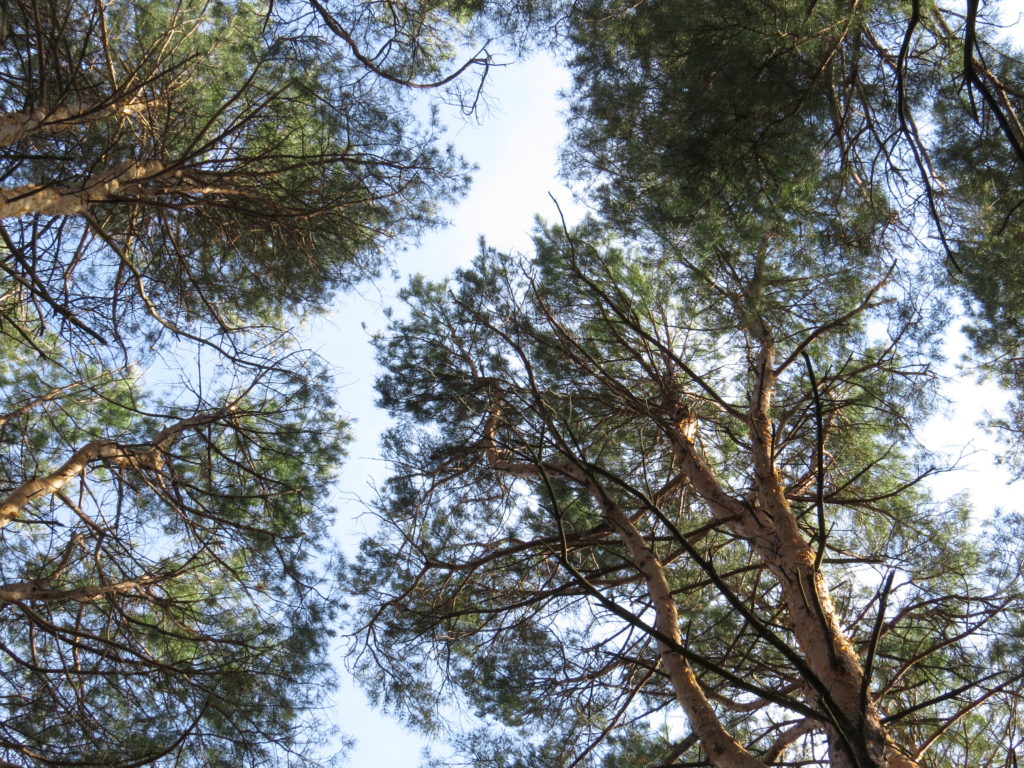
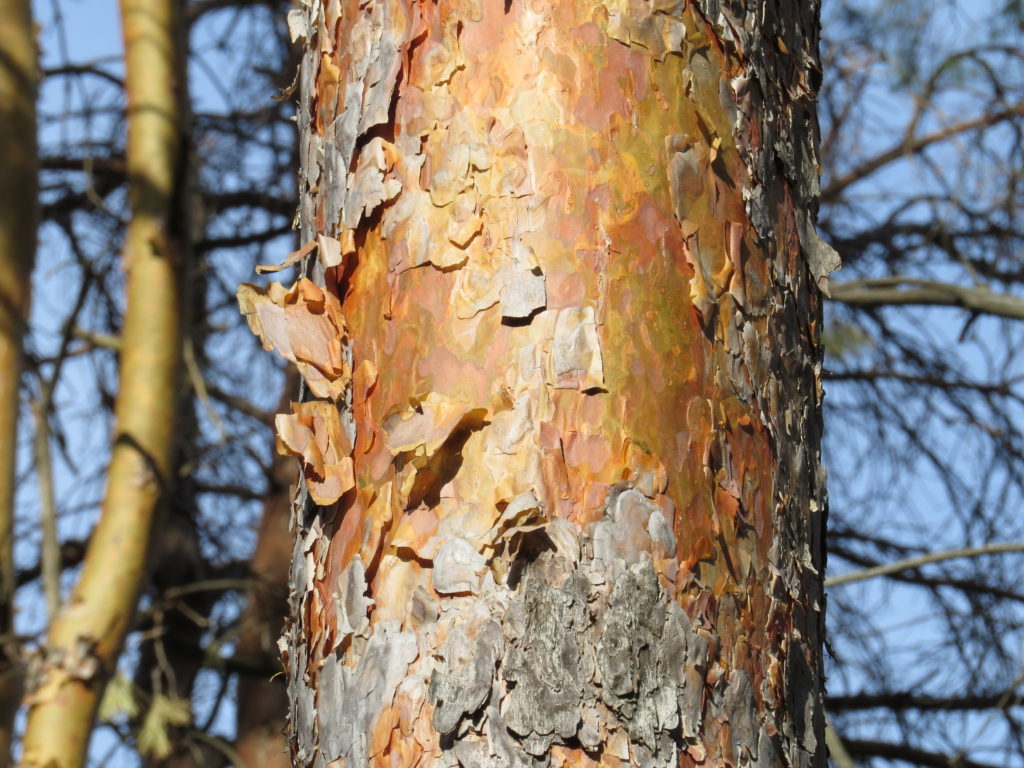
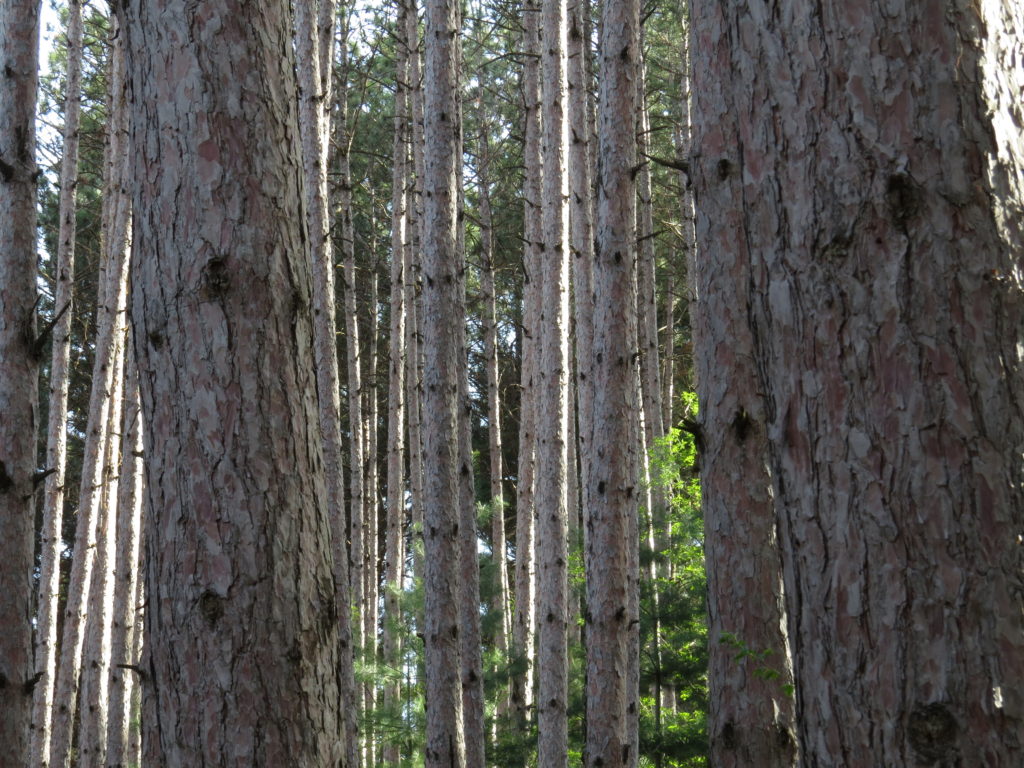
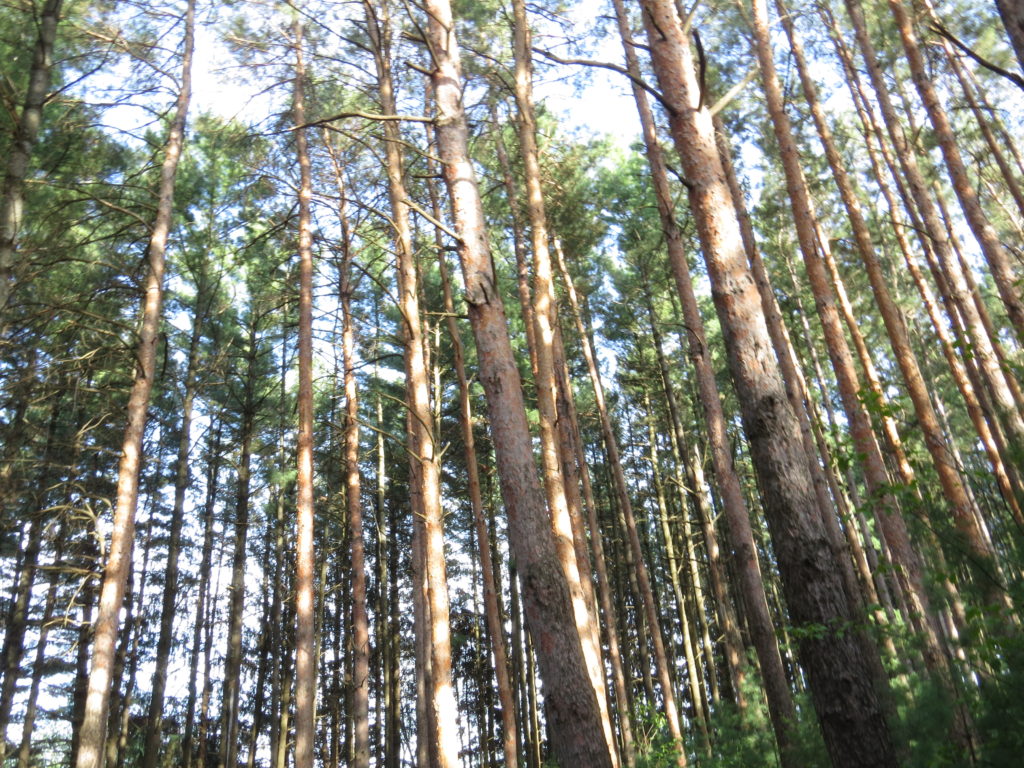
The first towering evergreens were Scotch Pines with their peeling bark towards the top of the tree that exposes butterscotch-colored trunks. Only the mature trees that had peeled away the onion layers of carefully crafted bark revealed the rich, golden treasure of color that identified the tree.
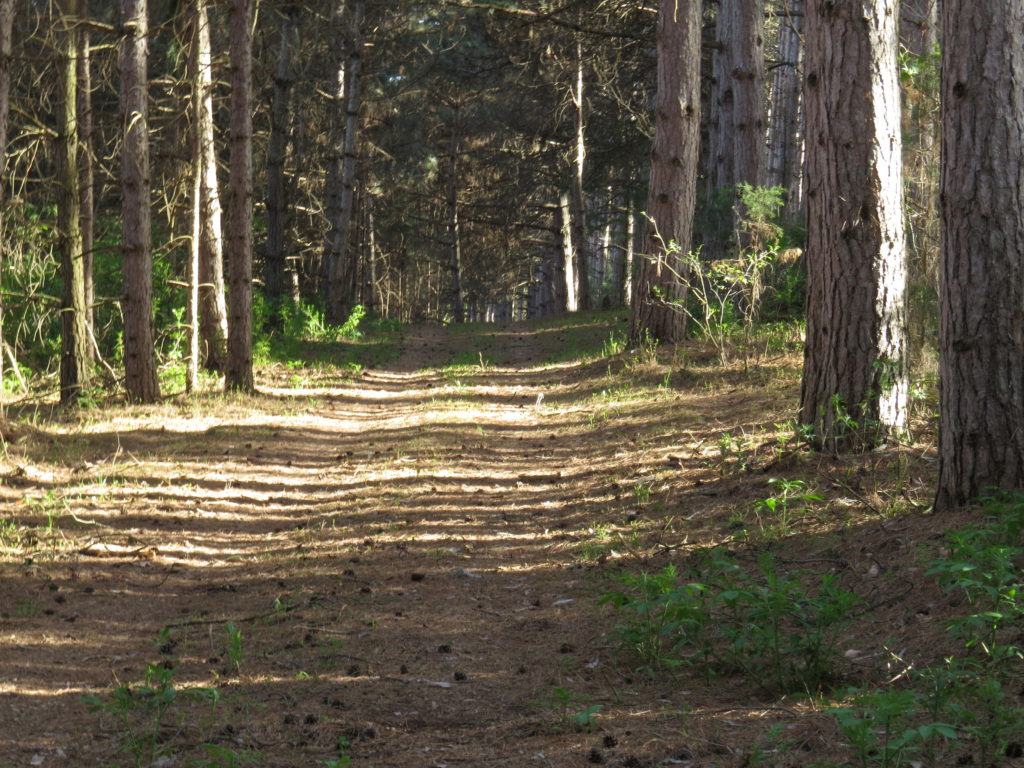
Red Pines made up the majority of the forest with their scaly, gray bark that ‘reddens’ with maturity. Evening sunlight streamed through the trees, striping the pine-needle-covered trail. We walk through shadow and light all the moments of our lives.
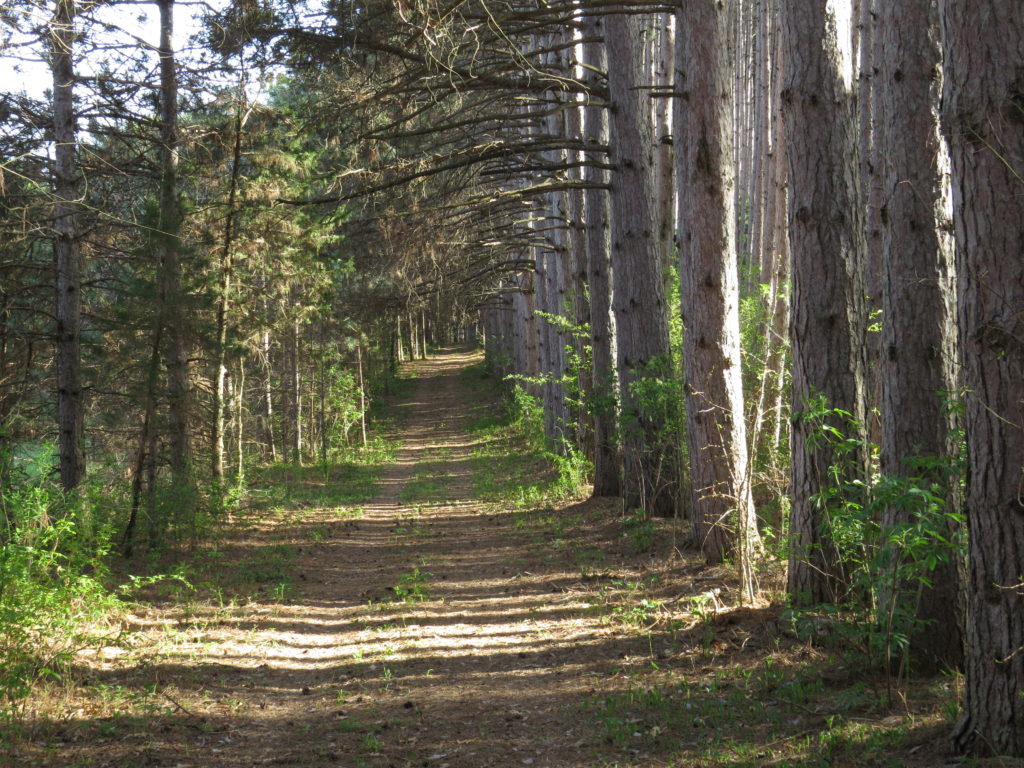
At times, it really is hard to see the forest for the trees. The trees are up-close, obscuring our sight, demanding our attention. Our lives shrink down to a narrow focus, often fear or survival-driven—it is the way our mammalian brain works.
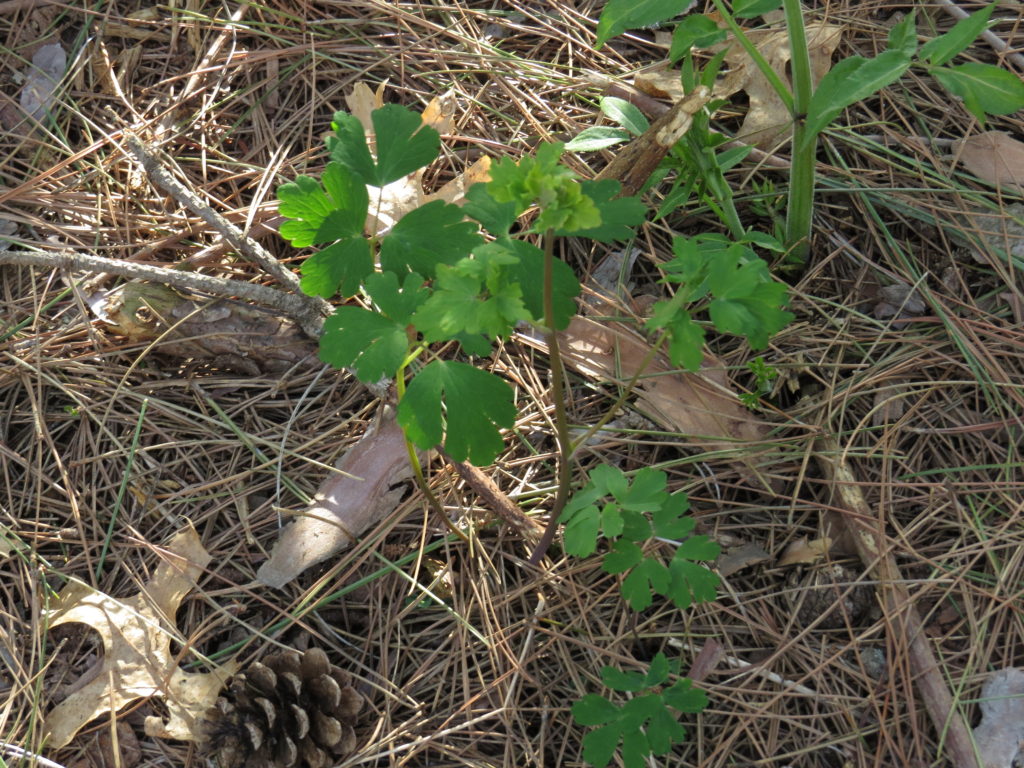
So what do we do? We notice there are other things in the forest besides trees. Growing up through the old pine needles, cones, and twigs is a shade-loving Columbine that will soon show its intricately-shaped flower to those who notice.
I stop and touch the warm bark of a tree. There is sap coming from a wound—it has become thick and sticks to my hands. But it is fragrant with the very essence of the Pine, as are the layers of shed needles that we walk on. The living, breathing, fundamental essence of the Pine tree fills our nostrils with the most delightful perfume. I breathe deeply, and my headache slips away.
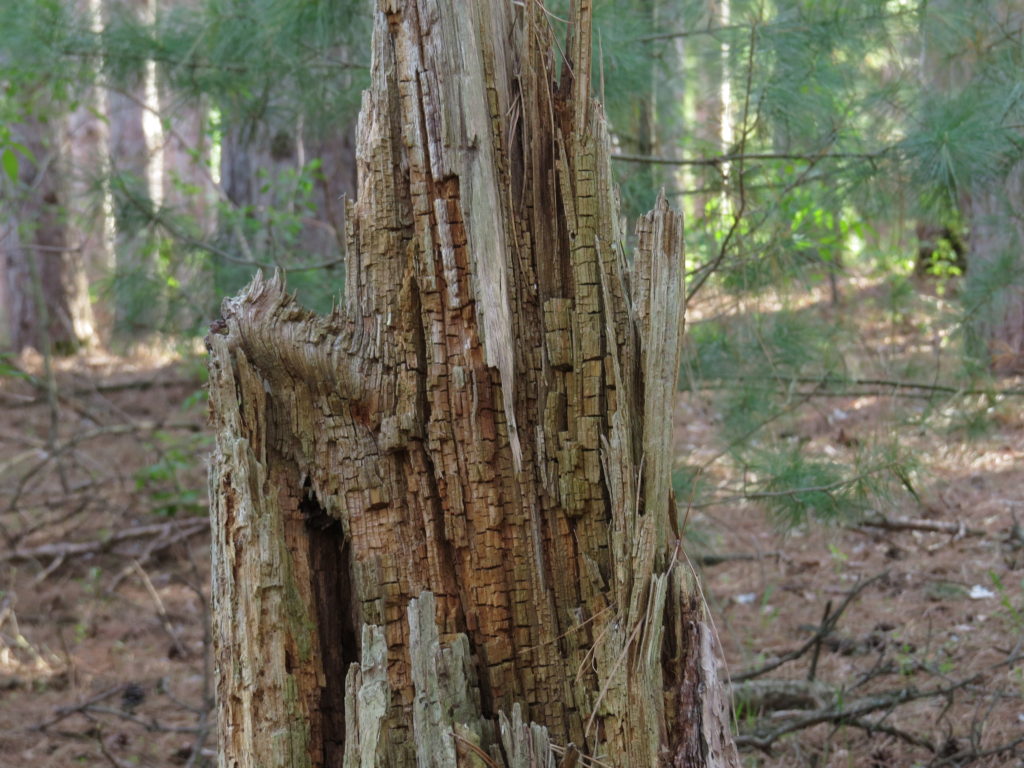
We notice and become aware of the future. A decaying Pine stump exposes the interior structures that built and maintained the tree during its long life. It really is a marvel of engineering—thank you, Creator. I like the dense, twisted wood where a branch was, where a knot would be if it was planed down into a board. That spiral of wood is often the last part to disintegrate back into the soil.
We take a closer look at the shadow and light bands of our lives. We have been through tough shadow times before, remember hon? We have been in this place before. We came through those shadow dark times to light once again.
Then, as we walked along, there in the forest, I saw a burning bush! A young pine was lit in sunlight, burning with brightness!
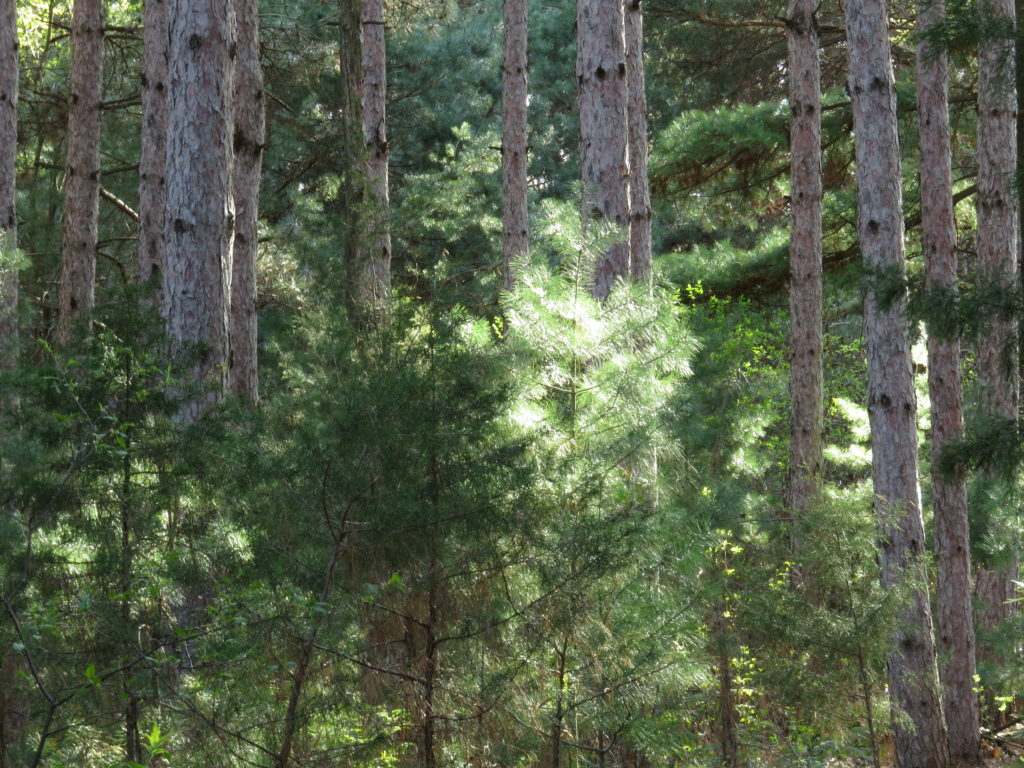
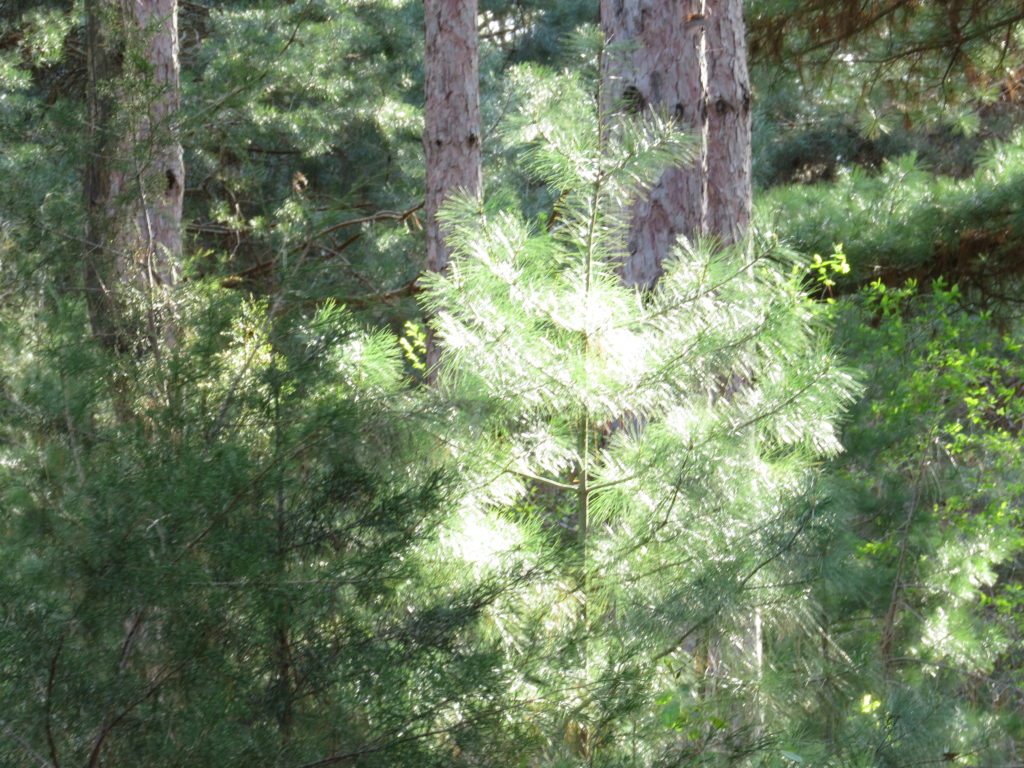
Here I am, on holy ground.
Not wanting to leave the luminosity of the burning pine, I wondered where we should go next. What path? How? Why? We continued to slowly walk the pine-cone-strewn path—those old fruits with new seeds. We saw vibrant young pines growing at the foot of the wise ones and the sun shining on them all.
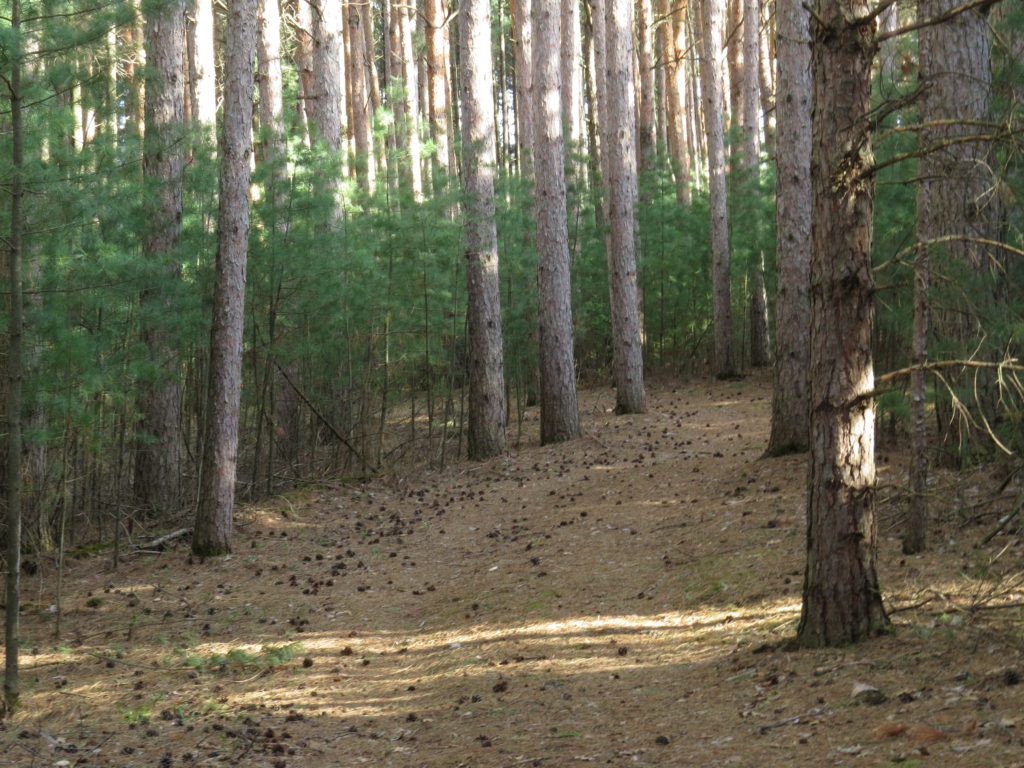
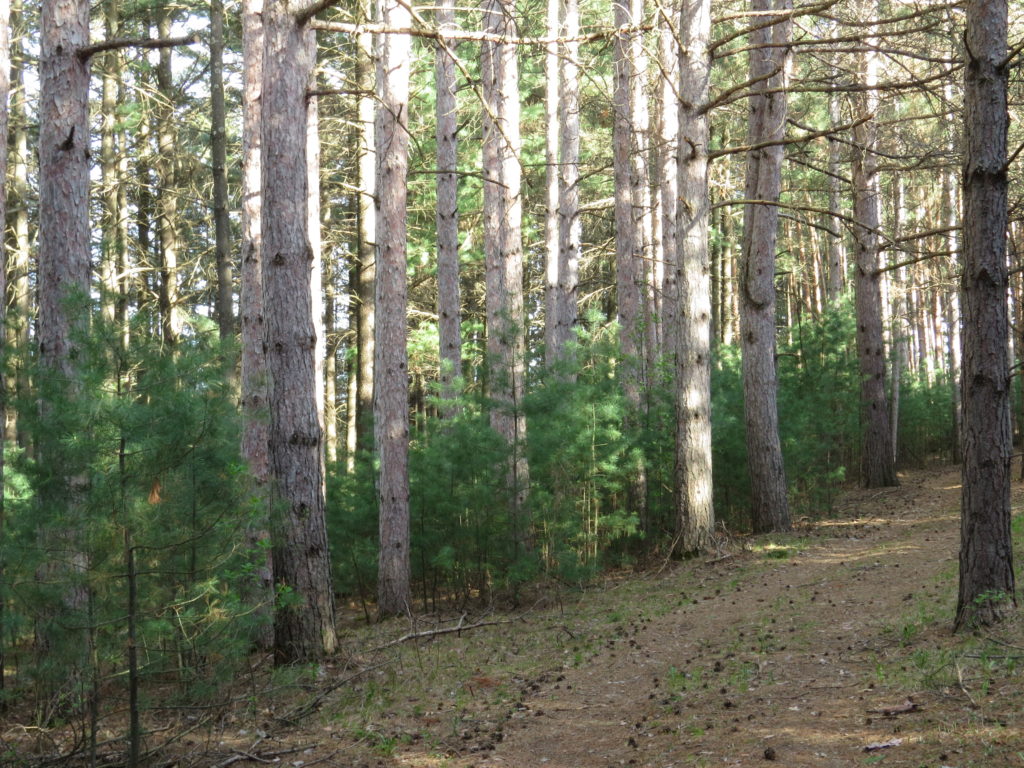
We could see the forest, the hallelujah forest, with the old ones, the young ones, the sunshine, the bark, and the needles, lifting a song of life straight up to the sky.
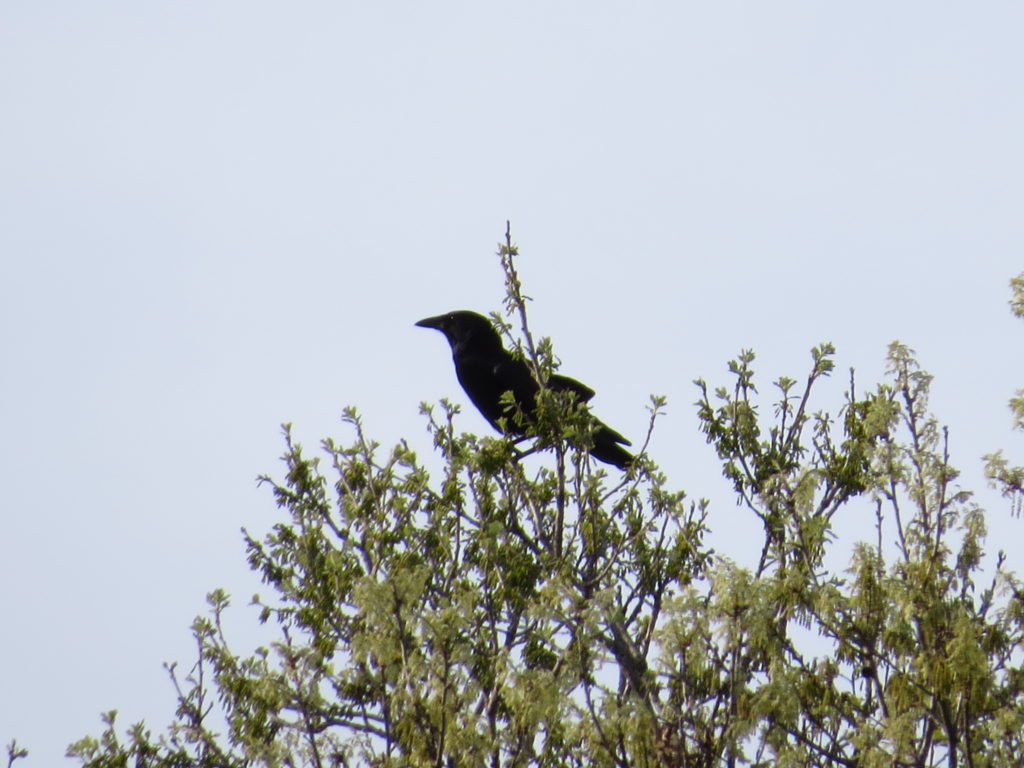
But then we heard a crow cawing us back to our bodies, back to our lives, back to our headaches and questions. What do you see from your vantage point?
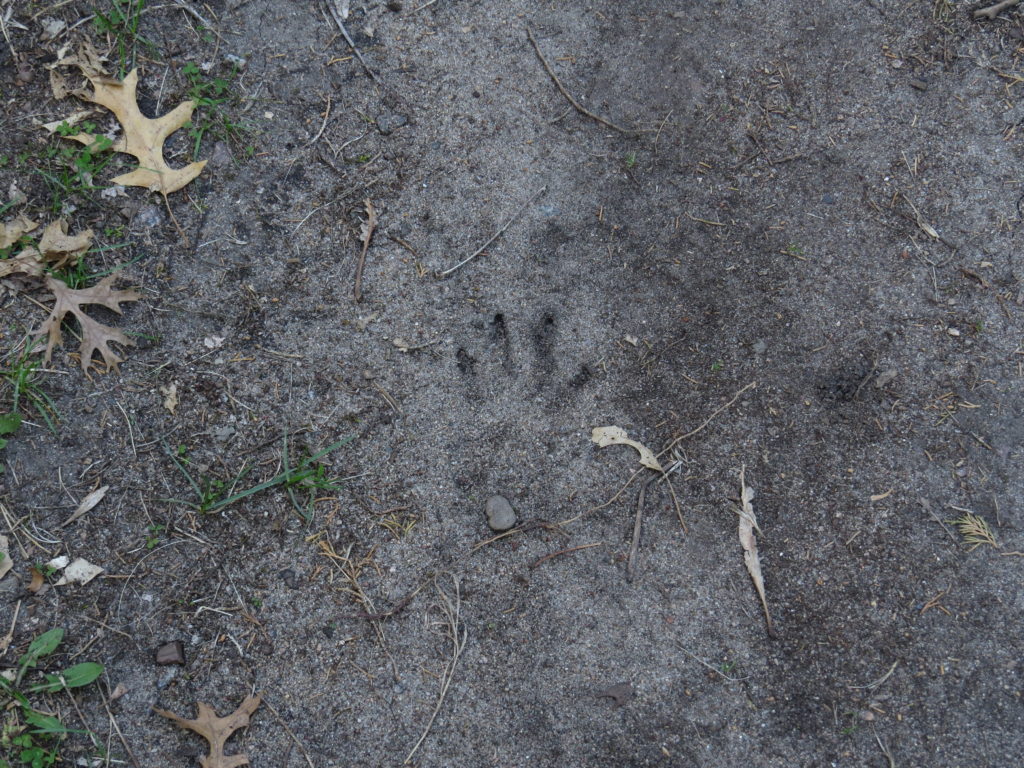
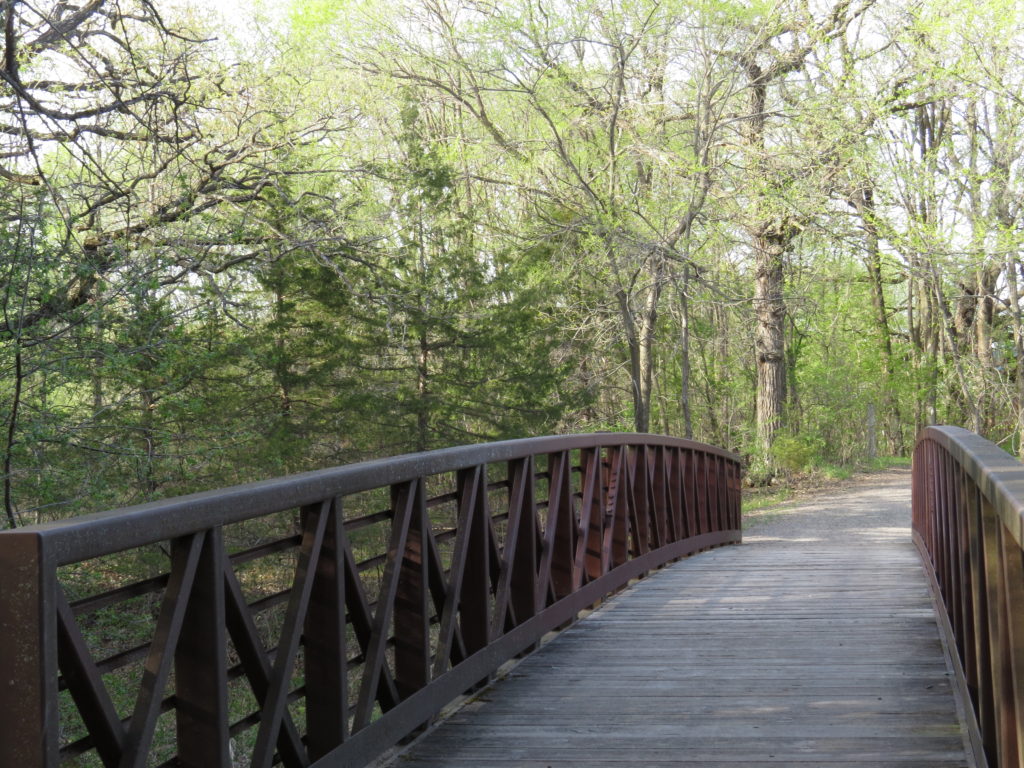
We saw footprints that led us back to the bridge that returned us to our car, to our real and present lives. What do you know from trekking the path before us?
It was an anniversary to remember. It was a path we had walked before, yet as always, the same things bring new things. I had bright flowers and sweet perfume—that soul-filling pine perfume. Some of our wounds were temporarily clotted with the thick sap of it. It is a fragrance that makes a person know they are alive. I was grateful for the relief. We had stillness and singing, stillness and movement as we walked together through the cathedral of Pines.
In thirty-seven years, we have peeled back quite a few layers of the carefully crafted bark of our previous years. It’s a gift to craft and a gift to peel back the parts that are no longer needed. What a privilege to see the golden treasure underneath. So here we are. Standing on holy ground. What does the luminous voice from the burning bush tell us? Where do we go? What do we do? Where is this land flowing with milk and honey?
The Gold in All of Us
I remember the feeling I had when I went off to college of having the opportunity to become a new person. I’m not sure if that was an expectation of society or an internal wish on my part or both. Stepping from dependence to independence (the first error in my thinking) seemed like a good time to become this new self, my true being.
It’s happening right now as I write, as the birds sing their joyful songs, as the breeze blows through the grass that needs its first mowing—each and every tree, shrub, and perennial plant is stepping into its full being! The hints and false starts and stubborn stuckness is over—this week we are rising to the crescendo of Spring!
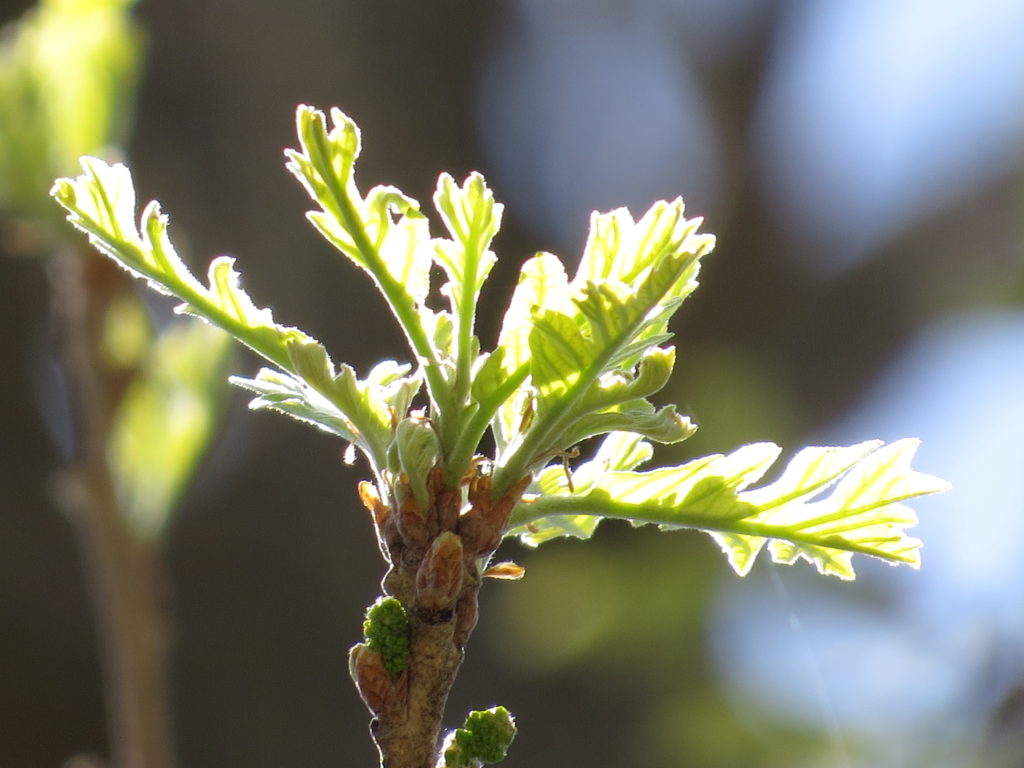
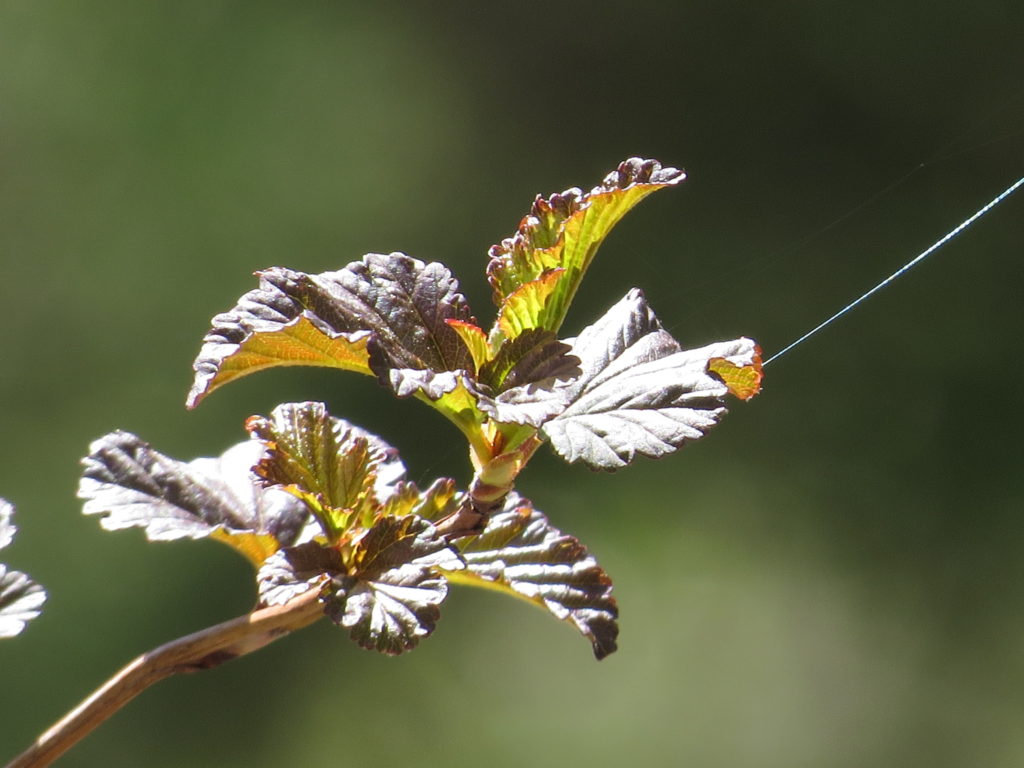
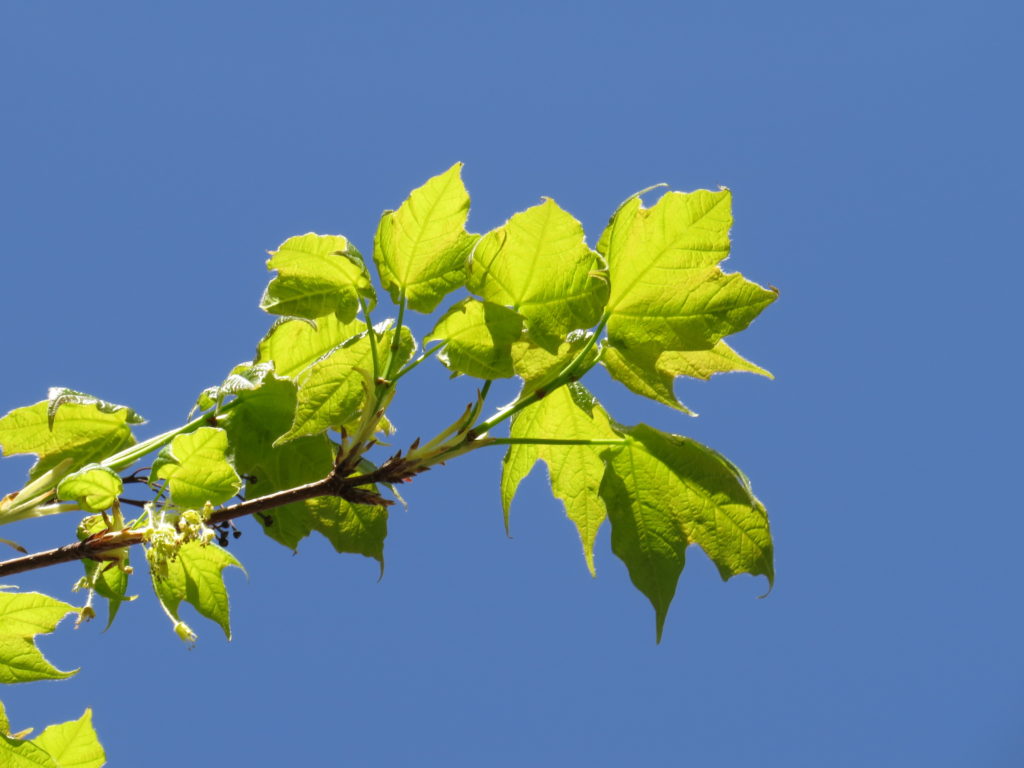
It is striking when the higher-arching sun illuminates the new leaves with gold. The fresh new cells of the emerging leaves seem to carry an inner brightness and glow that is sparked by the warm sun. Green and orange and red glow with gold.
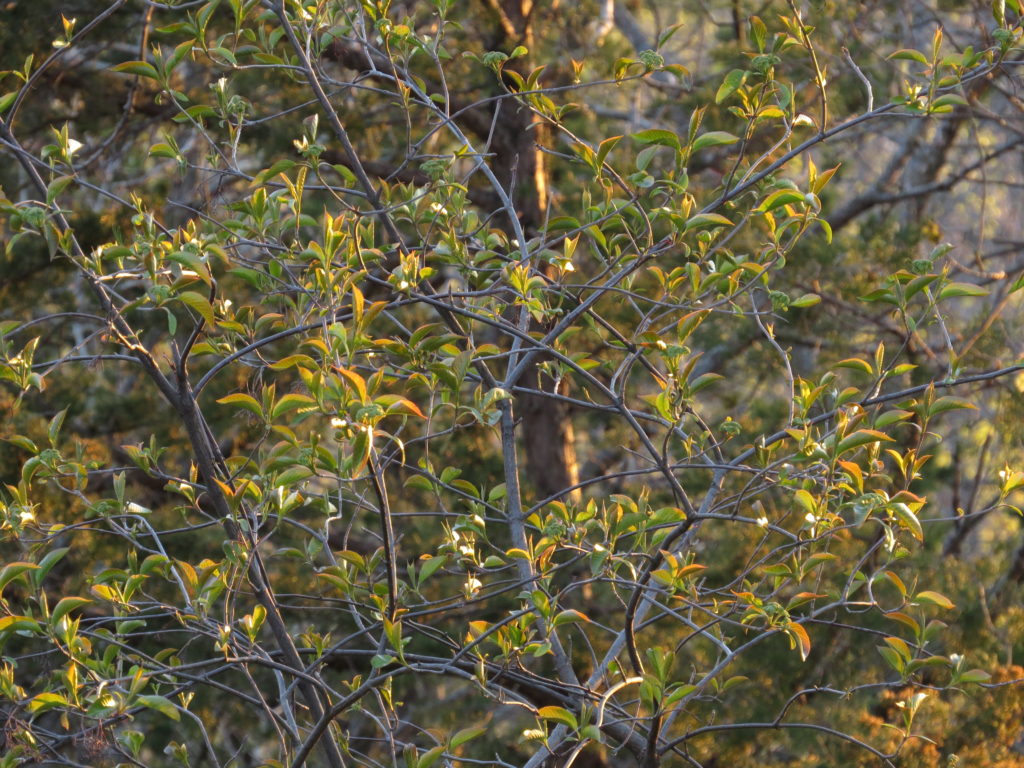
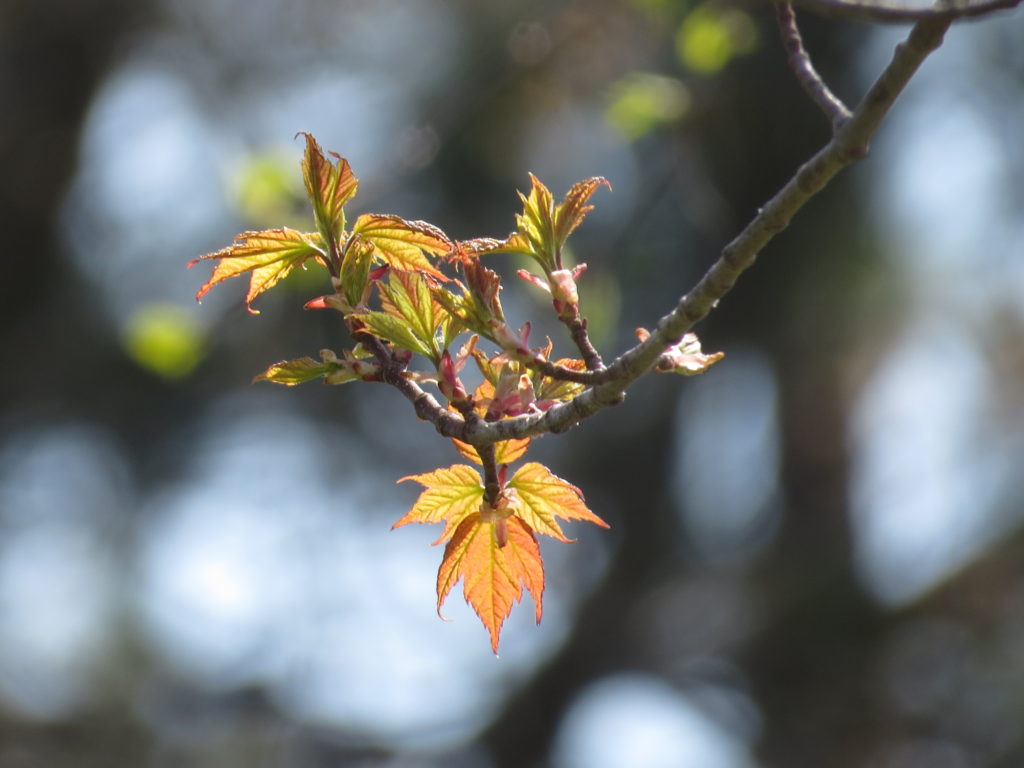
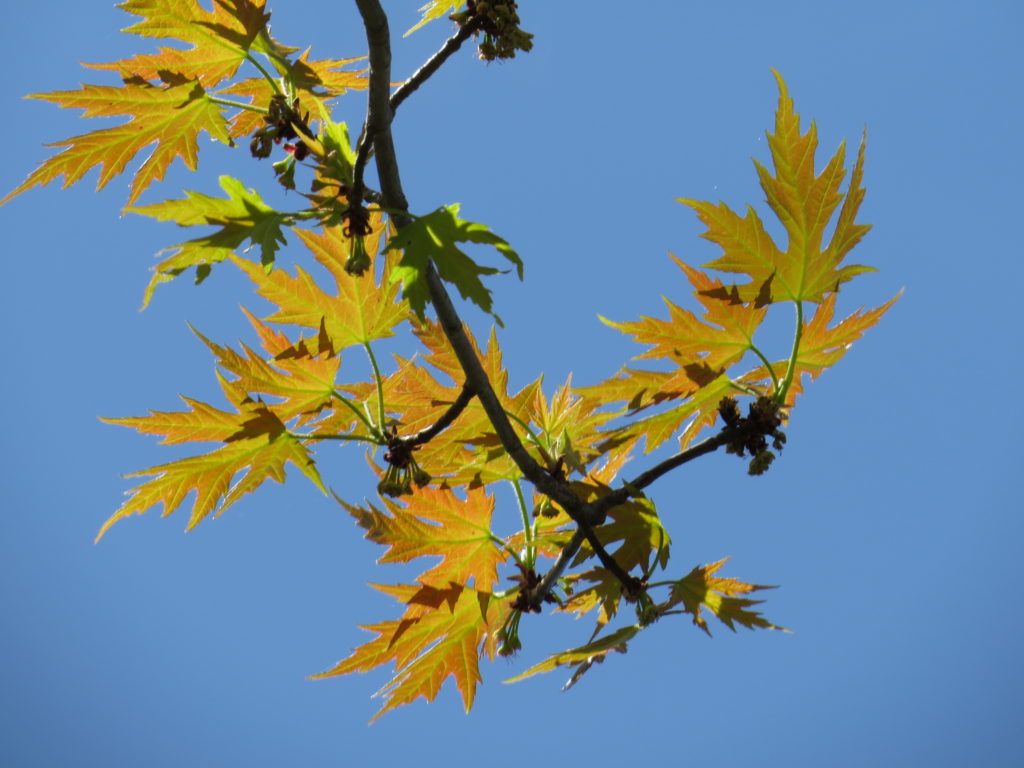
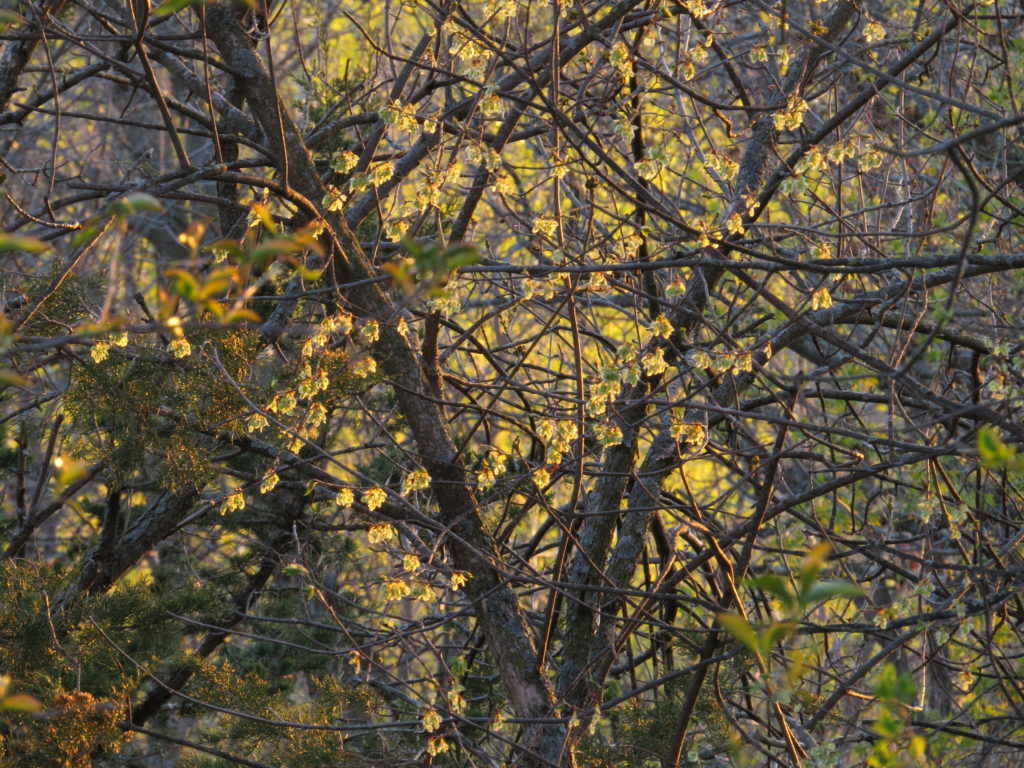
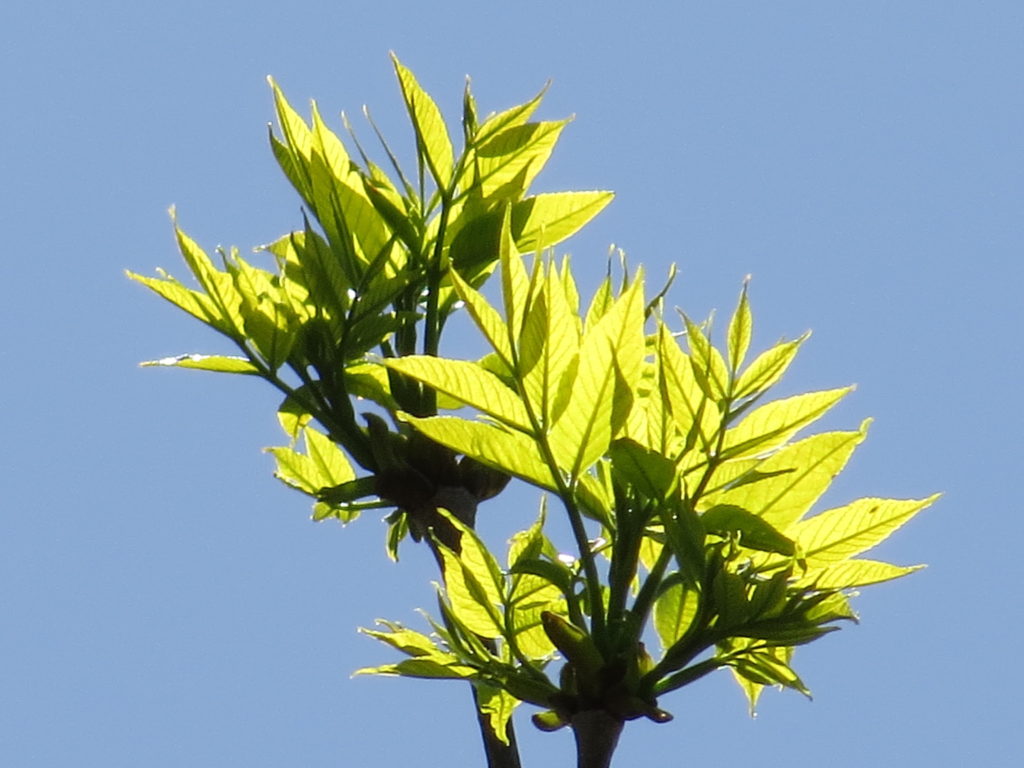
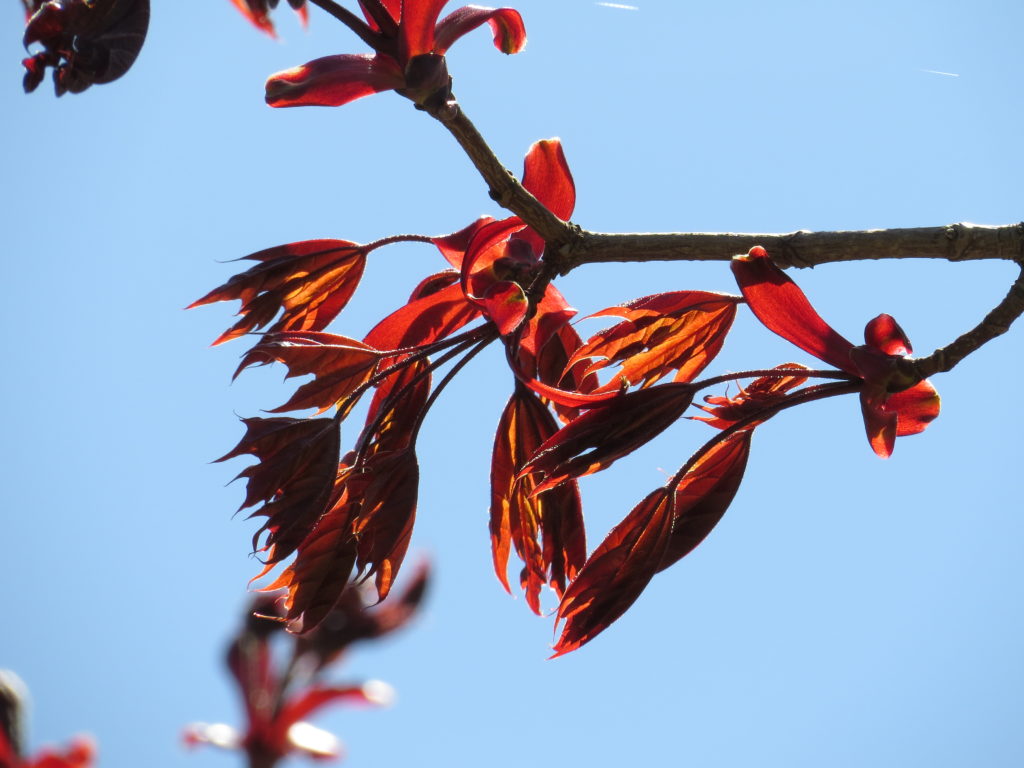
New growth of a Red Oak unfolds from a single bud that was swollen with potential. It emerges like a butterfly from a cocoon or a calf from the womb—wrinkled, wobbly, and fragile looking.
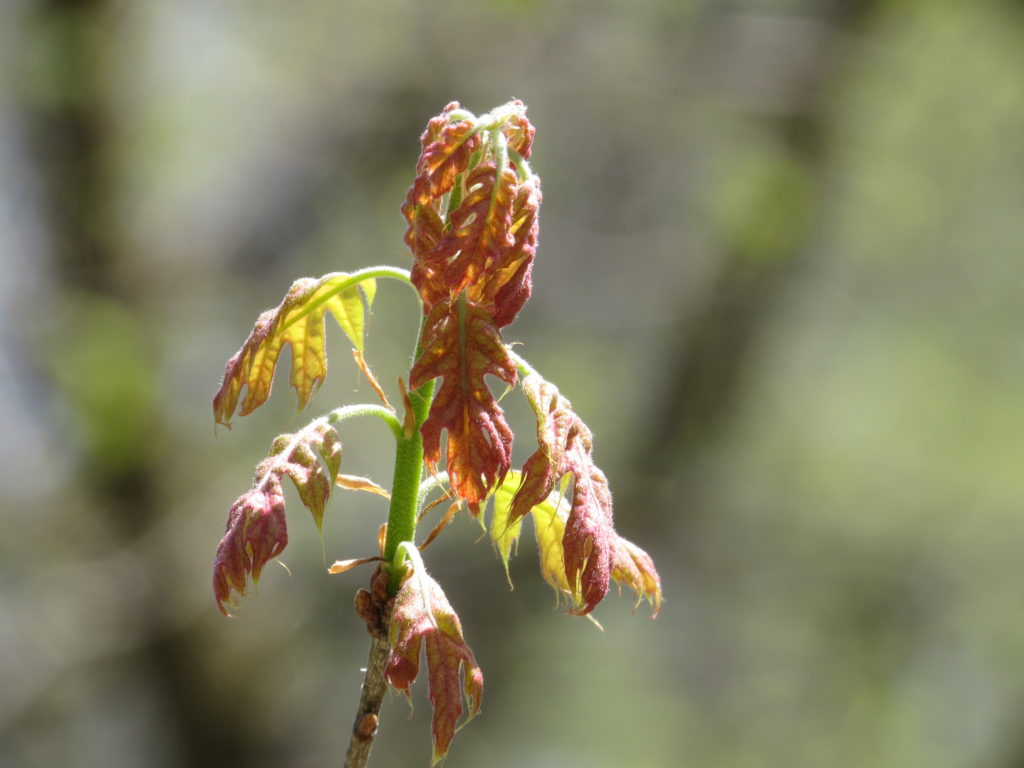
Timing of each tree’s unfolding varies—some are early starters, in full-leaf by the time others are just pushing out their tiny works of art—all in the glow of becoming. It’s supposed to be that way. Only a fool would expect Nature to be all the same.
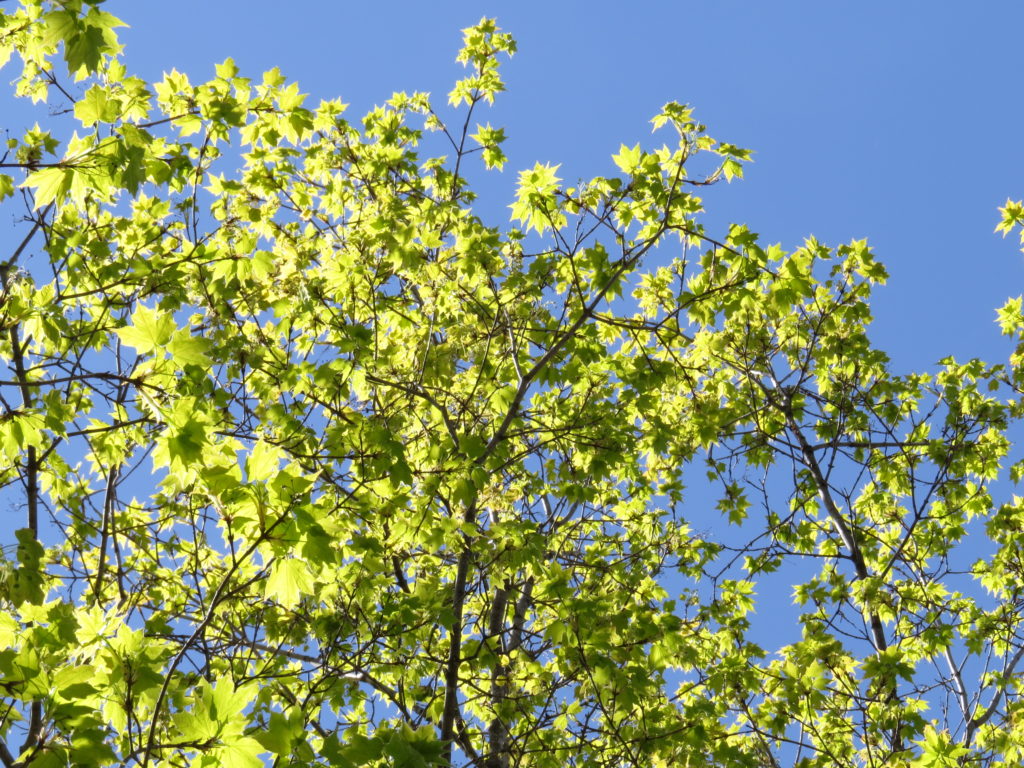
And then there’s this. Even as these brand new leaves emerge, there is already a connection to another kingdom, another species. Nature is a web of interdependence, seen and unseen.
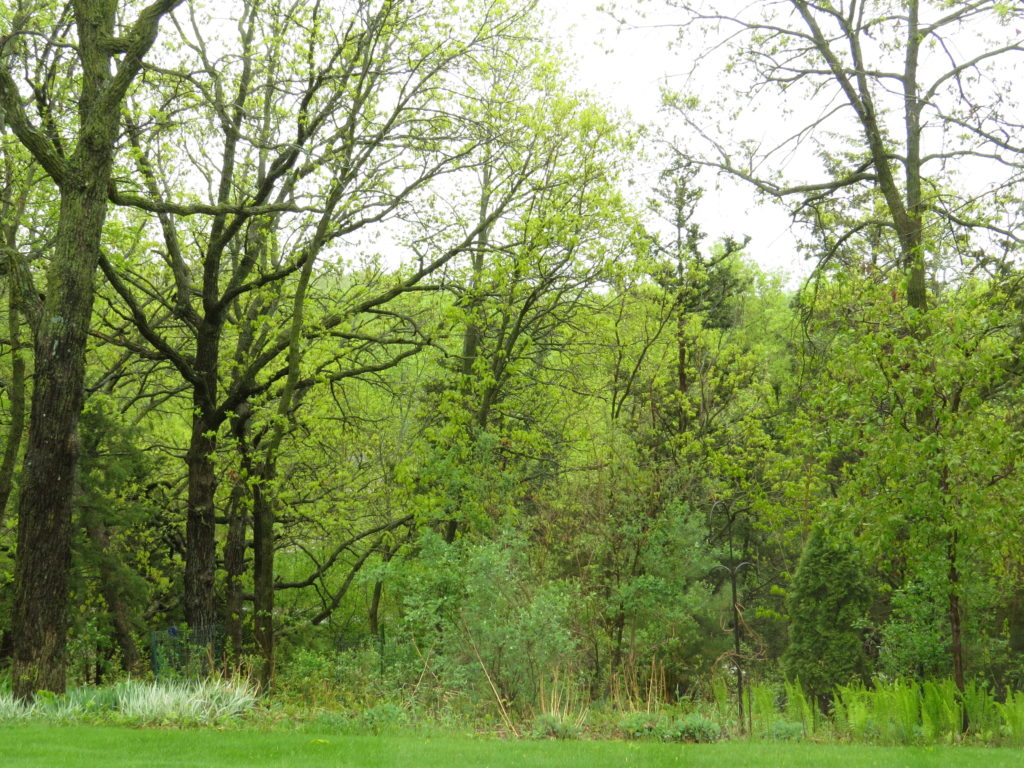
College was a time of growth and learning, but by no means did I step into my full being. I think perhaps we are like the trees—we get a chance to emerge into a new being with each year of our lives. We have an inner energy that can’t be denied and guides us toward the next step. It’s supposed to be that way—it’s the high-arching journey of our lives. It also provides us with grace—we don’t have to get it ‘right’ at any certain time, but we learn and grow and hopefully get better with each iteration of newness. So, we always have these innate buds of potential waiting to emerge, and we need to be protective of their wobbly births and beginnings. The seen and unseen connections that bind us to others can be uplifting or destructive, not only to our new births, but to Nature’s web as a whole.
“Humankind has not woven the web of life. We are but one thread within it. Whatever we do to the web, we do to ourselves. All things are bound together. All things connect.” –Chief Seattle
Here’s to new beginnings! Here’s to all of us stepping into a higher, better iteration of ourselves. Here’s to the new, developing cells in the warm glow of becoming. Here’s to the uplifting, positive forces that know the truth and power of Chief Seattle’s message. Here’s to the gold in all of us!
A Primal Rhythm of Motherhood
Things were going fine. I had done this before. I was patient and attentive. We all knew the routine. Then something changed. Most Moms have experienced that moment. It seems like there is calm before the storm, but in reality the energy is gathering. Something on the inside isn’t right—tension and discomfort are building. The crying begins…and doesn’t stop. Diapers are changed; food is offered. Rocking and walking and bouncing all in one continuous, gentle movement is the motion of motherhood. Sometimes it works, sometimes it doesn’t. This particular time, it didn’t. As her distress continued, my inability to comfort her distressed me. Soon we were both crying. Walking, rocking, bouncing, crying—a primal rhythm of attachment and motherhood.
In our quest for Spring this week, we achieved a landmark—the green blush of new leaves on the stands of Aspen trees down by the River. The Oaks, Maples, and Ashes will soon obscure the Aspens, but for now, they allow us to see through them, past them, to the tender green beginners.
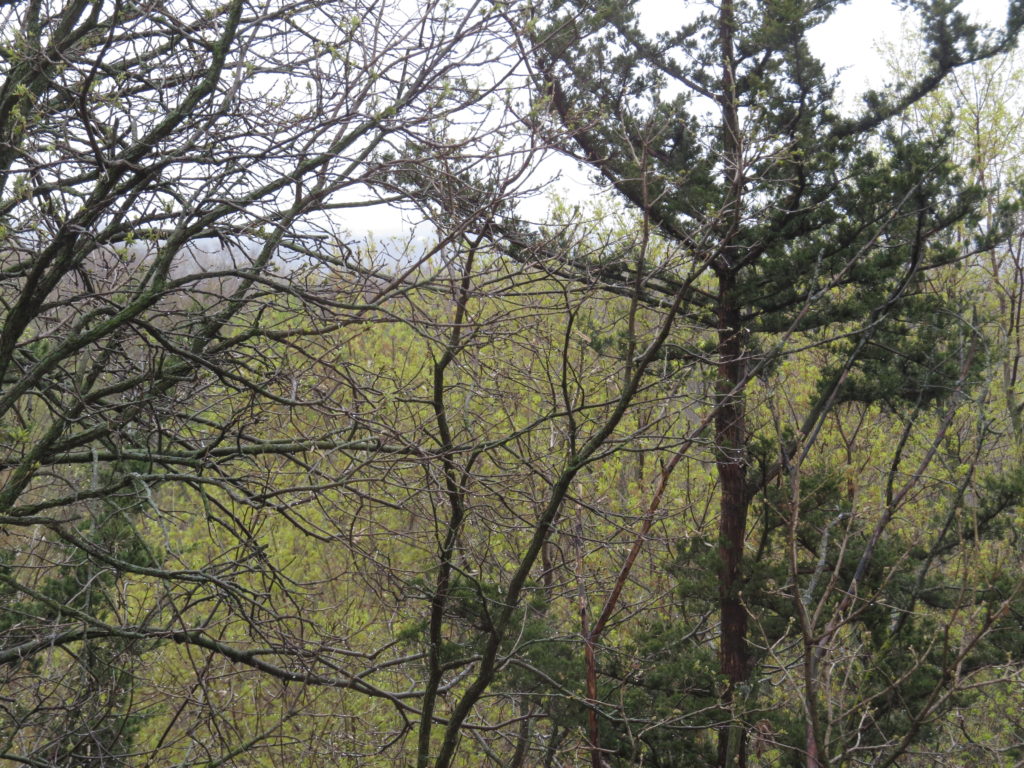
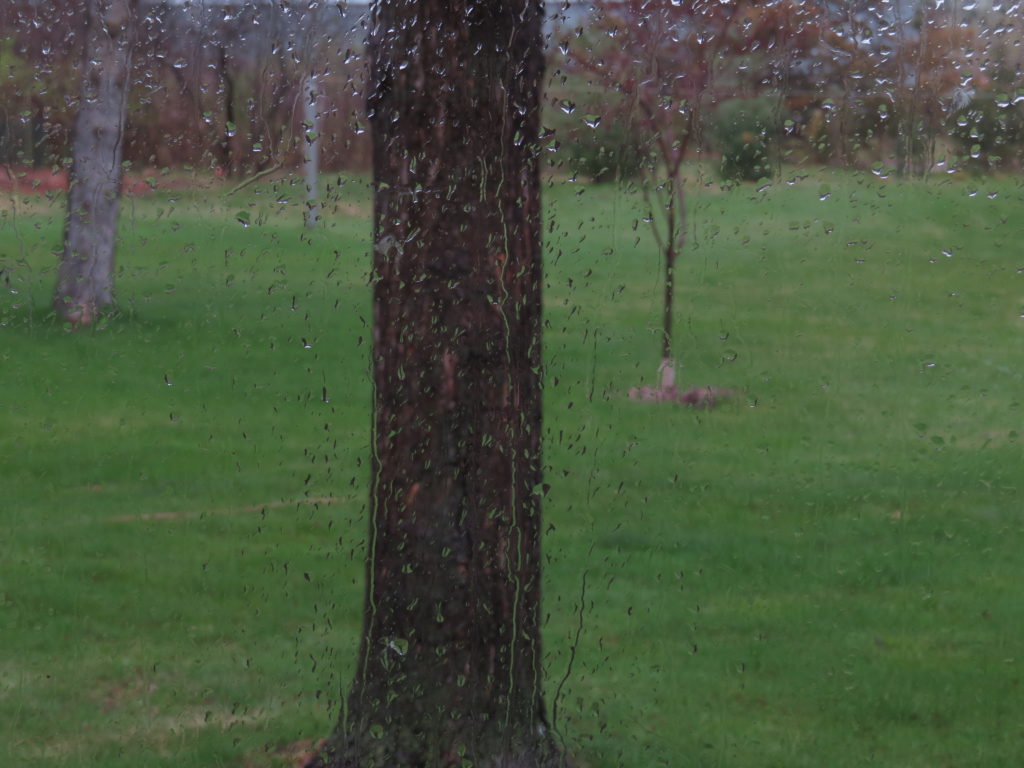
And then the rain came—the nourishment of new growth. It was exactly what we needed, what was expected.
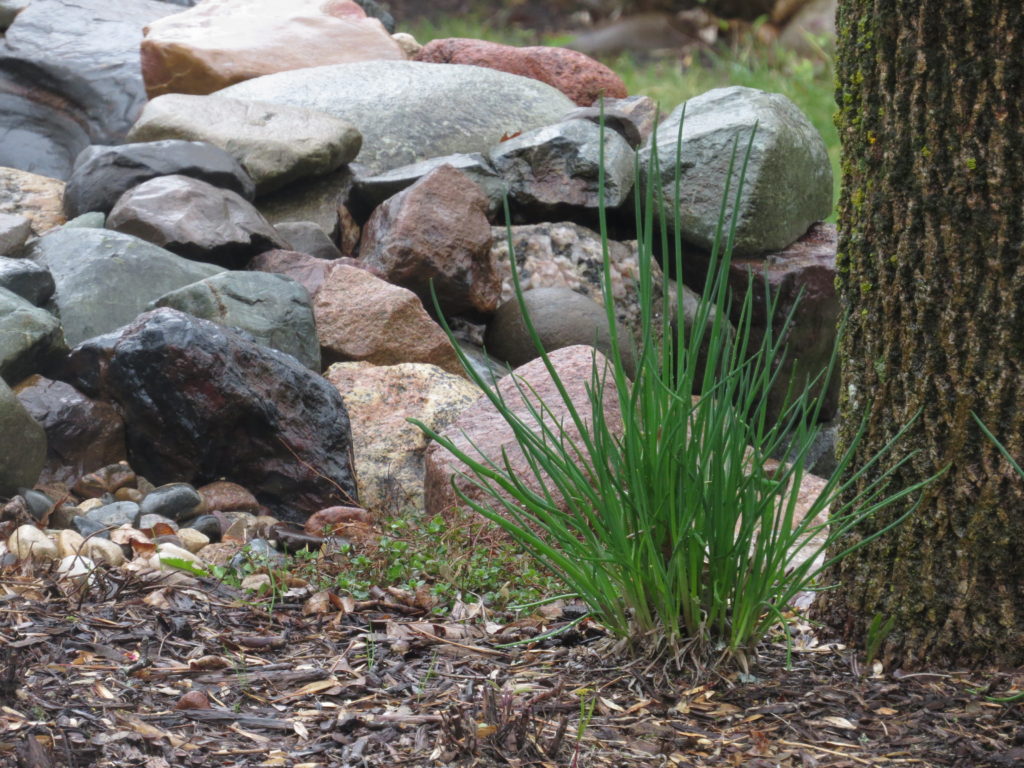
Onion-like Chives shot up out of the ground while Creeping Thyme slowly greened behind them.
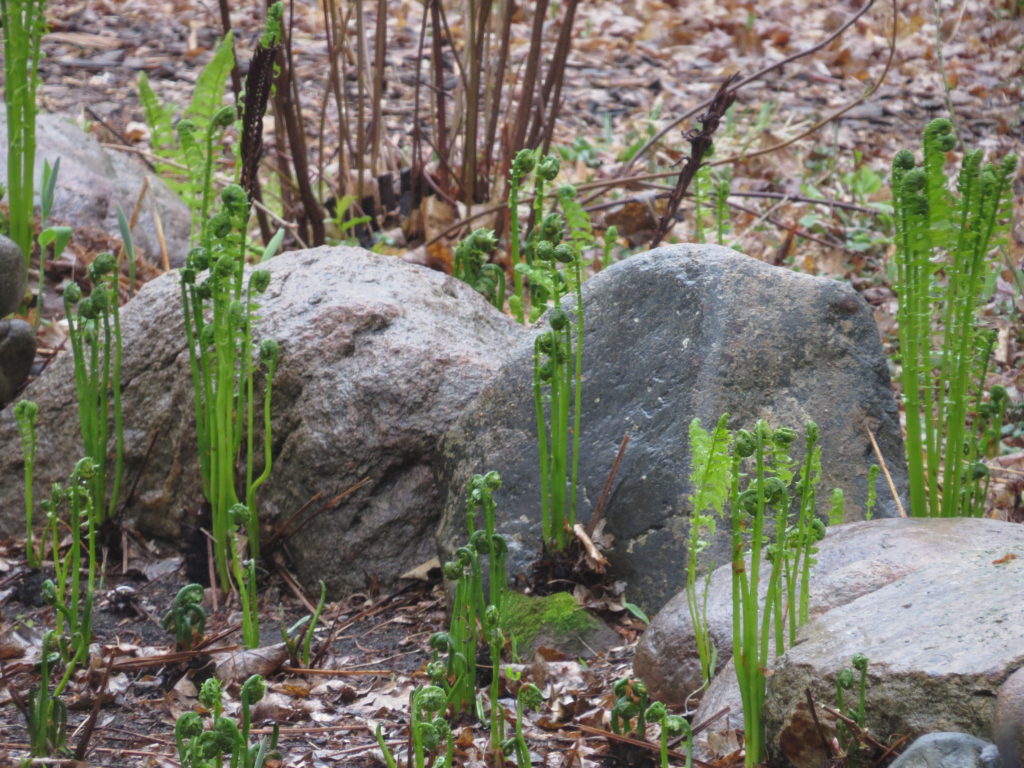
The stems on the Ostrich Ferns s-t-r-e-t-c-h-e-d in spurts of growth, even as the fiddleheads continued to hold their curls.
That afternoon, the rain changed to snow. The wind picked up. What seemed like a calm Spring rain became an energetic throwback to Winter.
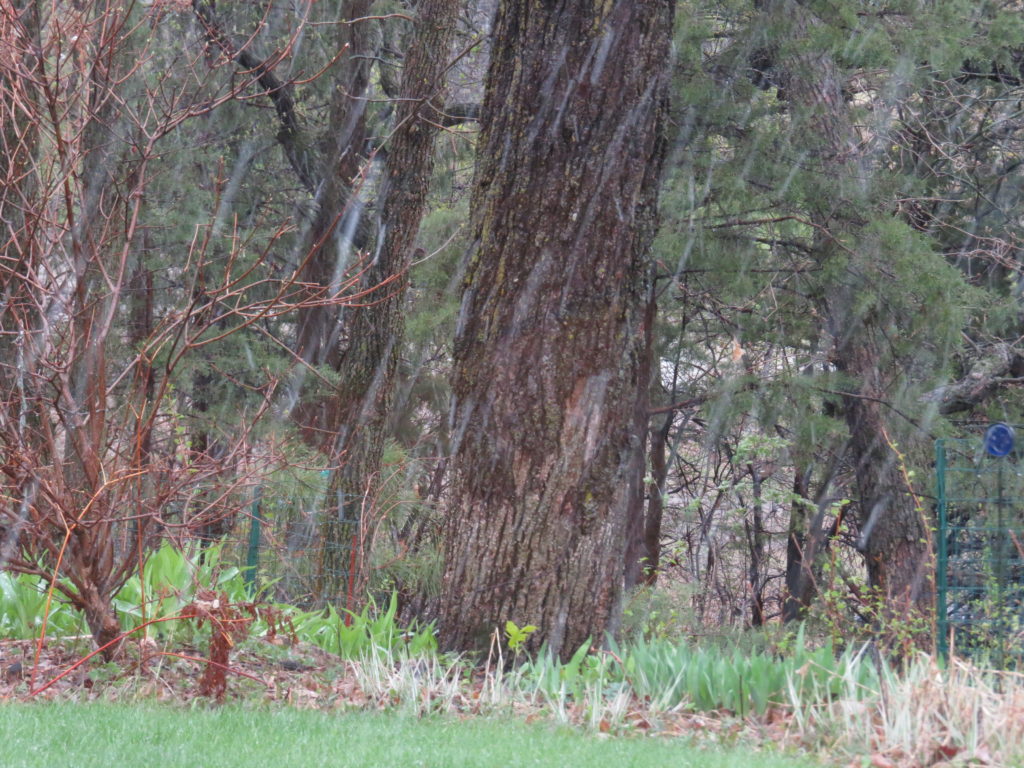
The wind seemed to be coming from all directions—the snow fell in swirls, the Hemlocks twirled. Spring hope was blurred out by the tension and cries of ‘Winter!’
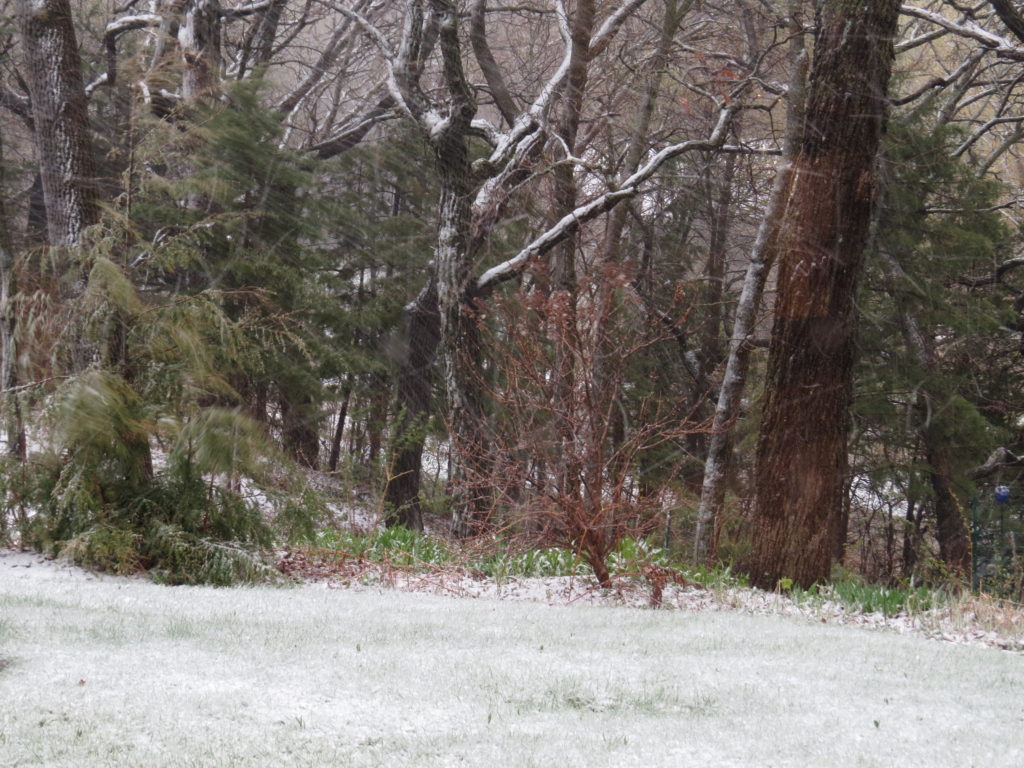
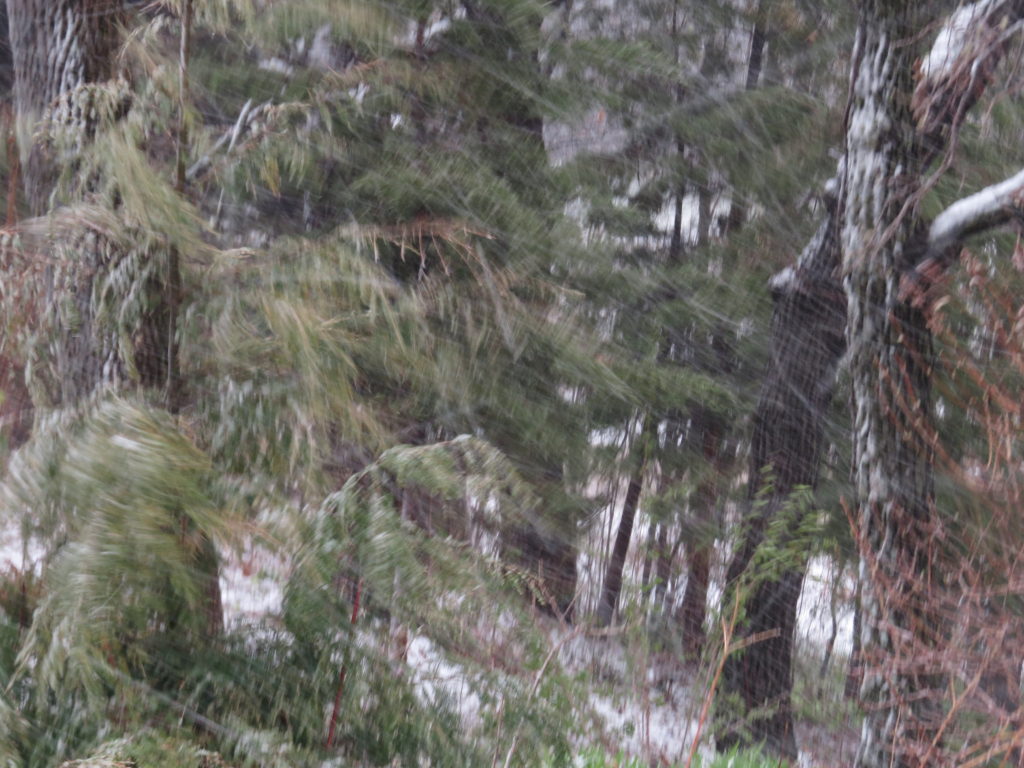
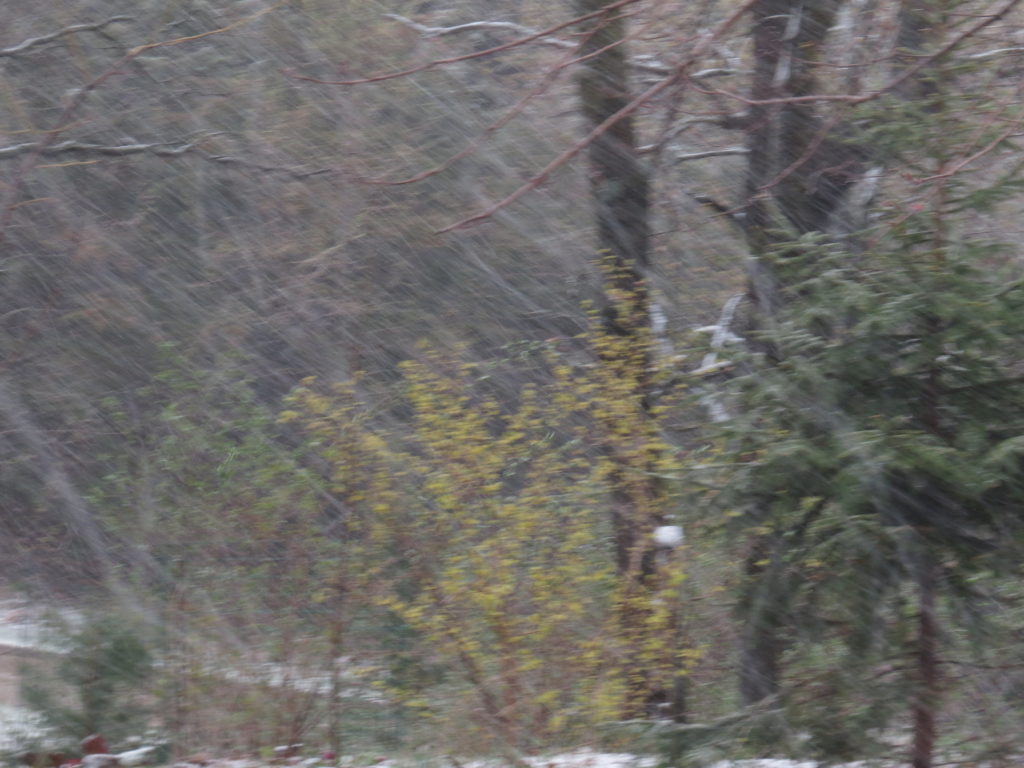
Eventually the wind and snow subsided, but the snow stayed on the ground through the chilly night.
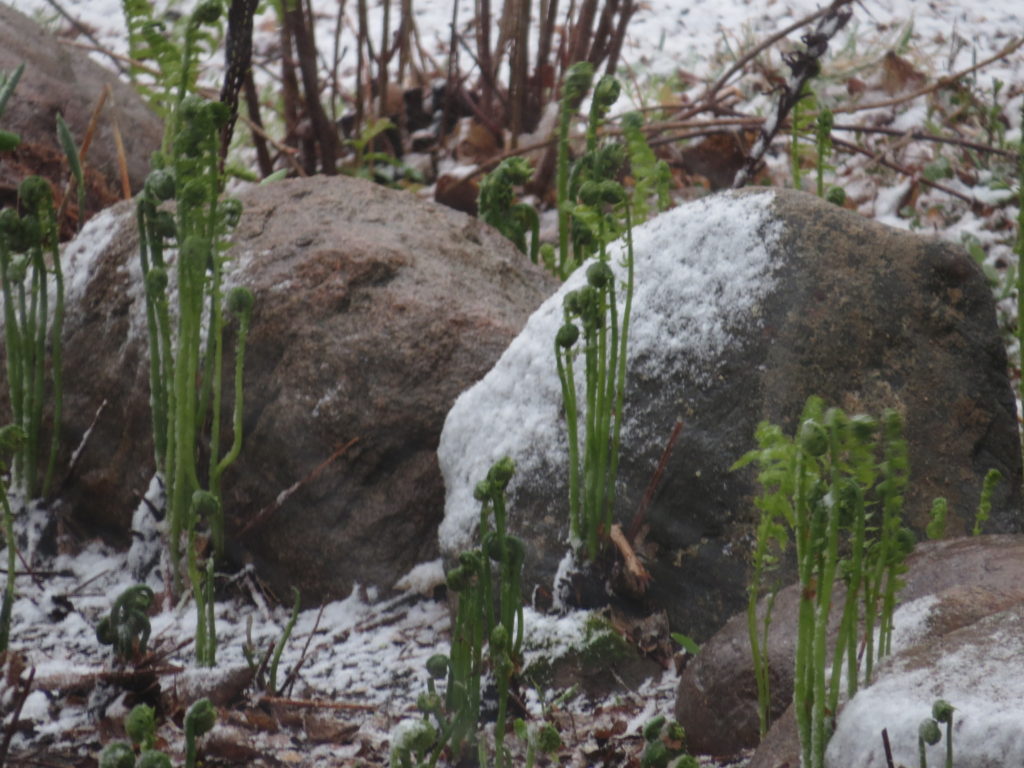
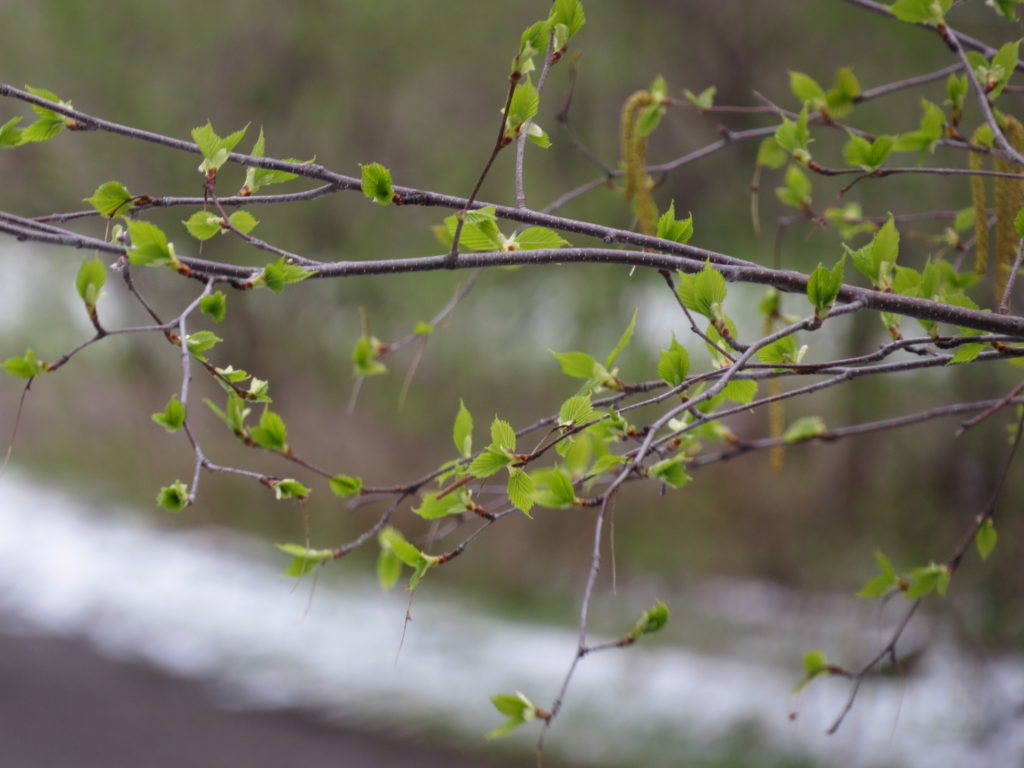
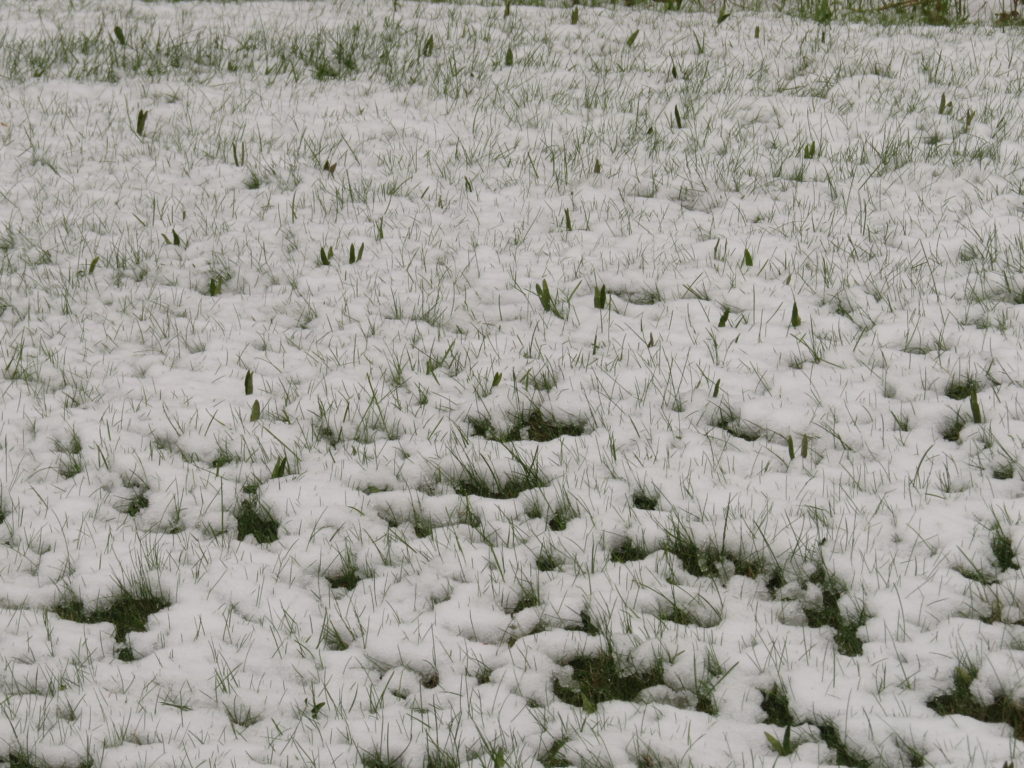
By noon, the snow was gone, the calm of hope and Spring had returned. Did we really have snow just hours before?! Were we distressed just yesterday?
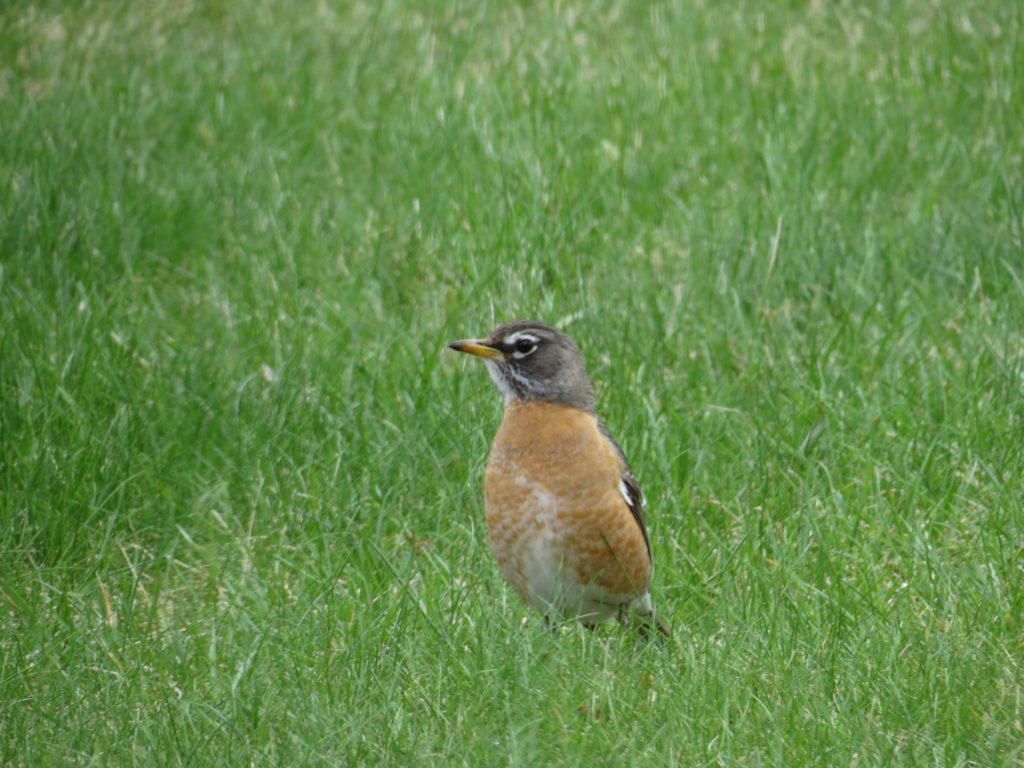
I don’t remember how long my baby and I walked, rocked, bounced, and cried. Time isn’t a thing during such holy moments. As my tears fell and melded with hers, I didn’t know it as a holy moment—that realization only came with the third and last baby. I do know, however, that we did it together. We weathered the storm of distress together. We got through to the calm of rest and hope together. That’s what this love-like-no-other-love means to me. That’s what the holy moments of motherhood are to me.
- « Previous Page
- 1
- …
- 17
- 18
- 19
- 20
- 21
- …
- 50
- Next Page »