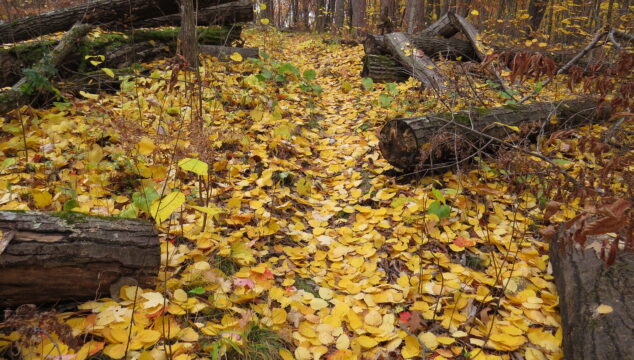
Come walk with me in the peak Autumn beauty of the Northwoods. To say that I love this time of year is an understatement. Most everyone can appreciate the colorful falling leaves---it reveals the 'true self' of a tree when its leaves are no longer producing chlorophyll. Their true colors are revealed, and there is something simple … [Read More...]
Begin Spring
Tomorrow is the first day of Spring. Ready or not, here it comes! It seems like we are nowhere close to Spring this weekend as we continue to ‘clean up’ after yet another snowstorm. The roads are icy, the temps are unseasonably cold, the wind chill is downright Decemberish, and there is a lot of snow on the ground in the middle of the yard!
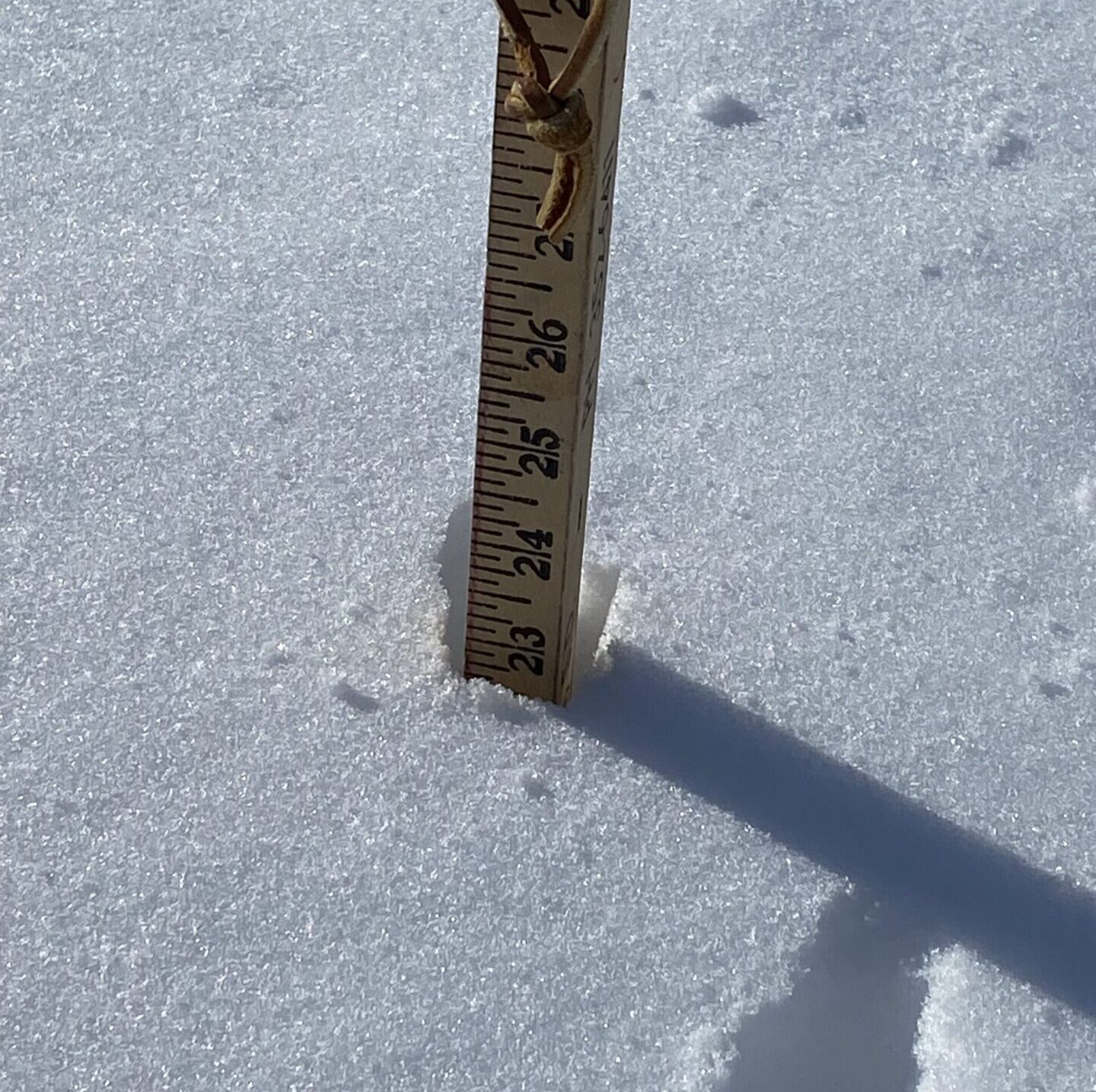
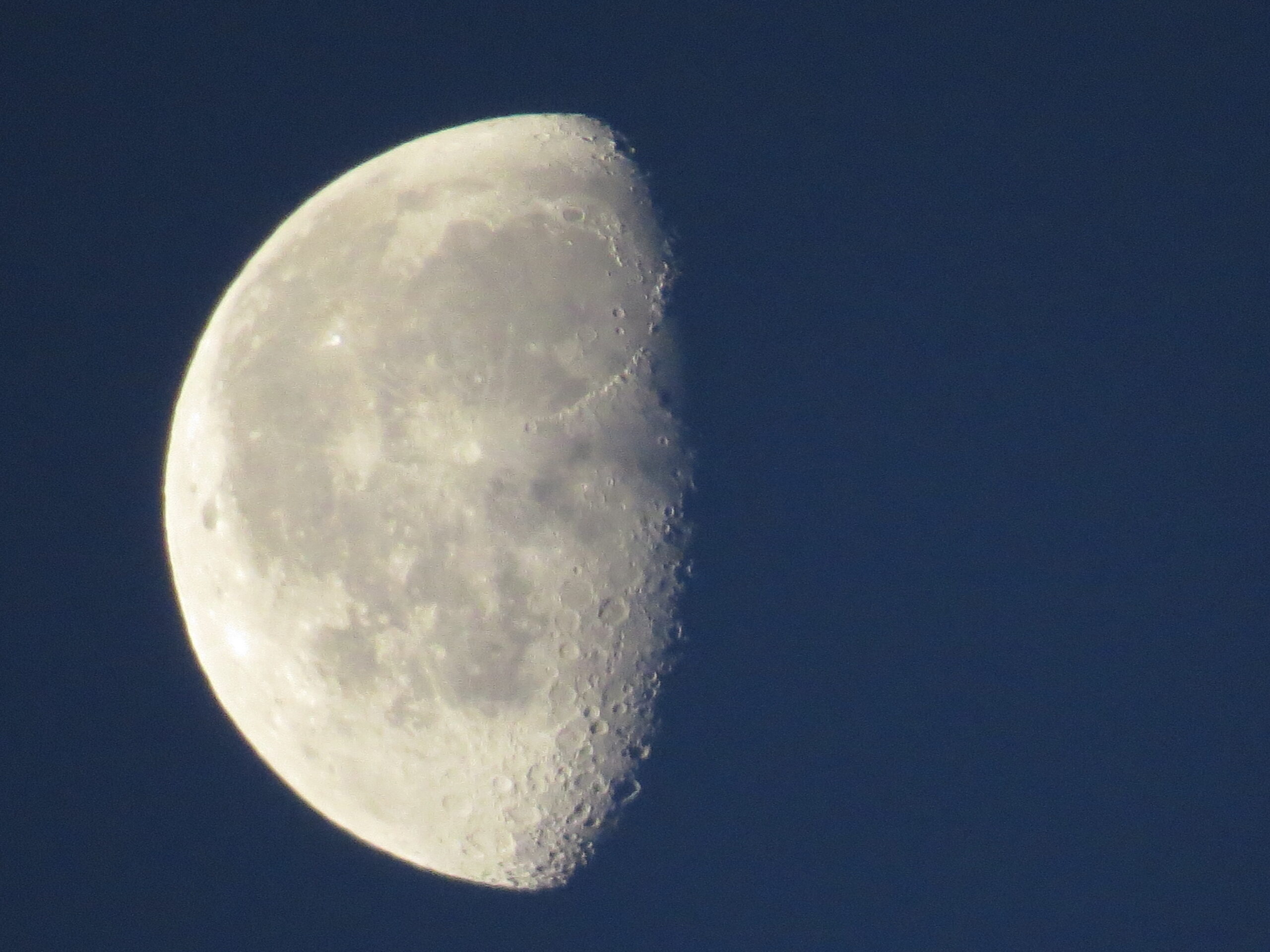
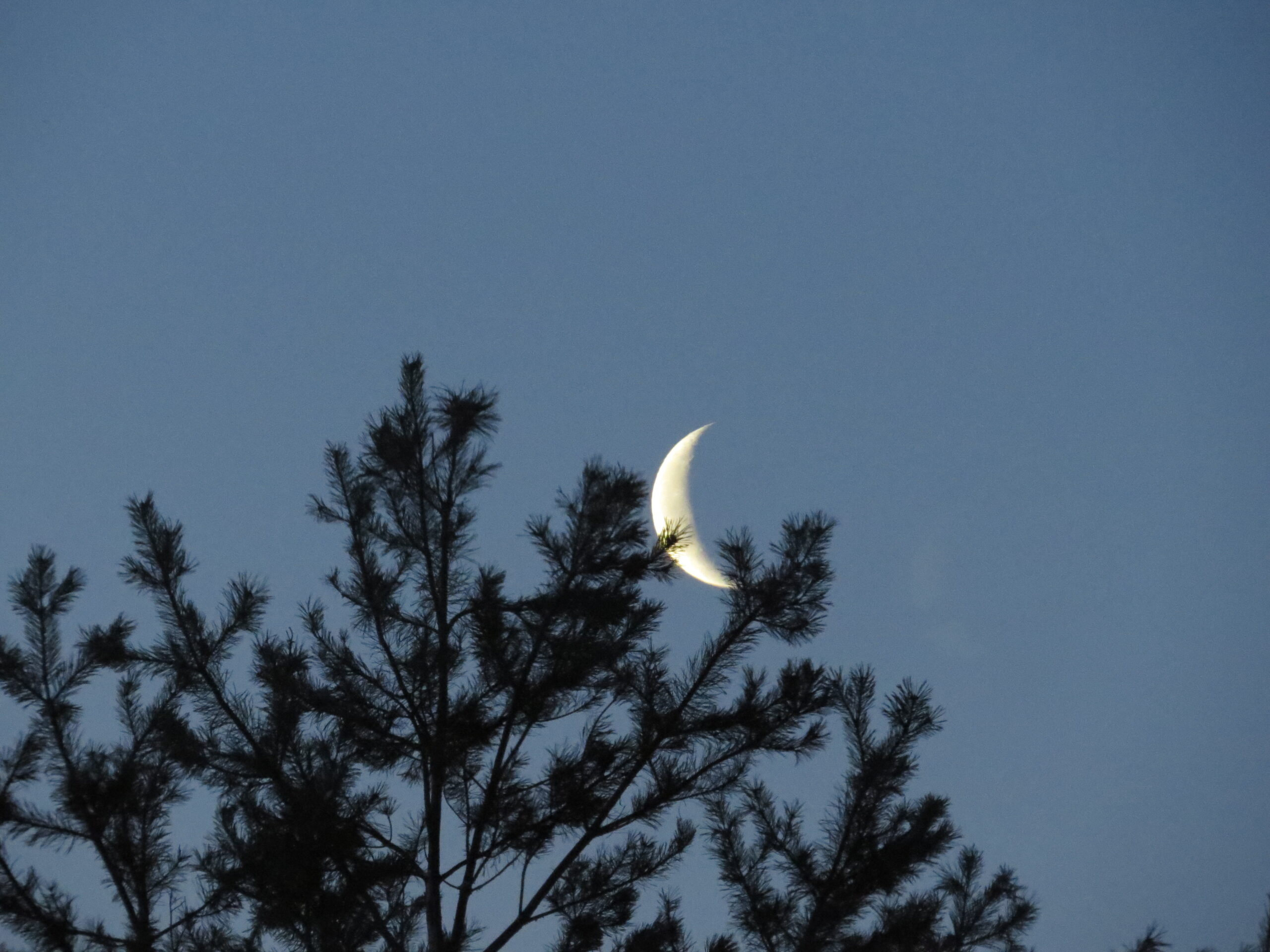
But just like so many things in life, Spring is a process that has a beginning, a middle, and an end—just like a story. So tomorrow we begin Spring. The groundhog did the countdown, and we, as excited children, waited in anticipation for the moment Spring would find us. So what does beginning Spring look like in central Minnesota? There is a change in the position of the rising and setting of the moon and sun—the moon on a monthly basis yet always in a celestial dance with the yearly movement of the sun. The sun is rising and setting ‘nearly’ east and west in its trek toward the Summer Solstice when long hours of daylight in the North of the Northern Hemisphere will shorten our nights.
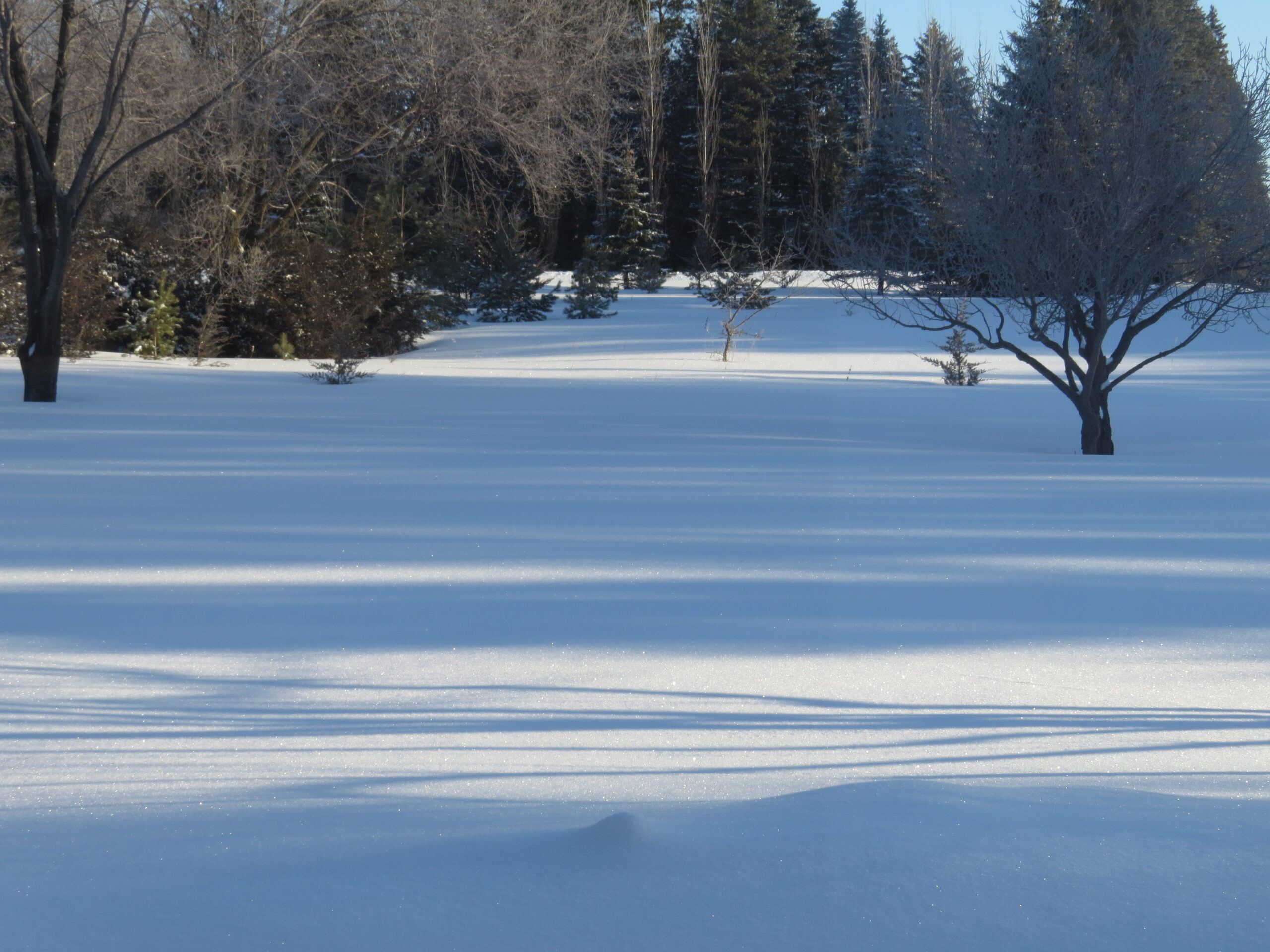

There are days of melting and days of snowing—a ping pong game of subtraction and addition. But with the beginning of Spring, snow subtraction begins to pull ahead for the win.
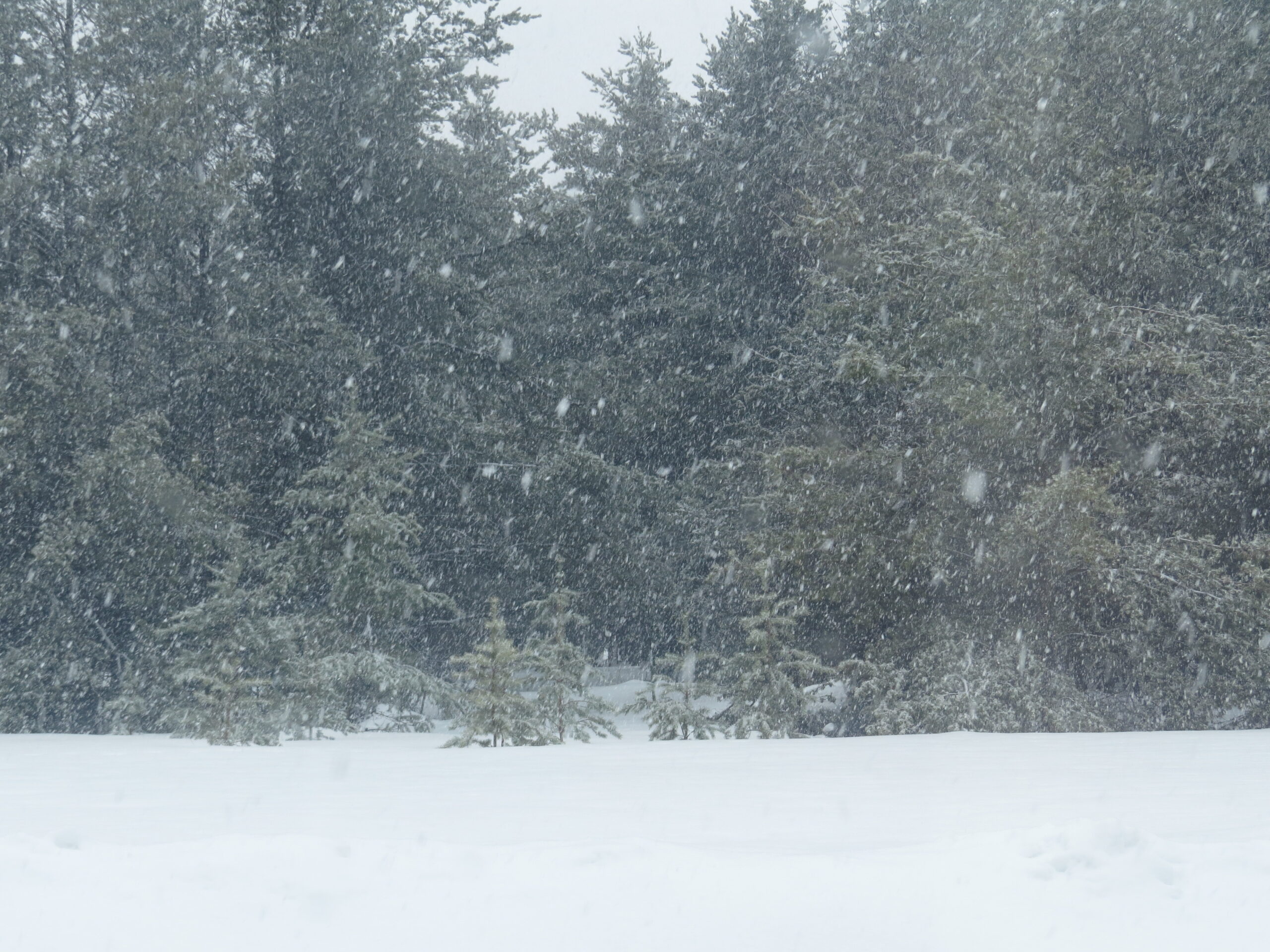
Even with a new blanket of a windblown five inches of snow, the sun, from its higher position in the sky, is a steady source of warming power. Even with below freezing temperatures, the sunshine is softening the snow, compacting it with more moisture, and melting it along the edges.
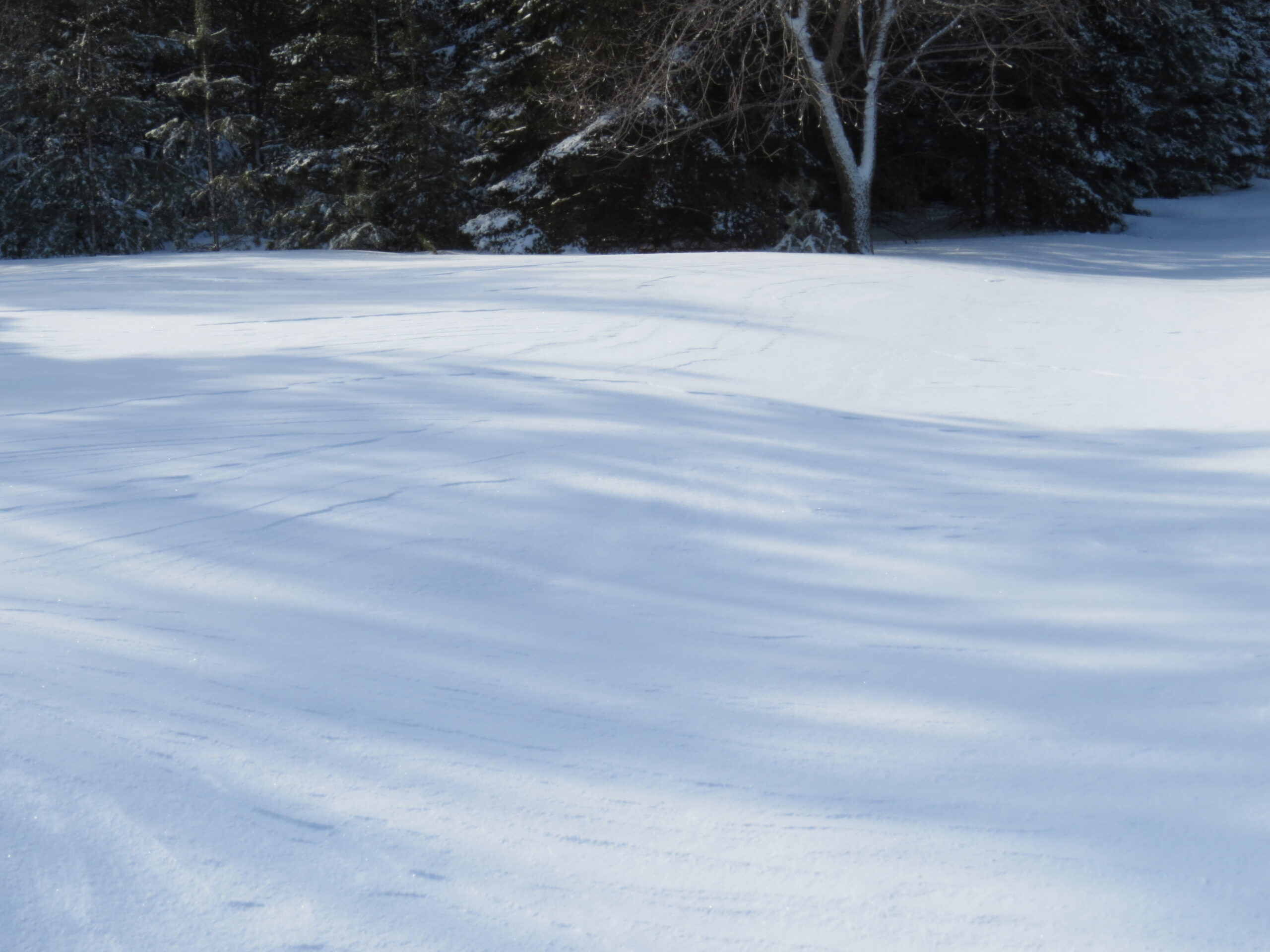
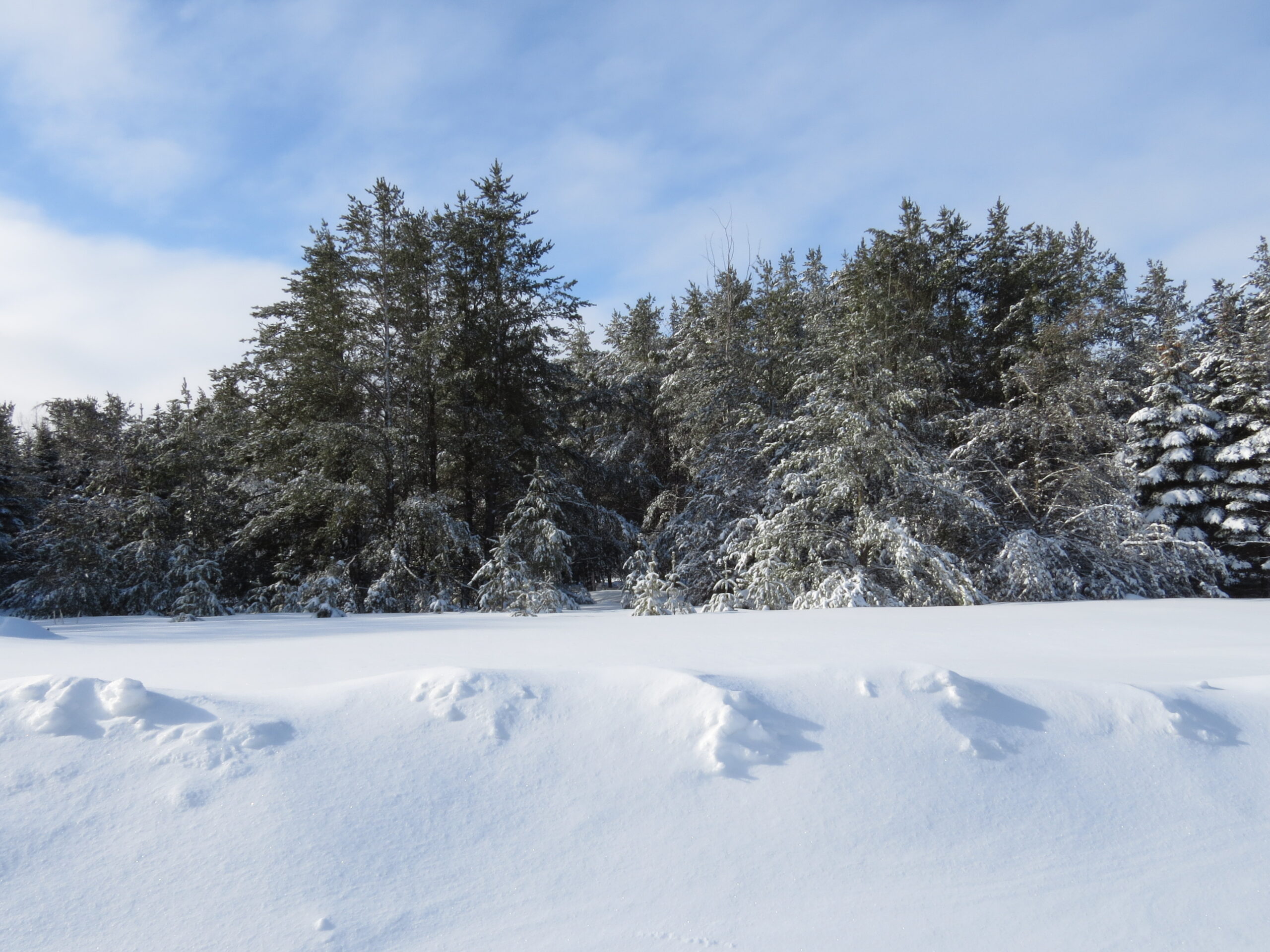
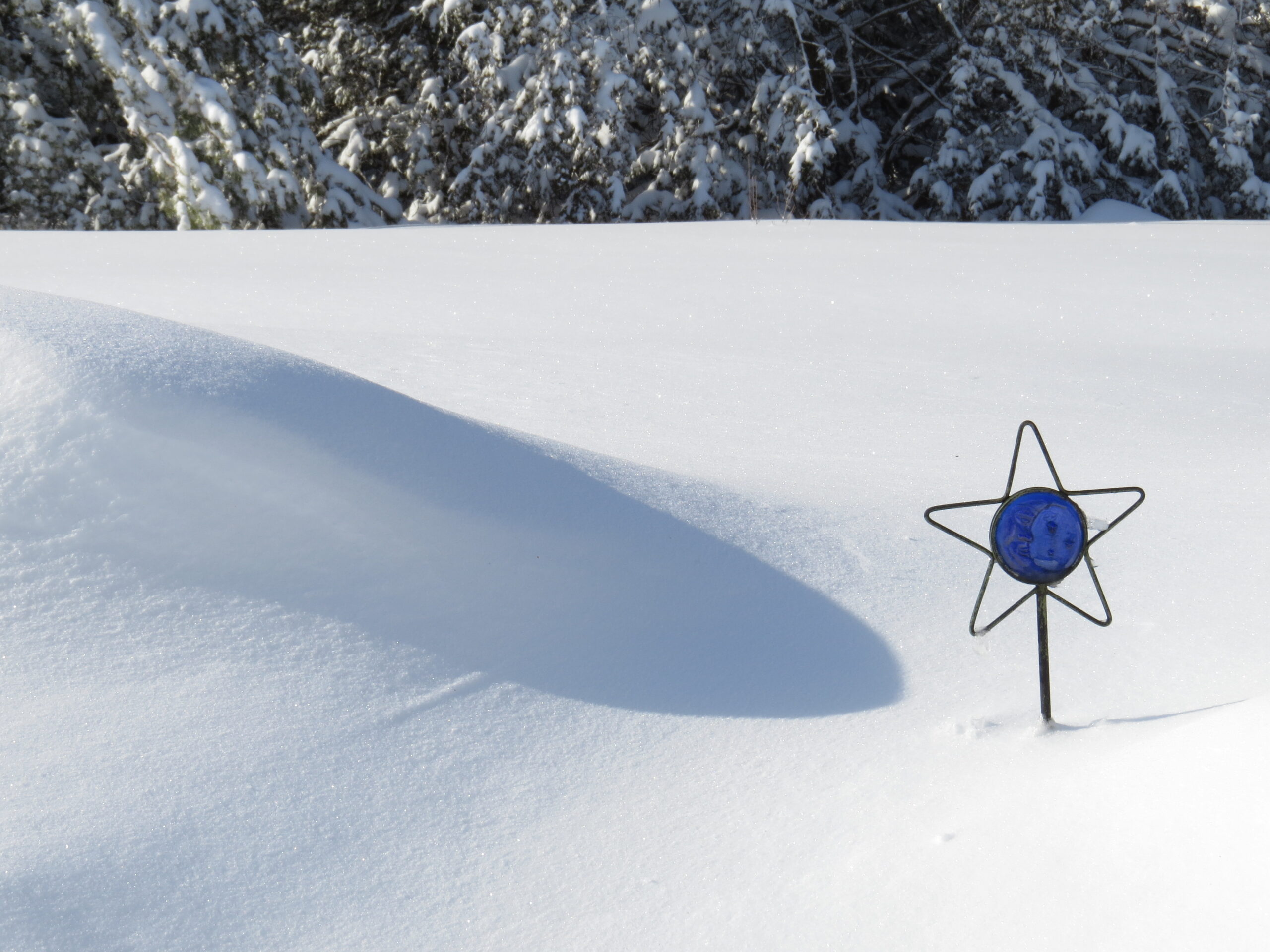
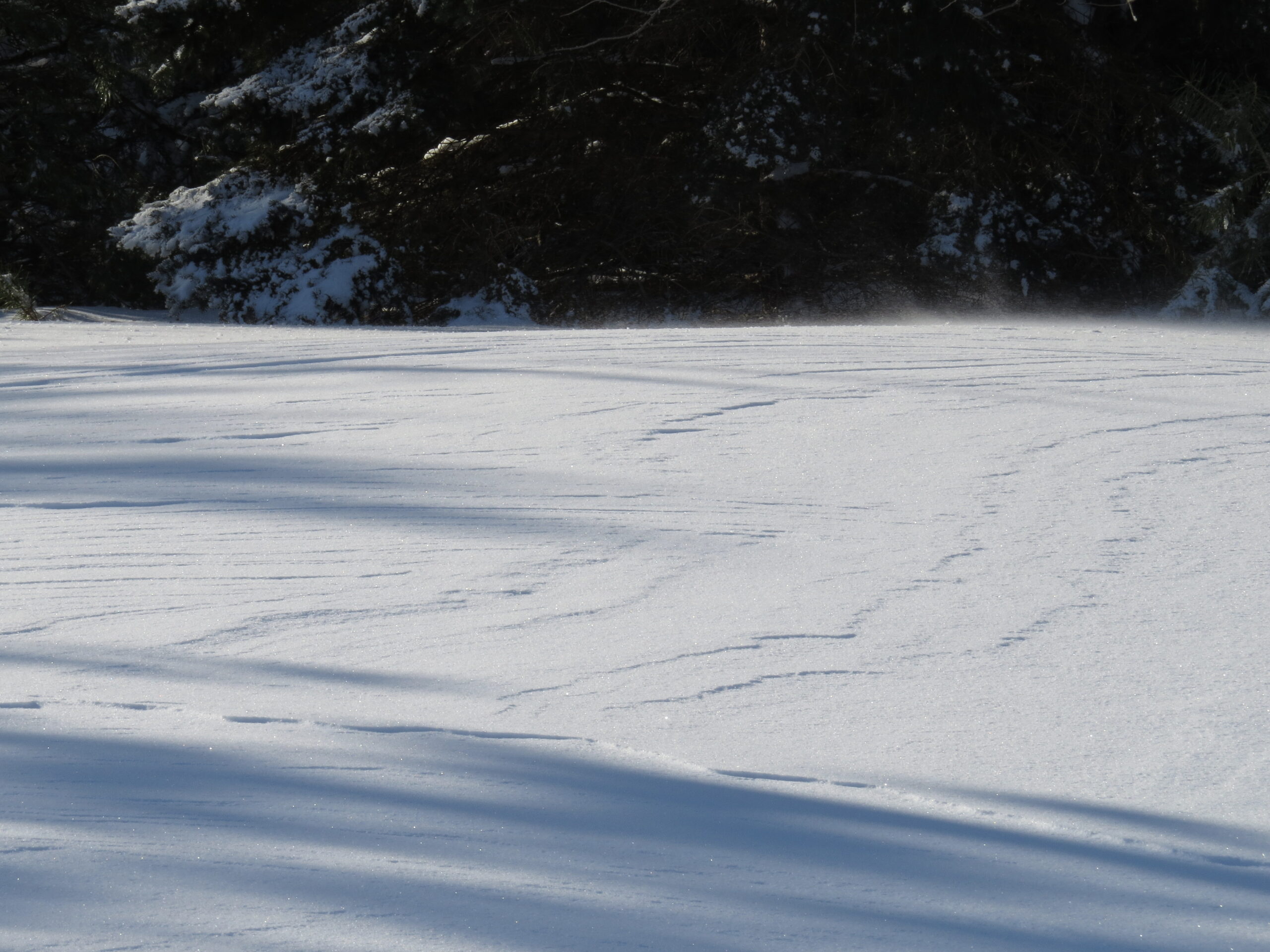
The beginning of Spring, despite the snow, has us looking forward to warmer days when gardens can be planted and canoes can be retrieved from the drifts and winter slumber to glide once again on the ice-free lakes and rivers.
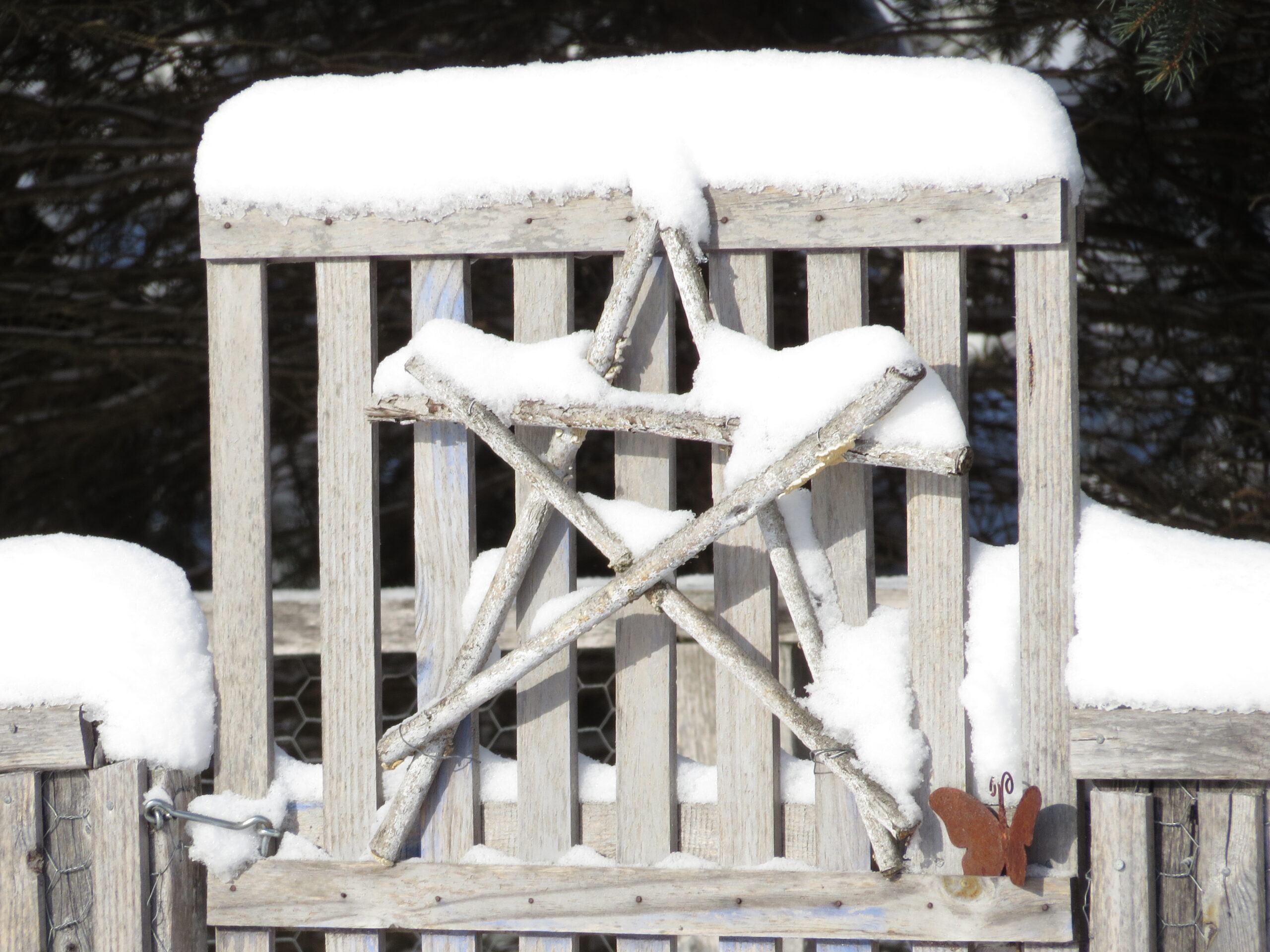
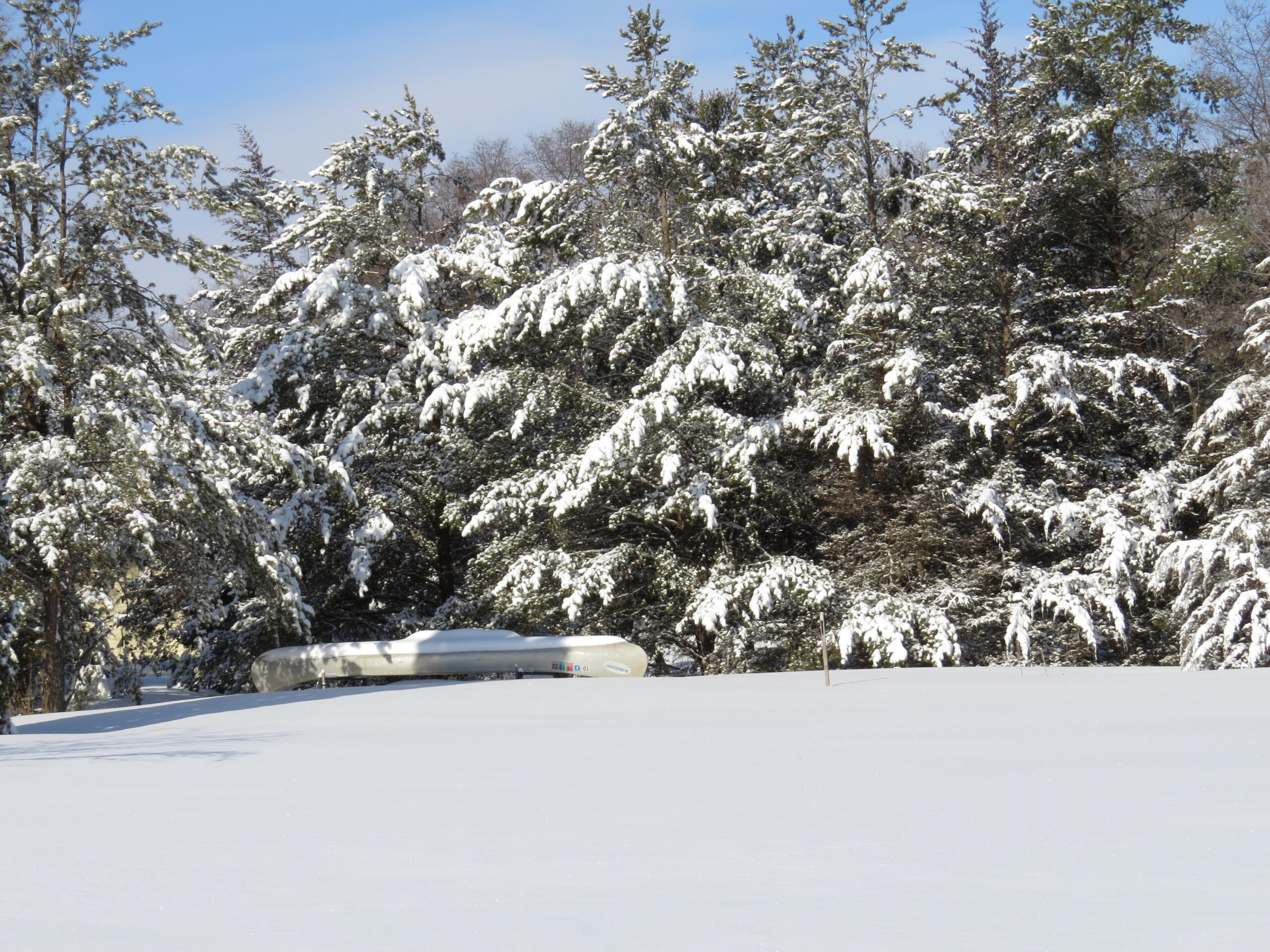
It doesn’t look like Spring, but whether we are ready or not, it has found us!
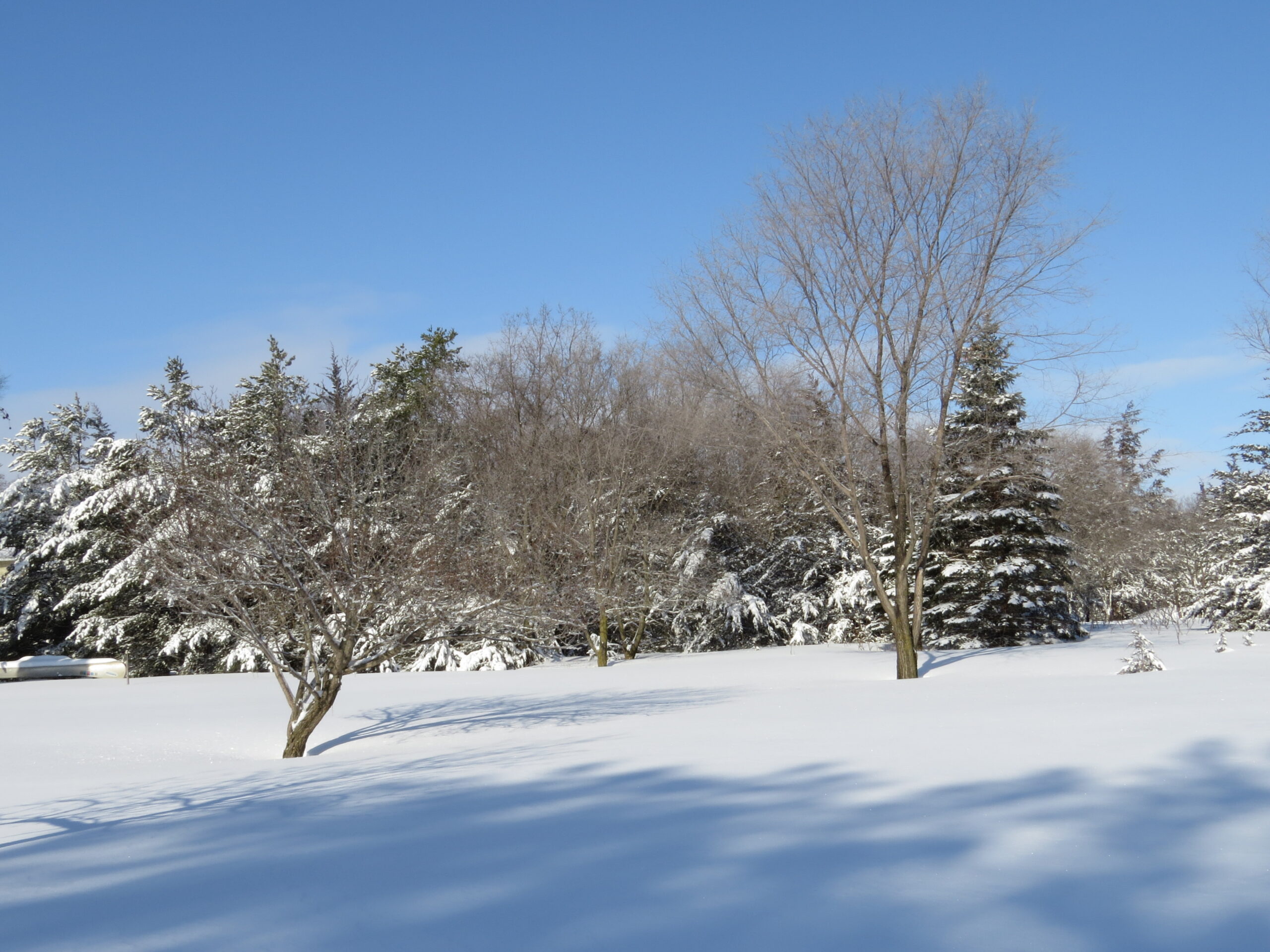
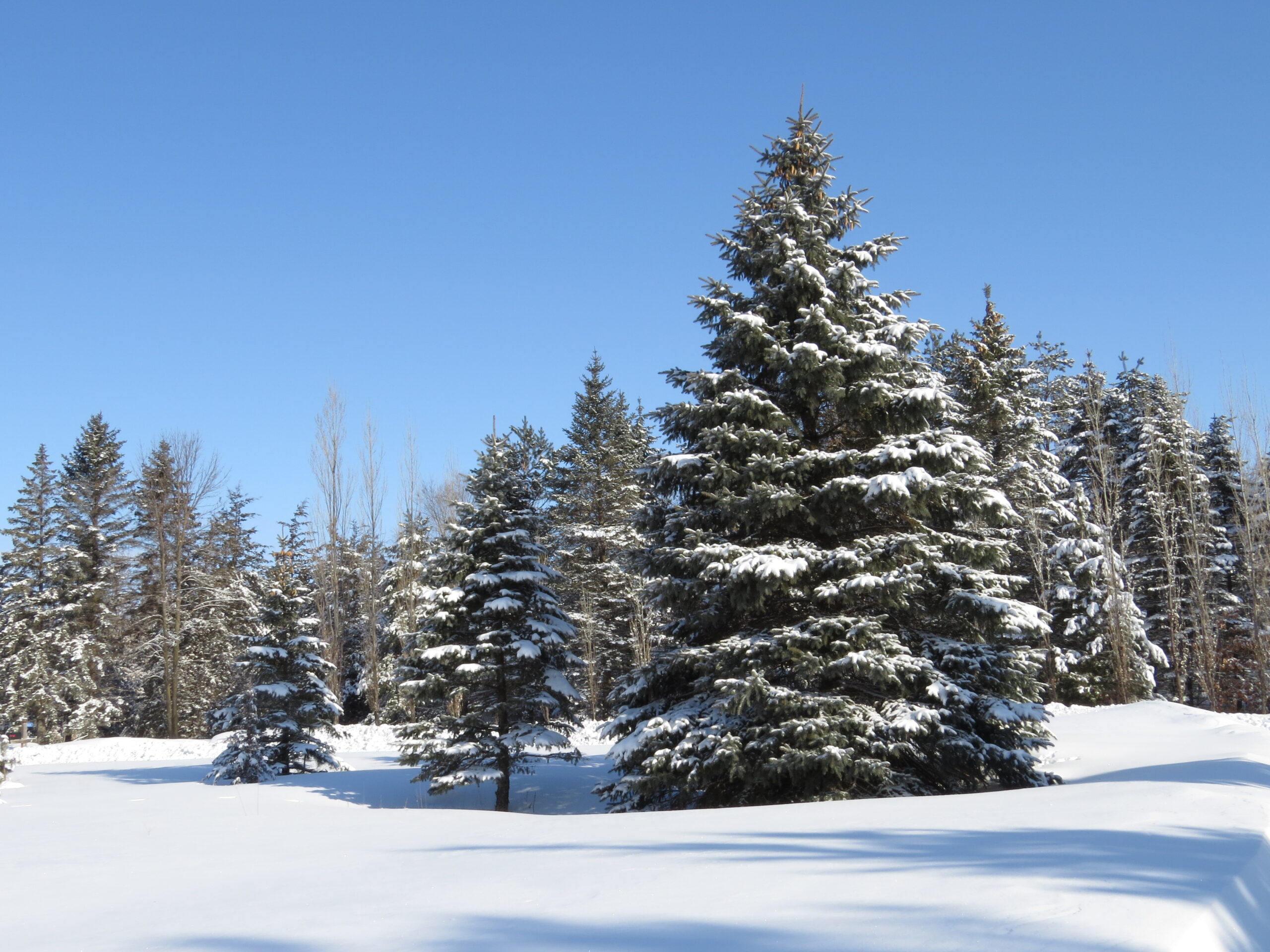
The beginning of Spring is more subtle than our weary minds and bodies would like it to be. But nonetheless, it arrives. It carries with it the promise and hope for the middle of Spring when the snow is gone, the grass is green, flowers are growing and blooming, and birds and animals are nesting and creating. Then the story of the seasons and us comes to the end of the chapter of Spring and to the beginning of Summer, and so on and so on. It is a sweet dance, like a flowing river, with a rhythm and cadence sung by Mother Nature— ♪ “Here I come.” ♪
Knee-deep in Snow and Peace
I have always been intrigued with people who say they don’t take any stock in people’s praise of their work….if they did, it would follow they would also take to heart the criticisms. Just think about the ramifications if that is expanded to praise and criticism of who we are as a person. This opens up so much about who we are and how we operate in the world. At one level, it sounds like a lofty, enlightened realm-of-being, when one is so grounded in who they are and what they do that it truly doesn’t matter what others think. They do their good work regardless. On the other hand, there are callous, uncaring people who do what they want to do for their own purposes, who couldn’t care less about what others think or the very real consequences their actions may have on other’s lives. It’s kind of a mind-boggling philosophical humanity question, but I bet most of us have struggled with the themes of praise and criticism at some time in our lives and how it relates to our work and to our being.
I have inadvertently been a people pleaser most of my life—I didn’t consciously choose such a role, but I actively wanted people around me to be pleased—with themselves, with the circumstances, with me, with everything. I doled out praise thinking everyone wanted and needed to be affirmed. (Not sure that’s really in the past tense.) Exhausting work, as it turns out. Thankfully most of us age out of that to a great extent as we choose whether our ‘limited’ energy goes to others or to our own well-being. My challenge has been how to do that and still be a force of goodness to the people around me and for the world. I know I’m not alone in that rigorous challenge.
As overwhelming and existential as these questions are, I have slowly realized (and was recently reminded by my friend Mark) that the inner quality that needs to be cultivated is peace. It’s not about giving and receiving praise. When I was younger, I really had no idea what ‘peace’ even meant, let alone how to manifest it in my own life. I take that back—I did want to be a peacekeeper in my people-pleasing role. I did desire external peace—no conflict, no chaos, no discord, no disturbances. No kidding. My job is easier now that I can work on bringing internal peace to myself. A big part of that is accepting and respecting all the former iterations of myself with all the flaws and foolishness that I embodied. Another part is actually experiencing peaceful places. I love the stripped-down winter woods that lays bare the essentials—blue skies, brilliant white snow, and textured gray-brown wood of the trees.
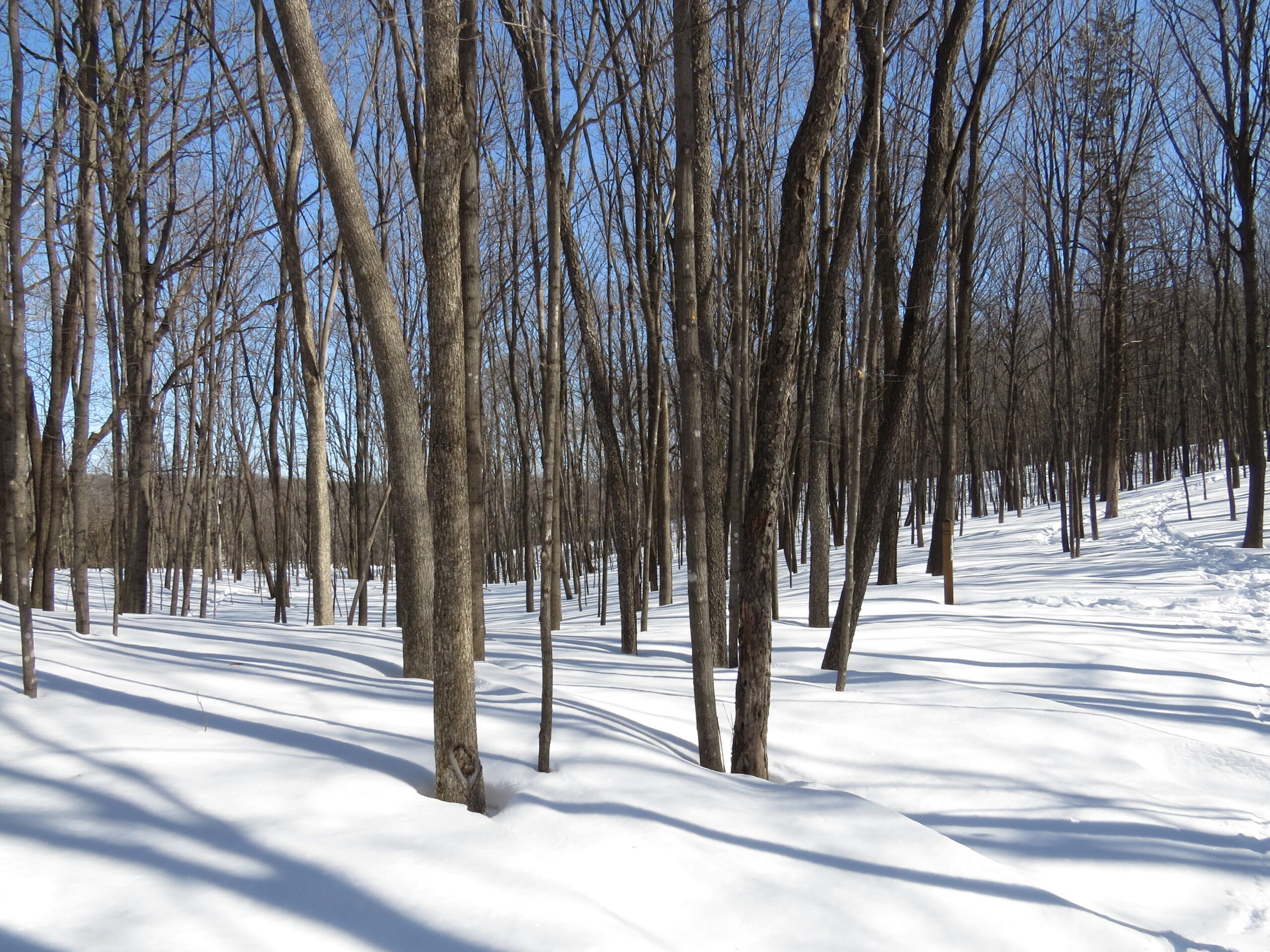
The clear sky and sunshine illuminated another essential—our shadows. To come to peace, we must know and accept our shadow side. Easier said than done.
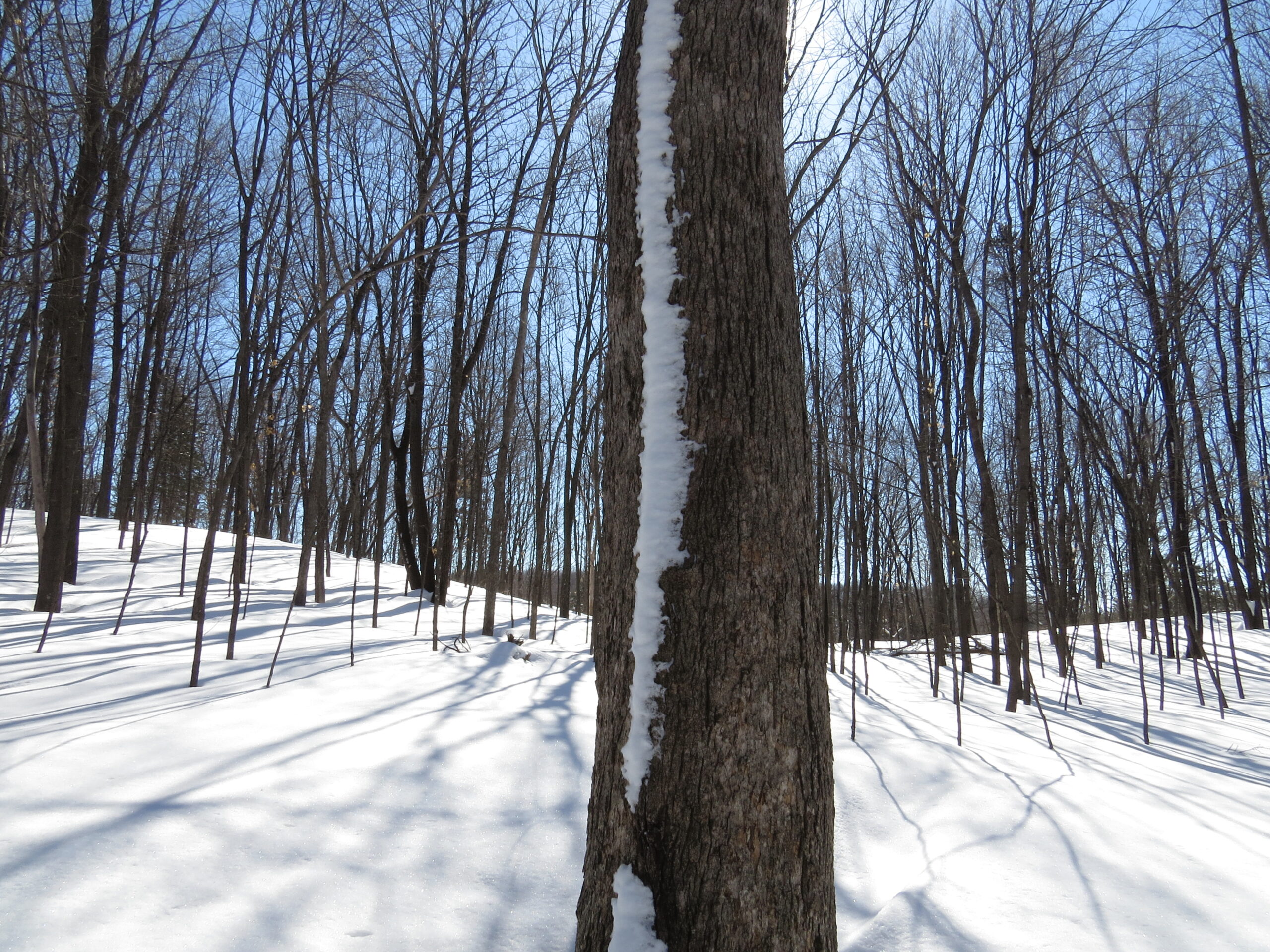
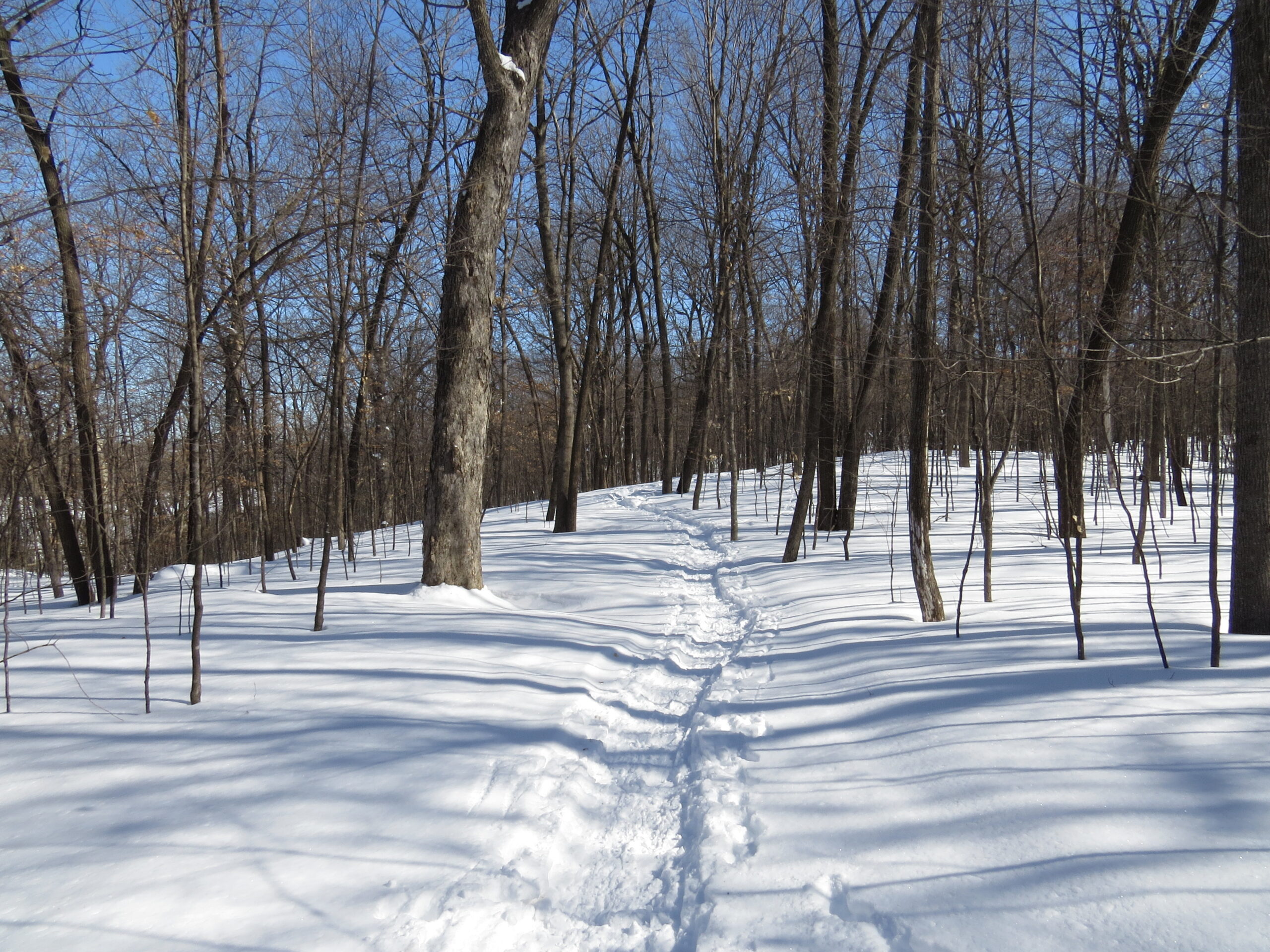
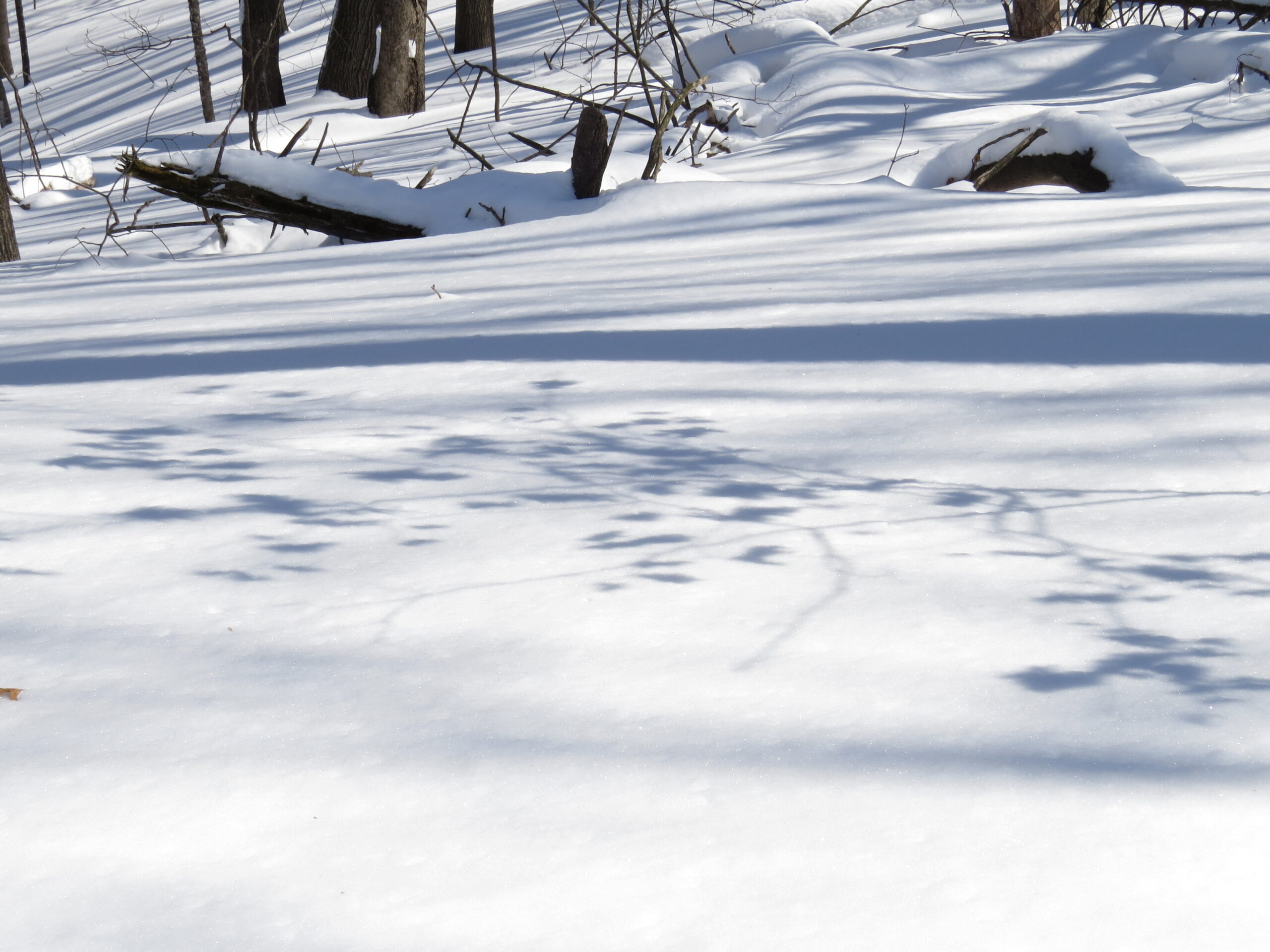
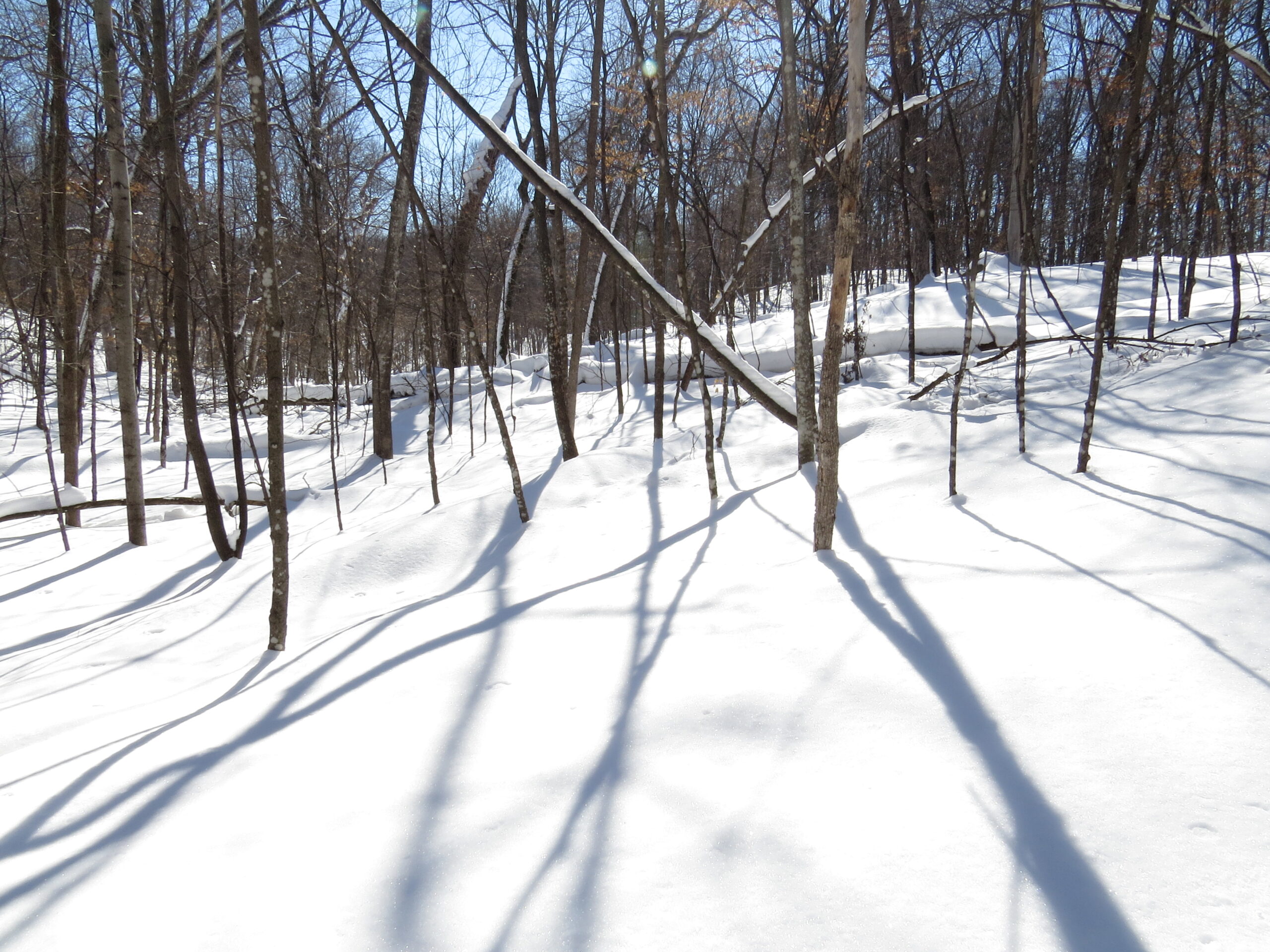
For peace, we have to allow decay and death to happen—to old ideas, to old ways, to old things and people who have lived their lives with valiant strength and their God-given goodness.
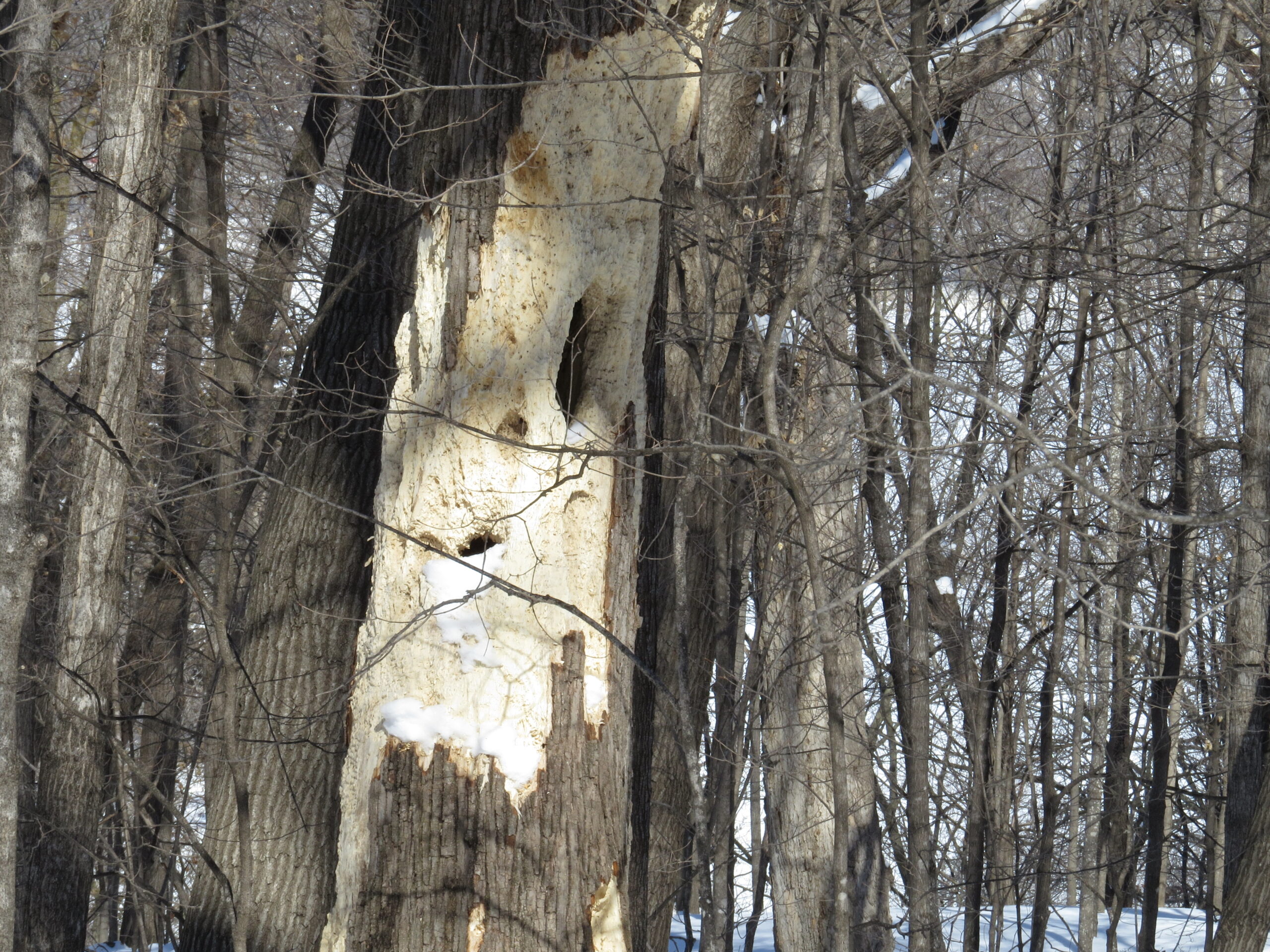
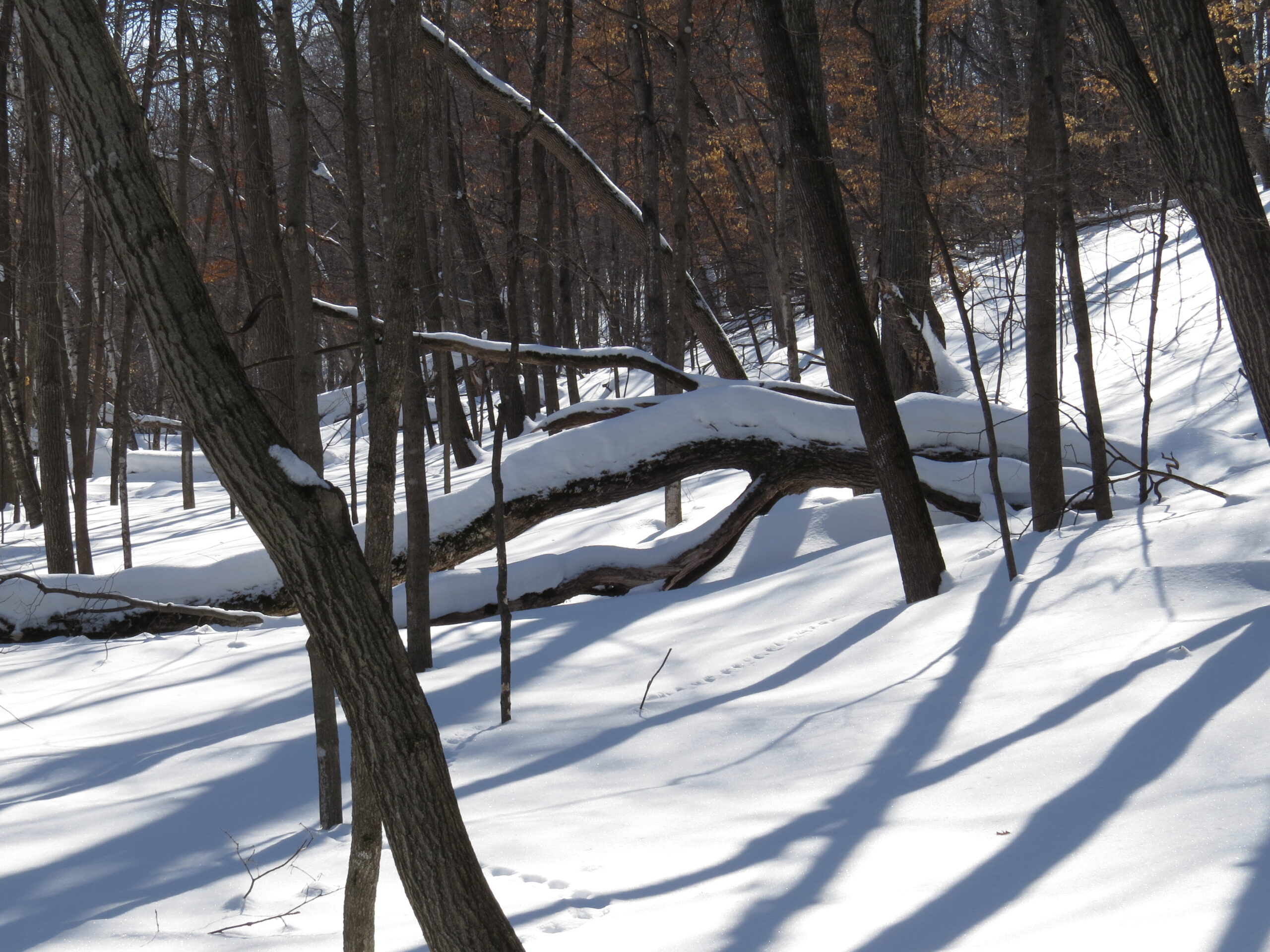
For peace, we must come to terms with the people in our lives—those in the past and those who surround us now. That may be an uphill climb.
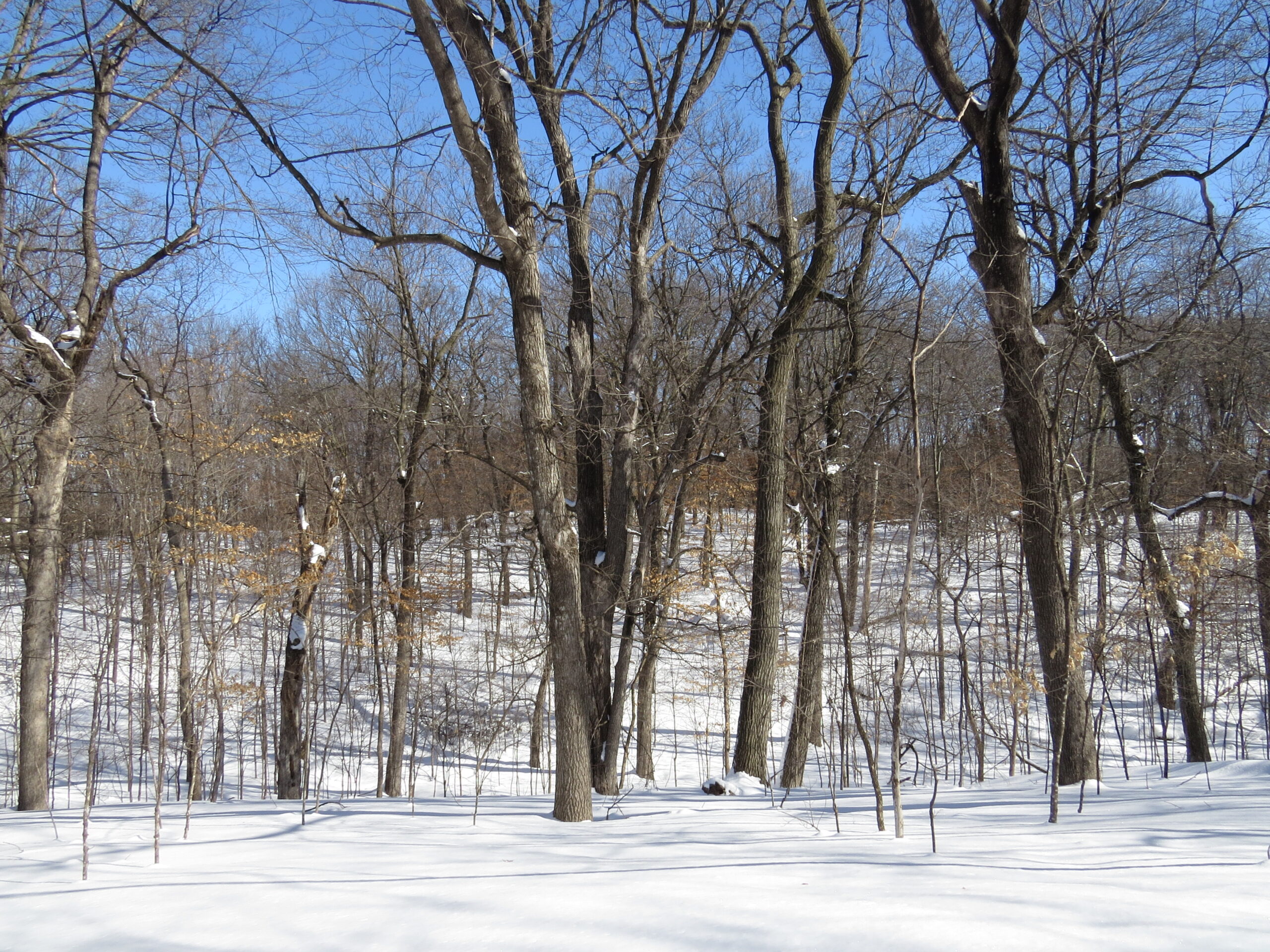
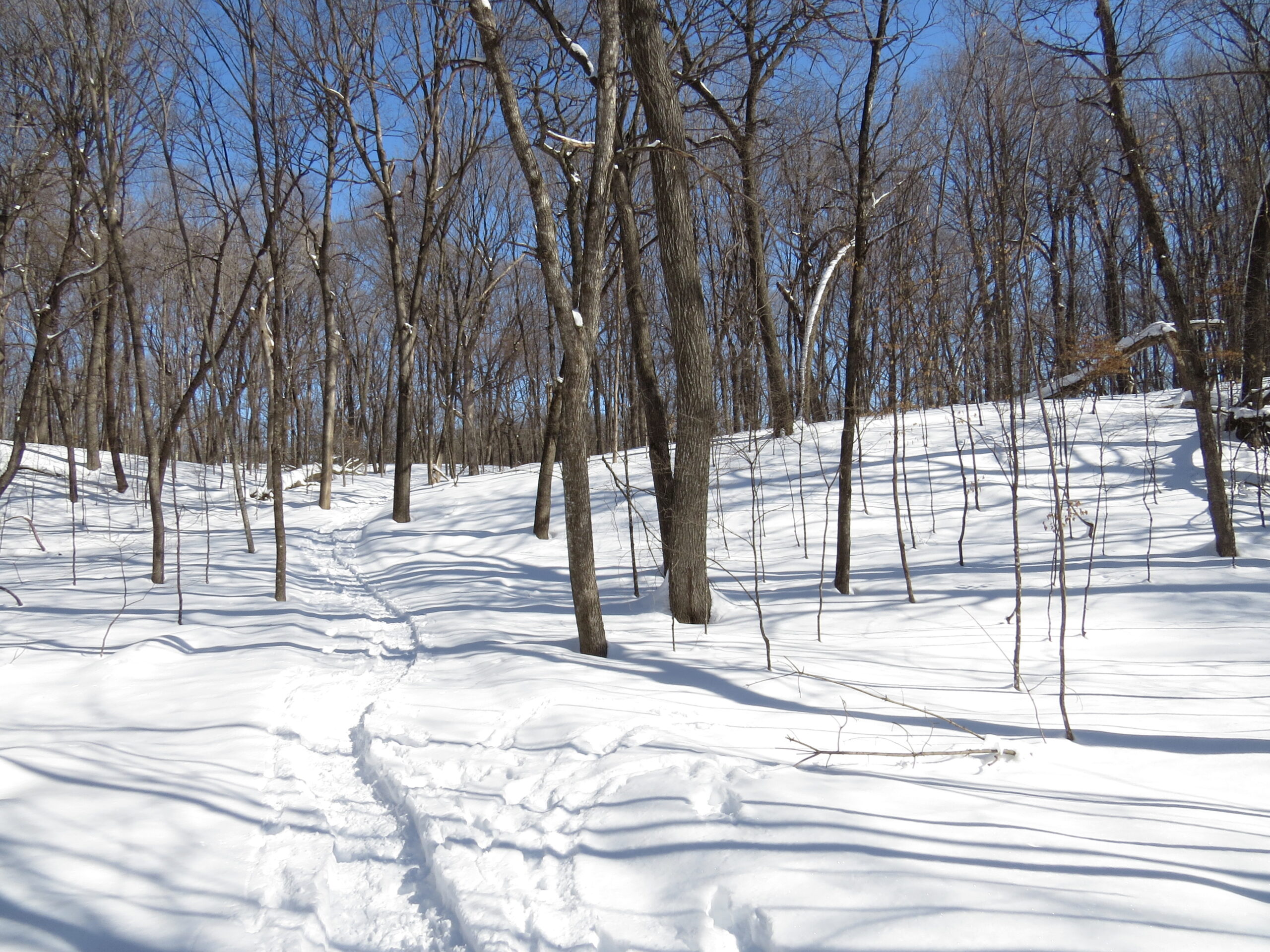
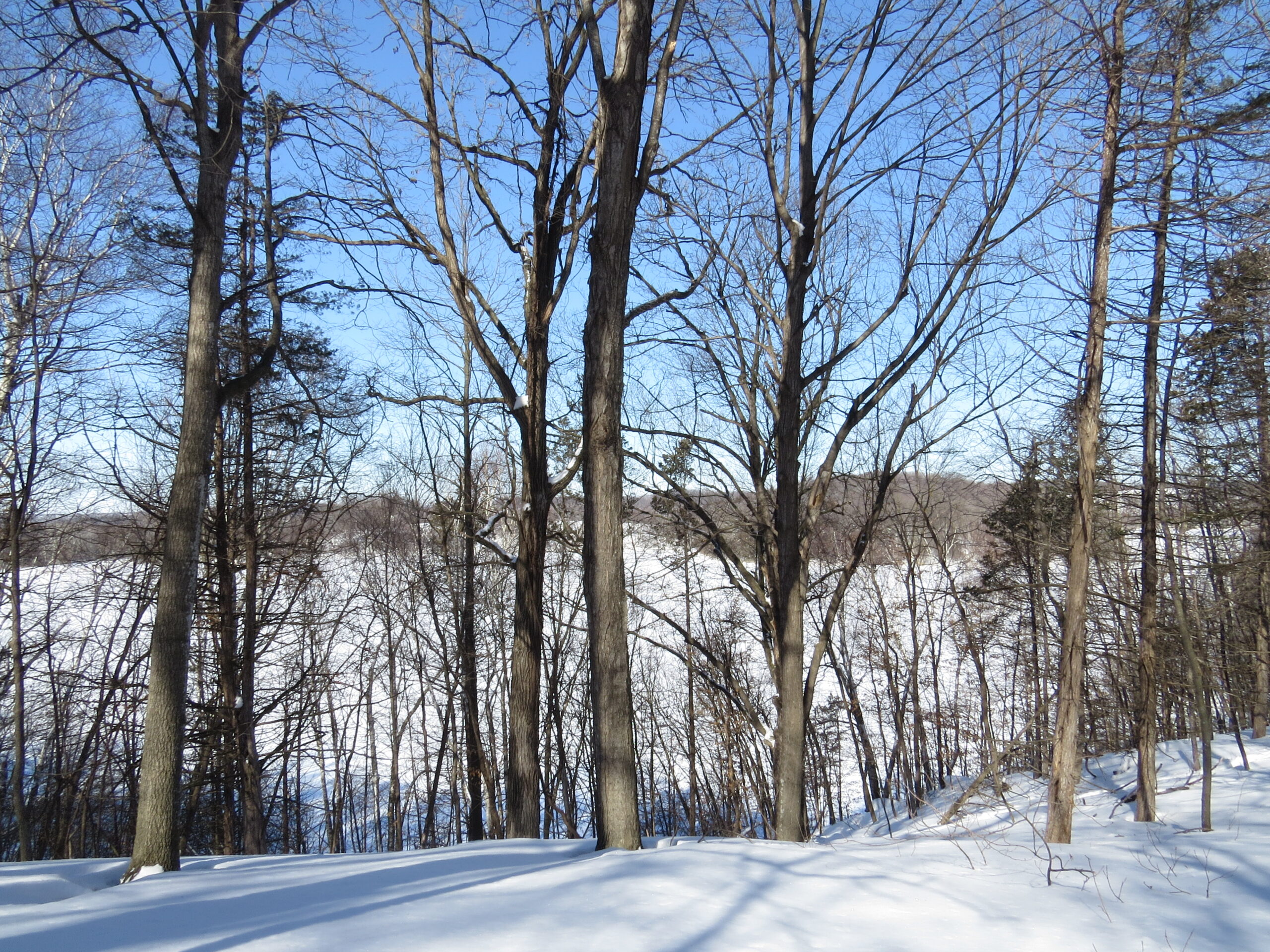
Peace is living into who we have become with age and experience. The travails of life may swirl around us, but they don’t overwhelm us as much as they did when we were younger. Humbly accept the power of you.
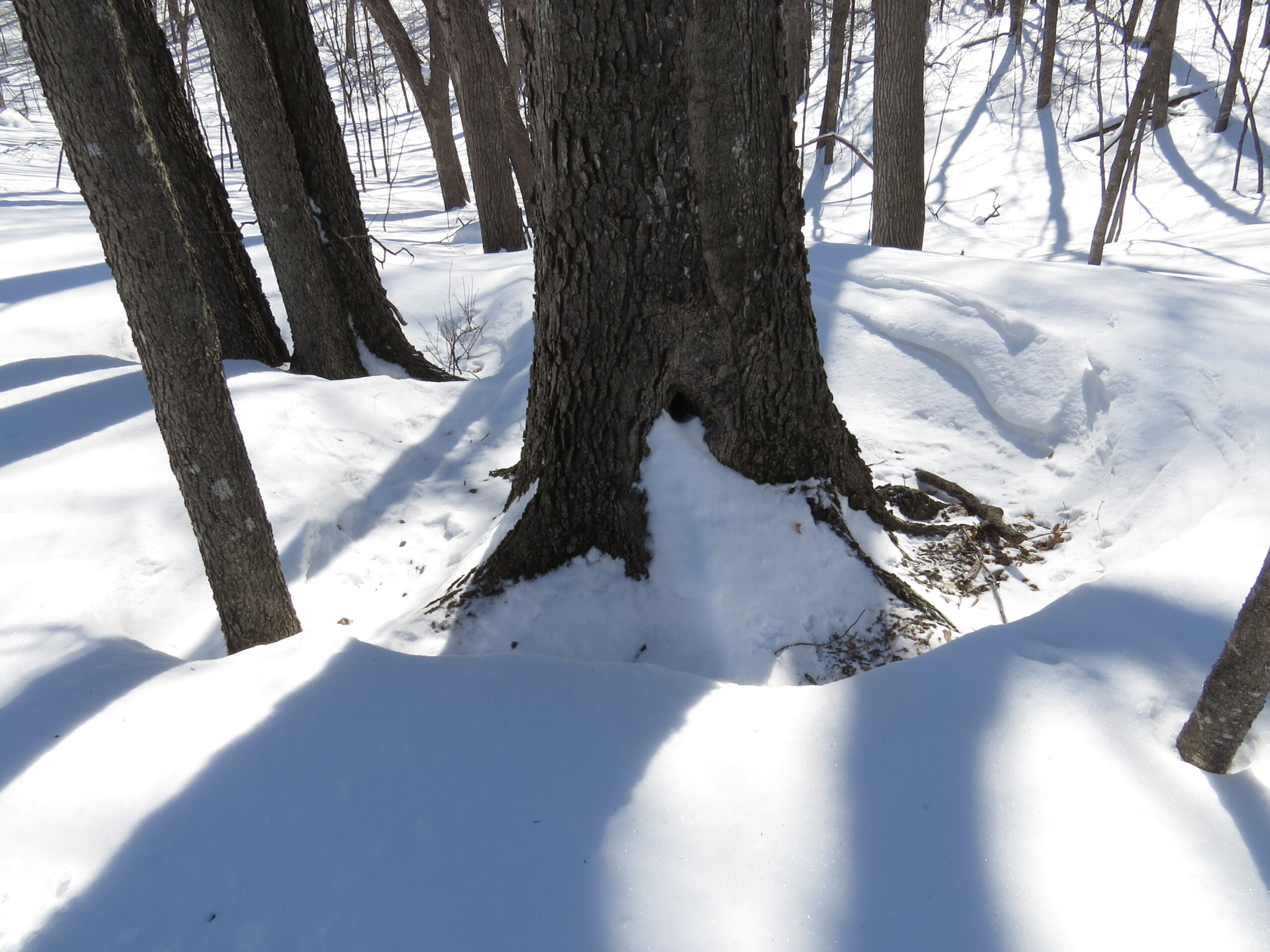
Peace is climbing the hills, letting the shadows slide down behind us.
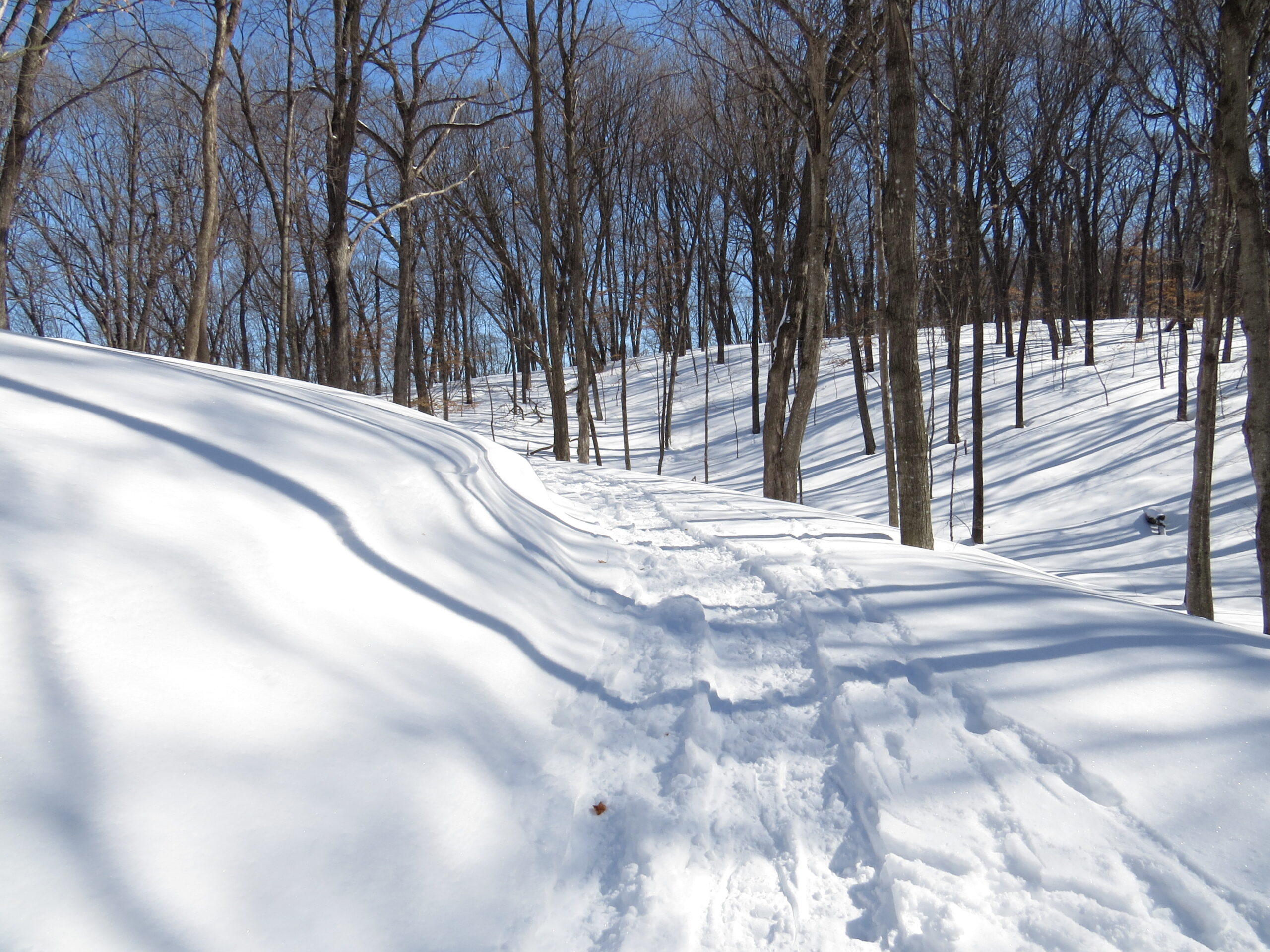
Peace is letting the sunshine soothe and warm us like a humming lullaby.
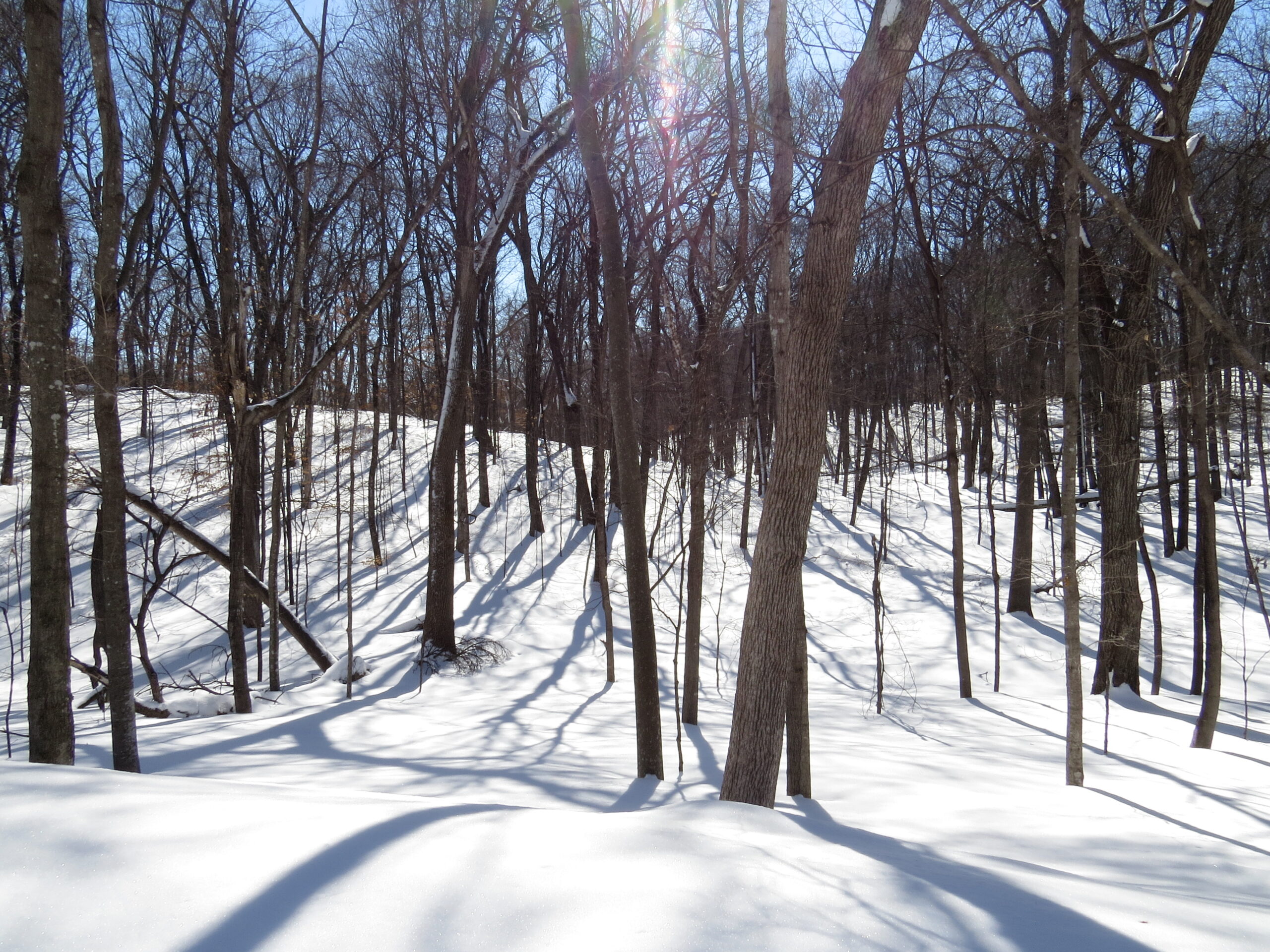
Peace is turning a corner when others choose a different path.
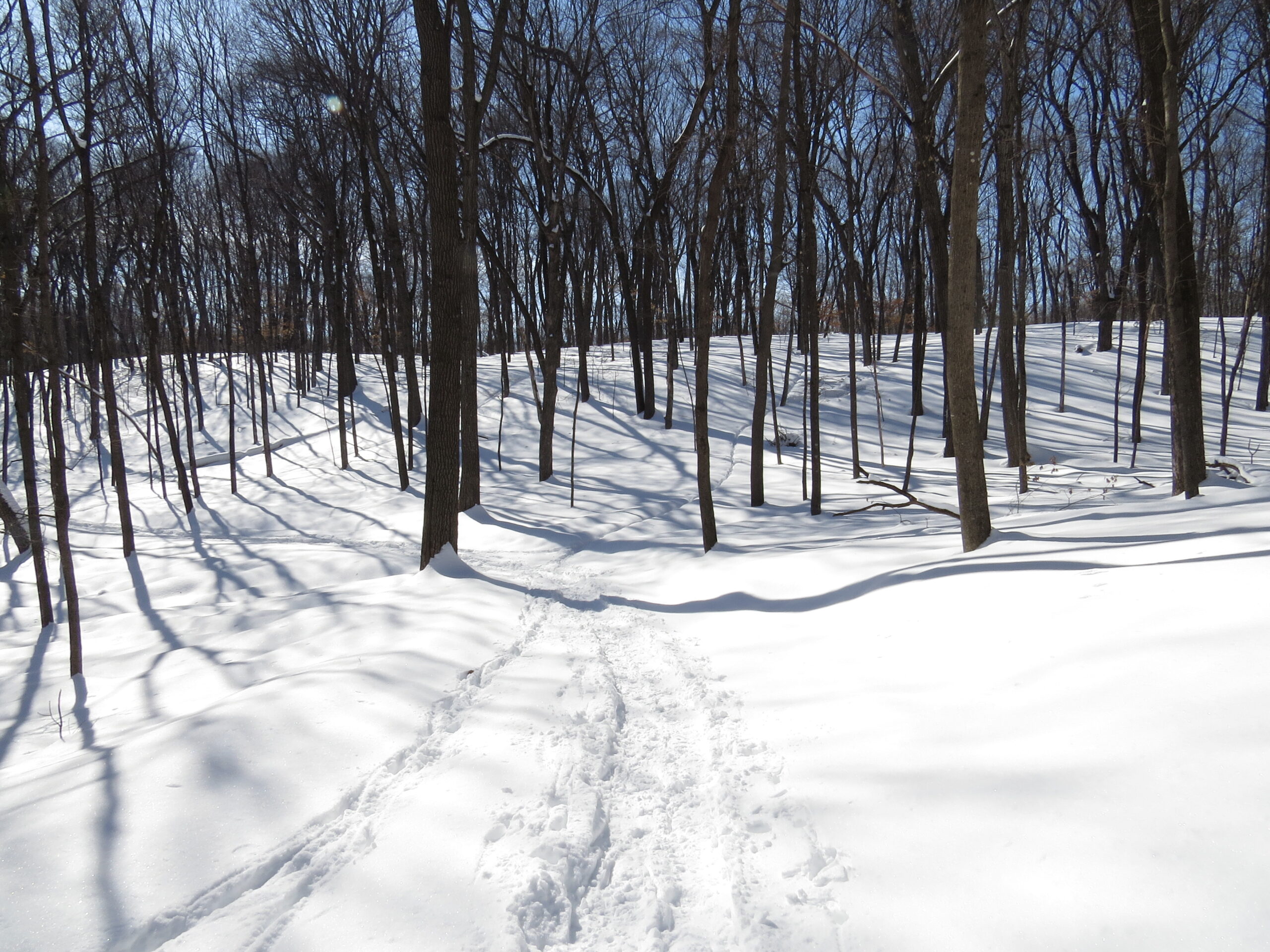
Peace is having faith in the seasons of life.
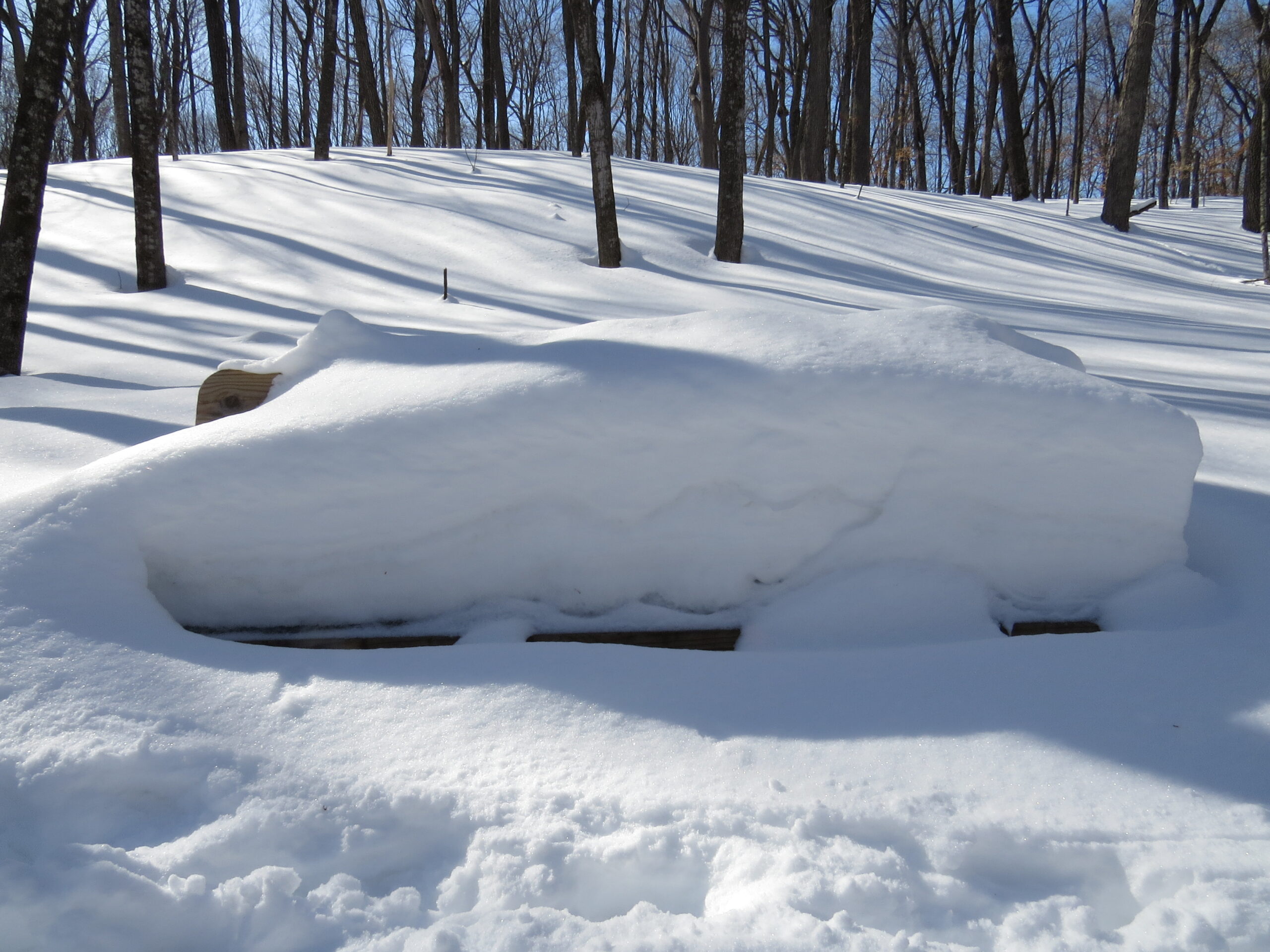
Peace is glimmering silence for thought and introspection.
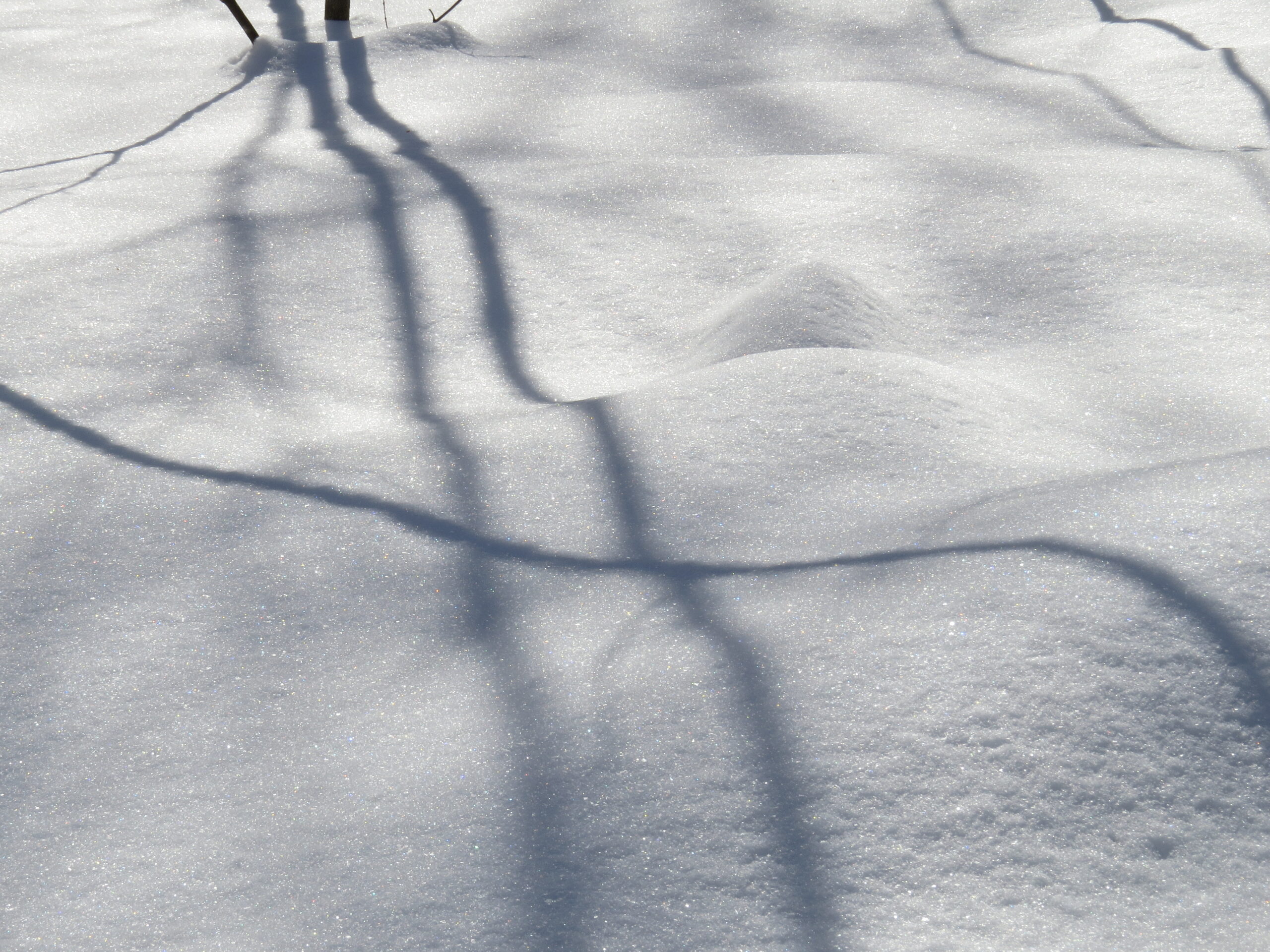
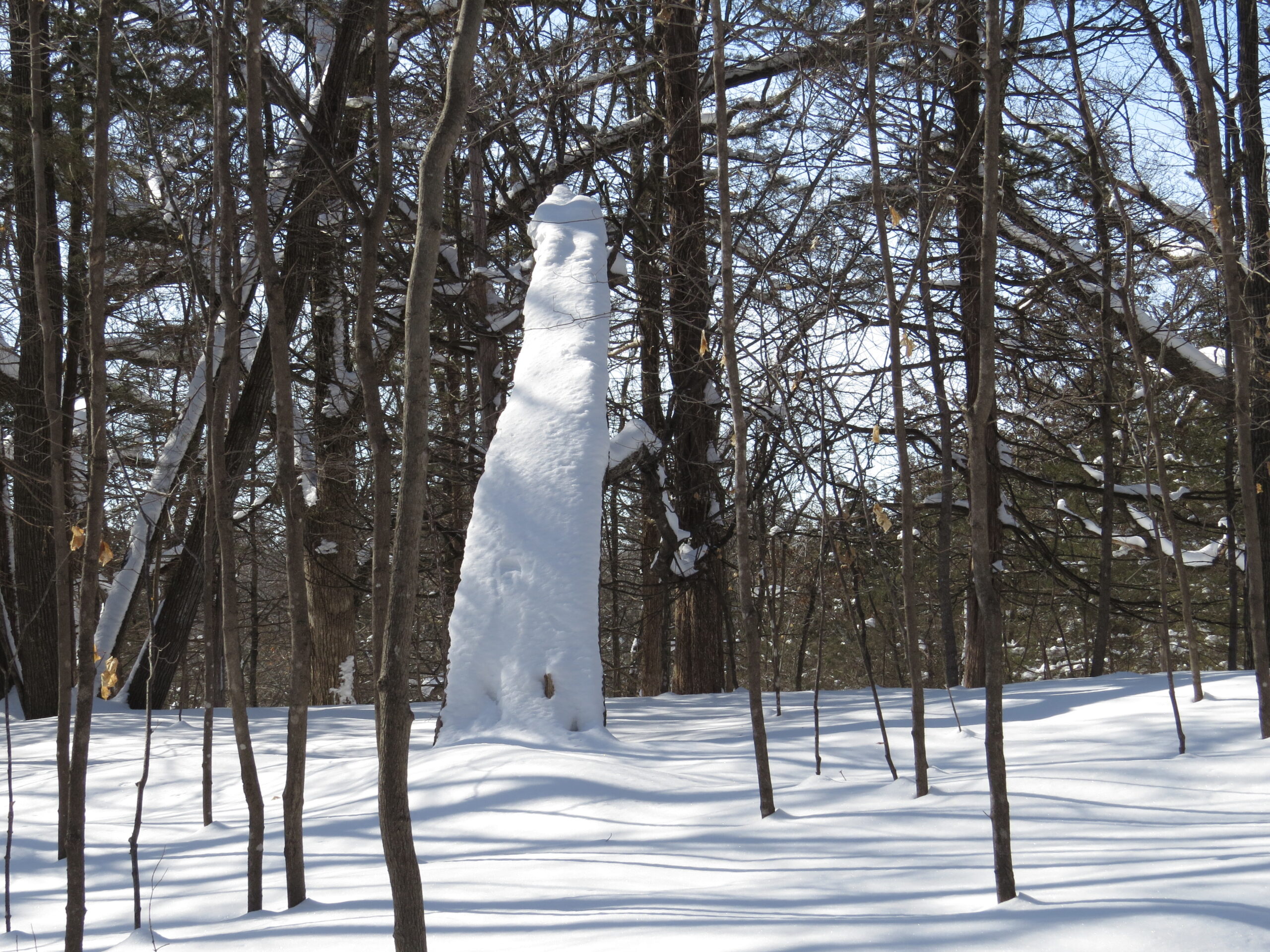
Peace is being curious, moving forward through fear, and letting your creativity imagine finding an enormous praying mantis in a snowy forest.
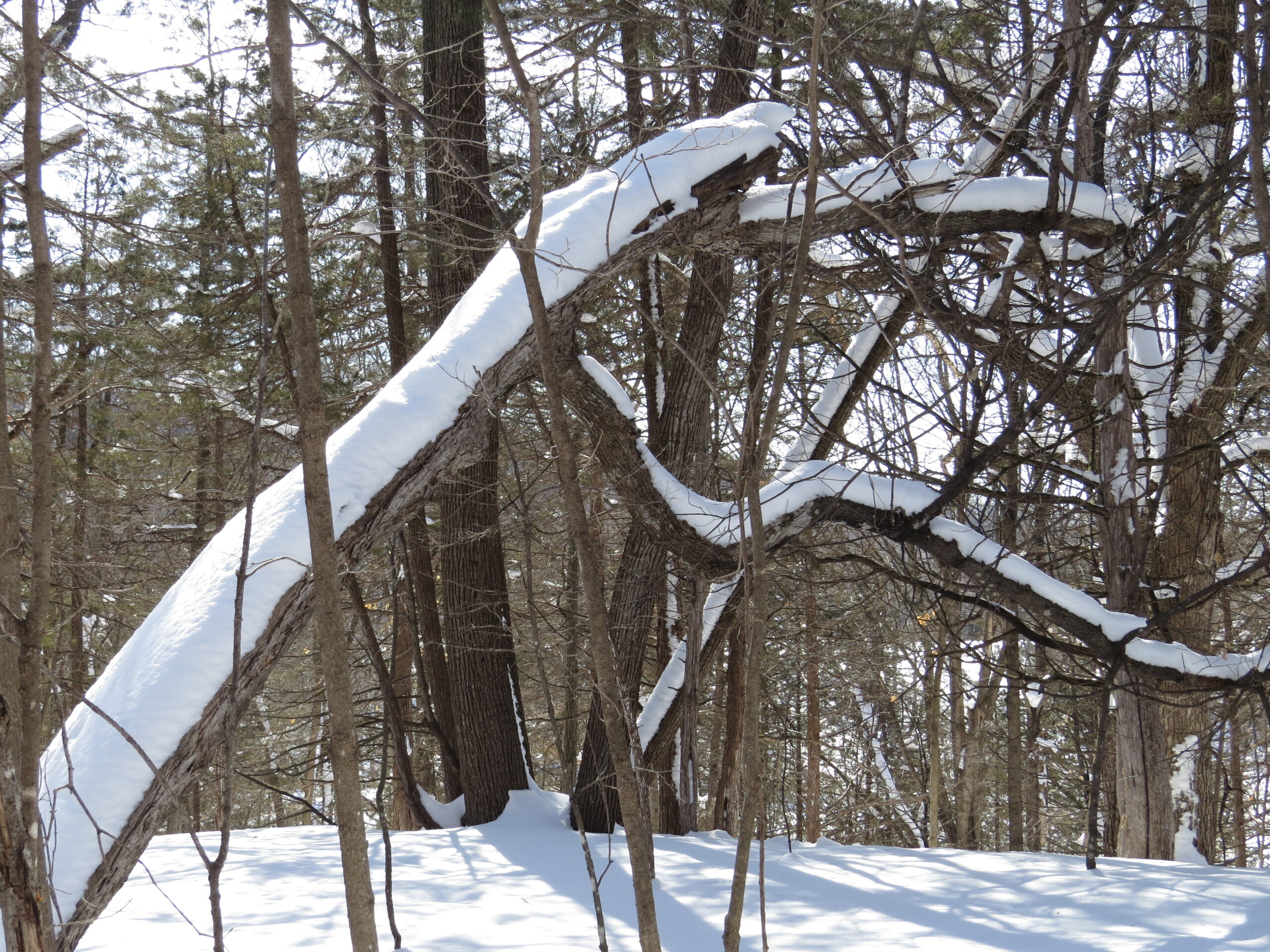
Peace is standing knee-deep in snow along with the wild things that are just as curious about us.
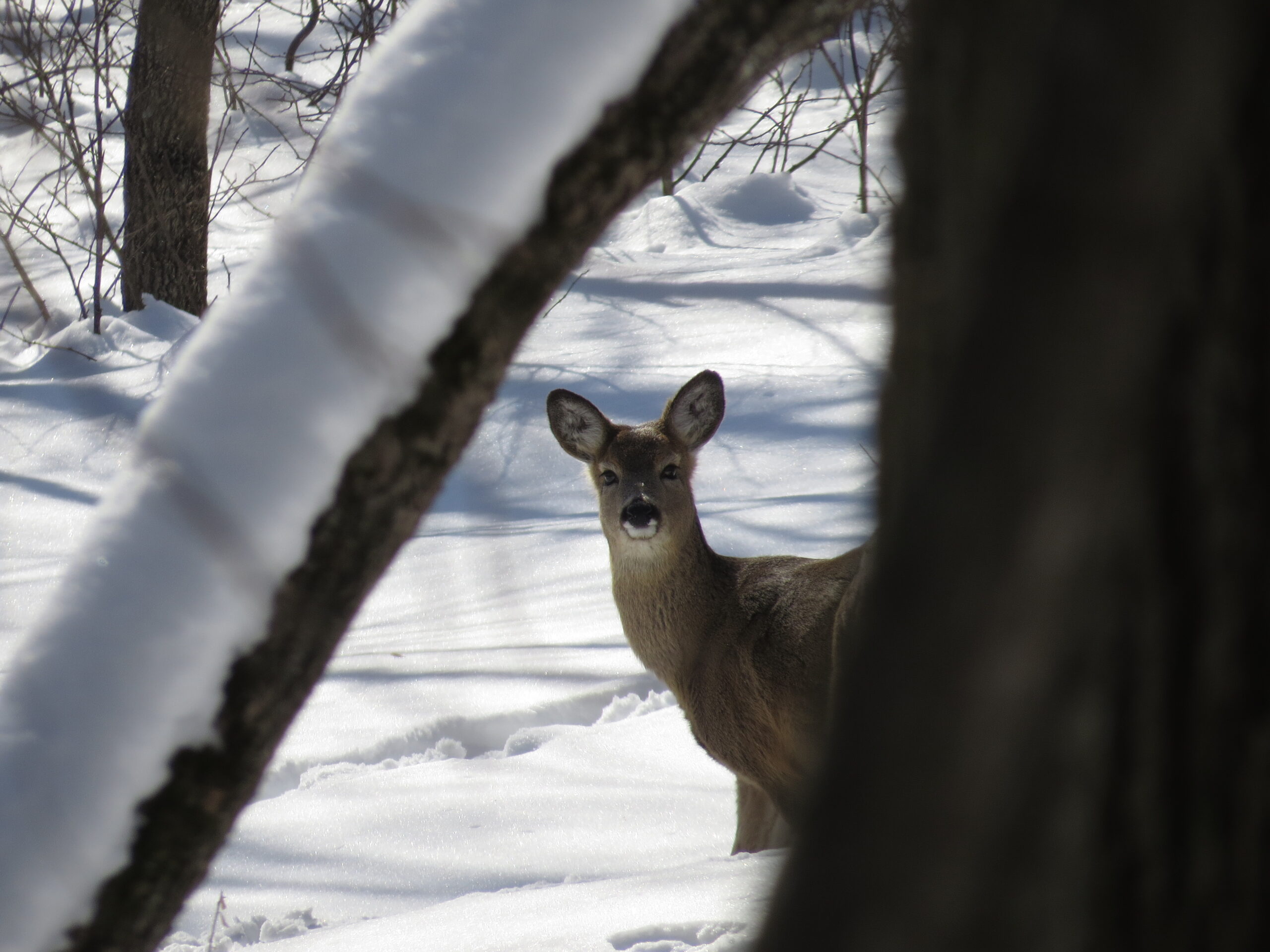
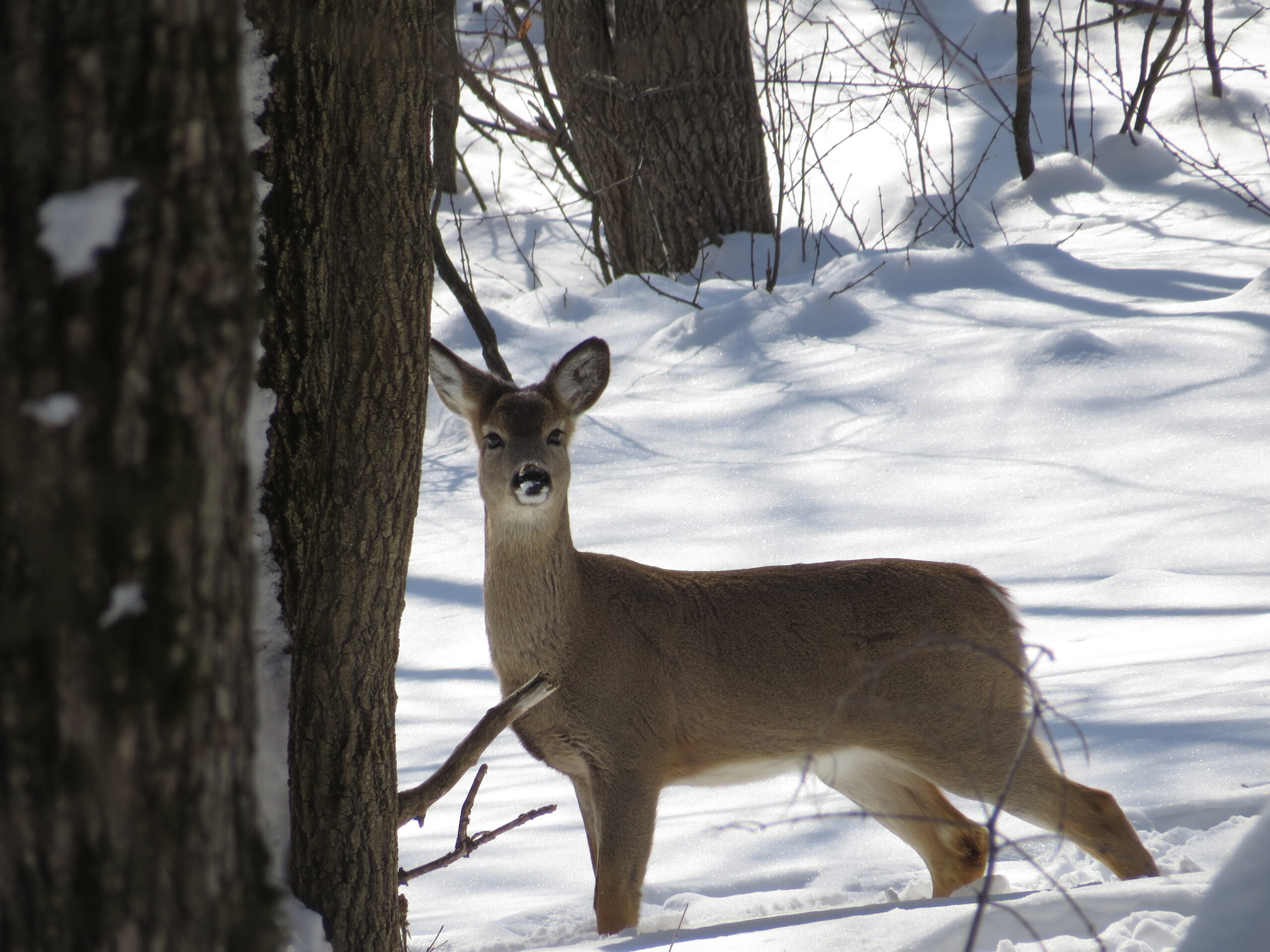
Peace be with you all.
Celebrating Love
What makes a celebration? Balloons, presents, and cake? A Christmas tree, church, and candlelight? A dinner for two? Fireworks and picnics? A crowded parade with hundreds of thousands of people all dressed in red? So many different ways to mark or honor a special event, person, or team! A little over two weeks ago we had two celebrations within two days of one another. Both were in Kansas City. One was planned, the other hoped for but unknown until the last minutes of a game. On Super Bowl Sunday, we knew we would be in Kansas City at the end of the week for Chris’ sister Mary’s Celebration of Life. We didn’t know at the time that we would be there in a few days to celebrate the winners of the Super Bowl—the Kansas City Chiefs! There were three life-long Chiefs fanatics who wanted to be among the throngs of other red-clad fans to see and celebrate their favorite football team. So on Valentine’s Day, we picked up two of our kids, and the following day, Chris and the kids added their cheering voices and red attire to the Chiefs’ celebration!

Two days later, before Mary’s celebration, we hiked at Minor Park in Kansas City where the old Santa Fe trail crossed the Blue River. We followed a trail beside Little Blue Creek that feeds into the bigger Blue. It had been below freezing the night before, which brought a dusting of snow to the area.
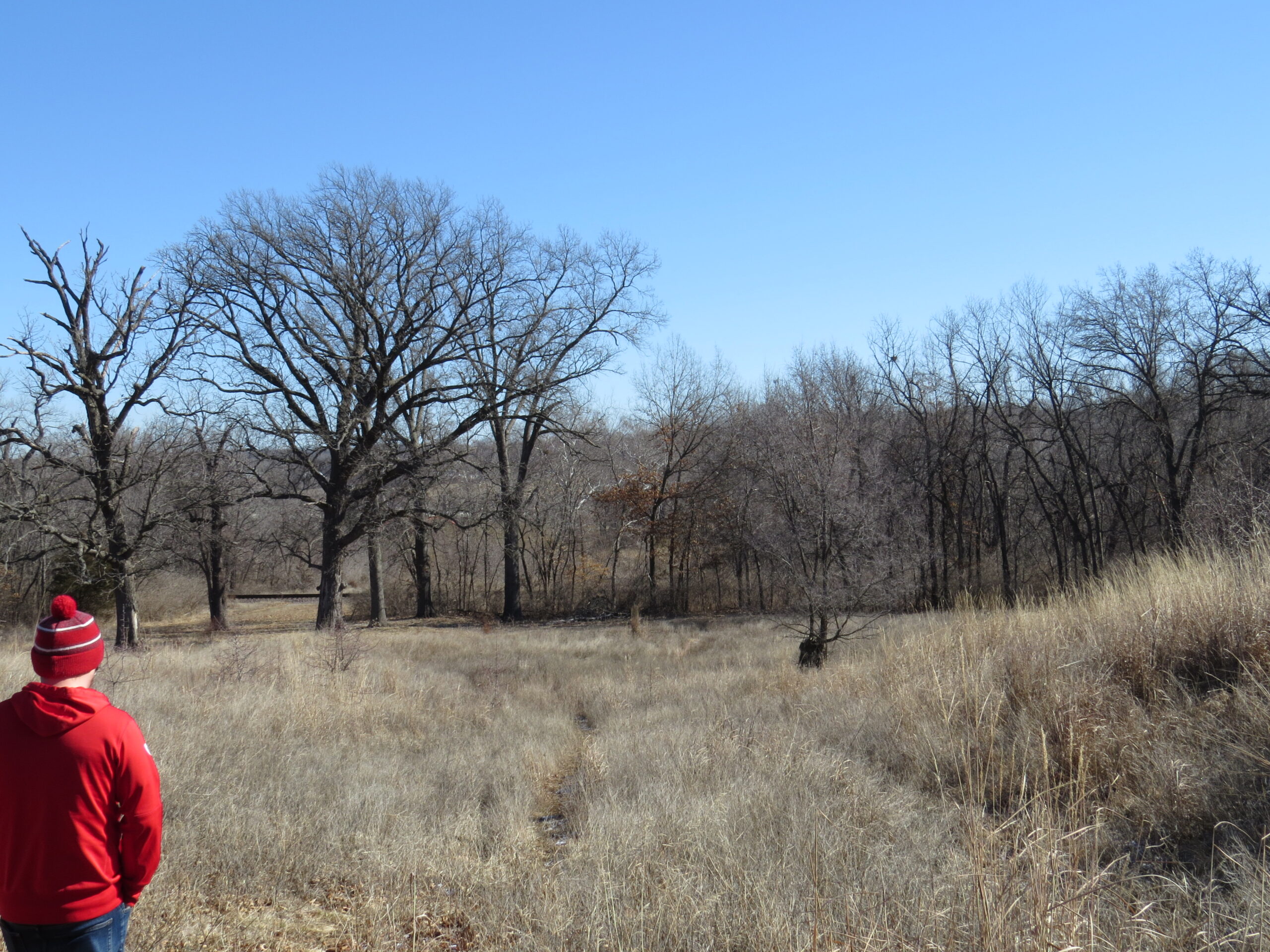
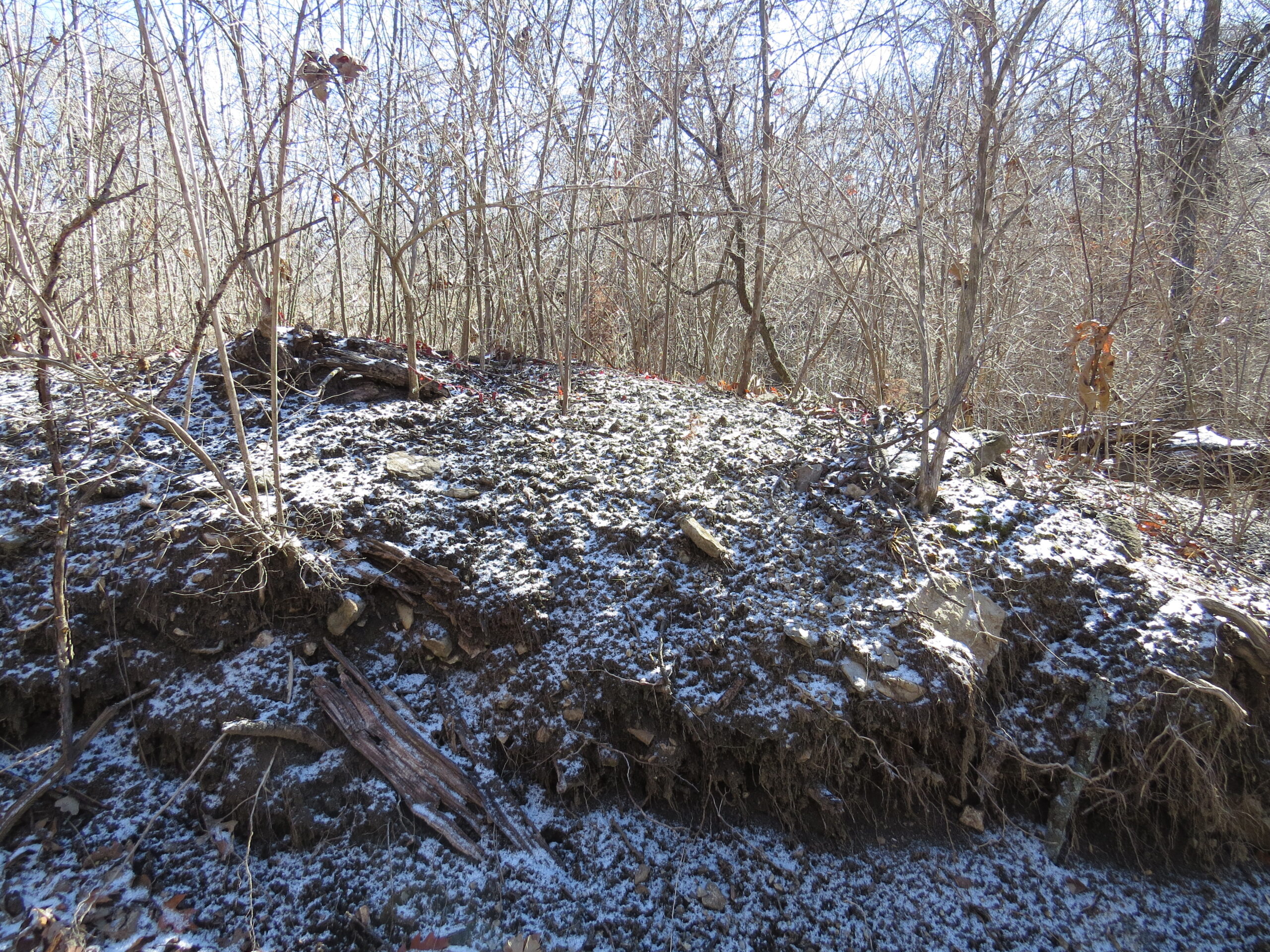
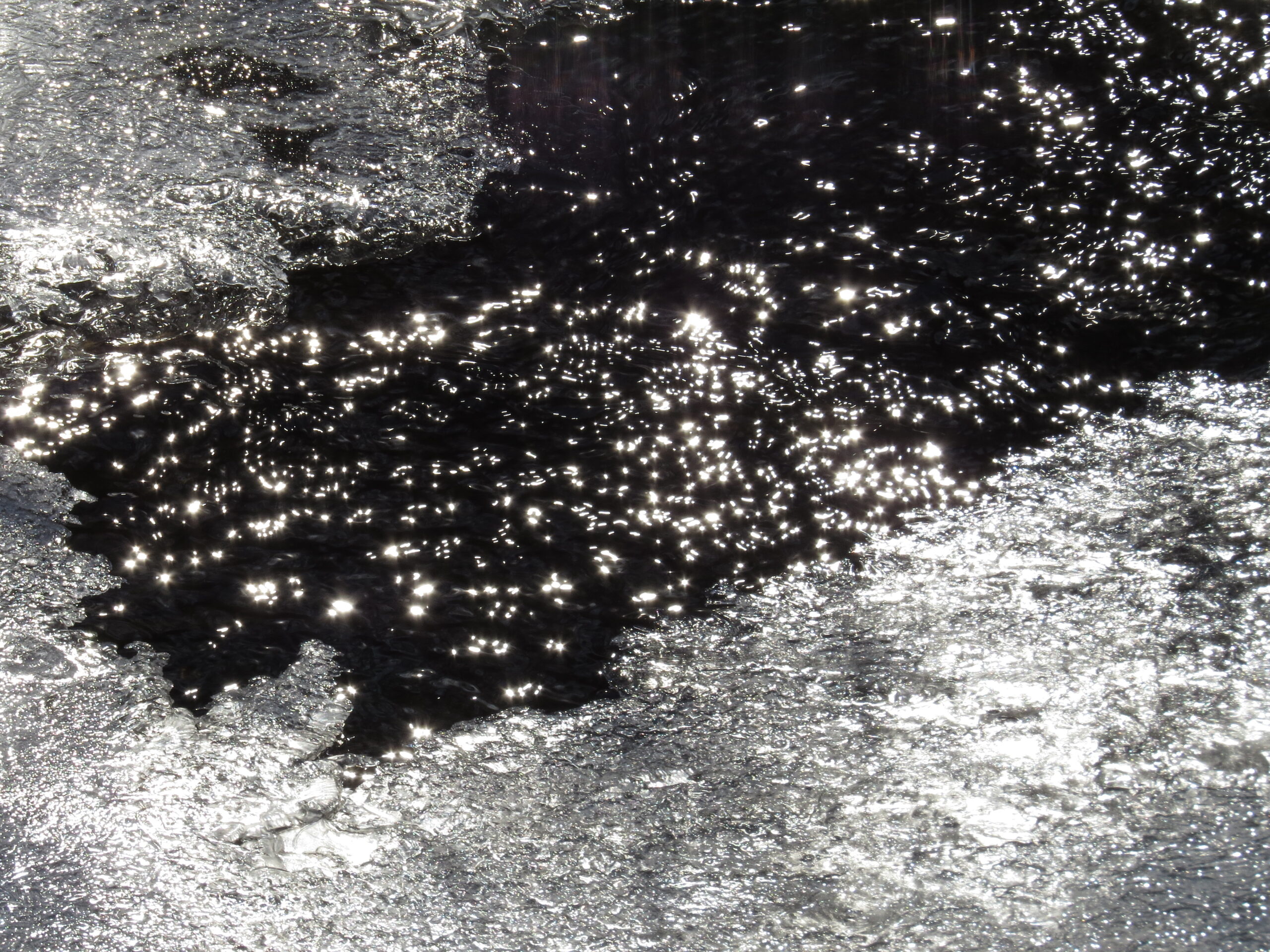
But the day was clear and chilly with bright sunshine that reflected off the water of the creek—a crystal circle of light, itself so bright it was hard to look at without squinting.
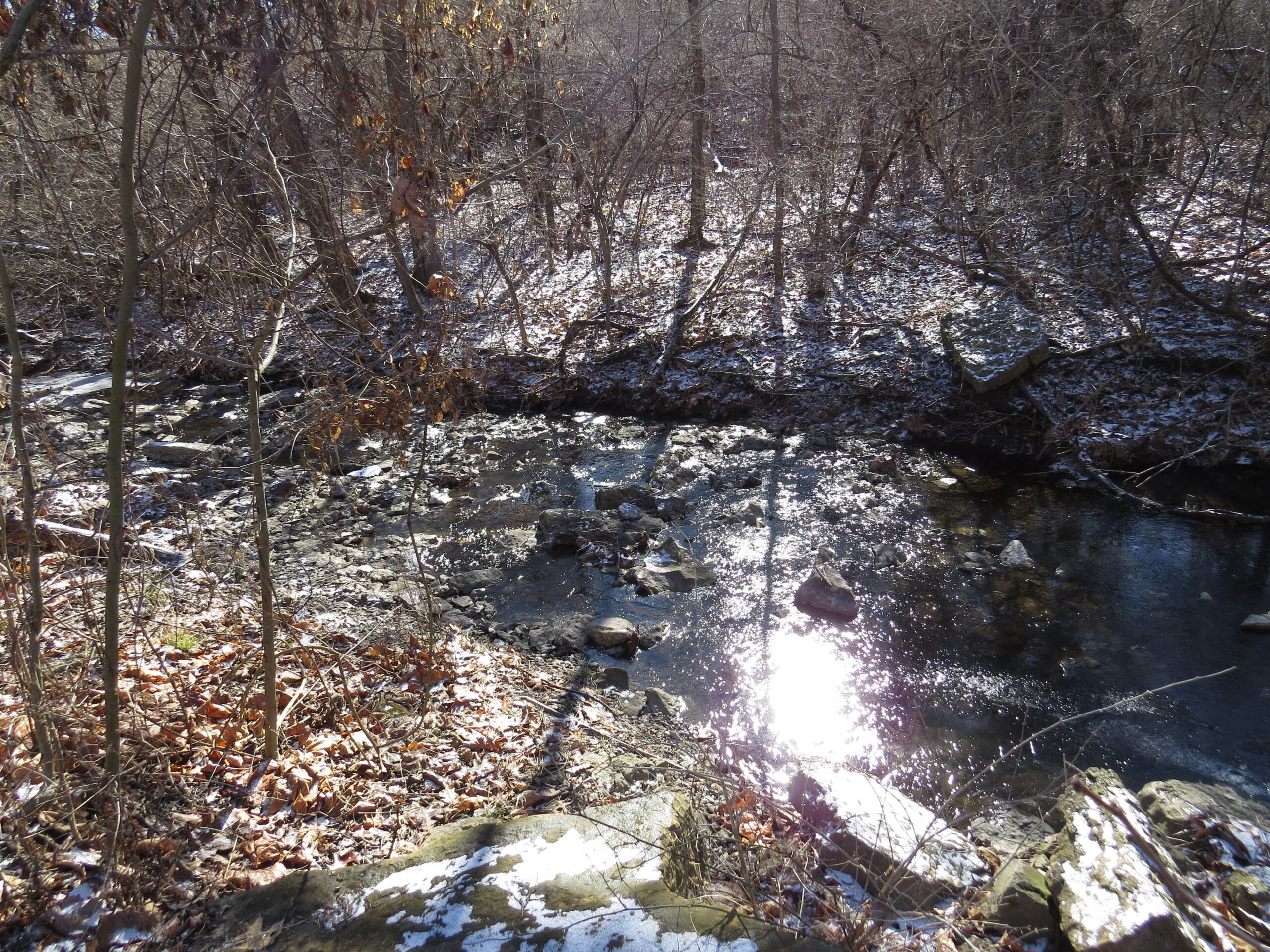
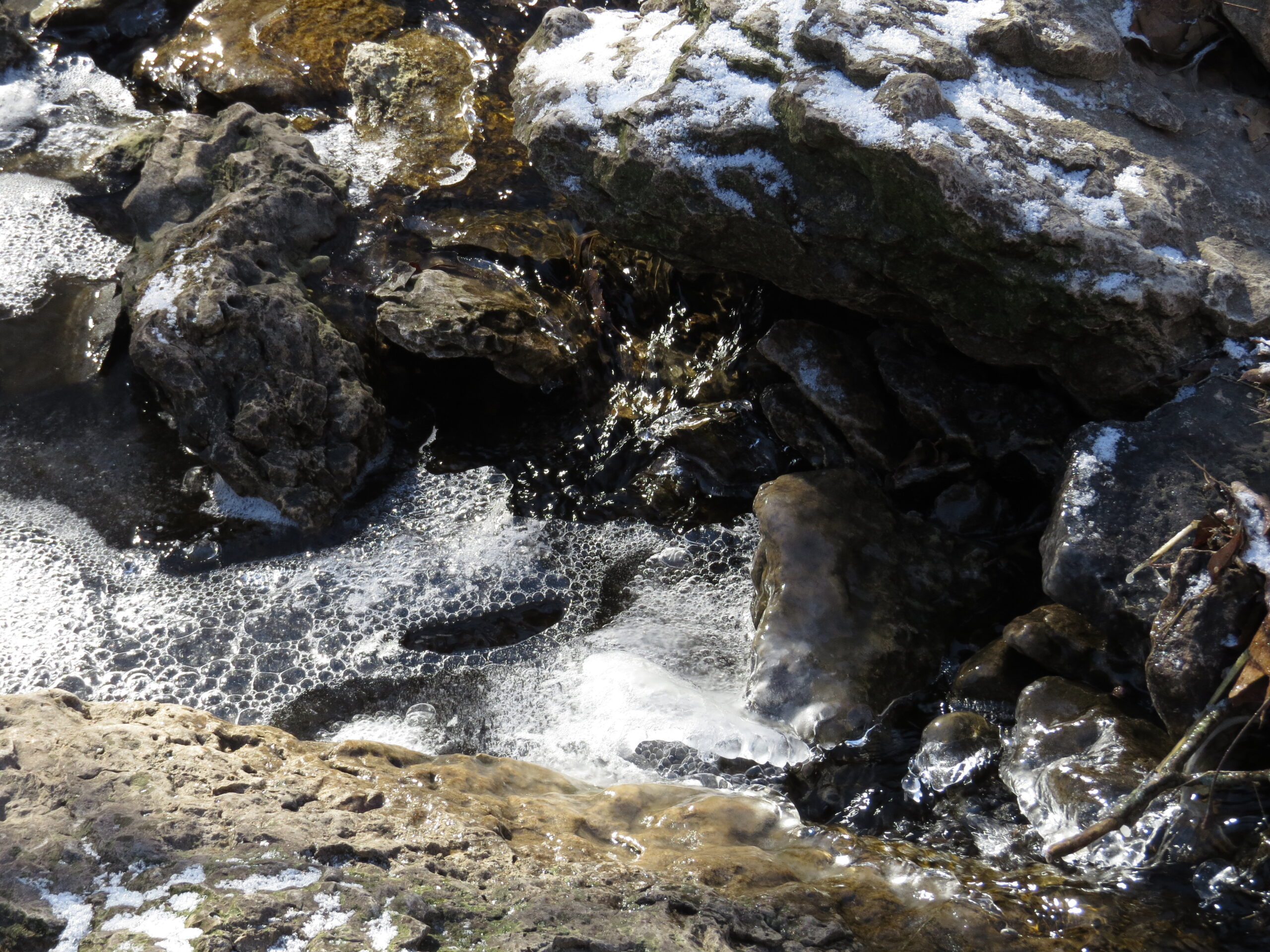
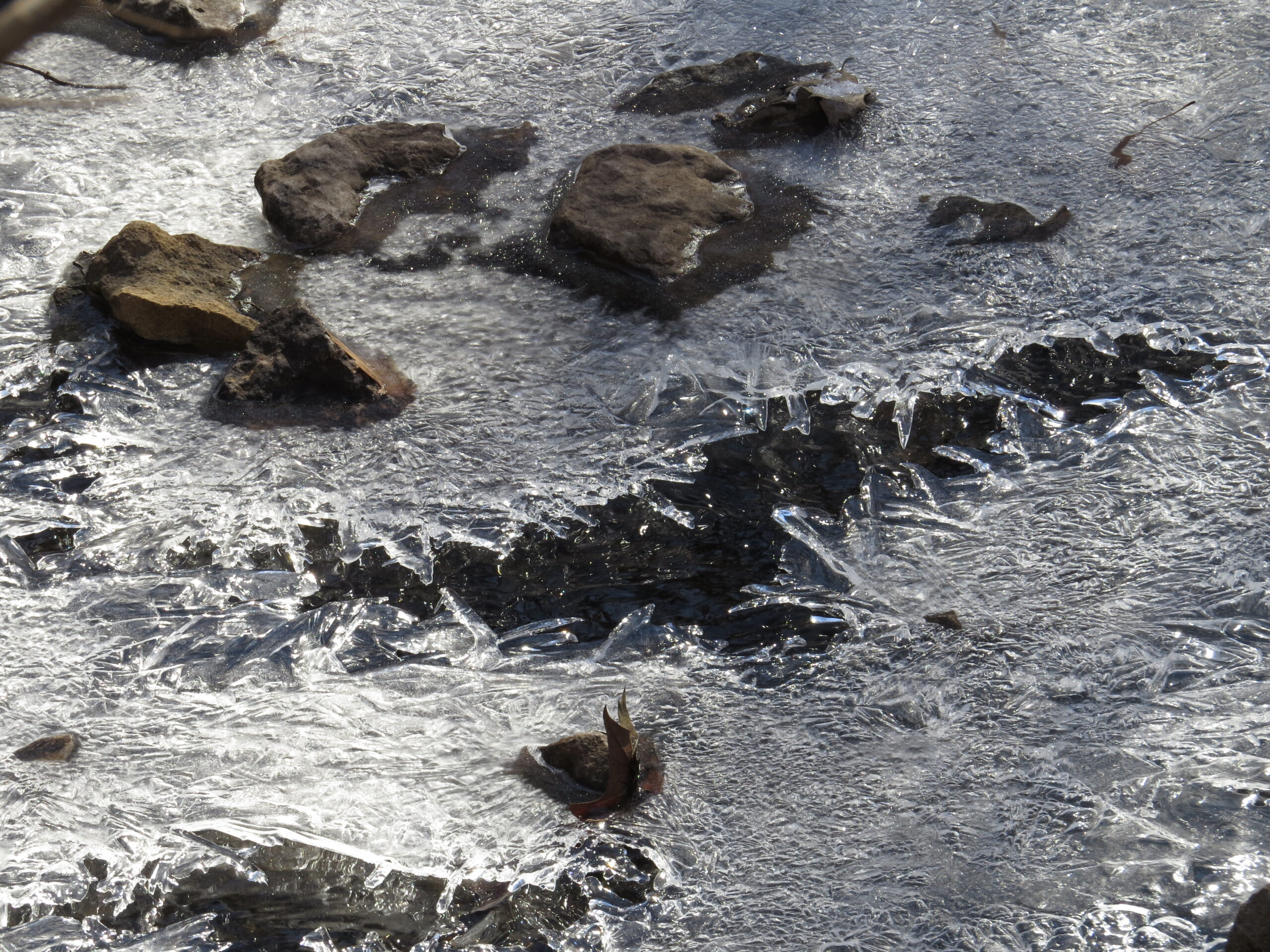
It was strange to be without snow while in Missouri after months of white-covered ground back home. But the cold night had created a temporary ice wonderland in Little Blue Creek as the water flowed over and gurgled around the rocks—like diamonds in the dark sky.
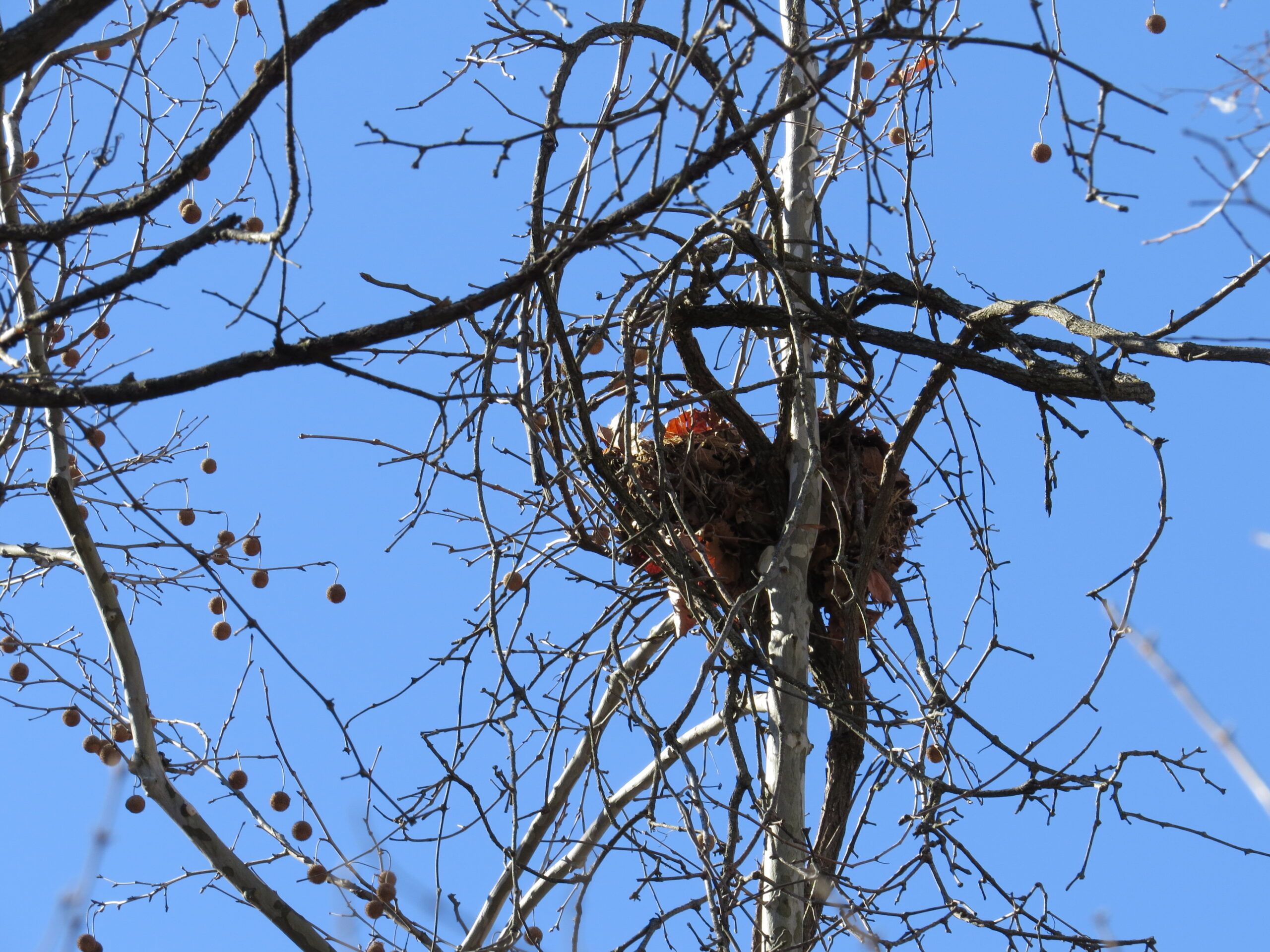
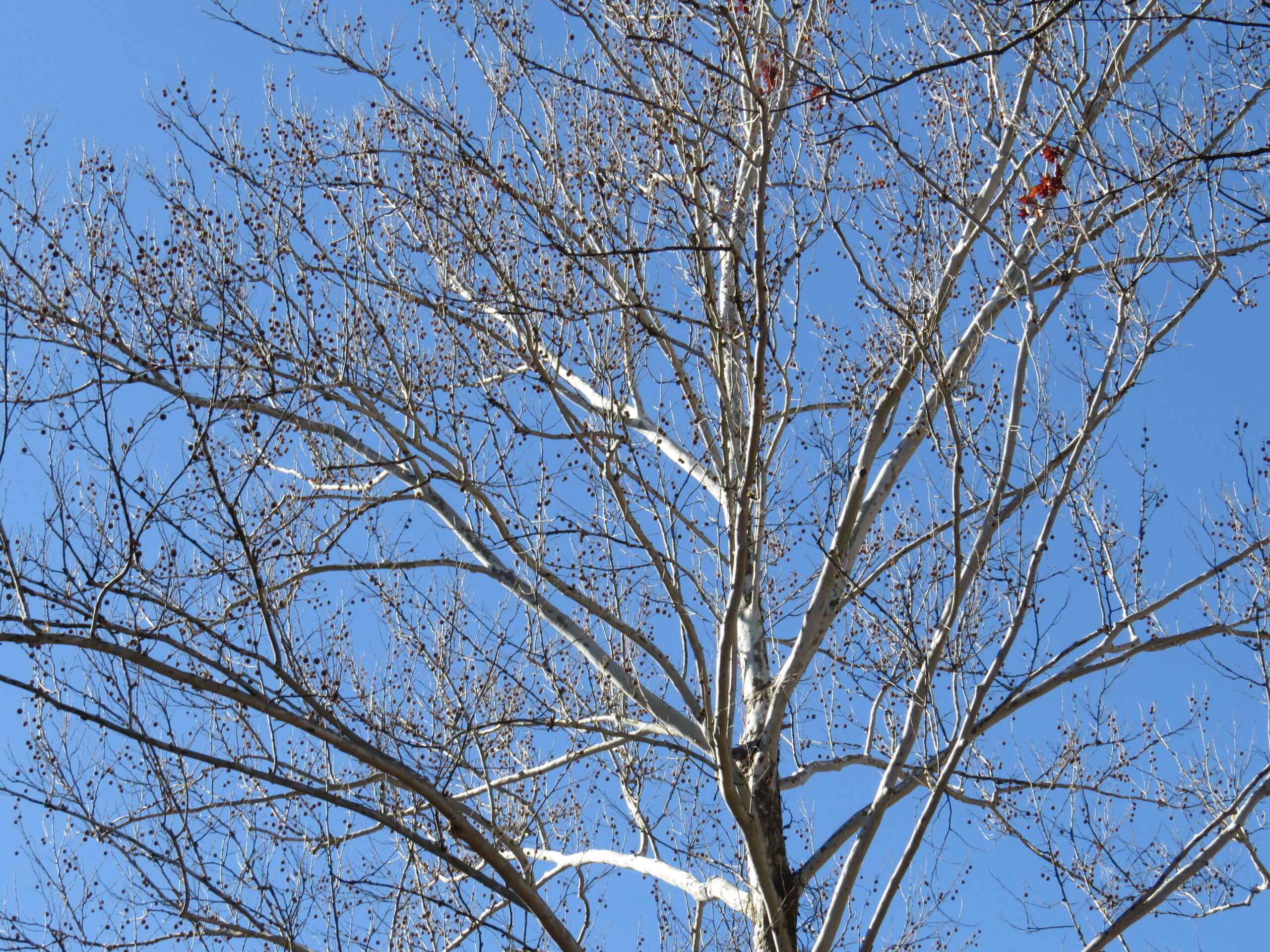
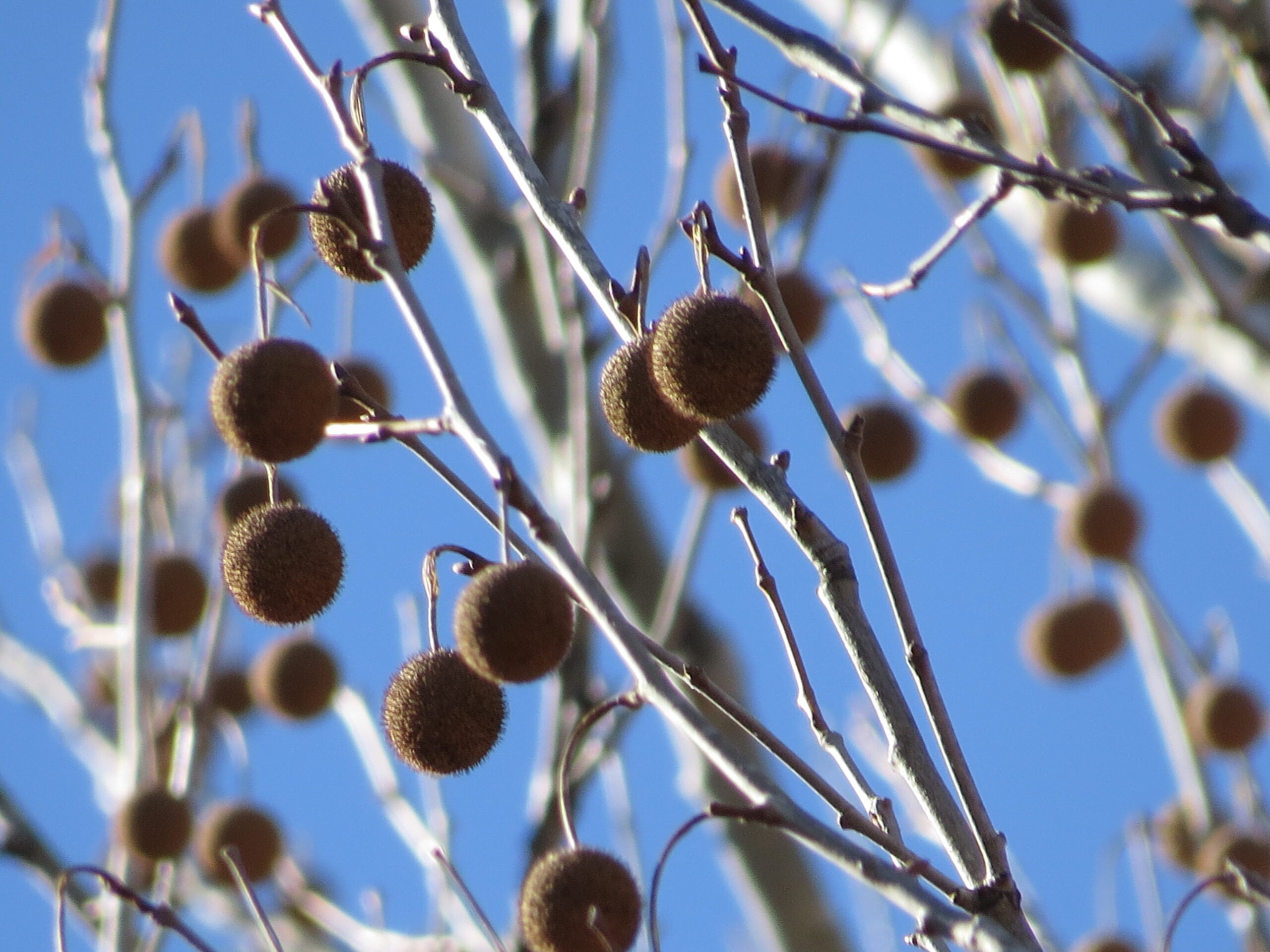
The bright blue sky highlighted the American Sycamore trees with their light gray, mottled bark and abundance of seed balls hanging like mod 60’s earrings from the branches. It’s always good to see them again, these sturdy, long-lived giants, since they don’t live in our part of Minnesota.
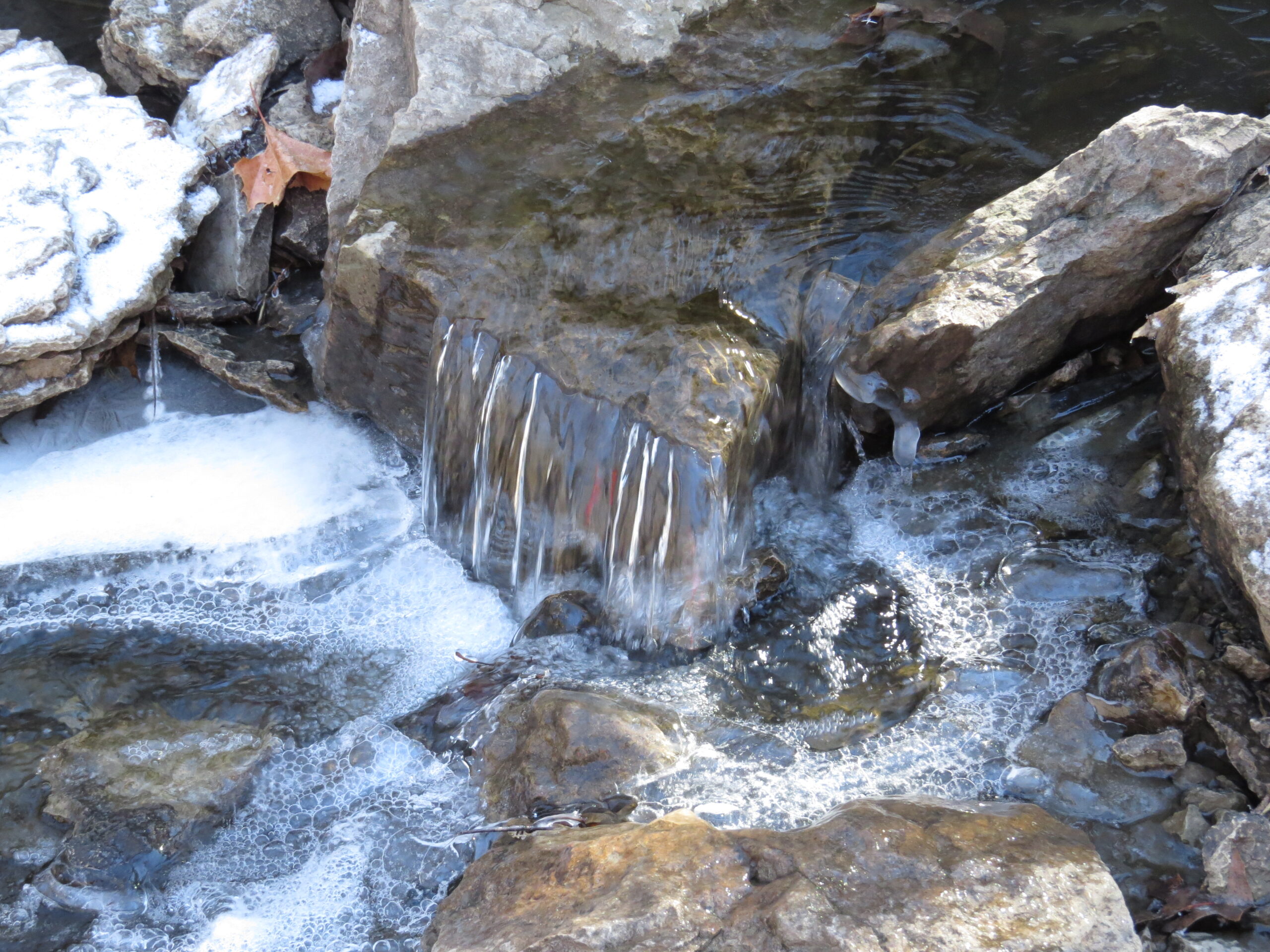
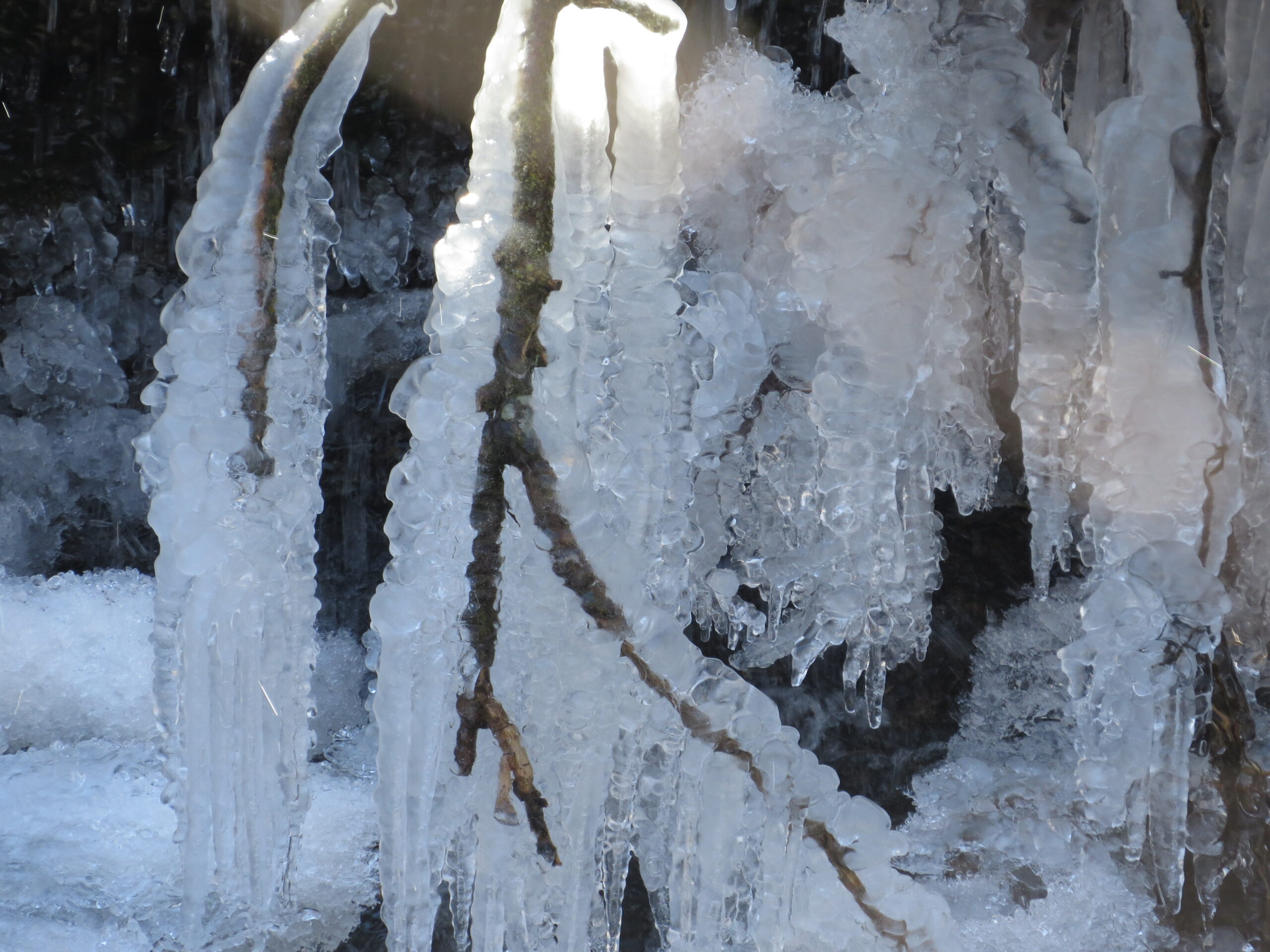
The rock is different here also—mostly sedimentary limestone and shale. It forms rock walls and outcroppings that can be moved and formed by water. A series of waterfalls or cascades dotted the little creek, including the block fall (wider than it is tall) that created a plunge pool at the bottom. The cold night had induced the formation of ice stalagmites, icicles, and delicate, lacy sheets of ice—shiny ribbons and sculptures celebrating the fleeting days of Winter.
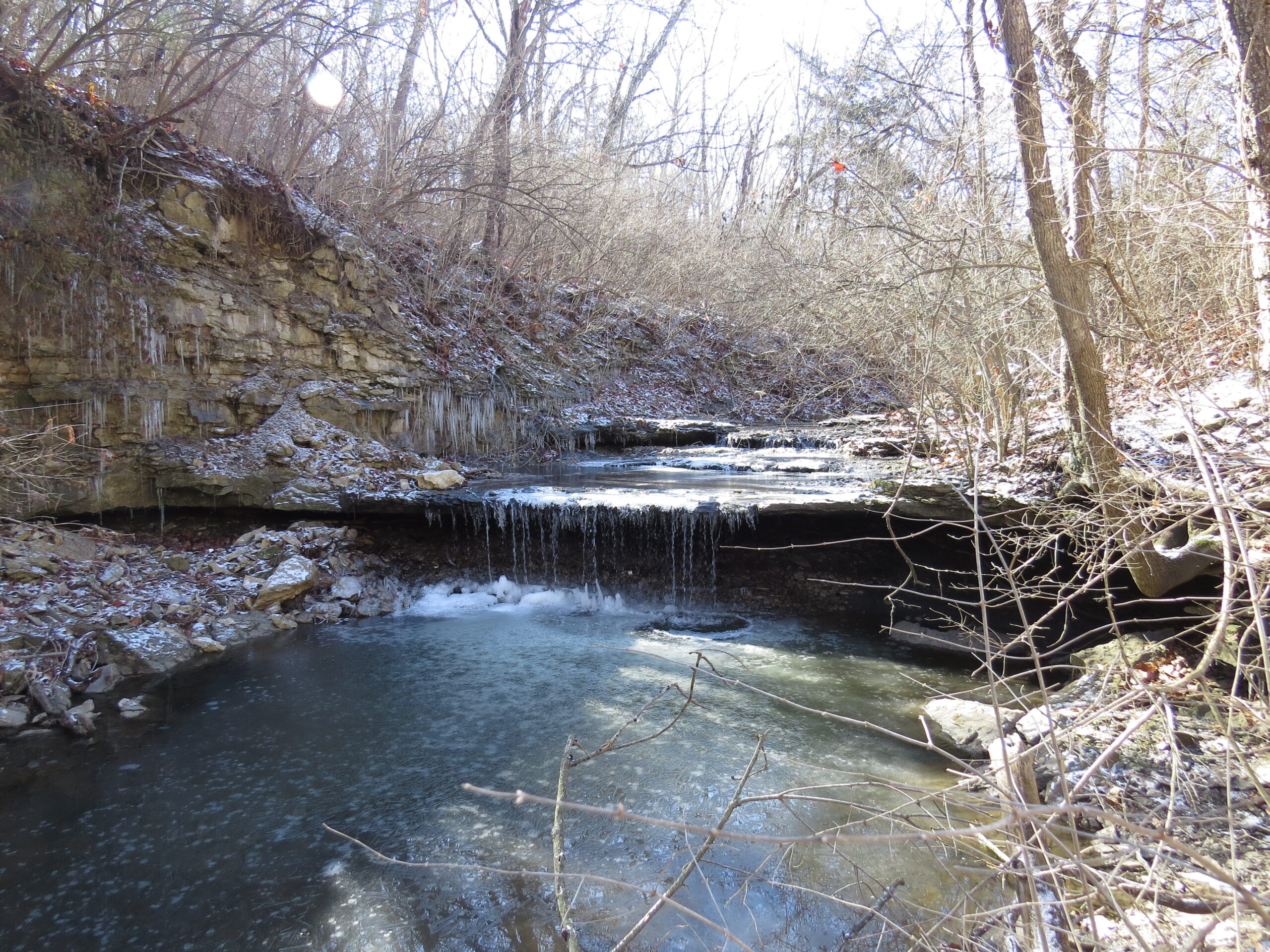
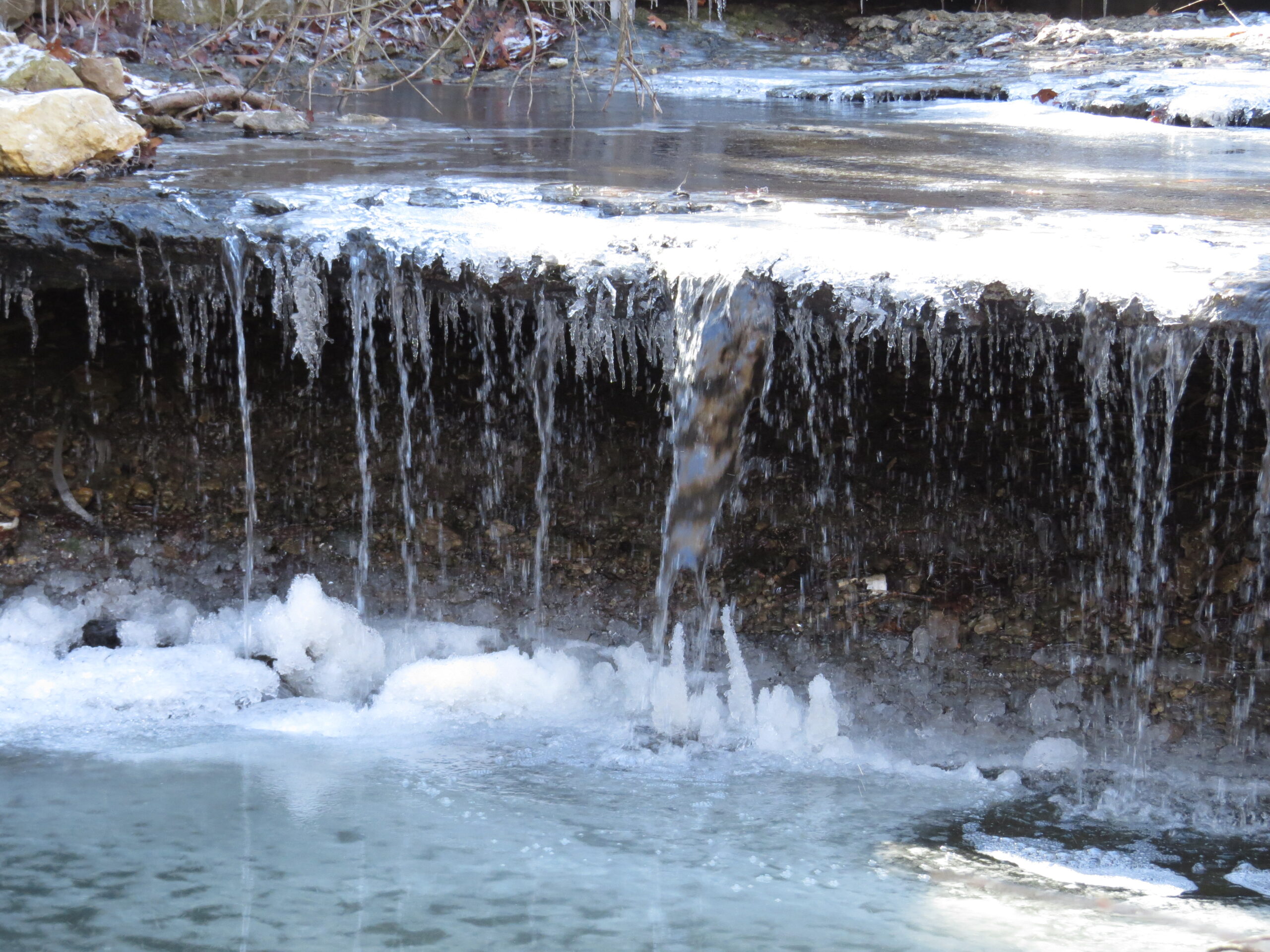
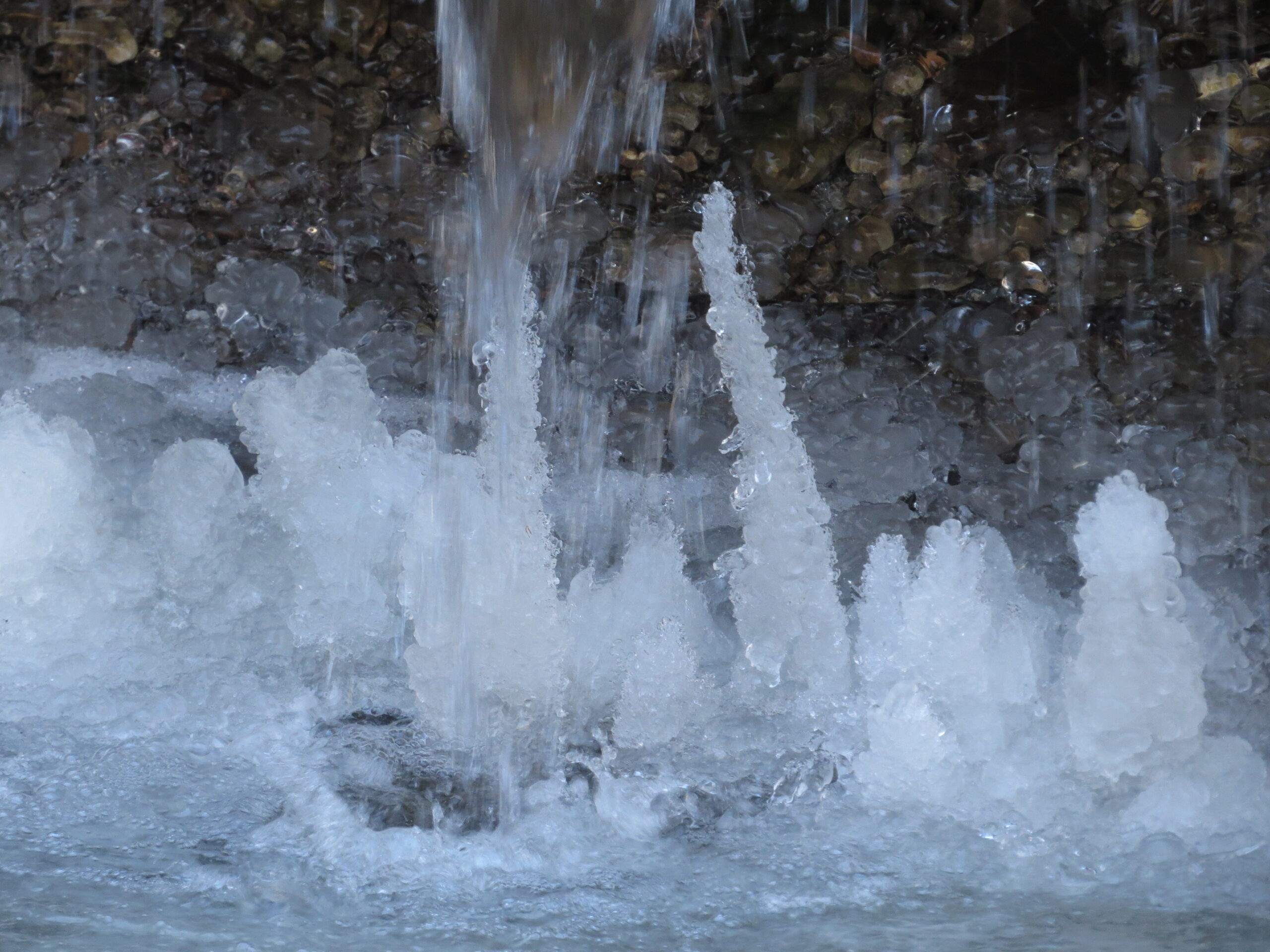
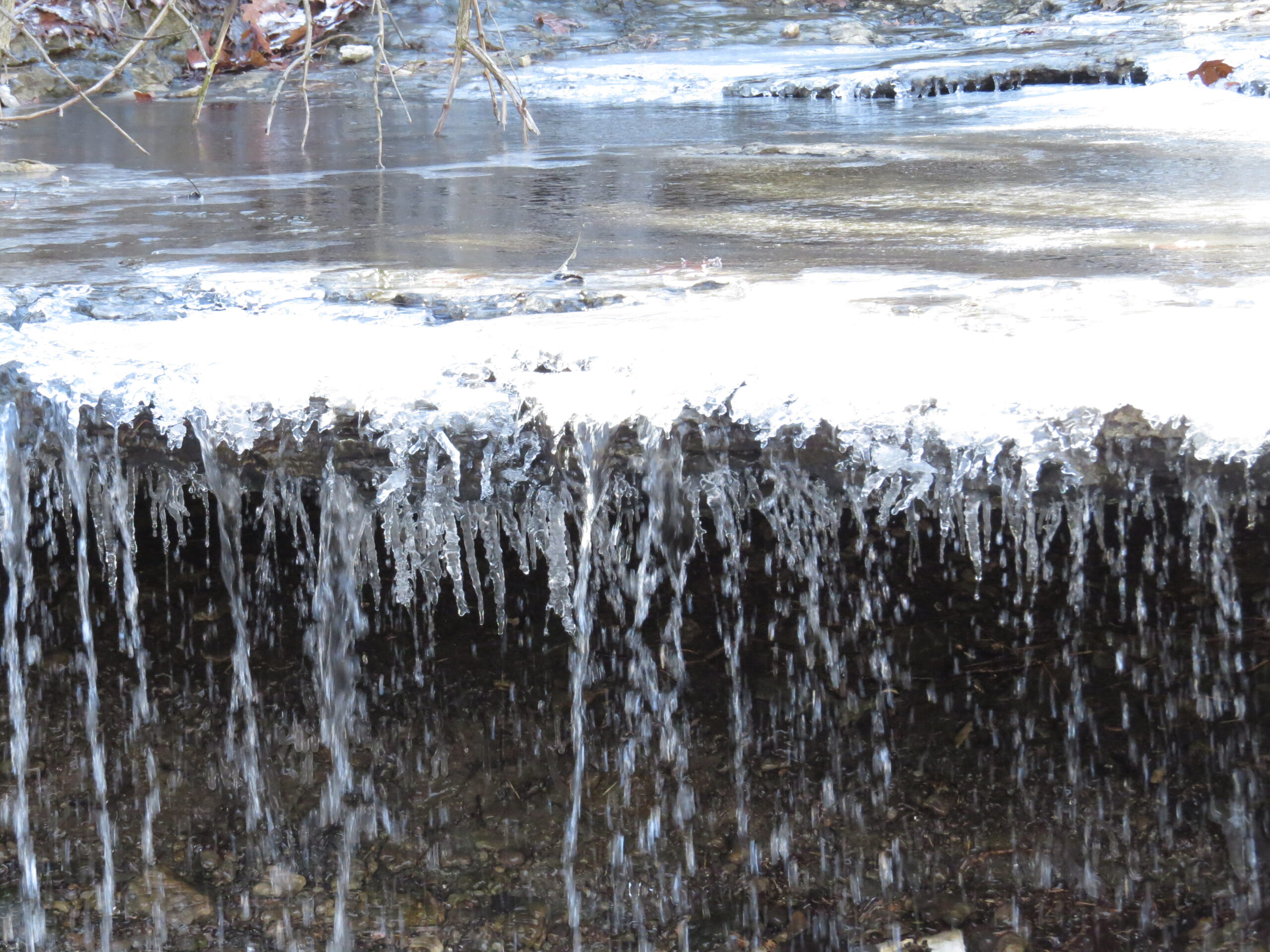
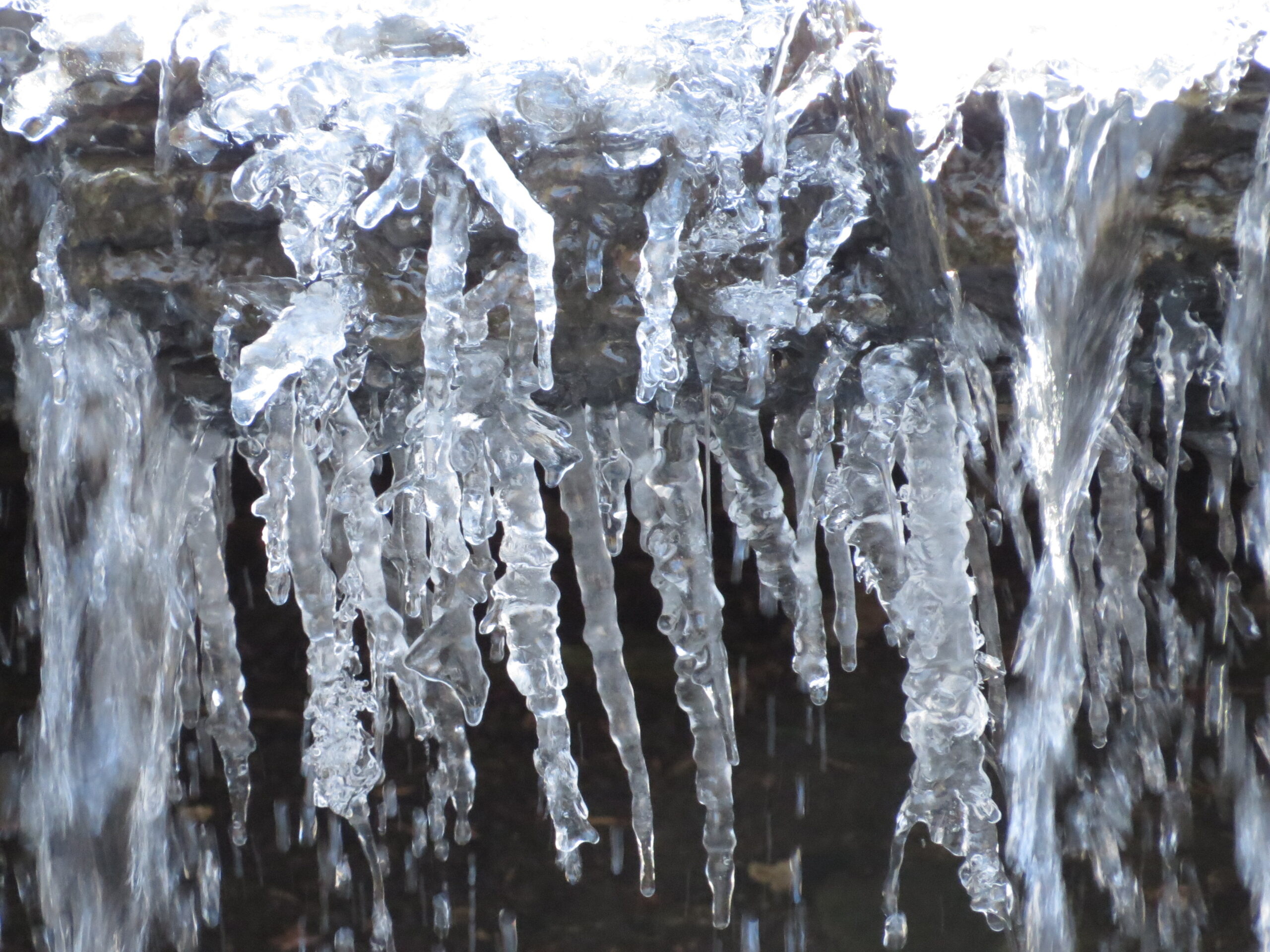
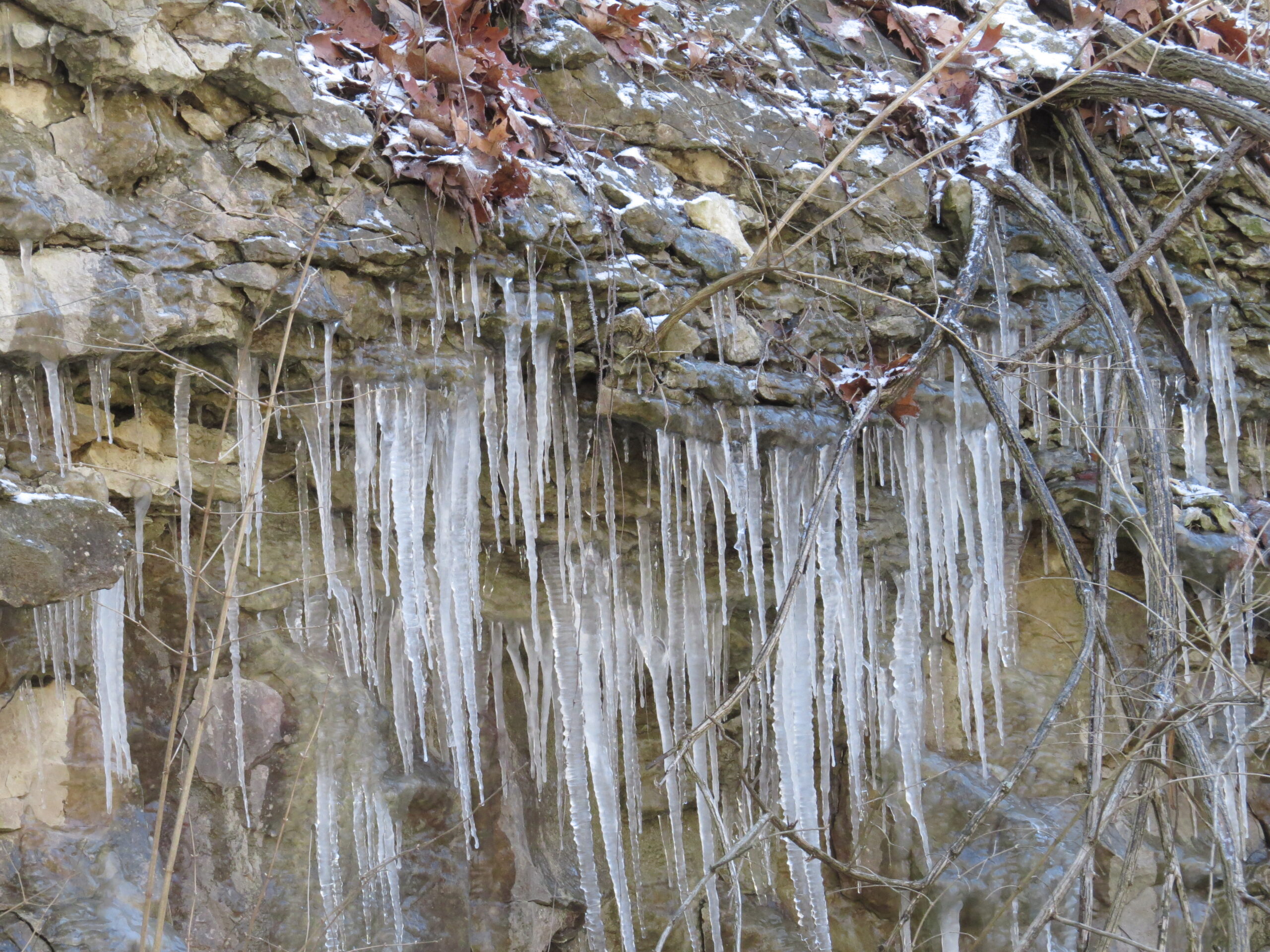
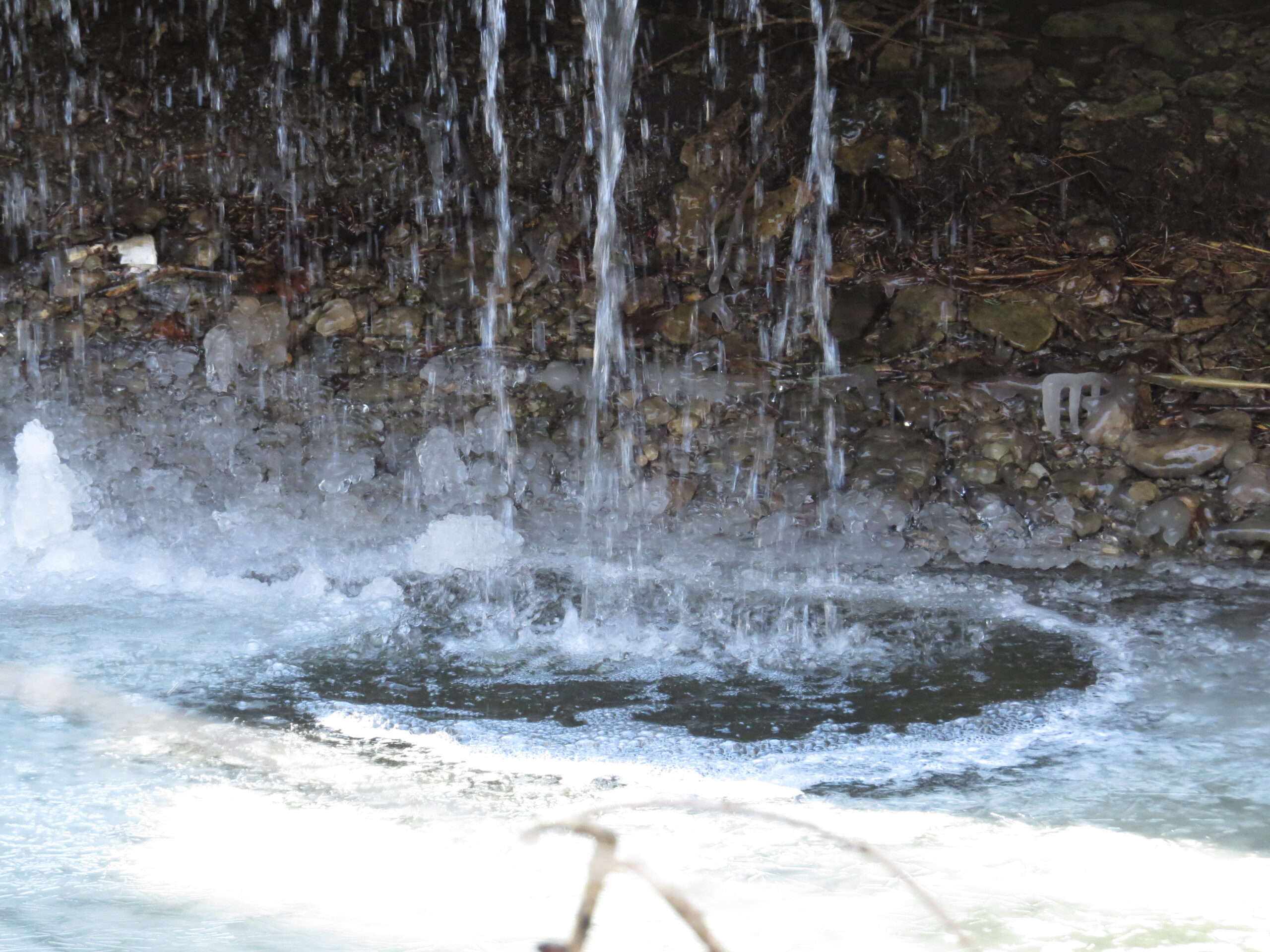

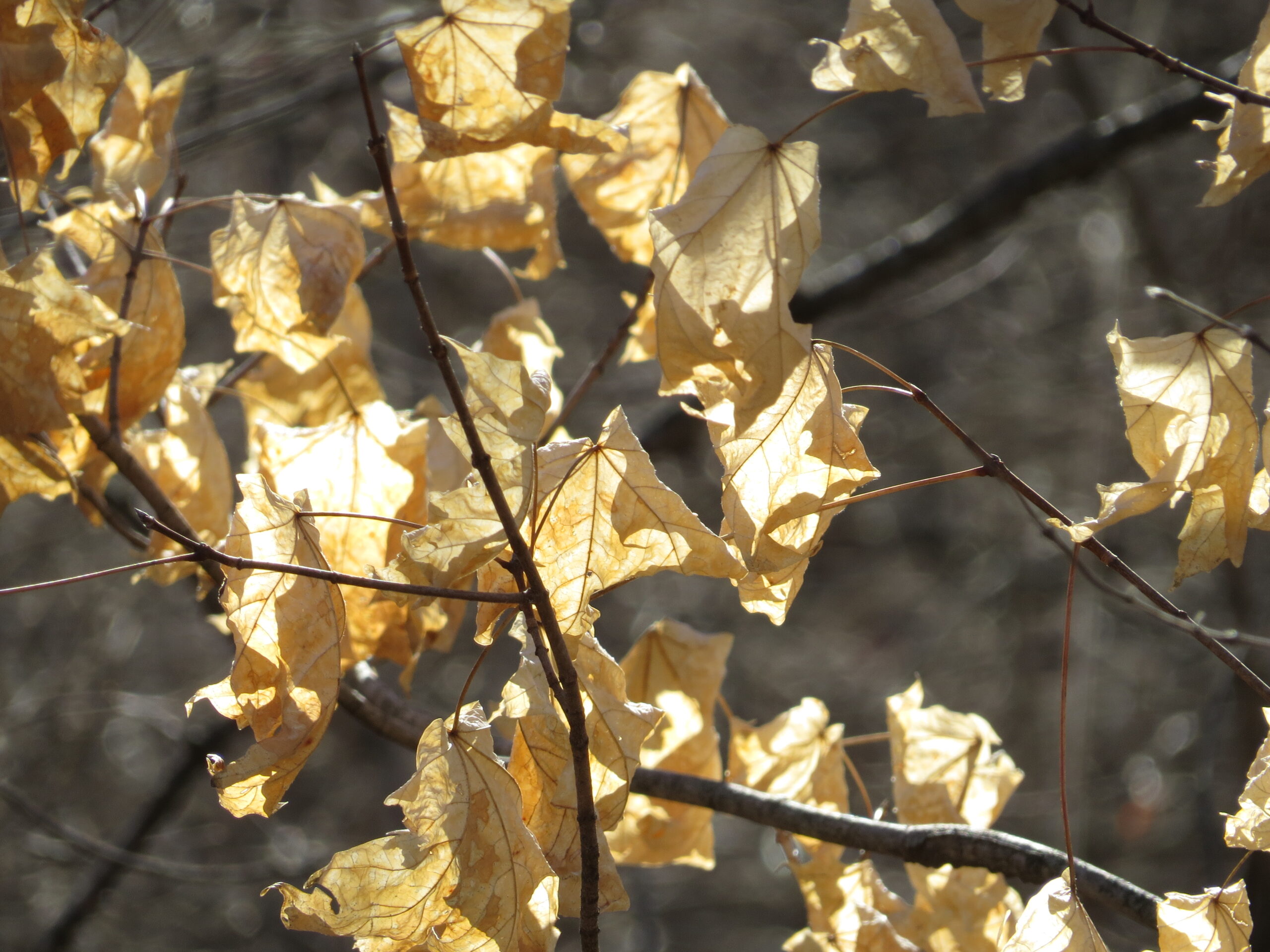
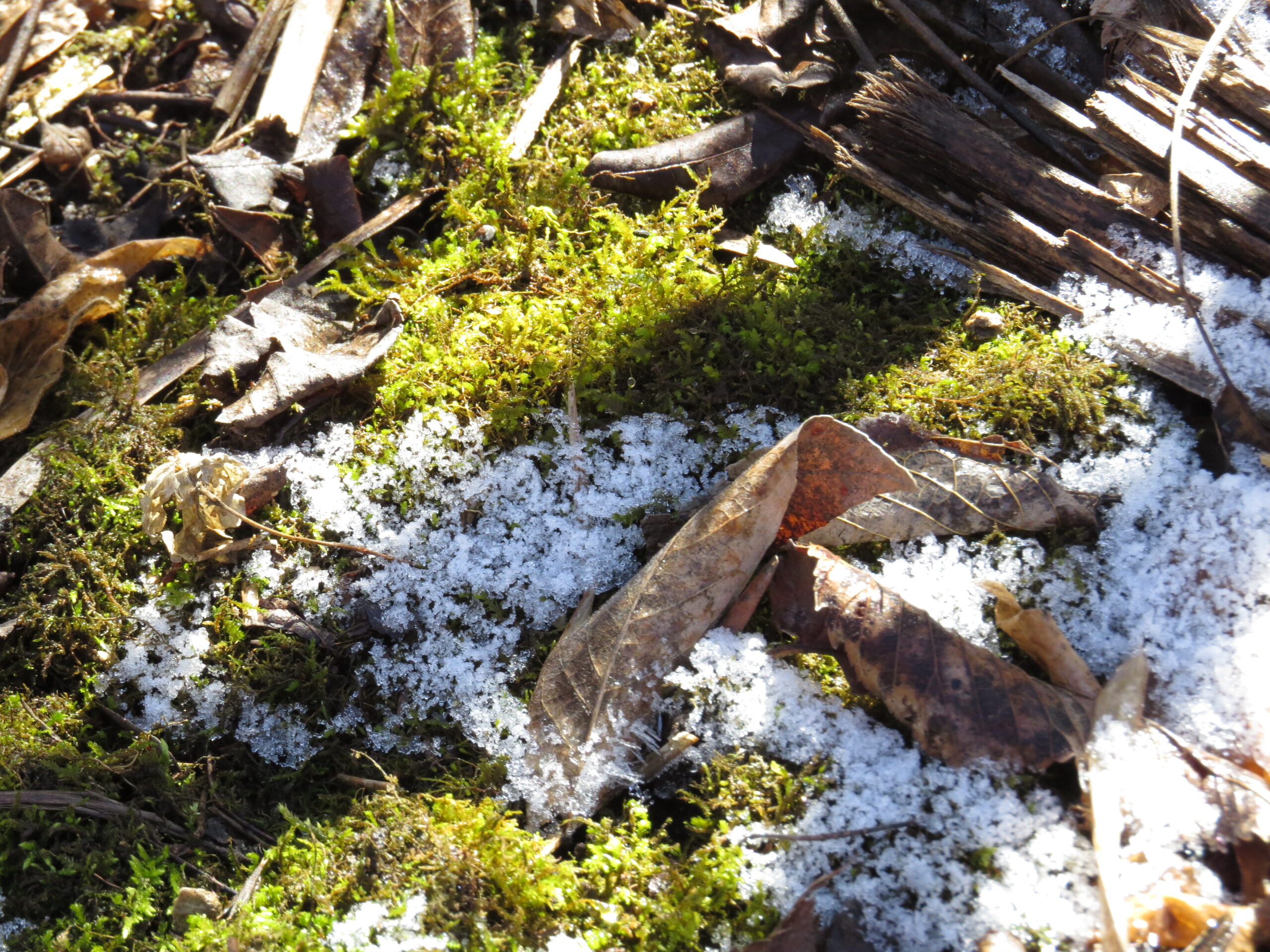
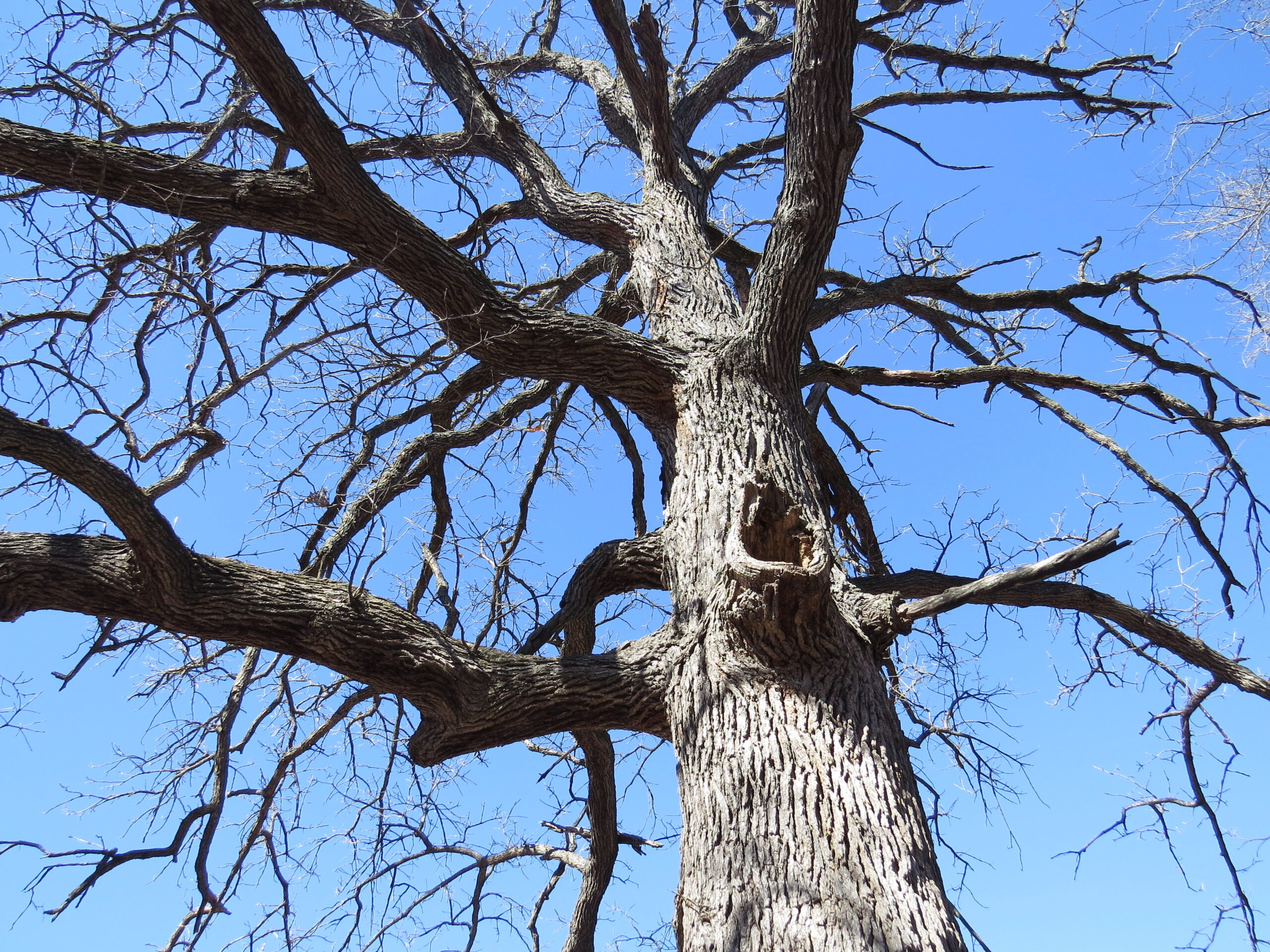
The sun lit up the ice and the old, golden leaves of a young Sycamore. It melted the snowy frosting from the evergreen moss. It shone its light and warmth on the face of an enormous Oak tree that looked to me like a ‘singing tree’ with its open mouth and outspread arms.
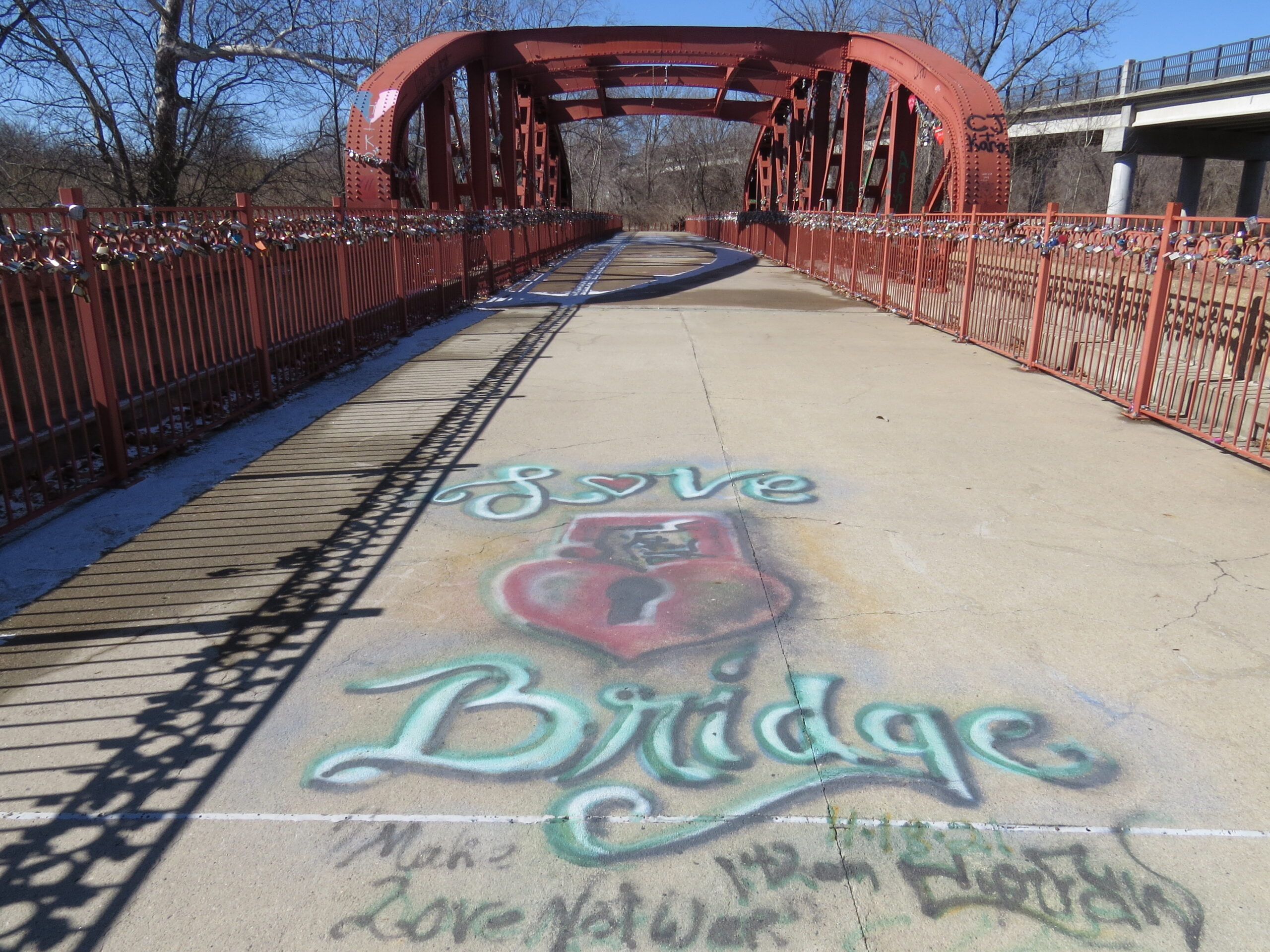
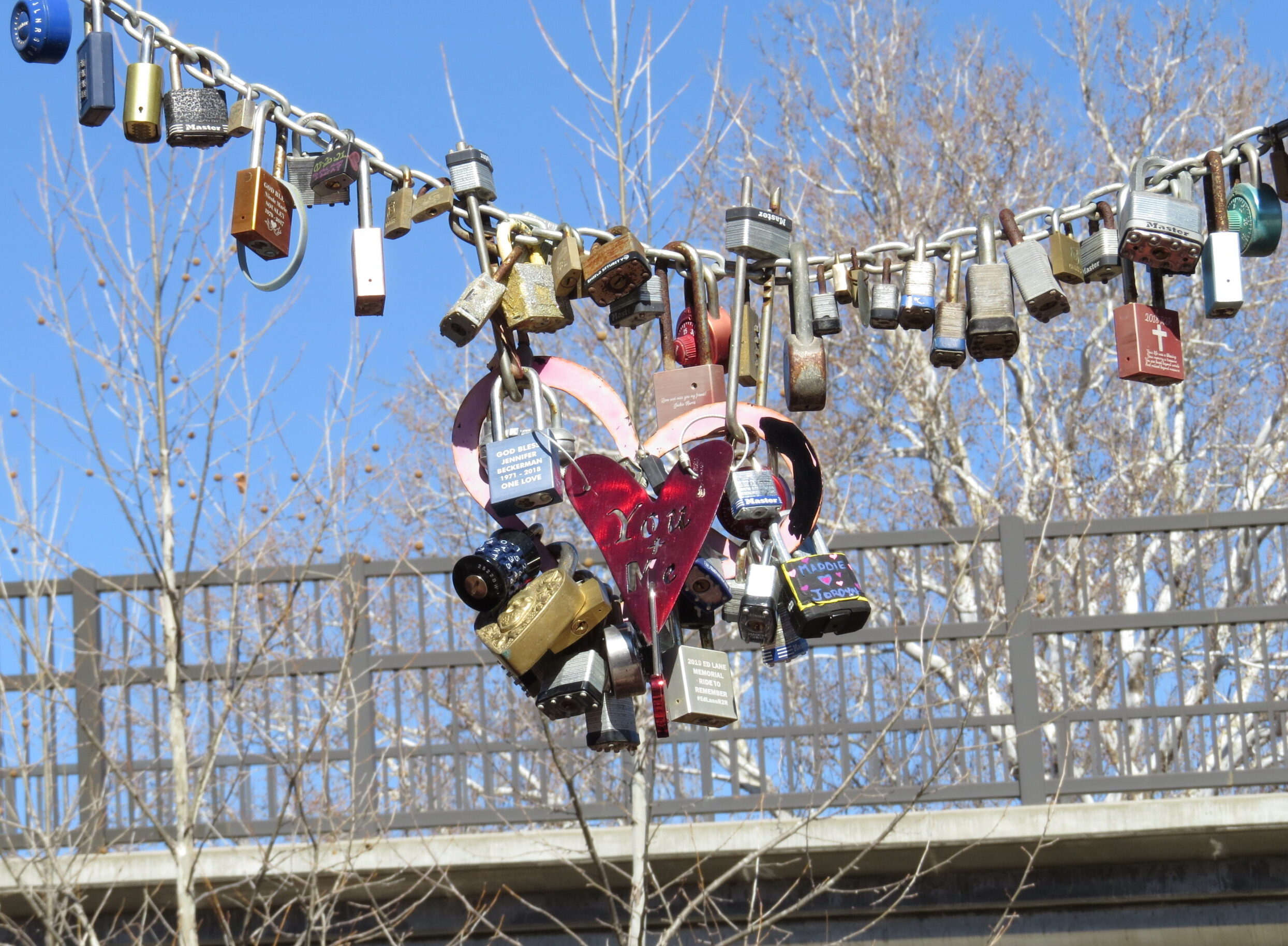
At the end of our hike, we crossed the Old Red Bridge, the third installment of the famous red bridge that originally spanned the Blue River. This one was built in 1932, christened by Judge Harry S. Truman, and is now a pedestrian bridge celebrating Love. Over 5,000 locks have been connected to the bridge by couples symbolizing their everlasting love.
That evening, we walked into the large gathering room at the group home where Mary had lived for almost forty years. The tables were decorated with purple tablecloths, potted flowers, pictures of Mary (many with Santa), and purple and pink balloons. All of her friends, co-workers, and caregivers were there to celebrate the life and love of Mary Brake. There was a table of pictures of our family celebrations and of festivities with her friends and housemates. A DJ played background music. There was a slideshow of the full and varied life she had lived. Some of her friends shared their feelings—“I miss her,” “I worked with her; she was my friend,” “I loved her,” and a sweet comment by a young man who worked with her, “She’s alive in heaven.” We shared her favorite meal—tacos, chips, and Dr. Pepper, and for dessert—waffles, ice cream, and sprinkles. And then the DJ turned up the dance music, and people of every ability hit the dance floor. Mary would have been one of the first ones out there. We danced to the Macarena, Cotton Eye Joe, YMCA, and All I Want for Christmas is You! It was the perfect celebration of our dear Mary. For a person who didn’t say very many words, Mary had captured the hearts of a multitude of people. She was something special, and she blessed us all with her life. We will miss her dearly, but she remains a bright, shining diamond in the dark sky.
Bent in Suffering
“We shall draw from the heart of suffering itself the means of inspiration and survival.” –Winston Churchill
We cannot escape suffering in our lifetimes. We will all have to endure pain, distress, or hardship in some form. Many of us can get a couple decades under our belts before we know the harsh reality of suffering; others are well aware of it as children. Watching the news this week has once again made me acutely aware of suffering around the world. The earthquakes in Turkey and Syria have caused such extreme physical destruction and pain, and therefore emotional and mental suffering, for hundreds of thousands of people. Like the Russian war on Ukraine did a year ago and continues to inflict. Like the Covid-19 pandemic did in the last three years across the globe. Like the drought is in East Africa. It seems like suffering itself is becoming a pandemic.
Last Sunday was an absolutely beautiful day! The sky was that startlingly pure blue color that lifts spirits into freedom and possibility. The air was clean and clear, nourishing my lungs with each intake. The temperature was a delightful twenty-three degrees, and the sun was bright and warm. We snowshoed at Northland Arboretum in Brainerd that has 7.5 miles of immaculately groomed trails for classic and skating cross-country skiing and over two miles of trails for snowshoeing.
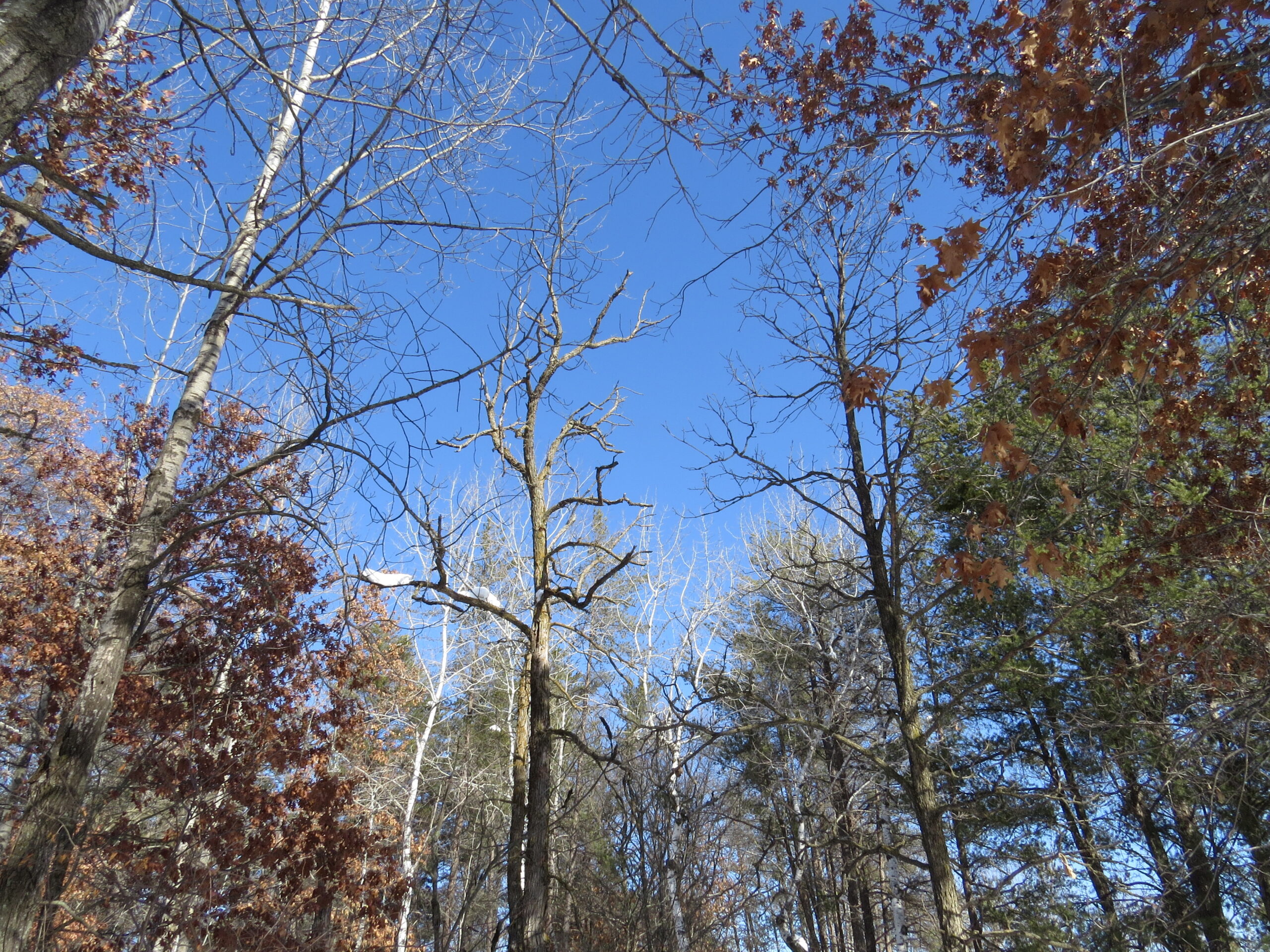
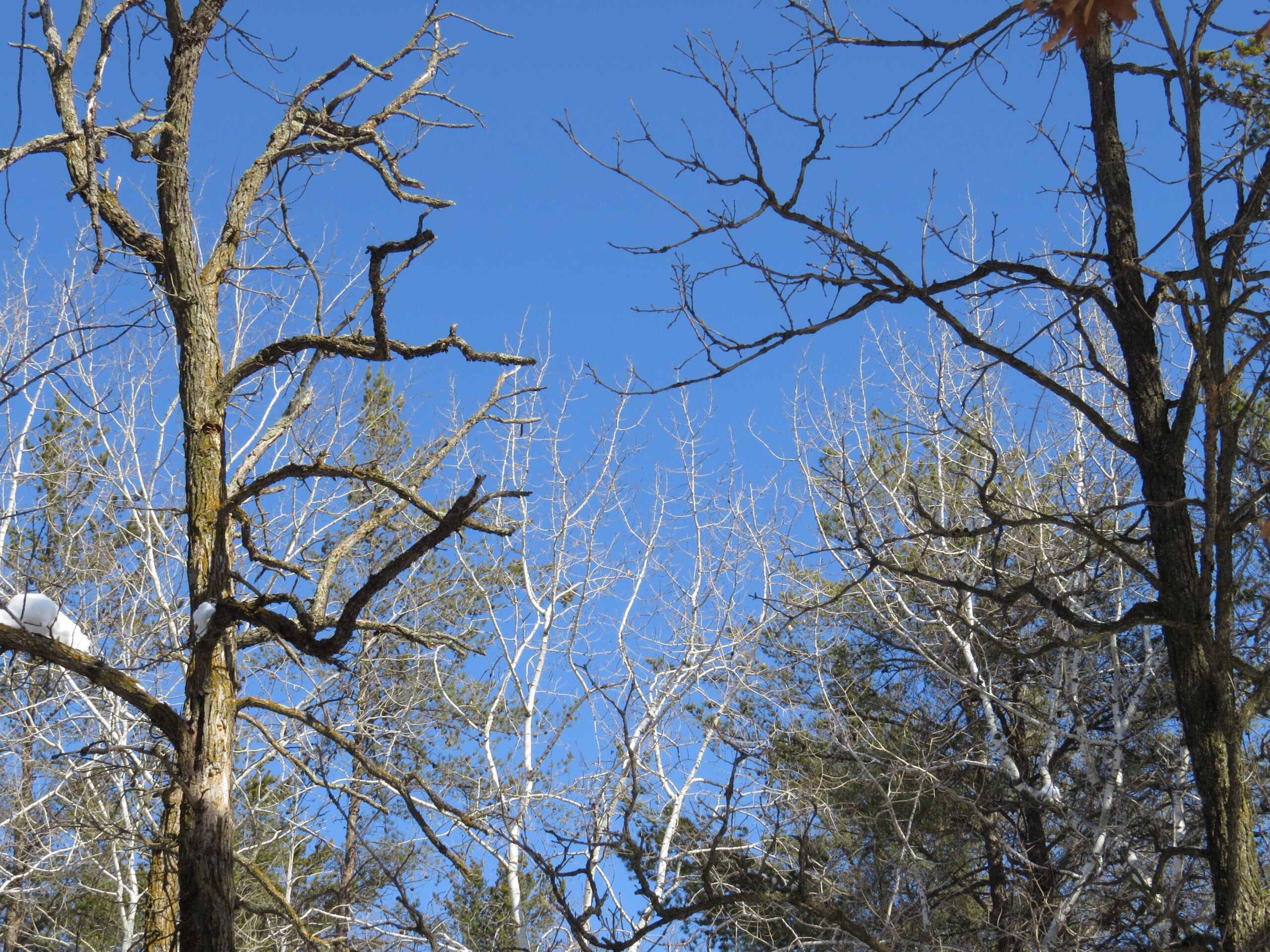
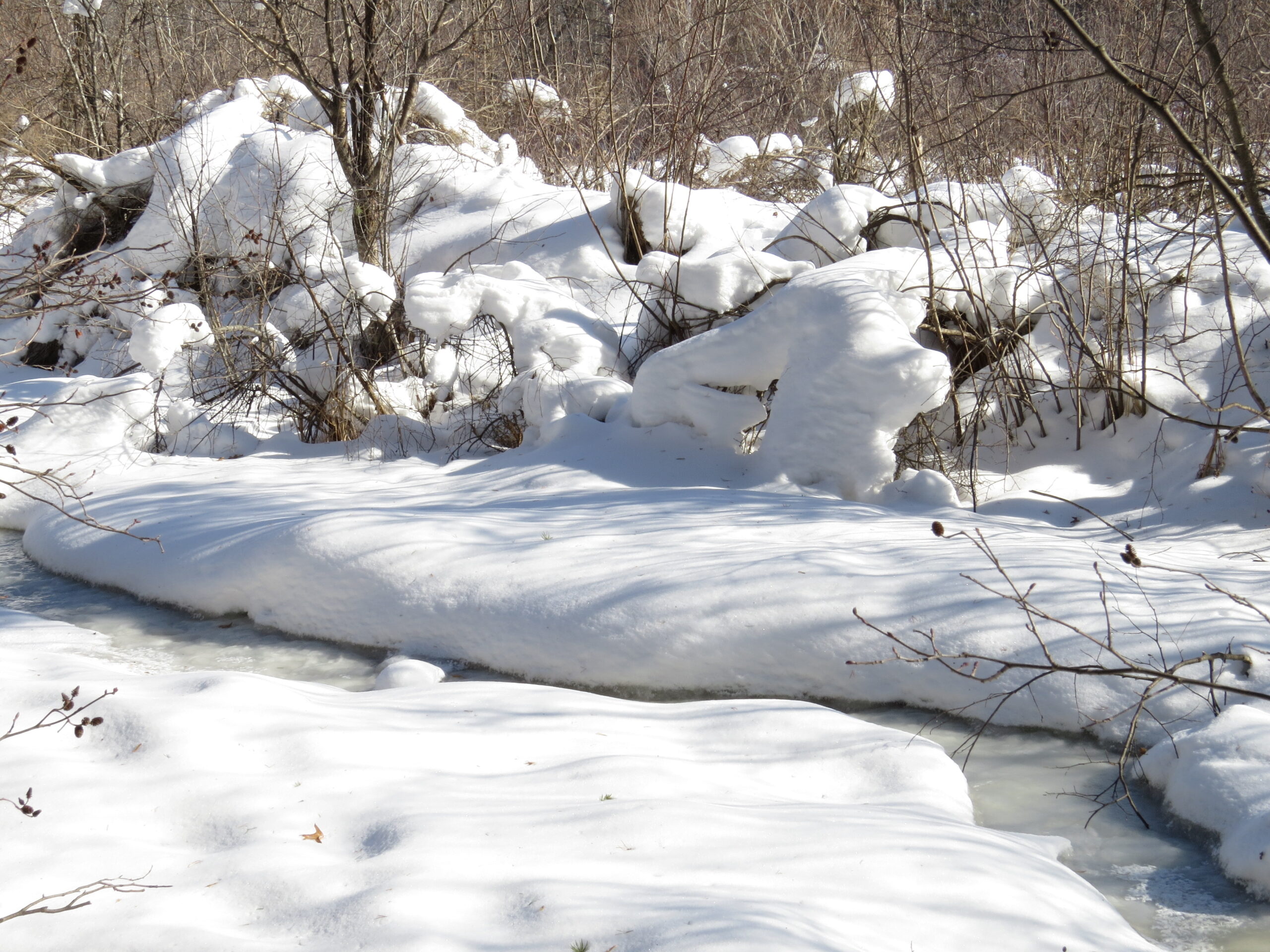
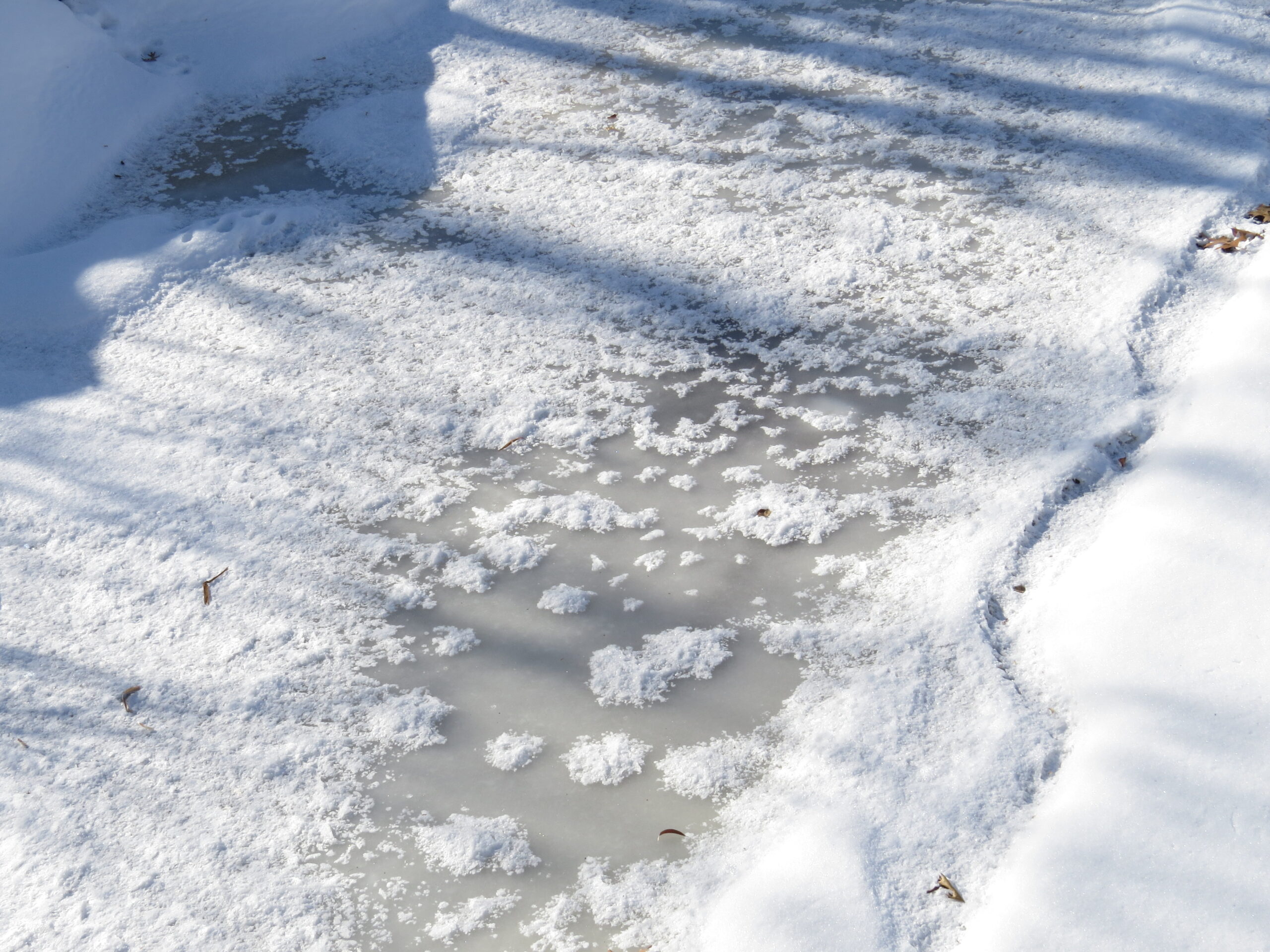
The heavy, wet snow we had had earlier in the season still blanketed large areas of brush and brambles like elaborate snow forts. The small creek was covered with slushy ice after our extreme cold spell the week before.
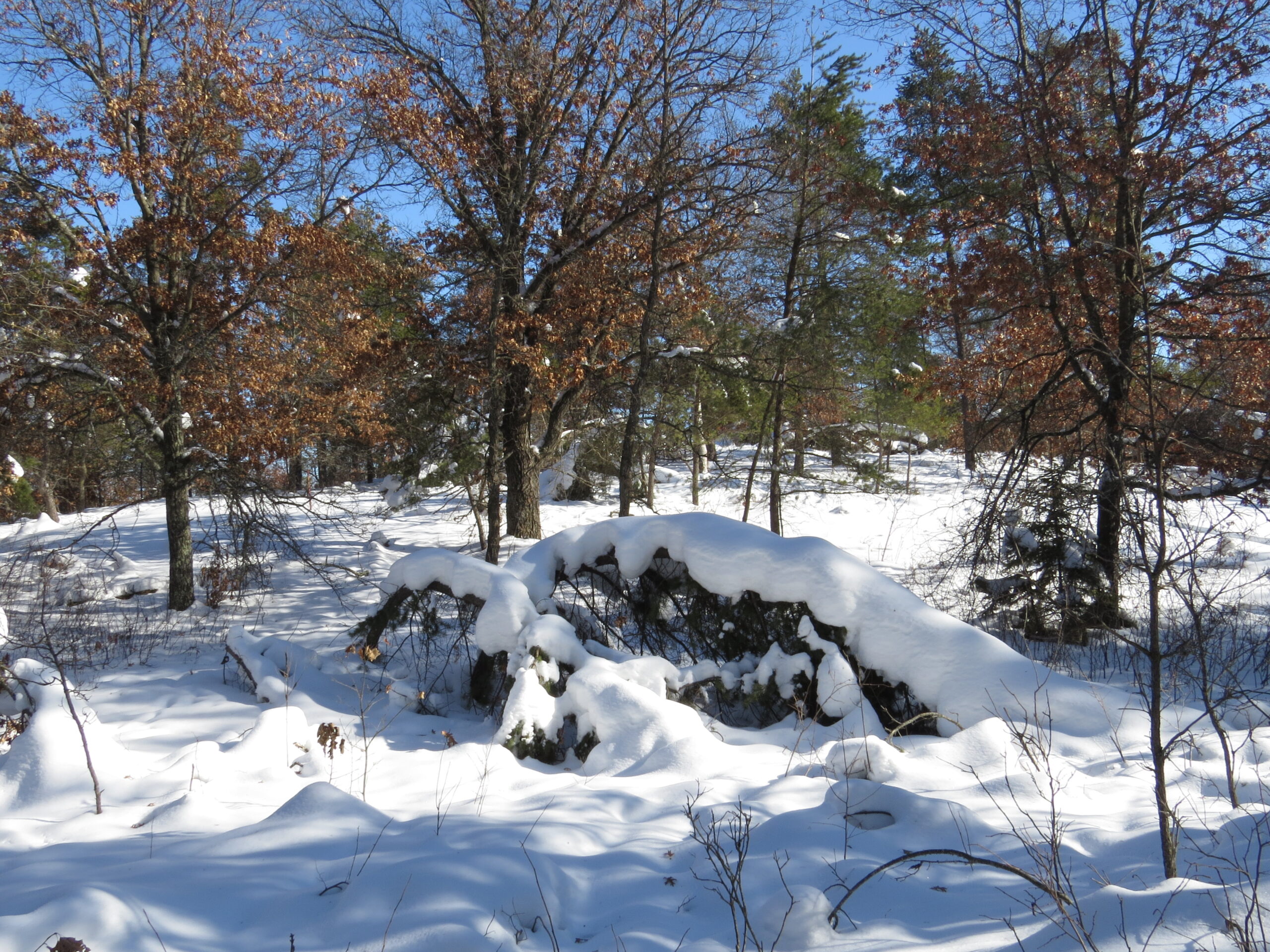
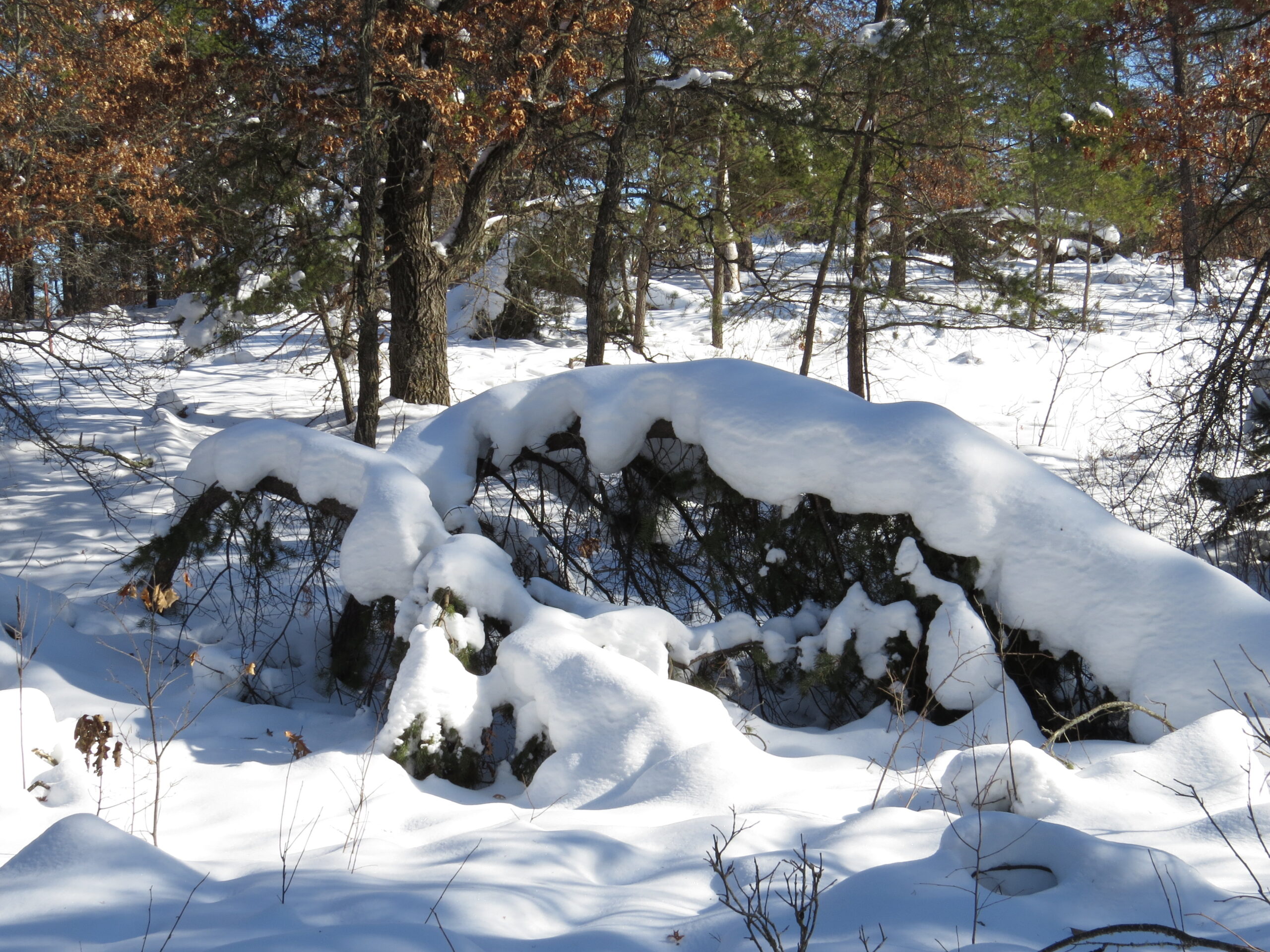
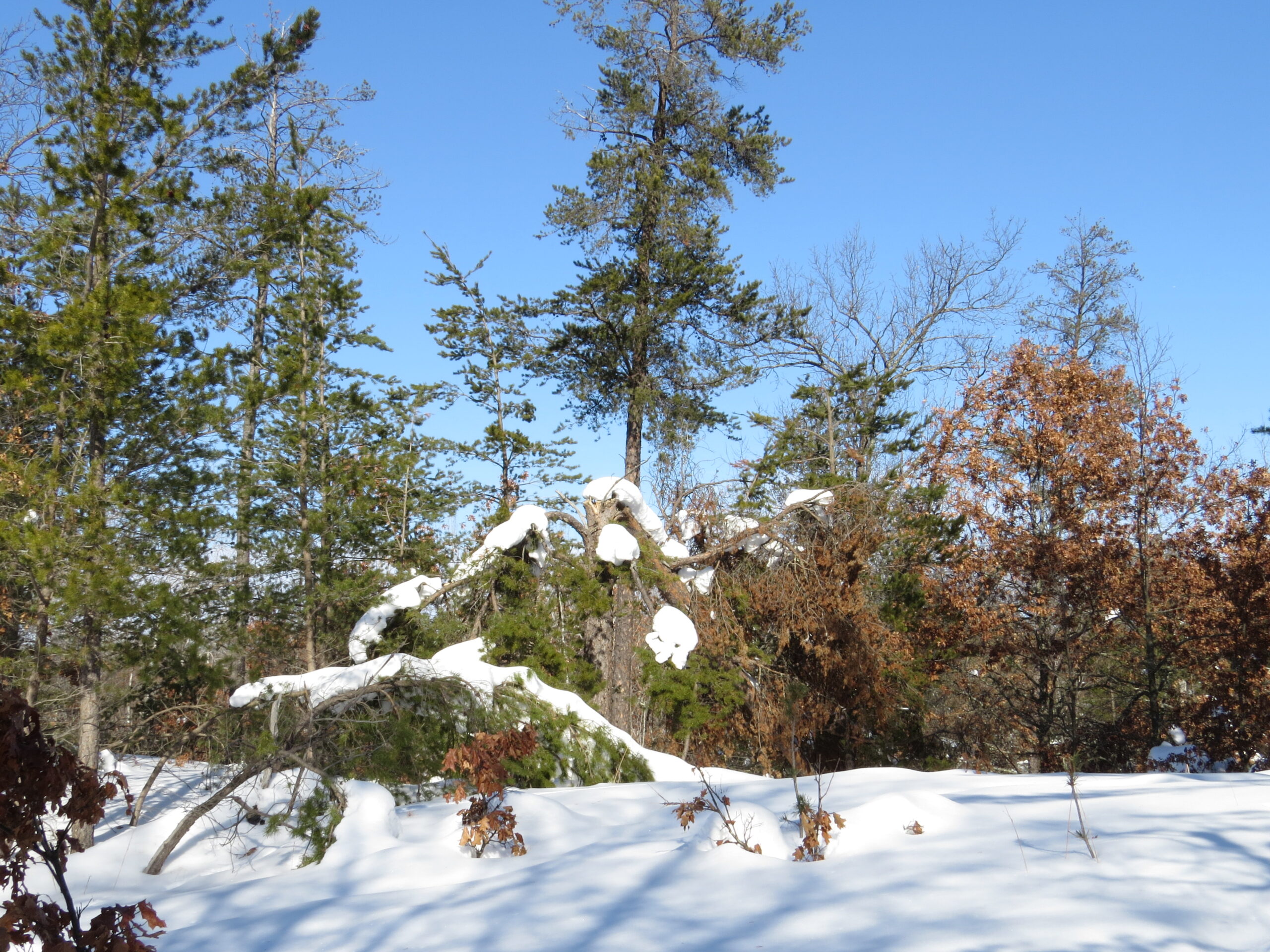
As we shoed into the area of the Jack Pine Savanna, I noticed some young Pines were completely bent over from the heavy snow that had originally fallen almost two months prior—and then added upon. The weight of the snow had bent their young trunks, not broken them.
Most of the trees had ‘shaken off’ the snow that had hung on them previously, with the help of the sun and wind. Some still carried large ‘snowballs’ on their strong-enough branches.
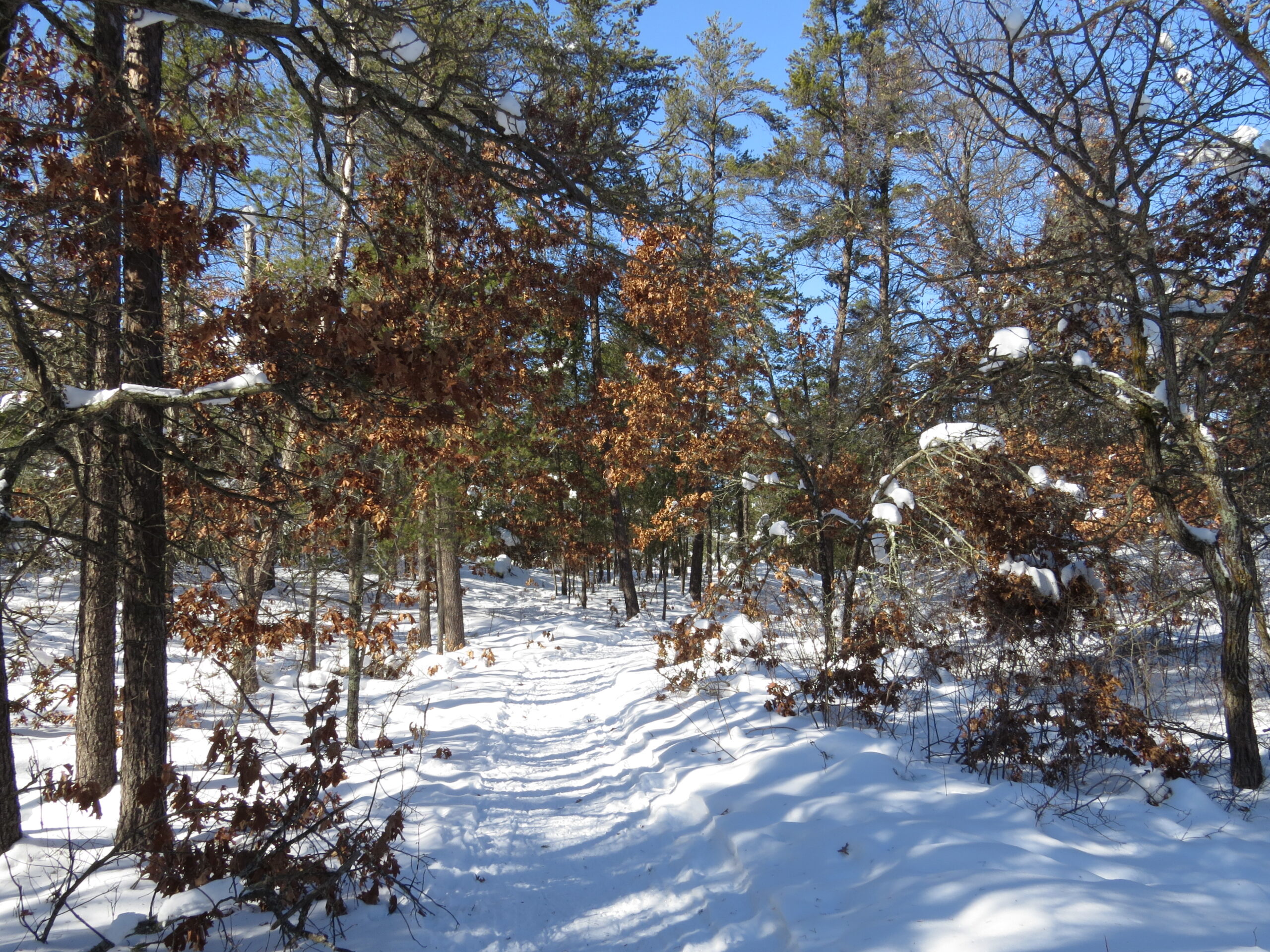
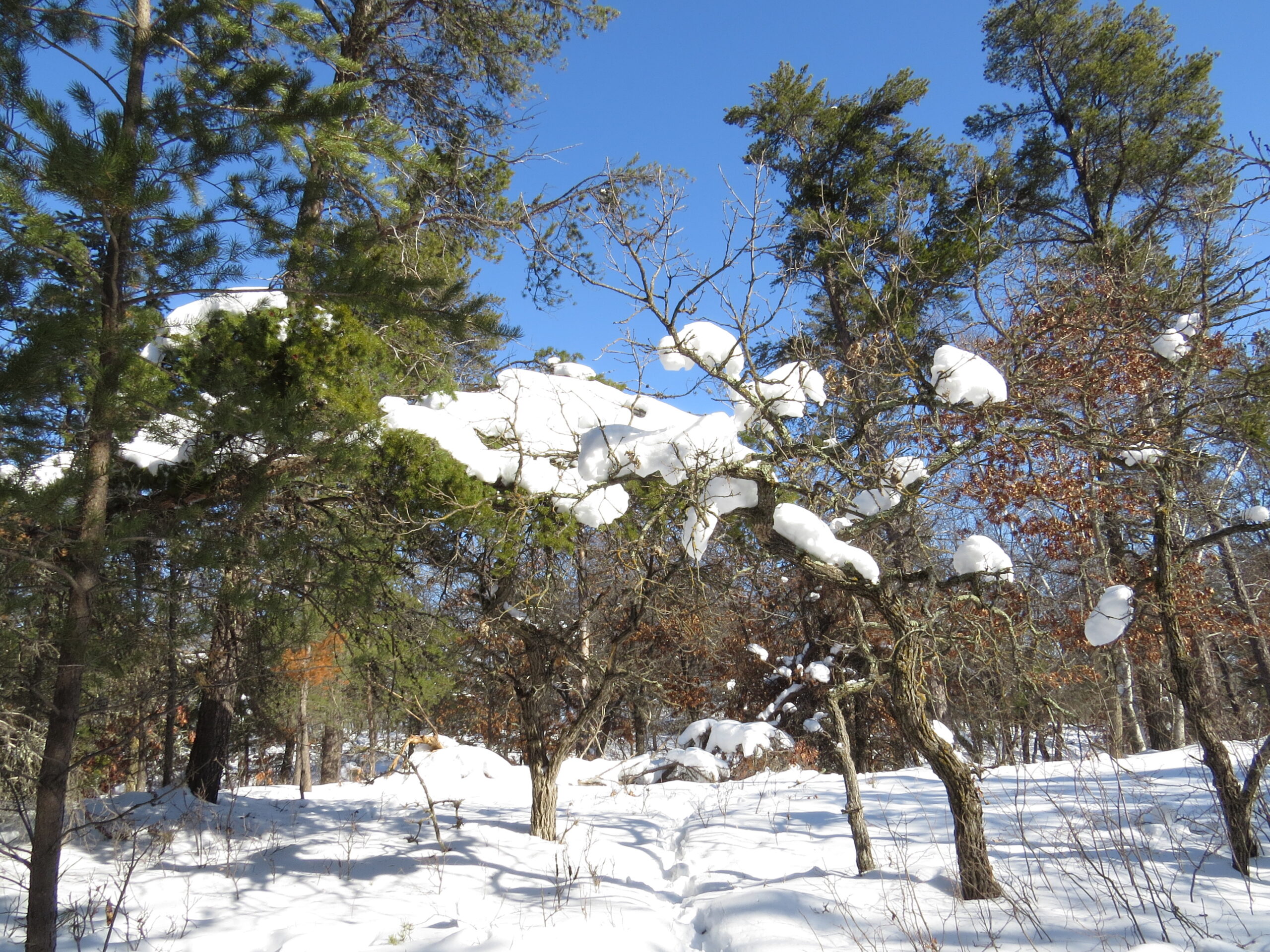
And yet, size, age, and identity were not the determining factors of who was damaged compared to who ‘shook it off’ and stood strong. Some of the old ones broke. Some of the Oak trees bent.
Not only were most of the bent trees heavy with snow, they were also stuck in the snow where they touched the ground. And once the snow had crushed them down in the unnatural bend, the accumulating snow just added more weight, more distress, more strain, and less chance of a return to ‘normal.’ I wondered how many would be able to ‘spring back’ to where they were before.
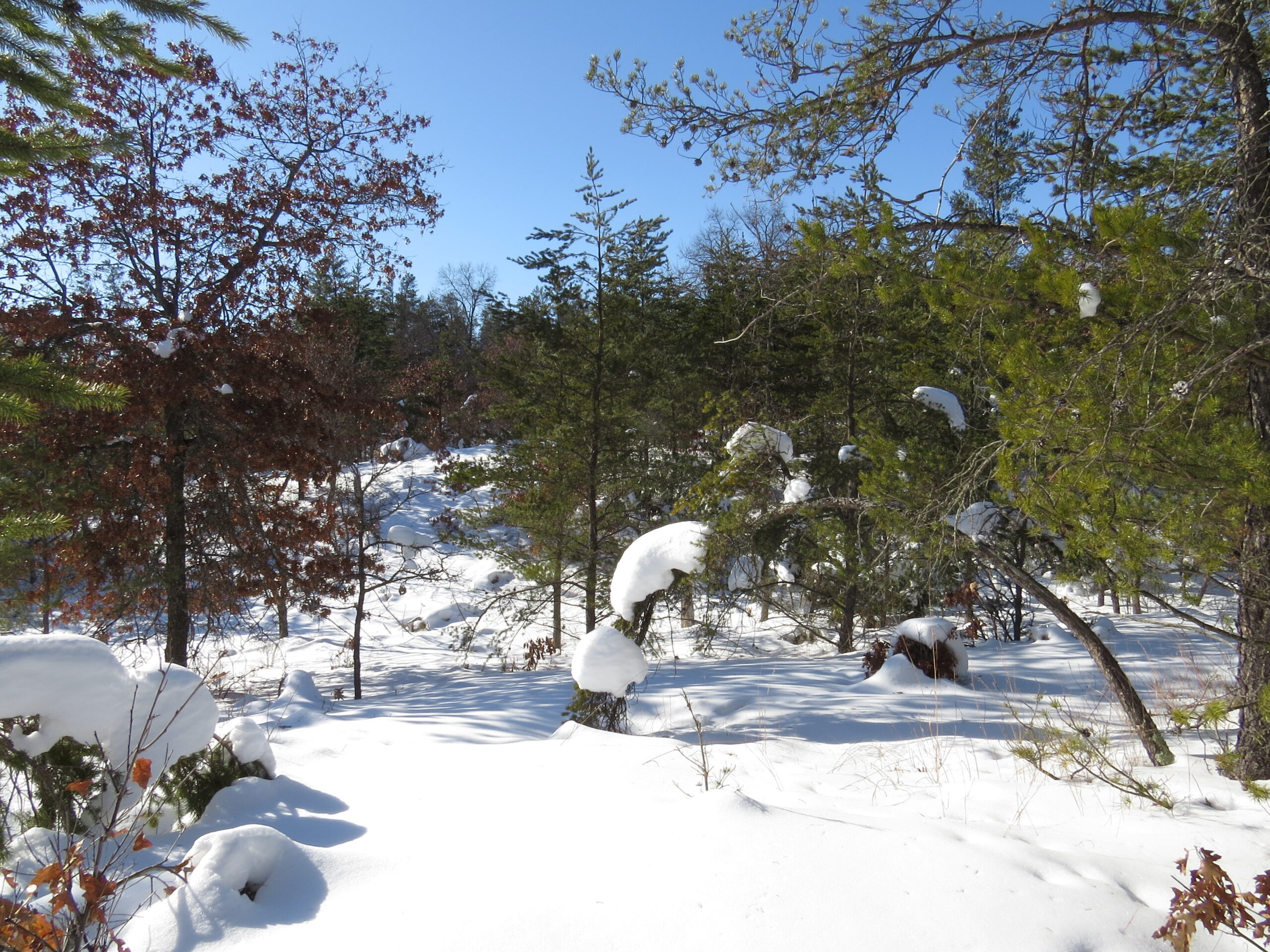
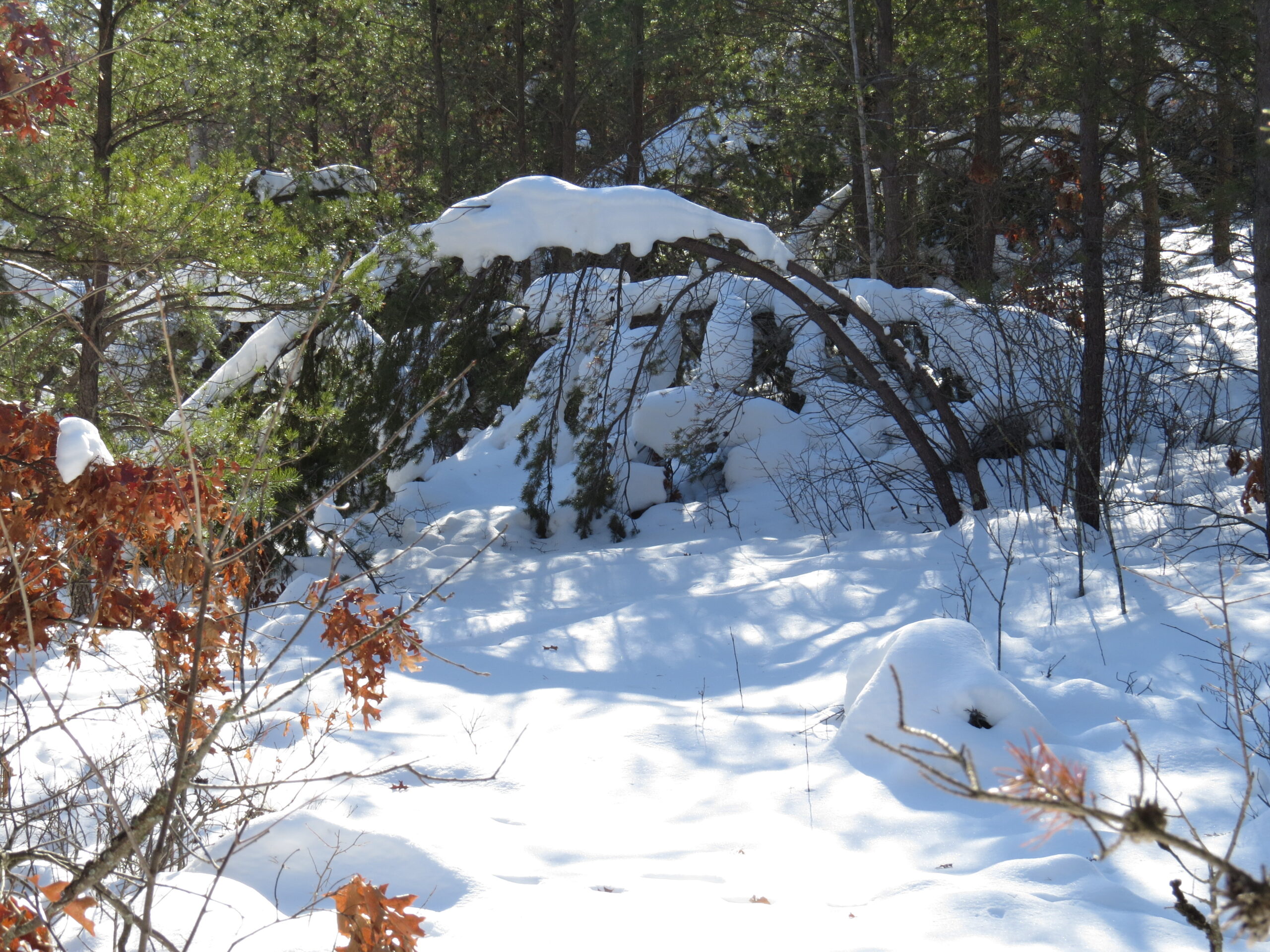
The day was beautiful, the snowshoeing was great, and all along the trail, there were trees in distress—so many of them.
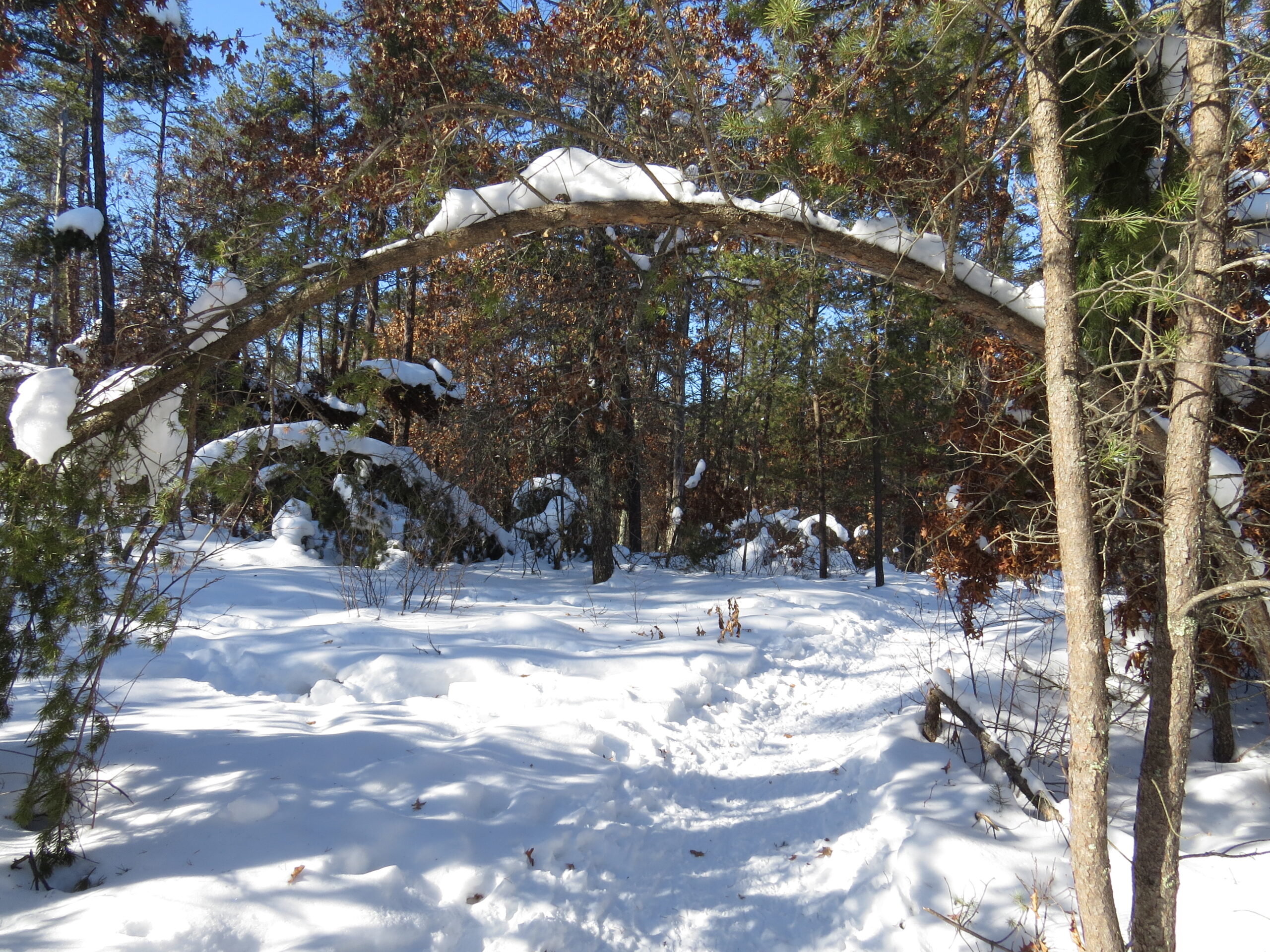
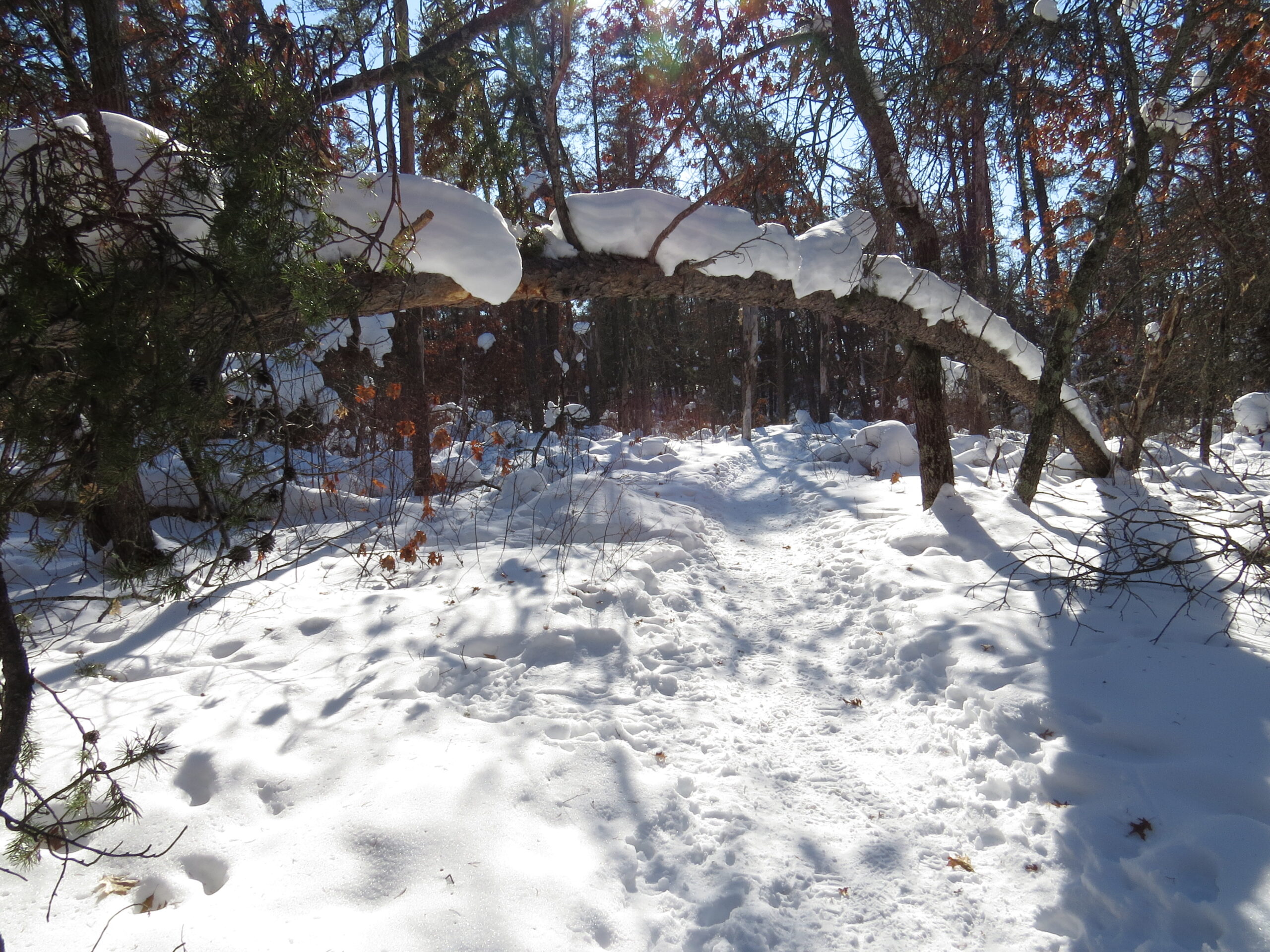
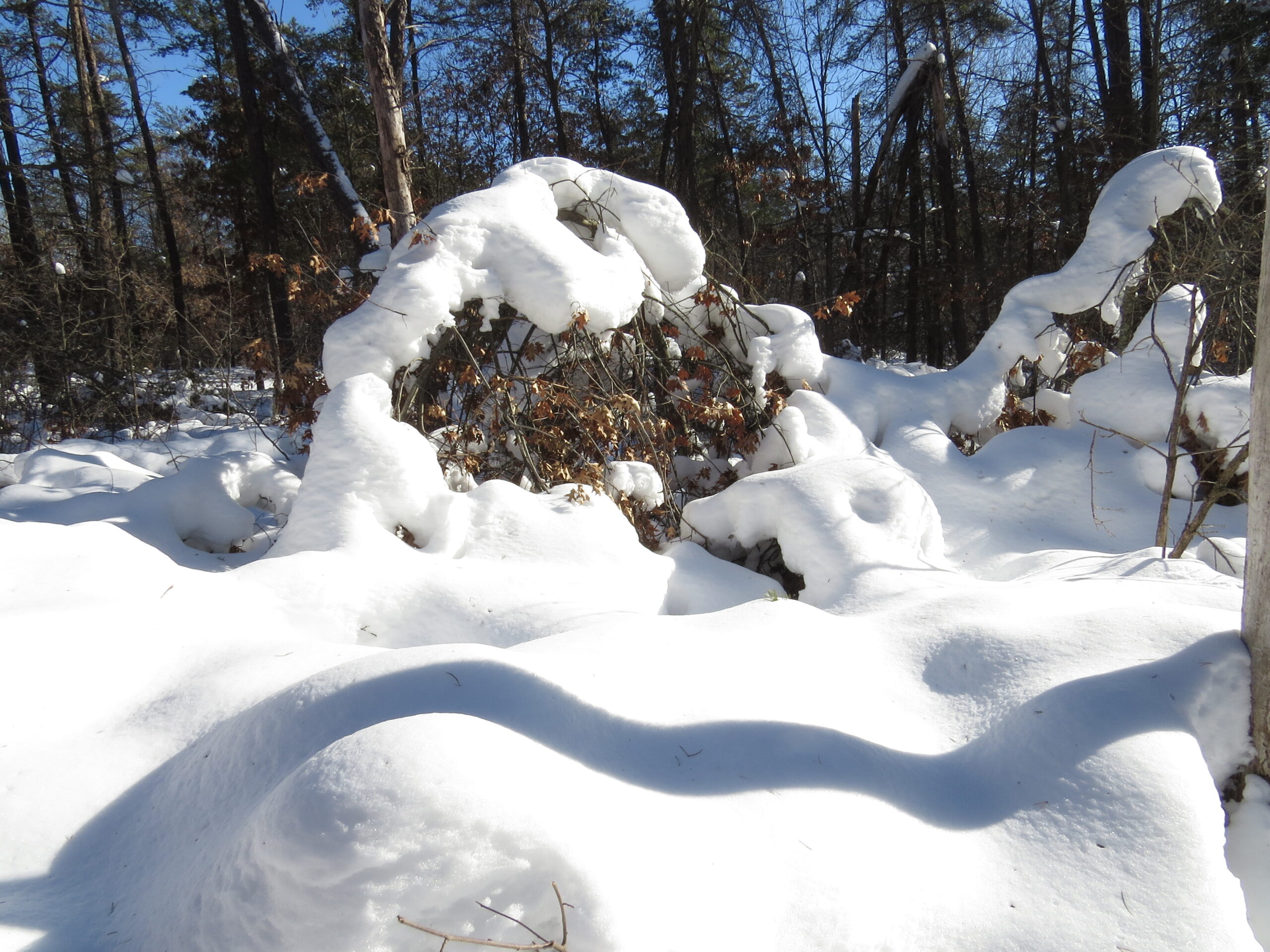
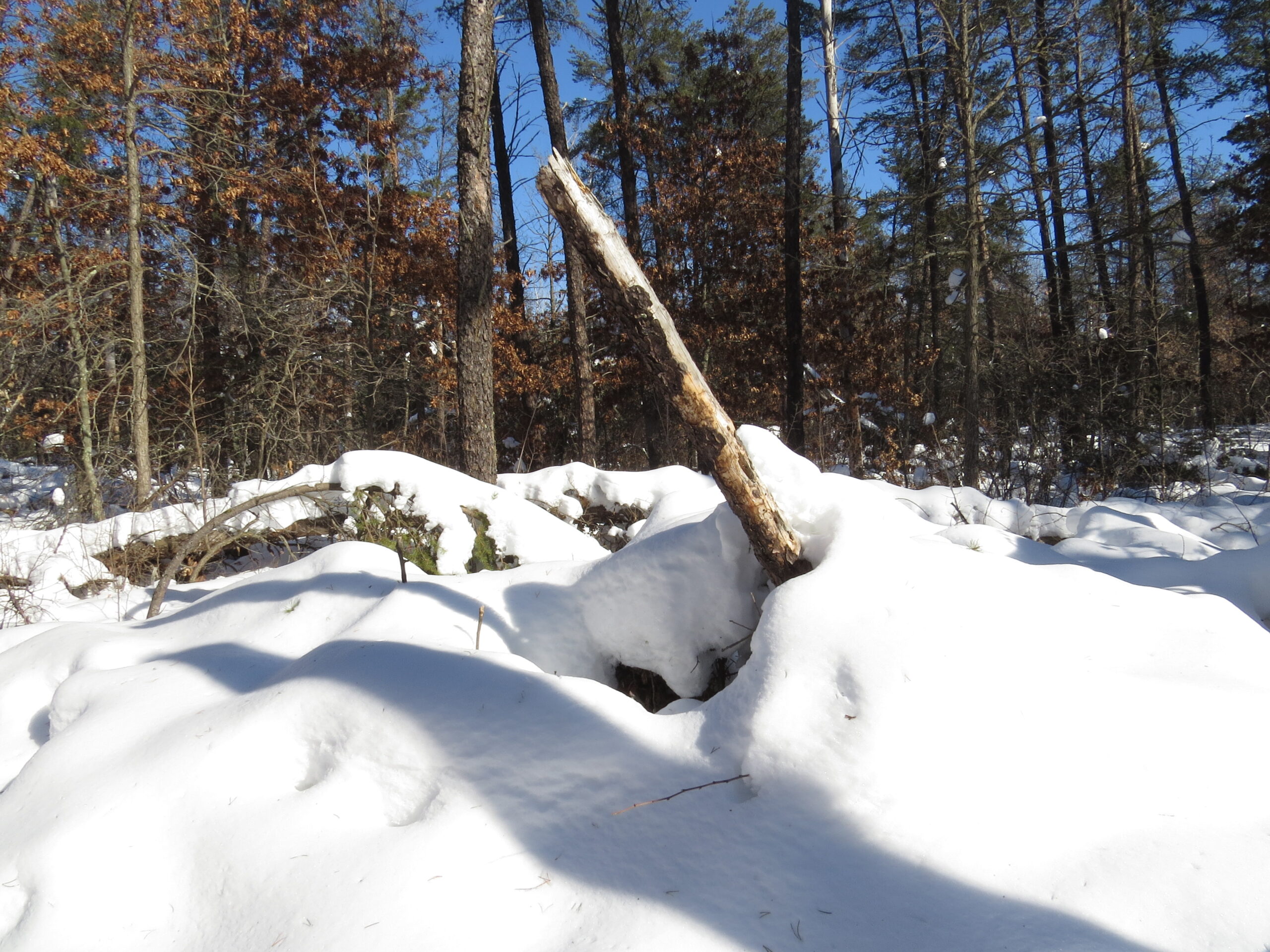
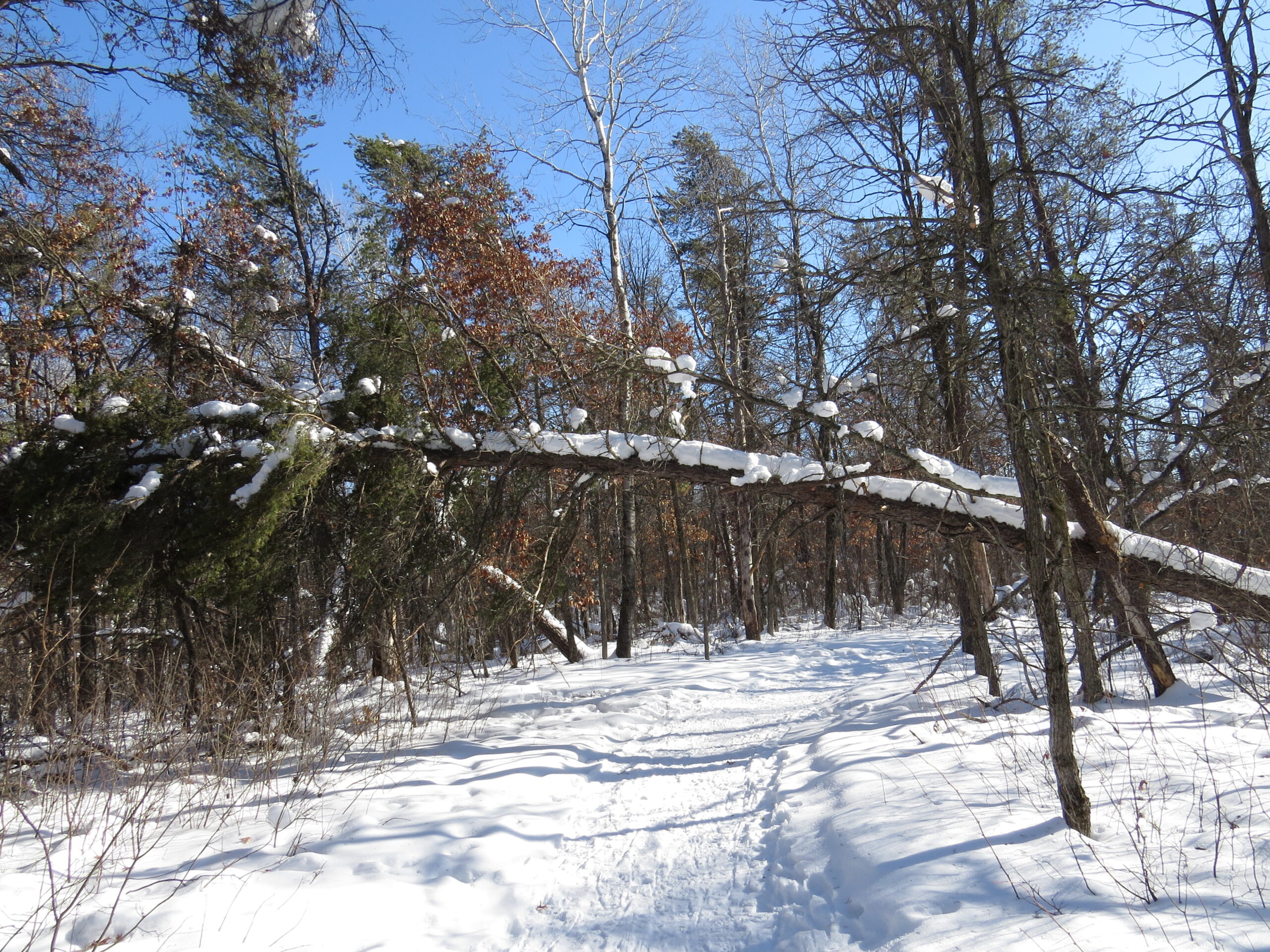
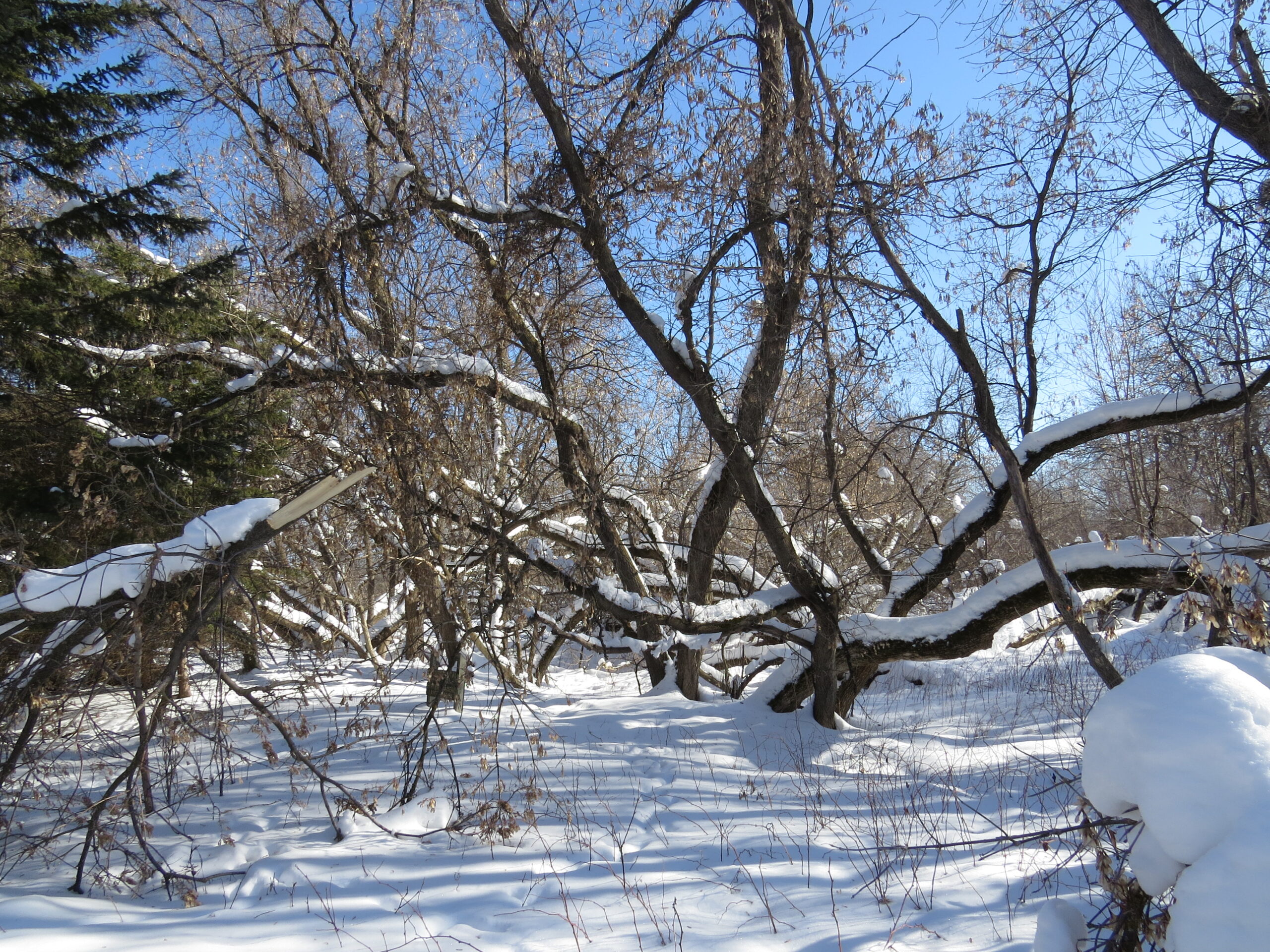
In the moment, I observed the large number of trees that were bent and stuck in the snow and made a mental note to return next summer to see if and how they were able to recover. But it wasn’t until a little later that I realized that I was like the struggling trees. When I had Lyme disease in the 90’s, I felt bent in pain and stuck in uncertainty, as doctors were still doubtful that Lyme existed in Missouri so weren’t fluent in helping me. Much suffering. When I subsequently endured depression, I weathered much distress while stuck in sorrow. Recurring Lyme, deaths, losses, people not believing me, believing in me, or helping me all added to my burden, piled on the snow that was already holding me down. And those were not even the worst of my anguished distresses. Those are still too painful to mention. I was frozen in place, looking out at the world around me from my unnatural position, wondering why I was one of those pinned down while all around me stood beings who seemed unaffected by the storms. Like the trees, was it my position or status, was it my environment, did I have a genetic proclivity, was it a previous disease or wound that allowed such suffering or was I just weak? “Bad is never good until worse happens” is a Danish proverb that infused my family culture with our phrase ‘it could be worse.’ Endure, don’t complain, don’t ask for help, suffer, bear the pain and hardship. So I did and continue to do so, but truth be told, I’m not even good enough at that, or I wouldn’t be writing this.
If we are to draw from the heart of suffering, as Churchill says, in order to find and express inspiration and survival, somehow I think I have done that. Nature has been my inspiration for all my life, and it gives me great joy to share that beauty and wisdom with all of you. Antoine de Saint-Exupery wrote, “…every struggle is a dance….” The dance includes comfort along with the distress, pleasure along with the pain, peace along with the anguish, delight along with the misery. If I cannot ‘shake off’ the suffering, at least I can reach out and cultivate those qualities that oppose it. So I look up to that pure blue sky to lift my spirit into freedom and possibility. May those of you in suffering do the same.
An Uncloudy Day
After a long January string of cloudy days, we awakened on Groundhog’s Day to an uncloudy day! From early morning until nightfall, the sun shone brightly on the snow from its angle in the azure blue sky. A whole day of sunlight after coveting peeks and partial showings through the cloudy days! It came with a price, though—the Arctic air that swooshed down from Canada. Not only was the air temperature at a nice round zero degrees, but a northwest wind flew in at seventeen mph making the wind chill more than 20 below. Ouch! I had a strong desire to be out in the sun, but the wind and brittle cold quickly turned my thinly-gloved fingers into icicles and stung my cheeks to rosy red.
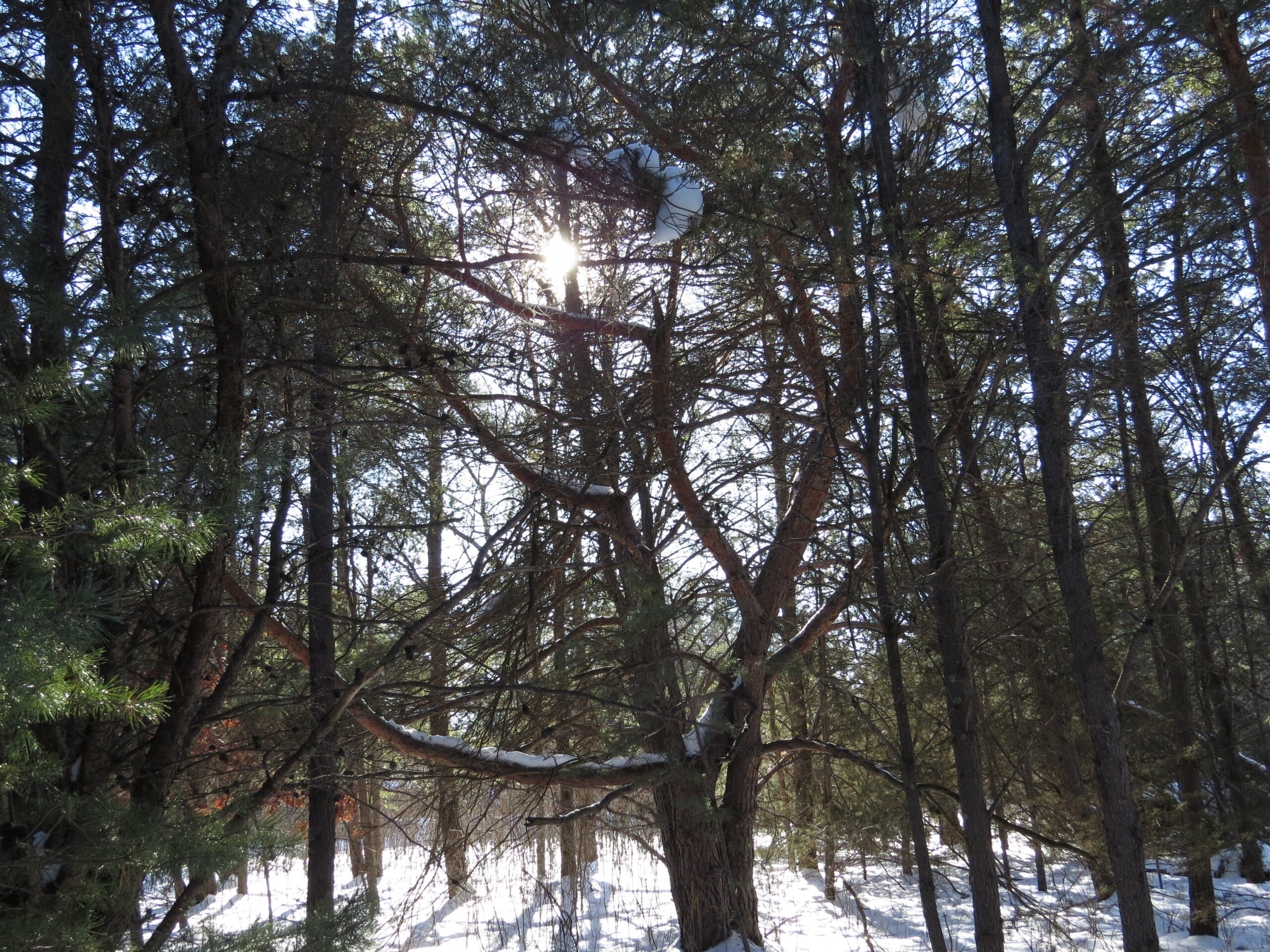
But the sunlight was glorious! It lit up places between the trees that had been somber with grayness for weeks on end. I had almost forgotten about shadows! The contrast of bright sunshine on the snow and the blue shadows was sharp and telling. The shadows help show the story of where we are and what’s around us.
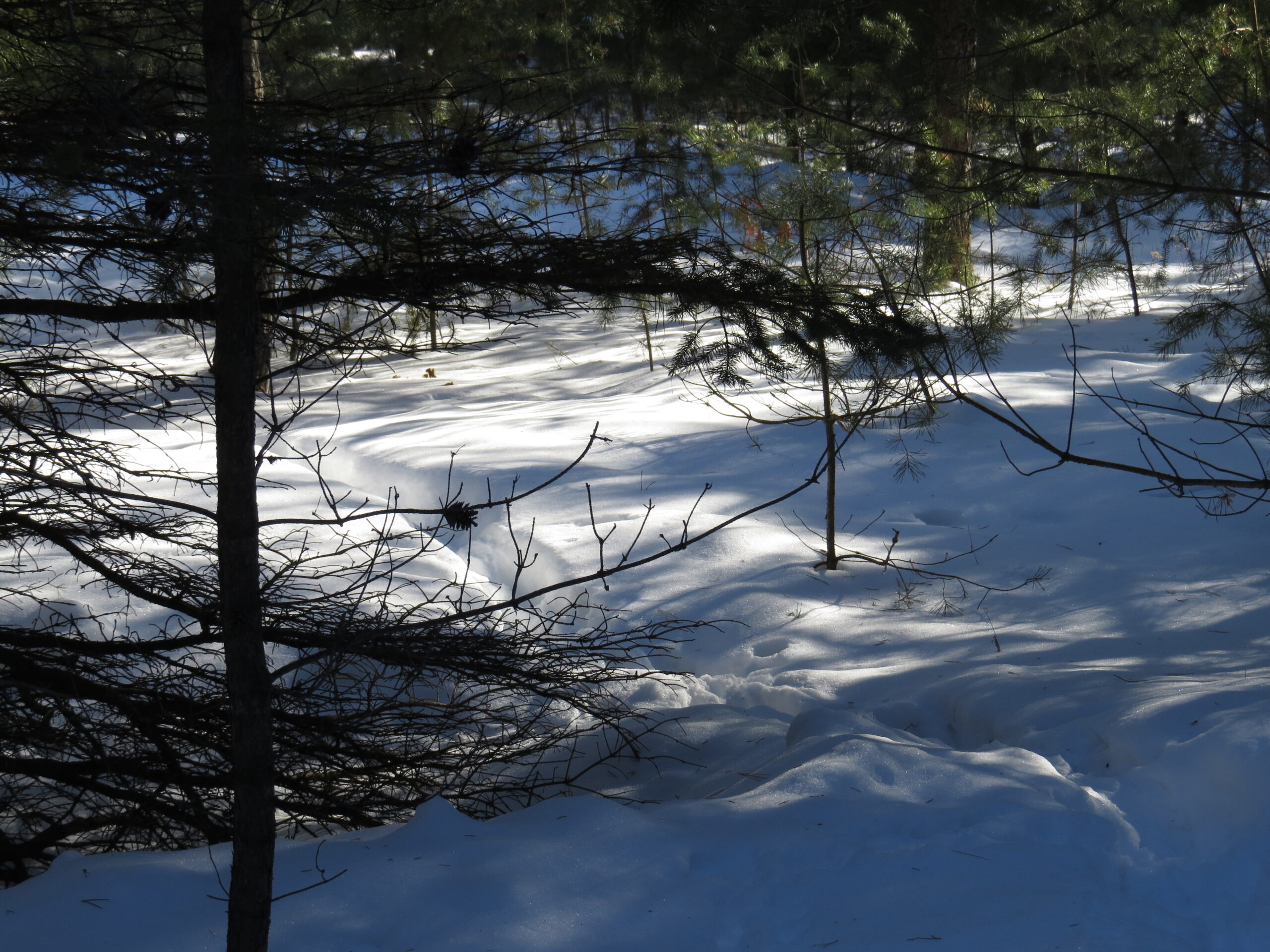
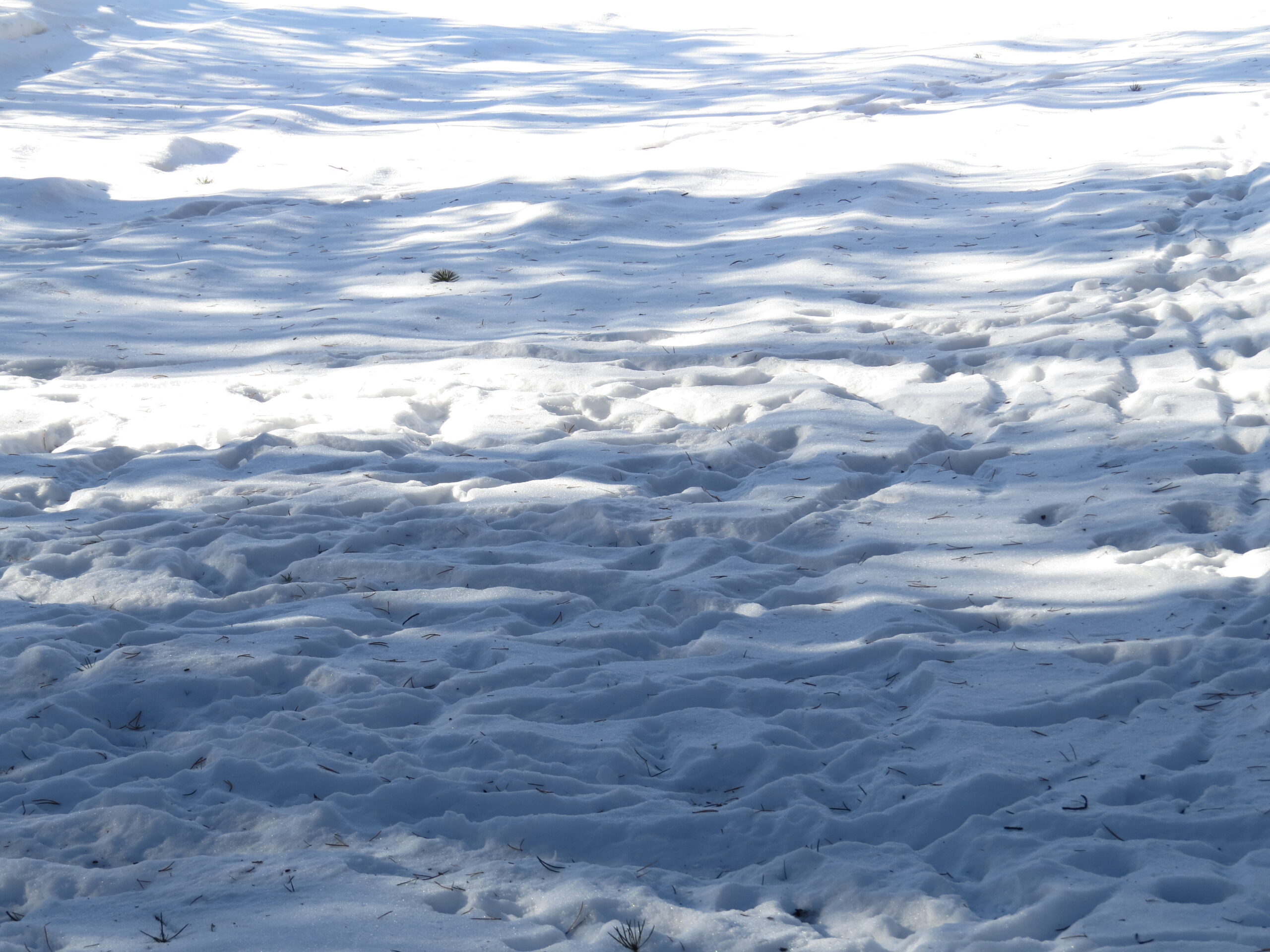
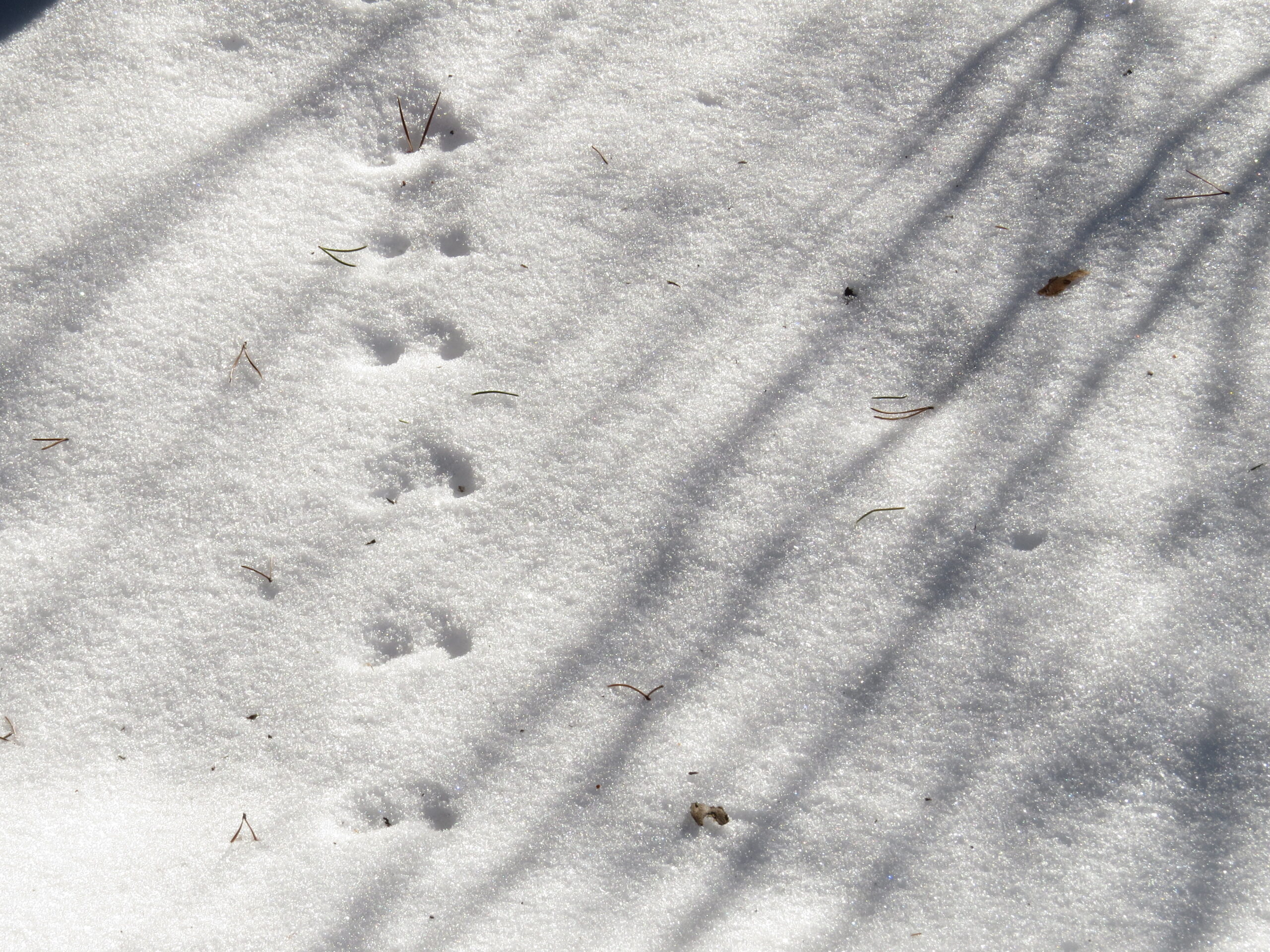
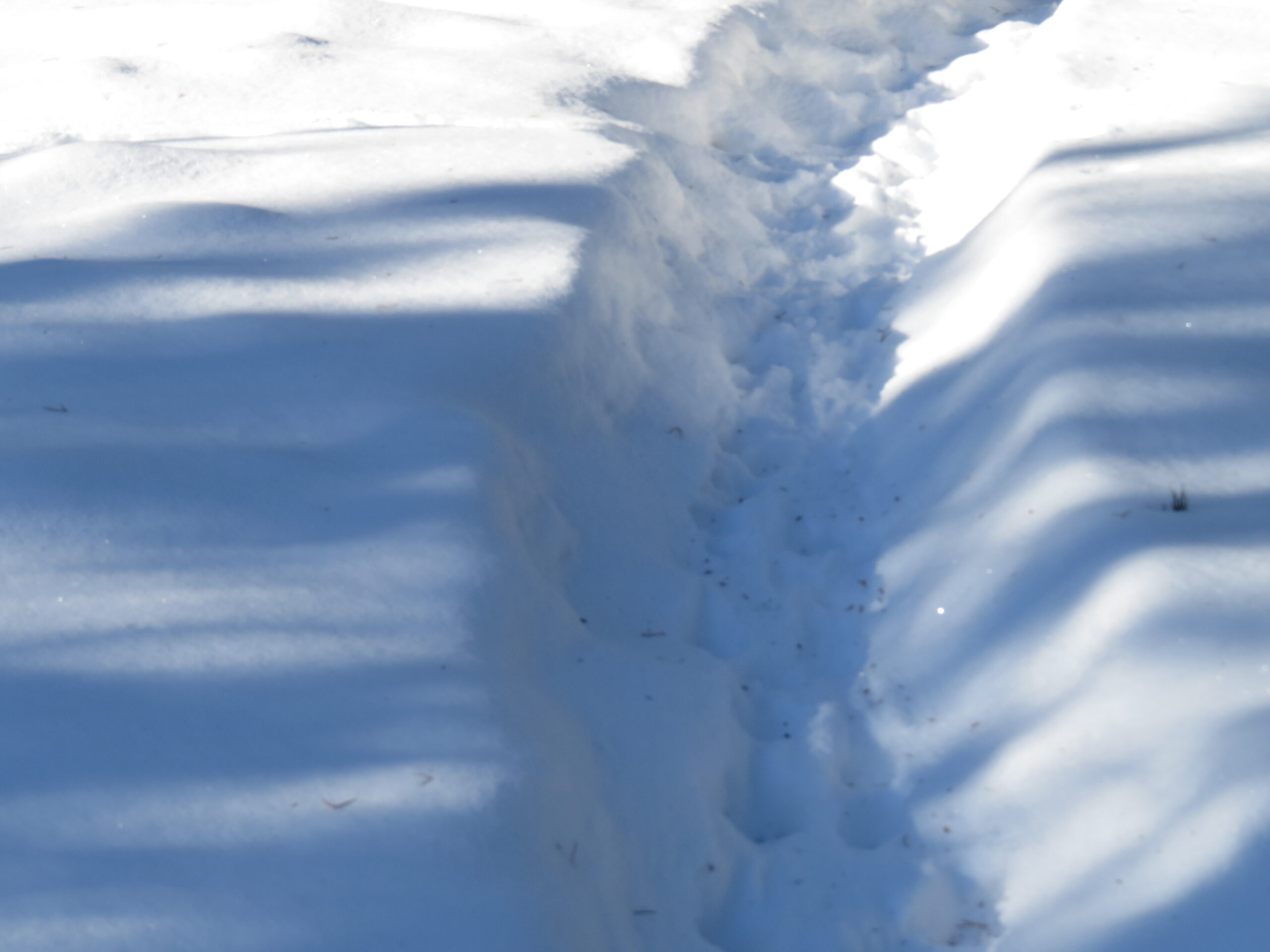
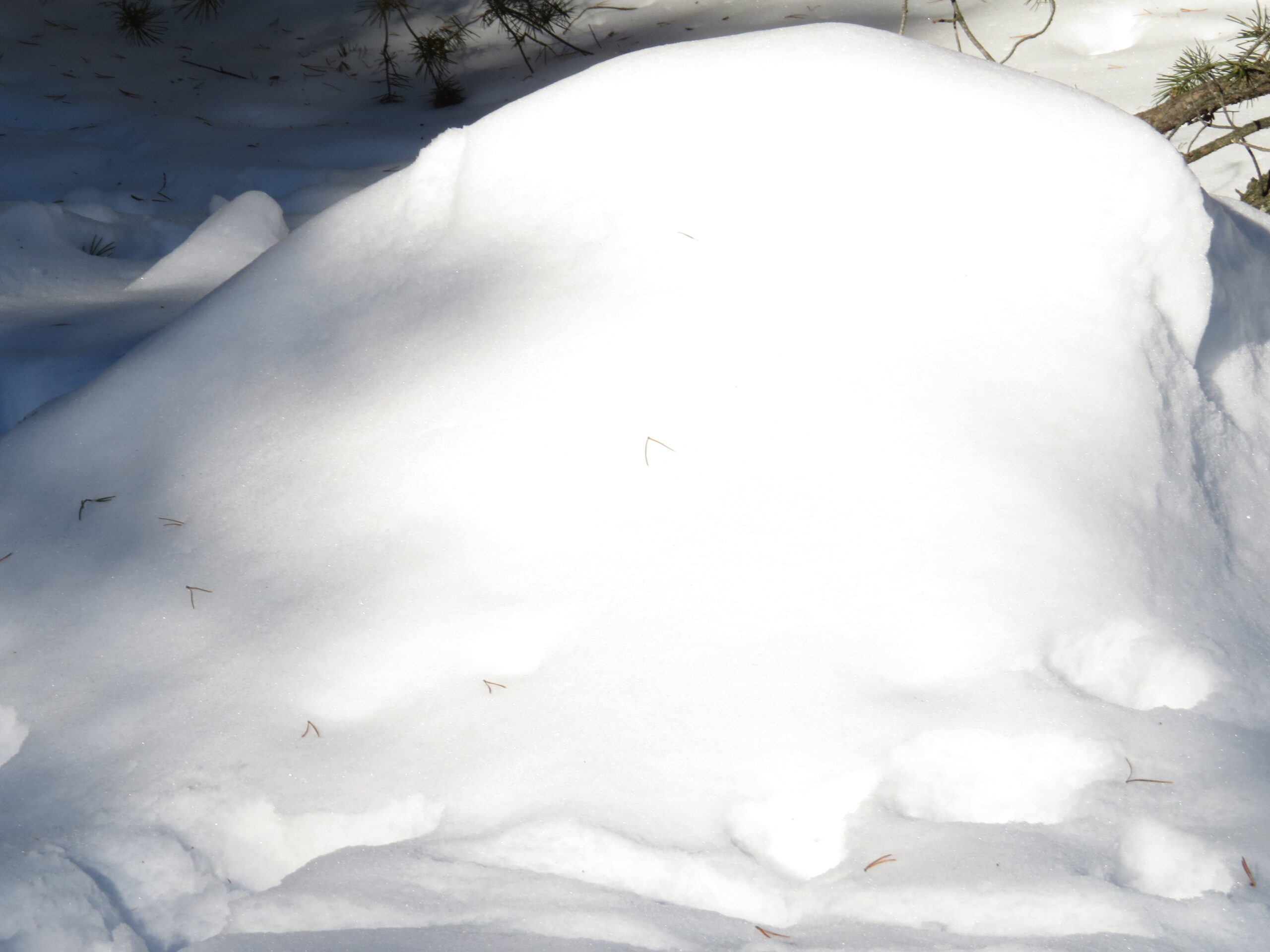
Out in the open, the snow was like the desert sand, sculpted and worn by the forces of wind. The blue shadows created their own designs.
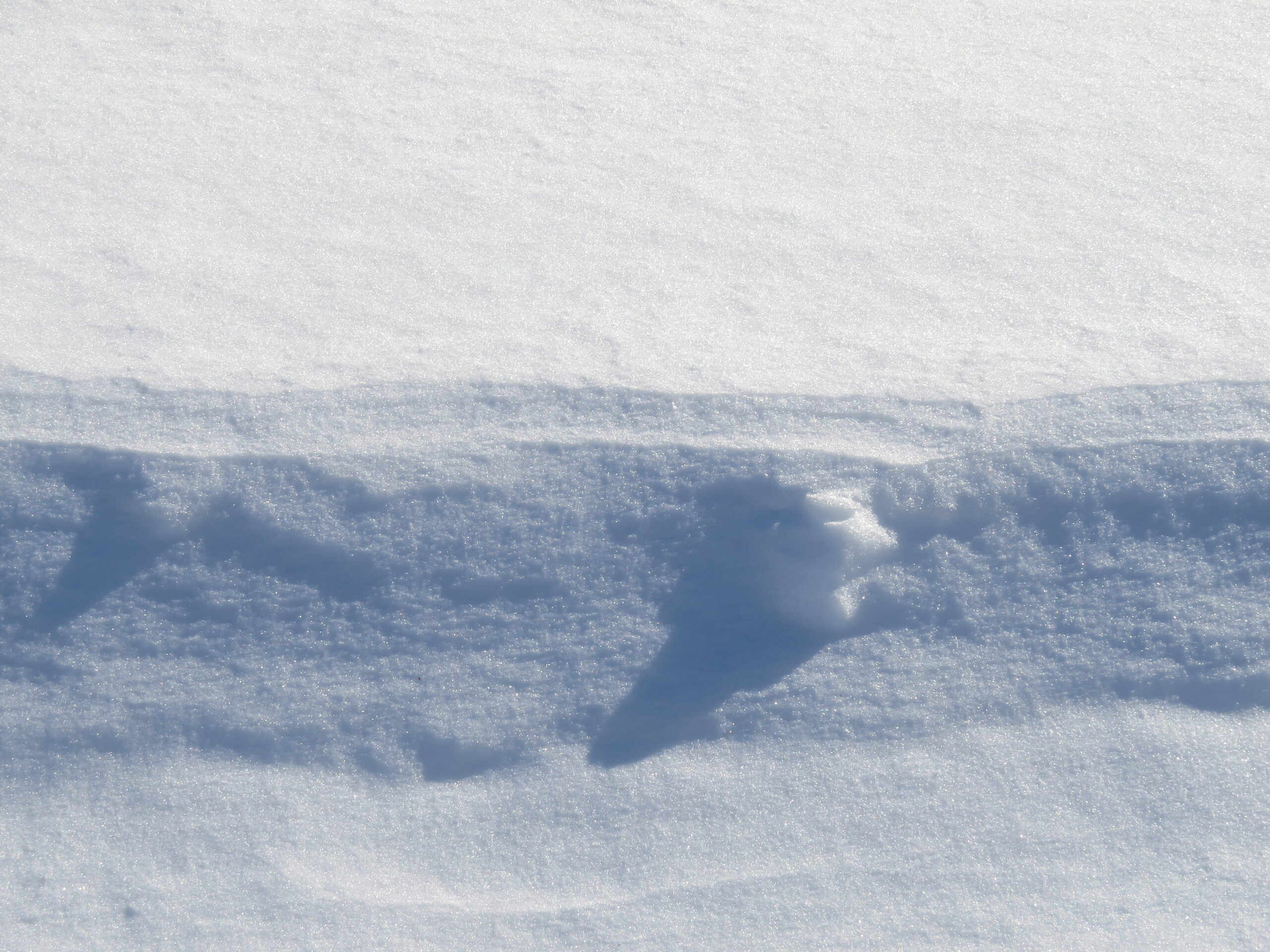
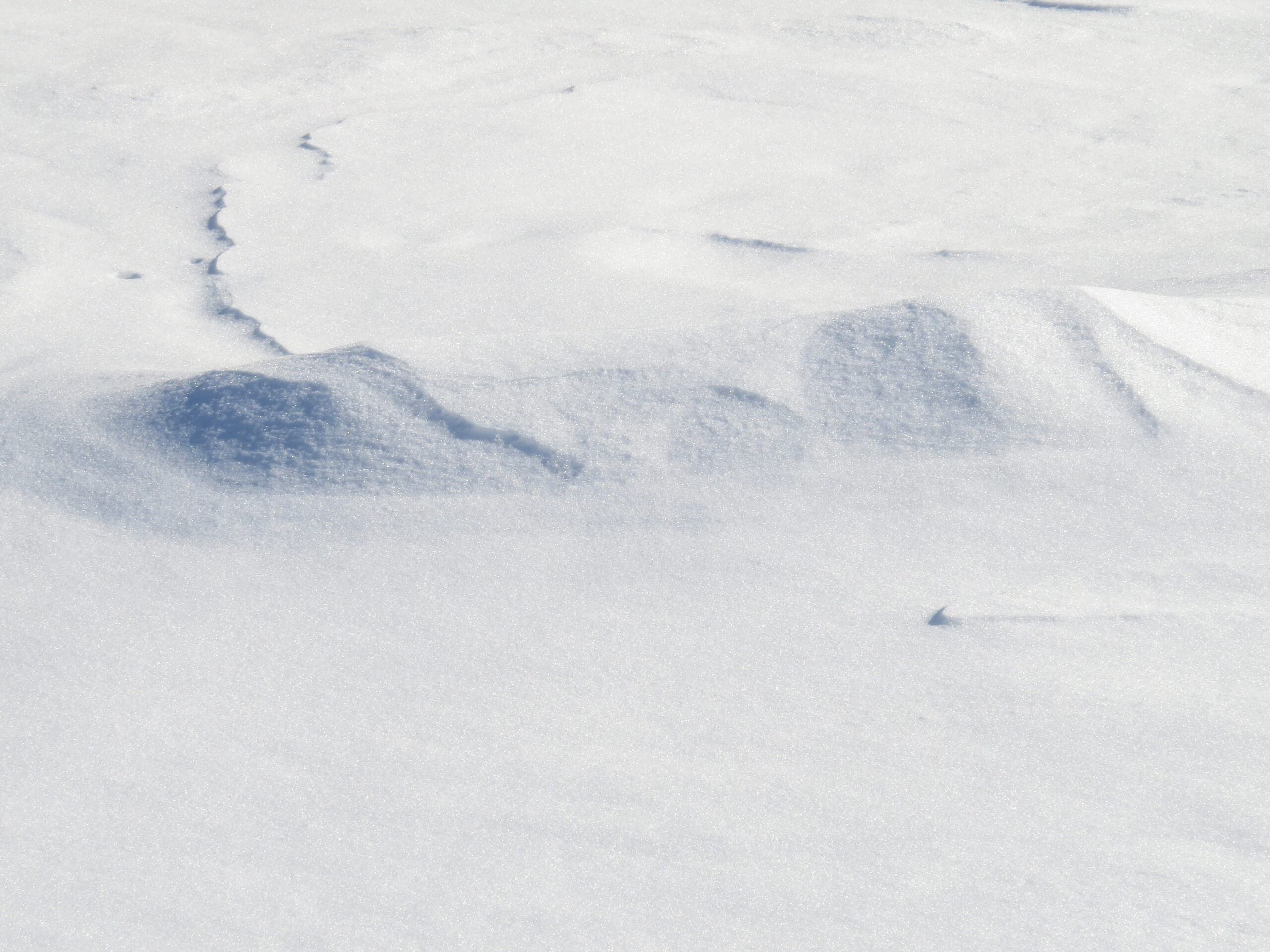
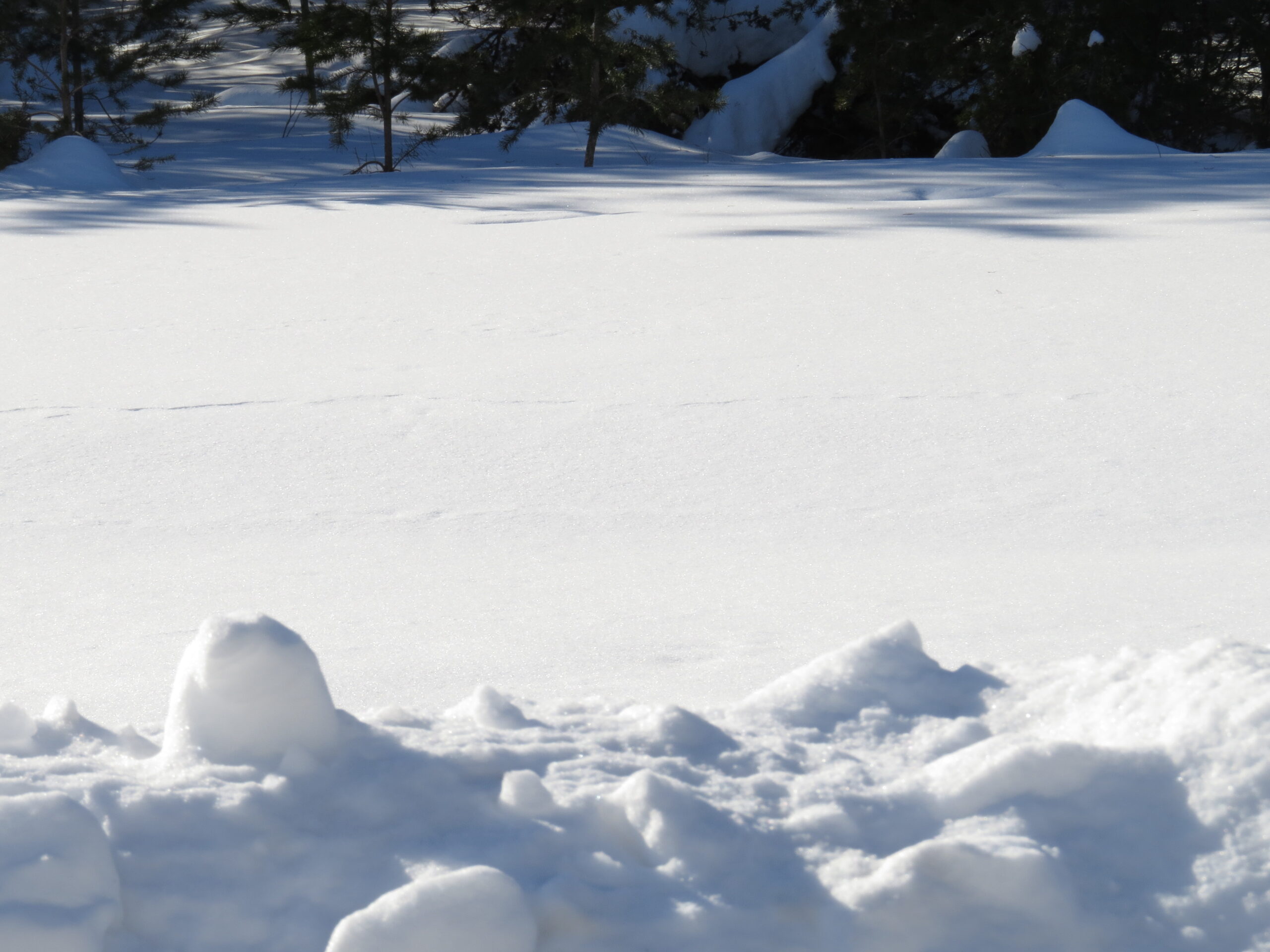
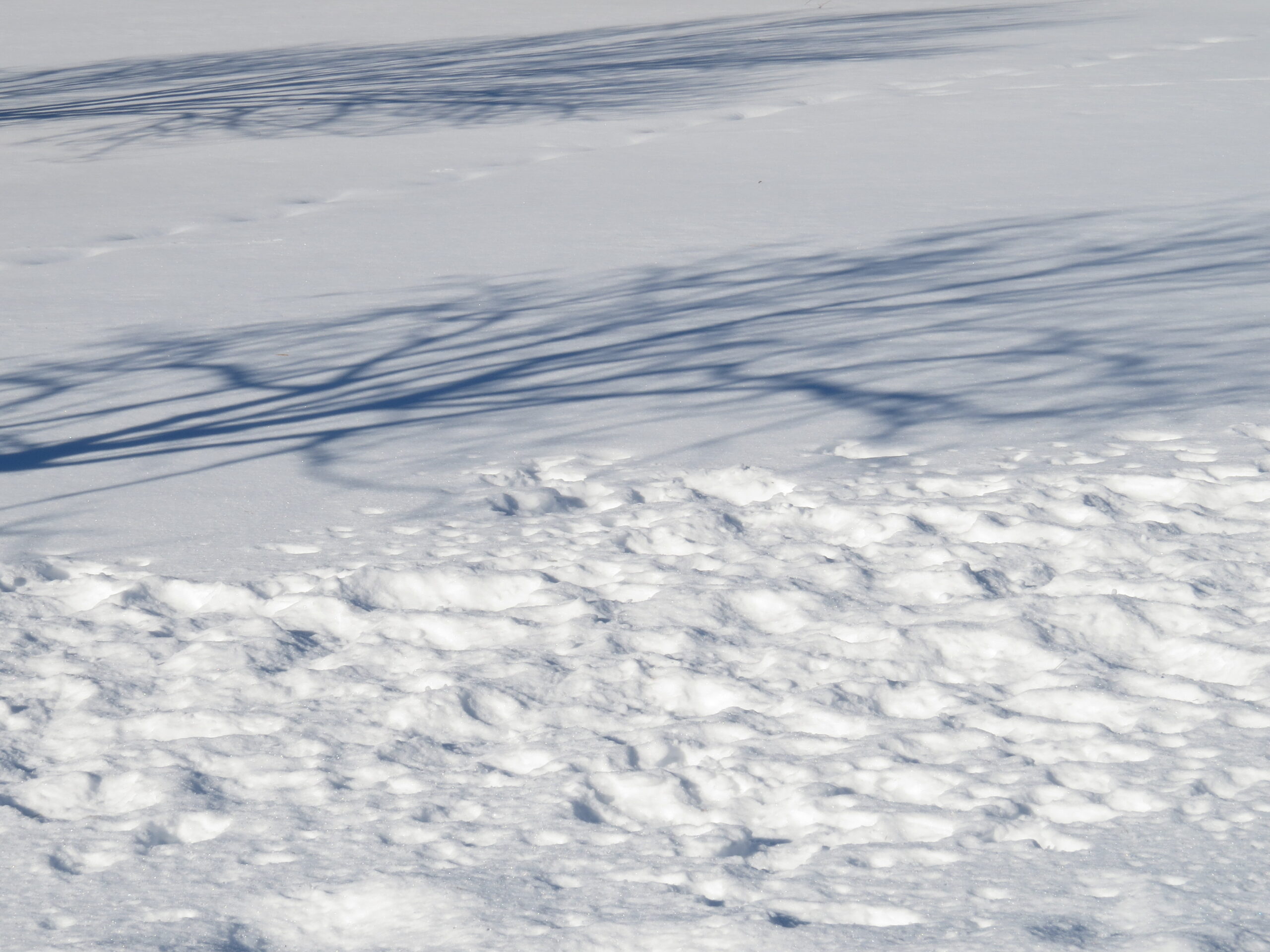
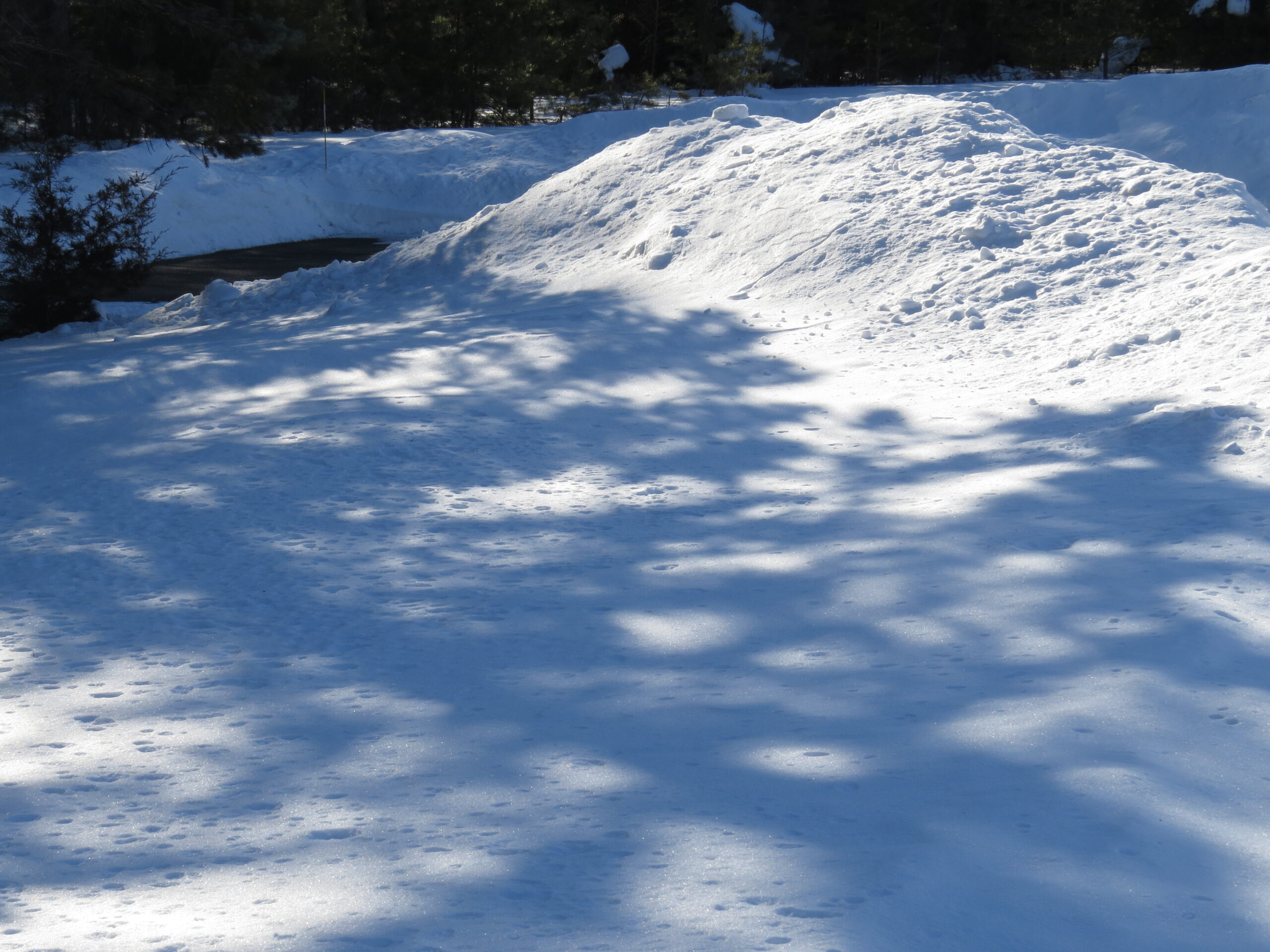
A ‘mountaintop’ of snow has covered the roof for months. But even in the chilling temperatures of the Arctic blast, the sun’s strength and warmth begins the slow snow melt.
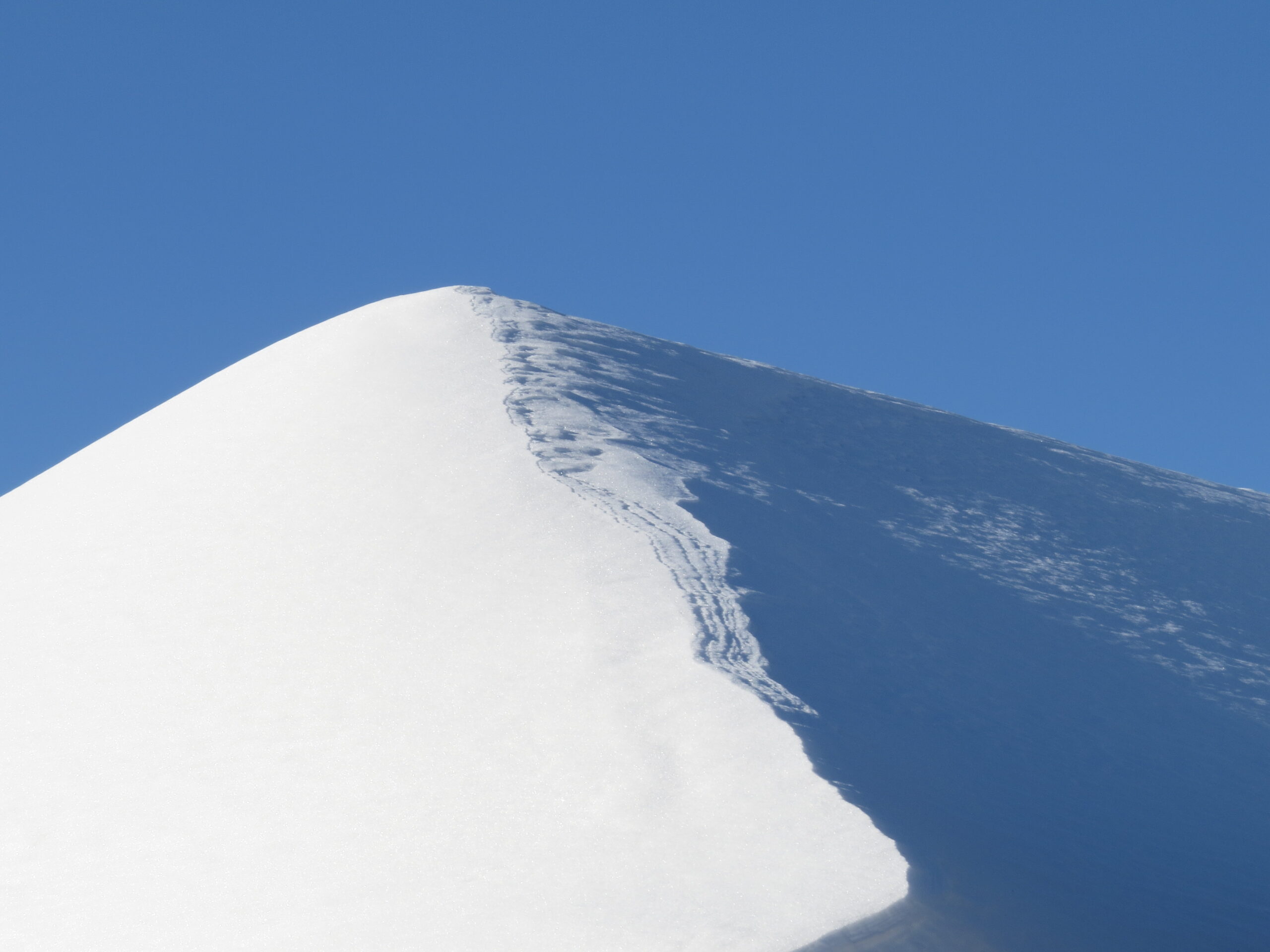
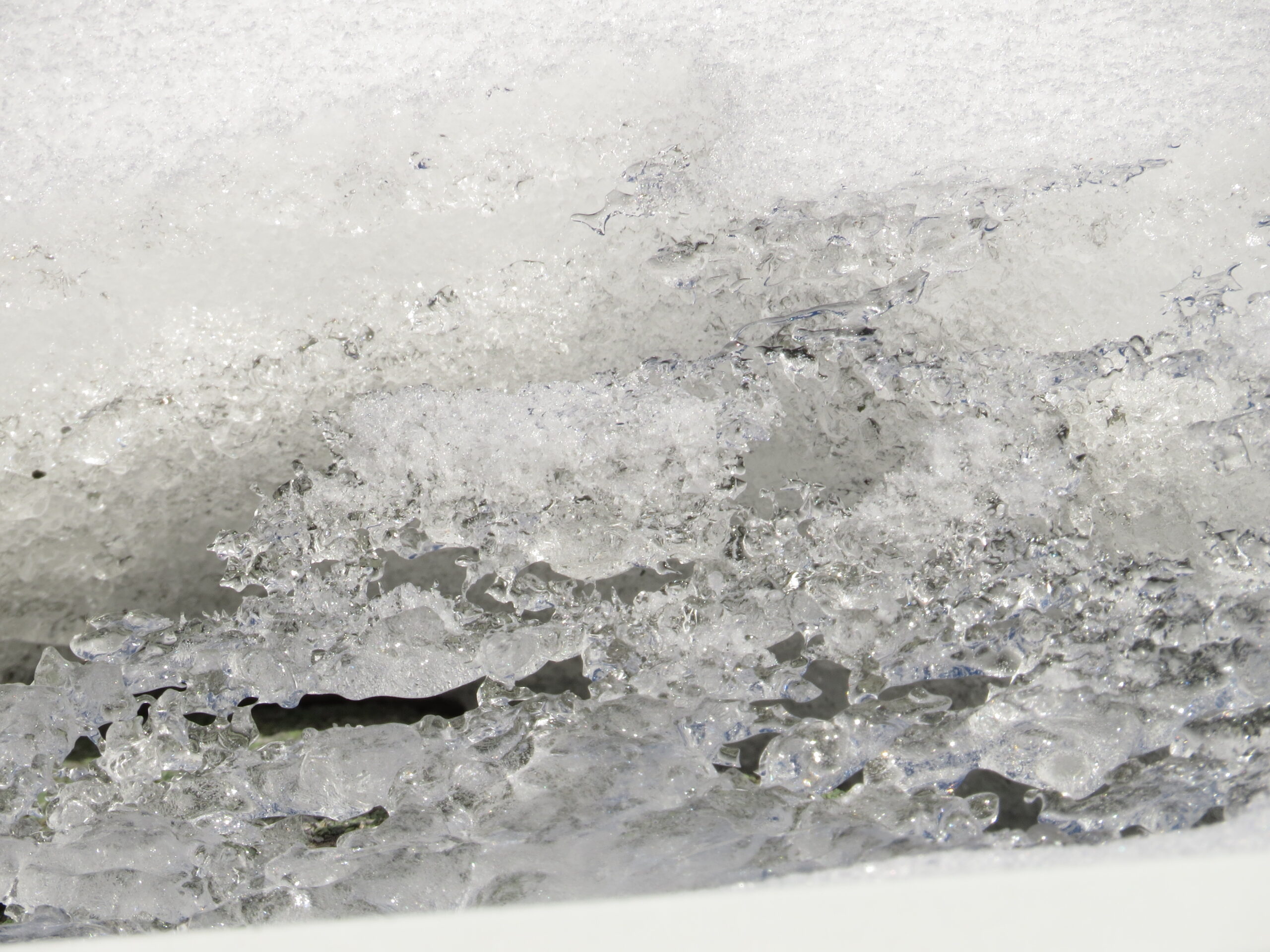
Winter in the North offers us an overabundance of conditions that challenge us to know who we are. How do we handle the uncontrollable cold and the harsh winds? What do we do with piles of snow and skids of ice? How do we integrate the cloudy stretches and the bright light and dark shadows? Where does it lead us? Where do we go?

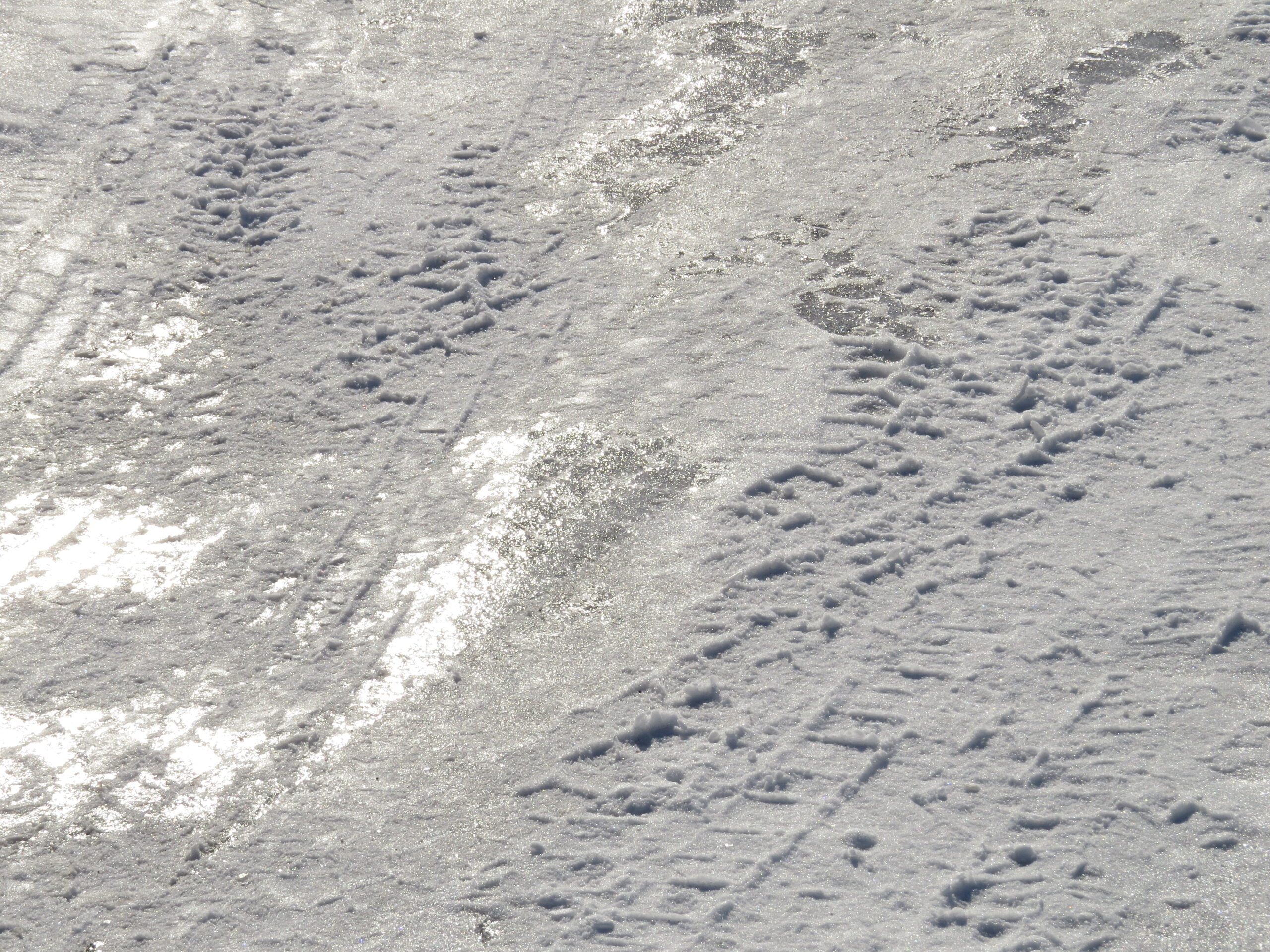
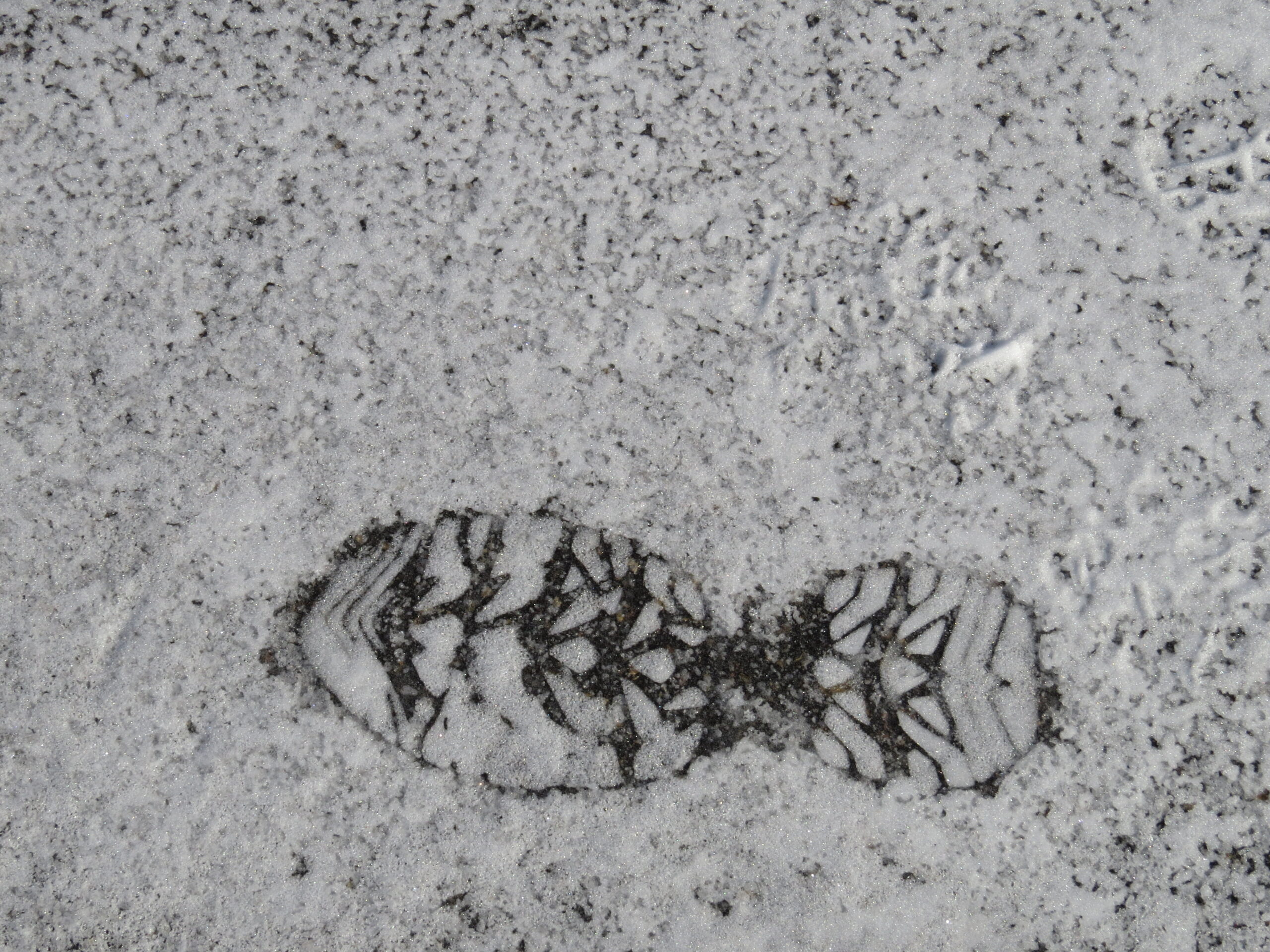
After so many cloudy, gray days, the sunshine was so welcomed and wanted. Isn’t it funny how we miss the ordinary things when we are deprived of them for any length of time? Not so funny though—we are fickle humans who want what we want when we want it. But it behooves us to love our lives no matter if the sun is shining or the clouds have hovered over us for weeks or the Arctic winds blast our bodies with frigid cold. This is not to diminish the physiological and psychological benefits the sun can bring us, but a reminder that we each have the power to bring those benefits into our lives, no matter what is going on around us. So it helps to be aware of the grayness, of the blinding brightness, of the blue shadows, of the bone-deep chilliness, and to become cognizant of how we interact and deal with them all. And of course, I don’t just mean the weather.
Chasing the Sun
I bought a Sting album a number of years ago because of one song—“Soul Cake.” I loved the traditional instruments, the Celtic sound, and the inference that cake could be good for one’s soul—“Any good thing to make us all merry.” I had never listened to anything by Sting before that. The album contains some Christmas carols, but I never listen to it until after Christmas, in the gray days of January. It is titled, “If on a Winter’s Night…” and explores the deep feelings and thoughts that the cold, gray Winter brings to our doorsteps. This year, after Mary’s death, the song that catches my heart’s attention is “The Hounds of Winter.”
“Mercury falling, I rise from my bed, Collect my thoughts together, I have to hold my head; It seems that she’s gone And somehow I am pinned By the Hounds of Winter Howling in the wind.” –Sting
Our goal last weekend was to find some sun—the gray, cloudy days had persisted and resisted any positive forecasts that promised a peek of the happy-maker. “If we go north, we should have some sun by about one o’clock,” I strategized, looking at the weather app. So we packed snacks and snowshoes and headed north to Crow Wing State Park near Brainerd. When we pulled into the cleared parking lot, there were no signs of dispersing clouds, let alone a peek of sunshine. Still hopeful, we strapped on our snowshoes and followed the Red River Oxcart Trail along the Mississippi River.
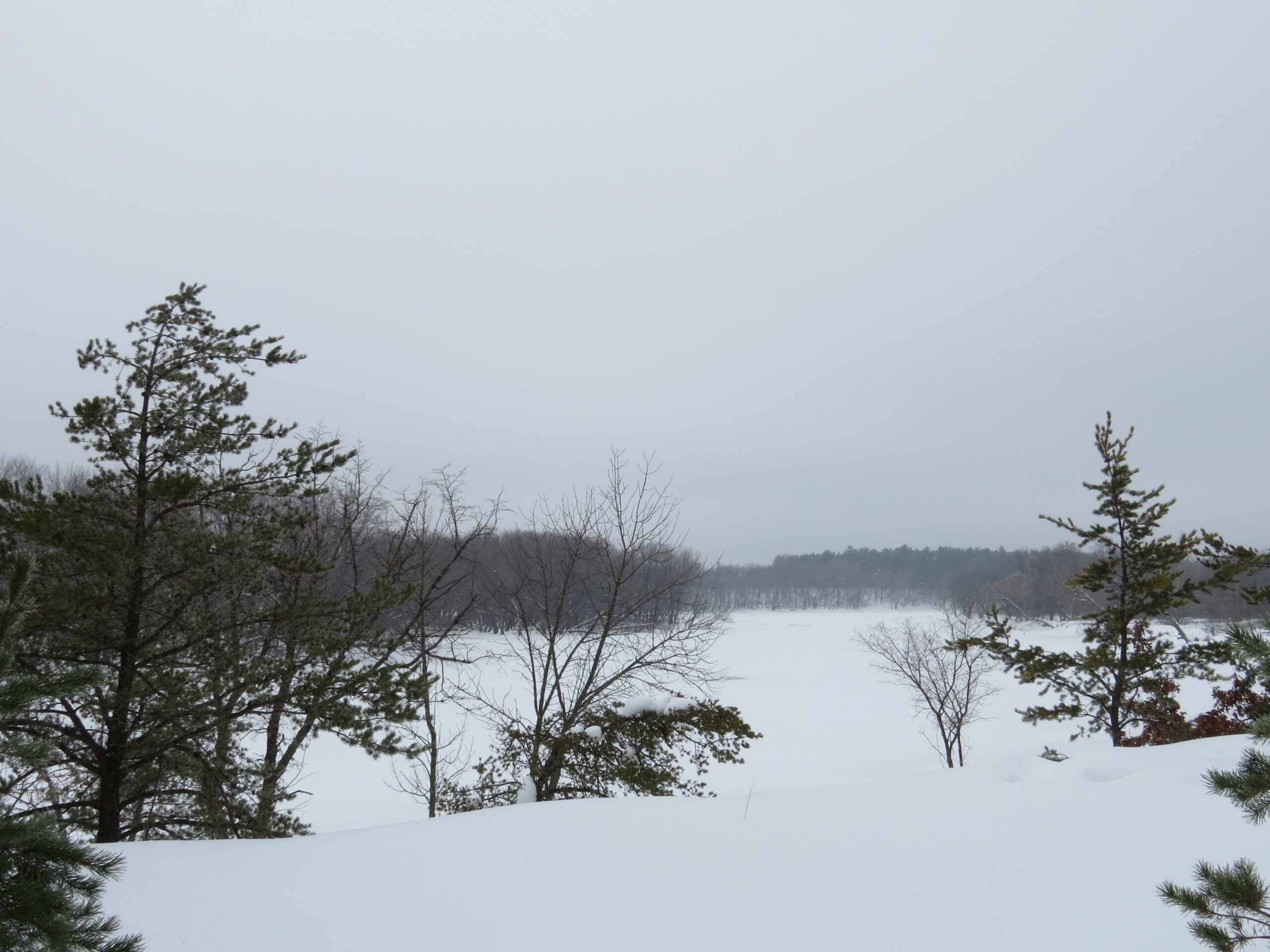
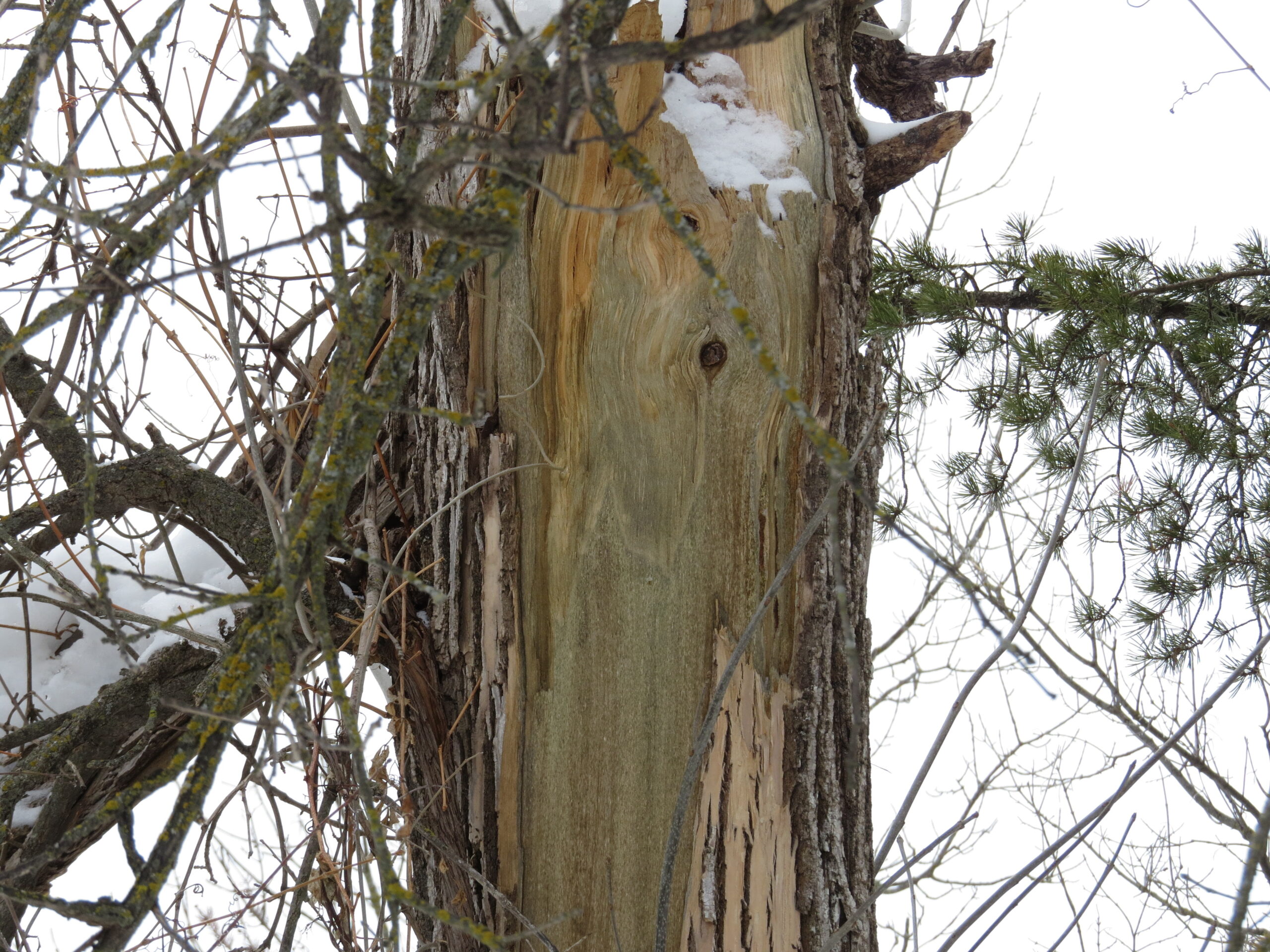
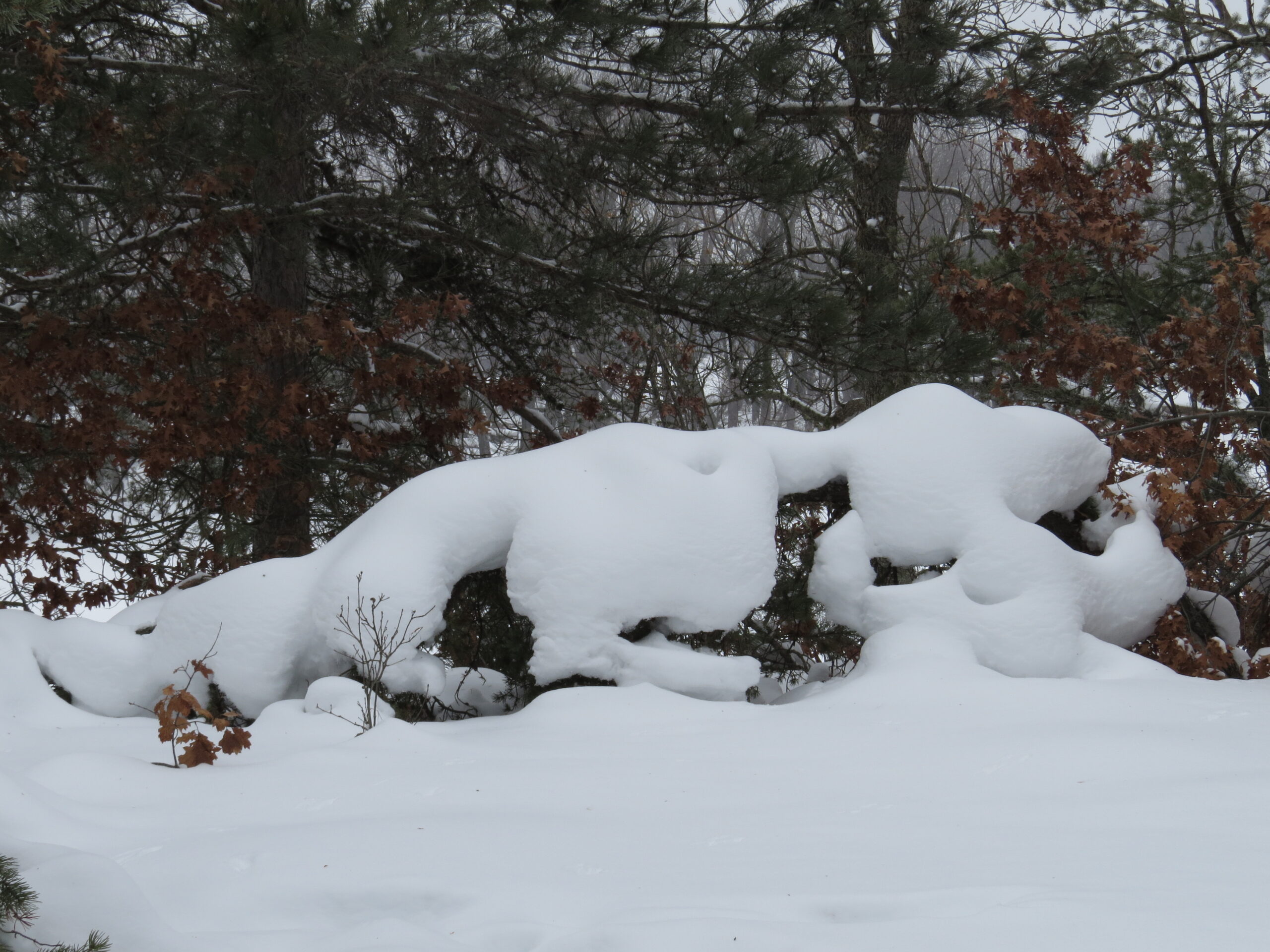
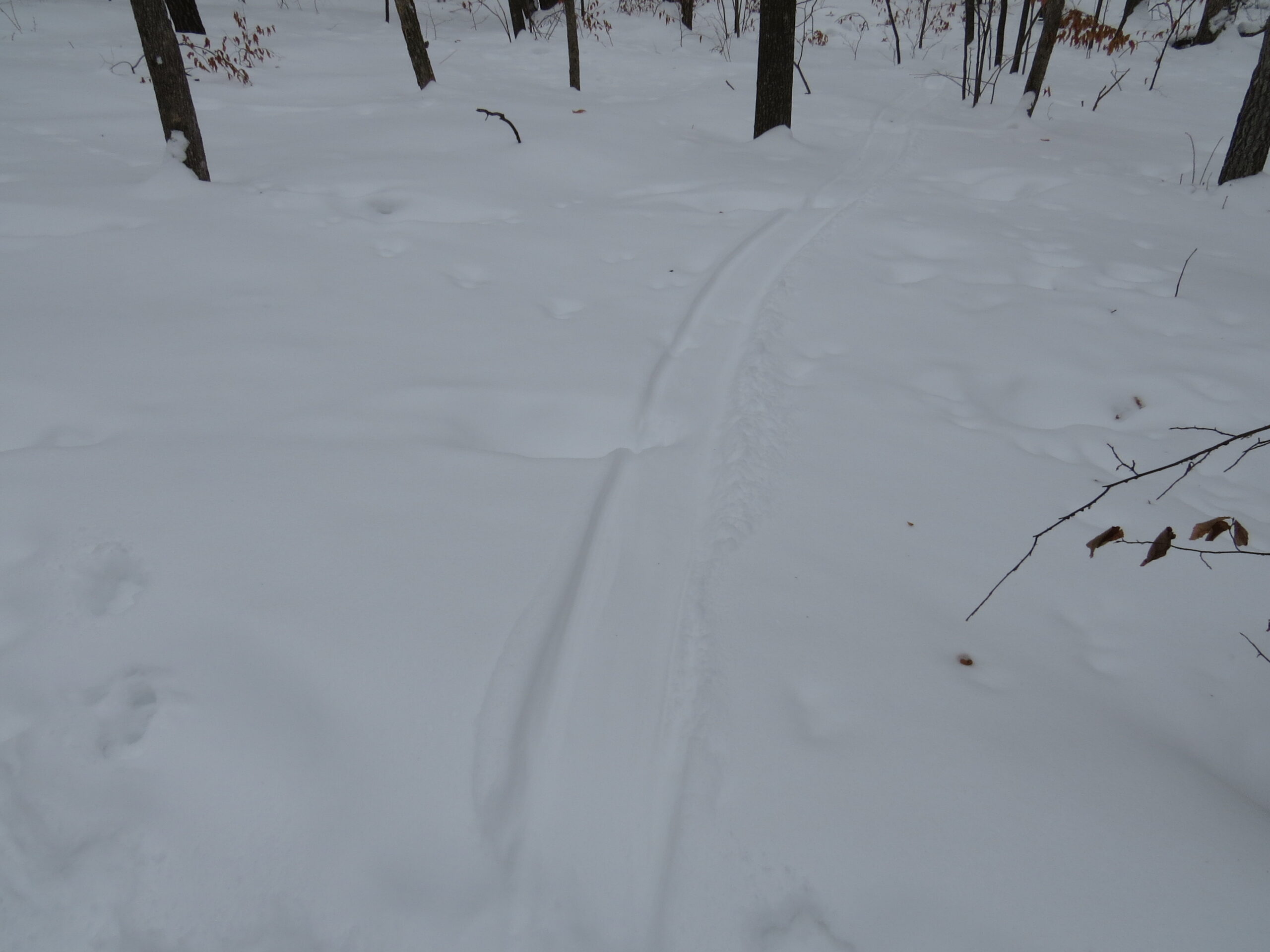
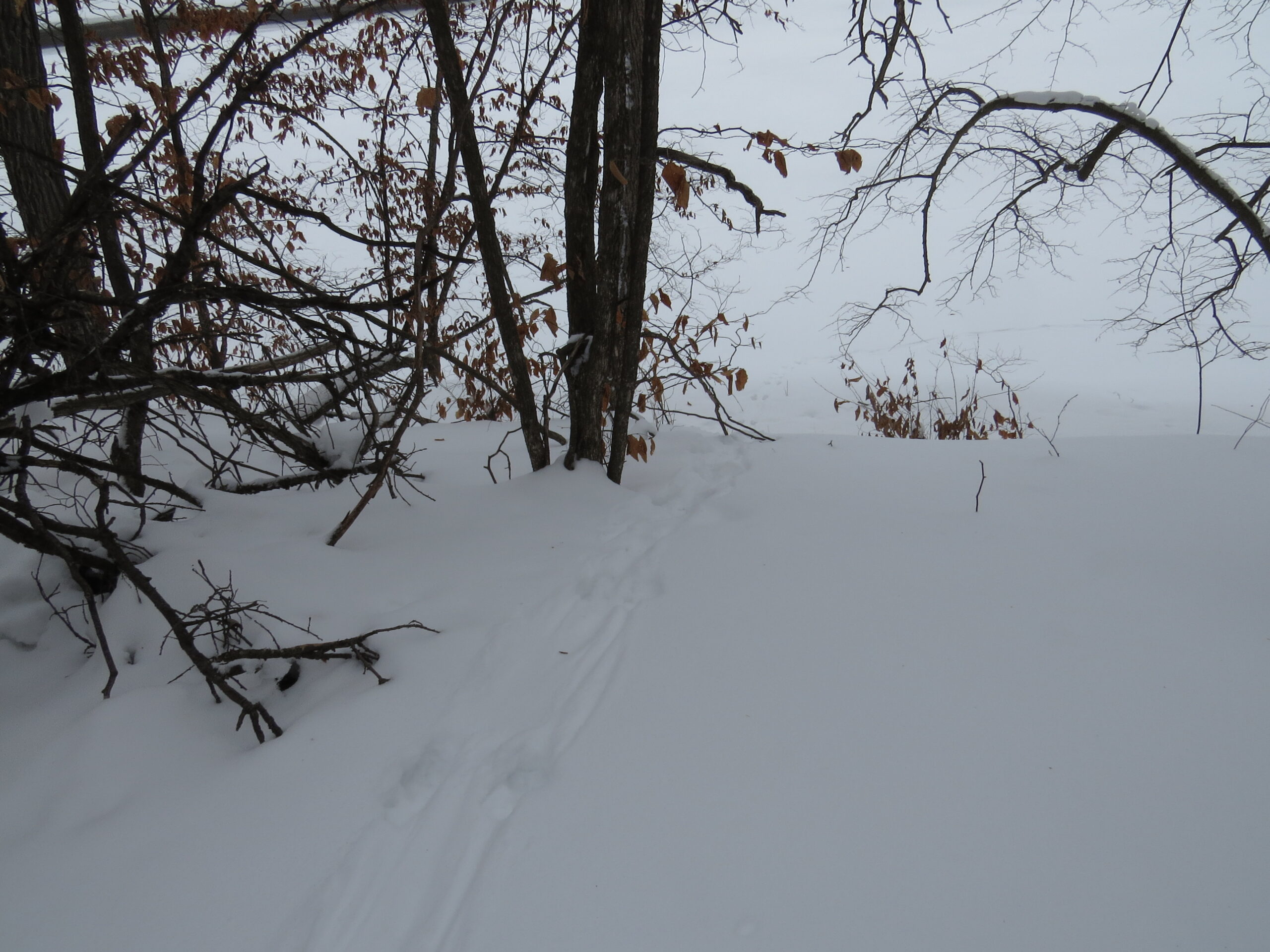
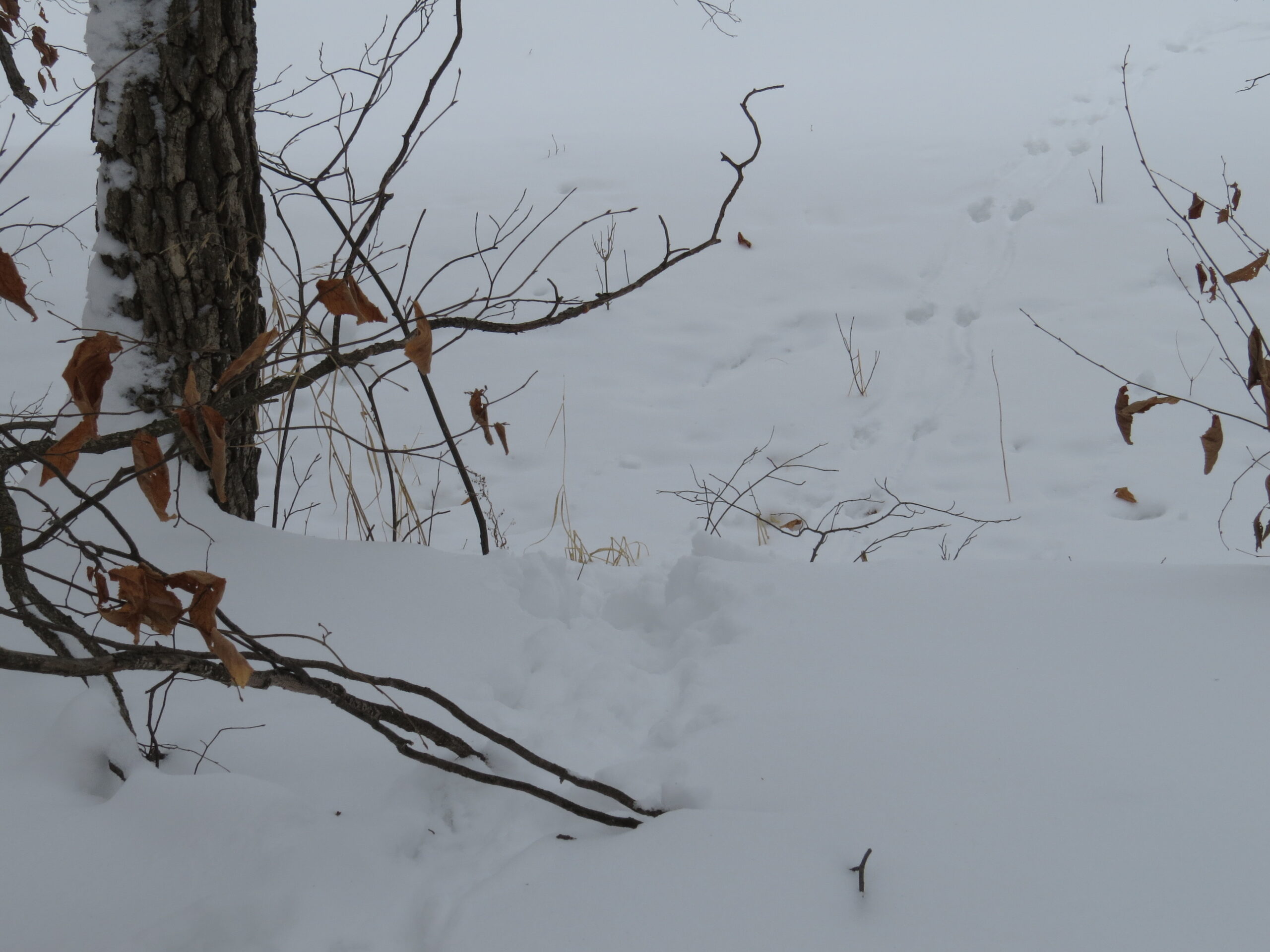
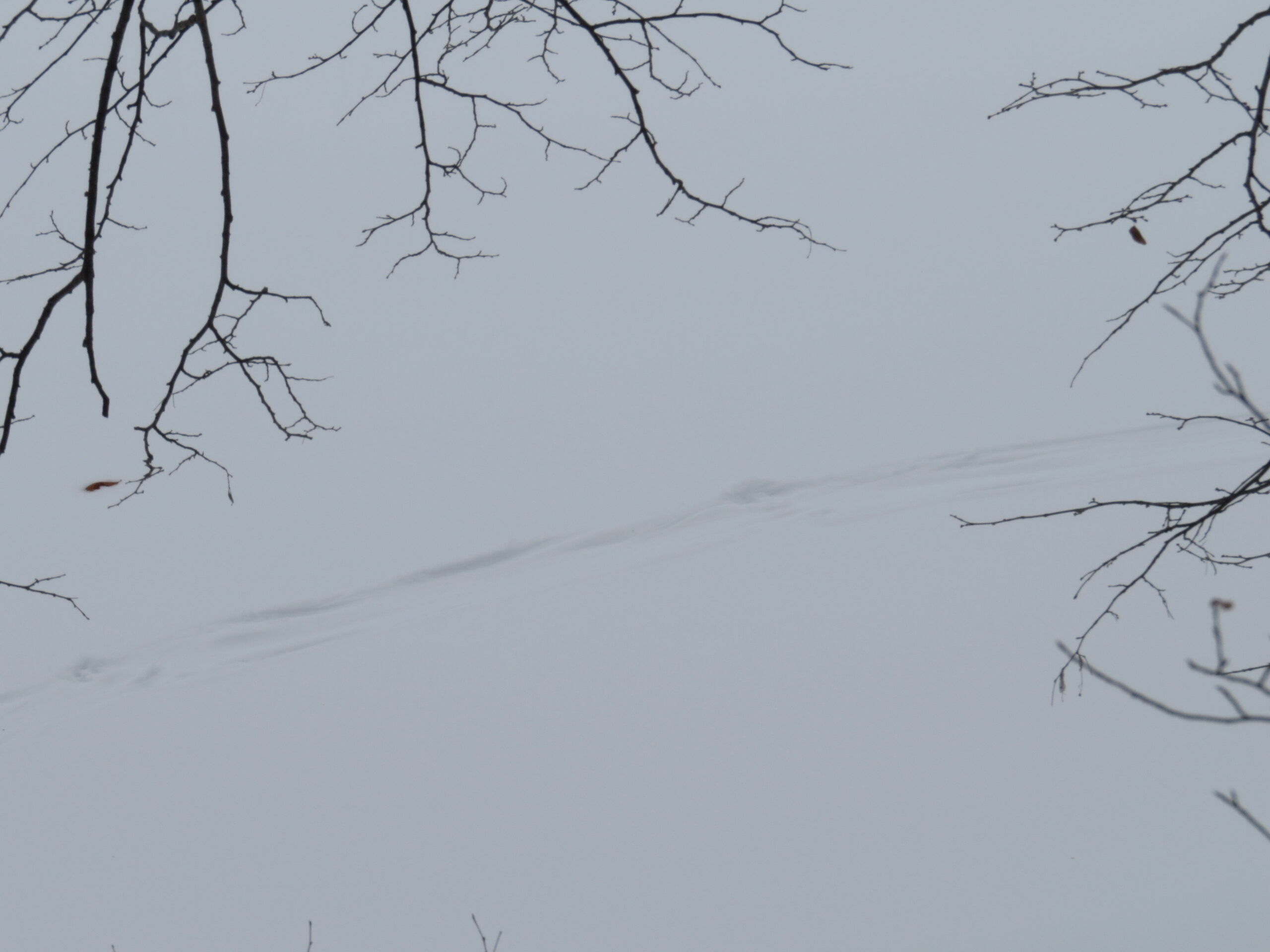
We were not far along on the trail when I saw a sliding track in the snow. Alternating footprints were on either side of the slide—River Otters had been having some fun in the snow!
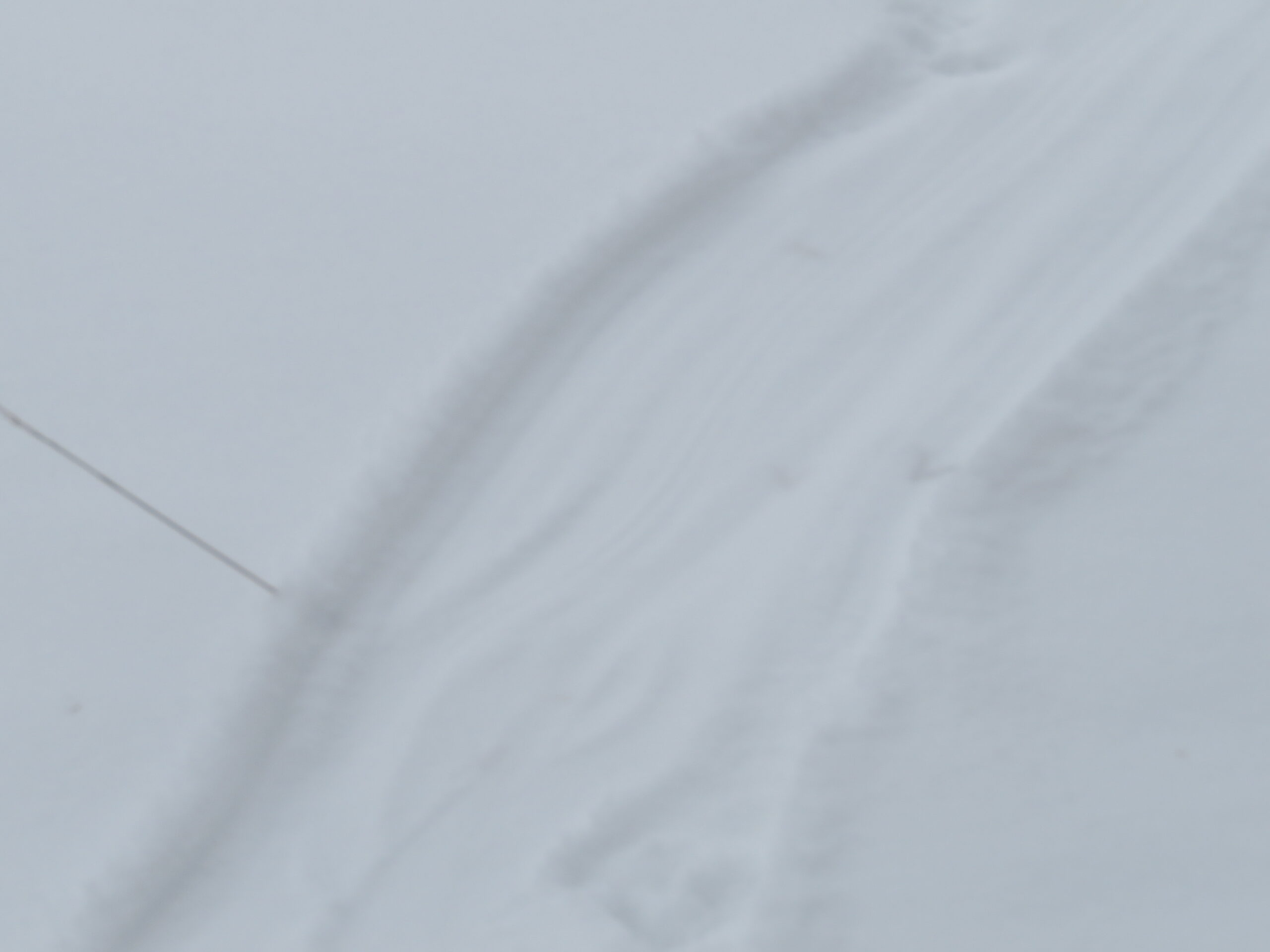
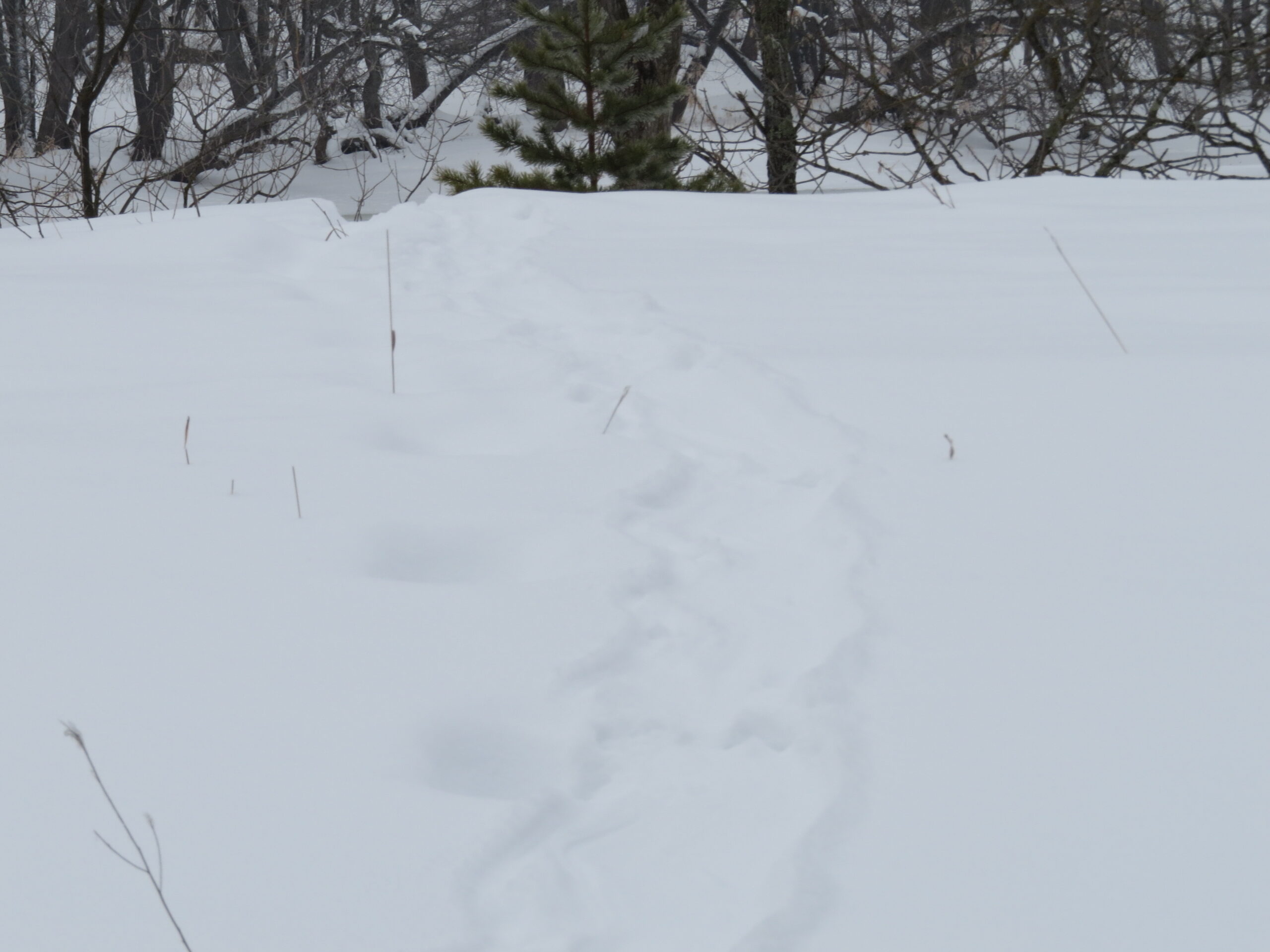
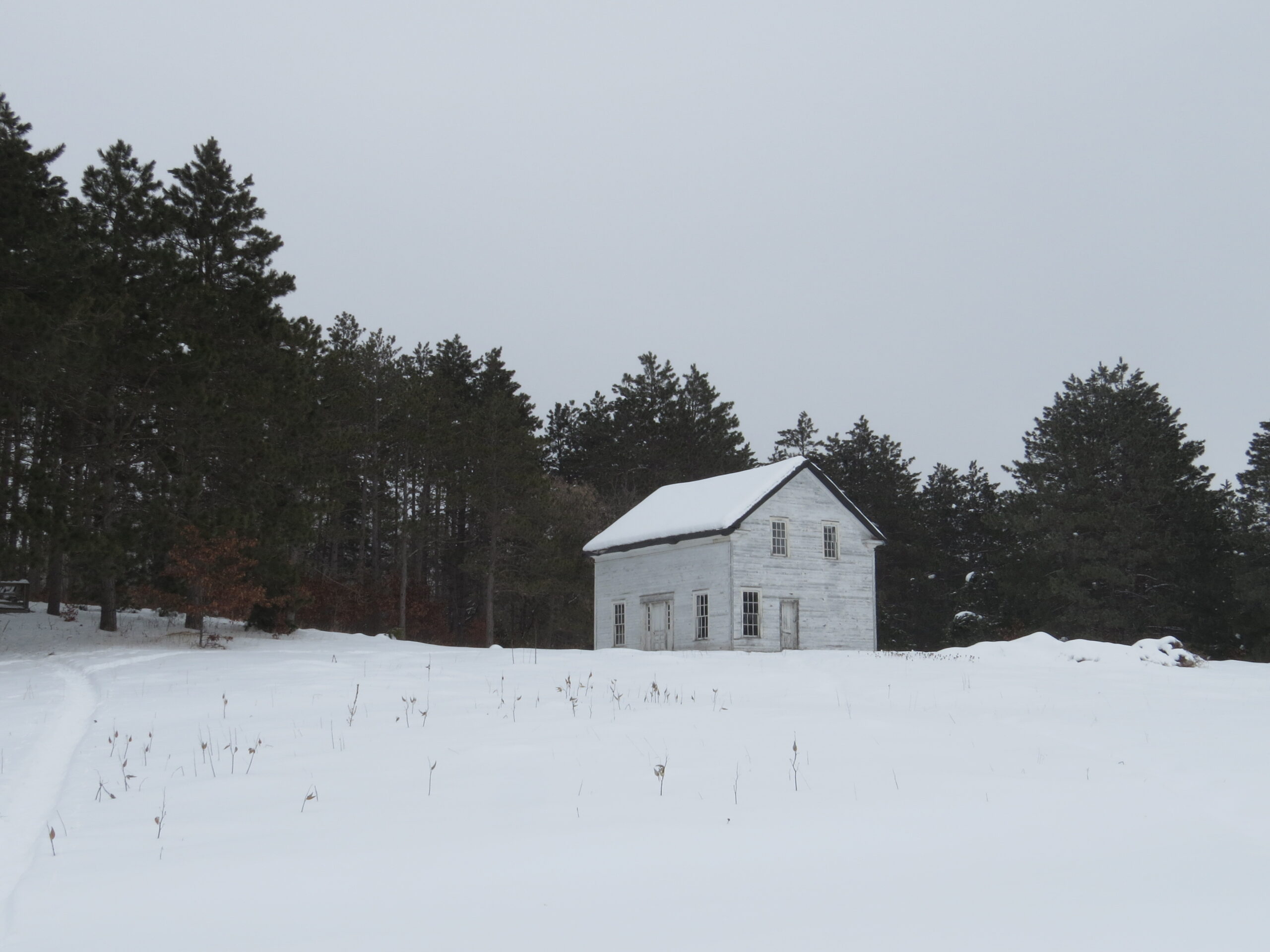
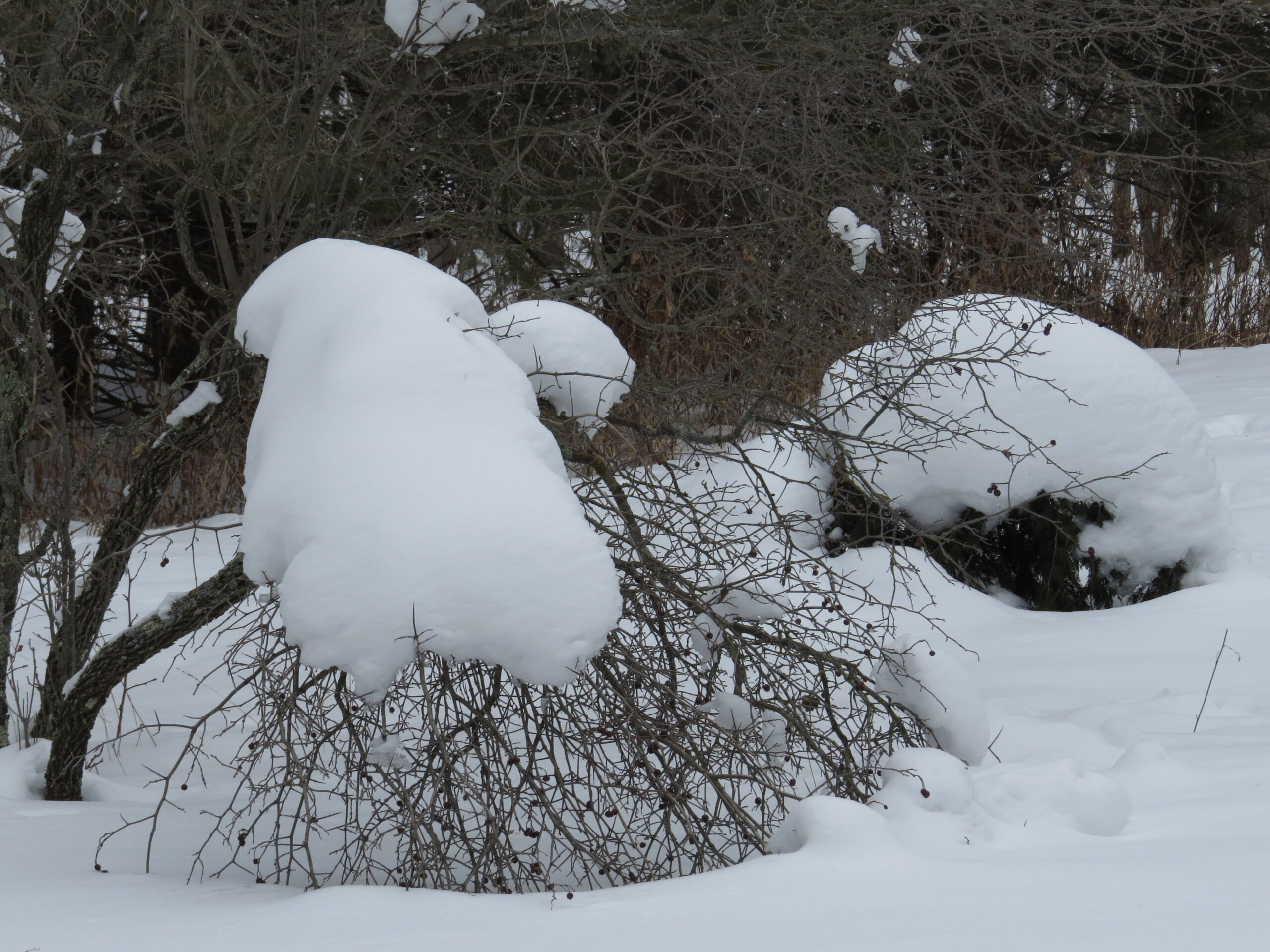
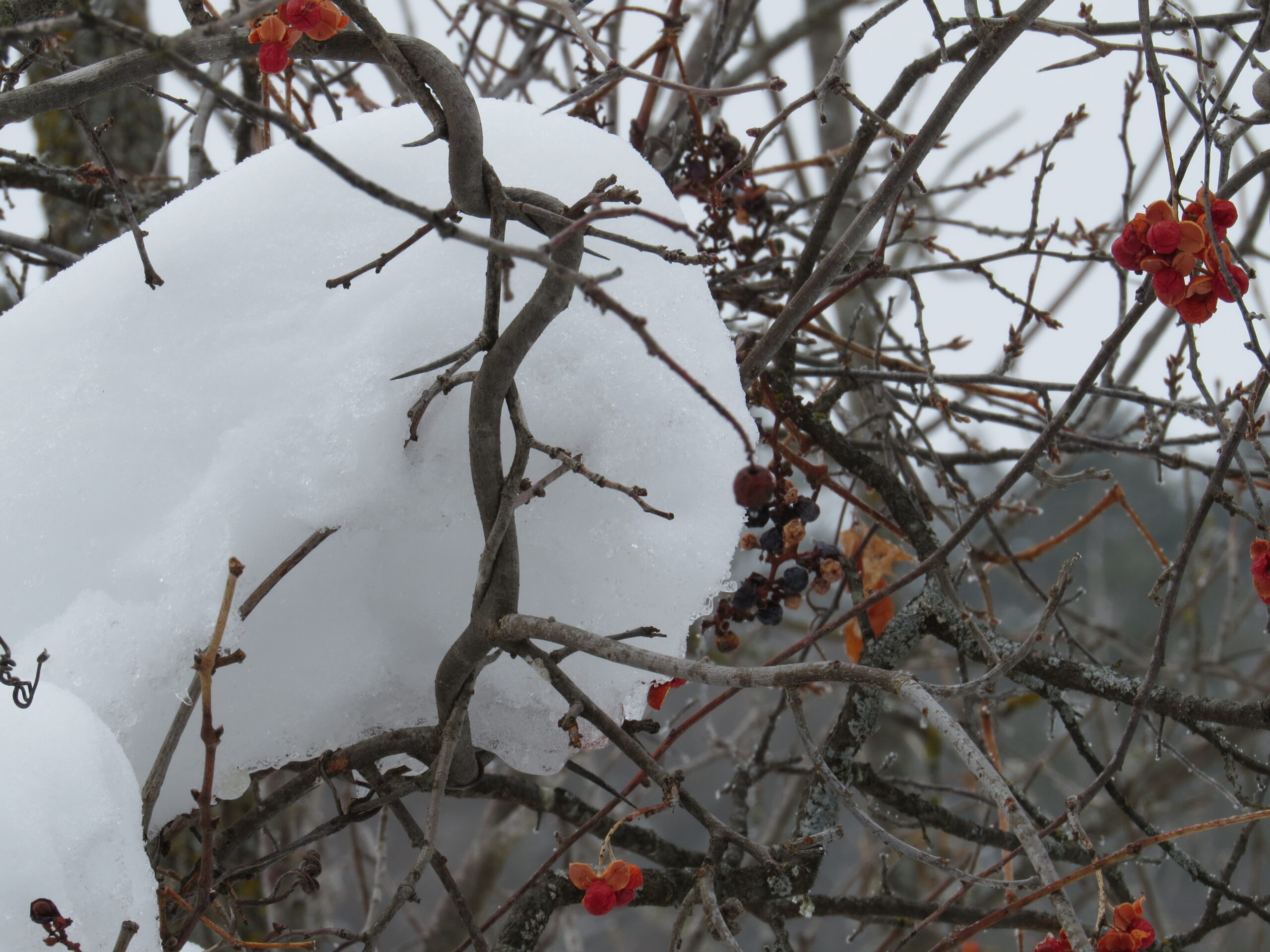
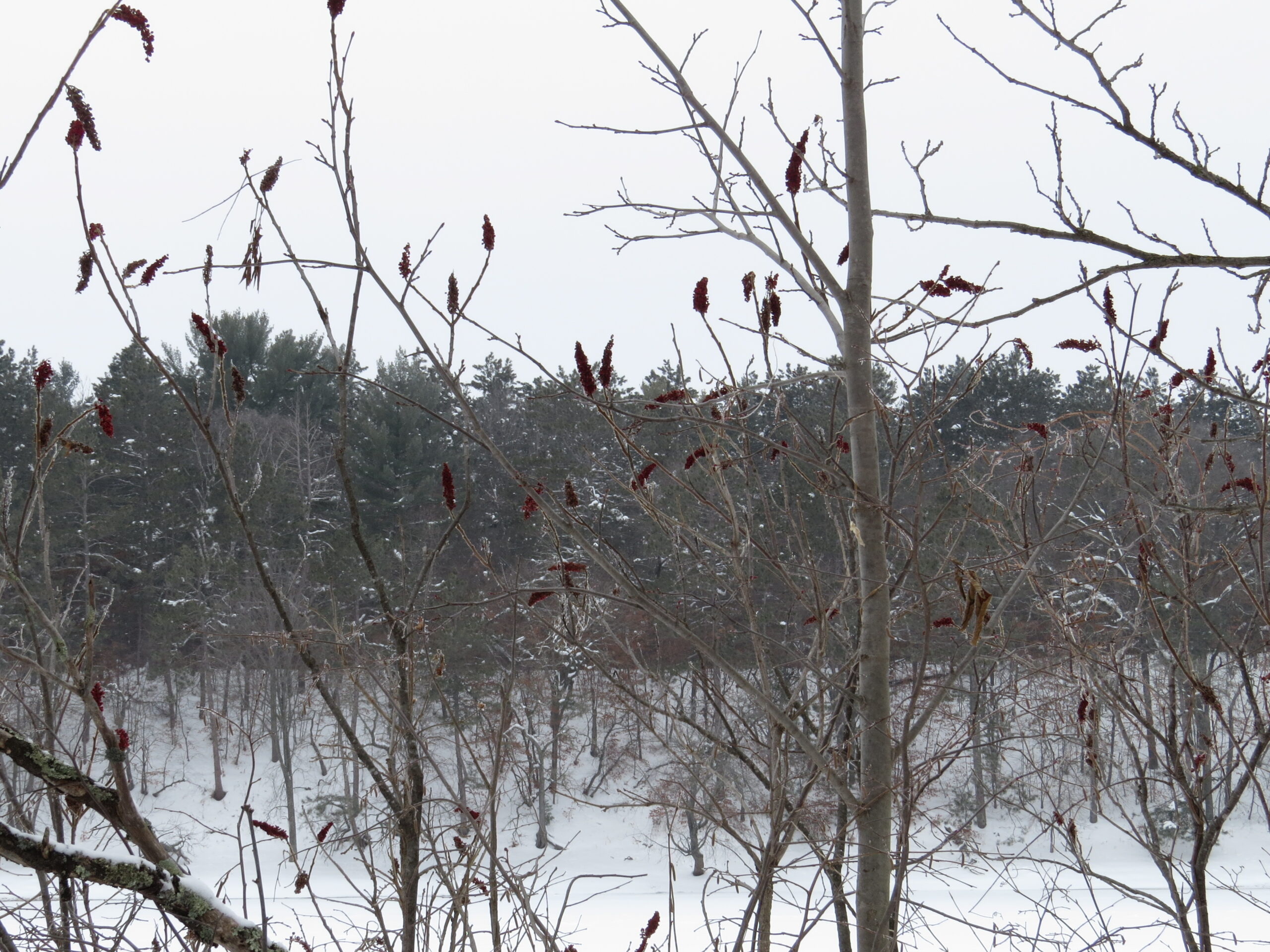
Not only was the sun nowhere to be found, the gray sky made the snow look gray—only the darker gray trees interrupted the gray expanse of our visual world. It was stark. It bordered on bleak. The hounds of Winter.
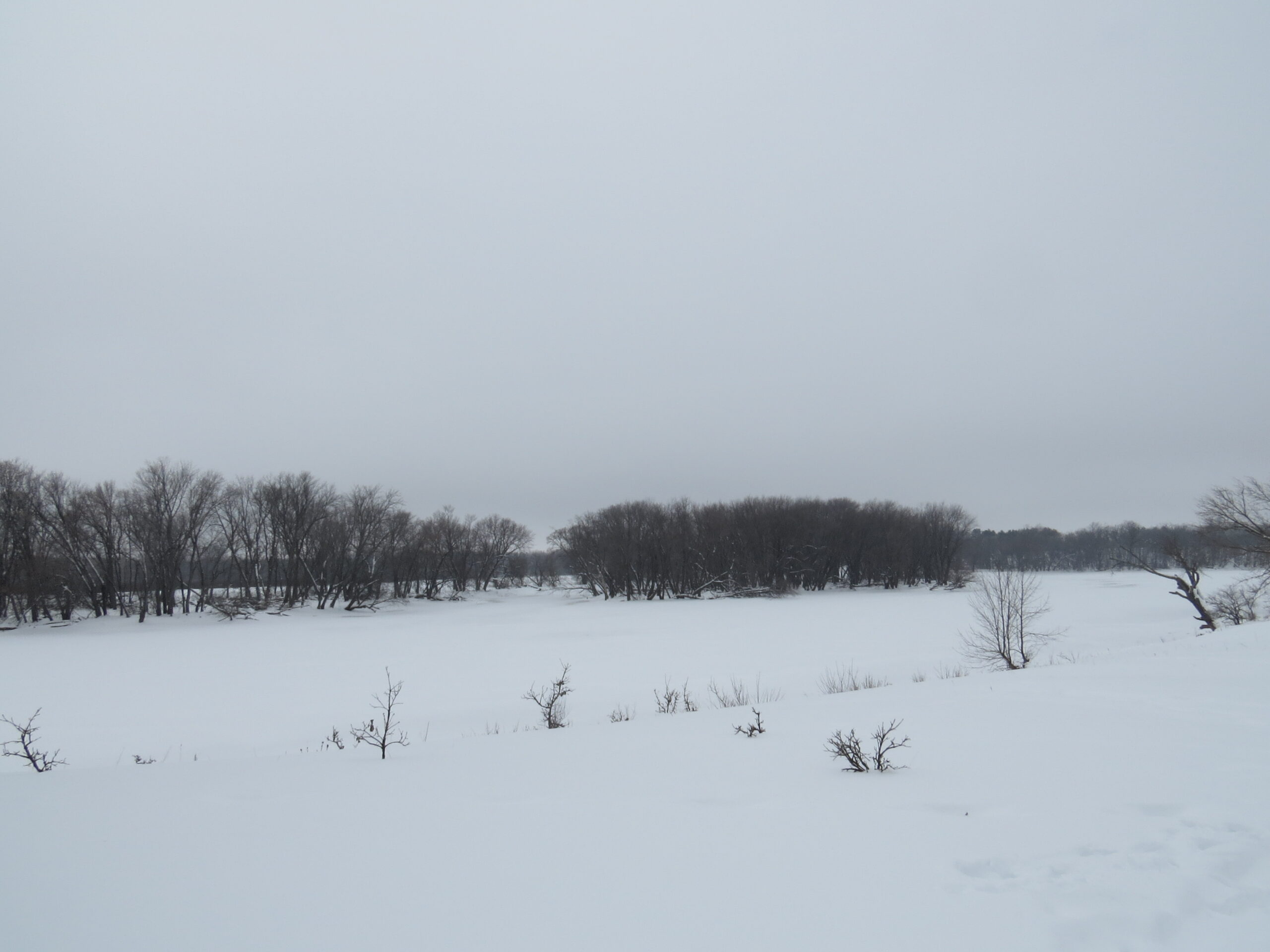
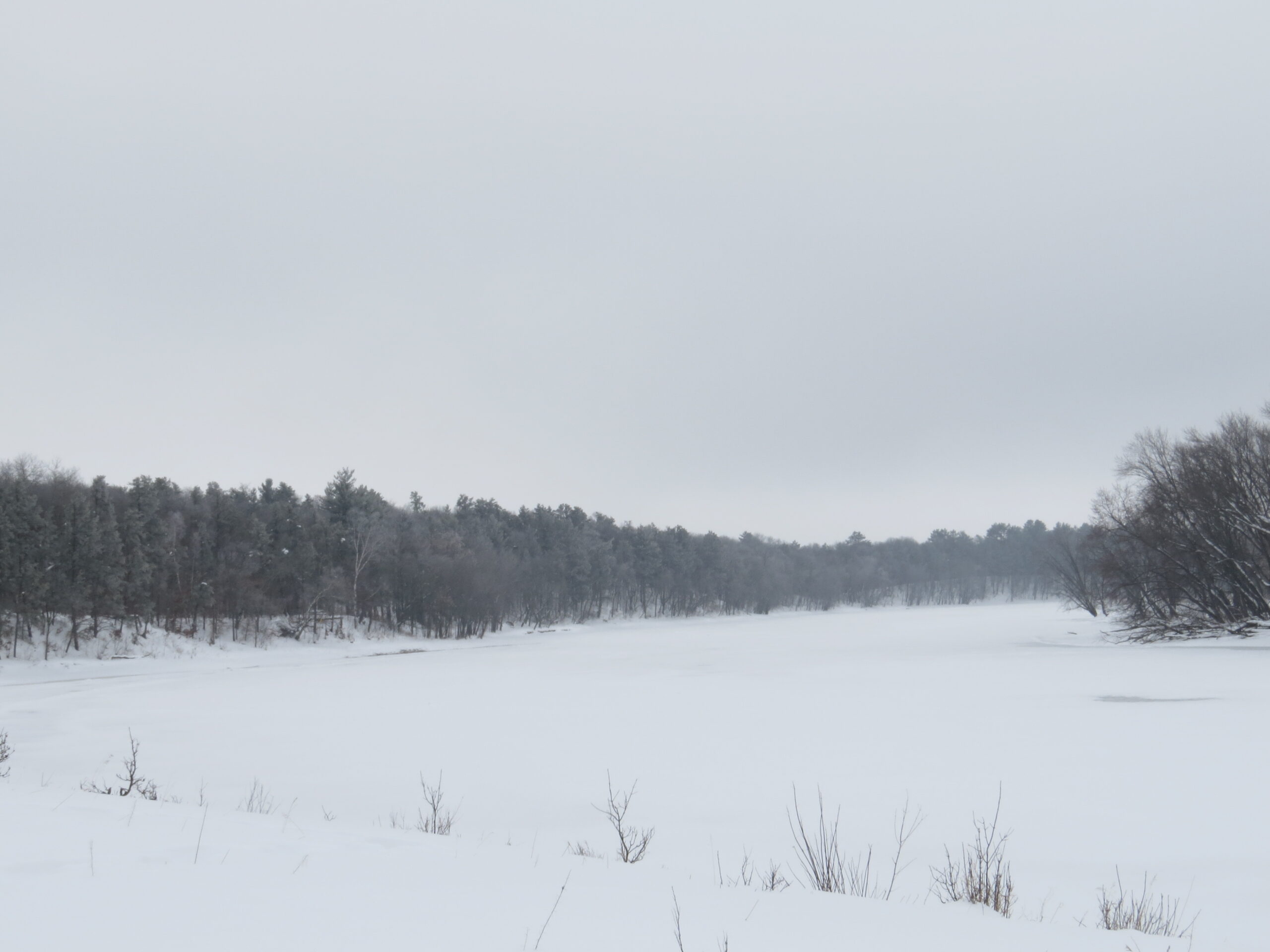
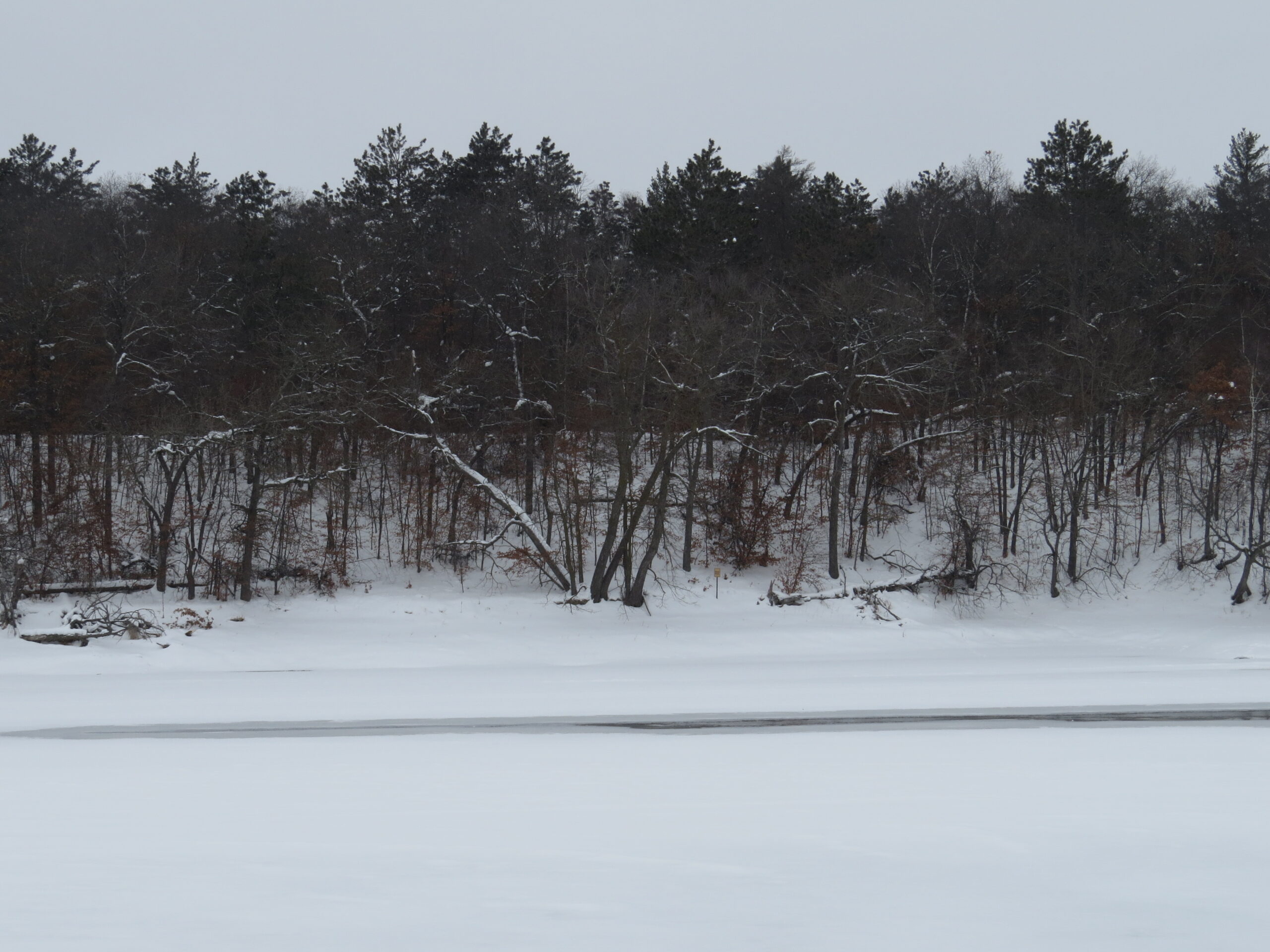
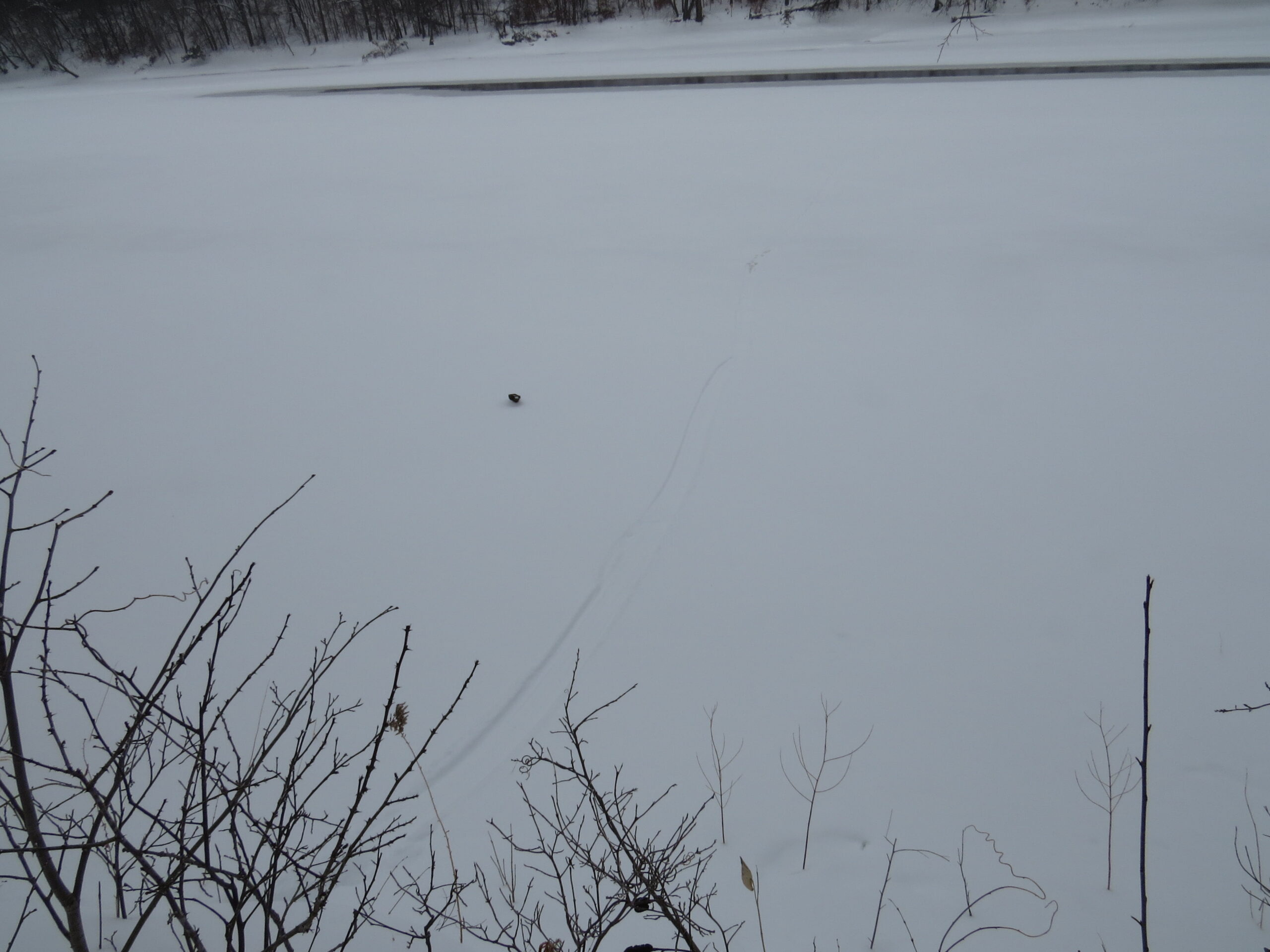
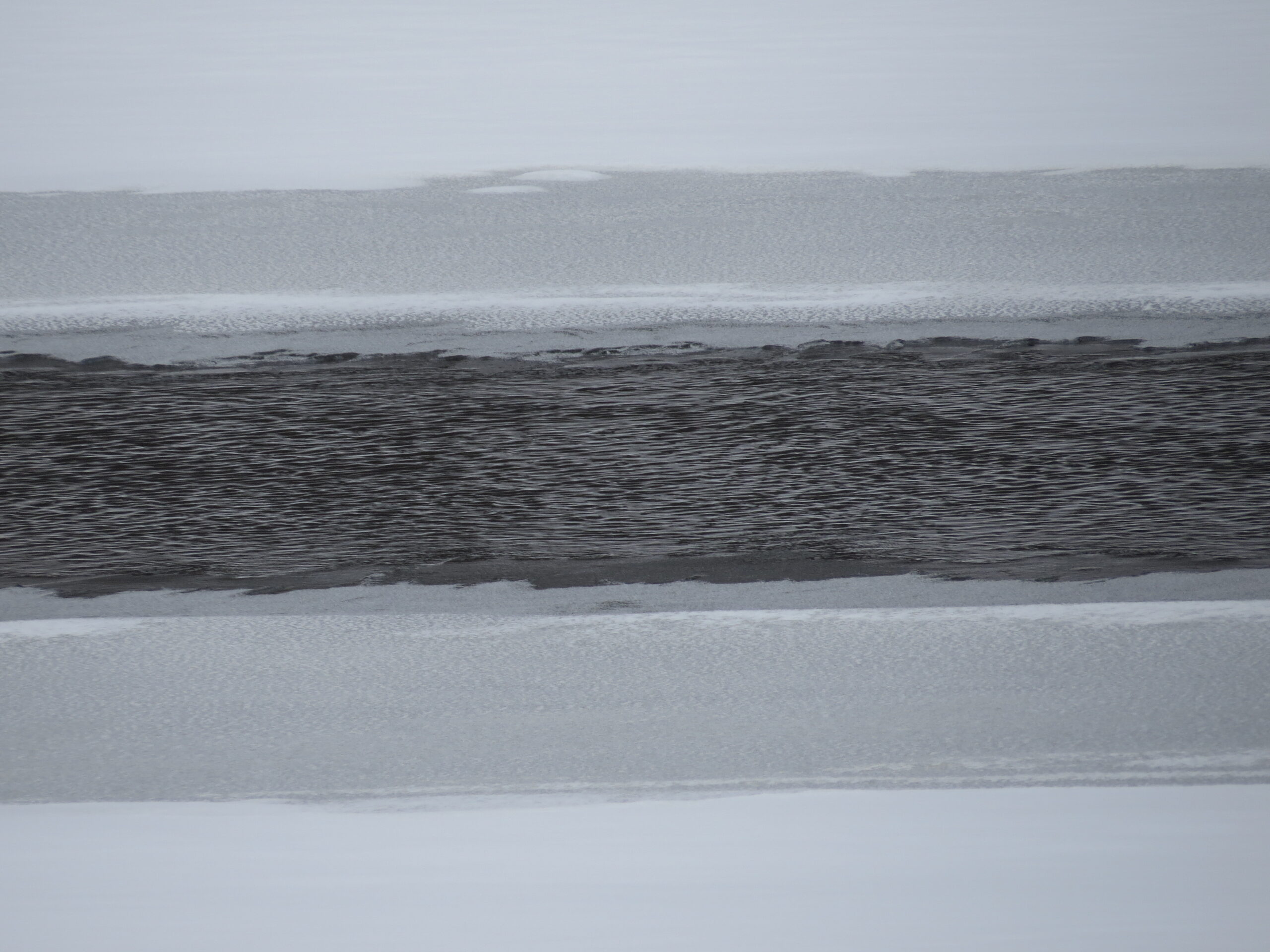
Another Otter slide etched through the snow and disappeared over the edge of the high River bank—that would be an exciting slide! I shoed through the deep snow to peer over the bank and saw his slide trail go all the way across the ice to the open ribbon of water.
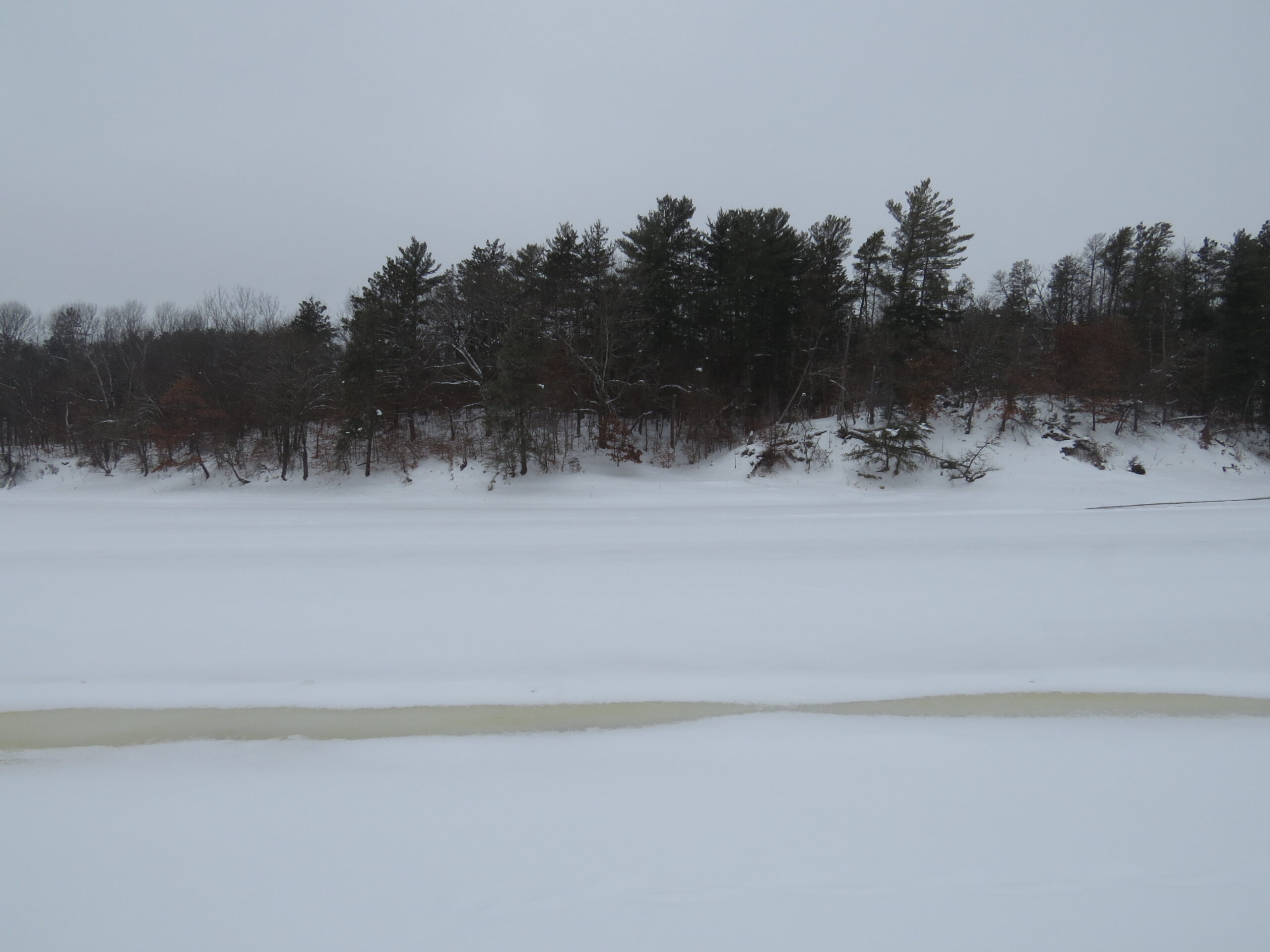
Despite the lack of sun, it was a good day for snowshoeing. The temperature was in the low teens, and as long as we kept moving, we stayed warm but not sweaty.
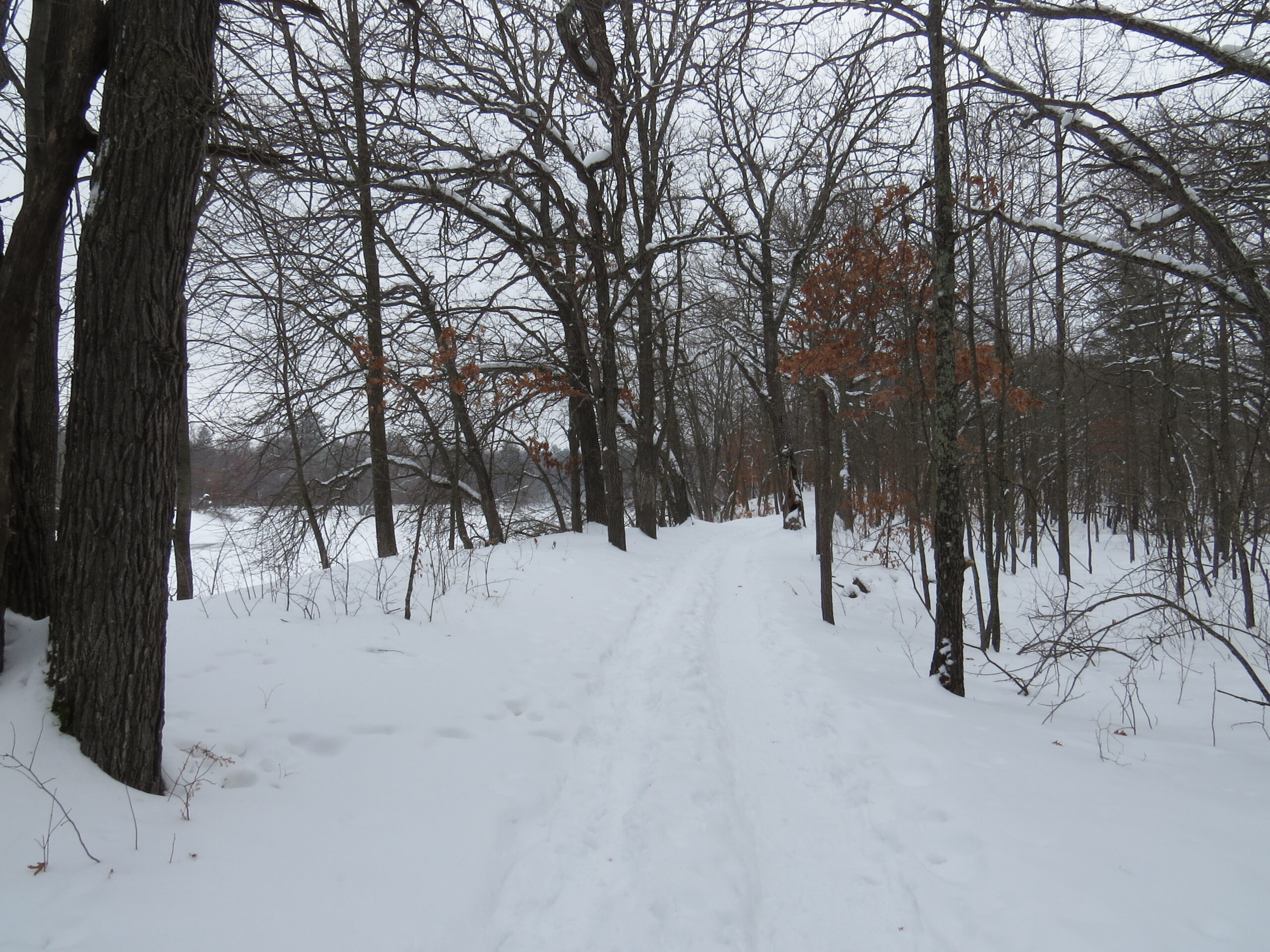
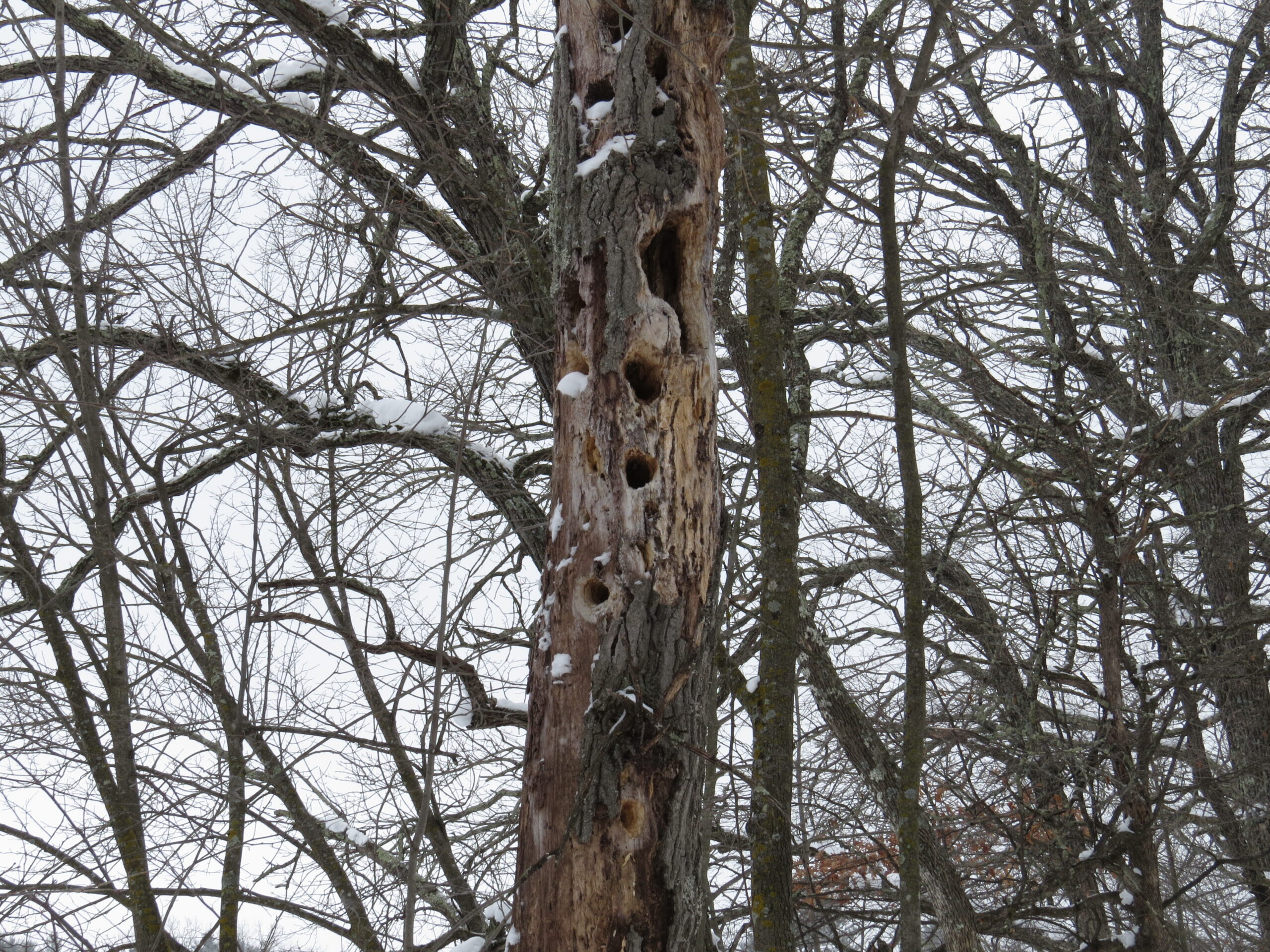
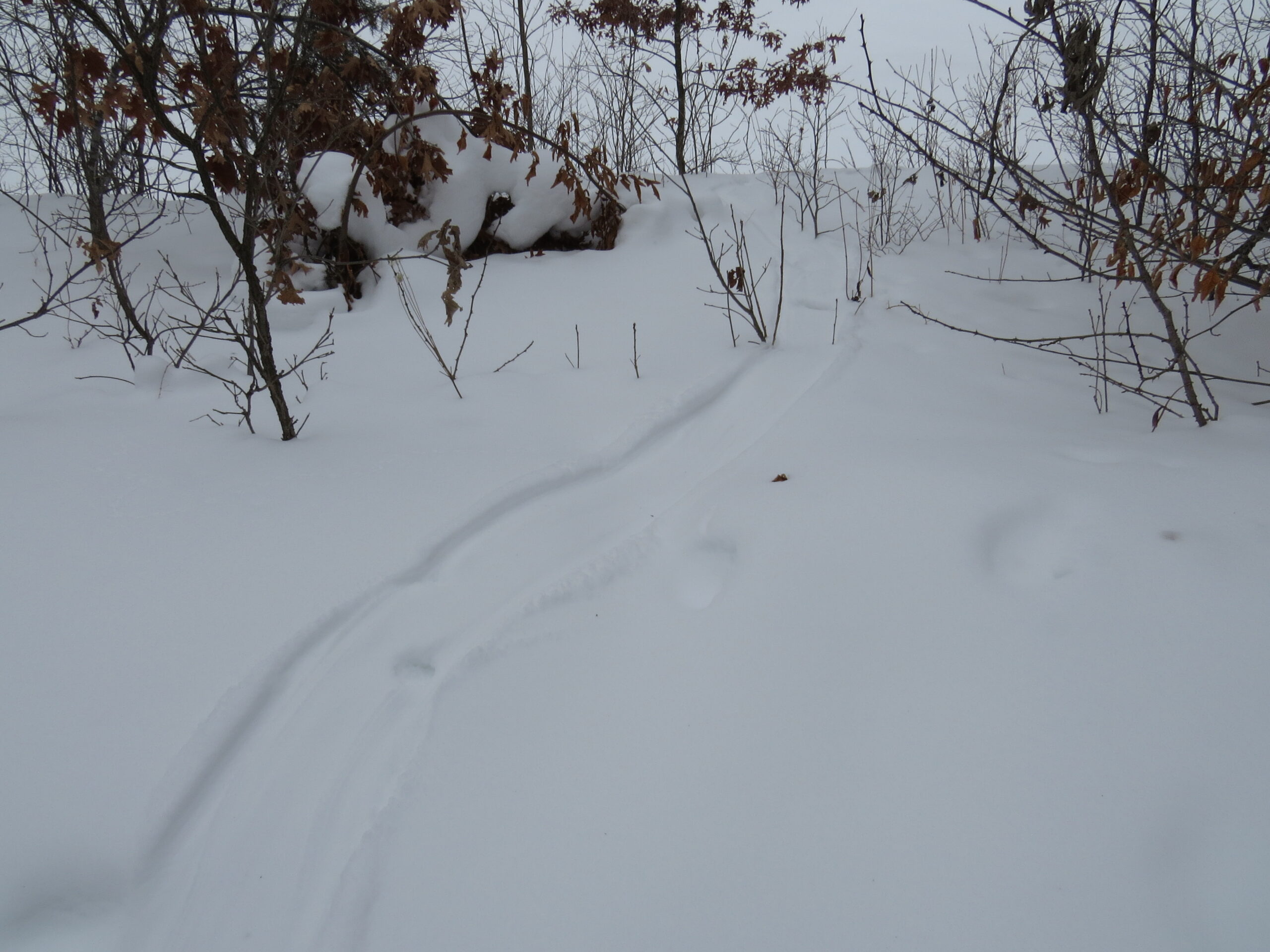
Another Otter slide started on one side of the trail on a little hill, crossed our trail, then zoomed down the River embankment after a little hiccup with a snow-embedded branch. Otters slide on their chest and bellies, and when gravity doesn’t pull them along, they push themselves along with their hind feet.
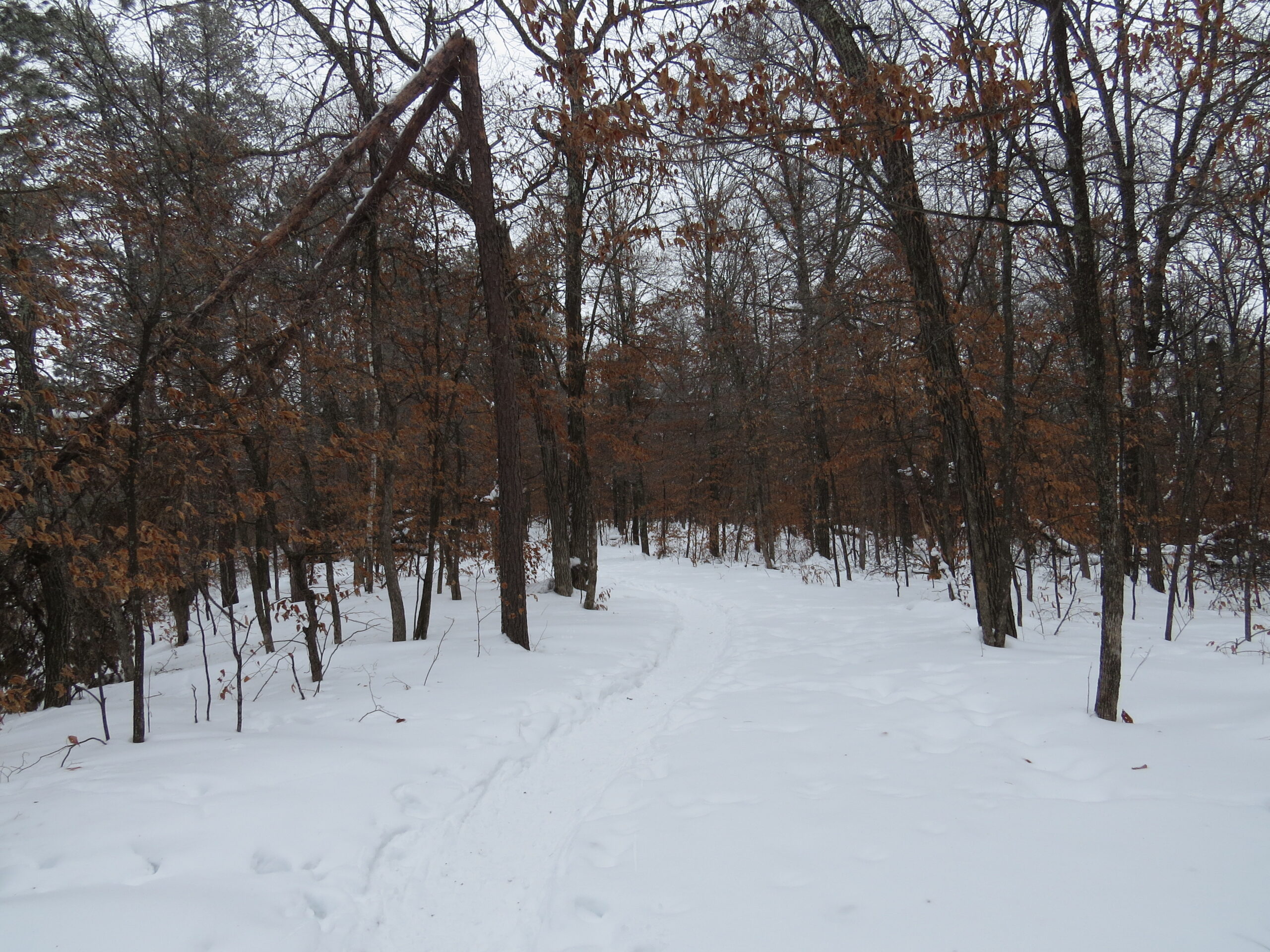
We stopped for some water and a snack as we looked out over the frozen Mississippi River at Chippewa Lookout, then circled back towards the Old Crow Wing townsite where we had begun our hike.
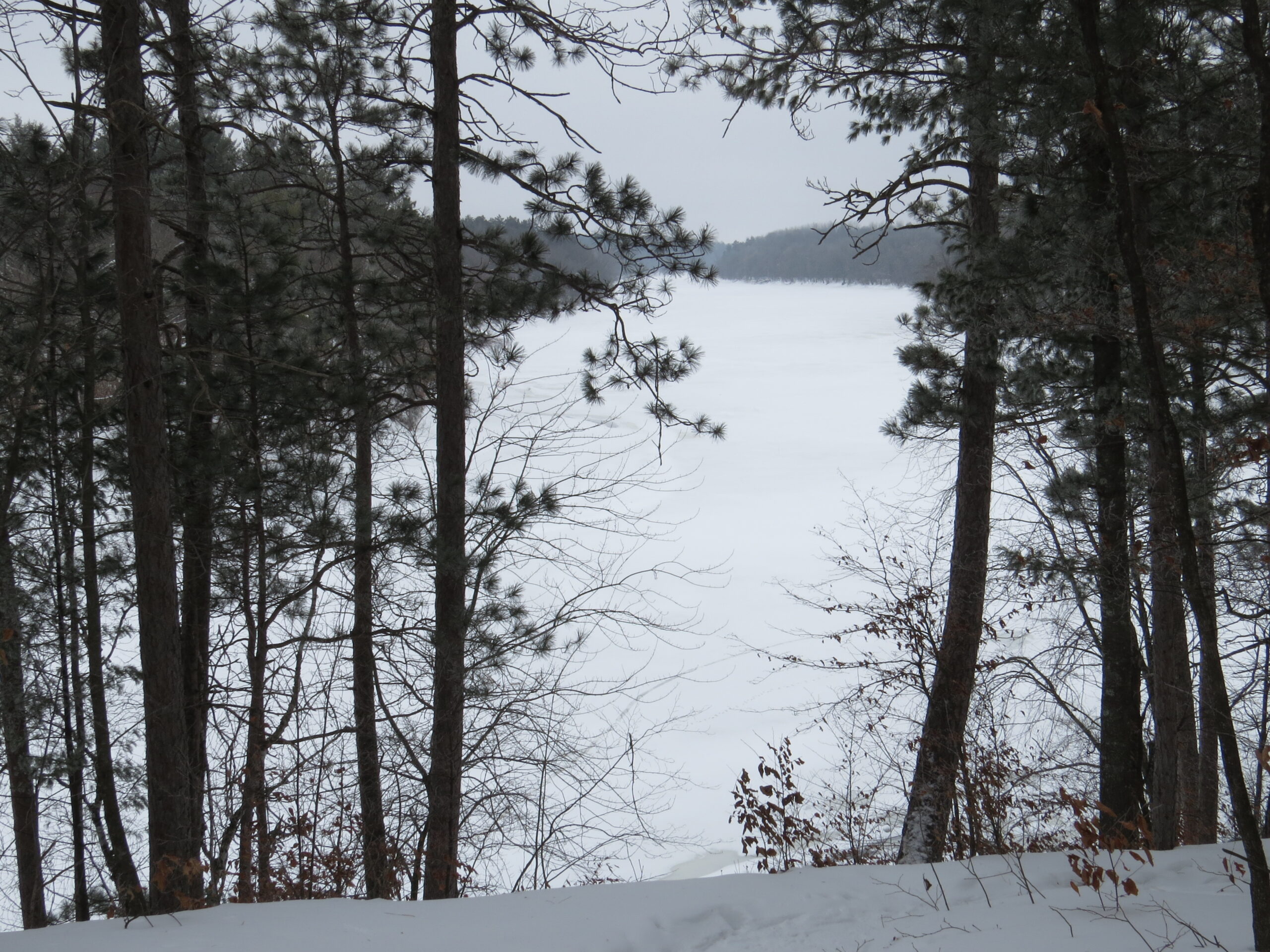
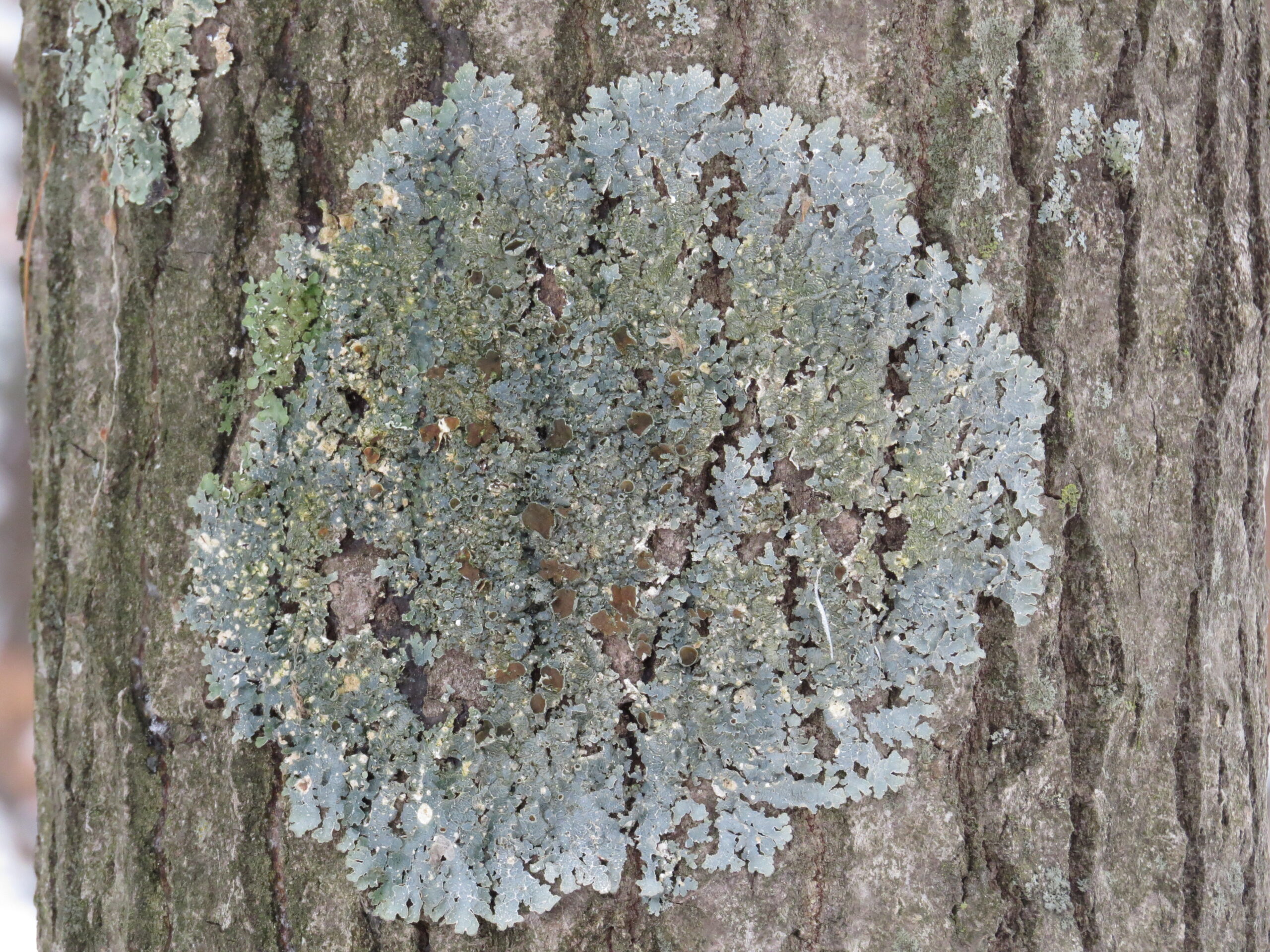
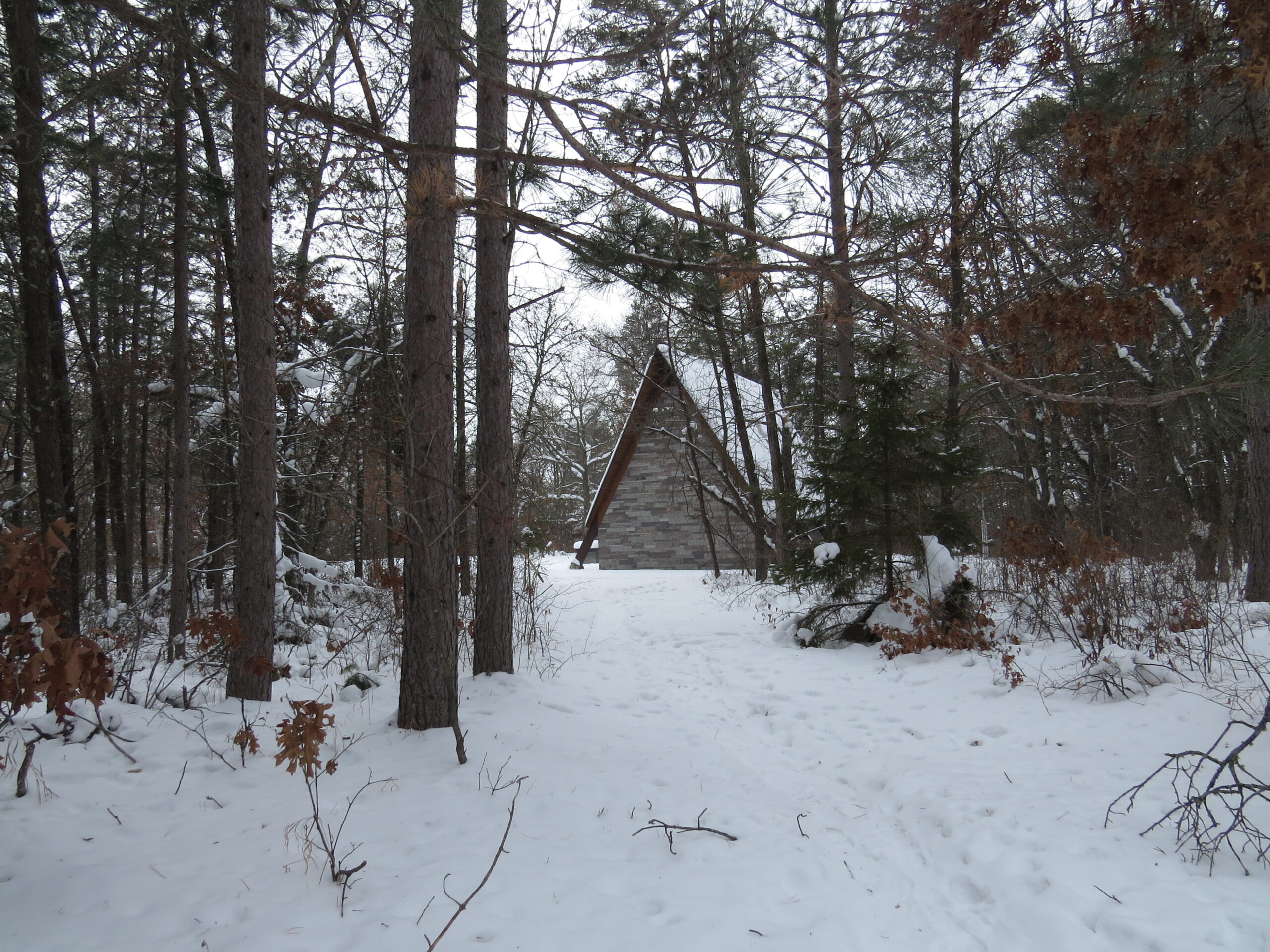
The history of this park includes the sites of three different mission churches, including one from the Catholic Church, where now stands a small, granite chapel. As we snowshoed past the outdoor alter, the words “Hail Mary, full of grace” came to my mind.
We never found the Sun. The gray Hounds of Winter found us. After the initial shock of a loved one’s death, grief can harry us, like Sting says “the Hounds of Winter, they harry me down.” Everyday life has a different feel, even as there are times when a day’s routine takes our mind away from the bleakness. There are even moments of joy that penetrate the grief like a ray of sunshine. Imagining the otters sliding in the snow gave me that ray of happiness. There is something to be said for living in the grief, in the stark grayness. For in the midst of the gray grief is the reason why we even feel that way—love. With each step forward, the grief is acknowledged and integrated into our being. With each step forward, the love is remembered and held up in gratitude.
The Mystery of Life
Three days after Chris’ sister’s death day we were confronted with Chris’ birth day. Not that we ever really know ‘what to do’ after the death of a loved one—with our distance from her, we had no physical busy-ness to attend to, and without an impending funeral, no travel plans. We were alone with our thoughts, our memories, and our sadness. And a birthday. It ‘should’ have been a celebration, and when the day arrived, we could not gather our energy enough to do…anything.
I’ve always liked to ‘know’ things—my curiosity naturally led to my studying science. Questions, experiments, data, knowledge. Human nature is just as intriguing to me as the nature of our world, albeit a bit more difficult to explain. But there are things in our world that remain as mysteries, and birth and death are two of them. We know quite a bit of the ‘mechanics’ of both, how babies are made and develop, and even the cellular signaling that takes place before labor begins, and we know the physical signs and signals of impending death. But so much of both of these life transitions falls into the realm of mystery. We cannot get the answers or even gather much data about either one because of the very ‘nature’ of the occurrence.
And then it occurred to me that many of the death days of my relatives fell within days of birth days of my kids—brother-in-law, dad, grandmother, and grandfather. Maybe December is a bad month for dying. Or maybe these mysteries were more linked than we know. But how does a person ‘celebrate’ a Happy Birth Day so close to a Sad Death Day? We did resign ourselves to our understandable low energy on Chris’ birthday, and we figured out a way to honor Mary and our sadness and to celebrate Chris the next day. With no surprise to anyone who reads this, we took to the woods. It was another beautiful snowy day, though some would argue with me about the beauty of yet another cloudy, gray day. We took our snowshoes up to Charles Lindbergh State Park, crossed the bridge, and began our trek through the quiet forest.
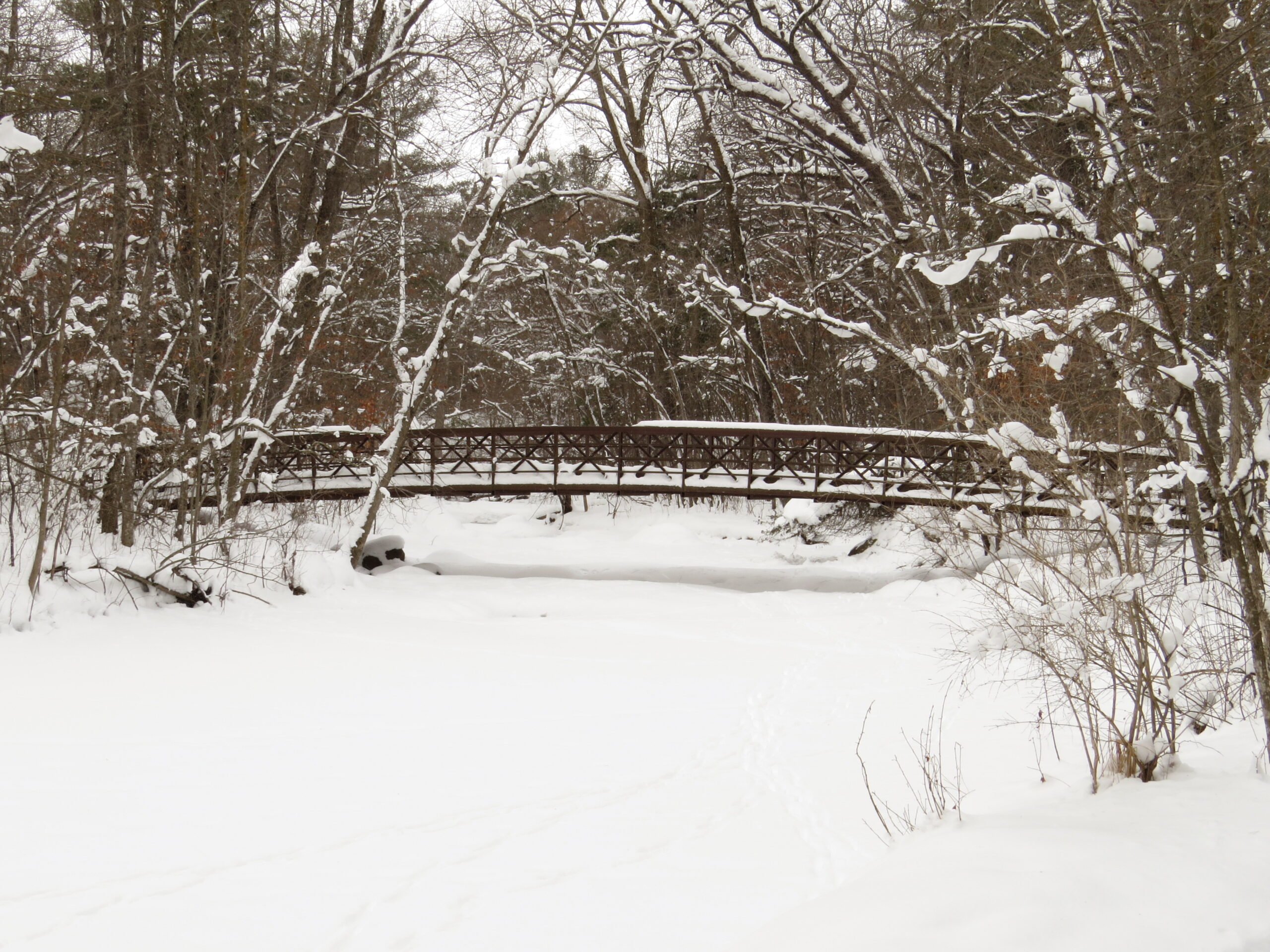
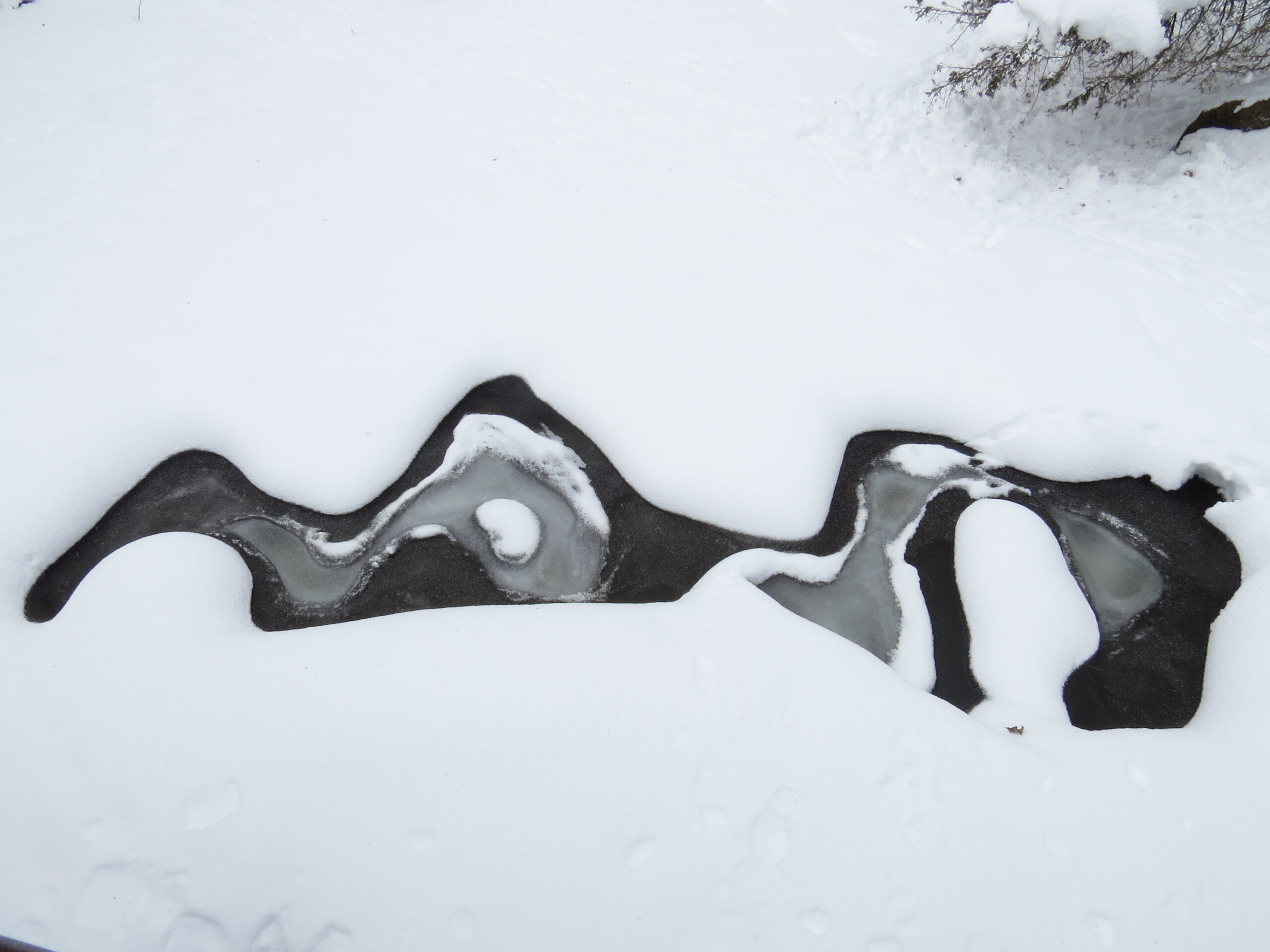
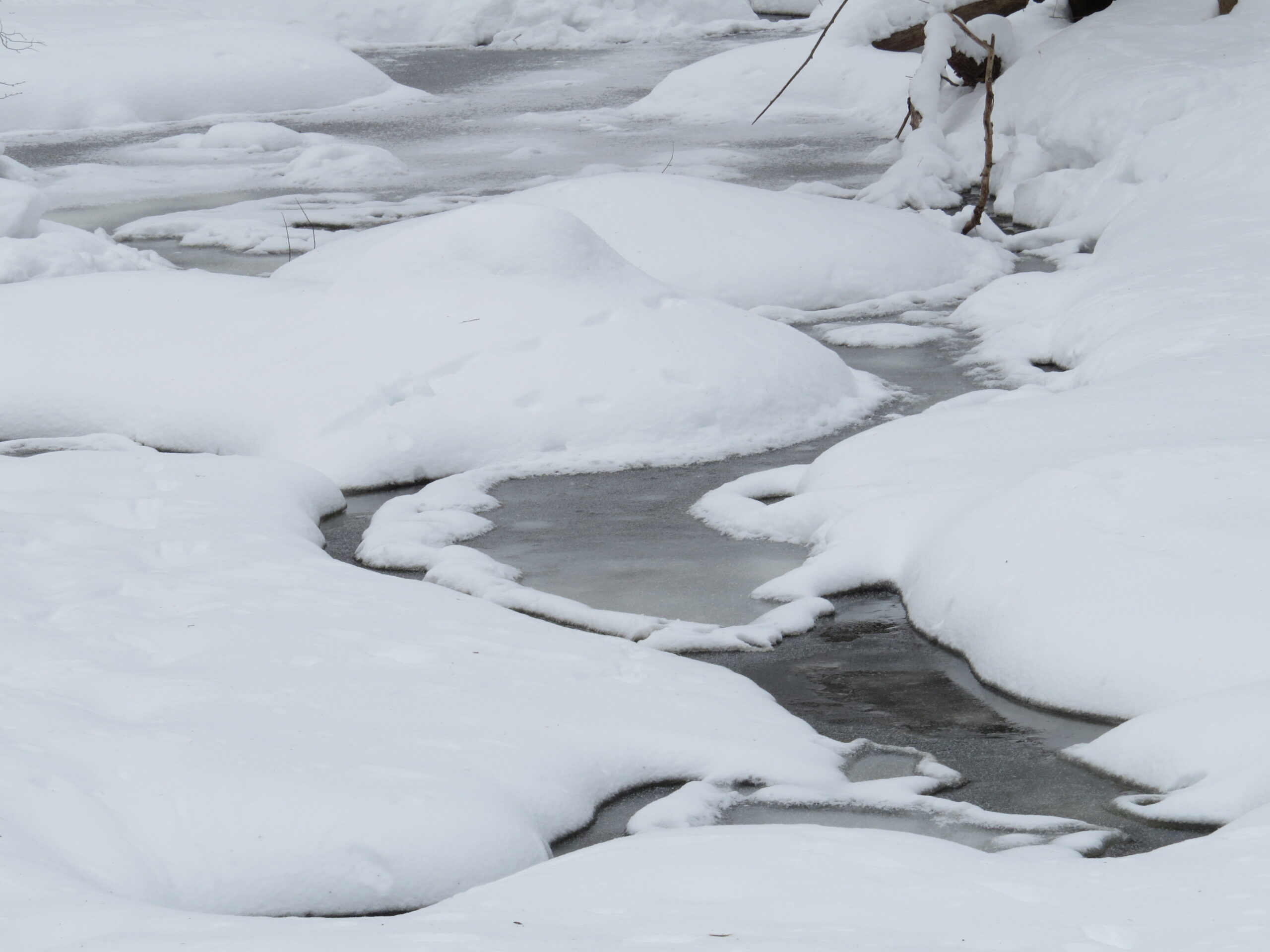
But first, we stopped on the bridge to gaze at the ‘ice art’ that had formed with ice and snow and open water. Black and white abstraction.
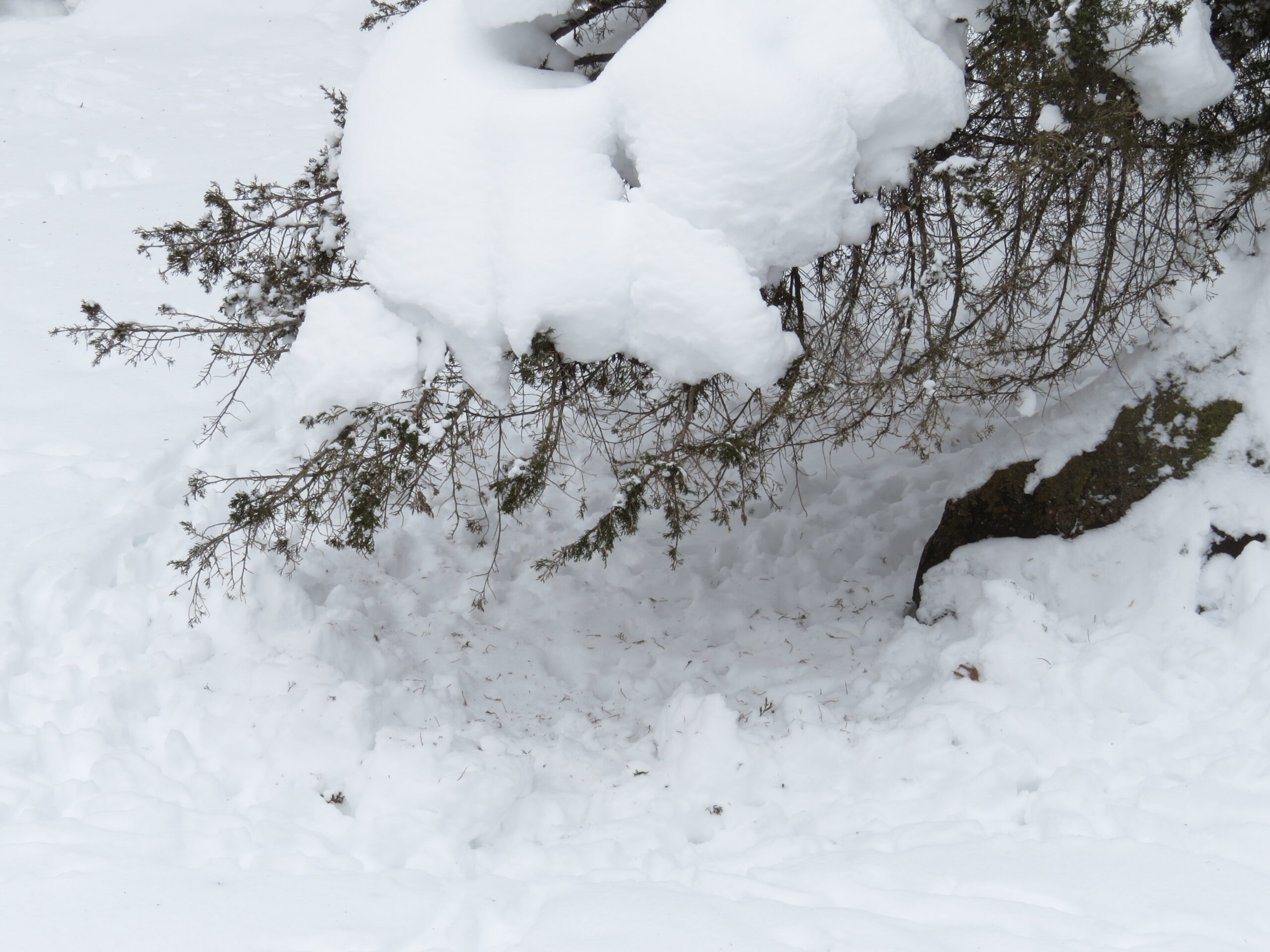
A snow-laden tree branch had leaned low over the creek and seemed to be a shelter place for animals, as the snow was packed with tracks.
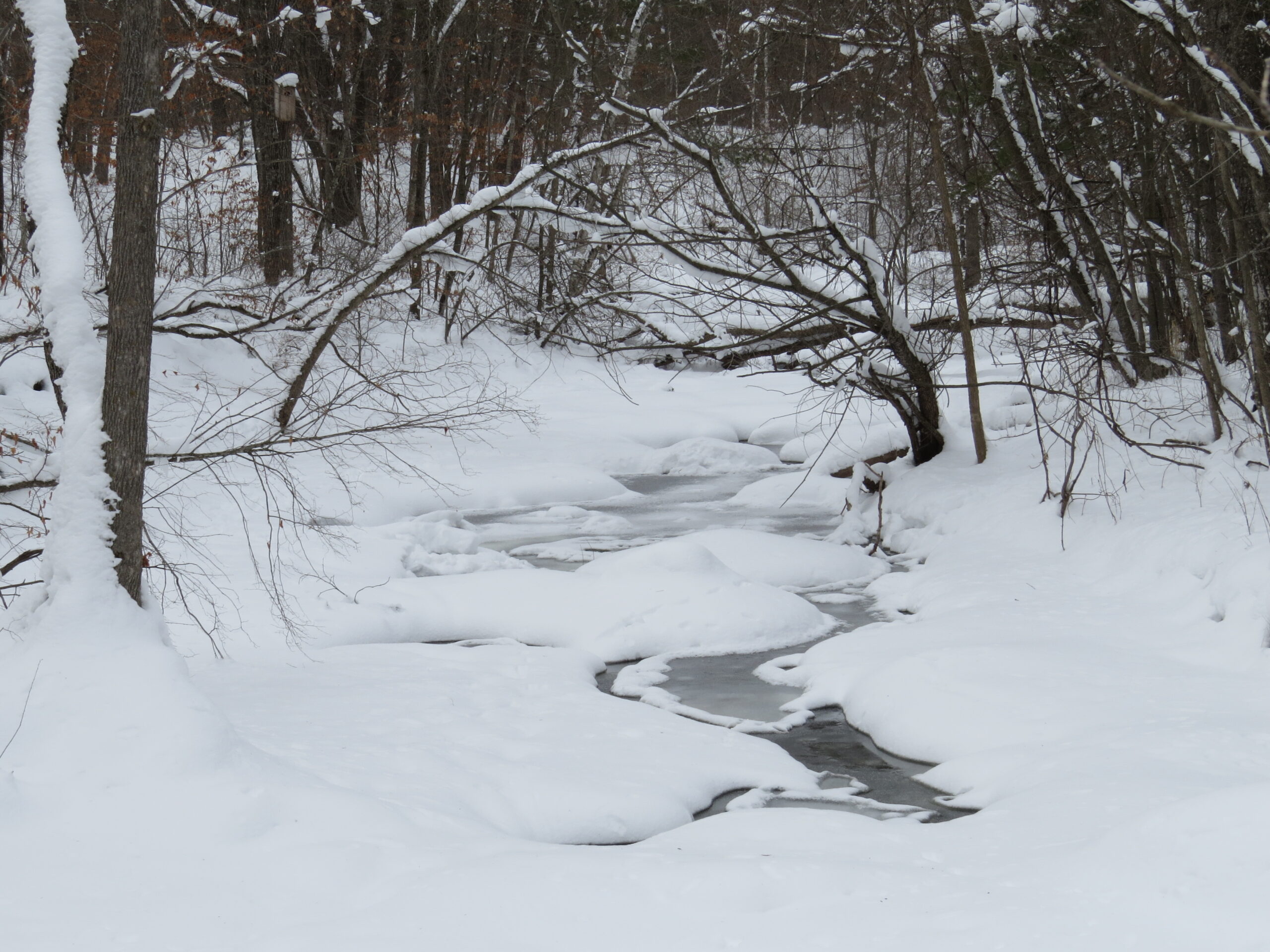
The snowy, abstract creek path cut through the trees, providing life-sustaining water to the winter animals and beauty to the passers-by.
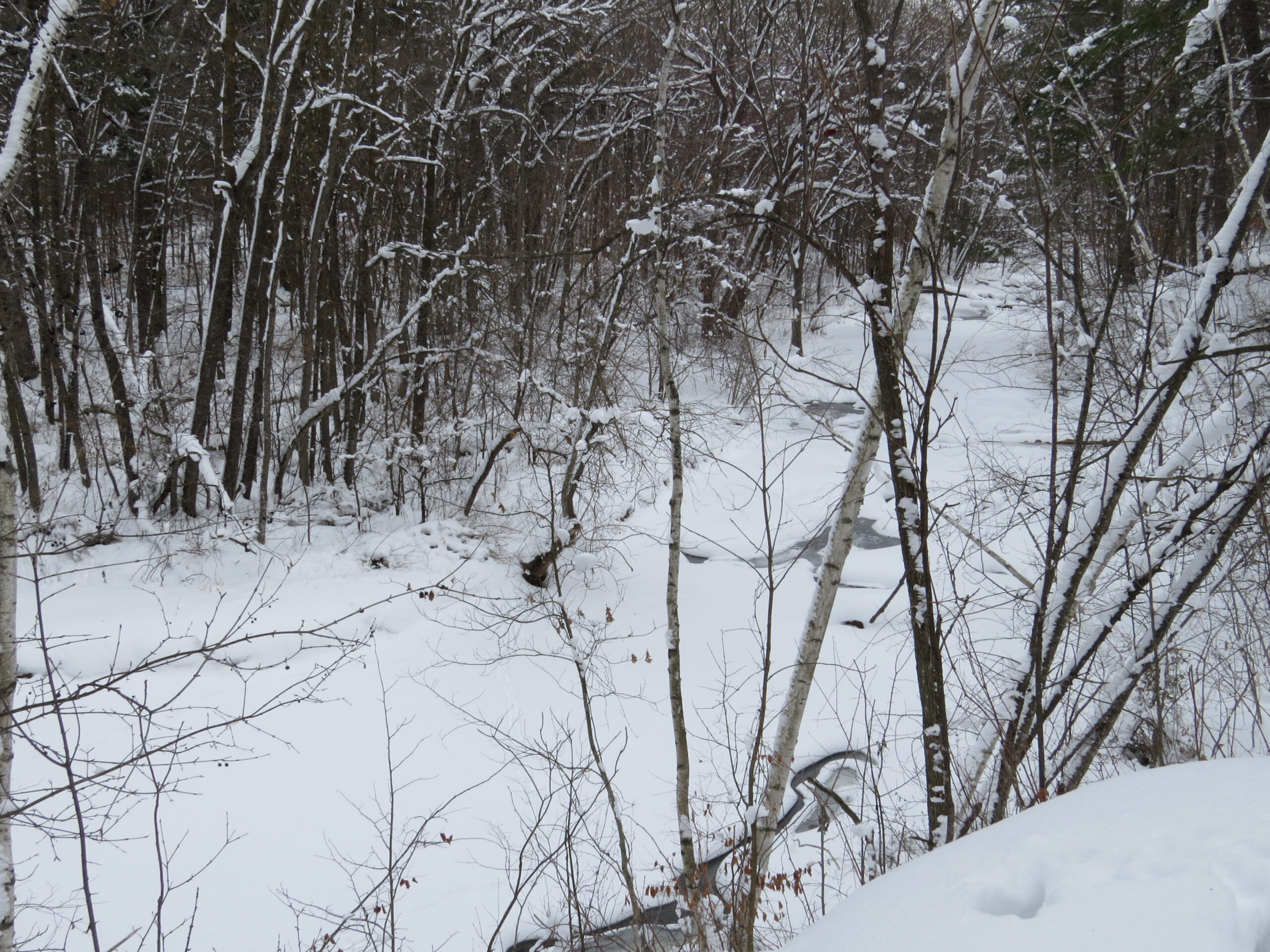
We were not the only ones on the midday trail that day—two young men wearing police vests snowshoed the circular trail, easily passing us with strong strides and pleasantries. We met a wizened old man in only a thin gray sweatshirt that exposed his bumpy, wrinkled neck. He stopped and talked about the young policemen and about his new snowshoes. He wouldn’t want to be a policeman these days and warned about all the drug dealers, even as the distinct smell of alcohol emanated from his body. He didn’t think his snowshoes were working the way they should. We politely tried to troubleshoot for him, but he insisted he would have to return them. Not our usual trail mates.
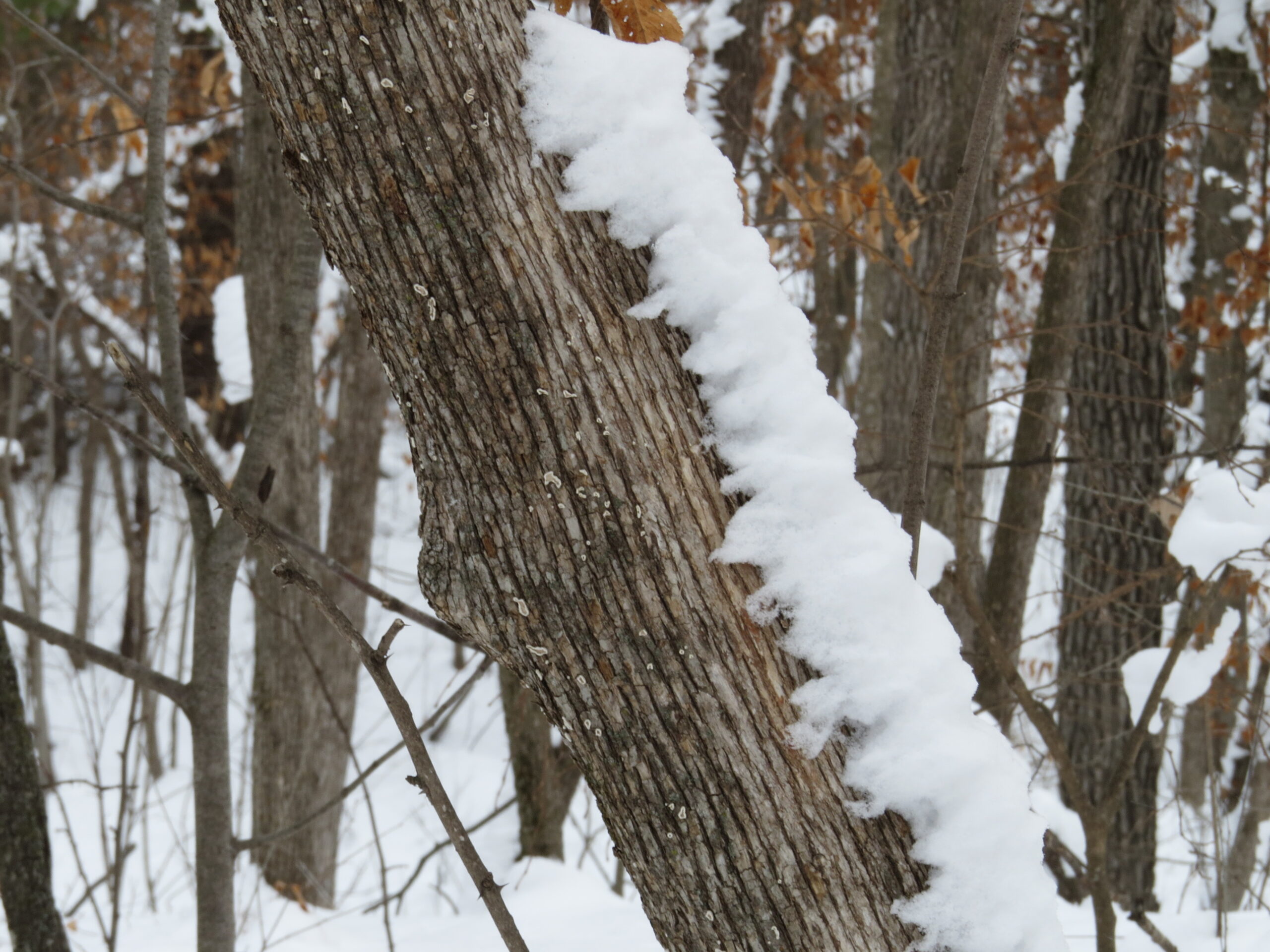
The silence of the snowy forest allowed us to just be as we needed to be. Sometimes we talked—about the wizened old man (kudos to him for getting out there with new snowshoes!), about the policemen (were they on duty?), about Mary (remember when…)—and sometimes we were as silent as the trees. Moving through the snow, working our muscles, helped integrate the musings, memories, and feelings. The questions, the sadness, the low energy, the longing for connection with those who were feeling the same feelings were all accepted, were all okay, were all confirmed and blessed by the Spirit of the Trees.
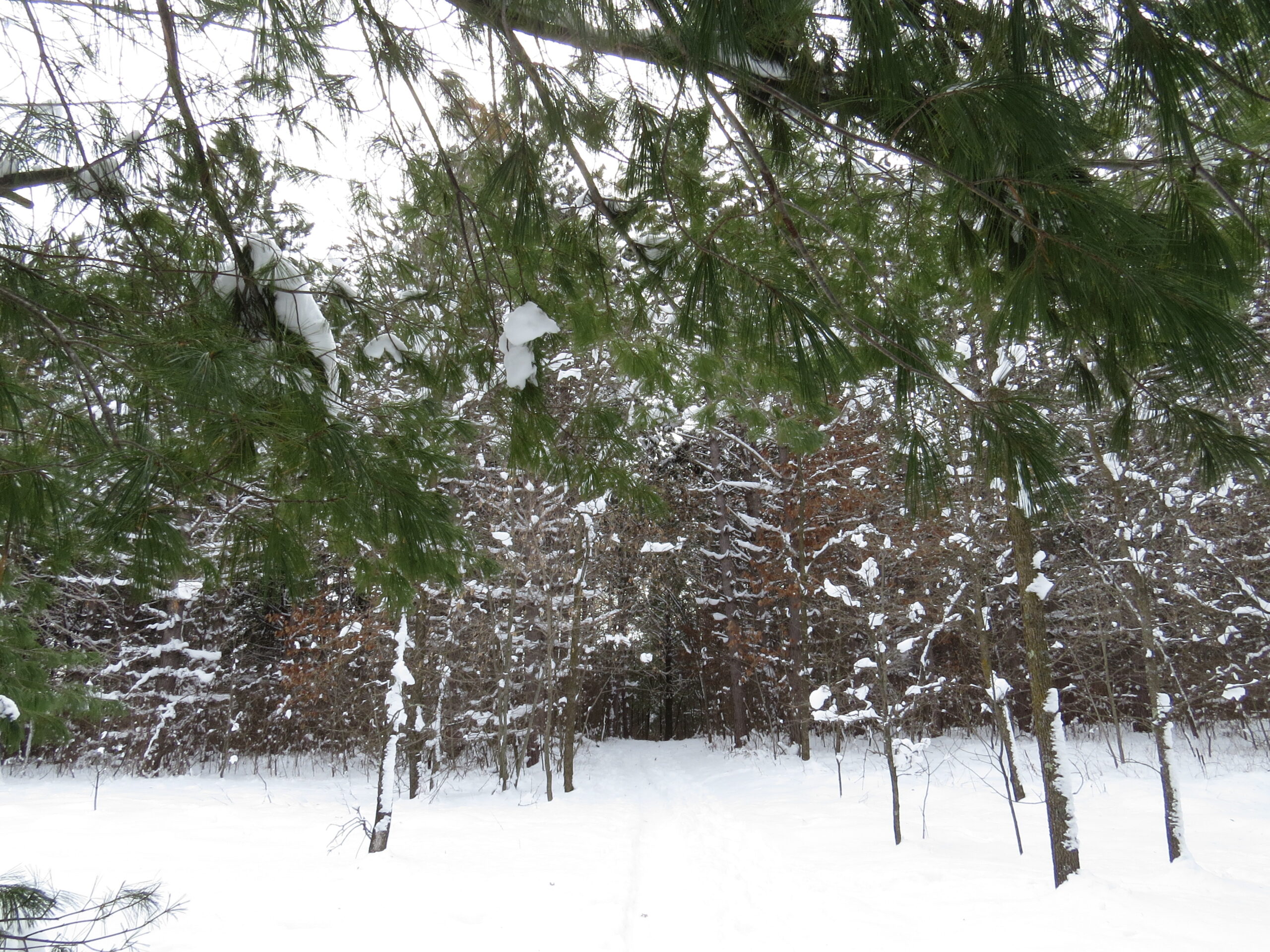
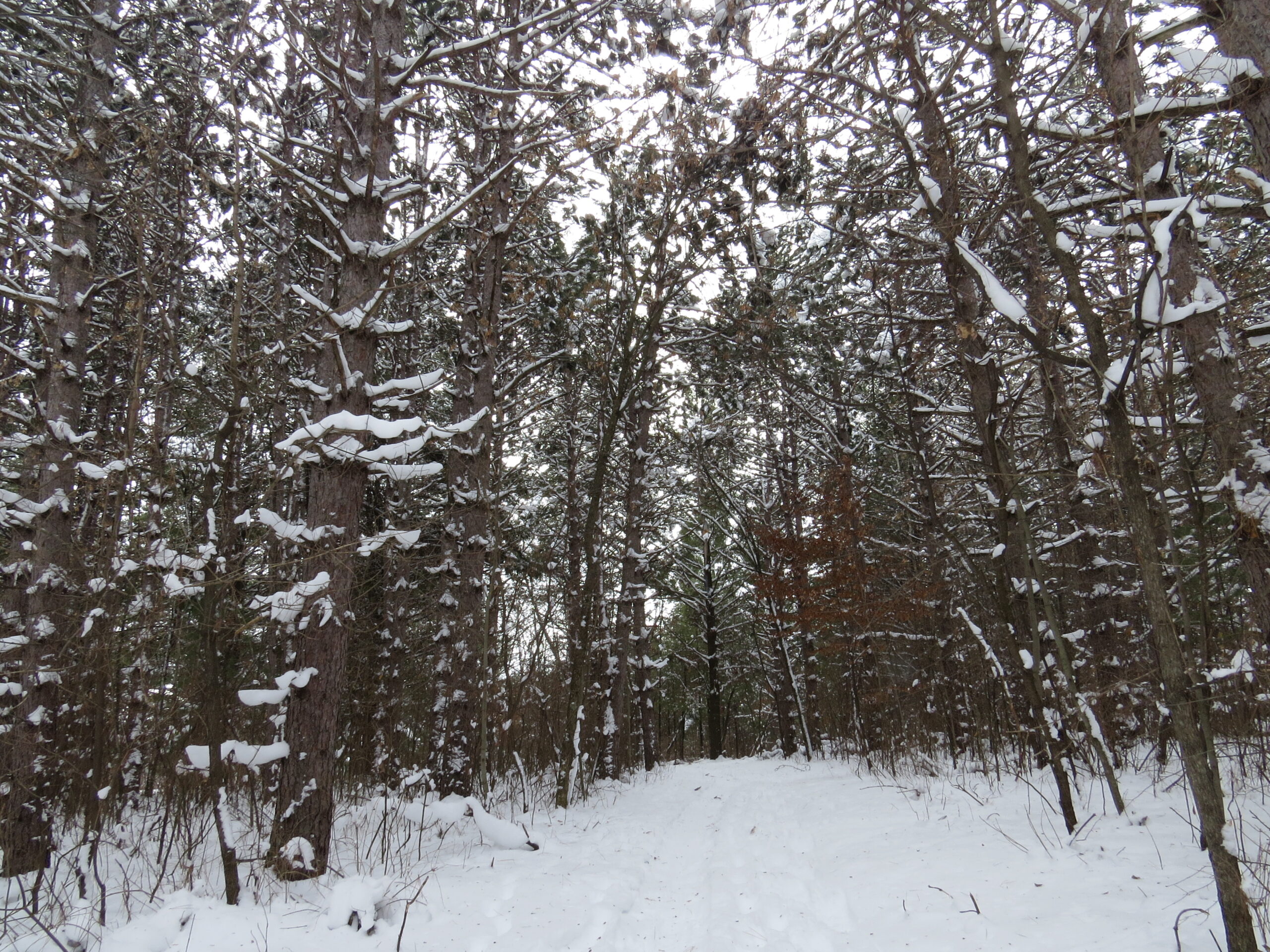
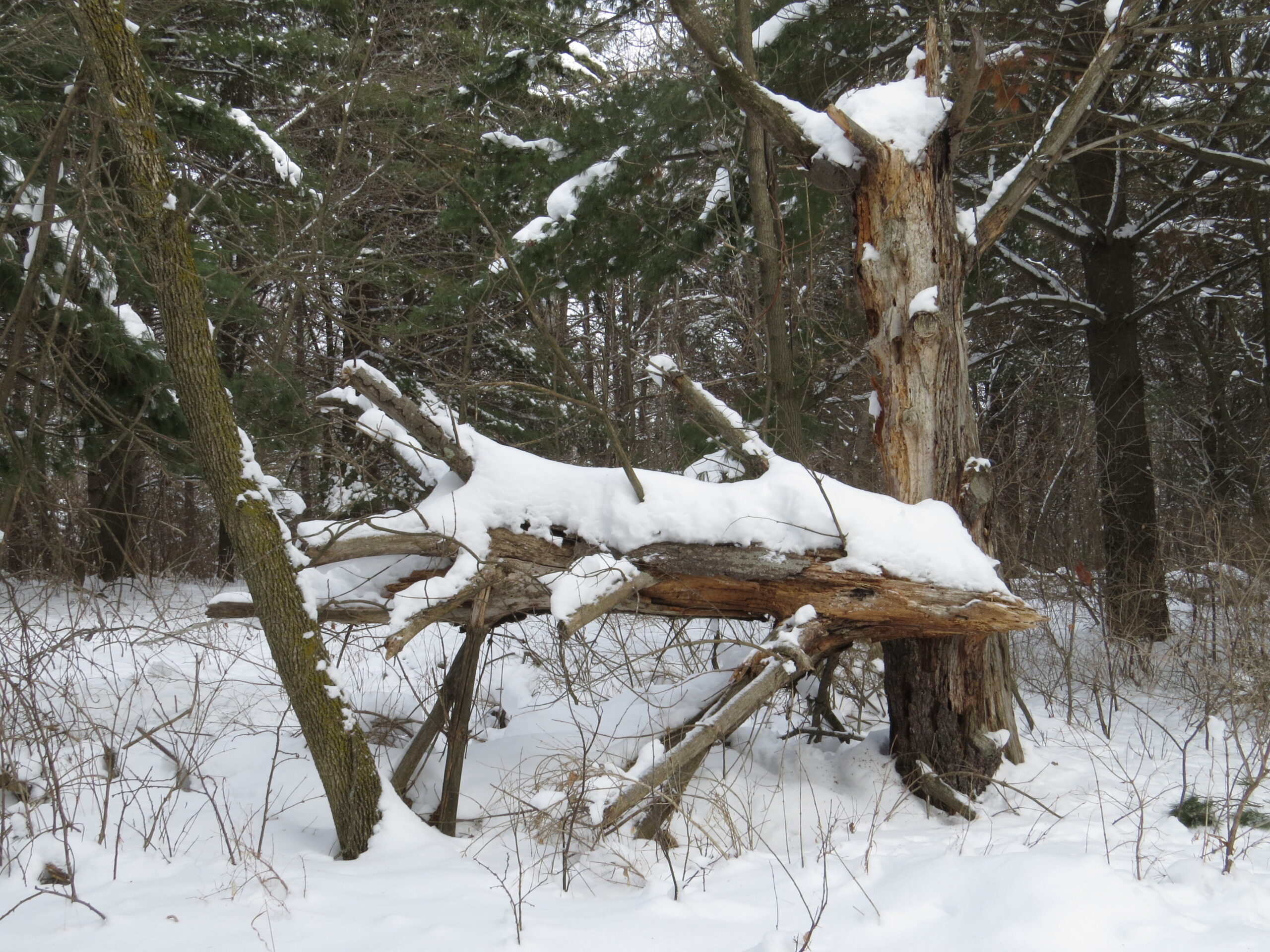
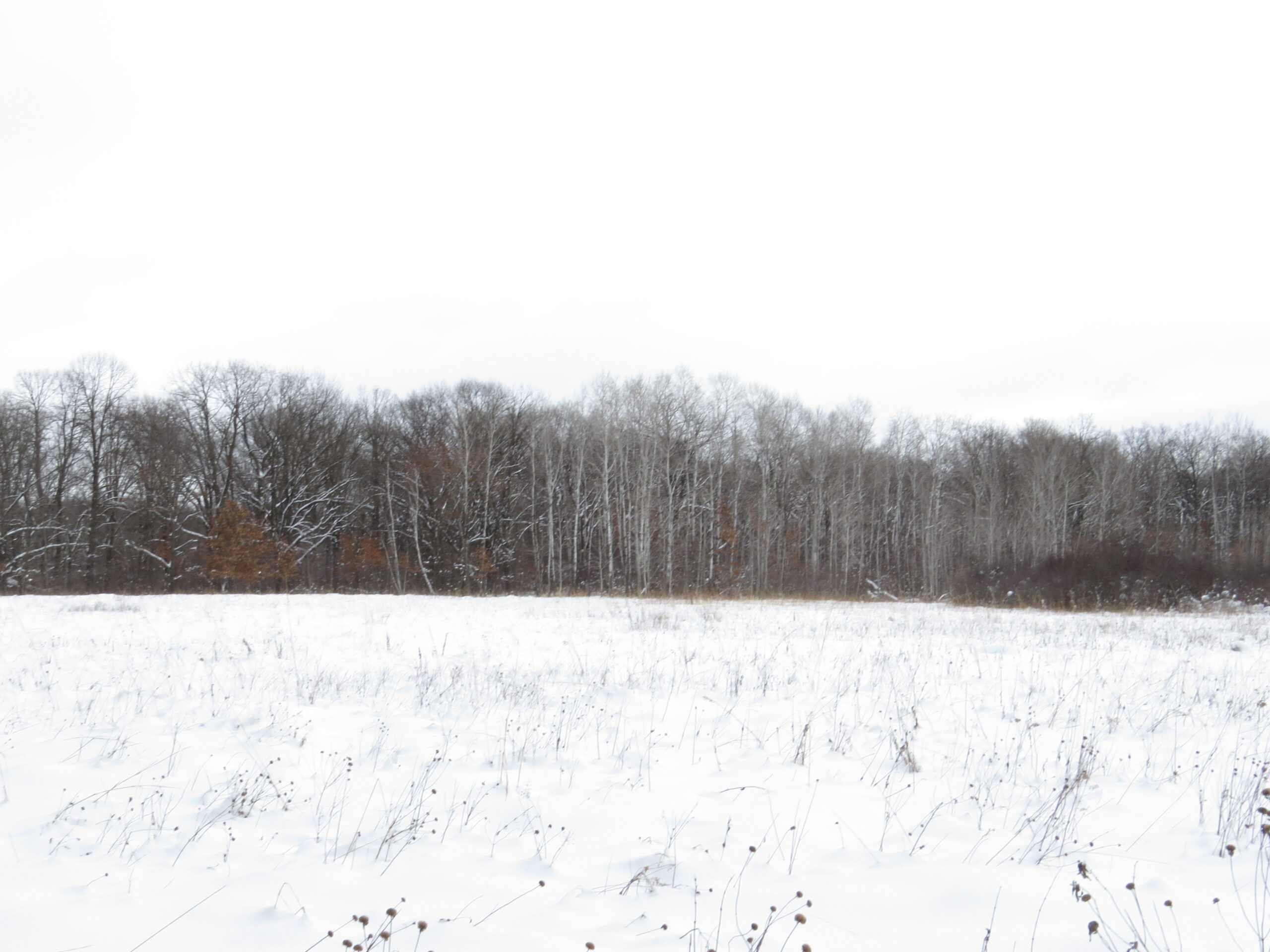
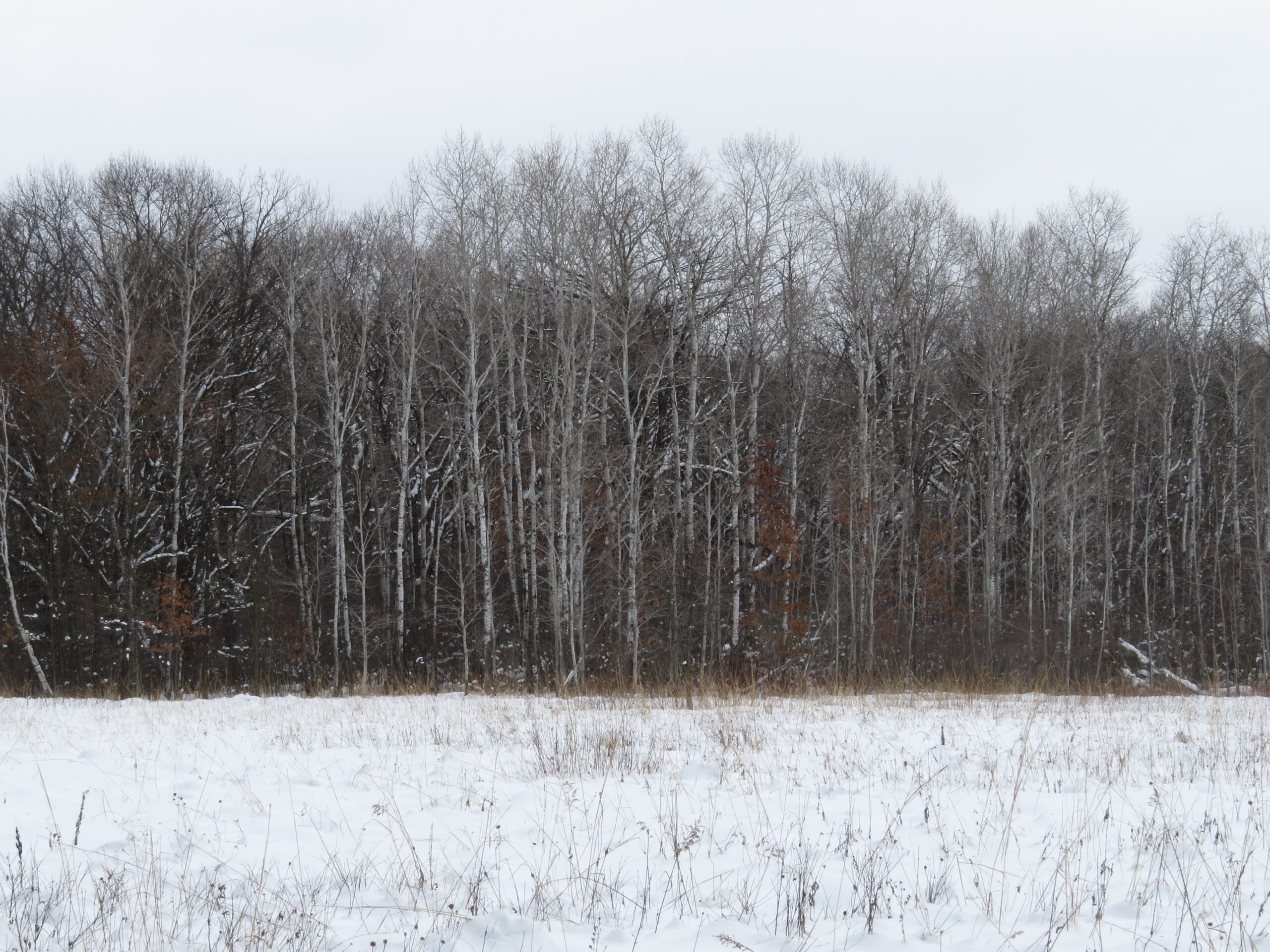
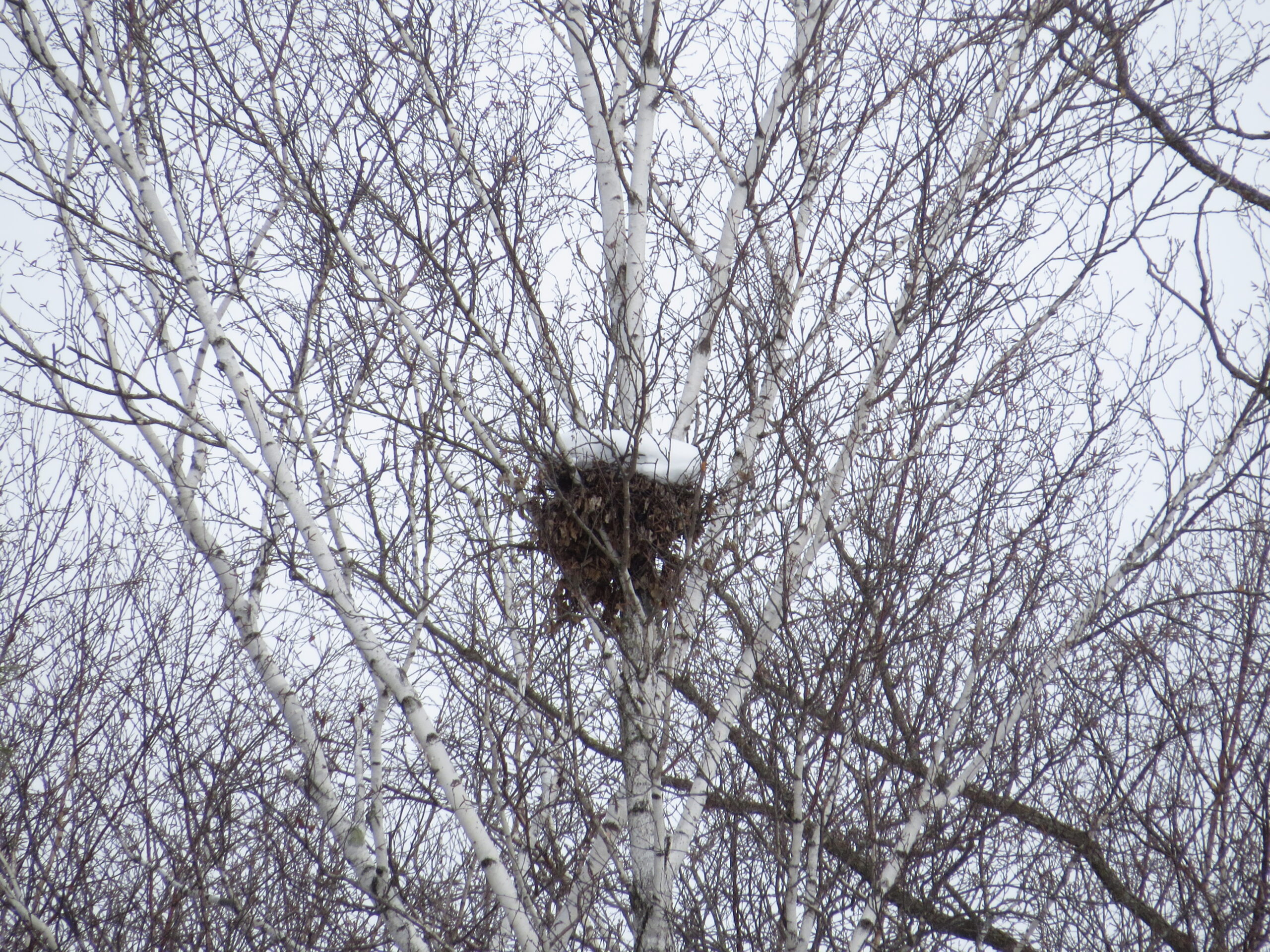
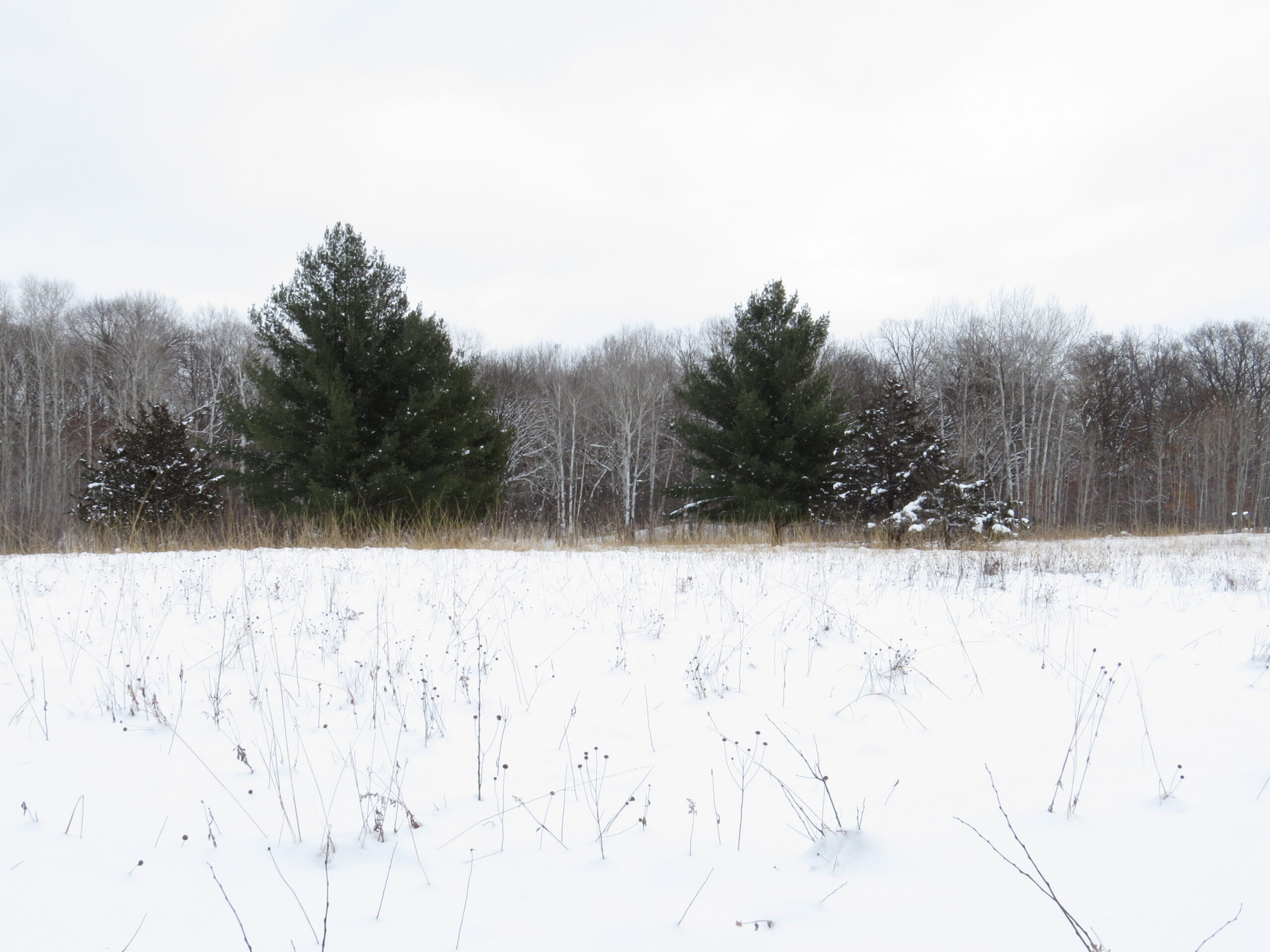
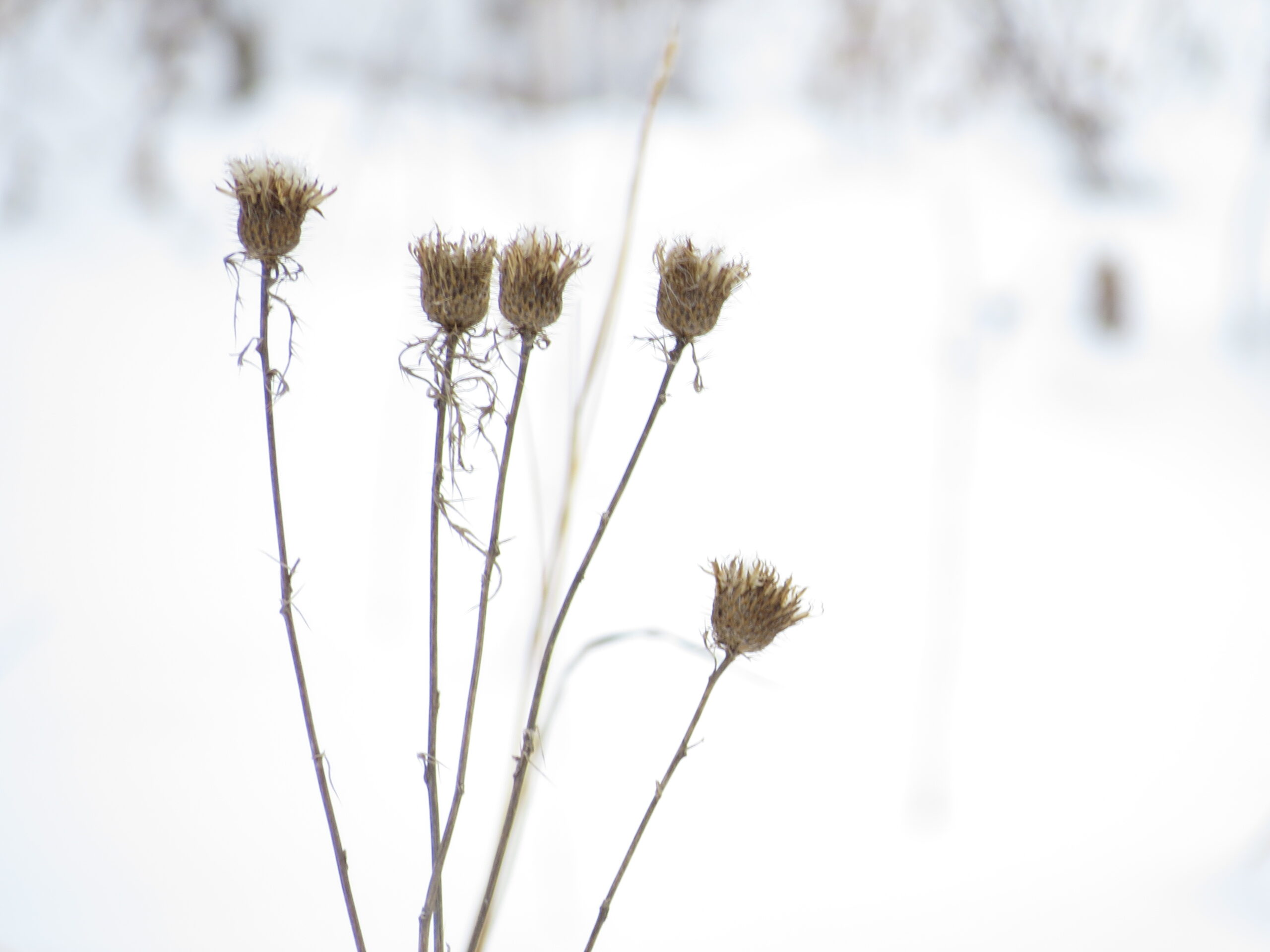
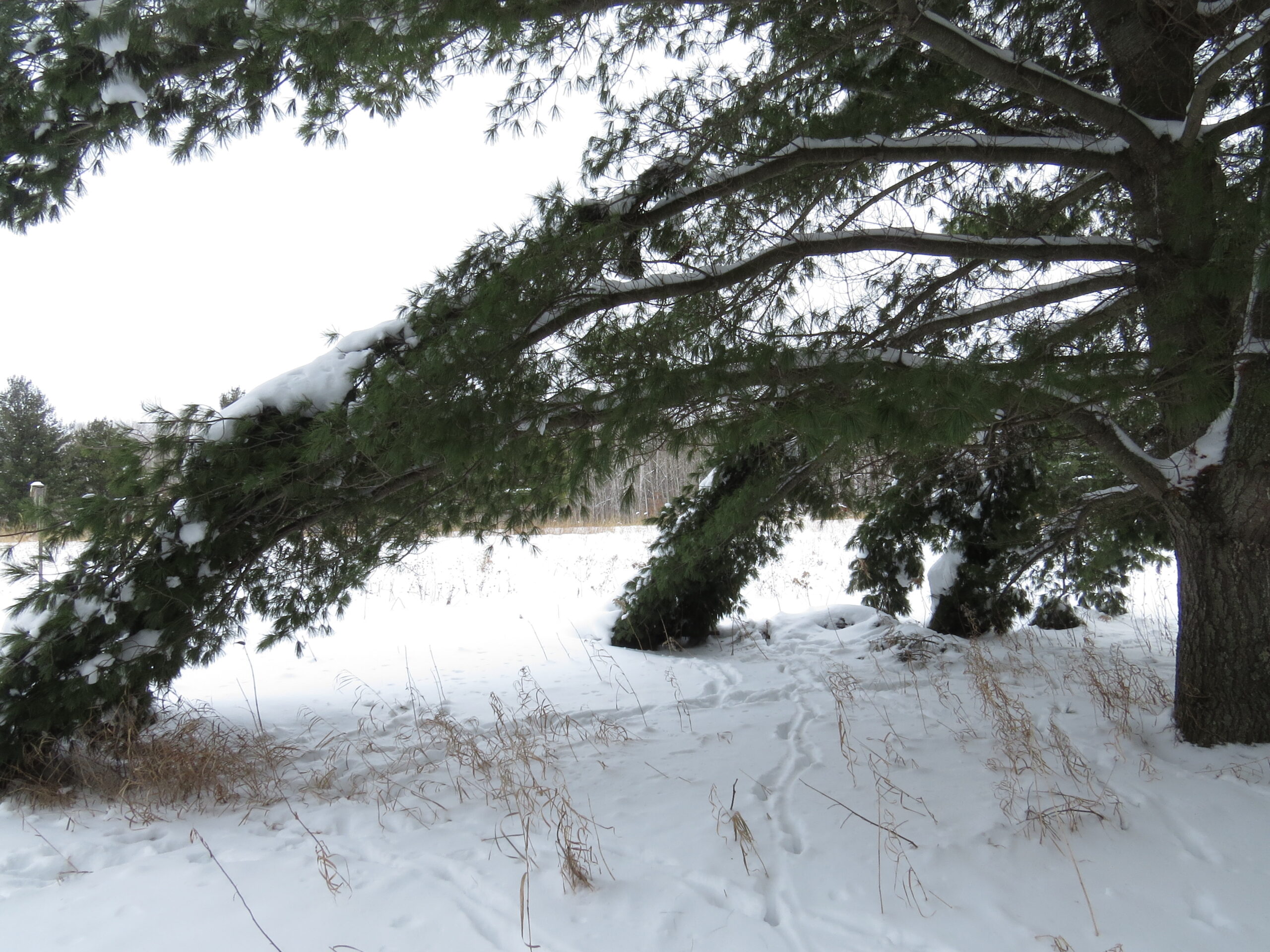
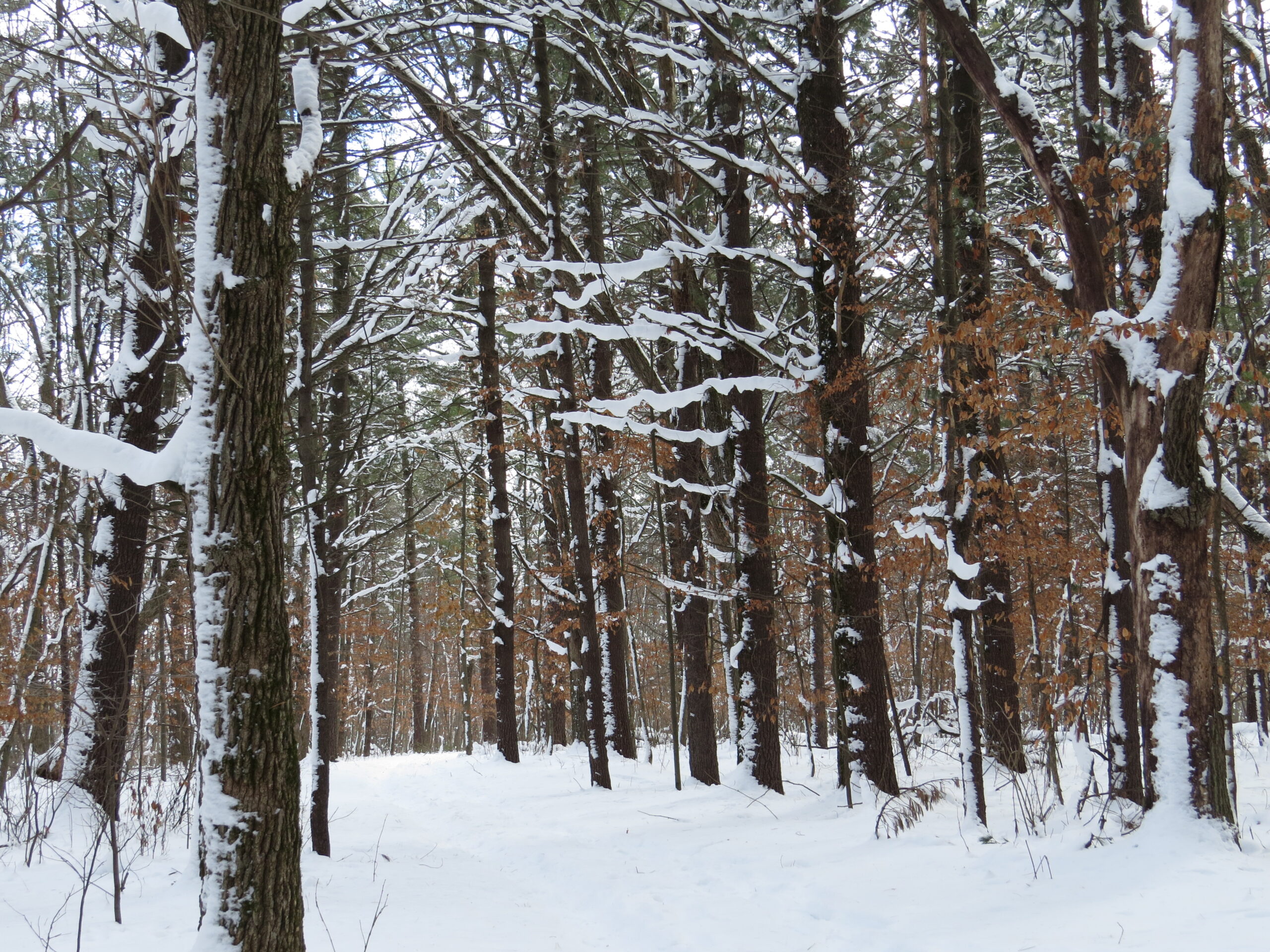
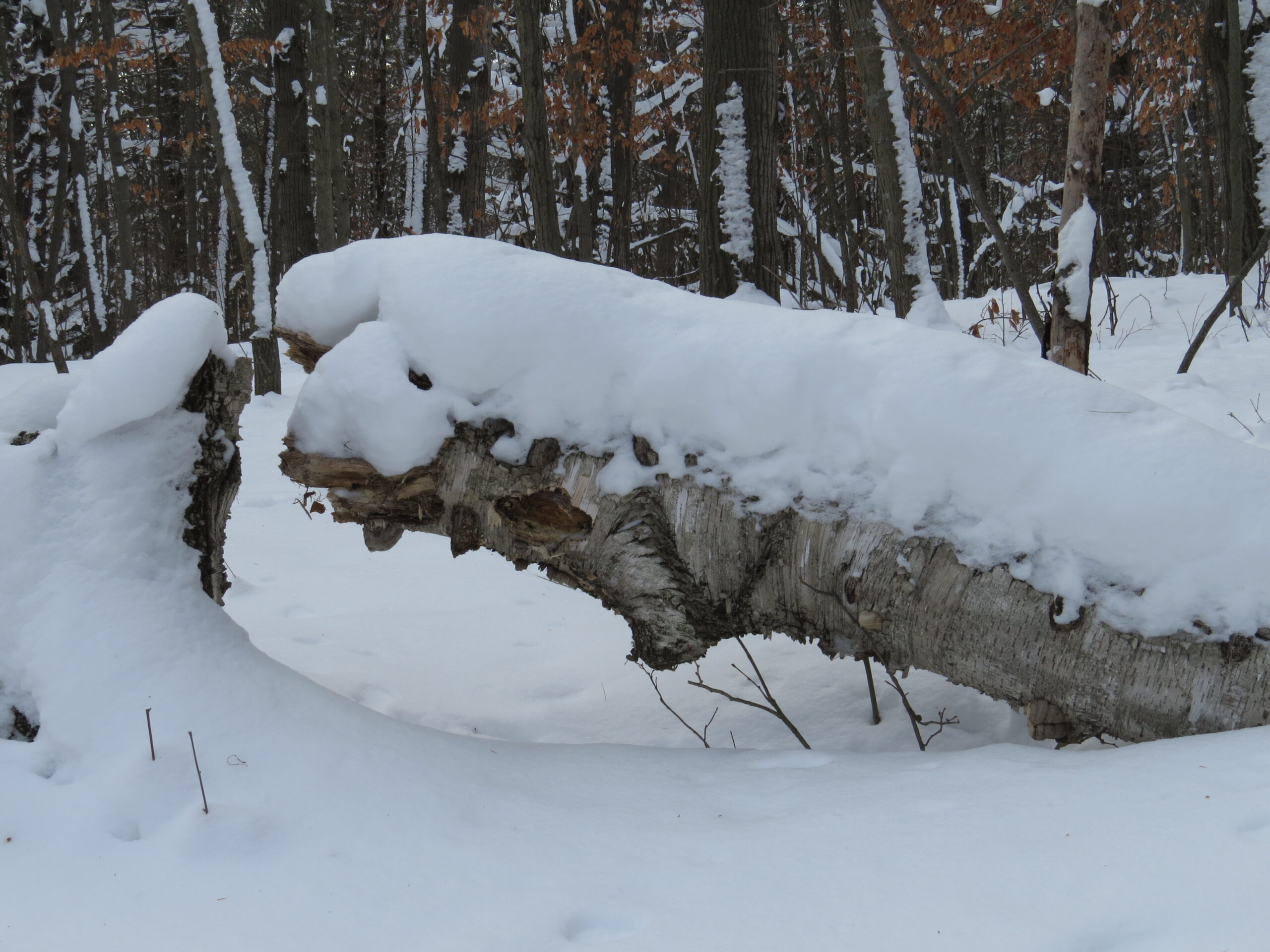
Towards the end of our hike, Chris noticed the sky was loosening up—patches of blue began to show. The sun eventually shone through the trees. Chris stopped and faced the low-lying sun, letting the winter-feeble warmth hit his face. It was just what he needed.
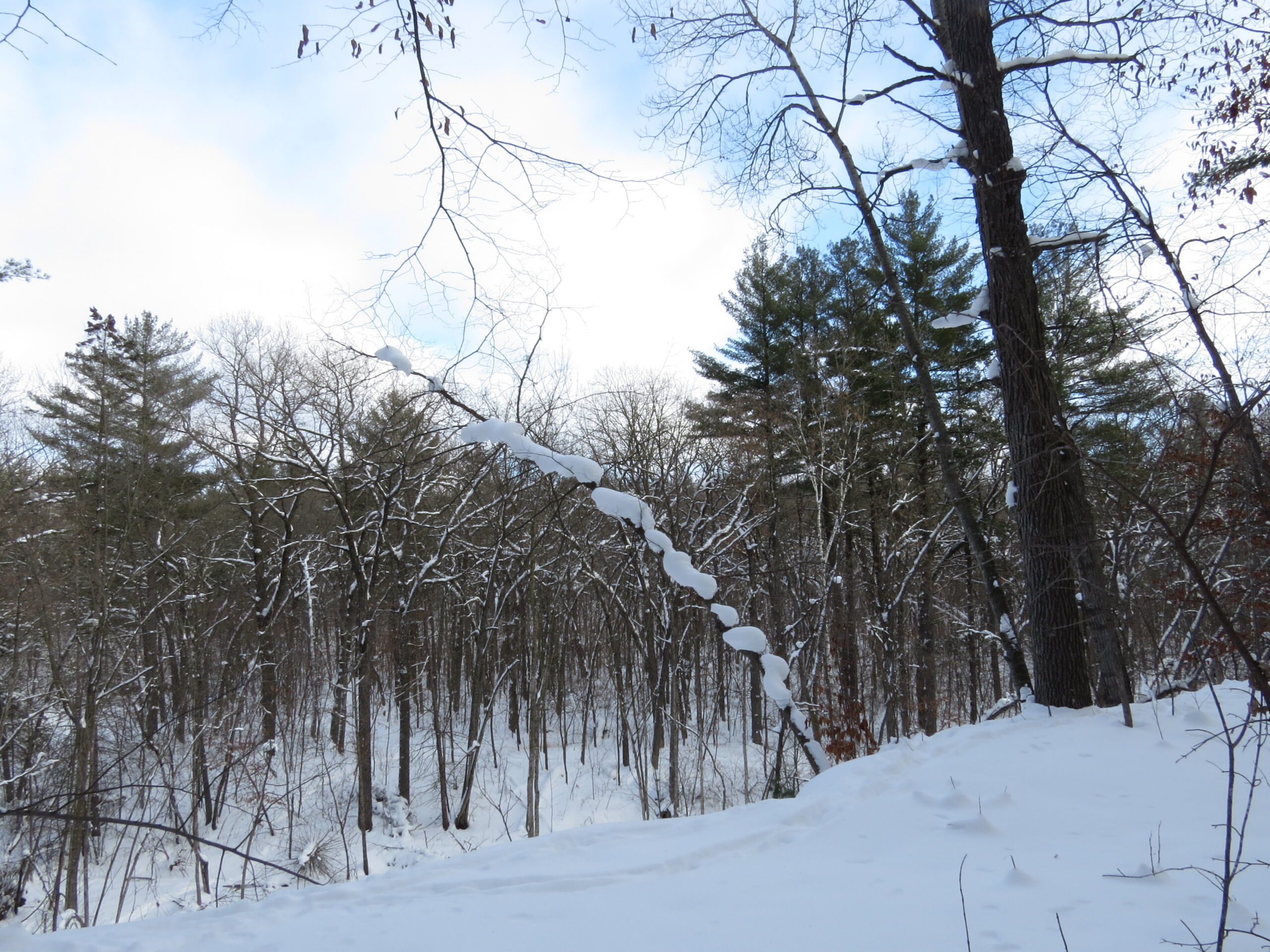
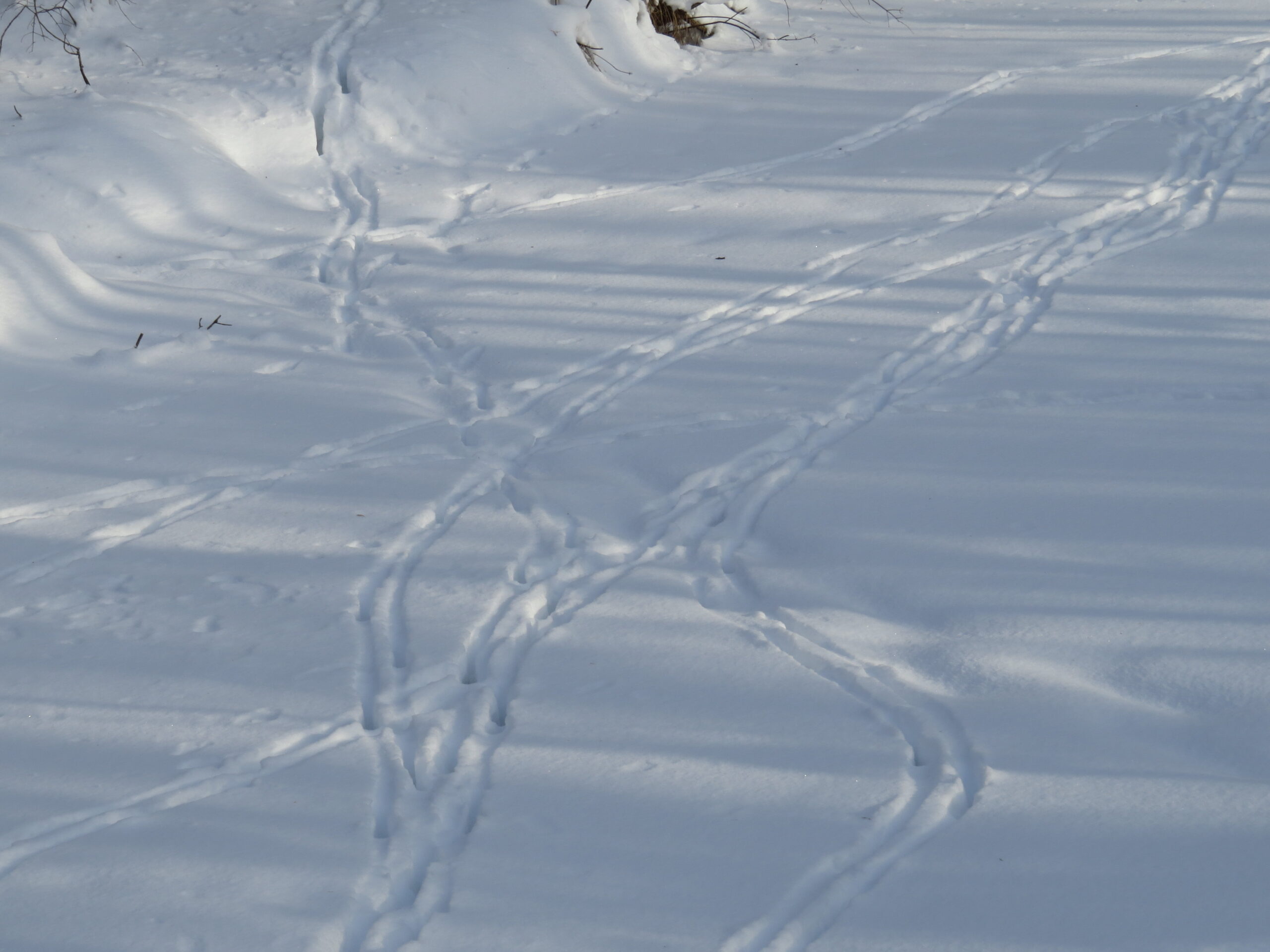
Abstraction is ‘the process of generalizing complex events in the real world to the concepts that underlie them.’ It’s not just about art. It’s about life. It’s about birth and about death. It’s about relationships and about ourselves. It’s about simplifying the dizzyingly complex issues that confront us in order to try to make sense of them and attain some peace. Nature is a nurturing domain that facilitates that process of sense-shaping and peace-making.
After our satisfying snowshoe hike, we warmed up at a cozy little restaurant in Little Falls that serves delicious food. We celebrated Chris’ birthday with burgers and carrot cake.
We managed to celebrate a birth day in the aftermath of a death day. I wouldn’t call it a Happy day, but it was a productive day, a satisfying day. There is mystery in death, in birth, in art, in creation, and in God. There is mystery in brokenness, in beauty, in ugliness, and in healing. There is mystery in how they are all connected. The simplified expression of them all just may be Love, which paradoxically may be the most complex entity of all.
Begin, Again, at the Beginning
I wanted to begin the New Year at the beginning of the Mississippi River—it seemed like a wonderfully symbolic way to leave the old year behind and begin again with the new year. It was the antithesis of the Times Square chaos of people, noise, and celebration; it was the three of us—Chris, Emily, and me, it was unbelievably quiet, and the fiesta was a frolic in the frosty forest on snowshoes. We walked out of the old year and into the new year with hope and the renewal that comes from a flip of the calendar. It is like a universal ‘permission’ to lay down the things we no longer want to carry and an ‘encouragement’ to begin again. Little did we know on that day that in one week’s time we would have to ‘pick up’ what we did not want to carry and begin, again, with another round of January grief.
With the beginning of the Mississippi River is the start of the Great River Road—3,000 miles of National Scenic Byway that runs on both sides of the River at various places through ten states. Here at Itasca State Park is the beginning of the Great River Road; it is the same road we turn off from to get to our home in Sartell; it is the same road that goes through St. Paul where our son Aaron lives; it is the same road that goes through tiny Cassville, Wisconsin where Chris’ folks were born, raised, and buried; and it is the same road that goes through the metropolitan area of St. Louis, Missouri where a little girl named Mary Brake lived at the beginning of her life.
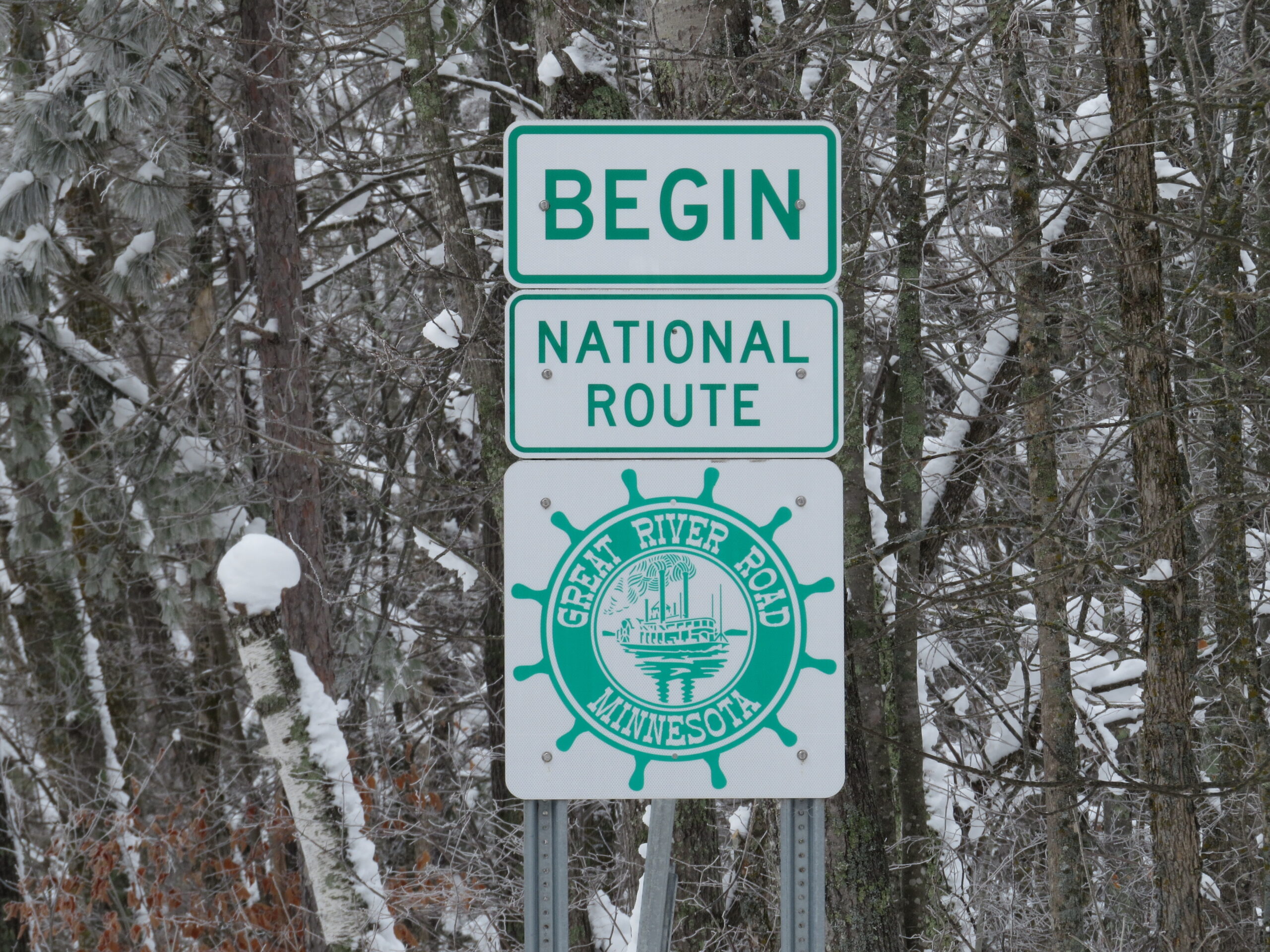
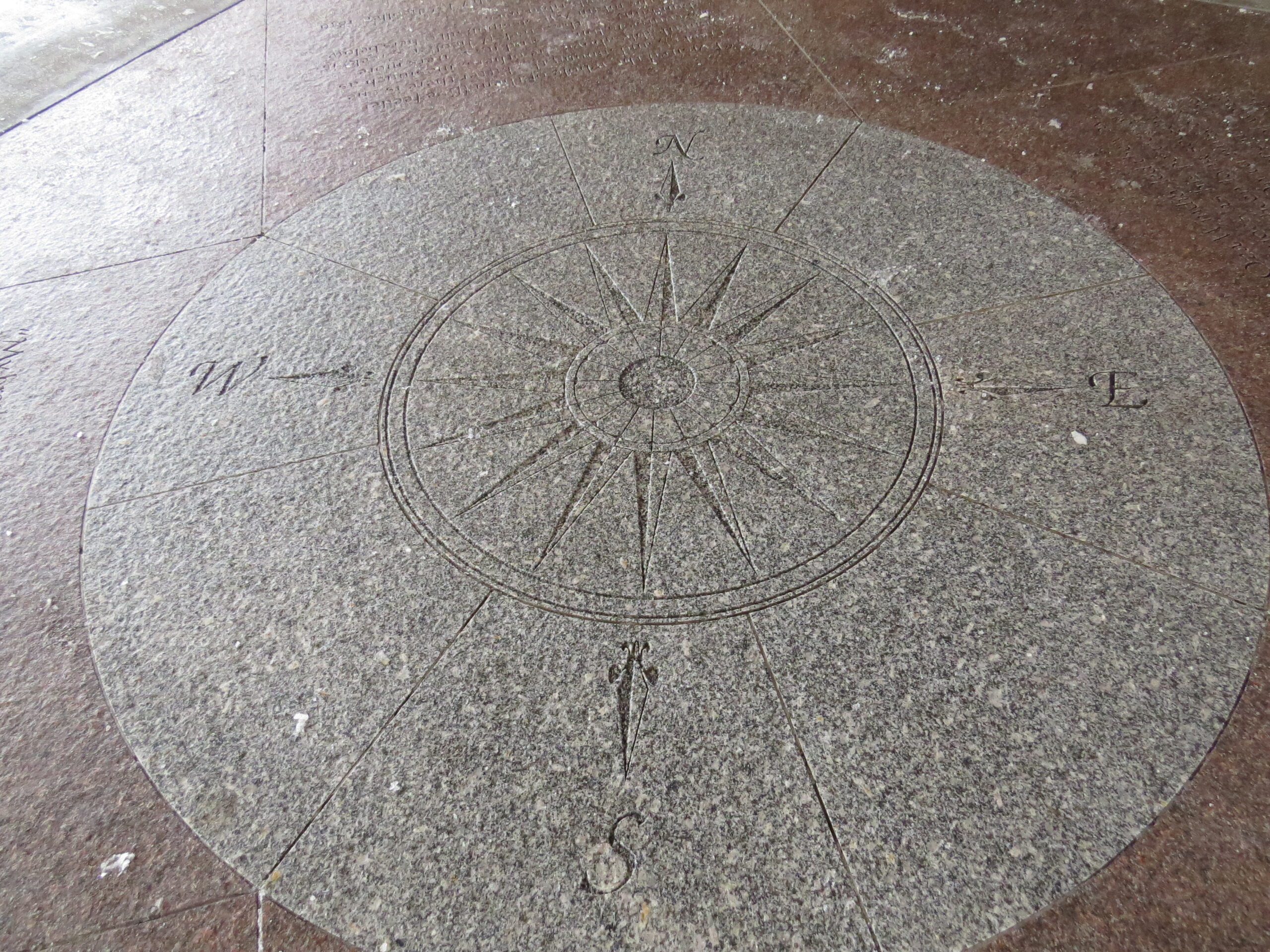
By our second day at Itasca—New Year’s Day—we were getting our bearings. It takes a while to do so when in a new place. It takes a while to do so when death impinges on our lives.
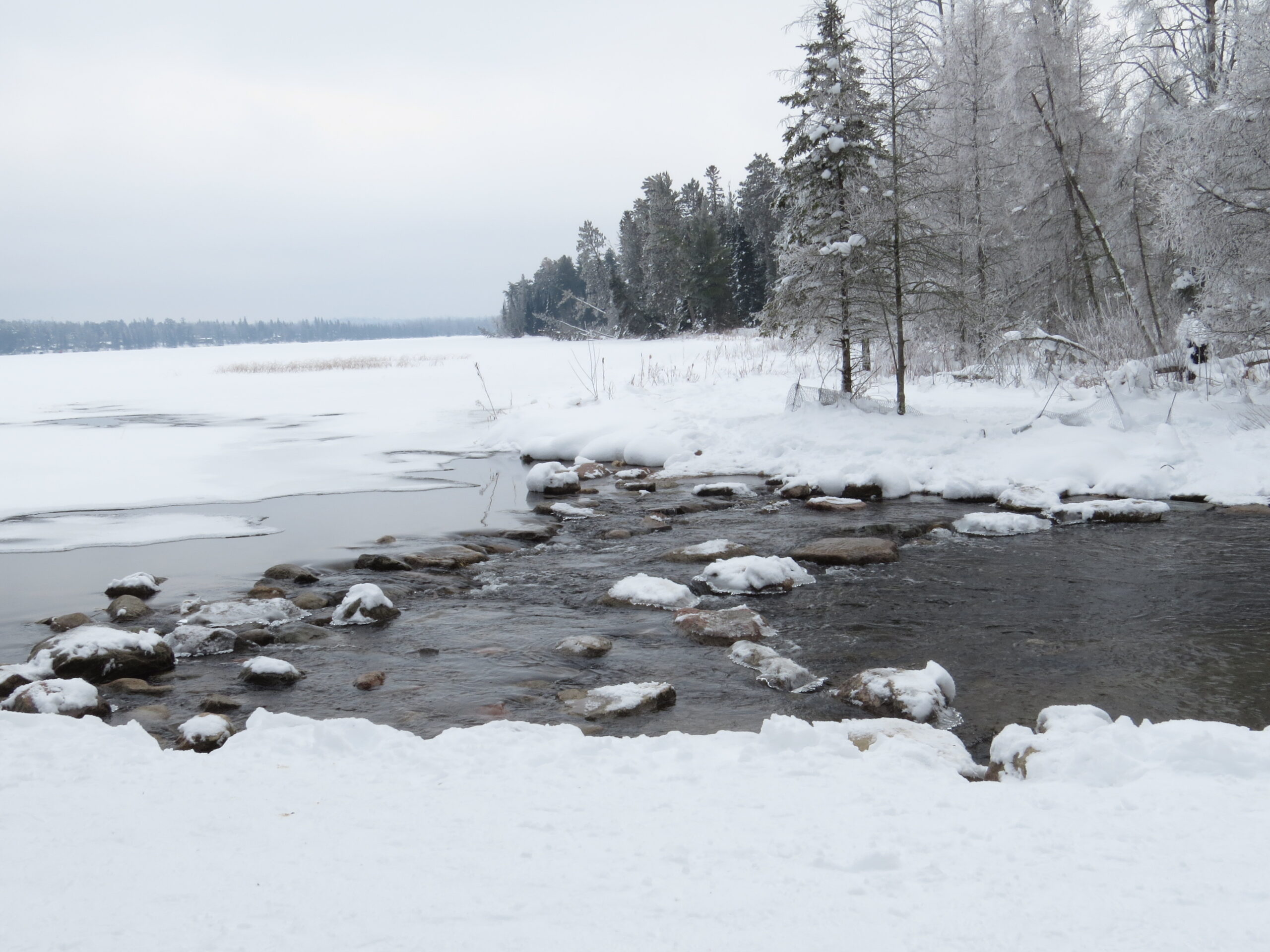
The Great Mississippi River begins at a pile of rocks where water flows from the North Arm of the wishbone-shaped Lake Itasca. It flows north for a time, then arcs east, southeast, southwest, then southeast again until it maintains its southward flow. It took a while for it to get its bearings, too, I guess.
What a fascination (or is it merely function?) we have for ‘crossing’ a creek, a stream, or a River. In the summertime, thousands of people cross the source of the Mississippi on the rocks or by wading in the shallow water. Not fifty yards downstream was a thick wooden plank placed across the mighty maiden river. I wasn’t the first to walk the snowy plank. A little ways down the trail was another bridge where I could see another bridge from which I saw a fourth bridge! I wonder how many bridges cross the 2,552 miles of great, winding River?!
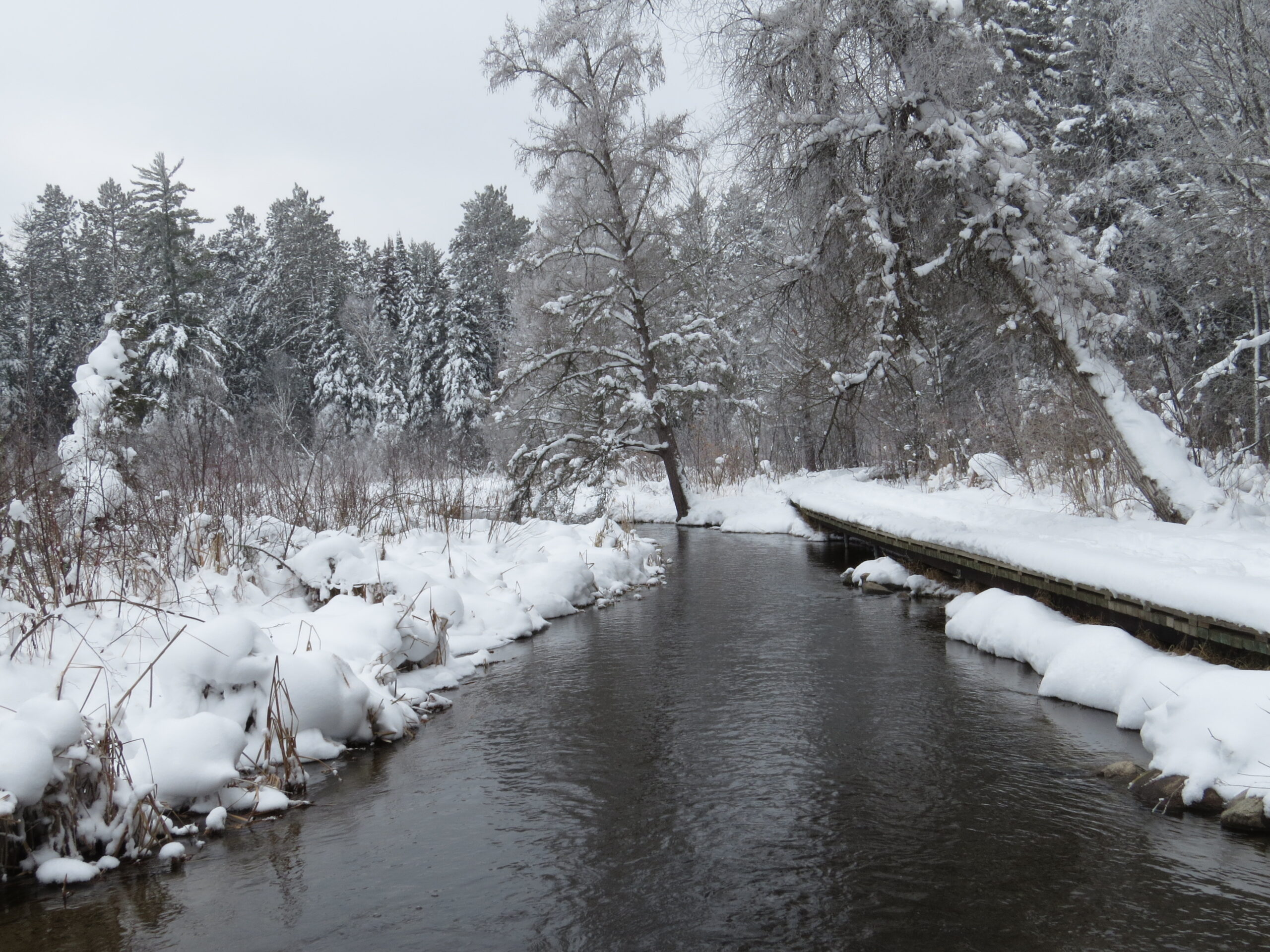
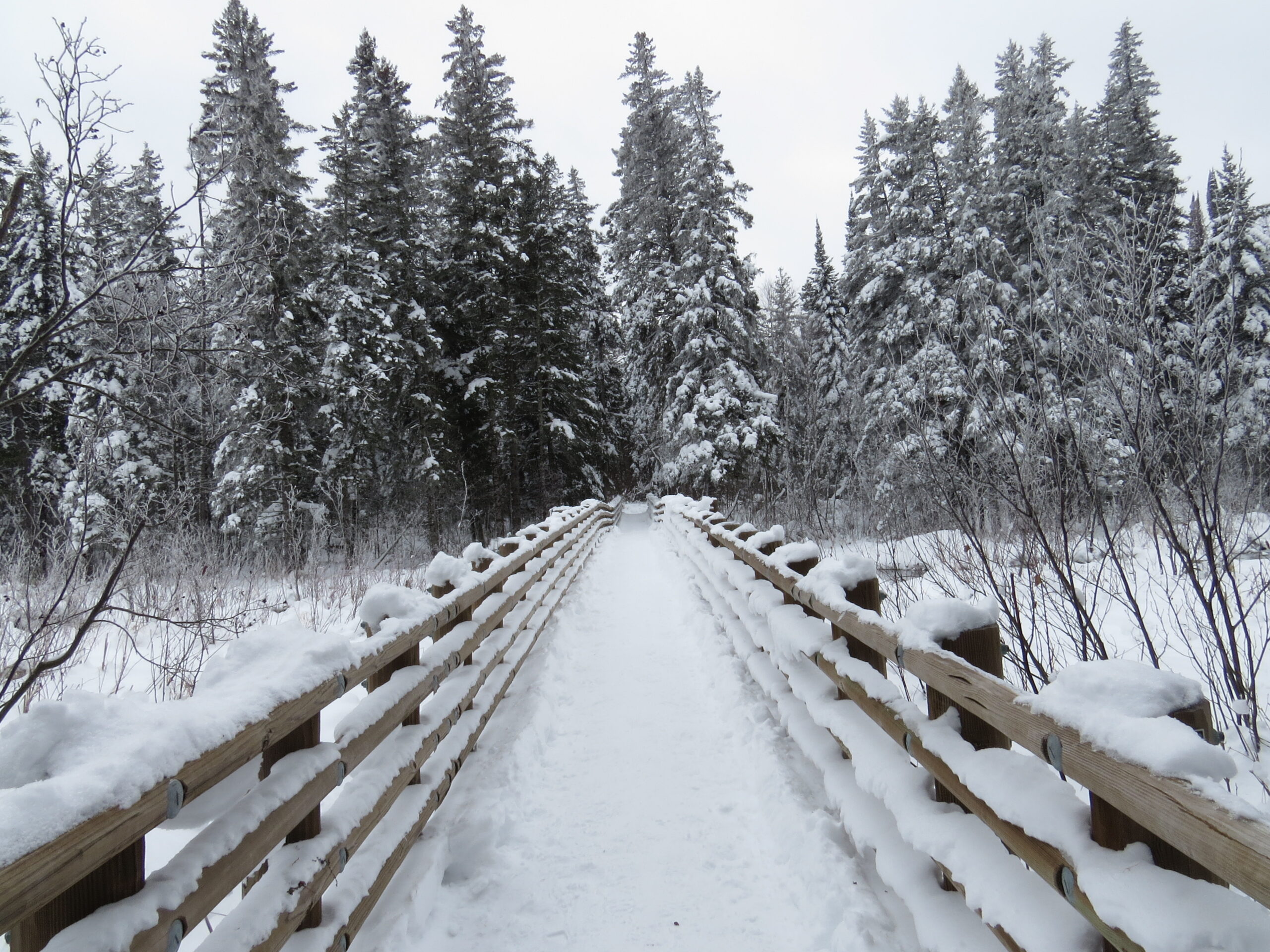
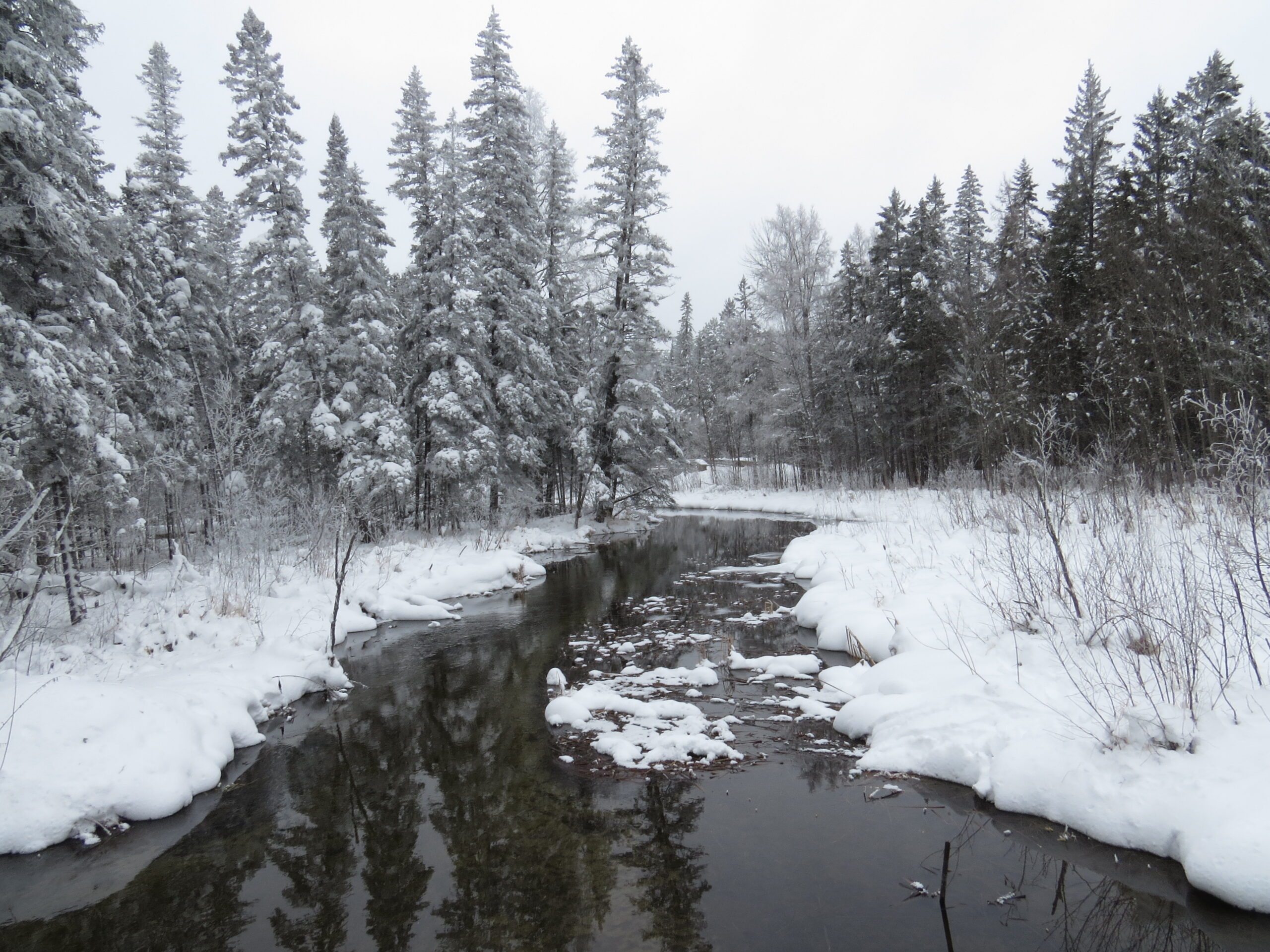
And so it begins….
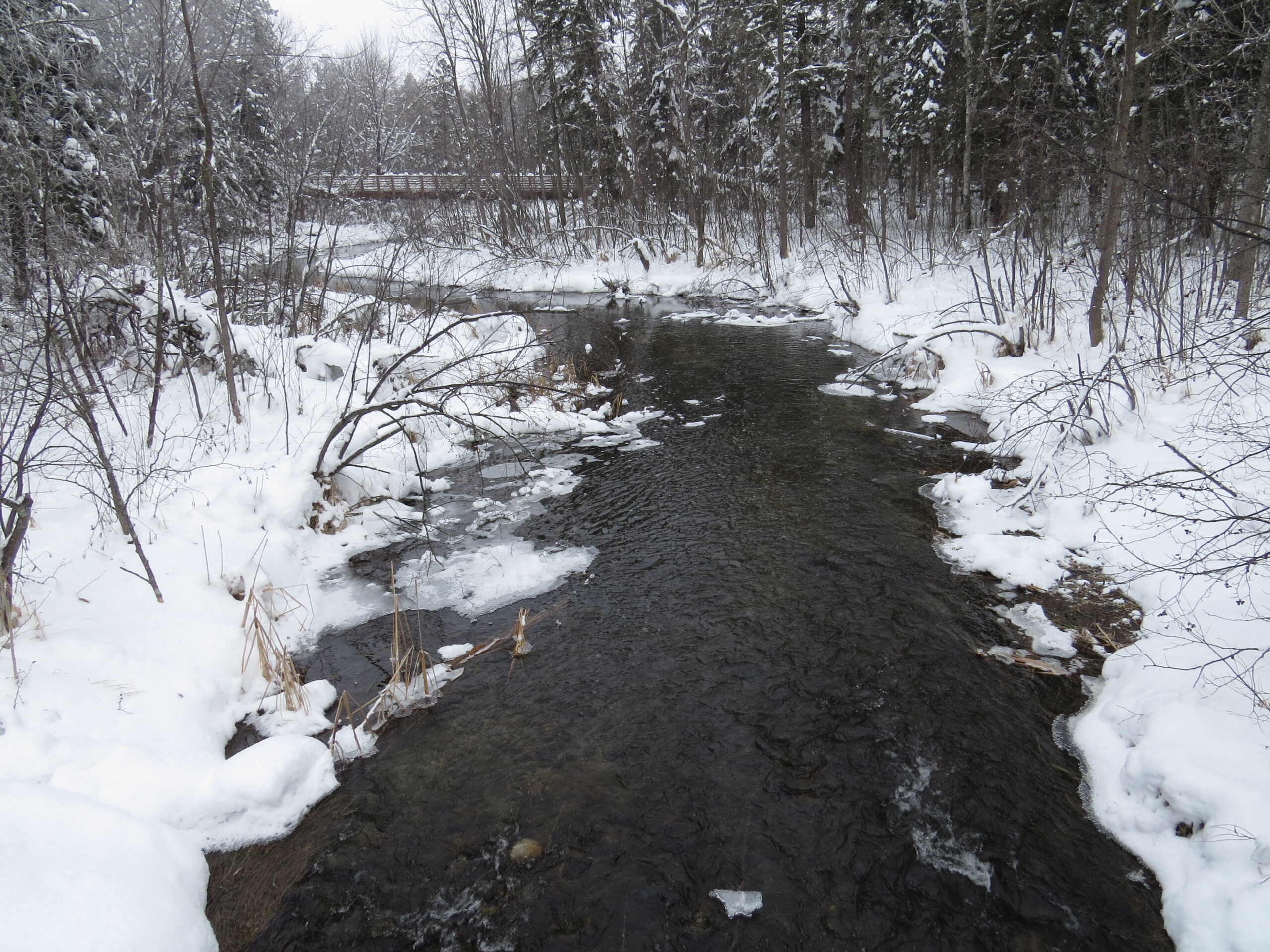
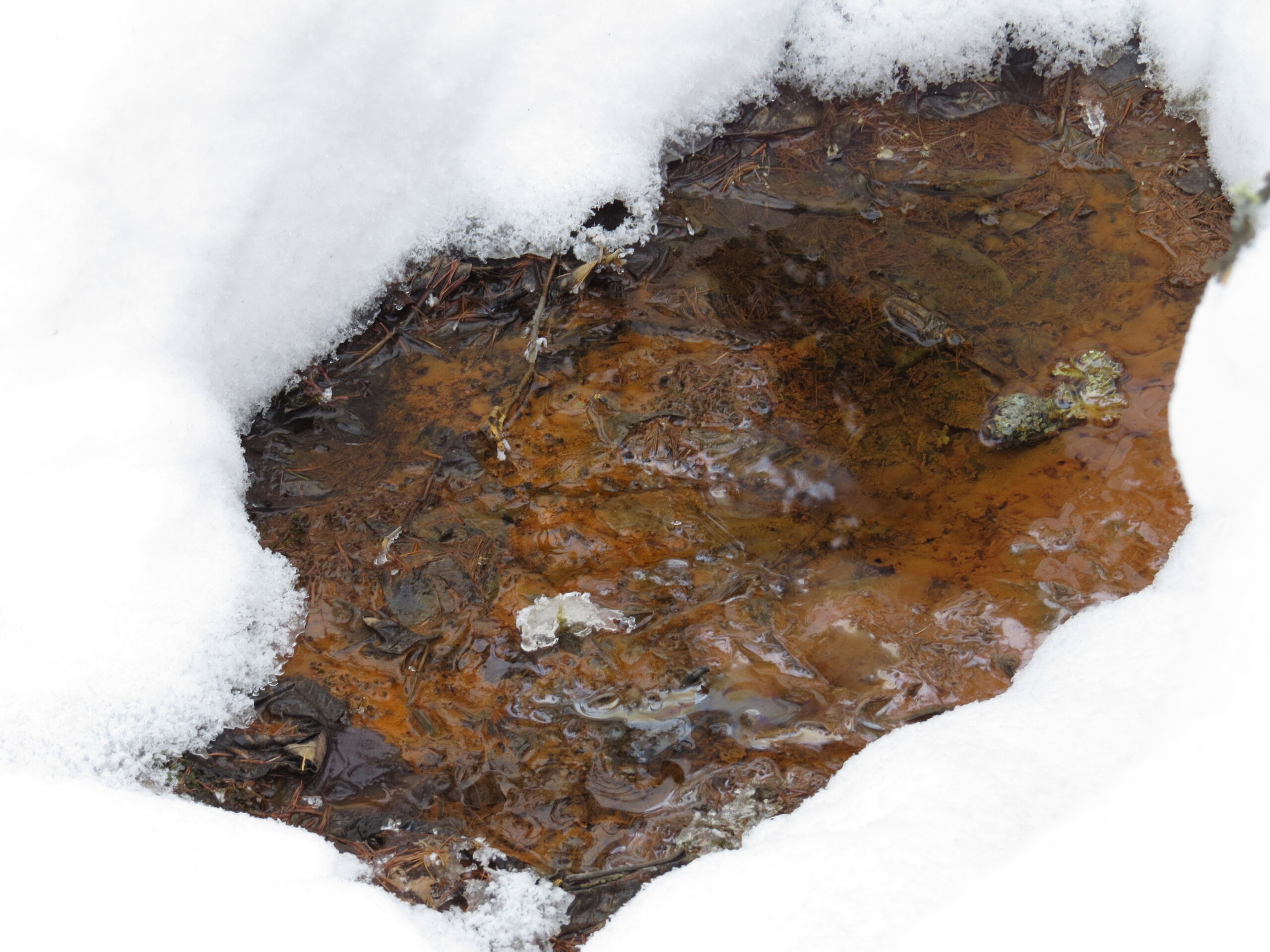
With our map, our bearings, a good night’s sleep, a wonderful cabin-cooked breakfast, and our enthusiasm for the New Year, we strapped on our snowshoes to follow the two-mile loop of Dr. Roberts Trail. It was narrow and ungroomed, a perfect snowshoe trail. The first stretch was on a boardwalk through a bog. Patches of tannin-orange and brown bog water showed through the snow, and even with its lazy flow, I wondered why it wasn’t frozen like the large Lake Itasca we walked beside.
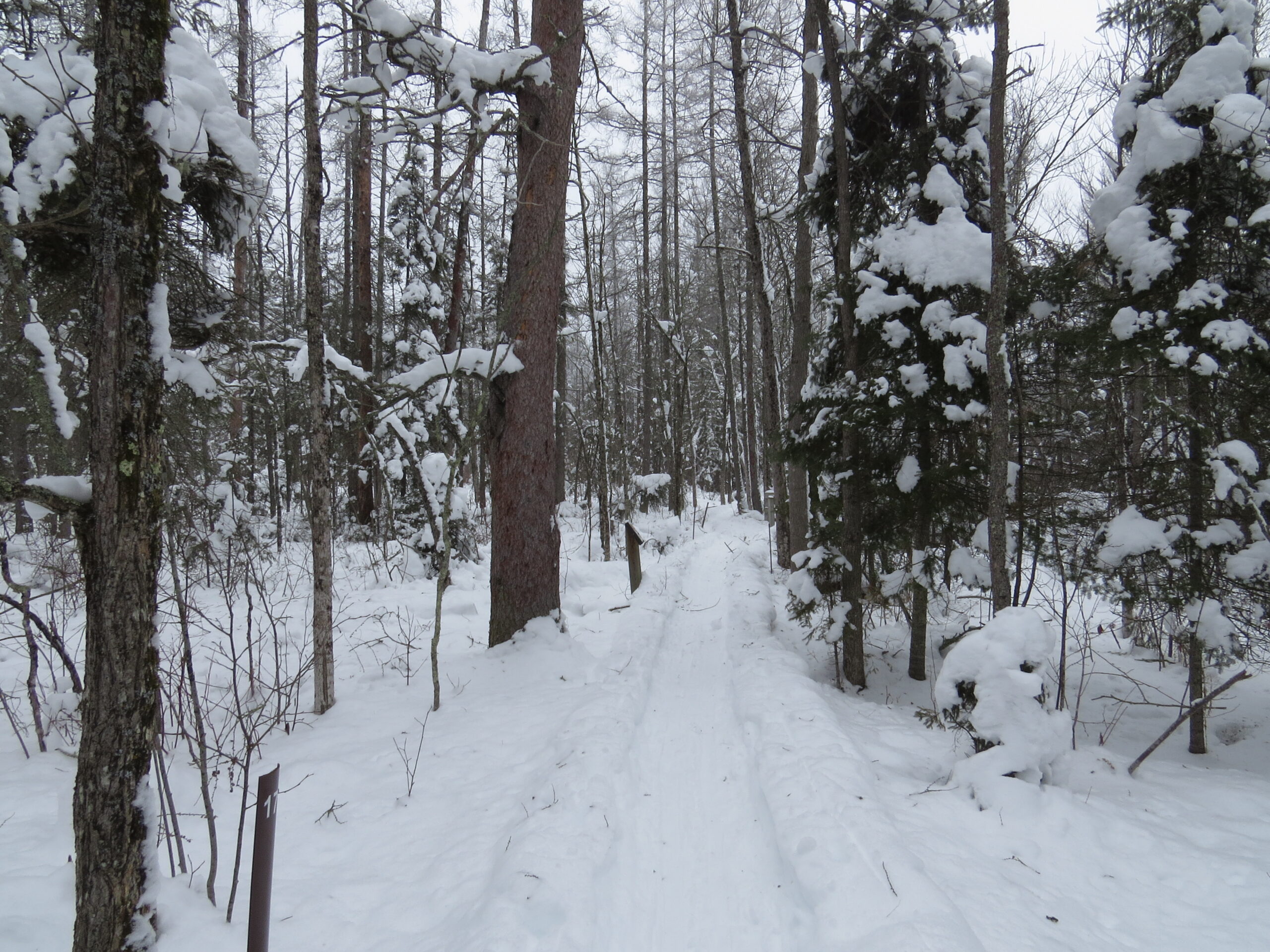
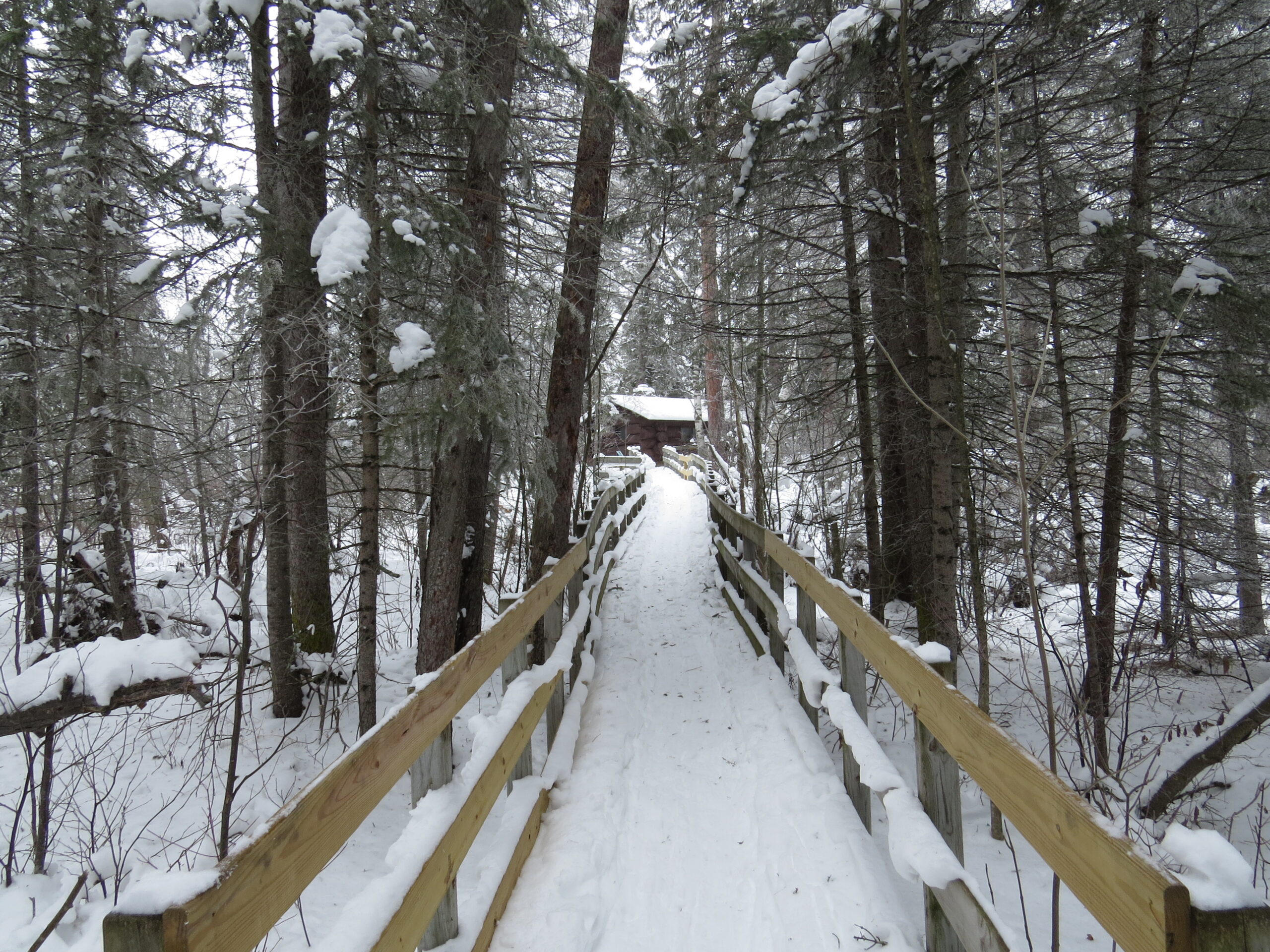
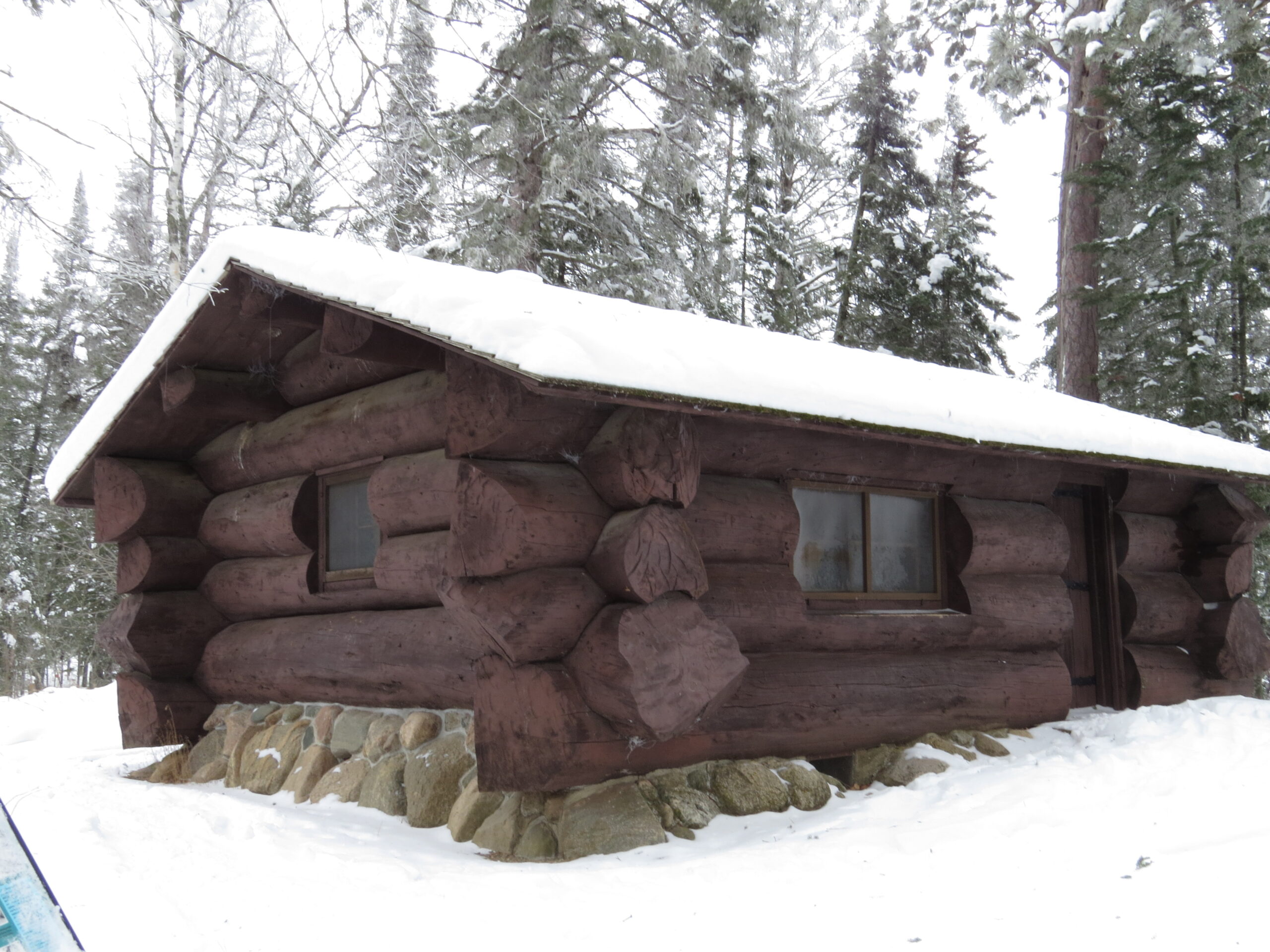
A boardwalk bridge lifted us to a little hill where the Old Timer’s Cabin overlooked the Lake. It was the first building project of the Civilian Conservation Corp (CCC) at Itasca, which began in December 1933. Also notable is the size of the logs—a cabin built with only four logs!
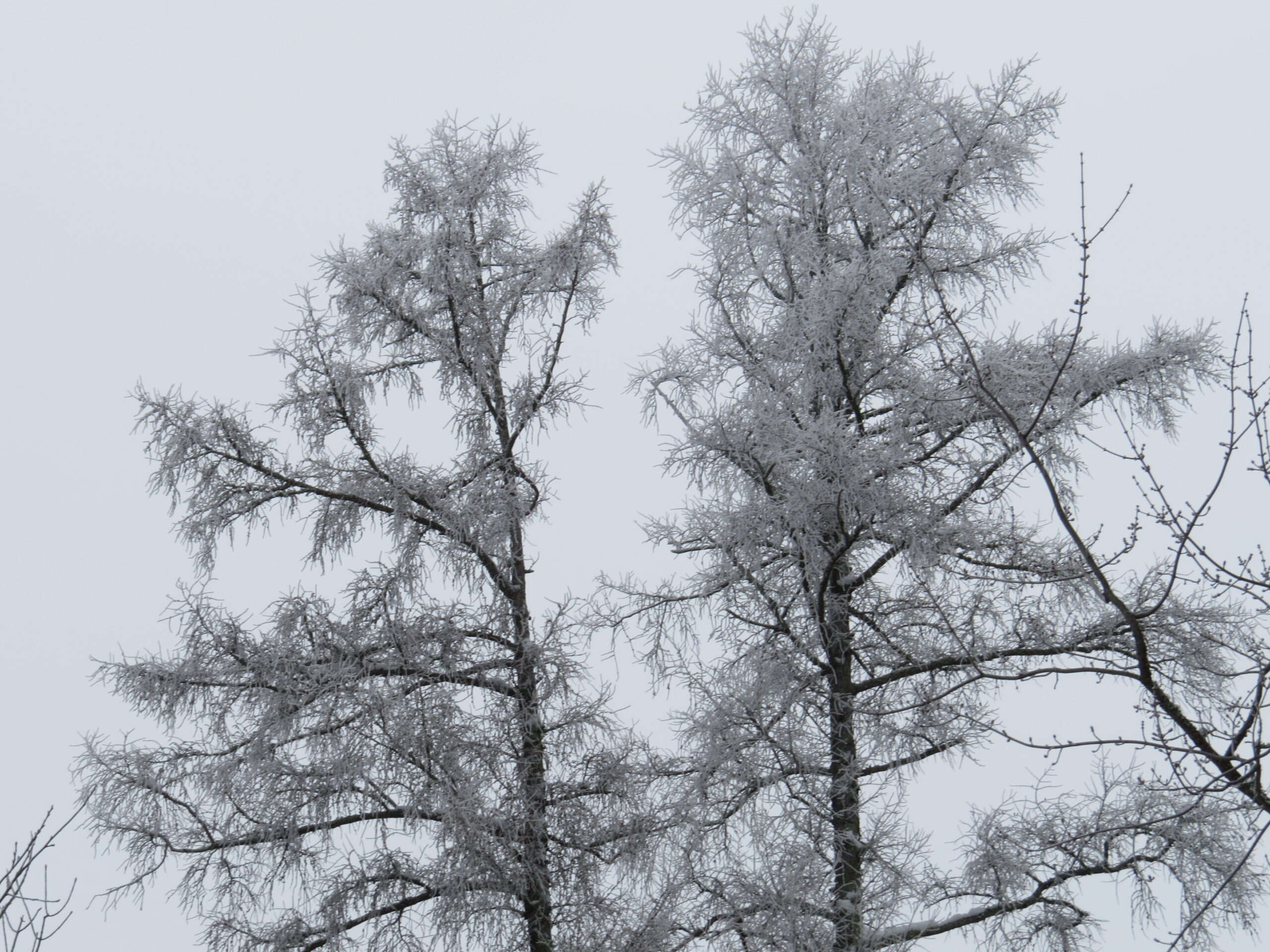
The trail followed the east arm of Lake Itasca and climbed a high ridge. The trees were ghostly with frost in the cloudy, foggy day.
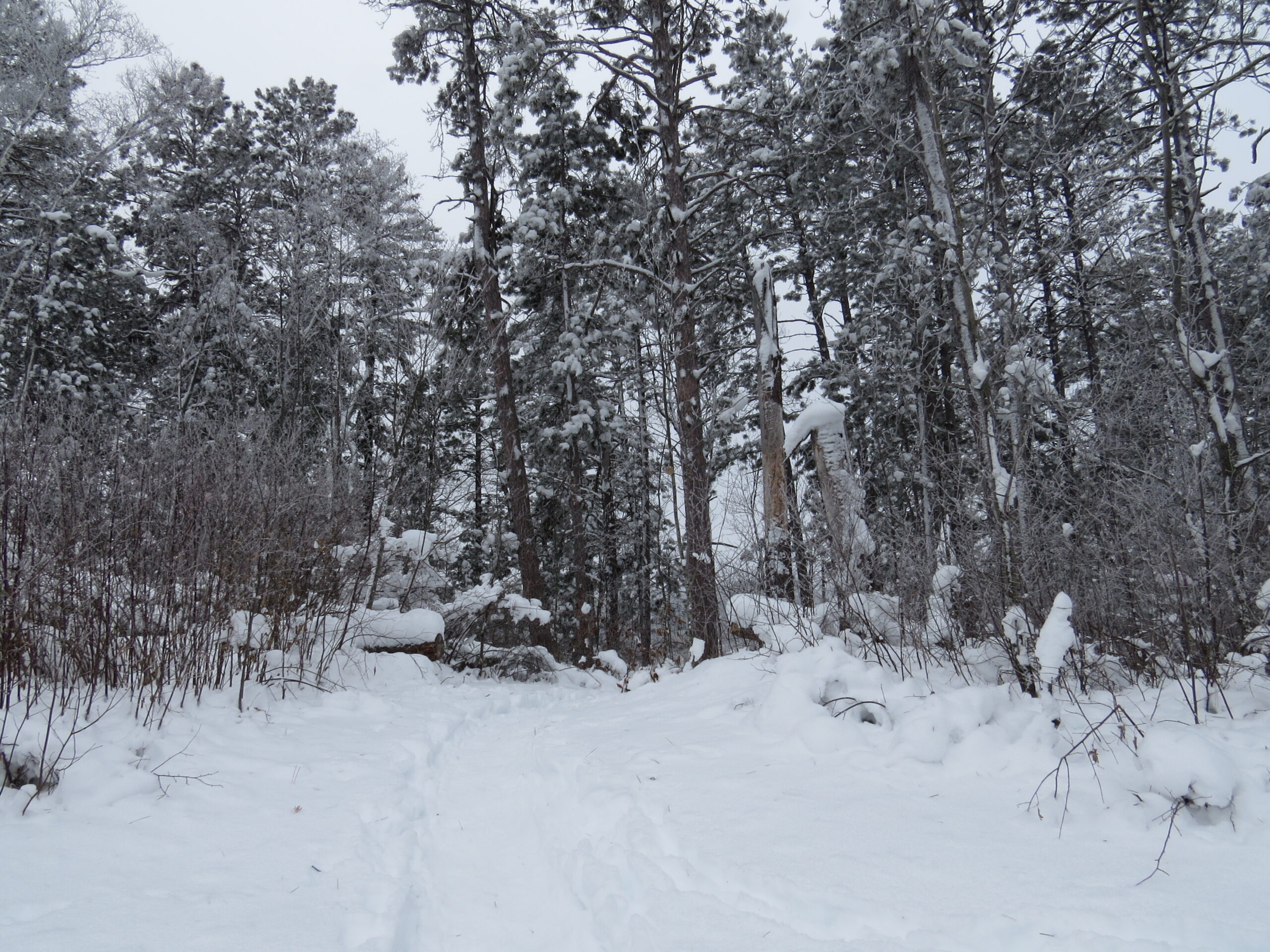
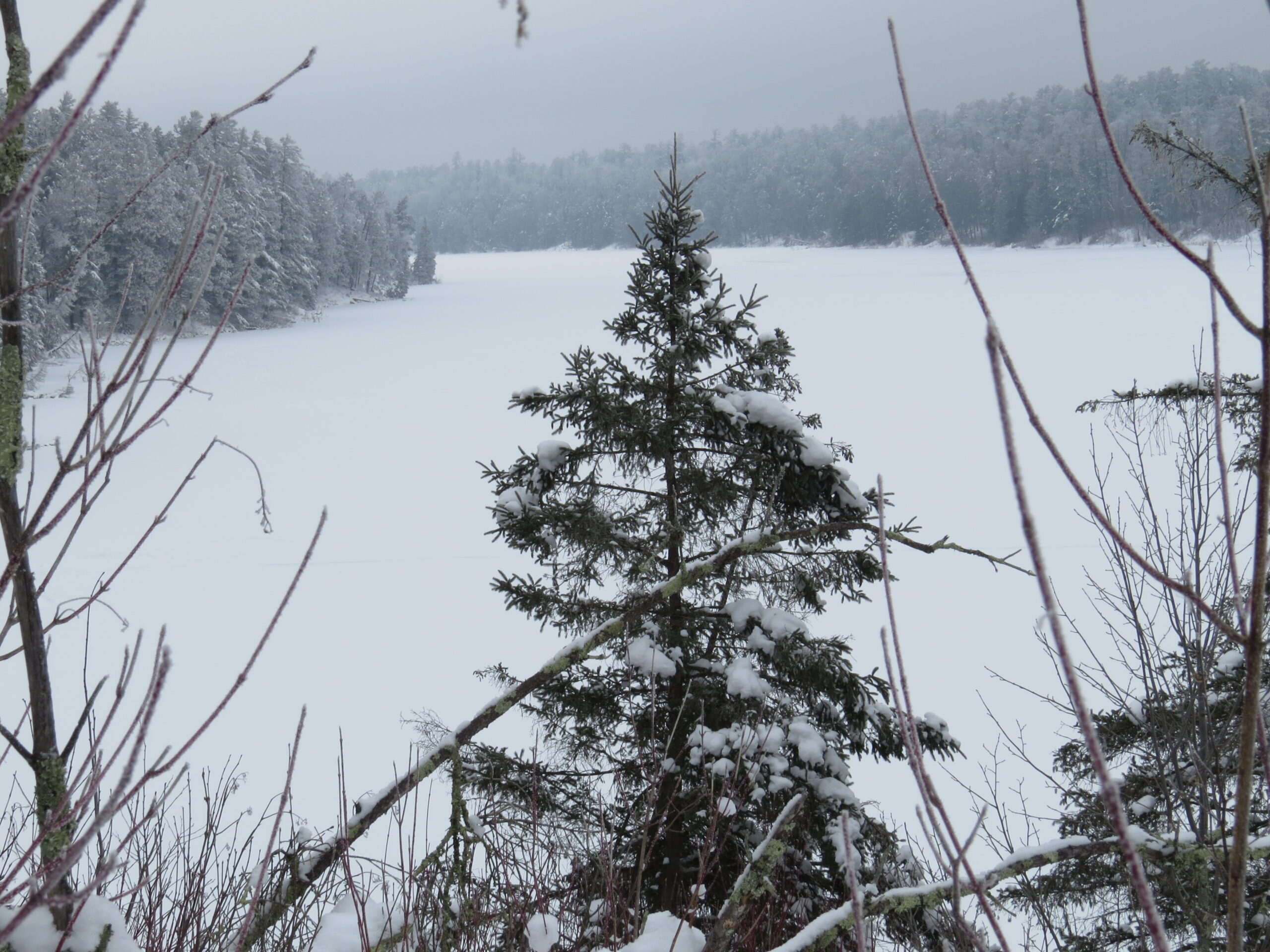
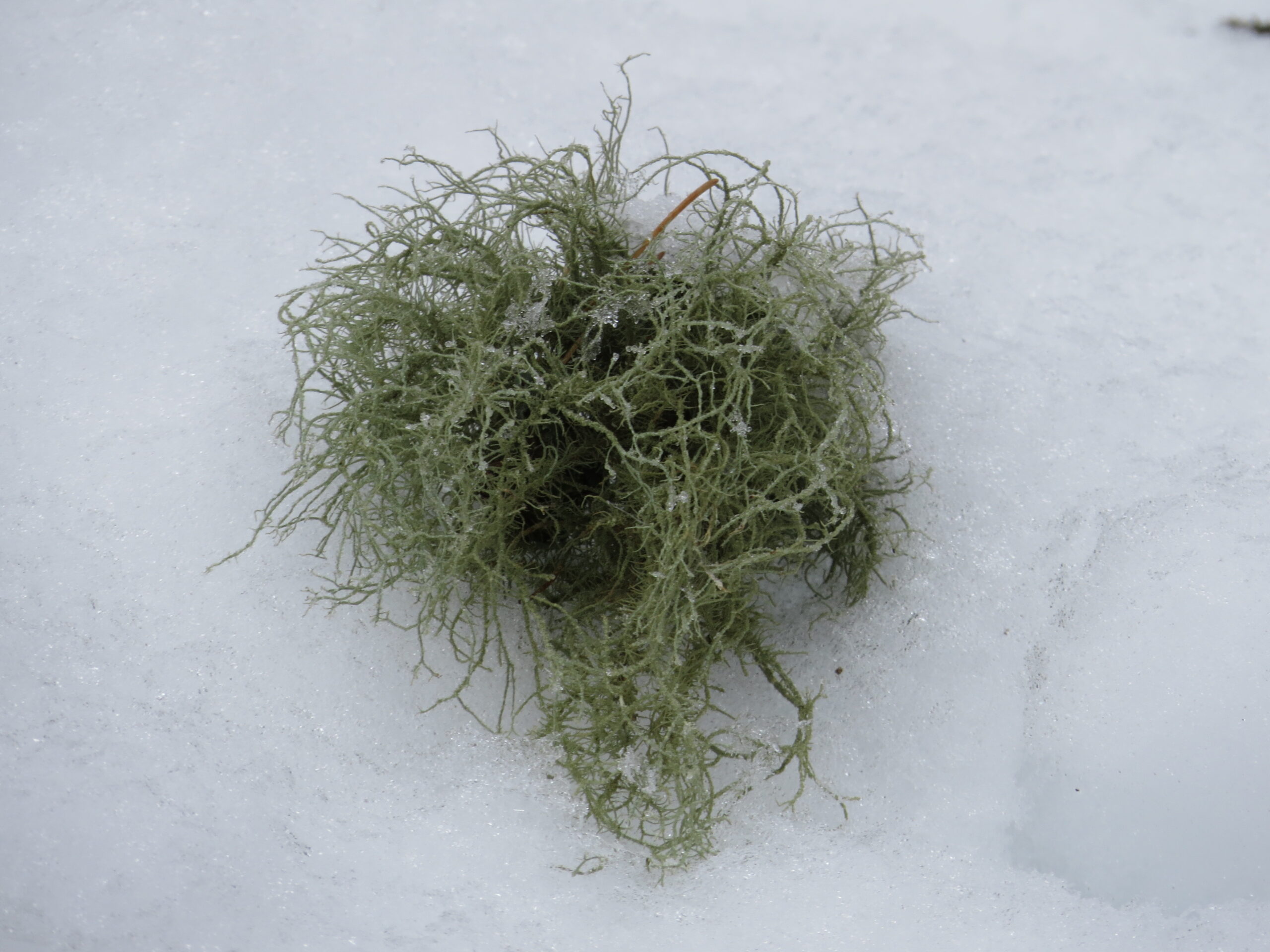
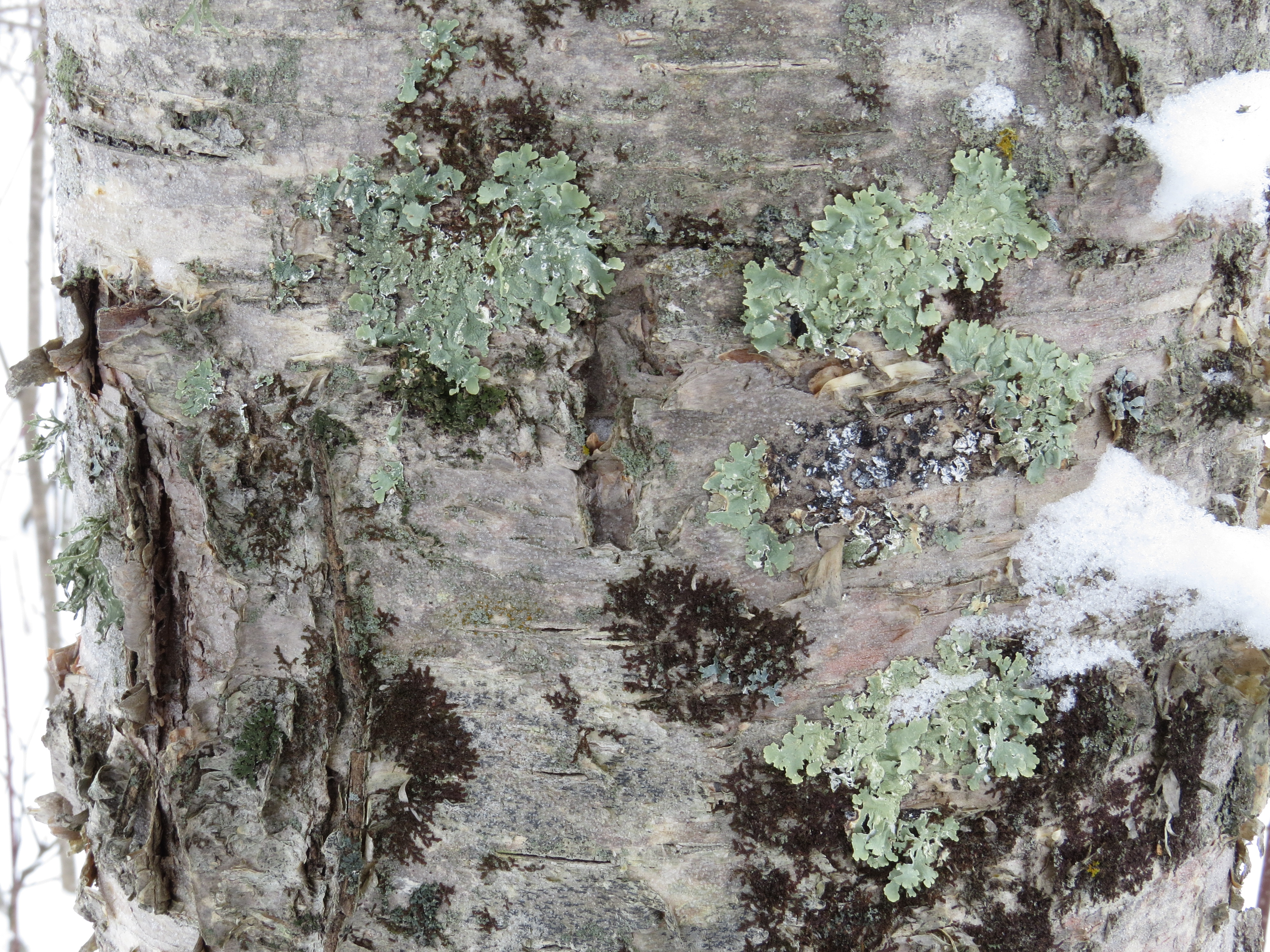
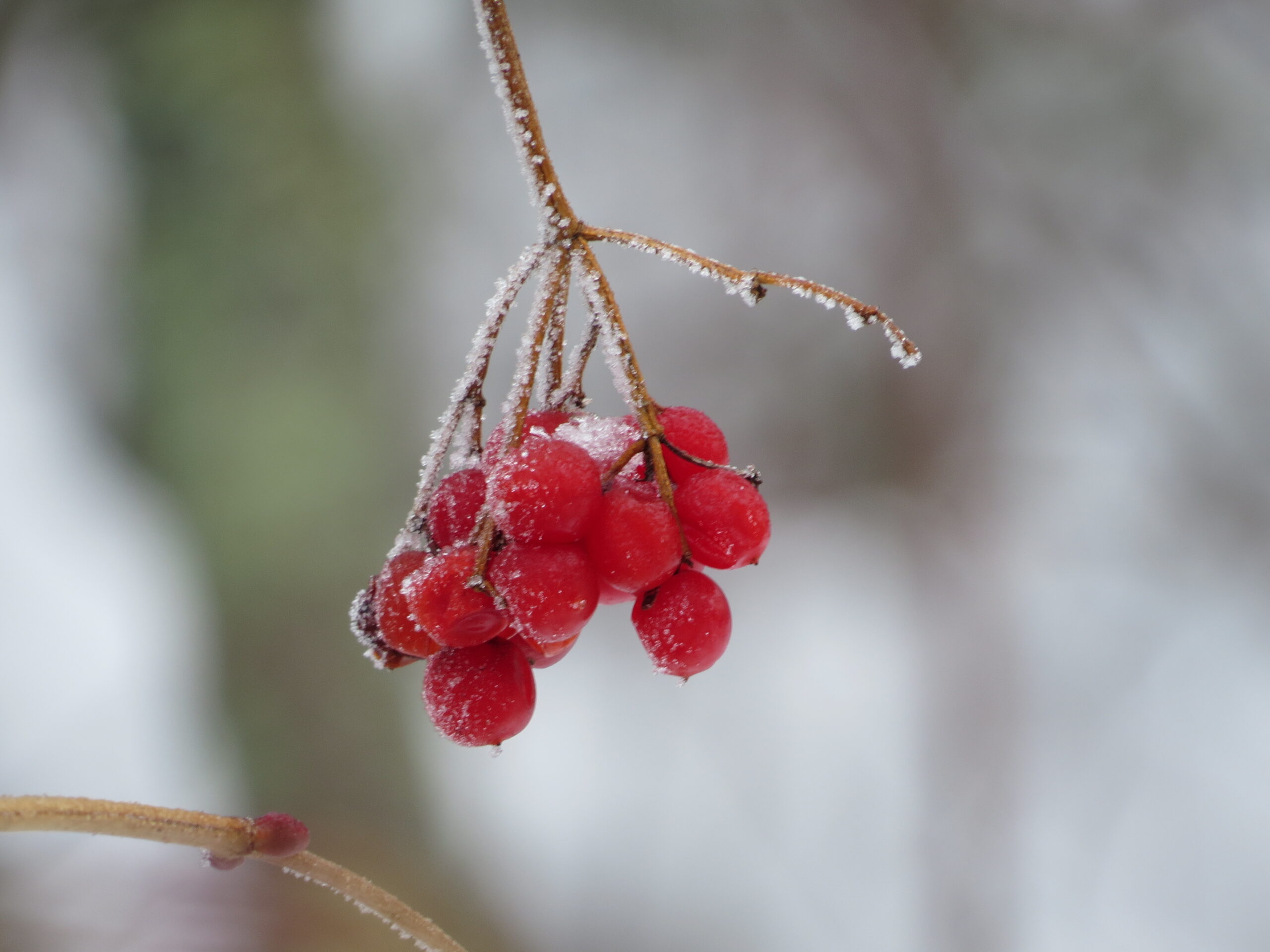
Green Lichens and red Highbush Cranberry berries were almost shocking in their brilliant color compared to the vast white/gray/brown landscape we ‘shoed’ through.
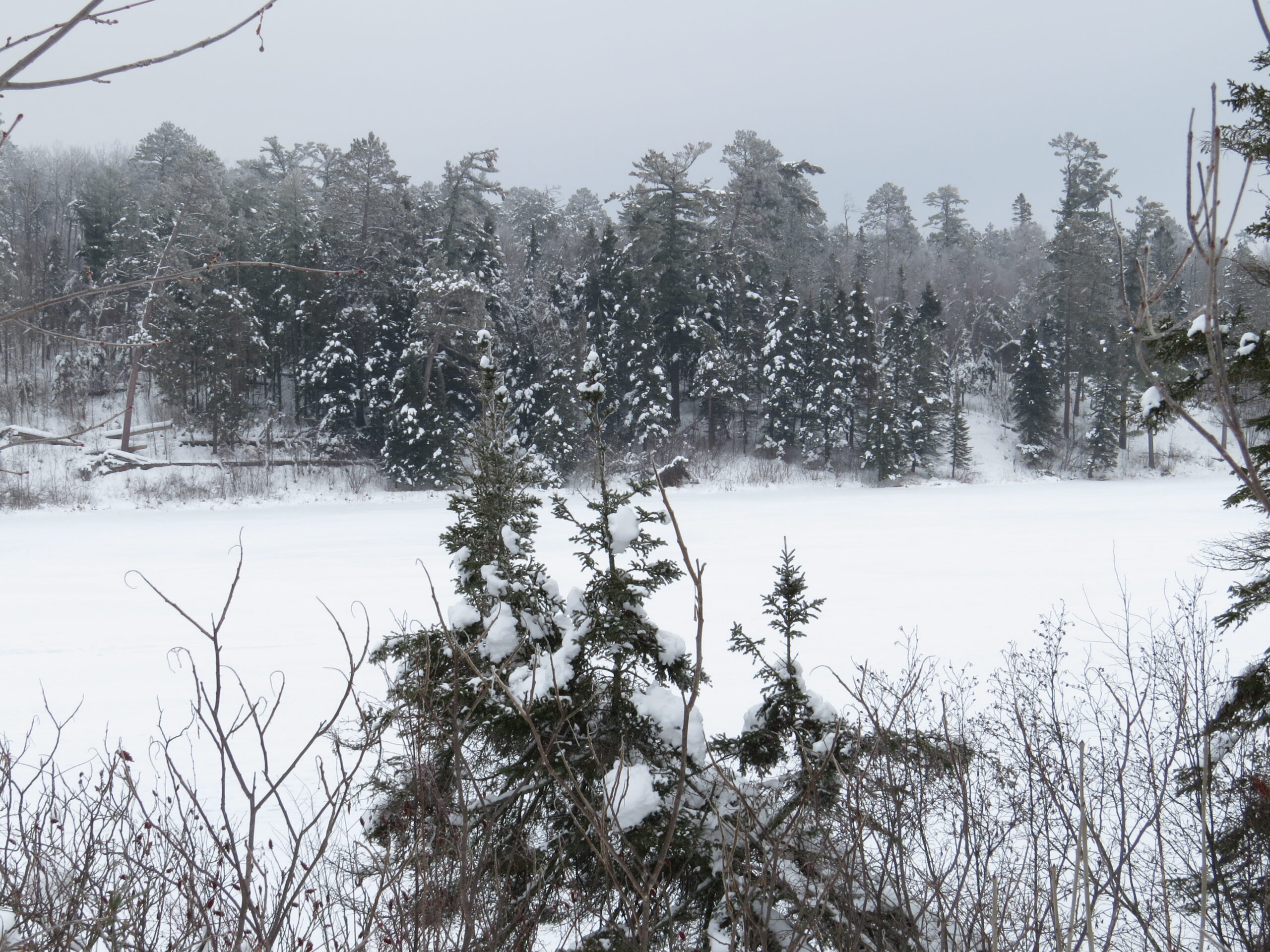
After our climb to the ridge, we descended to a small lake about halfway around the loop. It looked wild and remote.
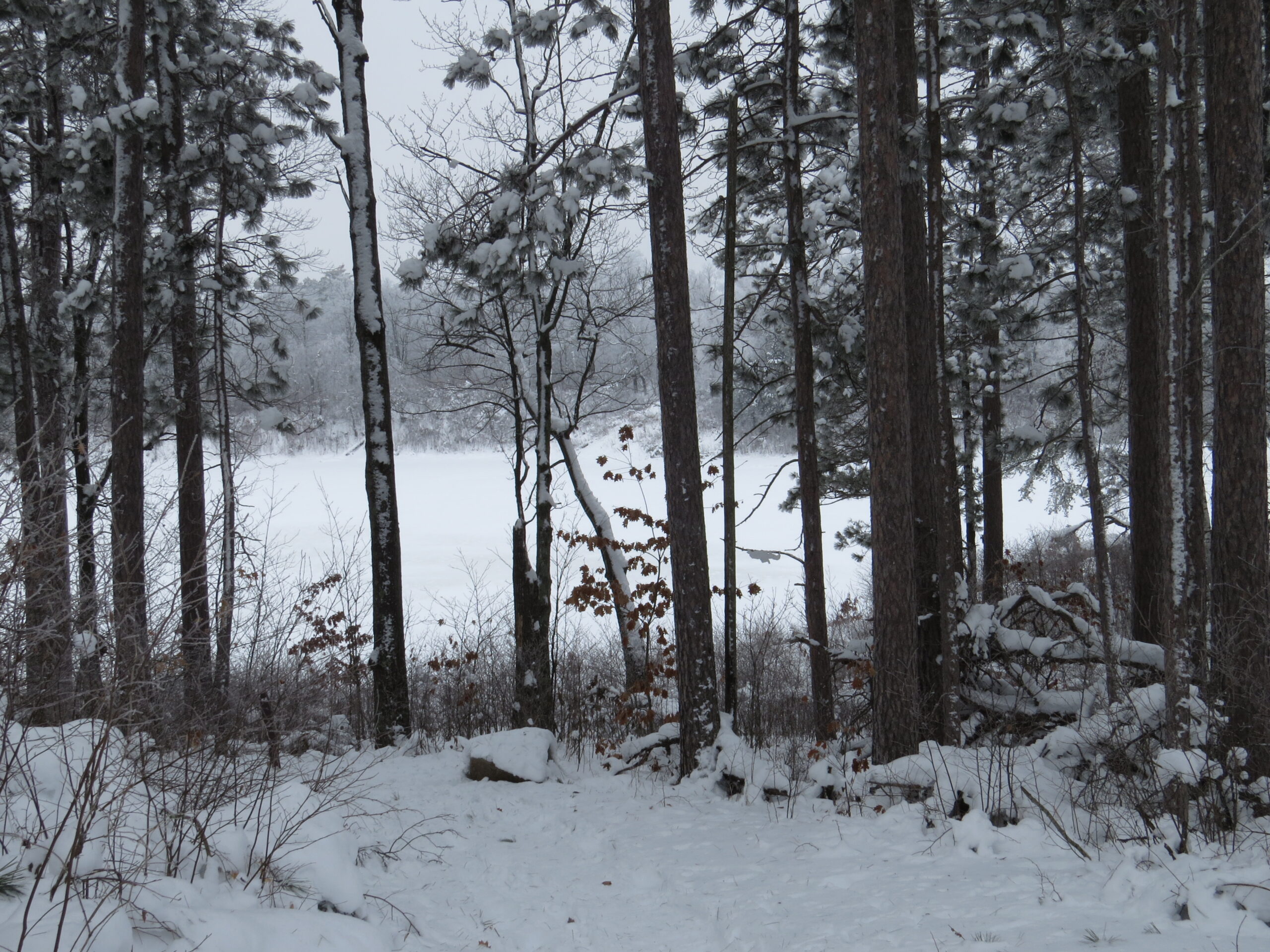
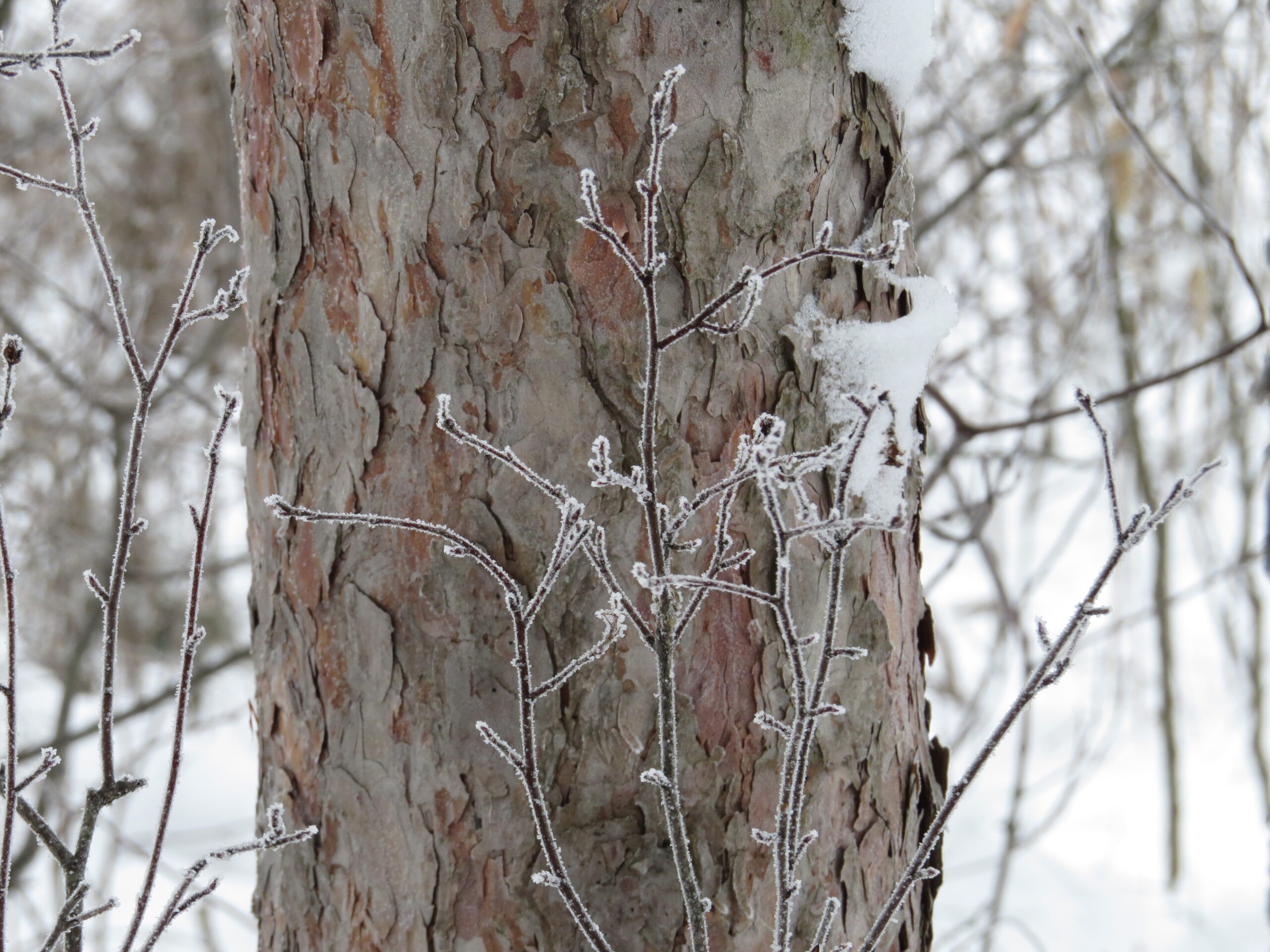
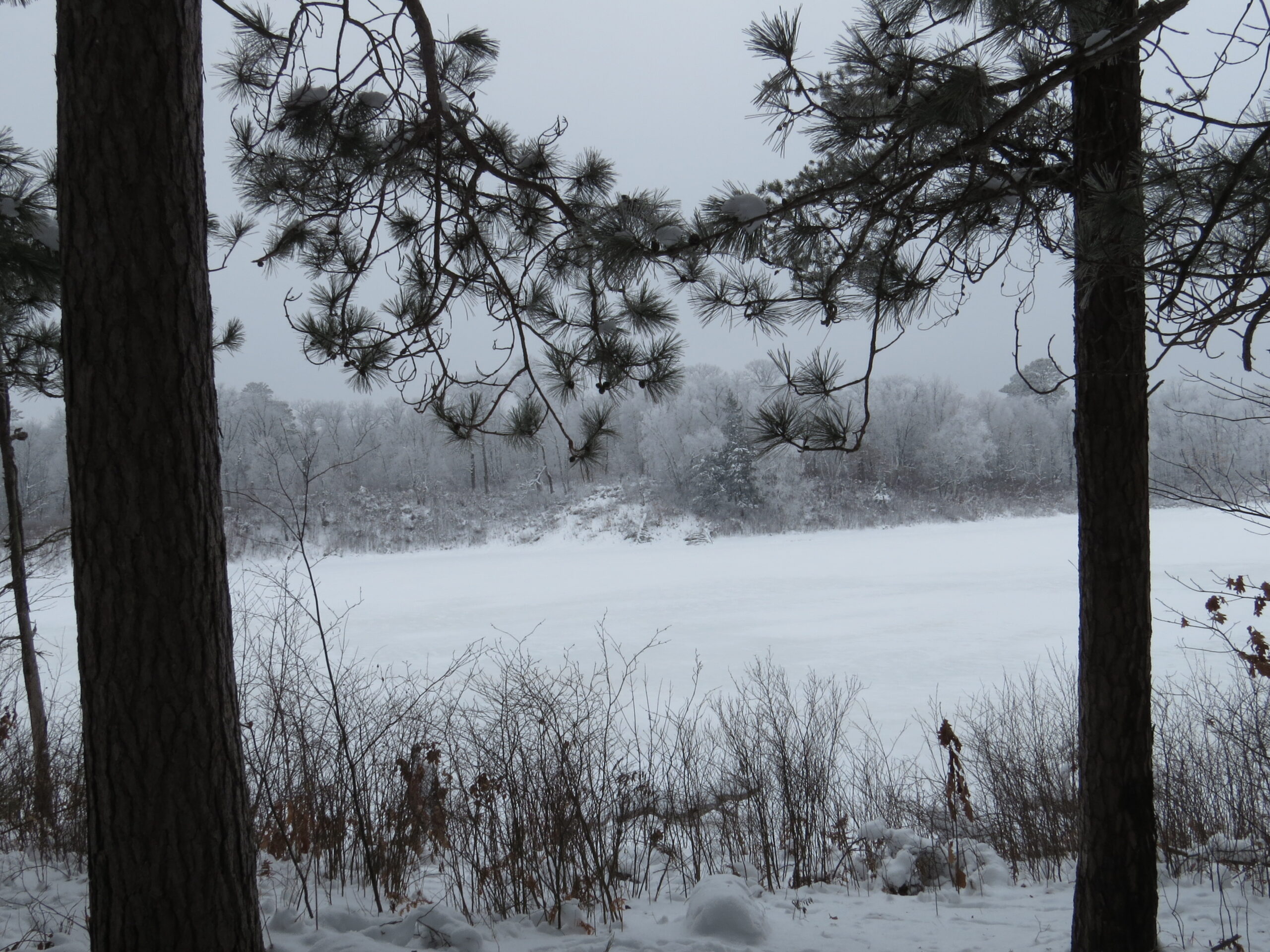
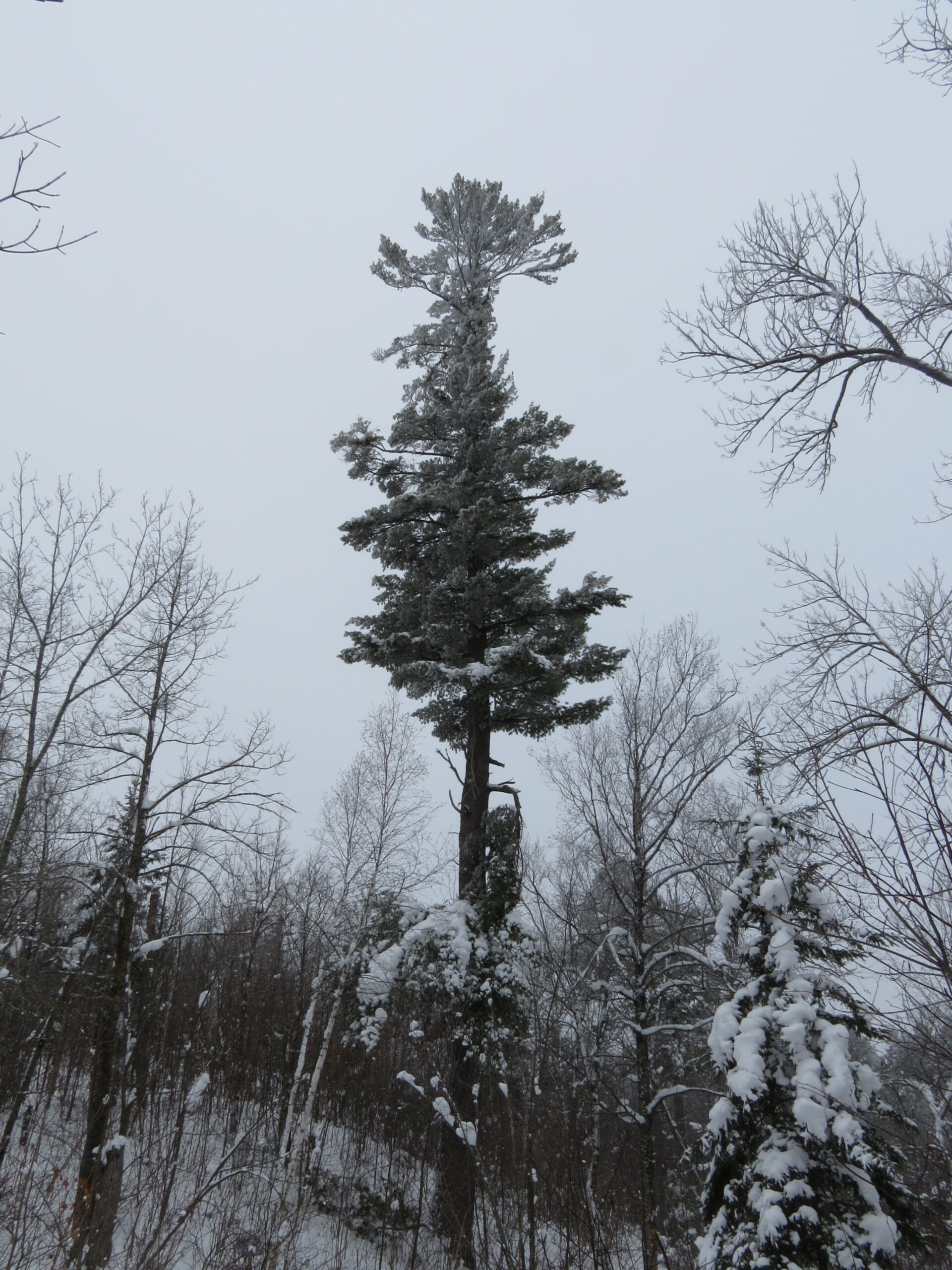
We continued to pass by giant White Pines, the ‘ancient’ ones in the diverse, frosted forest. It was a snowshoe hike that opened my lungs and strained my legs. When we stopped to rest, the snowy quiet bathed my senses, and it all felt so good.
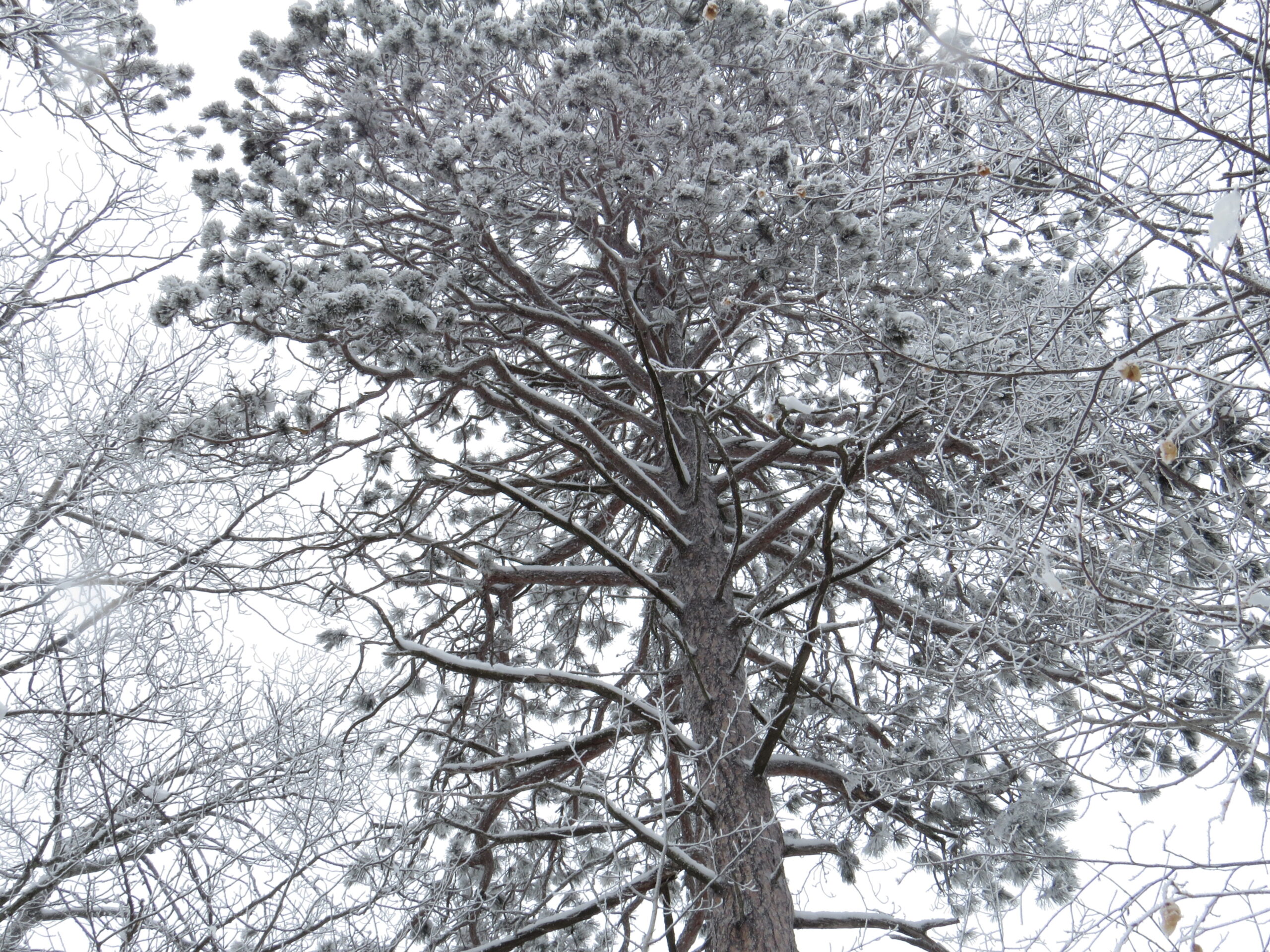
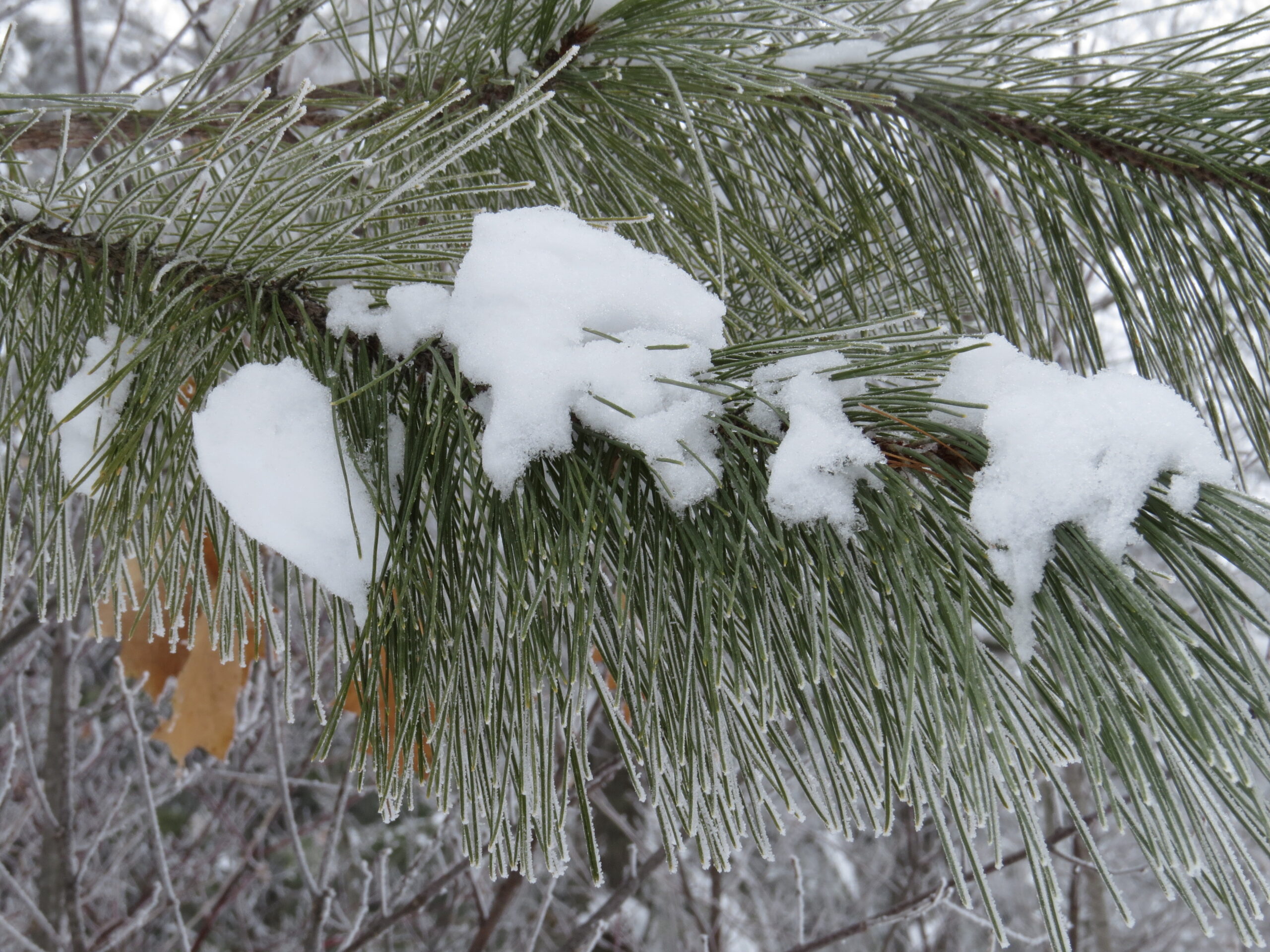
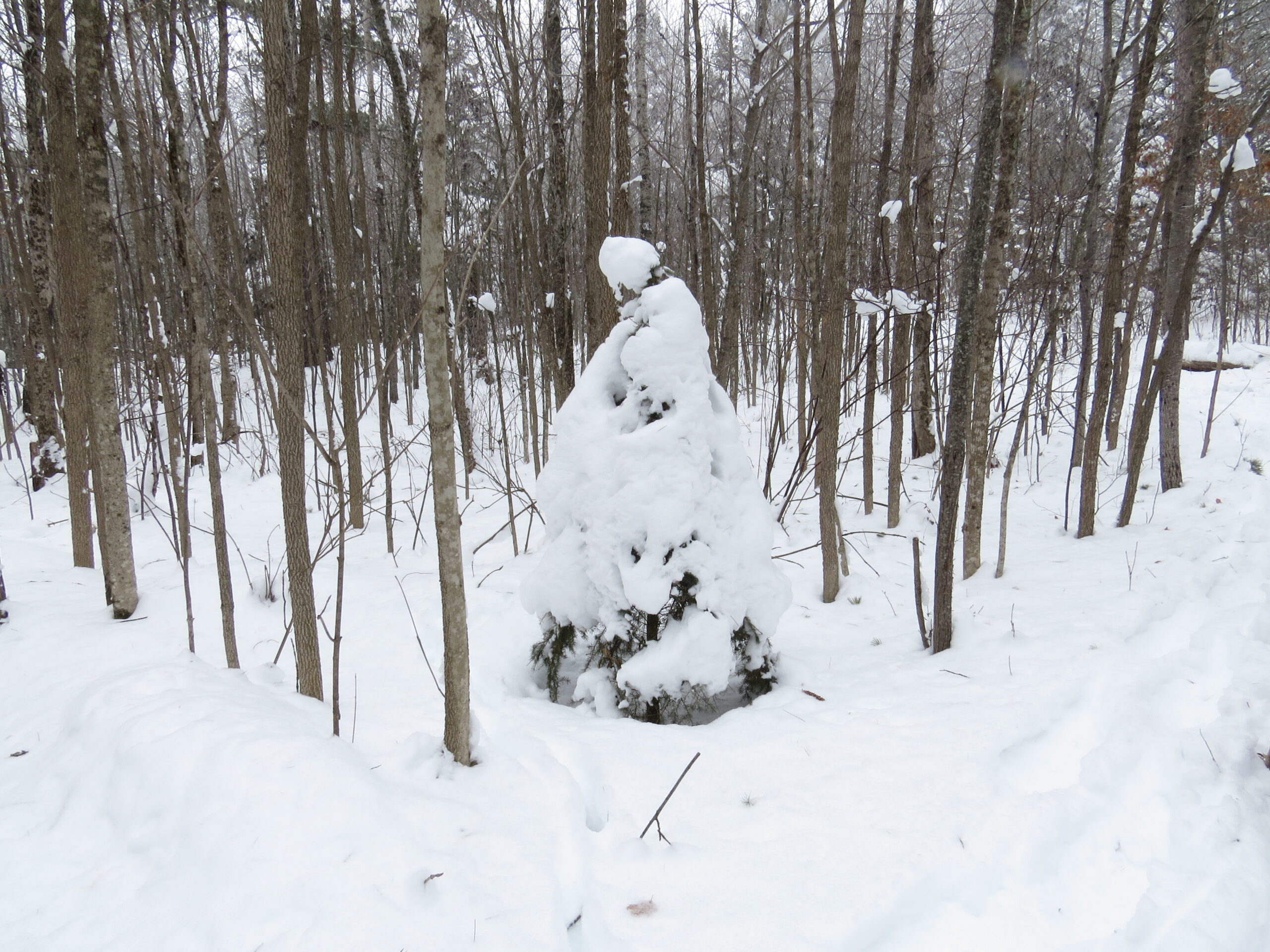
Towards the end of the trail we saw this little snowman tree—an evergreen wrapped in a blanket of snow—surrounded by his young deciduous friends.
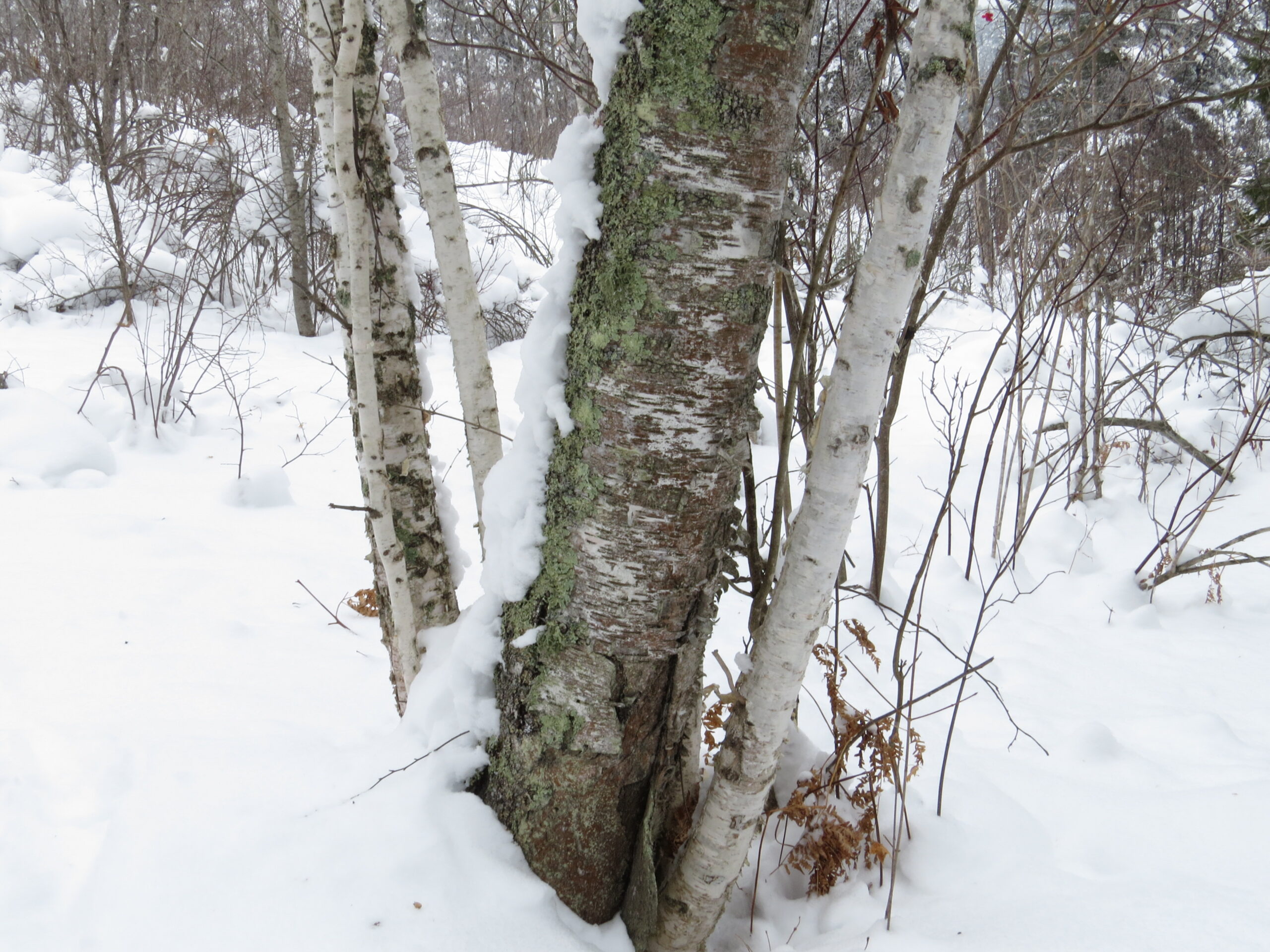
A cluster of Paper Birch trees epitomized our old year/new year weekend. The old Birch had wounds and peeling bark, layers of lichens and moss, and had lost the white luster of a young Birch. The young ones grew from the base of the elder and had been nourished by the extensive root system of the old one. Old and new ending and starting from the same place.
We ended our year in the same place we began our new year, and yet, it still had a different feel from one day to the next. The Mississippi River runs deep in the heart and soul of those who lived and died on and beside the River like Chris’ family had in the little village of Cassville. Chris feels it when he sees the River. My feelings about the River are more primitive, I think. I see it as life-giving water, a metaphoric trail of our life’s flowing journey, a barrier and boundary that stresses us in our quest to ‘move on,’ and a rich source of unbridled beauty. The Great River Road, complete with all its bridges, seems to be our human solution to encompass all of those things. I didn’t realize until I was writing how the The Great River Road, along with the flowing River, has connected our present living location to the Brake homeplace in Wisconsin and to the place where Chris’ only sister Mary began her life.
Mary was born with Down Syndrome, and in the mid-fifties, it was common practice for the medical community to recommend and facilitate the institutionalization of babies like Mary. She never came home from the hospital but was sent to a place on the other side of the state—by the Great River. Imagine the shock and trauma of every member of the family, especially for Mary and Chris’ Mom. Mary eventually returned to the west side of the state, closer to home, and she spent holidays and vacations with her parents and five brothers. Finally, with the social emergence of group homes, she had a real home to live and work in—she flourished at her vocational services job for thirty-seven years and built friendships with her cohorts and caregivers with her loving and outgoing personality. She was a joy to our family and to all who met her in so many ways. Mary’s life ended one week after the beginning of the New Year. She will be buried high on a hill that overlooks the Great River in Cassville. We will travel the The Great River Road to be there.
And thus, we begin, again, at the beginning of a New Year with hope and expectations. We also begin, again, at the beginning of another January of grief at the loss of a sibling, the same as we were just one year ago when Chris’ brother Jon died. But we aren’t really starting at the beginning—the slate does not get wiped clean—but it is a new beginning, nonetheless. Our grief over Mary’s death gets added to the grief over Jon’s death and brother Paul’s death, and Chris’ parents’ deaths, and my Dad’s December death seven years ago, along with the ongoing grief of broken relationships that have a deep river flowing through them with no bridge in sight. What does one do with such grief? It will take a while for us to get our bearings again, but we will. With each grief-filled experience, we have learned that we will get through it, even when the hurt feels unbearable. We have become resilient in a way that wasn’t planned or wanted. It has strained our hearts and made them stronger. It has opened our awareness to the tragedy, joy, heartbreak, goodness, chaos, and peace of living these lives we have been given. And every time we walk in the forest, we will be bathed in unbridled beauty and quiet, and it will all feel so good.
Walking Out of the Old Year
It was particularly apparent to me this year—perhaps because we were staying the night at a cabin or because it was exceedingly quiet and contemplative: we were ending the old year at exactly the same spot that we were beginning the new year. Obvious, right? But we don’t often think of starting over or being a ‘new you’ or taking a ‘leap of faith’ as happening from the exact same place as ‘old ways’ or being ‘stuck’ or even ‘routine and repeat.’ But I actually liked the idea.
Chris and I, along with our daughter Emily from Texas, ventured to Itasca State Park on New Year’s Eve. It was cloudy, foggy, and frozen as we drove north and west. We checked into our two-room cabin, complete with indoor plumbing, and rented a pair of snowshoes for Emily. There were only half a dozen people or so who had had the same idea as we did. After unpacking, we set out to snowshoe a loop called Dr. Roberts Trail, but even with map in hand, we promptly ‘got lost’ and took a trail we later figured out was the Ozawindib Trail. There was so much snow and frozen haze, closed-down log cabin buildings, and new-place-disorientation that it took us some time and exploring to ‘get our bearings.’ The trail we found ourselves on had been groomed for cross-country skiing with snowshoeing on the sides. It was so very quiet that the noise of the snowshoes on the crisp snow seemed loud.
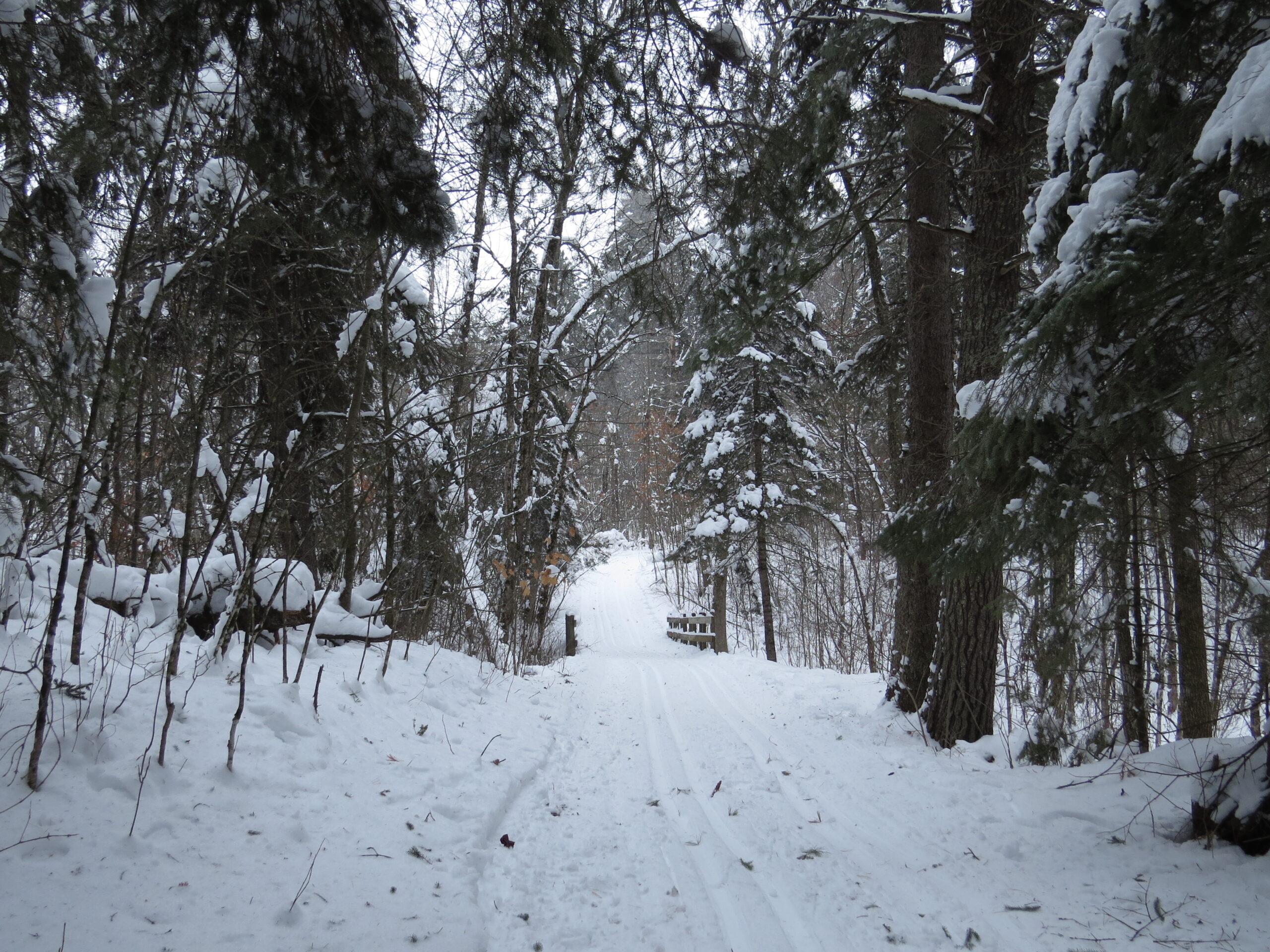
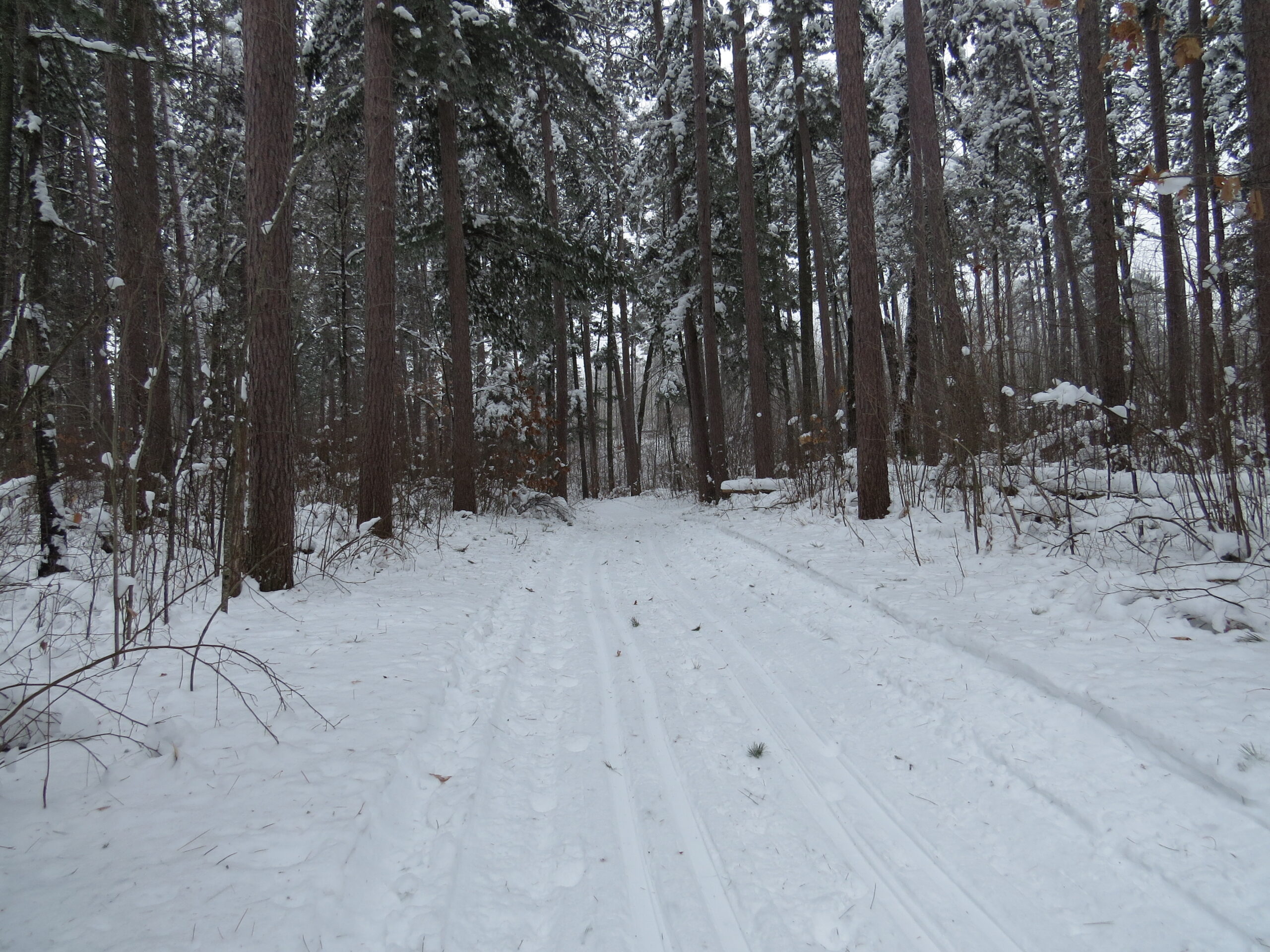
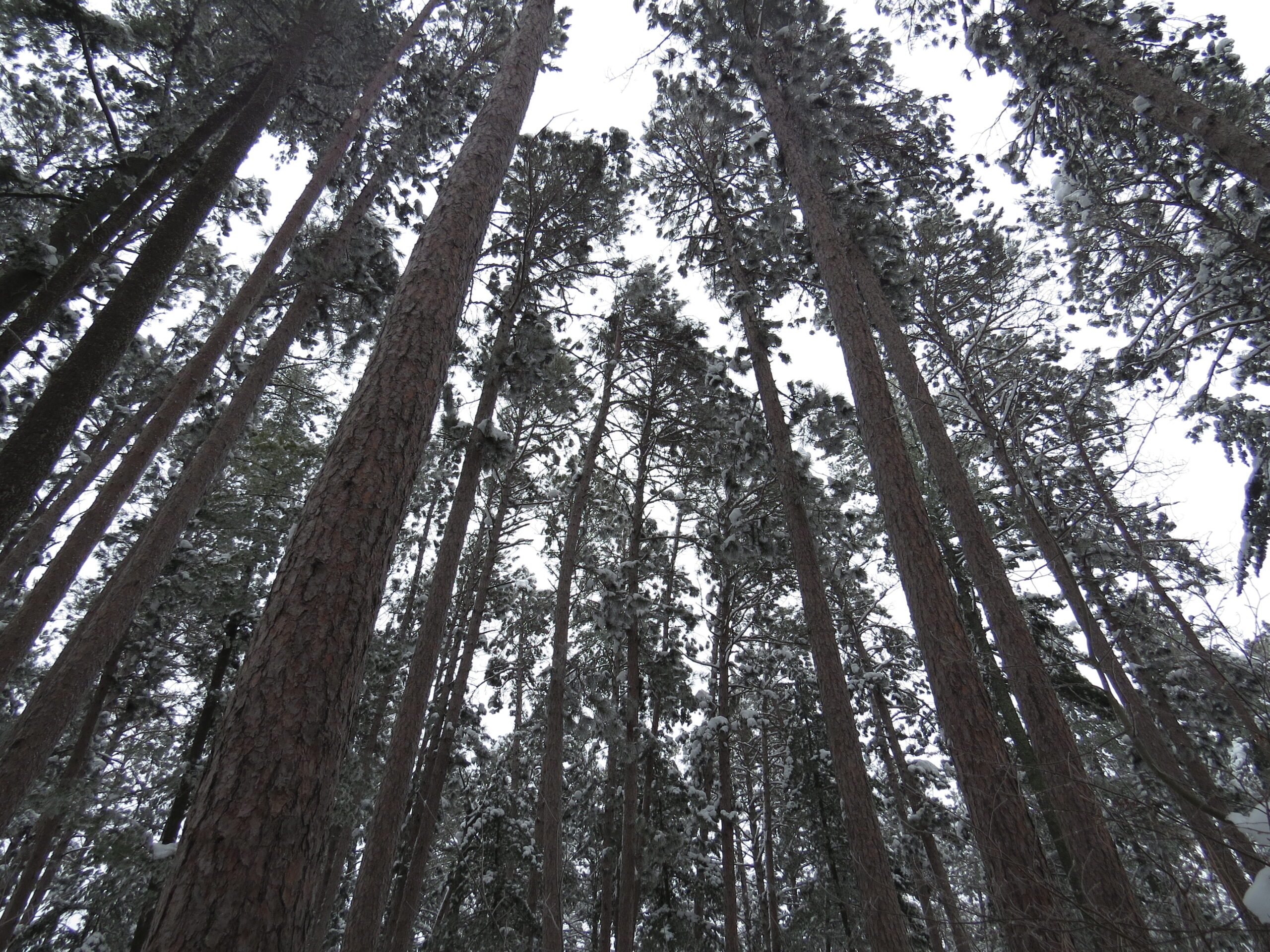
Itasca is the oldest state park in Minnesota (established in 1891) and protects over 32,500 acres of forests and lakes, including a large area of old-growth Red and White Pines. They have seen many decades of old years go and new years come in their long lives.
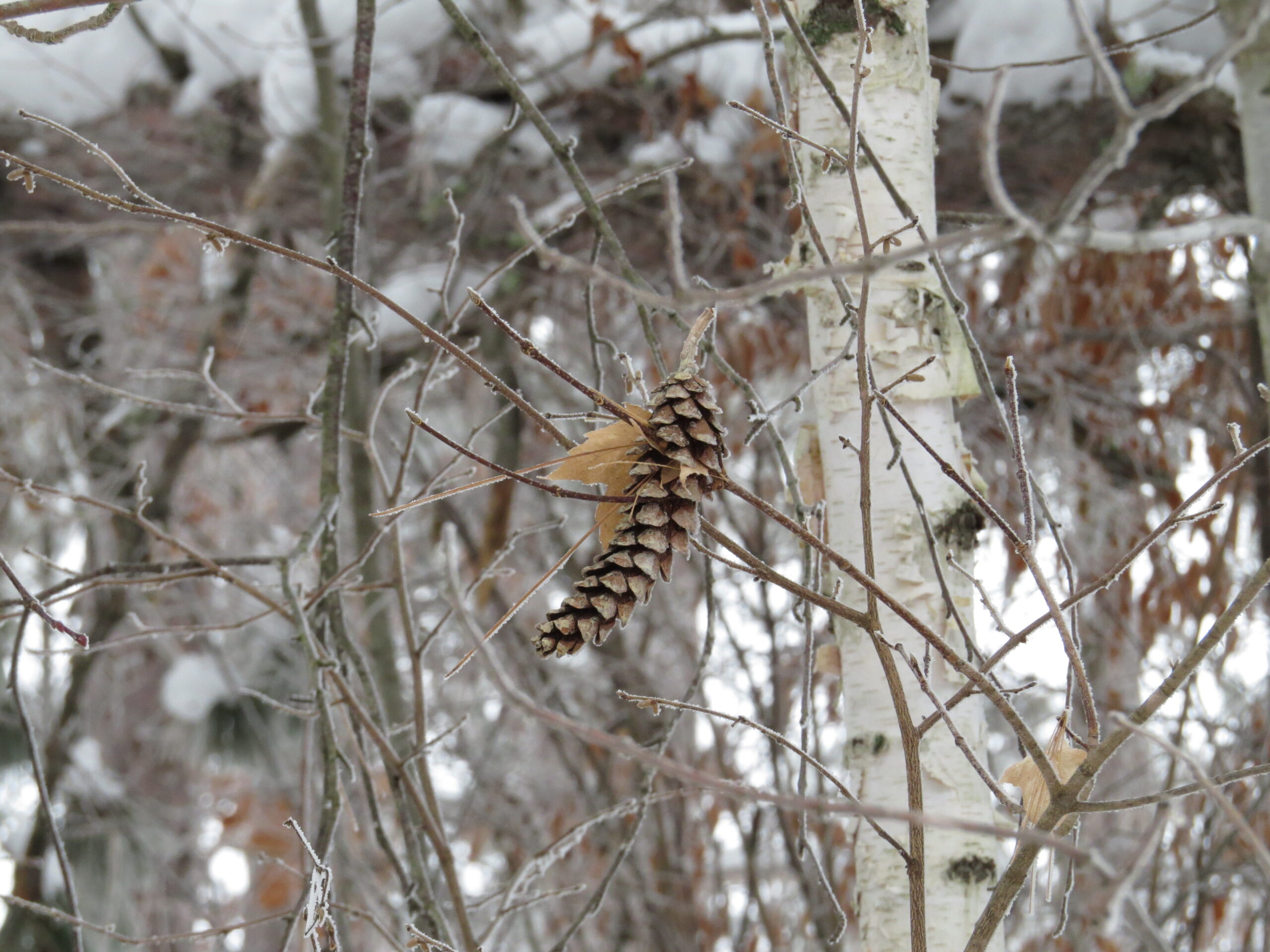
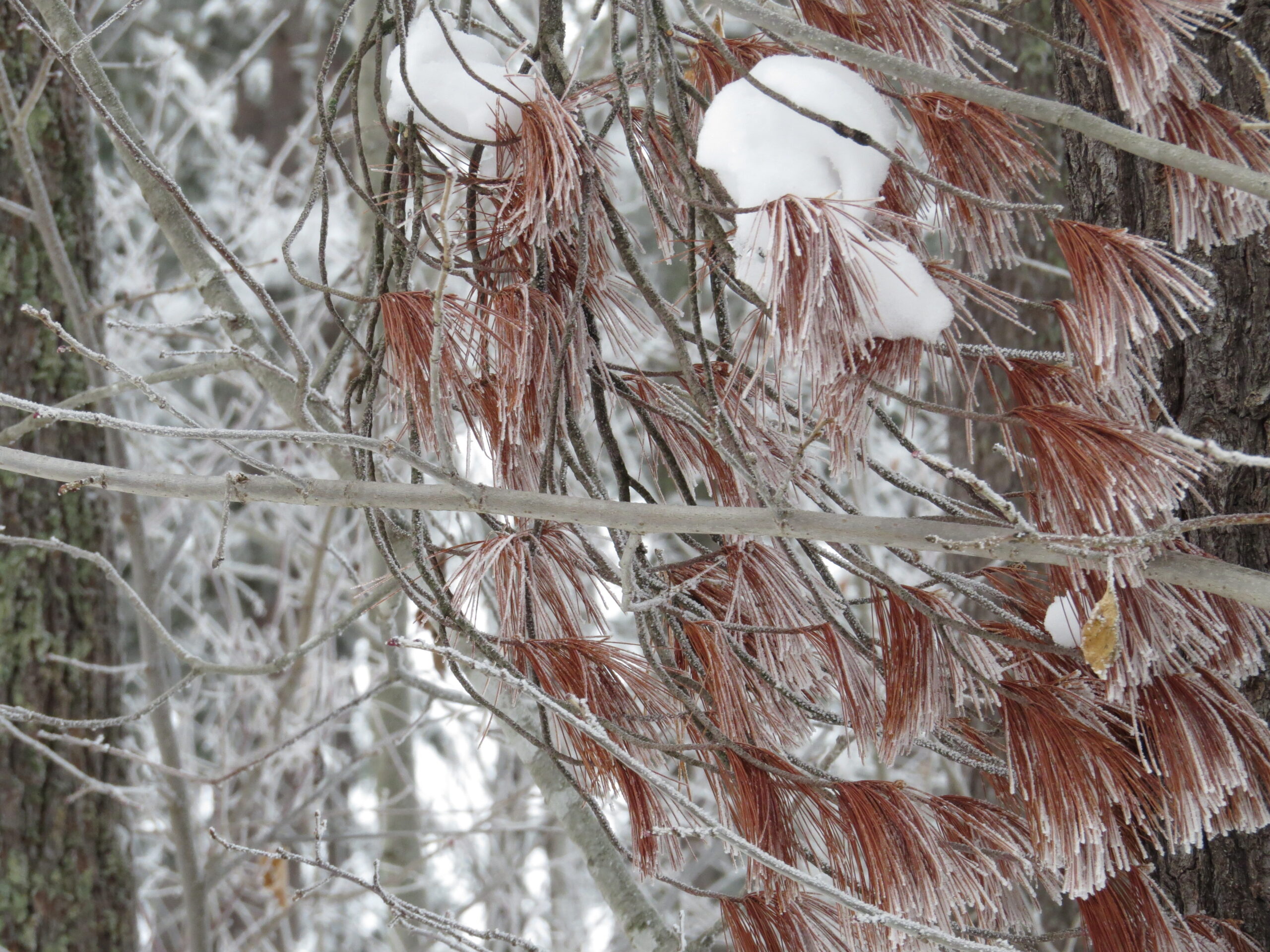
Even in the winter season, there is evidence of the sloughing of old ways—leaves, opened pine cones, and peeling birch bark—and the promise of new things to come—millions of tiny, protected buds of new growth.
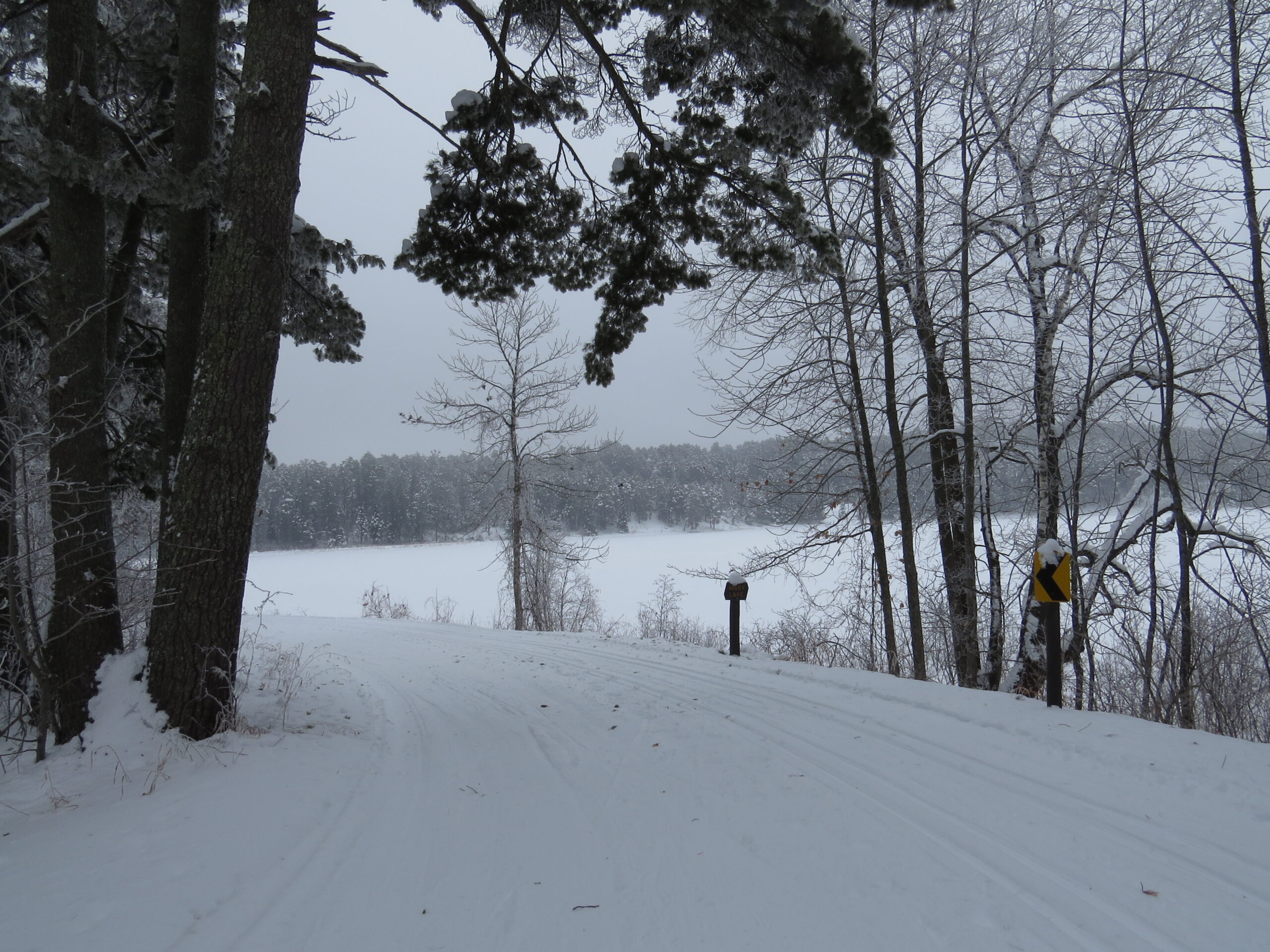
We trekked to a larger road closed to vehicle traffic for the winter, and there we discovered Mary Lake, which helped us get our bearings, find our place on the map, and turn around when we saw we were nowhere near Dr. Roberts Trail.
Old growth forests have been protected from catastrophic disturbances such as logging or forest fires for over a hundred years and provide a complex biodiversity of plants and animals in all stages of development—from new life to maturing to declining.
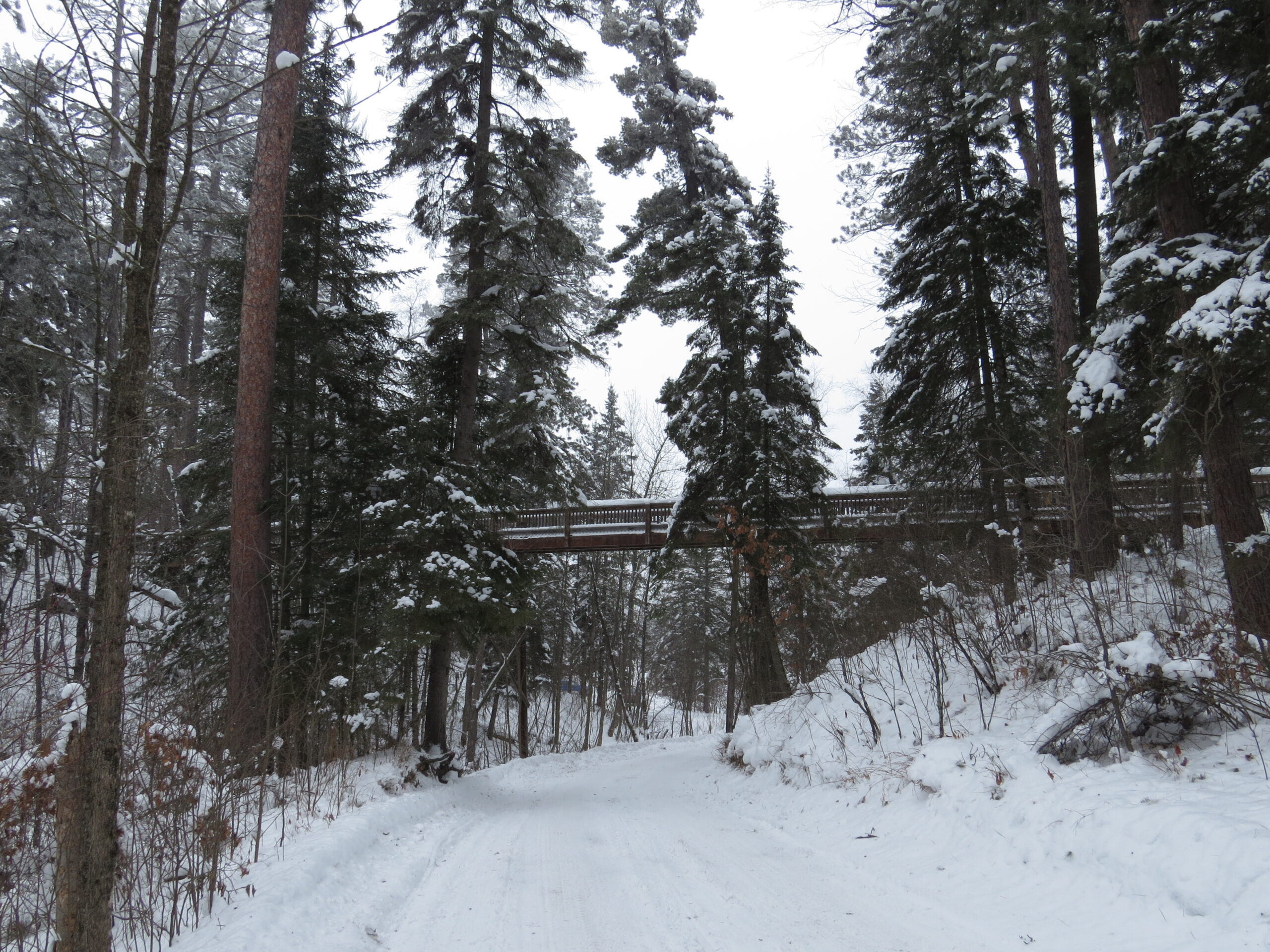
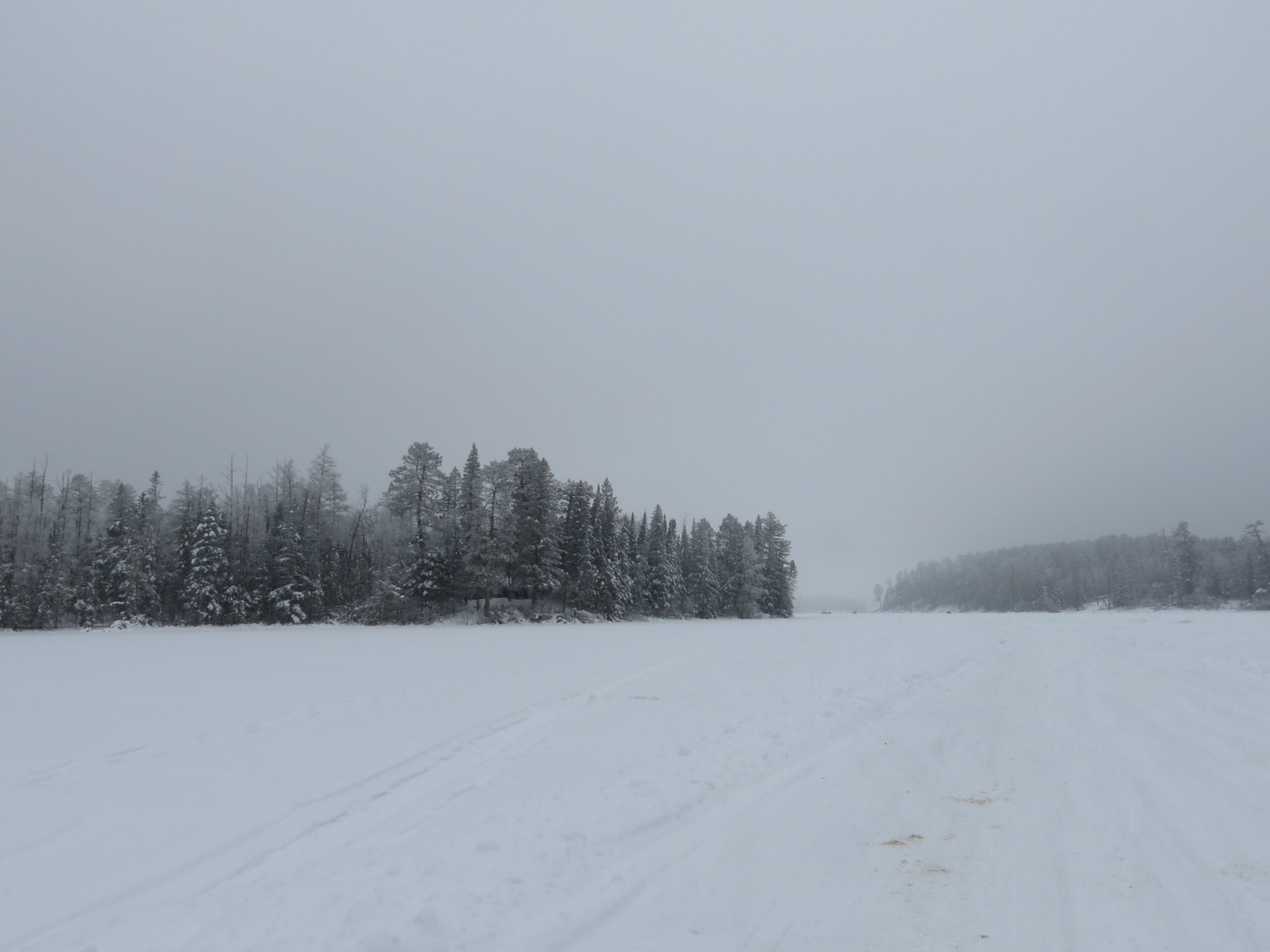
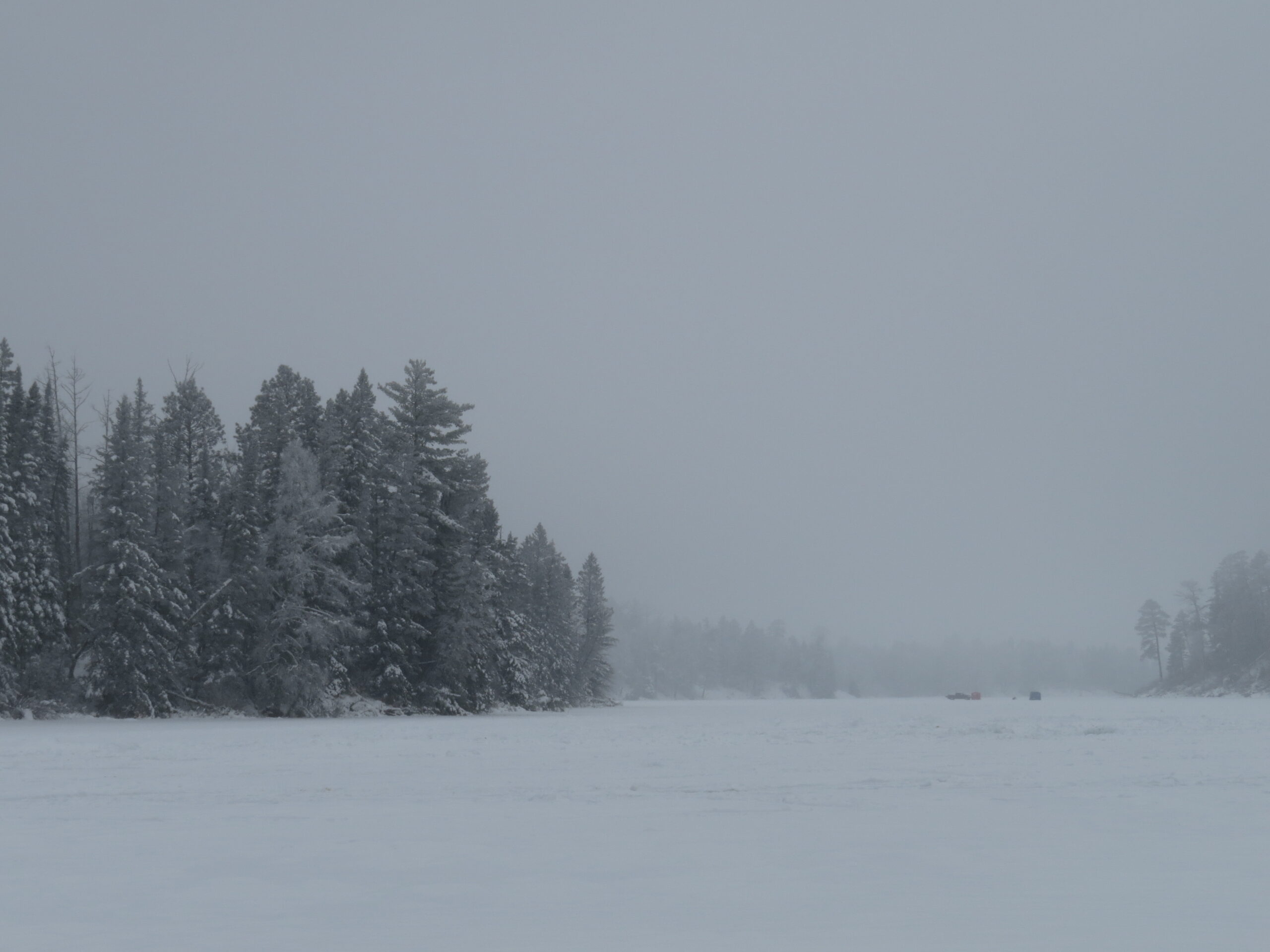
We snowshoed back to the empty lodge area and followed a road past the fish-cleaning house, under a walking bridge, to a parking lot with a huge tour boat docked on land for the winter. We walked out onto the lake ice that was covered with deep snow, confident in our safety when we saw the ice road, ice houses, and trucks of ice fishermen.
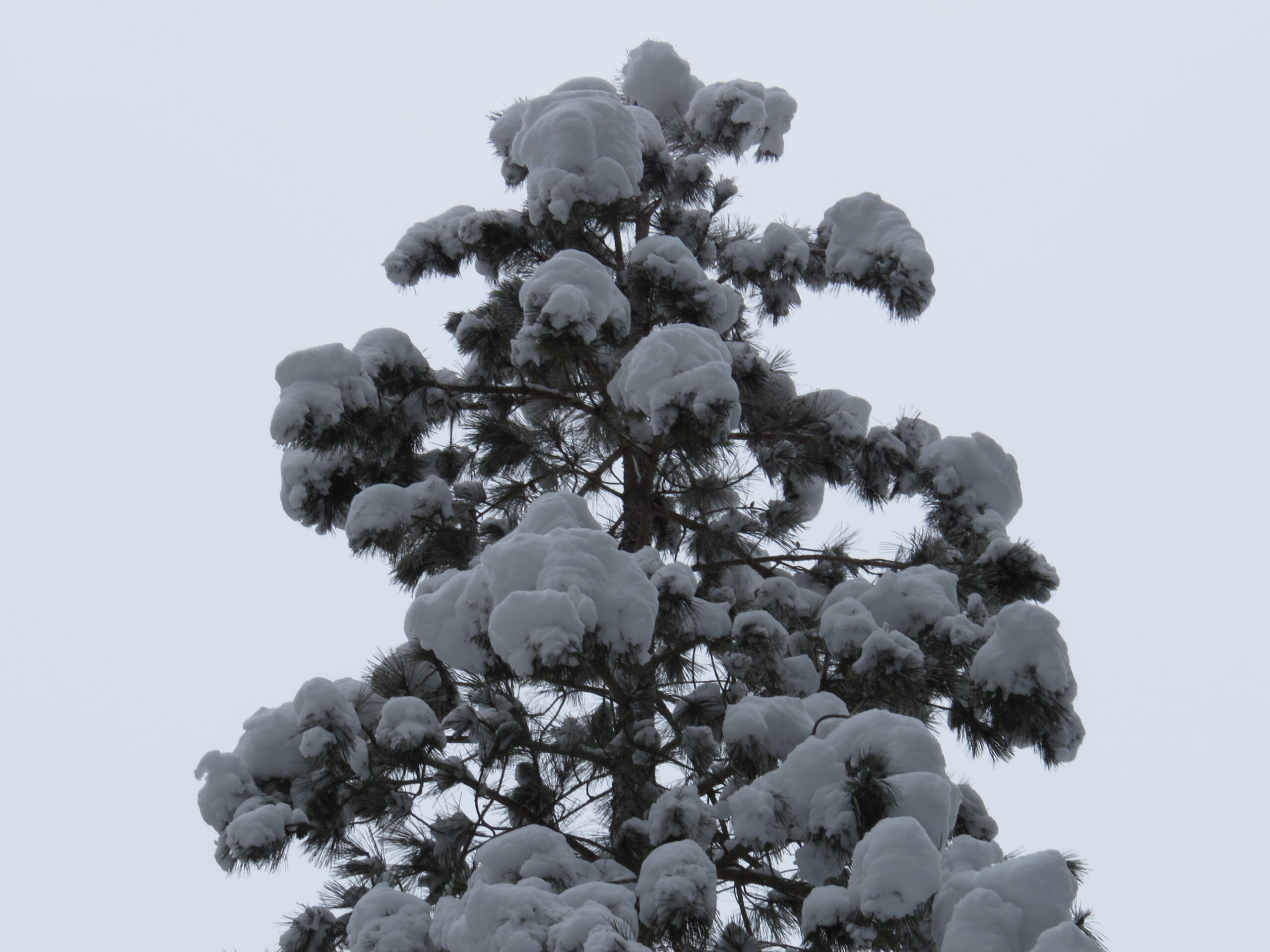
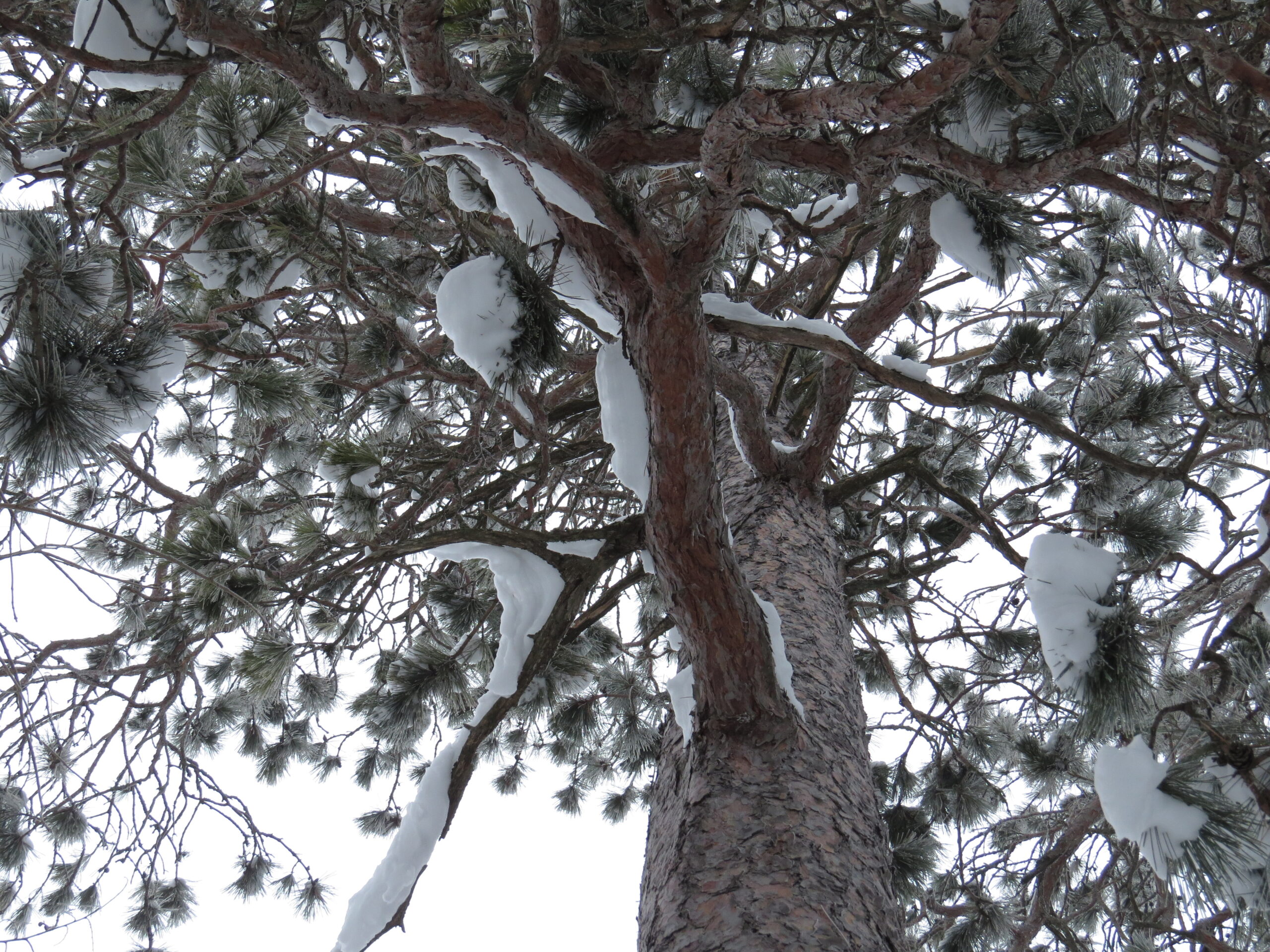
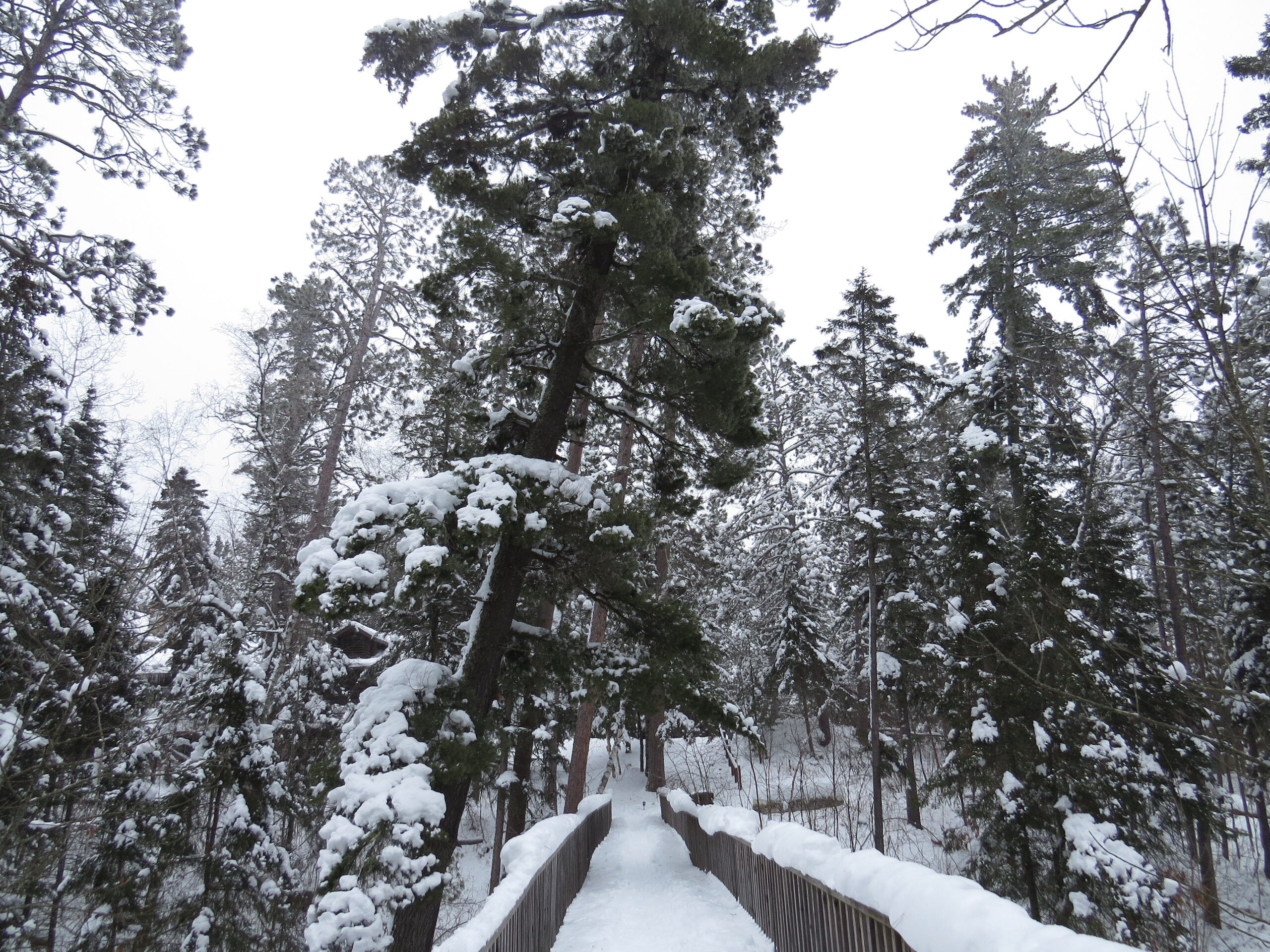
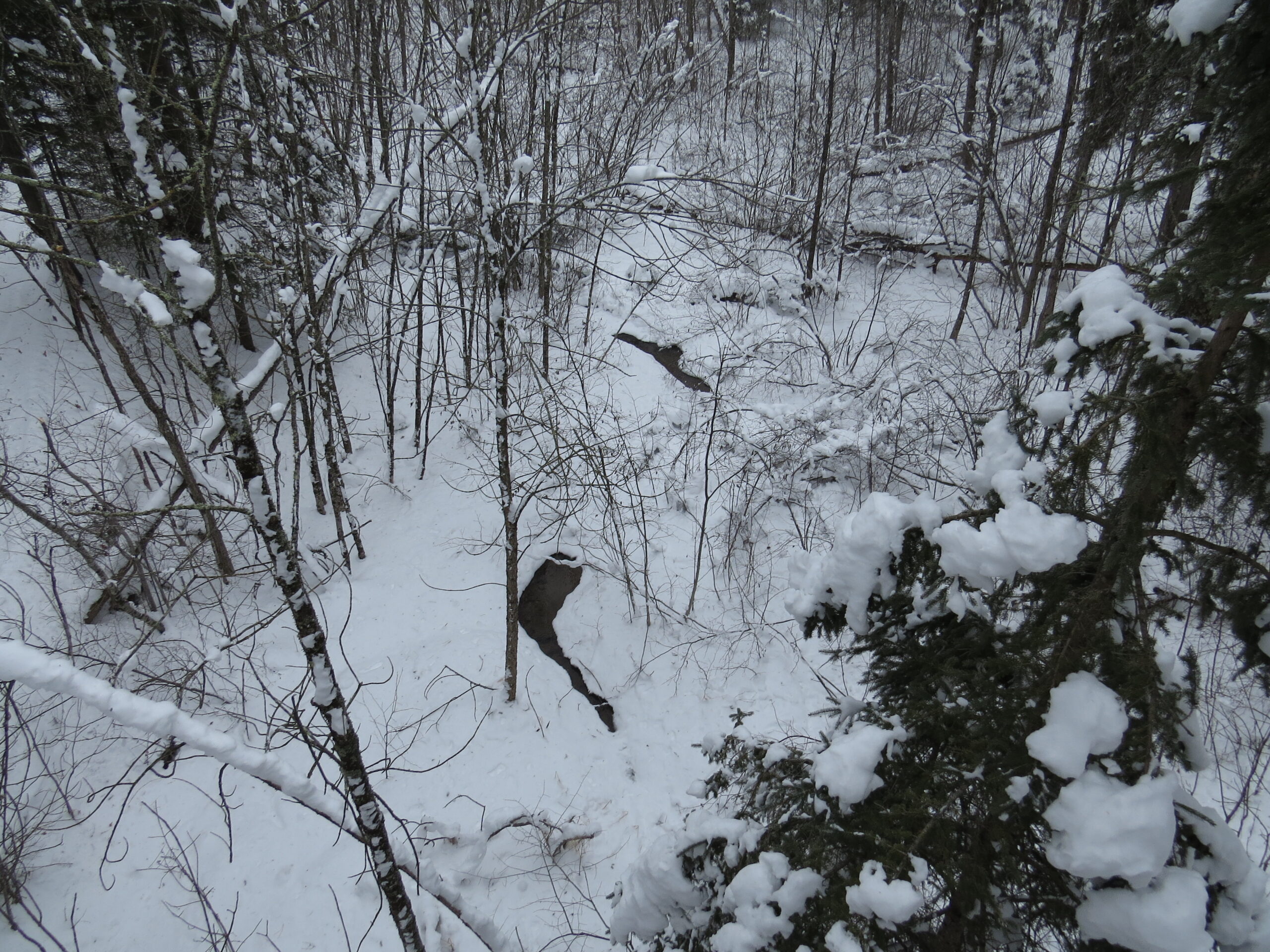
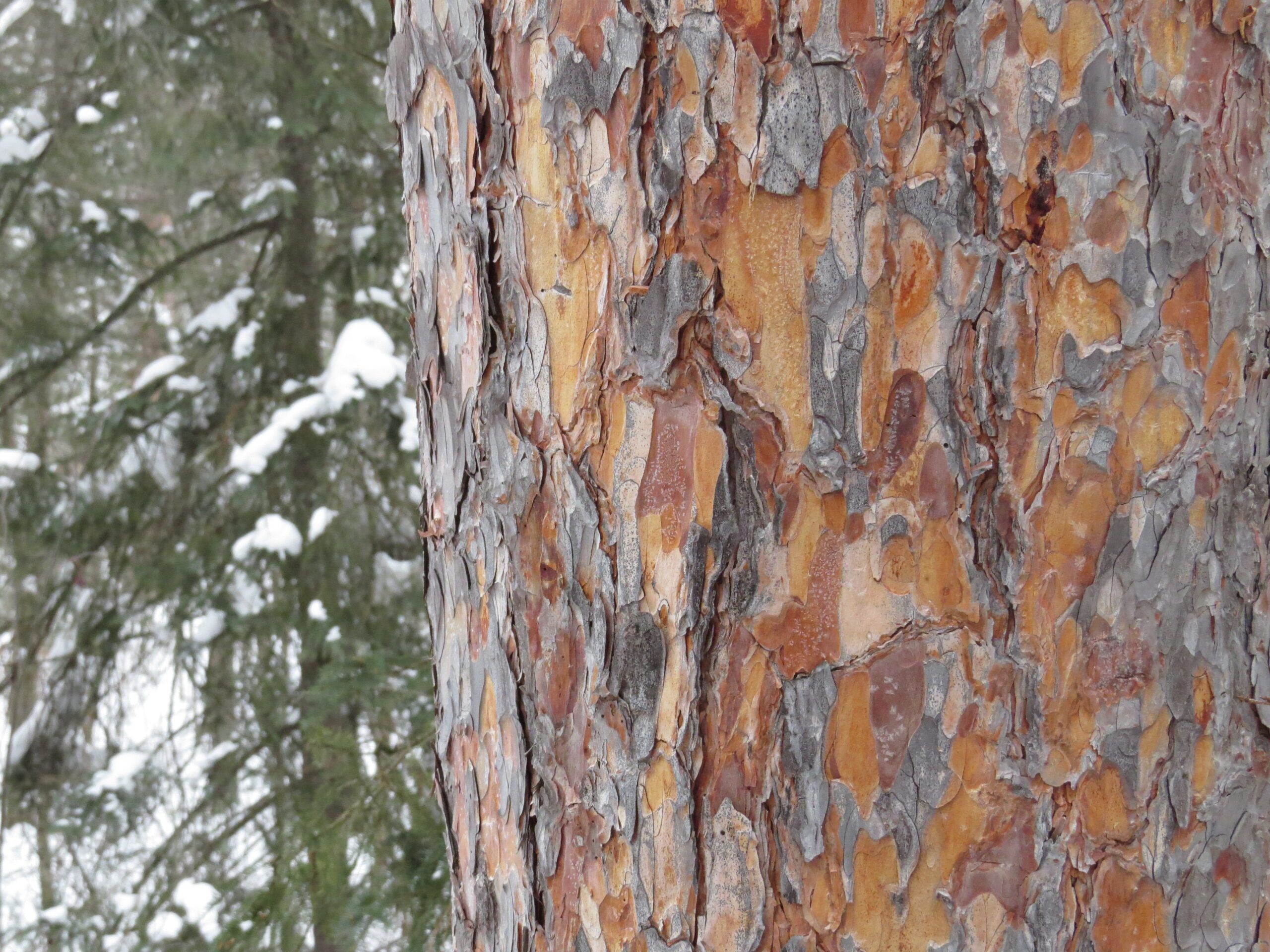
We climbed a hill up to the walking bridge where we joined the trees mid-height for a different perspective far above the ground and close up to a colorful Red Pine.
Our first snowshoe trek was orienting and invigorating as we explored our surroundings, but we also had plans for a luminous walk that evening. We returned to the cabin for a toasty crockpot supper, rest, and warmer clothes. The illuminated walk was three-quarters of a mile around the Bear Paw Campground. The only vestiges of a campground were the snow-piled picnic tables that were occasionally seen in the background of the strings of lights, but even those looked uncommon and foreign in the foggy, frozen landscape. One young couple with a small child was finishing up their walk when we arrived; otherwise, we had the place to ourselves. It was so incredibly quiet and still. We stopped at various points along the trail, suspending our talk and halting our crunching footsteps to soak in the silence. It was a bit disorienting to be in the dark, in the frozen fog, and in the noiseless forest, but as time passed, it became more comfortable and peaceful. From far away, the lights looked contiguous, but as we walked, we realized there were sections of light and sections of dark. The illuminated spots were light enough to get us through the dark places.
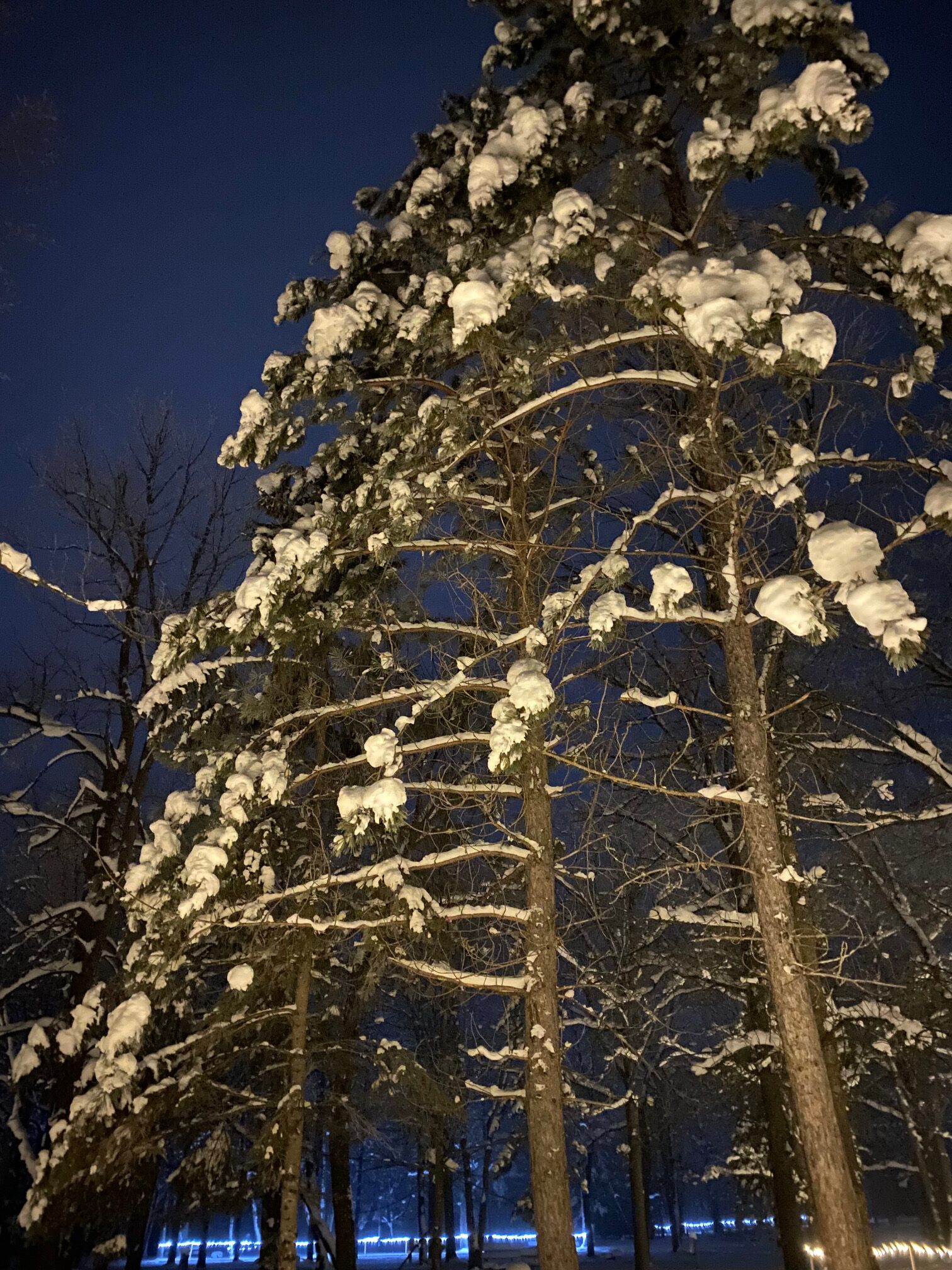
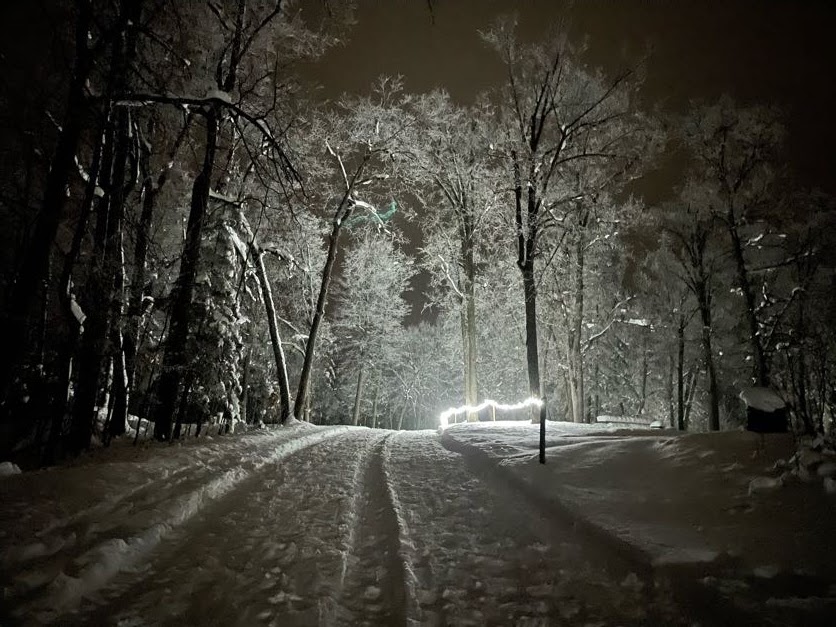
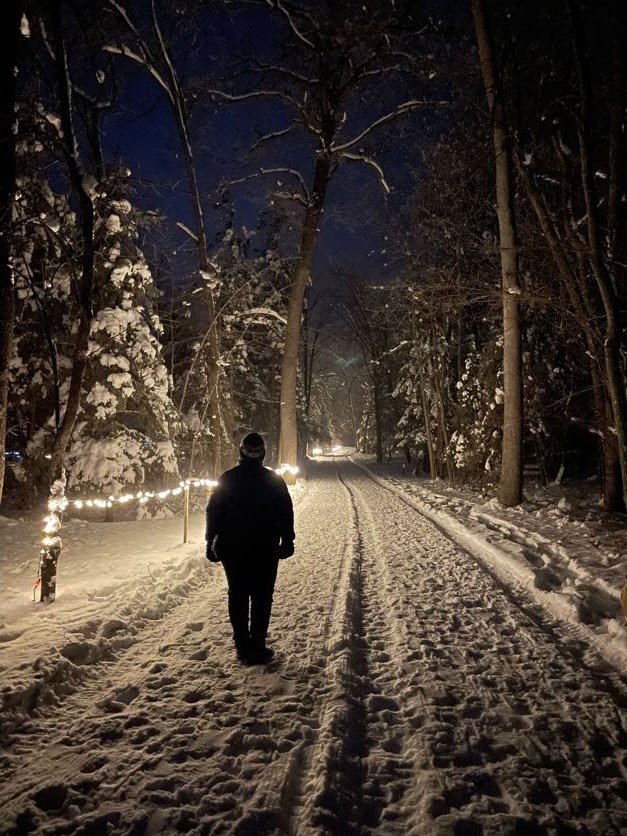
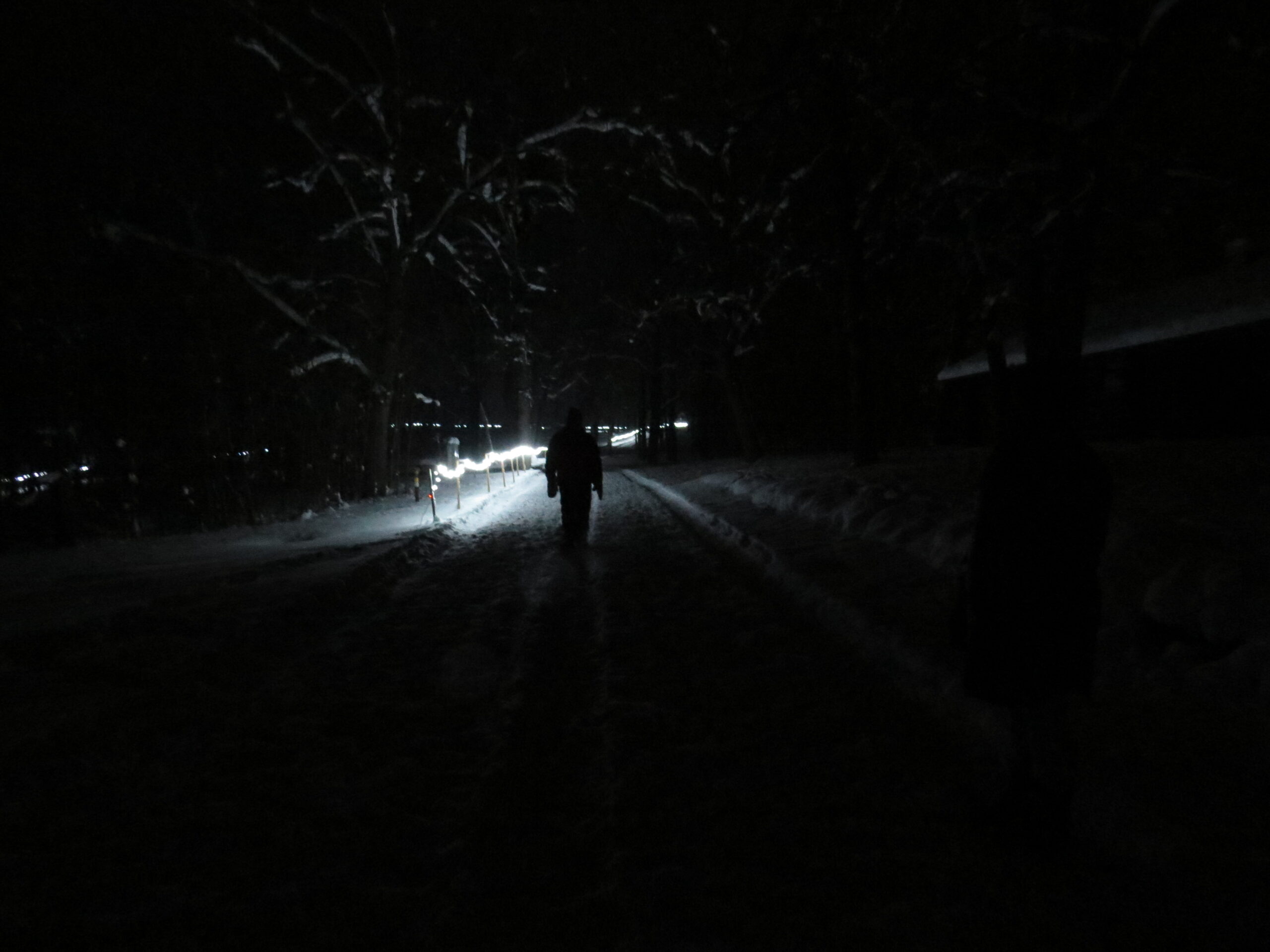
That’s how the old year was—stretches of grief, heartache, and worry, then periods illuminated with joy, fun, and laughter. The dark times came from death, illness, and disharmony, and much of the illumination came from our grown-up children spending time and energy with us. At the end of an old year, we can honor the past, whether we considered it difficult or wonderful, for in reality, it is both. It is helpful to explore our interior landscapes in order to get our bearings after a disorienting event. Seeking and soaking in the silence can mute the noisy self-talk that often undermines our well-being, and we can return to peace. Winter strips away many of the distractions—the noisy and beautiful distractions—that sweep us up in the rest of the year. Allow the illuminated times to get you through the dark spaces, and allow the quiet and beauty of Winter to bring you peace as you walk out of the old year.
At the Corner of Deer and Fox
The world’s suffering makes my heart heavy. When I see the video of all the mothers and children fleeing from their homes in Ukraine, tears stream down my face. The destruction, chaos, and trauma imposed by one unhinged guy is overwhelming and rips a deep tear in my constructed fabric of Goodness. Even here at home where the pandemic has killed nearly one million people—it’s like wiping out all the people who live in South Dakota and then a hundred thousand more. And then there are all the people I know who are suffering with or dying from a cancer diagnosis—is it just me or does that seem to be on the rise? What’s a person to do with all that suffering?
I strapped on my snowshoes and hiked into the snow and cold. Our below normal temperatures this week have preserved the snow cover, beyond the melting of the edges from the strong, March sunlight. The cold felt good on my face, a relief from the hot suffering of people I know and of the millions I do not. Our gathering place around the firepit is still engulfed in snow—only the deer have been wandering through in their quest for food. I followed their path and offered a couple old apples for their browsing brunch. Won’t that be a delightful surprise?!
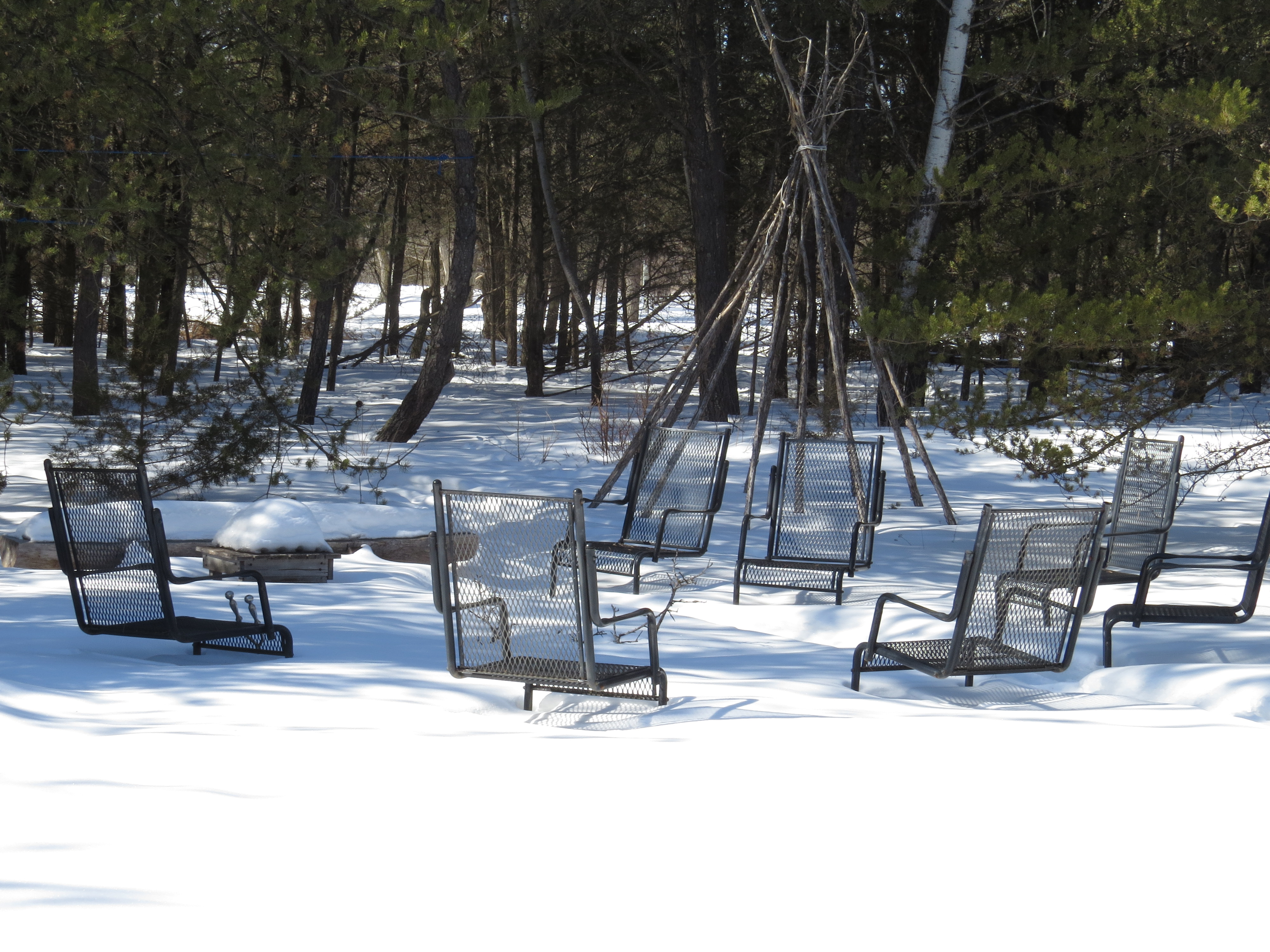
Deer trails cut through the trees and over fences. The snow reveals some secrets of the other seasons—the travel routes of deer and other animals. They seem to be creatures of habit or perhaps know to take the easiest route—just like us.
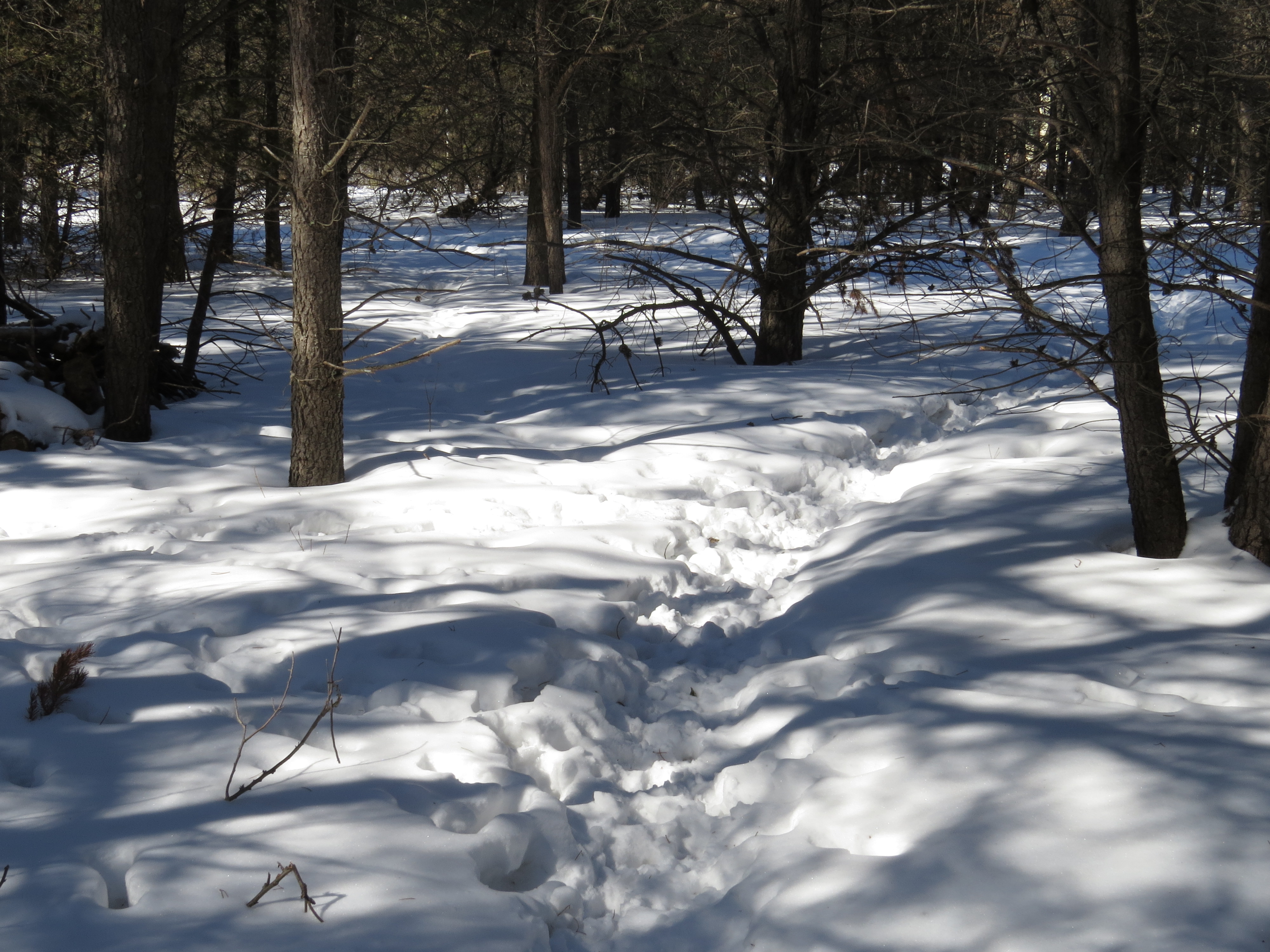
My previous snowshoe tracks had been covered with a bit of snow, but the deer had already been using the trail. I felt like I was walking at the Sumac treetops with all the snow that has accumulated over the Winter. Getting off the trail definitely makes ambulating much harder!
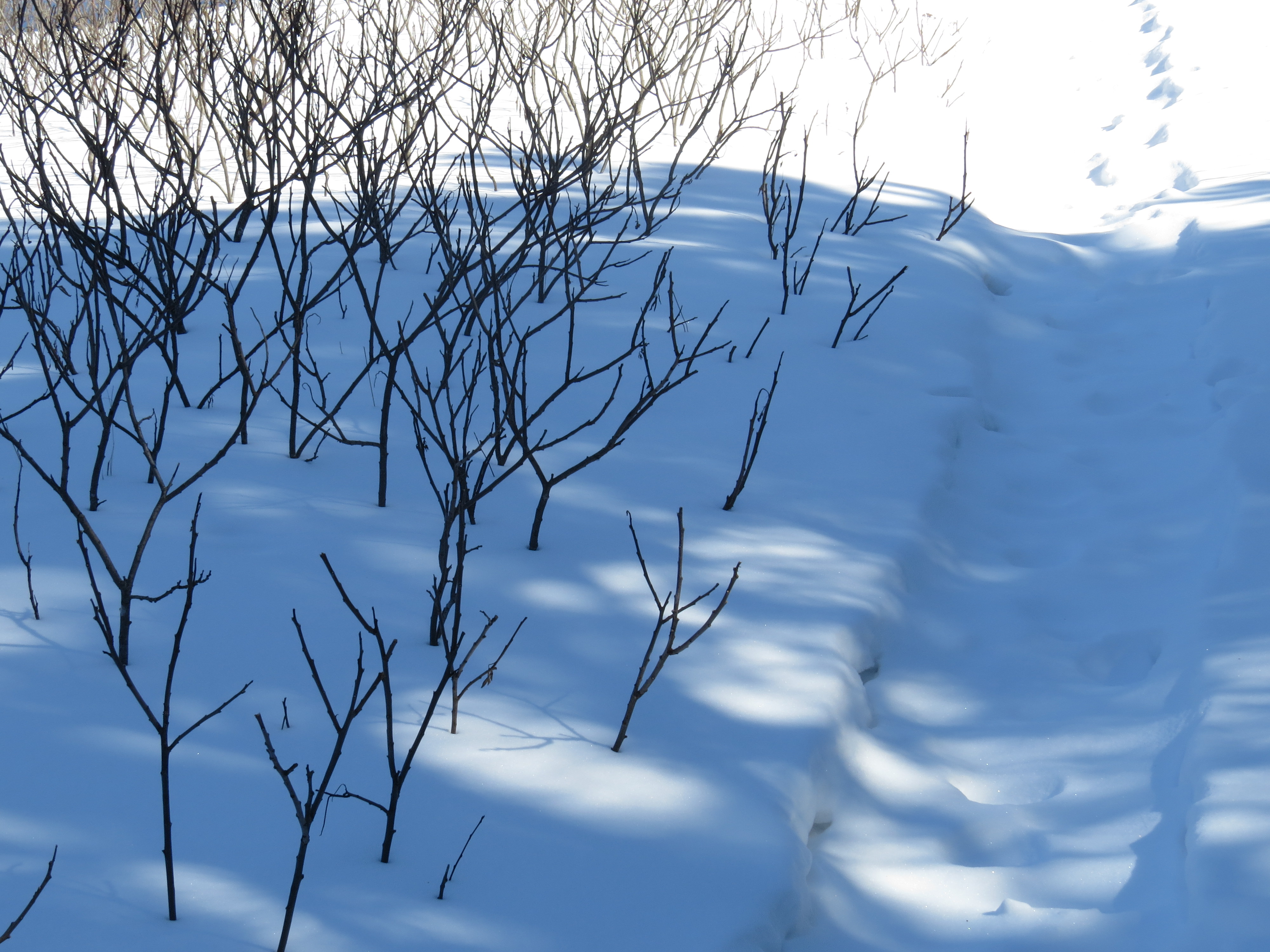
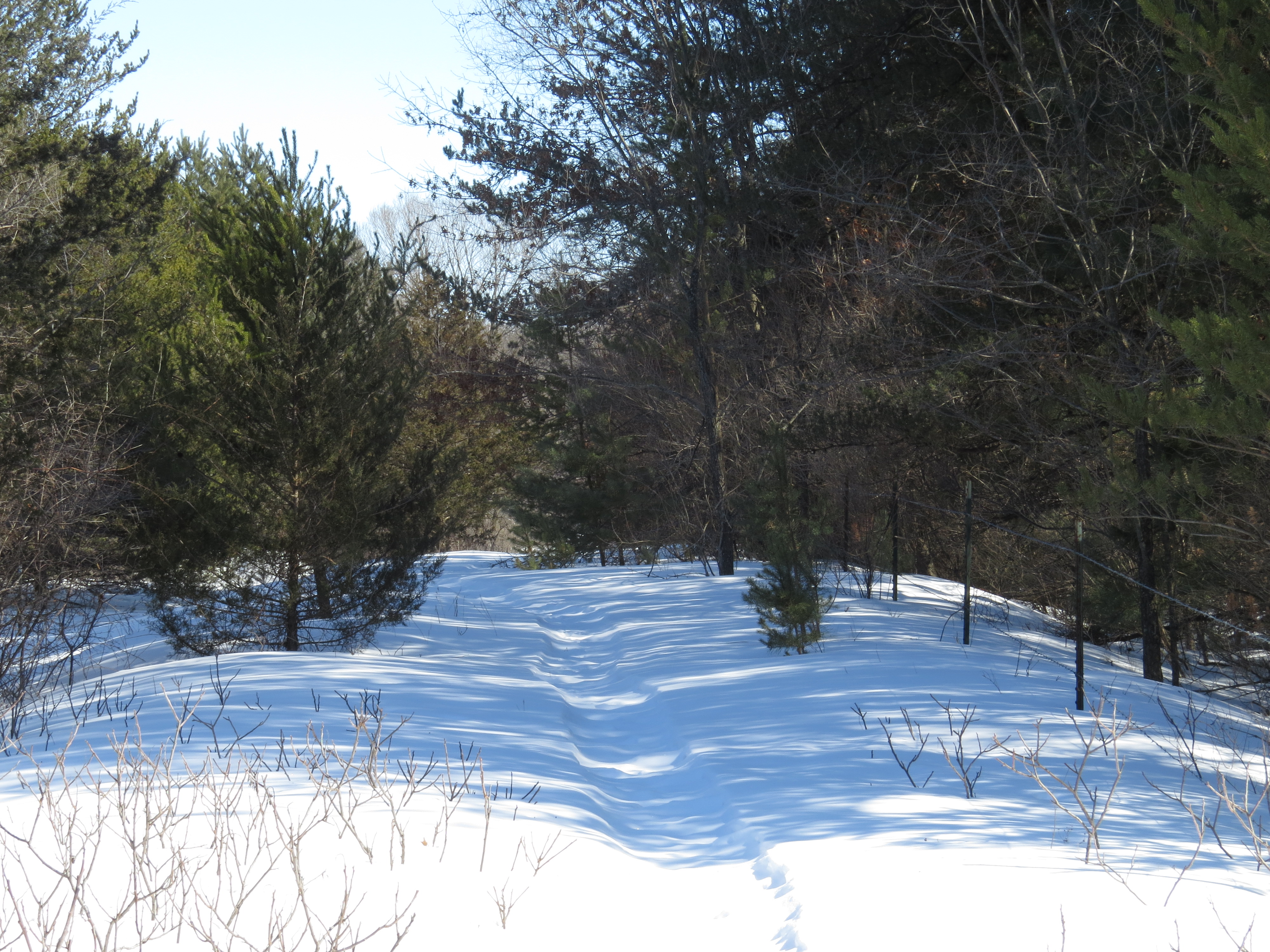
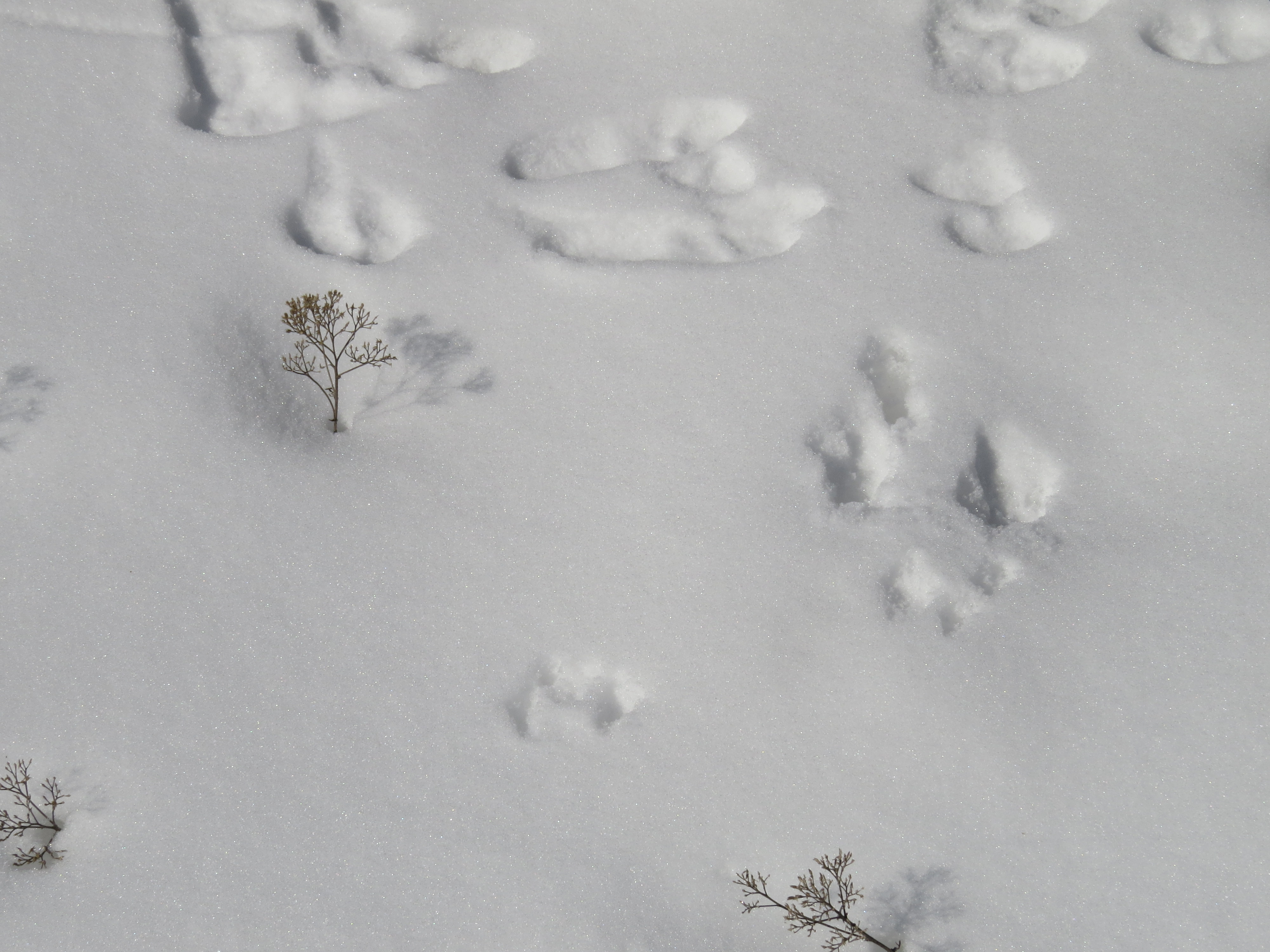
In no time at all, at the corner of Deer and Fox (tracks), Nature took over my mind, washing away the thoughts of suffering for the time being.
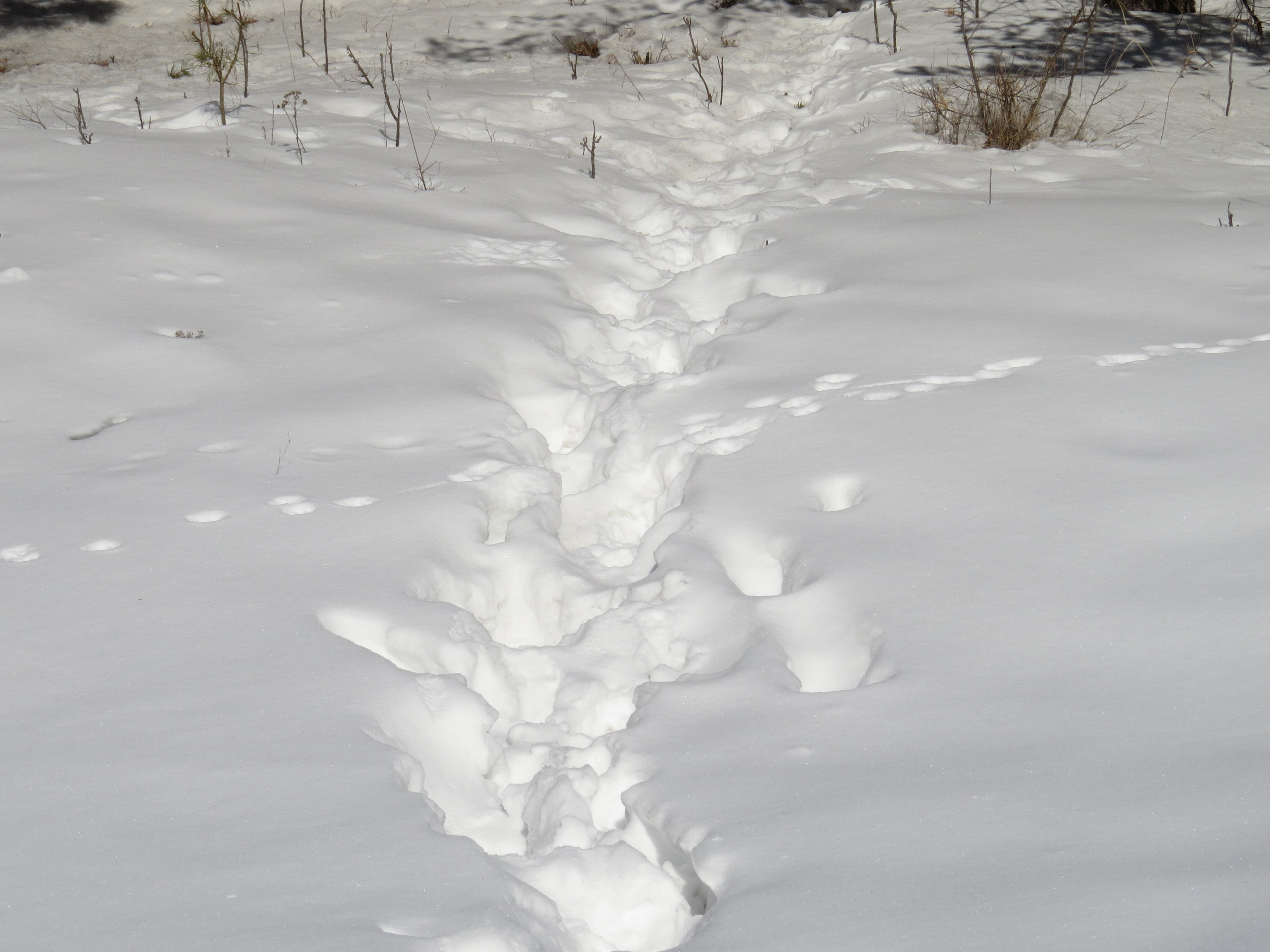
Rabbit and squirrel tracks zigzagged erratic paths around and to trees, their light little bodies not worrying about sinking through the deep snow.
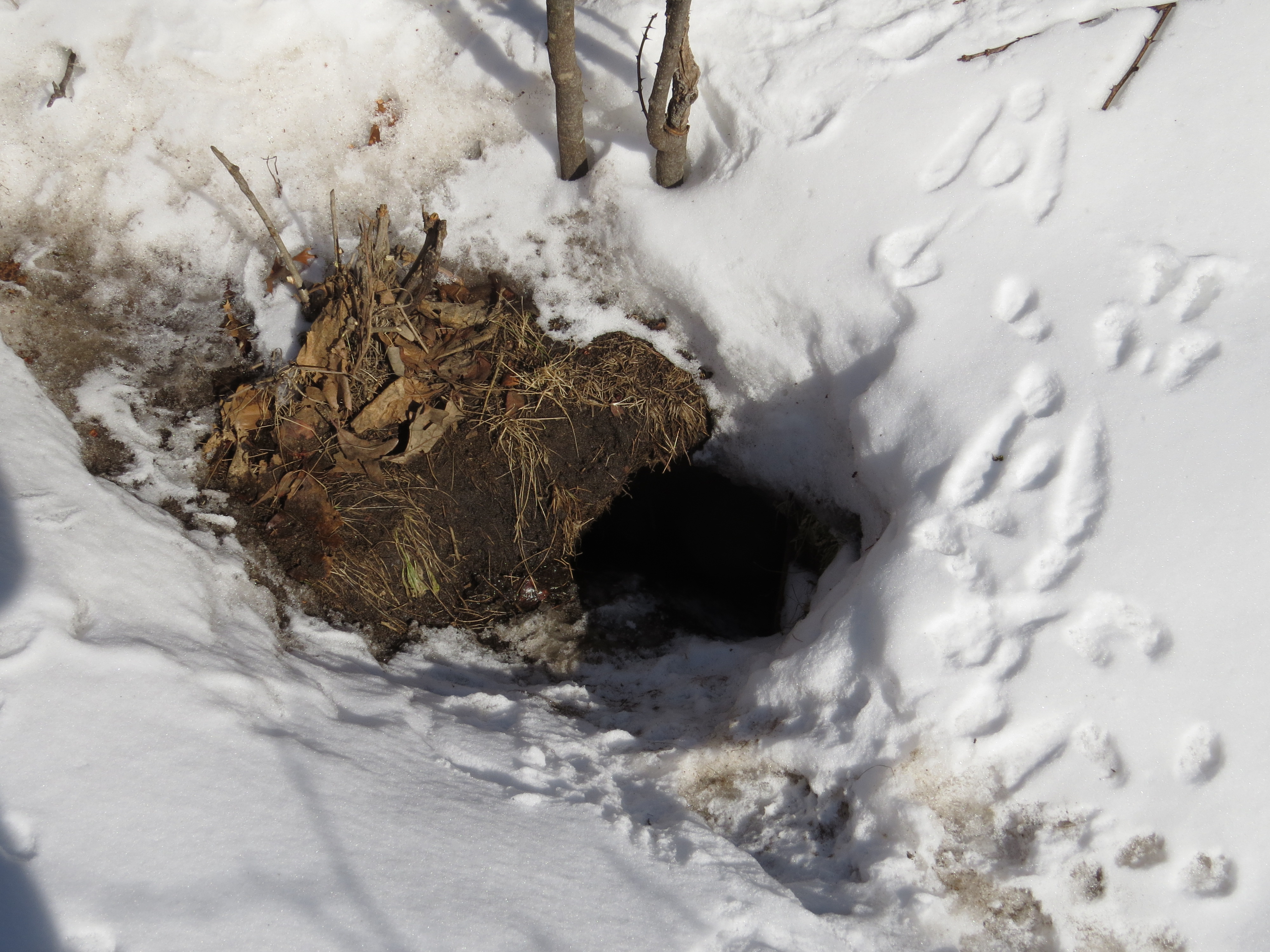
Last year’s fox den was definitely occupied by someone, with many curious onlookers, including myself.
I’m pretty sure Mr. Possum had been out wandering for food—see his tail track? Maybe he made the old fox den his winter home.
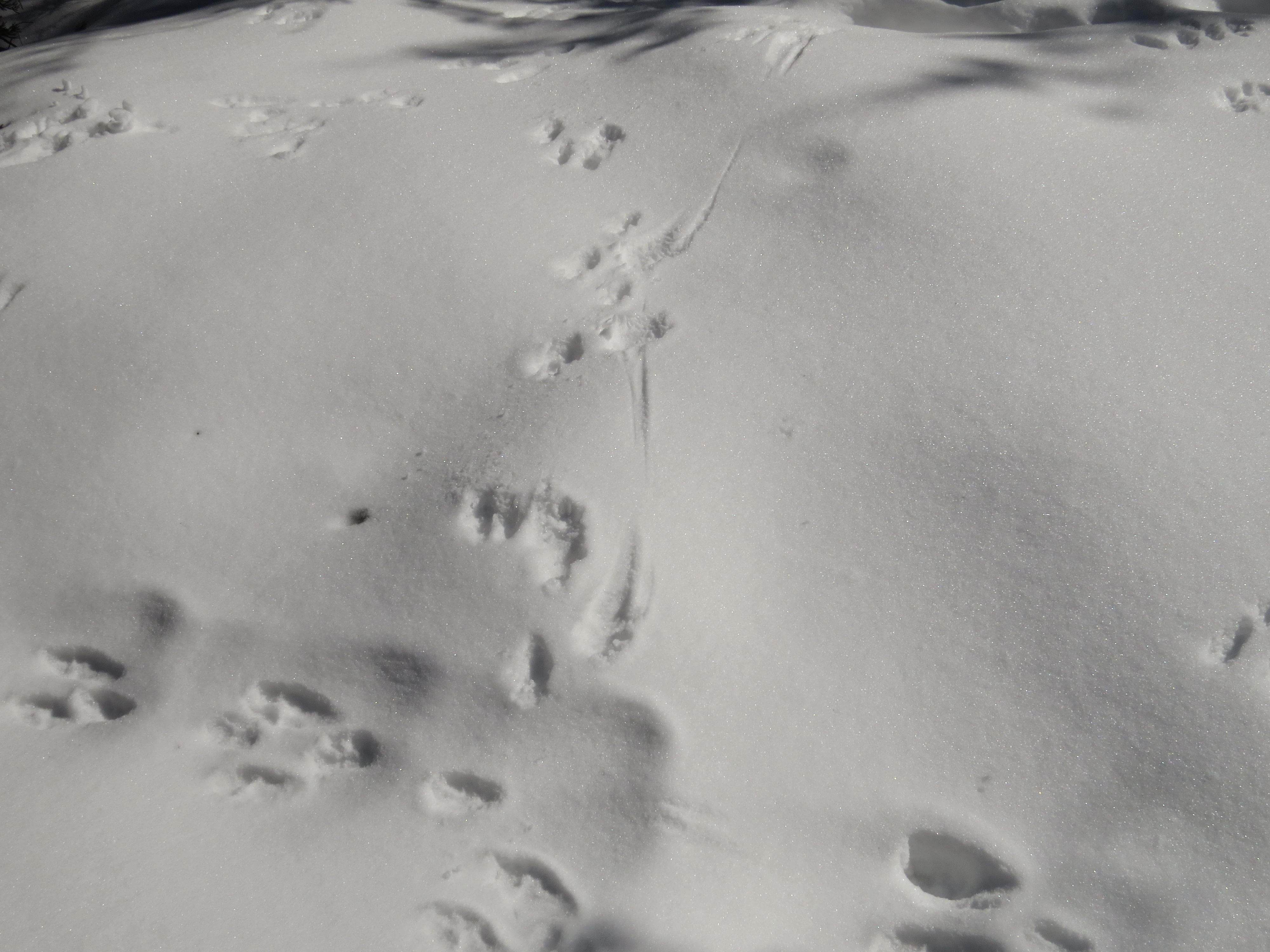
It’s a busy place out there.

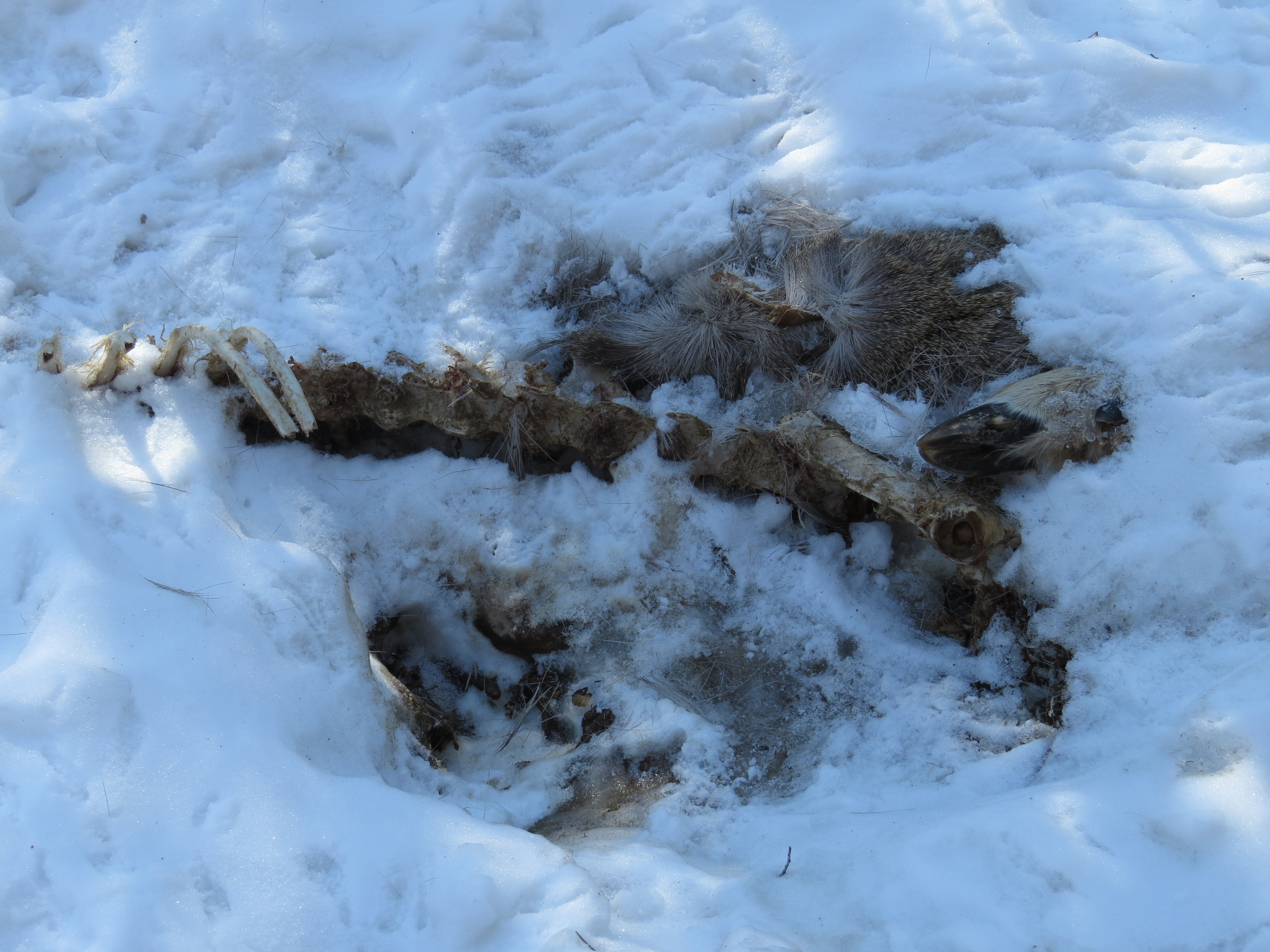
Farther along the trail I noticed a dark spot in the snow, so I veered off the trail to investigate. A deer carcass was mostly buried under the snow but had provided many meals for the carnivores of the forest.
There was a deer-sized indentation in the snow where a deer had bedded down for the night, though the bed had a new blanket of snow on it.
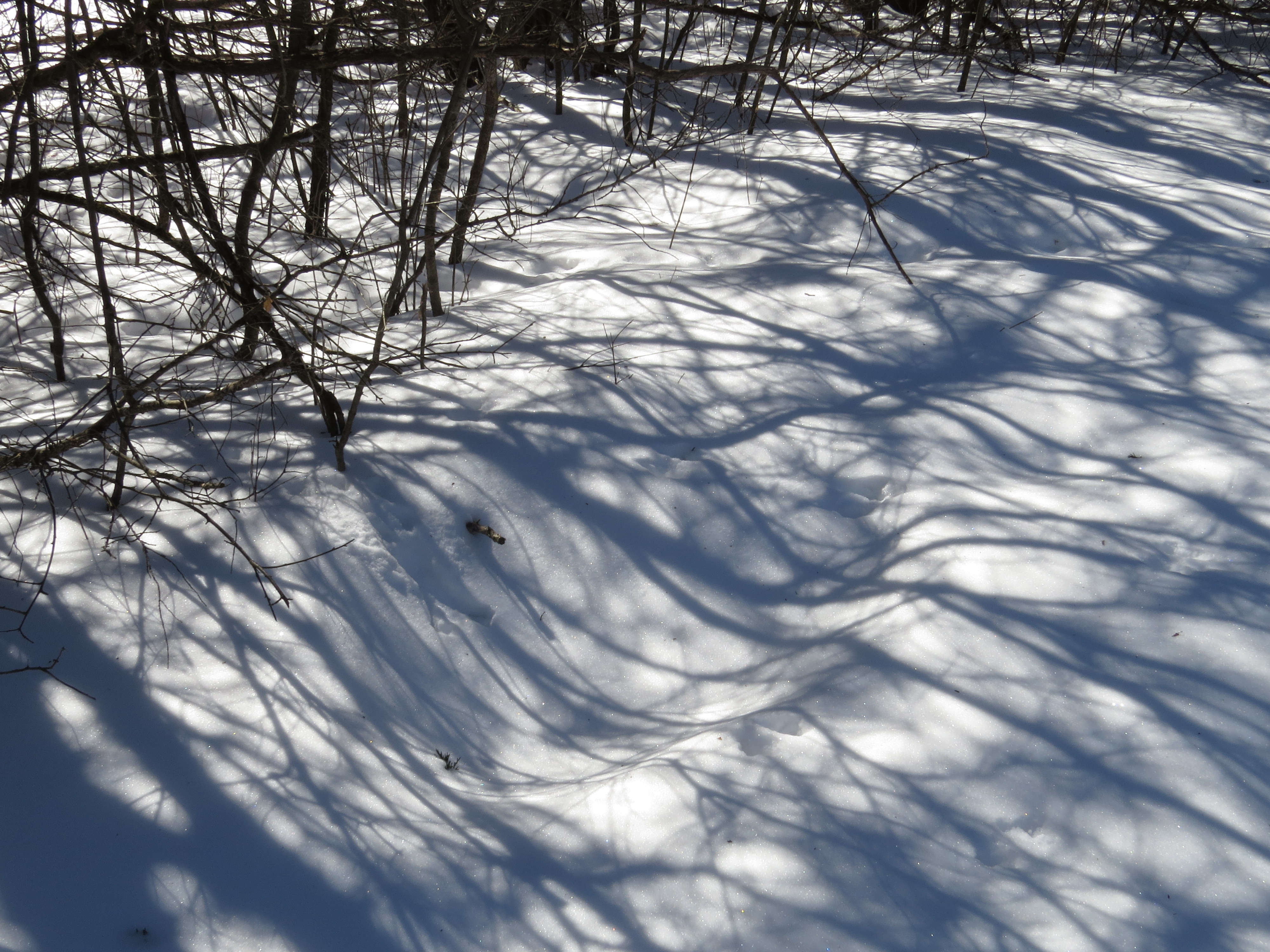
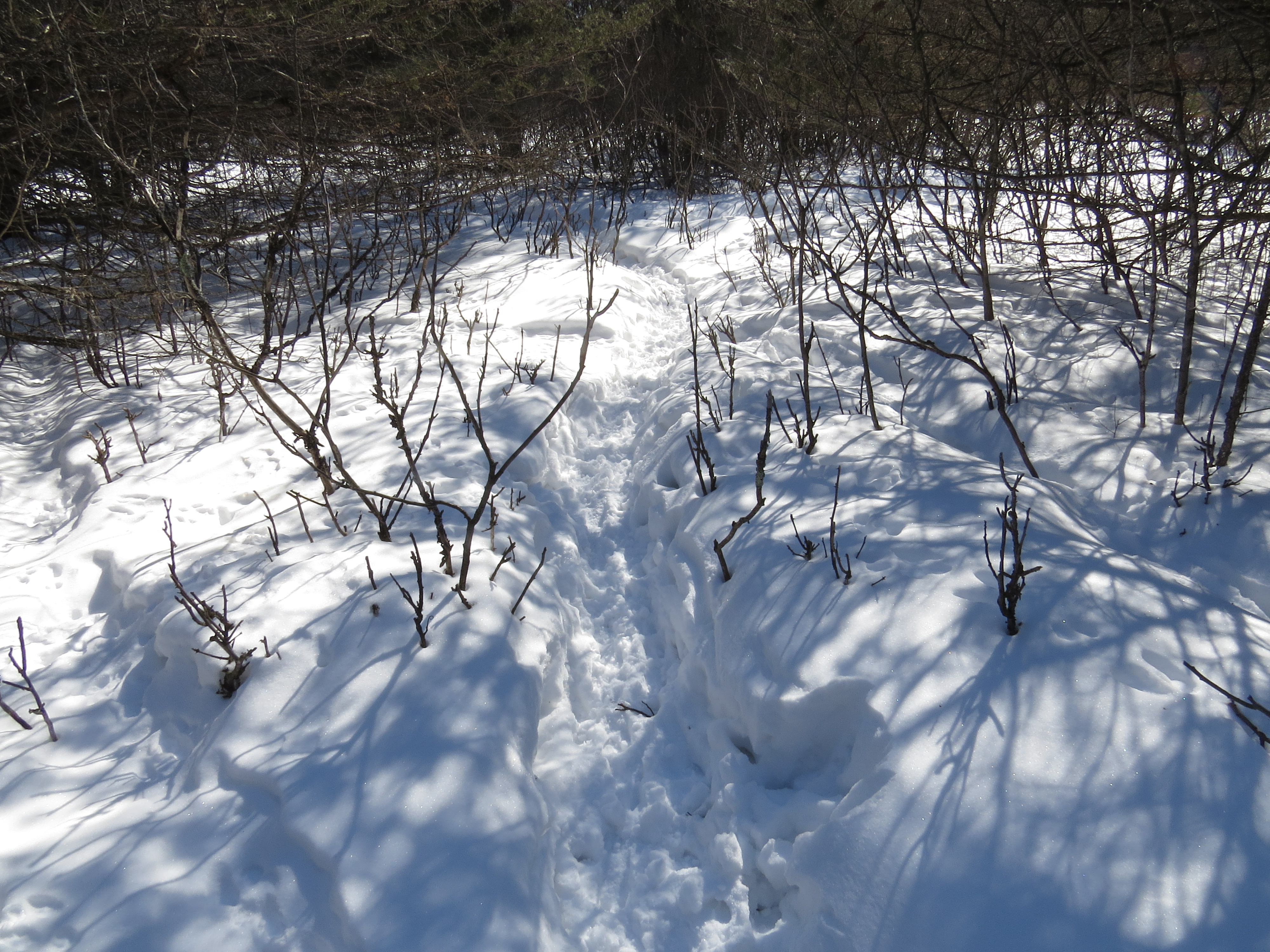
I continued on the little road, following one deer trail while others intersected it, coming and going through the trees. A community of animals with their roads, homes, and eating places.
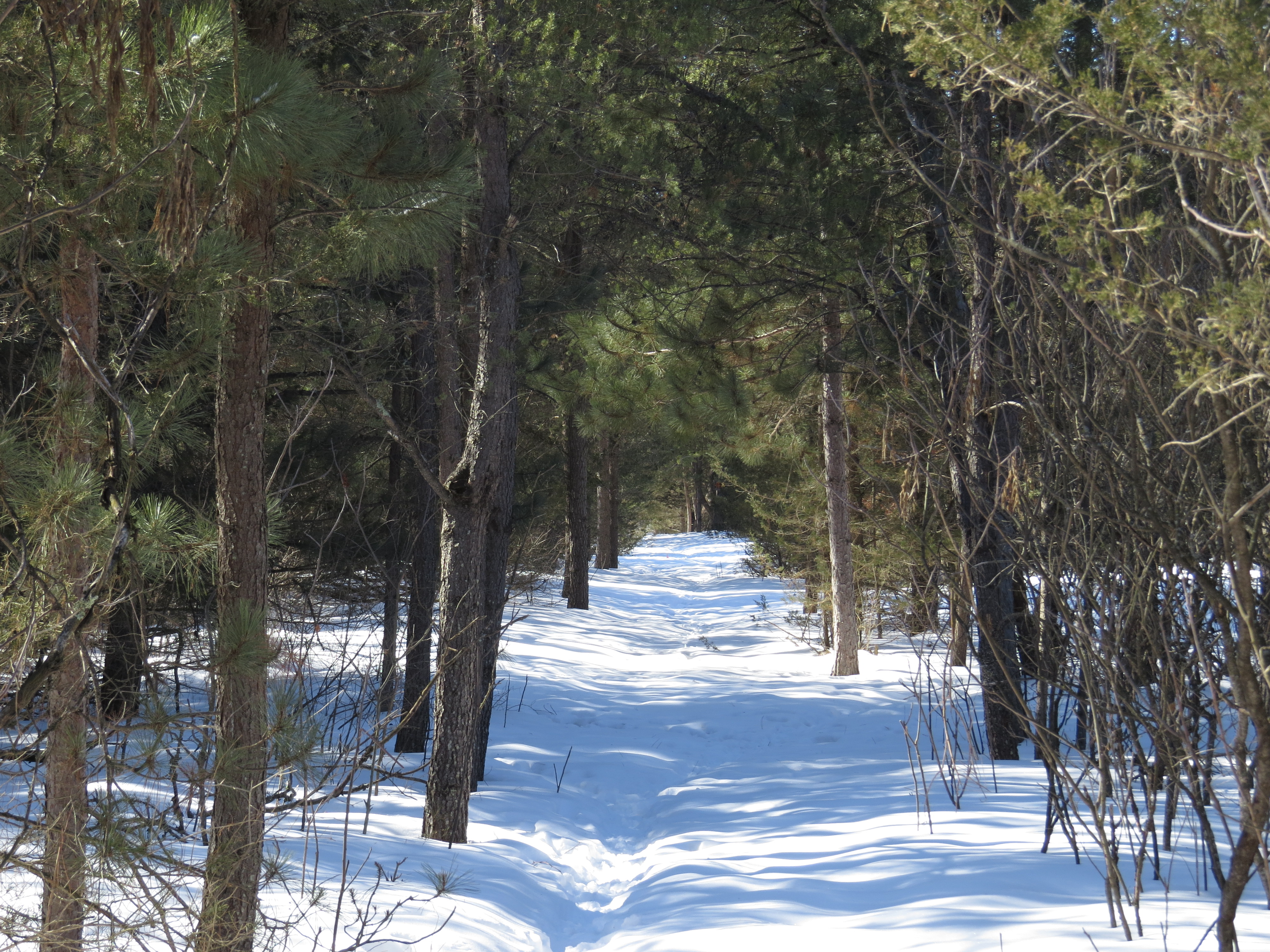
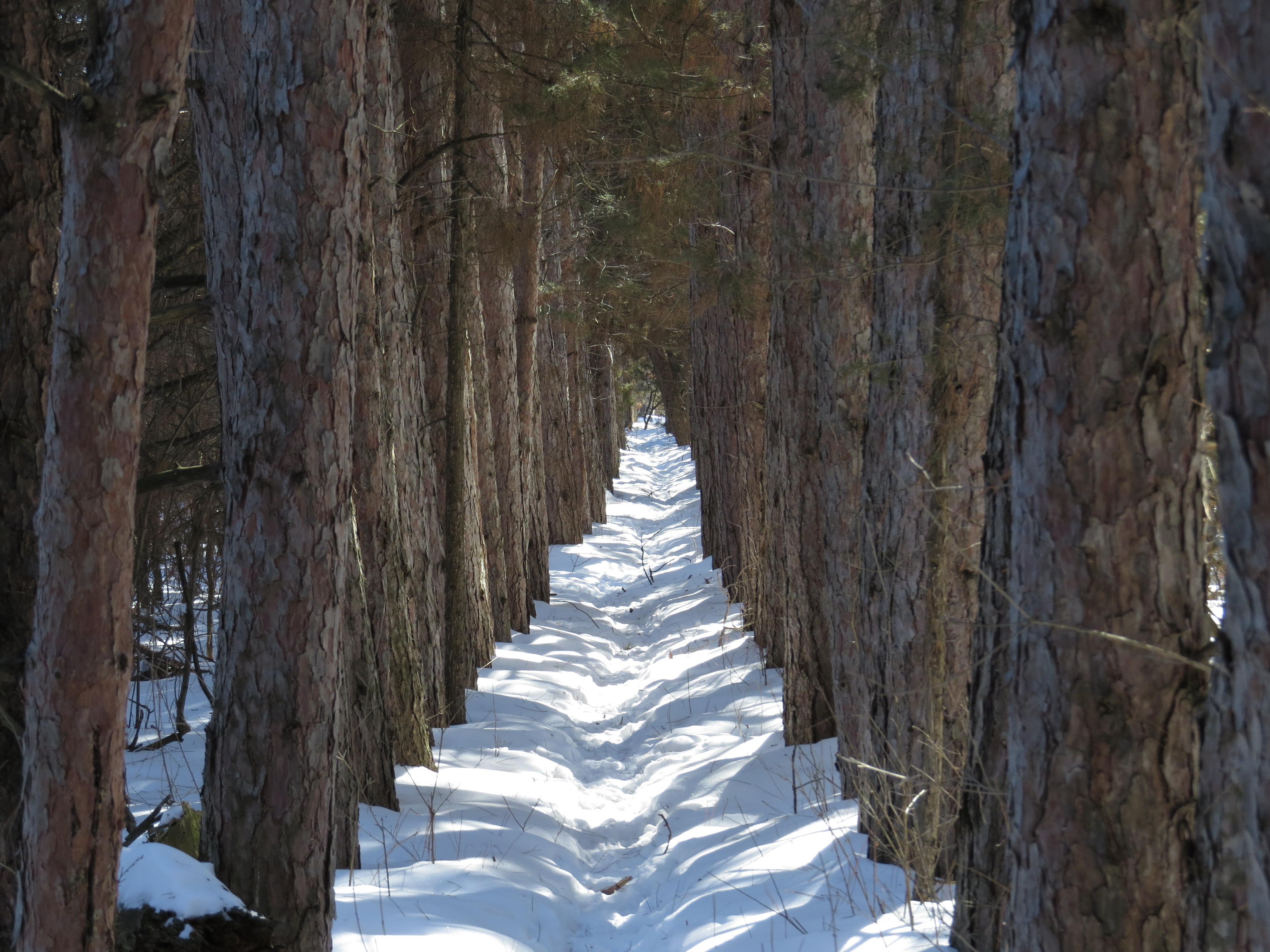
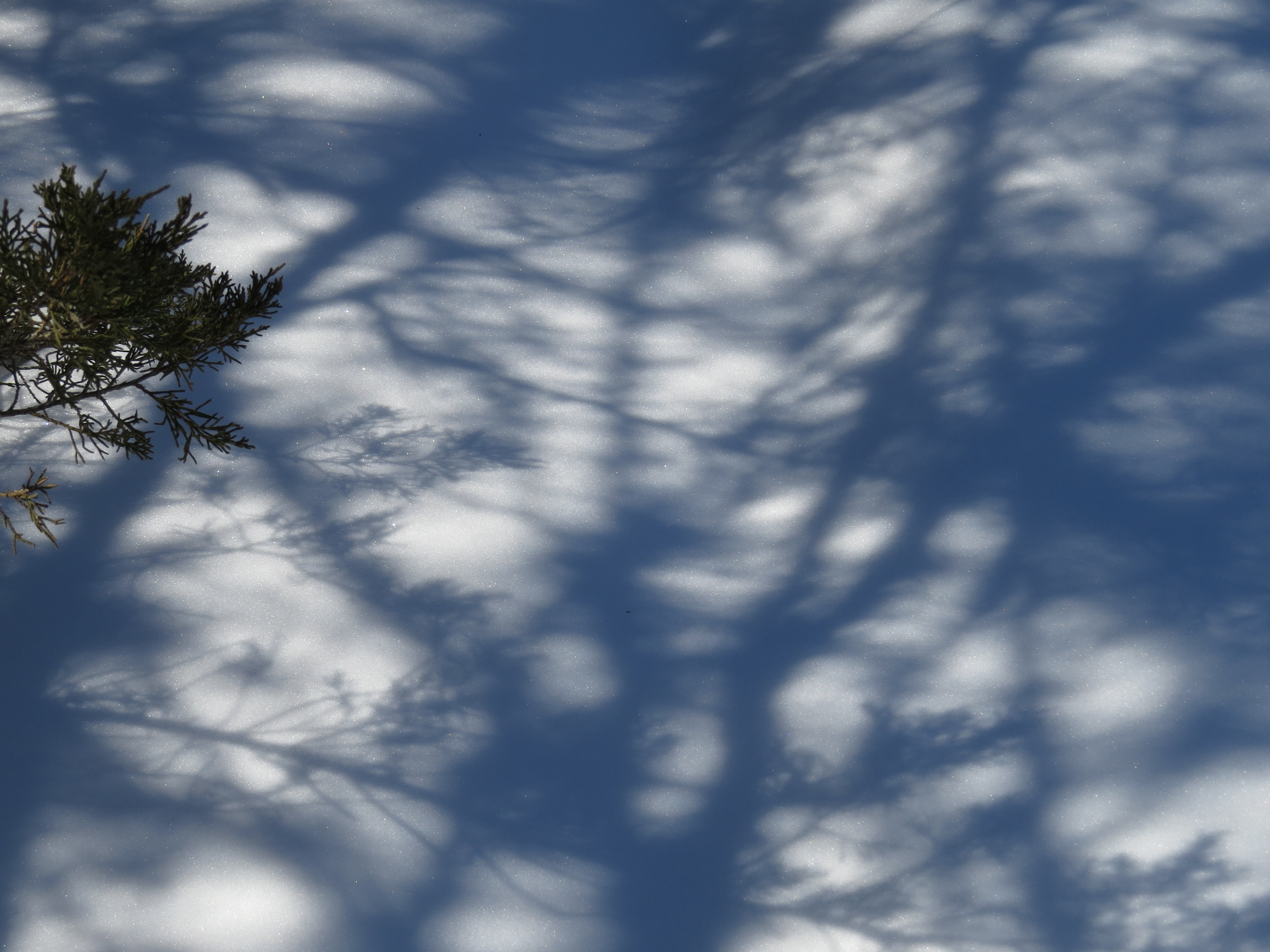
An allee of Pines with its chevron shadows create a perfect corridor for travel.
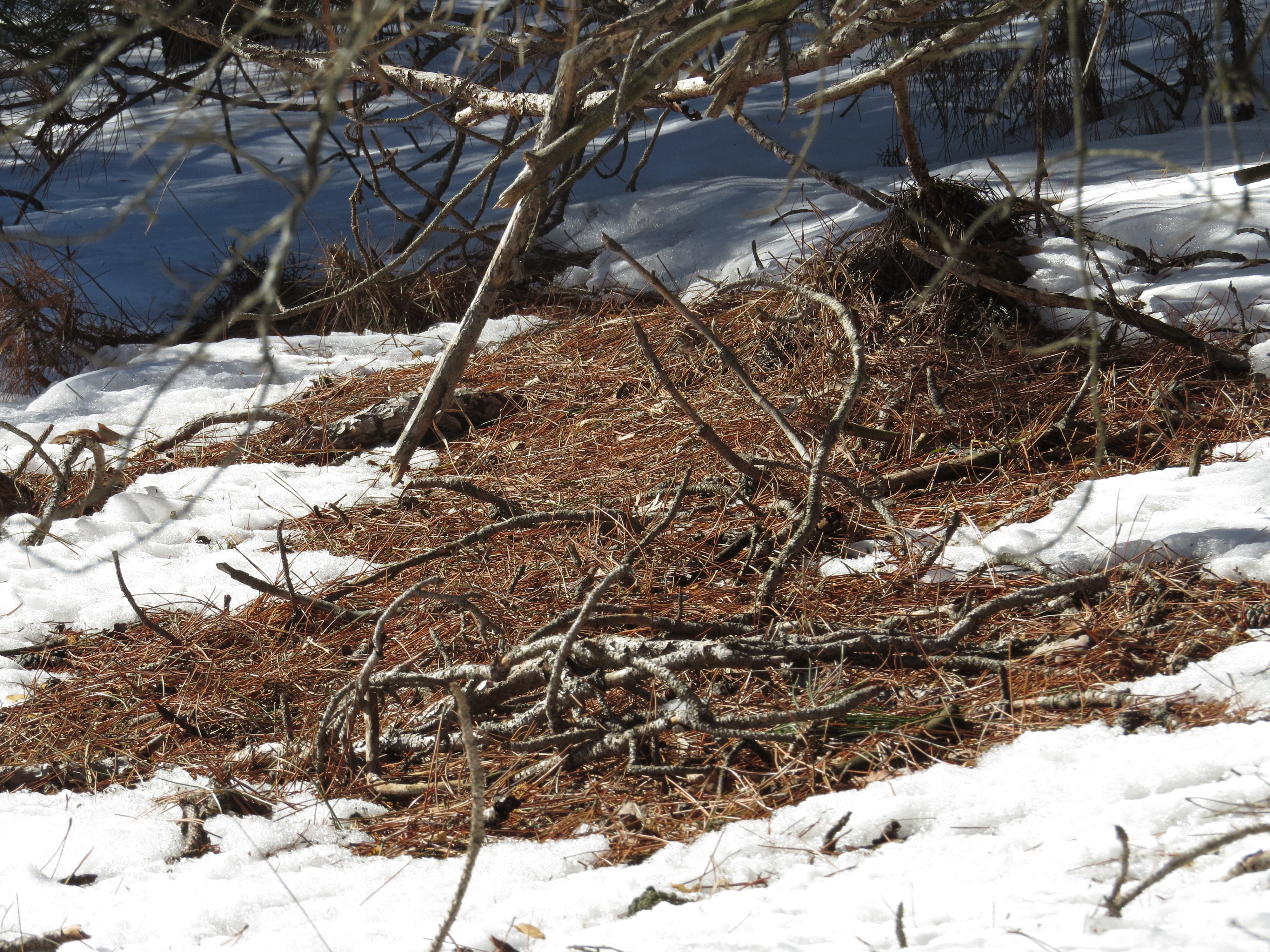
Spring is already showing its signs, despite the snow and cold. More birds can be heard singing and flitting through the trees, and on the south side of a large Pine tree, the snow has started to melt away from the warm, brown pine needles.
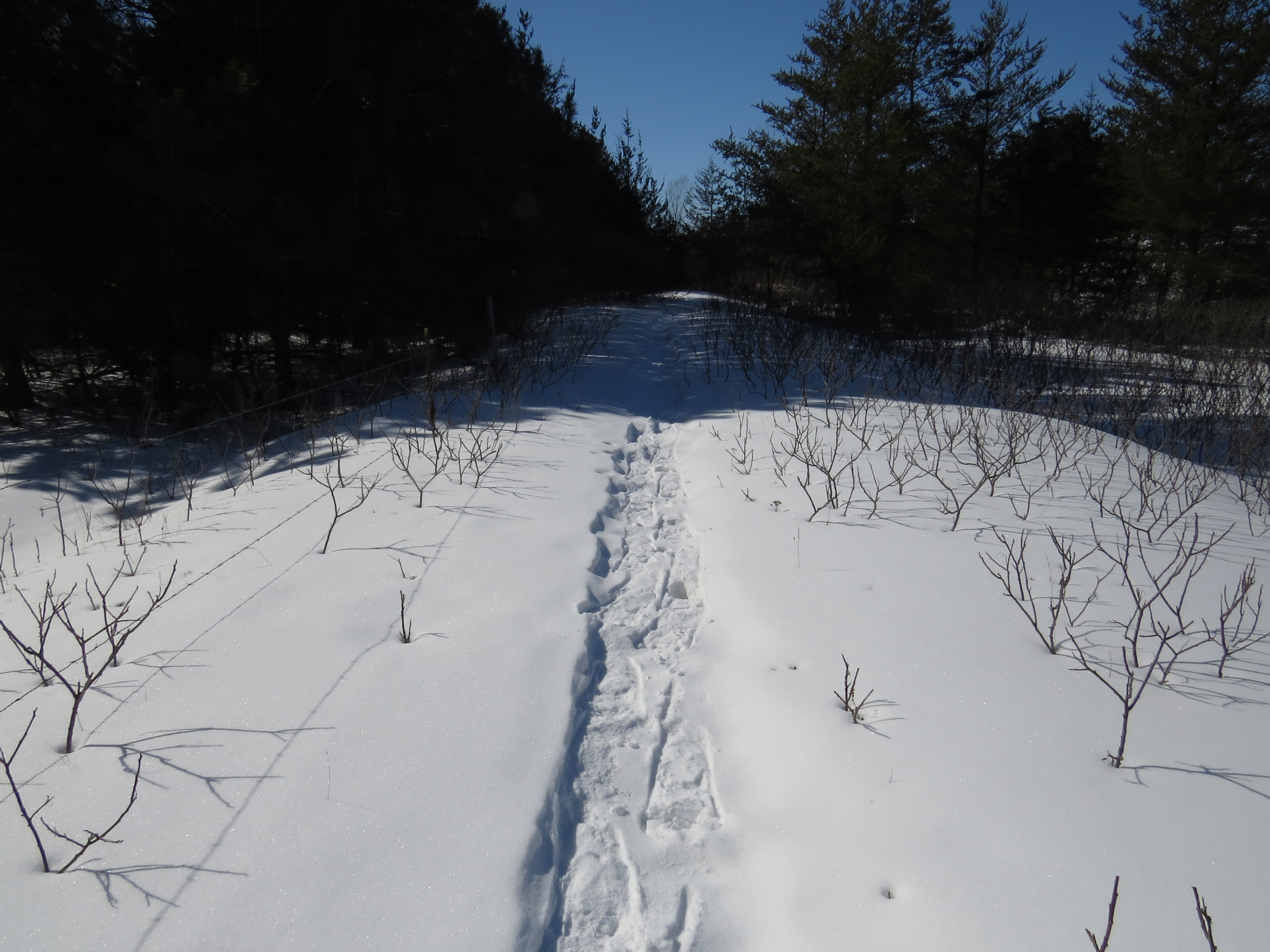
I had added my tracks to those of the woodland creatures as I witnessed the evidence of their Winter lives in the forest. It was a beautiful, brisk day—a perfect day for snowshoeing.
A quote fell into my lap today—timely and serendipitously—from Helen Keller: “Although the world is full of suffering, it is also full of the overcoming of it.” While it is important for us to be compassionate witnesses to the realities of war, illness, and suffering, we must also cultivate and elevate the simple acts of ‘overcoming it’ that we see in the world. I appreciate the news outlets that include snippets of that Goodness that mostly go unseen. Those who dwell on and promote the negative and divisive aspects of our society, politics, and culture do a disservice to themselves and to us all. It’s a balancing act to witness and acknowledge the reality of suffering in our world and to do the same with the acts of overcoming it. Nature is a balm for overcoming suffering, as are gathering places of loved ones who lift us up and simple acts of kindness and offering. Spring is a hopeful, uplifting season—every year it overcomes the harshness of Winter and the heaviness of suffering. Food becomes abundant, new life is nourished, and life energy flows with renewed vigor. Isn’t that a delightful surprise?
- 1
- 2
- 3
- …
- 11
- Next Page »