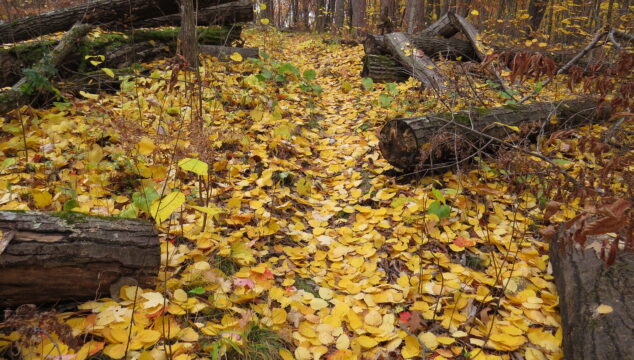
Come walk with me in the peak Autumn beauty of the Northwoods. To say that I love this time of year is an understatement. Most everyone can appreciate the colorful falling leaves---it reveals the 'true self' of a tree when its leaves are no longer producing chlorophyll. Their true colors are revealed, and there is something simple … [Read More...]
A Total Eclipse of the Eclipse
I had high expectations of Monday’s eclipse. The media had prepared us well with scientific information, beautiful illustrations and photos of previous celestial wonders, and Amazon had plenty of viewing glasses to purchase. The Great American Eclipse was to make its way across the heart of our country in its totality. Minnesota wouldn’t see complete darkness, but an almost total eclipse is exciting, nonetheless. The sun was shining on my Monday morning walk…then the clouds rolled in. As E-time approached, thunder rolled and rumbled, and rain fell, along with my high hopes.

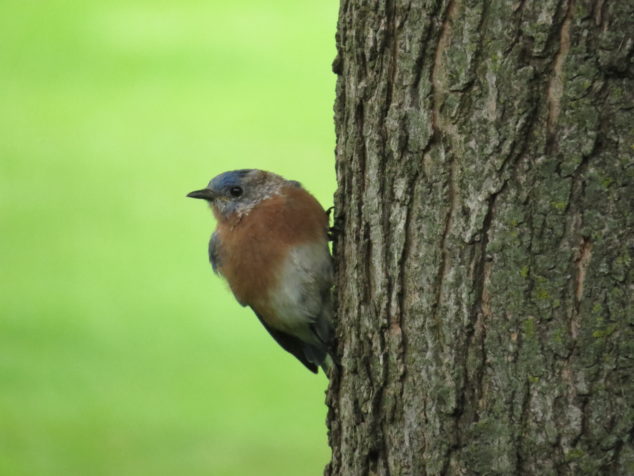
One of our Bluebirds of happiness flew to the Maple just outside the window, perching on the side of the tree, reminding me that blue skies would come again. (Tuesday’s sky was blue and cloudless.)
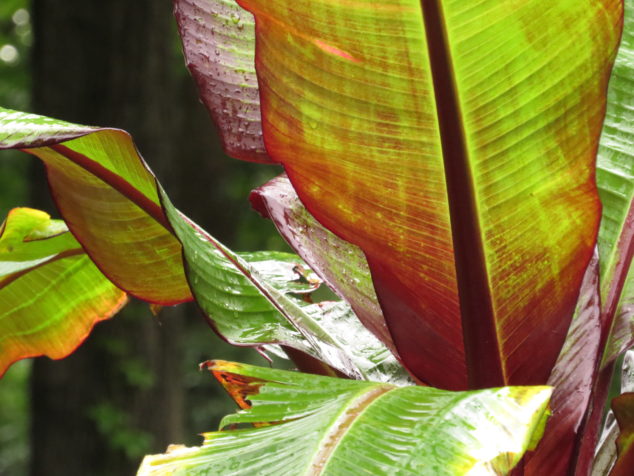
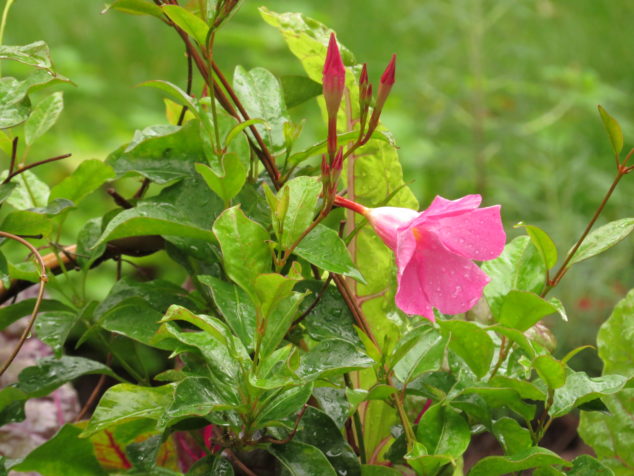
Even in the midst of my dashed eclipse expectations, there was tropical beauty right outside my door in the rain—a banana tree and the pretty pink flowers of Mandevilla.
Beyond the hype and excitement of the eclipse this week was the reality of the waning days of summer. First day of school pictures filled my Facebook feed. Cooler than normal temperatures necessitated bringing out the fleeces and sweatshirts. The tomatoes are finally ready to eat! The apples are turning red. Sumac leaves are beginning to turn crimson. Wild plums are ripening.
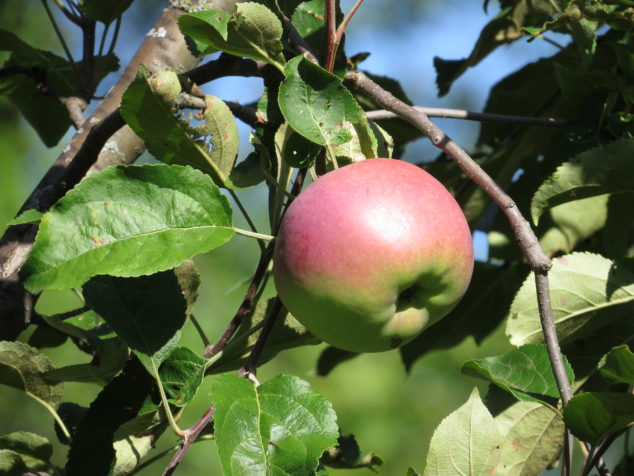
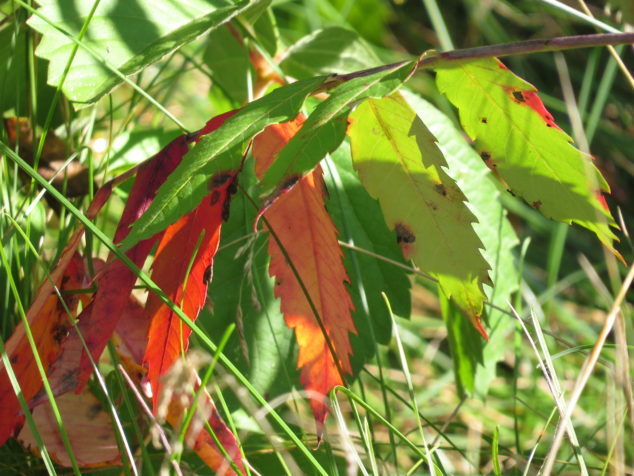
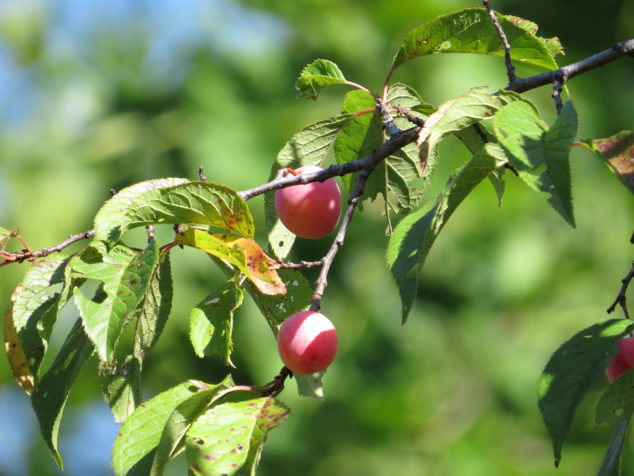
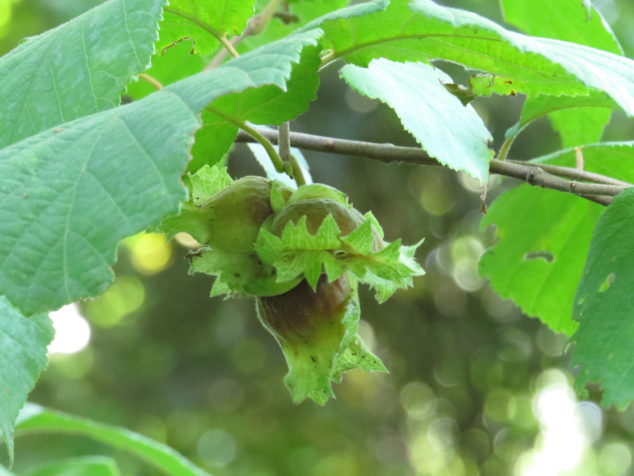
And our first ever hazel nuts are forming under the curved leaves and inside the fringed husks!
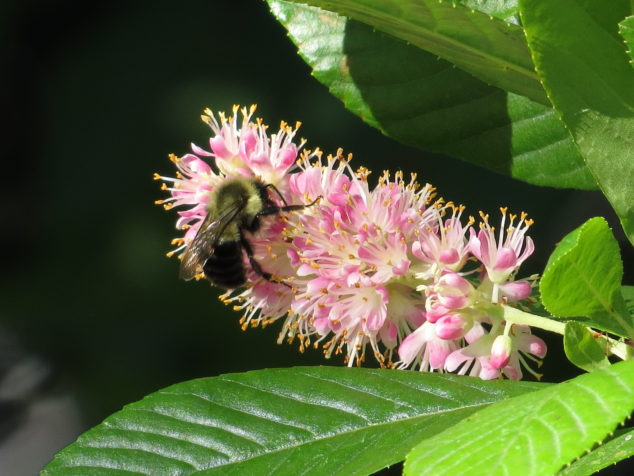
I never say summer is sweet on the humid, hot days (I mean, what do I expect?!), but as August winds down and Summer Sweet blooms and releases its fragrant scent, I am reminded that summer is indeed a sweet time of year.
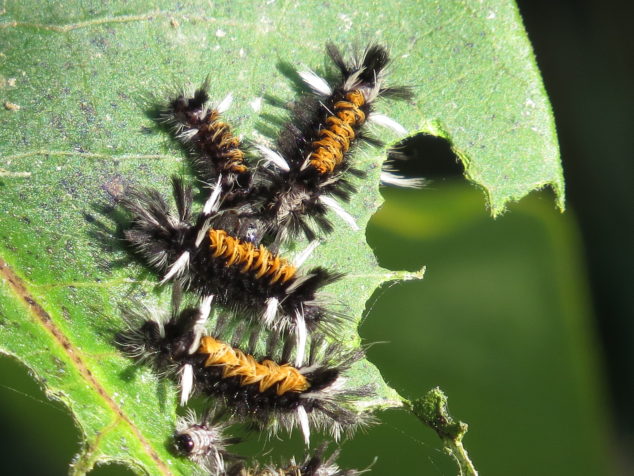
On the other side of dashed expectations and humid-drenched disappointments is surprise and possibility. What is eating our Milkweed? Monarch caterpillars, of course. Not this time! The hungry, similar-colored caterpillars are the larval stage of the Milkweed Tiger Moth (a very drab, gray-colored moth.)
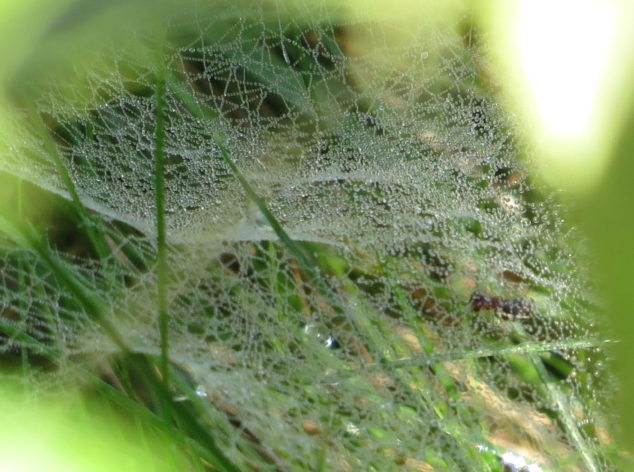
And look at this delicate web of water droplets I found in the grass below the milkweed!
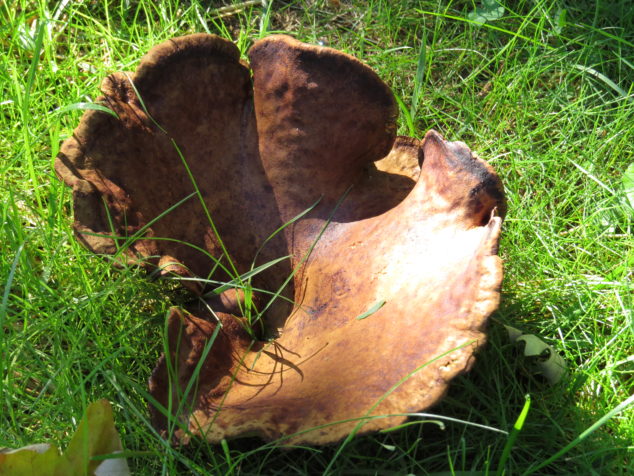
At the junction of old and new soil and grass around our patio, a fungus grew that looked like a worn, well-oiled leather catcher’s mitt. Where did that come from?
Then there is the delicate surprise of a common object seen in a different light—the bird’s nest bundle of seeds of Queen Anne’s lace and a pincushion center of Black-eyed Susan.
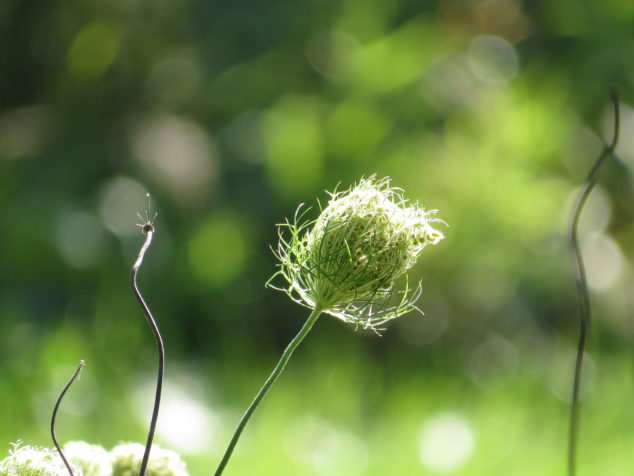
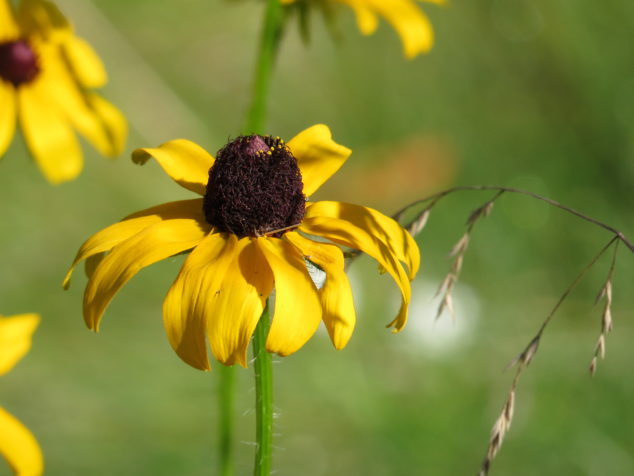
There’s a book titled Expectation Hangover by Christine Hassler. I haven’t read it, but she defines Expectation Hangover as “the myriad of undesirable feelings or thoughts present when one or a combination of the following things occur: a desired outcome does not occur; a desired outcome does occur but does not produce the feelings or results we expected; our personal and/or professional expectations are unmet by ourselves or another; an undesired, unexpected event occurs that is in conflict with what we want or planned.” I’ve had a few of those in my lifetime and know very well the toll it takes on time, energy, and self-worth. My high hopes of experiencing the eclipse were tempered by the meteorological predictions that didn’t favor clear skies on that day. It’s important to keep our expectations grounded in reality—what’s the science behind this or what does the history of this person show us or what can we really afford? I’m not sure it’s our expectations per se that get us into trouble, but our attachment to them. Those attachments can run deep and profound to the very soul of who we think we are. But Nature teaches us that even in the certainty of summer morphing into fall, we can discover new surprises and see things in a different light—like we’ve never seen them before. Expectations and possibilities with a grounding of reality—it’s a recipe for an awe-inspiring eclipse (or not), a sweet summer, and an authentic life.
Lead Into Gold
“Every human being has gone through a tragedy of sorts. And the idea is that you have two paths you can take. You can find that alchemy that turns lead into gold, find that magic where you can see the loss as an entry point for learning and grow from it and become wiser and stronger.” —Jillian Michaels
A small meadow that I walk by every day had been mowed a while ago. The grass was not growing back very fast as we had had dry weather until recently. But something caught my attention earlier this week—a Milkweed plant had grown knee-high above the shorn grass and stood out in stark relief from the dry, brown grass.
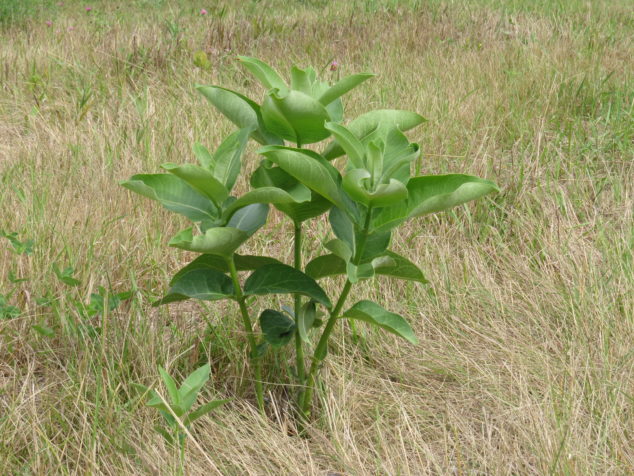
I was curious whether a plant had been cut down or if this was a new plant. When I looked closely, I saw that one stem of the Milkweed had been mowed off, and in its place, three new stems had grown.
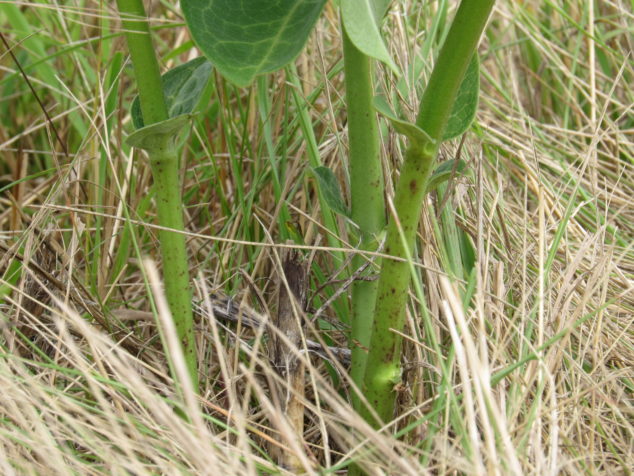
As I looked around the meadow, I saw other plants that had been mowed down that were now tall and blooming! Red Clover, Daisy Fleabane, the tough, persistent Canadian Thistle, and others.
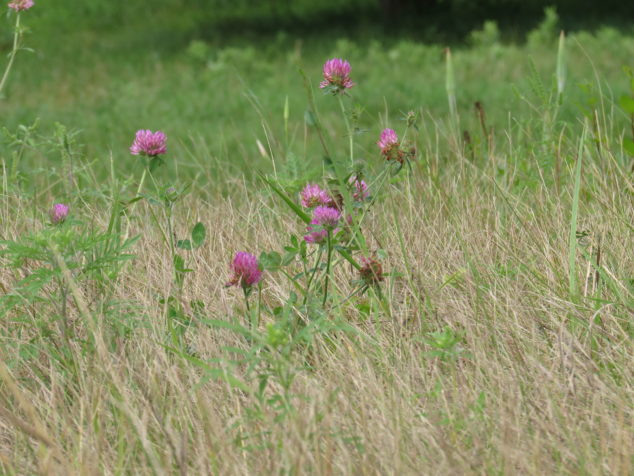
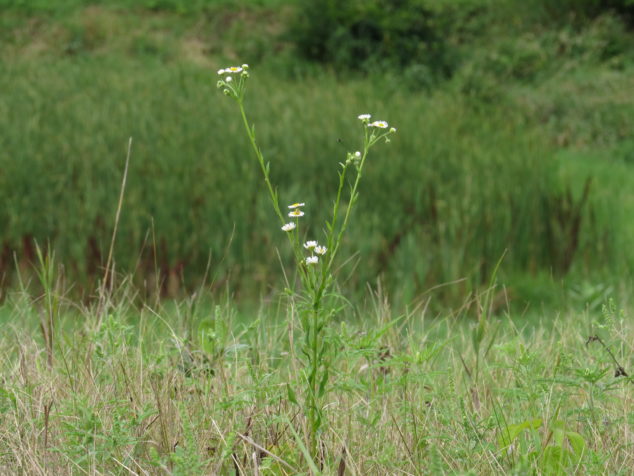
It was not the first time the meadow had been mowed, and I knew for sure the Milkweed had not had its chance to bloom yet. The Red Clover, like Alfalfa, grows fast and had probably bloomed before each mowing. The grass had already gone to seed before it was mowed the second time—its life cycle for the season was complete. But the Milkweed had still not bloomed or produced pods full of fluffy seeds. It seemed to have accelerated growth to compensate for the set-back of being mowed down.
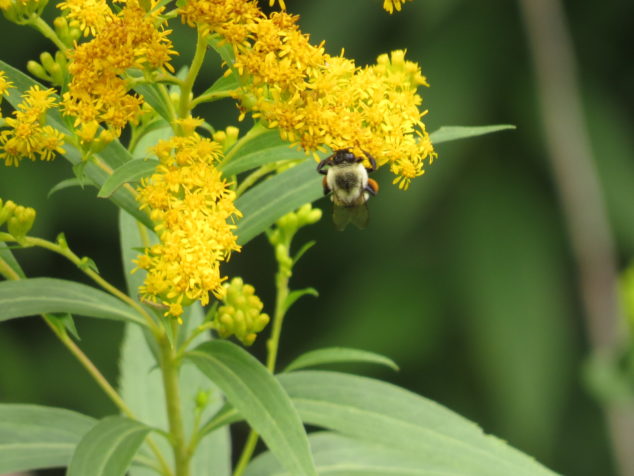
In 1995, Lawrence Calhoun, PhD, along with Richard Tedeschi, PhD, coined the term post-traumatic growth (PTG)—when our biggest life challenges can offer opportunities for meaning and growth. While the term ‘post-traumatic growth’ is relatively new, the theme of suffering, meaning, and growth has been prominent in ancient spiritual and religious traditions, literature, and philosophy for eons. Resilience is bouncing back to ‘normal’ after a tragedy or challenge, whereas with PTG, we bounce back higher, so to speak. We learn to make meaning of our suffering. We learn a new way of being. We grow, bloom, produce seeds and fruit, and complete our life cycle. We turn lead into gold.
Intentional Grounding
Do you remember how often you were on the ground when you were a kid? Our babies spent hours on blankets spread out on the grass while I worked in the garden or their older siblings played in the sandbox. There was usually a Black Lab dog named Licorice in the grass or on the blanket near them, taking seriously her self-proclaimed job as baby-sitter. When older, the kids played with kittens, watched the chickens, rolled down hills, caught frogs in the mud of the corral, made forts in the lilac bush, made snow angels and snow forts, and so many other things—all while sitting, crawling, or lying on the ground! When they entered teenage years, their ground time was reduced to sports, laying out in the sun to get a tan, or an occasional picnic on a blanket. All three had summers of their young adult years when they returned to living close to the earth at summer camps and outdoor jobs, when their bodies and spirits felt strong and empowered. And then, what happens to us when we become adults? How often are we in a building, in a car, in air conditioning, in good clothes, in a hurry?
My Mom recently returned from a week-long camping trip to Wyoming. She remarked about how well she slept each night on her cot in a tent—much better than her nights at home in her own bed! I told her about a quote from the Touch the Earth Trail pamphlet from Mille Lacs Kathio State Park that we had visited.
“The Dakota was a true naturist, a lover of nature. He loved the earth and all things of the earth, the attachment growing with age. The old people came literally to love the soil and they sat or reclined on the ground with a feeling of being close to a mothering power. It was good for the skin to touch the Earth and the old people liked to remove their moccasins and walk with bare feet on the sacred earth. The soil was soothing, strengthening, cleansing, and healing. That is why the old Indian still sits upon the earth instead of propping himself up and away from its life-giving forces. For him, to sit or lie upon the ground is to be able to think more deeply and feel more keenly; he can see more clearly into the mysteries of life and come closer in kinship to other lives about him.” —Luther Standing Bear, Lakota leader and author, 1868-1939
Looking back at thousands of years of human history, most humans had almost continuous contact with the Earth each day. This direct contact with the Earth is now called grounding or earthing; (also terms in electrical engineering to ensure safety of equipment and humans.) There have been studies that indicate grounding’s positive effect on blood viscosity, heart rate variability, cortisol levels, inflammation, sleep, and autonomic nervous system balance.
If a person has pets or kids, it’s easy to spend time on the ground with them and get a different perspective of the world.

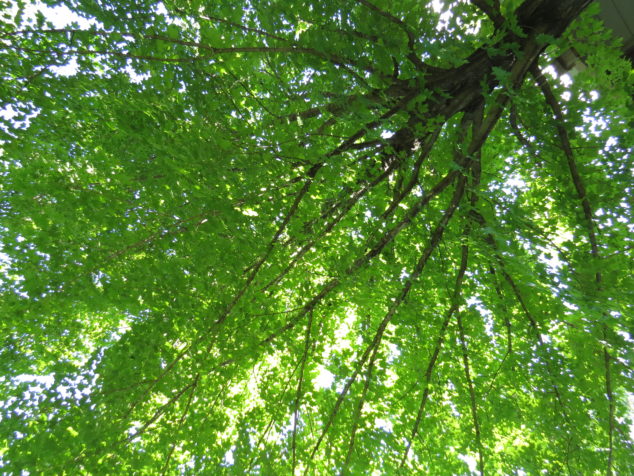
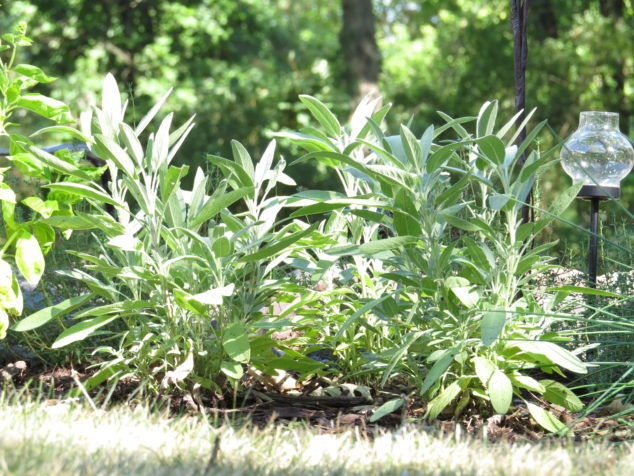
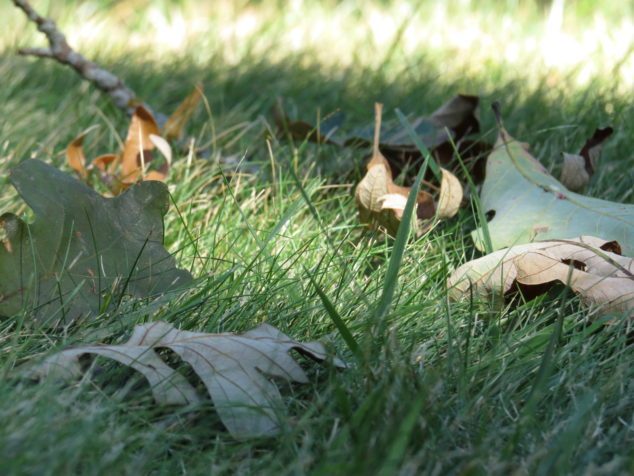
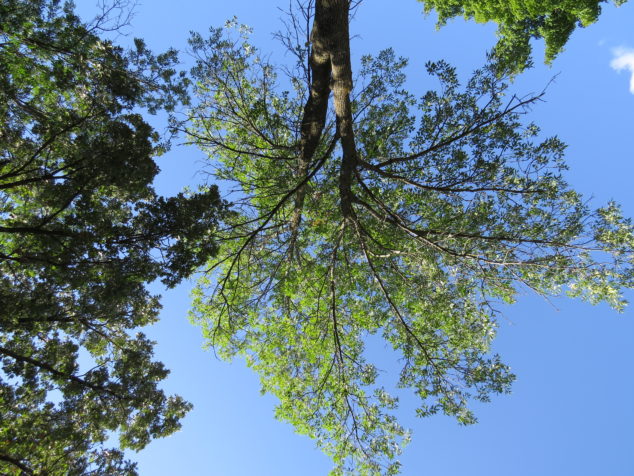
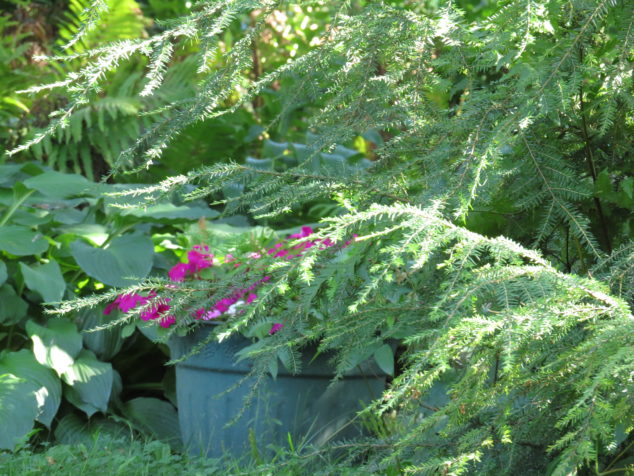
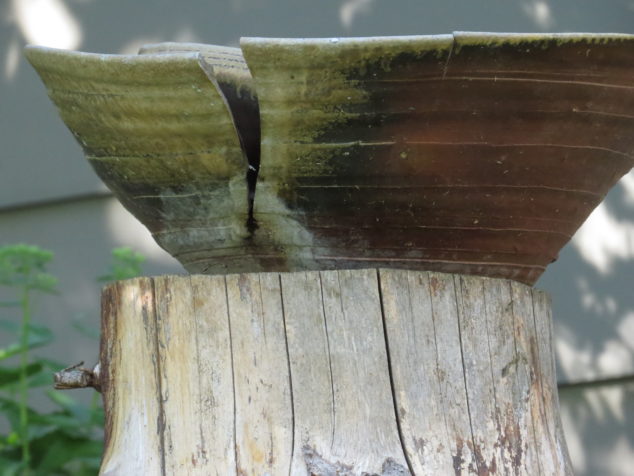

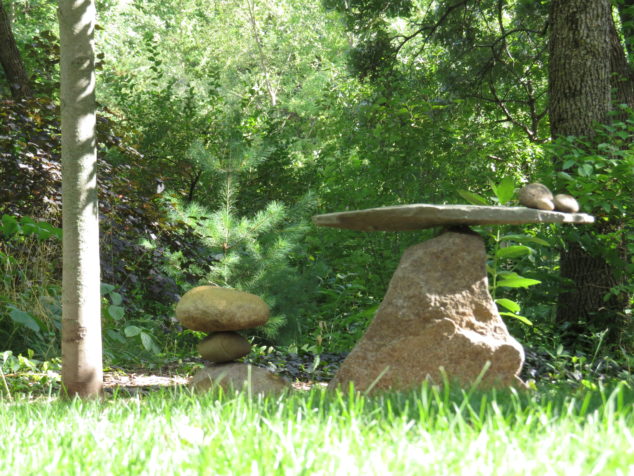

When do you feel grounded? How does one get to that ‘down-to-earth’ feeling? Luther Standing Bear, young kids, animals, well-being researchers, and yoga instructors know that you can literally just drop down to the earth. When I feel tired, achy and beat-up, like the weight of the world is on my shoulders, I like to lie down in the grass on my stomach, usually with a Black Lab dog named Tamba by my side. I am never too much or not enough for Mother Earth. I am just another one of her precious creatures. My body feels supported; I feel the warmth of the sun and the cool of the shade. My heartbeat becomes the heartbeat of the Earth, and with that awareness comes a calming, a grounding, and an appreciation for the life-giving forces inherent in Mother Earth and in each of us.
A Bog Blog
Has your mind, body, or spirit ever been stuck in a bog? Twenty years after graduating from college I returned to that same college with a husband, three kids, and a desire to learn. I took a molecular biology class in one of my first semesters of graduate school that amazed and inspired me with the information that had been discovered about DNA in the twenty years since I had taken science courses. One of the most mind-bog-gling things I needed to learn was PCR or polymerase chain reaction, a laboratory technique that multiplies thousands to millions of copies of a segment of DNA or RNA. This technique was so foreign to me that I just couldn’t wrap my head around the concept! My mind was in a bog of old information that couldn’t process the new information because of how radically different it was. It took months of reading, study, labs, talks with my professor, and plenty of frustration before I was finally able to grasp it. I went on to do a special topics class with that professor using PCR and fluorescent tags, and my understanding and appreciation for the technique grew and became routine.
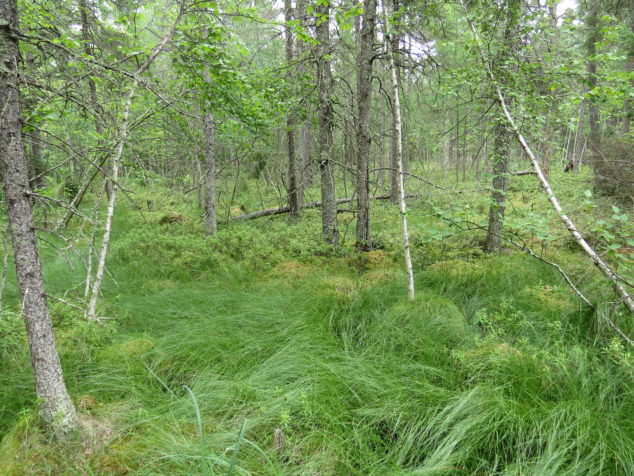
In our trip to Mille Lacs Kathio State Park, we hiked a short trail behind the Interpretive Center called the “Touch the Earth” trail. We were equipped with a pamphlet that explained various trees and vegetation along the trail, most of which were very familiar to us. And then we came to site #7—“You are entering an unusual and fragile plant community known as a bog. There are trees in this area, so it is technically called a bog forest.”
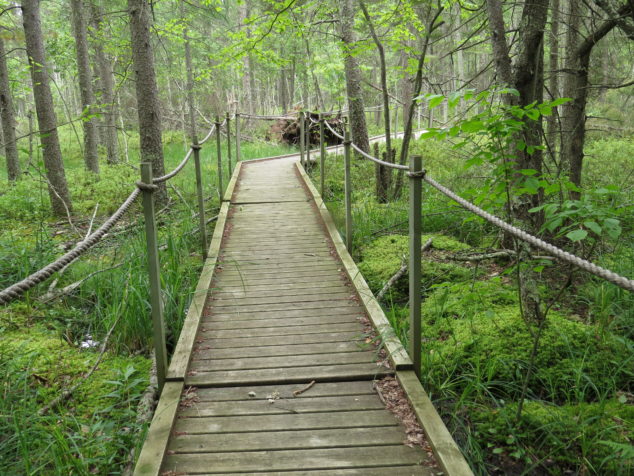
The boardwalk was constructed because the ground surface of this area is covered with moss with a wet area below it and could easily be damaged by people walking on it—damage that would take years to regenerate. It was like walking into another world! A tree had fallen and exposed the layer of water underneath the shallow ‘ground’ of sphagnum moss.
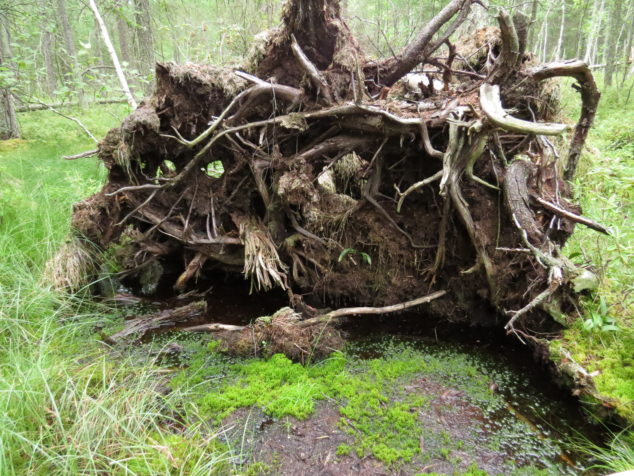
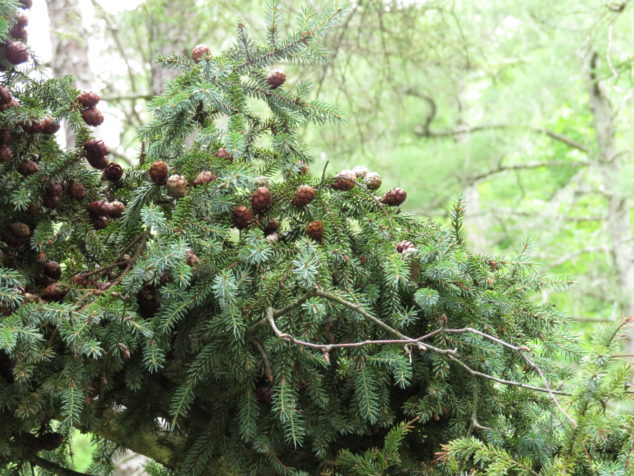
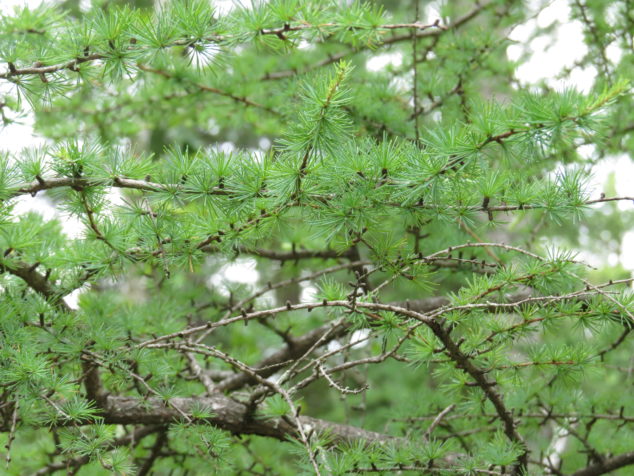
The trees in the bog forest are mainly Tamarack and Black Spruce with a number of young Birch trees. Birch trees don’t survive long in the bog—their roots grow downward, suitable for other forest soil, but they cannot support a taller tree in the floating soil of the bog. The wind blows them over. Black Spruce and Tamarack trees send out many horizontal roots that keep them more stable in the bog conditions.
Black spruce have scaly bark, short needles, and small rounded cones.
Tamarack or Eastern Larch are deciduous conifers—they turn a brilliant yellow in the fall then drop their needles for the winter. Tamarack is the Algonquian name for the tree, meaning ‘wood used for snowshoes,’ thus describing the tough and flexible characteristics of the wood. Tamaracks are very cold tolerant, often live in boggy areas, and have dense clusters of needles on woody spurs.
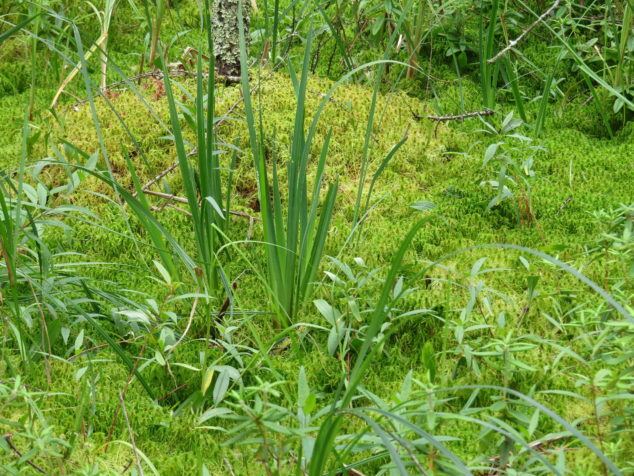
Long ago the Mille Lacs area had a higher water level, and this bog was a small lake. When water levels dropped, grass-like sedges grew in the shallow lake eventually making a mat of dead plant material where sphagnum moss grew. This mat of sedge and moss becomes a slowly decaying peat, a cold, acidic, and oxygen-poor environment that is only compatible for certain plants. One of the small shrubs that grows here is Labrador Tea, an evergreen Rhododendron.
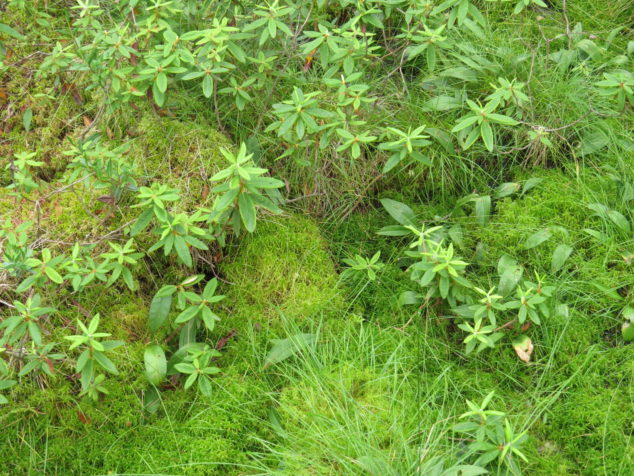
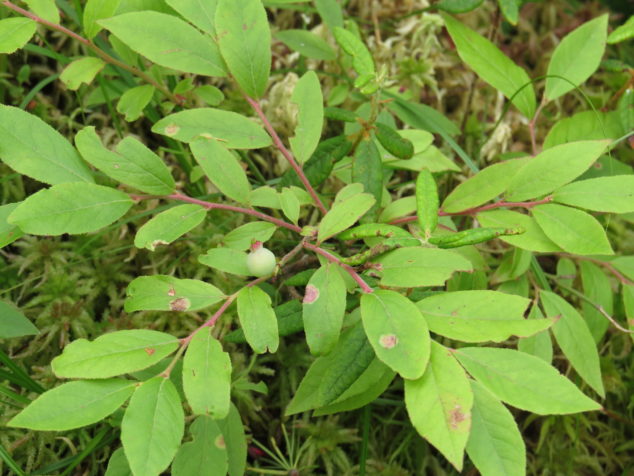
Blueberries also grow in the acidic soil, along with Bog Laurel, Leatherleaf, and Pink Lady’s Slippers, all of which bloom in April and June.
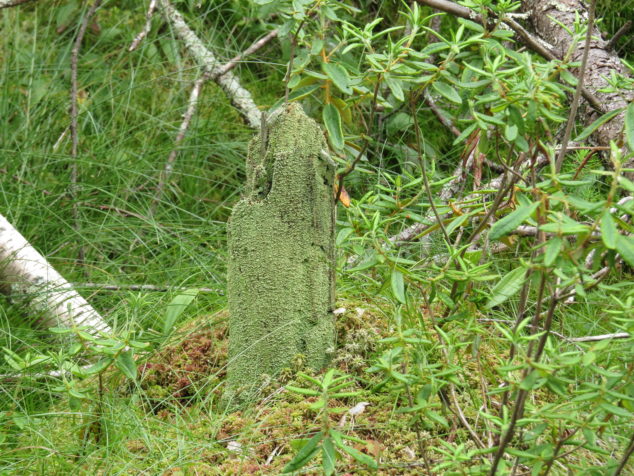
The unusual, almost eerie landscape of the bog is beautiful in its uniqueness. Moss, lichens, roots, and fallen trees create the floating ground above the tannin-stained dark water. It’s a graveyard of sorts of slowly decaying plant material that nourishes and sustains the next generation of bog-tolerant flora.
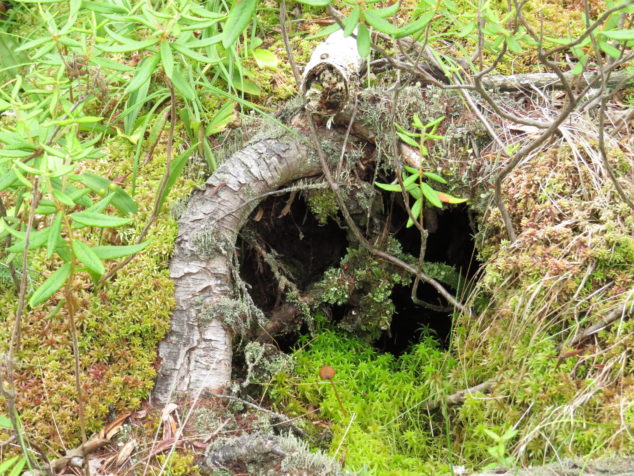
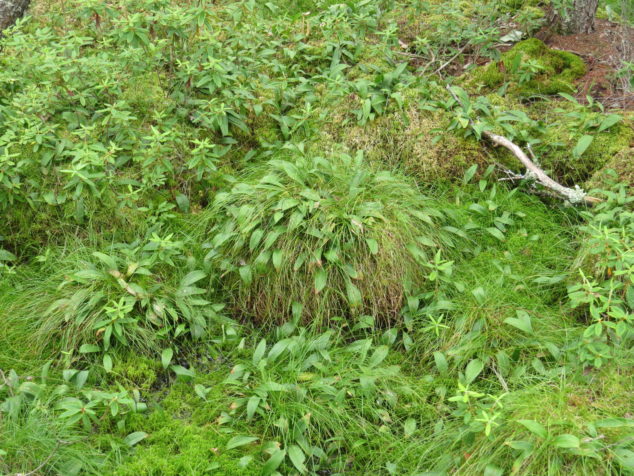
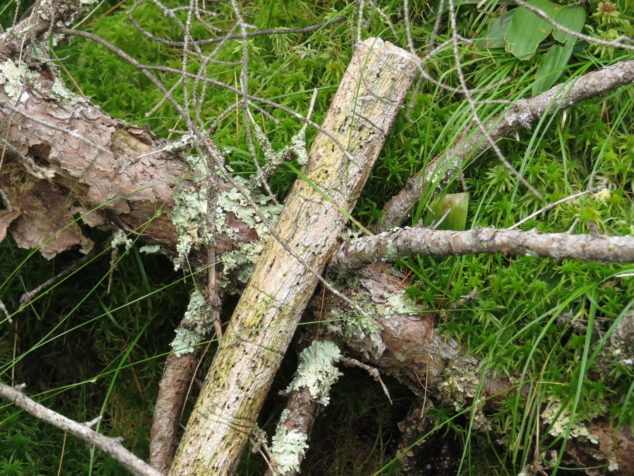
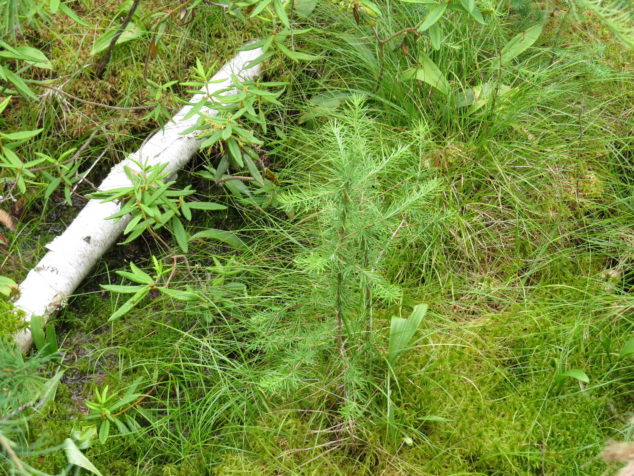
Life in the bog, the mire, the quagmire…I’ve been there in mind, body, and spirit at various times in my life. It’s when you can’t grasp a new way of thinking or doing things, try as you may. It’s when you are so burdened with pain or fatigue that all you can do is slowly lift your feet in the next step, pulling each foot out of the muck as it tries to suck you back in, willing yourself forward as time slows to a sloth’s crawl. It’s when your spirit feels so fragile, so exposed that normal life can easily damage it, when stalwart ideals are no longer stable and topple over in the wind of change. It’s when your heart is broken, and you cross a bridge into another world that you never, ever wanted to go to. And then what?! Well, you stay there for a while. The changing quality of time actually becomes your friend as it forces you to examine your inner ecosystem. You start to put out horizontal roots of awareness, courage, strength, and integrity that stabilize you—you become more tough and flexible. You begin to notice the ‘blueberries’—not only the things that sustain you, but those that are really good for you. Eventually, with God’s grace and days, months, or years of time, your mind, body, spirit, and heart regenerate. You realize you are no longer in the quagmire, and you can finally see the full beauty of the bog.
What Does Home Look Like to You?
What does home look like to you? How does it feel? How many generations of your family have lived in the place you call home or in the place where your soul feels at home? What is the history of your family? Is your home tied to the land? Or is home about the people you are with at any given place or time?
We visited Mille Lacs Kathio State Park last weekend—over 10,000 acres near the mammoth Mille Lacs Lake. The park is a National Historic Landmark District. The early French explorer known as Duluth was the first European to accurately record a visit to this area in 1679. He found permanent established villages of the greater Dakota nation band known as the Mdewakanon who lived near Mdewakan, the Spiritual or Sacred Lake, now known as Mille Lacs. This area known as Kathio has been home to the Dakota and later to the Ojibwe people for over 9,000 years. (Stone tools and spear points were found at a site that was radiocarbon tested.) 9,000 years—how many generations of Dakota and Ojibwe people have lived here?! It has been the site for archaeological digs for over a century with 30 separate sites identified thus far. It was the perfect place to call home with forests, lakes, rivers, plentiful food sources and other natural resources.
We began our day by climbing the observation tower to get a bird’s eye view of the park and surrounding lakes.
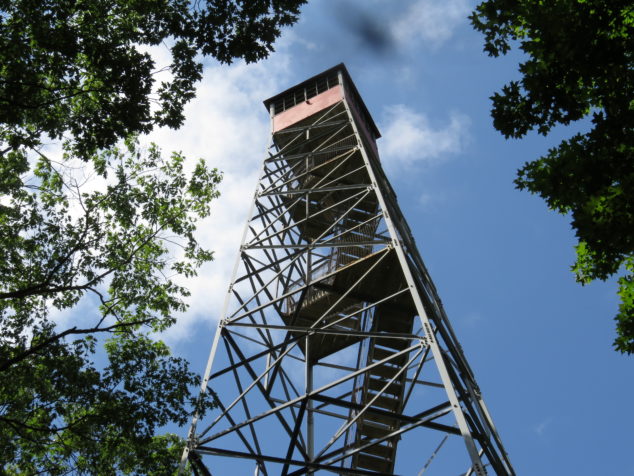
Loggers removed most of the red and white pine forest in the mid 1800’s, and now most of the trees are oaks, maples, aspen, and birch.
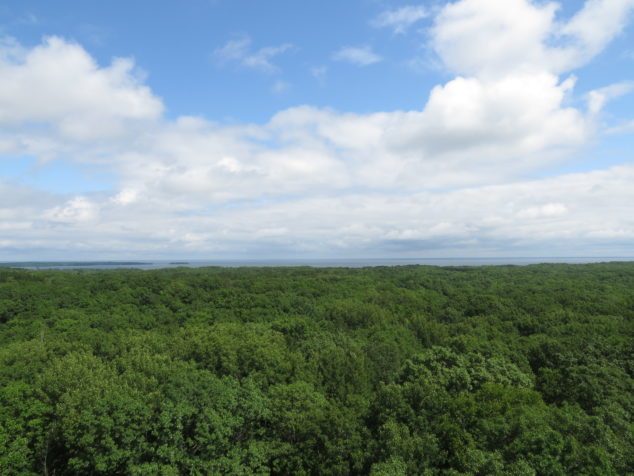
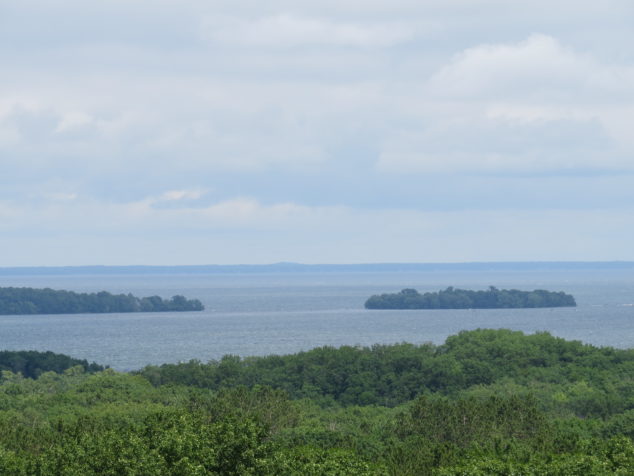
Three large lakes connected by the Rum River could be seen from the tower, the largest being Mille Lacs Lake.
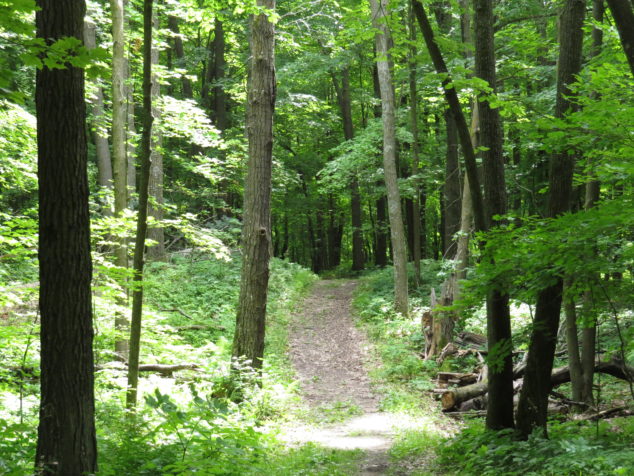
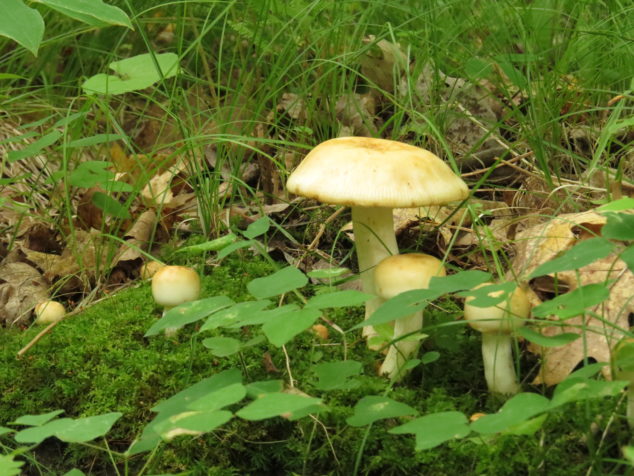
It was a beautiful day for hiking—not too hot or buggy. We saw interesting fungi, five-foot-tall ferns, and delicate wildflowers.
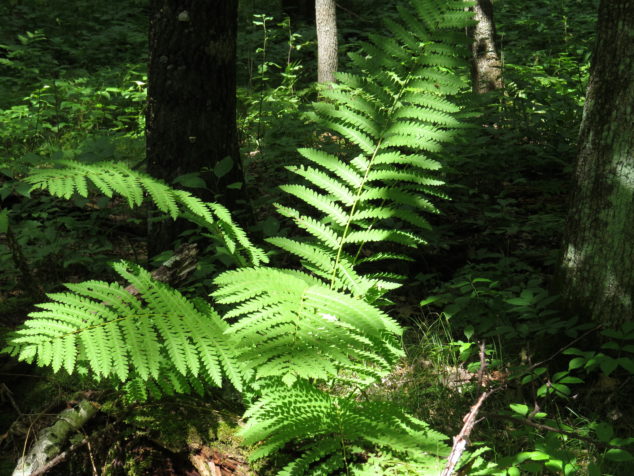
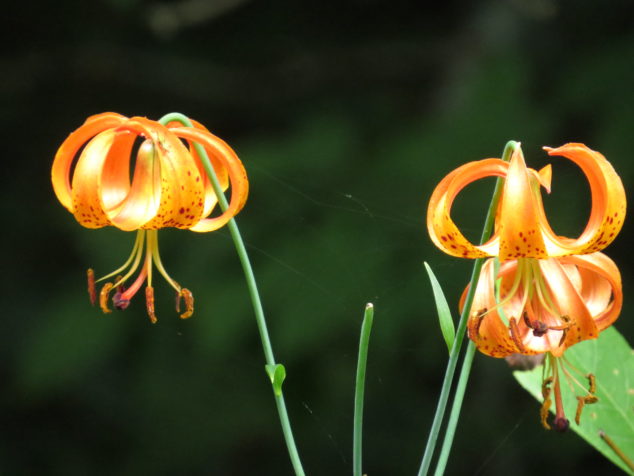
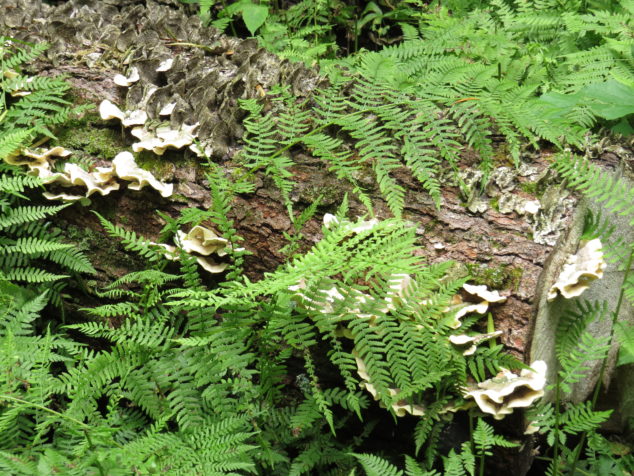
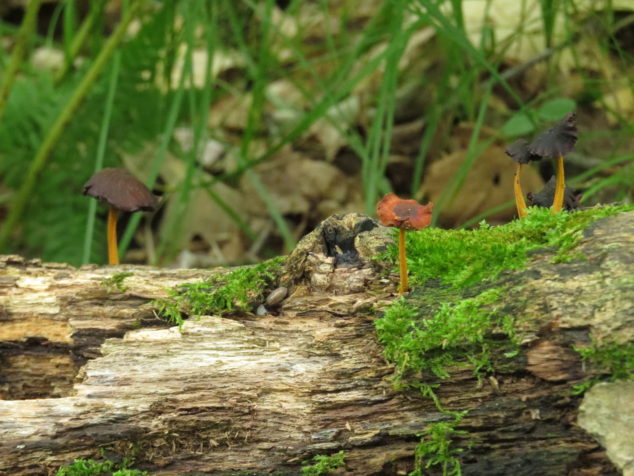
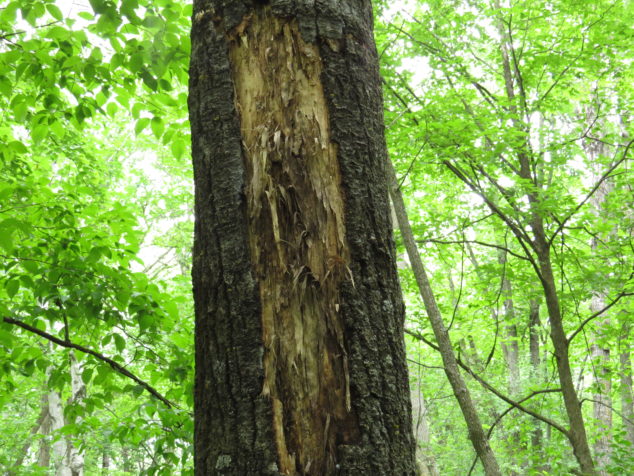
While driving through the park in all its wildness, I commented to Chris that it looks like a good home for bears, thinking we weren’t in bear territory. But when we walked through the interpretive center, one of the displays explained that indeed black bears live in the park! Then we came across this tree on one of the hiking trails—looks like bear activity to me!
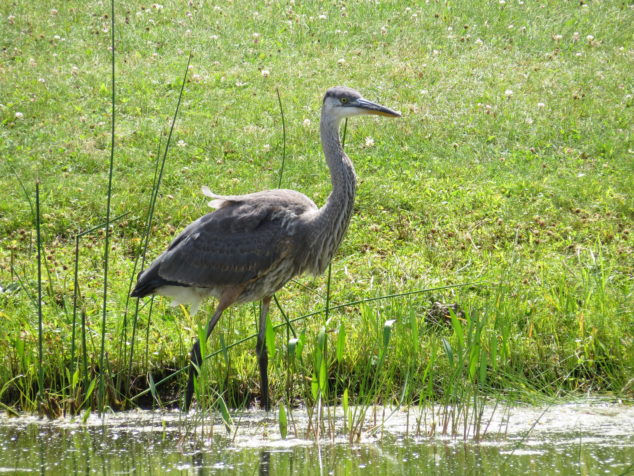
The swimming beach at the picnic area was a man-made pool not far from the banks of the Rum River. The only one wading in it was a Great Blue Heron!
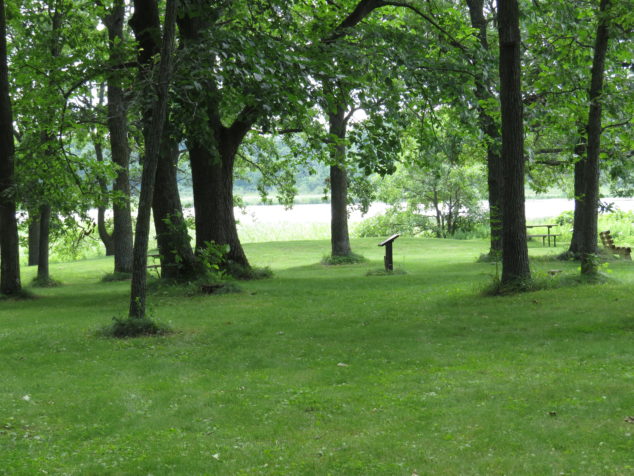
In 1965, Leland Cooper of Hamline Universary was sent to survey areas of Mille Lacs Kathio State Park. The site that was later named after him was excavated a year later by Elden Johnson of the University of Minnesota. The Cooper site showed that the ancient Native people lived there from about 500 to the 1700’s. Summer and winter homes, a log pallisade wall, and ricing pits were discovered along with arrow points, stone tools, pottery, and trade goods, including glass beads and Jesuit rings–metal finger rings that French missionaries of the late 1600’s gave to the villagers. This is what the Cooper site looks like today:
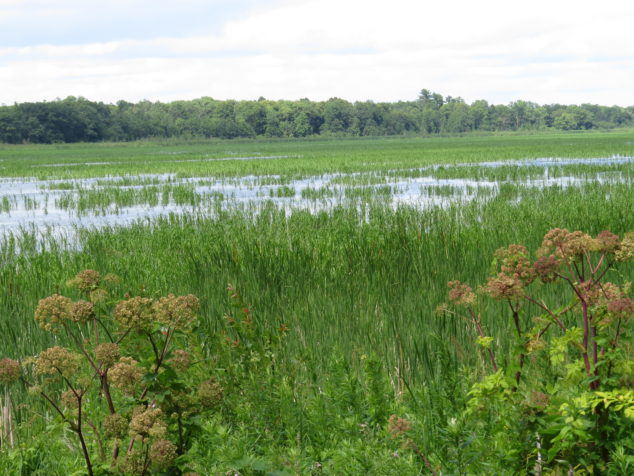
Ogechie Lake is a long, narrow, shallow lake that for thousands of years has produced wild rice for waterfowl and the people who made their home along its shores. In the mid 1950’s a dam was built at the south end of the lake to keep the water levels high in Mille Lacs Lake for fishermen. This basically flooded the Ogechie rice crop for decades with little to no production. Two years ago, a new, lower dam was built, and the wild rice or manoomin is coming back so the present day Ojibwe can once again harvest the ancient food.
The land my grandparents called home in South Dakota has been in the family for three and four generations now—it seems like such a long time. But consider the 360 or more generations of Dakota and Ojibwe who have called the Mille Lacs Kathio region home! Home to me is the prairie, rolling hills of pasture, sloughs full of geese, memories of my family. But there is also a connection to Scandinavia where all my ‘native’ ancestors lived. Home to the Ojibwe of Mille Lacs is ‘thousands of lakes’ with fish and wild rice, forests of hard woods and conifers, wild animals and birds, traditions and stories of their ancestors. When we look from a bird’s eye view at our own lives in the long history of our ancestors, what do we see? Were there huge changes to where or what home was? If we are the descendants of immigrants, refugees, or slaves, that would be true. What is the ‘river’ that runs through all those generations, connecting them and us? How do we wade through new waters to make our home? We each have our own definition of what home looks like to us, but this I know: The land matters. History matters. People matter.
A Return to Balance
It was a week for the emotional highs and lows record book. Aaron finished the stone patio outside our screened-in porch, and we had our first guests and first fire in the fire ring. A new marriage began. Cancer took a life. Progress was made to honor my Dad’s life and passing. There was a fight using old wounds as swords inflicting new wounds. A baby was born.
It was a week of highs and lows in Nature’s world also. The pinnacle month of summer brings a great abundance of flowers fit for wedding bouquets, table decorations, or just panoramic beauty. But the weather was dry—the grass was turning brown, the rains were missing us, and Chris was busy running the sprinklers.
Last summer our sun garden was dominated by Rudbeckia, but this year is the Year of the Purple Coneflower!
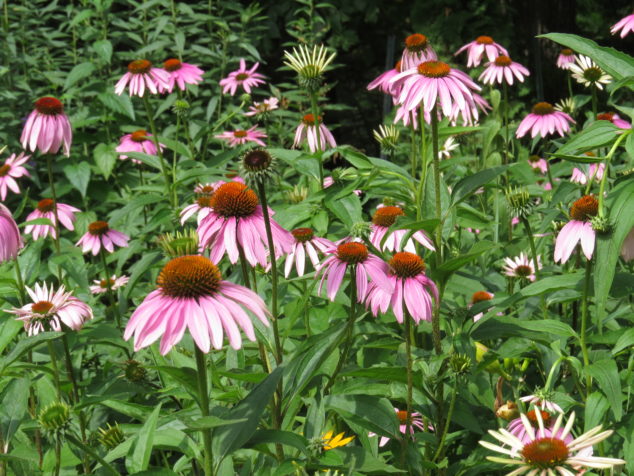
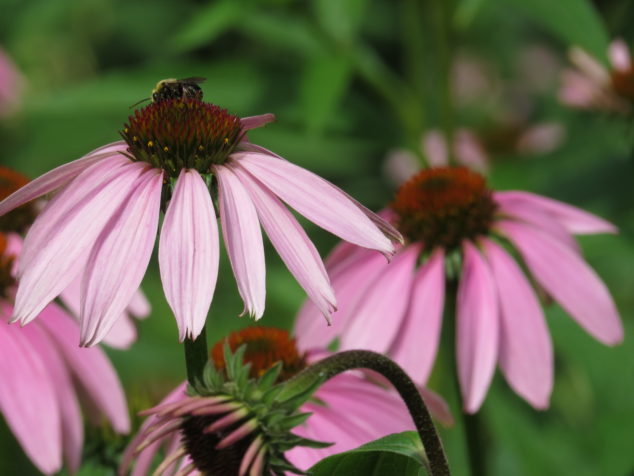
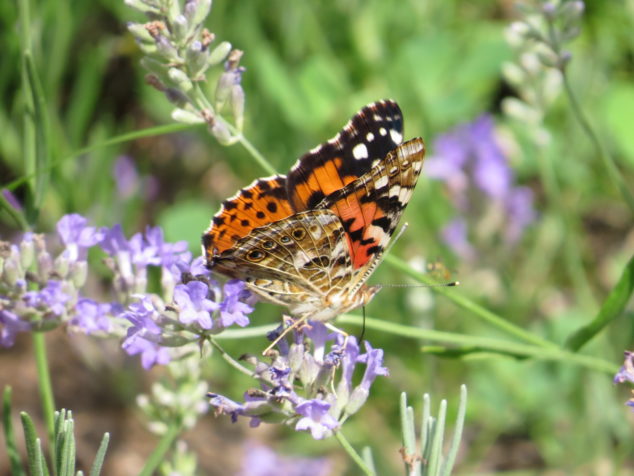
Fragrant Lavender flowers attracted butterflies and bees. Hummingbirds are also seen almost every day when the Hostas are in bloom.
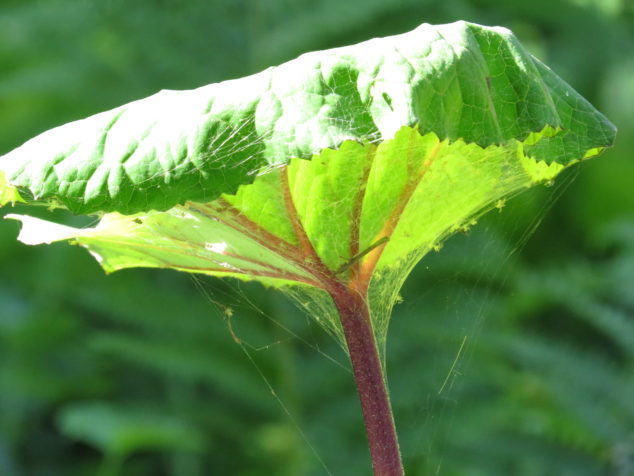
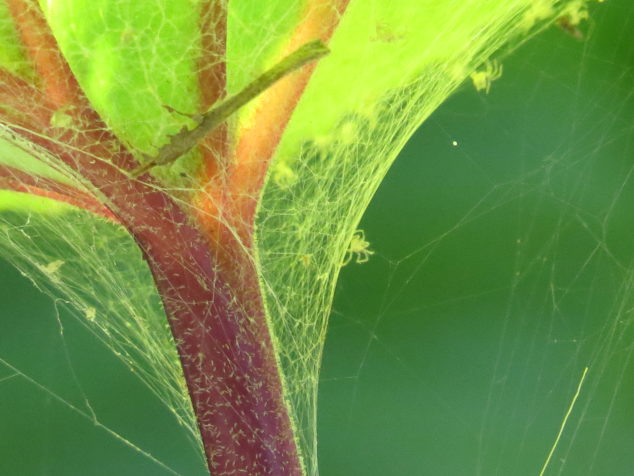
The top leaf of the Ligularia, a plant that suffers here without plenty of water, is enveloped with a spider’s web and nest for the young ones. New birth on a tiny, yet prolific scale.
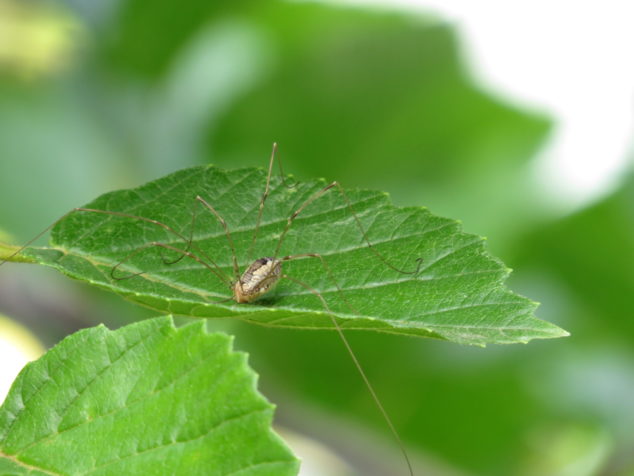
Daddy Longlegs was resting on a leaf hammock, renewing his energy for the continued search for food.
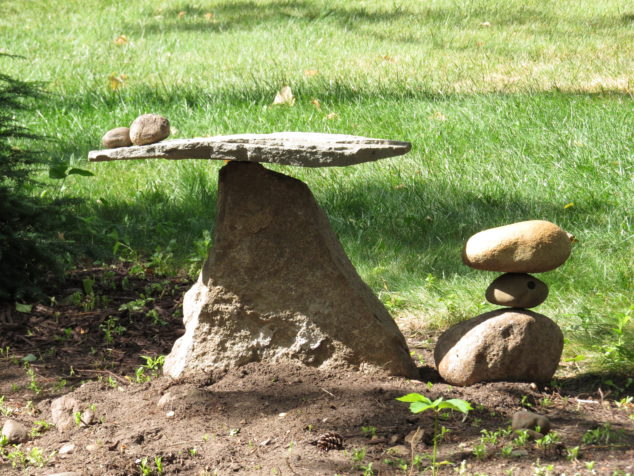
Aaron made a balanced rock sculpture by the path at the edge of the yard. This will be the location of a new bed of Eastern Blue Star after Chris dug out an invasive white-flowering plant that served us well for a while.
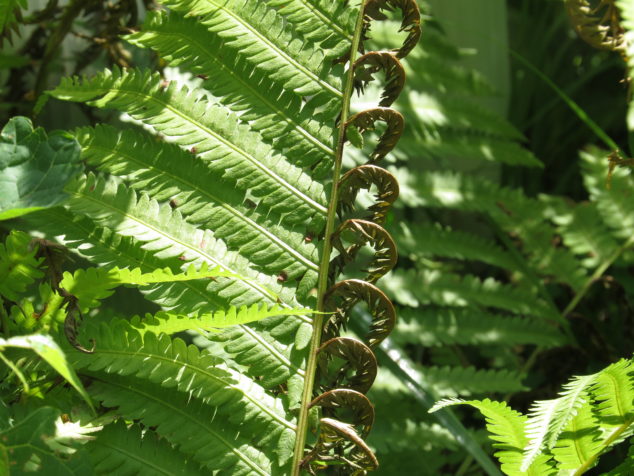
The heat and dryness has taken a toll on some of the ferns, with parts of fronds or whole fronds drying up and turning brown—Nature’s self-pruning.
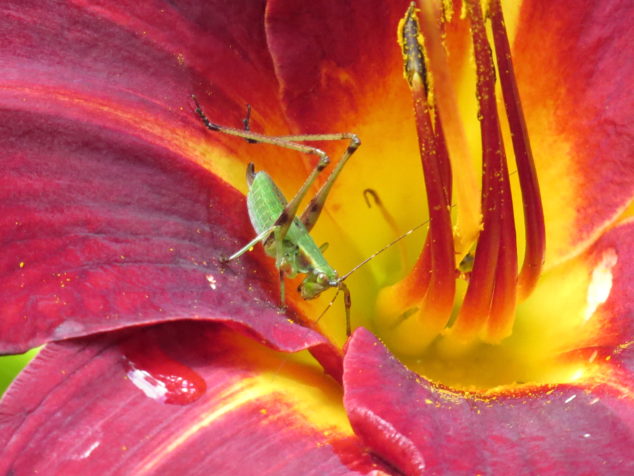
The Daylilies are in their full glory; this one is providing a rest stop for a Grasshopper.
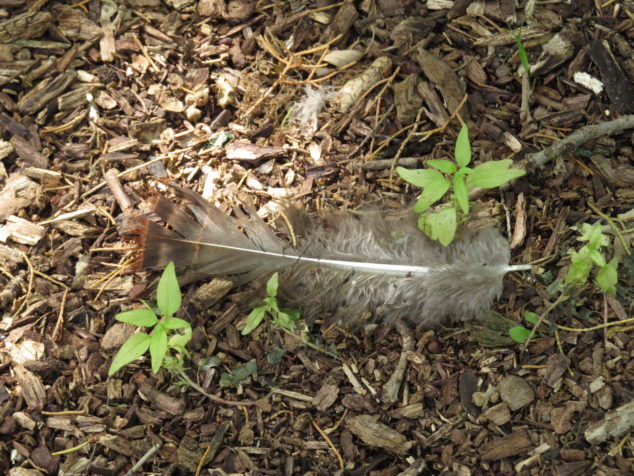
The mulched path through our woods is a favorite trail for the turkeys as they browse for food. We don’t usually see them, but this time one left behind a part of herself.
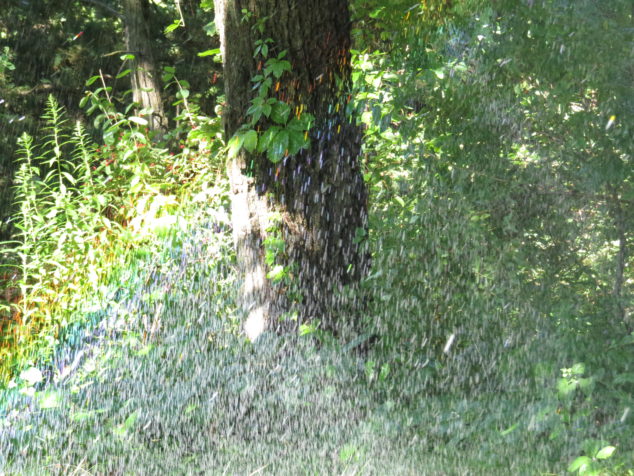
With all the watering in the dry and sunshine, every once in a while, there’s a rainbow.
Mother Nature has a way of providing balance, of bringing things back to homeostasis, of allowing rest and renewal, then energy and growth. We are made the same way. Every moment of every day our bodies are regulating temperature, minerals, hormones, water, and blood sugar to bring us back to homeostasis. It truly is a miracle. So what happens after days, weeks, or months of being enveloped in a web of worry or suffering from lack of love or realizing that an invasive presence that once served us well no longer does? The answer is sometimes harsh in the process of saving the whole. Parts of ourselves dry up, a sort of self-pruning in order to make way for eventual new growth. We lose parts of ourselves along the journey, often without us knowing but other times with hard, intentional work. And hopefully the parts we lose are the old wounds that persist in hurting ourselves and others. Then we add rest, creativity, good food and fun, self-care and self-love so we’re no longer beating ourselves up and running on empty. And ever-so-gradually, we return to homeostasis, to balance, to ourselves, and to Love.
Frozen
Those things that make our lives easier and better and yeah, we end up taking them for granted—electricity, hot running water, grocery store food, heat, ac, internet, working computers. This last month has been a little bumpy on the computer front with failing hard-drives, changing hard-drives, failing to get that to work, a seriously messed-up old laptop, and then a frozen NorthStarNature Facebook page—as in the cover photo would load, but I couldn’t scroll down or do anything. It was stuck, frozen, unable to move or do what it was supposed to do.
Chris and I were sitting at the table in late May when we heard a characteristic thump on the living room window, although this time it was a double thump. We knew what that meant—another bird, or in this case, two, had hit the window. We went to see if they had survived the reflecting encounter.
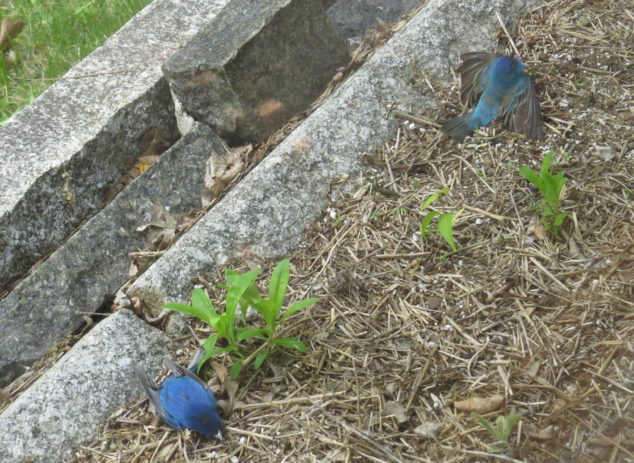
Stunned. Shocked. Dead?
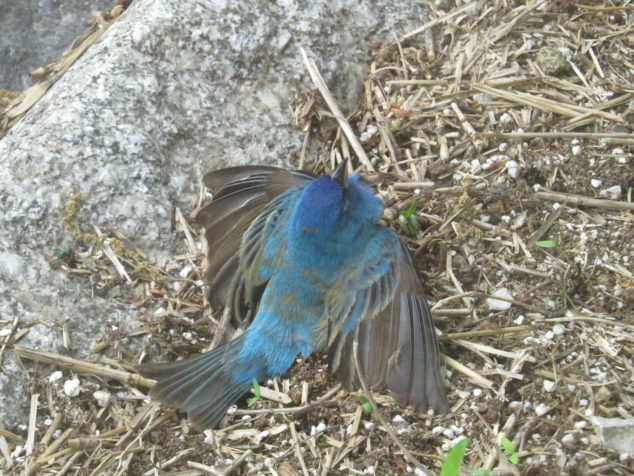
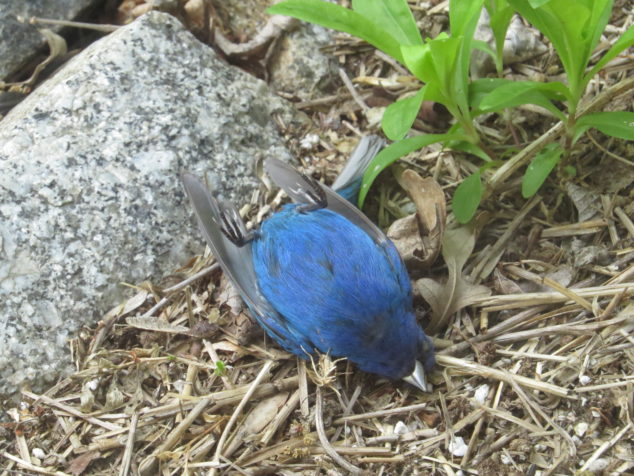
When I went outside a few minutes later to see if they could be revived, the upright one flew away. Good. I turned the other one over to get his feet under him and gently stroked his exquisite blue feathers. His eyes were still closed, his little bird body was quiet except for an occasional quiver, and I could see that it was taking all his energy, his internal wherewithal, to regain his senses. These things take time. He eventually flew a little ways and needed more time for re-orienting. I knew he would be okay.
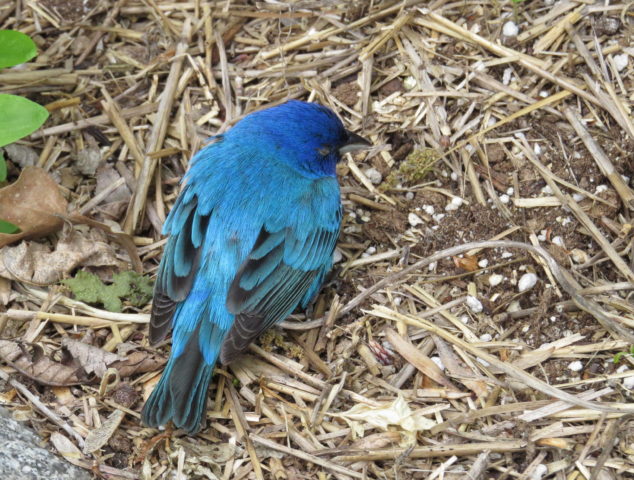
Indigo Buntings are amazing little birds; not only are the males beautiful in their brilliant blue coats, they also migrate at night using the stars for guidance! What!? (They researched that using captive Buntings in a planetarium and under a natural sky.) Breeding males often get into fights locking feet with one another and falling to the ground. They also defend their territory by approaching the other with slow butterfly-like display flight. Perhaps one of these behaviors contributed to their tandem window slam.
My frozen Facebook page was resolved in the last couple of days by the brilliant computer skills of some unknown FB technician after numerous communications with me and them—words to let them know there was a problem, questions from them about the details of what was happening on my end, answers to those questions to the best of my no-computer-skills ability, problem-solving work on their end, patience on mine. The frozen Indigo Buntings, the heart-beating, food-finding, mate-seeking animals that suffered a collision, were in shock. Their bodies shut down from the trauma. The one who flew away could have been younger or stronger, more able to withstand and bounce back from the impact. The other may have been flying faster, may have suffered previous traumas or head injuries, or in some way been more sensitive to the traumatic impact on his body—more time, more compassionate help, more tries were needed to regain his orientation and his place in the world. And then, there is us. Humans, like other animals, are physiologically programmed to respond to threats, danger, and trauma with flight, fight, and/or freeze, depending on the situation. It happens without us thinking about it or making a cognitive decision. Our bodies automatically respond by shutting down digestion, increasing heart rate, increasing blood flow to the muscles, sending out adrenaline and other hormones in order to get us ready for running away or fighting. But if neither of those choices are possible, or if extreme physical or emotional trauma occurs, we freeze. Other physiological signals are sent out, and our bodies and parts of our brain shut down, and we are unable to move or do what we’re supposed to do. We are stunned, shocked, feeling like we are going to die. Some of you may know what I’m talking about. This is when it is imperative to have brilliant, compassionate helpers, when time takes on a different dimension and purpose, when everything we take for granted is tossed up in the air and we have no idea what will land in our possession again. Our interior world becomes the most important thing, as the external world turns dark and fades away…. We look to the stars for guidance, we follow our own North Star, we breathe, we quiver, we heal. It takes time, it takes internal wherewithal, courage, and Love, and it takes a community of help-ers, pray-ers, and love-ers in order for us to fly again.
Gleanings from June—How the Time has Flewn
How did it get so late so soon? It’s night before it’s afternoon. December is here before it’s June. My goodness how the time has flewn. How did it get so late so soon? –Dr. Seuss
This is how I feel about the month of June. It’s one of my favorite months, made all the better this year by the fact that we spent the beginning of the month in Kansas City with our daughter Anna and the other Brake relatives, had our daughter Emily home for vacation and work days, and had SD relatives, Aaron, friends, Emily and Shawn together for celebration days. How the time has flewn, as Dr. Seuss said!
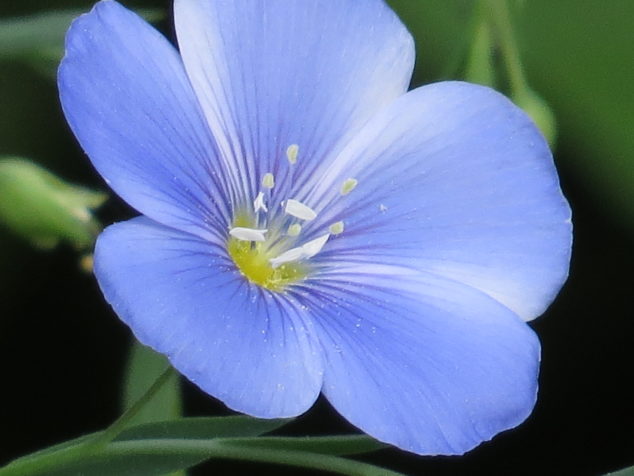
June is the most precious month of the summer—here in Minnesota the temperature is summer perfect–warm days and still-cool nights, few bugs and mosquitoes impede outdoor work and fun, and there is plenty of sunshine with abundant rain to keep things growing, blooming, and thriving. Sooo good! June is when my favorite Perennial Blue Flax blooms—so very lovely. Do we take the time to appreciate the incredible beauty of a single flower?
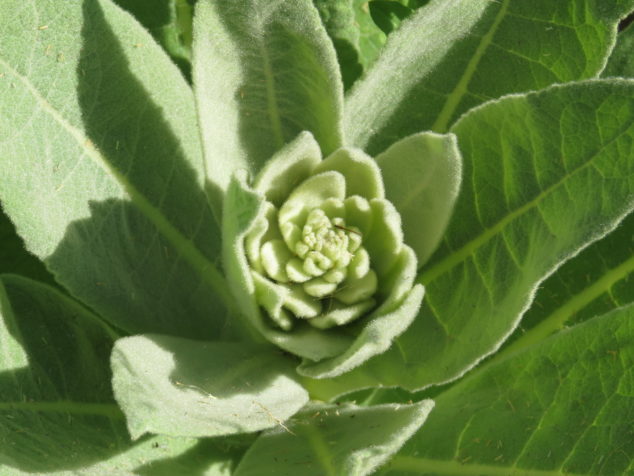
Fuzzy, thick-leaved Mullein unfolds like a rosebud—how do we unfold the many layers of our gifts and talents so we can stand tall with our brilliant display of color?
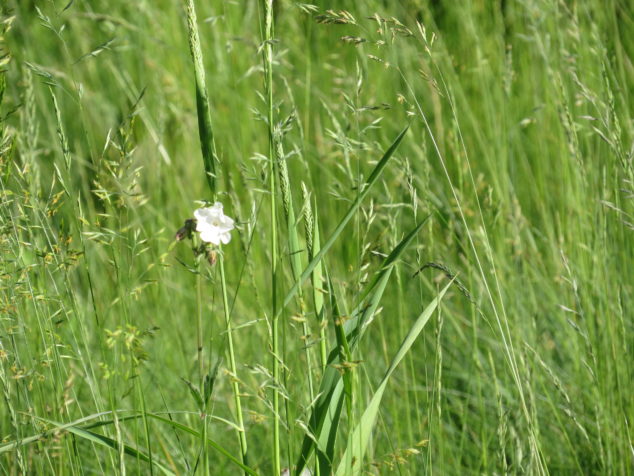
Prairie grasses bloom in June and wave in the wind, while prairie wildflowers begin their complementary display. How do we stand out in the crowd and love and accept the very things that make us unique?
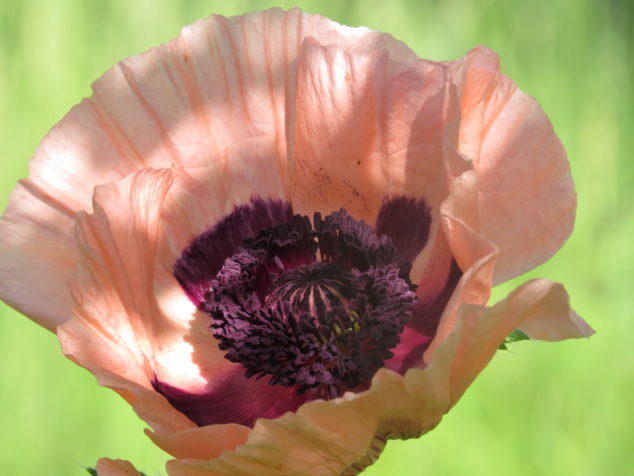
Talk about fleeting time! The exquisite poppy, so delicate yet strong, blooms for such a short time before the crinkly petals fall off, leaving the bulbous seed head. How do we cultivate strength of body, character, mind, and soul?
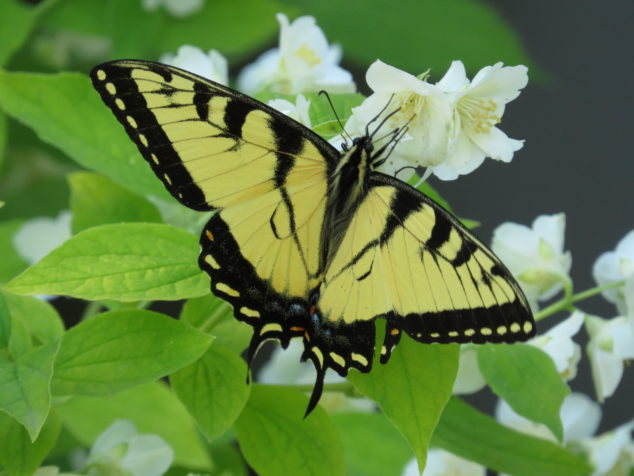
The blooming Mock Orange shrub with its sweet fragrance was a magnet for Swallowtail Butterflies, both yellow and black. How do we gather the sweetness of life and share it with others?
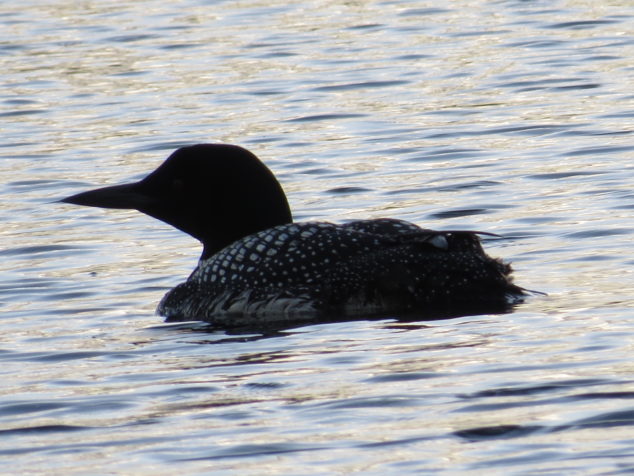
A June evening on the lake with good friends is made even better when we see or hear the resident loons. I believe the ‘bumpy’ feathers towards the tail are hiding a young chick, enabling travel and protection for the offspring. Do we protect and nourish our offspring and all the ‘children of the Lord?’
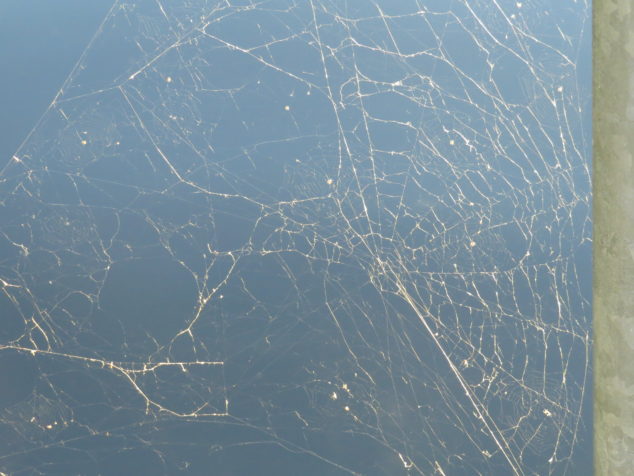
Some ingenious spider built its web on the dock, basically over the water—a construction feat for food and shelter. How do we work to build a safe home and provide food while also maintaining creativity and inventiveness?
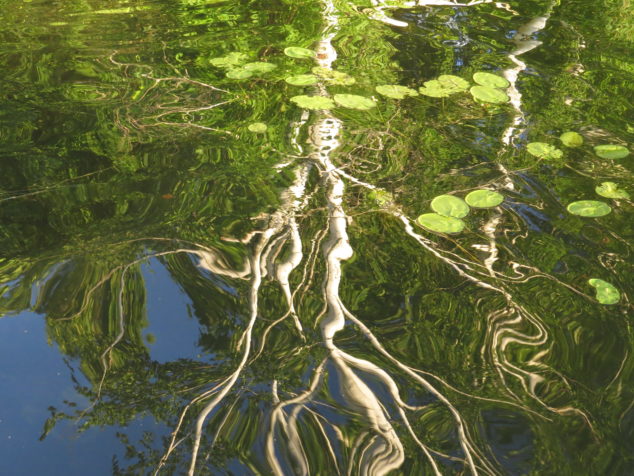
Water, lily pads, greens and blues—this Monet-like work of art is a reflection of a birch tree in the lake! I love it! How do our actions reflect our true inner self? What work of art are we creating?
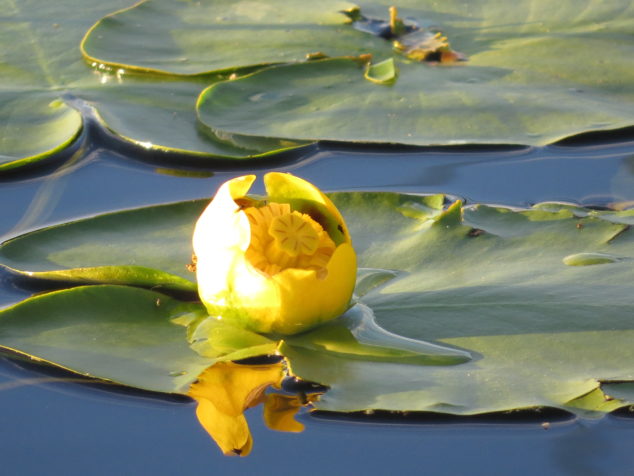
I also love this photograph of a Yellow Pond-lily—the floating leaves, the yellow sphere of flower, the reflection of the blossom, and the spill of water on top of the leaf. How do we keep our heads above water with poise, beauty, and peace?
And finally, June in the Land of 10,000 Lakes—a couple of people and their dog, out on a boat, fishing at sundown. How do we relax in this hurried, harried world? How do we embrace silence and our own thoughts and feelings?

June slipped away far too fast—I wanted to hold it steady, keep it close, prevent it from moving on. I wanted to do the same thing with the time I spent with my kids. Instead, in the moments I was with them, I was intentional about looking into their faces, not only to see their beauty and uniqueness, but to notice the outward reflection of their inner state. Are they happy, at peace, using their gifts and talents? I quietly noticed their strengths of body, character, mind, and soul. I fretted silently that they may have learned some of my qualities of being hard on myself, of not loving myself quite enough. I also confirmed my intention and commitment I had from day one as a parent to protect and nourish them in the best way I could, to show them the sweetness of life, to instill in them a love for God, for Nature, for creating and learning. And here they are—two and a half to three decades later! How I love being in their presence! And here I am—throwing out a line in the peaceful silence of my own thoughts and feelings. “My goodness how the time has flewn.”
Imminent Failure
Warnings are posted for a reason, but sometimes the message is rather cryptic, and one is left wondering the exact meaning of the short notification. I guess it helps when one knows the language and context—which I don’t when it comes to computer talk. “Smart hard drive detects imminent failure.” It doesn’t sound good, no matter the language and context. Imminent and failure are two words that don’t belong together if a person wants to feel good about what’s to come.
What I do feel good about is the week we spent with our oldest daughter Emily and her husband Shawn—no computer needed! It had been three years since they were here for a visit, a year and a half since we saw them in Texas—much too long for a mother not to be in the presence of her child. We went hiking at Charles A. Lindbergh State Park one day this week in Little Falls, Minnesota—570 acres that included the boyhood home of the famous aviator Charles A. Lindbergh, Jr. who completed the first solo nonstop trans-Atlantic flight on May 21, 1927. The family donated the land for a park in 1931 in memory of Charles A. Lindbergh, Sr. who was a lawyer and US Congressman.
Pike Creek runs through the park and meets up with the Mississippi River. Charles Lindbergh, Jr. spent most of his time as a youngster outdoors exploring the woods, creek, and River. He collected rocks, butterflies, feathers, and other natural objects.
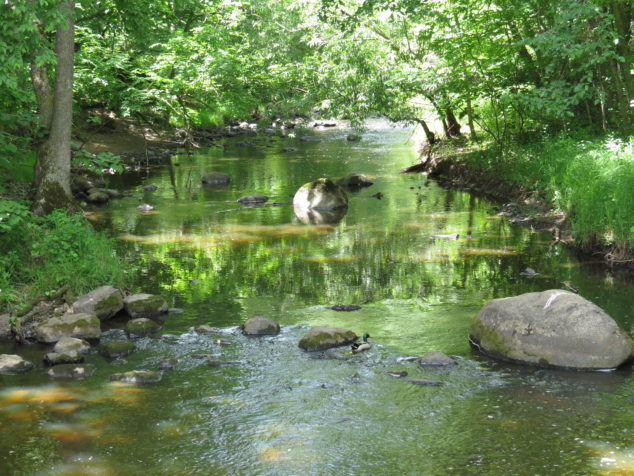
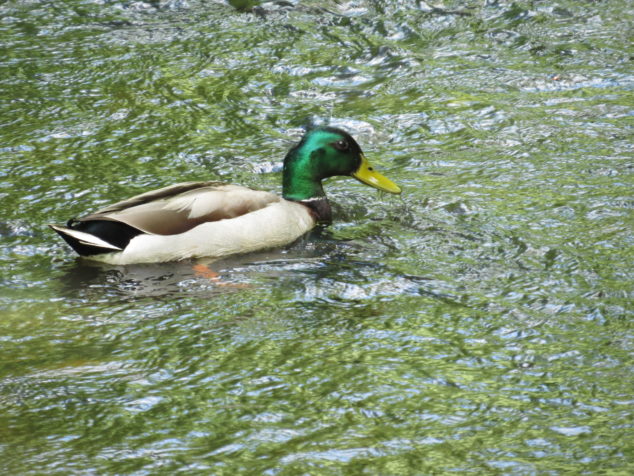
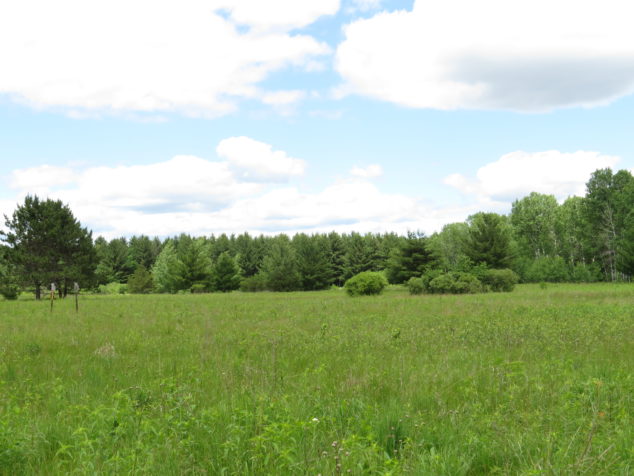
“When I was a child on our Minnesota farm,” Linbergh wrote, ” I spent hours lying on my back in high timothy and redtop…How wonderful it would be, I thought, if I had an airplane…I would ride on the wind and be part of the sky.”
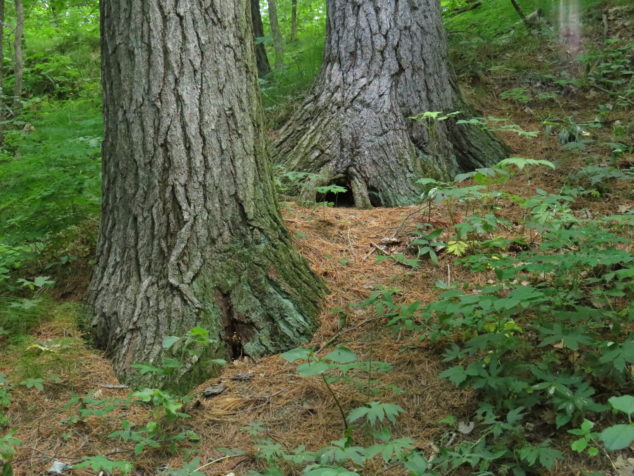
The forested area of the park has many old white and red pines. Imminent failure struck this 280-year-old white pine when it was hit by lightning in 1986 and died the following year.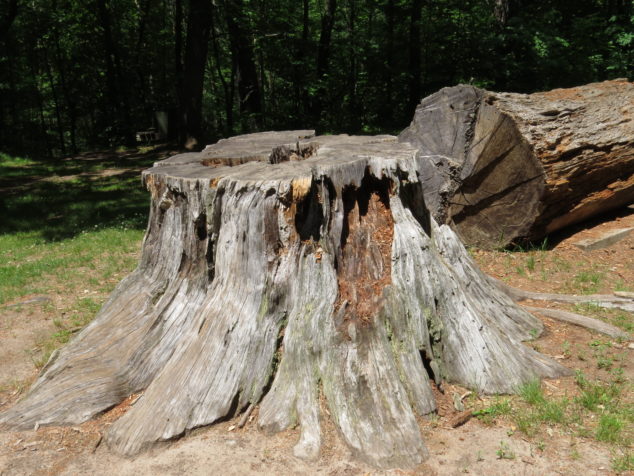
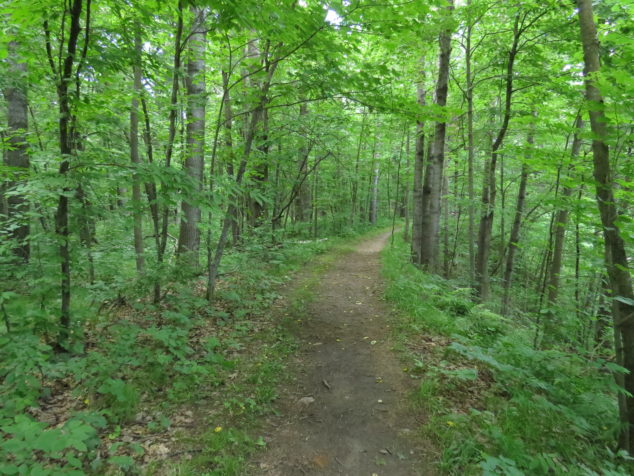
Have you heard of Forest Bathing? Shinrin-yoku or ‘taking in the forest atmosphere’ originated in Japan in the 1980’s for its health benefits. Studies have confirmed that being in the presence of trees lowers cortisol levels, lowers pulse rate and blood pressure, improves immune system function, and increases overall feelings of well-being.
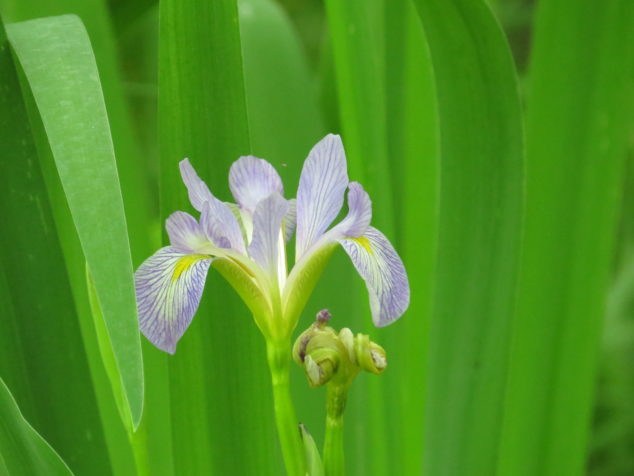
The beauty of flowers like this blue flag iris…
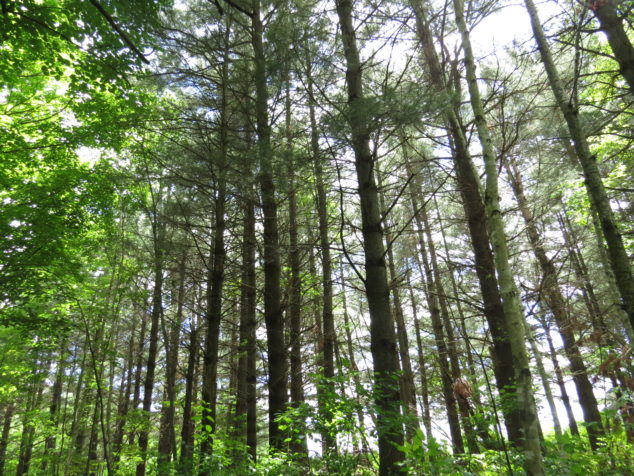
the calming smell of a pine forest…
the intricate essence and relationship of flowers and insects…
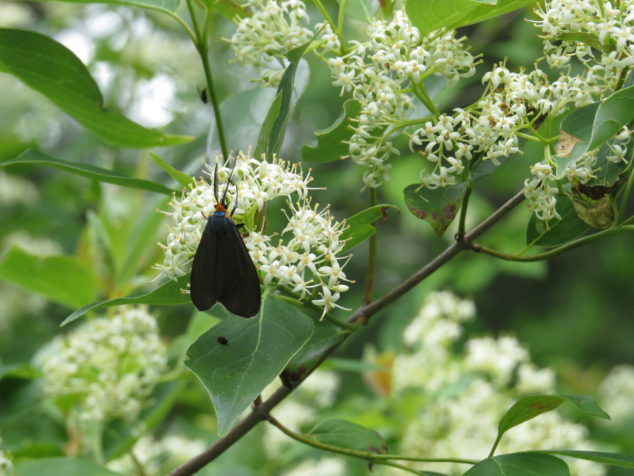
and the unassuming presence of old, stately trees all contribute to the forest atmosphere that calms our bodies and improves our well-being.
At the hydroelectric dam on the Mississippi River not far upstream from where Pike Creek empties into it, there are warning signs and barriers to keep people from imminent danger.

Torrents of rushing, splashing water tumbled from the spillways, hitting rocks, causing chaos, stress, and danger. It’s not hard to interpret these warning signs to stay away when the destructive power of the water is literally hitting you in the face.

I am sure there were many times in Charles Lindbergh’s life when warning signs of imminent failure flashed before his eyes—during his childhood raft-building days floating on the Mississippi, during his barn-storming days, his trans-Atlantic flight, his military flight training and midair collision, Air Mail routes, and combat missions during World War II. Imminent failure also presented itself in 1932 when his 20-month old son was kidnapped from their home, ransomed, and killed. How does one go on after the gruesome loss of a child and years of public attention in the wake of ‘The Crime of the Century?’ What saves us from imminent failure?
Lindbergh and his wife Anne Morrow fled to Europe with their second son in December of 1935—a hiatus from the spotlight and turmoil that had engulfed them after the kidnapping of their son, a time apart from the normal routine of life, a sequestration of the body for the healing of the soul. I’d like to think that his forest days in Minnesota, his riding on the wind and being part of the sky days helped to save him from imminent failure, though his subsequent years of questionable political beliefs and secret double life with three European women and seven children he fathered point to an acting out of destructive wounds. “Life is like a landscape. You live in the midst of it but can describe it only from the vantage point of distance,” wrote Lindbergh. If life is stressing you out, get some distance from it by immersing yourself in a forest, by surrounding yourself with children and loved ones, by exploring trails and collecting memories, and by forgetting about phones, failing hard drives, and imminent failures.
An Invitation from a Hummingbird
I got an invitation from a Hummingbird one morning while working at the kitchen table. These notoriously fast flyers are usually seen zipping from one flower to another, but that morning the female Ruby-throated Hummingbird hovered at the window not five feet from me. I glanced to where the camera was, knowing that if I got up to get it, she would fly away. When she did fly away–after hovering for what seemed like quite a long time–I went back to my work. But it was only for a second, before I accepted her invitation. ‘I bet she went to the Lantana by the front door,’ I thought. I grabbed the camera and saw her sipping nectar from the yellow and pink flowers.
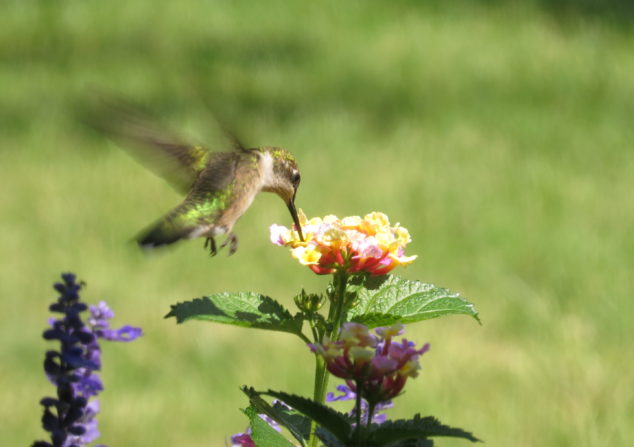
These tiny birds, about 3 inches long with a wingspan of 3 to 4 inches, weigh only 0.1-0.2 ounce. They hover by flapping wings in a figure 8 pattern at 53 wingbeats/second! Like a dragonfly, they can move in six directions and even upside down!
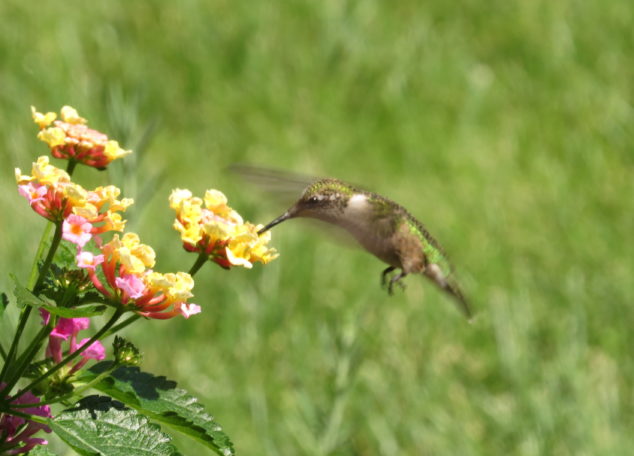
Along with fast wingbeats, Hummingbirds also have rapid heartbeats, fast breathing rates, and high body temperatures. They eat often and in great quantities in order to maintain that metabolism. They prefer nectar from red and orange flowers and eat small insects, pollen, and spider eggs.
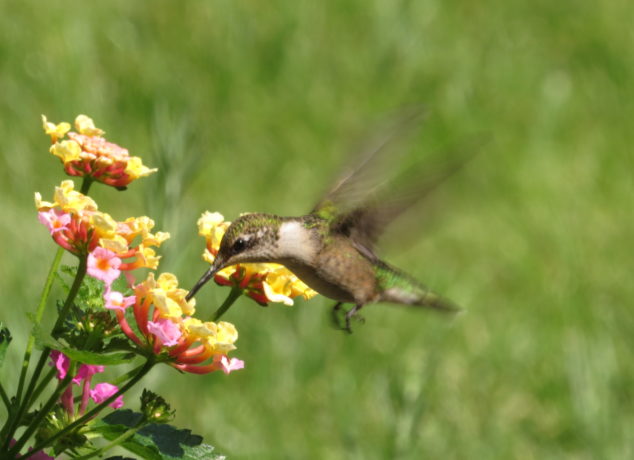
Hummingbirds are very territorial; therefore, they live rather solitary lives. The females and males are only together for courtship and mating. Nests are usually built in deciduous trees 10-40 feet above the ground on the top of a descending branch. The nest is the size of a large thimble and is made from dandelion or thistle down held together with spider silk and sometimes pine resin. The exterior is camouflaged with moss and lichens.
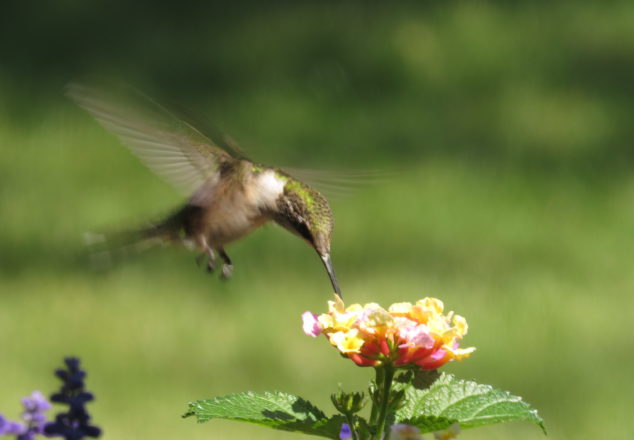
The next day I noticed the Hummingbird was sitting on the Purple Plum tree outside the living room window. She was all fluffed up, and I wondered if Hummingbirds, like Dragonflies, have to periodically sit still to warm up their muscles or cool off.
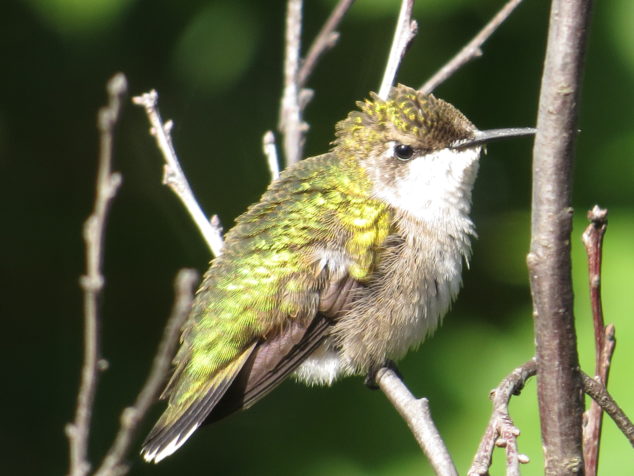
Soon she was gone again in a flurry of wingbeats.
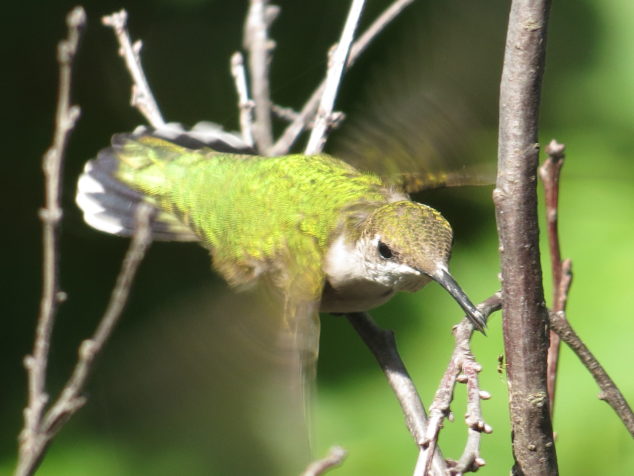
I had seen the iridescent Hummingbird often on various flowers in our garden. She was so fast and fleeting and getting a picture of her seemed impossible. I was grateful for her hovering invitation and her rest time on the tree branch. I was also grateful for the serendipitous timing that allowed me to see her both days!
In our fast and flurrious world, how often do we miss an invitation that comes our way? How many times do we go through our day in solitude, even while surrounded by people? How often are we in constant motion yet not getting much accomplished? Do we long for connection, yet brush people aside and hurry away? My invitation to you is to stop and consider the words ‘How are you?’ Most people utter and answer the question as a greeting. ‘Hi, how are you, fine’ in a passing, fleeting moment of time. When I ask the question, I really want to know. How are you feeling? How is it with your soul? How is life going for you on this particular day? I know that life is busy, but I urge all of us to rest for a minute or two and accept the invitation to connect and be grateful for serendipitous time together.
- « Previous Page
- 1
- …
- 6
- 7
- 8
- 9
- 10
- …
- 14
- Next Page »