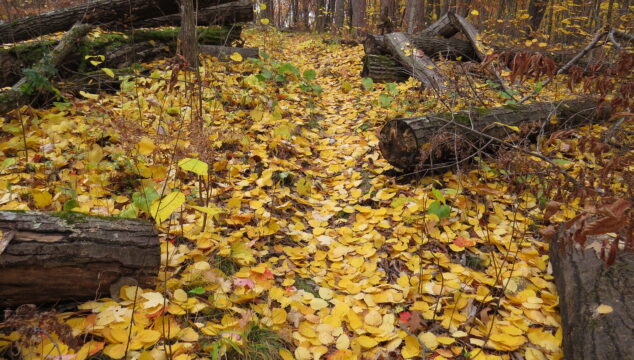
Come walk with me in the peak Autumn beauty of the Northwoods. To say that I love this time of year is an understatement. Most everyone can appreciate the colorful falling leaves---it reveals the 'true self' of a tree when its leaves are no longer producing chlorophyll. Their true colors are revealed, and there is something simple … [Read More...]
The Art of Being Stuck
I don’t know about you, but there have been a number of times in my life when I have been stuck. Not stuck in the mud or snow—though that has happened a couple of times, too—but stuck in my life. To be fair to myself, most of those times the stuckness was only in a certain area of my life while there was movement and growth in other areas—all at the same time. Like one boot sucked down into the mud so far that your foot comes out of it as the rest of your body propels forward, but you falter because you want to save your boot. And you don’t want to take the next step into the muck with only your sock on. Being stuck isn’t a good feeling, and I would venture to guess that no one chooses it. There is a convergence of thought, belief, and circumstances that stop us in our tracks—and keep us there for a while.
Chris and I, after wandering around St. Cloud trying to find the parking area, went hiking on the Beaver Island Trail that follows the Mississippi River south of the University. It is a biking and hiking trail that follows the old railroad path and the area of the River that contains the fifteen or more islands known as Beaver Islands, as named by Zebulon Pike in his expedition up the River in 1805.
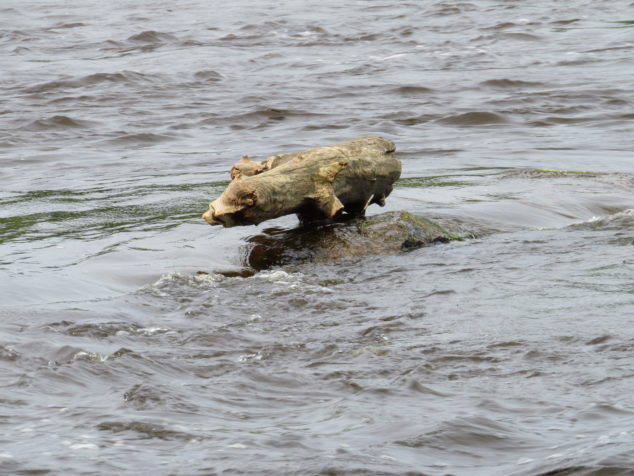
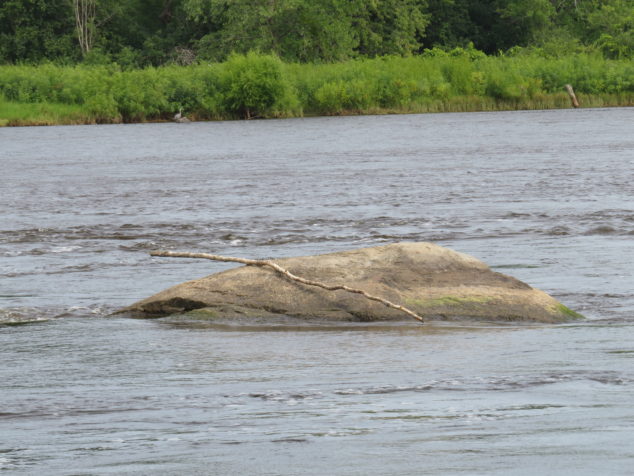
One of the first places where we were able to get close to the River, we saw a log stuck on a rock. The water was rushing around it, and we laughed about how it ended up there. It almost looked like a sculpture of some sort!
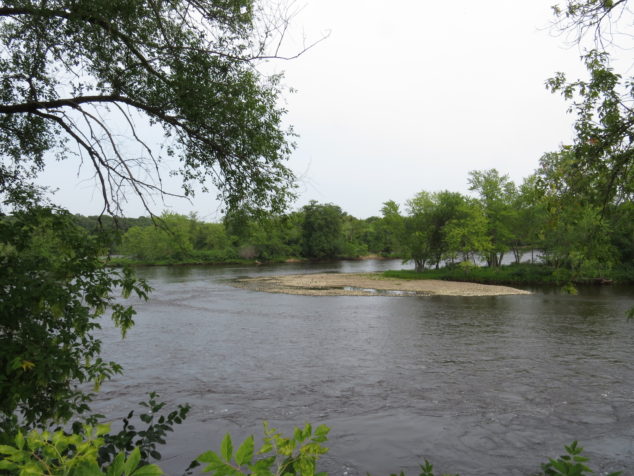
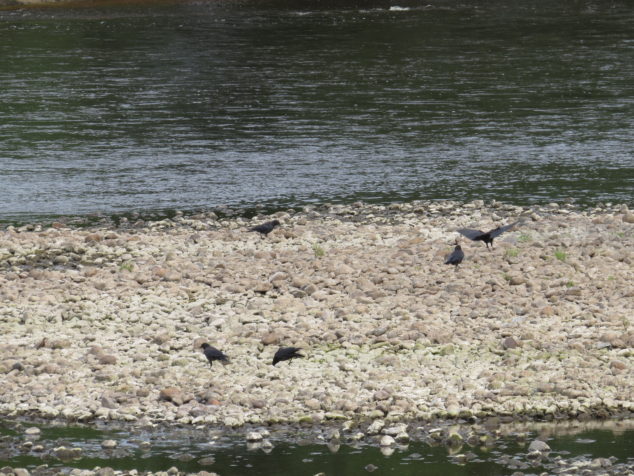
We walked farther to another island with a sandbar of rocks that was populated by crows, not beavers. They were noisy and chippy with one another.
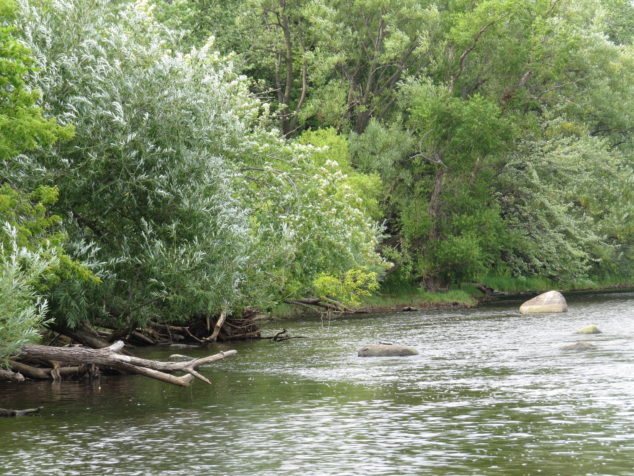
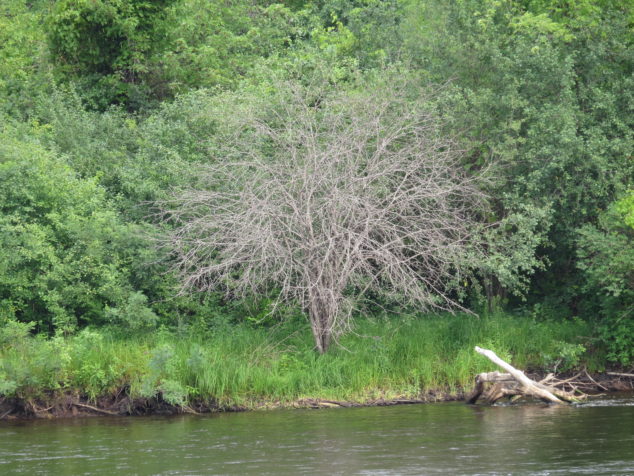
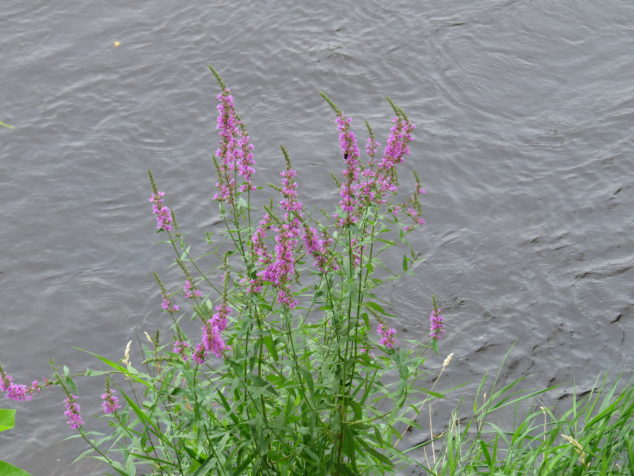
As we walked on, we saw a ghostly dead tree among the varied greens of the other trees. We saw pretty, but noxious Purple Loosestrife swaying in the wind beside the water. And we saw another log stuck on a rock.
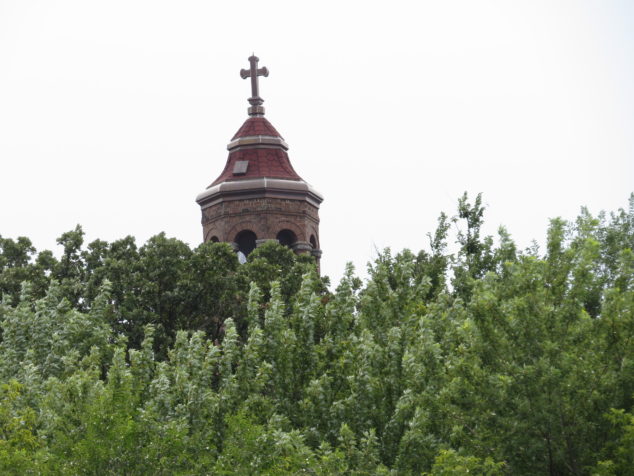
The paved bike path was getting farther away from the River, and with all the trees and horrible Buckthorn, we couldn’t see the water. We did see a historical marker that commemorated where the original St. John’s Benedictine Monastery was located in 1857 to provide for “the spiritual and educational needs of German immigrants.” Ten years later the monastery was relocated to its present location in Collegeville. We saw the belltower of the Catholic-run St. Cloud Children’s Home high on the hill above the tree tops.
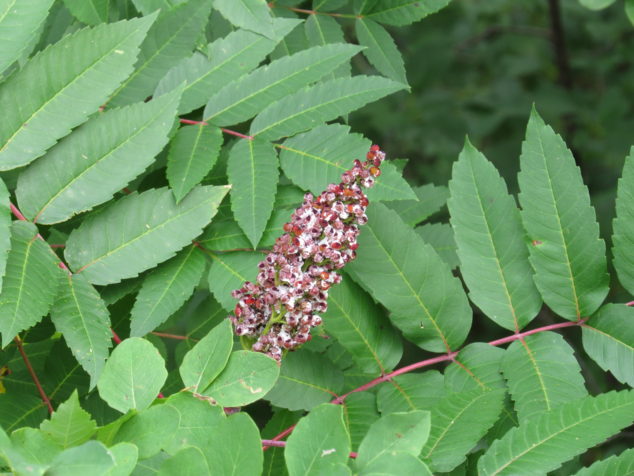
Flowering Sumac and robust Poison Ivy grew along the tree-lined bike path.
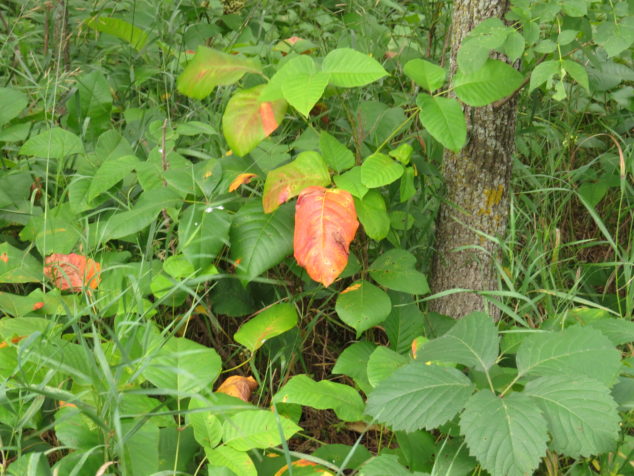
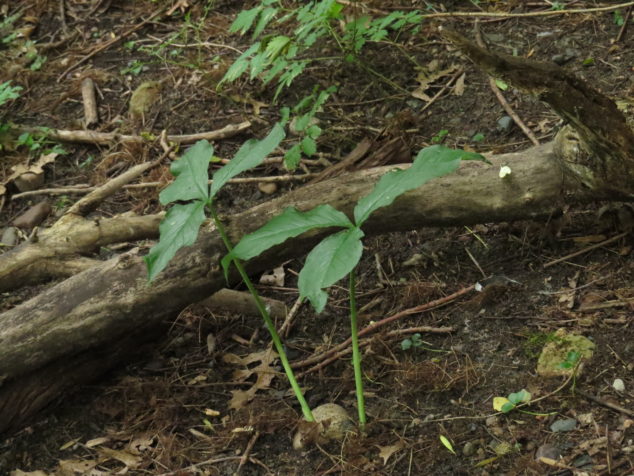
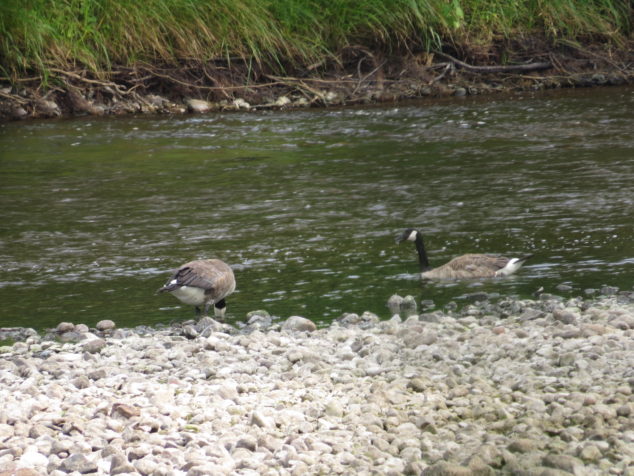
We took a narrow trail off the bike path to go down to the River, trying to skirt our bare calves around the poison ivy. There were large Jack-in-the-Pulpits under the huge, River-fed trees. The air was humid and warm, like a storm was brewing. Once down to the River, we saw Canadian Geese on one of the islands and a pair of granite boulders stuck in the sandbar of another.
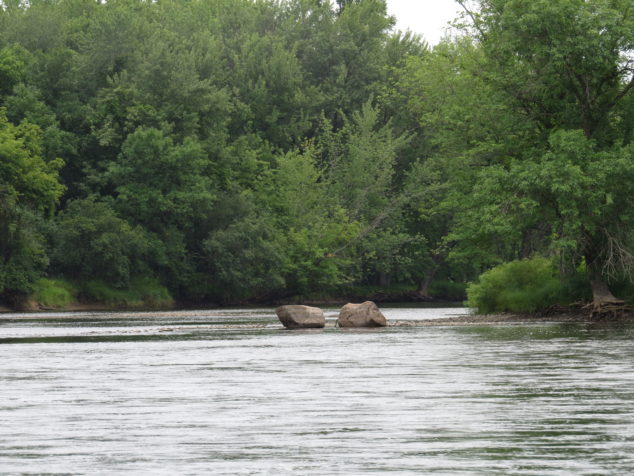
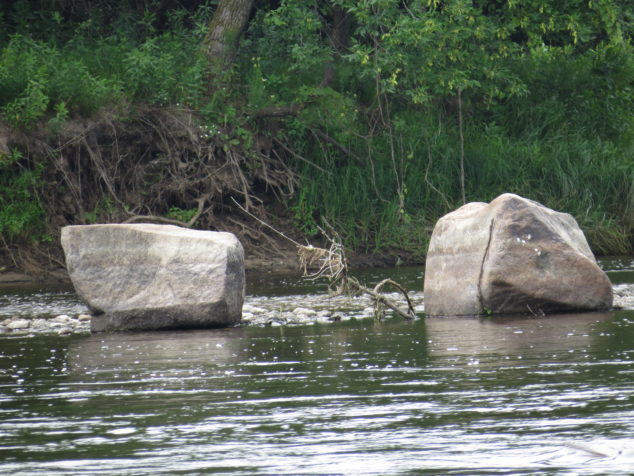
And another log stuck on a rock, perfectly balanced, in the middle of the mighty Mississippi.

I walked on a huge tree that had fallen into the water and caused a log jam of debris. Scum folded into accordion pleats against the logs, stuck between the current and the unmoving dam of logs.
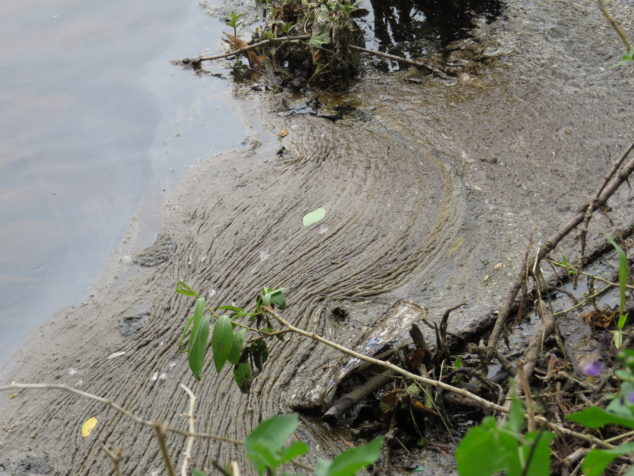
The River was wild and interesting in this Beaver Archipelago, and I had a strong desire to explore some of the islands, even as I wondered if I would have the courage to take on the current in a canoe.
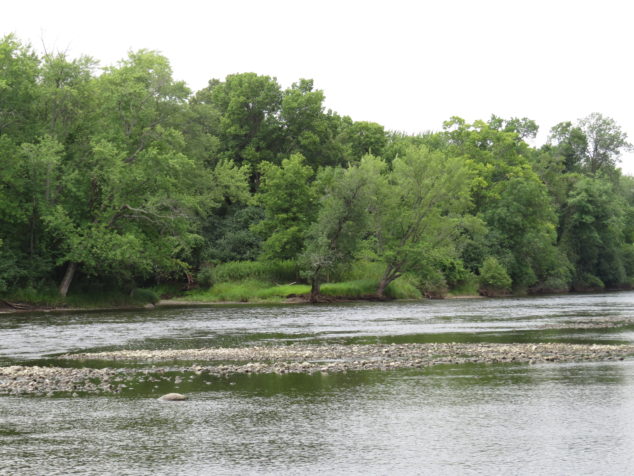
We headed back to the bike path, back to the car, back to the City and saw that there was indeed a storm brewing.
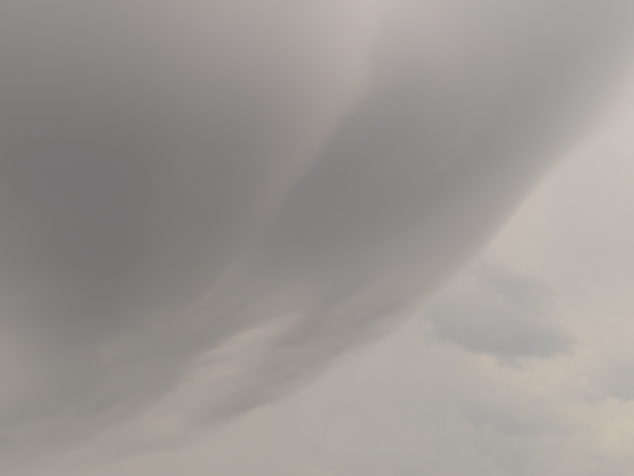
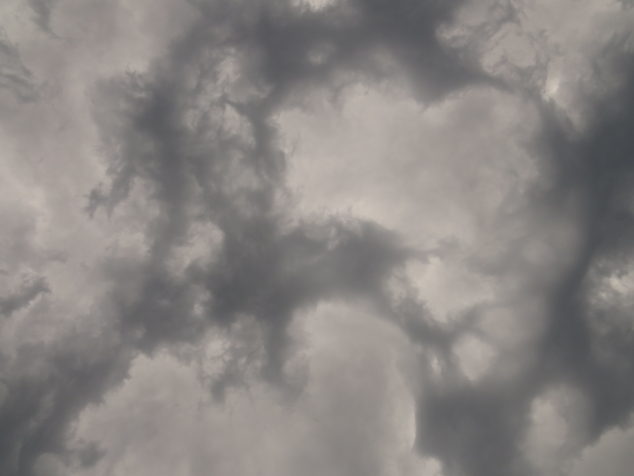
In our short Friday afternoon walk, Nature provided plenty of examples of the art of being stuck. The ever-flowing, ever-changing Mississippi River was the reason logs ended up in sculpture-like poses on rocks protruding from the water. It would also be the reason, with a torrential storm and rising waters, that the logs would become un-stuck. The boulders illustrate a different story. Perhaps it was a glacier that deposited them there—it is more of a mystery. Would the most powerful flooding waters move them? I’m not sure. The huge, fallen tree will hold back the current, the logs, the debris, for years, but will eventually rot away and succumb to the movement and power of the River. Life is our River, ever-flowing, ever-changing. It is the reason for our stuckness and the reason we move on. Sometimes the dead ghosts of our past stop us in our tracks, and we are afraid to step into the muck of our feelings. We stay stuck as Life flows past us. But the current of Life or an ominous, brewing storm can propel us from our rock, from our muck, from our hidden place behind an old log. Once again we enter the River and feel the exhilaration of that life-giving force that quietly supports us in our static pose of stuckness and steadies us in the joyous, tumbling current of Life.
Snapshots of July Stories
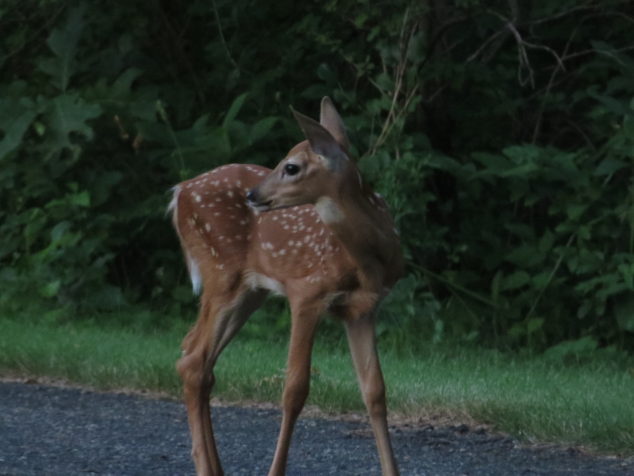
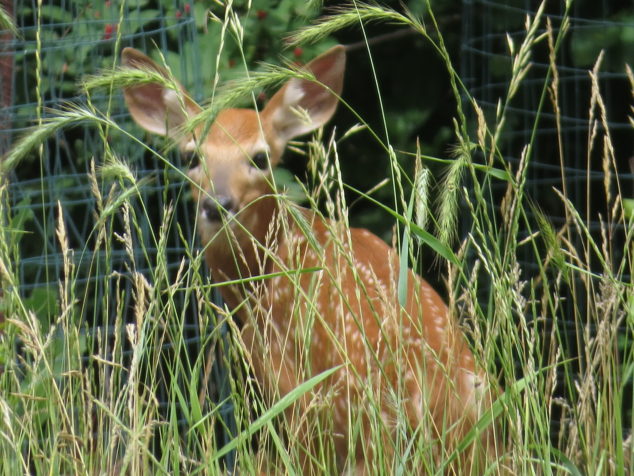
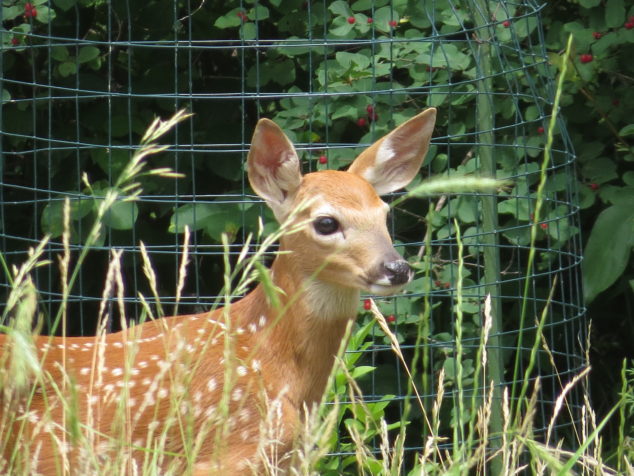
Here we are in the middle of the year, in the middle of summer—this month of July. I tend to wish away July when the temperatures rise, when the humidity causes so much discomfort, and when bugs are bugging humans animals, and plants. Oh, and also when the deer jump our garden fence and eat the beans, beets, and peppers. The first half of the month was hot and sticky—and I realize that relative to the rest of the country, we have it easy. Just as I was wondering how to navigate the humid days of summer, we got a blast of welcome relief from cooler Canadian air. The last two weeks have been glorious summer days—days I am not wishing away! Looking over my photographs of July, I realized that our month could be told in a series of little stories. There is the two-sided story of the deer—the nemesis of Chris and his ‘fight’ to save our hostas, trees, and other plants from being devoured by our cloven-hoofed friends as opposed to the beauty of spotted fawns with their mamas.
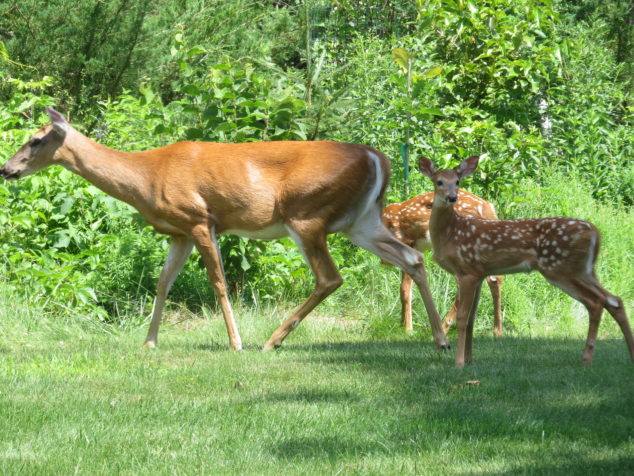
I saw one small fawn by itself one evening, just standing in the driveway, looking back and forth between the barking dog in the house and the sound of people walking down the street. No mama was in sight. Another day, a fawn hid behind the grass by the blueberries—again without its mama. It’s unusual to see such a young one without its mother close by, and I wondered if she had been killed somehow. Poor, cute baby.
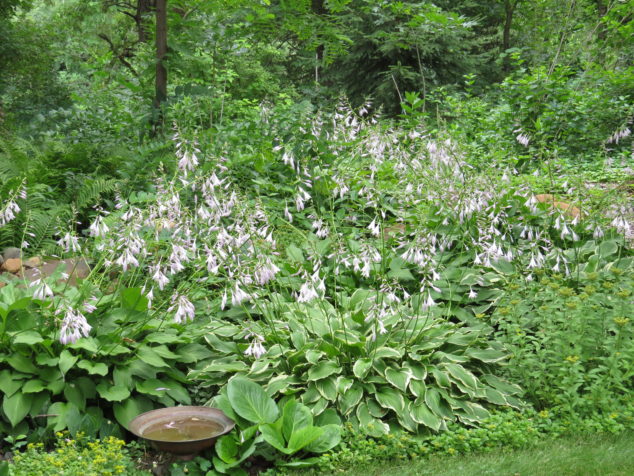
July holds the story of blooming things. The garden vegetables—peppers, tomatoes, green beans, and cucumbers—are flowering and beginning to grow their fruit. Hosta flowers are in wild abundance, much to the happiness and satiety of the hummingbirds.
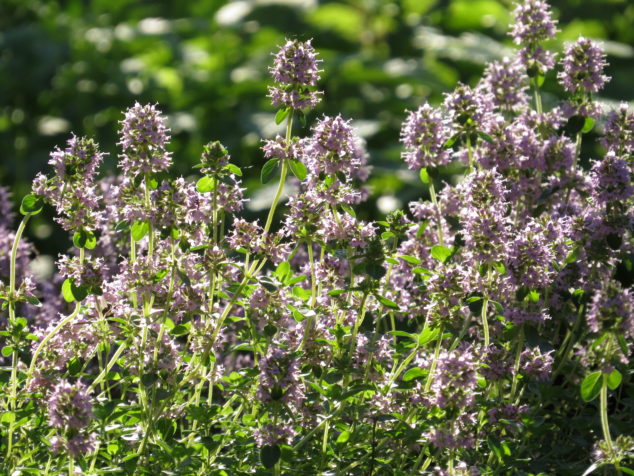
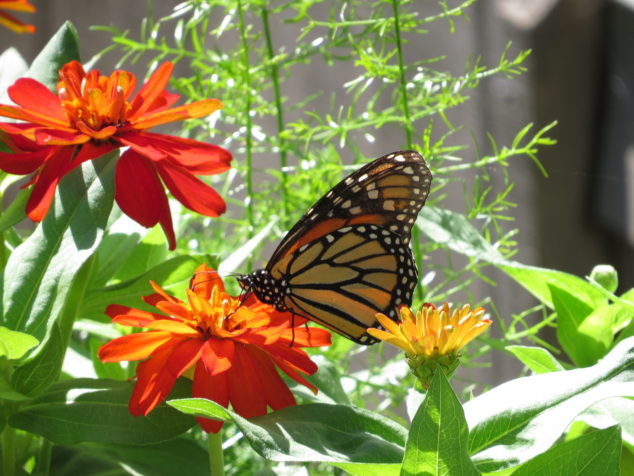
Carpets of thyme are covered with purple blooms, and annual zinnias are bright and inviting to the butterflies.
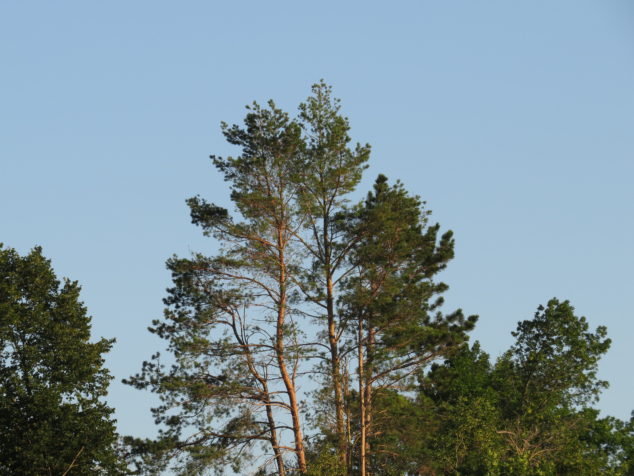
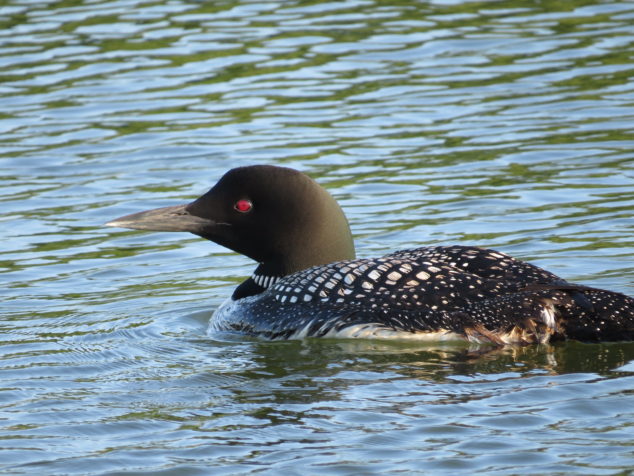
There is the story of time on the lake with friends—delicious in-the-moment time when the look and feel of the water and wind make every cell in your body feel alive. It is the story of Minnesota where pines and loons represent our state.
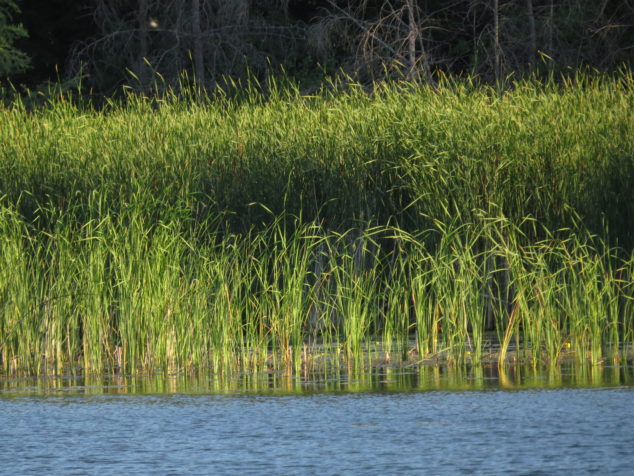
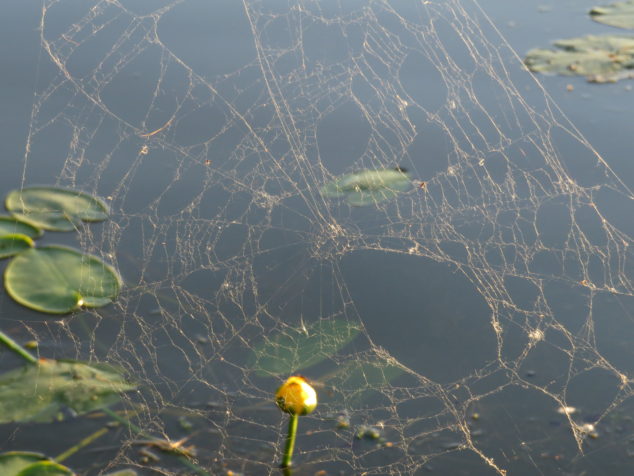
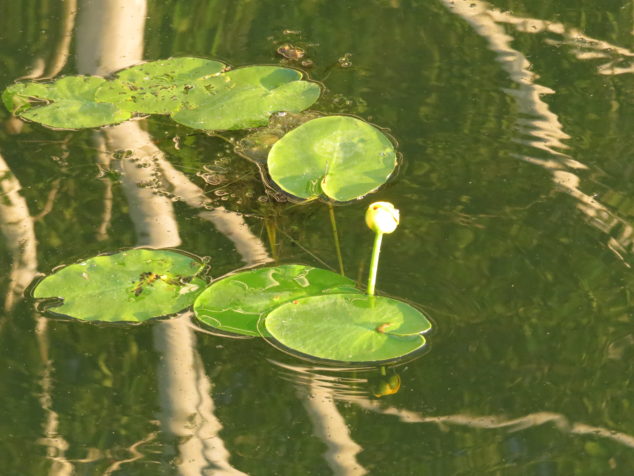
The story of the Lake is not complete without Cattails, Yellow Pond Lilies, and spiders who take advantage of a corner of a dock to capture a plethora of insects that hover around the water.
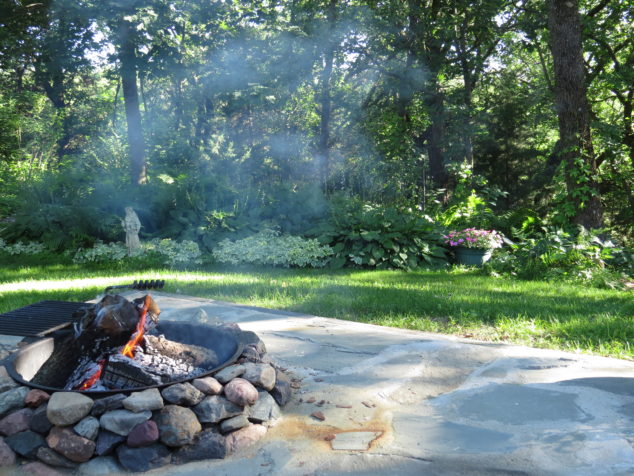
There are the summer stories of friends and relatives around a fire on the patio.
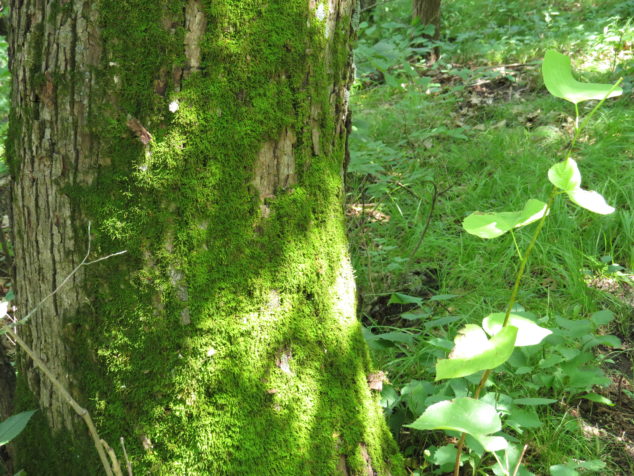
The stories of Sunlight and Moonlight fall on the moss of trees, the burbling creek water, and the tall oaks of the forest.
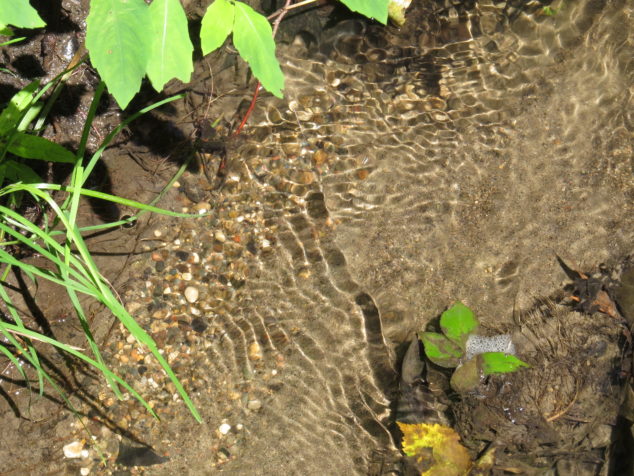
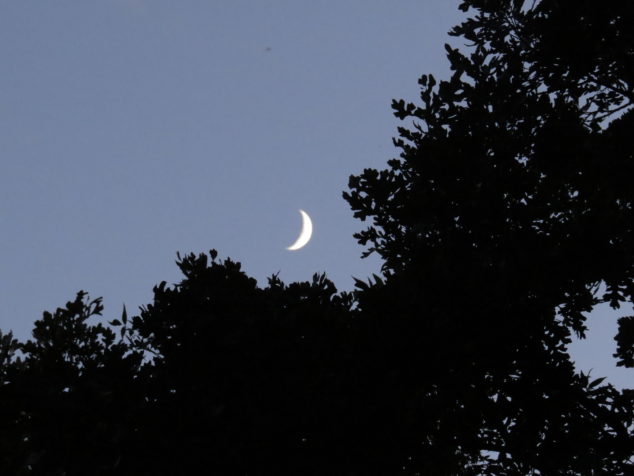
July stories told in snapshots are added to the album of Summer and then to the bigger albums of our year and life. I like how the photographs open those albums, how they illustrate a part of the story, and how they reveal elements that may not have been noticed before. So often—like the deer story—there is a little story within the bigger one. It also illustrates how there can be different feelings and thoughts about a situation, not only from different people, but even within one person. Our personal stories, seen through the snapshot of a photo or memory, are limited, however; we don’t see what’s happening off camera or have all the pertinent information. But a photo and story are also gifts to every one of us—they remind us of the beauty and goodness of life. They make us remember not to take people or things for granted. They instill in us the preciousness of time. What are your July stories? What delicious moments in time have you had this summer? And are you ready for a new story to unfold in each new day?
In the Web of Our Lives
My Mom was here for a visit this weekend. While looking at old pictures and reminiscing, she asked me whether I remembered the surprise birthday party we had thrown for her 35th birthday. I needed a few more prompts for those memories to come to the forefront of my brain, and as we talked about it, different strands of the story started weaving together into a clearer picture. She told it from her point of view, and I remembered it from my then fourteen-year-old self. She recalled all the chores us kids had been doing—painting the barn, mowing the lawn, cleaning the house—and how proud she was of us for being so industrious. We were trying to get things cleaned up and ready for the party! My aunt had asked her to come to Harrisburg to go shopping. We needed to get her out of the house! They planned on all coming back to our place for cake and ice cream. Everybody would be there by that time! I recalled the excitement I felt keeping the party a secret from my Mom. I remembered how satisfying it felt to get all those chores finished and to have the place looking good. I thought about the help we had from our Dad, our aunt and uncle, and our family friends to make the surprise and party a success. Then she told me that my older sister didn’t remember it at all! Somehow the strand of memory for that event was invisible or broken for her.
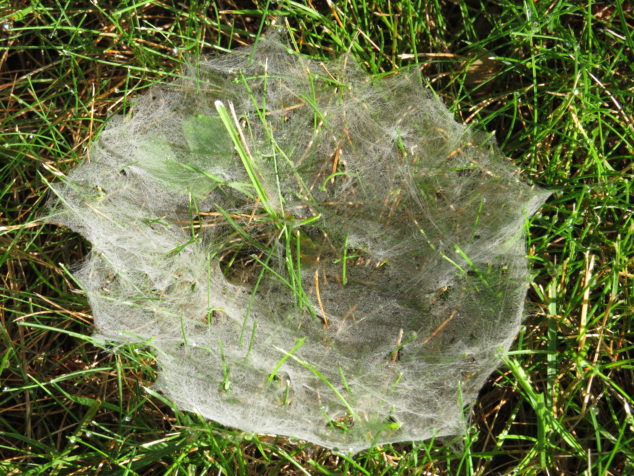
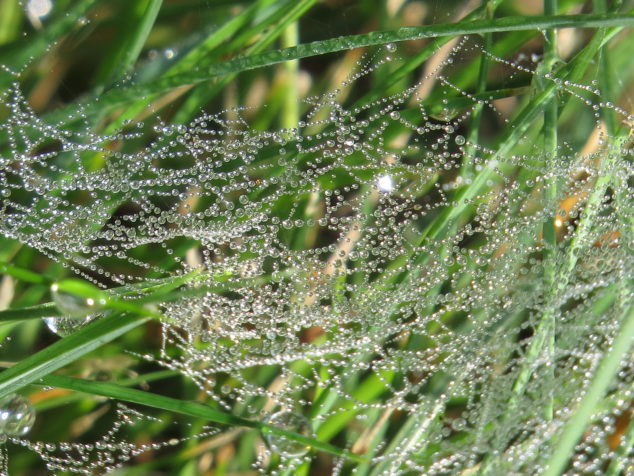
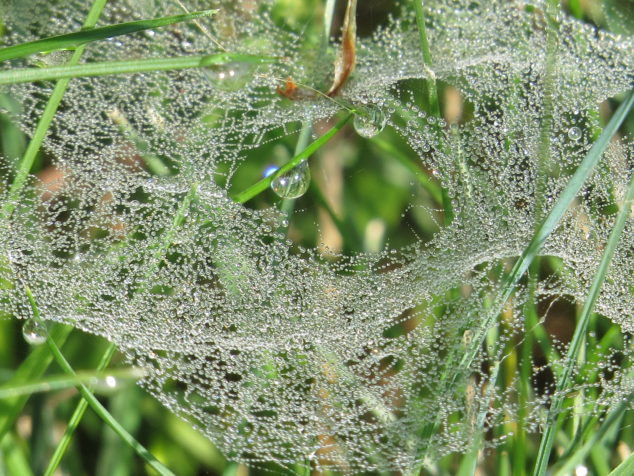
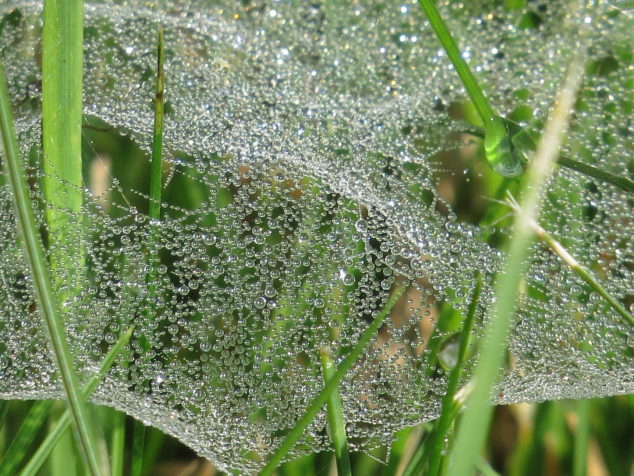
One morning last week I noticed the dewy webs of grass spiders. Normally one wouldn’t even notice the webs, but the dew clung to the strands like tiny white crystals.
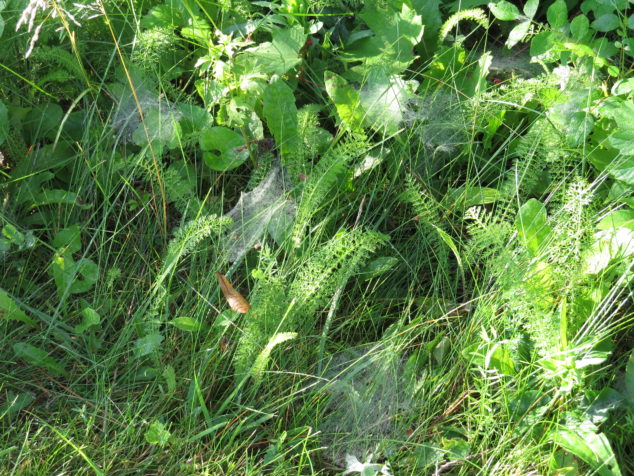
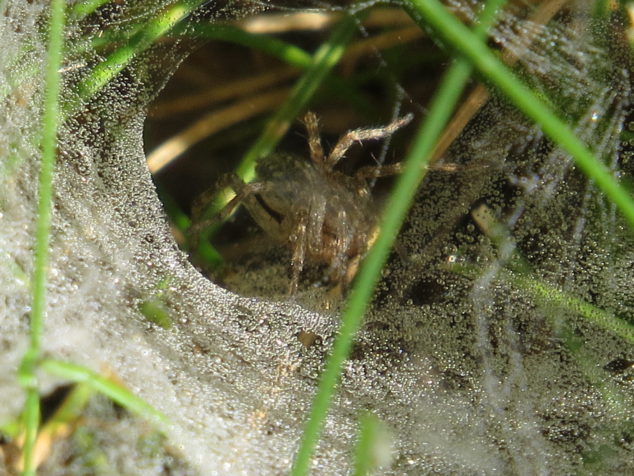
One web was shaped like a bowl, and at the bottom of the bowl was a funnel. In the funnel, ready to ‘catch’ whatever fell into her lair, was a grass spider.
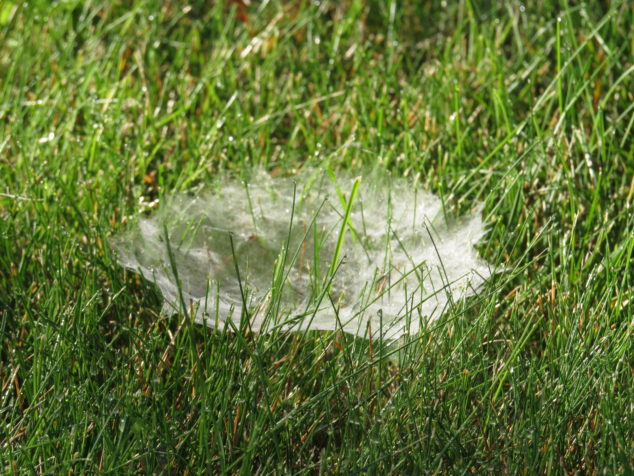
More webs dazzled in the sunshine as each drop of dew glistened like a diamond.
Today I found another web of webs in the Lily of the Valley. It was not as neat and even as the grass spider webs—it was much more complicated, convoluted, and chaotic. Or so it seemed. No crystal dewdrops hung from the web, but the sun still reflected off the gossamer strands.
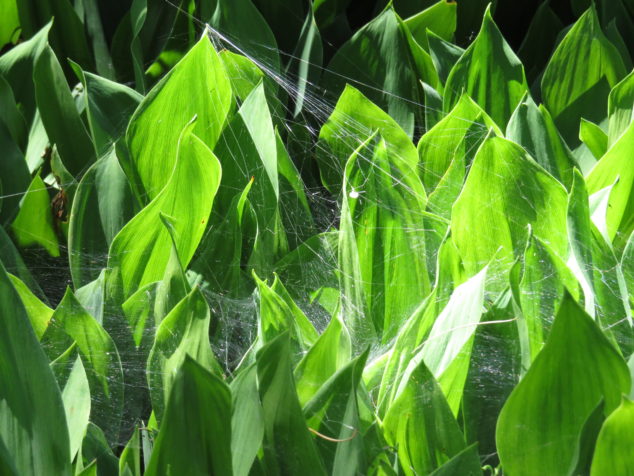
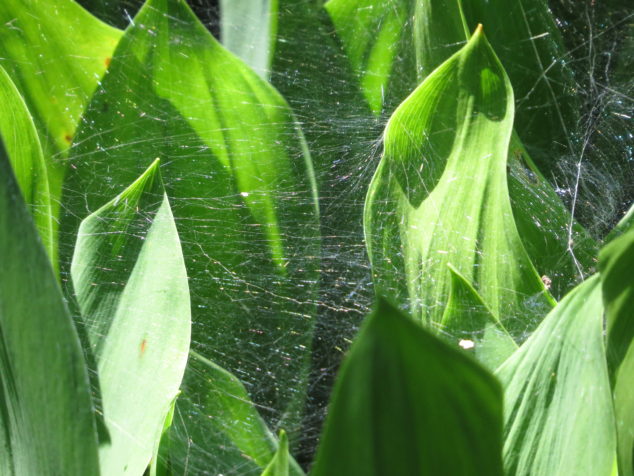
A web is a home for a spider, a place to catch food, and sometimes a nursery for the young. It is made from the strong, flexible, proteinaceous silk the spider ‘spins.’ It is often invisible but will catch the light rays to attract insects. The strands of our memories form the web of our lives. Our brains store these memories in a complex yet structured way that is most often connected to a heightened emotion, like the excitement I felt from planning the party for my Mom without her knowing about it. We all remember events differently, if we remember them at all. At times, we don’t remember things because there are too many mundane, not-important things that happen to us—we don’t need to remember them. Often we have memories that fade away with time and can be recalled with help. But sometimes things happen that interfere with the structured formation of memories—overwhelm and trauma can cause our memories to be stored in a convoluted and chaotic way. We cannot recall them—they are there but invisible to us. So how do we shine the light on the strands of our memories? When we allow ourselves to be in quiet and intentionally ask ourselves questions, often our minds will let us know the answer. We can talk with one another to piece together the individual strands of memories that formed the web of that life event. Looking at old pictures or visiting past places illuminates the dusty cobwebs of memory, often shaking things loose, so we get a clearer picture. We can illuminate the strong, flexible strands of our memories, so they shine like diamonds in the web of our lives.
The Light in the World
“Where there is darkness, light…” –from the Prayer of Saint Francis
There were two times in my life when I was in profound darkness. The first time was when I was very young—before many memories were etched into my brain, and when my brain, in all its wisdom, sequestered that darkness into a walled-off place so I could continue to smile and run and explore and be a child. The second time was forty-three years later when the walled-off place suddenly burst open, spewing all the feelings and emotions of that earlier time into my mind, my body, and my soul. I could no longer smile, I could barely move, and my soul felt like it was dying. There were other times in my life—between those two times—when I peered into the darkness of the abyss, when I stood precariously on the edge fearing any misstep that would plunge me into that place I did not want to go, could not yet go. During the second darkness, there were a few amazing beams of light that guided me through—my therapist, my pastor and friend. There was the warm, caring light of Chris who pulled double duty with the chores and work, even when it all felt confusing and overwhelming. And there was the brilliant light of my children—one who was already gone to college, one who was on the cusp of leaving for school, and one who still needed my day-to-day presence.
I am acutely aware of the toxic darkness that resides in our world—where children are intentionally separated from their parents, where violence permeates homes and lives, where people are going hungry and sleeping on the streets, where illnesses are unable to be treated, and a list too long goes on. But I am also joyously connected to the light in our world—the life-giving sunshine in our daily lives, the hope and comfort of spiritual belief and practice, and the day-to-day words and actions of good and kind people. The early morning and evening sunshine has been lighting up the landscape around our place, noticeable as we sit on the porch or walk through the yard. The coming or going of darkness is emblazoned by sunlight as it reaches from the horizon through trees and leaves.
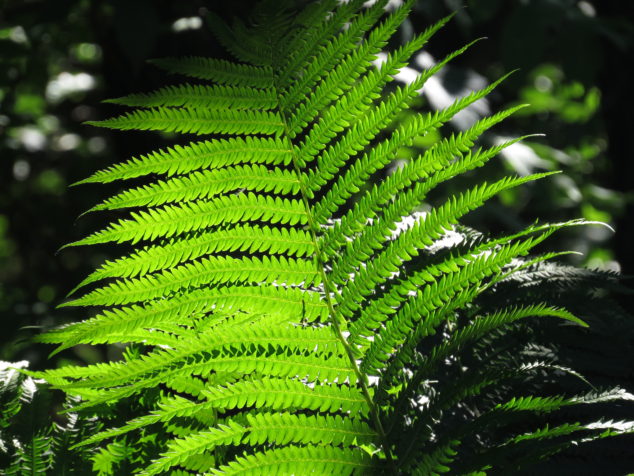
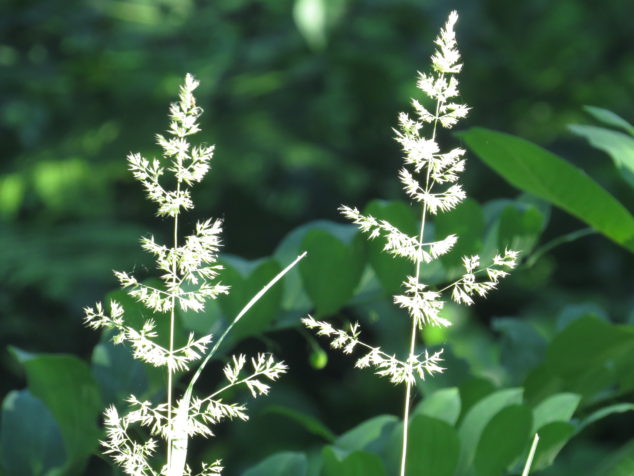
It illuminates the seedheads of grass, transforming the natural color to pure white light.
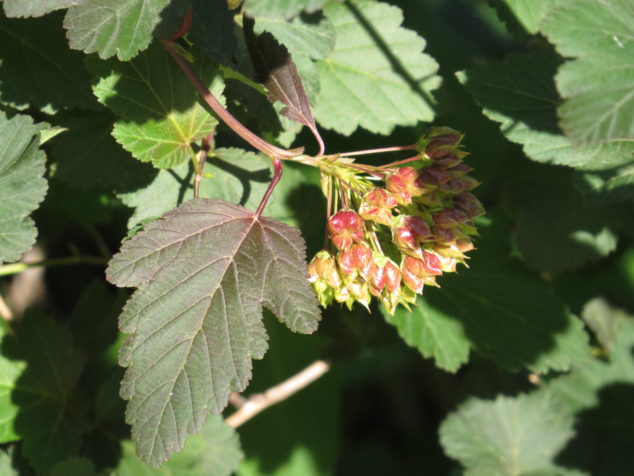
Ninebark shrubs flower and fruit in little clusters that often get lost among the leaves. The sunlight reveals some hidden fruits.
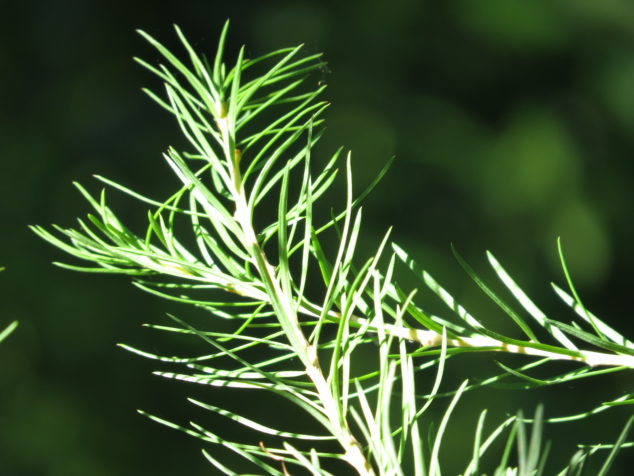
Wispy needles of a Larch tree dance green and white in the light, casting narrow shadows on themselves. We are all a combination of light and shadow.
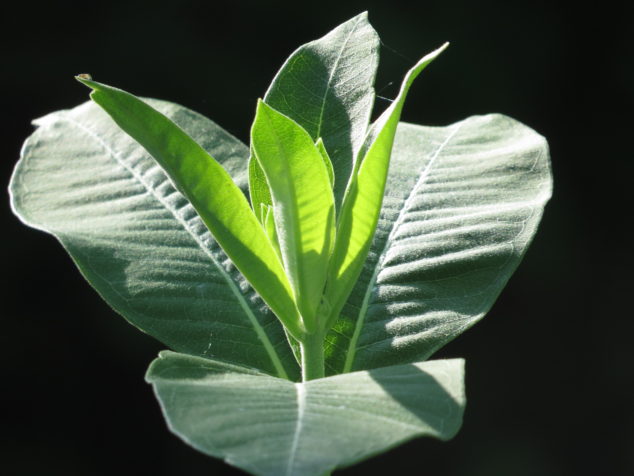
Life-giving food made from life-giving sunlight and soil is part of the process of transformation for a caterpillar eating Milkweed and becoming a Monarch butterfly.
How does sunlight impact a rock? It beams light energy into the hard, seemingly impervious surface—some gets reflected, making the rock look brighter, while other gets absorbed and transformed into heat.
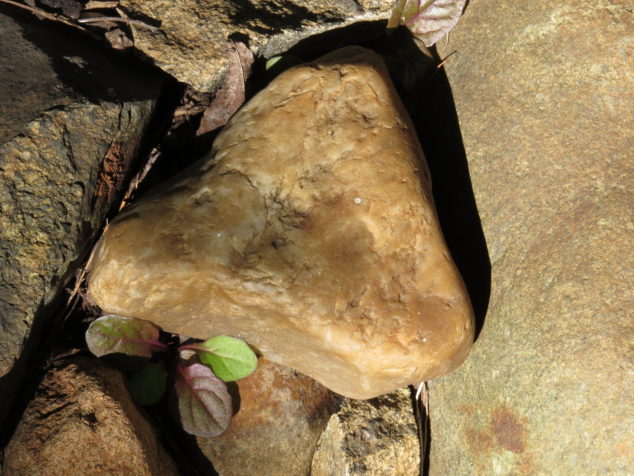
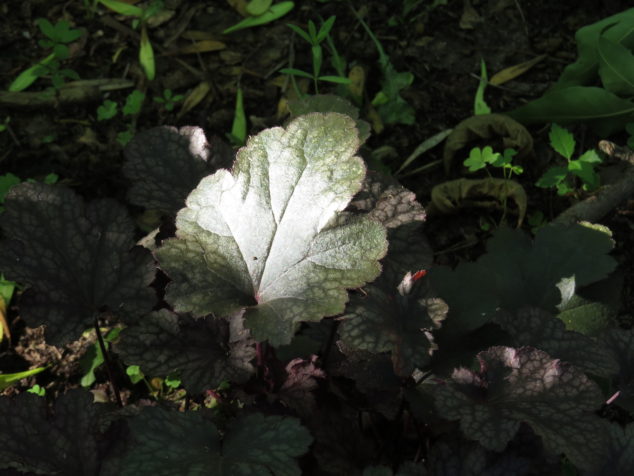
When a place looks dark, light can shine on unexpected places making the whole picture look different. Often our help, our light, comes from people and places we never expected.
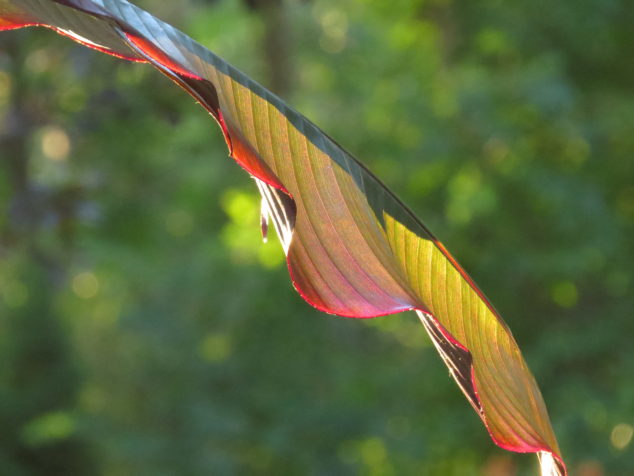
A constant source of pleasure for me is the ever-changing way the evening sunlight radiates through the leaves of a Banana tree on our patio. The red edges turn to fire, the veins are unveiled, shadows deepen the green color in areas, and drops of pure white light drip from and through this living, breathing organism.
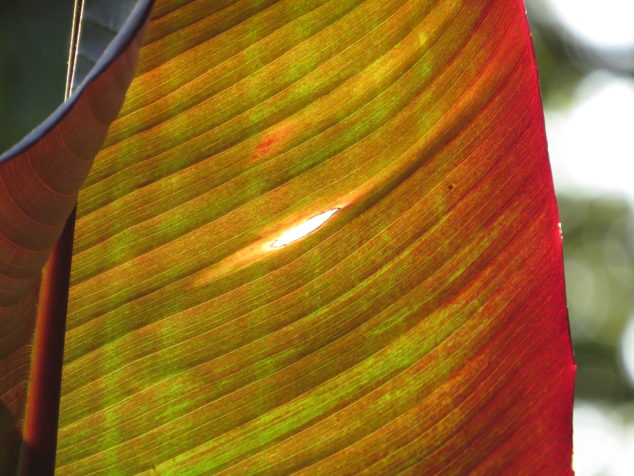
Sometimes the sun doesn’t shine on our face, but enlightens and enlivens our heart where we need it most, so that later our true beauty will be revealed for all the world to see.
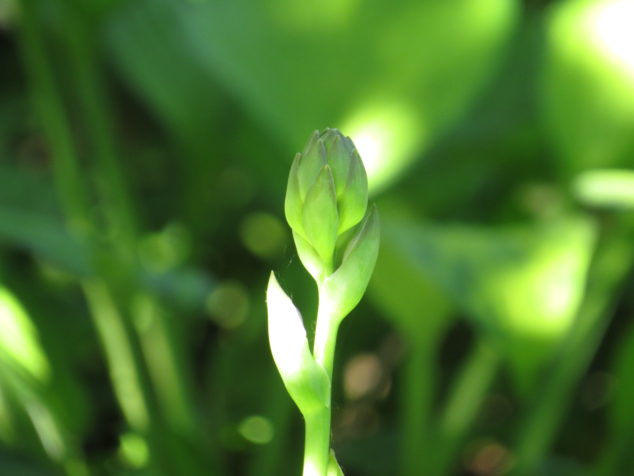
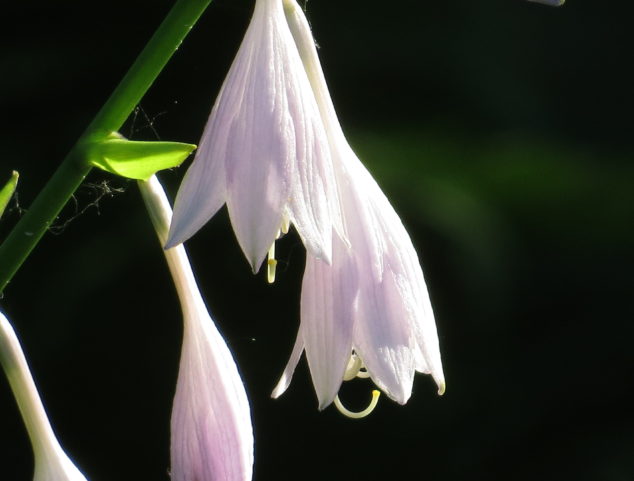
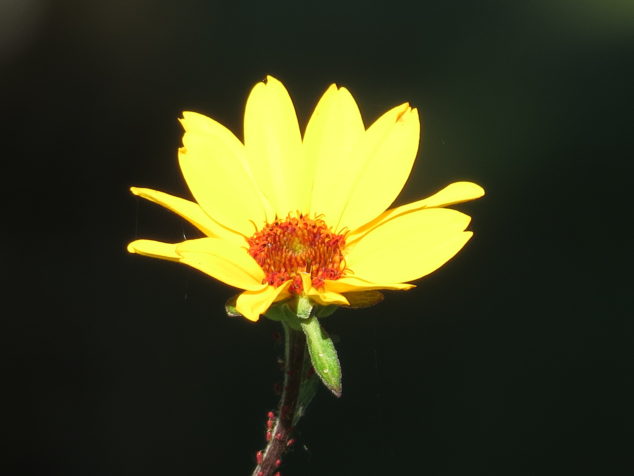
Light also exposes dangerous, harmful, or annoying things that go unseen in the shadows and darkness. Red aphids on a sunflower stem glowed in the sunlight, and vines and webs were clearly seen in the light of the sun and the lens of the camera. Sometimes one has to look closely with unflinching courage in order to eradicate the harmful things.
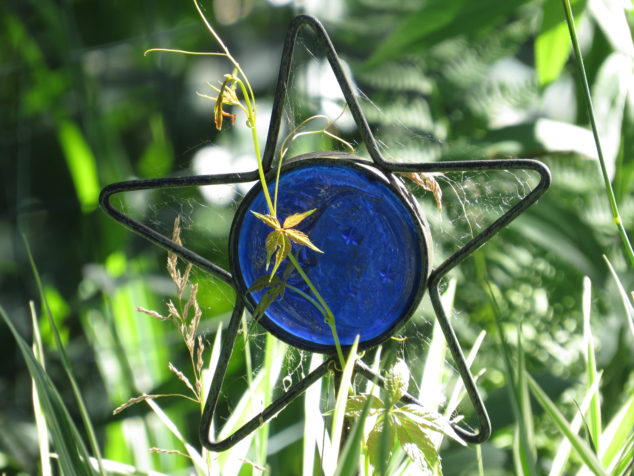
The result of being aware of the light and the darkness, of looking honestly and closely at our own heart and soul, of asking or allowing or finding the help we need, is the revelation of an inner and outer beauty that displays our true essence.
Our brains are amazing structures that protect us during overwhelming events by sequestering sensations and emotions to a walled-off place so we can continue to function at some level. But they never disappear, and time does not abate the intensity of our feelings. Sometimes the walled-off place is touched or triggered by a sensation or situation, and we react instantly, unconsciously, and we or someone around us wonder where those words or actions came from. That’s why the second darkness is so important—to slowly know and release the sensations and feelings that have been clouding our life, so we are no longer afraid of the dark abyss, because it is gone. We all need help at times with our shadows and darkness, and we are all called to be sowers of light. A Minnesota author Kent Nerburn wrote a book Make Me an Instrument of Your Peace—Living in the Spirit of the Prayer of Saint Francis. He wrote how Saint Francis went forth in the world to give his light to others, how at times it was an act of pure will, and how fervently he believed that every small gesture of light was needed. Nerburn wrote, “We must remind ourselves that, though our lives are small and our acts seem insignificant, we are generative elements of this universe, and we create meaning with each act that we perform or fail to perform.” He continues this compelling call to action with “All our actions on this earth have eternal life. It is up to us to determine whether our actions have a life that increases the light in the world or adds to the darkness.” May we know our shadows, may we light up the landscape of our world, and may we let the luminescence of our true essence shine on.
A Work of Love and Duty
“I looked on child rearing not only as a work of love and duty but as a profession that was fully as interesting and challenging as any honorable profession in the world and one that demanded the best that I could bring to it.” –Rose Kennedy
I don’t think I’ve ever run across a quote that so closely aligns with the way I felt about raising our three children. I had worked in the profession of child care for four years before having our first child, and it was a joy to provide care, structure, learning activities, and fun to the children at the YWCA. However, deep dissatisfaction crept into my soul when I was leaving my baby with another woman while caring for many other’s children—not because of the work I was doing, but because of the time of not being with my own. It was only another year or so before we made the decision for me to stay home. We had another baby on the way by then, and I was happy to provide care to another little girl full-time and to a few others on a part-time basis. How I loved our days together! I set up learning stations in our old house where messy art projects trumped new floor coverings and reading books and playing outside were more important than how things looked or how much money we had. It was a time of joy for me!
We were fortunate to spend time on Goodners Lake this weekend with our good friends Rick and Lynda. The lake is always beautiful but seemed particularly so after a week with nourishing rains and abundant sunshine.
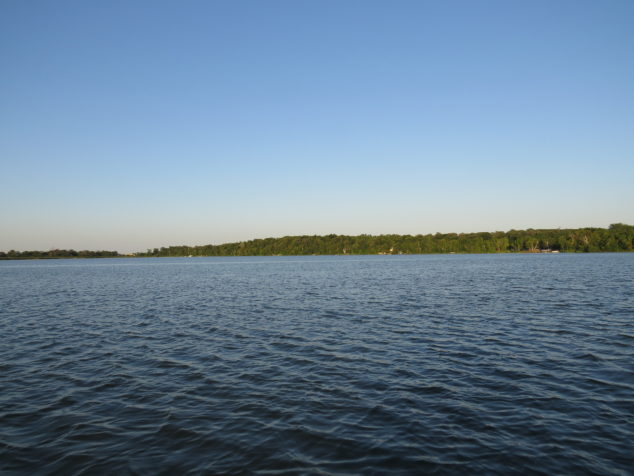
The resident Loon pair had returned to Goodners Lake in late April, made a nest among the cattails, and hatched out one baby Loon. Even swimming among the boaters, it was evident that the Lake belonged to the Loons.
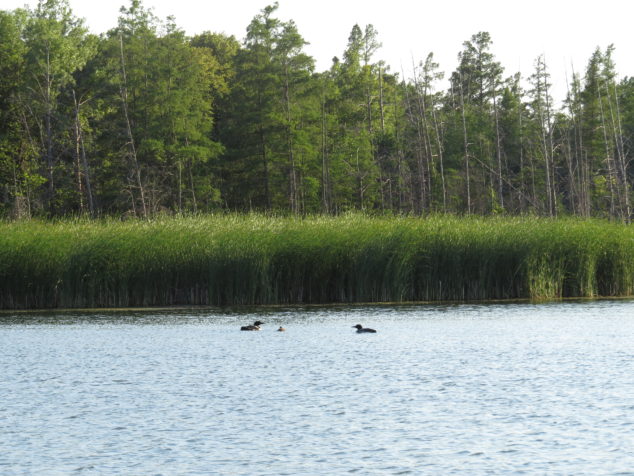
What was also evident to me is how dedicated and attentive the Loon parents are to their offspring. When the chicks are very young, they can swim but will climb onto their parent’s back to ride and rest. This chick still has its downy feathers but will have its adult voice and be fully feathered by two months old.
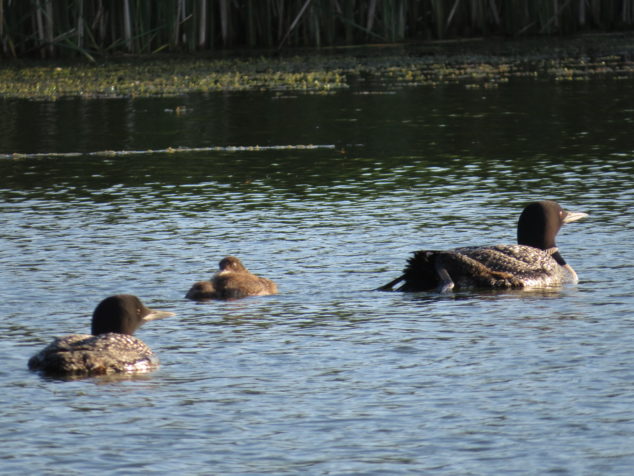
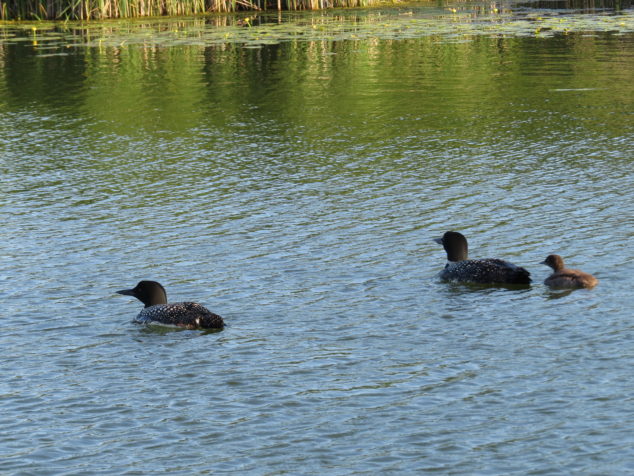
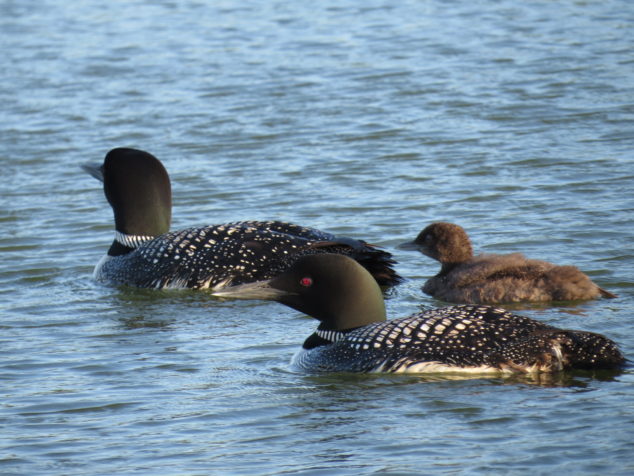
The chick mirrors the parents’ actions of peering under the water with their excellent underwater vision to find fish to eat, to preen and clean their feathers, and to rear up out of the water and flap their wings in a territorial display.
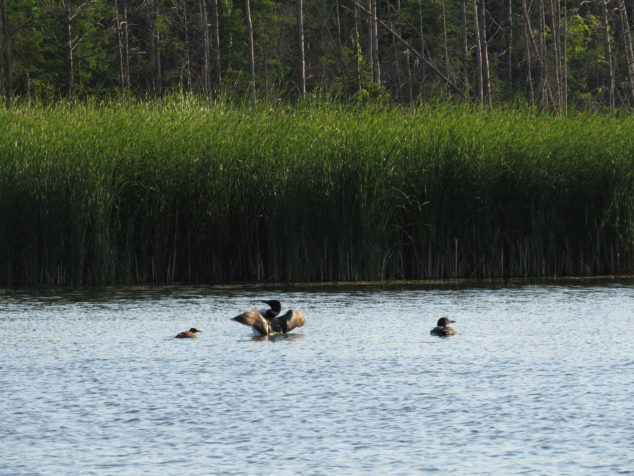
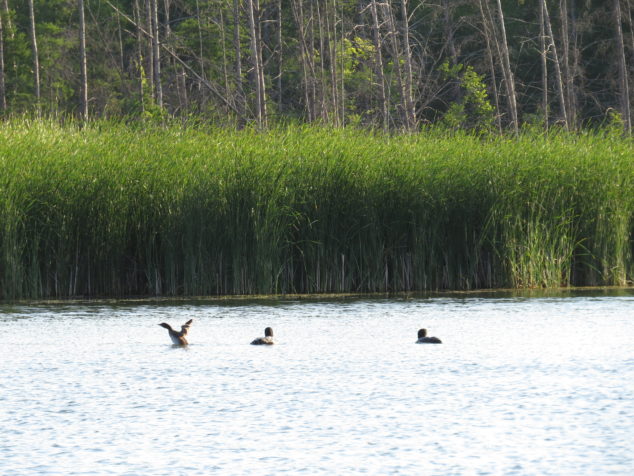
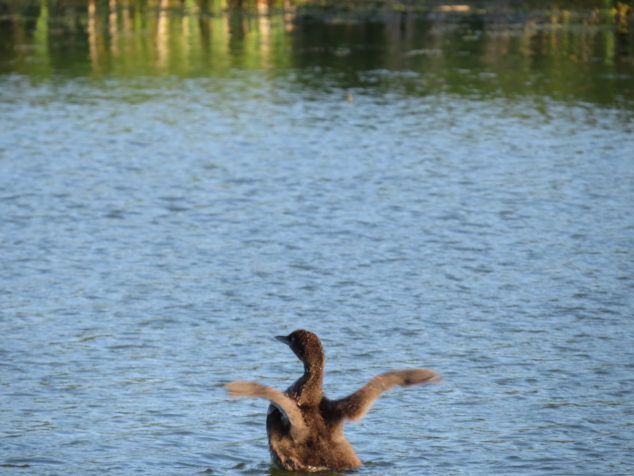
The parents will continue to protect and teach their young one until he can capture all his own food and become a strong flyer. In Autumn, the parents leave the lake to migrate south. The young ones will gather and migrate together a few weeks later. The following April, the parents will return to the Lake to begin another season of raising young ones.
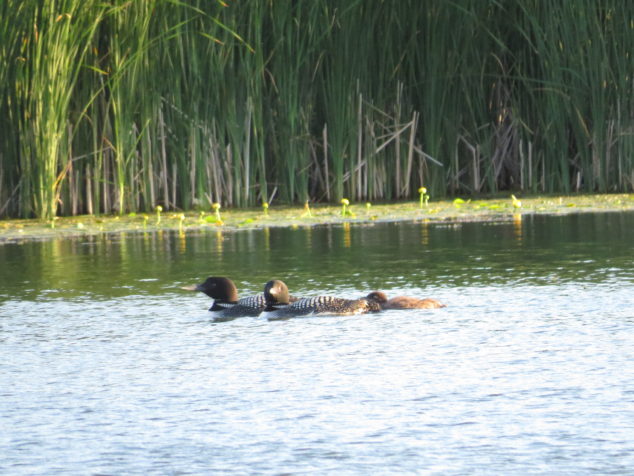
Loons, Eagles, Bluebirds, and others are dedicated, hard-working parents. One only needs to watch how they work to build a nest, how they protect their young, how long and hard they work to provide food for them, and how they teach them to do what’s necessary to become full-fledged adults. Parenting in the animal and the human world is hard work, and as John Steinbeck understated, “Perhaps it takes courage to raise children.” Courage indeed, along with a whole host of other noble and life-affirming traits. Parenting is a work of love and duty, a full-time, honorable position whether you are home with your kids all day or you return after working elsewhere to build the nest and give them the wings to fly. Regardless, I hope you bring your best and make it a time of joy!
The Big, Beautiful River
You can’t be unhappy in the middle of a big, beautiful river. –Jim Harrison
That was me on Friday afternoon. The big, beautiful river was ‘The River’, “the great Mississippi, the majestic, the magnificent Mississippi” as Mark Twain describes his beloved natural wonder. The 2350-mile waterway begins at Lake Itasca, Minnesota where the River is 20-30 feet wide, ‘almost pristine,’ and empties into the Gulf of Mexico after flowing between or through ten states. The watershed area drained by the Mississippi and its tributaries, including the Ohio, Missouri, and Arkansas Rivers is a vast 40% of the continental US. 15-18 million people use it for their water supply. It supports a diverse population of fish, birds, amphibians, reptiles, mammals, and plants. The upper Mississippi particularly, supports a huge recreation economy, and the whole river from Minneapolis/St. Paul south is a water highway for agricultural products, iron and steel, paper and wood, and petroleum products. It does not take long, however, before the ‘almost pristine’ water that leaves Lake Itasca becomes polluted. In the three months it takes water leaving Itasca to reach the Gulf, many industrial, urban, and agricultural pollutants are added to it. Even while the water is still in Minnesota, there are stretches of the River that exceed water quality standards for mercury, bacteria, sediment, PCBs and nutrients making it unsuitable for fishing, swimming, or drinking. By the time it reaches Louisiana… well, you know.
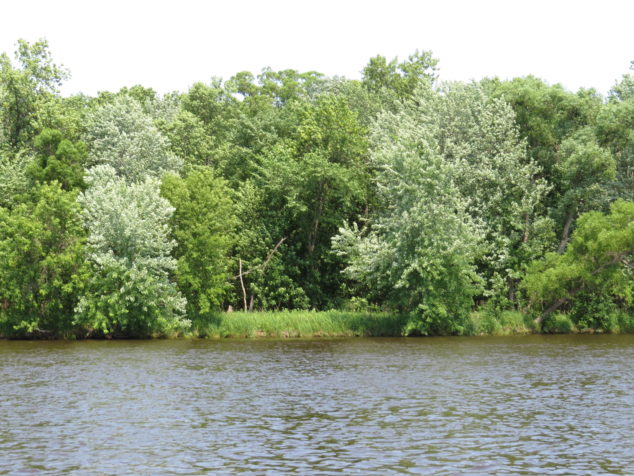
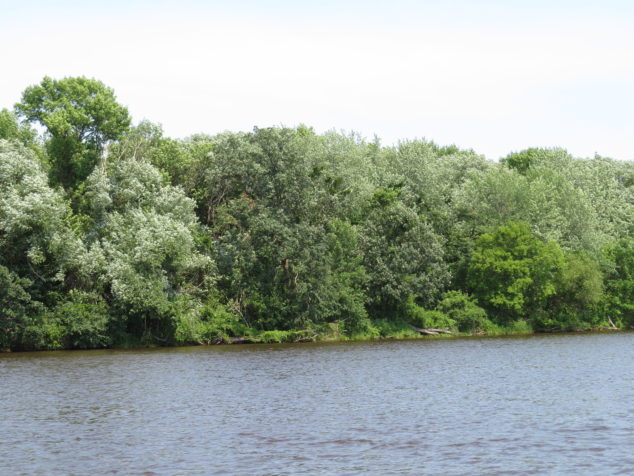
Where I was boating with kind, generous friends, the River is still beautiful and much closer to pristine than toxic.
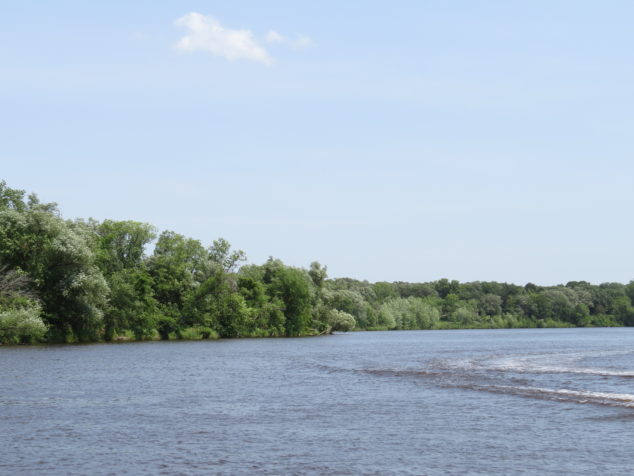
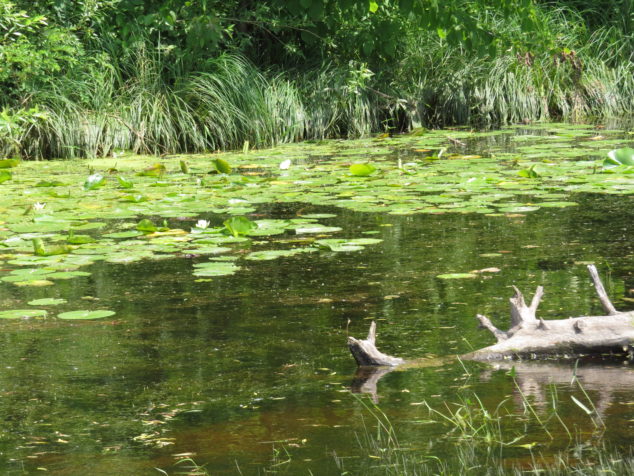
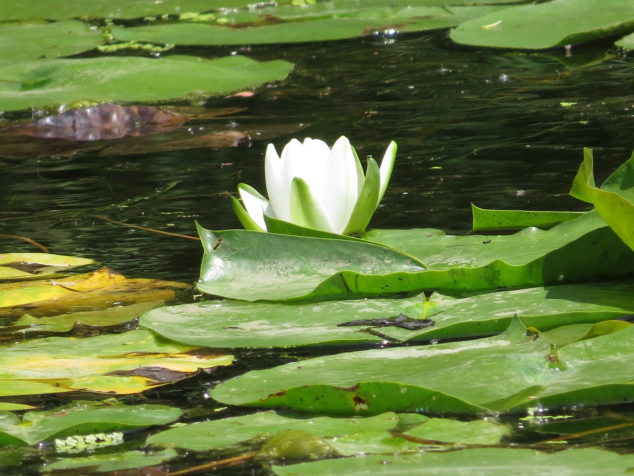
We made our way up the River to an island sand bar where the water was shallow. A little pond between the ridge of sand and the island was filled with White Water Lilies, adding beauty to the marshy water.
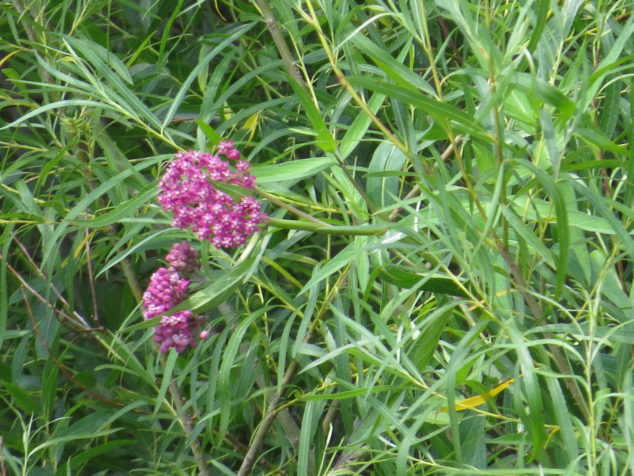
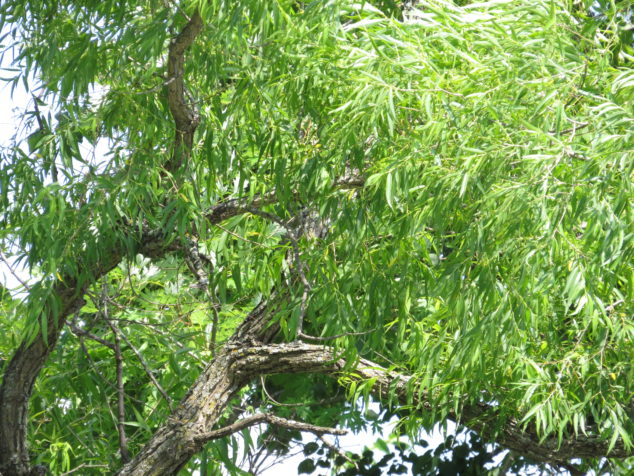
Swamp Milkweed found a happy home along the perimeter of the island, adding a bolt of color to the green Willow around it.
Children built sand/mud castles, music floated from different boats, and water games—some with rules, some impromptu—occupied the sand bar people in the hot afternoon sunshine. I sat on the boat under the shade of my hat, soaking in the goodness of friendship, the warmth of a summer day, and the movement of water. I was happy in a contented, peaceful way. “You can’t be unhappy in the middle of a big, beautiful river.”
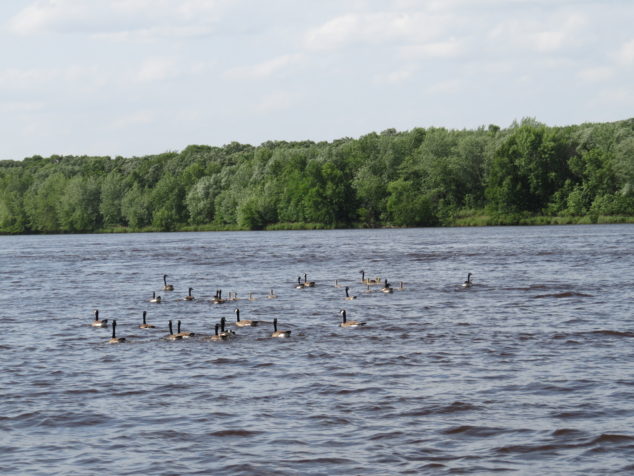
Some other creatures felt the same way as we headed back to the dock.
How do we keep the Mississippi and all the other rivers beautiful? Pollution, like climate change, is a huge problem that affects everyone on this planet. In fact, it’s such a huge problem that we don’t like to think about it. So most of us and many leading the government agencies that are supposed to be working on these very problems bury our heads in the sand and pretend it’s not an issue. I understand the overwhelm. How do we reduce the pollutants and keep them from being added to the water? There are solutions. There are dedicated people working to solve the problems. We need more people on board. How also do we keep our communities and our lives beautiful? It depends on what we add to our lives. We need to keep the pollutants out—the hatred, apathy, blame, bigotry, disdain and corruption. Add in friendship, understanding, responsibility, generosity, humility, and love for one another. Let’s keep America beautiful in every way, so our lives are more like the pristine waters of Lake Itasca and less like the toxic waters flowing into the Gulf.
Summer Solstice Snapshot
What happens on the first day of Summer? The Summer Solstice was Thursday, the 21st—the longest day of the year in the Northern Hemisphere, when the Earth’s axis is most tilted toward the sun. It is when the sun rises before most of us do and sets not long before most of us go to bed. It is a day of long daylight, of energy, of evolution of the seasons. It is a day of new beginnings.
What happens on the first day of Summer in Minnesota? Fruit is forming, growing, and ripening—apples, blueberries, wild plums, and wild strawberries.
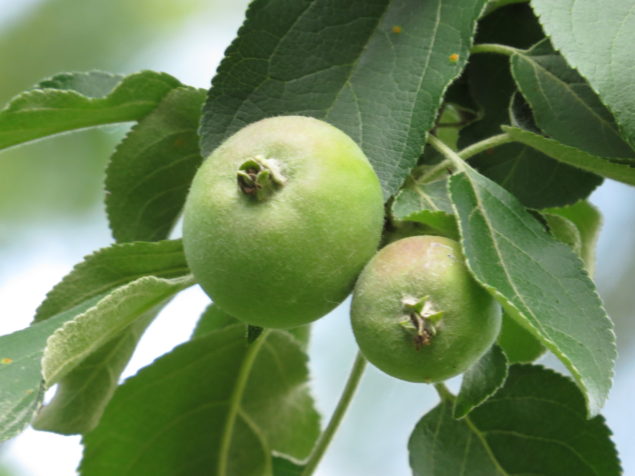
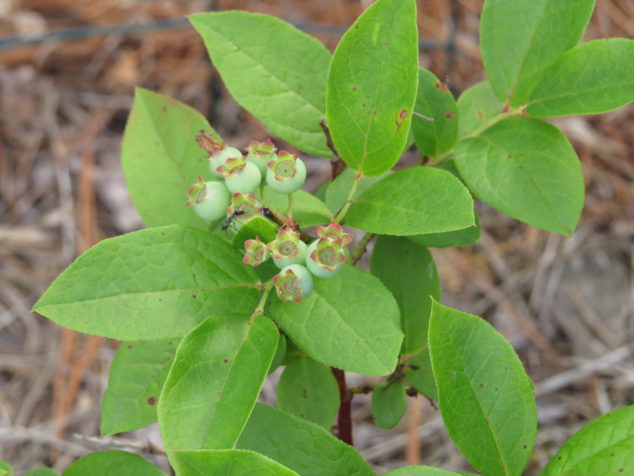
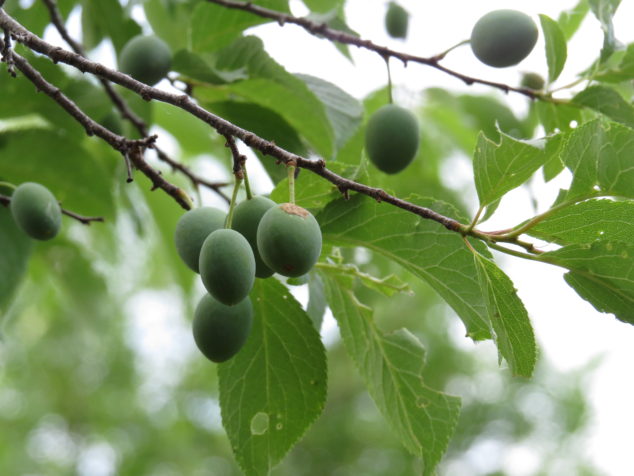
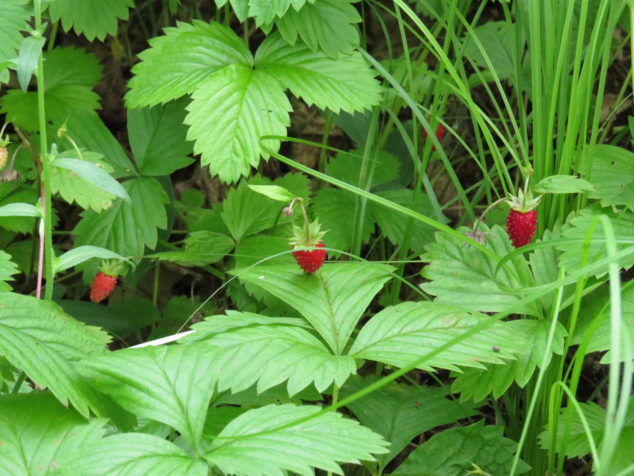
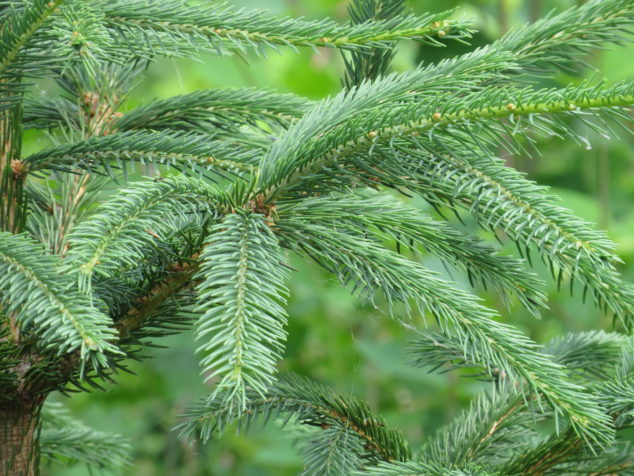
Tender new growth on the evergreen trees is starting to harden off, easing into the next stage of growth and development, stepping into its larger self.
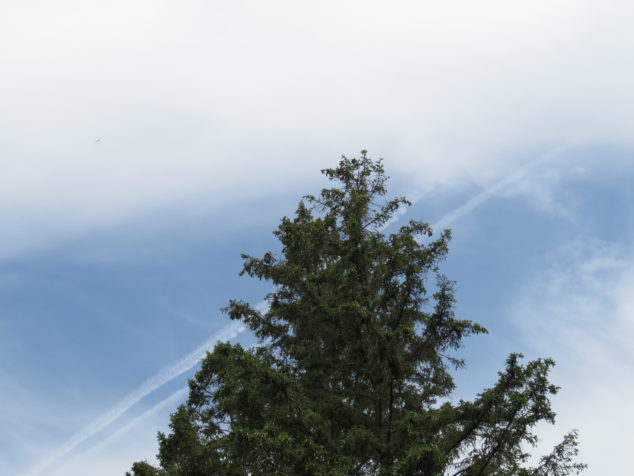
Summer sunshine, blue skies, and white clouds outline and energize the trees.
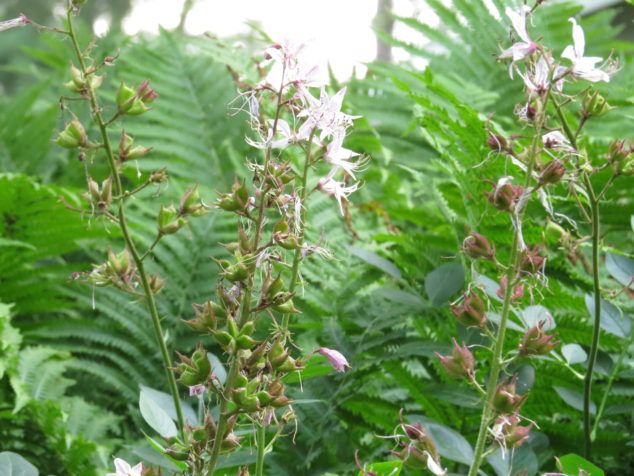
On the first day of Summer, some flowers, like the Gas Plant, are already going to seed, while a whole passel are in full bloom or getting ready to bloom.
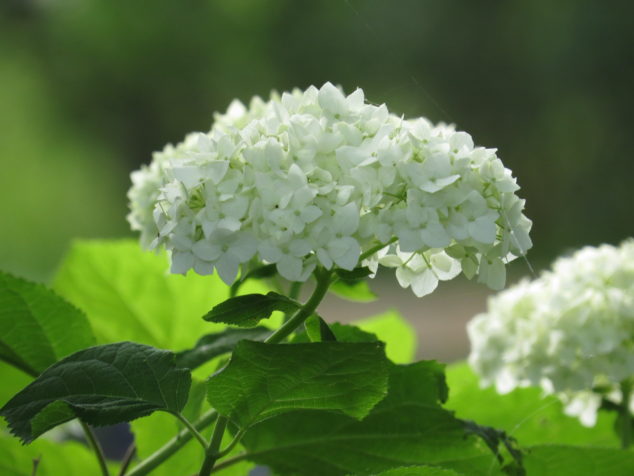
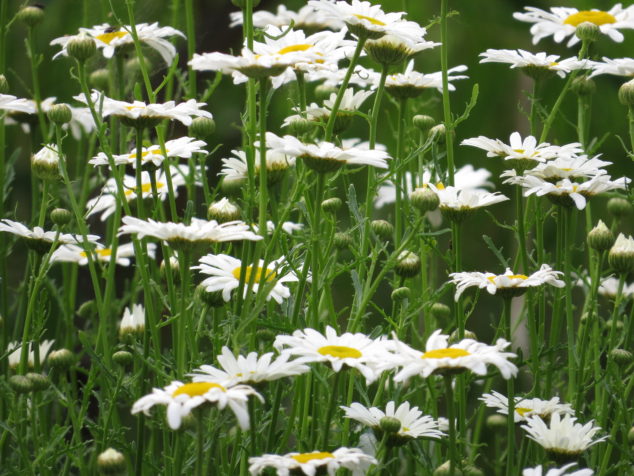
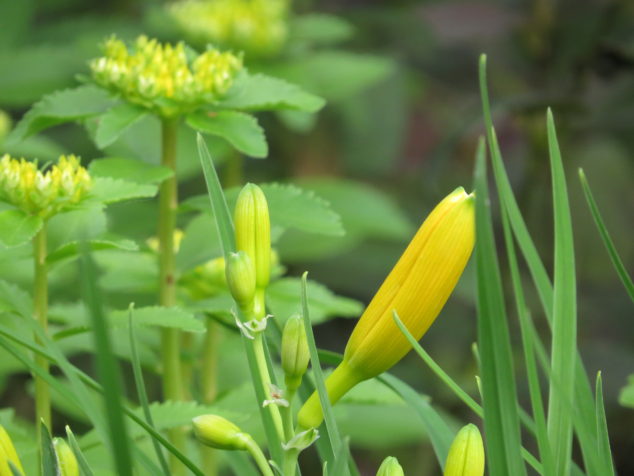
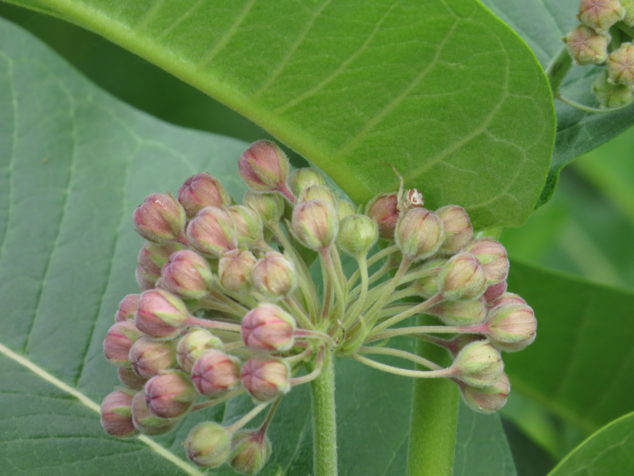
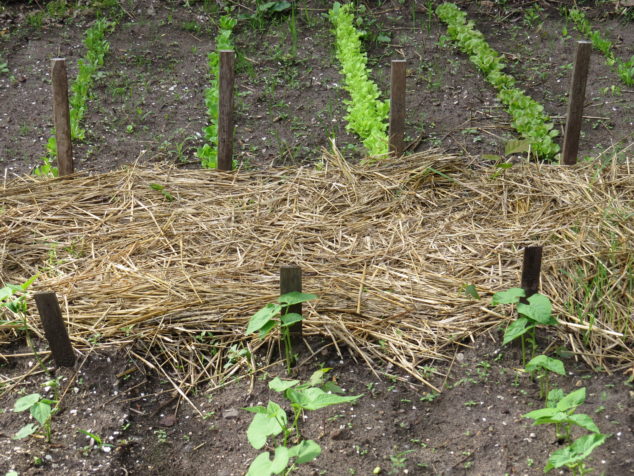
The late-planted garden is growing, as are the weeds that will need to be cleared out so the good stuff will grow and produce.
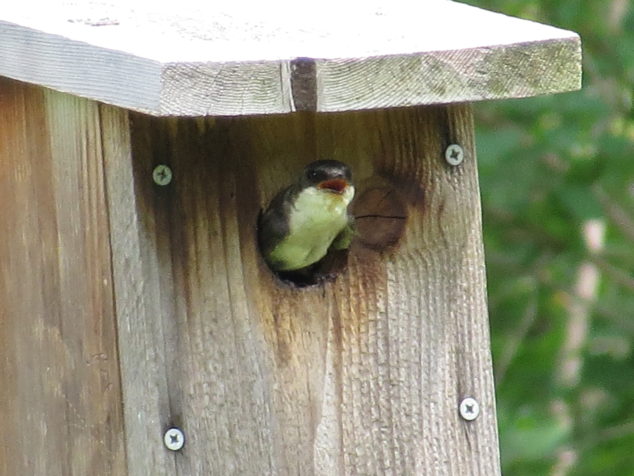
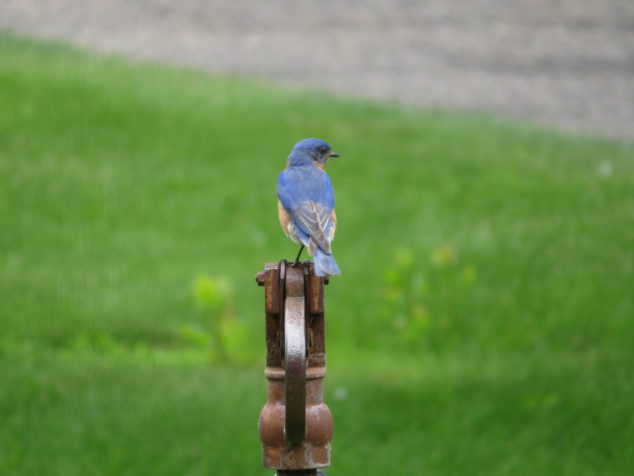
Bird parents are busy searching for insects to bring back to their hungry babies.
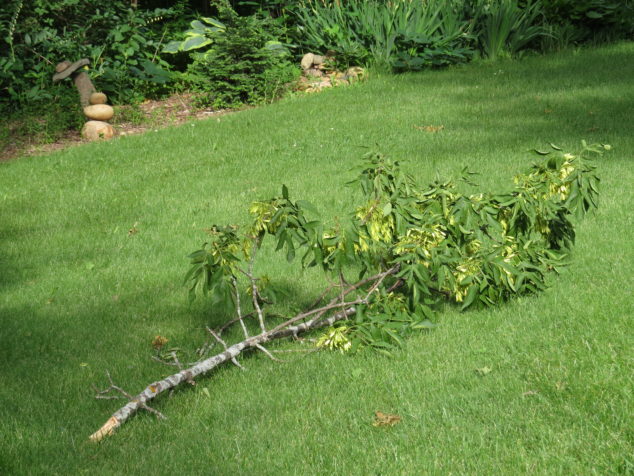
Broken remains of storm damage finally fell from a tree, days after the other storm debris had been cleaned up.
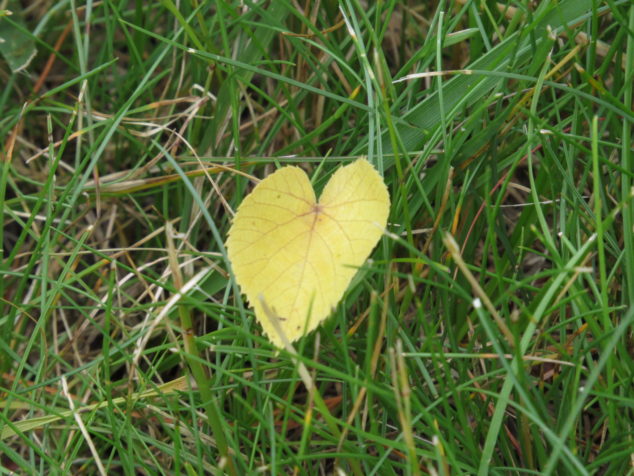
And then, just for a reality check, Summer throws in a little taste of what’s to come in a couple of months…
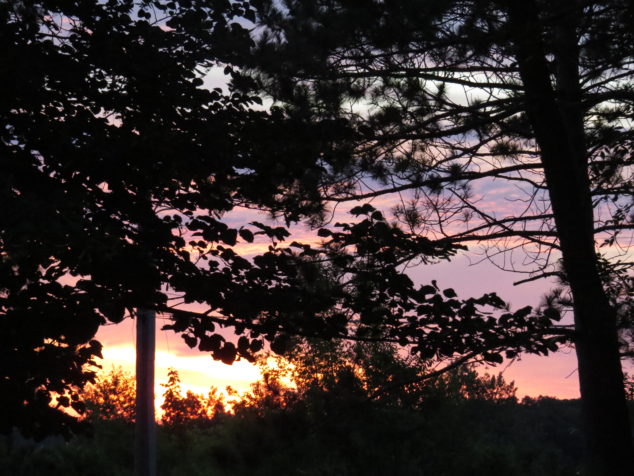
Late in the long day, the sun finally sets, the long twilight glows on, and the moon shines bright in the southern sky.
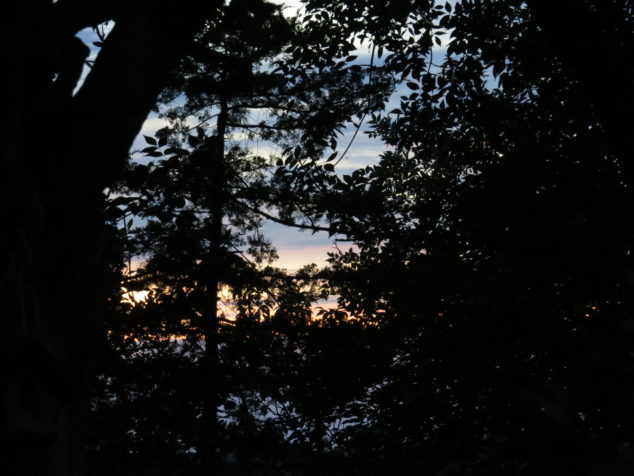
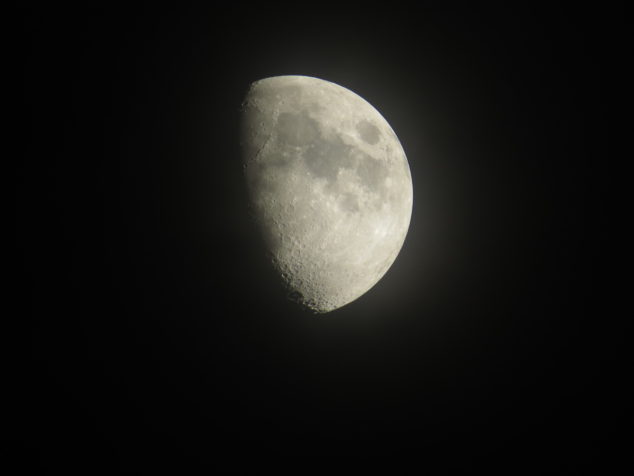
One notable Summer day, the Solstice, the official beginning of Summer, is like a birthday—remarkable in a way, but as common as every other day. It is a marker of seasons and new beginnings, a snapshot of the continuing development of all that is Nature and all that is Us. If we take the time to clear out the weeds and clean up the debris from the storms of our lives, we are energized. We can learn and grow and step into our larger selves. We are ready to bloom and ready to bear fruit. Shine on!
Checking Our (River) Bank Statements
One of the greatest lessons children can teach us is to hold two very divergent ideas in our mind and hearts at the same time. It may just be a matter of days after their birth before we are holding the most precious thing we have ever seen at arms length while contemplating the extreme mess of diaper, clothes, and blankets that needs to be cleaned up. Or there is non-stop crying that wears on our sleep-weary ears and nerves from the perfectly beautiful baby we brought home.
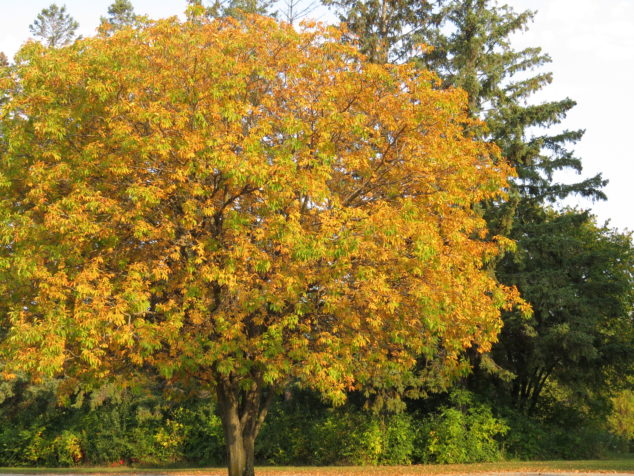
This past week was hot and muggy with uncomfortable nights and air quality alerts that tightened my airways with ozone. Summer’s bad qualities. But it looked like Fall. The Ash trees were mostly all yellow and dropping leaves. The Sumac trees had turned showstopping crimson and scarlet. The Linden trees were quickly turning lemon-colored with a circular blanket of leaves covering the green grass underneath them. So is it Fall or Summer?
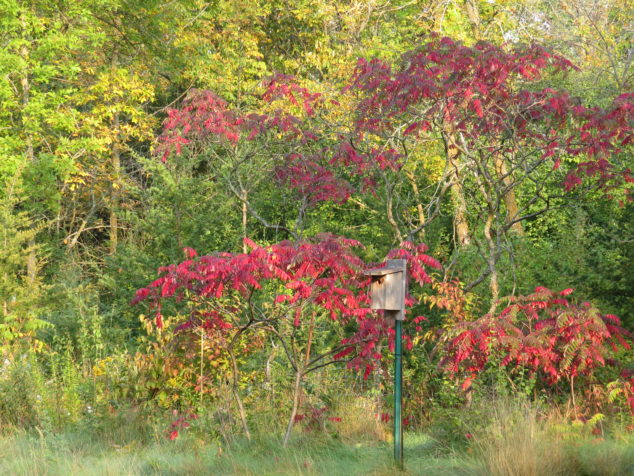
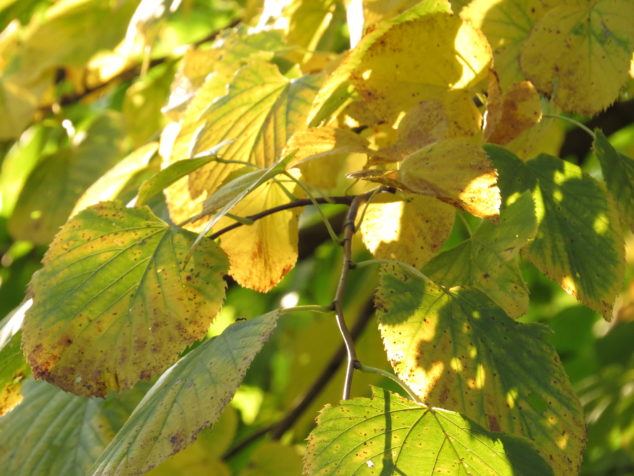
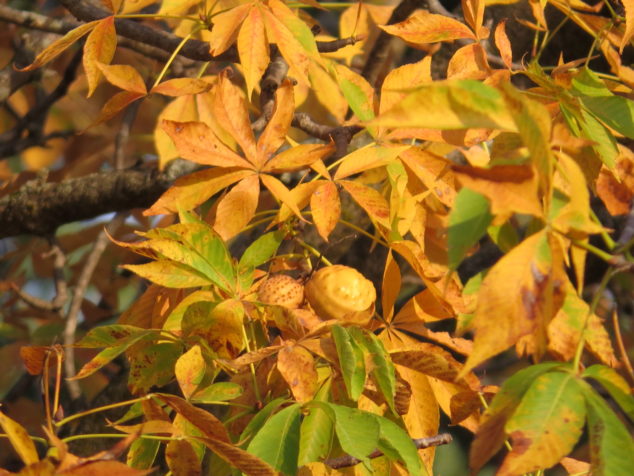
Our neighbor’s Buckeye trees glowed golden with leaves and spiny seed capsules that encase the ‘eyed’ dark brown seed.
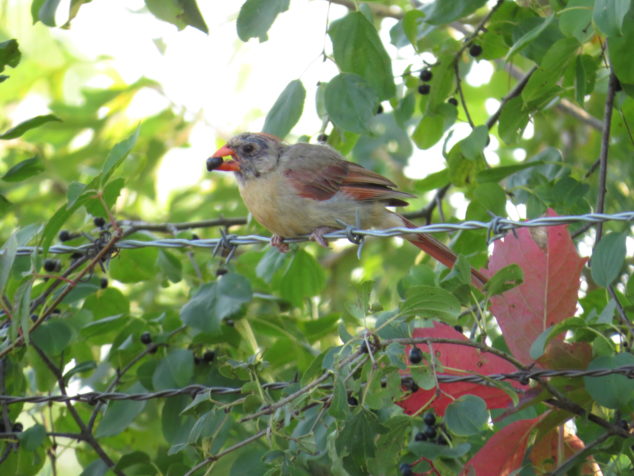
Fall harvesting by the birds has begun. A juvenile Cardinal plucked a seed from a nearby tree—unfortunately it was a seed from the dreadful Buckthorn! Is Buckthorn good for food or a worthless tree?
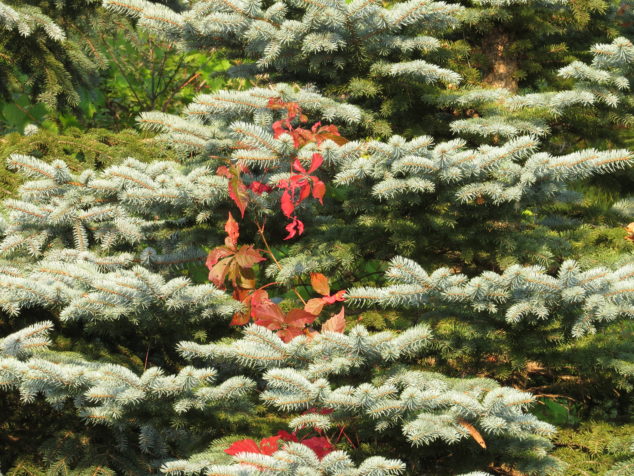
Virginia Creeper vines are turning red, going from camouflage to conspicuous.
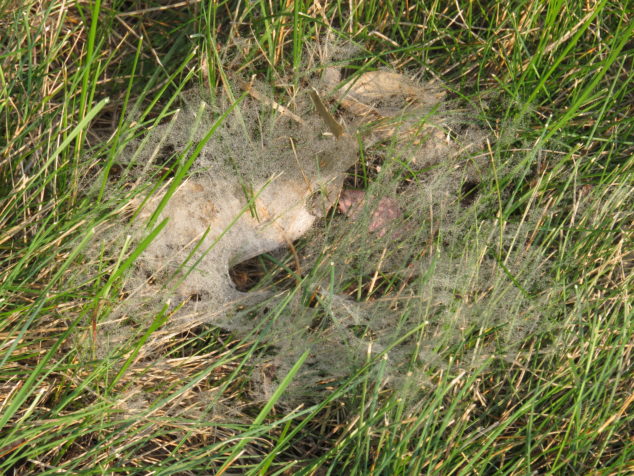
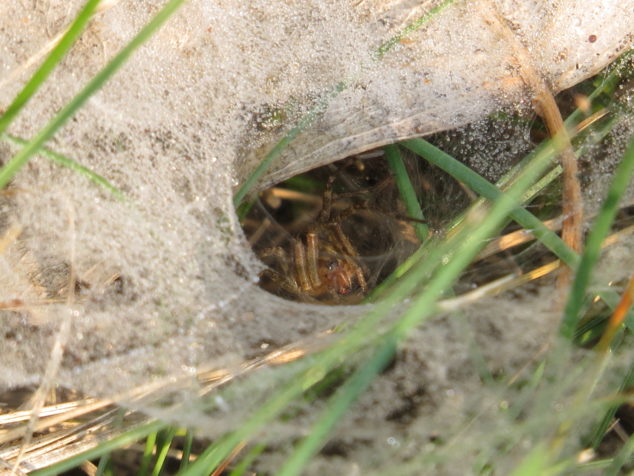
Also conspicuous in the morning dew was a funnel weaver spider’s sheet web. Most likely a grass spider, she hid herself in the entrance of the funnel to wait for a tasty insect to stumble upon her web. Are spiders terrible pests or architectural geniuses?
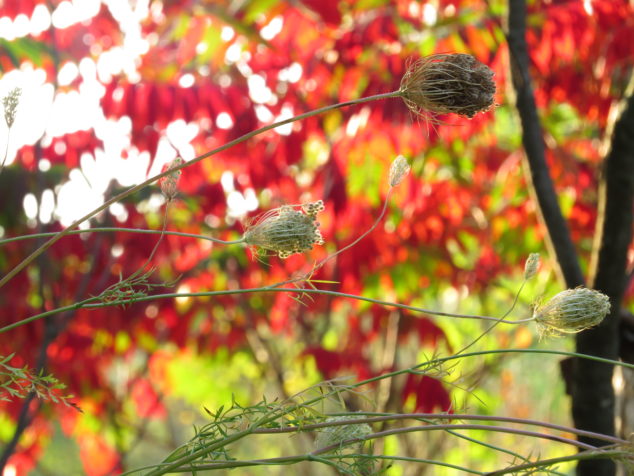
Drying seeds of Queen Anne’s Lace leaned over against the background of fall-colored Sumac.
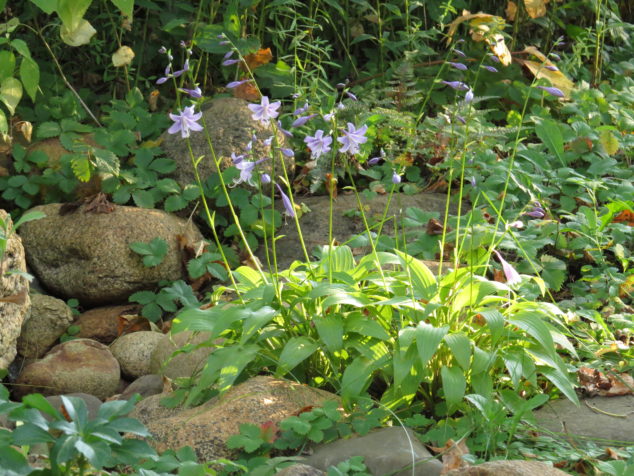
The smallest Hostas are just now blooming, fresh and summer-like…
…while the sun-kissed Maple trees are beginning to show their colors.
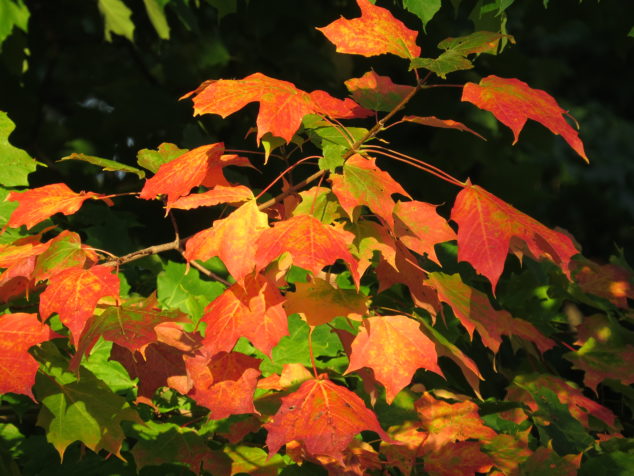
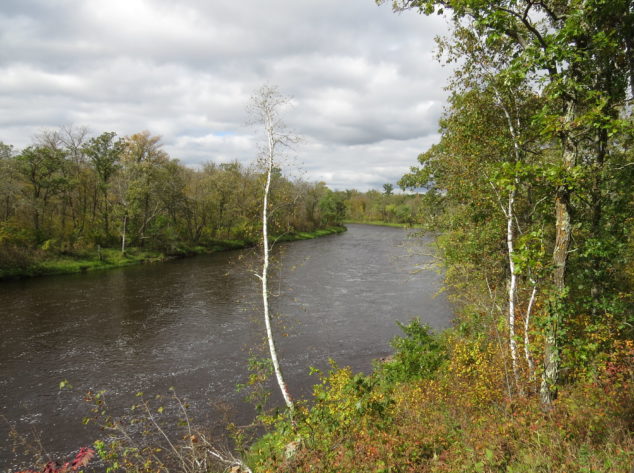
We are a society based on labeling. The calendar says it is still Summer and will be Fall on Friday; the meteorologists say it was Fall on September 1st. If we had no way of orderly keeping track of days, what would it be called? Perhaps it would not be named at all. Often labeling comes with black and white thinking, with opposite and extreme judgments—good or bad, right or wrong, all or nothing. We run into a web of tangled trouble when we try to determine who has the ‘right’ to decide what is right or wrong. Does the person who is deathly afraid of spiders get to determine a spider’s worth or does an entomologist? Does a person who is trying to eradicate Buckthorn from his property have the right to determine its value or does the person who loves it for a privacy hedge? I believe black and white thinking are like two banks of a river, and the river is the gray area. We can be the sturdy boats with thick ropes and strong oars and sails that navigate the River of Life. At times it is imperative for us to tie up to one of the two banks—for order in a society or for taking care of our personal space. But most of the time we are moving through life on the gray River, and we must hold two very divergent ideas in our thoughts and hearts with compassion. Our child who just made a huge mess is our beloved. The dreadful Buckthorn provides food for the birds. The scary spider or bat eats many destructive insects, and on and on it goes. Many people live on one of the two banks, like I used to—it is familiar and safe there, but Life passes by. We call out with disdain or hope to the people on the River—“We know the answer!” And while the River at times can be dangerous and fast-moving or stagnant and stale, most of the time it is life-giving, refreshing, cleansing, and invigorating. Through rough waters and smooth sailing, may we navigate well, anticipate the rocks and snags, learn what we need to learn, look to both horizons, and enjoy the unexpected treasures around the bend.
Butterfly Wings and Cowgirl Dreams
I have a printed meme on my refrigerator that says, ” Your time as a caterpillar has expired. Your wings are ready.” It has a photo of a horse on it with wise-looking eyes, a star on her forehead, and alert ears. I want to wrap my arms around her neck and smell the sweet goodness that only a horse lover so deeply appreciates. The quote is referenced to Unknown; the meme was posted by Cowgirl Dreams and was passed on to me by my sister. I look at it every day.
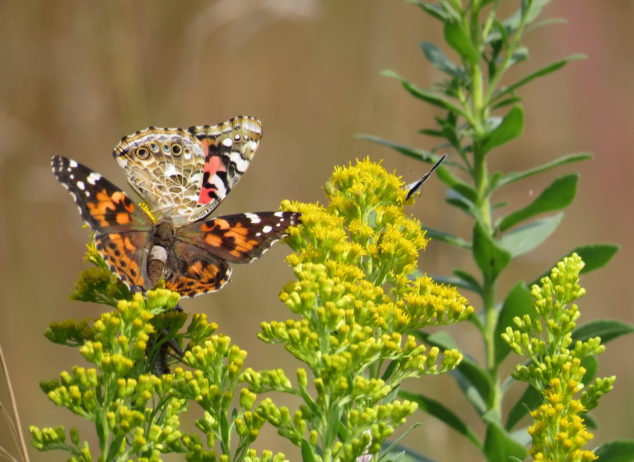
Last weekend when we were picnicking at Big Stone Lake State Park to celebrate my Mom’s birthday, Painted Lady butterflies filled the air and lit on wildflowers of all kinds to gather nectar. When I stood still, they landed on me. Painted Lady butterflies migrate in large numbers, so this ‘gathering up’ time occurs in late August into September. They migrate to southwestern United States and northern Mexico, traveling 100 miles a day and continuing to reproduce throughout their migration.
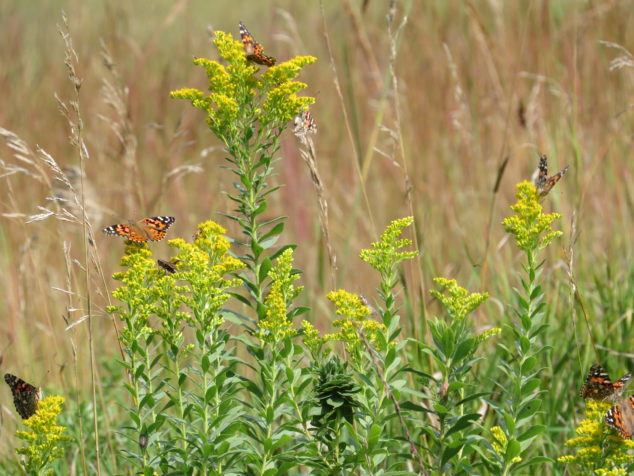
The Painted Lady is the most widely distributed butterfly in the world. They lay their eggs on asters, thistles, burdock, and legumes. (Vanessa cardui means ‘butterfly of thistle.’) The eggs are pale green and the size of a pin head.
In 3-5 days, the tiny caterpillar hatches from the egg, constantly eats the host plant, and grows quickly. The caterpillar literally grows out of its skin four times before being fully grown (each phase between molts is called an instar.) The yellowish-green and black caterpillar makes a silk nest on the host plant to protect itself from predators.
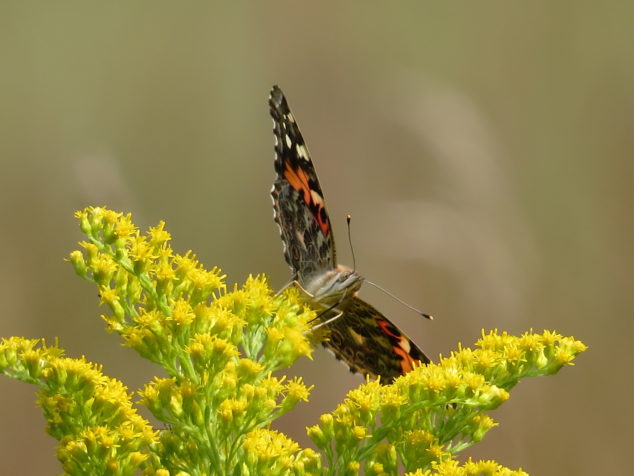
When fully grown, in 5-10 days, the caterpillar attaches itself with a silk button to the underside of a leaf. Its skin splits open to reveal a dull, brown case and becomes a pupa or chrysalis, and metamorphosis begins.
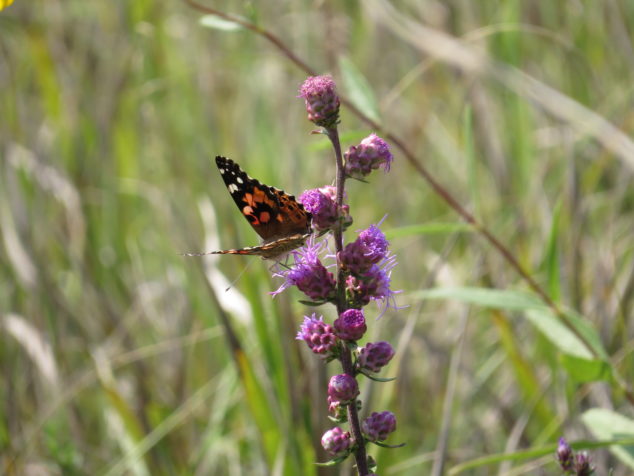
In the 7-10 days of metamorphosis, the caterpillar breaks down and becomes liquid and re-forms into a butterfly. The chrysalis splits open, and the Painted Lady butterfly emerges with crumpled wings that take a few hours to dry and straighten out. Then she/he flies away to drink nectar and mate to begin the cycle all over again.
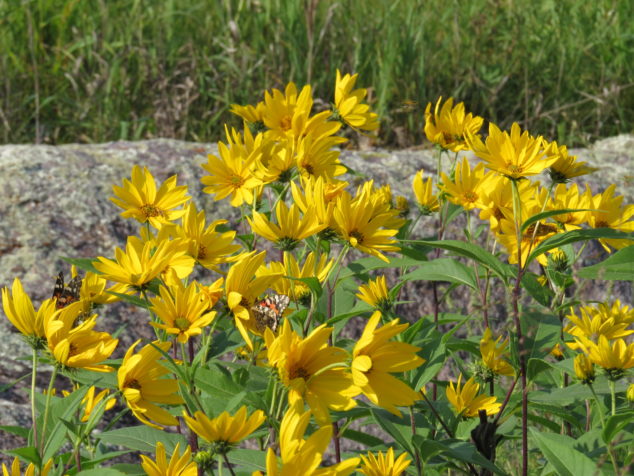
And what does that have to do with horses and cowgirls and all of us? Well, I think everyone wants to be a butterfly. Their bright colors attract attention, their delicate, velvety wings are marvels of flight and design, and they make even the most beautiful flowers more beautiful by their presence. But nobody gets to be a butterfly without the other steps. The tiny egg of an idea—the ‘imagineering’ of becoming a barrel racer, a nurse, or a composer—begins the process. Then comes the ingesting of information and the growth of practice—again and again and again. When maturation occurs, there is a period of stillness, a breaking down of the old to rebuild the new, the metamorphosis. Like Chris always says, “You can only get ready for so long; pretty soon you have to leave.” Your time as a caterpillar has expired. Your wings are ready. But in our all or nothing thinking, we believe we, as a whole person, are either a caterpillar or a butterfly, and if we’re not yet a butterfly, then we are somehow lacking, not good enough. I propose that we are all—at any given time—a compilation of all the stages in different areas of our lives. I am an aging tattered-winged butterfly of a Mom; I am a voracious student caterpillar in learning about trauma and attachment; I am a pupa in my spiritual life—breaking down old ideas and rebuilding new ones, and I have some tiny green eggs of ideas that I want to hatch out and grow. Cowgirl dreams…anybody dreams…dreams we can wrap our arms around. We are marvels of design, bright with the colors of creativity, and we can each make the world a more beautiful place by our presence.
My Mom, the Adventurer
My Mom is an adventurer. I’m not sure when I realized it. It was not when we were kids and she skirted around a barricade on a highway because she knew she wanted to get over to that other side. It wasn’t when she drove half way across the country by herself with three kids or when she and my Dad literally built our house and barn. I didn’t think it was out of the ordinary that she raised cattle by herself after the divorce. I did start to get an inkling when she went to India for a month, and I thought to myself that I would never do that! The older I got, the more adventurous my young Mom seemed to be! She went to France, drove to Montana, visited the Northwest, vacationed with us on a houseboat in Canada, hiked with her newlywed granddaughter in the Texas Hill country, and picked wild blueberries with us in the Northwoods even after we saw evidence of a bear. In just the last six months she has visited Minnesota three times, tent-camped for a week-long trip to Wyoming, and oh, did I mention she’s refurbishing an old camper?
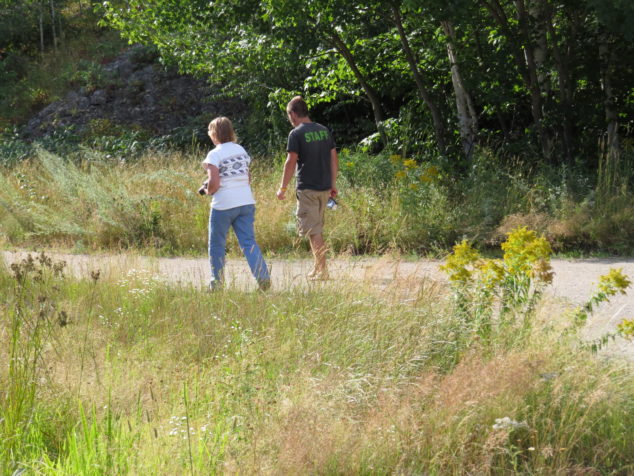
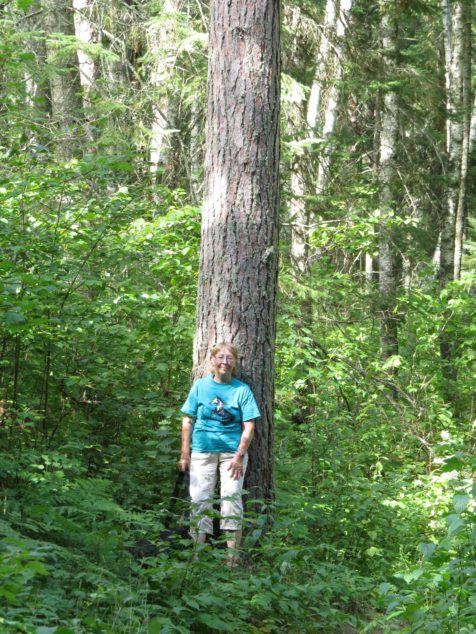
My Mom met us at Big Stone Lake State Park yesterday, where South Dakota meets Minnesota—at the Big Stone and the Big Lake.
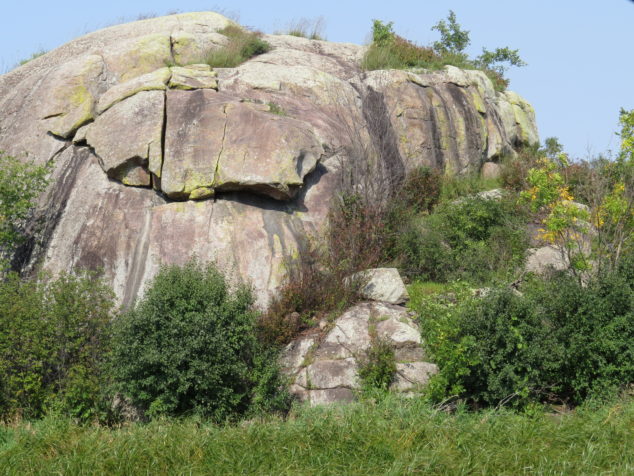
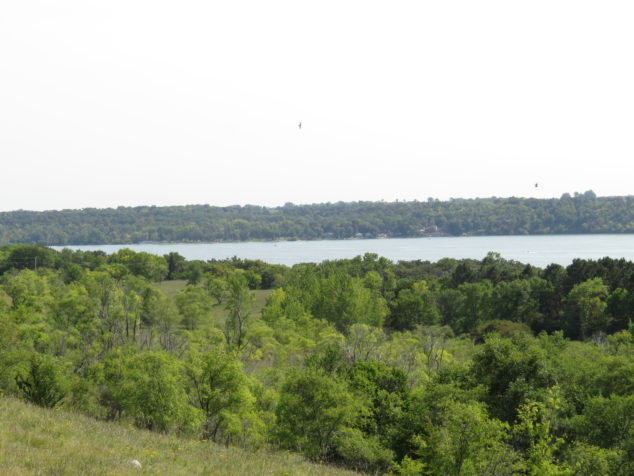
We met to celebrate my Mom and her eight decades of life. We picnicked, ate cake, hiked a little, drove through Big Stone National Wildlife Refuge, and took photos. It was a good day. My Mom and I share a love for Nature, and I am ever so grateful for that. I don’t think I’ll ever be as adventurous as my Mom—I think I’m too cautious and worry too much (that long plane ride over the ocean makes me shudder.) But I also realize that we can all be adventurous in our own way—my friend Lynda is a spiritual adventurer, graduate school is an intellectual adventure for our daughter Anna, climbing mountains and moving to a new state are two kinds of adventures for my friend Michaela, and so on down the list of family and friends. So here’s to my Mom, the adventurer, and to all you other adventurers out there, no matter what your horizons!
- « Previous Page
- 1
- …
- 5
- 6
- 7
- 8
- 9
- …
- 14
- Next Page »