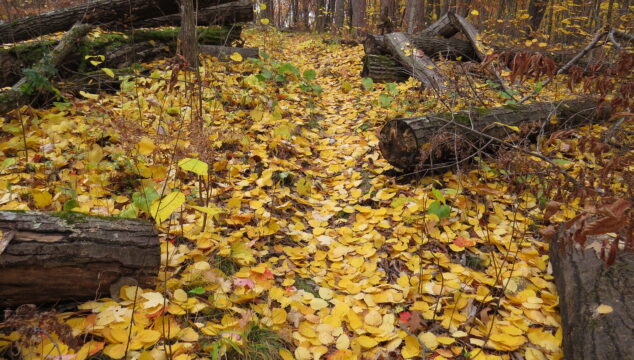
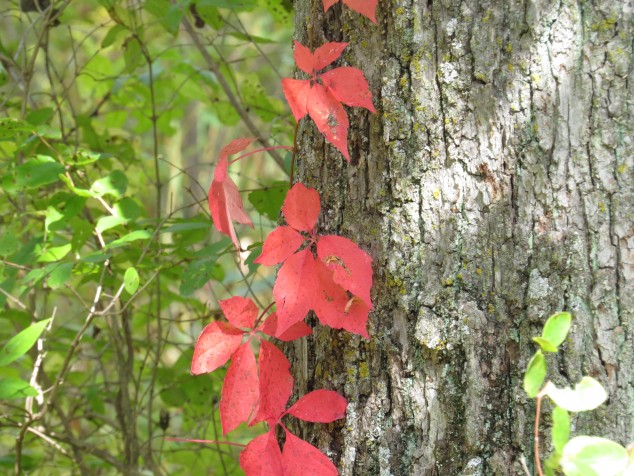
Come walk with me in the peak Autumn beauty of the Northwoods. To say that I love this time of year is an understatement. Most everyone can appreciate the colorful falling leaves---it reveals the 'true self' of a tree when its leaves are no longer producing chlorophyll. Their true colors are revealed, and there is something simple … [Read More...]
Battle of the Buckthorn
The War on Buckthorn at the Brake woods continued with a recent battle in the south corner. Just a warning–these are not pretty pictures! Armed with a chain saw, hand saw, loppers, Round-up, and gloves, Chris and I went to work. He’s the chainsaw man, I’m the Round-up stump painter, and we both load the pickup bed with the piles of brush that need to be hauled away. Of course, I was so excited about attacking this patch of undesirables that I forgot to take a ‘before’ picture!
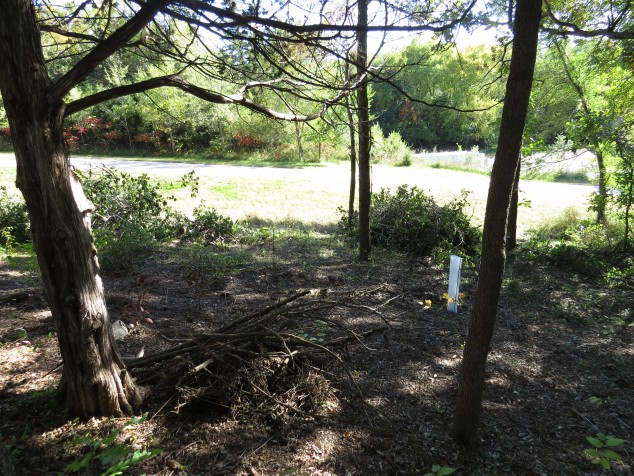 But this is what it looks like right next to the cleared area, which will give you an idea of what it looked like ‘before.’
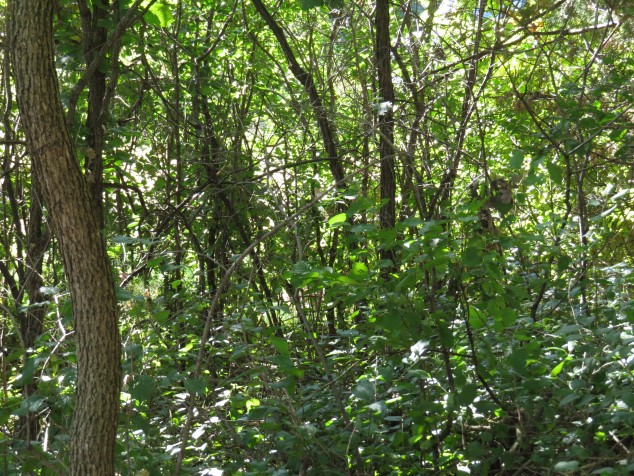
And this is another section of the woods where the buckthorn was cut down but not yet removed. It is dense, prickly, nasty, invasive stuff.
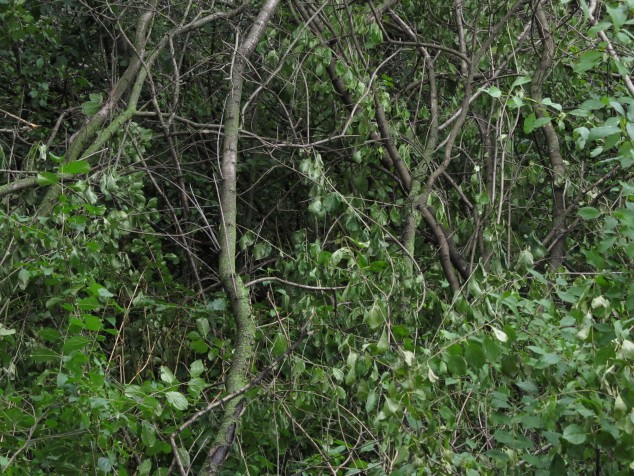
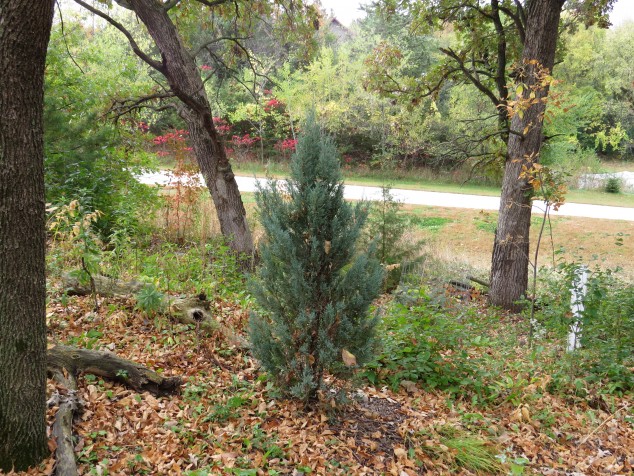
Every square foot of our woods looked like that when we moved to our little plot of land above the river. Five years of battles against the buckthorn, area by area, has made a huge difference in the way our woods look now. As the buckthorn came out, Chris planted new things. He mulched paths through the woods, planting trees, shrubs, ground covers and perennials along the way.
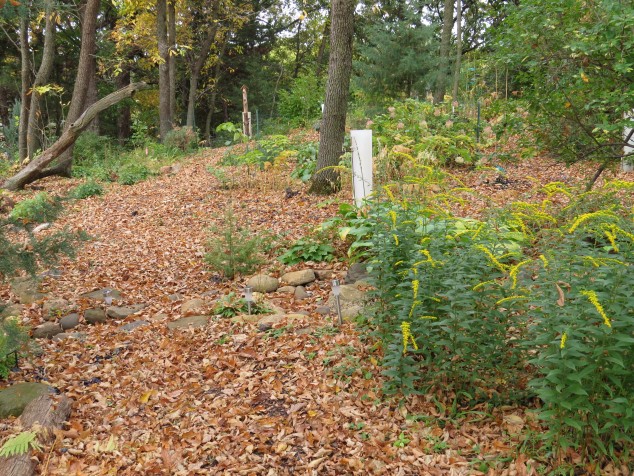
He built a winding dry stream bed of rocks that can be ‘turned on’ to be a babbling brook.
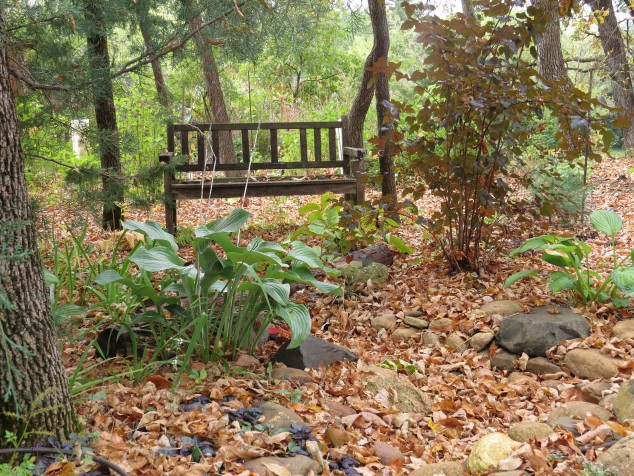
He planted a small grove of Hazelnut shrubs that he grew from seeds. American hazelnuts are native to this area as an understory shrub or small tree. The nuts are small with thick shells, are high in protein and vitamins, and are highly favored by squirrels, birds, and other wildlife. European hazelnuts–the kind you get at the store–are not hardy in this area.
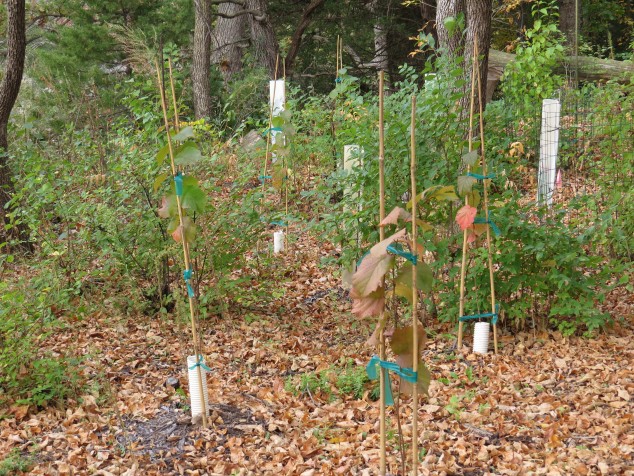
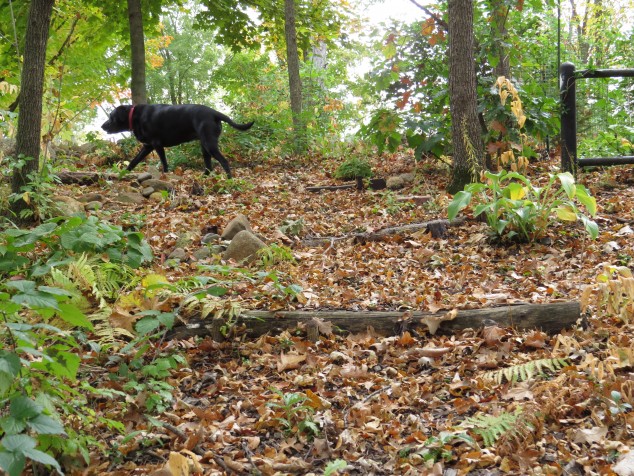
We left a fallen tree for interest and as a dividing line between the more cultivated area at the top of the hill and the ‘wilder’ planted hillside below. The white plastic cylinders protect oak seedlings from rabbits and deer.
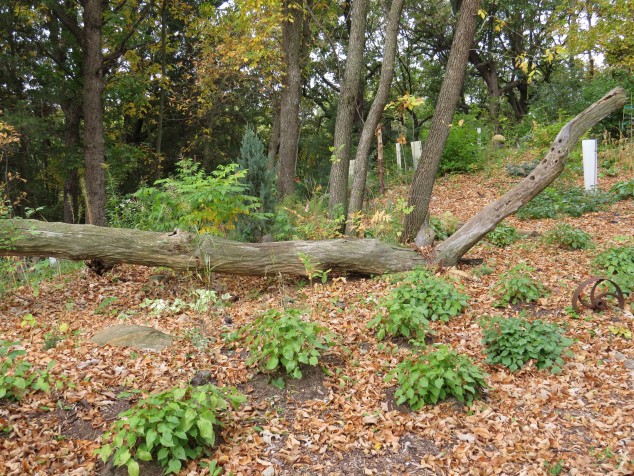
Low grow sumac helps prevent erosion on the sandy hillside. Cedars, oaks, and honeysuckle seed themselves and are free to grow without the suffocating buckthorn. Raspberries, gooseberries, and many woodland perennials, including Jack in the Pulpit, have reappeared in the cleared areas.
 Tamba and I enjoy our daily strolls through the woods. Every day is different–new shoots, new flowers, areas of weeds to be tackled, or the first red leaf of fall. You can feel the vibrancy!
 The restoration of our woods is an ongoing project. Getting rid of the mature buckthorn is just the beginning–pulling the seedlings that grow from the years of seed production is the part that really tries one’s patience. A cleared area can be covered with buckthorn shrubs four to five feet high in a year or two if diligence is not taken to pull the young seedlings. But it does get better after a number of years! Seeing the woods come alive again with native plants along with what Chris has planted, has been such a joy! We see the unfolding of life, the glory of flowers and fruit, and the colors and strengths of the seasons–not the snuffing out of life by the buckthorn.
This is a story of hard work, years of time, patience, and perseverance. It is a story of hope, new growth, restoration, and redemption. It is a story of enjoyment, peacefulness, beauty, and bounty. It is the story of love and life.
Gleanings from September
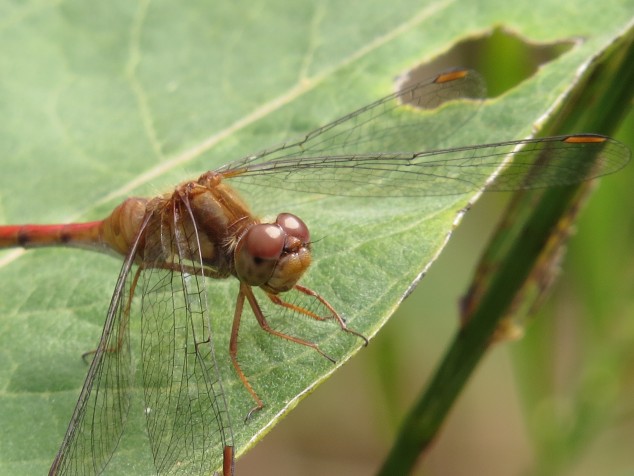
September has flown by it seems. These are the last weeks of summer and the introduction to fall. There is the scare of frost that pushes one to fling bed sheets over potted annuals and tender basil and tomato plants because we cannot bear to see their darkened, wilted leaves just yet. Later, we resign ourselves to its inevitability–but that is an October state of mind. We want to hang on to the warmth and jubilant growth and production of summer–even as we see the reverse process going on right before our eyes–the cooling, turning, falling, and wilting.
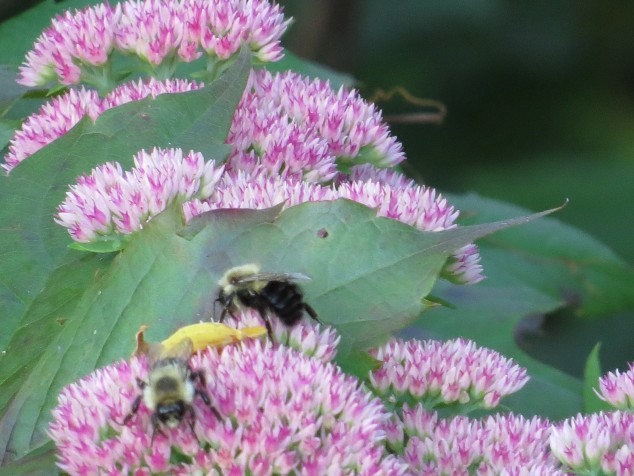
Bees still feed on sedum flowers, though not with the busy energy of playing children. They are placid and slow in the coolness.
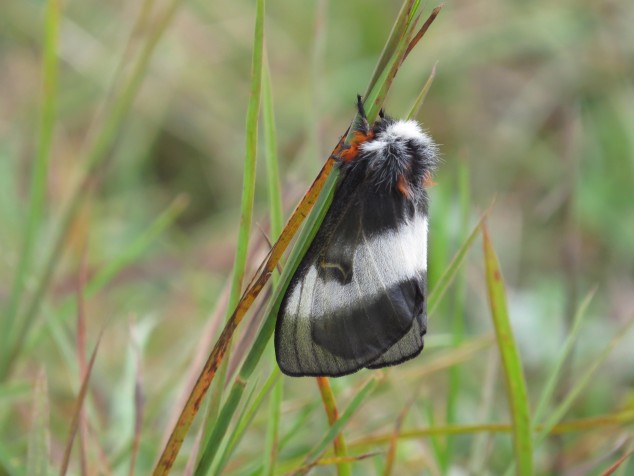
A Buck moth–so named because it emerges during the rutting season of whitetail bucks–clings to the prairie grass at St. John’s Arboretum. It looks as if it wears a warm fur coat to get it through its short, egg-laying Autumn life.
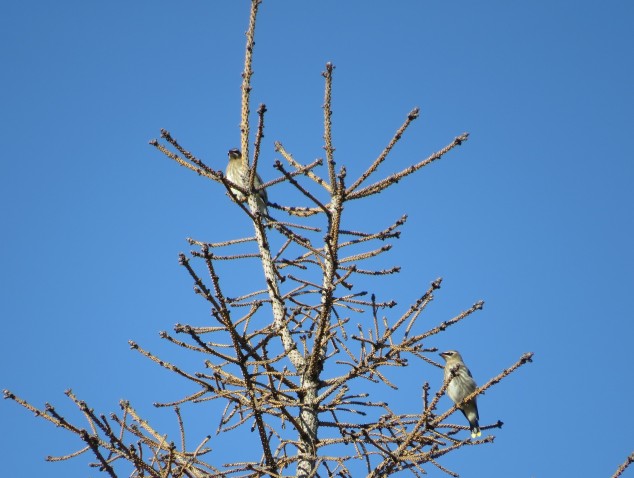
One afternoon as I walked out our driveway, I looked up at the top of a dead spruce tree. Birds perched like Christmas ornaments on its branches. Most of them flew away before I got a good look at them with the camera, but I discovered they were Cedar waxwings.
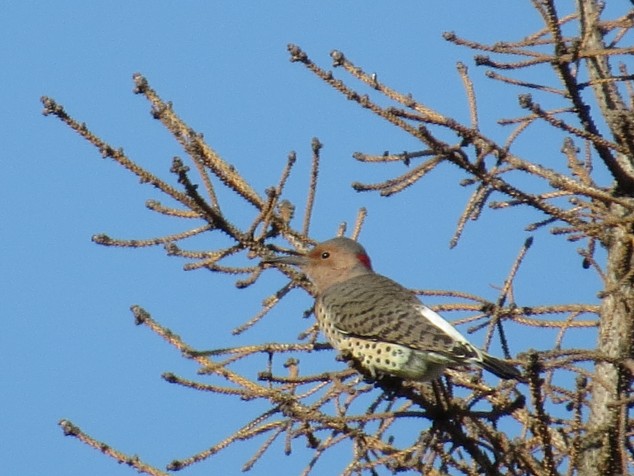
 Another visitor to the dead spruce was a Northern flicker, stout of body and bill with the red nape of its Woodpecker family. It’s one of the only woodpeckers to feed on the ground and to migrate from its northern areas.
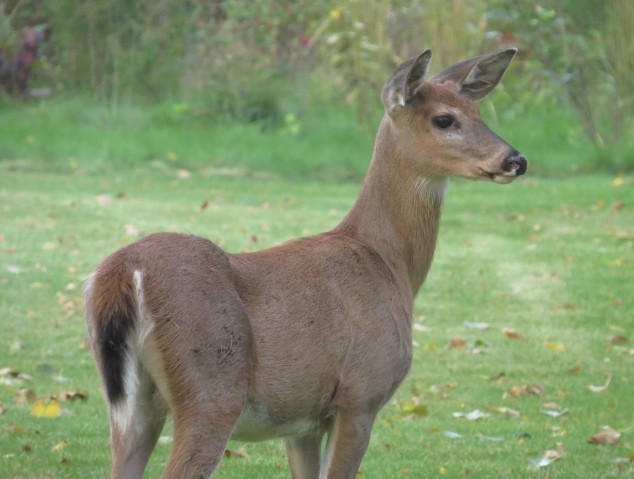
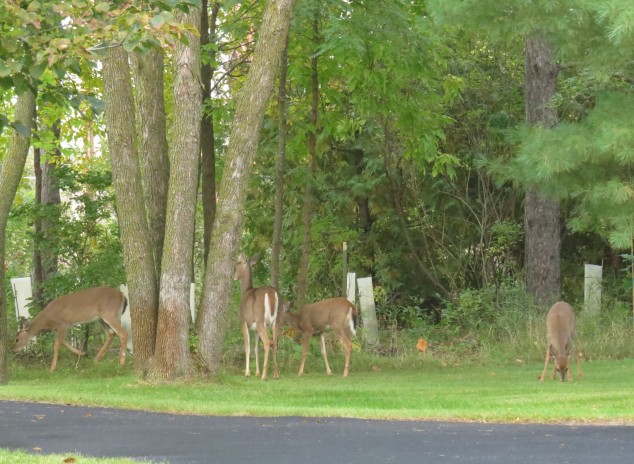
In September we saw some of our frequent yard visitors mature into young adulthood. The small, spotted, twin fawns now looked muscular with thick coats, and I had a feeling of sadness to think of them in the sight of a gun instead of my camera.
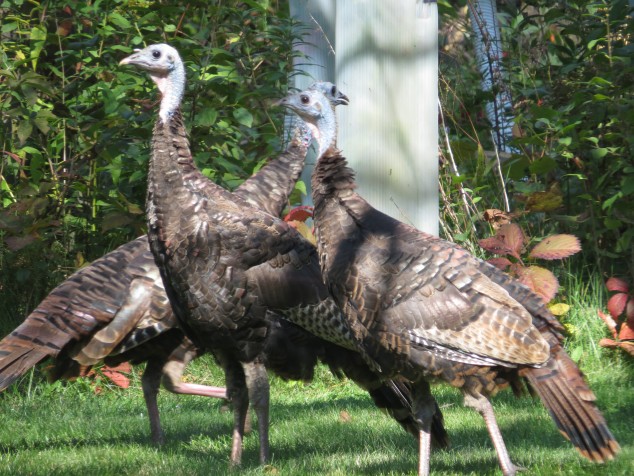
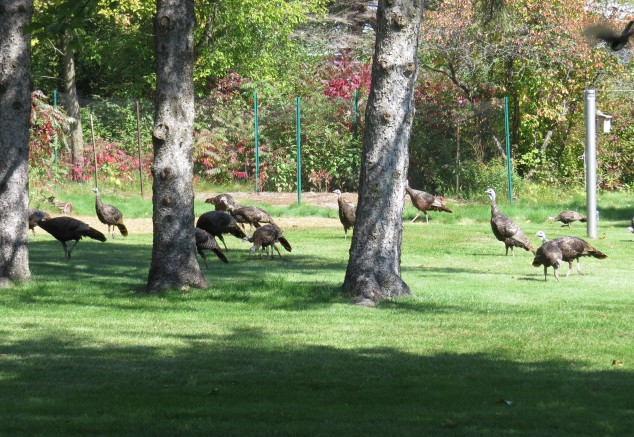
The young turkeys, once scurrying balls of feathers, were indistinguishable from the adult females who wrangled them around all summer. Their feathers shone in the sunlight with the diverse markings and rich copper, brown, and bronze colors of the adult bird.
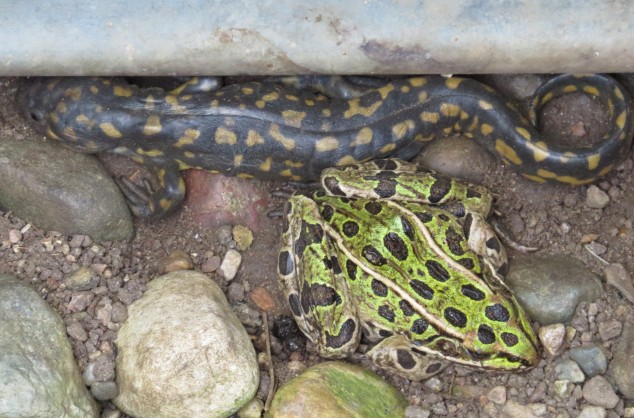
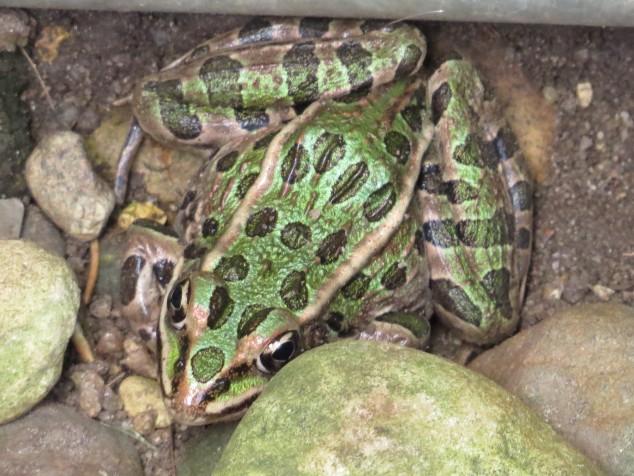
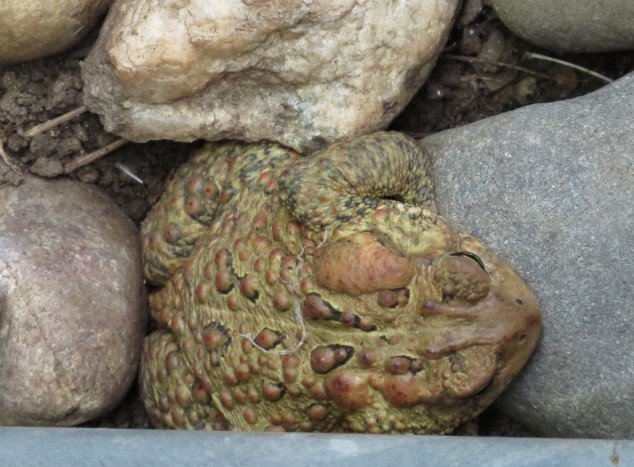
I carried out an amphibian rescue from the deep egress window well on the northeast side of our house after our Black lab would run to it and peer over the edge at the critters who had inadvertently fallen into the abyss. Three Tiger salamanders, two Leopard frogs and a Partridge in a…..no, I mean a chubby, bumpy, brown toad.
(This one is so shimmery and pretty!)
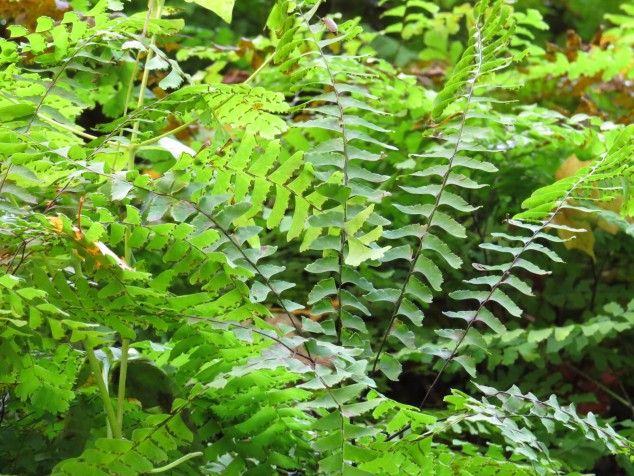
And finally, I wanted to show you my favorite fern–Northern Maidenhair–with a whorl of lighter green fronds floating on dark, wiry stems. They grow along the shady narrow road that climbs the bluff from the bank of the Mississippi River at Cassville, Wisconsin to the cemetery where Chris’ folks are buried. That’s the first place I remember seeing them. These grew where the woods and the wetlands merged at St. John’s Arboretum. My attempt to establish them at our place has met with disappointment, as our hilltop sandy soil drained away the moisture they require. But I’m not giving up yet–Chris has a project going that may be the solution to my problem….
It is human nature to not want to let go of the things in life we love or that give us pleasure. Summer is a pleasurable time in Minnesota, a time we do not take for granted. It is short and sweet, and we want to hold on to that sweetness. But the night temperatures fall into the thirties, the colorful, fallen leaves cover the green grass, the produce from the garden is mostly all harvested, and the denial of what’s coming is getting pried away by reality. We get out our warmer clothes that have been put aside, not even put away, and we start to make our mental list of things that need to be done before winter. We rescue what we can, and with loving appreciation we let go and give the other up to God. We move on to our October state of mind.
The Prairie and the Wetlands
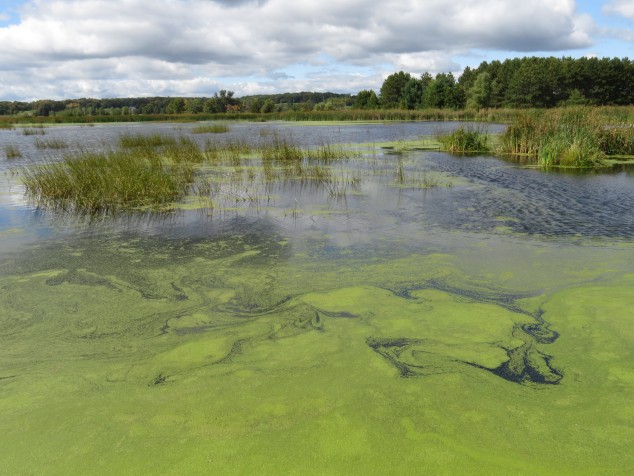
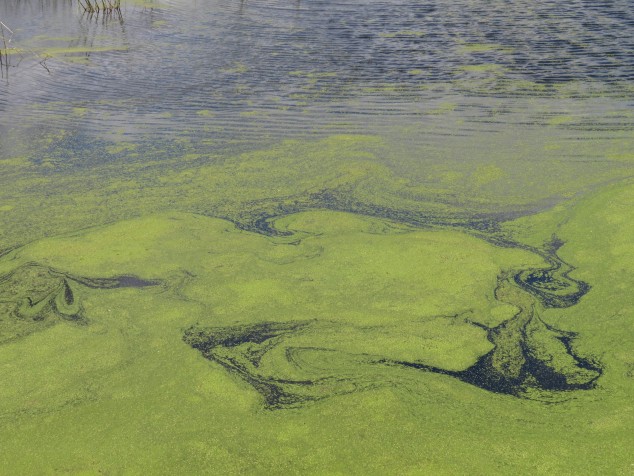
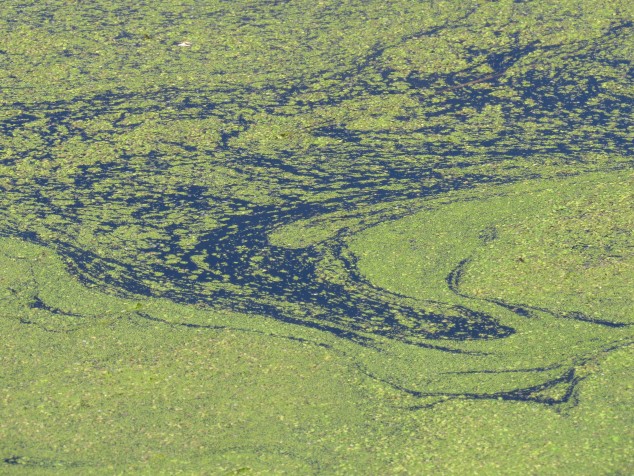
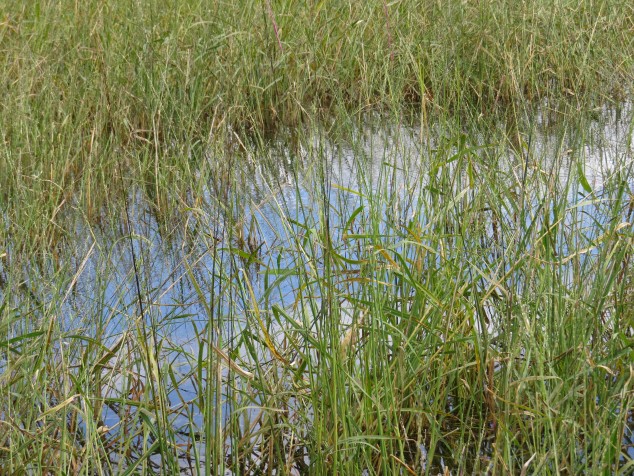
In a single short hike at St. John’s Arboretum, one encounters three distinct environments–the prairie, the wetlands, and the woodlands. My last post showcased the amazing fall colors of the woodland maple trees; this post will share a glimpse of the wetlands and prairie. The trail is called the Boardwalk Loop and has two stretches of floating boardwalks across the wetlands. I like the blues and greens of the Monet-looking artwork of duckweed medium by the artist Wind–probably with the assistance of Waterfowl!
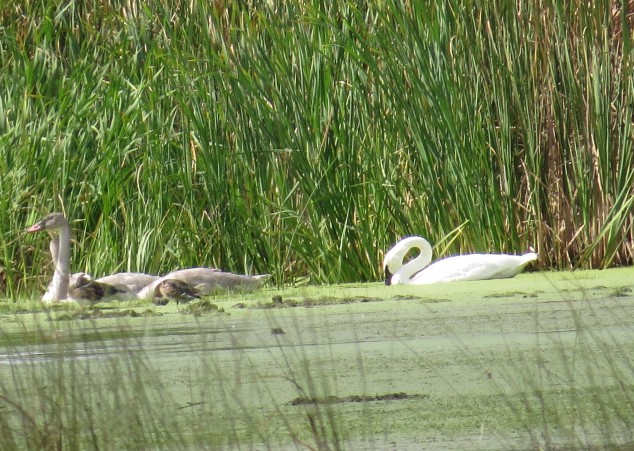
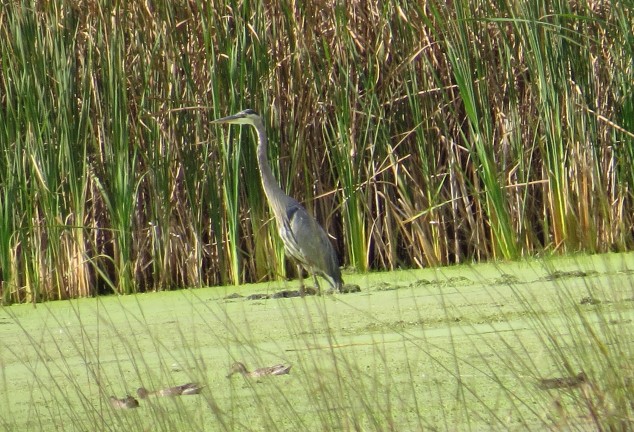
At the far edge of the open water, the bright white of a swan caught my attention. As I was trying to focus in on the swans, I also found a great blue heron standing amid the ducks and the duckweed.
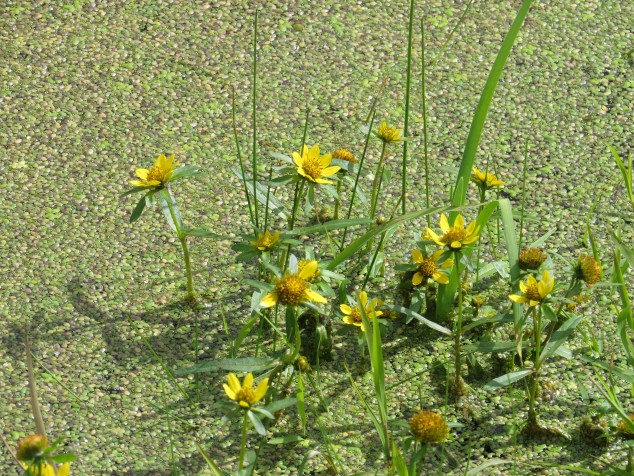
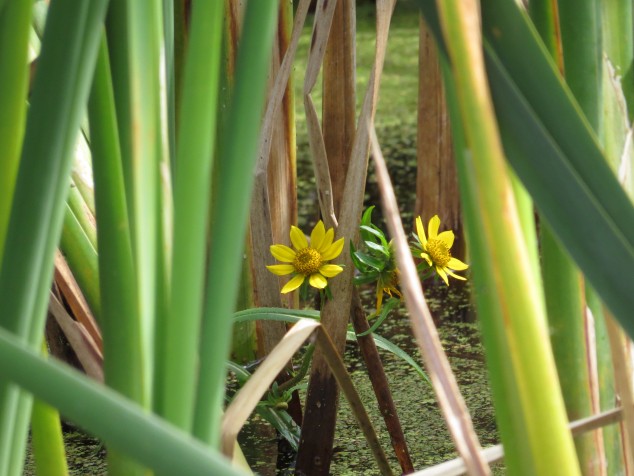
I was unable to identify this sunflower-looking swamp flower growing up through the duckweed and framed by cattails. What a picture of optimism! Sunshine yellow in a sea of green in the fall of the year and the center of attention among the overbearing cattails!
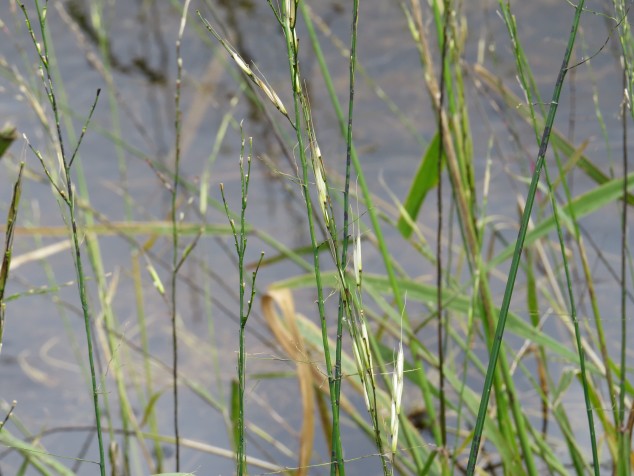
Farther up the boardwalk was a stand of wild rice. Wild rice is a tall aquatic grass that is a valuable food source for waterfowl and red-winged blackbirds, as well as for people. Minnesota is one of the largest producers of cultivated wild rice in the United States. Most of the ripened grains had already fallen or been eaten off the stalks, but the close-up photo shows a stalk with the grains still intact.
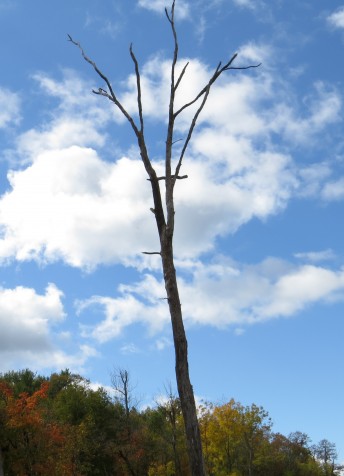
As we hiked from the wetlands to the prairie, this towering tree silhouetted against the blue sky and white clouds was one that succumbed to the wetlands. A number of trees along the border were unable to live with their roots in water.
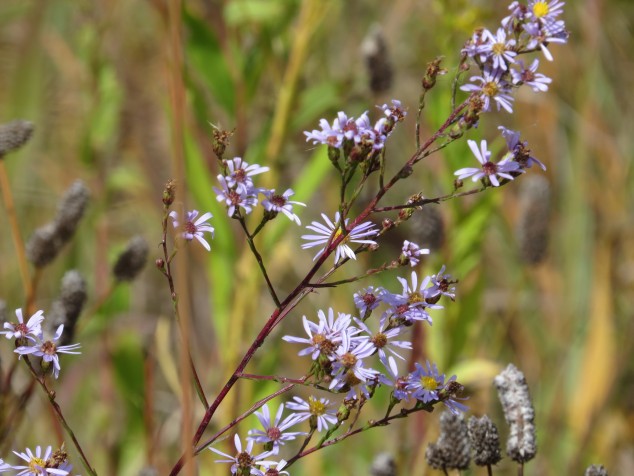
Autumn on the prairie! Asters and goldenrod bloom in bright colors among the stands of prairie grasses. Big bluestem, reaching over five feet tall, makes an impressive show and harkens back to the time when bison roamed the grasslands.
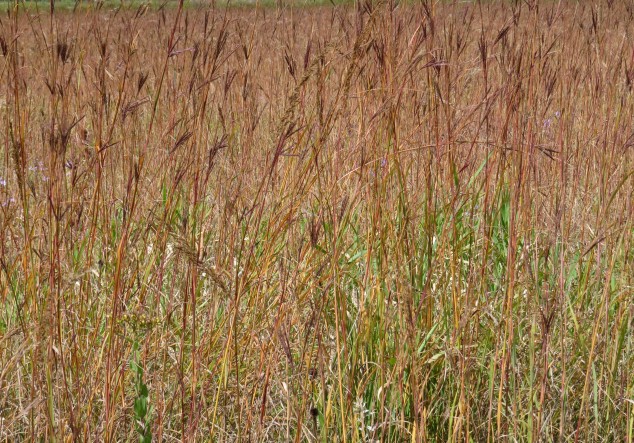
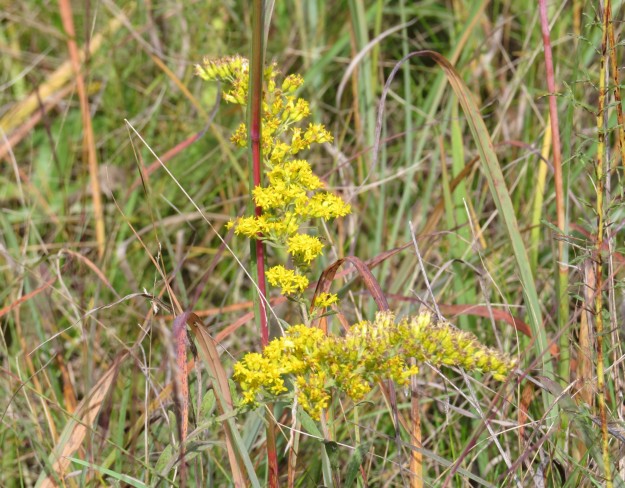
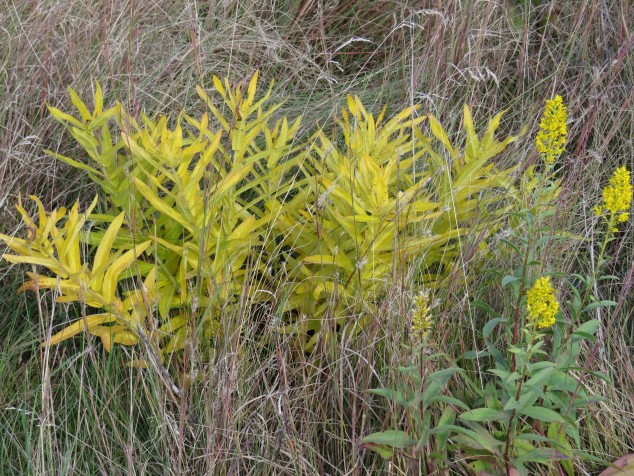
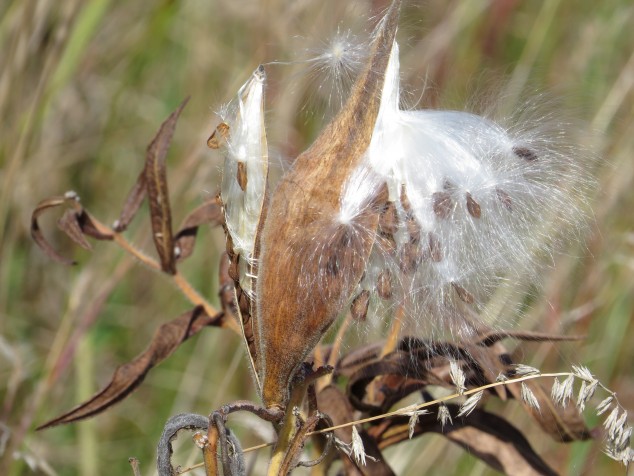
A dried, brown milkweed pod slowly opens to release its fluffy parachuted seeds to the winds. It’s the end of its reproductive cycle in this short Minnesota growing season–or perhaps it’s the beginning….
This tiny showing of Nature’s artwork is part of a priceless collection that we all have available to us to view, appreciate, and wisely and respectfully use. The flora, fauna, food, and beauty that Nature provides in glorious abundance is often taken for granted or dismissed as not important in the economic scheme of things. Every thing has a place and a purpose in this rich cycle of life that connects each living being. Like the tree lost to the wetland and the bison gone from the bluestem prairie, we must make sure that we are not lost to the wrong environment for our circle of life to continue.
Happy 1st Day of Fall
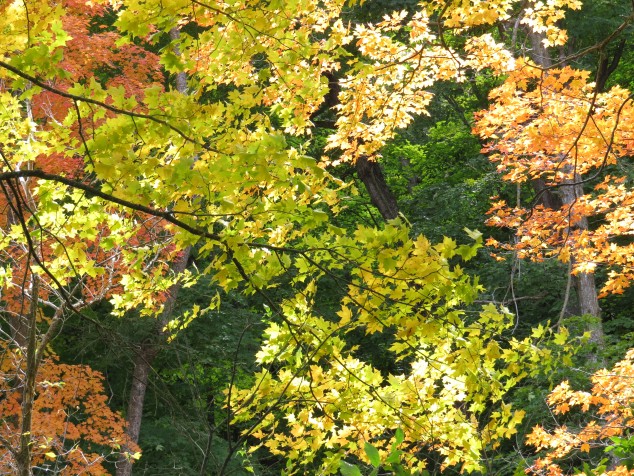
Happy 1st day of Fall to all of you! It is a beautiful autumn day–clear blue sky, bright sunshine, cool temperature, and a tapestry of orange, red, yellow and green leaves. It is the season for picking apples, making apple butter, drinking apple cider, choosing pumpkins, carving jack-o-lanterns, raking leaves, and running through a corn maze. It is harvest time for the farmers, closing time for the cabins and camps that have housed a summer of delightful fun, and hunting time for those who carry a bow or gun for sport or to put food on the table.
Over the weekend, our yard was a wildlife paradise of sorts, as the deer grazed through the delectable offerings one evening and the posse of almost fully grown turkeys swept through the yard at midday with flapping wings and watchful eyes.
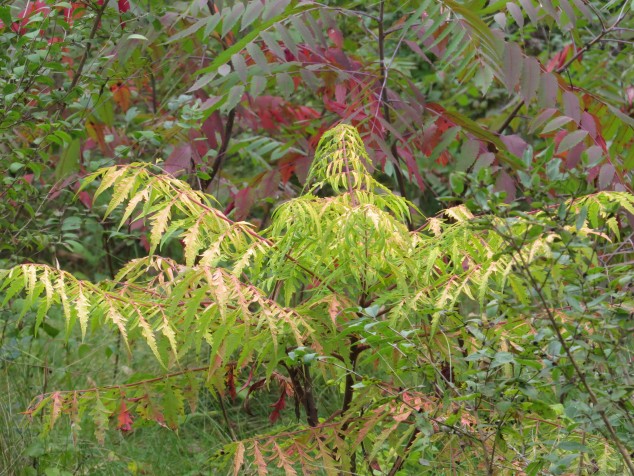
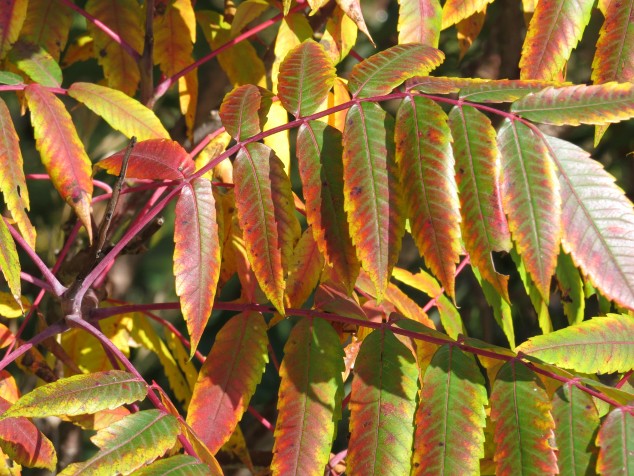
The sumac is in all its glory–the understory to yellow-leaved ash and poplars.
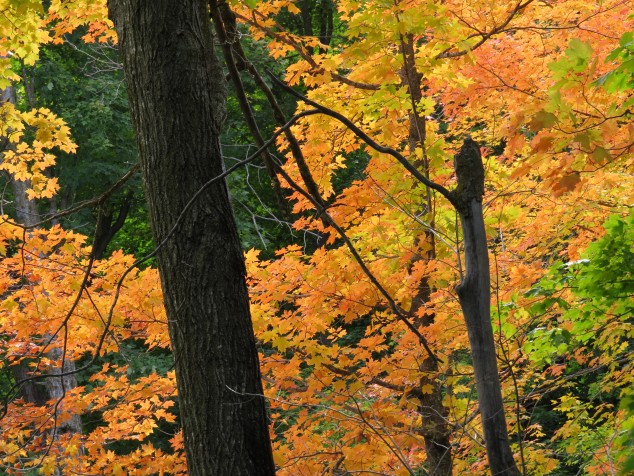
We met up with Aaron at St. John’s Arboretum yesterday for a spectacular walk through the woods. The maple leaves glowed against the dark trunks and branches on trees so lofty it took my breath away.
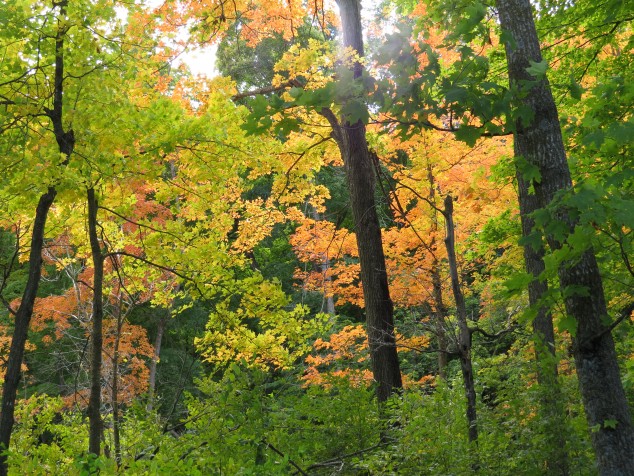
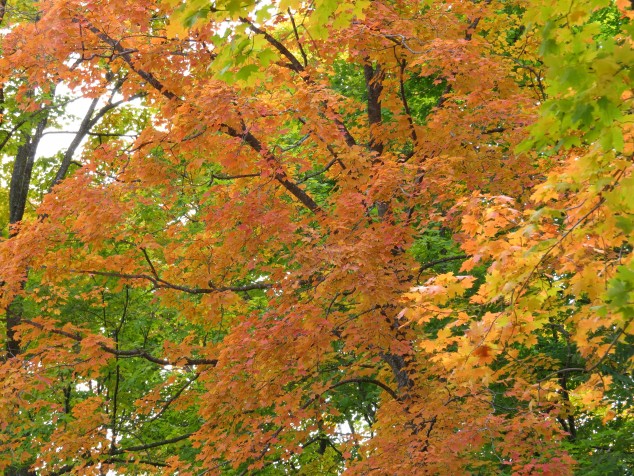
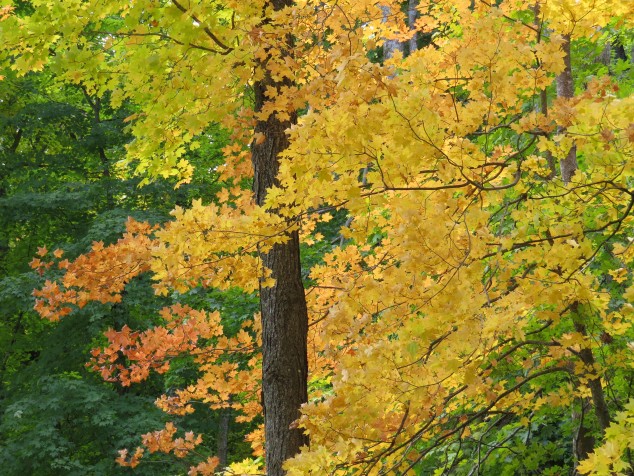
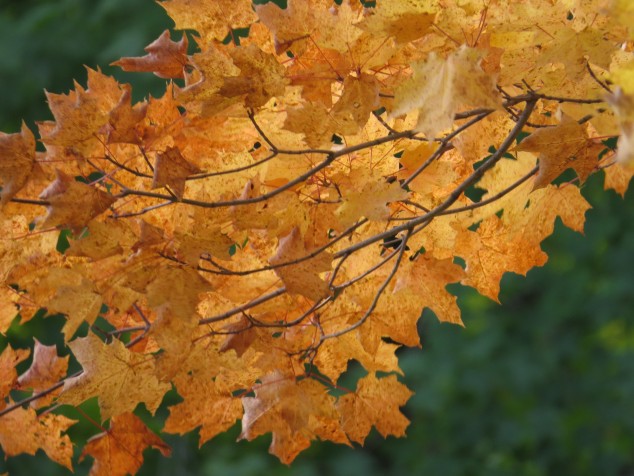
Fallen leaves lined the path through the woods and decorated the ferns and wood nettles with bright spots of color.
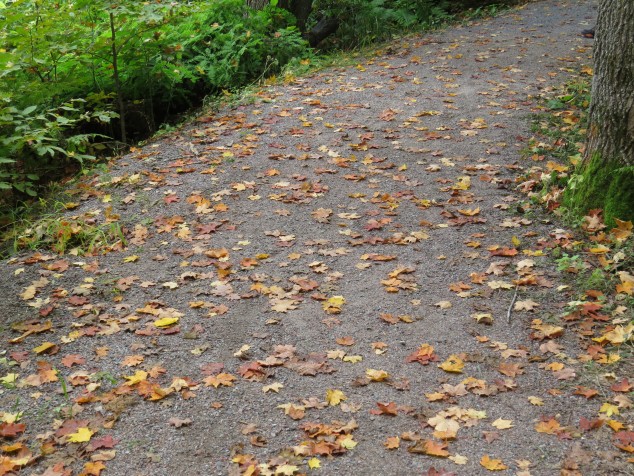
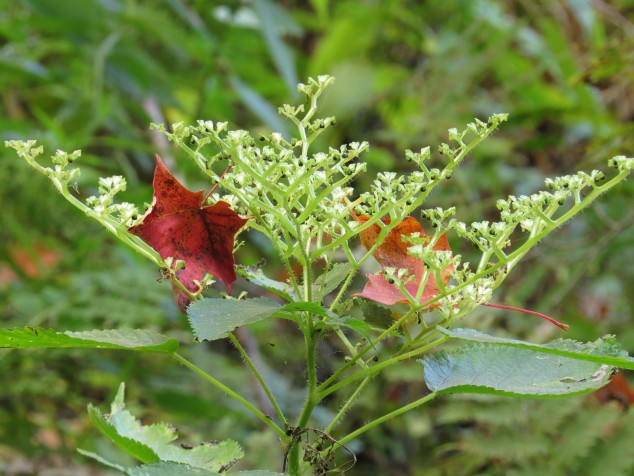
Fall is the between season. Most of us do not want to see the end of summer as we wonder how it could have slipped away so quickly. And we regret that things we wanted to do were left undone. Some of us are beginning the dread of winter–few in Minnesota complain that winter isn’t long enough! But in between those wishes to go back to the warmth and the not wanting to go forward to the bitter cold is this cool spot in the timeline. We may end the season of Fall in a blanket of snow, but the beginning is spectacular, and we have many weeks before us of warm days, cool nights, great color, and autumn treasures. Enjoy!
- « Previous Page
- 1
- …
- 11
- 12
- 13