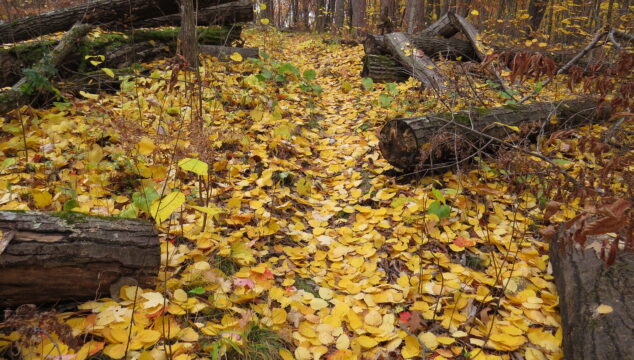
Come walk with me in the peak Autumn beauty of the Northwoods. To say that I love this time of year is an understatement. Most everyone can appreciate the colorful falling leaves---it reveals the 'true self' of a tree when its leaves are no longer producing chlorophyll. Their true colors are revealed, and there is something simple … [Read More...]
Archives for December 2021
Chasing Winter
I was getting a little impatient. Was it because of the left-over drought? Was it climate change? Roll of the dice? We had had so very little snow along with warm temps up to December. It was out of the ordinary. So we went chasing Winter. We booked a camper cabin up north at Bear Head Lake State Park west of Ely for the following weekend. I had watched the weather radar sweeping across the ‘arrowhead,’ so I figured they had snow on the ground. The Ely forecast for the weekend changed every day—some snow, no snow, a foot of snow?!
On our departure day, we awoke to a dusting of snow with fog hanging low to the ground. With temperatures heading north of freezing for the day here at home, we headed north in search of Winter. Bear Head Lake State Park encompasses over four thousand acres, and only a small portion of that is available by road or even trail. As we drove farther into the park, the road became snow-covered, and deer sauntered by us.

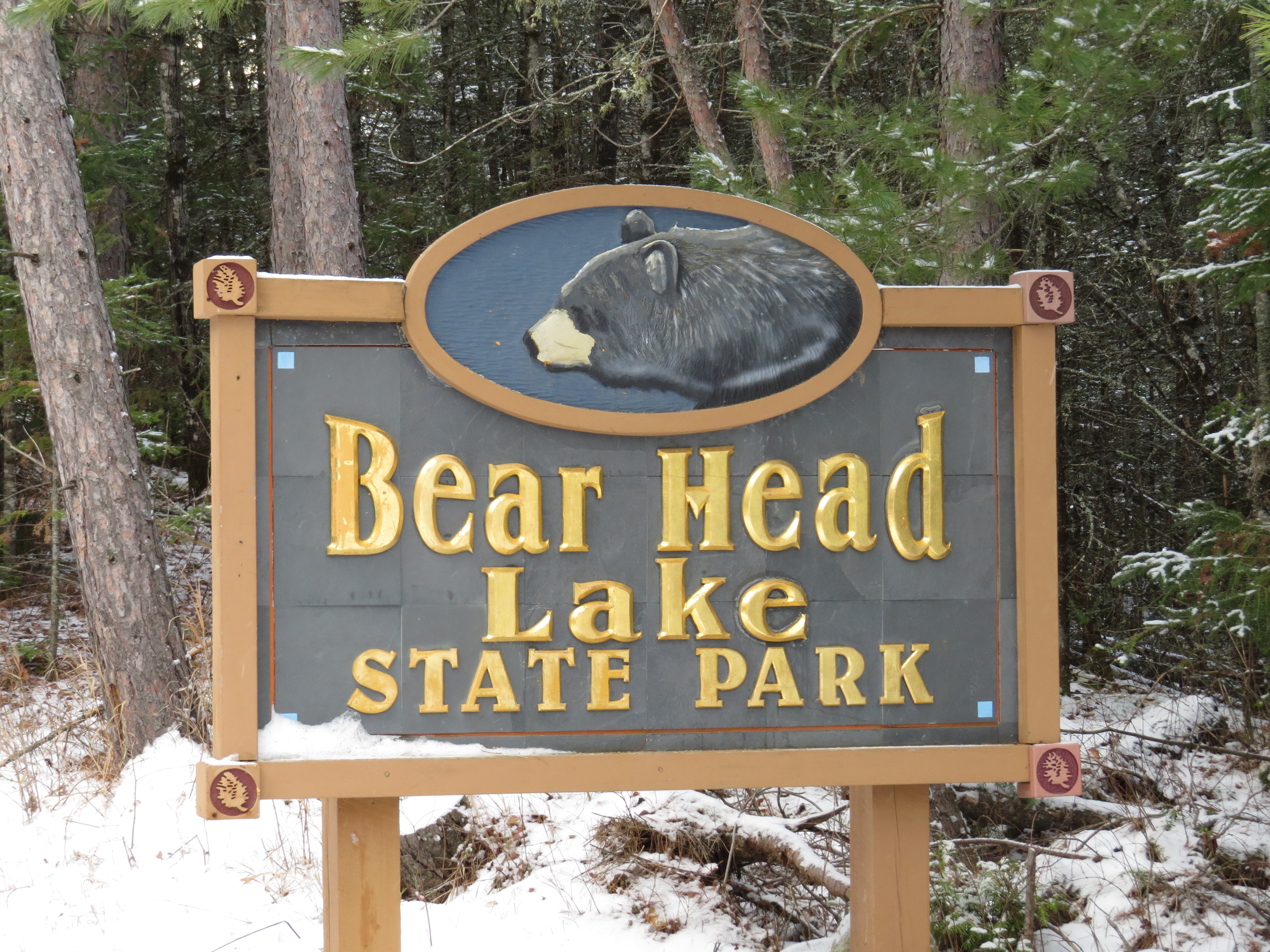
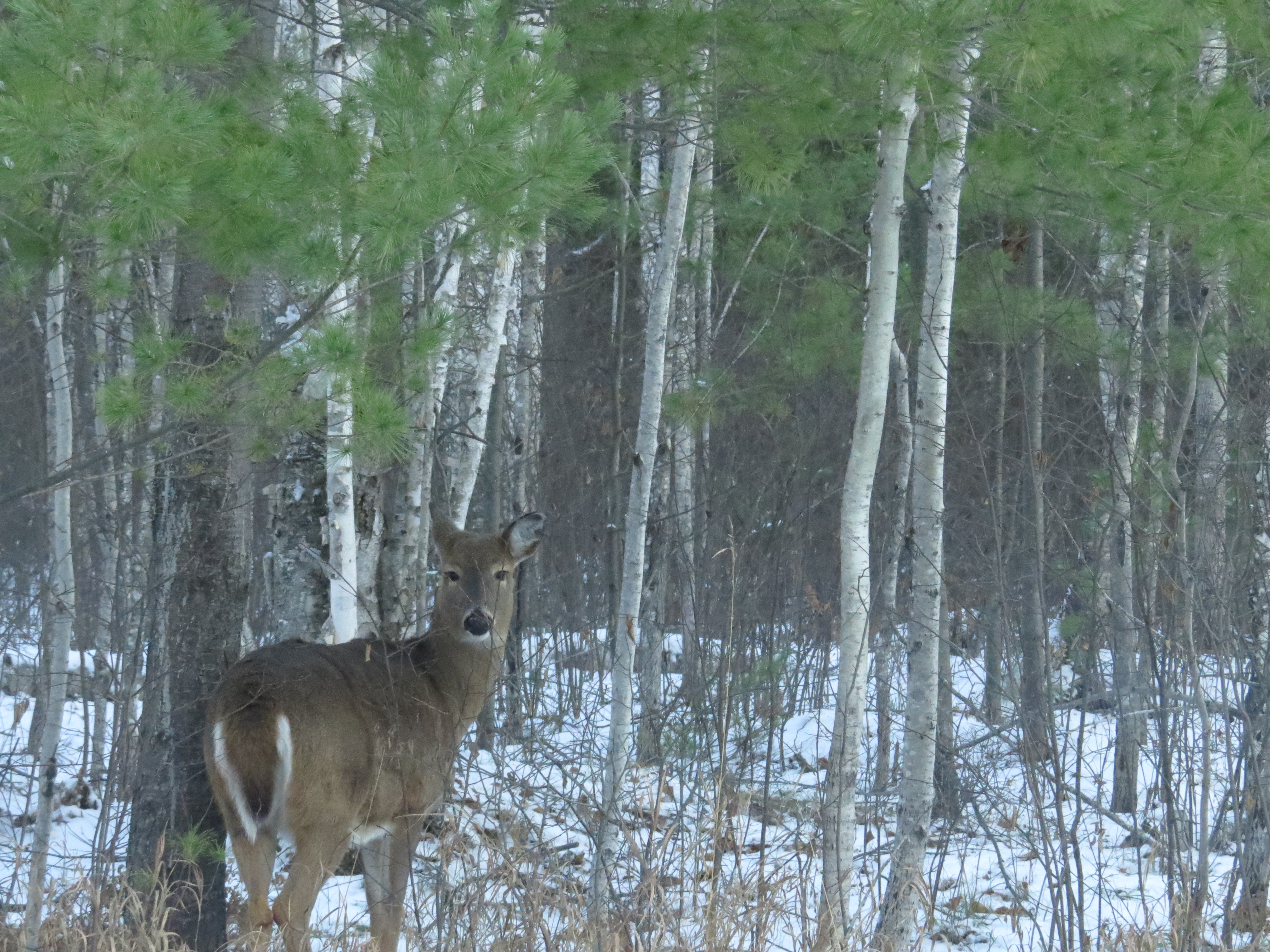
There was an envelope taped to the door of the Park Office with ‘Welcome, Brakes’ written on the front of it and a key and ‘list of rules’ tucked inside it. The ranger drove by as we were looking at the map, and she warned us of the snow forecast for Sunday, saying she would refund our second night if we wanted to leave before the storm….
We unpacked our things in the cozy little log cabin named White Pine, then walked the short distance (thank goodness) to the outhouse. It was 2:30 in the afternoon, but the sun was so low in the sky that the shadows stretched out like it was sundown. It is the time of year in the north when the sun rises, peaks, and sets in the south, a strange anomaly for our circadian brains. We began our hike in the empty campground and followed Beach Trail to Bear Head Lake.
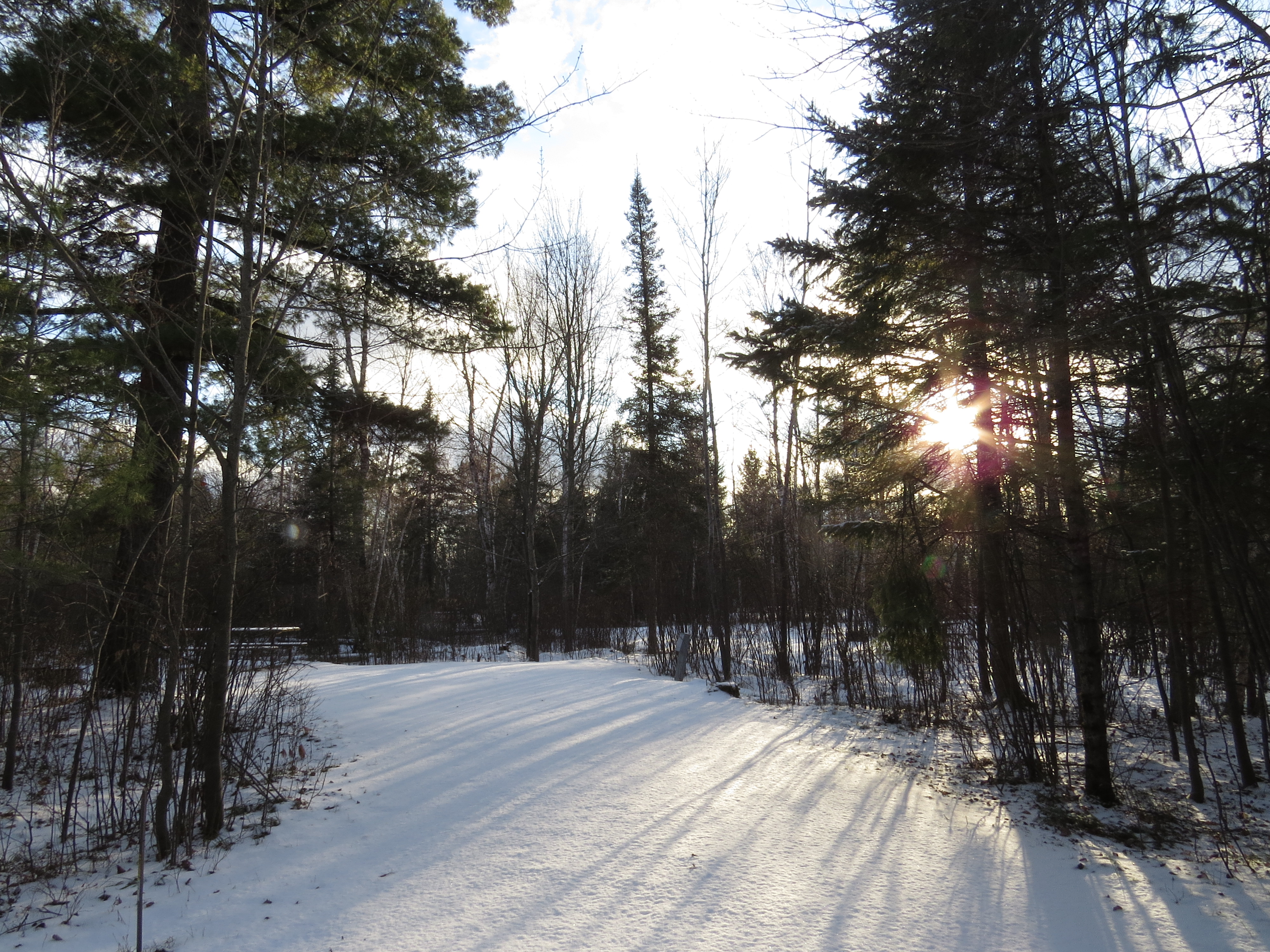
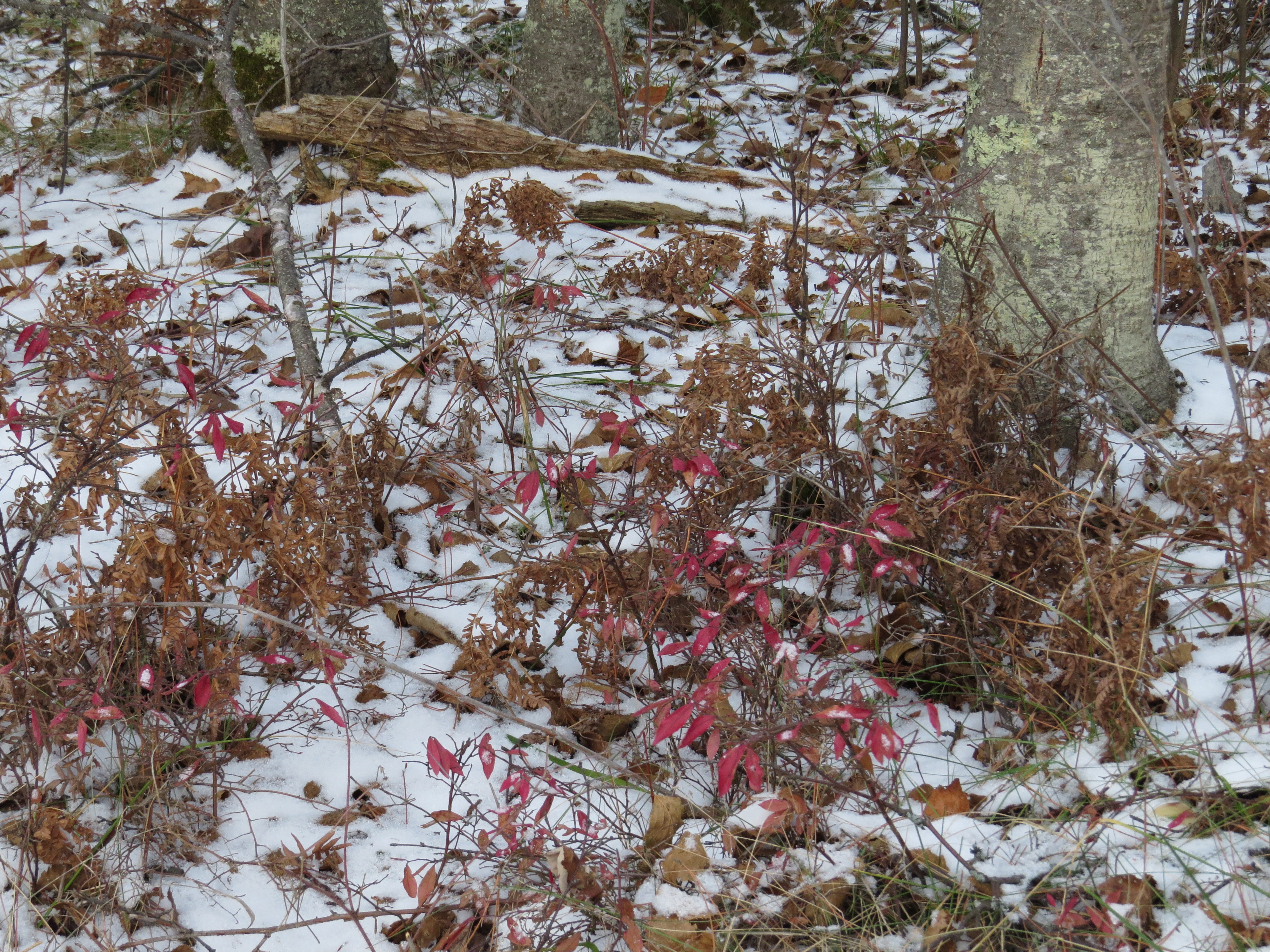
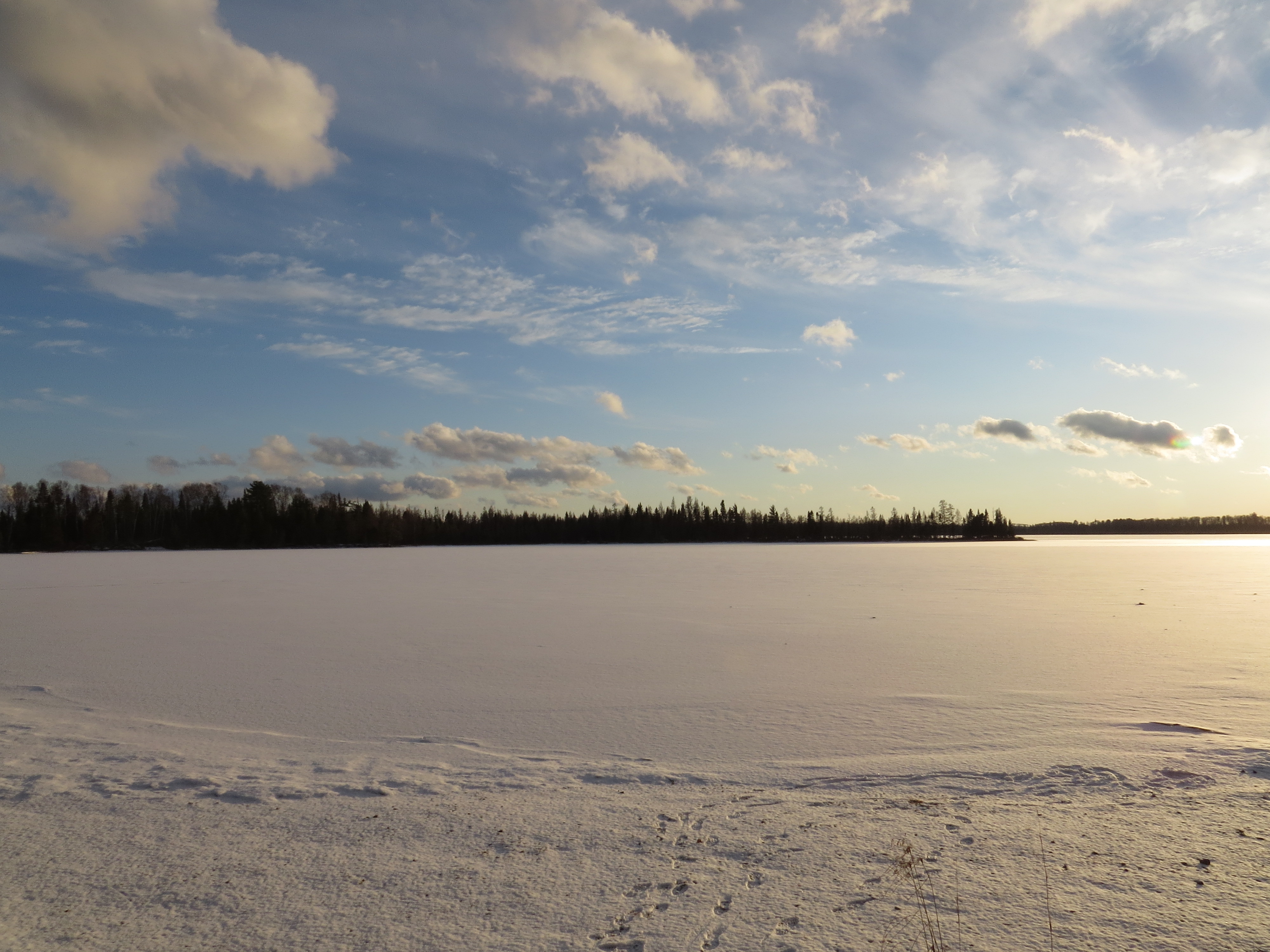
The lake was still low from Summer’s drought; we walked out on the ice for a ways, but with the snow cover, we had no idea how thick the ice was at any given place.
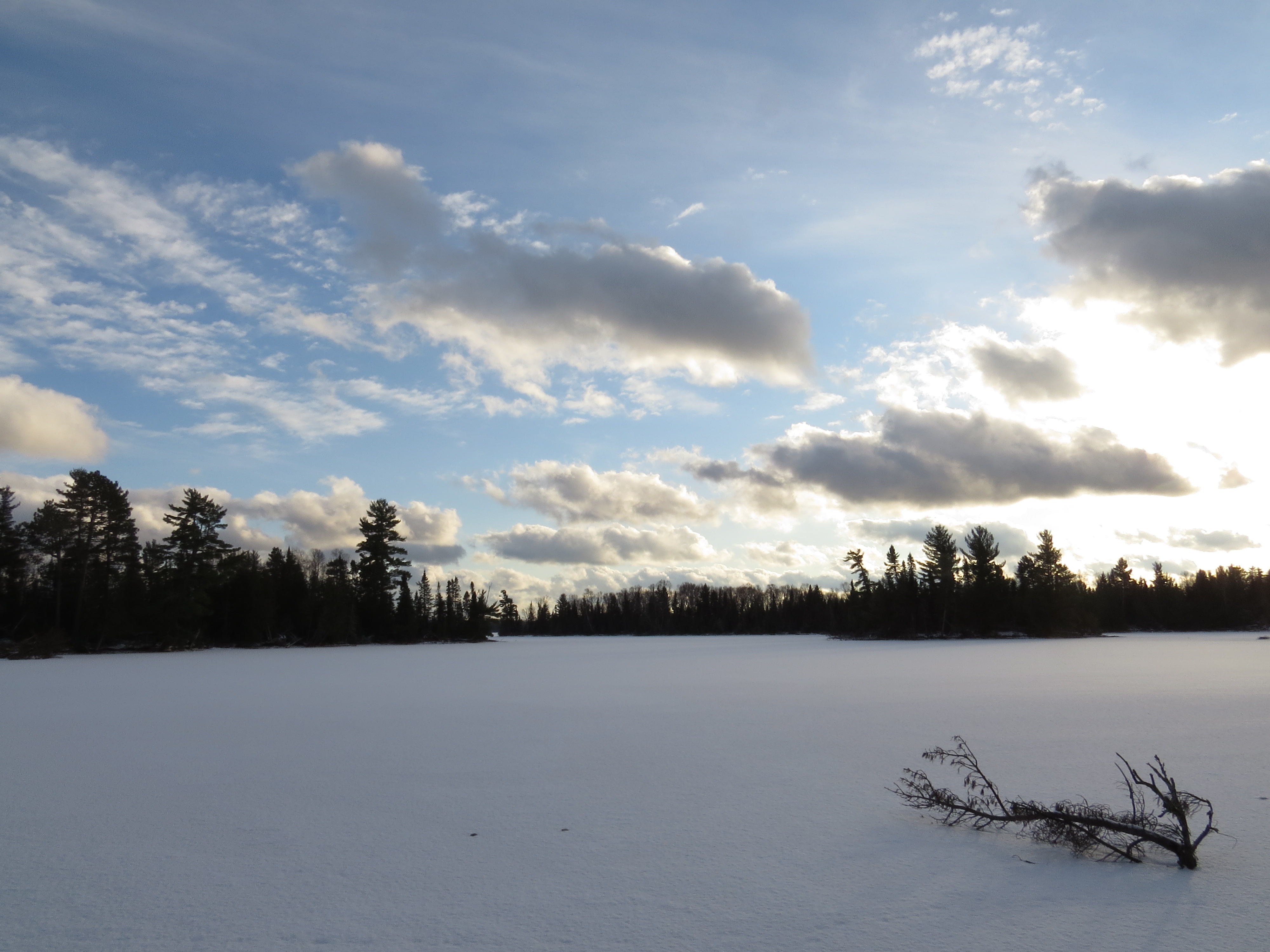
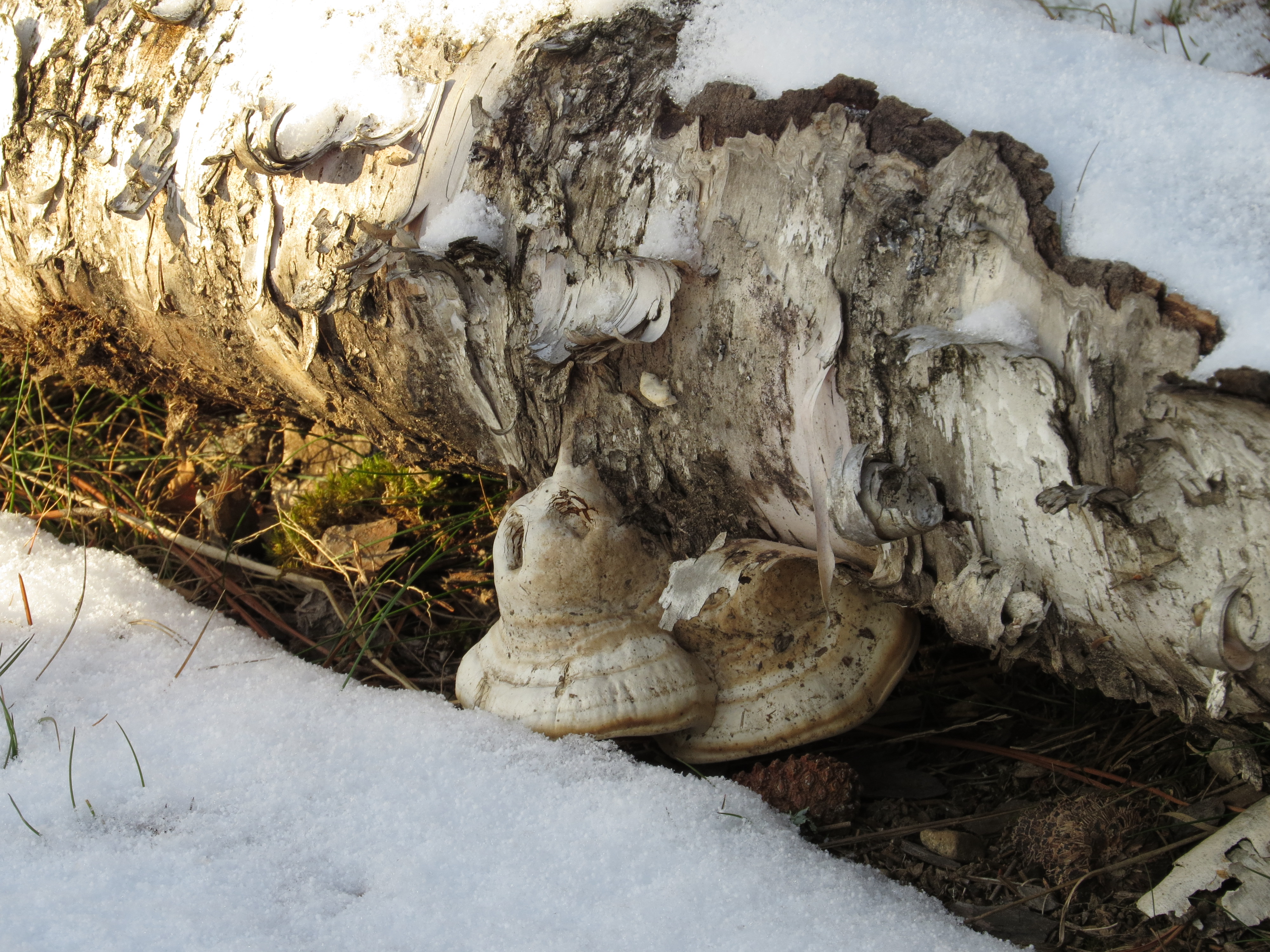
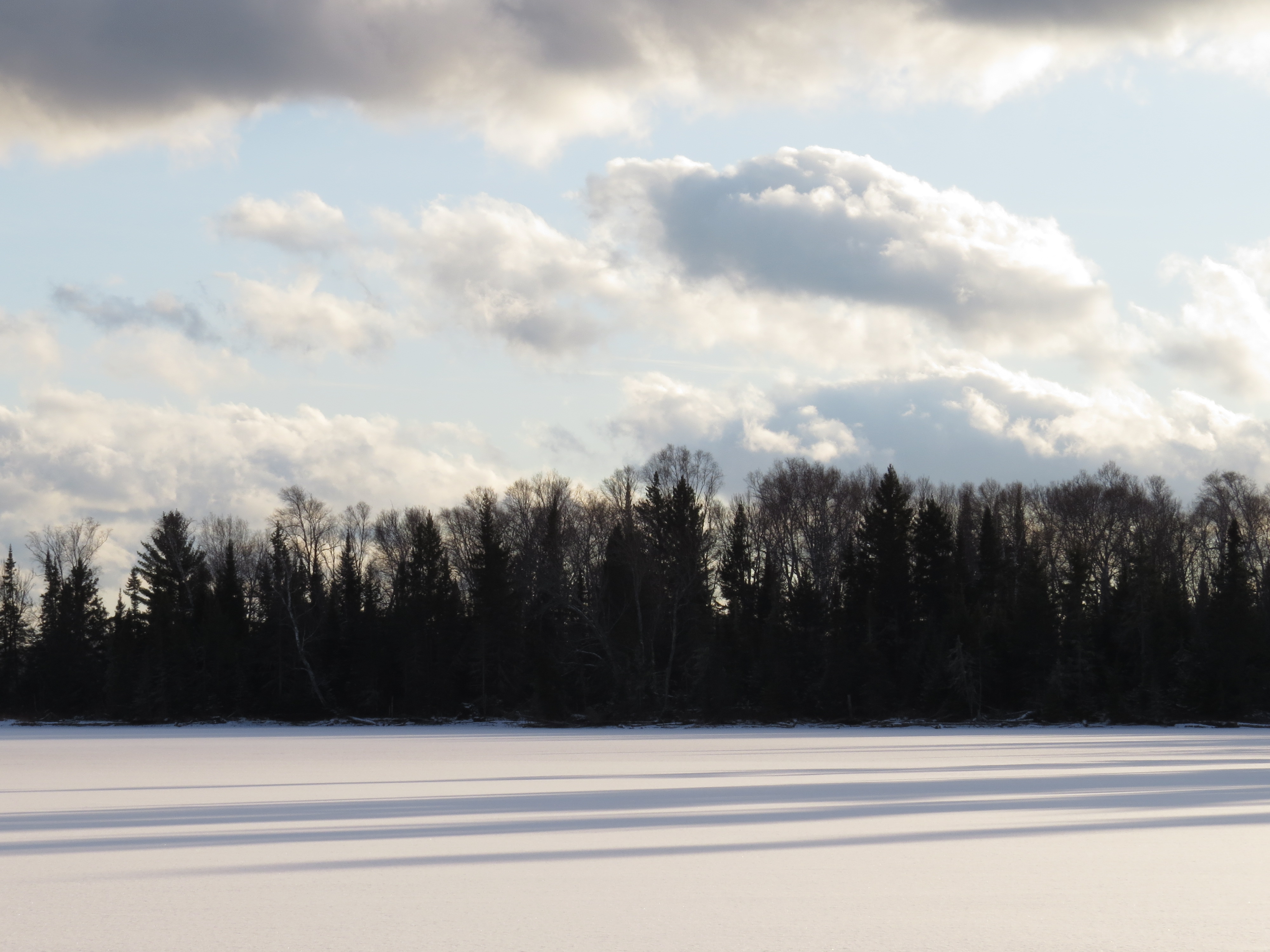
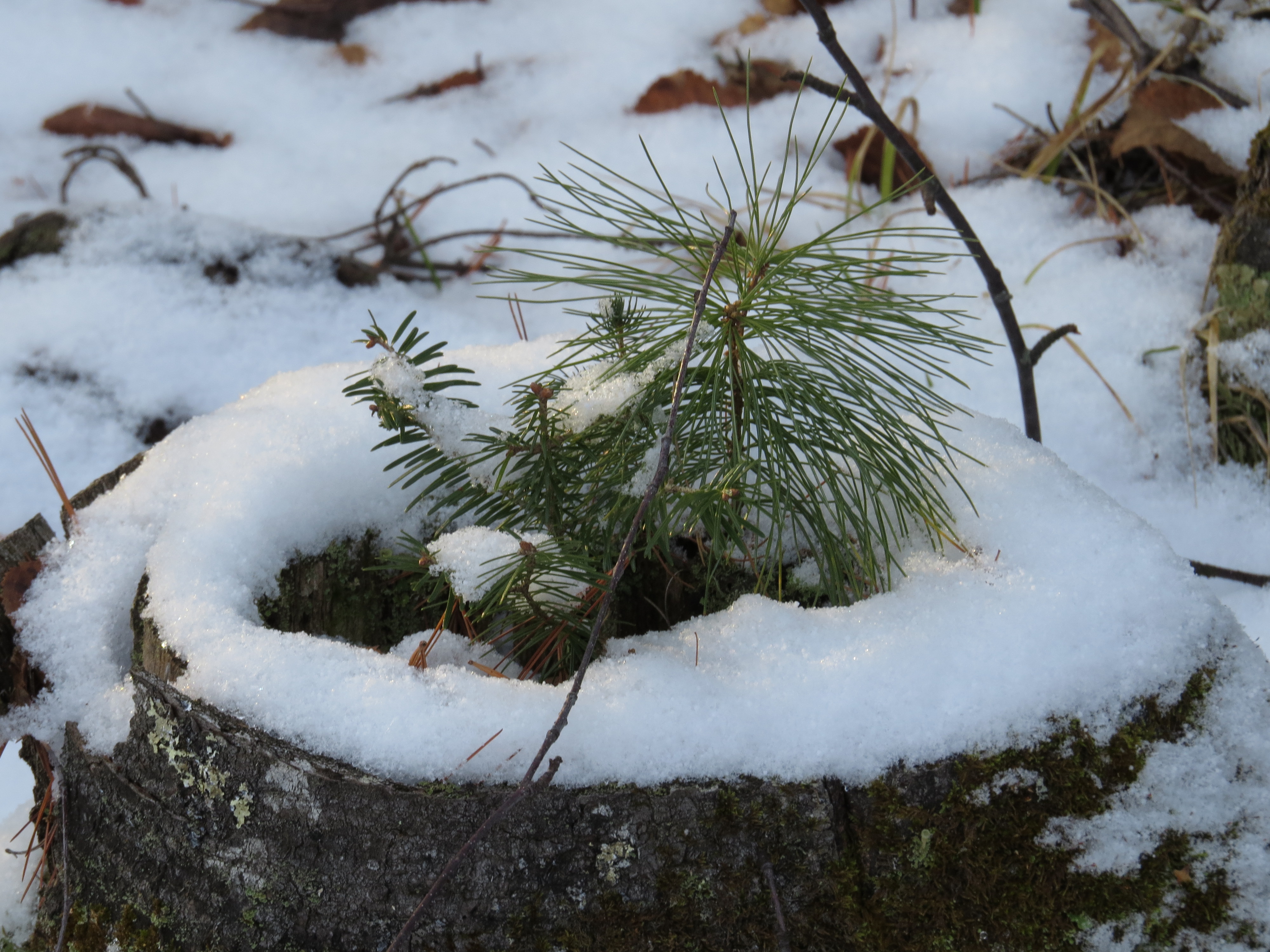
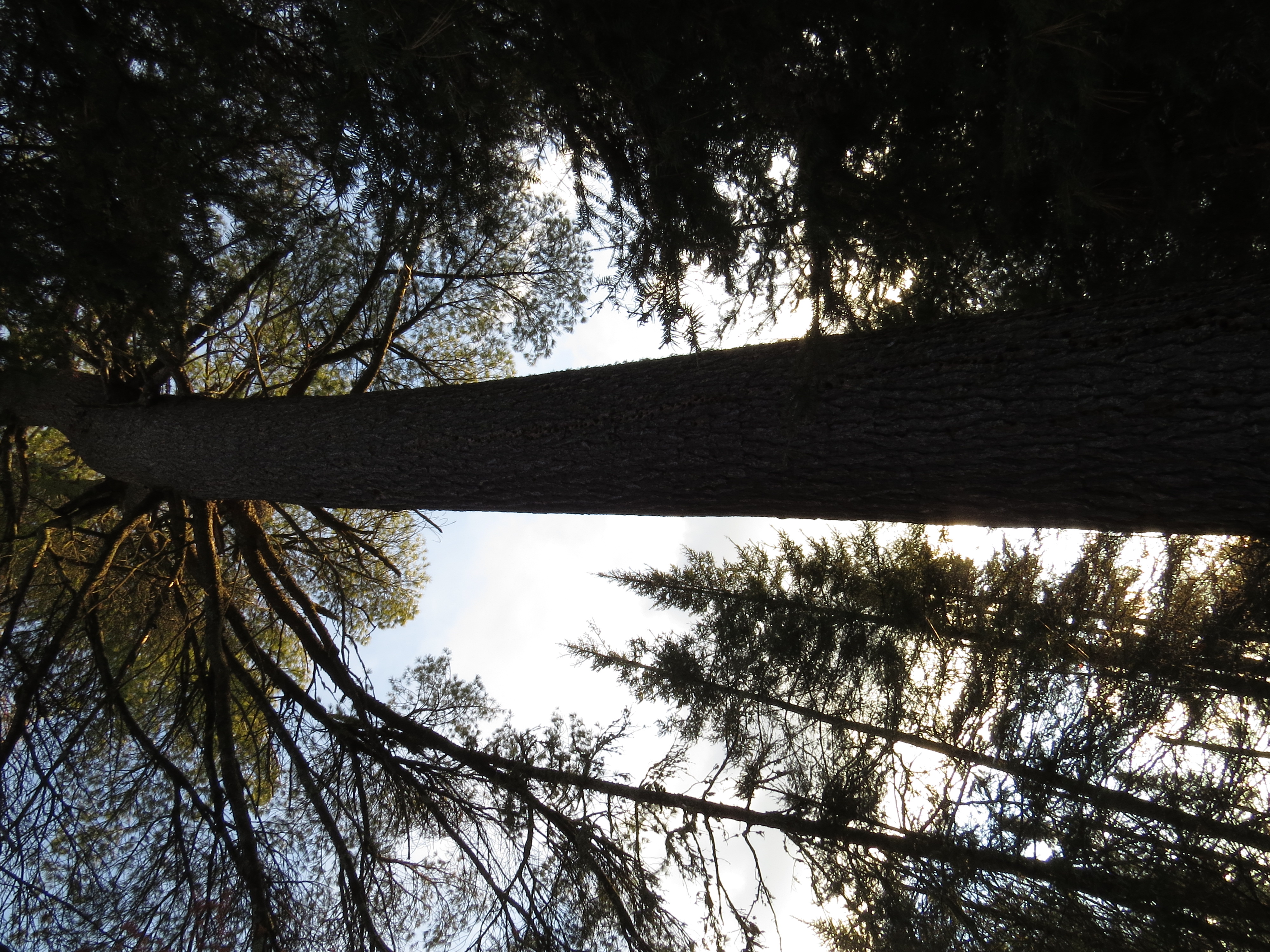
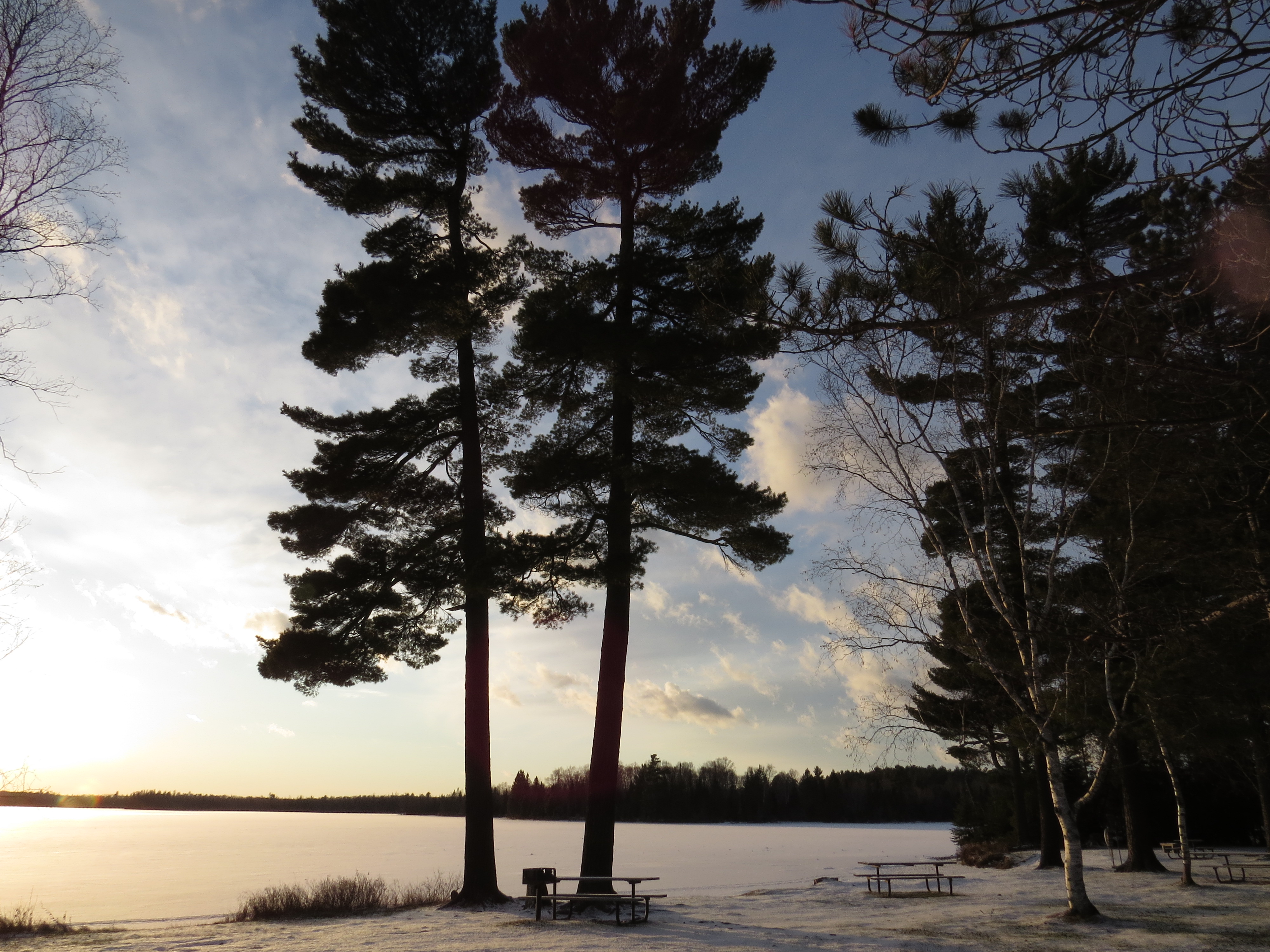
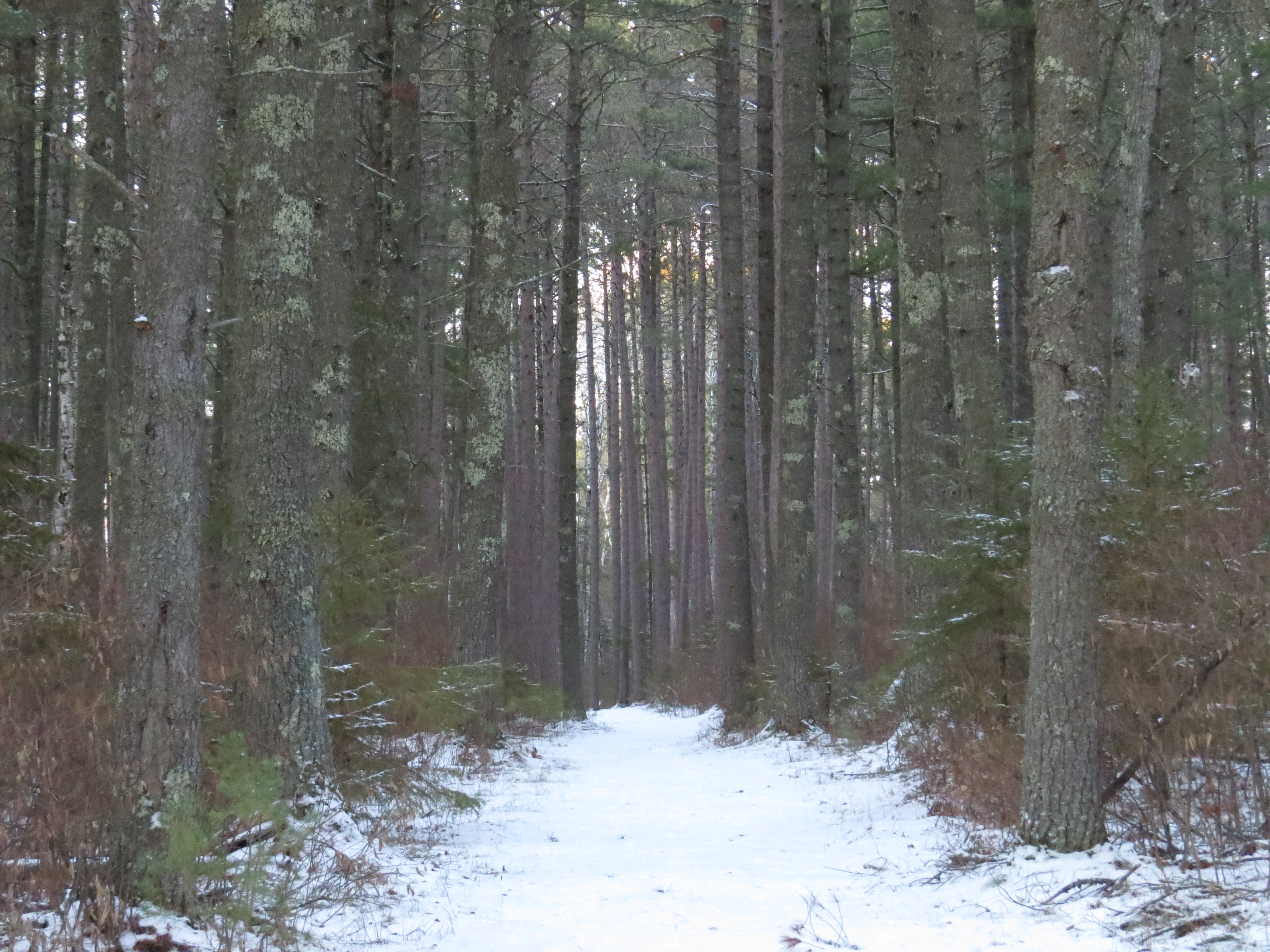
The park boasts an ‘up North, Boundary Waters feel,’ and even though we had not experienced the Boundary Waters in the Winter, the solitude of our December camping amongst the Pines and lakes felt like we were in the wilderness. The old growth Pine trees had been too small for logging in the late 1800s and now stood like giants along the beach and Norberg Lake trail. And just like all the past centuries, young seedlings continued to grow to become future giants for future generations to stand under in amazement.
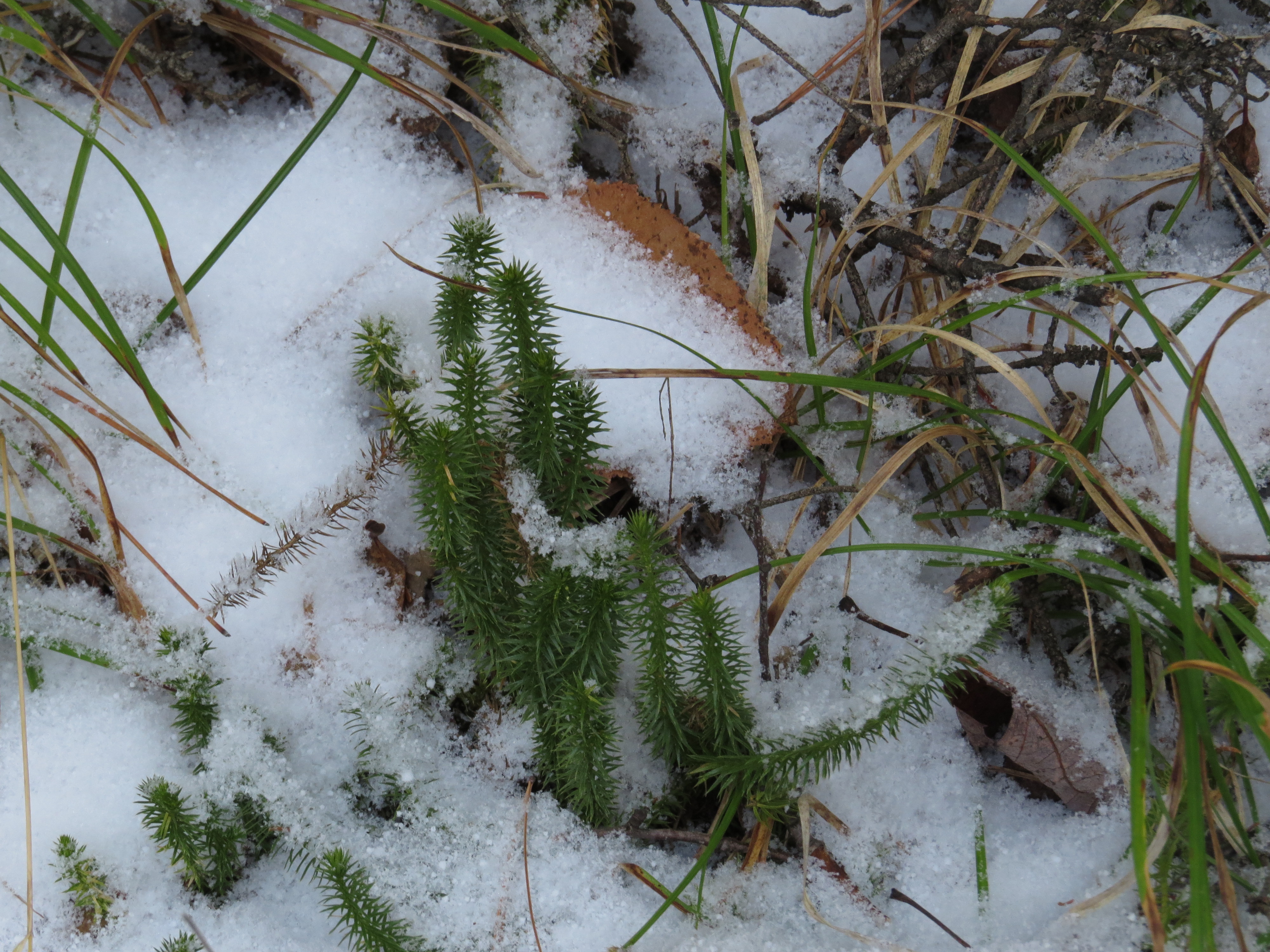
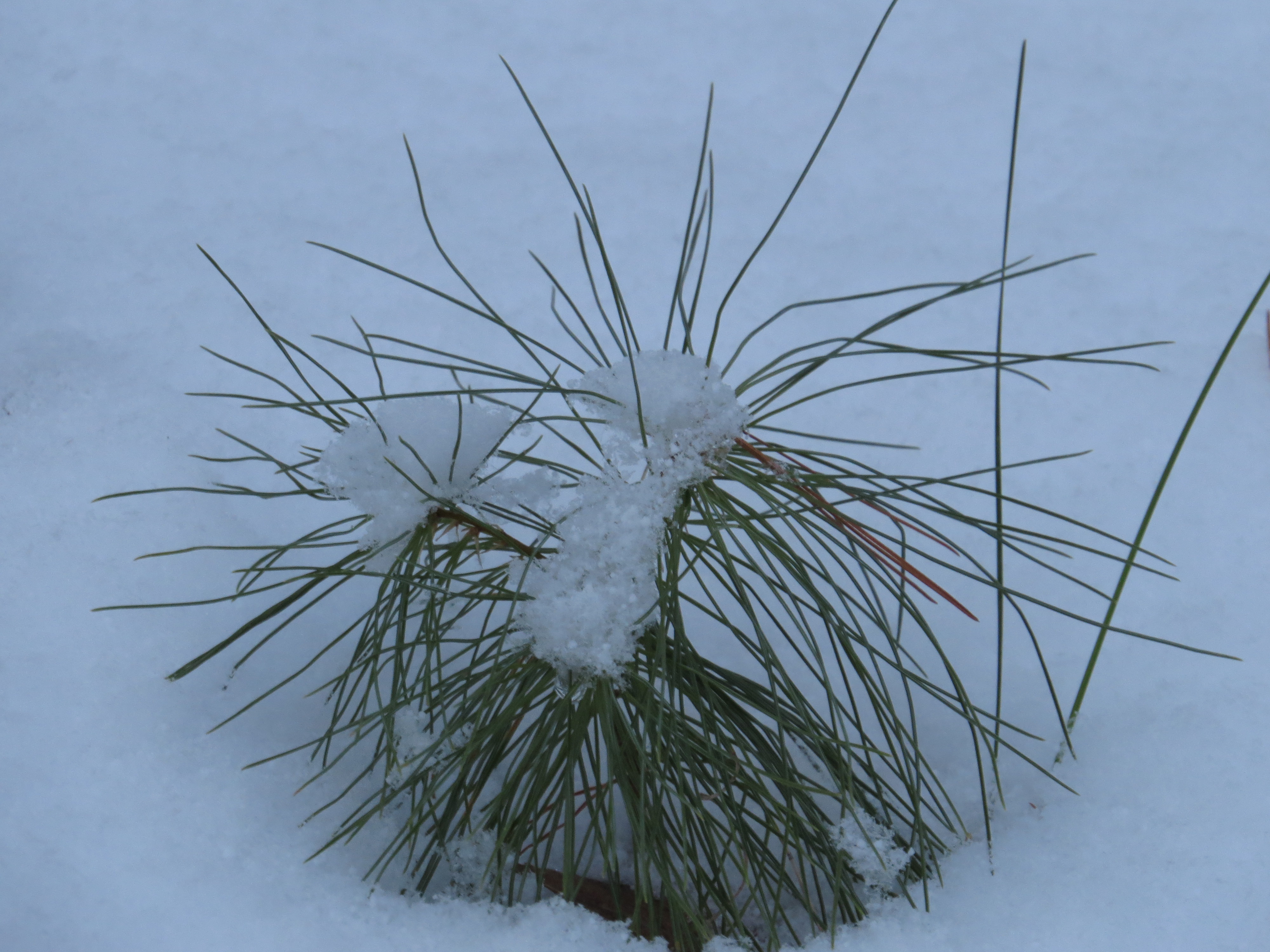
Tiny, tree-like, evergreen Club Mosses of different kinds pushed up through the snow, a testament to the life that flows through Winter.
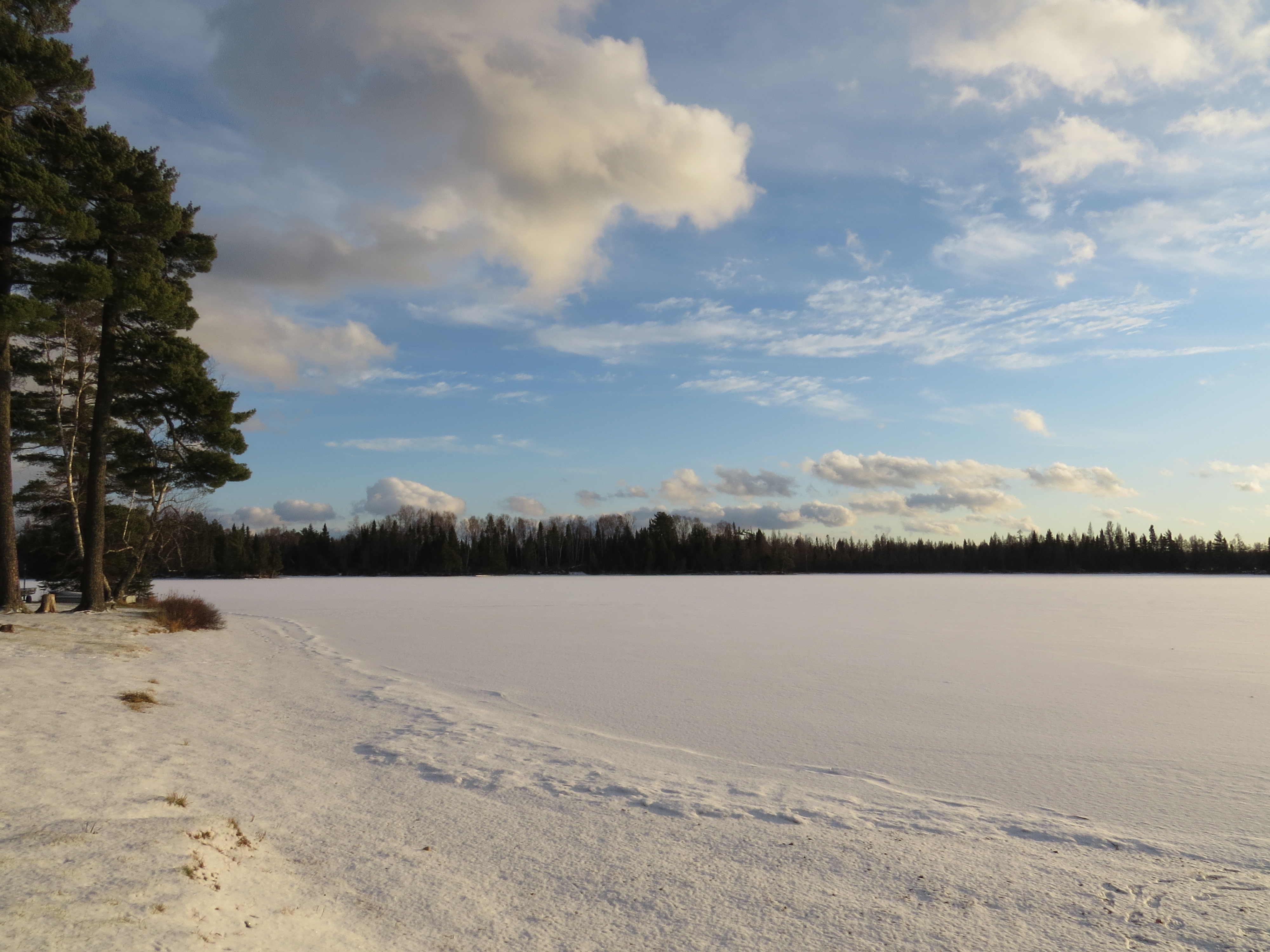
The beach area of the park was spectacular! A small portion of Bear Head Lake was visible, and an invitation to explore ‘beyond the bend’ was compelling. It was a place to love and appreciate, a place that puts our own (small) lives in realistic perspective to the amazing world of Mother Nature.
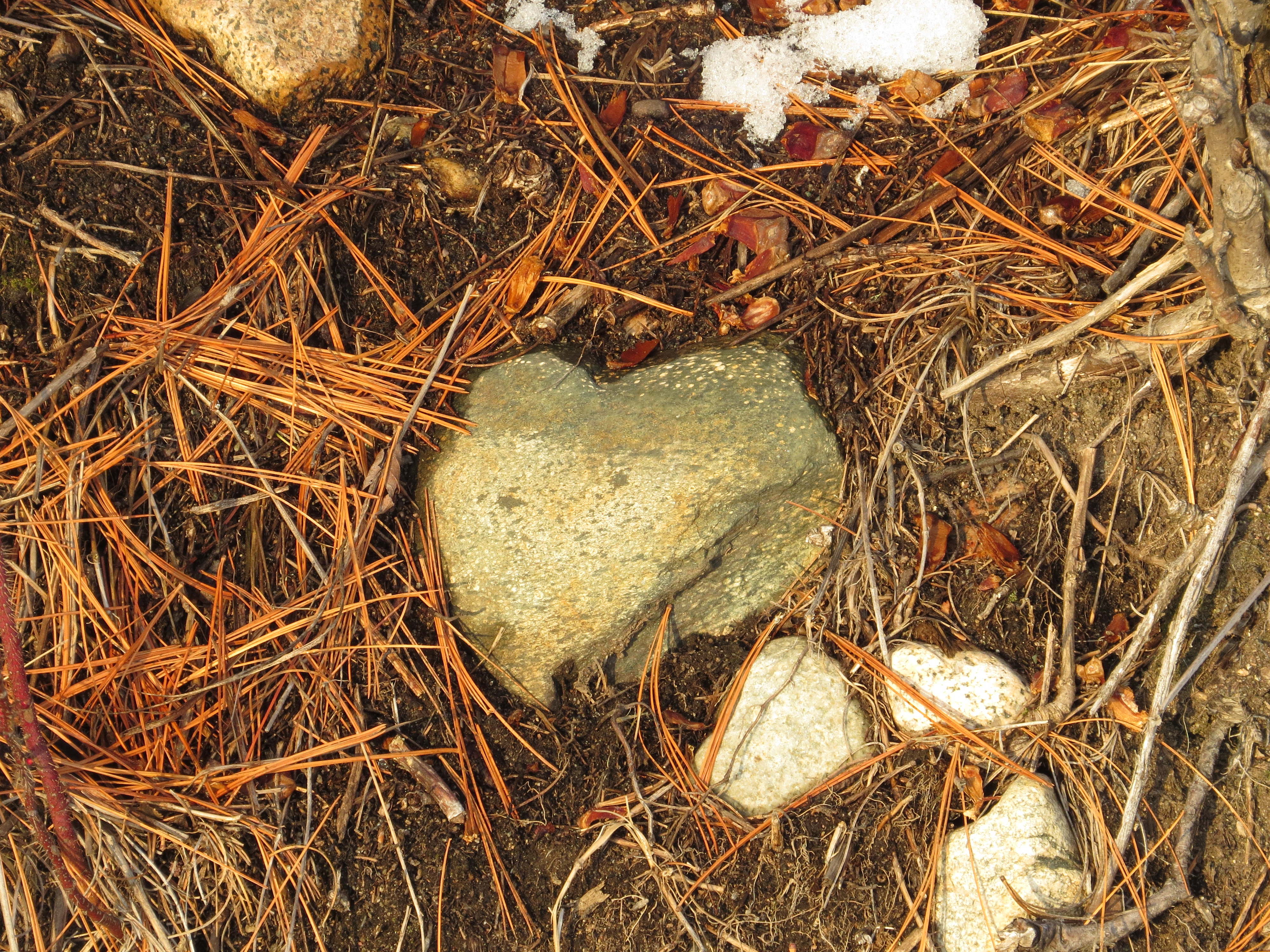
Nestled in the trees was a beautiful trail center constructed with large open beams. It was warm and available for restrooms and rest. A large wood-burning stove, tables and chairs, puzzles and games, and a small kitchen area invited us to stay for awhile, but we were aware that the sun was low in the sky and we still needed to hike back to our cabin.
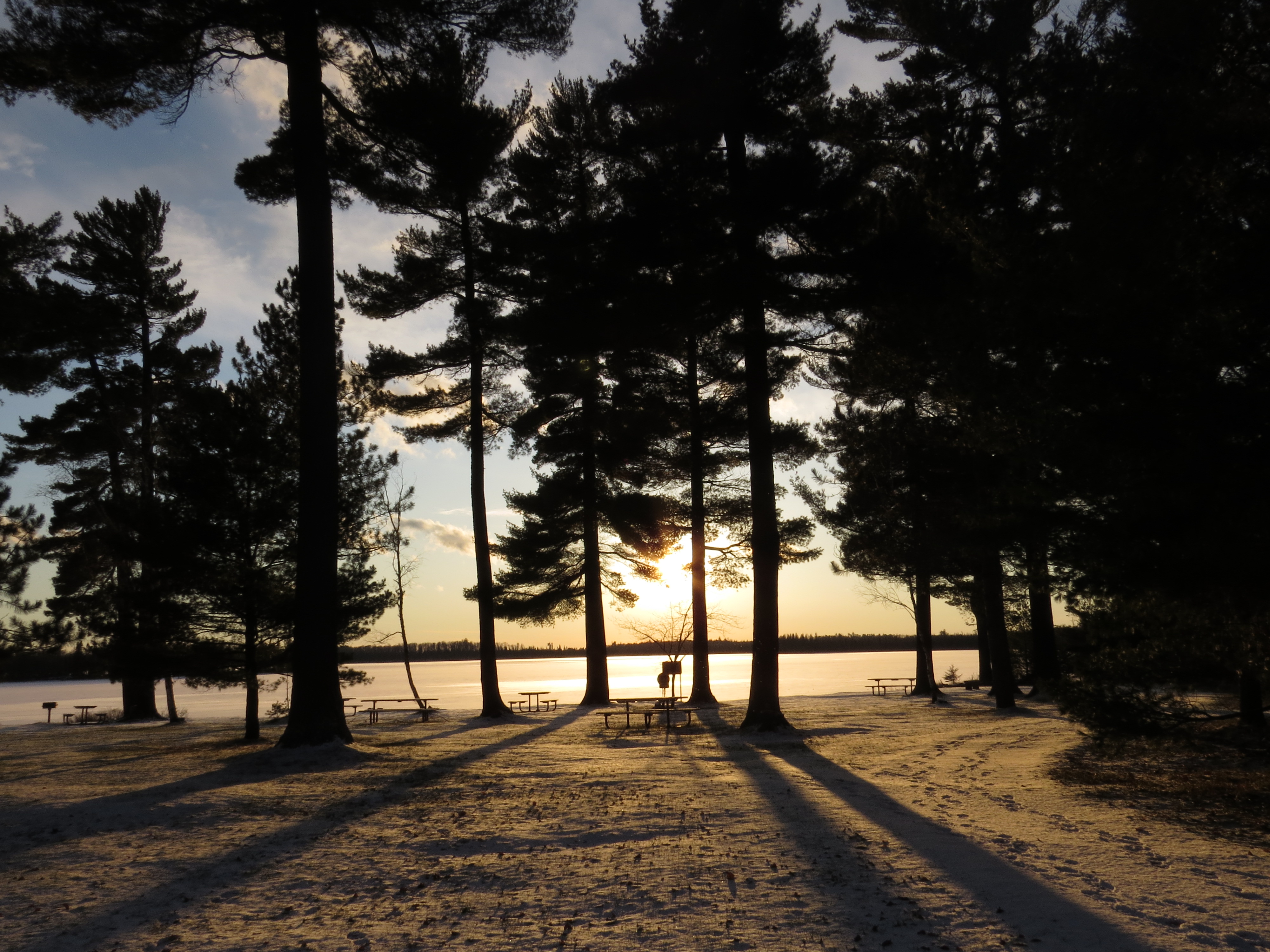
The rest of the hike back was in the twilight of dusk through the giant Pines. It was so peaceful, like we were walking through a different era.
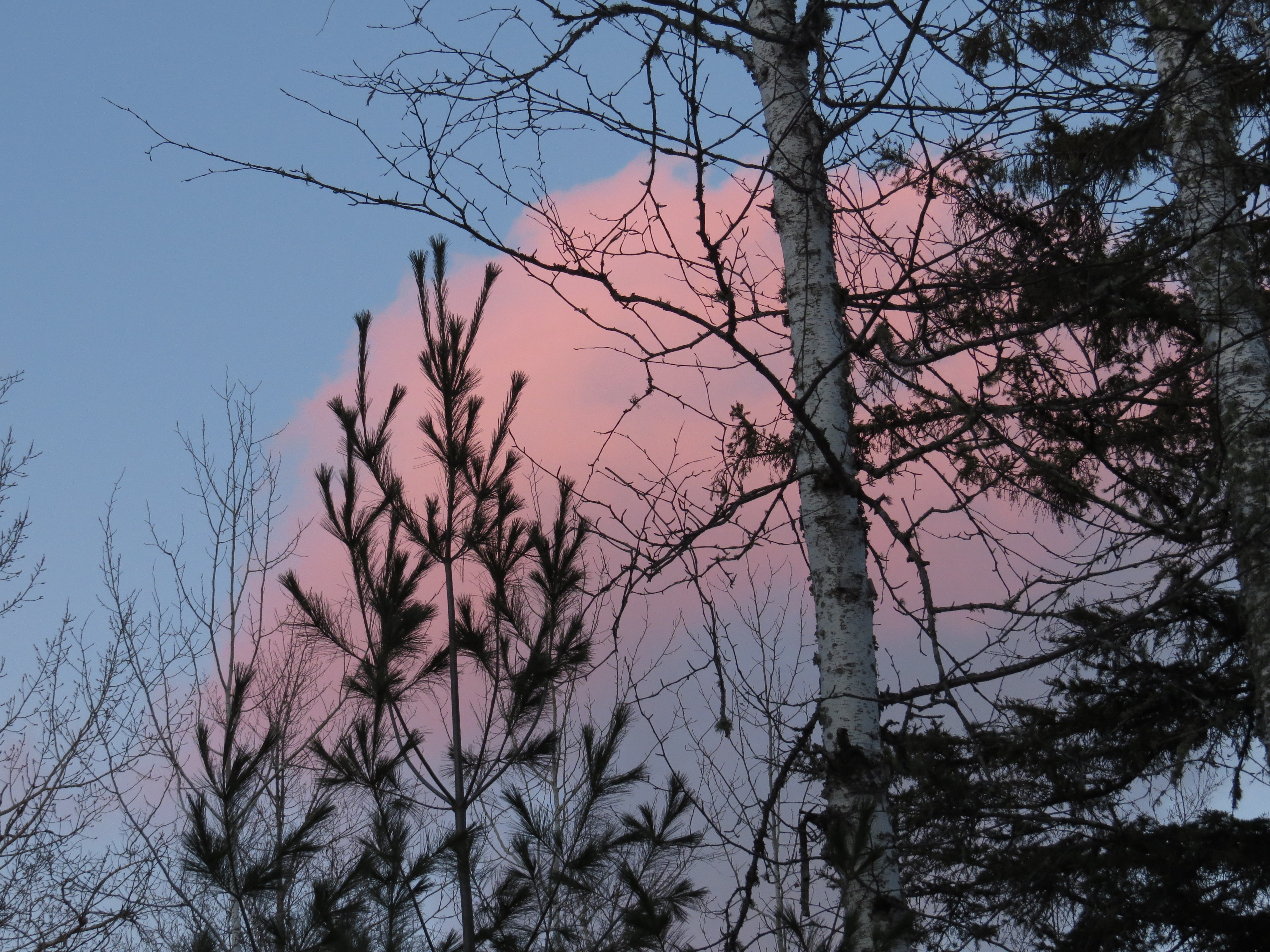
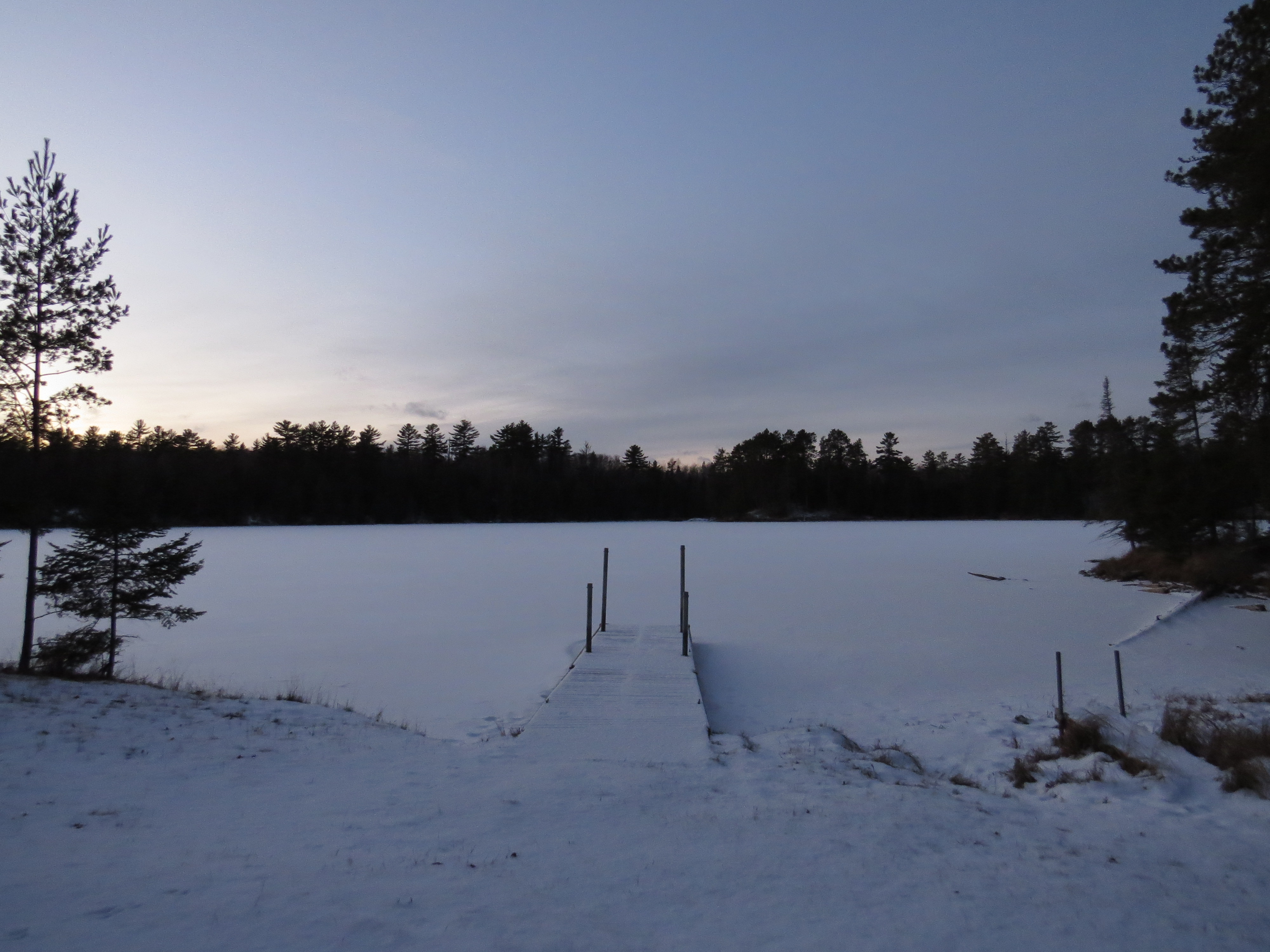
Back at the cabin, Chris brushed the snow from the picnic table to heat up our soup on the Coleman stove. Emily and I walked down a short trail to the North Bay of Bear Head Lake to see the final rays of light over the Pine horizon. Our day of chasing Winter had culminated in the rich gift of a quiet, peaceful, and solitary hike in the wilds of Northern Minnesota.
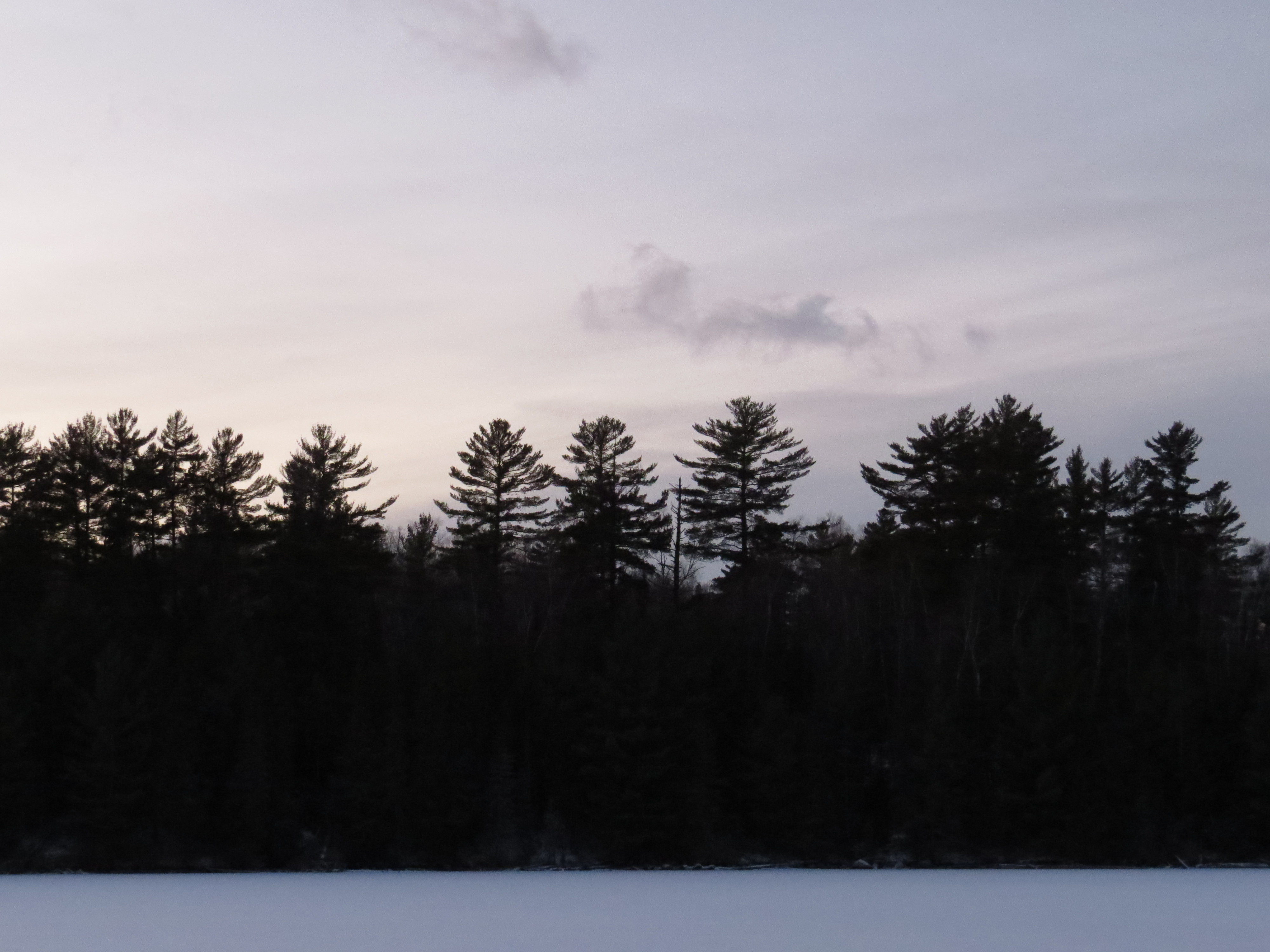
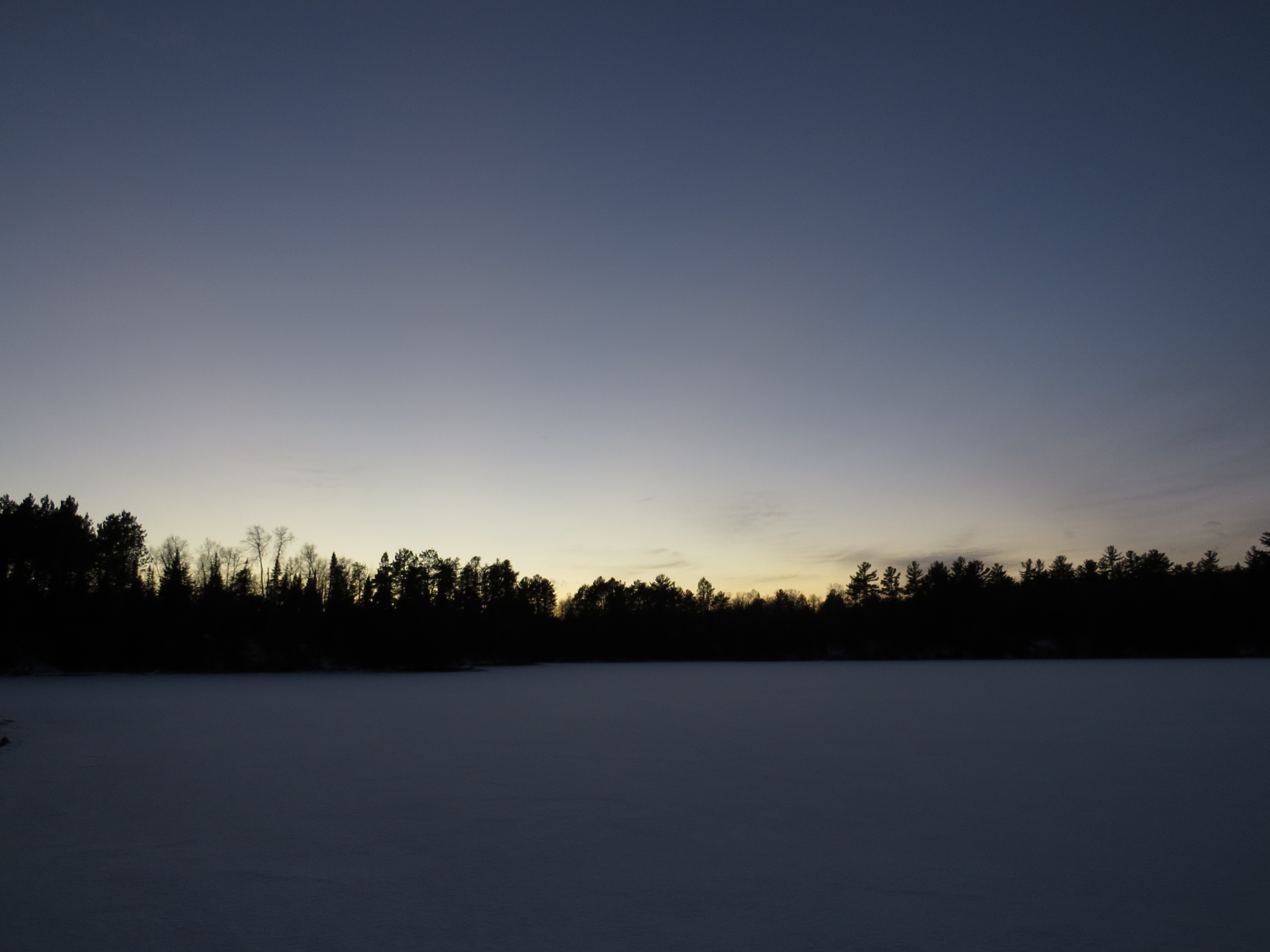
Our first after-dark trek to the outhouse was under a dark sky full of bright stars. In our light-soaked lifestyle, we forget how dark the dark can be and how brilliant the multitude of stars. The temperature was falling into the teens for the night with a stiff breeze. Later Emily and I walked around the campground circles, our headlamps beaming onto the reflective snow. By that time, the stars were gone—clouds had moved in on the stiff breeze, and we were reminded of the storm forecast.
Chasing Winter had brought us to this warm, cozy cabin in the Northwoods. We had only seen the ranger and one other vehicle—the huge park virtually belonged to us and the critters. Why do we ‘chase’ things? Chasing dreams, chasing butterflies or fireflies, chasing boys, chasing rainbows, chasing wealth. What fuels those desires? Chasing implies the process of going after something—it does not in one way or the other indicate whether we attain the desired. So perhaps the pursuit is the raison d’etre—the reason for our existence.
By late morning on Saturday, we had to decide whether to weather the storm—the forecast calling for seven to thirteen inches of snow on Sunday—or to leave early. The tables had turned—Winter was chasing us. We thought of the Winter wonderland that would sparkle outside our cabin door, of when the roads would get plowed, of whether we would have to spend an additional night. We had enough food and water….but in the end, we decided to cut our Northwoods visit short.
In the last week, here at home, it has snowed three times—the ground is delightfully light with snow, the trees decorated and frosted in Winter apparel. Is it Nature’s rhythm—the chaser and the chased? We chase after those things we desire, but perhaps our desires are also pursuing us.
Winter Nesting
It’s a thing, you know—nesting. It usually refers to when a woman is beautifully curved and round in late pregnancy—when she has a natural instinct or urge to prepare her home for the impending arrival of the baby. It may manifest as cleaning, arranging, organizing, or buying furniture and clothes. It is a way to practically and mentally prepare for the birth of a child. It helps a woman feel in control of her environment, to prepare a place that feels safe and secure for her and her baby. Most animals do a similar ritual of preparation for their offspring by building nests or dens in protected places. This flurry of activity is usually done in Spring….but let’s think about nesting in another way….
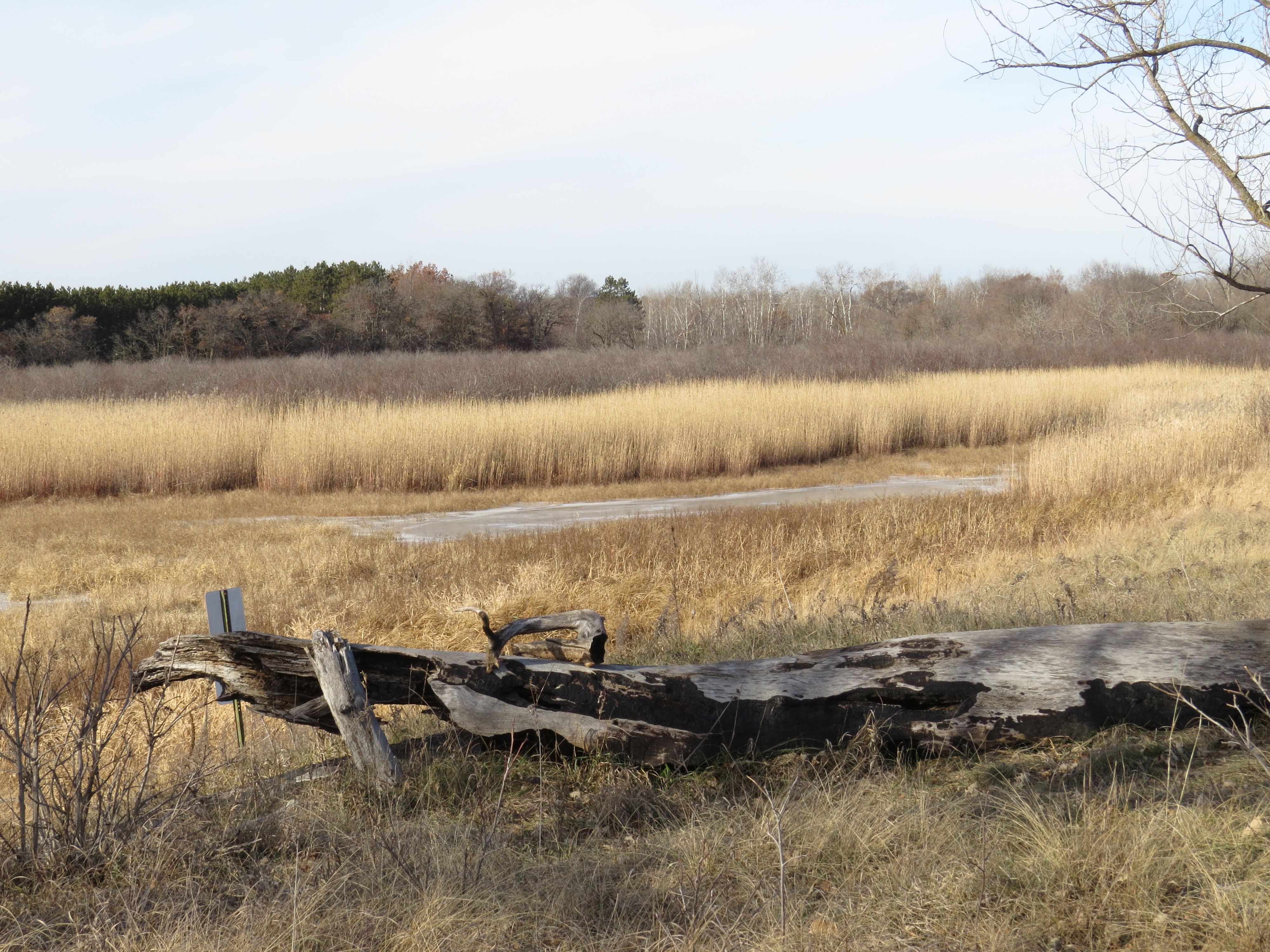
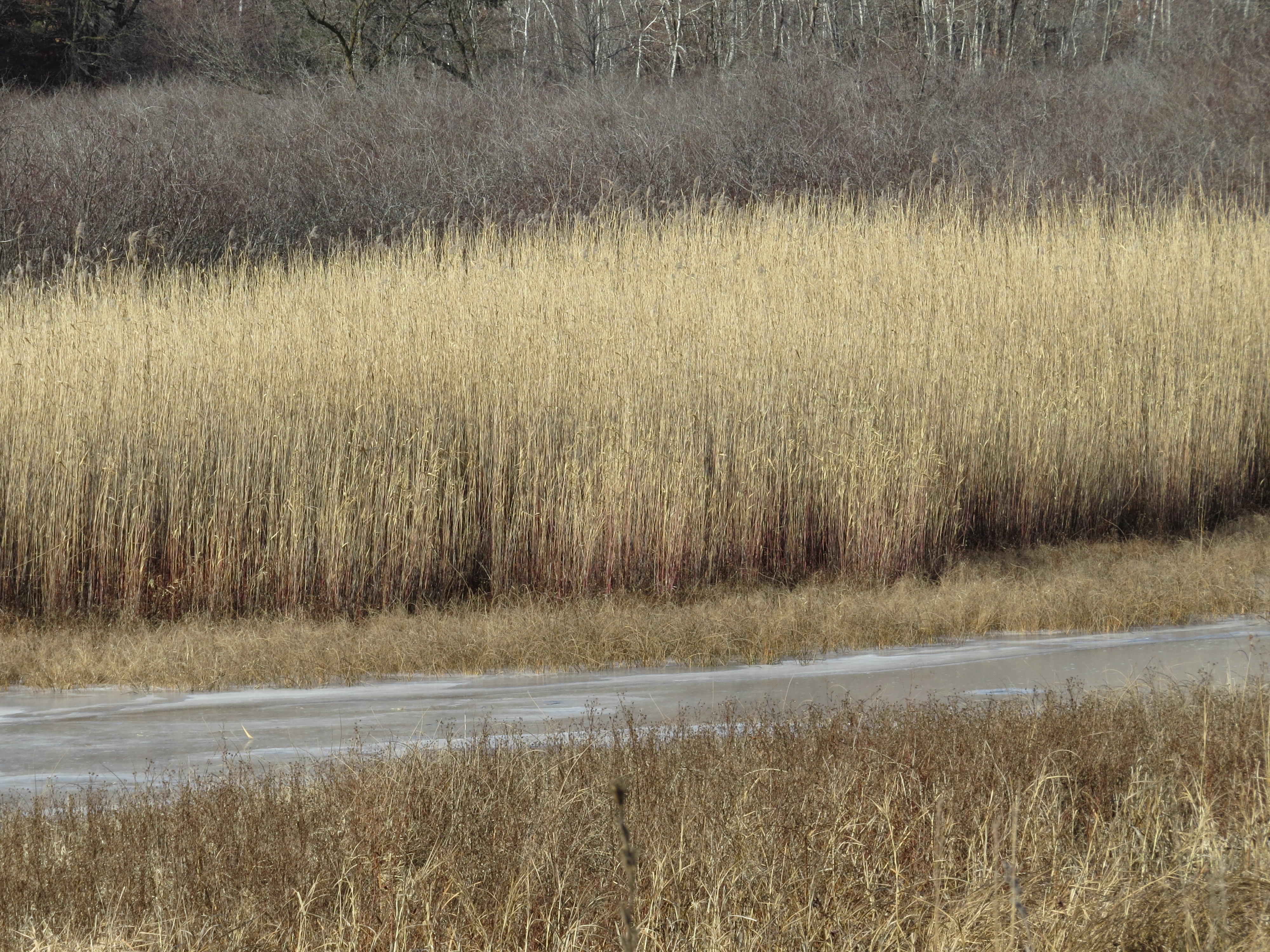
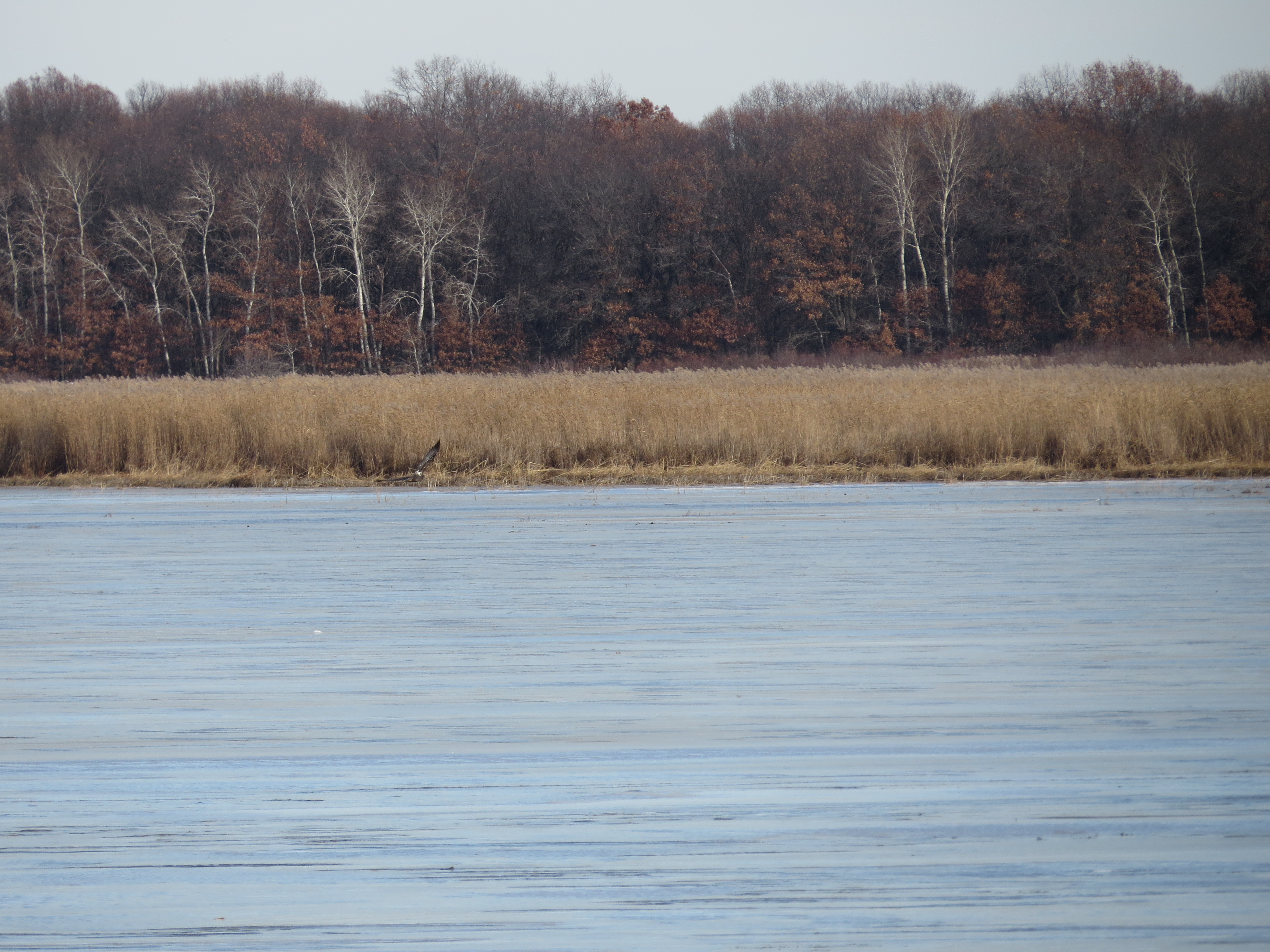
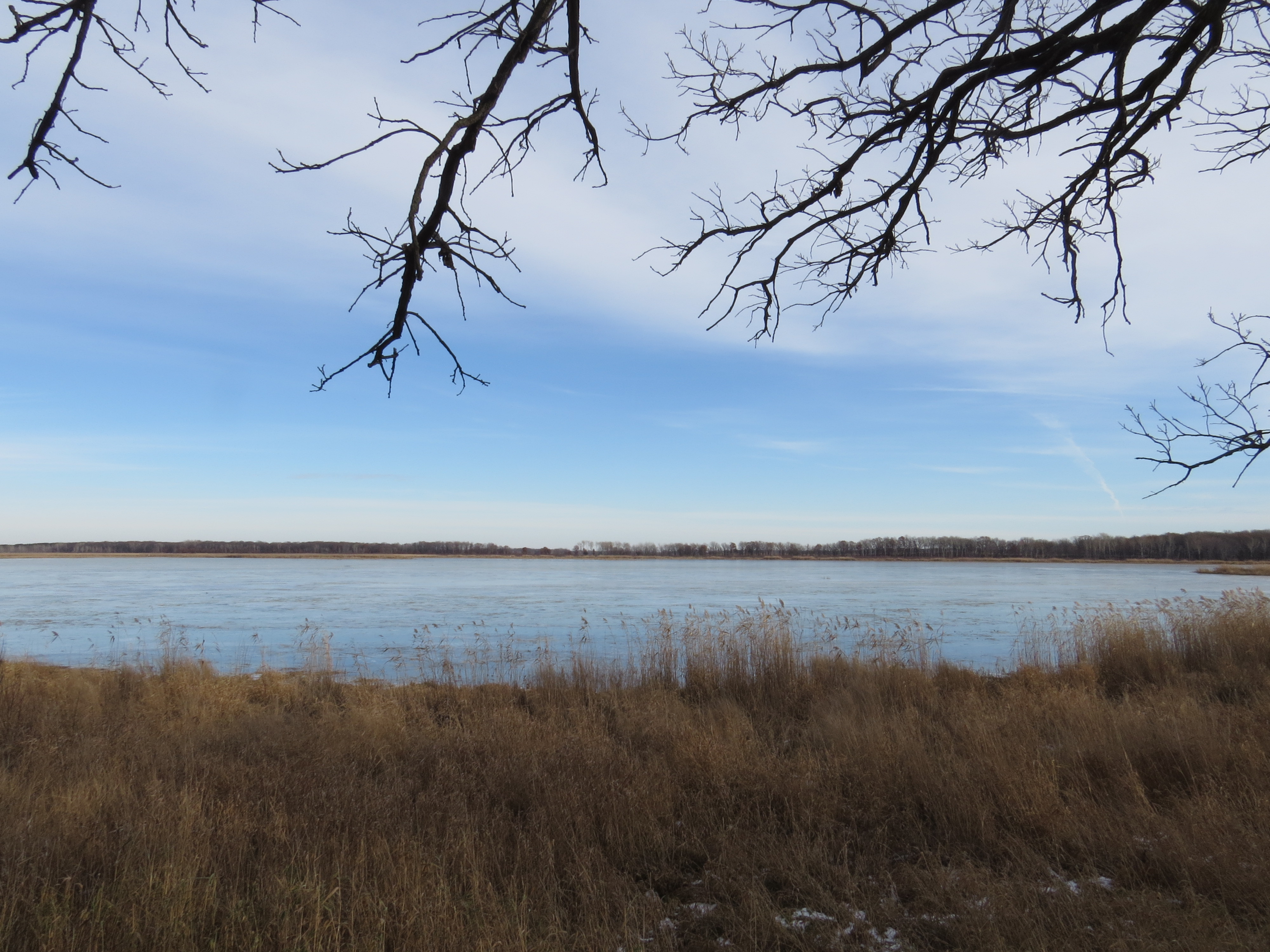
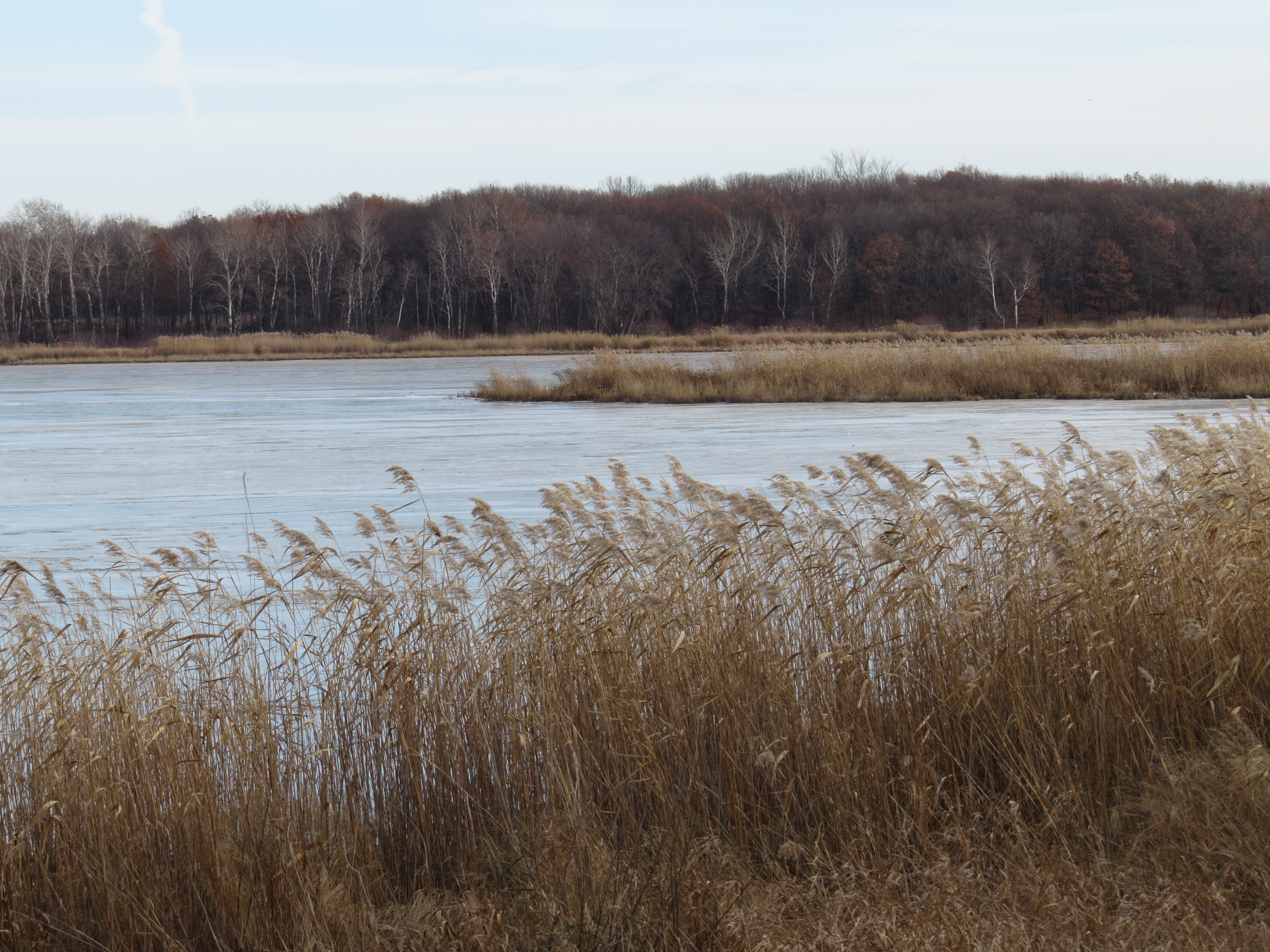
We returned to Crane Meadows National Wildlife Refuge. I was hoping to see a lake full of waterfowl preparing for their long migration. The Platte River was beginning to ice over, the River and ice formations curving between and around the banks of golden slough and prairie grasses.
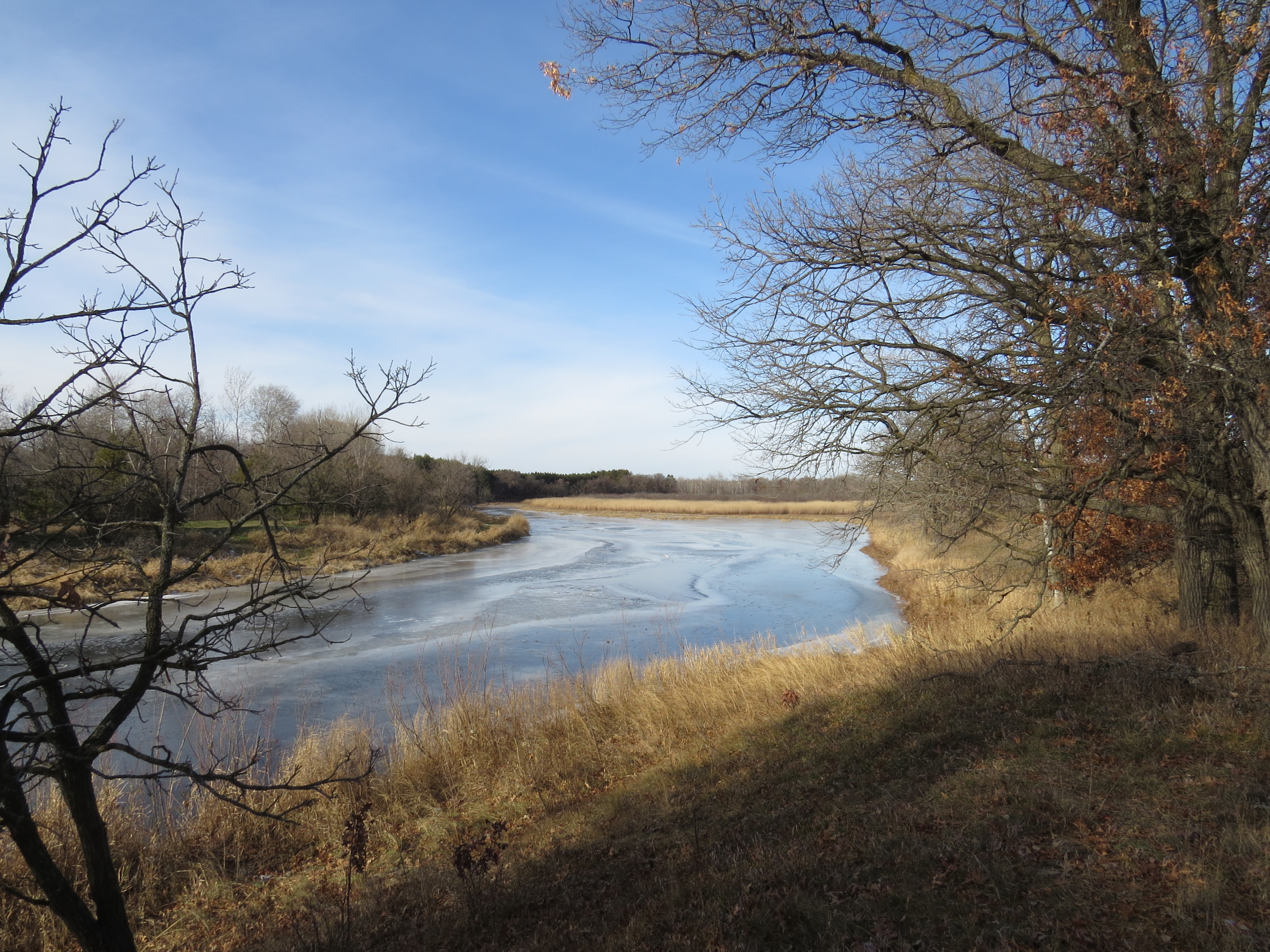
Under the ice and under the mud in the River are turtles and frogs hunkered down and protected from the cold Winter weather. Safe and secure.
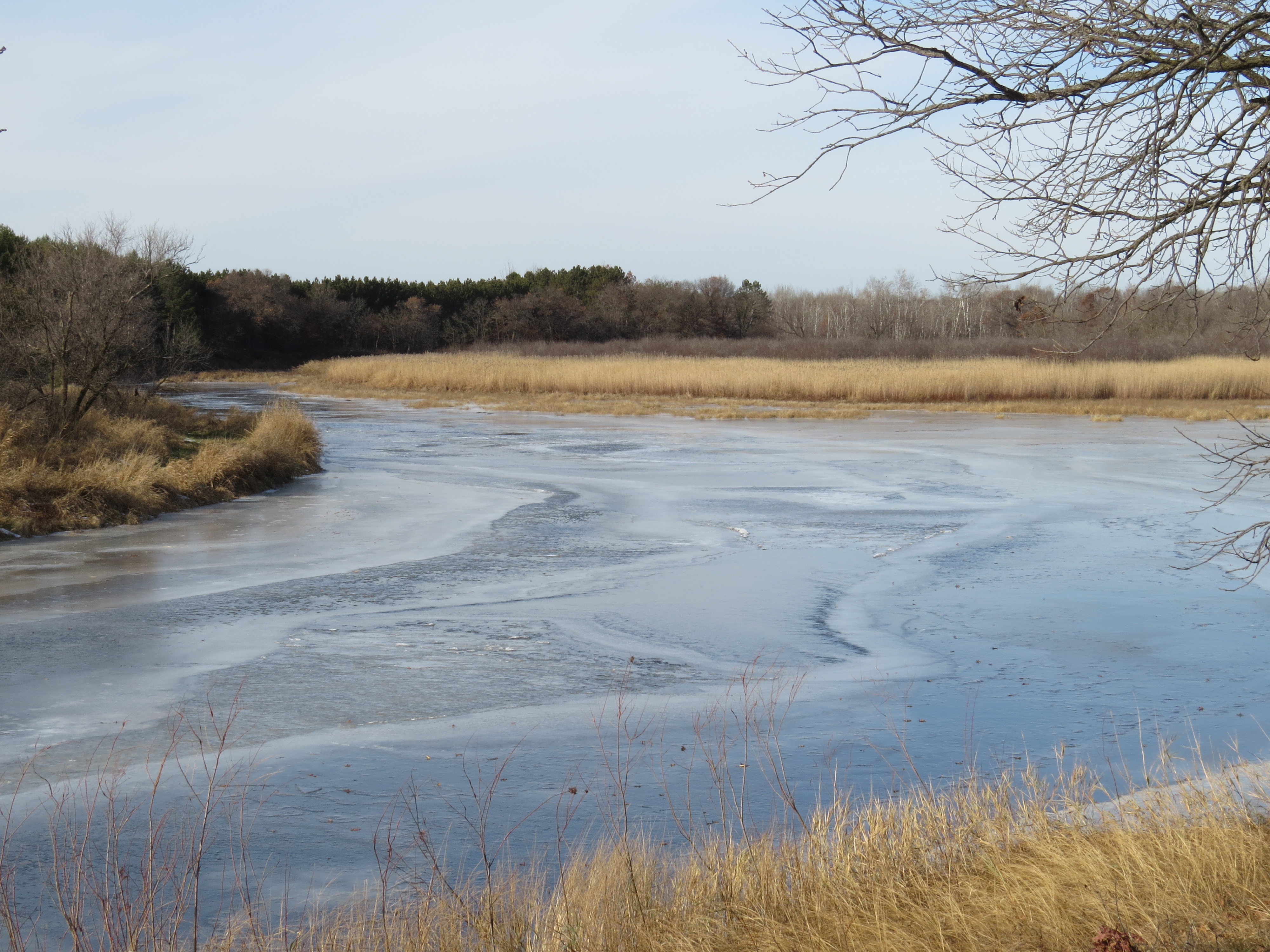
Old logs and thick, coarse slough grasses provide cover and a place to make a cozy, cold-weather nest for small mammals and birds.
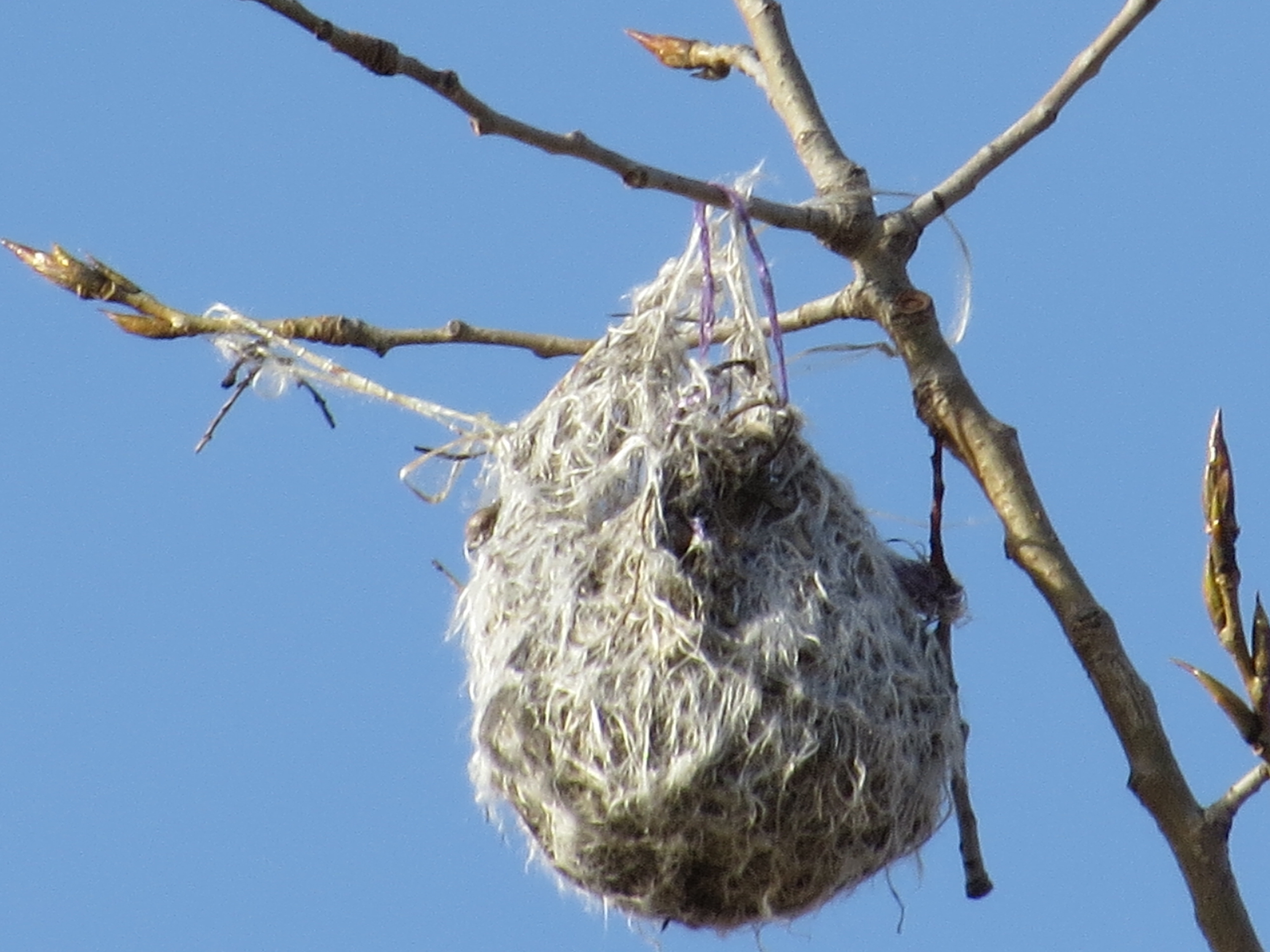
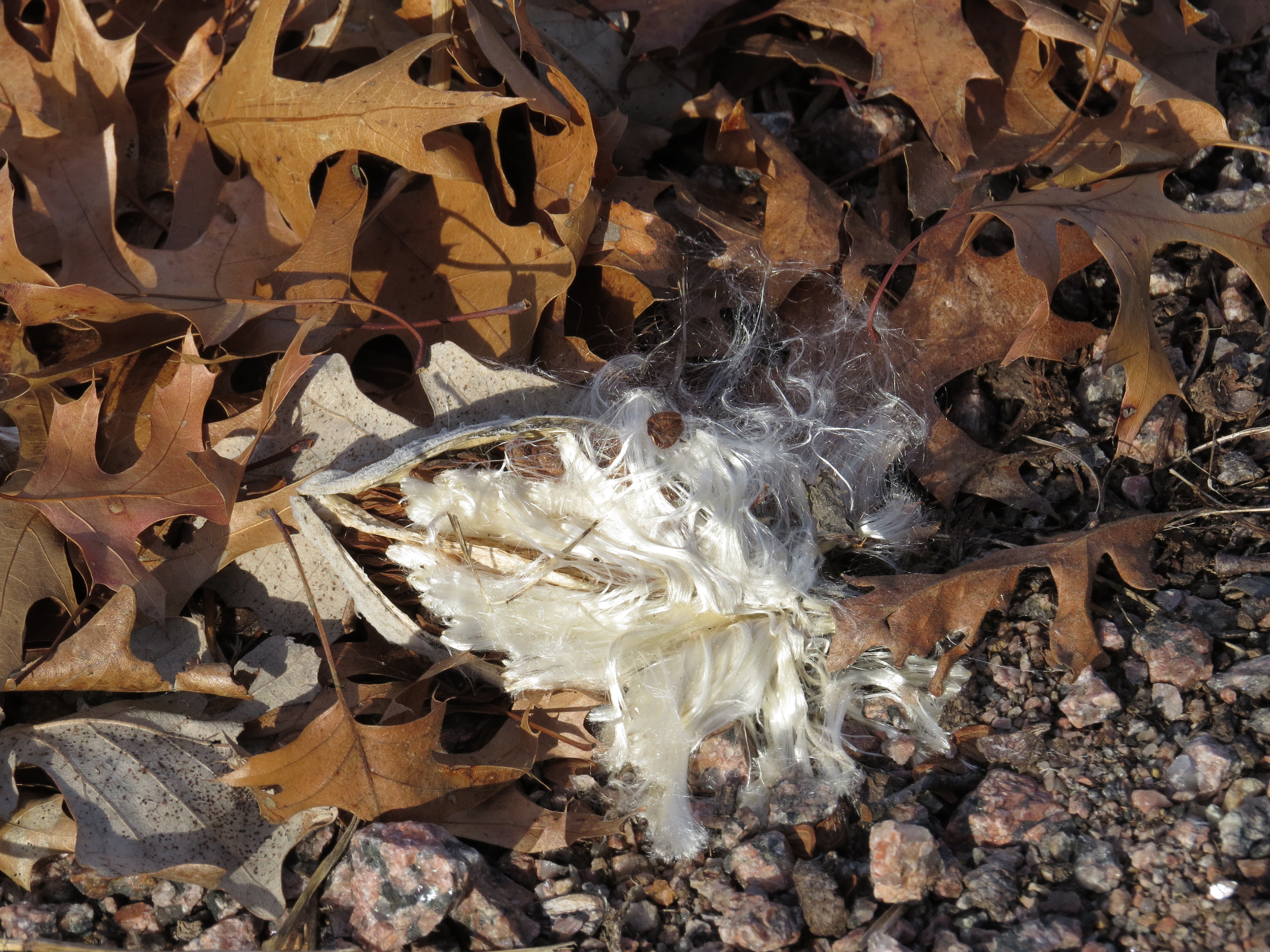
High in the branches of a deciduous tree, bare of leaves, was a pouch-like nest of an Oriole. It is a structural phenomenon! The female begins her nest-building with support strands placed around branches—this industrious weaver found some purple twine that worked well for her hanging nest. She gathers long, strong fibers from plants like swamp milkweed for the outer bowl, then uses her beak almost like an awl to thrust and pull the grasses and fibers to finish the weaving process. The nest is lined with soft fluff from Cottonwood trees in order to cradle up to seven eggs. The process takes resources, patience, finesse, and one to two weeks of time.
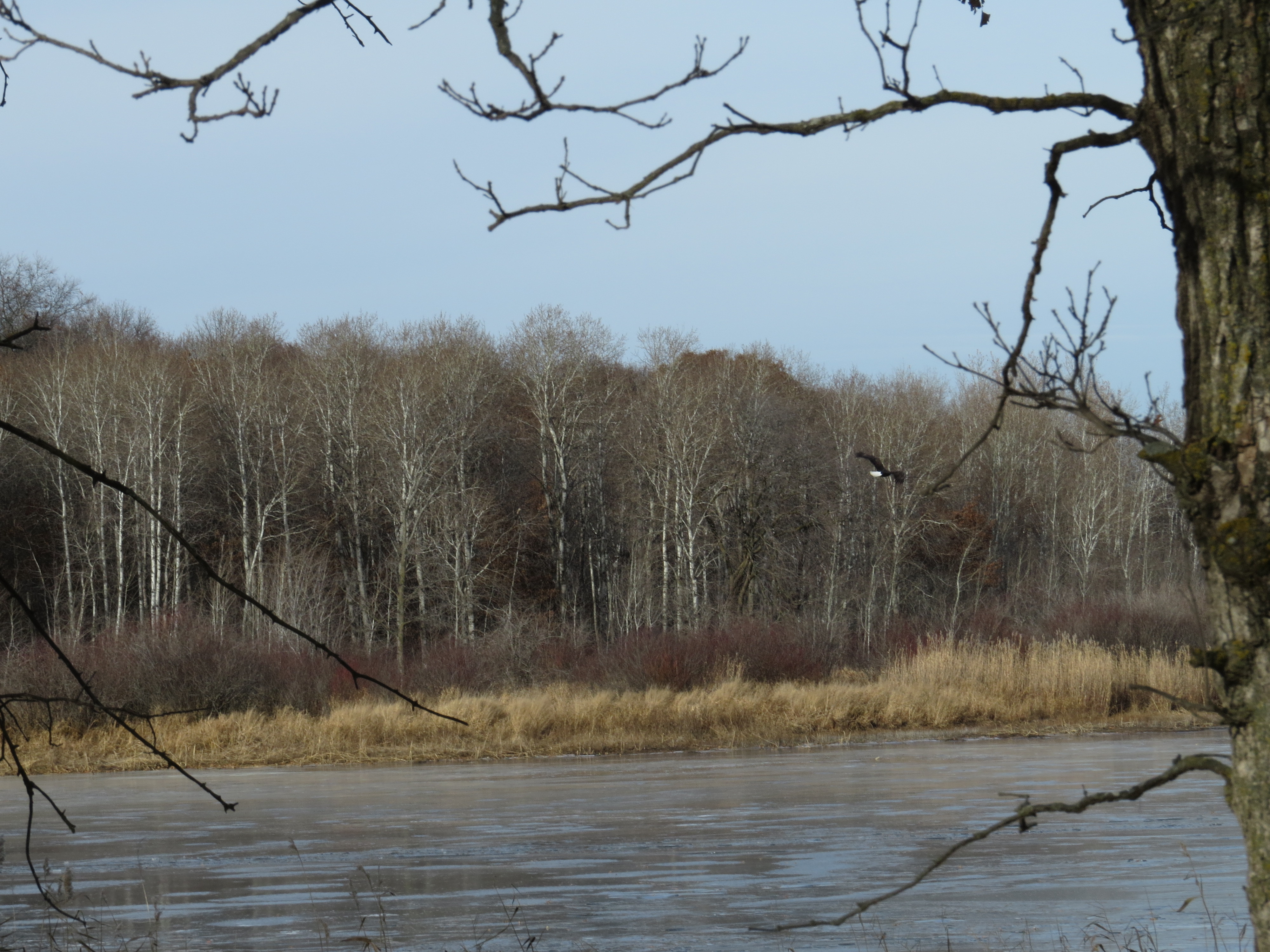
We saw no waterfowl—no ducks, geese, or swans. Where were they? Had they already flown south? It had been so warm, and I hadn’t seen large flocks flying overhead. What we did see were eagles—three or four of them flew over Platte River and Rice Lake, following us on our trail, it seemed.
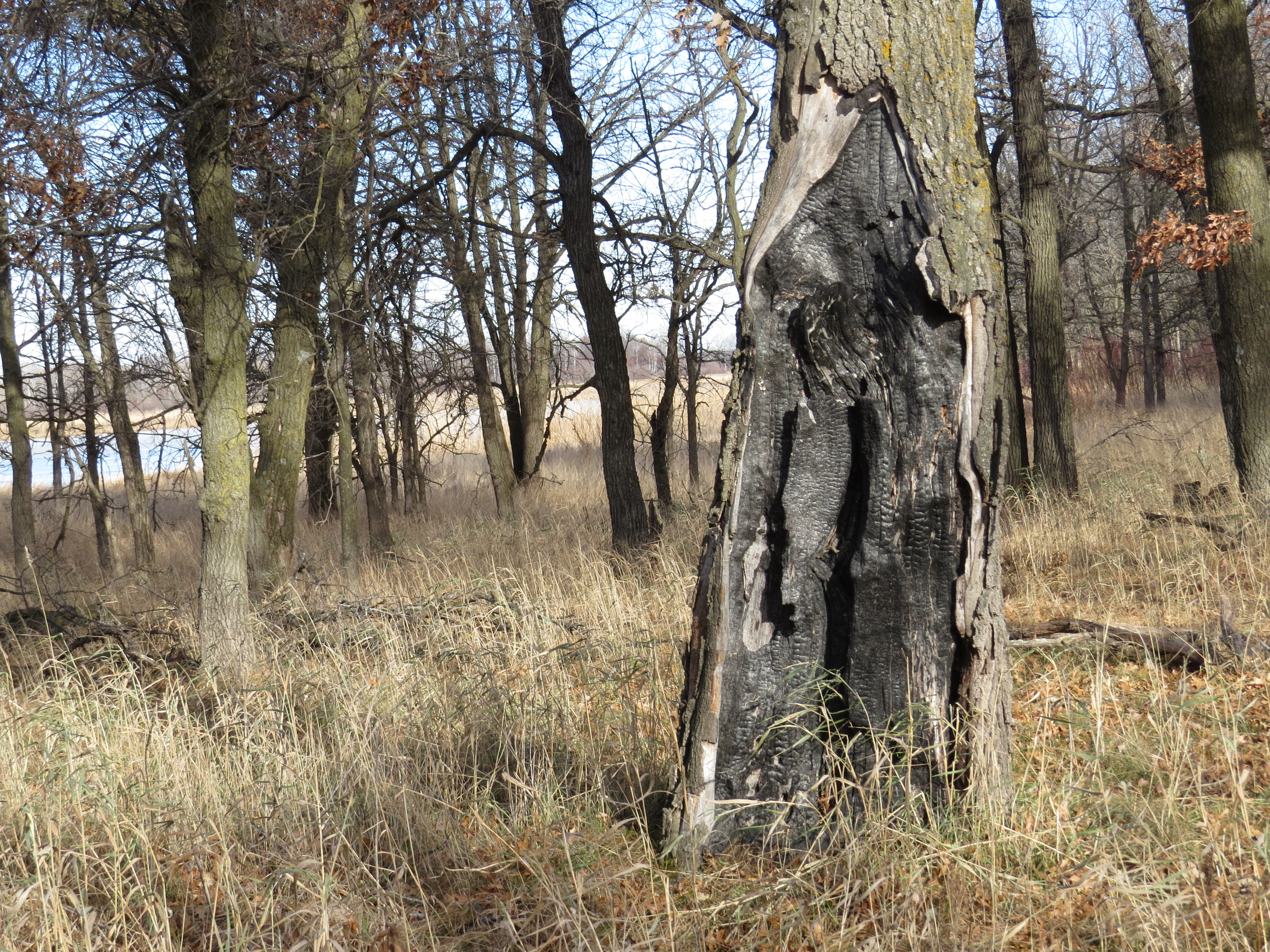
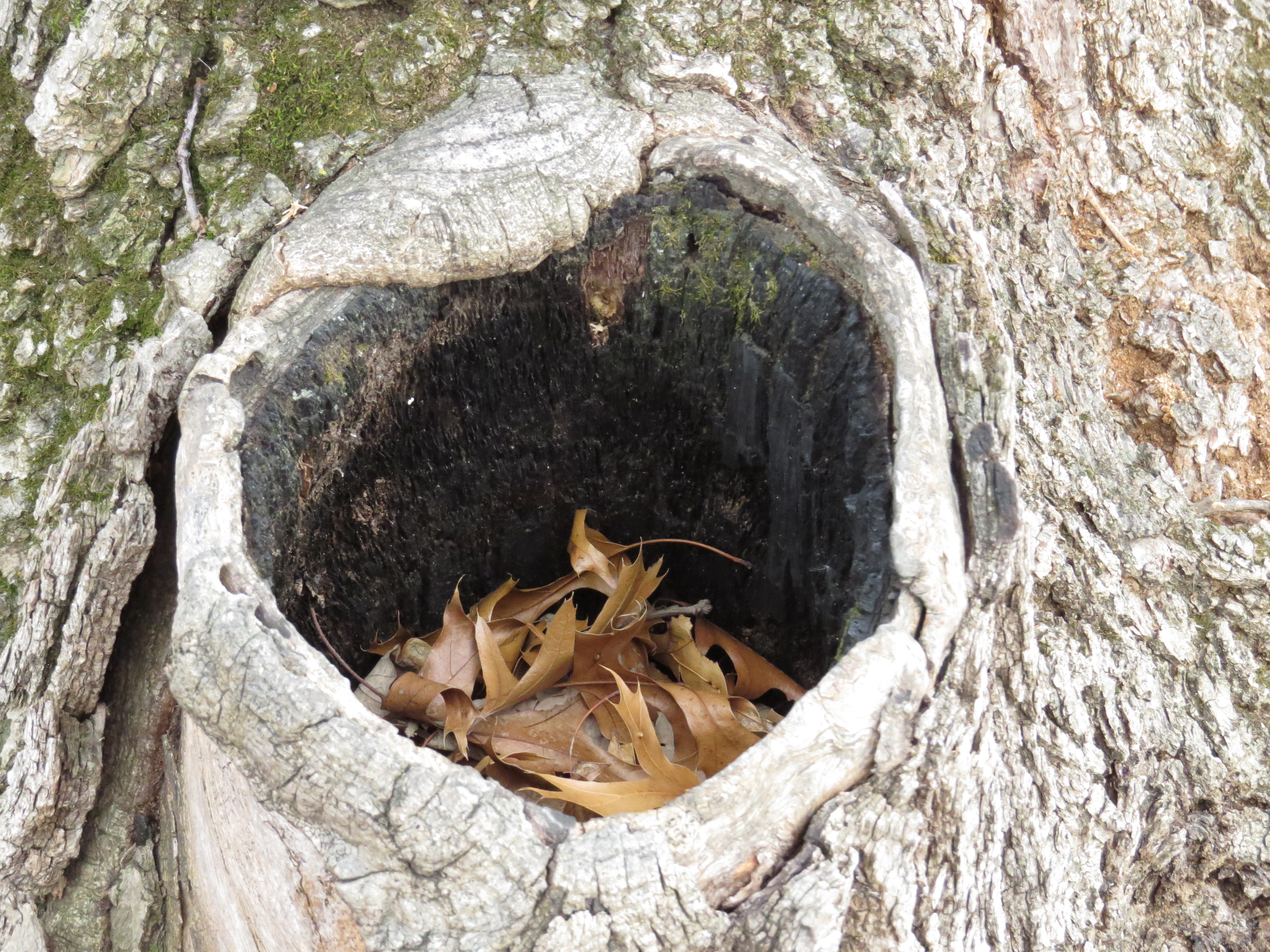
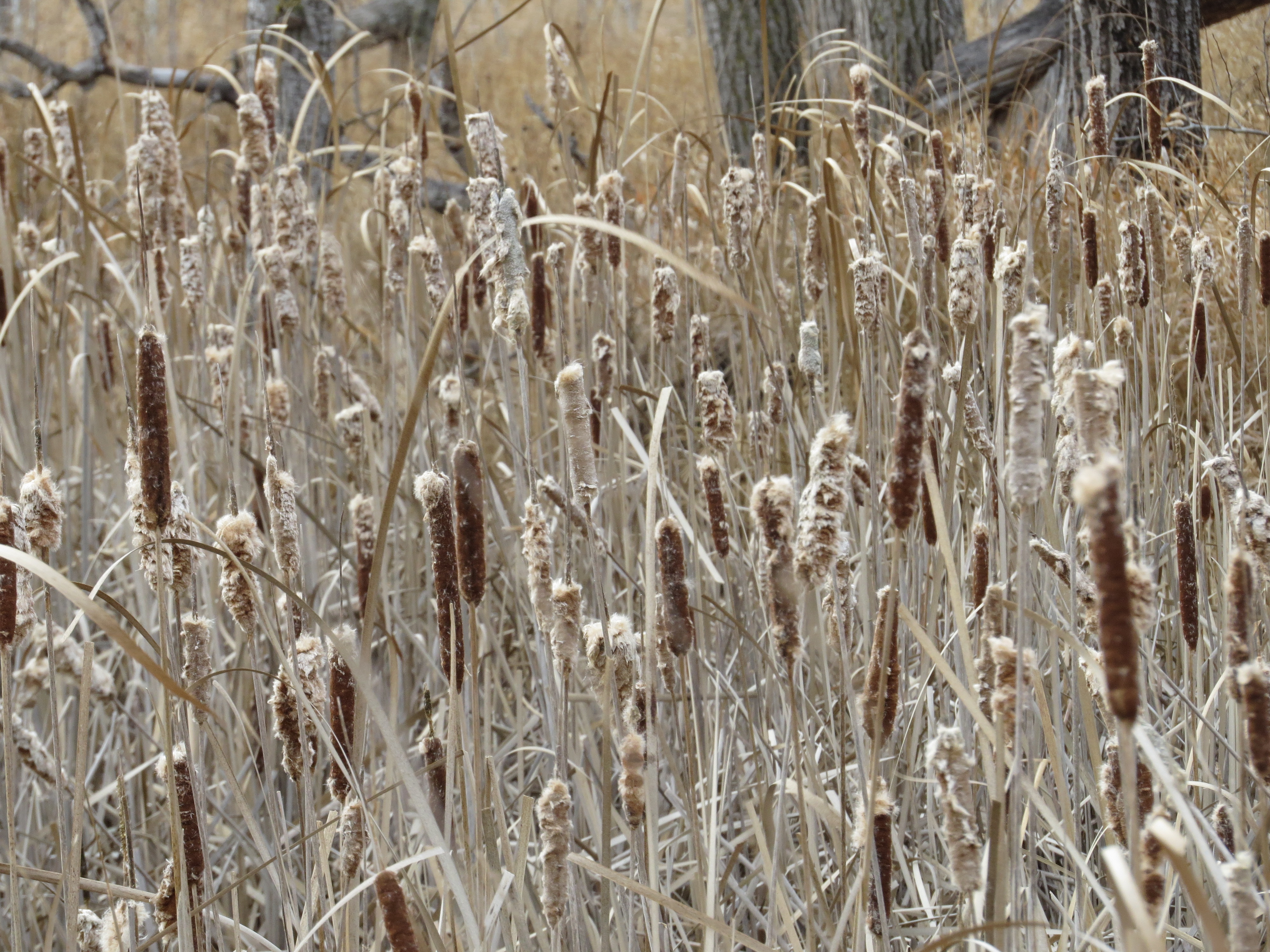
A hole formed from a burned out part of a tree, with leaves and fluffy Cattail seeds, could make a warm, protected nest for some little creature.
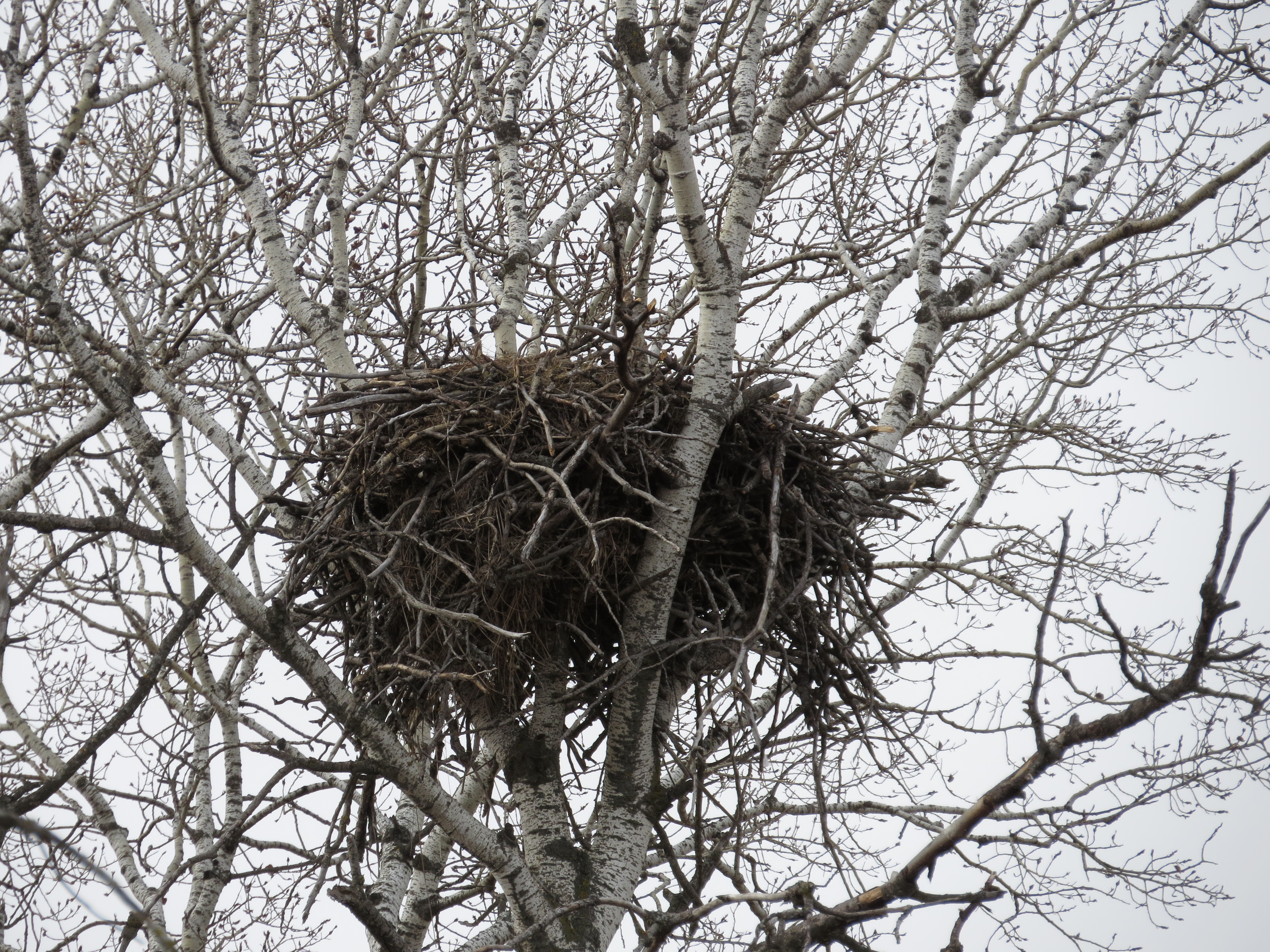
The Eagle’s nest is another engineering wonder, a dark structure of sticks highlighted by the white Poplar bark branches that hold it.
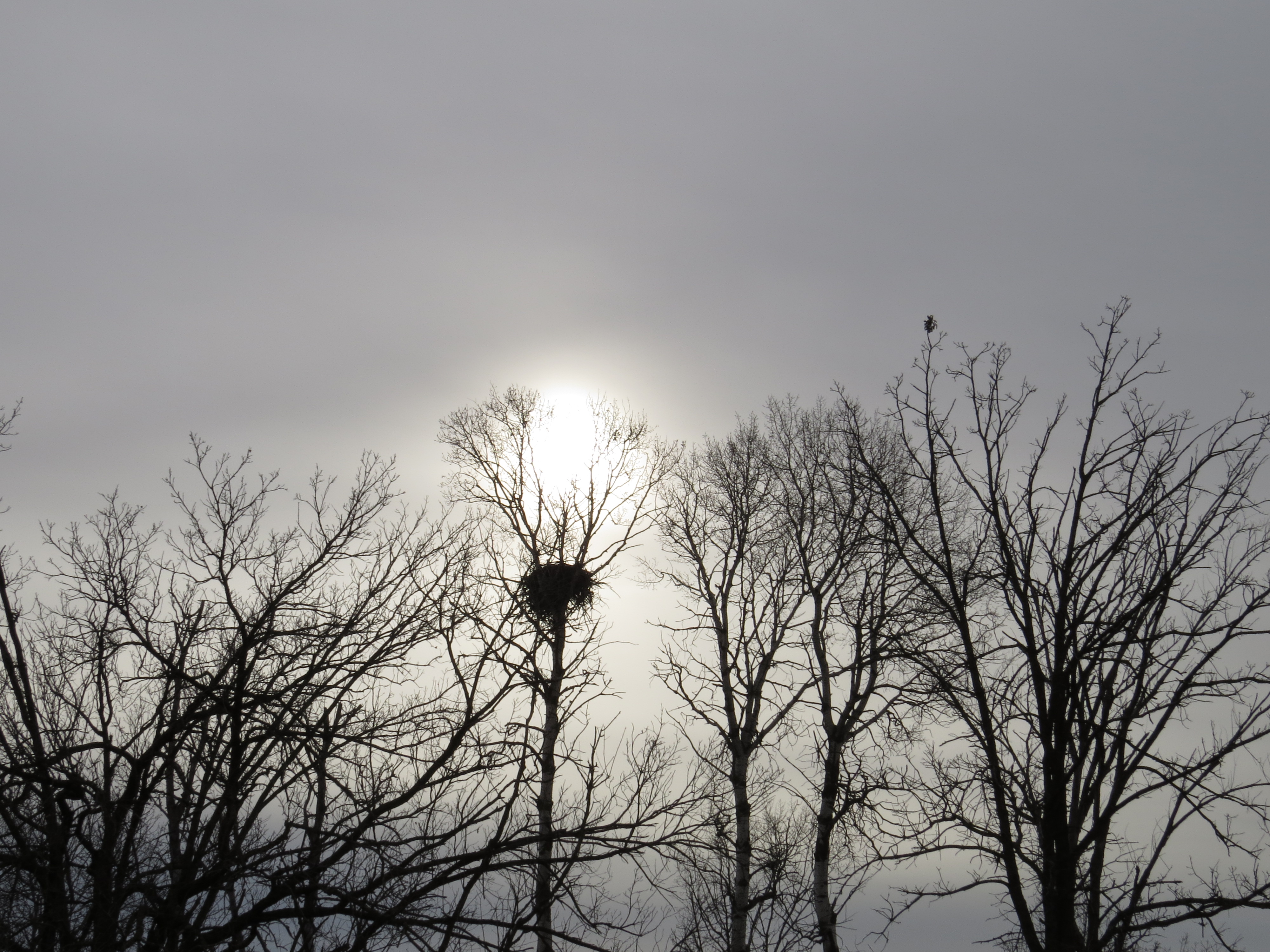
‘Nesting’ comes from the ritual of nest-building in preparation for the raising of offspring. I propose that nesting happens at other times of the year also. Preparation for Winter produces similar activity—finding and making ‘nests’ to protect creatures from the harsh elements of cold and snow. It is done for safety and protection. As humans, we do Autumn rituals to protect our plants, our equipment, and our animals from cold and snow. We gather wood if we have wood-burning fireplaces, we cover tree roots with mulch and perennials with leaves, we may put straw bales around barns or sheds, and disconnect mower batteries. We may move furniture away from drafty windows, get out the afghans and slippers, buy hot chocolate and herbal tea, and light candles. We gather and decorate for Thanksgiving and Christmas and prepare warm food and baked goods. We are practically and mentally preparing for Winter, for cold temperatures, and for darkness. It is cozy; it is hygge; it is safety and security. May the light shine down on our nests in this season of darkness.