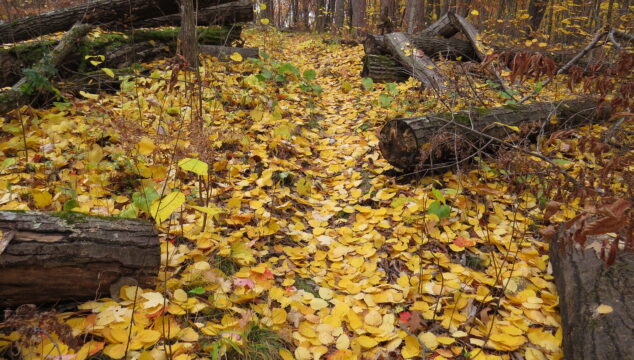
Come walk with me in the peak Autumn beauty of the Northwoods. To say that I love this time of year is an understatement. Most everyone can appreciate the colorful falling leaves---it reveals the 'true self' of a tree when its leaves are no longer producing chlorophyll. Their true colors are revealed, and there is something simple … [Read More...]
Archives for 2020
Changes in the Light on Any Given Day
It’s on the strength of observation and reflection that one finds a way. So we must dig and delve unceasingly. –Claude Monet
What influence painter Claude Monet has had on public gardening that up in the Northwoods of Minnesota in the little city of Brainerd is a Monet garden! Last weekend Chris and I went to Northland Arboretum, 500 acres on the outskirts of Brainerd. A beautiful log visitor’s center sits on the hillside with a little waterfall garden situated on the other side of the parking lot.
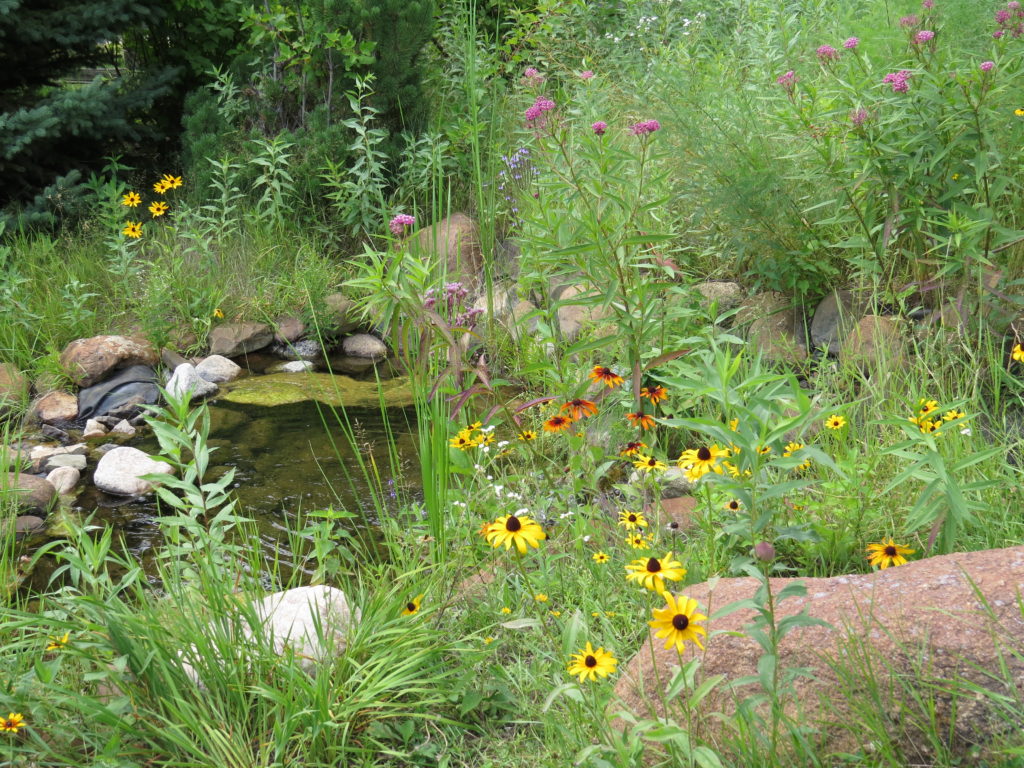
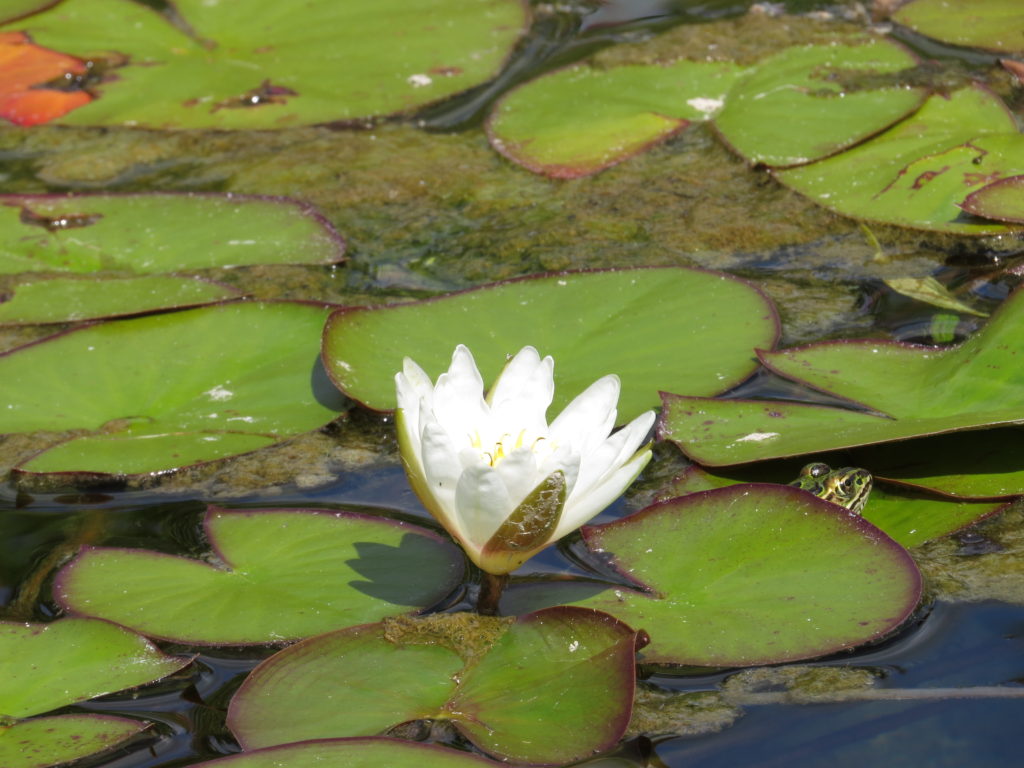
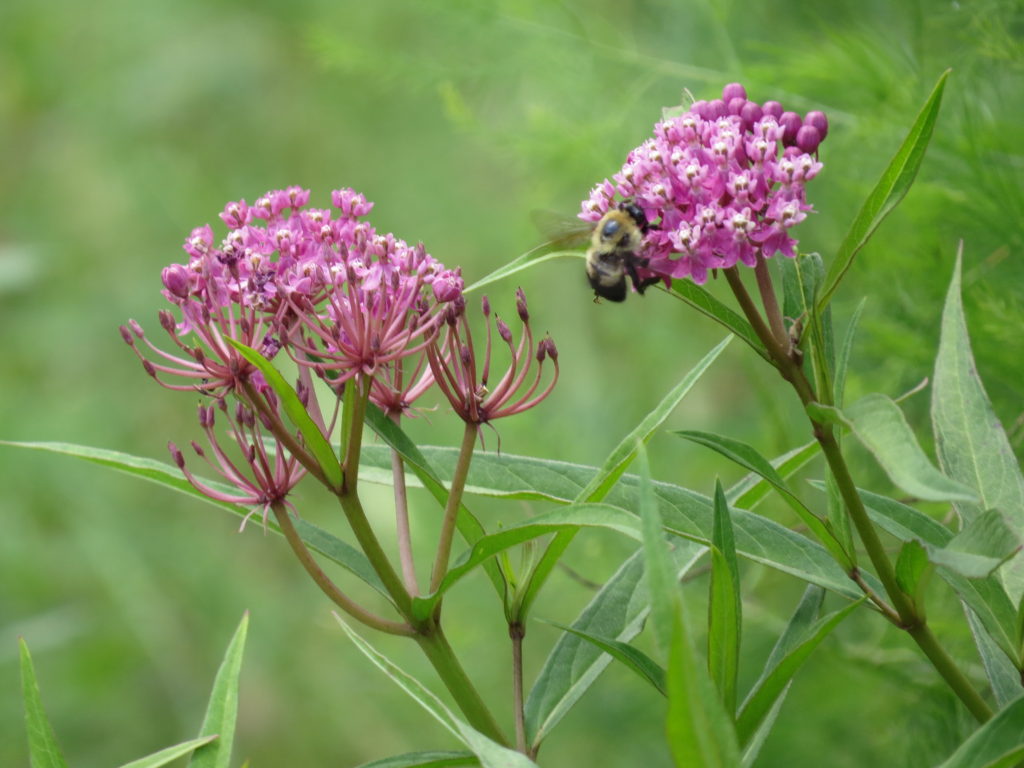
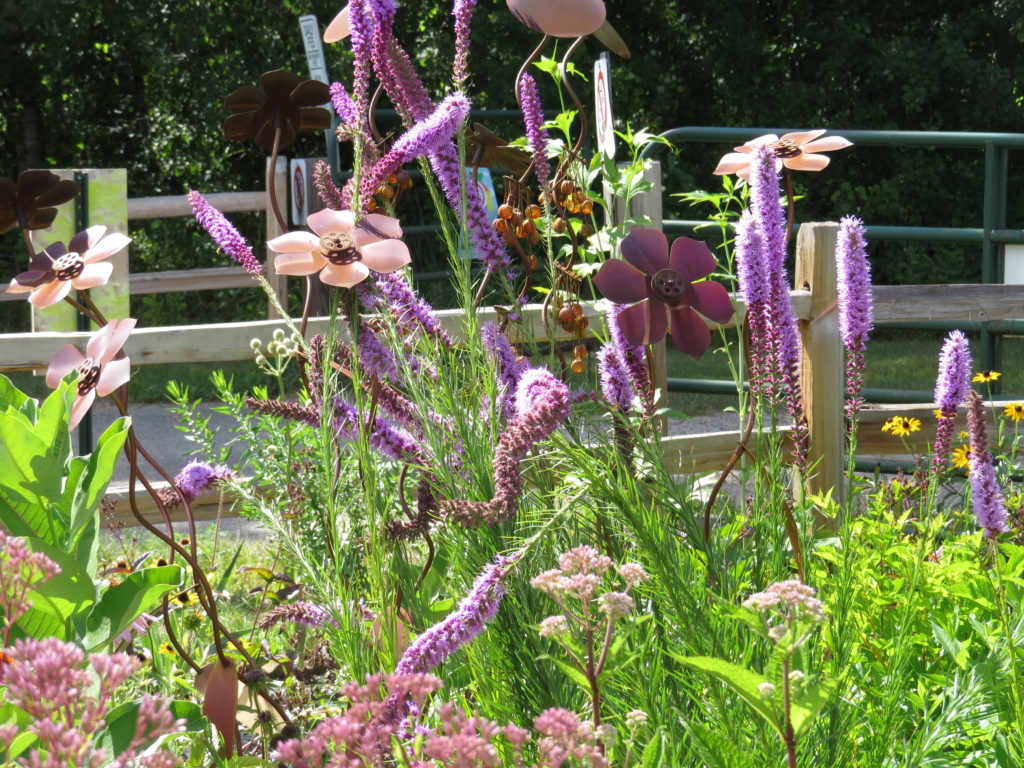
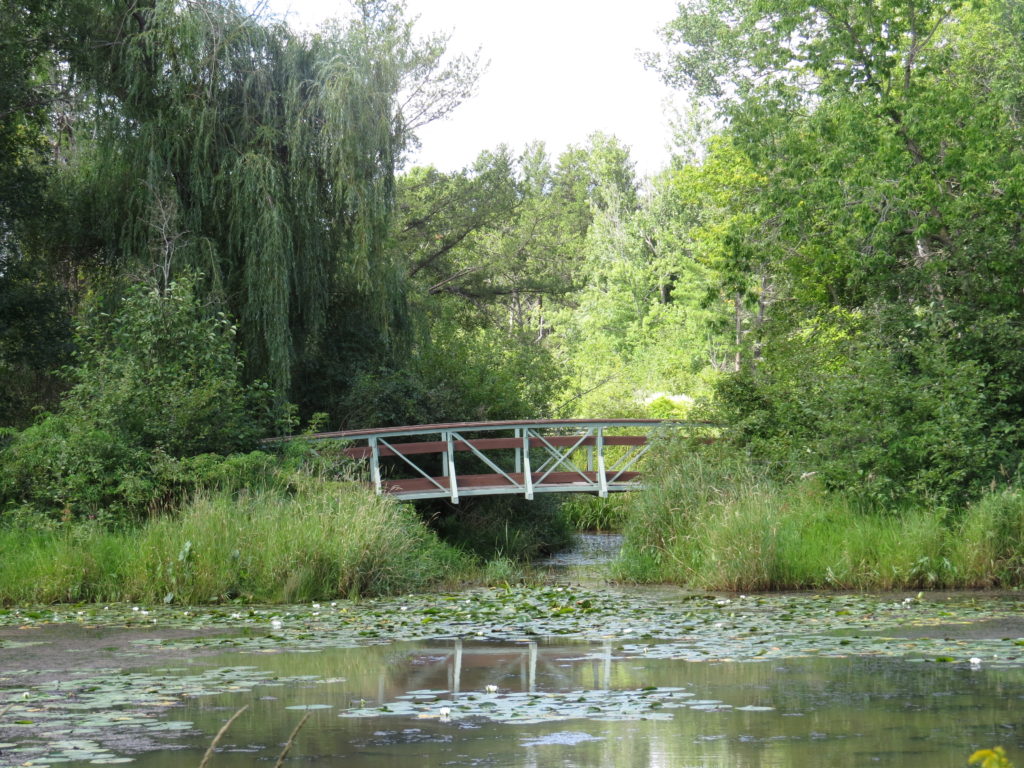
We were invited to discover the Monet garden on the way to the hiking trails. We crossed the curved Japanese-inspired bridge like the one that Monet originally built on his Giverny garden and pond. As we circled the pond, we passed by Arrowheads, Cardinal flowers, showy red Monarda, and of course, the famous White Water Lily!
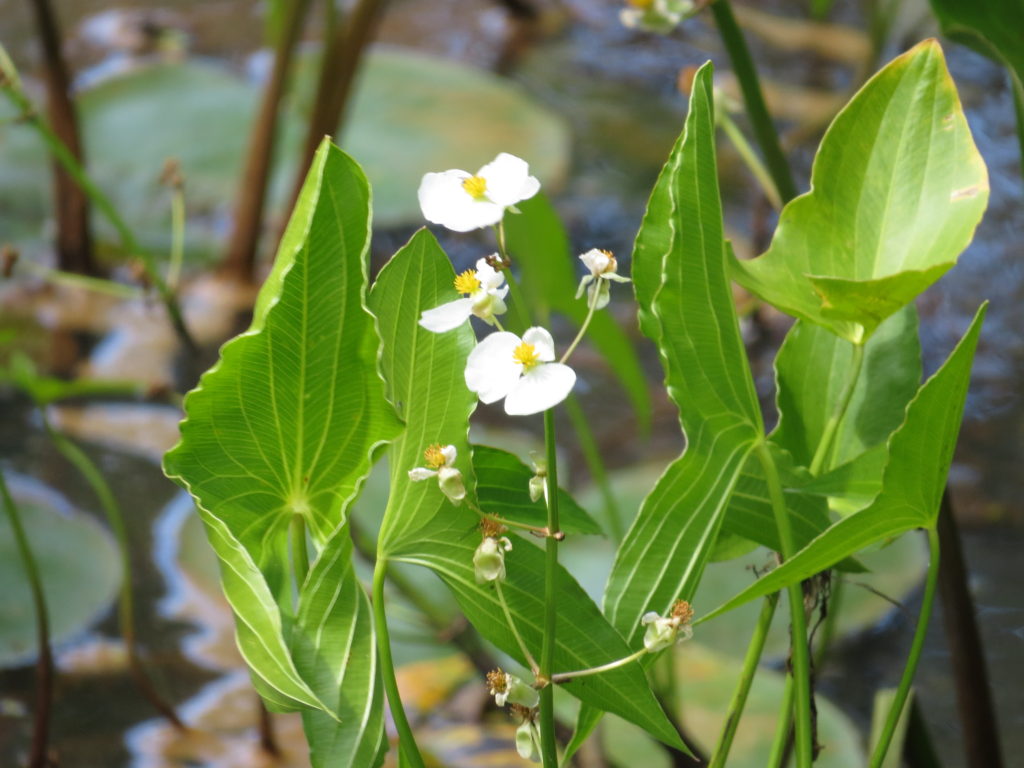
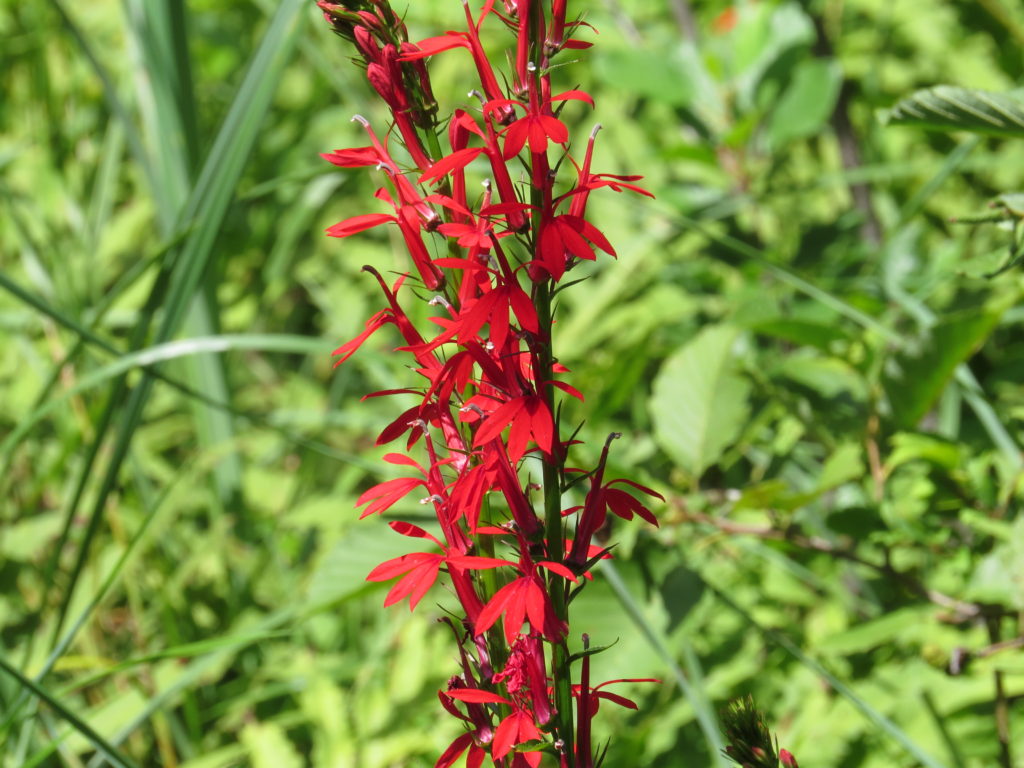
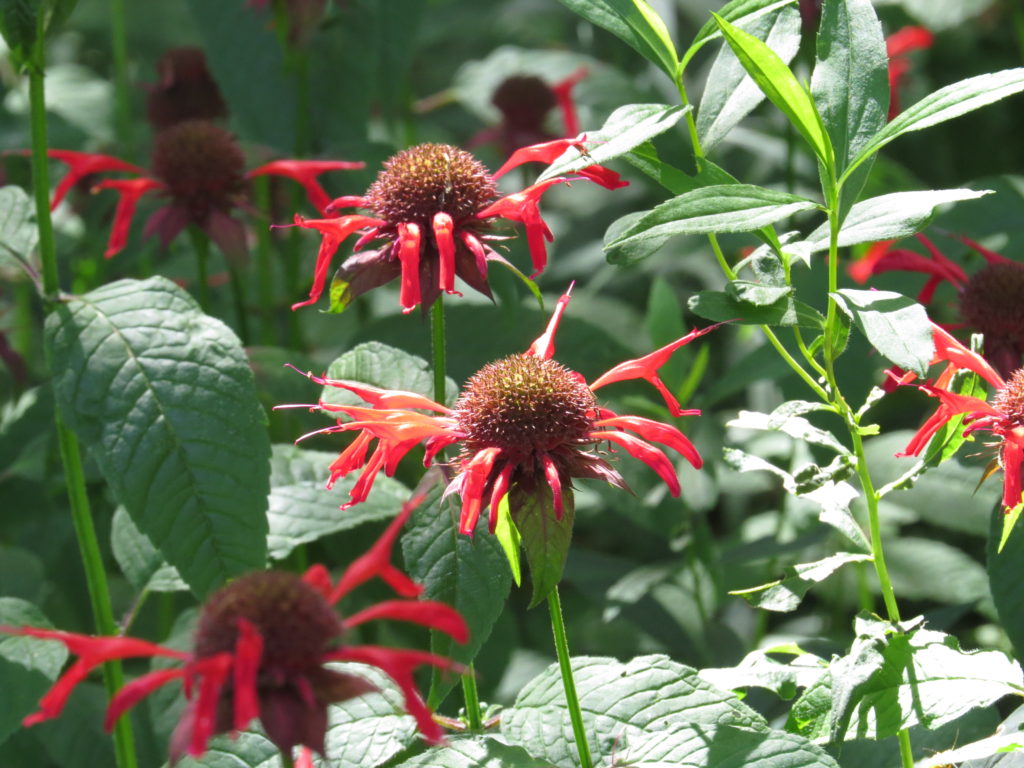
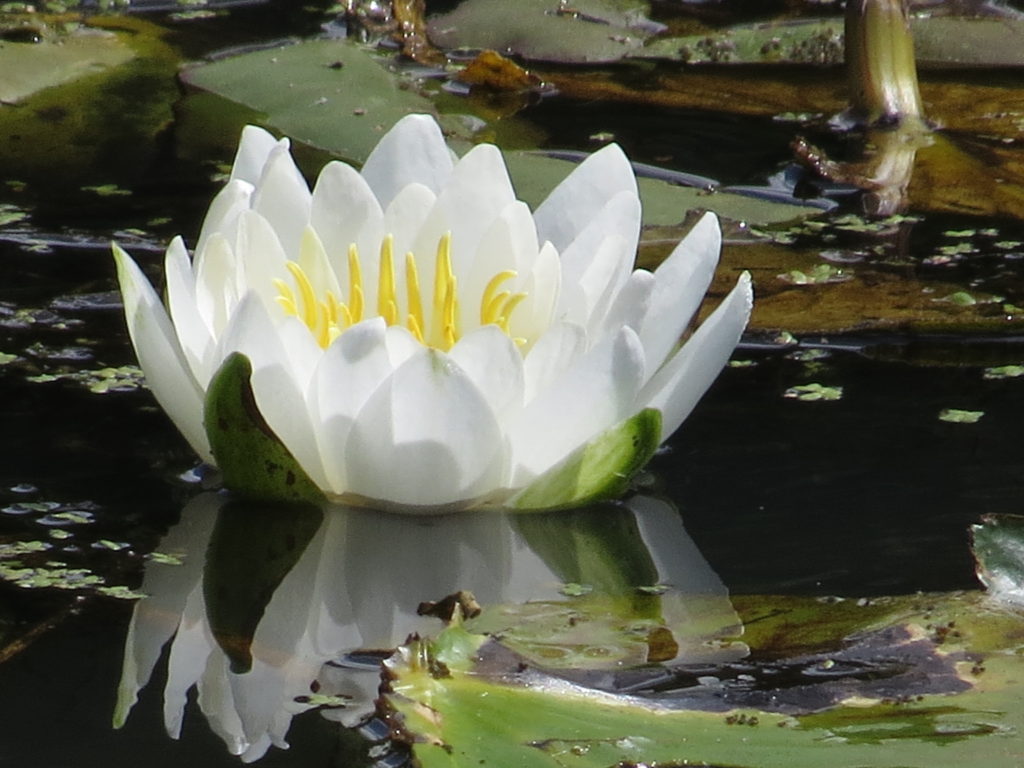
It was the wildest looking garden I have ever seen—literally wild, as opposed to manicured, following Monet’s idea of not liking organized or constrained gardens. And from the other side of the pond, we viewed the Northwood’s reproduction of Monet’s most famous scene from his Giverny garden.
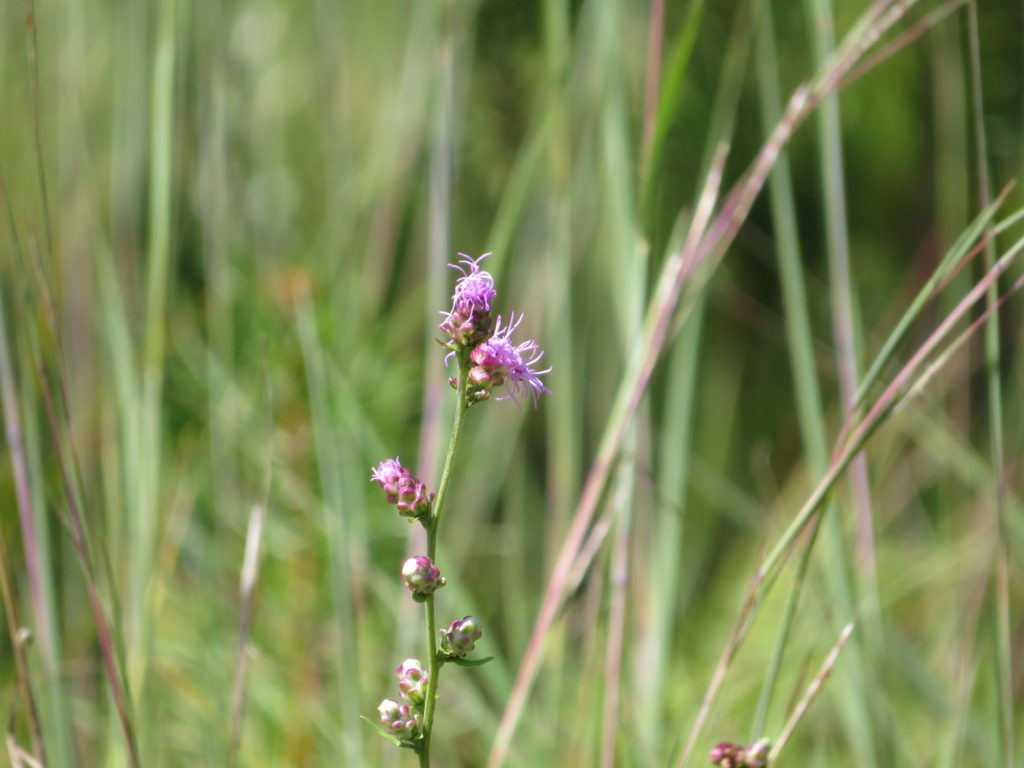
We hiked on and soon found ourselves in a Jack Pine savanna. The soil was sandy, the terrain rolling, and Jack Pines and Bur Oak trees grew side by side. Prairie grasses like Big Bluestem and Indian grass lined the trail and were in full bloom along with other late summer flowers.
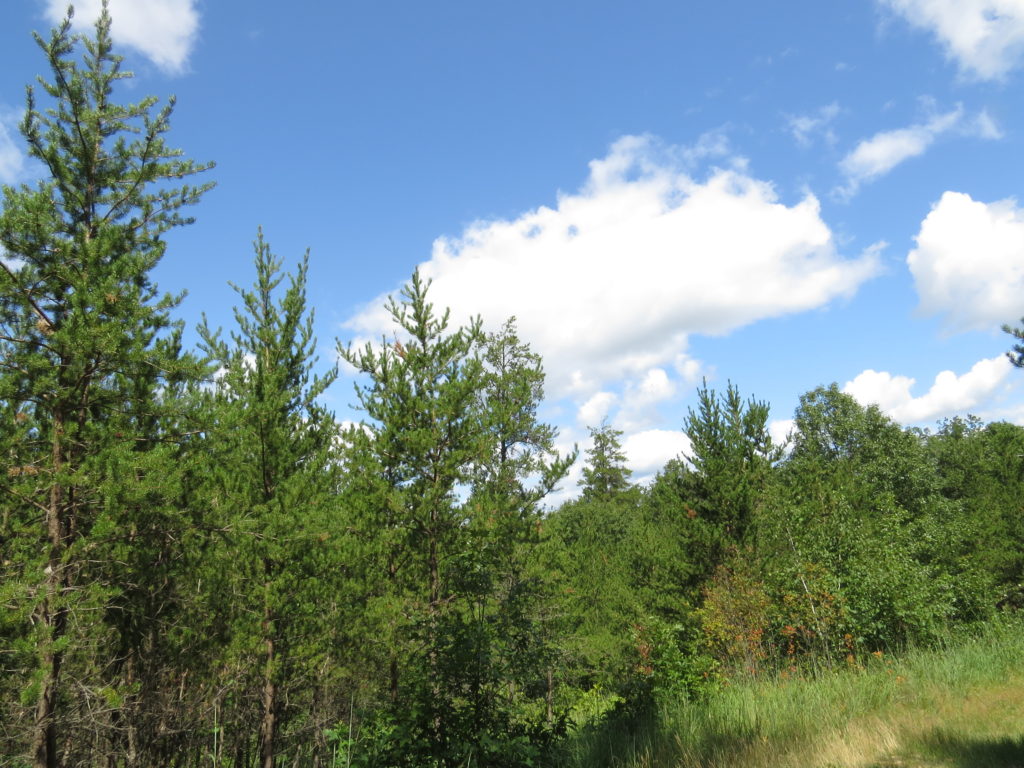
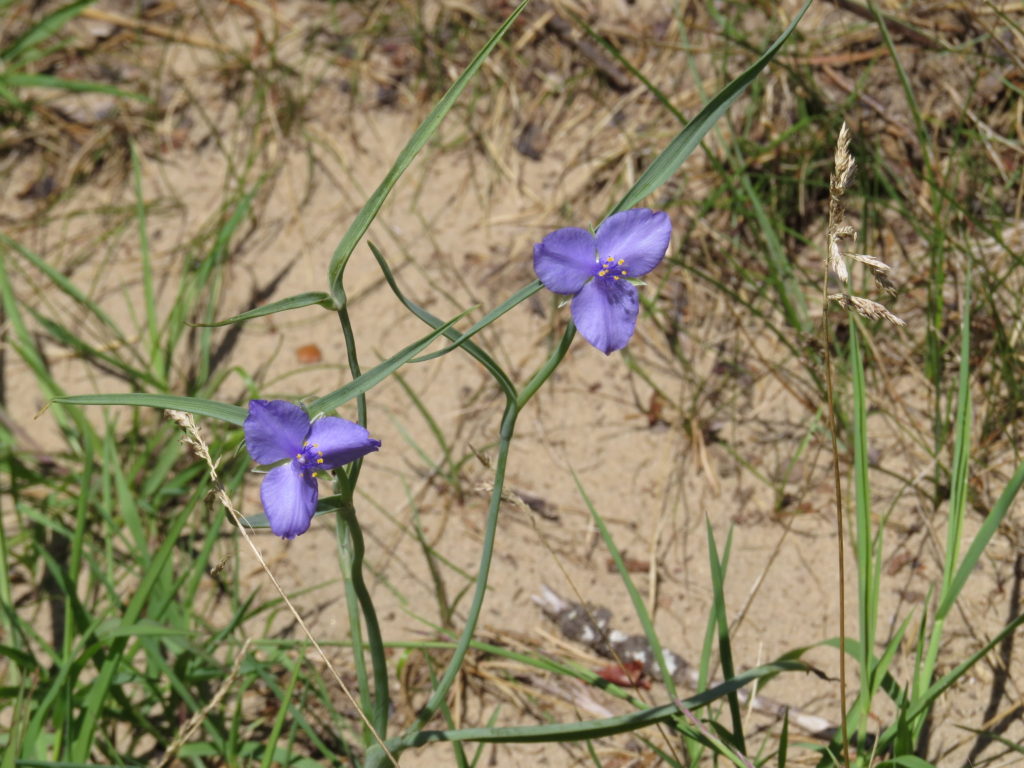
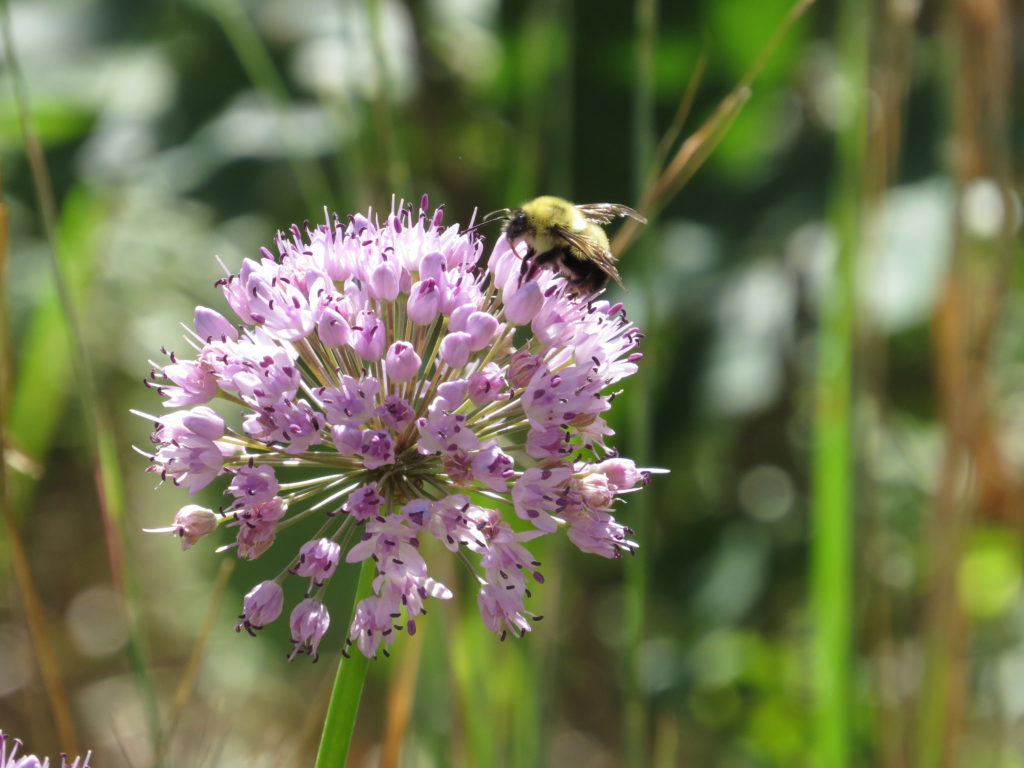
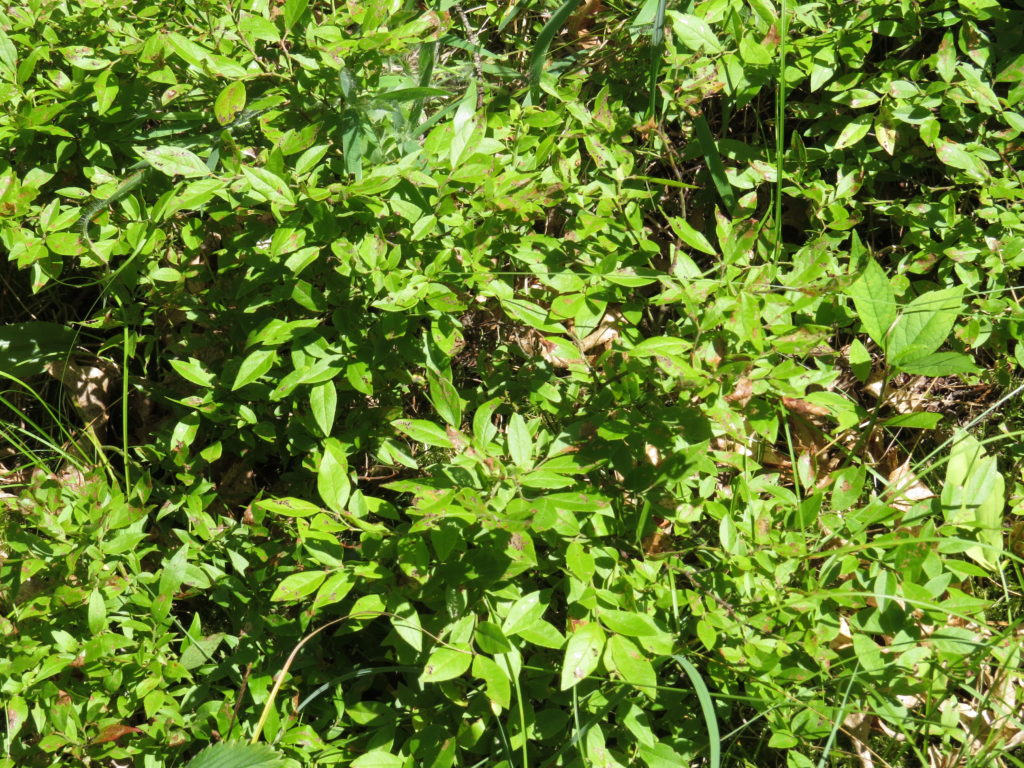
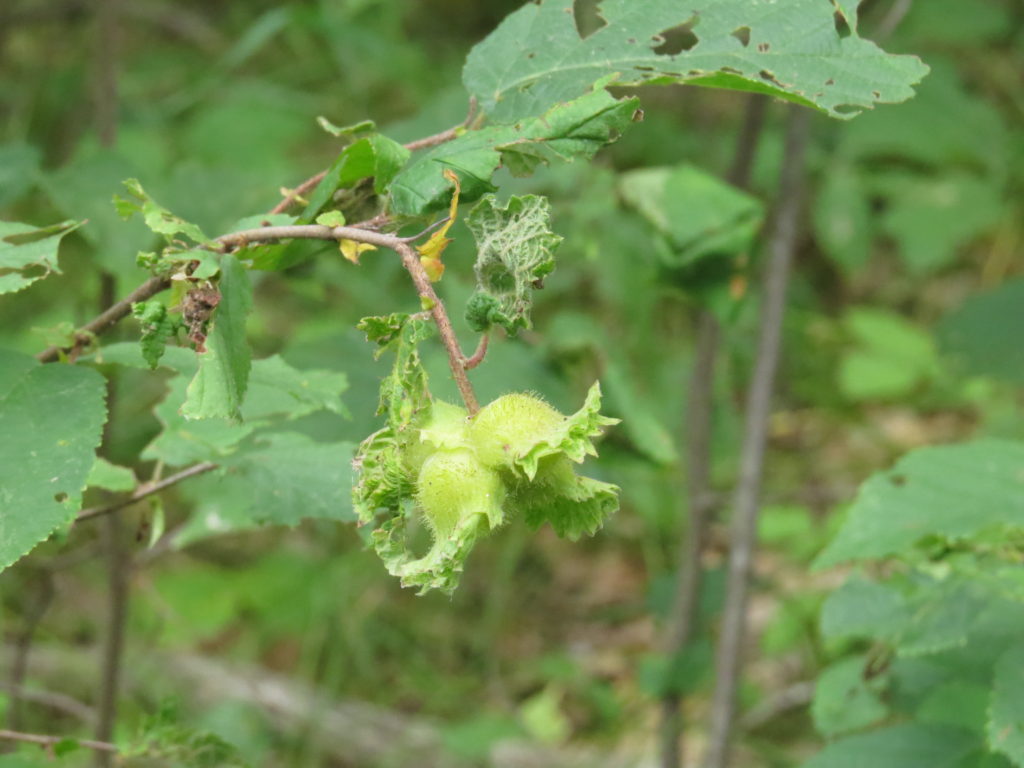
We noticed Wild Blueberries growing on the sandy hillsides and lots and lots of Hazelnut shrubs, most of which were already void of their husk-protected nuts. I commented to Chris that this would be a good place for bears to live with all this food!
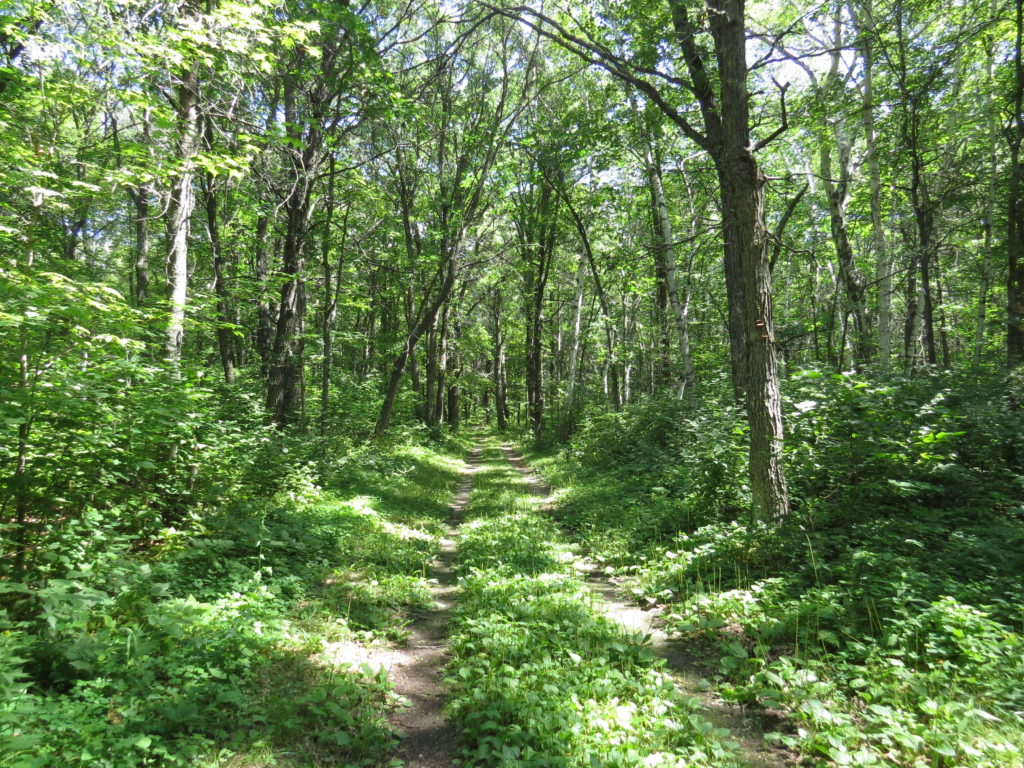
The terrain changed again as we continued north—there were more Maple trees, more undergrowth, more ferns—and then the mosquitoes started finding us. We hiked on a ridge between two wetlands, ferngullies on either side of us. The trail was definitely less traveled and no longer mowed. We had yet to see another person since leaving the Monet garden.
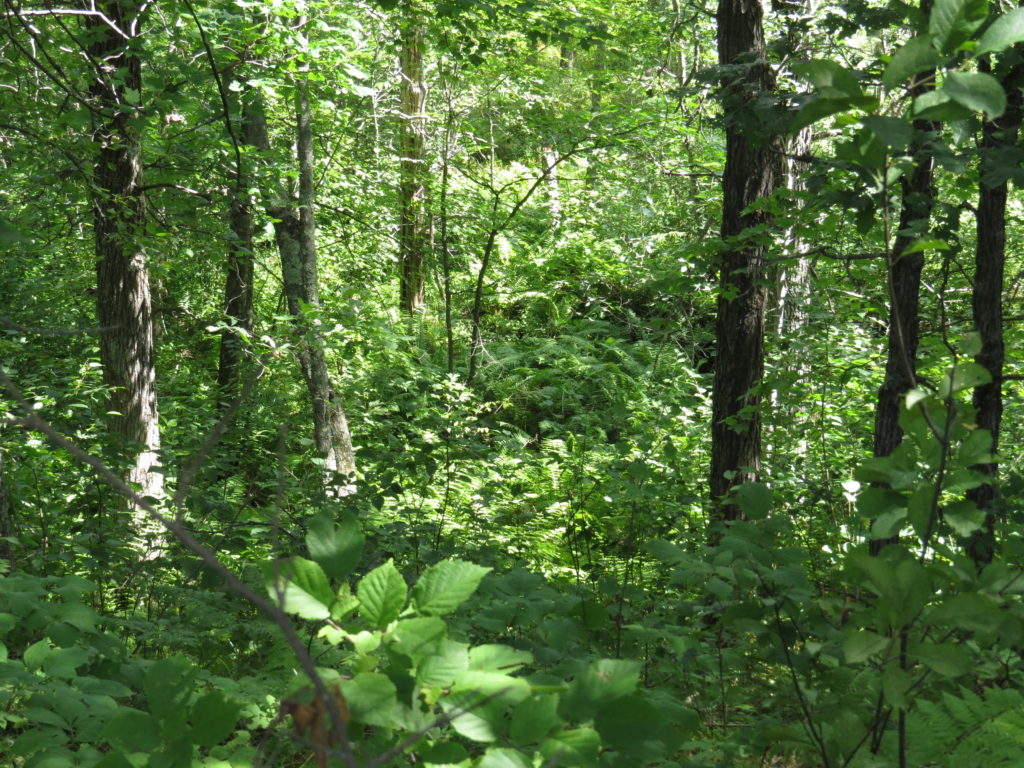
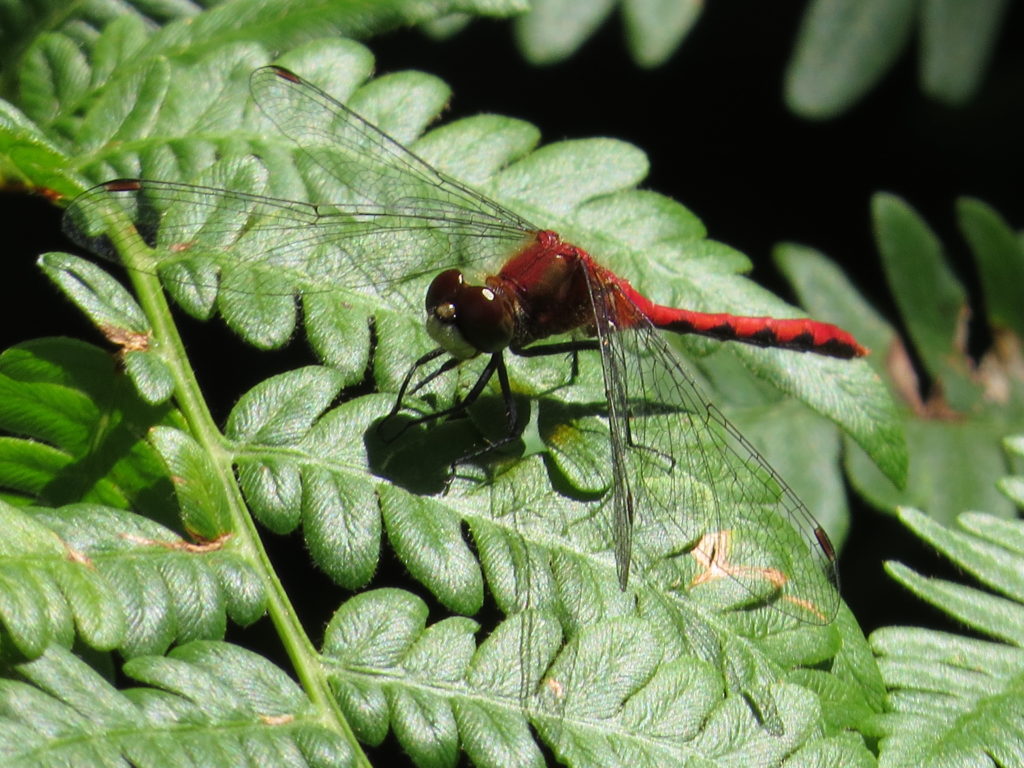
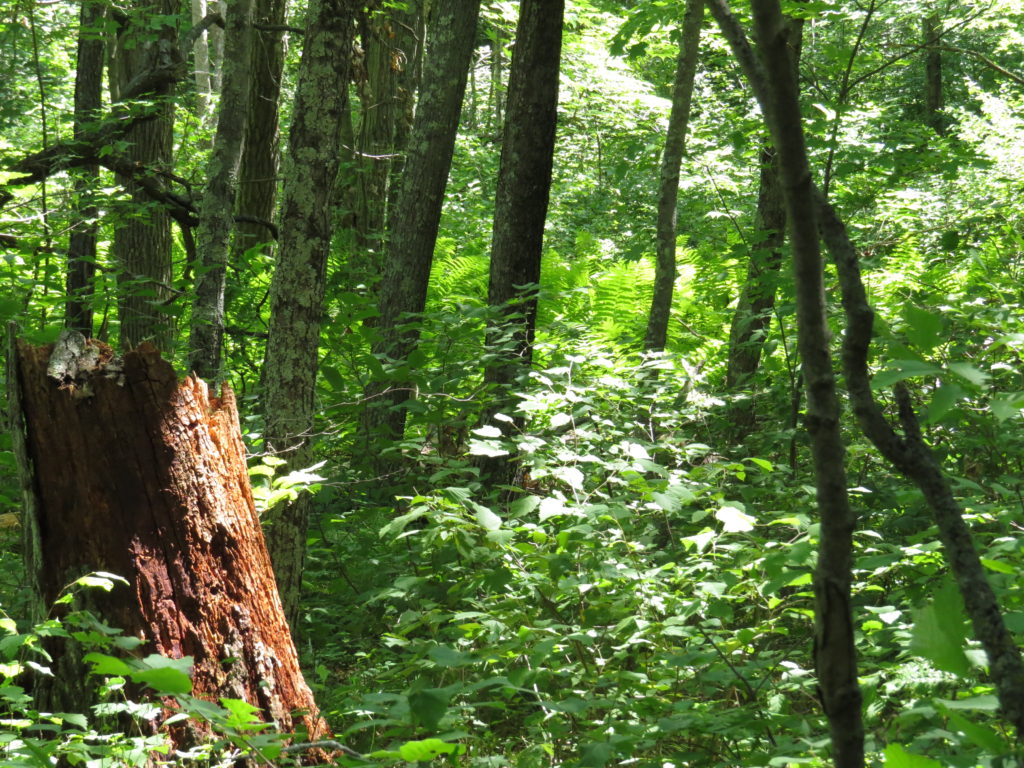
We swatted mosquitoes as we persisted to the Red Pine forest and an old homestead site, which turned out to be only an open area of the woods with a patch of raspberries bushes.
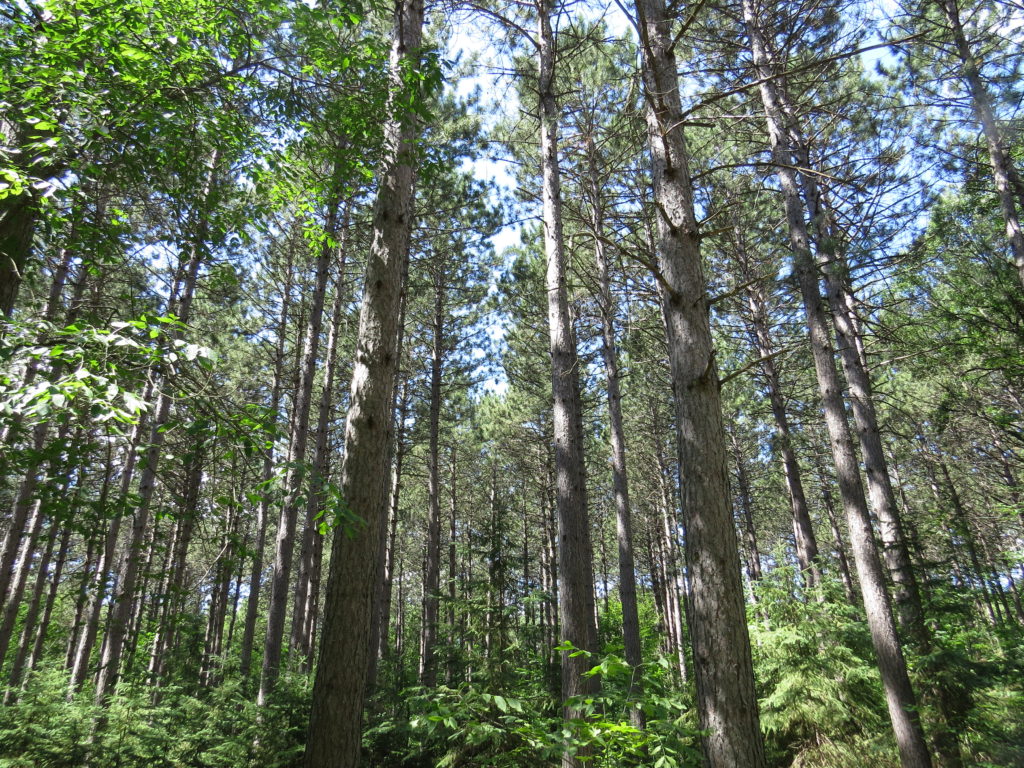
The mosquitoes persisted and called their friends, so we turned around before making the complete loop. It will be a great place to see in the fall or winter!
We returned to the visitor center area for our picnic and were greeted by a family with three young children who asked if we had seen the bear. The mom explained that the naturalist at the center had told them a mother bear and her cubs had been seen in the park! It is a good place for bears to live!
The arboretum map showed other gardens that we hadn’t seen yet—the Gazebo Garden where weddings have been held, the Secret Garden started by the Girl Scouts, and the Memory Garden—so after lunch we hiked to find them. It was a sobering scene. The once-beautiful gardens were neglected—granted, early August is tough on any garden—but shrubs were overgrown, the ground was dry, the grass and plants were browned, the weeds too prolific. Nobody would want to get married here at this time. Our disappointment was tempered by the reality that both of us, particularly Chris, knew: It’s hard work to keep a garden looking good. It takes many man-hours to keep ahead of the weeding, watering, trimming, planting, thinning, and replanting that is required for any public garden. It’s hard work, and it takes money. We did not see any gardeners and wondered if they relied wholly on volunteers, which of course has many challenges baked into that. We saw and appreciated the original ‘bones’ of the gardens—a beautiful terraced rock wall, a little pond, some wonderful plant specimens, and the enclosed walls of the Secret Garden, and at the same time we knew how much work it would take to get the gardens back to their original glory.
And now, back to Monet’s garden at Giverny. Claude Monet built his gardens in the late 1800’s—as he became more famous as a painter, he was able to spend more money on his plant material and help. At one point he hired seven gardeners to carry out his vision. In essence, he created his art over and over again—once with the creation of the garden and then with his method of painting where he painted the same scene many times in order to capture the changes in the light on any given day and the myriad changes that occur with the seasons. But after Monet died in 1926, things changed. His step daughter tried to keep the place going, but after WWII, the house and gardens fell into neglect and ruin. The bombings had shattered all the windows in the main house and the greenhouses. The floors and ceiling beams rotted away. The gardens were overgrown and wild. Restoration of Monet’s gardens began in 1977 with the help of many generous donors. The house and greenhouses were restored. The pond was re-dug, the gardens replanted, the famous bridge re-built. It took ten years to do so.
We found our way around the Northland Arboretum, from the newer, more cared-for buildings and gardens at the entrance to the wild Monet Garden to the even wilder trails into the deep woods and back to the neglected, older gardens. Life is like that. We have those beautiful shiny places that find their way to a post on social media, we have those shaggy places that show up in our everyday life routines, we have those often untraveled aspects of our lives that are bothersome and beautiful at the same time, and we have those once-beautiful but neglected places that need attention and care. And sometimes a bear shows up. “So we must dig and delve unceasingly.” Restoration is possible, no matter how overwhelming it seems. Each one of us can find a way to create our lives over and over again.
Failures and Gibbous Moons
My failures have fallen like bread crumbs behind me over the years and decades, and I can trace my steps back to those times at rapid speed. The past is never far away. Some of the failures are not merely crumbs, but lumpy, massive loaves that cannot be overlooked, that trip me up with each return, that mark my defeat for all to see. Those massive loaves of failure were life-changers, and I have yet to see ‘the good’ that supposedly comes from the path not taken. (And that is not a good feeling for an optimist.) In a ‘winner’ world, my failures plainly show that I am not one of those—no accolades, no trophies, no cheers, and no prize money. Sorry, you lose. Go to the back of the line. Laughter, whispers, and talk behind my back. The failures are bright, they glow in the dark, and when I walk—forwards or backwards in time—they pull my attention towards them. In a big six decades of life, my failures are phosphorescent.
There are times each month when we step out into the night and our eyes are instantly drawn to the bright orb of the gibbous moon. Gibbous comes from a root word that means hump-backed or something that protrudes or creates an obvious bulge. Gibbous moons are the waxing and waning phases where the moon is more than half illuminated. When there is a gibbous or full moon, the sky is so lit up by the moonlight that it is harder to see the stars.
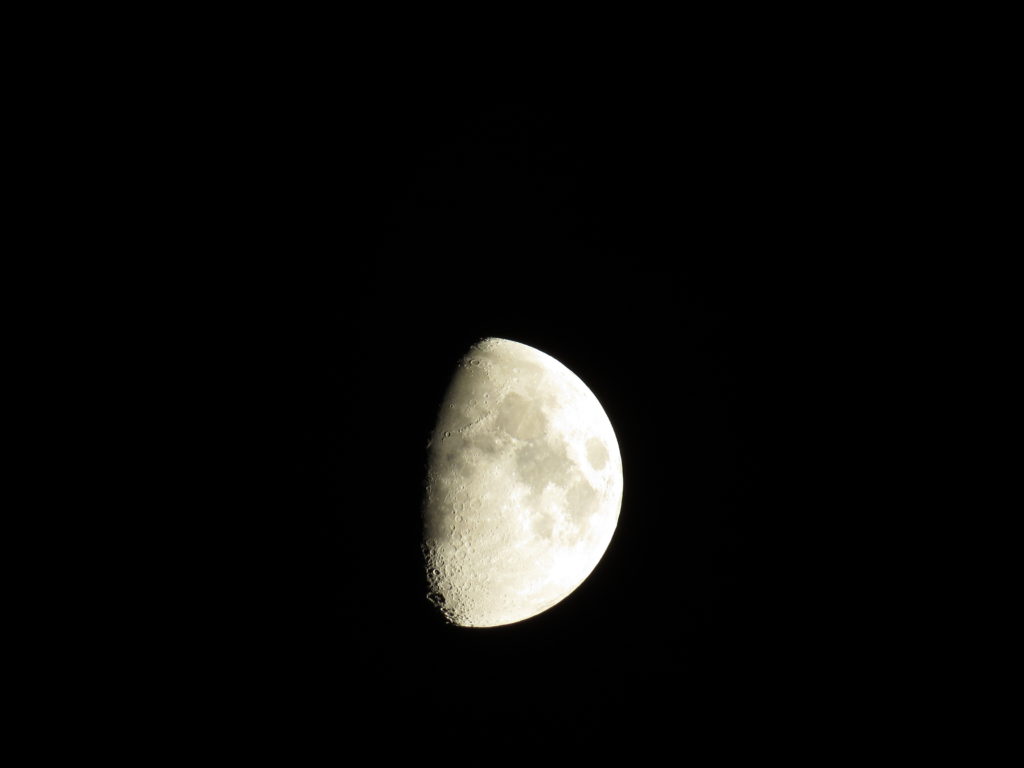
The bright glow makes a walk in the night possible without a flashlight or headlamp—we become like nocturnal animals—we can ‘see’ in the dark. But my favorite thing about those radiant nights is the moon shadows, especially of the bare trees on snow during the winter.
Oh, I’m being followed by a moon shadow, moon shadow, moon shadow, Leapin’ and hoppin’ on a moon shadow, moon shadow, moon shadow….Did it take long to find me? I asked the faithful light. Did it take long to find me? And are you gonna stay the night? — Cat Stevens
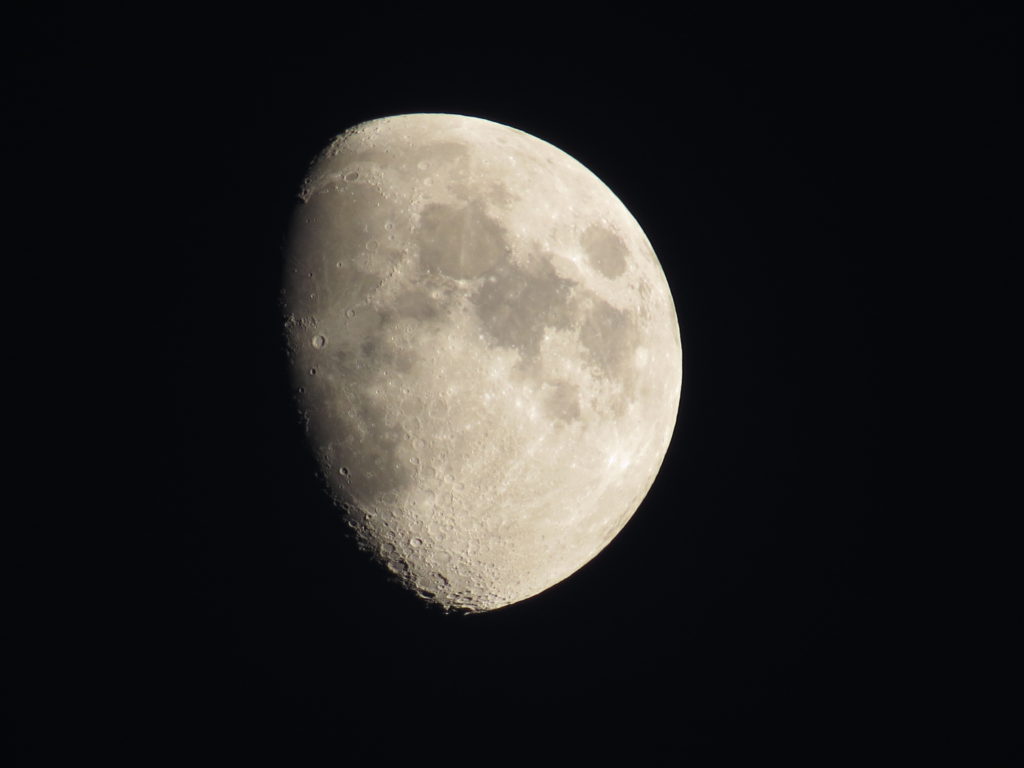
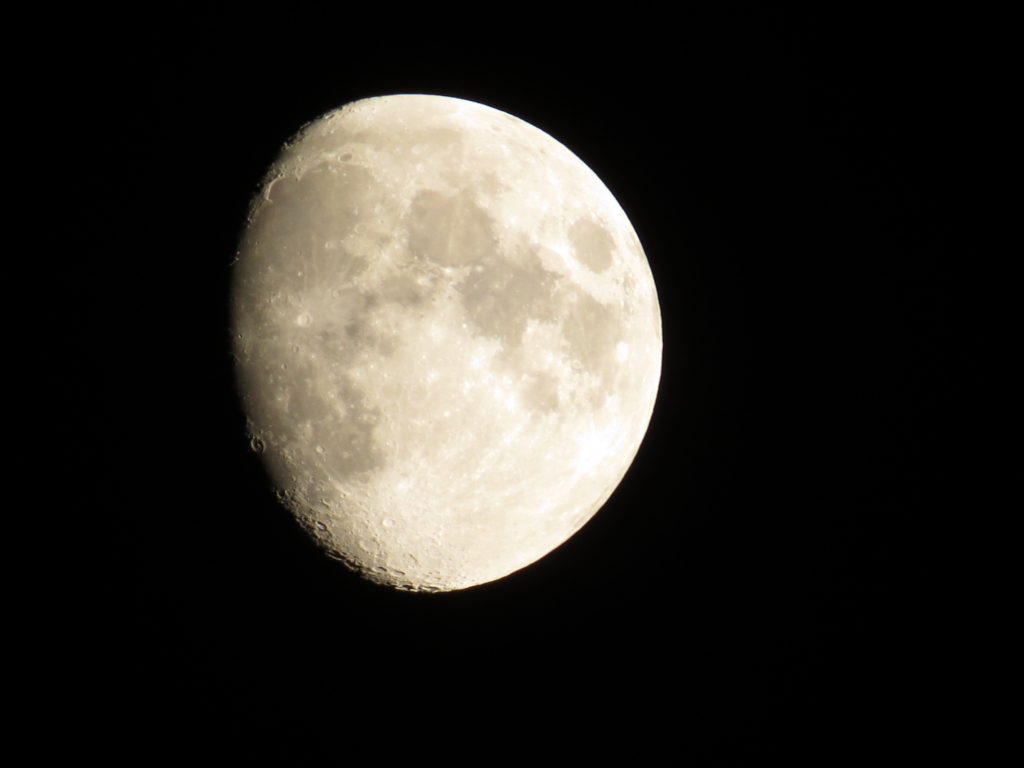
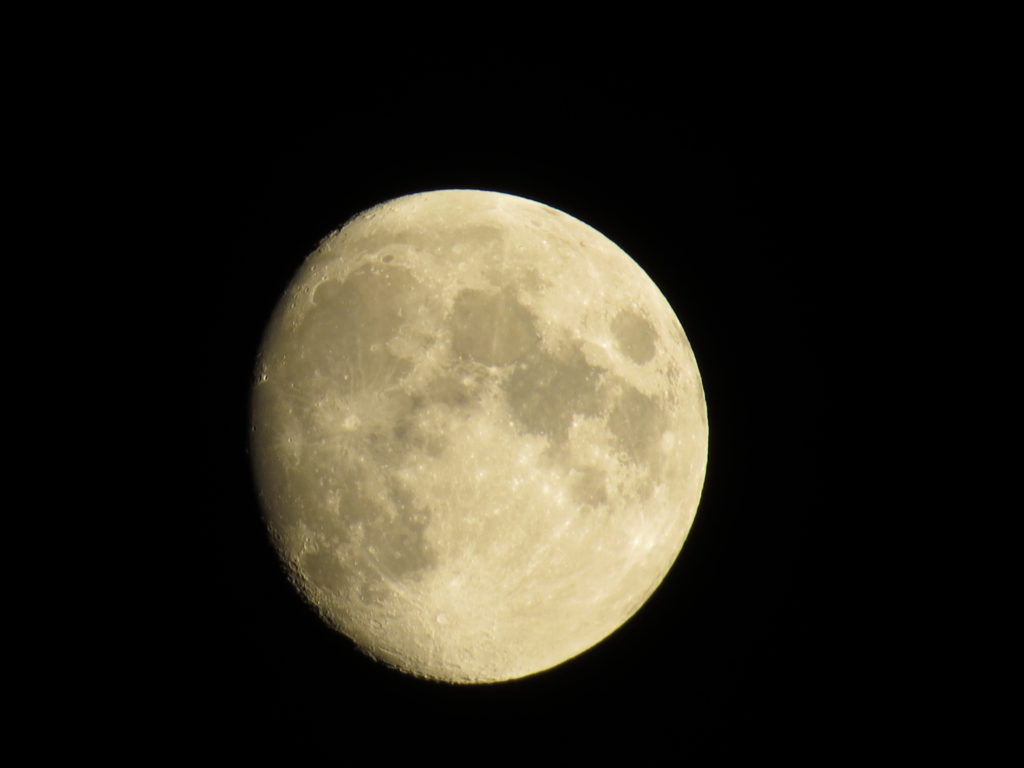
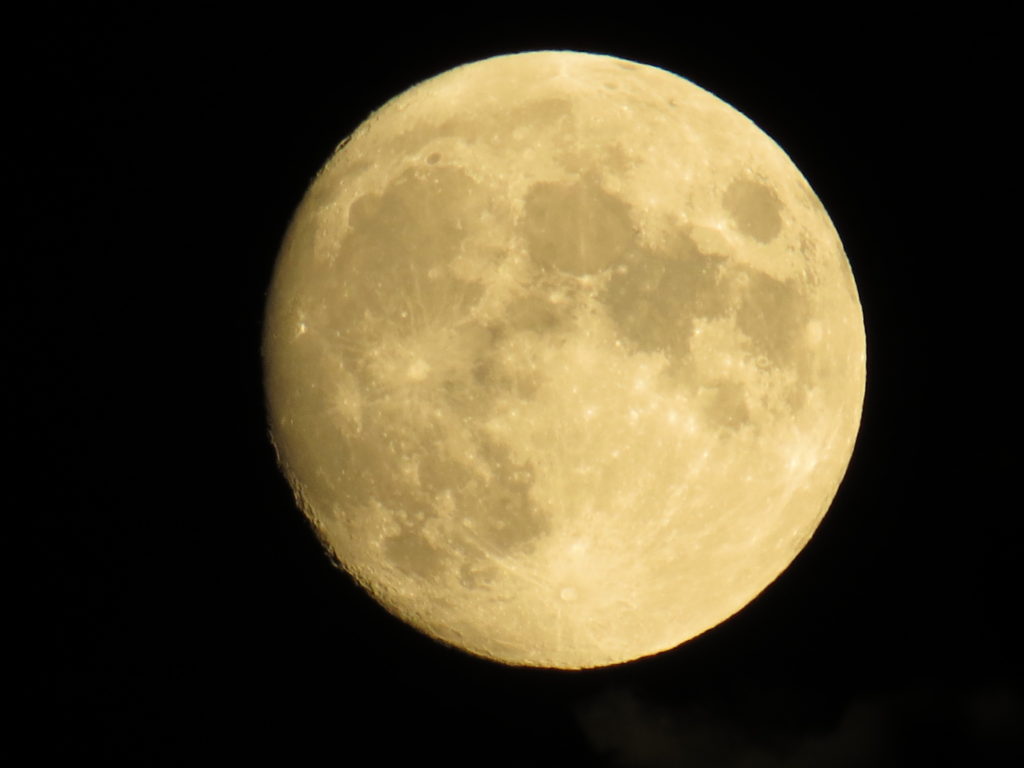
Failures are big and bright in my head—and not in a good way. They garner my attention, hold my chin, and tell me not to look away, even as I try to avert my eyes in shame.
But something has been happening with my bread crumbs (and loaves) of failure. I have been going back on that long trail of moon shadows and picking up my failure crumbs one by one—I look at them carefully and lovingly. Who was I when this happened? What were the circumstances surrounding me? Were there people around who understood the impact on me? Were they able to help me process what happened? That time I tried out for the chorus at school and didn’t make it? Humiliating and disappointing. But look, I went on to lead songs every day at church camp for three summers. I like to sing! I put that crumb in my backpack, and I now carry it with me. Each failure that blinded me with its big-ness is now in my bulging backpack—behind me, tamped down, lovingly contained. It is a part of me now. I am able to see more things and even appreciate how the brightness of those failures add to the picture of who I am. The faithful light took a long time to find me—or rather, it took me a long time to find it.
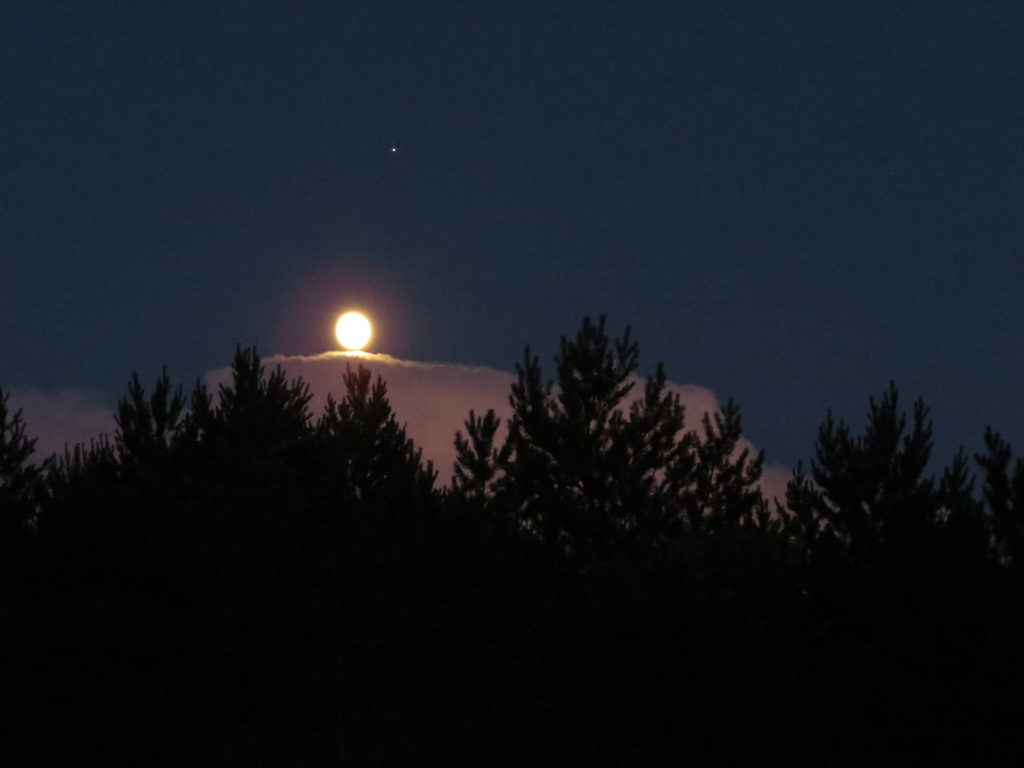
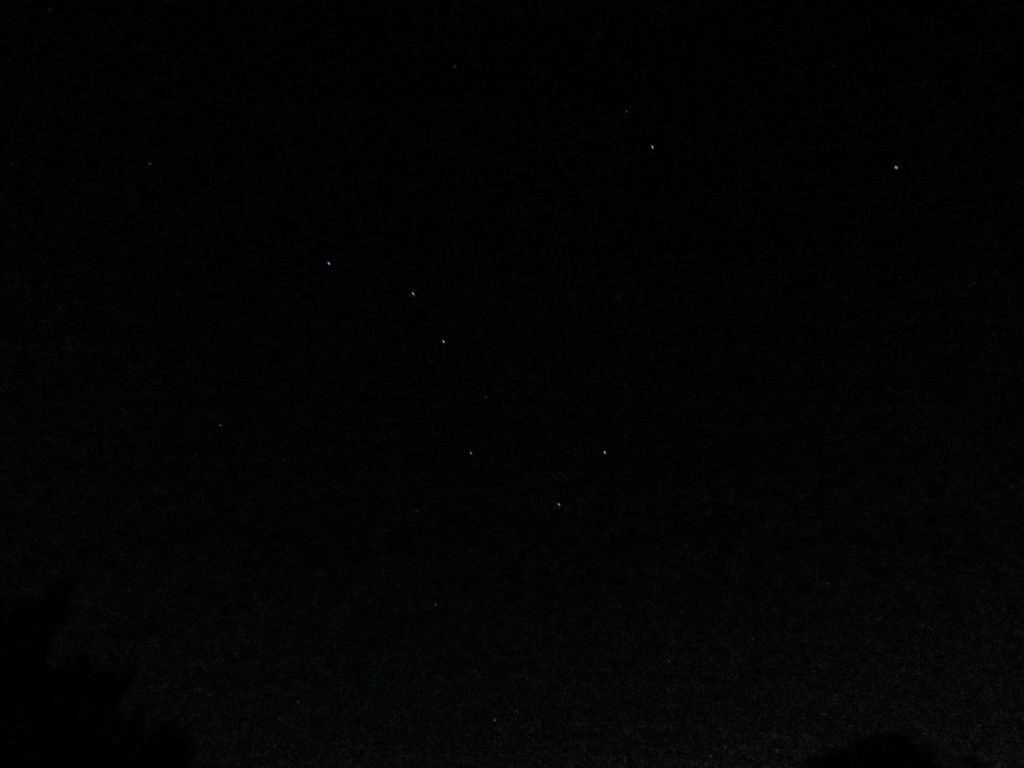
Every once in a while, my backpack spills open, and my failures morph into their previous monstrous selves, overwhelming me to tears and inaction. A reminder of where I’ve come from, yet a reminder of what I have over-come. Humbling and confirming all at the same time. I can swiftly and easily pack those crumbs back into my backpack and continue my journey. Looking up, I can see the stars more clearly now. I see the Big Dipper. The outer two stars of the bowl of the Big Dipper point to Polaris—the North Star—the tip of the handle of the even dimmer Little Dipper constellation. I adjust my gibbous backpack, turn towards my true north, and sing out as I walk on…”Oh, I’m being followed by a moon shadow, moon shadow, moon shadow…”
The Exact Right Moment
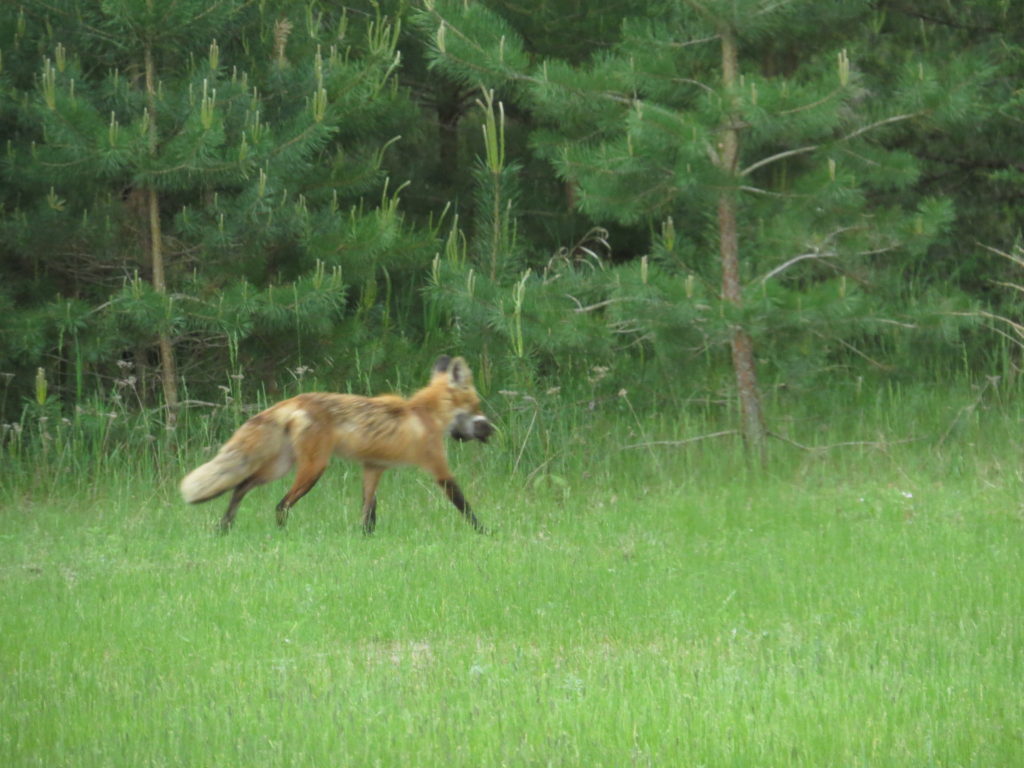
I’ve been holding on to a picture since May. It is a special photograph that I ran from the front of the house to the back of the house to snap after running to get my camera after standing up and glancing out the window at the exact right moment one morning. What are the chances?! Seriously, I love those moments so much. What I saw was a fox running across the front yard with something in her mouth. I ran to get my camera. I took the lens cap off on the run, turned it on, got to the window, pointed, and…she was gone around the side of the house. I ran to the back and got one picture of her before she slipped into the trees. She was beautiful…and elusive. I thank my lucky stars for encounters like that—even more so when I can manage to capture the moment with my camera. I have seen her four times this Spring and early Summer, out hunting for her kits, I imagine. One time was on my birthday, which is the second time in three years and at two different places that I have seen a fox on my birthday. What are the chances?! I held on to the picture to share at just the right time—so here is my serendipitous photo of the fox—please enjoy, smile, marvel, wonder, and thank your lucky stars that we are privileged to see such beauty!
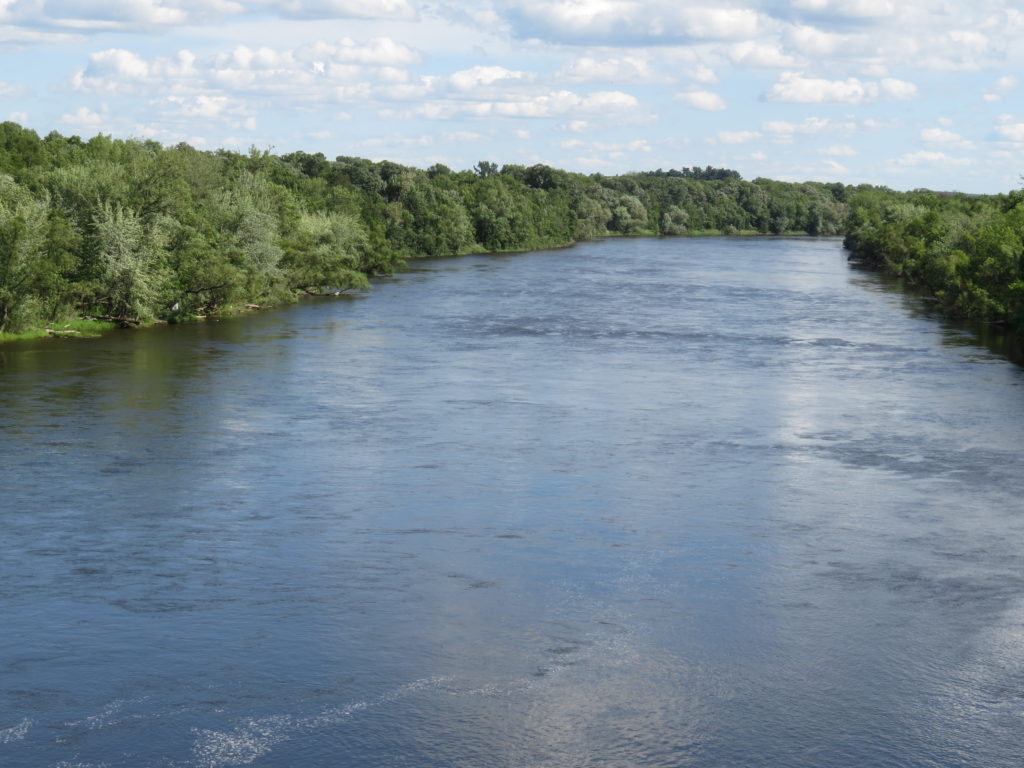
Five months ago Chris and I walked across the Mississippi River on the thick ice, an experiment in comfort-busting. (go here) The River is a force in Minnesota as it flows from its source at Lake Itasca, diagonally through the central part of the state, down through the Twin Cities, then along the border with Wisconsin until it hands it off to Iowa. The power of the River is the same here as with any river that plays such a huge role in the life of a state. It is commerce, it is recreation, it is aesthetic. The force of the River comes from Mother Nature, however. It is mystical, spiritual, phenomenal. It is ever-flowing. On our bike ride this past weekend, we once again crossed over the River, this time on an old railroad bridge of bumpy, worn railroad ties. The River flowed swiftly and shallowly over rocks, as right behind us was a tall, cement dam and power plant built in 1924. The River is held up, blocked, checked, impeded, restricted, obstructed by the huge dam and controlled as to how much water is released over the dam at any given time. The spirits of the River mourn.
If you are a person who has worked on a farm, one who has ever done the physical work of chopping, de-heading, or hand spraying thistles, you know the ‘eye’ that comes from doing so. You get tuned in to seeing them as you walk the pasture or drive the field roads (or drive the public roads and look at the ditches.) The light purple flowers and prickly stems and leaves are ‘honed in on’ as the enemy, so to speak.
“A weed is a flower growing in the wrong place.” –George Washington Carver
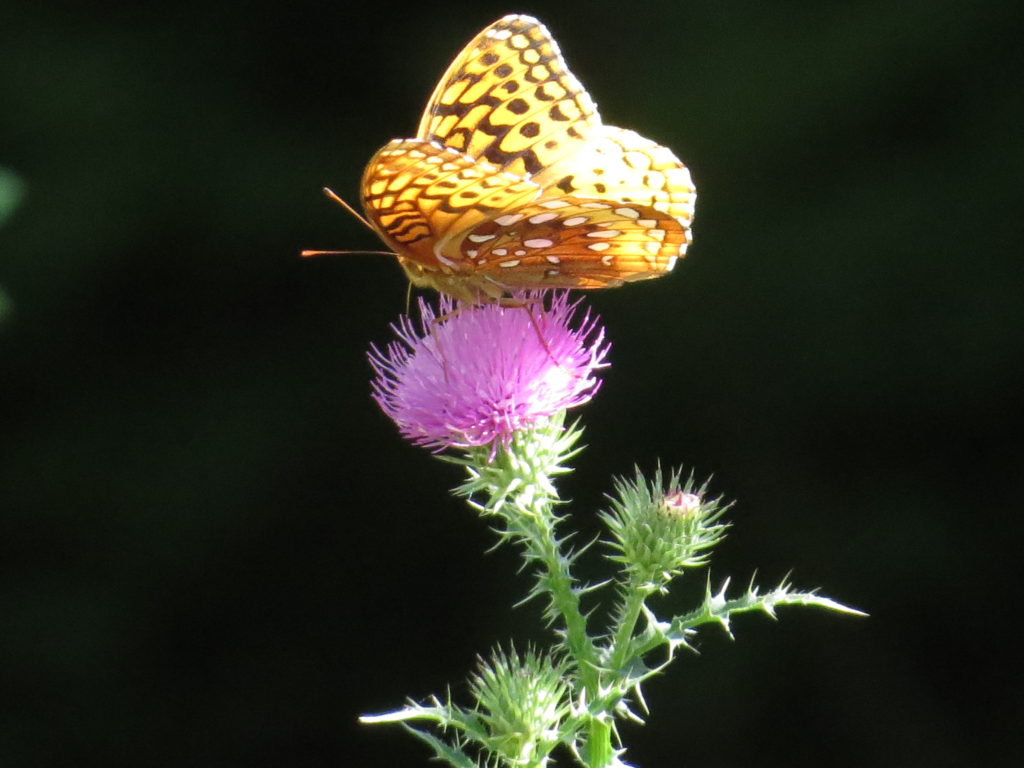
On our bike ride, my thistle-trained eye spotted a patch of purple down the embankment from the bike trail by the River. There on a prickly thistle was a Great Spangled Fritillary drinking in the sweet nectar of that purple flower. The late afternoon sun shone on the pearl white spangles on the underside of its wings and on the lavender flowers, and the light cast a rosy hue on the legs of the butterfly. Beautiful!
“How far you go in life depends on your being tender with the young, compassionate with the aged, sympathetic with the striving, and tolerant of the weak and strong. Because someday in your life, you will have been all of these.” –George Washington Carver
George Washington Carver had a much deeper, broader, soulful definition of “how far you go in life” than the surface parameters of fame, power, and wealth. Reminds me of something Jesus would say or rather, did say in a number of ways. The spirit of each person is like a river, ever-flowing, the life force that we embody. It is uniquely special and rare. It is not our jobs in life to build dams that block, check, impede, restrict, obstruct, and control the moving life-force in other people. (And that has nothing to do with real and appropriate laws and consistent and responsible order that sustains a functioning community or a functioning individual.) People can hone in on whatever they were trained or believe to be ‘the enemy’—that has much more to say about the person than the perceived enemy. Thistles are on a spectrum from beautiful flower with life-giving nectar to enemy of a healthy, productive pasture. It is not an either/or issue, not right or wrong, not black or white. And like it or not, everything in this world lies on the same spectrum. We live in the long, gray area between the two extremes—or maybe I should say in the beautiful, rainbow colors of that spectrum. And that brings us back to beauty. Without a doubt, we are living through a tumultuous, difficult time, and yet, every day there are those beautiful, elusive moments that open our hearts and make us happy to be alive among God’s creation. Hold on to them. Smile, marvel, wonder, and thank your lucky stars, and then share them with the world.
Tattered
If I were a butterfly, my wings would be tattered. It hasn’t been wind and rain but storms of other kinds that have wreaked havoc on my body and devastated my heart. Like the butterfly, the longer we live and the more life experiences we have, the greater the chances of being tattered.
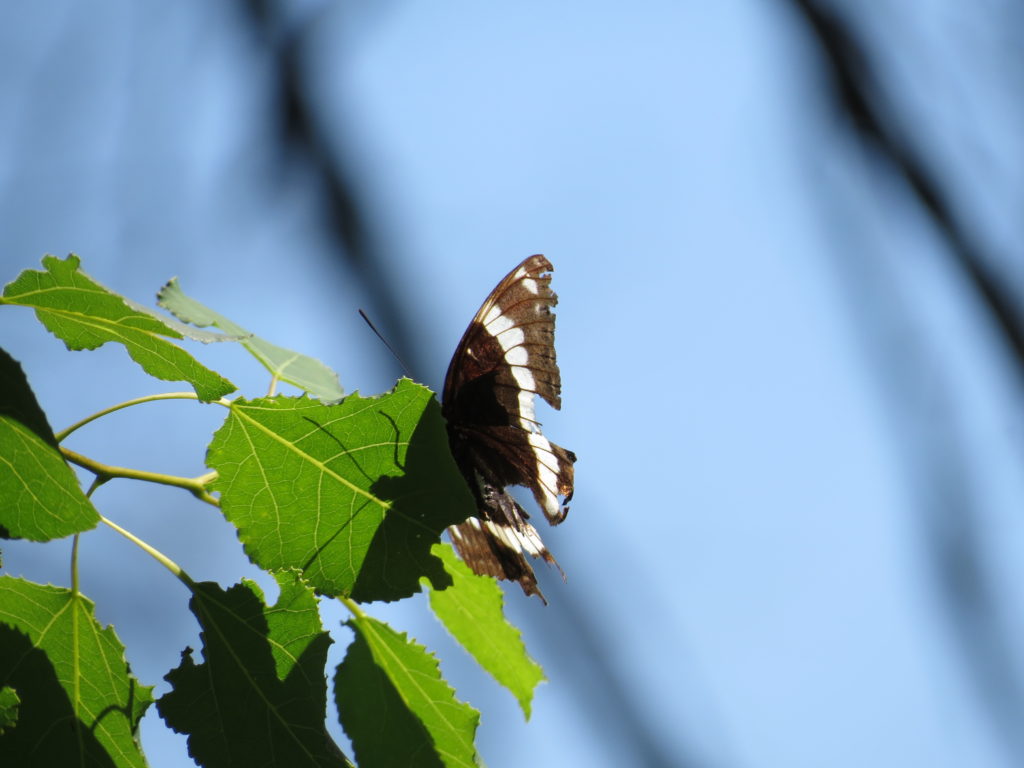
Sometimes life is just plain hard for oh-so-many reasons that are out of our control—coronavirus, job loss and the cascade that comes from that, certain illnesses and losses of relationships. It feels like we are pushing against the status quo, defying gravity, carrying the weight of the world on our shoulders.
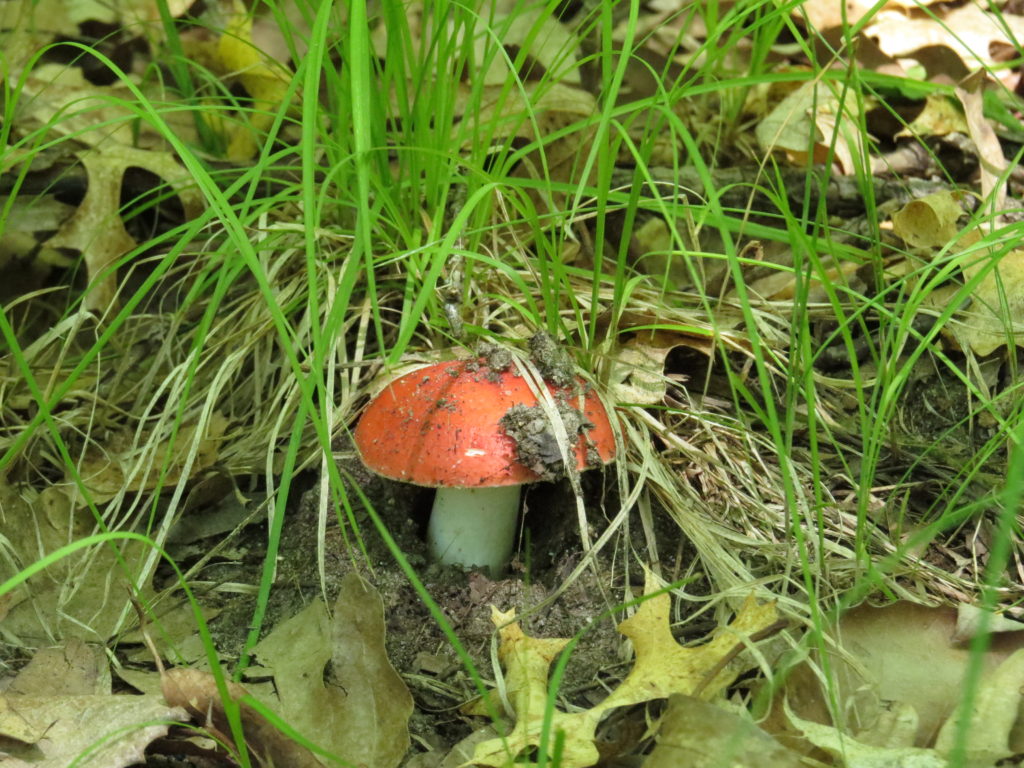
At times we get stuck and wonder how the heck we ended up in this place. ‘I did not sign up for this.’
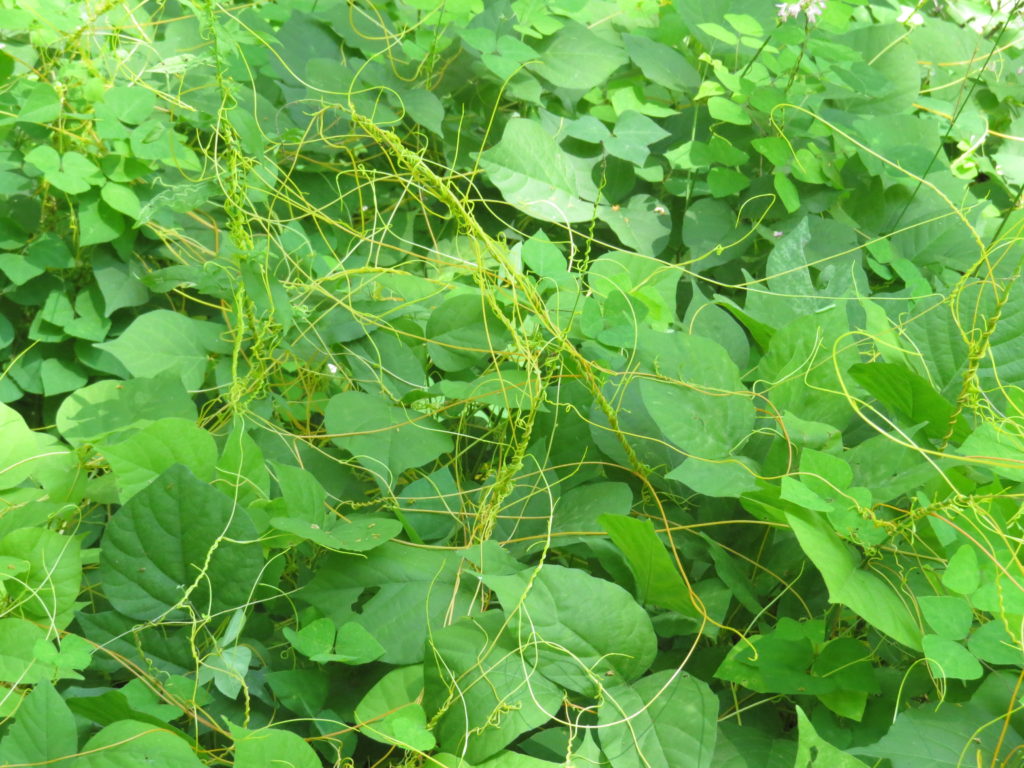
Life can turn us in circles, bind us in the weeds, trip us up, even as we are working hard to do the right thing.
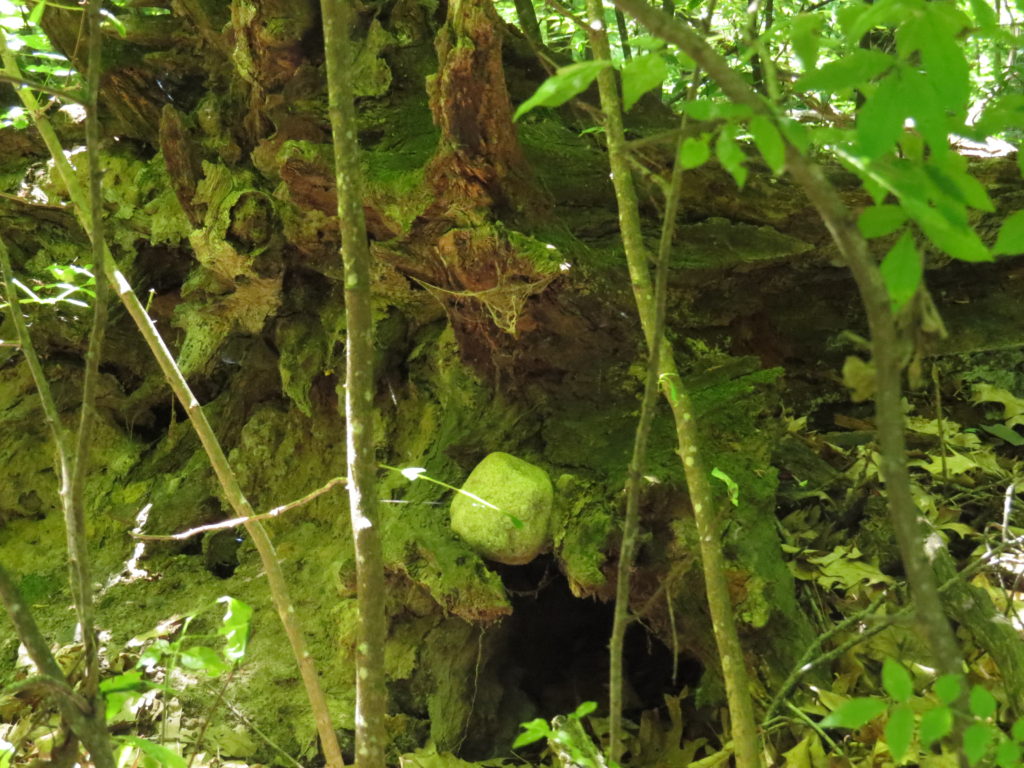
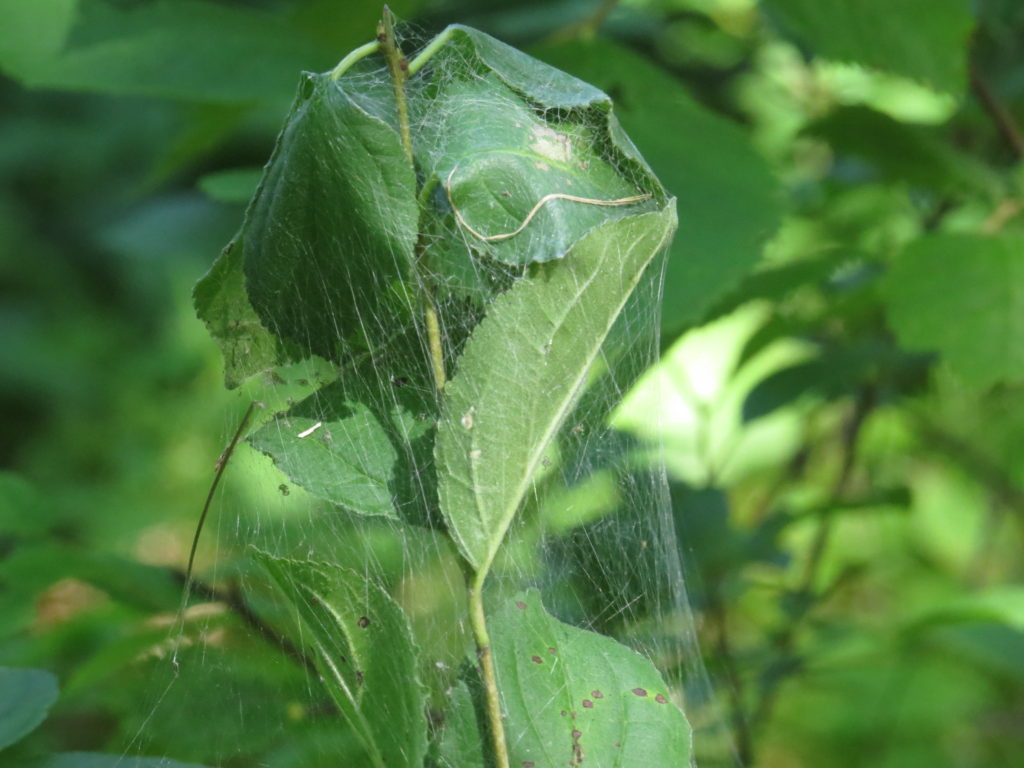
Then there are those times, thankfully rare, when we are immobilized, frozen, stuck in a web of confusion and uncertainty. We are cocooned. The life we have known is taken from us—we dissolve from the person we used to be….into….nothingness….for a while, at least. The grief and despair of being wretched out of our old life and long-held beliefs is a bottomless well—or so it seems at the time.
But there is a bottom. In fact, it is constructed for each one of us—it catches us from our seemingly fatal fall in the exact right way, often without our awareness. We are still flailing and desolate, fighting against the constraints of change.
Do not be afraid—you are on the right path. Don’t struggle against the struggle.
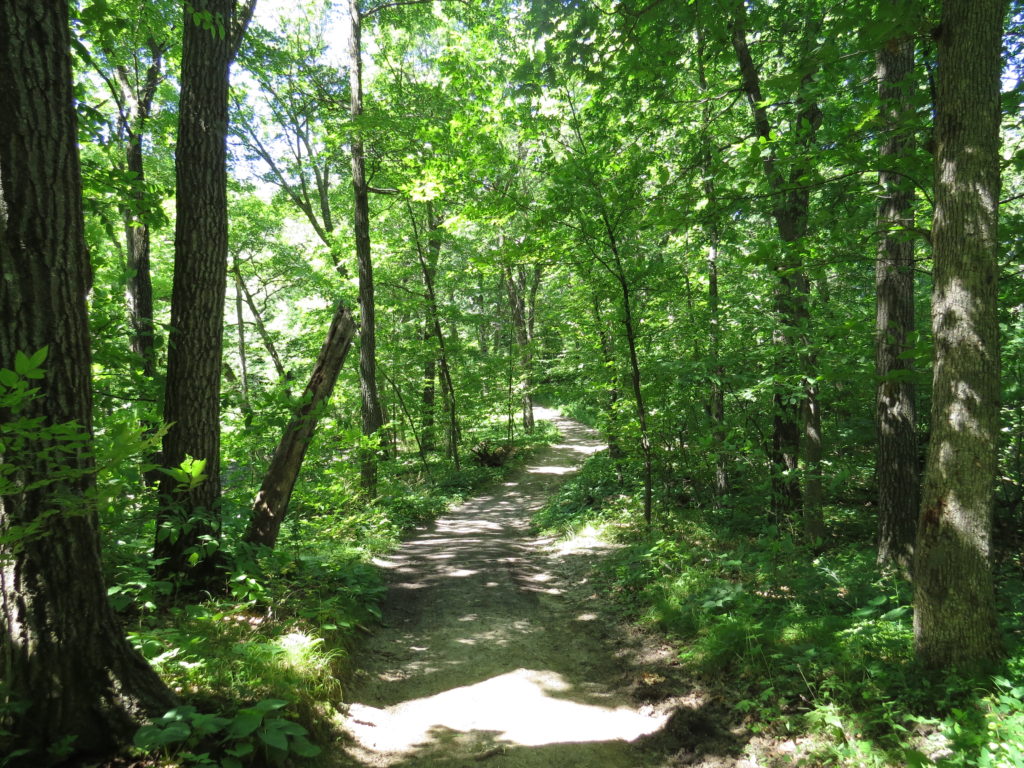
But what helps with the struggle? Good nutrition of body, heart and soul—food, love, and meaning.
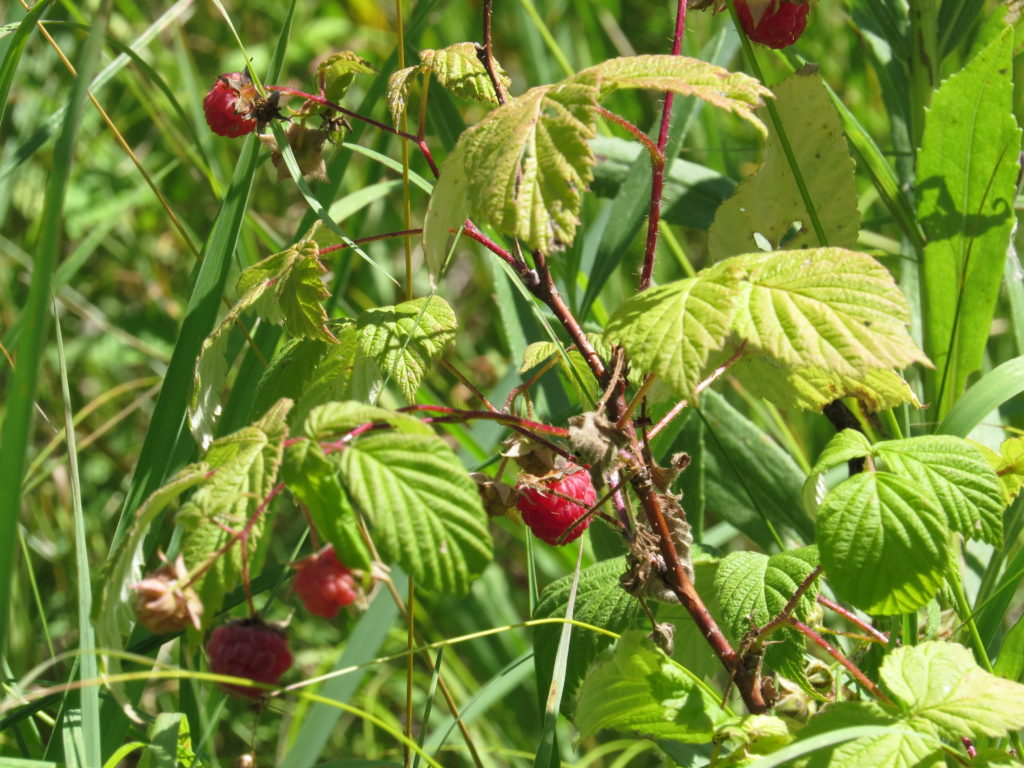
Sunlight…
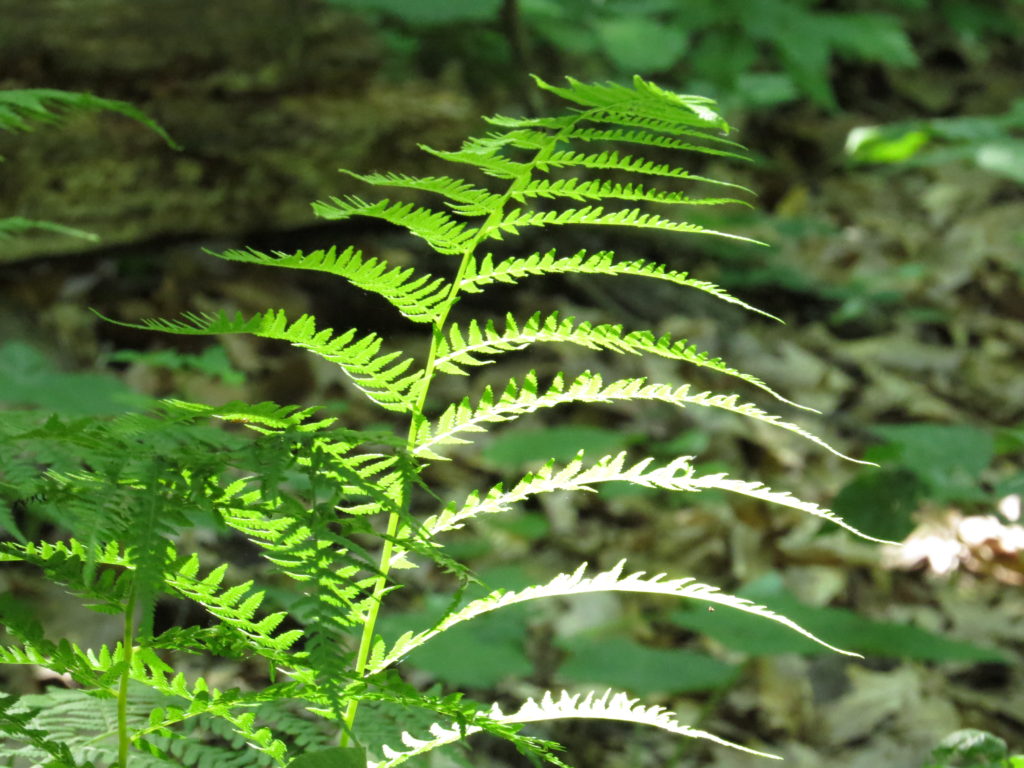
the heartbeat of Mother Nature…
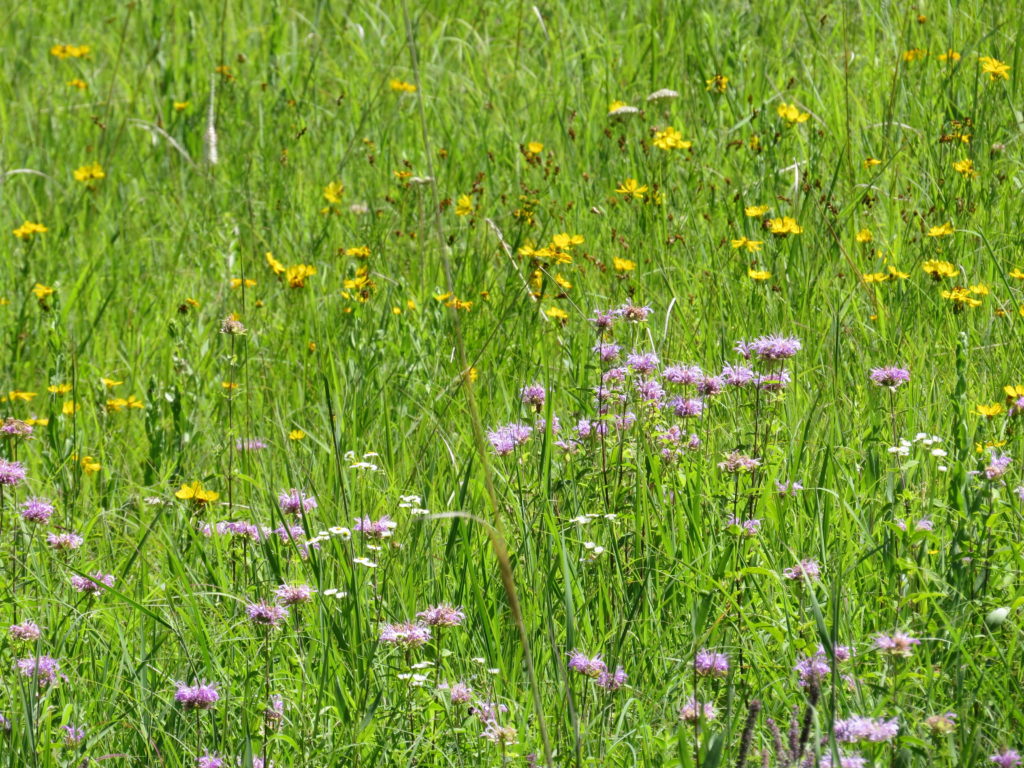
beauty…
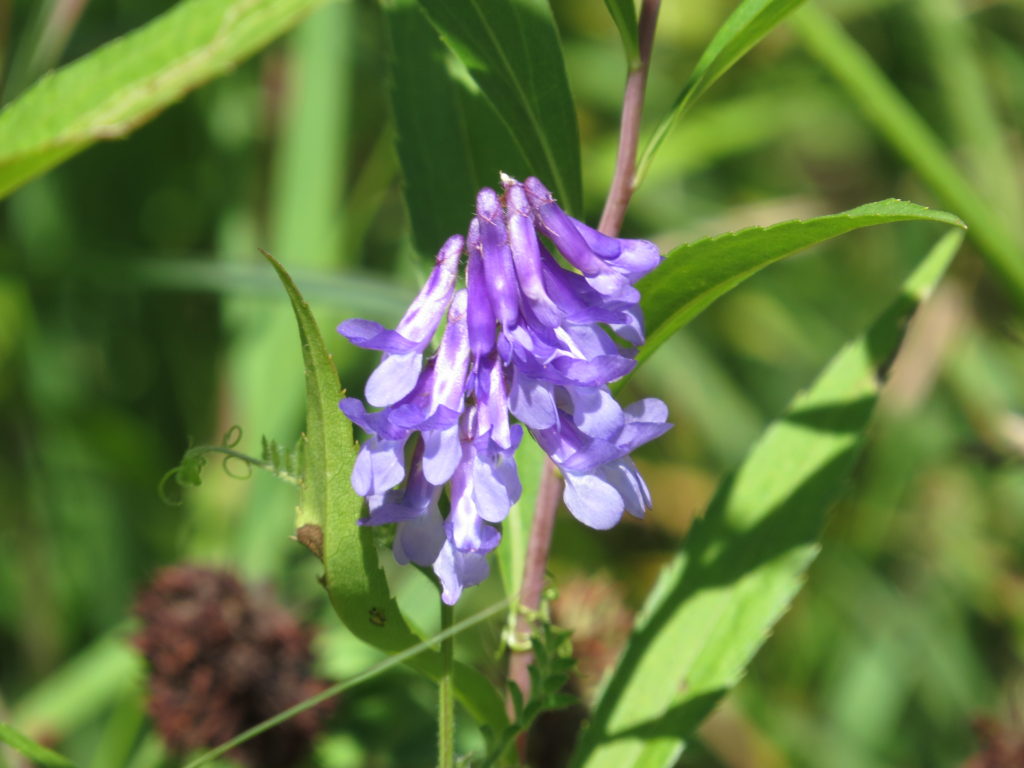
support for our well-being and growth…
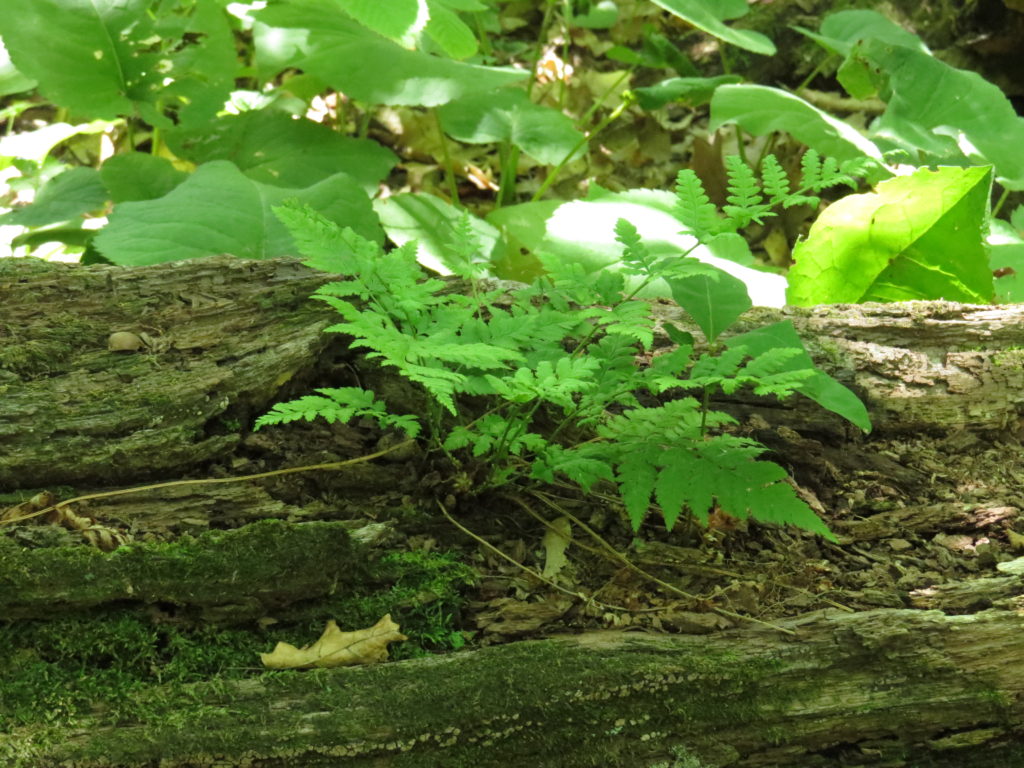
and knowing we, like all of God’s creations, can get through tough times.
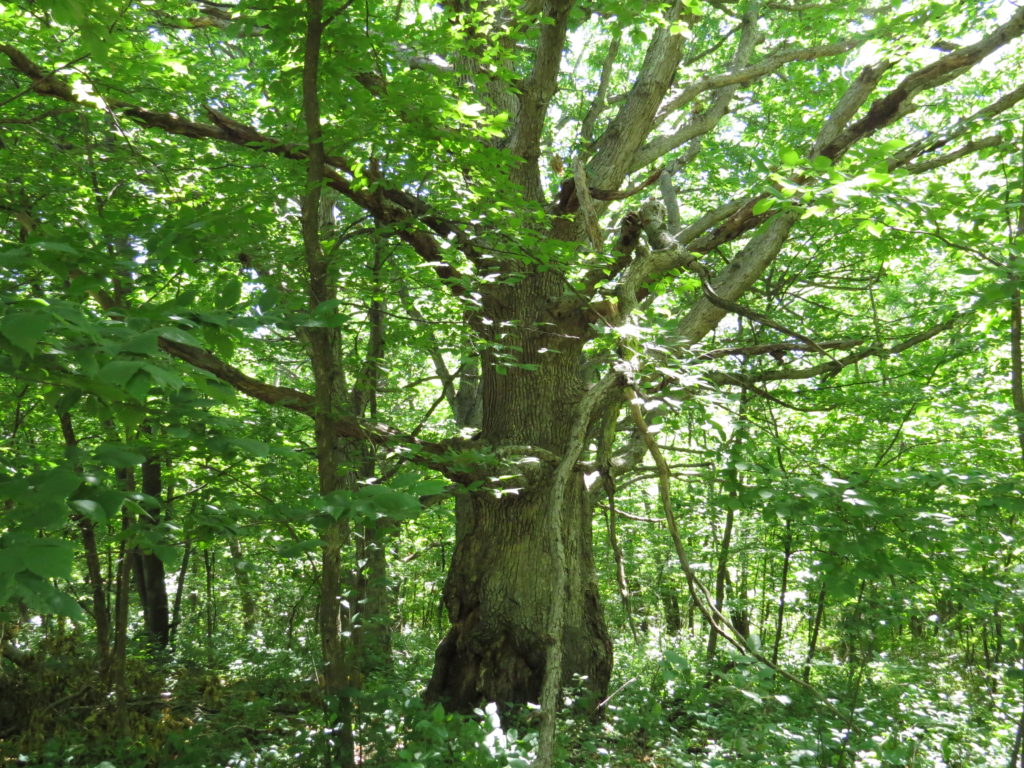
Where do beauty and respect abide? Struggle is a part of the human experience. It is not for nought. Struggle helps us learn. It refines our beliefs. It is an opportunity to better ourselves and our world. It is meant to be a reckoning of who we are and where we stand in this Earthly creation. So while struggle is deeply and profoundly personal—it is only ourselves who are peering down the deep, dark well of whatever is tearing apart our hearts and souls—it is also God’s call to us to reach beyond our personal reclamation. We are citizens of the community, the church, the state, the country, and the world. In reckoning and reclamation comes a responsibility to our fellow citizens—not responsibility for, but to—and to our Earth. We are not here to take, use, discard, abuse, and misuse the lives of other people or the resources of our planet. Our personal freedom is tempered by our collective responsibility. Therein lies beauty and respect. So let’s celebrate tattered wings, storms of struggle, and hard-won inner battles. Let’s reach out during this Covid time with food, love, and light. Let’s know deep in our bodies, hearts, and souls that like the old Oak tree, we can get through tough times and that there is a landing place from which to rebuild. Fly, though your wings be tattered.
Prairie Tough and Beautiful
I was sitting in my circle of trees the other evening. The sun was low in the sky, not to be seen through all the layers of Pine trees. But I noticed that the tip-top of the tallest Aspen tree caught the twilight rays of the sun with a shining amber color. A slight breeze quivered the leaves in a soft song as the light faded away. So much of Nature is quiet and unassuming. She does her work without fanfare and most often without notice.
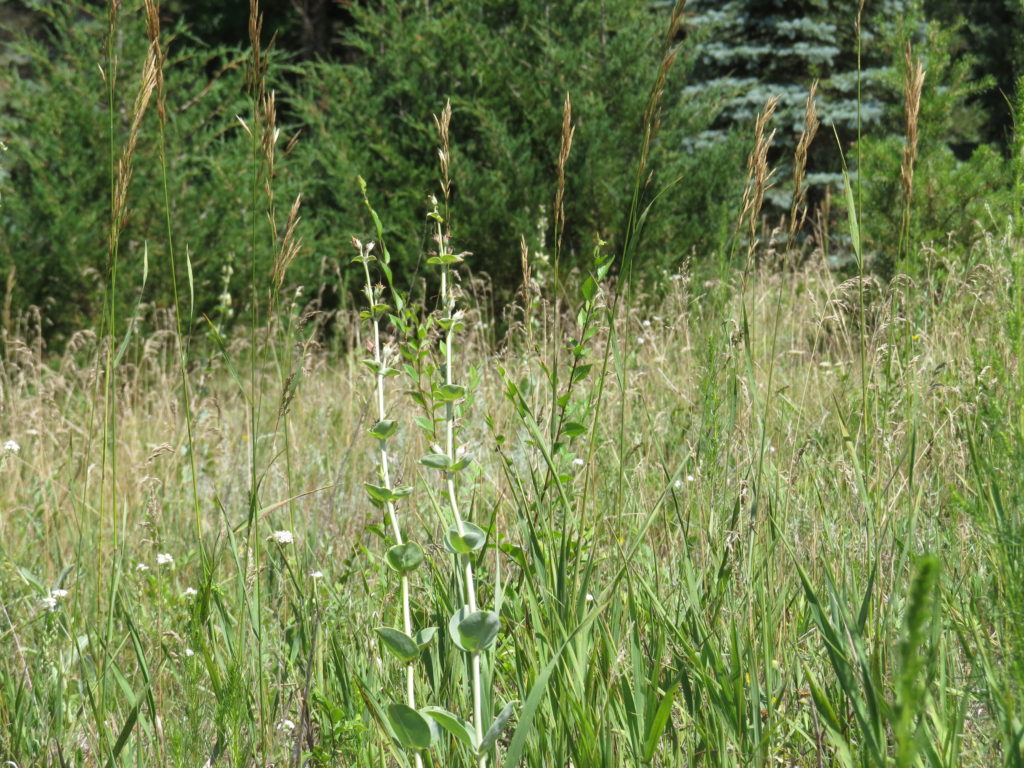
One of the places of Mother Nature that often goes unnoticed is the prairie. Travelers erroneously say ‘there’s nothing there’ or ‘it’s boring.’ I am a lover of prairies and will refute such talk. There is so much there! I am fortunate, not only to be surrounded by trees, but also to have a patch of prairie in the front yard. The soil is sandy and quickly dries, and whoever lives in my little prairie has to be tough. Quiet, unassuming grasses and wildflowers grow and thrive in the open, sunny spot.
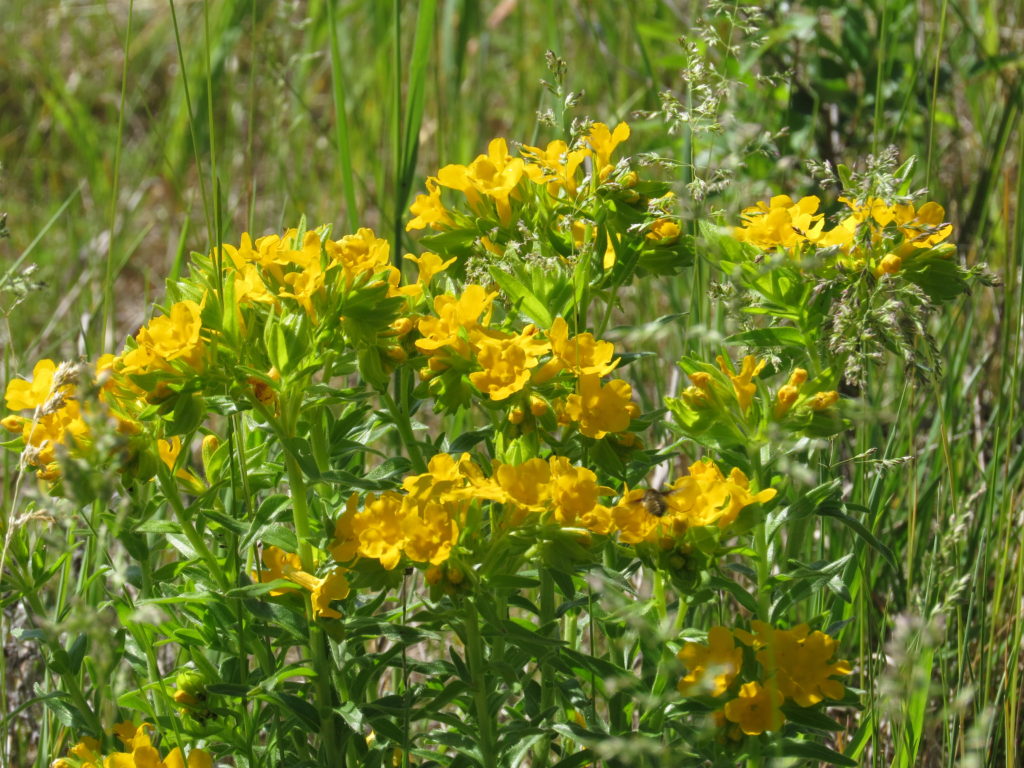
One June-blooming wildflower that does garner some attention with its bright yellow-orange clusters of flowers is Hoary Puccoon. The roots were used by Native Americans to make a red dye.
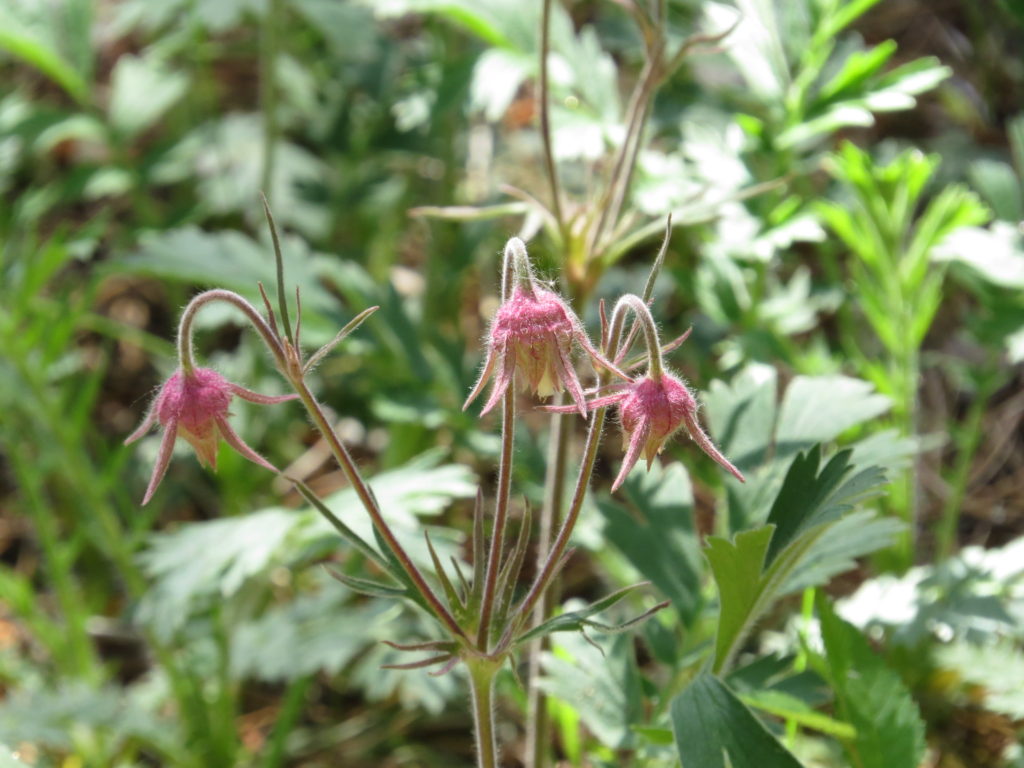
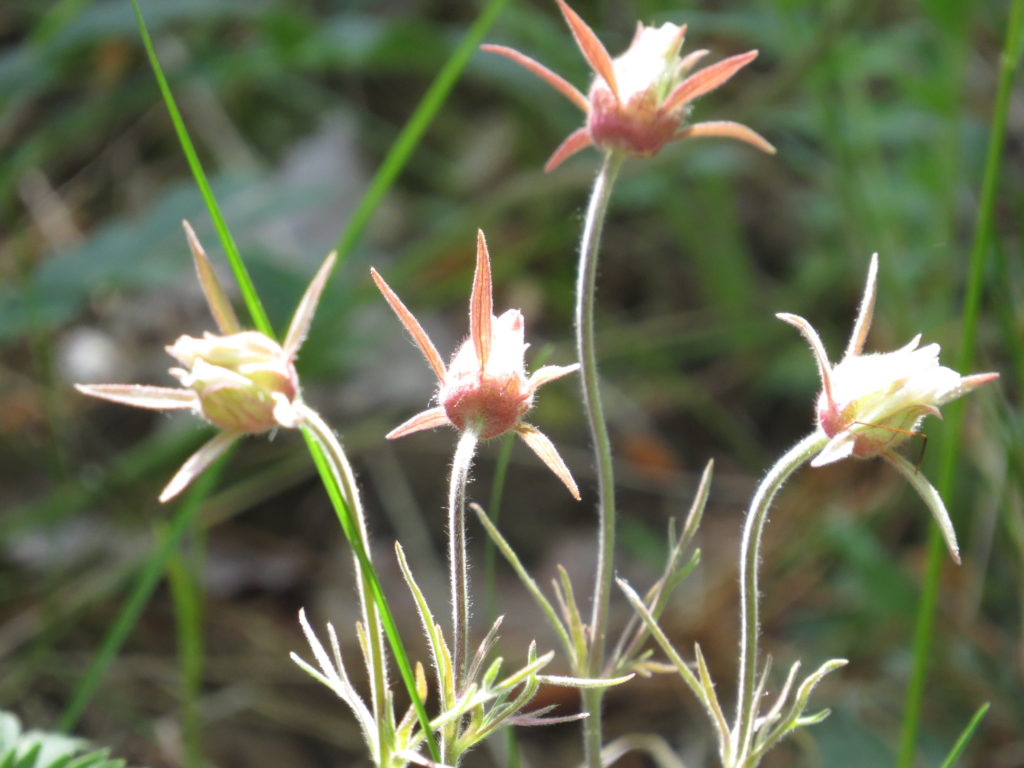
A common prairie flower, one of the early bloomers, is Prairie Smoke. The bell-shaped flowers hang down, but after pollination, the stems straighten up, and the seed heads of feathery plumes form.
Pollinators are another quiet, most often unseen part of Nature that work hard and do important work. In essence, they provide the movement of male parts of the flower (pollen) to the female parts (stigma)—they help the process of fertilization so the fruits and seeds can develop. Pollinators include birds, bats, butterflies, moths, flies, beetles, and most importantly bees.
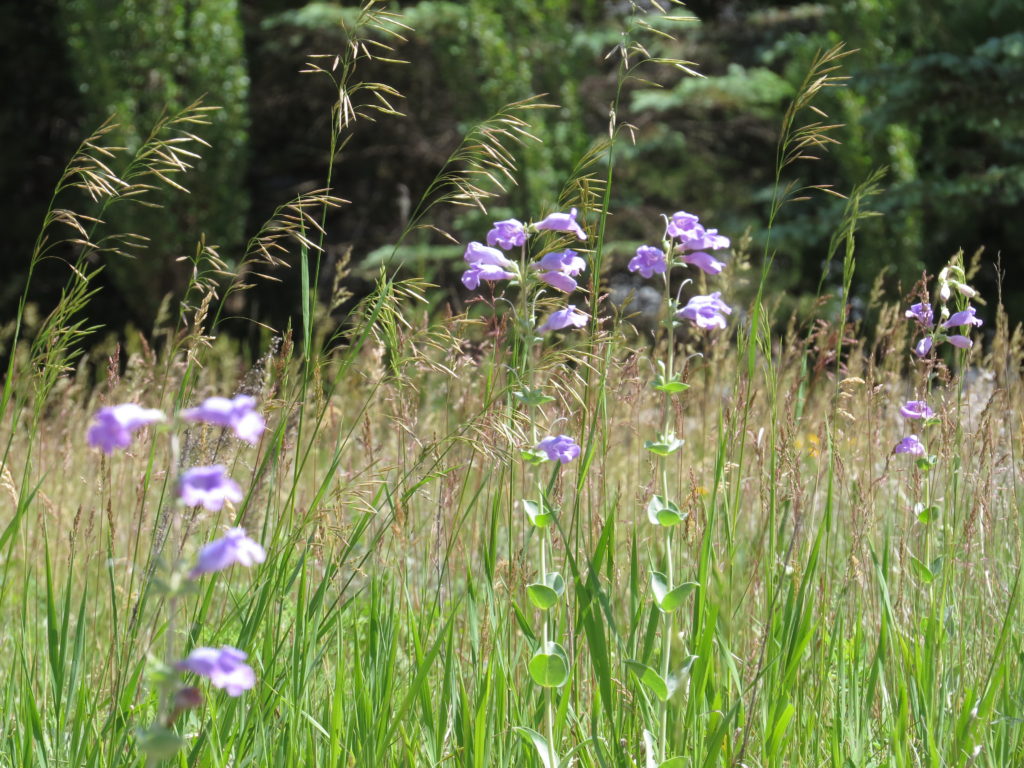
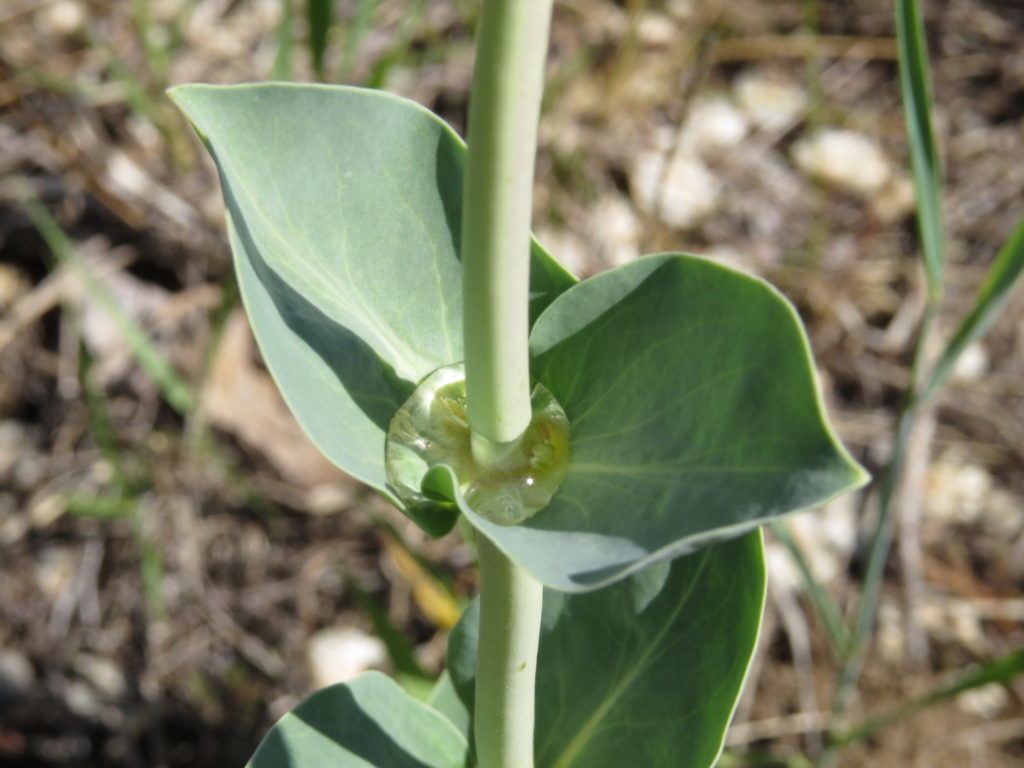
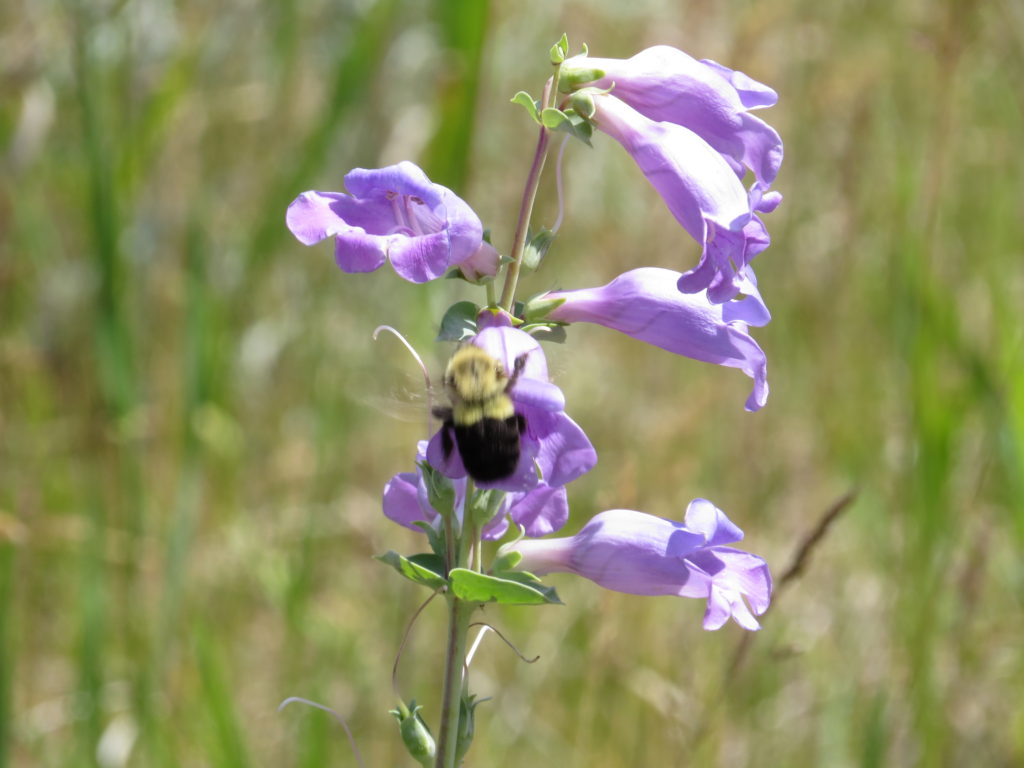
Another June-blooming wildflower in our little prairie is Shell Leaf Penstemon. Its large lavender flowers whorl around a single stalk above the opposite, clasping leaves that hold rainwater like a small shell.
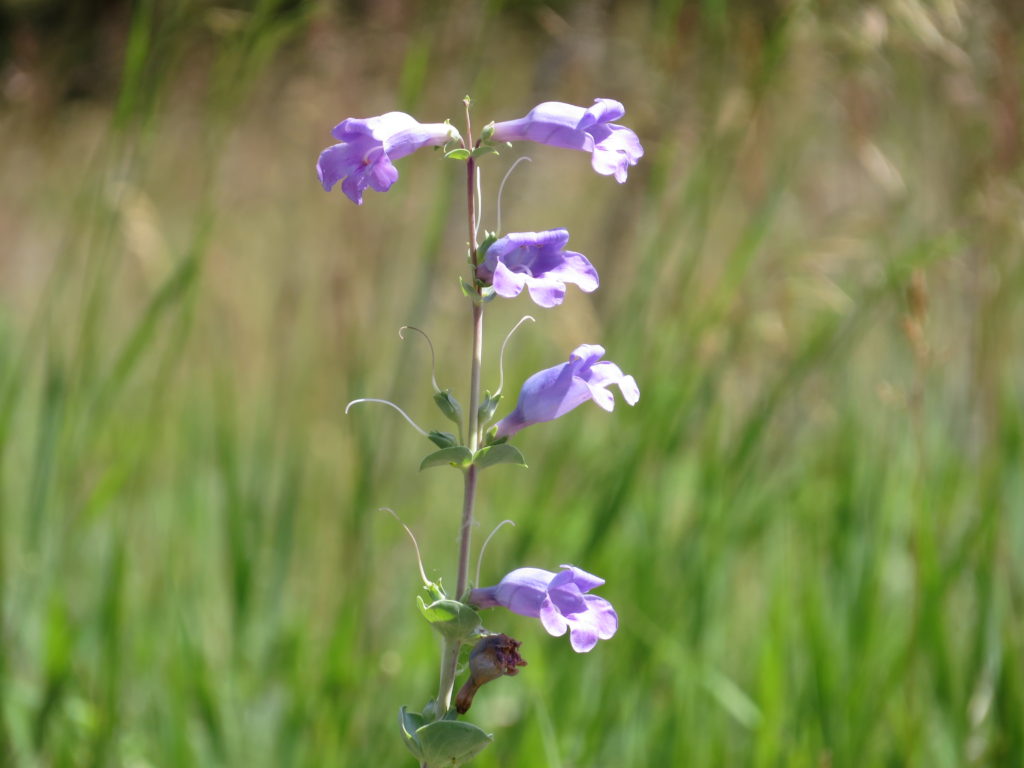
The flower tubes are large enough for bumblebees to crawl inside to perform their pollinator duties.
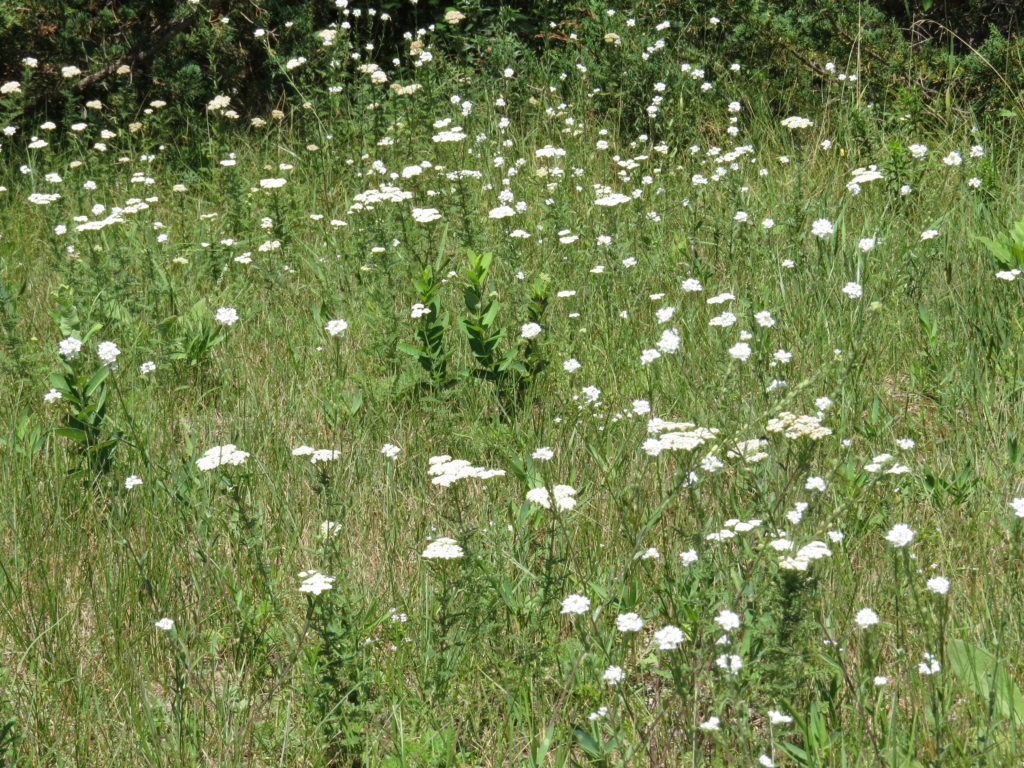
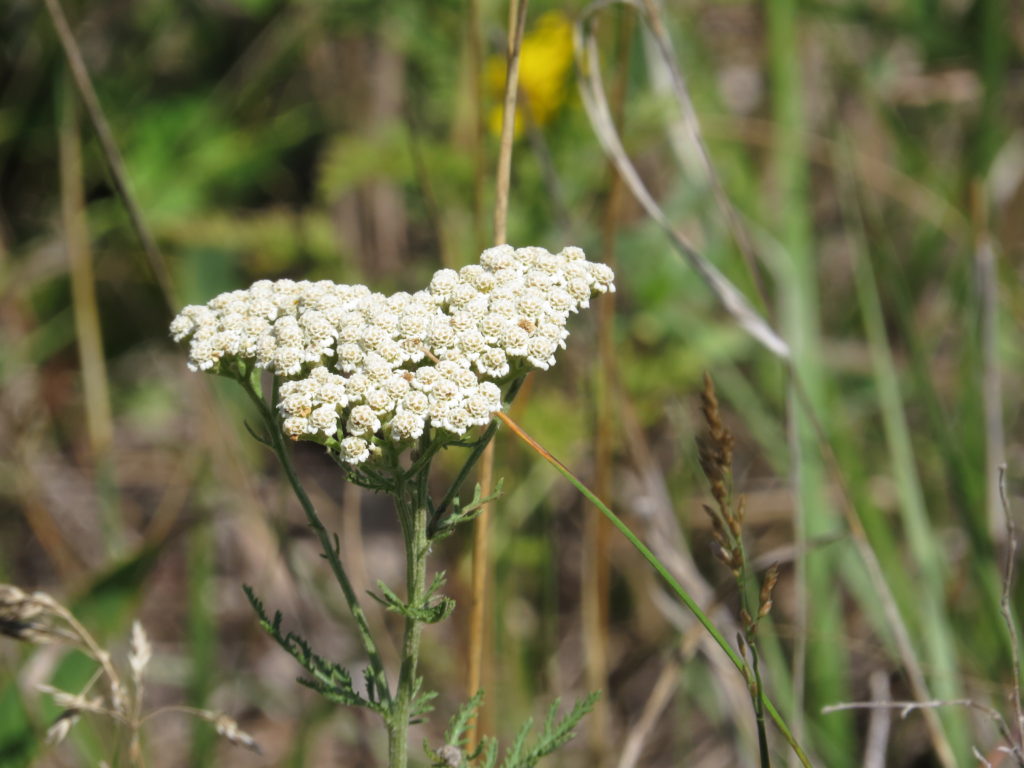
No prairie is complete without the tough, fragrant presence of Yarrow. The leaves are fern-like, as described by its species name, millefolium, meaning ‘thousand leaves.’ The flowers are flat-topped clusters of many tiny flowers, all ‘working’ together as one.
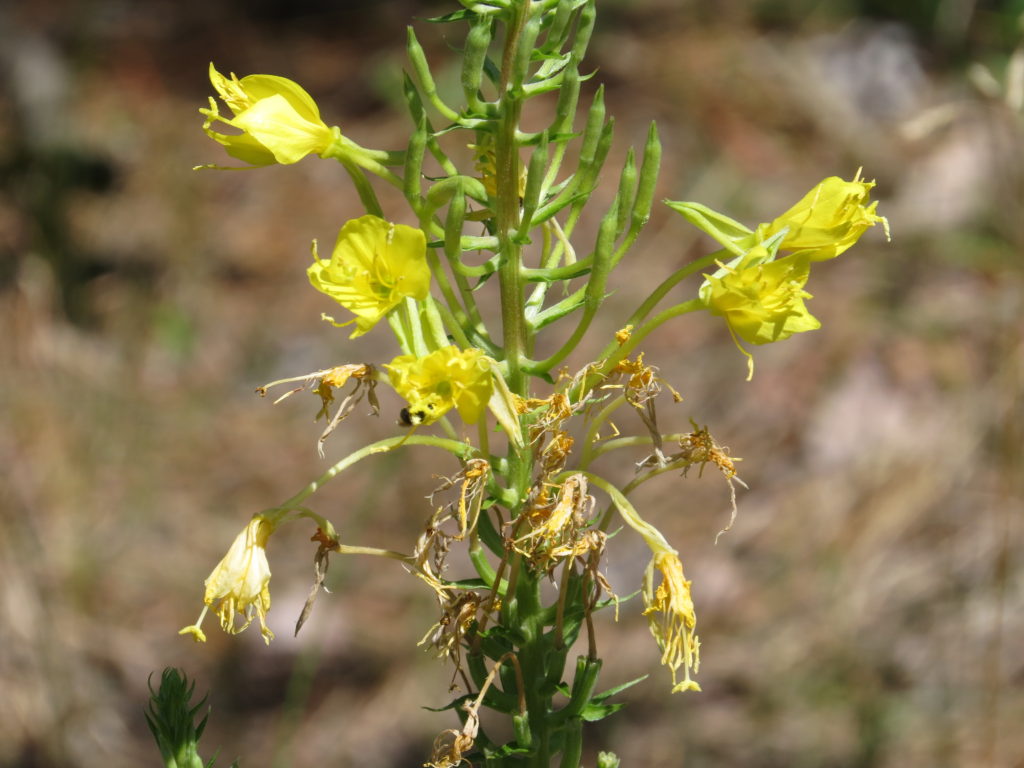
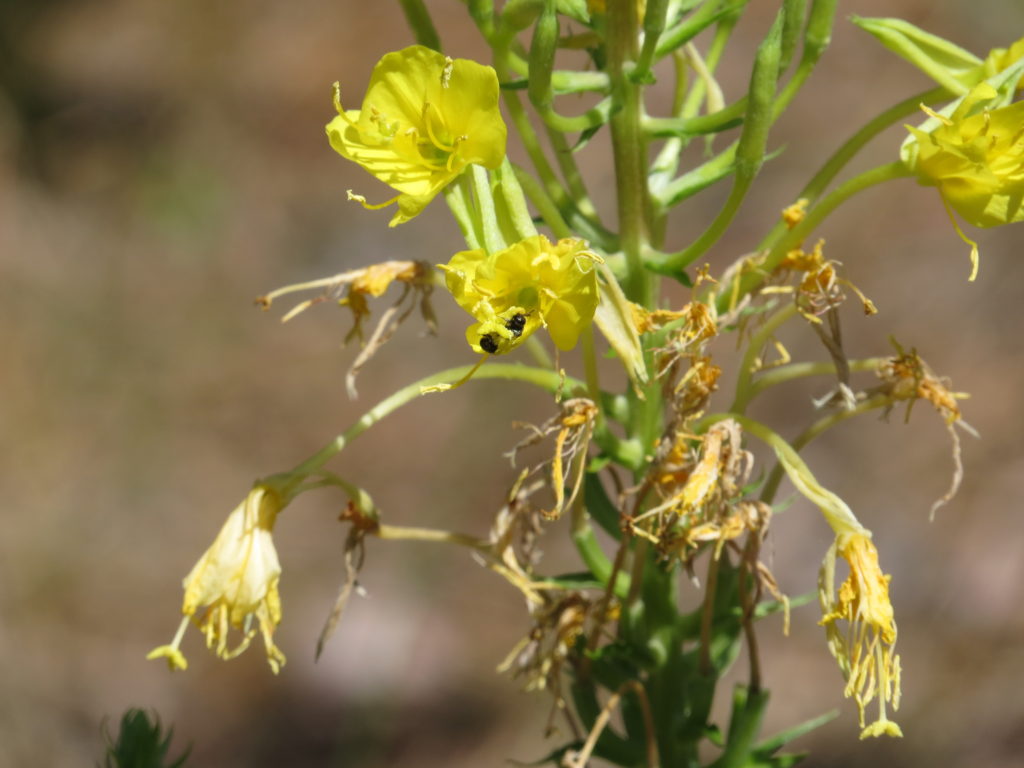
Evening Primroses do as their name says—bloom in the evenings! The stalk of flowers bloom from the bottom up, a few flowers at a time. They open in the evenings and wilt by noon of the next day. Sphinx moths pollinate them during the night, but I also see a small bee on one of the flowers.
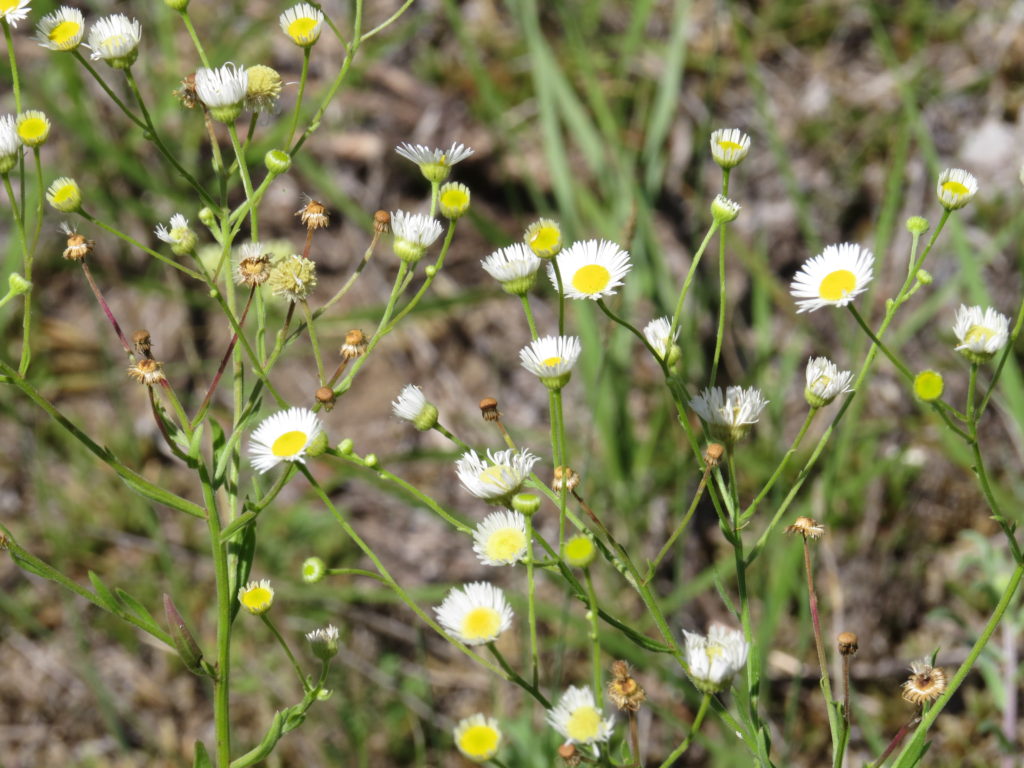
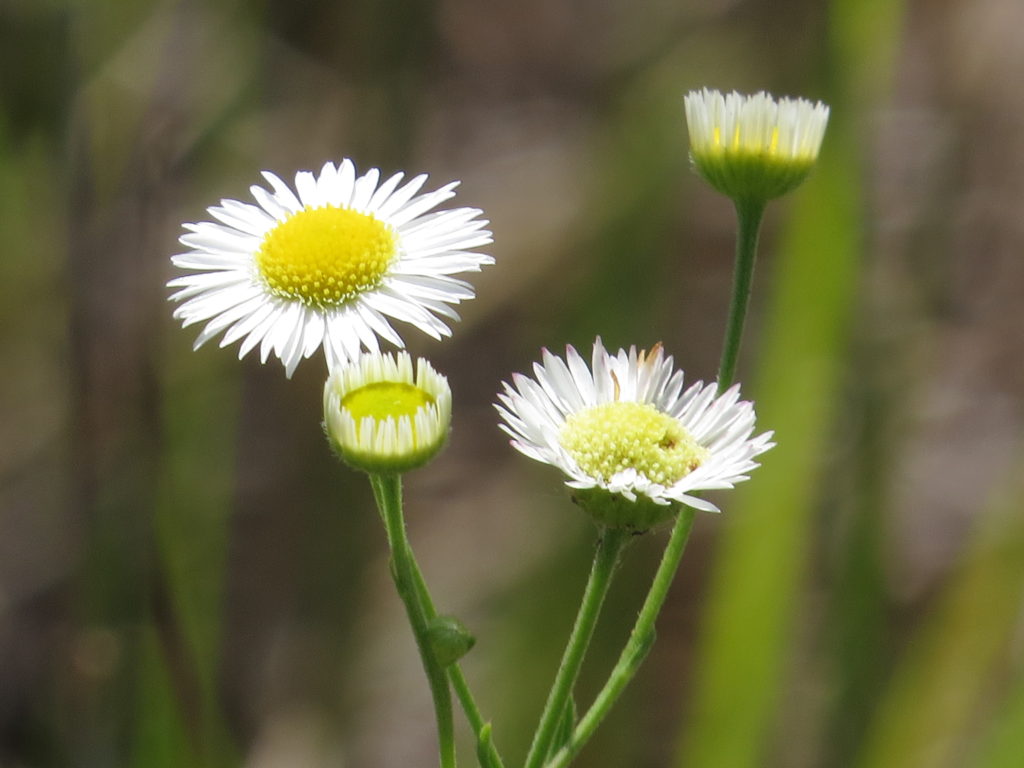
Daisy Fleabane is another self-described name. It was used by pioneers in their beds to keep away fleas. The radiant daisy-like flowers (actually asters) bloom from Spring to Fall on leafless flower stems.
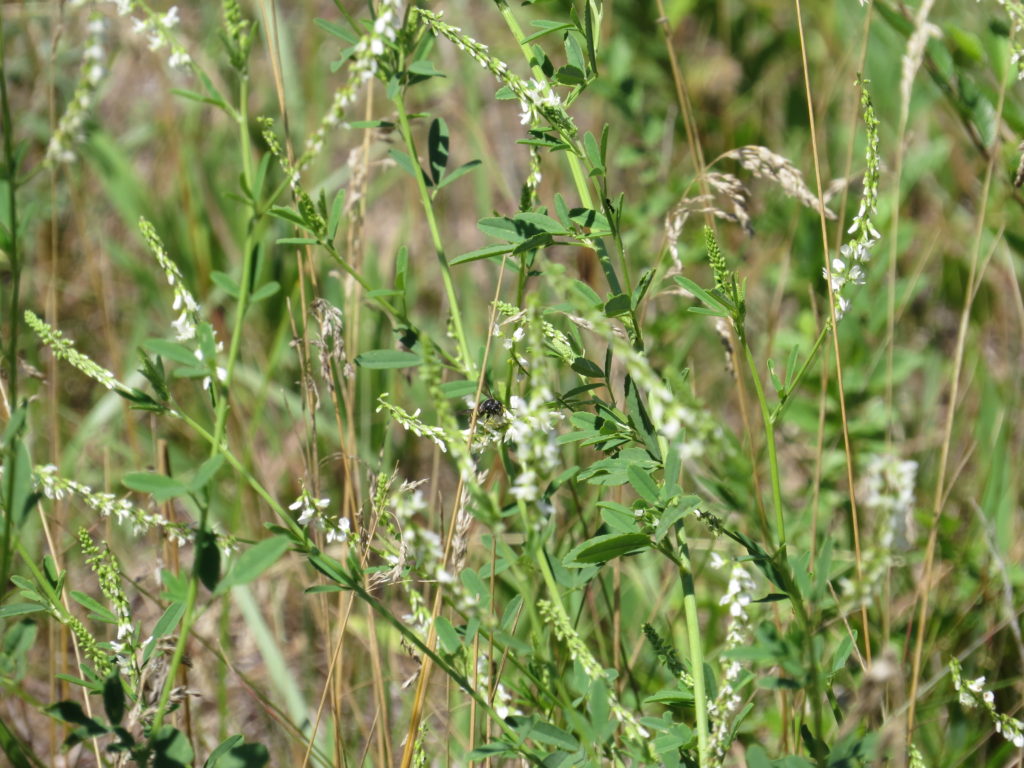
Once grown as a hay crop, this escaped plant now grows ‘wild.’ White Sweet Clover, along with its sister Yellow Sweet Clover, is a major source of nectar for the Honeybee to make honey. The genus name, Melilotus, is Greek for ‘honey.’ Can you see the bee?
A member of the Mustard family, Hoary Alyssum is an inconspicuous white-blooming wildflower common on the prairie. It pairs well with Hairy False Goldenaster—both are covered in downy white hairs (thus their names.)
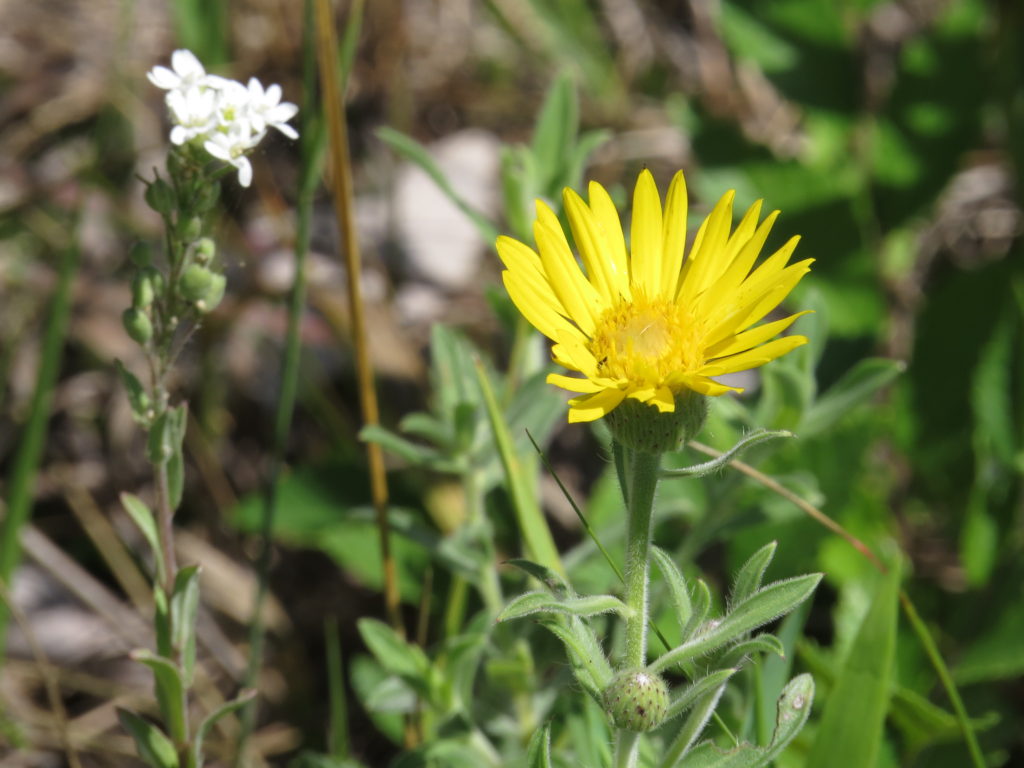
June and July on my little prairie with grasses, wildflowers, silver sages, and pollinators! It is a diverse, ever-changing ecosystem full of tough, unique, and beautiful plants.
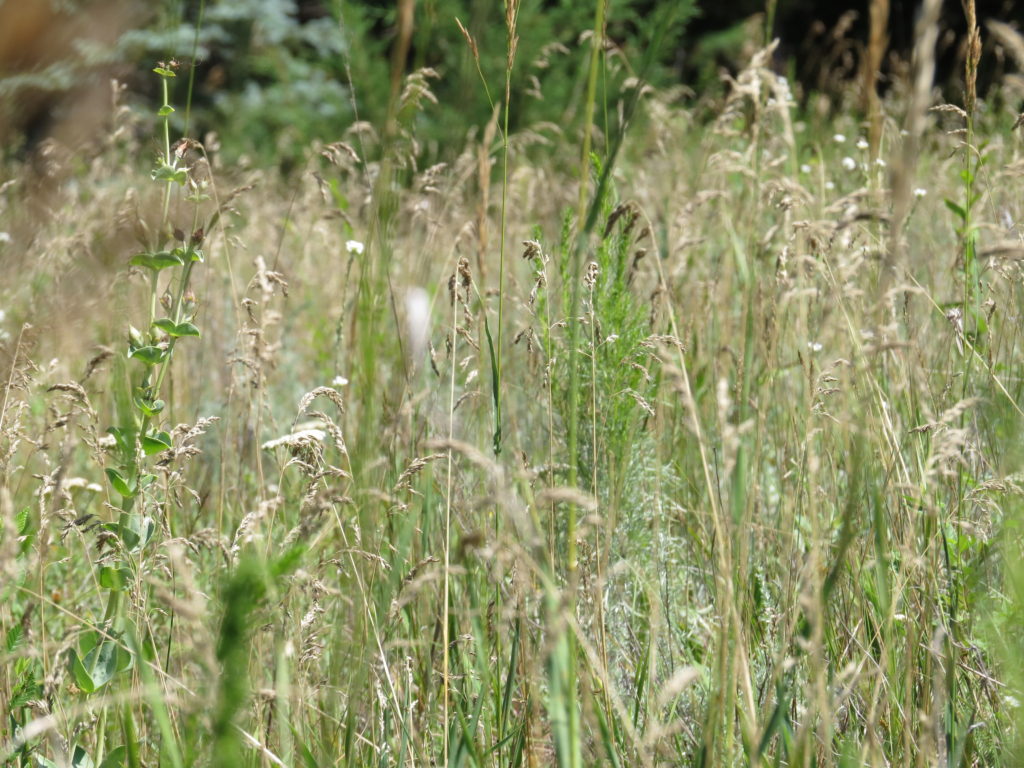
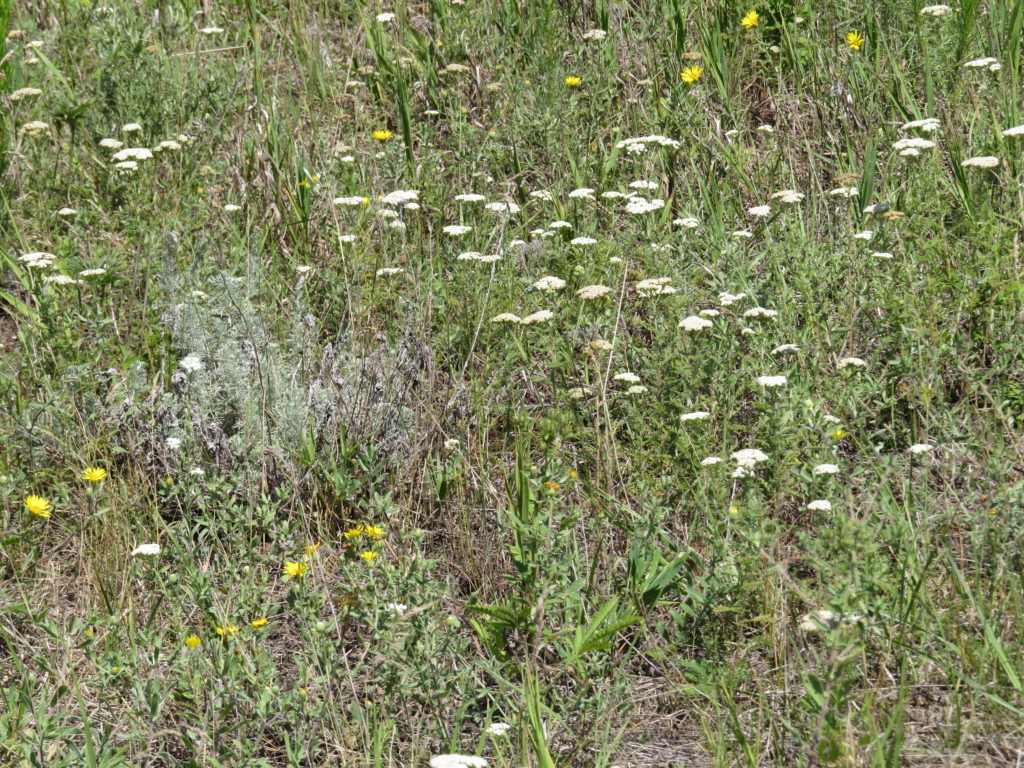
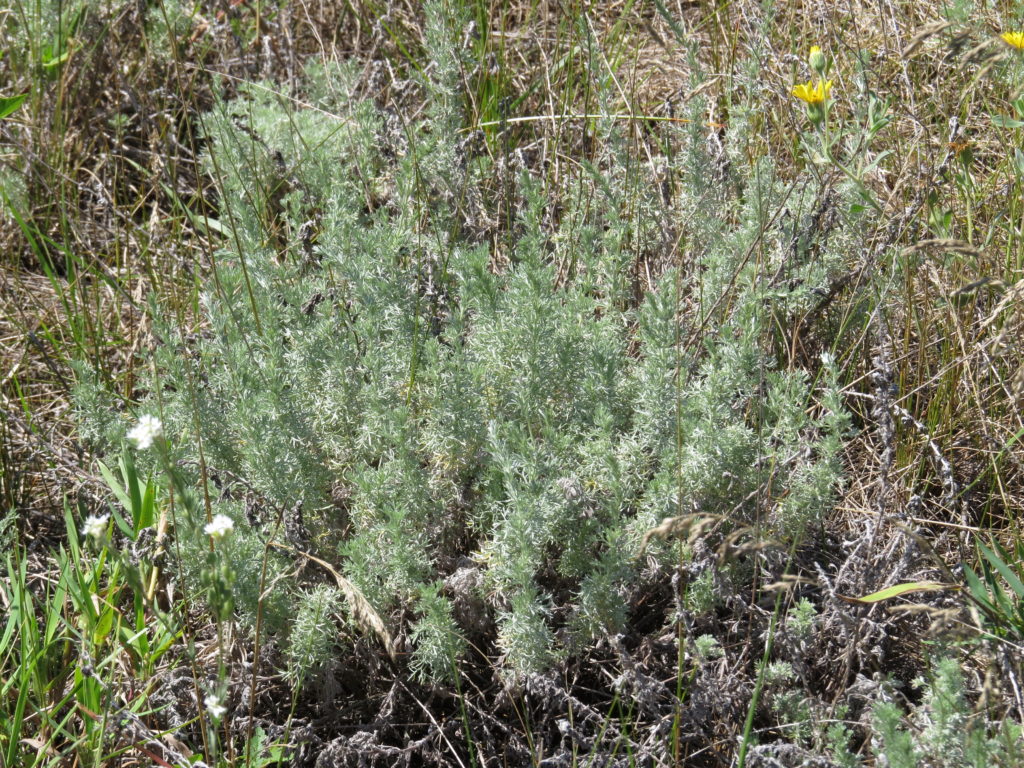
Prairie plants and their busy pollinators, in their quiet and unassuming way, remind me of all the front-line workers of this pandemic we are living through. The nurses, EMTs, police and fire workers, housekeepers, RTs, caretakers, doctors, funeral workers, grocery store workers, and all the other workers who risk their lives in order to take care of our needs. They do their work without fanfare and so often go unnoticed and under-appreciated. They are tough—they wear their masks all day long to keep the rest of us as safe as possible. Their work is hard, and it’s important. A thousand thanks to the tough, unique, and beautiful people on the front lines of this pandemic. You are the shining stars.
Our 20/20 Vision
Anyone who needs glasses knows that a lens or two can make all the difference in the world. With contact lenses, a person can ‘look’ like they have 20/20 vision, even as the tiny lenses float on the cornea in front of each eye’s intrinsic lens. Then there are camera and binocular lenses, microscope and telescope lenses, and lenses in a lighthouse, each performing a specific function in order for us to see more clearly. Anything with a curved surface that is transparent—even a drop of water—can be a lens that focuses light.
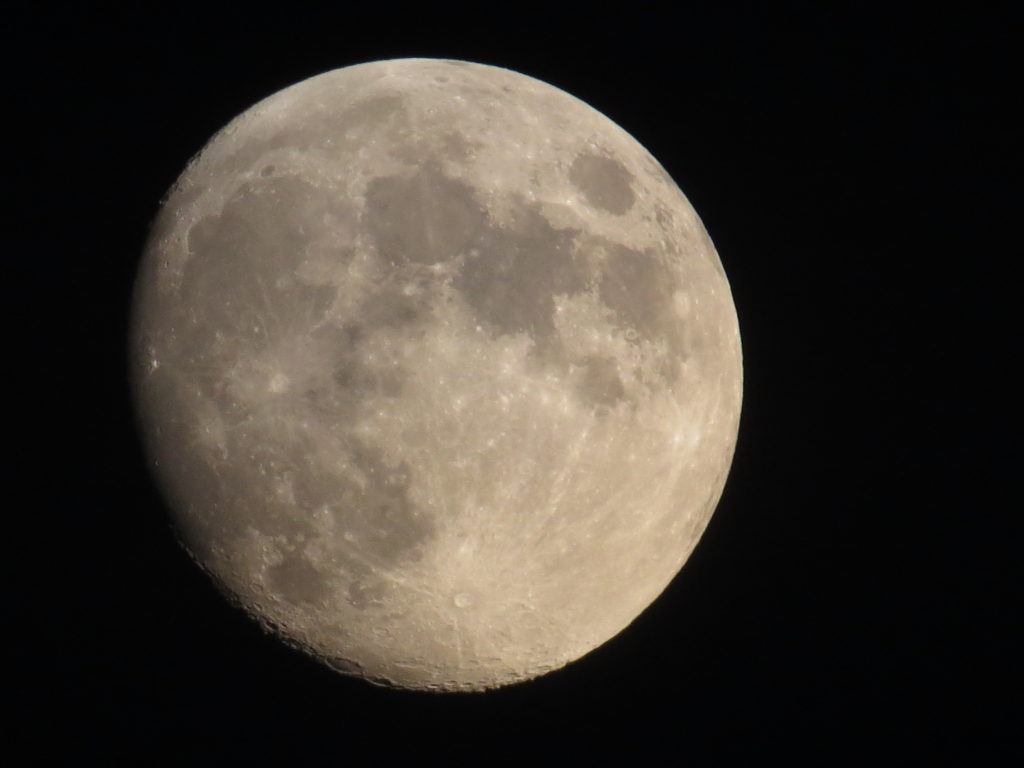
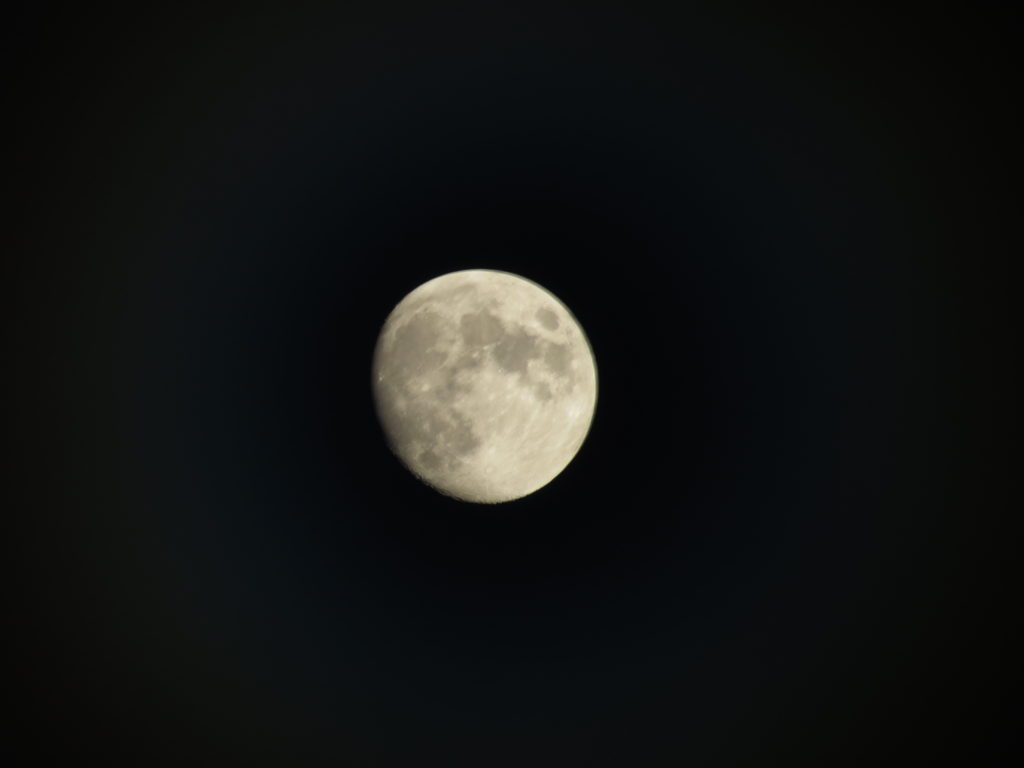
Thursday evening I took my camera from the cooled inside of our house to the warm, humid patio to snap a picture of the nearly-full moon. The muggy, warm air fogged the lenses of my glasses and of the camera. I swiped away the moisture with my shirttail. The moon is intriguing, even in its cyclic sameness—a lunar body close to Earth that reflects the light of the far-away Sun. Even without a change in the camera apparatus, the color of the moon can look different from photo to photo—from a greenish tinge…
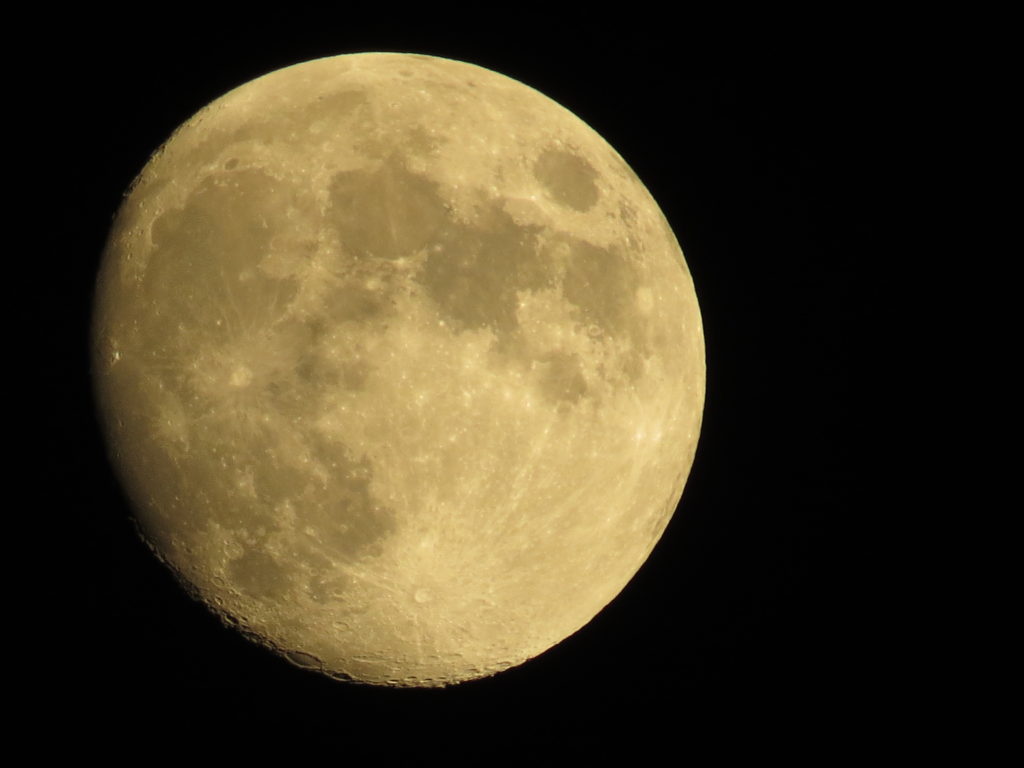
…to a rose tinge…
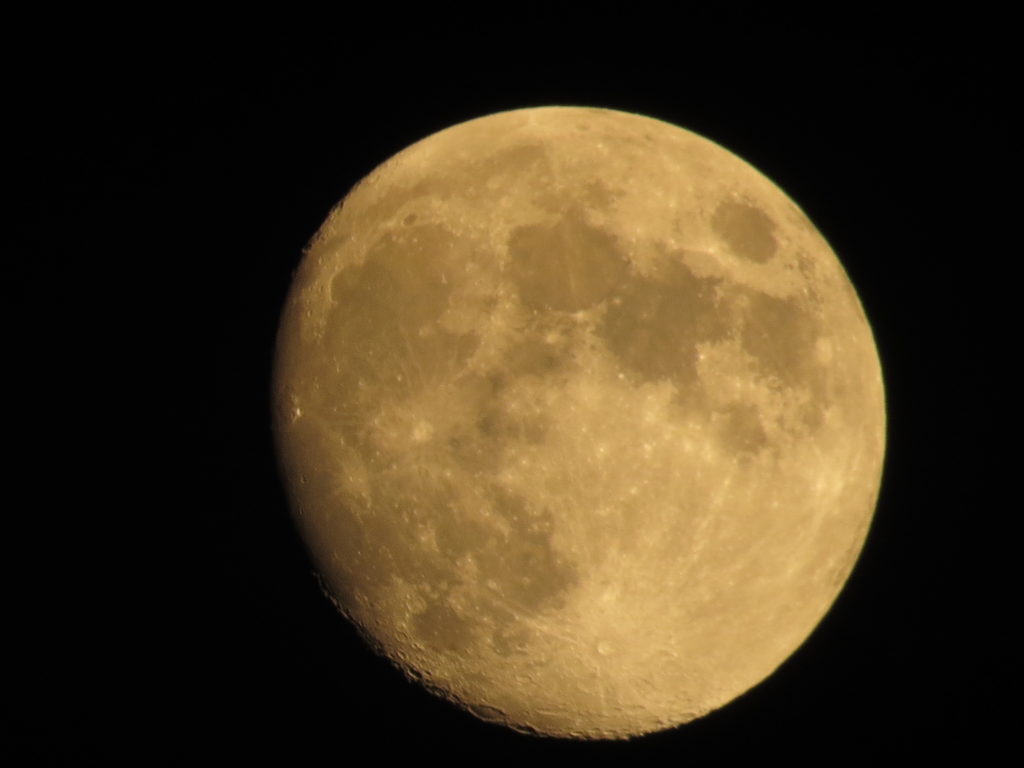
…to gray.
As I zoomed out for another shot, I noticed a faint circle of color around the moon. The colors changed and got brighter.
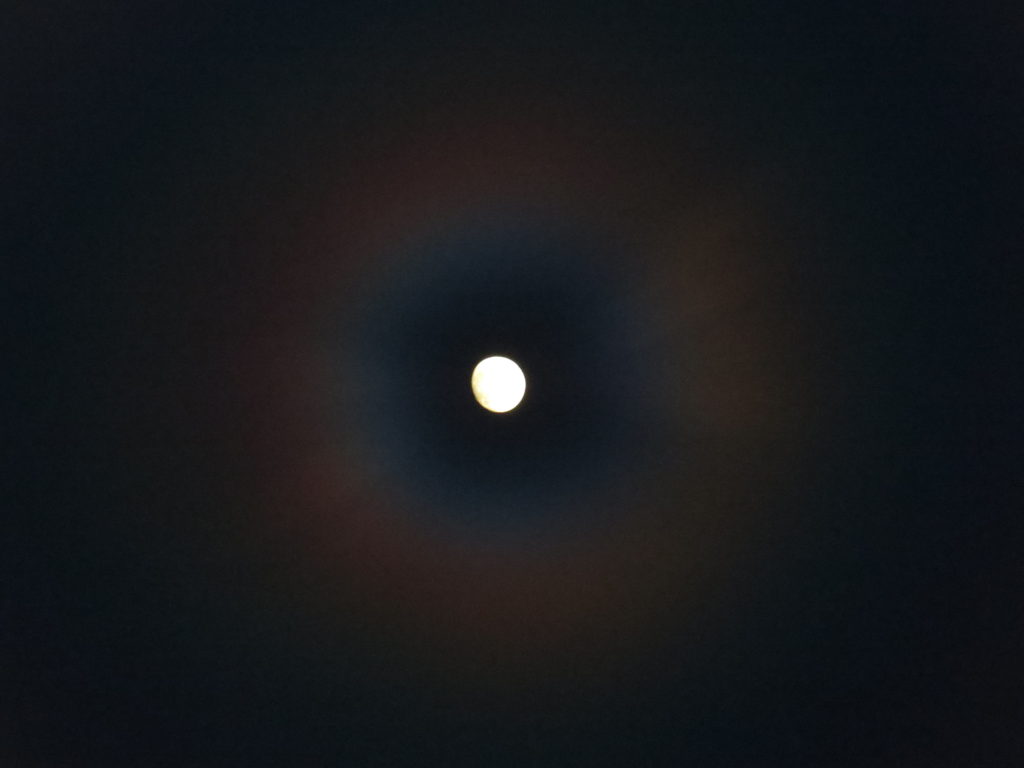
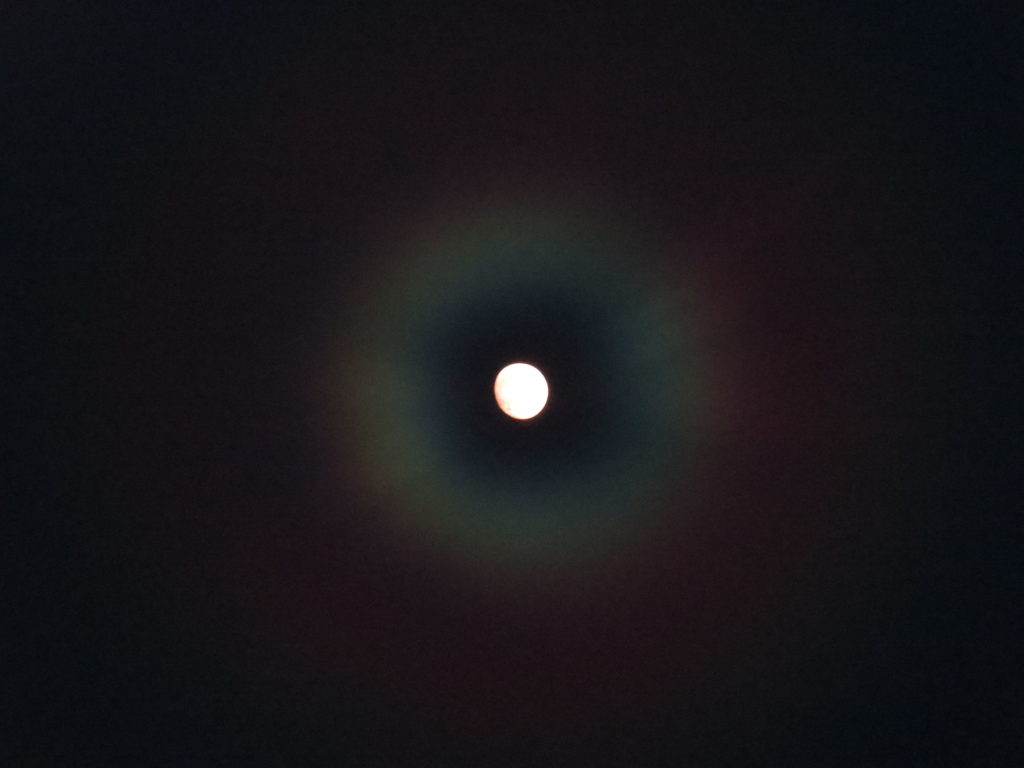
I realized that the rainbow colors around the moon were only seen through the camera lens—the humid air was condensing on the lens once again and fragmenting the moon light into its spectrum of colors!
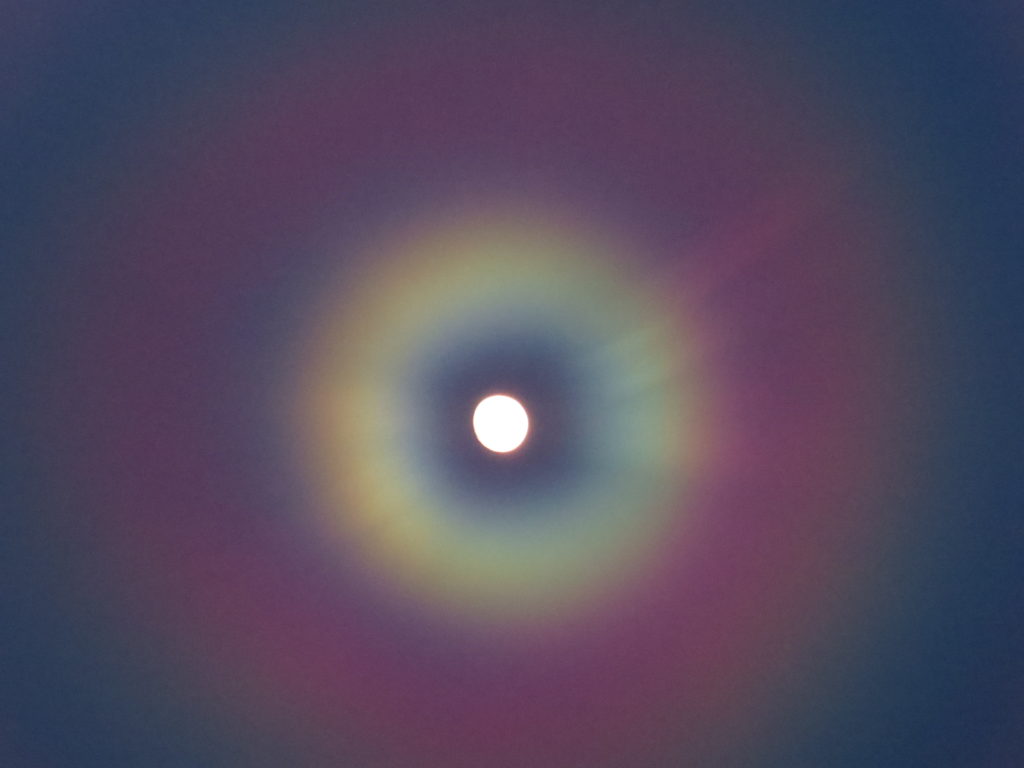
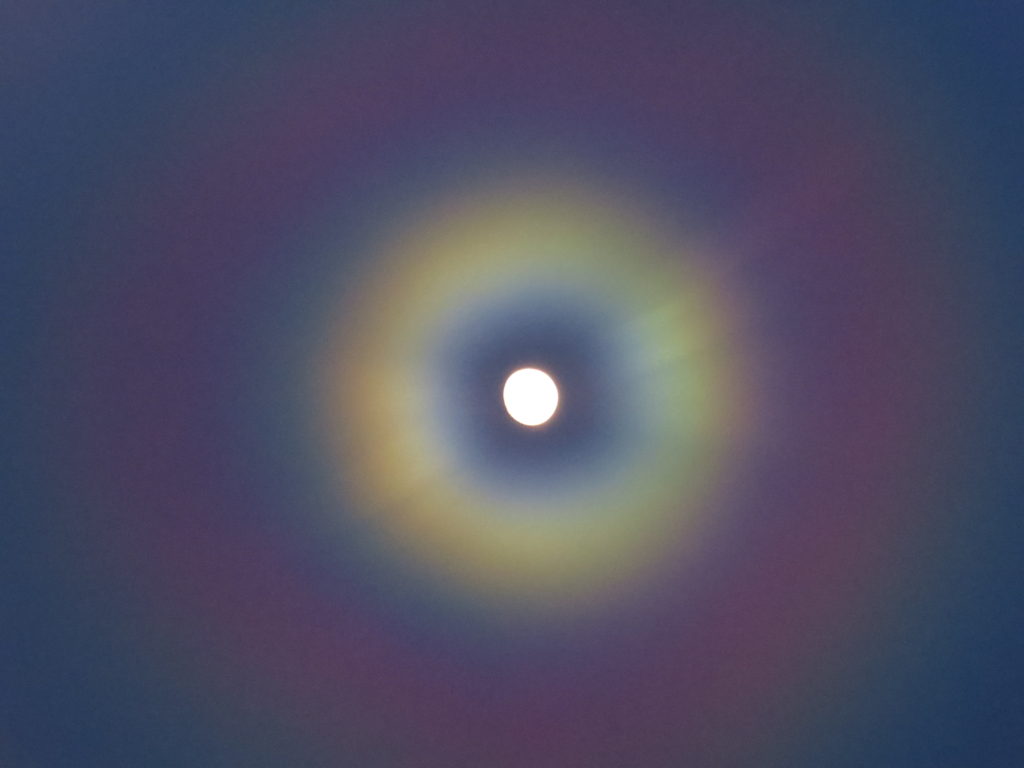
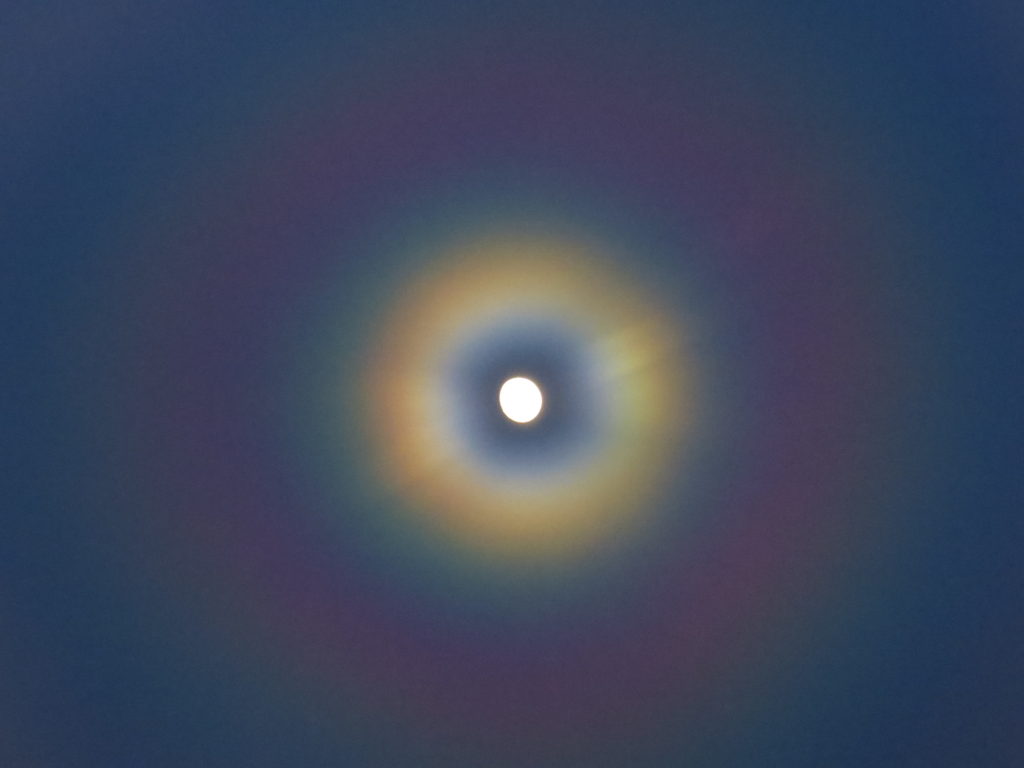
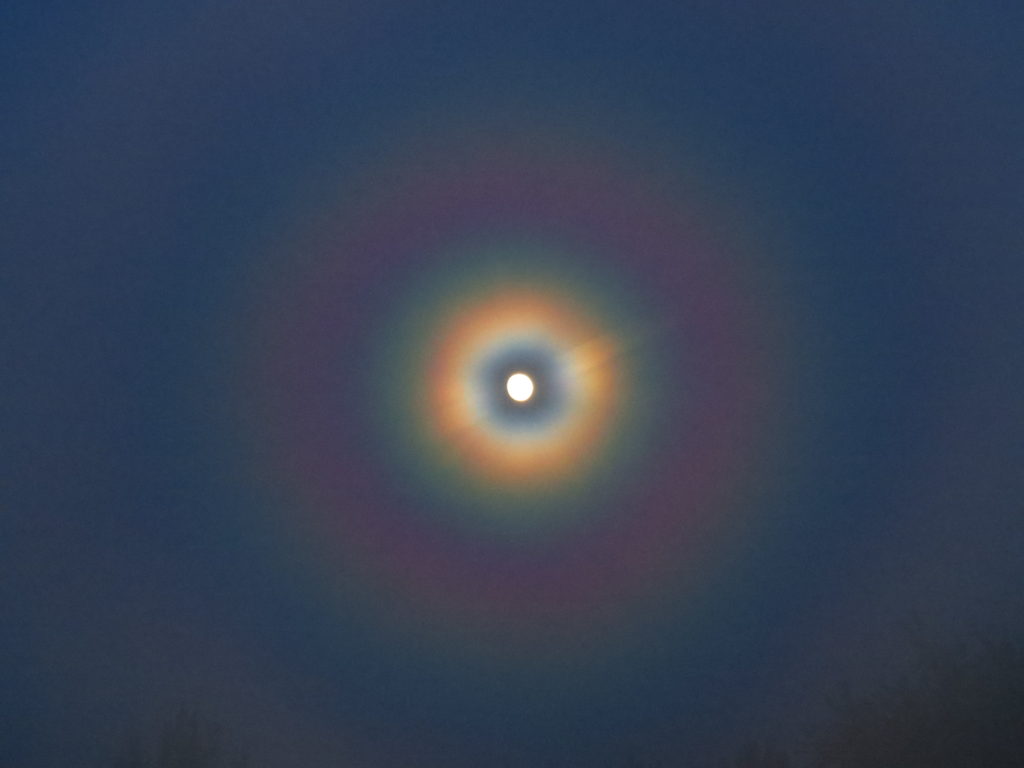
Talk about intriguing! I was mesmerized with the colorful rainbow light around the beautiful nearly-full moon.
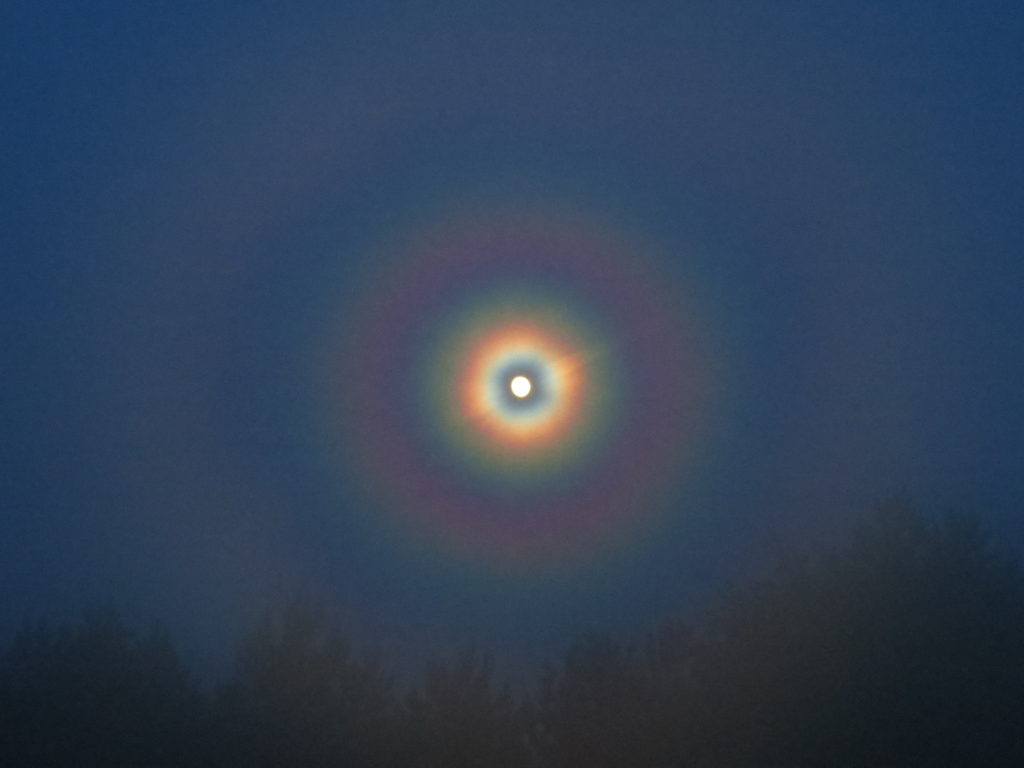
I was so distracted by the concentric circles of color that I ignored the mosquitoes landing on my skin.
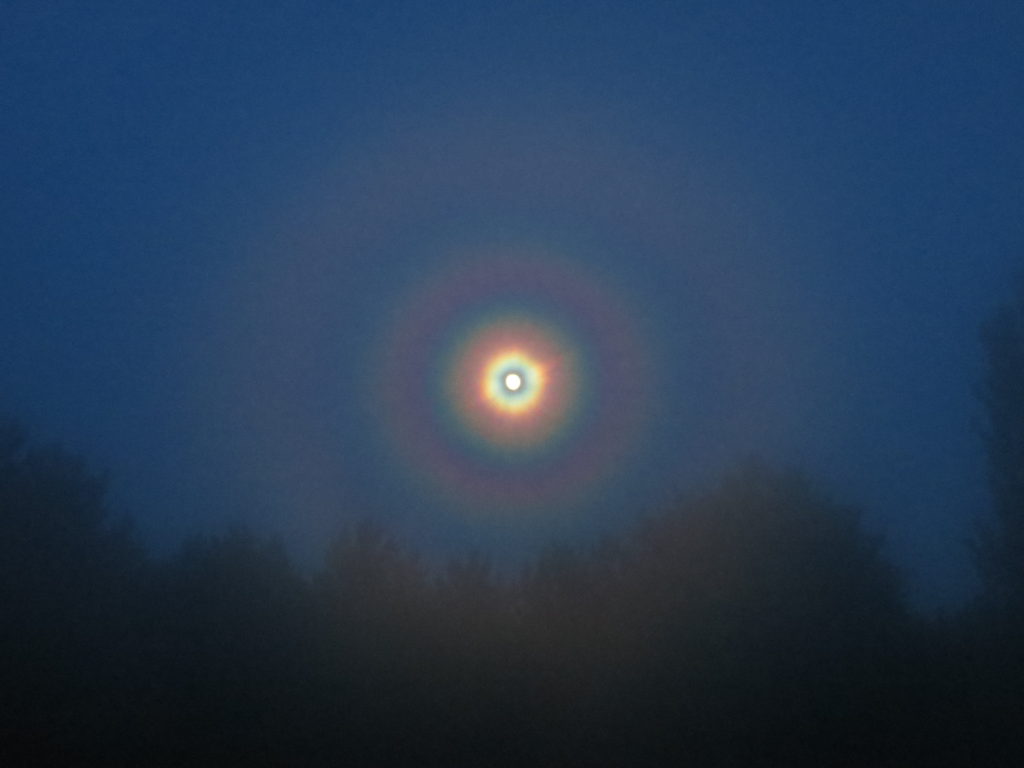
Even though I knew the phenomenon was the result of the hot, humid weather, I believed in the vision of my rainbow moon.
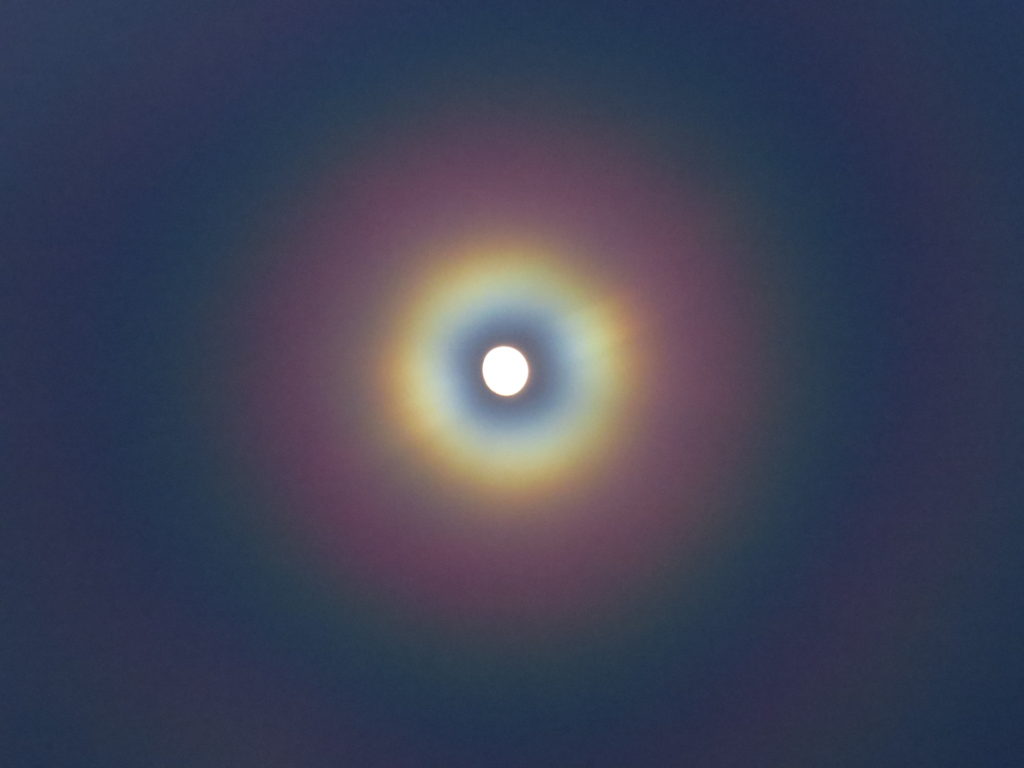
I mean, look at these photographs, look through the camera, how can you not believe?! (The only thing better would be a unicorn flying by.)
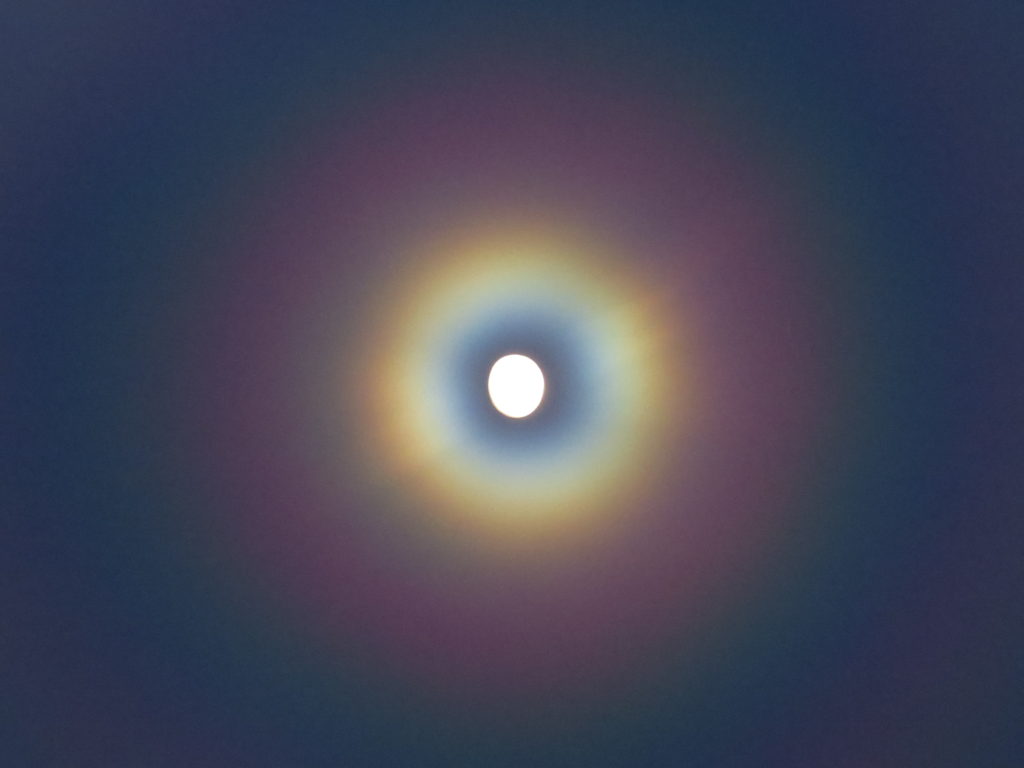
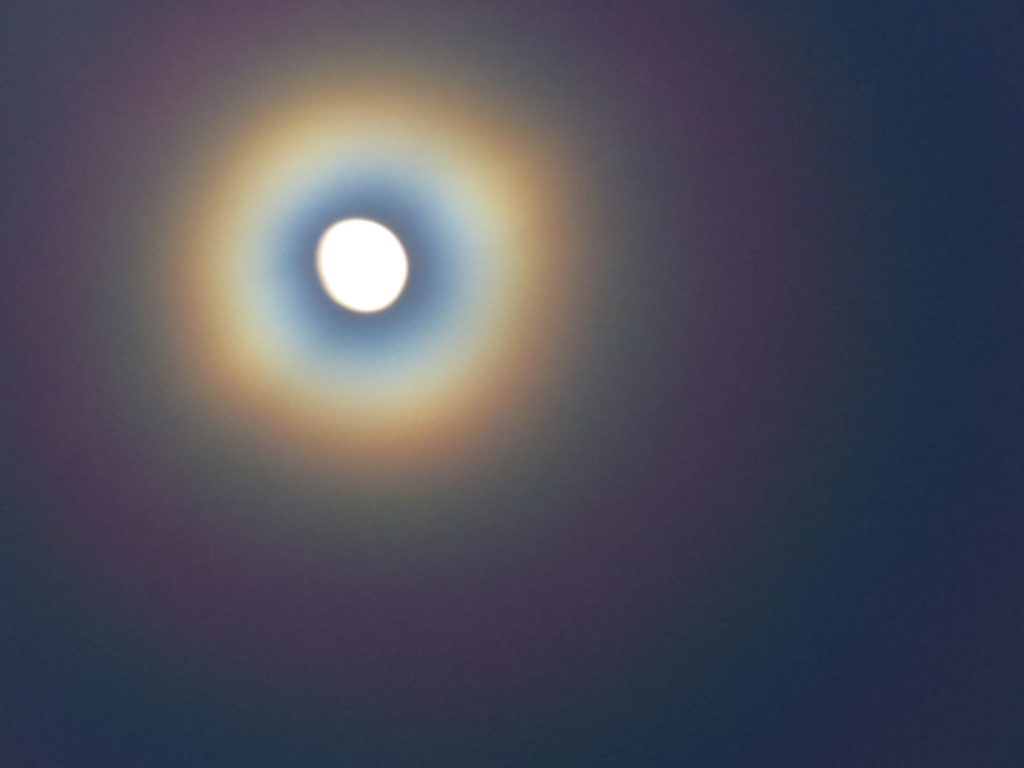
What kind of lens do we look at the world and our lives through? Is something condensing on our lenses when we look at other people? I lived with rose-colored glasses for a good part of my life—it was a coping mechanism I unconsciously employed in an attempt to make me feel safe, to make it look like there were no bad things or bad people in the world. In contrast, there are many people wearing dark-colored glasses who see a certain kind of people as bad, who feel like bad things are happening all around them. Neither vision is the truth, but it is our truth that we see through our lenses. Our fogged up lenses distract us from the very real experiences and happenings of life—whether it’s rainbows, unicorns, monuments, or masks. The energy is fragmented, scattered to peripheral issues that pull us away from the painful reality right in front of us. It is a coping mechanism. We all want to feel safe. Deflect and deny. In truth, the painful reality we are most afraid of is not what is in front of us but what is inside of us.
We all have lenses through which we observe the world. Many are helpful and meaningful to our life’s work, to helping others, and to our relationships. But oftentimes we have a foggy lens—what we see isn’t reality. We need to clear that lens with a clean cotton shirttail. Focus the light on our hearts. Ask yourself, “What do I see in me?” Then the rainbows (as beautiful as they are) and the fear can fall away, and we can see the moon as it is. We can see individual people as they are (just like me in many ways.) We can see harmful situations and a way to make them better. We can want for others what we want for ourselves. It can make all the difference in the world.
We’re Just Like Birds
After last week’s post about flying dreams, I realized I had an accumulation of photos of the ‘real flyers’—the ones who inspire us to take off, fly high, and soar on the wind—in our dreams and metaphorically in our lives. They go where we cannot go without the aid of a ‘big silver bird.’ They seem to have a freedom and a reach that us ‘grounded’ creatures can only wistfully watch and long for—oh, to be as free and majestic as the Eagle!
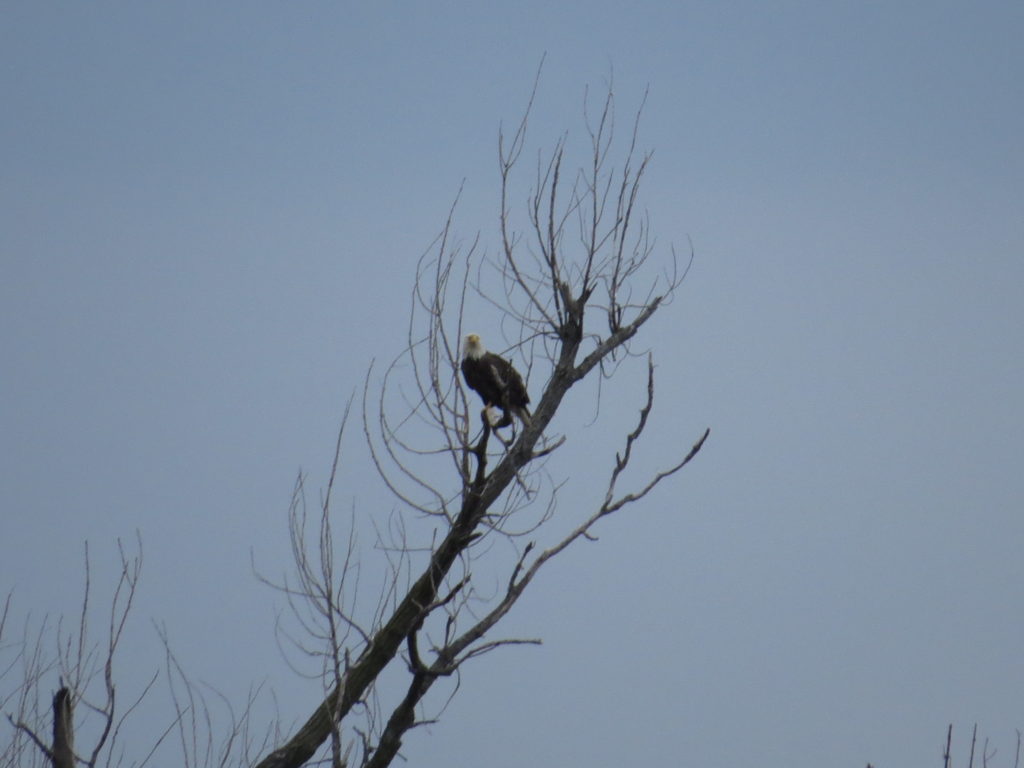
And yet, as I looked at the photos, I realized that maybe birds are more like us than we realize (or we like them?) They like to hang out with their family and friends, and life is good on the water.
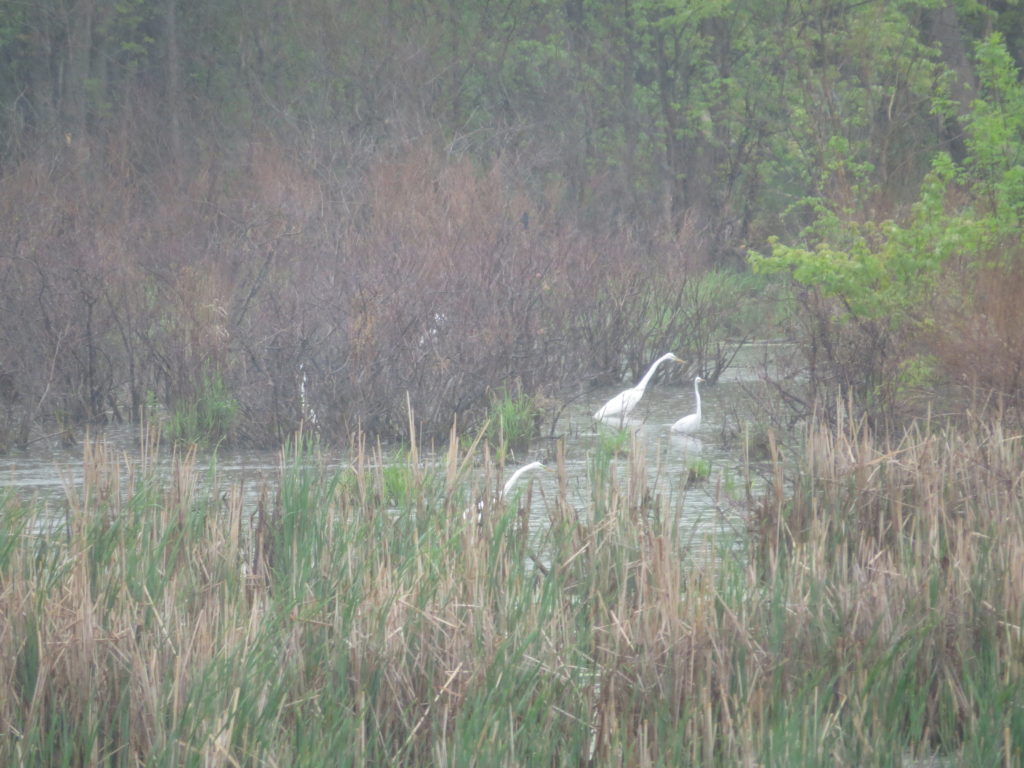
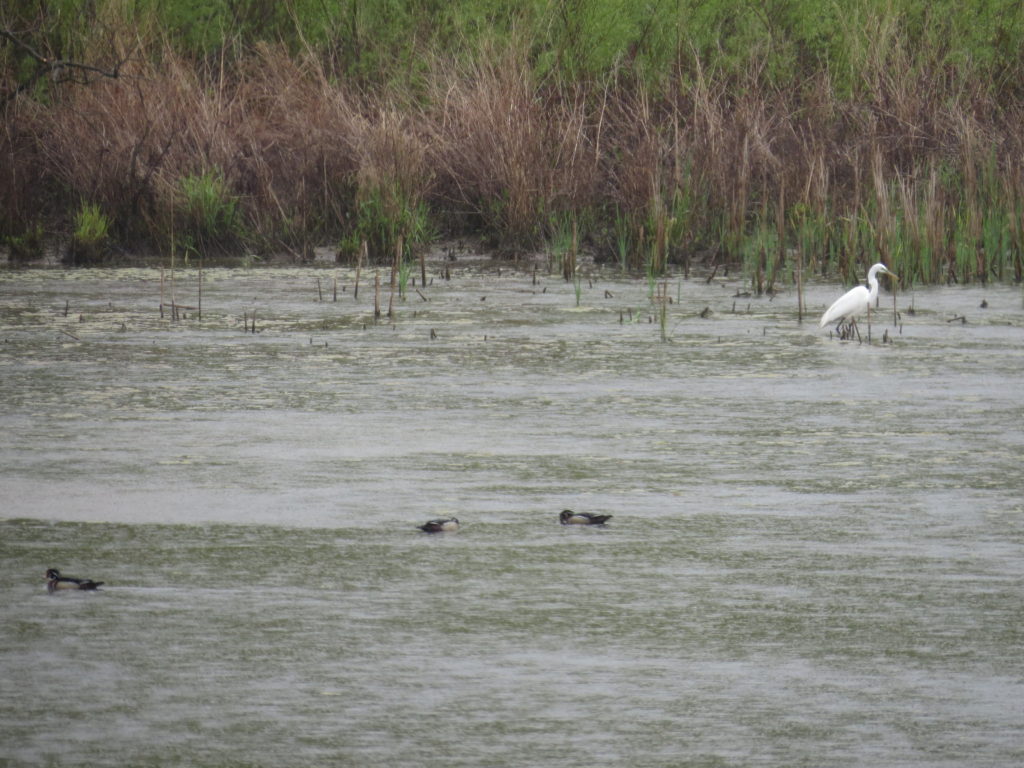
Some of them/us are loners—we don’t have mates or children or even many friends. We know how to be alone and how to be relatively okay with it. Inner life can take a higher priority than outer life.
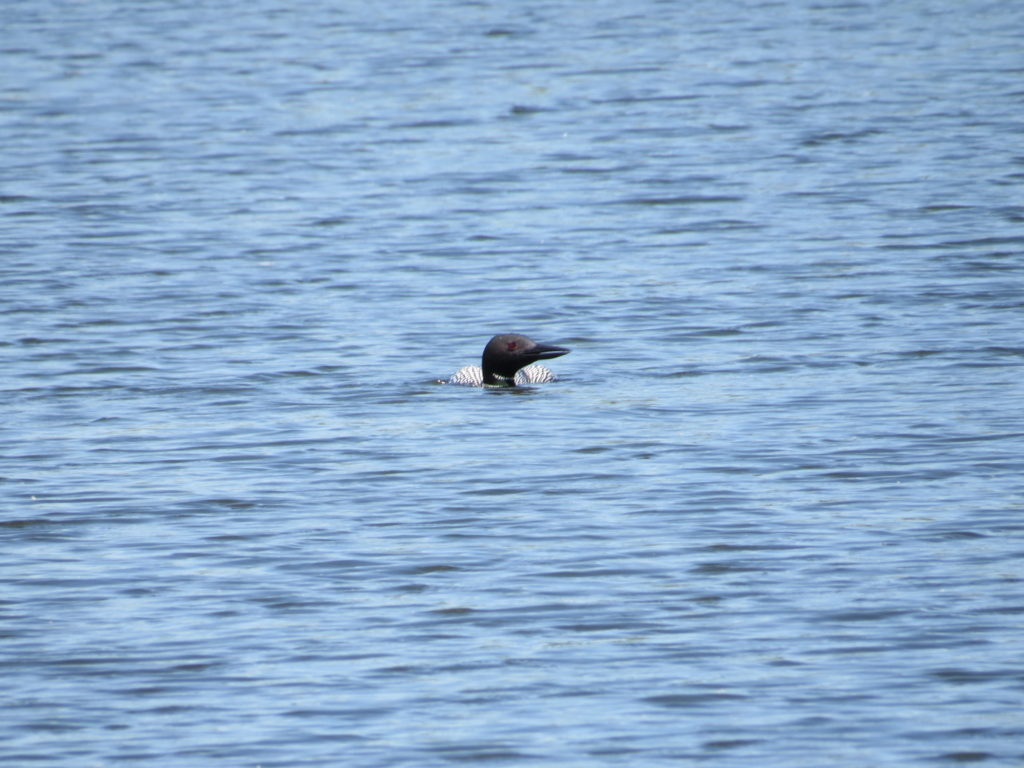
Birds have curiosity, like most of us. What do I see? What do I hear? What does that mean for me and others?
They also can be startled, intimidated, territorial, fearful, protective, bullying, and loud. Sound familiar?
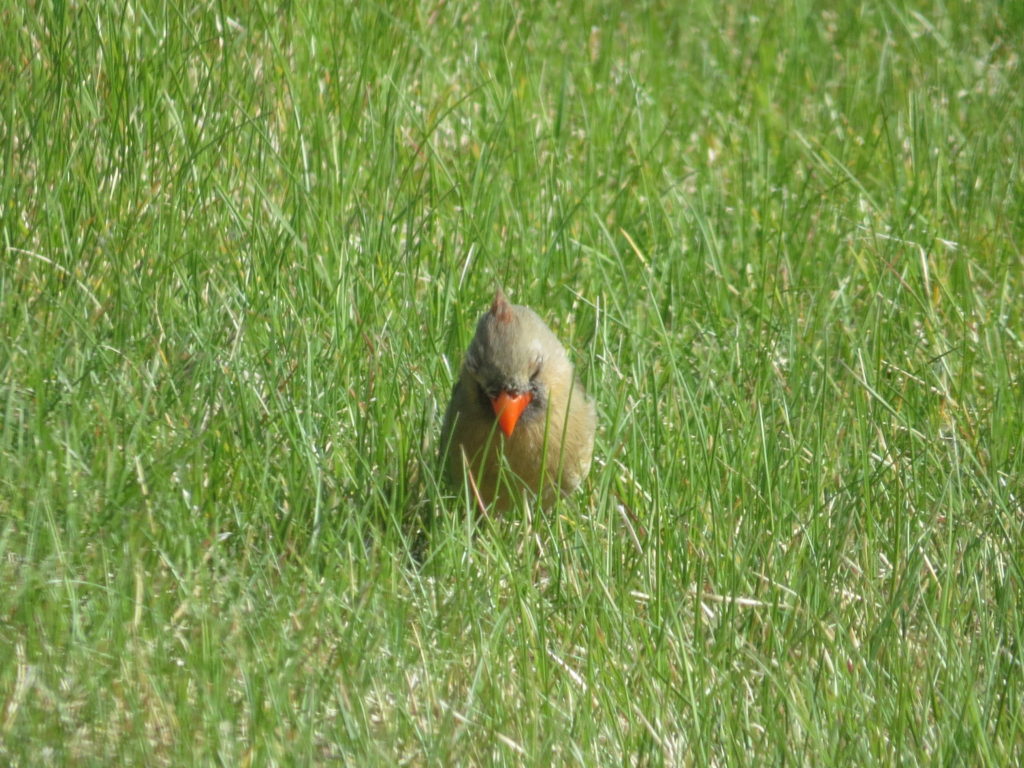
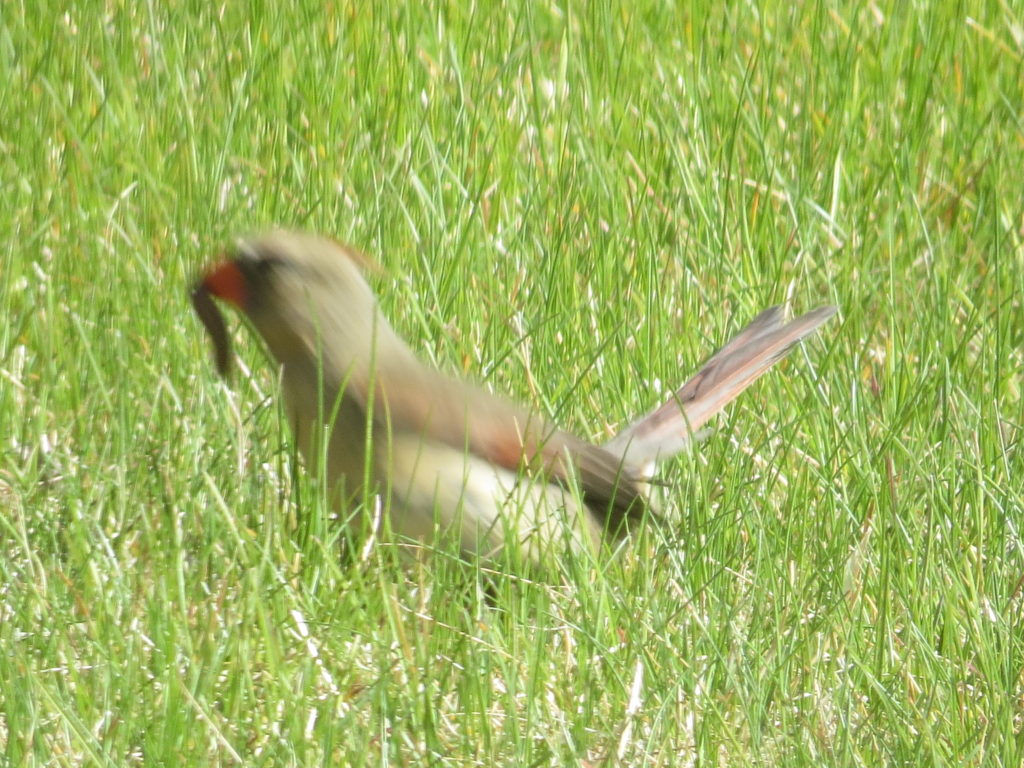
Birds spend a huge portion of their time and energy doing the work of providing food for themselves and their families. It takes concentration and patience, know-how and skill, and very often we and they are rewarded for our efforts. But not always…it also takes tenacity and resilience to keep trying when the opportunity slips away.
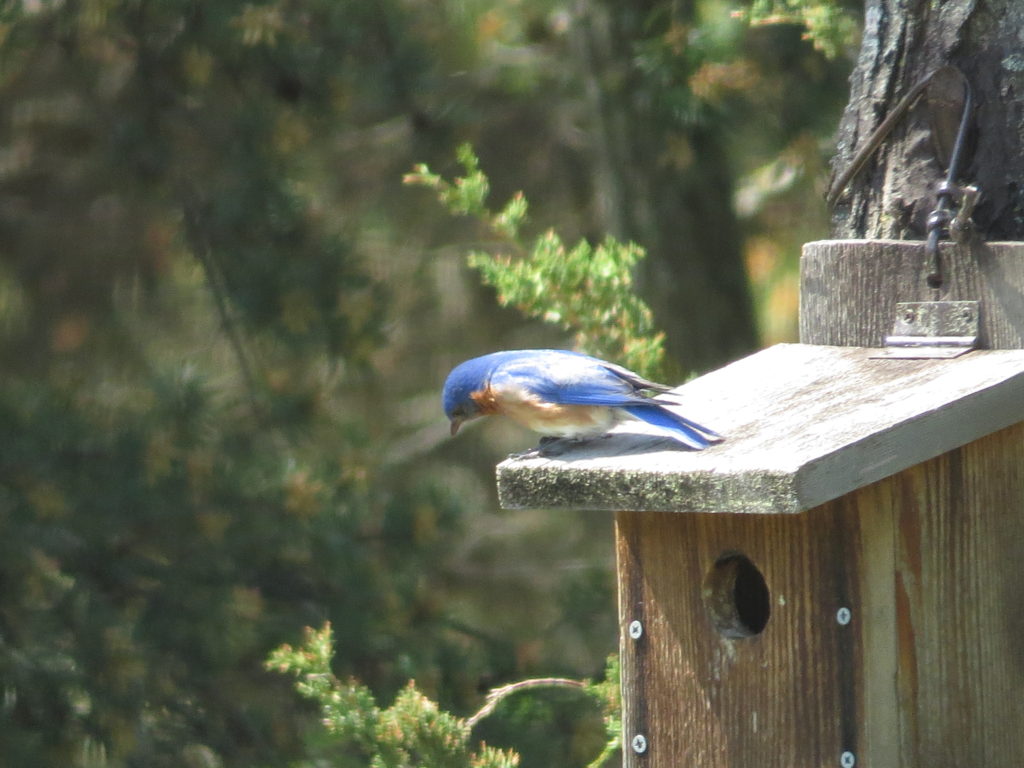
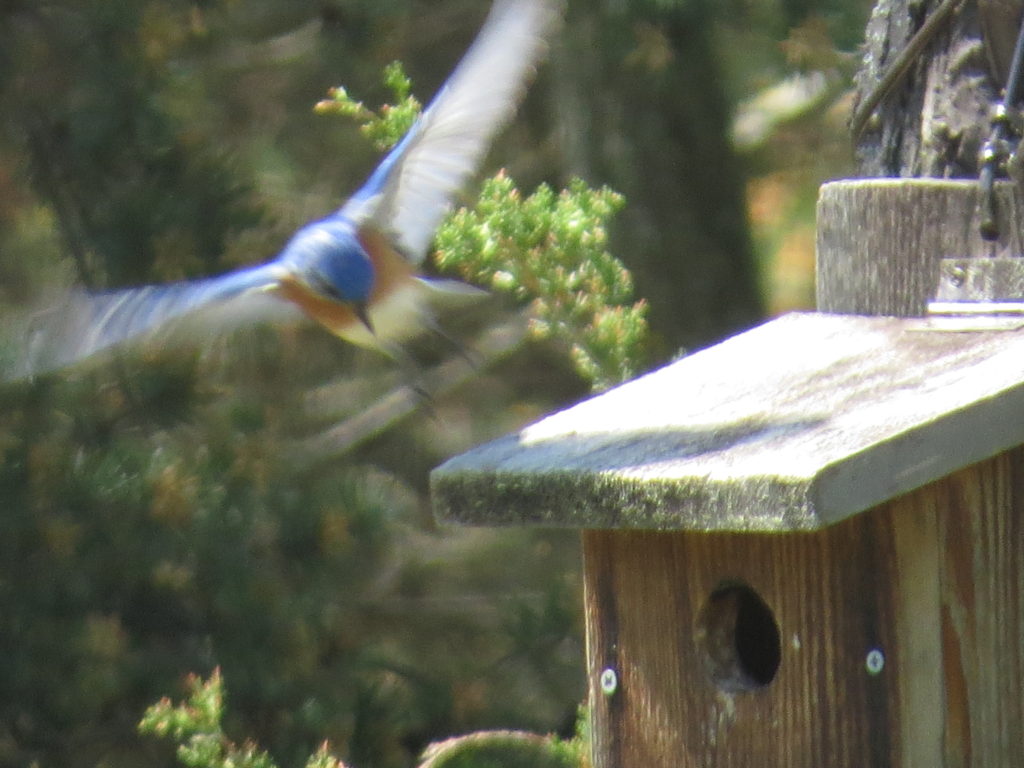
Housing is a big issue—is this going to be a good place to raise our family? Look it over, try it on, envision our future, determine the safety, can we afford it? Let’s make a nest. Let’s raise a family.
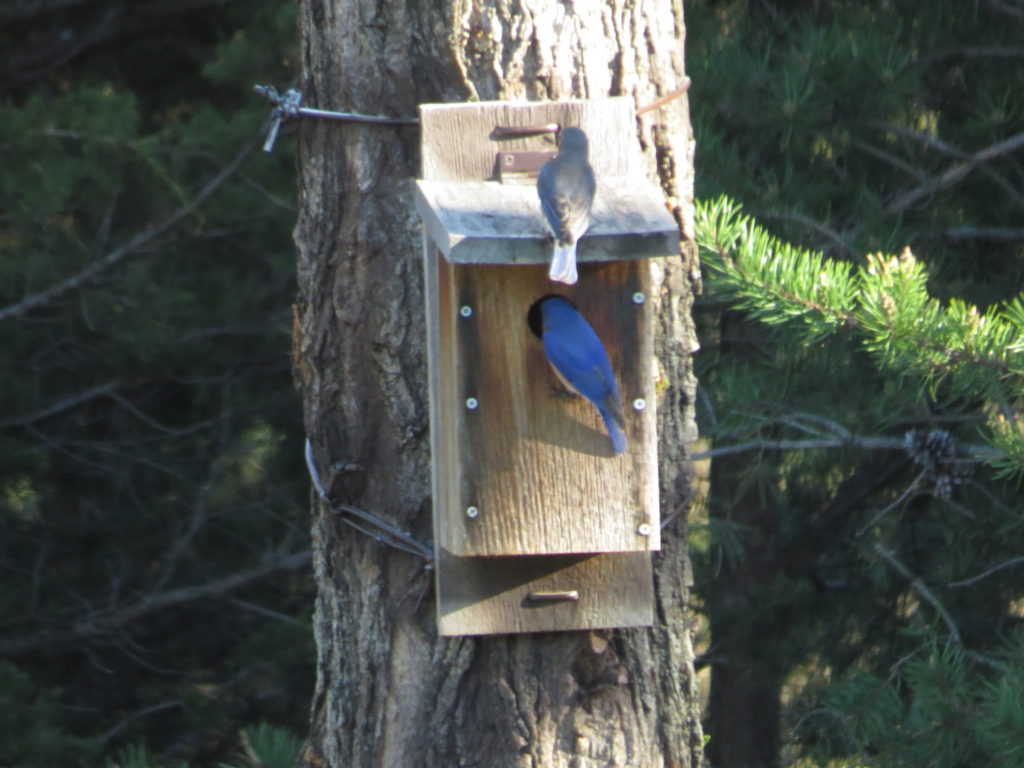
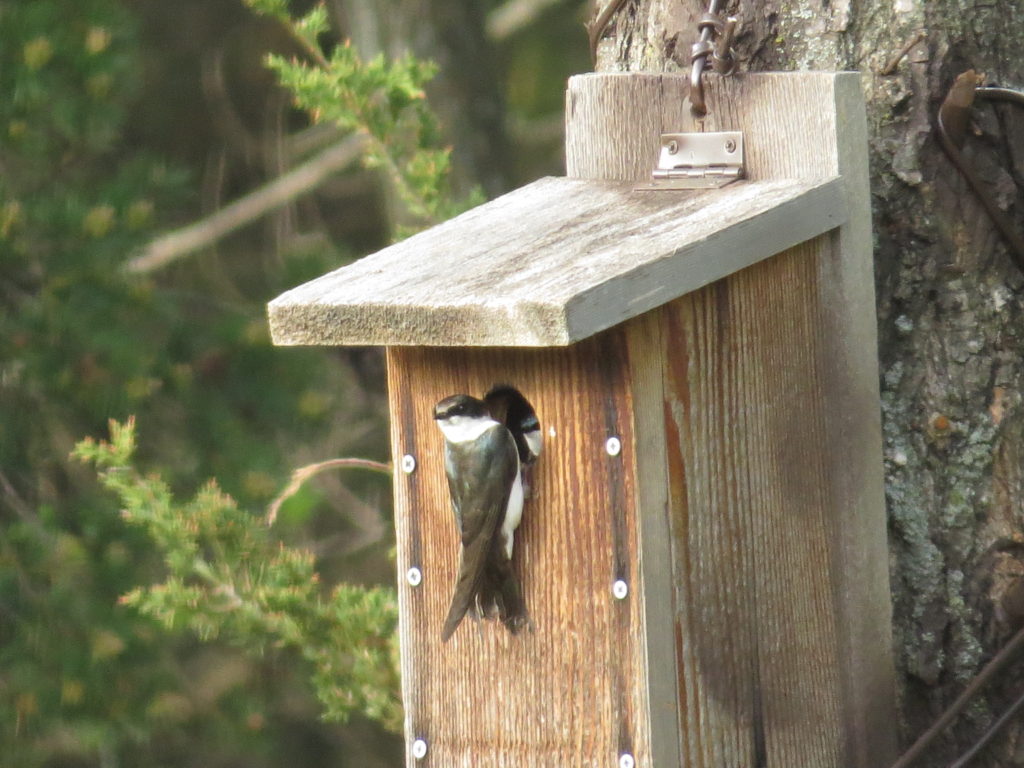
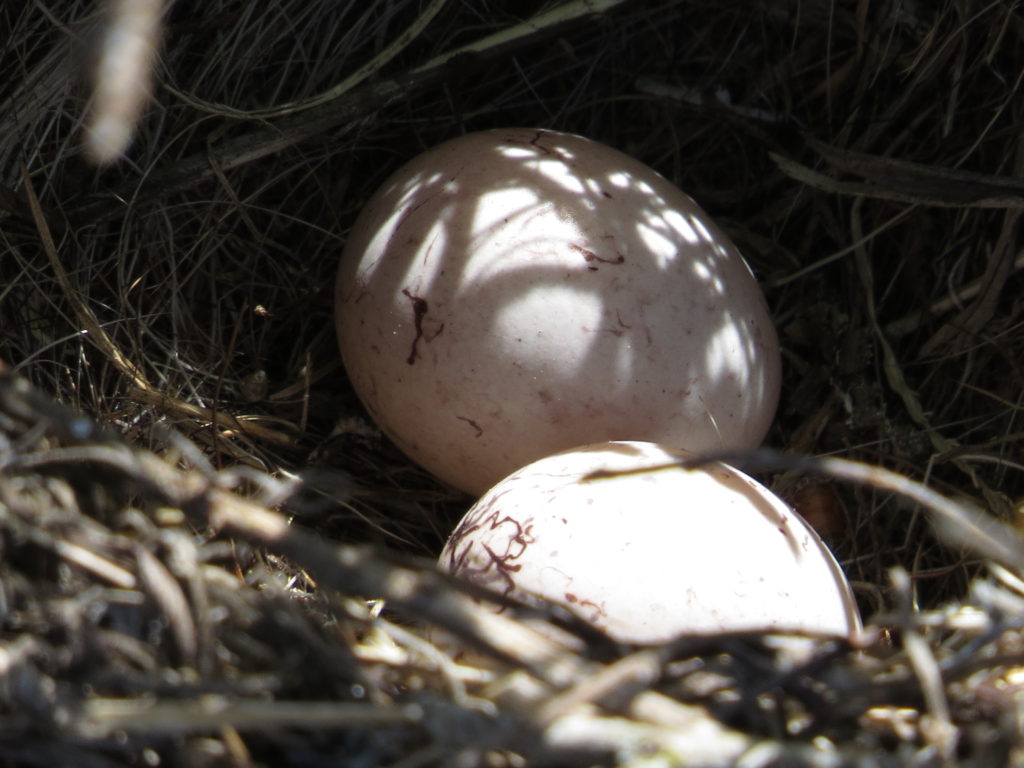
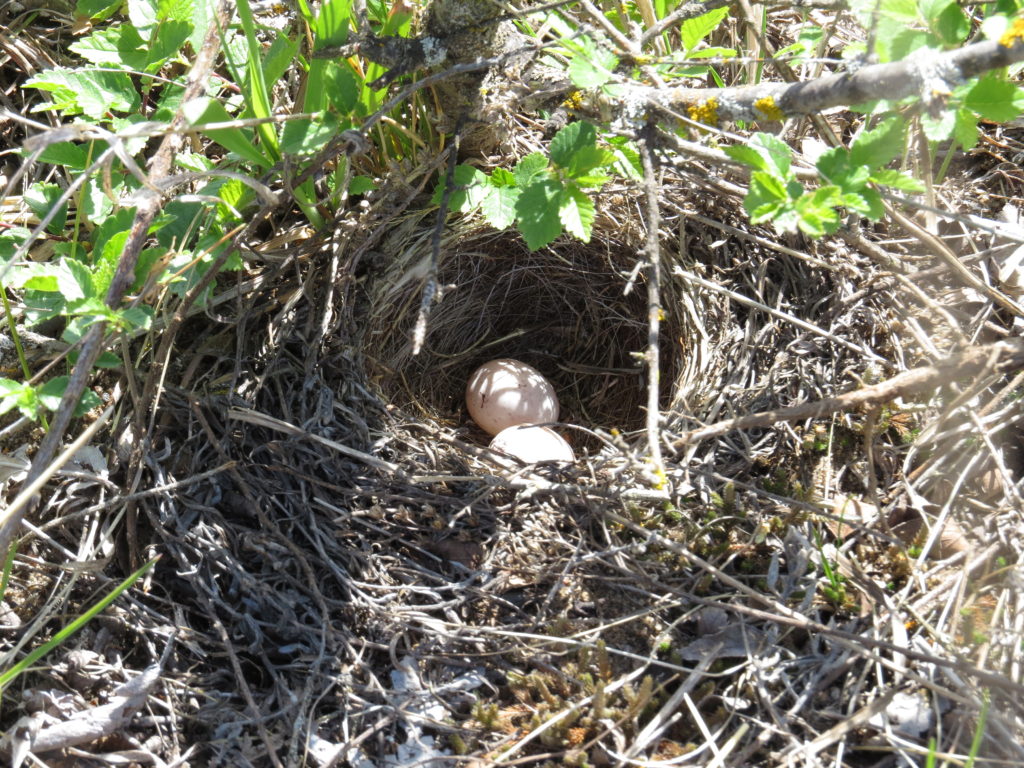
It takes an enormous amount of time, energy, fortitude, worms and bugs (and their for-human counterparts), sleeplessness (and sleep), learning, humbleness, mistakes, forgiveness, patience, and love to raise that family from infancy to independence. The birds have a compacted time frame in which to do so, yet they do it time and time again in each yearly cycle of their life span. They raise their children to fly. They teach them how to find their own food, to stay safe, to expand their knowledge. They teach them to be curious and wary, adventurous and prudent. They protect them the best they can.
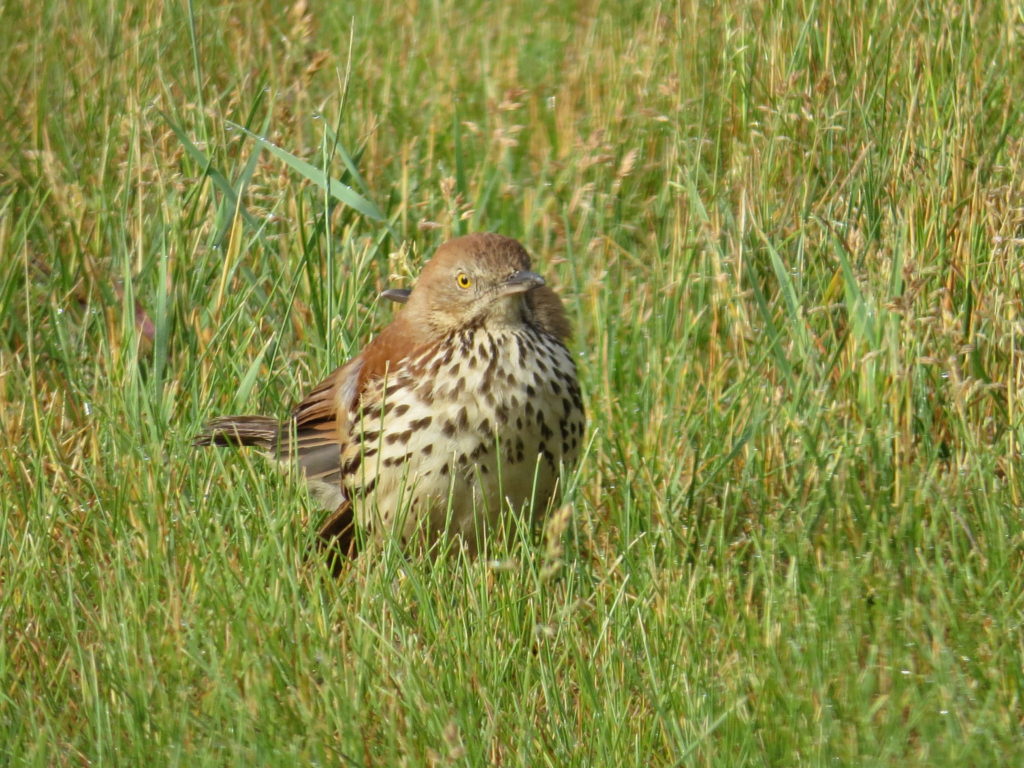
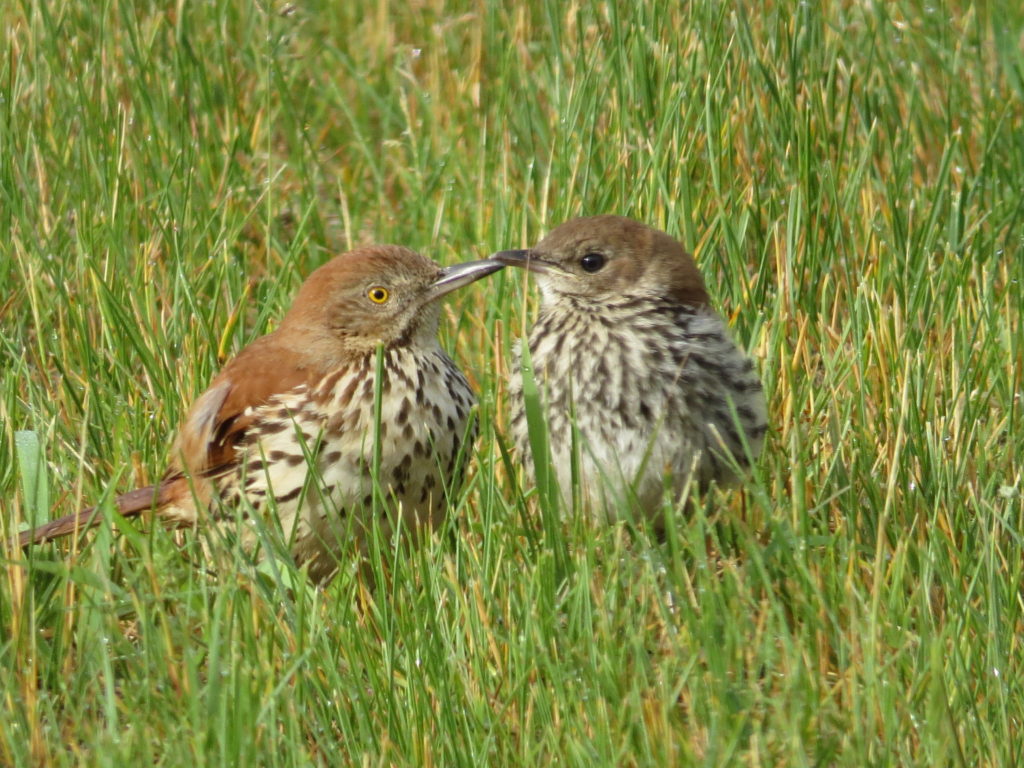
They try to ward off those who would take advantage of their young ones with a fierce look and a strong beak.
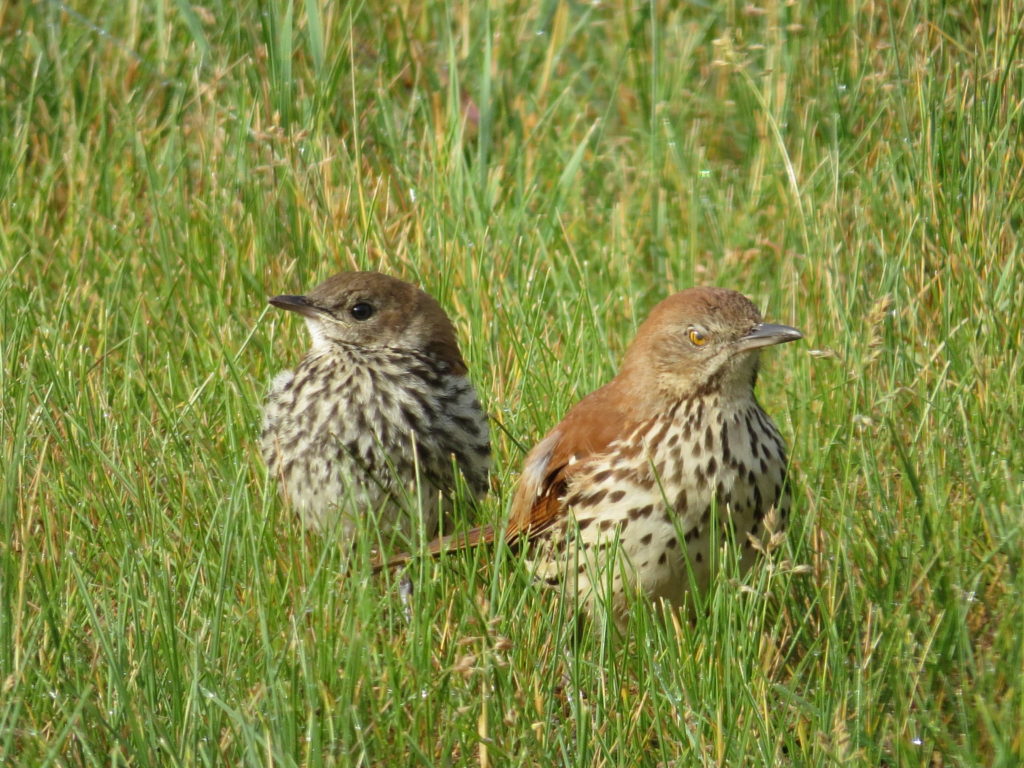
They are observant and alert.
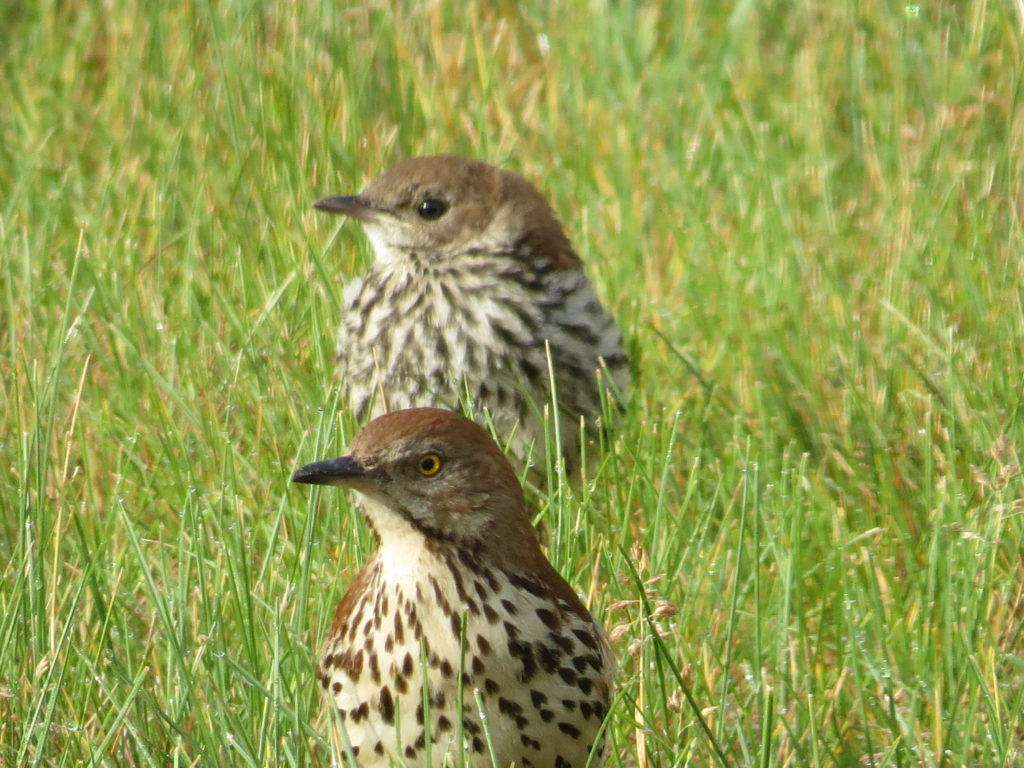
They model behavior, good and bad, with and without intent and consciousness.

They are proud of their fledglings.
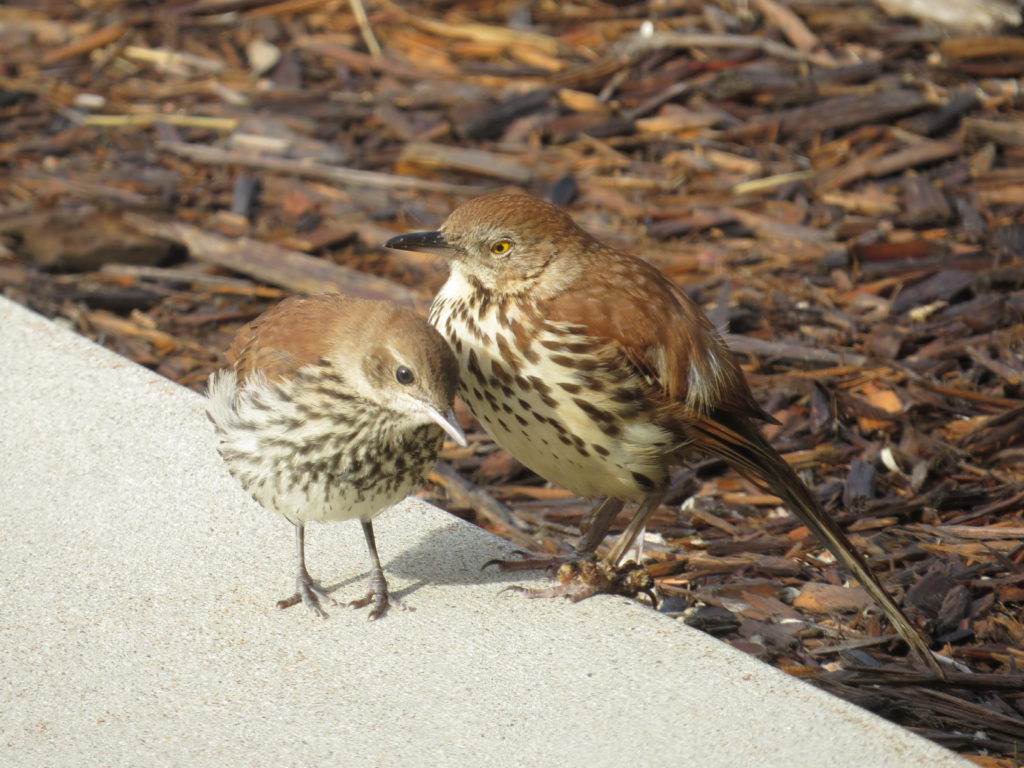
And they love them.
Birds don’t spend most of their time in unfettered freedom, soaring the skies for fun and pleasure. They spend their time doing the day-to-day things that we do—working for food, shelter, and a place to raise young ones, and they use their innate tool of being able to fly in doing so. Maybe we aren’t so different from birds. Perhaps our freedom and reach extend along the ground we humbly inhabit instead of the heavens—to our families and friends, to the ones in solitude, and to the children in our lives. Maybe we are like the eagles—majestic and free.
Flying Dreams
Love it seems, made flying dreams, so hearts could soar. Heaven sent, these wings were meant to prove once more, that love is the key. Love is the key. —‘Flying Dreams’ written by Jerrald Goldsmith and Paul Williams
I have had flying dreams my whole life. Many times I am in a room with tall ceilings, and I can just leap into the air and fly to the ceiling, then push off the wall with my feet to change direction. Perhaps it is more like weightlessness, like floating, like an astronaut in space. Other times I am flying outside, skirting high-line wires and trees, steering Peter Pan-like with my arms, and looking to my side to see birds flying with me. Whether inside or out, my flying dreams bring an immense sense of freedom and an indescribable feeling of joy.
In spite of the ease of flying in my dreams, in ‘awake’ life, flying isn’t always easy, especially the getting-off-the-ground part—or in the case of a dragonfly, the getting-out-of-the-water-climbing-up-any-available-vegetation-to-dry-out-wings part.
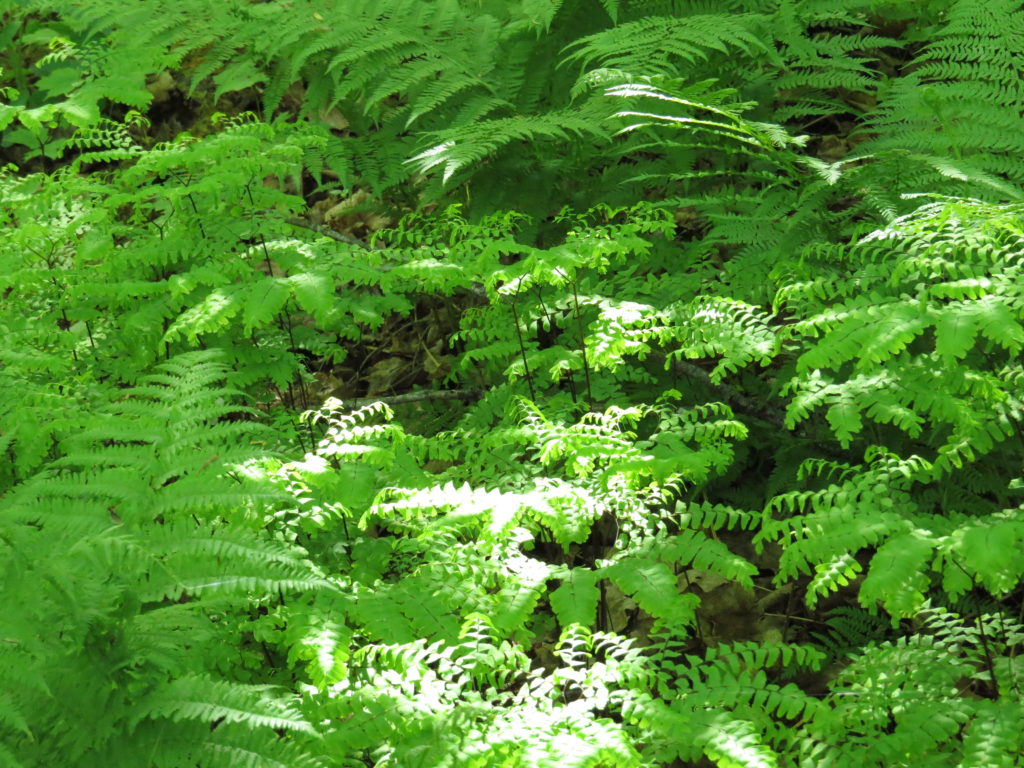
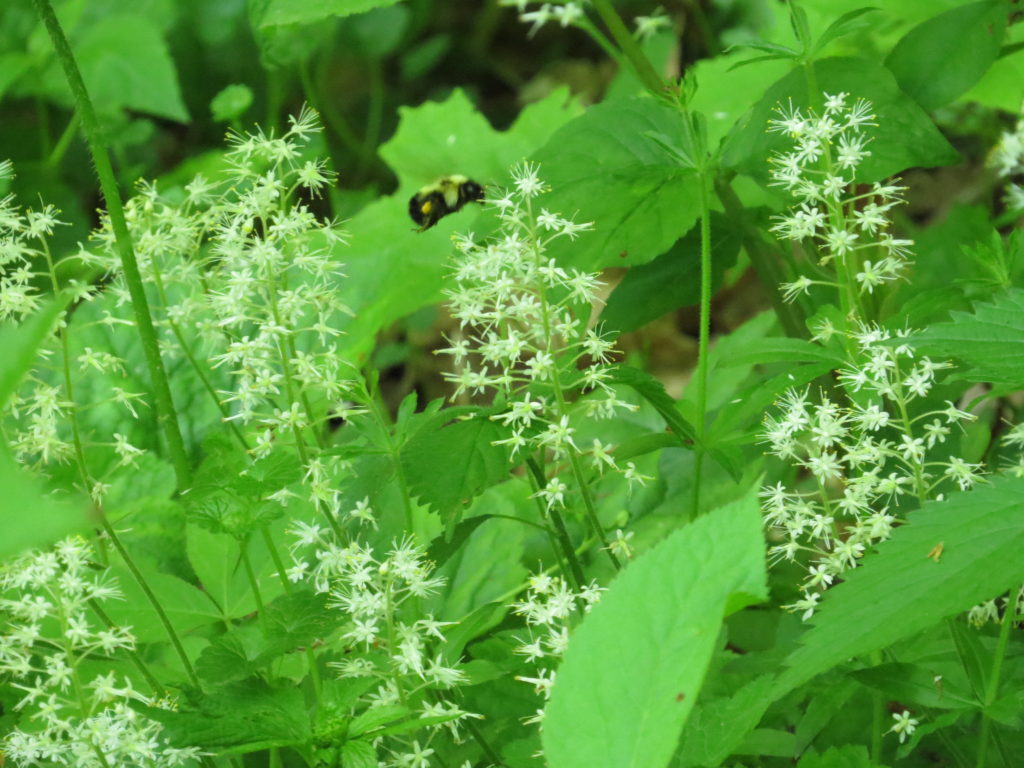
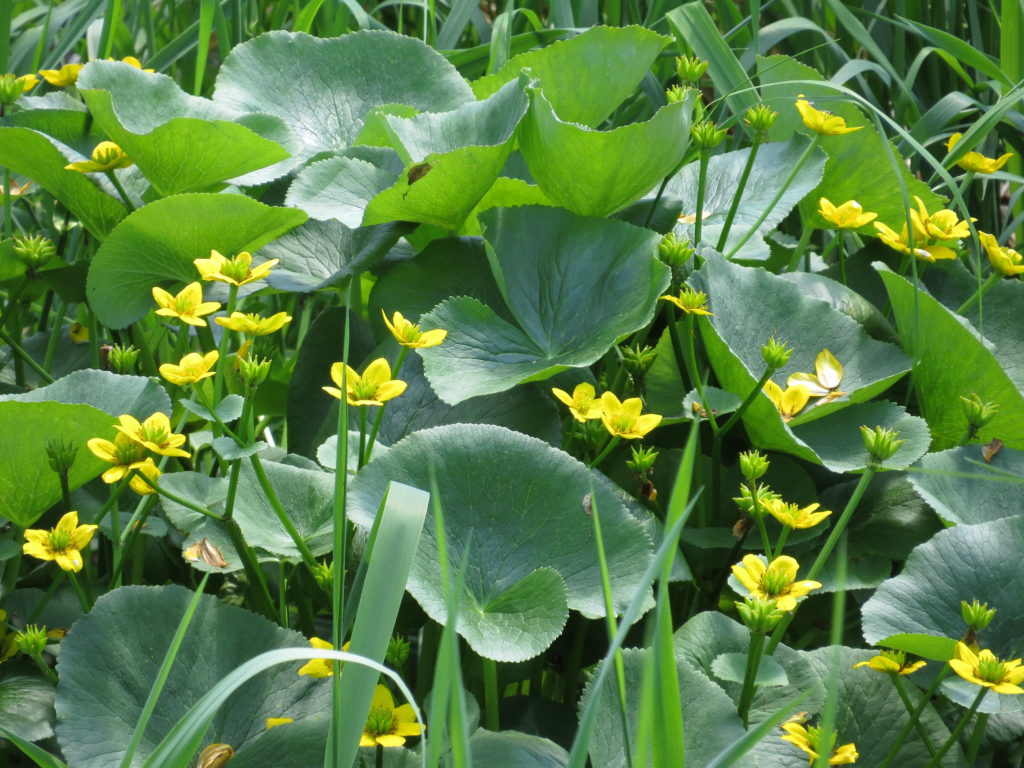
A little over three weeks ago, my friend and I went to Saint John’s Arboretum to try to find the hawk’s nest I had discovered before the leaves were on the trees—but this time we were unable to see it in the camouflage of leaves. We did find some beautiful ferns, spring wildflowers, a tannin-stained Trumpeter Swan, and….
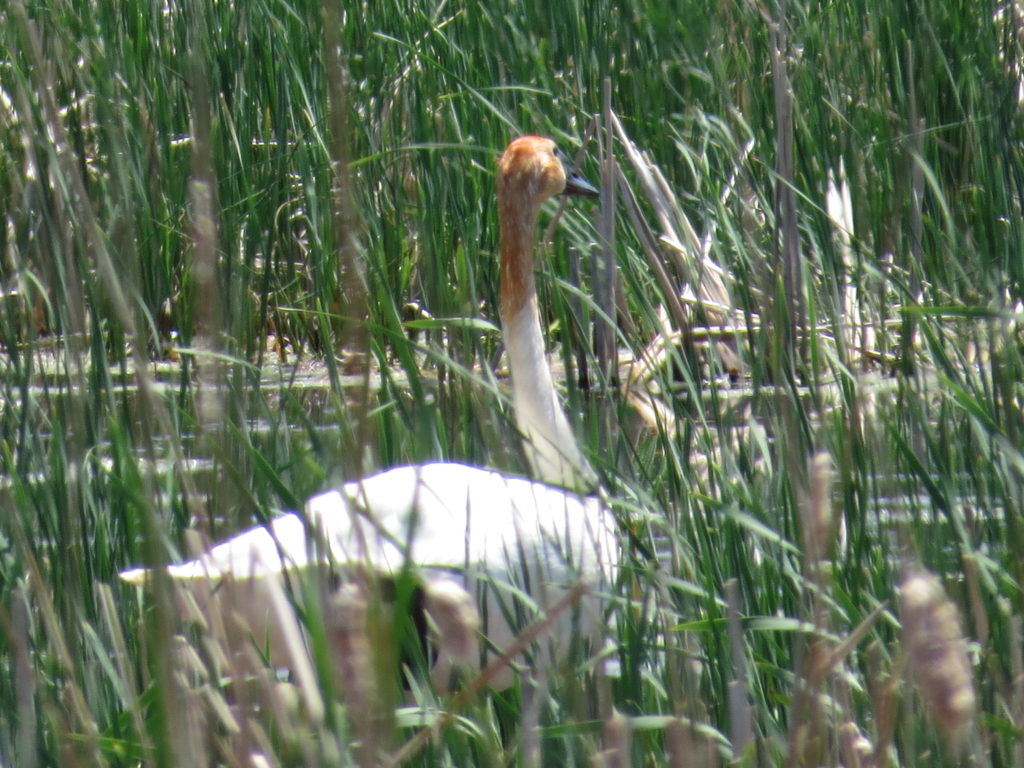
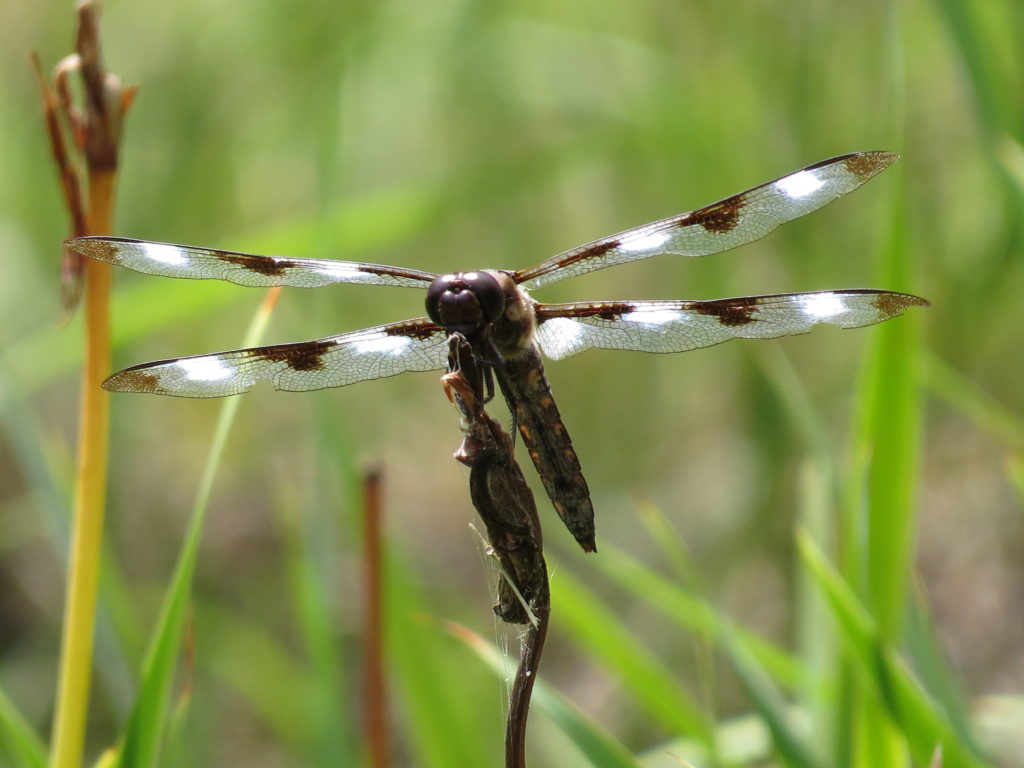
…lots and lots of dragonflies! Most of them were not flying however—they were clinging to the shrubs and trees that lined a small lake. They were ‘tenerals’ or newly emerged from the aquatic larval stage. Dragonflies begin their life cycle in the water where an adult will lay eggs on a plant in the water or in the water itself.
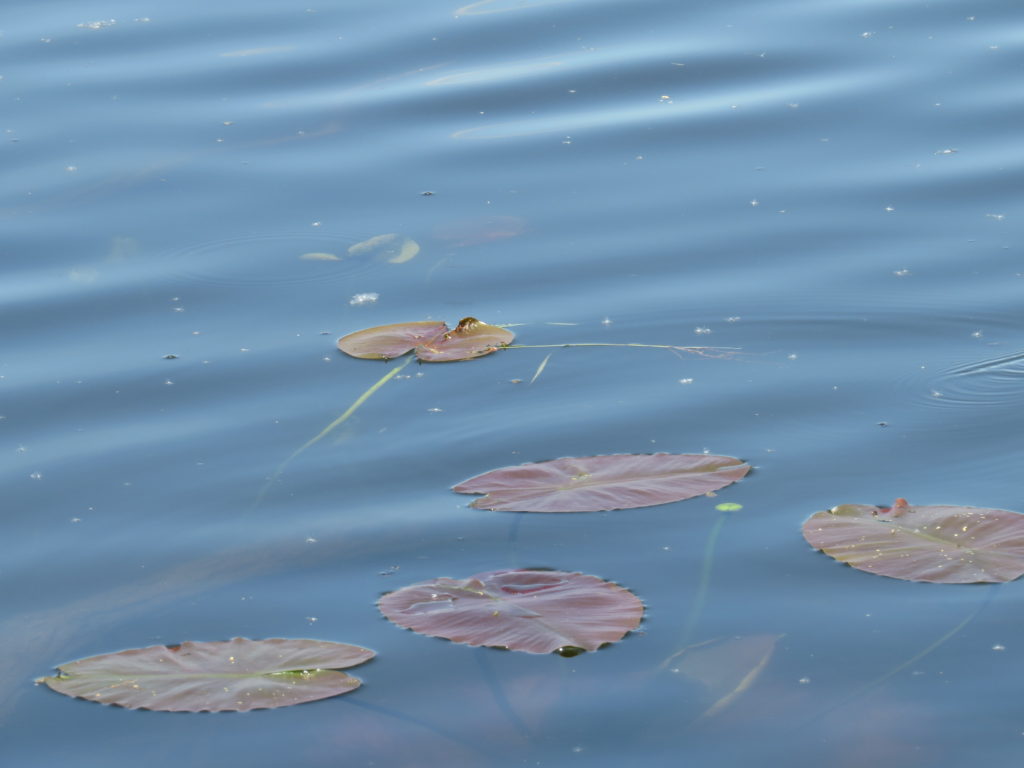
The larval or nymph stage can be one to four years of growing and molting under the water. Water temperature and length of growing season determines maturation of the nymph. Emergence usually happens in the early morning when the nymph crawls out of the water up a stem of a plant. Some crawl several yards to a vertical plant to begin the final shedding of the larval skin to become the adult dragonfly.
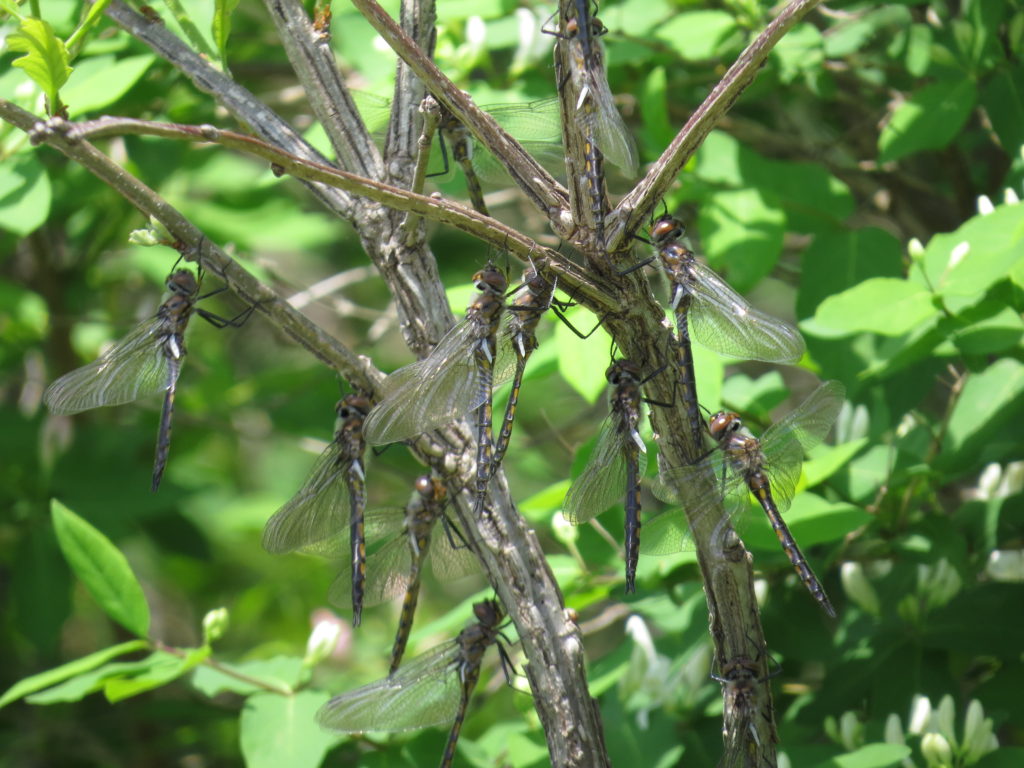
During this transformation time, the dragonflies are vulnerable to predators, mainly birds. Even rainfall at this time can damage their soft body tissue. Up to a 90% mortality has been observed in one emerging population. Their legs are the first to harden so they can hook their claws into a plant or tree. Their wings are colorless, like shiny saran wrap.
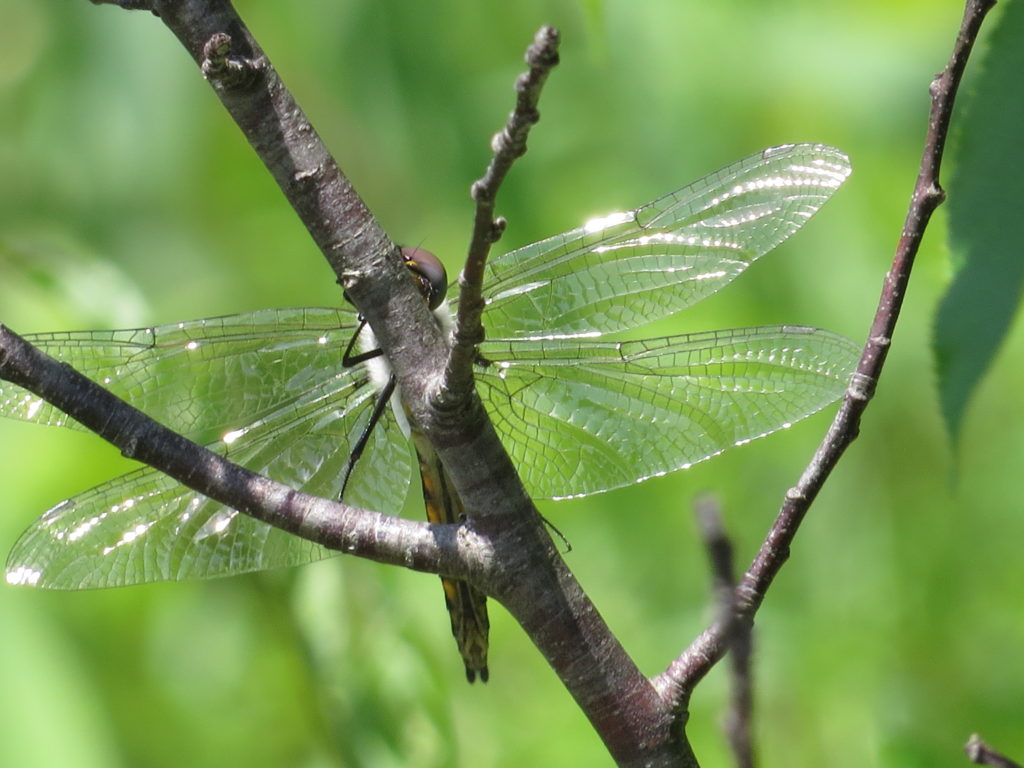
Eyes of the ‘tenerals’ are reddish-brown above and gray below. Both the wings and eyes will develop more color as they mature.
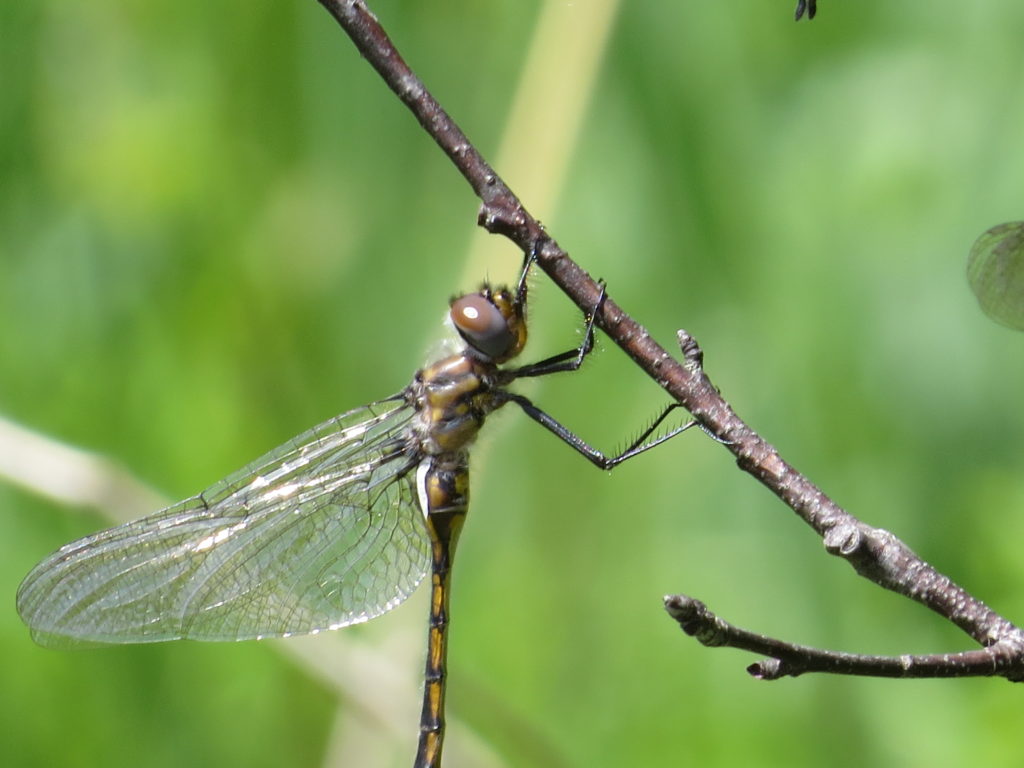
The newly-emerged dragonflies did fly from their drying posts when we walked by, but their flight was weak, and they only flew a short ways to other shrubs.
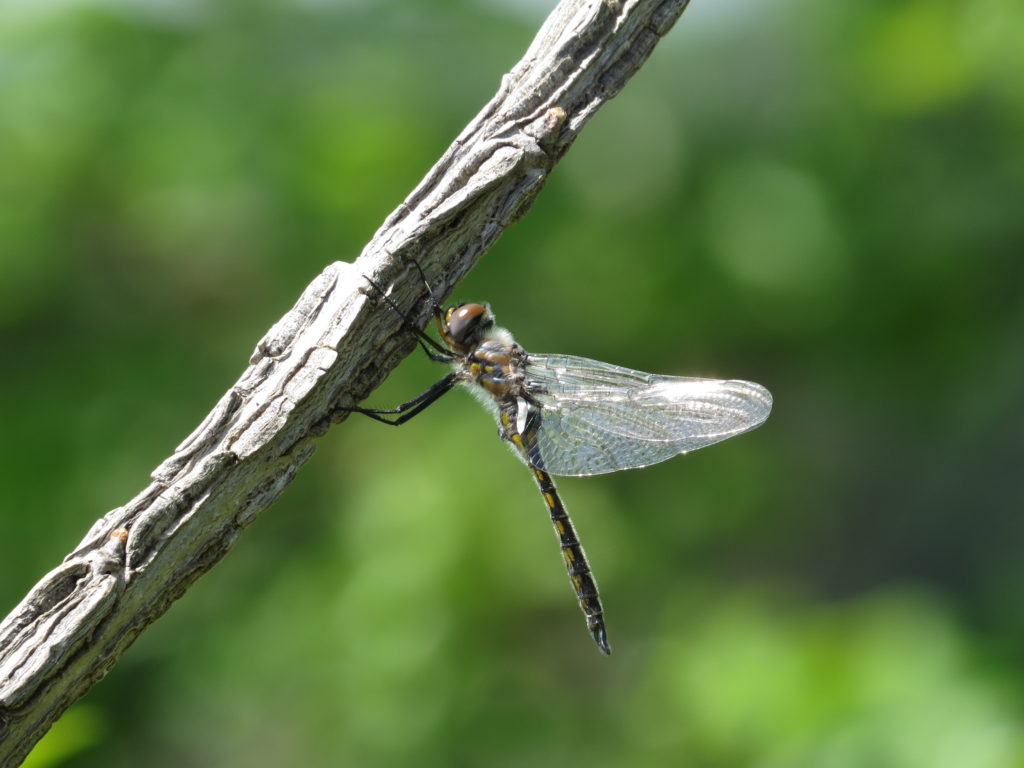
Along the edge of the lake on the shrubs and trees, when we looked closely, were thousands and thousands of dragonflies climbing and sunning and drying. When we walked by, a swirling frenzy of flying circled our heads until they once again settled on the branches. Practice flights to ready them for their short adult life of only weeks. Once they are ready, the fairy-like flyers are graceful and powerful. They can hover in the air and fly in all six directions as they capture mosquitoes and flies for their food.
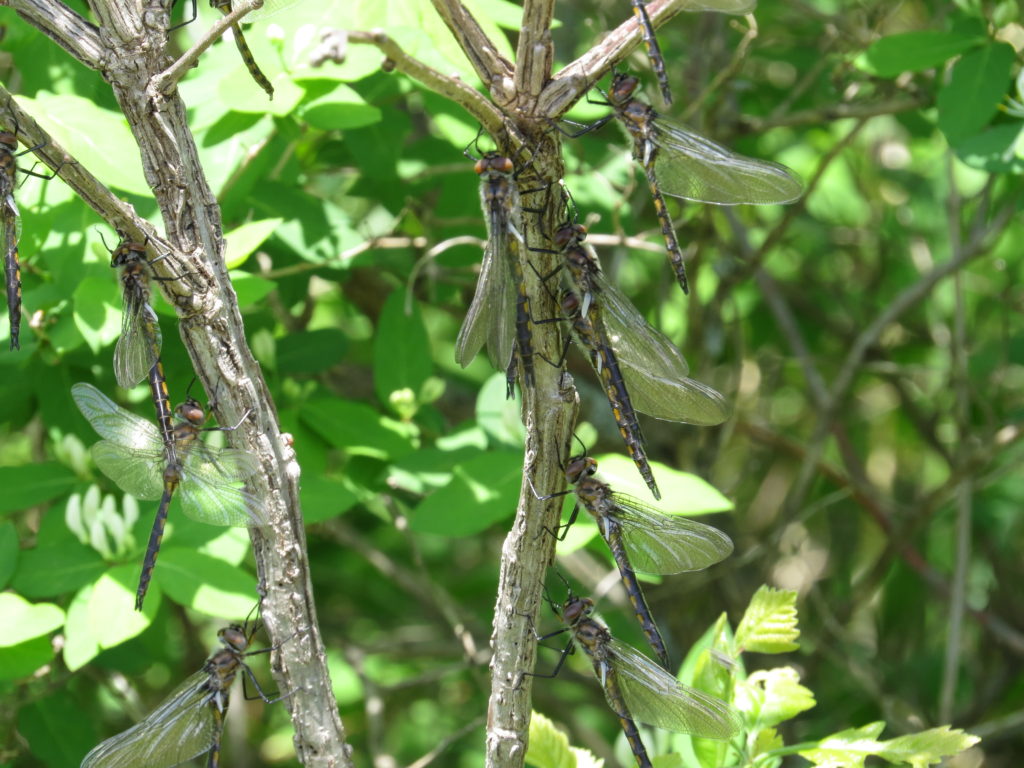
Flying dreams represent having our own personal power, a new perspective, spiritual connection, and freedom—freedom of expression and possibilities, and hope. Dragonflies represent transformation, adaptability, joy, wisdom, and illumination. Flying dreams release us from our perceived limitations; we break free from those things that tether us to earth, that hold us down. I love how our dreaming minds can give us a sense of freedom, power, and joy—a flight map for ‘awake’ life. The dragonflies have a vulnerable time—when their new, soft bodies are susceptible to weather and predators. They need time to settle into their bodies, to ‘harden’ their vulnerabilities, and to feel and know the intrinsic power of their wings. We all go through vulnerable times in our lives. What is most helpful to you during those times? Some are culturally vulnerable, when the walk to freedom is long and difficult, when history tethers them down with invisible ties, and when breaking free of those ties is thwarted at most every turn. We all need flying dreams. We all deserve flying dreams, and we deserve powerful, grace-full people to model, mentor, and mediate a flight map to freedom, power, and joy. Love is the key.
Rubbing Elbows with Trees
The first time I mowed the grass at our new place was a little over three weeks ago. It takes awhile to get to know the lawn—how to mow in the most efficient way, where there may be roots sticking up that may impact the blades, which parts are weedy versus lush and long. I like mowing. It may be monotonous in a way, but it feels more like meditation to me—my body moves in habitual ways, the sun warms me, the breeze slides over my skin, and my mind can go wherever it needs to go. And then when I’m all finished, ‘the lawn looks good mowed,’ as Chris or I will say.
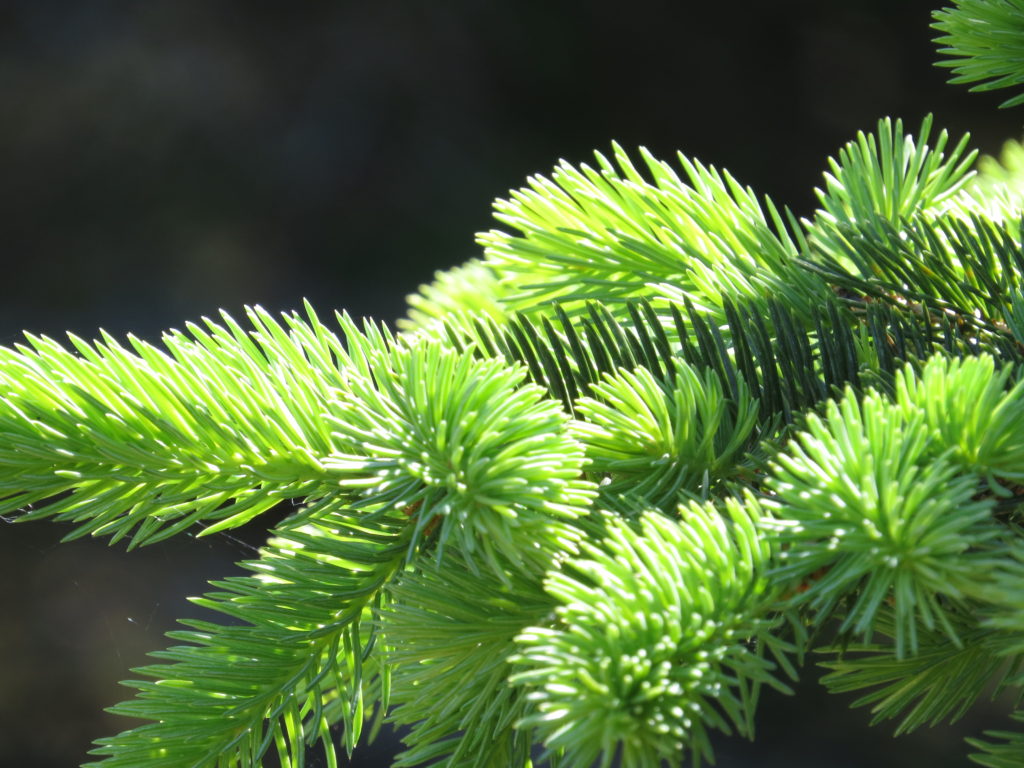
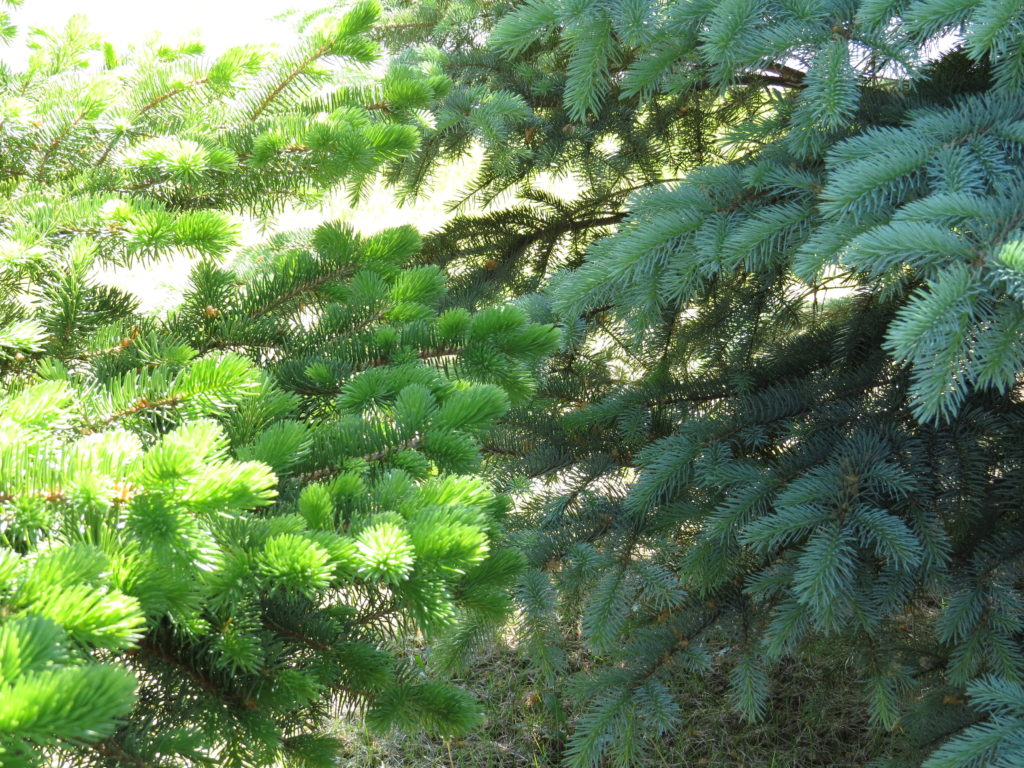
This place has many more evergreen trees to mow around than we’ve ever had, and it was not long before I realized that I was literally rubbing elbows with trees. As soon as that thought entered my mind, I affirmed that I was happy to rub elbows with trees! At this time of year, the new growth is soft and brightly-colored. The Green Spruces have opulent lime green extensions reaching out at various heights.
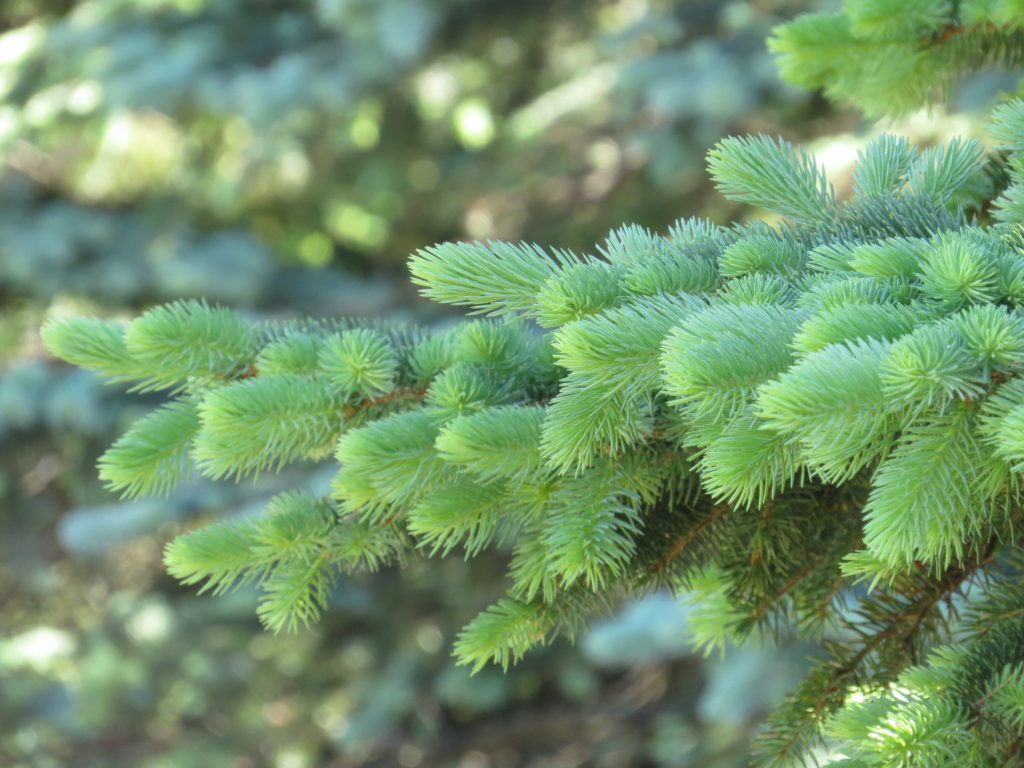
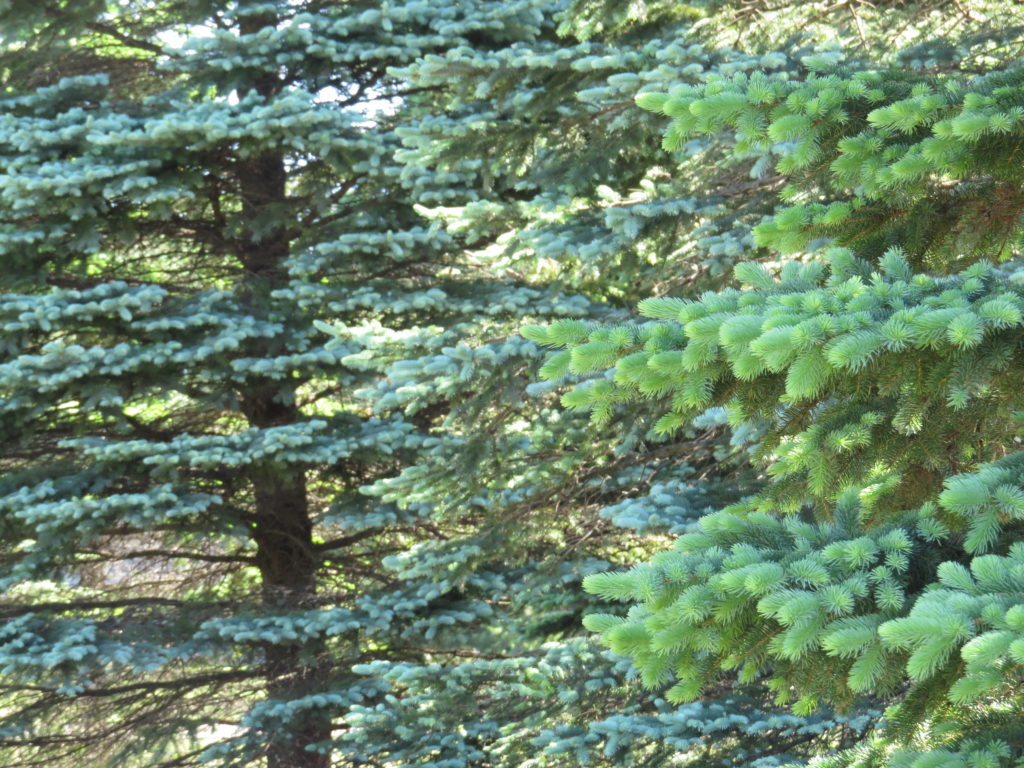
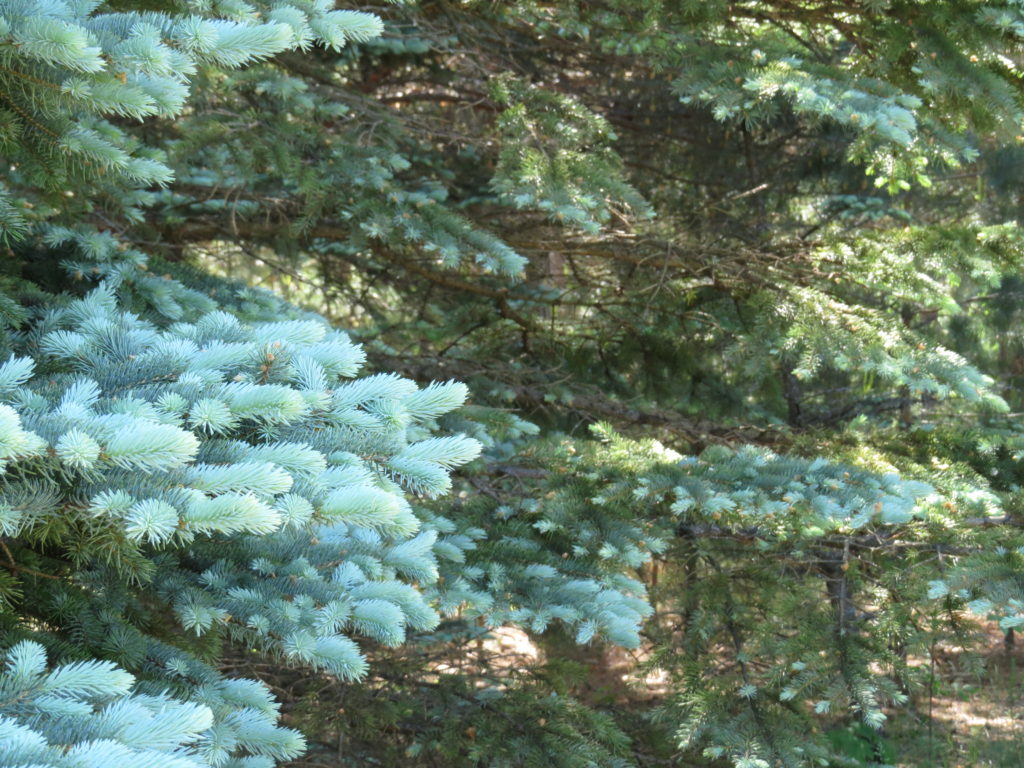
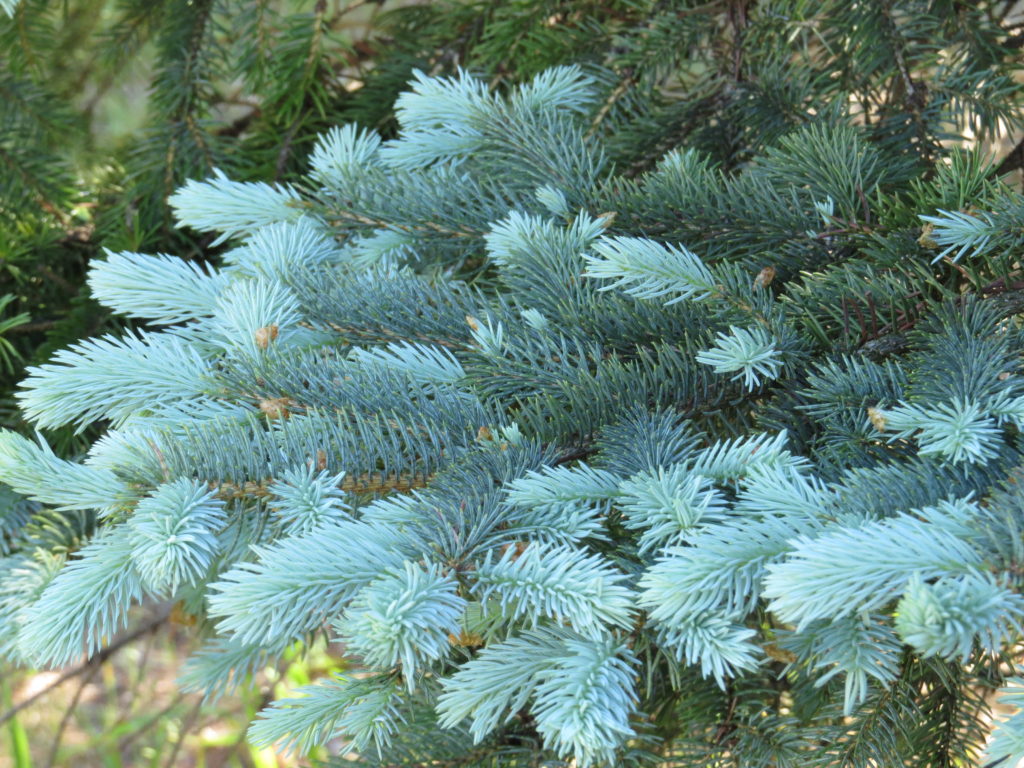
The distinguished Colorado Blue Spruces have light blue-green branches of tender new growth, like melt-in-your-mouth mints of candy confection.
Each time I mowed close to the trees, the lavish fragrance of a fresh-cut Christmas tree filled my nostrils.
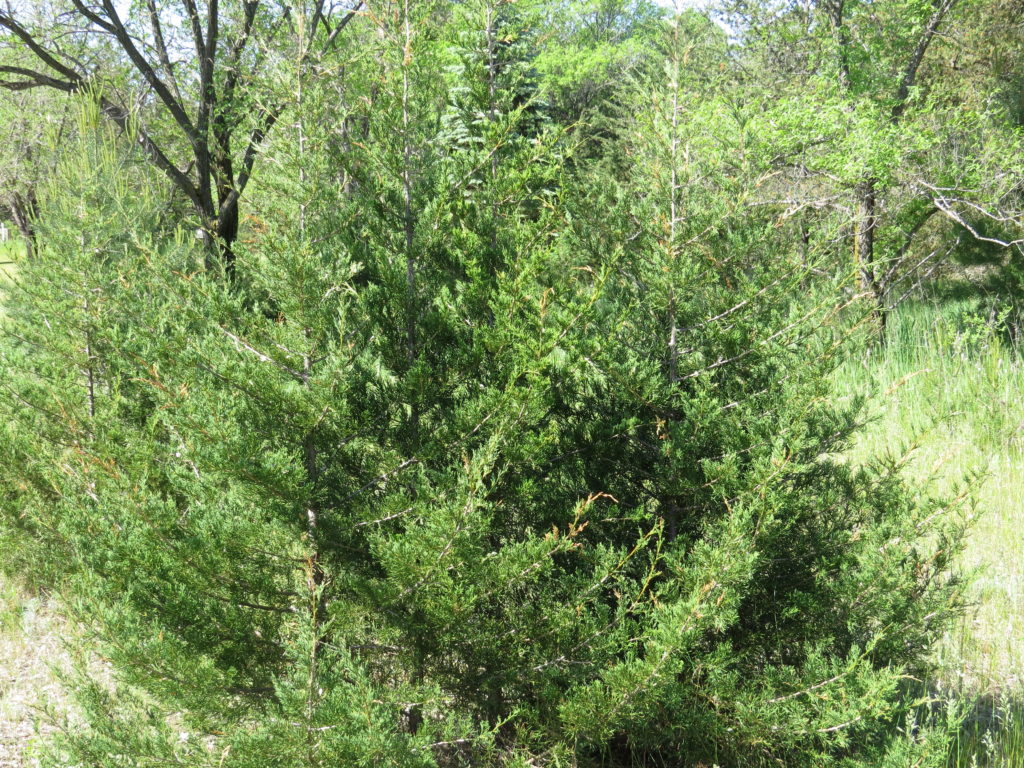
A quad of Red Cedar trees grows close together, like school girls on the school yard with their arms linked, elbow to elbow—wealthy in friendship.
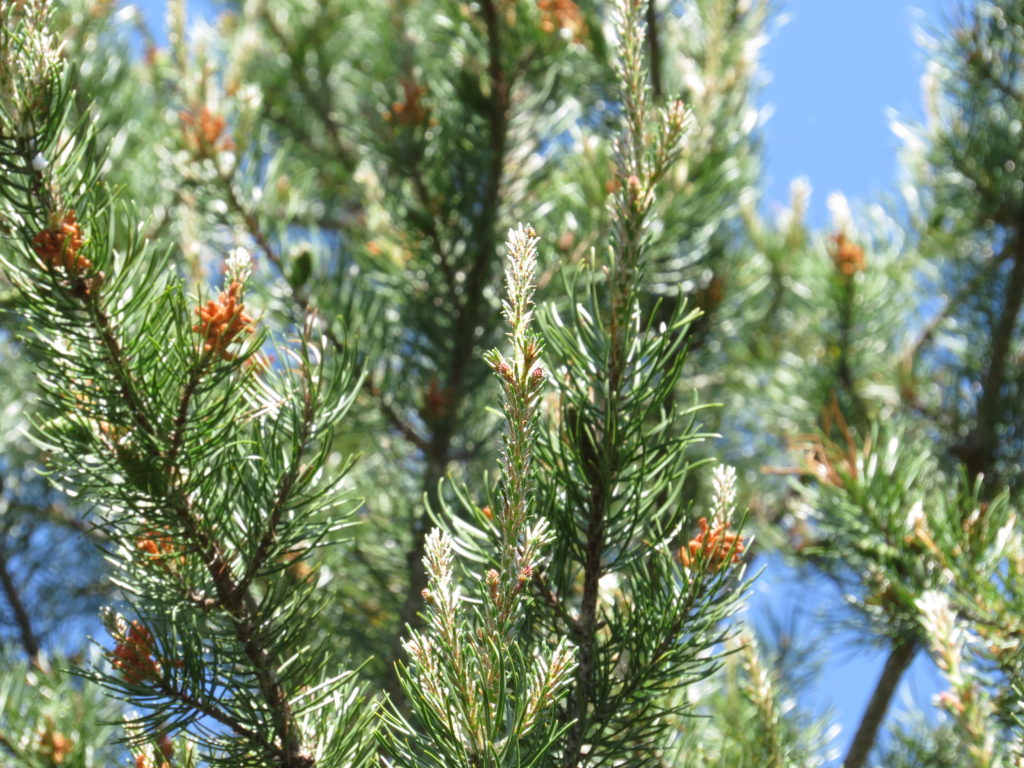
The prominent new growth of Spruces, Firs, and Pines is called ‘candles,’ which are most ‘candle-like’ on Pines. This once-a-year growth adds an abundance of new needles that unfold and harden off by early summer.
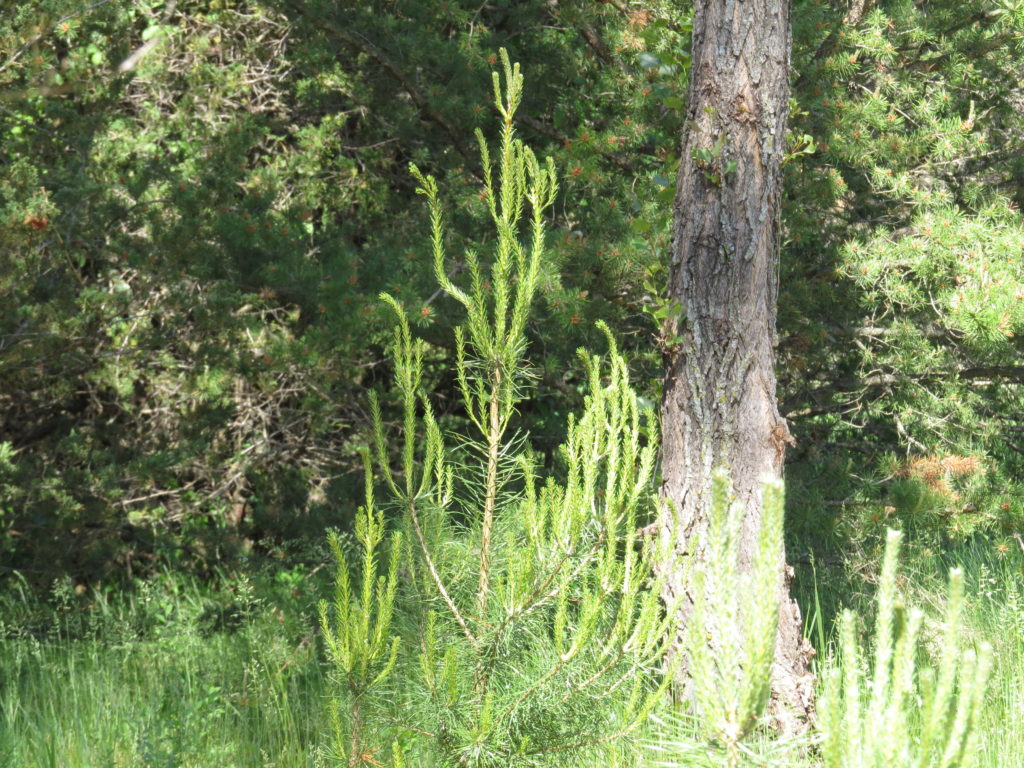
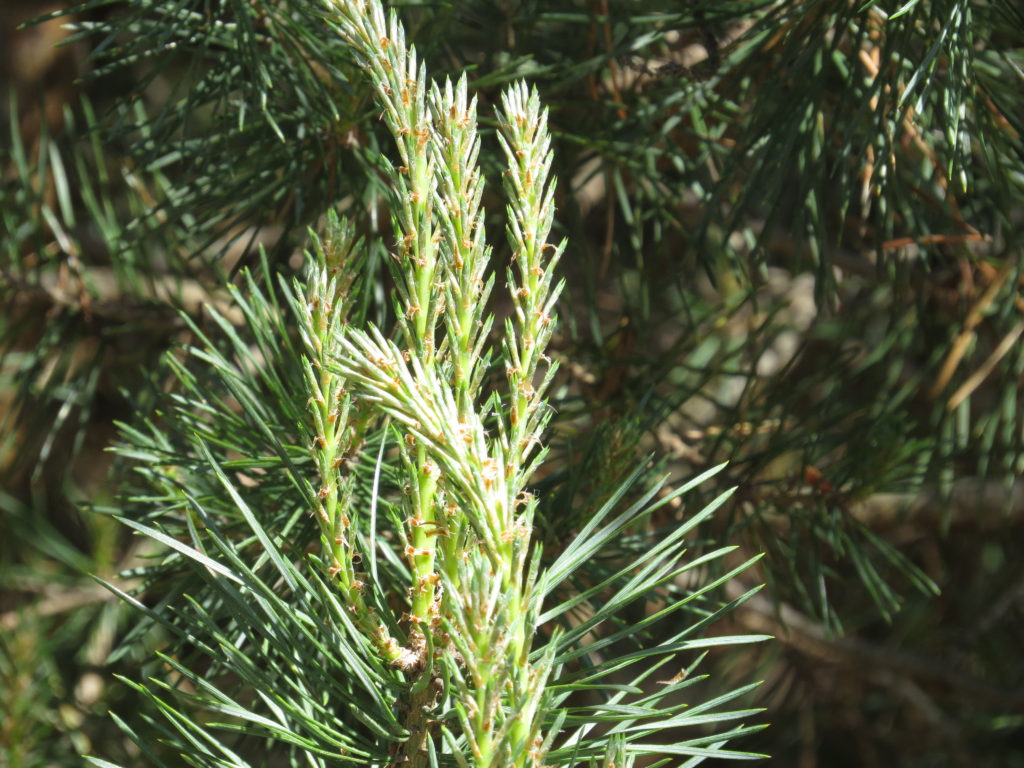
I love how the candles all point to the beautiful blue sky.
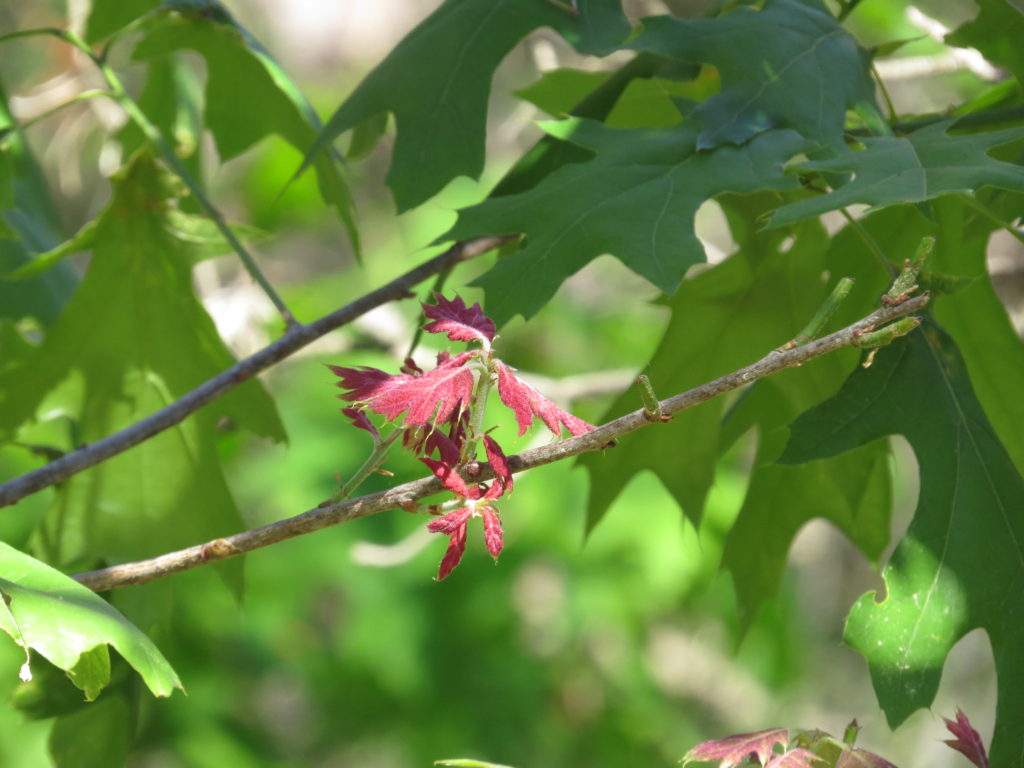
Rubbing elbows with eminent Oaks happens when they are young adolescents, when the branches are thin and pliable. The new, tender leaves are at the right height for grazing deer to munch on. If it happens early enough in the season, the tree will put out a new shoot of growth to ‘fill in’ where the deer removed the foliage.
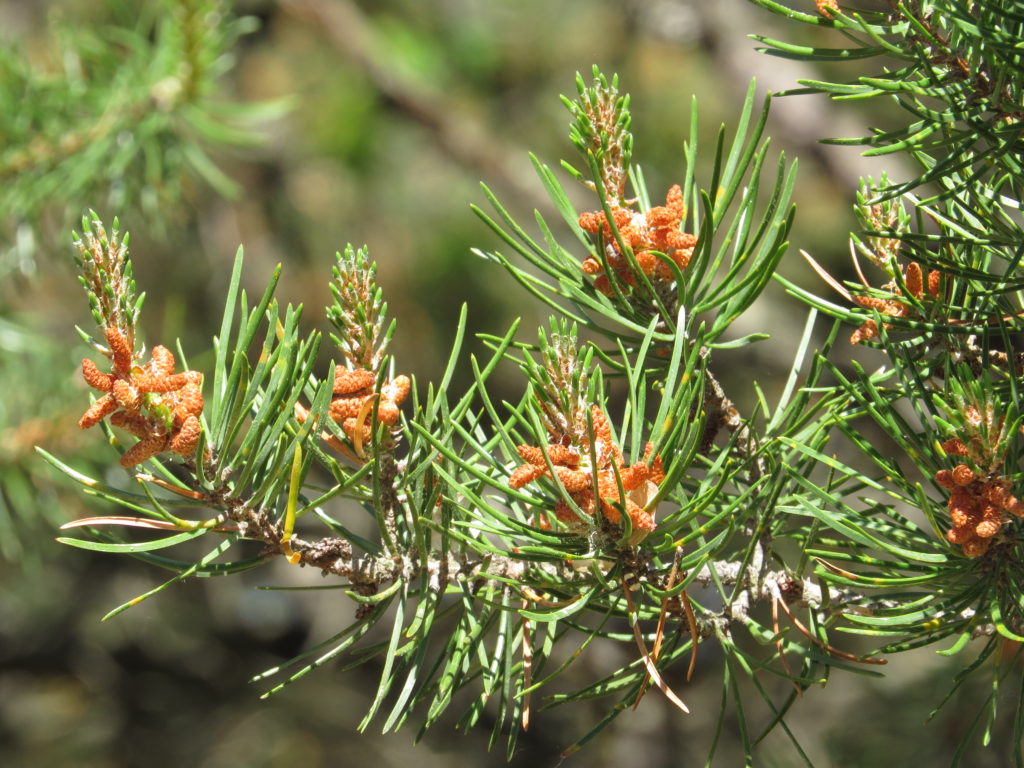
Jack Pines are medium-sized conifers that often have crooked trunks and drooping lower branches. The pollen cones are rusty flowers that release a thick yellow pollen in late Spring, like gold drifting from the sky.
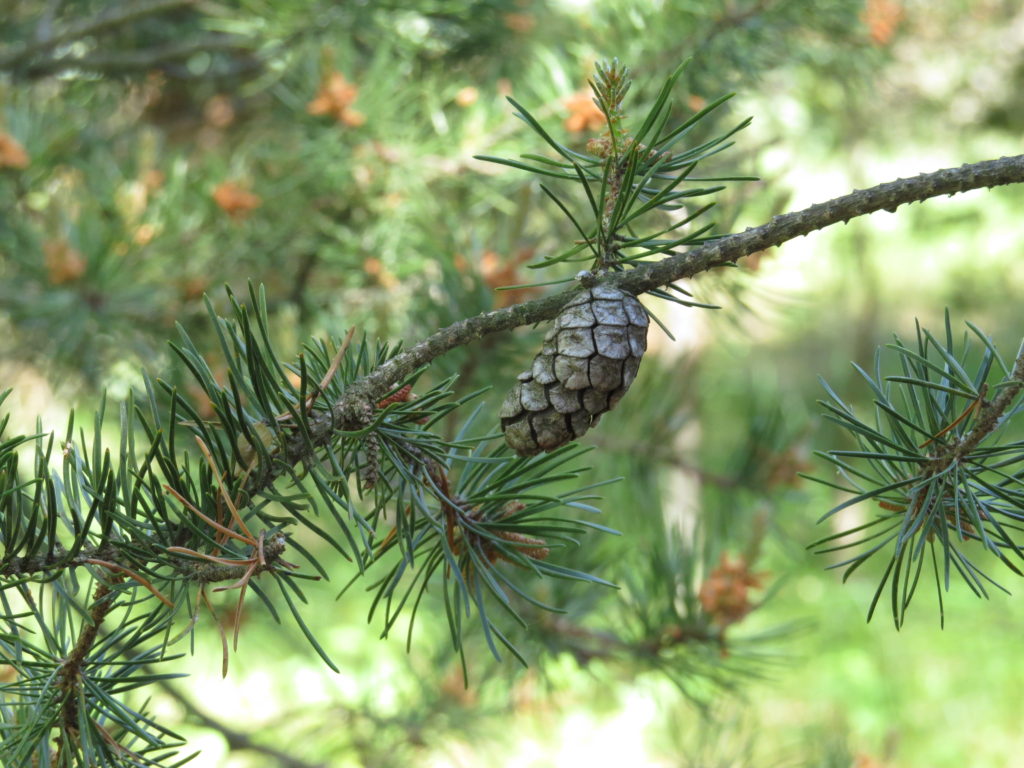
The small, hardy trees are well-adapted to fire. Their cones are ‘serotinous’—sealed with resin that requires high heat to open and liberate the seeds, most often with fire, but high air temperatures can open cones on low branches. One tree can be flush with many old, sealed cones with seeds that remain viable for years.
‘Rubbing elbows’ means to associate or socialize with someone—usually someone who is rich, famous, or special in a similar way. The President, who is most certainly all of the above, recently tweeted about some former cabinet members, “They all want to come back for a piece of the limelight.”
I prefer a piece of the sunlight that shines on us all, the wealth of blue sky for anyone who looks up, the abundance of beautiful trees affluent in life-giving oxygen. I want to rub elbows with creations that affirm life and liberty for all other creations of all sizes and colors. I want to link arms with living beings that are compelled to grow and change and whose trajectory is towards the light. Sometimes new growth and change come from the heat and passion and destruction of the old order, the ‘serotinous,’ unopened systems that protect the status quo. Public attention is widening. Illumination is happening. The new seeds are waiting.
Listen to the Pain, Find the Peace
I know what distress is. I have experienced the long-standing fear of being killed. It feels like constantly carrying a boulder on your back; it weighs down your body and your soul and muddles your thinking. Every step of ‘normal’ life is hard, amplified by the weight of that boulder.
It has been a distressing week in Minnesota. How can it be that it was just Monday when George Floyd was killed? Time does weird things when extreme pain and sorrow run the show. A shocking event breaks down the fabric of normal life—like a terrifying trauma did when I was little, like the coronavirus pandemic did just a few months ago, like the death of George Floyd did on Monday as it ripped apart the ‘new normal’ we had constructed from the pandemic. The only thing worse than carrying one boulder on your back is carrying many.
Strangely, after the initial shock of it, I felt like this was exactly what should be happening at this time—not his horrific death, but the uprising of pain and grief that has been building for so many years and for so many reasons. Enough is enough. People want to live. We want to love. We want to work. We want to feed our families. We want dignity and respect. We want some fun and some peace. That’s not too much to ask. So what’s getting in the way of that? Listen with your eyes. Listen with your ears. Listen with your heart. Put yourself in someone else’s pain.
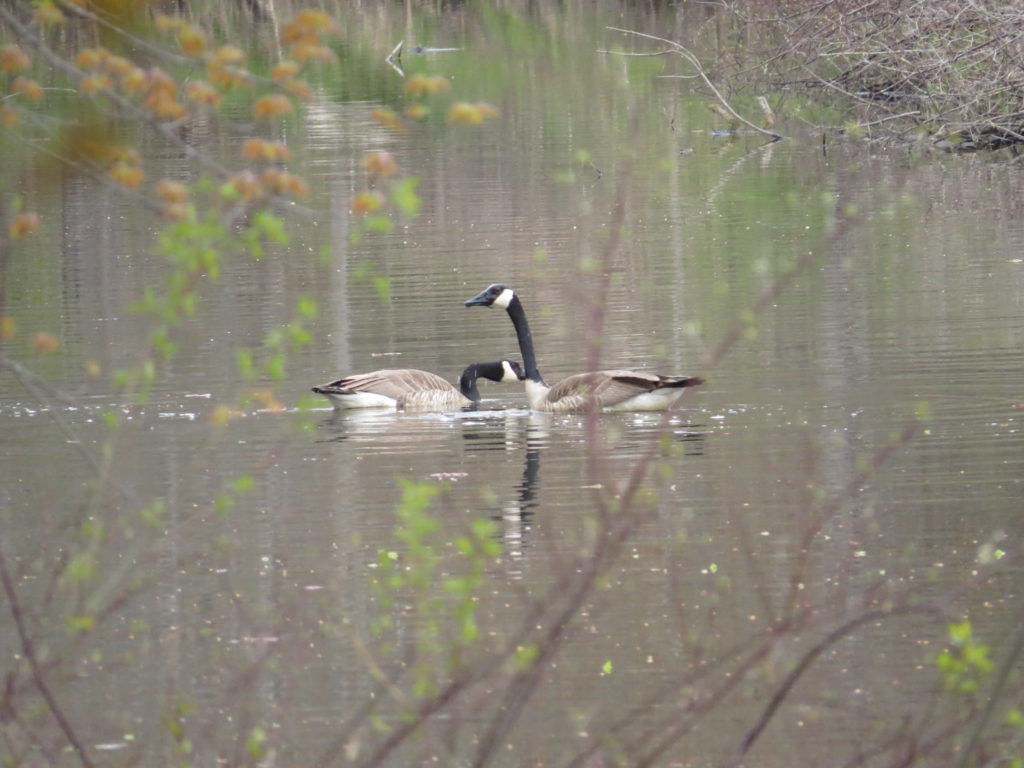
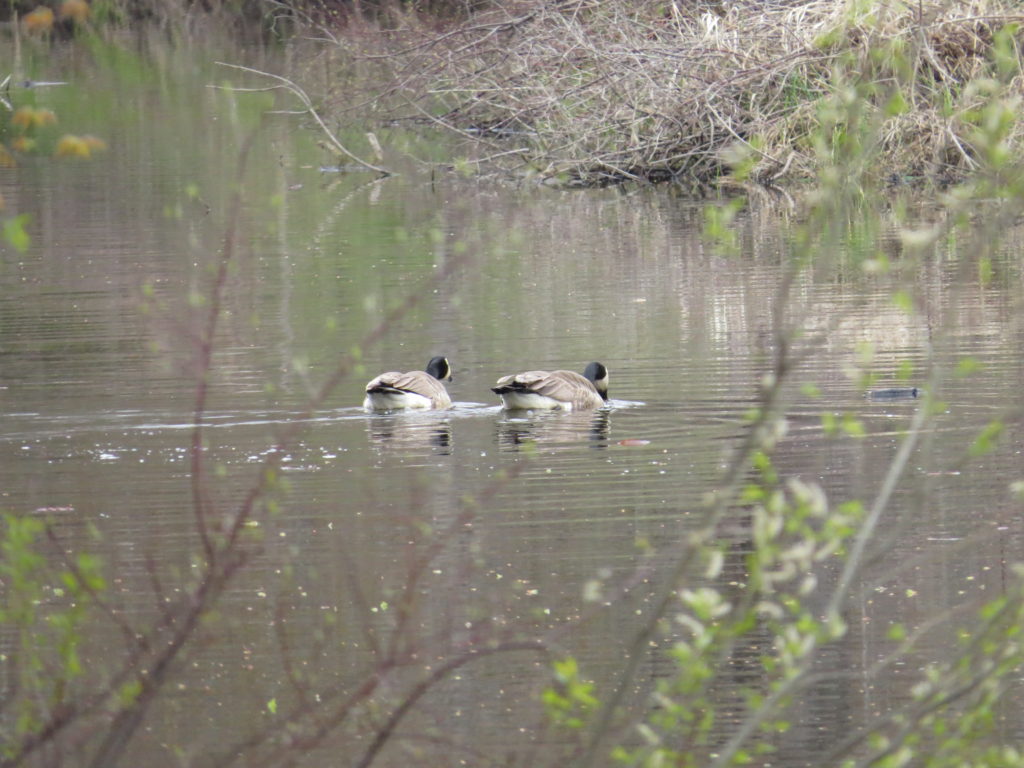
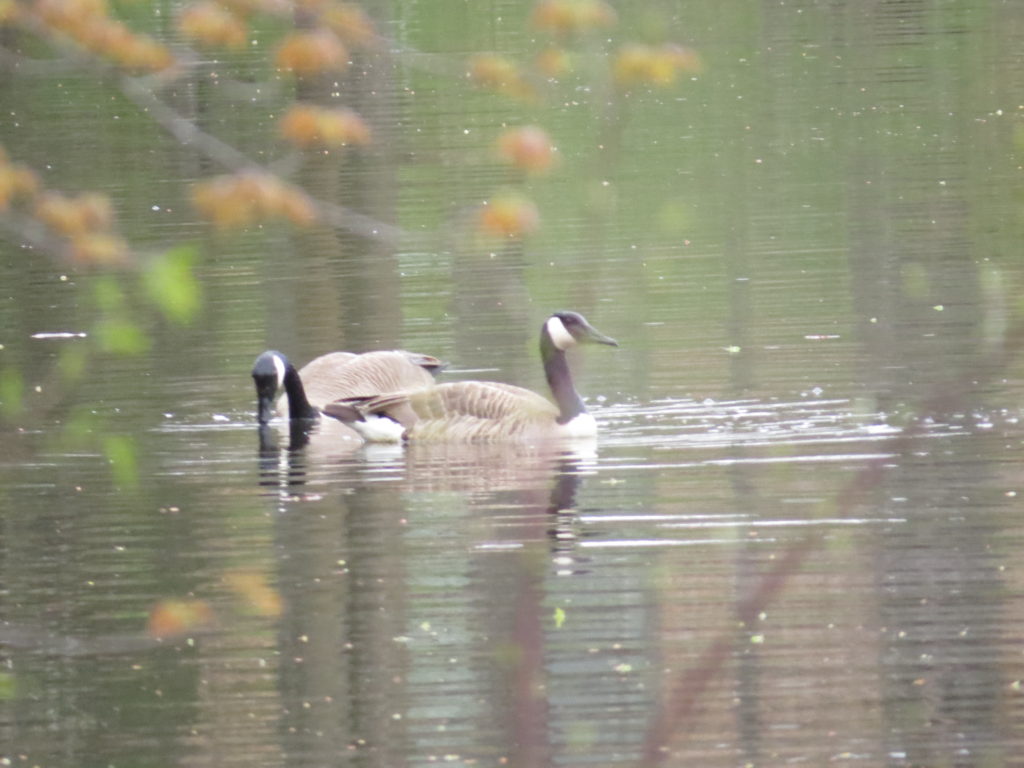
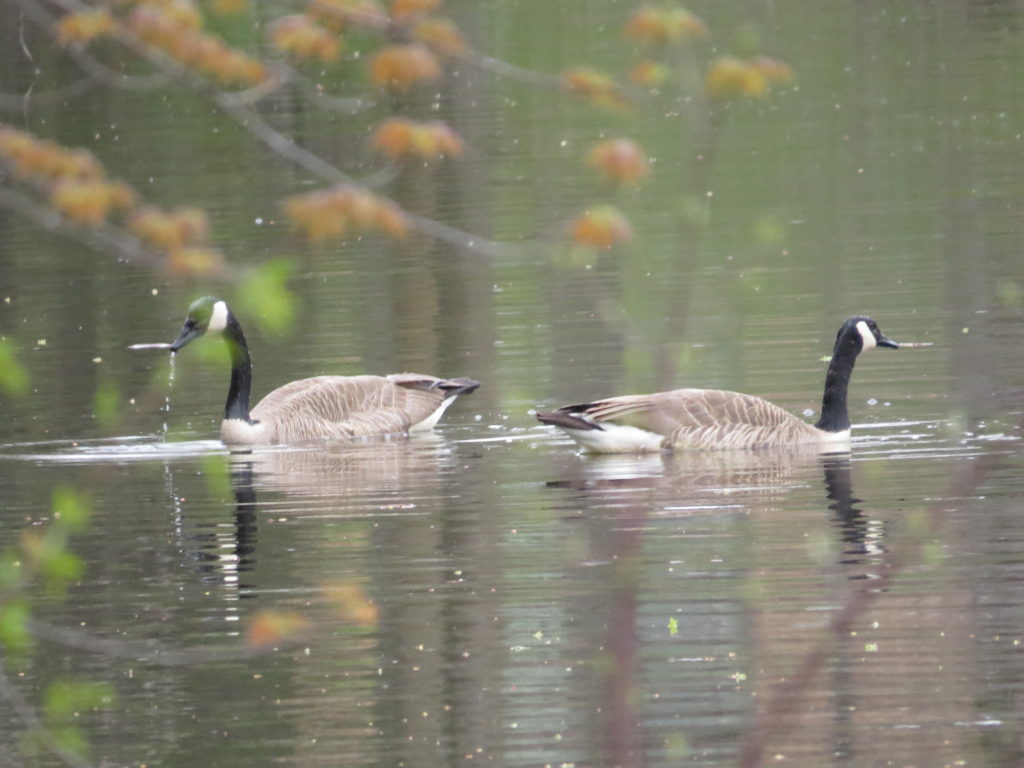
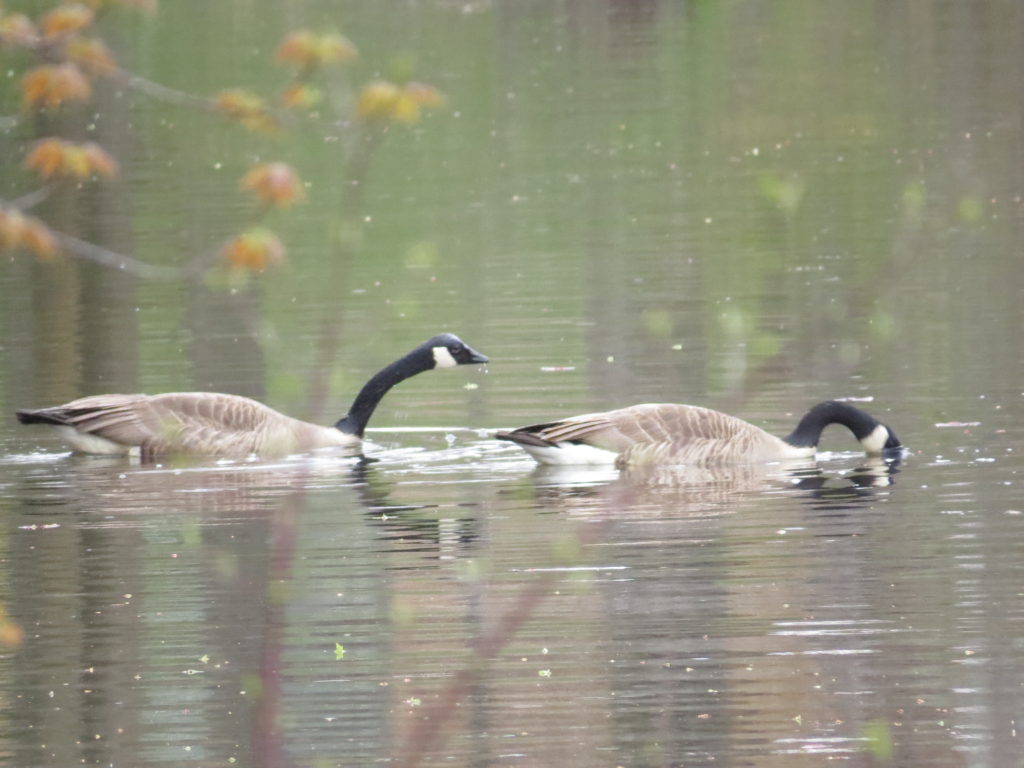
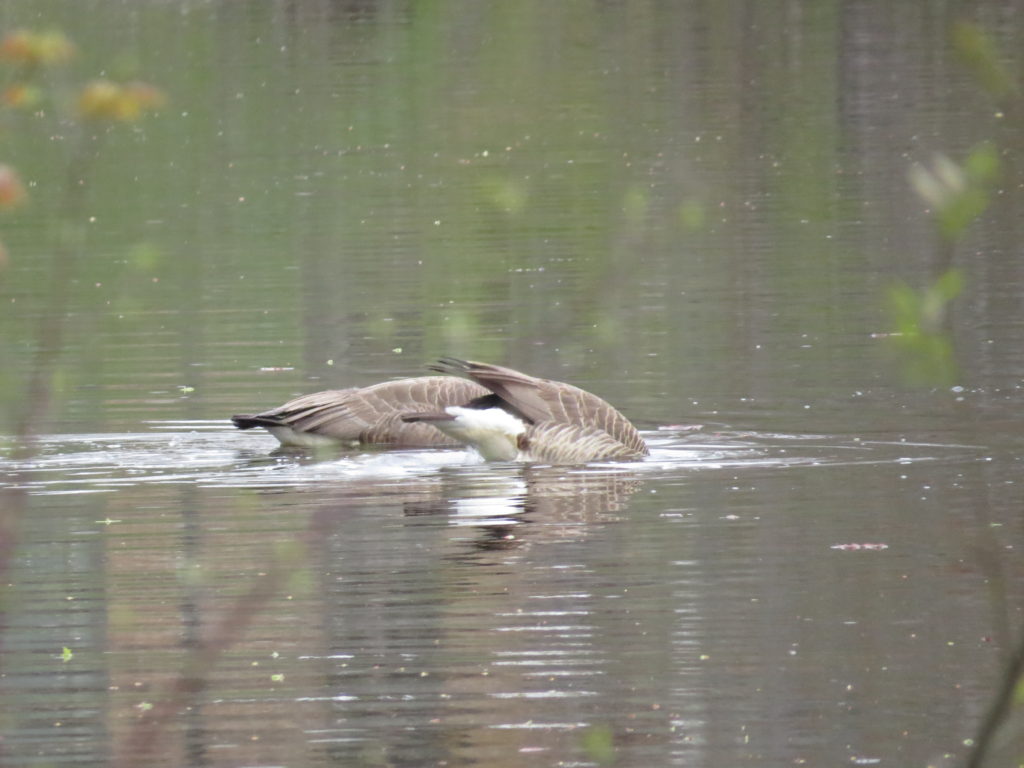
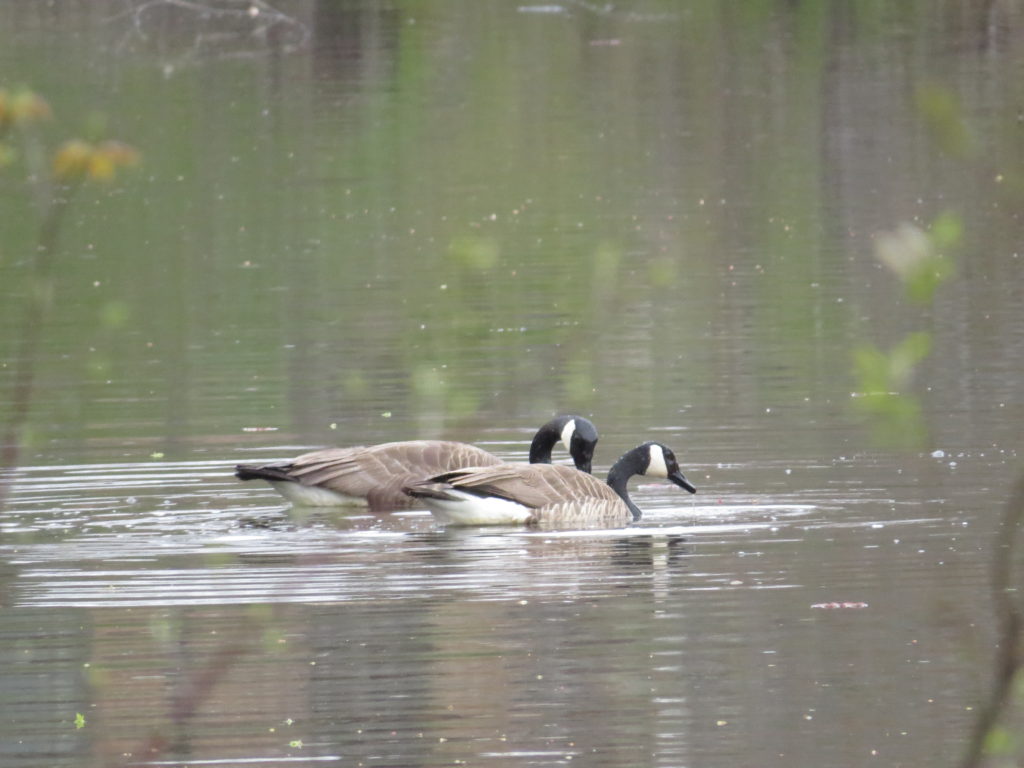
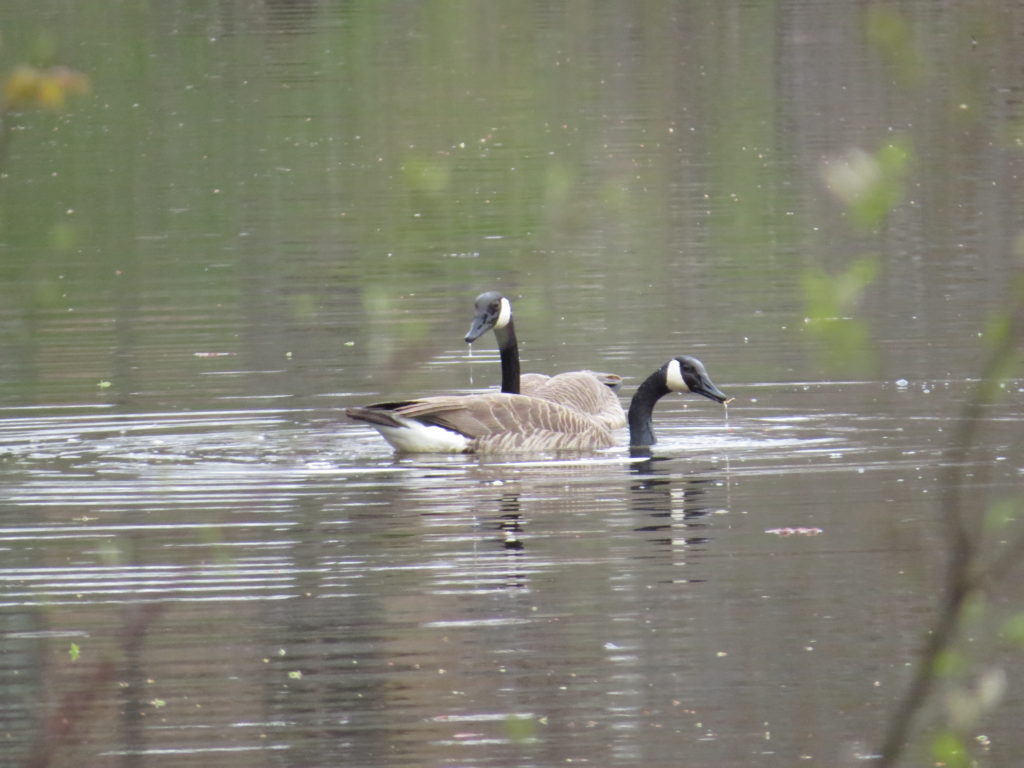
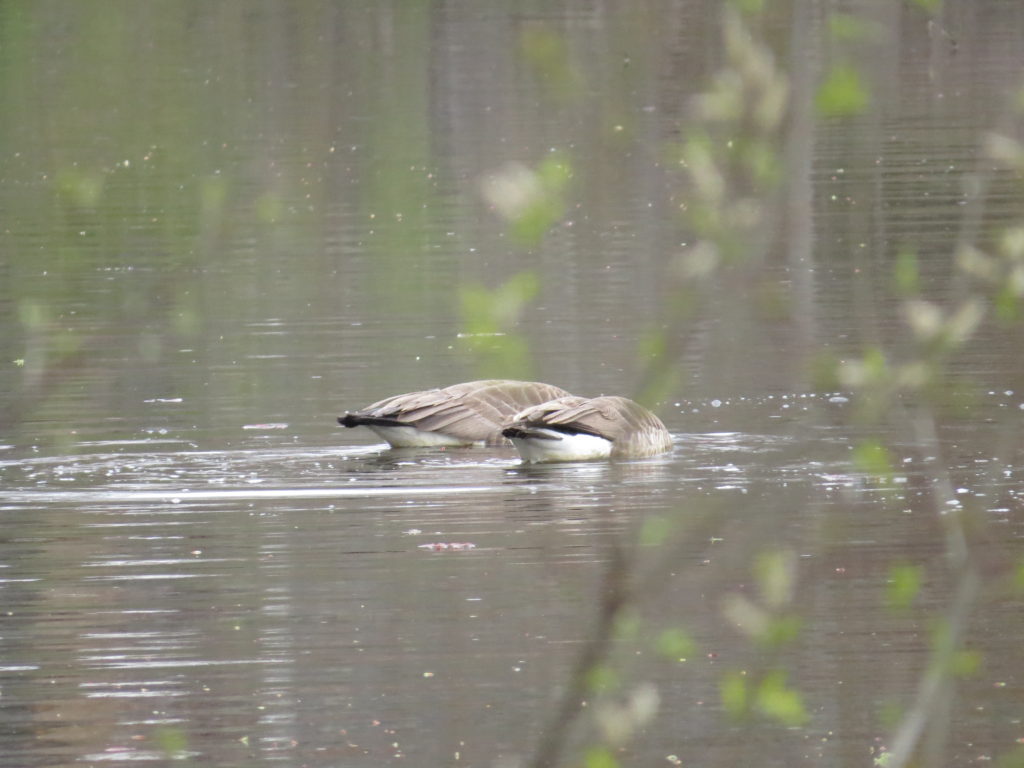
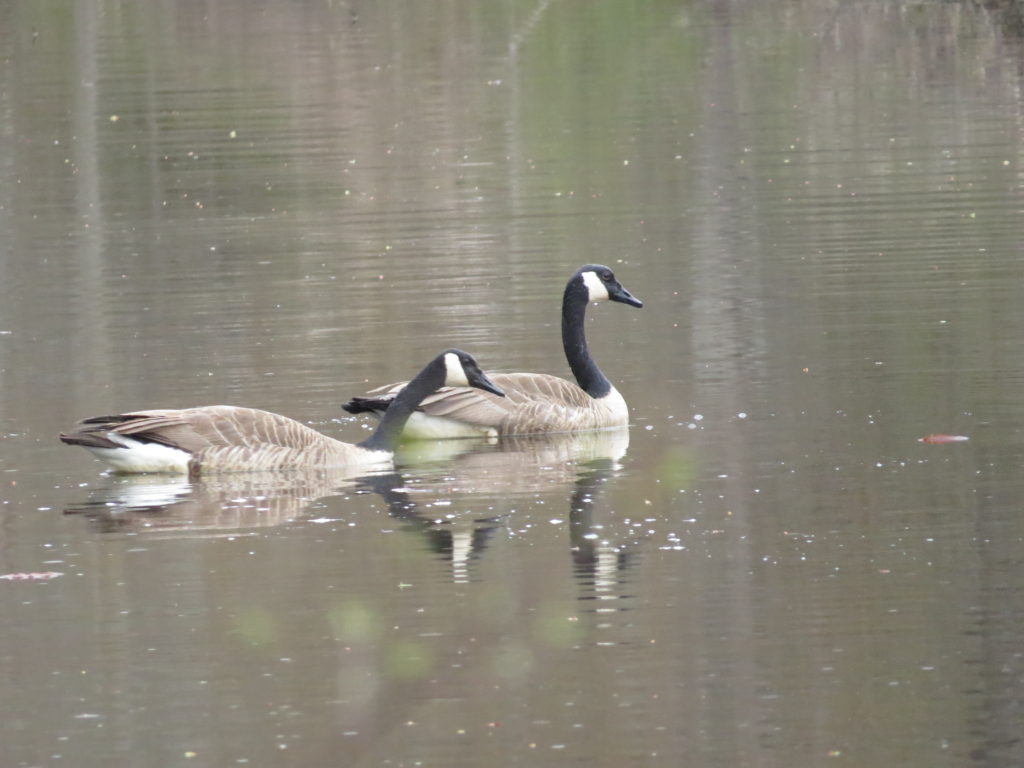
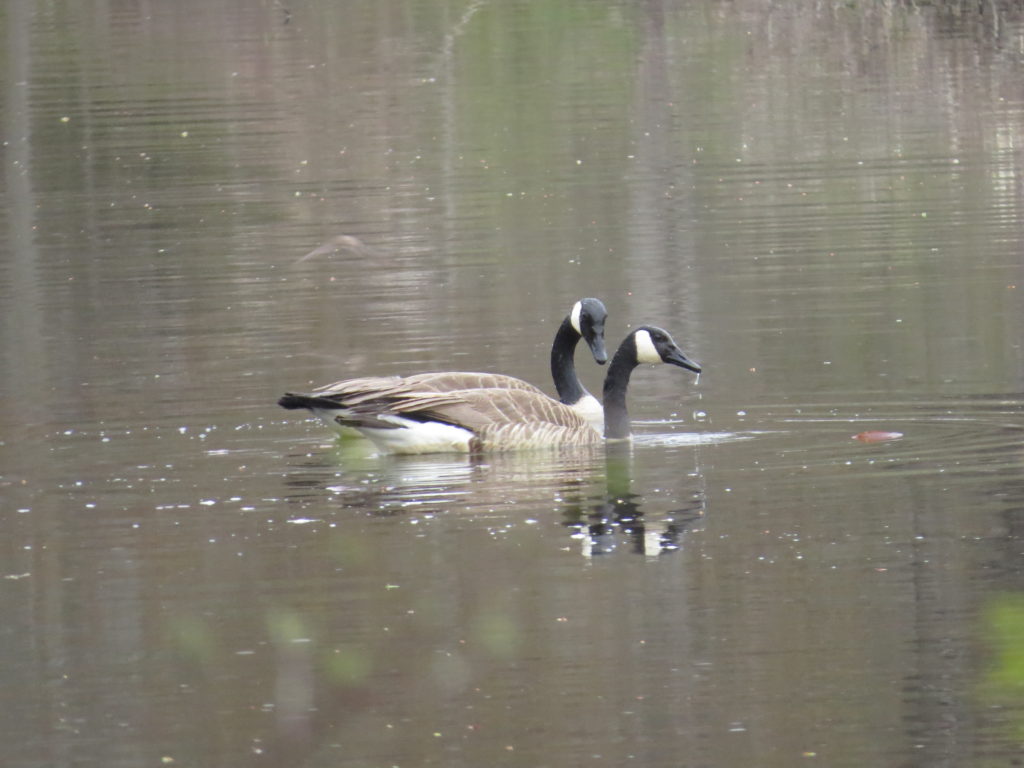
It’s exhausting, I know. Then find some peace, however that looks and feels for each of us. Three weeks ago at Mississippi River County Park, when the flooded peninsula burst into flowers, I saw a pair of Canadian Geese in a slough of the River. They were peacefully swimming and diving for food. Canadian Geese usually mate for life. These two had the look of a long-bonded pair, comfortable in their presence with one another.
Peace be with you all.