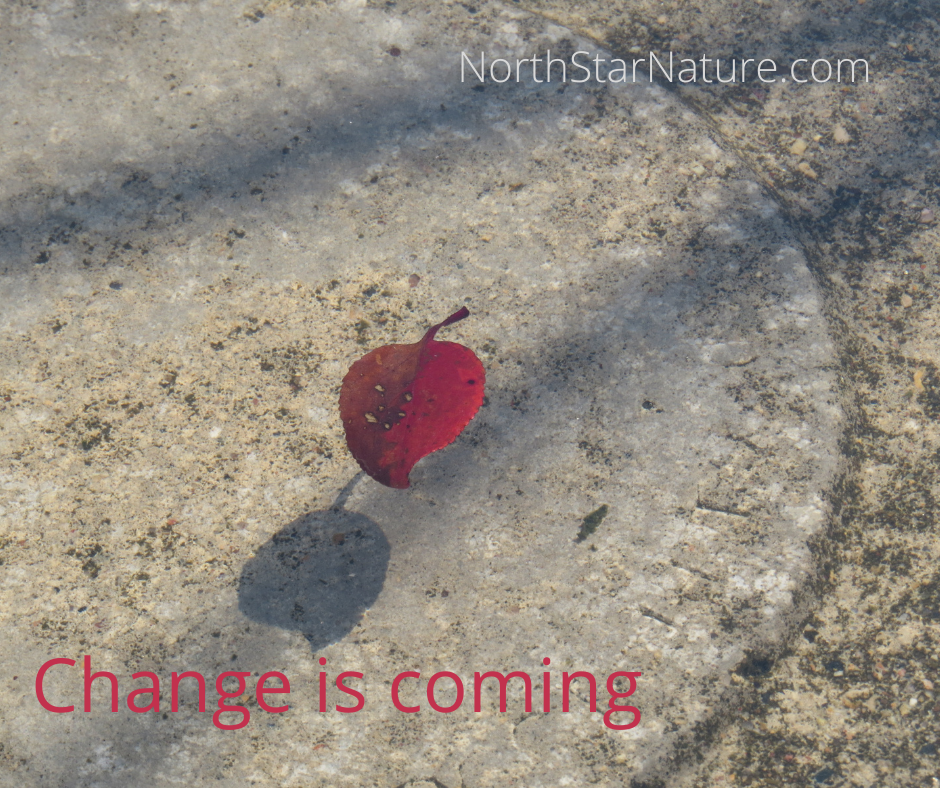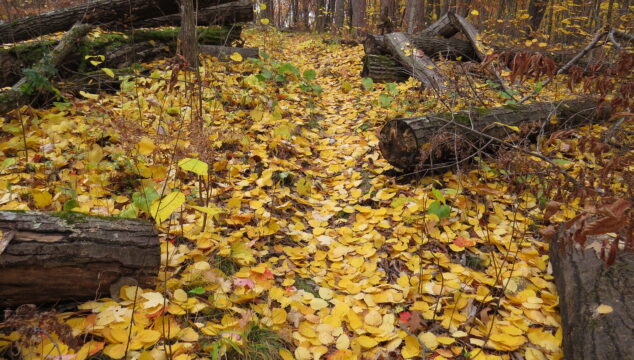
Come walk with me in the peak Autumn beauty of the Northwoods. To say that I love this time of year is an understatement. Most everyone can appreciate the colorful falling leaves---it reveals the 'true self' of a tree when its leaves are no longer producing chlorophyll. Their true colors are revealed, and there is something simple … [Read More...]
Archives for September 2020
Seasons Within a Season
Imagine our lives as Mother Nature sees us—as a part of Nature, a part of Her. We are like the trees, moon, rivers, the prairie, elk, dragonflies, and the sweet apple. We were created as one of them. We have cycles, instincts, reflexes, and a myriad of functions that perform without our conscious will. We are physiological miracles! Our lives are on a trajectory towards death—that’s how it is generally portrayed, that is. Then we do all sorts of things to not think about that end—how do we distract ourselves, hold on to our youth, our old values, our accumulated wealth?
Imagine our life’s trajectory defined as seasons. Whether we view our lifespan as 80 or 100 years, we have completed our Spring season by our early to mid- twenties. Just when we feel we are ‘beginning’ life on our own, we are one-fourth of the way through our journey. We have budded, developed, learned, created, become. Our twenties, thirties, and into our forties are our Summer—productive, vibrant, energetic, full of growth. Summer gets things done.
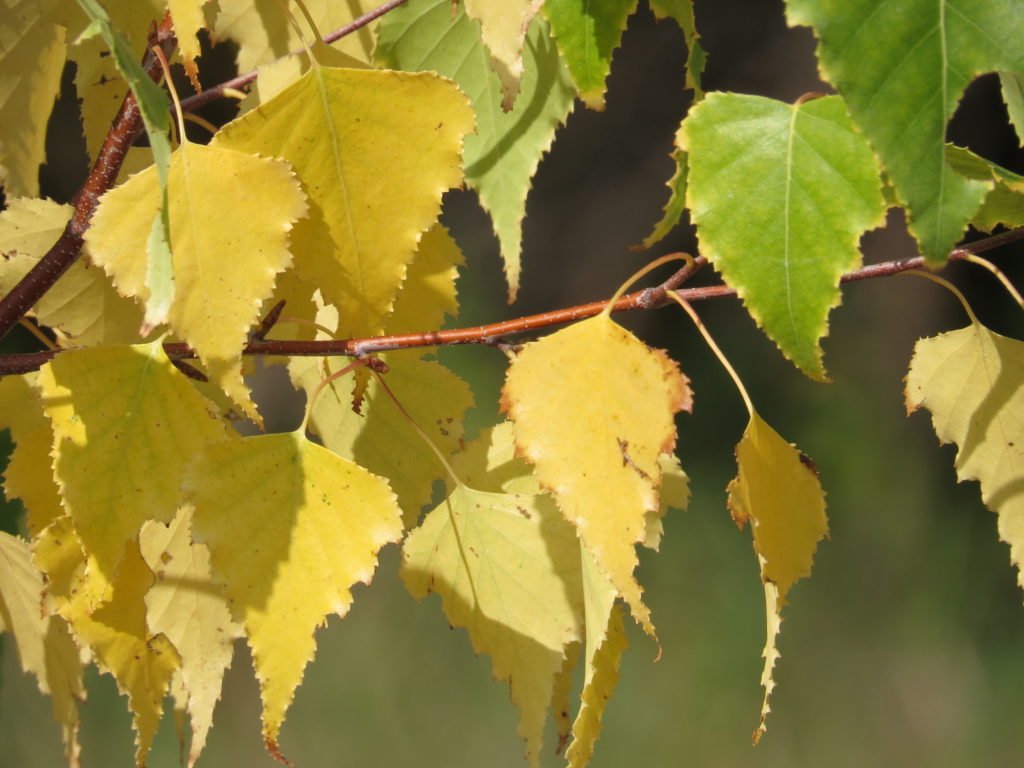
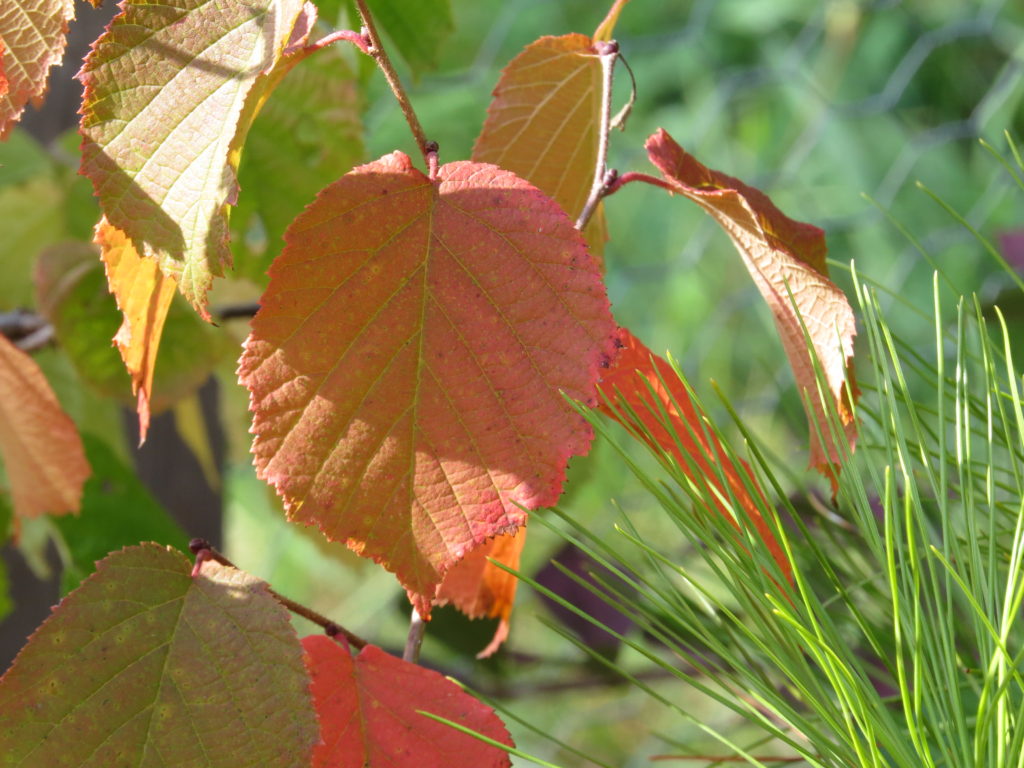
Here we are in Autumn—literally. It is a favorite season for many, a season of harvest, brilliant leaves, campfires, pumpkins, cool weather, and a turn towards the hearthside. A short walk outside my door immersed me in the transition season—it could not be denied. A Birch tree and Hazelnut shrub are showing their colors.
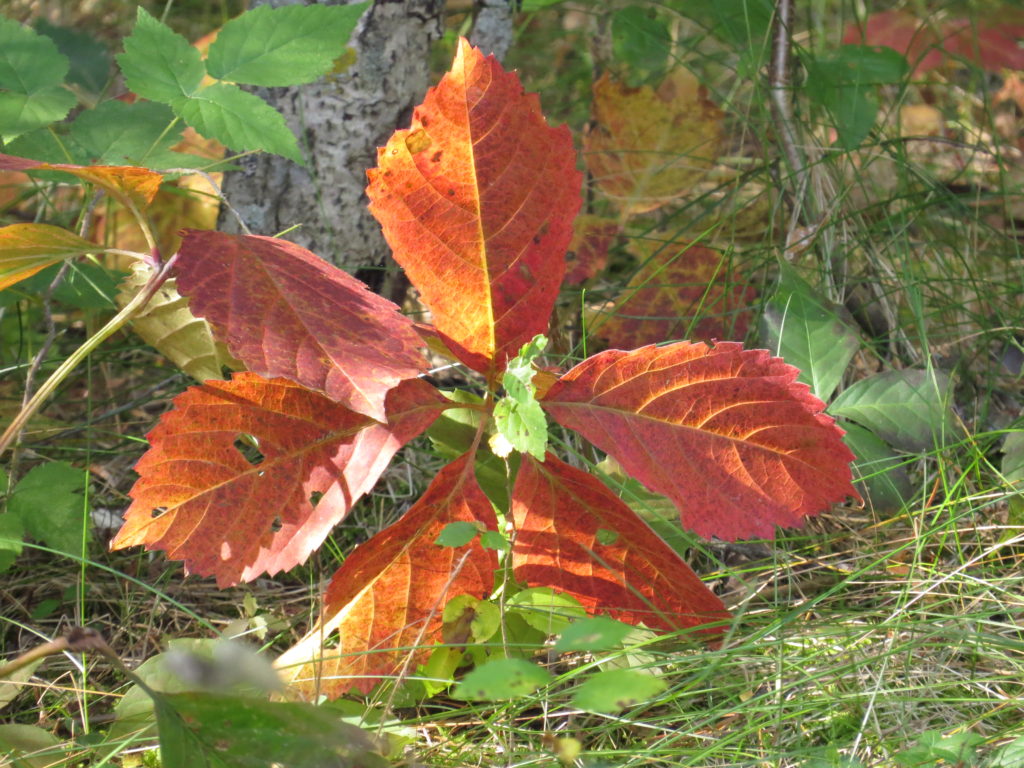
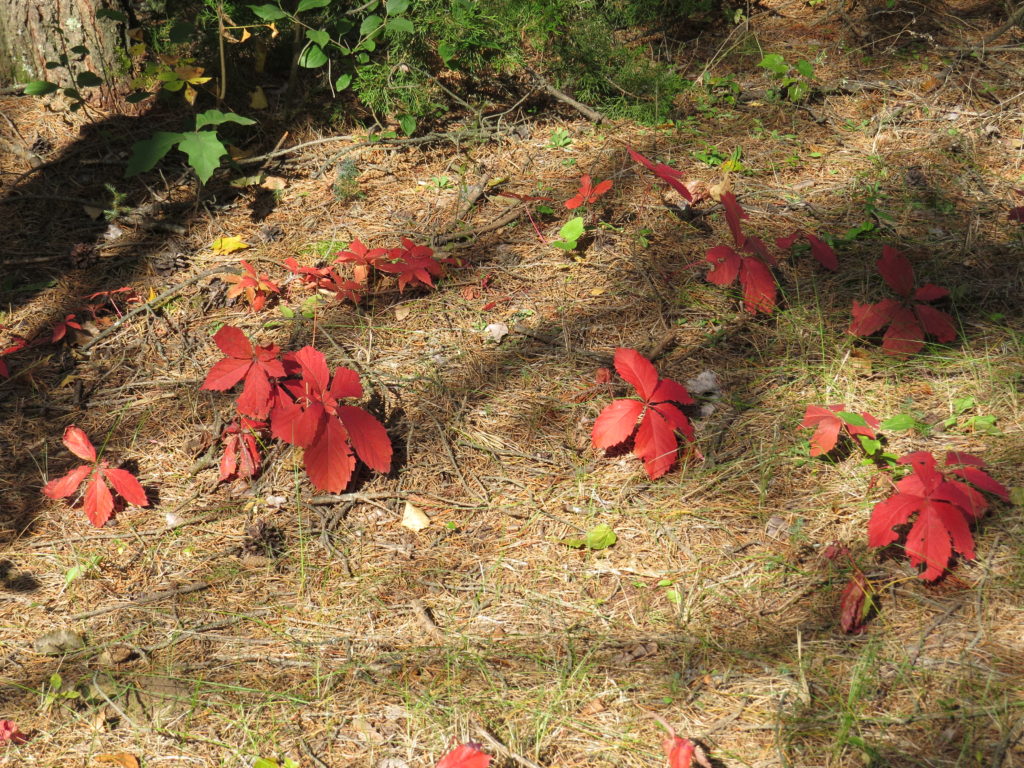
Virginia Creeper vines, once just another green-Summer thing, stand out in brilliant red, and always project a poinsettia-like image of another season to me.
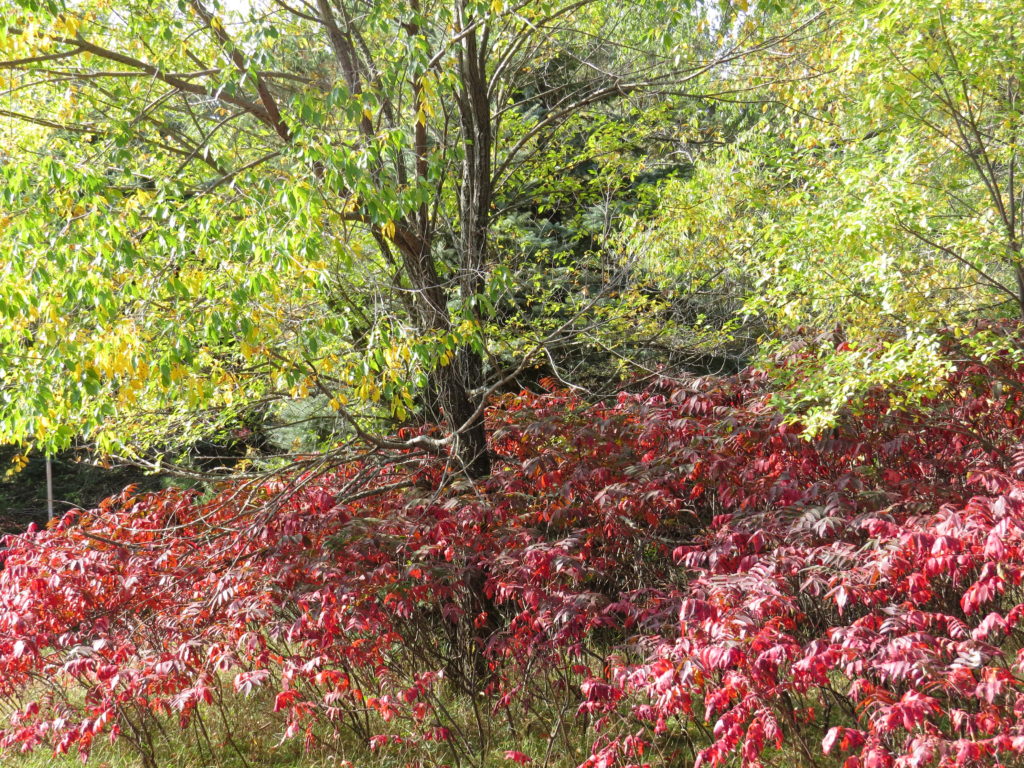
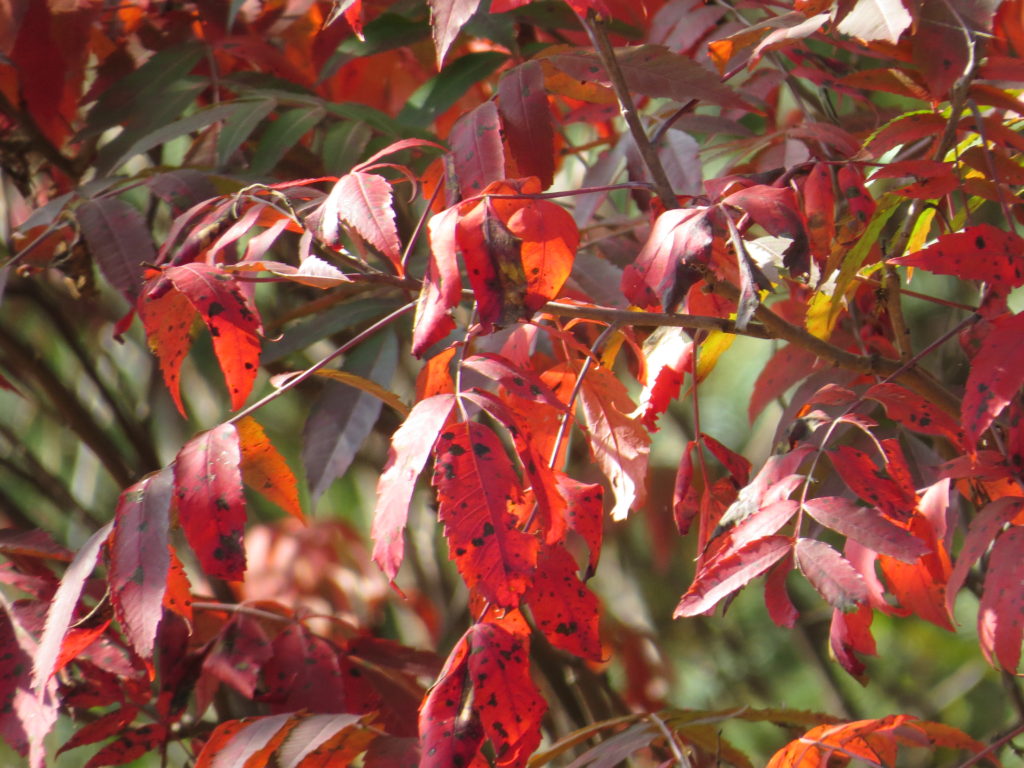
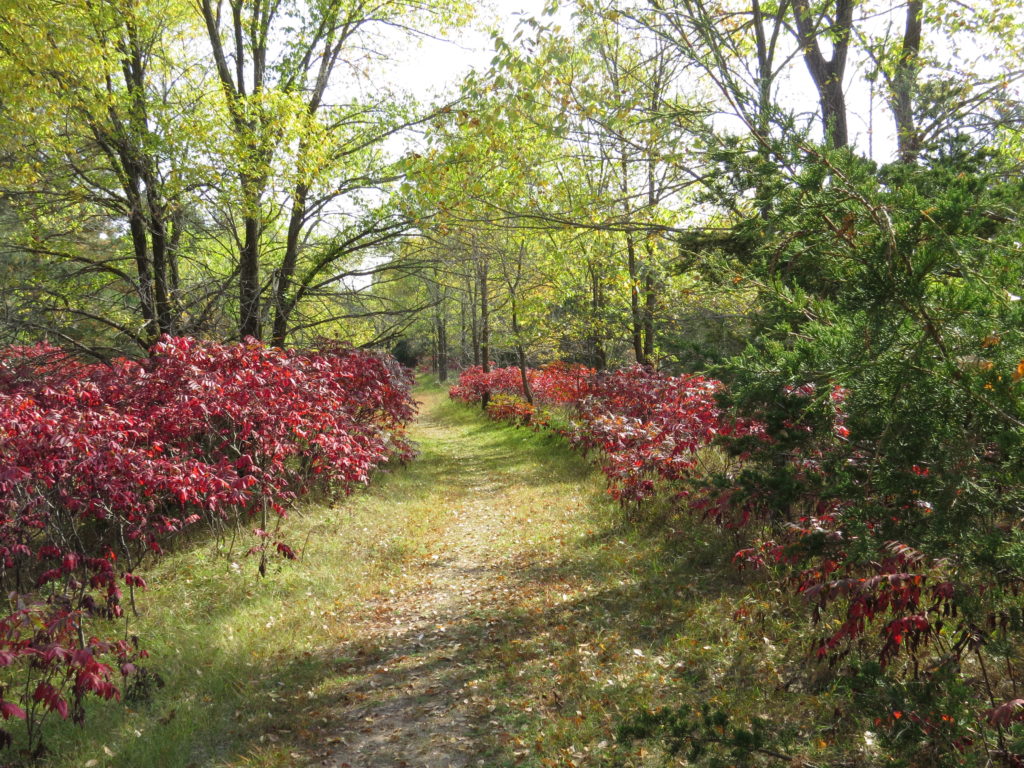
A sweep of Sumac under the yellowing Elms is showing its fiery colors and is being noticed in this Autumn season.
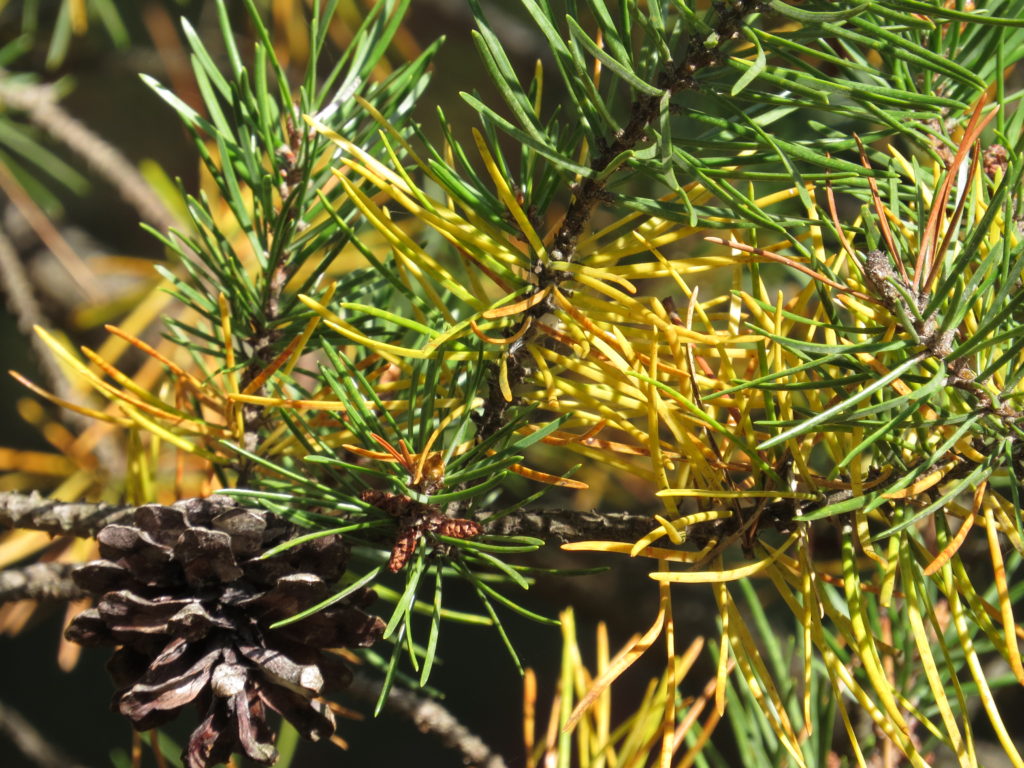
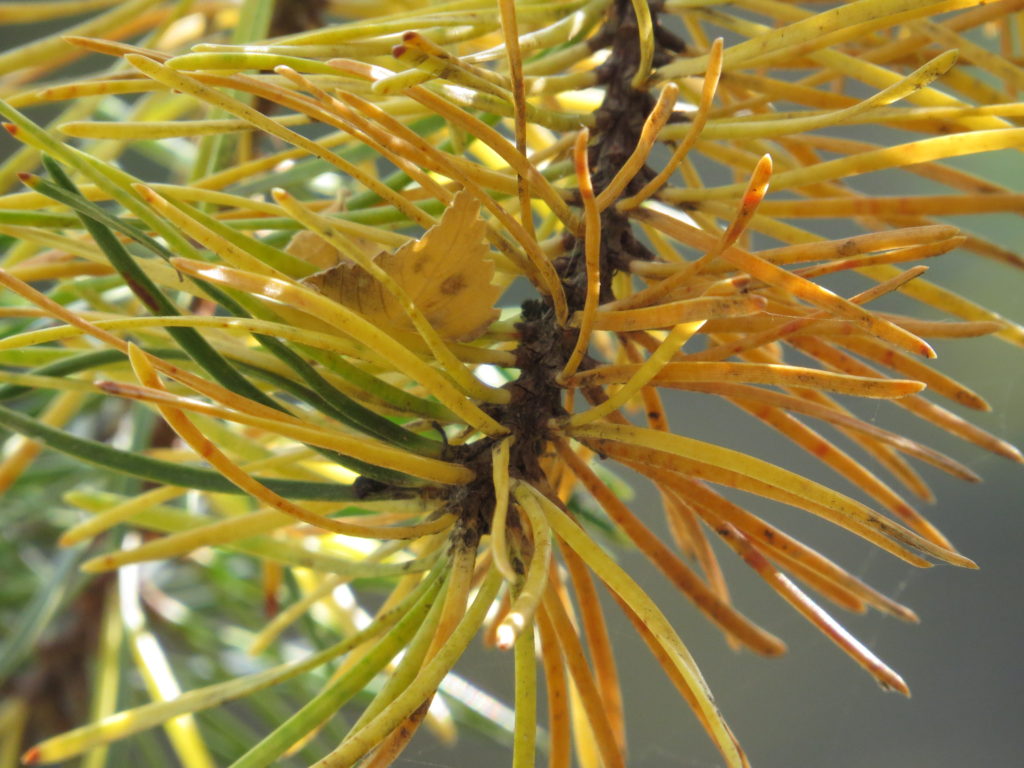
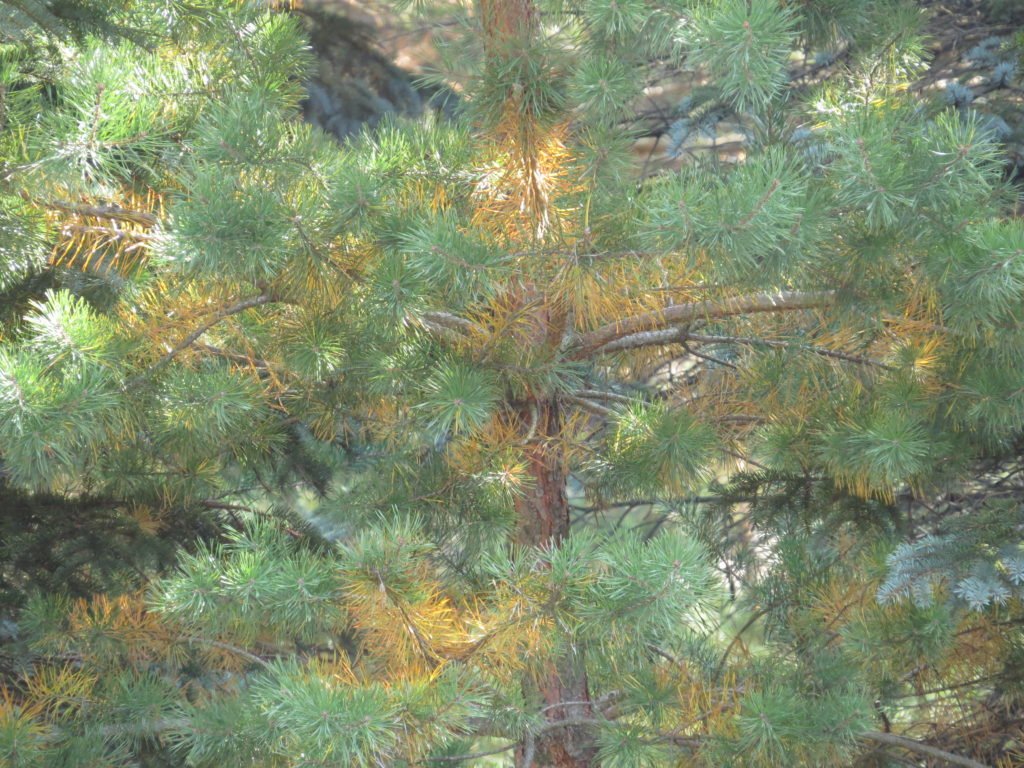
Even the ‘evergreen’ Pine trees change color and drop some of their needles in the Fall. They are culling the number of needles, downsizing in order to conserve energy during the cold winter.
I found a couple of Wild Turkey feathers on the shared trail along with yellow Milkweeds, rosy leaves and berries of a Mountain Ash tree, a tall, fuzzy-leaved Mullein, and the mottled tips of an Oak.
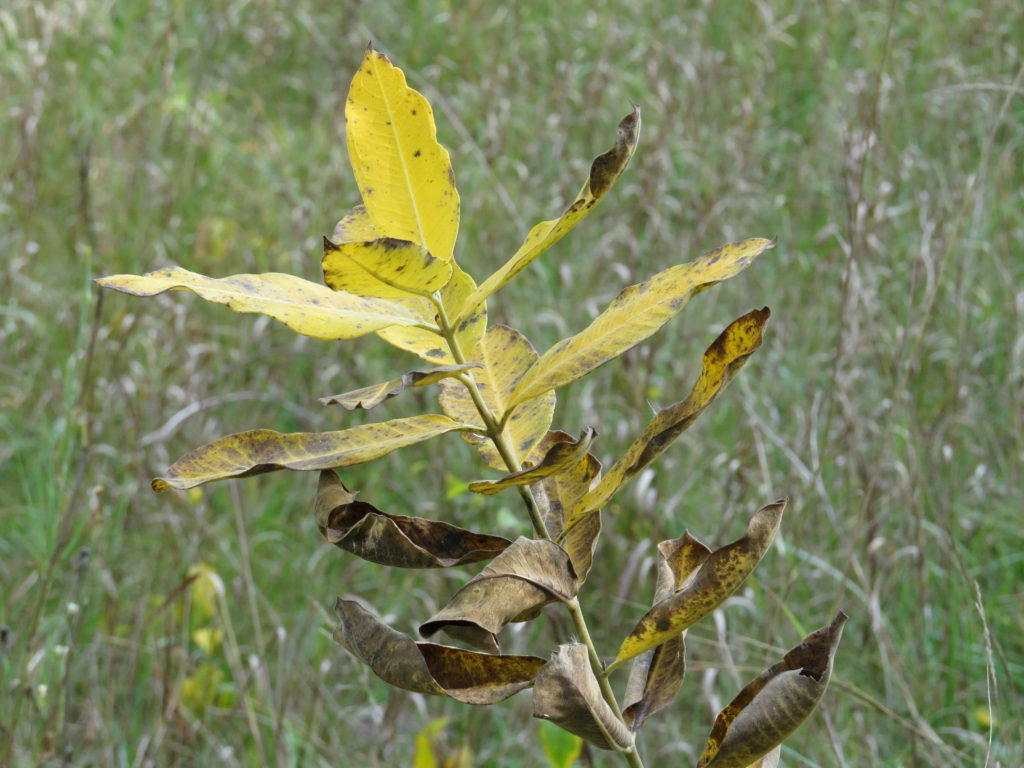
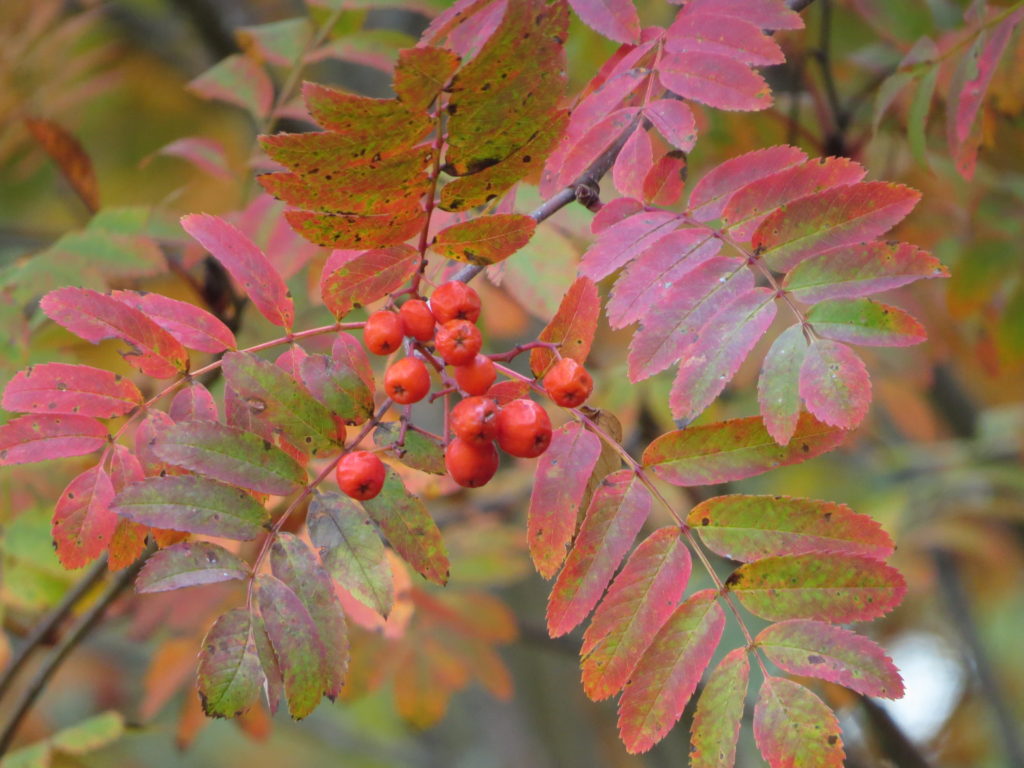
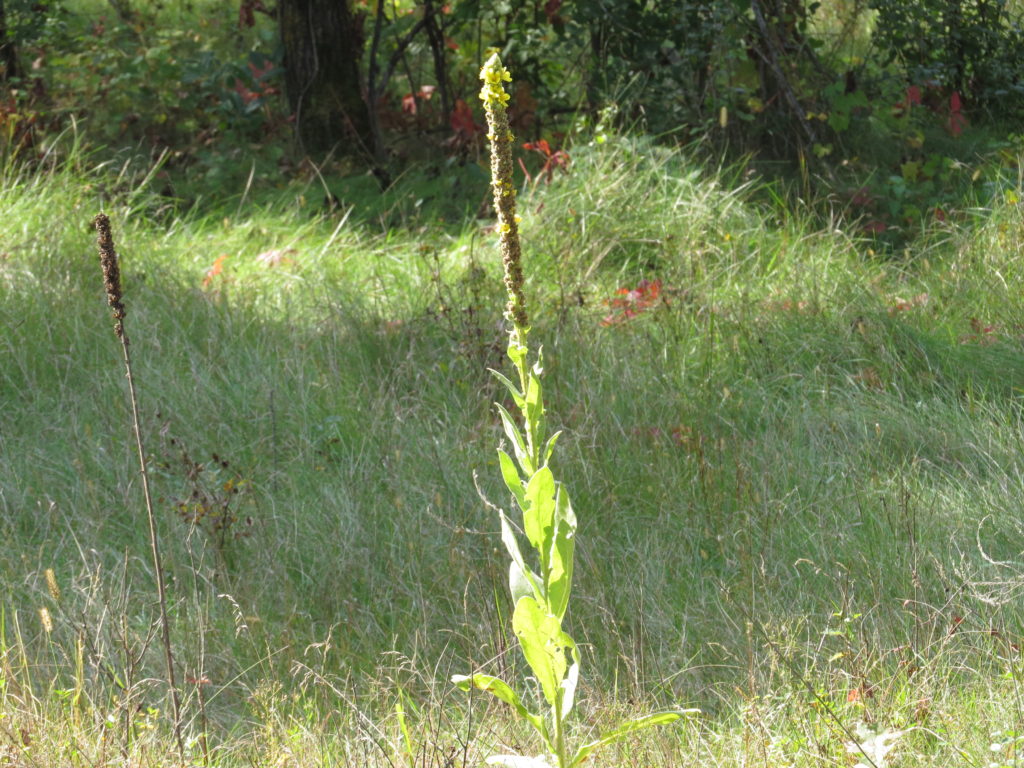
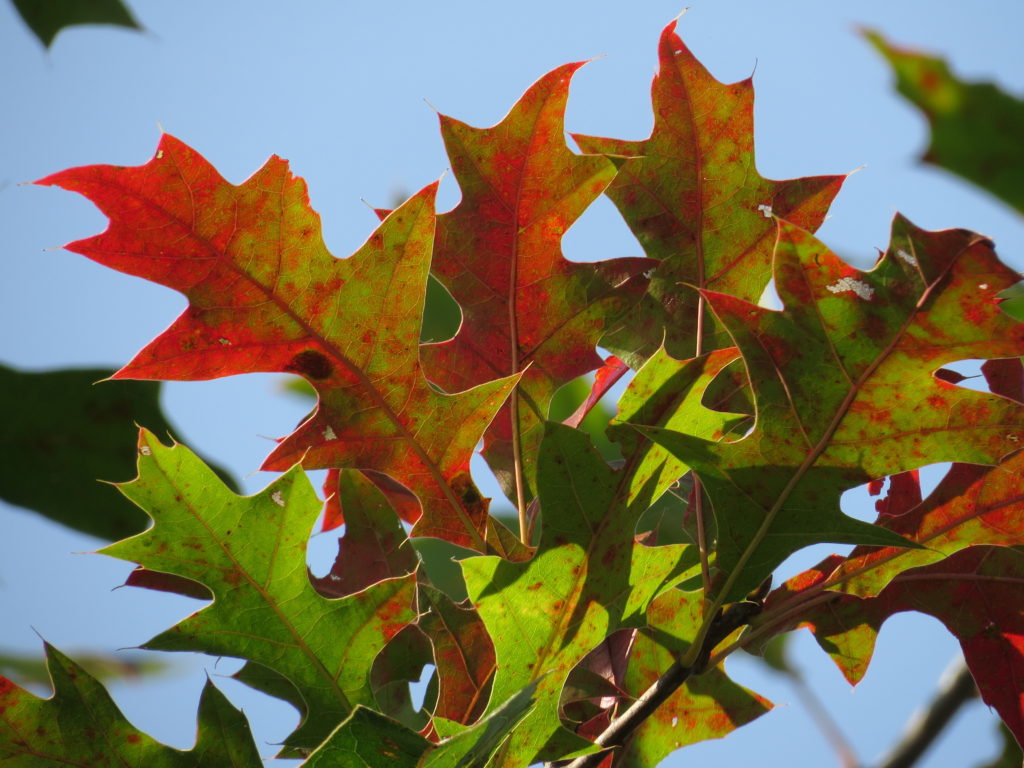
Back in the yard, a Wild Plum tree reminded me of an Autumn person—day by day there was a slight change of color, like a person gradually going gray.
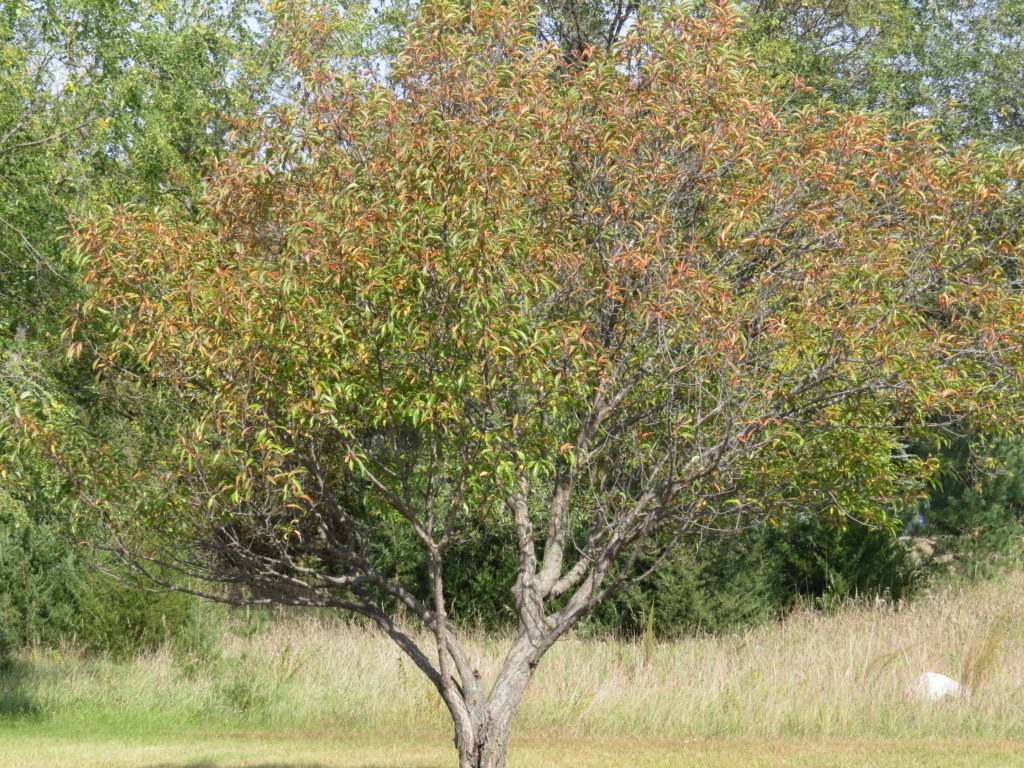
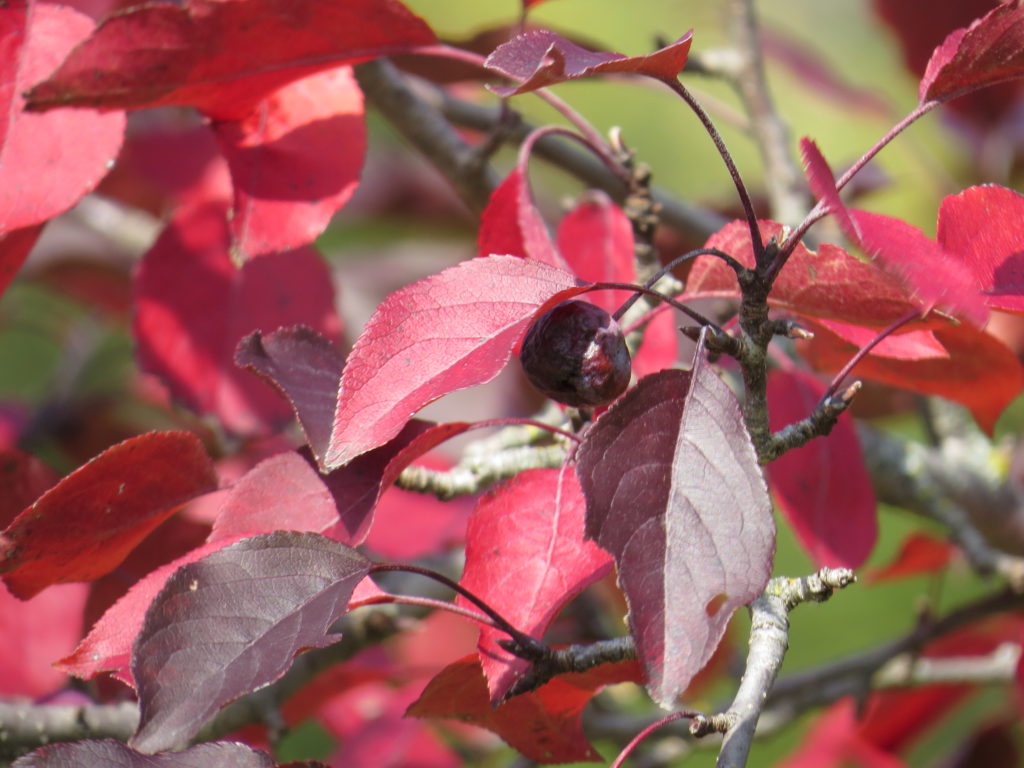
The Crabapple tree, with its dark purple Summer leaves, actually gets brighter and more beautiful in Autumn.
Looking at our lives as seasons honors the development and beauty of each part. It has a rhythm and sensibility about it. There is no ‘over the hill’ as there is on a birth-to-death time line. In each season we have ‘work’ to do, challenges to overcome, and things to experience and learn. It’s like each season of our lives has its own cycle of seasons! Seasons within a season! And yet each is unique—Autumn is the only time the leaves turn brilliant colors and drop from the trees. It is a time for culling and downsizing. The Autumn season of our lives gives us empty nests, just like the birds. We conserve energy, and as the old way leaves us, we enter a period of quiescence while looking forward to a future new thing. No need for distractions. The seasons and cycle of Nature sustain us.
Stepping Into the Clear Water
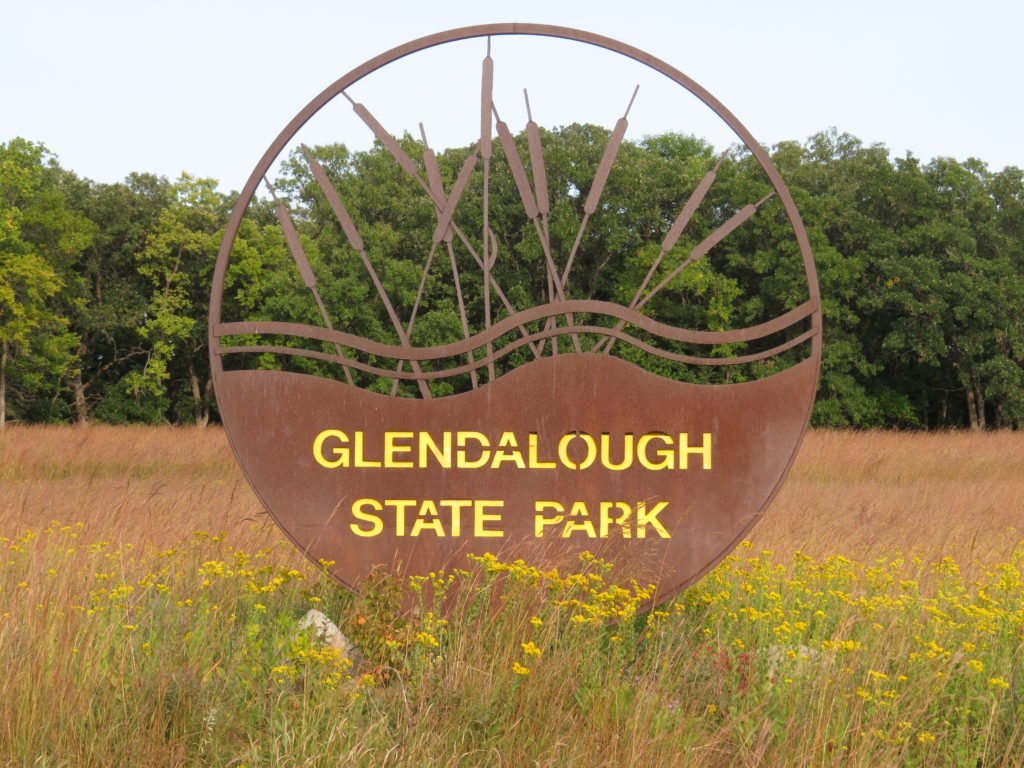
It was like stepping back into time, stepping into a life of early and mid-century wealth and privilege. The Glendalough Lodge is modest by today’s standards, built in the early 1900’s by Ezra Valentine as a summer retreat for family and friends. In 1928, F.E. Murphy, owner of the Minneapolis Tribune, bought the place, expanded the acreage, developed a game farm, and used it as a family and corporate retreat. Glendalough was transferred to the Cowles Family in 1941 with the sale of the Tribune. Dwight Eisenhower and Richard Nixon were guests at Glendalough during the 50’s. On Earth Day, 1990, the property was donated to The Nature Conservancy, and in 1992, the Department of Natural Resources obtained the land for a state park.
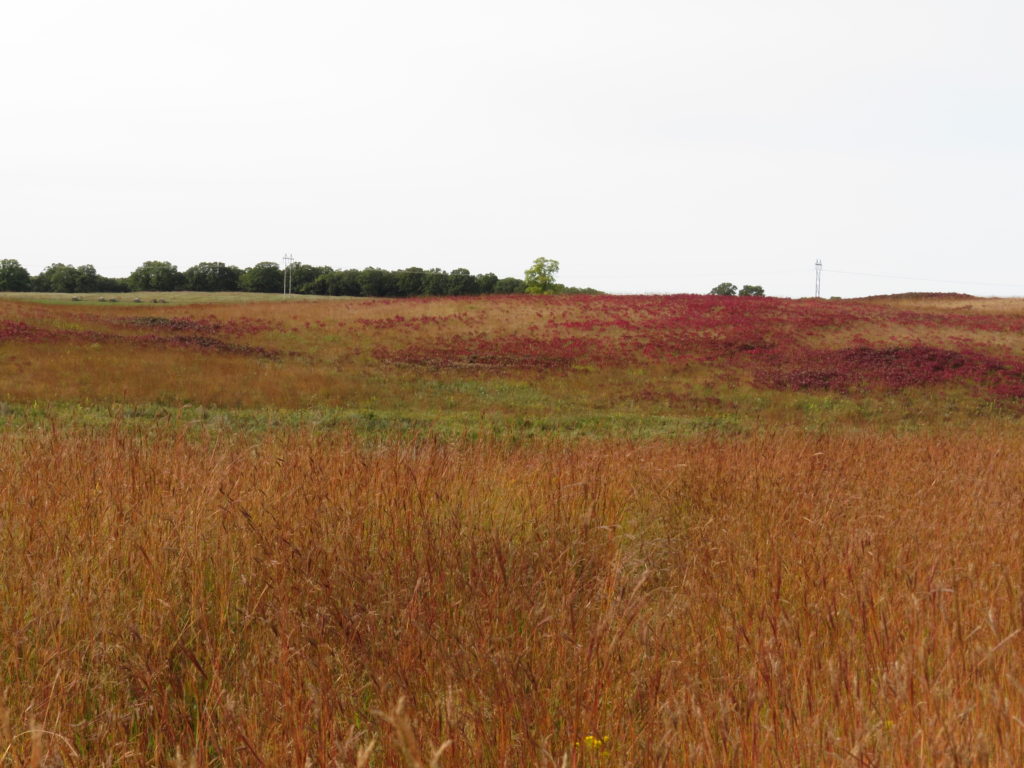
We stepped into the Autumn prairie with rich golden Indian grass and brick red Sumac.
Three of the five of us donned running clothes for the virtual Red Friday Run for the World Champion Kansas City Chiefs in support for the Ronald McDonald House Charities of Kansas City. They ran through woods and prairie along the bike trail in the park.
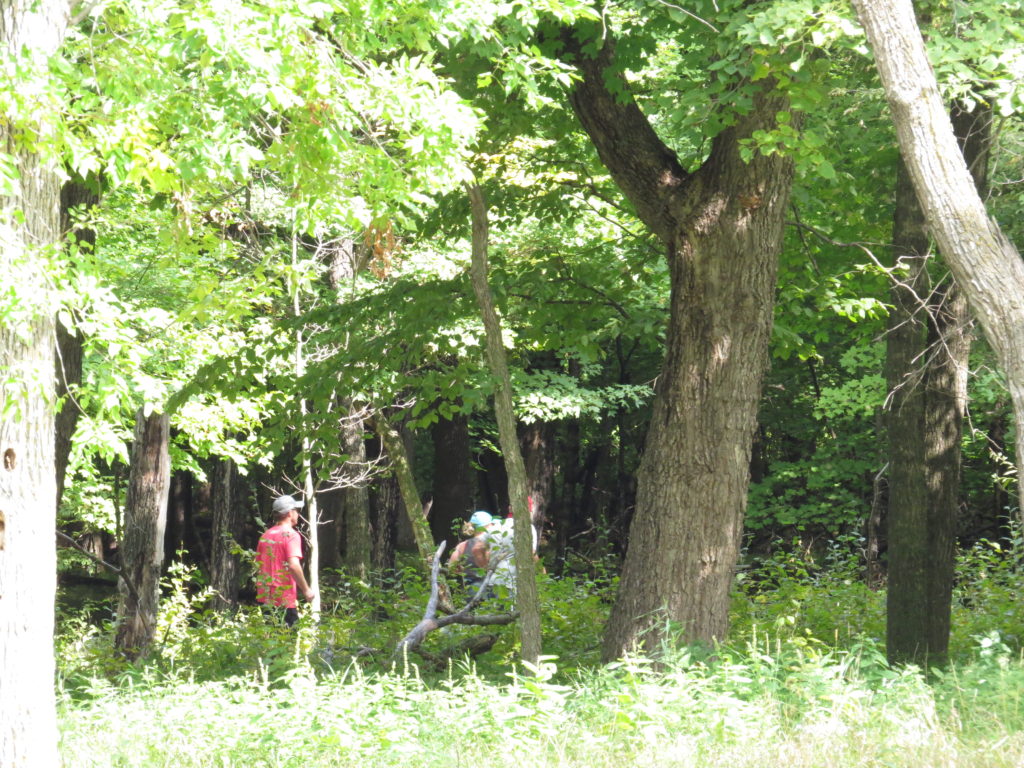
The other two of us hiked the Beaver Pond Interpretive Trail along Blanche Lake, a beautiful, crystal-clear lake lined with water-purifying bulrushes.
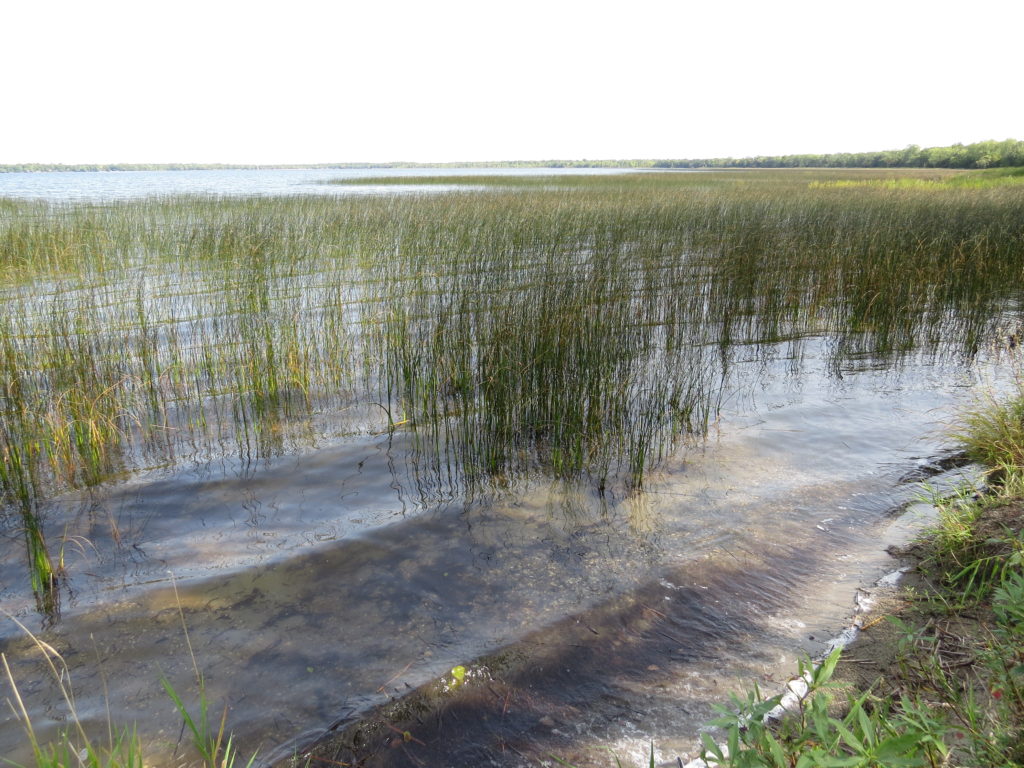
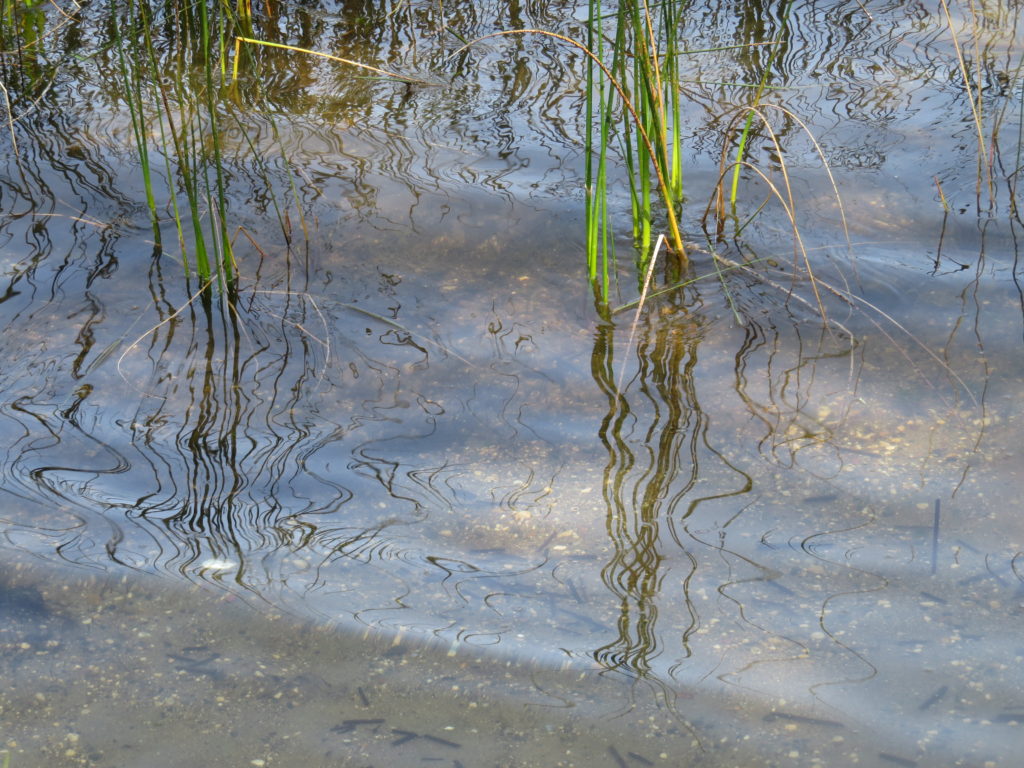
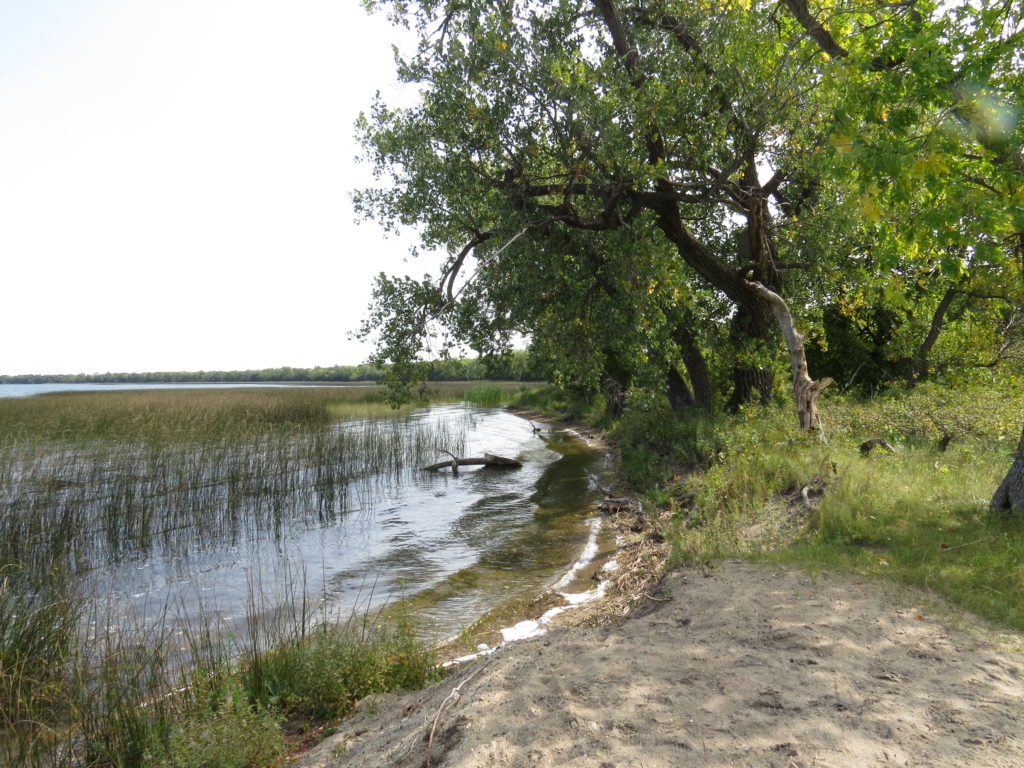
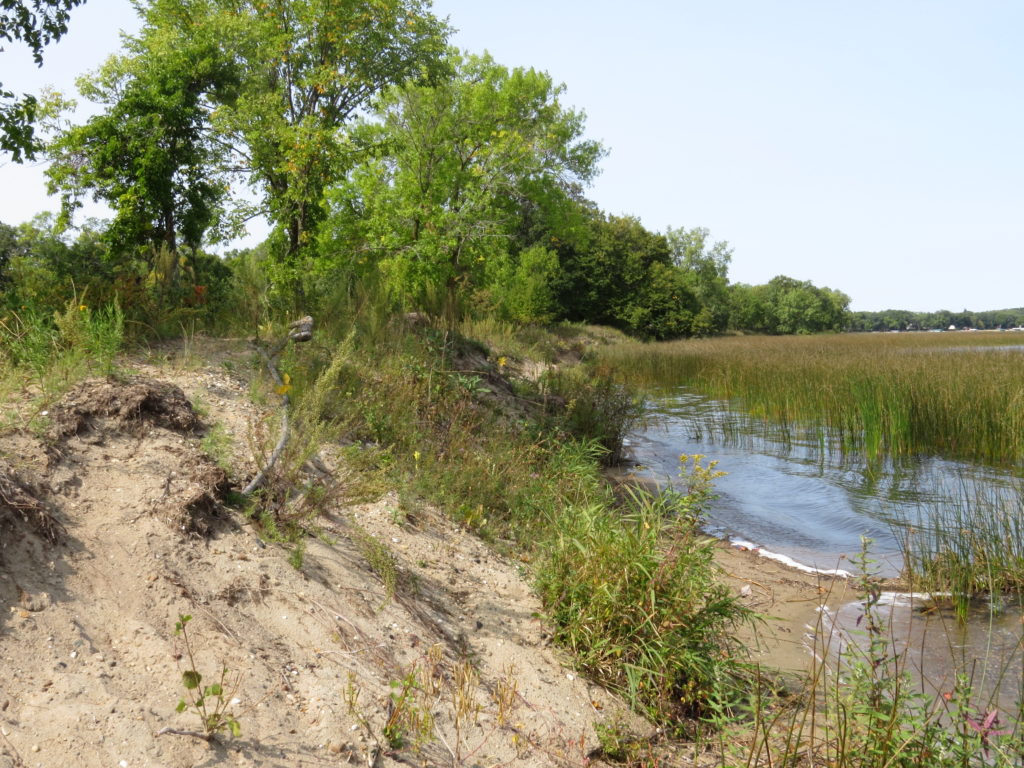
We stepped onto a hill of sand along the shore of the lake called an ice ridge. These form when ice on the lake expands and pushes sand up into an embankment. An older ridge south of the lake indicates that at one time, perhaps thousands of years ago, the lake was much larger and had a higher water level.
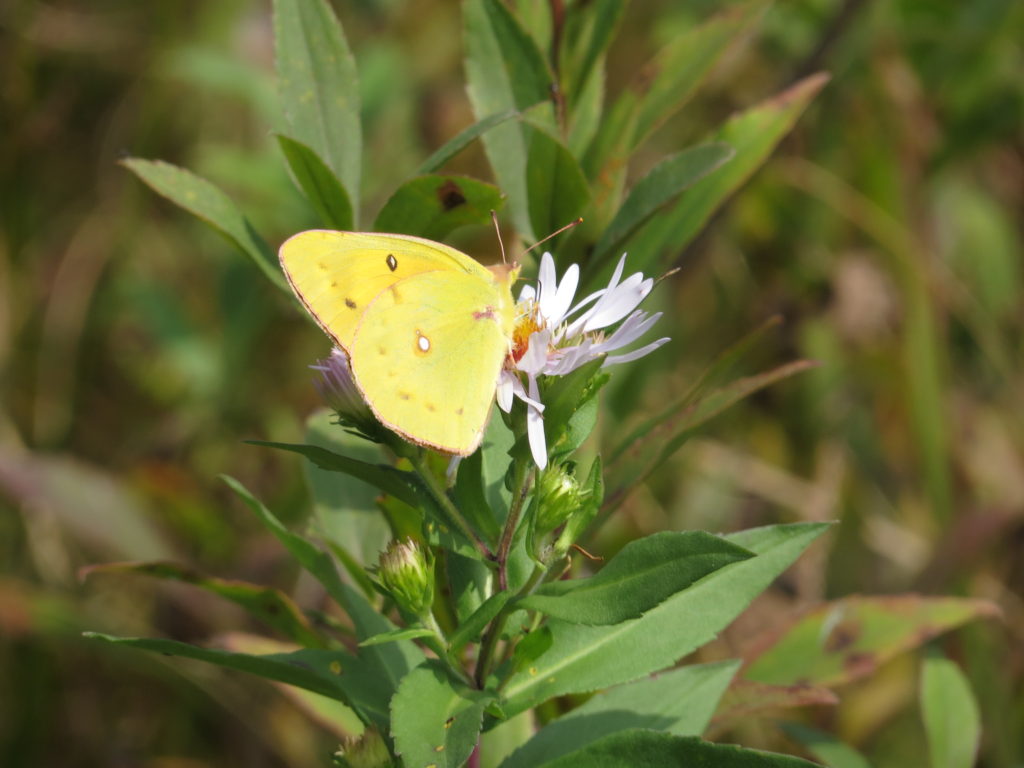
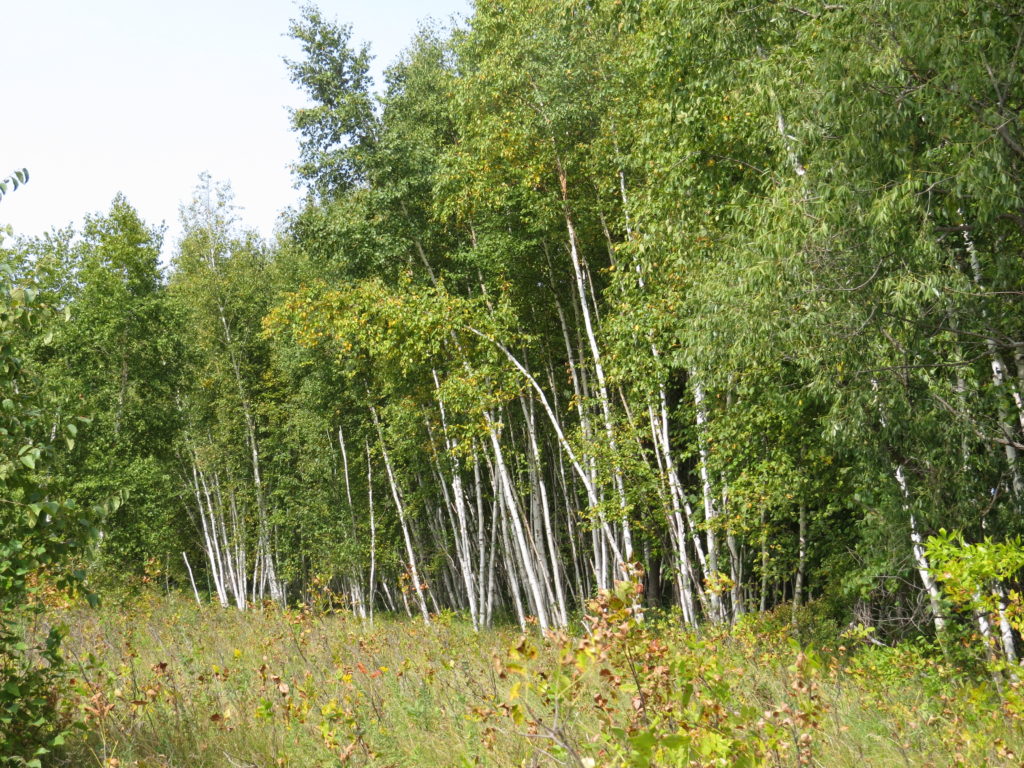
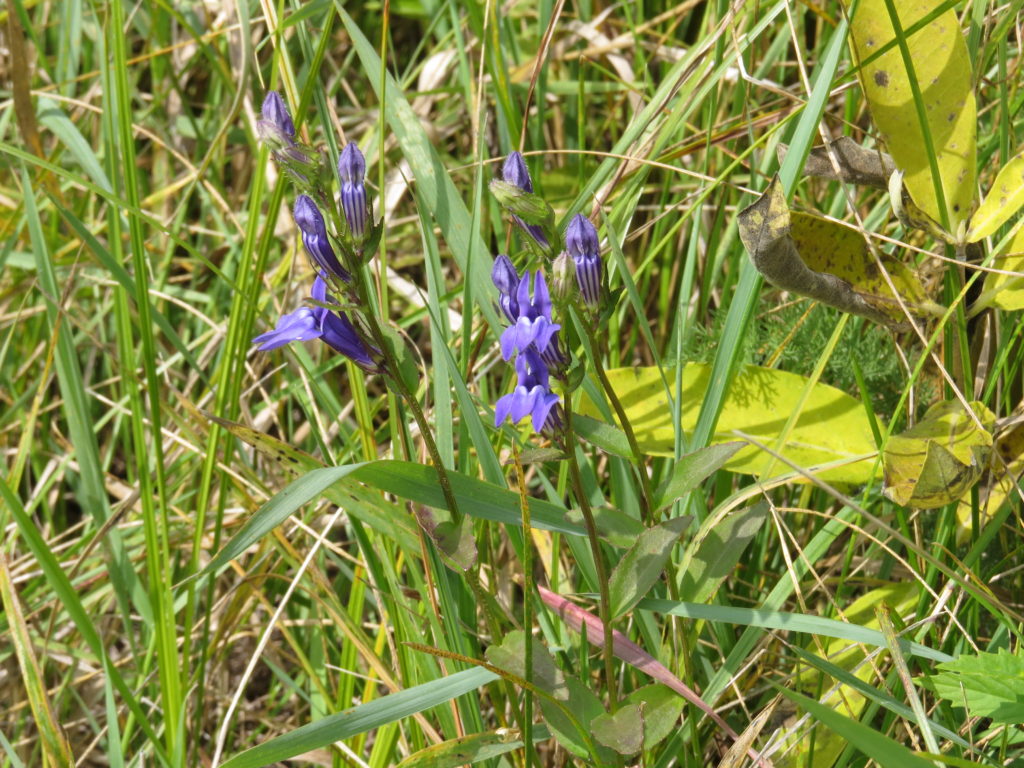
Orange Sulphur butterflies flitted from Aster to Aster in the prairie meadow surrounded by Birch trees, and we found a rare Blue Lobelia wildflower.
Large Oak Trees grew along parts of the trail. The fallen acorns were so abundant in areas that it felt like I was stepping on a mat of roly-poly marbles.
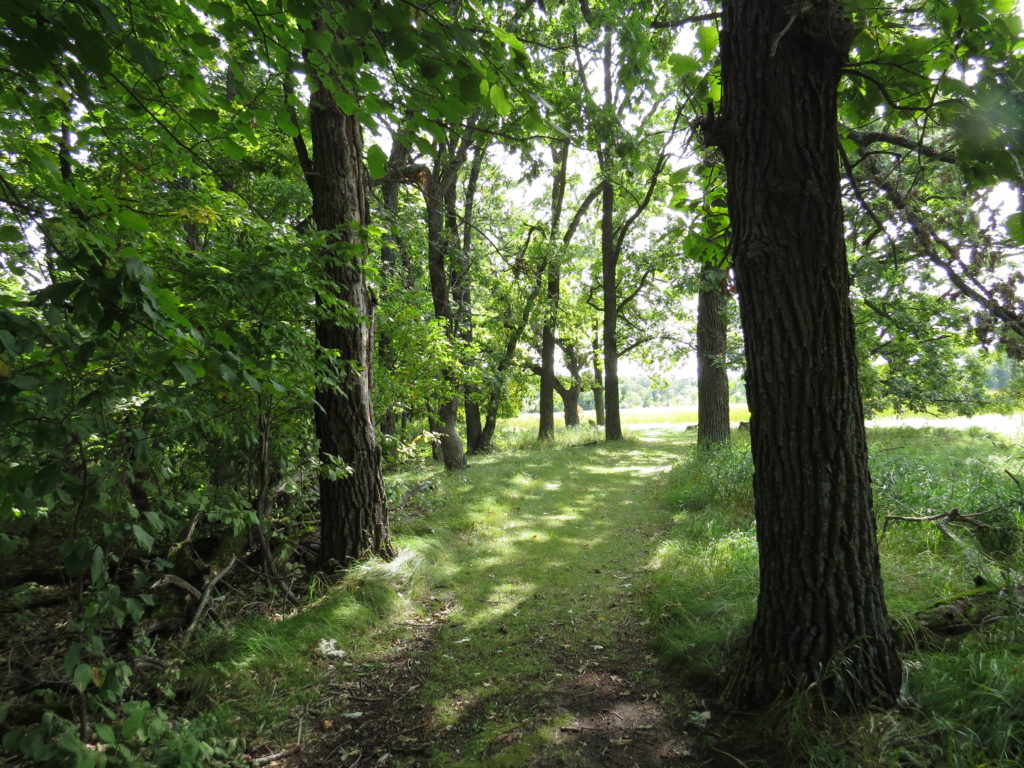
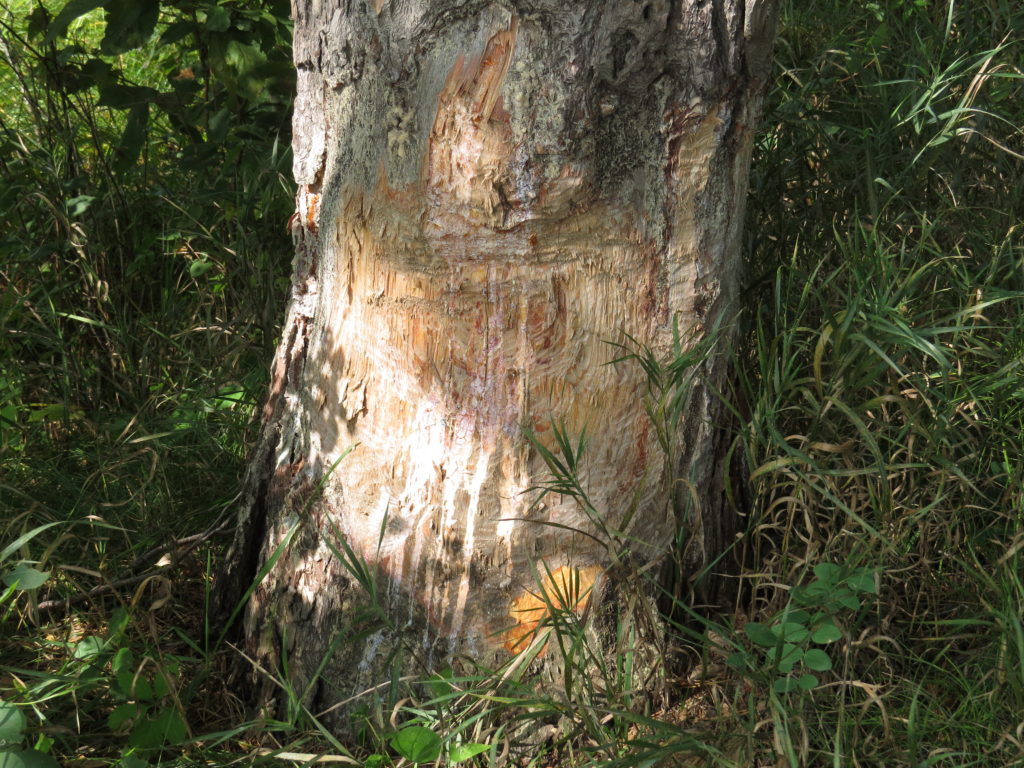
The beaver pond was full of cattails, but we did see open-water trails that beavers, muskrats, and otters had traveled through. We saw trees that had been gnawed on by sharp beaver teeth. The large Pine was a bit too big for dam-building success.
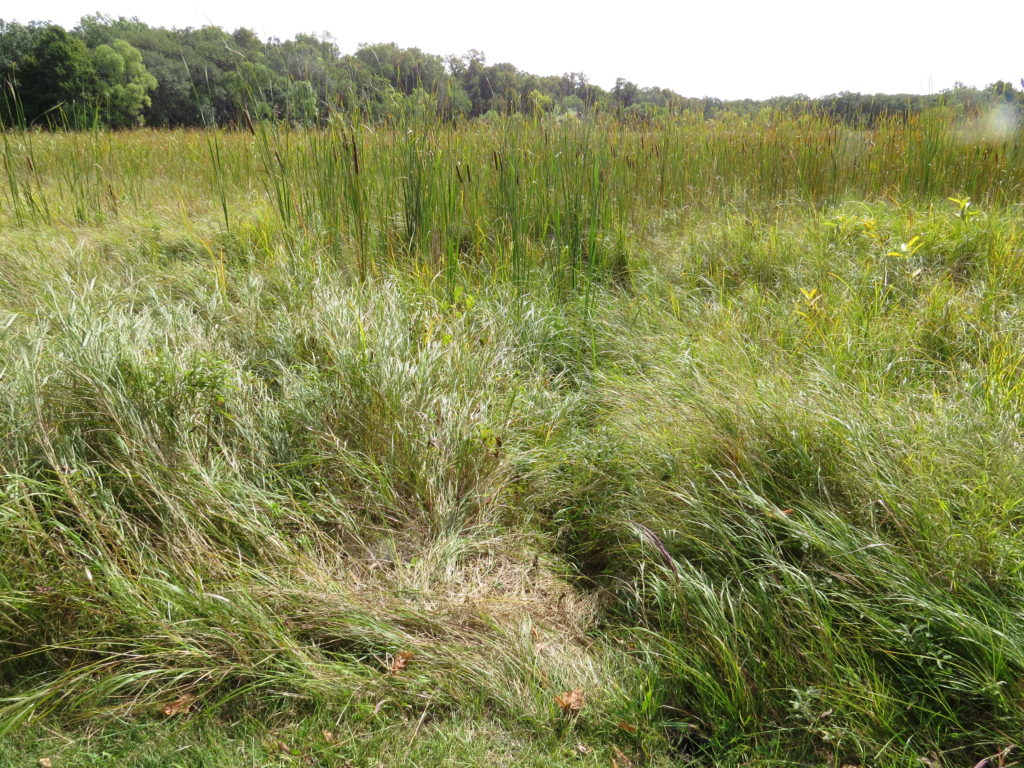
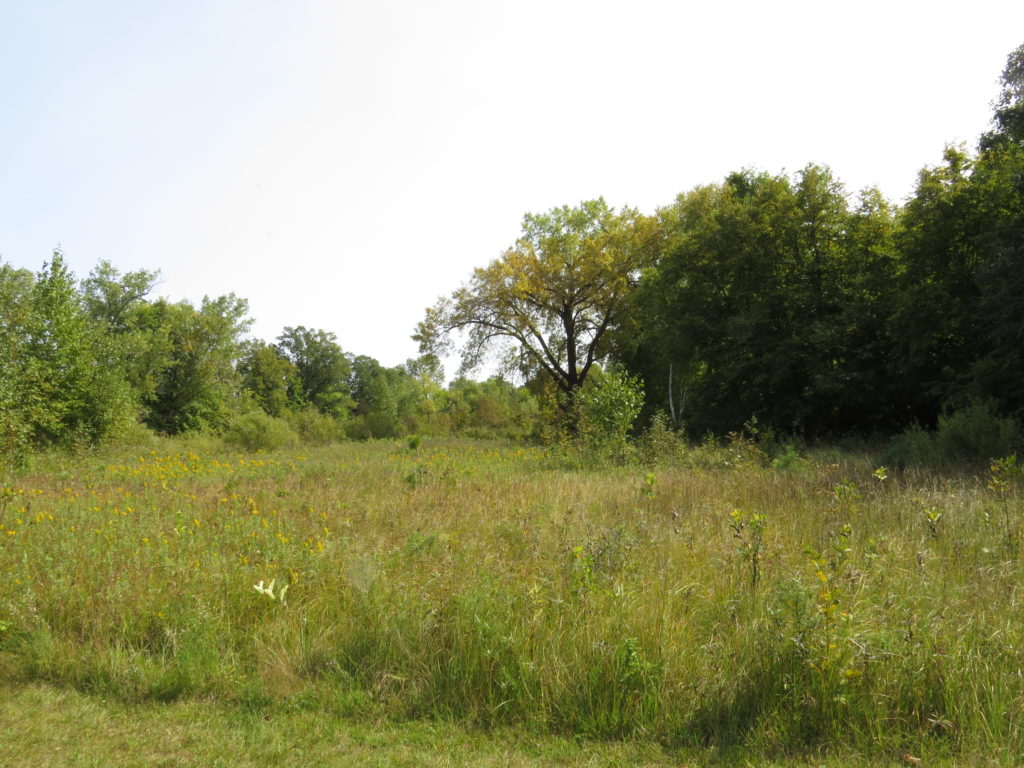
There were signs along the trail that told us of the glory of the park’s previous life—where a tea house was located beside Blanche Lake, where a horse race track once stood, and here at this open space where a golf course used to be. A dog cemetery honored the beloved hunting dogs that had lived and died at Glendalough.
When the runners returned, we had a picnic on the shore of Annie Battle Lake, a fully natural, non-developed ‘Heritage Fishery’ lake restricted to non-motorized watercraft. It was just amazing how clear the water was in all the lakes and creeks we saw! We stepped into the sand and into the clear, cool water.
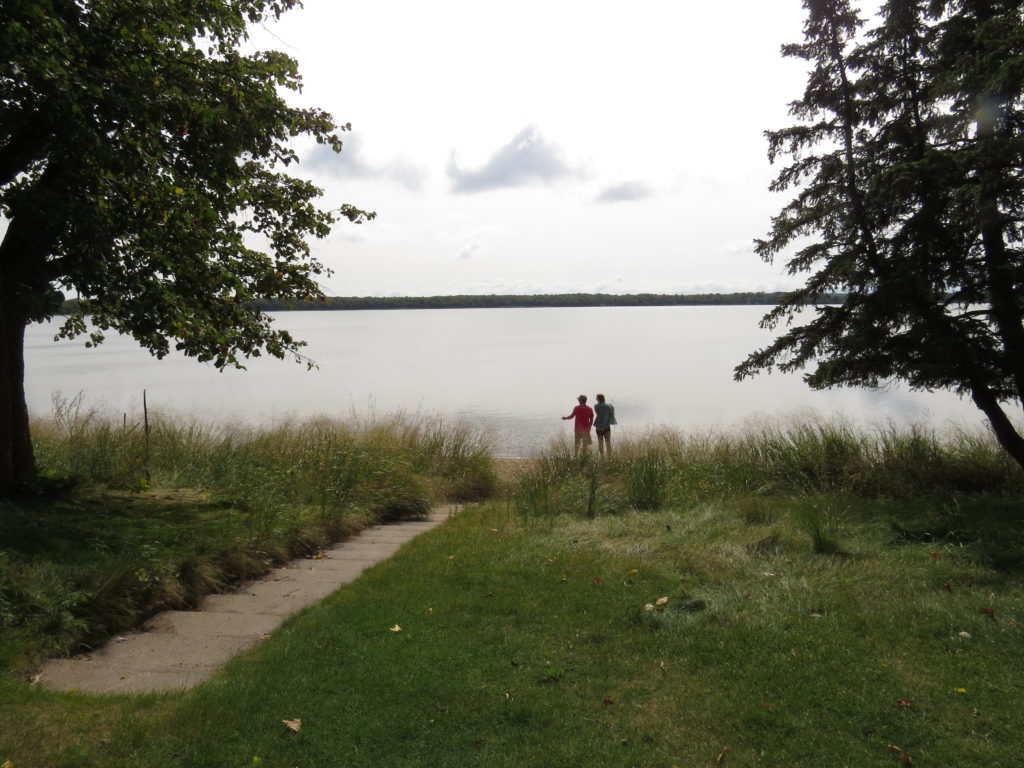
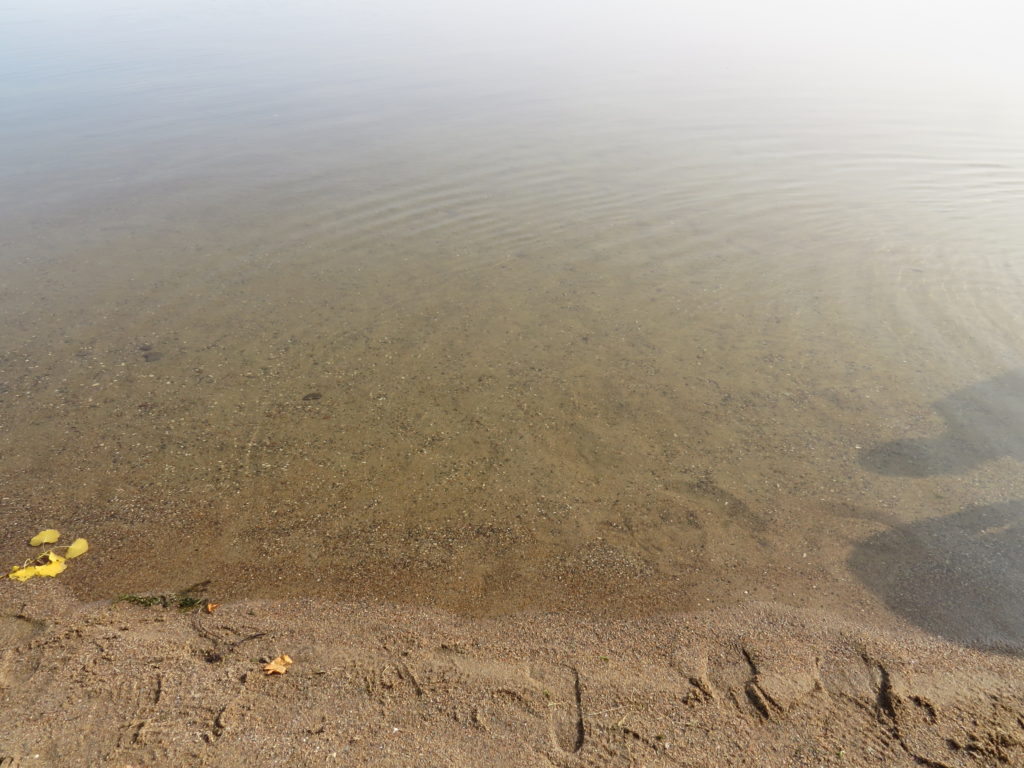
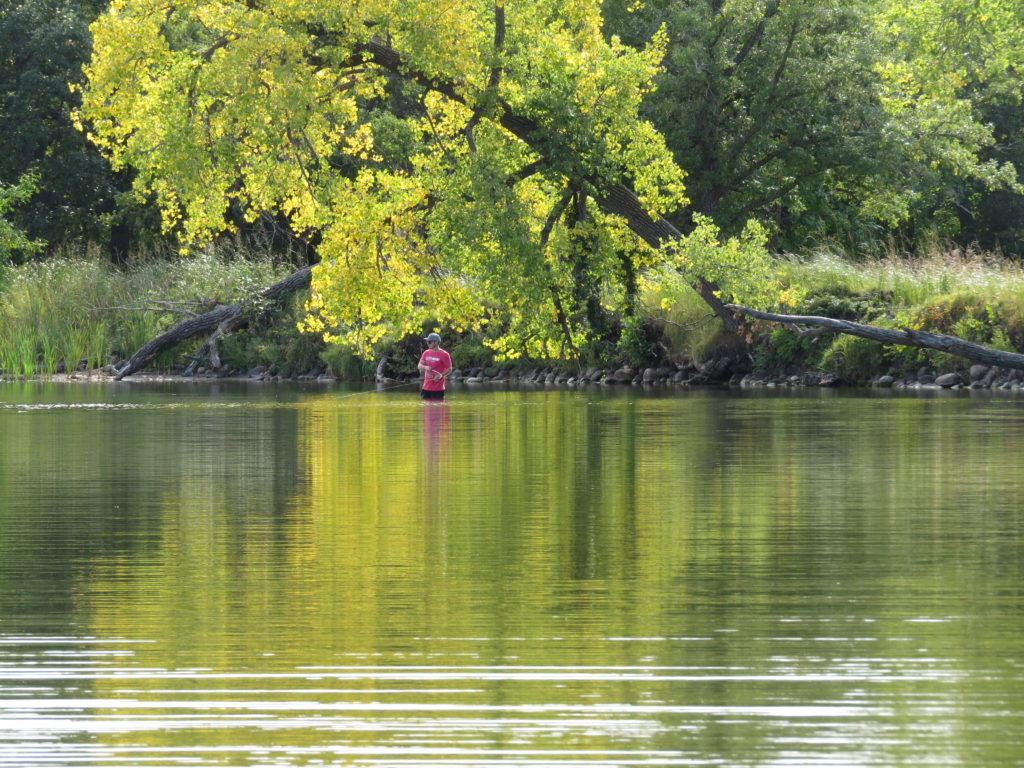
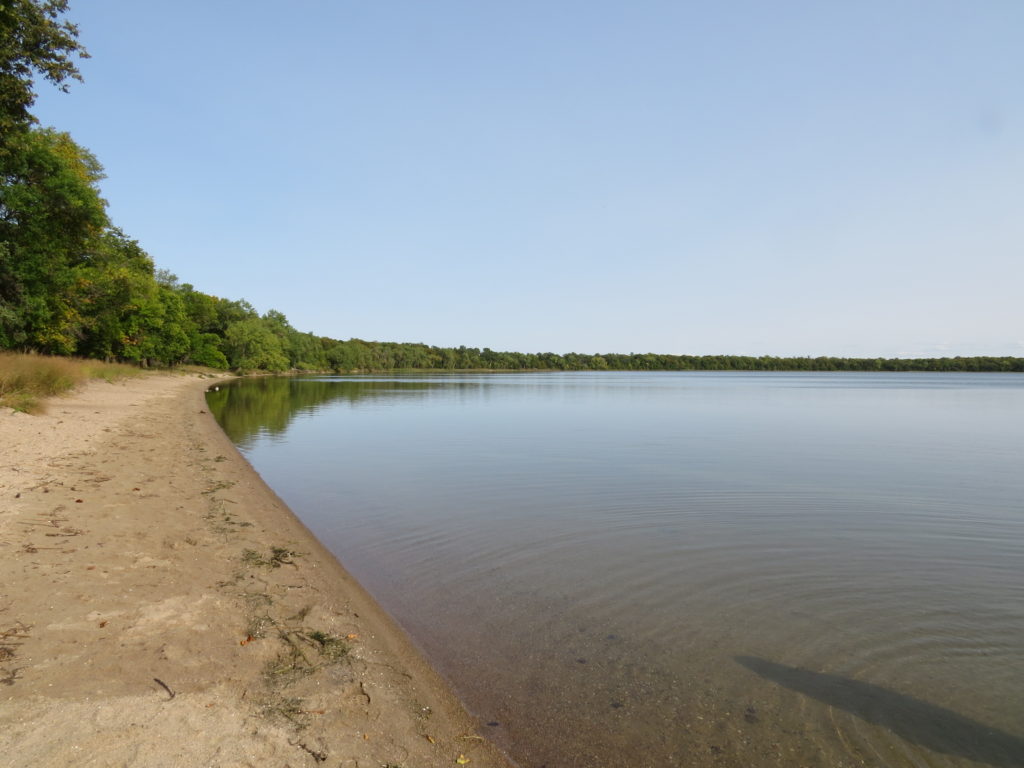
Glendalough, meaning ‘the glen between two lakes’ was named by F.E. Murphy and his wife, both of Irish descent. They created a beautiful, enchanting place that the public is privileged to access. Stepping back into the history highlighted their love of conservation, recreation, work, and friendship. When we step back into our own histories, what do we find? Where do our words come from? Where did our ancestors live, and how do their spirits live on through us? How do we step up for charity? It is endemic in the Christian religion to love God and love our neighbors with unselfish love, even when they don’t look like us. What happens when we step on something that trips us up or makes us lose our footing? It messes with our heads and our bodies. It is our responsibility to deal with the mess and the fallout of our own lives. What happens when we step on shifting sand, when we pledge our lives to false prophets? We misstep into deception, lies, division, ravenous wolves in sheep’s clothing who promise the greatest things while stealing us blind. We need to step into faith, hope, love, and action. We need to step into the clear water.
The Face of the Water
The face of the water, in time, became a wonderful book… and it was not a book to be read once and thrown aside, for it had a new story to tell every day. –Mark Twain
My face no longer has the roundness and smooth silkiness of youth. Gone is the brightness of eye and cheek that glowed in young adulthood. The perpetual optimism of my smiling lips has waned a bit, and my braces-straightened teeth have slipped back to some crookedness. The smile lines are etched into my skin, no longer disappearing with my smile, as are the worry lines between my brows. My face reveals the story of my life, unabashed by the sorrows and joys that have ravaged and lit up the cells of my countenance.
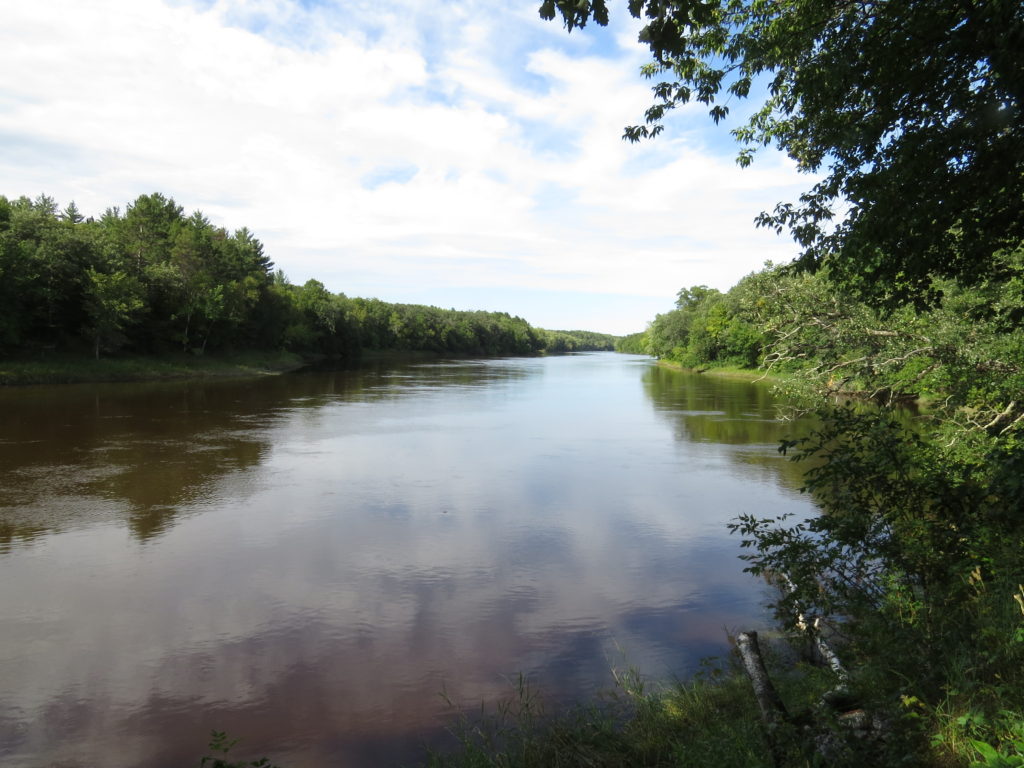
We went to Mark Twain’s river, though much farther north of his Hannibal, Missouri home, farther north than our home close to the same river, up to Crow Wing State Park. The last time we were there was mid-March, when Covid was beginning to shut things down, when snow was still piled around the picnic tables, and ice still covered the Mississippi. Now, the tannin-rich water reflected the blue of a clear summer sky, and lazy ripples formed the features of its face.
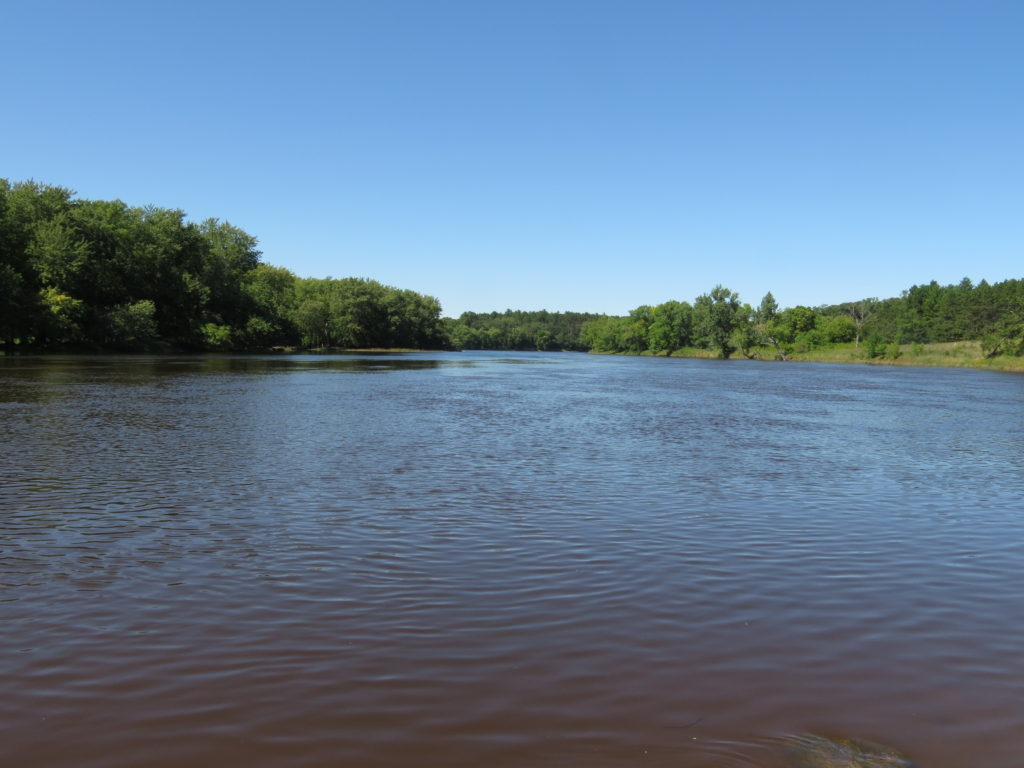
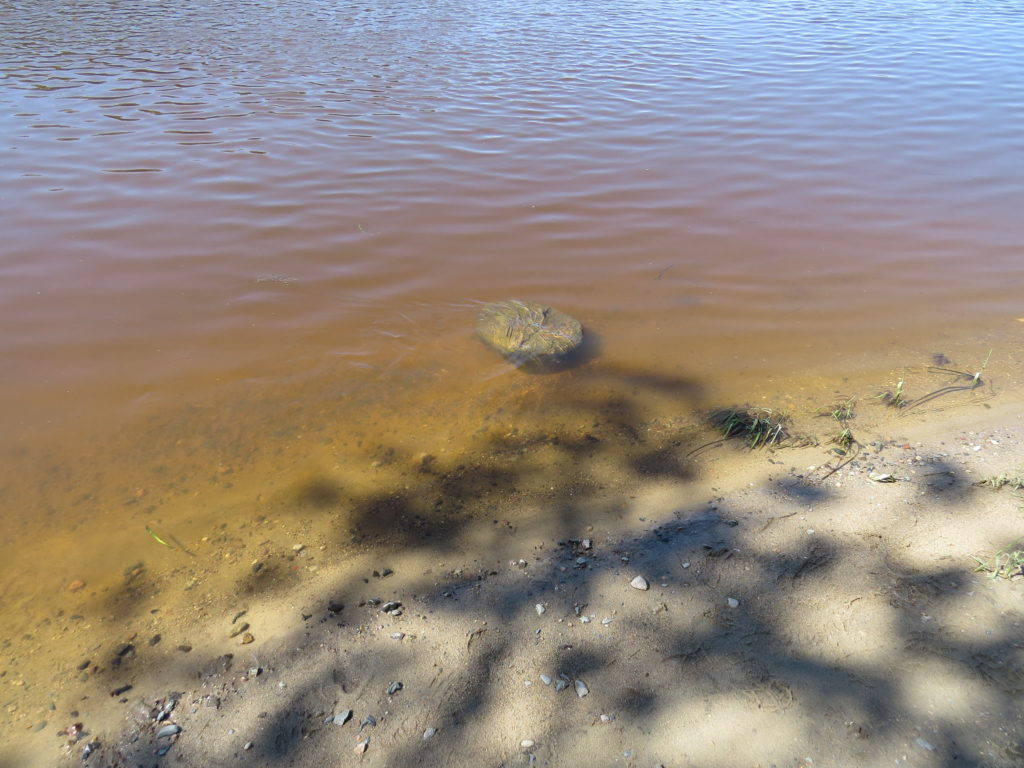
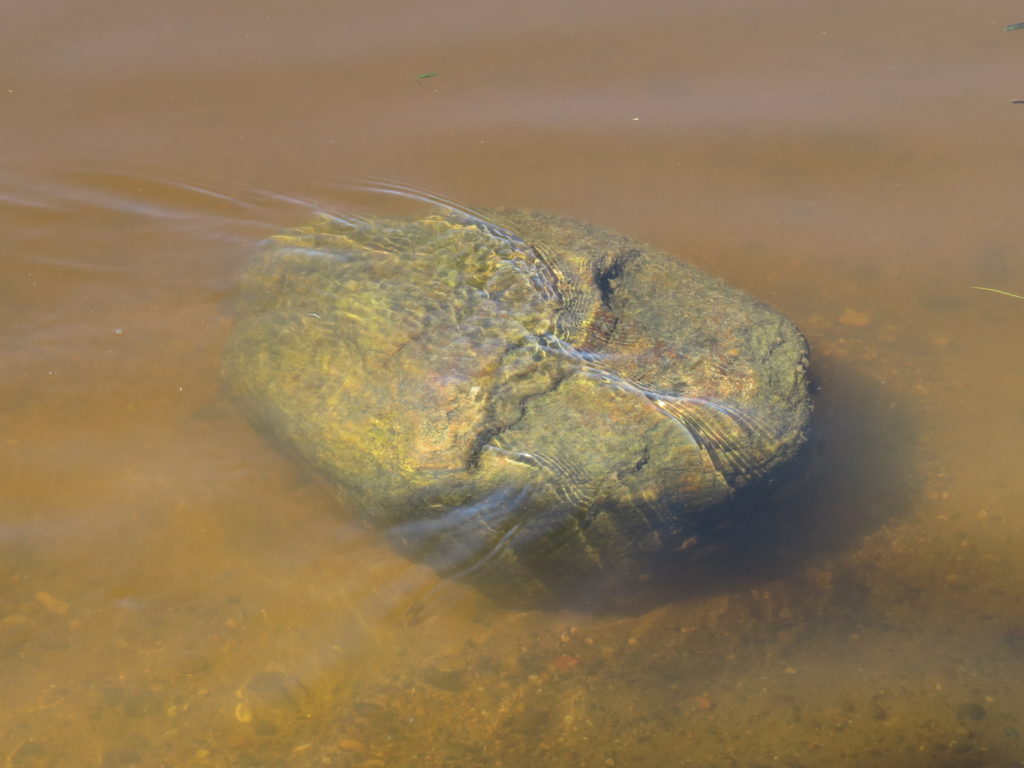
Speckled leaf-shadows lead to a rock in the River. It was just big enough to catch the river and add lines to the shore-bound water, reflecting agate-like on the face of the rock.
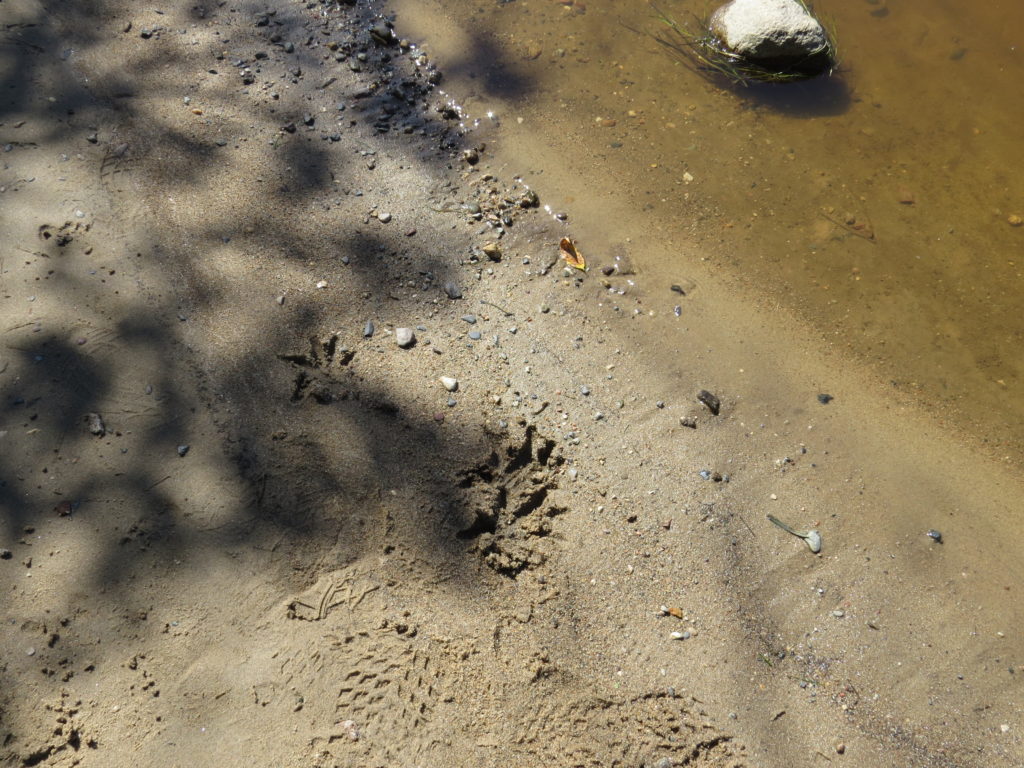
Wild Turkey tracks were dug into the wet sand alongside the human kind. What story do they tell?
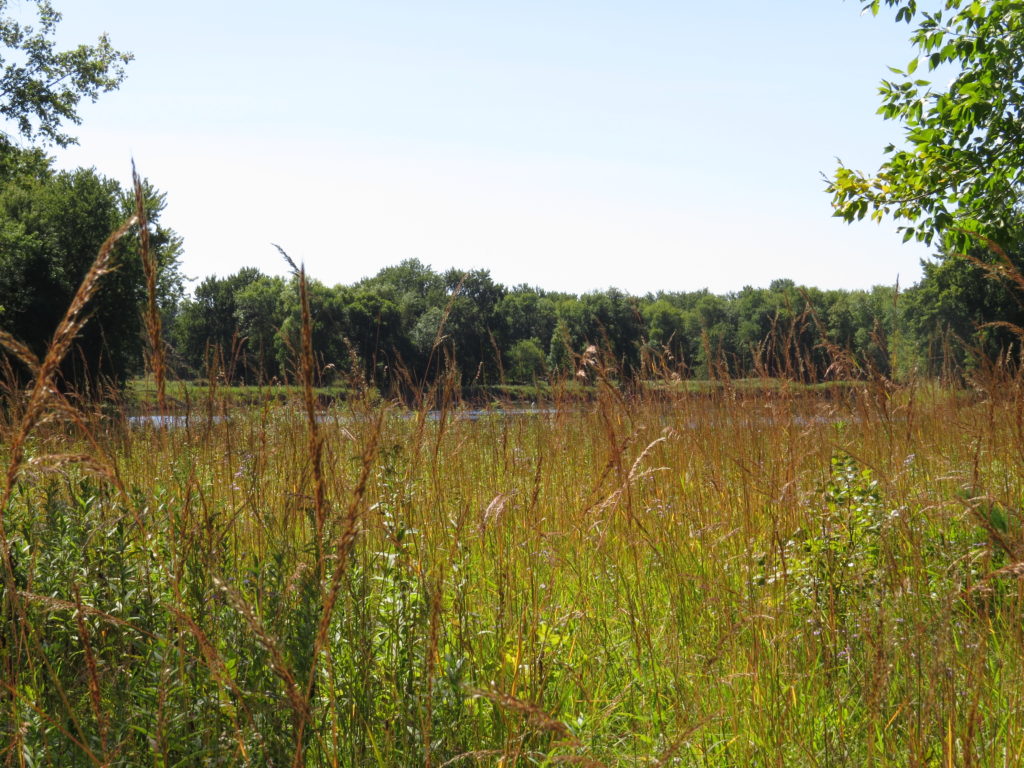
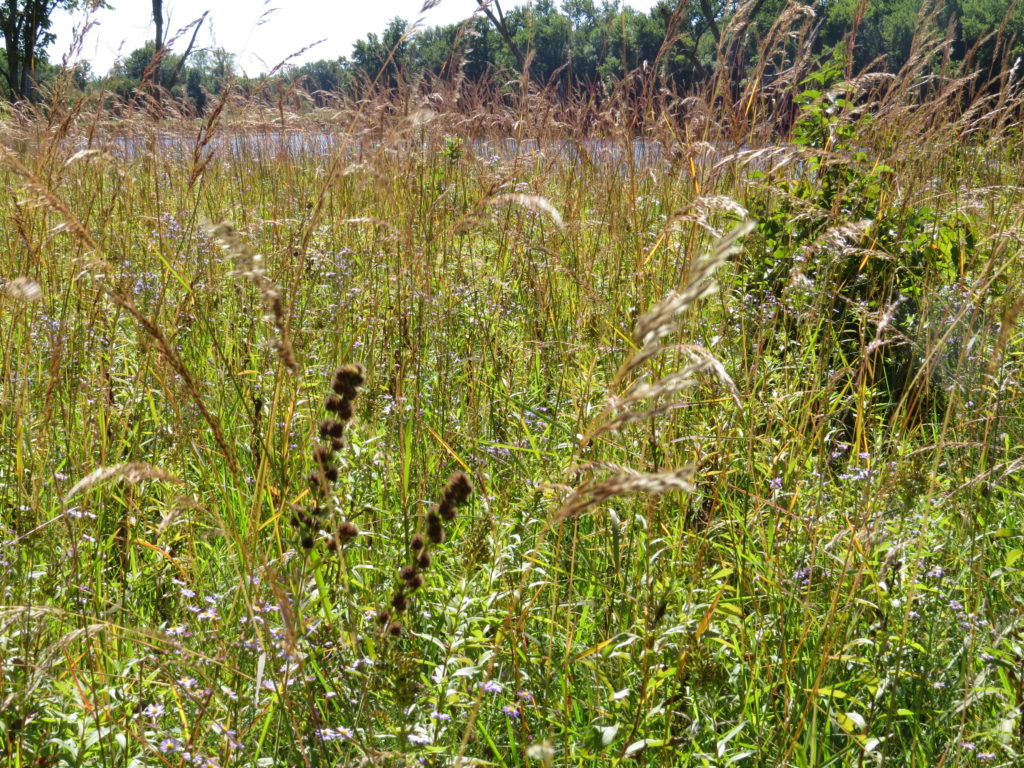
Prairie grasses and wildflowers grew tall between the trail and the River, obscuring a good look at the Mississippi. We knew it was there. Glimpses of blue came through in the background. But the Indian Grass and purple Asters grabbed our attention.
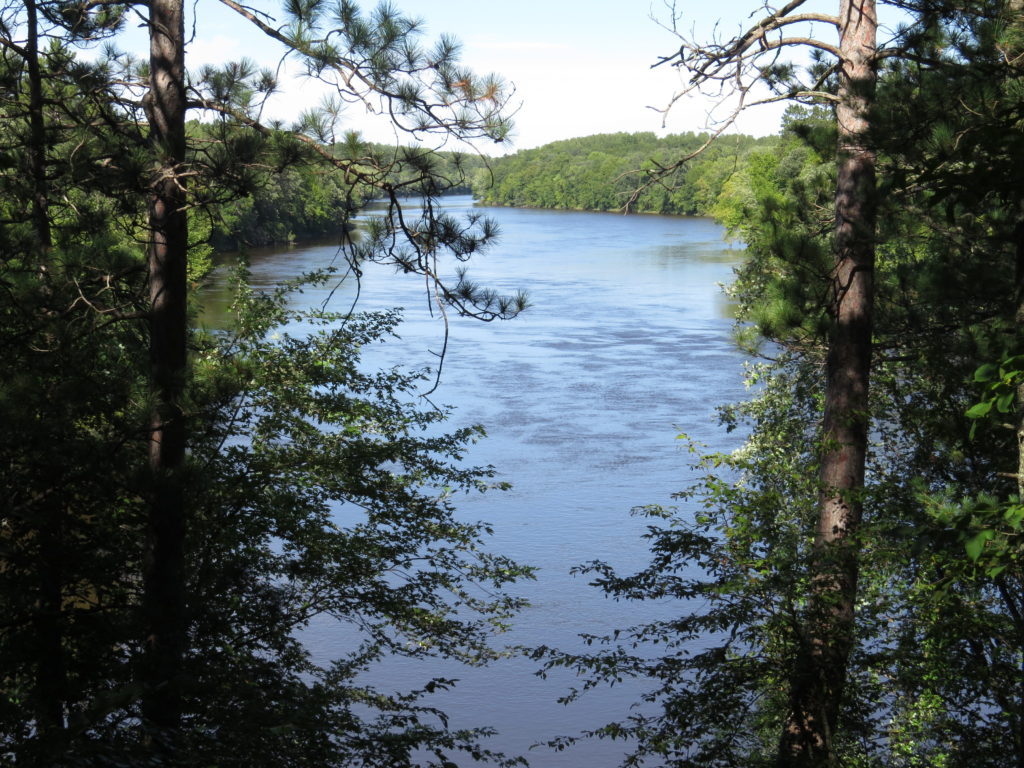
We followed the Red River Oxcart Trail along the point of land the River curved around to Chippewa Lookout. Tall Pines framed the view of the Great River—until it disappeared around the bend. What lies beyond our sight? What does the next page tell us?
The water shows us a reflection of the grasses, the trees, and the sky; though it gives us a view of the environment, it is not ‘true’ to form. Wind and rain can distort the reflections—a re-telling of the story of the surrounding flora and firmament.
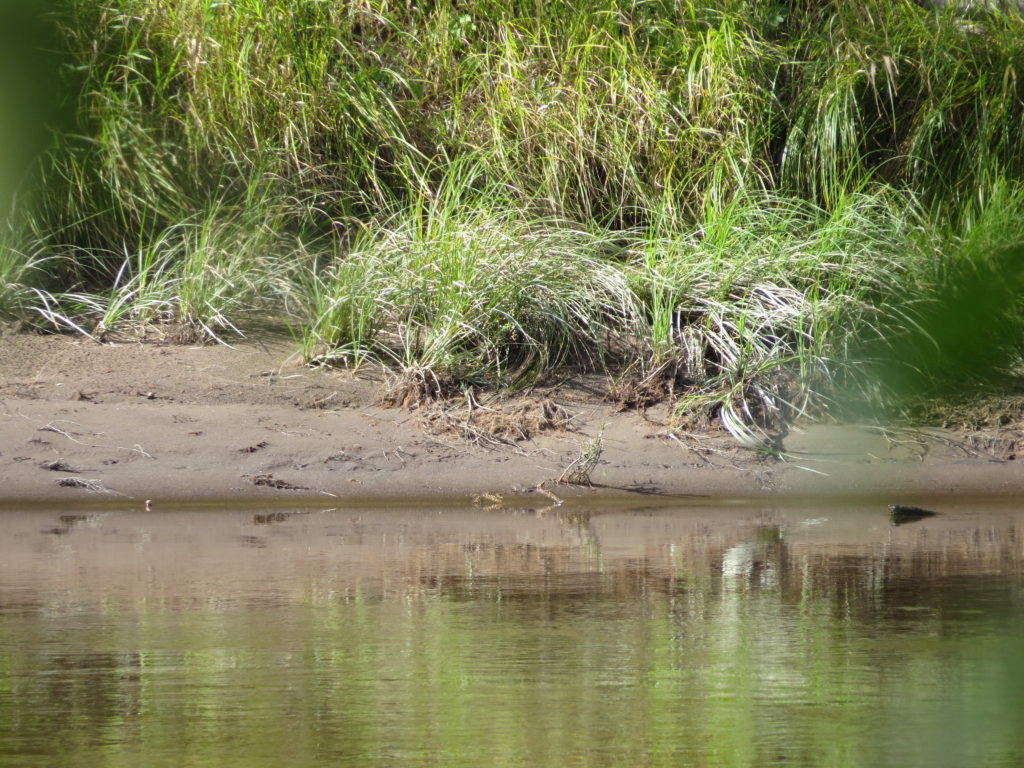
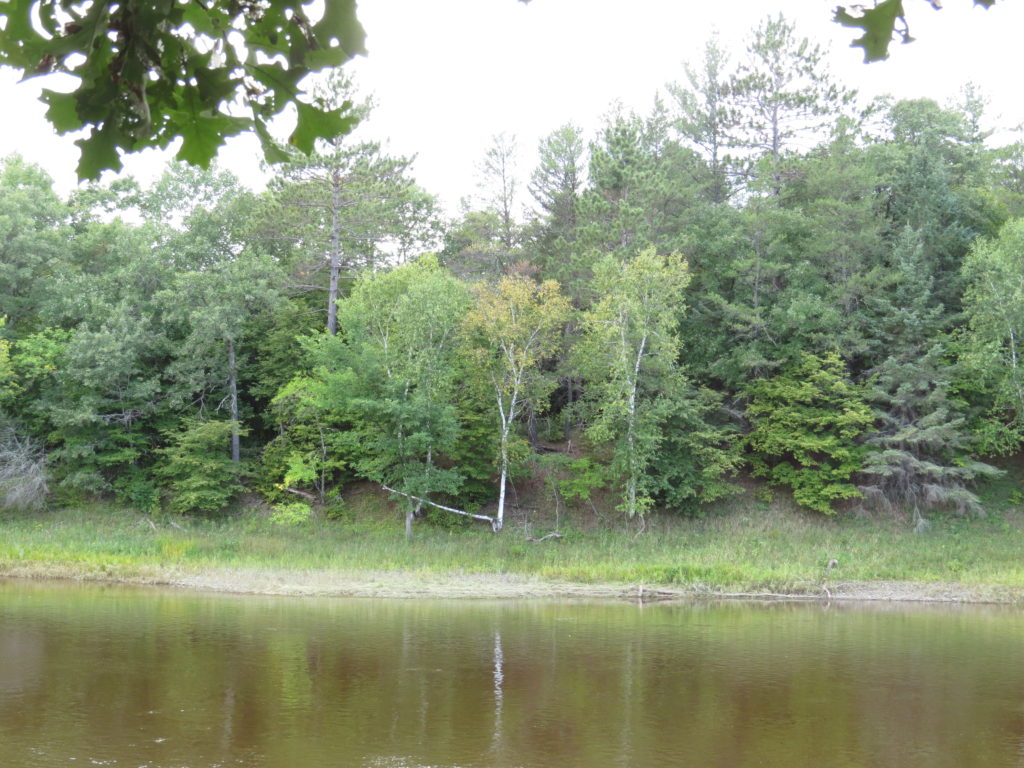
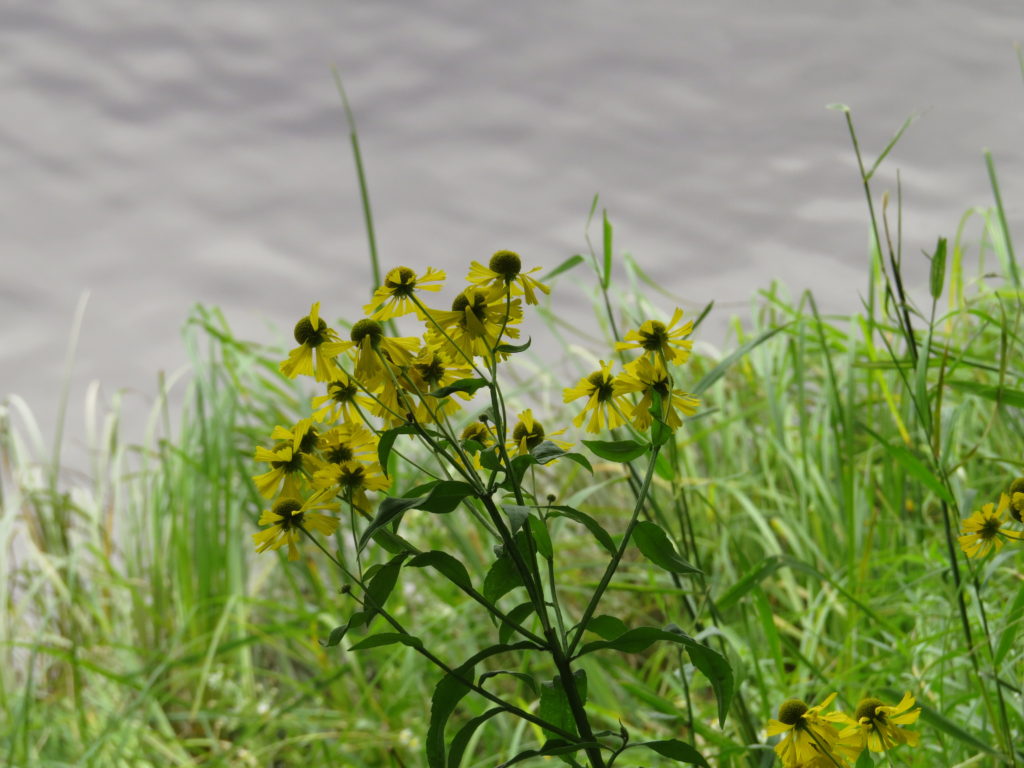
The face of the water is background to a wide array of characters, like Sneezeweed, Red Pines, Birch trees, and Ash. The characters grow and change and have stories of their own. Sneezeweed (Helenium autumnale) is an aster, a late summer- and fall-blooming plant who likes to grow in sunny swamps and beside water. The story of its common name? Its dried leaves were once used as ‘snuff’ and induced sneezing.
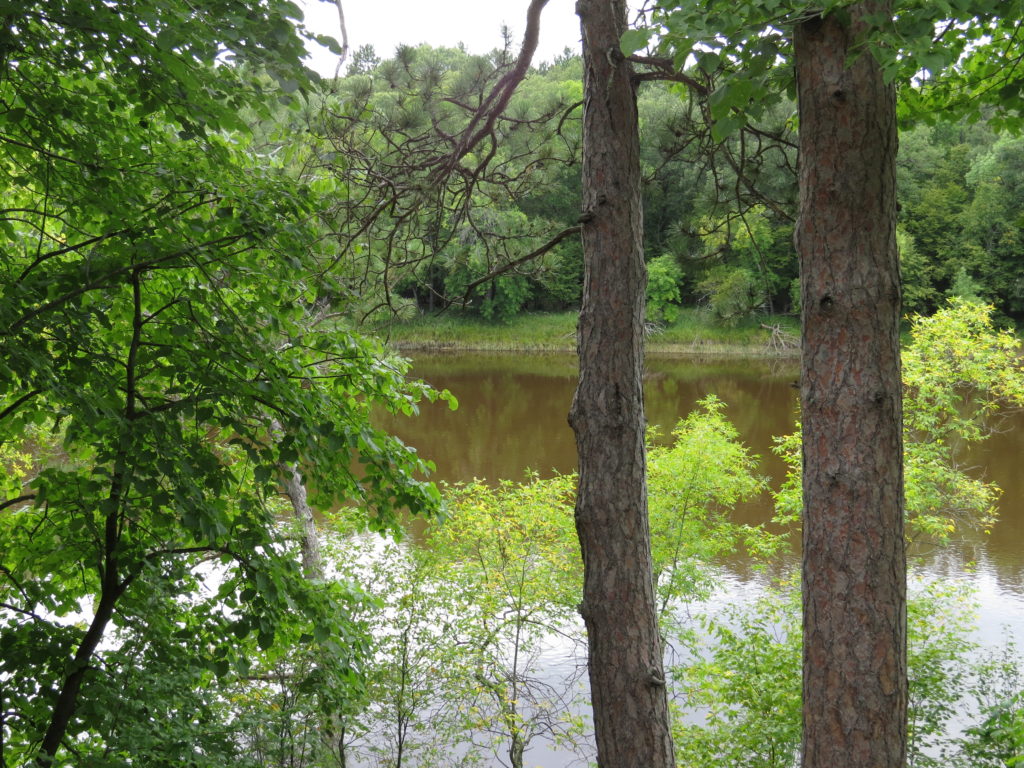
I never tire of the River—or the woods—or the prairie. Like Mark Twain said, it is not a book to be read once and tossed aside. It has a new story to tell every day, every hour even. We are the main character in our own stories. Many things distort or cover up the true chronicle of our lives; it’s hard to shake out the plot—the burdensome details and less relevant characters get in our way. Our reflections often do not show our true selves. In other words, our stories are messy. They obfuscate our purpose. And yet, isn’t that what a good book does? What if the writing, the reading, the living of the book of our lives is exactly the right thing, messes and all? What if our reflections are actually more beautiful than what we see? My face, with time, has many stories, many chapters. With time, I have accepted the lines, the less-than-perfectly-straight teeth, the worn look of my eyes. In fact, I love it now. I look at my face and appreciate the sorrows and joys that have left their marks, underlining and highlighting those impactful moments. With time, my face has become a wonderful book. I wonder what new story is on the next page?
Change is Coming