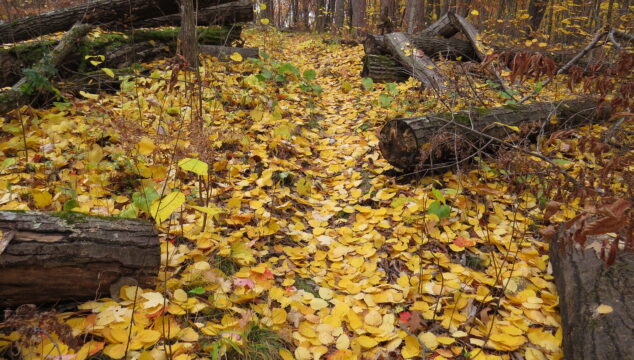
Come walk with me in the peak Autumn beauty of the Northwoods. To say that I love this time of year is an understatement. Most everyone can appreciate the colorful falling leaves---it reveals the 'true self' of a tree when its leaves are no longer producing chlorophyll. Their true colors are revealed, and there is something simple … [Read More...]
Archives for February 2020
Walking Across the Mississippi River
On the spectrum of safety, I know I fall on the ‘safety first’ side. The implication of safety first is not only for that person individually but also for all persons who may be impacted by the situation. On the other side of the spectrum is the risk-taker—gamblers, innovators, extreme sports and ‘roll-of-the-dice’ people. Often their risk-taking is centered on themselves—rarely do they consider the consequences of their actions on those around them, particularly those who are most vulnerable.
Our son worked for Will Steger at Steger Wilderness Center one summer in Ely, Minnesota. Steger is an arctic explorer, educator, and author who has witnessed the effects of climate change on the arctic regions. He has dog-sledded to the North Pole, across Greenland, and across Antarctica. He also does yearly solo expeditions in Northern Minnesota and Canada—the last two years have been in the Barren Lands in northern Canada. Did I mention he’s over seventy years old? Clearly a risk-taker in my mind. And yet, I heard him a couple years ago in an interview about his ice-out trip in early spring, when the weather is warming, the ice is melting, and he is navigating that dangerous terrain—he said that he is not a risk-taker. He said that he is in prime physical condition with sharp mental acuity when on these solo expeditions. He is experienced, prepared, educated, and working for a purpose beyond himself, and therefore, he does not take risks—for he clearly understands the consequences.
Yesterday morning Chris and I went to Bend in the River Regional Park. We had been there a year ago in October on a warm, fall day. Yesterday was warm (for late February), sunny, and calm. We walked the trail from the old farmplace along the top of the bluff above the Mississippi River.
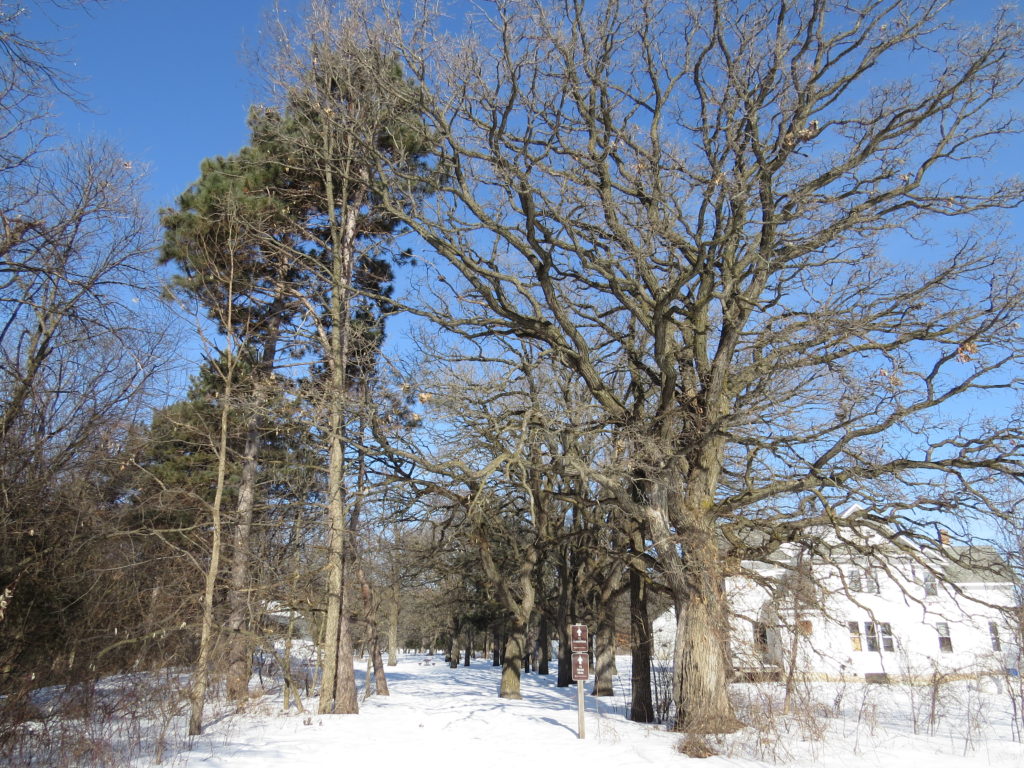
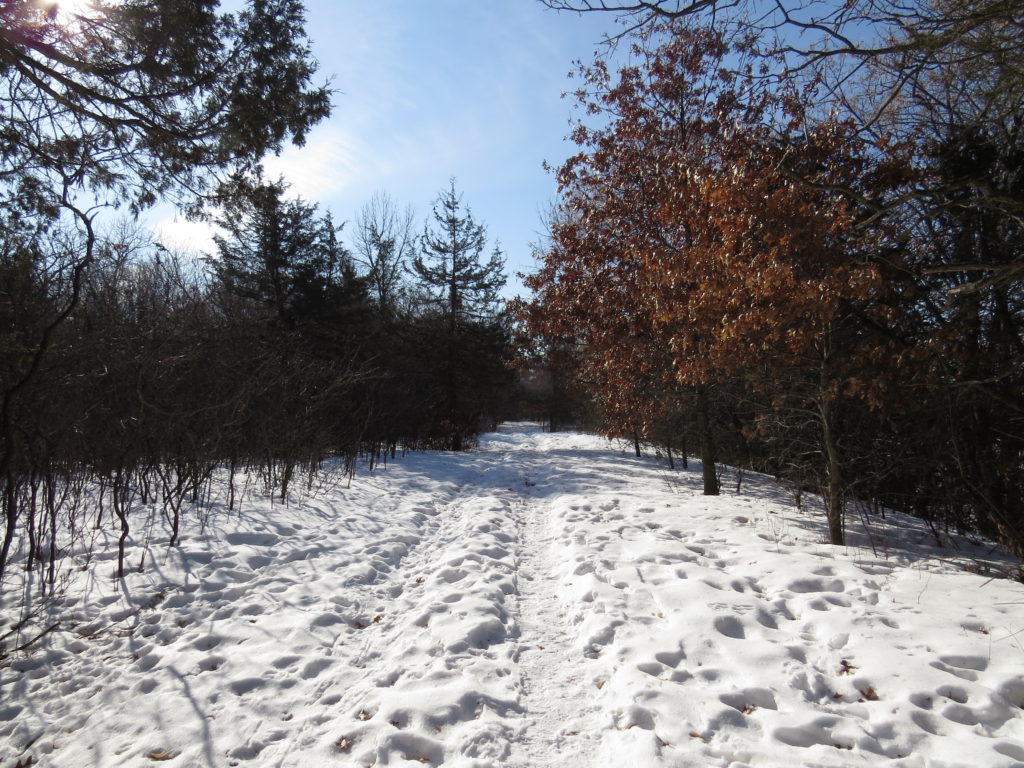
The River was covered in ice and snow, but I never once thought about walking out on it because it just seemed too….dangerous. After all, it was a big river—a big river that was flowing freely below the dam a couple miles away.
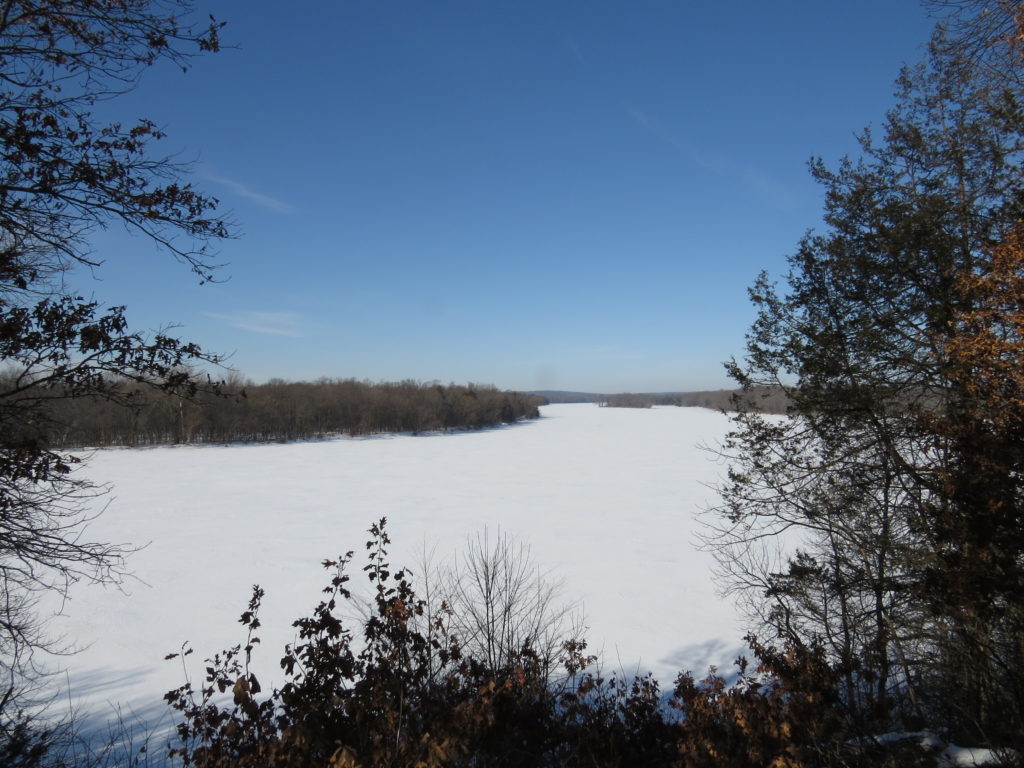
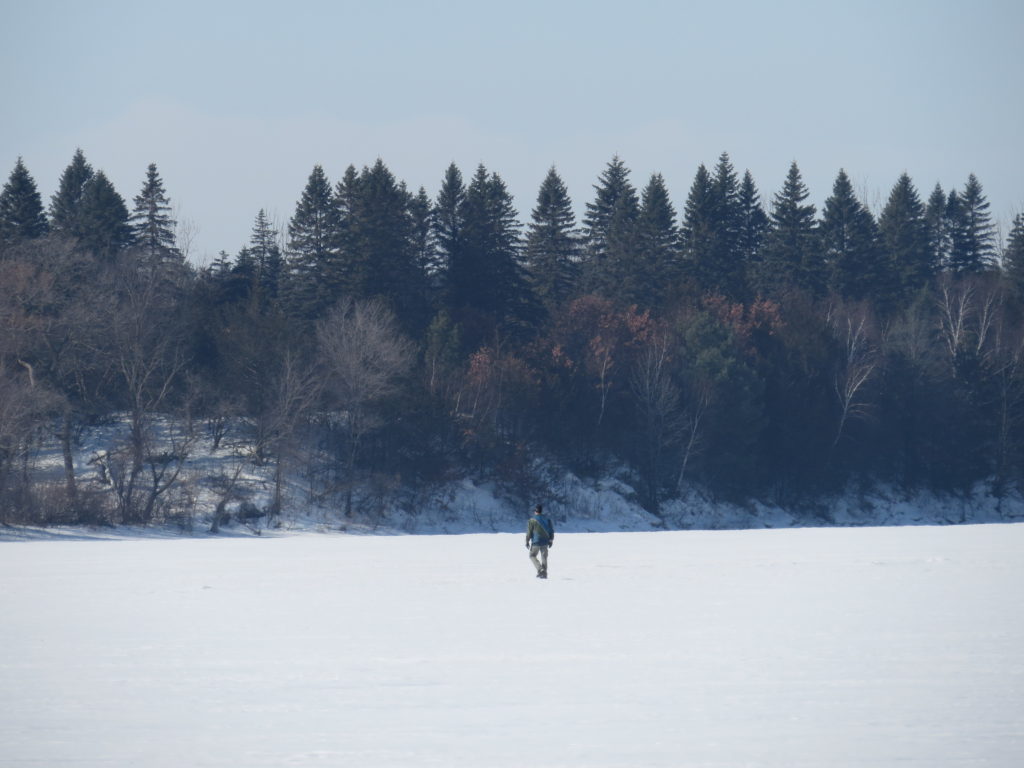
At one of the overlooks on the bluff, we talked to a guy who was on a solo hike from across the River—wait, what? He had started his hike at the Mississippi River County Park which is on the opposite side of the Mississippi from Bend in the River Park. I had questions! He said the ice was solid and safe, that he lived nearby and many times had snowmobiled down the River in years past but now enjoyed walking it.

After he walked on, I told Chris maybe we should do it! If he made it across the ice just fine, we should be fine, too!
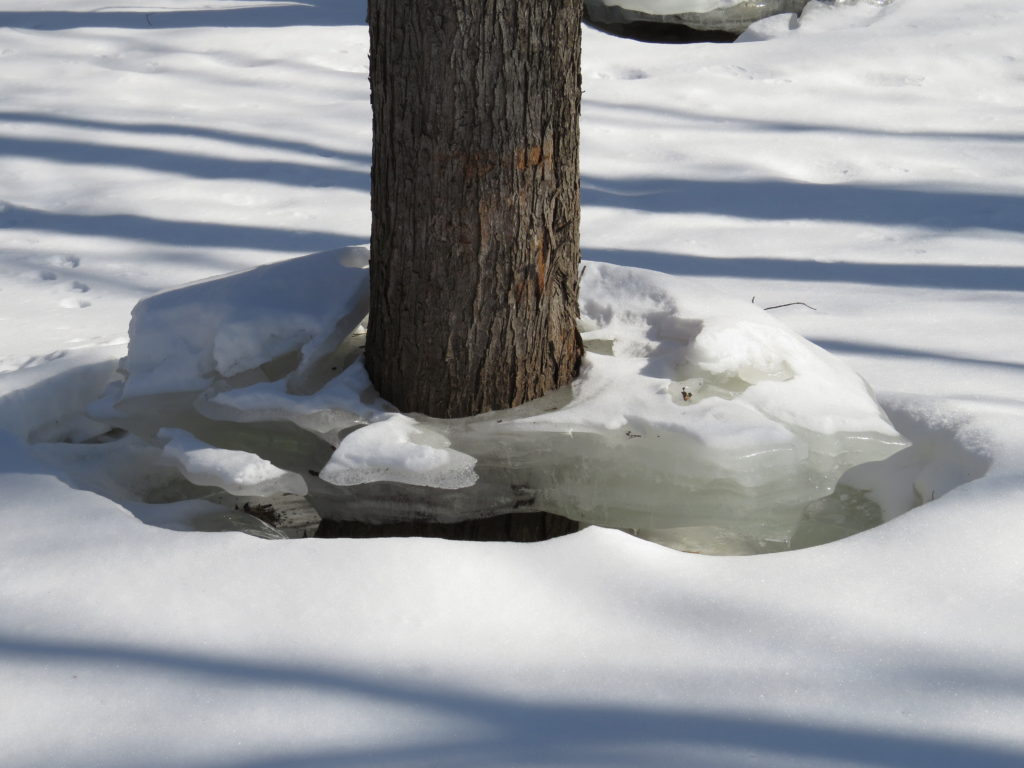
So we left the bluff trail and went down to the River’s edge. I wasn’t comforted by what I saw: ice collars around the trees that had broken away from the rest of the frozen water and streams of running water that were flowing under the ice into the Big River. I began to doubt our decision.
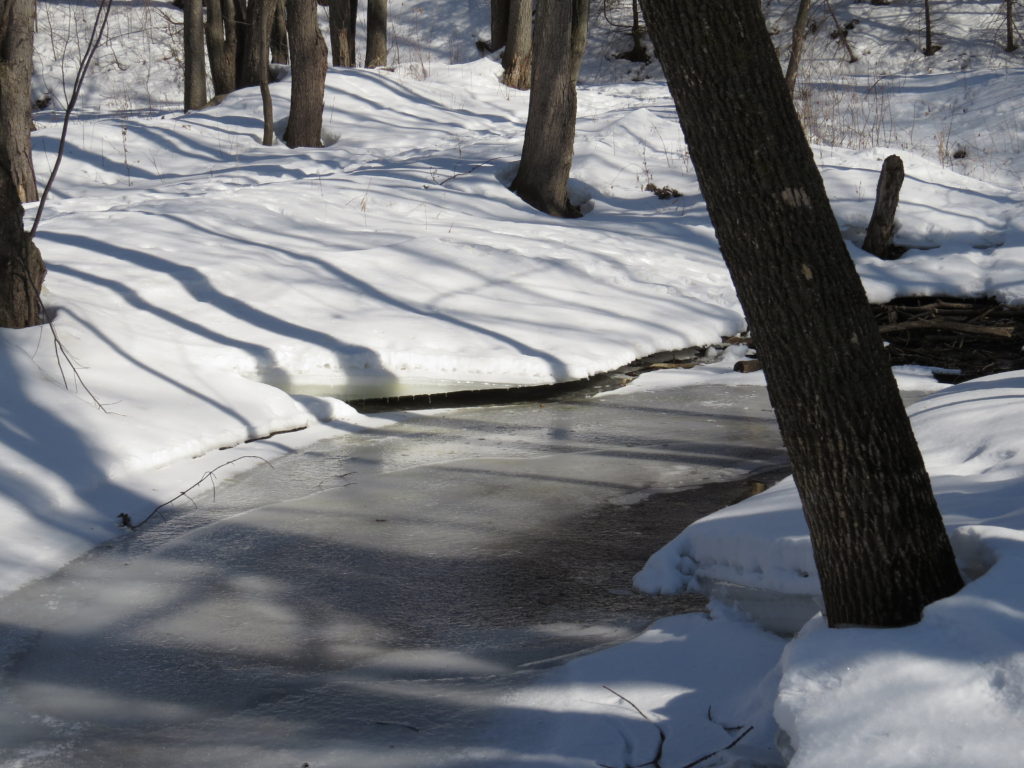
But we tentatively walked on and found the footprints of the solo hiker. We stepped out onto the River.

It was easy walking in the inch or so of snow that covered the ice—the rest of our deep snow must have incorporated into the ice as it formed. We weren’t the only creatures that had crossed the River.

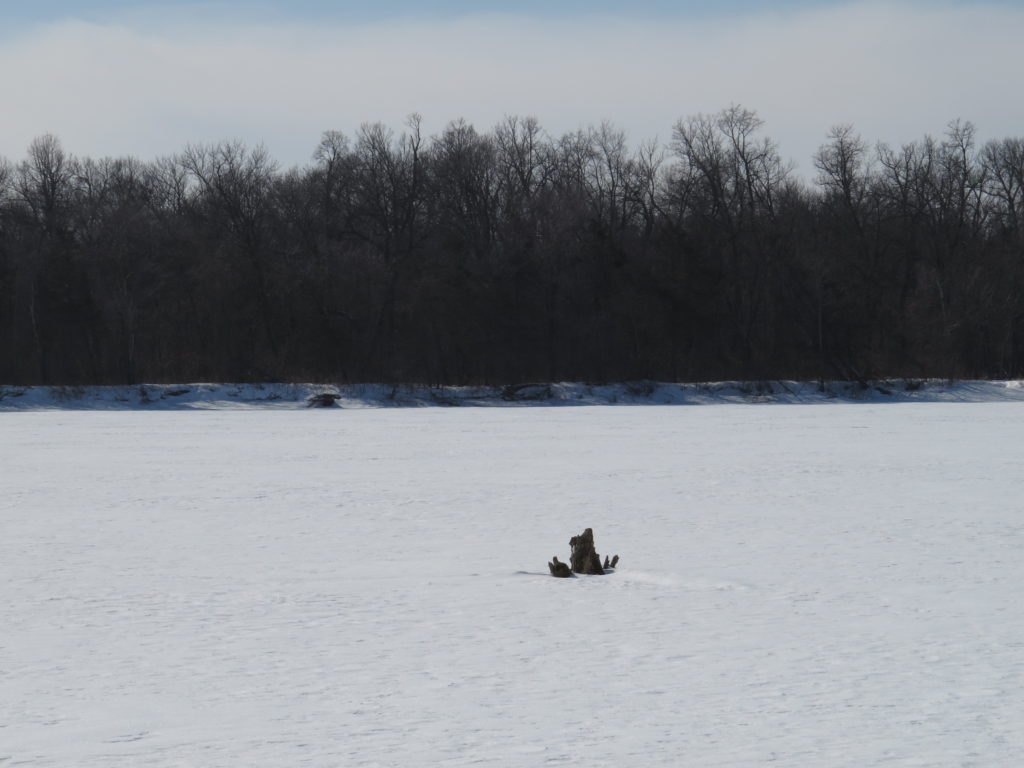
The ice felt solid and safe—we saw no heaves or cracks or thin spots—just a tree stump that interrupted the white expanse between the banks. But it was still kind of freaky knowing we were walking across the Mississippi River.
There was only one place where the sun had melted away the snow cover to reveal the ice below it. I wondered how thick it was…


My safety-first mentality didn’t even entertain the thought of walking across the River, but after we talked to the man who had done it, who had experience with the River and its ice, it became the highlight of our day. We still reassured ourselves about the eighteen below zero night we had earlier in the week and how just last night was five degrees. (Surely we will be okay.) Like Will, we were not treading on thin ice, we weren’t gambling with our lives, we weren’t out on a limb or playing with fire. Will Steger has had amazing, incredible adventures in his life and has educated the rest of us with his knowledge, experience, and purpose. As we walk on into our own adventures, it behooves us to listen to those who have walked before us, to those who know first-hand the struggles, perils, and pathways, and to those who have a vision larger than themselves, including for those who are most vulnerable. Walk on!
A Circle of Trees
In January, in the darkest, coldest days of Winter, I attended an event at our church entitled ‘Summoning the Light with Song: Community Singing Experience.’ We sat in a circle of chairs at the front of the sanctuary. Our song leader sang a line, and we repeated it; again and again we sang back what she sang. On some songs we sang different words and parts. Others were sung as a round after we learned the basics. It was a simple, pure way of singing, and I was surprised how beautiful it sounded in such a short amount of time and practice.
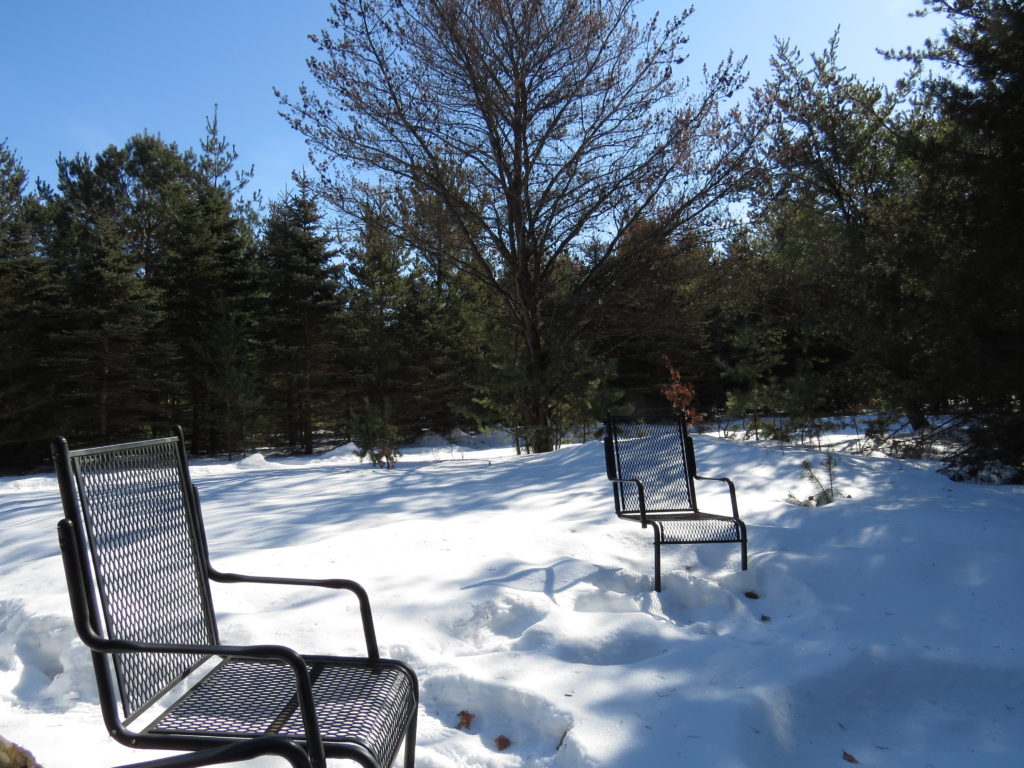
I’ve been summoning the light in a different way since our move—in a circle of trees in our backyard. Even in the bright light of midday, the sun stretches to peek above the trees as it arcs low in the southern sky. I bundle up and place an old green Army blanket on the freezing metal chair. When the sun is just right, it hits my face, the only circle of exposed skin that even has a chance of converting those golden rays into Vitamin D.
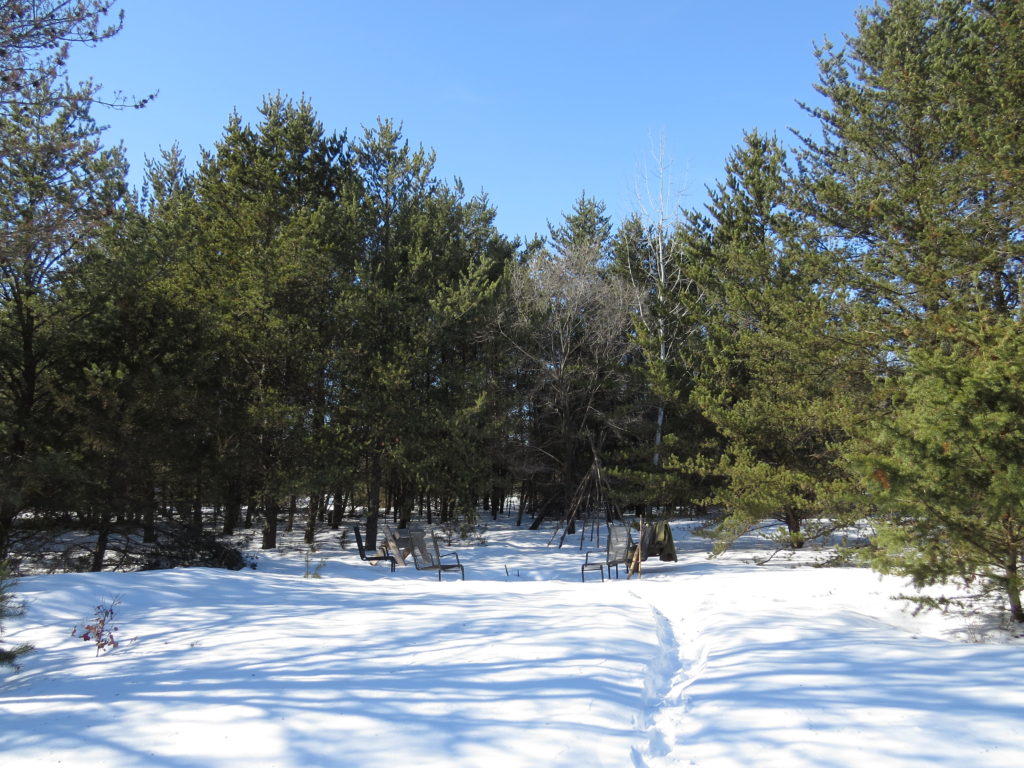
At the center of the circle of trees is a fire circle—the only fire we’ve had so far was on Christmas Day after we moved truckloads of boxes and miscellaneous garage things.
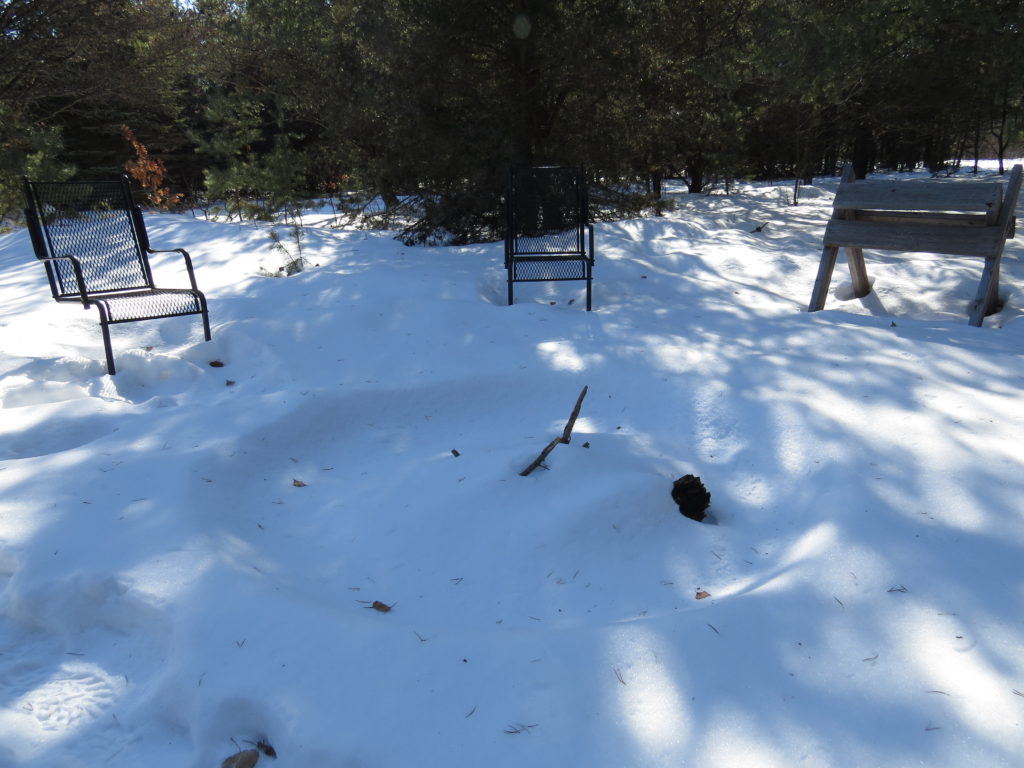
While sunshine is the ultimate ‘cherry on the top’ of my day, the more sustainable and reliable givers are the trees. Most are Pines, some are Spruces, a few are Cedars, with a couple of deciduous trees thrown in. I sit in the circle of trees, sometimes with sunlight, sometimes with snowflakes, and soak in their goodness.
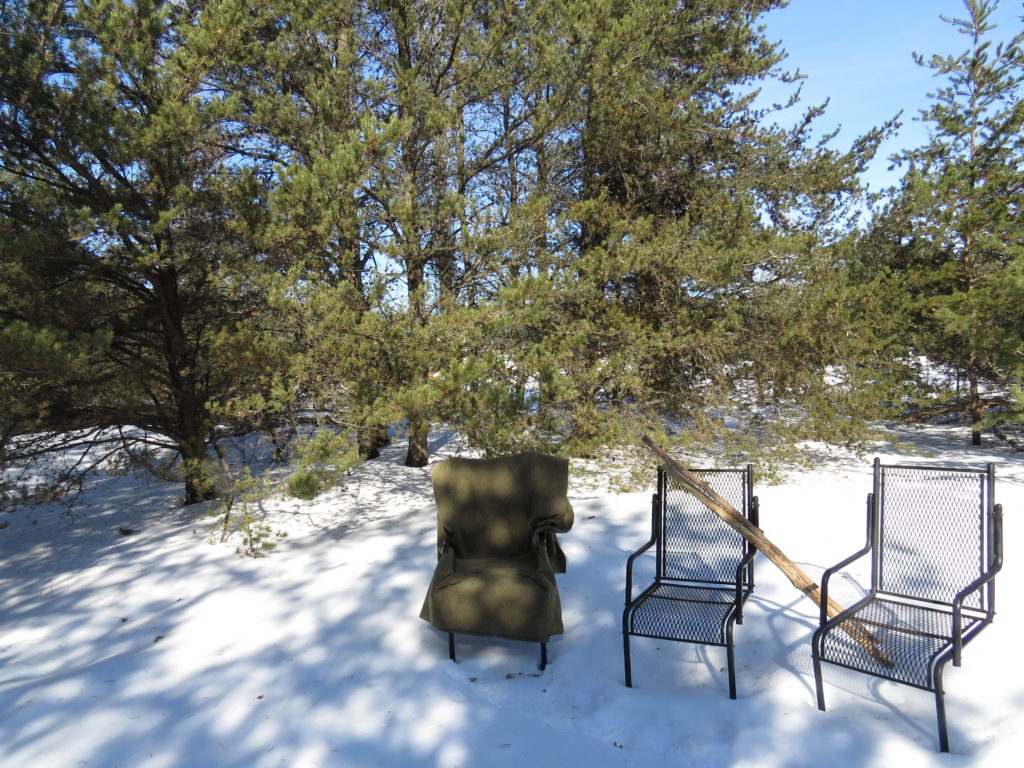
After sitting in the tree circle today, I remembered an old CD we had gotten when the kids were little that was called “A Circle is Cast.” I dug it out and listened to it. It was communal singing from a group named Libana—similar to the songs we had sung at the church event! The title song ‘A Circle is Cast’ repeated and harmonized with the words ‘a circle is cast again and again and again…’ Think about the circles in our lives—our circle of friends and family, the circle of a football huddle deciding what play to run, reading a book to a circle of preschoolers, a meeting of the minds in a circle around a conference table, and playing games in a circle—cards, board games, and Duck, Duck, Goose.
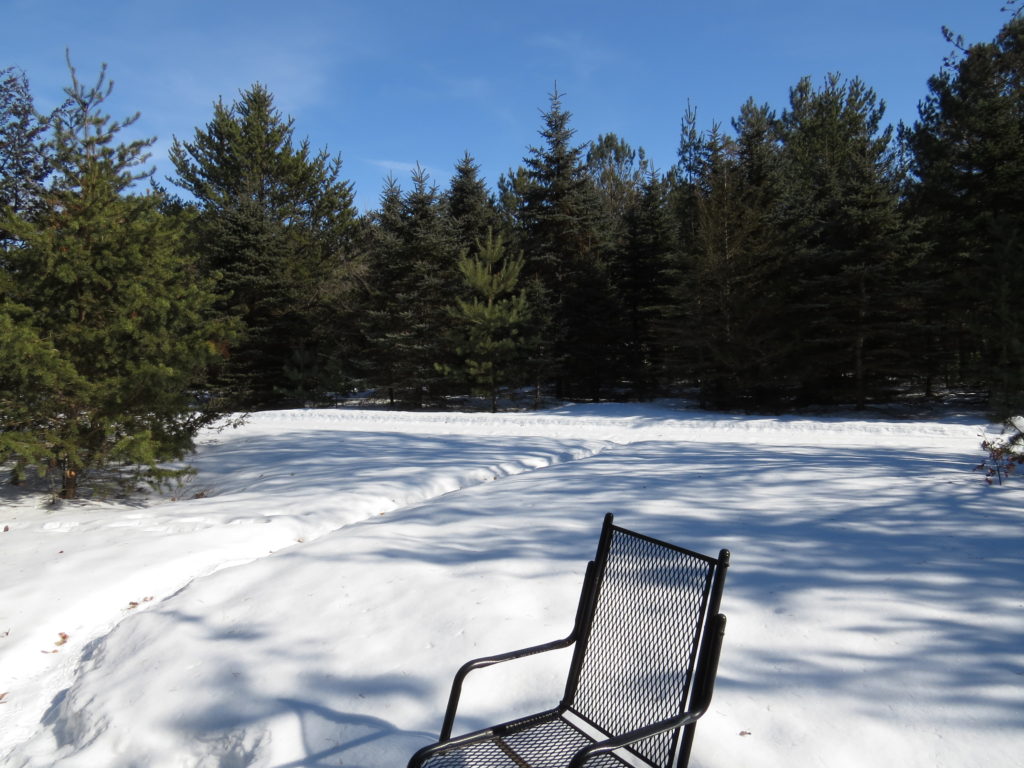
Circles represent stability and safety. Each ‘point’ in the circle has a job or responsibility to the other ‘points’ in the circle.
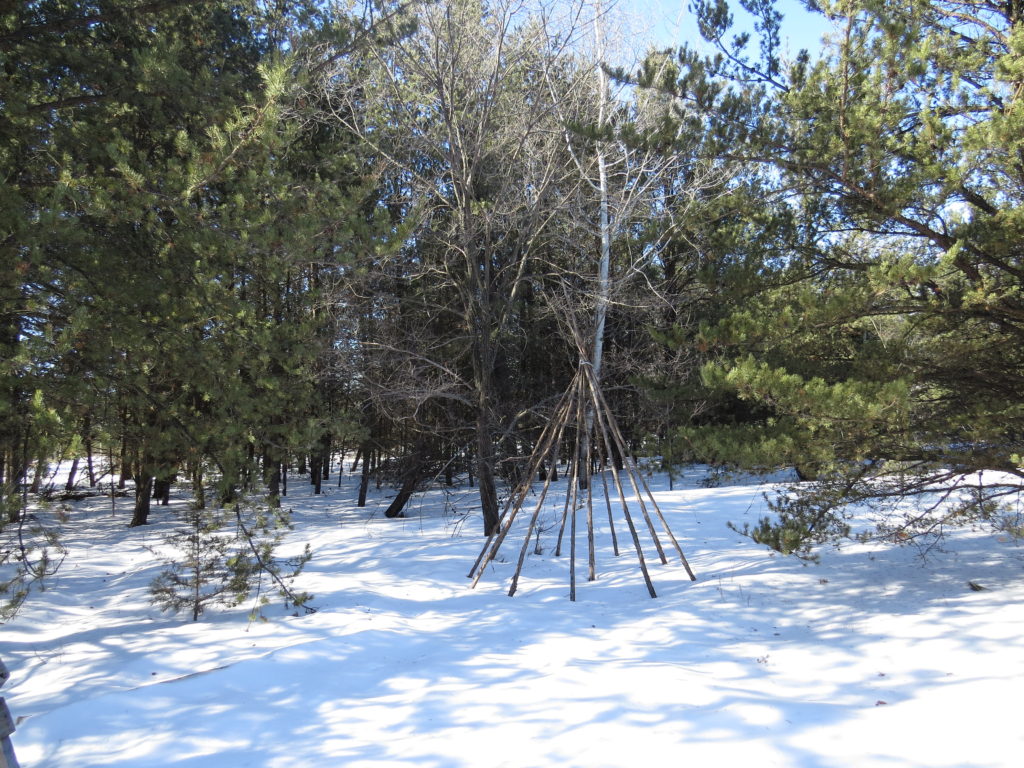
Sometimes there is a fail in the circle. One of the larger Pines in the circle of trees has died.
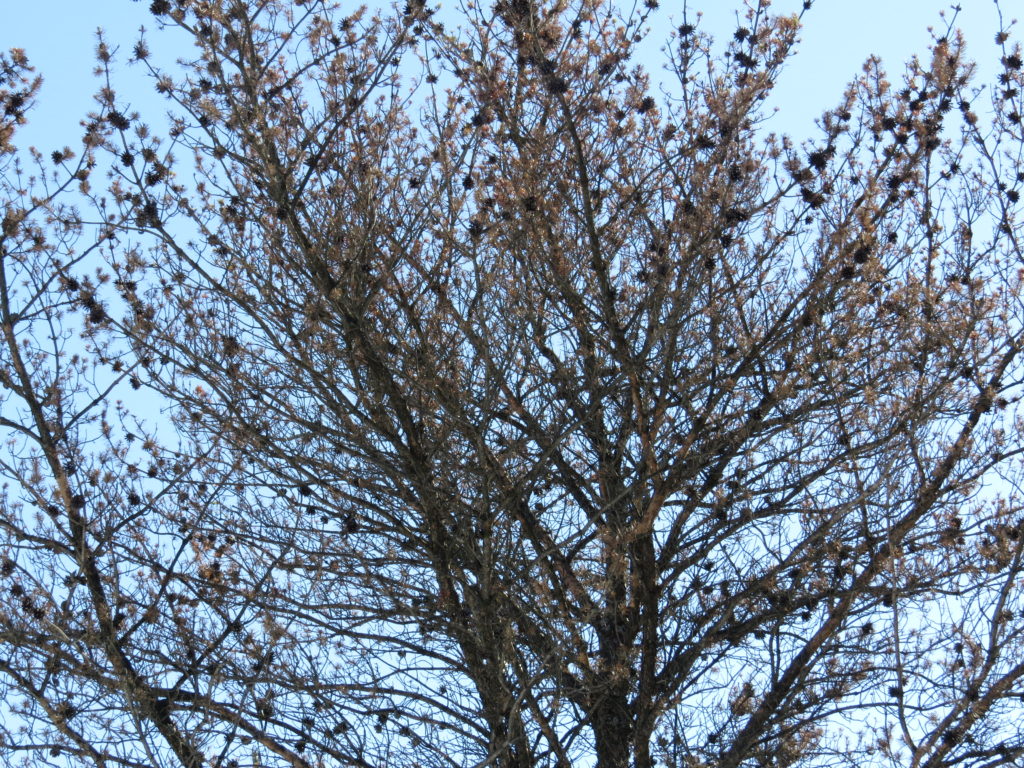
It must have been in the last year—there are still dry, brown pine needles and dark cones clinging to the branches. The loss is evident; the dead remains are a poignant reminder of what once was. Mourning for a member of the circle. So there is a wobbling of the once-safe circle—it holds together with the other ‘points,’ but there is a hitch, a limp, a miss because of the loss.
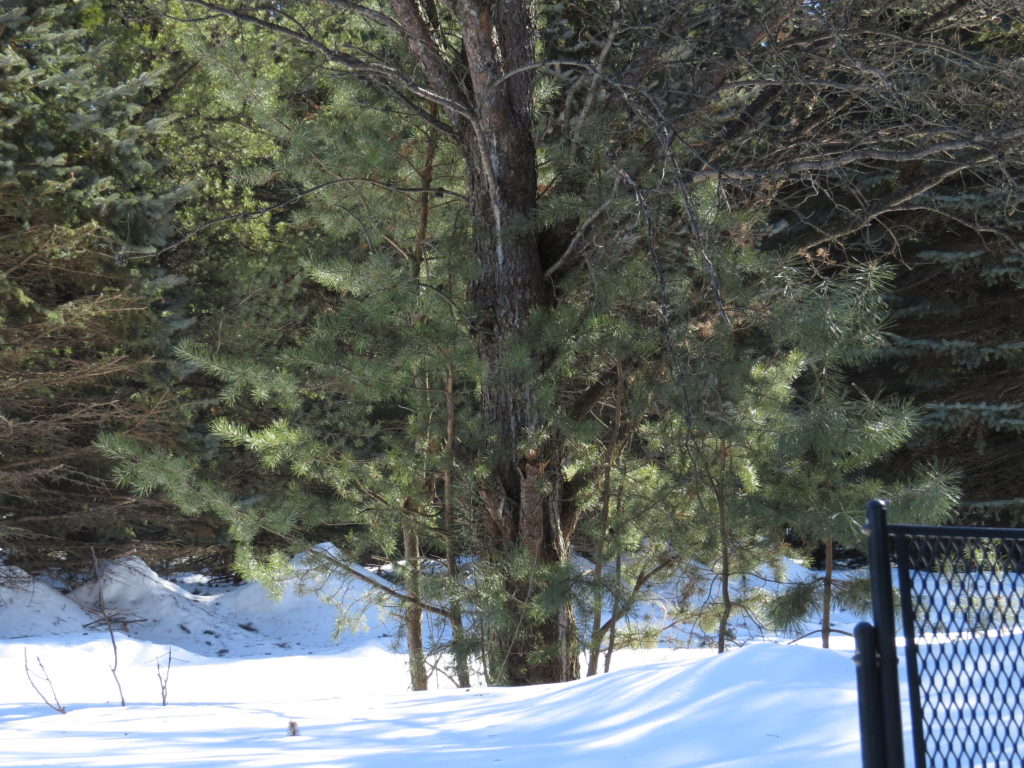
But at the base of the dead tree, there are replacements growing! The old tree had spread its seeds years ago, and the offspring will take their place in the circle.
Like throwing a lasso, we cast a circle again and again in our lives. We desire a stable circle around us—points of light that have our backs, that not only do us no harm, but protect us from harm and breathe life into our wounded selves when the world seems against us. The good thing about a circle is that no one point, no one member has the responsibility for the strength and stability of the whole–-one only has to do their part. The burden is shared. There is a synergy that emerges from the circle—in other words, there is more strength and power from the group as a whole than the added parts of the individuals. That’s science. And that’s spirituality. I sit in my circle of trees—they give me oxygen, essential oils that emanate from the needles and resins, the stability of deep roots, the uplifting songs of wind and birds in their branches, and a life force that is unexplainable and undeniable. I have cast my circle—again.
Lombardy Poplars and the Lombardi Trophy
Battles are won in the hearts of men. –Vince Lombardi
When we looked at our new place, the first thing I noticed was all the trees surrounding the open yard. The second thing I noticed was the tall, slender Lombardy Poplars spaced evenly against a backdrop of evergreens. I wondered why someone had chosen to plant them. Of course I was seeing them at their worst—dry, faded brown leaves clung to the weedy branches of the columnar trees. They do not have the beautiful Winter silhouette of Oaks, Maples, or practically any other deciduous tree. In fact, they are on the ugly side. I know why people plant them—they are fast growing (up to six feet/ year), so they make a screen or windbreak in the shortest possible time. Lombardy Poplars are native to Northern Italy—one can imagine them looking stylish alongside a villa in the rolling countryside. In central Minnesota, alongside the Pines and Spruces, they look out-of-place. They also have a terrible resume—they are short-lived, often only 15 years, they are susceptible to pests and diseases, they have shallow, spreading roots, and they are messy. The weak wood breaks easily, the male tree produces abundant pollen, the female tree produces cottony seeds that blow around, and they send out suckers that are hard to get rid of. So every morning when I eat my breakfast, I look out the window at the specimens of my prejudice. Their elegant name and origin don’t rescue them from my dislike.
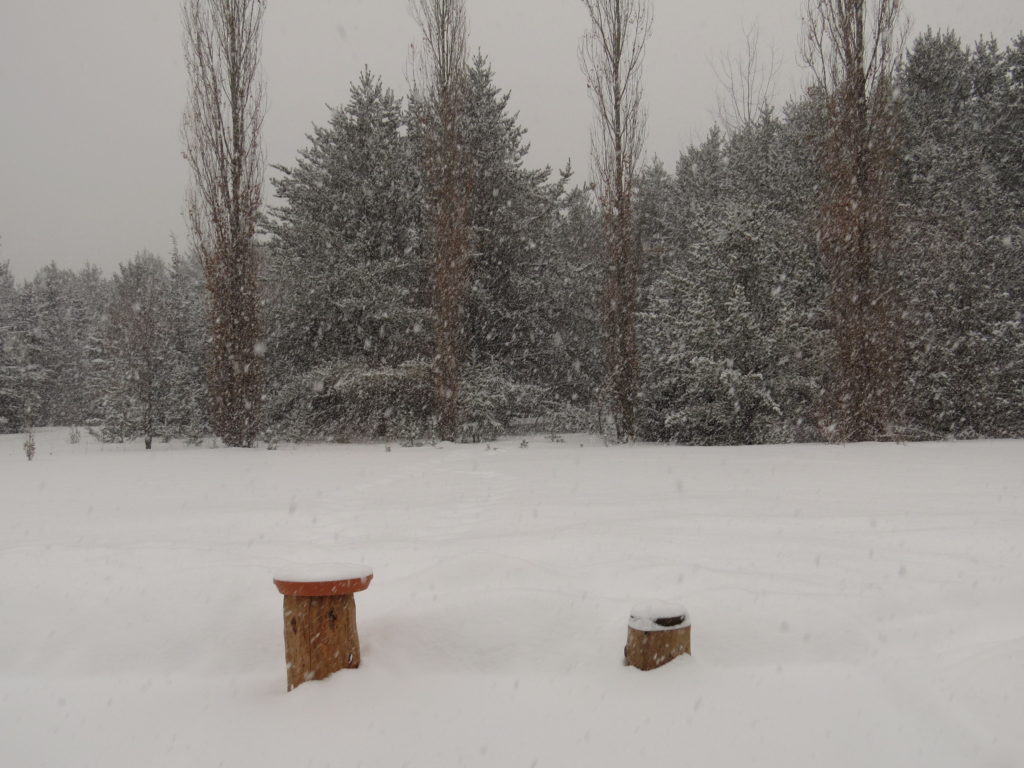
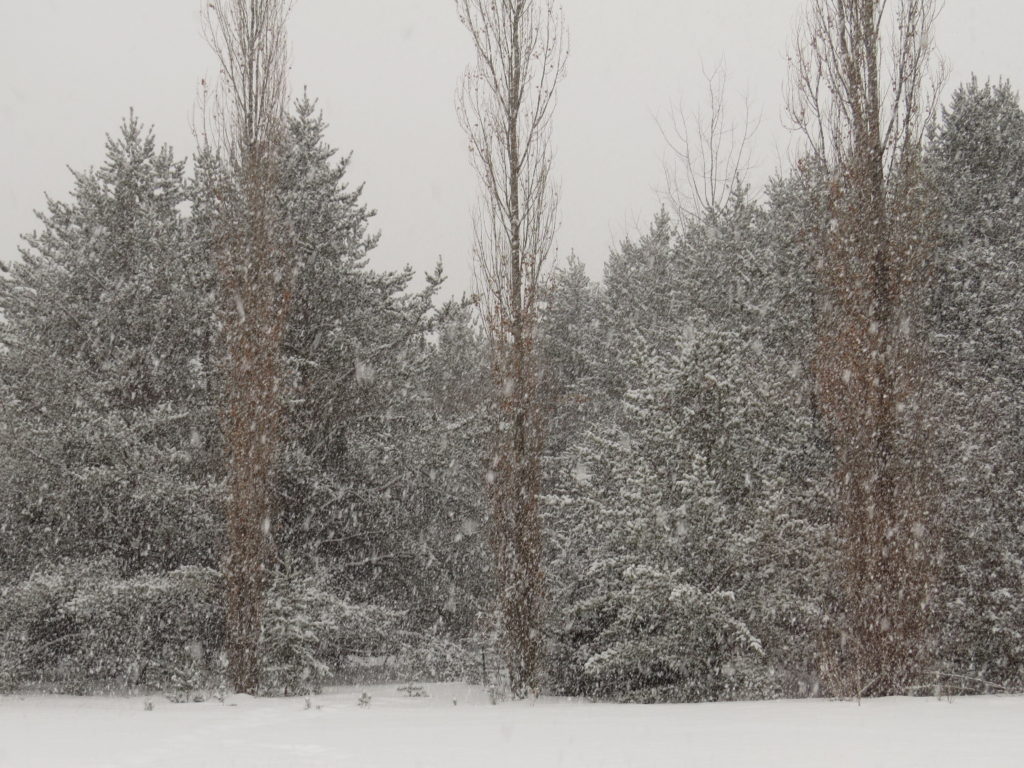
Last weekend we hit the road to Kansas City. The Kansas City Chiefs were in the Super Bowl for the first time in fifty years! The excitement and anticipation exploded throughout the City and region. Two super fans in our family were anxious to be among the ‘sea of red.’ We left in the frosty morning. It had snowed an inch or two overnight, and the trees and fence lines were outlined with that delicate layer of new snow.
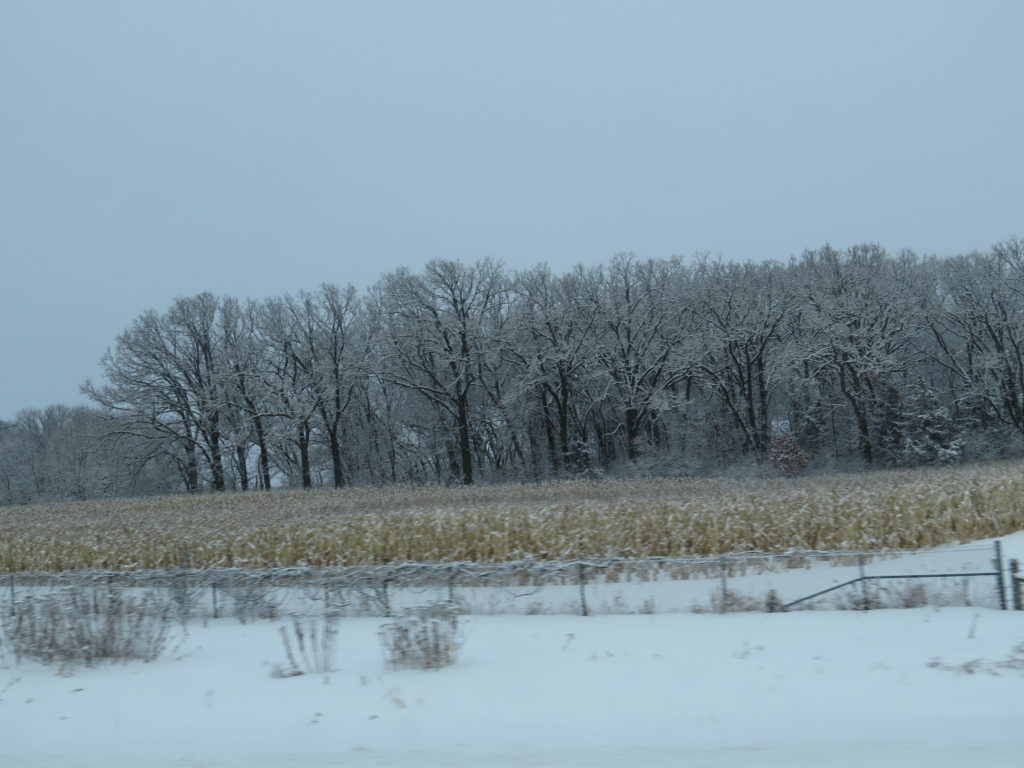
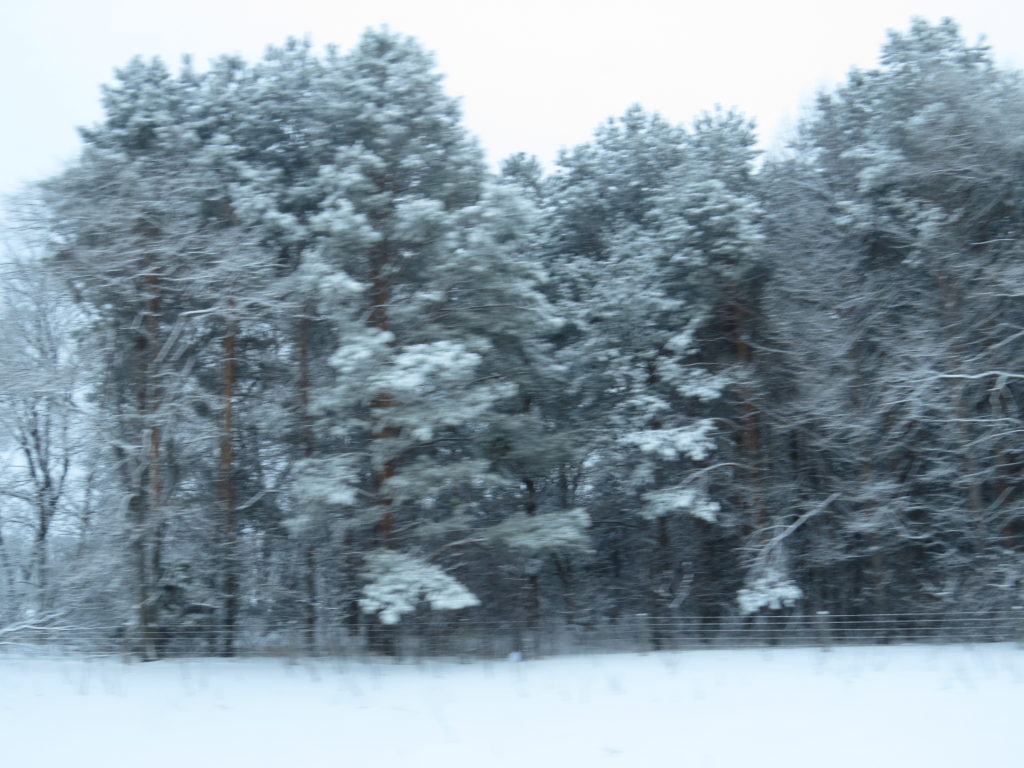
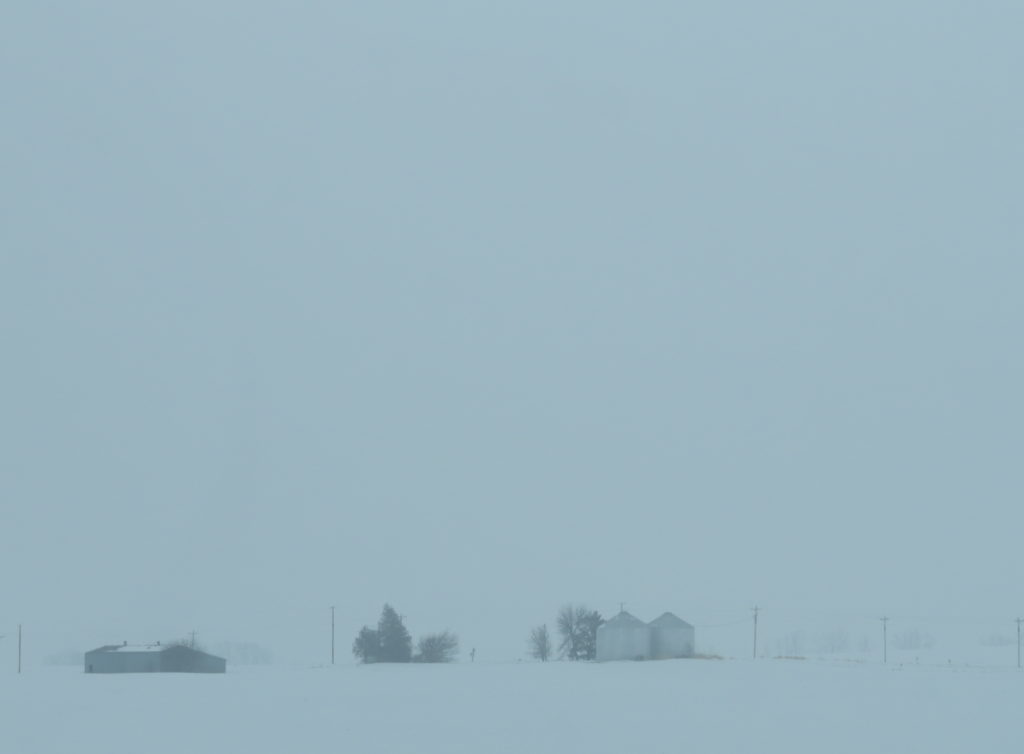
Iowa had less snow, but at a certain point, the sky and land blended into one, and the farm places looked like floating islands in the frosty, foggy air.

We made it to Missouri as dusk was beginning to envelop the countryside.

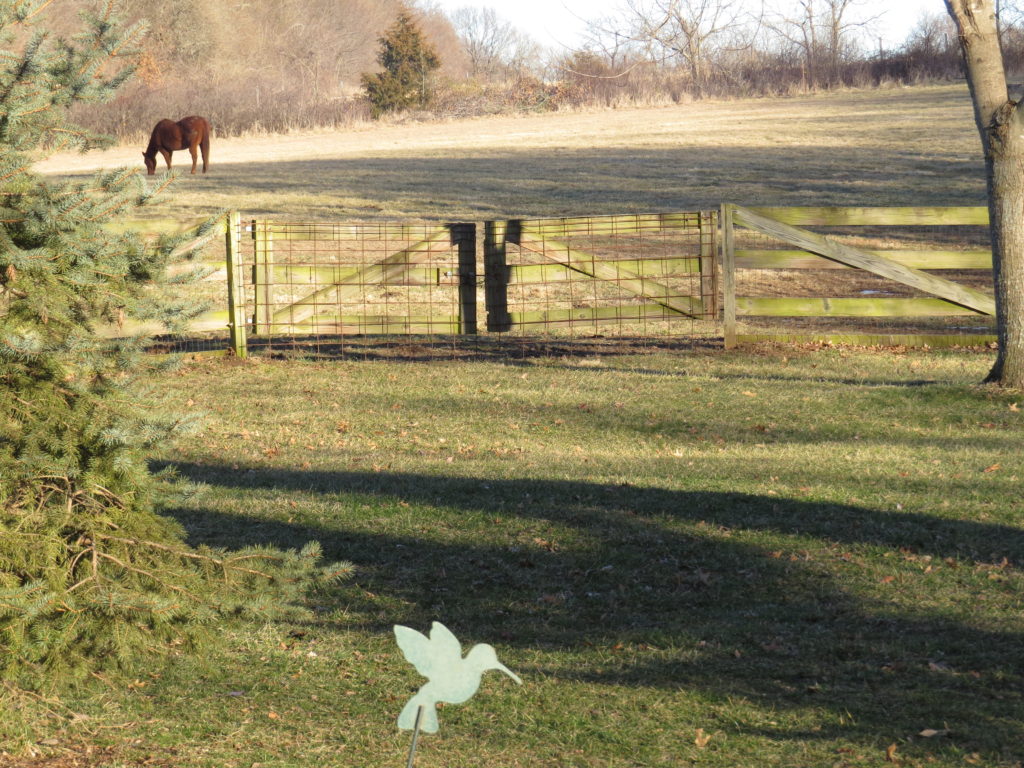
The next morning, in Kansas City, it was shocking to see the sun and green grass!
The Chiefs played the Green Bay Packers in Super Bowl I in 1967, but lost to the Packers and their coach Vince Lombardi. In Super Bowl IV, the Chiefs beat the Vikings and brought home the championship trophy. It wasn’t until the following year, in 1970, when the trophy was named the Vince Lombardi Trophy in honor of the coach who had won the first two Super Bowls and who had recently died from cancer. There were many years in the following decades when the Chiefs fought their way into the playoffs, but the championship game eluded them—until this year! With the great coach Andy Reid and the incredible talent of the young Patrick Mahomes, the Chiefs won the Super Bowl in an amazing comeback in the last minutes of the game. Kansas City Chiefs fans were ecstatic! Fifty years of waiting.
So what does the Lombardy Poplar tree and the Lombardi Trophy have to do with one another? Only the similarity of their names—and the fact that both have been on my mind these last weeks. The Lombardy Poplars don’t belong to us—we are not the decision-makers on their place in the world. I co-exist along with them, messy or not, ugly or not, worthy-in-my-mind or not. It’s humbling. Coach Reid and young Mahomes didn’t win the Super Bowl for themselves—they both have big hearts and a keen sense of history—they won it for the team, for the Hunt family, for all the other players in the previous fifty years, and for the dedicated fans who cheer them on every Sunday. It’s humbling and incredibly powerful. Hail to the Chiefs and to those with big, humble hearts!