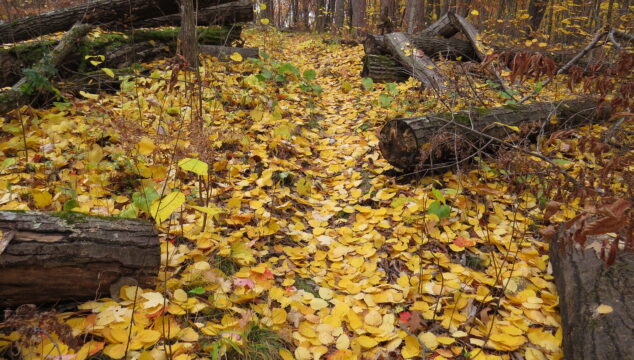
Come walk with me in the peak Autumn beauty of the Northwoods. To say that I love this time of year is an understatement. Most everyone can appreciate the colorful falling leaves---it reveals the 'true self' of a tree when its leaves are no longer producing chlorophyll. Their true colors are revealed, and there is something simple … [Read More...]
Archives for 2020
A Circle of Warmth
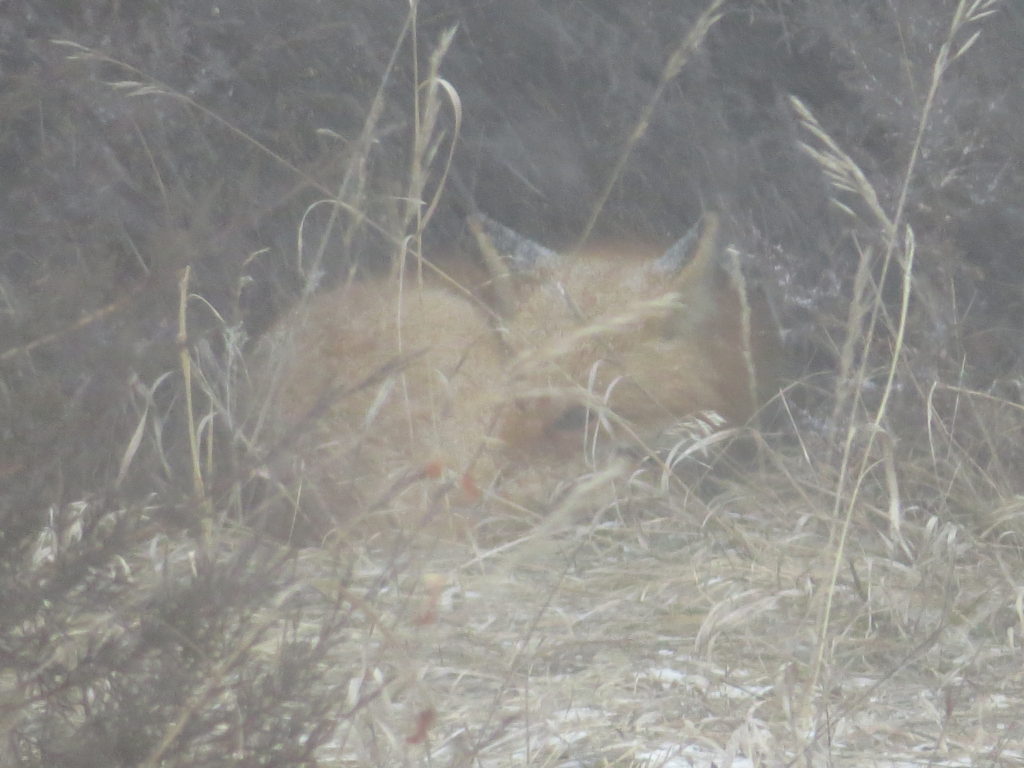
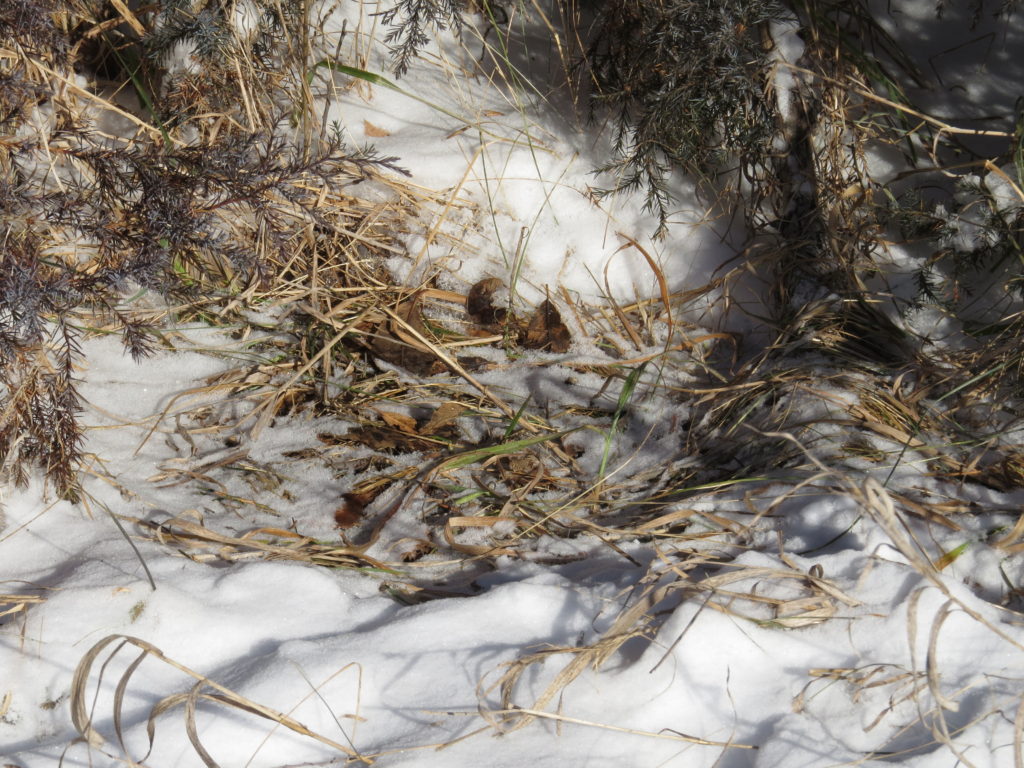
I was standing at the front door talking to Emily on the phone when I saw a flash of rusty-red walk through the prairie grass in front of the Cedars. He sat down like the canine that he is as I rushed to end the phone call to get my camera. When I returned to the window, he had snuggled into a little ball in the cozy grass.
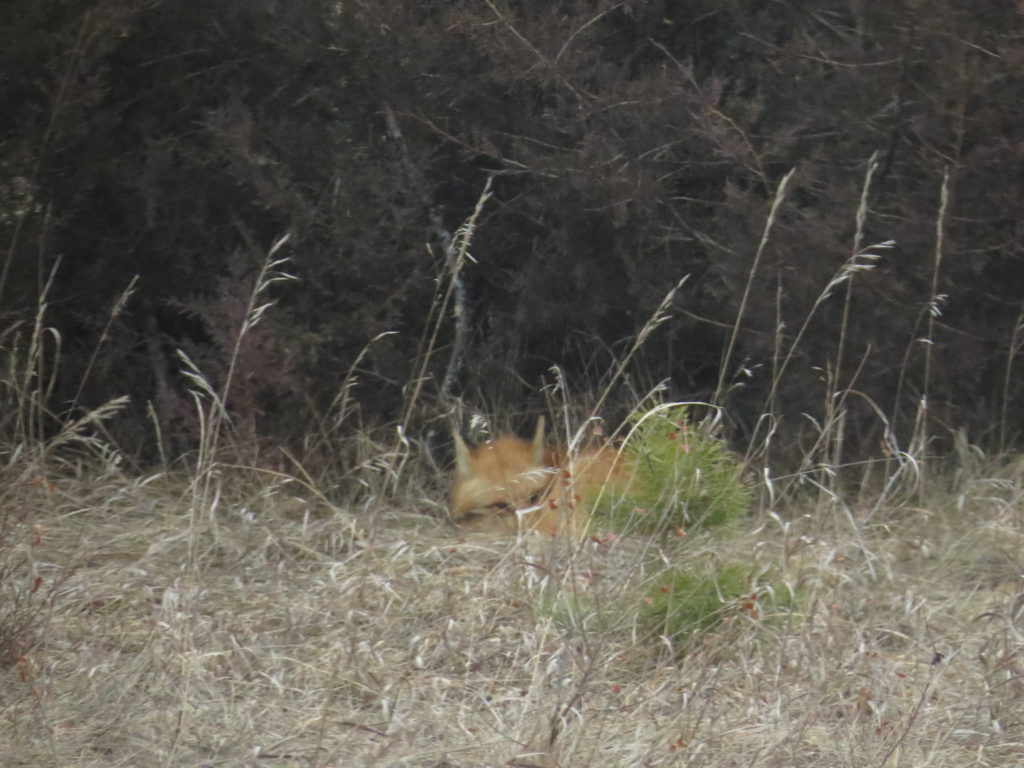
It was a chilly and extremely windy morning, and everything about it foretold the blizzard the weather people were warning us about. There was a deep, damp chill, the kind that creeps into your bones no matter how many layers you pull on. The clouds were gray and low-hanging, pregnant with moisture. The wind blew with a fierceness that reminds us mere mortals that we are not in control of everything like we wish to be.
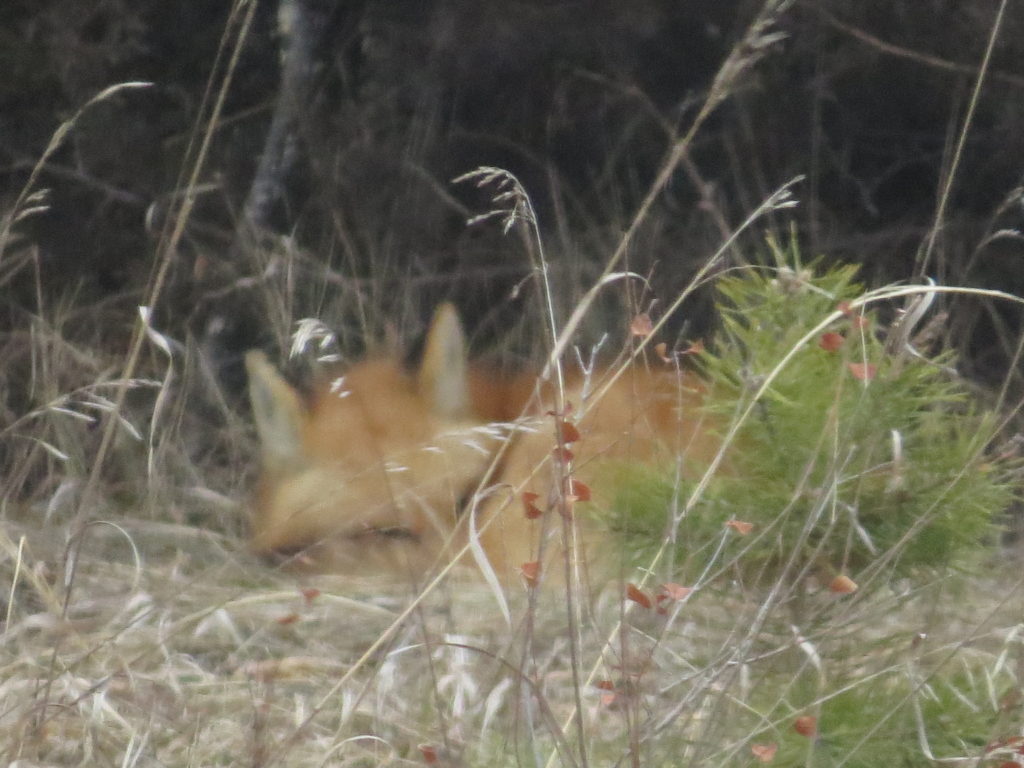
I opened the front door to get a better shot, but the colliding warm and cold air condensed to a fog on the storm door. He opened his eyes to watch me but didn’t move from his circle of warmth.
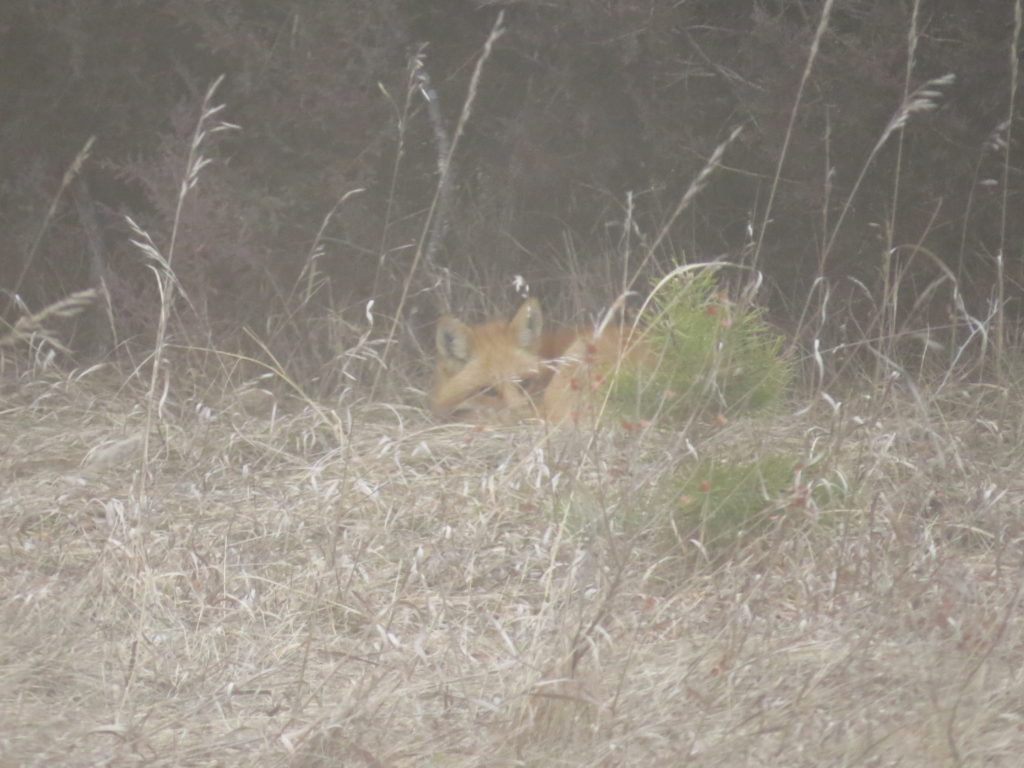
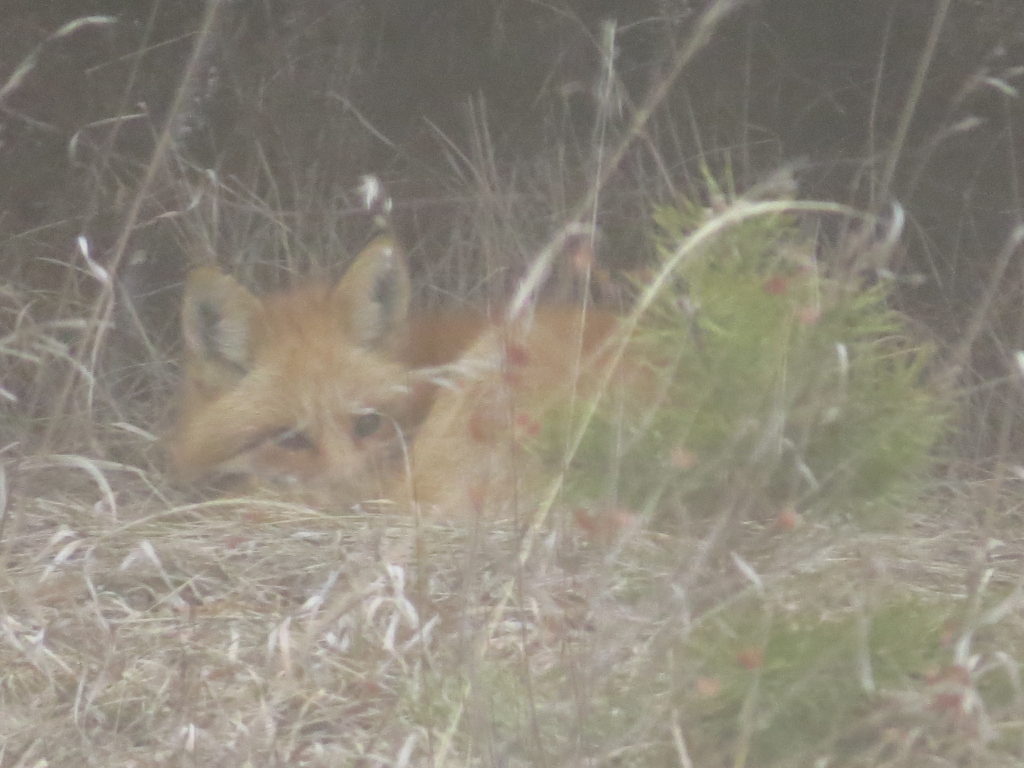
I thought to myself that this was hygge for a fox, for a wild creature that is always ‘in the elements.’ It was a cozy little space out of the howling wind where he could rest. Hygge (hue-guh) is a Danish and Norwegian word for a feeling or moment of coziness. It is an ‘everyday’ thing, not contrived or fanciful, but special nonetheless. My Danish and Norwegian grandmothers could magically create a kitchen table full of baked goods and delectable treats when we would stop by for a visit. It was ‘just a little lunch’ according to them, but it was a special feast to me, a cozy moment in time and memory.
In an attempt to hygge ourselves for the blizzard, Chris and I made a list and went to the store before the snow was supposed to start. I thought for sure our departure would spook the fox into running away, but the small ball of fur stayed curled in the grass. And when we returned, he was still there but had moved a foot or so into more coverage.
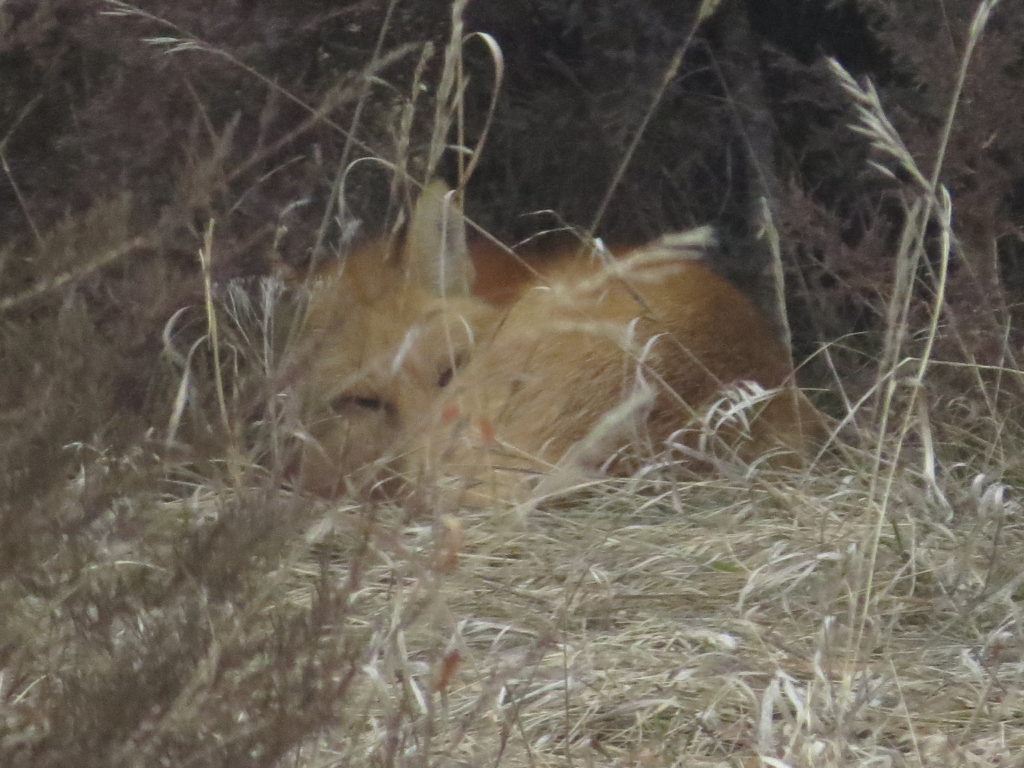
Every once in a while he would look up when he heard a car or the neighbor’s barking dog, but for the most part, it was a time for a Winter’s nap.
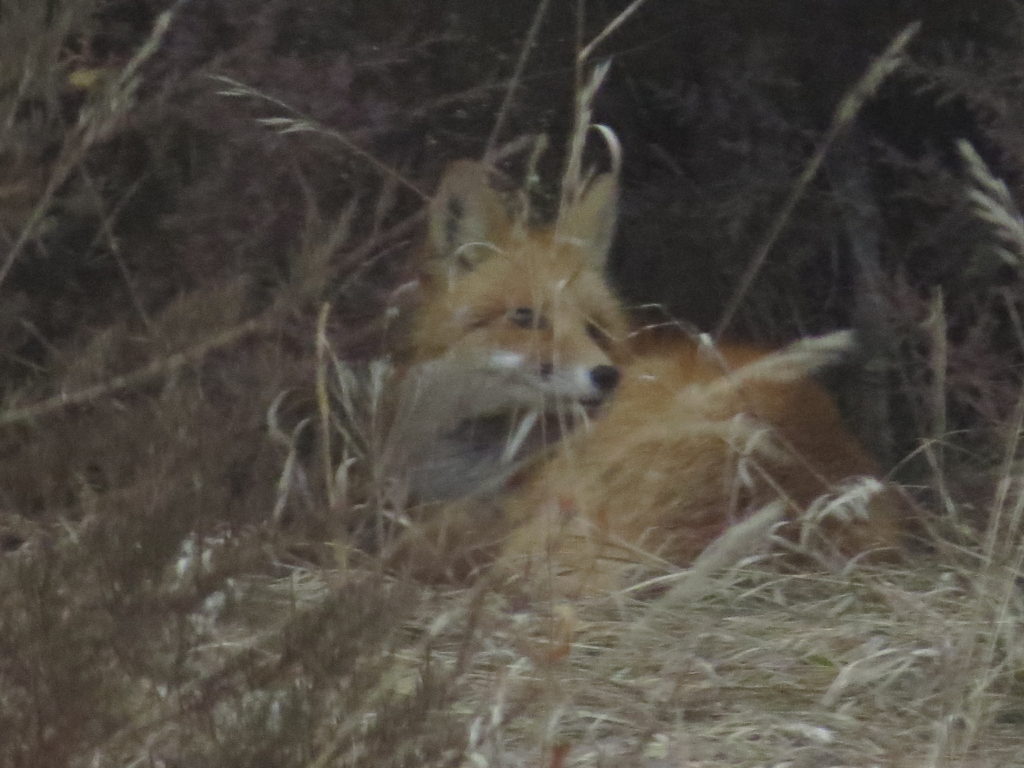
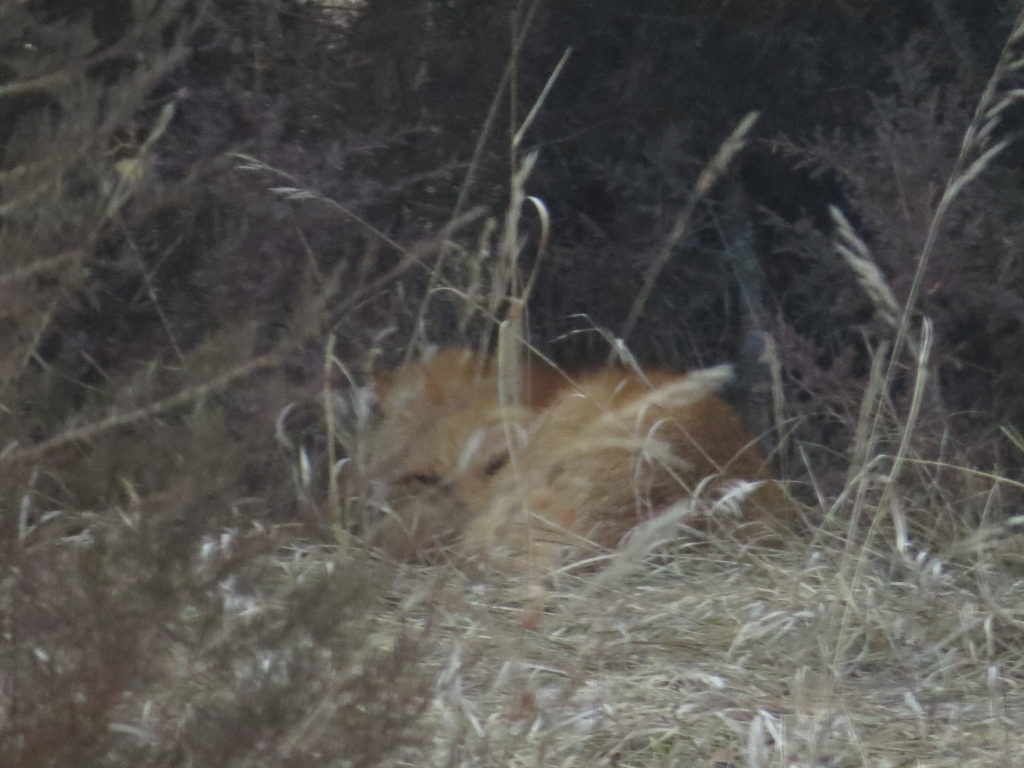
At some point, he turned around, curling in the other direction with his back to the wind and the impending snow.
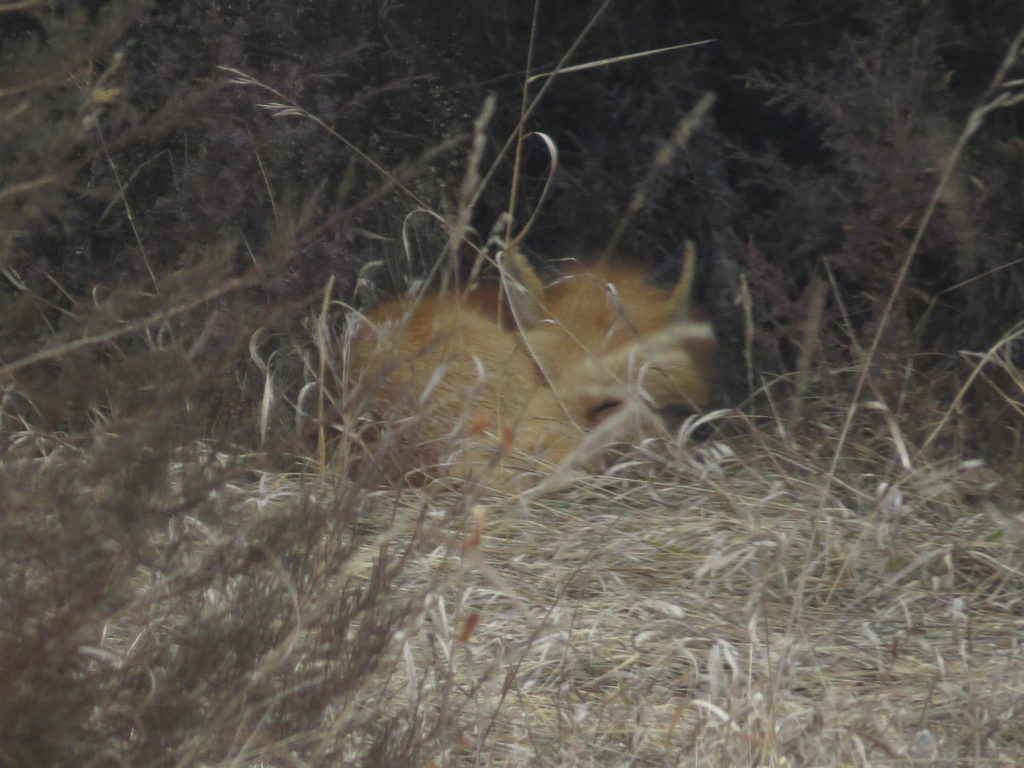
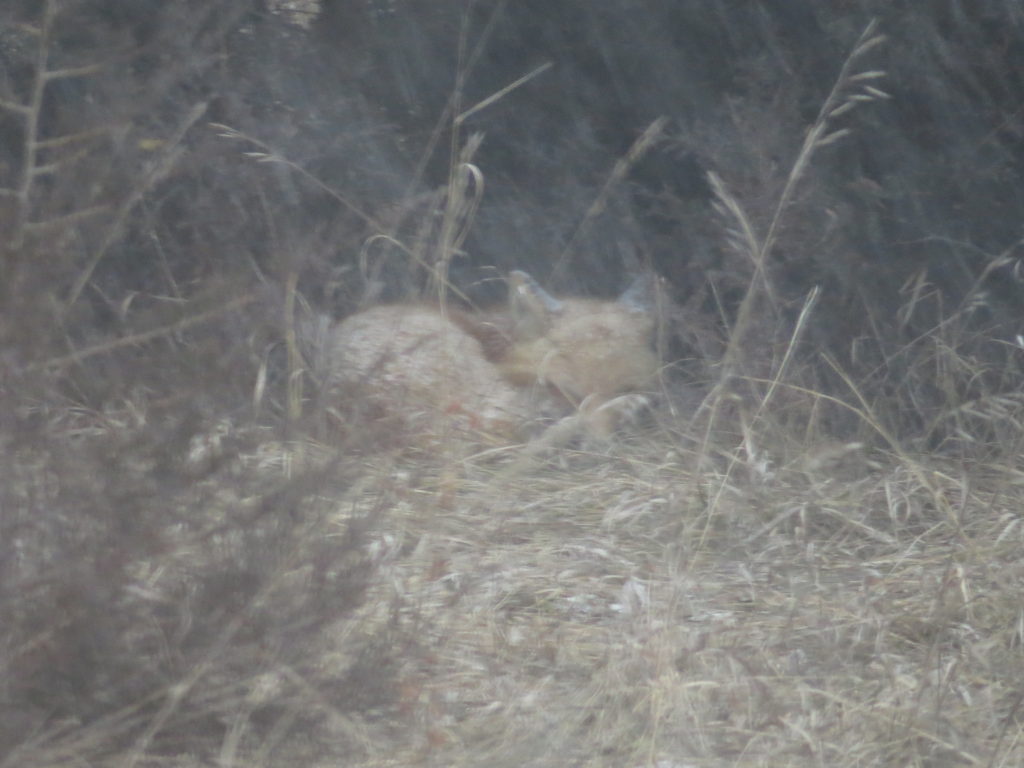
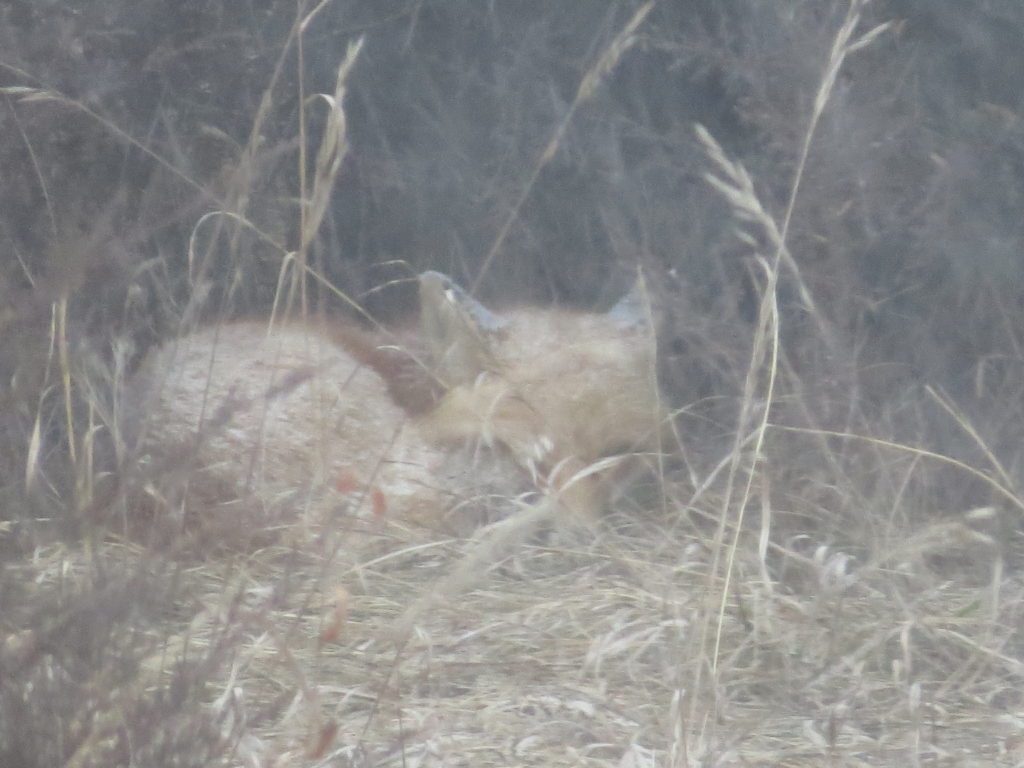
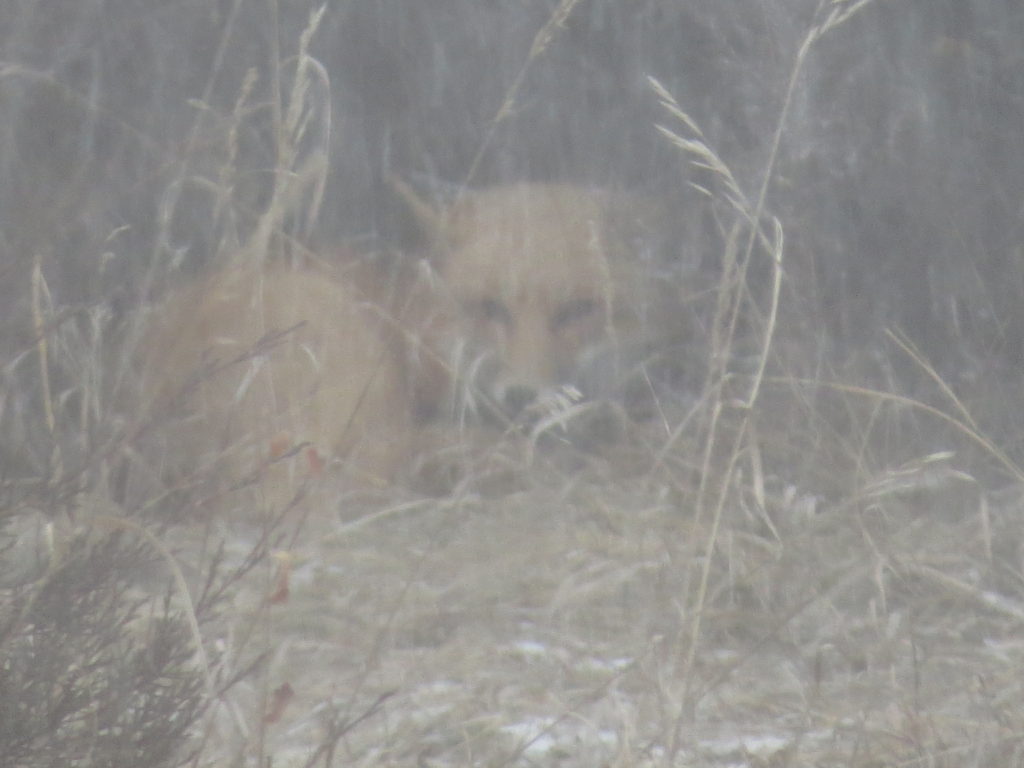
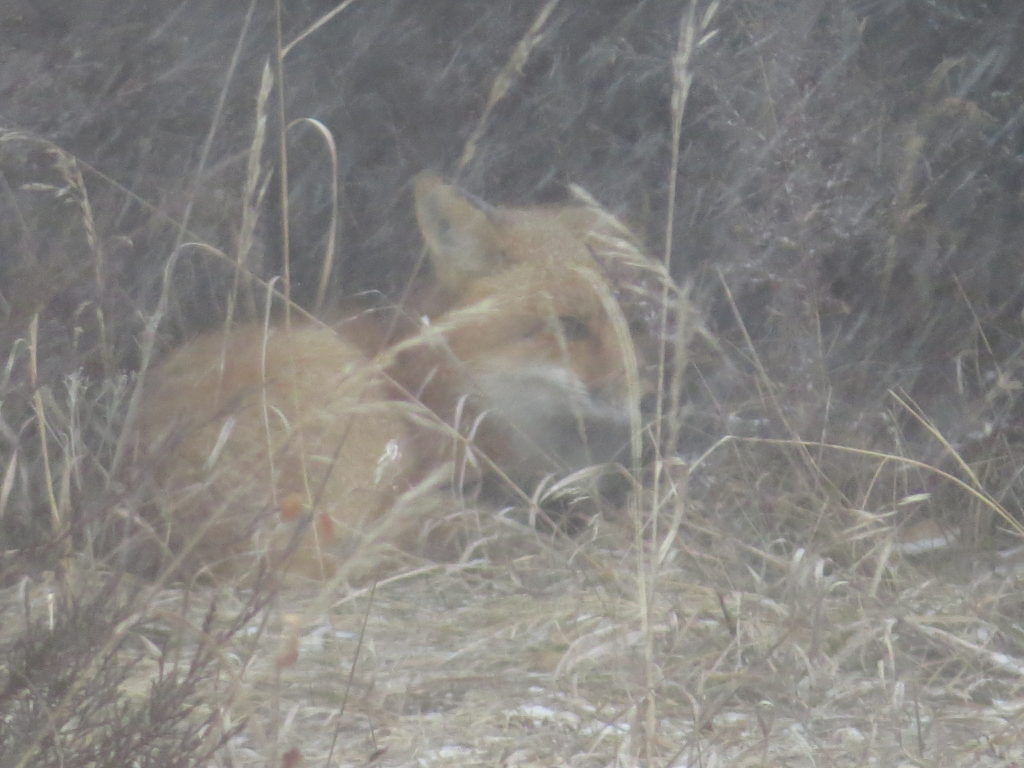
The snow accumulated on his warm fur, then melted, and he licked the moisture off like a cat or dog would after coming in from the wet weather.
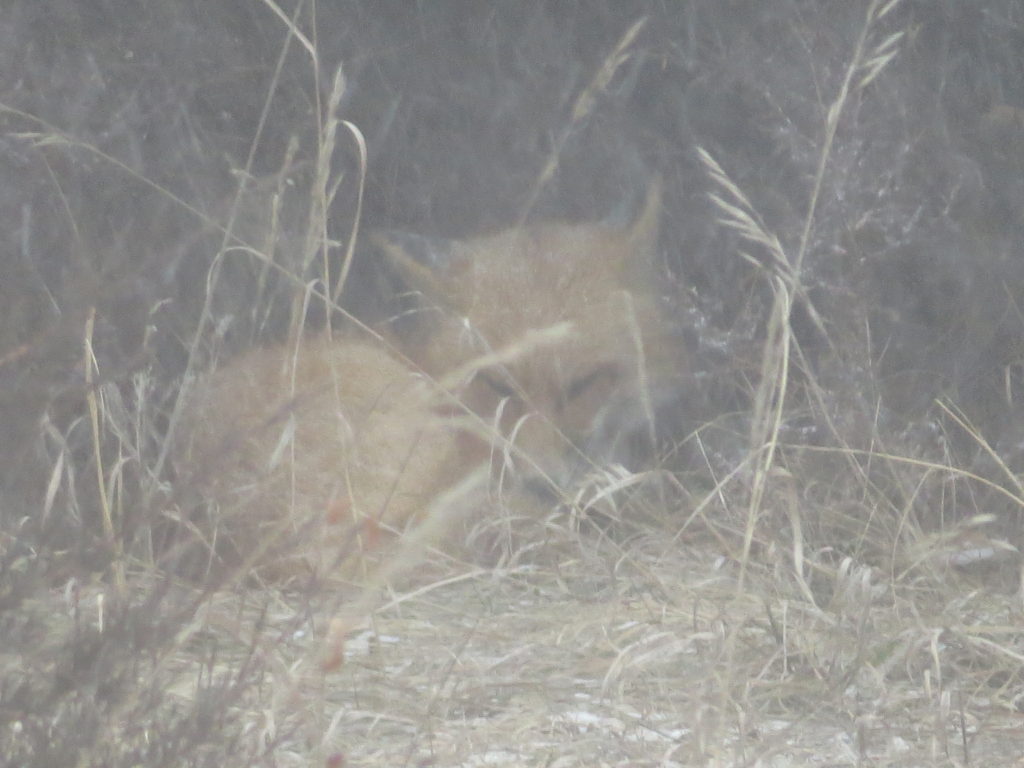
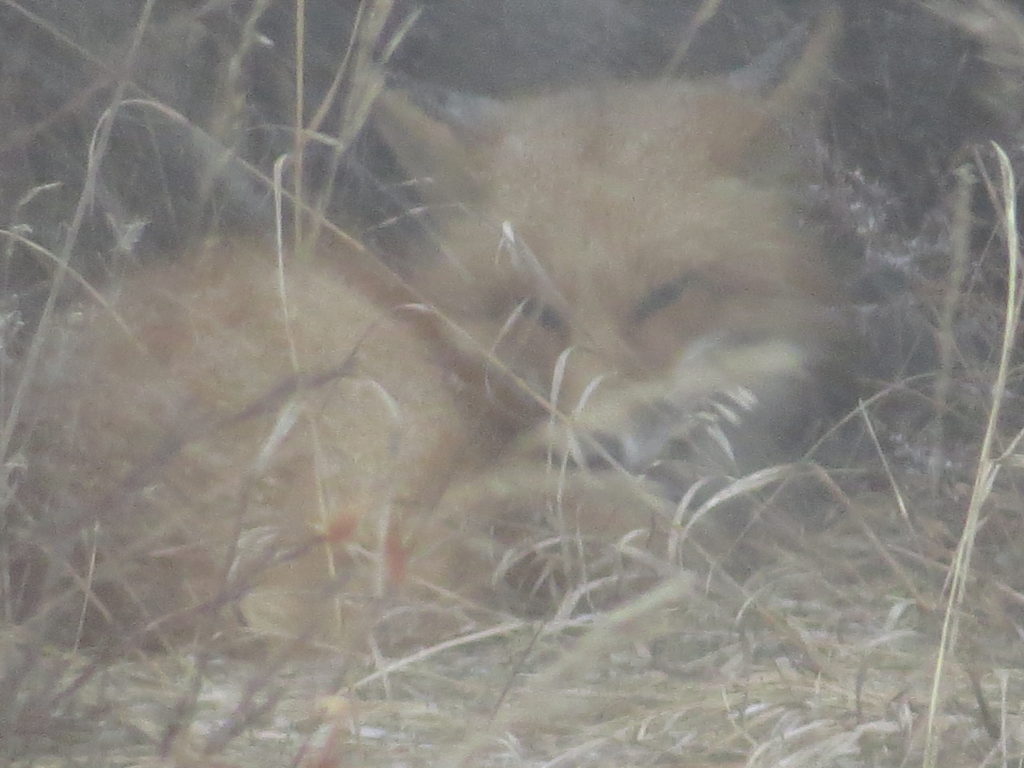
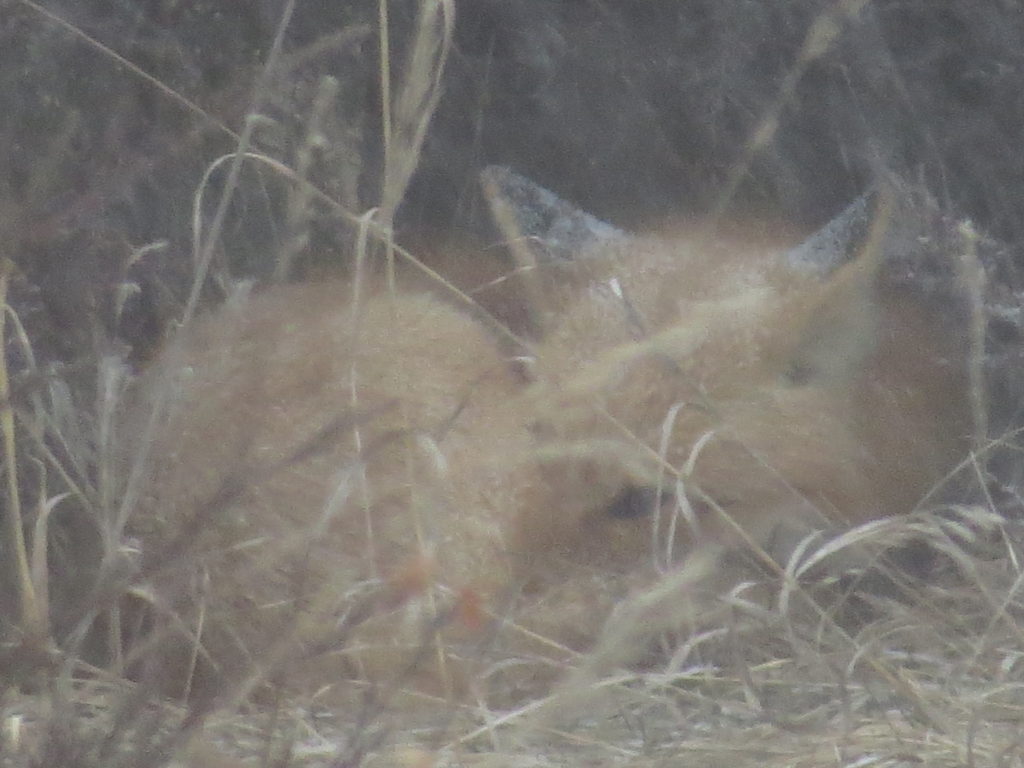
The little fox napped and rested in his cozy spot for over three hours, and just as I happened to see him come to the spot that day, I also happened to see him leave. The rest of the day was snowy and blowy with the temperature dropping into single digits with below zero wind chills. I wondered where he found his next cozy sleeping place.
The next morning, Christmas Eve morning, was clear and bright. We didn’t get as much snow as forecasted or as places to our south and east. But I spent a couple hours shoveling the drifts that had blown around the house and up the driveway.
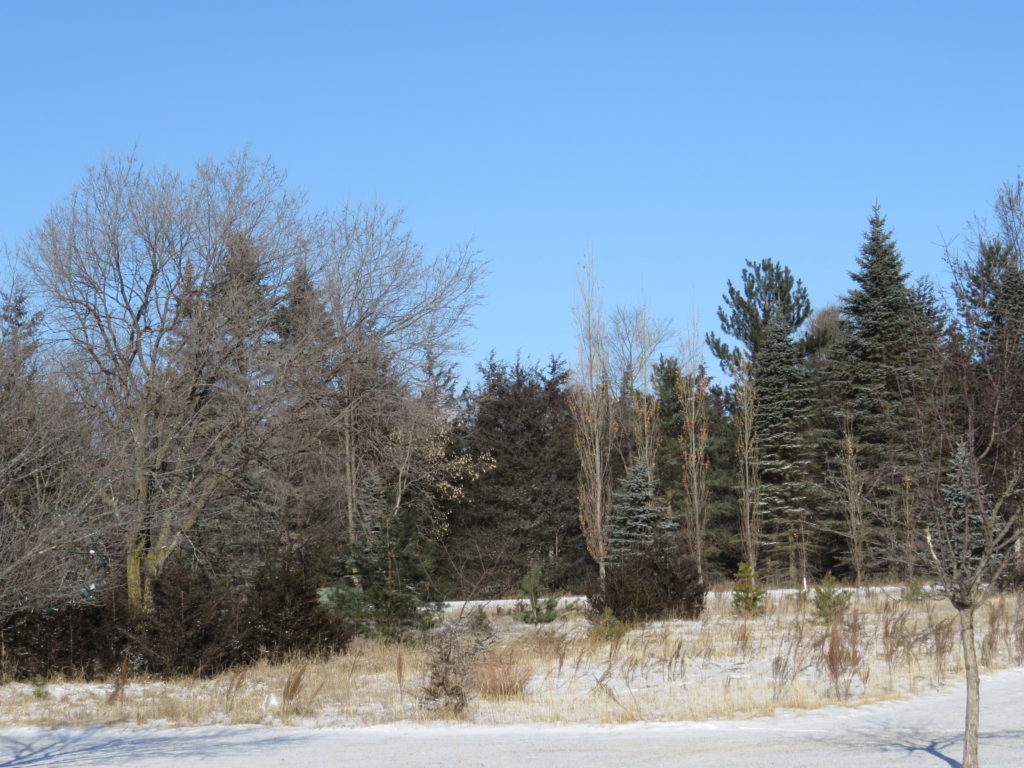
I noticed the fox had returned, walking through the yard…
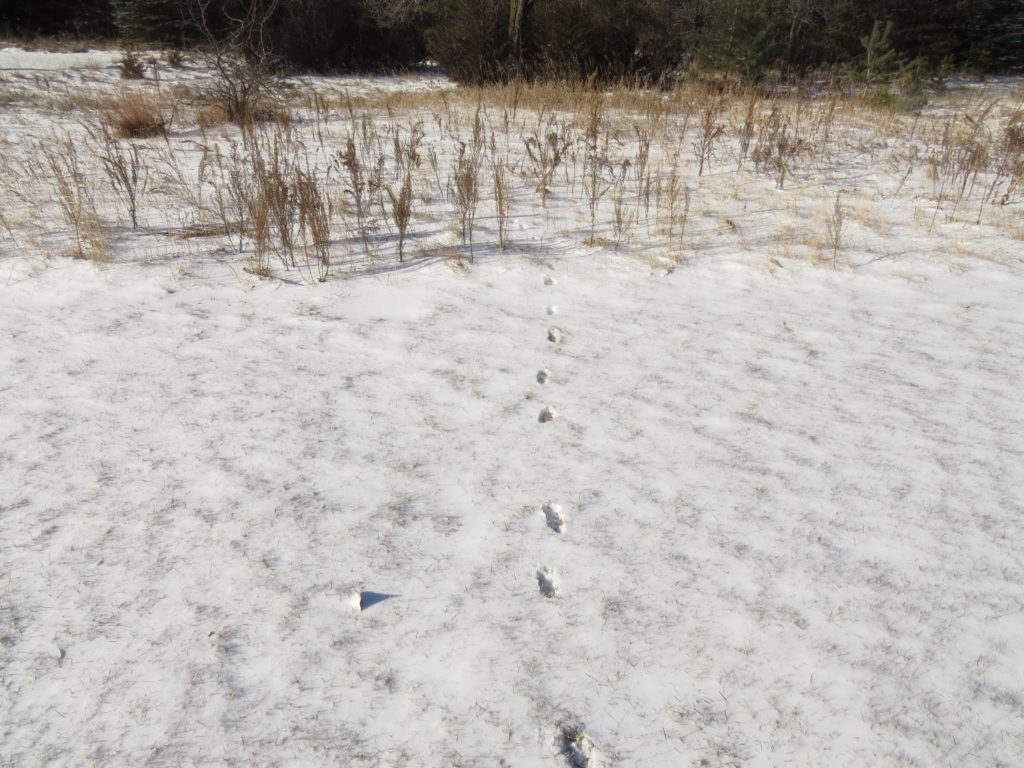
through the prairie grasses…
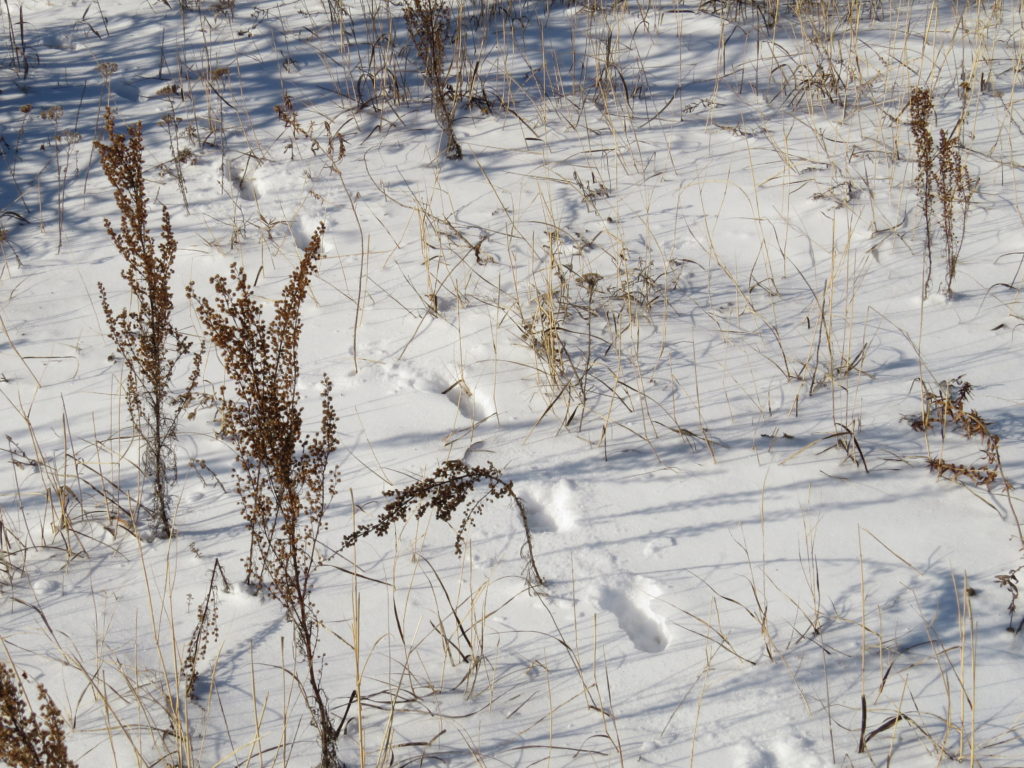
to the place under the Cedar trees and had curled up again for a little nap in the sunshine. Perhaps this time he watched me, a form of everyday, ordinary togetherness, even when we are not aware.

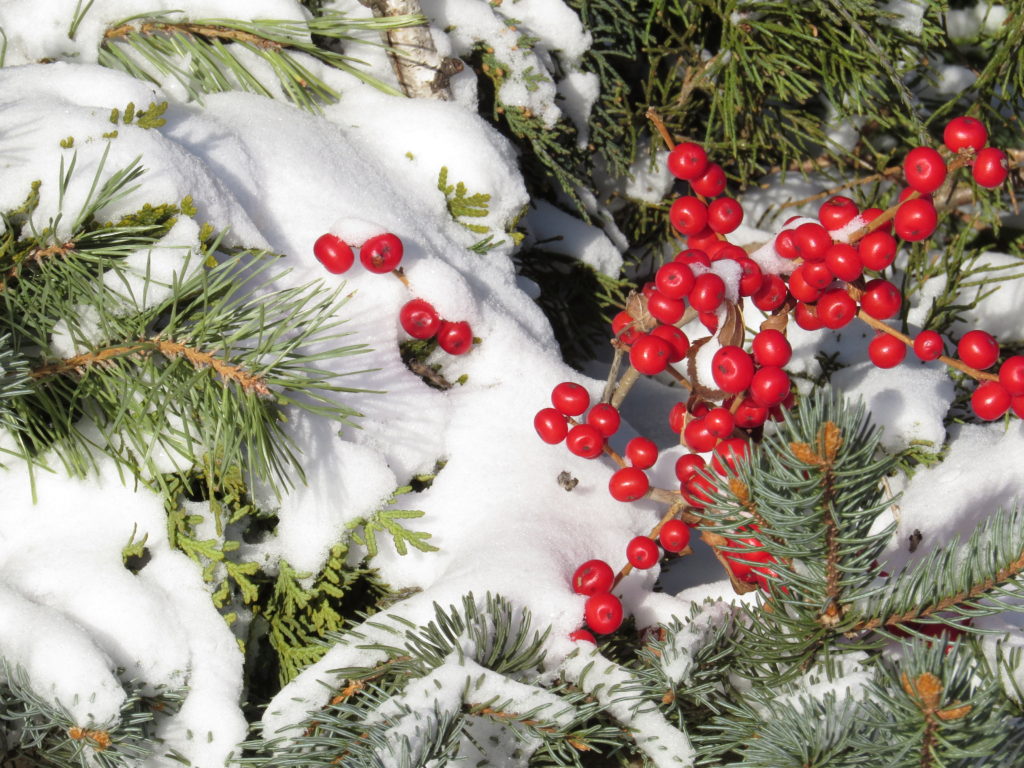
Hygge has a number of possible etymological origins. It may come from the Old Norse word ‘hygga’ which means ‘to comfort,’ which may also be the origin for ‘hugge’—to embrace or hug. It could come from ‘hyggja’ which means ‘to think.’ The Danish meaning of hygge is ‘to give courage, comfort, and joy.’ Like a hug does. Like watching a sleeping fox does. Like a Grandmother’s magical, delectable ‘little lunch’ does. In this special, magical holiday season, may we think of others–goodwill towards men. May we give comfort and joy. May we each have an everyday, ordinary circle of warmth—hygge—everyday, yet special nonetheless.
The Girl, the Wreck, and the Reckoning
There was this girl. I can say we were both girls with our youthful faces and my unblemished naivete, even though we had just slipped into chronological adulthood. She was the cutest, sweetest, doll-like person I had ever met—she had dark curls, porcelain skin, and a child-like sing-song laugh. And she lied. It didn’t take long before I realized how much she lied. There is nothing wrong with eschewing a non-virtuous trait like lying. At the time, I could not reckon with the dichotomy of outward appearance and altruistic behaviors and the manipulative, self-serving, incessant lying. So I hated her. I discounted her. I didn’t want to be around her even as she pulled us all in, and we revolved around her world. My gut reaction had lots to do with me, but at the same time, there was something that wasn’t right with how she interacted with the people around her. Leap ahead a decade and a half when I was knee-deep into parenthood and a plethora of self-help books. I came across the concept of what we hate/envy/dislike in another person is what we disown/hide/reject in ourselves. So I looked in the mirror and tried it on. ‘I am a liar.’ I couldn’t get it to fit—at all.
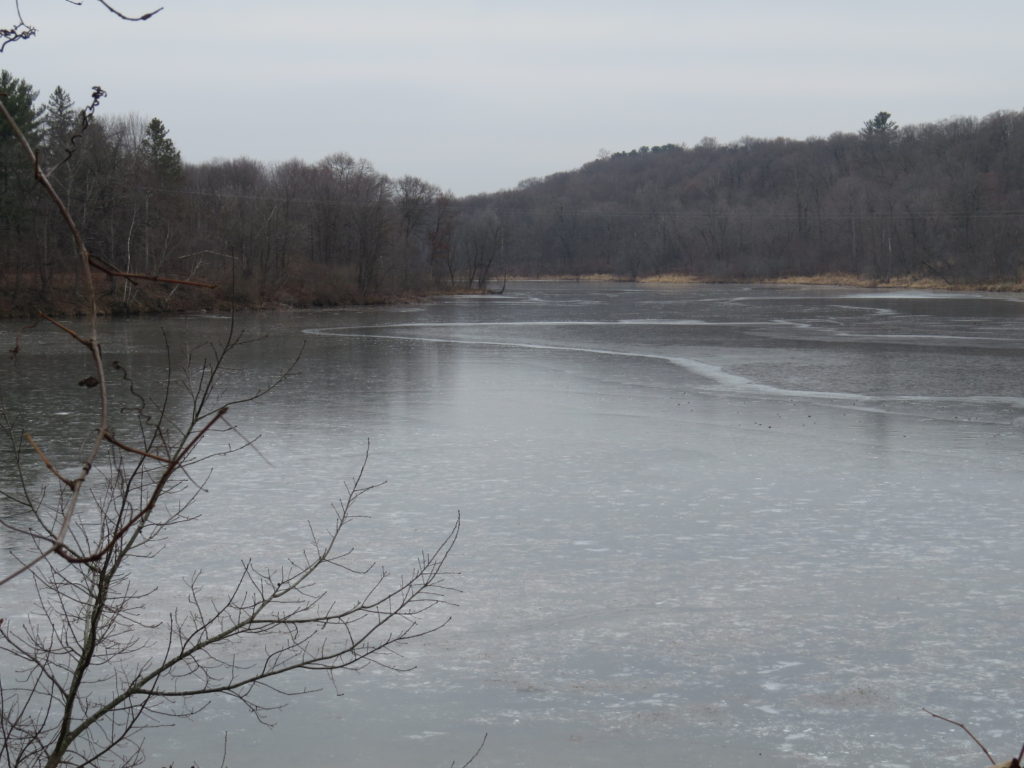
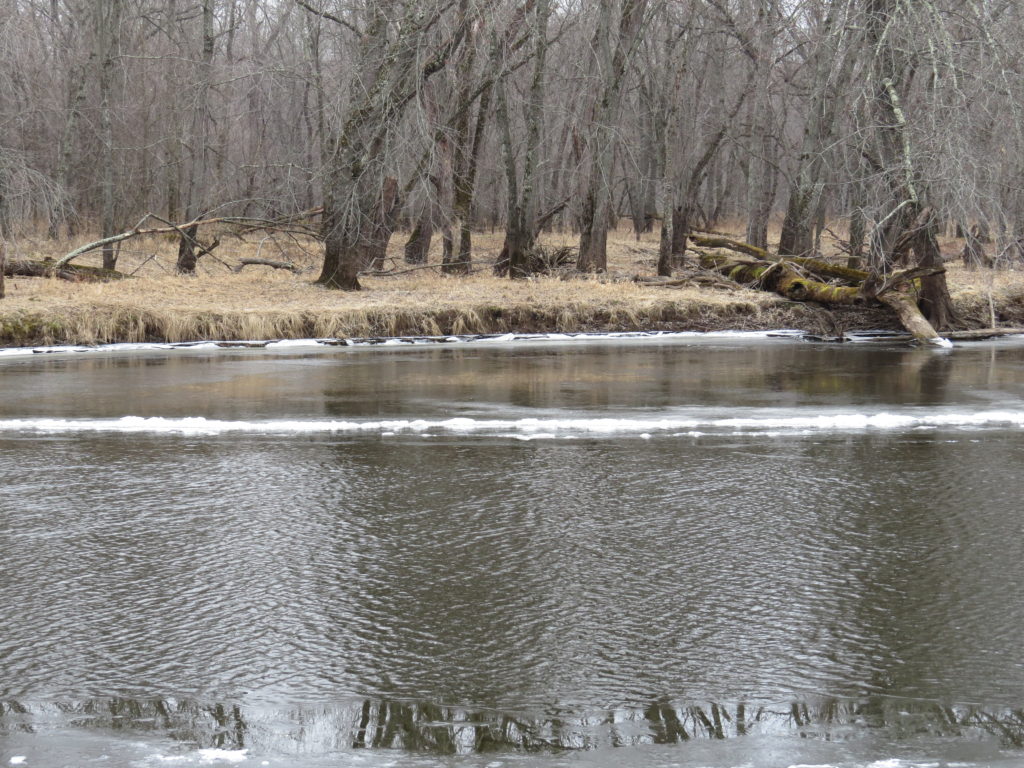
The St. Croix River at William O’Brien State Park was like a mirror—except where there was ice. Reflections of the trees and sky were obscured wherever the ice formed or floated.
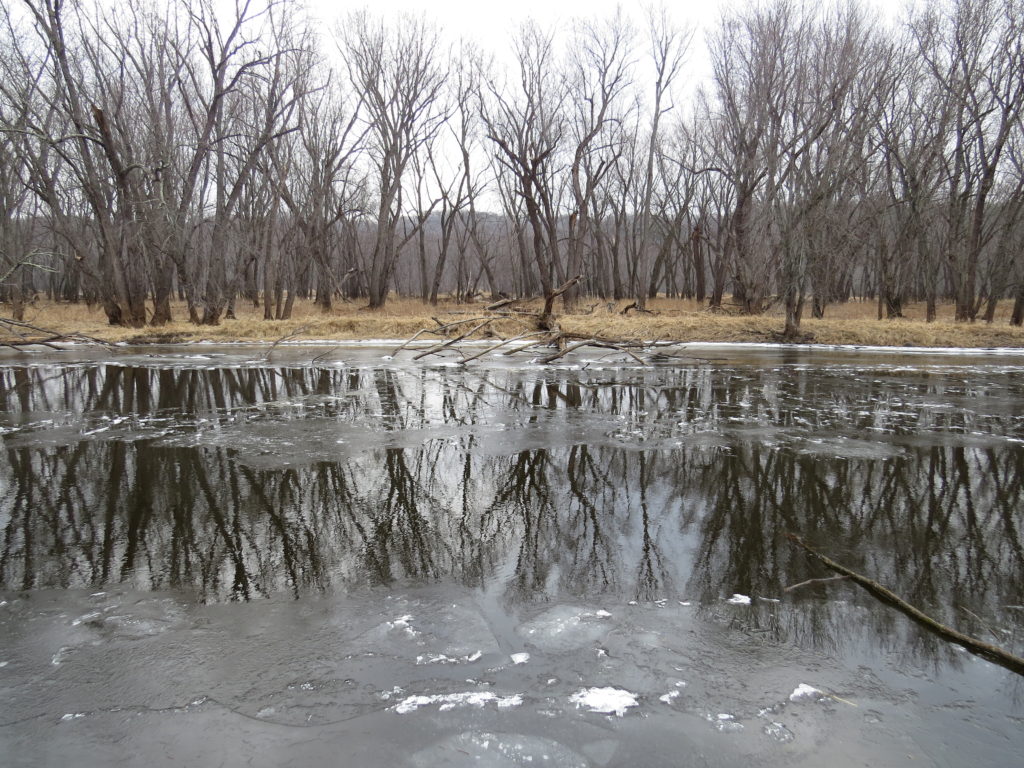
The cloudy sky reflected steel gray on the River mirror. The dark-trunked trees and the gray bluffs could be seen in their twin forms on the water.
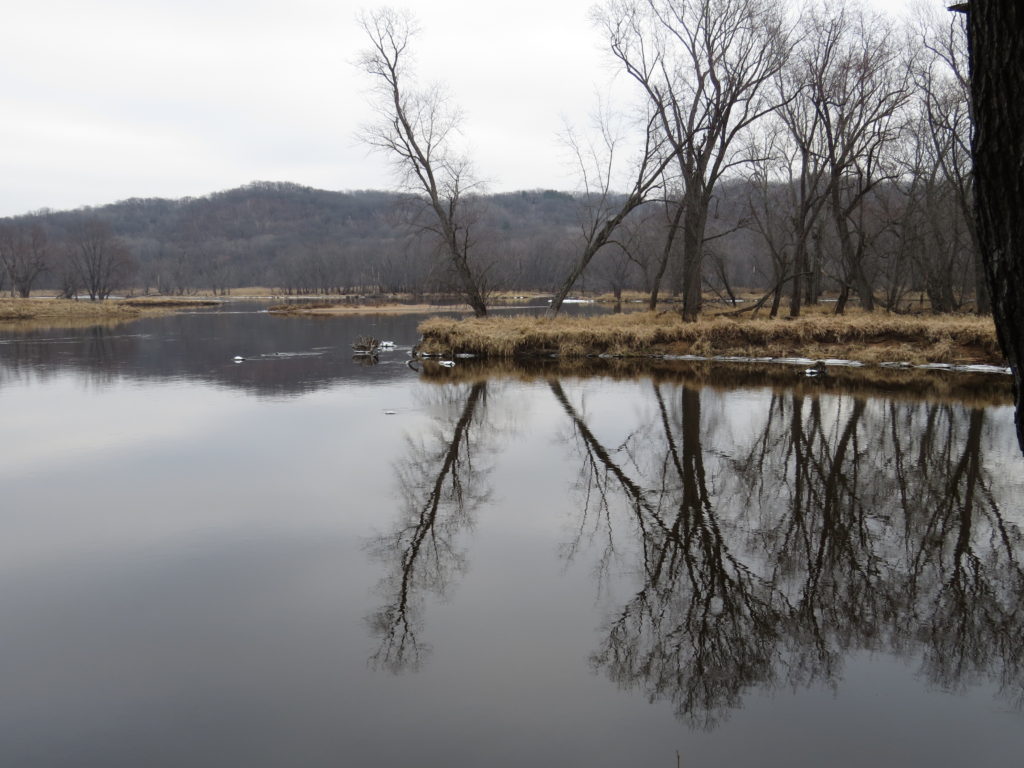
What we see in our reflections and in life depends on how we frame them. Do we look through a narrow lens that blocks out parts we don’t want to see and call it good?
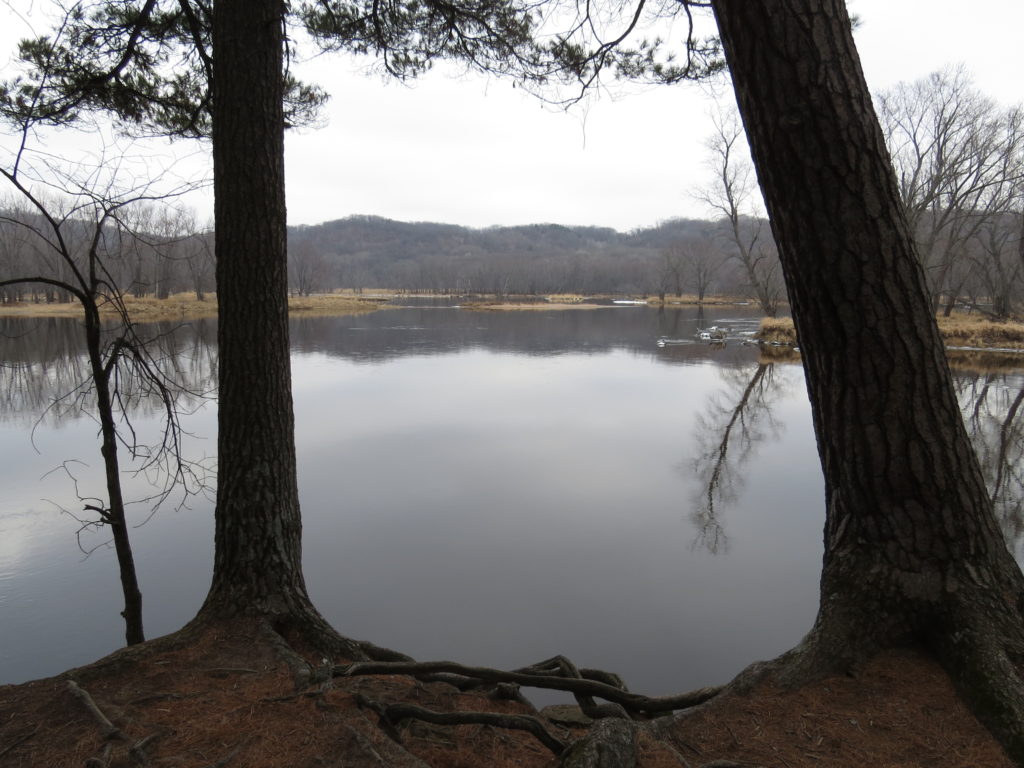
The ice on the River became the focal point even though it clung to the shore and was a small part of the large whole of the River water. It was a distraction really.
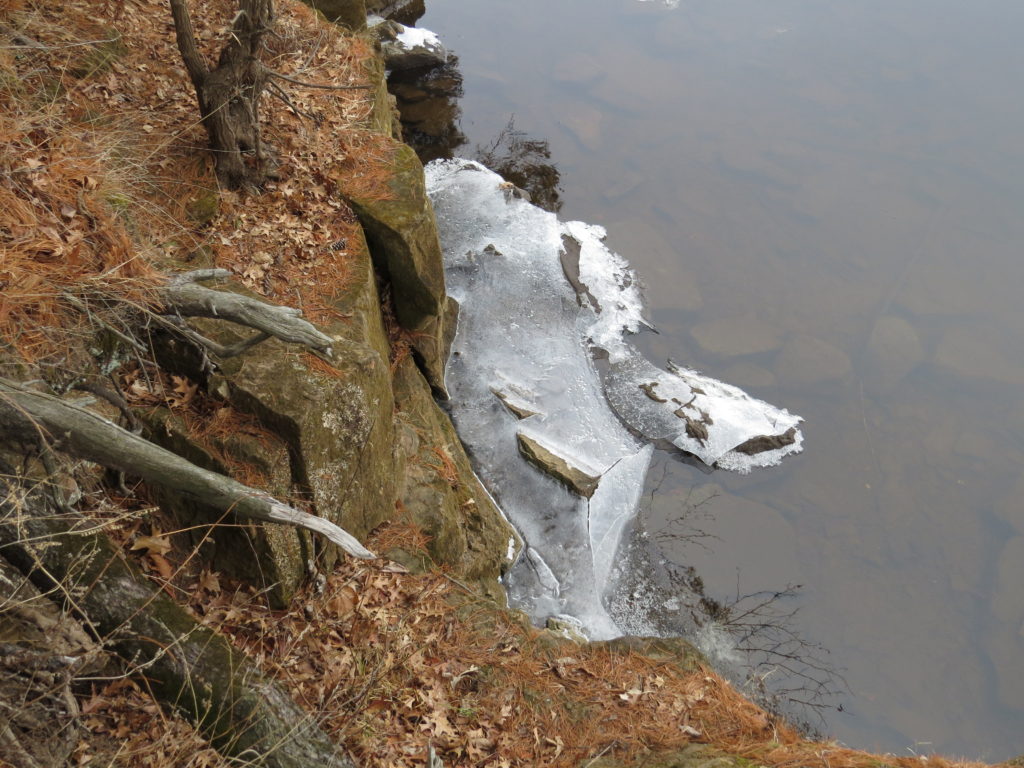
It was captivating really.
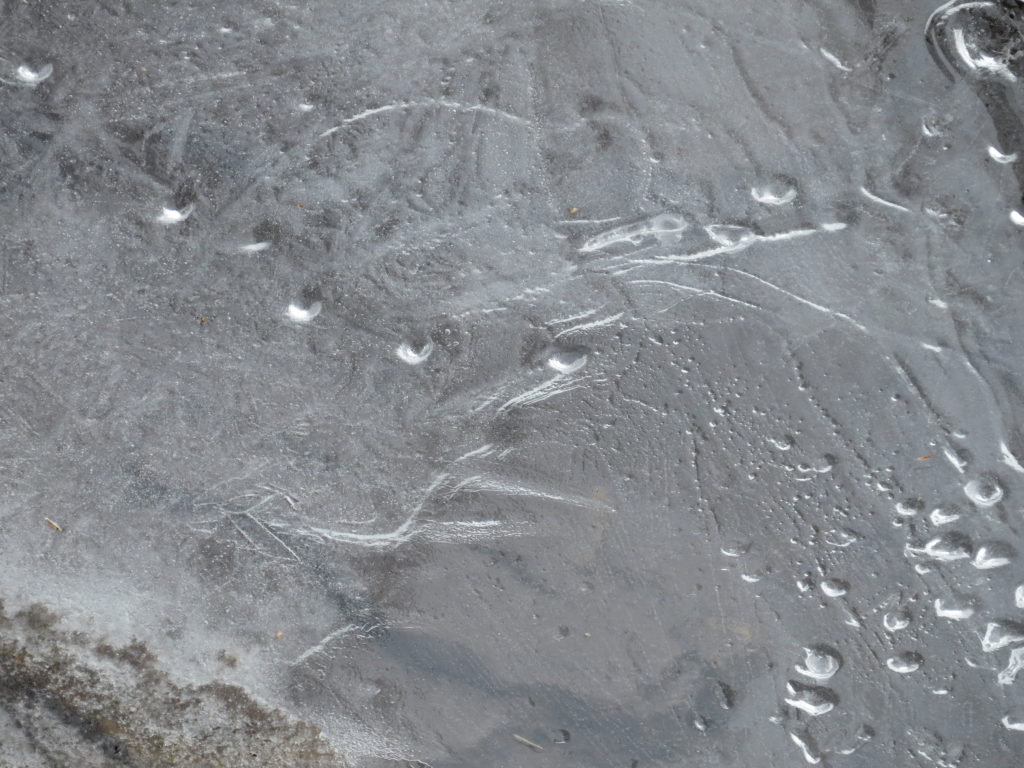
It was interesting really.
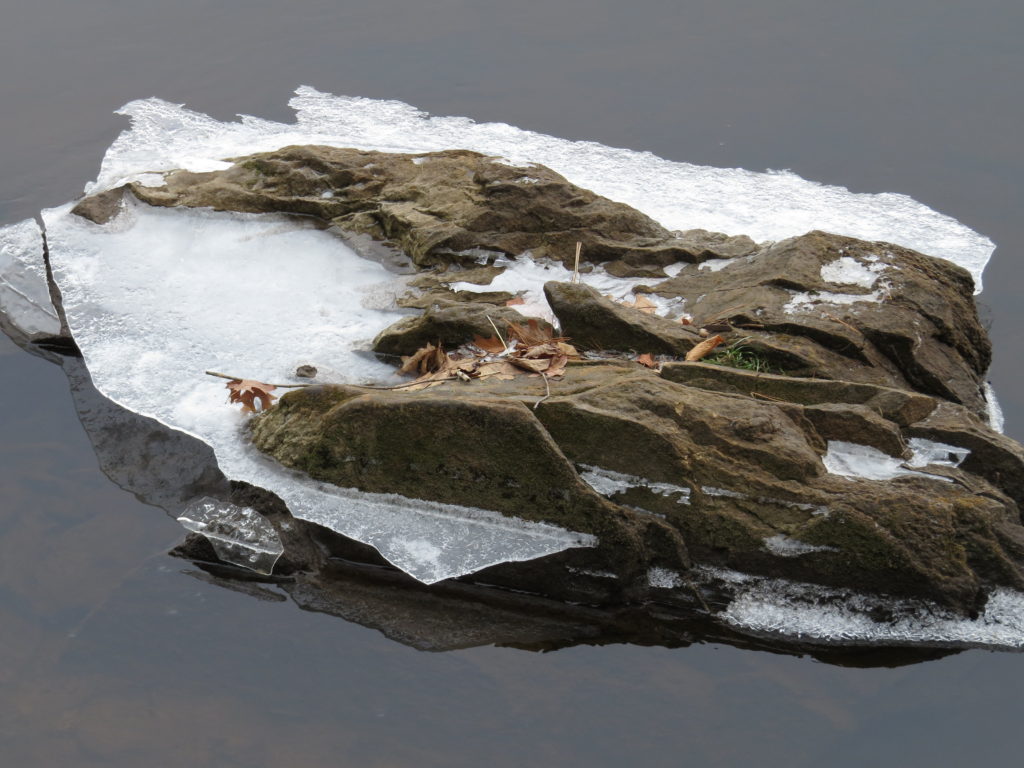
It was intriguing really.
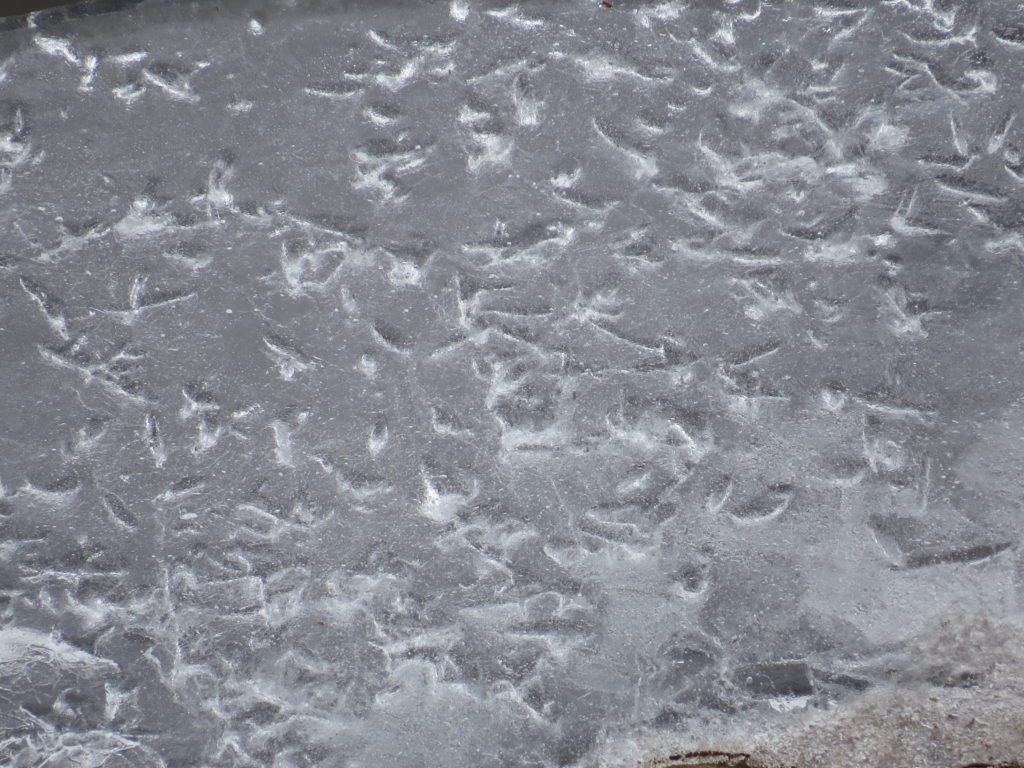
It distracted me from the calm, quietness of the River mirror and its reflections.
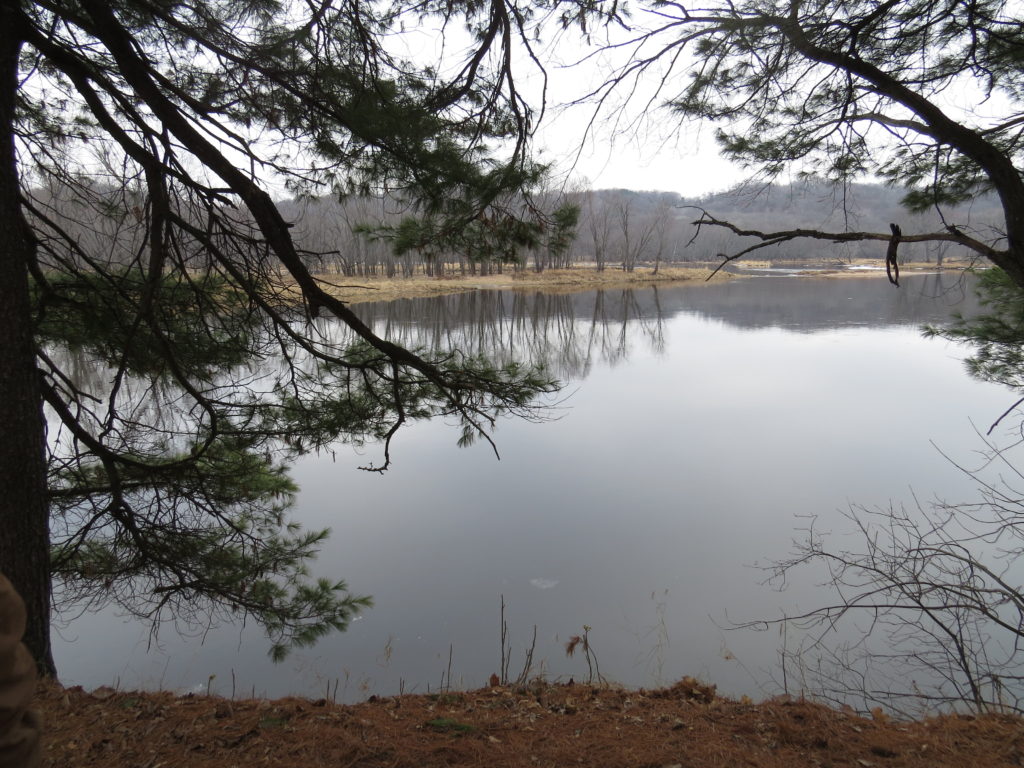
There is destruction with ice and distractions.
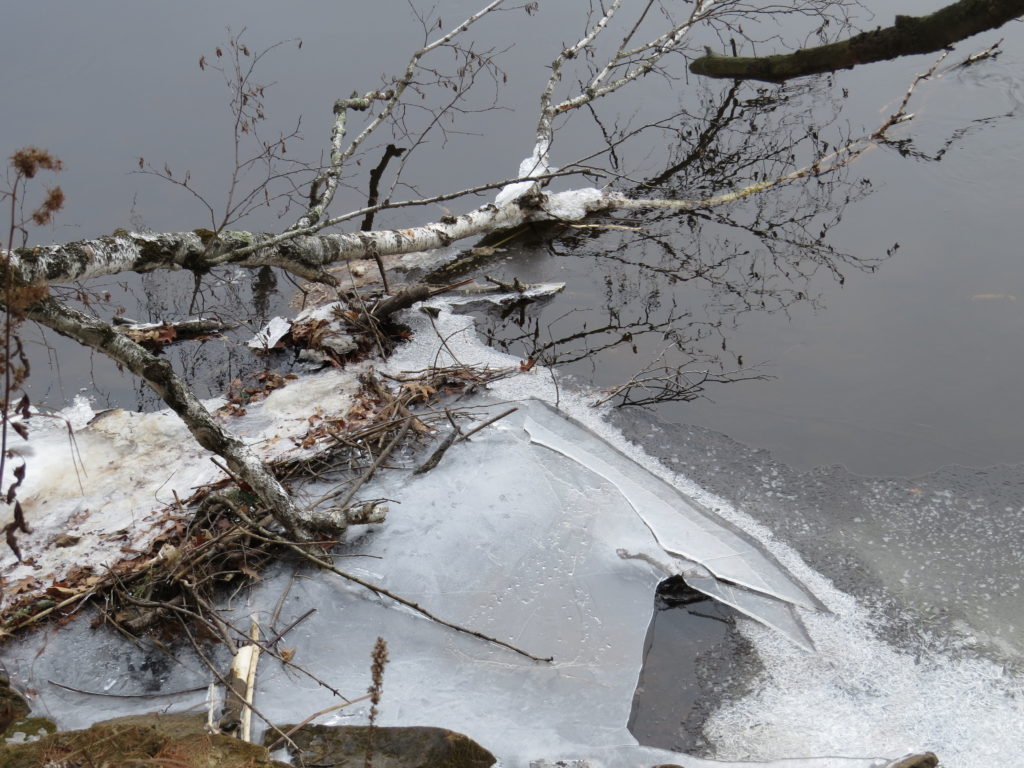
It immobilizes the old, spent parts of ourselves.
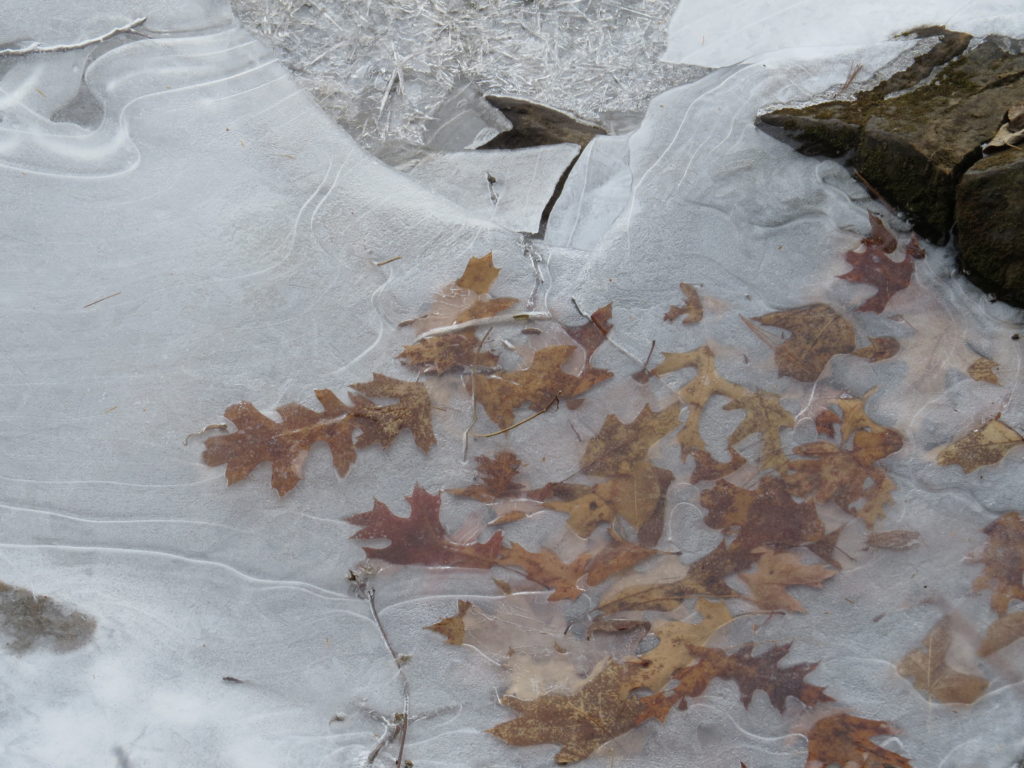
It mesmerizes us with confusion. How could we possibly see clearly through a maze of such entanglements?
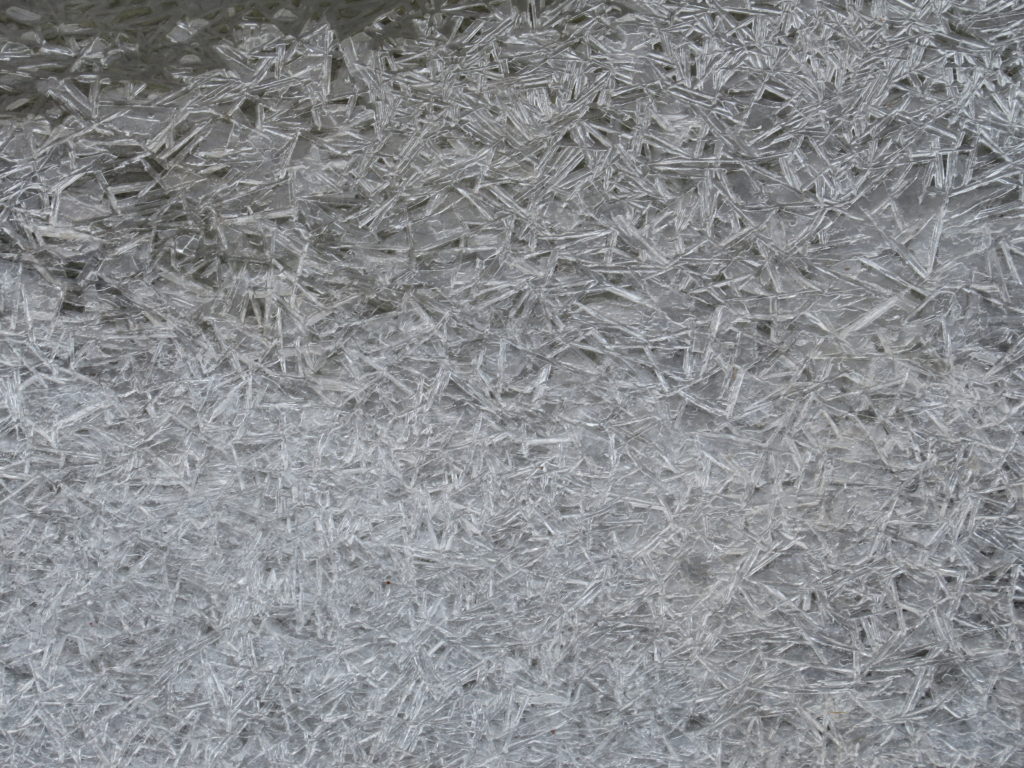
It piles up, digs in, and creates a false narrative to the big-picture reality.
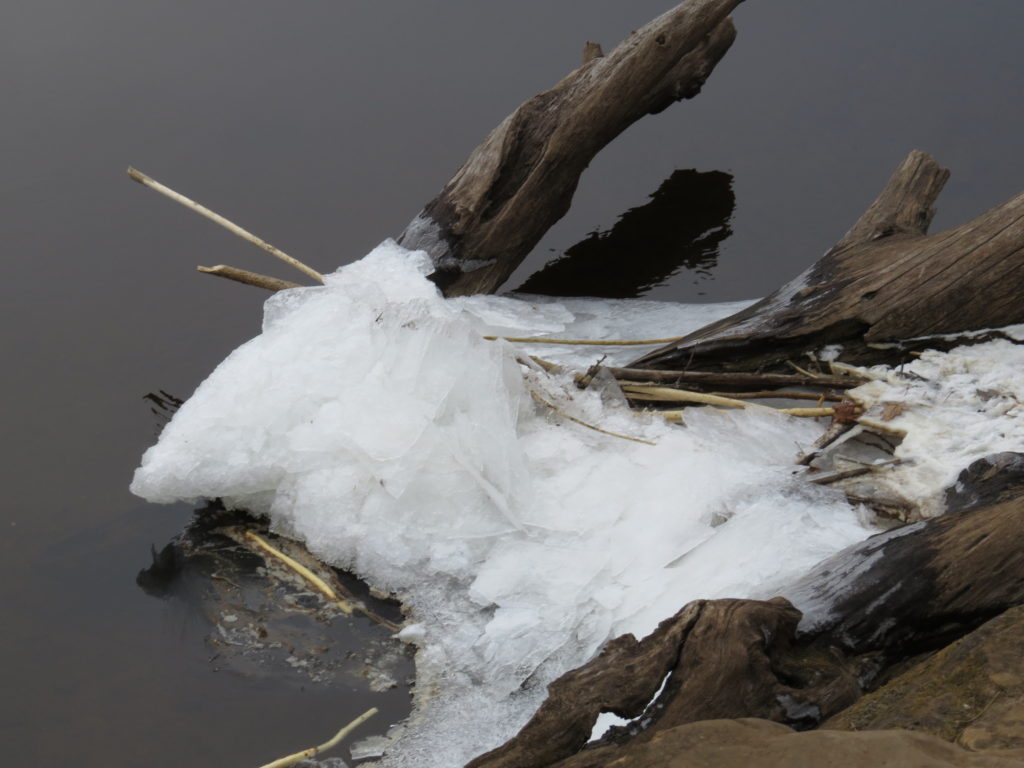
The ice-distractions even get reflected in the calm waters, entwining their way into real life, obfuscating our true north.
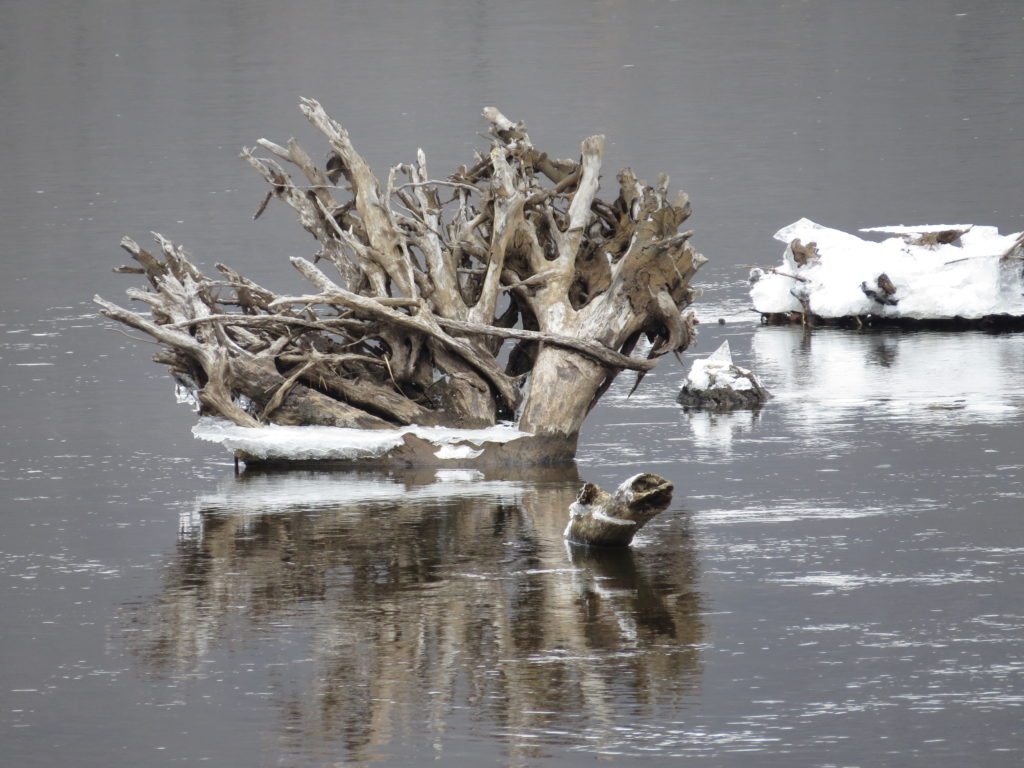
It takes will and determination to look away from the train wreck, to center ourselves in calm and peace, and to reflect on ourselves and our values.
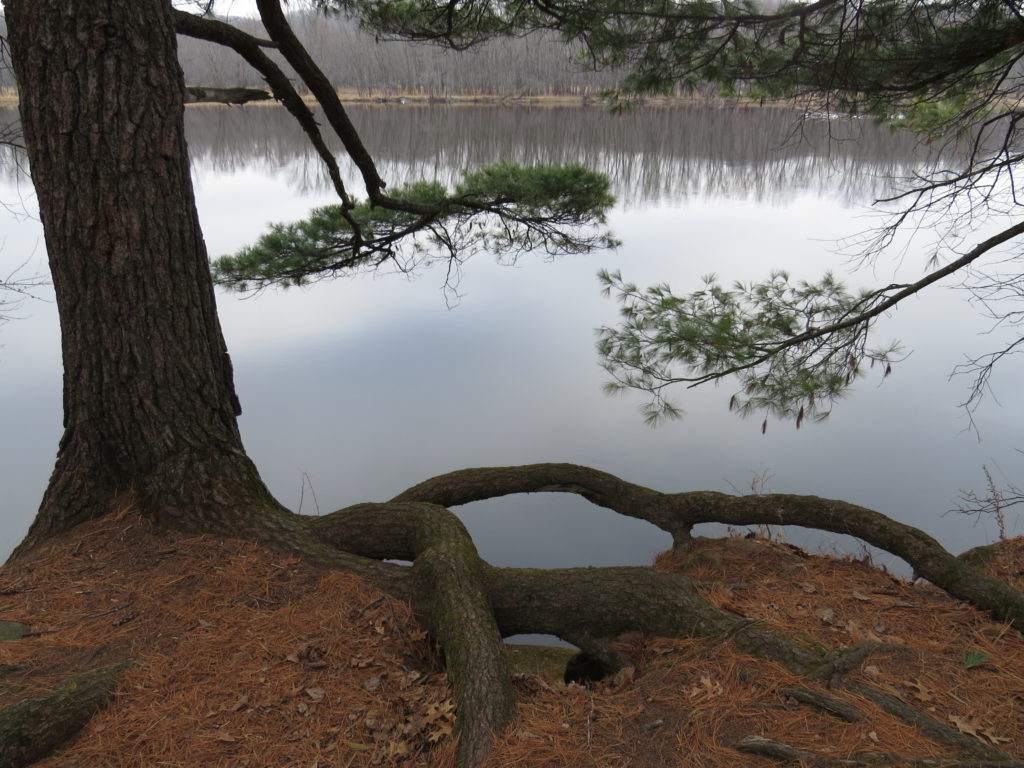
But we really need it all. We need to be able to see the past, the roots of our being, the things that worked and the things that hurt. We need to be able to identify the captivating, mesmerizing distractions that pull us away from the reality of who we really are and what we need to learn. And we need to embrace the mystery of the mirror, of the reflections we see and those we discover in our hearts.
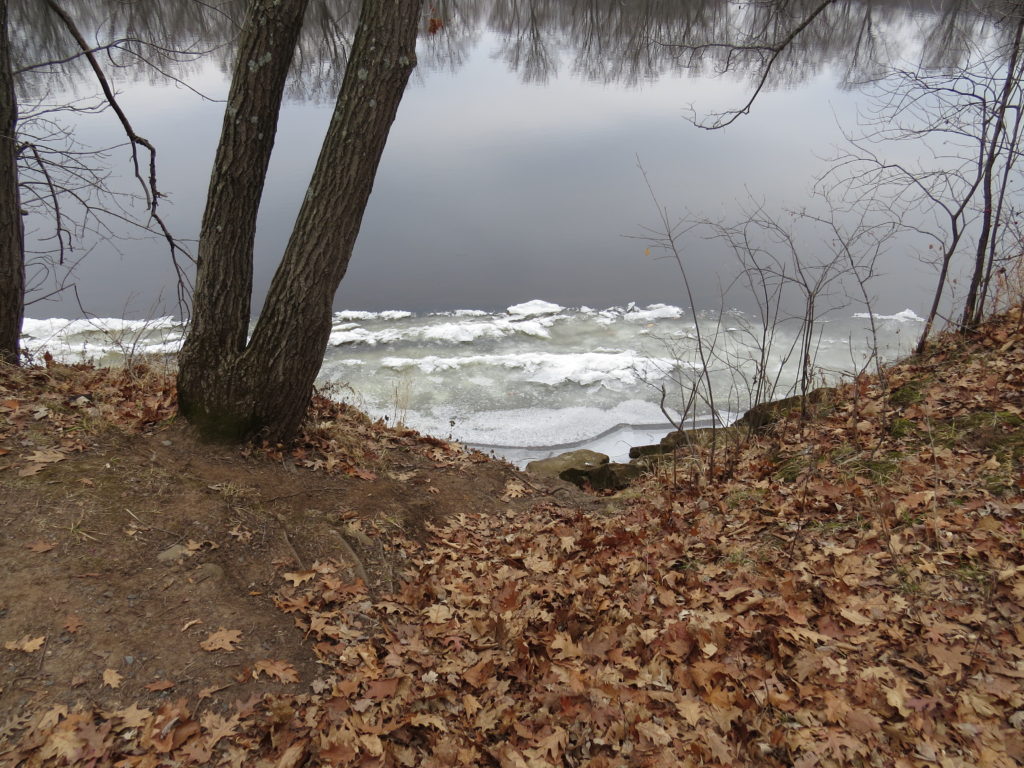
And then we walk on. Our path, our journey is only partially revealed to us at any given time.
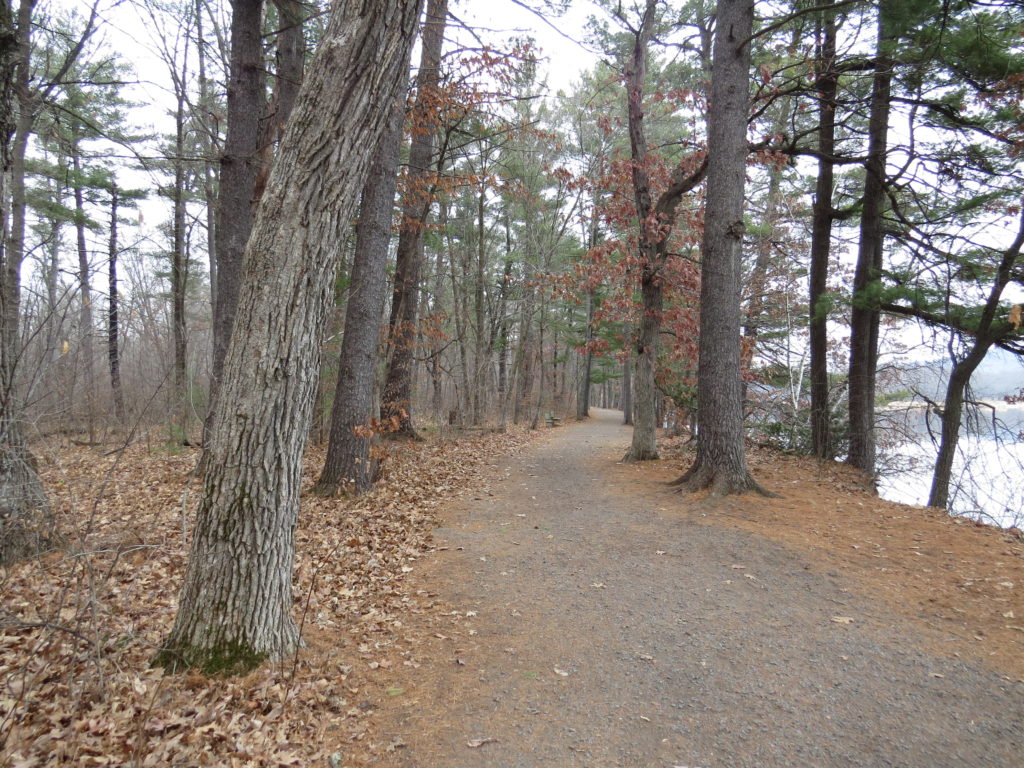
We gaze up-river, from whence we came, notice the distractions and the reflections, all the while heading in a new direction, to an uncharted new world.
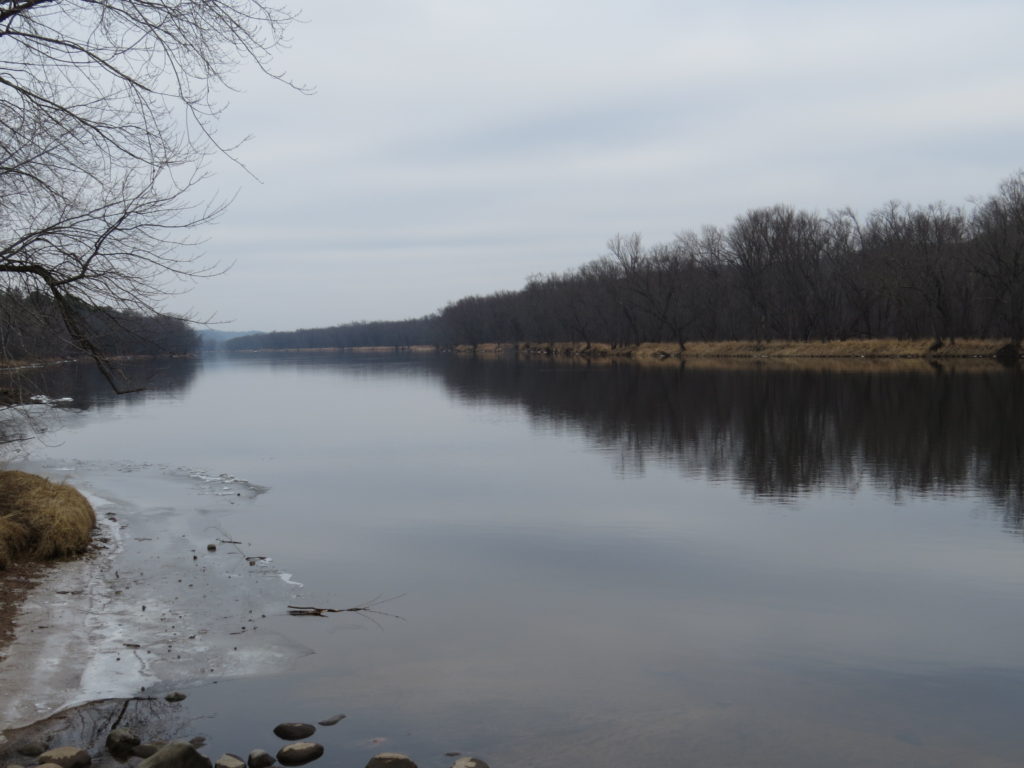
Life is a hazy, lovely mystery that catches us off guard, pulls us in, invites us to reflect, compels us to change, and blesses us with the whole process all over again.
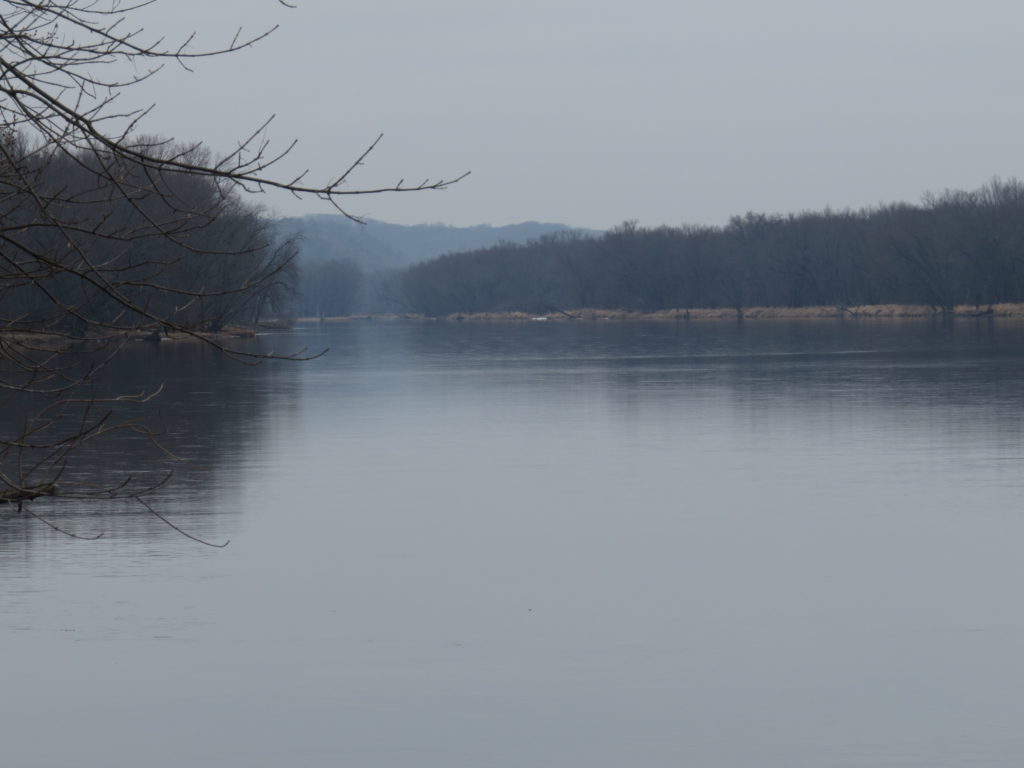
For years after trying on and rejecting the term ‘liar,’ I pondered the concept of disowning what I disliked in others, and I wondered why I had hated her for lying. It took maybe another decade of trying to please people, being nice, avoiding conflict, following the rules, and feeling beat up before my reflection revealed that I really was a liar. I was saying I was fine when I wasn’t. I was saying I didn’t need help when I did. I was saying yes when I wanted to say no. I was a self-inflicting liar. I was hurting myself in order to make others feel comfortable. I had to reckon with my own dichotomy, my own hurts and disappointments, my own distractions and stories that were woven together into the cloak of my being. The heat of my hurt and humble embarrassment melted the obfuscating ice, and the calm water revealed my flawed, striving, righteous self. So I walked on in reckoning, recalibration, and forgiveness to the next lovely mystery of a train wreck that caught me off guard. Dear God, help me walk on.
Know from whence you came. If you know whence you came, there are absolutely no limitations to where you can go. –James Baldwin
Home Field Advantage
In this year of Covid, most of us have become much more familiar with our homes. Home has been maximally multifunctional for many families—school house, fitness center, workplace, church, recreational spot, and social center as well as the usual place for family meals and relaxation and sleep. It has forced us to evaluate our definition of ‘home’—the purpose, the feel, the aesthetics, and the functionality.
Imagine living in a purple palace with many rooms and secret passageways that wind from place to place. Instead of a protective moat, the palace walls have barbs to keep intruders out. Food is plentiful, at least for most times of the year, and the floor of the palace is soft and comfy. That is the home for a rabbit family at William O’Brien State Park, a park on the eastern side of Minnesota. Most of the year the purple palace is covered with green leaves or with piles of snow—we just happened to see it during its most transparent time.
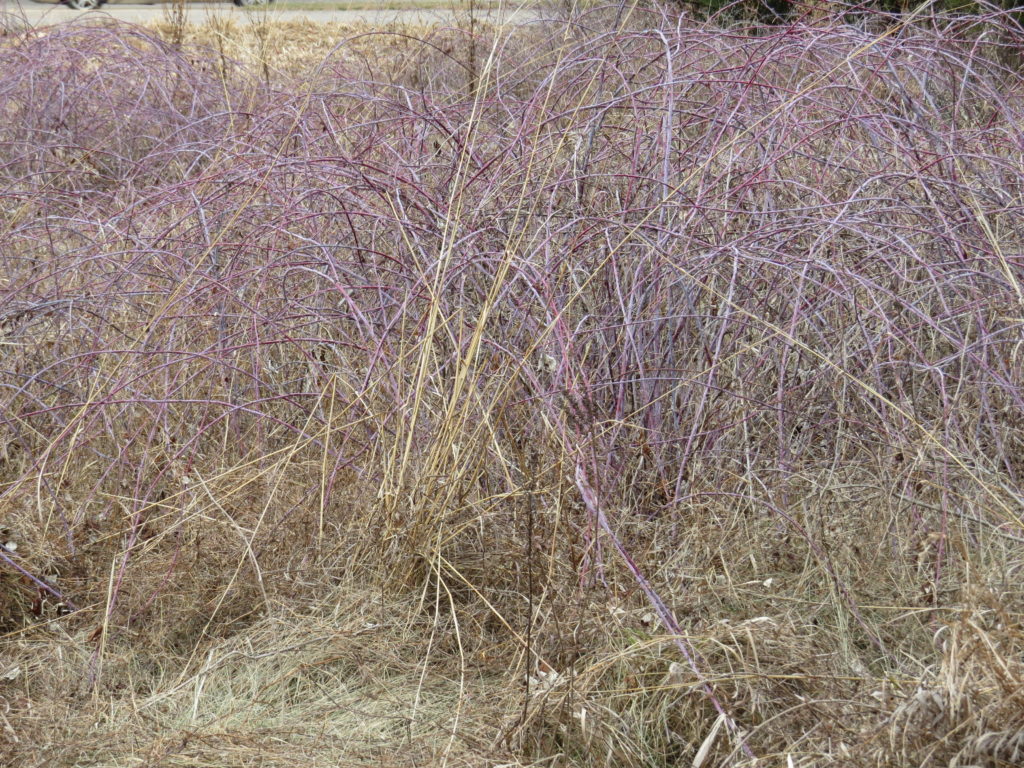
The woods in Winter and late Fall are also transparent, especially during this time with no snow. Tree trunks, fallen leaves, fallen trees, and rocks dominate the brown-gray landscape. A flowing creek or a frozen lake may break up the muted landscape, but even they reflect the grayness of a cloudy day.
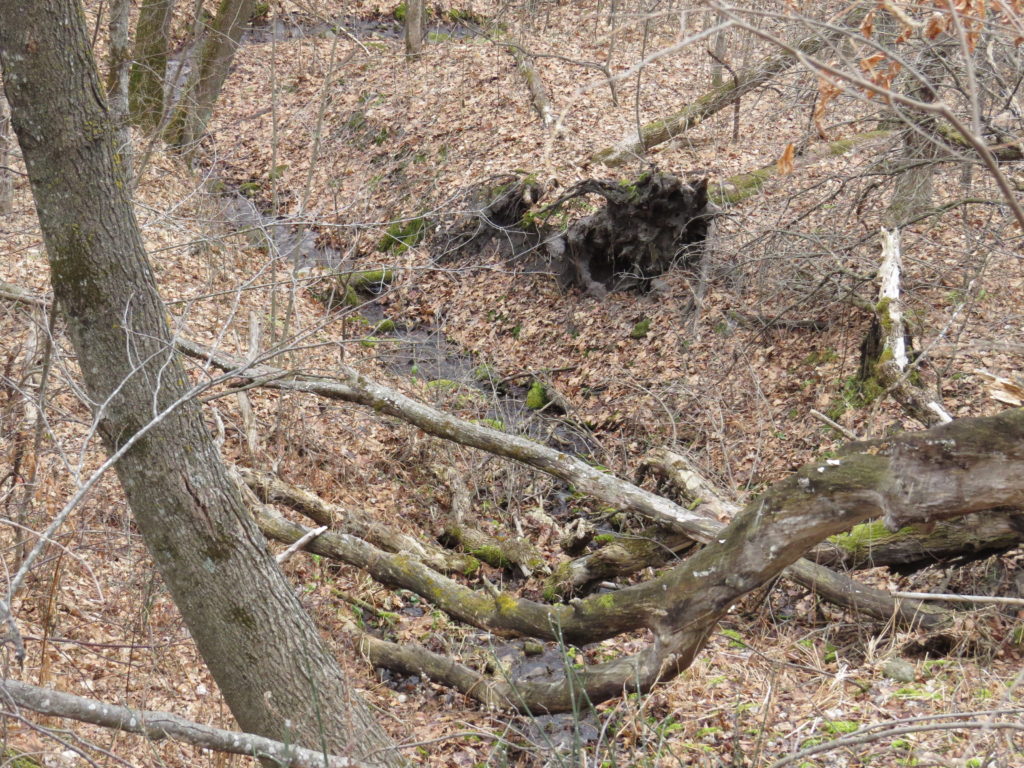
After starting our hike beside the rabbits’ purple palace, it soon became apparent that ‘homes’ were the topic of the day. All forest creatures need a warm (relatively speaking) and safe place to live during the Winter, and as we saw nook after cranny of log homes and tree dwellings, I wondered who lived in each one.
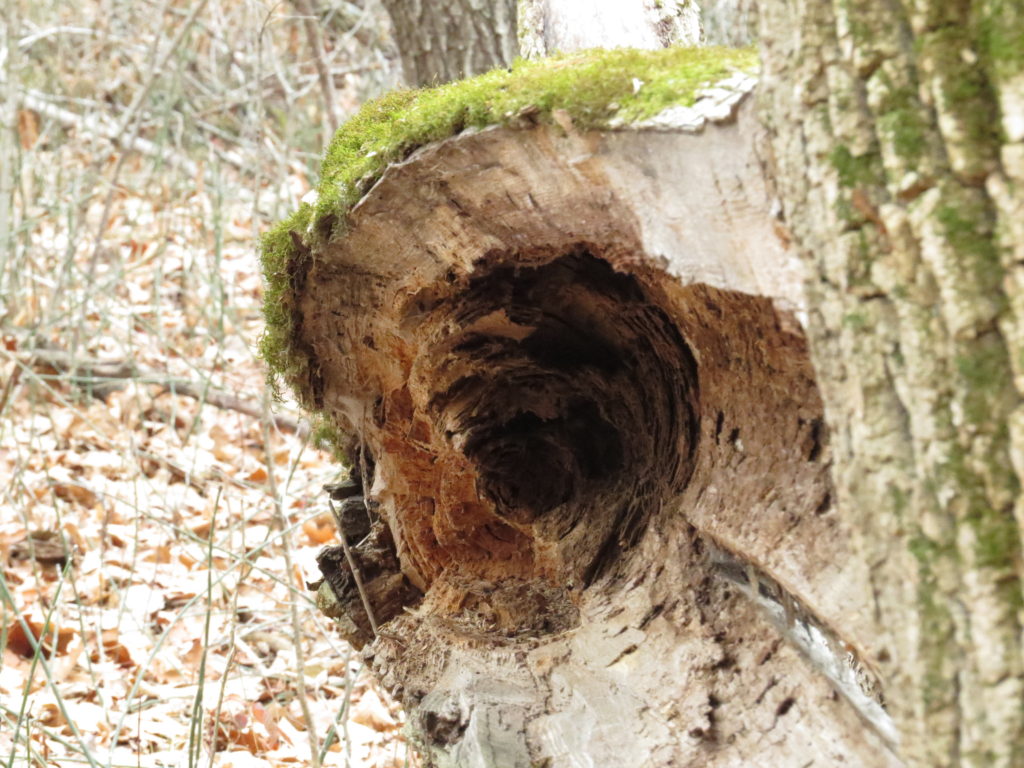
How many frogs are hibernating here? Land frogs dig down or find a space called a hibernaculum where they spend the winter. Aquatic frogs hibernate under water. Both protect their vital organs with an ‘antifreeze’ of a high concentration of glucose.
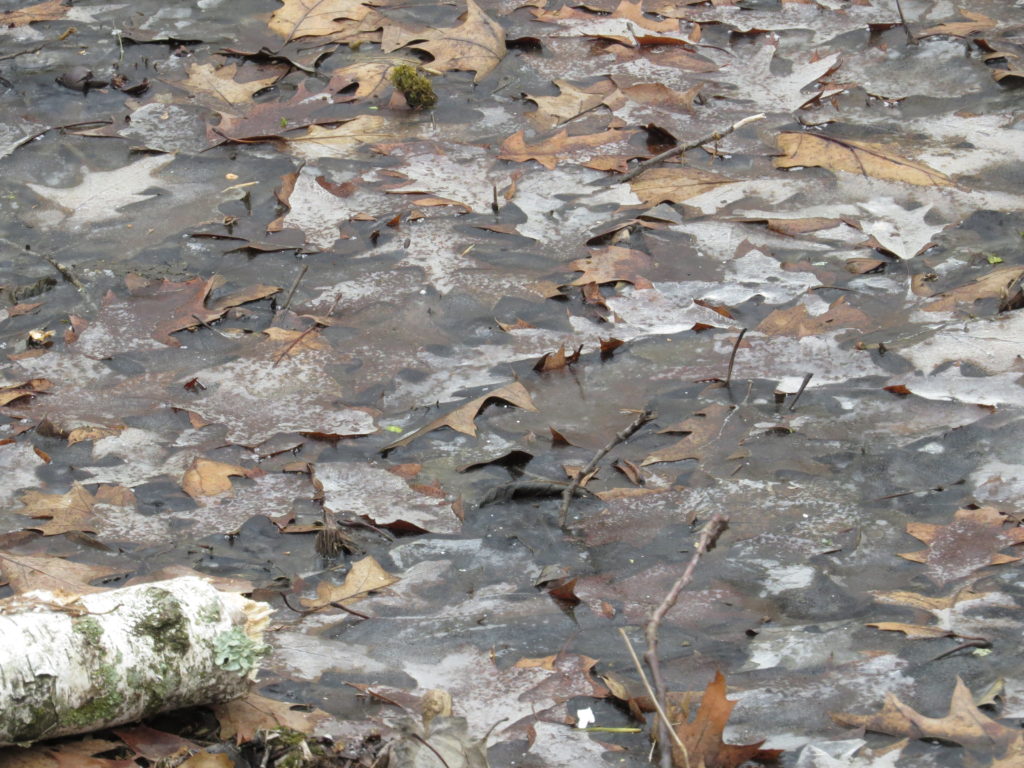
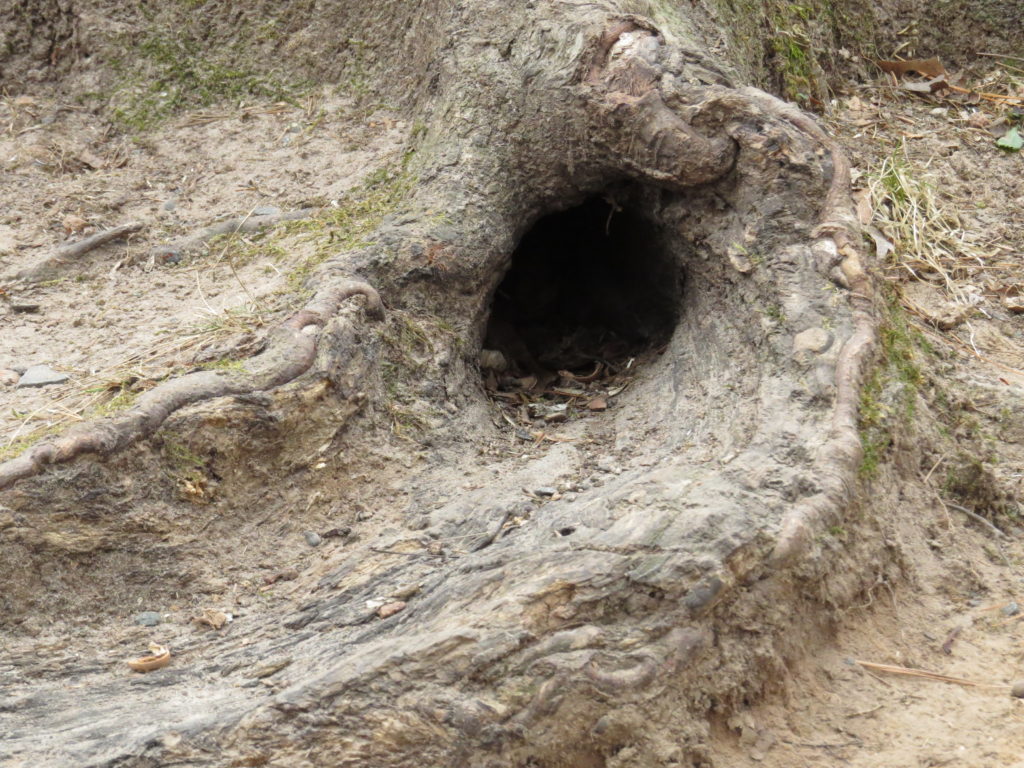
This little home at the foot of a tree had a super highway of a driveway carved out of a root and acorn debris scattered at the entrance.
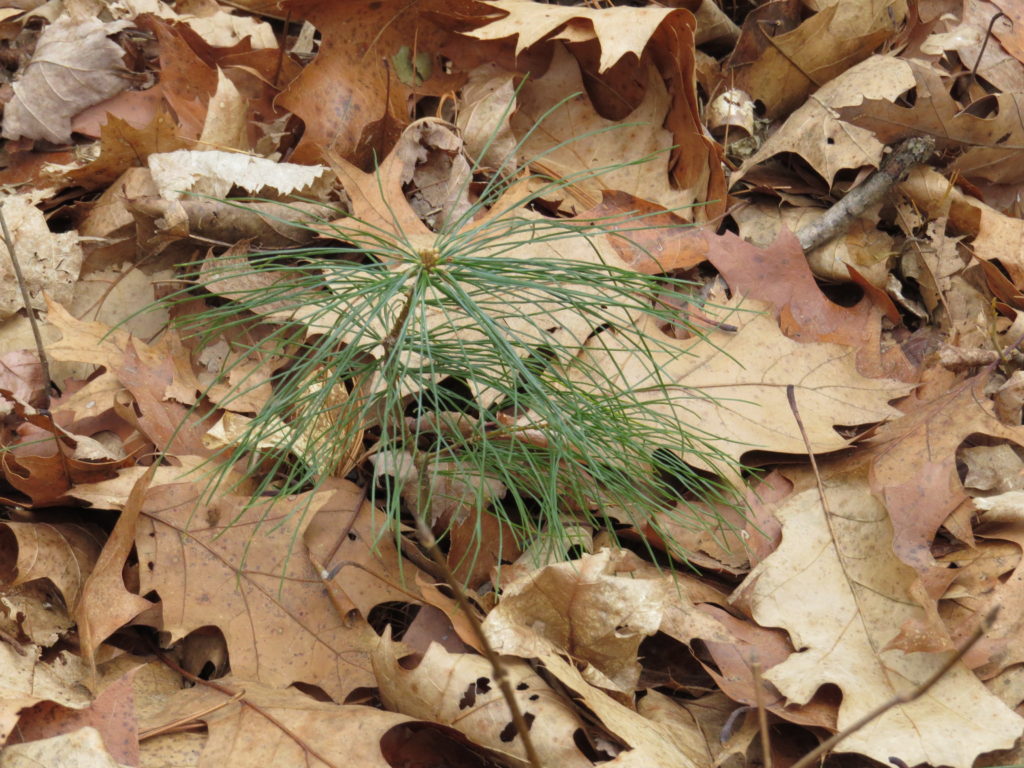
A Pine seedling found a home in the leaf litter. It needs a cover of snow to stay protected from the hungry winter-grazing deer and rabbits.
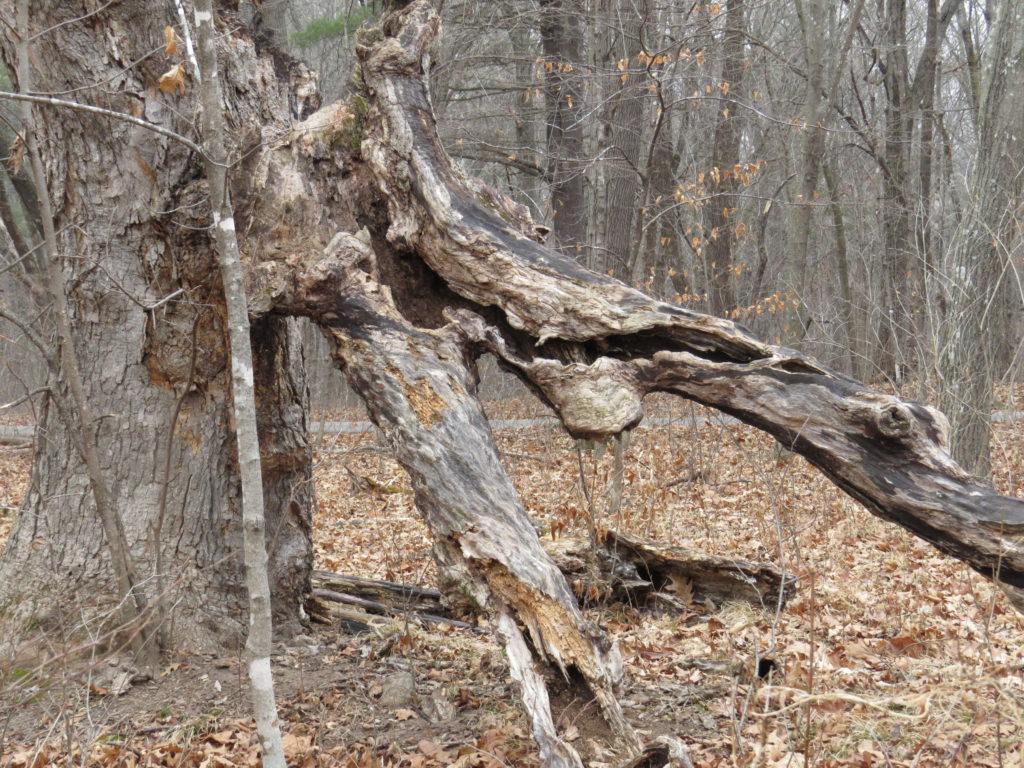
Large fallen logs weather and rot making crack-and-crevice-homes for all types of insects and small creatures.
We chose the Riverside Trail Loop to hike so we could see the St. Croix River, but first we came to Lake Alice. It was named after the daughter of timber baron William O’Brien who bought much of the land owned by the lumber companies who cleared the valley of its huge stands of White Pines. In 1945 Alice donated 180 acres of her father’s land to be developed as a state park.
As we walked along, it became very evident who lived in or near Lake Alice.
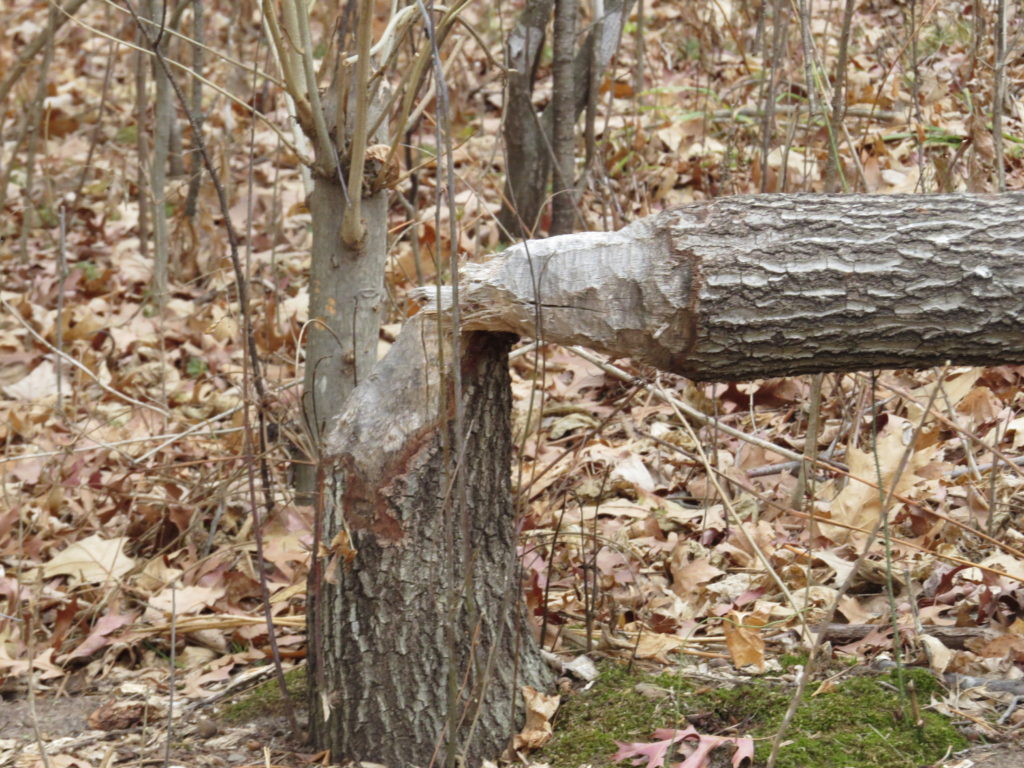
We wondered how a beaver chooses his or her next tree to chew down. Was this one coming back to finish the job? It looks like it had a previous ‘old wound’—maybe some trees just aren’t the right ones.
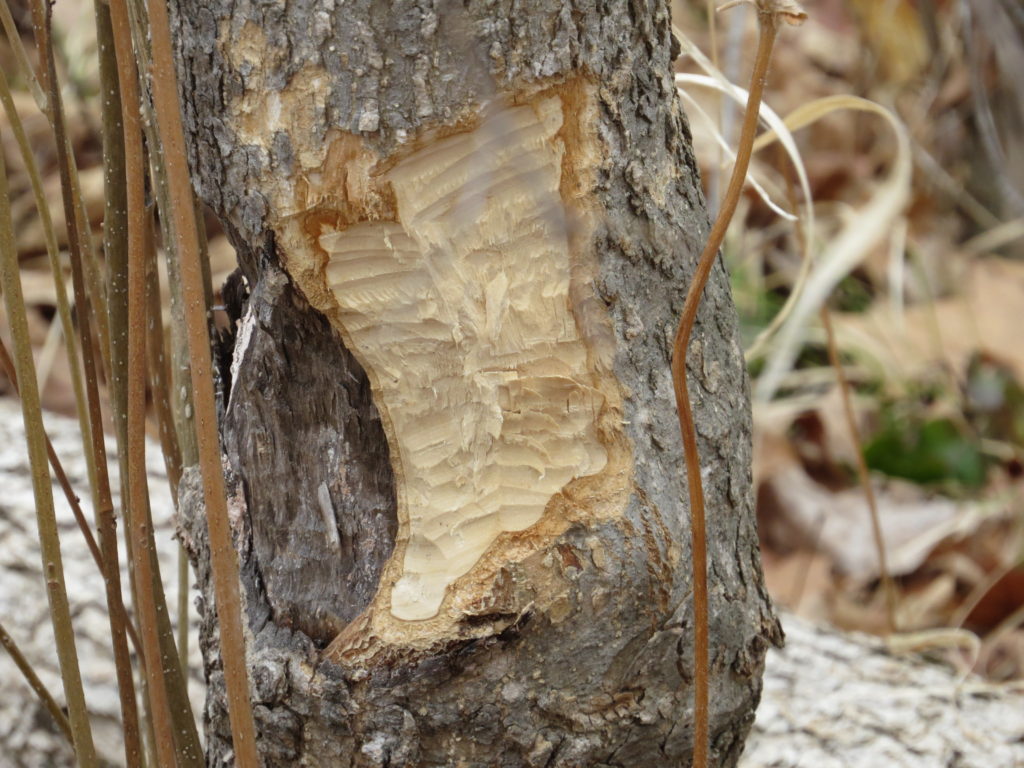
And then we came to a tree right beside the trail—it looked like we had literally just interrupted the busy beaver’s work! We wondered if the whole beaver family works together on the same log. Perhaps they were carrying away the logs they had already chewed off!
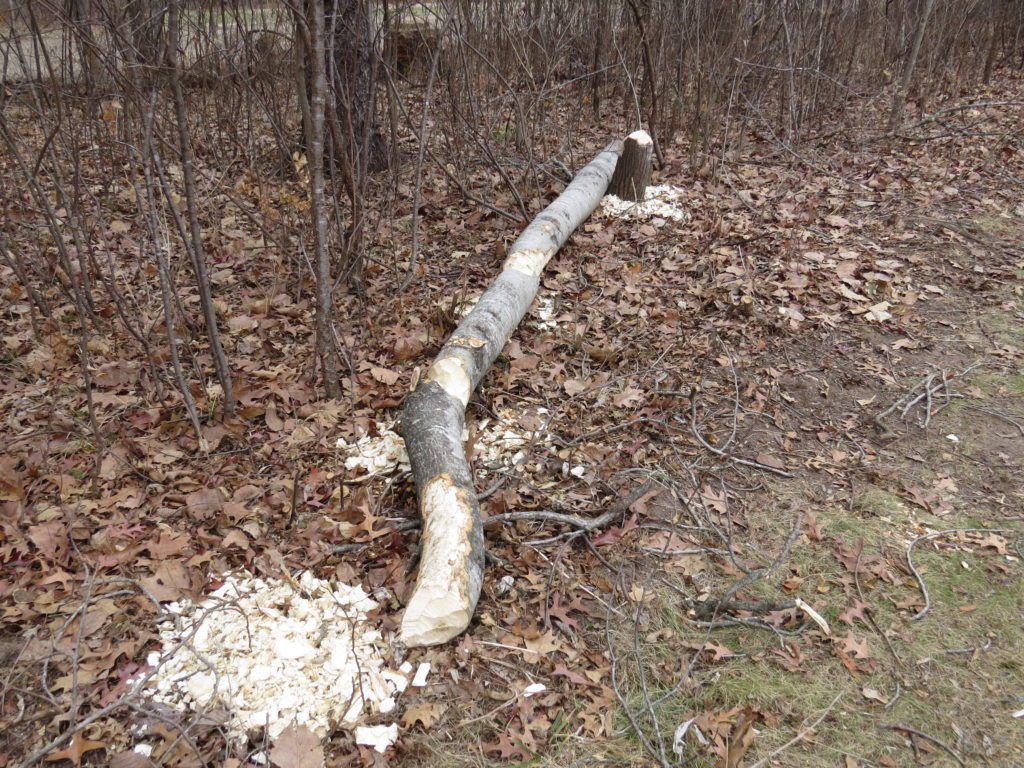
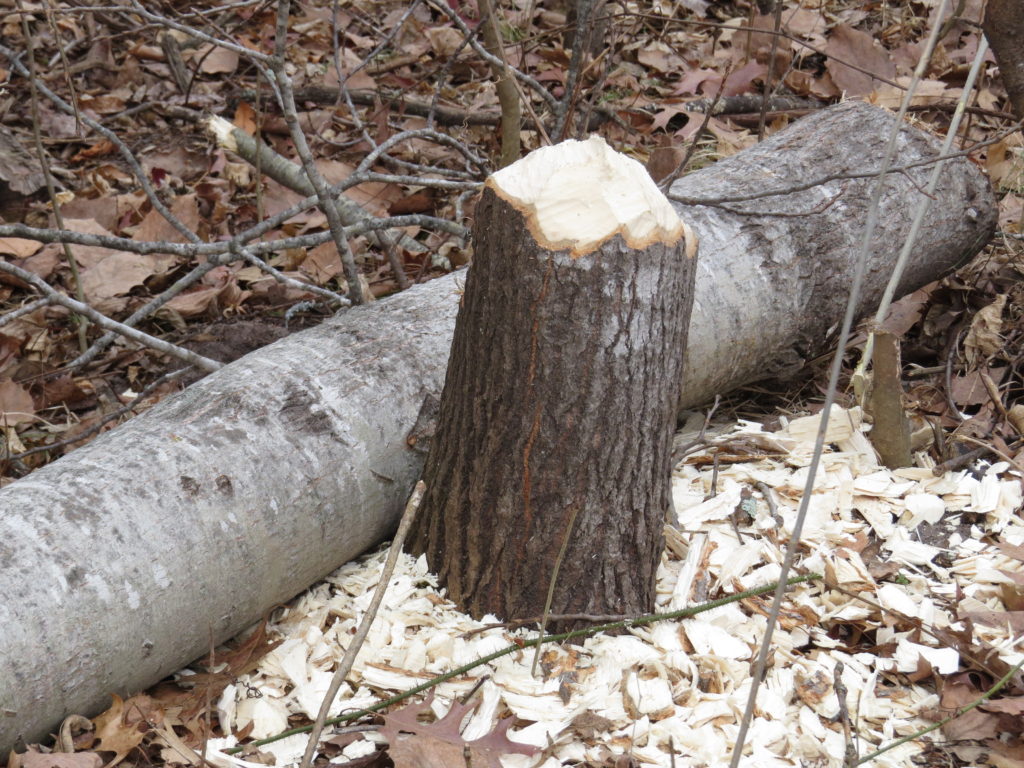
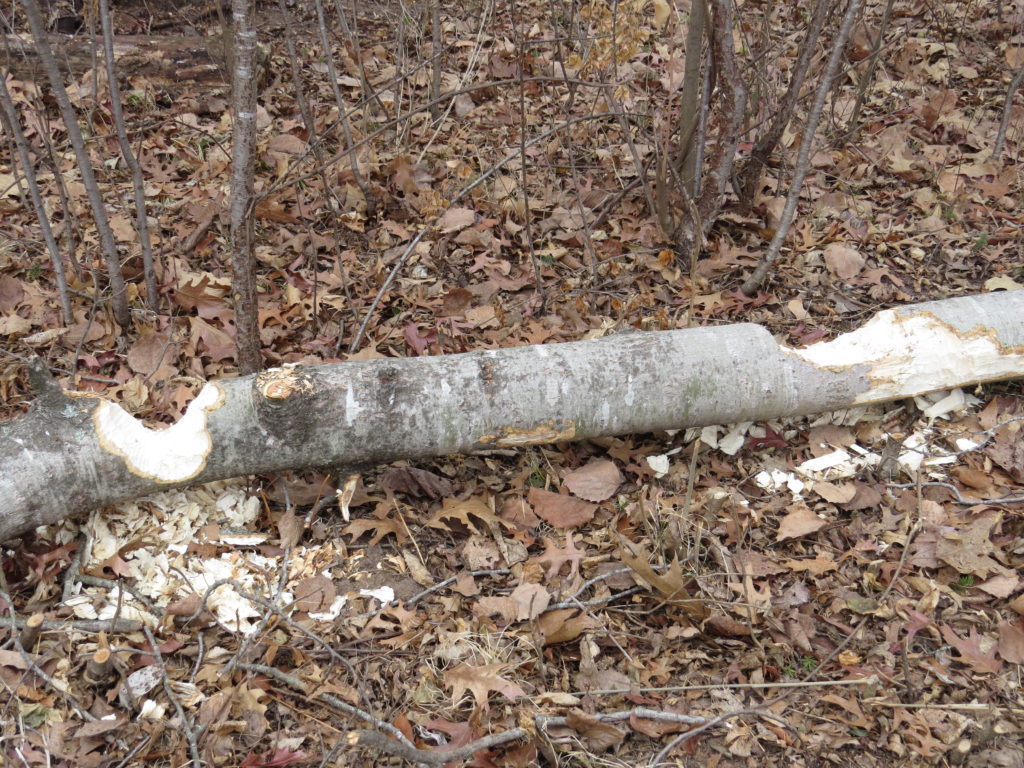
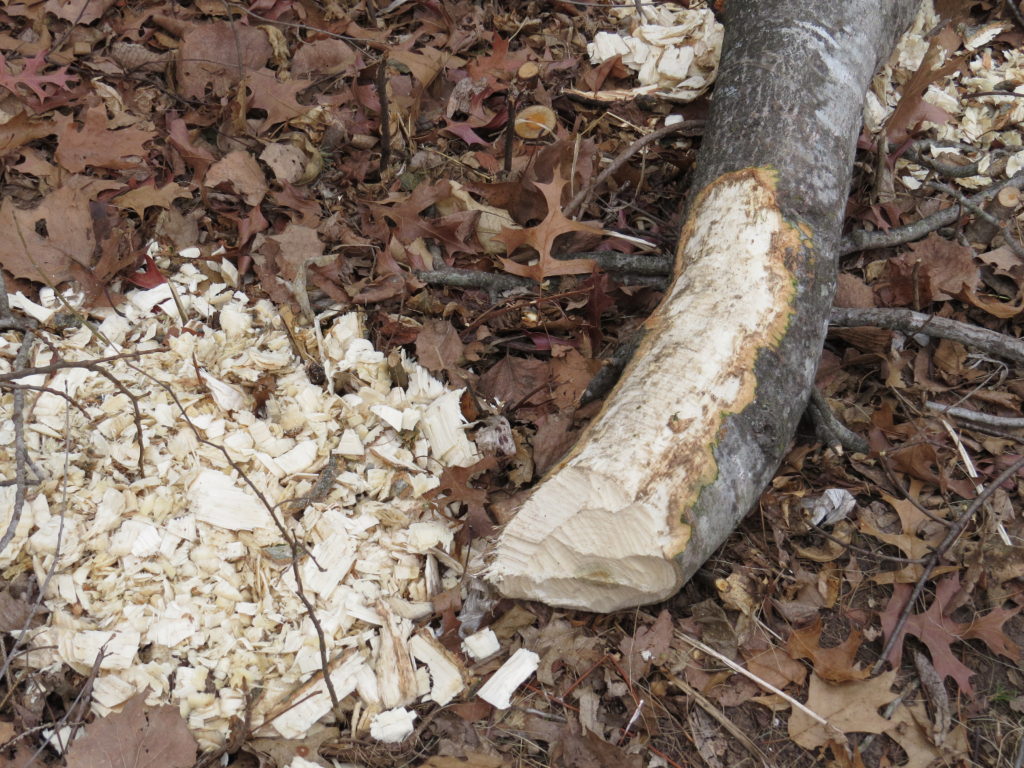
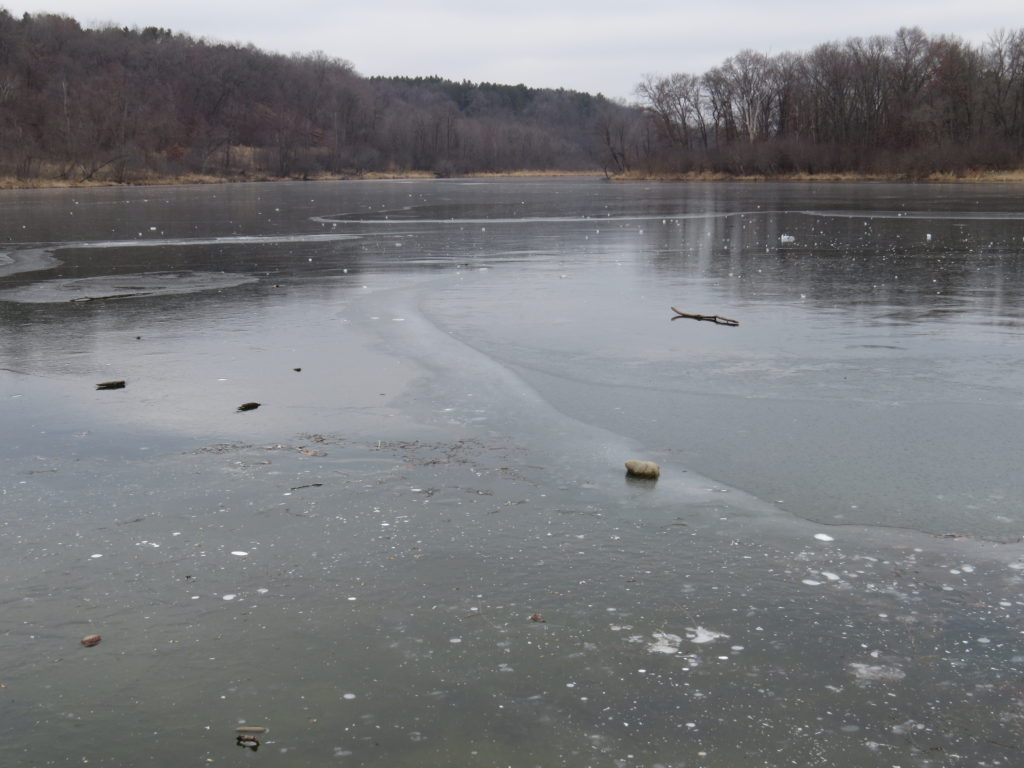
We walked across an earthen dam that separated Lake Alice from a channel to the St. Croix River. There was ‘beaver activity’ all across the dam, even though we didn’t see any lodges.
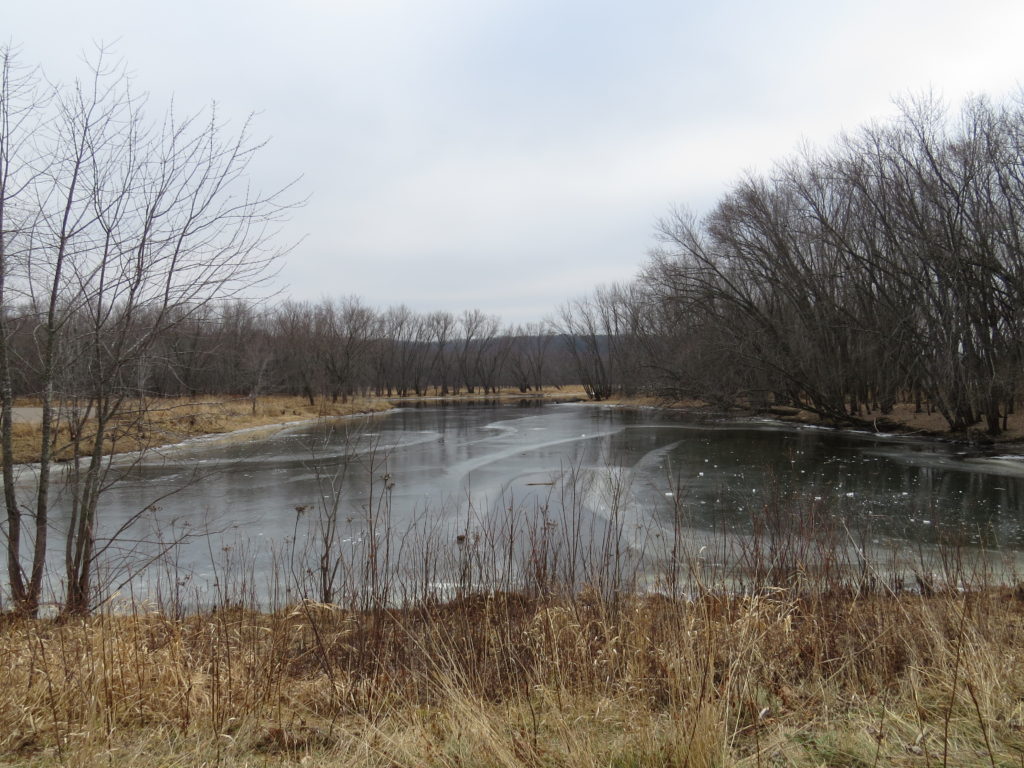
Just across the channel is a large island named Greenberg Island. During Spring snowmelt, the island is often covered with water for a short time. But during the summer, it is a sanctuary for many birds and mammals, including beavers, and for unique floodplain plants.
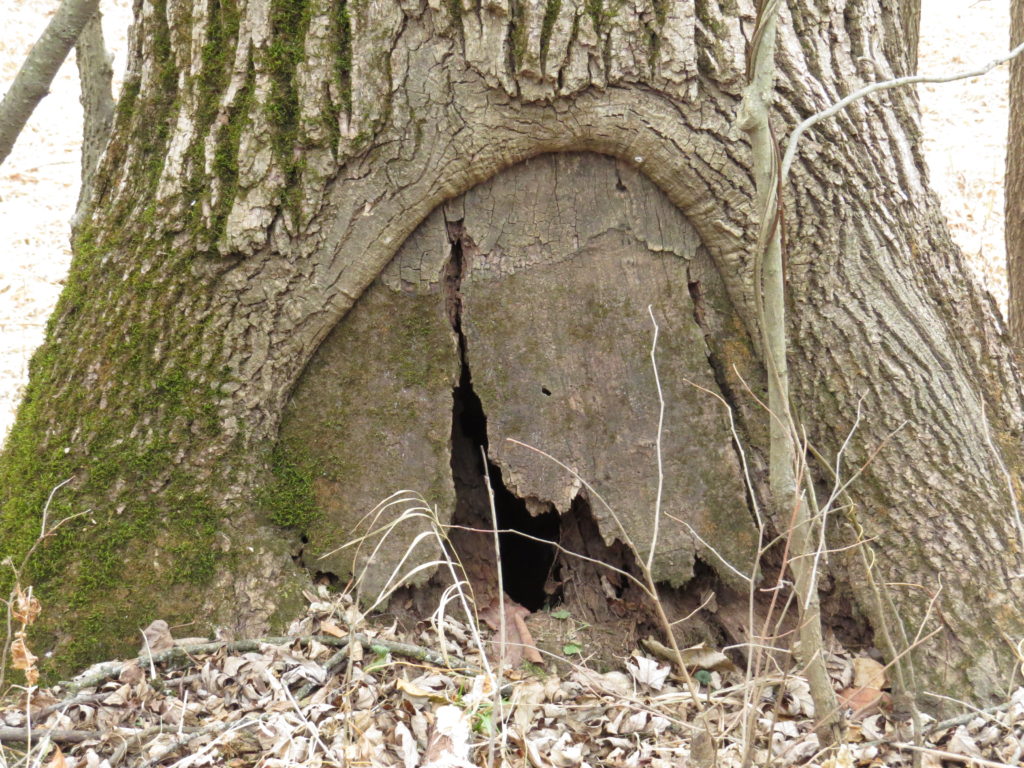
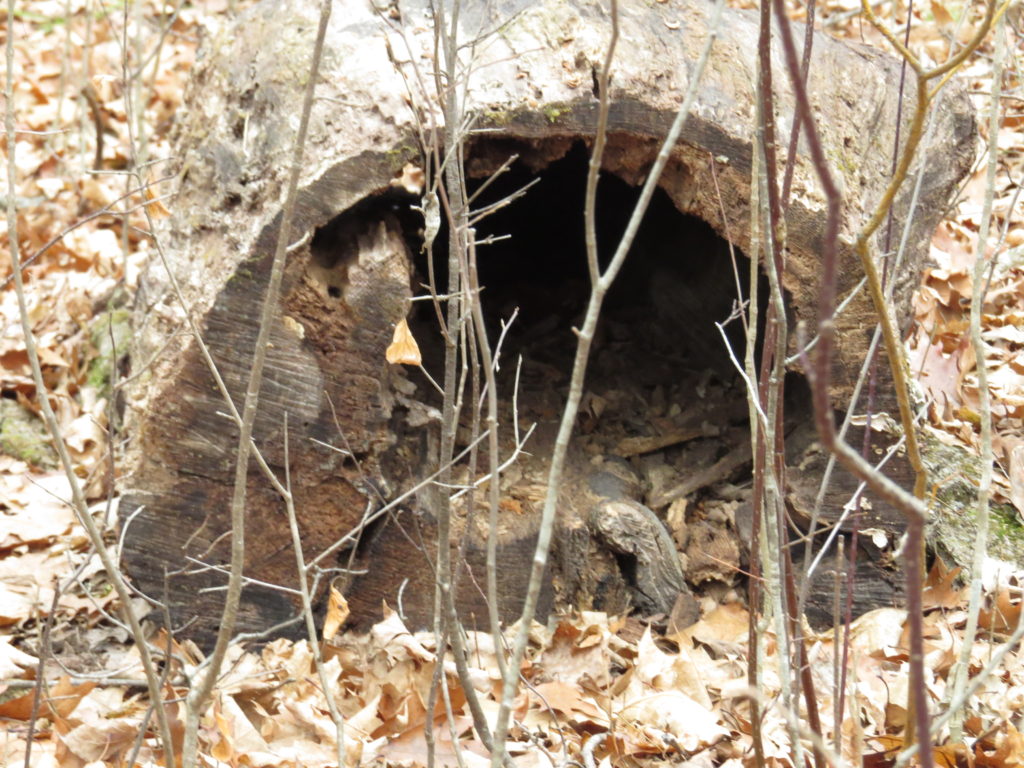
Our homes tour continued as we walked the Riverside Trail. Little hobbit houses were built into living trees and into those that had fallen down. Even though it was a transparent time of the year, the burrows were covered enough or deep enough that the occupant had plenty of shelter, a refuge from the coming Winter weather.
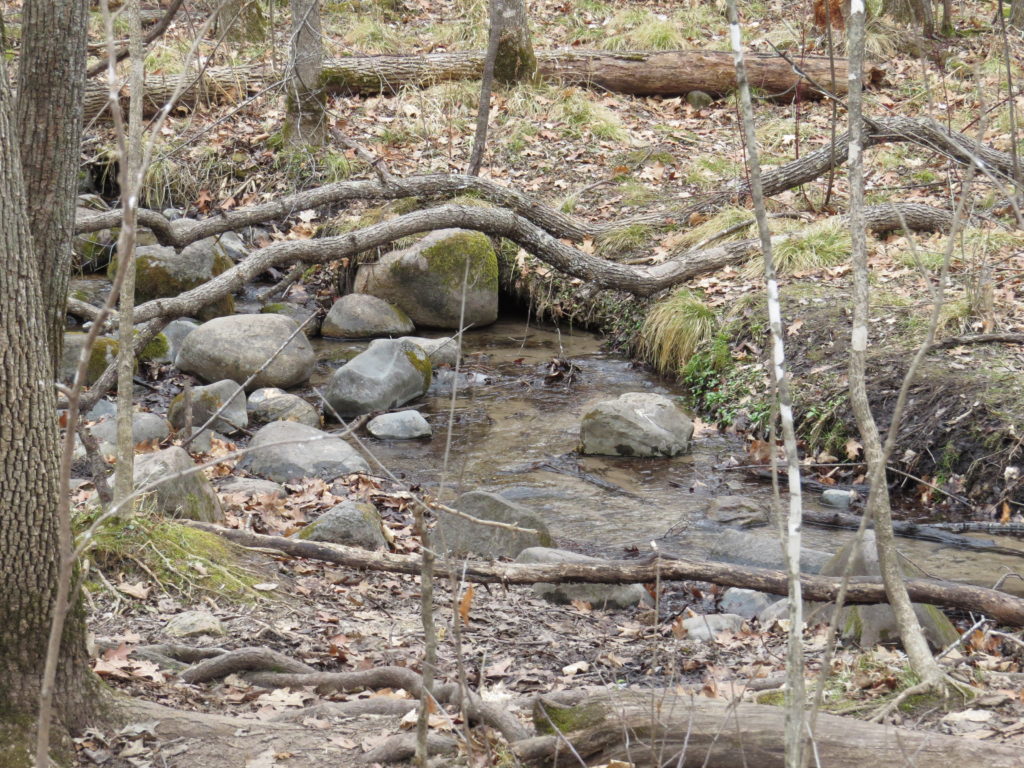
I like these twin curved logs that span the little creek. Old beaver marks may indicate the identity of the bridge builder.
A couple of havens were prize winners for ‘most artistic doorway,’ both of which named Mother Nature as their architect.
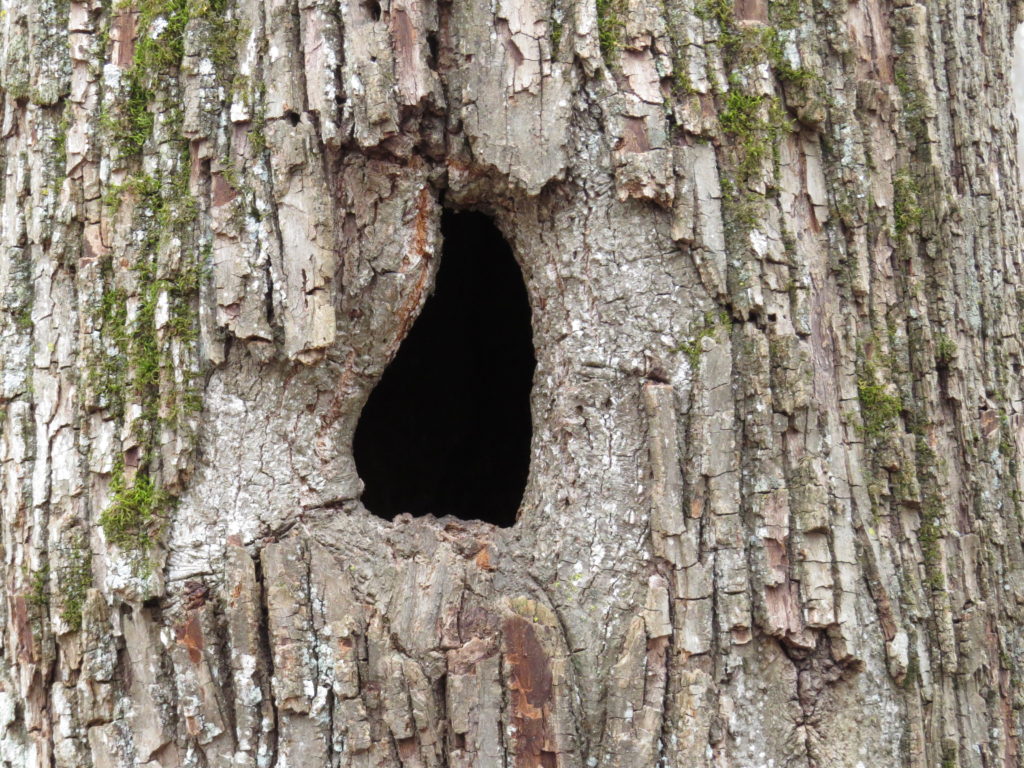
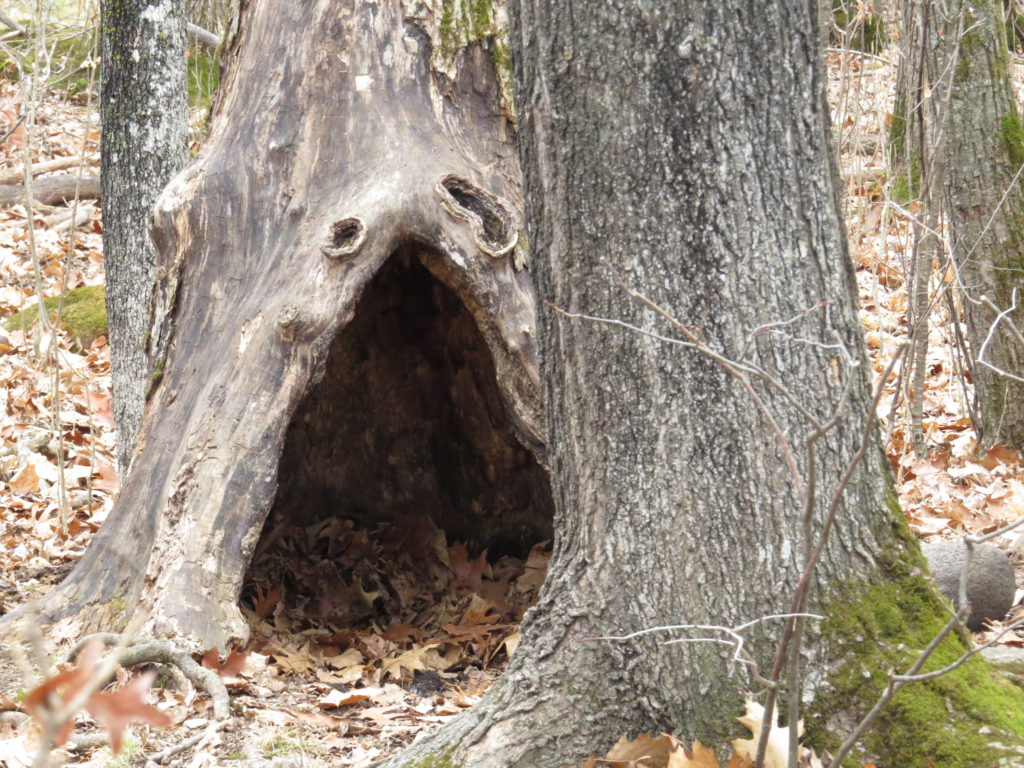
From the rabbits’ purple palace to the home-builder beavers to all the other creatures living in their Winter homes, Nature shows us the importance of having a shelter that is a safe harbor from harsh weather and predators. As for us human creatures, home is where we are.* Home is where we have been for months now. How does your home measure up? Is it a sanctuary of safety? Is it a port in a storm? Is it a haven of love and learning? Is it a sanctum of sacred time and practices? Is it a retreat for adventure and renewal? During this transparent time, when the landscape is stark and bare, we can see things in ways we have not been able to see before. And more importantly, we can act, but the question is are we beaver builders of dams that obstruct and impede the natural flow and goodness of our surroundings or are we bridge builders?
*I am very cognizant of the fact that many, many people do not even have a home, let alone the opportunity to shape it into a sanctuary. Much of the reason for that tragedy has been a history of dam-building. It is an example of where and why we need an army of bridge builders to traverse the muck and bring solutions to people who are in need.
Belle Prairie Shows Us ‘La Vie Est Belle’
I am a resilient optimist. Optimists have high hopes for the world around them and high expectations for the people in that world. Actually, I don’t even consider them to be ‘high’ expectations—just good, normal expectations, like ‘don’t lie, don’t cheat, be kind, have compassion, think of and help others, don’t be a bully.’ I think every religious and spiritual text says the very same thing. My optimism has taken a beating in the last number of years; my ‘rising’ with hope and ‘things will be better’ has been more feeble, less adamant, and much less cheerful. My resilience and love and optimism have been melting from my heart and running like a river away from me to some unknown place that I have no map to find.
Last weekend Chris and I hiked at a park ‘up River’ from us—one that we hadn’t been to before—Belle Prairie County Park. What a wonderful name! Beautiful Prairie! I wholly agree with the good and right pairing of those two words! But the park has much to teach us—only a small amount of the 145 acres is prairie land. It is a convergence of hardwood forest, Oak savanna, virgin White Pines, and floodplain of the Mississippi River, along with the prairie. The land was originally owned by the Belle Prairie Franciscan Sisters, and after a few changes in ownership, became the first county park in Morrison County in 1980. It is a small park, but one rich in biodiversity, distinct natural ecosystems, and cultural history. The prairie is actually the first thing to see when turning into the park, though like most beautiful prairies, it seems overshadowed by the trees and the water.
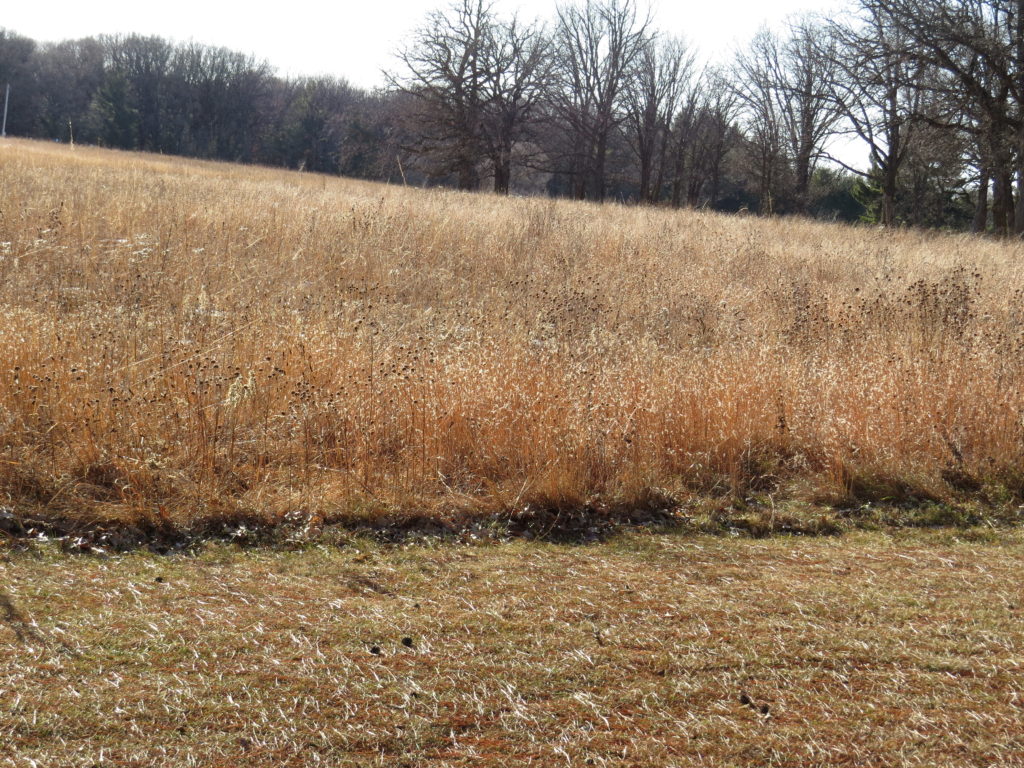
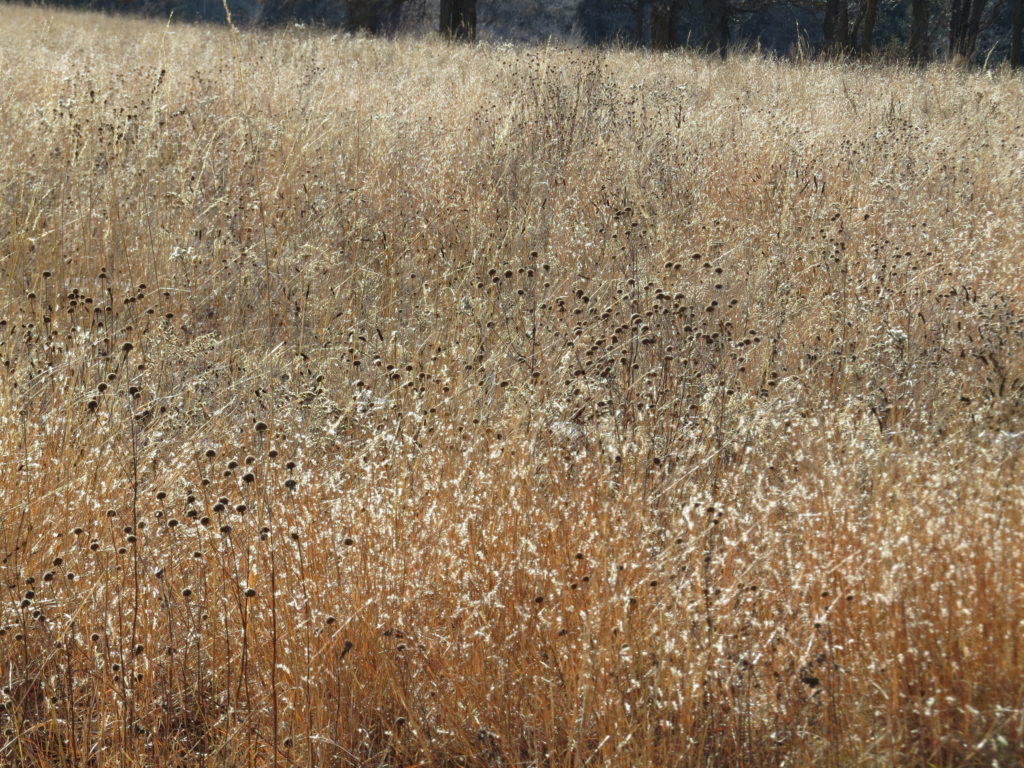
The prairie reaches into the Oak Savanna that contains scattered large Oaks. Just as in so many woodlands and savannas in this area of the country, the noxious Buckthorn had taken over the understory of the Oaks. The large ones had been removed, making it look bare, but a thick growth of young ones were greedily devouring the space and sunlight.
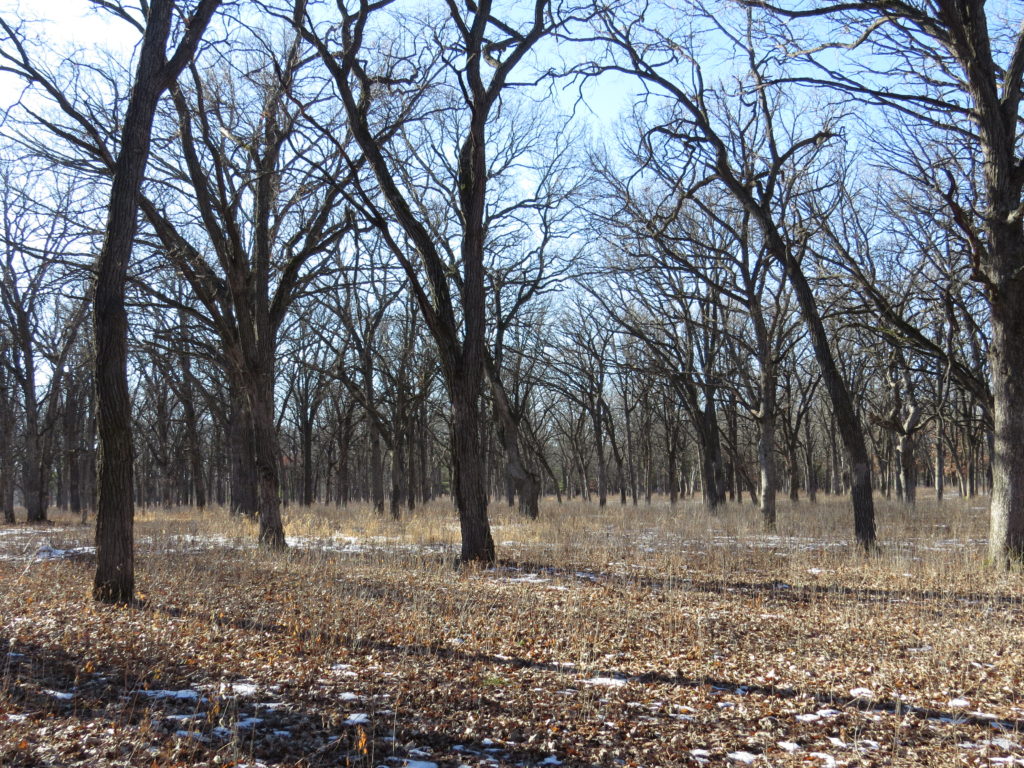
Hopefully in the near future, the Buckthorn can be beat back so the prairie grasses and wildflowers take their rightful place beneath the Oaks.
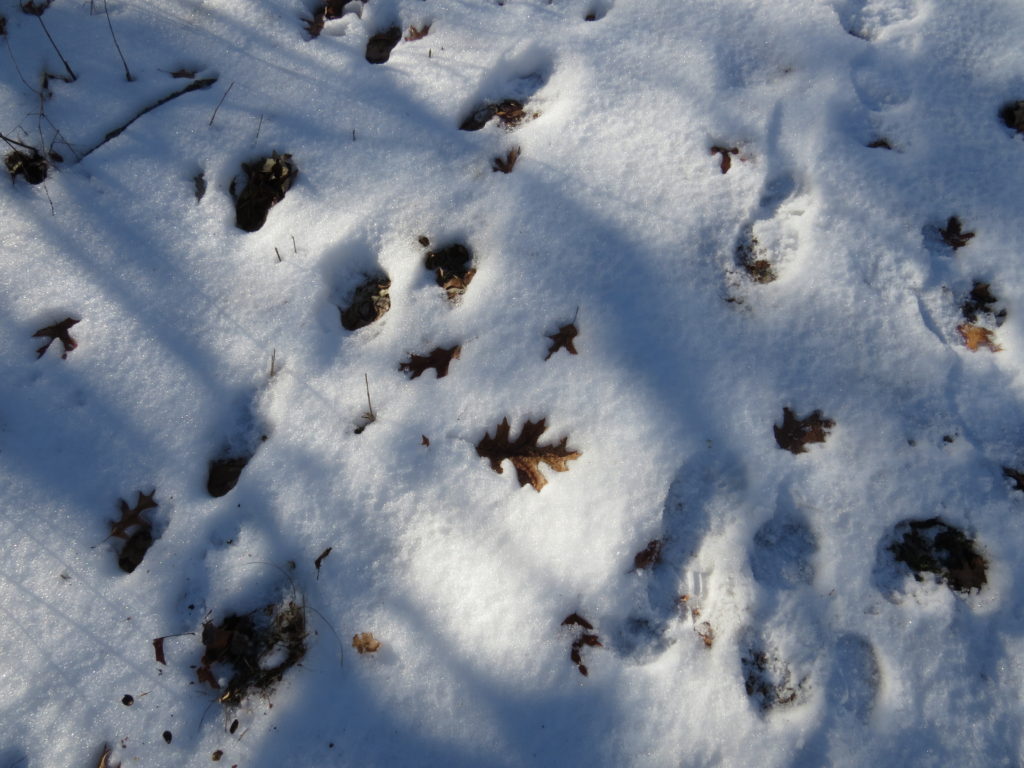
From the transitional Oak savanna, we entered the forest. There were more patches of snow remaining in places that were sheltered from the sunlight. The sun-warmed Oak leaves sank into the snow, a real-life relief of leaves, footprints—both human and deer, and ‘digging spots’ where squirrels and other creatures had dug up acorns.
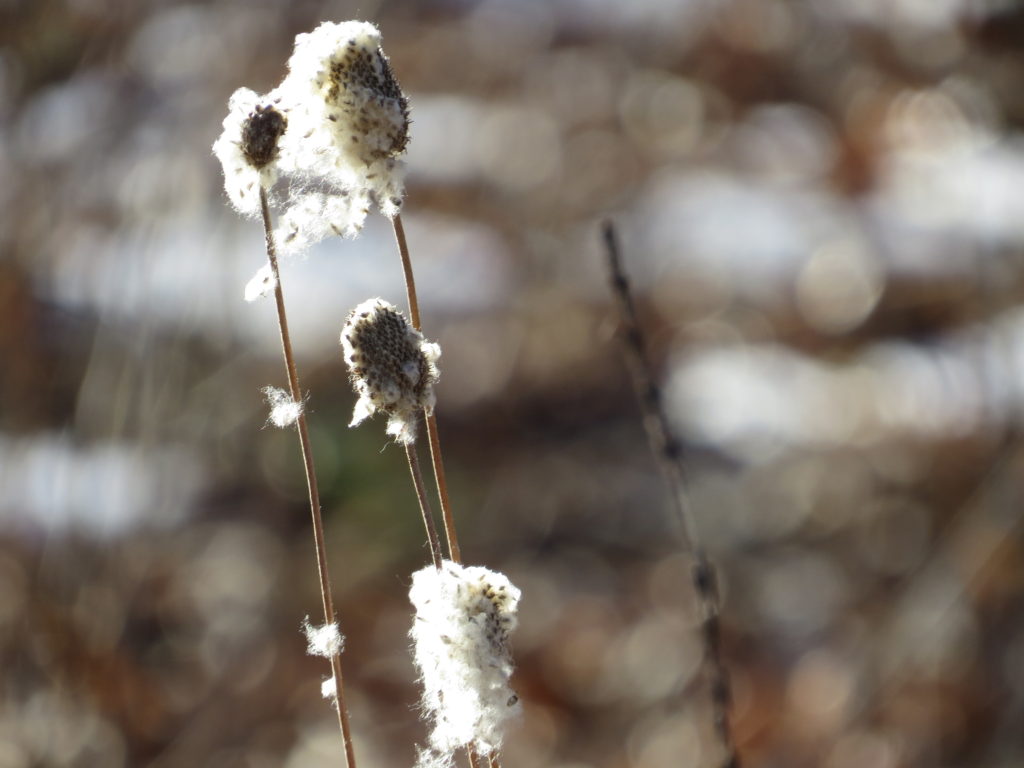
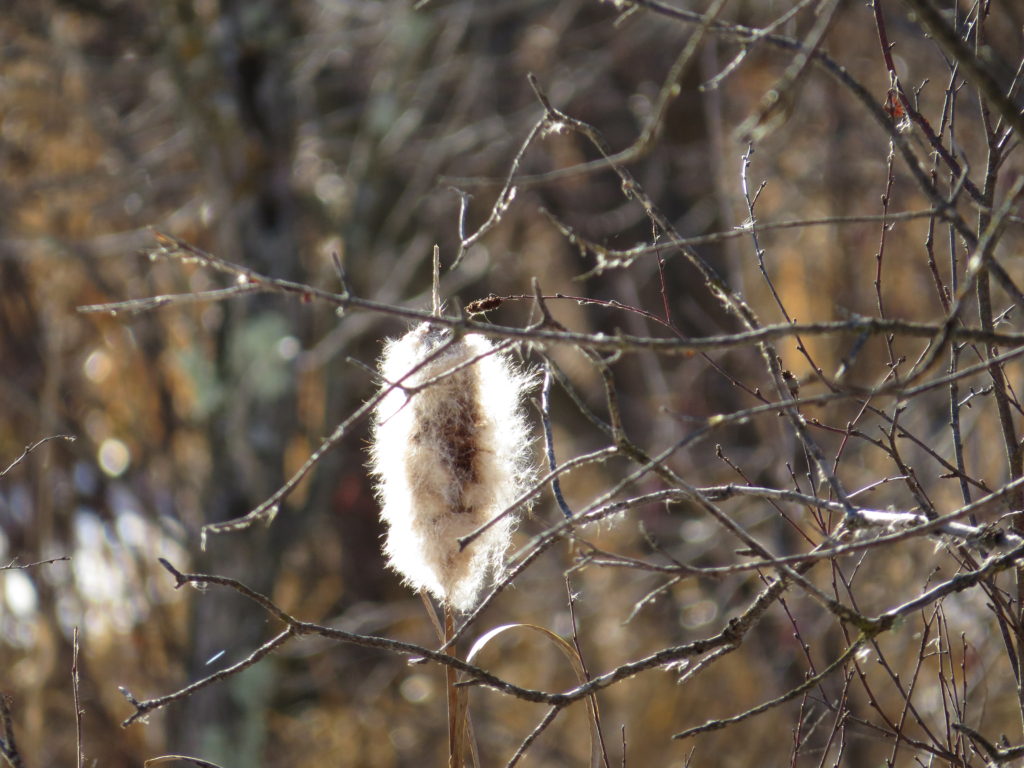
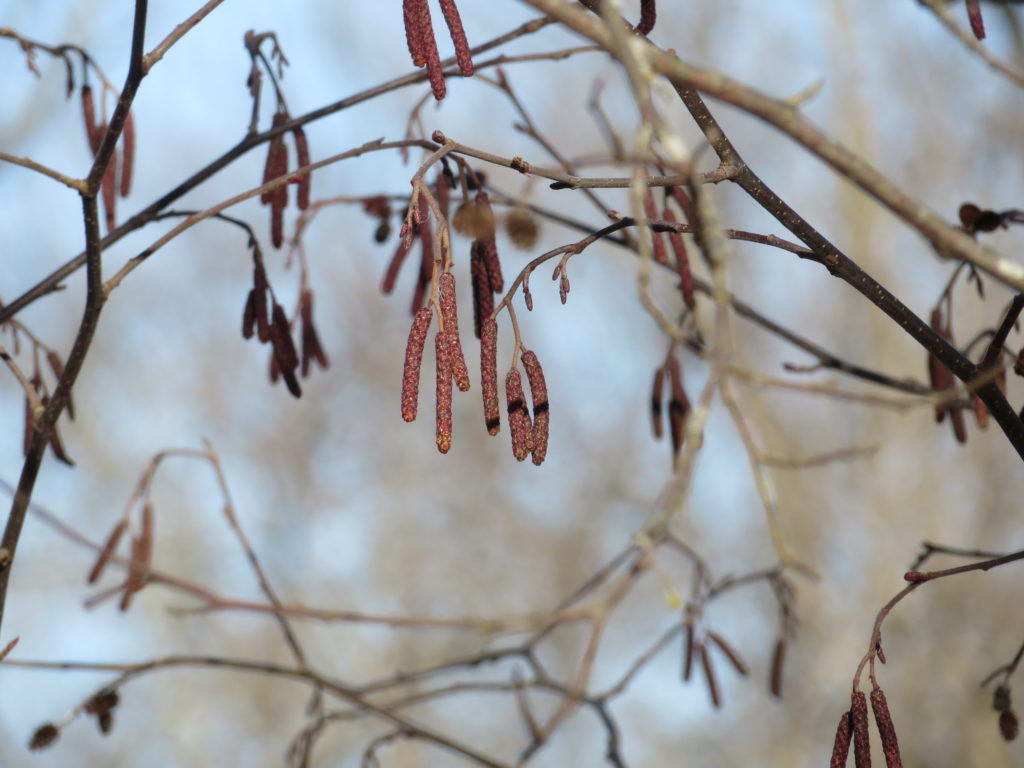
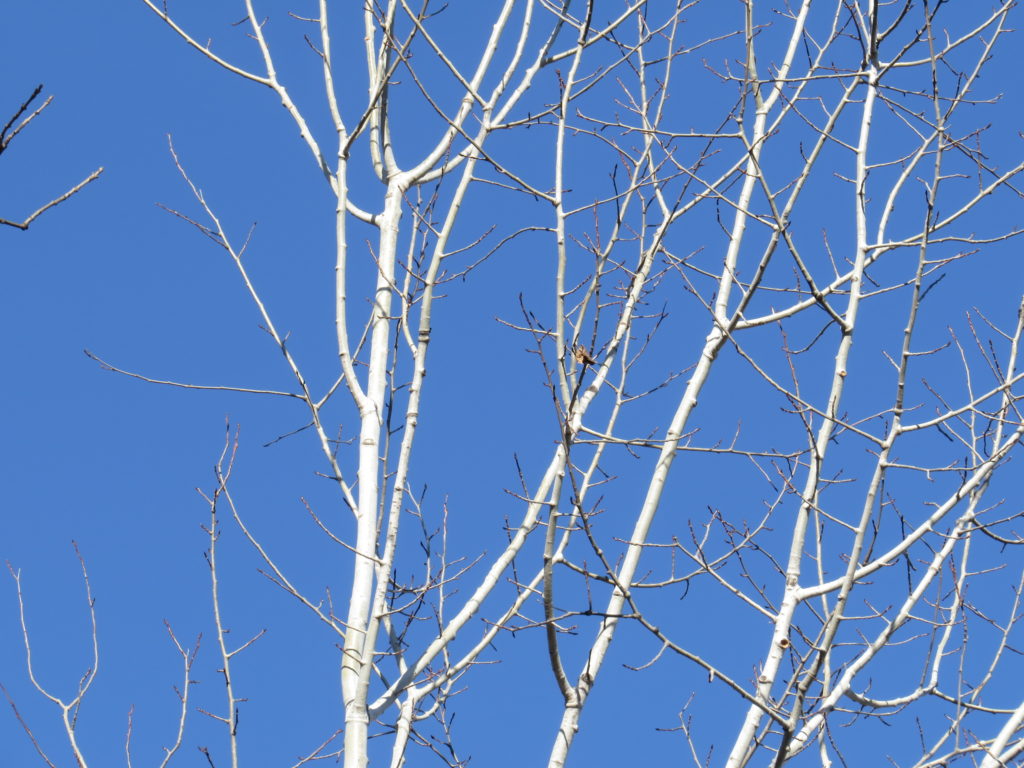
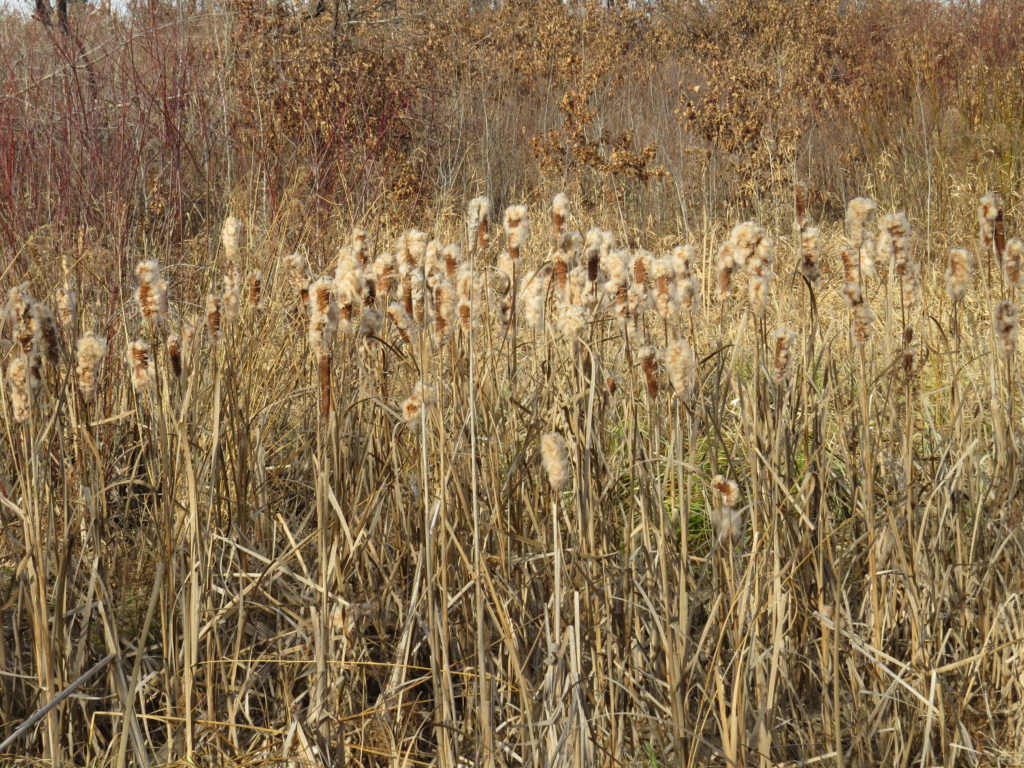
We crossed over an earthen dam that arose from marshy places of the floodplain area. Cattails that had burst into a halo of light, brilliant Red-twigged Dogwoods, Speckled Alders with their reddish catkins, and sky-white Aspens colored the late November landscape of Belle Prairie.
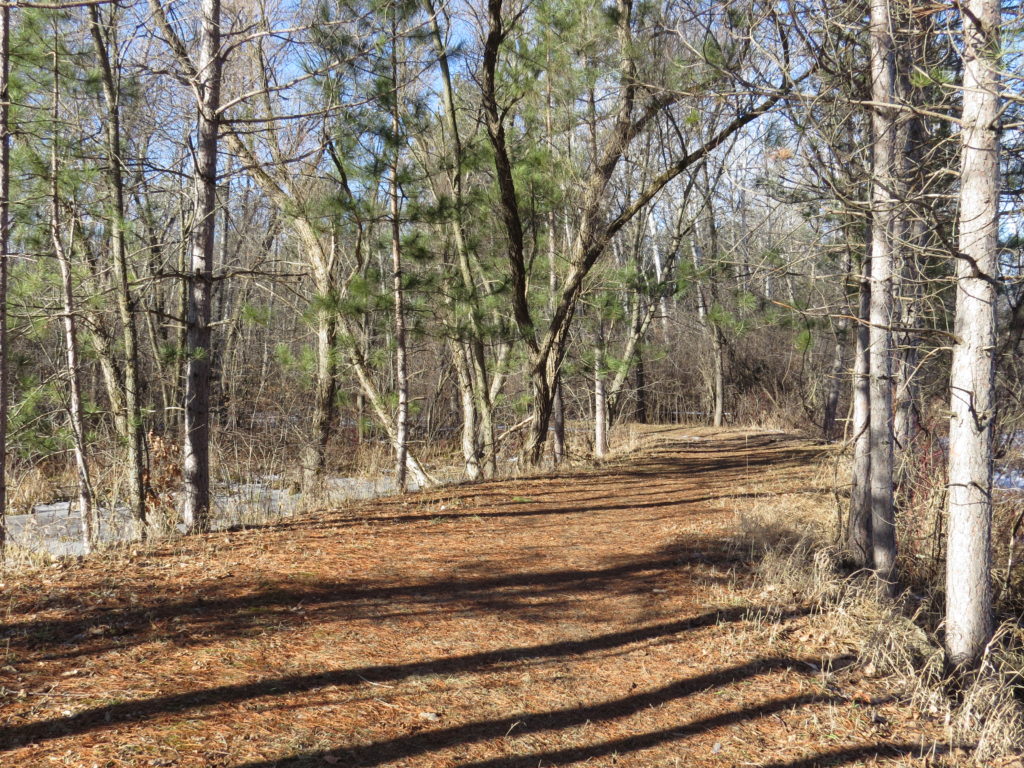
Soon the trail came to the River and followed alongside the drifting blue Beauty. The Mississippi River has such a quiet power and presence, whether she is flowing through prairie grasses or forests of conifers.
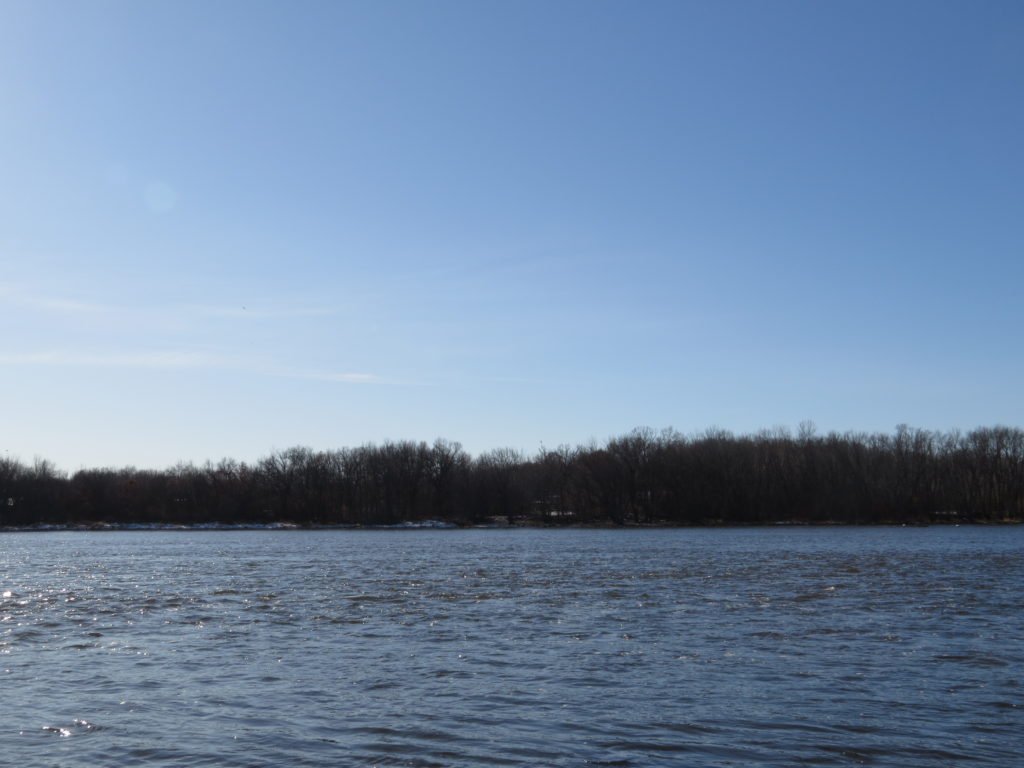
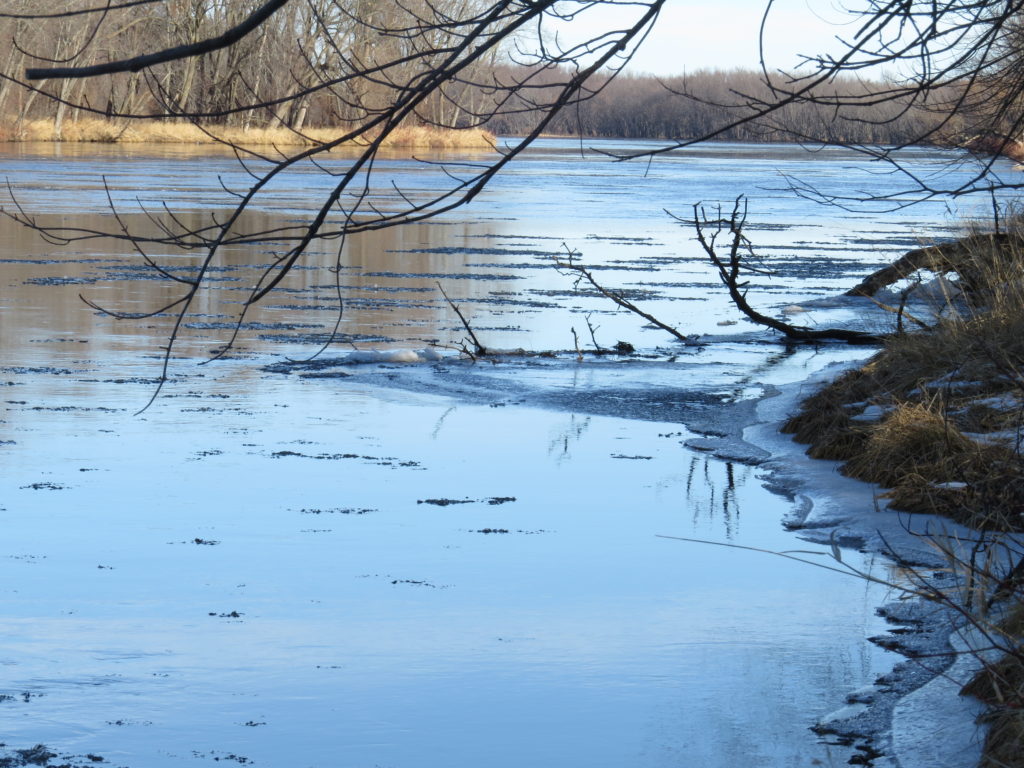
I always marvel at the tree-laden islands in the Mississippi River, whether long and pencil-thin or compact and round. They take constant pressure from the fast-moving water or from the pounding of Spring ice.

The islands contain their own little ecosystems with animals who use the shelter and food to sustain them.
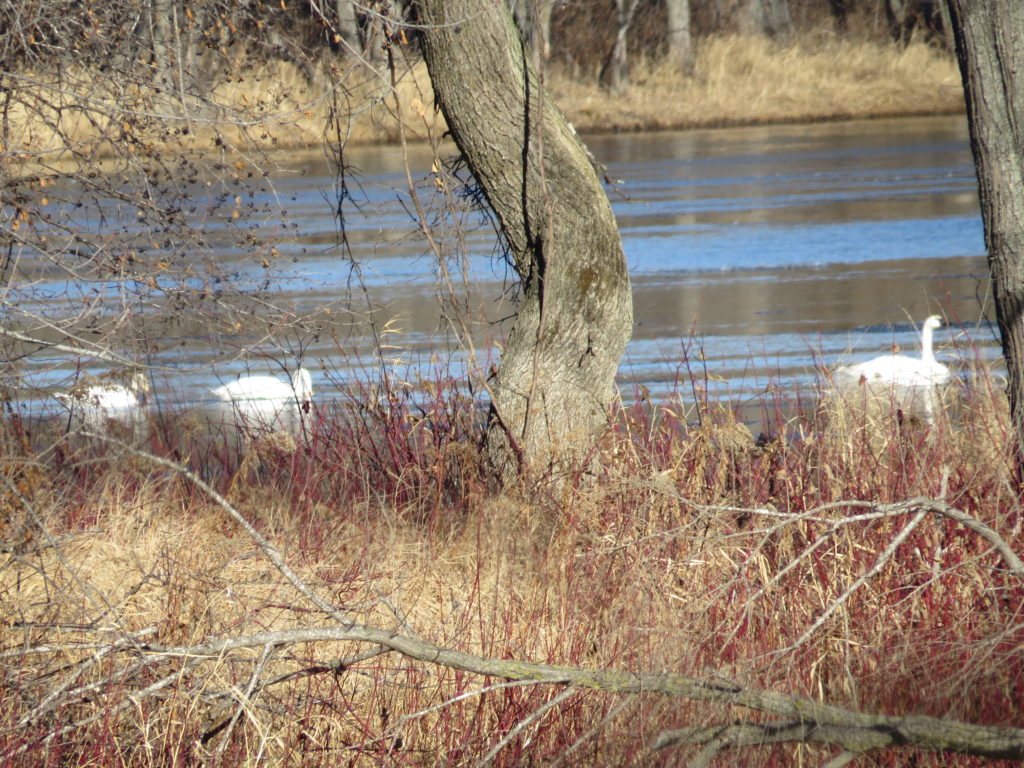
An ecosystem is a biological community of interconnected organisms. This tiny little island is a reflection of the many ecosystems that make up our world, of which we—you, me, and every human—are a part of, actively and passively.
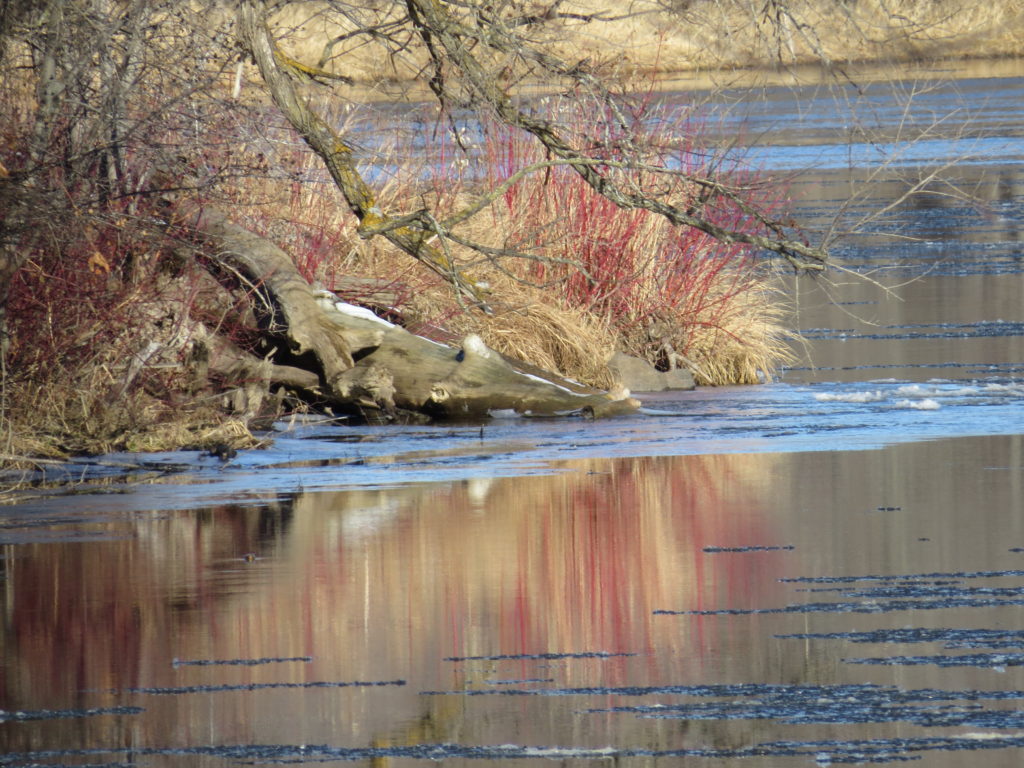
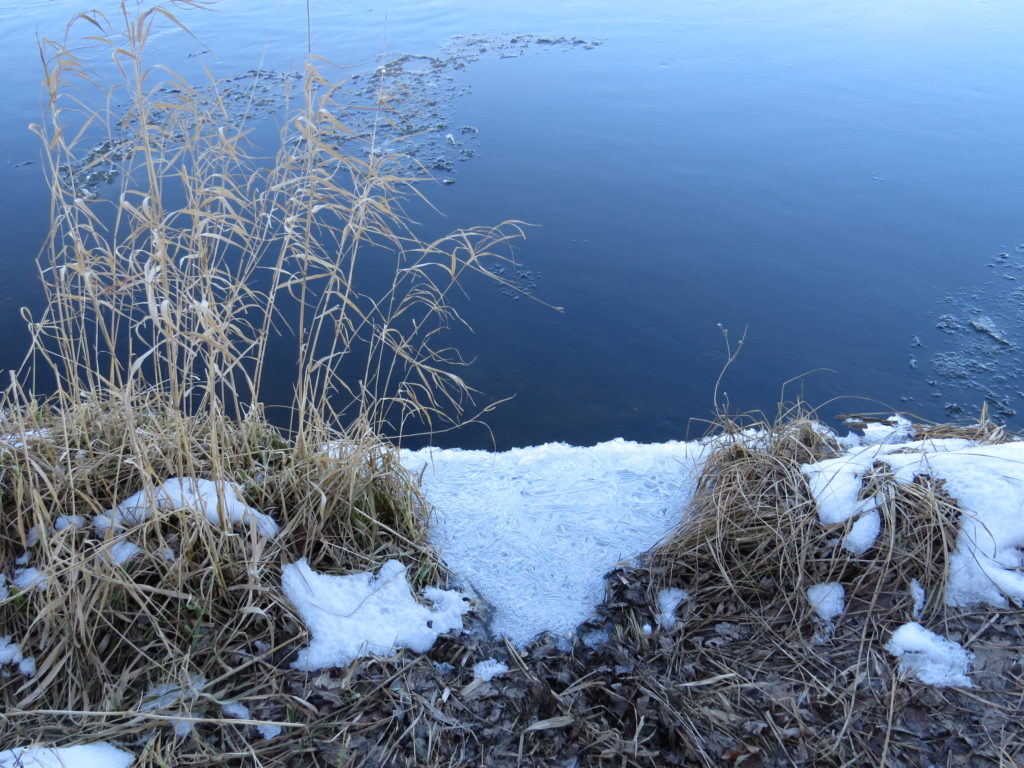
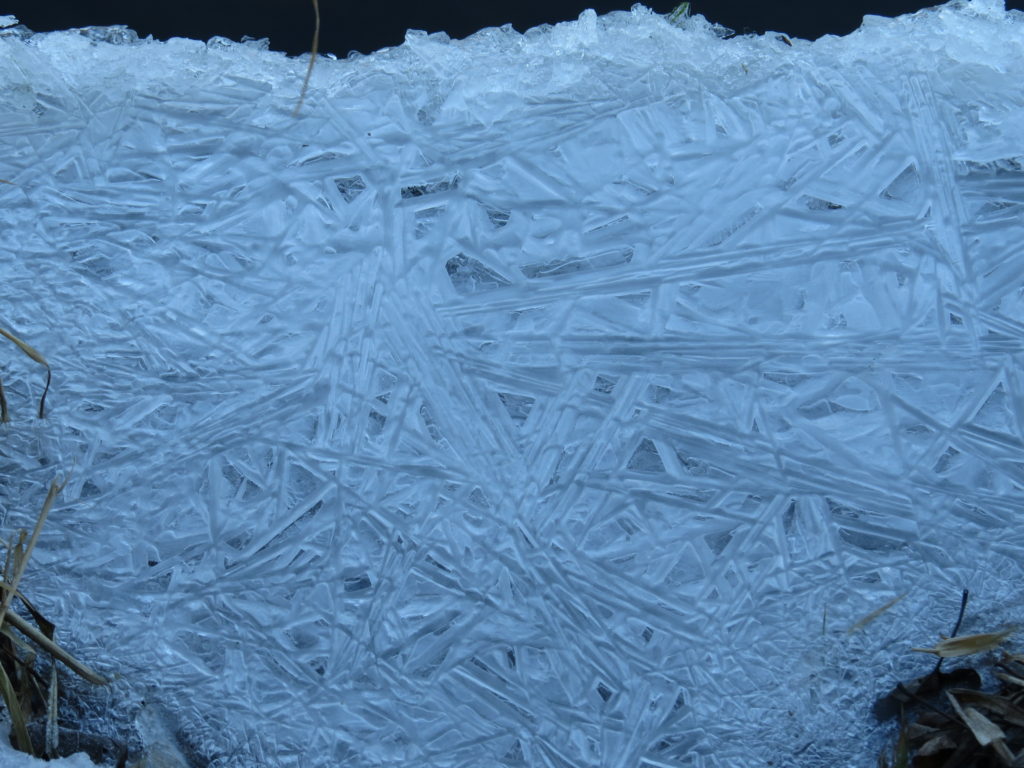
Floating down the River were patches of slushy ice. Most often we talk about ice melting, and unless one is an impatient ice fisherman, we rarely talk about ice formation. In reading about ice formation, I found a website called the National Snow and Ice Data Center. I’m kind of thrilled there is actually an agency dedicated to ice and snow, and of course, what that means to our climate and world. What I learned is there is an actual ‘ice growth process,’ starting with these slushy patches. They are called ‘frazil ice’—ice crystals that form in very cold water that is moving too much to let the ice form into a sheet. Isn’t that a great name?
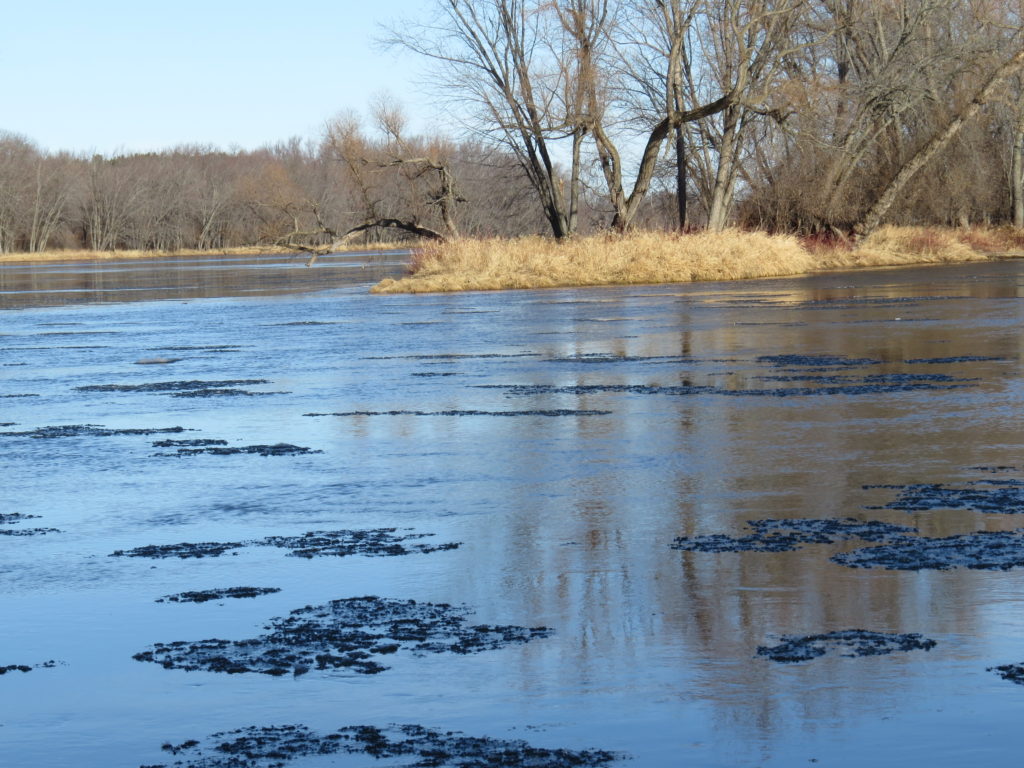
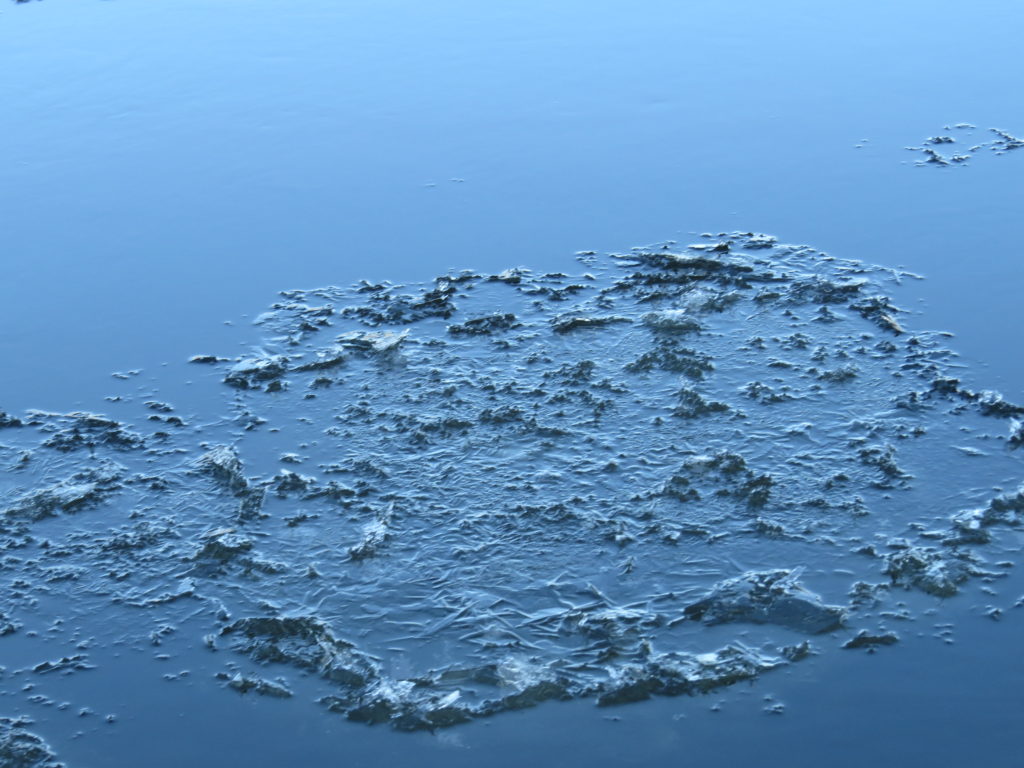
From frazil ice, ‘pancake ice’ is formed from the agitated and aggregated slush. Another great name which visually makes perfect sense!
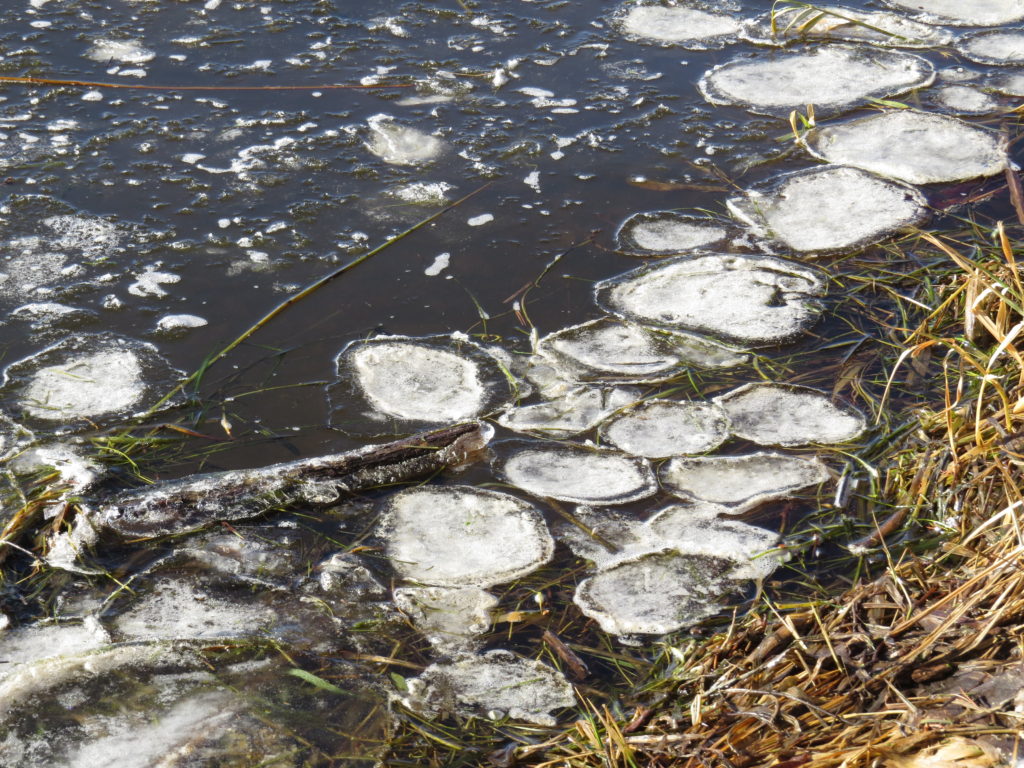
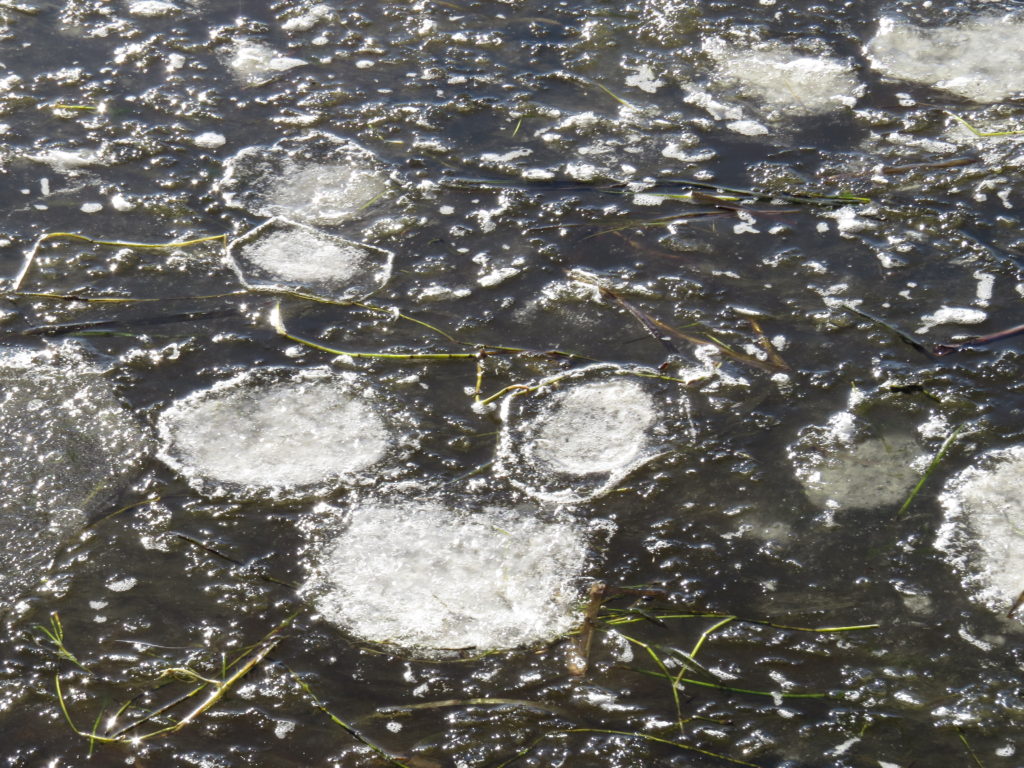
The pancake ice turns and bumps against the other ‘pancakes’ causing a ridge to form along the outside edge, and the motion causes one pancake to slide over another (called rafting). The fourth step is cementing and consolidation of the ridged pancake ice to finally form sheet ice. Isn’t that awesome?!
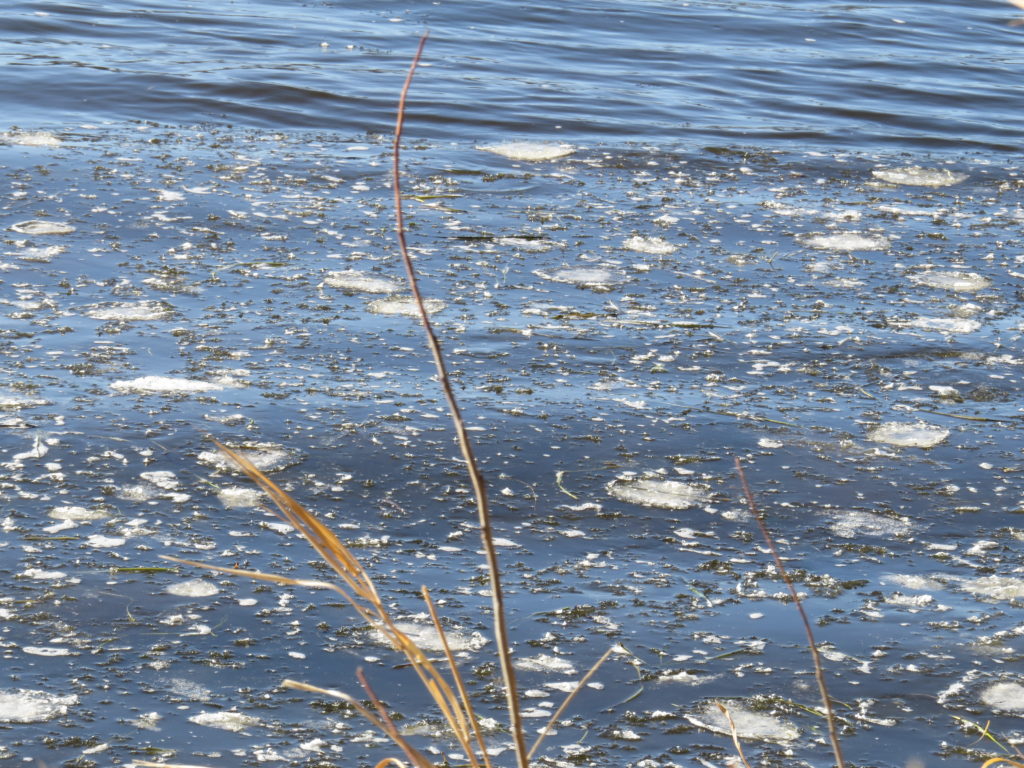
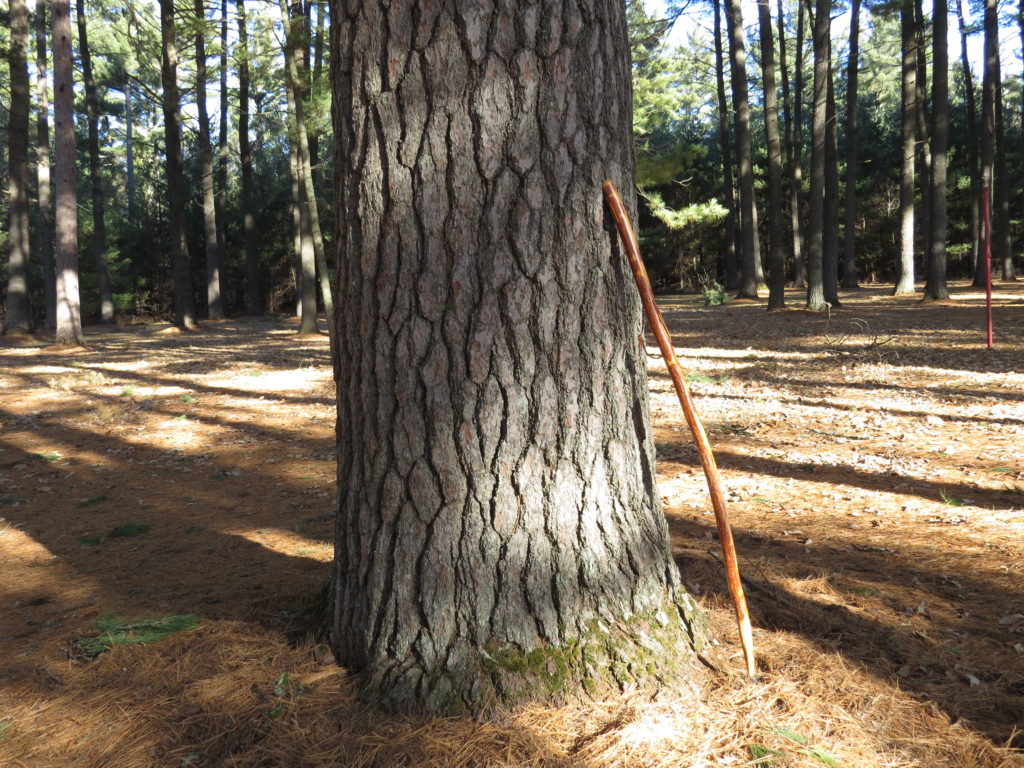
After we rested on the bank of the Mississippi, in the warm sunshine, beside the frazil and pancake ice, we walked through the old and impressive stand of White Pines that towered over the picnic and play area.
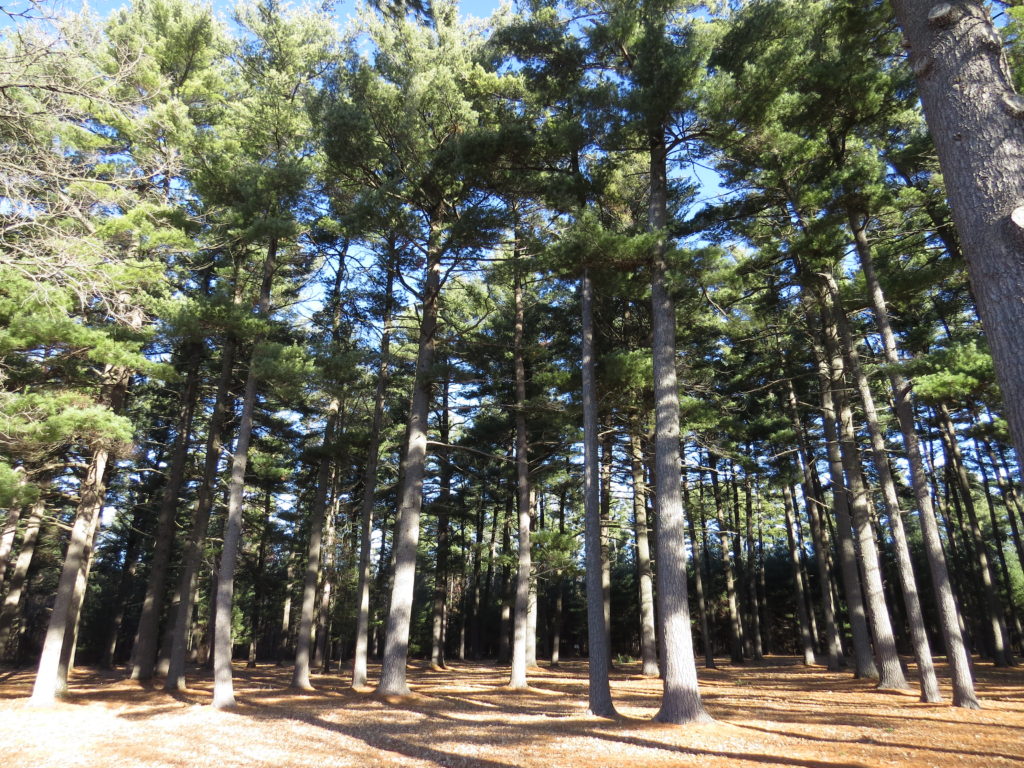
Sunshine streaked through the forest of large trunks and lit up the carpet of pine needles to a soft, glowing gold. The many treasures of Belle Prairie.
Belle Prairie, beautiful prairie, God knows I love the prairie. But Belle Prairie park showcases an amazing assortment of ecosystems and species, all in a small area, thriving together. There is not one entity that holds the power—the River, the Oak, the Pine, the Swan, the Cattail, the Bluestem, and the Ice all hold their own amazing power. And together they create a system that is beautiful, diverse, and functional—a succinct description of Mother Nature herself. As for me, for now I am allowing my Love, my Optimism, and my Resilience to flow away from me—I cannot stop it after all. I will let Mother Nature take them where she will. Perhaps it is an emptying that I needed, a rest of sorts. I will find the map and the trail when I need to—I will find my way, I’m certain. In the midst of that, I found Belle Prairie who taught me to see and find beautiful, not only what I love and hold dear, but all those amazing, powerful creations that are less familiar to me. ‘La vie est belle’ means life is beautiful. It is an expression of a new era and the choice to create your own path to happiness. So be it.
A Season of Neutrality
I am not neutral about my high school Chemistry class—it was the best thing that happened in my life that year! Many may be on the opposite side of the spectrum remembering tortuous labs and wondering why the heck the periodic table is even a thing. Most may just be neutral about it—I did it, it was ok, not memorable, not torture, I barely remember it. But remember learning about atoms with their nuclei of protons and neutrons with orbits of electrons filling the energy levels and how it all fit so perfectly as diagrammed on the periodic table! So good! But just the neutrons today—they make up the nucleus of atoms along with protons. Protons have a positive charge and repel one another. (The electrons orbiting the nucleus have a negative charge and ‘bond’ with the protons to sustain the atomic structure.) The neutrons have weight or mass similar to the protons, but they have no charge—they are neutral. They in essence neutralize the positive charges of the protons and keep the nucleus, and therefore the atom, intact.
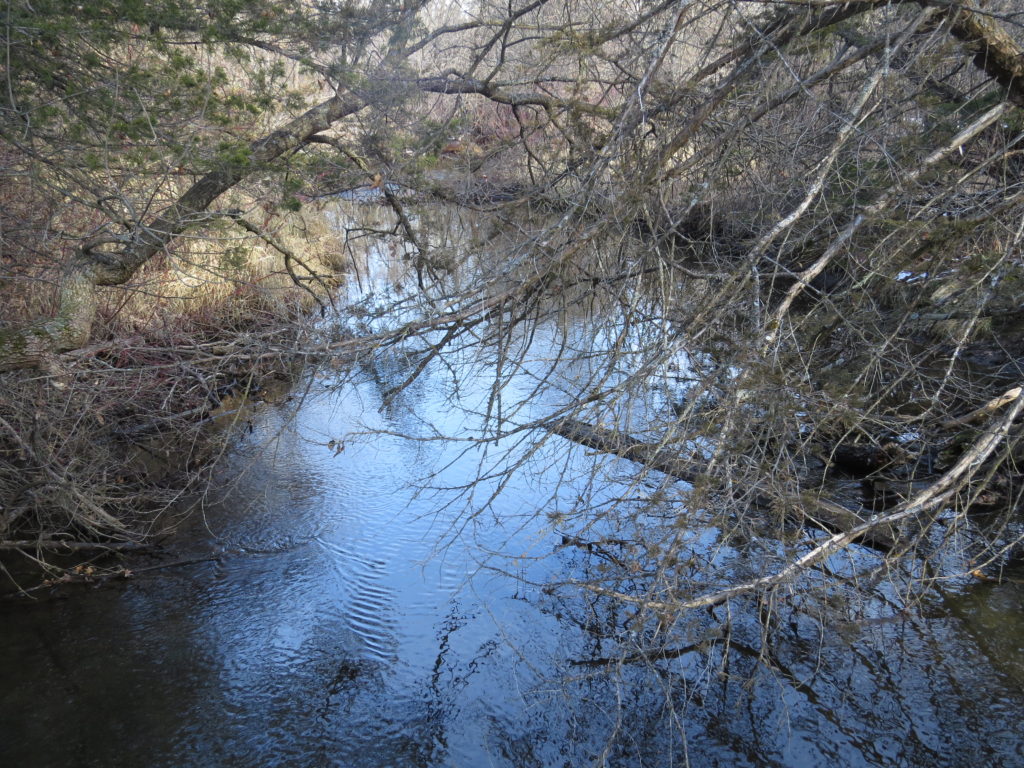
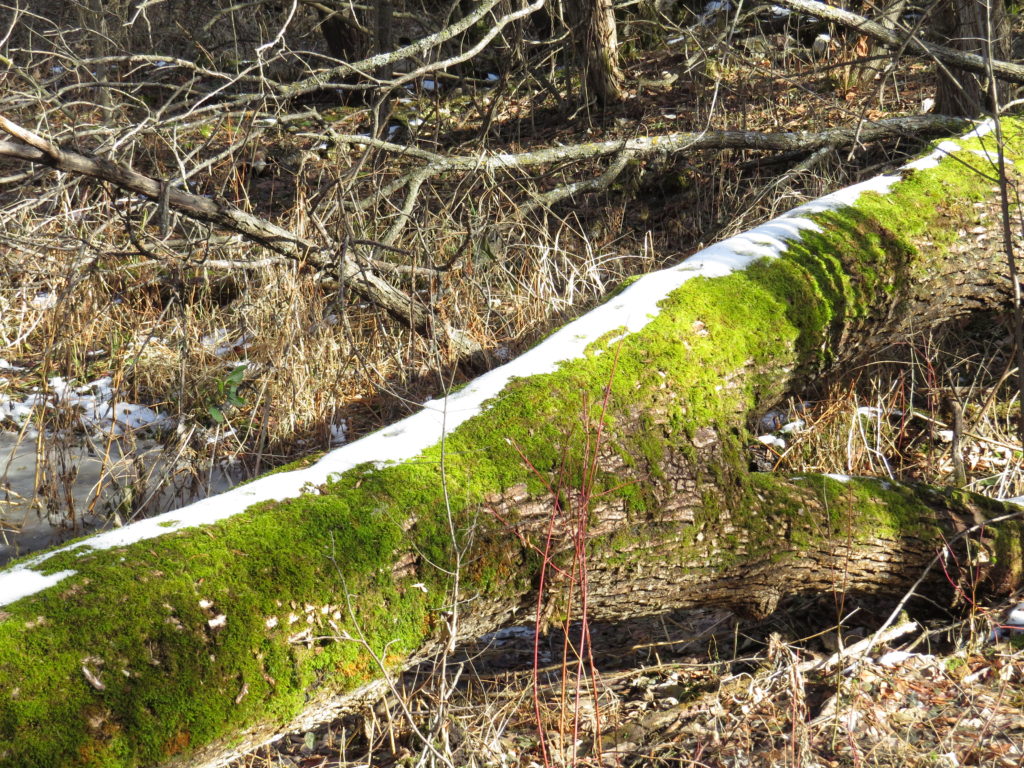
We are in a neutral time of year—most plants are dormant, the weather is neither warm nor cold, and we’ve had some snow, but nearly all has melted. We’re still in Autumn, but the majority feels like it’s Winter already. And the colors of Nature are neutral—grays and light browns—when everything seems to blend into its surroundings.
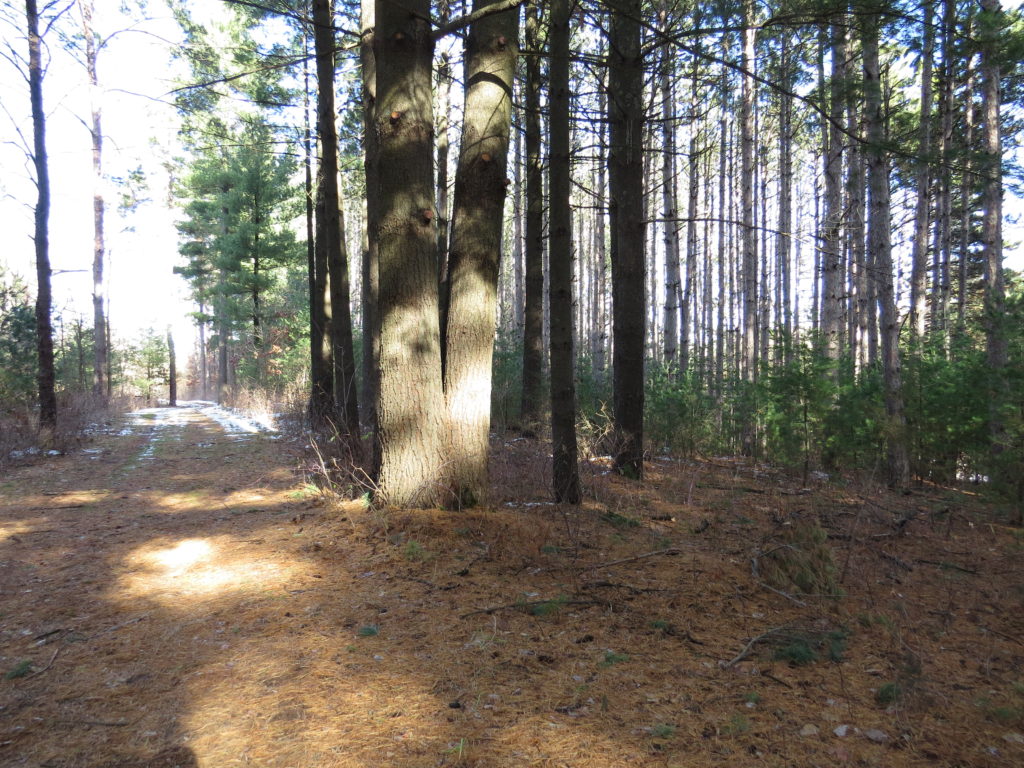
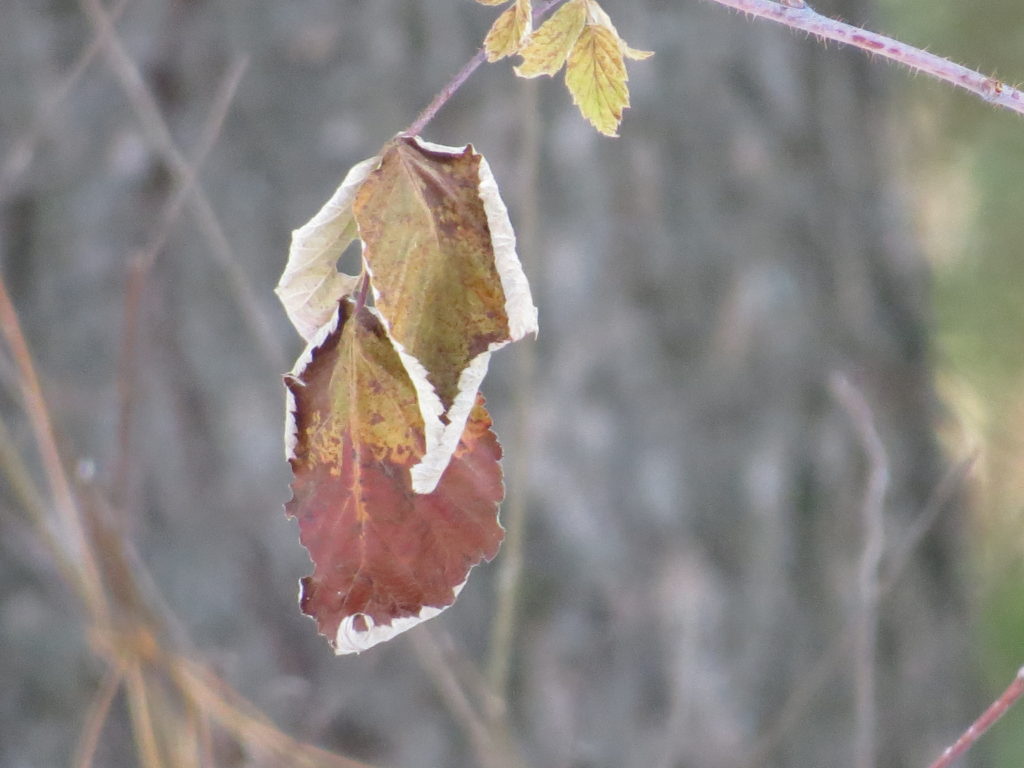
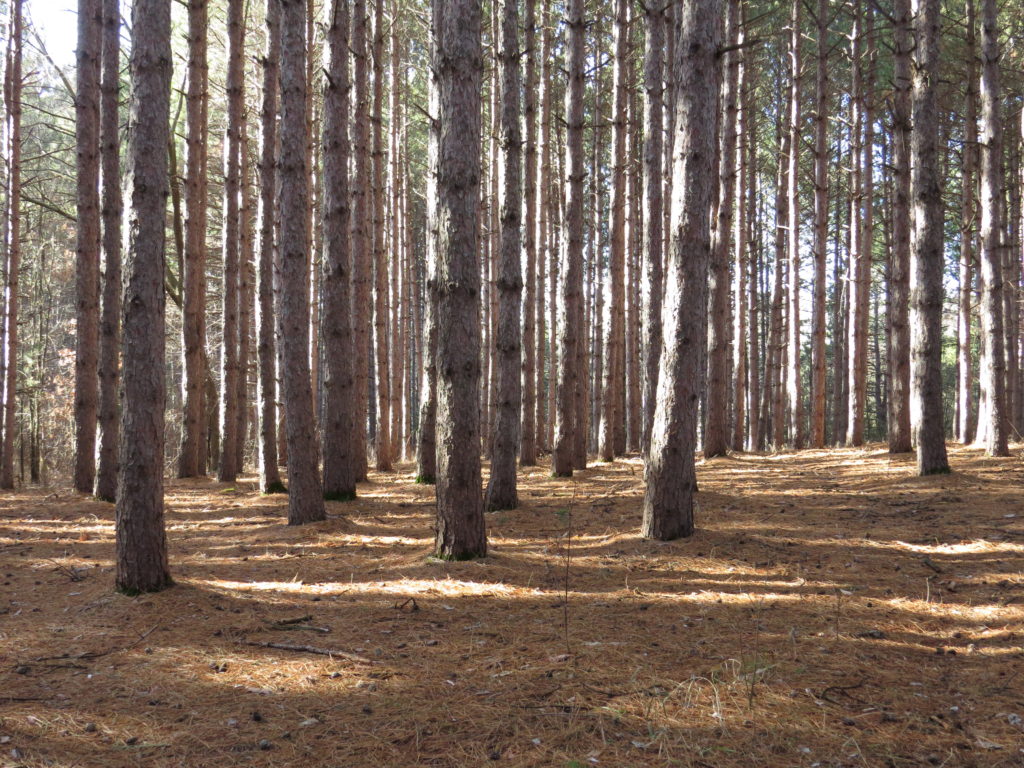
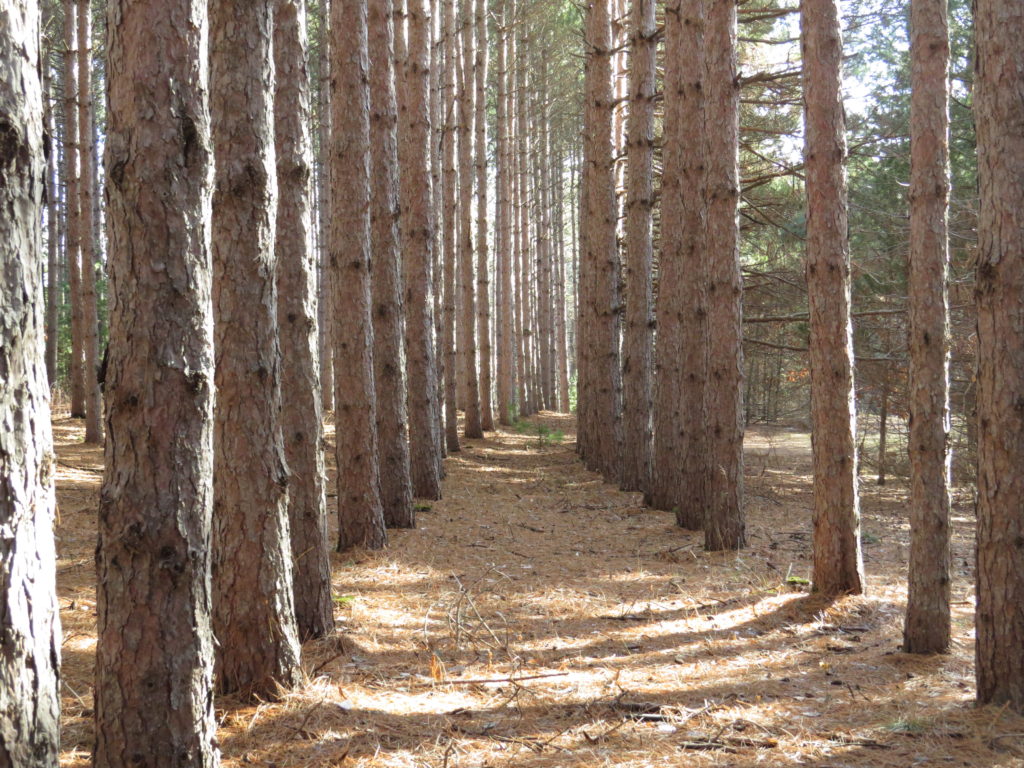
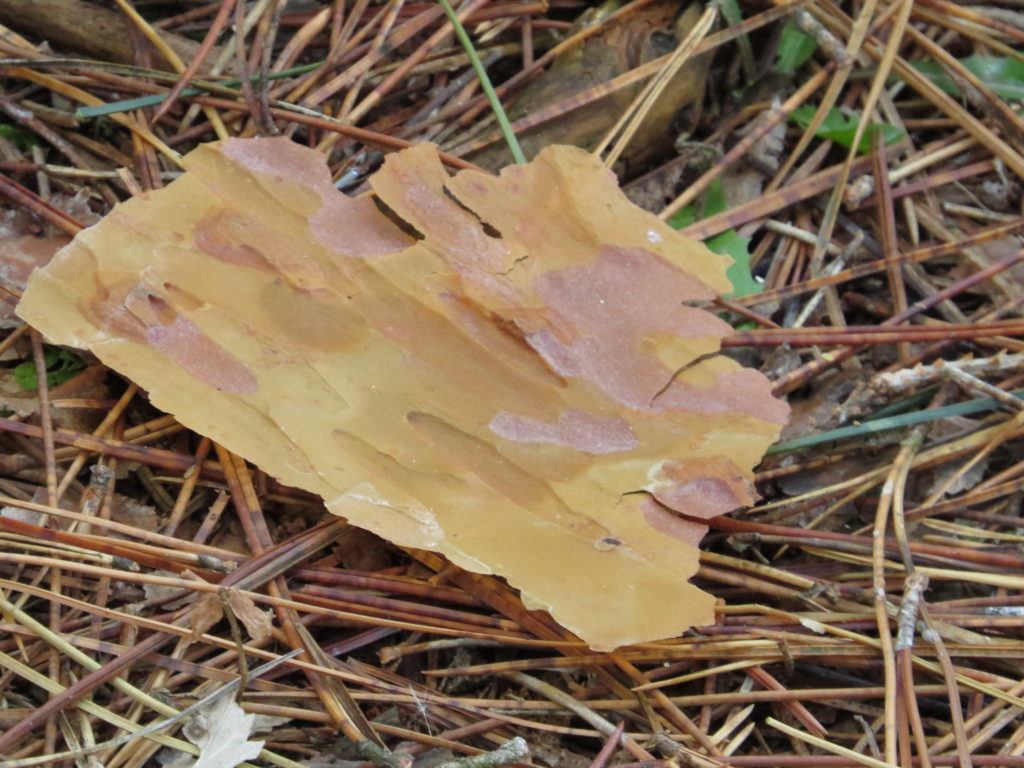
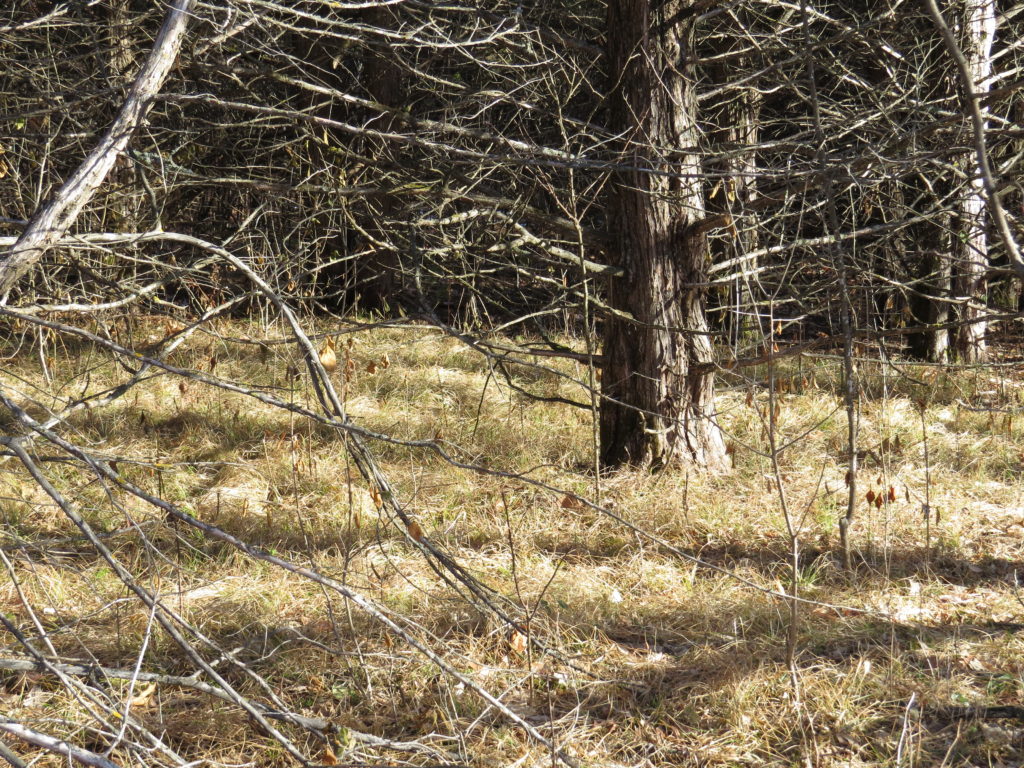
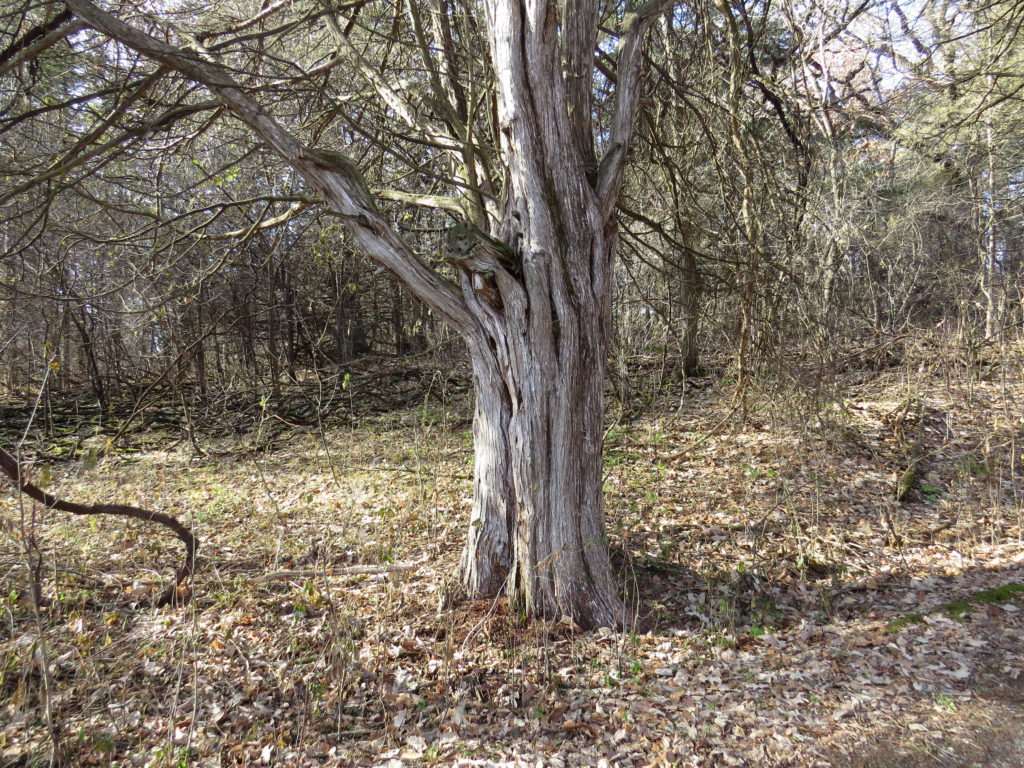
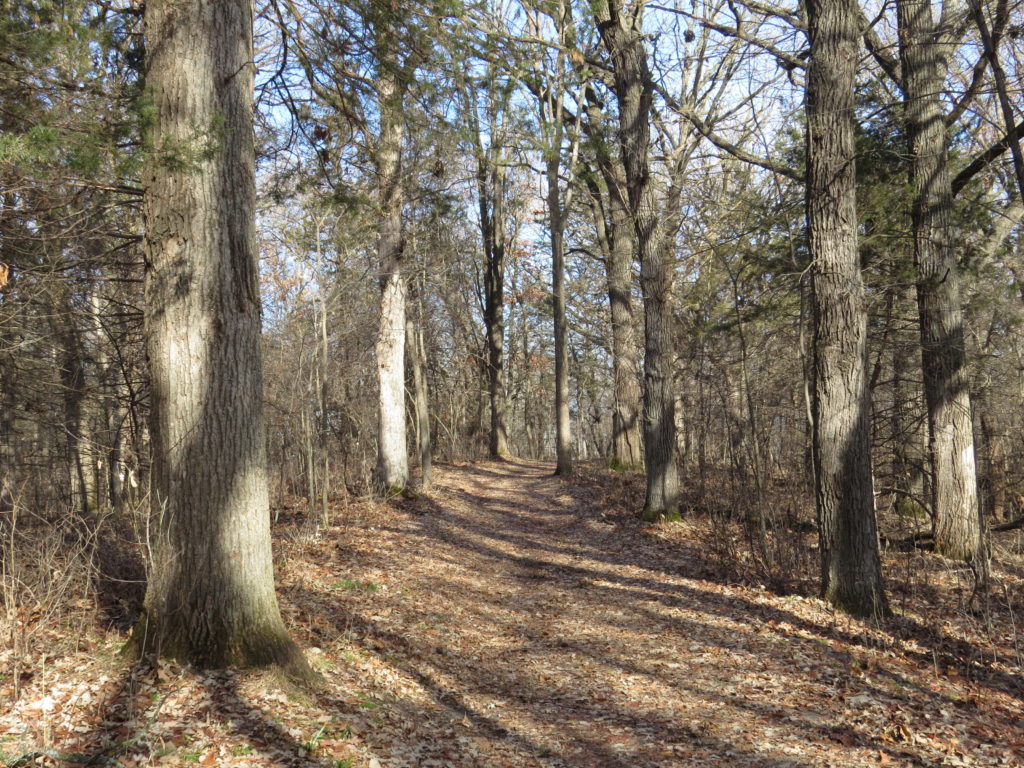
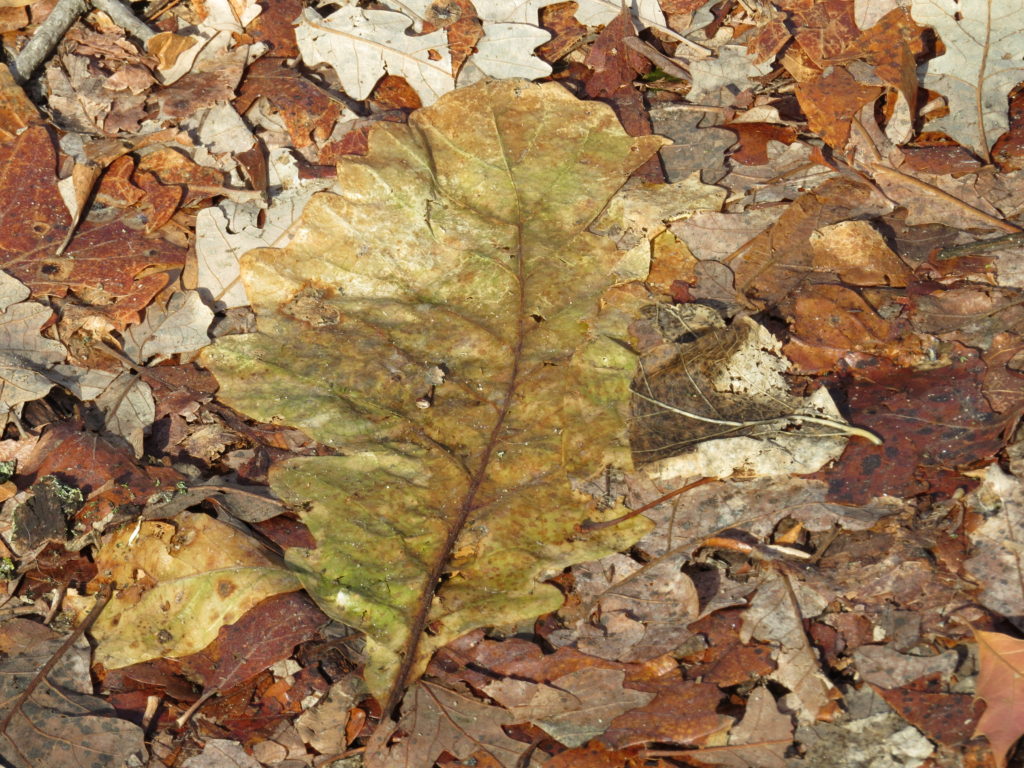
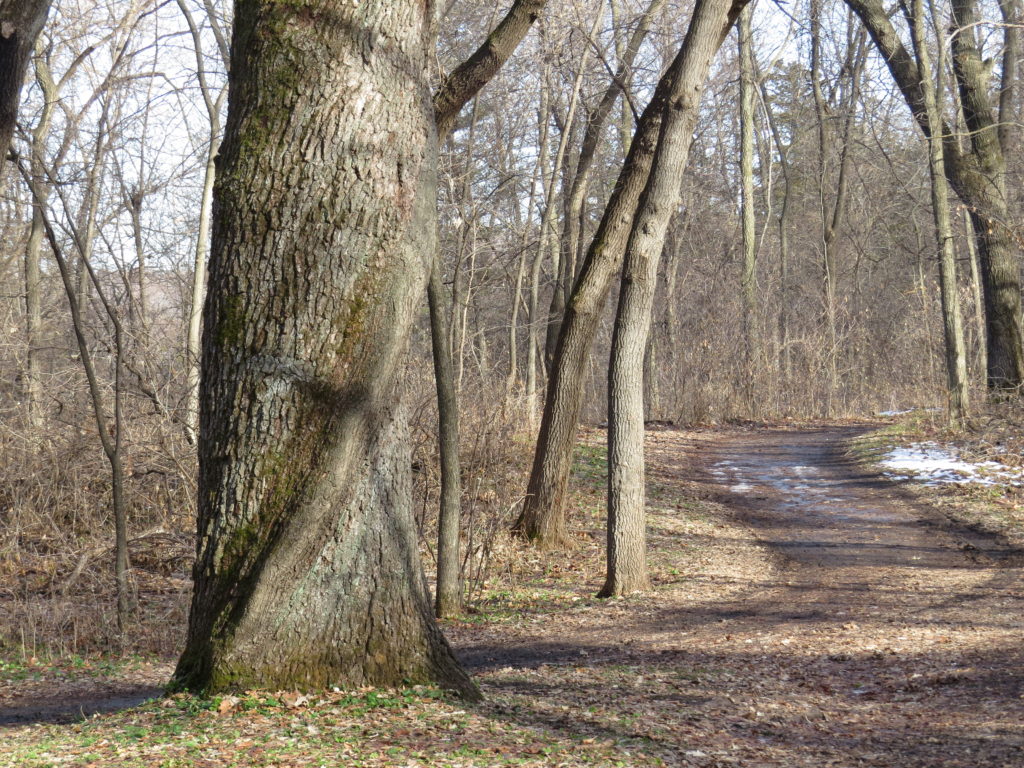
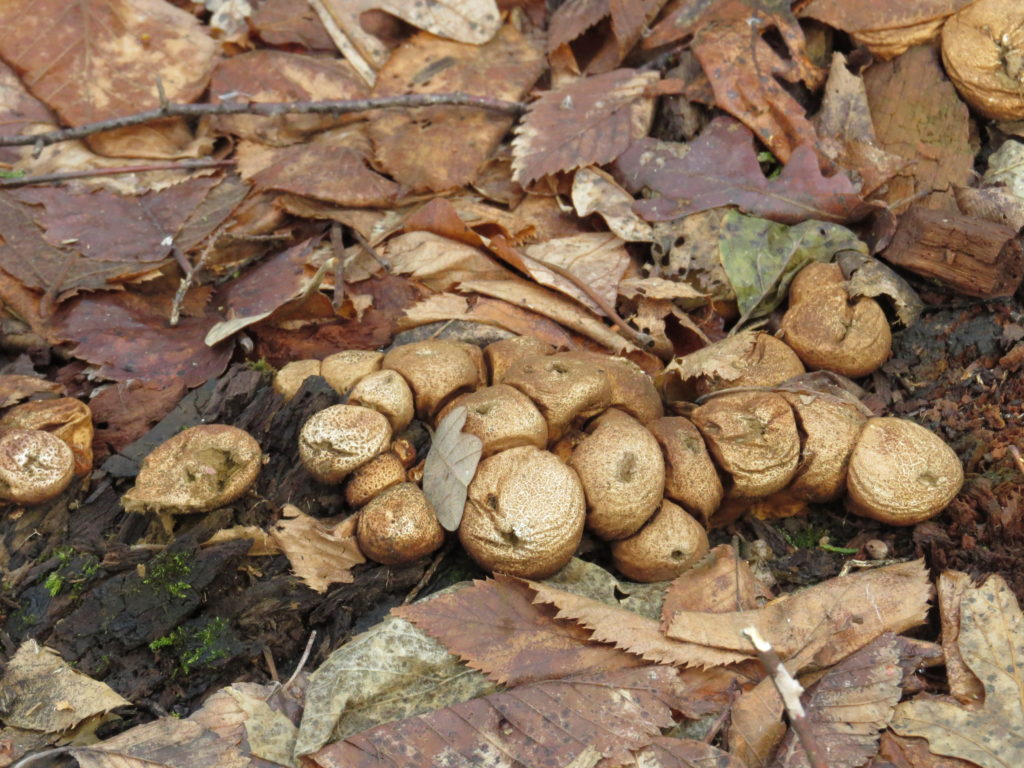
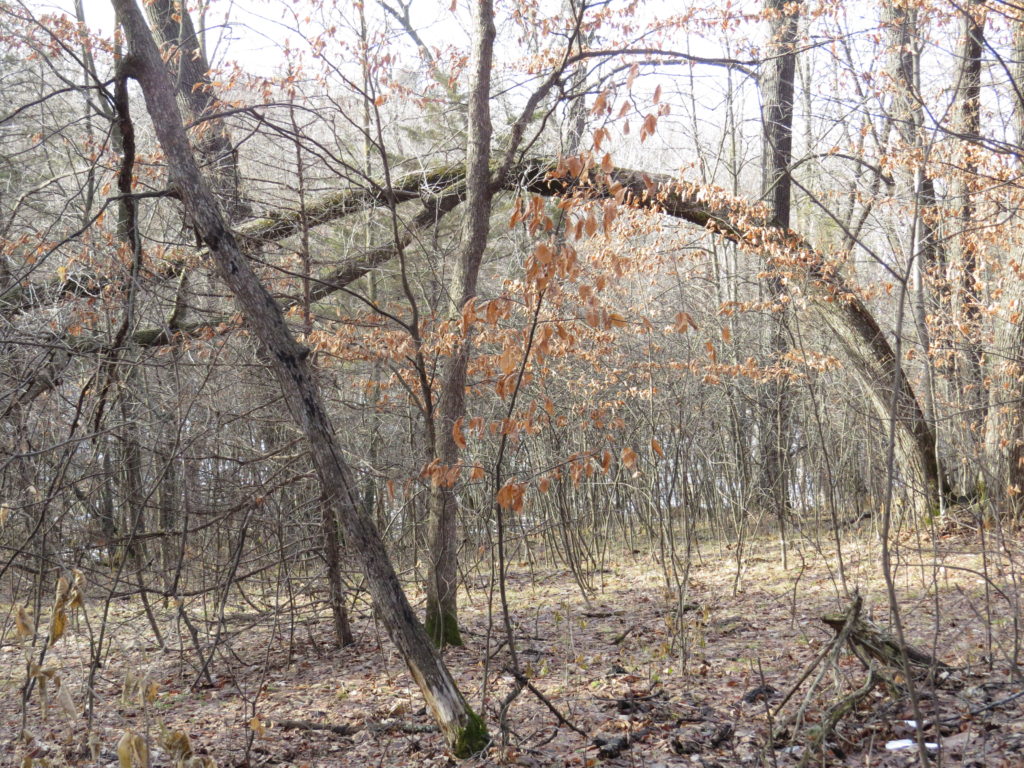
But every once in a while on our hike at Warner Lake County Park, there was a bright and shining electron or a colorful proton (so to speak.)
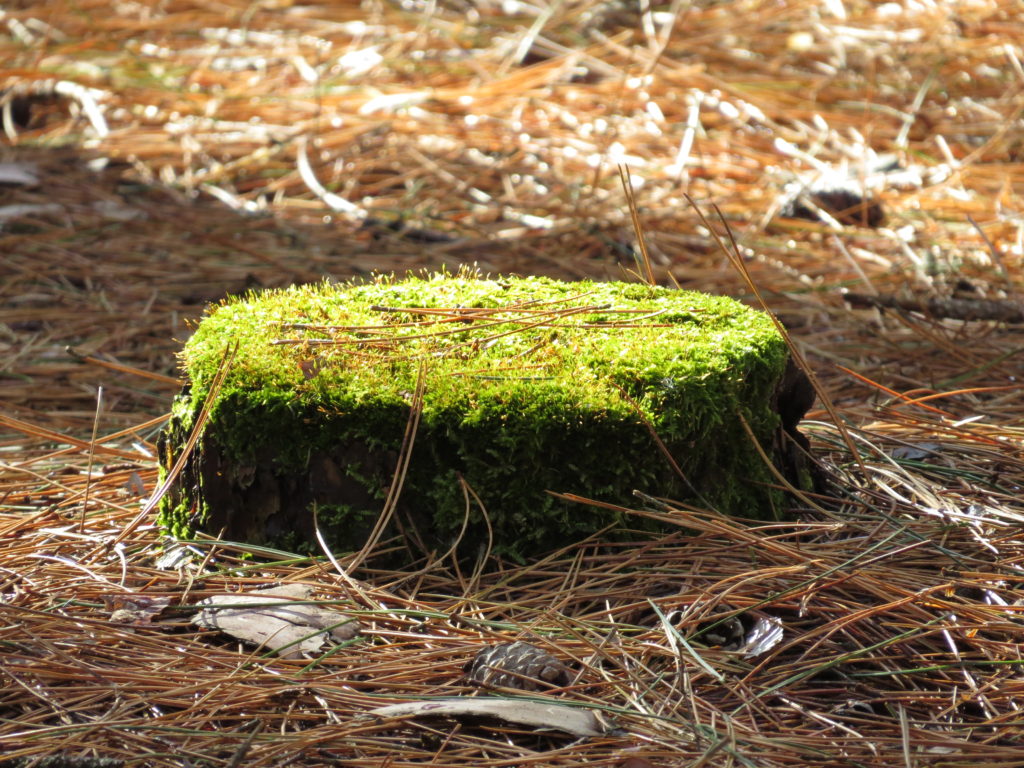
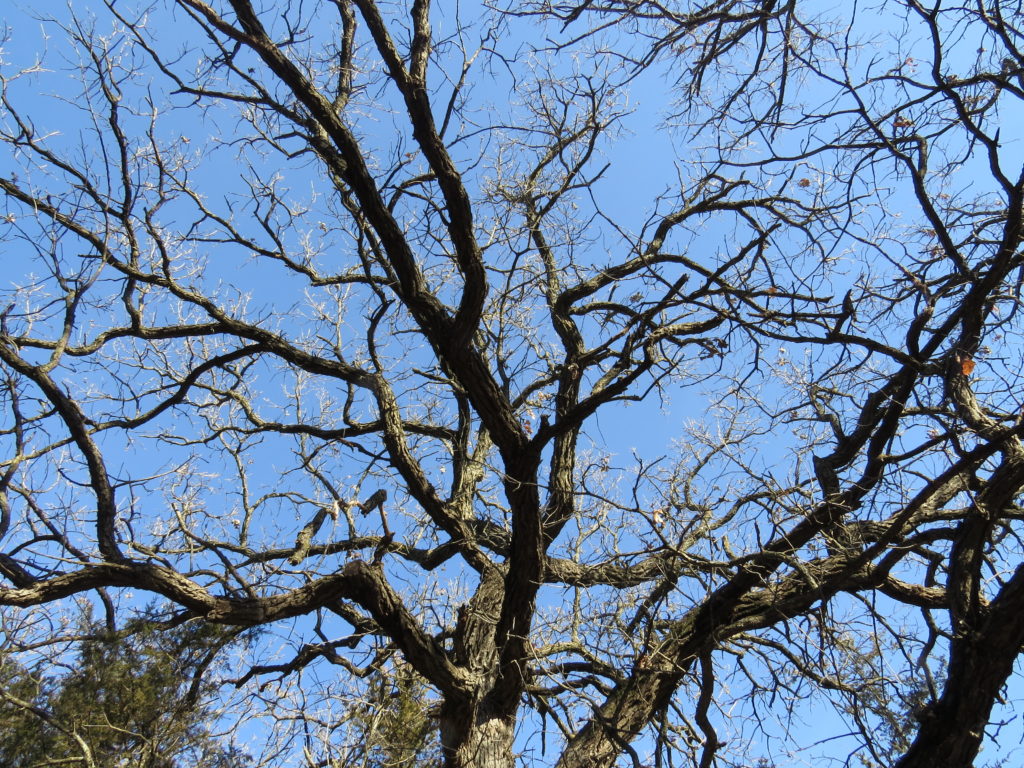
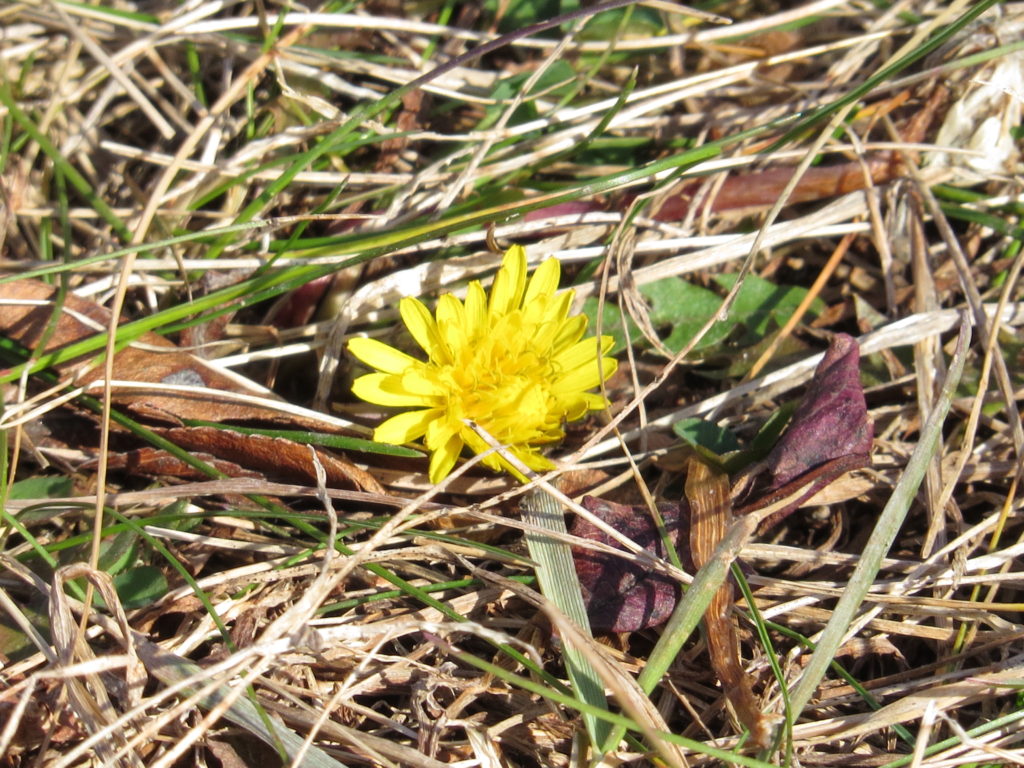
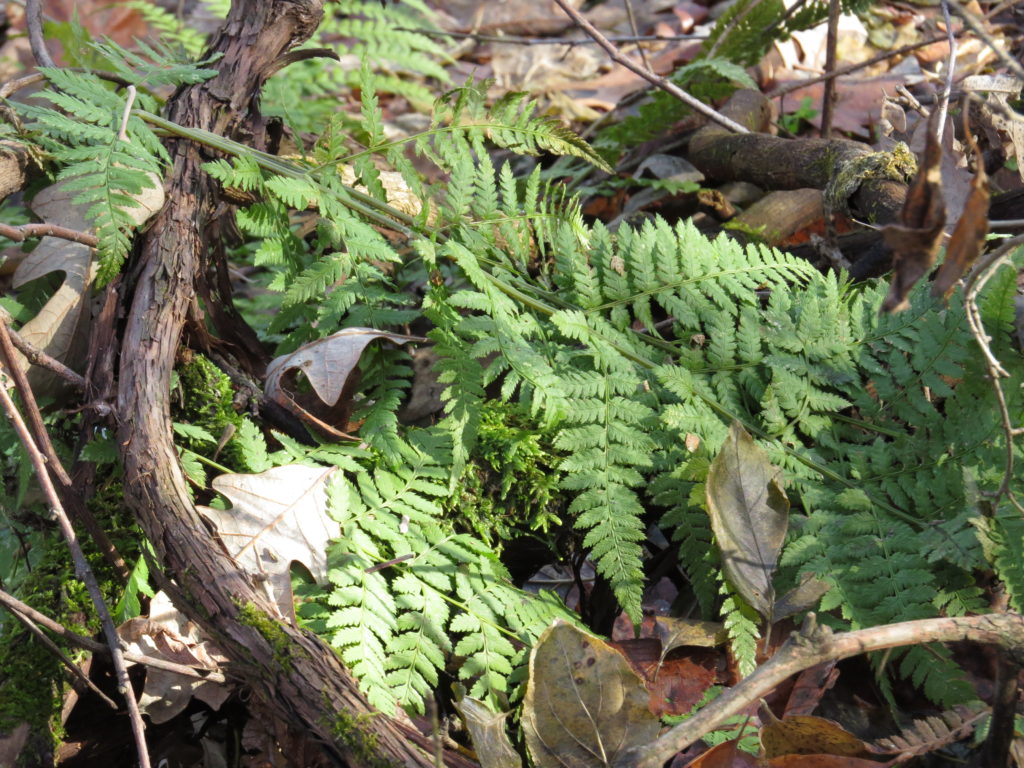
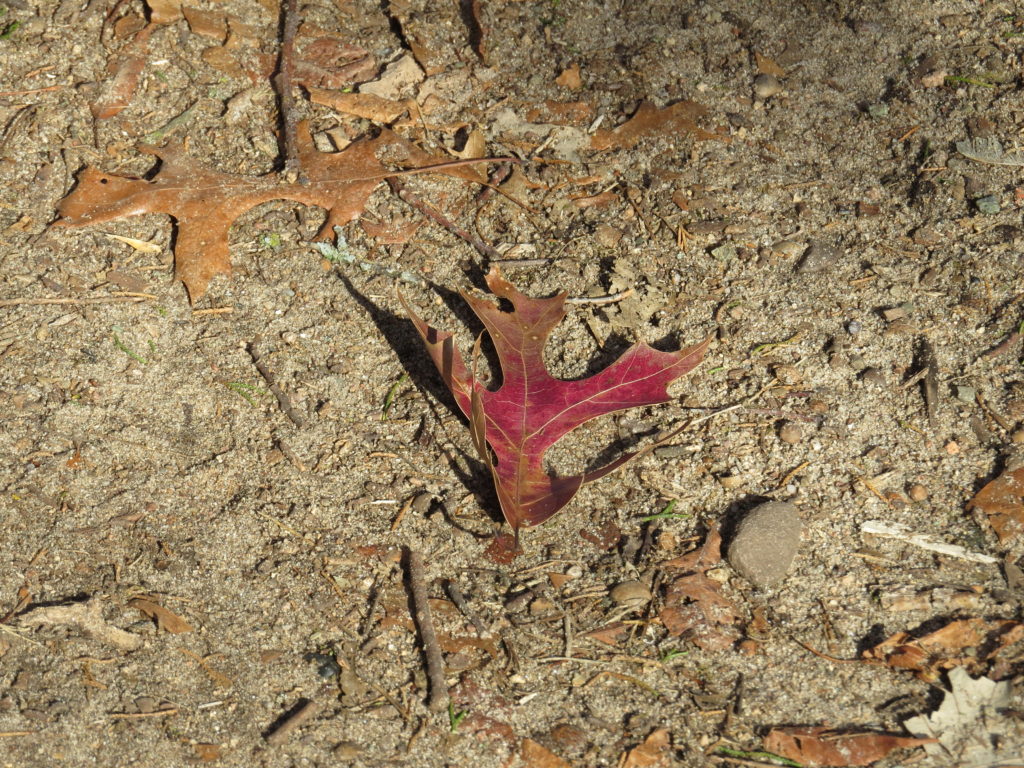
What would the world be like if everyone loved and studied Chemistry and Biology–the science of how our world and bodies work? As with any subject, politics included, there are people who love that subject, study it, teach it, research it, and dedicate their lives to it. They know the protons and electrons and neutrons of their subject.
The best thing about being neutral and not believing or disbelieving in anything is that the nature reveals the truth in front of you automatically. –Aishwarya Shiva Pareek
Sometimes the nature that reveals the truth is as simple as counting numbers or as complex as cyber security. The complicating factor is our human nature. We all want things to be the way we want them, but that’s not the way Life goes. Being neutral means being impartial, not helping either side, unbiased, objective, even-handed, fair, open-minded, and detached from the outcome. After a nasty partisan election season, we need a season of neutrality. Let the grays and light browns calm down the system for a period of time. Let the sporadic bursts of color elucidate mistakes and missteps of the past and illuminate the path for the future. Let’s be neutrons for a while and keep our nuclear family and our world at large, intact.
Food and Refuge
Food. It has been my refuge for way too long. When things feel out of sorts, or stressful, or downright scary, I reach for food. I learned early on that food was comforting—with good reason—eating food, especially certain kinds, releases ‘feel good’ chemicals in our brain that really do make us feel better. It’s science. Well, it may be science, but something went wrong in how I use food. For most of his life, my Dad would say he eats to live, not lives to eat. It’s simple, but oh so hard for those of us who have substituted food as a coping mechanism for all things distressful in our lives.
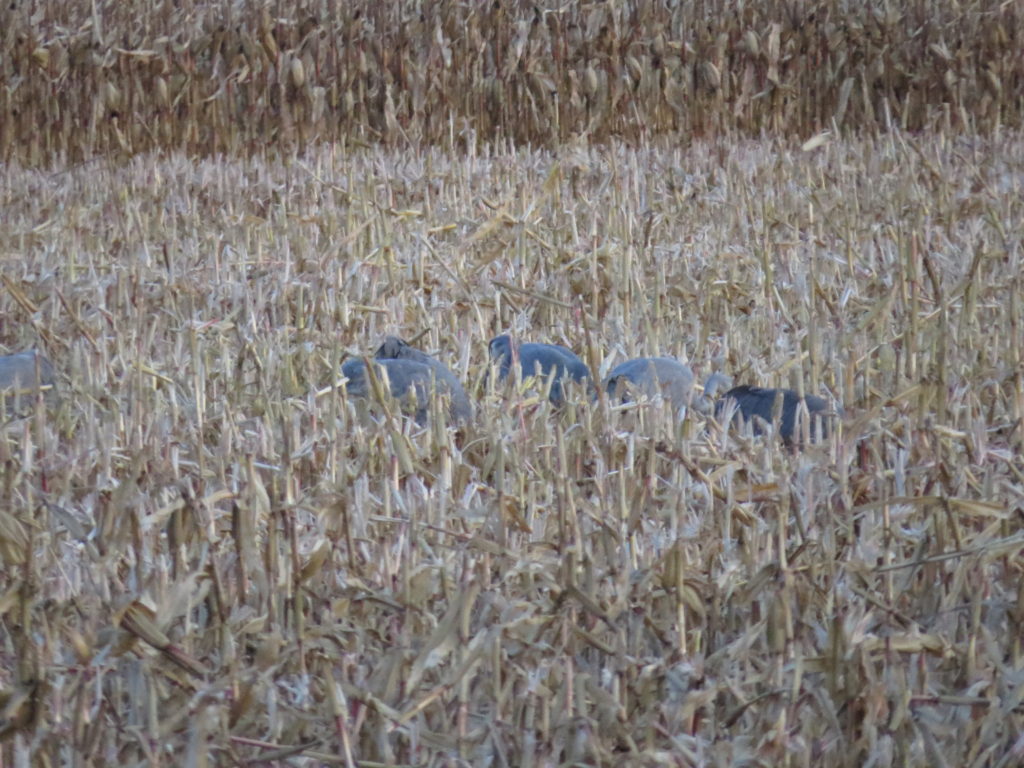
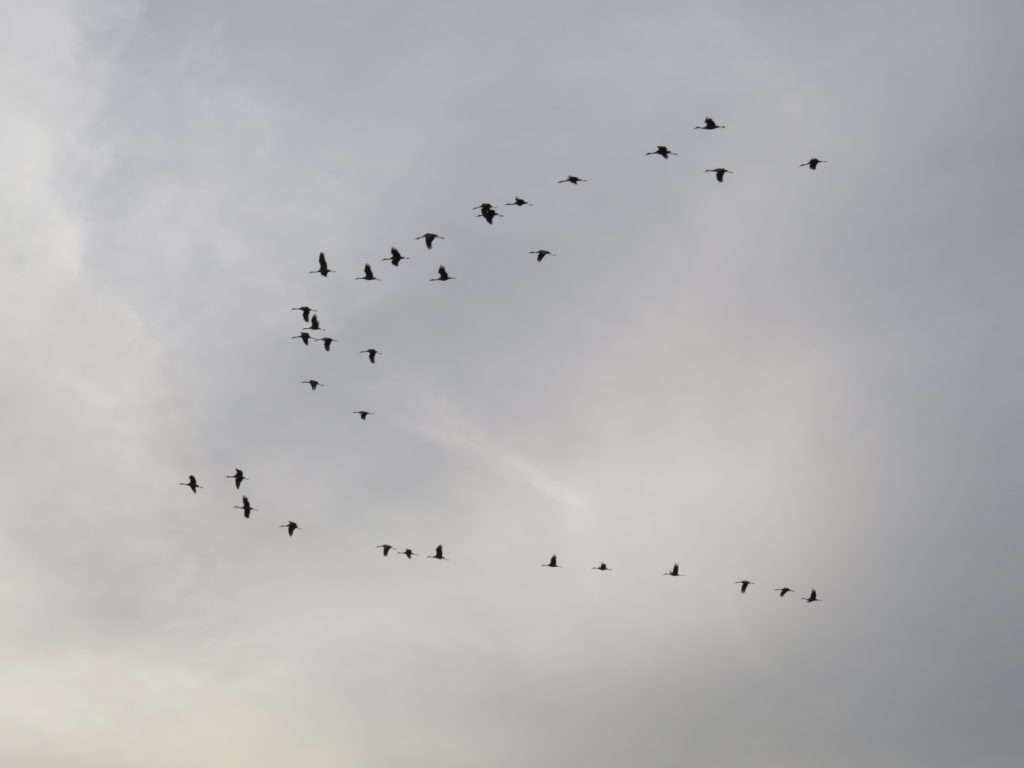
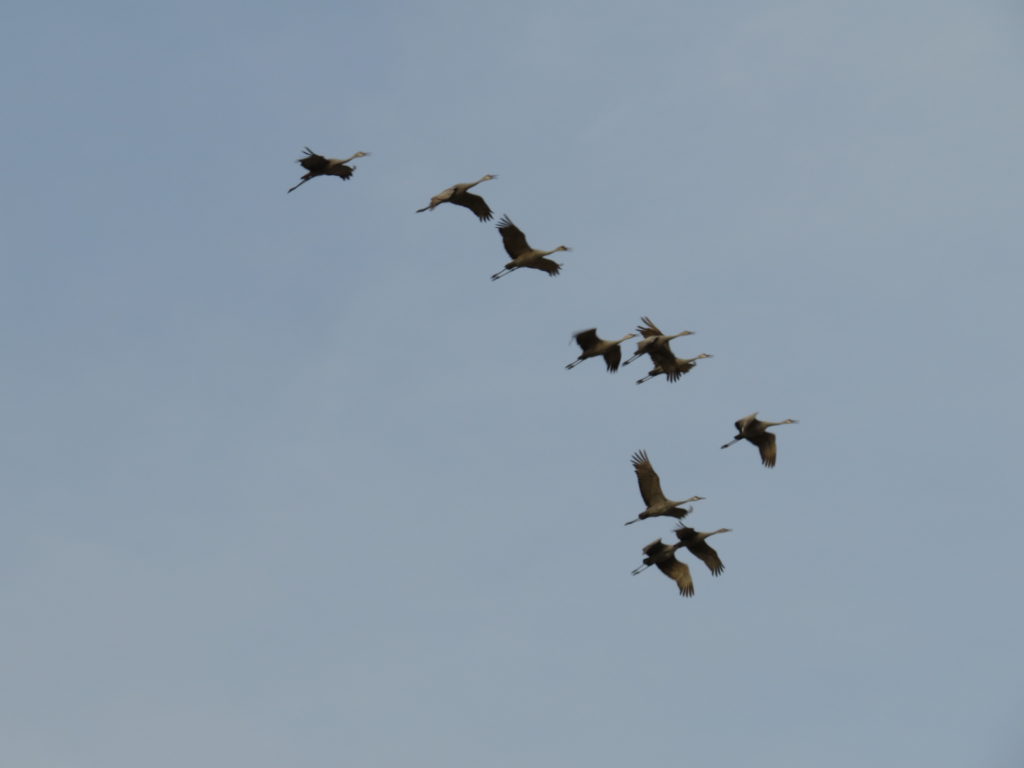
Food. It is what Sandhill Cranes leave the refuge for. Our trip to Sherburne National Wildlife Refuge, while it included a hike at fire-damaged Blue Hill, was really to see the gathering, or ‘staging’ as they call it, of thousands of Sandhill Cranes. These prehistoric birds (fossil records from millions of years ago) gather here from northern breeding areas to rest and eat in preparation for their long migration to Florida. (The count on 10/29 was over 11,000.) At night, the cranes roost in the wetlands of Sherburne, and at dawn, they take to the skies and fly to neighboring fields that have been harvested for corn or soybeans. Like a bear before hibernation, the cranes feast on the grains to sustain their bodies for the long flight.
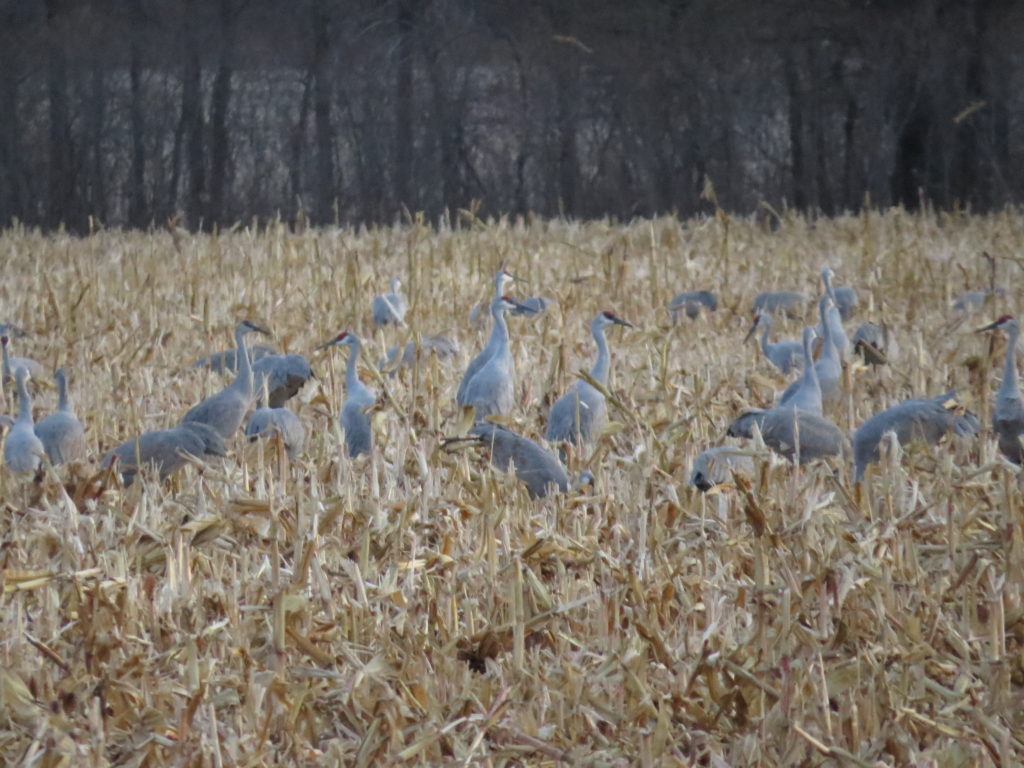
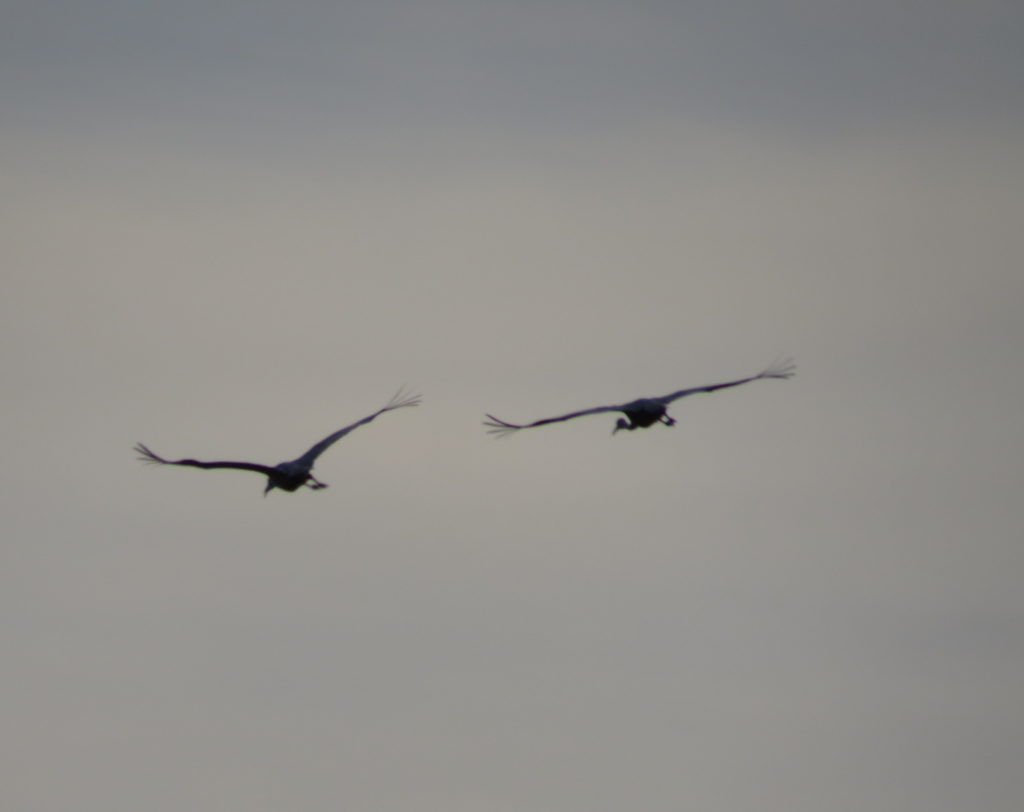
There are six subspecies of Sandhill Cranes, some migratory and others non-migratory. The Sherburne species is the Greater Sandhill Crane, standing at four and a half to five feet tall with a six foot wingspan, but only weighing between ten and fourteen pounds! The mated pairs stay together for life and both help incubate and raise the one or two young ones that hatch after a thirty-day incubation time. The young ones with their awkwardly long legs are called colts.
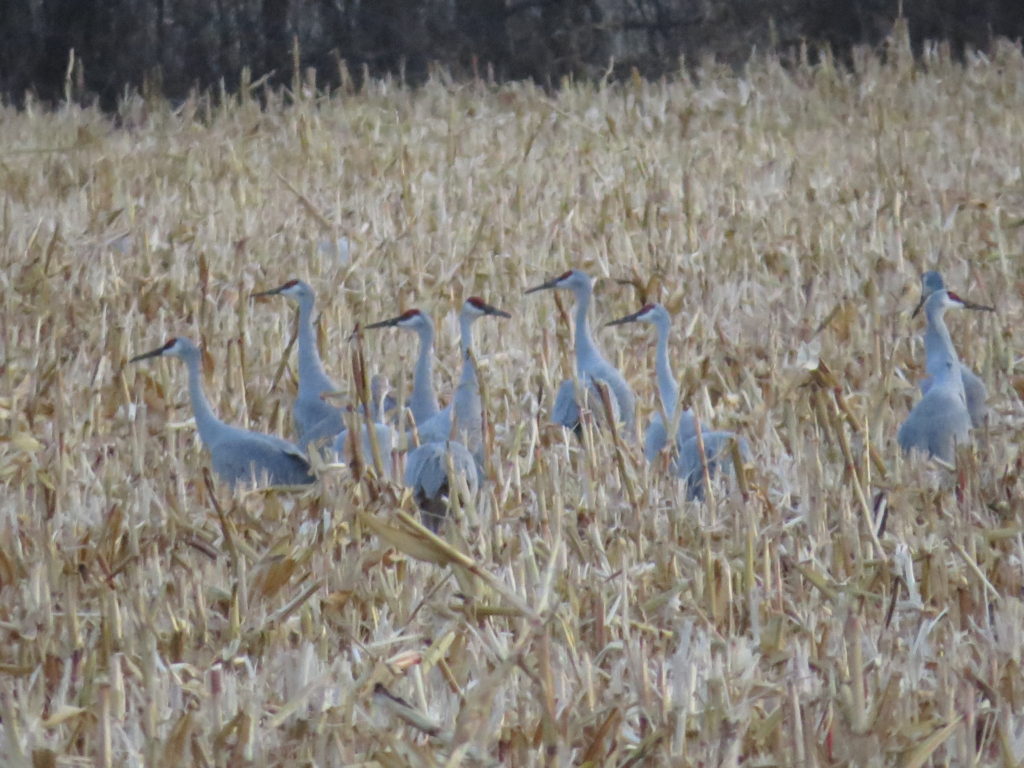
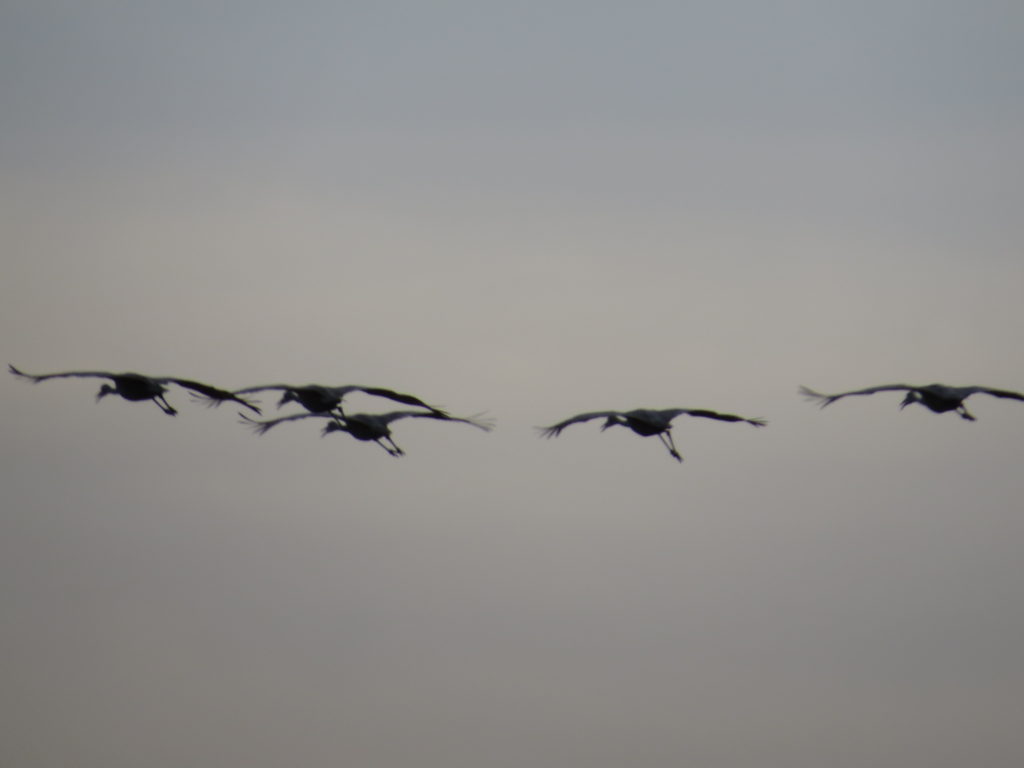
As dusk approaches, groups of cranes fly from the fields to return to the refuge.
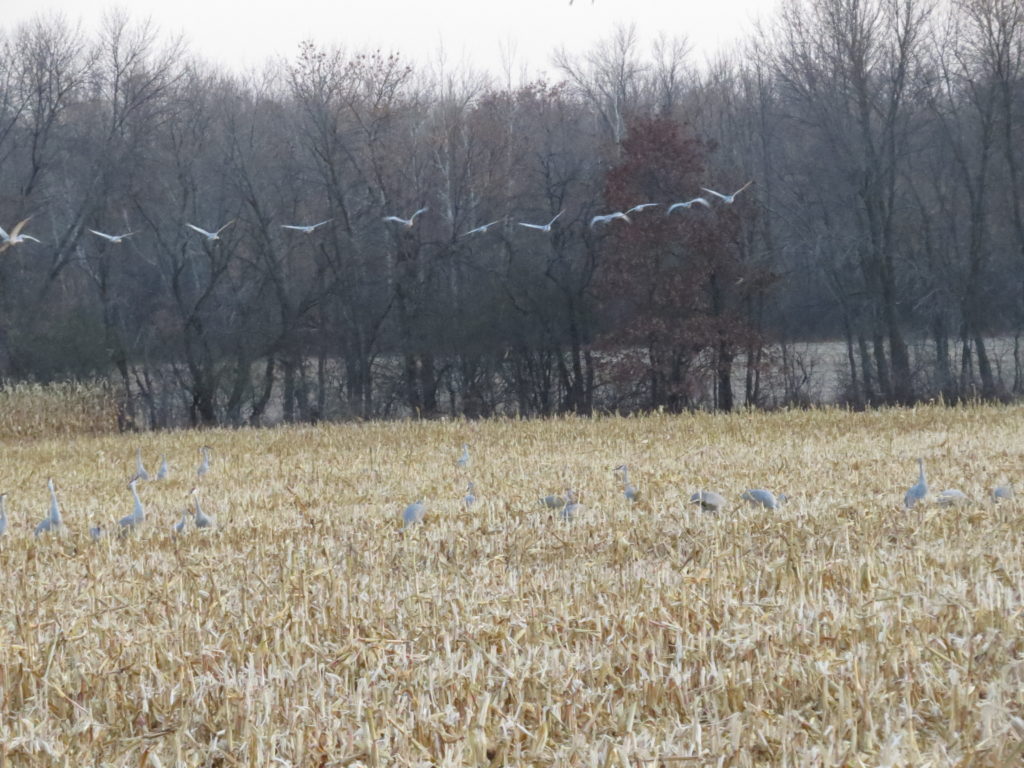
There was a lot of chatter. I wondered if there were ‘leaders’ who decided when it was time to fly and what the signal was to do so. I did notice that some would flap their wings on the ground, like an impatient ‘time to go,’ while others were still very invested in consuming more corn.
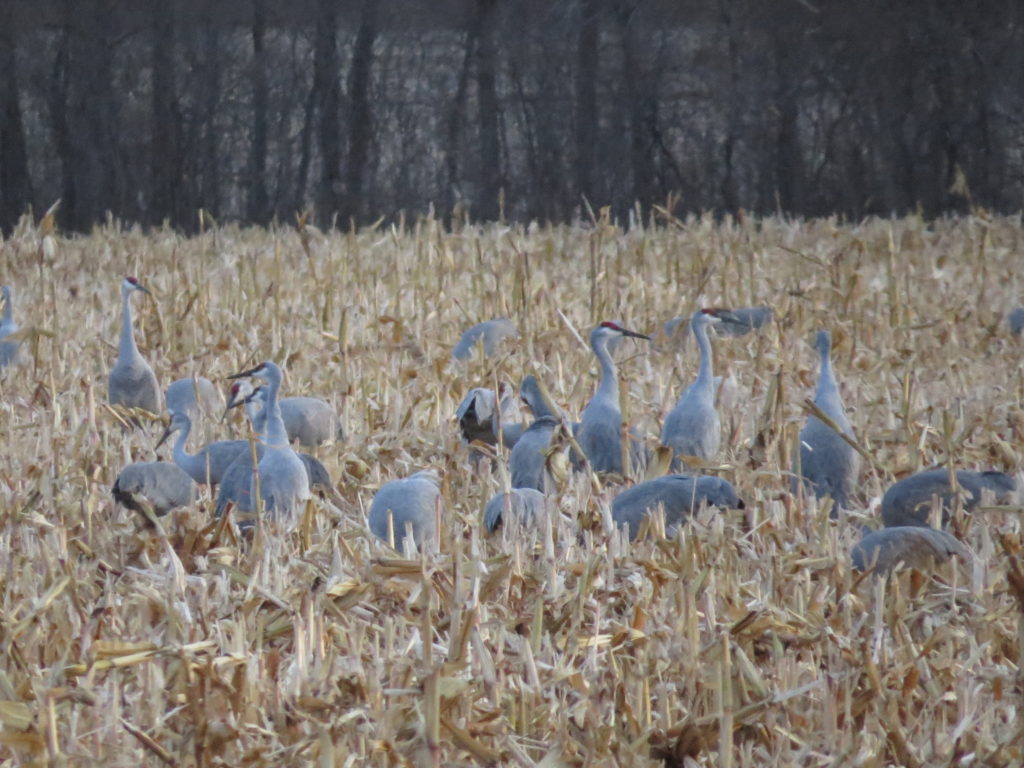
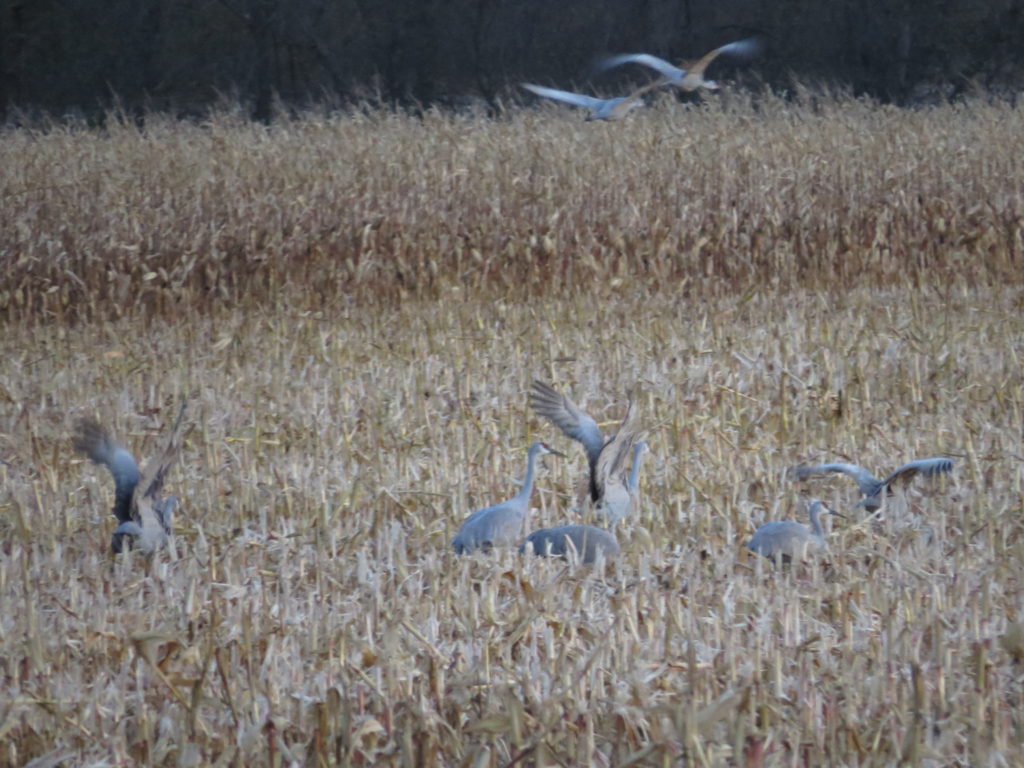
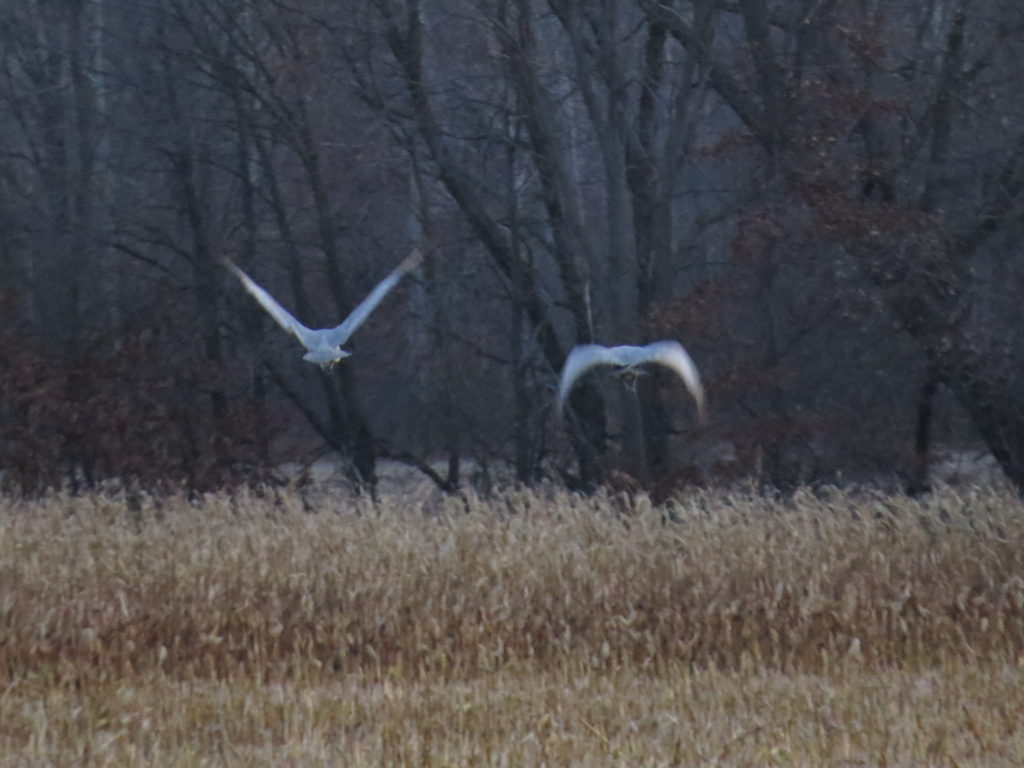
At a clearing on the edge of the refuge lands, we parked to watch the mini-migration back to the roosting grounds. Wave after wave after wave of different sized groups flew over our heads and to both sides of us. We didn’t notice how long this deluge of chattering cranes continued, but we did eat our picnic supper under the constant serenade of the Sandhills.
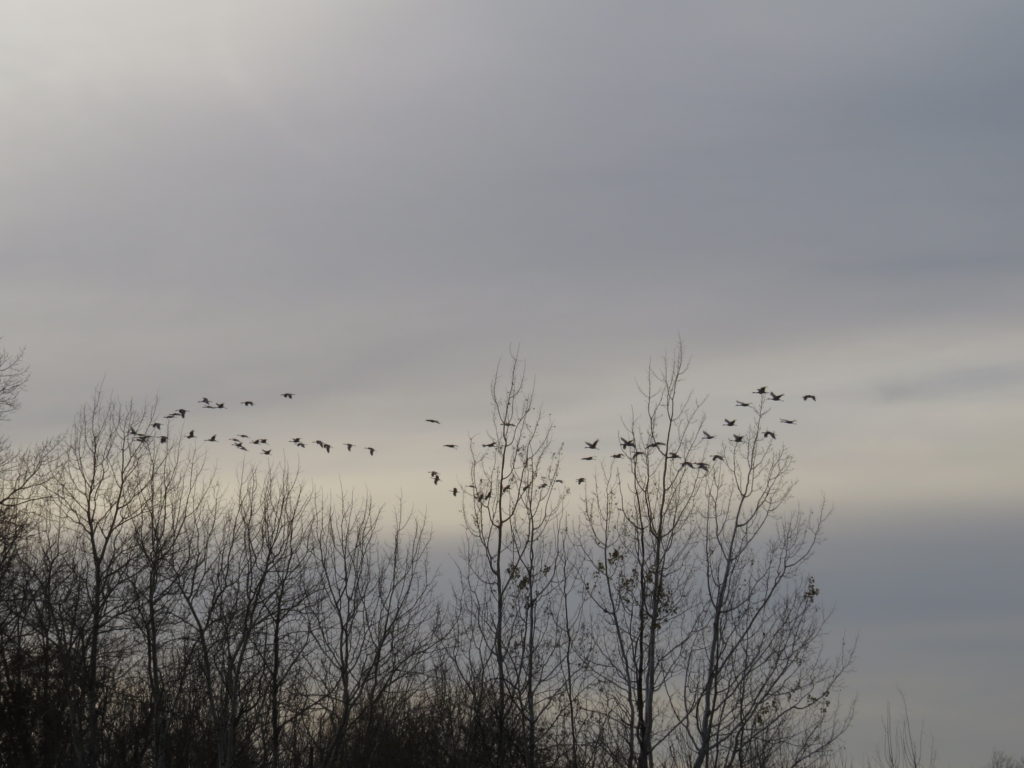
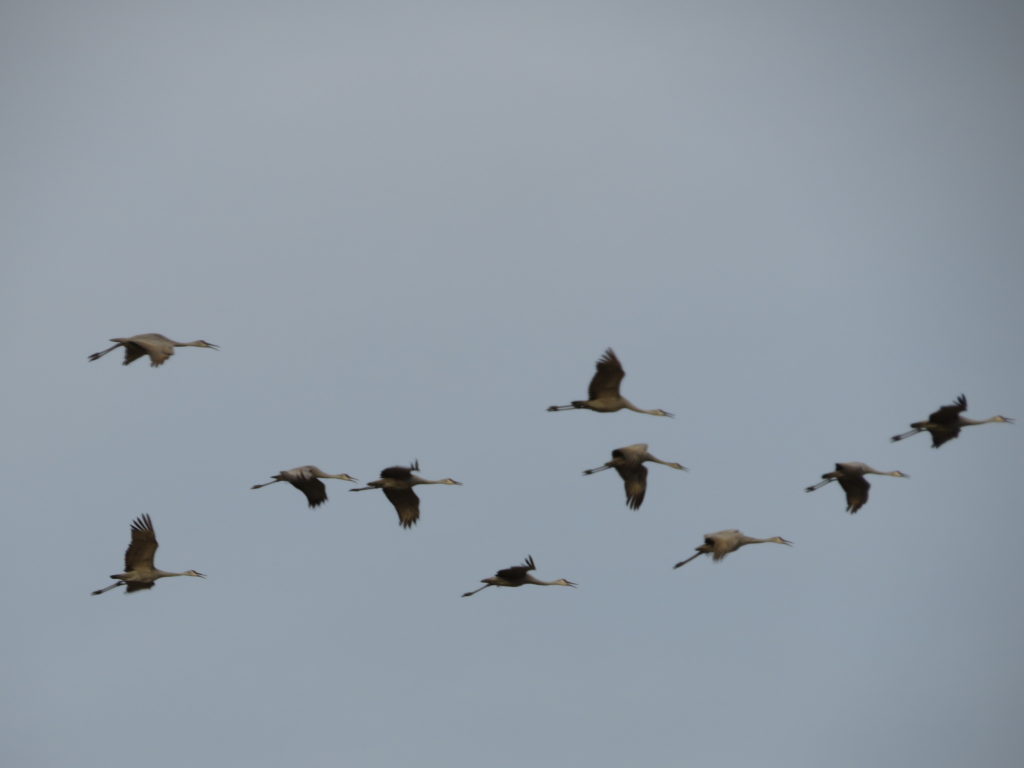
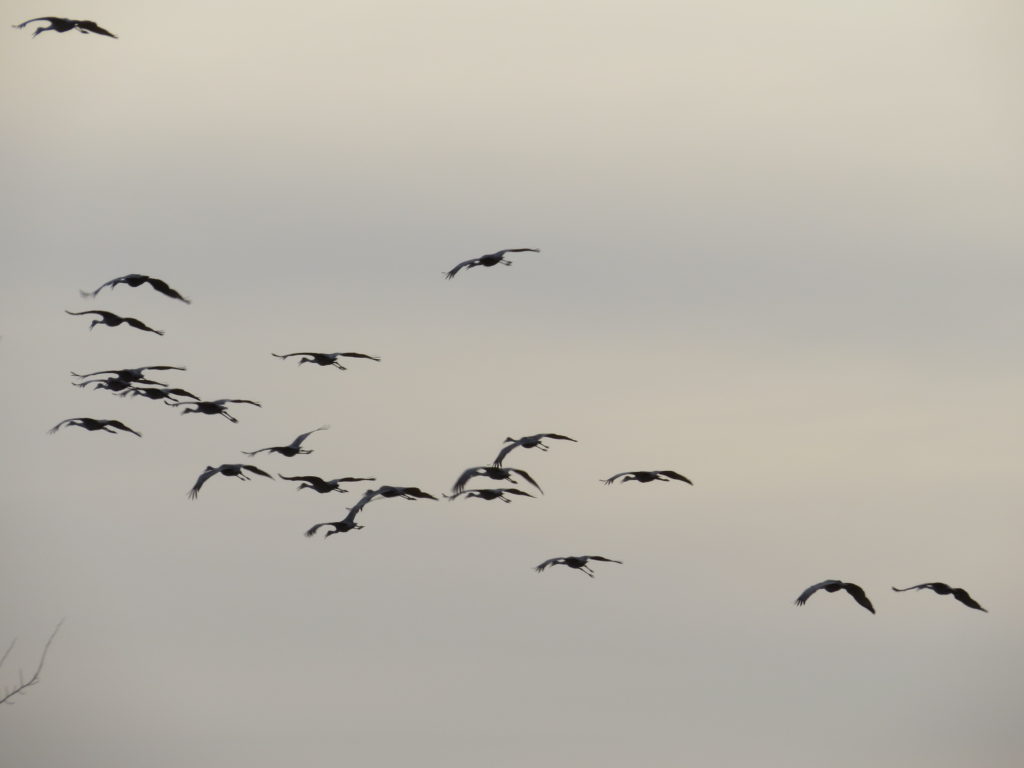
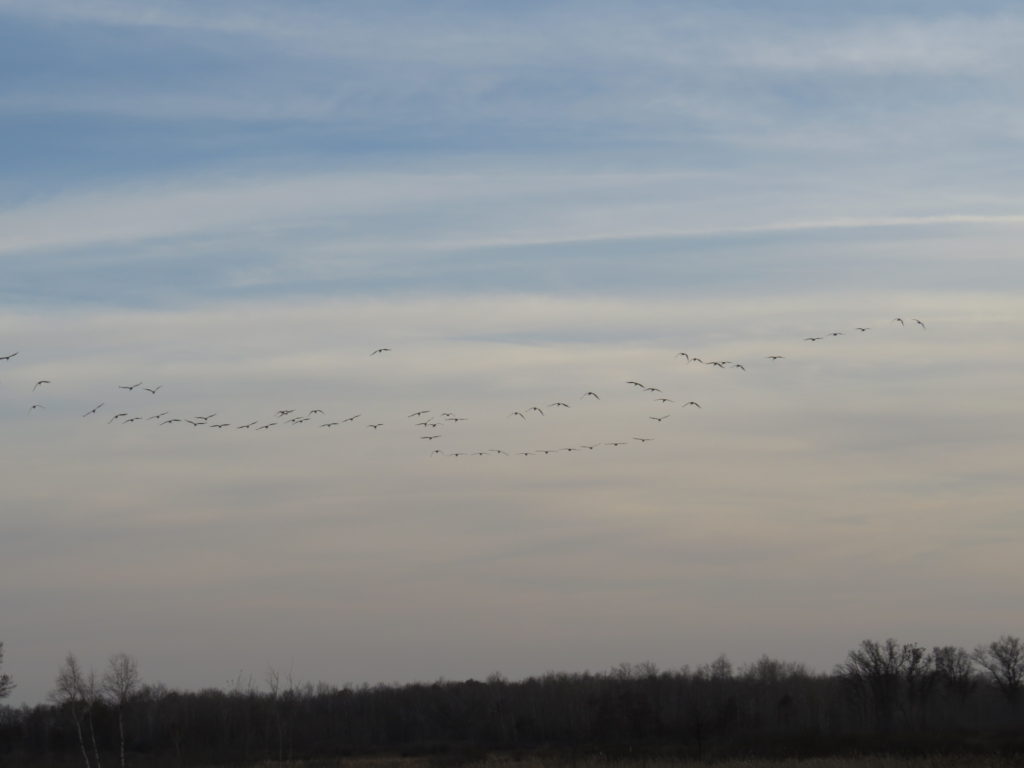
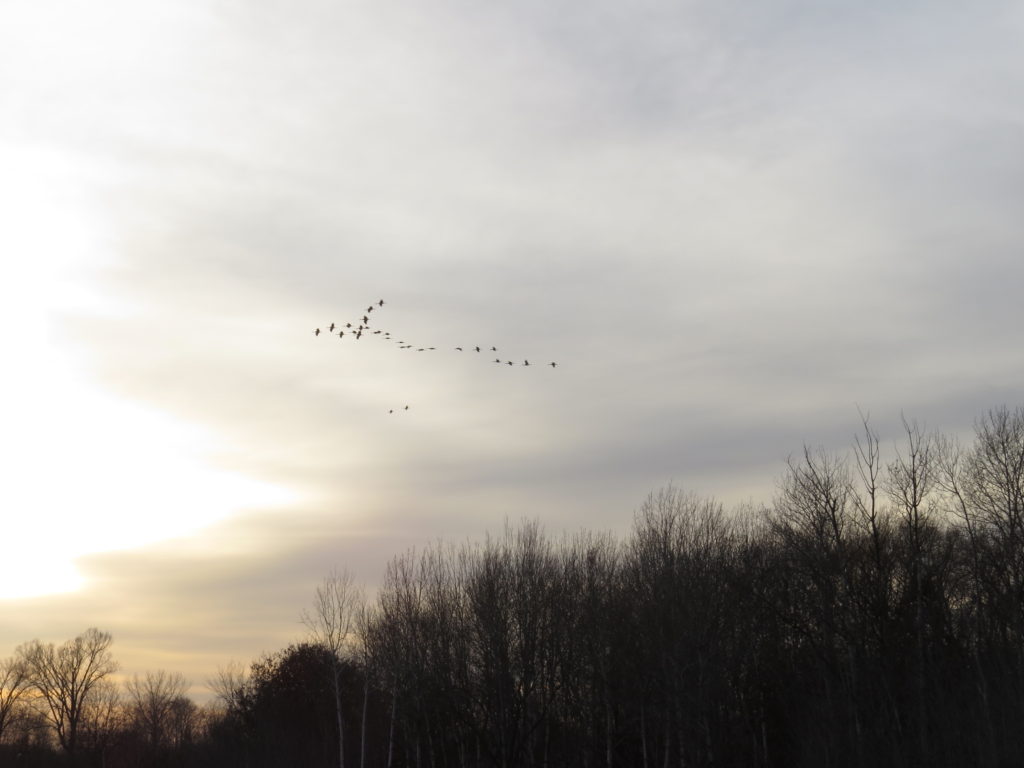
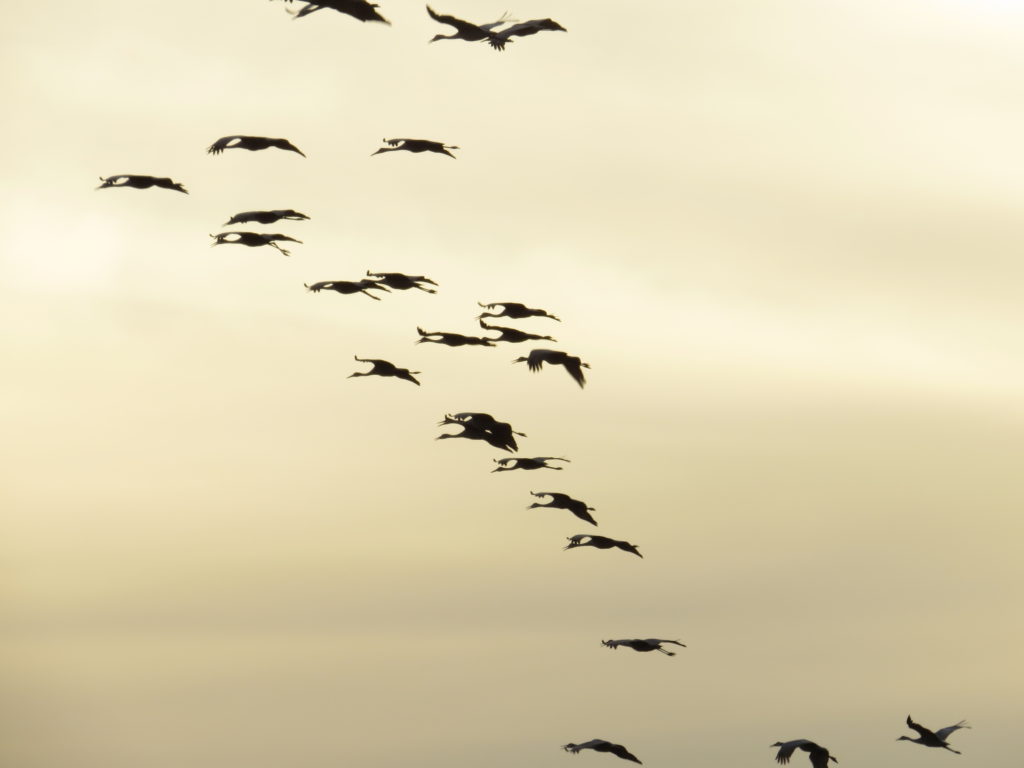
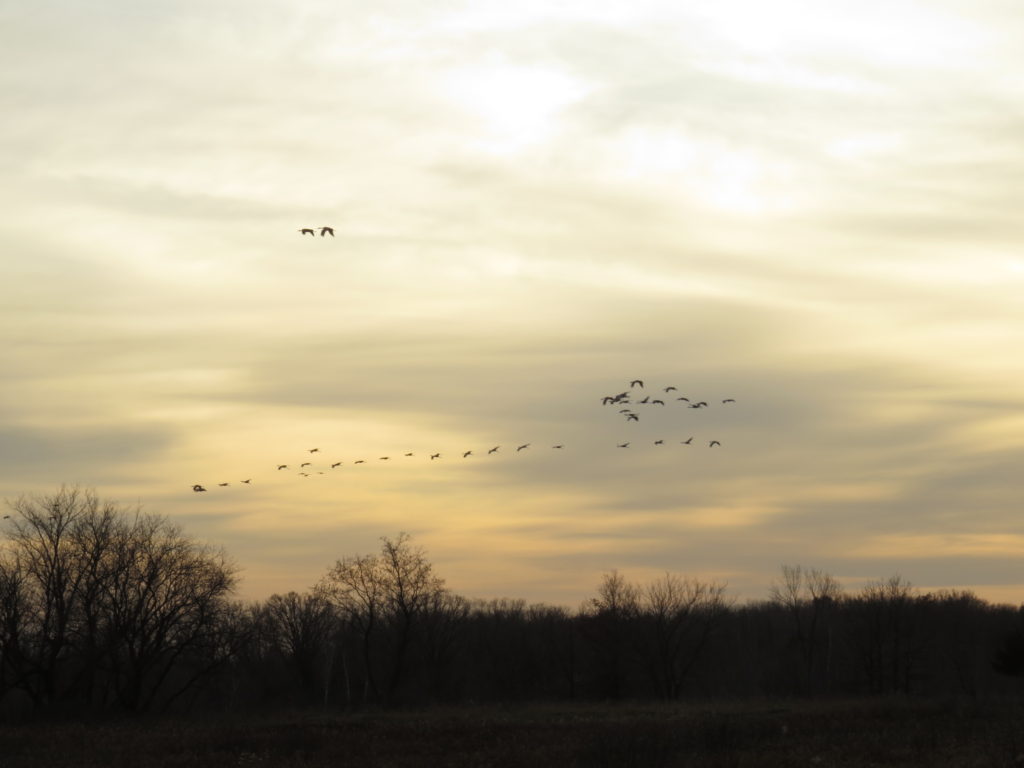
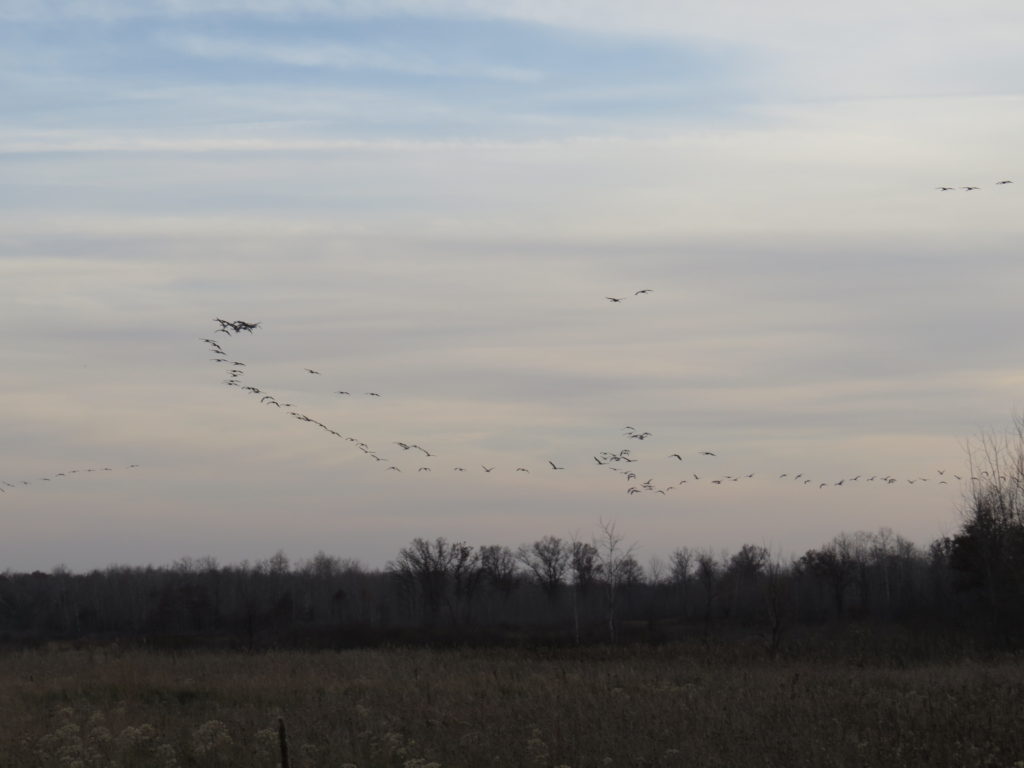
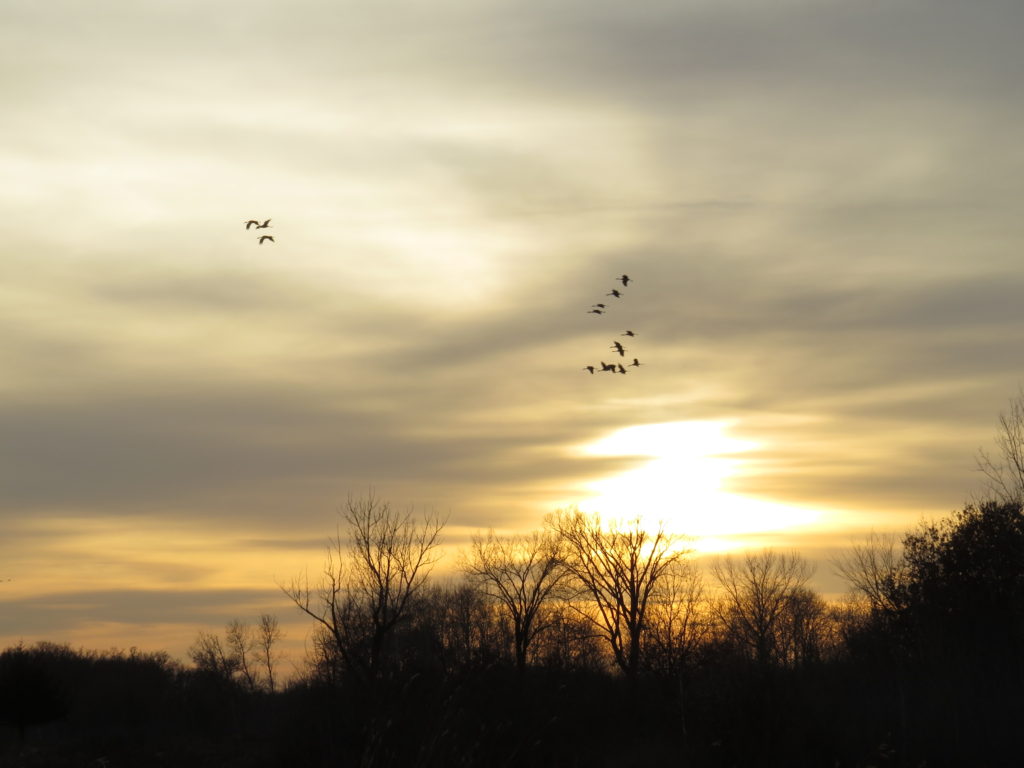
Sandhill Cranes and animals in the wild ‘eat to live.’ It takes an inordinate amount of their time to find and consume the food that sustains their lives. The abundance of harvest gleanings at this time of year is the Cranes’ needed fuel for migration, just as the fall ‘fattening’ period is for other animals facing a tough, cold winter. I wouldn’t go so far as to say I ‘live to eat,’ but food has definitely been my ‘go to,’ my refuge, as a coping mechanism for most of my life. I know I’m not alone. So how does one leave the refuge of food and find sustenance elsewhere? The same can be asked of alcohol, drugs, gambling, and any other addiction, though food falls into a unique category in that one actually does need food to survive. Abstinence does not work. Therefore, the impetus of change needs to occur on the inside. How can I stretch out that time period between the uncomfortable, distressful feelings and the act of reaching for food? What could I possibly do that would make me feel better in this moment than half a bar (or more) of dark chocolate? In my experience, it takes an inordinate amount of will and often a lot of pain (either physically or emotionally) to initiate that will. It has so much to do with self-love and feelings of worth and self-compassion and ‘but I deserve…’ and ‘who has my back?’ (chocolate always has my back) and what’s easy and what’s hard and wave after wave after wave of very real feelings that in reality have nothing to do with food. And therein lies the answer—a new refuge is needed, and I can be its creator.
Fire and Refuge
True refuge demands a complete and utter trust fall into the arms of reality. –Miles Neale
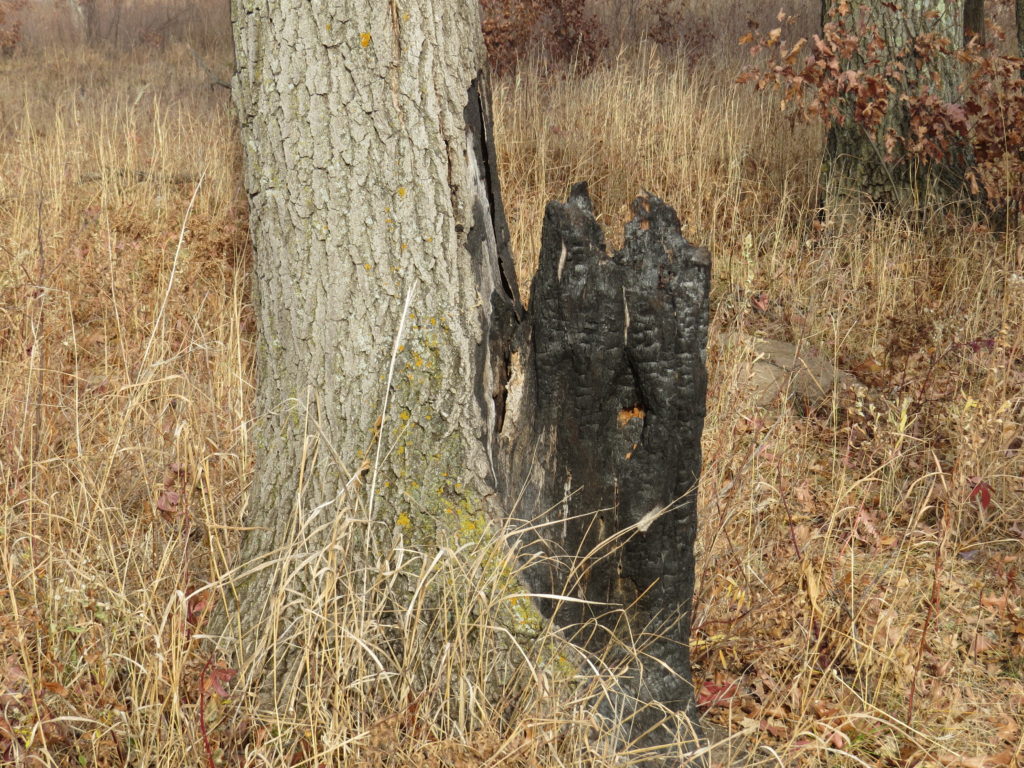
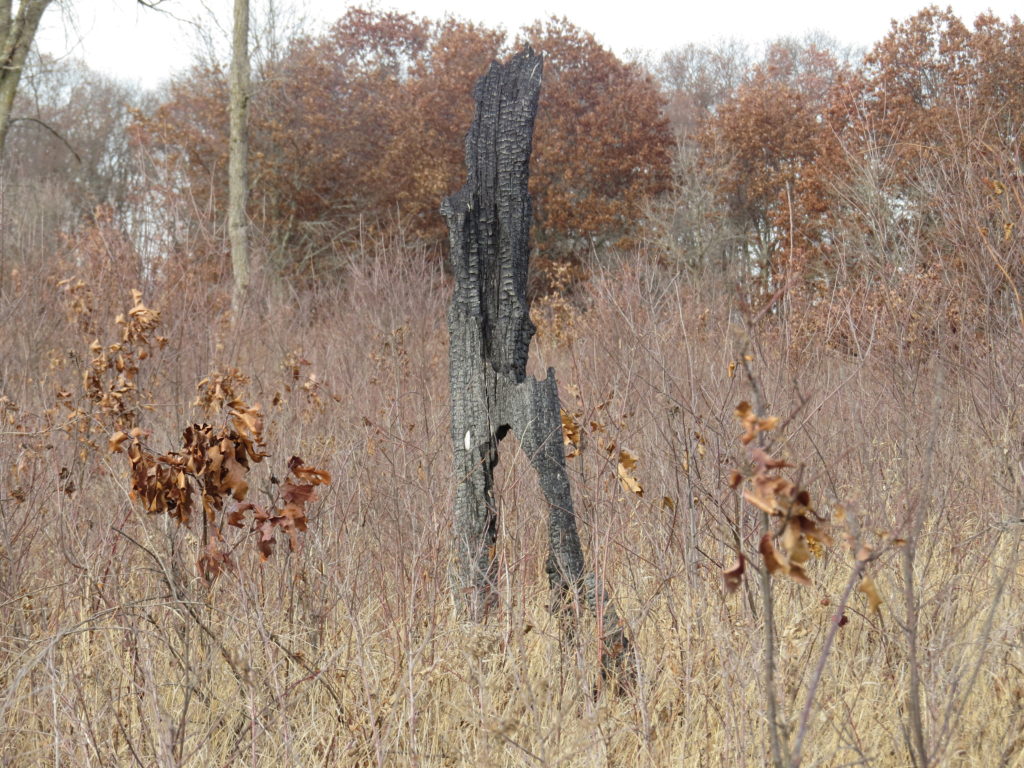
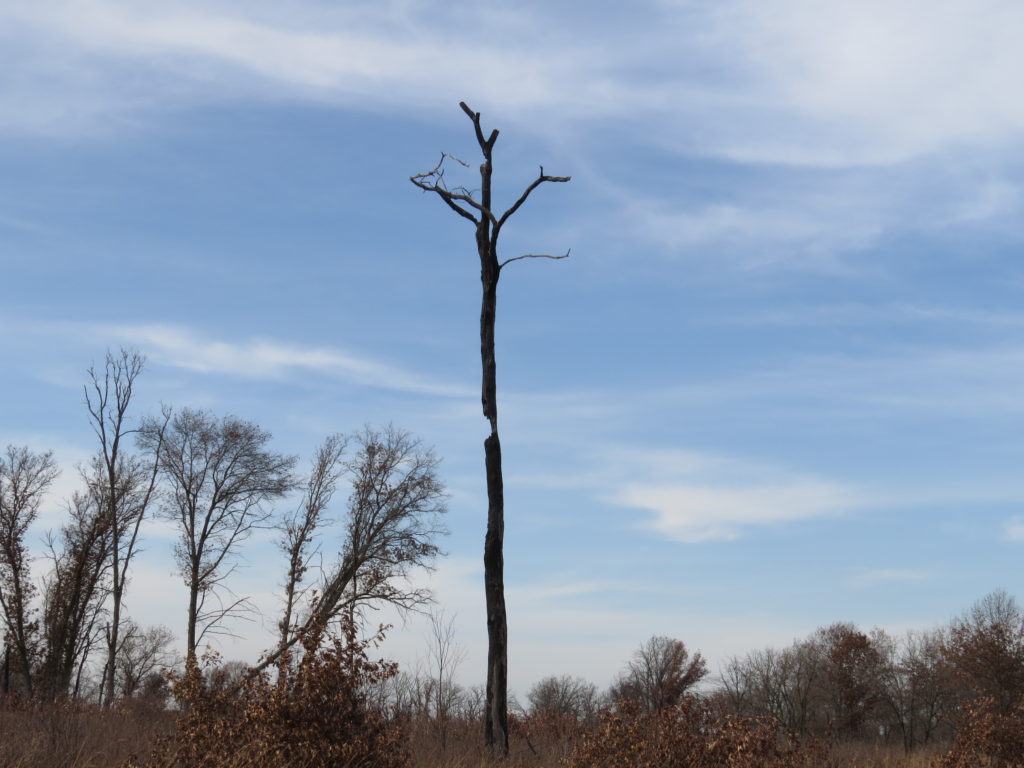
There was something a bit off when we drove into the parking lot of Blue Hill Trail at Sherburne National Wildlife Refuge. I saw prairie land, a big hill, and some scattered trees. I couldn’t identify what didn’t seem right. We readied ourselves for the four or five mile loop, then set out on the sandy trail. Almost at once I noticed the standing totem of a burnt tree—not unusual in any place we hike. But the colorful-for-Fall Sumac seedheads were much more delightful.
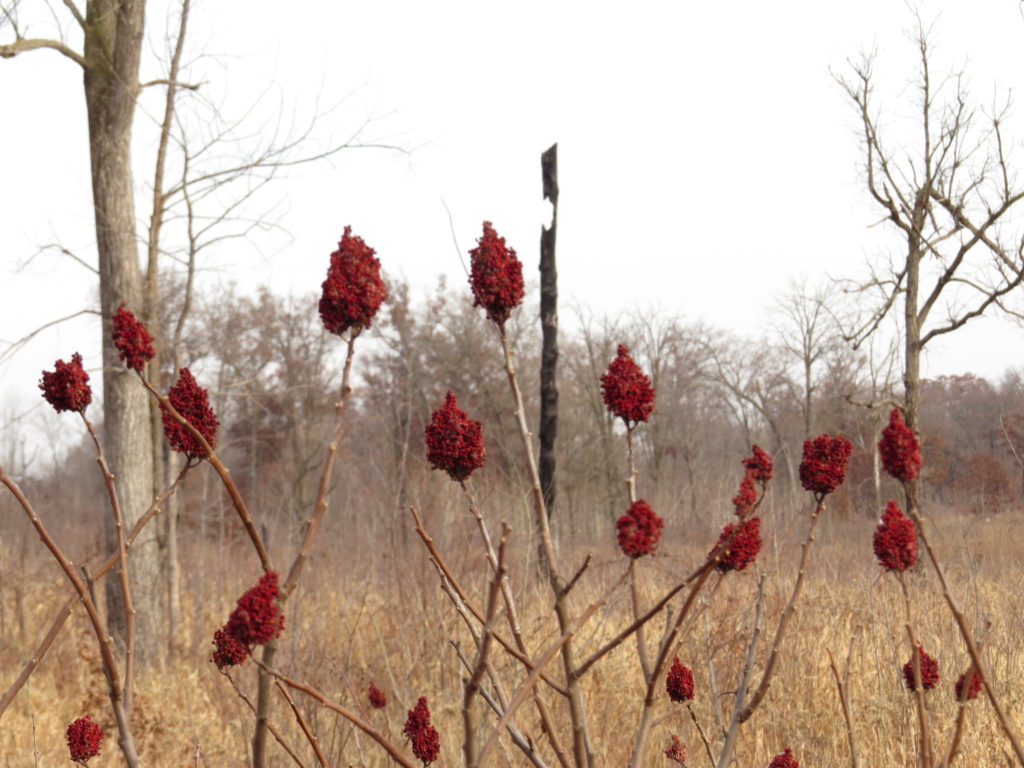
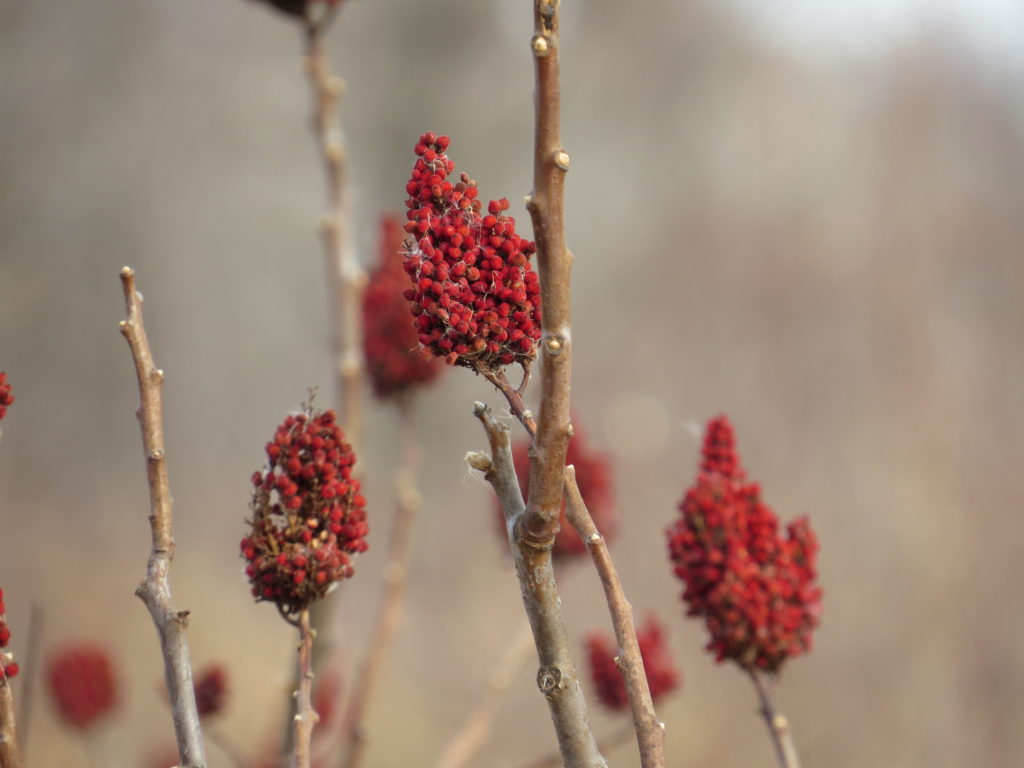
It was not long before we saw other burnt, dead tree trunks. Had there been a wildfire here? Most of the trees were Oak—White Oaks who had dropped their leaves and Red Oaks who were still adorned in their rust-colored finery.
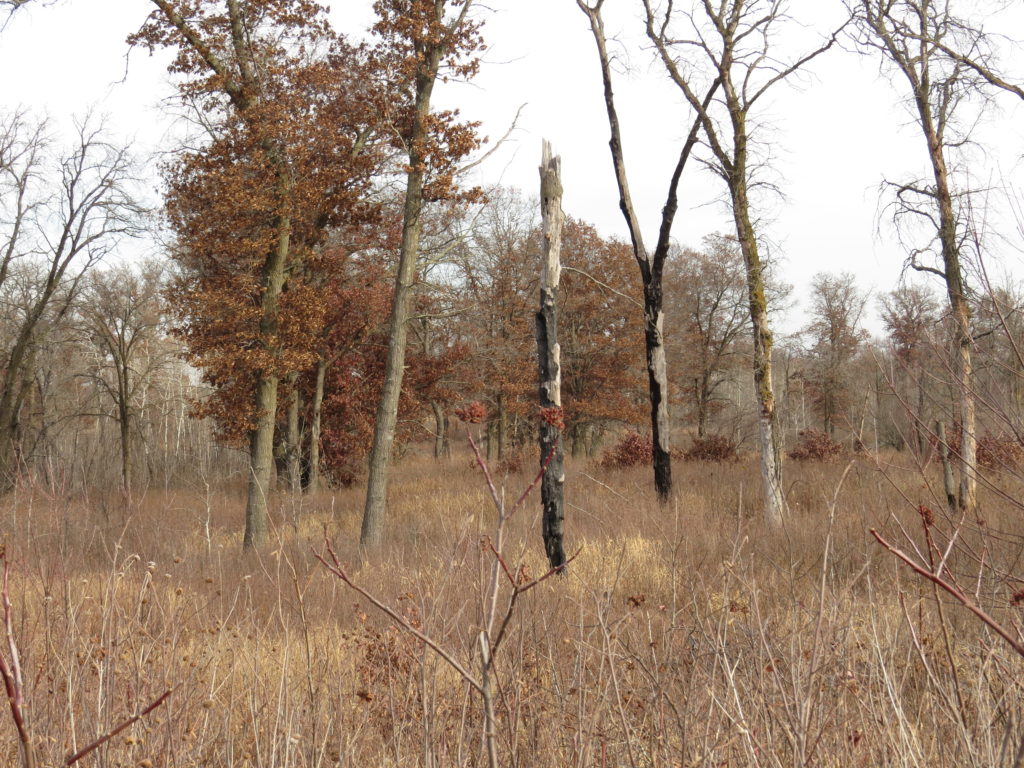
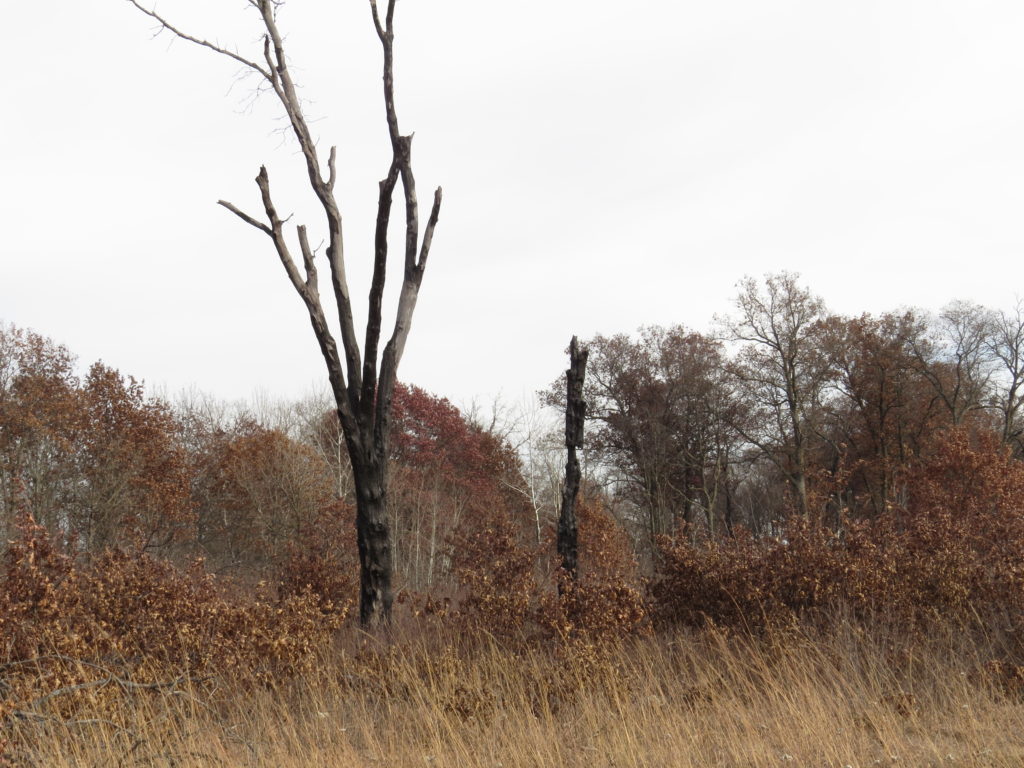
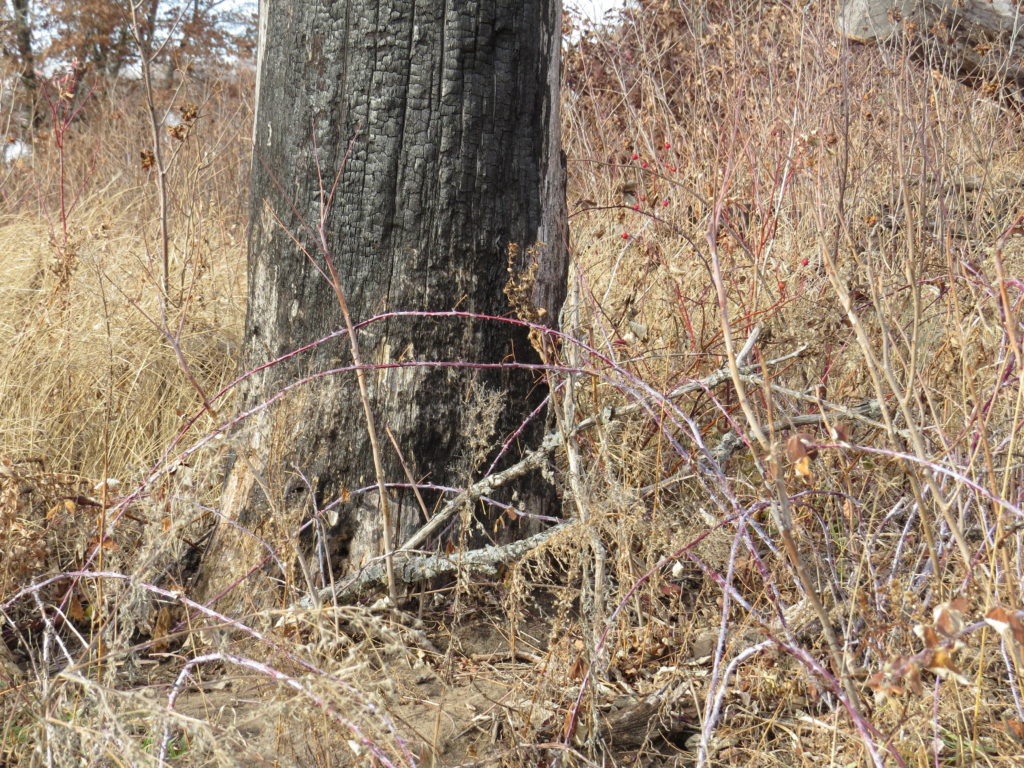
From that point on, most every tree we saw had been damaged by fire. The big, beautiful Oaks were in various stages of decline—some were dead and fallen, others were dead and standing, and quite a few others were alive, but distorted in their growth. That’s what was off about my first impression—the trees no longer had a normal canopy for the size of the tree. Lower branches were gone, some limbs were dead, and the rest of the foliage was concentrated towards the top of the very tall trees. Survival seemed very uncertain for the standing, living dead.
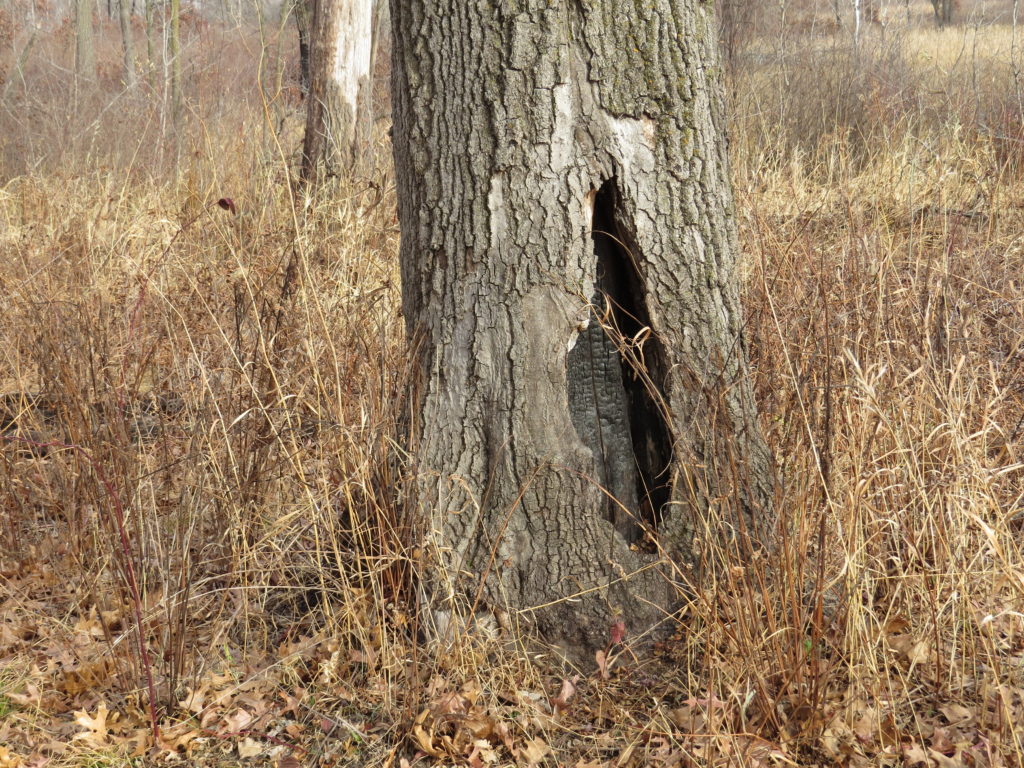
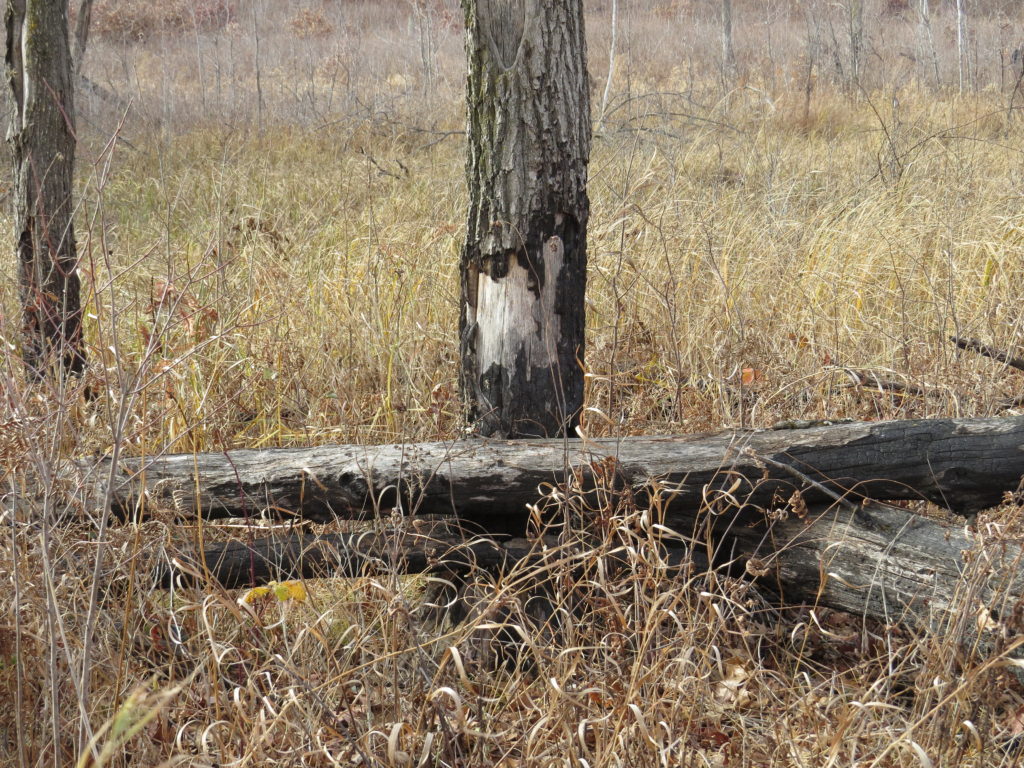
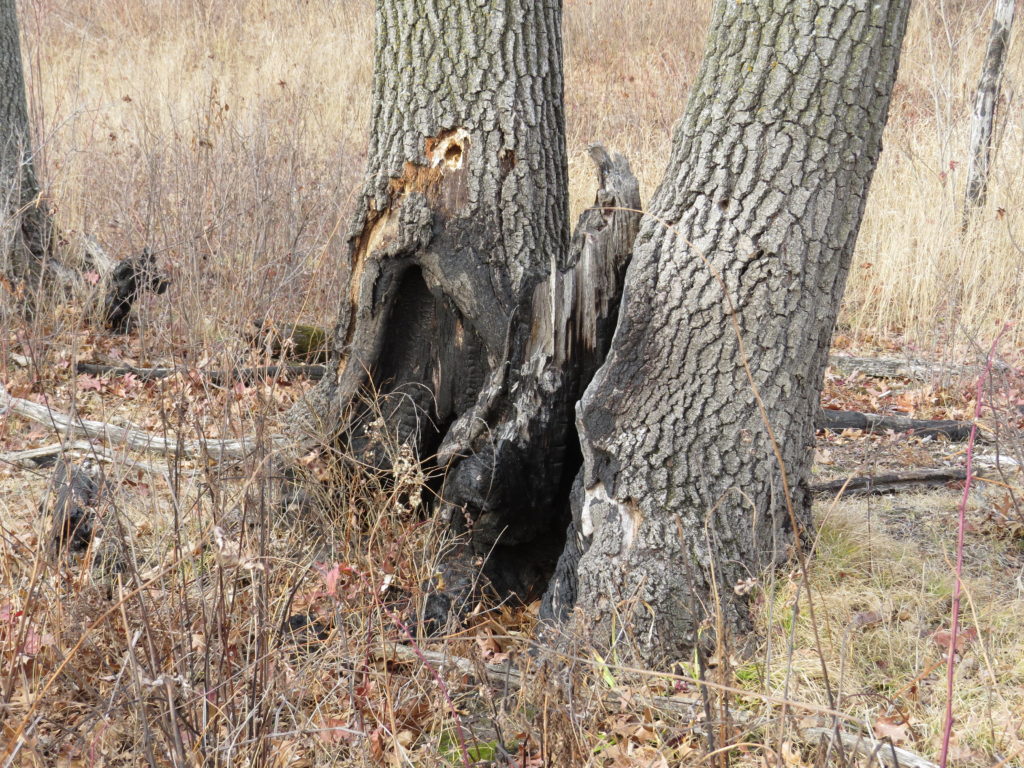
The undergrowth, or I should say, the new growth since there wasn’t much ‘under’ left, was a combination of Hazelnuts, shrubby, multi-stemmed Red Oaks, Raspberries, and some Willows in marshy areas. The purple-stemmed Raspberries conveyed their color in sharp contrast to the brown landscape.
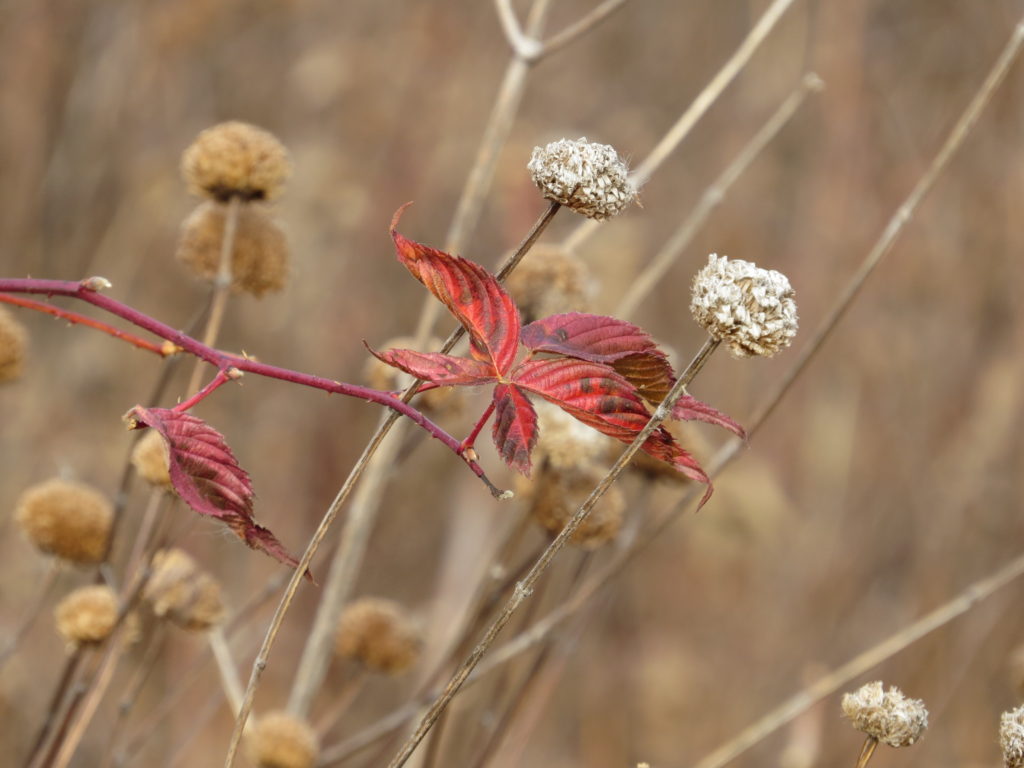
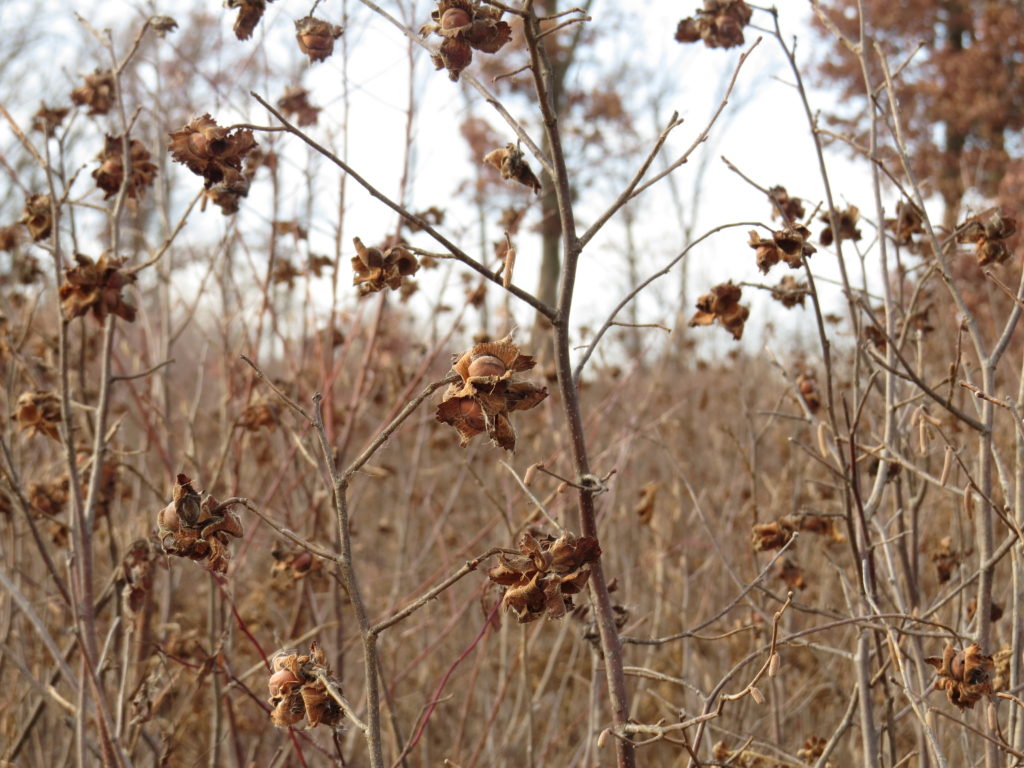
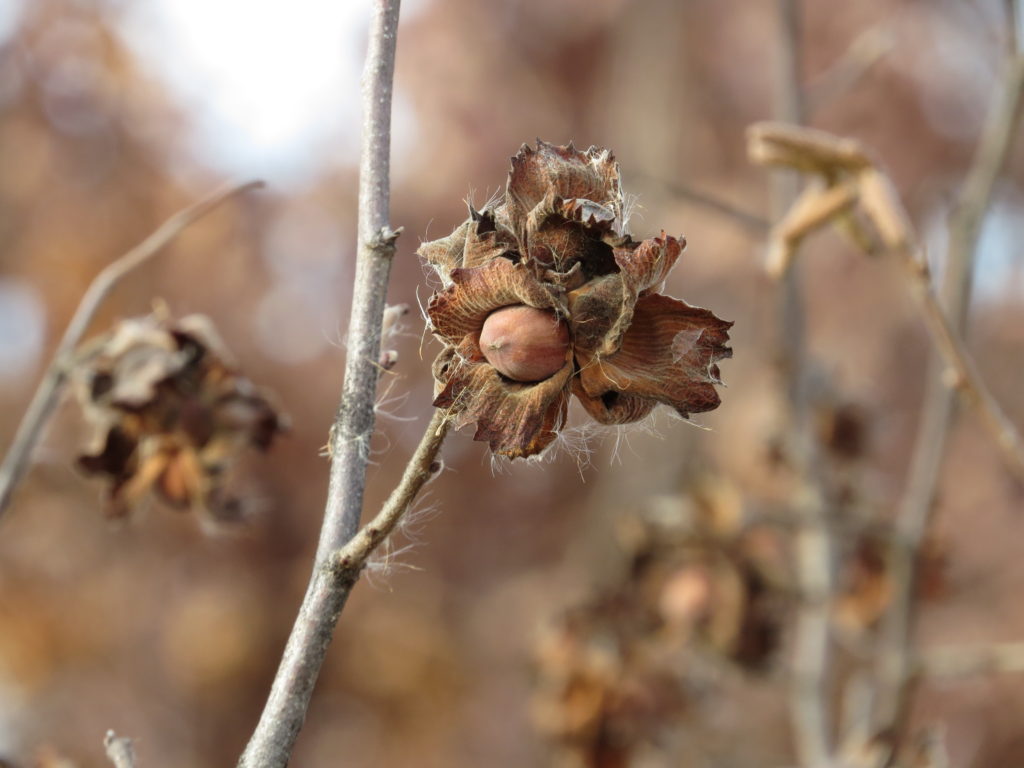
Hazelnuts—the actual nut—are usually long gone by this time of the year, eaten by deer, wild turkeys, squirrels, and pheasants. But the shrubs were so abundant in this area that many nuts remained, peeking out from their curled husks.
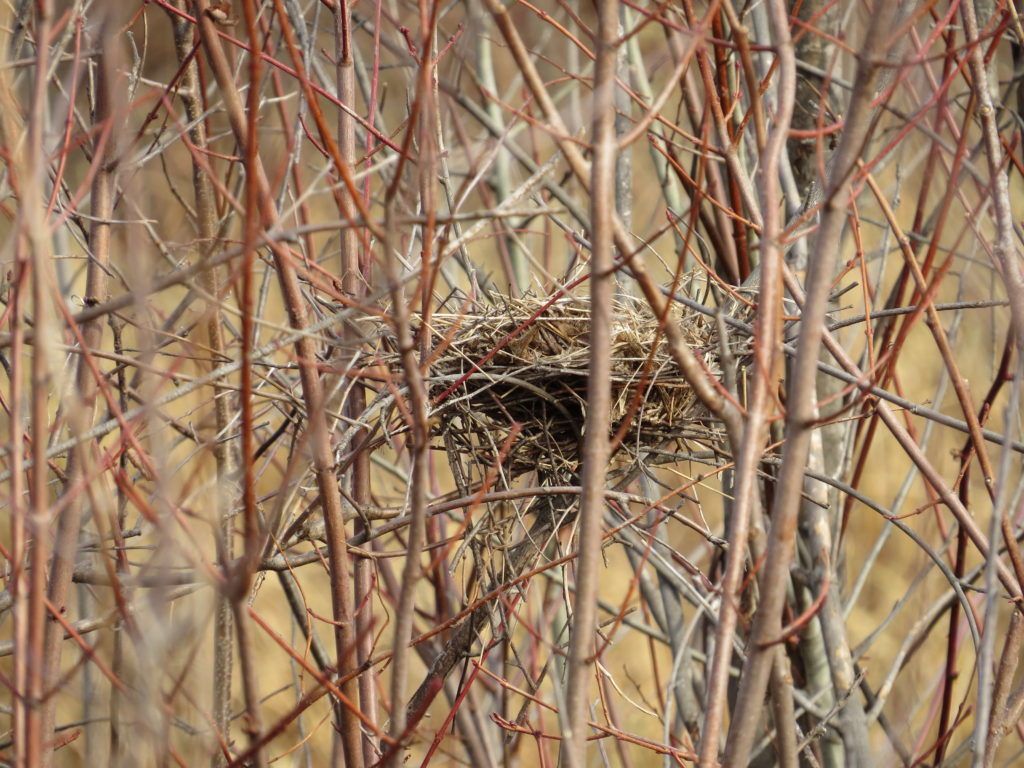
Autumn revealed an ‘unhidden’ nest in the bare branches that had earlier given protection and security to the hard-working bird.
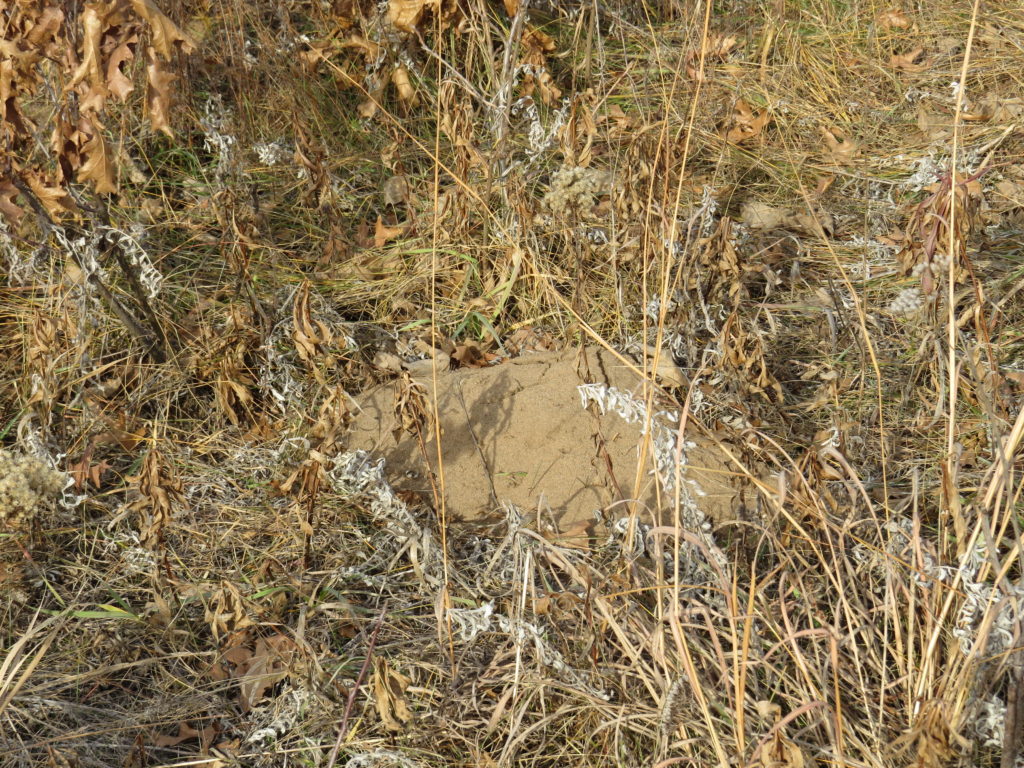
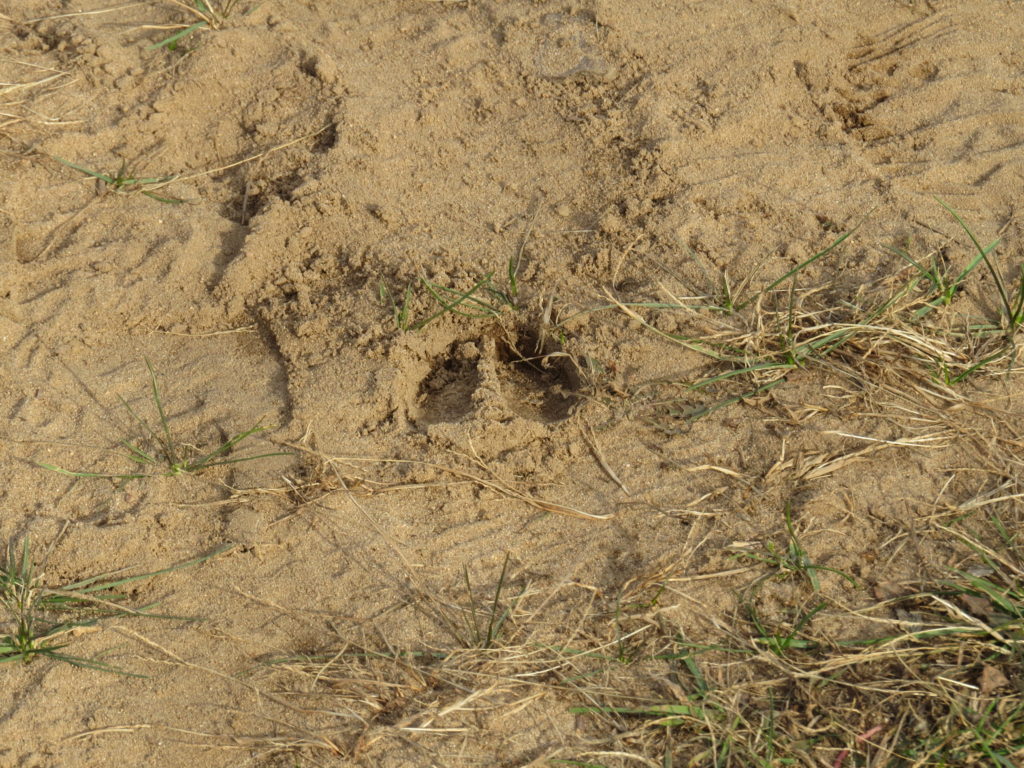
Pocket Gopher mounds were everywhere. I wondered how they could build their burrows in such sandy soil without the walls collapsing all around them. Deer tracks were plentiful also, all along the trail. We joked about the trails being for humans or deer, and Chris noted they were just like us, taking the path of least resistance.
When would this come crashing down?
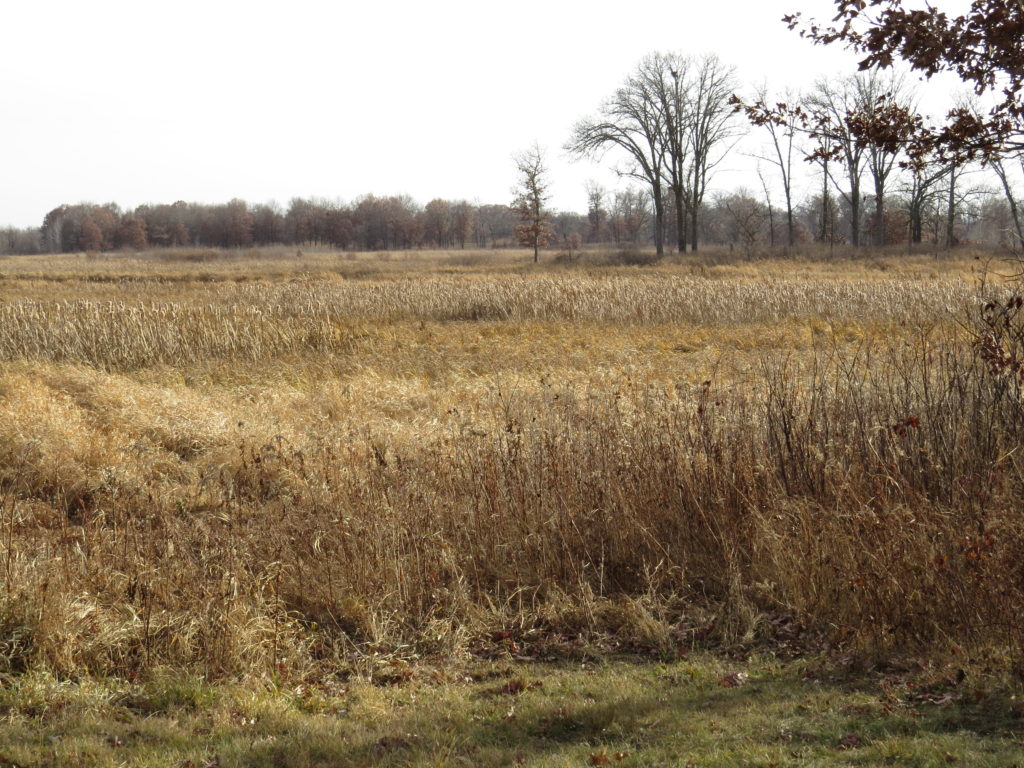
All 30,000+ acres of Sherburne National Wildlife Refuge is a combination of forest, prairie, lakes, and wetlands. It was established as a refuge in 1965 to protect and restore habitat in the St. Francis River Valley for migratory birds and other wildlife. During the months of March through August, most areas are closed to the public to allow the wildlife to breed and raise their young ones without human disturbance.
Two-thirds of the way through our hike we came to Buck Lake. More than a dozen Muskrat houses poked up from the marshy water and reeds.
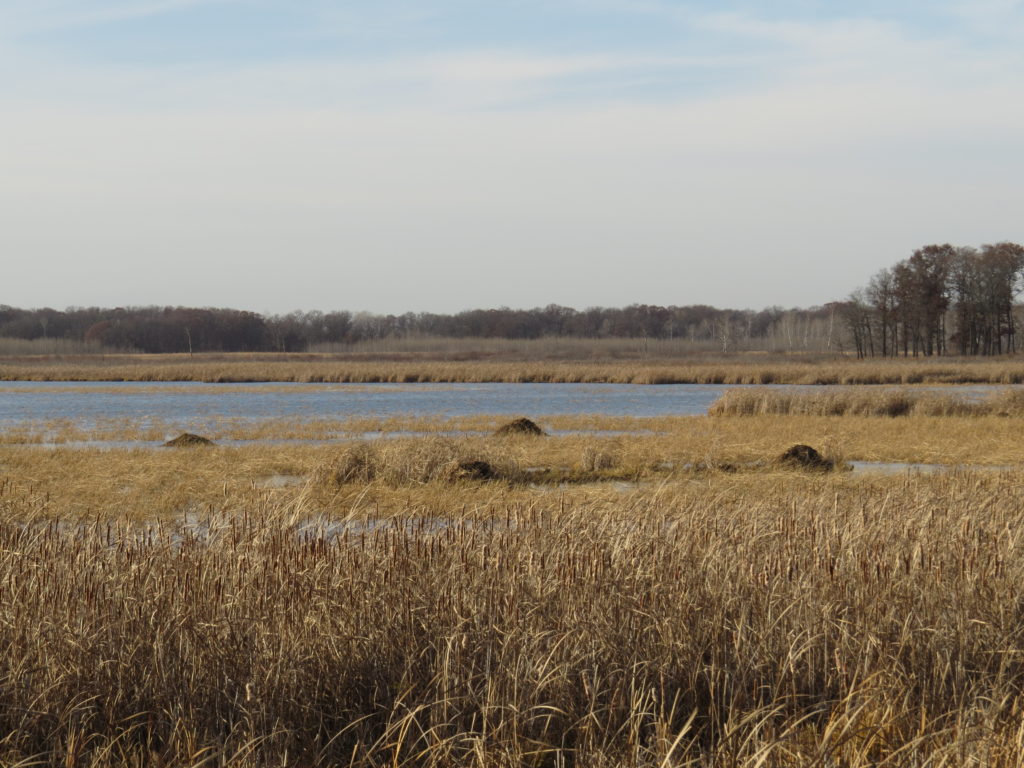
On a mud bar in the middle of the lake, a family of Trumpeter Swans was busy with the business of preening and cleaning their feathers. Beyond the Swans was a flock of ducks feeding in the shallow water with ‘bottoms up.’
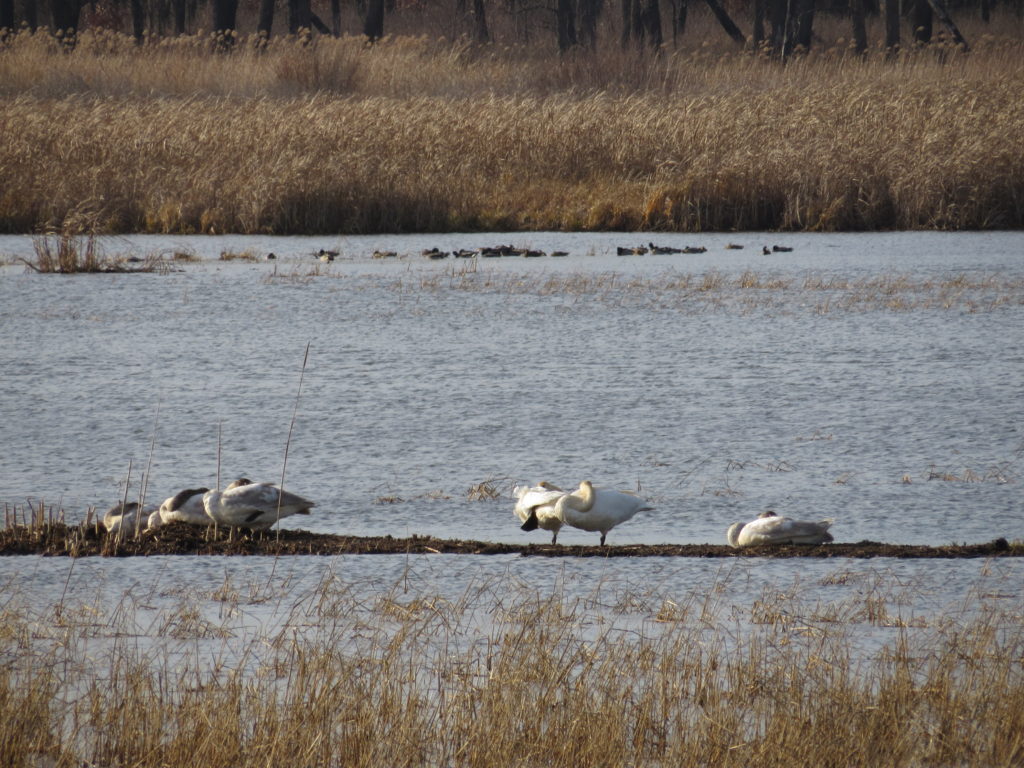
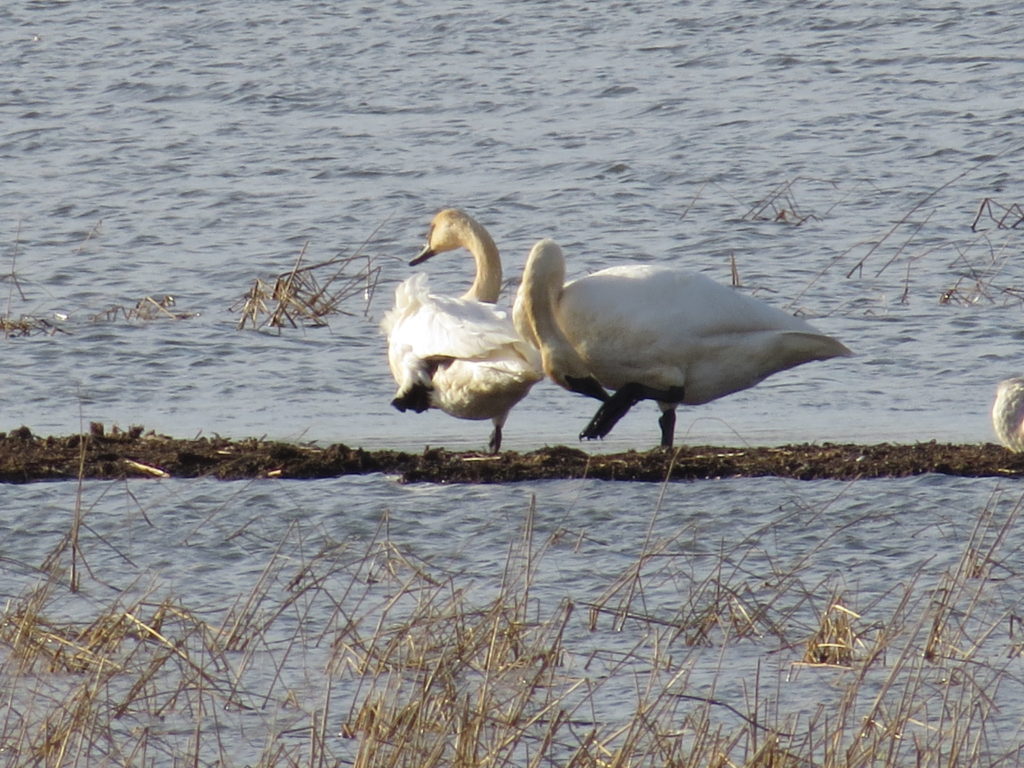
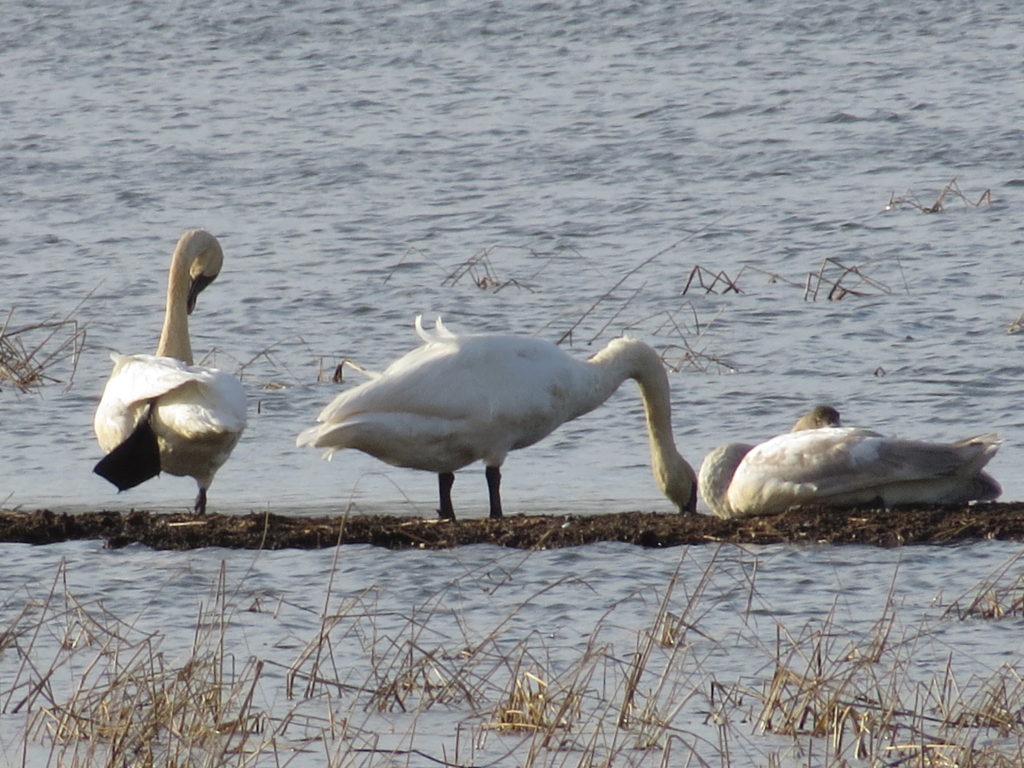
After the preening, Mother and Father Swan slid into the water and glided through the reeds, the wind messing their just-smoothed feathers.
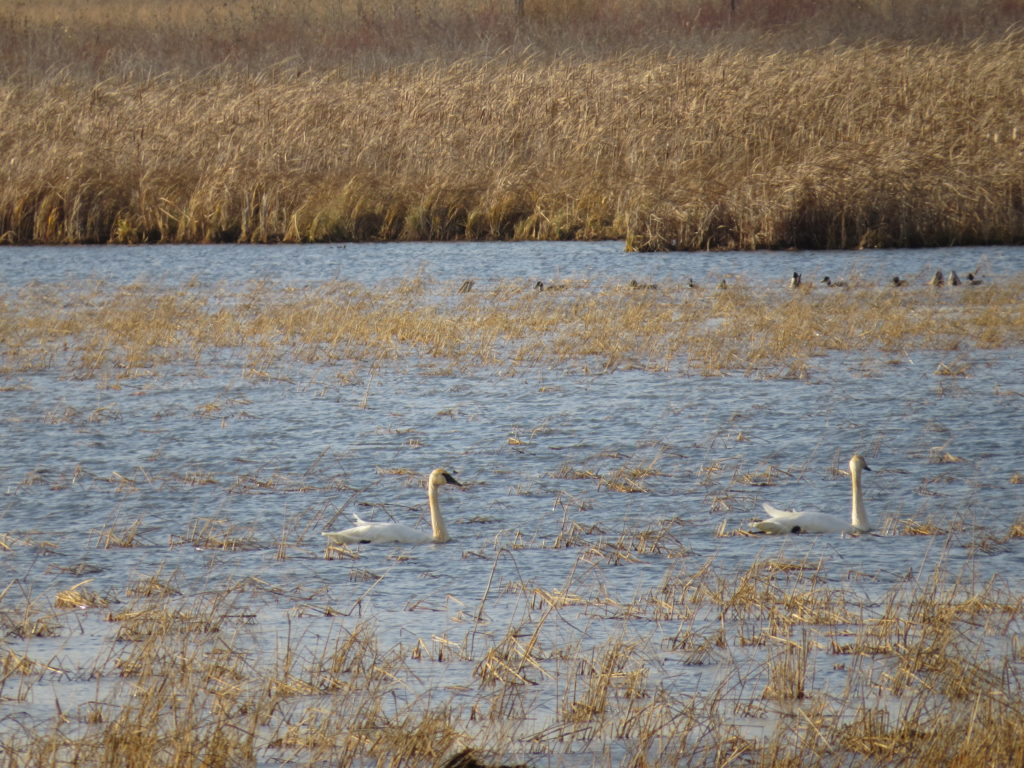
The young cygnets followed their parents, their dusky gray feathers getting ruffled in the wind. They will migrate and winter as a family, and their parents will most likely return to this lake to nest again. Trumpeter Swans and Muskrats have a synergistic relationship—when Muskrat and Beaver populations increase, Swan populations also increase, as they use the tops of the dens for nesting sites.
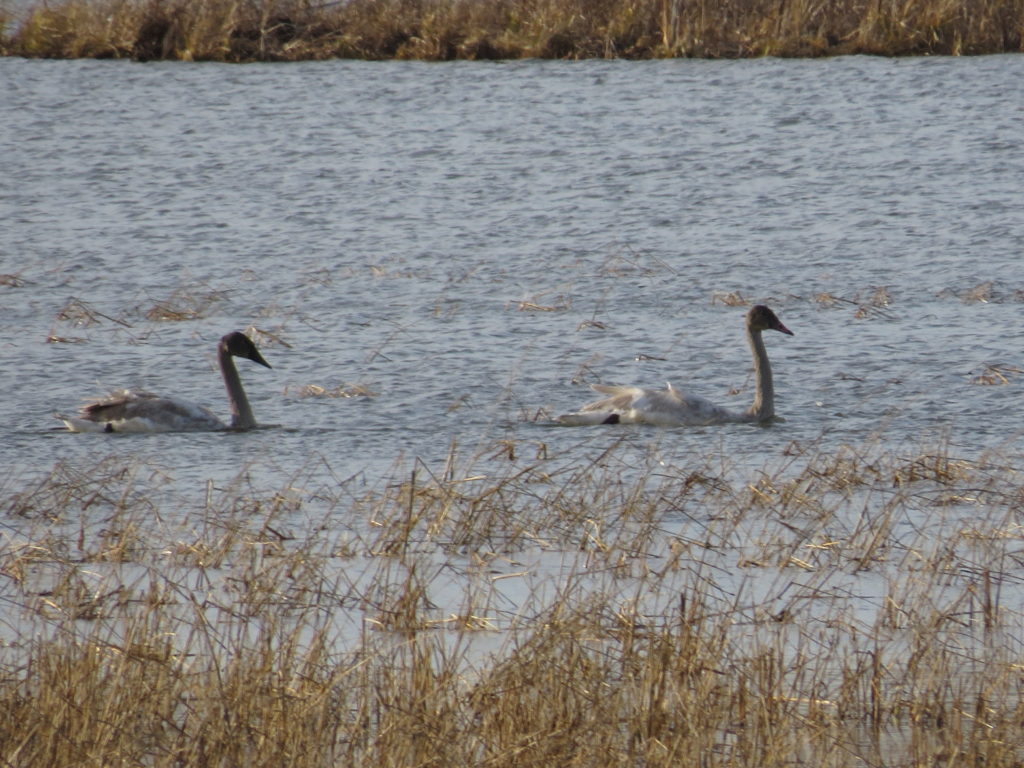
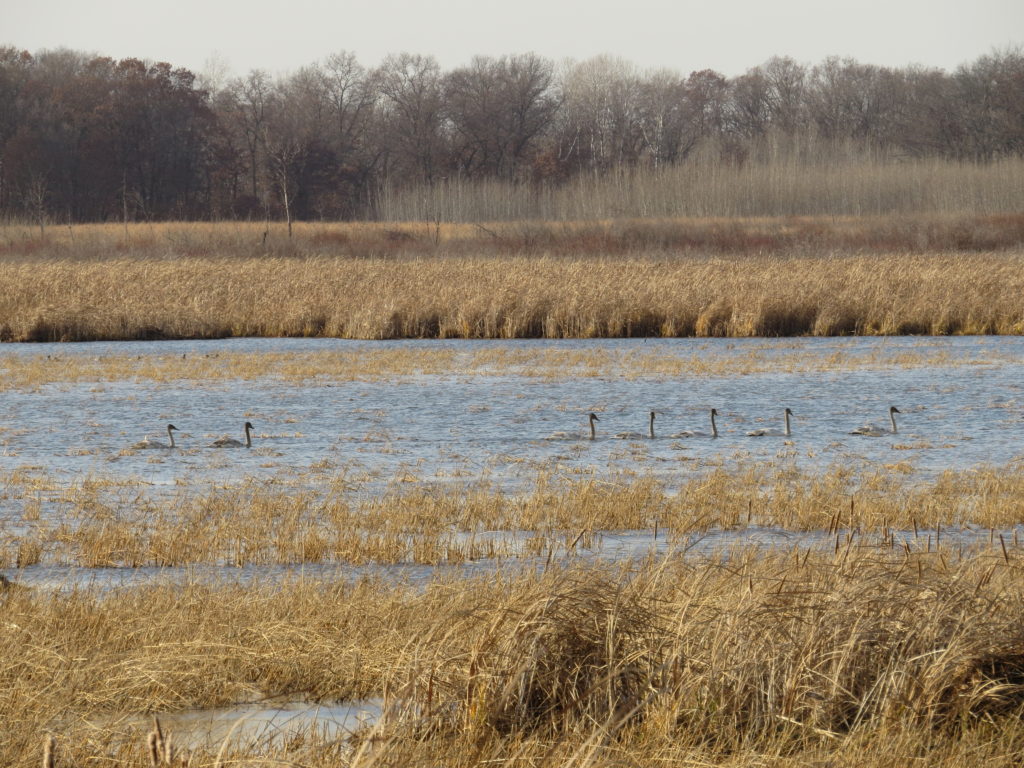
Seven young Swans a swimming…
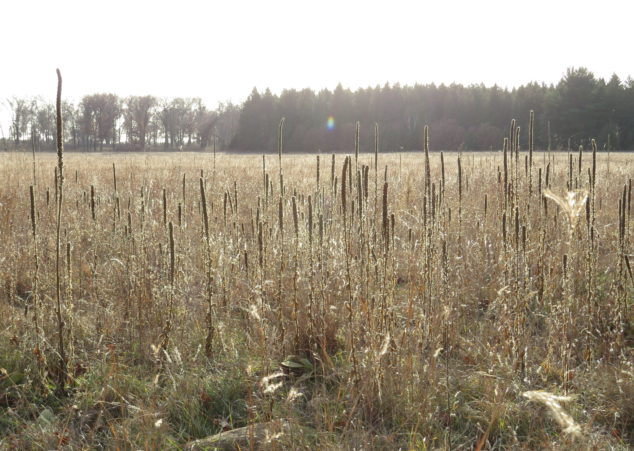
Beyond a Mullein patch was an evergreen forest, which I later learned was referred to as the Enchanted Forest.
It was a forest of Spruces—the first wholly Spruce forest I remember seeing. The trail wound through the towering trees. It was dark and quiet, so unlike the rest of the hike. It did seem enchanted!
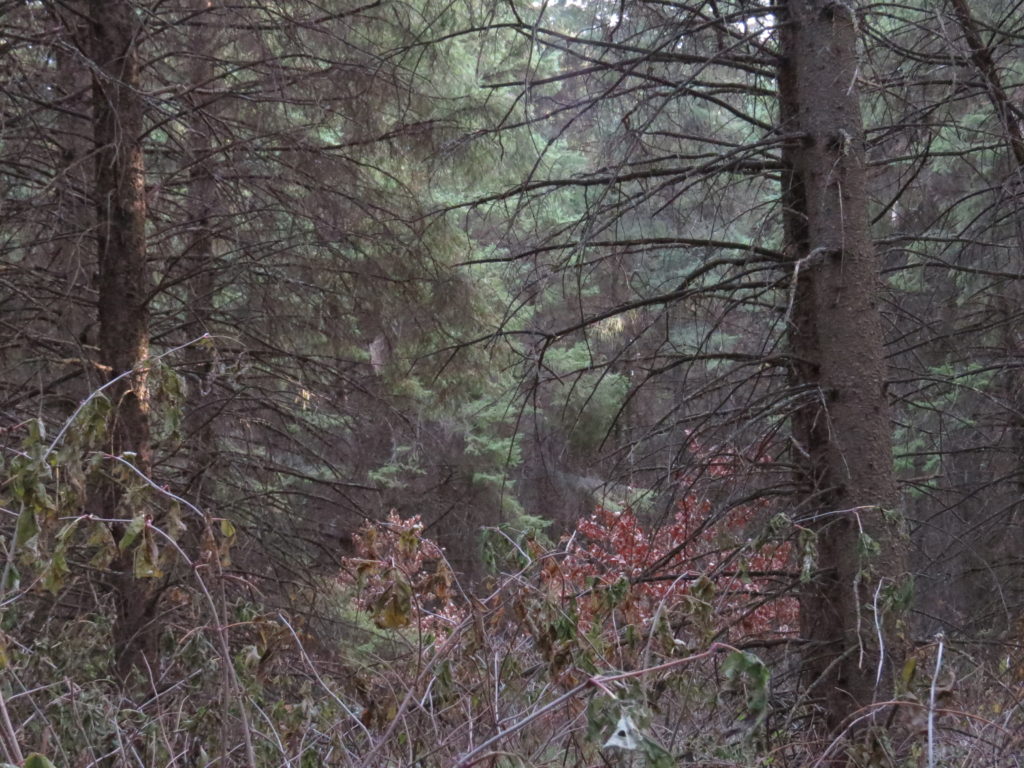
We emerged from the forest with Blue Hill in our sights—the highest point in the refuge. Trees still showed their wounds, the lasting legacy of the destruction of fire.
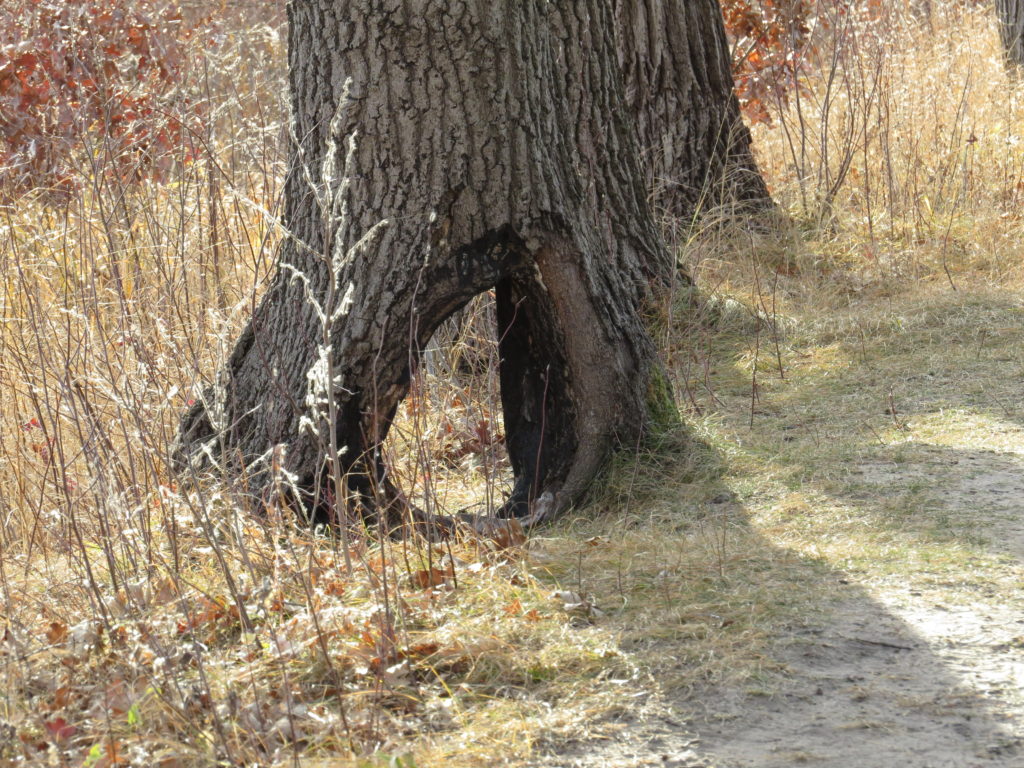
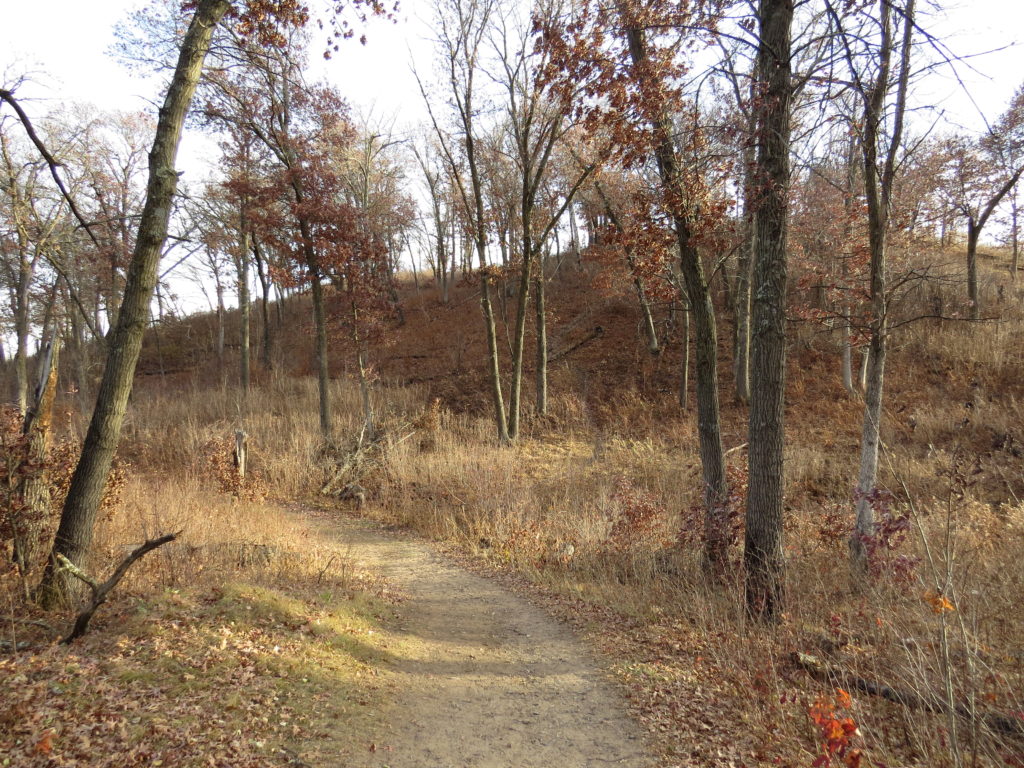
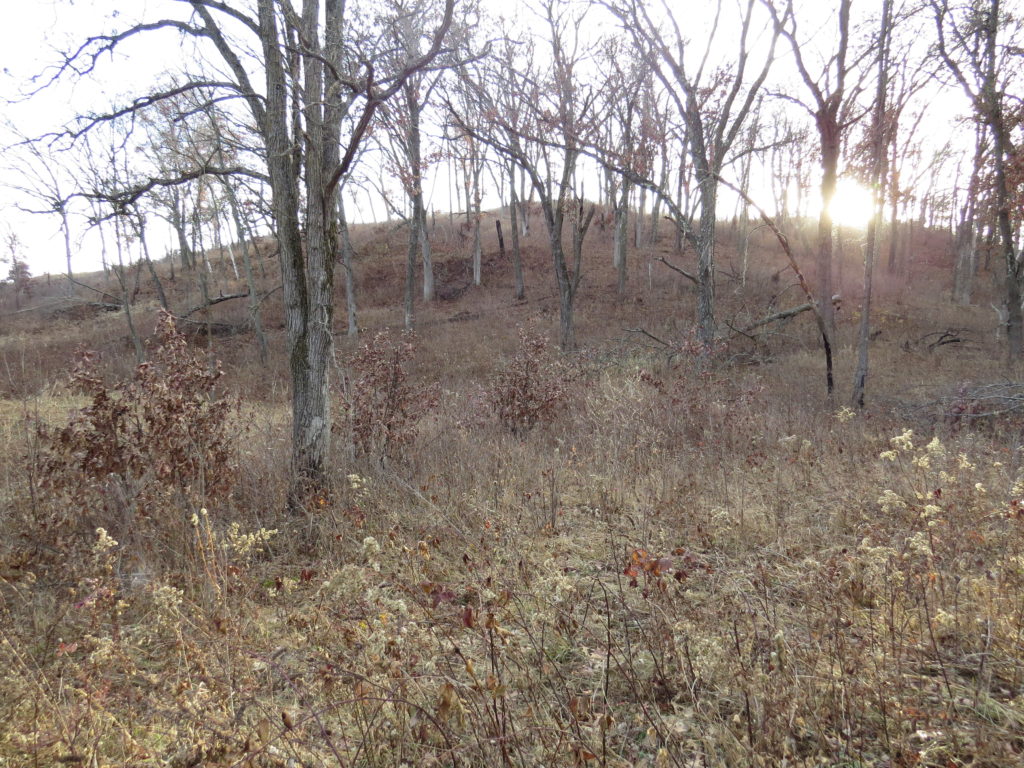
With a little research after I was home, I discovered that Blue Hill had had ‘prescribed’ burns in 2009, 2015, and 2018. Prescribed burns are fires that are carefully planned to take into account temperature, humidity, wind speed and direction. They were being used to restore the Oak savanna by thinning non-native grasses and plants while promoting the health of native vegetation. They had protected the Enchanted Spruce Forest by how and where they set the fire. It sounds good in theory, and good practices were used, but something went wrong. They harmed the very trees they were trying to protect—the towering White Oaks. Fire will take the path of least resistance—most destructive forces will, whether of Nature or mankind. So how do we find refuge in the face of destruction? We can bury ourselves in the sand, not seeing, not listening, hoping for the best. (Though I bet there were plenty of roasted Pocket Gophers after the fire that decimated those trees.) We can run away in fear and busyness, not taking the time to ‘read the landscape’ and gather information. We can sit on our island of entitlement refusing to see the flames that are engulfing those around us. “True refuge demands a complete and utter trust fall into the arms of reality,” says Miles Neale, a Buddhist psychotherapist. It is a brilliant statement. Refuge is defined as a condition of being safe or sheltered from pursuit, danger, or trouble. To truly have refuge we need reality, the reality of facts, evidence, expertise, and truth, along with the reality of love and compassion that emanates from our spiritual beliefs. We don’t want to destroy the very things we are trying to protect. Fall into the refuge of reality.
The Meeting Place
When I was in my early twenties, I was staying with friends of mine who lived out in the country. Before going to sleep one night, I saw a light flashing by the window. Instantly I was scared. I froze in stillness with my eyes wide open, trying to see where the light was coming from. Was it somebody walking around with a flashlight? My friends were sleeping in the next room. I was convinced I was in danger, that there was a bad person prowling around outside, but I was frozen with fear. I don’t know how long I lay there in fear, finally falling asleep against my will.
We headed east from Ely. Superior National Forest surrounded Highway 1 in Autumn glory. Our late September trip up north wasn’t quite over, even as we were heading home. We drove to the shore of Great Lake Superior. It is such an amazing sight! We stopped at Tettegouche State Park—just one of around 17 state parks that line the eastern border of Minnesota along Lake Superior, the St. Croix River, and the Mississippi River. Tettegouche is a French Canadian phrase meaning “meeting place.” The land was home to a logging camp in the late 1890’s, then a fishing camp and retreat, and conserved by a couple owners and The Nature Conservancy before becoming a state park in 1979. With the afternoon waning, we opted to hike to High Falls along the Baptism River, the highest of four falls that drop the Baptism River 700 feet to Lake Superior.
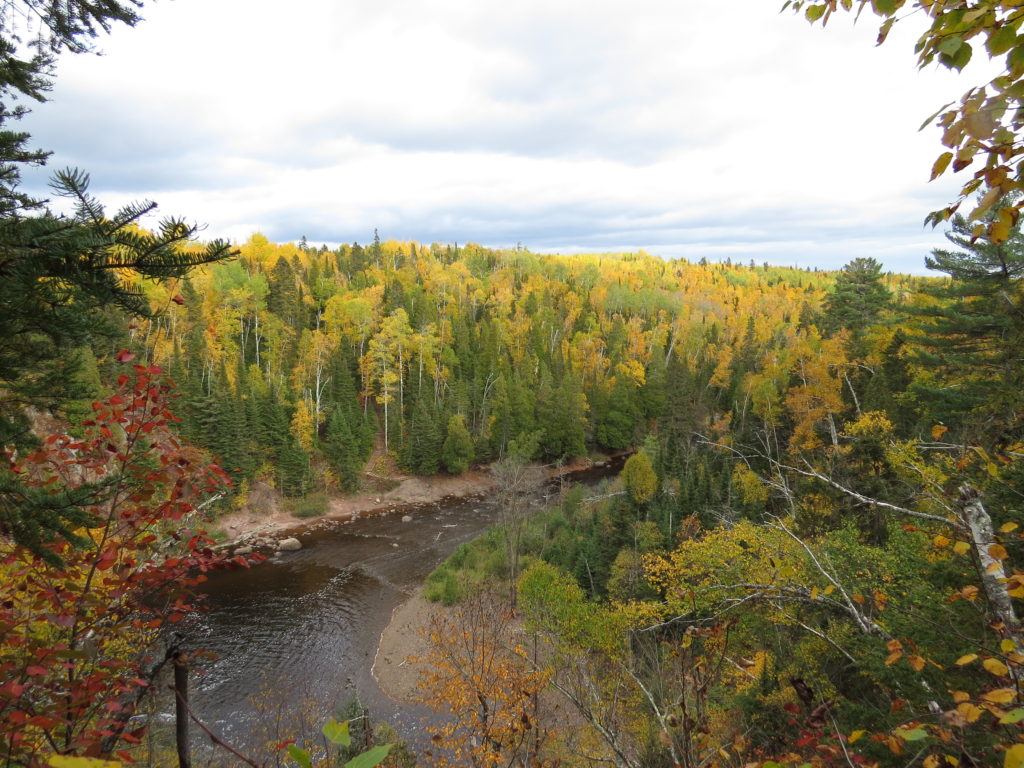
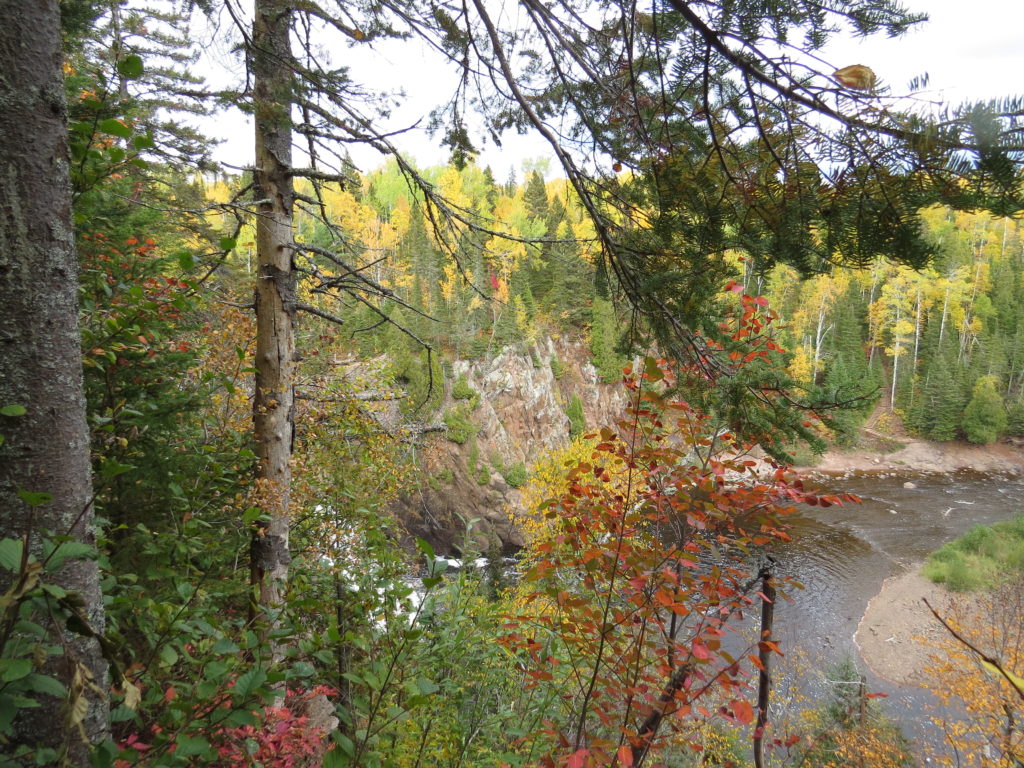
Getting up to the falls took a substantial amount of breath, but once there, we walked across the swinging bridge to peer upstream and downstream to the edge of the falls.
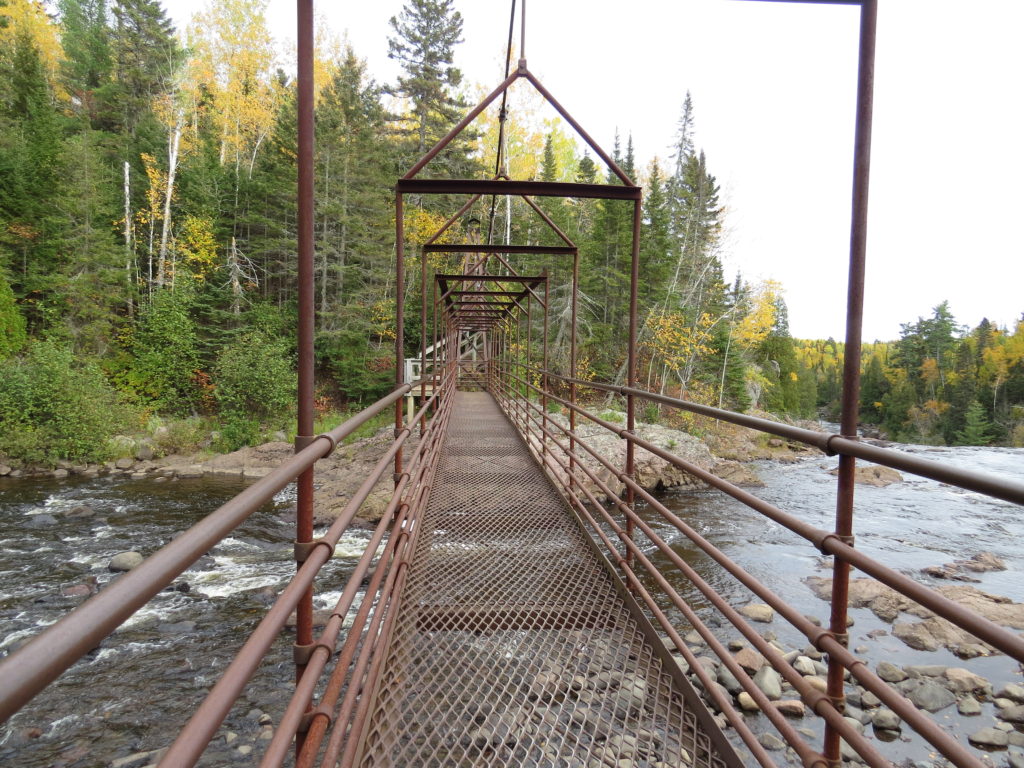
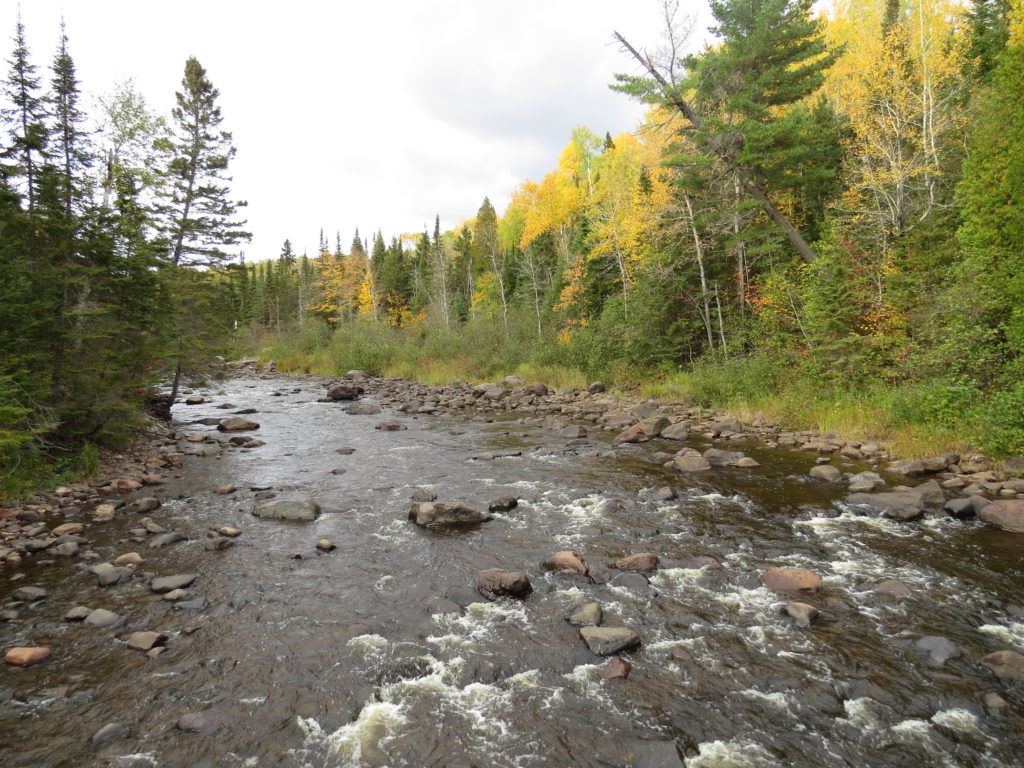
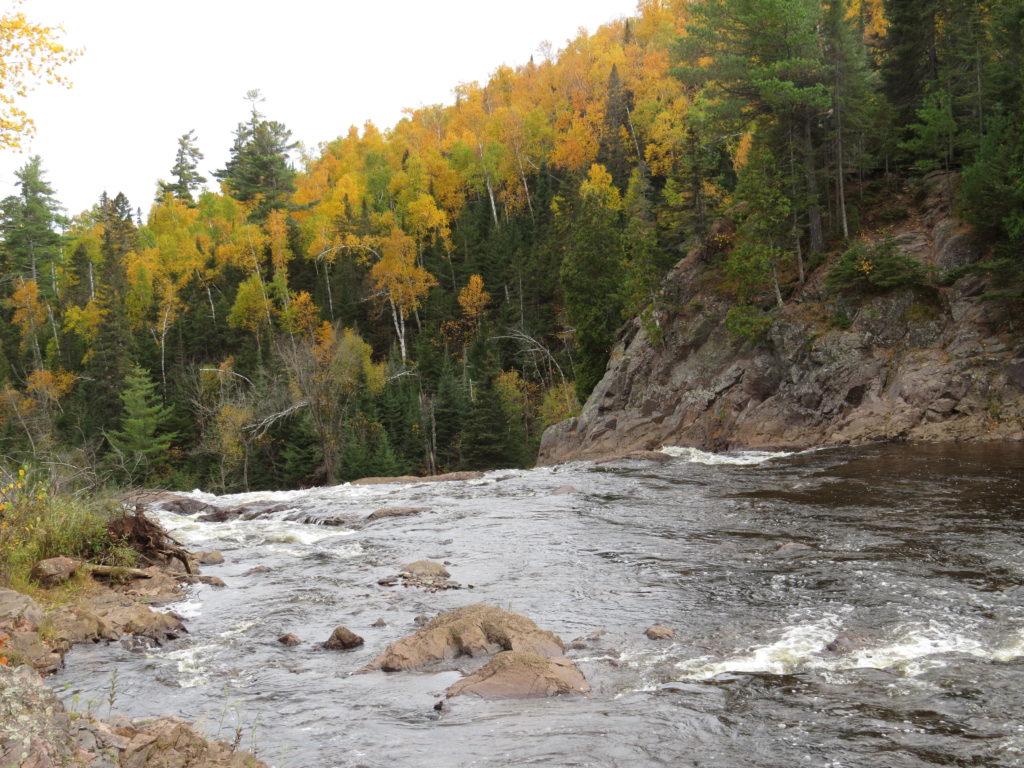
Trails on both sides of the River, along with the bridge, allowed us to see the spectacular rock face and sixty feet of cascading water.
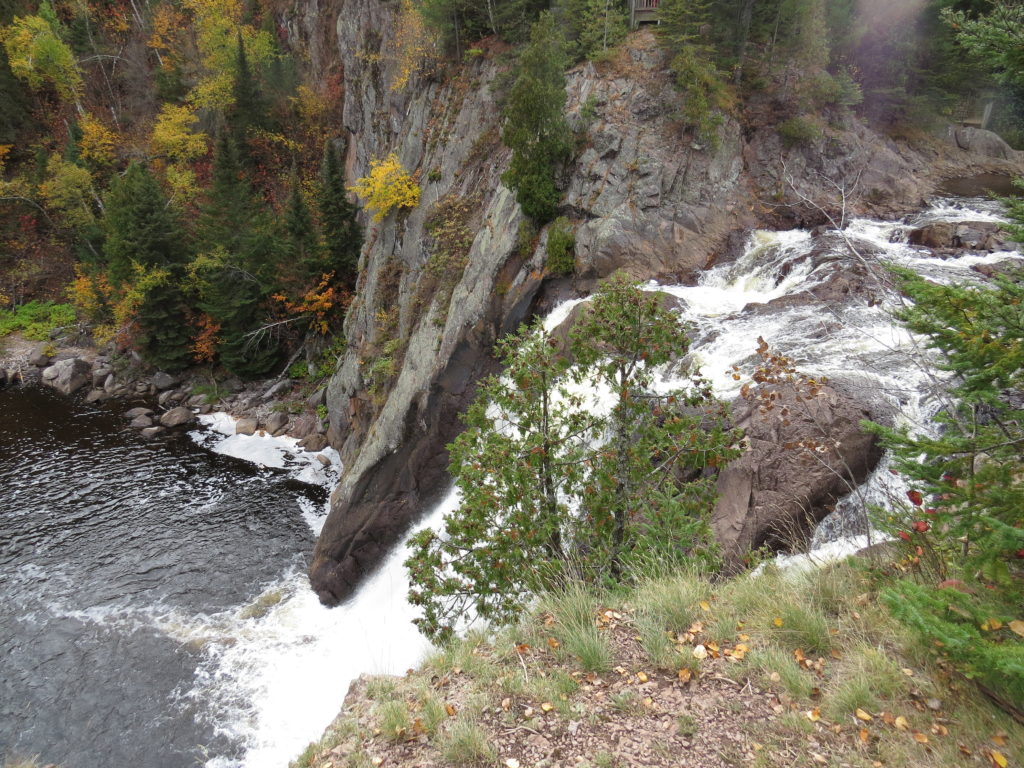
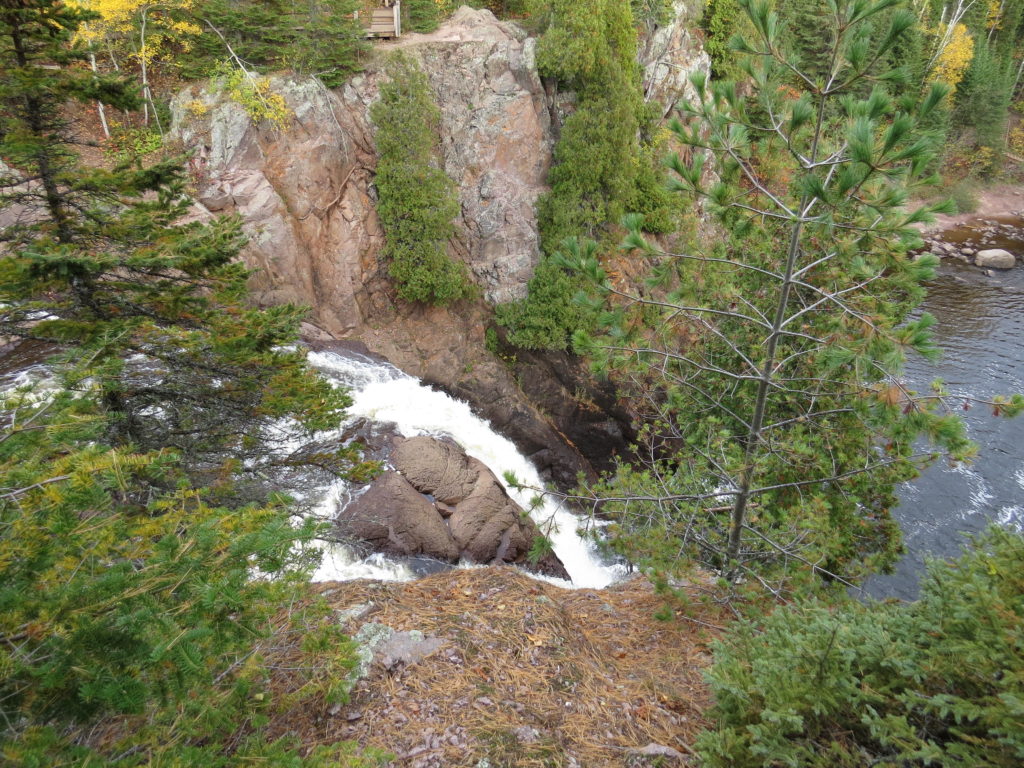
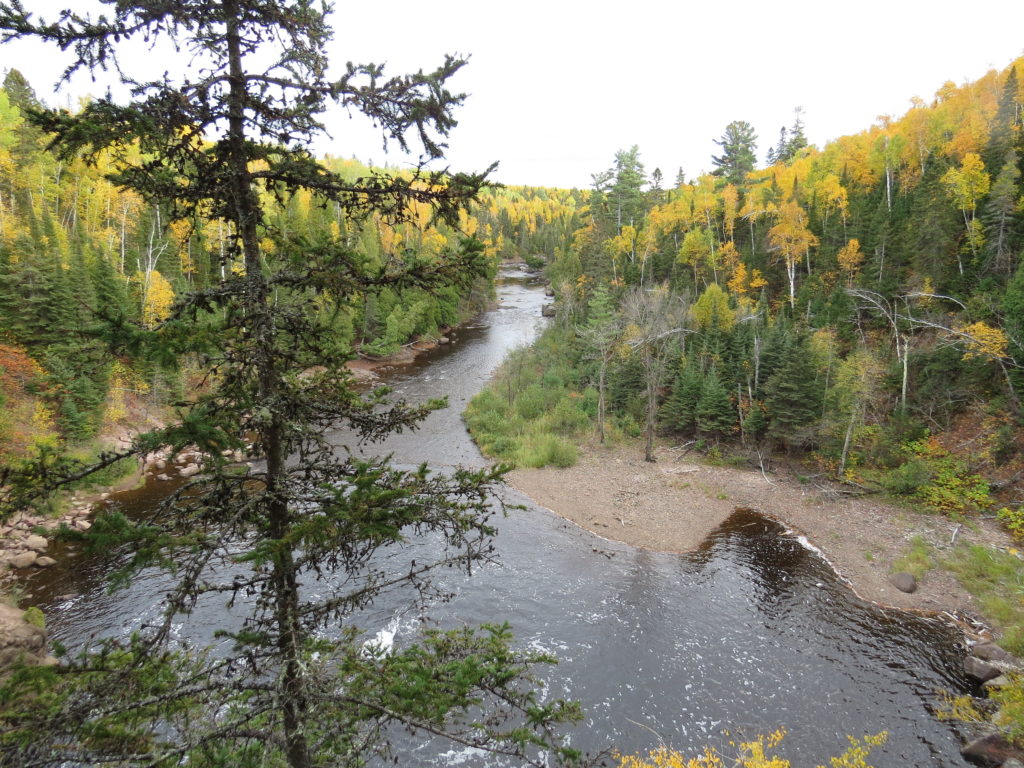
We hiked back down to the car, crossing the Superior Hiking Trail that runs though the park.
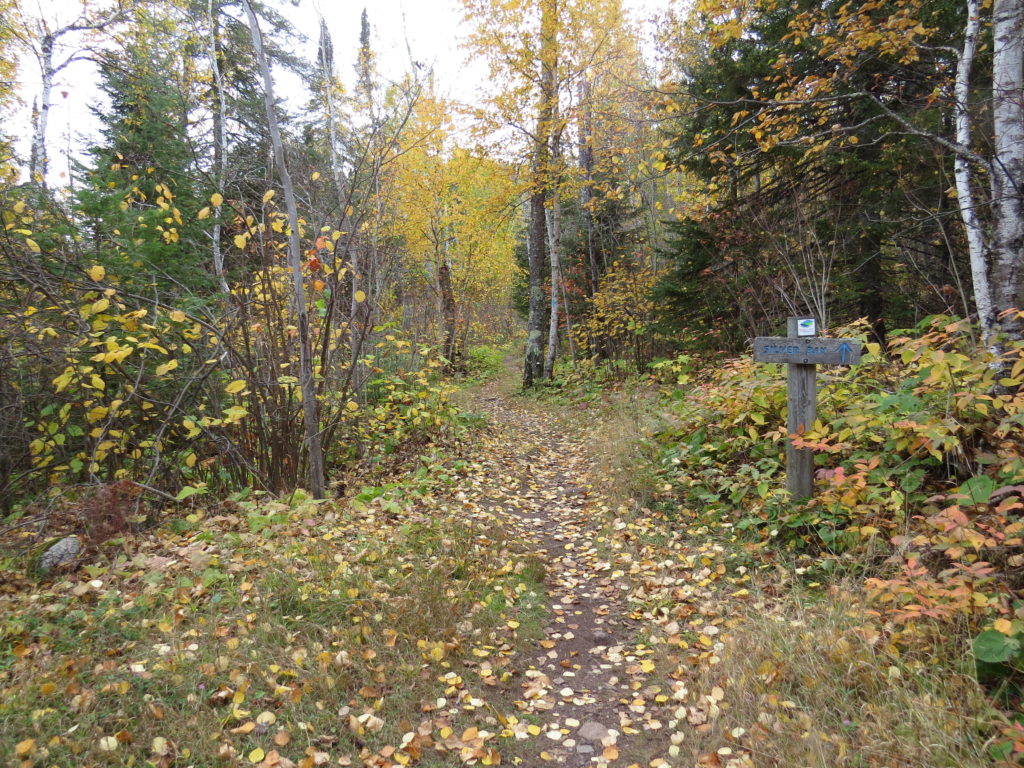
We wanted to see where Baptism River meets Lake Superior. The rock cliffs guided the River to the Great Lake who had tossed up a sand bar of polished rocks, seemingly blocking the flow of the river.
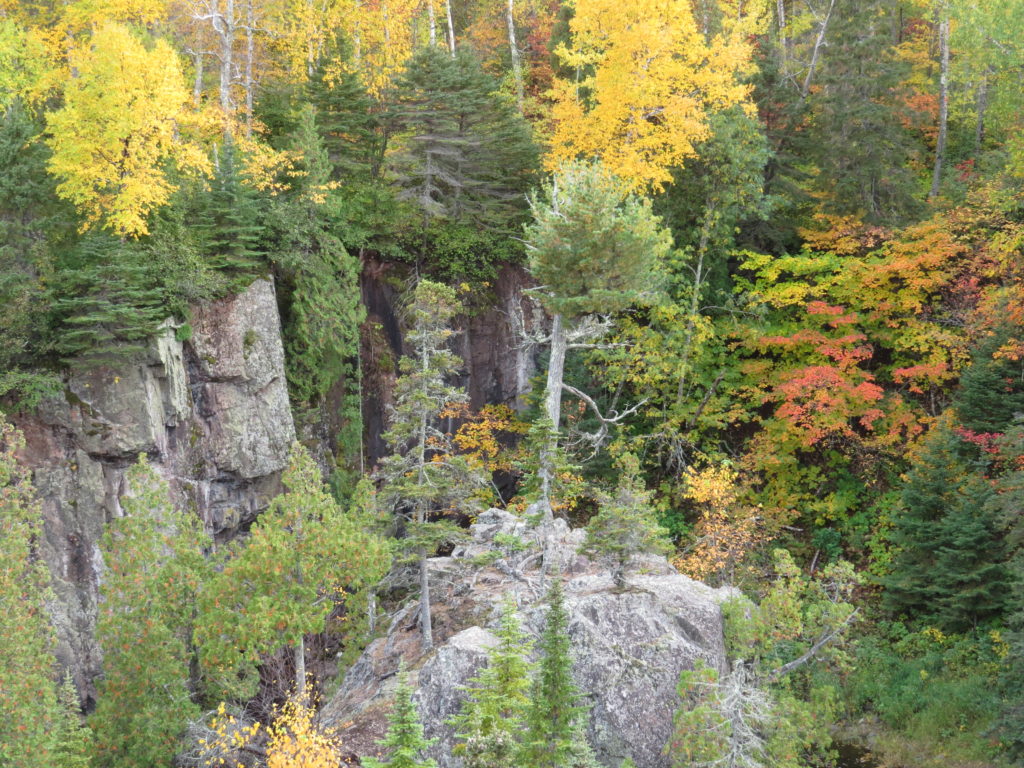
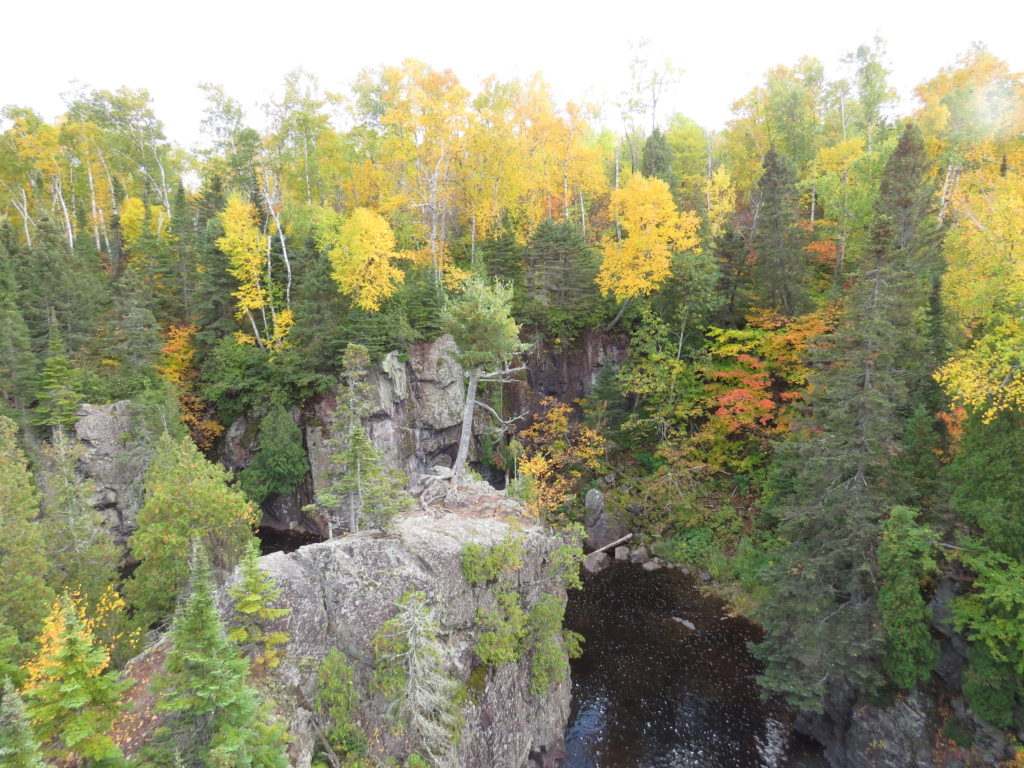
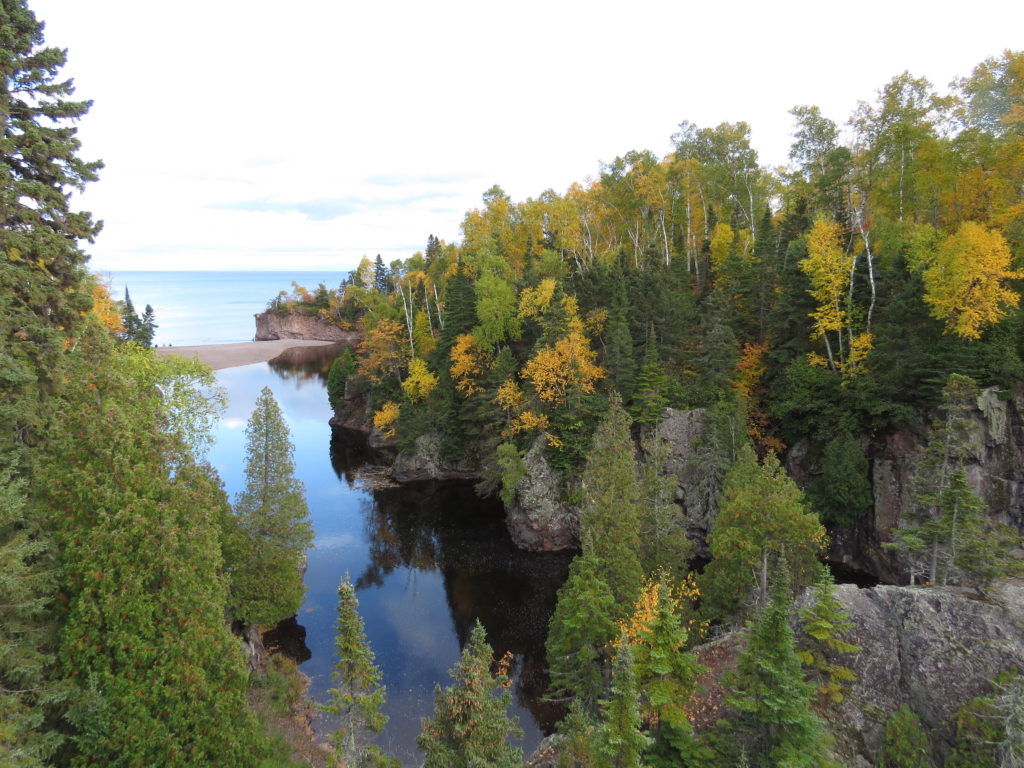
The ‘rockbar’ stretched across most of the mouth, but the River rushed around the corner of it, spilling into Superior.
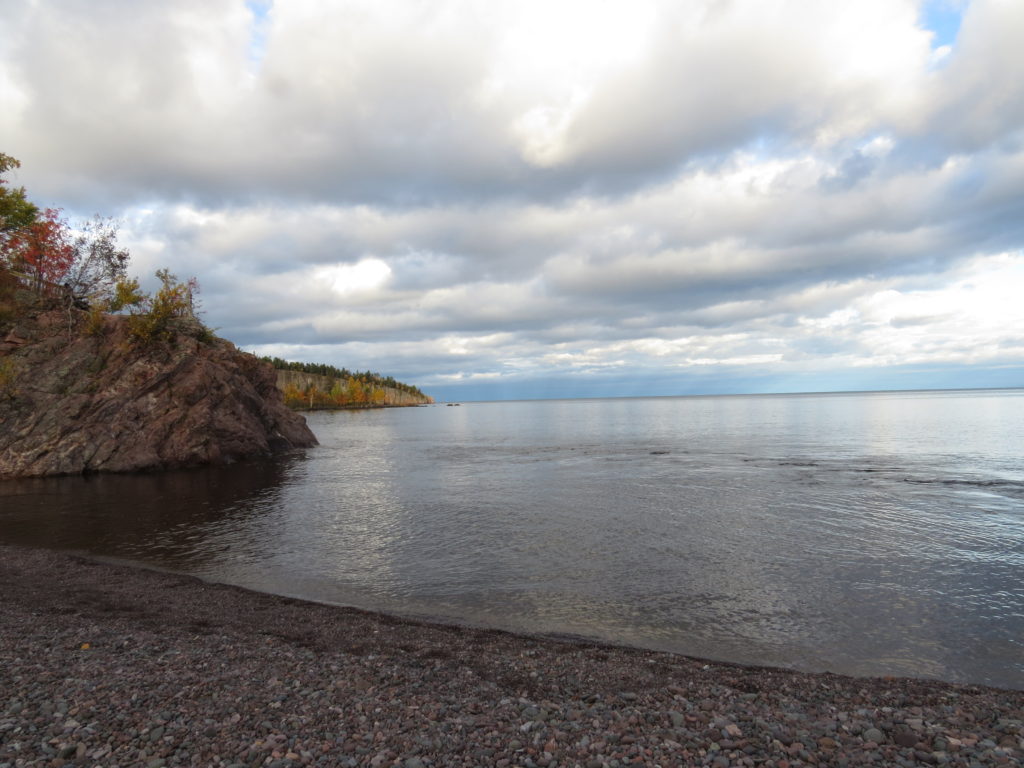
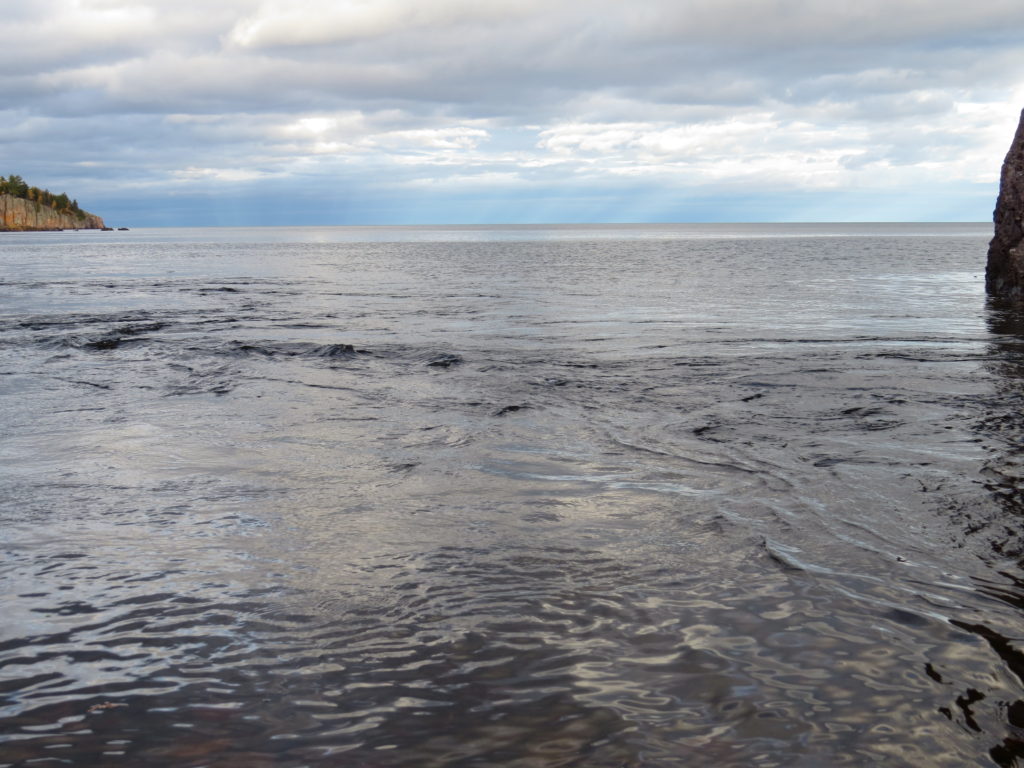
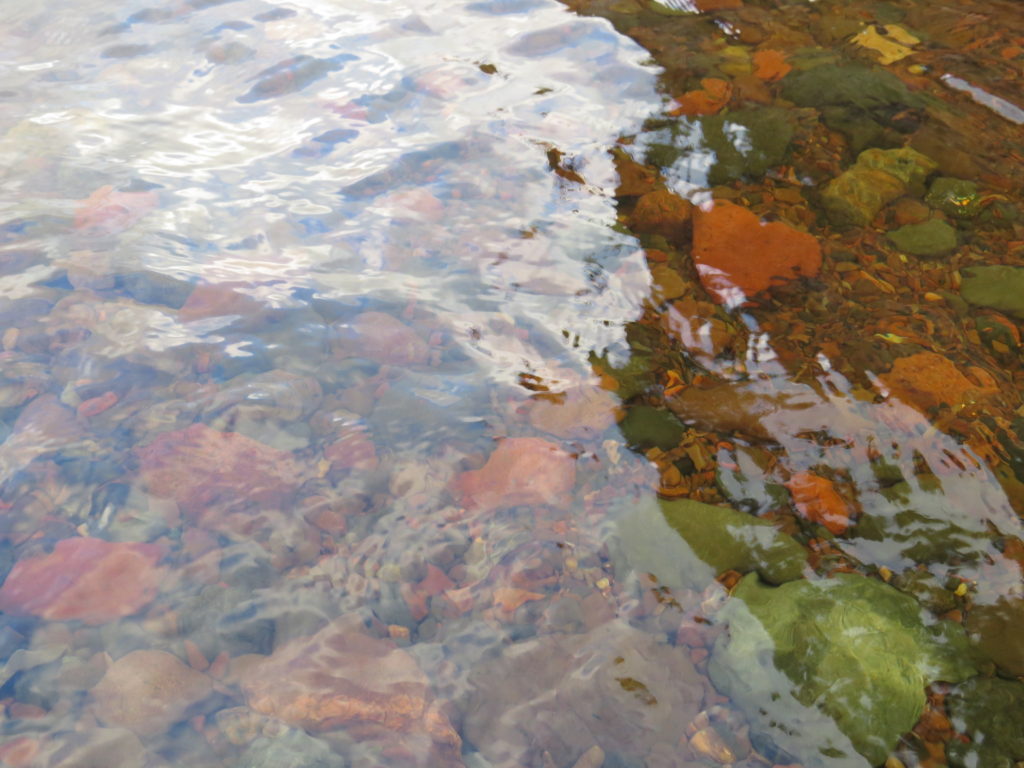
We rock-hounded for a while, gathering some, leaving other ‘heart’ treasures the spirited Lake protects with her cold waters.
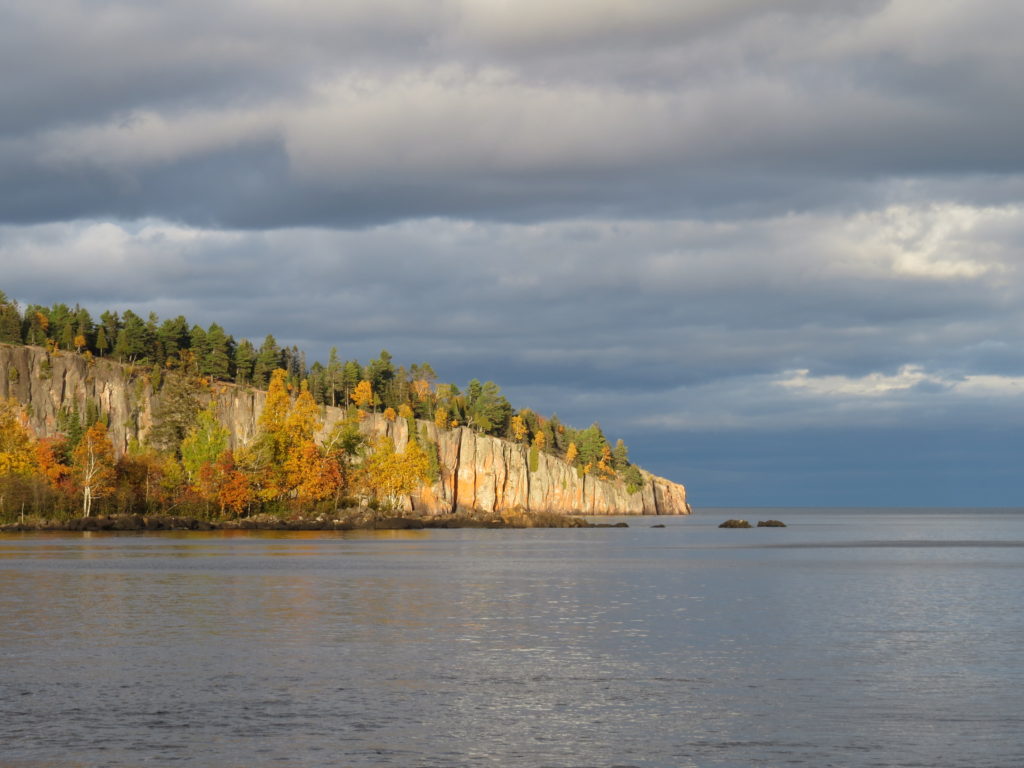
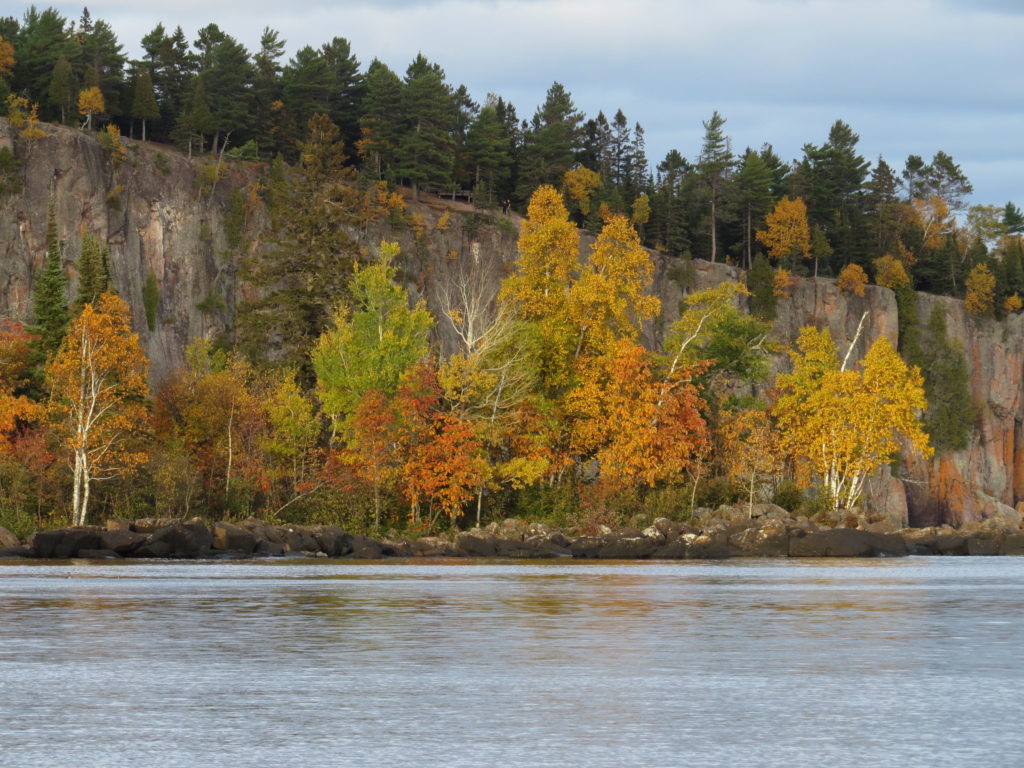
The spectacular Shovel Point, where rock meets water, glowed in the evening sunshine.
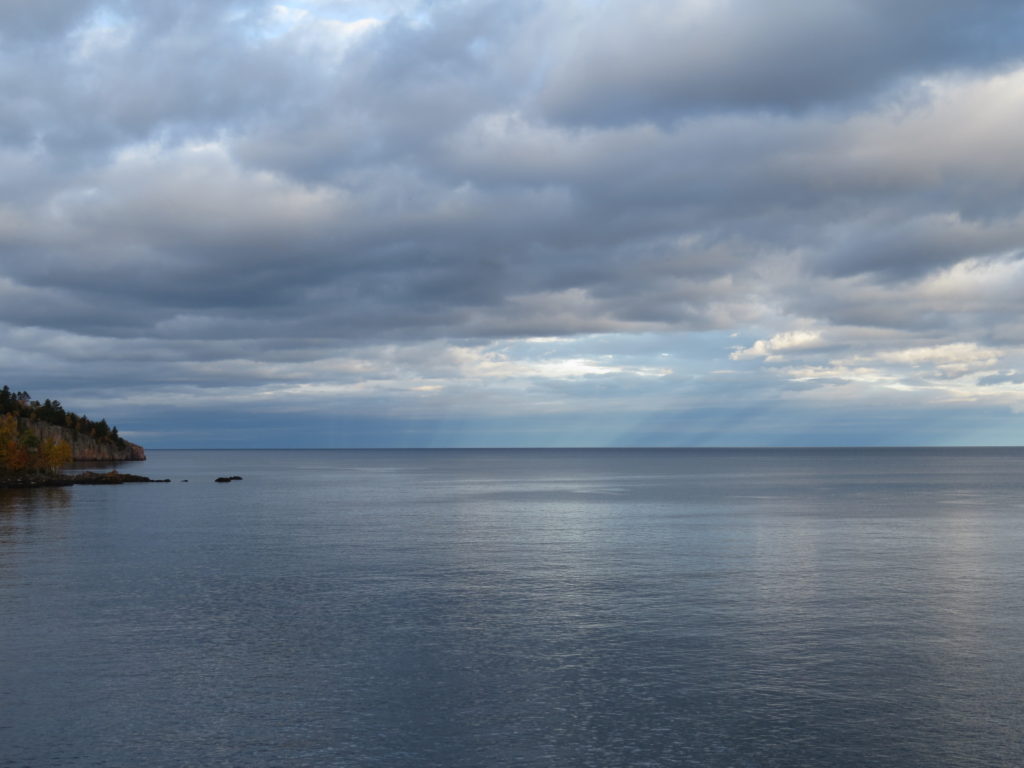
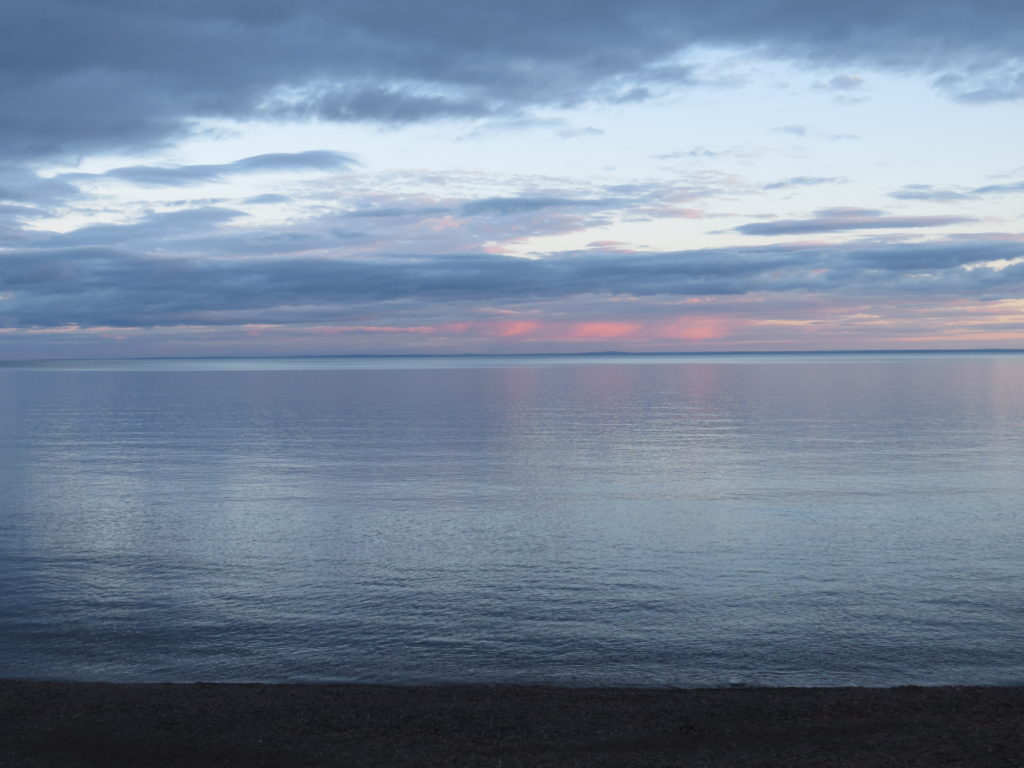
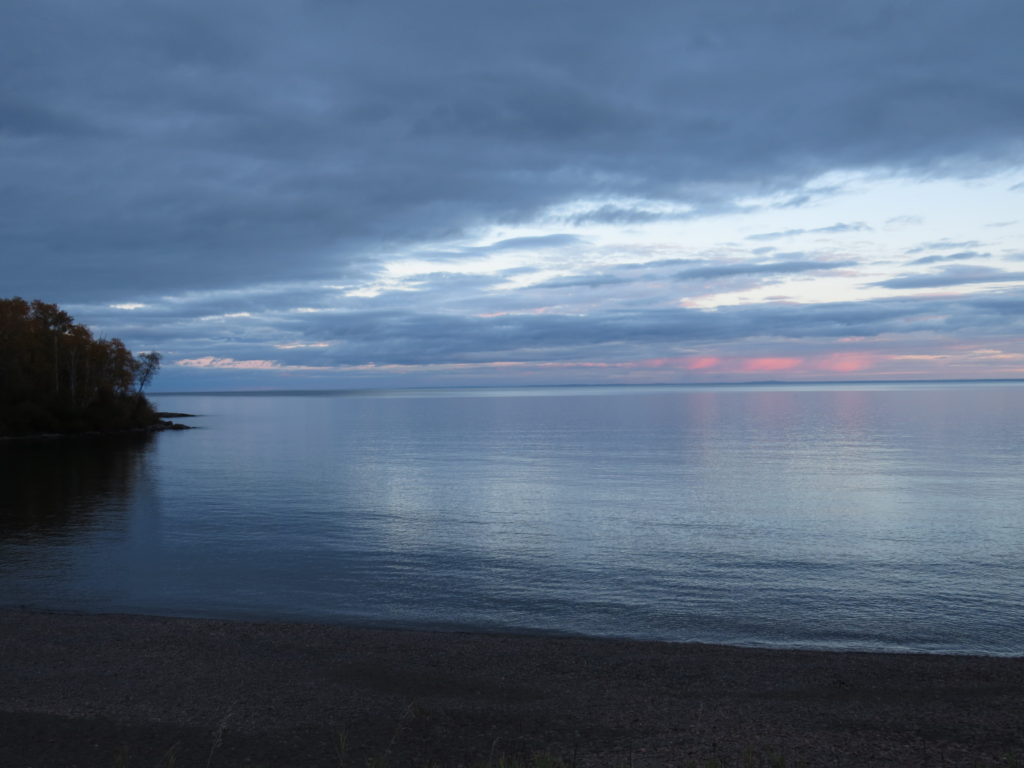
The clouds and dancing light of the sunset reflected down on our Minnesota sea where sky meets water.
It was many years after my frightening experience when that memory came rushing back to me. It was when I saw a light flashing by a window, just like that time so many years ago. This time I didn’t freeze. I was able to walk to the window and look out…. I saw fireflies. I had had a life-threatening encounter with fireflies. This time I marveled at how bright the tiny insects were when they flew close to the window. It’s such an embarrassing story, but it was very real to me. When we are exposed to what we perceive to be a life-threatening experience in our childhood and there is no resolution, our bodies become programmed for fear—for fight, flight, or freeze. Without thinking, my body froze when I was a young adult. Adrenaline coursed through my body, my heart raced, my pupils dilated. Fear took over my brain and body.
We are a nation divided by a great chasm of belief systems that are seemingly miles and years apart. Each side fears the other. I’m here to remind us that fear first works on our bodies and in the process, shuts down the logical, reasoning pre-frontal cortex of our brains. When we are in fight or flight mode, there is no reasoning with us. I truly believed that I was in danger that night, that I was going to be harmed. But in reality, I was safe. Fireflies pose no threat. I was wrong in my fear, my very real fear. This is when and where we need to extend grace to ourselves and others. Grace is the meeting place between us humans and the divine. It allows us to have a meeting place between our hearts and minds in order to dispel the fear that is taking over our bodies. That is work only we can do for ourselves, albeit with help from others. Blessings to us all in this endeavor.
We may differ widely in environments, education, learning, knowledge, or lack of it, and in our personalities, our likes and dislikes. But if we set ourselves the task, we’ll find a meeting place somehow and somewhere. Faith Baldwin, 1893-1978
It’s Time to See Our Roots
We take things for granted. Things unseen, things that have been in place for a long time, things we don’t think about, and things we just believe to be true and steadfast, even when the evidence says otherwise. Election season is such an interesting social experiment. I have taken voting for granted at various times in my life—I believed that all would be well whether I voted or not. I naively presumed that anybody running for office believed in the sanctity of the office being pursued. I trusted that public servants worked for all people in their constituency. And it didn’t even occur to me that there were people out there who didn’t want everybody to vote and to vote easily. (sigh)
What keeps a tree from falling over? We don’t think about it or usually see the structures that anchor a tree upright. Before leaving Ely on our Northwoods trip, we stopped to see Kawishiwi Falls, a place the kids have talked about from their summers there. Soon after we began our short hike, I saw a tree with roots like octopus legs! As I looked more closely, I realized that the tree grew out of an old stump and the roots grew down over and around the decaying wood. How unusual!
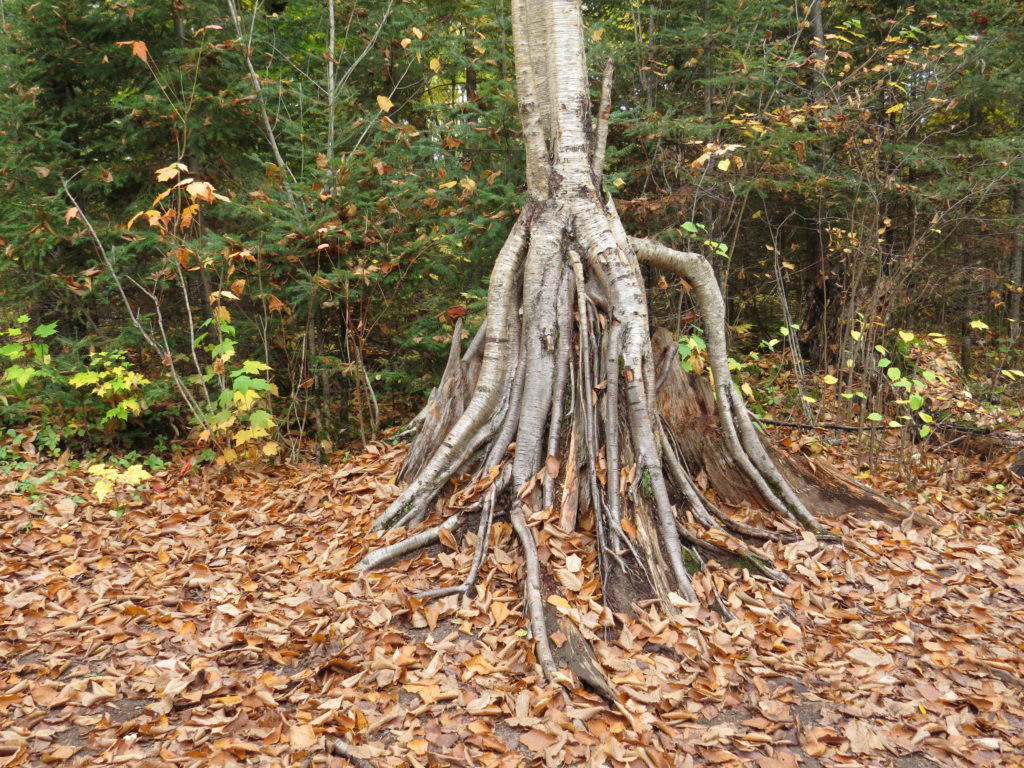
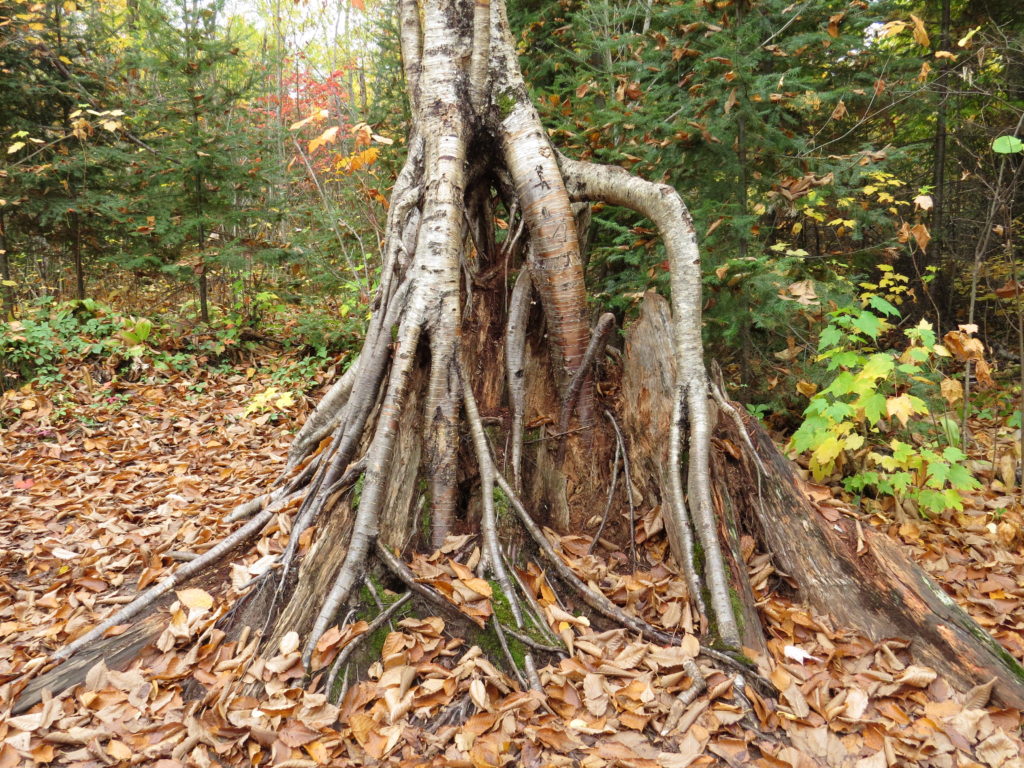
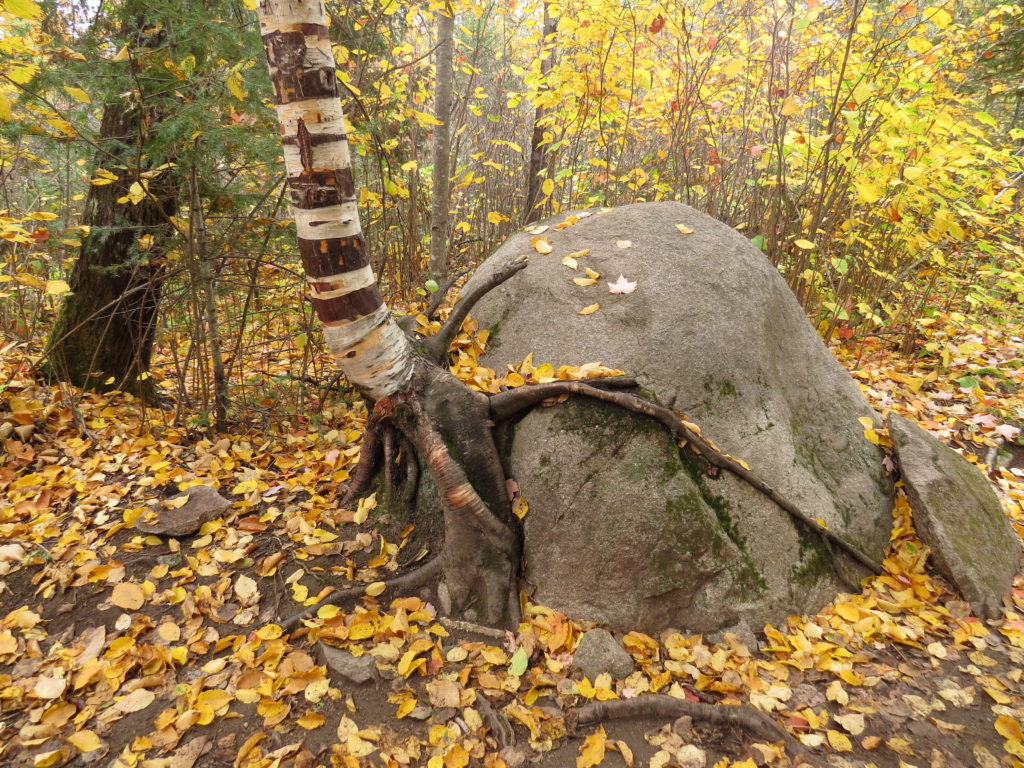
But that was not out of the ordinary in this place! Soon another rooted anomaly presented itself. The Birch tree trunk had been stripped of layers of white bark by passersby. (Not a good practice.) The tree and its roots curved around a large rock, depicting a long-necked turtle-creature being showered by Fall’s golden coins.
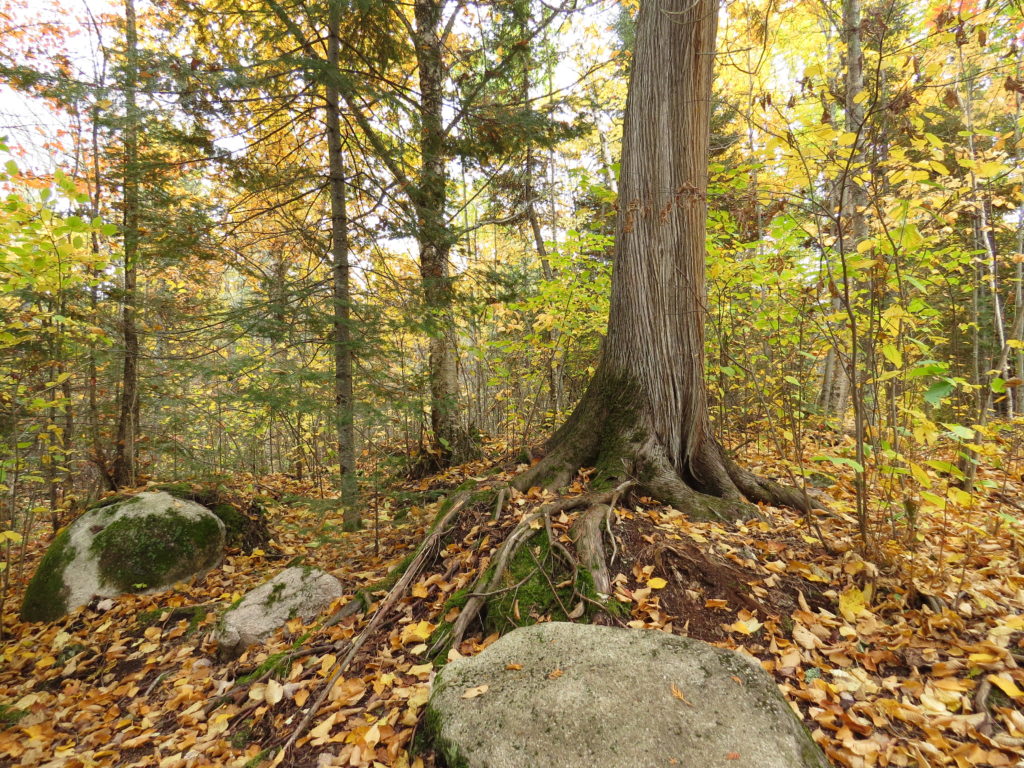
A stately White Cedar was poised on a knoll strewn with rocks with its exposed roots reaching towards the trail.
Another Birch grew on top of a flattened boulder, roots flowing out like a ballroom gown from a tiny-waisted dancer.
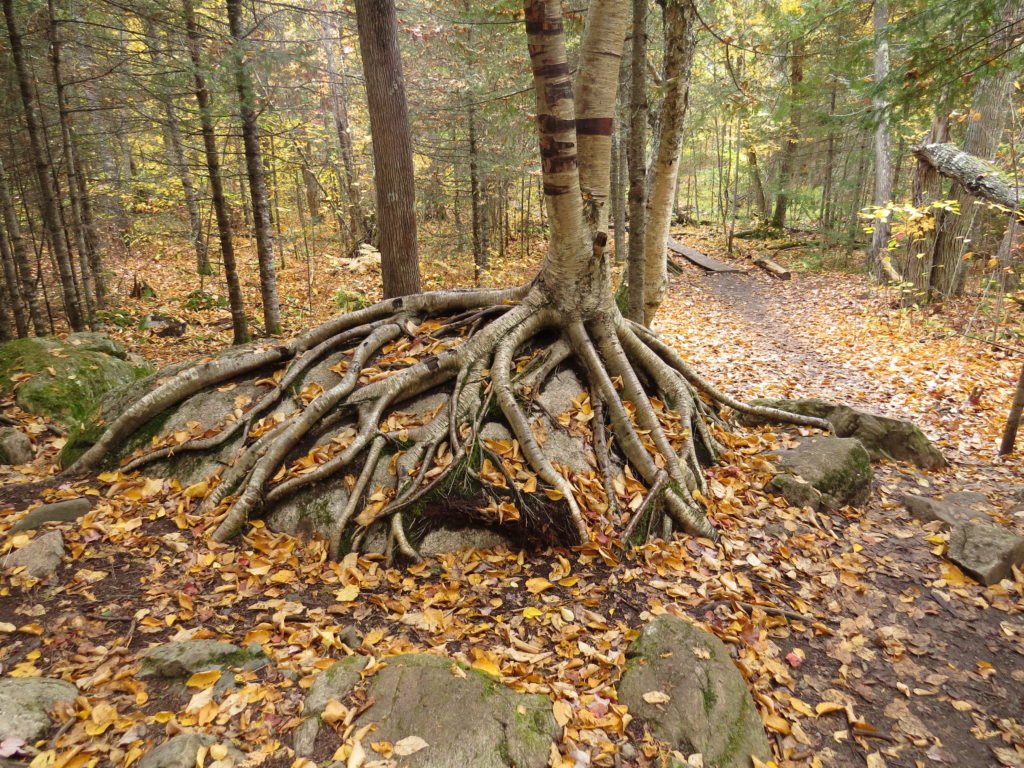
Rocky soil and years of erosion have exposed the roots of these giant trees—some with roots as big as trees themselves. It made me think about what it would look like if we could peer through the soil and see all the root systems of all the trees, intertwined, interconnected, working together to support and nourish each tree and all the others. The unseen foundation we mostly take for granted.
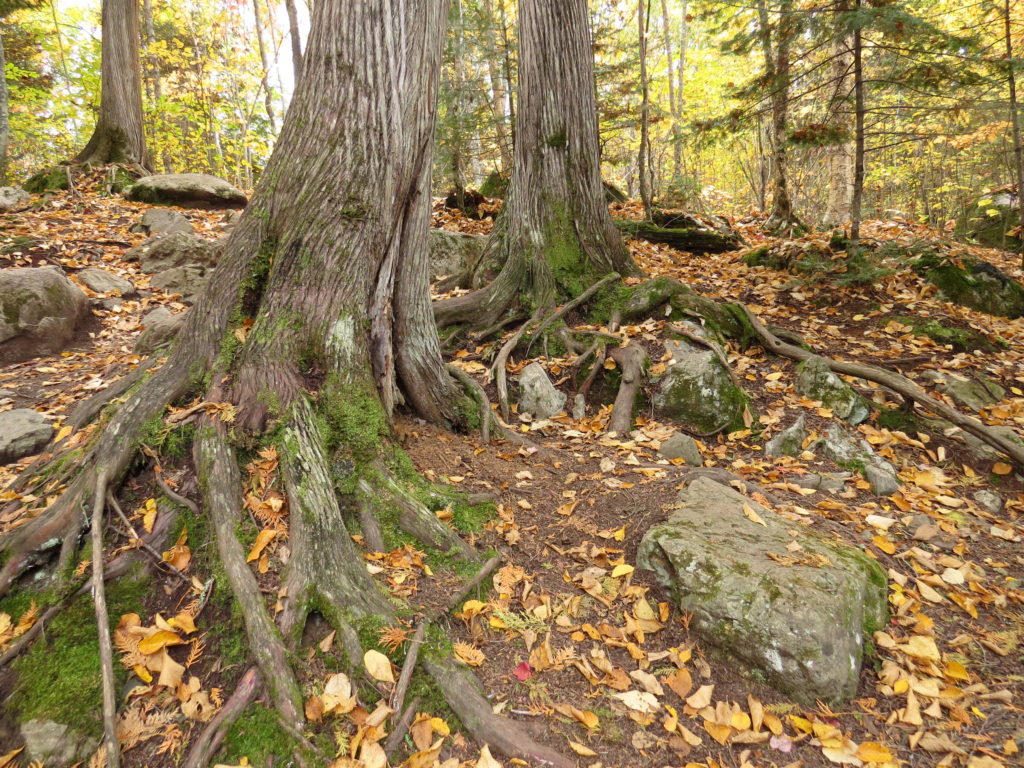
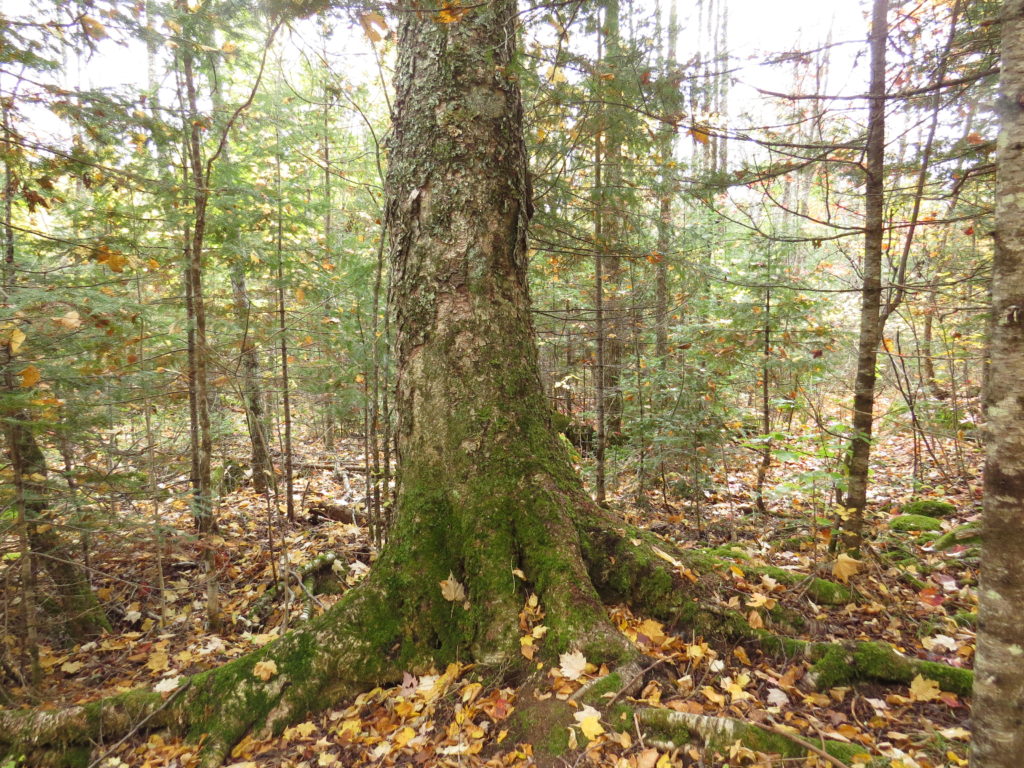
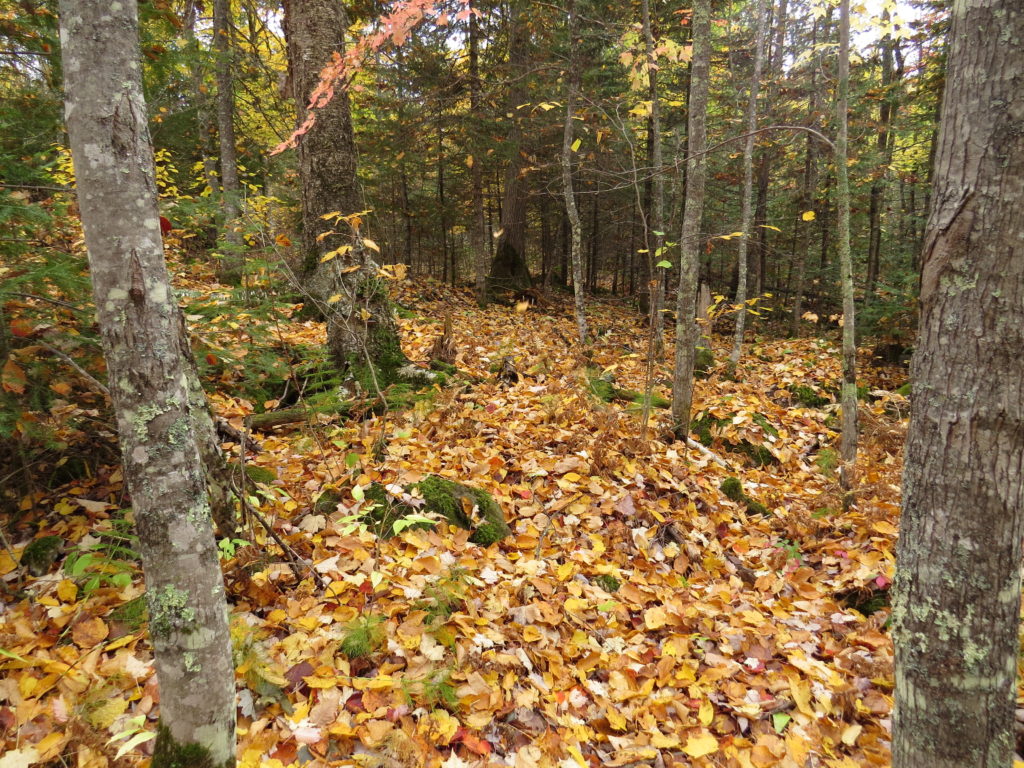
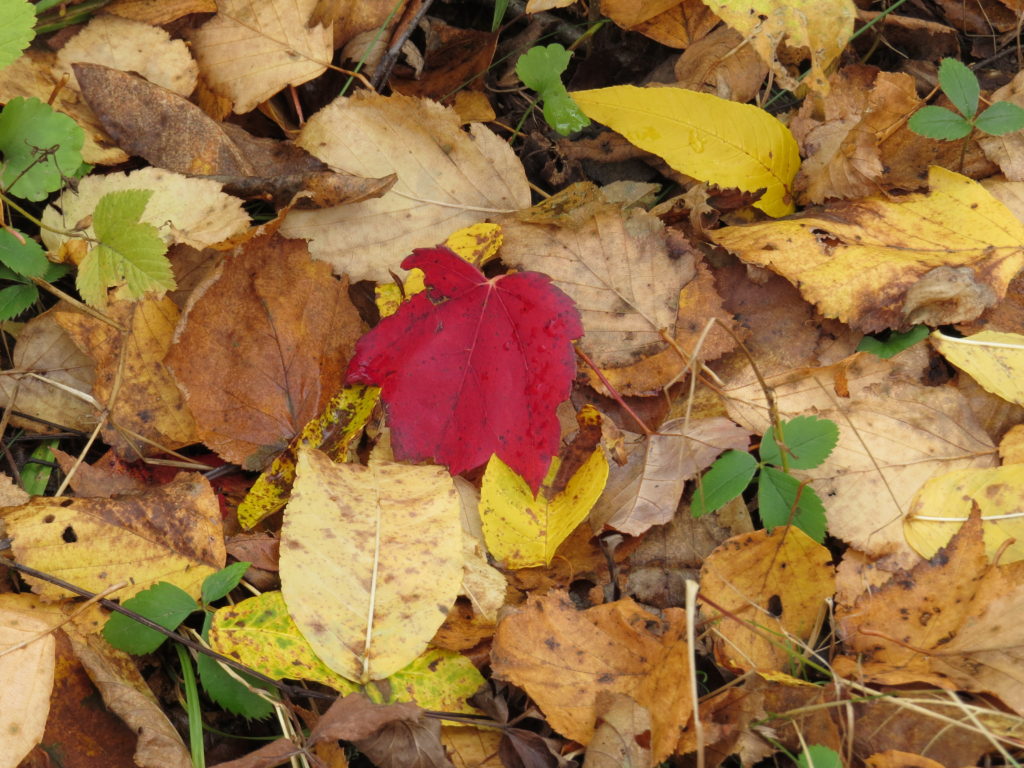
Along with the exposed roots, the falling leaves were everywhere. Fall is the ultimate recycling process, nourishing and replenishing the soil with fallen leaves.
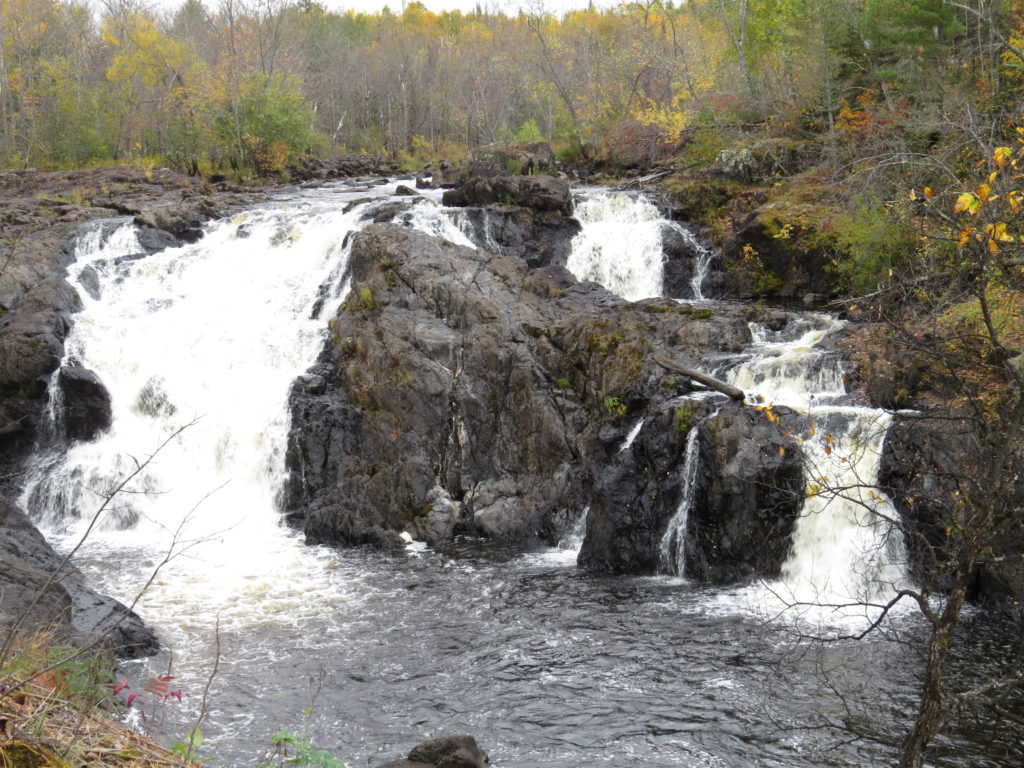
I could hear the falls before I could see them. The terrain underfoot became solid rock. Then we saw the tumbling, aerated water flowing over the dark rock of Kawishiwi Falls. Kawishiwi is an Ojibwe name meaning the ‘river full of beaver and muskrat houses.’ It was a thoroughfare for Native Americans, explorers, and fur traders—all of whom had to portage around the 70-foot-high falls that links Garden Lake with Fall Lake.
In the late 1800’s, it became the route where loggers floated the huge, fallen trees to the mill town of Winton.
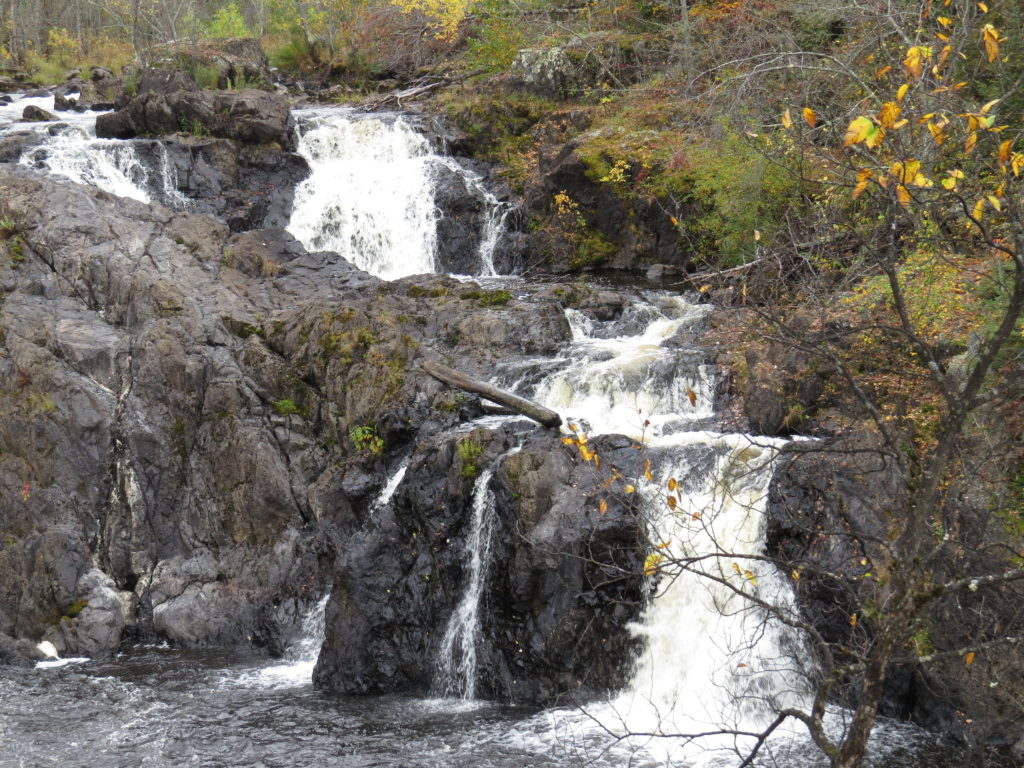
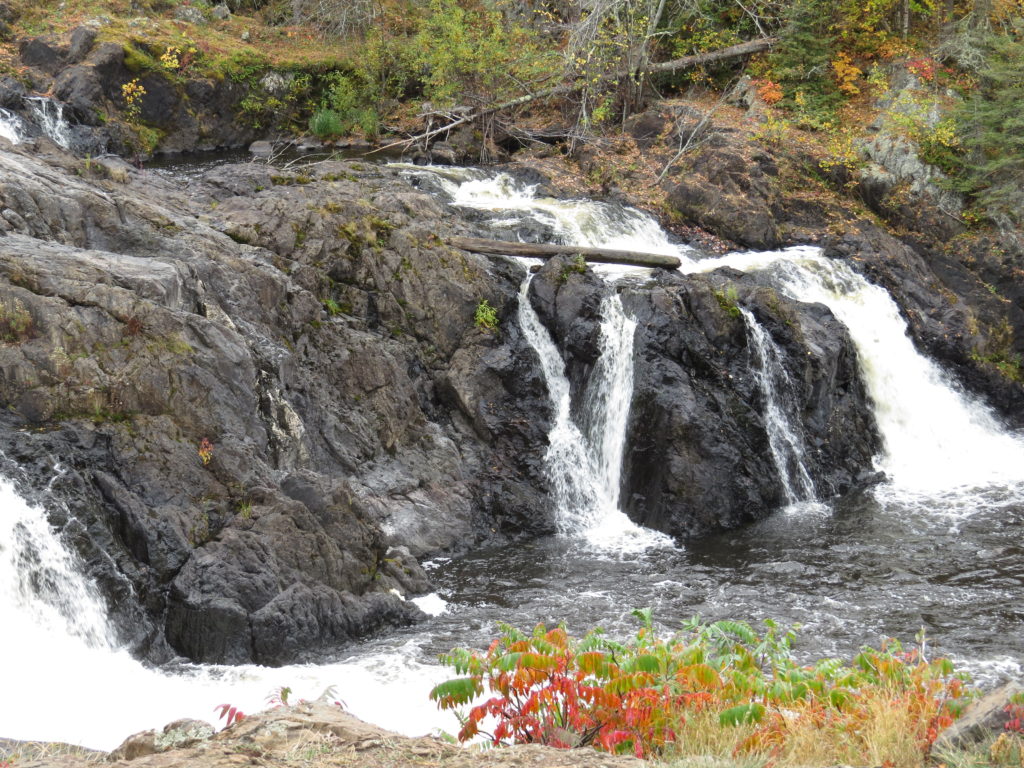
In the early 1920’s, as the railroad took over the transport of logs and the demand for electricity grew, the Winton dam and powerhouse were built to produce electricity. Nearly 100 years later, the power of the River is still generating zero emission, carbon-free electricity.
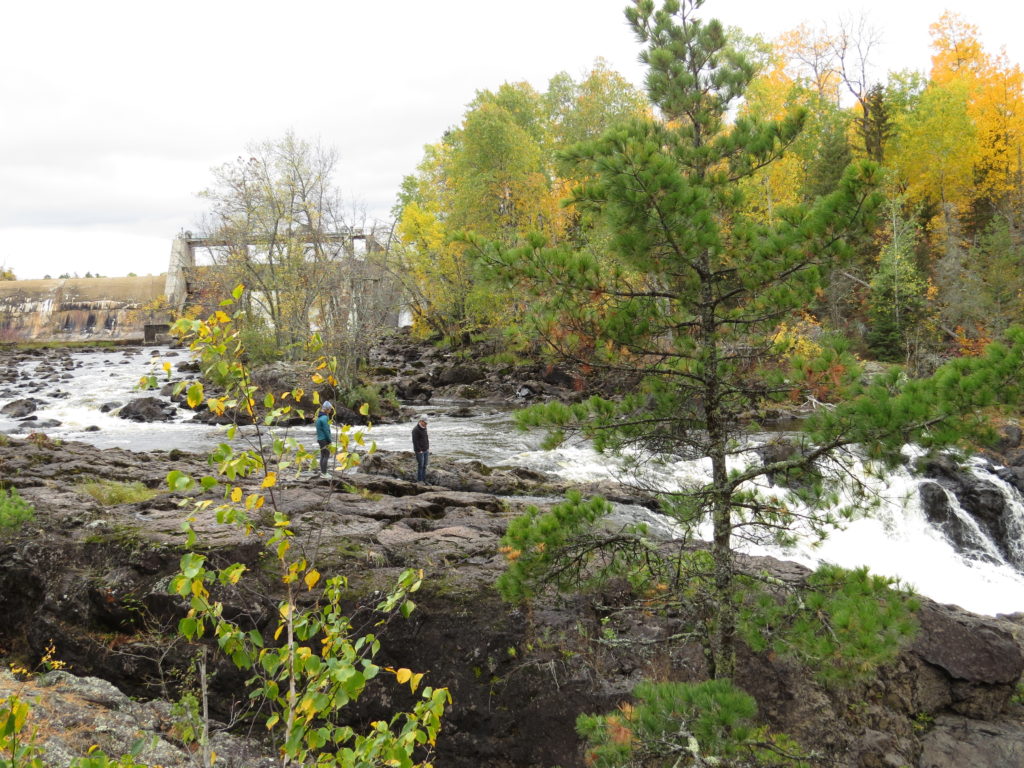
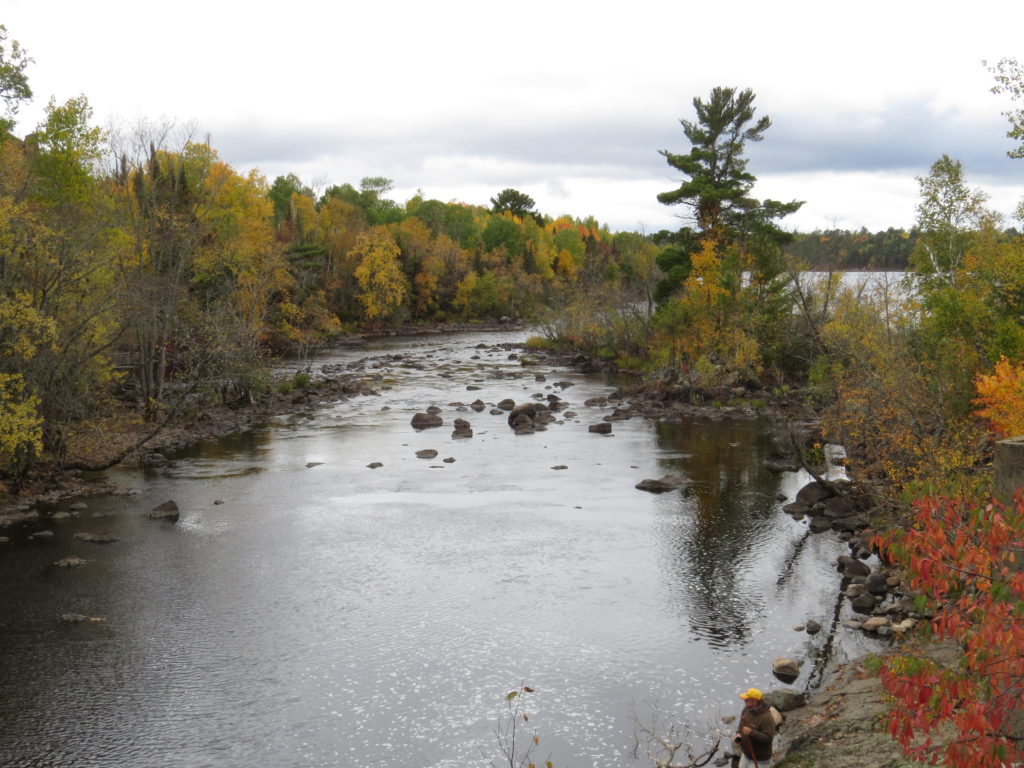
From the falls, the River flows around a little island into Fall Lake.
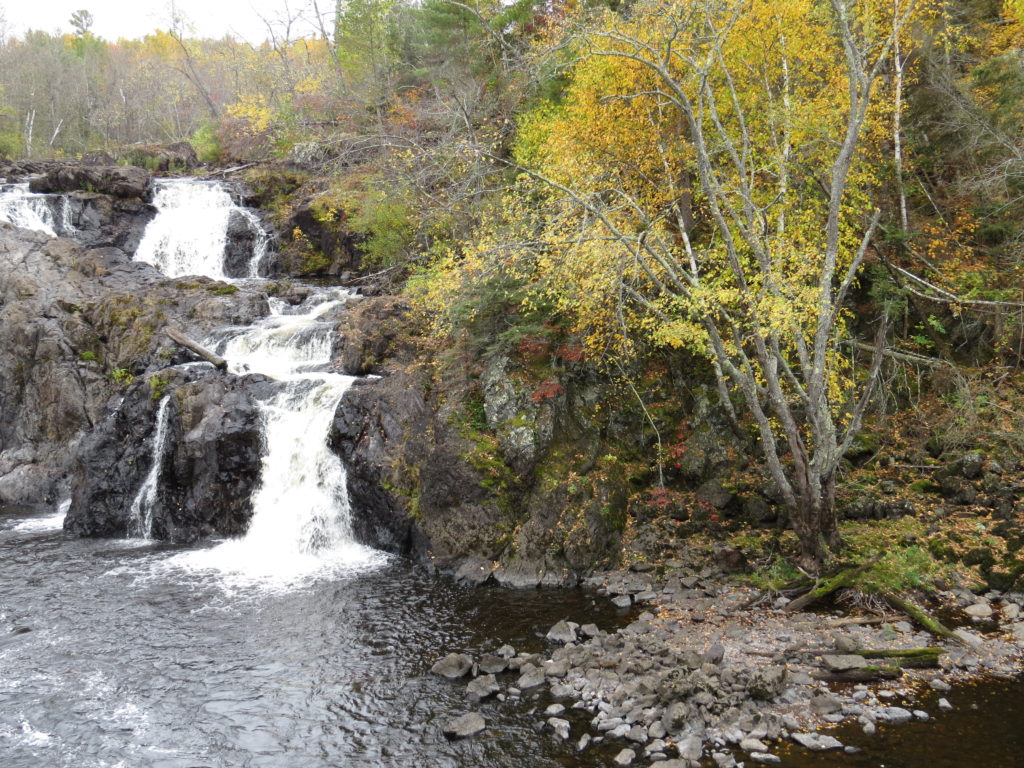
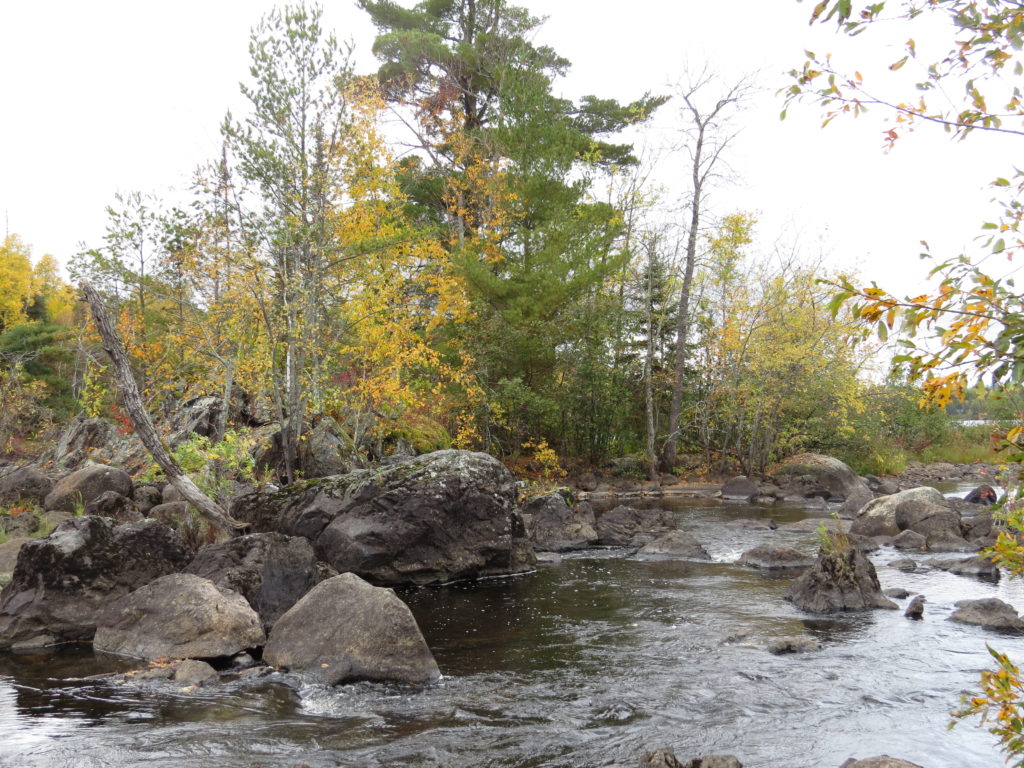
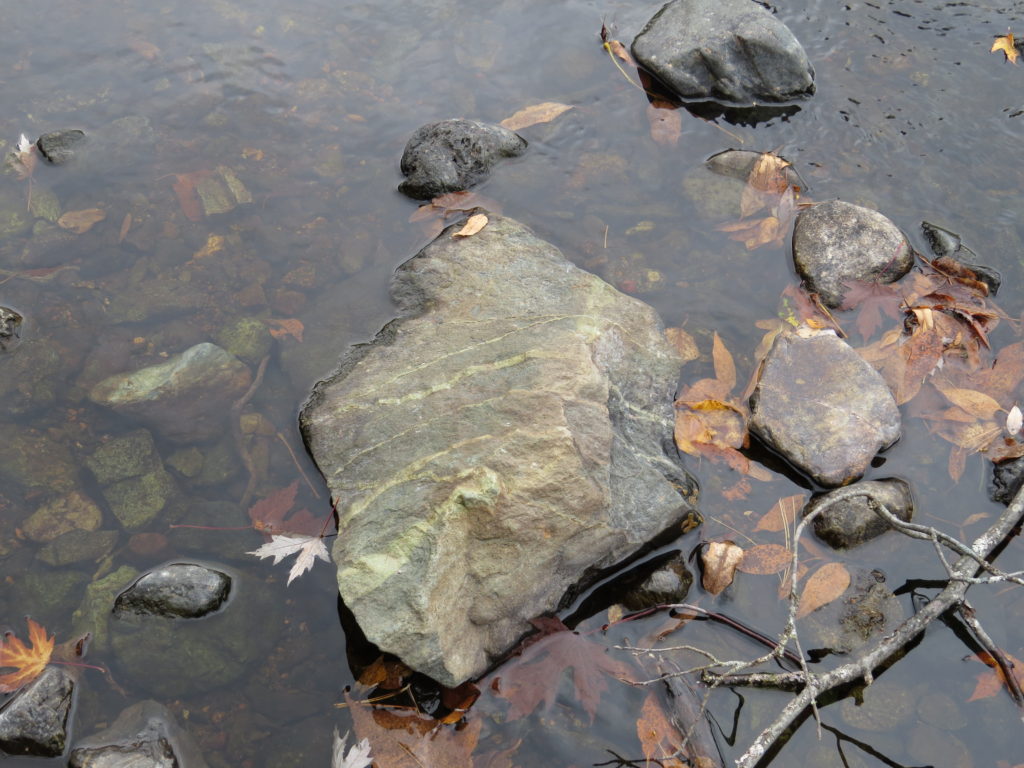
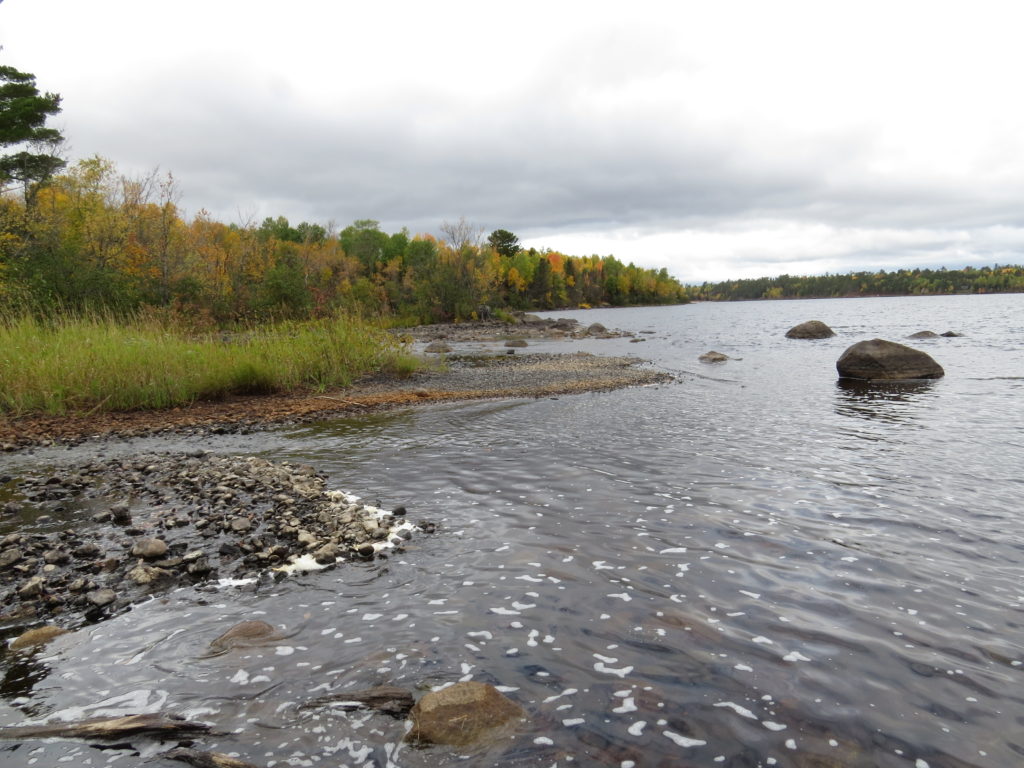
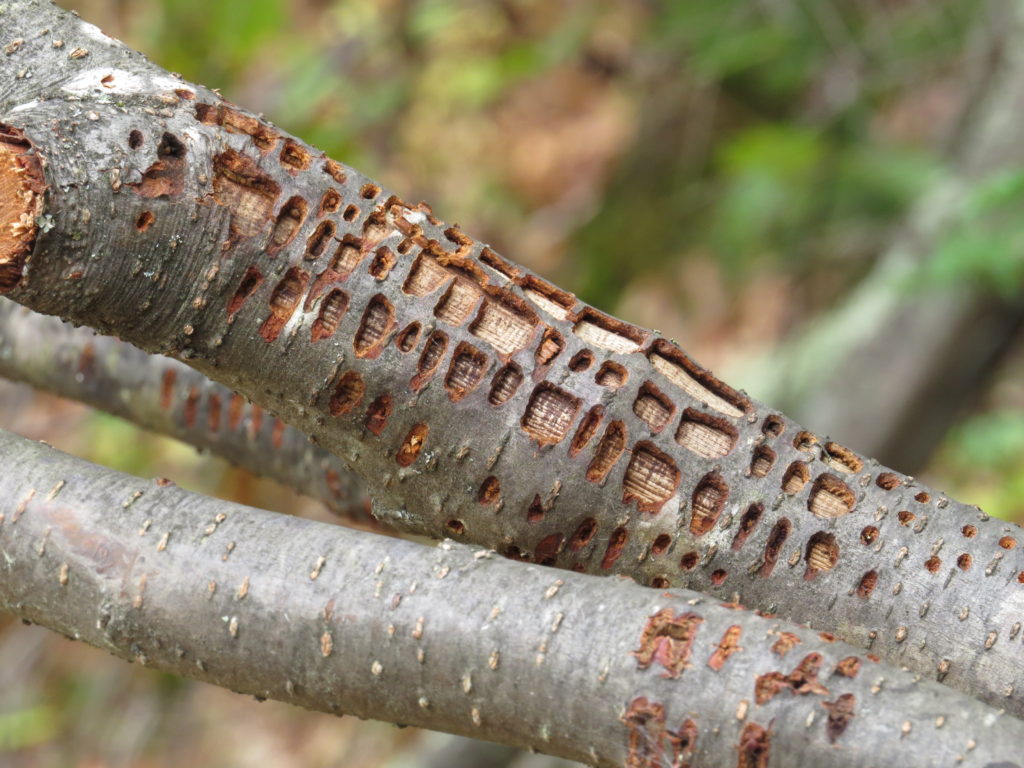
A portage trail (where people carry their canoes and supplies to get from one lake to another) still connects the two lakes for the canoeists. Along the trail I noticed this branch that had been drilled by a woodpecker. The drills were not fresh—some healing had taken place around the wounds, but the wounds were abundant. A tree can heal from wounds of many kinds unless they are too extensive.
We walked back from the falls through the forest Fall spectacular. Though most mourn the passing of warm weather a tiny bit, it is reassuring to see the next iteration of the progression of seasons.
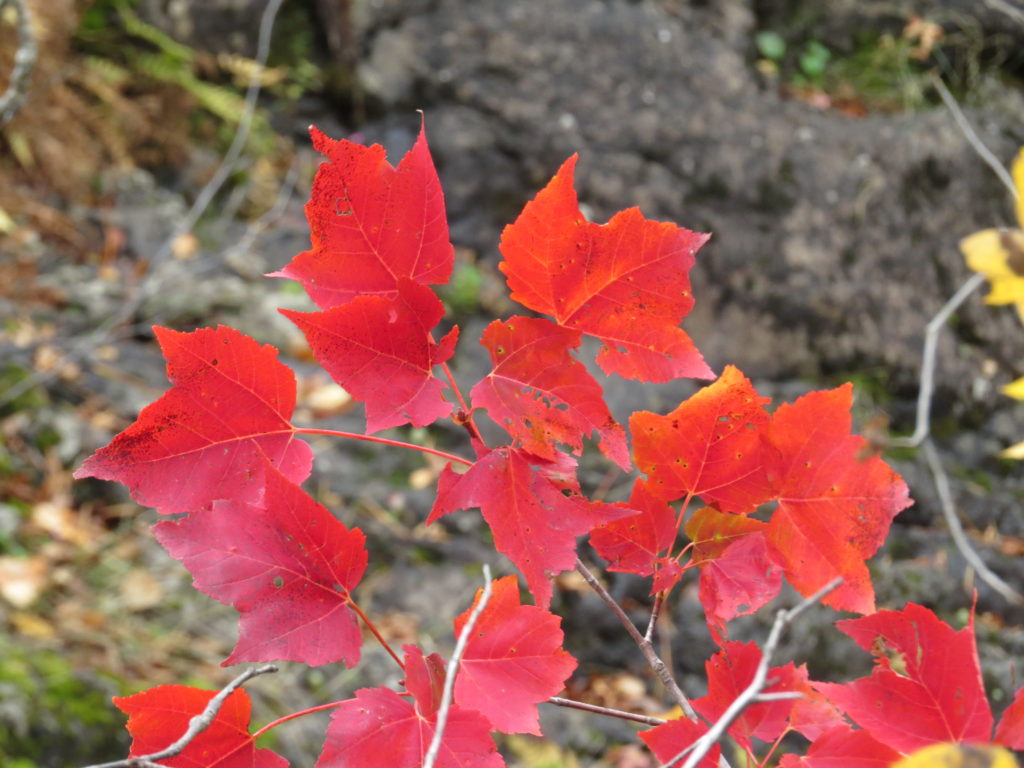
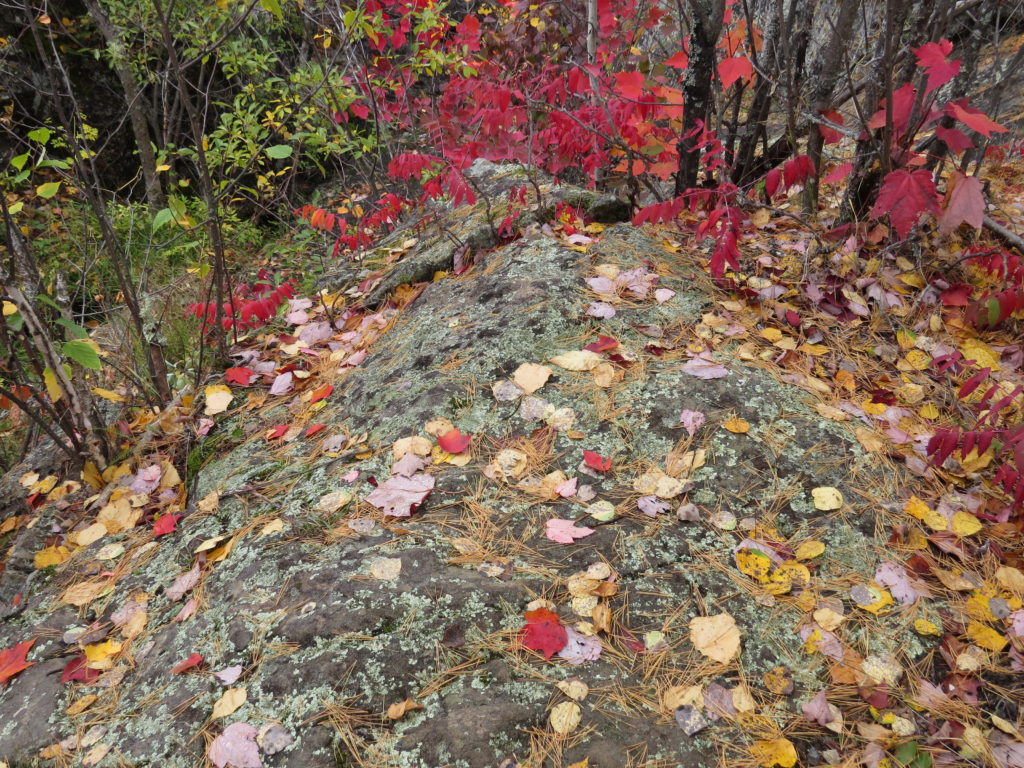
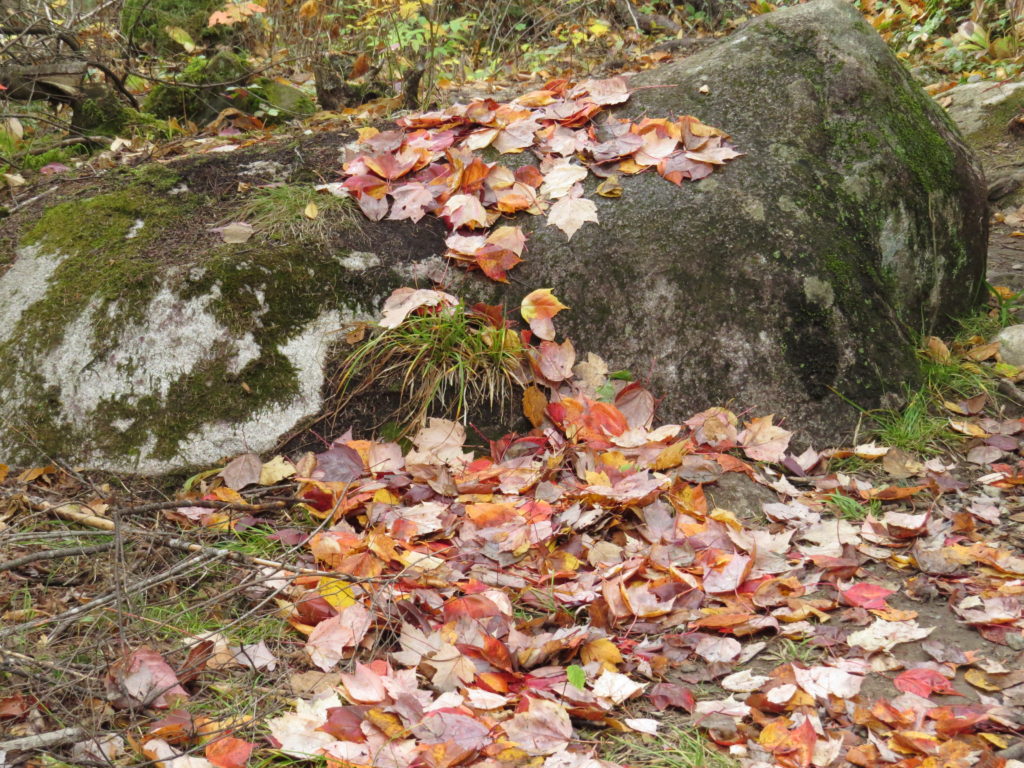
Nature gives us some comforting certainty. With Autumn, we know the daylight hours decrease, the weather cools, the leaves change color and fall from the trees. We know that Winter will follow. We can take that for granted—for now, at least. We the people and our right to vote are the roots of our democracy. We the people are the ones that keep government upright, keep it stable and able to weather the storms of economic uncertainty or of a pandemic. I will not take my right to vote for granted again, for there has been a wounding of our democracy. Lies are wounds, foreign interference and disinformation are wounds, and the dismantling of expertise is an extensive wound. It’s time to heal. Don’t take truth and integrity for granted. It’s time to see our roots.
The Light of Our Better Angels
I’m reading a book entitled “The Friendship of Women” by Joan Chittister for my church group. One line jumped out at me as I read it: “It requires us to surround ourselves with people who speak to the best part of us from the best part of themselves.” It sounds simple. I believe in seeing the best in other people, giving them the benefit of the doubt, perhaps even to my detriment. My ‘best part’ doesn’t always show up when I speak—I react from old patterns of fear even as I daily try to change them. When I read that line, my first thought wasn’t about my personal life, however; it was about our public life as a nation. What if the election season ads came from the ‘best part’ of each party to the ‘best part’ of all of us? What if Congress and the White House gave their ‘best part’ to one another in service to the people of the United States?
The negative ads, memes, comments, and daily talk on the news and around the kitchen table is like a slow, insidious fog enveloping us, blinding us to common decency and connection. It draws a line in the sand, wants us to pick a side and come out fighting. It is detrimental to our bodies, minds, and souls. In our late September trip to the Northwoods, we cleared the air. We pledged not to talk about politics. We had no tv or social media. We had better things to do and more important things to talk about. (We did inadvertently land in the lap of politics two times, but we quickly pivoted away again.)
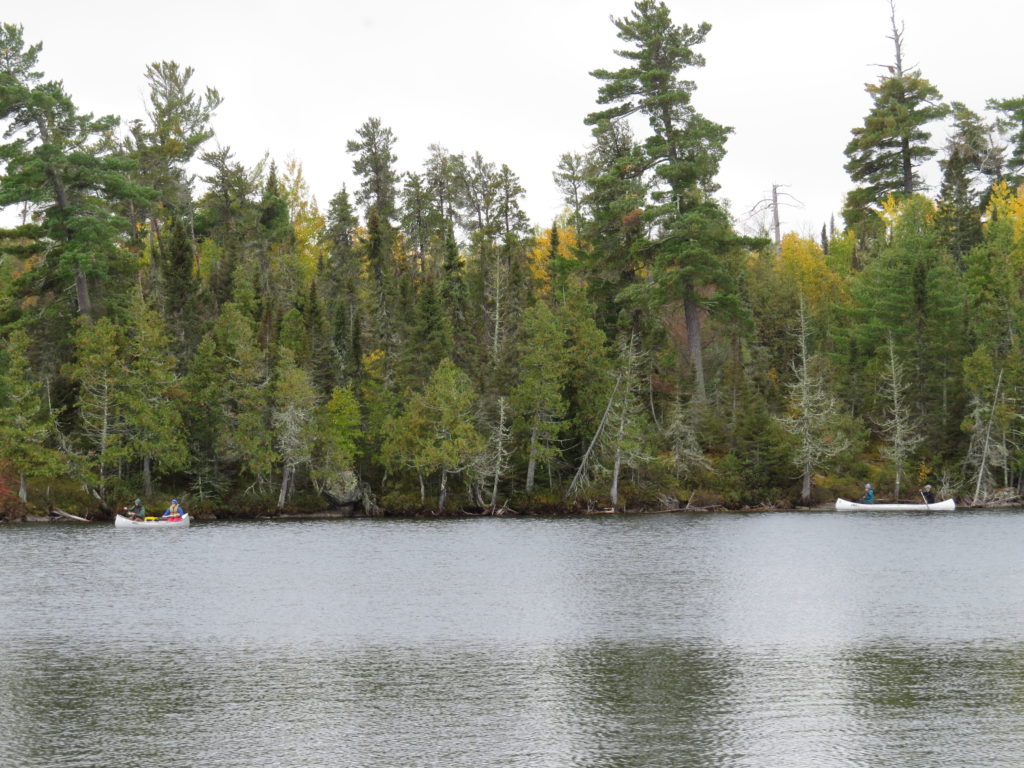
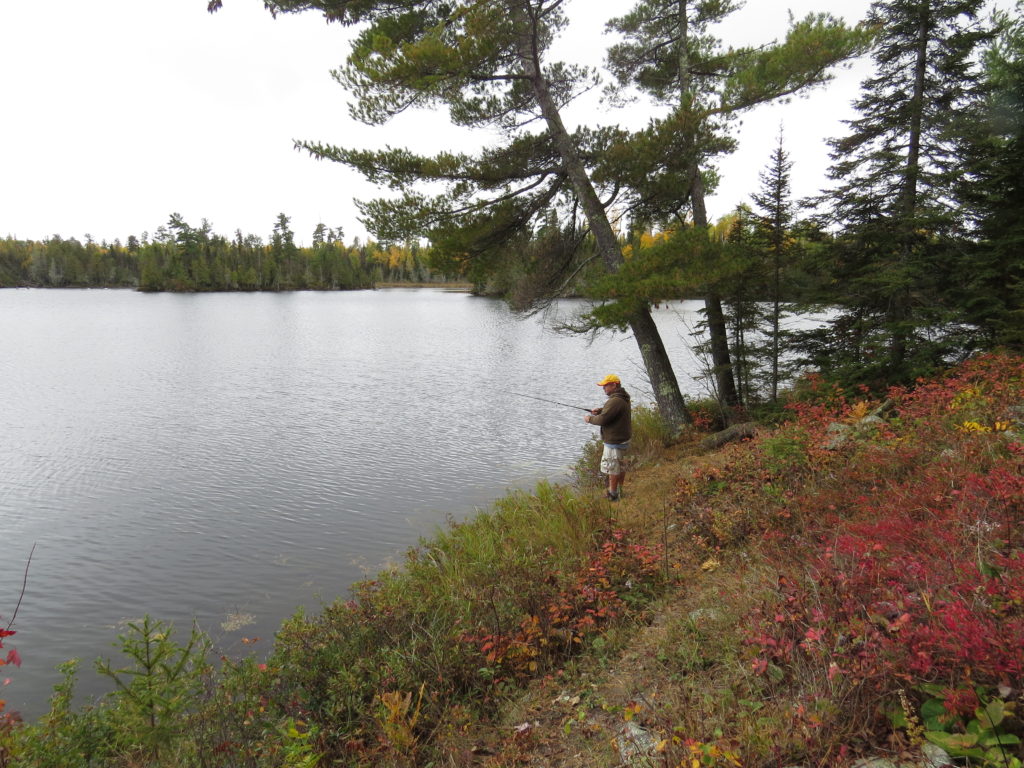
We had rain at various times each day and night when we stayed at KoWaKan. Our hike to Secret/Blackstone trail in Superior National Forest was under a blue sky and bright sun. By afternoon, the clouds started rolling in. Four of us went canoeing and fishing at a nearby lake, while the rest of us stayed at camp and canoed. Emily and Chris got rained on when they were out. Those rain clouds passed, and the sun shone again.
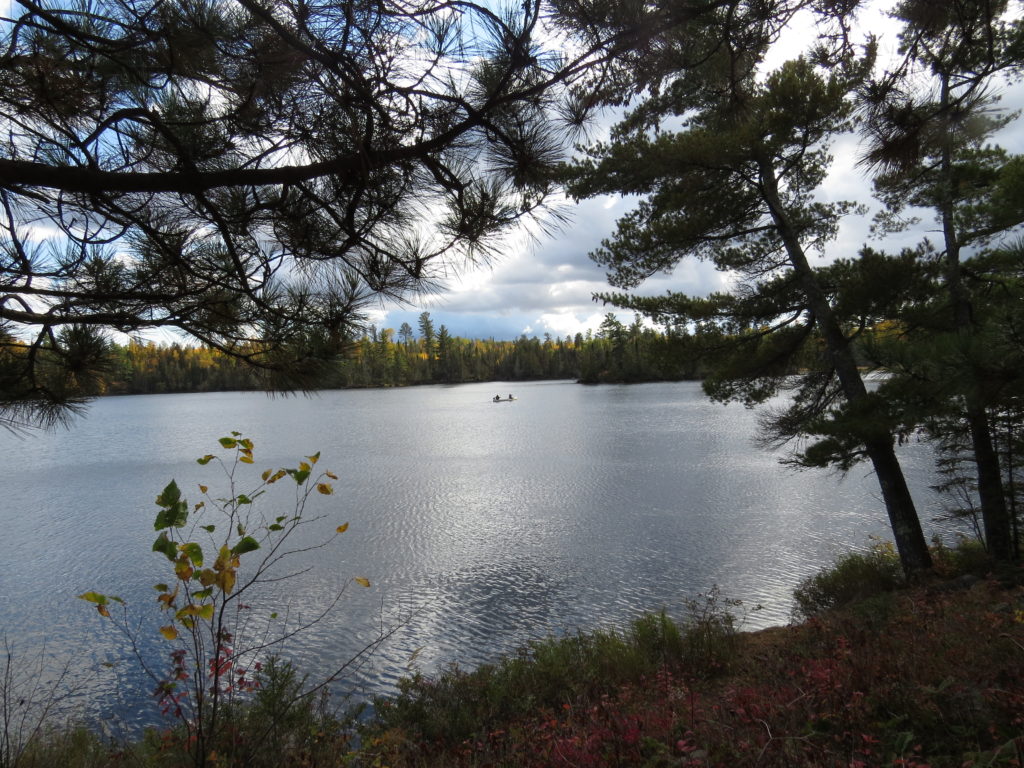
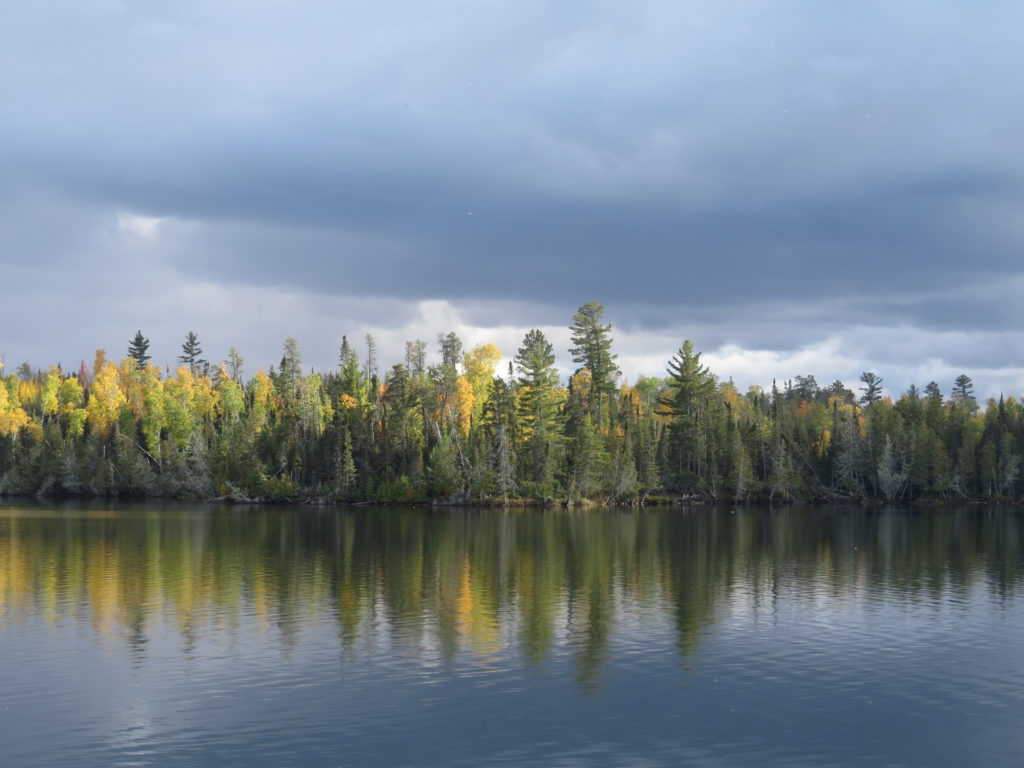
Emily and I got rained on when we went out, but we also saw what happens when rain and sun collide!
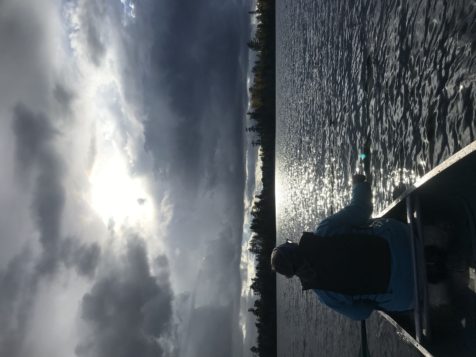
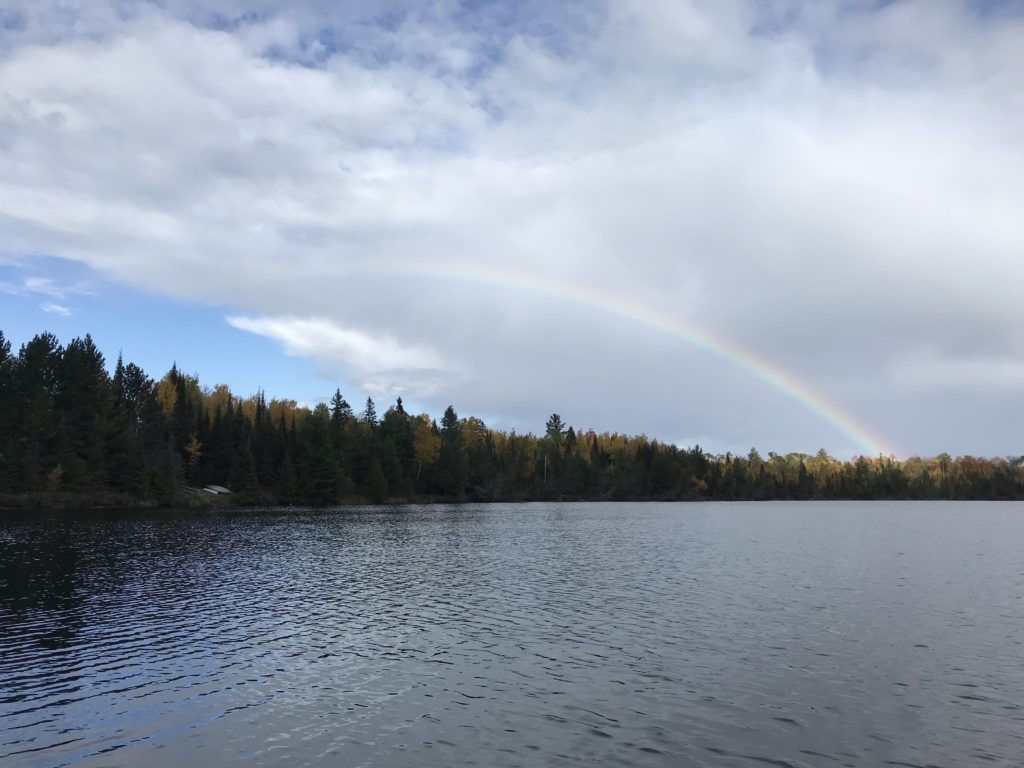
We dried ourselves and our socks by the campfire. The fishermen returned with stories of a small catch and a beautiful rainbow.
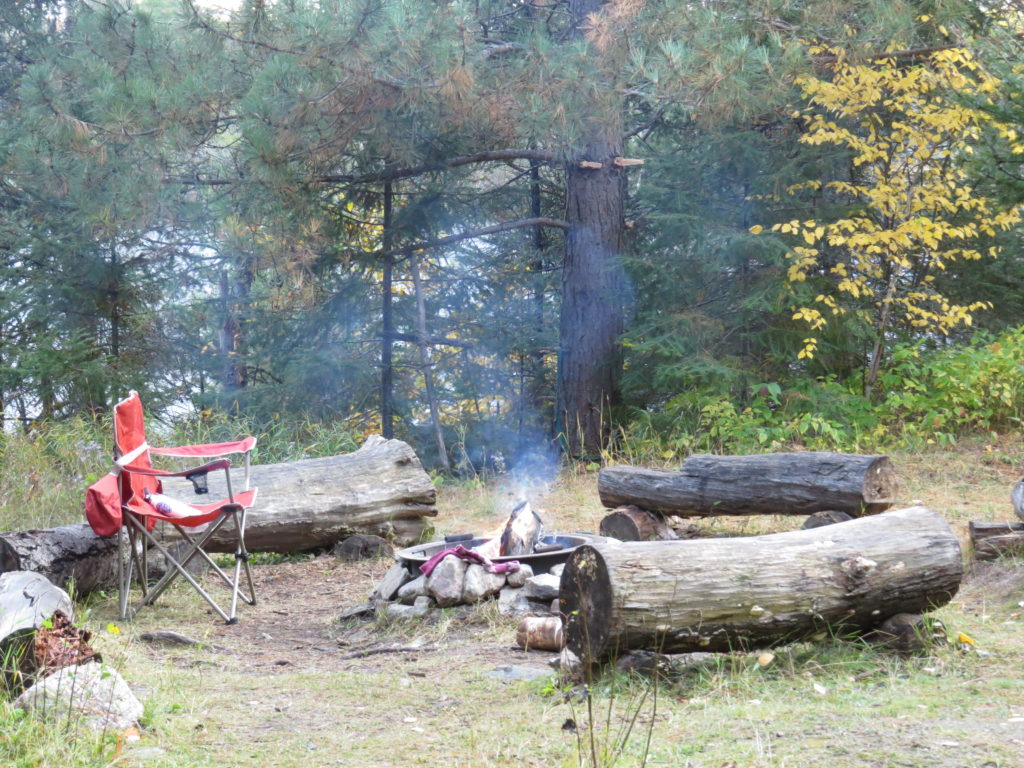
We prepared hobo dinners—ground beef, onions, carrots, baby potatoes, the last picking of green beans from the garden, butter and seasoning, all wrapped up in a double layer of aluminum foil—and placed them on the coals of the fire. We ate our campfire-cooked meal around the fire as the sun slipped behind the trees, and the sky darkened. We looked for stars between the clouds.
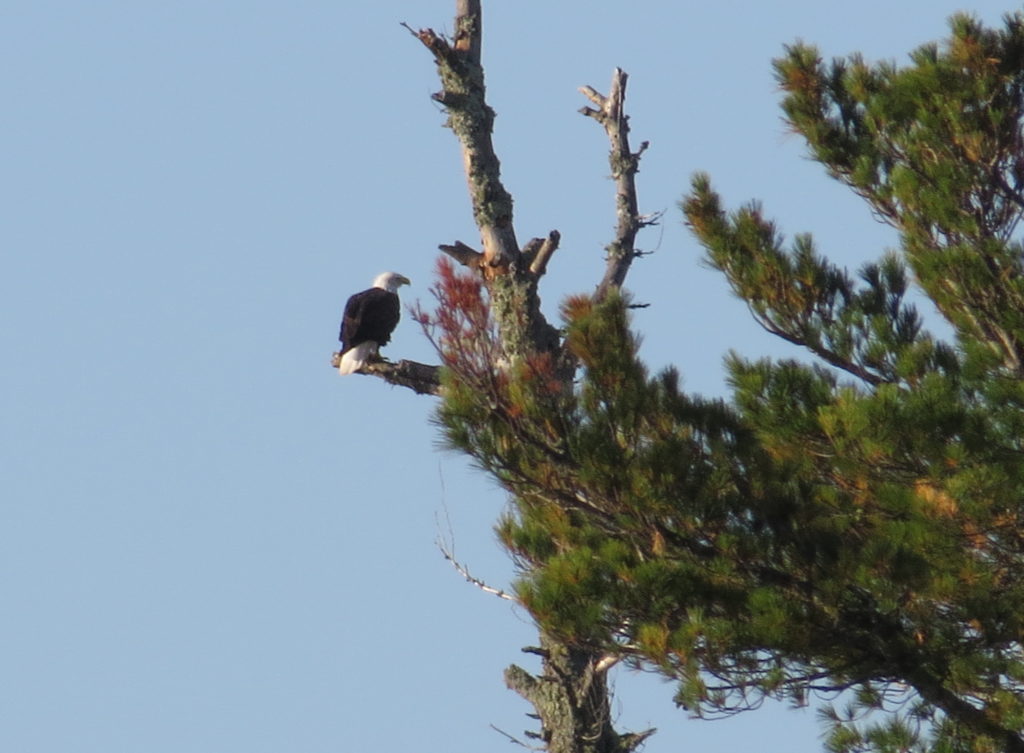
My day had started with a welcome from the eagle across the lake, progressed with a challenging, breath-taking hike in the National Forest, continued with a canoe ride bathed in rain and a rainbow, and ended with a delicious meal—surrounded by people speaking from the ‘best part’ of themselves. The ‘best part’ of me declared that this was the best day I have had in years! “Better than the Super Bowl weekend?” they challenged. That was very good and fun, but this was better. “Better than our trip to Wisconsin last year before Covid?” I loved that, but this day was better. Part of what was better was just how much ‘better’ I was on this day than on those others. Part of the better was being in the unbelievable beauty of Nature. Better was being in such a special place with so many good memories and stories. Better was being away from the negativity and stress of the pandemic and politics.
The next day we did a little more canoeing and fishing, packed up our things, and got ready to leave.
I am not delusional enough to believe that we can exist in a utopian world. I know unresolved hurts and traumas in our lives affect how we view the world, how we treat other people, and how we act and react. I know that my best self doesn’t show up all the time. I also know that drawing a line in the sand and tossing bombs of hate and disrespect do not make a United States of America. It does not make us a better country or better people. Our lives right now are stormy and messy. Our spirits are dampened. I wish you could all feel the way I felt at the end of that wilderness day—deep satisfaction, joyful happiness, and peaceful contentment in my body, mind, and soul—all wrapped up like the promise of a fleeting rainbow. I now know how ‘better’ feels. We can have a new beginning with each sunrise. Like the eagle, we can call out a welcome to others. We can place our feet on the Earth and see her beauty. We can glide on water and feel the blessing of rain. We can make a promise to do better. We can nourish our bodies with good food and nourish our minds and spirits with people bringing the ‘best part’ of themselves to the fire ring. We can look for the light of stars and the light of our better angels.
- 1
- 2
- 3
- …
- 5
- Next Page »