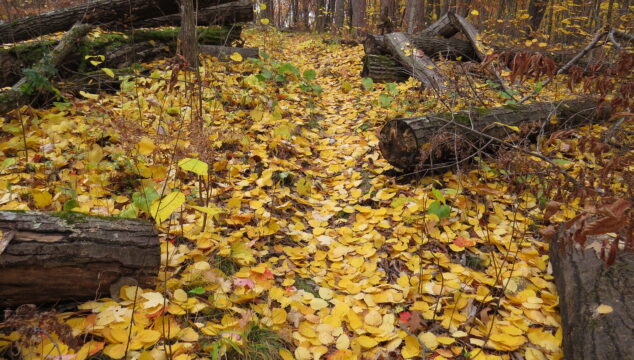
Come walk with me in the peak Autumn beauty of the Northwoods. To say that I love this time of year is an understatement. Most everyone can appreciate the colorful falling leaves---it reveals the 'true self' of a tree when its leaves are no longer producing chlorophyll. Their true colors are revealed, and there is something simple … [Read More...]
Archives for October 2019
Whose Home is This? Who Lives Here?
“I long, as does every human being, to be at home wherever I find myself.” –Maya Angelou
I’ve always had a thing about the houses I’ve lived in. No matter their size, age, shape, or beauty (or lack thereof), I have always fallen in love with them. There was the farmhouse when I was a preschooler with a red hand-pump that was the source of our water at the kitchen sink, the huge metal register over the coal furnace, and the outhouse on the other side of the driveway. There was the hotel-like square-block-of-a-house with six bedrooms upstairs (with no heat) that we rented my senior year in high school. There was the Civil-War-era house Chris and I rented in Missouri when we were first married that only had a fuel oil stove in one room of the huge house, had ancient floral wallpaper, and a kitchen large enough and spare enough that it could have housed us and all our four-legged friends. They were all my home for a certain, wonderful, impressionable period of my life.
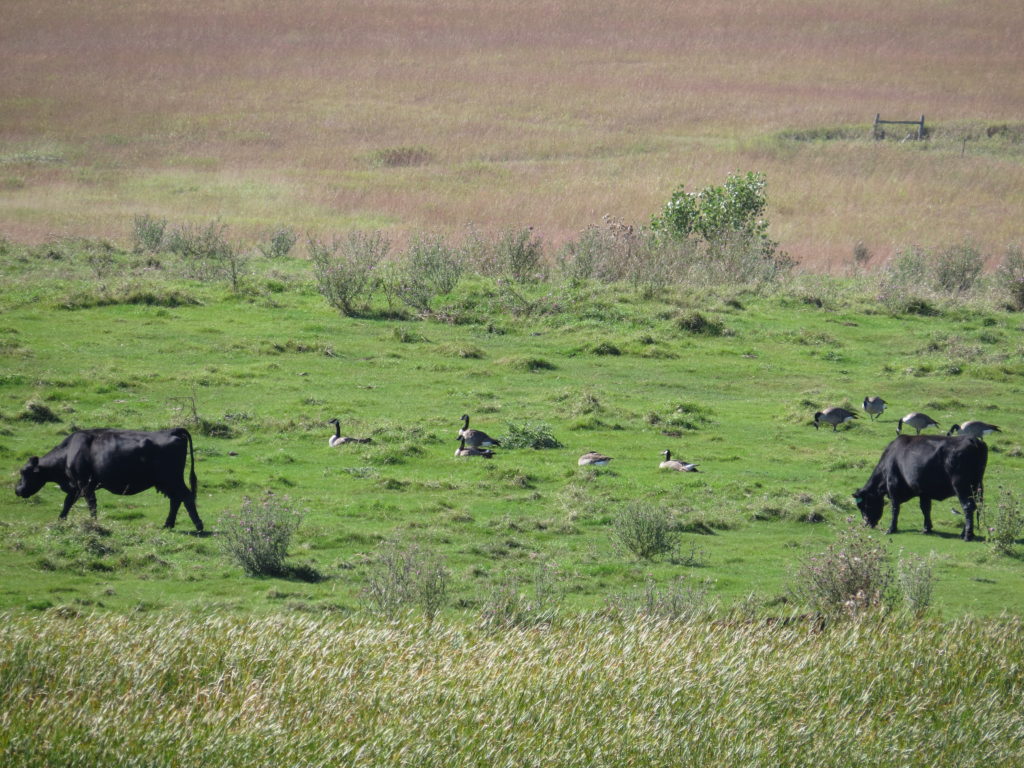
When I arrived at my Mom’s place last month (one of those homes on my list of homes), I looked out over the pasture and wondered out loud, “Whose home is this? Cows or geese?” The Canadian Geese were scattered from the lake like marbles tossed from a hand. They ranged across the pasture, grazing at blades of grass and tasty seeds, then settled down to rest in the sun like miniature cows.
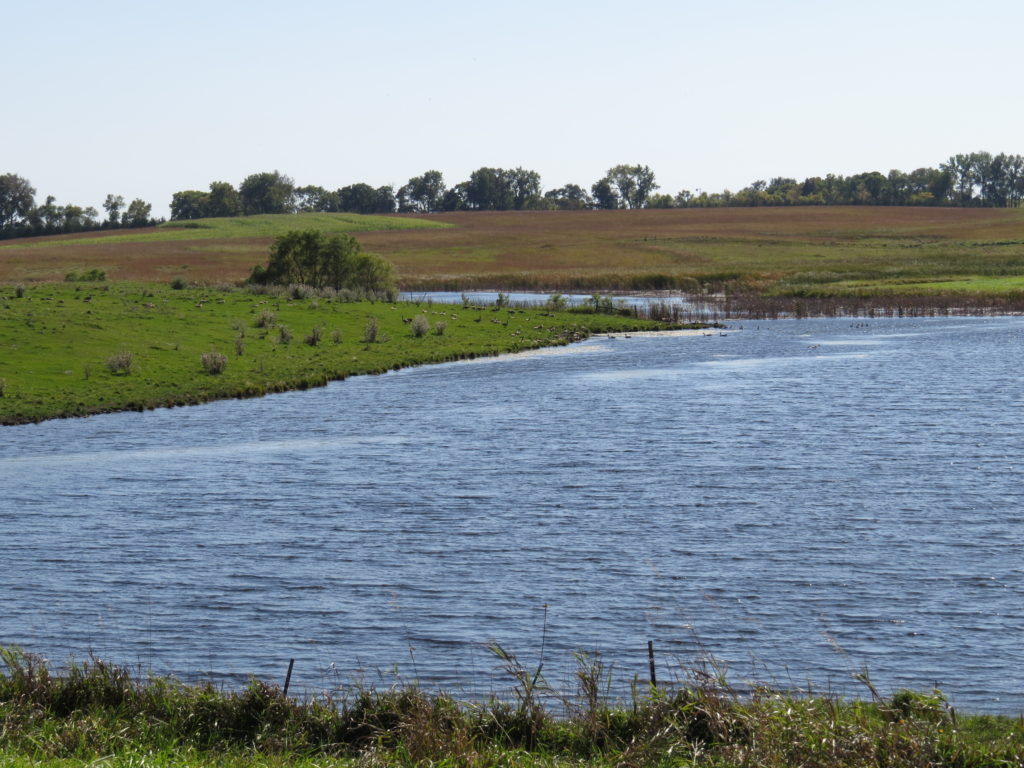
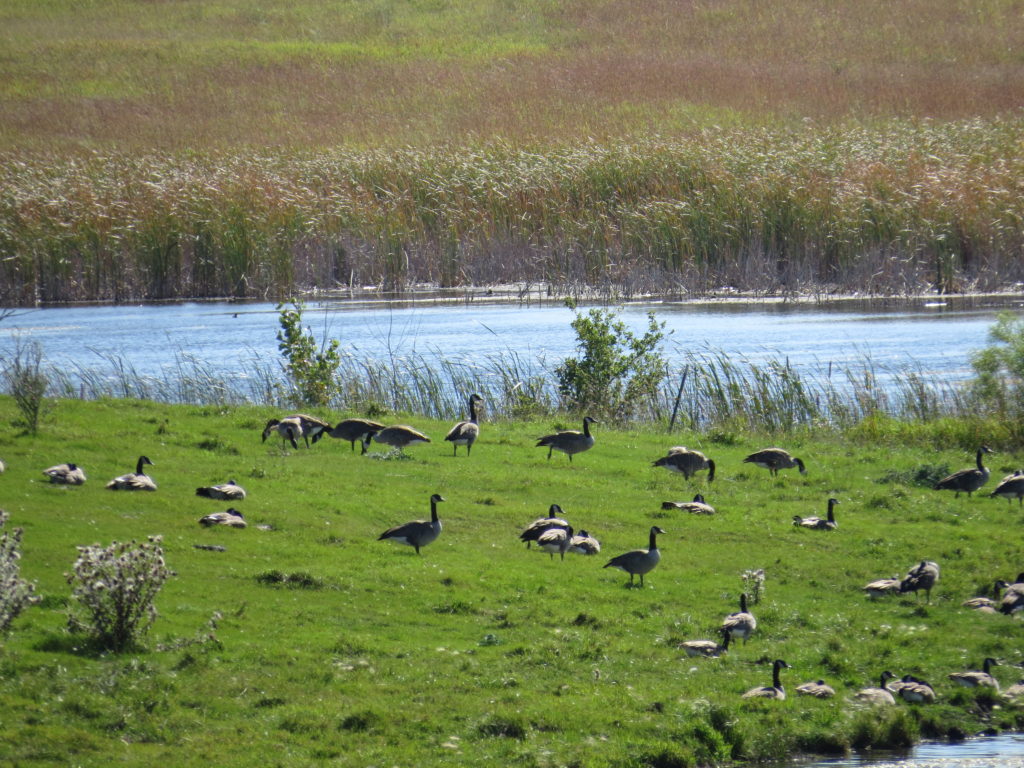
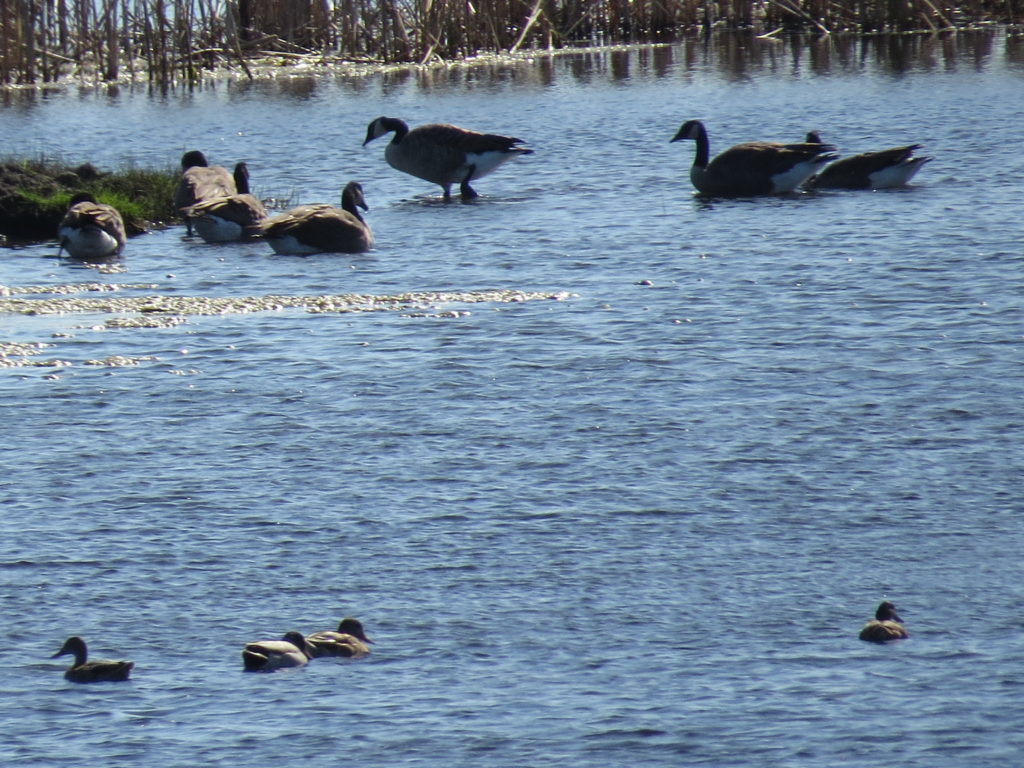
At this time of year, they were much more interested in pasture than the lake, but would wade into the water for a drink or a bite to eat in the shore mud…

or for a quick swim with their companion ducks.
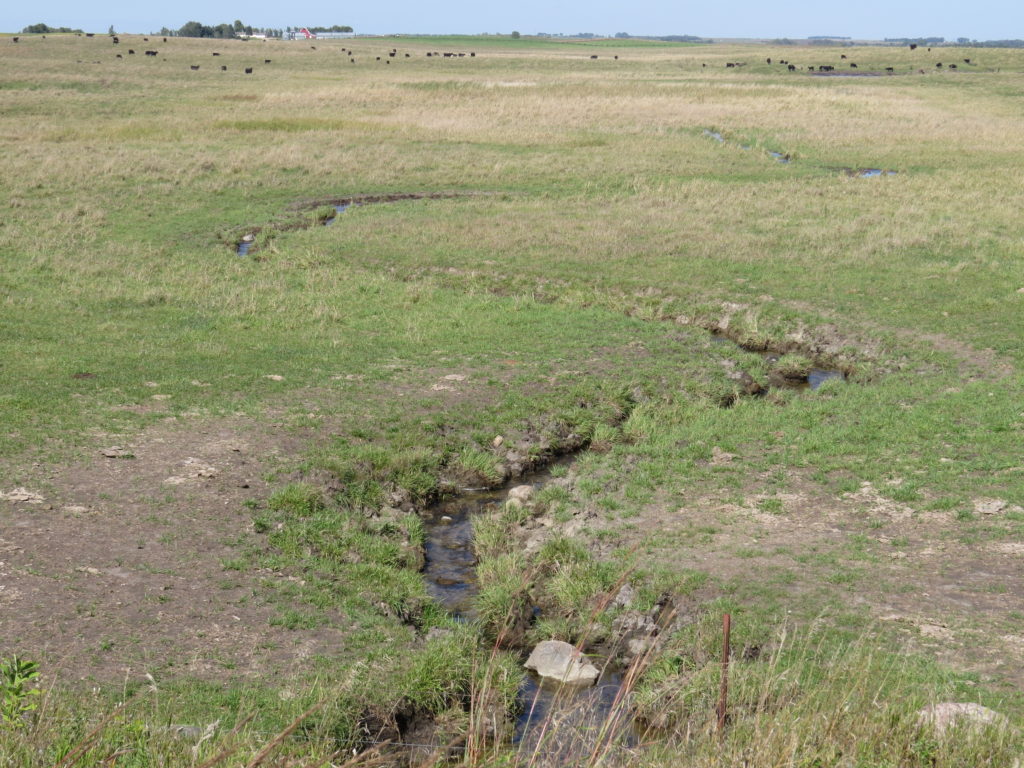
The cows grazed their ‘summer pasture’ home, making the rounds from hilltop to hilltop.
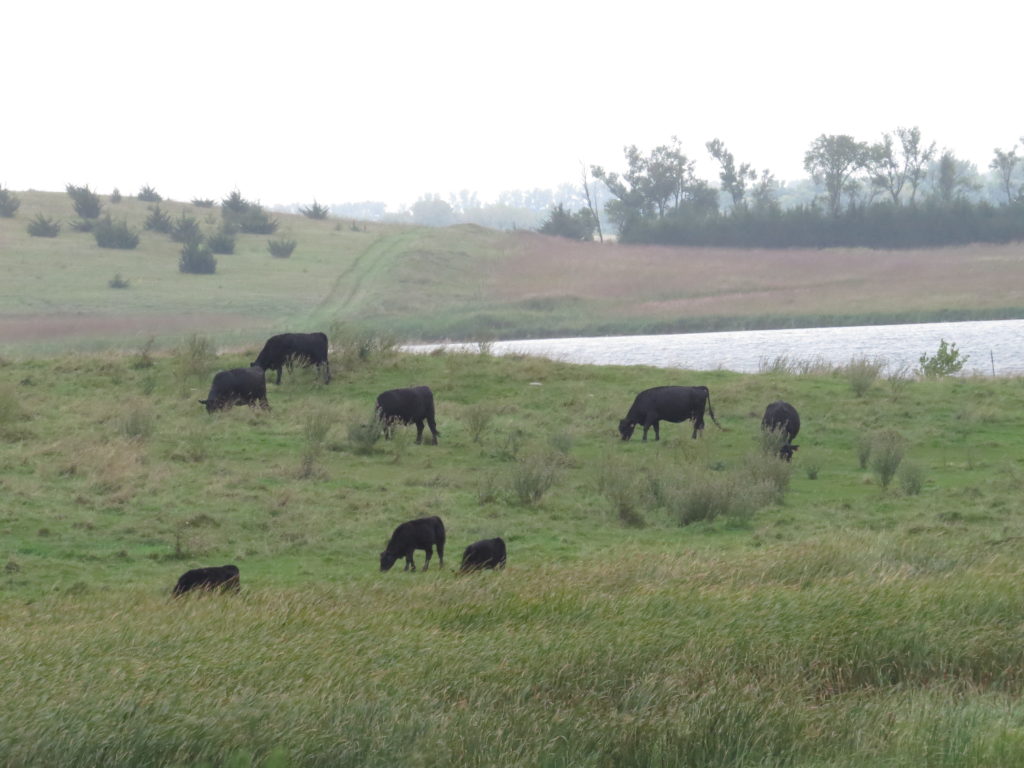
Nights and early mornings they were bedded down in the grass, chewing their cud, resting and digesting.
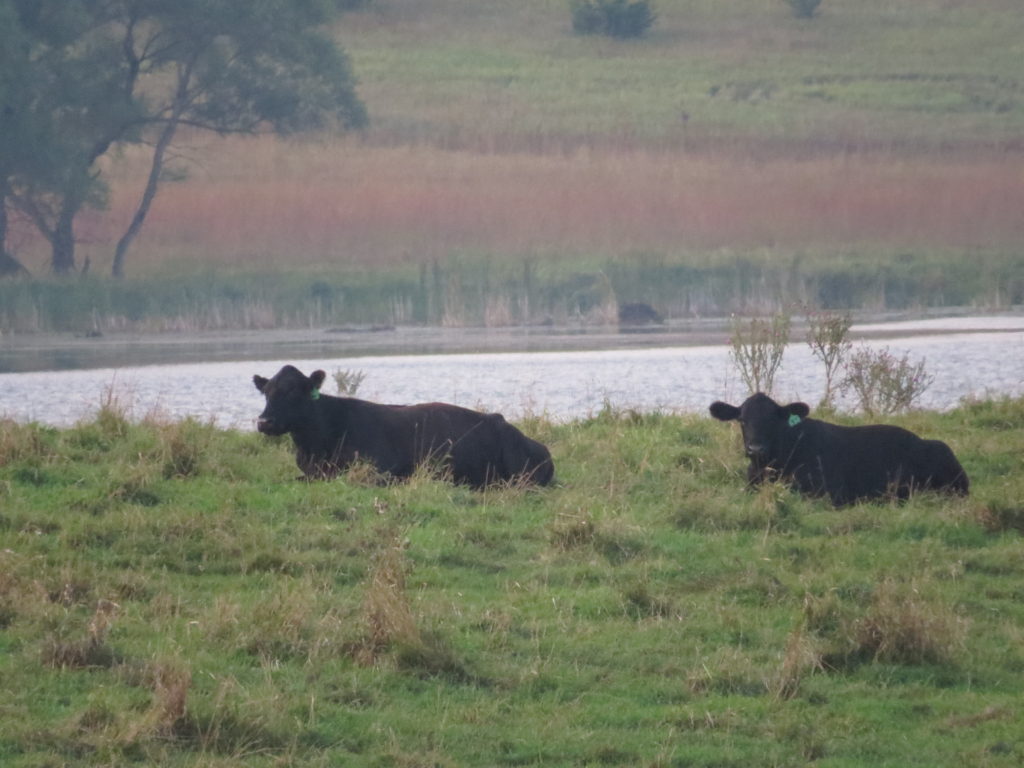
The bull maintained his large presence with the herd by belching out low bellows and by watching over and schooling the young calves.
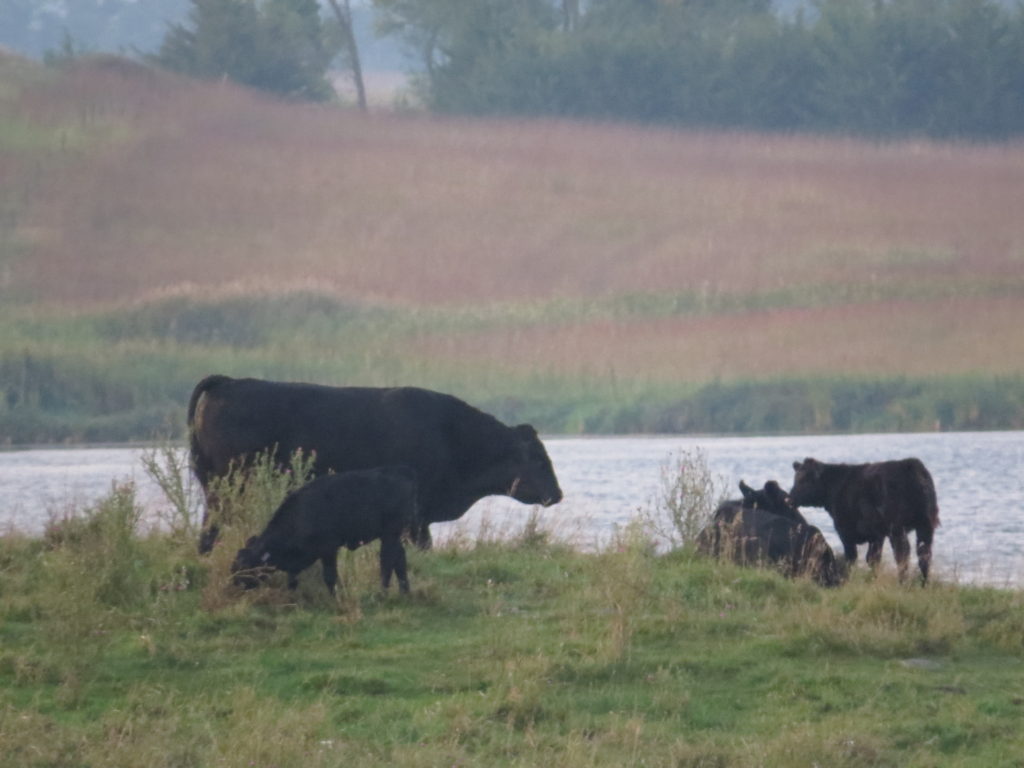
Each species had their routine and their preferred places, but just as often I would see the two groups together—grazing together, resting together, at home together. My Mom said occasionally she had noticed a scuffle between a protective cow and a pugnacious goose, but for the most part, they lived in harmony.
Whose home is this? The cows and calves have returned from their rented summer home to their ‘winter pasture’ closer to their caretakers. Some of the geese stay for most of the year and enjoy abundant food, water, and protection for raising their families and living a good goose life, but still usually fly south to a new home for the coldest winter months. Who remains? The gophers, coyotes, fox, opossums, the myriad of amphibians and insects in various stages of development, and many other species. The pasture is home to many.
I would amend Maya Angelou’s quote by taking out the word human—“I long, as does every being, to be at home wherever I find myself.” The creatures around us desire a safe place to live with food, water, shelter, and protection—wherever they find themselves. And most often, they do so with one another in the web of Nature’s life. They are at home together. Another thing we can learn from Mother Nature. As humans though, with our big brains, we are challenged and compelled even, to go beyond the finding of a home with its shelter, safety, and sustenance. “It’s not about finding a home so much as finding yourself,” says actor Jason Behr. Finding yourself. Finding ourselves. See what I mean about a challenge?
The Edges of Night
There have only been two times this summer when I stood in absolute awe as I looked up at the night sky—during our early June trip to the Boundary Waters and when I was in South Dakota last month. Both times the sky was crystal clear, the light pollution minimal to none, and the star show dazzling. Seeing the stars on those resplendent nights makes one appreciate the darkness. It reveals what many of us normally don’t see (the Milky Way and a myriad of other stars.) Some who live in cities (or don’t look up) may never see the spectacular wonder of our night sky.
What was also spectacular when I was in South Dakota were the edges of night—the dusk and dawn times. At this time of year those transition times slip in earlier in the evening and later in the morning. We are gently reminded that we are also progressing through the seasons.
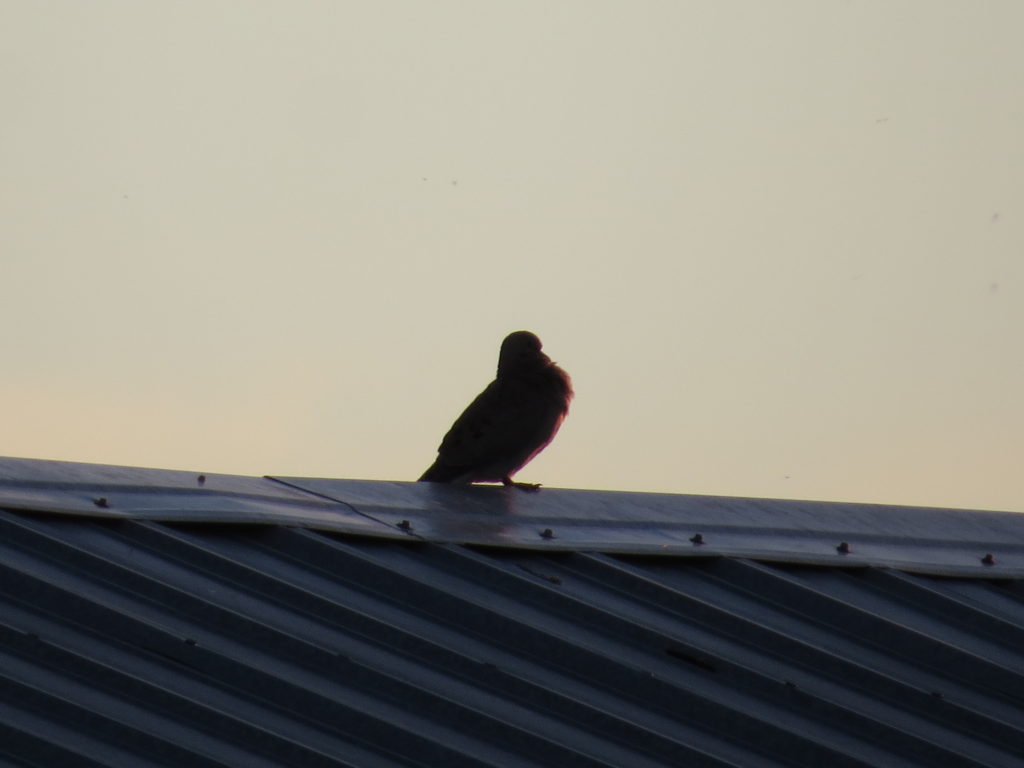
There was a Mourning Dove, sometimes two, who sat for long stints of time on the western end of my Mom’s barn roof. The Dove was always there at evening time, her gray breast feathers rosy-colored in the fading sunshine. What was she waiting for or looking at?
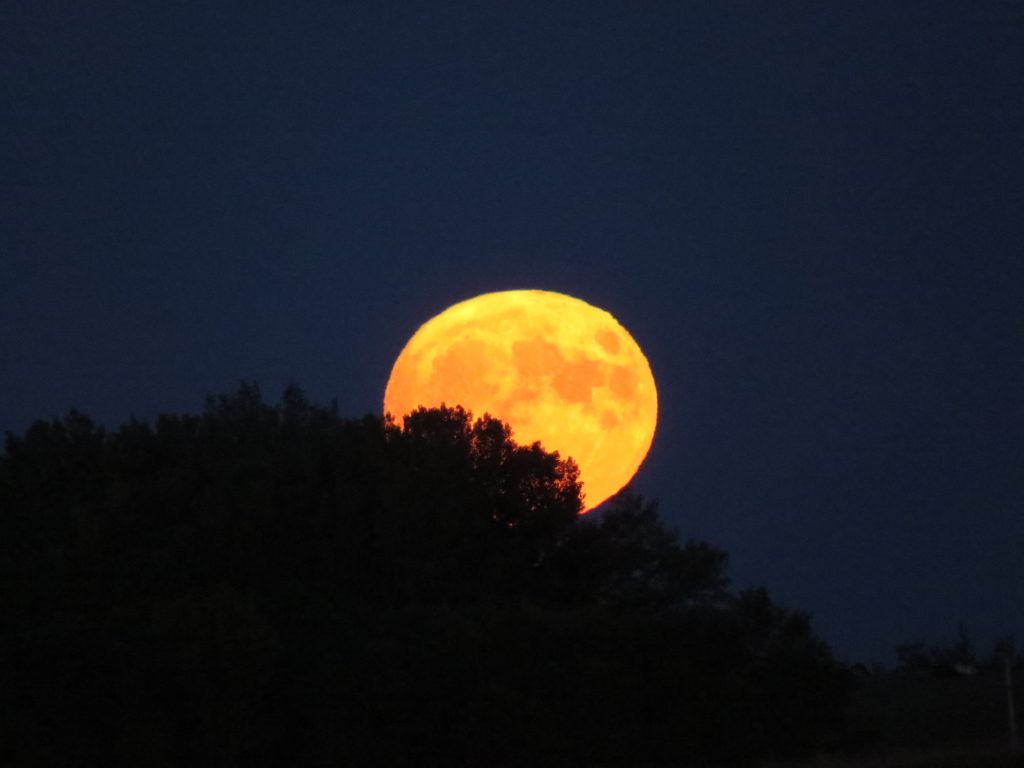
As the sun set, the moon rose in the eastern sky, a large, spotted, golden orb peeking out from behind the dark trees.
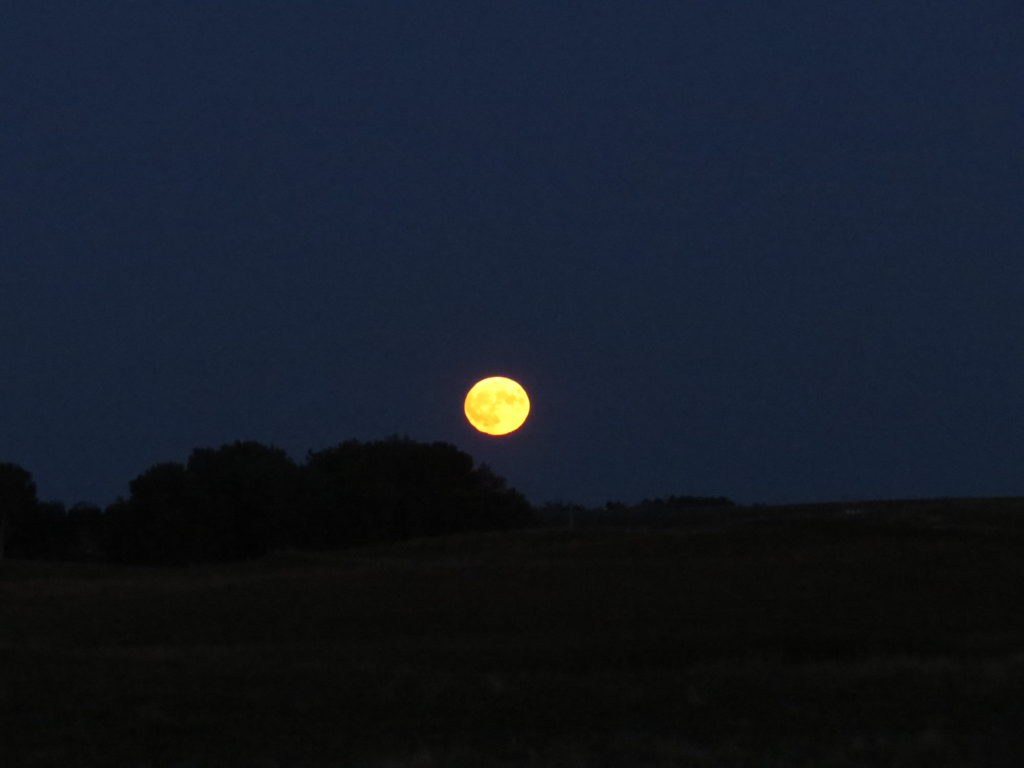
It ‘rose’ quickly when at the horizon…
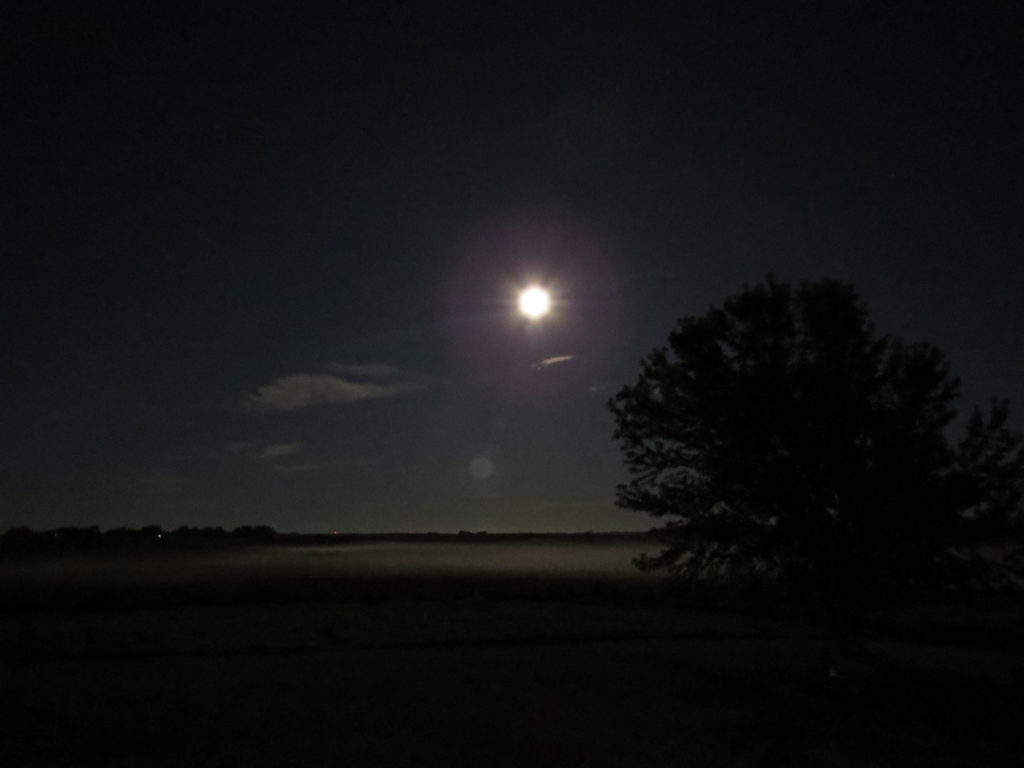
…and hours later lit up the landscape, as a misty fog crept across the pasture when the warm rain-soaked ground met the cool, clear moon-soaked air.
Two nights later, dusk was a rainbow of colors, transforming the light of day to the darkness of night with all the beauty and hope an arch of prismatic light portrays after a storm.
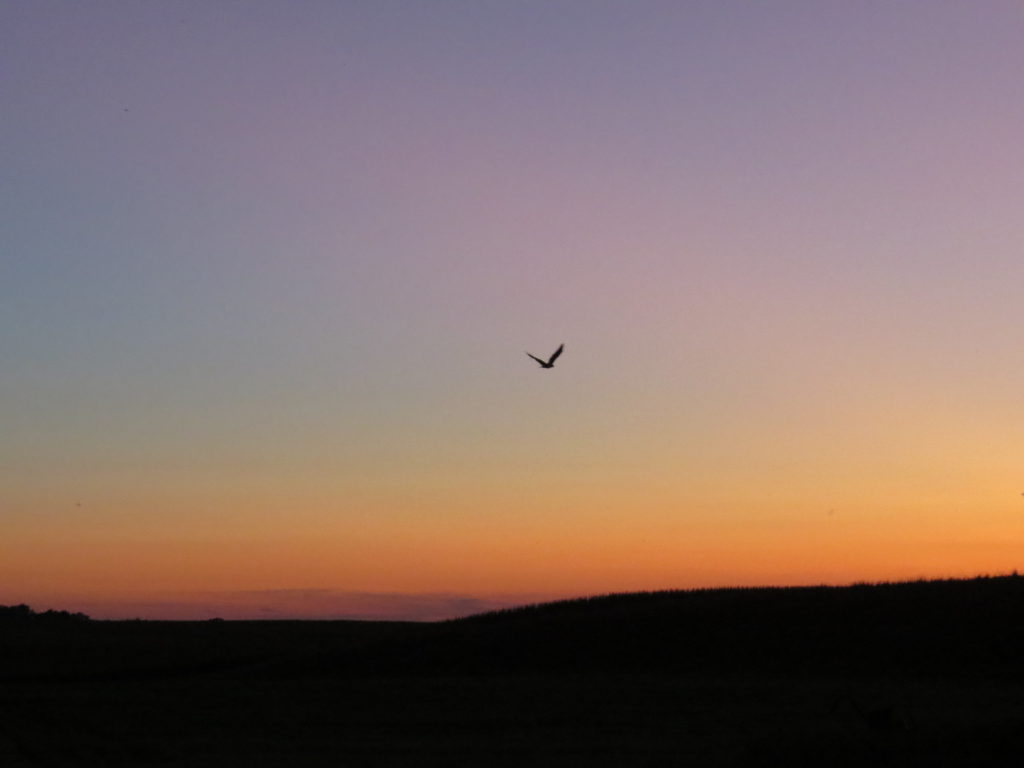
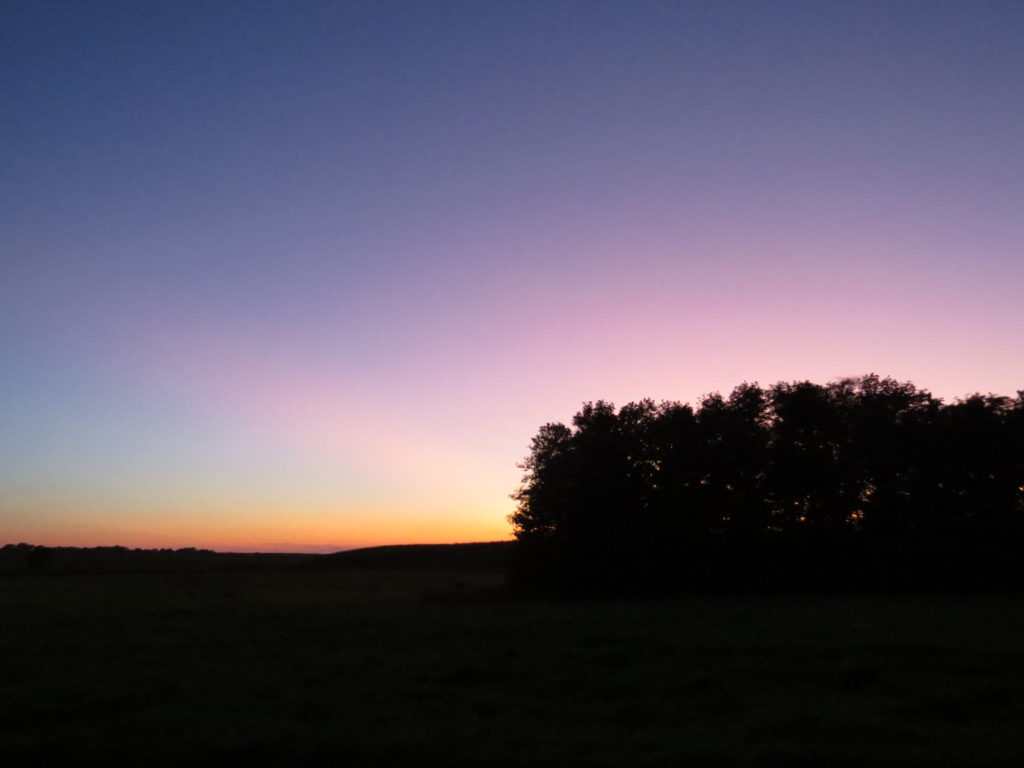
Dawn is the other edge of night that shifts us from stars and sleep to light and ‘seeing.’ The morning after the rainbow sunset was just as spectacular in a more muted, pastel way. It embodies the trite phrase ‘Good morning’ with a visceral feeling that this is indeed a new and good day.
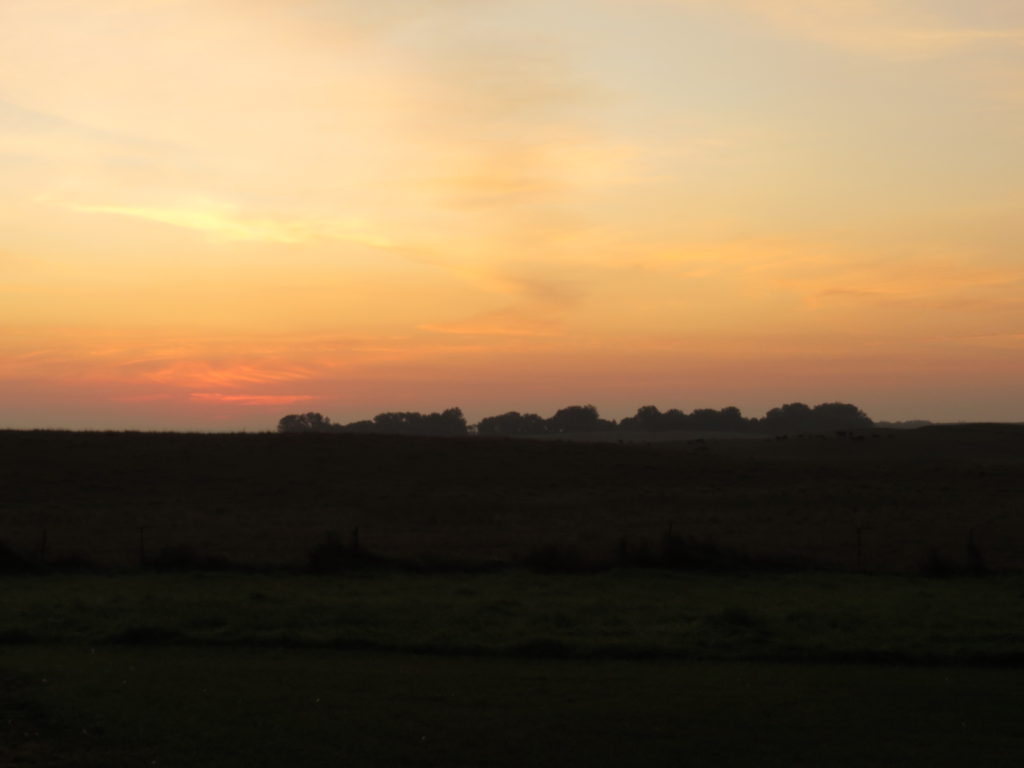
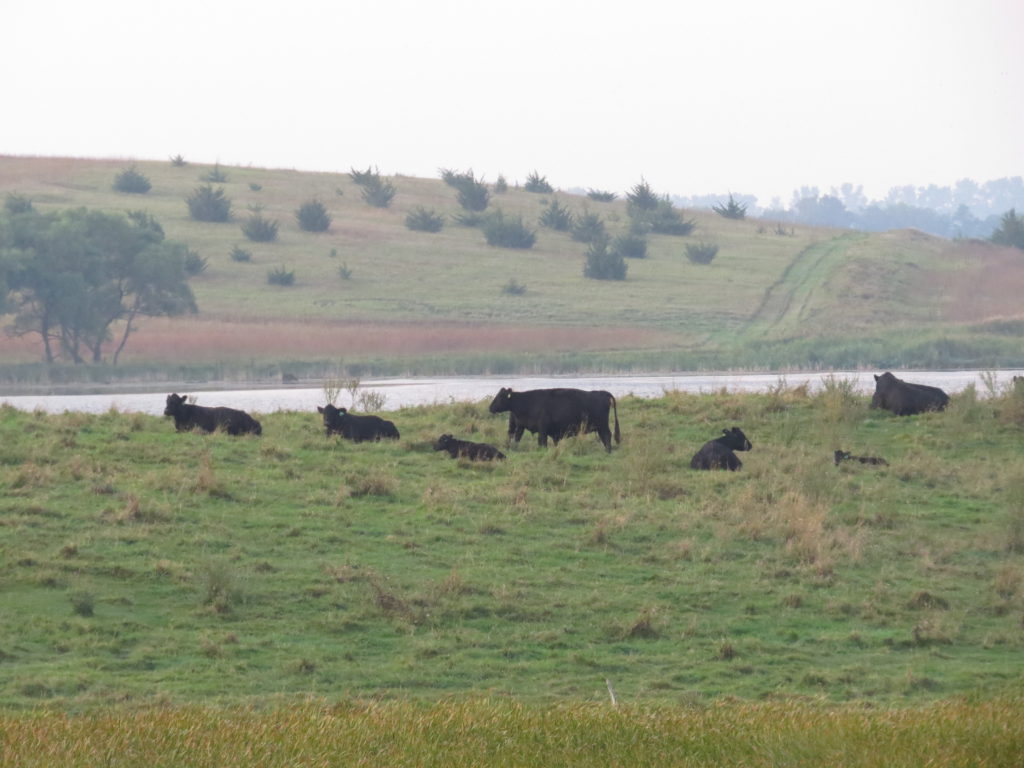
As the light lifted the veil of darkness, I could see what had not been seen just moments before. The cattle were stirring and standing from their night of slumber on the hill.
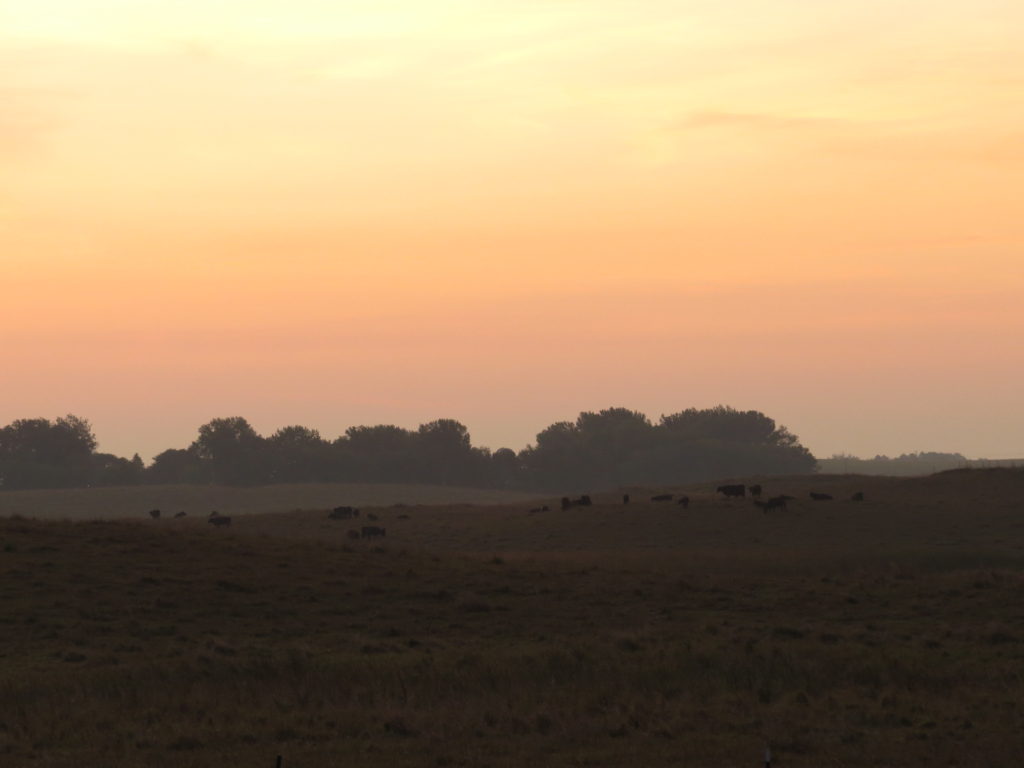
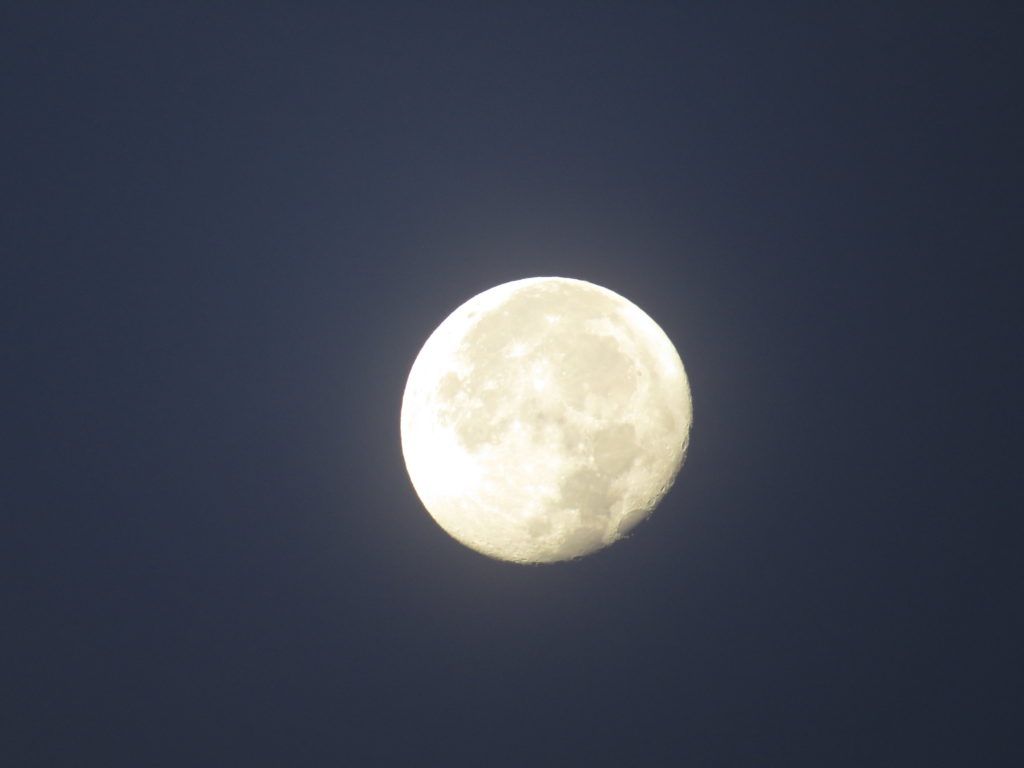
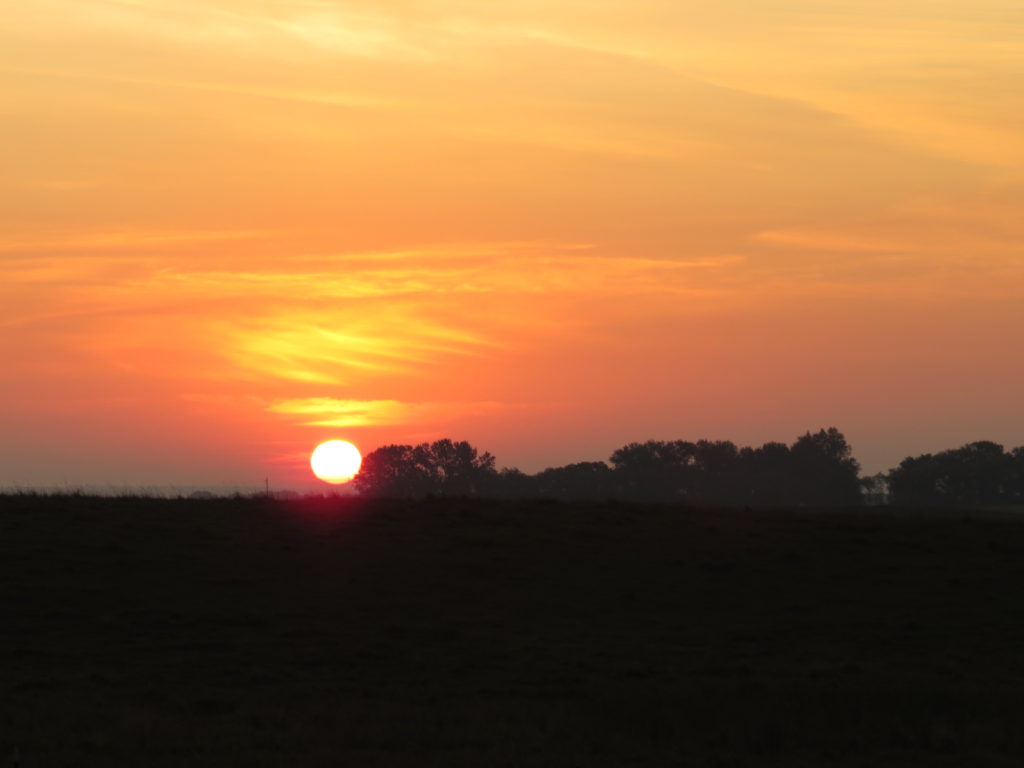
Just before the Sun rose from the brilliant orange morning sky, the western-sky Moon was still the shining one. He graciously handed the baton-of-brightness to the Sun.
Oftentimes, when we awake for the day, we forget about the rest of the natural world that is also following the rhythms of Mother Nature. Being around animals, whether cows and calves in the pasture or cats and dogs in our homes, tunes us in to a bigger, wider world beyond ourselves. The cows stand and stretch, the calves seek their mothers’ udders, the bull bellows a low, rumbling call.
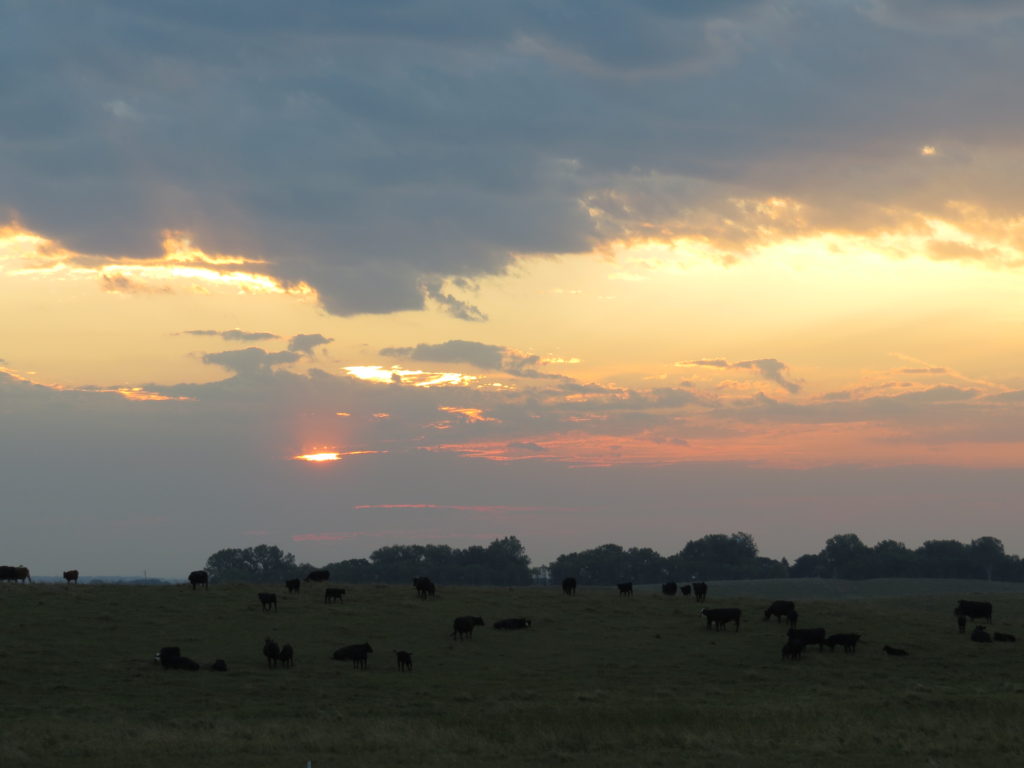
How fortunate we are to experience the full glory of a sky full of stars with a wide white wash of Milky Way stars painted across the darkness. In that darkness, we see less, need to trust more, and attune to our hearing, our touch, and our intuition. Dawn and dusk, the edges of night, are also the edges of day. Sundown leads us and all animals to our nocturnal natures—sleep and rejuvenation or nighttime hunting and activity. While the night veils our vision, it allows for transformation through our dreams and introspection—like how the moon changed the look of itself and that of the landscape as it progressed across the sky. Then daybreak reveals to us what we previously didn’t see, what was obscured by darkness. It all works together in the passages of our days for our ‘good mornings’ and ‘good nights.’
Stand at the Crossroads
Every single day we are presented with a fresh expanse of time and place. On one side of that present is the old past, both recent and long ago. On the other side is the future, the new, the unknown, the potential. Our challenge is walking the alley of our day, not getting hopelessly tangled in the rusty barbwire of the past or leaping into the electric fantasy of the future.
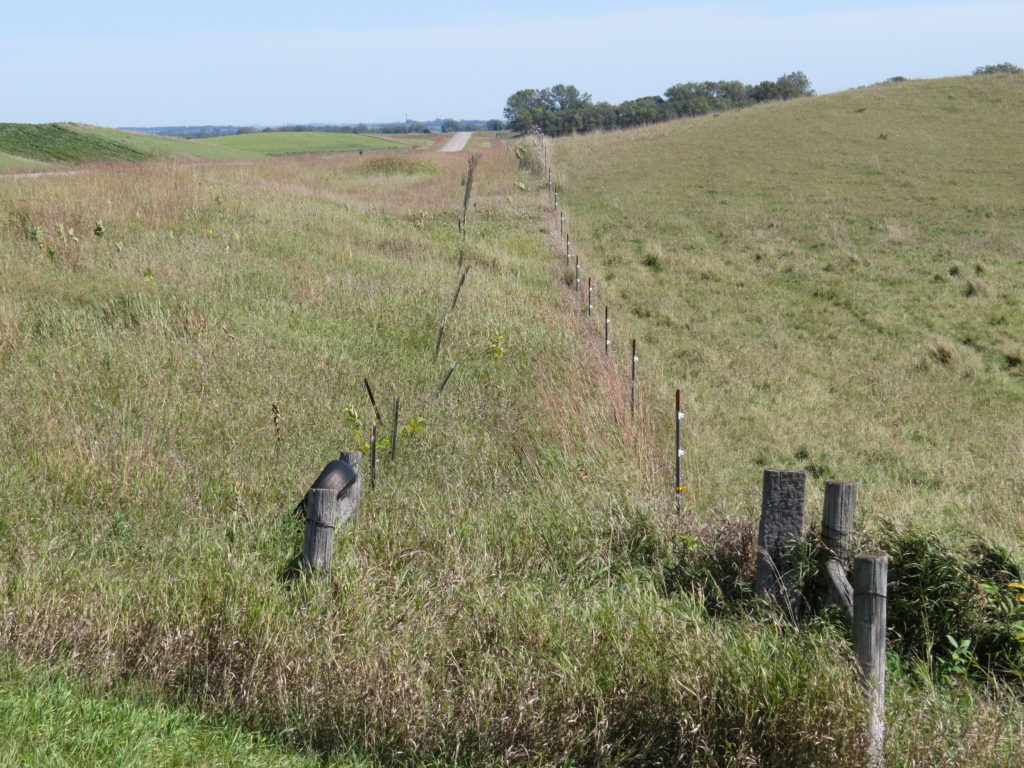
During my time in South Dakota I walked most every day. At the mailbox, I could look east and see my destination—the crossroads that were one mile away. Easy; just walk. At the same time, each night I read from a new book a friend had given me. Easy; just read. On page 5 of the first chapter was a scripture reflection by John Valters Paintner, and these were the words:
Thus says the Lord: Stand at the crossroads, and look, and ask for the ancient paths, where the good way lies; and walk in it, and find rest for your souls. –Jeremiah 6:16
I was walking to the crossroads each day, so with that passage stuck in my head, I began to stand at the crossroads also. I memorized the words as I walked, rolled them over in my mind. What are the chances these two happenings had happened at the same time? Pay attention. What are the chances of literally standing at the crossroads in rural South Dakota without getting run over? Pretty darn good.
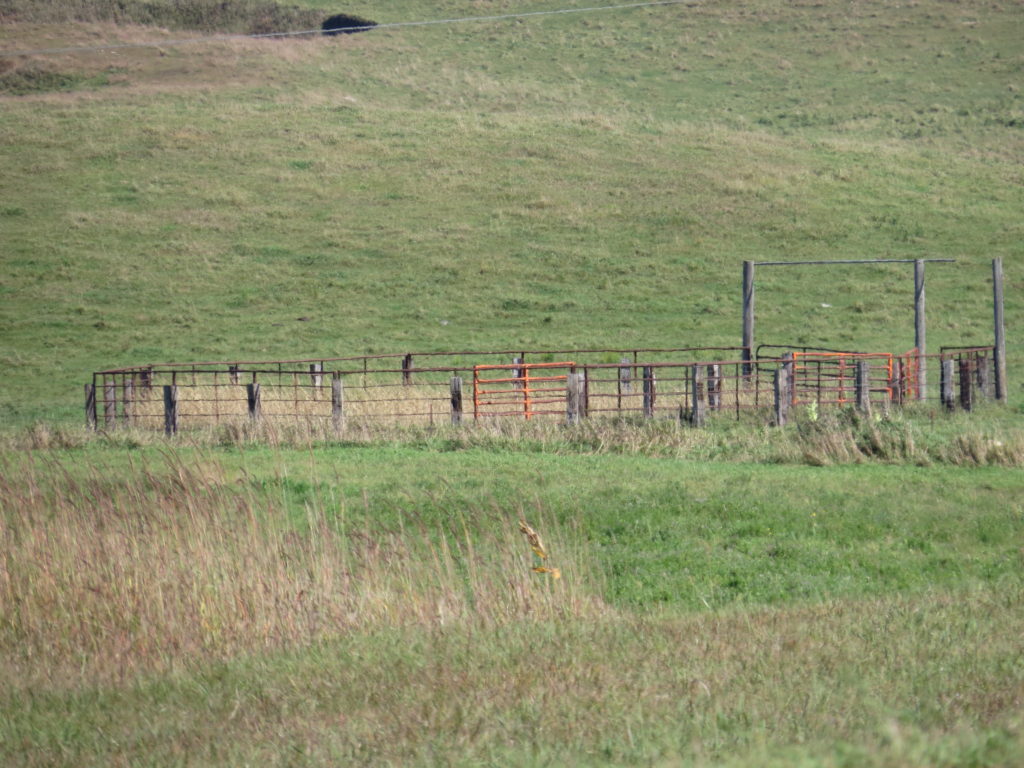
I stood and looked east. A corral, an old windmill, a cemetery on the hill.
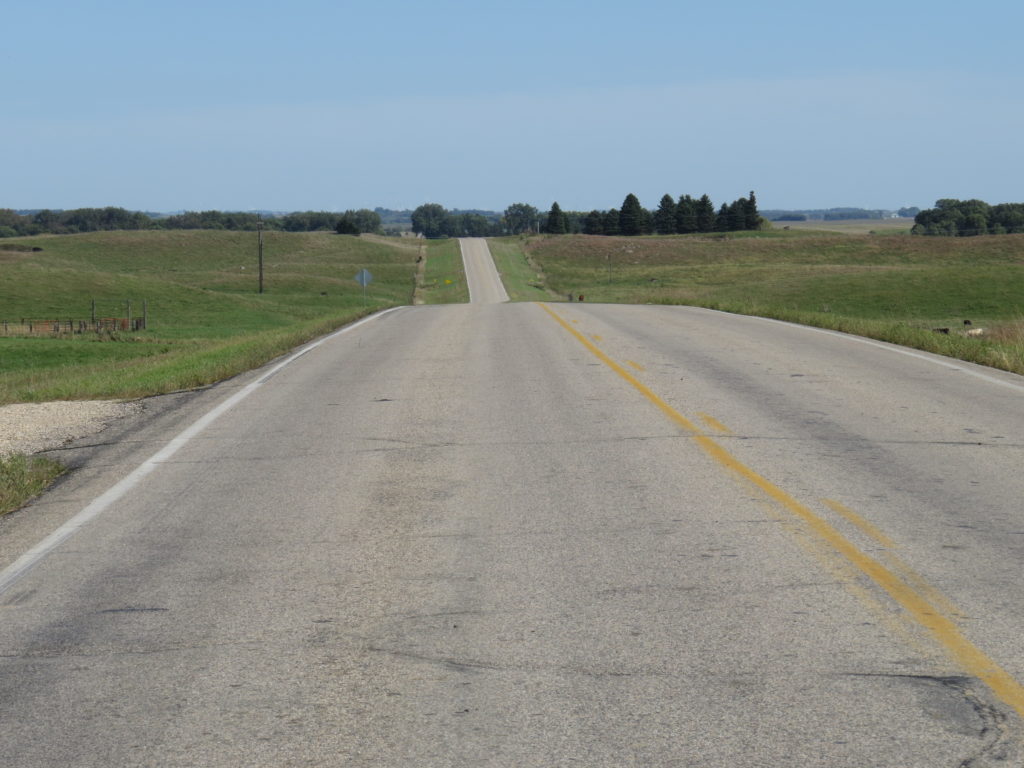
I stood and looked north. A highline wire, fields and farms, a thistle gone to seed, a distant hill.
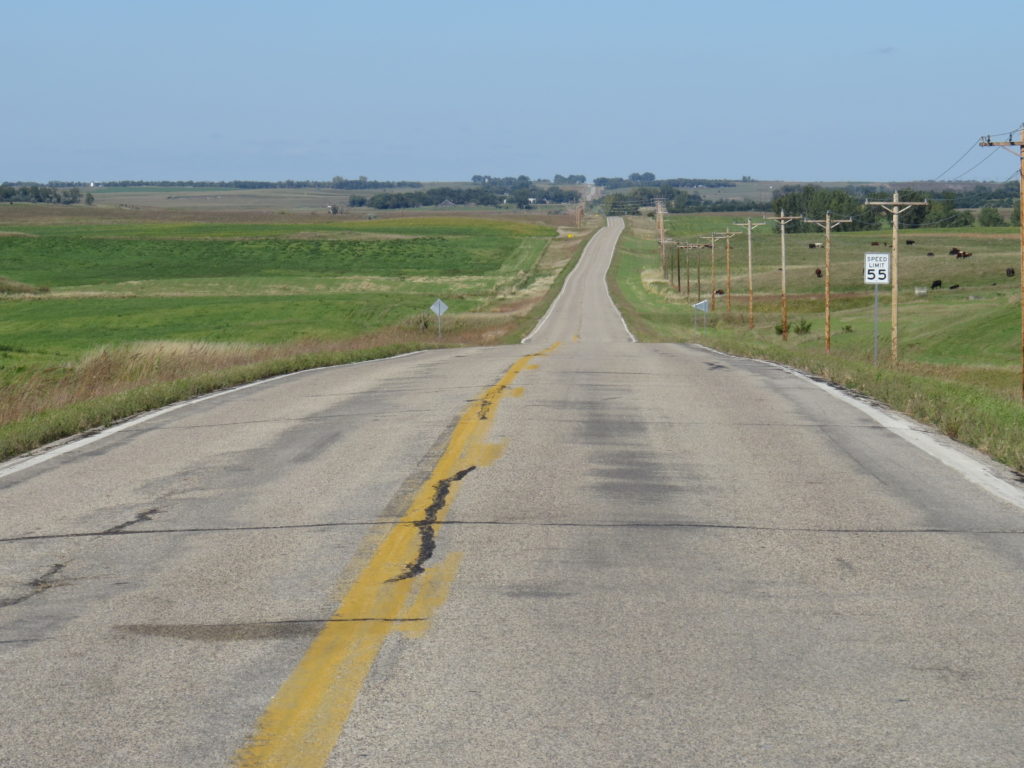
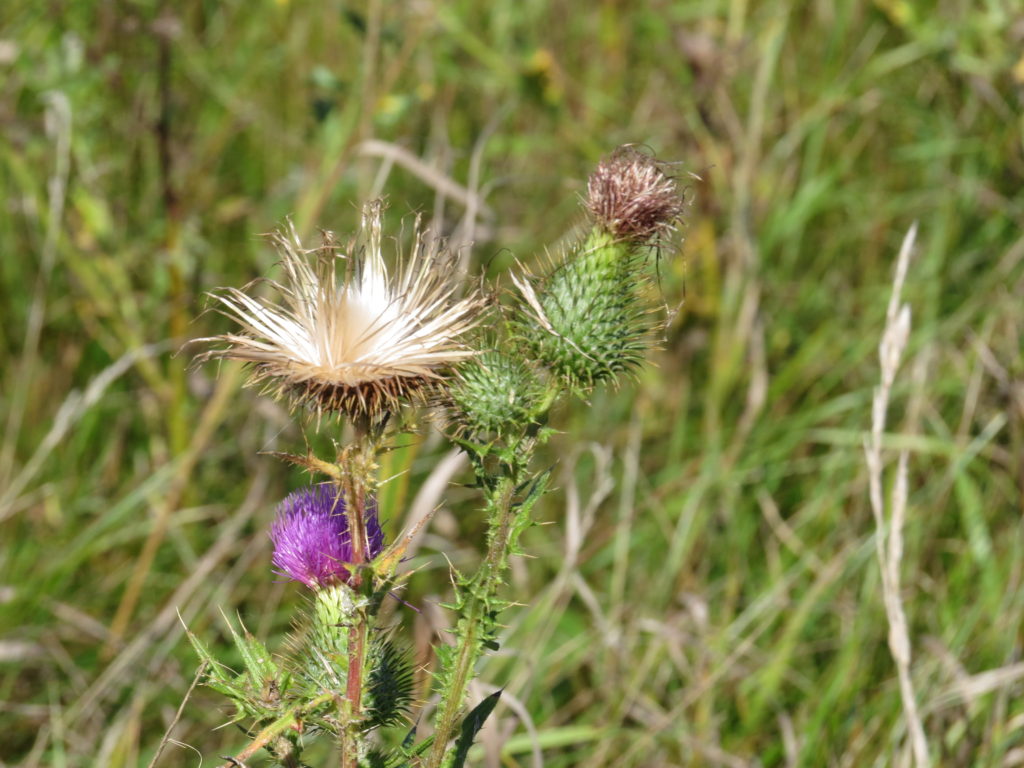
I stood and looked south. I couldn’t see very far. The highline wire, tractor mud on the road, Indiangrass in the ditch.
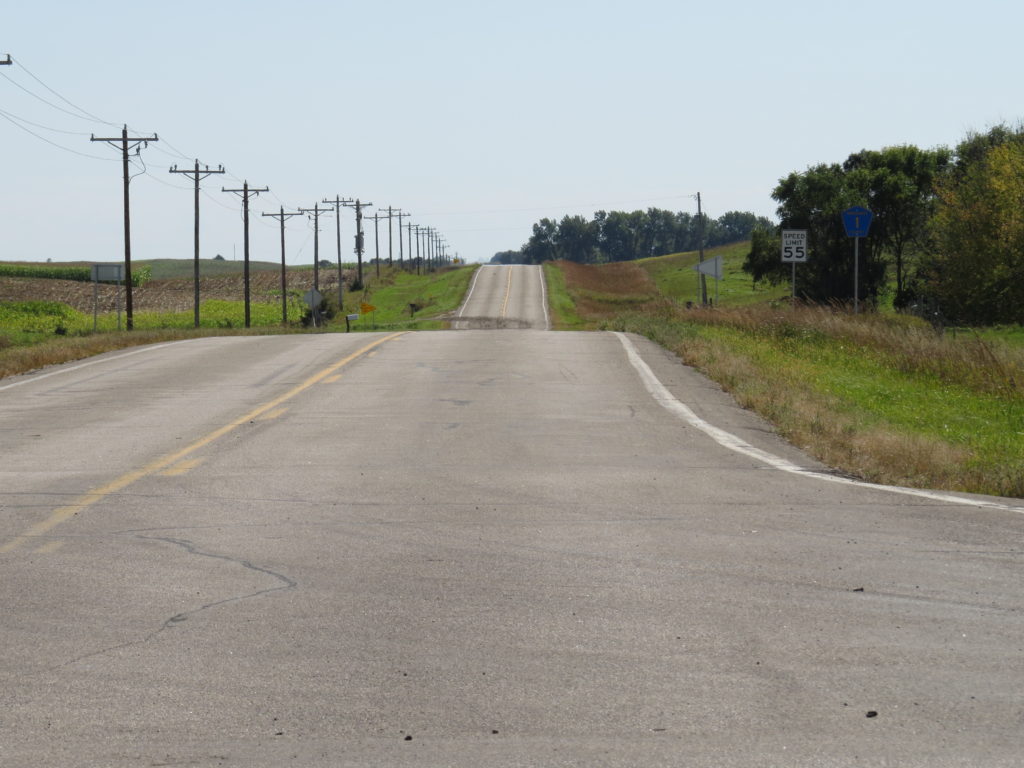
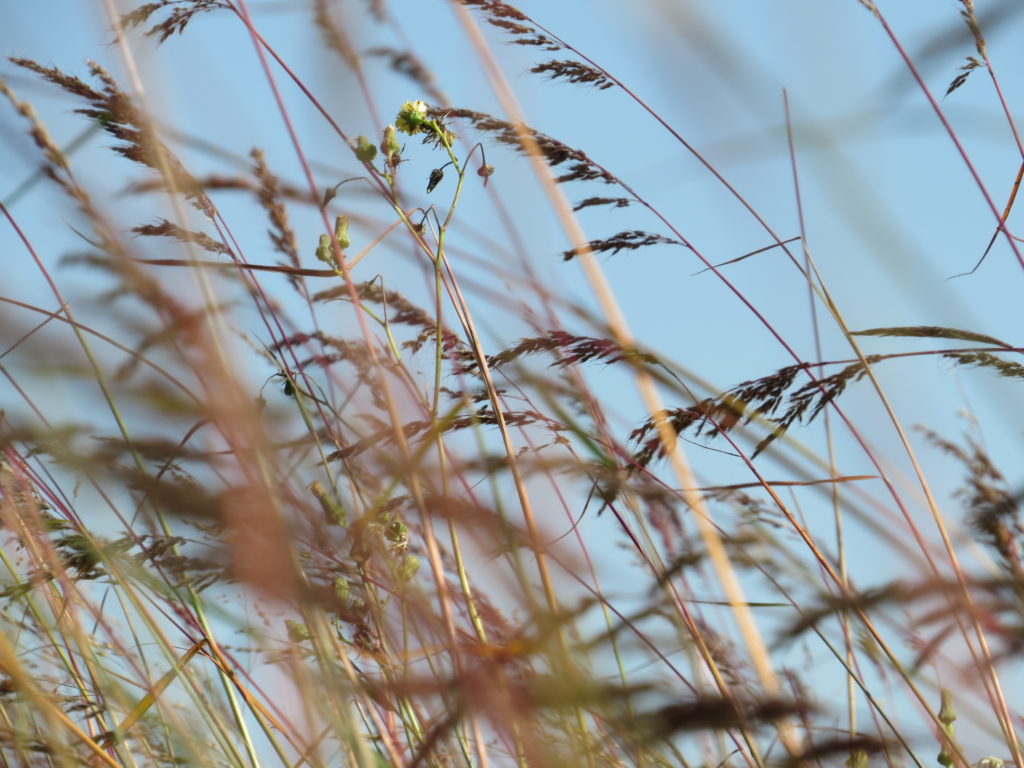
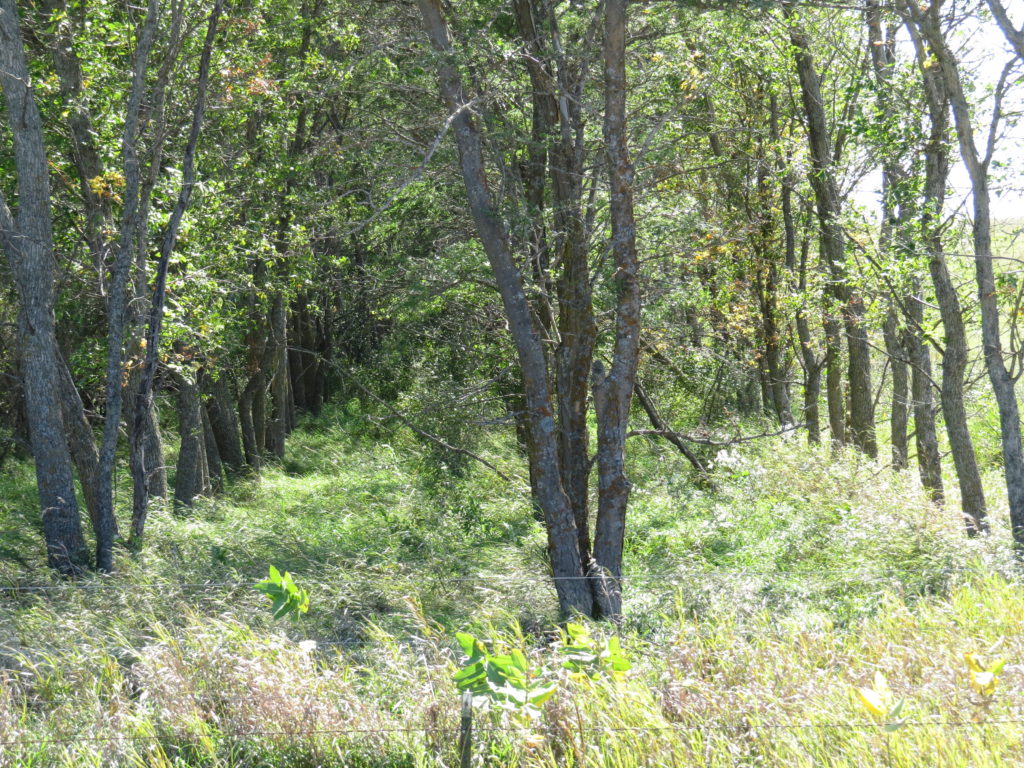
I stood and looked west. Prairie grasses and pastures, a straight and narrow shelterbelt of trees, a clear, blue sky.
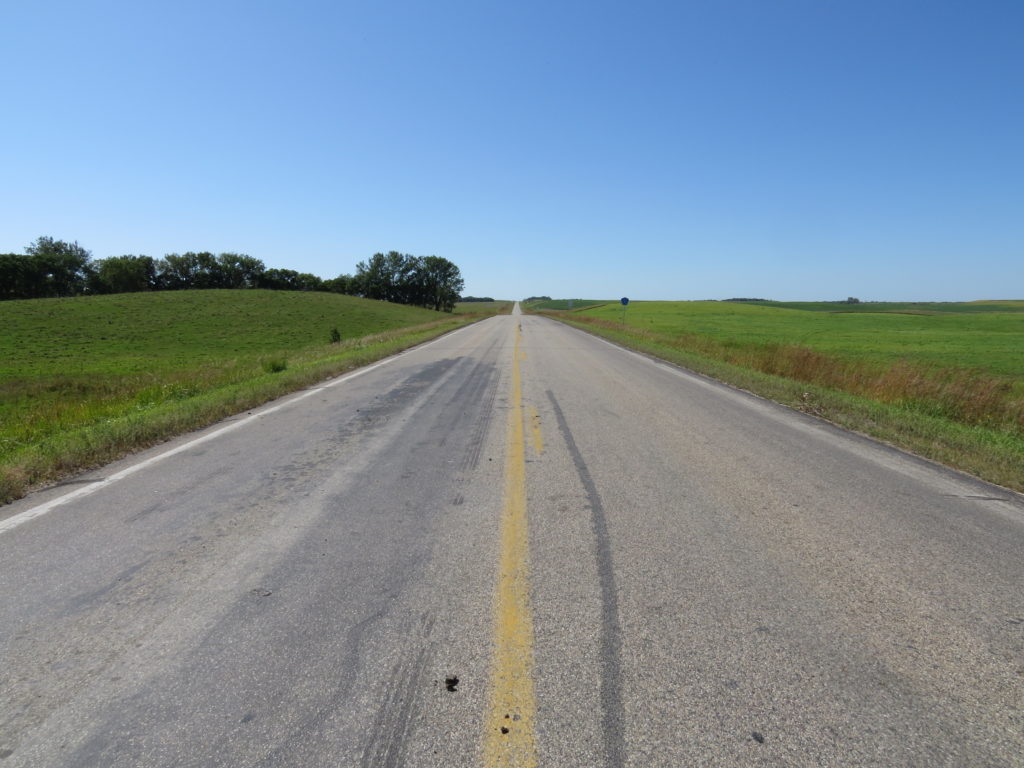
Jeremiah’s passage was so imperative, so direct: stand, look, ask, walk, and find. Easy? I stood, I looked, I walked, and I got caught up on “ask for the ancient paths.” What does that mean? “…the ancient paths, where the good way lies.” I have always tried to make my decisions with intention of following the good way. Is the ancient path easy, or the way of Nature, or is it hard, like taking the high road?
Paintner describes the book of Jeremiah as “an important aid to learning from the mistakes of the past and discerning the path ahead.” Stand at the crossroads. Look. Ask for the good way. Walk through the gate and down the alley between past and future. Find rest for your soul.