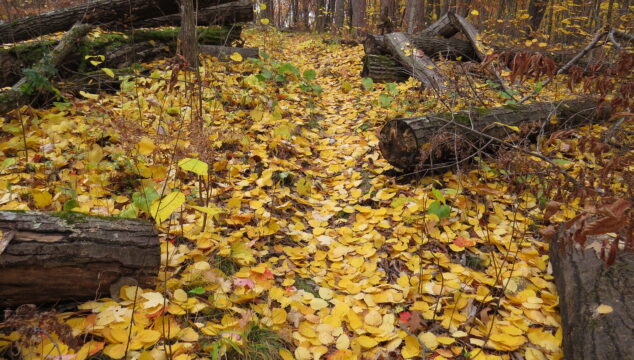
Come walk with me in the peak Autumn beauty of the Northwoods. To say that I love this time of year is an understatement. Most everyone can appreciate the colorful falling leaves---it reveals the 'true self' of a tree when its leaves are no longer producing chlorophyll. Their true colors are revealed, and there is something simple … [Read More...]
Archives for August 2019
The Day it Snowed in July
The clearest way into the Universe is through a forest wilderness. –John Muir
This post is not about clarity or the forest, and I am backing us up in time to the middle of July. The hot, humid middle of July. We had just gotten back from our trip to Missouri, Chris was back to work, and I was desperate to get away from some overarching, insistent, persistent bad feelings. Hot, humid weather never makes anything better, in my opinion; in fact, it magnifies madness, swells cells, and creates chaos. I walked down the road to the little lake on Hummingbird Lane. I don’t even remember how bad the mosquitoes and deer flies were as I sweated up the hill. And then as I saw the usually-pretty lake, I was even more disgusted when I saw how the vegetative scum had overtaken the open water.
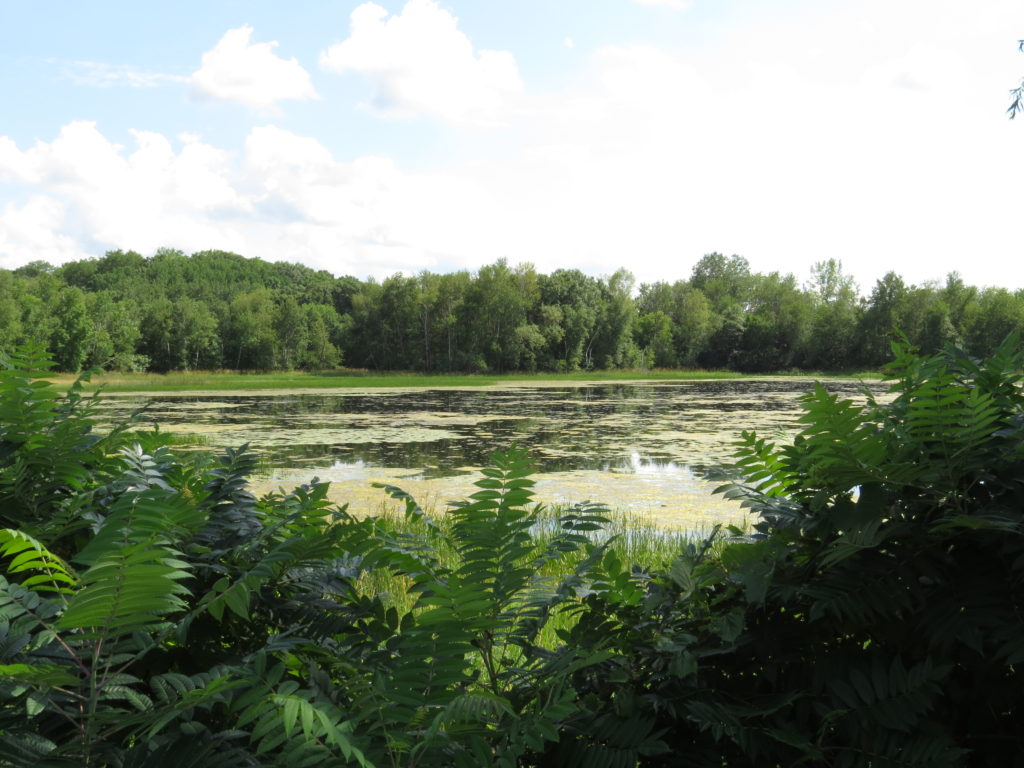
It is at times like these when we need and crave some clear reflection of reality. Why is all this crap in the way? The reason for our trip to Missouri was to spend time with Chris’ brother Paul who was dying of pancreatic cancer. This brother who was just two years older, the one who played in dirt piles with him, went to Boy Scouts camp, and drove him to high school. We watched some Big Valley on TV, walked to get the long-neglected mail for him, got an Icee that cooled his throat, and cleaned up the kitchen a little bit. Paul joked about it all with his dry one-liners, and we laughed. It was as good and normal as ever, even as we talked about end-of-life things. The brothers reminisced about boyhood memories, and Paul held his arm over his stomach and rocked ever-so-slightly.
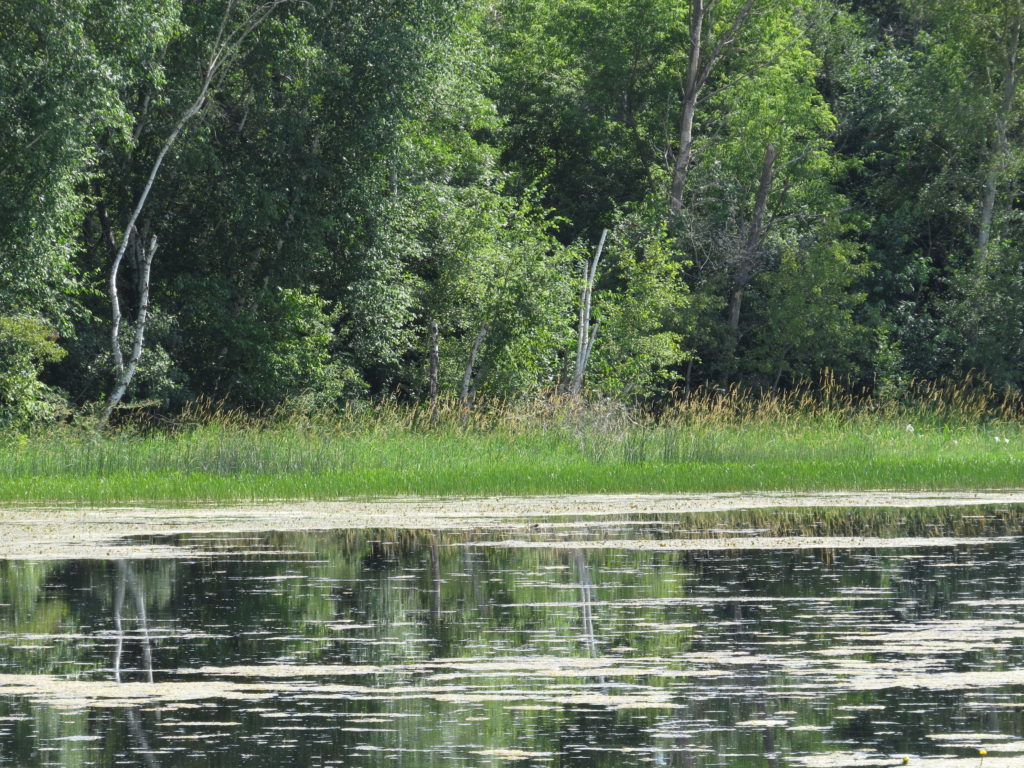
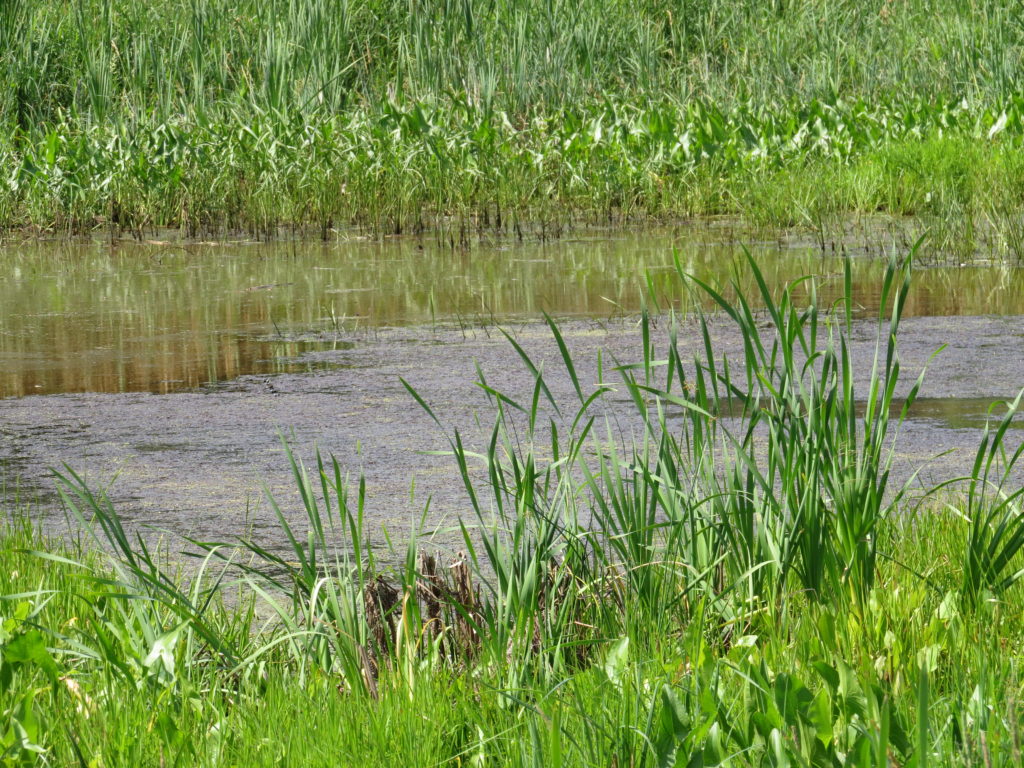
As we sat together, there were layers of feelings—fresh in-the-moment ones, surface take-care-of-business ones, deep, dark feelings about what was to come, and a forest of sweet memories.
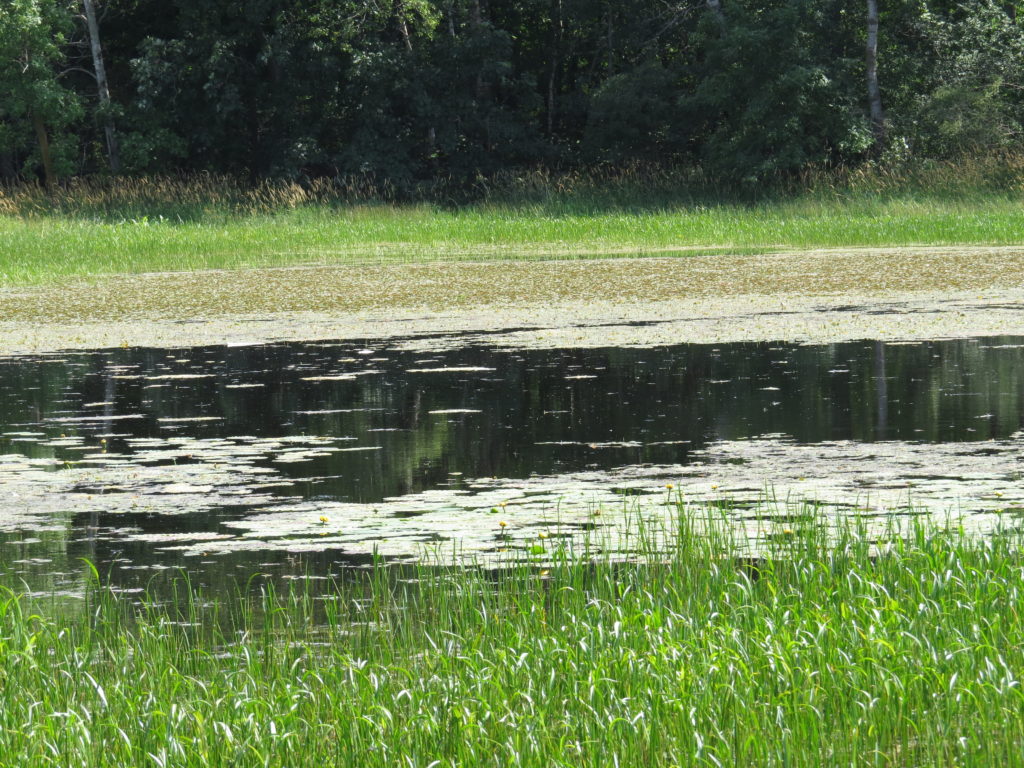
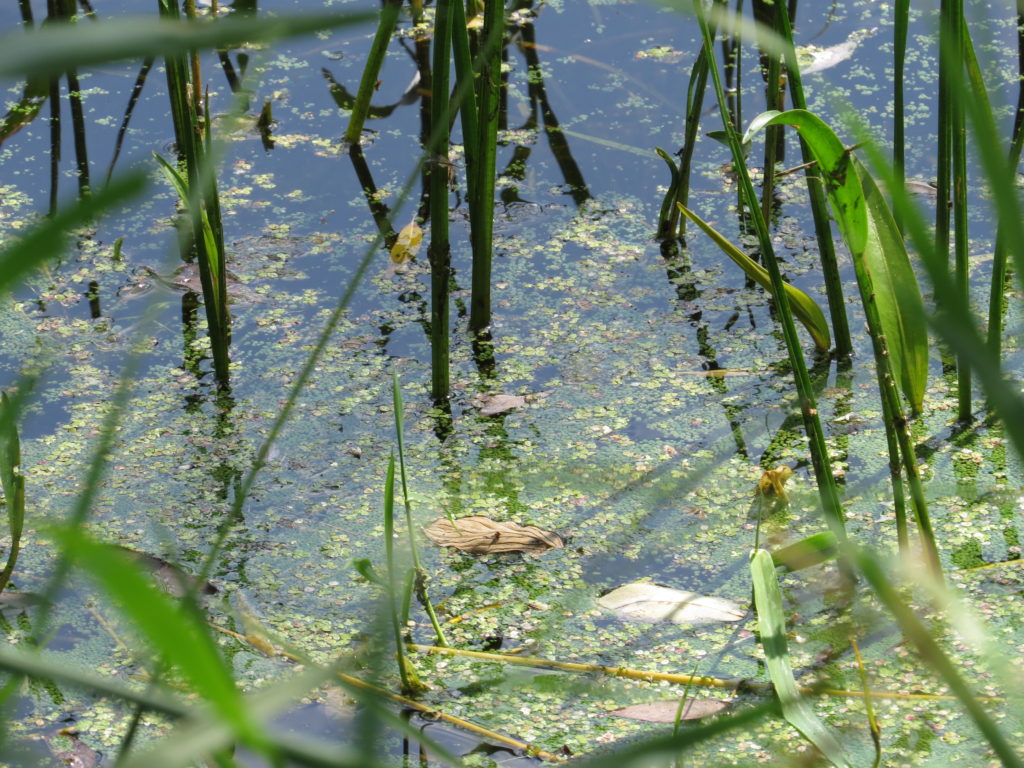
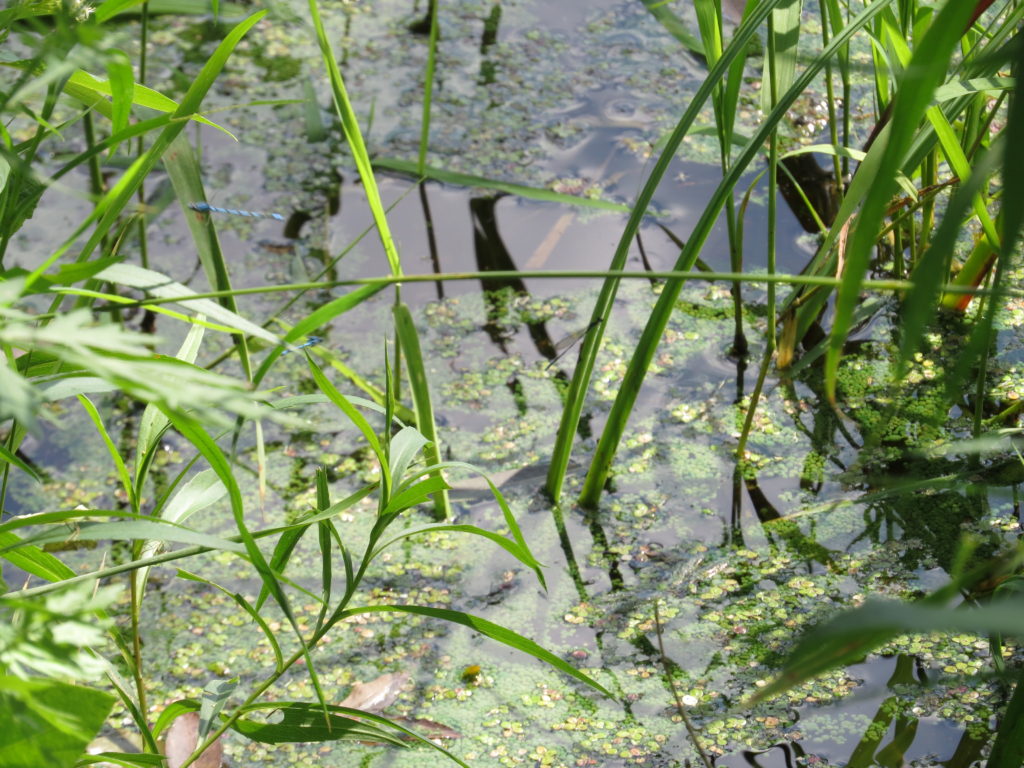
I had listened to a Rob Bell podcast where he talked about the struggles and irritations in our lives, and I had written a line he said on a post-it note where I could see it every day. “This is all part of it.” This is all part of it. This pond scum is part of a hot July summer. The mosquitoes and deer flies are a part of a still, humid day. Dying is part of living. We can look a little closer at what clouds our vision, what’s getting in the way of our clear reflection. The Duckweed is actually kind of pretty close up, and do you see the three damselflies who live and fly above the Duckweed?
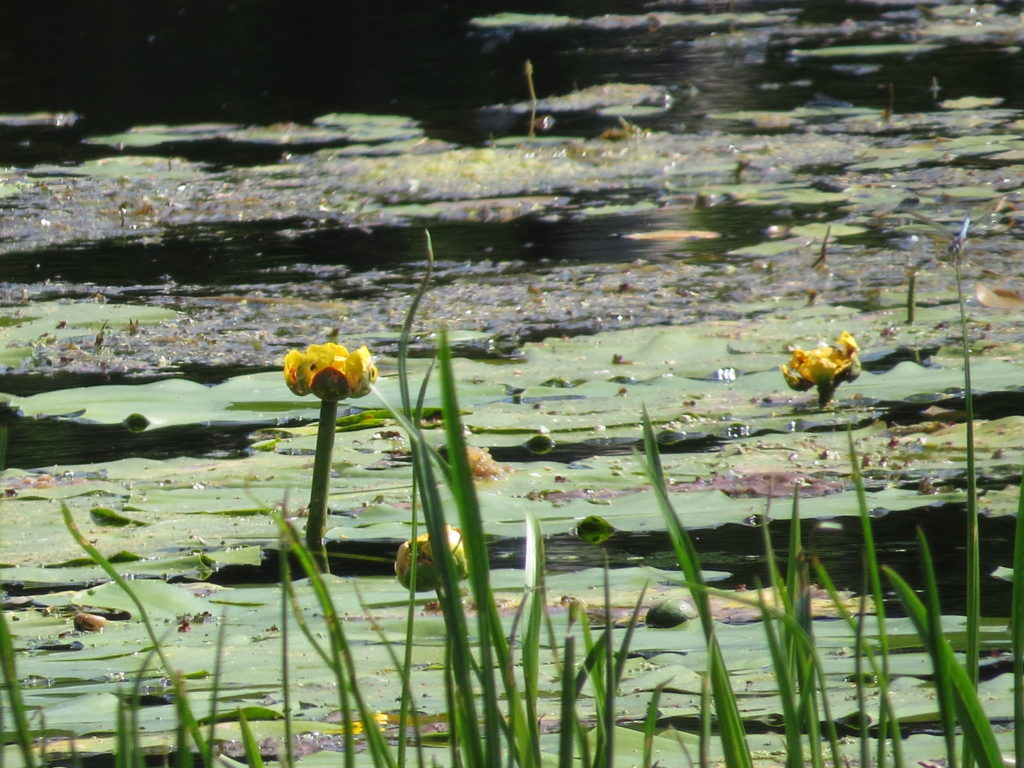
The flat, floating Yellow Pond Lily leaves send up surprising stalks of flowers. How did I miss them before? This is all part of it.
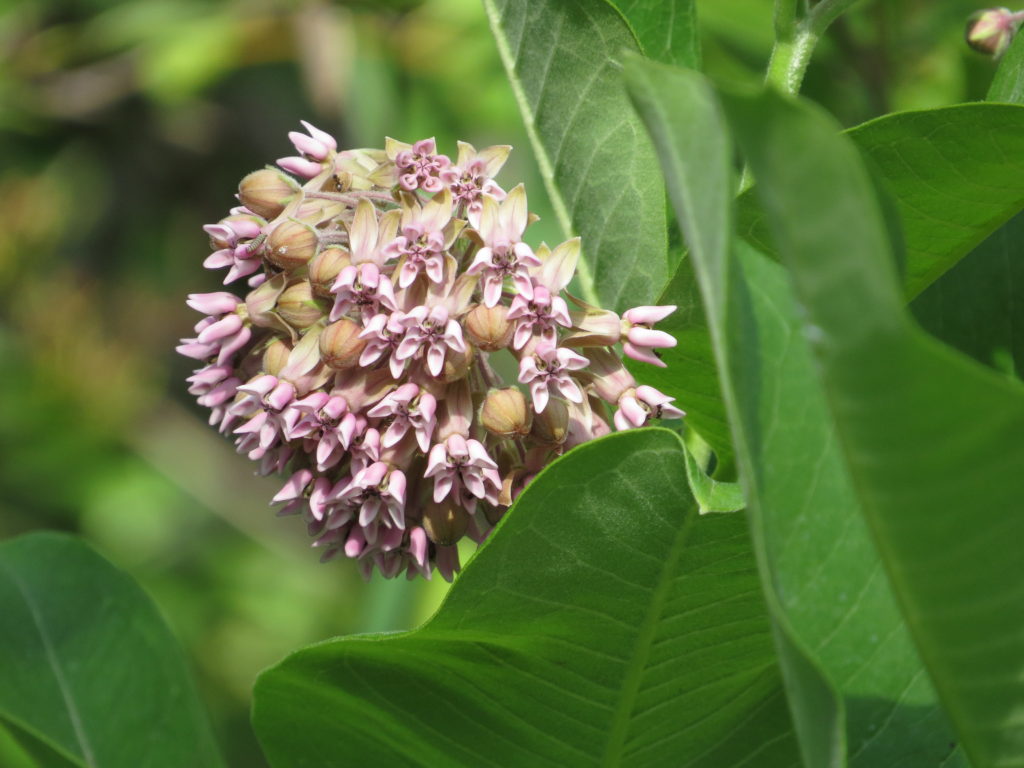
The intricate cluster of pink balls to open stars of the Milkweed flower housed ants and a tiny caterpillar. This is all part of it. It was a comforting mantra for my nervous body and unsettled soul.
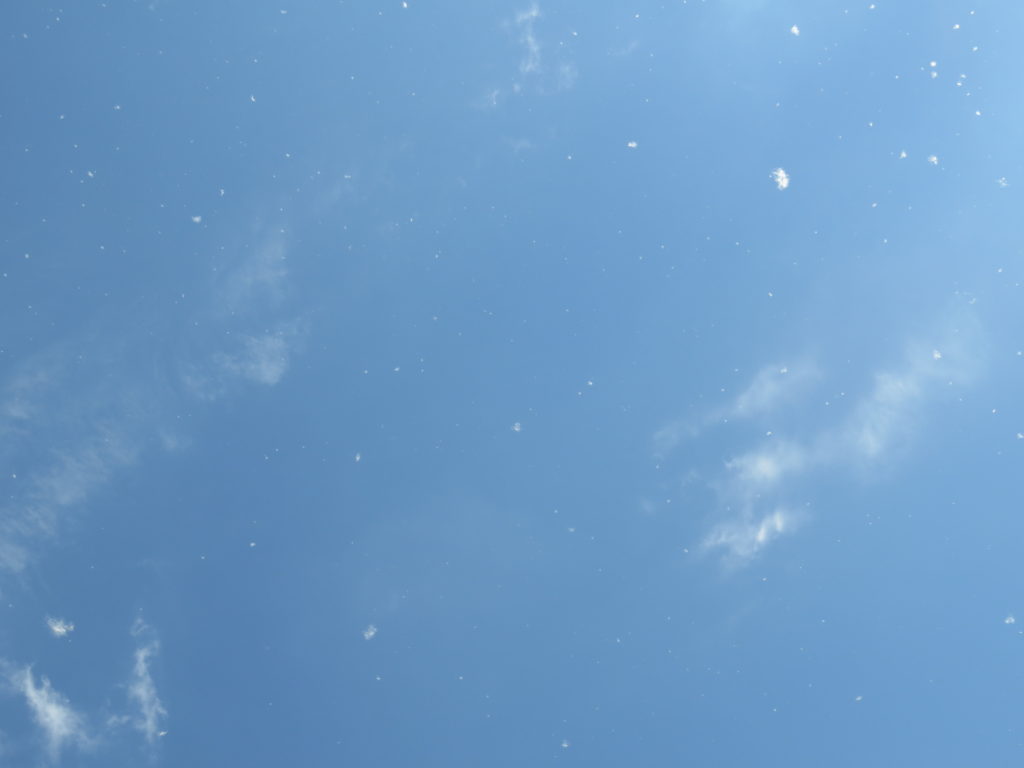
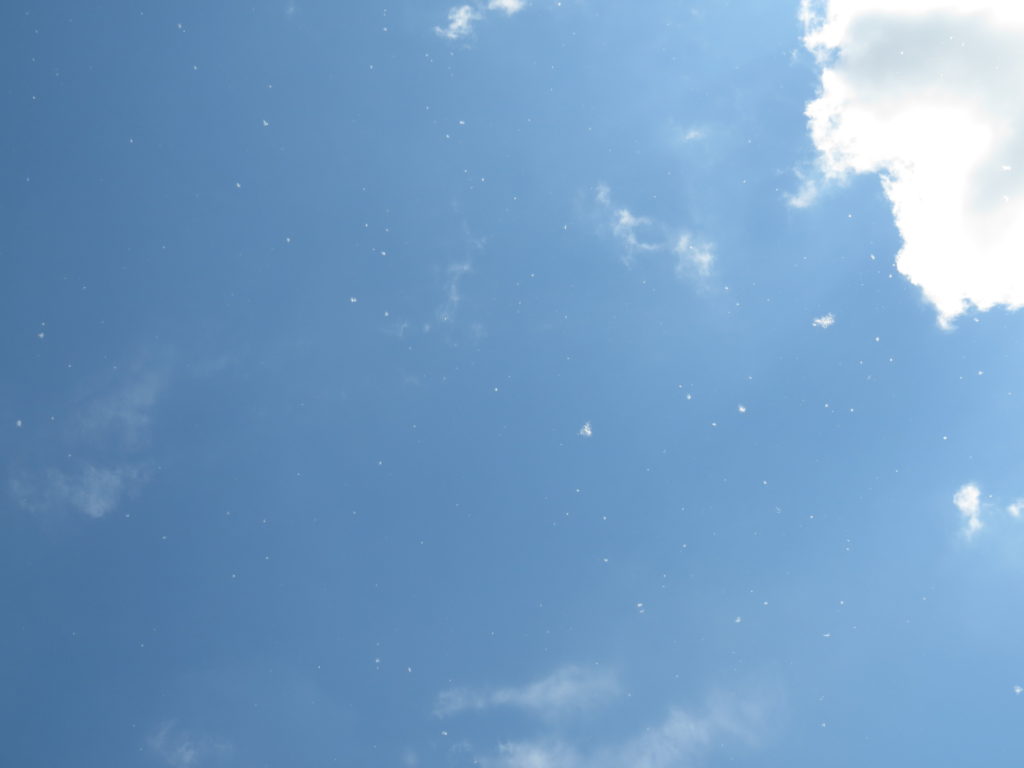
And then, as I walked home in the July heat and humidity, it started to snow! Out of the blue sky drifted snowflakes—snowflakes of Cottonwood seeds. It was somewhat of a miracle to me—‘snow’ in July!

A month and a day after the snow in July, Paul passed from this world. He and his dear family caregivers had a week of the very serious business of dying. I can’t even imagine, though we waited for texted updates and prayed for…. oh my gosh, the things we prayed for changed as the week went on. On Sunday, it would have been ‘easy.’ Each night after that, we wondered how he was holding on, why he was holding on, who he was holding on for. I have so much respect and honor for our family members who were by his side every hour of that long week. But from my distance, it struck me like a lightning bolt that Paul’s dying wasn’t only about his letting go, seeing people one more time, saying and hearing the words that would never be said or heard again, and holding on for whatever reason—it was about us all. We are all part of it. Everybody who loved him and who he loved was a part of his dying. We all longed to see certain faces, say certain words, take away pain, if only we could, pass on peace, and change the way we do certain things in our lives. What did each of us need to let go of, say or hear said, promise to ourselves and God? How did I not notice that before? What is getting in the way? What is really important in this life? The last time I saw Paul, I kissed the top of his bald head, he said, “See you later,” and we smiled. Exquisite grace, precious moment. Snow in July is a miracle. Life is a miracle. Death is a miracle. We went through the wilderness of dying with Paul to get to the Universe of Love. All the while God is holding us all in the palm of his hand and smiling. This is all part of it.
The Question of Up North
I was talking to a wise man recently about a controversial issue that he had been adamantly opposed to for most of his life. He told me about a number of personal experiences as well as those by people close to him that informed that issue. And then he said, “It has re-opened the question for me.” His simple, calm, and humble statement was like a wave of cool, fresh water on the hot division of our country.
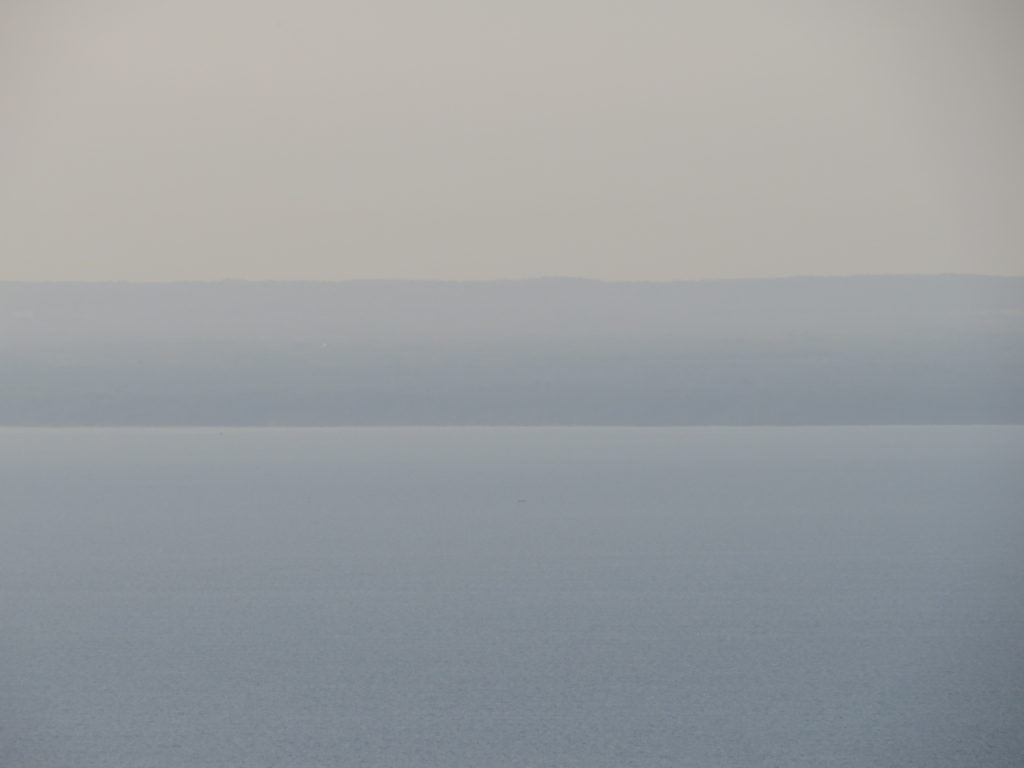
When people in Minnesota talk about ‘up north,’ it can mean anywhere from Alexandria to Brainerd to Bemidji to the North Shore or to Ely and the BWCA. Even the ‘North Shore’ stretches from Duluth to Grand Portage, 145 miles along Lake Superior. Up north can be about deer hunting, skiing, weekends on the lake, hiking the Superior trail, or canoeing in the Boundary Waters. Our trip up north began with Duluth, the shipping port city on the magnificent Lake Superior. We stayed in an Airbnb high on the bluff overlooking the Big Water. In the early morning light and mist, the water, cloud bank, and sky melded together into a monochromatic panorama of simplicity.
We drank in some Nature while in Duluth—literally! We stopped at Vikre Distillery, makers of gin, vodka, whiskey, and aquavit—a Scandinavian distilled spirit. They use local grains, herbs, rhubarb, and wild botanicals including juniper berries, spruce buds, and staghorn sumac—all distilled with the clear, cold water of Lake Superior.
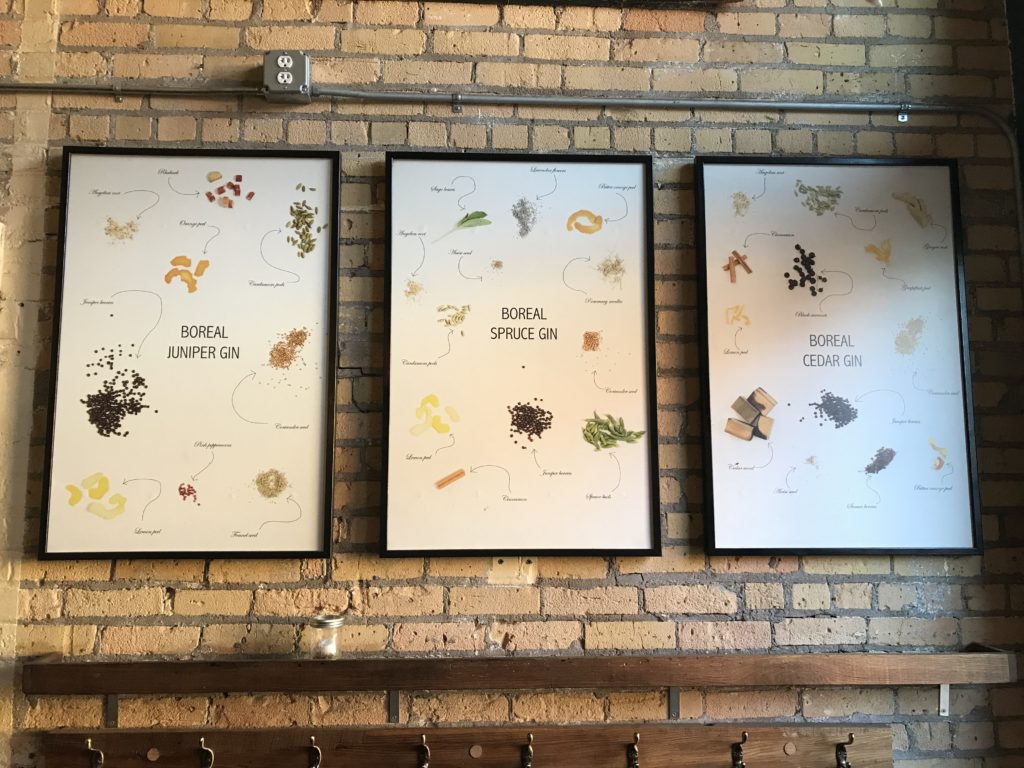
We also visited two Duluth breweries—Bent Paddle and Ursa Minor, both unique experiences made better with the knowledge and energy of the four young people with us who know a thing or two about visiting breweries.
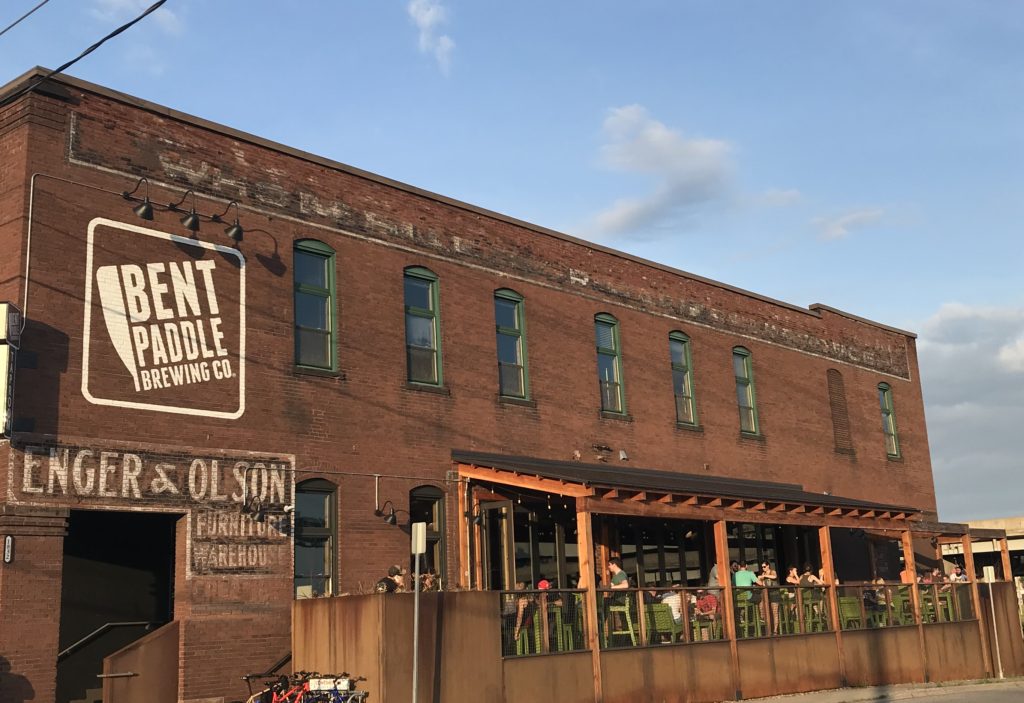
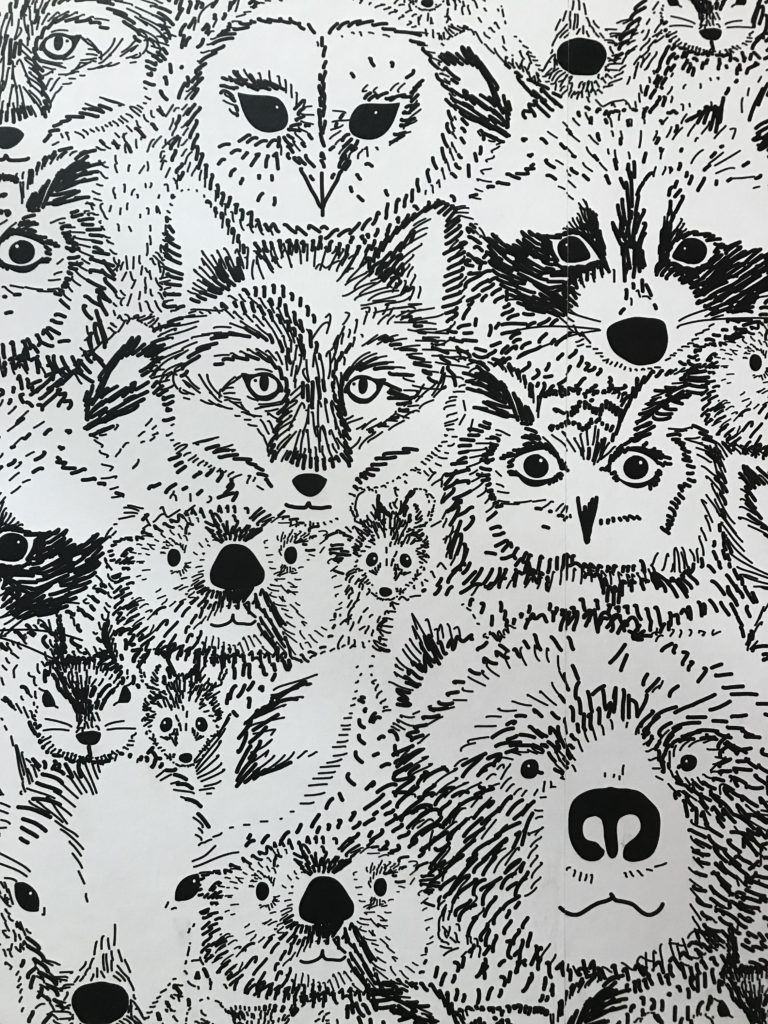
We enjoyed a mouth-watering BBQ meal delivered by a friendly staff person from OMC Smokehouse, located a block away from Bent Paddle. A Celtic band played in a corner of the taproom as we sat on the patio across from them. A trip to the restroom was like trekking through the North Woods—mosaic tile waterfalls tumbled from the bar, a dark hallway ceiling was lit up with tiny lights in constellations from the night sky, and the wallpaper in the women’s restroom featured friendly woodland creatures. Look at those faces!
Ursa Minor is the ‘Little Bear’ constellation in the Northern sky that contains the Little Dipper. The bright star at the end of the handle of the dipper is Polaris—the North Star! We enjoyed wood-fired pizzas made from ingredients that were snipped from the raised-bed garden around the patio. Now, I know I said nothing about the beer, although I do appreciate Ursa Minor’s marketing of ‘comfort beer!’ Beer is something I have never liked or drank—until my adult children and the craft beer industry united with a “taste this one.” Most still made me shudder, until I tried a really dark Oatmeal Stout. My comments included ‘that’s not too bad’ and ‘there’s a lot going on there!’ So I have now claimed the darkest beer (without coffee, that is—another common drink that kind of makes me shudder) as my favorite, and that just makes me laugh!
The destination of our short Duluth stay was up the shore of Lake Superior, past Two Harbors and Split Rock Lighthouse to Black Beach. A protected cove surrounded by rock cliffs and North Shore trees has an amazing beach of tiny black pebbles. It is visually stunning, especially since the cliffs are red rocks. How did this happen? There is a mixture of larger red and black rocks in the clear water, but the beach is mostly black. This area used to be privately owned and was a dumping place decades ago for the tailings or waste rock of taconite mining. Taconite is an iron-bearing sedimentary rock that is crushed and ground to get the iron out of it. The iron powder is then rolled with clay into pellets, dried, and baked. The pellets are loaded into huge ore ships that travel the Great Lakes to steel-making towns. During those years, local fishermen complained about the poor water quality because of the mining waste, and they wanted the dumping stopped. A long ‘fight’ ensued between miners and fishermen and their supporters. Eventually the fishermen won, and the dumping stopped around 1980. So the black beach is man-made, the remains of iron ore mining, the previous dumping grounds of waste now made beautiful by decades of wind, water, and ice.
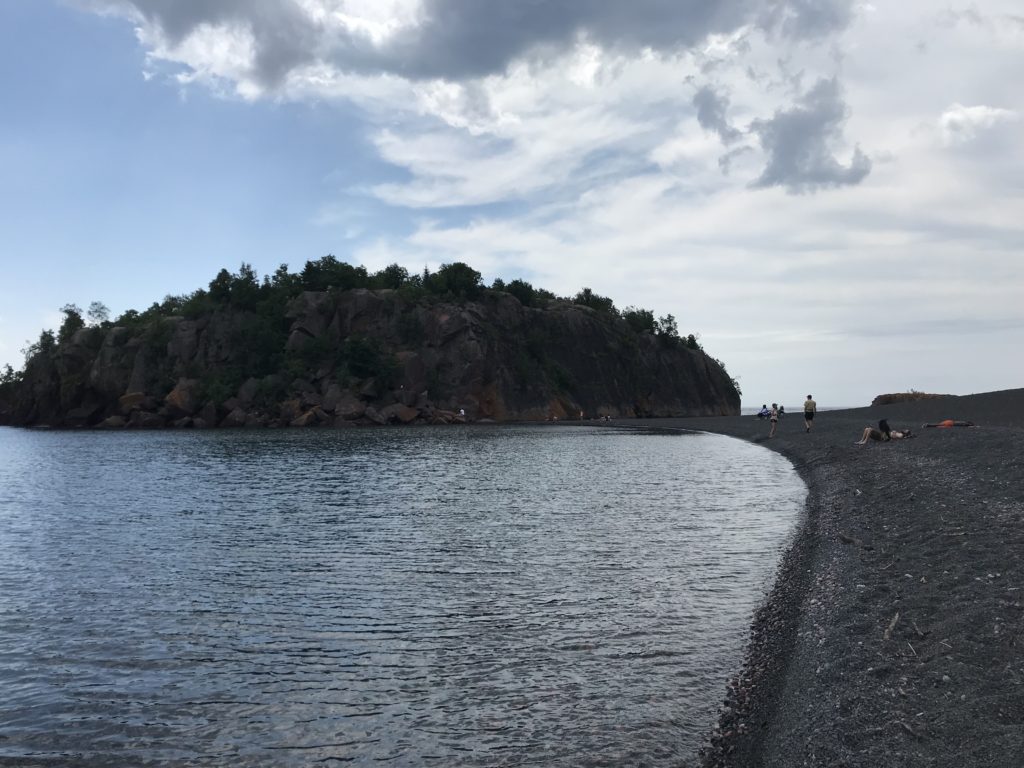
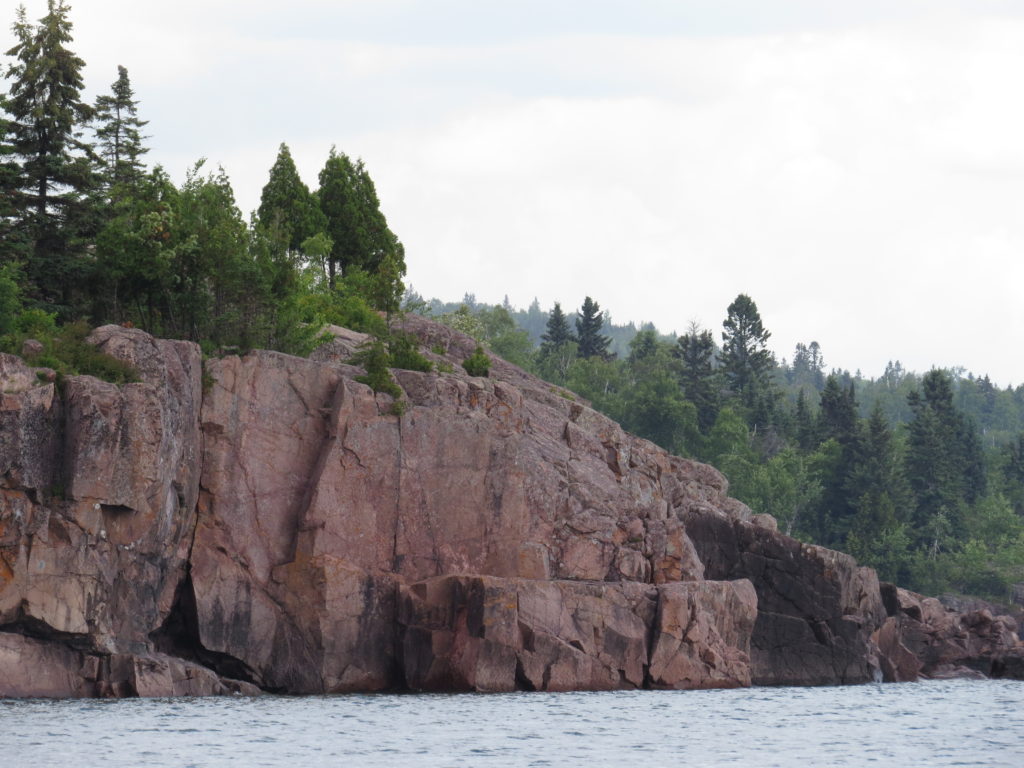
The water was e-x-t-r-e-m-e-l-y cold! Two of us just dipped a foot or a hand in to feel it for ourselves. One walked in for a picture. Two stood knee deep longer than I thought possible, and one brave adventurer plunged his whole body into the frigid Wim Hof experiment. Luckily the sun-warmed black pebbles helped everyone warm up again.
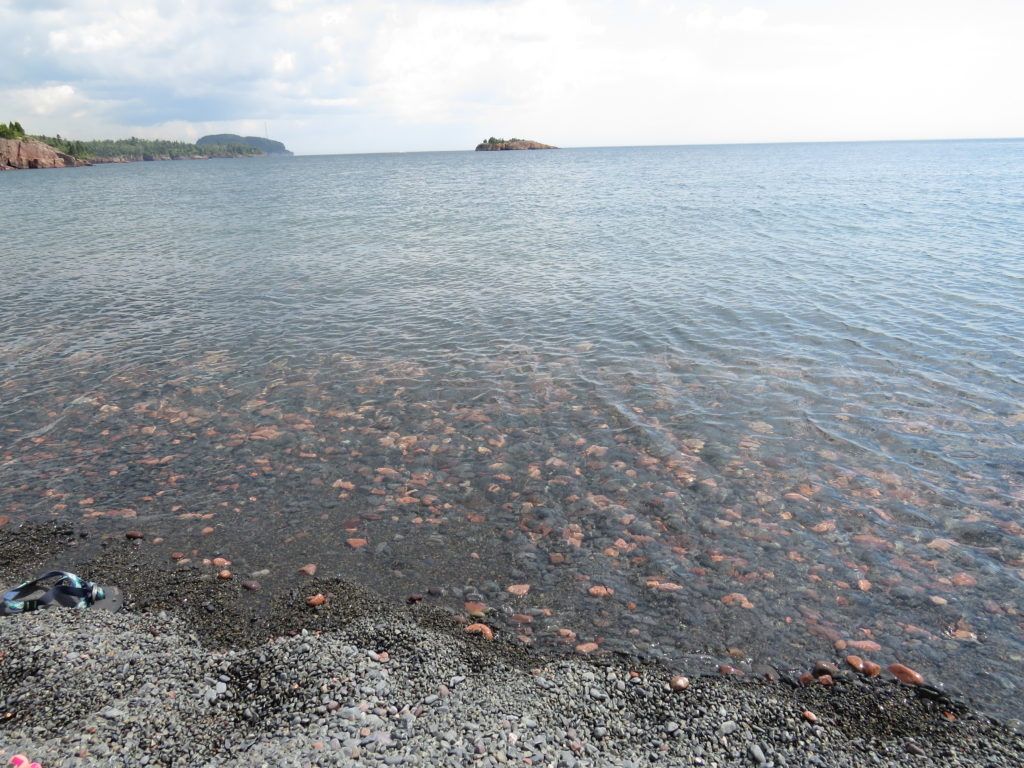
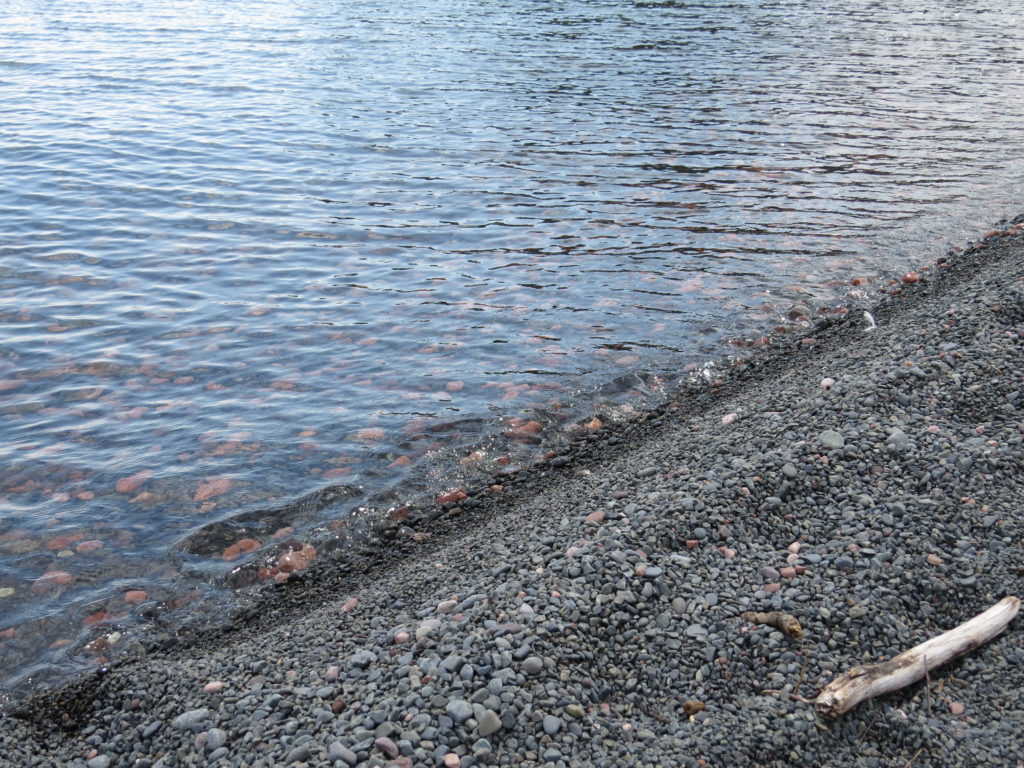
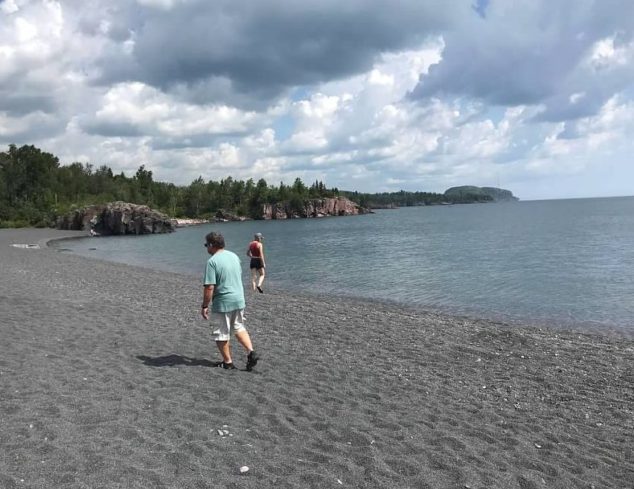
‘Up North’ encompasses a huge territory of lakes, forests, towns, and wild places here in Minnesota. It means different things to different people—the experiences are unique and meaningful to each individual, all while within the comforting clause. Each person defines and holds dear their own ‘up north.’ Lake Superior is the anchor, the expanse, the shining beacon of the North Shore—it is our ‘ocean’ of water. It makes up the body of the spirits and beer we tasted. It epitomizes the power of Nature. Who was the ‘correct’ group when it came to the waters of the Great Lake—the fishermen or the miners? Ideals and lifestyles have been the clashing grounds for eons. So what changes us? My wise friend recounted his personal experiences and those of people he cared deeply for and asked the question, “How do these experiences mesh with my admittedly rigid view of the issue?” It re-opened the question. Is cold water therapy a thing? Dive in and re-open the question. How can anyone drink beer? ‘Try this one’ and re-open the question. Just like the black beach, we can be changed and restored. It’s not about the answer per se; it’s about the question. It’s not about other people; it’s about ourselves. It’s not about correctness; it’s about possibilities. Perhaps the next time we meet on the North Shore I will be drinking coffee—who knows?!
Good Advice for Myself
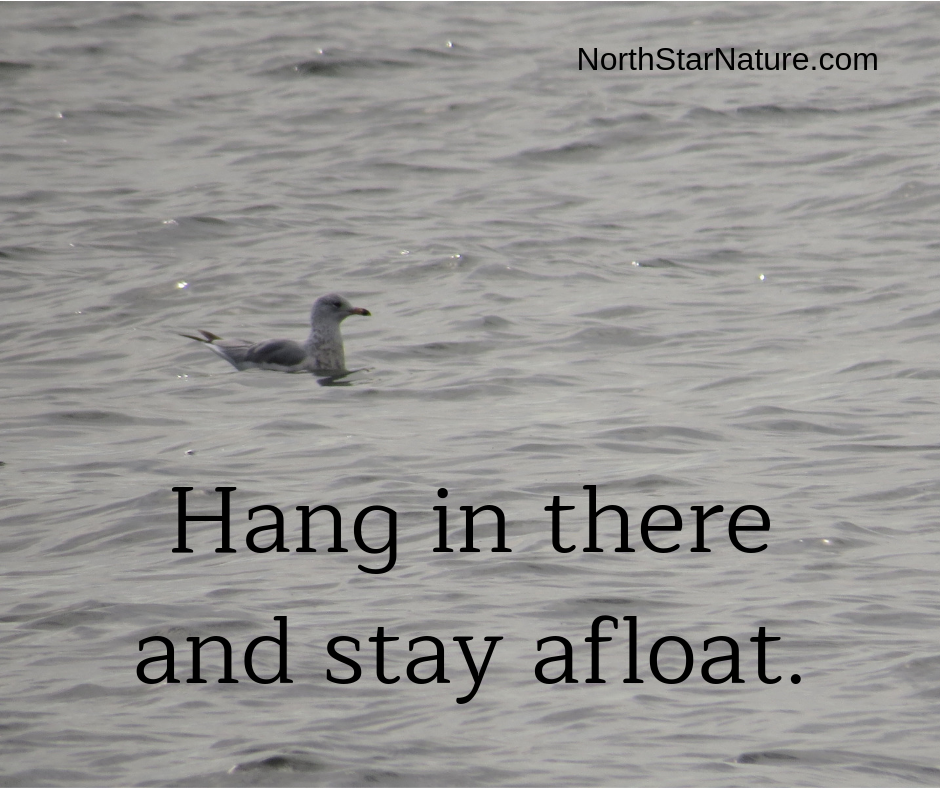
I’m writing this to myself today and to anyone out there who needs to hear an encouraging word. Hang in there, NorthStarNature fans—I will be back with a blog post from our little trip North.