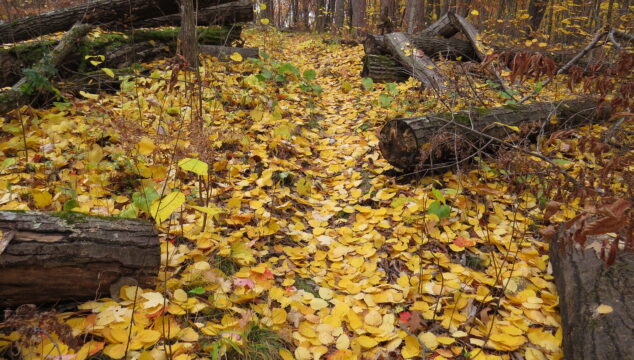
Come walk with me in the peak Autumn beauty of the Northwoods. To say that I love this time of year is an understatement. Most everyone can appreciate the colorful falling leaves---it reveals the 'true self' of a tree when its leaves are no longer producing chlorophyll. Their true colors are revealed, and there is something simple … [Read More...]
Archives for 2018
No Holding Back
“No matter how long the Winter, Spring is sure to follow.”
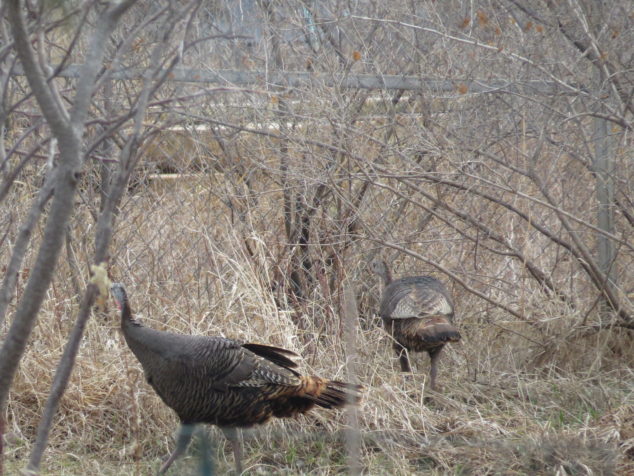
Three weeks ago we had a foot of snow. But Spring will no longer be held back! On Monday, two turkeys foraged along the road pecking at emerging leaves of green grass and tender new buds.
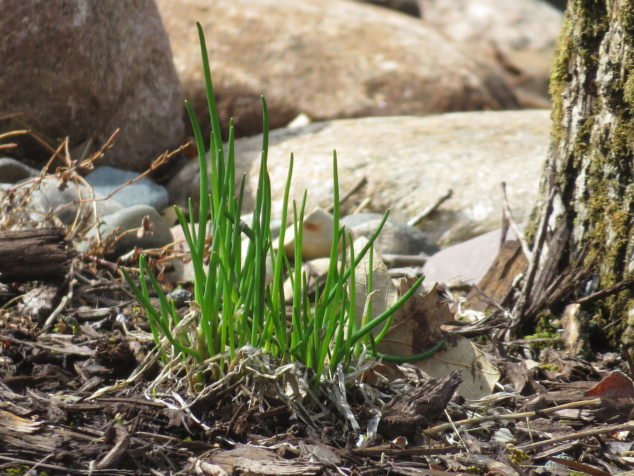
It was so wonderful to see the grass finally turning green and the chives pushing their way up!
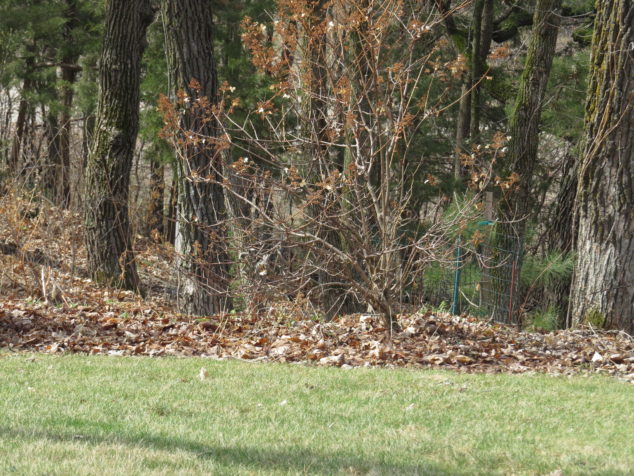
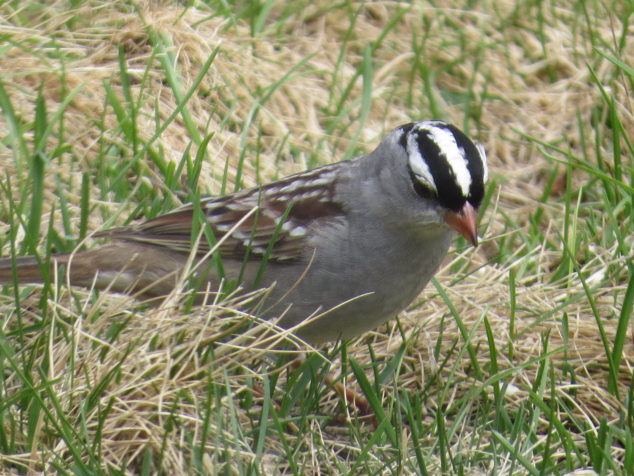
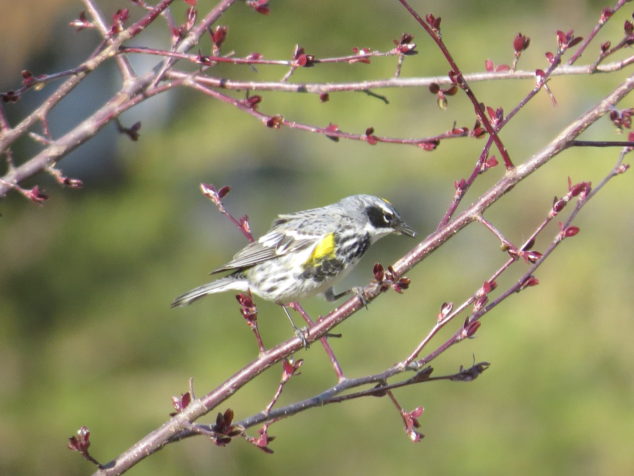
Two visitors passed through on their way North—a White-crowned Sparrow and a Yellow-rumped Warbler.
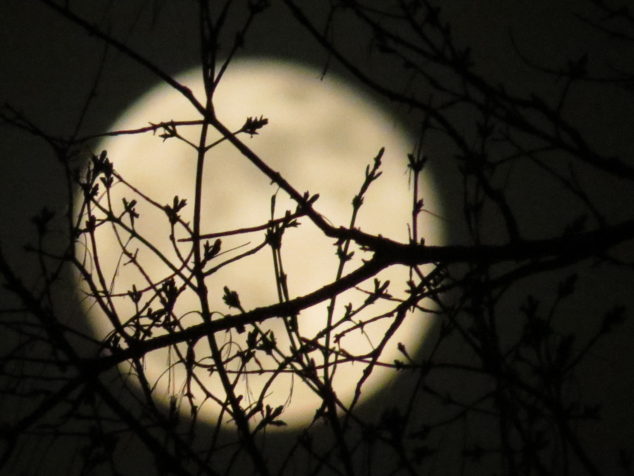
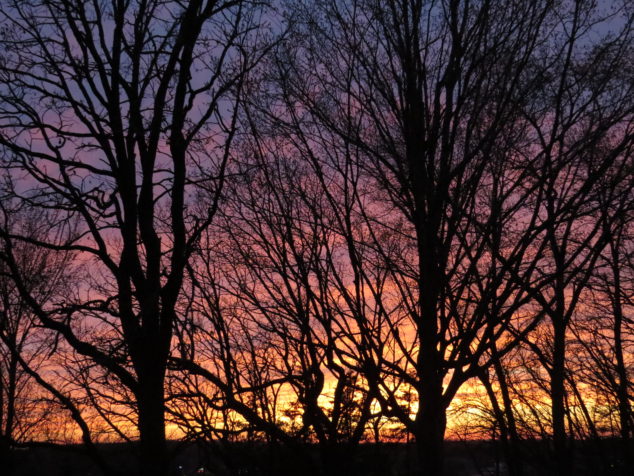
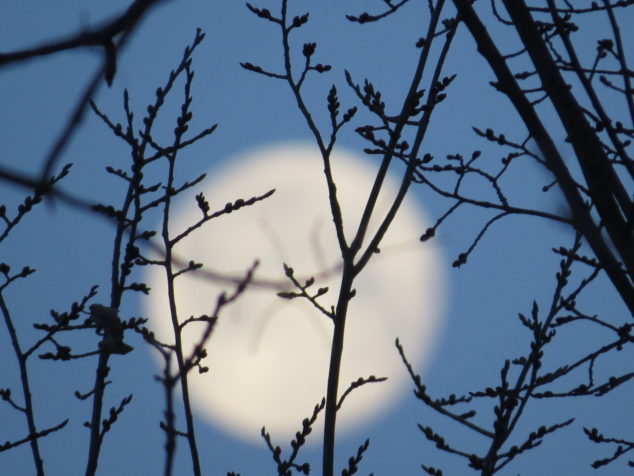
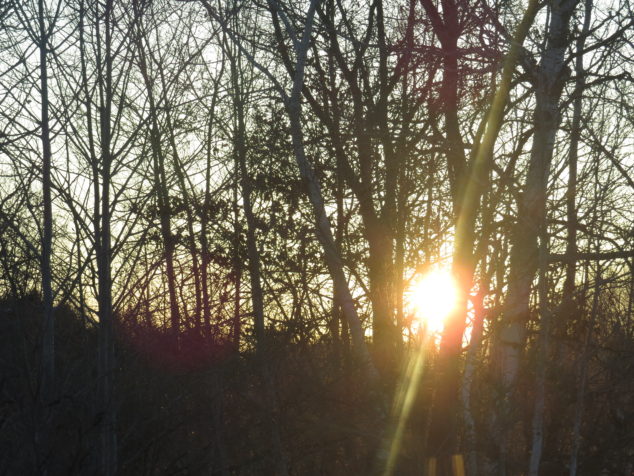
April’s end-of-month full moon illuminated buds on a tree, and a colorful sunset shone through the silhouette of trees where soon leaves will occlude the splendor.
The Bluebirds returned this week! Their swift, swooping dives and chattering songs fill the front yard as they check out the nesting boxes.
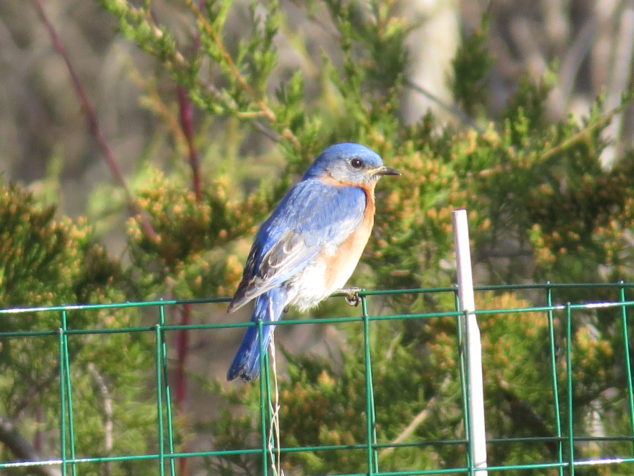
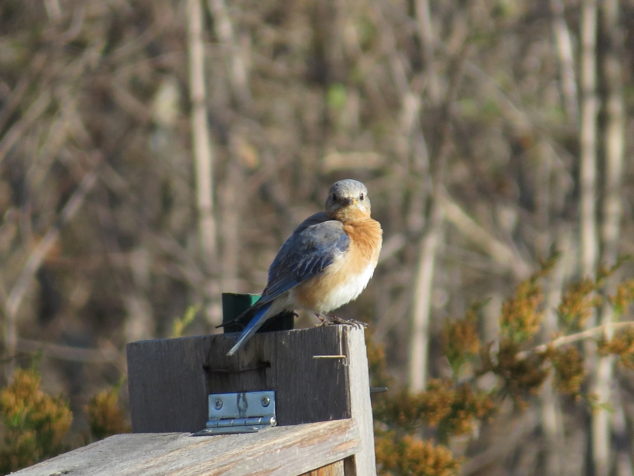
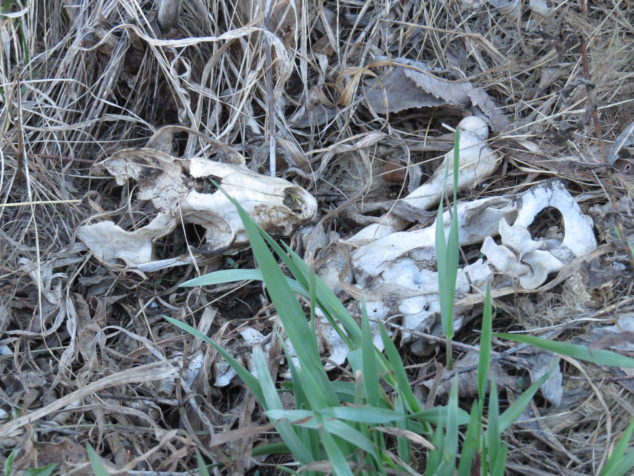
On Thursday, I finally got to my annual Earth Day ditch clean-up. Once again, with most of the trash being plastic, I urge everyone to ‘ditch’ plastic shopping bags and use paper or reusable bags. It will make a difference! I also found this unfortunate creature who didn’t make it through the winter—one of our resident opossums who waddle back and forth from the quarry to the woods.
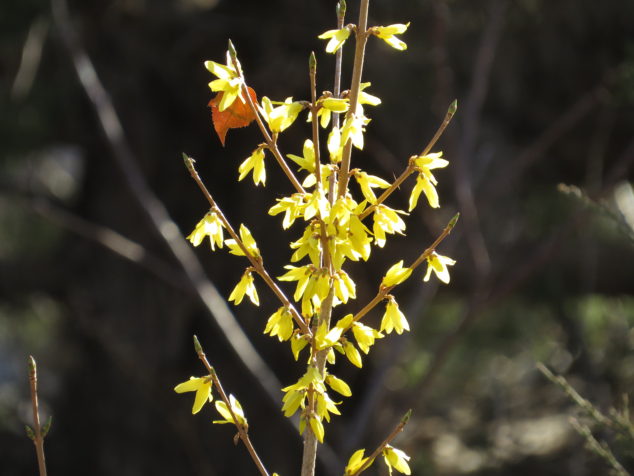
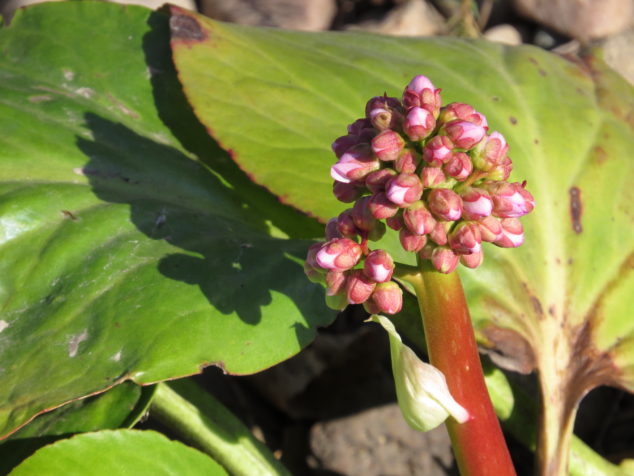
By Friday, the Forsythia and Bergenia were blooming! The lemony yellow Forsythia flowers shone in the morning sun along with one orange fall leaf that had held on through the winter.
The Bergenias send up a study flower stalk between green leaves that have weathered the winter and those that dried and died. No holding back.
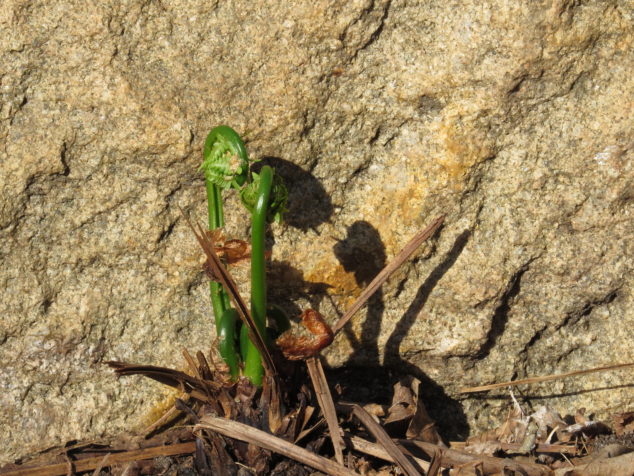
Ferns with their rolled fiddleheads emerged by warm rocks, casting shadows just as intriguing as the fiddleheads themselves.
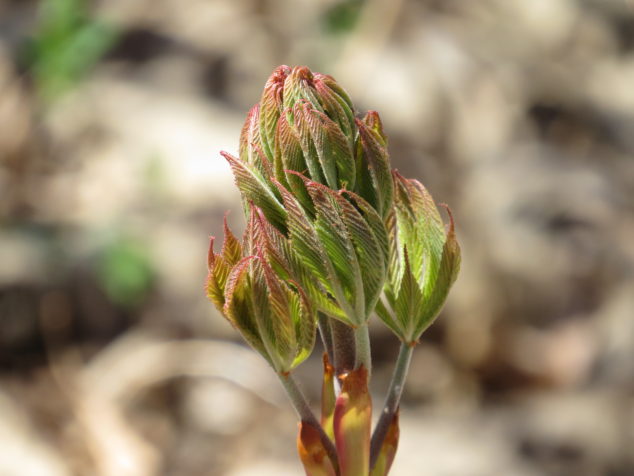
The most amazing bud to me is the terminal bud of a Buckeye tree. I’m always incredulous that such a huge amount of leaves can be coiled into one bud—and they are beautiful as they unfurl!
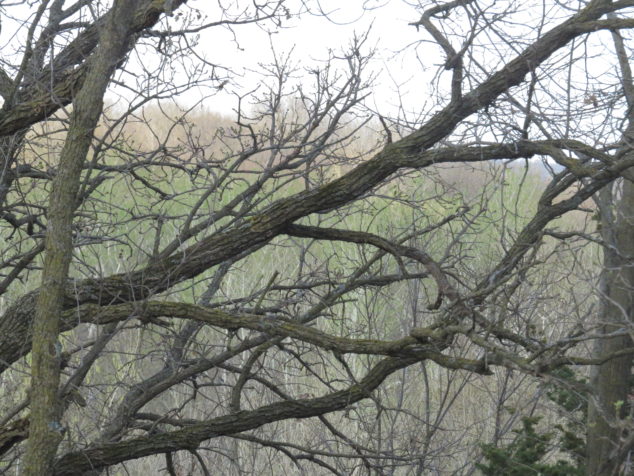
One sign of Spring that I always look for is the ‘green blush’ of new leaves on the Aspen trees down by the river. Thursday, no green blush, but Friday morning, it was there!
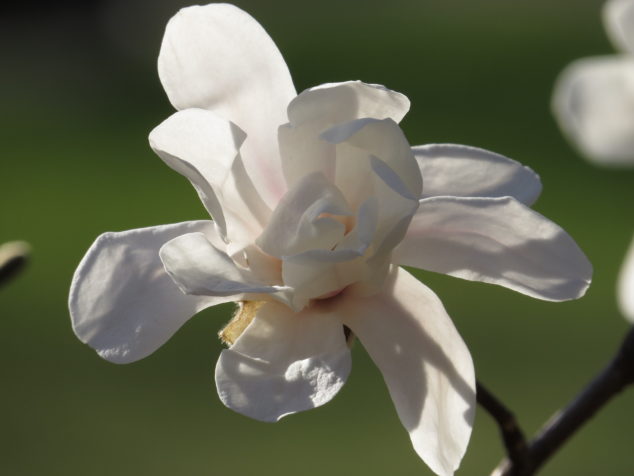
The floppy, fragrant petals of the Star Magnolia opened on Saturday. So beautiful!
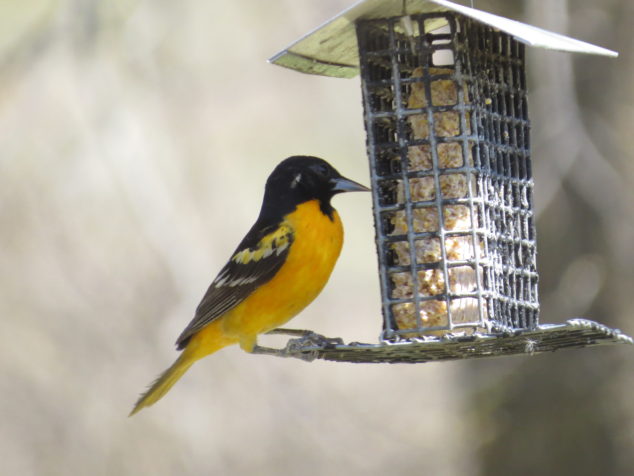
For the first time, I saw a Baltimore Oriole come to our feeder! No holding back the Goodness of Spring!
I think most of us up North would agree it’s been a long winter, but Spring sure has been sweet this week. It’s as if all the power and potential can no longer be held back, even as the last piles of blackened snow melt and the frost recedes from the ground—Spring has come bursting forth! There are many times in life when we feel the holding back and comfort of what is known along with the pull of a new adventure. A baby is happy to sit or crawl until the urge to walk implants itself in mind and body—there is no holding back. Children are eager to learn and ‘do it themselves’ after years of parents doing it for them and teaching them motor and mind skills. Adolescents oscillate between being a dependent child and pushing their way to adult independence. At some point, there is no holding back the desire to live one’s own life. A similar thing happens in mid-life after decades of striving, achieving, raising children, putting plans on hold, paying bills and doing the necessary matters. We wonder if we have lost ourselves, if there is something more to life, if we have fulfilled our potential—we forage for new ways or remember something from the past that we have carried with us like a lone, orange leaf. Some parts of our lives die—by our own hand or by the hand of a higher power. We explore intriguing shadows that lead us back to our own intriguing selves. No matter our age or circumstance, we are beautiful as we unfurl.
When I Found a Tree and a Woman
It was during one of the hardest times in my life when I found a tree. It wasn’t that it was hard to find or anything—I had literally driven past it hundreds of times in my whole life, and it was a huge tree. It stands in Pioneer Park just east of a little log cabin on display for picnickers or interested Highway 14 by-passers. During the annual Arts Festival, its expansive crown offers a shady respite in the July heat for snow cone eaters and tired babies in strollers. Many people have leaned against the wide trunk while listening to the lilting flute of Brulé and other music performers on the small stage tucked among craft and food booths.
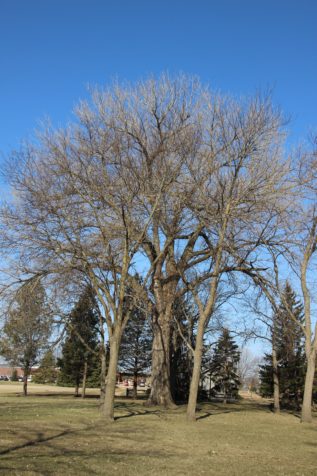
It was during one of the happiest times in my life when I found a woman. I actually found her after I serendipitously found her son—or he found me—in the same town where the huge Cottonwood tree lives. She lived in a suburban split level house in Kansas City, Missouri, and I spent many nights and days in her home before Chris and I married, and she cautiously, quietly, graciously welcomed me into her life and the life of her family. She became my Mother-in-law the day after we drove by the old Cottonwood on the evening of our wedding rehearsal.
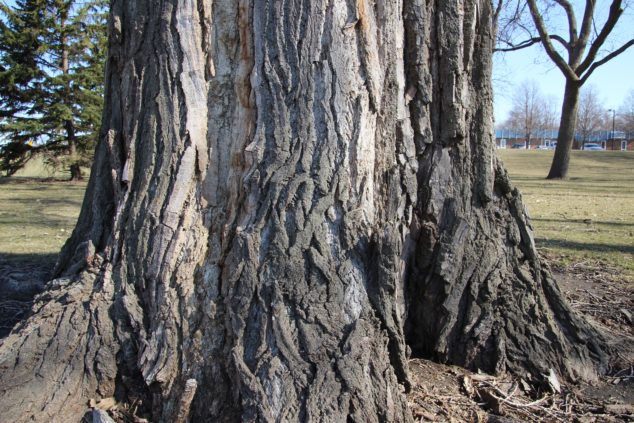
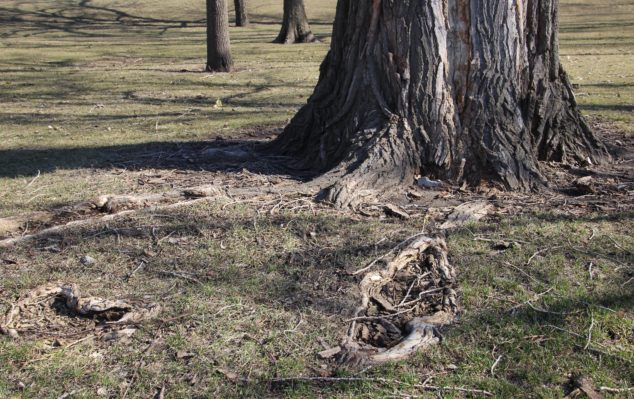
When I found Grandmother Cottonwood, twenty-three years had passed since the happy day we drove by her to celebrate our marriage. When I found this tree, my soul felt like it was dying. I was confused, grief-stricken, weary to the bone, unable to find my way forward on any given day. I sat staring out the window during the days and walked into the chilly nights with nowhere to go—aimlessly trying to flee the pain while at the same time yearning for something. I had been blindsided—me and my whole family—with no left tackle to see what was coming and to protect us. Nobody knew what to say or what to do. One evening as I walked through the park, I walked over to the ample trunk of Grandmother Cottonwood and laid my body against her rough bark. Her roots were large as trees and created a trough of tenderness for me to recline into, and I felt held, comforted, and understood in her solid silence.
This woman named Ruth became my second mother, as I was four hundred fifty miles from my own mom. I helped her do dishes and set the table for family meals, decorate the Christmas tree, and move furniture. She helped me understand my father-in-law, learn how to make a great salad and to live simply and well. She was my protector when I was pregnant, and she held every grandchild—not just our three—with the tenderness and wonder of a miracle happening before her eyes.
Often on my nightly walks all those years later when I was once again near my home, near my own mom, I would go to the park, to the Cottonwood tree and lean against the deeply grooved bark. My painful, nervous energy would flow into the ground, swallowed up by the roots of the old tree. I would look up into the bare winter branches and wonder about all the changes this old tree had seen, all the storms it had lived through, all the celebrations it had witnessed, and all the creatures who had lived among its branches. My body would calm down, my mind would reset, and my soul would flicker back to life.
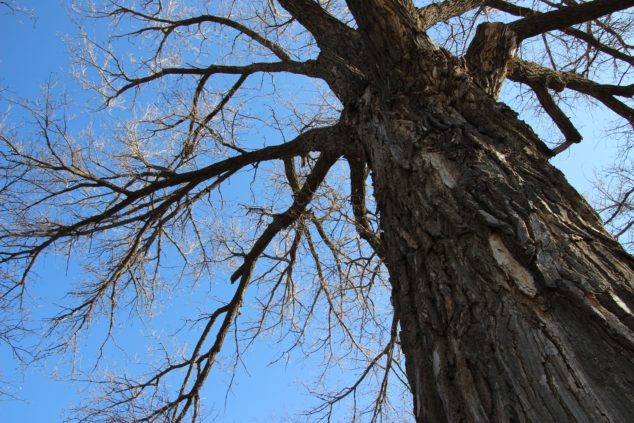
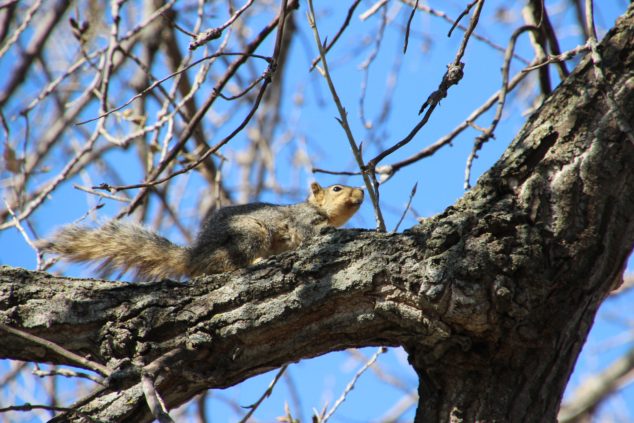
In those happy days when I found my husband, when I found Ruth, when I found motherhood, my joy was multiplied in all kinds of ways. My roots grew down, and my branches grew up and out. Later, in the hard days, I had lost my mother-in-law, my father-in-law, my bearings, my dreams—my branches were being torn from me and my long-held convictions were being up-rooted—and I found the wise, old Grandmother Cottonwood.
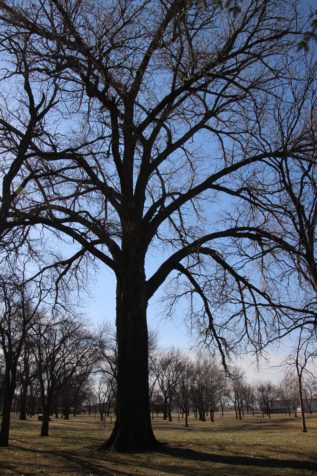
It’s been fifteen years today since Ruth died, and yet she lives on within me because of the many gifts she gave to me and to her whole family. She gifted us with her laughter, her quiet strength, and her deep love. I am ever so glad I found her. I am grateful for finding Grandmother Cottonwood during my hard time, whose quiet, old strength and wise ways helped to heal my battered and broken soul and calmed my weary body. I am grateful to my Mom, who expertly took these photographs of the beautiful old Cottonwood, since I am one hundred eighty miles from both of them. At certain times in our lives we find people or trees or animals who save our souls during hard times and enhance our lives during happy times. Welcome them cautiously, quietly, and graciously.
Earth, Teach Us on this Earth Day
EARTH, TEACH ME
An Ute Prayer
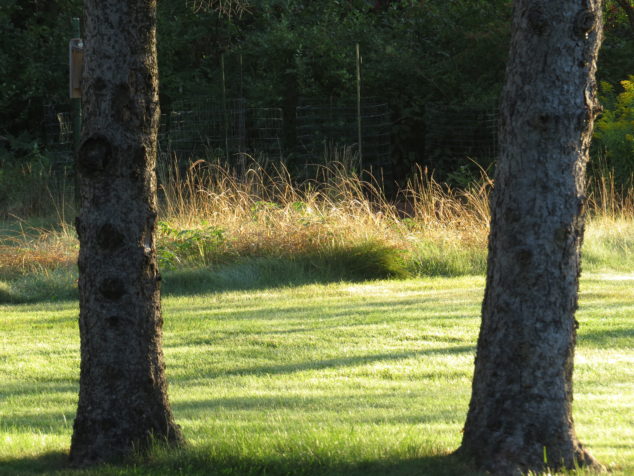
Earth teach me quiet—as the grasses are still with new light.
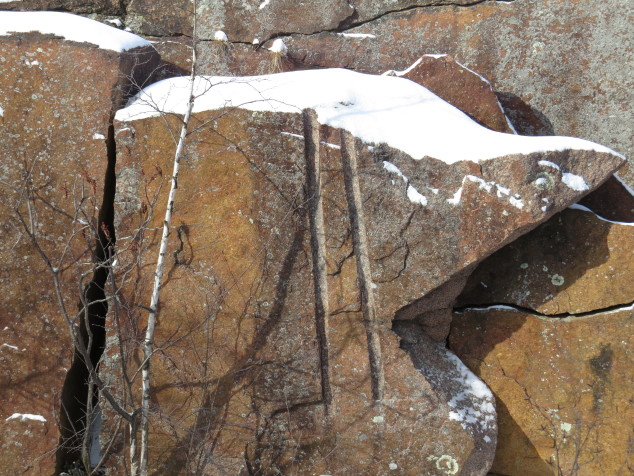
Earth teach me suffering—as old stones suffer with memory.
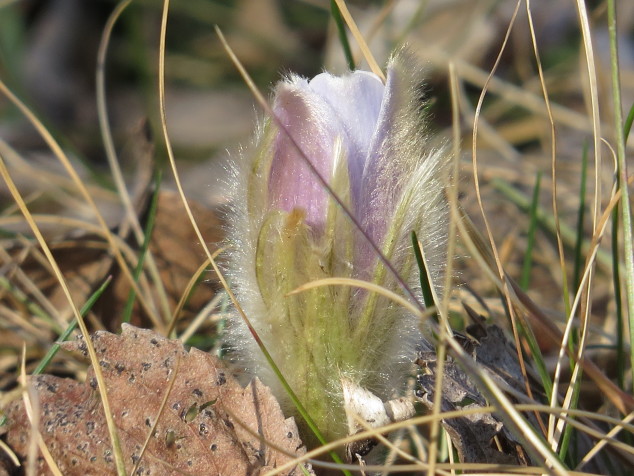
Earth teach me humility—as blossoms are humble with beginning.
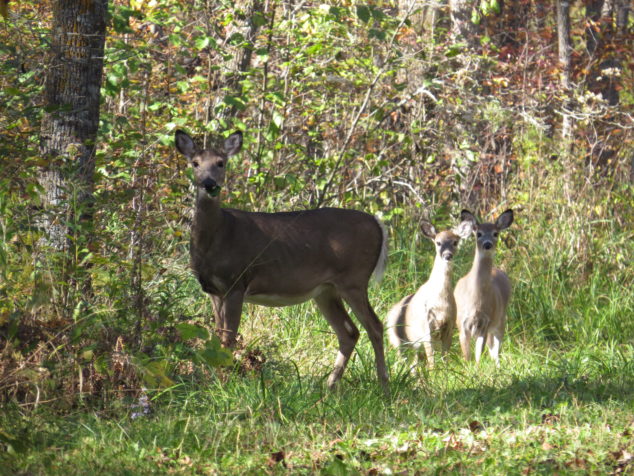
Earth teach me caring—as mothers nurture their young.
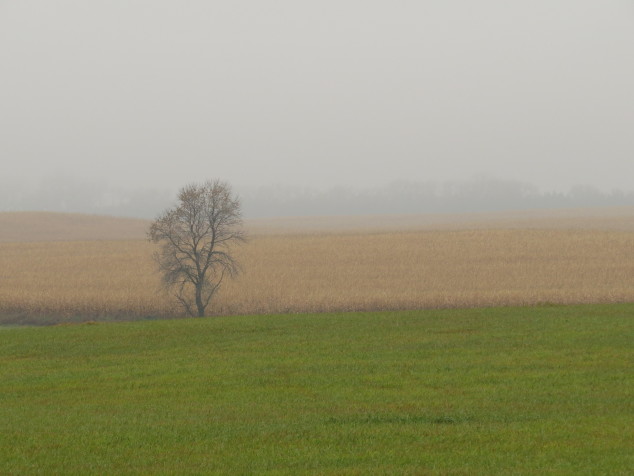
Earth teach me courage—as the tree that stands alone.
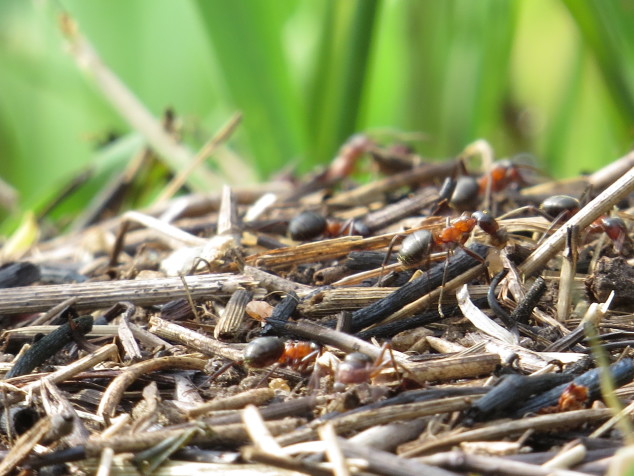
Earth teach me limitation—as the ant that crawls on the ground.
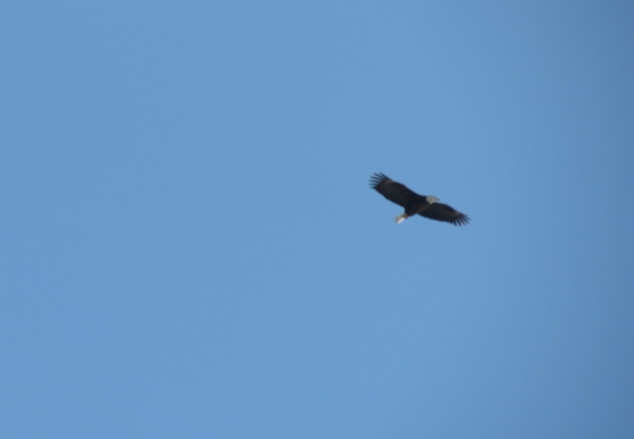
Earth teach me freedom—as the eagle that soars in the sky.
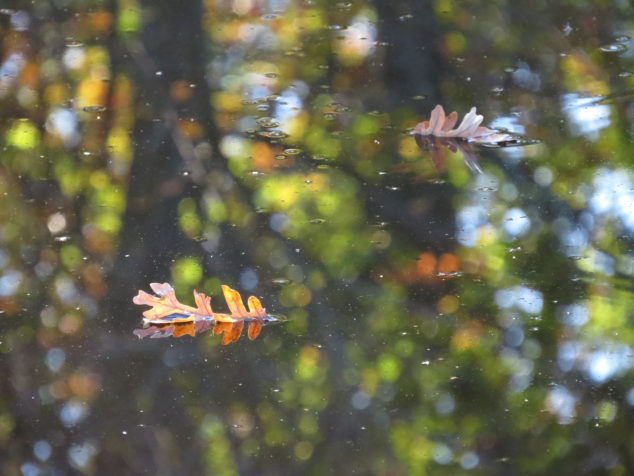
Earth teach me acceptance—as the leaves that die each fall.
Earth teach me renewal—as the seed that rises in the spring.
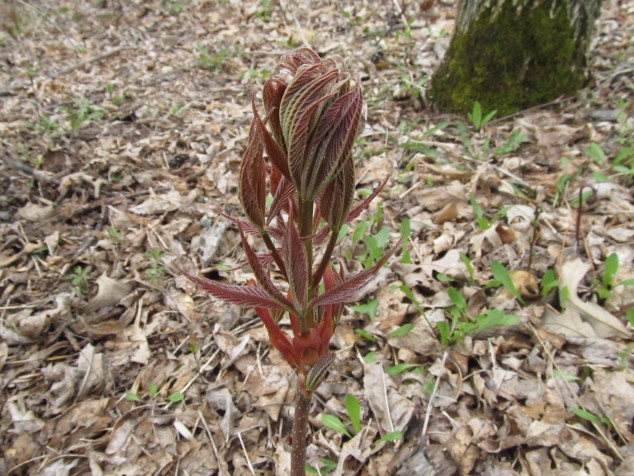
Earth teach me to forget myself—as melted snow forgets its life.
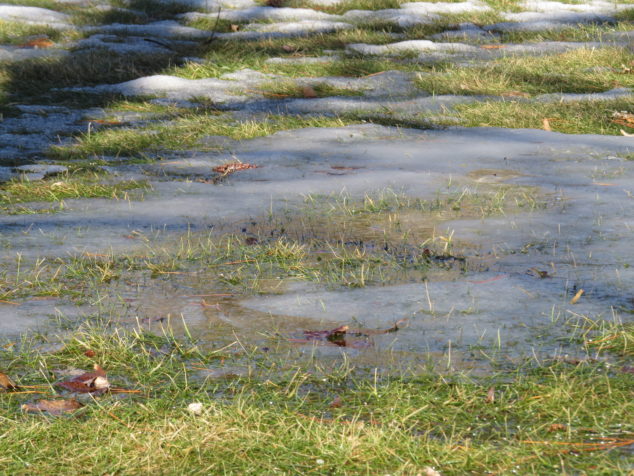
Earth teach me to remember kindness—as dry fields weep with rain.
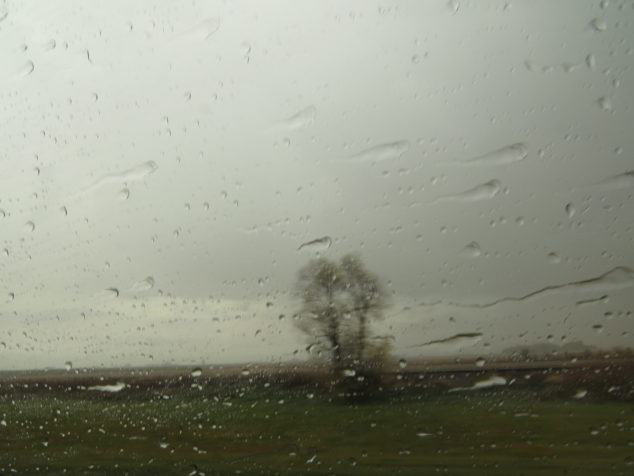
Let the words of this beautiful prayer float around you as they are sung by this talented choir.
Earth Day is a special day to remember and celebrate all that is good and beneficial about our Earth. We are the stewards of this Home to us all. And just as caregivers to children or elders know, the cared-for also teach us in profound ways. The Earth and all of Nature—our Mother Earth, our Mother Nature—can teach us qualities we need to know. Are we receptive? We can learn listening skills from the quiet of grasses in the morning light. We can learn resilience from the suffering of our earth and rocks from exploitation and apply that to the heavy stones we carry of our burdensome memories. Like a child, we can cultivate wonder and humility as we watch the miraculous unfolding of flowers. We can learn responsibility and how to nurture vulnerable creations as we watch animal parents care for their young. The solitude of a lone tree can offer us a model of courage and fortitude in the face of harsh conditions. When we feel small and inadequate, we can remember how the ant lives with limitations, and in that reality, can actually perform great feats. An eagle in the sky models freedom and possibilities. We can learn acceptance and peace from the cycle of life. There are yearly lessons of renewal and rejuvenation with each Spring. We can learn about transformation and transcendence as we watch snow melt to water, water turn to vapor, vapor fall as rain. And as that rain provides the very basic need of water to dry plant life, we can learn about kindness, philanthropy, and grace. There, but by the grace of God, go I. Imagine our world, our Earth, our lives if everyone learned these eleven lessons. Happy Earth Day!
April Fooled
When I was younger, in those early thirties days when one begins to come out of the rather clueless, self-involved but necessary decade of fun and invincibility, I began to learn about myself. I remember reading a book that described the actions and reasons for what the experts now call co-dependency. I remember being excited to learn this information that made sense of my feelings and interactions with other people! I immediately shared the good news with my best friend, ready to re-make our relationship into a better functioning, more equitable friendship. I was fooled into thinking that information easily translates to action, that this change would be easy, that we both would want this to happen. Instead, it was the beginning of the end of our long and lovely friendship—the very thing co-dependents dread the most. And I was slammed with loss and devastation.
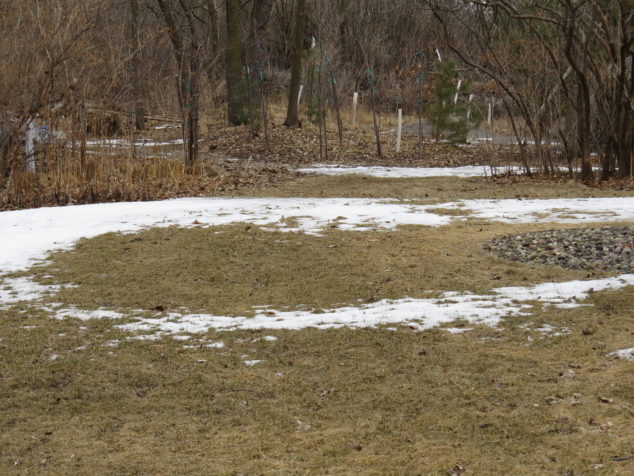
Since Spring officially arrived on the calendar, we have been fooled into thinking Winter was easily going to pass the baton to Spring. Instead we have had single digit temperatures more like January and more snow than we have seen the whole rest of Winter. After our post-Easter snow and the one after that, we warmed up this week and made progress towards Spring—at least in the first step of getting rid of the snow. The deliberate, clipped tracks of a fox melted into a ground-baring trail that disappeared into brown grass. Progress.
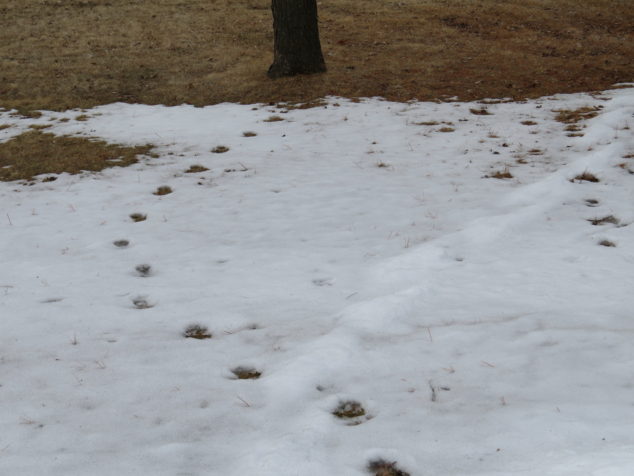
By Friday morning, the yard was more grass than snow. Progress!
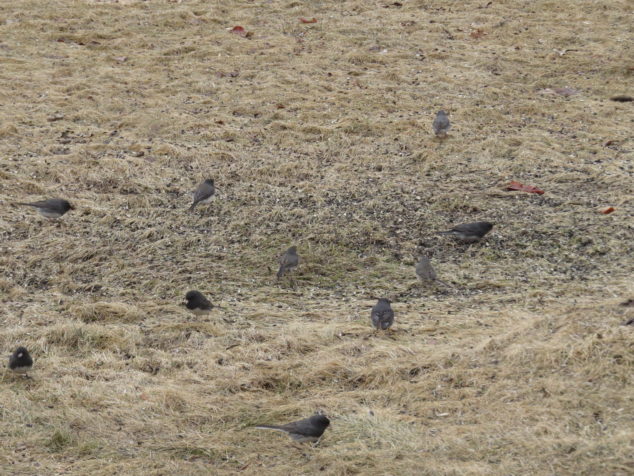
A flock of Juncos descended on the remains of sunflower seeds. Were they fooled into heading North for their Spring mating and Summer living?
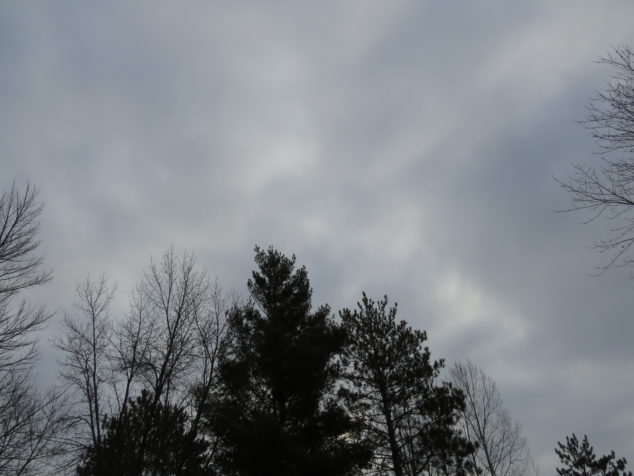
The weekend forecast was already warning us of another big snowstorm, bringing dreadful resignation that Mother Nature is in charge, no matter how badly we want Spring. The early morning sky dawned red with warning. The barometric pressure fell, inducing discomfort in joints and heads. There was uneasiness in the air.
By afternoon, snow and sleet slammed into the house from the north northeast. “Ha! Fooled you! Don’t even think about Spring,” roared Mother Nature. Spring took two steps back towards Winter.
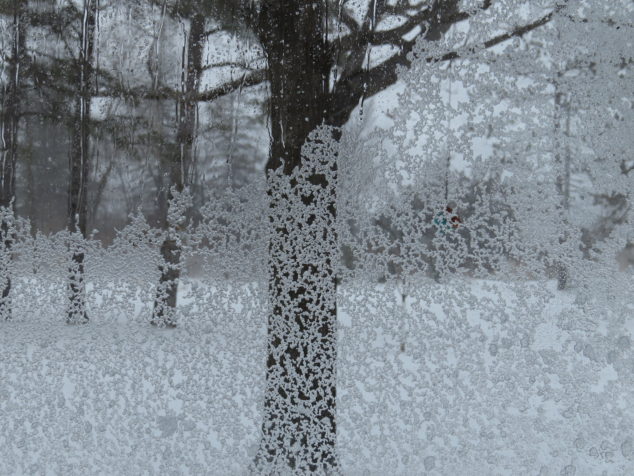
Wind howled through the night and through the next day, crescendoing in gusts to 64 mph. What we believed about Spring was being challenged with might and resistance from the old, clingy, egoistic ways of Old Man Winter.
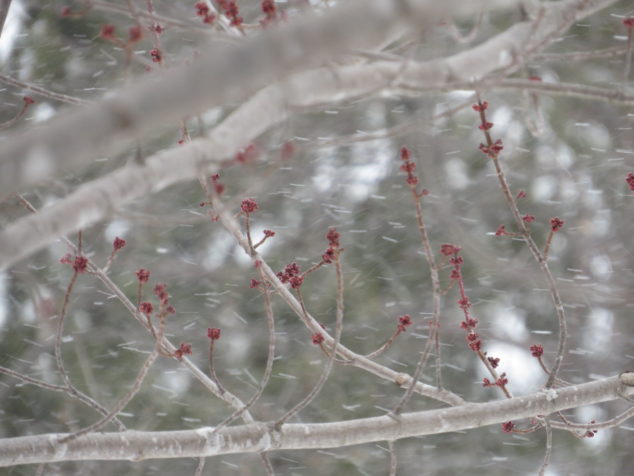
Sunday morning the wind was still blowing and the snow was still snowing. The sidewalk I had shoveled yesterday was completely covered with a drift even bigger than the one before. Snowflakes flung by the wind stung my face as I walked the dog in my full winter gear.
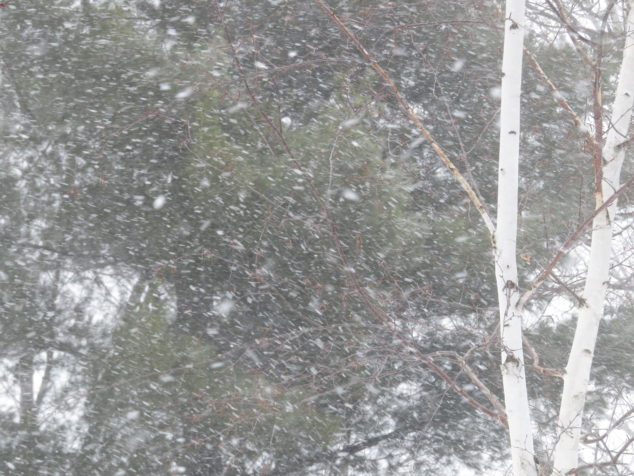
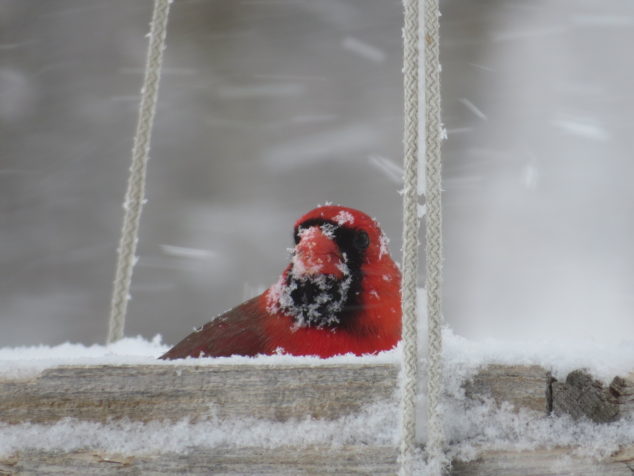
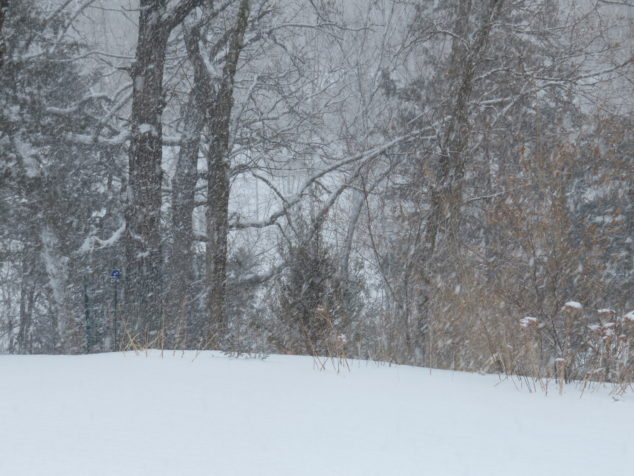
What to do? Shovel the walk again. Wait until the snow stops. Shovel again. Repeat if necessary.
We have been April fooled. We are starting our fourth week of Spring. Snow should be gone. Daffodils are usually blooming by this time. Ice is usually off the lakes. None of those things. Instead we’ve had a three-day blizzard as we sit indoors eating humble pie. I wish I could profess I was never fooled again after those painful early thirties, but the truth is I continued to be fooled by people, situations, and myself. Most of us tend to take situations and people on good faith, with good intention, with hope and the benefit of the doubt, and that can lay the groundwork for the capacity for things to go wrong. The good news is we keep learning about ourselves, and we make progress. We take two steps forward, then one step back. Sometimes we are flung back many steps by challenges from our old, clingy, egoistic selves and way of life. Change is hard, and change is not linear. Sometimes we drop the baton—again and again. At times we wait for the snow to stop snowing and the wind to stop blowing, and then we try again. So let’s lift our shovels to Progress! Spring actually is on its way!
Snow and Wildflowers
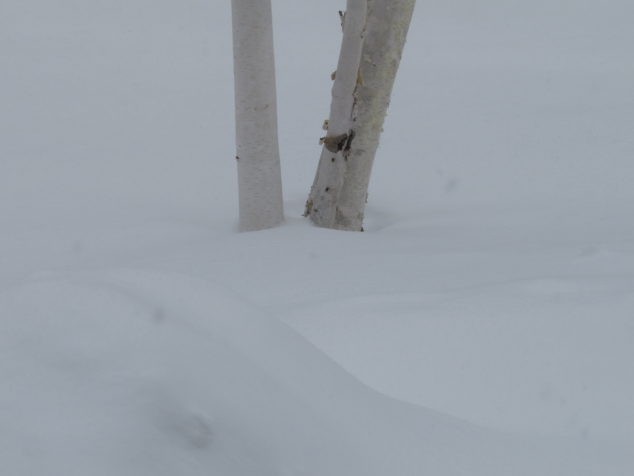
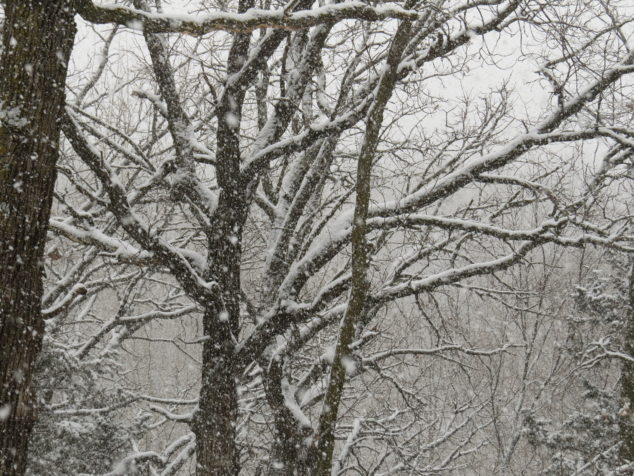
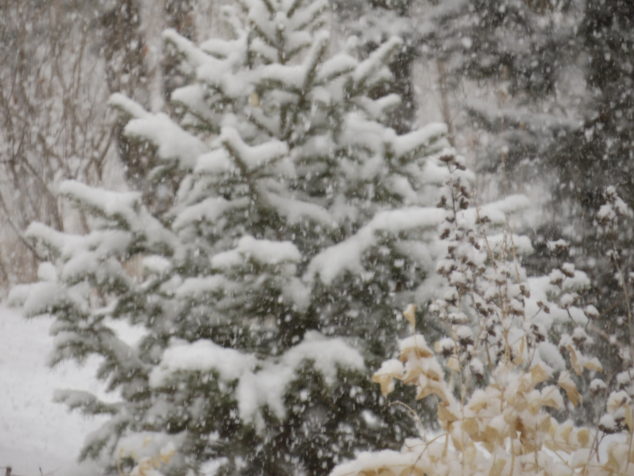
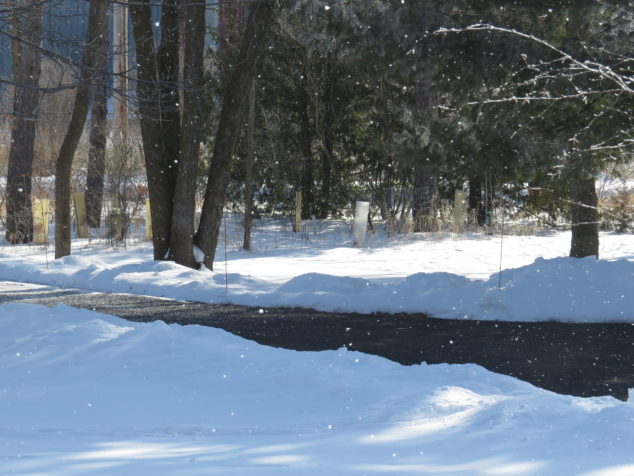
“Aren’t you tired of taking pictures of snow?” asked my daughter Emily with a sigh, after I updated her with the snow and cold report from Central Minnesota. While we were basking in sunshine and snow for Easter, she and Shawn were hiking through wildflowers in 70 degree temperatures in Texas. “It is as it is,” I answered—even though it’s April, even though we had eight more inches of snow on Monday and Tuesday, even though we had single digit temps for three nights in a row this week. “Besides, it’s pretty!” I exclaimed in true Minnesota form.
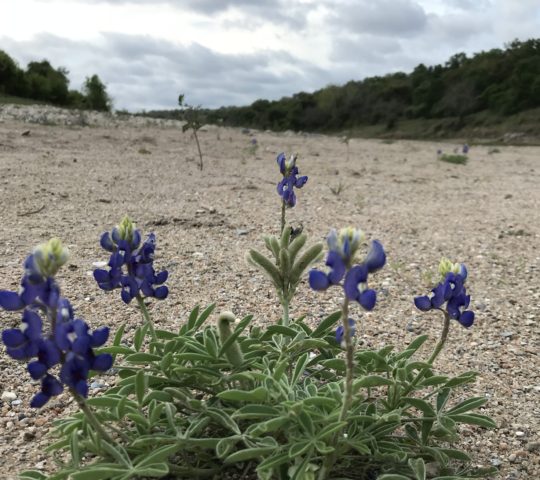
Texas Bluebonnets by Em Brake
Tuesday morning I woke up, rolled over, and looked out the window at the old Oak tree that was the subject of my first blog post four years ago. 257 blog posts and thousands of photographs later, I’m still not tired of taking pictures and writing about Nature in all her beauty and wisdom, snow or no snow.
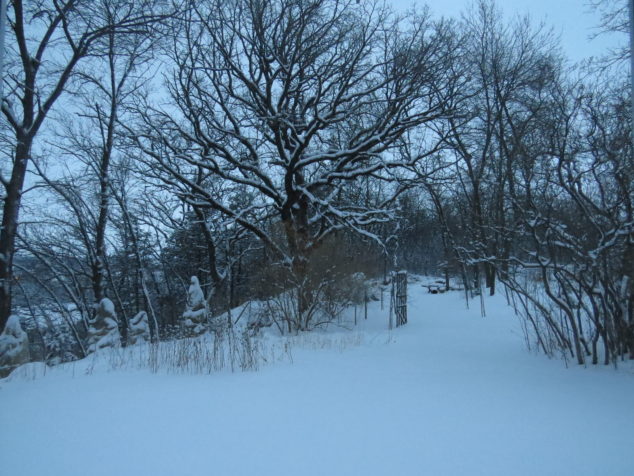
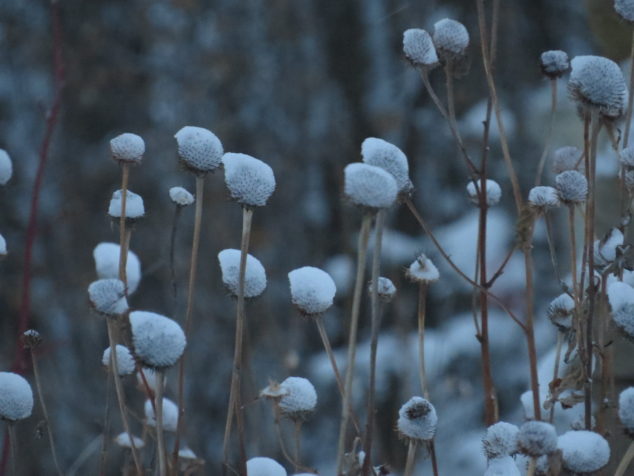
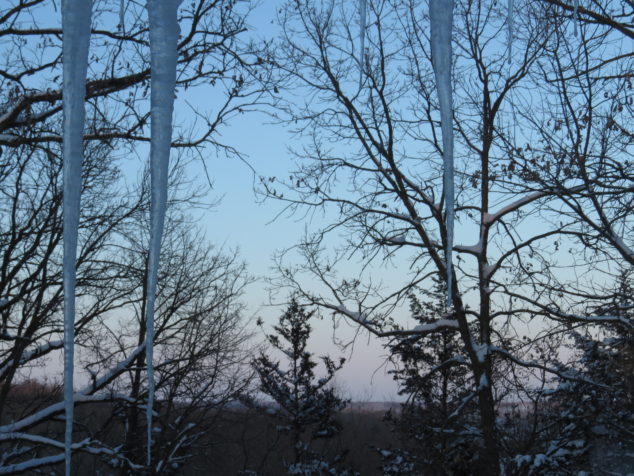
The warm sunshine started to melt snow off the roof, and a marimba of icicles formed on the overhang.
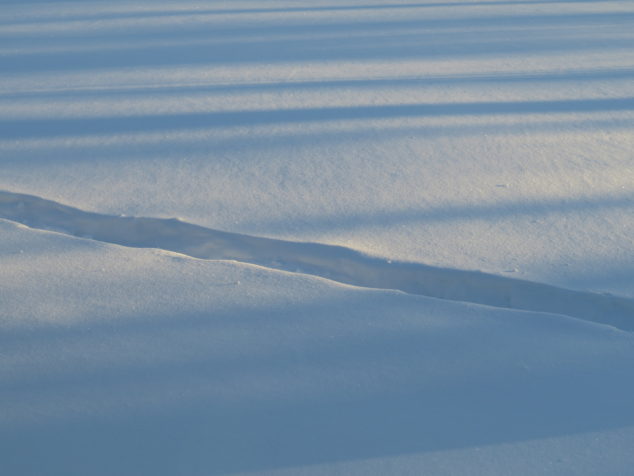
The only track through the fresh eight inches of snow on Wednesday morning was the Tamba trail made from her treks to the woods during the two days of snow.
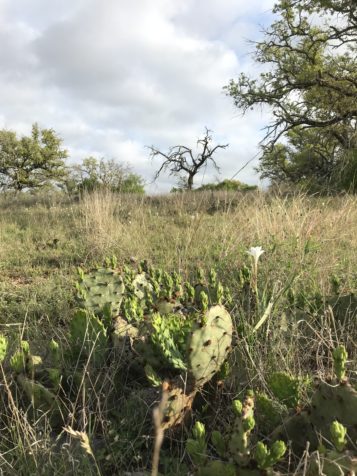
Prickly Pear Cactus by Em Brake
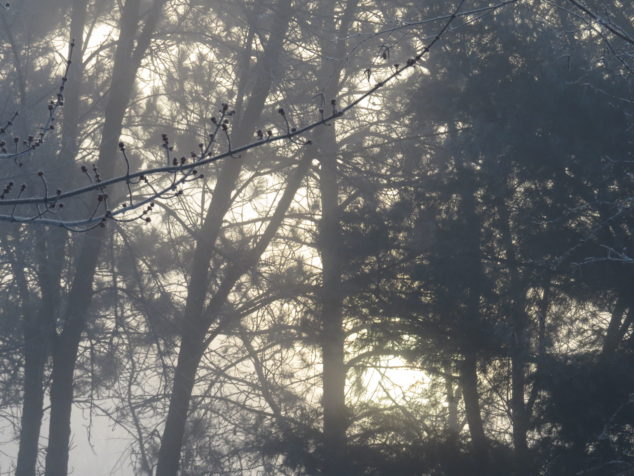
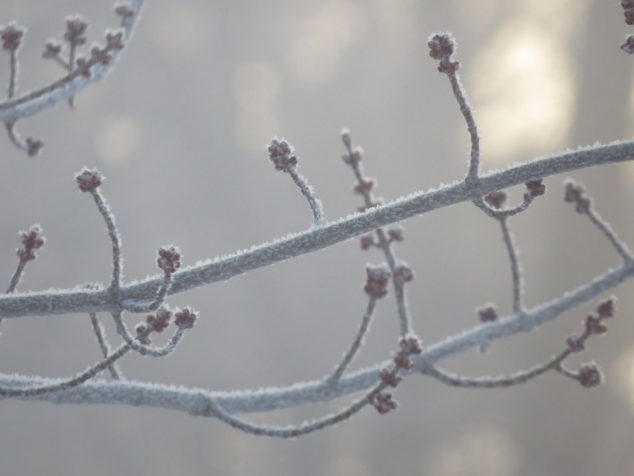
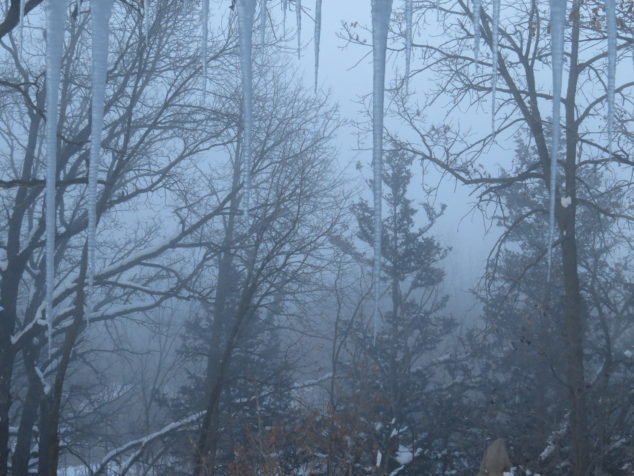
On Thursday morning as the sun rose, a frosty mist rose from the ground, enveloping the trees. Instantly, at two degrees F, frost built up on the branches right before my eyes! It was a spectacular phenomenon! Then, as the power of the sun burned through the mist, the frost fell from the trees.
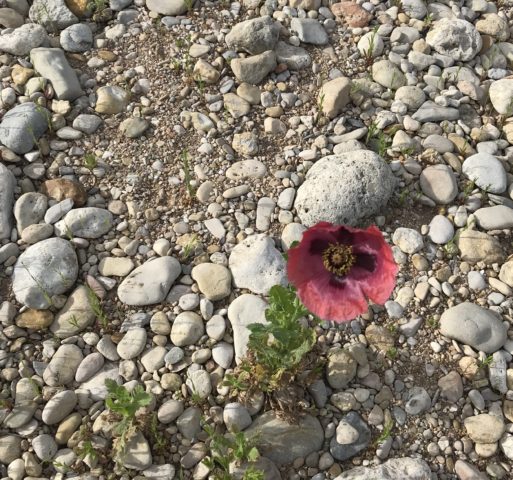
Rose Prickly Poppy by Em Brake
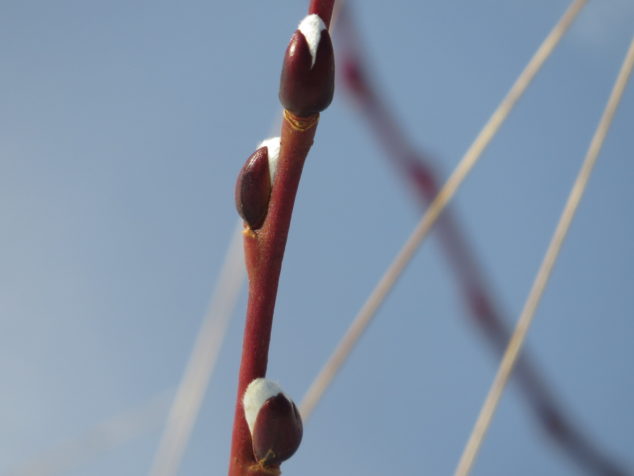
Minnesota in early April versus Texas in early April. 1200 miles between us. Both places have a plant that represents Hope at this time of year. In Minnesota, the early-blooming Pussy Willow lets us know that Spring is on its way, in spite of the surrounding snow.
In Texas, where periods of drought are common, Hope is embodied in the Rain Lily. It appears a few days after heavy rains in the eastern two-thirds of Texas, as if by magic. The blossoms open slowly at dusk and through the night and are in full bloom by morning.
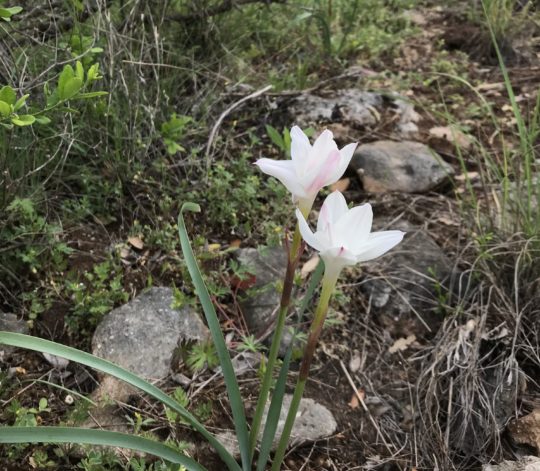
Rain Lily by Em Brake
‘It is as it is’ has no reference to the past. Four years ago we had temperatures close to sixty degrees here in Minnesota. It also has no reference to the future—the snow will melt in the next couple of weeks when we reach the forties and fifties and get ‘back to normal.’ ‘It is as it is’ embraces the present moment, the present day—whether windchills or wildflowers. Mother Nature has one over on us—she is in control of the weather. But ‘it is as it is’ does not imply that the choices, actions, and occurrences of the past has had no influence on the present situation or climate, and it certainly doesn’t indicate what will happen in the future. The past lays the groundwork for the present. The future is like a clean, fresh palette of snow—where will the tracks and trails go? What kind of magic will appear? What will bloom in the midst of struggles? How can each of us imbue Hope in this world?
Come September, I will be asking Emily how she can stand another day of heat in the 100’s, and I expect she will answer, “It is as it is, Mom.”
Holy Week is the Story of Our Lives
This has been a wild week—a wild and holy week. Wild because of the weather, with up and down temperatures, sunshine and snow, mud and ice. Holy because it’s Holy week in the Christian religion. Palm Sunday dawned with a peaceful, pastel sky—a sight to behold, one fit for a King.
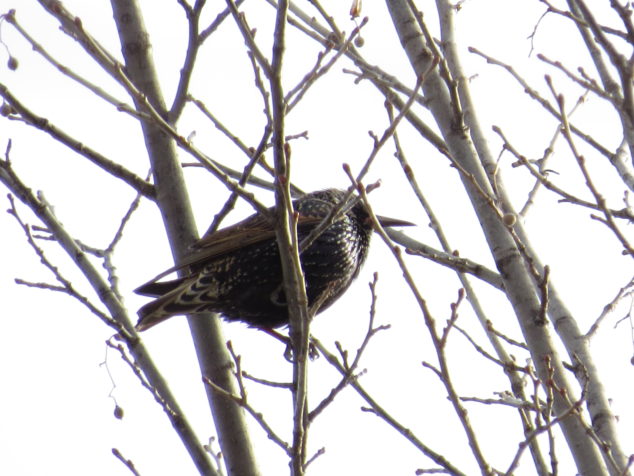
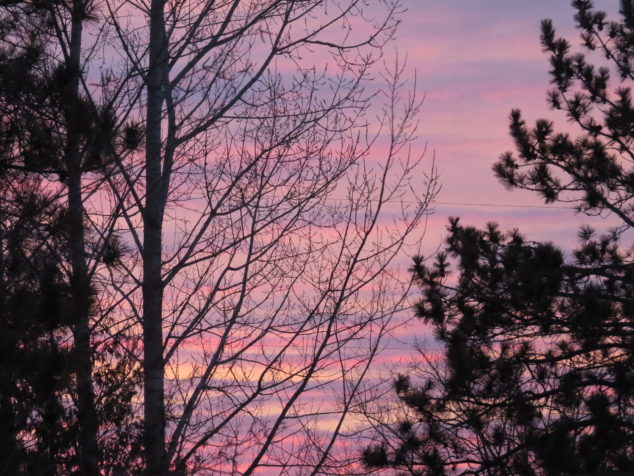 Early Spring eases its way out of Winter with fits and starts—the promise is here, small signs are here, but in good standing, we cannot proclaim that Spring is here. One morning, this small sign of Spring chirped and sang with exuberance from on high in the Linden tree. A Starling is not known to be a pretty or interesting bird, but he was singing hosanna with joy!
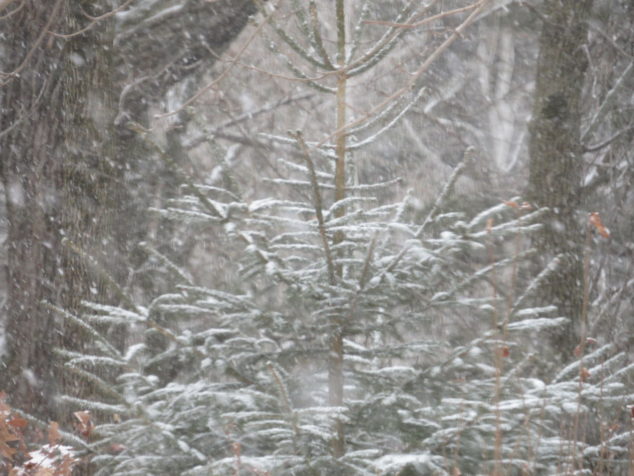
The colorful Sunday morning sky heralded in a Monday morning snow. Confusion swirled around the Spruce branches as the vine tried to reassure them. Spring is here! They did not believe.
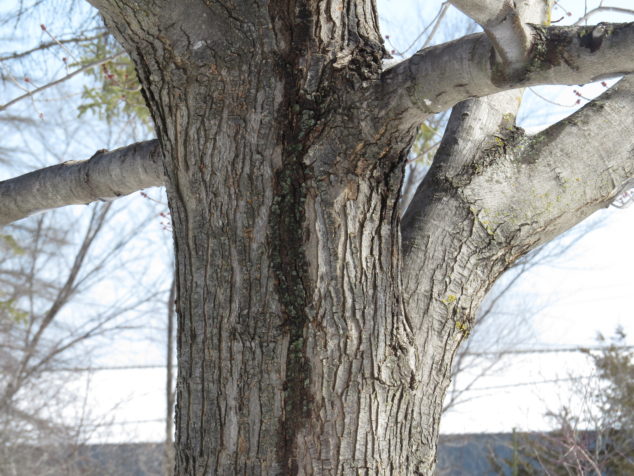
Tuesday warmed to 40 degrees with brilliant sunshine, and the sap was lifted up from the earth and flowed from a wound in the Maple tree. Now this feels like Spring!
Wednesday was muddy and messy. The warmth melted the new snow and chiseled away at the old piles. Plans for the future garden were held in disbelief.
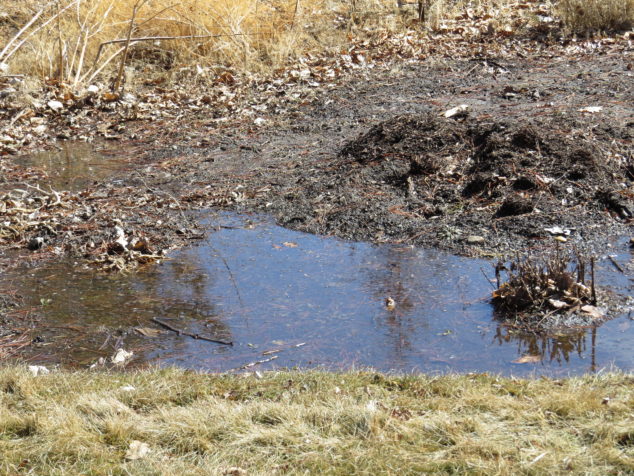
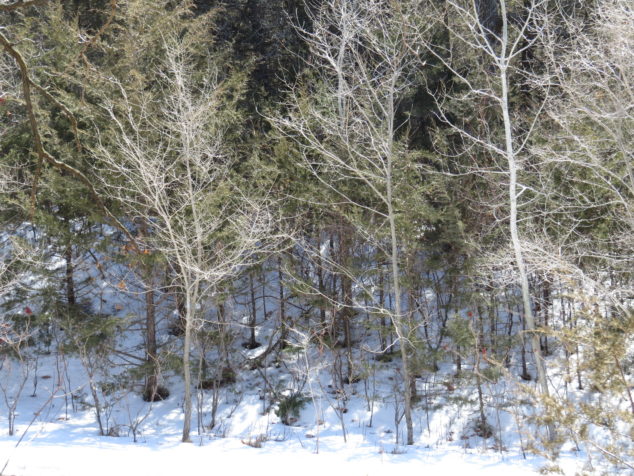
It’s too hard to imagine Spring and new life when the snow still clings to the north-facing hills.
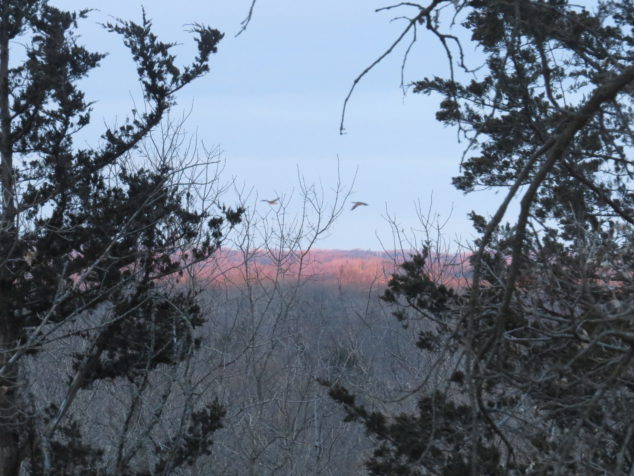
Thursday’s rising sun shone through another colorful morning sky, foreshadowing another stormy day. The pink light from the east reflected off the western hills. Geese flew to the open part of the Sauk River for nourishment and companionship, washing their feet in the clear, cold water.
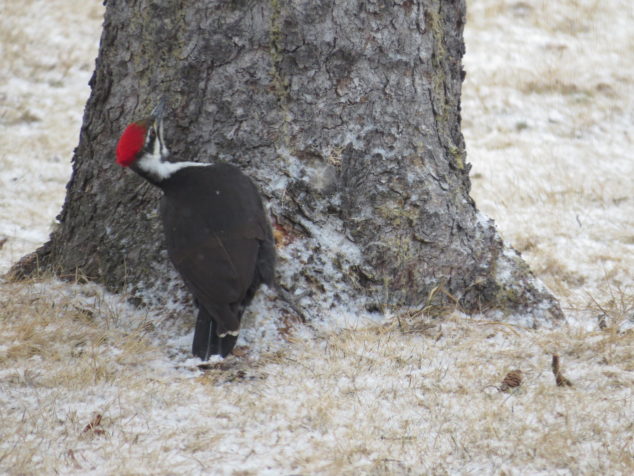
Friday morning’s sky was heavy and dark to the west, and I thought to myself, ‘It looks like snow.’ Soon the flakes started to fall, laying down an inch or so on the pavement as the warmed earth melted it away. A Pileated Woodpecker crowed his distinctive call, flew to the base of one of the old Spruce trees, and proceeded to excavate a cavernous hole with his powerful beak. He shouldn’t be destroying a live, formidable tree.
The afternoon looked normal, looked warm, but the wind picked up and felt damp and cold, betraying any thoughts of Spring. When the sun sank and the day was done, the night sky was a strange purple-gray.
I heard the wind straining the house and trees overnight and heard ice hitting the windows. A Winter chill settled over the house, over the land, over the Spring. Saturday morning was cold with a wind chill of 1° F and three inches of snow. The evergreen tree branches drooped with the burden of heavy, icy snow. The blue sky taunted us to come outside to play, but everything else about the day held grief, disbelief, and suffering. Spring, why have you forsaken us?
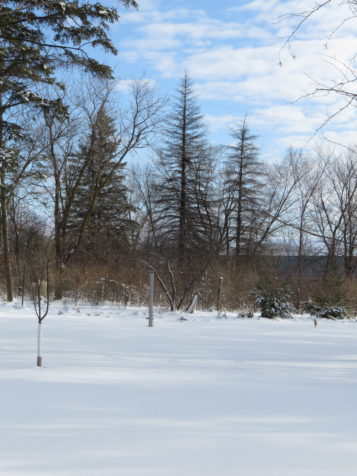
Easter morning dawned clear and cold. The wind had calmed down. The second blue moon of the year was setting in the west.
The sun rose blindingly bright; we were unable to look directly at its glory—even through the trees its power was undeniable. The Cardinals were singing their Spring songs, and the sun created infinite sparkling diamonds in the snow.
It seems like all of Life is encompassed in Holy week. Our exuberant joys and our deepest sorrows. The days our hearts are troubled. Our denial and disbelief in what is real, in what is happening before our eyes, in what we thought we strongly held in our hearts. Holy week and our lives are wild with confusion, doubt, and suffering, along with devotion, love, and friendship. It highlights the tender, vulnerable moments of our lives when we dare to kneel in servanthood, when we break the rules for justice and kindness, when we offer our dearest ones to another for safe-keeping, and when we call out to God in prayer. It reveals the inconsistency and idiocy of power in the wrong hands and of deluded group-think that spreads like wildfire and destroys the Spirit of truth. It gives us hope for the future, peace for the present, and reclamation for the past. It gives us a way forward, a blueprint for transformation, and a belief in a bigger, more benevolent Way. Holy Week is the story of our lives. Peace and Love be with you.
There is a Reason for Everything–NOT Everything Happens for a Reason
I like things to make sense. When things don’t make sense in my mind, I ask questions—of myself and others. Information helps a person make sense of a situation. There have been a lot of things happening that don’t make any sense—why would a young person plan and carry out a school shooting or multiple bombings? Finding a motive or reason for such action is paramount to the investigation. Information is gathered from multiple sources, in multiple ways in order to figure it out. Many times though, the answer to the question of why a person acted as they did is never fully known.
Science also asks questions in order to find answers—it is the foundation of the scientific method. Information is gathered, past research is perused, a pertinent hypothesis formulated, the methodology carefully planned out and followed to exactitude. Did the results confirm the hypothesis? What conclusions were learned from the experiment? Questions, answers, more questions. And so it goes.
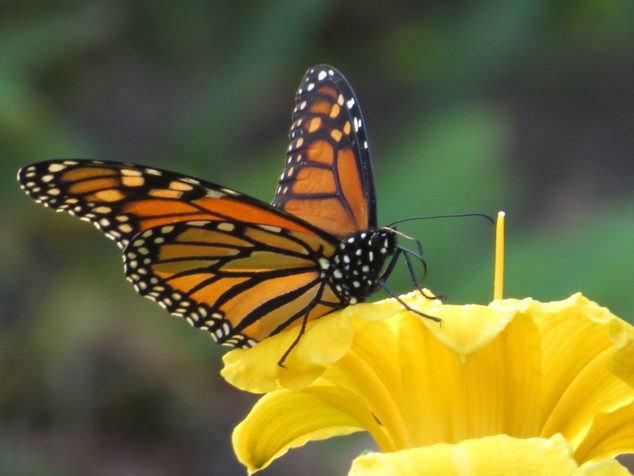
Questions about Nature have been studied by science for hundreds of years, and today the questions are just as important as ever. Why is the Monarch butterfly population in decline? https://www.annualreviews.org/doi/abs/10.1146/annurev-ento-020117-043241 http://www.eeb.cornell.edu/agrawal/documents/InamineetalAgrawal2016Oikosmonarchconservation_000.pdf
 Is our water safe? https://www.ncbi.nlm.nih.gov/pmc/articles/PMC1253773/
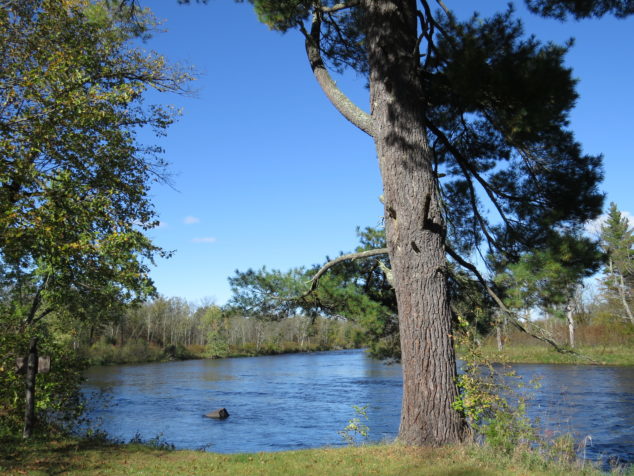
https://www.mprnews.org/story/2016/07/13/minnesota-adds-pollution-sources-impaired-waters-list
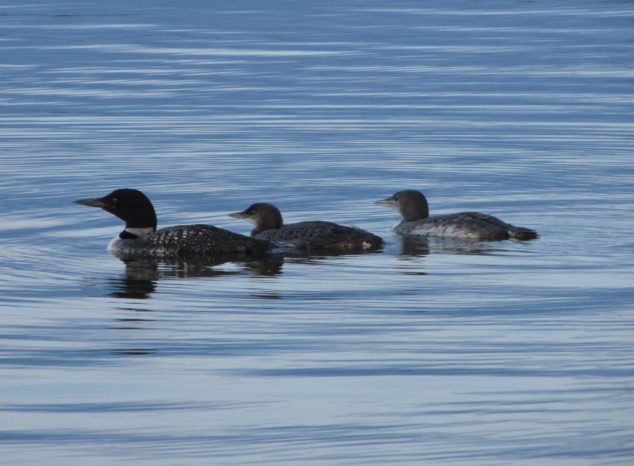
What is killing our bee populations, and what is the impact on agriculture? https://www.uky.edu/~jast239/reprints/Geography%20Compass%202016.pdf http://mjpa.umich.edu/files/2014/08/2014-BiancoCooperFournier-HoneyBee.pdf
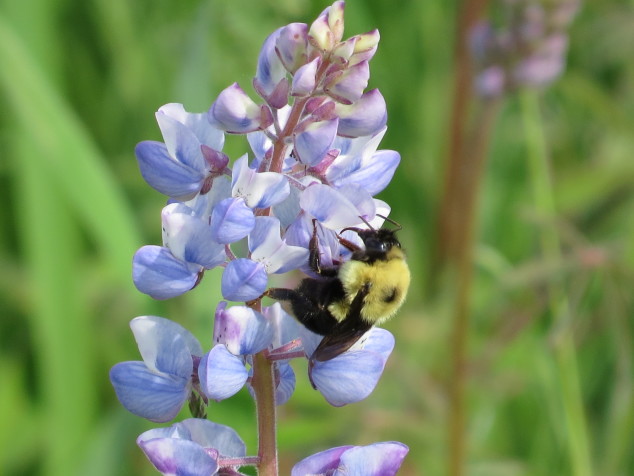
What happens when forests are clear-cut? https://www.youtube.com/watch?v=Un2yBgIAxYs https://www.sciencedaily.com/releases/2016/04/160415125925.htm
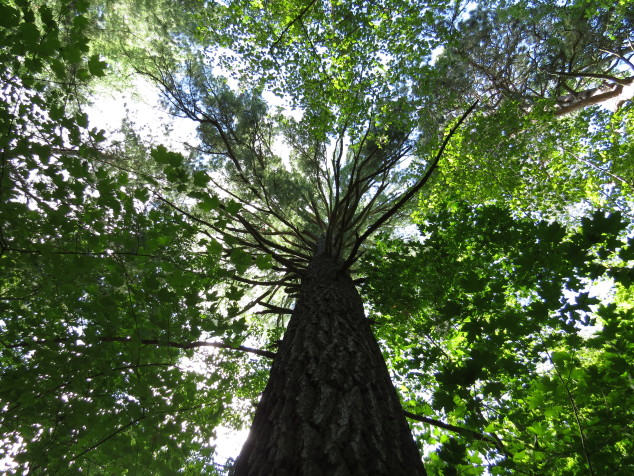
Scientific experiments seek to answer these complicated questions. Seldom is there a singular cut-and-dry reason; seldom is the answer an easy one. Mostly, answers lead to more questions. But each answer, each piece of information that is discovered about the situation, adds to the body of knowledge. It is a contribution to the big picture, and each piece shows a pathway to action that can be taken to solve the problem.
As for the things that don’t make sense in this world or in our lives, the same applies. Rarely is there just one reason; rarely is the reason a simple explanation. However, I hypothesize that there is always a reason for everything—not in the insensitive platitude ‘everything happens for a reason’ kind of way, but in the scientific ’cause and effect’ way. There was a reason why they gathered the guns and made the bombs, there was a reason they felt like this was an appropriate thing to do, there was a reason their thinking was so clouded and deluded, and there was a reason they fell through the cracks. As with everything, there is a long, complicated lineage of reasons why things occur. Answers lead to more questions. But information leads to understanding—that’s why questions are so important. That’s why multiple sources are important. That’s why experts are important. All help to configure the big picture, so we can take multiple pathways to solve these heart-breaking problems.
A Slow Slide and Adversity
“If we had no winter, the spring would not be so pleasant; if we did not sometimes taste adversity, prosperity would not be so welcome.” –Anne Bradstreet
I knew my third pregnancy would be my last, and I was intentional in being present and grateful for the miracle of growing and carrying a new human being. I really liked being pregnant and had had easy pregnancies before. That was about to change! Morning sickness was my constant companion for most of the way through two trimesters, and I spent more than my share of time on the couch and in the bathroom. Saltine crackers were my friends, and the smell of tuna and the act of brushing my teeth were my enemies. Yet every day, I was grateful. As my abdomen grew large, time was slow and sweet as I welcomed each and every thing with my newest babe.
We have had a cold winter—not as snowy as most, but very cold. Spring officially arrives on Tuesday, and I find myself being present and grateful for the chilly, icy mornings along with the sunny, above-freezing days. I am not wishing Winter away. The snow melt reveals the winter’s pile of sunflower seed shells under the bird feeder where every kind of creature, bird and mammal alike, have rummaged for the high-fat black oil seeds that slipped through the cracks.
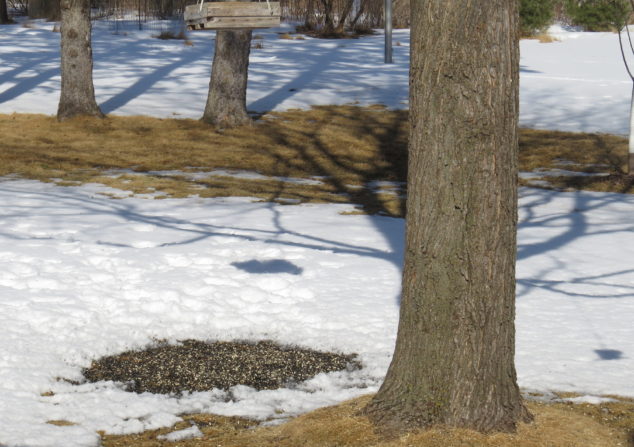
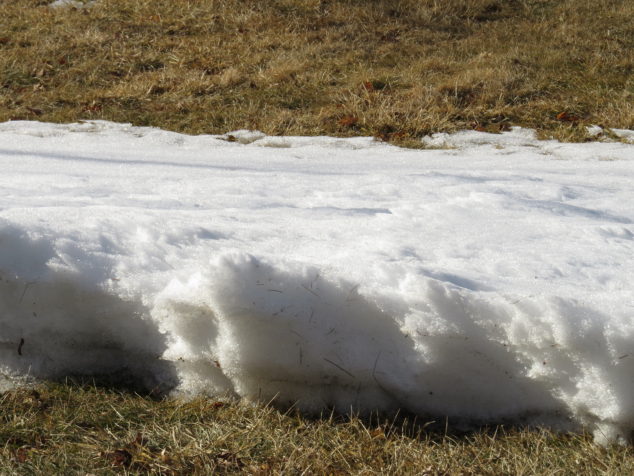
The snow melts in the strong sunshine during the day and hardens into crusty, compacted crystals during the freezing nights. The power of the sun is evident after a winter of low-in-the-sky traveling—snowbanks recede even when the temperature is below freezing.
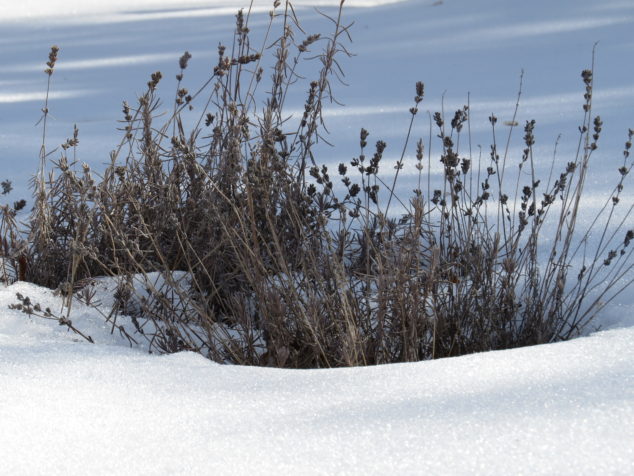
Lavender is still stuck in the snow; leaves and sticks in the yard absorb the warmth and melt the ice and snow around them.
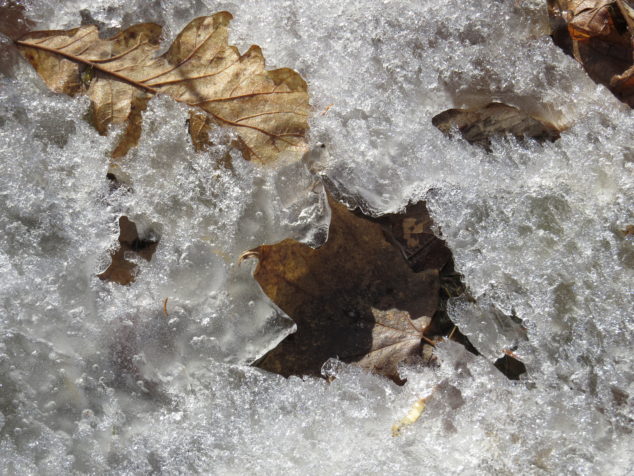
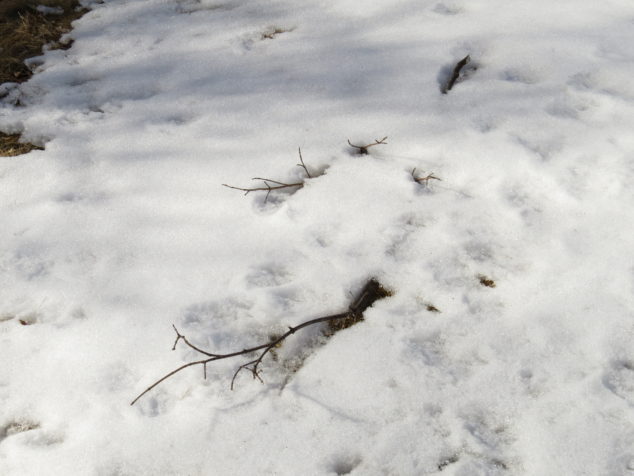
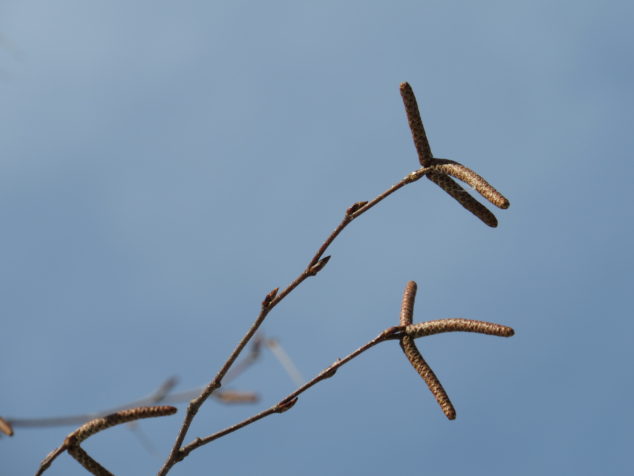
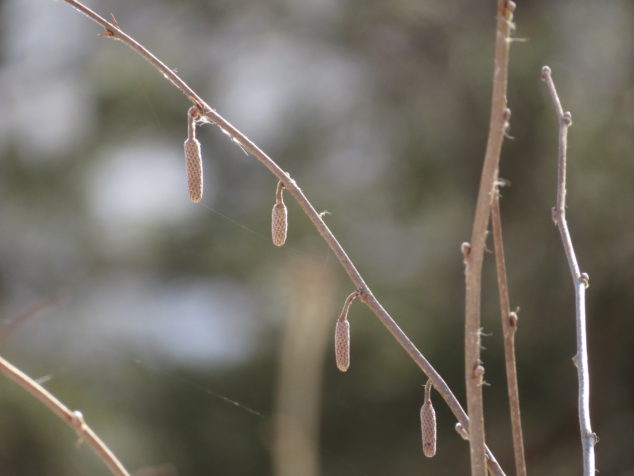
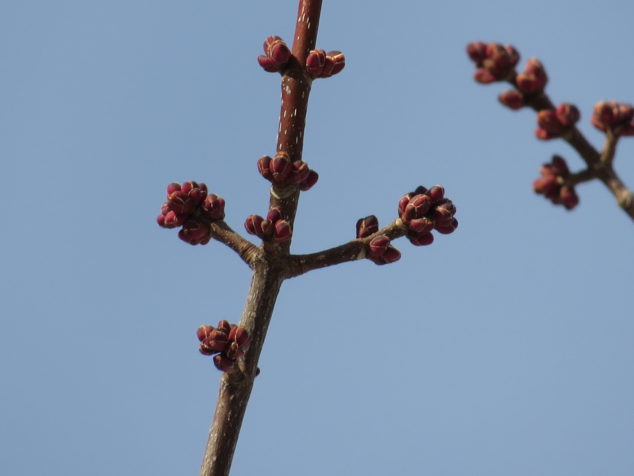
The wonder of Spring is beginning to reveal itself with Birch and Hazelnut catkins and swollen Maple tree buds.
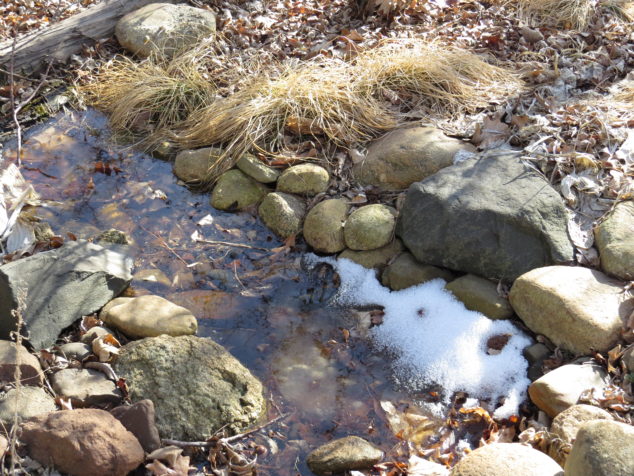
Melted snow pooled into a small stream-bed of rocks—liquid by day, ice by night.
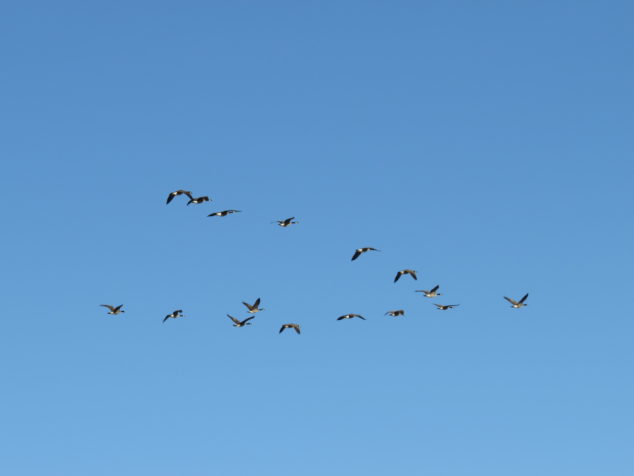
Geese, Trumpeter Swans, and even some Sandhill Cranes have taken flight through the blue skies, announcing their presence with their distinctive songs.
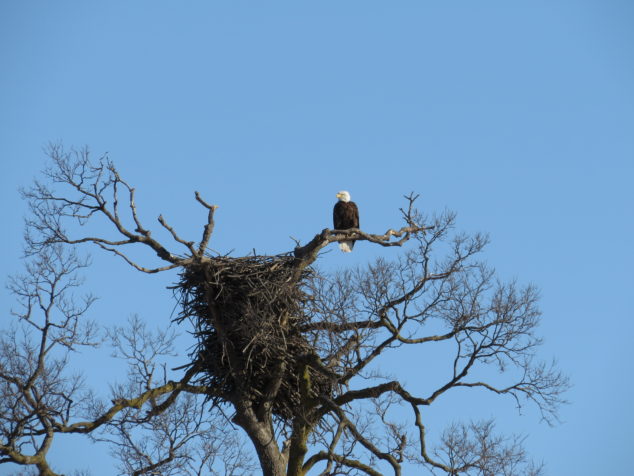
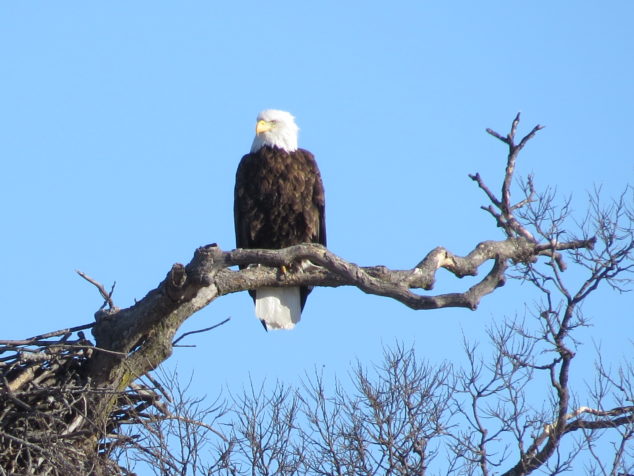
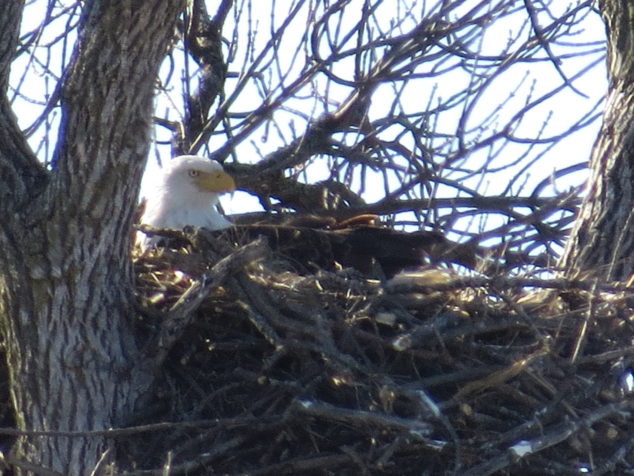
The pair of pairs of Eagles are at their nests—time will reveal whether each have viable eggs. The oldest pair was not brooding on the nest, but one was sitting on a branch when we came by. One of the younger Eagles at the other nest was keeping eggs warm.
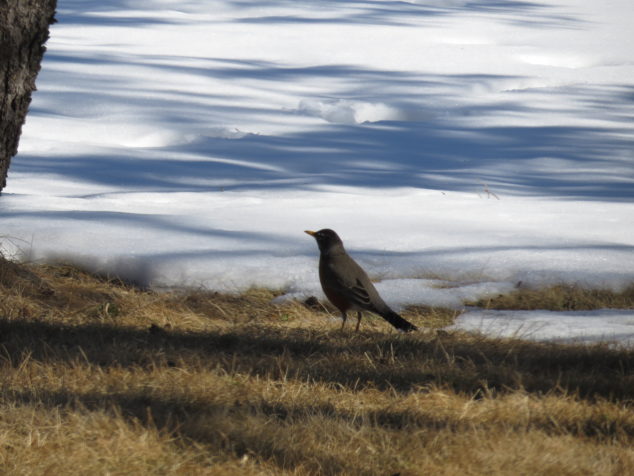
Saturday’s surprise was the spotting of two Robins! Iconic signs of Spring. I wonder if they were confused by the snow still in the yard!
I like how we slide slowly out of Winter into Spring. Longer days and melting snow remind us how far from the Winter Solstice we are—we’ve made it through another season of cold and snow! While the dormancy of Winter is important for gathering nutrients and resting the system, it also makes Spring and Summer that much sweeter! The mindful morning sickness I felt in my last pregnancy was, in essence, getting me ready for the adversity and long recovery after the birth. What does adversity reveal to us? It reveals our strengths and endurance. It shows our weaknesses, and the places we are stuck. It magnifies the cracks in the system that we’ve slipped through. Adversity allows us to learn our own distinctive song of ourselves and how to sing it. It teaches us to absorb the warmth and power of Love that melts away the obstacles that have been holding us back. Because of this, I do not wish Winter or adversity away anymore, but I sure do welcome Spring and the good fortune that lay on the other side.
Dodging Cars and Bullets
Have you ever woken in the morning and even before you open your eyes or move from your last position of sleep you feel weight pressing in on your mind and body? That’s how I woke on Friday. Sometimes it’s a low barometric pressure squeezing in on me; sometimes it’s from the energy-draining not-enough-sleep for a couple of nights; other times it’s a worry, a fight, or an anniversary of something only your body remembers that your mind does not want to recall. It’s when you drag your body out of bed and hope that breakfast and caffeine will boost your energy and dissipate the pressure.
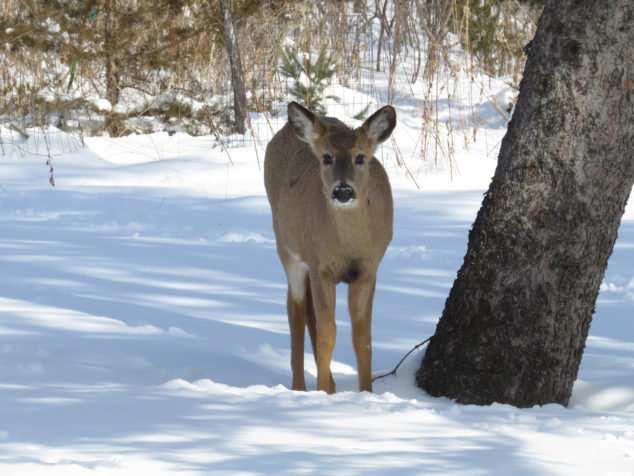
Do animals ever feel that way? How do deer wake and show up for their day? They sleep in the snow and cold, have to forage for their daily food, and at times have to dodge cars and bullets. Sounds like a recipe for having a horrible, no good, very bad day. But I don’t think they do.
I think I could turn and live with animals, they are so placid and self-contain’d. I stand and look at them long and long. They do not sweat and whine about their condition. They do not lie awake in the dark and weep for their sins. They do not make me sick discussing their duty to God. Not one is dissatisfied, not one is demented with the mania of owning things. Not one kneels to another, nor to his kind that lived thousands of years ago. Not one is respectable or unhappy over the whole earth. –excerpt from Song of Myself by Walt Whitman
When I was young, I thought animals were easier to understand than humans, so I wanted to be a veterinarian. I loved this poem by Walt Whitman, even in its irreverent way. I argued with Walt’s line that ‘not one is respectable,’ for I had great respect for animals, especially my horses. Before we were married, Chris made me a present of a framed picture of this poem in calligraphy with a drawing of a horse. I recite the first lines often in my head when I feel the pressure of living in our human world.
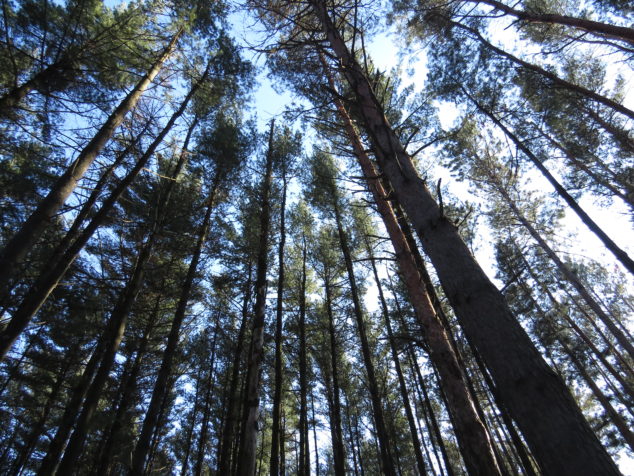
Chris, in his wisdom of knowing me for thirty-eight years, suggested on Friday that we go to the pine forest in the snow, to where the animals live, to where I could get out of my head and out of my funk, to where the old pines whisper their secrets. I begrudgingly agreed, even as my body wanted to just splay itself on the floor with a blanket. So in the late afternoon, we drove the short distance to Warner Lake County Park to bathe in the solitude of the pine forest.
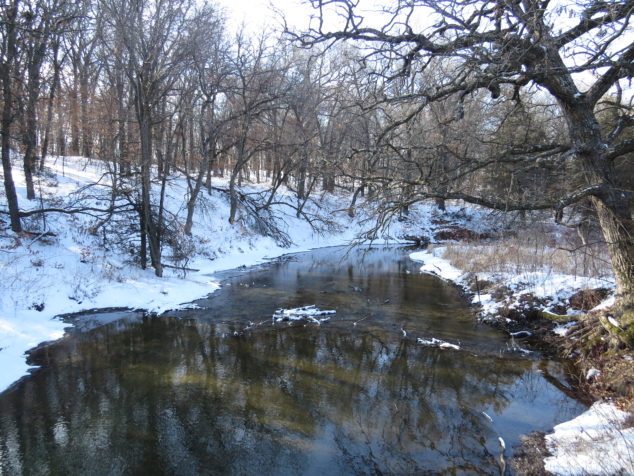
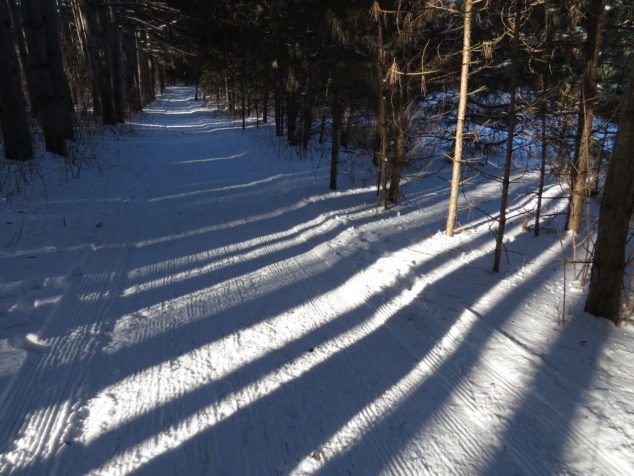
The little creek that runs into the lake wasn’t frozen, and the trail had been ‘groomed’ for cross-country skiing.
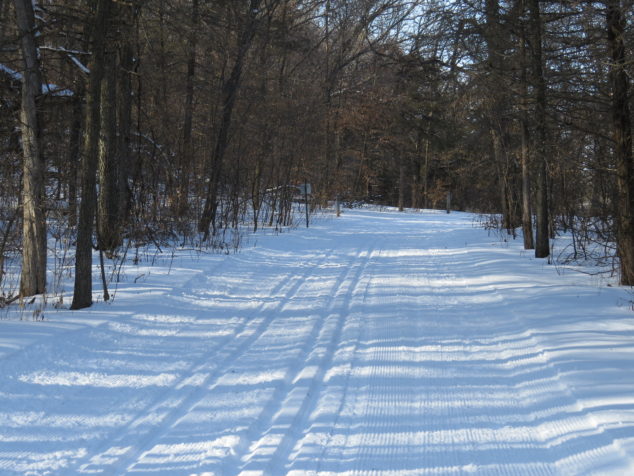
Walking was relatively easy on the groomed trail (not on the ski tracks, of course), but hard work in the short areas where we blazed a trail. Energy returned to my body as we ventured deeper into the woods.
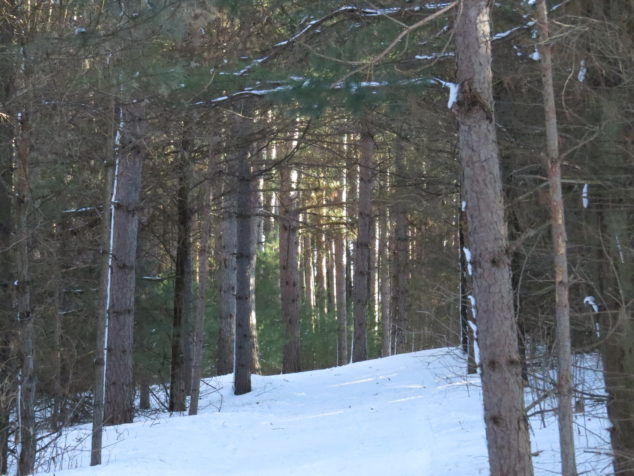
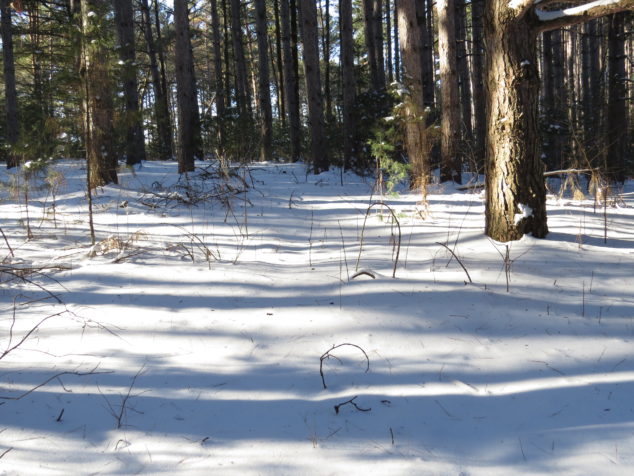
The forest was a constellation of light and shadow, with outlines and crowns of snow.
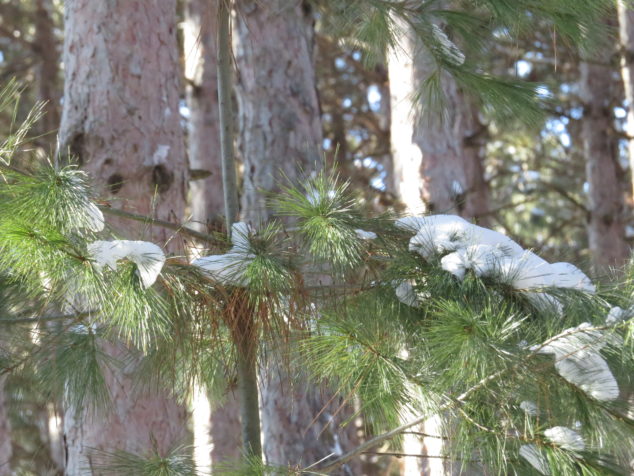
The late day sun cast long shadows of the long trees. Animal tracks cut across the trails—their footprints leaving the history of their day.
In a small clearing, we saw a shining young pine, enveloped and radiant in the Winter sunshine, as the old, wise guardians surrounded it.
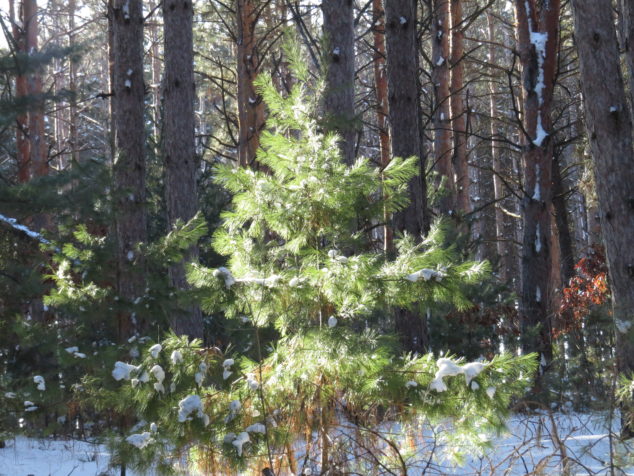
It was peaceful and quiet in the snowy forest—a silky balm for my out-of-sorts mind and body. I was a welcome visitor in the animals’ house, with no host needed. They were willing to share their majestic home with seekers of beauty and peace.
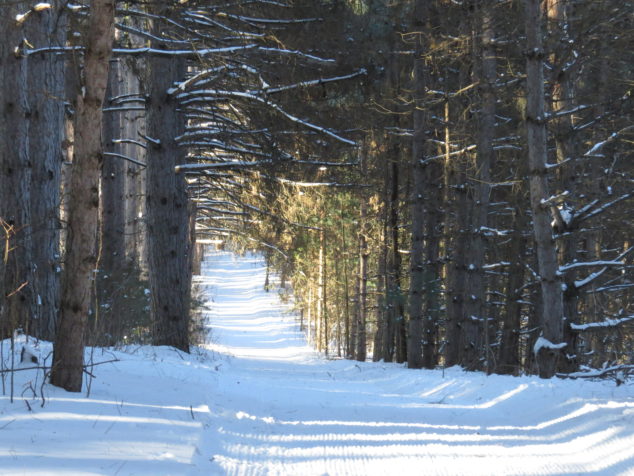
Our lives are a constellation of light and shadow. Some days we live in the darkness, and often we don’t even know what is casting the shadow. It feels like we are dodging the flu, or the axe, or the bullet. The recipe is written, and it seems to spell disaster. But what if the recipe for your day is written in pencil? What if sitting in prayer or meditation erases worry? What if ten minutes of exercise erases pain? And talking to your friend takes away the blues? We are each a shining star, like the radiant young pine tree in the forest. Dissatisfaction melts away to gratitude. The mania of owning things morphs into a willingness to share. Anxiety and worry transform into placid self-containment. The whispered secrets of the ancient guardians begin to work their way into the tracks of our days. And we live like the animals and are happy.
Snow, Ice, and Water–These Three are One
“Water, in all its forms, is what carries the knowledge of life throughout the universe.” –Anthony T. Hincks
When a person lives where water is always liquid and falling as rain or flowing like a river, I think there is a tendency to not think about it much, to perhaps take it for granted. But when something is ‘too much’ or ‘not enough’—flooding or drought—or something unusual or rare—snow in Texas—we tend to pay attention. We haven’t had much snow here in Central Minnesota for most of this winter—until the week before last, that is, when we had over a foot of it. I looked out the front door at the big pile of white stuff and thought, “Isn’t snow funny and amazing and beautiful?” I mean, it’s just water, frozen water! Beautiful crystals of frozen water falling from the sky! Frozen water that is shoveled and piled, rolled and patted into balls to form snowmen and forts by kids at recess. Amazing!
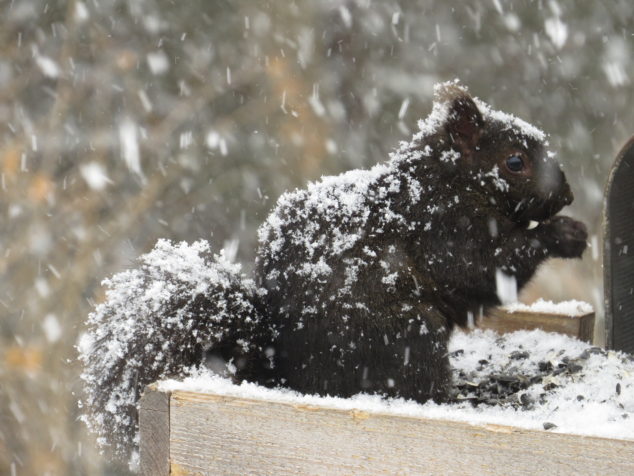
“There is a beauty about winter that no other season can touch.” –Hailey DeRoo Haugen
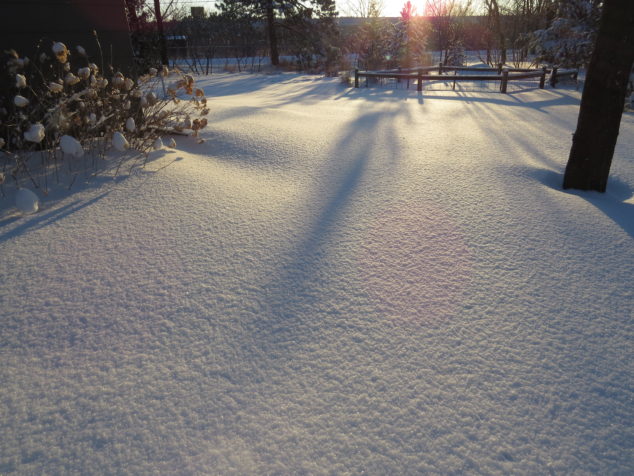
“Kindness is like snow—It beautifies everything it covers.” –Kahlil Gibran
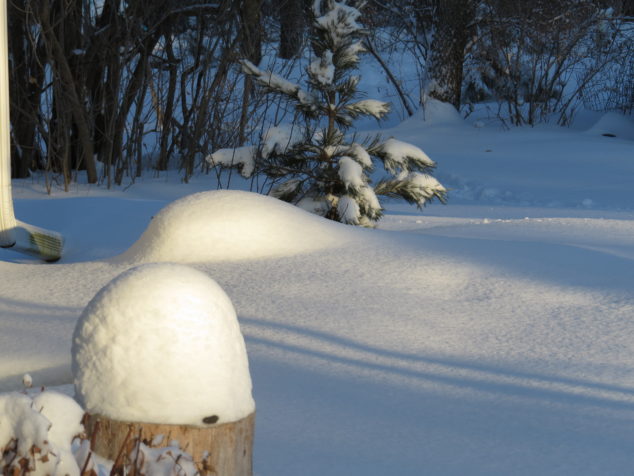
Another beautiful frozen water phenomenon is frost—frozen water vapor on the surface of objects.
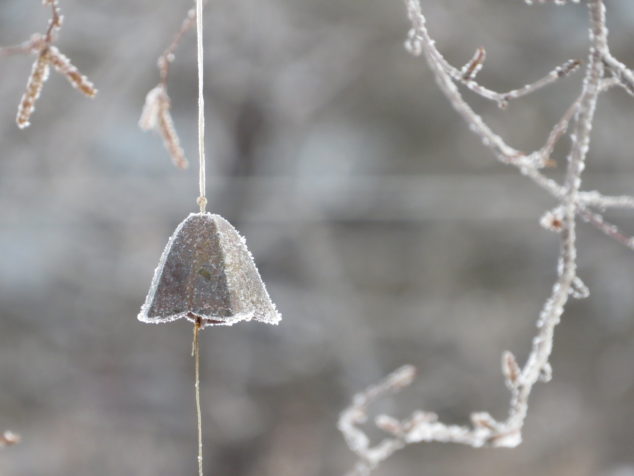
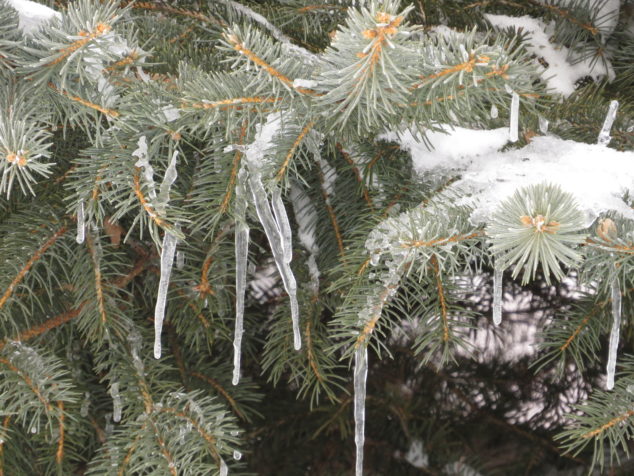
Sun-warmed and melted snow dripped and re-froze into icicles—Mother Nature’s decorating of the evergreen Spruce trees.
“Snow is water, and ice is water, and water is water; these three are one.” –Joseph Dare
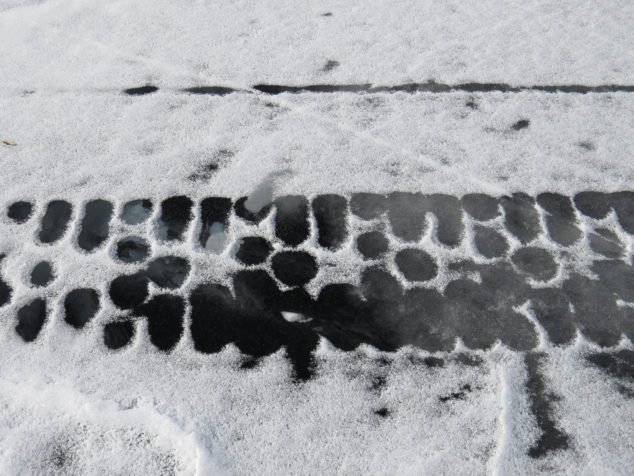
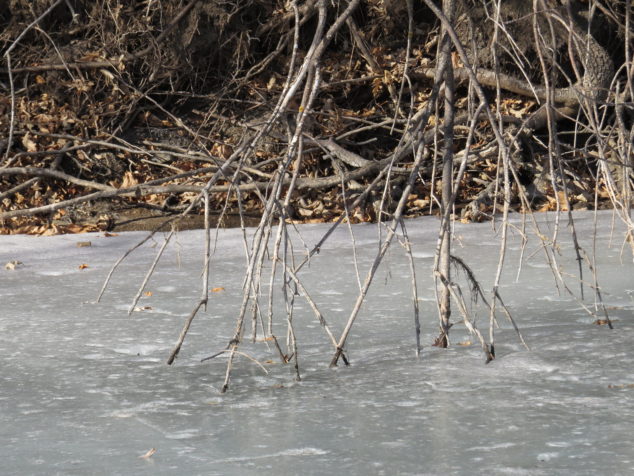
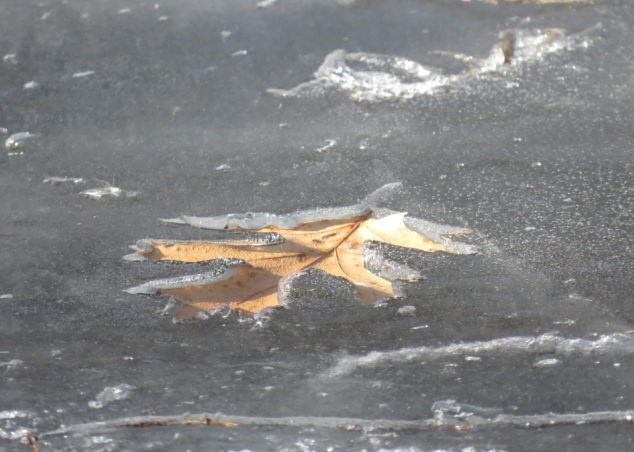
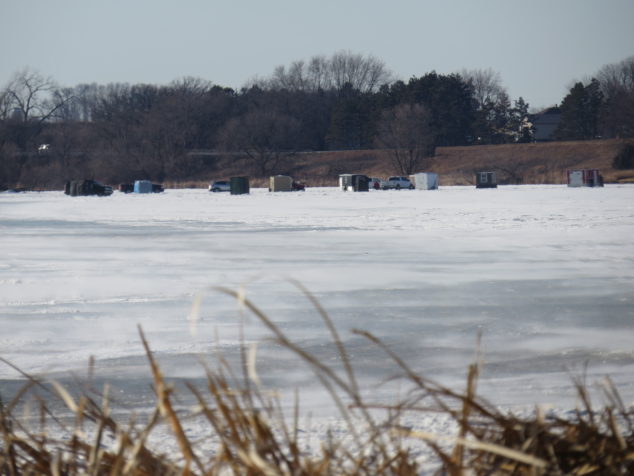
And then there’s ice. Ice that’s strong enough to drive a truck on. Ice that captures and immobilizes tree branches, leaves, aquatic plants and roots. Ice that holds a village of ice shacks and fishermen.
“The water hears and understands. The ice does not forgive.” –Leigh Bardugo
Ice as art. Ice as frozen Rorschach tests. What do you see?
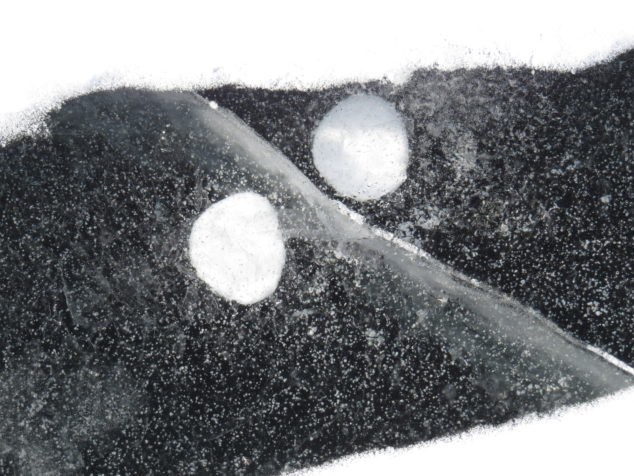
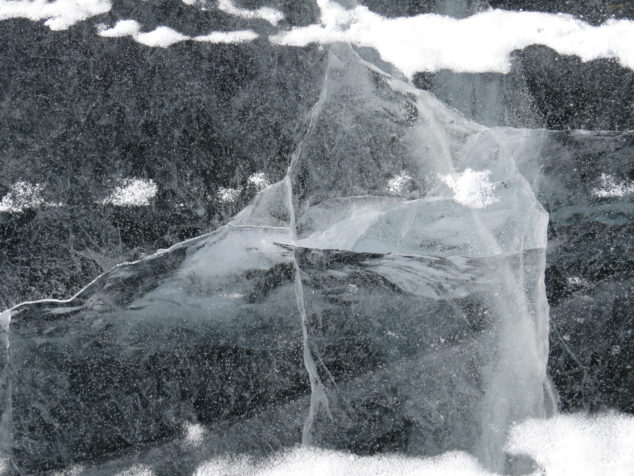
“You’re gonna catch a cold from the ice inside your soul.” –Christina Perri
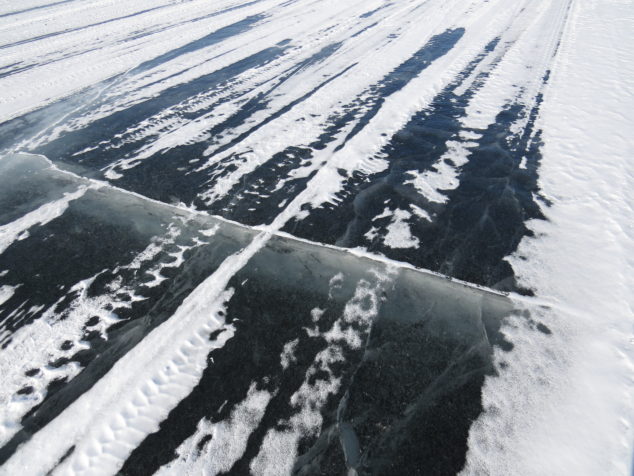
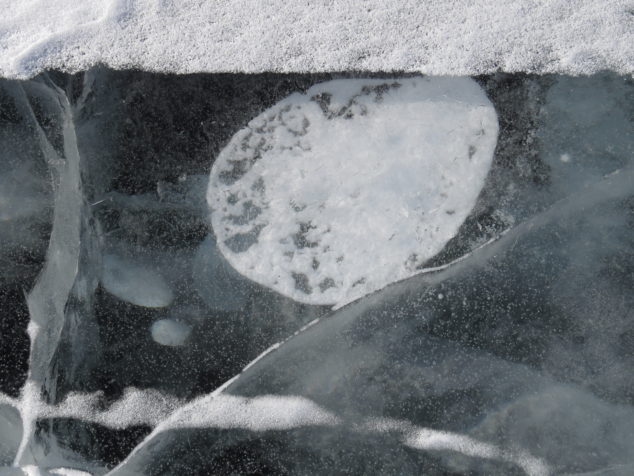
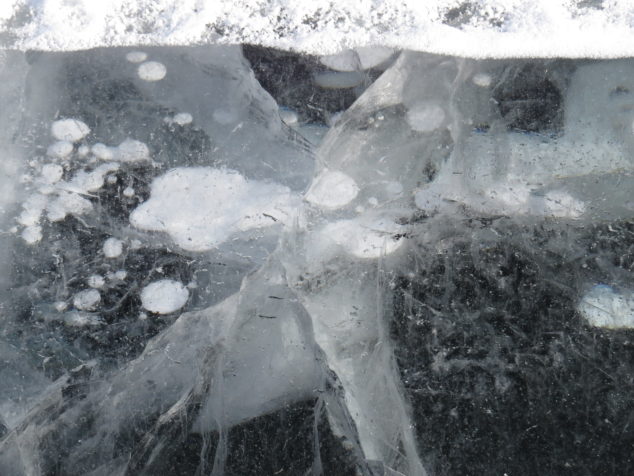
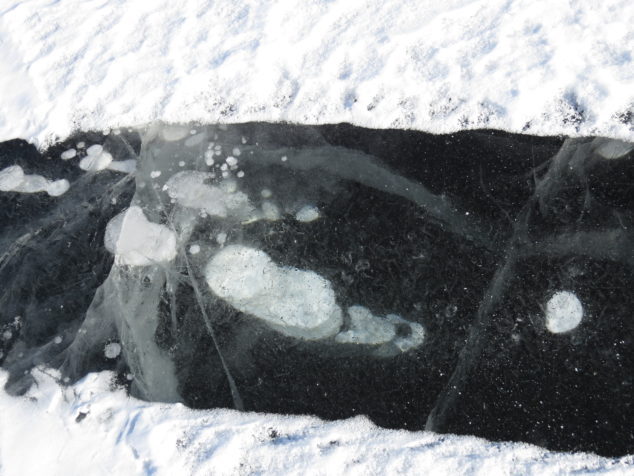
If water, in all its forms, carries the knowledge of life, we have a lot to learn in Winter. I respect the idea that winter, in all its starkness, can radiate a beauty like no other. I love the idea of beautifying the world with kindness. I like how water and situations and people can be transformed, change states, be honed in the process of warming, melting, and re-freezing to flowing, understanding, and forgiving. Goodness and Grace can thaw an icy soul. I also honor the toughness of ice, how it builds up inch by inch during the harshness of Winter’s cold in order to support the things we drive and those that drive us. How it supports a village of people who want the same basic things in life, in spite of how the harshness can capture and immobilize us at times. I appreciate that frozen water (oh, the chemistry and physics of it all!) is art. How we can stare into the depths of it or notice the light or marvel at the structure, and at the same time, learn something about ourselves. There is a great deal of hope in every snowflake that falls, in every frost pattern that forms, in every layer of ice that is laid down, and in every process of melting. Life is funny, amazing, and beautiful—all three in one.