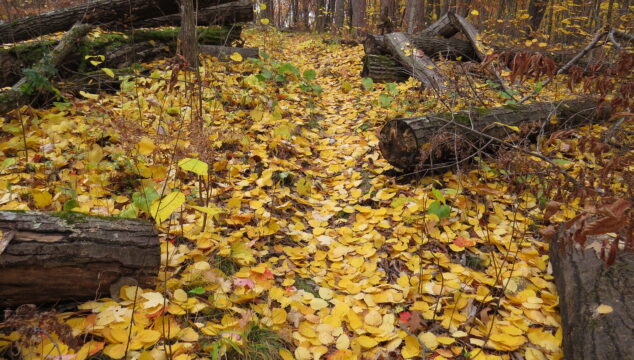
Come walk with me in the peak Autumn beauty of the Northwoods. To say that I love this time of year is an understatement. Most everyone can appreciate the colorful falling leaves---it reveals the 'true self' of a tree when its leaves are no longer producing chlorophyll. Their true colors are revealed, and there is something simple … [Read More...]
Archives for February 2018
Island Ice Walkers
“In a sense, each of us is an island. In another sense, however, we are all one. For though islands appear separate, and may even be situated at great distances from one another, they are only extrusions of the same planet, Earth.” –J. Donald Walters
Last weekend, I got away to an island. It was sunny and warm—so warm that the snow was melting! Down the hill from our house is the Sauk River which winds its way through the Horseshoe Chain of Lakes—thirteen connected lakes with convoluted shorelines, jutting peninsulas, and a multitude of islands. We parked at a boat ramp at Horseshoe Lake as a group of ATVs raced around on the ice. Cars and trucks crept through the rushes on an ice road to the little village of fish shacks.
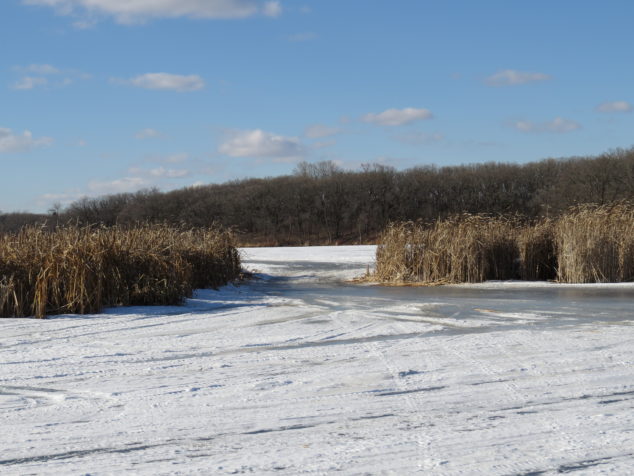
But we were going a different way by a different mode of transportation. We followed the snowmobile tracks to the island.
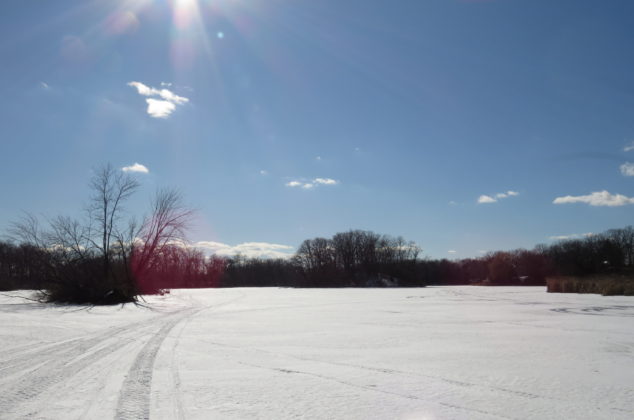
Most of the ice was snow-covered, which made walking easier, but there were places of clear ice where I peered into the depths of it, wondering how thick it was.
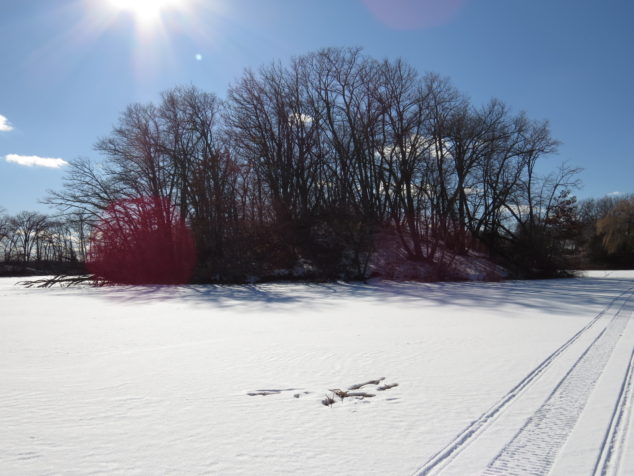
We weren’t the only creatures walking the ice to check out the island.
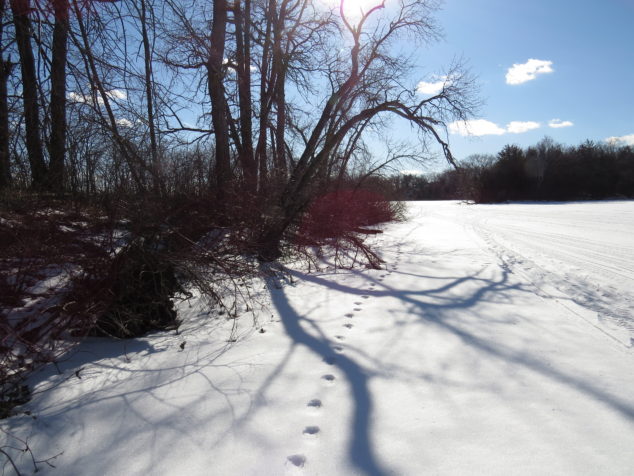
The island was like an incline rising from the water (ice) with the highest point facing the northwest, from which we came.
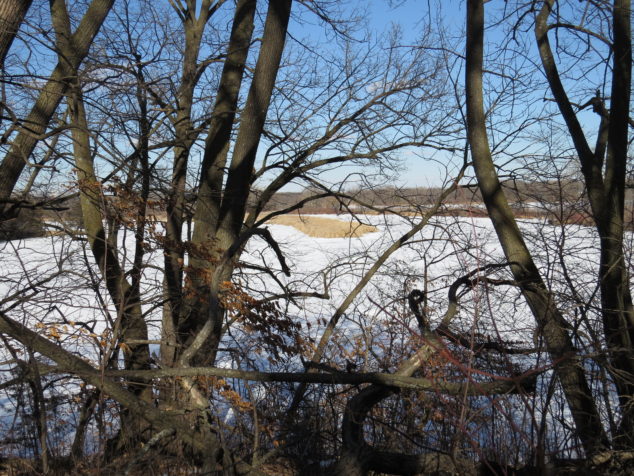
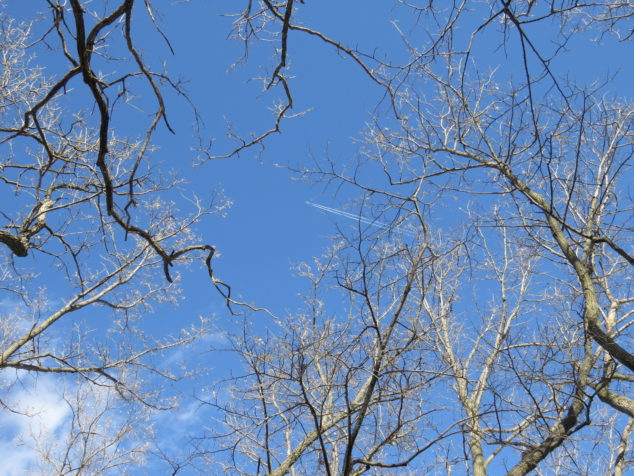
Oak, Basswood, Box Elder and Ironwood trees populated the island, and I was surprised as one of the fluffy-tailed inhabitants ran past me while I was gazing at the jet trail in the azure blue sky.
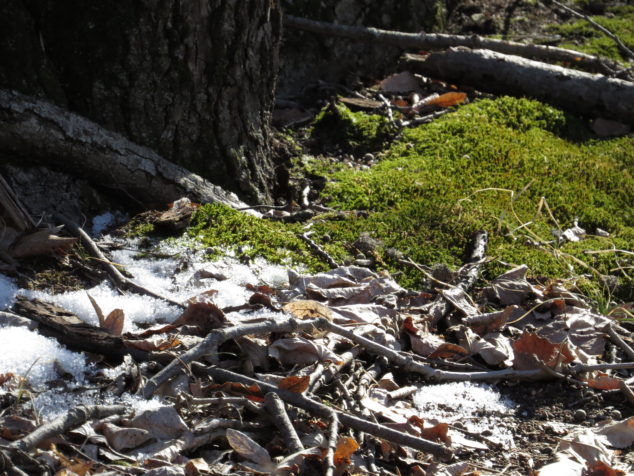
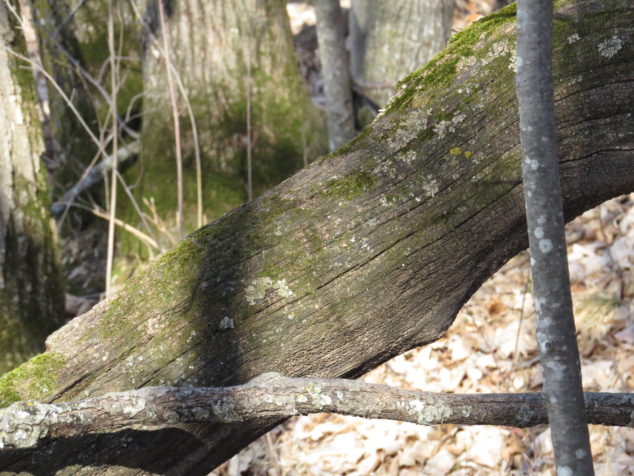
Most of the snow had melted from the island, and it was rather startling to see the vivid green moss at the base of the trees and crawling up the trunks.
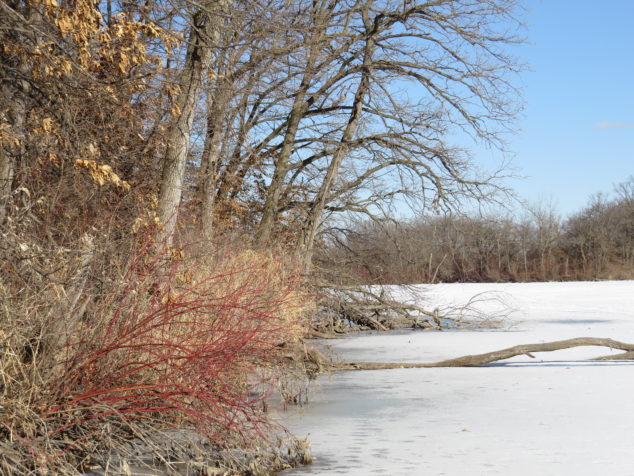
Just as vivid was a scattering of Red-twigged Dogwoods along the shore, reaching out to the sunlight.
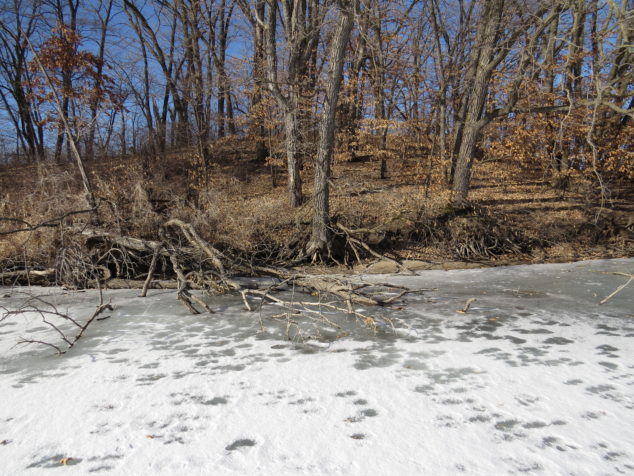
Downed trees had fallen into the water after years of erosion had loosened the roots from their moorings.
The branches gathered seaweed and algae from high-water summers…
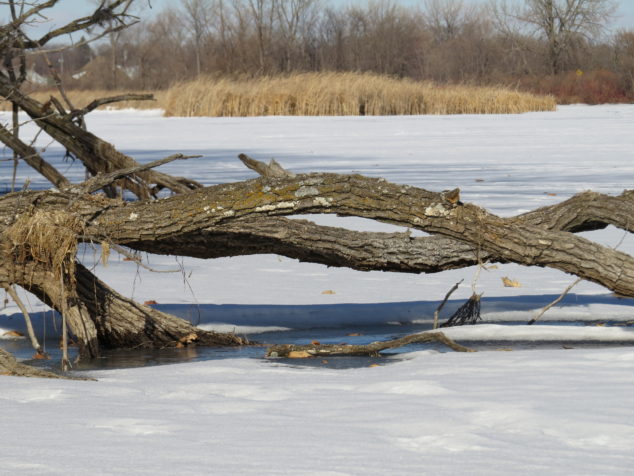
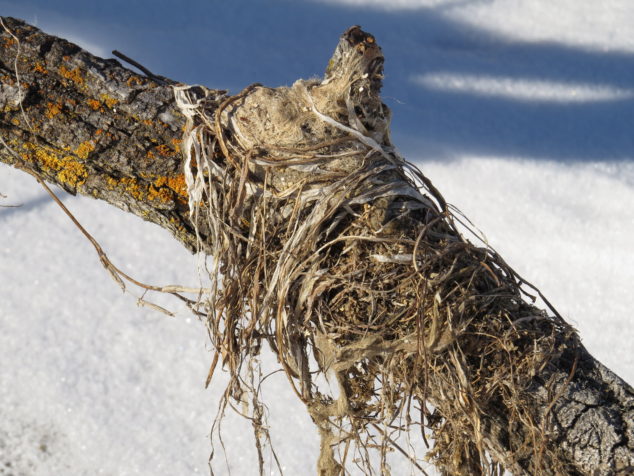
and were polished to sculptural driftwood by summer waves.
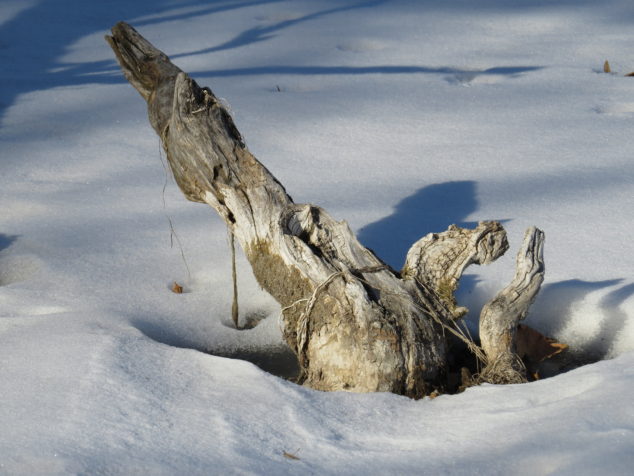
We dubbed the island ‘Lone Squirrel Island’ as we walked back over the ice.
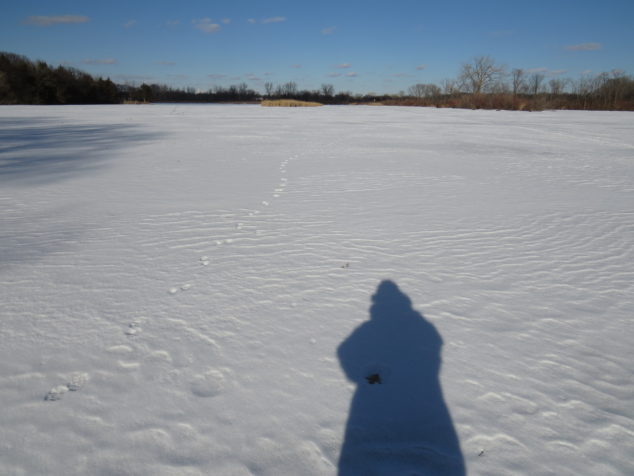
Islands are sort of mysterious. They lend themselves to exploration, enticing the boater, the squirrel, and the ice walkers to come see what lies within these shores. I was impressed with the quality of the woodland ecosystem on Lone Squirrel Island—the acorn-bearing Oaks and the beautiful Ironwood trees. It’s not as easy to get to know an island when a watery moat surrounds it as it is when thick ice supports cars, trucks, snowmobiles, or walkers. What if each of us is an island? We appear separate. Some of us are situated at great distances from one another. What is the quality of our ecosystem? Has anything loosened our roots from their secure moorings? Yet, like the underlying Earth of the islands, we are all connected. “Love is the binding force of the Universe. It holds us together. It makes us One.” –J. Donald Walters The thick ice was our bridge to the island. What bridges us together? Listening. Understanding. Empathy. Patience. Kindness. Let’s all be ice walkers. As we peer into the depths of Love, can we even fathom how deep and wide it is?
Looking From the Inside Out
At the beginning of the week I was planning to do a post about all the things I love about Nature in honor of Love and Valentine’s Day. There are so, so many things I love about Nature, about all the life-giving forces that surround us in our daily lives. Wednesday was a busy day starting with a circle of wonderful women sharing love for one another and discussing Desmond Tutu’s ‘The Book of Forgiving’ and ending with an Ash Wednesday potluck supper and worship service. And then the news of another deadly school shooting…. It takes a while for the story to unfold. It takes a while for the horror of it to sink into our minds. It takes a while before our bodies register the threat and menace of a normal day turned deadly. Oh, God, help us all.
And then I returned to the post I wrote just last week, to the place where thirteen men, women, and children were murdered on a day in 1862 when the traveling pastor came to visit, when the adults fled the gathering to try to save the children. It was chilling to visit that memorial state park last week, and it was chilling to hear the present-day news of yet another school mass murder this week.
The social media fallout and subsequent bipolarization of the issue of innocent lives lost made me want to cry out in anguish. One meme had a Sesame Street character as the picture with words linking gun deaths to abortions. Incendiary and incriminating words are useless in every situation.
I realized that we all see things from the inside out. We do not see the big picture. We look through the window of our own lives and experiences.
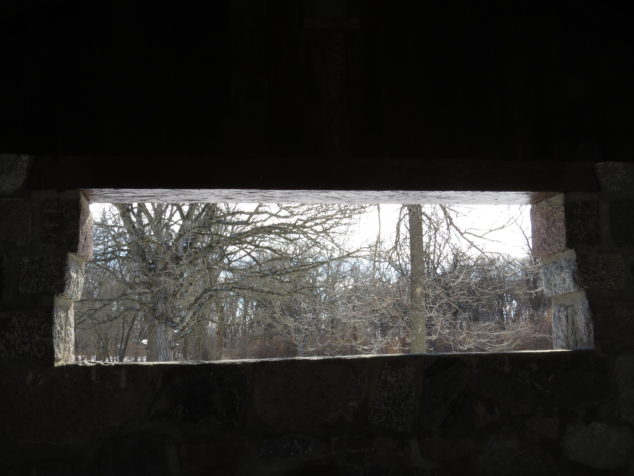
The window we look through is shaped by our upbringing, our culture, our parents, and our education. Were we loved and cared for or neglected and starved? Did people nourish and encourage us or hurt us and abandon us? Were we free to learn and be curious about the world or were we in survival mode day after day? It makes a huge difference in what we see when we’re looking from the inside out. But even the most loved, nourished, and educated person doesn’t see the whole picture—and that’s where community comes in. That’s when questions are asked, when experts are consulted, when data needs to be examined, and when we walk outside of our limited box of experience in order to experience the situation through the window of one who actually lives it. We each contribute a puzzle piece in order to see the whole picture.
On the left side of the picture above is a tree. Looking from the inside out, we can only see a part of it. Our minds extrapolate to build the image of the rest of the tree—because we know what a tree looks like. We, in essence, make up the rest of the image. By stepping out of our limited view of the tree, we see it in a completely different way. We behold the bigger picture and get a better sense of the reality of the tree.
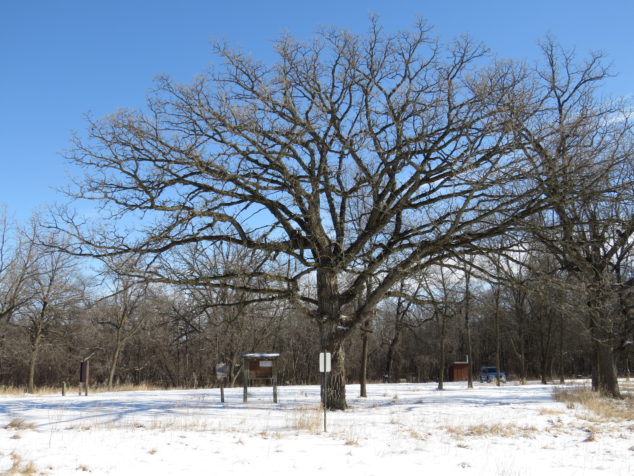
And yet, we still don’t see the whole tree. We notice the ground now, but we don’t see the extensive system of roots below the ground that are intrinsic to the life and existence of the tree. We discern the bark and trunk of the tree, but we don’t see the inside layers of phloem and xylem that coordinate the nourishment of the tree. We distinguish the branches and impressive crown of the Oak, but we don’t see the leaves that power the life of the tree. We are humbled in the face of this Oak and in the face of Nature. As we look from the inside out, let’s gather together as a community of people to add our pieces, ever so humbly, in order to see the bigger picture and take steps to not only try to stop the senseless killings, but to also help those vulnerable people whose windows are small and desolate.
Wrath of the Northwest Wind
We decided it was time for some Winter hiking. Beautiful blue skies accompanied the single digit high-for-the-day temperature. We drove to a small state park west of us that we had never been to, traveling by snow-covered fields and signs for rural Lutheran churches. The roads leading up to the entrance and throughout Monson Lake State Park weren’t plowed, so we guessed on the parking at the office building where I found an outside box with maps of the park. We were the only ones there. Next to the office building was an historic site sign, and as we read it, we both had a dark, sinking feeling, like watching horrid news on TV that you should turn off but you keep watching. On this site on August 20, 1862, thirteen Swedish settlers living on the edge of the frontier were killed by native Dakota Indians who had been displaced from their traditional homelands, placed on reservations, and who endured broken treaties and increasing hunger and hardships. The park was established in 1923 as a memorial to the Broberg and Lundborg families who lost their lives on that day. Usch då.
In the late 1930’s, two buildings were constructed in the new park by the Veterans’ Conservation Corps—a picnic pavilion and cooking area and a restroom—using local granite and white oak timbers.
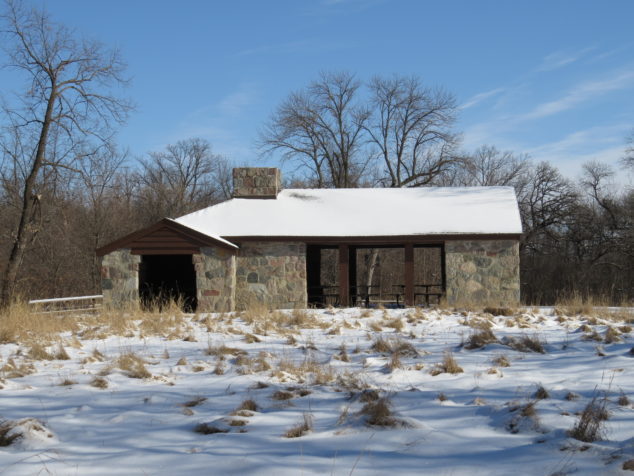
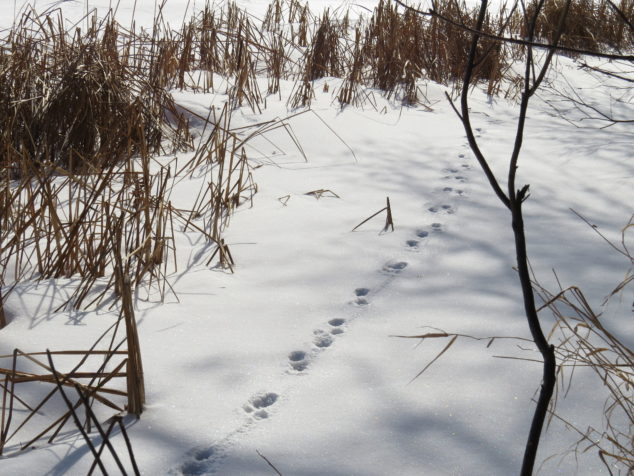
After a stop at the very cold outhouse, we walked the one-mile hiking trail. In the middle of a frozen slough we saw a muskrat house and followed the tracks that led to it. The new snow was fine and powdery and had blown into the prints, so it was hard to tell who made them.
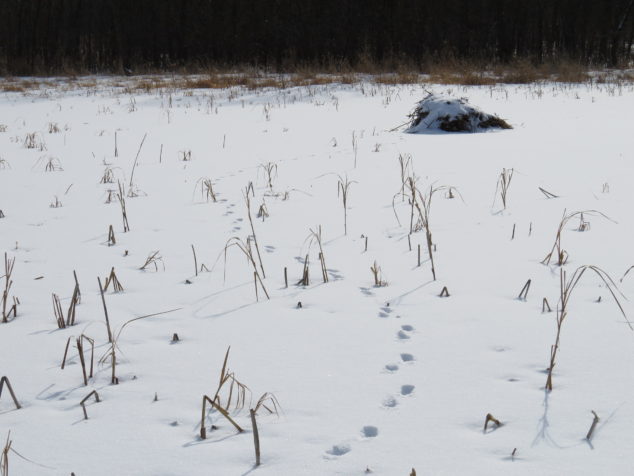
But as we got closer, we realized the trekking critter was also just checking out the house and moving on.
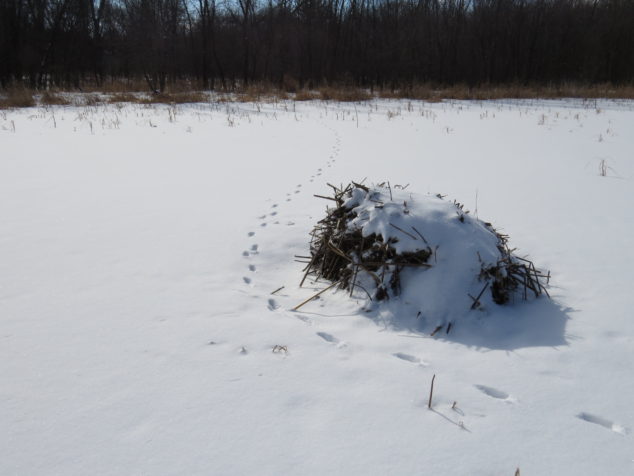
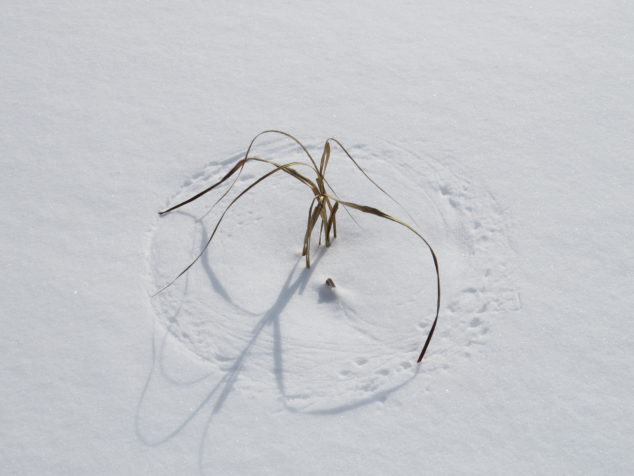
A wind-made sundial was etched into the snow beside the muskrat house, marking the Winter sun’s path to the Spring Equinox.
From the center of the ice- and snow-covered slough we looked back on the Oaks and Basswoods that lined the hiking trail.
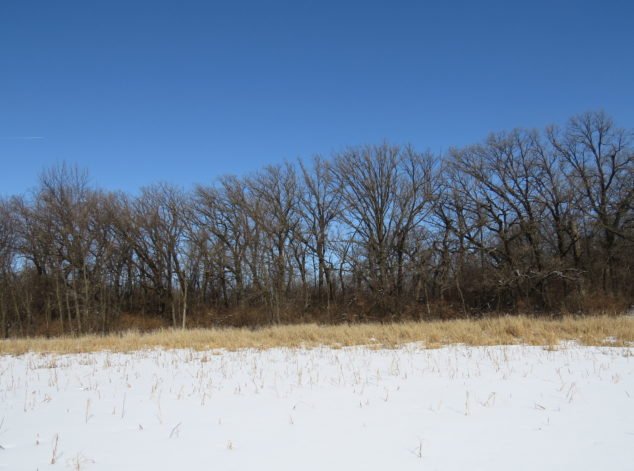
We hiked along West Sunburg Lake where the wind had made stripes of snow and ice. The sun was warm on our faces.

We saw what looked like coyote tracks on a food-finding mission at the edge of the lake.
After making a hairpin turn in the trail on the narrow isthmus between two lakes, we faced Monson Lake and the wrath of a northwest wind.

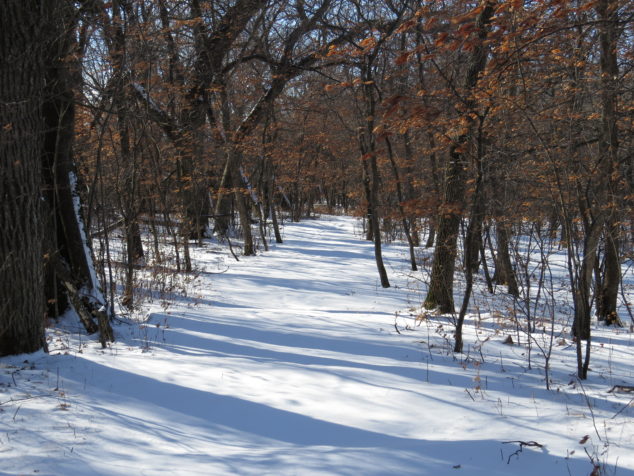
The trail was covered in drifts, and Ironwood understory trees, with their rusty leaves, chattered in the wind. The frigid, relentless wind pulled tears from my eyes, hurt my cheeks, and froze my breath. It felt like we were at a different place on a different day.
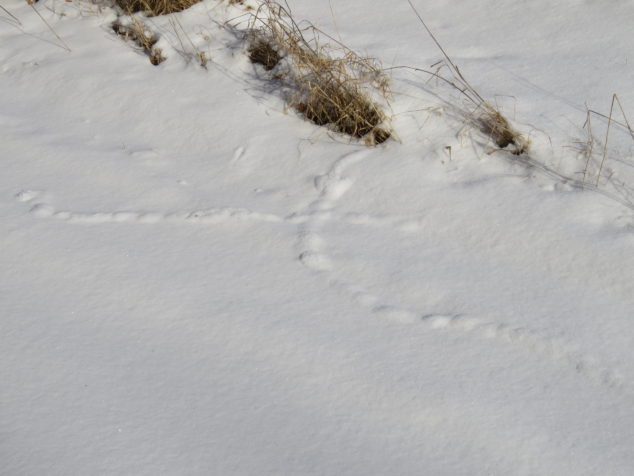
We hurried back to the picnic area that was sheltered from the wind and where once again, the sun warmed us. We saw little vole tracks under the snow…
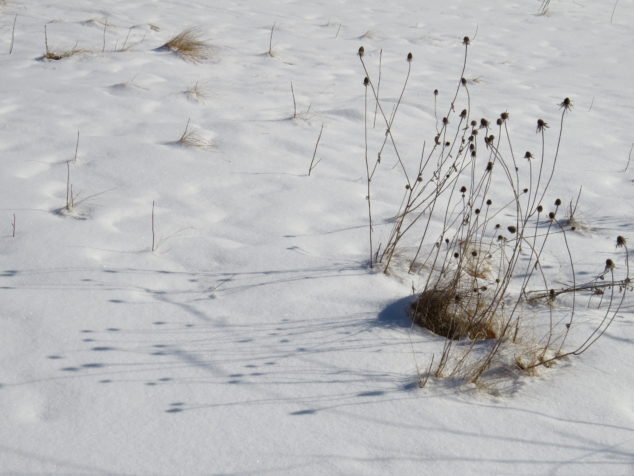
…and coneflower shadows stretching in the low-slung midday sun.
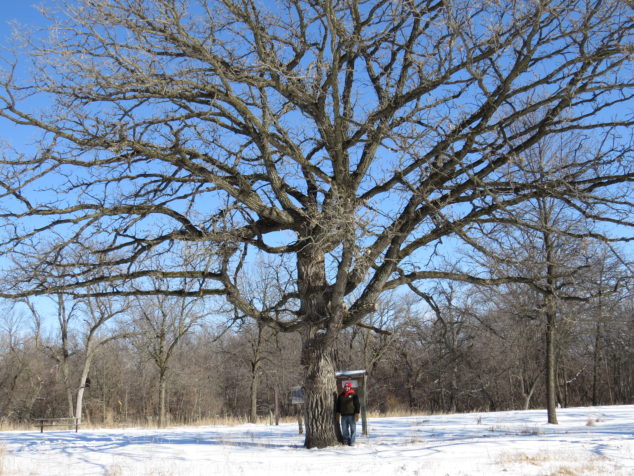
We celebrated the old beauty Bur Oak tree that spread across the blue sky.
As one of Minnesota’s smallest state parks, it is largely unchanged since its establishment. It is easy to see why it was a desirable location for the Dakota people for millennia and for the Swedish immigrants over 150 years ago. On the edge of the park in a small rectangle of land carved out from the park border is a little white Lutheran church and cemetery. Some of the graves date back to the late 1800’s, and the words are engraved in Swedish.
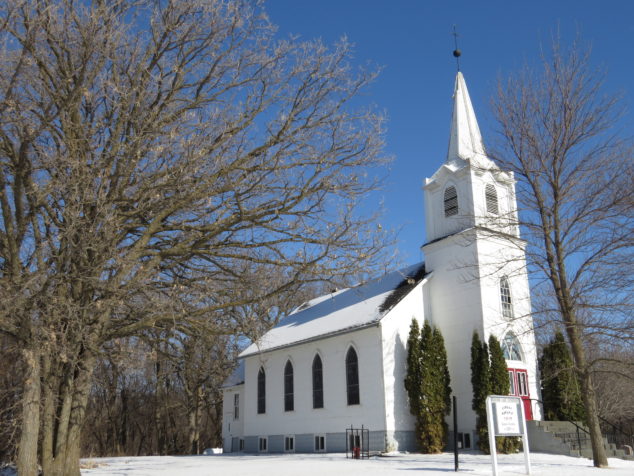
The wrath of the northwest wind coming off Monson Lake tells the story of pain and suffering of Native and Immigrant people. History is buried under the soil, under the water, and under the snow. I like that the little Lutheran church sits so close to the memorial park where the homes of the Dakotas and settlers once stood. I like how prayers are said every Sunday morning at 9:30 with coffee and fellowship following the service. I like how the Swedish words are etched in stone. I like how the cross and steeple track the Winter sun’s path year after year, decade after decade, stretching Grace and Spring’s Hope out to all who enter these gates. Life is hard. May you walk in Peace, may you celebrate Beauty, and may Love warm your face and heart. Gud välsigne dig.
Super Moon, Super Bowl, Super Day
I used to pretty much hate football. We never watched a game or rooted for a team when I was growing up. We usually planned Sundays around our horses instead of football. The times I did go to high school football games had absolutely nothing to do with the game. When I married a Chiefs fan, I gave football fandom a try—I went to a couple Chiefs games with him, but ultimately decided the ticket was definitely wasted on me-of-so-little-appreciation-and-understanding. It wasn’t until my son Aaron started playing that I became more interested, and he was interested in teaching me about football! We watched NFL Network together, watched games, and he would quiz me on players and positions. Truth be told, I never was very good at it, but it was fun and something special we did together.
There is excitement in the air with Minnesota hosting the Super Bowl and with Superstar Tom Brady coming back to the state where he visited his grandparents as a child. It’s a big deal for the Twin Cities! But I have to agree with Tony Dungy, former University of Minnesota quarterback, Super Bowl winner as a Pittsburgh Steeler, and Super Bowl champion coach of the Indianapolis Colts:
“As big a deal as the Super Bowl is, it’s not the most important thing going on in the planet.”
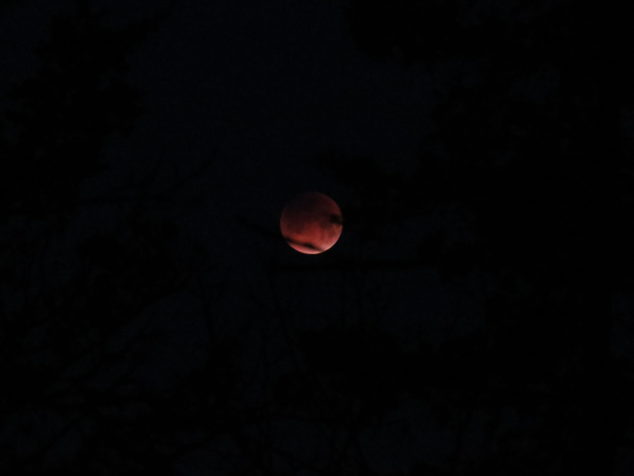
So very true. A much bigger deal to me was Wednesday morning’s Super Blue Blood Moon. It was forecast to be poor viewing for us due to cloud cover, and when I got up at 3:30 am to check, the moon was veiled in clouds. Disappointed, I went back to sleep. But Chris woke me before 6:00 with good news that the clouds had moved out and the eclipse had begun! I pulled on lots of warm clothes, as the front that had cleared the clouds also dropped the temperature and whipped up the wind to create a finger-numbing windchill. But it was all worth it! How beautiful!
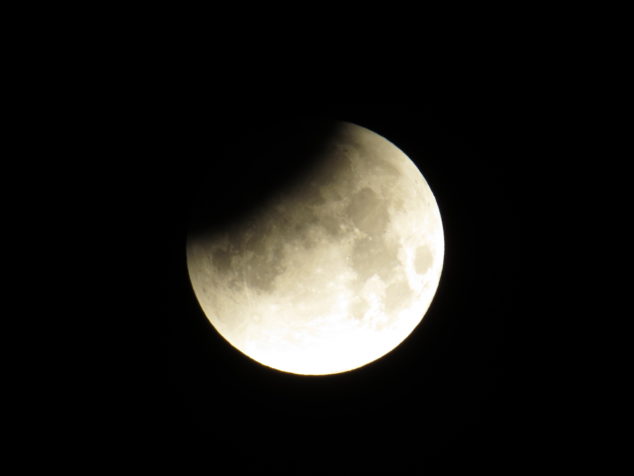
The Super part of the lunar trifecta was the larger, brighter moon due to being closer to the Earth in its elliptical orbit.
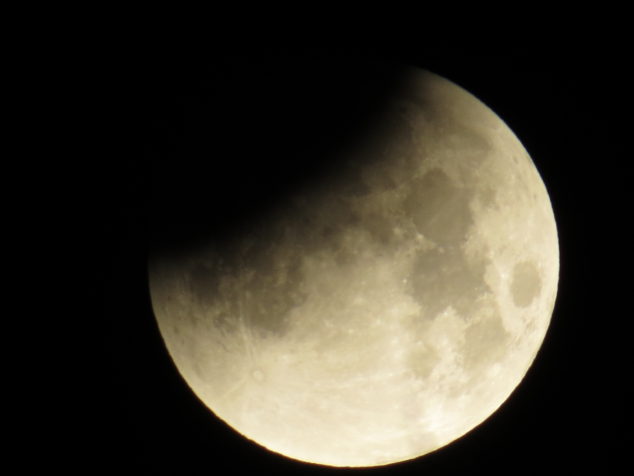
The Blue part is because it was the second full moon in the month of January—two full moons in one month doesn’t happen that often—as in ‘once in a blue moon.’
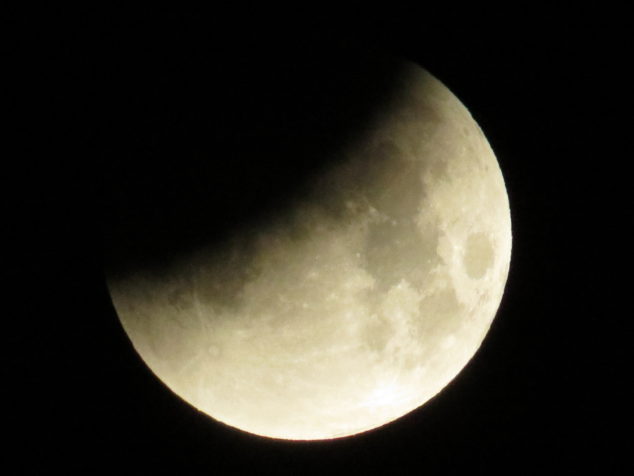
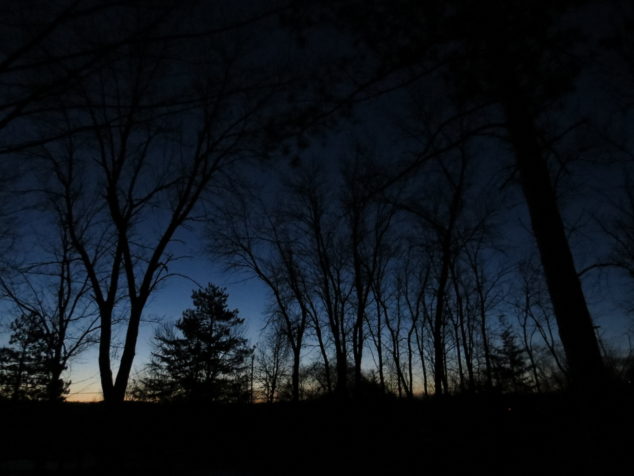
Our western sky is mostly blocked by trees, but I was able to find some spots between branches for the close-ups. From our hillside vantage point, the moon and lights of our little town made a pretty pre-dawn picture.
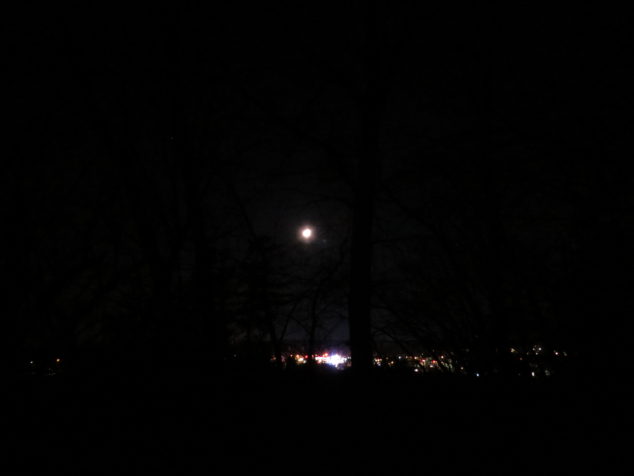
My freezing fingers necessitated running back to the house for warm-ups as the shadow of the Earth passing between the moon and sun slid over the lunar surface.
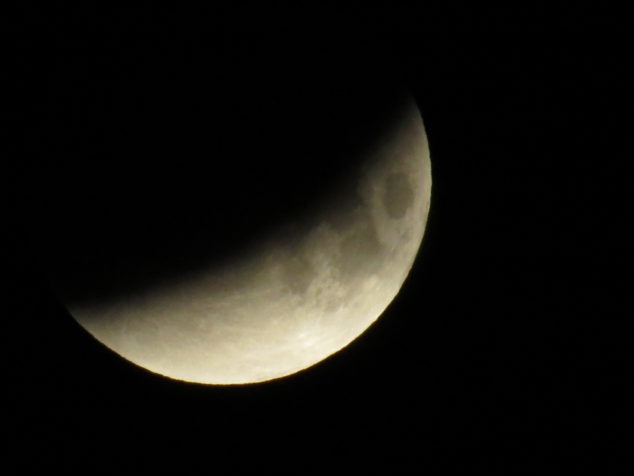
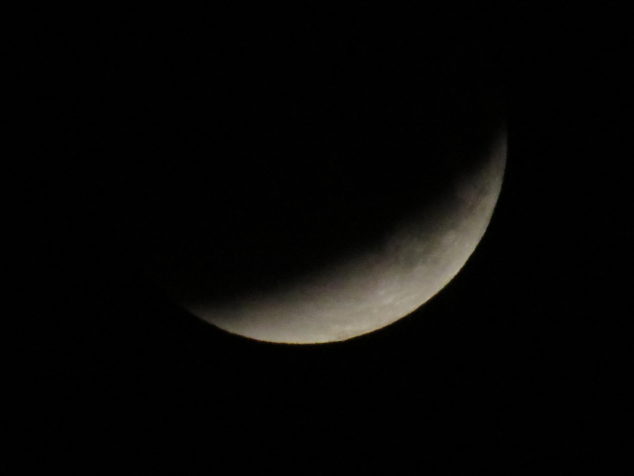
The Blood part of the trifecta was because of the total eclipse. As the shadow envelopes the moon, the sunlight makes its way through the Earth’s atmosphere where dust and other particles filter out the blue-colored light and indirectly shines on the darkened moon, making the moon appear red.
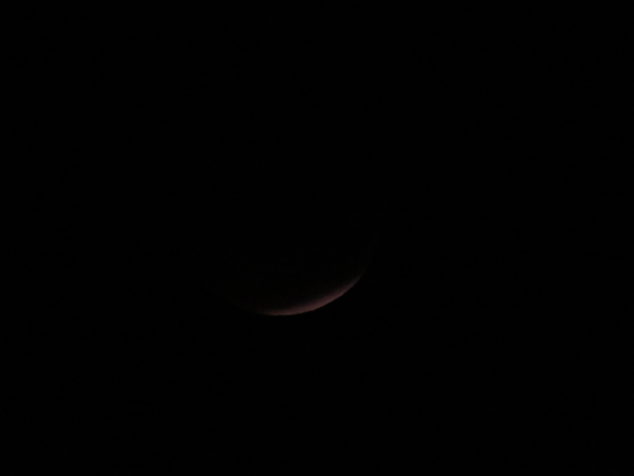
The last time this rare triple wonder happened in the Western Hemisphere was 152 years ago! Prediction for the next Super Blue Blood moon is in 2037—many Super Bowls from now.
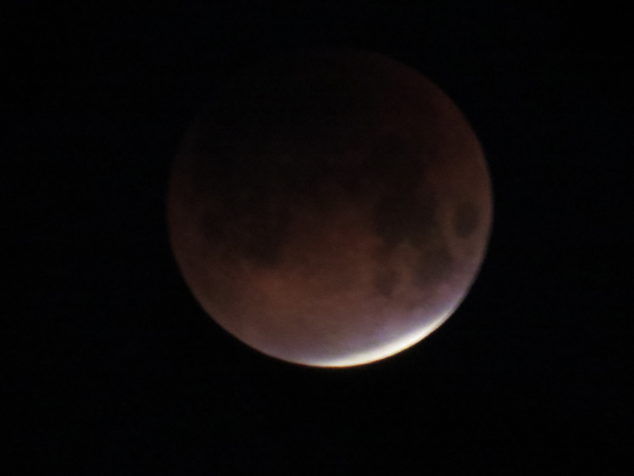
As the Super Blue Blood moon sank to the western horizon amid the tree branches, the eastern sky began to lighten. What a great beginning to a Super day!
Due to the moon’s setting and the light of day, I was unable to see the moon come out of its eclipse, but what an awesome feeling to witness such a rare and beautiful celestial spectacle! Because of Aaron, I now consider myself a semi-fan of football—he and I still talk about the Chiefs, we still watch an occasional game together when he’s home, and I can appreciate a pinpoint pass by a superstar quarterback. I will watch the Super Bowl on TV as the big deal goes on just 80 miles from us. But it’s not the most important thing going on in the planet. Our Earth, its atmosphere, all of Nature and us as stewards, how we treat and care for one another, how we care for ourselves, sharing time and love with people who delight in our presence—these are the important things.