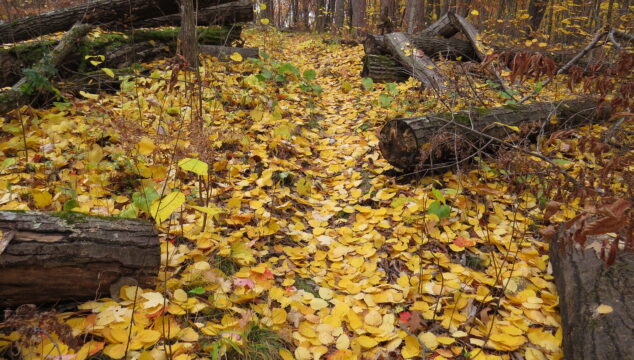
Come walk with me in the peak Autumn beauty of the Northwoods. To say that I love this time of year is an understatement. Most everyone can appreciate the colorful falling leaves---it reveals the 'true self' of a tree when its leaves are no longer producing chlorophyll. Their true colors are revealed, and there is something simple … [Read More...]
Archives for 2016
The River Just Rolls On By
‘Cause the river don’t talk, the river don’t care
Where you’ve been, what you’ve done
Why it is you’re standin’ there.
It just rolls on by, whisperin’ to your soul
It’s gonna be alright, the river just knows.
–Annie Tate, Dave Berg, Sam Tate
I don’t usually listen to Rodney Atkins, but I love what the chorus of his song ‘The River Just Knows‘ says and invokes in me. The singer/storyteller gets up early in the morning to go fishing and sees another guy at his spot on the river, and he wishes he could have the river to himself. He notices the guy has a military haircut and fresh scars on his face, and knows what brought him to the river. The soldier catches a rainbow trout, then releases him back to the river with “I’ll help you get your wind back, ’cause you helped me get mine.”
Our journey to St. Croix State Park a couple of weeks ago centered on the rivers that border and crisscross the large park. Twenty-one miles of the St. Croix River make up the southeastern border, and the last seven miles of the Wild and Scenic Kettle River is on the southwestern side. After leaving the fire tower, we first crossed Bear Creek–one of ten other streams that flow through the park. The stone and log bridge and beaver-chewed trees made a picturesque scene as we drove toward our hiking destination–Two Rivers Trail.
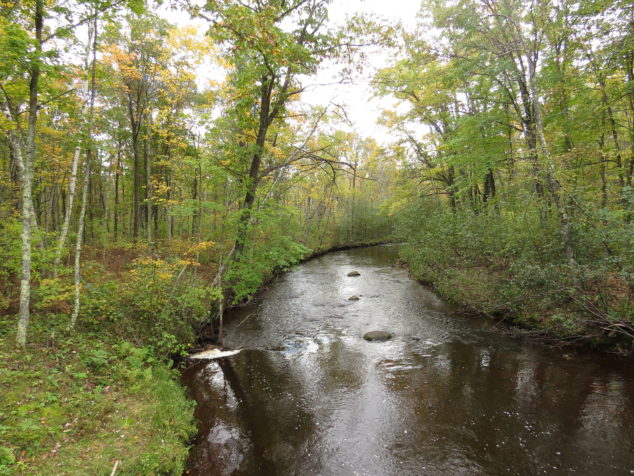
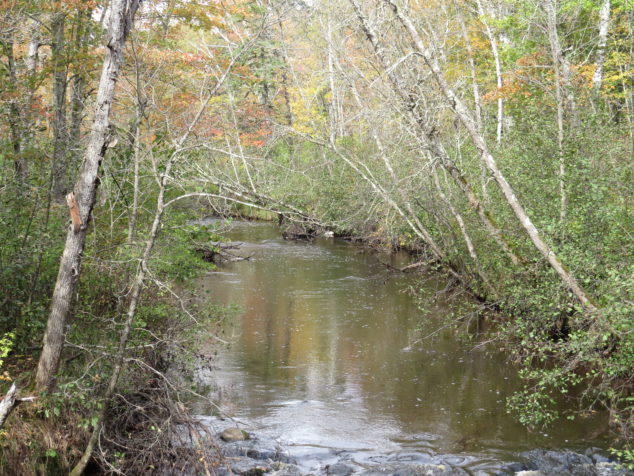
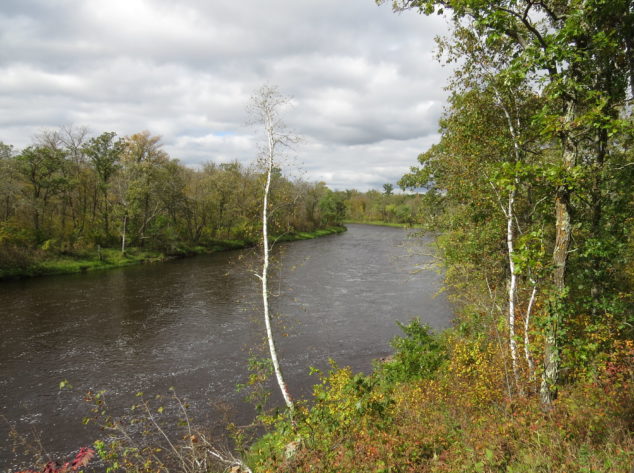
We ate our picnic lunch at Kettle River Overlook. The cloudy sky made the river look gray, and white-capped and burbling rapids brought the river to life.
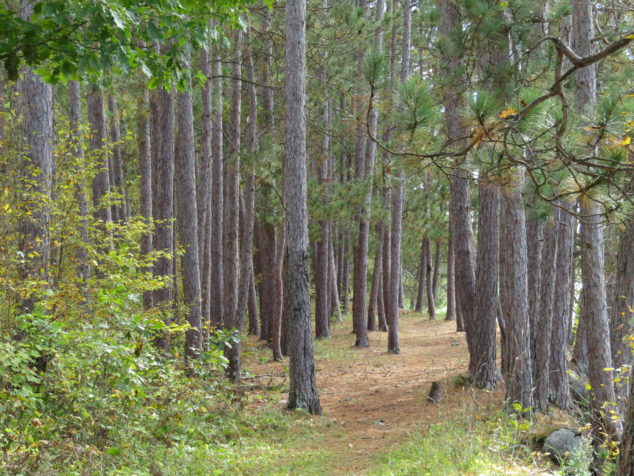
The trail along the Kettle River was often lined with towering white and red pines that dropped their needles to cushion the path and provide the heady fragrance that makes you know you’re in a good place.
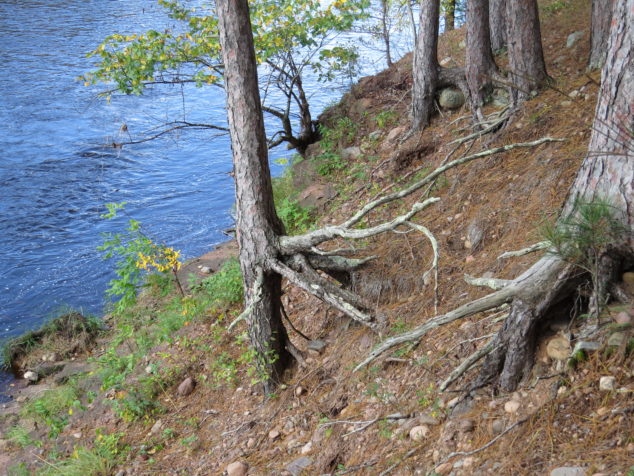
 Along the river bank, where rain and flooding waters had washed away the soil, some of the roots of the pines were exposed but hanging on to keep the trees upright.
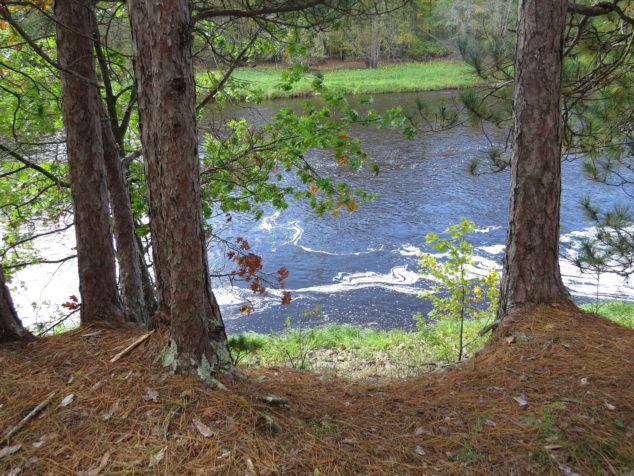
As we hiked, the clouds gave way to blue sky, and the river reflected the change. This one spot had swirly foam that created abstract pictures as the river rolled by.
Then we walked to the point where the Kettle River ended…
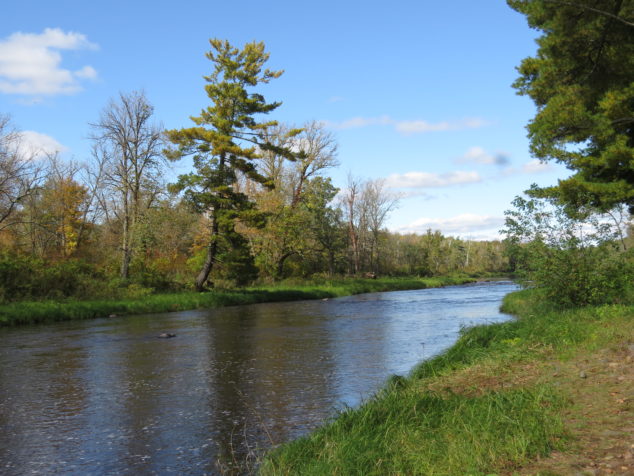
and flowed into the larger St. Croix River. Five Pine sentries stood at the confluence of the two rivers. “Welcome Home.”
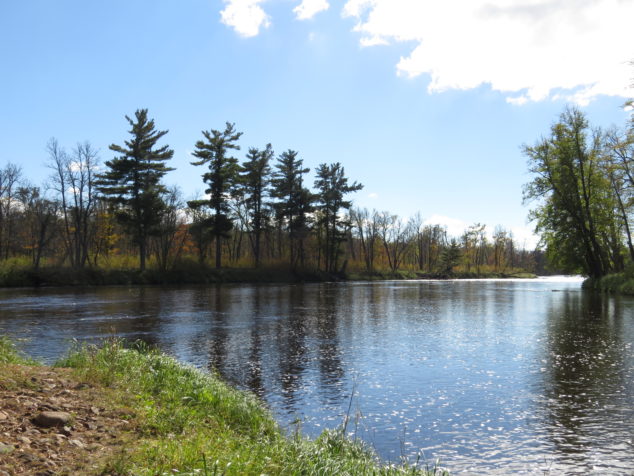
It was easy to see why this river was chosen for a National Scenic Riverway–every glimpse of the river was so beautiful! It stirred a desire to explore it from a canoe.
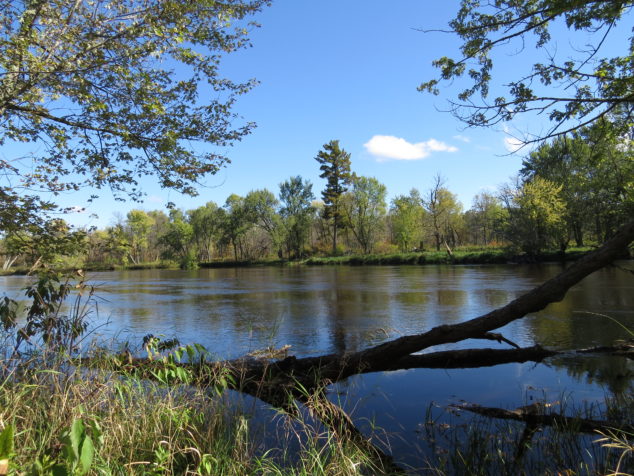
Across the river, in Wisconsin, is Governor Knowles State Forest, with more impressive pines.
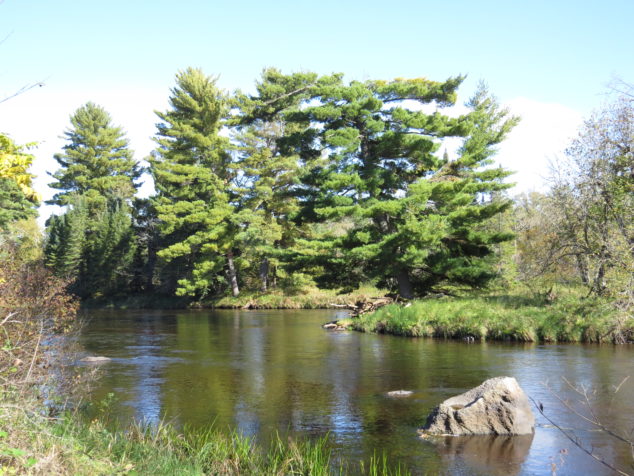
The rock in the river made a natural fount to hold the holy water, blessings for all the travelers who passed by.
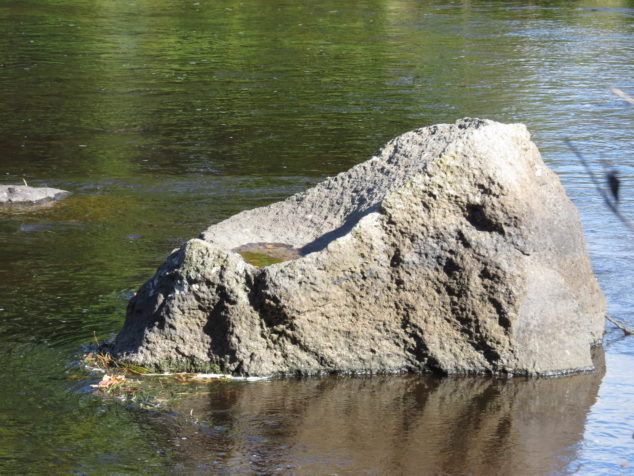
The tipping Pine, on the point of an island, had a pileup of log debris at its feet.
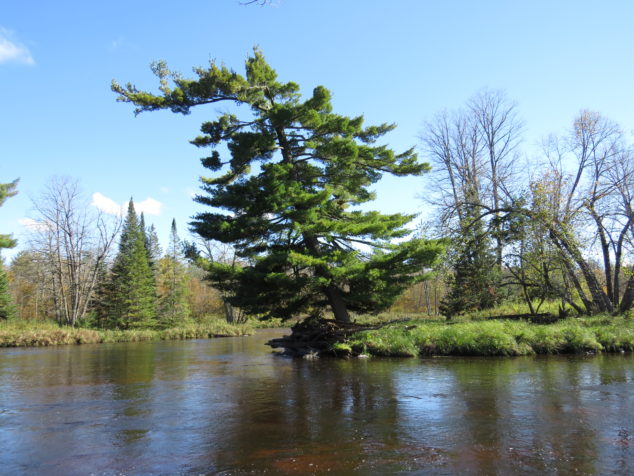
A primitive camping spot for canoeists is at a bend in the river under another giant pine. The hiking trail veered into the forest away from the river at this point—and the river just rolled on by.
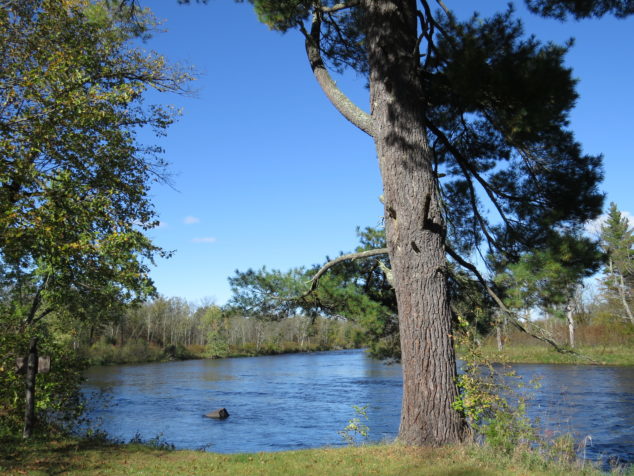
I had an inordinate amount of fear growing up. Nature helped to cushion my path and get my wind back every time I felt a pile-up of debris at my feet that threatened to tip me over. It helped me hang on. In the song, the river brought life back to the soldier–and to the storyteller. All of Nature brings Life back to us–even when we don’t realize we’re in need. The holy water, the sanctuary of trees, the steady foundation of rocks, and the breath of wind whispers to our souls, tells us we’re in a good place, and lets us know that everything’s gonna be alright.
A Yard Full of Beautiful Bluebirds
Happiness is when what you think, what you say, and what you do are in harmony.
—Mahatma Gandhi
There have been times in my life when I wondered if I would ever be happy again. Those were struggling times, deep and dark times in my soul. I couldn’t wish, pray, think, or act my way out of the darkness. So I just went through it–like those long tunnels under the mountains on the Pennsylvania Turnpike. No matter how much you want to see the light or maybe want to turn around, you can’t—you just have to move forward and travel through it.
I thought the Bluebirds had left our place and migrated south–I hadn’t seen them for quite a while. And then Friday I noticed the yard was full of them! They perched and swooped and chirped like a playground full of children! Bluebirds of Happiness!
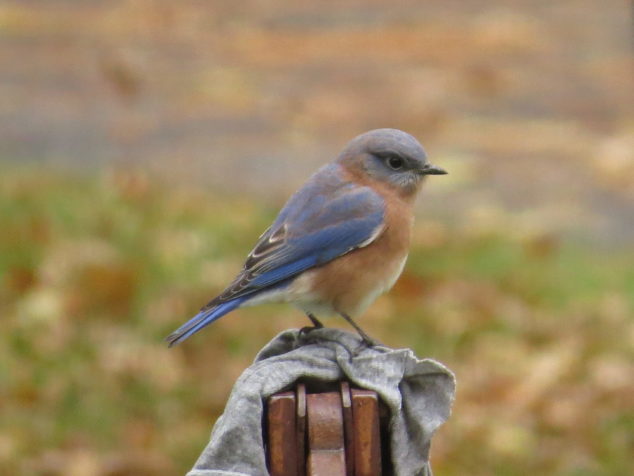
They were probably gathering up for migration, filling up on their fall diet of sumac and chokecherry seeds–after a summer of eating insects.
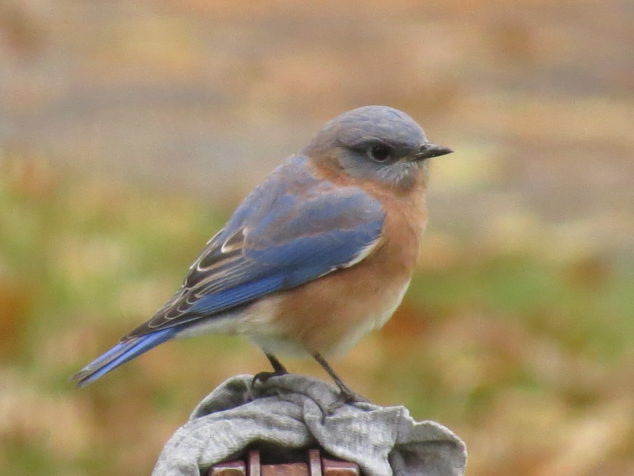
I was amused by how this little guy looked all around from his perch on the Maple tree right outside our window.
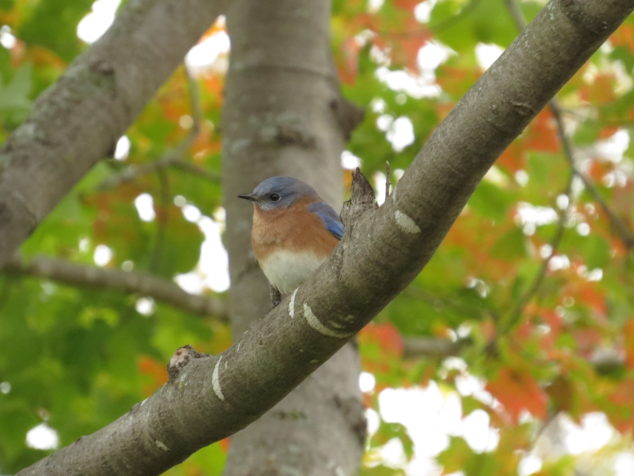
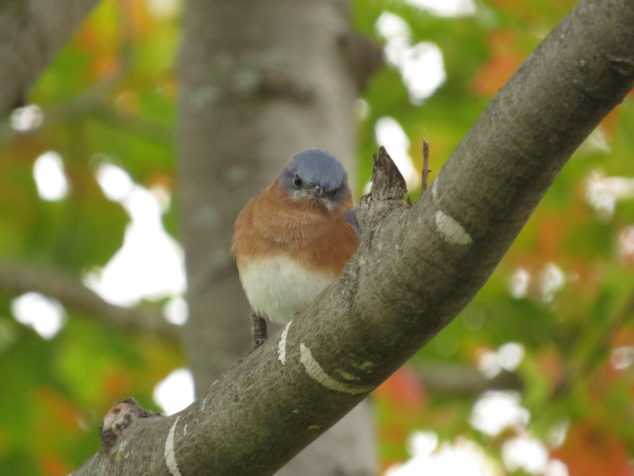
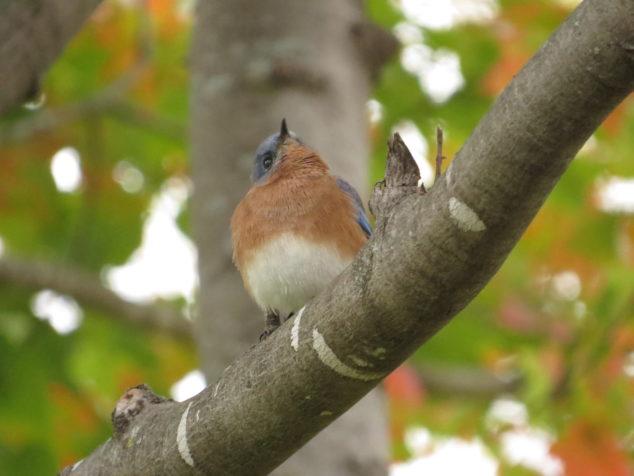
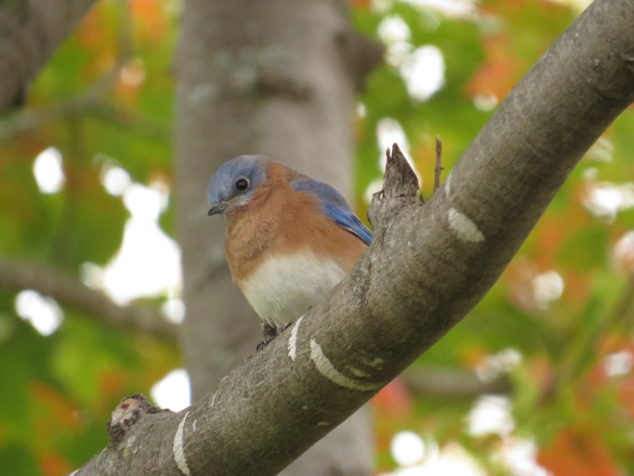
A male and female flew to an inverted tub to drink the rainwater that had accumulated in the little troughs. What beautiful birds!
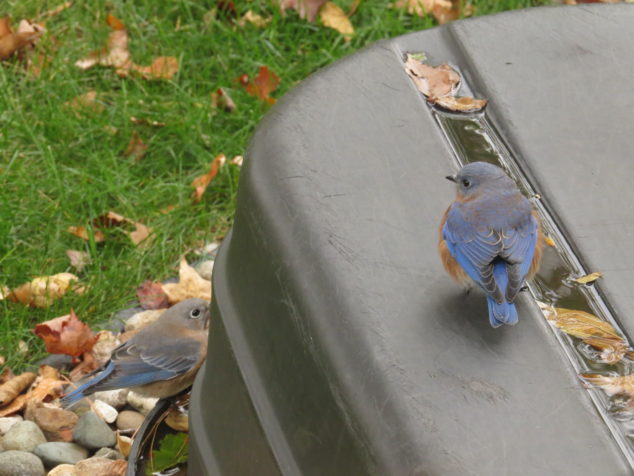
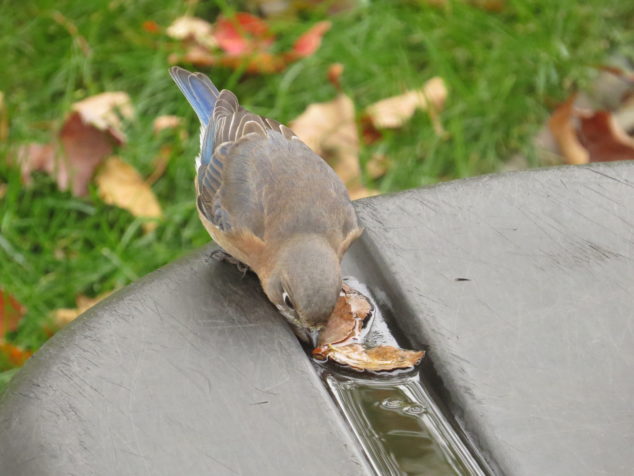
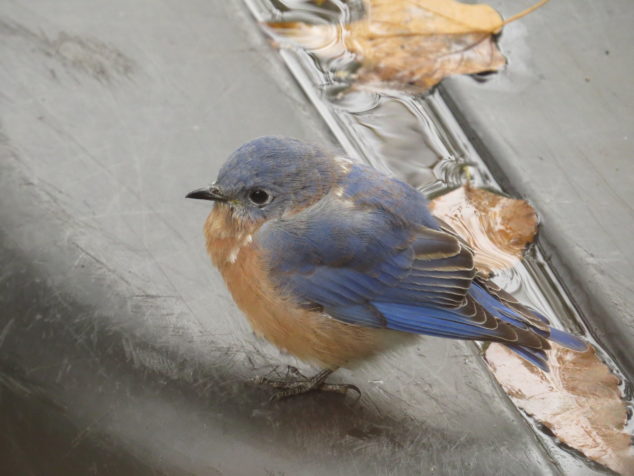
Most Eastern Bluebirds migrate some distance to the south, but not all of them. Researchers are not sure why some stay in the northern climate during the harsh, cold winter. I wonder if their winters are as bleak as my struggling times were. But struggling times are learning times, a vast and precious rearrangement of our thoughts, words, and actions, all precipitated through the troughs of our feelings. We drink them up, and they sustain us. Aristotle wrote, “Happiness depends upon ourselves.” Not what other people do, not with how much stuff we have, not with who wins the election. Alignment to harmony equals happiness. A yard full of beautiful Bluebirds is just icing on the cake!
The View from the Top of the Fire Tower
I’m not afraid of heights. I climb ladders and get on roofs without hesitation or sweaty palms. I’ve ascended lighthouses, campaniles, trees, Pike’s Peak, and a few tall buildings. I worry more about the mechanical integrity of a ferris wheel or roller coaster than I do about how lofty the apex is at that momentary high point. It’s exciting to see the rest of the world from the sky-high zenith of natural or man-made structures.
So it was on our visit to St. Croix State Park as September moved into October. St. Croix State Park is the largest of Minnesota’s state parks with 34,000 acres along twenty-one miles of the St. Croix River that divides Minnesota from Wisconsin. The St. Croix River, a National Scenic Riverway, was an important trade route for hundreds of years for Native Americans, fur traders, and later for logging companies. In 1935, 18,000 acres of logged and failing farmland was purchased and became the St. Croix Recreational Demonstration Area under the direction of the National Park Service. The Civilian Conservation Corps (CCC) and the Works Progress Administration (WPA) built roads, group camps, campgrounds, and many buildings from red sandstone and logs from the area. 164 structures remain as the largest collection of New Deal projects in Minnesota and are listed on the National Register of Historic Sites.
One of those structures in the Park is the fire tower built in 1937 by the CCC. It was one of 123 fire towers used across Minnesota to monitor wind and fire danger. It was manned during the fire season by dedicated watchmen until 1981. The last watchperson was a woman, Mrs. Wolters, who volunteered for 19 years of smoke spotting! The tower is situated on a hill and is 100 feet tall.
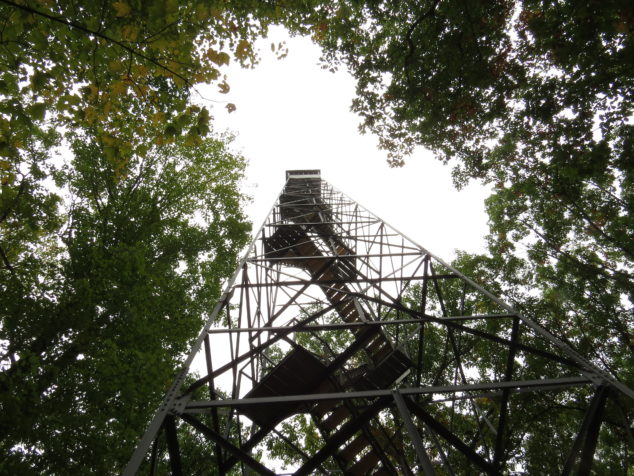
Come along with me as I begin at ground level and climb 134 steps to the top of the tower for a breath-taking view of the Park.

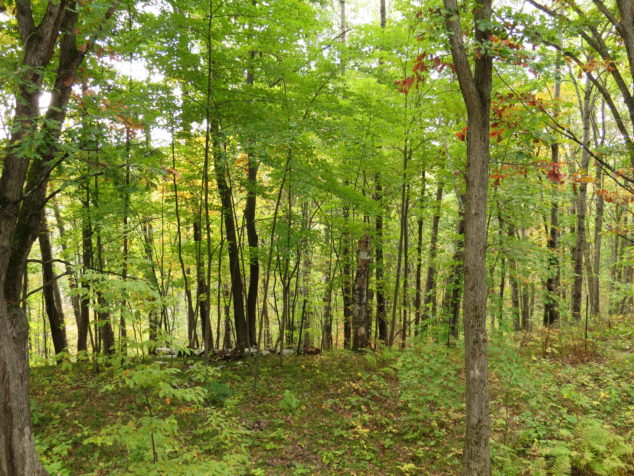
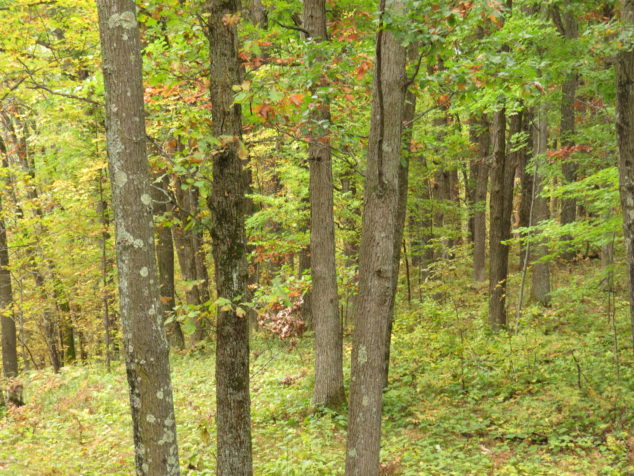
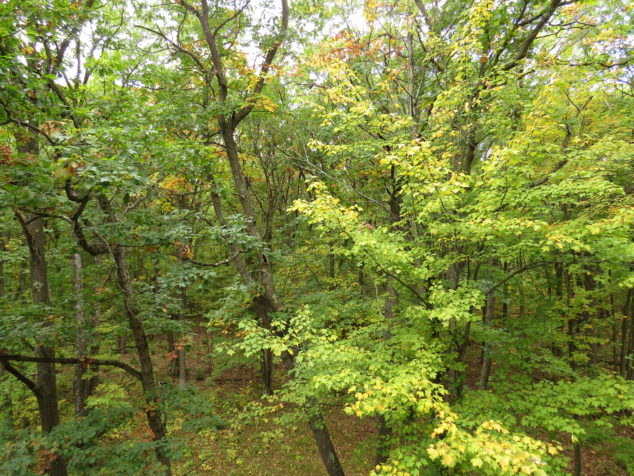
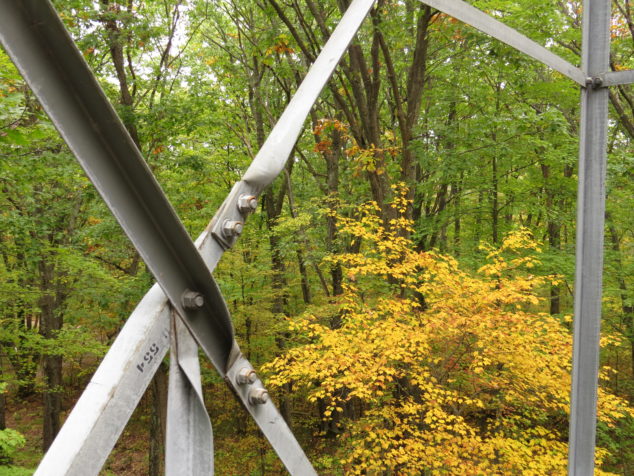
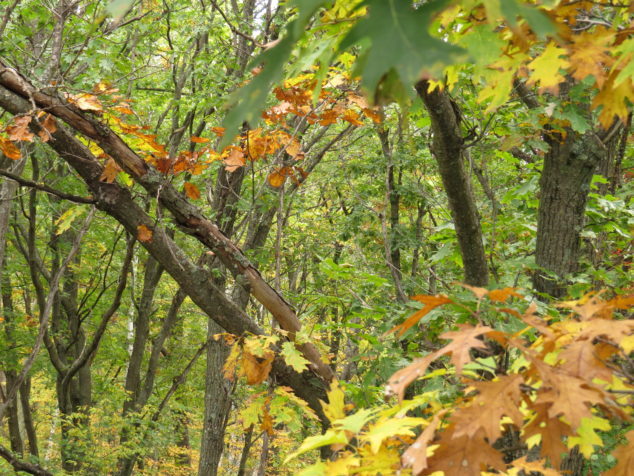
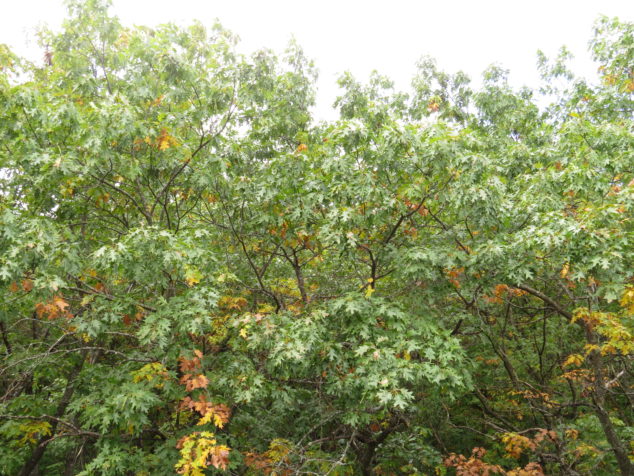
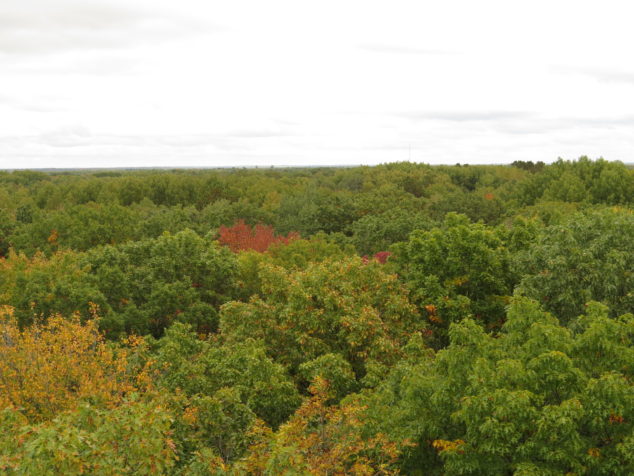
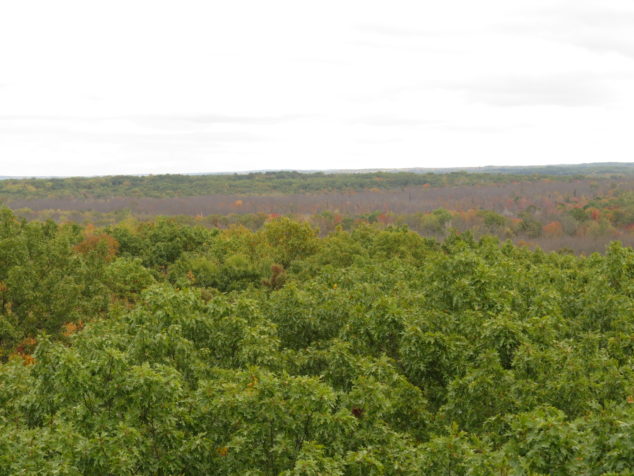
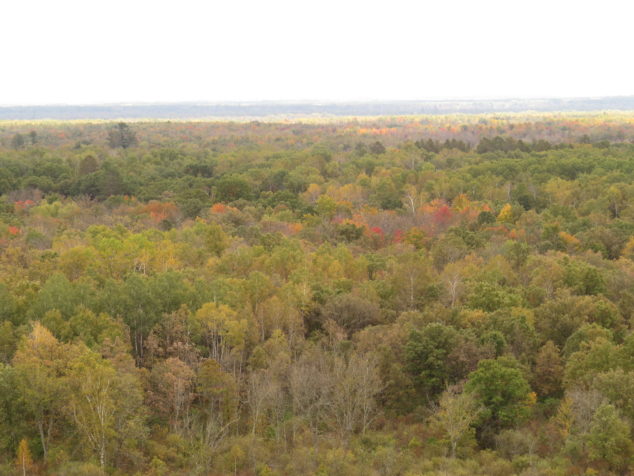
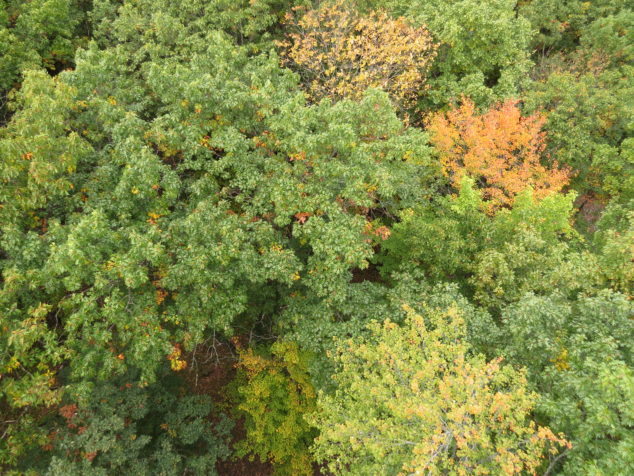
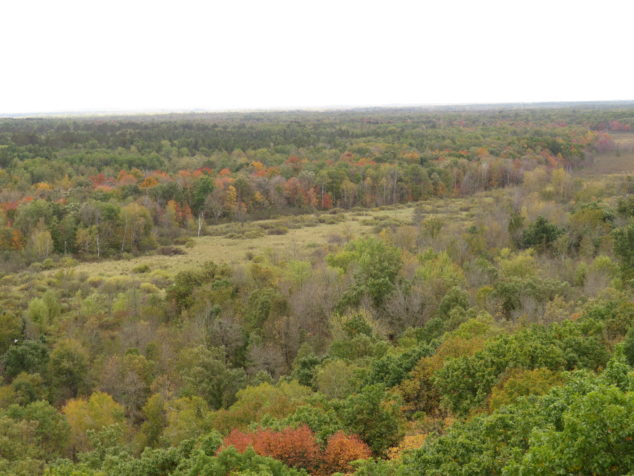
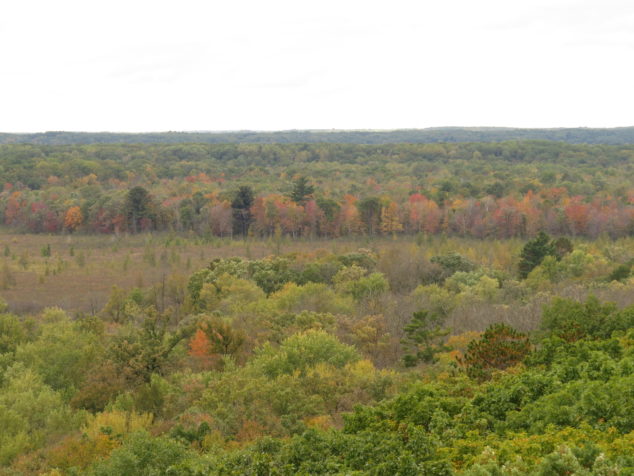
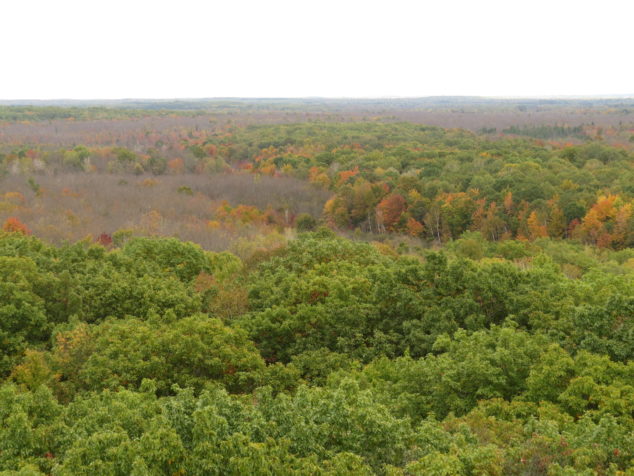
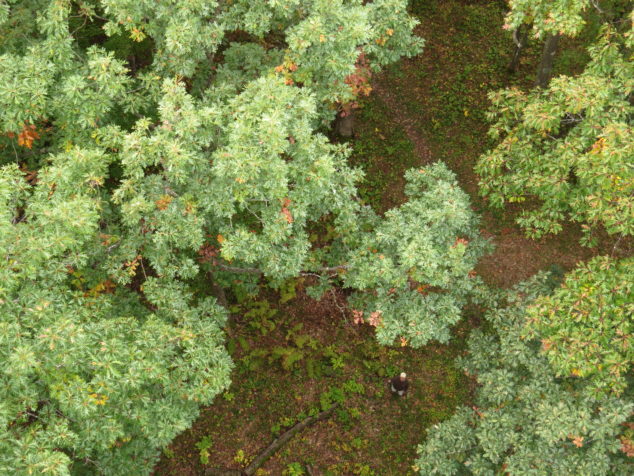
When we got within two landings of the top of the tower, Chris said, “That’s enough for me.” I said, “But we’re so close to the top!” He turned around and climbed down the wooden stairs. The very last set of stairs at the top were old, rickety, and covered in bird poop. I have to say my knees felt a little weak for a moment before I ascended that last bit, but, wow, it was pretty amazing at the top! The Maples were brilliant in their fall colors, and the sweeps of trees that had already lost their leaves were purplish against the still-green Oaks. I leaned over the edge of the tower side with the camera to get a picture of Chris waving to me from the ground. I thought about all the watchpersons who had spent long days up on the tower with beauty and boredom in all kinds of weather.
Chris’ simple statement has stuck with me. I have admiration for him climbing that tall tower as far as he did, as he cannot proclaim to be ‘not afraid of heights’ like I do. I have even more respect for the proclamation he did make–“That’s enough for me.” In my excitement to reach the top, I urged him on instead of congratulating him for climbing so far. Knowing ourselves and our limits, our goals and values, the things we struggle with and the things we know we need to get better at are the keys to climbing to a better life. That’s enough food for me. That’s enough shopping for me. Enough gambling, enough alcohol, enough abuse, enough silence, enough pretending. We make a new deal with ourselves and take steps to live a life that is congruent with our true selves. And from there, the view is breath-taking!
Gleanings from September—One Way then Another
I’m not very good at making decisions. I try to avoid the shampoo aisle at Target. I will think about all the possibilities and outcomes of choosing a particular thing, then look at the alternative in the same analytical way. One way, then another. Pros and cons lists. No wonder nobody likes to shop with me; heck, no wonder I don’t like to shop! It’s exhausting! Ask me to go somewhere? Let me think…. I also tend to make decisions based on how it affects other people in my life, which of course, is usually pure speculation on my part. I suppose that beast Perfectionism is involved–I don’t want to make the ‘wrong’ choice, but the beast’s offspring Procrastination often ends up the winner.
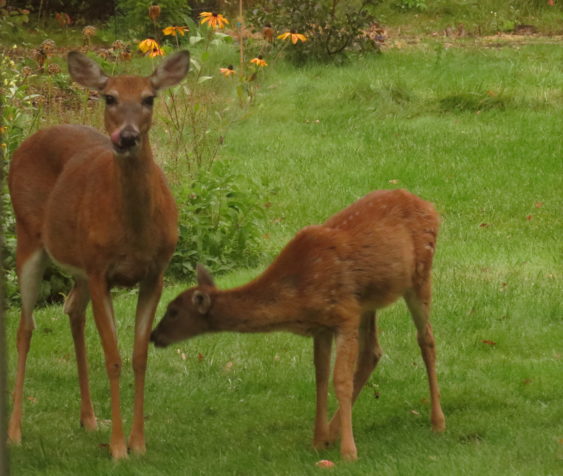
Ah, September! It is a month of one way, then another. The days are warm and sunny, then chilly and rainy. It is State Fair fun, then back-to-school schedules. It is green leaves, then daily changes to red, orange, and yellow. But there are some constants in September, like the does and fawns who make a path from the woods to the apple tree to eat up the sweet, fallen treats. Mmm, apples! And the fawns ‘losing’ their spots as their winter coats grow in long and thick.
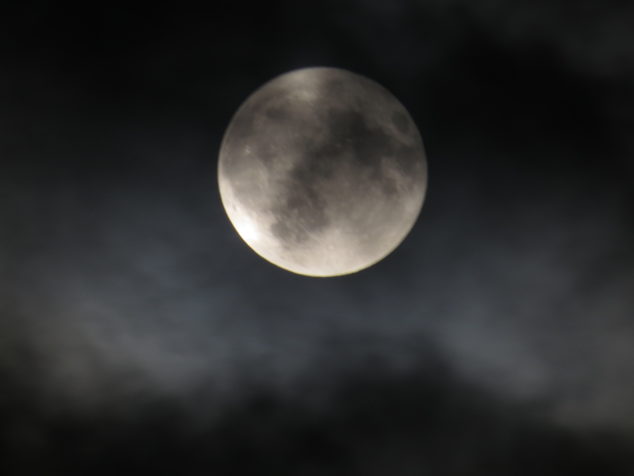
September most often houses the Harvest Moon–the full moon that falls closest to the Autumnal Equinox.
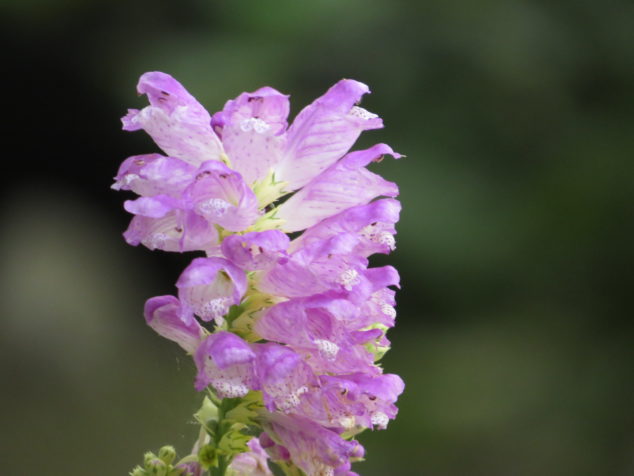
Obedient Plant blooms in September. Each individual flower on the square stem can be moved one way, then another and remains in the new position.
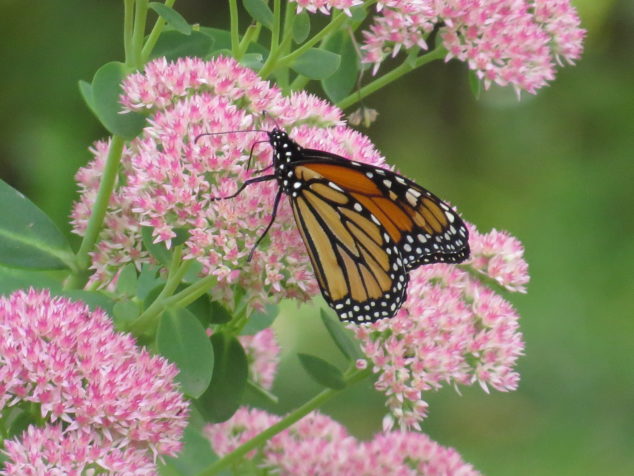
Monarch Butterflies get late season nectar from the pretty Sedum flowers.
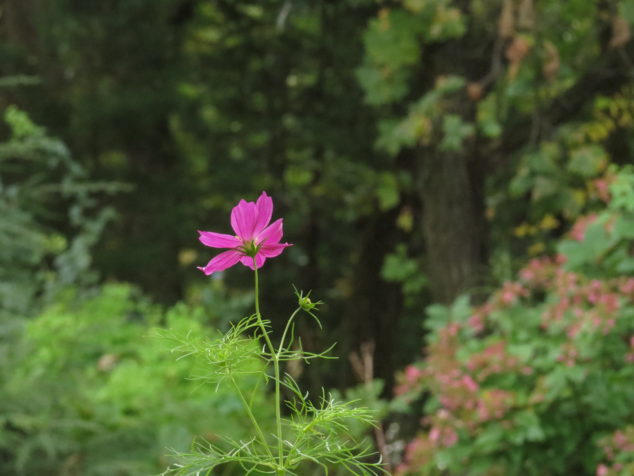
Tall, wispy-stemmed Cosmos flowers outside our picture window sway one way, then another in the breeze.
September brings the combined family groups of Wild Turkeys to our yard and woods. We can hear them scratching through the leaves on the wooded hillside searching for acorns before they emerge and stroll through the yard. The young ones are almost as big as their mothers, and they all make an impressive troupe.
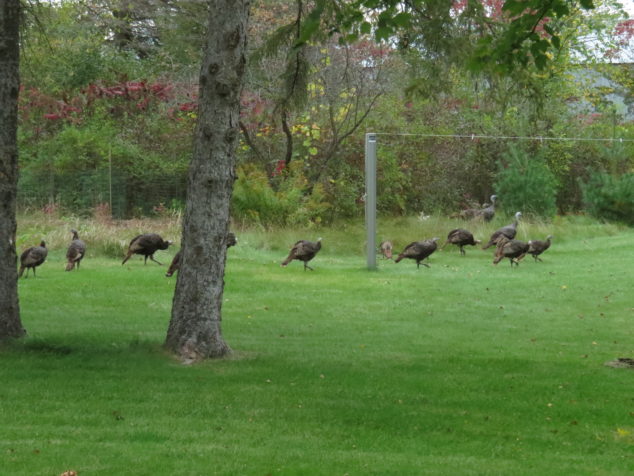
They walk in a trailing group, heads down, pecking at things as they go. The mothers stand sentry to the group with raised heads, looking for potential danger.
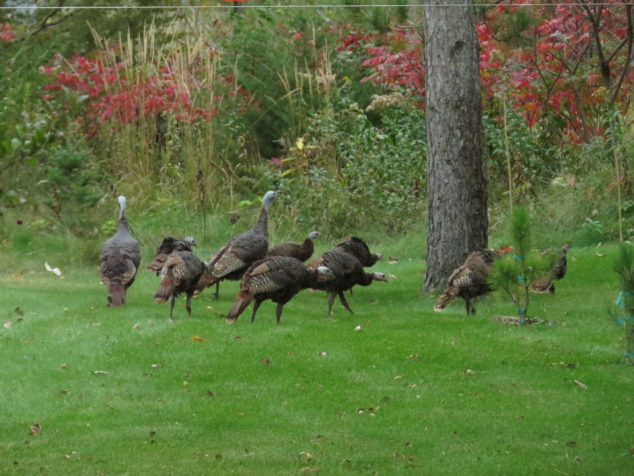
Then they see something! A couple of the young ones see it, too.
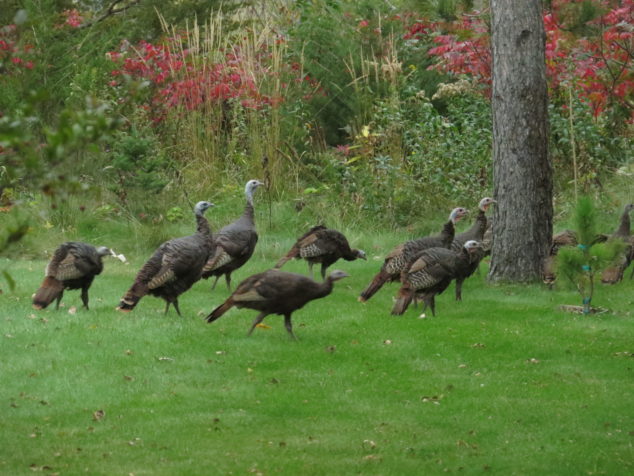
The sentries stop and watch as some of the unsuspecting young ones head down the driveway. A black dog runs down the road, not seeing or minding the young turkeys.
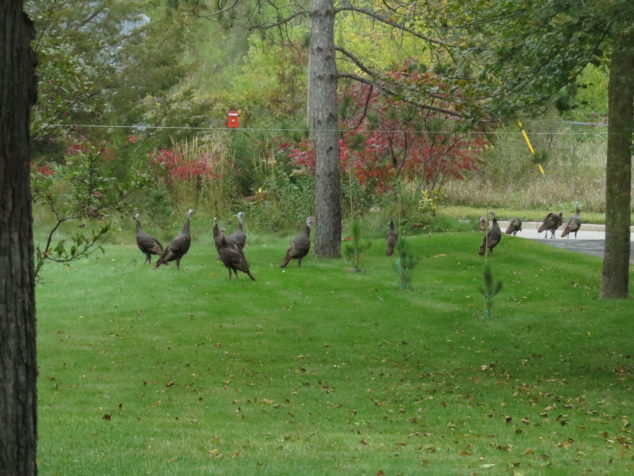
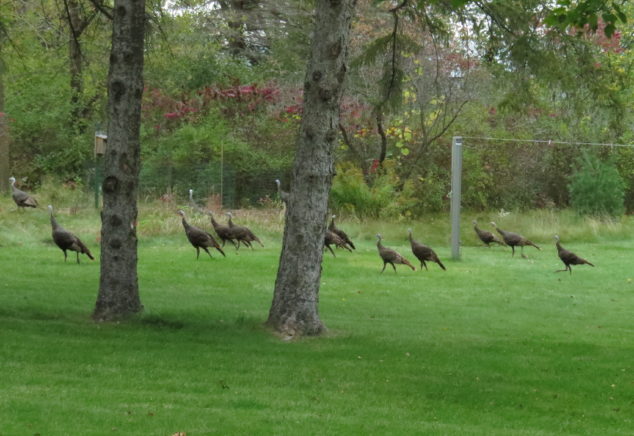
Quickly the whole troupe turns around and walks in the other direction with purpose. No time for grazing with the threat of a dog around! They take a different path through the woods on their daily grazing journey.
September ushers in the harvest season–a time to reap that which has been sown. All the plants and animals, including ourselves, follow the instinctive, unconscious ways of Nature to prepare us for the winter season. We pick apples and pumpkins, corn and squash–whether from the orchards and gardens or from the markets and stores. We make sure we have our winter coats and boots. We check to see if the furnace works–and if it doesn’t, the freezing forecast moves that to the top of the ‘important and urgent’ list, beating Procrastination. Maybe this season for me is the season of ‘pretty darn good’ instead of perfect. Perhaps my internal sentry needs a vacation. The Autumn season ‘lets go’ of one way of doing things and shows us another way, a different path. “To every thing there is a season, and a time to every purpose under heaven.” Ecclesiastes 3:1.
Living a Grounded Life
I spent a lot of time on the ground when I was a kid. A tractor tire sandbox and the weeping willow tree ‘house’ were my grounded places from my earliest years. Later my siblings and I had forts in the woods–one with boulder walls, rock chairs, and a leaf-covered ‘floor.’ I sat cross-legged on the ground holding chicks and kittens, their downy feathers and fur a wonder to be-held. We rolled down the hills with our arms tight to our sides and stared up at the sky when we came to a stop, waiting for the dizziness to leave our heads. We made snow angels in the soft snow–angels of four different sizes. When I was older, I would sit on the bank of a nearby creek and put my feet in the cold moving water, letting it carry away the heat of humiliation and hurts that accumulate in the life of a teenager.
The Black Lab dog we have used to run down the driveway and romp in the yard when I walked to get the mail. Now, in her ninth year, she walks out the door, lays down in the sunshine, and watches me fetch the mail. Often I join her on the ground when I get back, and the pleasure of the sun and the grass and my company is evident in her eyes.
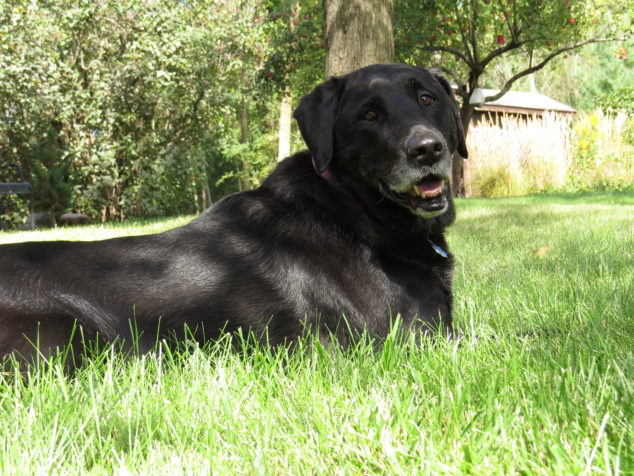
I haven’t looked at the world from the ground up in far too long!
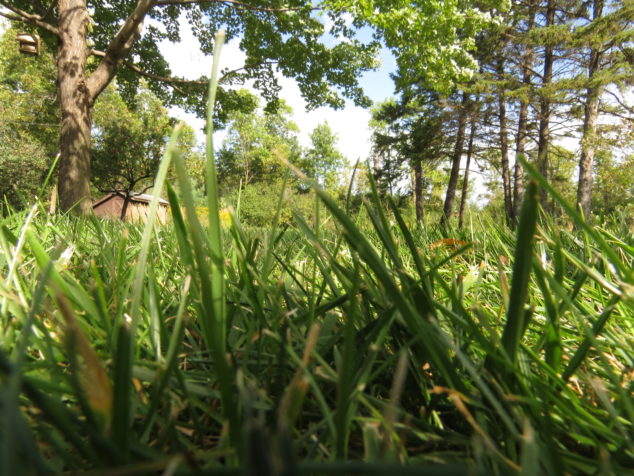
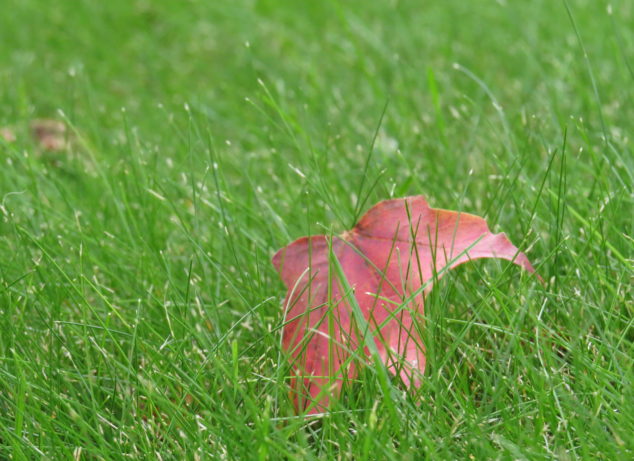
The evidence of Autumn is right before my eyes, and I realize the graying fur and graying hair make it apparent that Tamba and I are in the Autumn of our lives.
But what a great season it is! It feels good to lay in the sunshine and roll around in the grass!
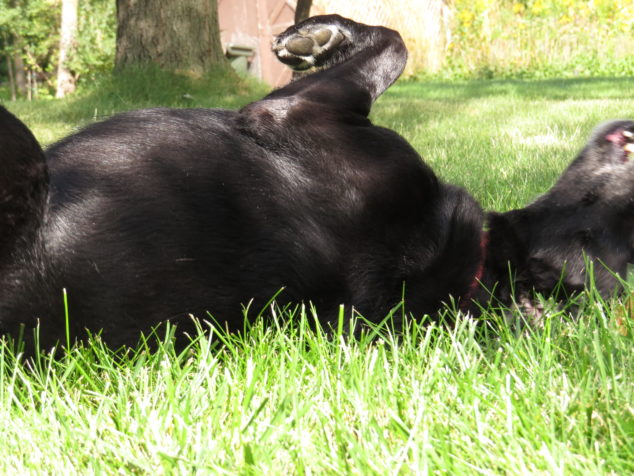
It feels good to see the world from a different perspective. And yet…it seems like I have been here before.
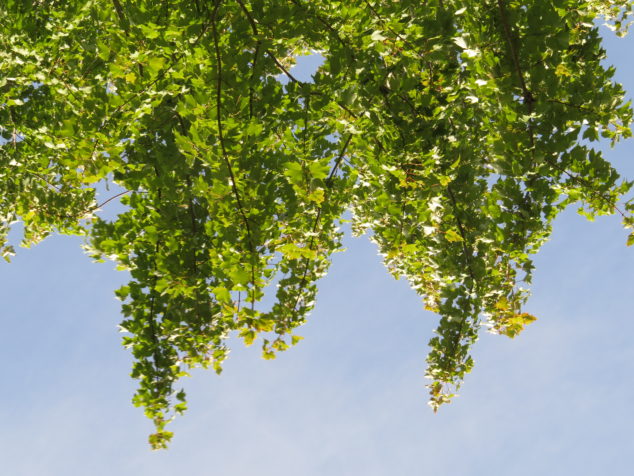
It feels good to be grounded again.
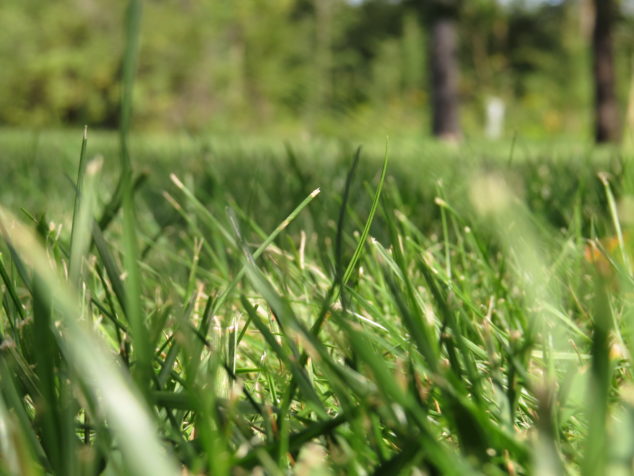
Many of us spent much of our childhood years outside and on the ground. Being grounded is to be sensible, connected, and down to earth–the qualities of young children and animals of all sorts. It is a calm steadiness that reaches far beyond our own bodies and lives–from the ancestors who came before us who have returned to the ground to our offspring and the ones who come after us. Being grounded is the basis for our daily life; it is a way of learning and showing up. It is the foundation on which we can build the rest of our lives. Being grounded is like a hug from Mother Earth–one that tells us we are loved, we are accepted, and we are a wonder to be-held.
Autumn Grows–Happy Autumnal Equinox
Days decrease,
And autumn grows, autumn in everything.
–Robert Browning
The decrease of our light-filled days brings us to this day–the Autumnal Equinox. Equinox means ‘equal night,’ which implies equal daylight and darkness, but that won’t happen until the 25th of September. On that day–Equilux, or ‘equal light,’ there will be the same amount of daylight and darkness. What does happen today is the sun rises precisely due east and sets due west!
After a rainy, stormy night, we did not see the sun rising on the due east horizon. But Autumn is already growing–the sumac are brilliant red, the ash trees are yellow, and the maples are beginning to turn color.
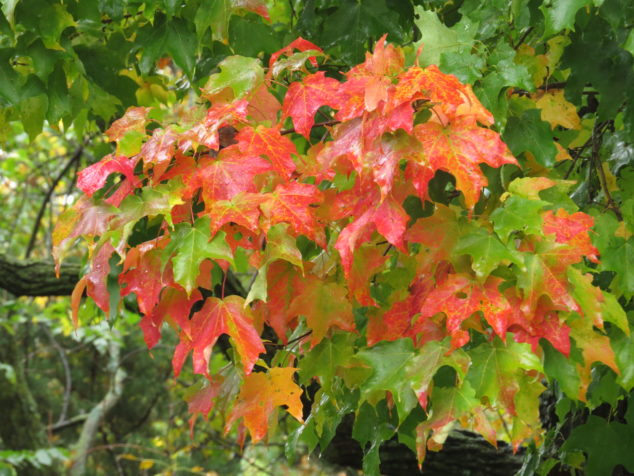
It’s a chilly day–just 61 degrees–and blustery. There is no denying that summer is gone. The pumpkins in the garden are more orange than green. Every day we hear geese flying overhead. The yard is strangely quiet as many songbirds have left to go south. Autumn grows. Leaves are scattered in the yard. The apples have been picked by us and the squirrels (mostly by the squirrels.) Nights are comfortably cool for sleeping. A cup of hot tea feels good at any time of the day. Autumn in everything!
An Invitation from a Hummingbird
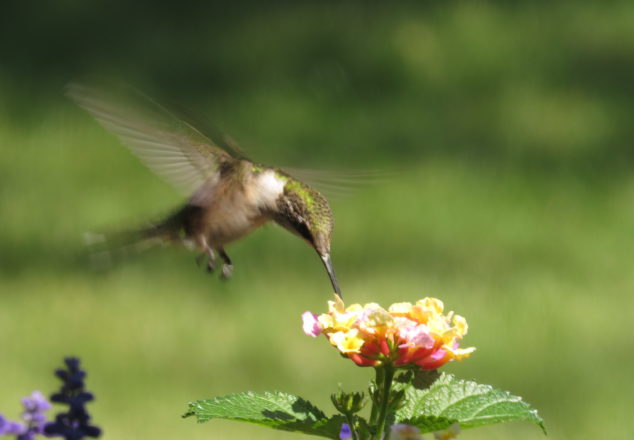
I got an invitation from a Hummingbird one morning while working at the kitchen table. These notoriously fast flyers are usually seen zipping from one flower to another, but that morning the female Ruby-throated Hummingbird hovered at the window not five feet from me. I glanced to where the camera was, knowing that if I got up to get it, she would fly away. When she did fly away–after hovering for what seemed like quite a long time–I went back to my work. But it was only for a second, before I accepted her invitation. ‘I bet she went to the Lantana by the front door,’ I thought. I grabbed the camera and saw her sipping nectar from the yellow and pink flowers.
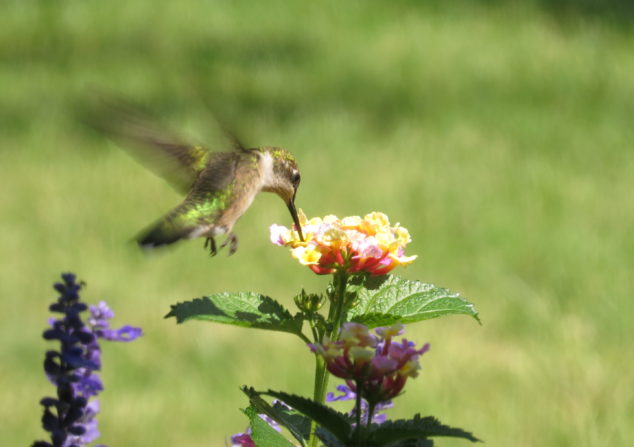
These tiny birds, about 3 inches long with a wingspan of 3 to 4 inches, weigh only 0.1-0.2 ounce. They hover by flapping wings in a figure 8 pattern at 53 wingbeats/second! Like a dragonfly, they can move in six directions and even upside down!
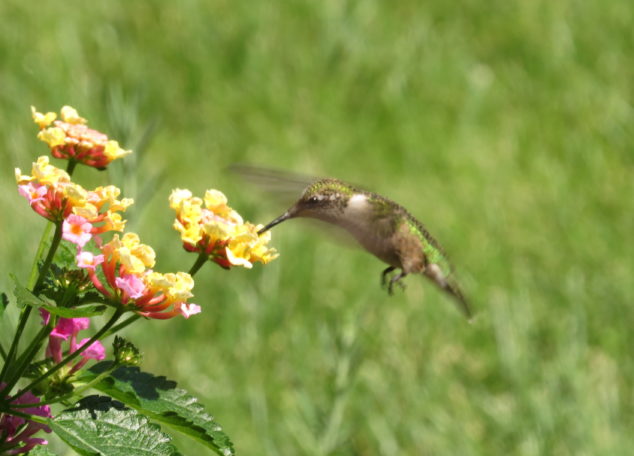
Along with fast wingbeats, Hummingbirds also have rapid heartbeats, fast breathing rates, and high body temperatures. They eat often and in great quantities in order to maintain that metabolism. They prefer nectar from red and orange flowers and eat small insects, pollen, and spider eggs.
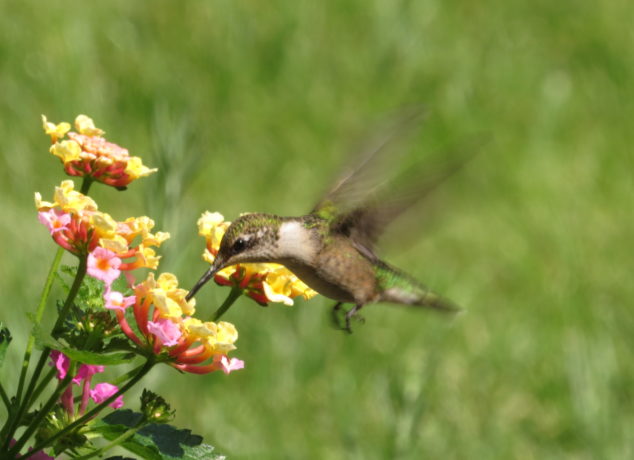
Hummingbirds are very territorial; therefore, they live rather solitary lives. The females and males are only together for courtship and mating. Nests are usually built in deciduous trees 10-40 feet above the ground on the top of a descending branch. The nest is the size of a large thimble and is made from dandelion or thistle down held together with spider silk and sometimes pine resin. The exterior is camouflaged with moss and lichens.
The next day I noticed the Hummingbird was sitting on the Purple Plum tree outside the living room window. She was all fluffed up, and I wondered if Hummingbirds, like Dragonflies, have to periodically sit still to warm up their muscles or cool off.
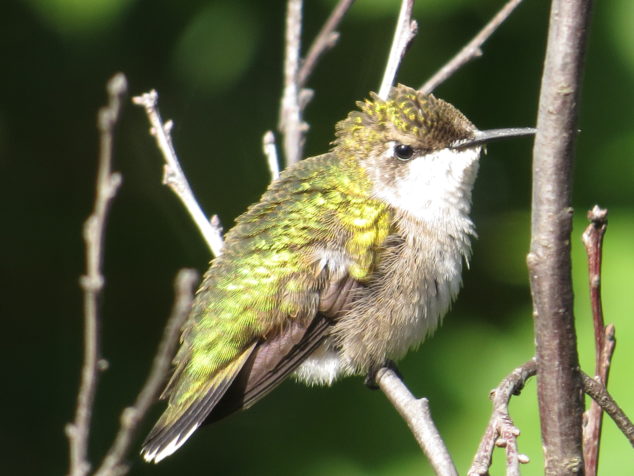
Soon she was gone again in a flurry of wingbeats.
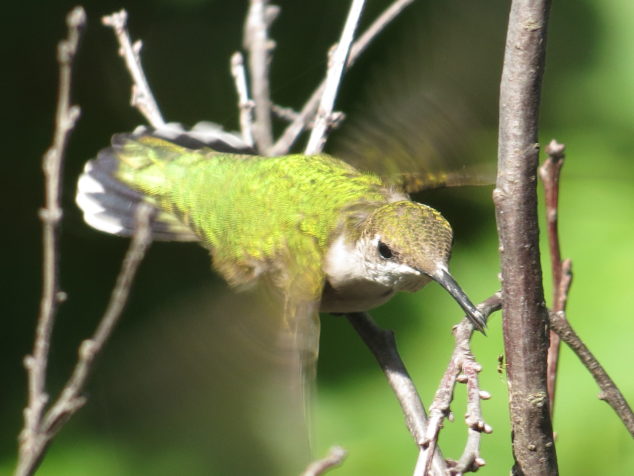
I had seen the iridescent Hummingbird often on various flowers in our garden. She was so fast and fleeting and getting a picture of her seemed impossible. I was grateful for her hovering invitation and her rest time on the tree branch. I was also grateful for the serendipitous timing that allowed me to see her both days!
In our fast and flurrious world, how often do we miss an invitation that comes our way? How many times do we go through our day in solitude, even while surrounded by people? How often are we in constant motion yet not getting much accomplished? Do we long for connection, yet brush people aside and hurry away? My invitation to you is to stop and consider the words ‘How are you?’ Most people utter and answer the question as a greeting. ‘Hi, how are you, fine’ in a passing, fleeting moment of time. When I ask the question, I really want to know. How are you feeling? How is it with your soul? How is life going for you on this particular day? I know that life is busy, but I urge all of us to rest for a minute or two and accept the invitation to connect and be grateful for serendipitous time together.
Light of the Morning Sun
The sun is rising farther north in the morning sky and later in the hours of our clock-run days. When I raised the shade of our bedroom window, I saw the morning sun hitting the trunk of an old oak tree in the woods. Usually cloaked in shade and blended in with the other trees, its presence was illuminated for a few minutes by the rising sun. The sun had to peek over the quarry shed, sneak through the spruce trees, and find the opening between the large lilac bushes in order to shine on the rough trunk of the oak.
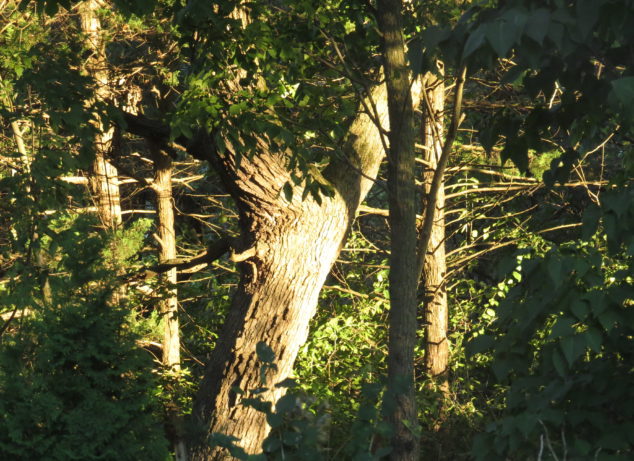
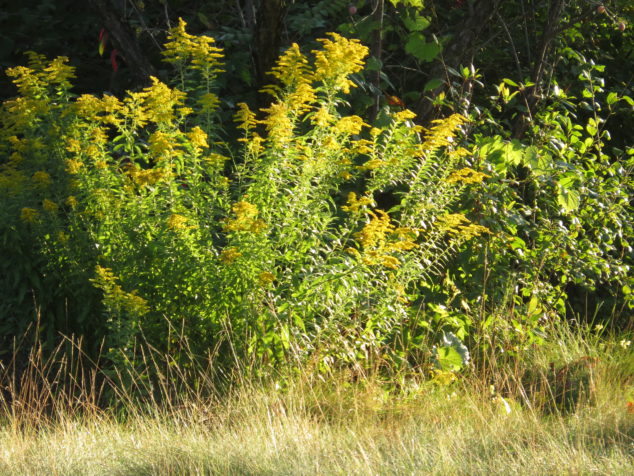
The low morning sun lit up the grass and goldenrod and produced long shadows of tree trunks.
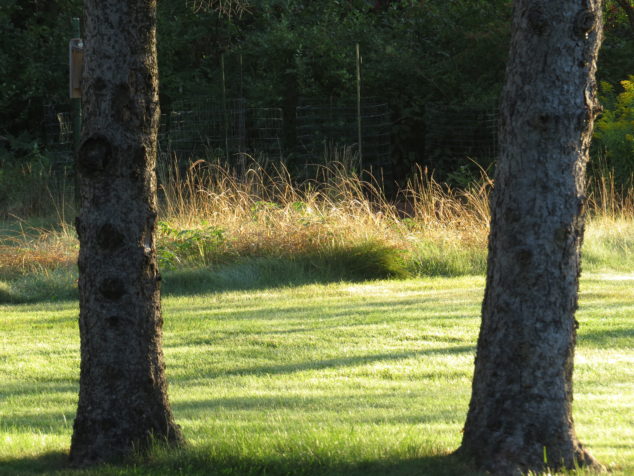
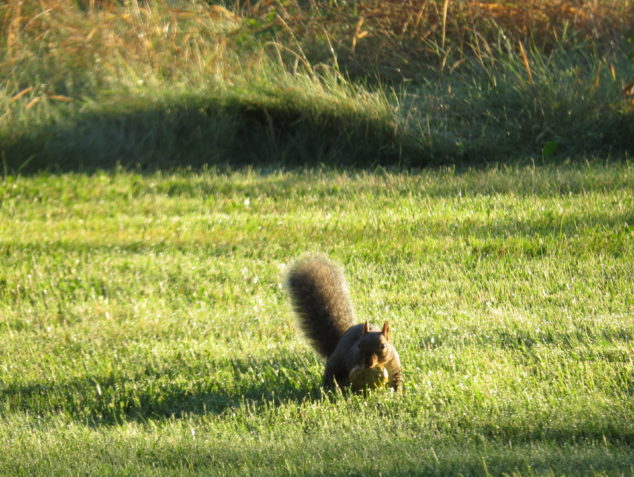
A busy squirrel carried a huge Buckeye seed in his mouth that he had gathered from the yard down the road from us.
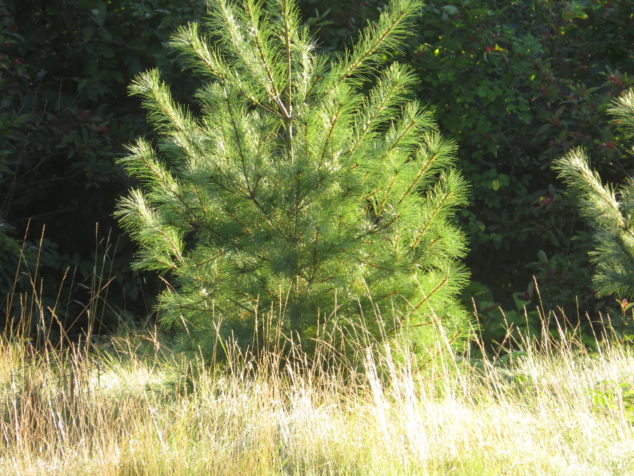
The feathery branches of a young White Pine shimmered in a sea of golden grass.
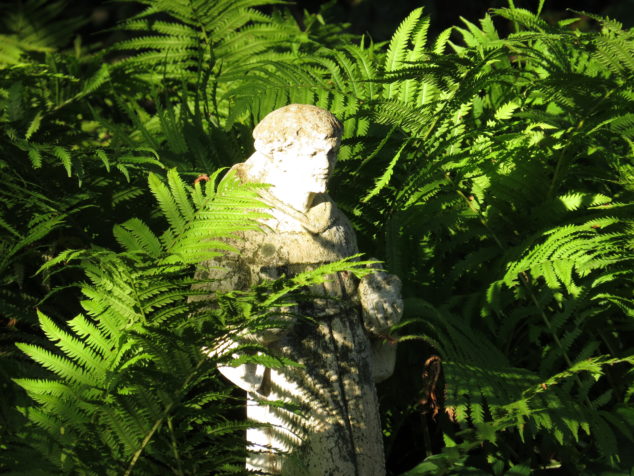
Saint Francis, who stands among the ferns in the shade garden, was also illuminated by the morning sun.
The morning sun, with its warmth and light, has been a welcome sight these past days. The last two weeks have been kind of tough around here. A friend of mine died suddenly, and as I mourned the loss of such a kind, gentle woman, I was also filled with regrets. We had planned to ride bikes together, and I never made it happen. I was so caught up in my own life that I didn’t go see her or send her a card when she broke her leg recently. We live our lives thinking the people we care about will always be around.
The overwhelming darkness of this past week has been the tearing open of an old wound in our community. The body of a young boy who had been kidnapped twenty-seven years ago was found after a confession from his killer. The details are chilling and horrendous. Our hearts ache for the family that has held his memory and the hope of his return like a bright beacon for all of us. Our tears flowed as the news recounted the facts of the case. And parents held their children more tightly as we watched Jacob’s mother face the unacceptable. Patty Wetterling’s words:
Everyone wants to know what they can do to help us.
Say a prayer.
Light a candle.
Be with friends.
Play with your children.
Giggle.
Hold hands.
Eat ice cream.
Create joy.
Help your neighbor.
That is what will bring me comfort today.
The light of morning. The Light of mourning. Death, despair, hatred, destruction, and every kind of darkness doesn’t stand a chance when the collective rays of light and love are gathered in God’s name. We need to lift up the lives of those who bring goodness and mercy to all those around them, like my friend Joan did. We need to bear the agony of innocent lives lost at the hand of evil and stand with an eternal flame in defiance of the darkness. We need to do whatever it takes to illuminate any darkness within ourselves in order to be a light to others. There is so much we can do to help, as Patty Wetterling suggested and as Saint Francis wrote in his prayer:
Lord, make me an instrument of Thy peace….
where there is hatred, let me sow love;
where there is injury, pardon;
where there is doubt, faith;
where there is despair, hope;
where there is darkness, light;
and where there is sadness, joy.
Love and Light to you all.
Gleanings from August–Sunflowers and Humidity
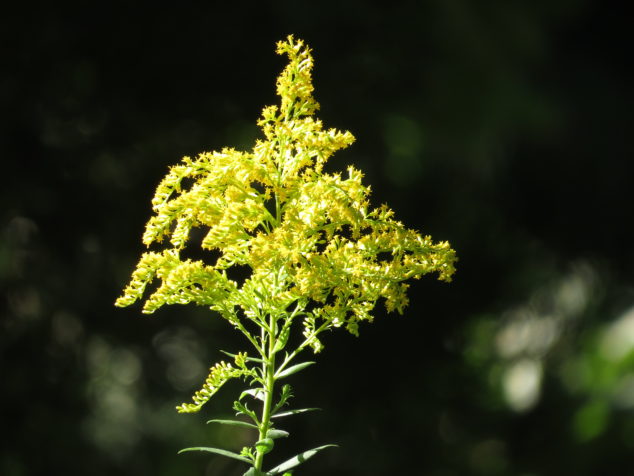
There are things about August that I love–Sunflowers, the delicious feel of warm sun on bare skin, spotted fawns, and long stems of brilliant Goldenrod.
Humidity and mosquitoes top my list of things I don’t love about August, but we were still fortunate not to have too many days of either pest. What lies between my love/don’t love lists is the subtle reality of the waning summer and tiny glimpses into fall. As the wild plums ripen to rosey-purple, some of the leaves begin to change their color also.
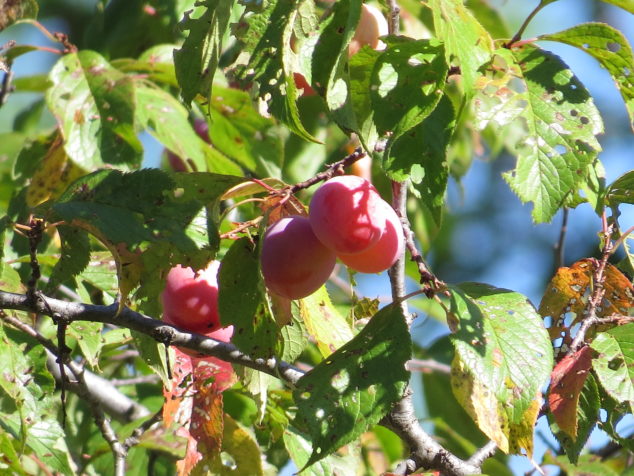
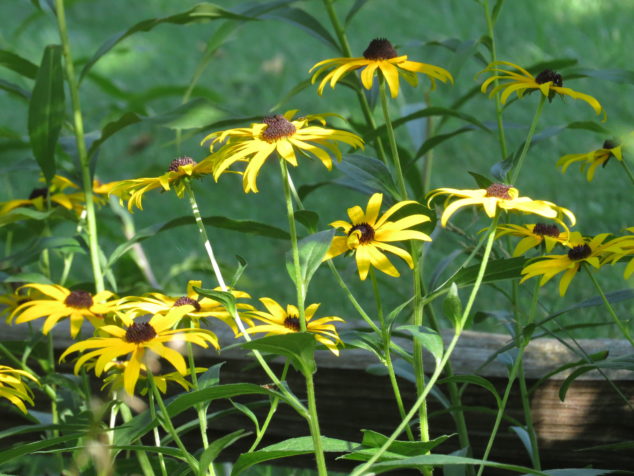
Black-eyed Susans grow underneath Ash trees that begin to drop yellow leaves like secret notes hinting at what’s to come.
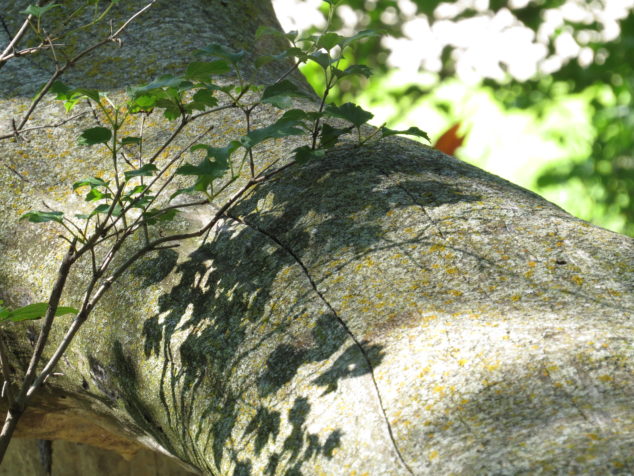
August is a later rising morning sun casting shadows on a fallen log.
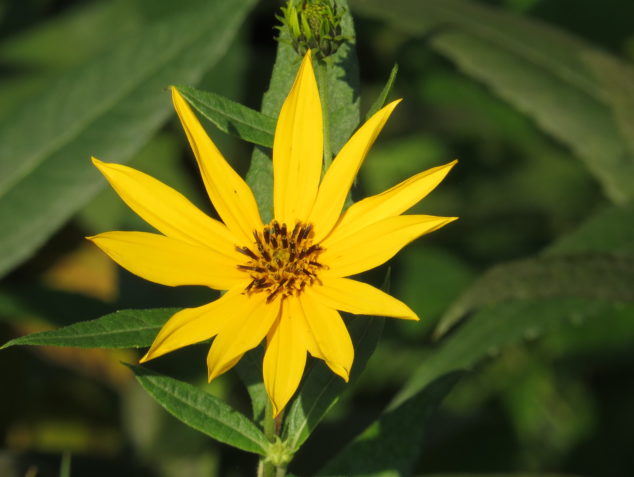
Whether hiking or biking or walking the dog, Sunflowers greeted us with their cheery countenance. The red-stemmed prairie Western Sunflower…
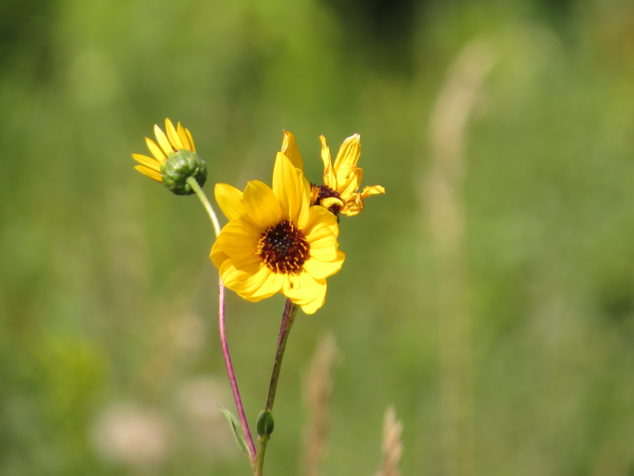
and the exuberant Maximilian.
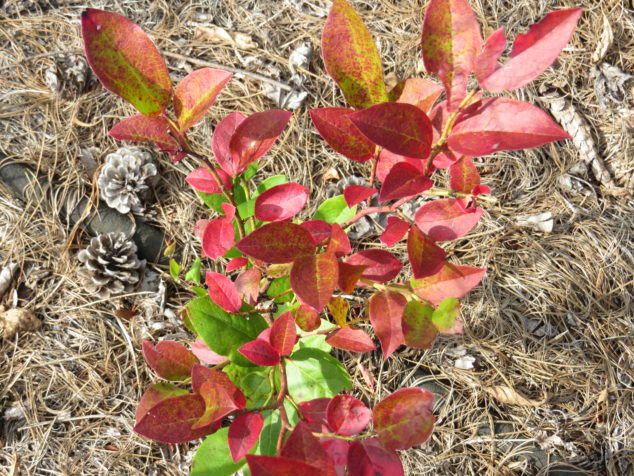
The Blueberry bushes have slipped into their coat of many colors, ready for the cooler days and nights.
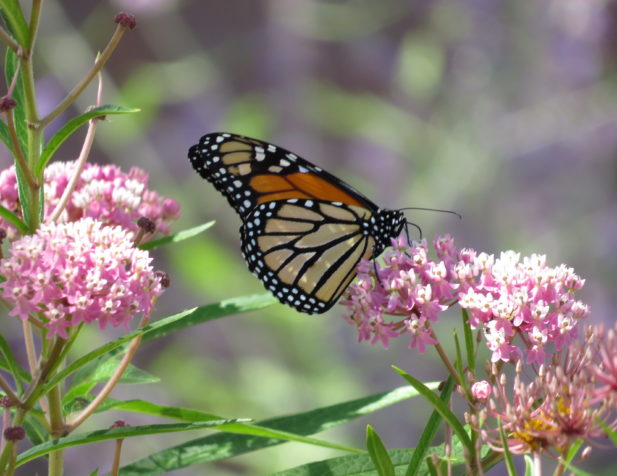
Swamp Milkweed provides delightful nectar for the Monarch Butterfly that will help sustain it for the long fall migration to Mexico.
Some days of August, with dripping humidity and no air conditioning, I literally wished away. This day cannot get over fast enough, I thought, even as I stared in the face of a dank night with tossing and turning in clammy sheets. I counted down the hours until a refreshing north breeze would sweep the southern heat and humidity back to its home. But as we got closer to September and the cooler nights reminded me that the warmth of summer was waning, I changed my perspective–this may be our last 85 degree day, I thought; I better enjoy it, humidity or no humidity. (Winter looms large in the calendar year of Central Minnesota!)
I remember how I changed my perspective during my third pregnancy. I had more morning sickness with our last child than the other two combined, but I held the thought that this was the last time I would have the extreme honor of bringing a child into the world, to love, to cherish, to teach, to let go. I never wished away a single day, as tough as some of them were. ‘You never miss the water until the well runs dry.’ Aren’t we humans funny that way? Maybe each of those wake-up calls are from the One Who Knows, sending us secret love notes hinting at what’s to come. We need to tune in to the subtle realities and tiny glimpses. We need to drink the sweet nectar of life to sustain us on our journey. We need to appreciate and not take for granted the things on our love/don’t love lists–including sunflowers and humidity.
Church on the Lake Wobegon Trail
Last Sunday was a beautiful, blue sky day. The early morning temperatures were cool enough for me to don a fleece pullover and a Buff over my ears and under my bike helmet. It was a great day for riding the Lake Wobegon Trail! My bike riding would try the patience of any get-from-point-A-to-point-B-as-quickly-as-possible rider, for I will stop on a dime if I see something interesting along the trail. Luckily Chris is patient and good with the brakes.
Our destination/turn-around point was the little town of Avon. They have a nice picnic area, look-out tower, and restroom right beside the trail. As we neared the stop, we noticed groups of people carrying lawn chairs and blankets towards a newly built pavilion. This was the same spot we had seen Garrison Keillor perform his show a number of years ago for the people of Lake Wobegon. Today, in the new pavilion, a large wooden cross stood behind the microphone and music stands–it was church on the Lake Wobegon Trail! We stood with our bikes as the pastor greeted the outdoor crowd and gave a prayer of thanksgiving, and the small band of musicians and singers led the congregation in an uplifting song of praise. We didn’t stay for the whole service, as we had nine miles to ride back and a stop at St. Ben’s before the noon hour, but church on the trail stayed on my mind.
One of my sudden stops along the trail was when I saw an exquisite blue flower shining amidst the green grass ten feet or so from the bike path. What was this glorious wildflower?
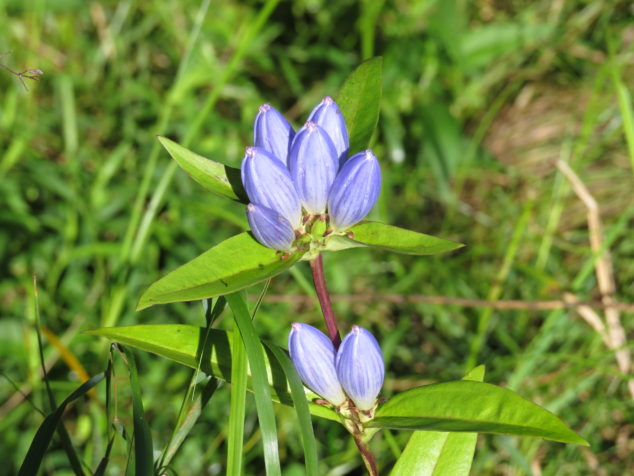
It looked like it was in the bud stage, ready to open, like a Balloon Flower. But my after-ride searching found that it was Bottle Gentian, a native perennial that blooms in August and September–and this was full-bloom. The fused petals never open and are pollinated by bumblebees, one of the few insects strong enough to pry open the closed flowers.
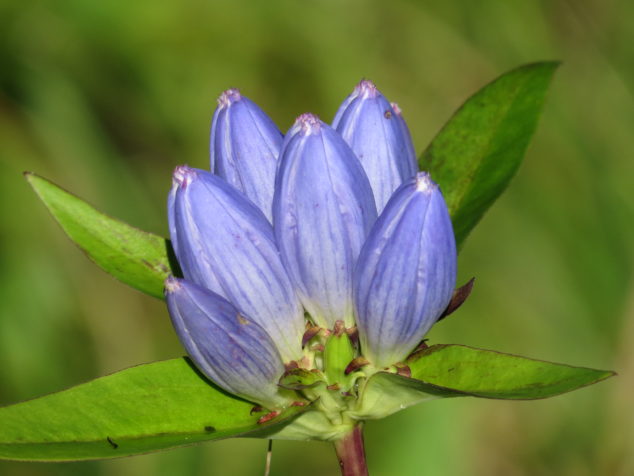
Luke 12:27 Consider how the wildflowers grow; they don’t labor or spin thread. Yet I tell you, not even Solomon in all his splendor was adorned like one of these!
Another wildflower in its full glory was Joe Pye Weed, along with its companion Goldenrod. We have a small patch of Joe Pye Weed in our woods, but it was wonderful to see it in its native state–in the boggy areas along the trail.
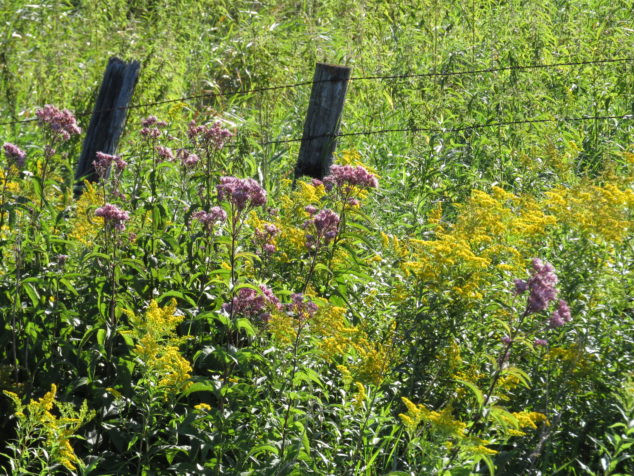
The flowers shone like amethyst and gold in the morning sun.
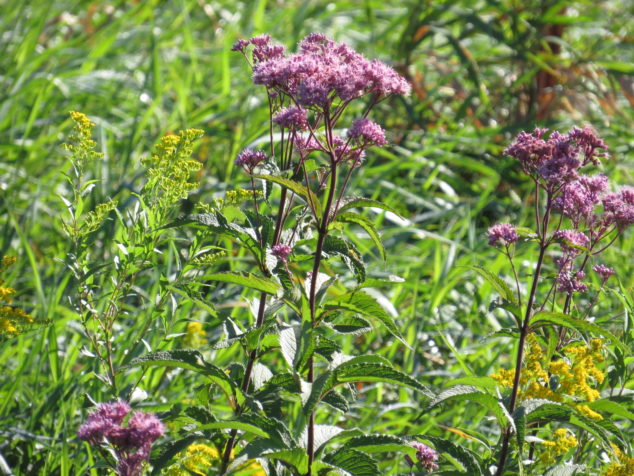
Psalms 103:15 A person’s life is like grass; it blossoms like wild flowers.
As I was looking side to side at the flowers, Chris had his eyes on the trail ahead and halted us both with a quiet exclamation of “Deer!” I have been so used to seeing does and fawns that it was surprising to see the velvety antlers of the young buck.
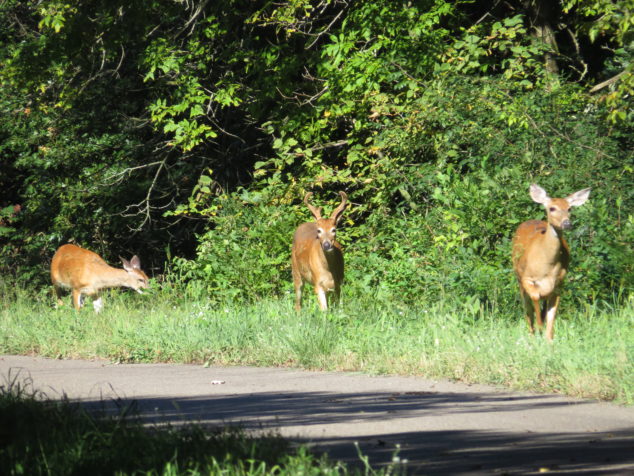
Psalms 18:33 He makes my feet like the feet of a deer and sets me securely on the heights.
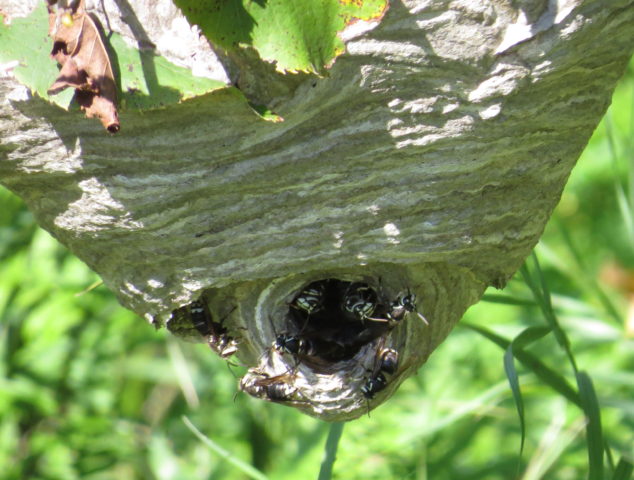
Another unusual sight stopped me in my tracks. Hanging low from a Linden branch not far from the trail was a papery nest….
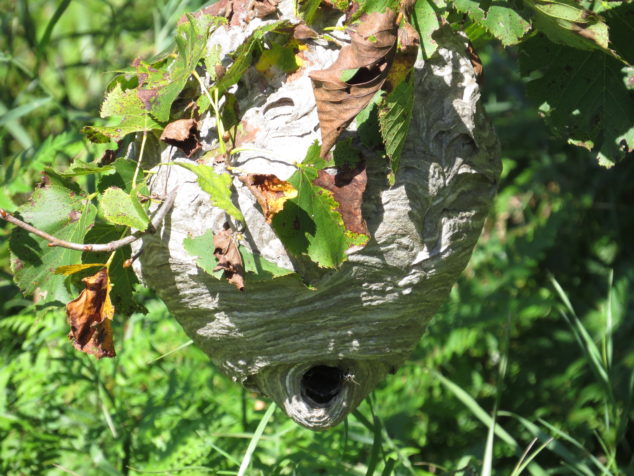
…with a whole congregation of Bald-faced Hornets!
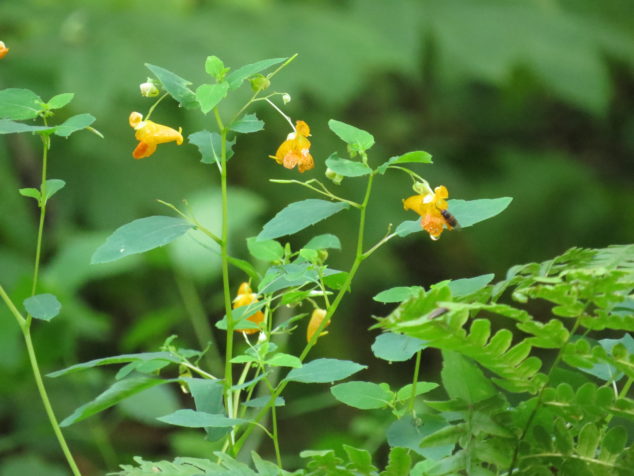
Spotted Jewelweed loves boggy areas and shade. This wild impatiens is an annual and often grows in large clumps. It blooms July through October and is said to be an antidote to poison ivy and a treatment for other skin disorders.
Proverbs 3:13-15 How blessed is the man who finds wisdom, And the man who gains understanding. For her profit is better than the profit of silver, And her gain better than fine gold. She is more precious than jewels; And nothing you desire compares with her.
“God writes the gospel not in the Bible alone, but on trees and flowers and clouds and stars.” This quote is commonly attributed to Martin Luther and acknowledges that intimate connection between God and Nature. Frank Lloyd Wright said, “I believe in God, only I spell it Nature.” The Bible uses Nature to speak to us about God, and it is in Nature–with the flowers, wildlife, and insects–that God speaks to us. Church on the Lake Wobegon Trail happens all the time–are we willing to see the splendor, to hear the prayer of thanksgiving, and to sing an uplifting song of praise?
May the God of peace grant us understanding and wisdom so we may be blessed with the fullness of Life more precious than gold or jewels. Amen.
- « Previous Page
- 1
- 2
- 3
- 4
- …
- 6
- Next Page »