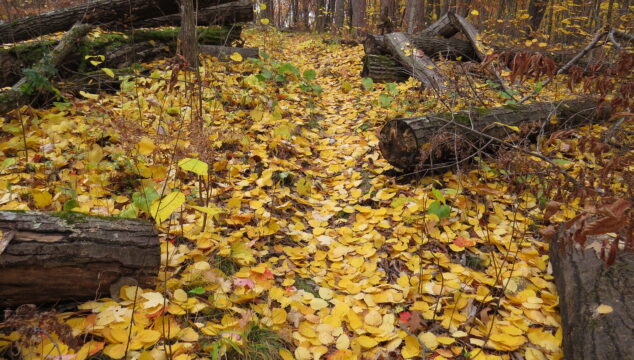
Come walk with me in the peak Autumn beauty of the Northwoods. To say that I love this time of year is an understatement. Most everyone can appreciate the colorful falling leaves---it reveals the 'true self' of a tree when its leaves are no longer producing chlorophyll. Their true colors are revealed, and there is something simple … [Read More...]
Archives for May 2016
Walking Past Ginger, Jack, and May
When I was in college, there were two girls named Ginger who lived in my dorm. One Ginger was tall, dark-haired, and had a booming voice and personality. She walked with swag and tossed her head like a racehorse at the starting line. Wild Ginger majored in Physics or Engineering or something like that and would help guys with their homework, then go downtown and drink beer with them or anybody else who was up for it. She was colorful, energetic, and noticed. Quiet Ginger was also tall and smart, but I would say most people didn’t notice her. She didn’t talk much and just blended in with her surroundings. She seemed guarded, like something at one time had hurt her deeply, and so she hid herself for protection. But when you talked one-on-one with her, she was funny, strong, and very charming in her own way.
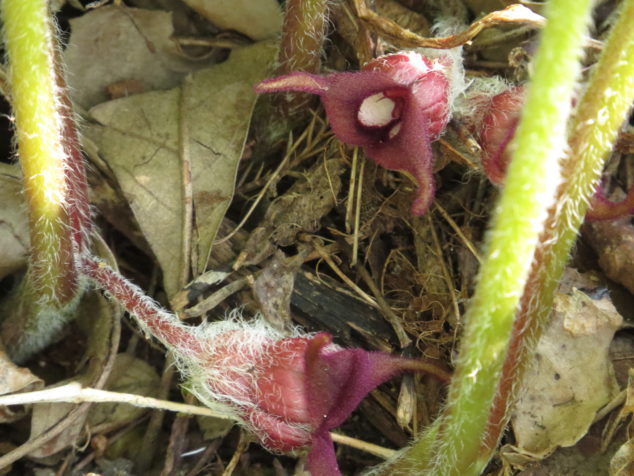
I think all flowers are cool. They are unique, intricate sculptures of petals, pistils, and stamens. Many are colorful, showy, fragrant, and well-known to most people. But there are a few Spring woodland flowers that one could easily walk past and not notice. I was on my hands and knees weeding around this small Wild Ginger plant on the hillside of our woods. Only after I had pulled some weeds away did I notice the small, dark red flower at the base of the plant! What a crazy, beautiful, strange flower!
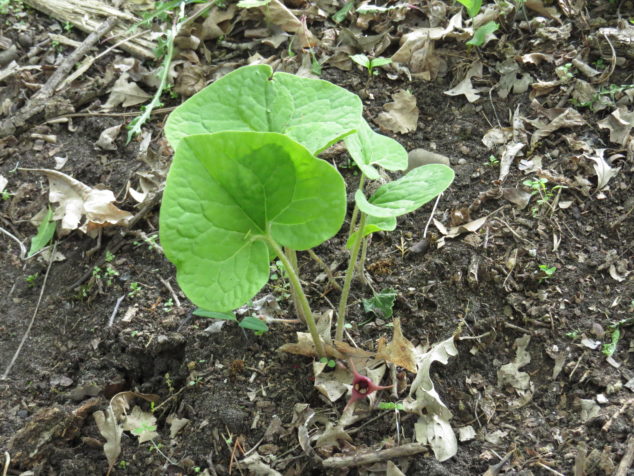
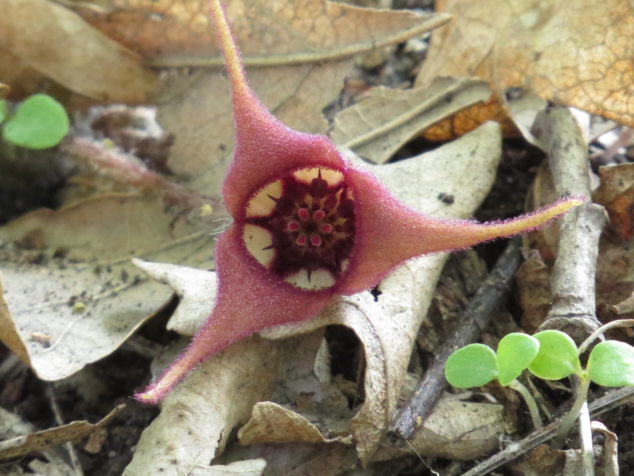
So I walked up the hill to where we had a larger, more established colony of Wild Ginger and pushed the dried leaves away from the base of the plants, and there were the hidden flowers! Wild Ginger (Asarum canadense) is no relation to culinary ginger, though the Native Americans and later the settlers used the root as a seasoning and to treat colds and fever. This low-growing, shade-loving ground cover with heart-shaped leaves is deer resistant, does not go dormant in the summer, and is an important food source for the Pipevine Swallowtail Butterfly.
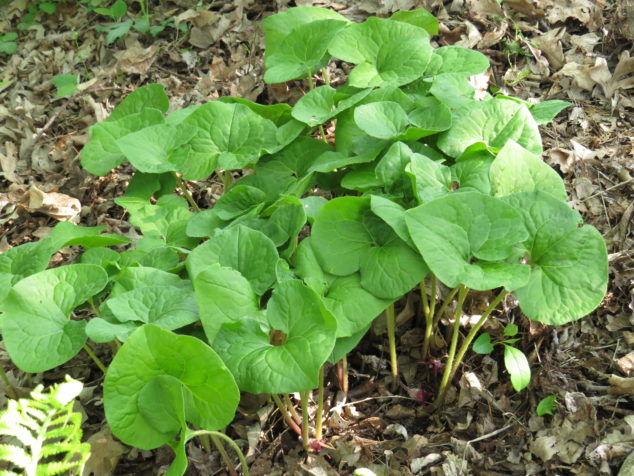
The flowers at the base of the plant attract small, pollinating flies that emerge from the ground in early spring. The flies crawl into the flower for protection and to feast on the pollen, which they carry with them to the next flower.
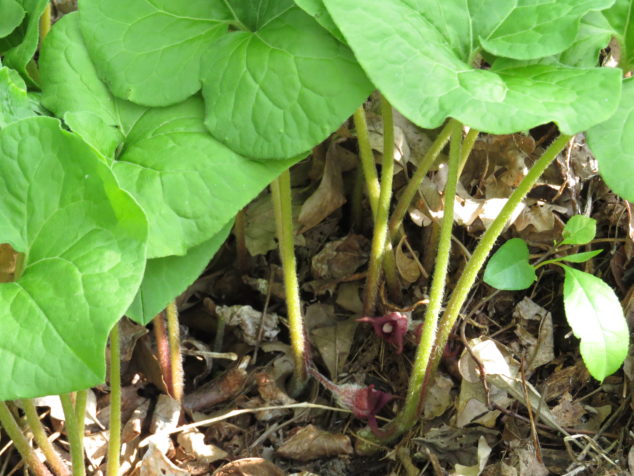
When the Wild Ginger seeds ripen, they have an oily appendage attached called an elaiosome, which attracts ants. The ants carry the seed to their homes, consume the ‘food’ and leave the seed to germinate. At least three different insects rely on the Wild Ginger plant with the quietly beautiful, hidden flower.
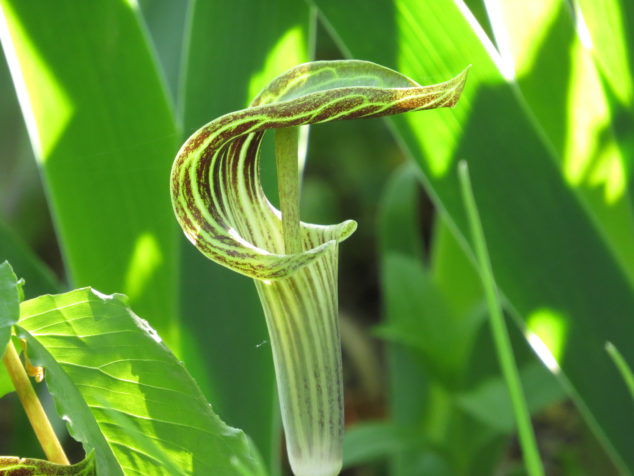
Another flower that is easy to walk past without noticing is the Jack-in-the-Pulpit (Arisaema triphyllum.) Tubular, hooded flowers rise on their own stalks to the level of the large leaves that are divided into three leaflets.
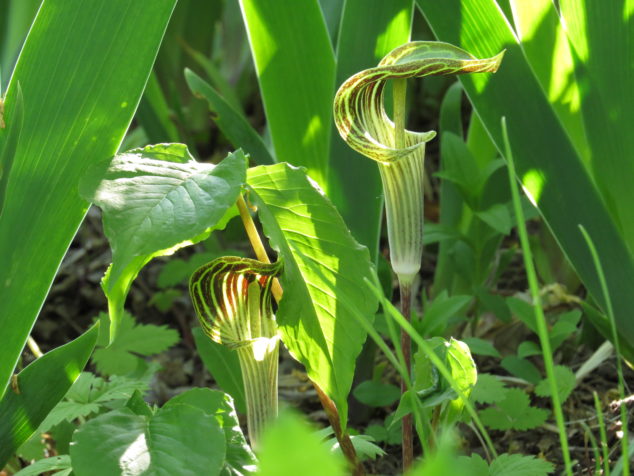
The flowers are green with brown stripes that blend in with the surrounding woodland foliage. Jack-in-the-Pulpits are most noticeable in late summer when clusters of bright red berries form.
A third woodland flower that is easy to walk past is the Mayapple (Podophyllum peltatum.) Mayapples are unique in that they only have two leaves and one flower which grows in the axil of the leaves. Lovely umbrella-shaped leaves hide the pale yellow flower that later forms a yellow, edible fruit that can be used in jellies. Mayapples die back in mid-summer in dormancy until the following spring.
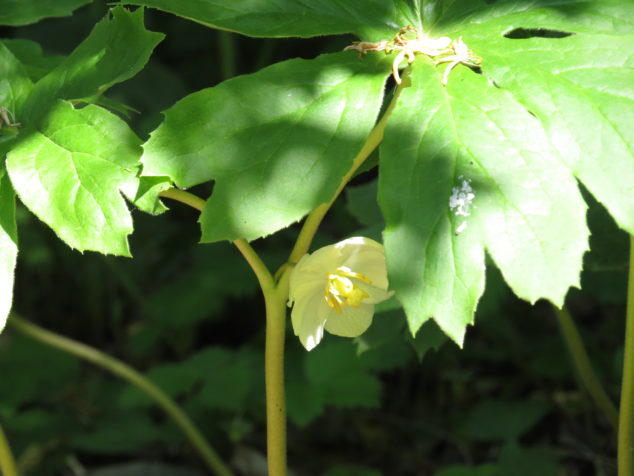
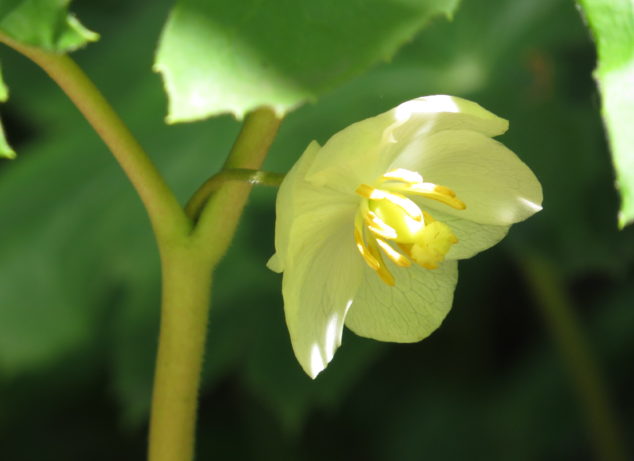
When we think of flowers, we most often bring to mind showy, colorful blossoms that attract attention and inspire awe. These three Spring woodland flowers are not easily seen when walking by, but all have beautiful and unique foliage that is to be appreciated. A closer look reveals the interesting, hidden flowers–a quiet splendor in the woodland world. Getting to know the hidden treasures–whether flower or human–is worth the extra time and effort. It will enrich your life with wonder and gratitude.
What’s in a Name?
When I met my husband oh so long ago, he said his name was Chris, and he gave me the slip of paper that was his nonresident short-term fishing license from the State of Minnesota, because it had his address on it–and he promised to write back if I wrote him a letter. He was headed back to Missouri from Minnesota with a stop in South Dakota for the night. I was in the right place at just the right time for him to ask me to dance. The brown-eyed handsome man named Chris captured my heart. Later I learned that his family and friends called him Mick. Many times over the years he asked me to call him Mick, and even though I tried, it felt awkward saying it to him.
A walk through our yard and woods at this time of year is an exploration of blooming flowers! I know most of them by their common names and often Chris will tell me their Scientific names. Both names give clues about the flowering plant or tell a story about its history.
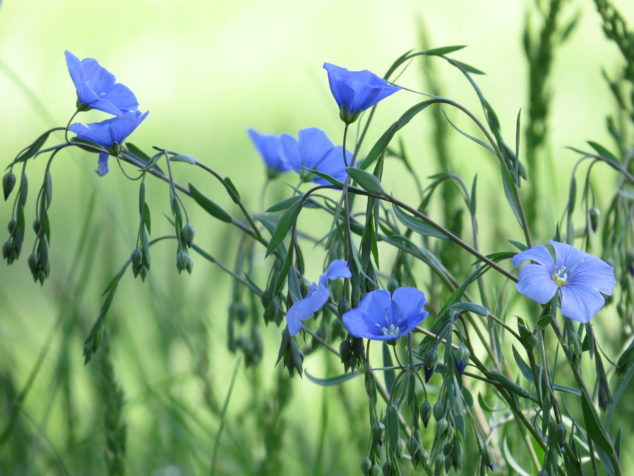
Perennial Blue Flax–Linum lewisii–named in honor of Meriwether Lewis of Lewis and Clark who discovered this blue beauty on their expedition across the Plains. (And speaking of names, Meriwether!)
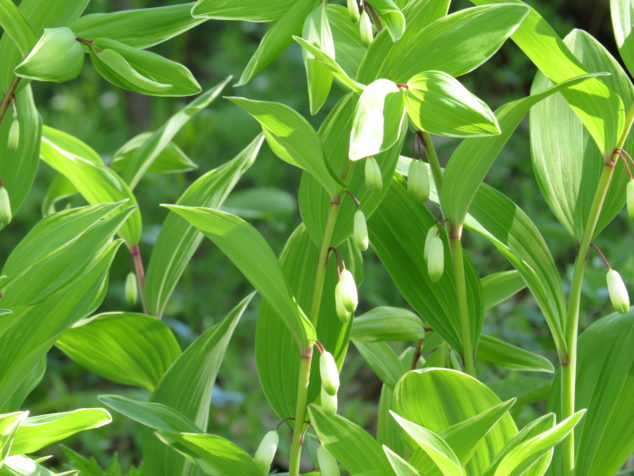
Variegated Solomon’s Seal–Polygonatum odoratum var. pluriflorum ‘Variegatum’–poly meaning ‘many’, gonu meaning ‘knee joints’ referring to the jointed plant rhizomes; pluriflorum meaning ‘many flowered’; Solomon’s Seal for the wound sealing properties of the plant.
Wild Geranium–Geranium maculatum–large flowering (relatively speaking, since this flower is 1 inch or more compared to others of under half an inch.)
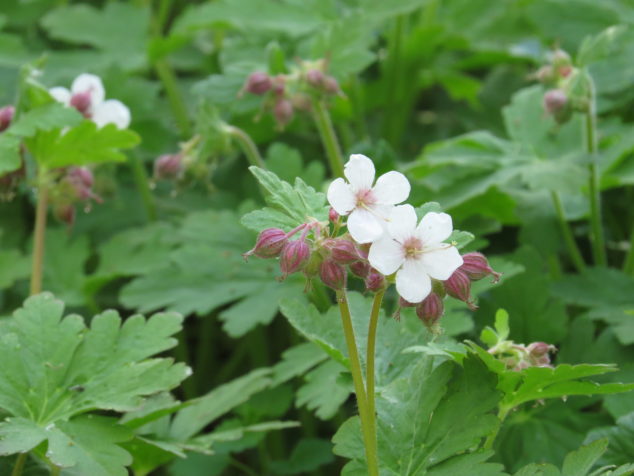
Leopard’s Bane–Doronicum orientale–all in this genus were once thought to be poisonous to animals.
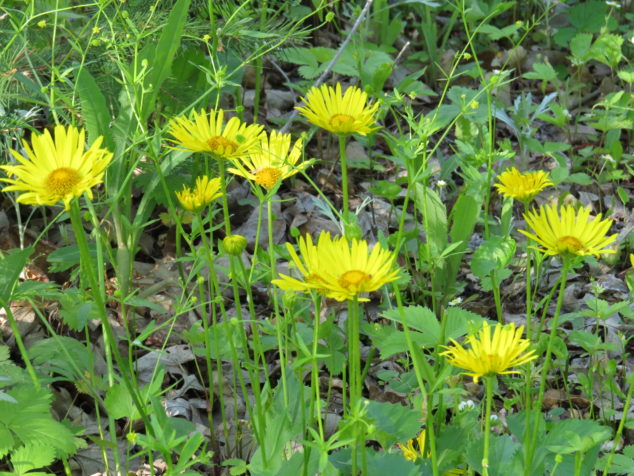
Carpet Bugle–Ajuga reptans–a groundcover that spreads across the ground like a carpet.
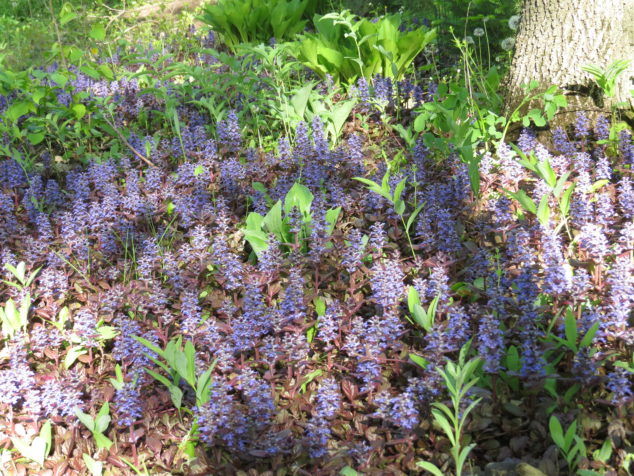
Foam Flower–Tiarella cordifolia–Tiarella meaning ‘small crown’ from the shape of the fruit; fluffy, airy flowers.
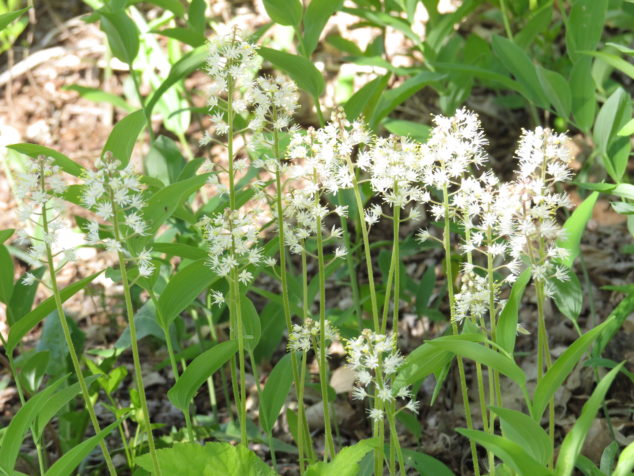
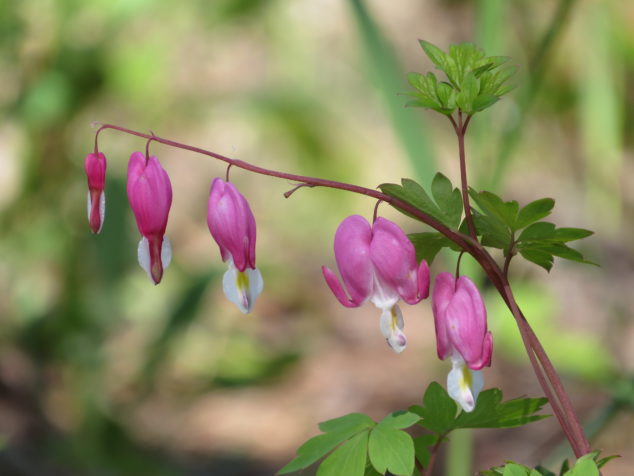
Bleeding Heart–Dicentra spectabilis–Dicentra meaning ‘two spurs’, spectabilis meaning ‘spectacular’; Bleeding Heart by the shape of the flower.
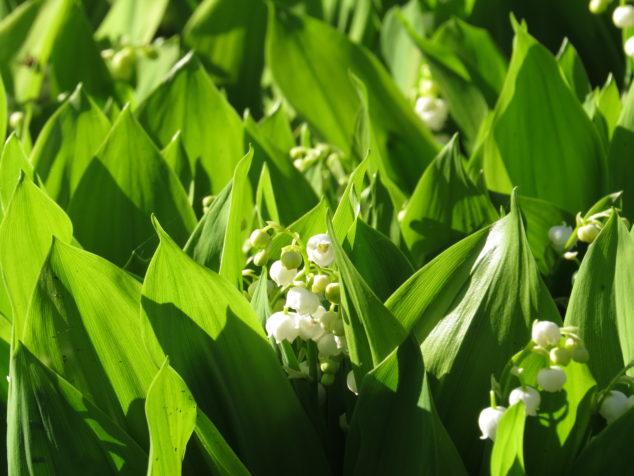
Lily of the Valley–Convallaria majalis–majalis meaning ‘that which belongs to May.’
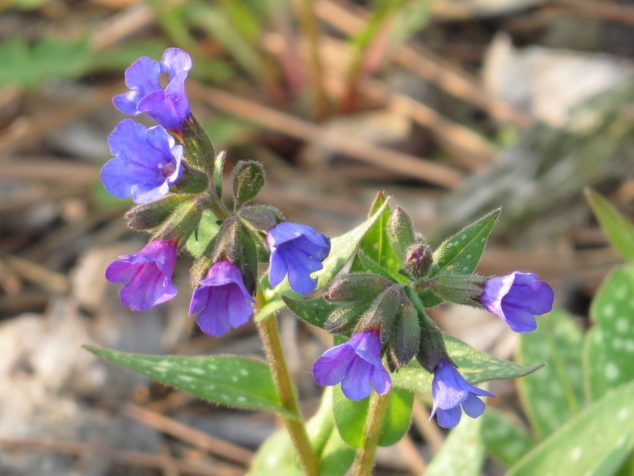
Lungwort–Pulmonaria spp.–herbalists long ago thought the spotted leaves looked like diseased lungs and used it to treat lung ailments; ‘wort’ meaning ‘to heal or cure.’
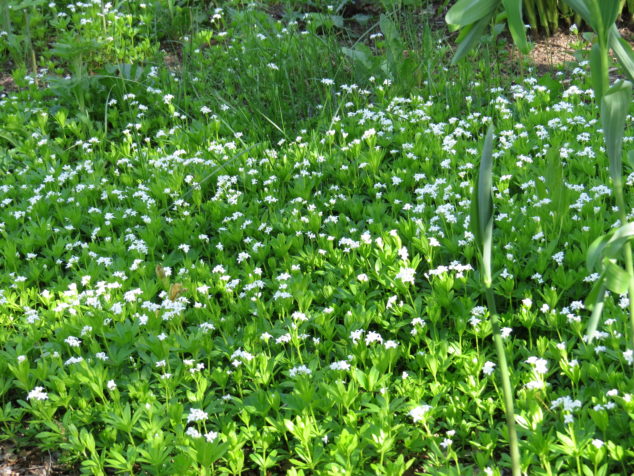
Sweet Woodruff–Galium odoratum–fragrant leaves and flowers; Woodruff is Old English for ‘wood that unravels’ meaning the creeping rootstock; another common name is Sweet Scented Bedstraw as the dried leaves were used to stuff mattresses.
Flowering plant names, both Scientific and common, often describe or tell a story about the plant. Our given names are carefully chosen by our parents–name books are consulted and brainstorming with lists of names are ‘tried on’ and discarded or ‘liked’ by our mothers and fathers until the list of ‘likes’ is whittled down to the perfect name for that child. We can honor parents, grandparents and other relatives by giving their name to our child, and in the course of a lifetime, the child may come to know the honor of carrying that name. Nicknames usually have a story about how they came to be, and once a person is lovingly known by that name, it is difficult to say otherwise. I call my husband Mick when I talk to his family, though there is still a fraction of a hesitation before doing so. But the man I fell in love with is and will always be Chris on my tongue and in my heart. It is a particular and all-encompassing blessing when we are called by our name.
Journey into Nature and Parenthood
I go to nature to be soothed and healed, and to have my senses put in order. –John Burroughs
There is a connection between the generations, a sinew of code that we receive from our parents and ancestors and pass on to our offspring. Our chromosomes determine eye color, hair and skin color, and many other physical and personality characteristics–our Nature. When we celebrate Mother’s and Father’s Days, however, it is mainly about our Nurture–how we were raised and nurtured and how we raised and nurtured our children. The nine months of carrying and growing a child, the months and years of nursing them, caring for their every need, teaching them, guiding them, providing for them, cherishing them, and allowing them to become the persons they were meant to be. A difficult, joyous, incredible, honorable journey.
Our journey into nature this past weekend was to Birch Lakes State Forest, one of the smallest state forests in Minnesota, situated between two lakes on hilly, forested land created by glacial depositions. It is in the transition zone between the southwest prairie and northeast forested regions. It is mainly a deciduous forest with aspens, maples, basswoods, and oaks.
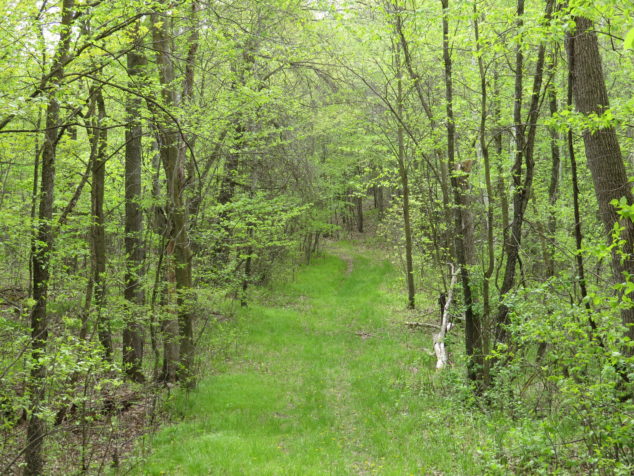
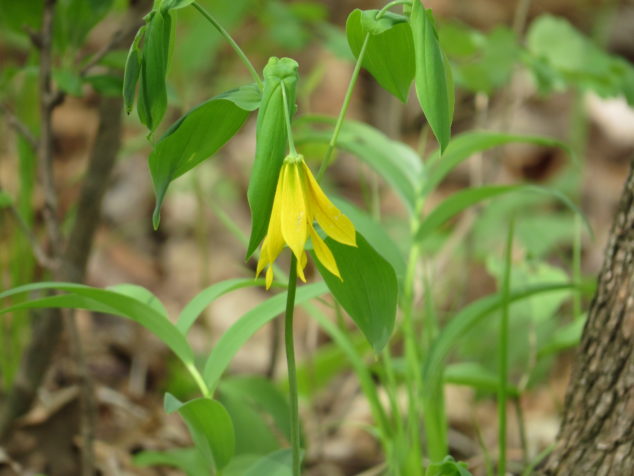
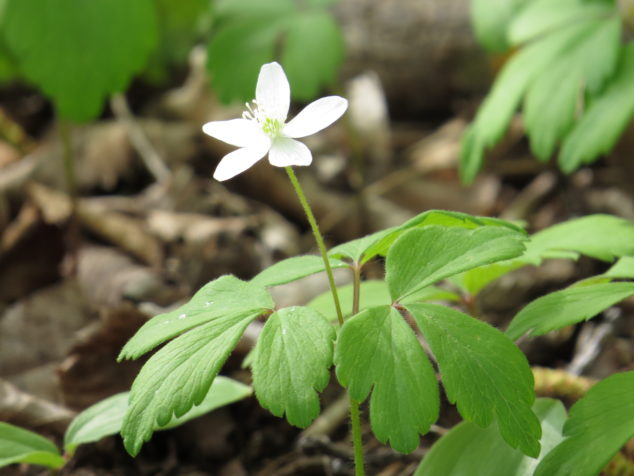
Spring wildflowers were blooming on the trail by the lake: Large-flowered Bellwort and Wood Anemone.
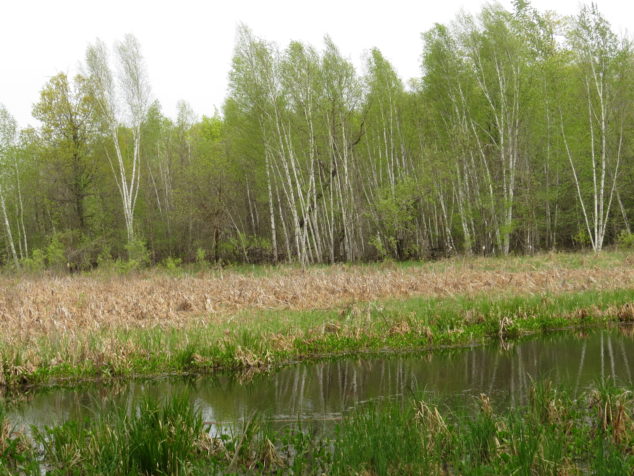
We hiked the trail with no map, not knowing where we were going, around shallow ponds filled with cattails and surrounded by white-barked birches.
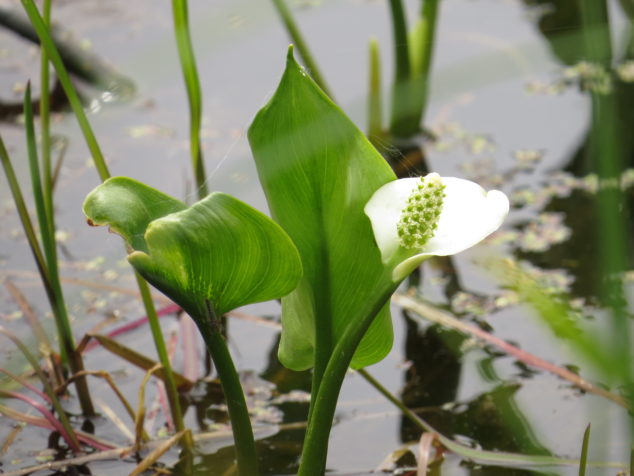
Wild Calla Lilies or Waterdragons bloomed in one of the shallow ponds.
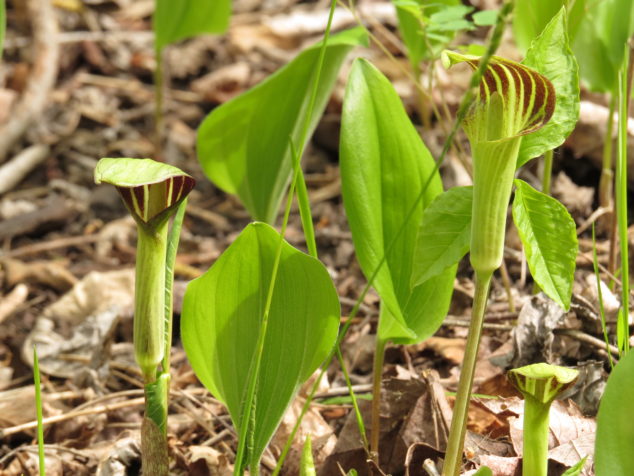
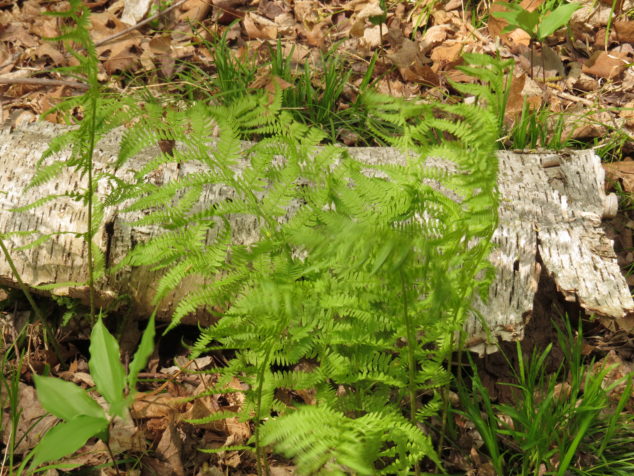
Jack-in-the-Pulpits and Ferns were abundant along the trail.
One of the most interesting plants in the forest was a small shrub. It was shaped like a petite tree with a singular trunk and symmetrical branches. The bark was smooth and brownish-gray, and the branches were pliable and bent without breaking.
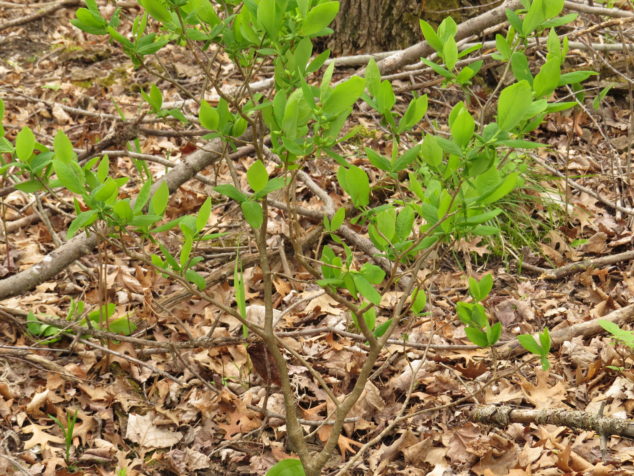
Neither of us knew what kind of shrub it was, and on closer inspection, we saw that it had already bloomed and was producing fruit.
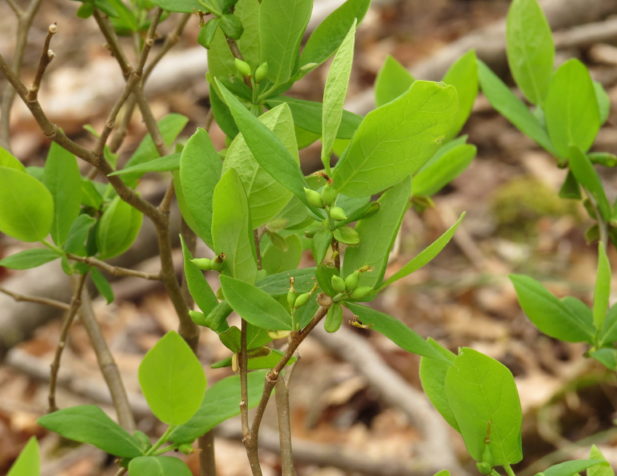
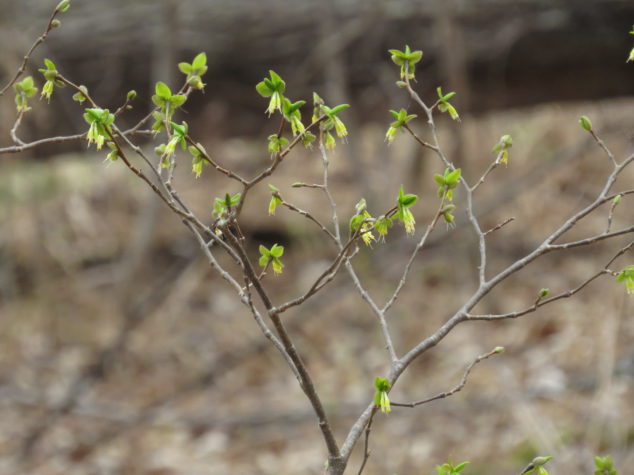
After a fairly long search when we returned home, I found the shrub on the Minnesota DNR field guide to native plants. ‘Dirca palustris’ or Leatherwood grows in part to full shade and likes a boggy habitat. It blooms in March or April, before its leaves emerge, with a bell-shaped pale yellow flower. The fruit will be red by fall, and the leaves have a yellow fall color. I remembered that I had taken a picture of a blooming shrub during our early spring hike at St. John’s Arboretum. It was the blooming Leatherwood! The Native Americans used the tough, leathery twigs and bark for bow strings, baskets, fishing line, and rope.
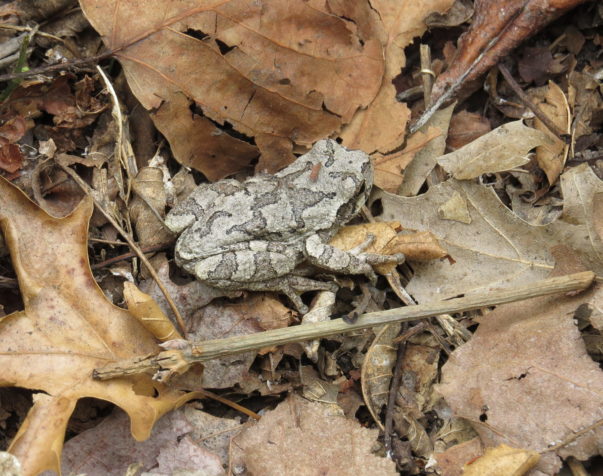
The only critters we saw were a loon on Birch Lake when we arrived and a camouflaged tree frog on the leafy trail towards the end of our hike.

Going to a place we had never been before and walking through Nature’s incredible gifts soothed my soul and got my senses in order. Connection with Nature–in all its glories–is something we nurtured and passed on to our children. The journey of parenthood takes a sharp turn when children are adults and living in places far from their parents, but the road never ends. Losing a parent of my own in these last months brings that reality home. Remember to whom we belong. That sinew of code–tough, flexible, unbreakable–that we receive from our parents, grandparents, and ancestors and the years of nurturing from resilient, flawed parents make us who we are. Follow the trail of life. We may not know where we’re going all the time, but we can find beauty and interesting things along the way. Find our own way. We choose our paths, sometimes turn around when we find we’re on the wrong trail, and at other times blaze our own trail with intuition and spirit. May Goodness and Mercy follow us all the days of our precious lives.
In Love with This Green Earth
I am in love with this green earth. –Charles Lamb
Do you remember the feelings you had when you first fell in love with your beloved? A euphoric happiness settled over me. I thought about him all the time. I couldn’t wait to see him again, though months would pass since we lived 400 miles from one another. I happily spoke about him, sharing stories of who he was as a person. I read and re-read the letters he sent and immediately answered them. I marveled at his handsomeness, his politeness, his kindness to family and friends. I felt lucky or blessed or pinch-me-I’m-dreaming that he felt the same way about me.
May turns a corner for us into the fullness of Spring, and I have to say, I am quite smitten. The green-ness and new-ness of this season should not come as any surprise–it happens every year! And yet, I find myself thinking, “Was last Spring this beautiful?!” I can’t get enough of looking out the window at the lush green grass and the emerging leaves.
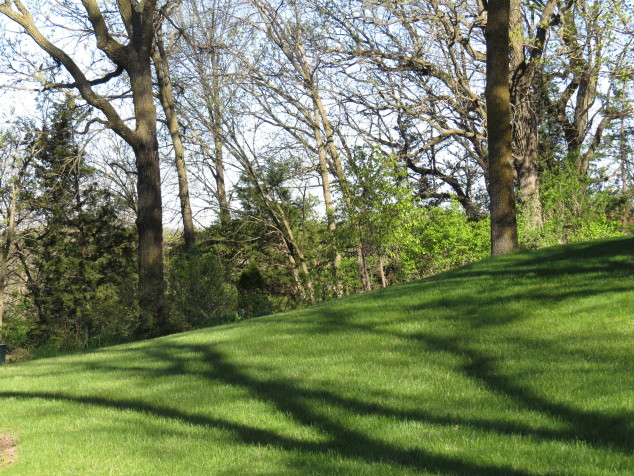
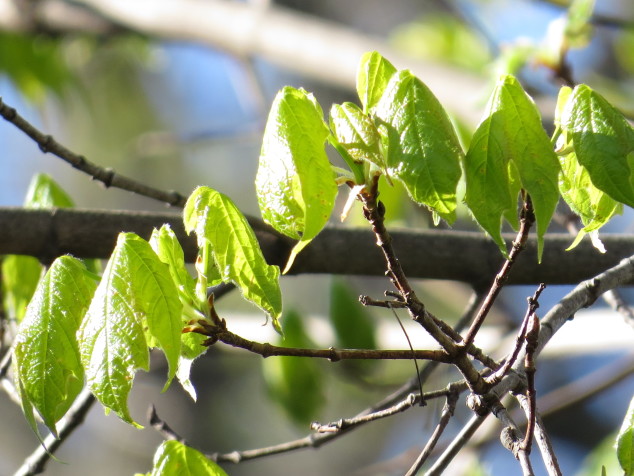
I happily wander through the yard and woods, delighting at the swiftly growing ferns and the spring-blooming perennials.
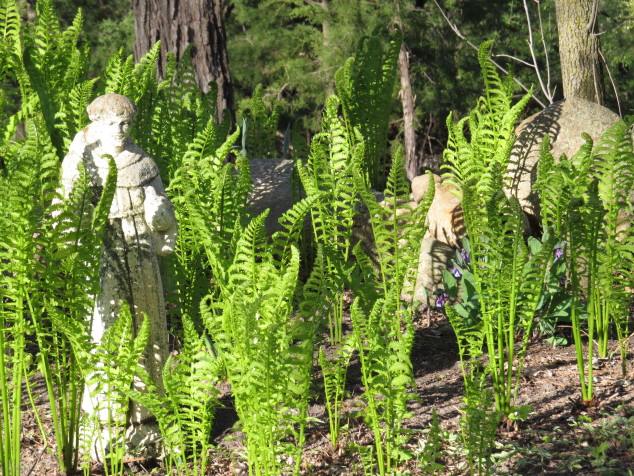

There is an overabundance of growth, a population explosion of buds, flowers, and plants coming back to life from the dormancy of winter. (Go to North Star Nature Facebook page to ‘Like’ and see more May flowers and photos of nature.)
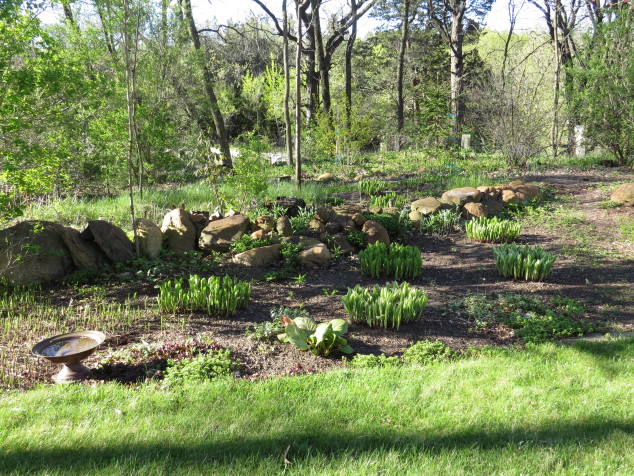
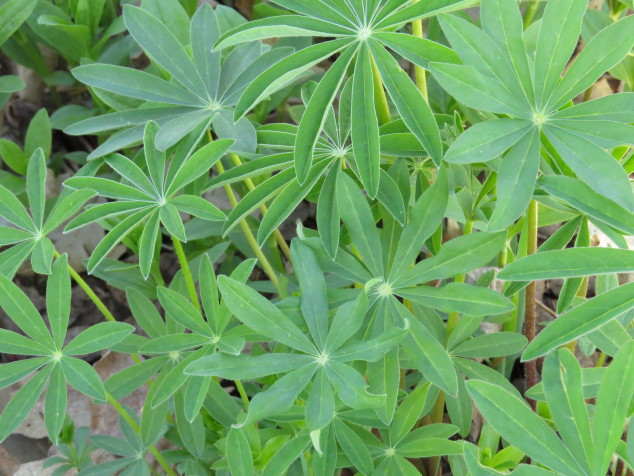
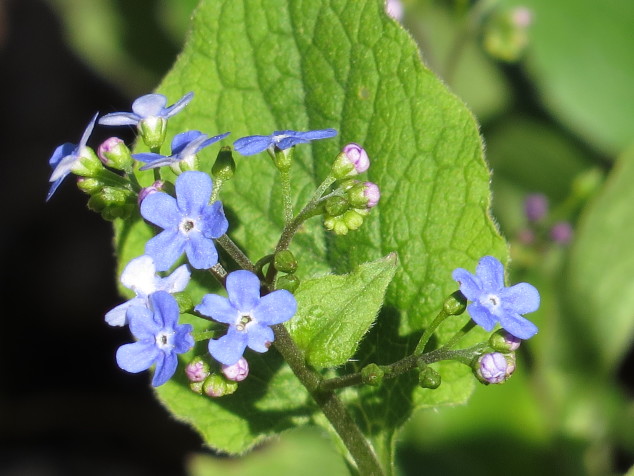
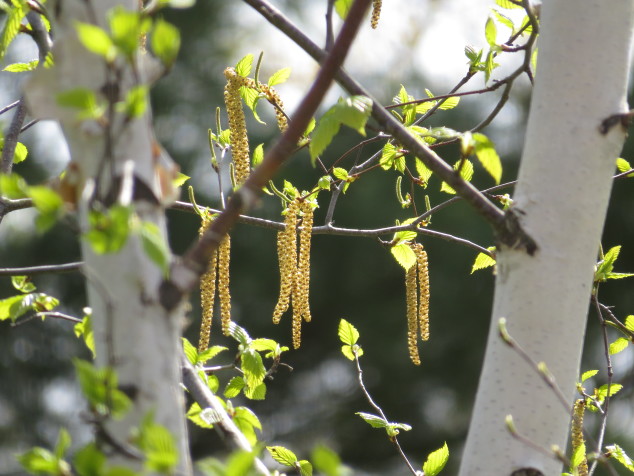
I am in love with this green earth. The changing seasons have a way of opening our minds to development and the cycles of Life–like falling in love with your beloved. Spring flushes the winter dormancy and old ideas from our minds and bodies to be replaced with possibilities and reliabilities–like having faith in Goodness. Renewal fills our souls with explosions of hope for the greener, growing, greater days ahead–like living in a Sanctuary. We are blessed to be living on this beautiful green earth!