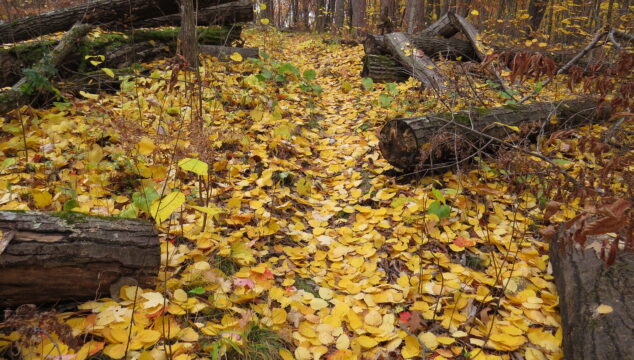
Come walk with me in the peak Autumn beauty of the Northwoods. To say that I love this time of year is an understatement. Most everyone can appreciate the colorful falling leaves---it reveals the 'true self' of a tree when its leaves are no longer producing chlorophyll. Their true colors are revealed, and there is something simple … [Read More...]
Archives for 2015
The Making of a Sunset
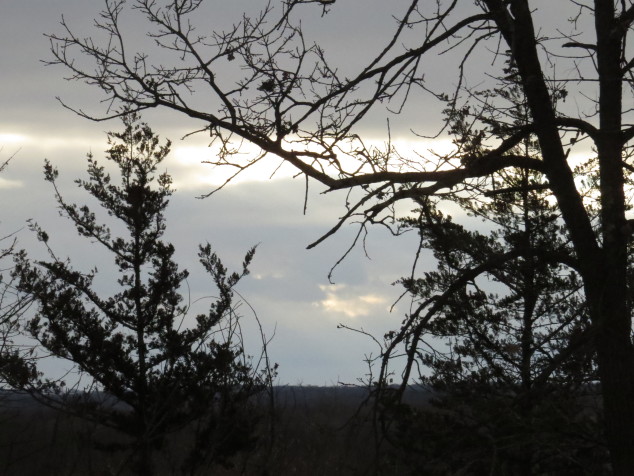
New Year’s Day was cloudy and gray–a typical mid-winter landscape to start the new year. But there were moments throughout the day when the clouds parted and we saw a glimpse of the sun–for a second or two. It was as if the cosmos was shifting into the new year.
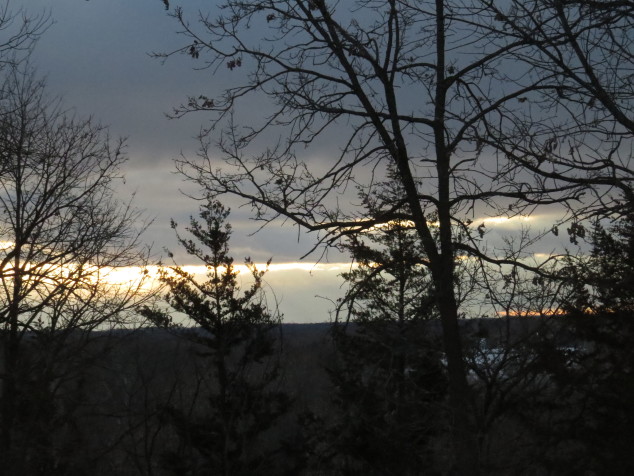
It was the movement of the heavy clouds in the southwestern sky that caught my attention at three o’clock in the afternoon. As a strip of pink appeared low in the sky an hour later, I realized I was witnessing the making of a sunset. By four-thirty, the majority of the clouds were gone from the sky, except the long, horizontal band of purple that took the lead role in the sunset production.
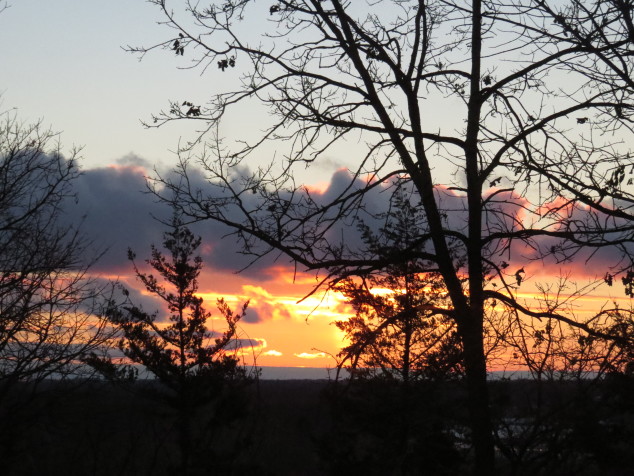
The dark purple-blue clouds were outlined in pink and moved at a swift pace to the south.
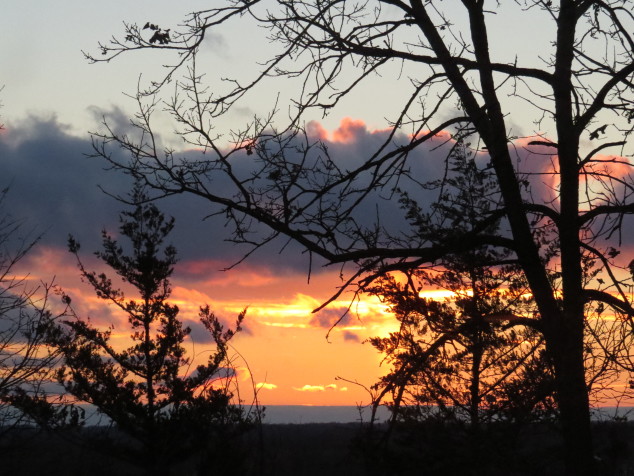
The setting sun colored the sky beneath the roll of purple clouds in shades of orange, pink, and yellow.
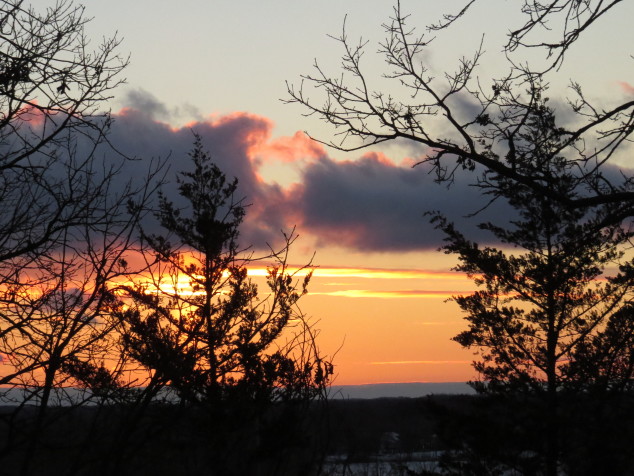
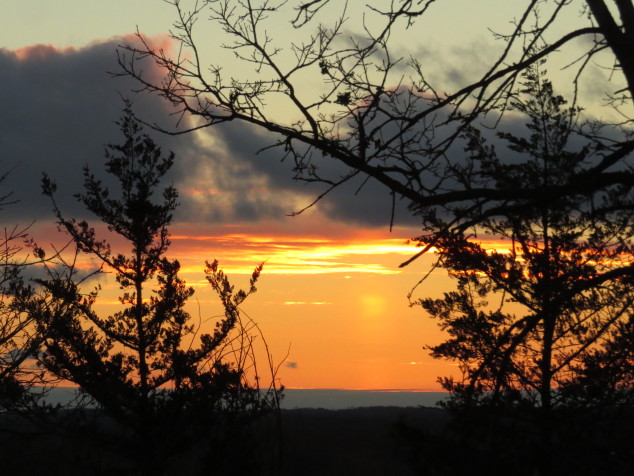
Forty minutes later, the clouds were gone. The sun had set. A smooth gradient of blue to red-orange silhouetted the cedars and oaks.
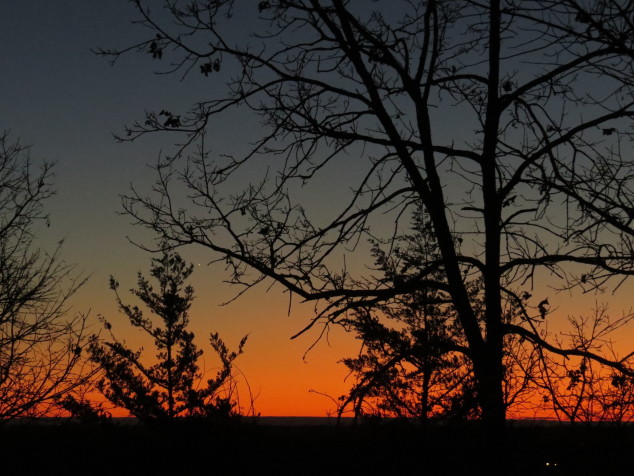
And a star shone bright in the quiet sky.
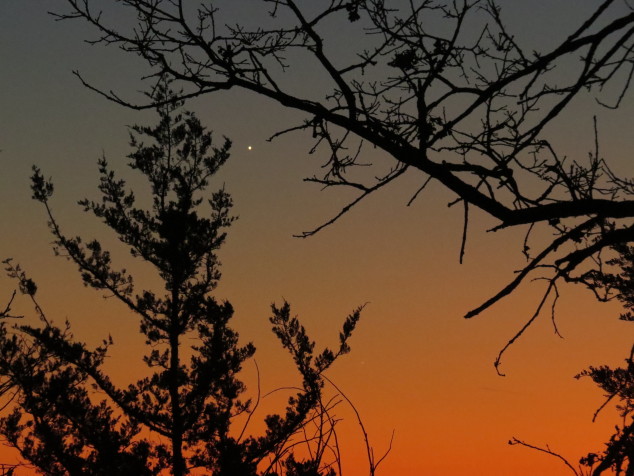
This making of a sunset is like making a big decision in our lives. At first we are in the clouds and rather confused. Thoughts are moving in our head, grabbing our attention, then moving on. We see a glimpse of a solution, but then we are clouded with doubt. As time passes, the choices become more clear to us. We may still have a blind spot–a fear, a doubt, or a prejudice that gets in the way. The process has a beauty of its own–colorful, ever-changing, illuminating. Then all of a sudden, we know what we are going to do! The cloudy doubts and fears are gone. We can see clearly. We feel a quiet peace as we gaze at the bright star guiding our life.
Trumpeter Swan Symphony
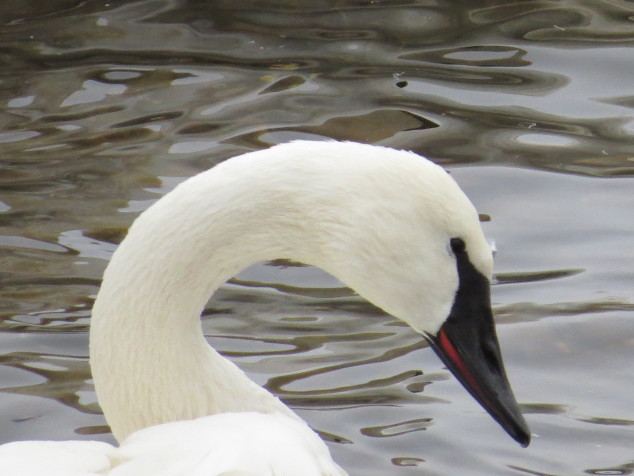
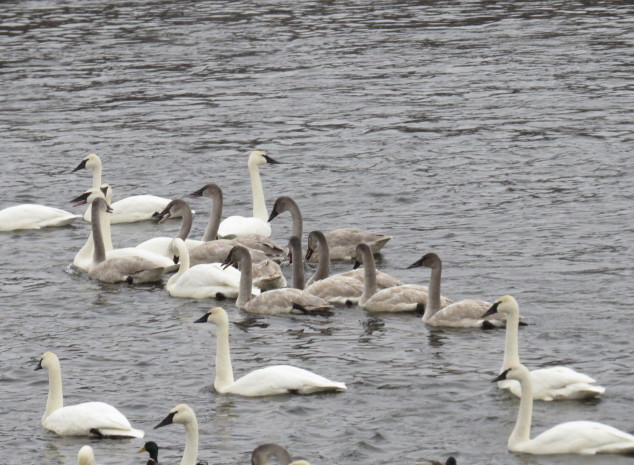
This beautiful, graceful creature is the largest North American waterfowl–the Trumpeter Swan. It stands at a height of four feet with a wingspan of more than seven feet. Downstream from a power plant on the Mississippi River in Central Minnesota, hundreds of Trumpeter swans gather in the open water to spend the winter.
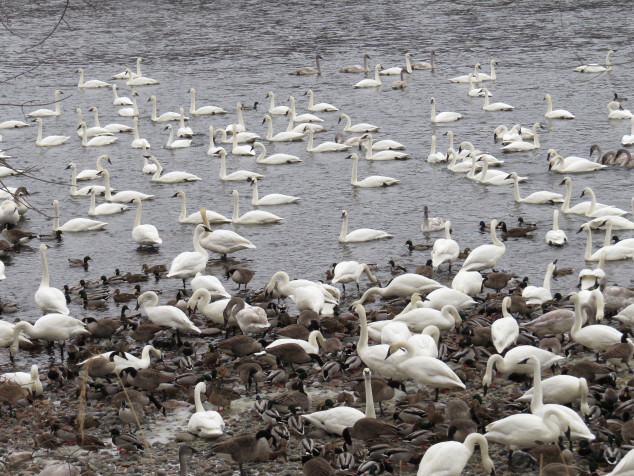
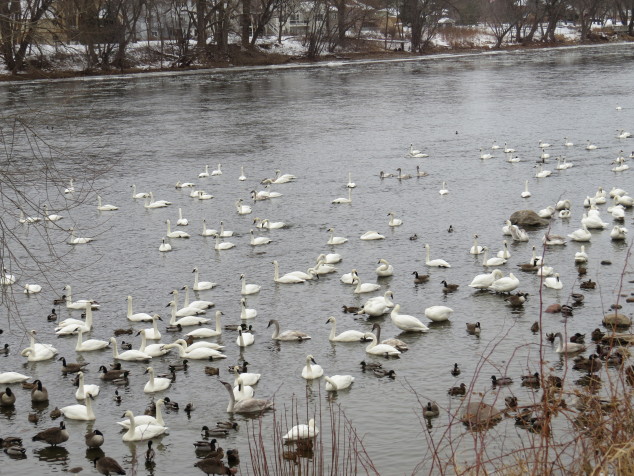 Swans first arrived in this area for wintering in 1986 as the nesting areas of shallow marshes and ponds froze up. Other Minnesota swans migrate to Oklahoma, Arkansas, and Texas for the winter. Most leave their wintering grounds in early March to return to their nesting areas.
Adult Trumpeter swans have pure white plumage that is often stained a rusty color on the head and neck from feeding in iron-rich water. They mate for life and can live longer than twenty-four years.
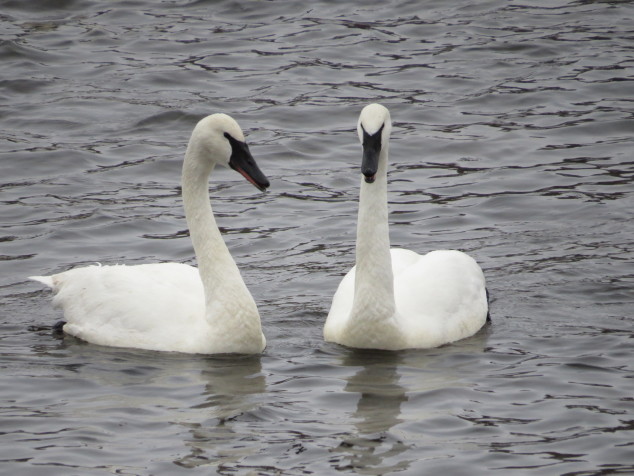
They make a hollow trumpeting sound.
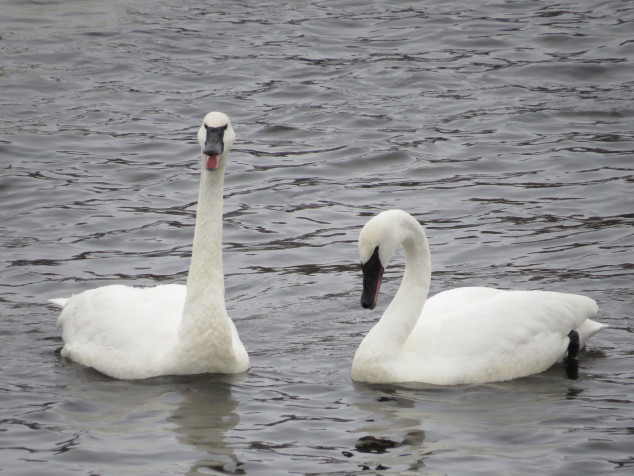
Young swans or cygnets are gray until they are a year old and stay in family groups through early spring.
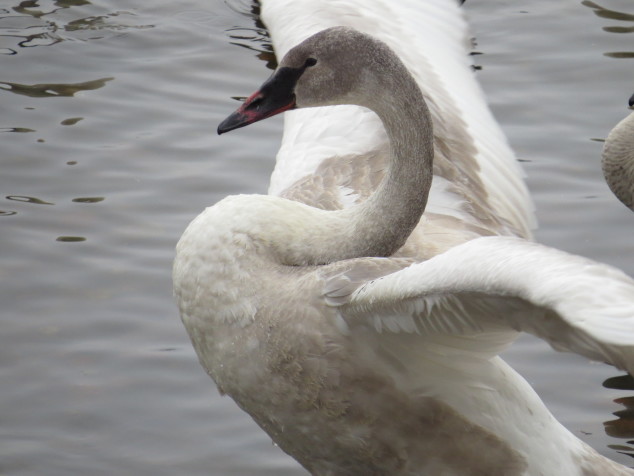
Swans were hunted extensively in the 1600s-1800s for their meat, skins, and feathers, leading to their near extinction. Their large flight feathers made the highest quality quill pens. It is estimated that 2900 swans live in the state of Minnesota at this time, after more than fifty years of restoration.
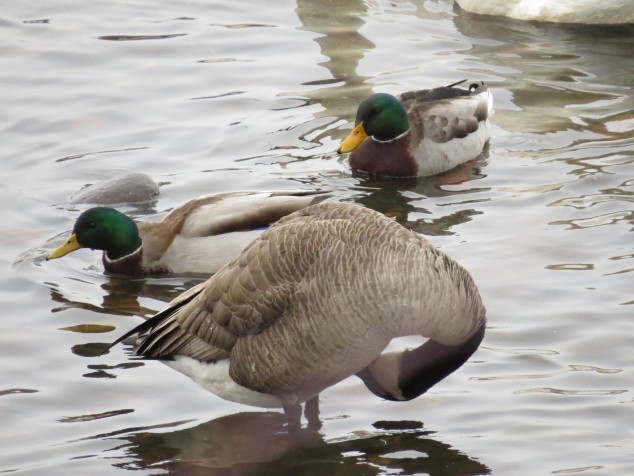
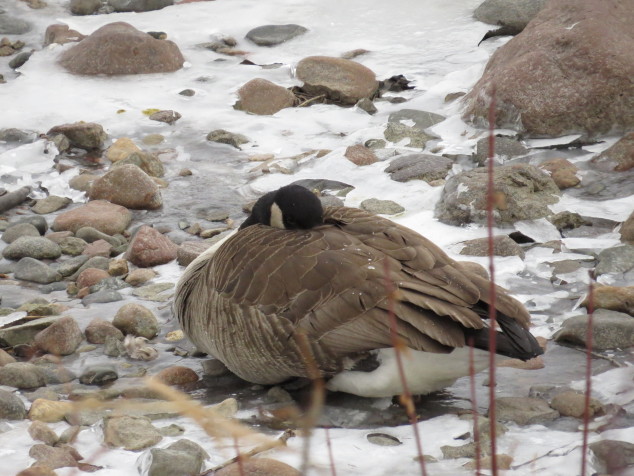
The swans share their space with Canadian geese and Mallard ducks who look small in the presence of the large Trumpeter swans.
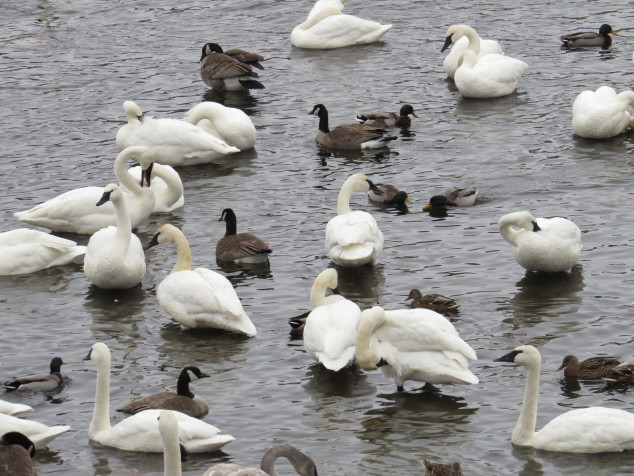
And when they are all vocalizing, it creates a sweet Waterfowl Symphony!
The mated pairs live most of the year on their own, guarding the territory where they raise their young. In the winter, they become social birds and can be seen gathering in a circle of four to six, honking, puffing out their chests, and flapping their wings–like a dance! According to Madeleine Linck, Wildlife Technician for Three Rivers Park District, this behavior is for family bonding and showing off. (http://www.startribune.com/sports/outdoors/240621061.html)
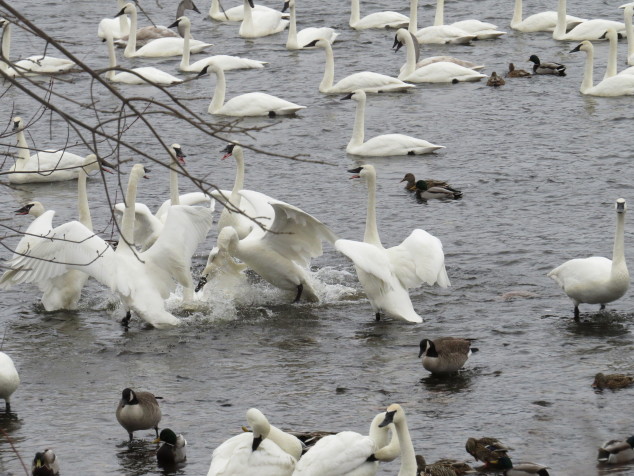 The swans, geese, and ducks fly to surrounding fields to feed, and they take advantage of the kindness of a local resident who feeds them buckets and buckets of corn every day. After feeding, the swans and geese can be seen preening their feathers and taking a morning nap.
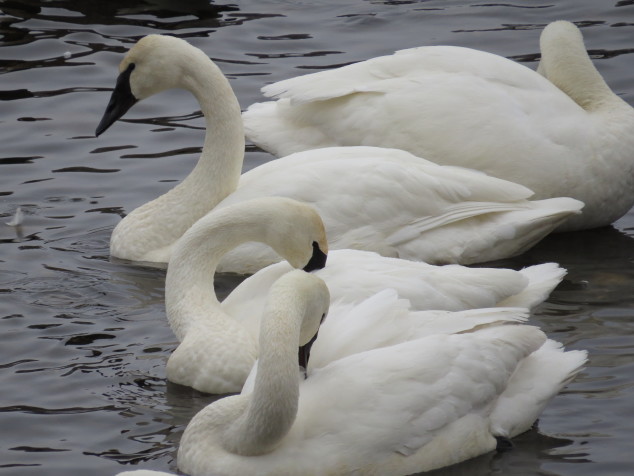
Wintering is also a time for courtship. When swans are three to four years old, they choose a mate. Courtship displays include head bobbing, trumpeting together, and spreading and raising their wings.
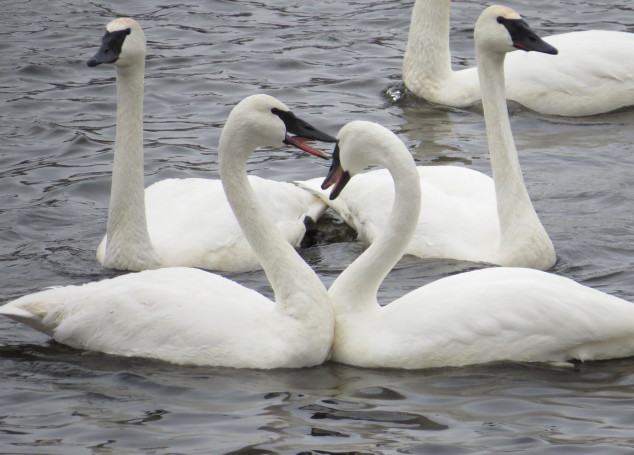
The Trumpeter swans are an impressive sight with their regal carriage, sleek alabaster plumage, and incredible size. The large overwintering population seemed to get along fairly well–we saw a few ‘fights’ between some individuals, but for the most part, they coexist peacefully with one another and with the ducks and geese. This social resting time prepares them for the next breeding season and for the work of raising their next nest of offspring.
We humans spend much of our year taking care of the ‘nest,’ finding food, and keeping our young safe. And like the swans, we get together with our families in the cold months of winter to bond with them, show off a little, make some noise, and rest and restore ourselves for the months ahead.
- « Previous Page
- 1
- …
- 5
- 6
- 7