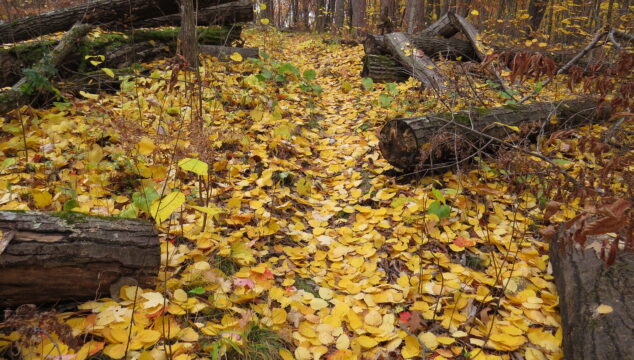
Come walk with me in the peak Autumn beauty of the Northwoods. To say that I love this time of year is an understatement. Most everyone can appreciate the colorful falling leaves---it reveals the 'true self' of a tree when its leaves are no longer producing chlorophyll. Their true colors are revealed, and there is something simple … [Read More...]
Archives for July 2015
Gleanings from July 2015
July is our true summer month here in Central Minnesota. We have our warmest temperatures that team up with high humidity, making me pine for air conditioning–for a week or so! While looking through my photos from July, I realized two things–I didn’t get out much (‘out’ meaning beyond our place), and July is the month of flowers! So my gleanings post will be about flowers–all of which have bloomed in July here on the home place.
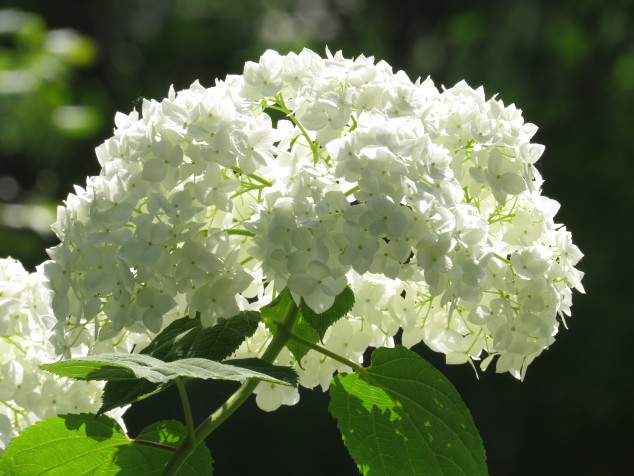
We have a number of shrubs that bloom in the heart of summer, the most spectacular being the hydrangeas. Annabelle hydrangeas are tough, cold-tolerant shrubs that have huge, showy white flowers every year, even after severe pruning.
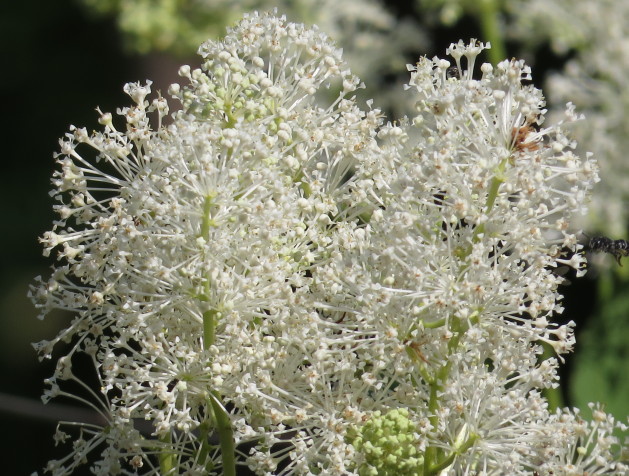
A small native shrub that attracts butterflies, bees, and hummingbirds is New Jersey Tea. The dried leaves were used as a tea substitute during the American Revolutionary War. The flowers look like fireworks!
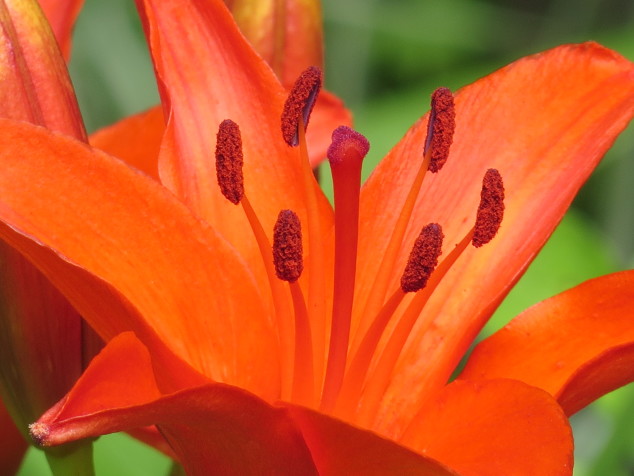
Extravagant, colorful Lilies celebrate summer in bold style: fragrant Oriental lilies…
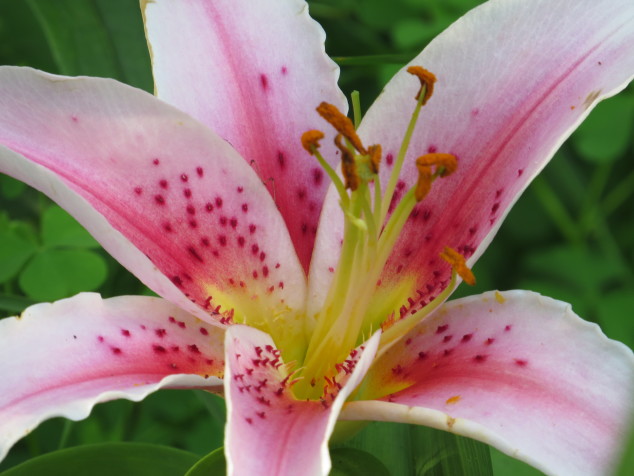
elegant Asiatic lilies…
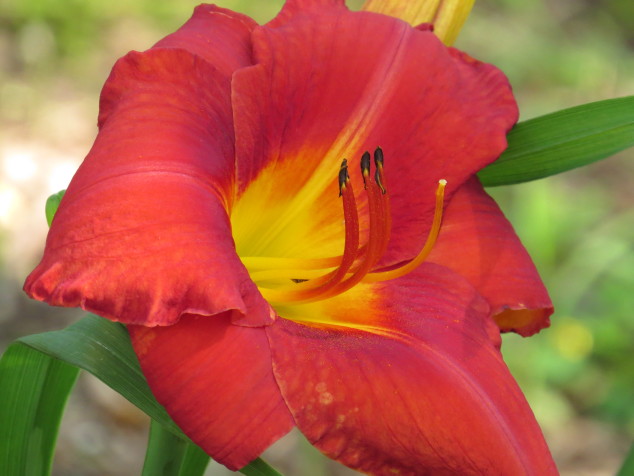
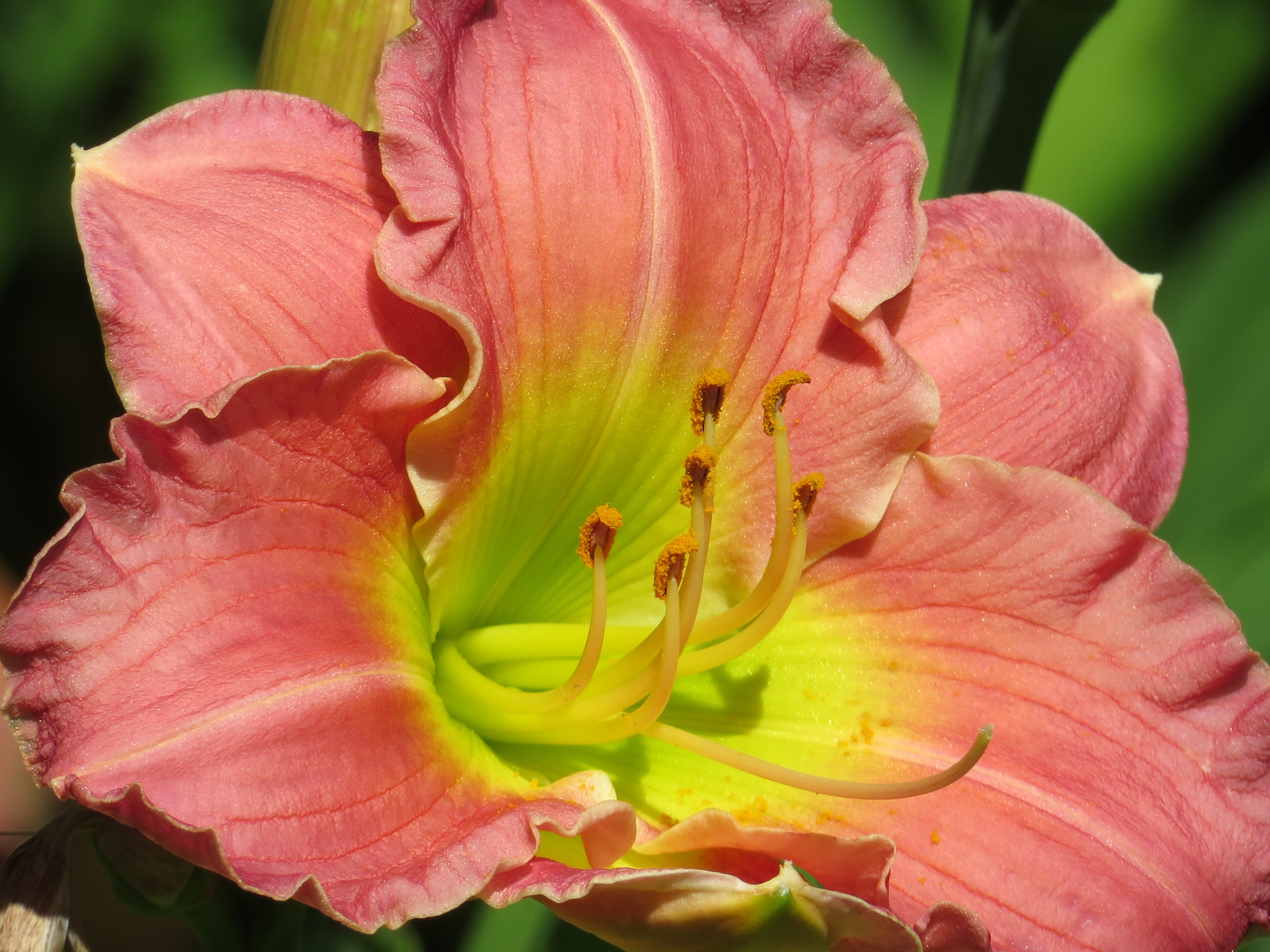
and the fleeting beauty of a Daylily.
Mature Hosta plants produce an abundance of tall flower stalks covered with light purple, bell-shaped blooms which open from the bottom up. The overwhelming number of blossoms masks the beauty of the individual flower…
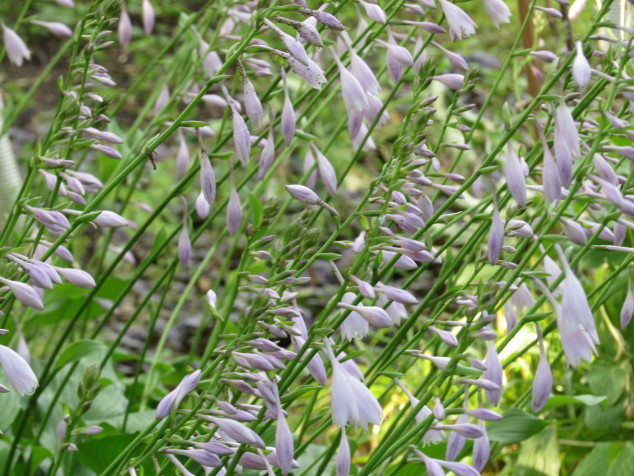
…until you look at it closely.
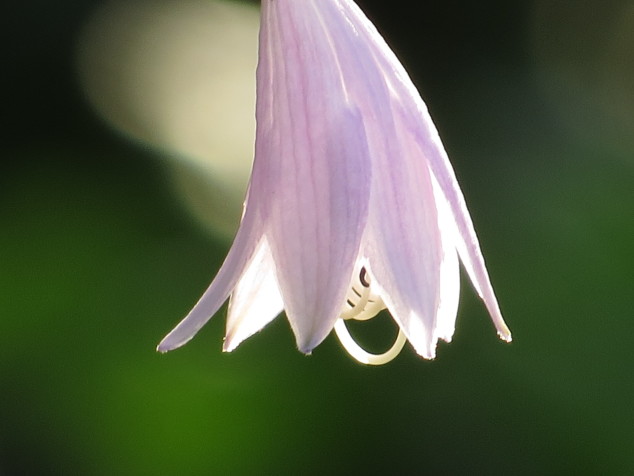 July is the month for royalty–Queen Anne’s Lace and Queen of the Prairie! Queen Anne’s lace is a biennial. The tender first-year leaves can be used in salads. The root of this ‘wild carrot’ has a high sugar content, second only to the beet among root vegetables, and has been used to sweeten foods. Use extreme caution before harvesting, as the leaves of this edible plant resemble the leaves of poison hemlock, fool’s parsley, and water hemlock, which are all poisonous.
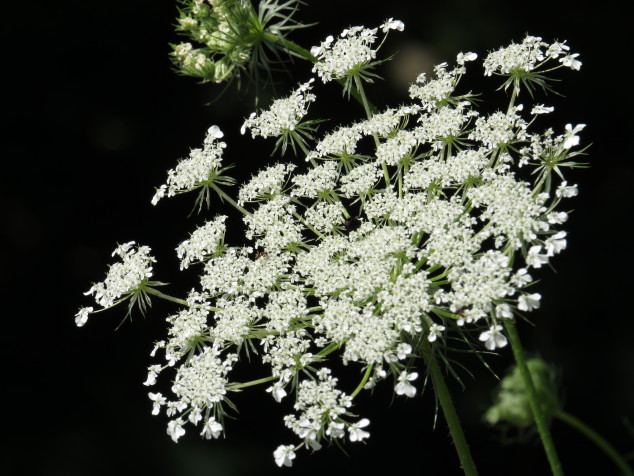
Queen of the Prairie has frothy clusters of pink flowers on three to six-foot tall stems. It is a native perennial of northeastern and north central United States.
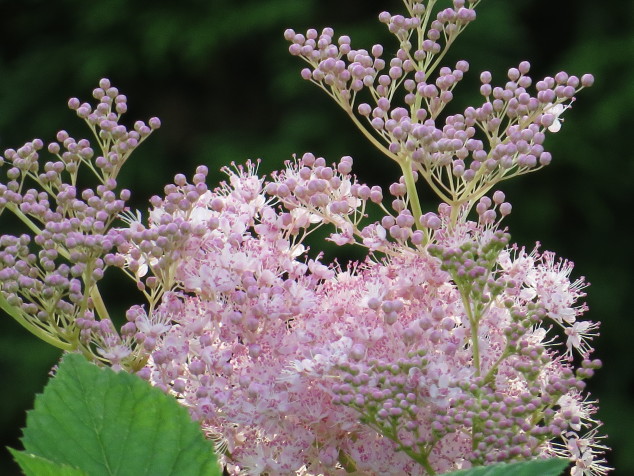
Black snakeroot (Cimicifuga Racemosa) is a tall, shade-loving plant with spikes of bottle-brush flowers.
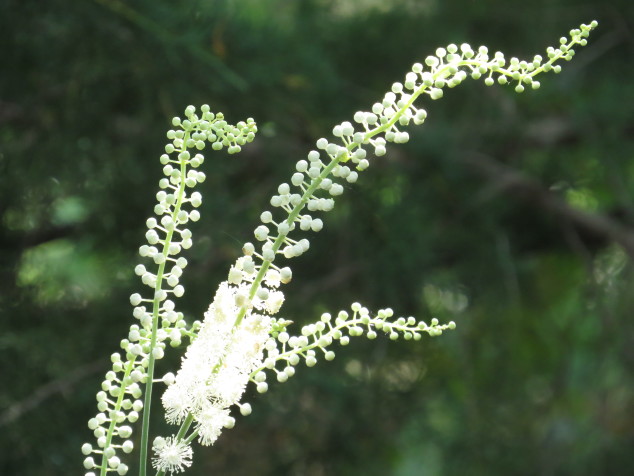
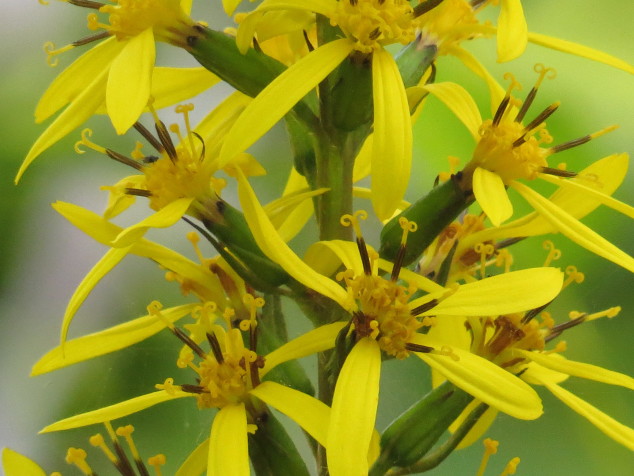
Ligularia ‘ The Rocket’ loves moist shady areas. It is a clumping perennial with toothed foliage and tall spikes of yellow flowers.
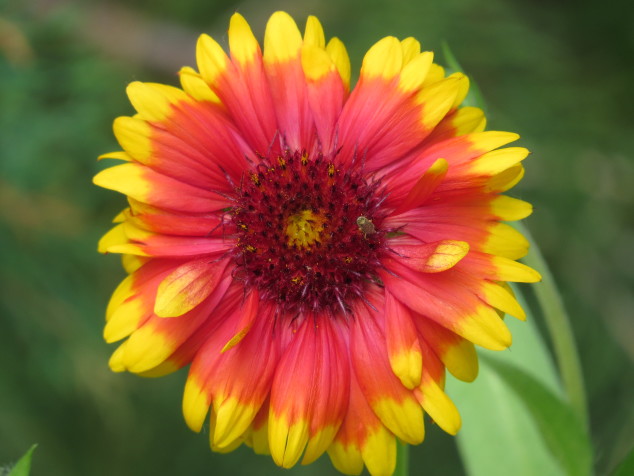
Blanket flowers or Gaillardia are bright, sun-loving perennials that are easy to grow.
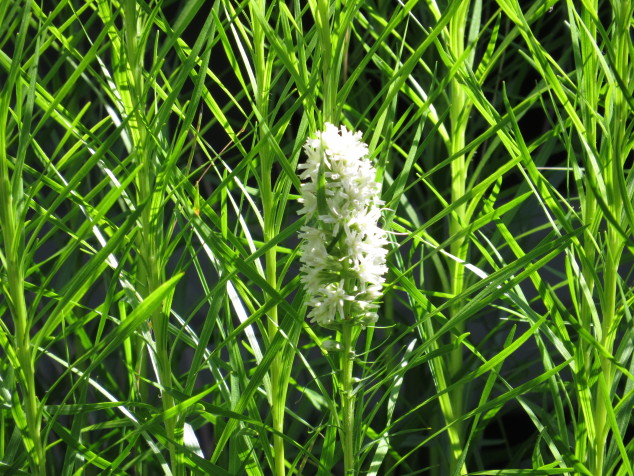
 Liatris or blazing star is commonly purple in color, and we have many of them, but I think my favorite is the ‘Alba’ or white cultivar. The grass-like leaves create a beautiful background to these spiky flowers that, unlike most flowers, bloom from the top down.
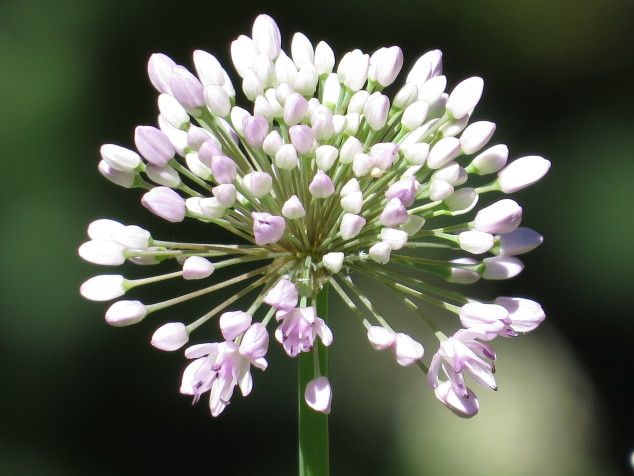
Onions and garlic are Alliums for the vegetable garden, but there are many ornamental Alliums. They are grown from bulbs that need to be planted in the fall. These oniony-smelling plants are deer and rodent resistant and need very little care.
Flowers have an expression of countenance as much as men or animals. Some seem to smile; some have a sad expression; some are pensive and diffident; others again are plain, honest and upright, like the broadfaced sunflower and the hollyhock. Henry Ward Beecher
Perhaps we have more in common with flowers–and vice versa–than we thought! Some of us are bold and stand out in a crowd. Others are understated and may get lost in a crowd. Some have a calm and regal air about them. We are all different sizes and colors and smells. But one thing is for sure–each one of us is a valued member in the Garden of Life.
P.S. The three eaglets that we have been following have fledged! Another empty nest!
Bluebird of Happiness
The BLUE-BIRD carries the sky on his back. –Henry David Thoreau
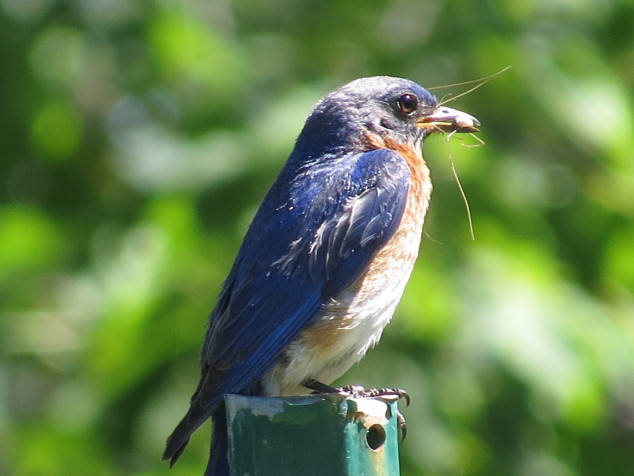
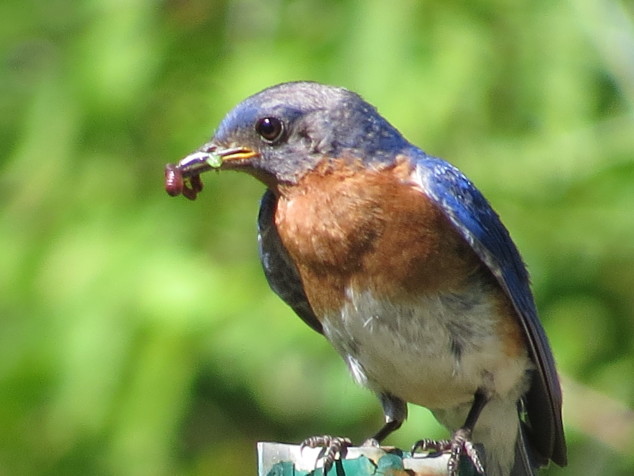
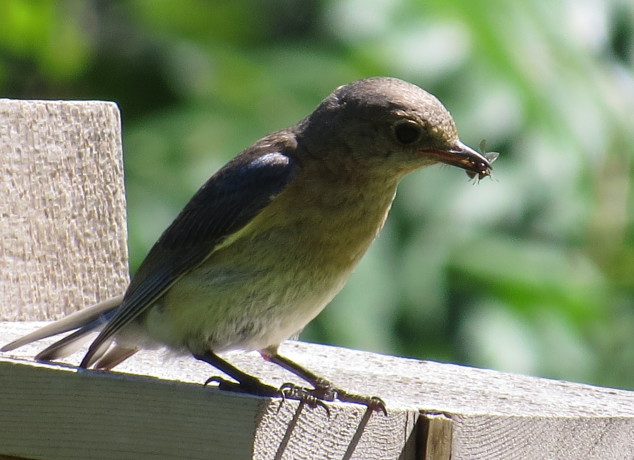
Flashes of blue can be seen in our yard at any time of the day. This is the first year a pair of Eastern Bluebirds has used one of our bluebird houses for their grassy nest. We have four houses placed around the yard, but the location has to be just right for bluebirds. The house wrens are not so picky so have usurped a number of the bluebird houses, even though they have their own petite abodes in the maple trees. Bluebirds can have more than one successful brood each year, so this one in mid-July may be their second brood.
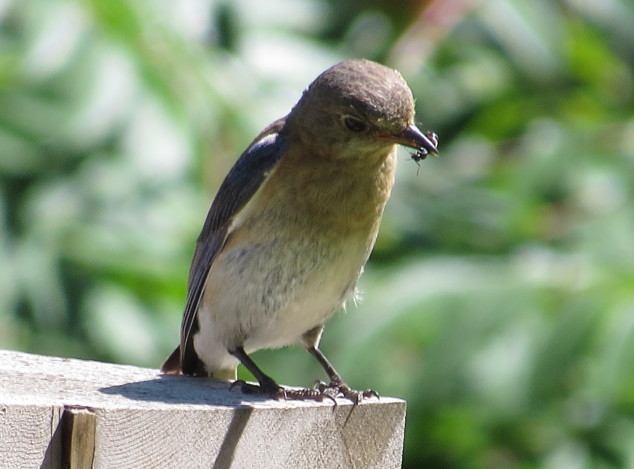
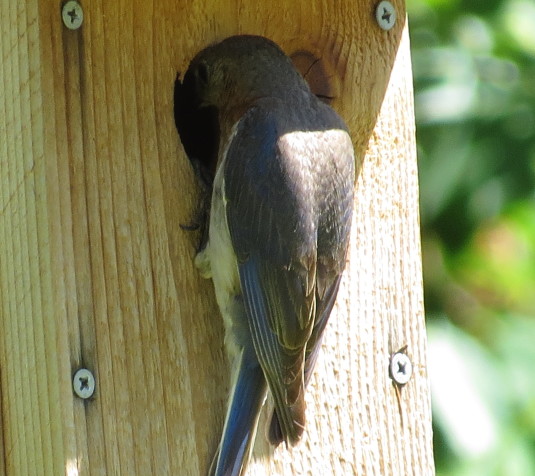
Both the brightly colored male and the more subdued female hunt for insects to feed their young. They perch high on electric lines, in trees, or on posts. They spy their prey from sixty or more feet away, then swoop to the ground to grab the unsuspecting insect and quickly fly back to their perch. Most of the time, the parents alight on their house or on a nearby post right before flying into the nest with the food.
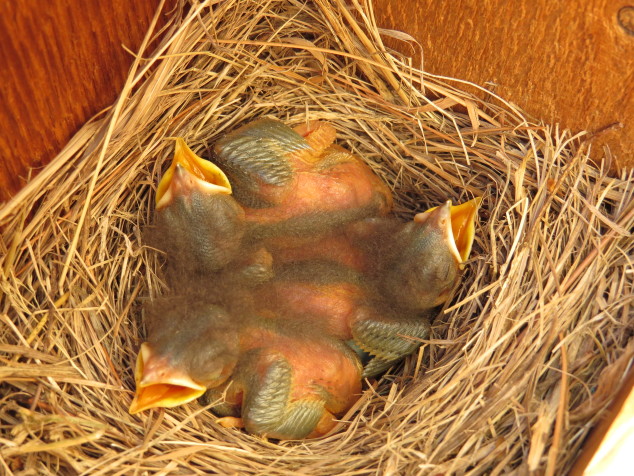
Countless insects of all sorts are delivered to the babies’ gaping mouths…
…and just three days later, they have opened their eyes and developed more feathers. Sixteen to twenty-one days after hatching, these helpless chicks will fly from the nest.
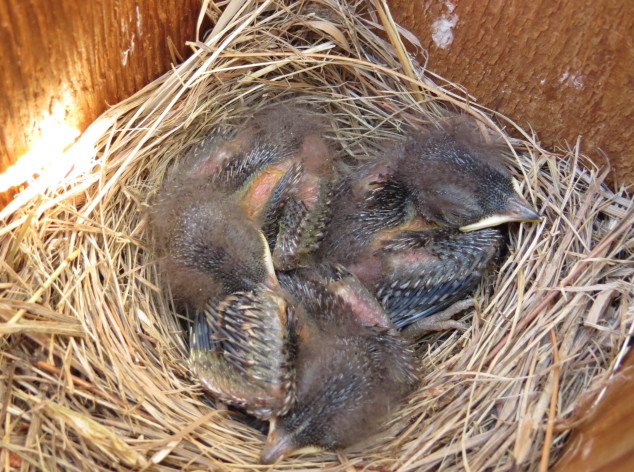
Bluebirds have long been a symbol of happiness, hope, and renewal. Legends, poems, plays, songs, and stories have been written about the inspiring bluebird. What is it about these beautiful little thrushes that have aroused such appeal and even have prompted a National Bluebird of Happiness Day on September 24th? They are a welcome harbinger of spring after a long, cold winter. Their brilliant azure color is uncommon in the natural world, so the flashes of blue are noticeable against the green. The population of bluebirds severely declined up to the late 1970’s due to loss of nesting habitat and nest competition from starlings and sparrows. The North American Bluebird Society was formed in 1978 to place bluebird nesting boxes across the country, and since then the bluebird population has recovered. Do we appreciate something even more once it was almost lost? Or is it the feeling of a blue-sky day, when the air is crisp and clear and the sun warm upon our faces, that is evoked when we look at the sky the bluebird carries on his back? When I see the flash of blue, I feel a deep happiness to have such beautiful birds living in our yard. When I see the parents working so hard to provide food for their babies, I feel hope that another generation will populate our natural world. And I carry that happiness and hope to you so that we may all experience soul-filling renewal. What do you carry on your back for the whole world to see?
Splish Splashing in the Water
His name was Apples, and he loved water. My little strawberry roan horse never shied away from crossing a creek and would dawdle in the water, sipping it through his bit, letting it dribble down his chin. The creek seemed much more interesting to him than the dusty trail on the other side where the rest of the horses had gone.
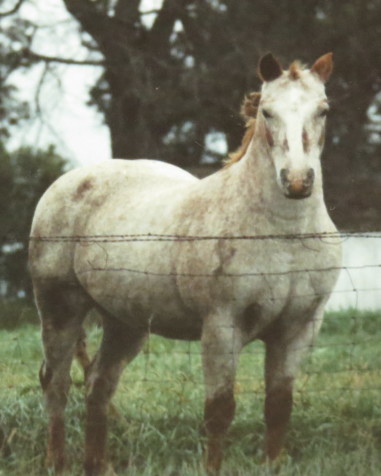
One hot summer day in South Dakota, I was riding with my sister. We had had a large amount of rainfall that pooled into a low spot in the pasture. As we were riding by the clear water, Apples had different plans! He walked into the knee deep water and started pawing–the water splashed up onto his belly, onto my legs, and all around us! He dipped his head down, stuck his nose into the water, took sips, and blew the water out of his nostrils. I remember laughing at how much fun he was having in the cool water on that hot day! Then I felt him gathering his legs, taking small steps inward, and I knew that he was going to lay down! His legs folded, we went down, I kicked my feet out of the stirrups and stepped off of him into the water, all in one smooth, slow-motion movement. As my boots filled up with water, my sister and I laughed at how my little water-loving horse had changed the course of our ride!
That ride was over thirty years ago, but the memory of it was brought back to me when I saw a robin taking a bath in one of our bird baths. She flailed her wings in the water, lowering her head, shaking her tail, quivering her body, as the water droplets flew around her. Then she stopped for a few seconds, turned a bit, and started over again.

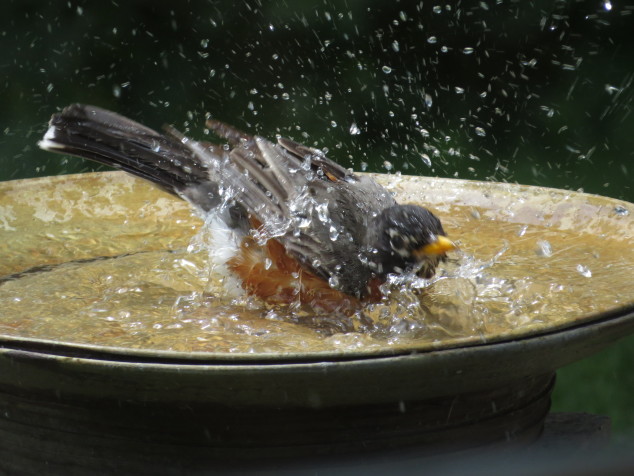
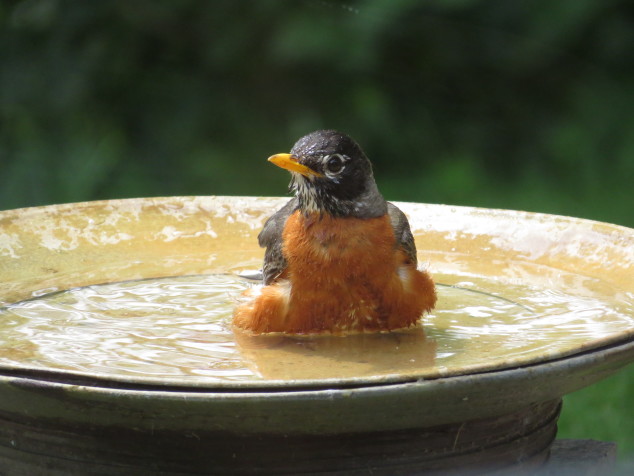
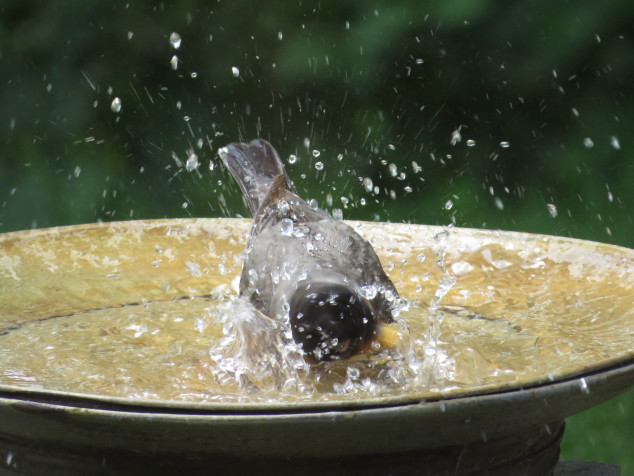
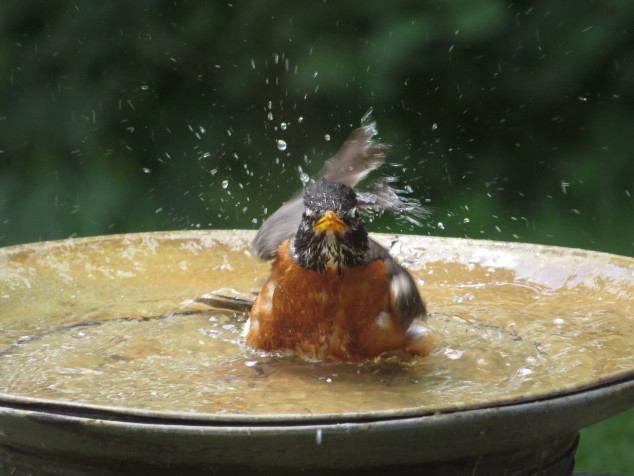
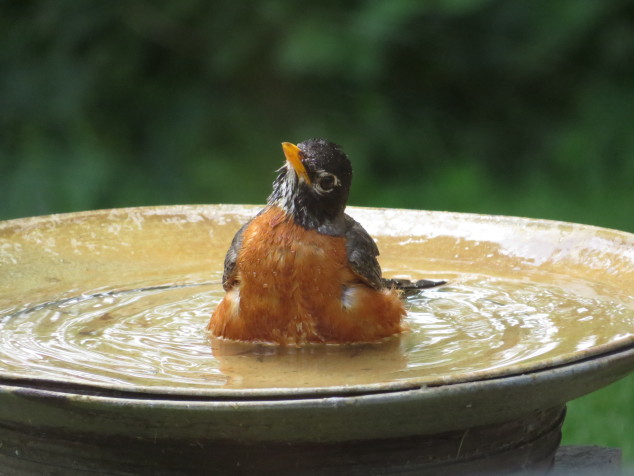
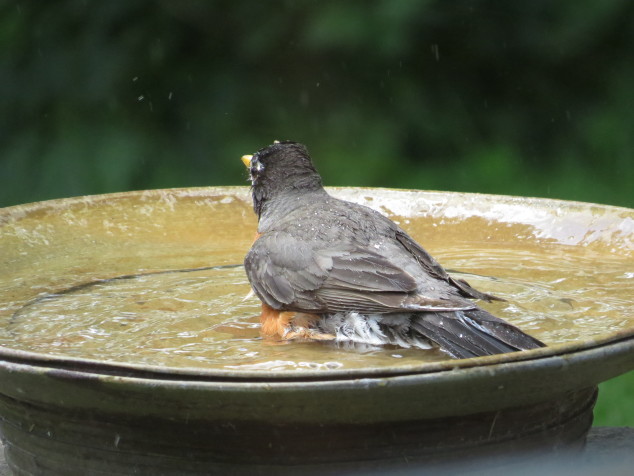
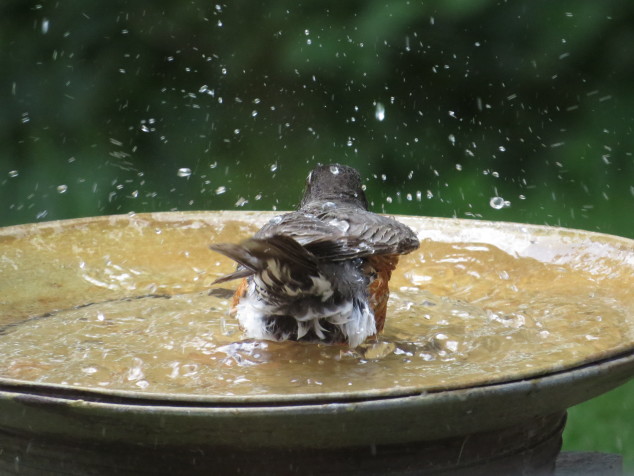
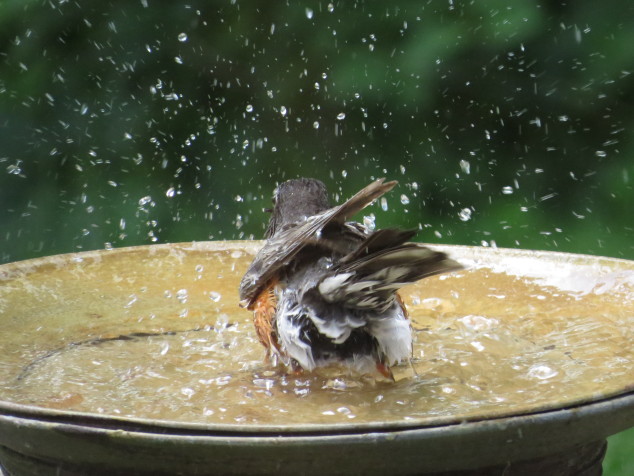
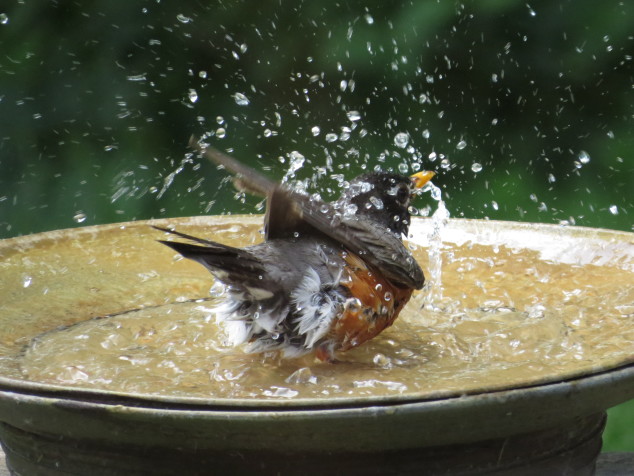
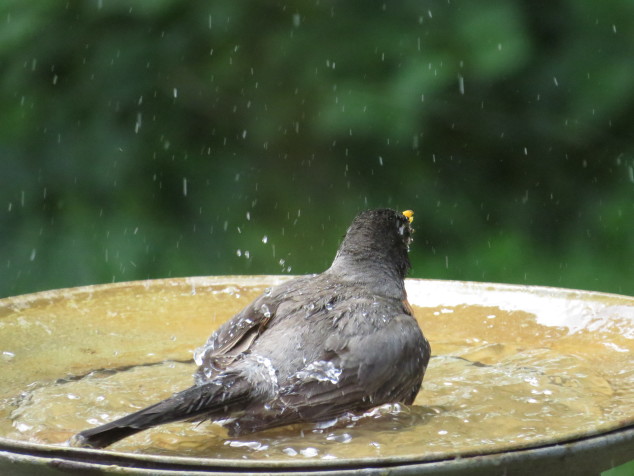
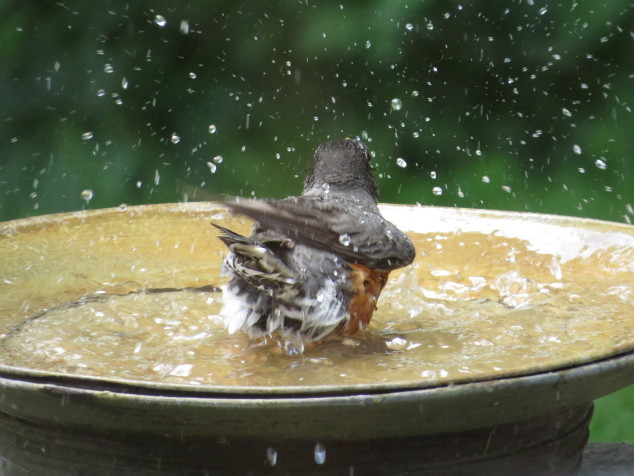
We sometimes forget that all the living creatures around us need, use, and enjoy water–just like us. The robin reminded me. The memory of Apples reminded me. On these hot, summer days as you enjoy the lakes, rivers, fountains and pools, remember to provide water for the animals–for sustenance, cooling, cleaning, and fun! Happy Summer!
Happy Independence Day!
Among my flowers and trees, Nature takes me into her own hands, and I breathe freely as the first man. –Alexander Smith
Yesterday was a good day for flying! The Robin babies in the nest on the screened-in porch were getting crowded.
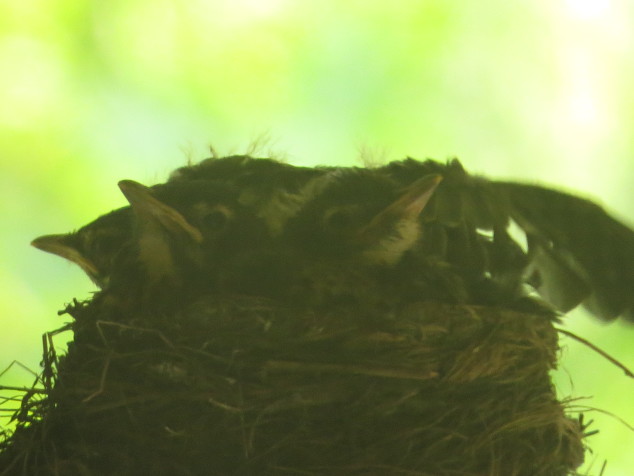
Some time yesterday they fledged the nest! It was empty. They were gone. So much activity, then stillness.
This morning, I saw one of the babies in the maple tree close to the house.
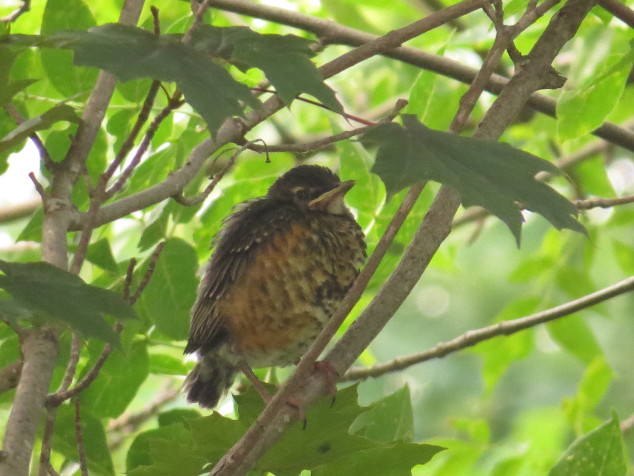
Independence Day!
But one still needs a little help from Mom even after leaving the nest!
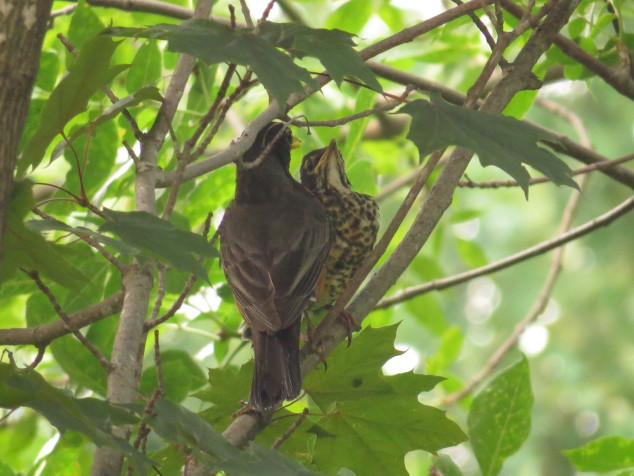
Hope your day is Happy and Safe. Hope you spend some time with Nature and breathe freely. Hope you enjoy your Independence while maintaining the connections that feed your body and soul.
Gleanings from June 2015
And what is so rare as a day in June? Then, if ever come perfect days….Whether we look, or whether we listen, We hear life murmur, or see it glisten. James Russell Lowell
The long, light days of June have slipped by, and we really have had some perfect days! The combination late Spring/early Summer brings warm, wonderful weather, incredible plant growth, exquisite flowers, and animals intent on nesting and raising their young. Life murmurs and glistens all around us, subtle yet extravagant, common yet miraculous.
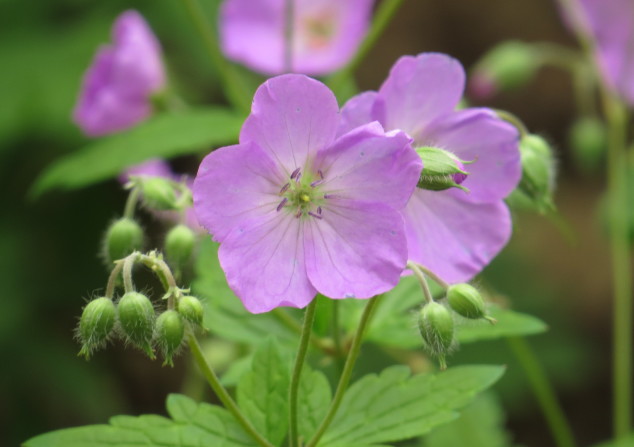
Wild Geranium is a delicate woodland flower that graces the paths through our woods.
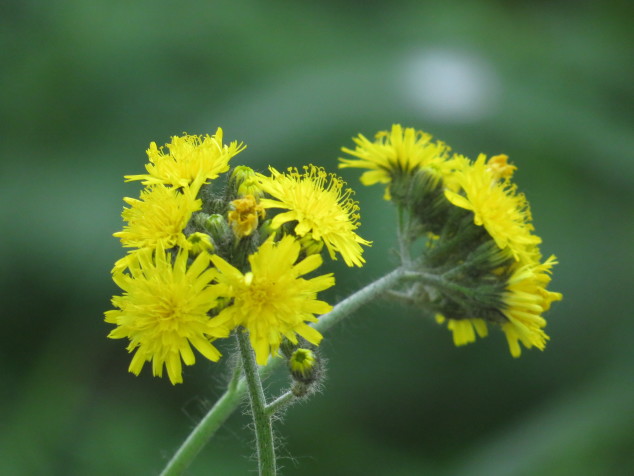
False dandelion grows in our woods, though I have also seen it in full sun along the road ditches. A cluster of small, dandelion-like flowers sways atop a two-foot stalk.
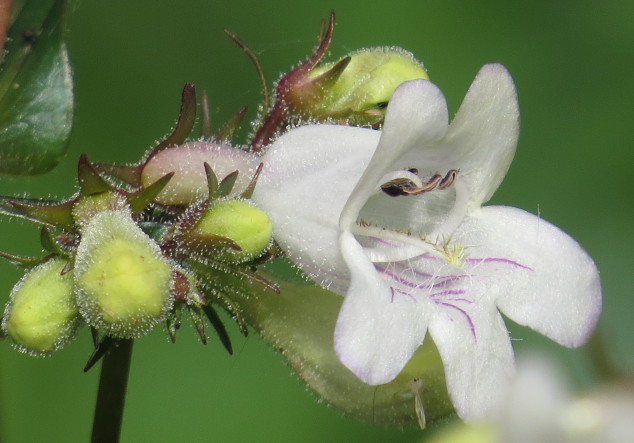
Our sun garden displays the glorious Penstemon digitalis ‘Husker Red’. It has dark maroon foliage and shining white flowers on tall stems. You can see why its common name is Beard tongue; the sterile stamen (one of five stamens) is lined with tufts of small hairs.
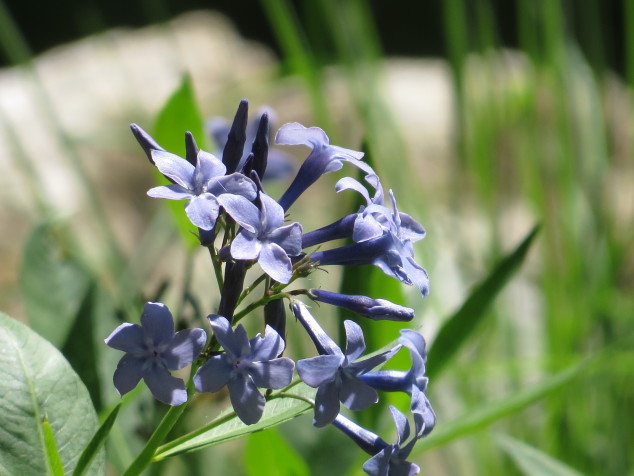
One of my prairie garden flowers–Amsonia or Bluestar–looks perfect in front of the wispy prairie grasses and the Western South Dakota petrified wood.
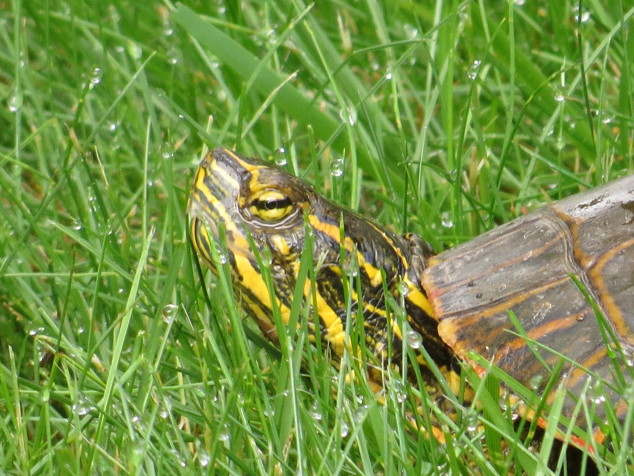
One of the critters that walked through our June yard was a Western Painted Turtle. She quickly ambled through the dewy grass until she saw me–then she stopped as I got pictures of her. She was likely on her way to her nesting place where she digs a hole with her hind feet and deposits her clutch of leathery white eggs. Incubation time is 72-80 days, and since we live so far north, the hatchlings stay in the nest until the following spring!
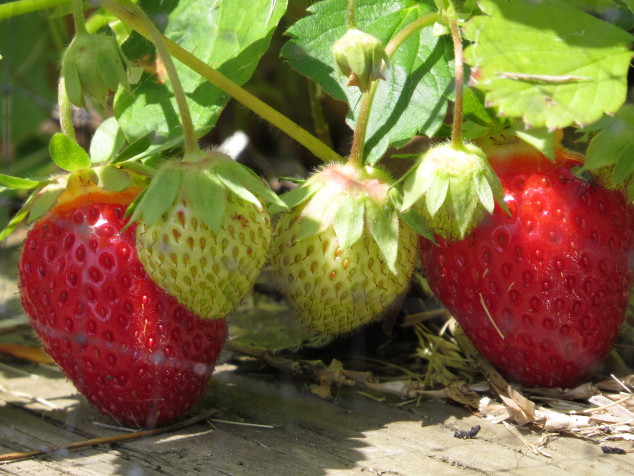
 Tiny wild strawberries and our larger cultivated ones turn a shiny red in ripeness–a sweet treat for whoever finds them first.
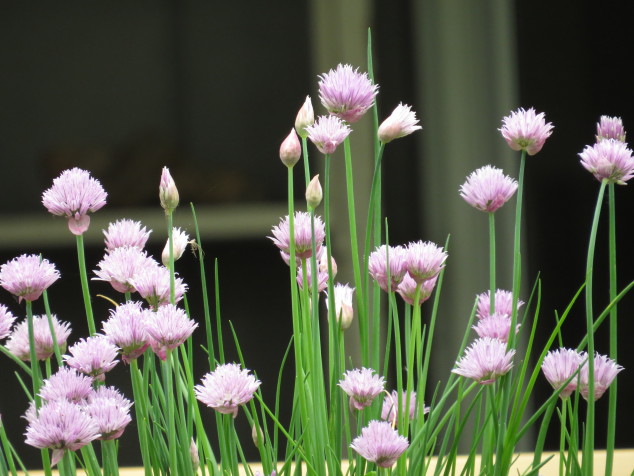
Outside the screened-in porch, the chive blossoms line up like children at the schoolyard.
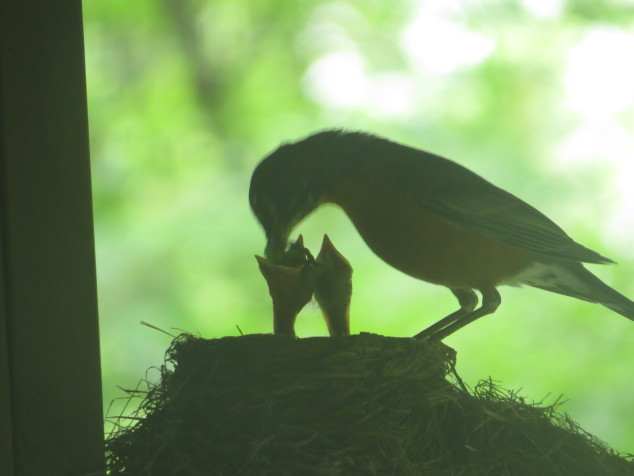
And speaking of the screened-in porch, my re-do project is on bird delay! A robin thought the unscreened cross beam would be a perfect place for her grass and mud nest. There are three hungry baby birds in the nest in spite of the sawing and hammering going on below. Staining and re-screening will have to wait until the young ones fly from the nest!
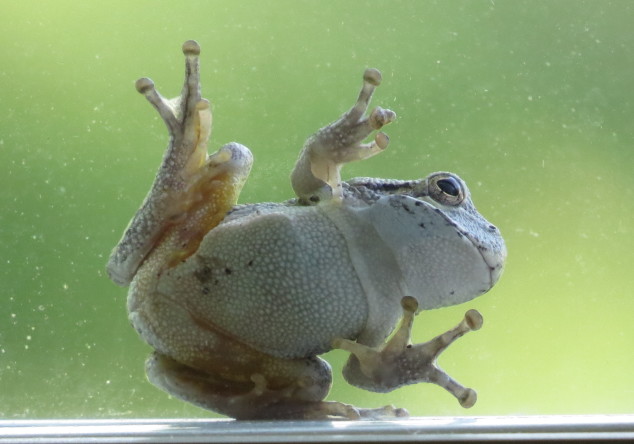
A couple of other creatures seemed to want a glimpse of human life inside the big wooden box with windows. I observe Nature every day–do we ever think about the creatures observing us?
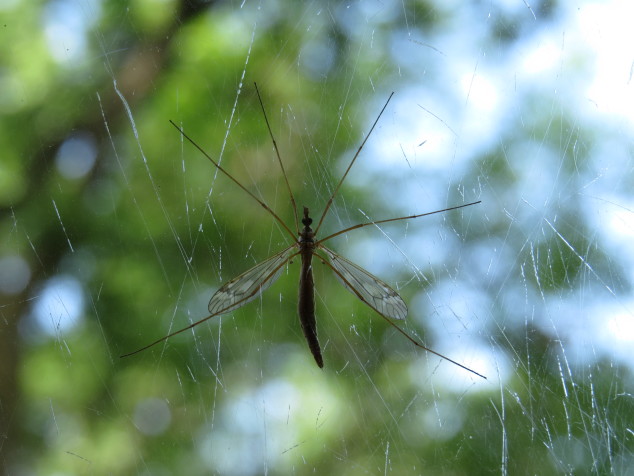
All I can say to the little critters is that I definitely need to wash windows!
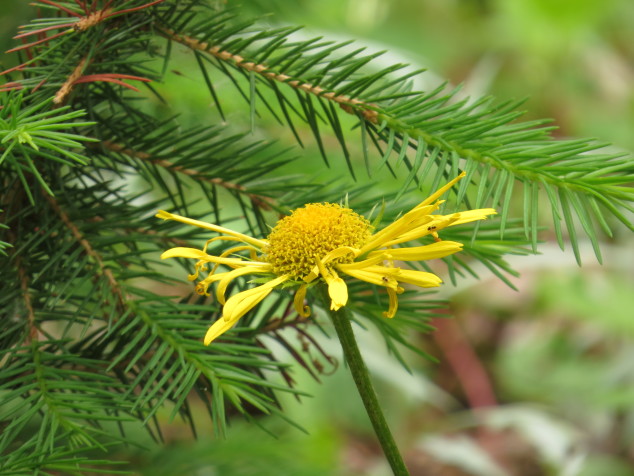
I liked this photo of Leopard’s Bane against the Norway Spruce tree. The flower is spent, on its way to decay with petals drying and falling off and with ants crawling on it. It is up against the supple new, green growth of the spruce tree. A study in contrasts.
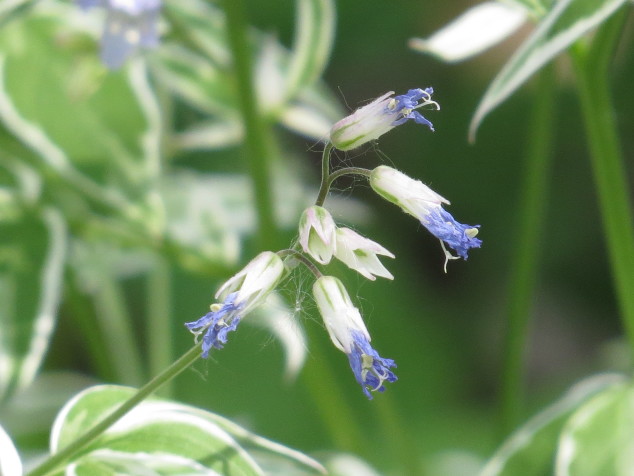
But there is beauty in the ‘spentness’ of flowers, too. Dried blue blossoms of the pretty variegated Jacob’s Ladder reminds us that the bridge between heaven and earth includes the worn out and expended of us who are just a little farther along on our journey.
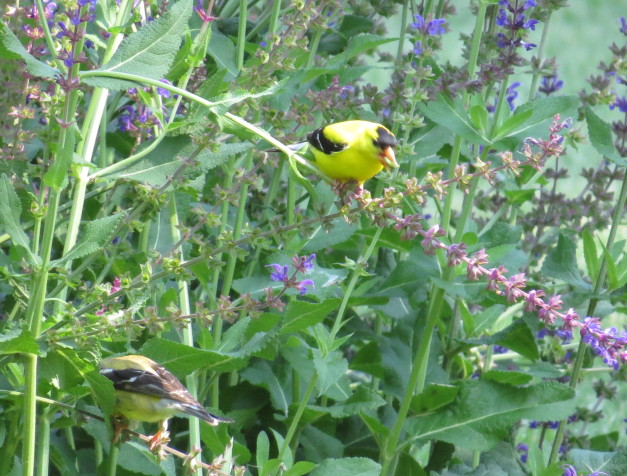
Perennial Blue Salvia in its ‘spent’ state provides food for a pair of American Goldfinches. It is in its prime time of nourishment for others, though its peak visual beauty is past.
So June encompasses the fresh, invigorated newness of plants, flowers, and creatures and also those in decline. Like all the seasons of Nature and of Life, change is always happening, whether barely discernible or a drastic metamorphosis.
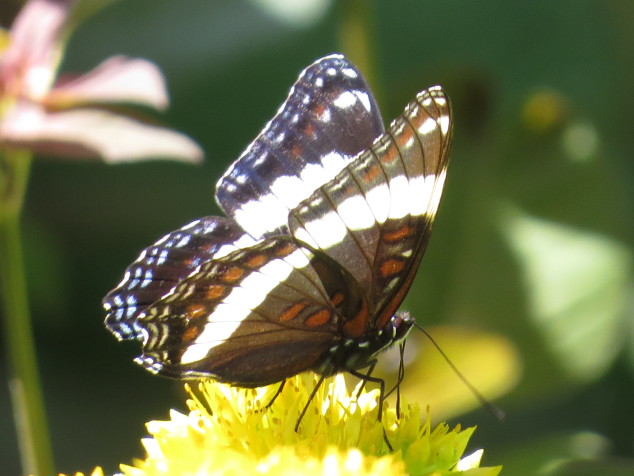
Perhaps the rarity of a perfect day in June is not so rare after all. Perhaps every common day holds miracles waiting to be seen and heard. Where ever we are on our journey, whether ready to fly from the nest, in the perfect place, or in a spent state, we have gifts to offer the world and one another. As the murmur of angels ascending and descending beside us, escorts us on our journey, it is our faces that glisten on each perfect day.