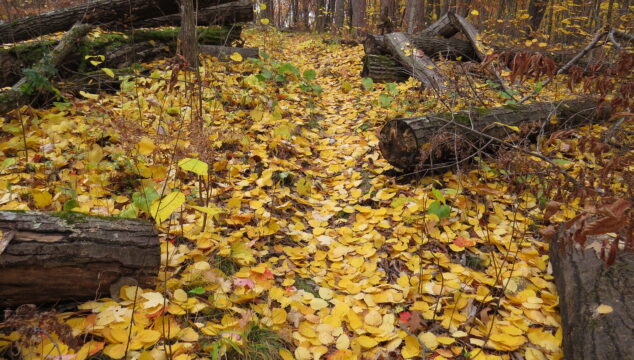
Come walk with me in the peak Autumn beauty of the Northwoods. To say that I love this time of year is an understatement. Most everyone can appreciate the colorful falling leaves---it reveals the 'true self' of a tree when its leaves are no longer producing chlorophyll. Their true colors are revealed, and there is something simple … [Read More...]
Archives for December 2014
Gleanings from December
December is a special month for us. All three of our children were born in December–in two weeks time, we celebrate three birthdays and Christmas! So, many previous Decembers have been busy flurries of activity–cake-baking, special meal-making, decorating, gift-making and wrapping, school concerts, finals, homecomings, parties, and more. But this Christmas was quiet. Our last college student finished finals and flew to Austin to spend Christmas with one of his sisters. We sent our love and best wishes to them–it just wasn’t the same.
December weather wasn’t the same as usual either. It began cold and clear with a thick blanket of snow covering the ground. Day after day of that first week we were dazzled by incredible sunsets and magnificent moonrises.
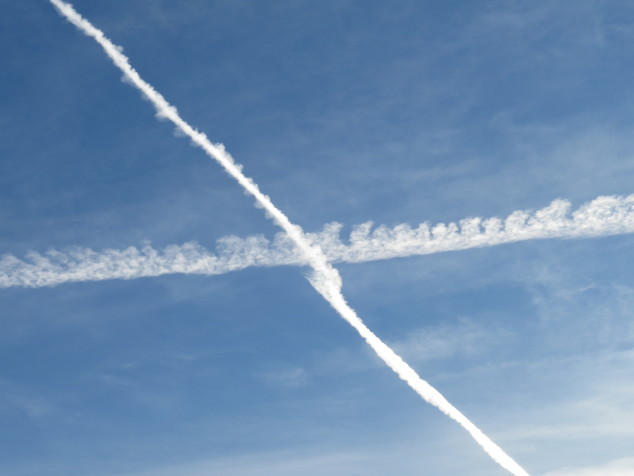
Contrails, from jet airplane exhaust condensing and freezing into ice crystals, crisscrossed the blue sky.
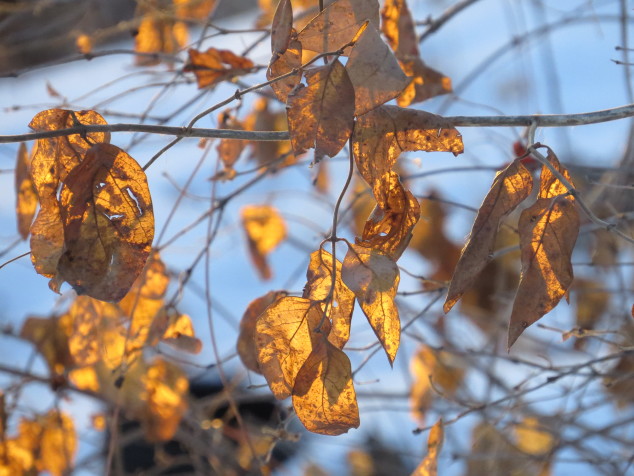
The afternoon sunlight streamed through the leaves still holding onto the honeysuckle, creating a glowing shrub of gold.
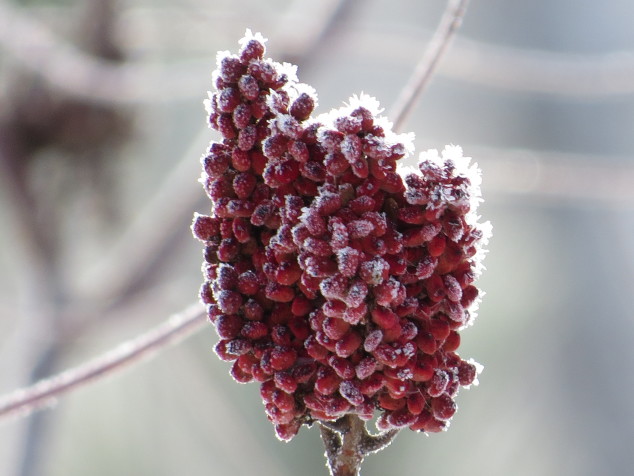
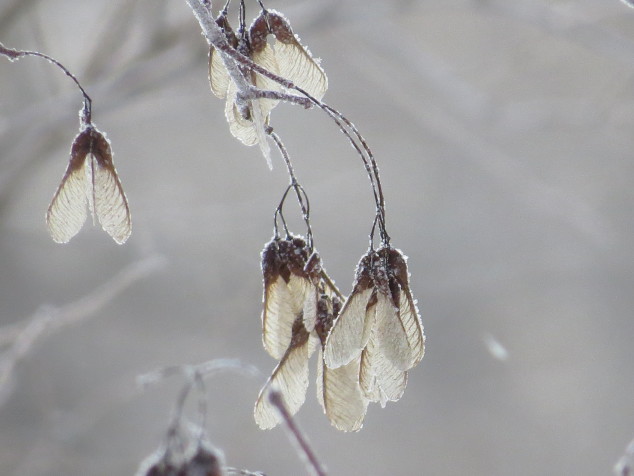
That brilliant week faded into cloudy days where temperature and moisture created an inversion, entombing us in fog. At first the fog froze and built a halo of frost on the red, clustered sumac seedheads and the winged seeds of the amur maples.
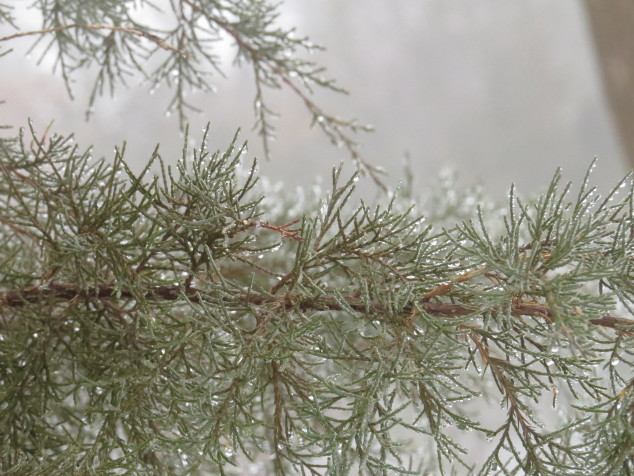
Then the temperatures warmed and began melting the snow. Water droplets adorned the trees.
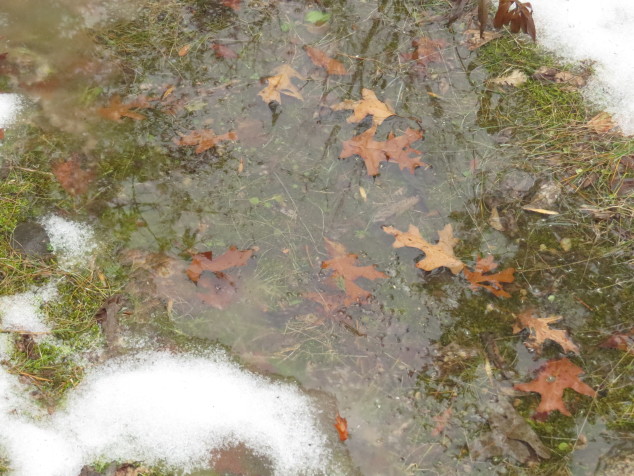
Autumn was uncovered as the snow melted.
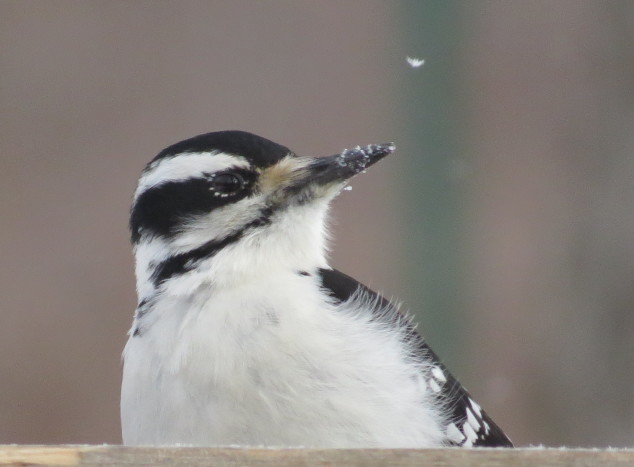
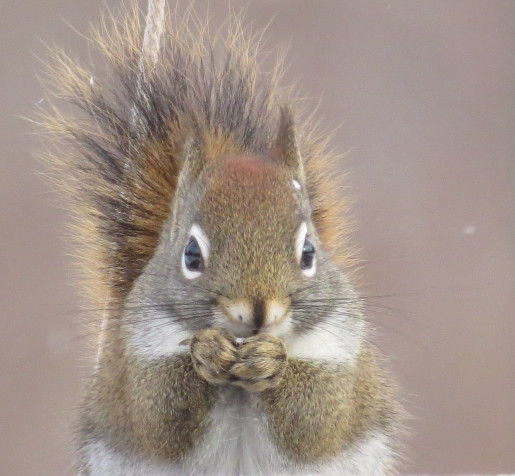
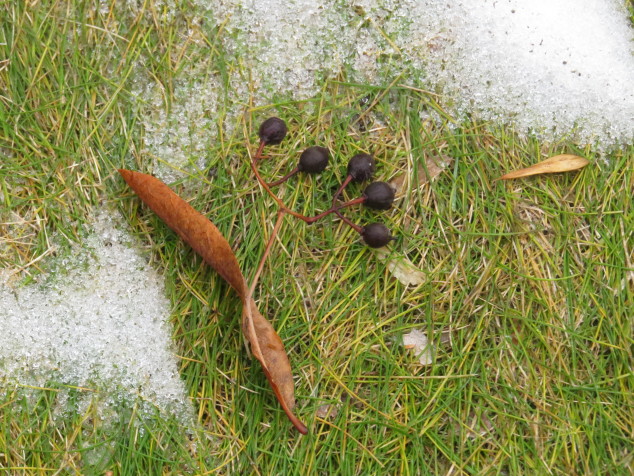 Then as soon as we saw green grass, it snowed again. Critters arrived at the birdfeeder to fuel up on black oil sunflower seeds–a female Hairy woodpecker and a jittery red squirrel.
Clouds persisted into the fourth week as we headed toward Christmas. Temperatures once again rose above freezing, melting the white from Christmas….until the evening of Christmas Day when the snow started falling again. The flower heads of lilac and Joe Pye weed caught the snow–a year’s worth of seasons contained in the image.
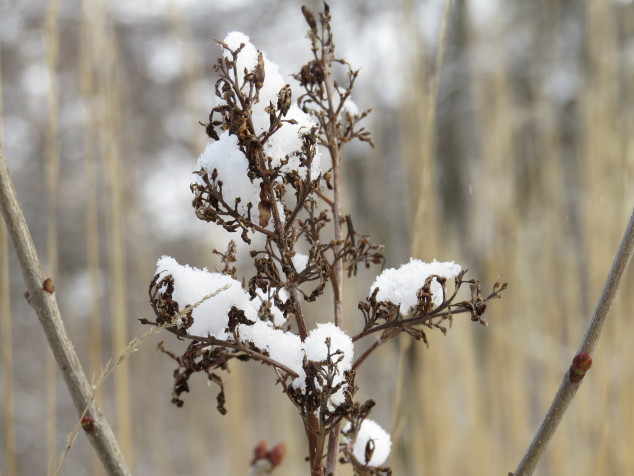
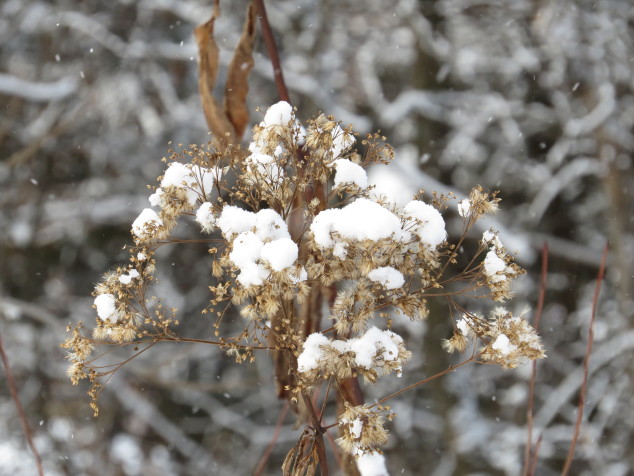
The seedhead of the sumac–the flower of this year and the seeds for the future–was faded and covered in white, holding up its arms to catch the new snow.
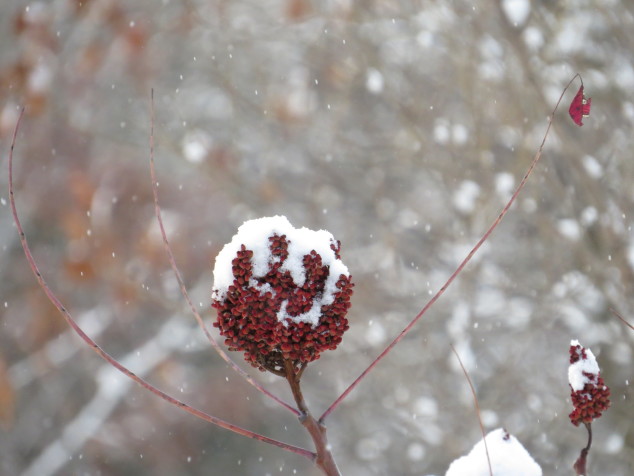
We end this month and this year with the turning of seasons and time. The constancy of the sunsets and moonrises keeps us grounded as so many other things change around us. The unexpected may leave us in a fog for longer than we care to be there, but it happens for good reason. Sometimes we need to go back in order to move forward. We need the quiet in order to glean the gold from our past and let the chaff fall away in forgiveness. Take the gold and the haloed moments of your life and let them fill you and sustain you for the journey ahead. Let the trail you leave behind be one of love and goodness. As a year’s worth of seasons shine from your face, lift up your arms to embrace the New Year.
Welcome the Light
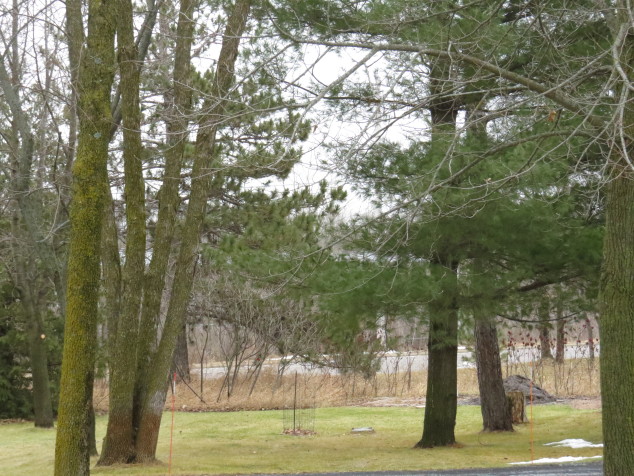
It’s Christmas Eve in Minnesota. As the temperature flirted with the freezing point the last few days, precipitation fell as rain instead of snow. As a snow lover, I have to say I’m a bit disappointed–well, actually more than a bit. But this is Christmas!
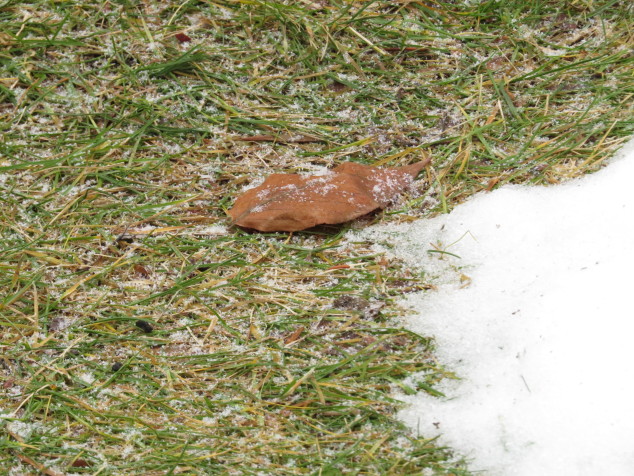
We don’t have a real Christmas tree this year like we always have in the past. We have had balled and burlapped trees, cut your own from the fir forest, cedar trees from the fence line, free ones from the grocery store on Christmas Eve, and even one delivered to our house by the tree trimmers who gave us the beautiful top of a fir they had to cut away from the power lines. We have had trees that were perfectly shaped and others that were Charlie Brown trees. It didn’t matter–they were all enchanting when decorated with lights, our homemade sweet-gum ball garland, and our mish-mash of ornaments accumulated over all the years of marriage and the raising of three children.
This year, for various reasons, we have a two-foot artificial tree that used to be in one of the kids’ bedroom for Christmas joy. As a real tree lover, I’m a bit disappointed. But this is Christmas!
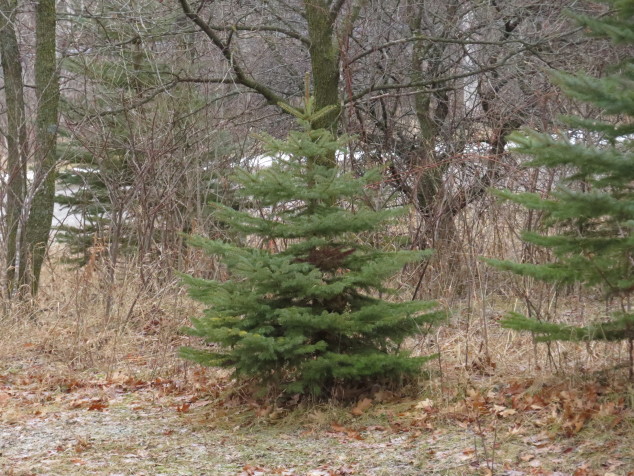
We aren’t going to be with our kids or families this year for the first time ever. Two of our kids are together in Austin for a warm Texas Christmas, and the other will be with Brake family uncles, aunts, and cousins in Kansas City. Our tentative plans to gather with the Andersens in South Dakota were foiled with the vacillating forecast of rain or snow and Chris’ snow removal responsibilities. As one who loves and adores our kids and our families, I am very disappointed. But this is Christmas!
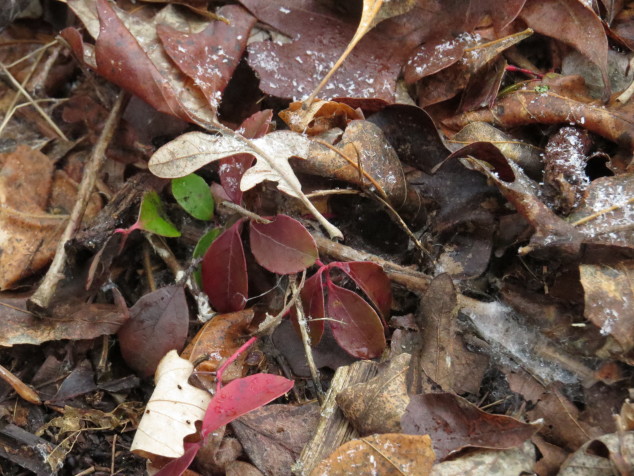
One of the plants in our woods that is seldom seen in the winter because of the snow is Wintergreen or Gaultheria. Wintergreens continue photosynthesis in the winter. Like the pines, spruces, and firs, it is ‘evergreen.’ Gaultheria has a sweet, woodsy odor when bruised and contains an oil that is commonly used as the minty flavoring in chewing gum, mints, tobacco products, and toothpaste. It has been used as a folk remedy for muscle and joint pain, inflammation, poor circulation, and a whole host of other problems, as it contains methyl salicylate. As a nature lover, I am thrilled to see the wintergreen. And this is Christmas!
I have no nostalgic, Kinkade-like photos to share with you this Christmas–no beautiful snow scenes, no twinkling, decorated evergreens. These pictures taken this morning are rather gray and drab, but this is Christmas! We will get more snow to satisfy all the Minnesota snow lovers. And we are surrounded by trees–pines, firs, spruces–of all sizes and shapes–outdoor Christmas trees. We have a few presents under our pint-sized artificial tree. One of those presents has been under our tree every year since 2005. It was a gift given to Chris by his Mom and Dad–a leather wallet wrapped in ‘hohoho’ wrapping paper. For some reason, he unwrapped it very carefully, lifting the tape, not tearing the paper. Since he didn’t need a new wallet at the time, he wrapped it back up. It was the last gift Chris got from his Mom and Dad before they died. He puts it under the tree each Christmas so he always has a present from them.
Our kids should have a happy Christmas in Texas and Missouri with family and friends who are dear to them. They have the memories of all our Christmas pasts–times that hopefully sustain them with the love that was freely given, no matter what was under the tree. We miss the kids but carry them with us in our hearts. Chris and I will experience a ‘Christmas Eve in the Barn’ service this evening and a meal together tomorrow with dear friends of our own. And through it all, we are reminded that the remedy for all the problems of the Earth is born again tonight. We welcome the Light! After all, this is Christmas!
What is Christmas? It is tenderness for the past, courage for the present, hope for the future. It is a fervent wish that every cup may overflow with blessings rich and eternal, and that every path may lead to peace.
–Agnes M. Pharo
Celebrate the Light
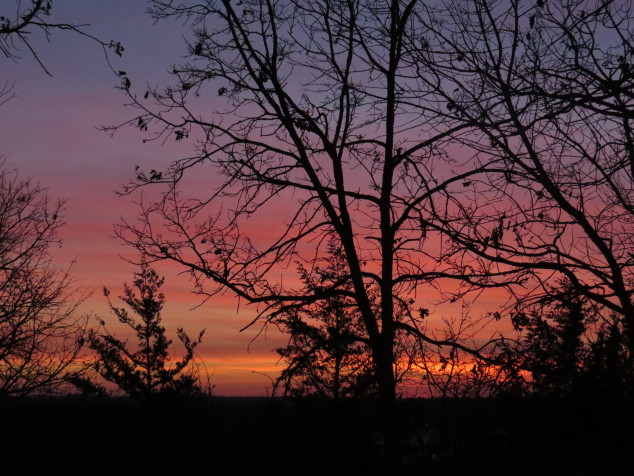
Winter is said to be bleak–and in many ways it is–but it gives us a gift that comes only when the sun is low in the southwestern sky and when the leaves are gone from the trees. The gift of beautiful sunsets!
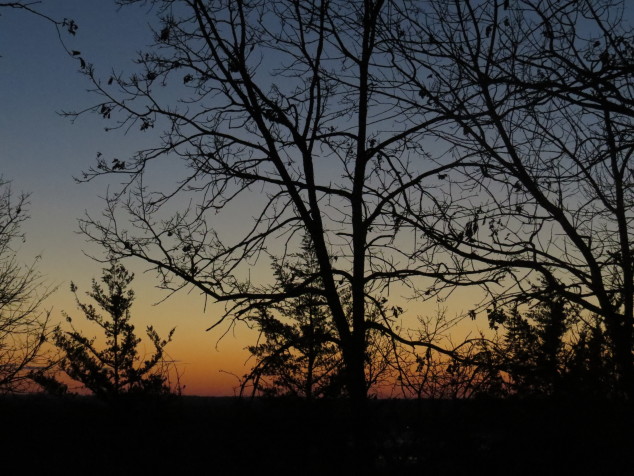
In the months of shortening days until the Winter Solstice and those afterwards that are frigid, yet lengthening, we can look out our picture window any uncloudy evening to see a work of art on the canvas sky.
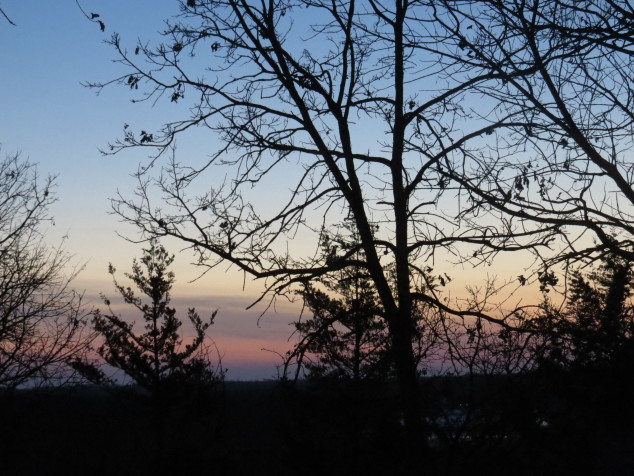
“Look at that sunset!” has been exclaimed so many times in our household (mostly by me) that my son has rebutted with his own proclamation that “Sunsets are overrated!”
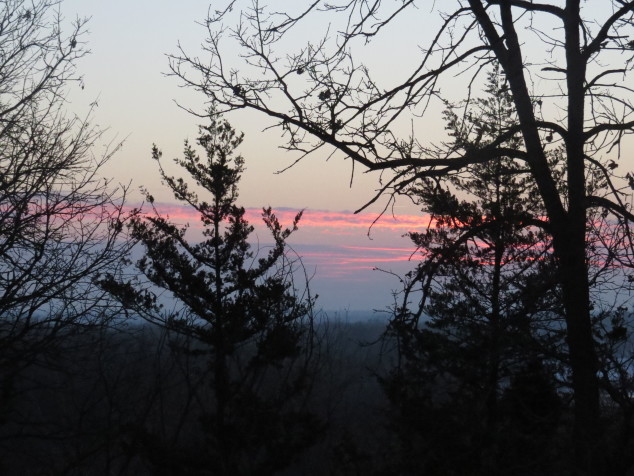
The light and colors of the sunset are reflected in the patch of river water or ice we can see from our house in the leafless months.
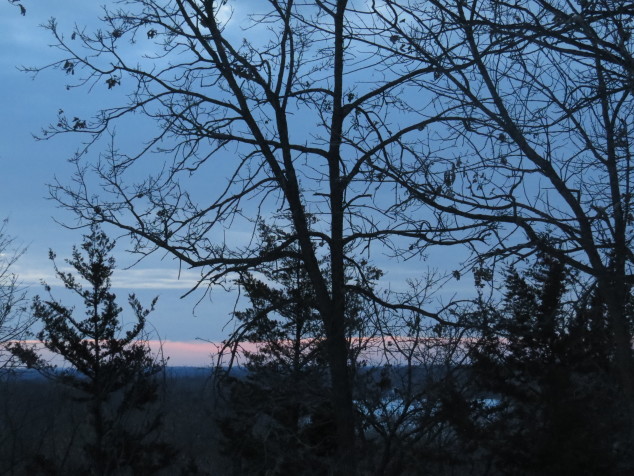
The first week of December was brilliant and cold, producing the sunsets above. Then we became engulfed in clouds as the inversion took over our skies. One or two days of fleeting sunlight late this week then gave way to the bank of clouds that rolled in from the west.
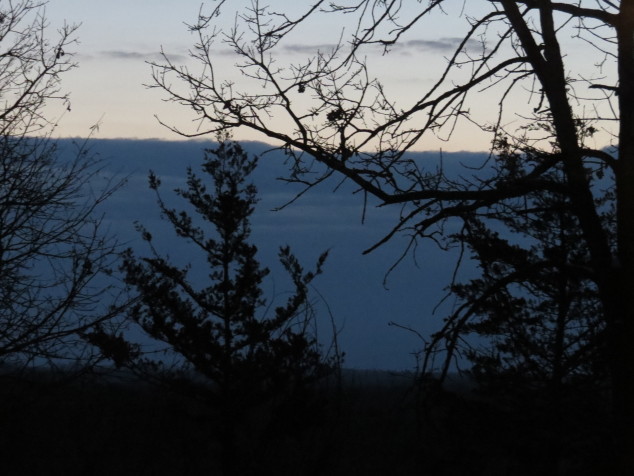
For those of us in the Northern Hemisphere, tomorrow is the shortest day and the longest night of the year. We are acutely aware of the darkness–even in our modern, lighted world. As our part of the earth is tilted away from the sun, we experience that darkness as winter. Winter may be bleak relative to the growth, color, and abundance of the other seasons, but it also offers us gifts that are unique to this time of year–if we are ready to receive them.
Sunsets of color against the backdrop of snow and ice make us stop for a moment, take a breath, and appreciate that moment of beauty. Anything that touches and feeds our soul cannot be overrated. The darkness of Winter gives us time to turn our thoughts inward. The work of Winter, unlike the physical work of the other seasons, is the work of our emotions and soul. We can accept the darkness inside ourselves, live with it, and learn from it. Then comes that moment, that day in time, when the darkness slowly starts to recede as we reach out and celebrate the Light. Happy Winter Solstice!
In the Fog
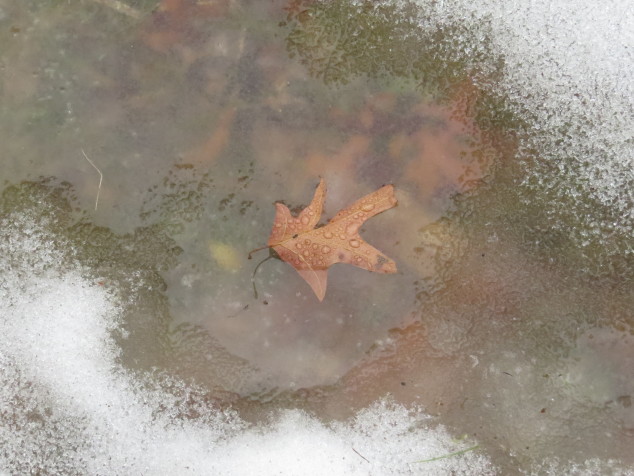
I vividly remember a time in my life some years ago, when I felt confused and uncertain about what I was doing. The once rock-solid thoughts and ideals that had sustained me for decades fell away in a tattered heap, like a neglected old barn. I couldn’t think straight, I felt isolated from the swirl of people around me, and I couldn’t envision a path that would lead me out of that fog.
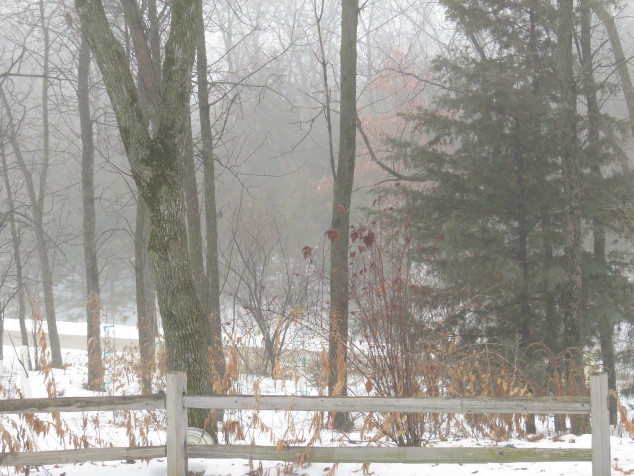
Central Minnesota has been in a fog for the last week. A warm front trapped our cool, snow-covered ground in an inversion. Icy rain fell a week ago Monday, coating sidewalks and roads in a slippery, bumpy film. By Wednesday, fog was forming above the rivers and wrapping the trees in frost. Friday, the temperature slid above freezing and started melting the snow.
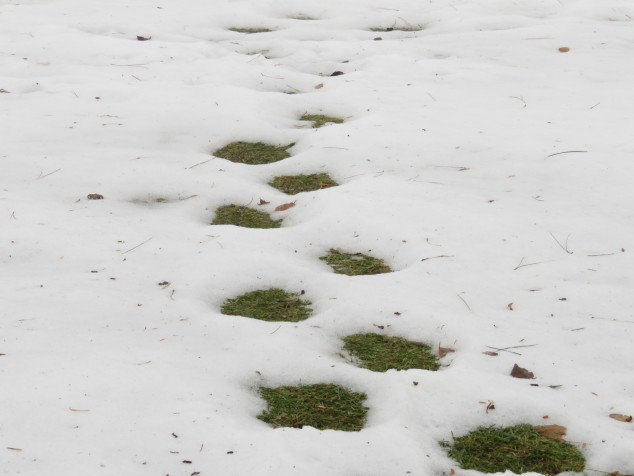
The fog became denser as the water vapor was trapped beneath the thick clouds.
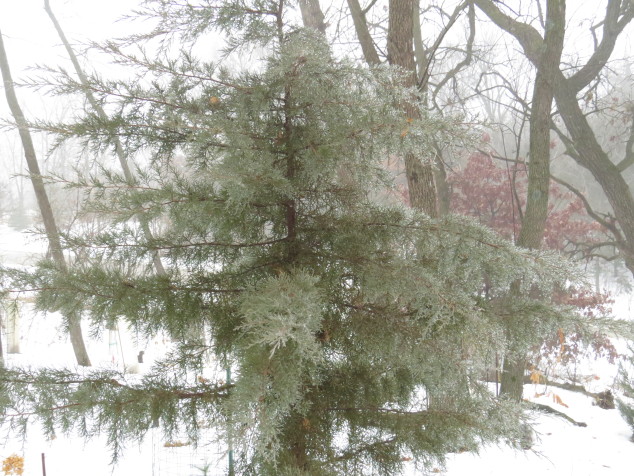
Water droplets formed on everything.
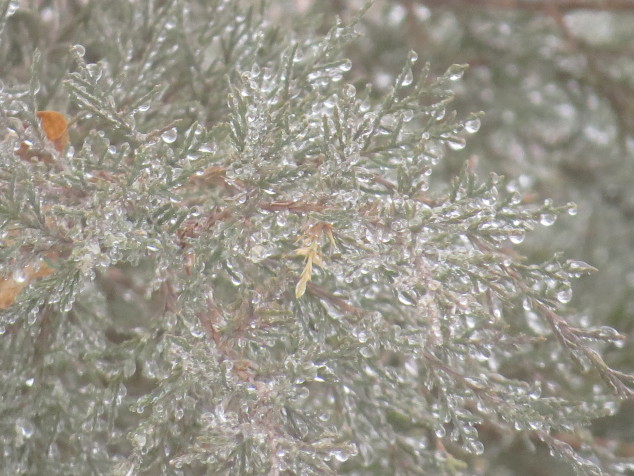
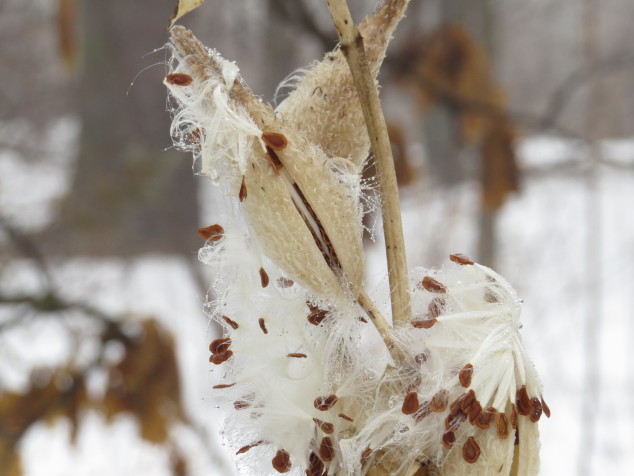

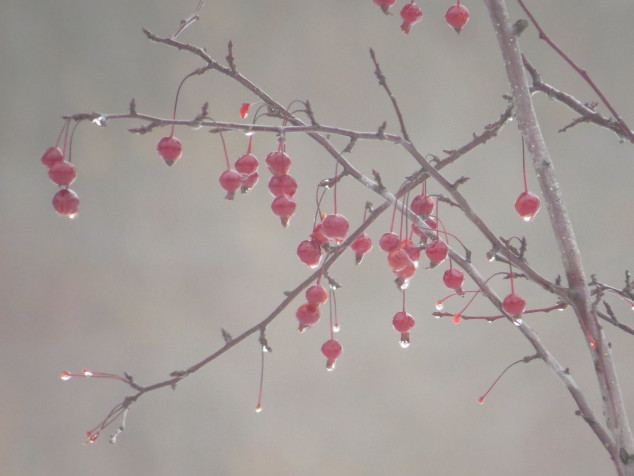
The surprising December thaw was the first in our seven years of living in Minnesota. Our frigid and snowy November seemed to have been inverted with December. The burlapped spruce, prepared for the dry, cold winds of winter, was drenched in fog and moisture. Our carefully planned protection was not needed–at least not yet.
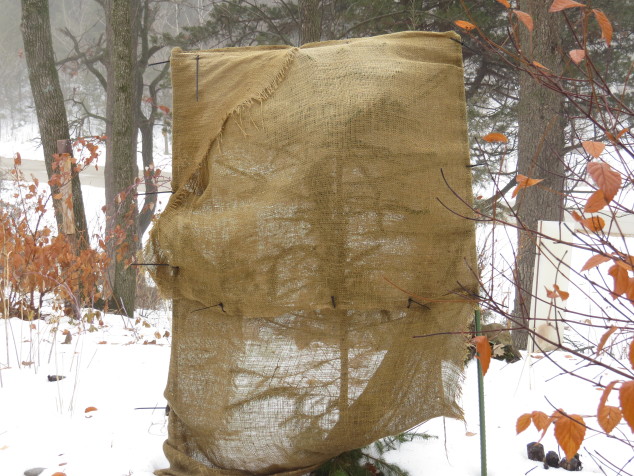
I followed the path from our house to the river overlook.
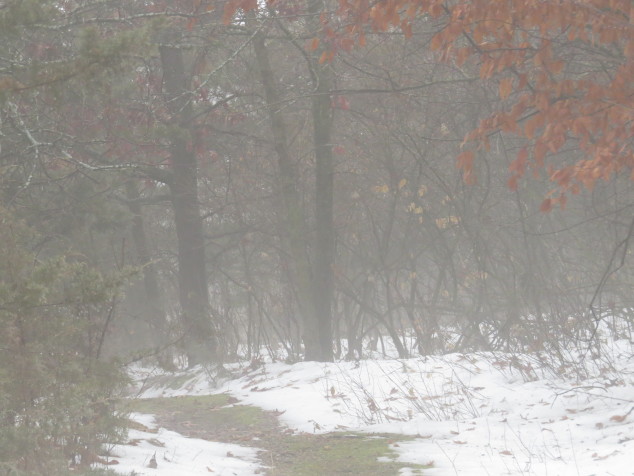 The fog was thick on the top of our hill, but over the river, it was a curtain of wet whiteness. (Here’s what it looks like on a clear day-sixth picture of the post.)
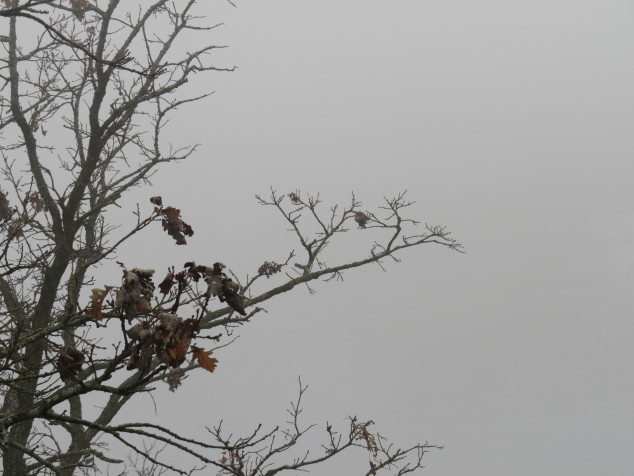
On the way back home, I passed a slushy puddle filled with oak leaves. It was a meeting of fall and winter. The bare trees were represented by their reflection in the melted snow.
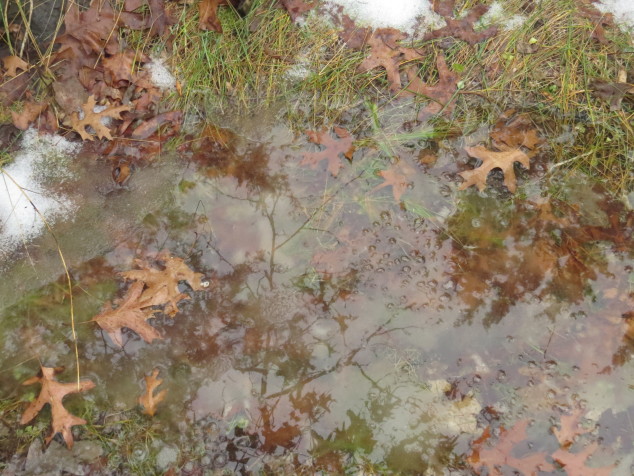
In the same puddle, fox prints were cast in the slushy ice. Proof of her whereabouts. A meeting of human and fox tracks.
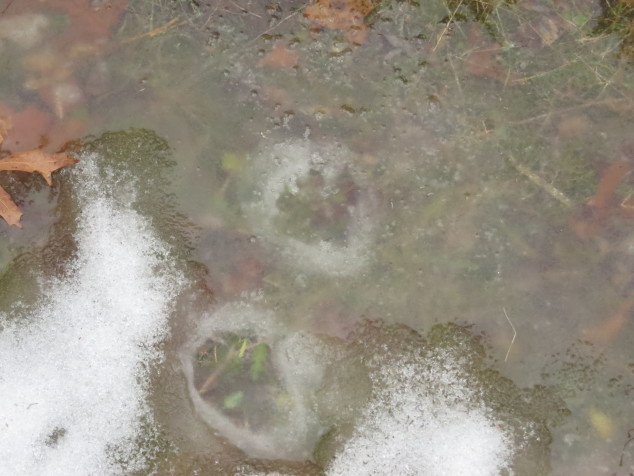
I could not see the river–I couldn’t even see the hillside and trees that went down to the river. The fog enveloped them all. It was confusing and surreal. It was like they didn’t exist.
That’s what the fog does in our lives. It slowly crawls over us, fooling us into believing that we know where we’re going. It can be unexpected and unexplained. It can lull us into thinking that what we can’t see doesn’t exist. But even in the thickest fog, the River is there. Even behind the burlap wall of protection, the Spruce is there. Even though I didn’t see the Fox, she was there. Each of us is there. Our path out of the fog happens one step at a time. Slowly we find our way. Then one day, we see our reflection in the place where Past meets Present. And with gladness, we notice that the fog has lifted.
Ducks on Ice
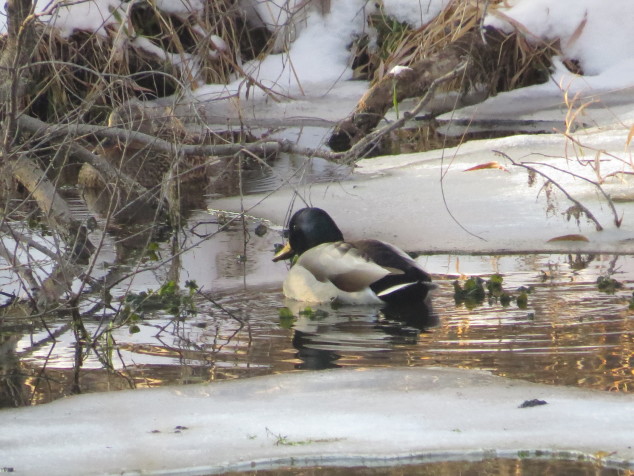
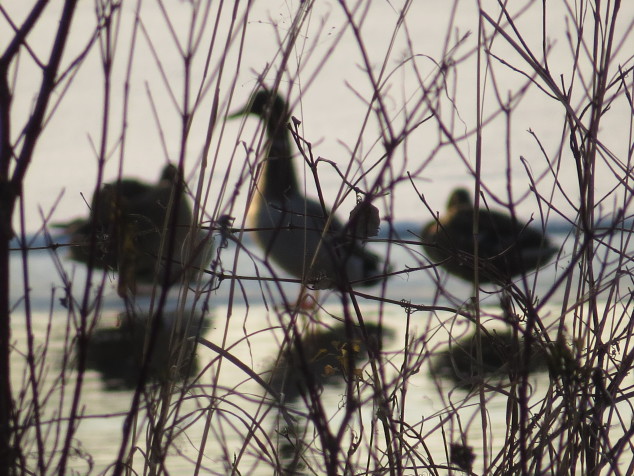
When the chill of winter is settling into your bones, think of this pair of Mallard ducks swimming in the icy water. By comparison, we are all cozy warm! This little pond is just off the Sauk River and within the limits of our small town. Here they are safe from hunters and have shelter and food.
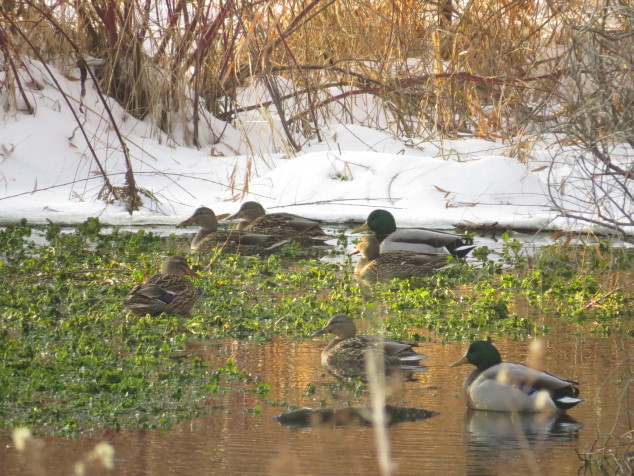
On the other side of the snowy, brush-covered bank is the partially iced over river.
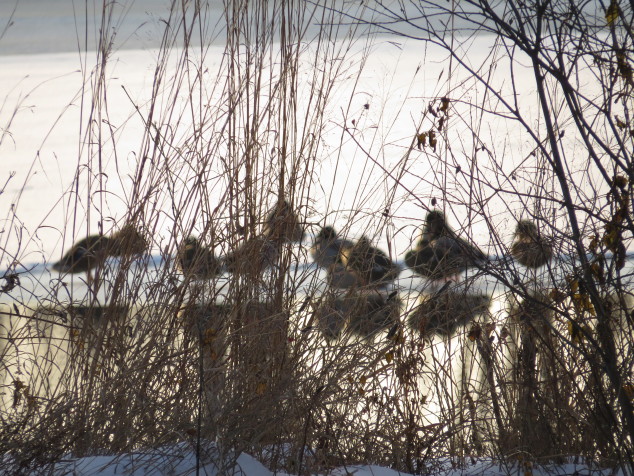
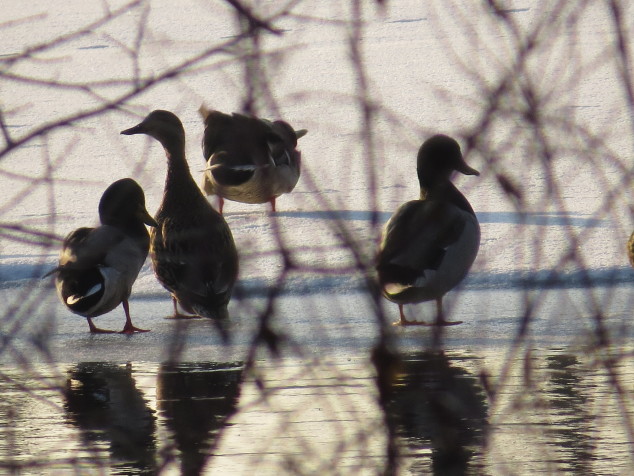
Another group of ducks huddles at the edge of the open water, preening their feathers and stretching their legs, necks, and wings.
They stand precariously close to the open water on the blue-colored thin ice.
Mallards are the most abundant and familiar of all ducks. They live in any kind of wetland habitat. The males or drakes have iridescent green heads, white neck rings, brown breasts, gray flanks, two black tail-curl feathers, and a yellow bill. The females or hens are mottled brown with orange and brown bills. Both have white-bordered blue speculum feathers on their wings.
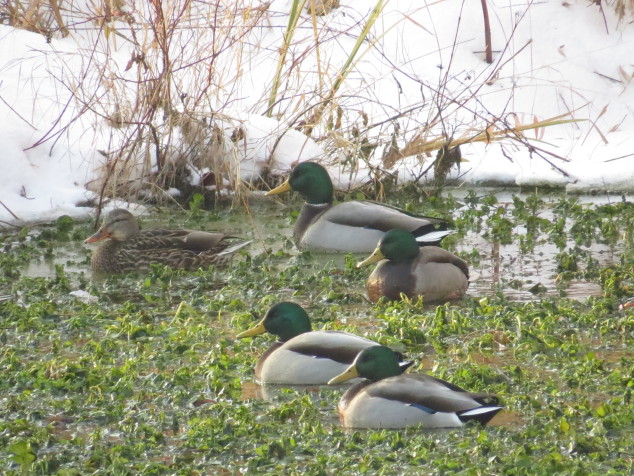
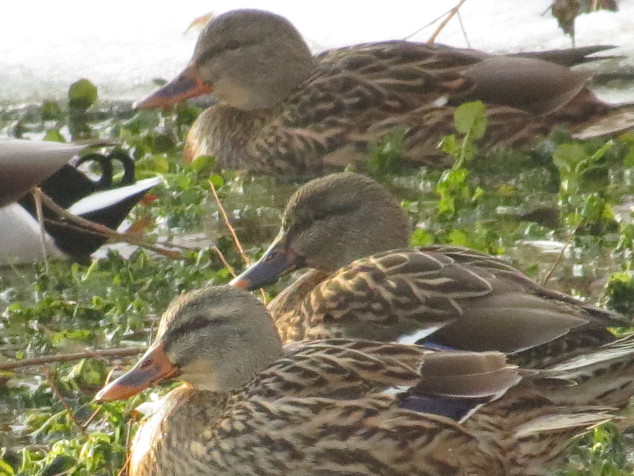
Mallards are considered ‘dabbling ducks.’ They feed by tipping forward into the water to graze on underwater plants, invertebrates, amphibians, and fish. They almost never dive completely under the water. During migration, they also eat grains and plants in fields.
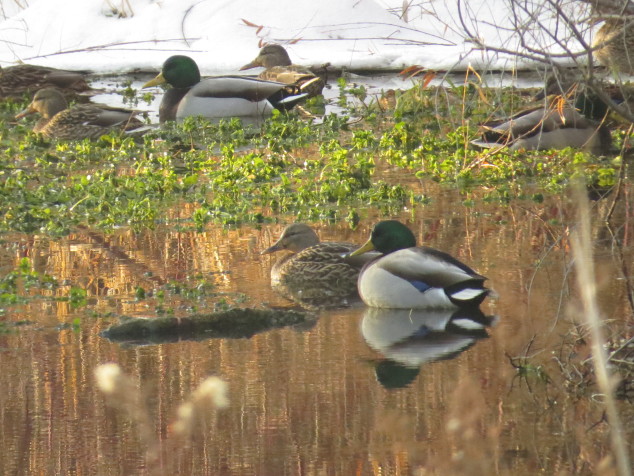
These long-bodied ducks pair up in the fall, long before spring breeding season. After the breeding season, they shed all their feathers, leaving them flightless for three to four weeks. The female incubates the eggs and cares for the ducklings.
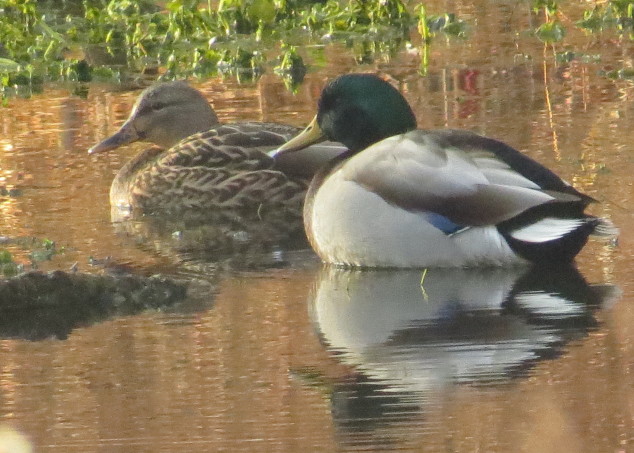
Mallards are the ‘poster duck’ for all wild ducks. Most domestic ducks come from this species. They are abundant late fall migrants, wide-ranging in their habitat. They are adaptable strong fliers and swimmers. And they are beautiful!
May we have the grace to swim through rough, cold waters. When we are walking on thin ice for whatever the reason, may we have the ability to swim or fly to save ourselves if we fall through. May we have protection during our vulnerable, flightless times. And with a patch of blue or a black curl, may we show our beauty to the world.
Three Nights of Seeing the Moon
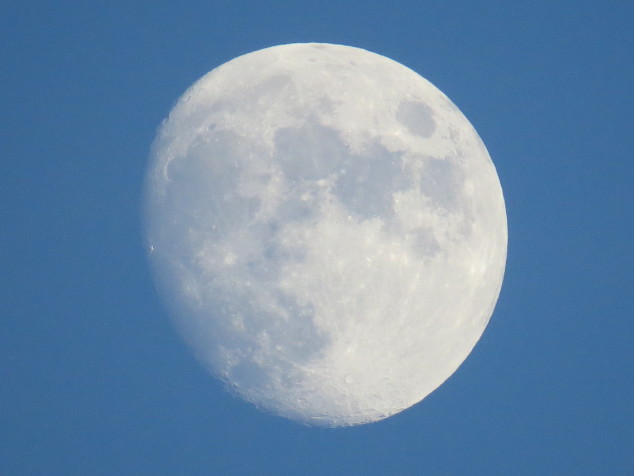
Can you see the moon tonight
Sugar-white perfection
Radiant beams of purest light
Our hearts’ connection
–Chris Rice
The lyrics to this song go on to reminisce about a lullaby his mama sang. It’s a lullaby that many mamas have sung to their babies; it’s a nursery rhyme simply illustrated and hung over a crib; and it’s the premise of a number of children’s books that have soothed little sleepyheads at bedtime.
I see the moon and the moon sees me,
And the moon sees the one that I long to see.
God bless the moon and God bless me,
And God bless the one that I long to see.
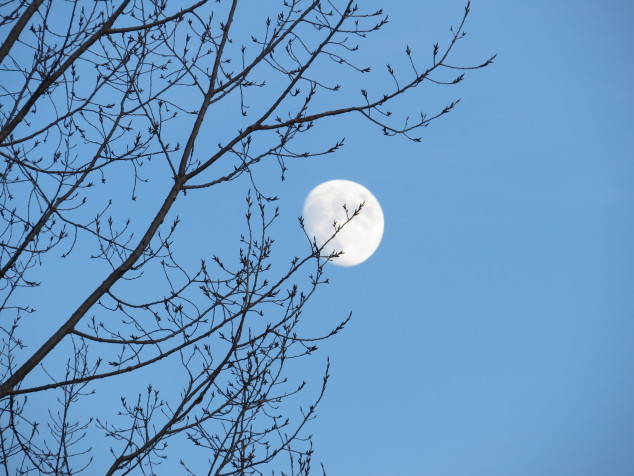
Three nights of Seeing the Moon last week reminded me of this rhyme. Wednesday was a clear, blue-sky day, and when the moon came up (above photo), it was ‘sugar-white perfection’. It sparkled like a piece of sugar crystal candy.
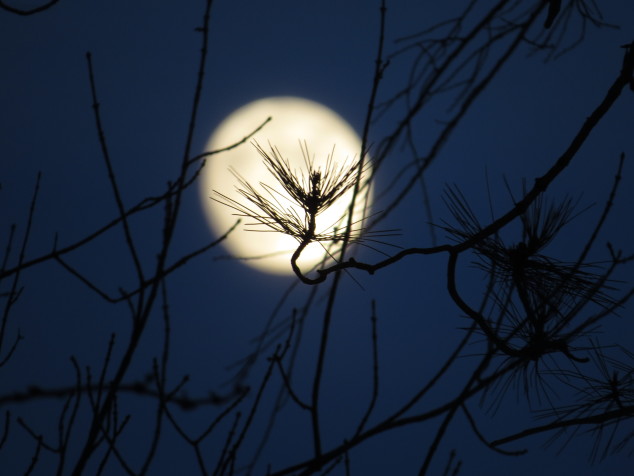
The next day was sunny and clear with wispy clouds, and when I first saw the moon, it was peeking through the white pine tree.
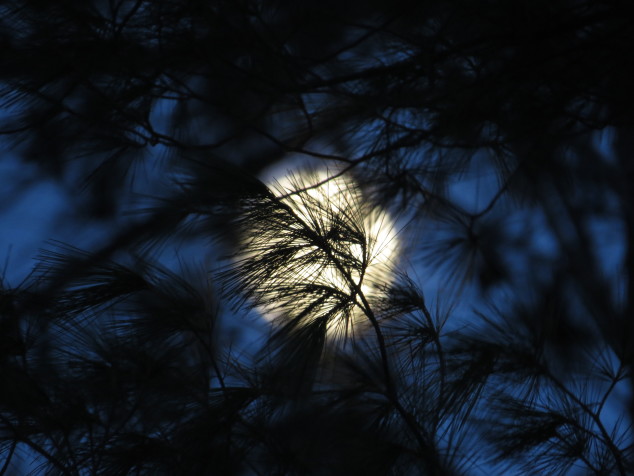
The light clouds slowly rolled over the face of the moon, darkening parts of it in a shadow dance.
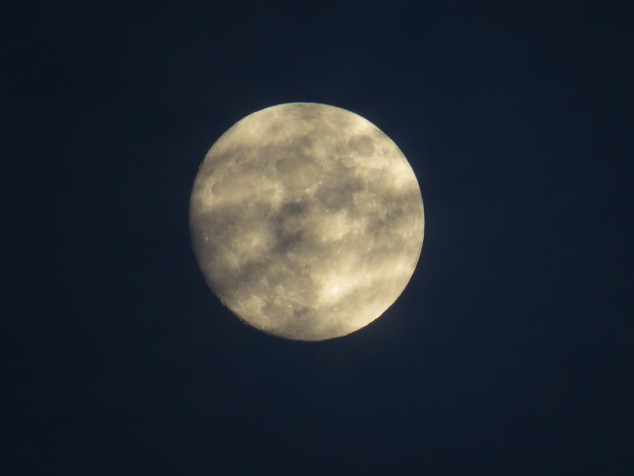
The large, dark areas of the moon are called Lunar Maria which are named for water features (Maria meaning Seas; singular is Mare.) These regions do not contain water and are believed to be formed from molten rock. The lunar nomenclature was introduced in 1651 by Riccioli, following Galileo’s first look at the moon through his newly invented telescope in 1609. The Sea of Crisis is not far from the Sea of Tranquility and the Sea of Serenity. Smaller plains are called Lacus or Lakes. There is a Lake of Summer, Autumn, Winter and Spring and Lakes of Fear, Hope, Solitude, Hatred, Goodness, Sorrow and Joy. There are Paludes (Marshes) and Sinus (Bays)–Marsh of Decay and Bays of Love, Harmony, Trust and Honor.
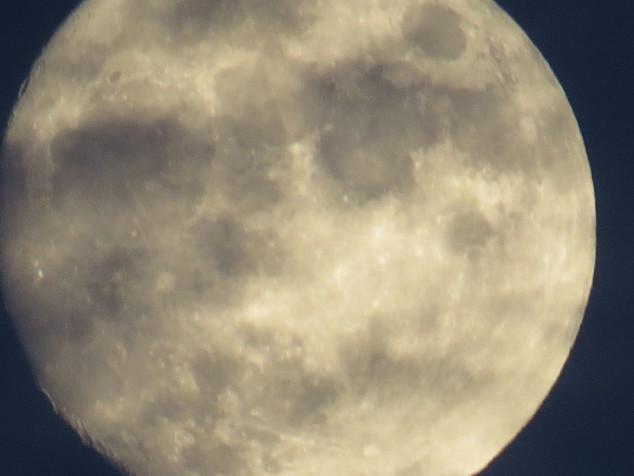
Most of the craters on the moon are circular in shape and are caused by impacts from asteroids, meteorites, or comets.
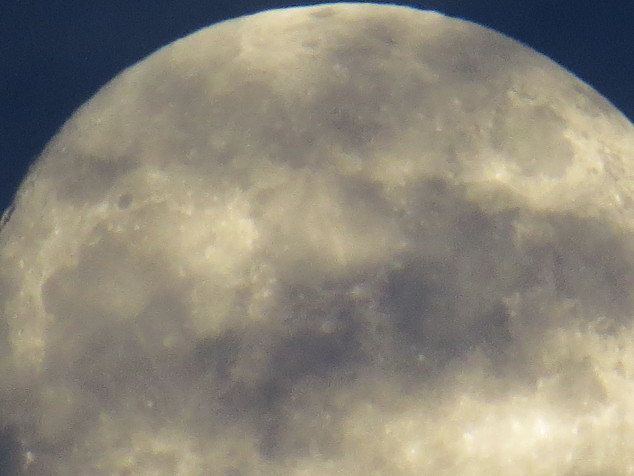
The moon of our planet Earth reflects the light of the Sun. It is intriguing, mysterious, cyclical, and emotional. The cycles of the moon influence tides and is said to effect fishing, planting and growth, sleeping patterns, and behaviors.
A little later that evening, the moon lit up the clouds in concentric circles of color.
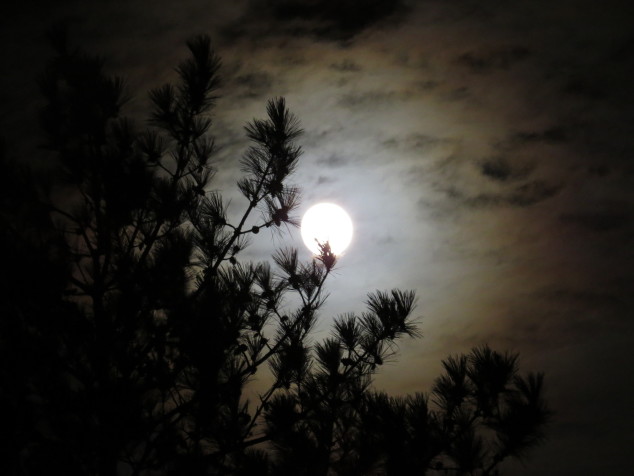
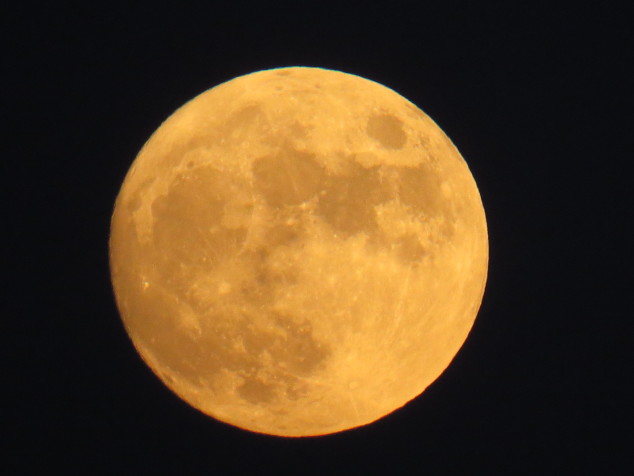
Friday’s moon rose with an amber color in a clear sky. It was the day before the full moon.
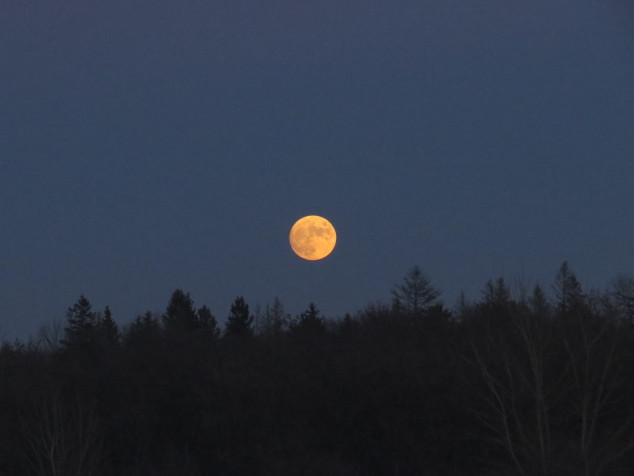
Unlike Wednesday’s cool sugar-white moon, this one was warm and rich colored, like a golden gem.
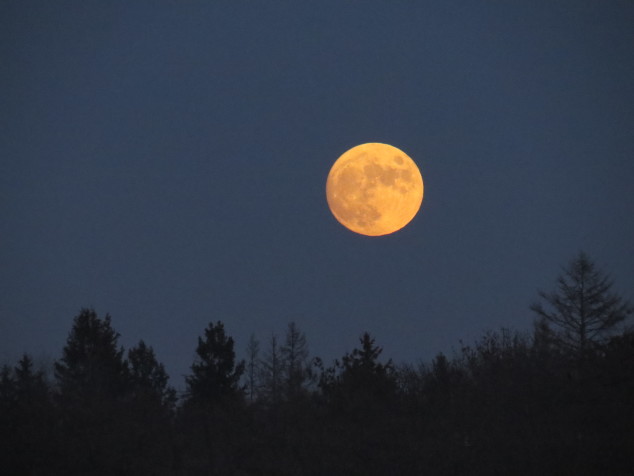
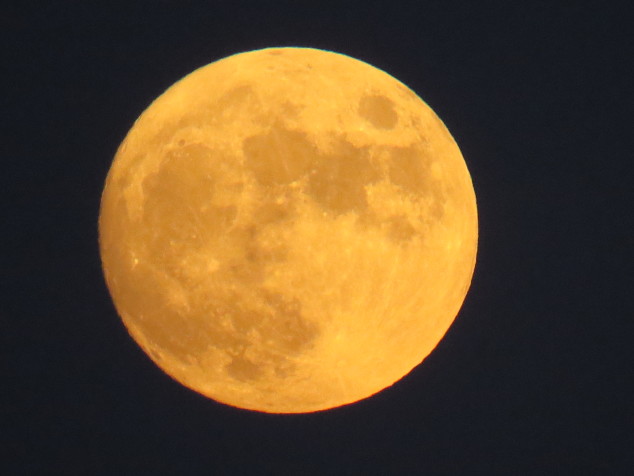
Three nights of seeing the moon, and they were all so different in how the Sun’s light was reflected and seen by us. The moon itself was the same. Each crater and mare and lacus were the same. What was getting in the way of the pure light? Clouds, dust particles, shadows, and even the earth itself at times. I like how Riccioli named the large ‘water features’ on the moon after the emotions and conditions of our human hearts and experiences. Because the moon evokes such powerful emotions, I think we share Riccioli’s connection to the moon. The moon we are looking at sees and is seen by the ones we cannot see. We want that connection–the connection of our hearts. In the end, as in the lullaby, we have to call upon the Eternal One to bless us, to bless the moon, and to bless the ones we cannot see–all of us in our sorrow, goodness, fear, hope, and love.
Tracks and Paths
When I was a young child, we lived on a farm in eastern South Dakota. My Dad milked cows along with raising pigs, sheep, and chickens. After their morning milking, the cows were let out to the pasture to graze their way through the day until the next milking. This daily ritual made its mark in the pasture. A network of cow paths crisscrossed the green grass as these creatures of habit made their grazing rounds. We used to walk to the neighbor’s place through the pasture–and the best way to get there was to follow the cow path. Except for the occasional fresh cow pie to skirt around, it was the path of least resistance.
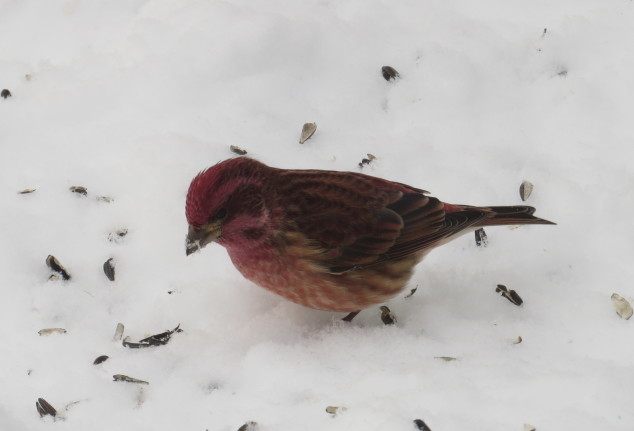
Snow fell the night of Thanksgiving. By morning, the animal activity of the night was evident by the tracks and paths in the fresh snow. Birds visiting the feeders left their marks as they hopped in search of fallen seeds.
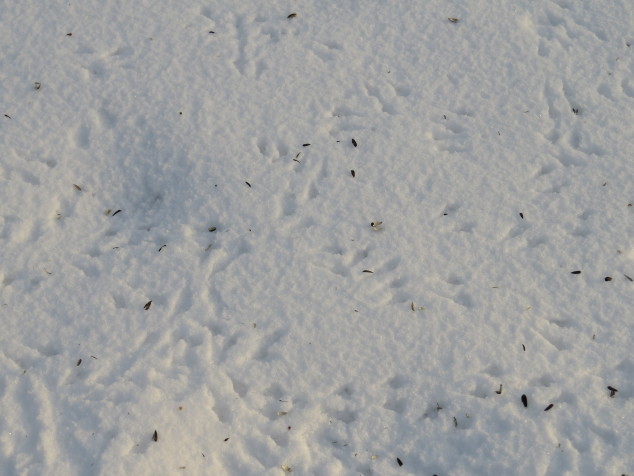
Squirrel tracks were everywhere! We seem to have quite a population this winter.
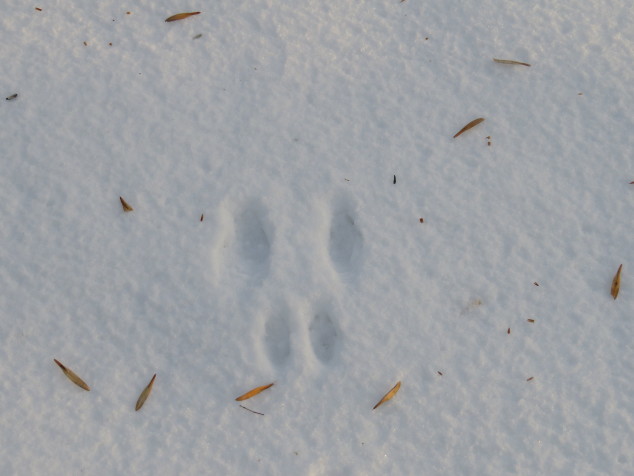
I wonder what made this squirrel take a quick U-turn. Perhaps the appearance of a big black dog?
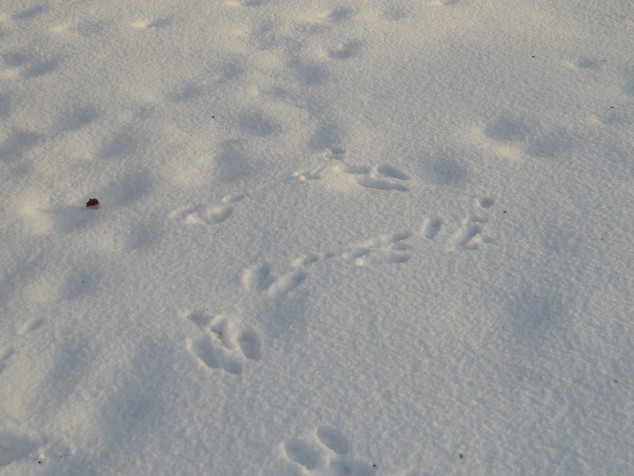
The most popular place for the squirrels is the backyard bird feeder.
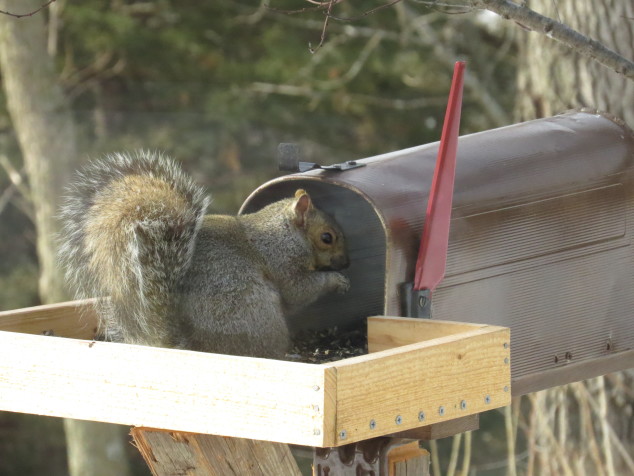
They make their way from the woods to the feeder, and then when alarmed, they run out the back of the mailbox, jump down to the ground, and make a beeline for the maple tree. They have made a squirrel path in the snow!

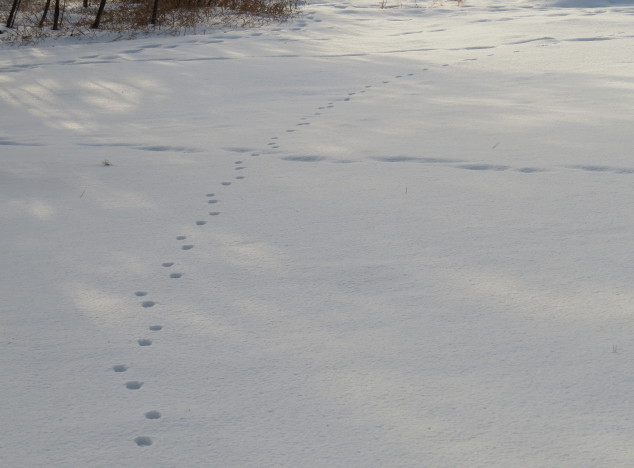
Another set of tracks that crosses the yard is made by the red fox. She trots with a purpose, going from one end of the yard to the other on her hunting treks.
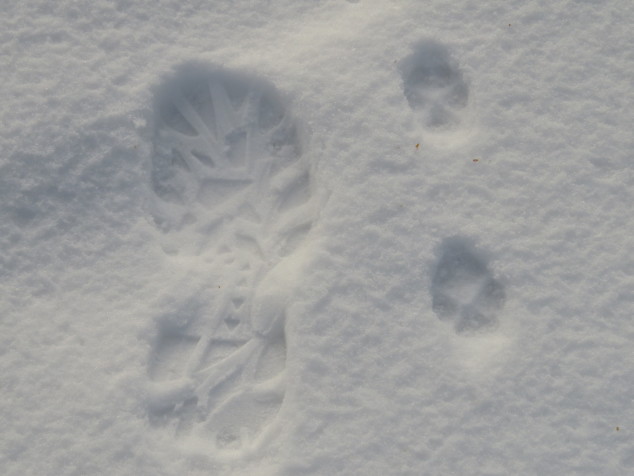
 Her paws are much smaller than our Black Lab’s. I put my footprint beside each track to show the size difference.
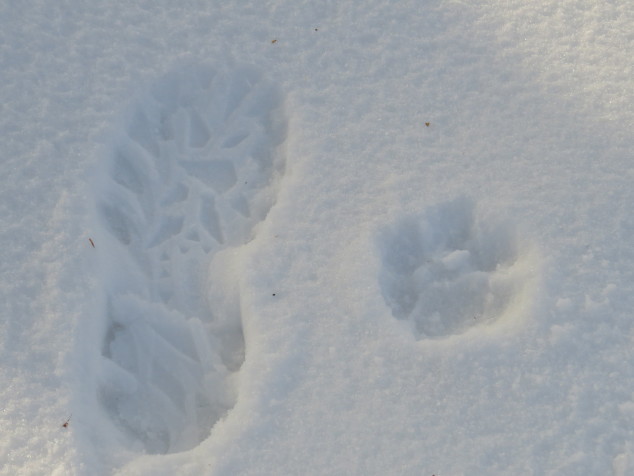
Fresh fallen snow highlights the activity that takes place day and night around our home. It’s a vivid indicator of how we coexist with all the creatures around us.
Tracks and paths–we all make them! From the tiny mice to the squirrels to the Holstein cows to college students across campuses, we are creatures of habit that tend to take the path of least resistance. Sometimes our tracks cannot be seen, and we may wonder where we’ve been, if we’ve been seen, and whether our trekking has even made a difference. Other times, our steps are noticed as we beeline or U-turn our way through life. We may make our own path or follow one that is already well-worn. What path are you on today?
Gleanings from November
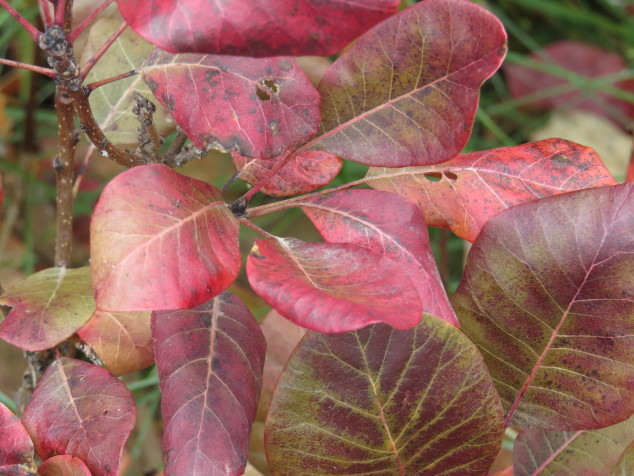
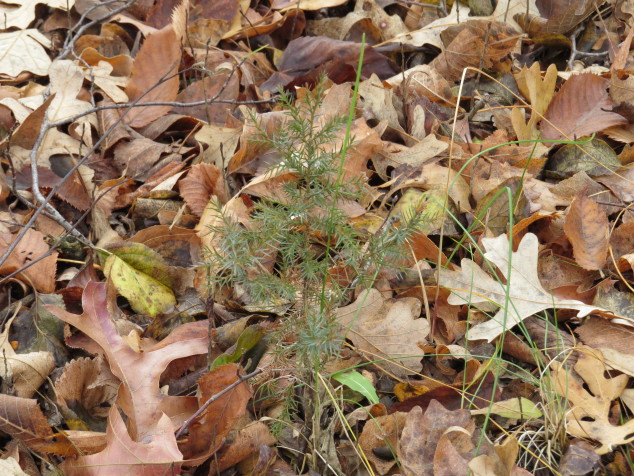
November began in a quiet, easy way. The ritual of ‘getting ready for winter’ was progressing nicely with one eye on the extended forecast and four hands on rakes and shovels. Our slow-growing Purple Smoke tree was changing from its dark purple-red to brilliant scarlet, the last to change and hold its fall foliage. Most leaves were brown and on the ground by then. The oak and elm leaves carpeted the floor of the woods, skirting this tiny cedar tree with mulch and protection.
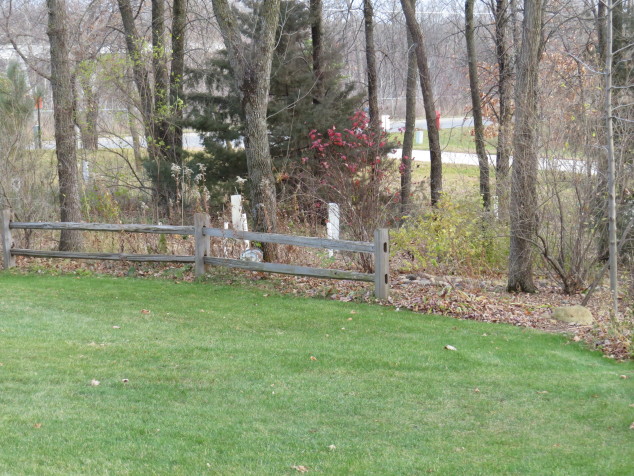
By the second weekend, the green lawn was raked free of leaves, and plastic sheeting covered the screened-in porch. The barometer was falling, and the forecast had changed from an inch of snow to nine inches of snow. In one day’s time, we fell into Winter.
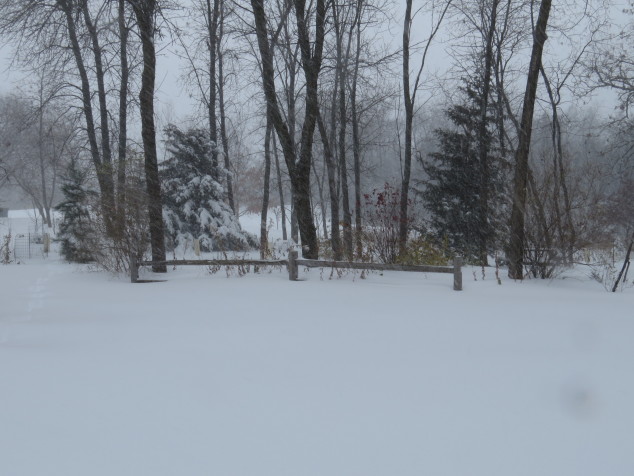
Nine inches quickly turned into fourteen, as schools were closed and travel stalled.
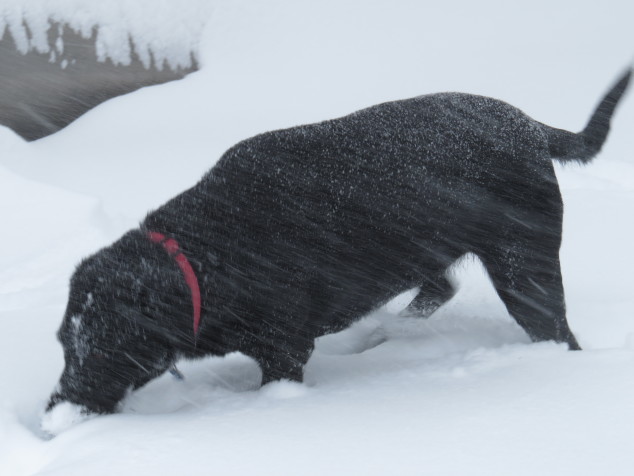 Since the storm, a couple of warm (above freezing) days have melted some of the snow, and a few new inches have been added. Whiteness is the new normal, and snow is just part of the picture.
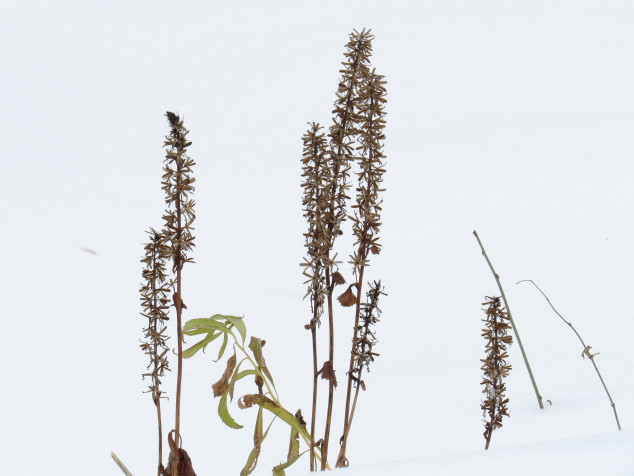
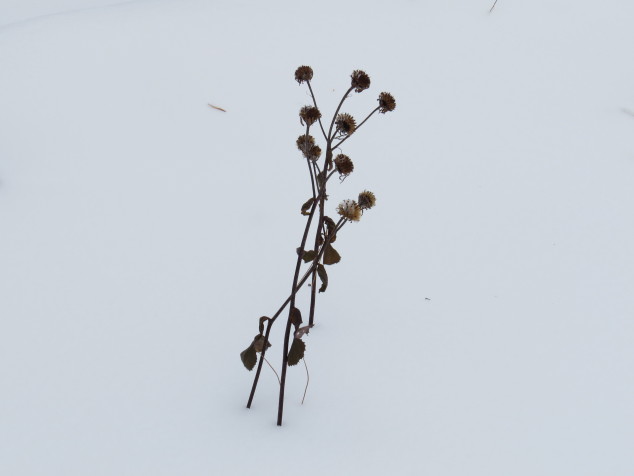
The winter birds are now our showy ‘flowers’–their brilliant colors are beacons of brightness in the white and brown landscape.
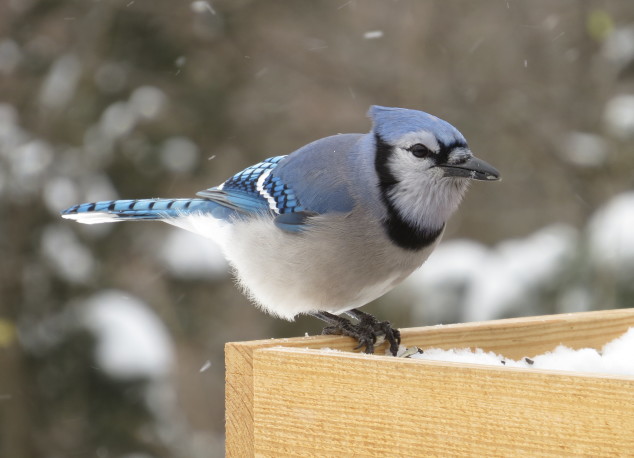
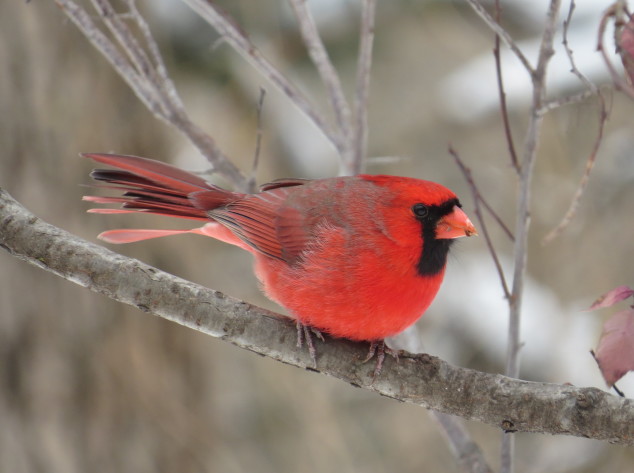
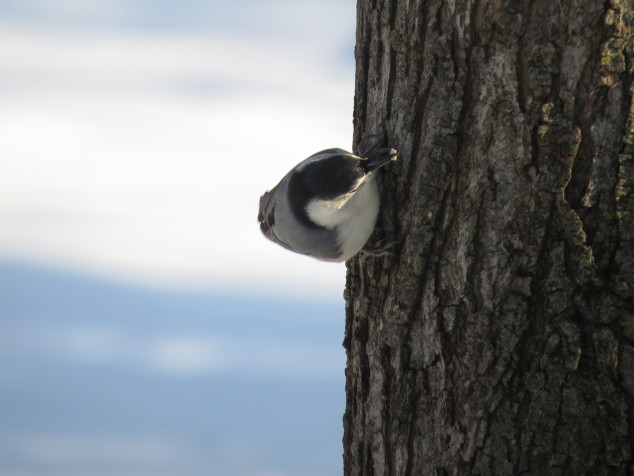
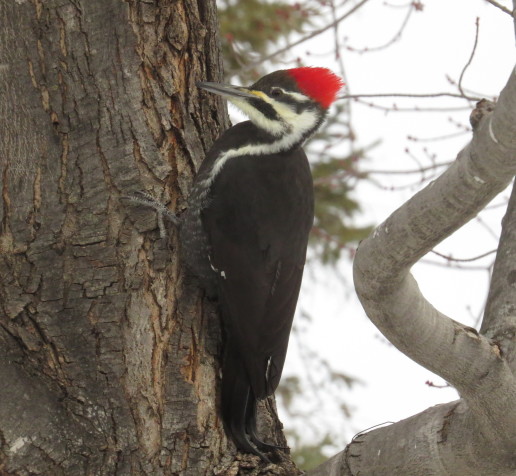
November is the month of Thanksgiving. Every day, from morning sunrise to early evening sunset, is a gift to each one of us that contains so much to be thankful for.
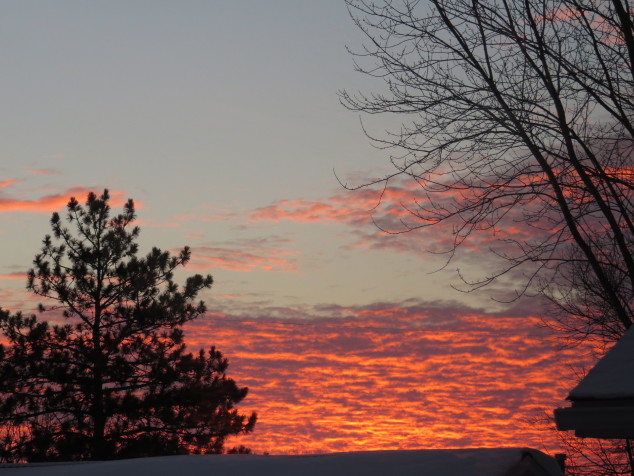
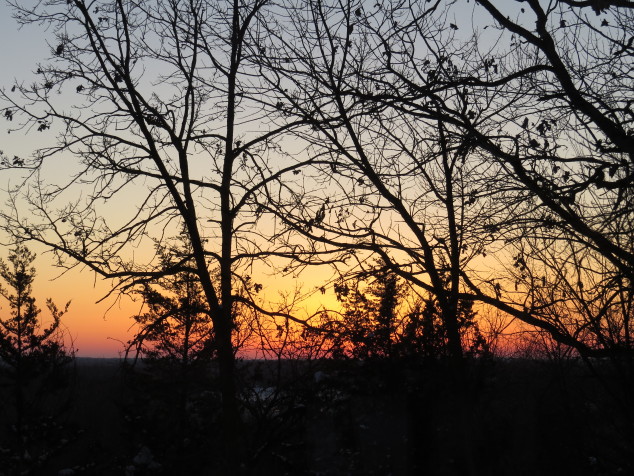
November also begins the season of reflection–when we look back at where we have been and choose the path that will move us where we want to go.
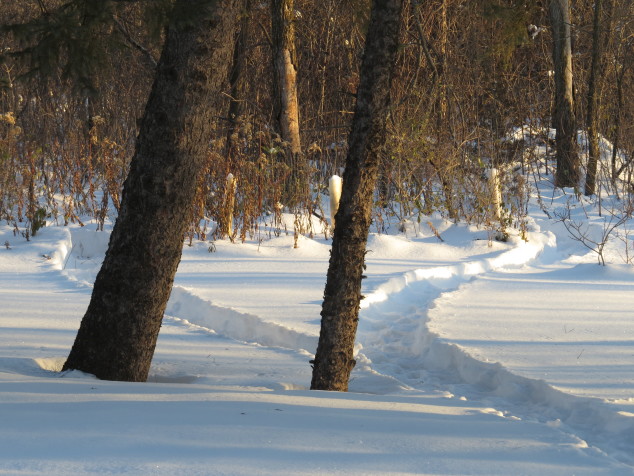
The month of November started as Autumn and abruptly changed to Winter. Changes happen whether or not the calendar agrees, whether we are ready or not, and regardless of whether they ‘should’ occur. All the more reason to be thankful for the very simple and often mundane things in our everyday lives. At the same time, we need to be aware of the beacons of brightness that surround us. What puts a smile on our faces? What amazes us? What makes us feel warm and loved? And finally, if we are having trouble seeing the brightness, we can use this hibernation time to reflect on what is shading our eyes, what wall is built up in front of us, or what erroneous thoughts are stuck in our heads. And then, with courage, we choose a path that will get us to a better place.